
Science Worksheets
42,859 subject resources
Grade 7 Science | Explanatory Models Worksheet | NGSSS Aligned
 Created byLumora Learning
Learning Objectives
- Define explanatory models and explain why they are simplified rather than exact replicas of real systems.
- Describe how cause-and-effect mechanisms and energy transfers can be used in explanations based on a model.
- Evaluate a model’s usefulness by comparing how well it matches observations and how accurately it predicts new evidence.
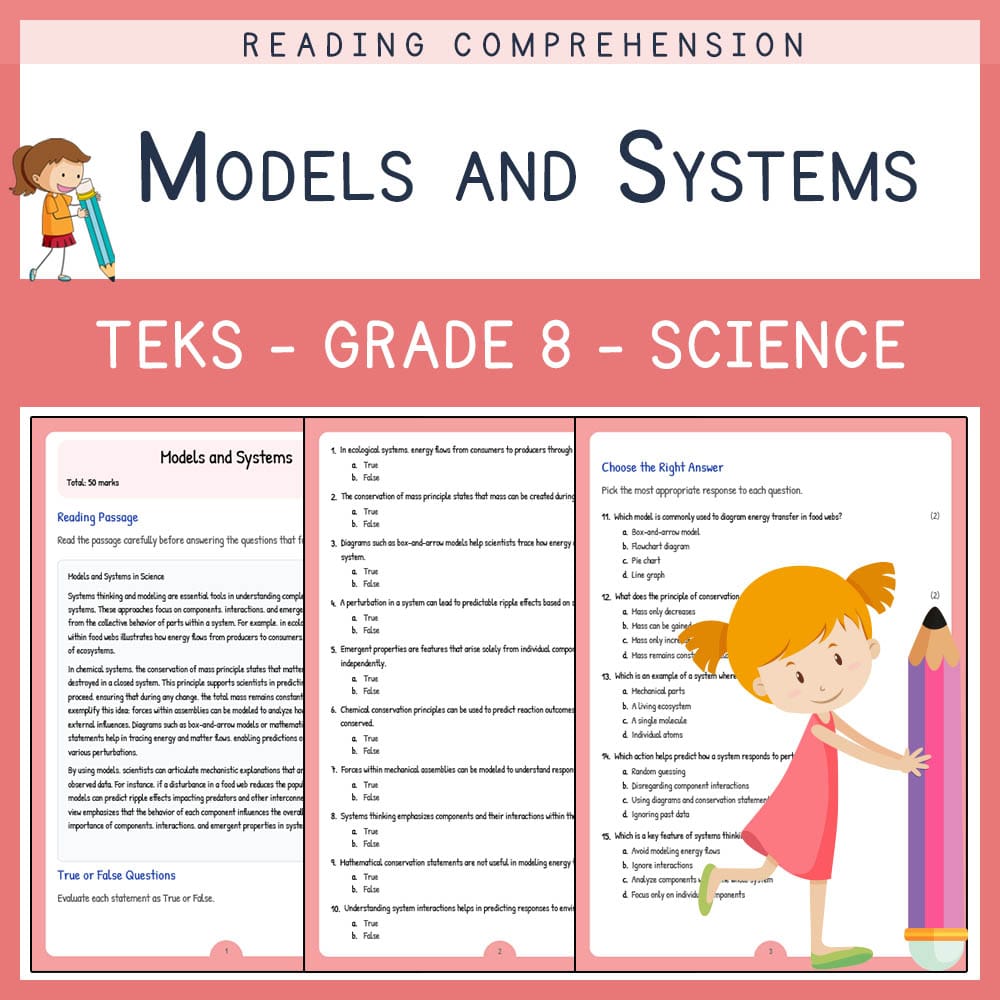
Grade 8 Science | Models and Systems Worksheet | TEKS Aligned
Created byLumora LearningLearning Objectives
- Describe the components and interactions within physical and ecological systems.
- Explain how models and diagrams are used to represent system processes.
- Predict system responses to perturbations using conservation principles.

Grade 8 Science | Population and Stability Worksheet | California Standards
Created byLumora LearningLearning Objectives
- Explain how predation, competition, disease, and mutualism can change population sizes in an ecosystem
- Describe how changes in population balance can affect energy flow and matter cycling
- Use evidence from scenarios to predict ecosystem responses and levels of resilience
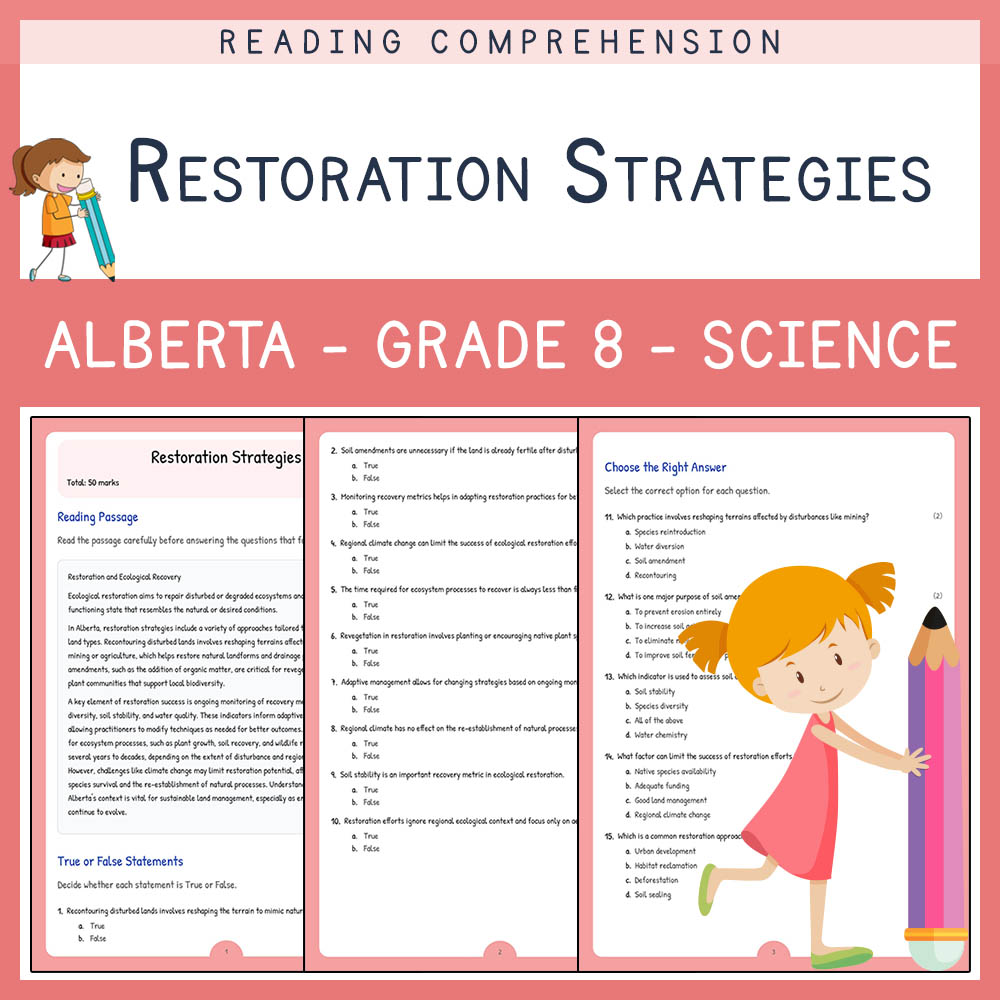
Grade 8 Science | Restoration Strategies Worksheet | Alberta Standards
Created byLumora LearningLearning Objectives
- Understand the principles of ecological restoration in Alberta contexts.
- Identify different restoration methods such as habitat reclamation and species reintroductions.
- Explain the processes of soil amendment and land recontouring in ecosystem recovery.
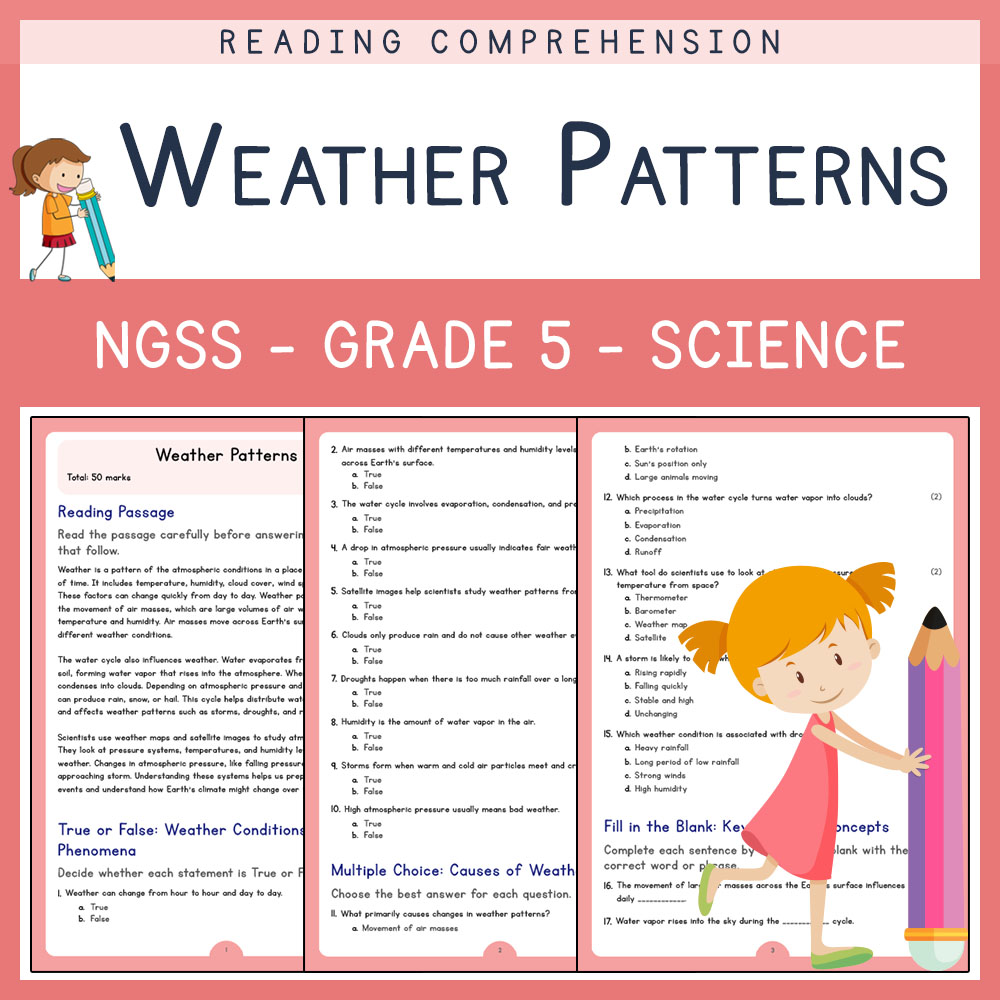
Grade 5 Science | Weather Patterns Worksheet (PDF) | NGSS Aligned
Created byLumora LearningLearning Objectives
- Understand how air masses move and influence weather
- Identify the water cycle and its role in weather patterns
- Describe atmospheric conditions that cause storms and droughts
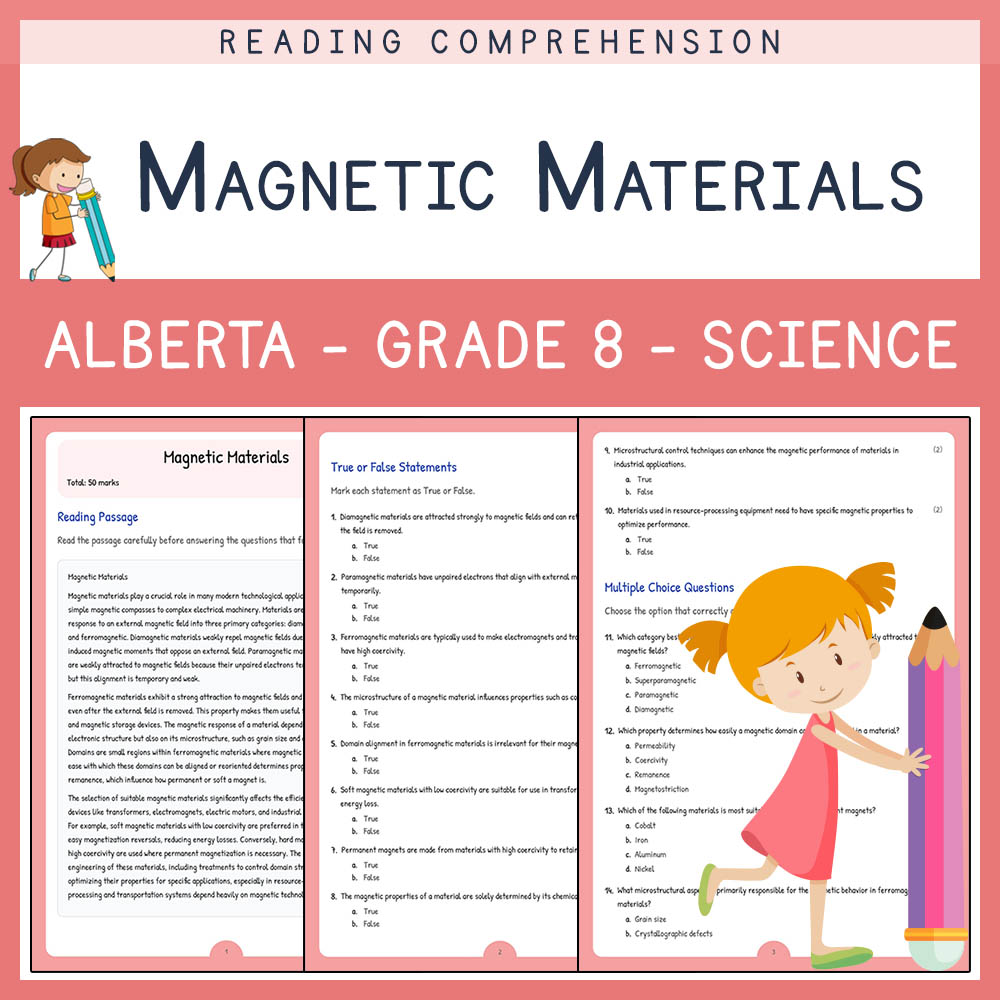
Grade 8 Science | Magnetic Materials Worksheet | Alberta Standards
Created byLumora LearningLearning Objectives
- Understand the classification of materials based on their magnetic responses: diamagnetic, paramagnetic, and ferromagnetic.
- Explain how microstructural properties influence magnetic behavior such as coercivity and remanence.
- Identify the applications of different magnetic materials in industry, including electromagnets, transformers, and separation tools.
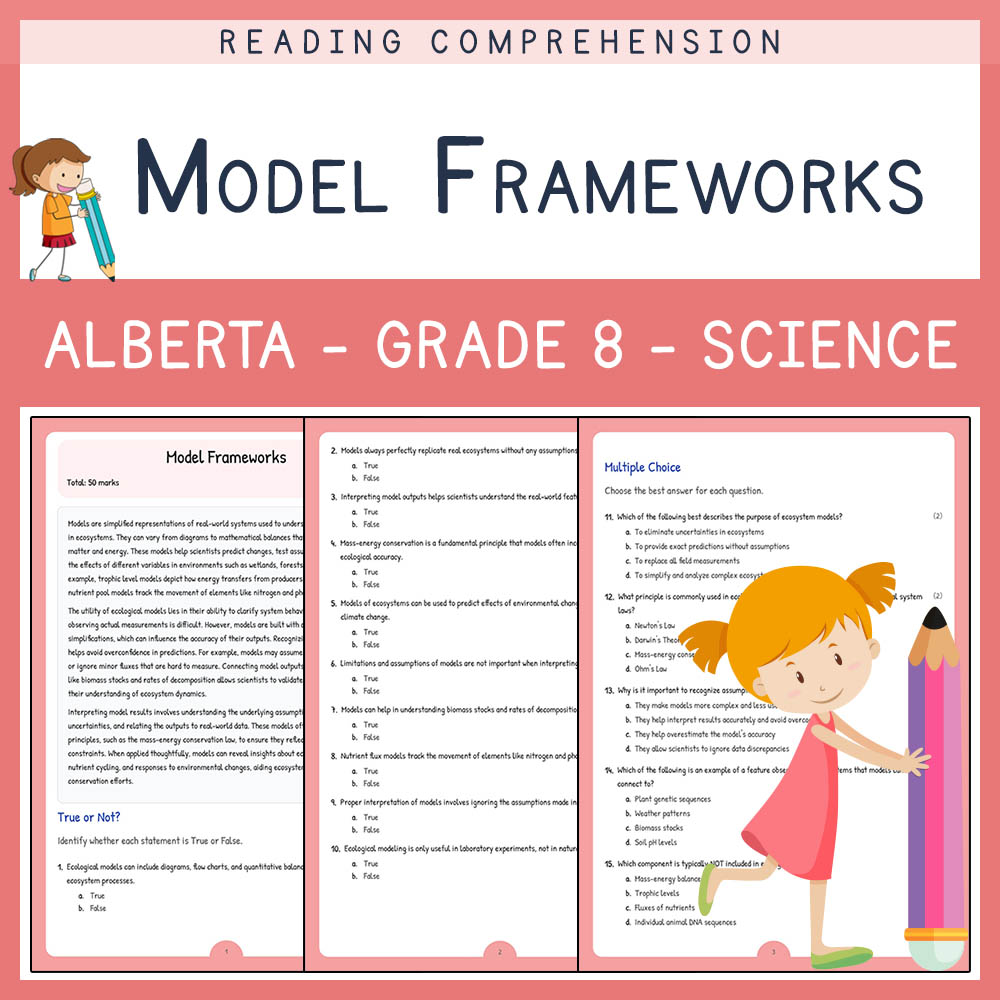
Grade 8 Science | Model Frameworks Worksheet | Alberta Standards
Created byLumora LearningLearning Objectives
- Understand the purpose and components of ecological models.
- Identify how models represent matter and energy movement in ecosystems.
- Interpret model outputs and recognize assumptions and limitations.
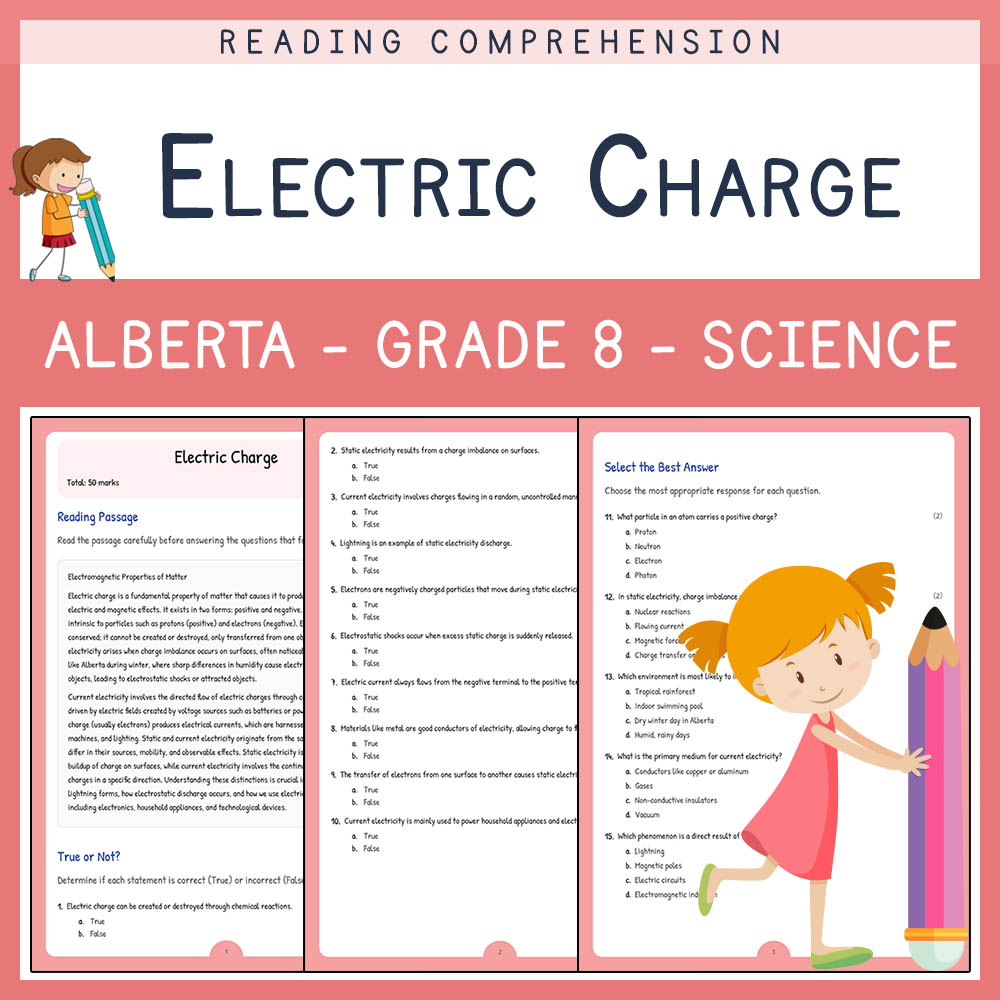
Grade 8 Science | Electric Charge Worksheet | Alberta Standards
Created byLumora LearningLearning Objectives
- Understand the concept of electric charge and its properties.
- Distinguish between static electricity and current electricity.
- Identify real-world phenomena related to electric charge.
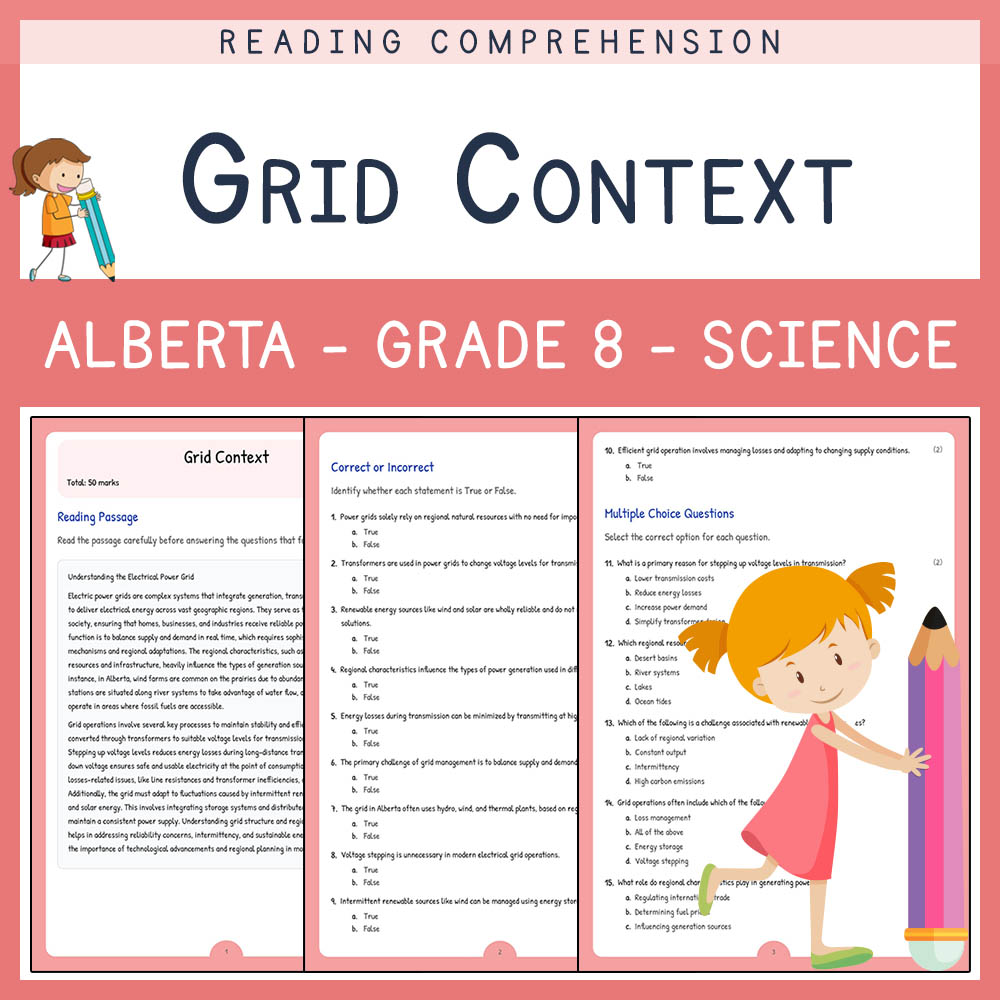
Grade 8 Science | Electricity and Power Grids Worksheet | Alberta Standard
Created byLumora LearningLearning Objectives
- Understand the components and functions of electrical power grids.
- Identify regional characteristics affecting power generation sources.
- Explain grid operations such as voltage stepping and energy losses.
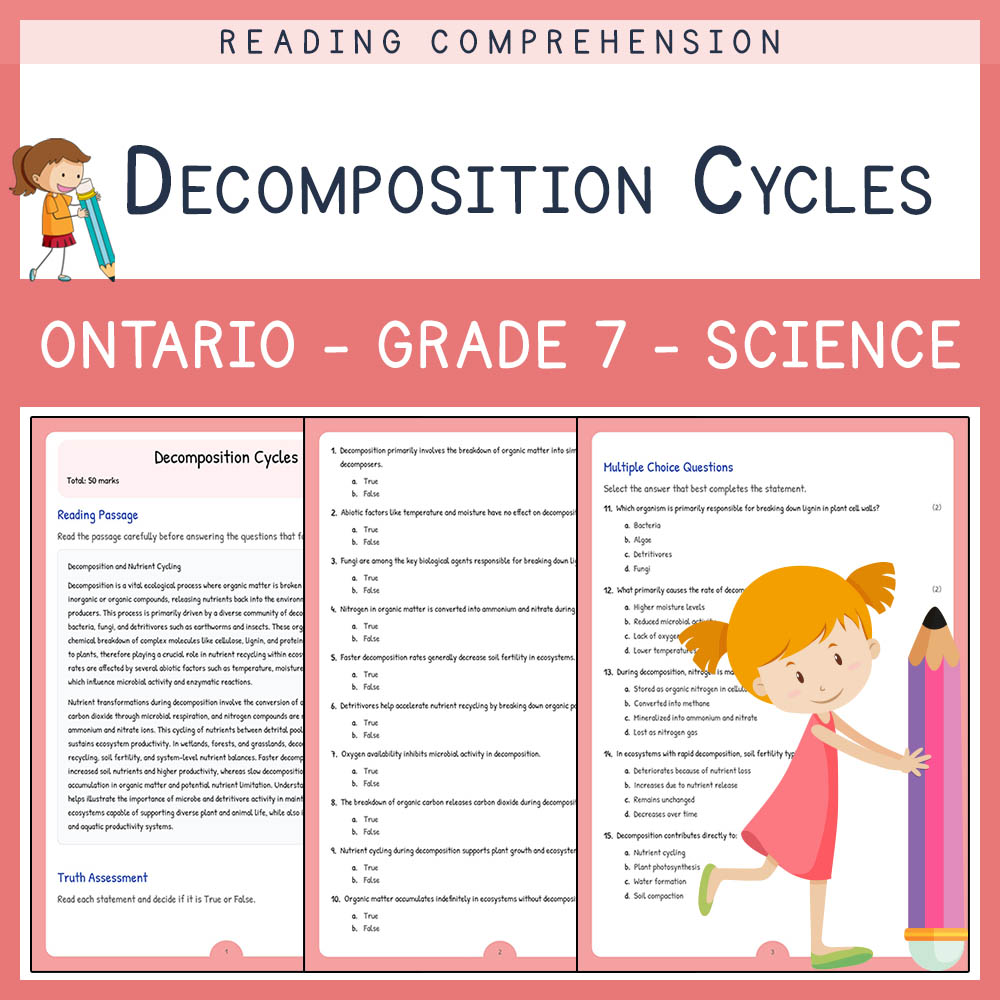
Grade 7 Science | Decomposition Cycles Worksheet & Answer Key (PDF)
Created byLumora LearningLearning Objectives
- Understand the processes involved in decomposition and nutrient cycling.
- Identify roles of detritivores, fungi, bacteria, and abiotic factors in decomposition.
- Describe carbon and nitrogen transformations during organic matter breakdown.

Grade 12 Science | Adaptation Over Time Worksheet | NGSSS Aligned
Created byLumora LearningLearning Objectives
- Explain how natural selection changes allele frequencies across generations in a population.
- Describe how heritable traits that increase fitness become more common in particular environments.
- Distinguish between directional adaptation and habitat-specific (variable) adaptation.

Grade 8 Science | Friction Effects Worksheet | NGSSS Aligned
Created byLumora LearningLearning Objectives
- Explain how friction acts as a contact force that opposes relative motion between surfaces
- Describe how surface type and normal force affect the size of friction and the rate of slowing
- Connect friction effects to real-world examples such as bicycle brakes and sleds
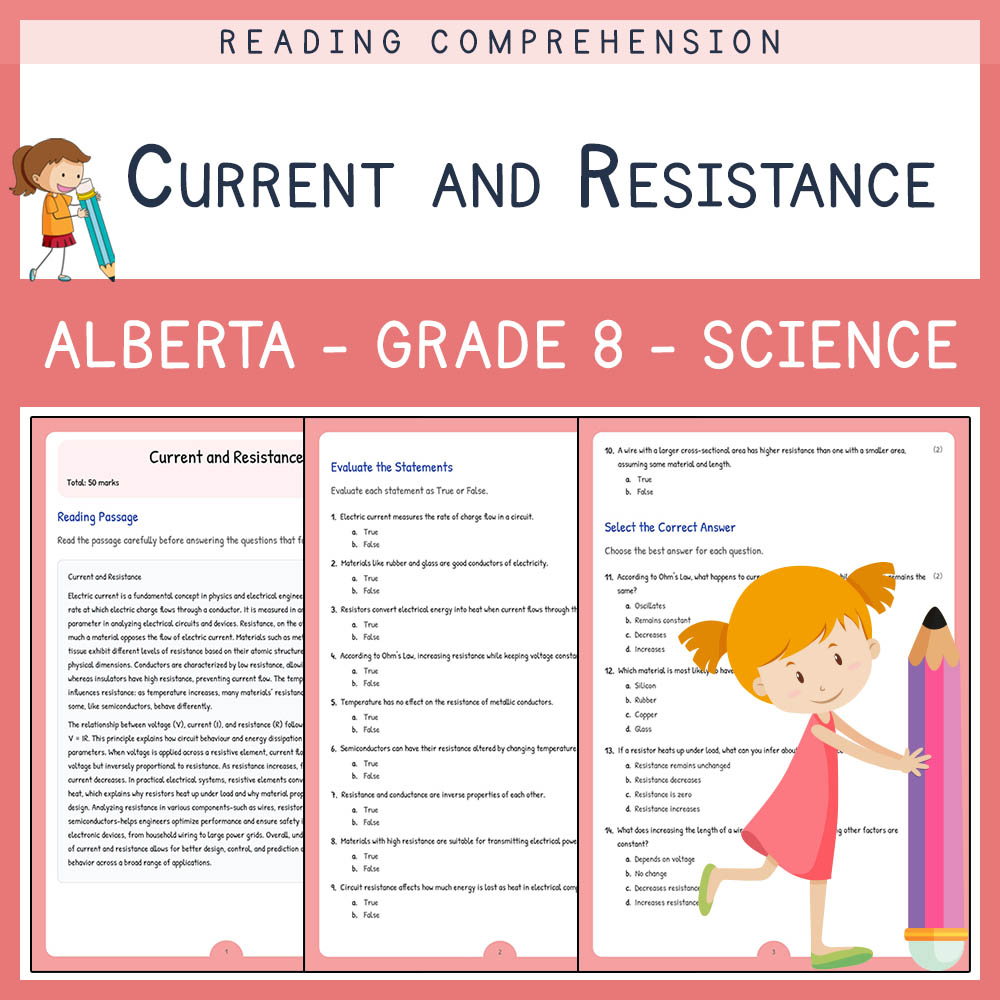
Grade 8 Science | Current and Resistance Worksheet | Alberta Standards
Created byLumora LearningLearning Objectives
- Understand the concept of electrical current and how it relates to charge flow.
- Describe resistance and factors affecting it in different materials.
- Explain the relationship between voltage, current, and resistance according to Ohm's Law.
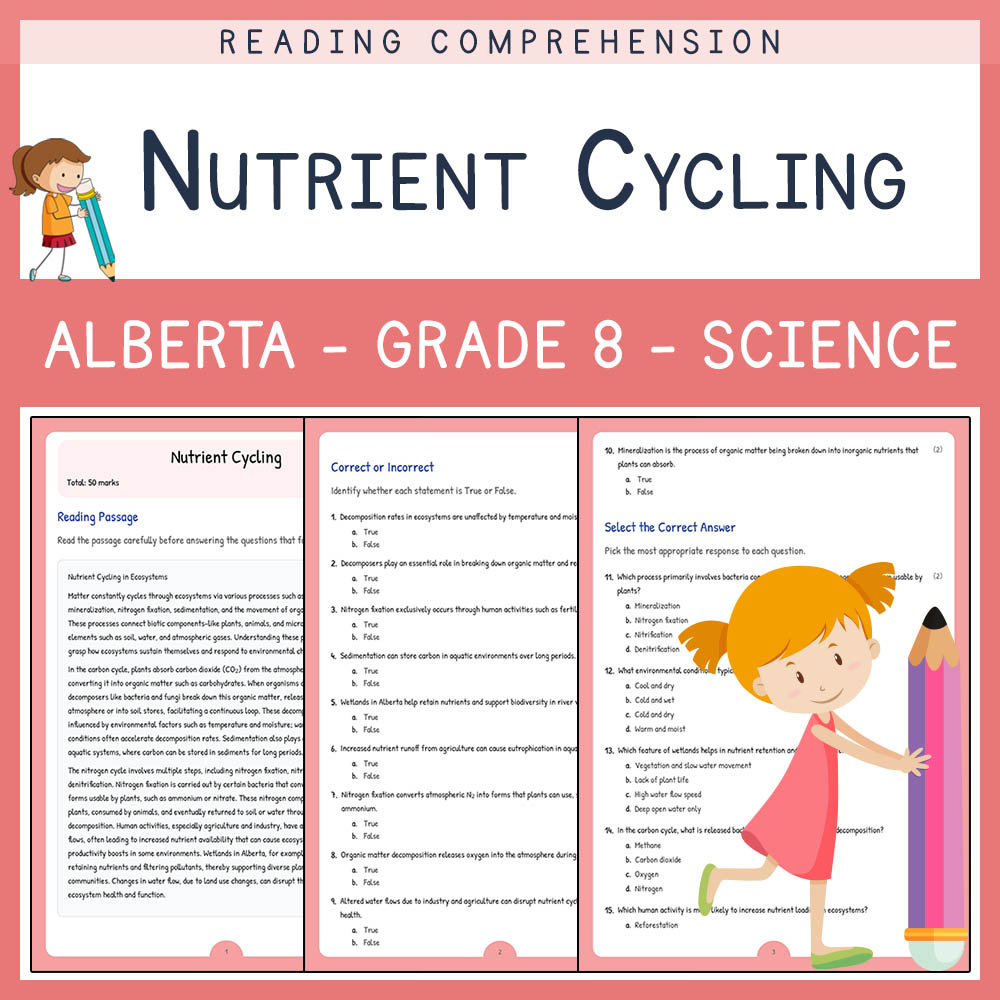
Grade 8 Science | Nutrient Cycling Worksheet | Alberta Standard
Created byLumora LearningLearning Objectives
- Understand the processes involved in nutrient cycling within ecosystems.
- Identify the roles of decomposers, nitrogen fixation, and sedimentation in nutrient pathways.
- Analyze how environmental factors such as temperature and moisture influence nutrient cycling rates.
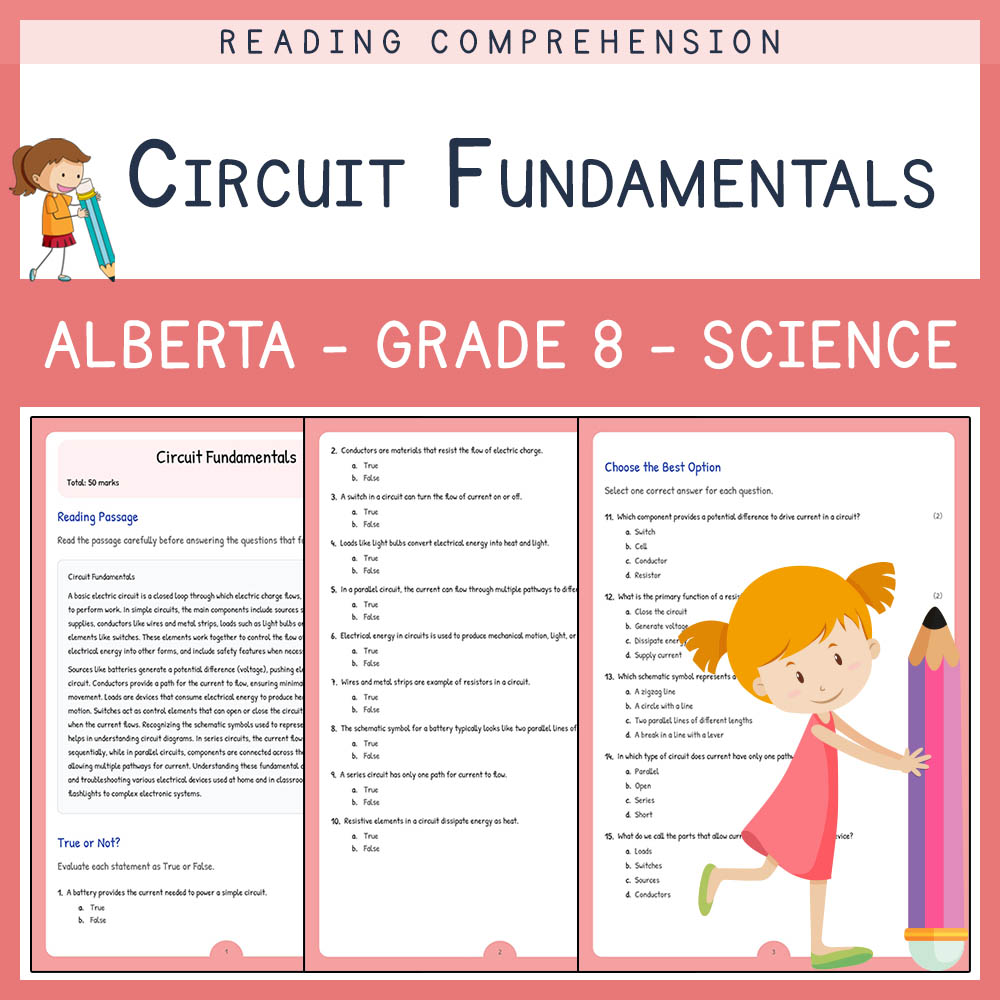
Grade 8 Science | Circuit Fundamentals Worksheet | Alberta Standard
Created byLumora LearningLearning Objectives
- Understand the basic components of a simple electric circuit and their functions.
- Identify schematic symbols for circuit elements such as sources, conductors, loads, and control devices.
- Differentiate between series and parallel circuit configurations.

Grade 7 Science | Matter Classification Worksheet | NGSSS Aligned
Created byLumora LearningLearning Objectives
- Classify matter as an element, compound, or mixture based on composition and particle relationships.
- Distinguish homogeneous mixtures from heterogeneous mixtures using observable uniformity or visible parts.
- Use classification to predict what may happen during physical and chemical changes in matter.
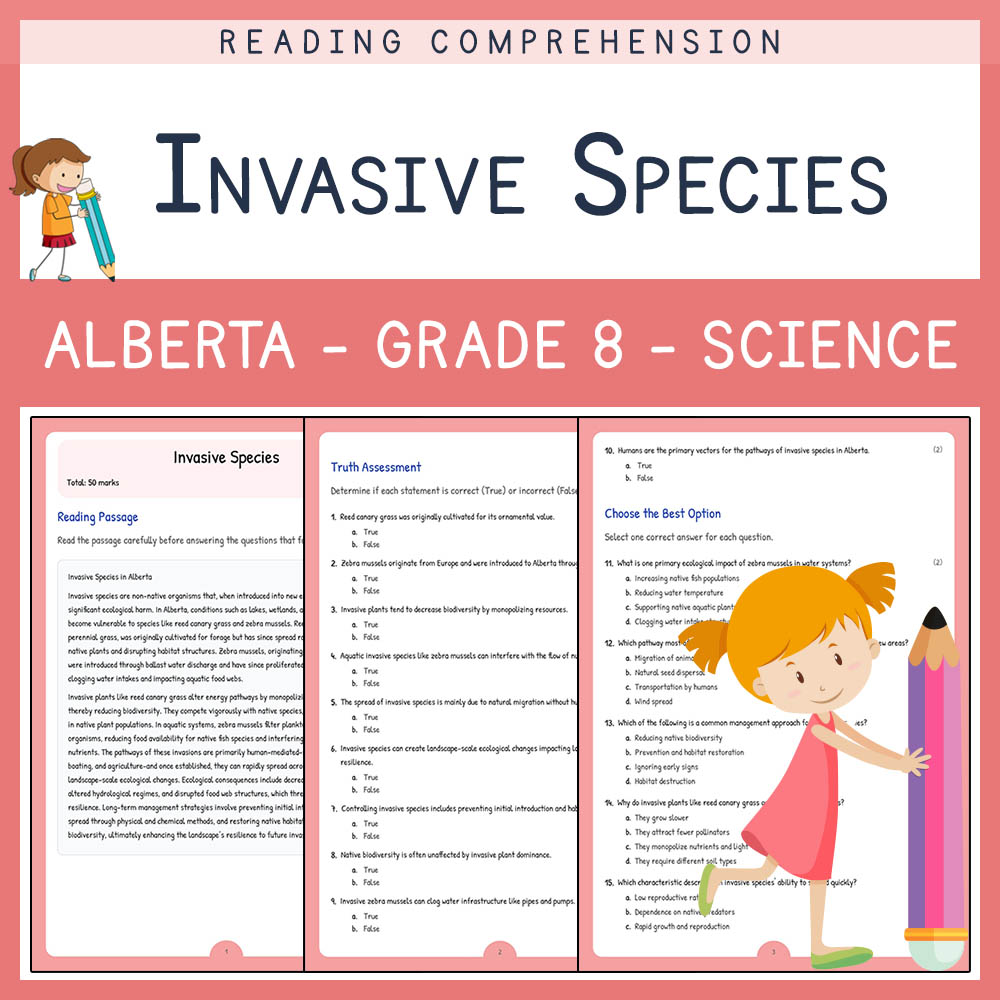
Grade 8 Science | Invasive Species Worksheet | Alberta Standard
Created byLumora LearningLearning Objectives
- Understand the impact of invasive species on native ecosystems in Alberta.
- Identify pathways and mechanisms by which invasive species disrupt native biodiversity.
- Analyze ecological consequences of invasive plants and aquatic organisms.
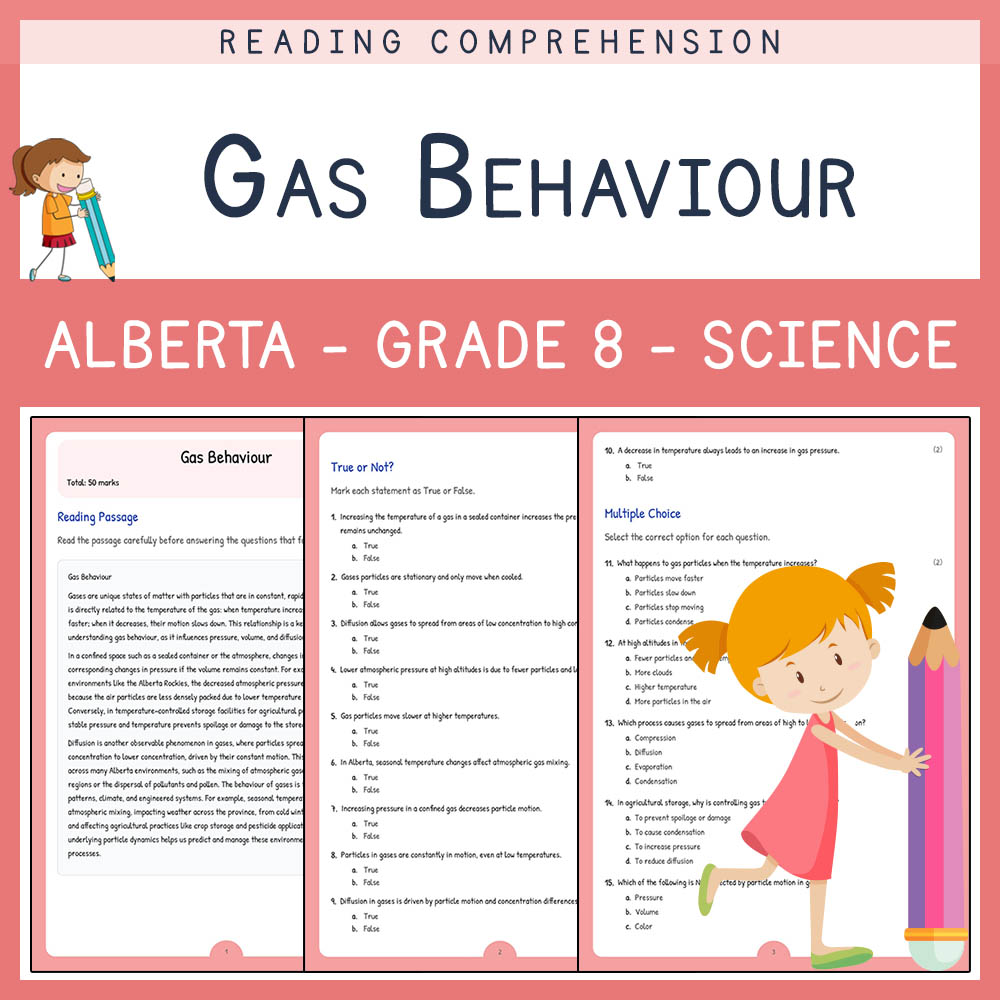
Grade 8 Science | Gas Behaviour Worksheet | Alberta Standards
Created byLumora LearningLearning Objectives
- Understand how particle motion, pressure, and temperature are interconnected in gases.
- Explain how changes in temperature can affect gas pressure and volume in closed systems.
- Describe real-world examples of gas behaviour, including atmospheric pressure variations and gas handling in agriculture.

Grade 10 Science | Orbital Gravity Models Worksheet | California Standards
Created byLumora LearningLearning Objectives
- Explain how gravity can produce centripetal acceleration in orbital motion
- Connect orbital shape and periodic timing to evidence-based models of gravity
- Interpret how observations of planetary and satellite orbits support a unified force model

Grade 10 Science | Predator Prey Dynamics Worksheet Elena | California Standards
Created byLumora LearningLearning Objectives
- Explain how predator-prey interactions influence population sizes in an ecosystem
- Describe feedback mechanisms that affect growth rates, stability, and carrying capacity
- Analyze how predator and prey changes can reshape community structure and resource use
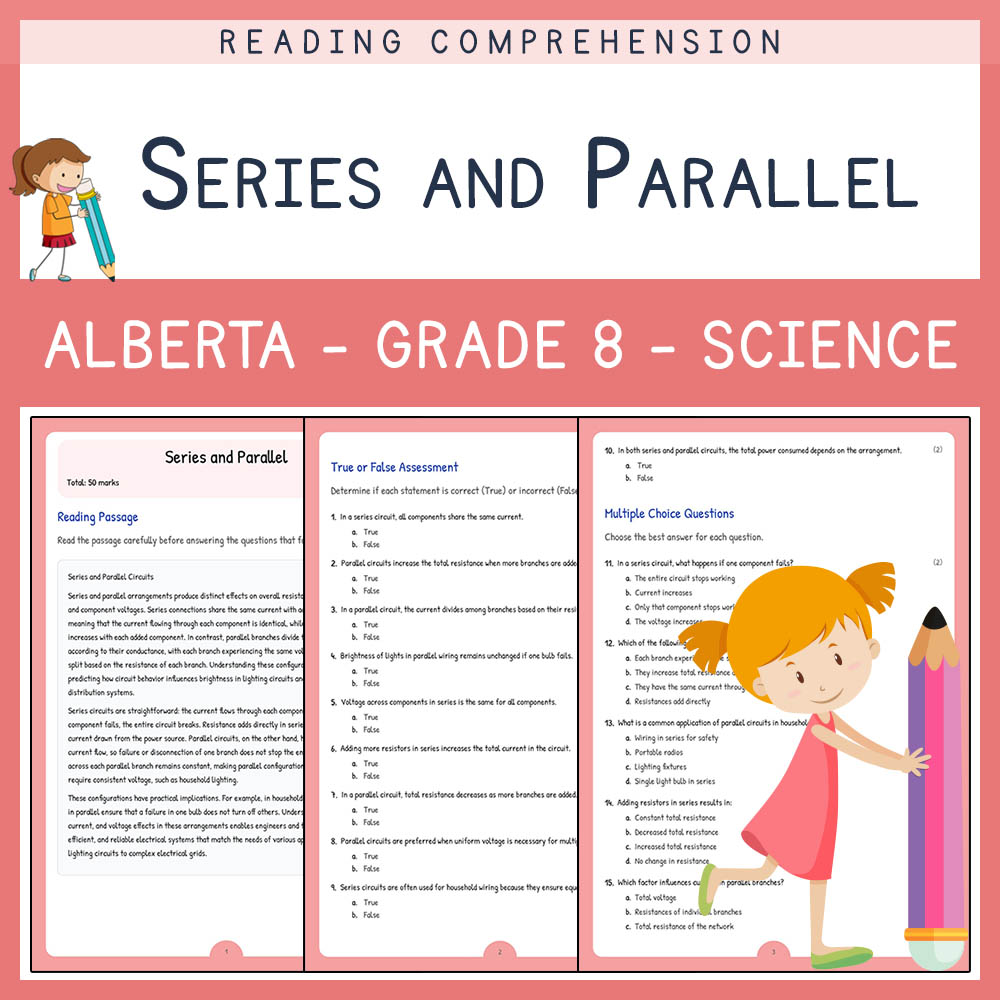
Grade 8 Science | Series and Parallel Worksheet | Alberta Standard
Created byLumora LearningLearning Objectives
- Understand the fundamental differences between series and parallel circuits.
- Identify how resistance, current, and voltage are distributed in series and parallel arrangements.
- Predict the effects of circuit configurations on brightness and power distribution.
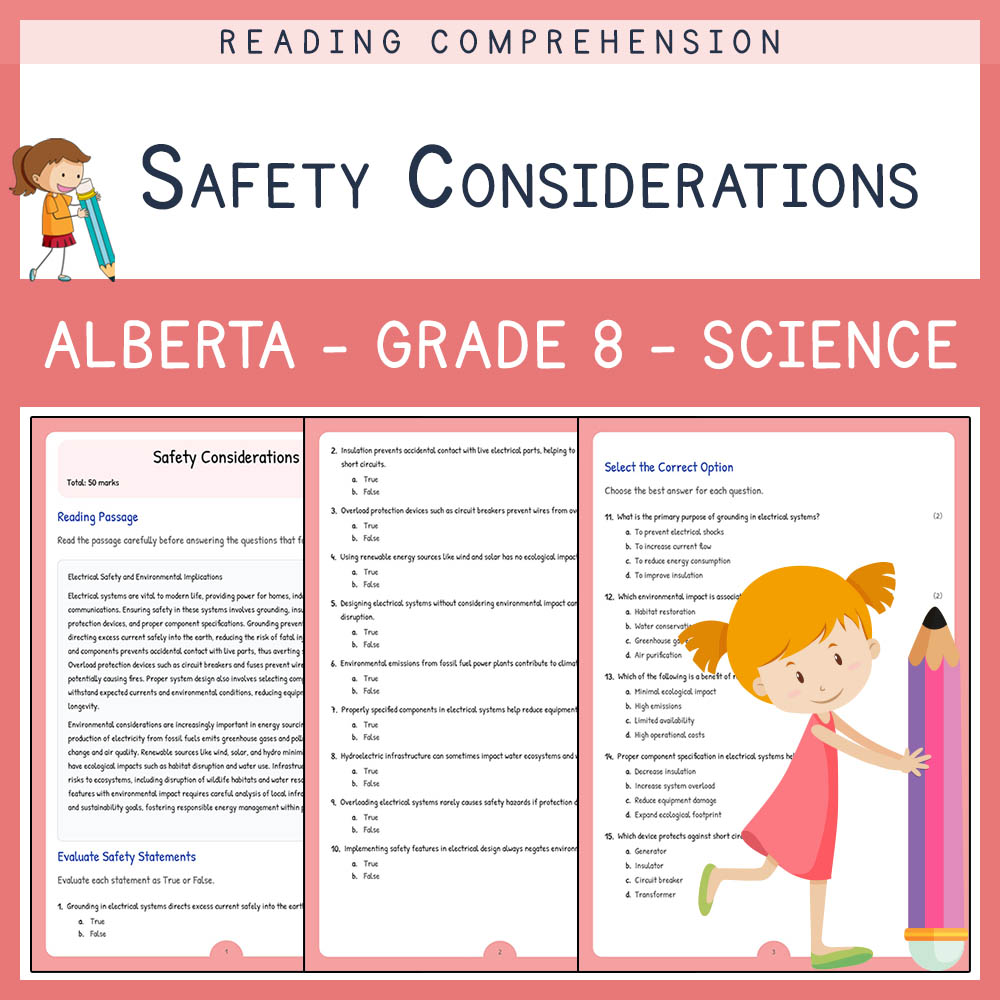
Grade 8 Science | Safety Considerations Worksheet | Alberta Standards
Created byLumora LearningLearning Objectives
- Understand the key safety features used in electrical system design.
- Identify environmental impacts associated with electrical energy sources.
- Evaluate safety and environmental trade-offs in electrical infrastructure.
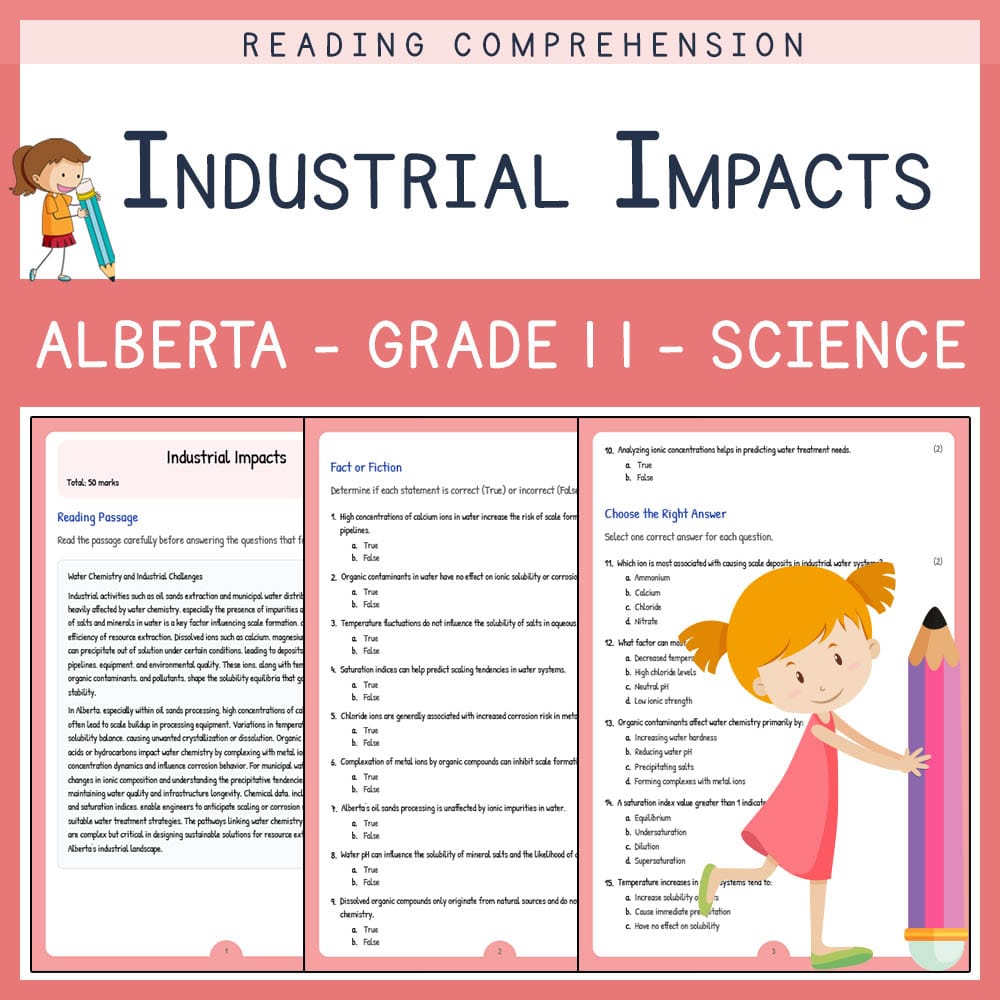
Grade 11 Science | Industrial Impacts Worksheet | Alberta Standards
Created byLumora LearningLearning Objectives
- Understand how dissolved ions, temperature shifts, and organic contaminants influence solubility equilibria in water systems.
- Interpret chemical data to evaluate operational challenges related to scale formation, corrosion, and impurity effects.
- Analyze the impact of environmental impurities on infrastructure, especially in Alberta's oil sands processing and municipal water systems.
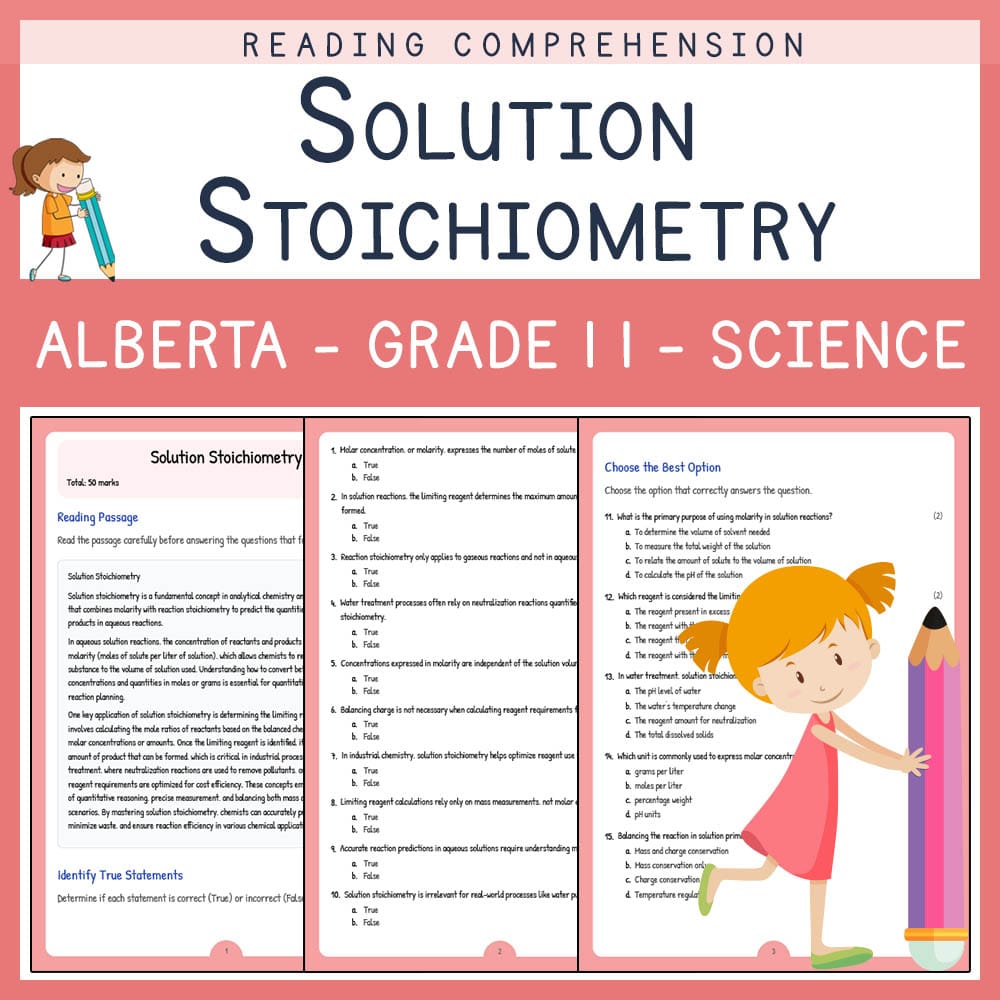
Grade 11 Science | Solution Stoichiometry Worksheet | Alberta Standards
Created byLumora LearningLearning Objectives
- Understand the concept of concentration and how it relates to molar ratios in aqueous reactions.
- Apply mole–mole relationships to predict reactant and product amounts in solution.
- Identify limiting reagents in solution-phase reactions through stoichiometric calculations.
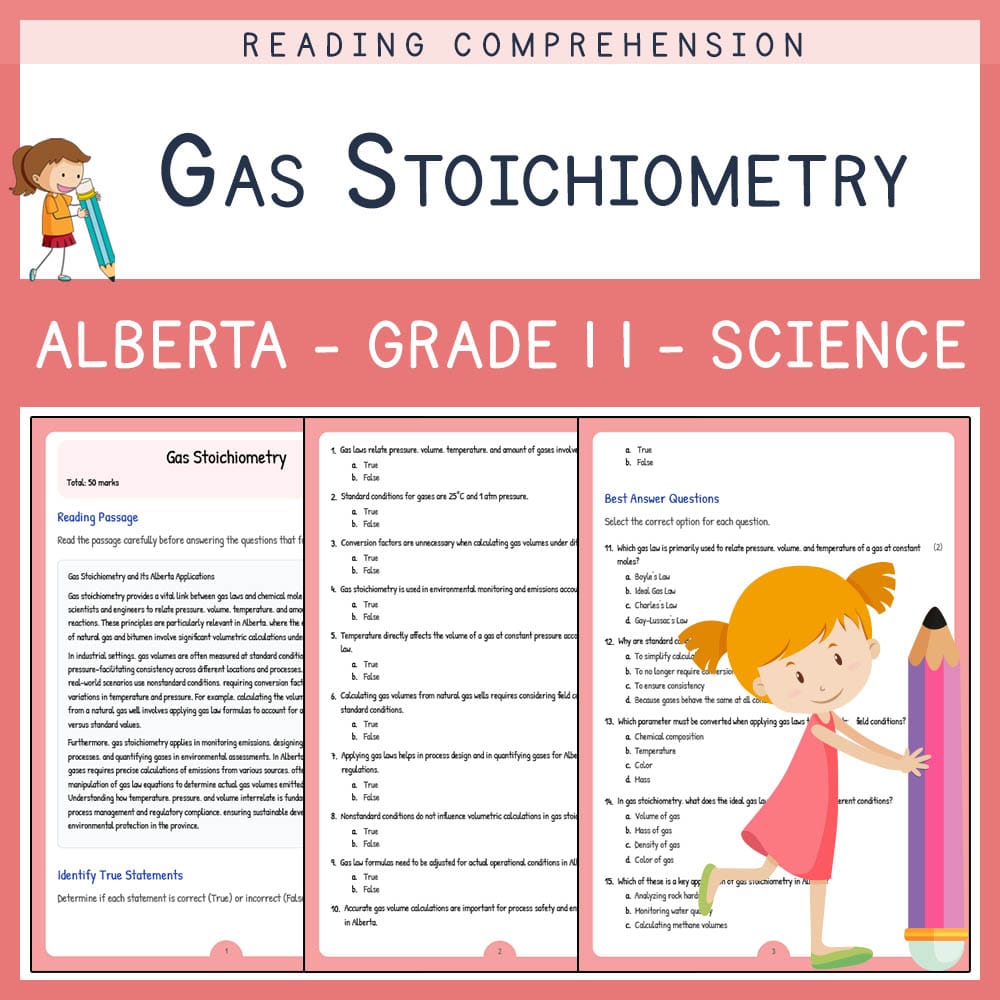
Grade 11 Science | Gas Stoichiometry Worksheet | Alberta Standards
Created byLumora LearningLearning Objectives
- Understand the principles of gas laws and how they relate to mole relationships in gas stoichiometry.
- Apply gas law equations to calculate pressures, volumes, and temperatures of gases in chemical reactions.
- Analyze how standard and nonstandard conditions impact volumetric conversions in industrial contexts.
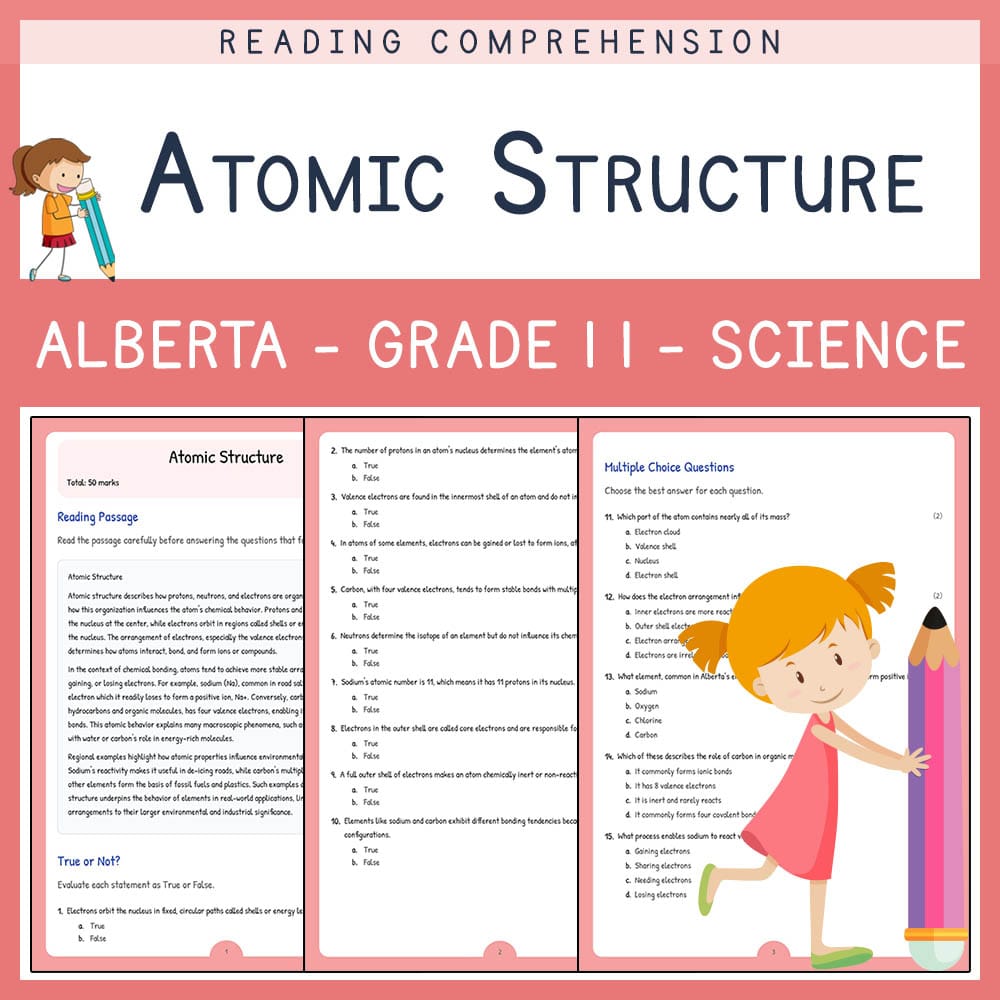
Grade 11 Science | Atomic Structure Worksheet | Alberta Standards
Created byLumora LearningLearning Objectives
- Describe the organization of protons, neutrons, and electrons within an atom.
- Explain how electron arrangements, including shells and valence electrons, influence chemical reactivity and bonding.
- Identify examples of elements used in industry and environment, such as sodium and carbon, and their atomic properties.
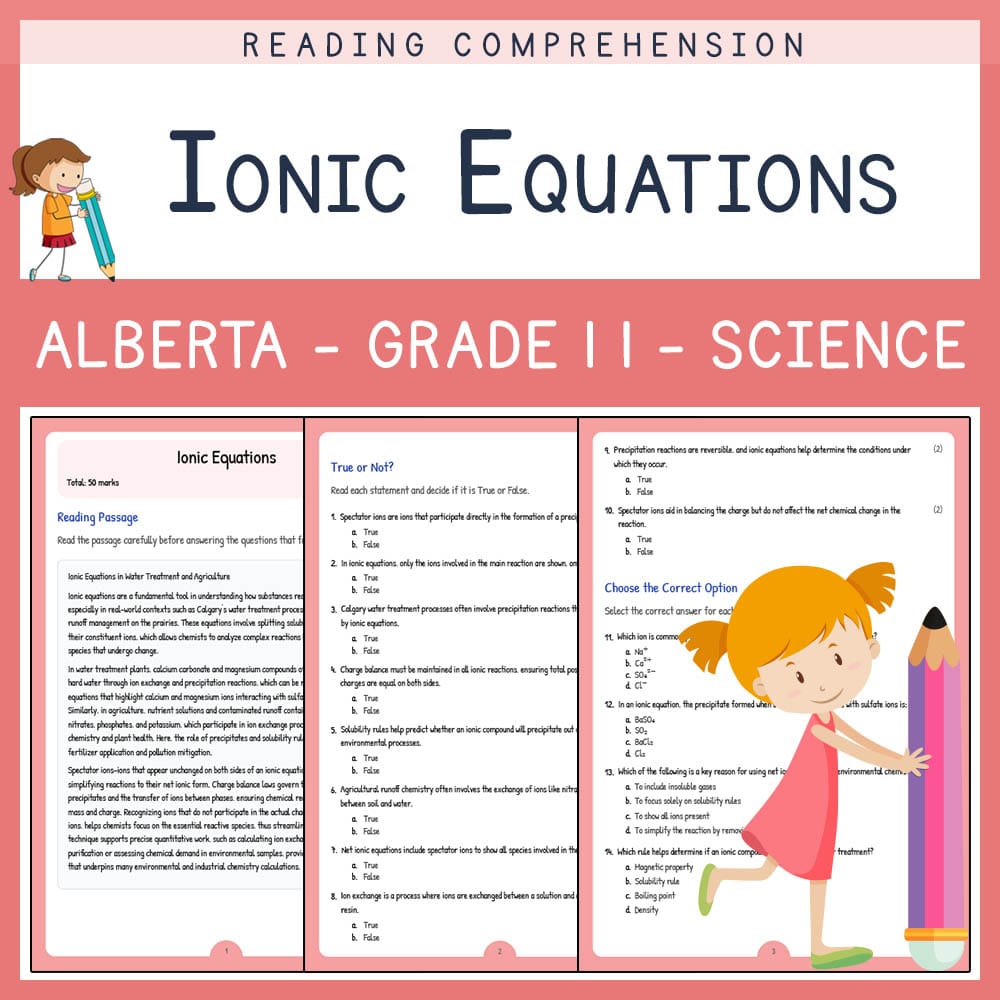
Grade 11 Science | Ionic Equations Worksheet | Alberta Standards
Created byLumora LearningLearning Objectives
- Understand how to convert chemical reactions into ionic equations, including complete and net forms.
- Identify spectator ions and distinguish them from reacting species in aqueous solutions.
- Apply charge balance and solubility rules to balance ionic equations accurately.

Grade 9 Science | Power And Rates Worksheet | NGSSS Aligned
Created byLumora LearningLearning Objectives
- Explain what power means in terms of the rate of energy transfer or the rate of doing work.
- Compare power in two scenarios using the relationship between energy transferred and time.
- Apply power and rate reasoning to real-world devices such as motors and appliances.
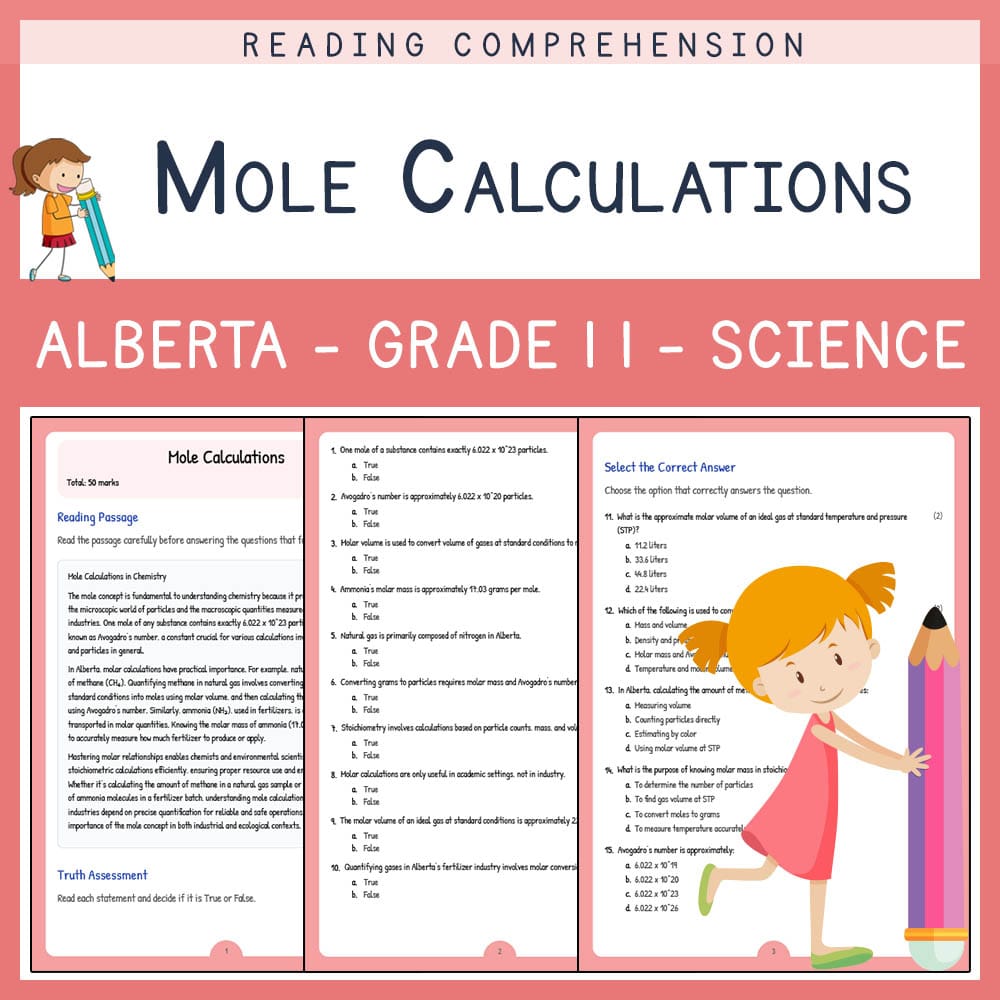
Grade 11 Science | Mole Calculations Worksheet | Alberta Standards
Created byLumora LearningLearning Objectives
- Understand the concept of the mole and its application in quantitative chemistry.
- Learn to convert between grams, moles, and particles using molar mass and Avogadro's number.
- Apply molar calculations to real-world Alberta contexts such as natural gas and fertilizer compounds.

Grade 9 Science | Reaction Evidence Worksheet | NGSSS Assessment
Created byLumora LearningLearning Objectives
- Identify observable evidence that indicates a chemical reaction has formed new substances.
- Explain how reaction evidence connects to atomic rearrangement and bonding changes.
- Distinguish chemical changes from physical changes using evidence such as gas, precipitate, color/temperature/odor changes.

Grade 9 Science | Measurement Practices Worksheet | NGSSS Assessment
Created byLumora LearningLearning Objectives
- Explain how measurement practices turn observations into usable scientific data.
- Distinguish between accuracy and precision using real measurement examples.
- Describe how calibration and repeatability improve reliability of experimental data.

Grade 9 Science | Balancing Equations Worksheet | NGSSS Florida Aligned
Created byLumora LearningLearning Objectives
- Explain how balancing chemical equations reflects conservation of matter.
- Use coefficients to ensure the number of atoms of each element matches on both sides of an equation.
- Interpret coefficients as relative particle ratios to make predictions about products.

Grade 9 Science | Tides and Gravity Worksheet | NGSSS Aligned
Created byLumora LearningLearning Objectives
- Explain how gravity and Earth–Moon–Sun geometry create ocean tides
- Describe how the Moon’s orbit changes tidal timing into a lunar-day cycle
- Compare spring tides and neap tides using the relative positions of the Moon and Sun

Grade 9 Science | Forces Overview Worksheet | NGSSS Aligned
Created byLumora LearningLearning Objectives
- Explain how forces change an object’s state of motion through acceleration and changes in velocity.
- Distinguish between contact forces and field forces and give examples of each.
- Use force vectors to represent both magnitude and direction of forces.

Grade 9 Science | Climate Variability Worksheet | Florida NGSSS Aligned
Created byLumora LearningLearning Objectives
- Explain how climate variability affects weather averages over months to years
- Describe ocean-atmosphere interactions (El Niño and La Niña) and their impacts on temperature and rainfall
- Distinguish natural variability from long-term climate trends using evidence across timescales and regions

Grade 9 Science | Atmospheric Weather Processes Worksheet | NGSSS Aligned
Created byLumora LearningLearning Objectives
- Explain how differences in air temperature create differences in air pressure that drive wind and atmospheric circulation.
- Describe how humidity and temperature determine whether water vapor condenses or evaporates to form clouds and precipitation.
- Compare radiation, conduction, and convection as mechanisms of heat transfer that influence weather at local and regional scales.
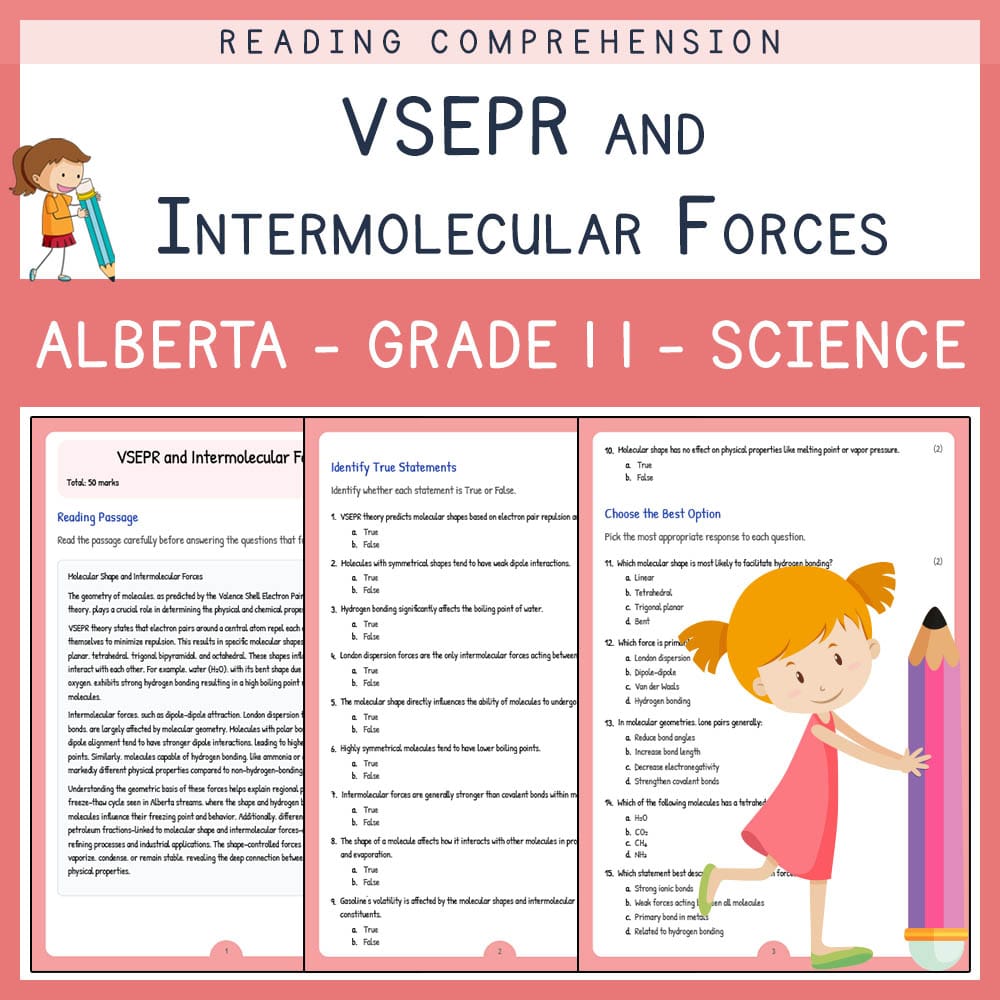
Grade 11 Science | VSEPR and Intermolecular Forces | Alberta Standards
Created byLumora LearningLearning Objectives
- Explain the VSEPR model and how molecular shapes influence intermolecular interactions.
- Describe how molecular geometry affects dipole moments and hydrogen bonding capabilities.
- Analyze the effects of molecular shape on boiling and melting points using real-world examples.
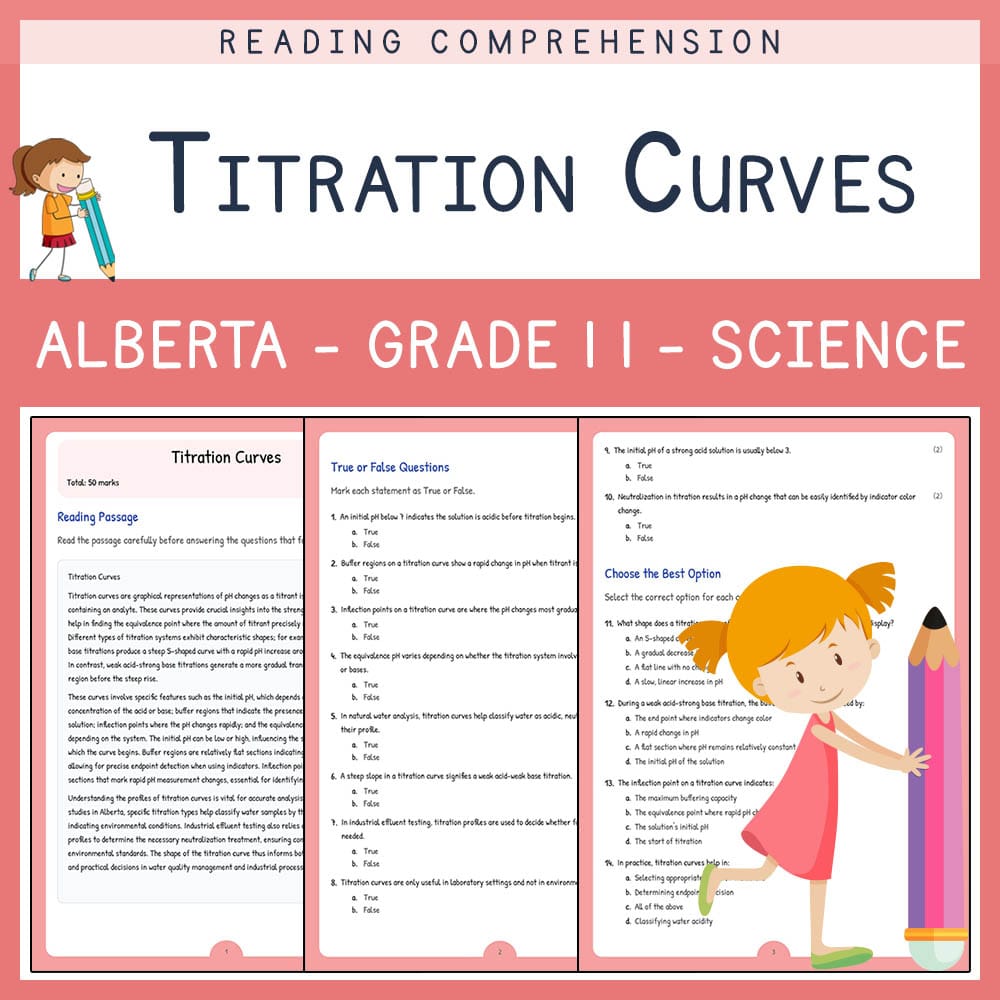
Grade 11 Science | Titration Curves Worksheet | Alberta Standards
Created byLumora LearningLearning Objectives
- Explain the shapes and features of different titration curves, including strong acid–strong base, weak acid–strong base, and weak base–strong acid systems.
- Identify key points on a titration curve such as initial pH, buffer regions, inflection points, and equivalence point pH.
- Determine the appropriate endpoint based on titration curve features for different acid–base systems.
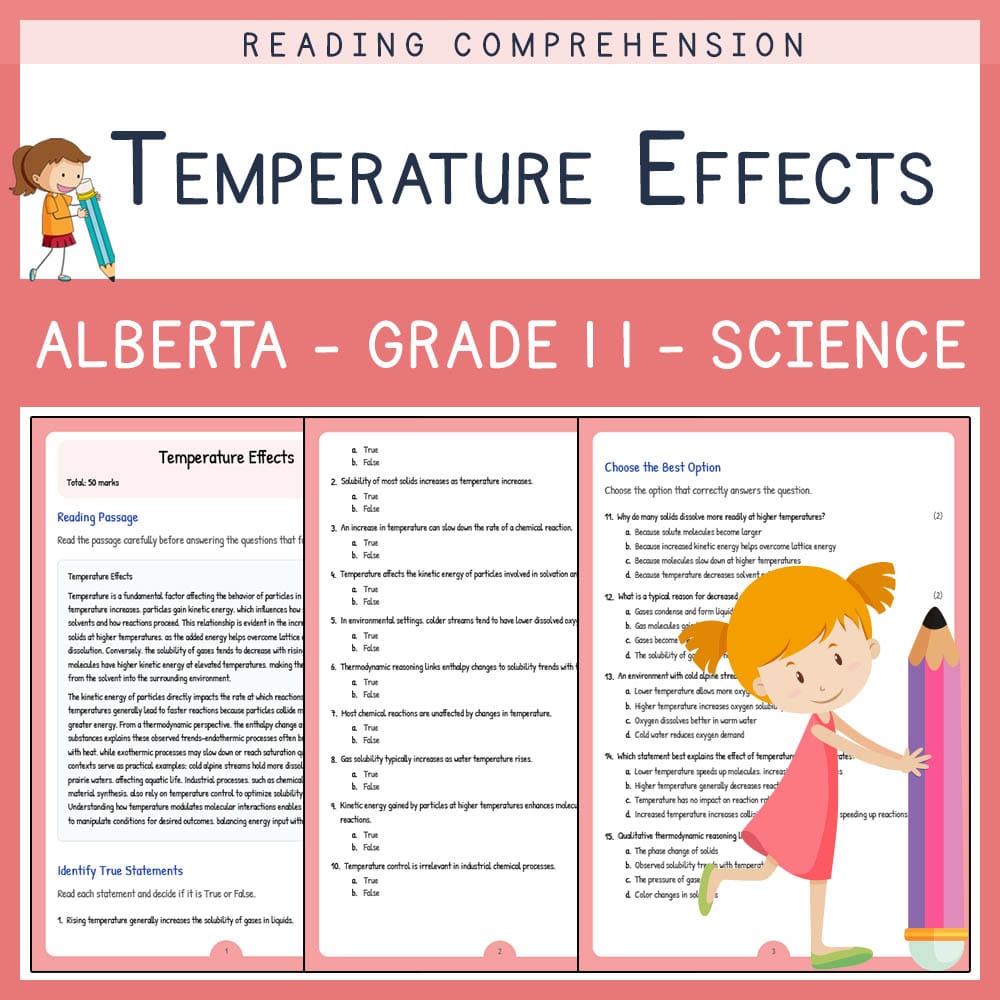
Grade 11 Science | Temperature Effects Worksheet | Alberta Standards
Created byLumora LearningLearning Objectives
- Describe how temperature influences the kinetic energy of particles and solvent–solute interactions.
- Explain why solids dissolve more readily at higher temperatures and why gas solubility decreases with increasing temperature.
- Apply qualitative thermodynamic reasoning to analyze solubility and reaction rate trends with temperature.
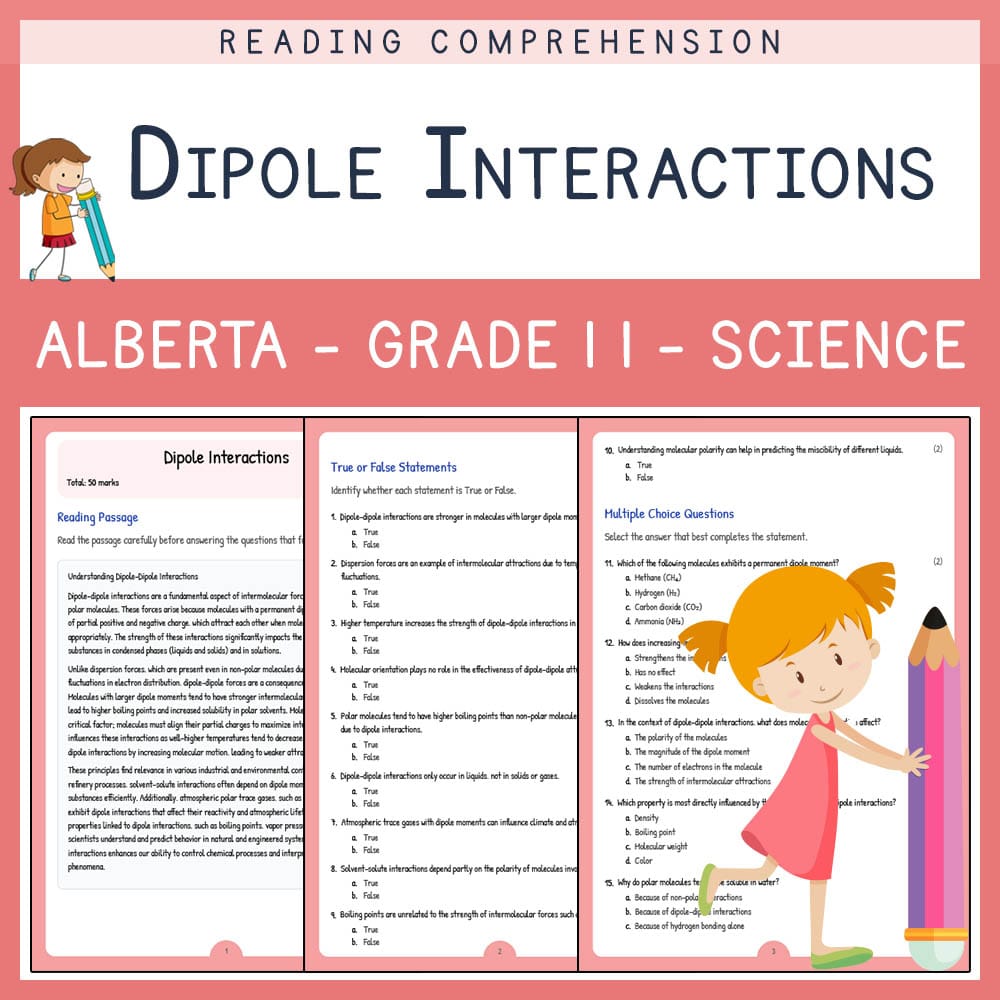
Grade 11 Science | Dipole Interactions Worksheet | Alberta Standards
Created byLumora LearningLearning Objectives
- Understand the concept of molecular dipoles and how they affect intermolecular forces.
- Explain the role of dipole–dipole interactions in determining physical properties such as boiling point and solubility.
- Analyze examples of dipole interactions in real-world applications like solvent–solute interactions and atmospheric gases.
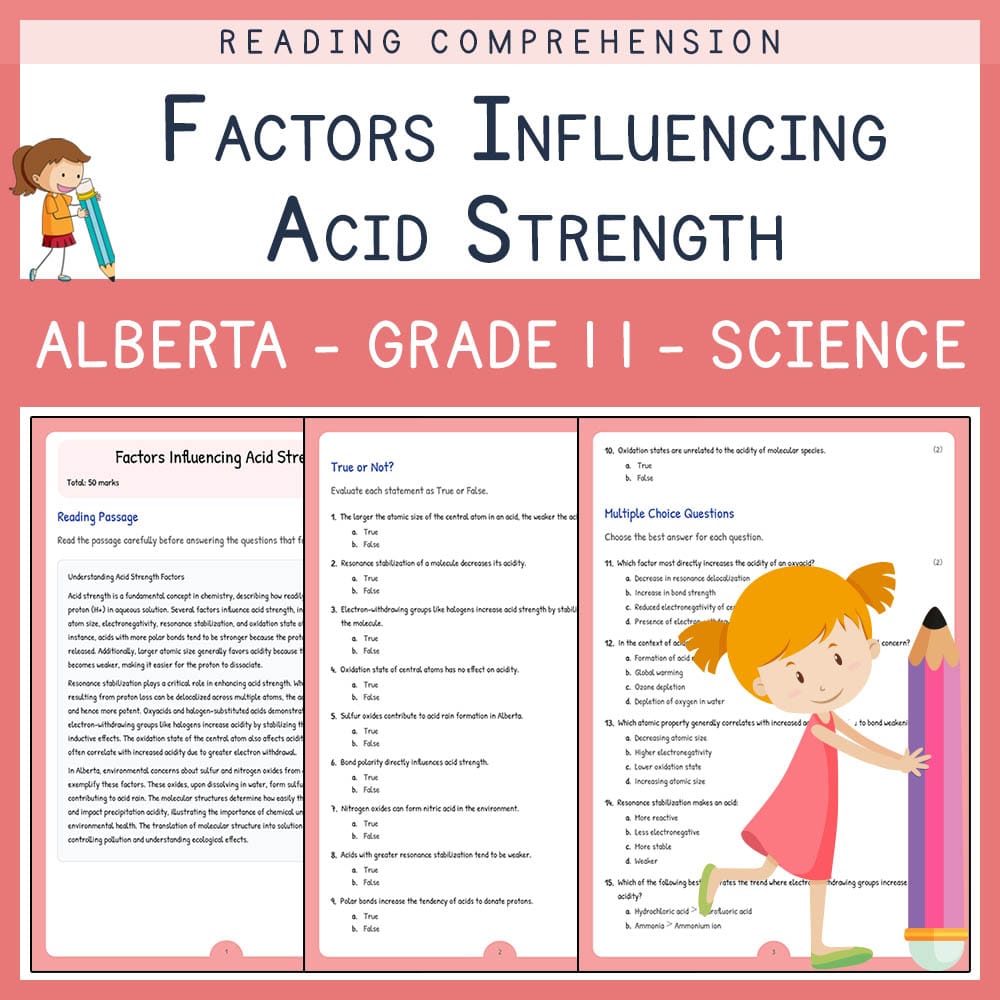
Grade 11 Science | Factors Influencing Acid Strength | Alberta Standards
Created byLumora LearningLearning Objectives
- Understand the key factors affecting acid strength such as bond polarity, atomic size, electronegativity, resonance, and oxidation state.
- Analyze how molecular structures like oxyacids and halogen substituents influence acidity.
- Explore environmental and industrial examples of acid formation, focusing on sulfur and nitrogen oxides.
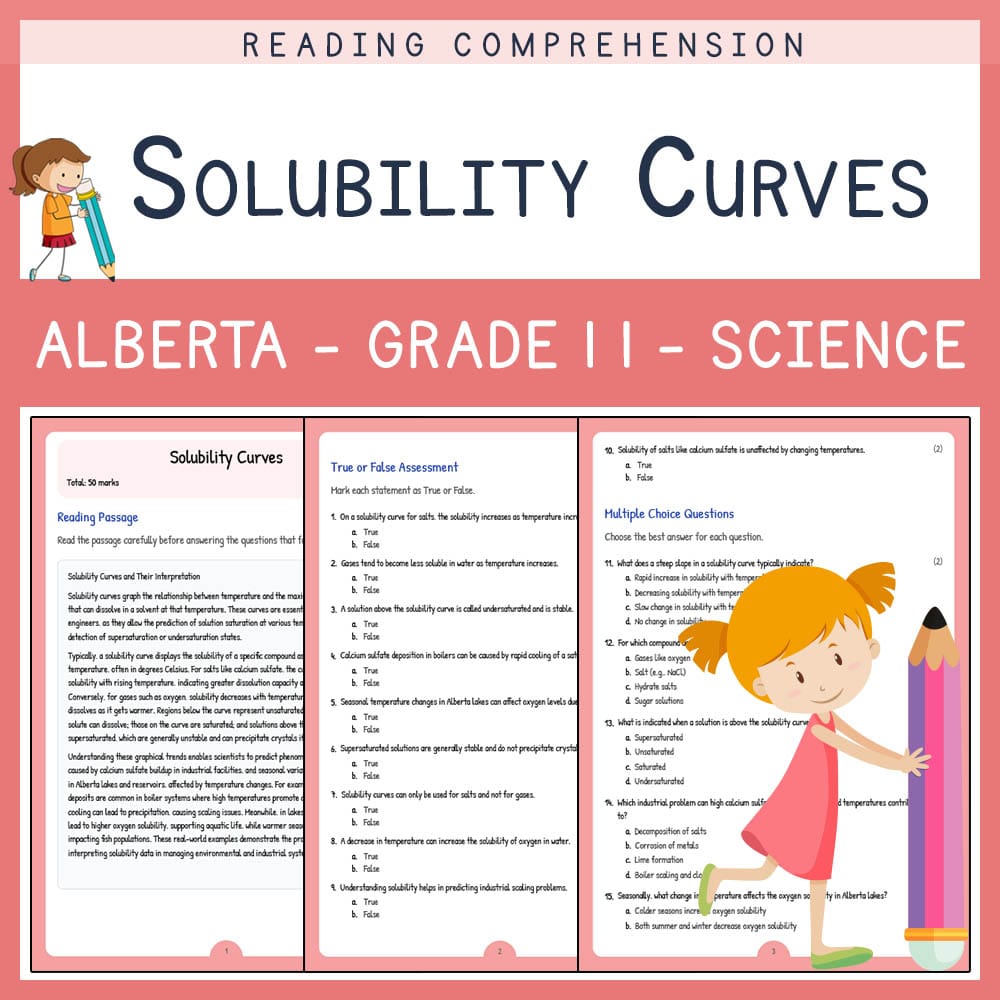
Grade 11 Science | Solubility Curves Worksheet | Alberta Standards
Created byLumora LearningLearning Objectives
- Understand how to read and interpret solubility curves for different compounds.
- Identify regions of unsaturated, saturated, and supersaturated solutions on a graph.
- Connect graphical trends to molecular interactions and predict solution states.
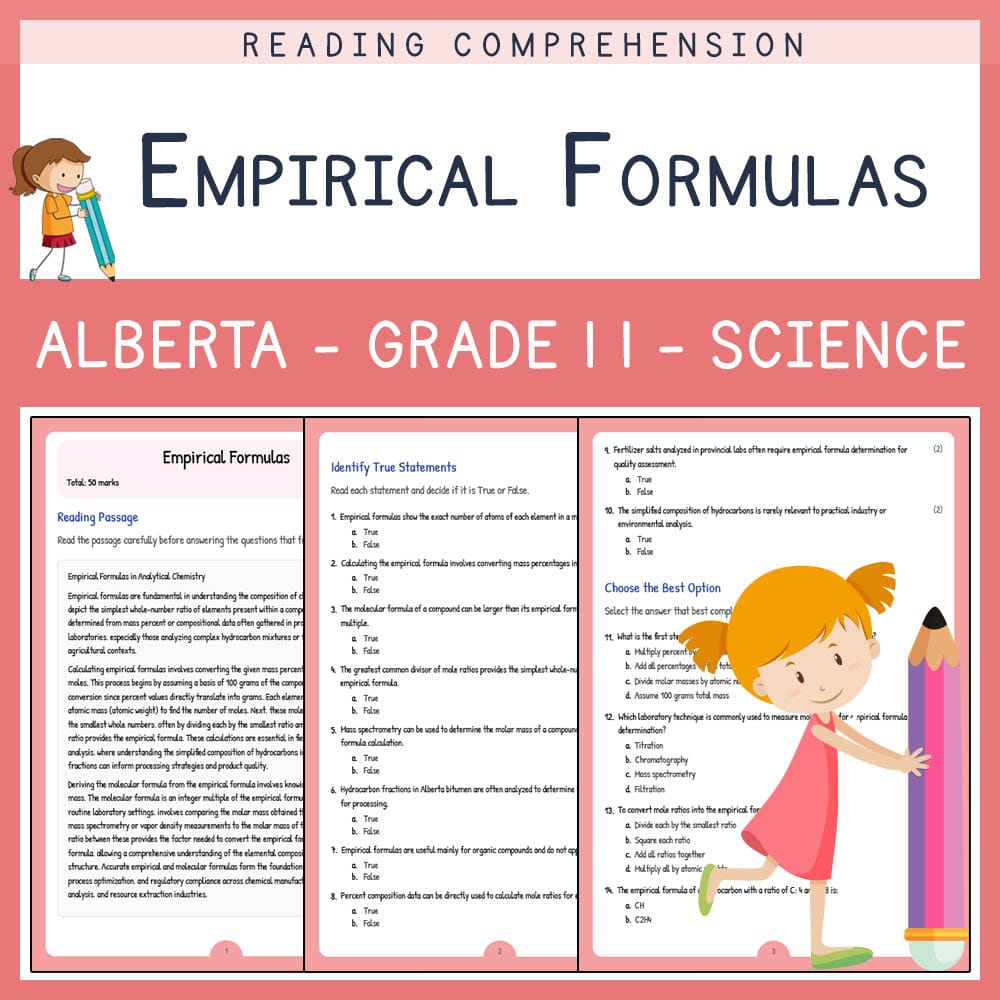
Grade 11 Science | Empirical Formulas Worksheet | Alberta Standards
Created byLumora LearningLearning Objectives
- Understand how empirical formulas are derived from mass percent and compositional data.
- Learn to convert percent composition to mole ratios for elements in a compound.
- Determine empirical and molecular formulas from analytical data.
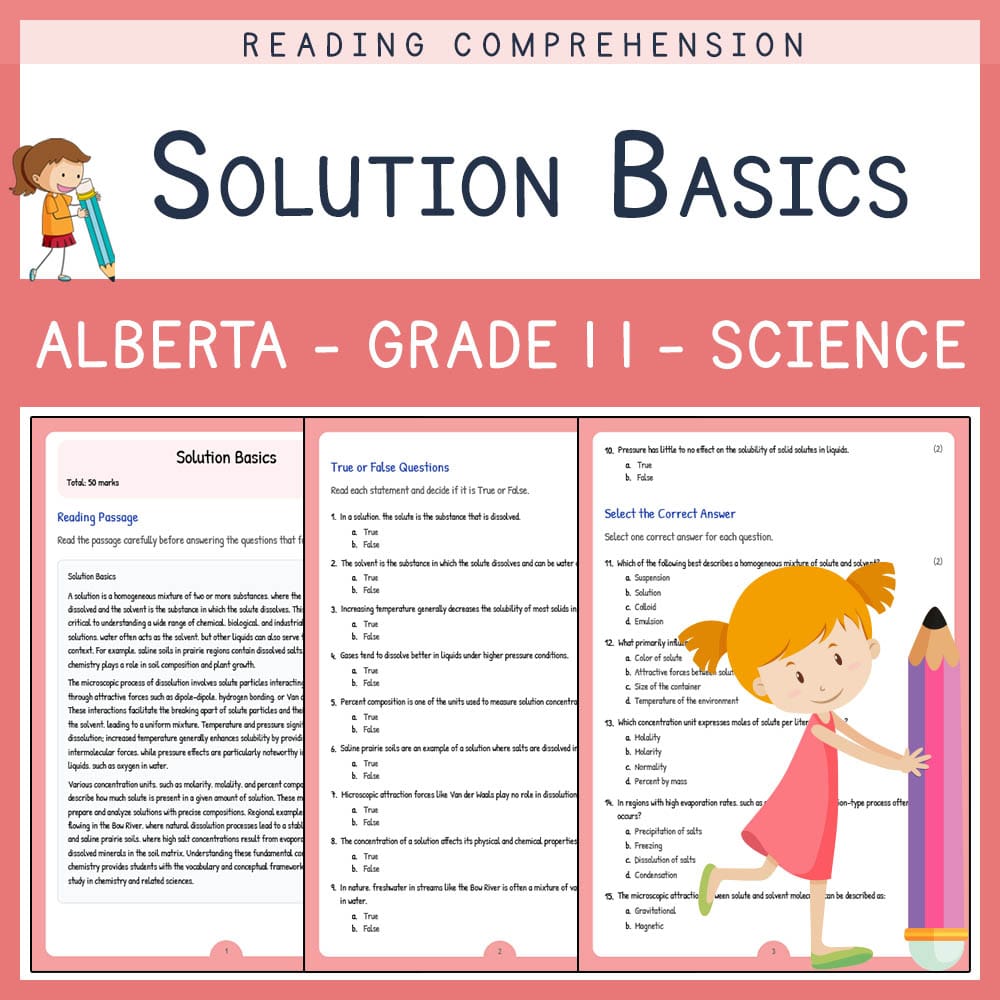
Grade 11 Science | Solution Basics Worksheet | Alberta Standards
Created byLumora LearningLearning Objectives
- Define solute and solvent in the context of solutions.
- Understand concentration units and how they describe solution strength.
- Explain the microscopic interactions during dissolution and how temperature and pressure affect solution formation.
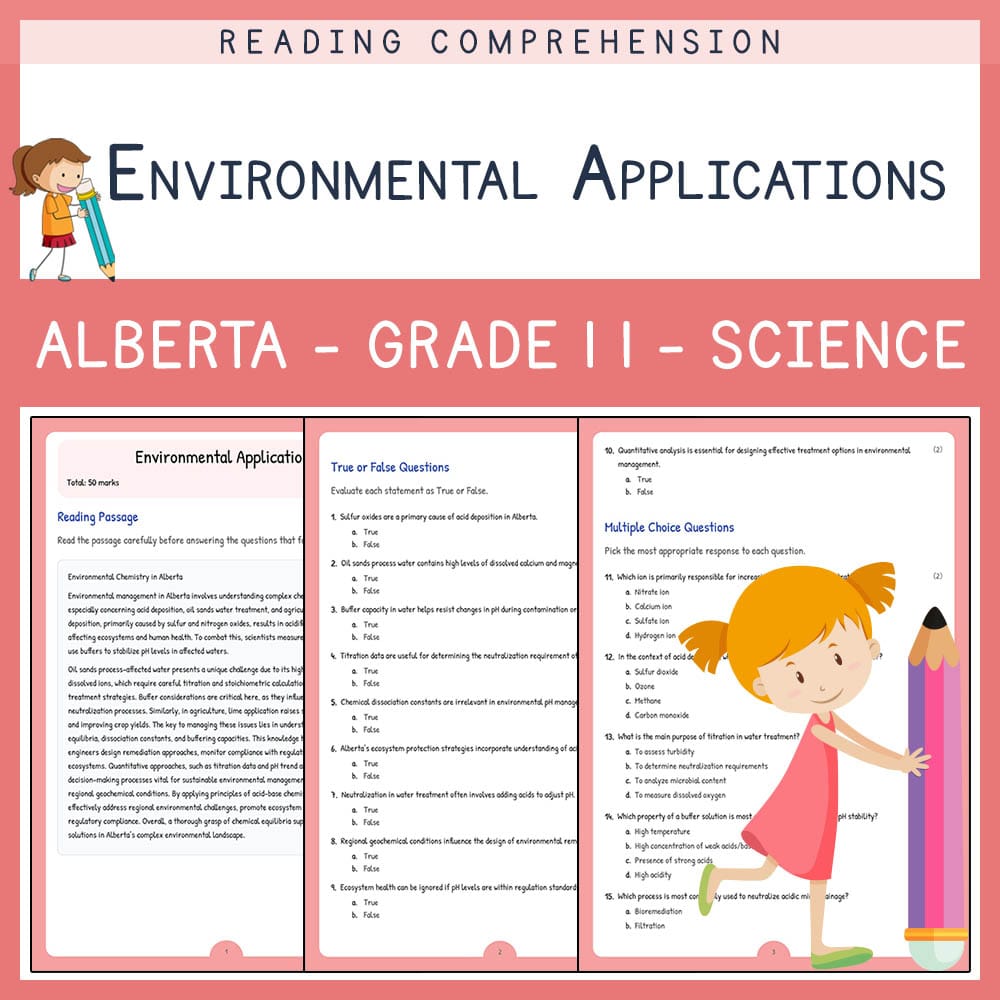
Grade 11 Science | Environmental Applications Worksheet | Alberta Standards
Created byLumora LearningLearning Objectives
- Understand the principles of acid-base chemistry in environmental contexts.
- Analyze pH trends and buffering capacity in ecological systems.
- Apply stoichiometry and titration data to assess neutralization requirements.
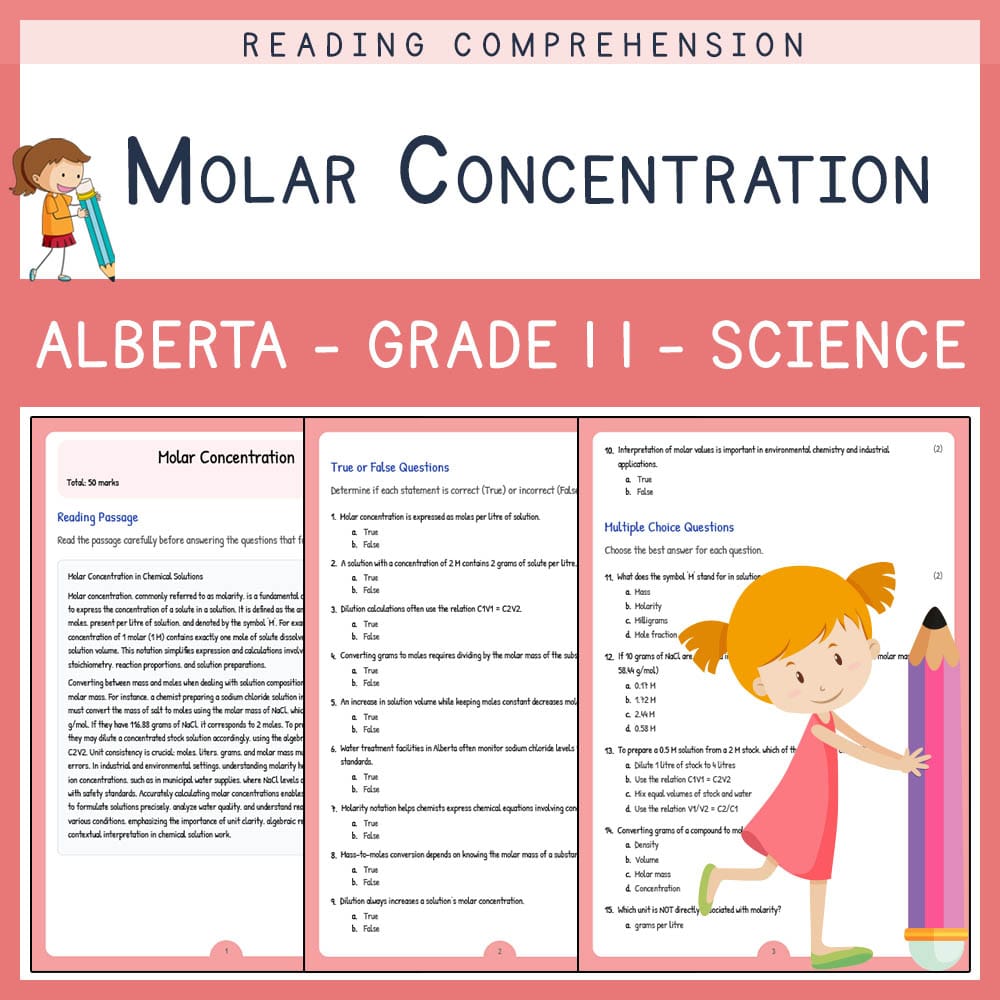
Grade 11 Science | Molar Concentration Worksheet | Alberta Standards
Created byLumora LearningLearning Objectives
- Define molar concentration and understand its notation.
- Convert between mass, moles, and volume in solution preparation.
- Apply dilution calculations to prepare solutions from concentrated stocks.
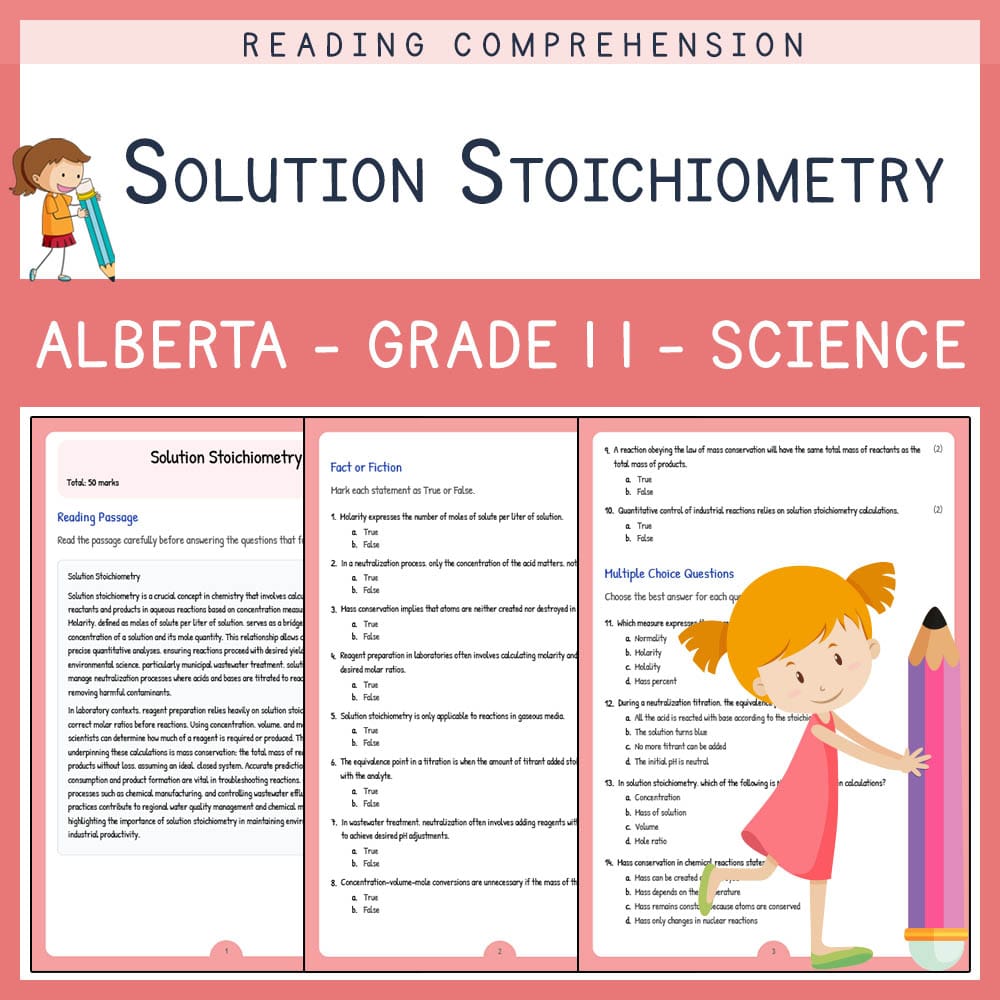
Grade 11 Science | Solution Stoichiometry Worksheet Elena | Alberta Standards
Created byLumora LearningLearning Objectives
- Understand the relationship between concentration, volume, and mole calculations in aqueous reactions.
- Apply mole relationships and equivalence concepts to predict reactant and product amounts.
- Utilize concentration-volume-mole conversions to support quantitative analysis in environmental and industrial contexts.
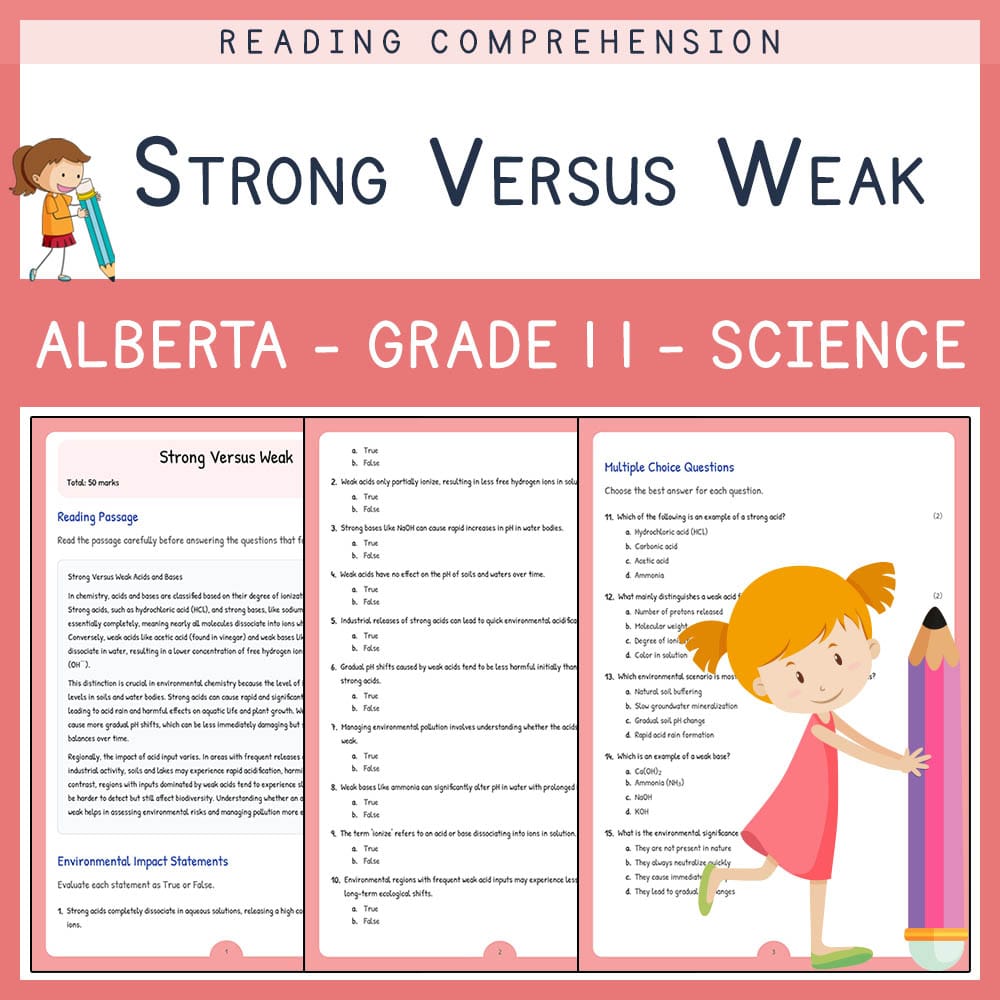
Grade 11 Science | Strong Versus Weak Acid Worksheet | Alberta Standards
Created byLumora LearningLearning Objectives
- Explain the difference between strong and weak acids and bases in terms of ionization.
- Identify examples of strong and weak acids/bases in environmental contexts.
- Understand how the strength of acids and bases impacts their environmental and biological effects.
Browse more categories
About Science Worksheets
Find Science worksheets spanning core skills, practice, and review. All 42,859 resources are instant PDF downloads for the classroom or home.
Every worksheet on MyTeachingSheets is created by independent teacher-authors and reviewed before publication. All resources download as printable PDFs for classroom, homework, or at-home practice, and many include answer keys. Preview any worksheet free before buying.