
Science Worksheets
42,859 subject resources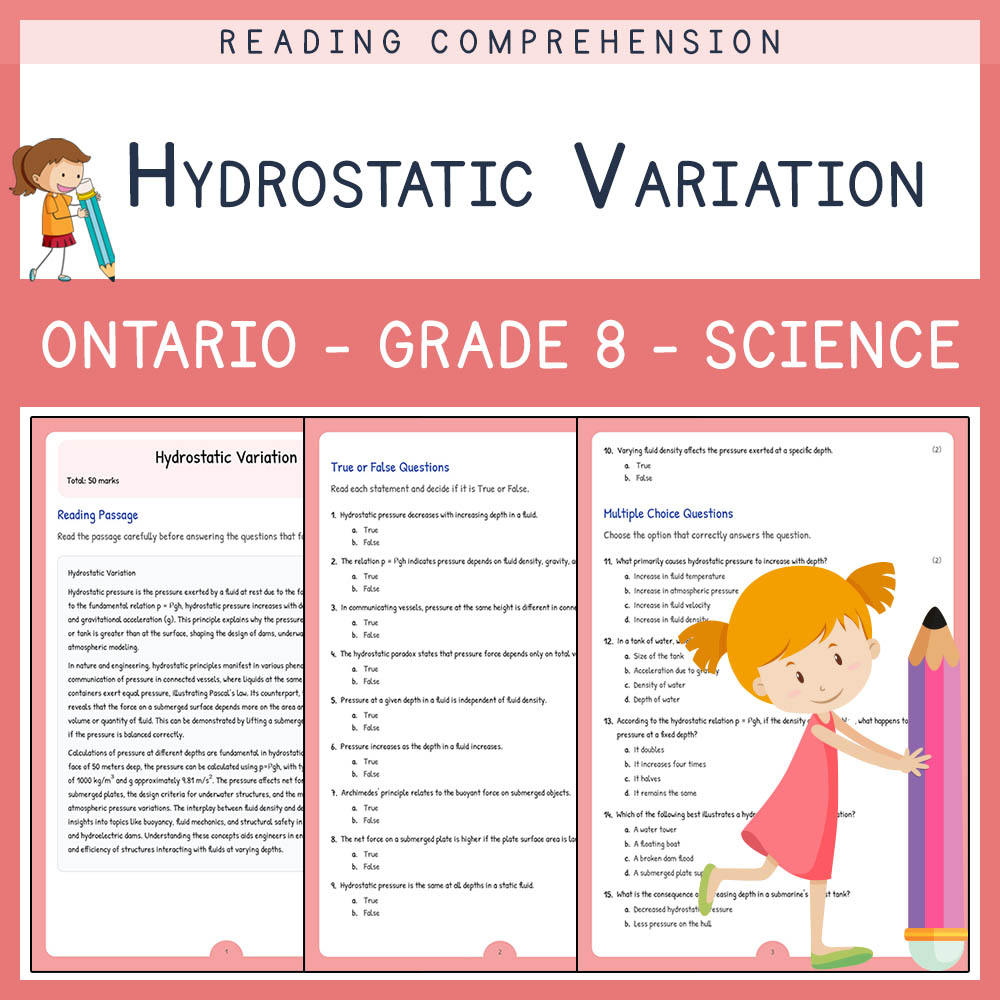
Grade 8 Science | Hydrostatic Variation Worksheet Elena | Ontario
 Created byLumora Learning
Learning Objectives
- Understand how hydrostatic pressure depends on fluid density and depth.
- Explain communicating vessels and the hydrostatic paradox.
- Calculate pressure at various depths in fluids.

Grade 9 Science | Energy Transformations Worksheet | NGSSS Aligned
Created byLumora LearningLearning Objectives
- Explain how energy transforms between mechanical, thermal, electrical, and sound forms in real systems.
- Use the idea of energy balance for a chosen system to predict how resistive forces change outcomes.
- Describe how temperature changes can alter material behavior and influence motion.

Grade 9 Science | Physical Versus Chemical Worksheet | NGSSS Assessment
Created byLumora LearningLearning Objectives
- Differentiate physical and chemical properties and changes based on whether new substances form
- Use evidence such as color change, gas production, temperature change, and product formation to classify a change as physical or chemical
- Connect observed behaviors to particle-level explanations using the idea of bonding and identity of matter

Grade 8 Science | Climate Data Trends Worksheet | NGSSS Aligned
Created byLumora LearningLearning Objectives
- Interpret temperature, precipitation, and storm-frequency data to identify climate patterns over time
- Distinguish between short-term weather variation and long-term climate trends using averages and extremes
- Explain how El Niño and La Niña can shift rainfall patterns and affect climate indicators

Grade 9 Science | Two-Dimensional Motion Worksheet | AP Aligned
Created byLumora LearningLearning Objectives
- Understand how vector decomposition helps analyze motion in a plane.
- Apply parametric equations to describe projectile trajectories.
- Use vector addition to predict range, maximum height, and time-of-flight.

Grade 7 Science | Explanatory Models Worksheet | NGSSS Aligned
Created byLumora LearningLearning Objectives
- Define explanatory models and explain why they are simplified rather than exact replicas of real systems.
- Describe how cause-and-effect mechanisms and energy transfers can be used in explanations based on a model.
- Evaluate a model’s usefulness by comparing how well it matches observations and how accurately it predicts new evidence.
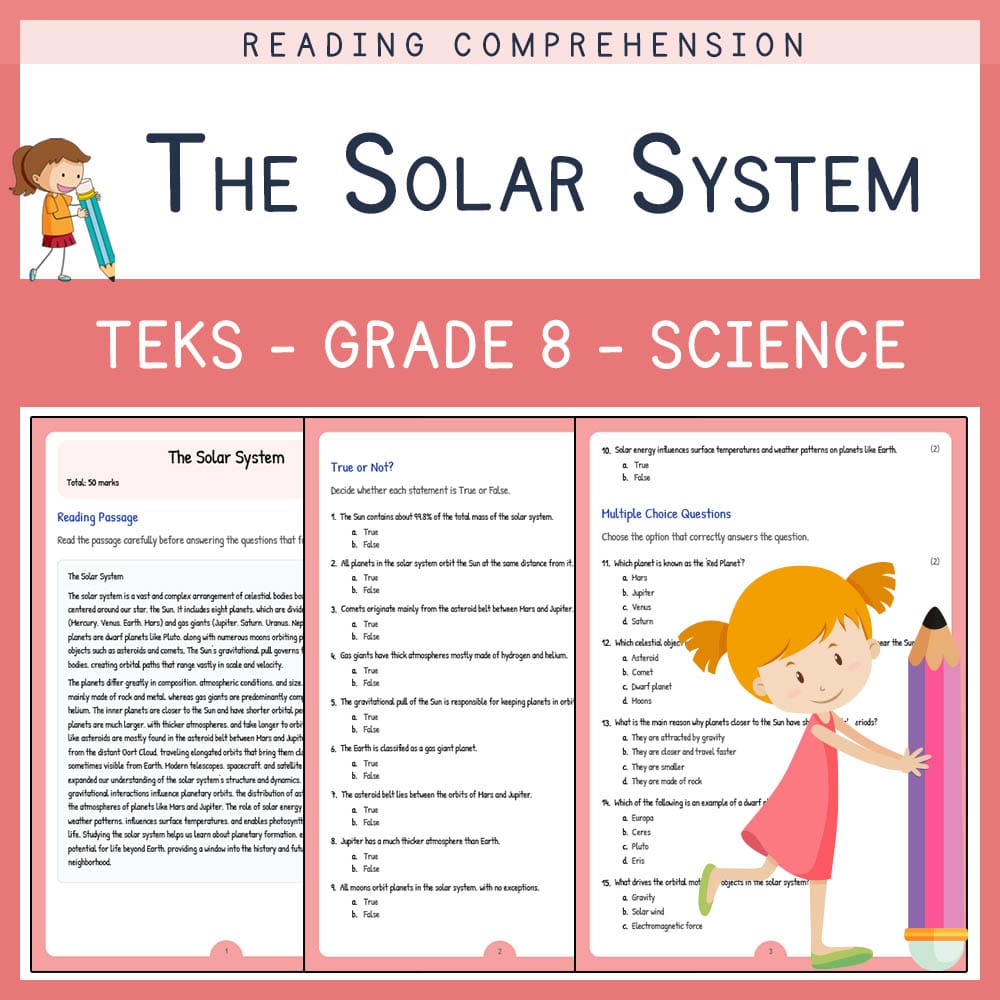
Grade 8 Science | The Solar System Worksheet Elena | TEKS Aligned
Created byLumora LearningLearning Objectives
- Understand the components of the solar system, including planets, moons, and smaller bodies.
- Describe the relative scale and composition of celestial objects in the solar system.
- Explain orbital characteristics and gravitational interactions among planets, asteroids, and comets.
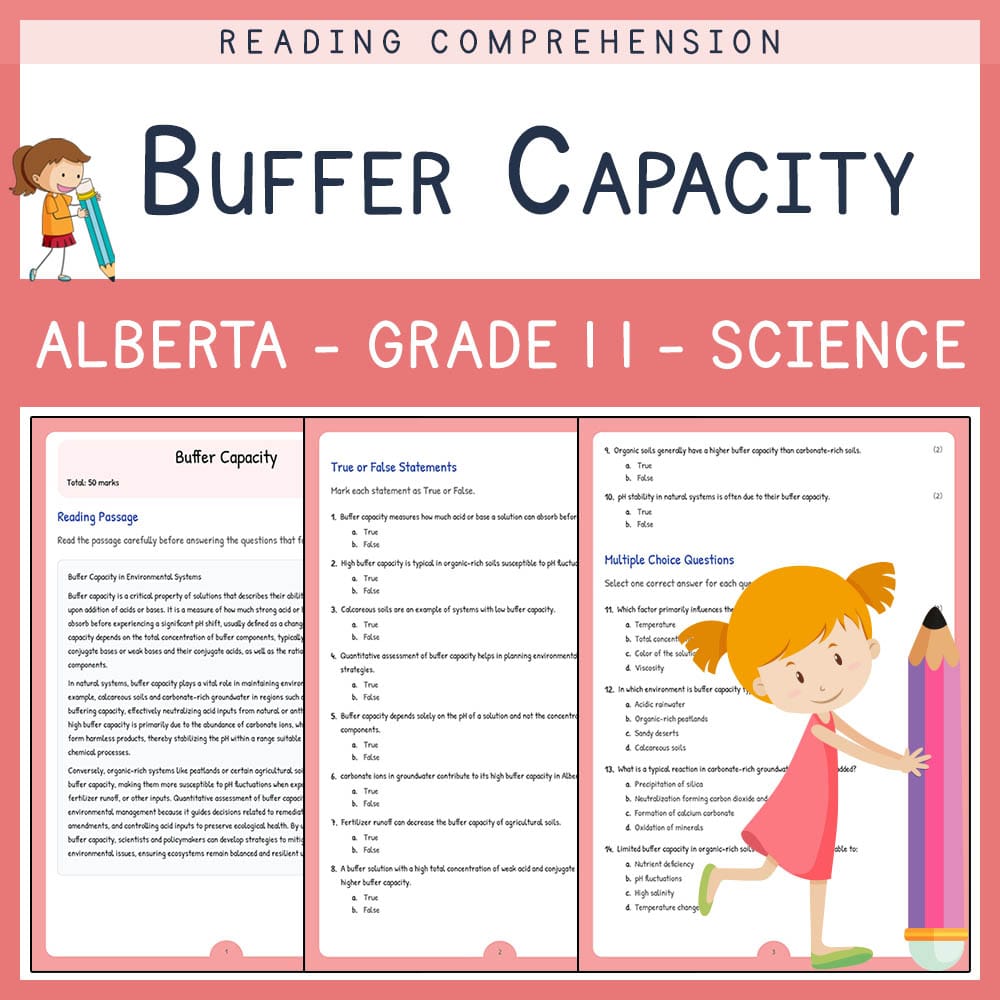
Grade 11 Science | Buffer Capacity Worksheet | Alberta Alberta
Created byLumora LearningLearning Objectives
- Understand the concept of buffer capacity and its importance in environmental systems.
- Identify factors affecting buffer capacity in natural systems.
- Explain how buffer capacity influences pH stability in soils and groundwater.

Grade 10 Science | Orbital Gravity Models Worksheet | California Standards
Created byLumora LearningLearning Objectives
- Explain how gravity can produce centripetal acceleration in orbital motion
- Connect orbital shape and periodic timing to evidence-based models of gravity
- Interpret how observations of planetary and satellite orbits support a unified force model
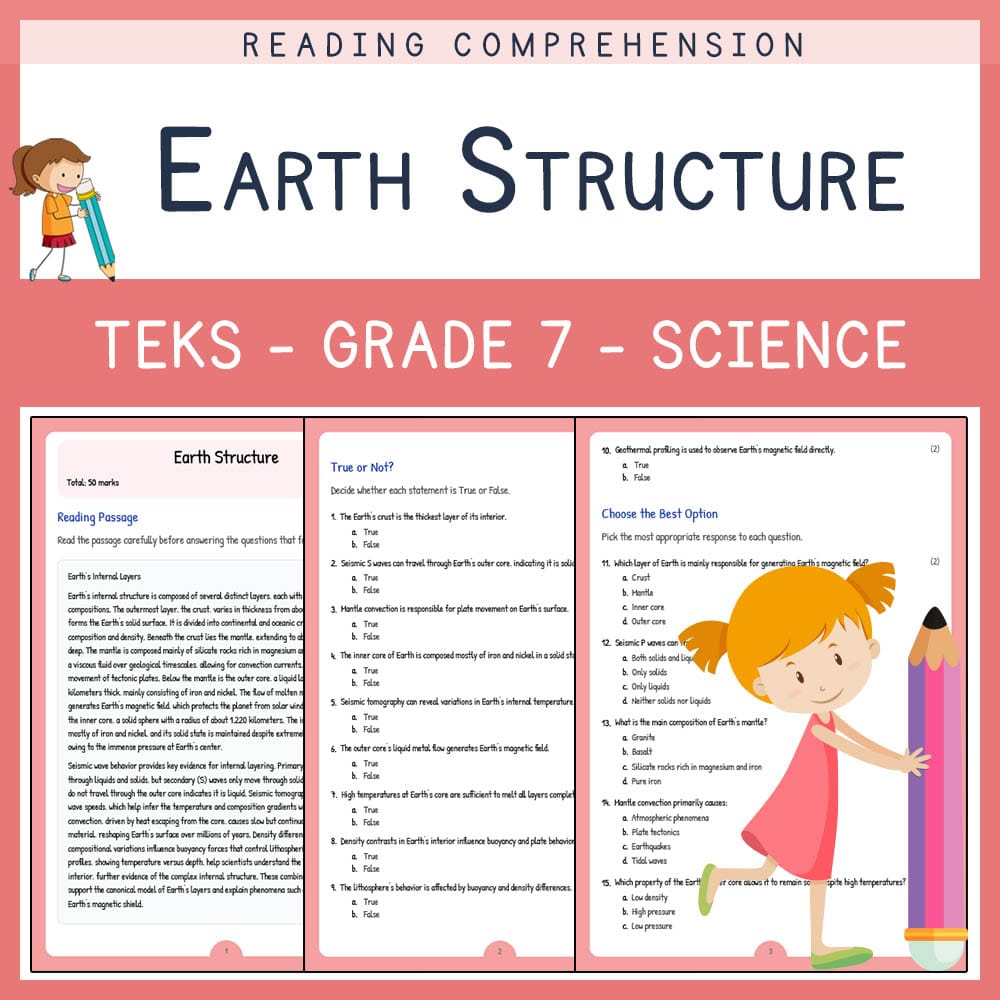
Grade 7 Science | Earth Structure Worksheet | TEKS-Aligned
Created byLumora LearningLearning Objectives
- Describe Earth's internal layering and the properties of each layer.
- Explain seismic wave behavior as evidence for Earth's internal structure.
- Understand mantle convection and its role in plate motion.
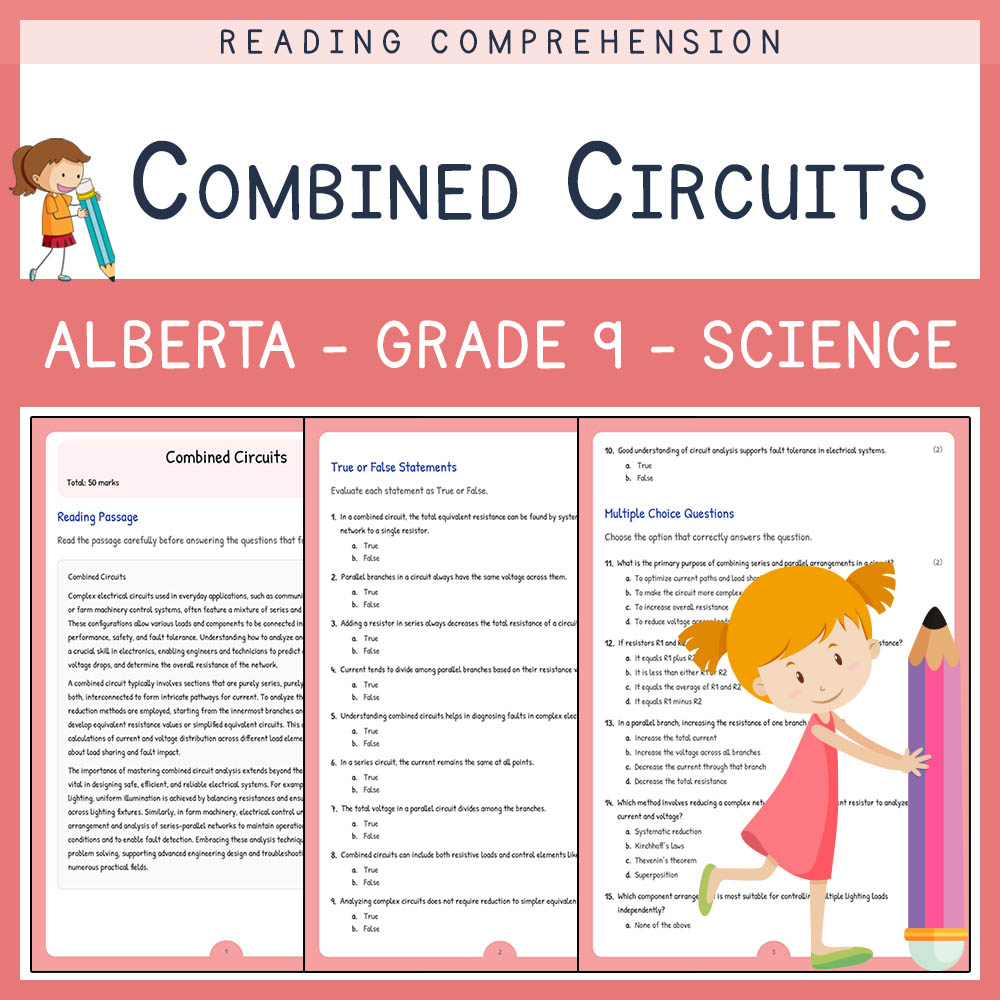
Grade 9 Science | Combined Circuits Worksheet Elena | Alberta Standards
Created byLumora LearningLearning Objectives
- Understand how series and parallel circuits combine within complex networks.
- Apply systematic methods to simplify mixed circuit arrangements.
- Identify equivalent resistances and analyze current and voltage distributions.

Grade 12 Science | Biogeochemical Cycles Worksheet | NGSSS Assessment
Created byLumora LearningLearning Objectives
- Explain how matter cycles through ecosystems via biogeochemical pathways connecting atmospheric, aquatic, and soil reservoirs.
- Describe carbon cycling through photosynthesis, respiration, and decomposition.
- Outline key nitrogen transformations: nitrogen fixation, nitrification, assimilation, and denitrification.
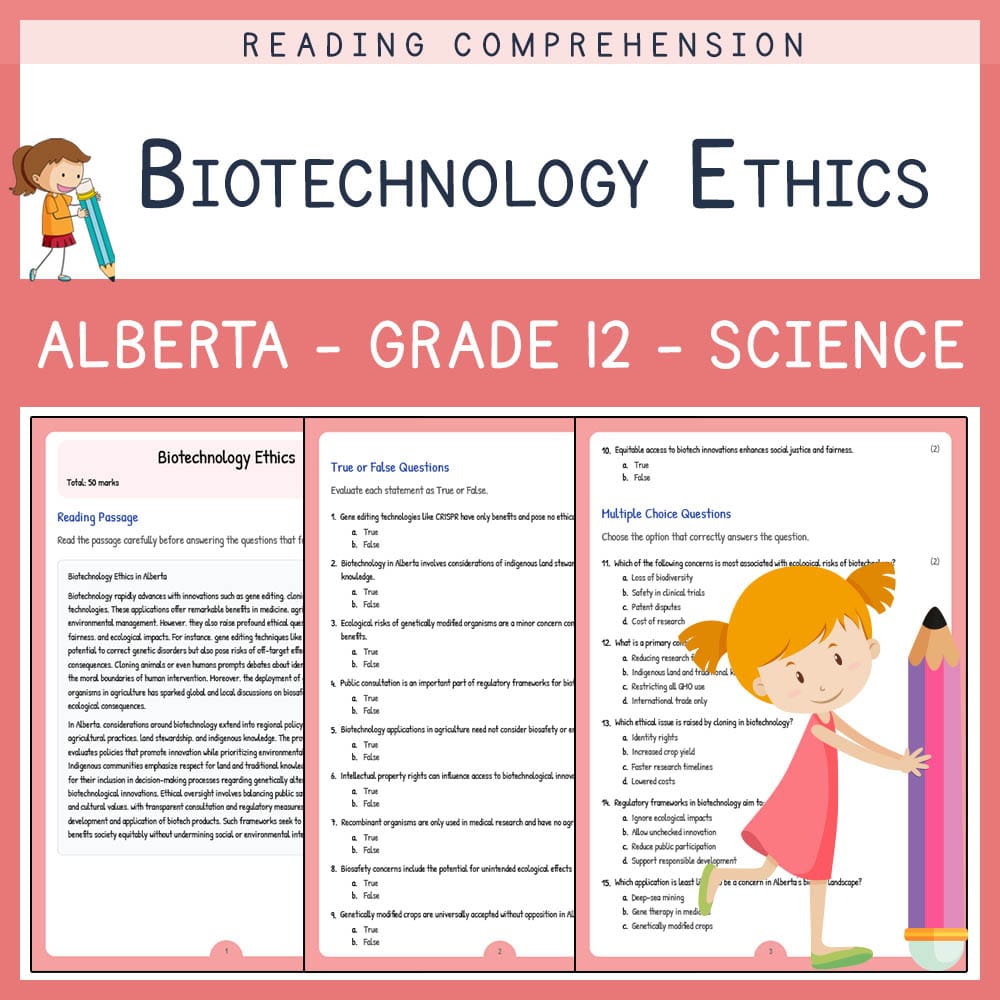
Grade 12 Science | Biotechnology Ethics Worksheet | Alberta Standards
Created byLumora LearningLearning Objectives
- Understand the ethical, legal, and social issues related to biotechnology applications.
- Analyze considerations such as biosafety, intellectual property, and ecological risks.
- Evaluate regulatory frameworks and public consultation processes shaping biotechnology deployment.
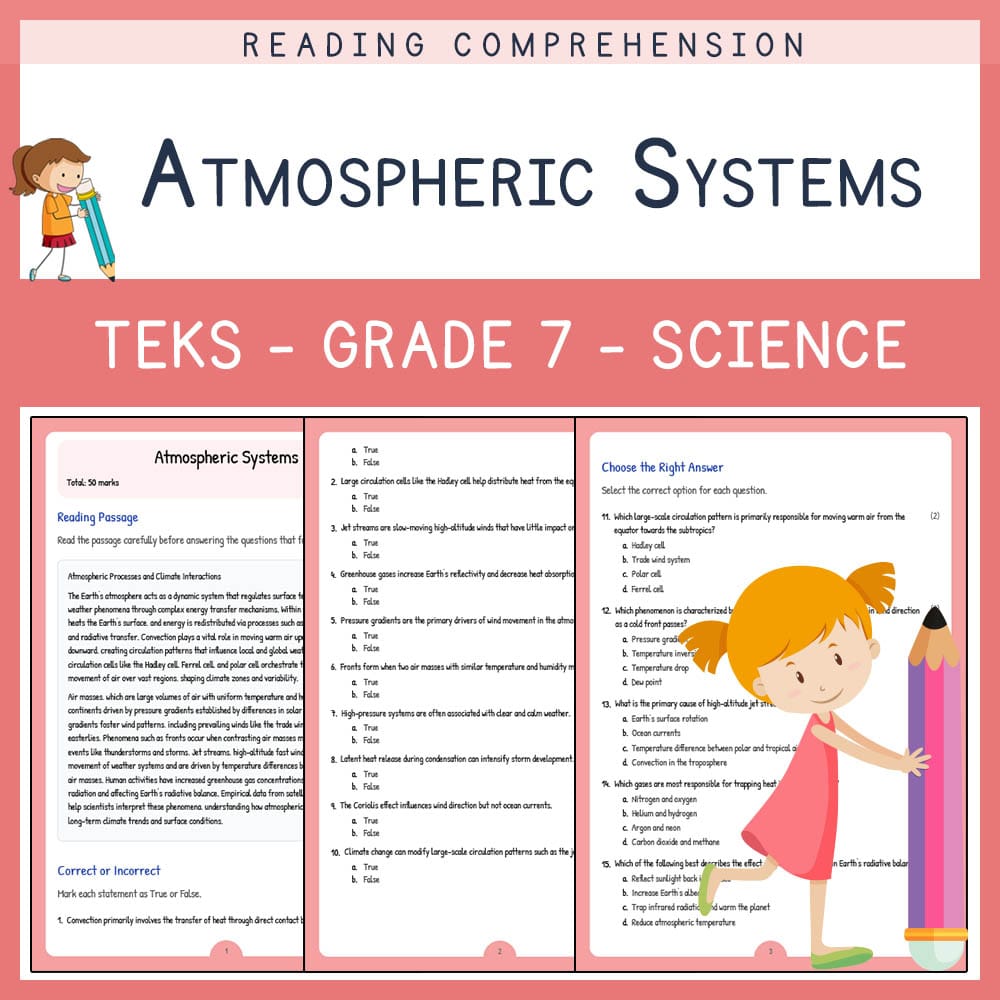
Grade 7 Science | Atmospheric Systems Worksheet Elena | TEKS-Aligned
Created byLumora LearningLearning Objectives
- Describe the processes involved in atmospheric energy transfer and circulation.
- Explain how air masses, pressure gradients, and large-scale circulation affect weather and climate.
- Identify observational phenomena like fronts and jet streams and their impacts.
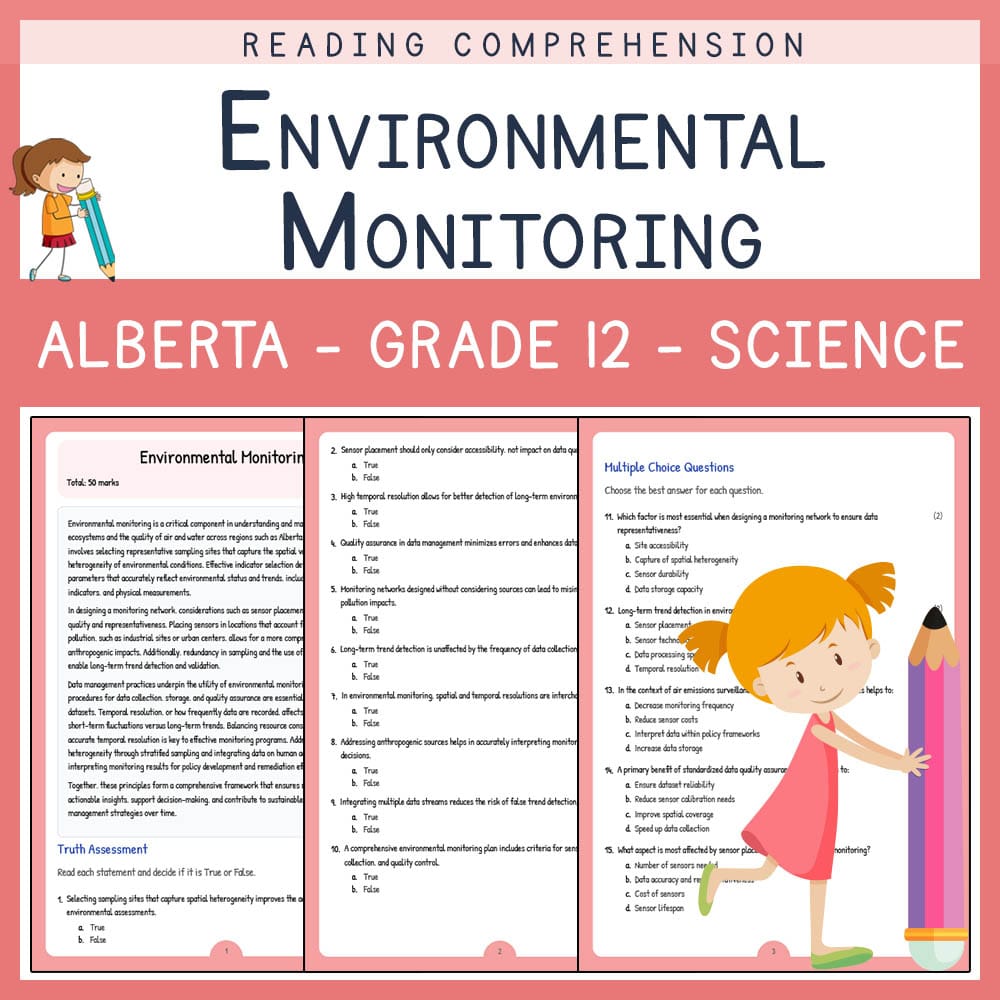
Grade 12 Science | Environmental Monitoring Worksheet | Alberta Standards
Created byLumora LearningLearning Objectives
- Understand the principles of environmental network design, indicator selection, and data management.
- Identify criteria for representative sampling and sensor placement in environmental monitoring.
- Analyze how spatial heterogeneity and anthropogenic sources influence monitoring interpretation.

Grade 9 Science | Atmospheric Weather Processes Worksheet | NGSSS Aligned
Created byLumora LearningLearning Objectives
- Explain how differences in air temperature create differences in air pressure that drive wind and atmospheric circulation.
- Describe how humidity and temperature determine whether water vapor condenses or evaporates to form clouds and precipitation.
- Compare radiation, conduction, and convection as mechanisms of heat transfer that influence weather at local and regional scales.

Grade 12 Science | Equilibrium Quantification Worksheet | BC-Aligned
Created byLumora LearningLearning Objectives
- Understand the concept of equilibrium constants (Kc and Kp) and their significance in chemical systems.
- Explain the role of the reaction quotient Q in predicting the direction of chemical reactions.
- Describe how temperature influences equilibrium constants through enthalpic effects.

Grade 9 Science | Matter Cycles Worksheet | NGSSS Aligned
Created byLumora LearningLearning Objectives
- Explain how chemical elements like carbon, nitrogen, and phosphorus cycle between organisms and the physical environment.
- Describe how respiration, decomposition, and nutrient uptake connect living things to air, water, and soil.
- Distinguish matter cycling from energy flow in trophic transfers.

Grade 8 Science | Observable Conservation Worksheet | BC Aligned
Created byLumora LearningLearning Objectives
- Understand the concept of conservation of mass in closed systems through experimental observations.
- Recognize that mass remains constant in sealed reactions despite internal changes.
- Learn how collecting gases in closed traps preserves mass measurements.
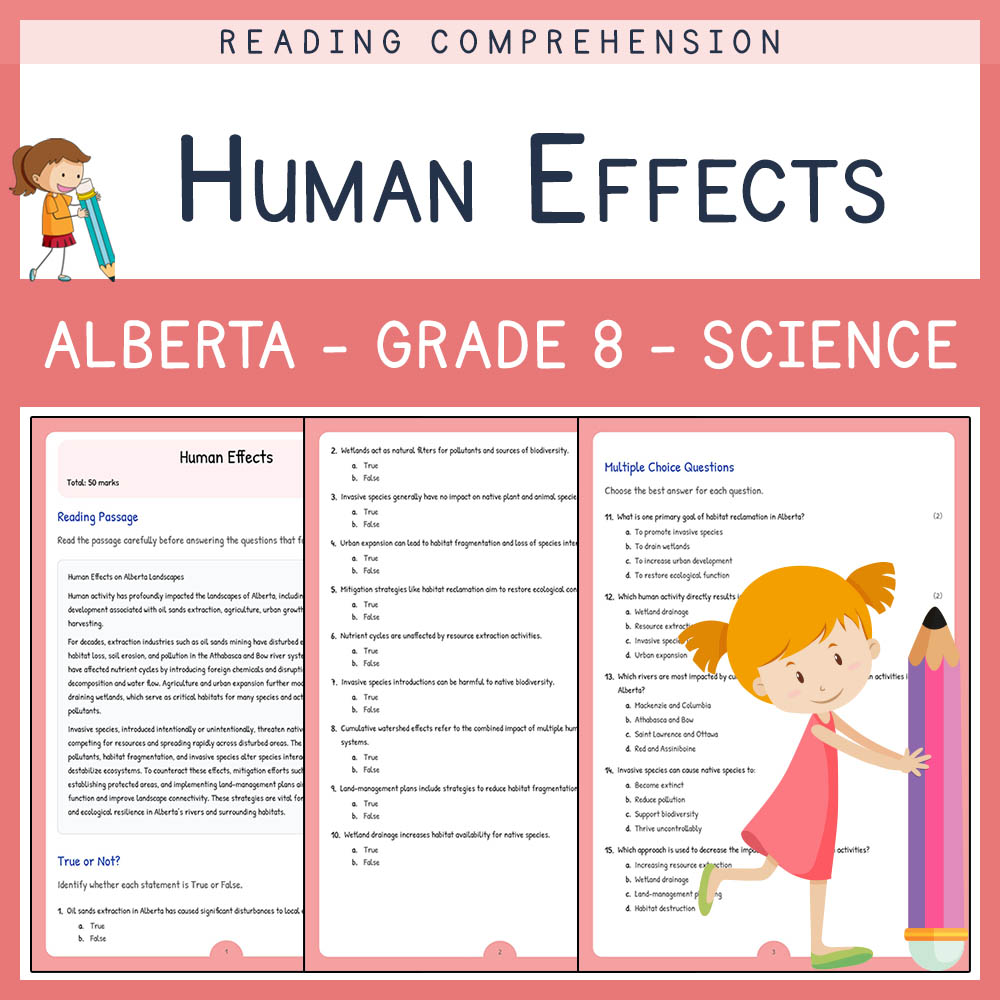
Grade 8 Science | Human Effects Worksheet | Alberta Standards
Created byLumora LearningLearning Objectives
- Understand how human land use and resource extraction impact ecosystems
- Identify specific human activities that modify habitat and nutrient cycles
- Analyze the effects of invasive species and wetlands drainage on biodiversity

Grade 9 Science | Third Law Pairs Worksheet | NGSSS Assessment
Created byLumora LearningLearning Objectives
- Explain Newton’s Third Law using the idea of action–reaction force pairs that act on different objects.
- Identify whether two forces form a Third Law pair by checking the interacting objects and direction.
- Use Third Law pairs to analyze everyday situations such as rockets, walking, and pushing against walls.
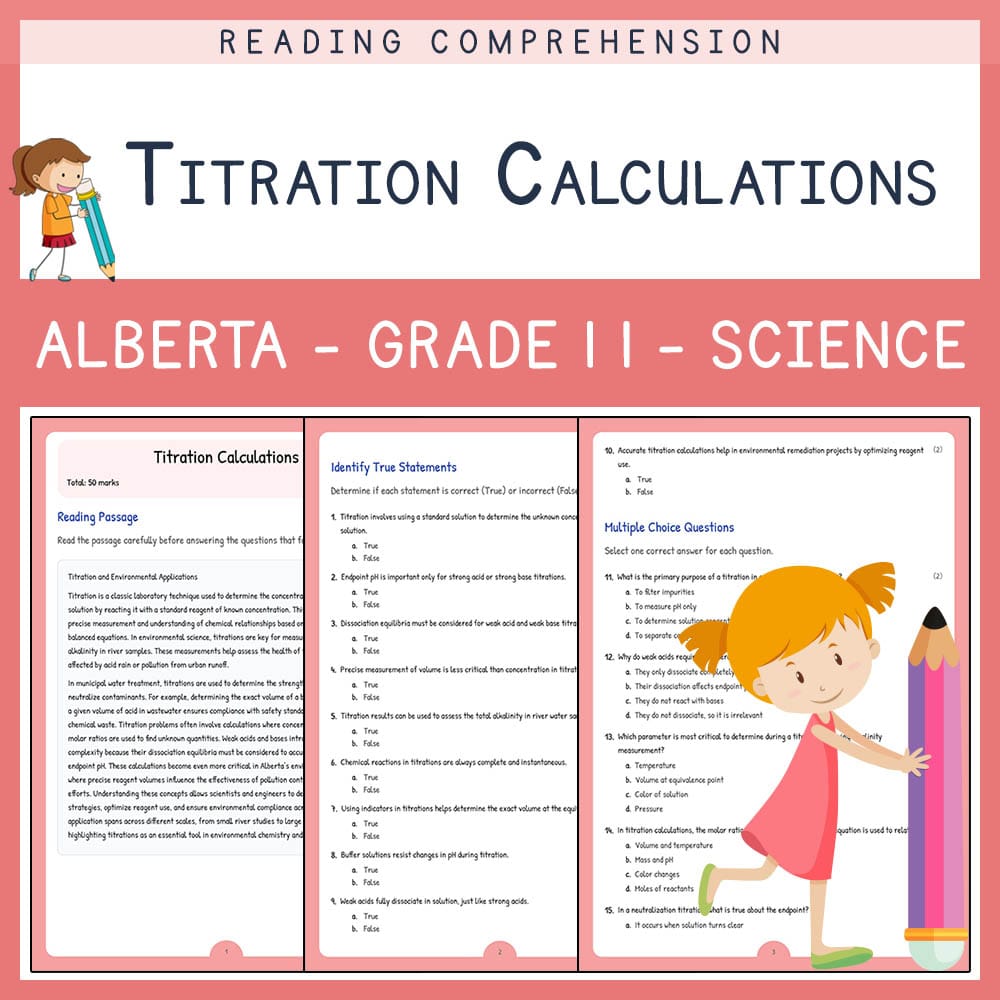
Grade 11 Science | Titration Calculations Worksheet | Alberta Standards
Created byLumora LearningLearning Objectives
- Understand how to perform stoichiometry calculations in titrations.
- Apply concentration relationships to determine unknown values in titration scenarios.
- Analyze endpoint pH variations for acids and bases with different strengths.

Grade 12 Science | Variables And Controls Worksheet | General Standards
Created byLumora LearningLearning Objectives
- Identify independent and dependent variables in a scientific scenario.
- Explain how control conditions help isolate the effect of the independent variable.
- Evaluate claims about causation using evidence from fair comparisons.

Grade 9 Science | Earth Season Causes Worksheet | NGSSS Aligned
Created byLumora LearningLearning Objectives
- Explain how Earth’s axial tilt and orbital motion change the Sun’s angle and the length of day for each hemisphere.
- Describe why seasons are predictable periodic patterns caused by Sun–Earth geometry rather than Earth’s distance from the Sun.
- Connect seasonal sunlight changes to temperature cycles and real-world weather and environmental impacts.
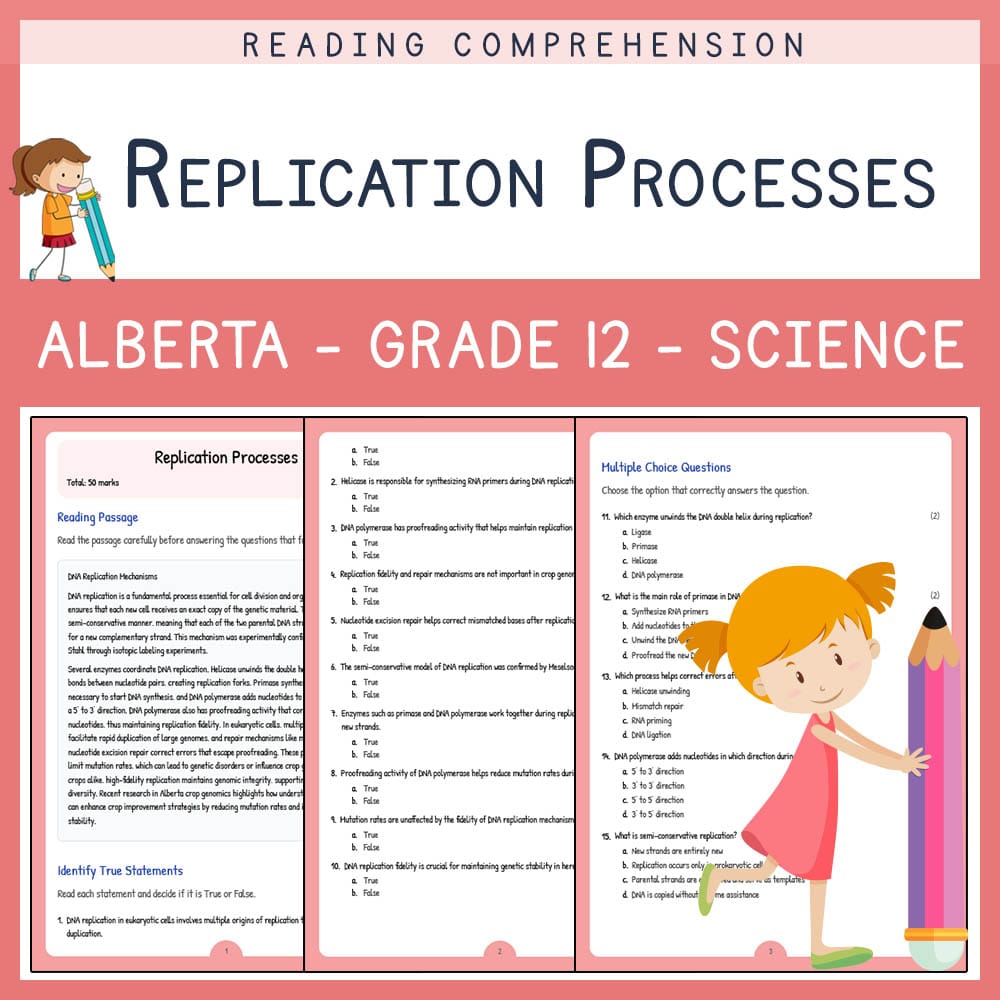
Grade 12 Science | Replication Processes Worksheet | Alberta Standards
Created byLumora LearningLearning Objectives
- Understand the key enzymes involved in DNA replication and their functions.
- Describe the semi-conservative mechanism of DNA replication.
- Explain the importance of replication fidelity, proofreading, and repair mechanisms.
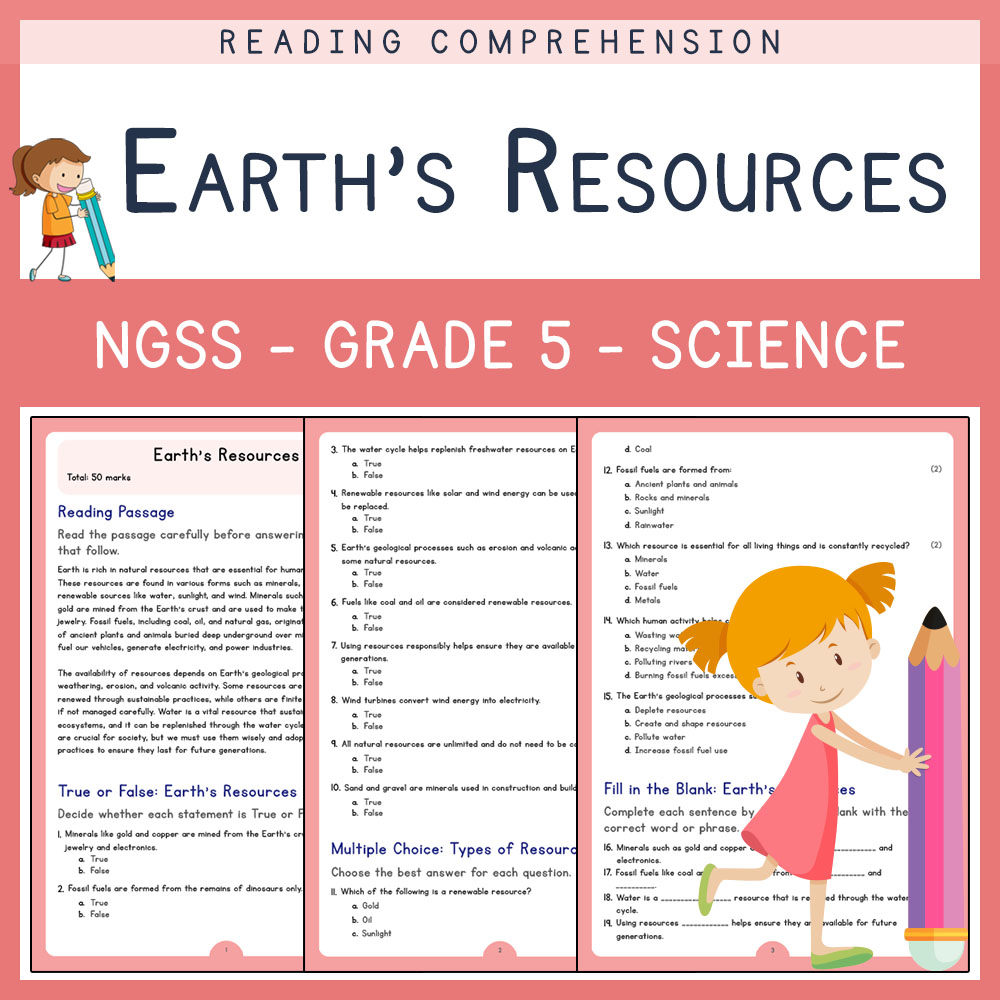
Grade 5 Science | Earth's Resources Worksheets (PDF) | NGSS Aligned
Created byLumora LearningLearning Objectives
- Identify different types of natural resources such as minerals, fossil fuels, and renewable sources.
- Explain how Earth's geological processes influence resource availability.
- Recognize the importance of conserving natural resources and sustainable practices.
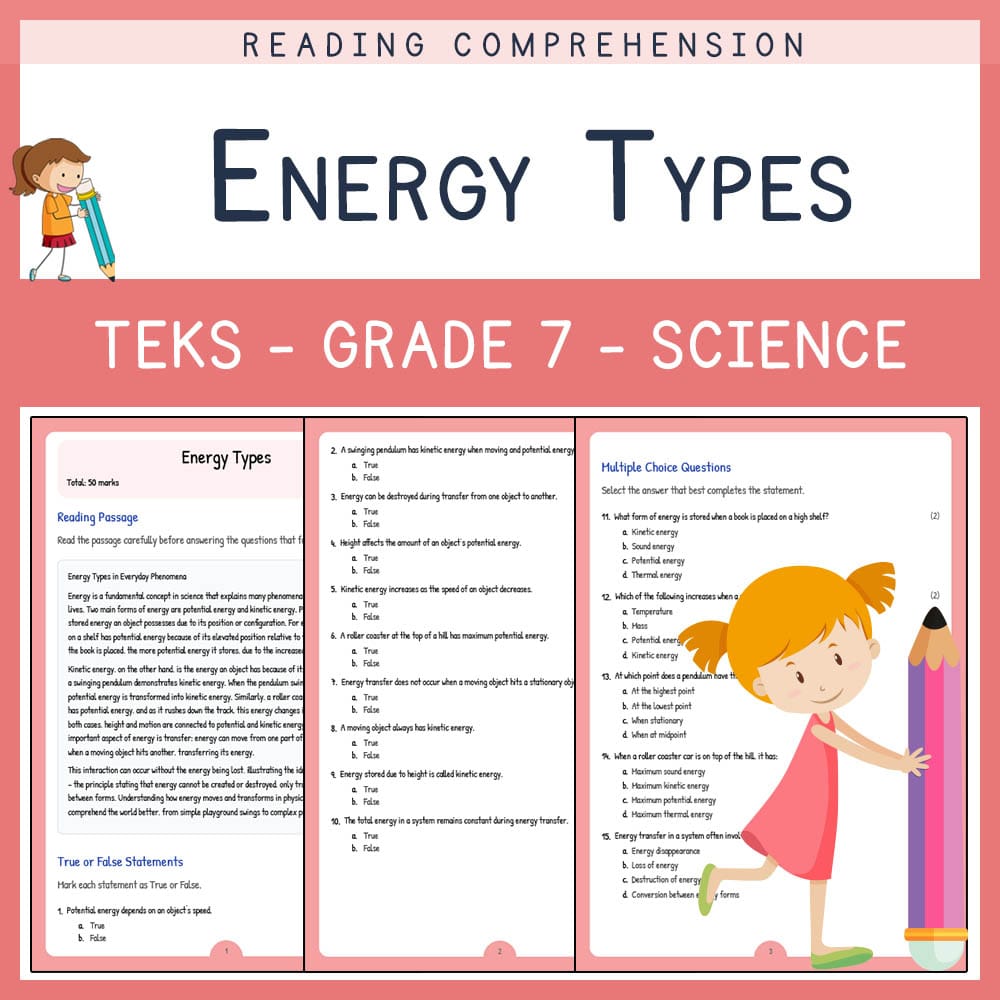
Grade 7 Science | Energy Types Worksheet | TEKS Aligned
Created byLumora LearningLearning Objectives
- Define kinetic and potential energy using everyday phenomena.
- Explain how height and motion influence energy forms.
- Illustrate energy transfer among system components.
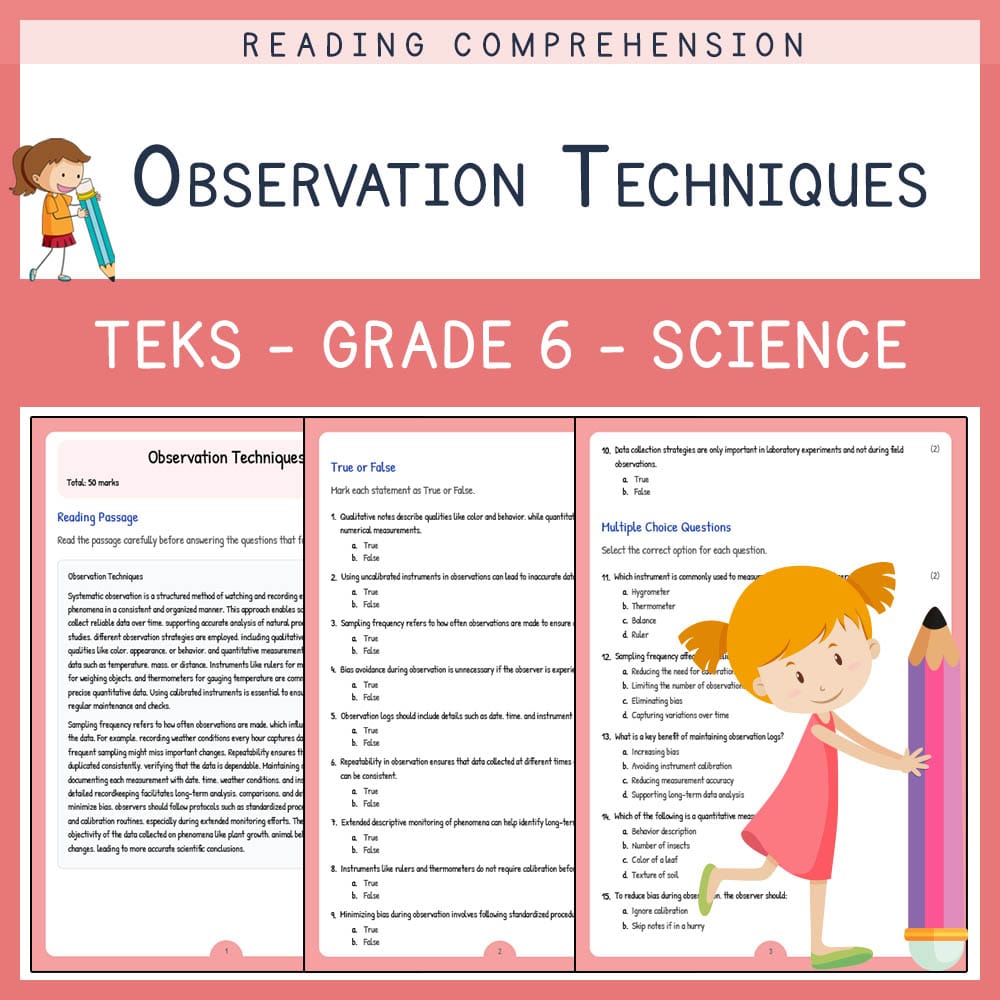
Grade 6 Science | Observation Techniques Worksheet | TEKS Alligned
Created byLumora LearningLearning Objectives
- Define systematic observation and differentiate between qualitative and quantitative data collection methods.
- Identify common instruments used in scientific observations, such as rulers, balances, and thermometers.
- Describe sampling strategies like frequency and repeatability to ensure accurate data recording.
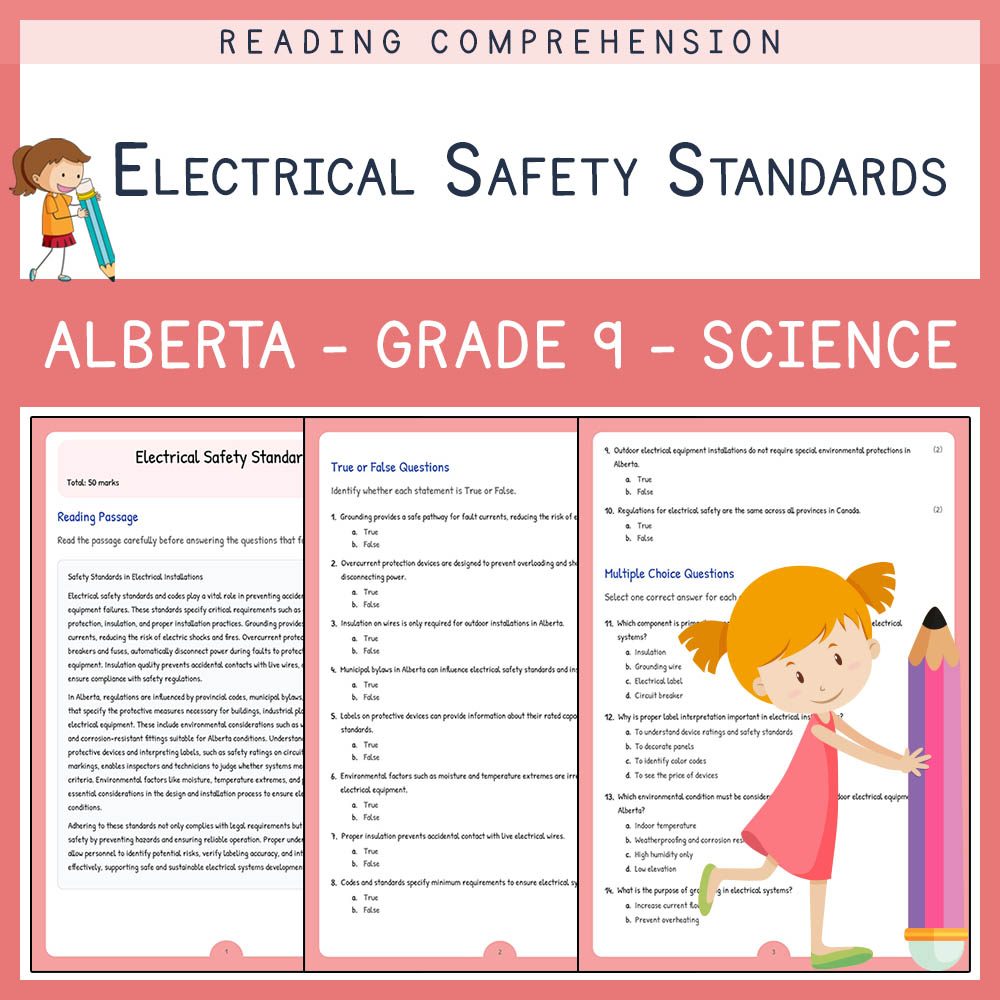
Grade 9 Science | Electrical Safety Standards Worksheet | Alberta Standards
Created byLumora LearningLearning Objectives
- Understand key electrical safety standards and their importance.
- Identify protective devices and their purposes in electrical installations.
- Interpret safety labels and environmental considerations for electrical systems.
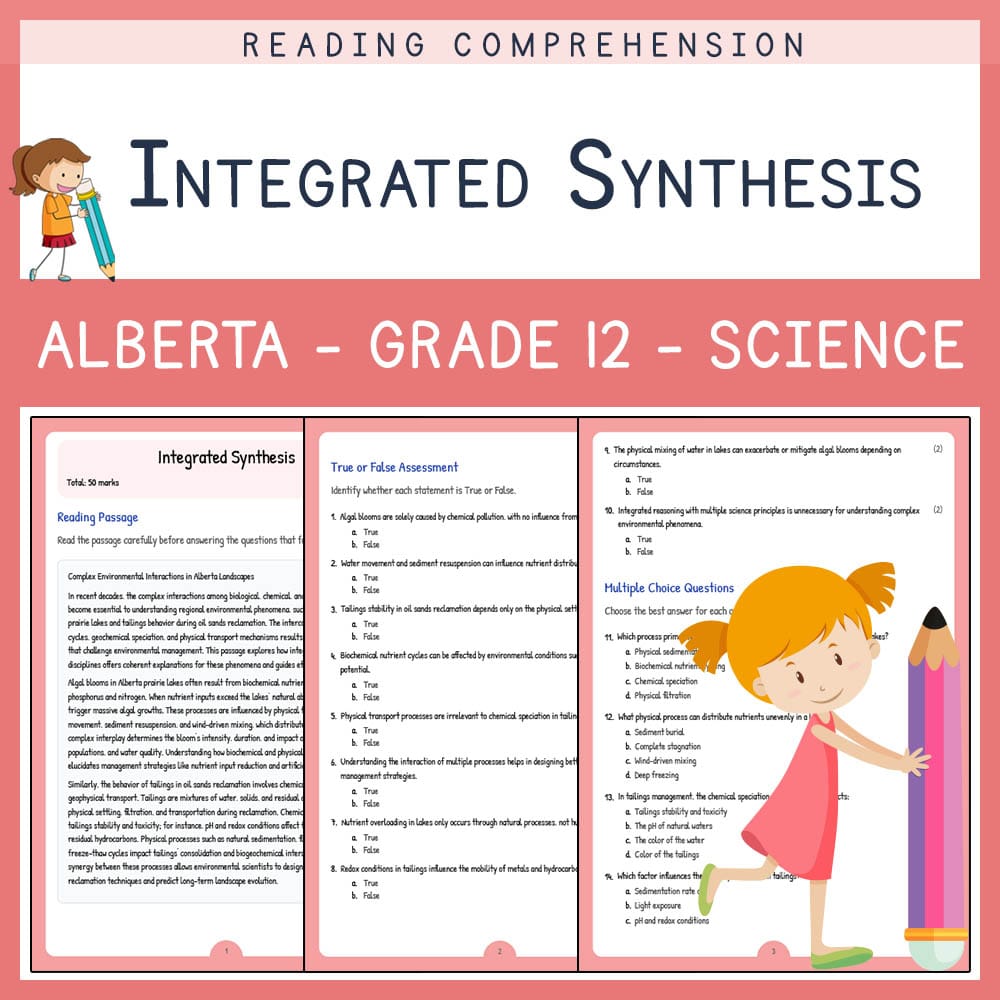
Grade 12 Science Worksheet | Integrated Synthesis | Alberta Standards
Created byLumora LearningLearning Objectives
- Understand how biological, chemical, and physical principles interact to produce environmental phenomena.
- Analyze complex regional environmental patterns using cross-disciplinary reasoning techniques.
- Evaluate the roles of biochemical nutrient cycles, chemical speciation, and physical transport processes in ecosystems.
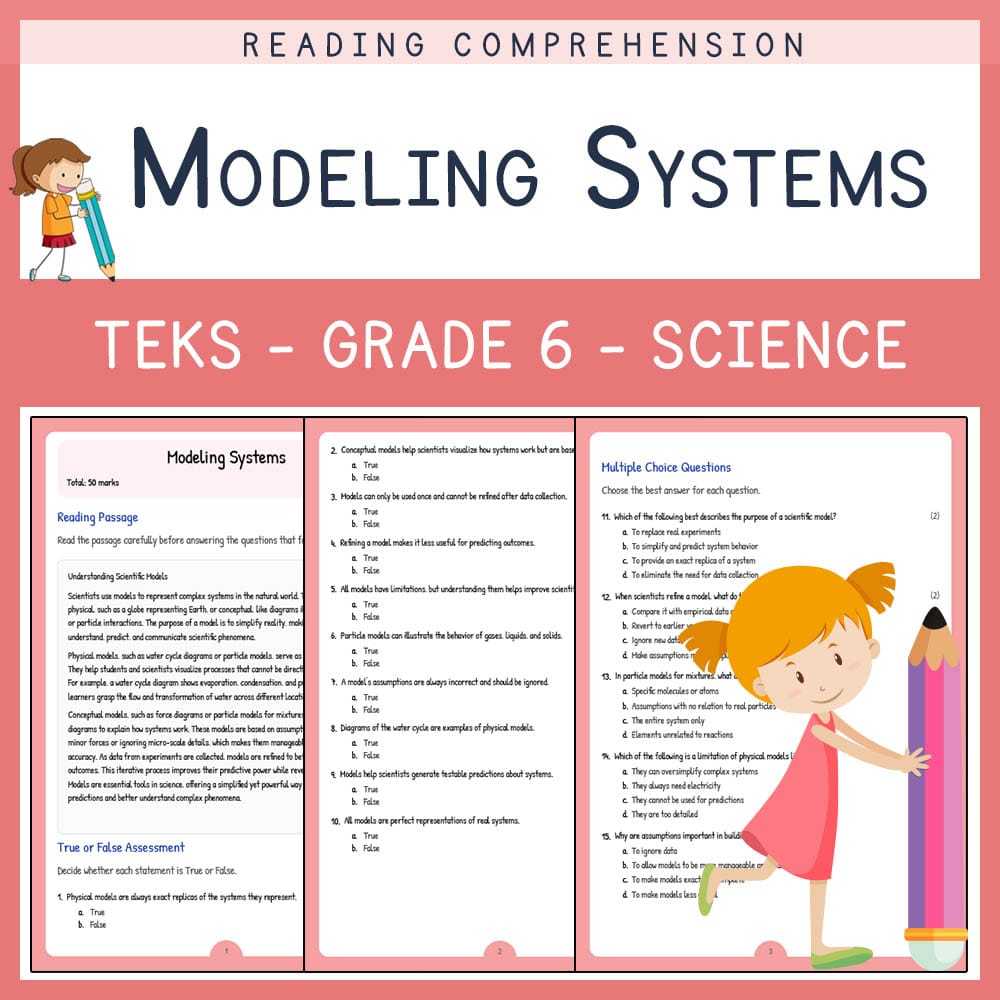
Grade 6 Science | Modeling Systems Worksheet | TEKS Alligned
Created byLumora LearningLearning Objectives
- Understand how physical and conceptual models represent scientific systems.
- Explain criteria for evaluating and refining models based on data.
- Interpret diagrams and particle models to predict outcomes.

Grade 9 Science | Forces Overview Worksheet | NGSSS Aligned
Created byLumora LearningLearning Objectives
- Explain how forces change an object’s state of motion through acceleration and changes in velocity.
- Distinguish between contact forces and field forces and give examples of each.
- Use force vectors to represent both magnitude and direction of forces.

Grade 11 Science | Newton Second Law Worksheet | NGSSS Assessment
Created byLumora LearningLearning Objectives
- Explain Newton’s second law using the relationship between net force, mass, and acceleration
- Predict how acceleration changes when net force or mass changes (for the same direction of net force)
- Describe how the direction of acceleration relates to the direction of the net force

Grade 10 Science | Phylogenetic Trees Worksheet | TEKS-Aligned
Created byLumora LearningLearning Objectives
- Understand the purpose and construction of phylogenetic trees.
- Identify shared derived traits, molecular sequences, and fossil data used in determining relationships.
- Explain how classification reflects evolutionary history and common ancestry.
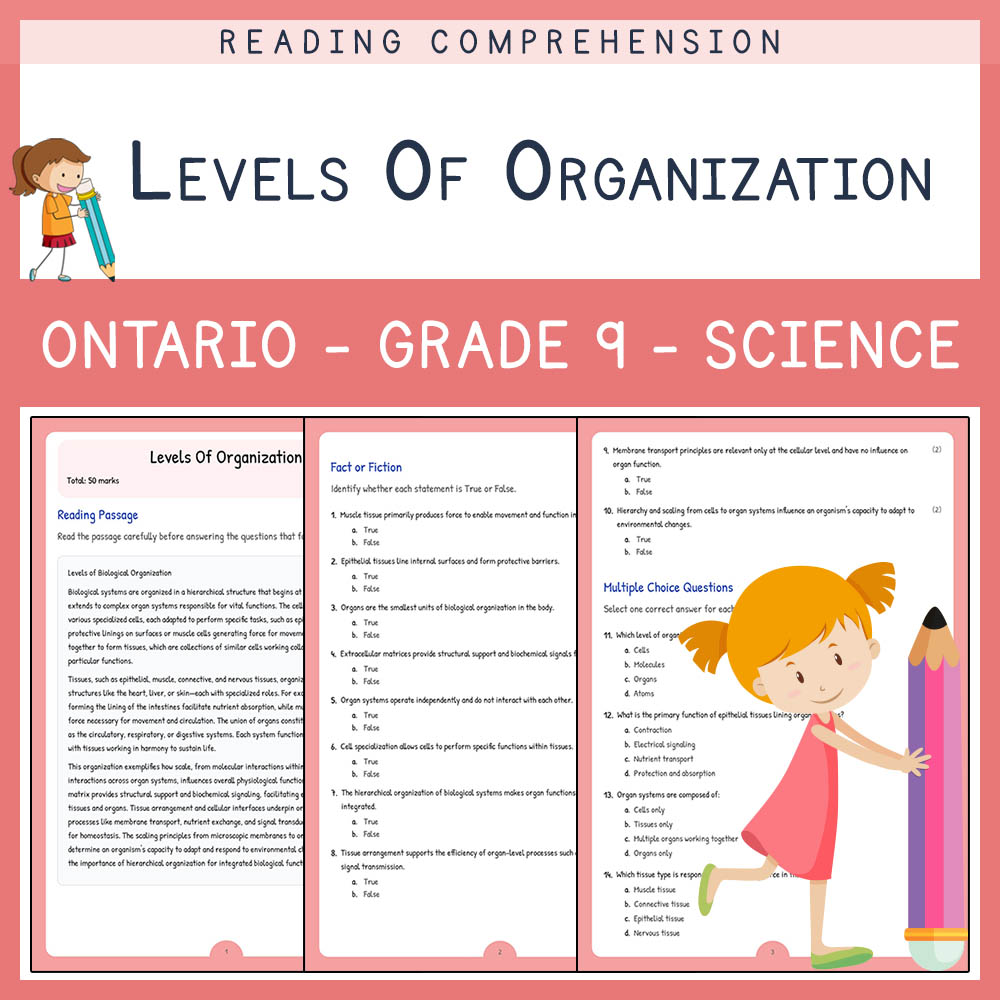
Grade 9 Science | Levels of Organization Worksheet | Ontario Standard
Created byLumora LearningLearning Objectives
- Understand hierarchical relationships among cells, tissues, organs, and systems.
- Identify examples of tissue specialization and extracellular matrices.
- Explain how tissue arrangement supports organ-level functions.
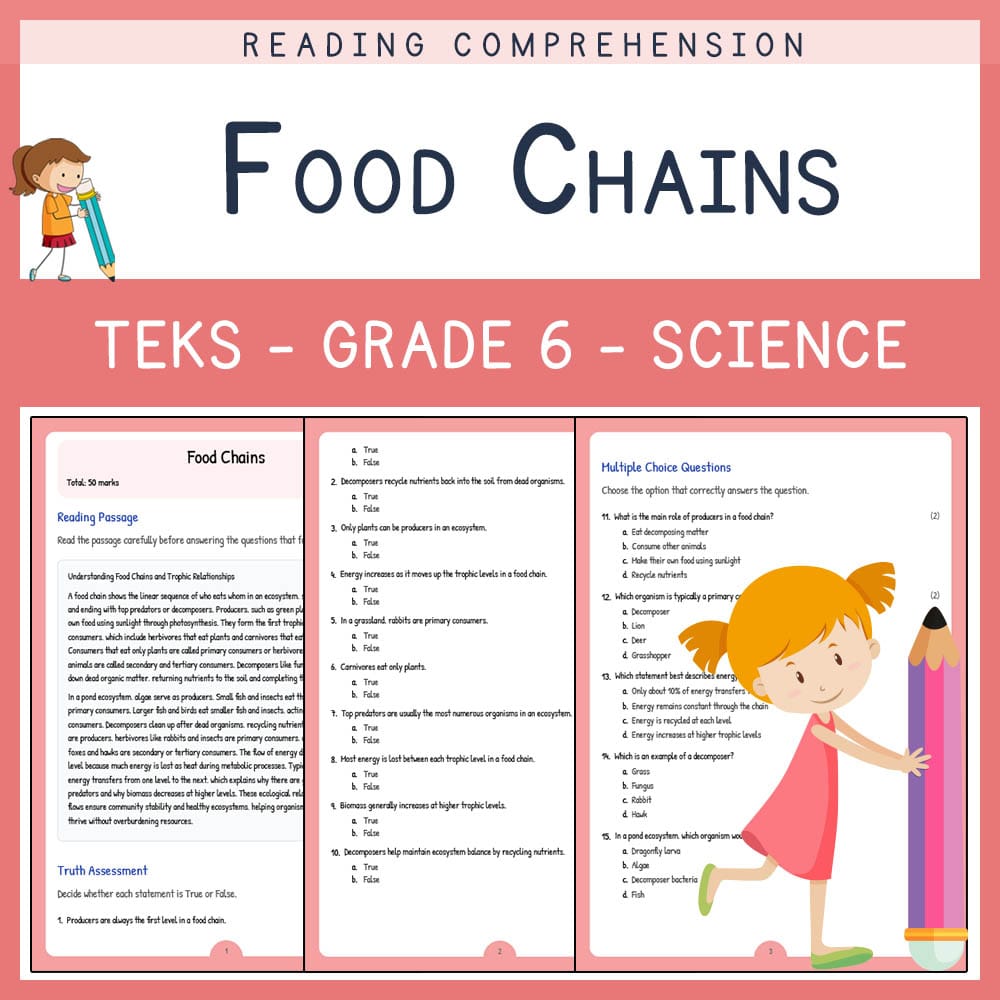
Grade 6 Science | Food Chains Worksheet Elena | TEKS-Aligned
Created byLumora LearningLearning Objectives
- Define and identify producers, consumers, and decomposers in food chains.
- Describe trophic levels and energy transfer among organisms.
- Illustrate simple pond and grassland food sequences to explain ecological relationships.

Grade 12 Science | AC Circuits Worksheet | Alberta Standards
Created byLumora LearningLearning Objectives
- Understand the analysis of AC circuits using phasor representation.
- Calculate impedance, reactance, and phase relationships in RLC networks.
- Evaluate power, real and reactive components, and power factor in AC systems.
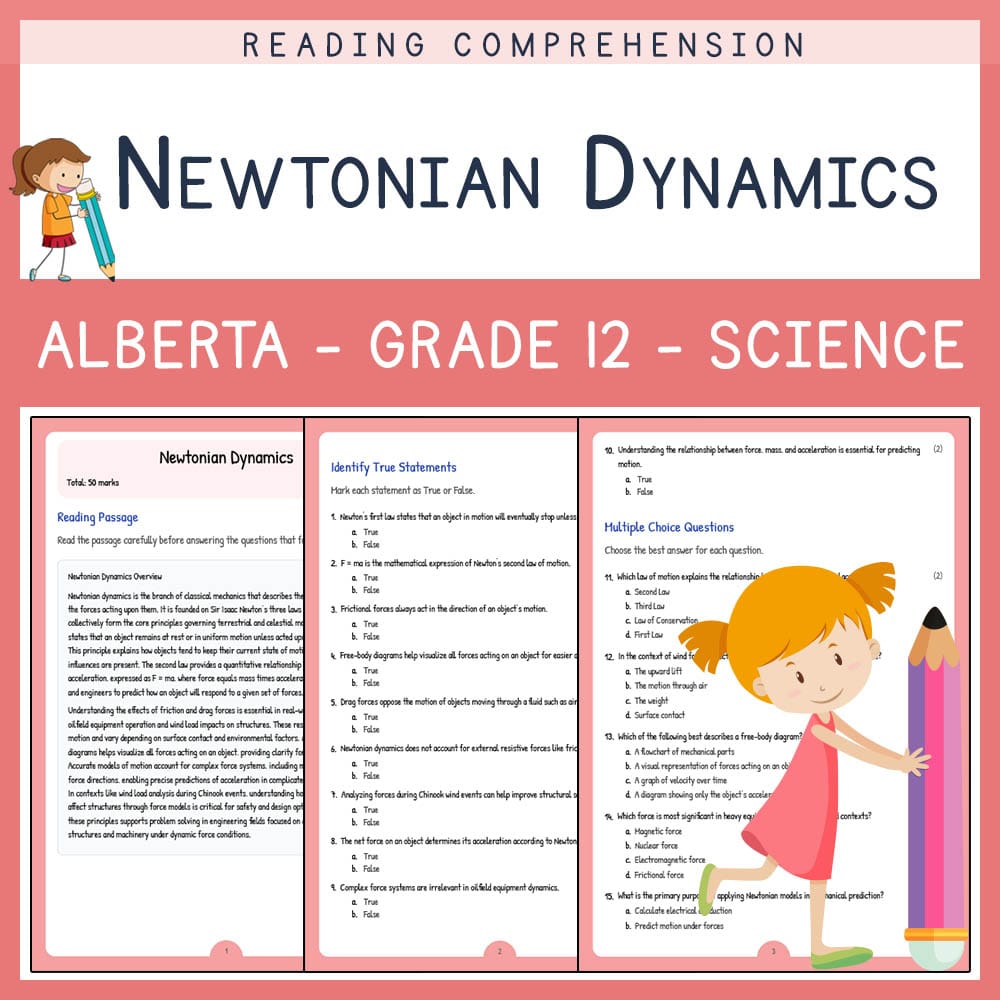
Grade 12 Science | Newtonian Dynamics Worksheet | Alberta Standards
Created byLumora LearningLearning Objectives
- Understand the fundamental principles of Newtonian mechanics and how forces influence motion.
- Apply Newton's three laws to analyze real-world problems involving frictional and drag forces.
- Interpret and construct free-body diagrams for complex systems under multiple forces.
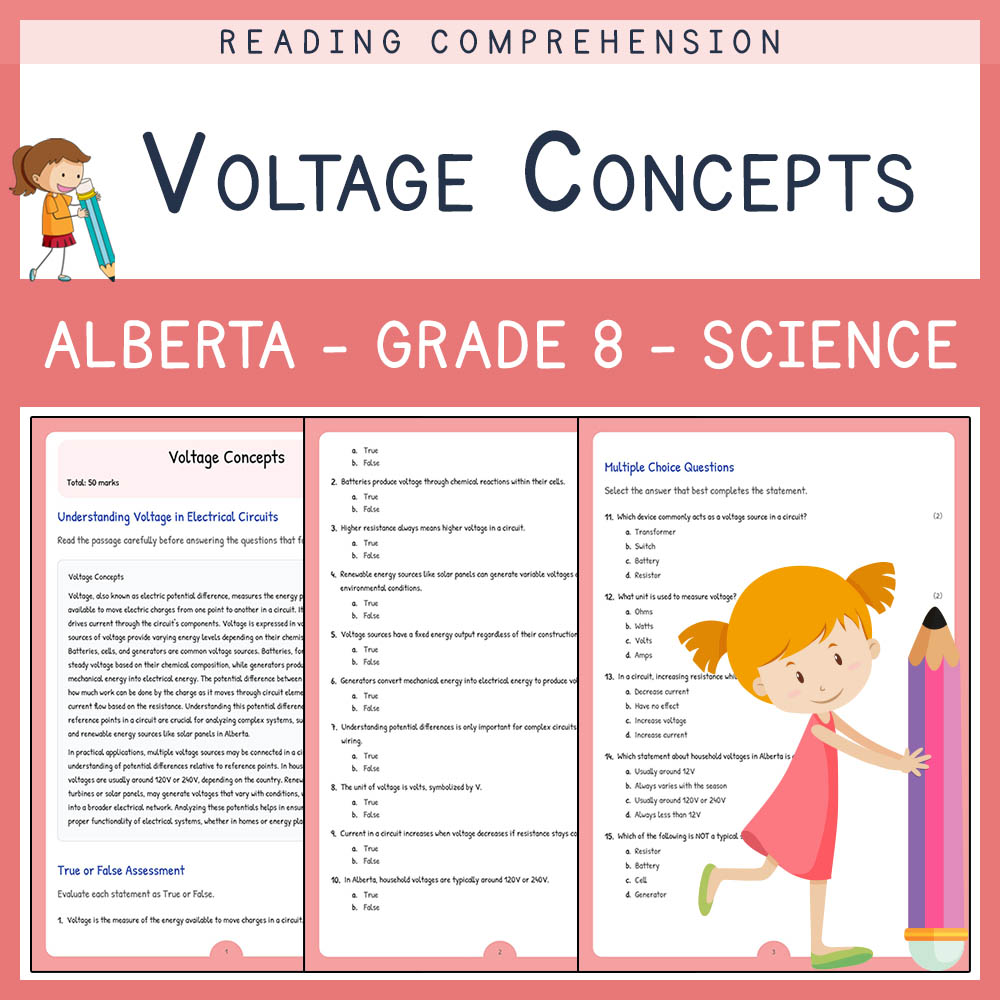
Grade 8 Science | Voltage Concepts Worksheet | Alberta Standards
Created byLumora LearningLearning Objectives
- Explain the concept of voltage and its role in electrical circuits.
- Identify different sources of voltage such as batteries, cells, and generators.
- Understand the relationship between voltage, current, and resistance in a circuit.
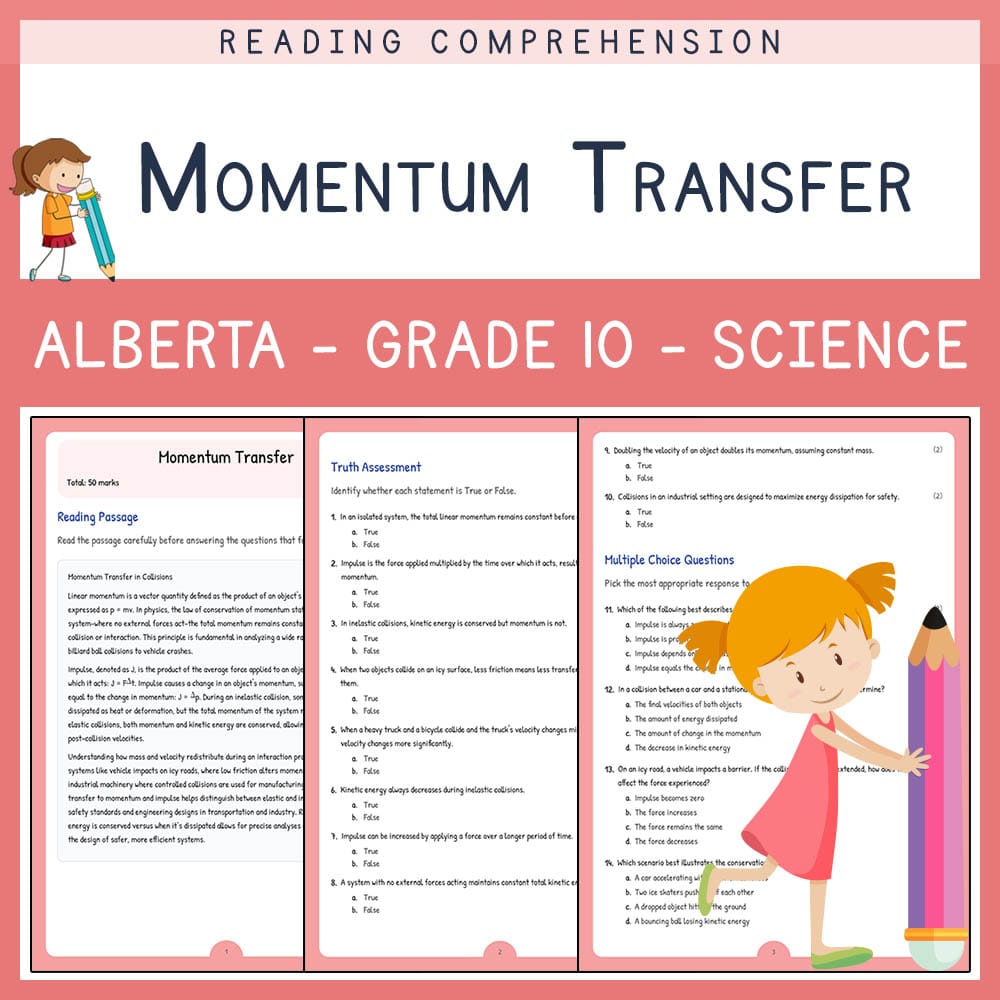
Grade 10 Science | Momentum Transfer Worksheet | Alberta Standards
Created byLumora LearningLearning Objectives
- Explain the conservation of linear momentum in isolated systems.
- Describe how impulse relates to changes in momentum during collisions.
- Analyze the effects of mass and velocity changes on the transfer of momentum.
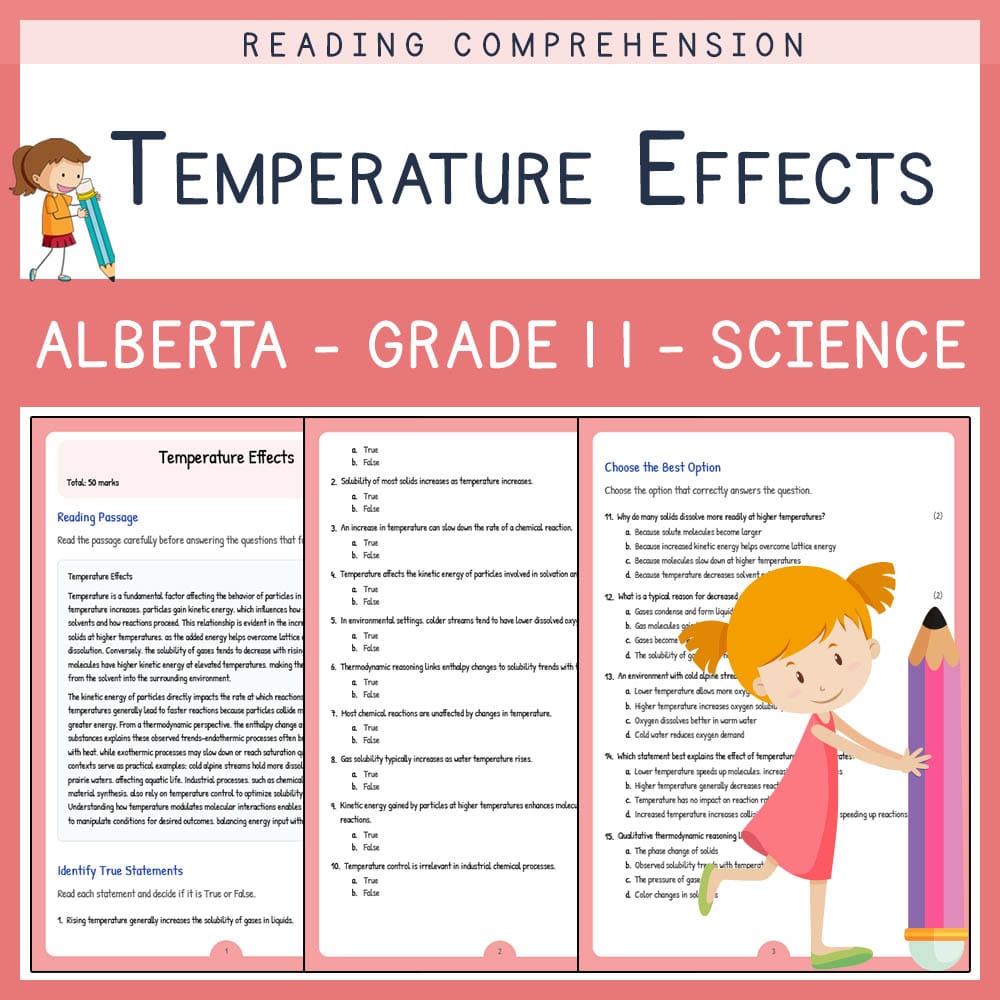
Grade 11 Science | Temperature Effects Worksheet | Alberta Standards
Created byLumora LearningLearning Objectives
- Describe how temperature influences the kinetic energy of particles and solvent–solute interactions.
- Explain why solids dissolve more readily at higher temperatures and why gas solubility decreases with increasing temperature.
- Apply qualitative thermodynamic reasoning to analyze solubility and reaction rate trends with temperature.
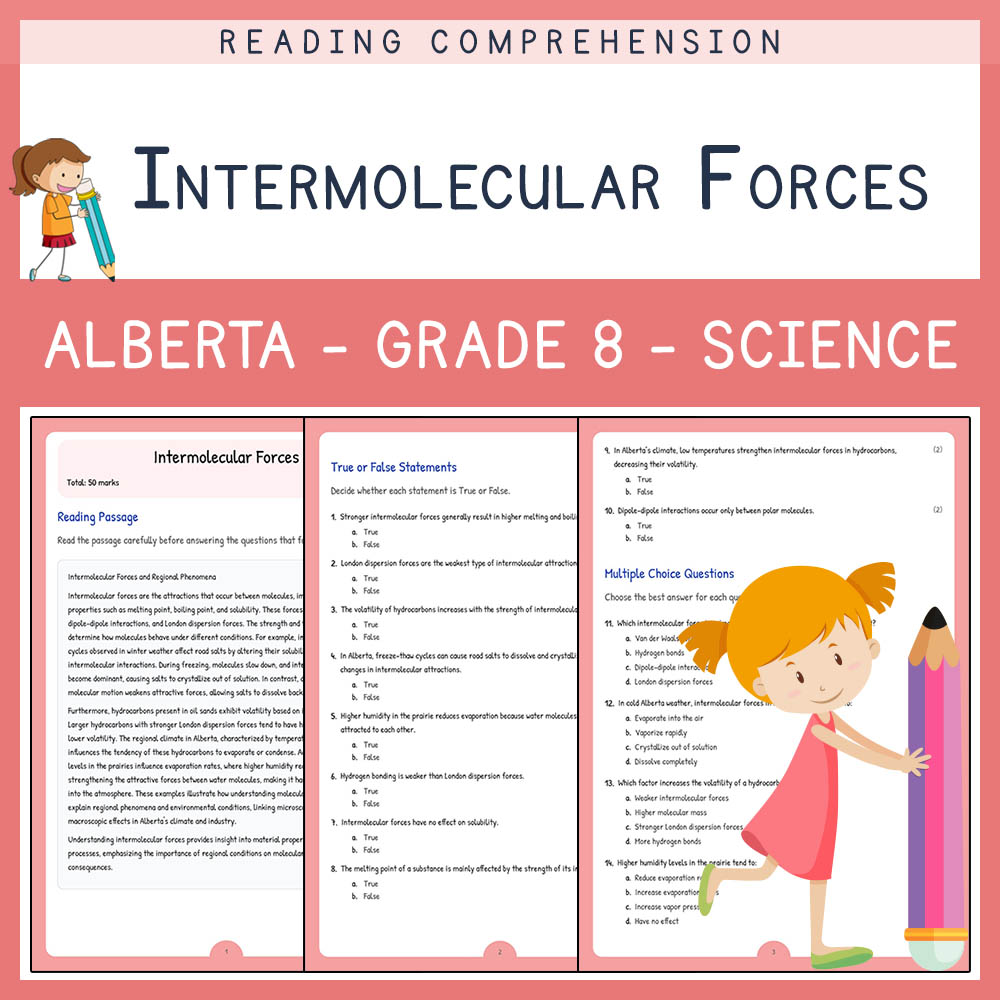
Grade 8 Science | Intermolecular Forces Worksheet | Alberta Standard
Created byLumora LearningLearning Objectives
- Explain how intermolecular forces influence melting point, boiling point, and solubility.
- Describe regional phenomena such as freeze–thaw cycles, hydrocarbon volatility, and humidity effects in terms of molecular interactions.
- Compare the strength of different types of intermolecular forces and their effects on physical properties.

Grade 8 Science | Population Drivers Worksheet | Alberta Standards
Created byLumora LearningLearning Objectives
- Explain how abiotic and biotic factors influence population size and distribution.
- Identify examples of population dynamics like migration, habitat selection, and outbreak patterns.
- Describe the roles of birth rate, death rate, immigration, and emigration in shaping populations.
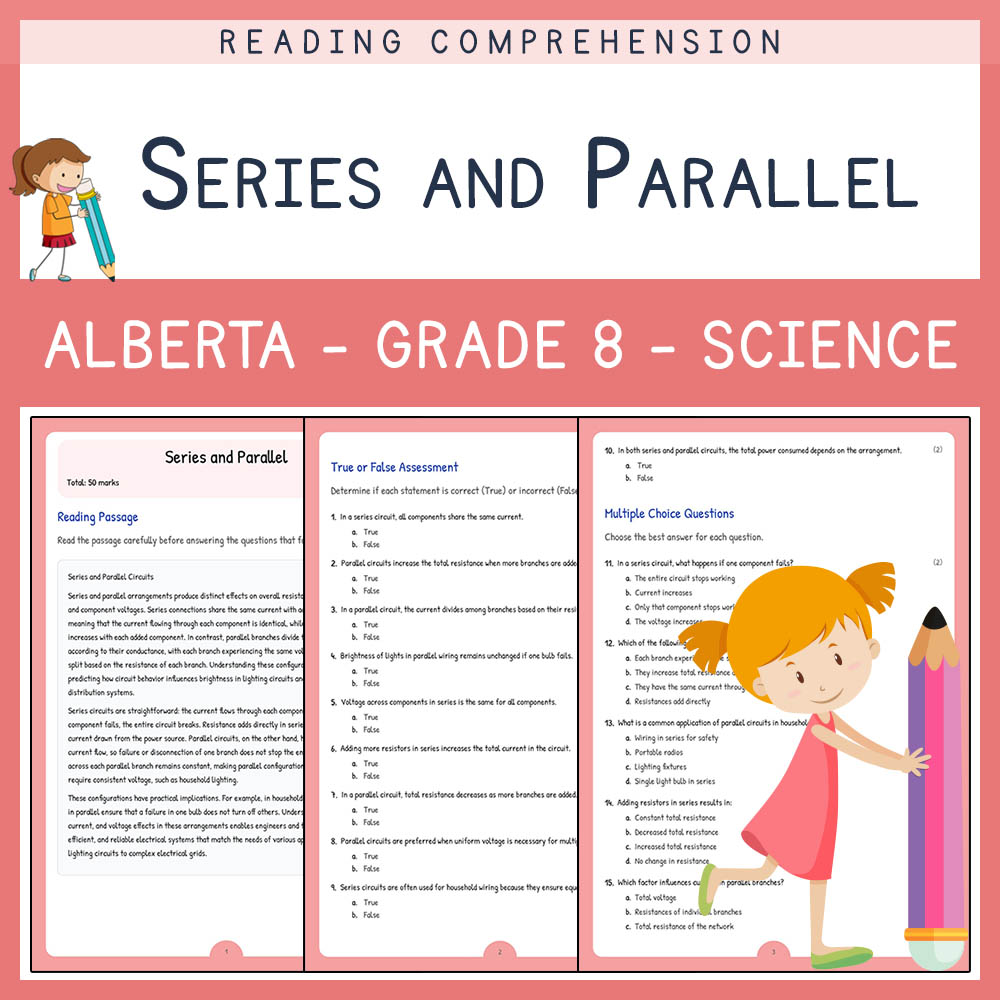
Grade 8 Science | Series and Parallel Worksheet | Alberta Standard
Created byLumora LearningLearning Objectives
- Understand the fundamental differences between series and parallel circuits.
- Identify how resistance, current, and voltage are distributed in series and parallel arrangements.
- Predict the effects of circuit configurations on brightness and power distribution.
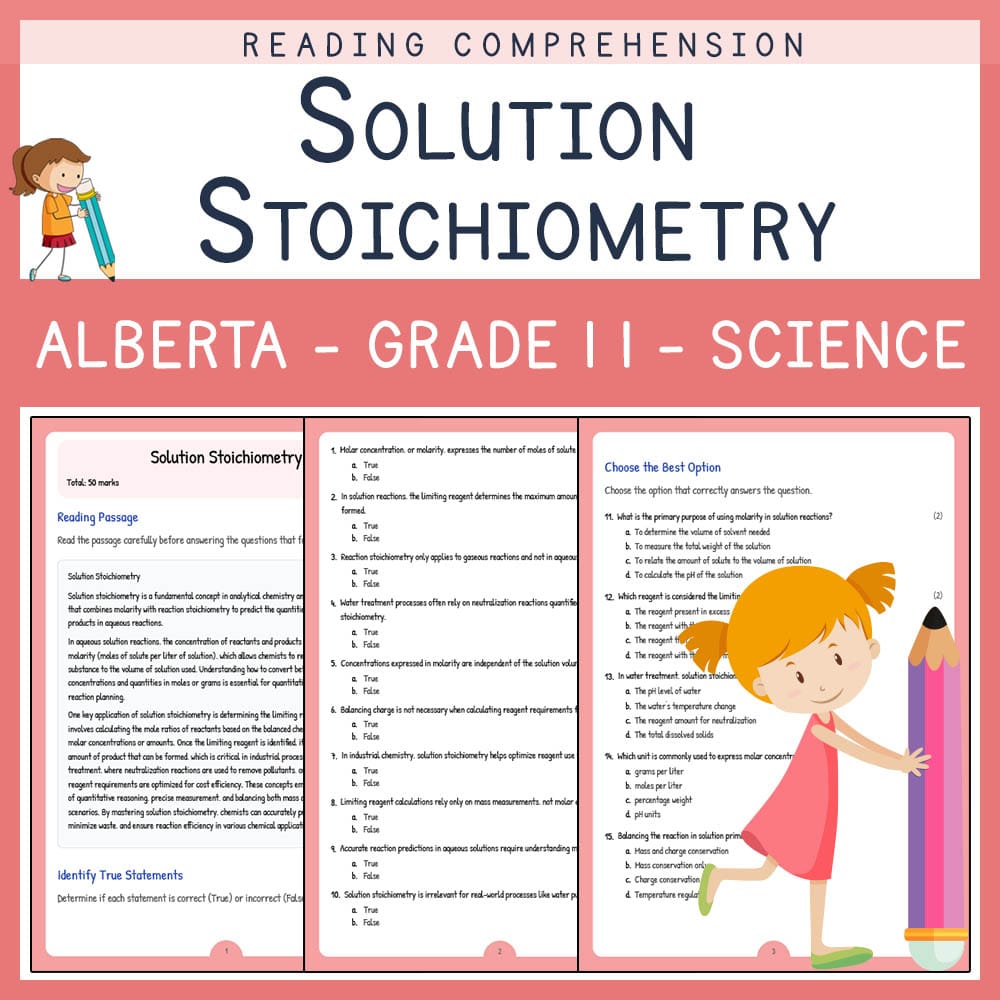
Grade 11 Science | Solution Stoichiometry Worksheet | Alberta Standards
Created byLumora LearningLearning Objectives
- Understand the concept of concentration and how it relates to molar ratios in aqueous reactions.
- Apply mole–mole relationships to predict reactant and product amounts in solution.
- Identify limiting reagents in solution-phase reactions through stoichiometric calculations.
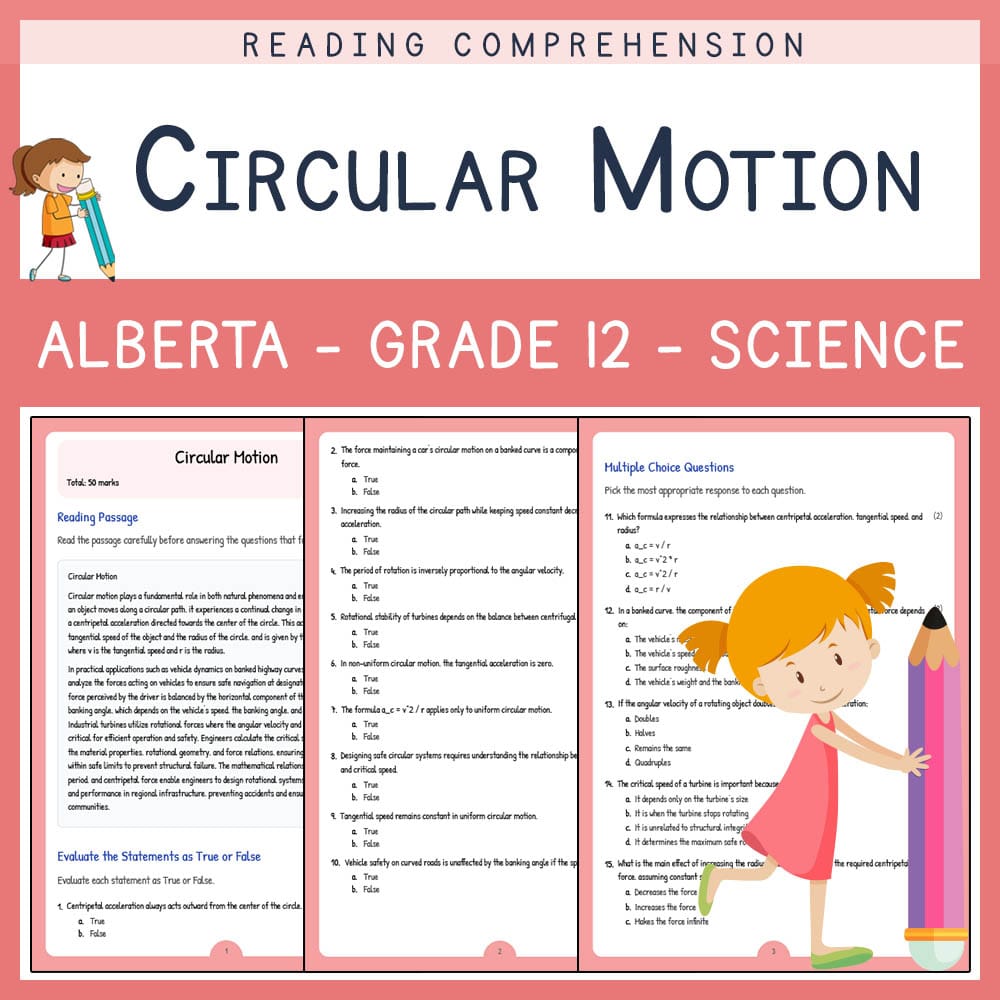
Grade 12 Science | Circular Motion Worksheet | Alberta Standards
Created byLumora LearningLearning Objectives
- Explain the basic principles of uniform and non-uniform circular motion.
- Calculate centripetal acceleration, tangential speed, and related forces in circular systems.
- Apply mathematical relations between angular velocity, period, and force to real-world scenarios.
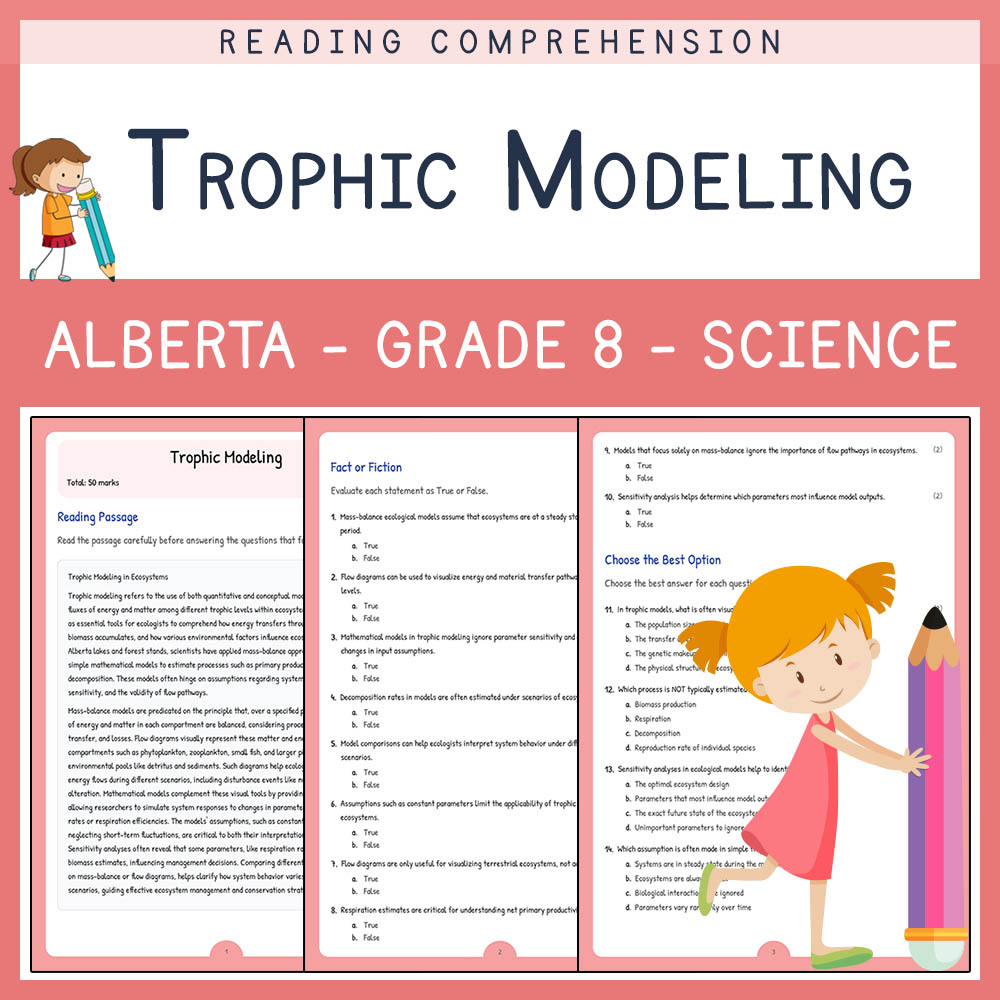
Grade 8 Science | Trophic Modeling Worksheet | Alberta Standards
Created byLumora LearningLearning Objectives
- Understand the basic concepts of trophic modeling and energy fluxes in ecosystems.
- Identify different approaches used for quantifying matter and energy flow among trophic compartments.
- Explain the assumptions and sensitivities of simple mathematical models in ecological systems.
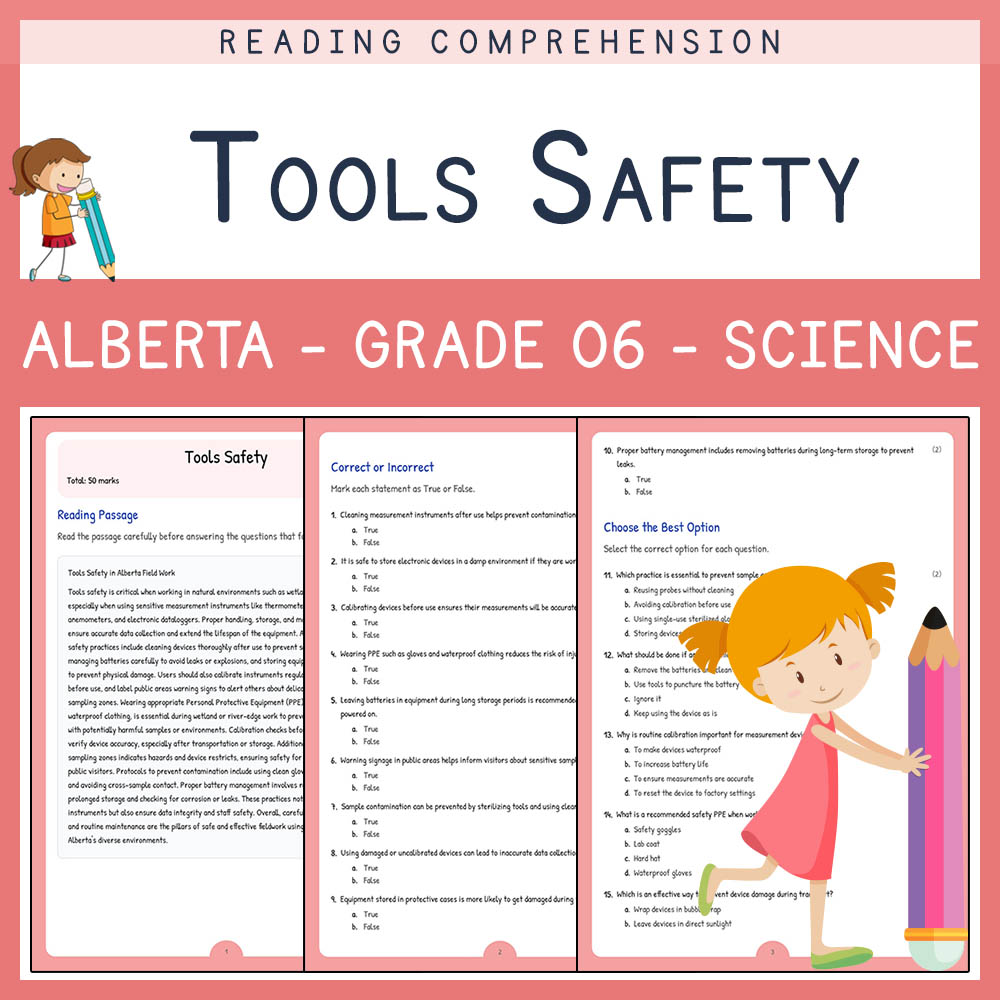
Grade 6 Science Worksheet | Tools Safety | Alberta-Aligned Assessment
Created byLumora LearningLearning Objectives
- Understand key safety practices for handling measurement tools near Alberta field sites.
- Identify proper storage, cleaning, and maintenance procedures for field equipment.
- Learn safety precautions for using electronic devices such as thermometers, pH probes, and dataloggers.
Browse more categories
About Science Worksheets
Find Science worksheets spanning core skills, practice, and review. All 42,859 resources are instant PDF downloads for the classroom or home.
Every worksheet on MyTeachingSheets is created by independent teacher-authors and reviewed before publication. All resources download as printable PDFs for classroom, homework, or at-home practice, and many include answer keys. Preview any worksheet free before buying.