
Science Worksheets
42,859 subject resources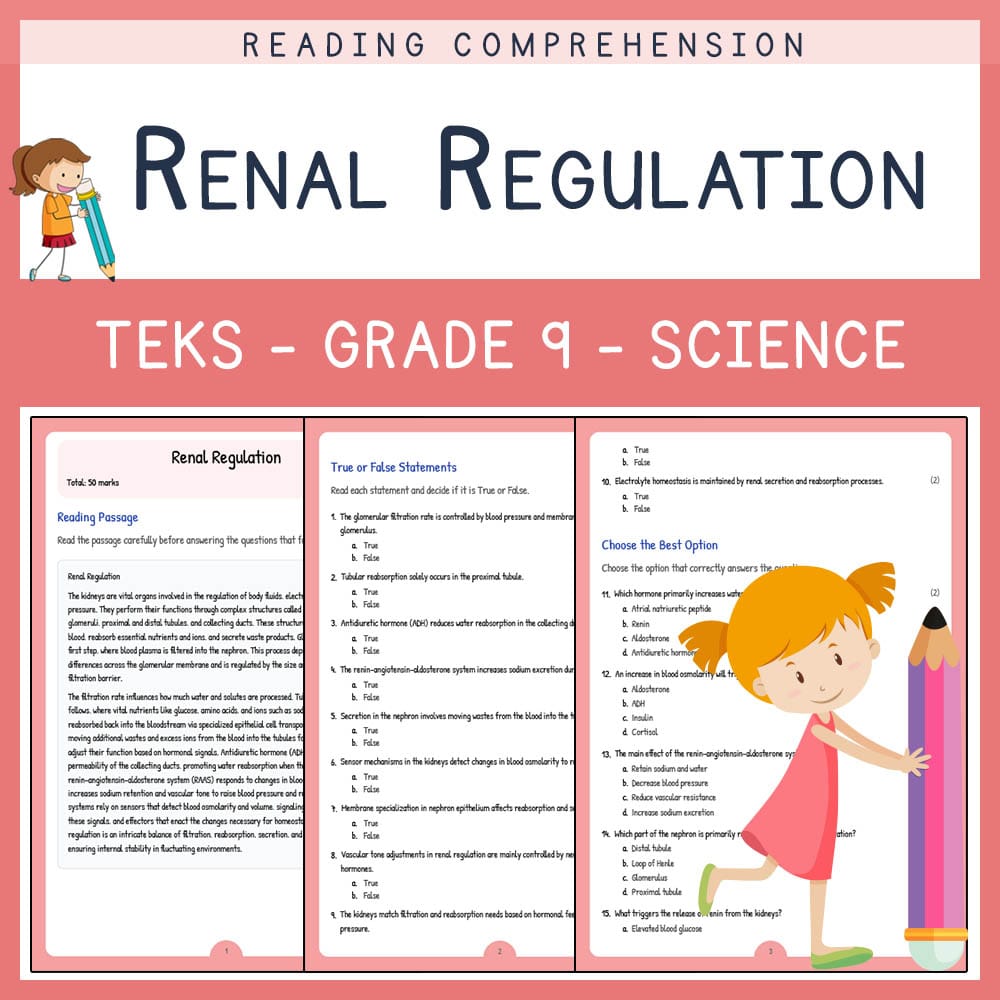
Grade 9 Science | Renal Regulation Worksheet | TEKS-Aligned
 Created byLumora Learning
Learning Objectives
- Describe how hormonal feedback mechanisms regulate kidney function and help maintain homeostasis.
- Explain the processes of glomerular filtration, tubular reabsorption, and secretion in the nephron.
- Identify the roles of specific hormones such as antidiuretic hormone and the renin–angiotensin–aldosterone system in fluid and electrolyte balance.

Grade 8 Science | Data Reasoning Worksheet | NGSSS Aligned
Created byLumora LearningLearning Objectives
- Explain how evidence-based reasoning uses trends, patterns, and relationships in data
- Distinguish correlation from causation and explain why experimental design matters
- Identify outliers and describe how uncertainty and measurement error affect conclusions
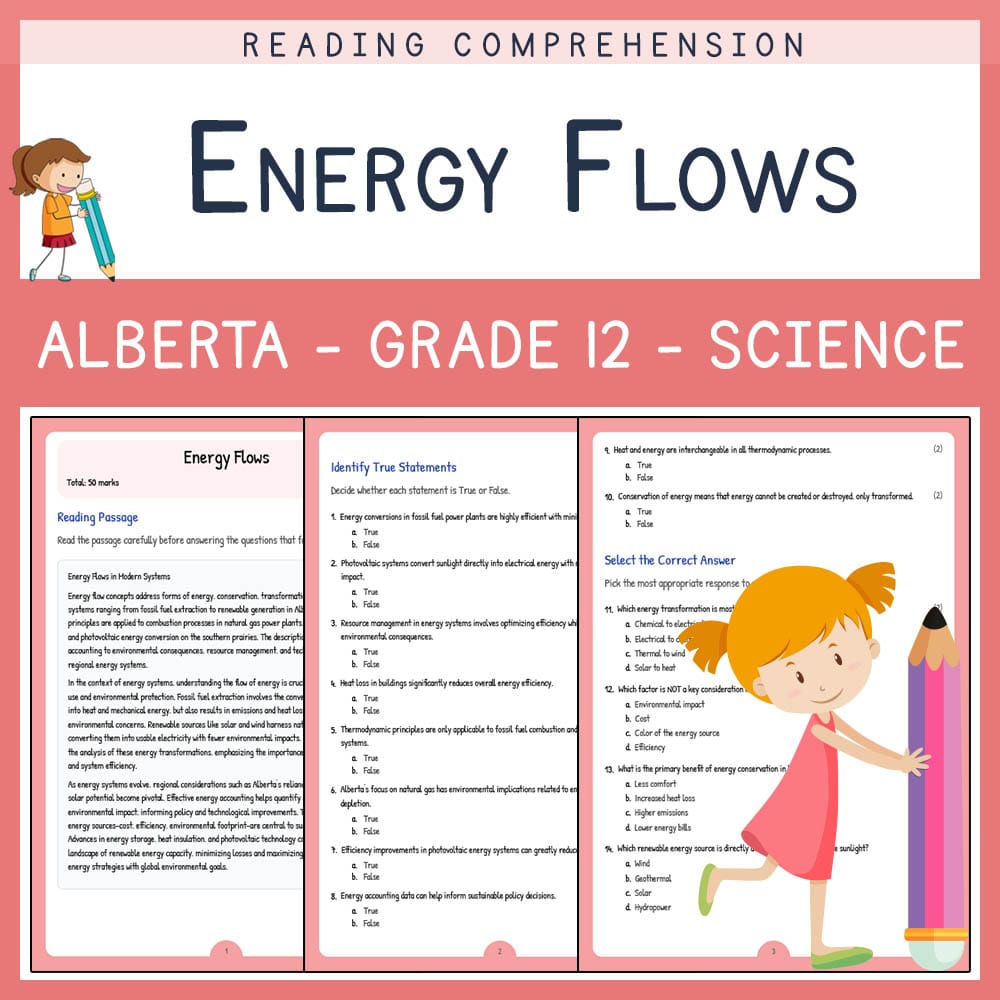
Grade 12 Science | Energy Flows Worksheet | Alberta Standards
Created byLumora LearningLearning Objectives
- Understand the different forms and transformations of energy in various systems.
- Explain the principles of energy conservation and efficiency in environmental contexts.
- Apply thermodynamic concepts to real-world energy systems such as power plants and renewable systems.
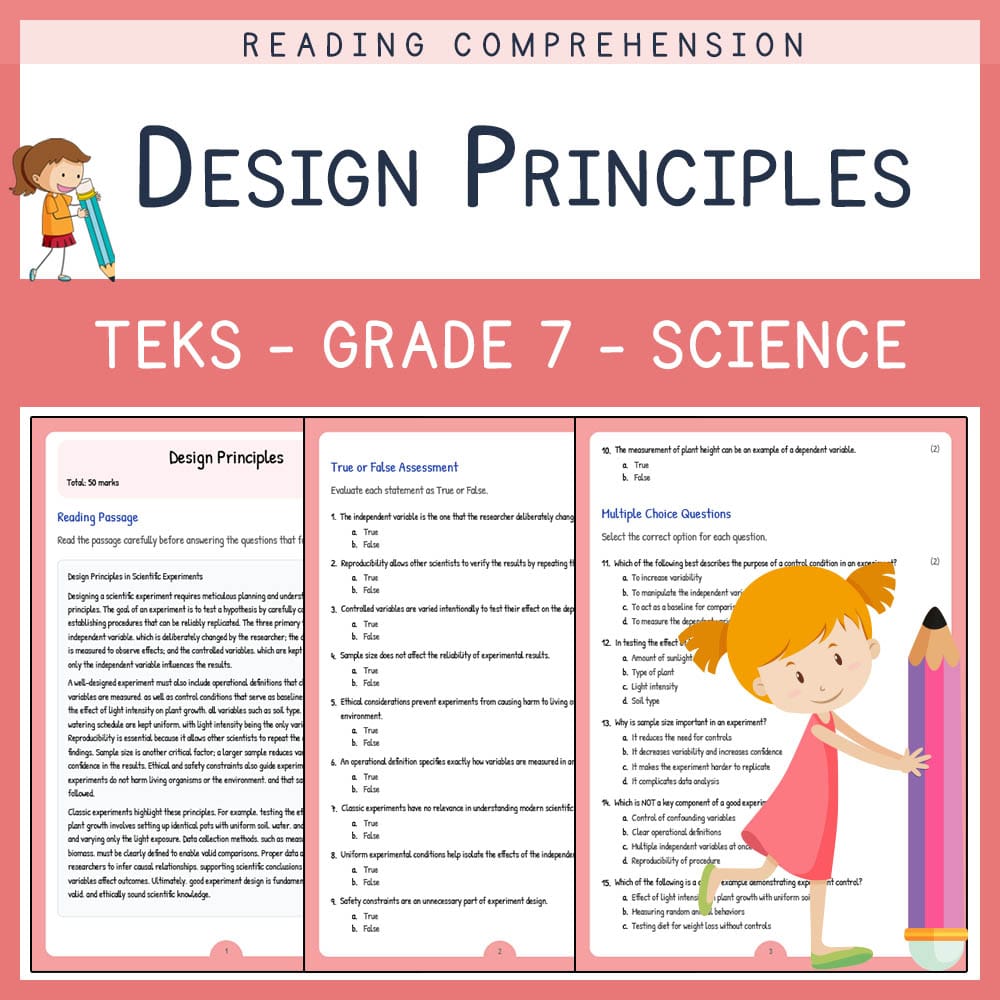
Grade 7 Science | Design Principles Worksheet | TEKS-Aligned
Created byLumora LearningLearning Objectives
- Understand the key elements of designing a fair experiment.
- Identify and define variables in experimental setups.
- Learn the importance of reproducibility, sample size, and safety considerations.

Grade 12 Science | Acid Base Reactions Worksheet | TEKS Aligned
Created byLumora LearningLearning Objectives
- Understand the different definitions of acids and bases according to Arrhenius, Brønsted–Lowry, and Lewis theories.
- Differentiate between strong and weak acids and bases, including their conjugate pairs.
- Explain the concepts of pH and pOH, and interpret titration curves and buffer actions.

Grade 9 Science | Earth Season Causes Worksheet | NGSSS Aligned
Created byLumora LearningLearning Objectives
- Explain how Earth’s axial tilt and orbital motion change the Sun’s angle and the length of day for each hemisphere.
- Describe why seasons are predictable periodic patterns caused by Sun–Earth geometry rather than Earth’s distance from the Sun.
- Connect seasonal sunlight changes to temperature cycles and real-world weather and environmental impacts.

Grade 12 Science | Variables And Controls Worksheet | General Standards
Created byLumora LearningLearning Objectives
- Identify independent and dependent variables in a scientific scenario.
- Explain how control conditions help isolate the effect of the independent variable.
- Evaluate claims about causation using evidence from fair comparisons.
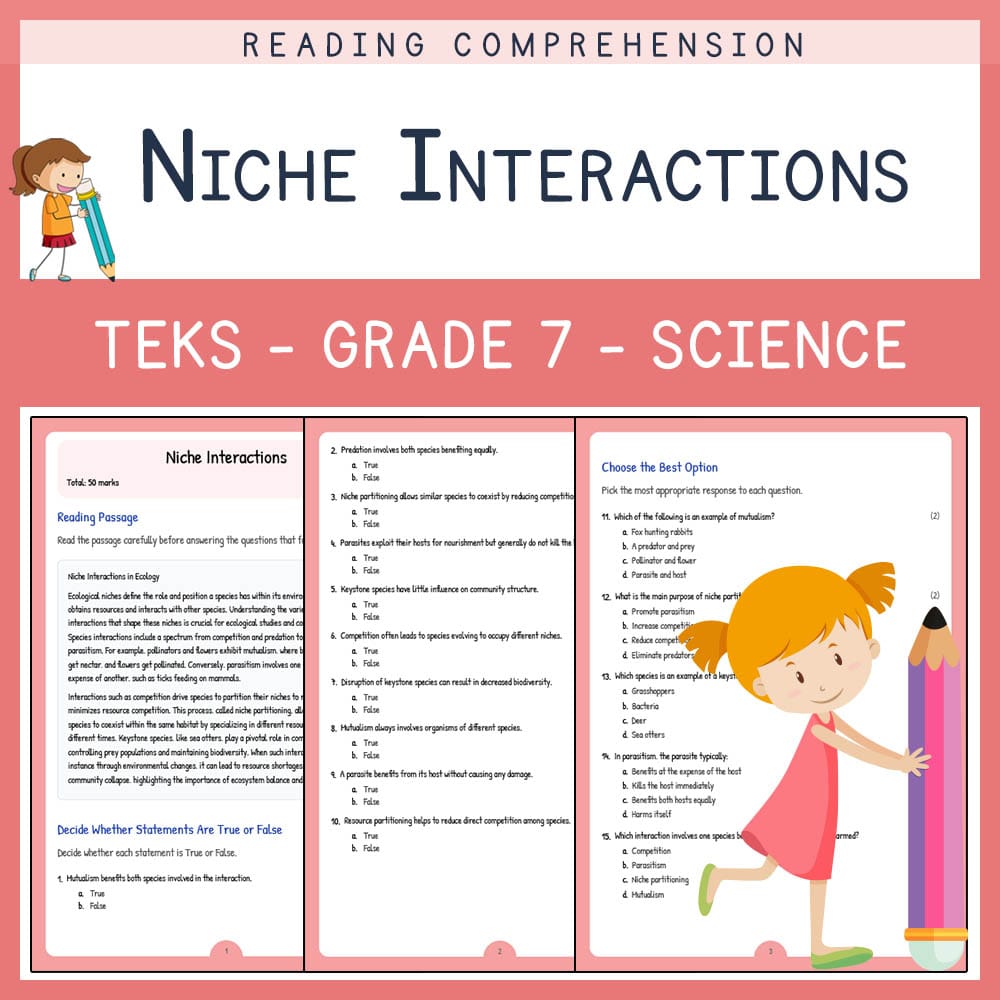
Grade 7 Science | Niche Interactions Worksheet Elena | TEKS-Aligned
Created byLumora LearningLearning Objectives
- Describe different species interactions that influence ecological niches.
- Identify examples of mutualism, predation, competition, and parasitism in ecosystems.
- Explain how niche partitioning reduces competition among species.

Grade 7 Science | Survival Structures Worksheet | General Standard Aligned
Created byLumora LearningLearning Objectives
- Explain how internal structures and external features help organisms survive, grow, and reproduce
- Identify how different traits increase an organism’s chance of obtaining resources and avoiding danger
- Use functional relationships to describe how structures support transport, digestion, and coordination

Grade 9 Science | Matter Cycles Worksheet | NGSSS Aligned
Created byLumora LearningLearning Objectives
- Explain how chemical elements like carbon, nitrogen, and phosphorus cycle between organisms and the physical environment.
- Describe how respiration, decomposition, and nutrient uptake connect living things to air, water, and soil.
- Distinguish matter cycling from energy flow in trophic transfers.

Grade 7 Science | Balanced Vs Unbalanced Forces Worksheet | Florida NGSSS
Created byLumora LearningLearning Objectives
- Distinguish balanced and unbalanced forces using the idea of net force
- Explain how balanced forces lead to constant velocity and unbalanced forces lead to acceleration
- Use tug-of-war scenarios to predict motion outcomes based on force strength and direction
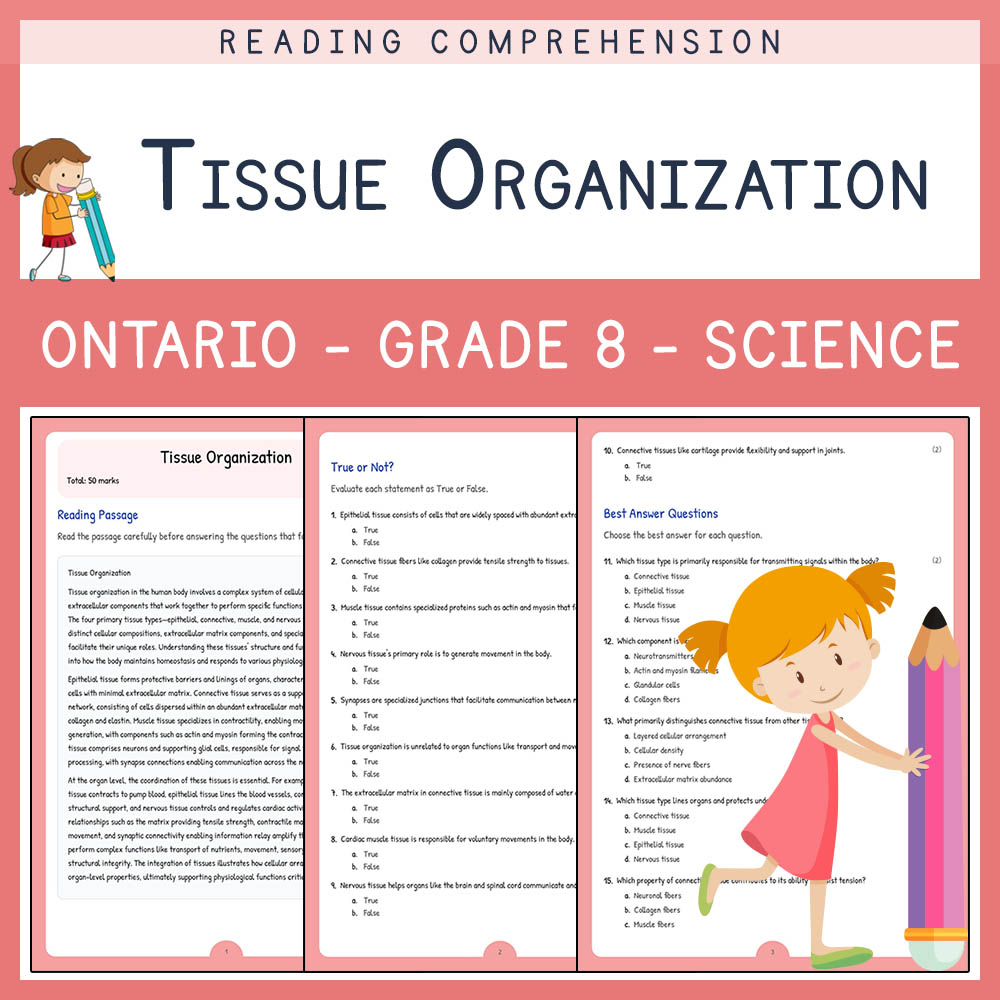
Grade 8 Science | Tissue Organization Worksheet Elena | Ontario Standard
Created byLumora LearningLearning Objectives
- Describe the major tissue types: epithelial, connective, muscle, and nervous tissues, including cellular and extracellular components.
- Explain the structural and functional relationships within tissues such as contractility in muscle, synaptic connections in nervous tissue, and tensile strength in connective tissue.
- Illustrate how tissue-level arrangements contribute to organ functions like transport, movement, signaling, and support.
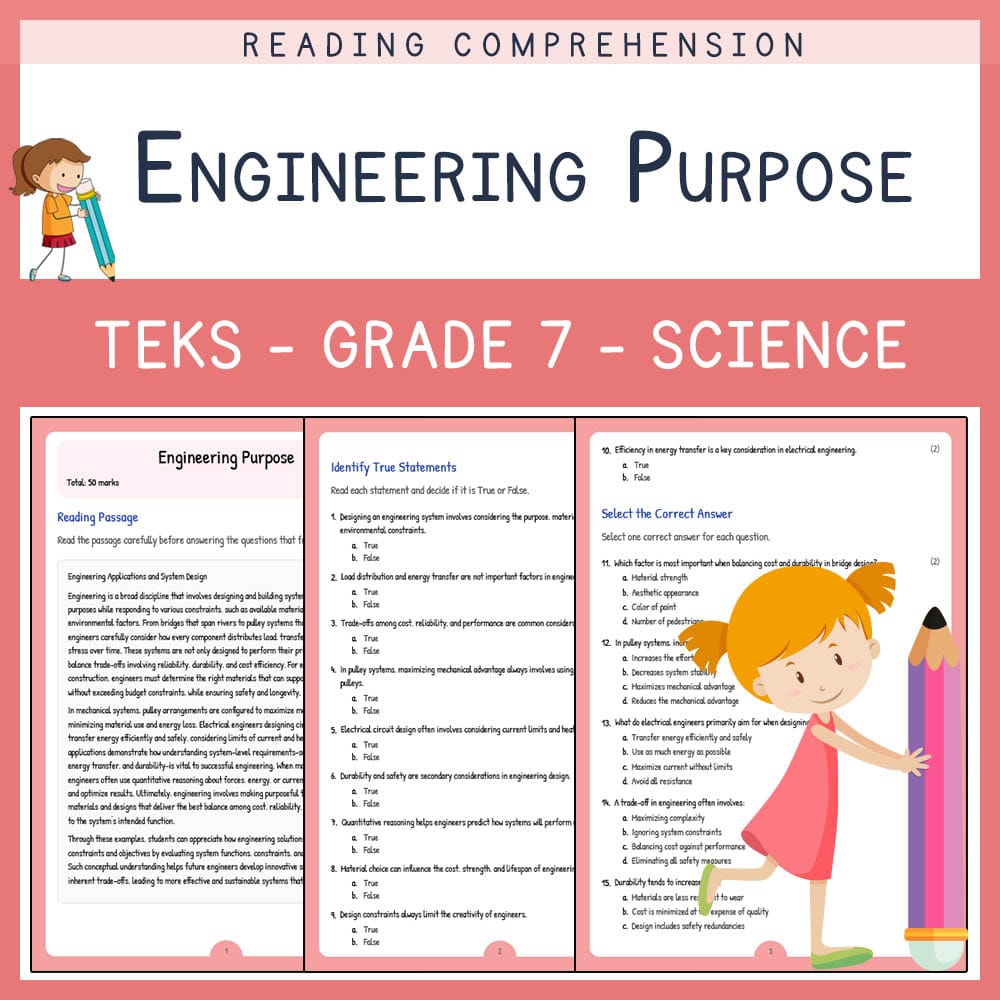
Grade 7 Science | Engineering Purpose Worksheet | TEKS Alligned
Created byLumora LearningLearning Objectives
- Understand how engineering design responds to system purpose, constraints, and materials.
- Identify examples of engineering systems in structural, mechanical, and electrical contexts.
- Evaluate trade-offs among cost, performance, and reliability in engineering projects.

Grade 8 Science | Density and Buoyancy Worksheet | NGSSS Aligned
Created byLumora LearningLearning Objectives
- Explain how density is calculated and how it predicts whether an object will sink or float in a fluid.
- Compare buoyancy and sinking/ floating using the ideas of fluid pressure and forces.
- Use the concepts of hot air balloons and liquid density to justify real-world buoyant behavior.
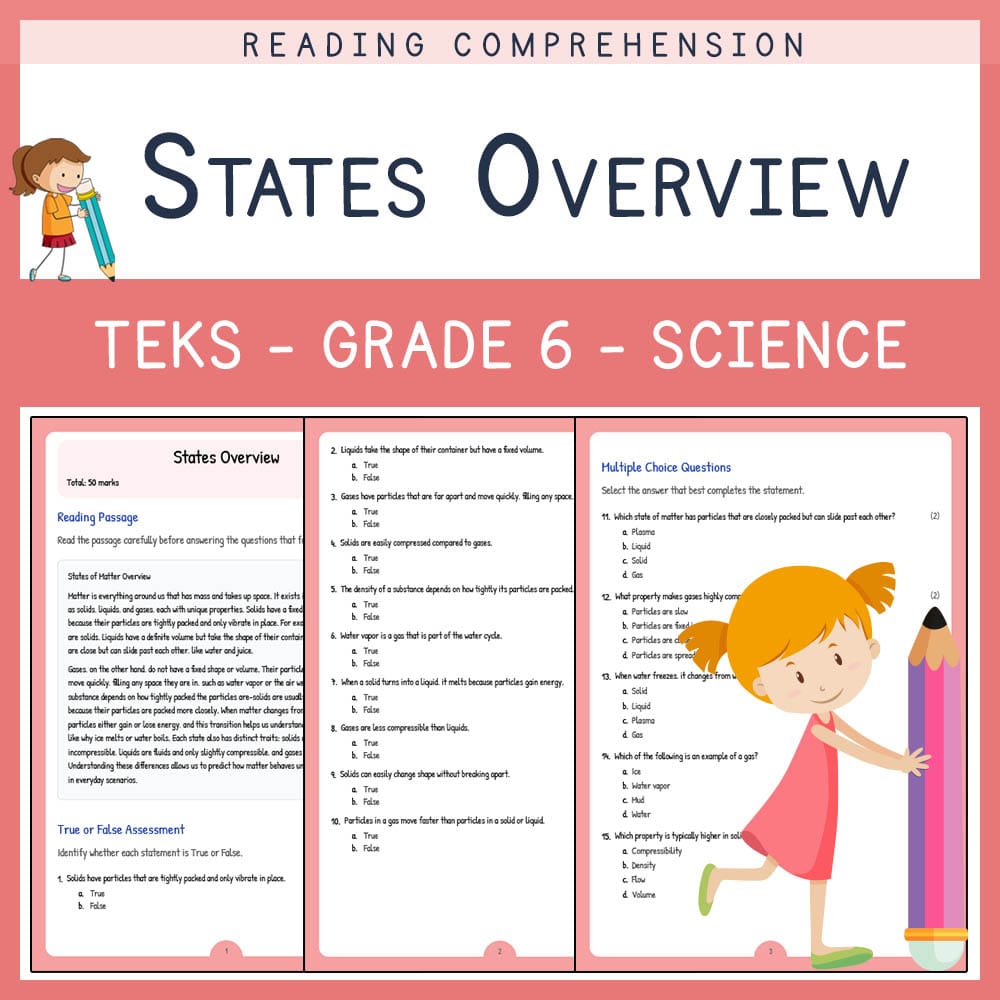
Grade 6 Science | States Overview Worksheet | TEKS-Aligned
Created byLumora LearningLearning Objectives
- Describe the three main states of matter: solid, liquid, and gas.
- Explain how particles are arranged and move in different states of matter.
- Compare properties such as shape, volume, density, and compressibility among solids, liquids, and gases.

Grade 12 Science | Biogeochemical Cycles Worksheet | NGSSS Assessment
Created byLumora LearningLearning Objectives
- Explain how matter cycles through ecosystems via biogeochemical pathways connecting atmospheric, aquatic, and soil reservoirs.
- Describe carbon cycling through photosynthesis, respiration, and decomposition.
- Outline key nitrogen transformations: nitrogen fixation, nitrification, assimilation, and denitrification.

Grade 8 Science | Mixtures and Changes Worksheet | NGSSS Aligned
Created byLumora LearningLearning Objectives
- Explain how mixtures form and why their properties depend on the components
- Describe solutions as a type of uniform mixture (solute + solvent) and predict observable behavior
- Differentiate physical changes from chemical changes using evidence and particle-level reasoning

Grade 7 Science | Physical Chemical Changes Worksheet | NGSSS Aligned
Created byLumora LearningLearning Objectives
- Distinguish physical changes from chemical changes based on whether a new substance forms
- Identify common indicators of chemical change (color change, gas production, precipitate formation, temperature change)
- Classify everyday examples of matter changes as physical or chemical using evidence

Grade 11 Science | Energy Transformations Worksheet | Florida NGSSS Aligned
Created byLumora LearningLearning Objectives
- Explain energy transformations using conservation of energy in a closed system
- Identify how energy forms (kinetic, thermal, chemical, electrical, light) change in real-world examples
- Use energy accounting to track where energy goes during friction, combustion, and electrical device operation
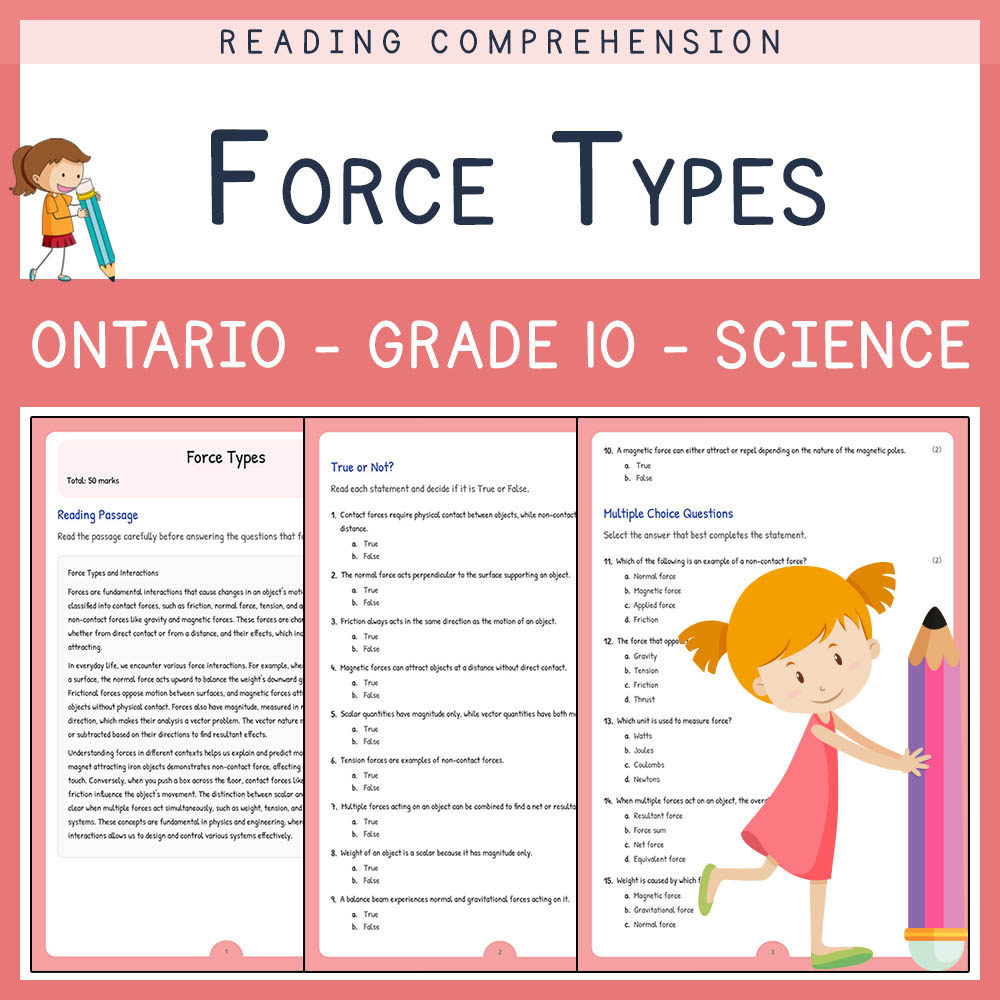
Grade 10 Science | Force Types Worksheet Elena | Ontario Standard
Created byLumora LearningLearning Objectives
- Describe different types of contact and non-contact forces.
- Explain how forces have magnitude and direction, illustrating their vector nature.
- Identify examples of force interactions in real-world contexts like weights on supports and magnetic attraction.
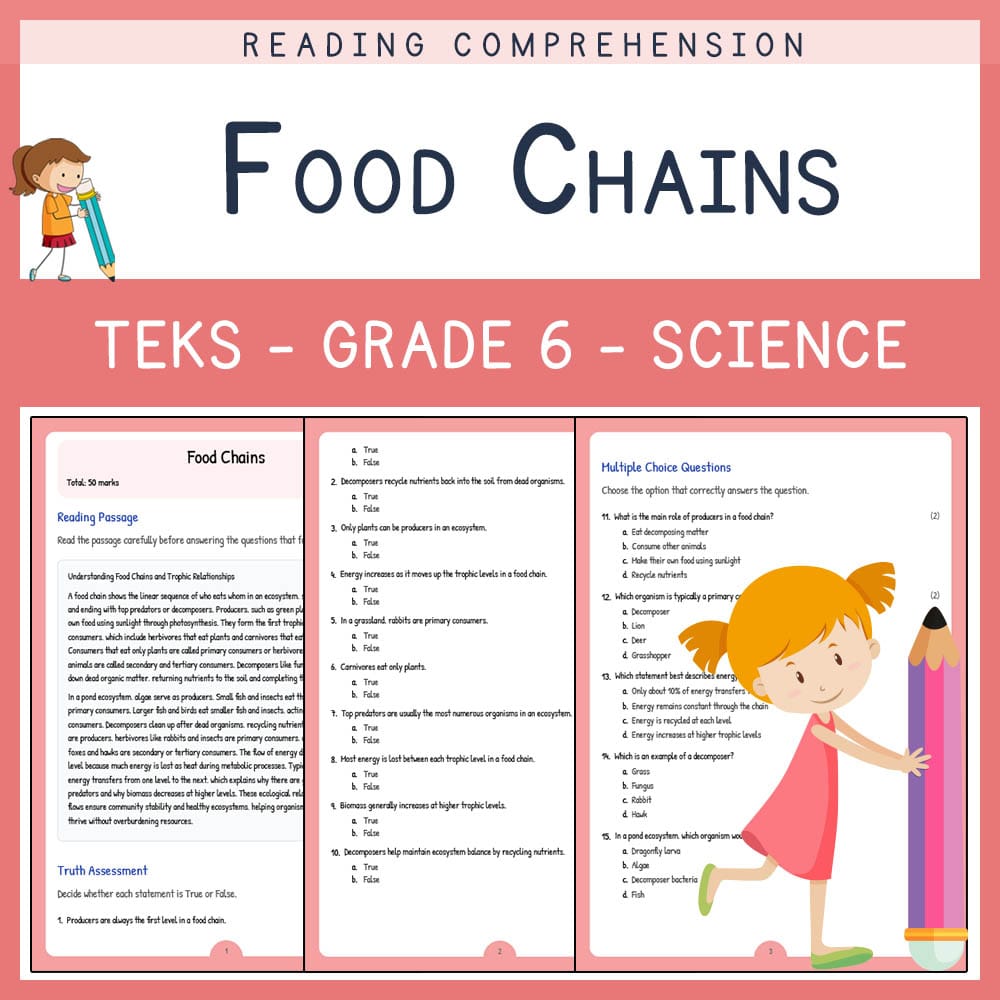
Grade 6 Science | Food Chains Worksheet Elena | TEKS-Aligned
Created byLumora LearningLearning Objectives
- Define and identify producers, consumers, and decomposers in food chains.
- Describe trophic levels and energy transfer among organisms.
- Illustrate simple pond and grassland food sequences to explain ecological relationships.
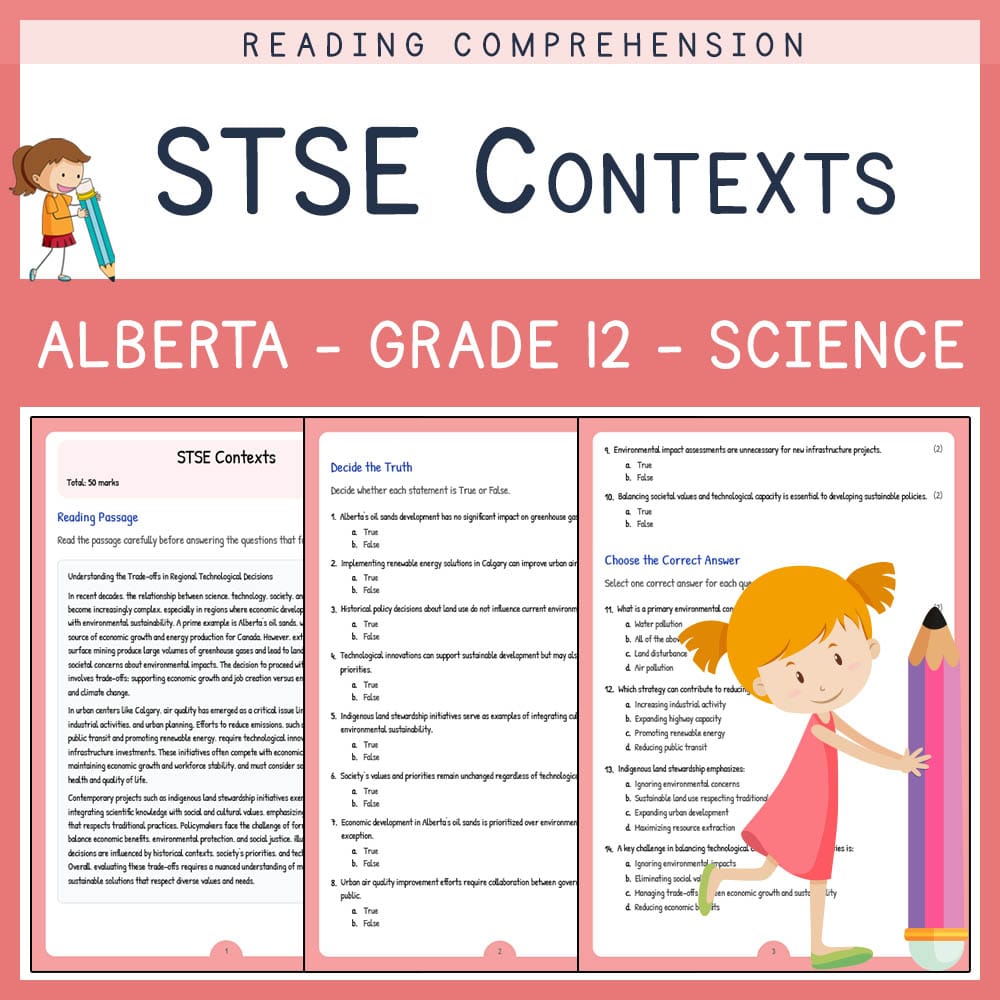
Grade 12 Science | STSE Contexts Worksheet | Alberta Standards
Created byLumora LearningLearning Objectives
- Analyze regional phenomena to understand the interactions among science, technology, society, and the environment.
- Evaluate trade-offs among technological choices considering economic, environmental, and social factors.
- Interpret historical and contemporary case studies related to policy decisions and infrastructure projects.
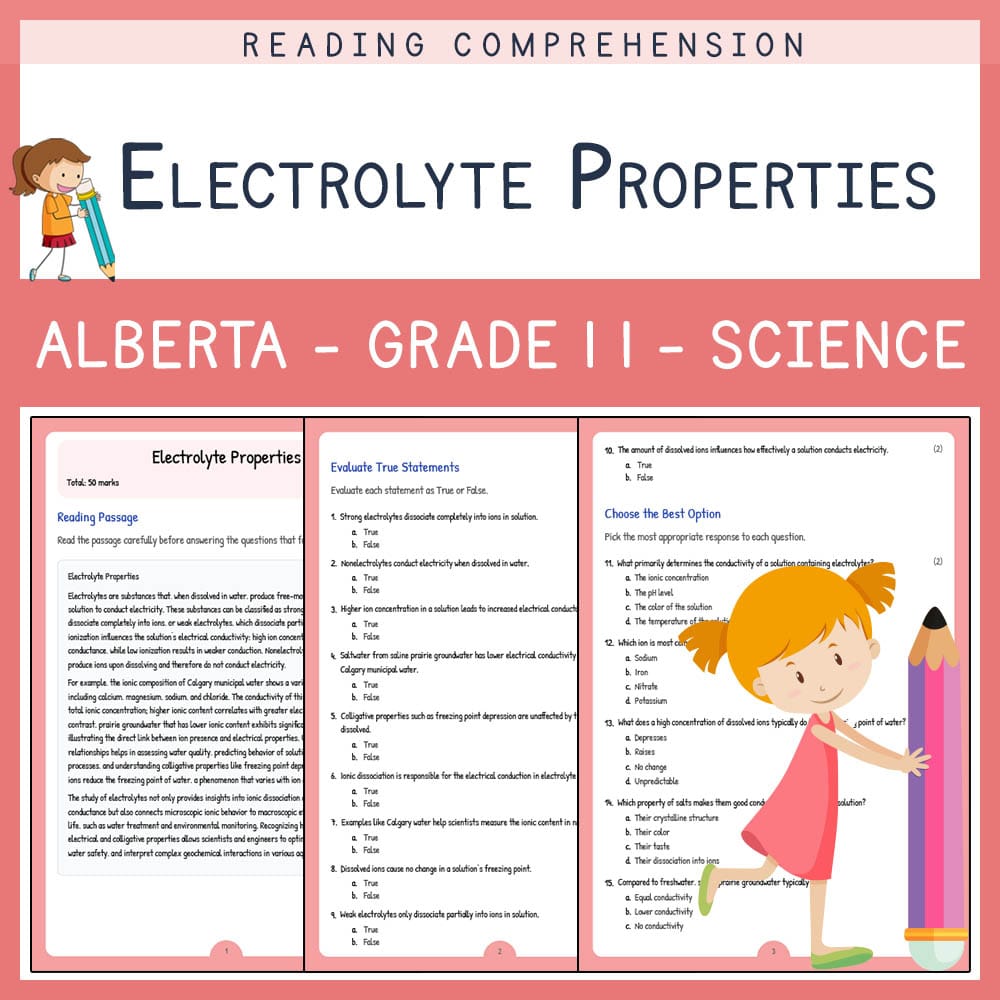
Grade 11 Science | Electrolyte Properties Worksheet | Alberta Standards
Created byLumora LearningLearning Objectives
- Explain the difference between electrolytes and nonelectrolytes based on ion dissociation.
- Describe how ion concentration affects electrical conductance in solutions.
- Identify the impact of solute particles on colligative properties such as freezing point depression.

Grade 12 Science | Data Analysis in Scientific Research Worksheet | TEKS Aligned
Created byLumora LearningLearning Objectives
- Interpret and analyze data visualizations including graphs and plots.
- Select appropriate models and assess their fit using statistical metrics.
- Evaluate residuals and understand uncertainty representation in data.

Grade 11 Science | Digital Information Worksheet Elena | California Standards
Created byLumora LearningLearning Objectives
- Explain how digital communication encodes sampled signals into discrete binary symbols.
- Compare digital and analog information transmission in terms of noise sensitivity and reliability.
- Describe how error correction can recover intended messages despite channel noise.

Grade 9 Science | Third Law Pairs Worksheet | NGSSS Assessment
Created byLumora LearningLearning Objectives
- Explain Newton’s Third Law using the idea of action–reaction force pairs that act on different objects.
- Identify whether two forces form a Third Law pair by checking the interacting objects and direction.
- Use Third Law pairs to analyze everyday situations such as rockets, walking, and pushing against walls.
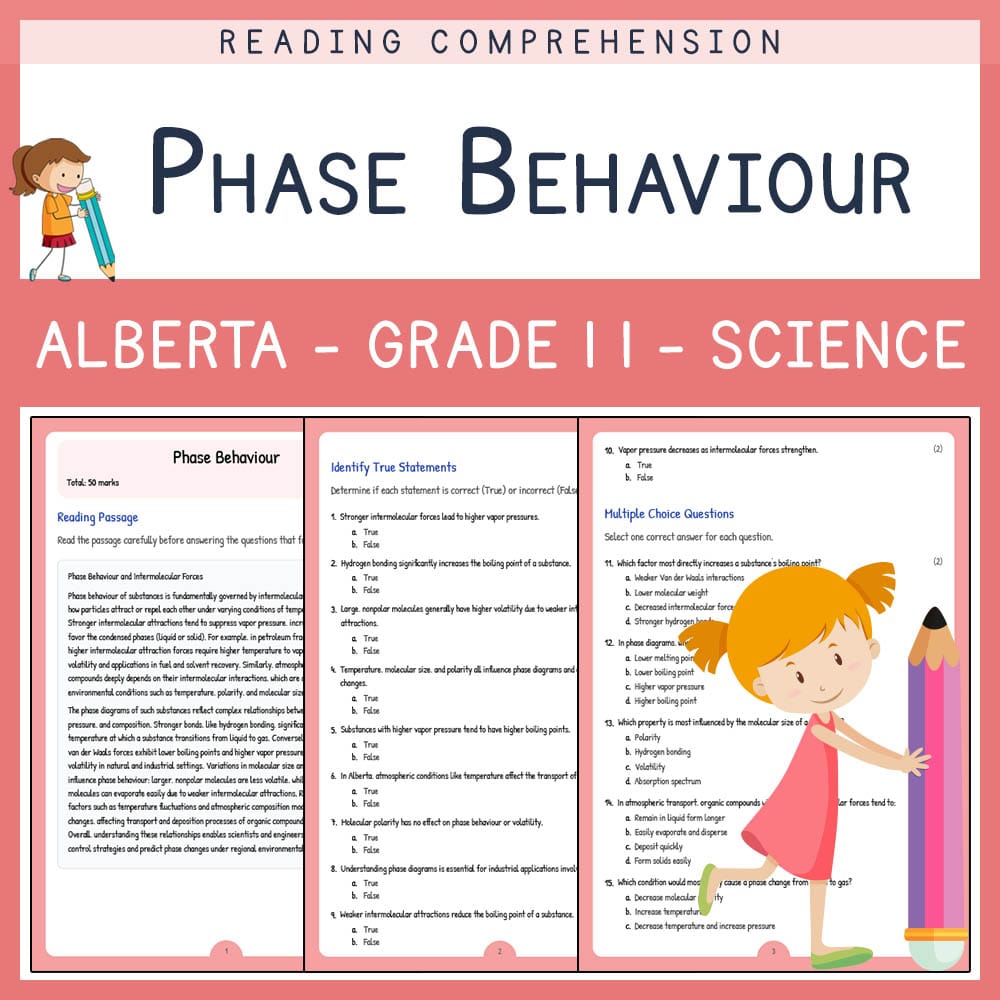
Grade 11 Science Worksheet | Phase Behaviour | Alberta Standards
Created byLumora LearningLearning Objectives
- Understand how intermolecular forces influence phase transitions, vapor pressure, and volatility.
- Explain the connection between intermolecular attractions and physical properties like boiling point and vapor pressure.
- Apply knowledge of phase diagrams considering temperature, molecular size, and polarity in regional environmental contexts.

Grade 12 Science | Phase Change Heat Worksheet | General Standards
Created byLumora LearningLearning Objectives
- Explain why temperature remains constant during melting and boiling while energy continues to be absorbed or released.
- Interpret heating curves (slopes and plateaus) in terms of particle model changes and interactions.
- Connect latent heat and specific phase change energy to the amount of matter undergoing a phase change.
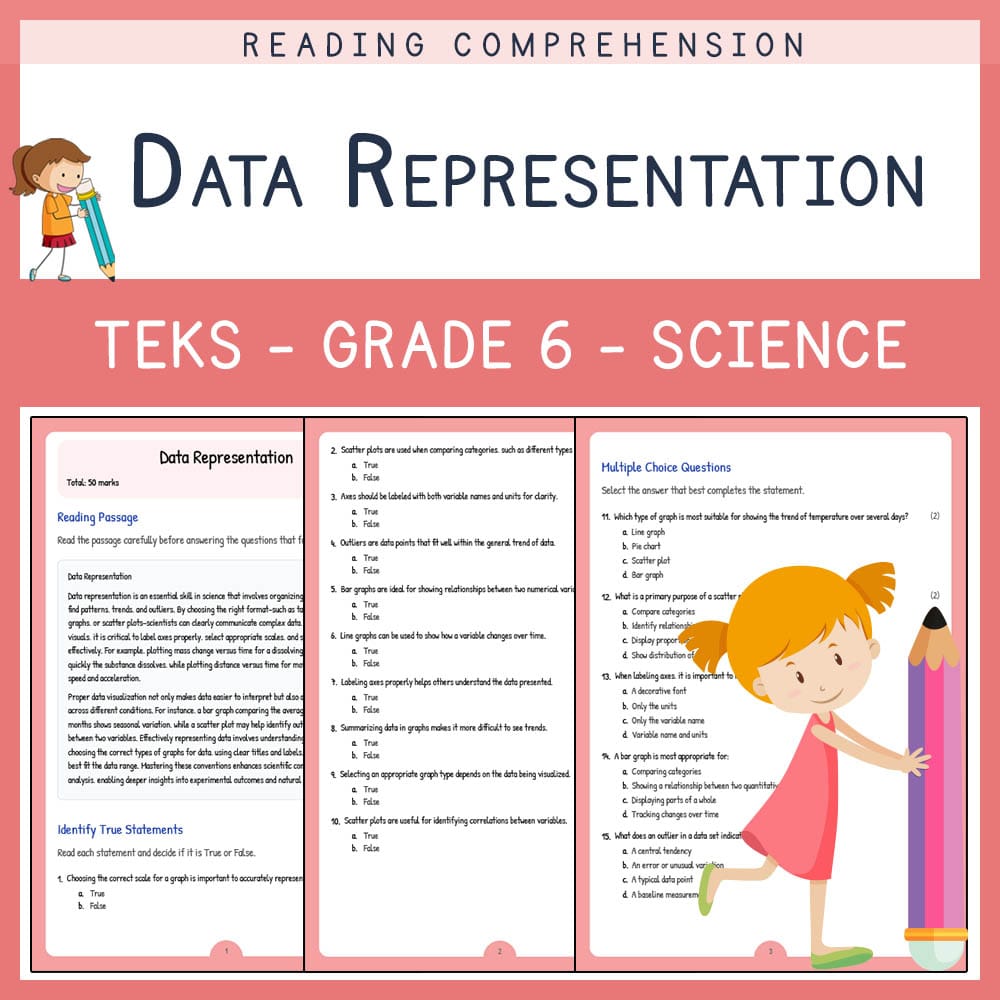
Grade 6 Science | Data Representation Worksheet | TEKS Alligned
Created byLumora LearningLearning Objectives
- Understand conventions for organizing data in tables and graphs.
- Identify proper labeling, scaling, and effective graphical summaries.
- Apply data representation to real-world examples to interpret trends.

Grade 10 Science | Body Temperature Worksheet | TEKS-Aligned
Created byLumora LearningLearning Objectives
- Understand the mechanisms involved in body temperature regulation.
- Identify the roles of the nervous, circulatory, muscular, and integumentary systems in maintaining thermal balance.
- Explain how the hypothalamus functions as a control center for temperature regulation.

Grade 11 Science | Physical vs Chemical Worksheet | NGSSS Assessment
Created byLumora LearningLearning Objectives
- Differentiate physical changes from chemical changes by whether new substances form and composition changes.
- Identify evidence of chemical change (e.g., gas, color, temperature, precipitate) and explain why it matters.
- Predict whether a change is likely reversible based on particle/bonding behavior.
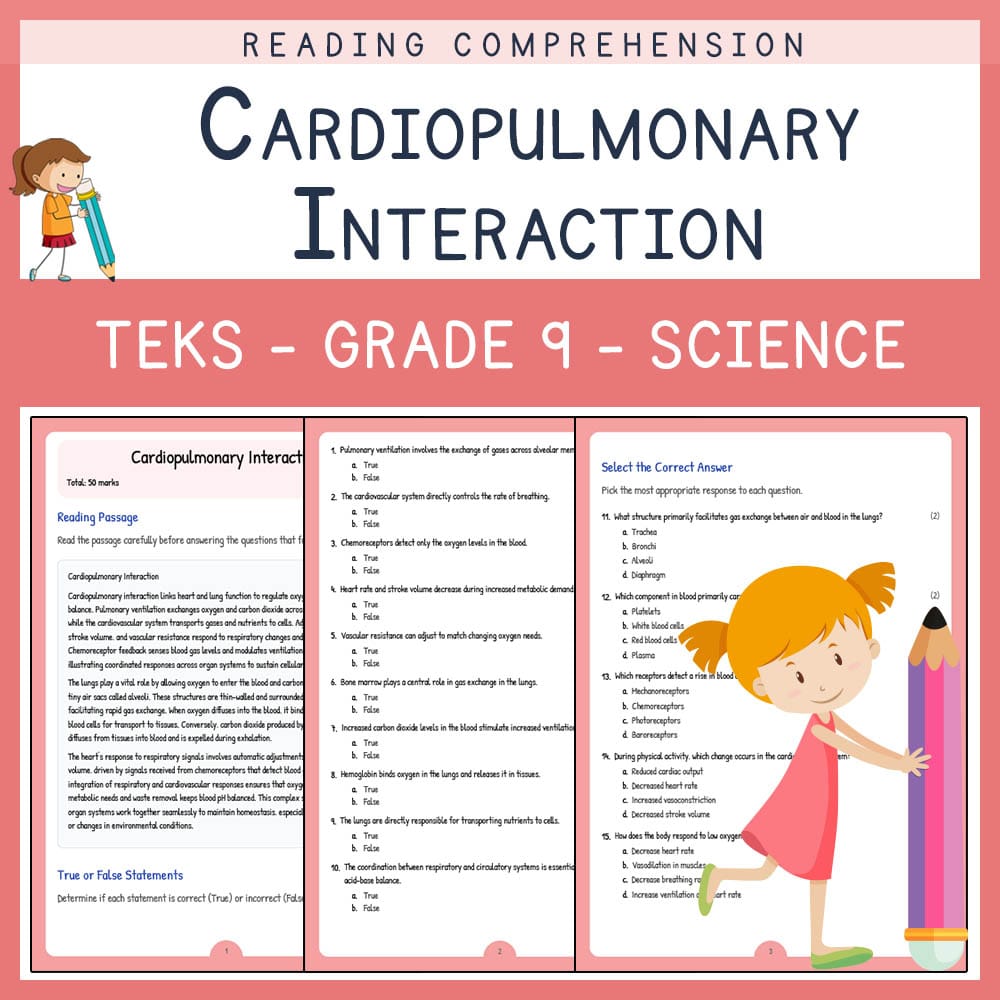
Grade 9 Science | Cardiopulmonary Interaction Worksheet | TEKS Aligned
Created byLumora LearningLearning Objectives
- Explain how the heart and lungs work together to supply oxygen and remove carbon dioxide.
- Identify the roles of pulmonary ventilation and cardiovascular transport in maintaining homeostasis.
- Describe how chemoreceptors regulate respiratory and circulatory responses to blood gas levels.

Grade 10 Science | Energy Flow Worksheet | TEKS Aligned
Created byLumora LearningLearning Objectives
- Understand the process by which energy enters ecosystems primarily through sunlight.
- Explain how energy moves through trophic levels and the concept of energy loss.
- Describe the roles of food chains and food webs in illustrating energy pathways.
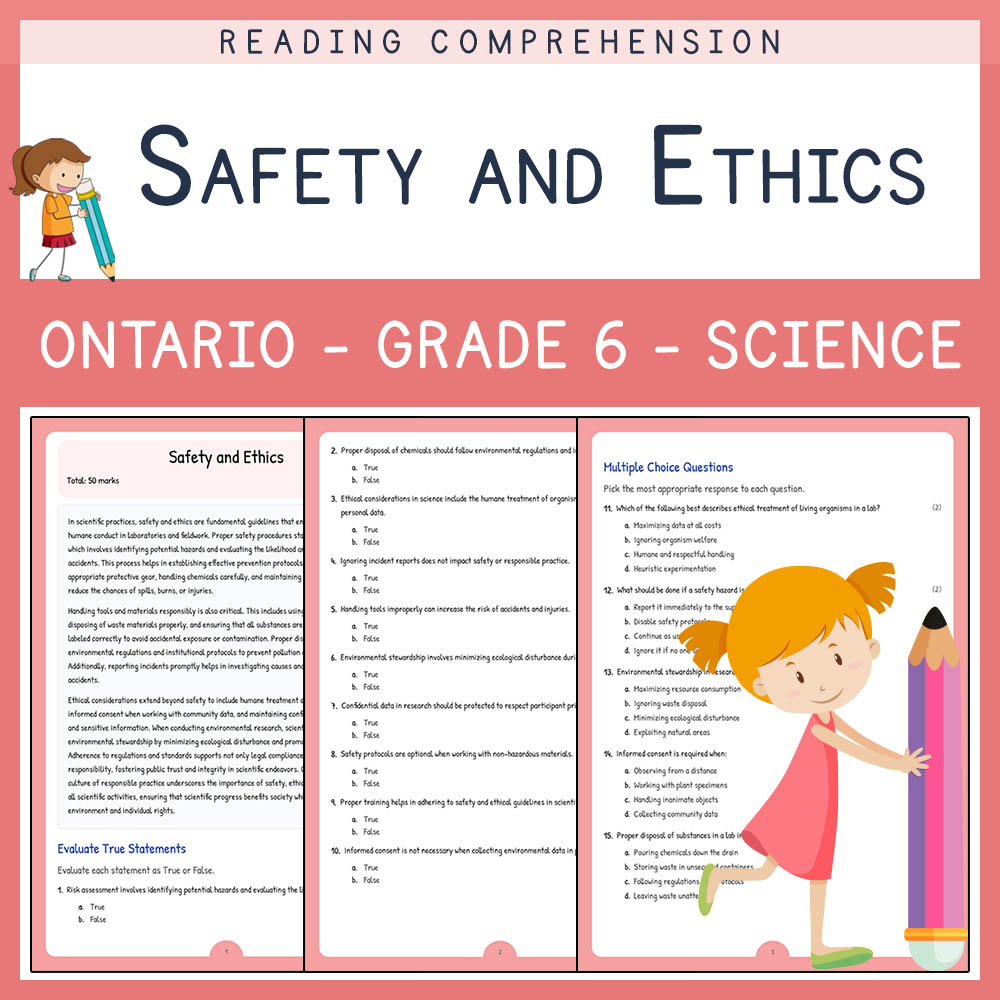
Grade 6 Science | Safety and Ethics Worksheet (PDF + Answer Key)
Created byLumora LearningLearning Objectives
- Understand foundational safety principles including risk assessment and hazard prevention.
- Identify proper handling and disposal procedures for materials and tools.
- Recognize ethical considerations such as humane treatment, confidentiality, and environmental stewardship.

Grade 6 Science | Respiration and Digestion Worksheet | General Standard
Created byLumora LearningLearning Objectives
- Explain how the respiratory system exchanges gases through diffusion using concentration differences.
- Describe how the digestive system breaks food into smaller molecules that can enter circulation.
- Connect how oxygen intake and nutrient absorption work together to support energy release in cells.

Grade 6 Science | Iterative Improvement Worksheet | General Standard
Created byLumora LearningLearning Objectives
- Explain how evaluation results guide iterative improvement in science and engineering designs
- Identify how changes can target the cause of failure while respecting constraints and trade-offs
- Use evidence from testing to justify modifications to a prototype

Grade 11 Science | Water Cycle Flux Worksheet | NGSSS Assessment
Created byLumora LearningLearning Objectives
- Explain the main processes of the water cycle and how flux describes the rate of water movement between reservoirs.
- Analyze how ocean circulation and sea surface temperature affect atmospheric humidity, stability, and precipitation.
- Describe how seasonal changes and long-term climate shifts can alter regional water availability and storm patterns.

Grade 10 Science | Photosynthesis Basics Worksheet | TEKS Aligned
Created byLumora LearningLearning Objectives
- Understand the two main stages of photosynthesis: light reactions and the Calvin cycle.
- Identify the key processes and molecules involved in photosynthesis.
- Explain how sunlight energy is converted into chemical energy in chloroplasts.
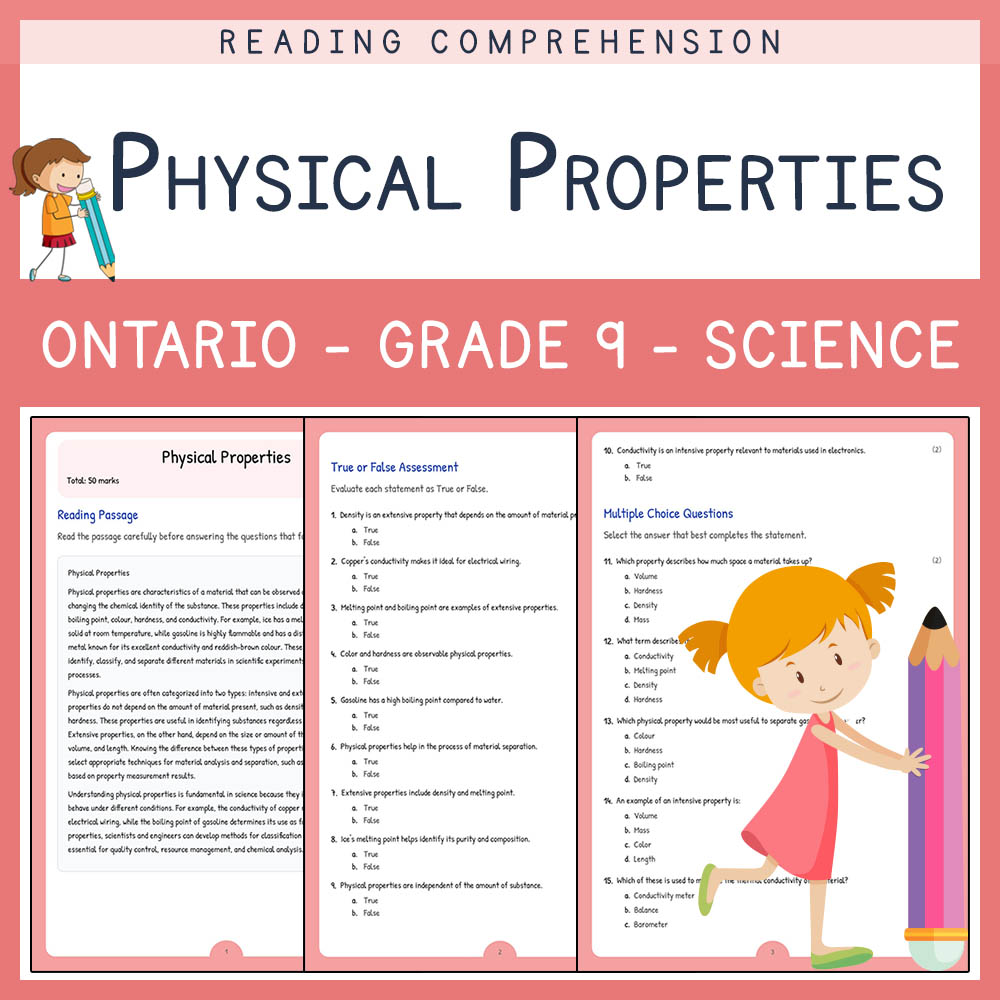
Grade 9 Science | Physical Properties Worksheet Elena | Ontario Standard
Created byLumora LearningLearning Objectives
- Define and understand physical properties as observable or measurable characteristics.
- Distinguish between intensive and extensive properties of materials.
- Identify examples of physical properties in everyday substances such as ice, copper, and gasoline.
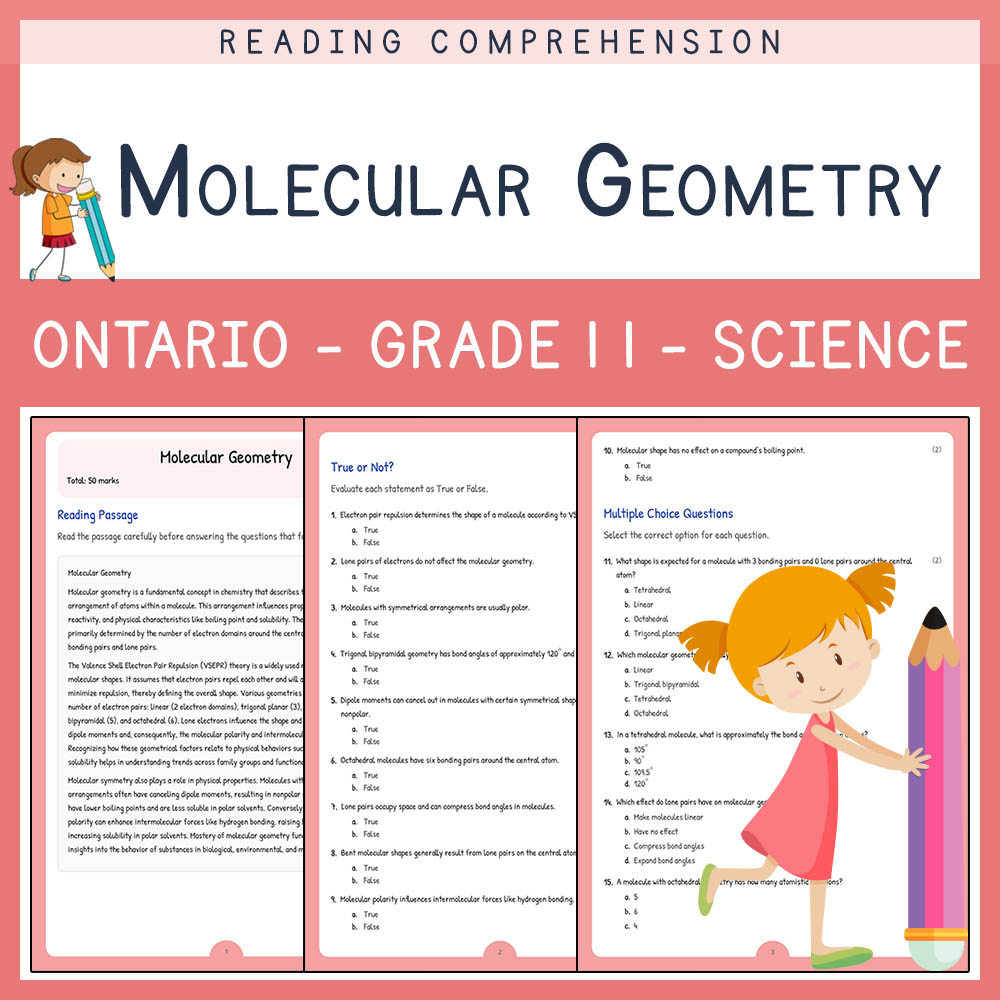
Grade 11 Science Assessment | Molecular Geometry Worksheet Elena | Ontario
Created byLumora LearningLearning Objectives
- Understand the electron-domain and VSEPR models for predicting molecular shapes.
- Identify various molecular geometries and their bond angles.
- Analyze effects of lone pairs and symmetry on molecular polarity and physical properties.

Grade 10 Science | Positive Feedback Worksheet | TEKS-Aligned
Created byLumora LearningLearning Objectives
- Understand the concept of positive feedback in human physiology.
- Identify examples of positive feedback mechanisms like childbirth and clotting.
- Explain how positive feedback amplifies physiological responses.

Grade 8 Science | Design Problem Framing Worksheet | California Standards
Created byLumora LearningLearning Objectives
- Explain how engineering design problem framing connects a real-world need to a measurable goal
- Identify constraints and requirements that limit solutions in an engineering challenge
- Use framed criteria to compare different solution approaches fairly

Grade 8 Science | Energy Forms Worksheet Elena | California Standard
Created byLumora LearningLearning Objectives
- Explain how kinetic energy depends on speed and mass
- Explain how gravitational potential energy depends on height relative to a reference level
- Use simple relationships and graphs to predict how energy shifts during motion
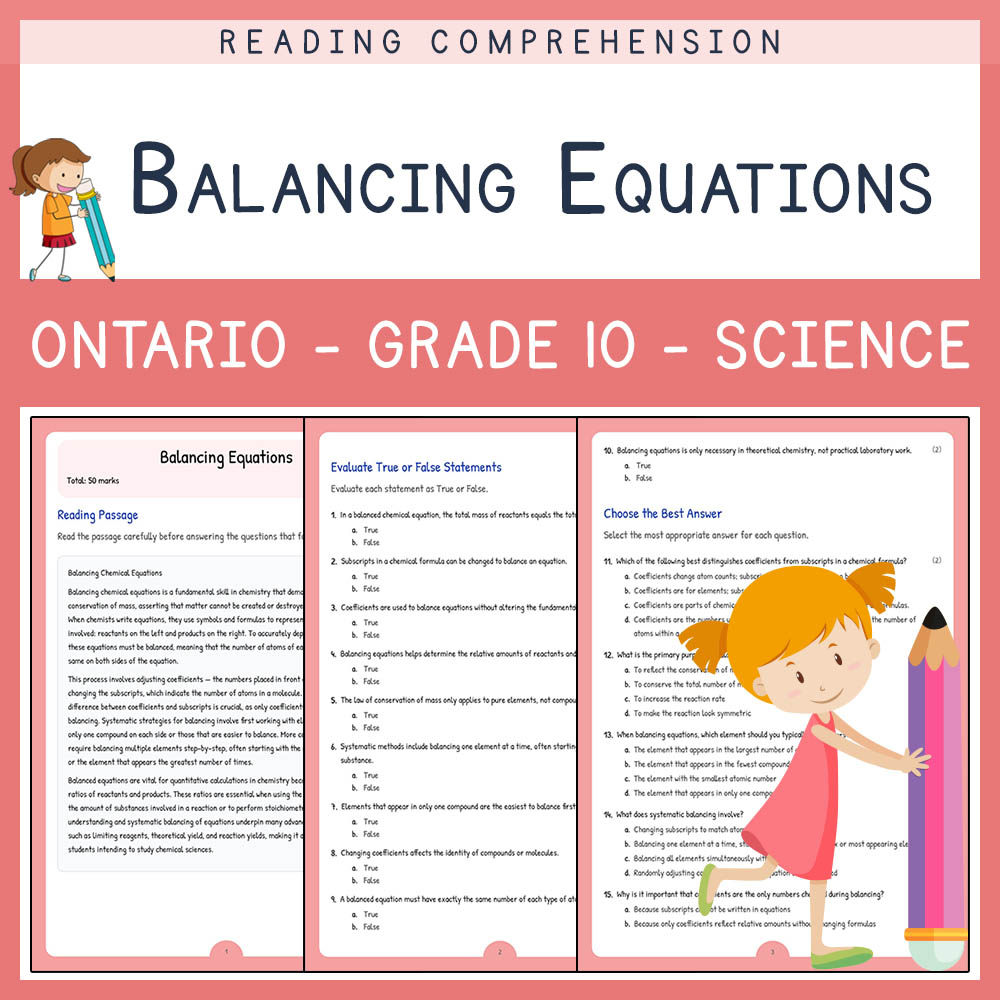
Grade 10 Science | Balancing Equations Worksheet | Ontario Standard
Created byLumora LearningLearning Objectives
- Understand the principle of conservation of mass in chemical reactions.
- Learn how to assign and balance coefficients in chemical equations.
- Distinguish between coefficients and subscripts in chemical formulas.
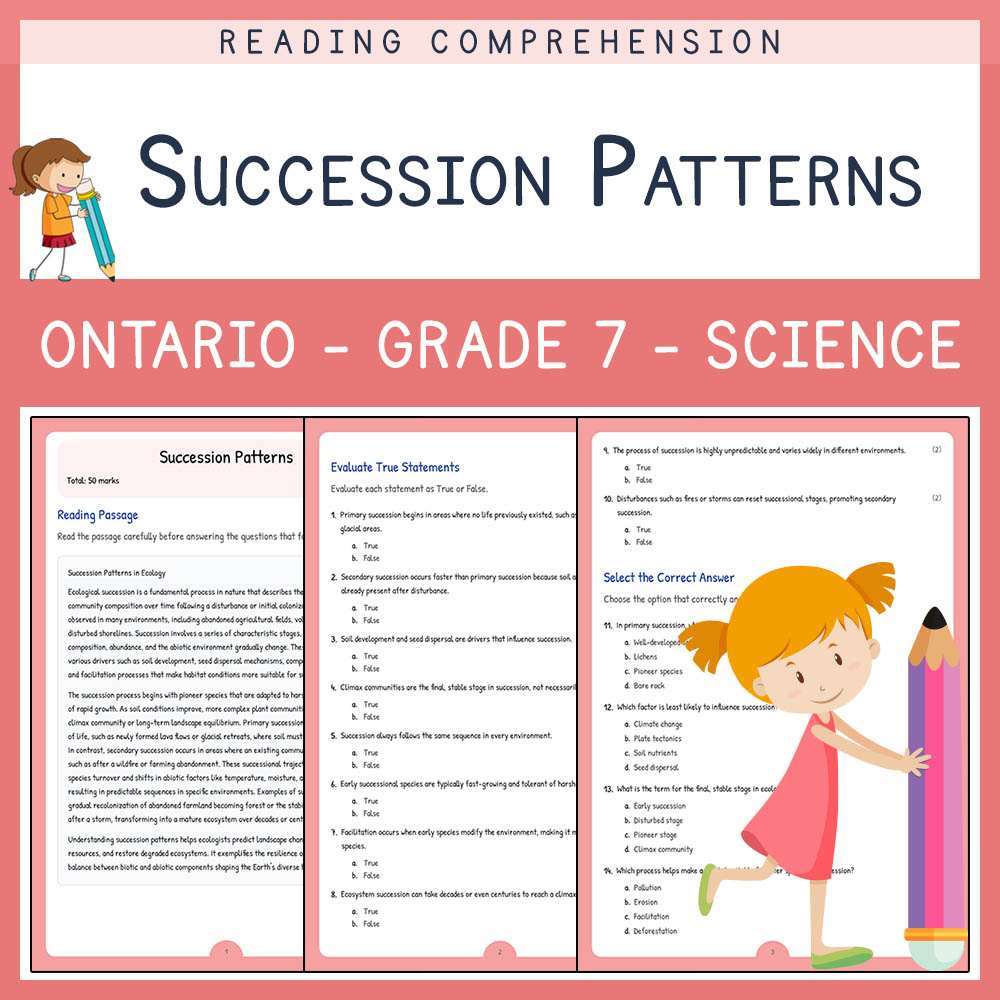
Grade 7 | Science Assessment | Succession Patterns Worksheet | Ontario
Created byLumora LearningLearning Objectives
- Understand the concept of ecological succession and its stages.
- Differentiate between primary and secondary succession.
- Identify the environmental drivers influencing succession.

Grade 6 Science | Cell Structure Worksheet | General Standard
Created byLumora LearningLearning Objectives
- Explain how the cell membrane, cytoplasm, and nucleus contribute to cell survival
- Describe how organelles help cells carry out specialized functions
- Use evidence from a text to answer questions about shared and distinct cell structures

Grade 11 Science | Replication Mechanisms Worksheet | TEKS-Aligned
Created byLumora LearningLearning Objectives
- Understand the coordinated enzyme activities involved in DNA replication.
- Identify the functions of key enzymes such as helicase, primase, DNA polymerase, and telomerase.
- Explain the processes occurring on leading and lagging strands during replication.

Grade 6 Science | Cycles Of Matter Model Worksheet | General Standard
Created byLumora LearningLearning Objectives
- Explain how matter cycles through living and non-living parts of an ecosystem
- Describe carbon and water movement among reservoirs using the cycles of matter model
- Interpret processes (photosynthesis, respiration, feeding, decomposition) as flows in a matter cycle
Browse more categories
About Science Worksheets
Find Science worksheets spanning core skills, practice, and review. All 42,859 resources are instant PDF downloads for the classroom or home.
Every worksheet on MyTeachingSheets is created by independent teacher-authors and reviewed before publication. All resources download as printable PDFs for classroom, homework, or at-home practice, and many include answer keys. Preview any worksheet free before buying.