
Science Worksheets
42,859 subject resources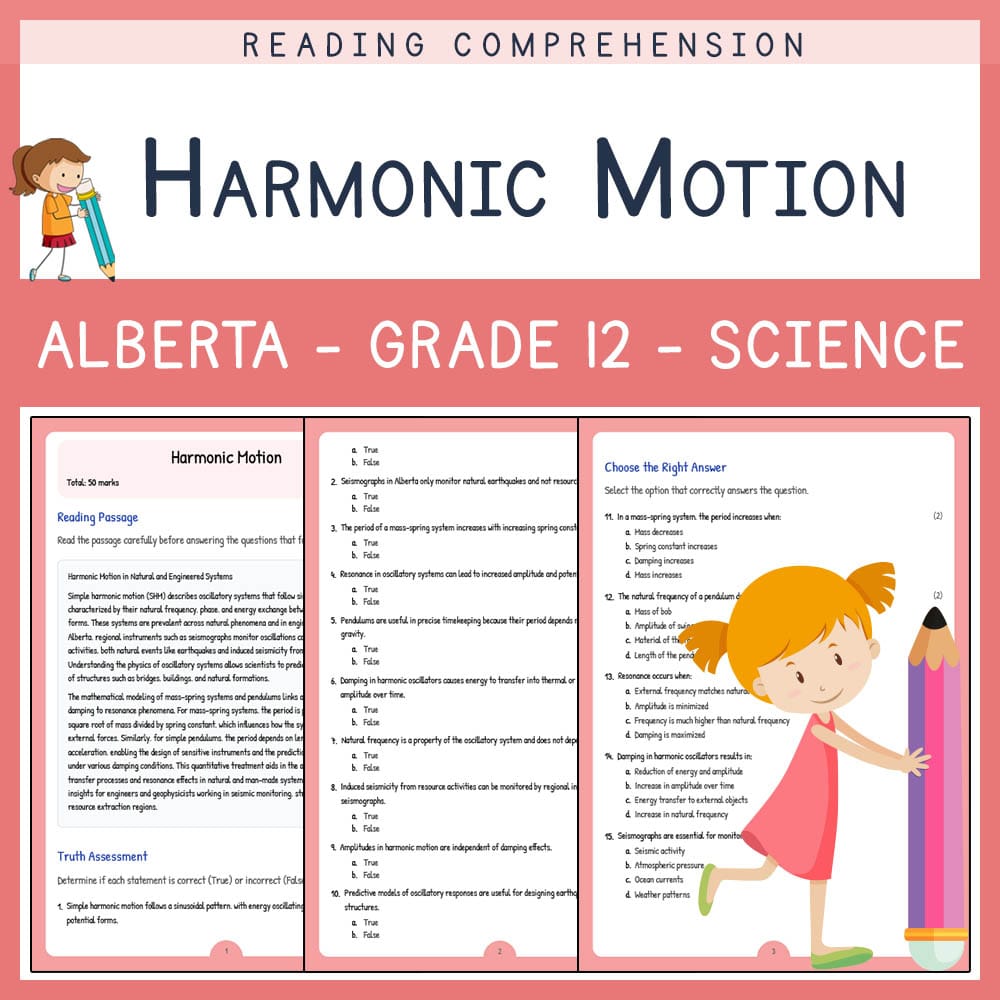
Grade 12 Science | Harmonic Motion Worksheet | Alberta Standards
 Created byLumora Learning
Learning Objectives
- Explain the principles of simple harmonic motion using sinusoidal models.
- Identify the relationship between amplitude, period, and resonance in oscillatory systems.
- Describe the application of oscillatory systems, such as seismographs, in monitoring natural and induced seismic activity.

Grade 10 Science | Body Temperature Worksheet | TEKS-Aligned
Created byLumora LearningLearning Objectives
- Understand the mechanisms involved in body temperature regulation.
- Identify the roles of the nervous, circulatory, muscular, and integumentary systems in maintaining thermal balance.
- Explain how the hypothalamus functions as a control center for temperature regulation.

Grade 11 Science | Erosion and Sedimentation Worksheet | BC-Aligned
Created byLumora LearningLearning Objectives
- Understand the processes of weathering, erosion, transportation, and deposition in landscape change.
- Explain how physical and chemical weathering contribute to sediment formation.
- Identify different agents of erosion and their roles in sediment transport.

Grade 9 Science | Evolution Evidence Worksheet | NGSSS Aligned
Created byLumora LearningLearning Objectives
- Explain how the fossil record can support gradual evolution over geological time
- Distinguish homologous structures from analogous structures caused by convergent evolution
- Describe how genetic data (DNA similarity) helps infer relatedness and shared ancestry
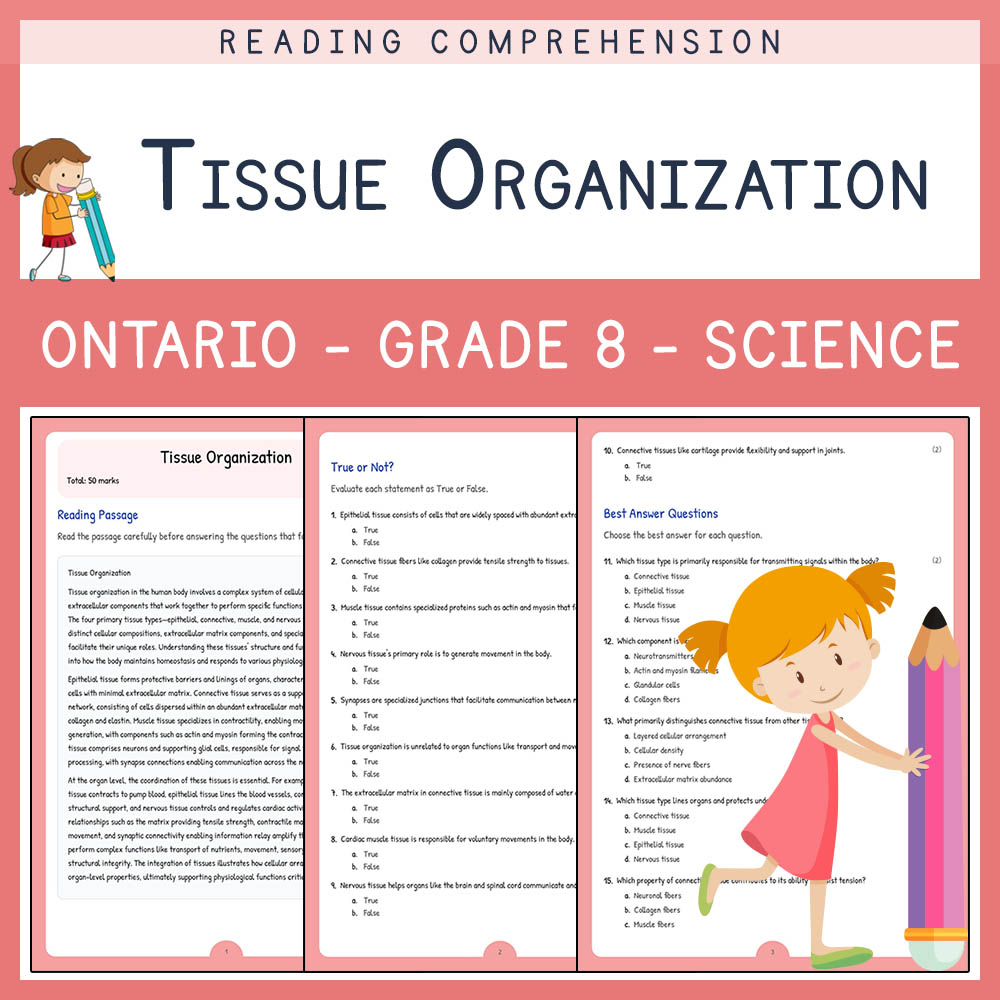
Grade 8 Science | Tissue Organization Worksheet Elena | Ontario Standard
Created byLumora LearningLearning Objectives
- Describe the major tissue types: epithelial, connective, muscle, and nervous tissues, including cellular and extracellular components.
- Explain the structural and functional relationships within tissues such as contractility in muscle, synaptic connections in nervous tissue, and tensile strength in connective tissue.
- Illustrate how tissue-level arrangements contribute to organ functions like transport, movement, signaling, and support.
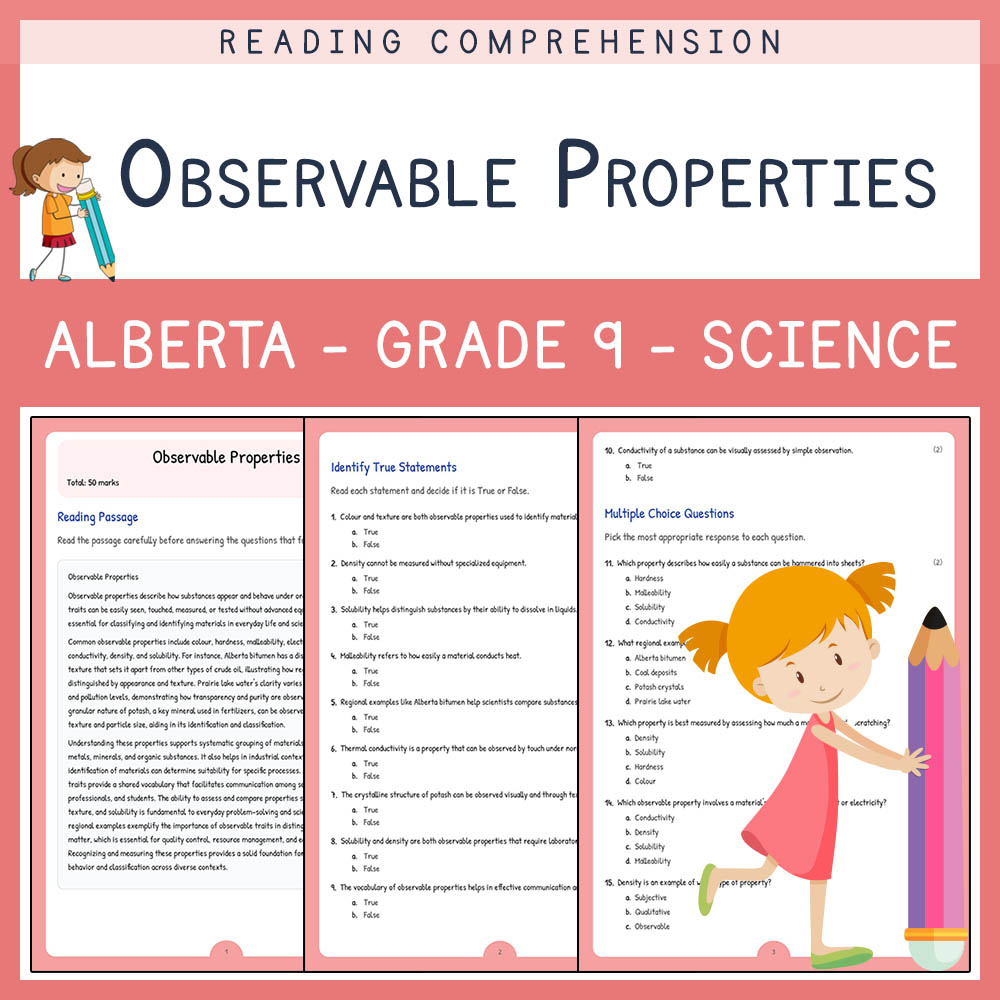
Grade 9 Science | Observable Properties Worksheet | Alberta Standards
Created byLumora LearningLearning Objectives
- Describe common observable properties used to classify substances.
- Identify examples of observable properties in real-world contexts.
- Differentiate materials based on their observable traits using measurable criteria.
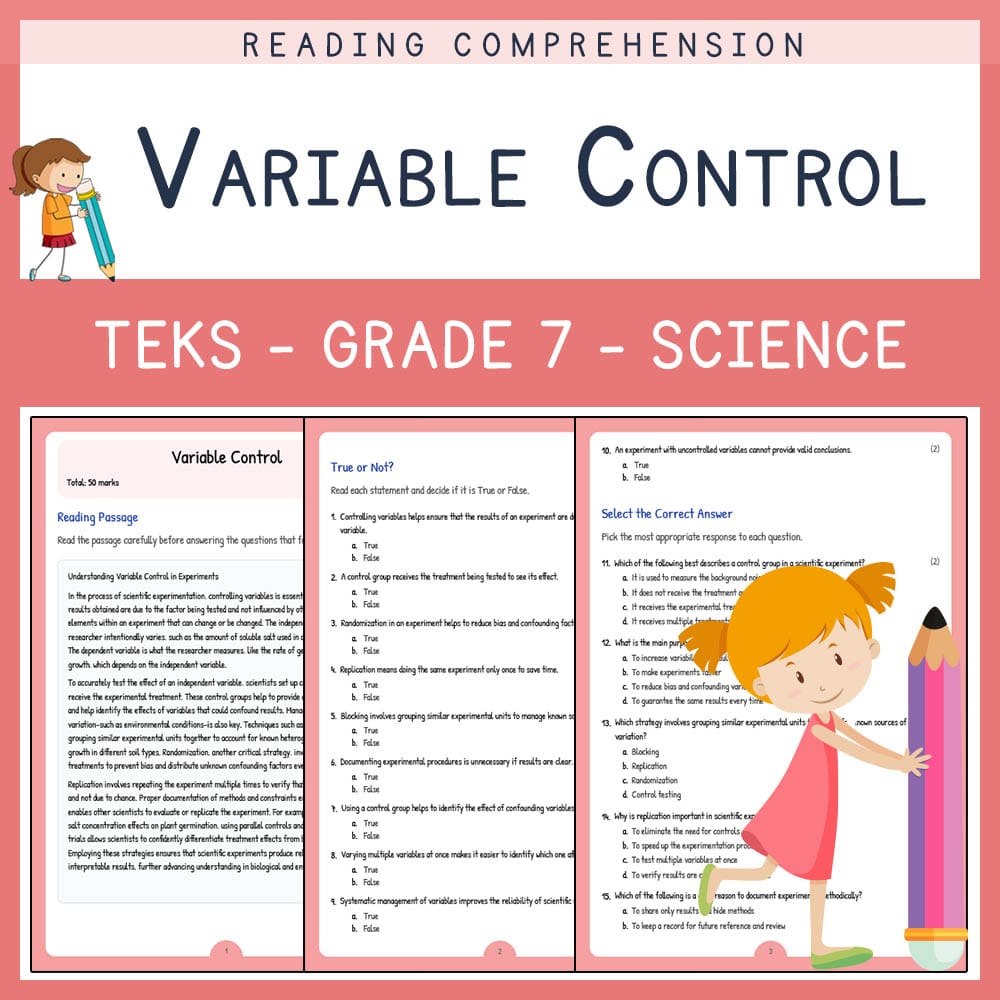
Grade 7 Science | Variable Control Worksheet | TEKS Alligned
Created byLumora LearningLearning Objectives
- Identify and describe the purpose of variables in controlled experiments.
- Understand methods for managing variables, including control groups, randomization, and replication.
- Explain how systematic variable management reduces confounding influences.
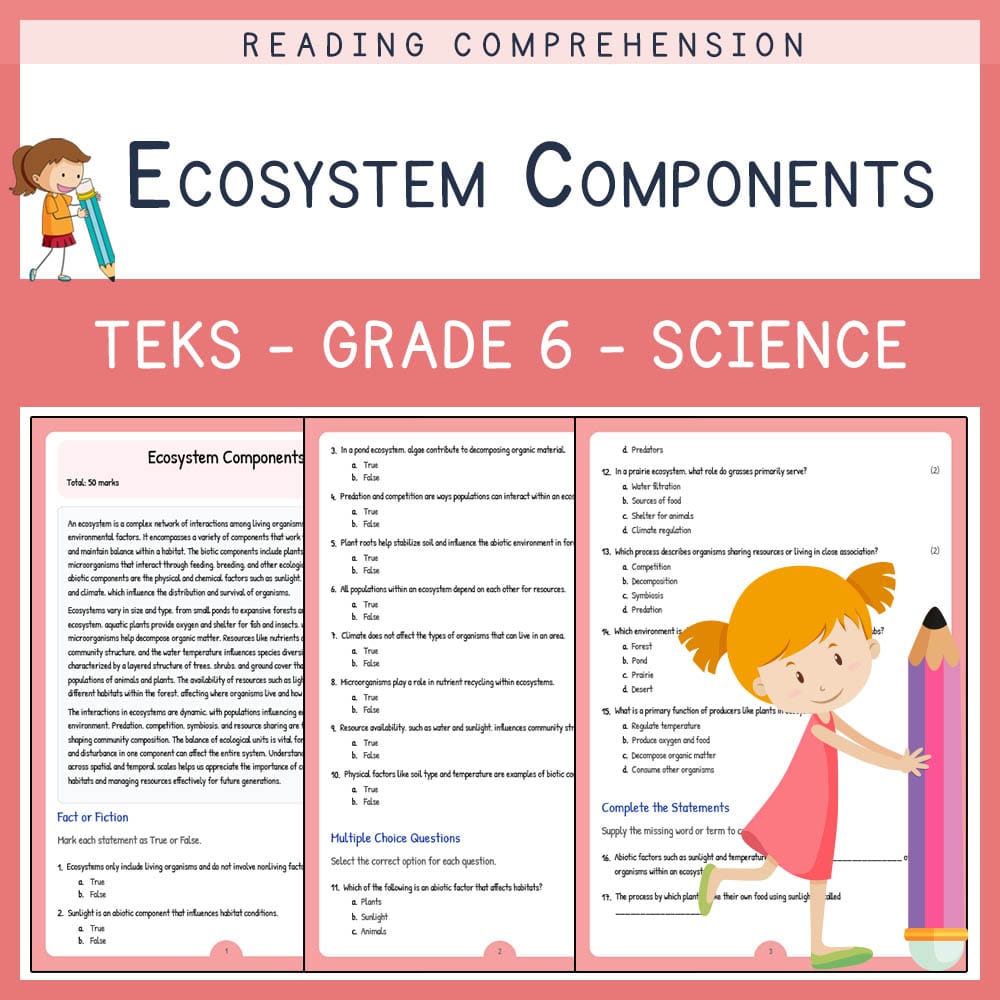
Grade 6 Science | Ecosystem Components Worksheet | TEKS-Aligned
Created byLumora LearningLearning Objectives
- Define ecosystems as interacting systems of populations, communities, and physical factors.
- Identify biotic and abiotic components and their roles in habitats.
- Describe examples such as ponds, prairies, and forests to illustrate resource distribution and community interdependence.

Grade 9 Science | Energy Flow Communities Worksheet | California Standards
Created byLumora LearningLearning Objectives
- Explain how energy flows directionally through trophic levels in an ecosystem
- Describe why energy availability decreases at higher trophic levels
- Use examples to connect producer energy capture to effects on entire communities
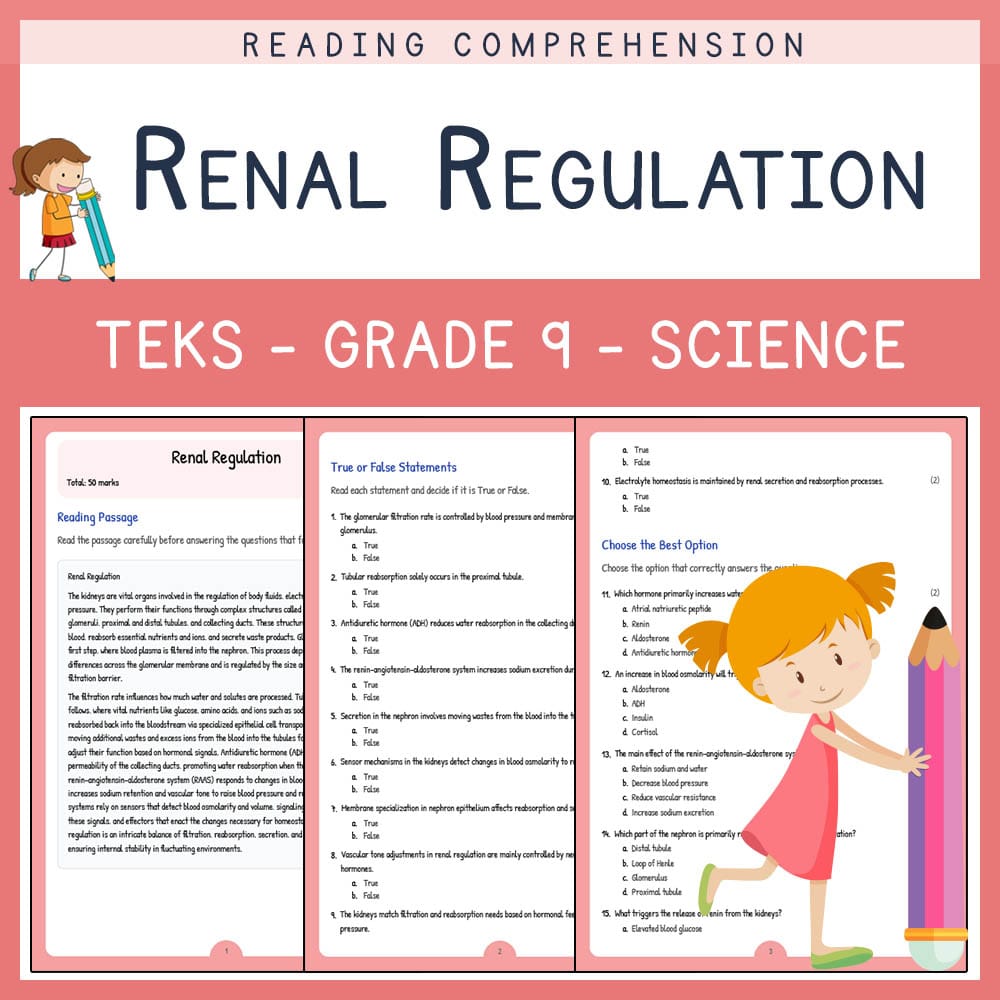
Grade 9 Science | Renal Regulation Worksheet | TEKS-Aligned
Created byLumora LearningLearning Objectives
- Describe how hormonal feedback mechanisms regulate kidney function and help maintain homeostasis.
- Explain the processes of glomerular filtration, tubular reabsorption, and secretion in the nephron.
- Identify the roles of specific hormones such as antidiuretic hormone and the renin–angiotensin–aldosterone system in fluid and electrolyte balance.
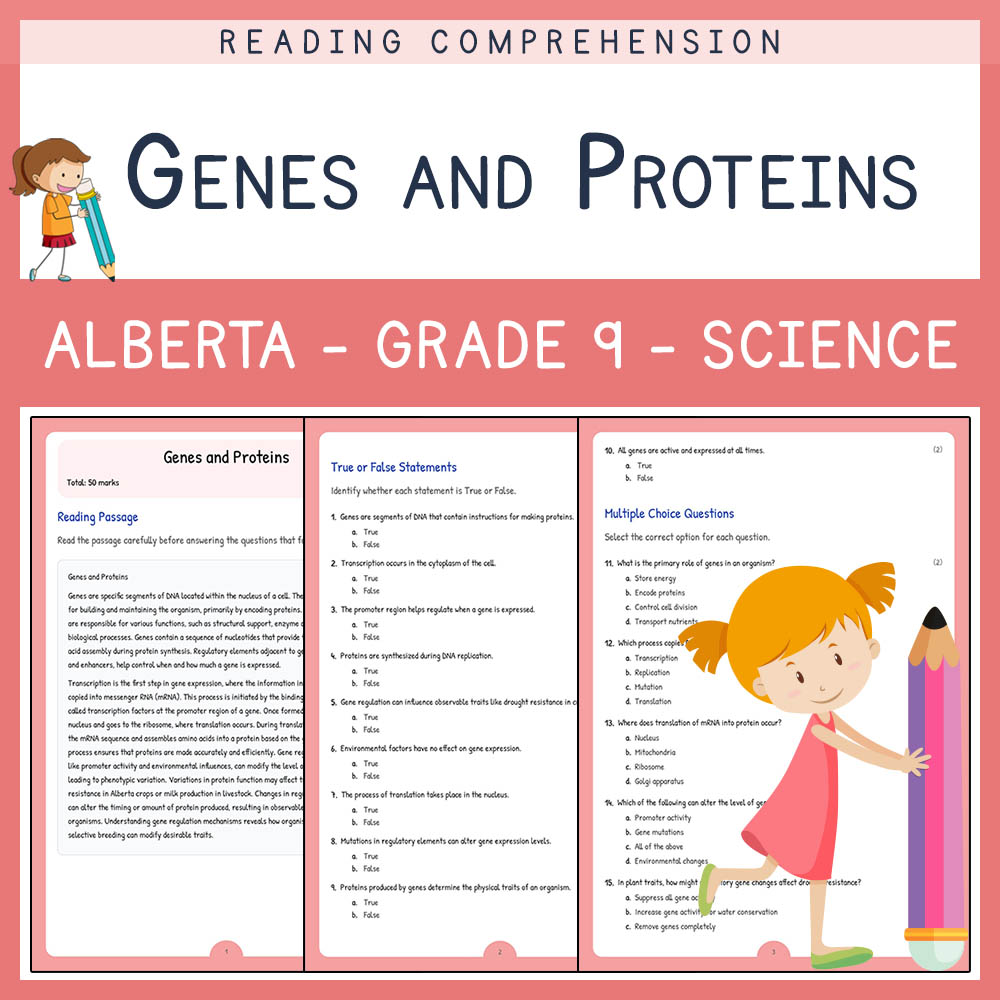
Grade 9 Science | Genes and Proteins Worksheet | Alberta Standards
Created byLumora LearningLearning Objectives
- Understand the structure and function of genes as DNA segments that encode proteins.
- Explain the processes of transcription and translation in gene expression.
- Identify how gene regulation influences phenotype and observable traits in organisms.
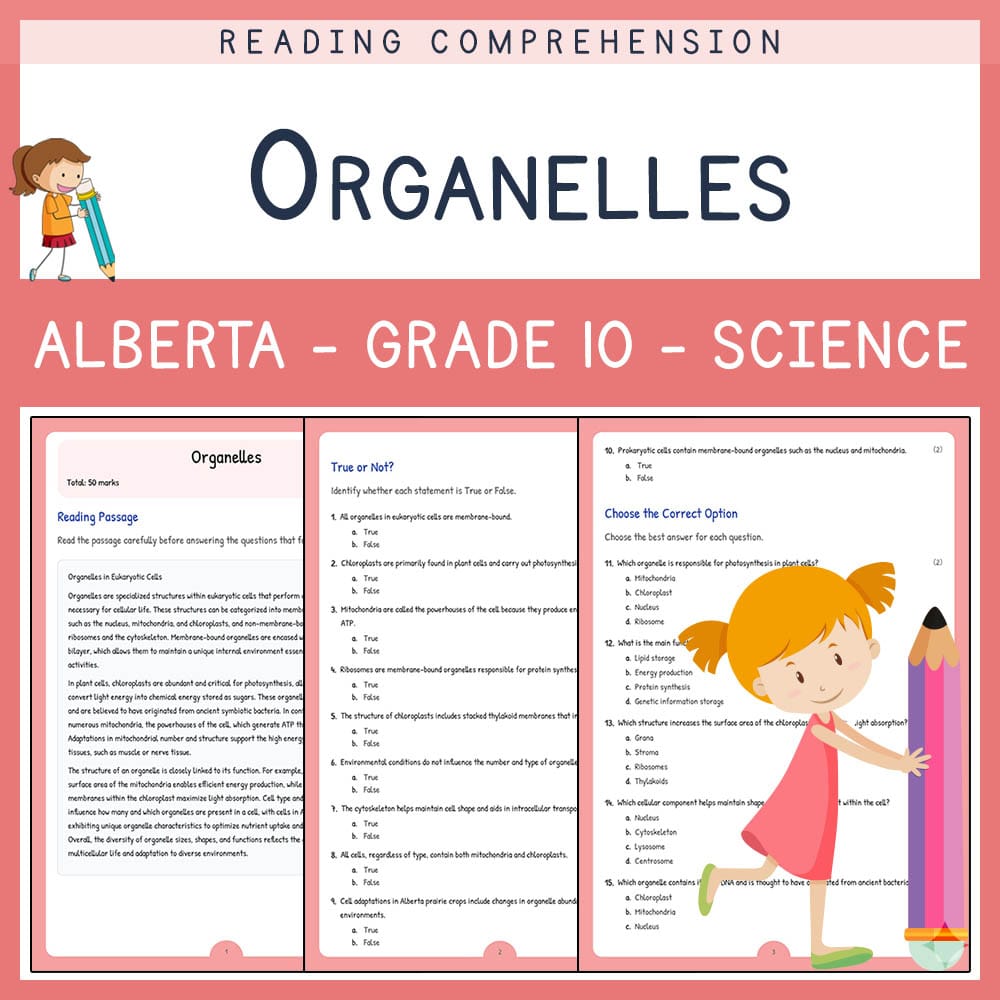
Grade 10 Science | Organelle Worksheet Elena | Alberta Standards
Created byLumora LearningLearning Objectives
- Describe the structure and function of membrane-bound and non-membrane-bound organelles in eukaryotic cells.
- Explain how organelle variations support different tissue types and environmental adaptations in Alberta landscapes.
- Identify the roles of chloroplasts and mitochondria in energy conversion and cellular processes.
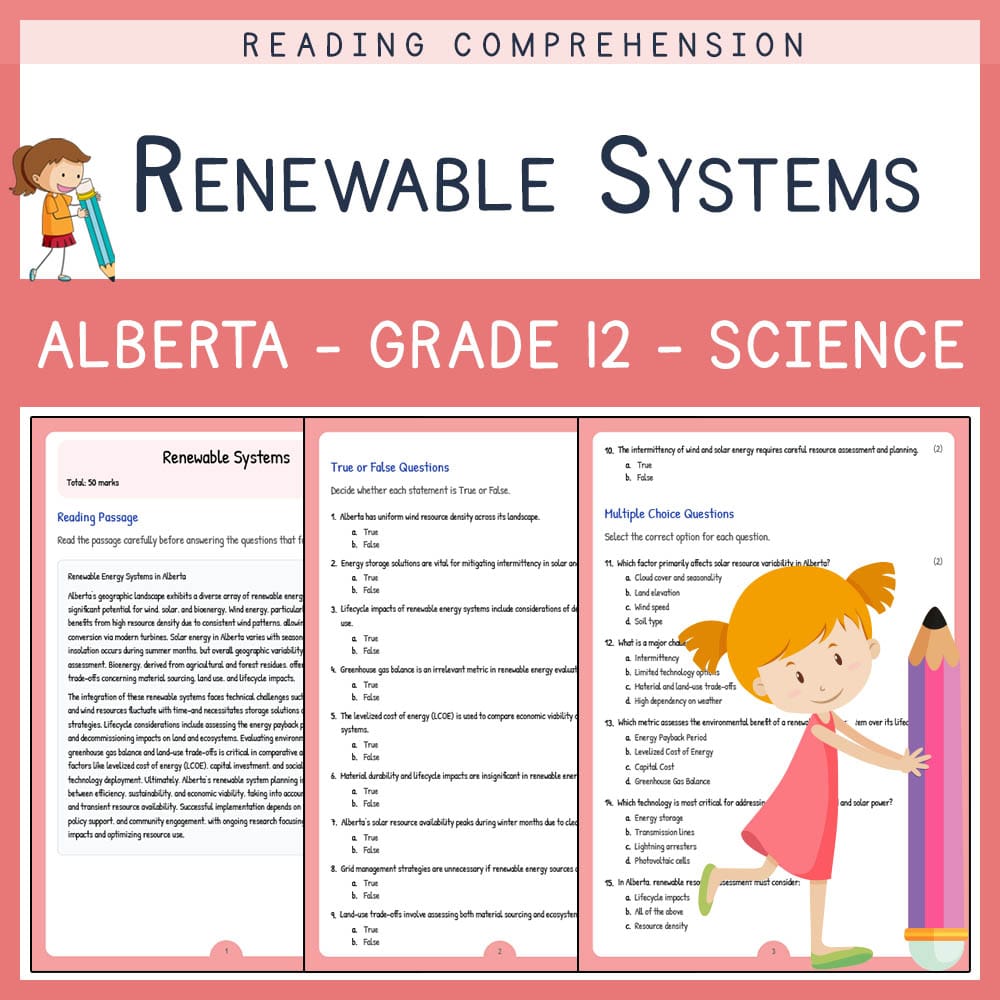
Grade 12 Science | Renewable Systems Worksheet | Alberta Standards
Created byLumora LearningLearning Objectives
- Understand the key concepts of resource assessment and conversion technologies for renewable energy in Alberta.
- Analyze challenges and lifecycle considerations of wind, solar, and bioenergy systems.
- Evaluate environmental and economic metrics used to compare renewable energy options.
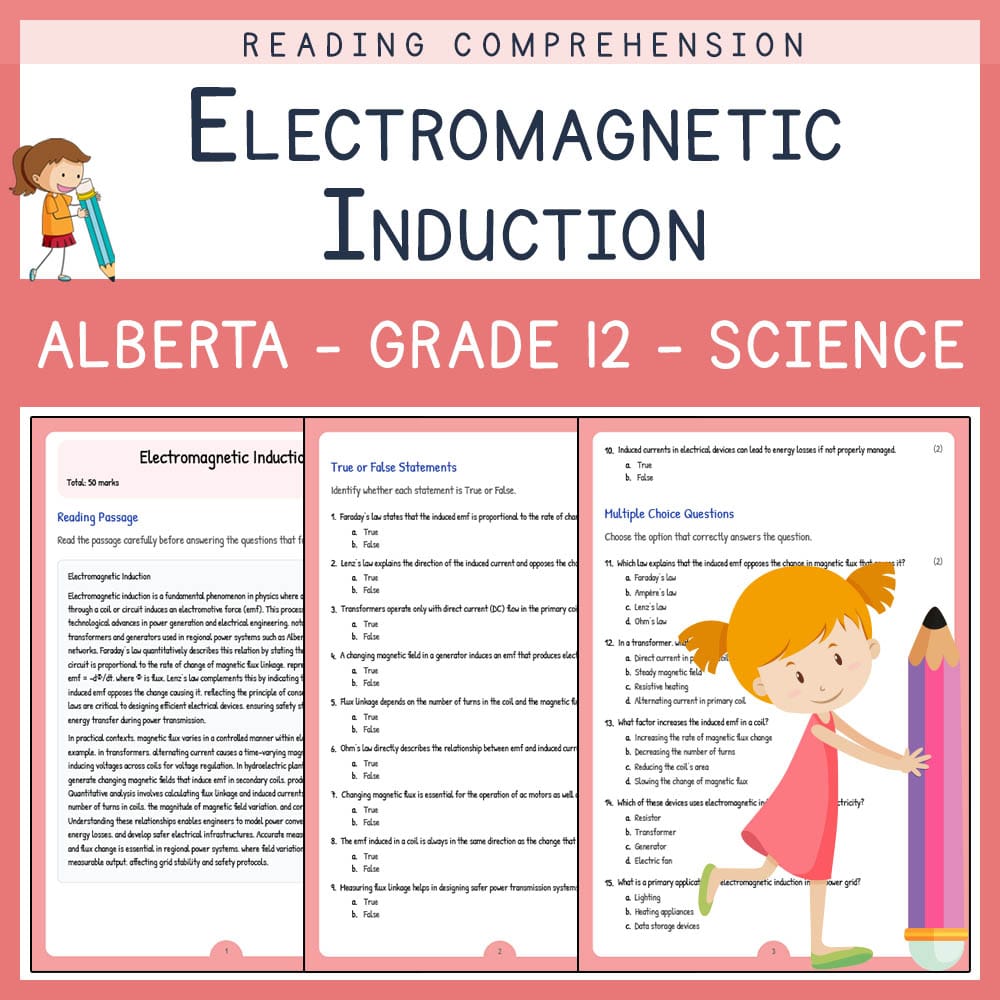
Grade 12 Science | Electromagnetic Induction Worksheet | Alberta Standards
Created byLumora LearningLearning Objectives
- Understand the principles of electromagnetic induction, including Faraday’s law and Lenz’s law.
- Analyze how changing magnetic flux induces emf in various practical applications.
- Explore the relationship between magnetic field variation, flux linkage, and induced currents.
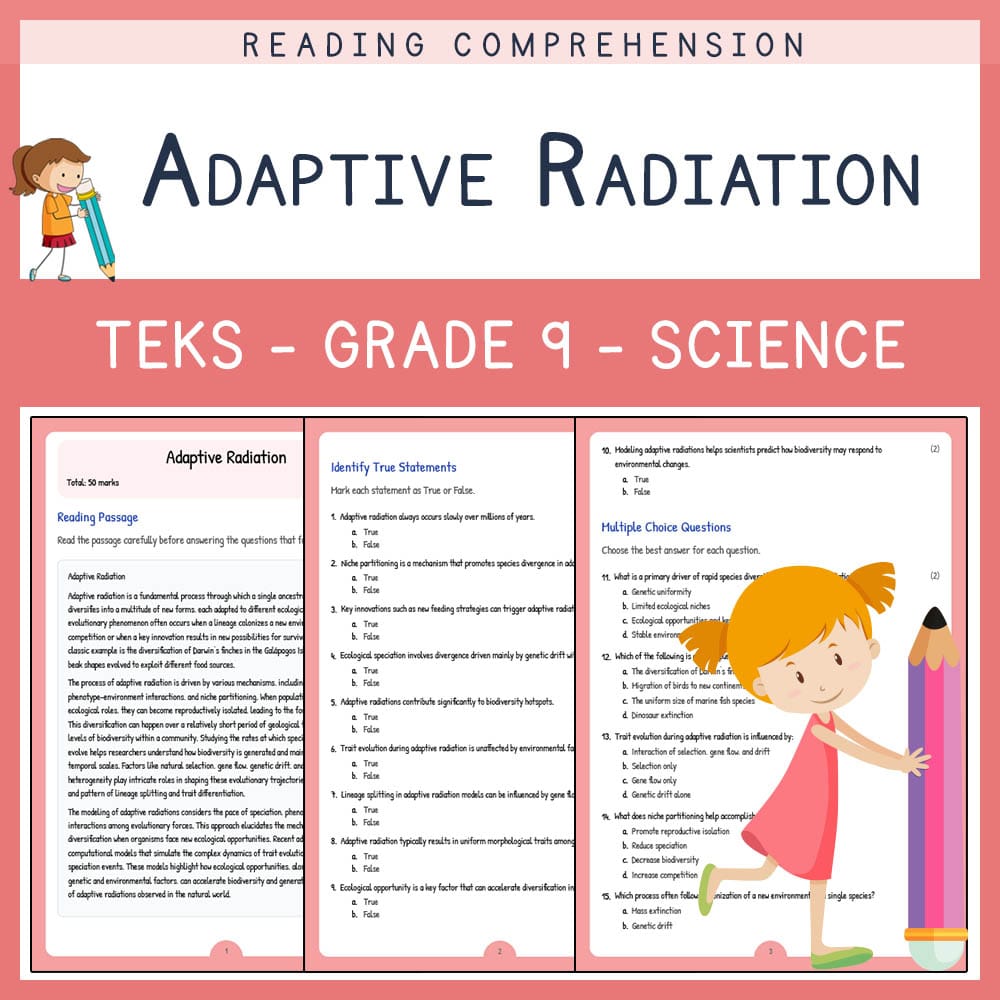
Grade 9 Science | Adaptive Radiation Worksheet | TEKS-Aligned
Created byLumora LearningLearning Objectives
- Define adaptive radiation and describe its key features.
- Identify examples of adaptive radiation in nature.
- Understand the role of ecological niches and key innovations in speciation.

Grade 12 Science | Variables And Controls Worksheet | General Standards
Created byLumora LearningLearning Objectives
- Identify independent and dependent variables in a scientific scenario.
- Explain how control conditions help isolate the effect of the independent variable.
- Evaluate claims about causation using evidence from fair comparisons.
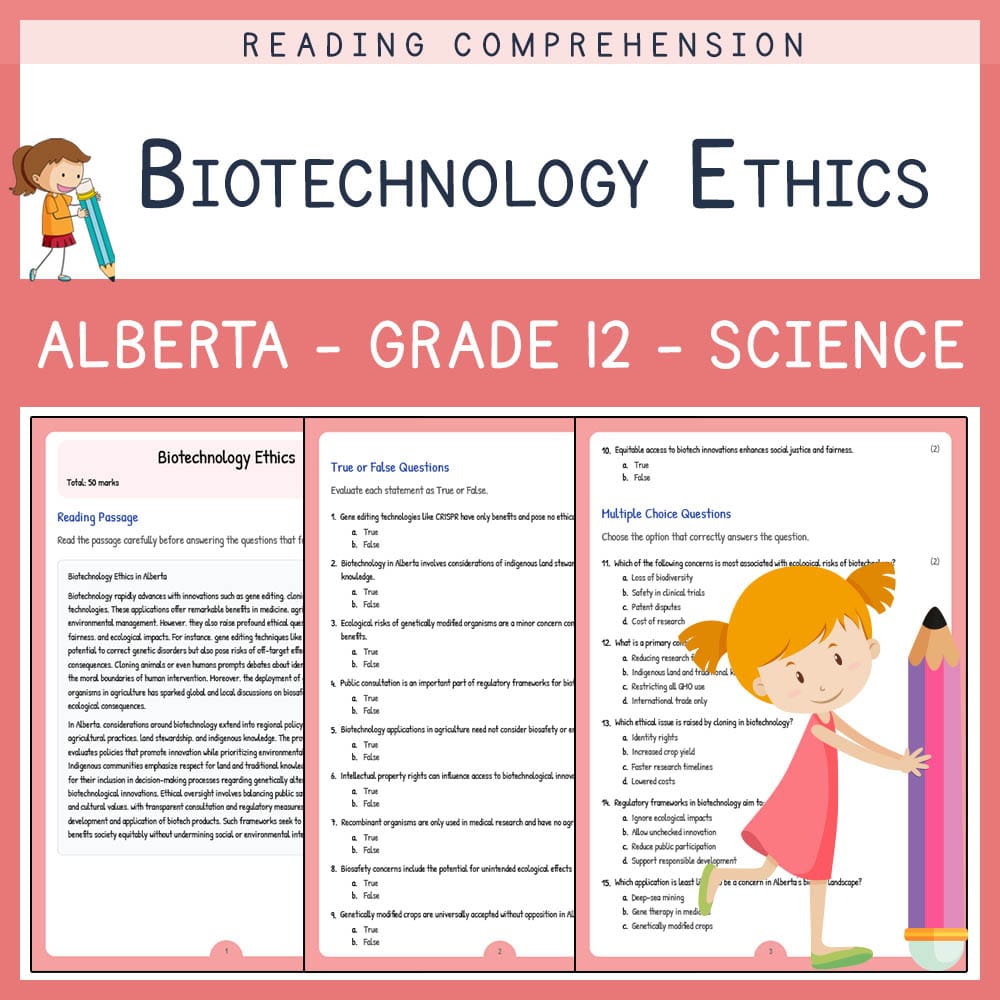
Grade 12 Science | Biotechnology Ethics Worksheet | Alberta Standards
Created byLumora LearningLearning Objectives
- Understand the ethical, legal, and social issues related to biotechnology applications.
- Analyze considerations such as biosafety, intellectual property, and ecological risks.
- Evaluate regulatory frameworks and public consultation processes shaping biotechnology deployment.
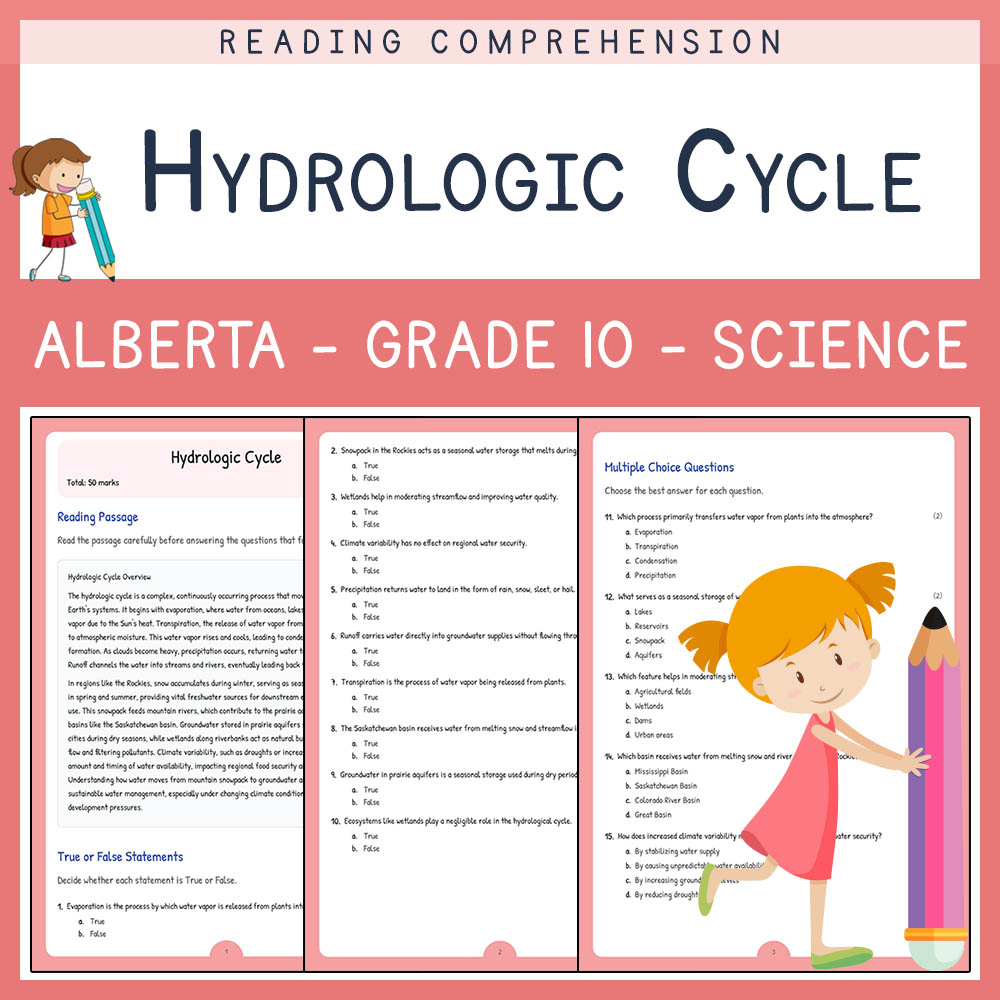
Grade 10 Science | Hydrologic Cycle Worksheet | Alberta Standards
Created byLumora LearningLearning Objectives
- Describe the key processes involved in the hydrologic cycle, including evaporation, transpiration, condensation, precipitation, and runoff.
- Explain the movement of water from mountain snowpack in the Rockies to prairie aquifers and regional basins.
- Assess the impact of climate variability and watershed characteristics on regional water availability and security.
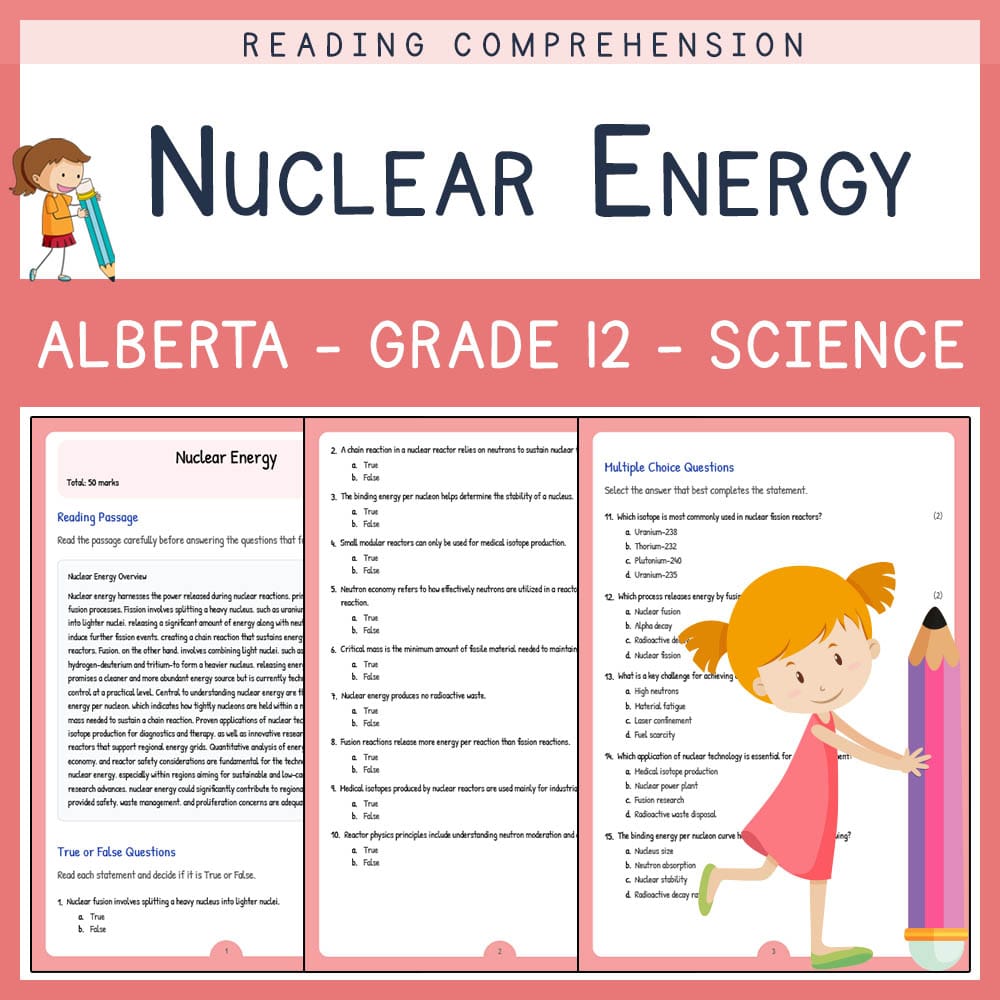
Grade 12 Science | Nuclear Energy Worksheet | Alberta Standards
Created byLumora LearningLearning Objectives
- Understand the principles of nuclear fission and fusion and their energy yields.
- Explain chain-reaction criteria and reactor physics principles for energy production.
- Analyze applications of nuclear technology in medicine and regional energy systems.
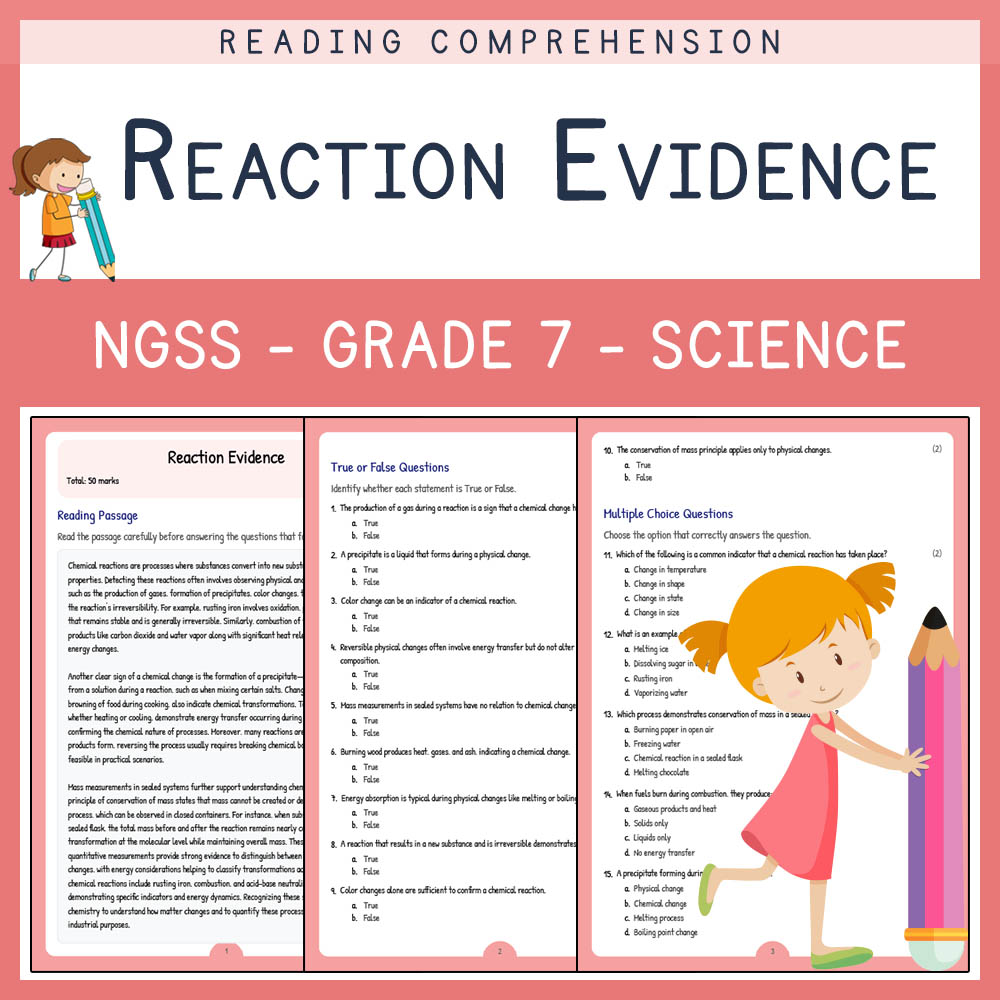
Grade 7 Science | Reaction Evidence Worksheet & Answer Key (NGSS Aligned)
Created byLumora LearningLearning Objectives
- Identify observable indicators that a chemical reaction has occurred, such as gas production, precipitate formation, color change, and temperature change.
- Explain irreversibility in chemical reactions and relate it to composition changes.
- Describe examples of chemical reactions, including rusting, combustion, and neutralization, and discuss how mass measurements in sealed systems demonstrate conservation principles.

Grade 12 Science | Magnetic Applications Worksheet | BC-Aligned
Created byLumora LearningLearning Objectives
- Explain how Lorentz forces enable torque in electric motors.
- Describe how magnetic field gradients are used in imaging techniques like magnetic resonance.
- Summarize the principles of magnetic storage, induction sensing, and the Hall effect.

Grade 11 Science | Energy Transformations Worksheet | Florida NGSSS Aligned
Created byLumora LearningLearning Objectives
- Explain energy transformations using conservation of energy in a closed system
- Identify how energy forms (kinetic, thermal, chemical, electrical, light) change in real-world examples
- Use energy accounting to track where energy goes during friction, combustion, and electrical device operation
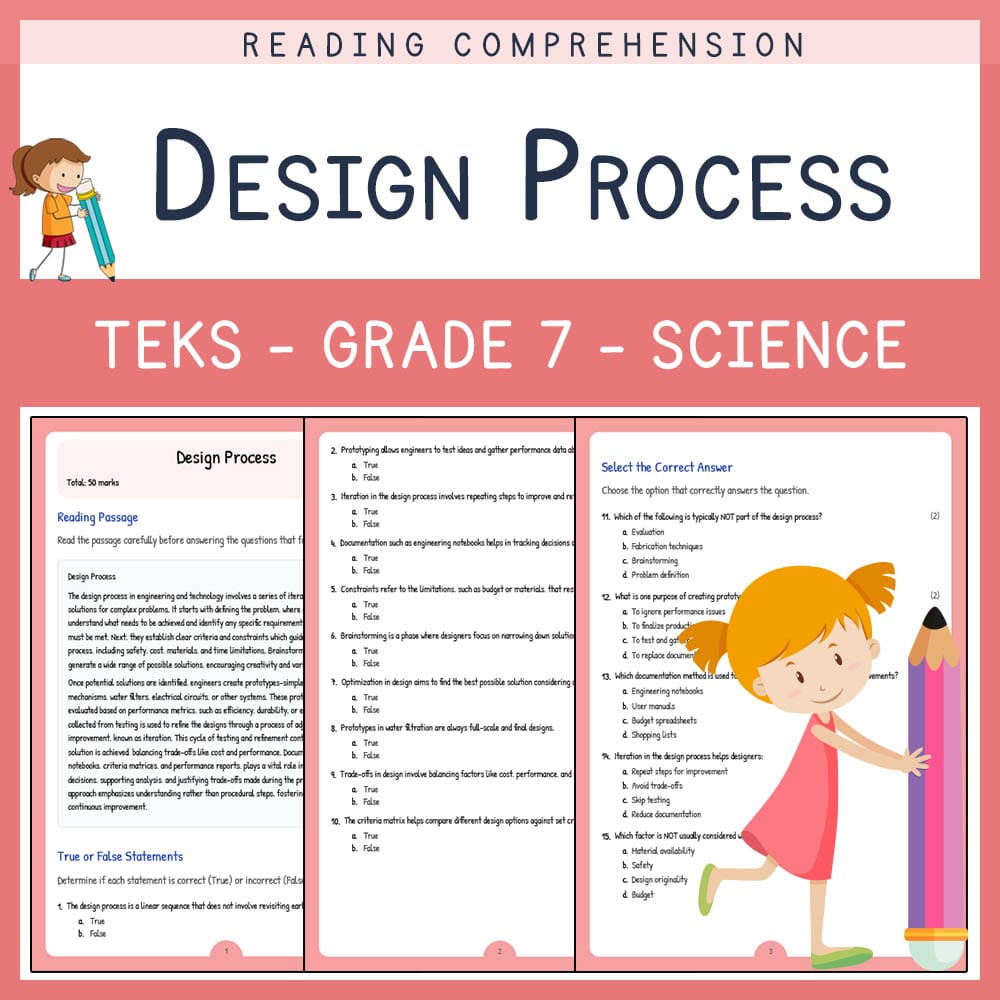
Grade 7 Science | Design Process Worksheet | TEKS Alligned
Created byLumora LearningLearning Objectives
- Understand the key steps in the technological design process including problem definition, criteria and constraints, brainstorming, prototyping, evaluation, and optimization.
- Recognize examples of simple design prototypes such as mechanisms, water filtration models, and electrical circuits.
- Explain the importance of documentation methods like engineering notebooks and criteria matrices in supporting design decisions.

Grade 8 Science | Design Problem Framing Worksheet | California Standards
Created byLumora LearningLearning Objectives
- Explain how engineering design problem framing connects a real-world need to a measurable goal
- Identify constraints and requirements that limit solutions in an engineering challenge
- Use framed criteria to compare different solution approaches fairly
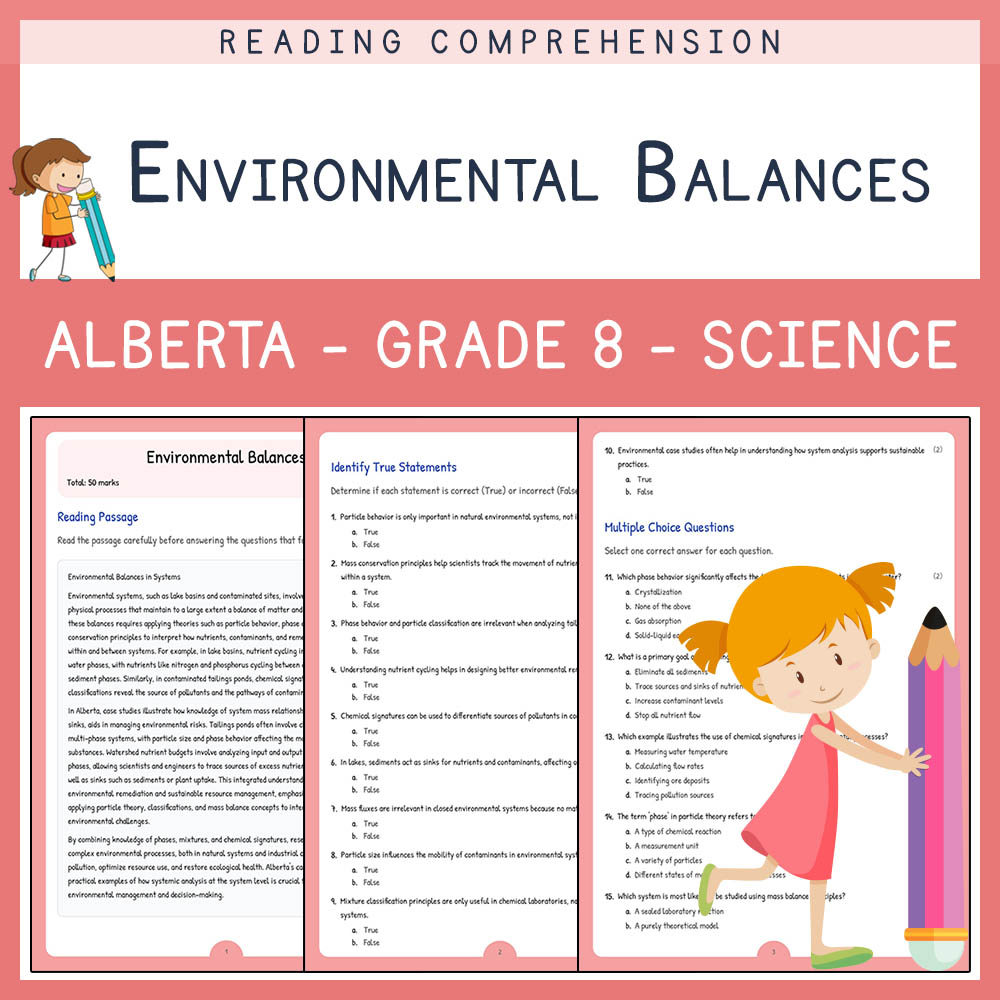
Grade 8 Science | Environmental Balances Worksheet | Alberta Standard
Created byLumora LearningLearning Objectives
- Understand how particle theory applies to environmental processes.
- Classify chemical components and understand mass conservation principles.
- Interpret environmental systems such as nutrient cycling and contamination transport.
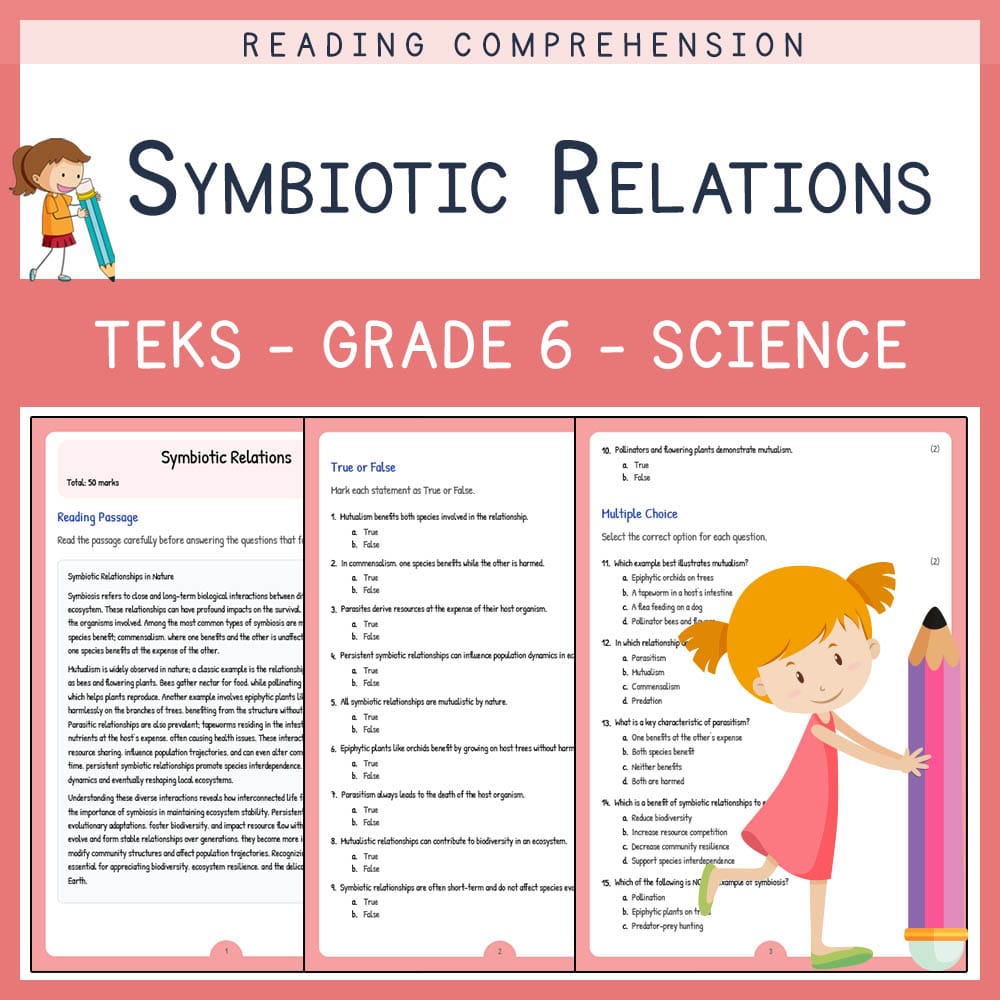
Grade 6 Science | Symbiotic Relations Worksheet | TEKS Alligned
Created byLumora LearningLearning Objectives
- Define and describe symbiotic relationships including mutualism, commensalism, and parasitism.
- Identify concrete examples of each type of symbiosis in real ecosystems.
- Analyze how symbiotic relationships influence organism fitness, resource distribution, and community structure.
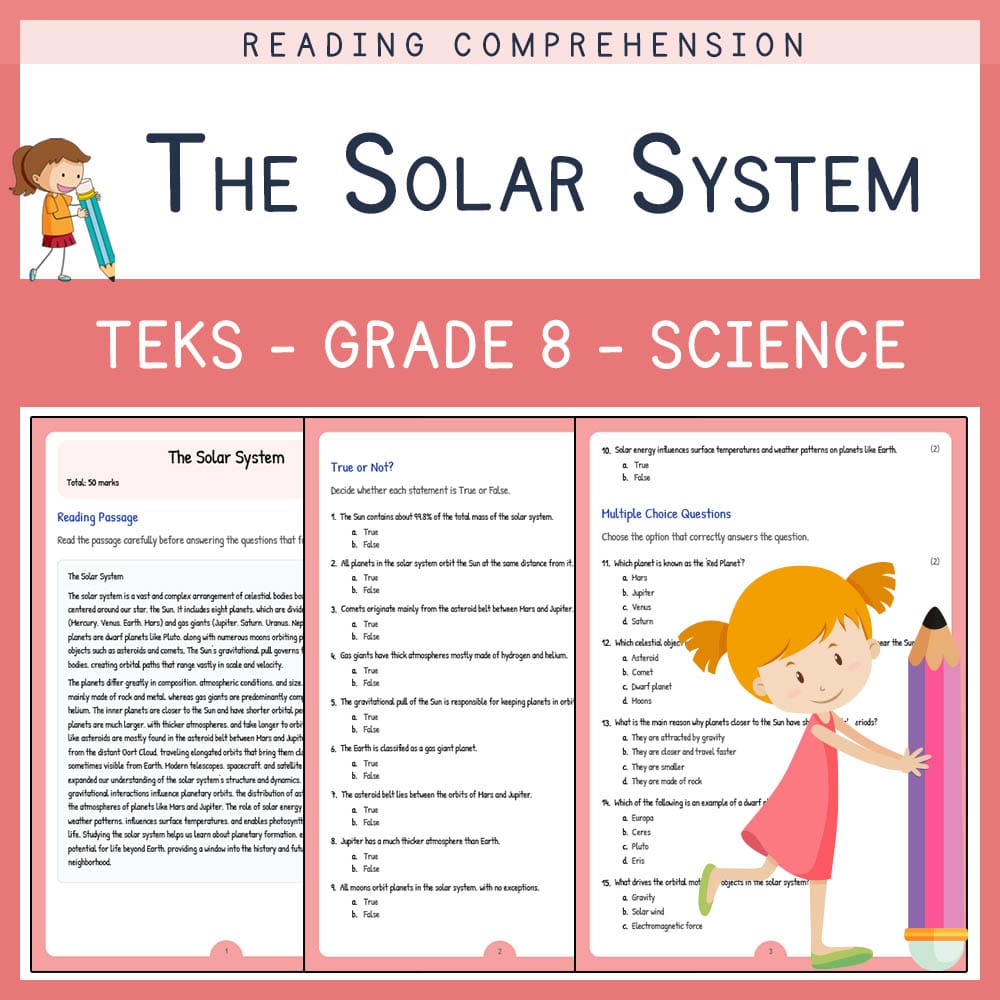
Grade 8 Science | The Solar System Worksheet Elena | TEKS Aligned
Created byLumora LearningLearning Objectives
- Understand the components of the solar system, including planets, moons, and smaller bodies.
- Describe the relative scale and composition of celestial objects in the solar system.
- Explain orbital characteristics and gravitational interactions among planets, asteroids, and comets.

Grade 6 Science | Cycles Of Matter Model Worksheet | General Standard
Created byLumora LearningLearning Objectives
- Explain how matter cycles through living and non-living parts of an ecosystem
- Describe carbon and water movement among reservoirs using the cycles of matter model
- Interpret processes (photosynthesis, respiration, feeding, decomposition) as flows in a matter cycle

Grade 11 Science | Reaction Types Worksheet | BC-Aligned
Created byLumora LearningLearning Objectives
- Classify chemical reactions into synthesis, decomposition, single- and double-displacement, combustion, and redox types.
- Describe characteristic atom rearrangements and changes in oxidation states for each reaction type.
- Identify energy changes associated with different reaction classes and relate them to practical examples.

Grade 8 Science | Mixtures and Changes Worksheet | NGSSS Aligned
Created byLumora LearningLearning Objectives
- Explain how mixtures form and why their properties depend on the components
- Describe solutions as a type of uniform mixture (solute + solvent) and predict observable behavior
- Differentiate physical changes from chemical changes using evidence and particle-level reasoning

Grade 8 Science | Observable Conservation Worksheet | BC Aligned
Created byLumora LearningLearning Objectives
- Understand the concept of conservation of mass in closed systems through experimental observations.
- Recognize that mass remains constant in sealed reactions despite internal changes.
- Learn how collecting gases in closed traps preserves mass measurements.
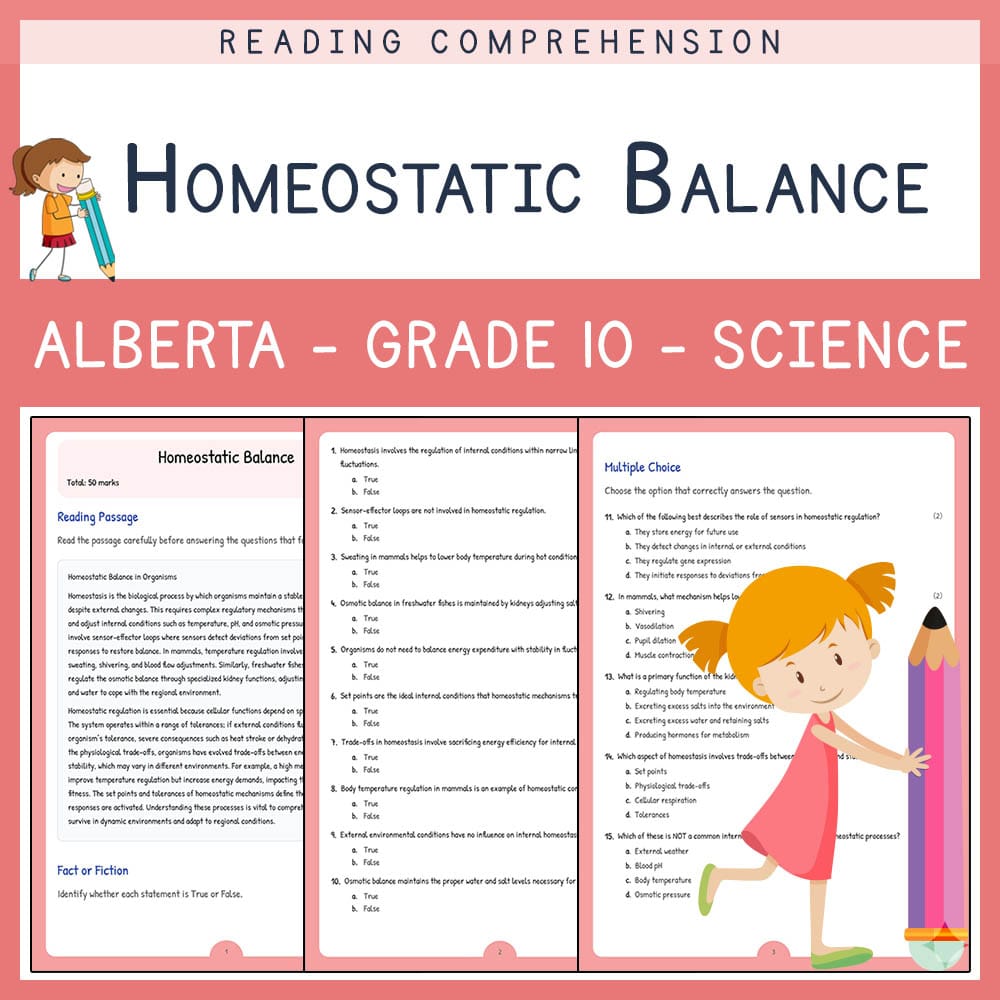
Grade 10 Science | Homeostatic Balance Worksheet | Alberta Standards
Created byLumora LearningLearning Objectives
- Define homeostasis and describe its importance in maintaining internal stability.
- Explain the mechanisms, including sensor-effector loops, responsible for homeostatic regulation.
- Identify examples of homeostasis such as temperature regulation and osmotic balance.

Grade 10 Science | Genetic Drift Worksheet | NGSSS Aligned
Created byLumora LearningLearning Objectives
- Define genetic drift and explain how it differs from natural selection
- Describe how small population size increases the effects of random allele frequency changes
- Evaluate how genetic drift can reduce genetic diversity and lead to divergence among populations

Grade 12 Science | AC Circuits Worksheet | Alberta Standards
Created byLumora LearningLearning Objectives
- Understand the analysis of AC circuits using phasor representation.
- Calculate impedance, reactance, and phase relationships in RLC networks.
- Evaluate power, real and reactive components, and power factor in AC systems.
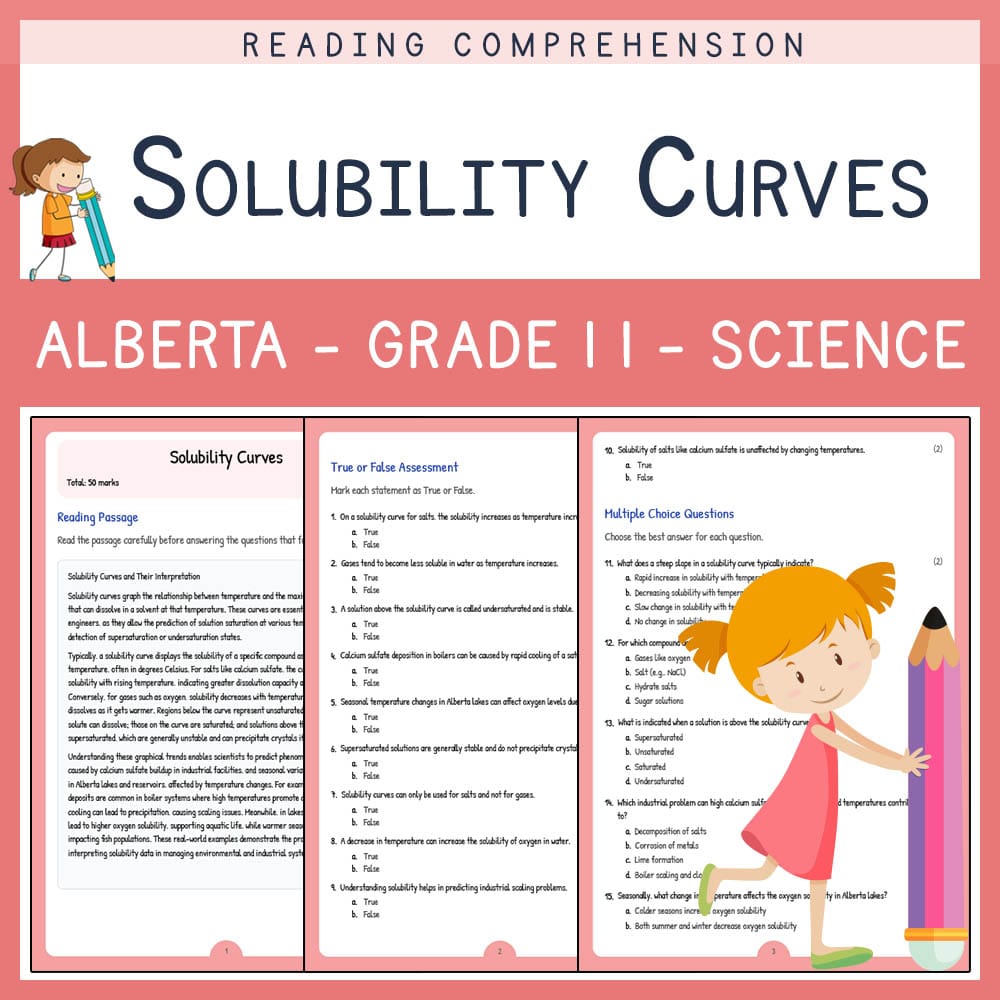
Grade 11 Science | Solubility Curves Worksheet | Alberta Standards
Created byLumora LearningLearning Objectives
- Understand how to read and interpret solubility curves for different compounds.
- Identify regions of unsaturated, saturated, and supersaturated solutions on a graph.
- Connect graphical trends to molecular interactions and predict solution states.

Grade 10 Science | Earth System Cycles Worksheet | NGSSS Aligned
Created byLumora LearningLearning Objectives
- Explain how the geosphere, hydrosphere, atmosphere, and biosphere interact to cycle matter and transform energy
- Describe how solar energy drives atmospheric circulation and the water cycle
- Explain how internal heat influences plate movement and volcanism
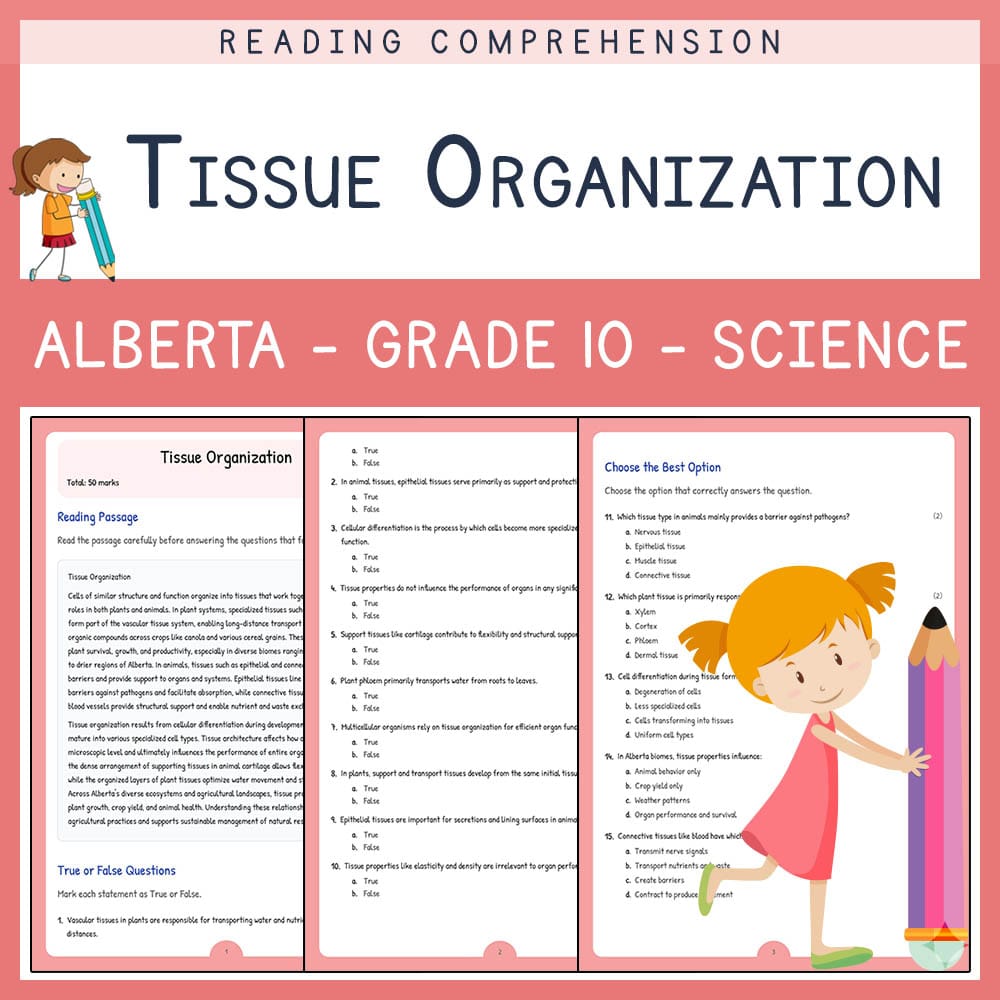
Grade 10 Science Worksheet | Tissue Organization | Alberta Standards
Created byLumora LearningLearning Objectives
- Understand the different types of tissues and their functions in plant and animal systems.
- Explain how tissue properties influence organ performance across various biomes and agricultural settings.
- Identify cellular differentiation and tissue architecture in plant and animal organisms.

Grade 7 Science | Effects of Disturbance on Ecosystems Worksheet & Answer Key
Created byLumora LearningLearning Objectives
- Understand how physical and biological disturbances influence ecosystem dynamics.
- Interpret empirical data to determine causes of population changes in ecosystems.
- Describe mechanisms of ecosystem resilience, resistance, and succession.
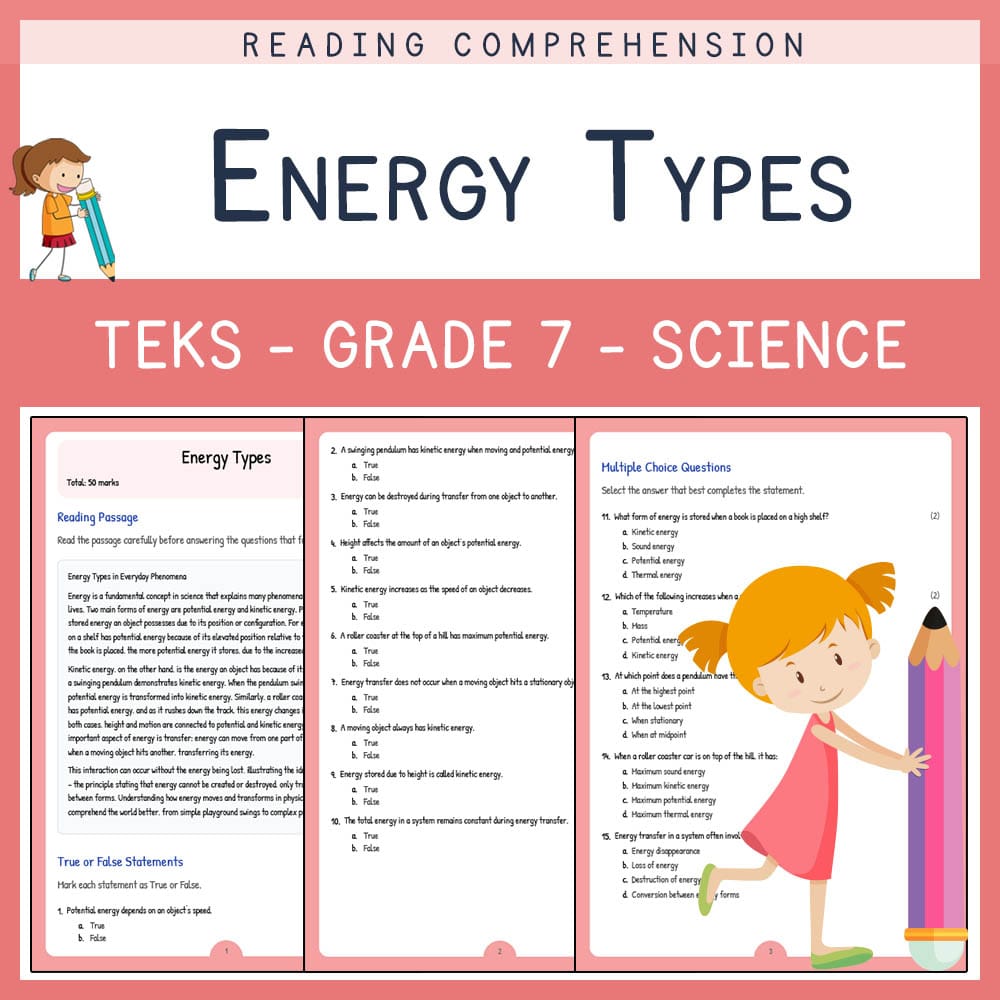
Grade 7 Science | Energy Types Worksheet | TEKS Aligned
Created byLumora LearningLearning Objectives
- Define kinetic and potential energy using everyday phenomena.
- Explain how height and motion influence energy forms.
- Illustrate energy transfer among system components.

Grade 11 Science | Surface Area Effects Worksheet | General Standards
Created byLumora LearningLearning Objectives
- Explain how surface area influences reaction rates in heterogeneous systems.
- Connect particle size (smaller vs. larger) to the number of reactive contact points and collision likelihood.
- Use surface area reasoning to interpret real-world examples such as corrosion and decomposition.
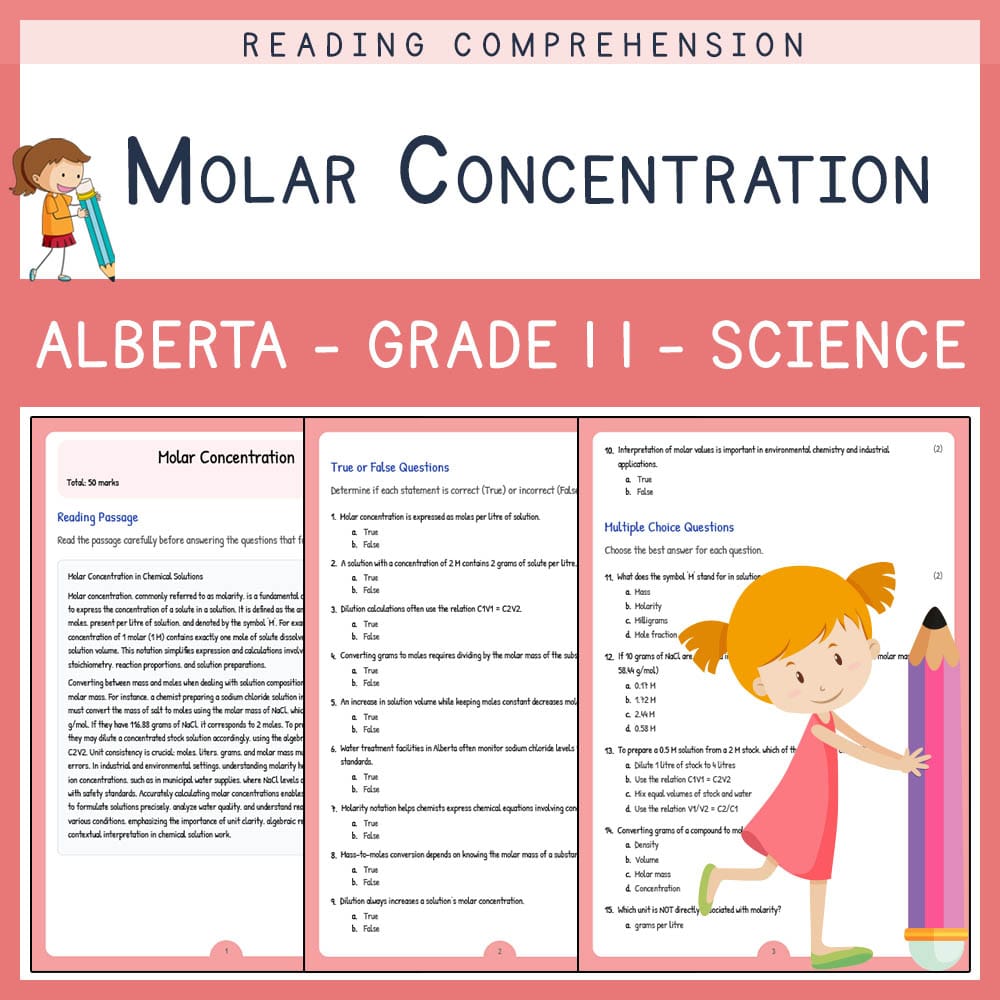
Grade 11 Science | Molar Concentration Worksheet | Alberta Standards
Created byLumora LearningLearning Objectives
- Define molar concentration and understand its notation.
- Convert between mass, moles, and volume in solution preparation.
- Apply dilution calculations to prepare solutions from concentrated stocks.
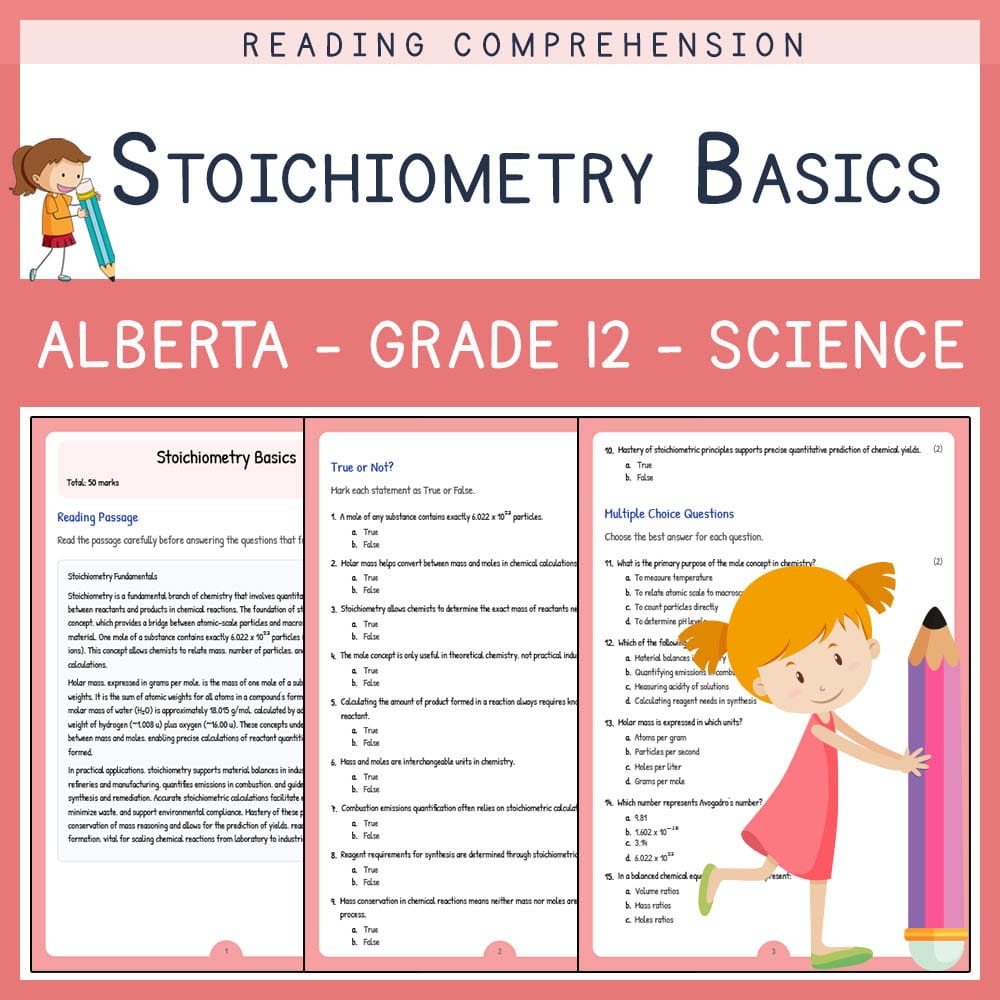
Grade 12 Science | Stoichiometry Basics Worksheet | Alberta Standards
Created byLumora LearningLearning Objectives
- Understand the mole concept and its significance in chemical calculations.
- Learn to calculate molar mass and convert between mass and moles.
- Apply mass and mole relationships to balanced chemical equations.

Grade 12 Science | Molecular Geometry Worksheet | BC-Aligned
Created byLumora LearningLearning Objectives
- Understand the principles of electron pair repulsion and how they determine molecular shape.
- Identify various molecular geometries based on VSEPR theory and hybridization.
- Relate bond angles and molecular shape to polarity and intermolecular forces.

Grade 12 Science | Adaptation Over Time Worksheet | NGSSS Aligned
Created byLumora LearningLearning Objectives
- Explain how natural selection changes allele frequencies across generations in a population.
- Describe how heritable traits that increase fitness become more common in particular environments.
- Distinguish between directional adaptation and habitat-specific (variable) adaptation.

Grade 9 Science | Forces Overview Worksheet | NGSSS Aligned
Created byLumora LearningLearning Objectives
- Explain how forces change an object’s state of motion through acceleration and changes in velocity.
- Distinguish between contact forces and field forces and give examples of each.
- Use force vectors to represent both magnitude and direction of forces.
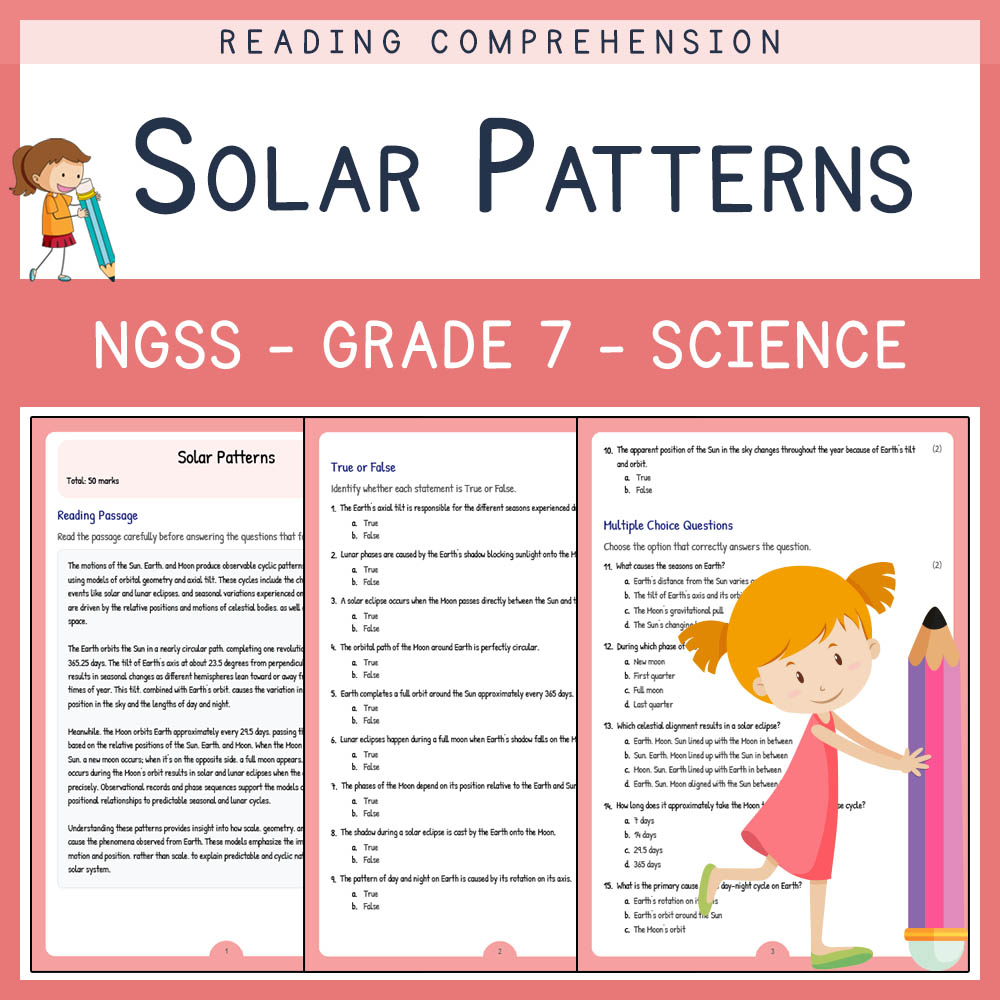
Grade 7 Science | Solar Patterns Worksheet (PDF + Answer Key) Aligned with NGSS
Created byLumora LearningLearning Objectives
- Describe the cyclic patterns produced by the relative motions of the Sun, Earth, and Moon.
- Explain how orbital geometry and axial tilt account for day-night cycles and phases.
- Identify observable evidence of solar system patterns and explain their causal relationships.
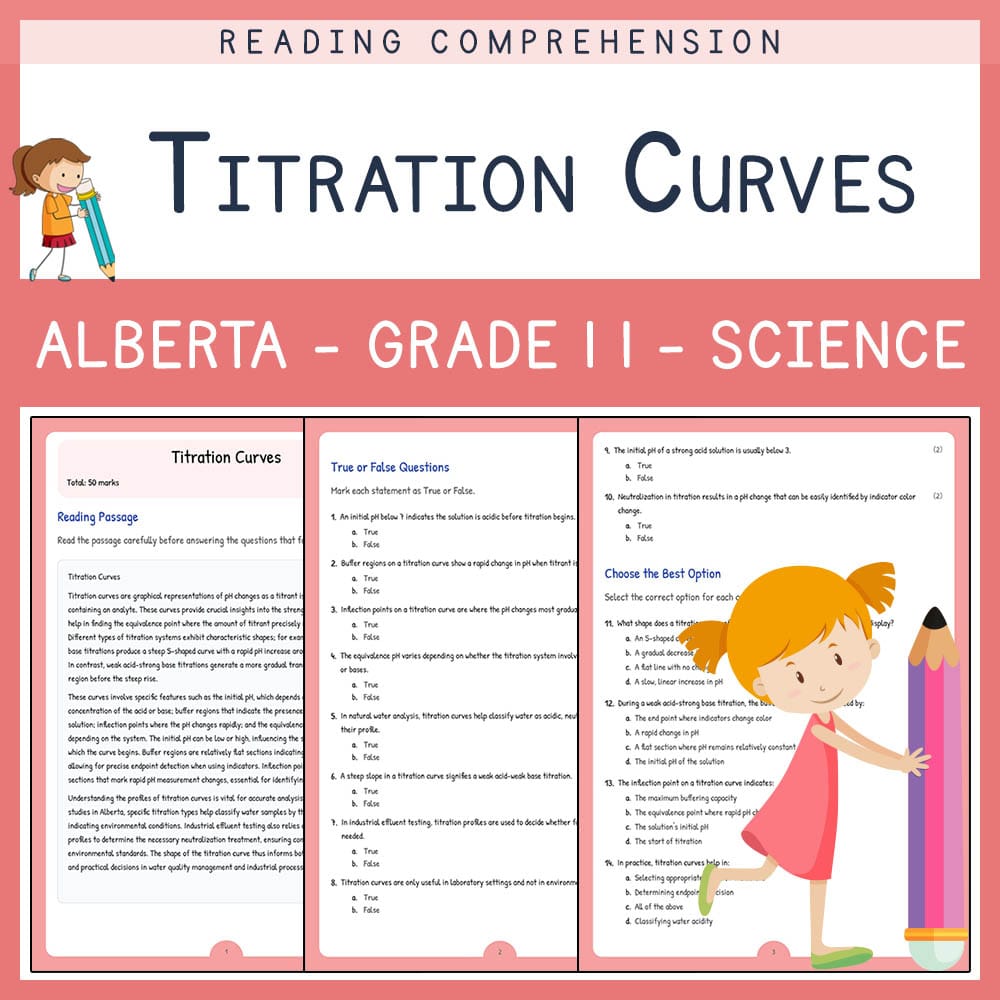
Grade 11 Science | Titration Curves Worksheet | Alberta Standards
Created byLumora LearningLearning Objectives
- Explain the shapes and features of different titration curves, including strong acid–strong base, weak acid–strong base, and weak base–strong acid systems.
- Identify key points on a titration curve such as initial pH, buffer regions, inflection points, and equivalence point pH.
- Determine the appropriate endpoint based on titration curve features for different acid–base systems.

Grade 11 Science | Ionic Strength Worksheet | Alberta Standards
Created byLumora LearningLearning Objectives
- Explain the concept of ionic strength and its impact on activity coefficients.
- Describe how high ionic strength reduces the activity of ions in solutions.
- Discuss the effects of ionic strength on solubility and equilibrium in natural and industrial aqueous systems.
Browse more categories
About Science Worksheets
Find Science worksheets spanning core skills, practice, and review. All 42,859 resources are instant PDF downloads for the classroom or home.
Every worksheet on MyTeachingSheets is created by independent teacher-authors and reviewed before publication. All resources download as printable PDFs for classroom, homework, or at-home practice, and many include answer keys. Preview any worksheet free before buying.