
Science Worksheets
42,859 subject resources
Grade 10 Science | Bonding Types Worksheet | Alberta Standards
 Created byLumora Learning
Learning Objectives
- Explain the differences between ionic, covalent, and metallic bonding at the particle level.
- Relate bonding types to observable properties such as conductivity, melting point, and solubility.
- Identify examples of each bonding type in real-world materials and applications.

Grade 10 Science | Adaptation Strategies Worksheet | AP Standards
Created byLumora LearningLearning Objectives
- Understand different adaptation strategies and their roles in Earth systems.
- Evaluate trade-offs and potential consequences of mitigation and adaptation approaches.
- Apply systems thinking and scenario analysis to climate and Earth system management.
Grade 7 Science Assessment | Pollution Effects Worksheet | Alberta
Created byLumora LearningLearning Objectives
- Understand how human activities introduce contaminants into terrestrial and aquatic ecosystems.
- Identify different types of pollutants relevant to Alberta environments, such as nutrient runoff, hydrocarbons, and airborne deposition.
- Describe pathways of exposure, bioaccumulation risks, and community-level ecological consequences of pollutants.

Grade 6 Science | Energy Efficiency Worksheet | BC Aligned
Created byLumora LearningLearning Objectives
- Understand the concept of energy efficiency as the ratio of useful output to total input.
- Identify common causes of energy losses in machines and systems.
- Evaluate the trade-offs between performance and energy waste in different technologies.
Grade 10 Science | Resource Cycles Worksheet | Alberta Standards
Created byLumora LearningLearning Objectives
- Describe the components and pathways of Earth's resource cycles, including water, carbon, nutrients, and minerals.
- Explain how residence times influence resource availability and ecosystem function.
- Analyze examples such as Alberta's snowpack-driven runoff, boreal peat carbon storage, prairie nitrogen fluxes, and bedrock mineral distributions.
Grade 8 Science | State Properties Worksheet Elena | Alberta Standard
Created byLumora LearningLearning Objectives
- Describe the particle arrangements of solids, liquids, and gases.
- Explain how particle bonding strength and energy influence state properties.
- Identify examples of different states of matter in Alberta environments.

Grade 12 Science | Molecular Techniques Worksheet | BC-Aligned
Created byLumora LearningLearning Objectives
- Understand key molecular techniques such as PCR, gel electrophoresis, and sequencing.
- Identify applications of recombinant DNA and CRISPR-Cas systems in biotechnology and medicine.
- Evaluate ethical and safety considerations in deploying modern molecular techniques.
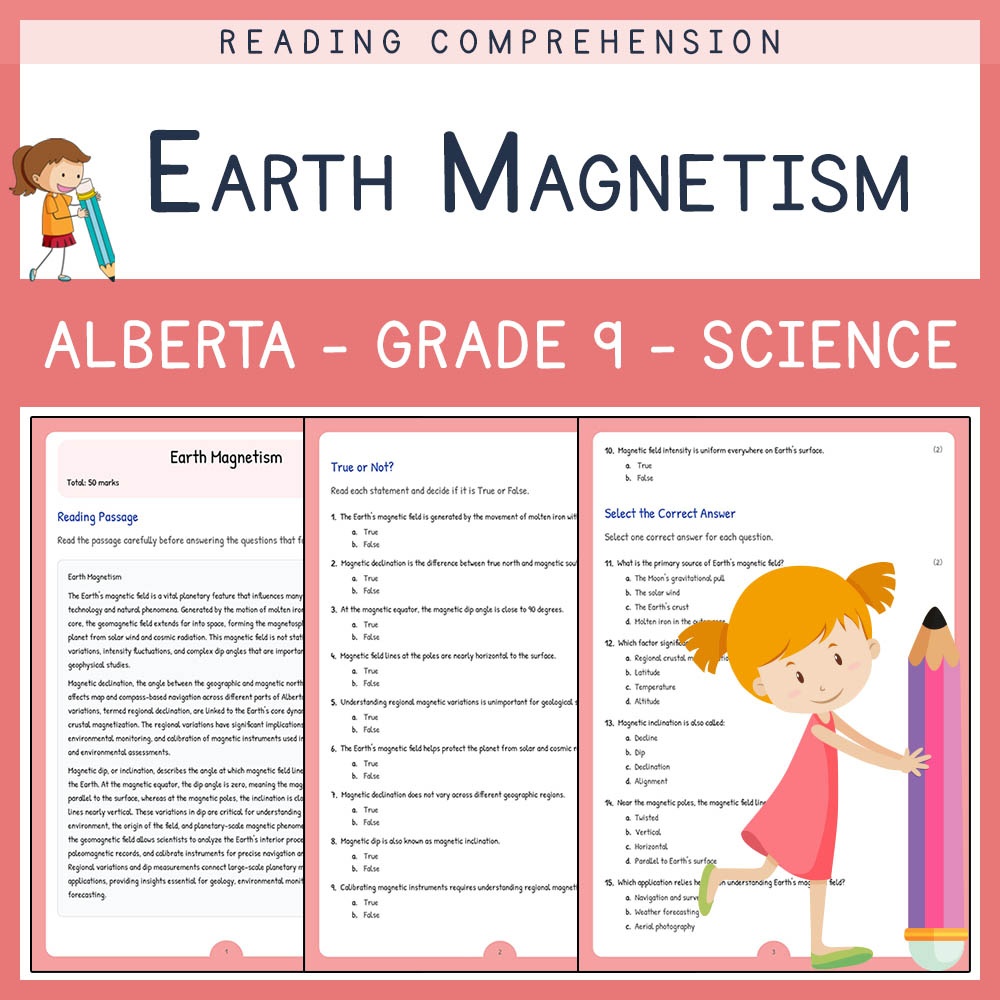
Grade 9 Science | Earth Magnetism Worksheet Elena | Alberta Standards
Created byLumora LearningLearning Objectives
- Understand the origin and characteristics of Earth's magnetic field.
- Explain regional variations in magnetic declination and their implications.
- Describe how magnetic dip and field behavior relate to planetary magnetism.
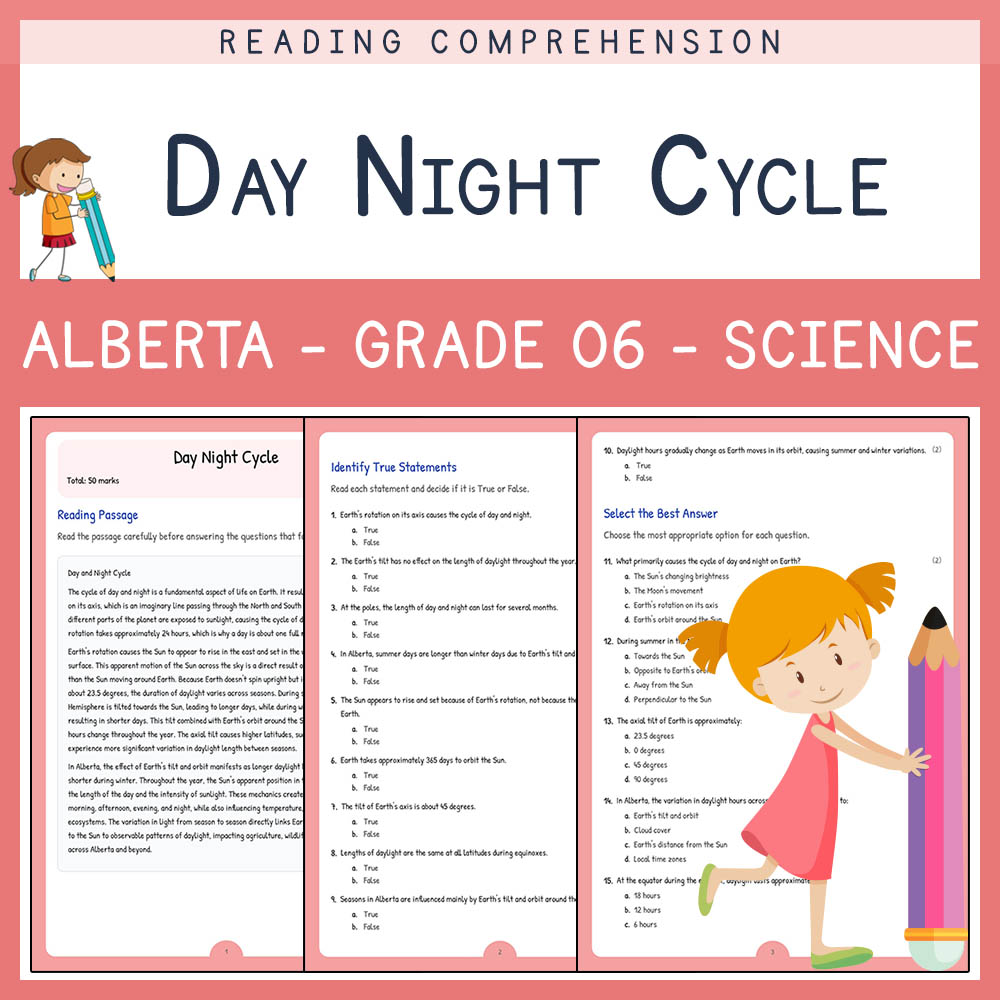
Grade 6 Science Assessment | Day Night Cycle Worksheet Elena | Alberta
Created byLumora LearningLearning Objectives
- Describe how Earth's rotation causes day and night.
- Explain how axial tilt and Earth's orbit influence the length of daylight throughout the year.
- Relate observed daylight patterns in Alberta to Earth's movements and tilt.
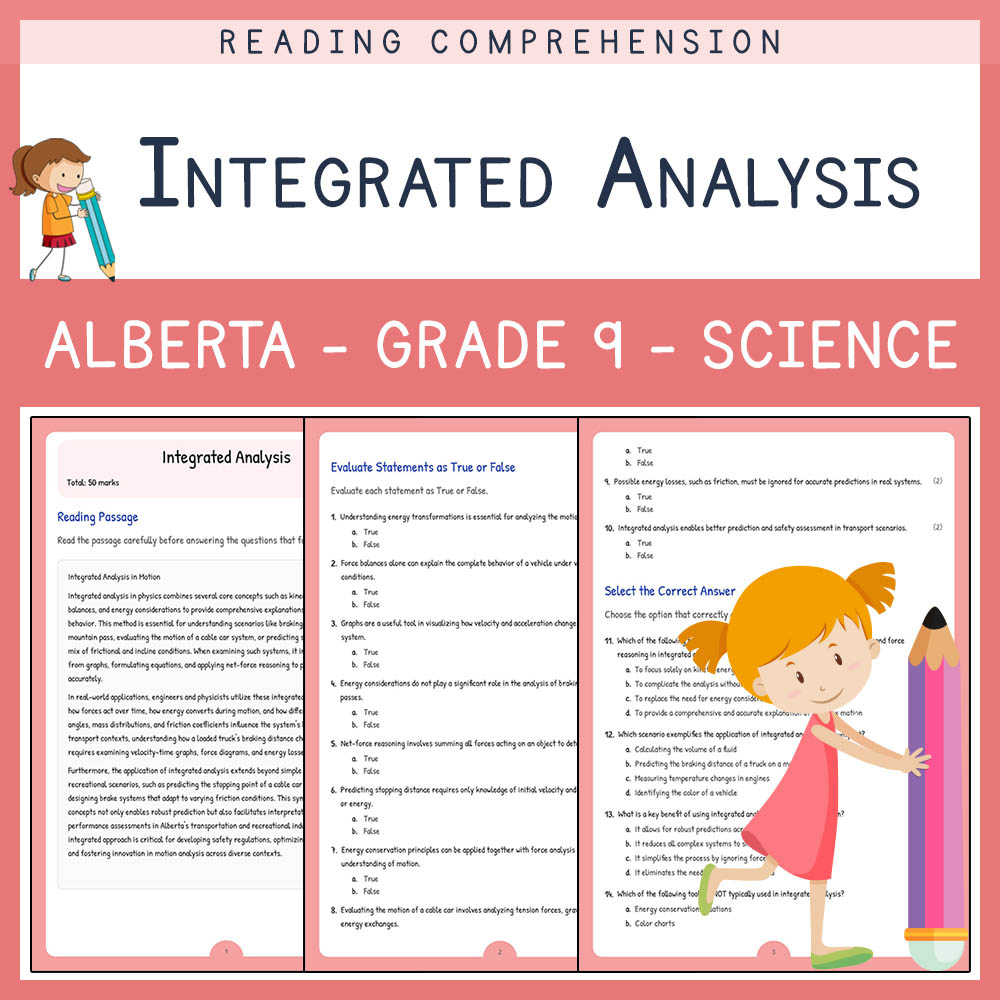
Grade 9 Science Worksheet | Integrated Analysis | Alberta Standards
Created byLumora LearningLearning Objectives
- Understand how to synthesize kinematic descriptions, force balances, and energy considerations in analyzing motion.
- Apply graphs, equations, and net-force reasoning to complex dynamic scenarios.
- Interpret integrated data to predict motion in transport and recreational contexts.
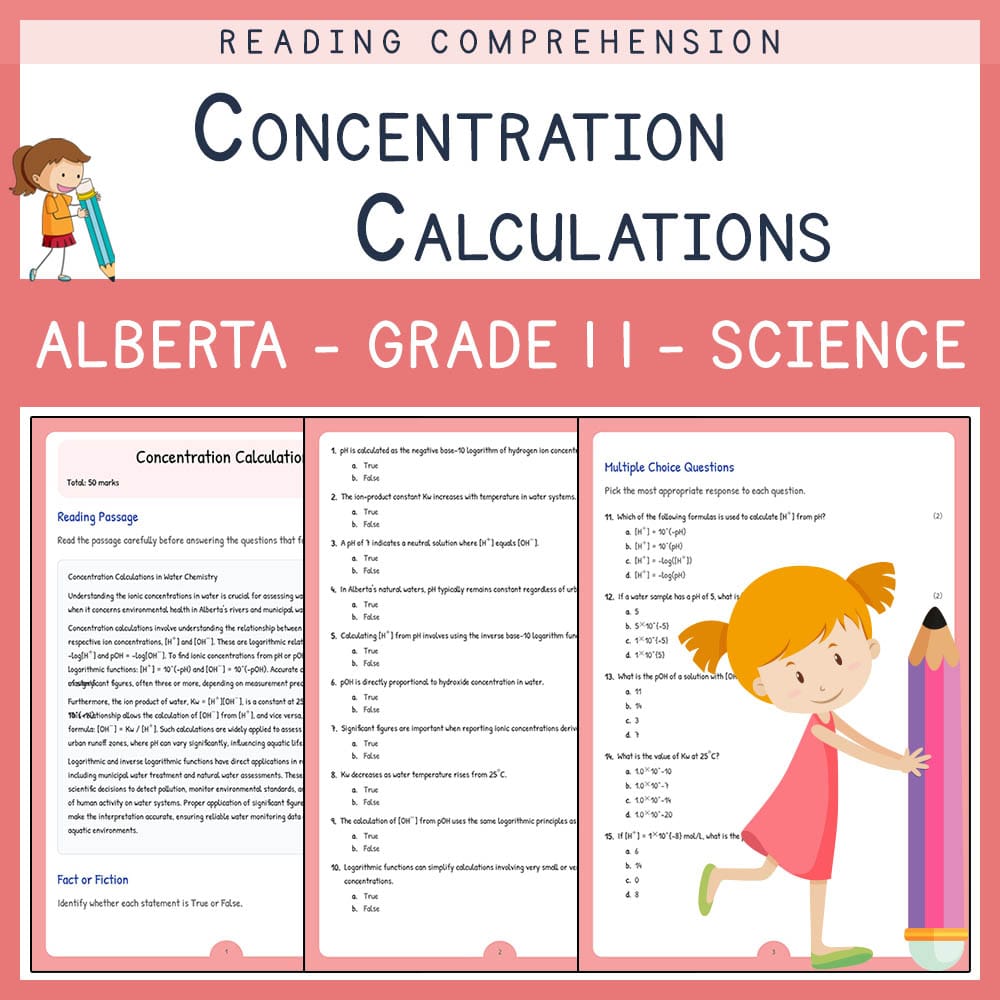
Grade 11 Science | Concentration Calculations Worksheet | Alberta Standards
Created byLumora LearningLearning Objectives
- Understand how to determine [H⁺] from pH and [OH⁻] from pOH using logarithmic relationships.
- Apply the ion-product constant Kw to interrelate [H⁺], [OH⁻], pH, and pOH in water samples.
- Calculate ionic concentrations in municipal and natural waters using logarithmic formulas and relevant significant figures.
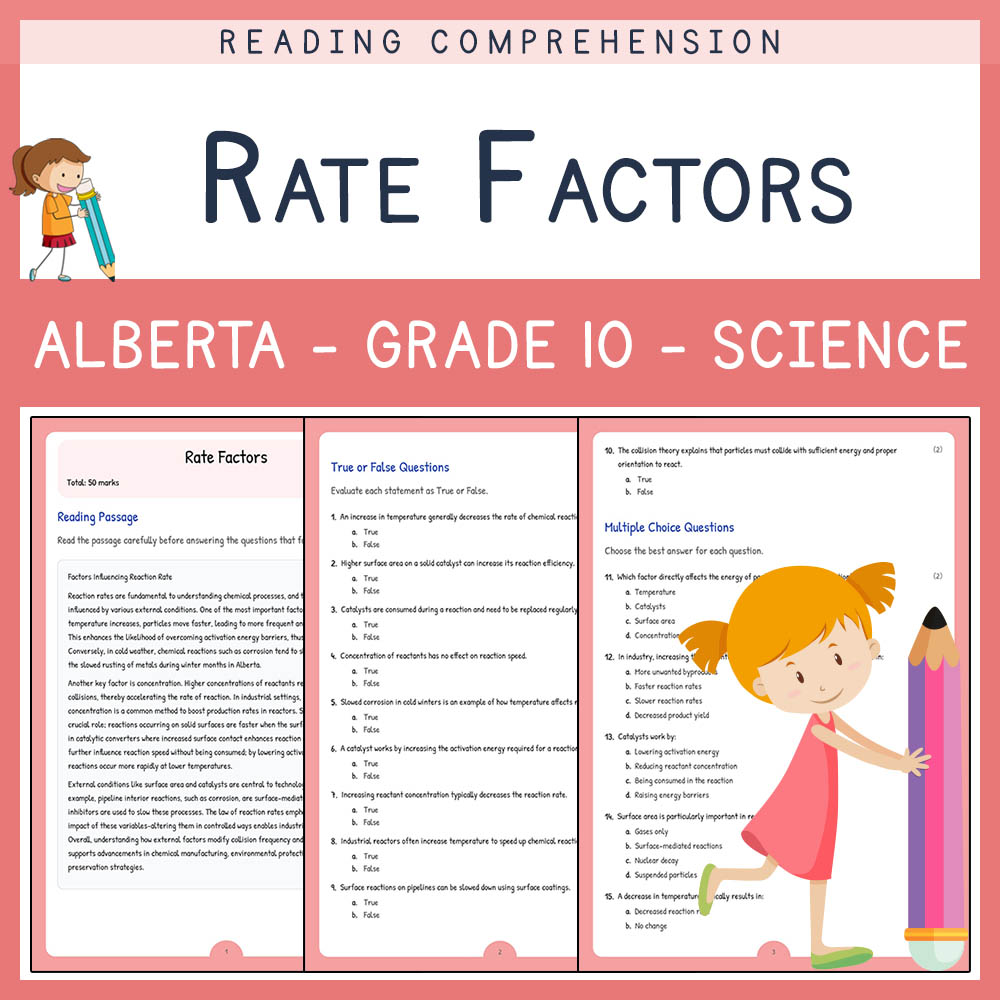
Grade 10 Science Worksheet | Rate Factors | Alberta Standards
Created byLumora LearningLearning Objectives
- Understand how temperature, concentration, surface area, and catalysts influence reaction rates.
- Analyze quantitative effects of rate variables in chemical reactions.
- Describe conceptual relationships between external conditions and reaction speed.

Grade 11 Science | Collisions Types Worksheet | BC-Aligned
Created byLumora LearningLearning Objectives
- Understand the difference between elastic and inelastic collisions in terms of conservation of momentum and energy.
- Apply conservation equations to analyze one- and two-dimensional collision scenarios.
- Explain the physical phenomena involved in different kinds of collisions ranging from billiard balls to vehicles.
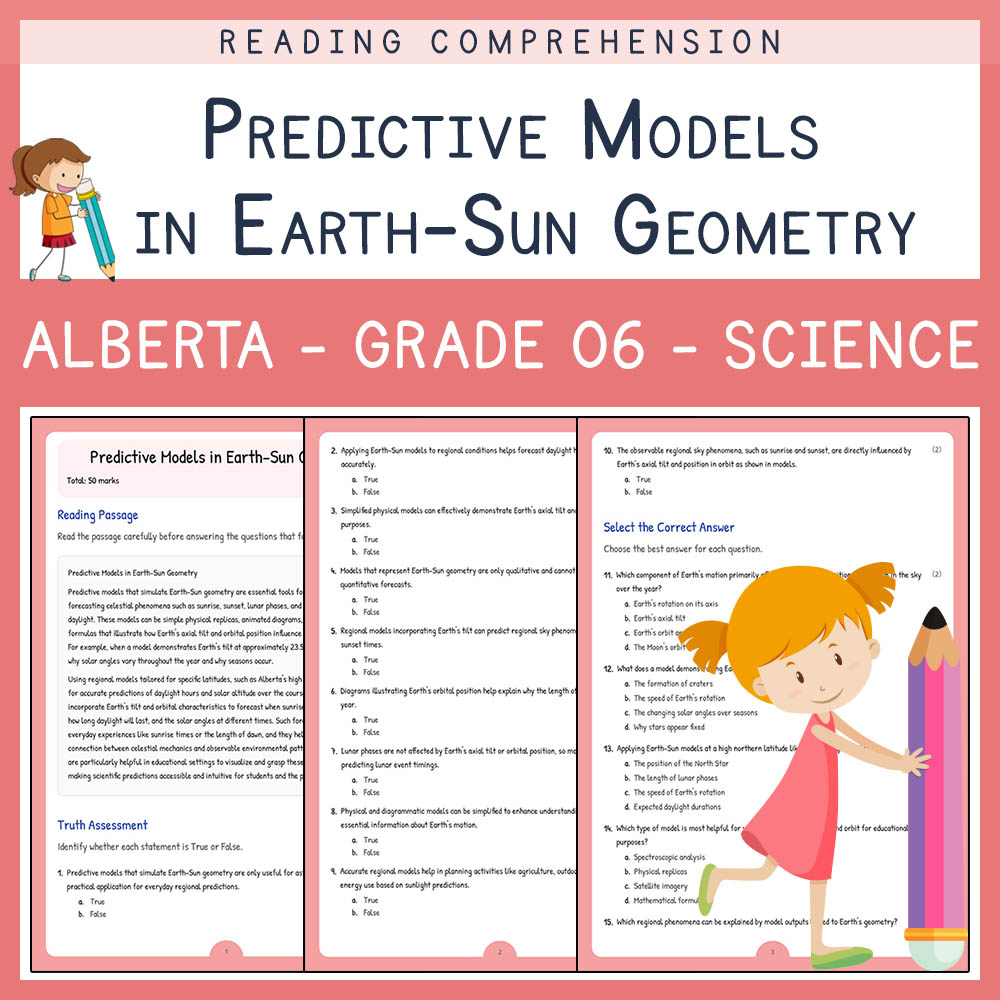
Grade 6 Science | Predictive Models in Earth–Sun Geometry | Alberta
Created byLumora LearningLearning Objectives
- Understand how models represent Earth–Sun relationships to predict celestial phenomena.
- Describe how simplified physical and diagrammatic models illustrate axial tilt, orbit, and motion.
- Explain how regional models estimate daylight duration and solar angles at specific latitudes.

Grade 7 Science | Thermal Basics Worksheet | Alberta Standards
Created byLumora LearningLearning Objectives
- Understand the particles' kinetic motion and how it relates to temperature and heat.
- Identify common heat transfer methods: conduction, convection, and radiation.
- Explain how environmental examples like winter heating and snowpack reflectivity demonstrate thermal processes.
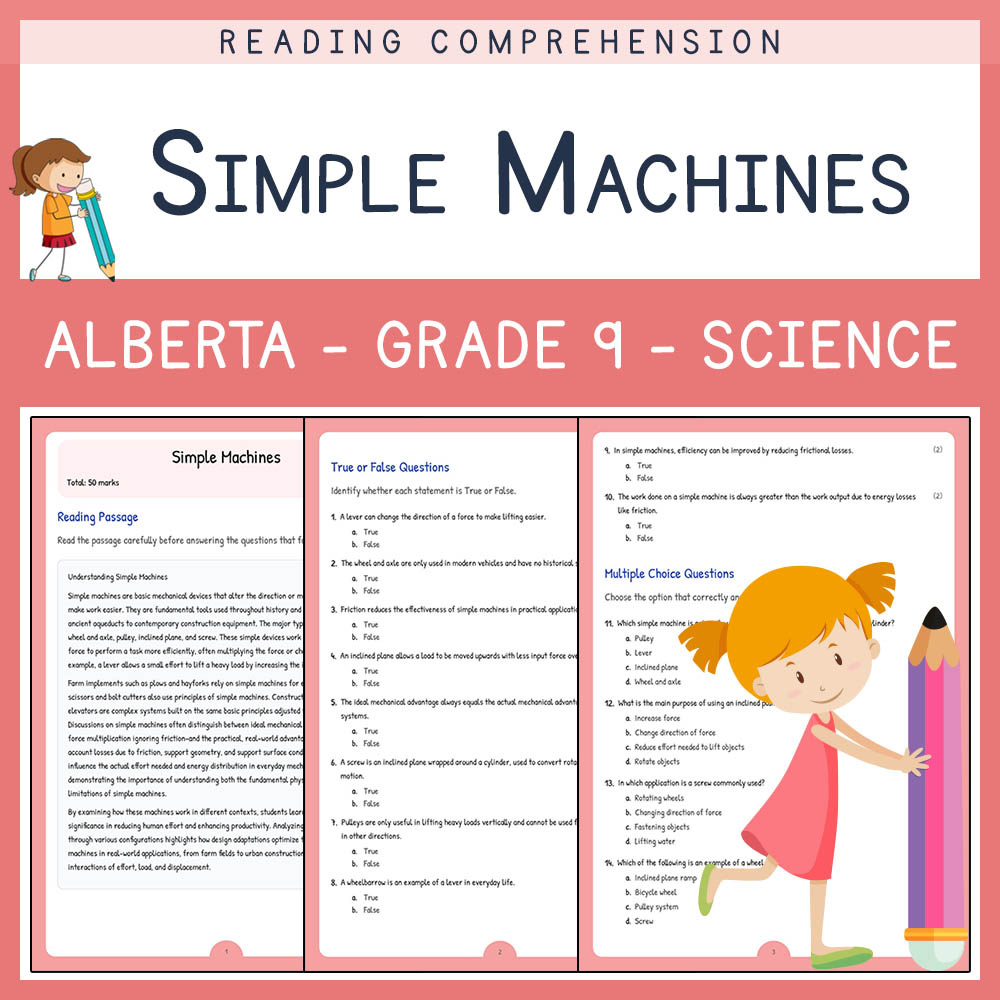
Grade 9 Science | Simple Machines Worksheet | Alberta Standards
Created byLumora LearningLearning Objectives
- Understand the fundamental concepts of simple machines and how they reduce effort.
- Identify common examples and applications of lever, wheel and axle, pulley, inclined plane, and screw.
- Explain the difference between ideal mechanical advantage and actual mechanical advantage considering friction and support geometry.

Grade 11 Science | Mineral Deposits Worksheet | BC-Aligned
Created byLumora LearningLearning Objectives
- Understand the various geological processes that form different types of mineral deposits.
- Identify key features and characteristics of hydrothermal, placer, magmatic, and layered deposits.
- Evaluate how deposit type, host rock, depth, and accessibility influence resource viability and environmental impact.
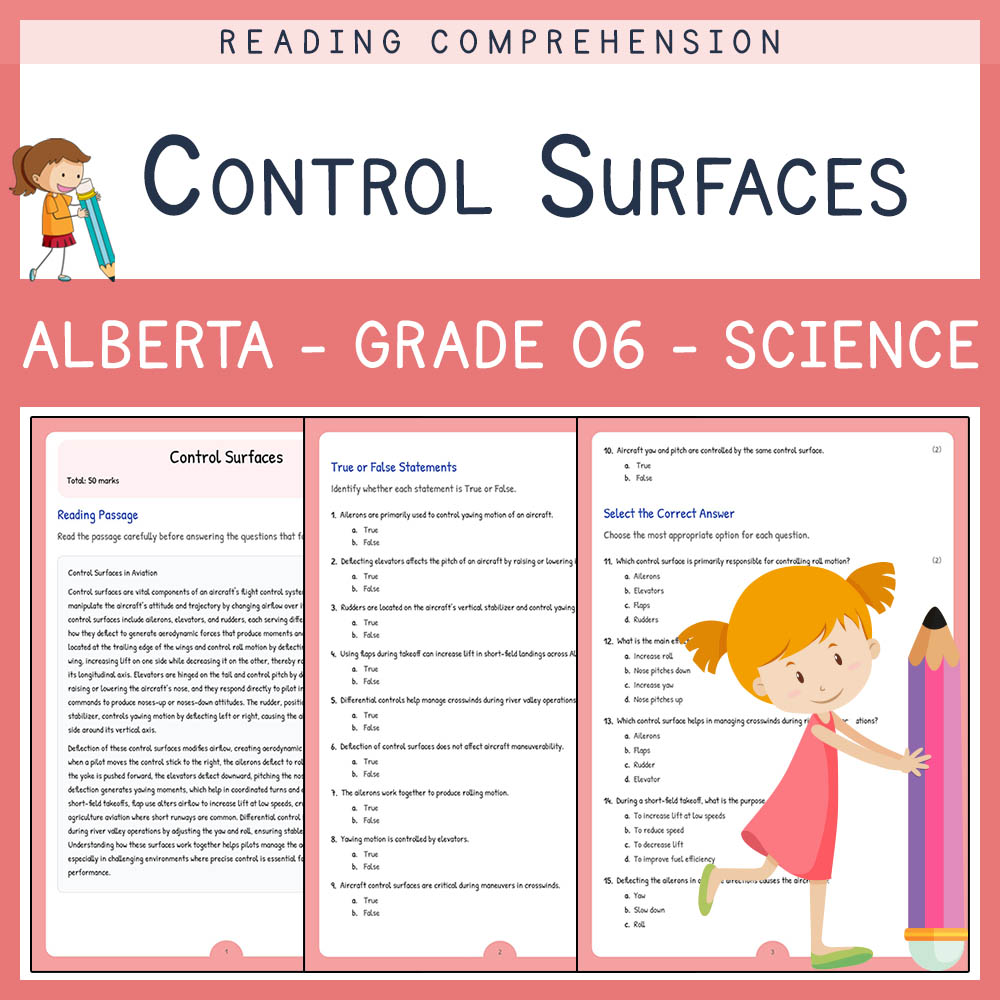
Grade 6 Science | Control Surfaces Worksheet Elena | Alberta Standard
Created byLumora LearningLearning Objectives
- Understand the function of control surfaces such as ailerons, elevators, and rudders in aircraft stability and maneuvering.
- Explain how deflection of control surfaces modifies airflow to produce lift and moments.
- Describe how control surfaces contribute to rolling, pitching, and yawing motions of an aircraft.
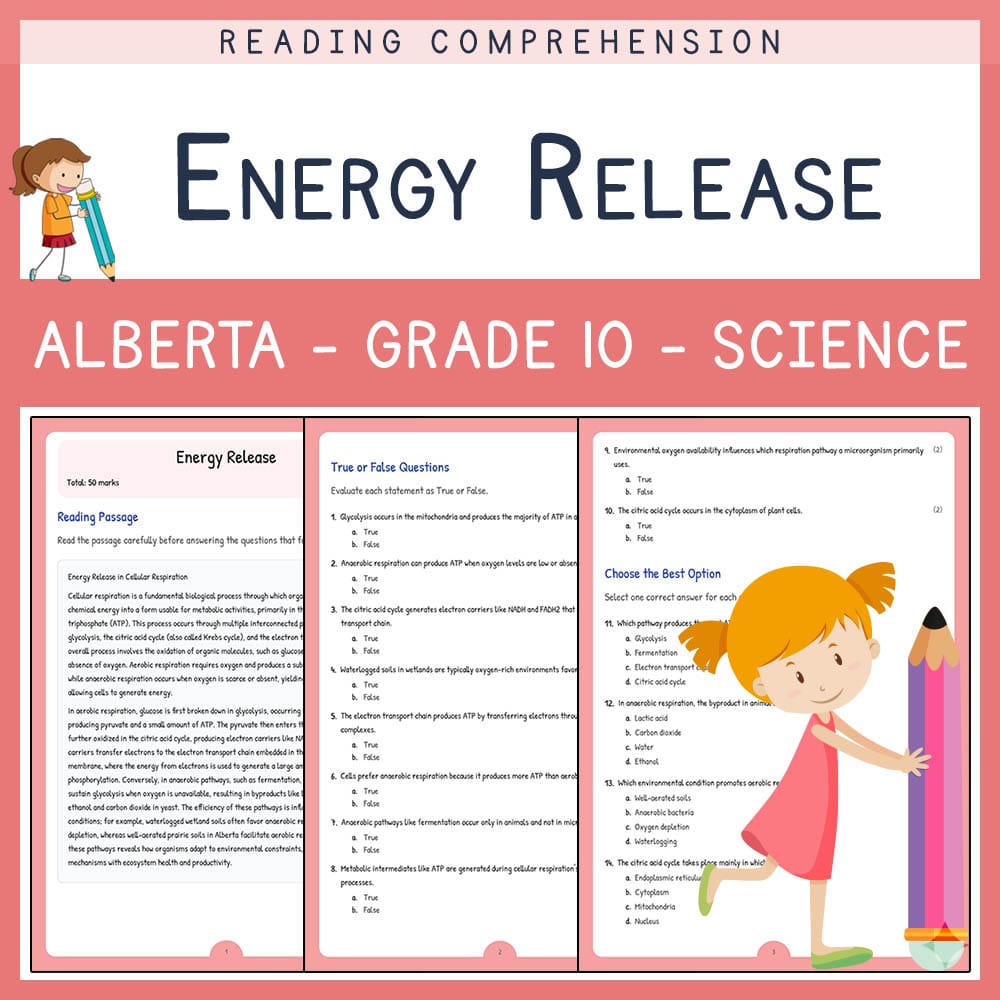
Grade 10 Science | Energy Release Worksheet | Alberta Standards
Created byLumora LearningLearning Objectives
- Explain the pathways of aerobic and anaerobic respiration and their roles in energy production.
- Identify environmental factors that influence the dominance of respiration pathways in ecosystems.
- Describe the processes of glycolysis, citric acid cycle, and electron transport in cellular respiration.
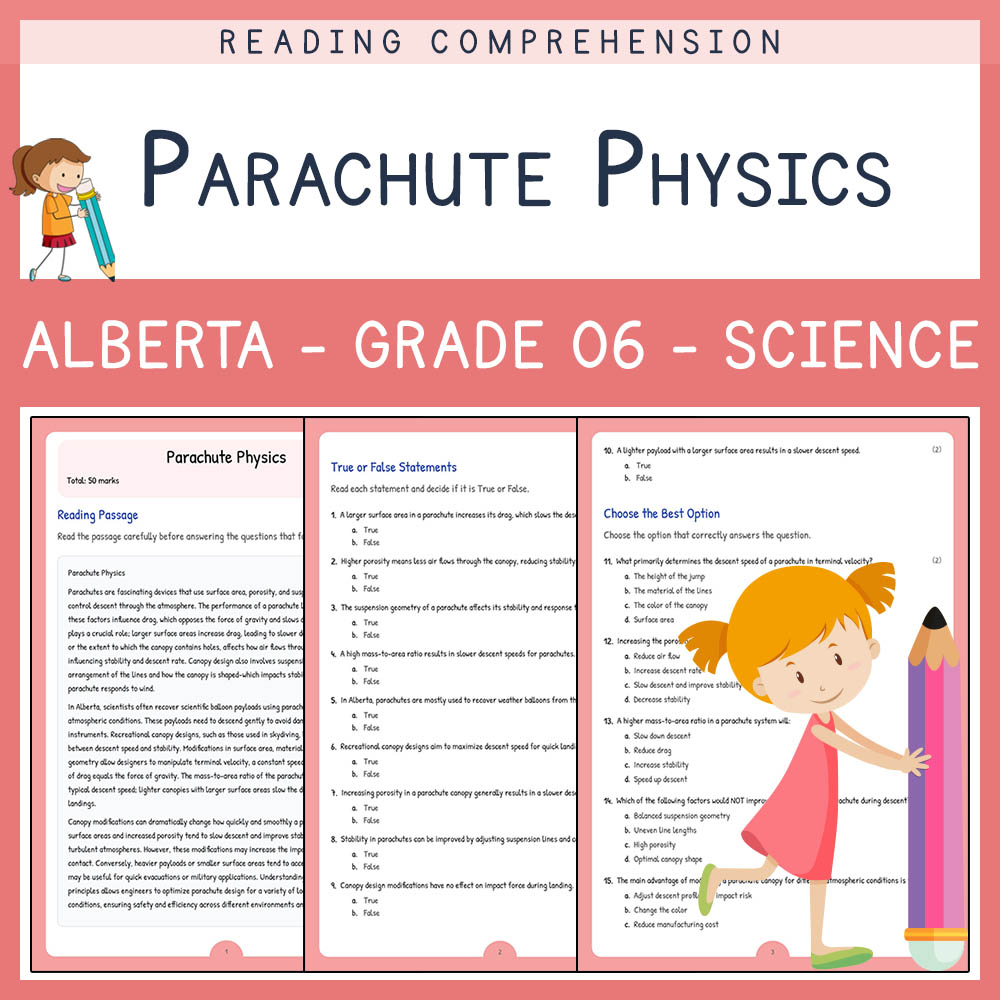
Grade 6 Science Assessment | Parachute Physics Worksheet | Alberta
Created byLumora LearningLearning Objectives
- Explain how surface area, porosity, and suspension geometry influence drag in parachutes.
- Describe the concepts of terminal velocity and how mass-to-area ratio affects descent speed.
- Analyze how canopy design trade-offs impact descent rate and stability in different atmospheric conditions.

Grade 9 Science | Graphical Literacy Worksheet | AP Data Analysis Practice
Created byLumora LearningLearning Objectives
- Understand how to interpret various types of graphs including scatterplots, histograms, line graphs, and residual displays.
- Learn how to evaluate axis scaling, labeling, and binning choices to accurately interpret data patterns.
- Identify how visual features such as outliers, trends, and correlation inform model selection and analysis.

Grade 11 Science | Genetic Mutation Worksheet | BC-Aligned
Created byLumora LearningLearning Objectives
- Understand different types of genetic mutations including base substitutions, insertions, deletions, and chromosomal changes.
- Identify the causes and effects of mutations in DNA sequence and organization.
- Explain the role of mutations in genetic diversity and evolution.
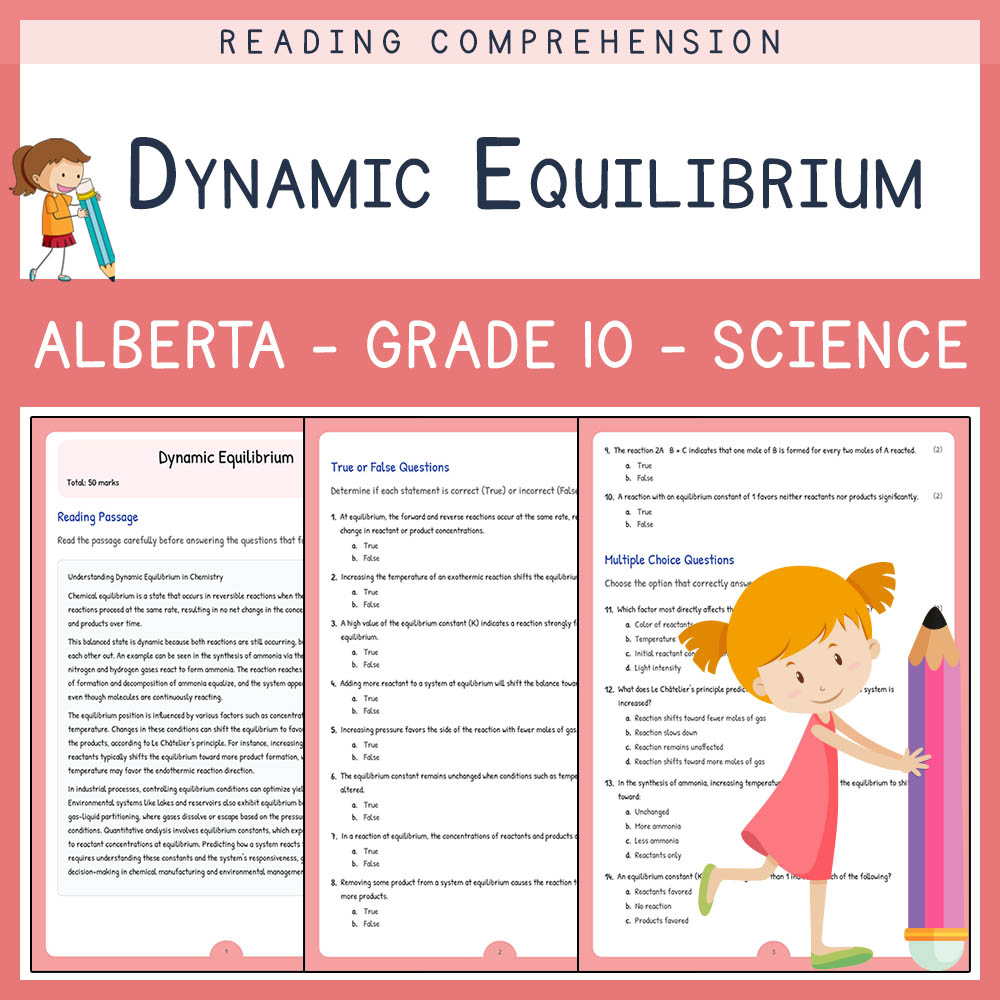
Grade 10 Science | Dynamic Equilibrium Worksheet | Alberta Standards
Created byLumora LearningLearning Objectives
- Explain the concept of dynamic chemical equilibrium and how reactions reach balance.
- Describe factors such as concentration, pressure, and temperature that influence equilibrium position.
- Interpret equilibrium constants and predict shifts when systems undergo perturbations.

Grade 12 Science | Atomic Structure Worksheet | BC-Aligned
Created byLumora LearningLearning Objectives
- Understand the components and structure of the atom, including protons, neutrons, and electrons.
- Describe electron configurations, energy levels, and orbitals in atoms.
- Explain how valence electrons affect element reactivity and periodic trends.
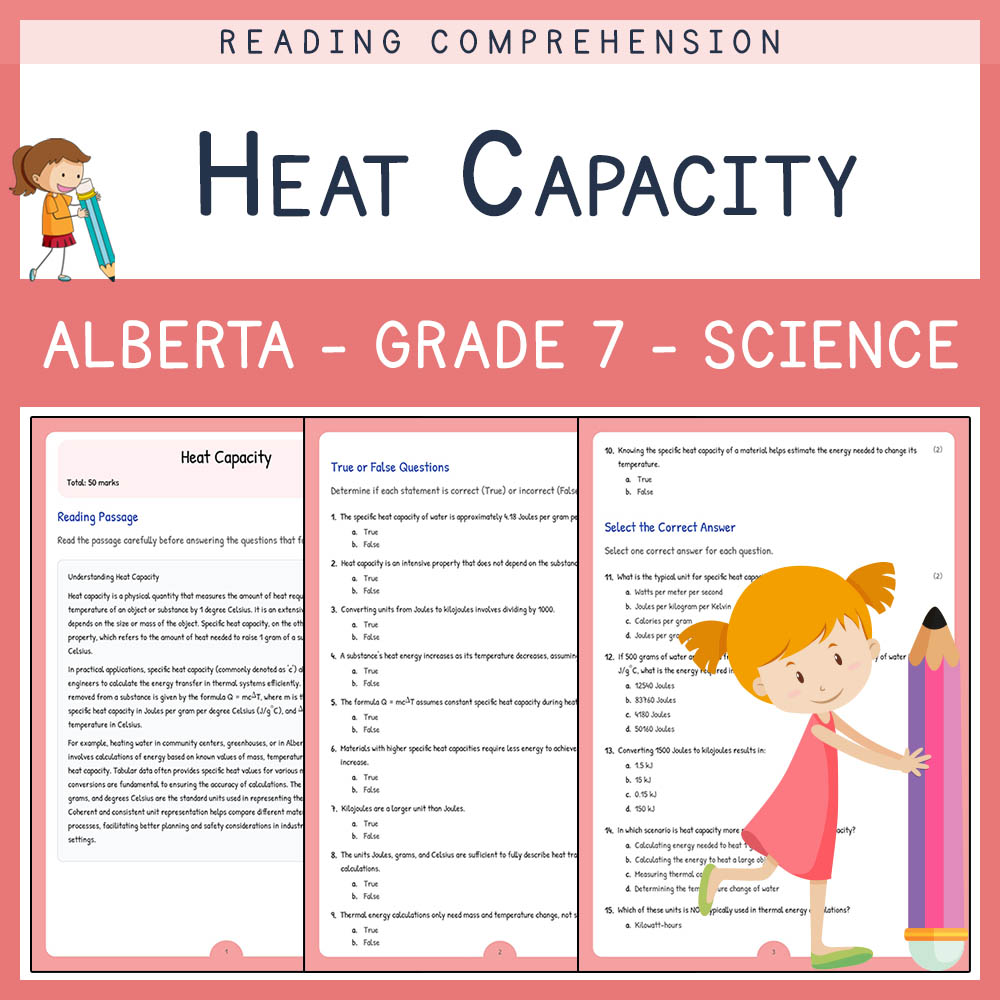
Grade 7 Science | Heat Capacity Worksheet | Alberta Standard
Created byLumora LearningLearning Objectives
- Understand the concept of specific heat capacity and its importance in thermal calculations.
- Apply formulas involving mass, specific heat, and temperature change to compute energy transfer.
- Convert units between Joules, kilojoules, grams, and degrees Celsius for thermal calculations.
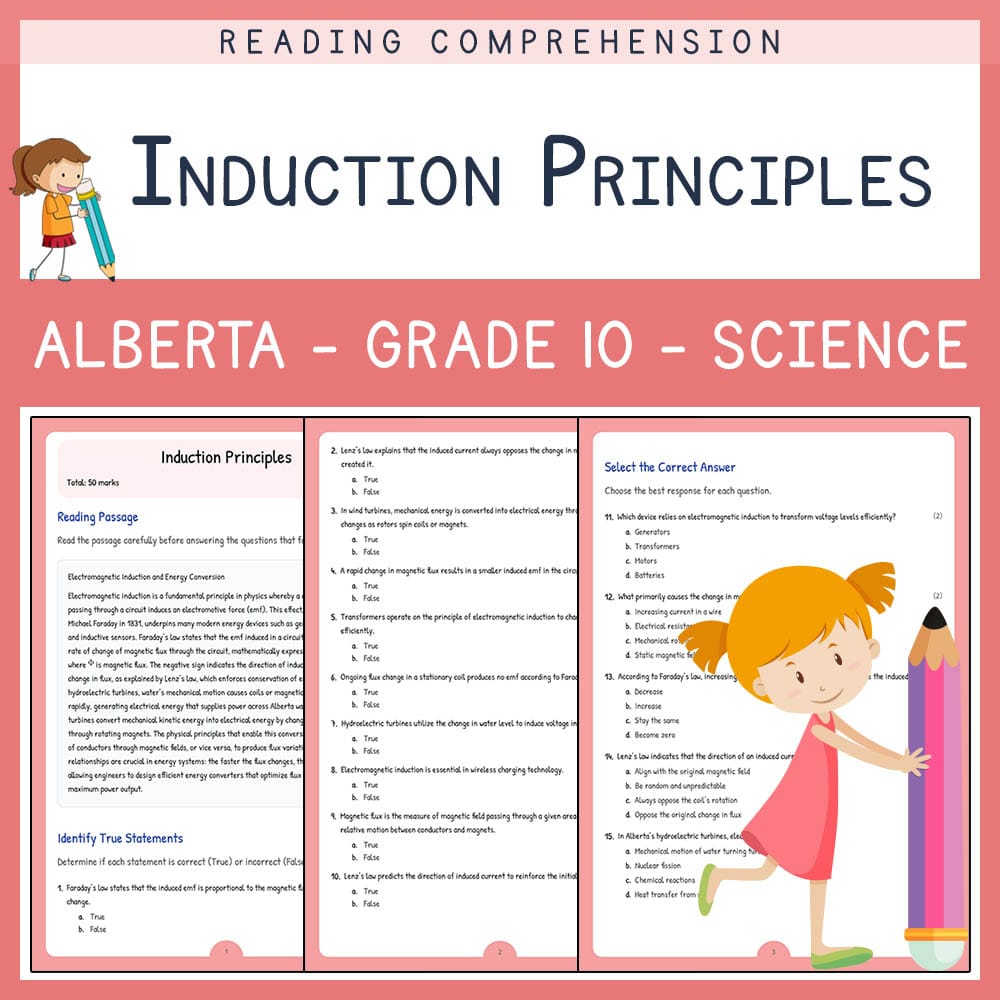
Grade 10 Science | Induction Principles Worksheet | Alberta Standards
Created byLumora LearningLearning Objectives
- Understand the fundamental concepts of electromagnetic induction, including Faraday’s law and Lenz's law.
- Explain how changing magnetic flux induces voltage in conductors.
- Identify real-world energy devices that utilize electromagnetic induction, such as turbines and transformers.
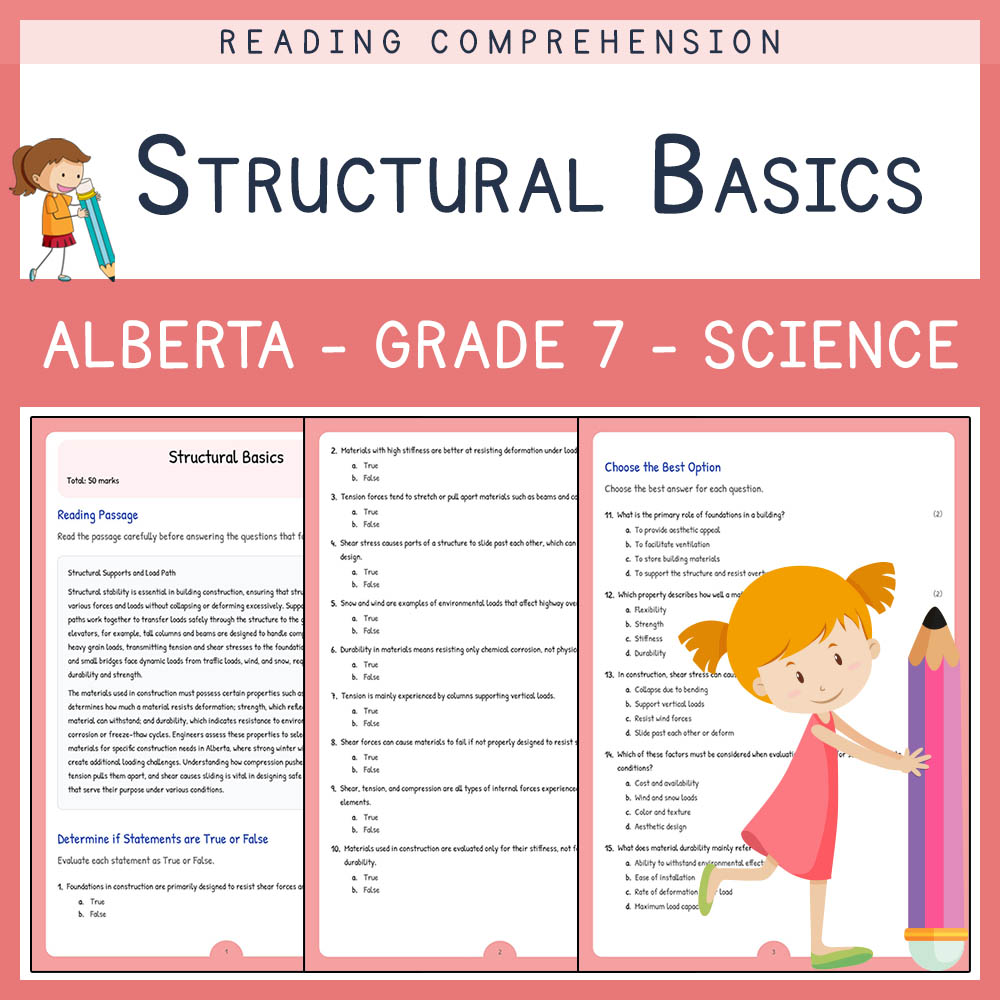
Grade 7 Science | Structural Basics Worksheet | Alberta Standard
Created byLumora LearningLearning Objectives
- Understand the roles of supports, foundations, and load paths in construction.
- Identify how compression, tension, and shear affect different building components.
- Evaluate material properties such as stiffness, strength, and durability when designing structures.

Grade 10 Science | Field Superposition Worksheet | BC-Aligned
Created byLumora LearningLearning Objectives
- Explain the principle of field superposition and how it applies to multiple sources.
- Calculate combined field strength at a point due to various sources using vector addition.
- Describe how superposition results in regions of cancellation or reinforcement in fields.
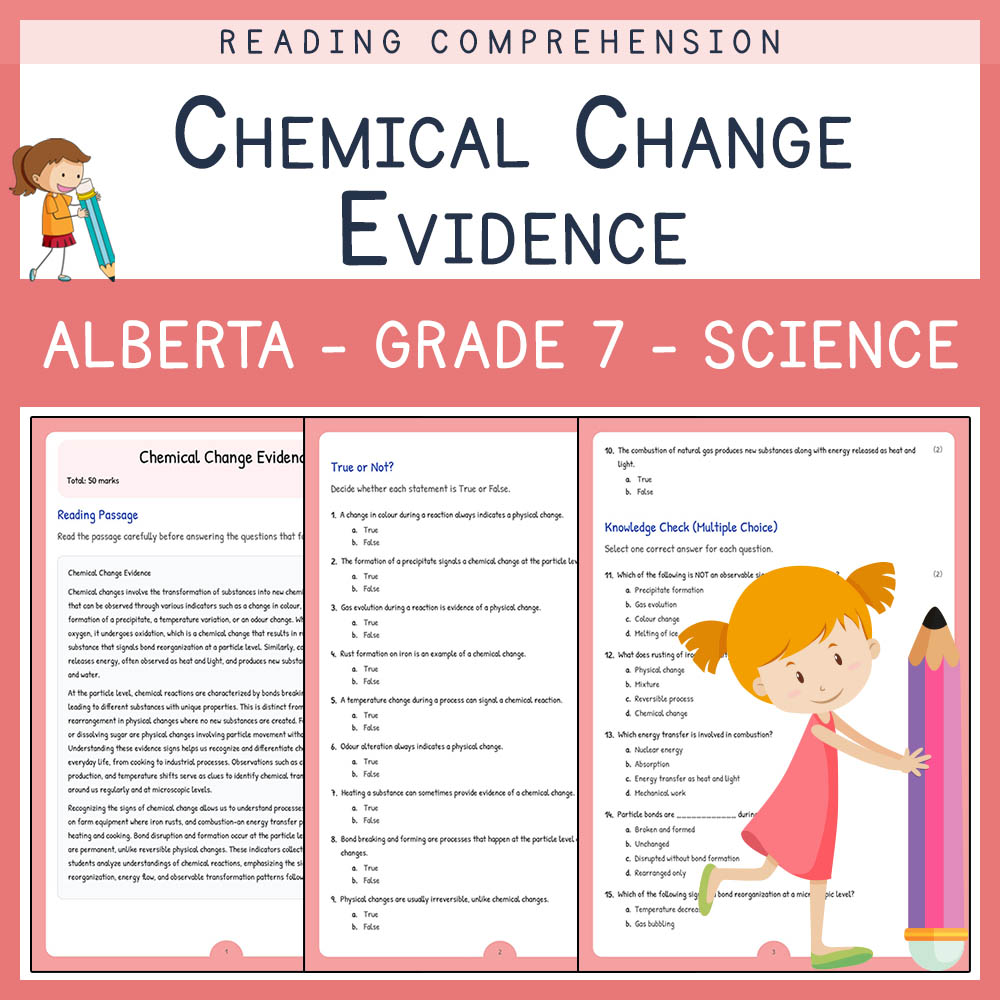
Grade 7 Science Assessment | Chemical Change Evidence Worksheet | Alberta
Created byLumora LearningLearning Objectives
- Identify observable signs of chemical changes such as colour change, gas evolution, and temperature change.
- Explain at particle level how bonds are broken and formed during a chemical reaction.
- Differentiate between physical and chemical changes based on evidence provided.
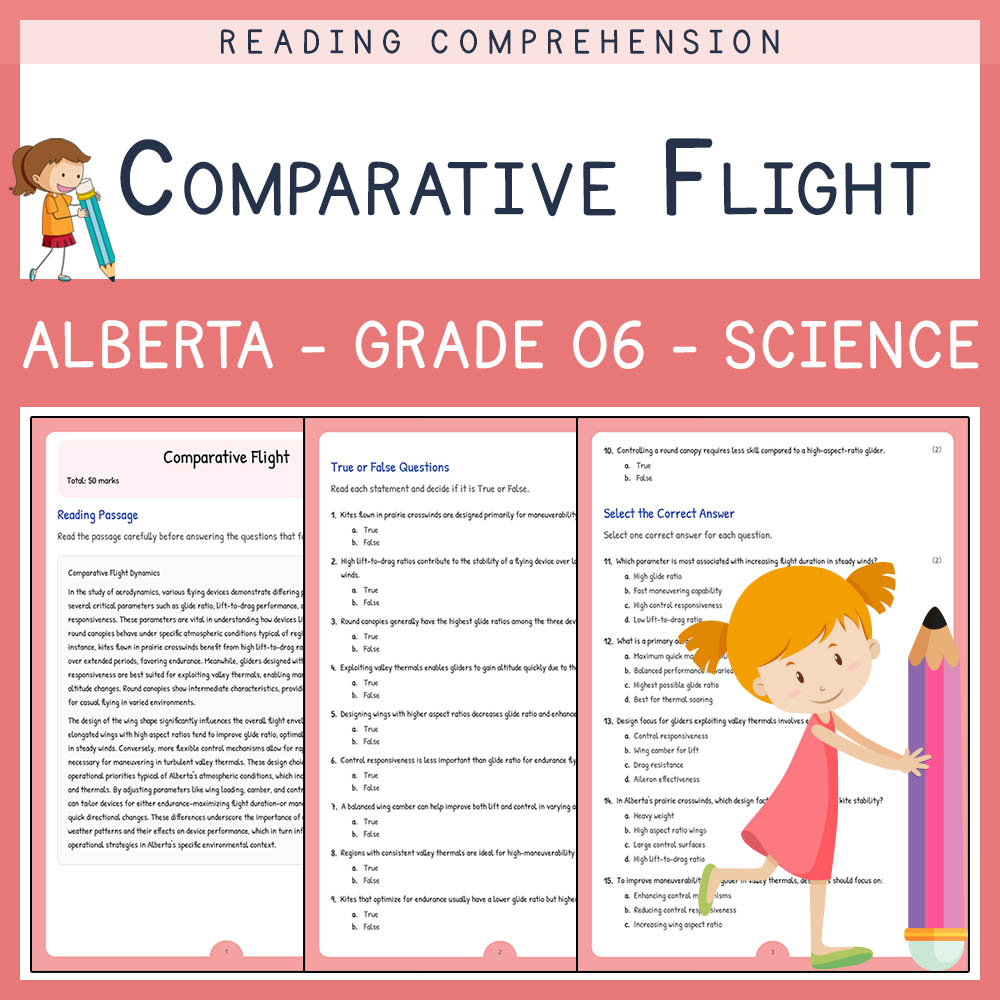
Grade 6 Science Worksheet | Comparative Flight | Alberta Standards
Created byLumora LearningLearning Objectives
- Compare the flight performance of kites, gliders, and round canopies based on lift-to-drag ratios, glide ratios, and control responsiveness.
- Explain how regional atmospheric conditions like prairie crosswinds and valley thermals influence the design and operation of different flying devices.
- Analyze how design parameters such as wing shape and control mechanisms affect endurance and maneuverability in flight.
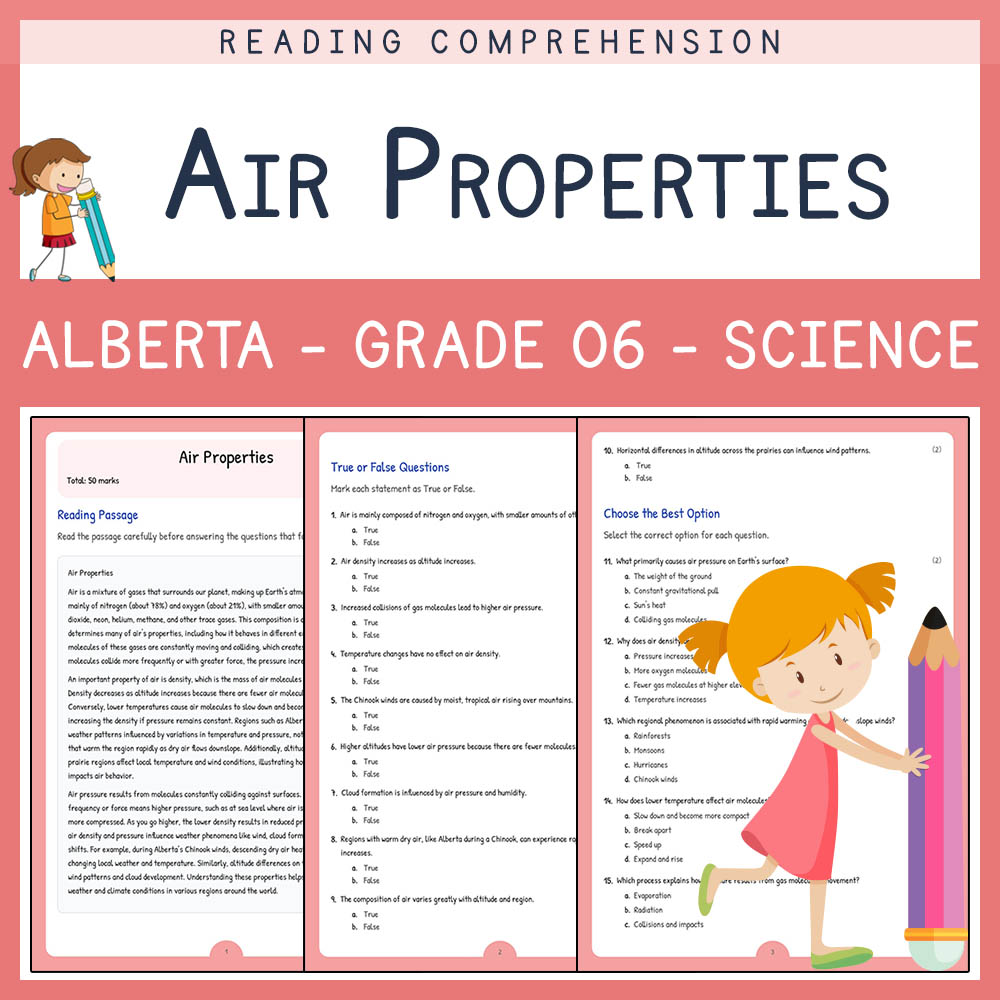
Grade 6 Science | Air Properties Worksheet Elena | Alberta Standards
Created byLumora LearningLearning Objectives
- Describe the molecular composition of air and how it influences properties like pressure and density.
- Explain how altitude and temperature affect air density and pressure.
- Illustrate regional examples such as Chinook winds and altitude differences to show real-world air property variations.
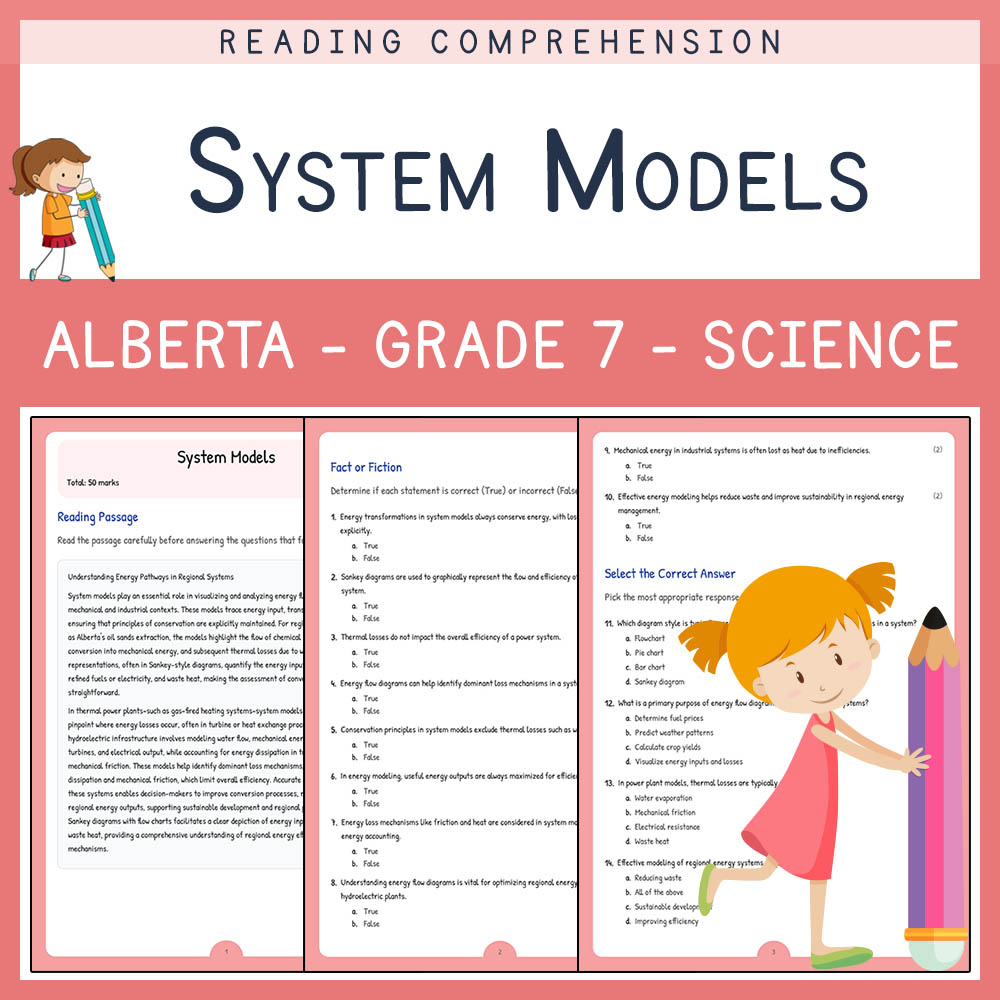
Grade 7 Science | System Models Worksheet | Alberta Standards
Created byLumora LearningLearning Objectives
- Explain how energy pathways are traced and modeled in industrial systems.
- Identify different components and representations used in energy flow diagrams.
- Analyze efficiency and loss mechanisms in regional energy systems such as oil sands extraction and hydroelectric plants.
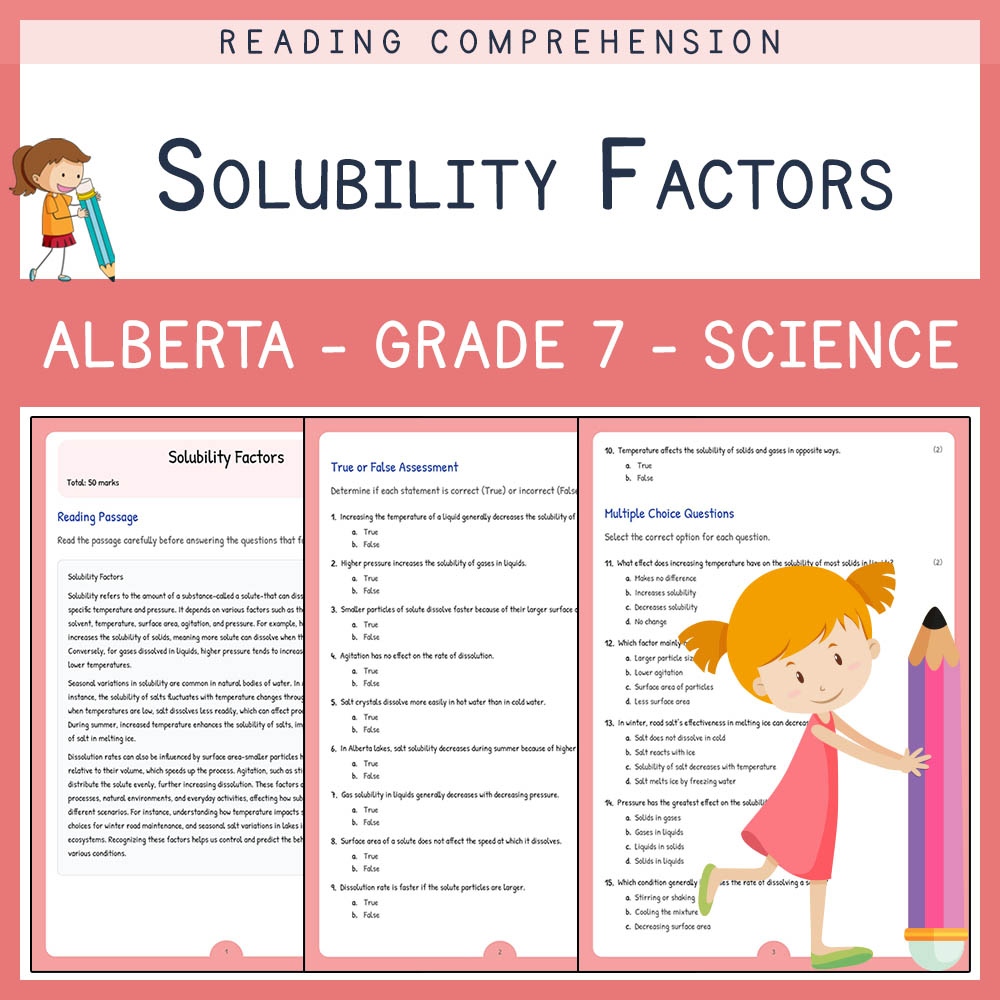
Grade 7 Science Worksheet | Solubility Factors | Alberta Curriculum
Created byLumora LearningLearning Objectives
- Understand the key factors affecting solubility such as temperature, surface area, pressure, and agitation.
- Identify examples of how solubility varies in natural and practical contexts.
- Analyze how changes in different conditions influence the amount of solute dissolved in a solvent.
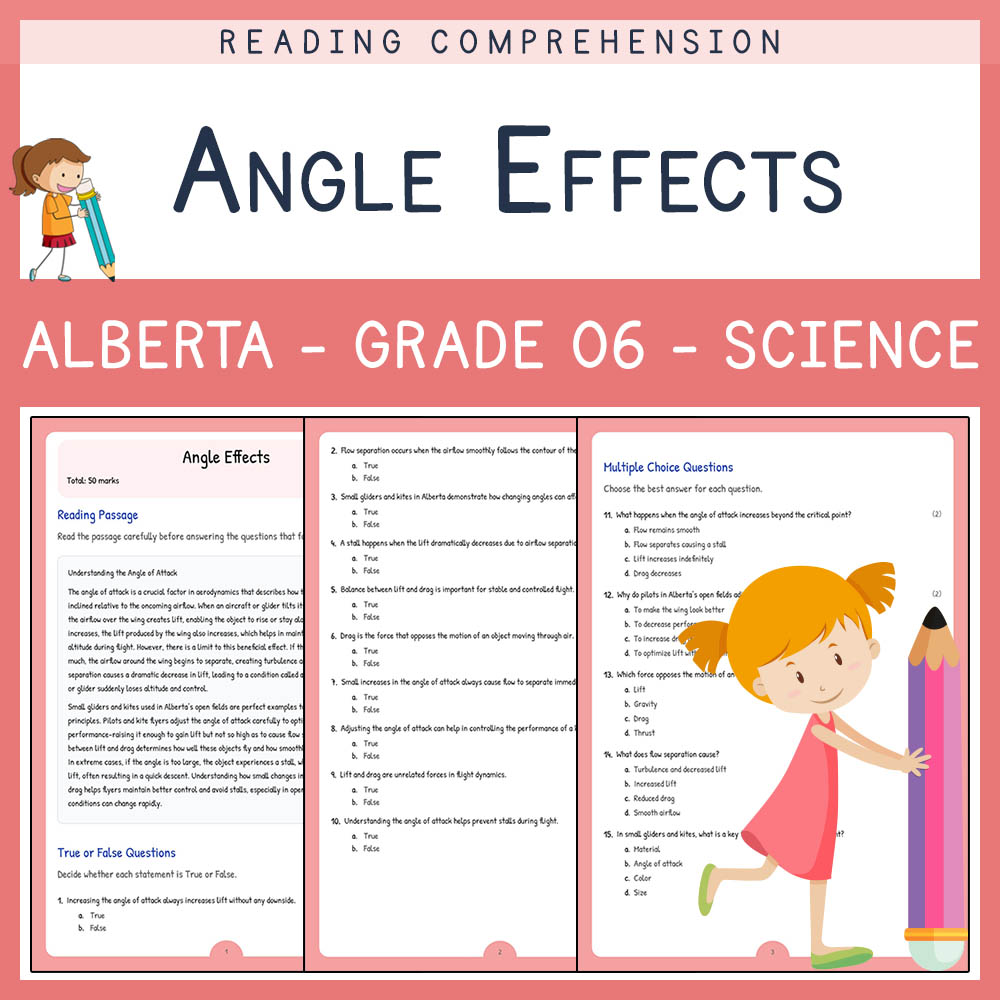
Grade 6 Science Worksheet | Angle Effects | Alberta Standard Alignment
Created byLumora LearningLearning Objectives
- Understand how the angle of attack influences lift and drag in flight.
- Identify the relationship between angle adjustments and performance in gliders and kites.
- Explain what happens at the critical angle of attack causing a stall.

Grade 9 Science | Spheres Connectivity Worksheet | AP Aligned
Created byLumora LearningLearning Objectives
- Understand the interactions among the geosphere, hydrosphere, atmosphere, and biosphere.
- Explain material and energy exchanges such as nutrient transport, gas fluxes, and ocean upwelling.
- Use conceptual models and diagrams to interpret coupled environmental phenomena.

Grade 12 Science | Genetic Drift Worksheet | BC-Aligned
Created byLumora LearningLearning Objectives
- Understand the concept of genetic drift and its impact on allele frequencies in populations.
- Identify the processes such as bottlenecks and founder events that cause genetic drift.
- Explain how genetic drift influences genetic diversity in isolated populations.
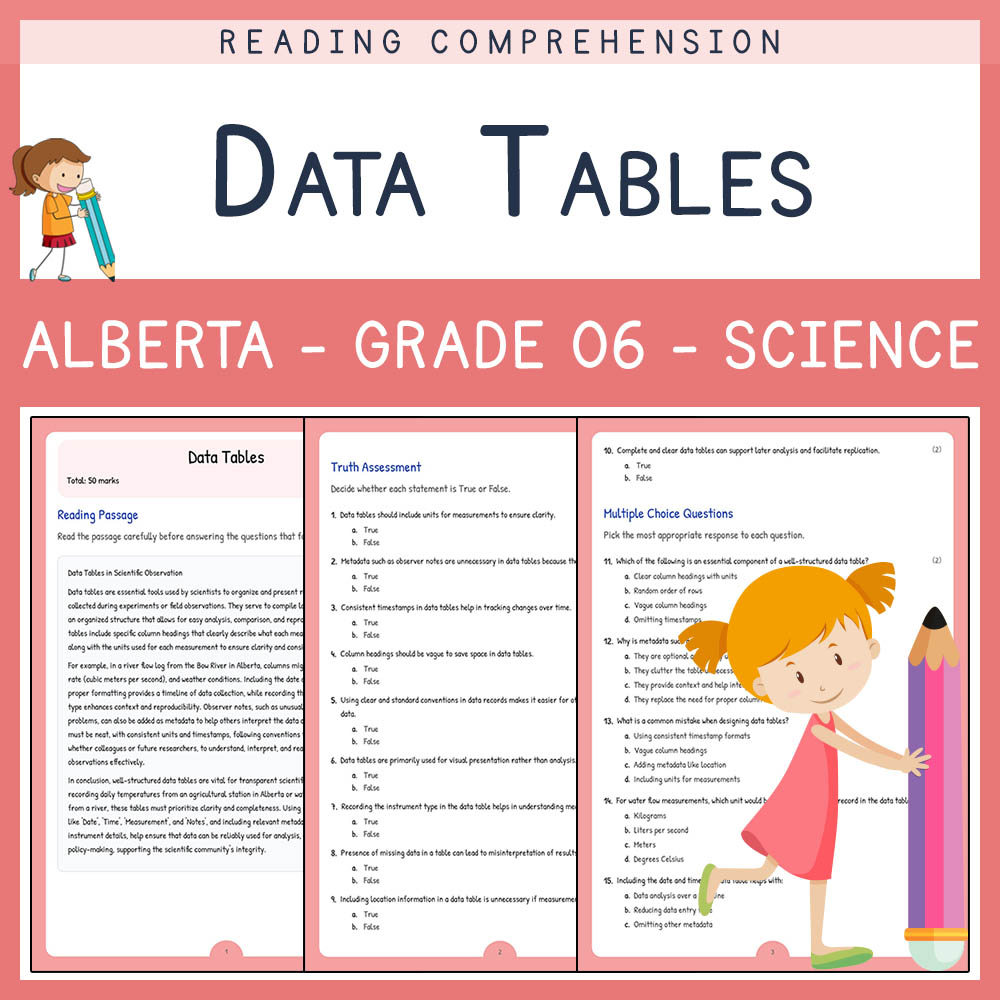
Grade 6 Science | Data Tables Worksheet Elena | Alberta Standards
Created byLumora LearningLearning Objectives
- Understand the purpose and importance of data tables in recording measurements.
- Identify appropriate column headings and units for data tables.
- Learn to include metadata fields such as location, instrument type, and observer notes.

Grade 11 Science | Fossil Record Worksheet | BC-Aligned
Created byLumora LearningLearning Objectives
- Understand how the fossil record documents the history of life on Earth.
- Explain techniques such as stratigraphic distribution and radiometric dating used to establish timelines.
- Identify types of fossils, including transitional fossils, and their significance in evolutionary biology.
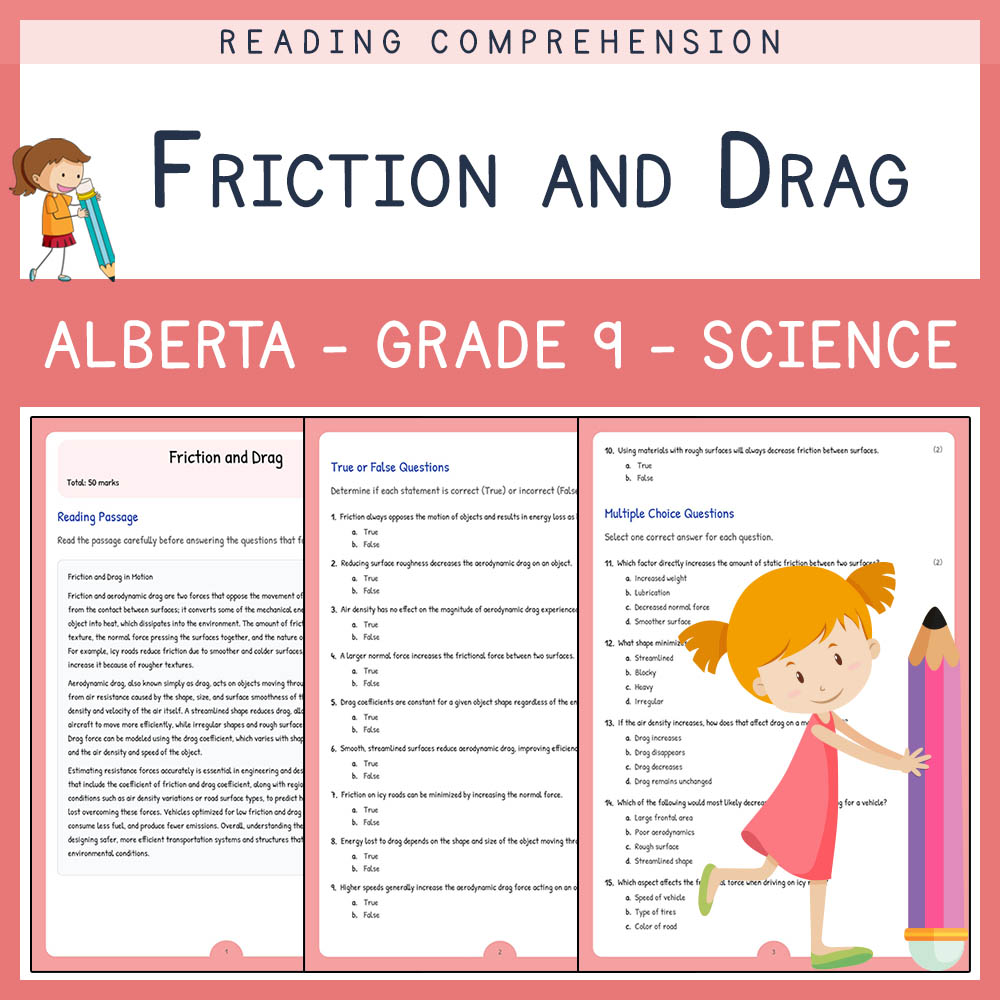
Grade 9 Science | Friction and Drag Worksheet | Alberta Standards
Created byLumora LearningLearning Objectives
- Understand how friction and aerodynamic drag oppose motion and convert mechanical energy into thermal energy.
- Identify factors that influence friction and drag in various scenarios.
- Apply quantitative models using coefficients of friction and drag coefficients to estimate resistance forces.

Grade 11 Science | Boundary Types Worksheet | BC-Aligned
Created byLumora LearningLearning Objectives
- Describe the different types of plate boundaries and their features.
- Explain how divergent, convergent, and transform boundaries contribute to tectonic activity and landform development.
- Connect global seismic and volcanic distributions to plate boundary locations.
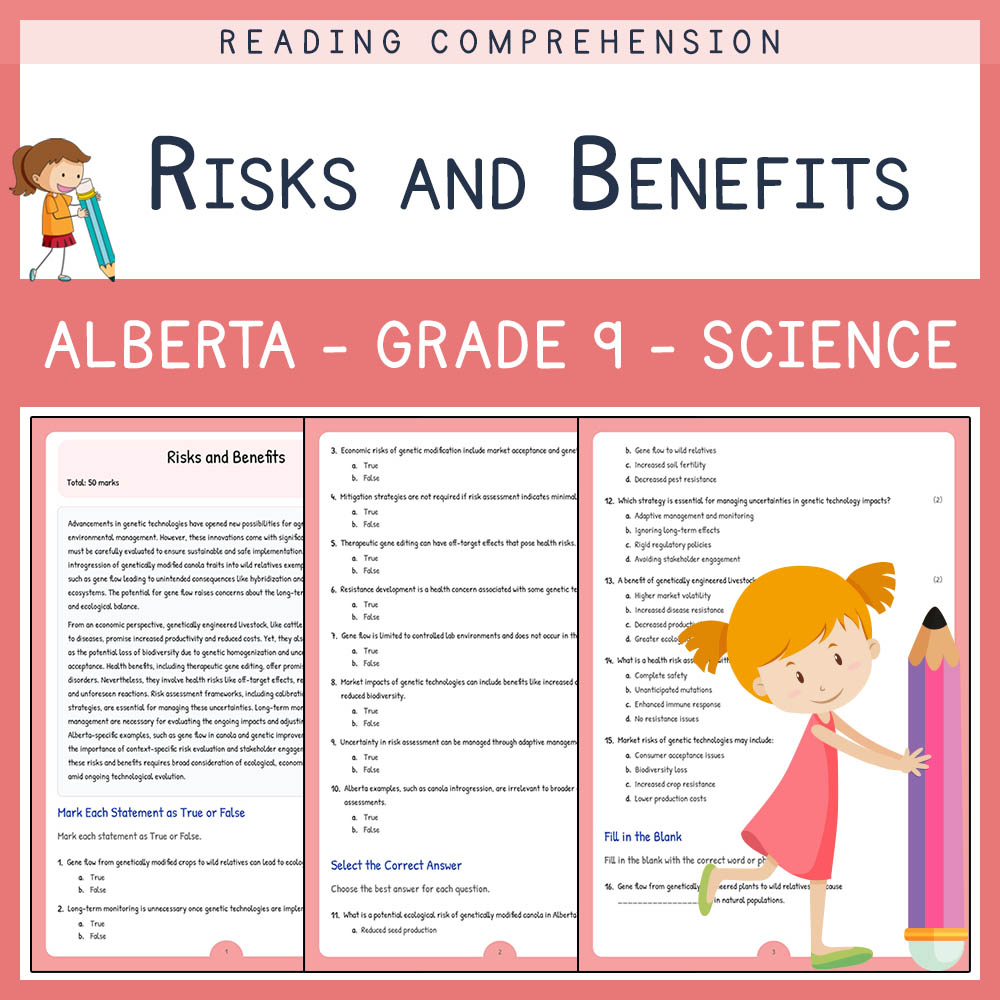
Grade 9 Science | Risks and Benefits Worksheet | Alberta Standards
Created byLumora LearningLearning Objectives
- Understand the ecological, economic, and health risks associated with genetic technologies.
- Evaluate potential benefits and trade-offs of adopting genetic approaches.
- Explain risk assessment, mitigation strategies, and long-term monitoring in biotechnology.
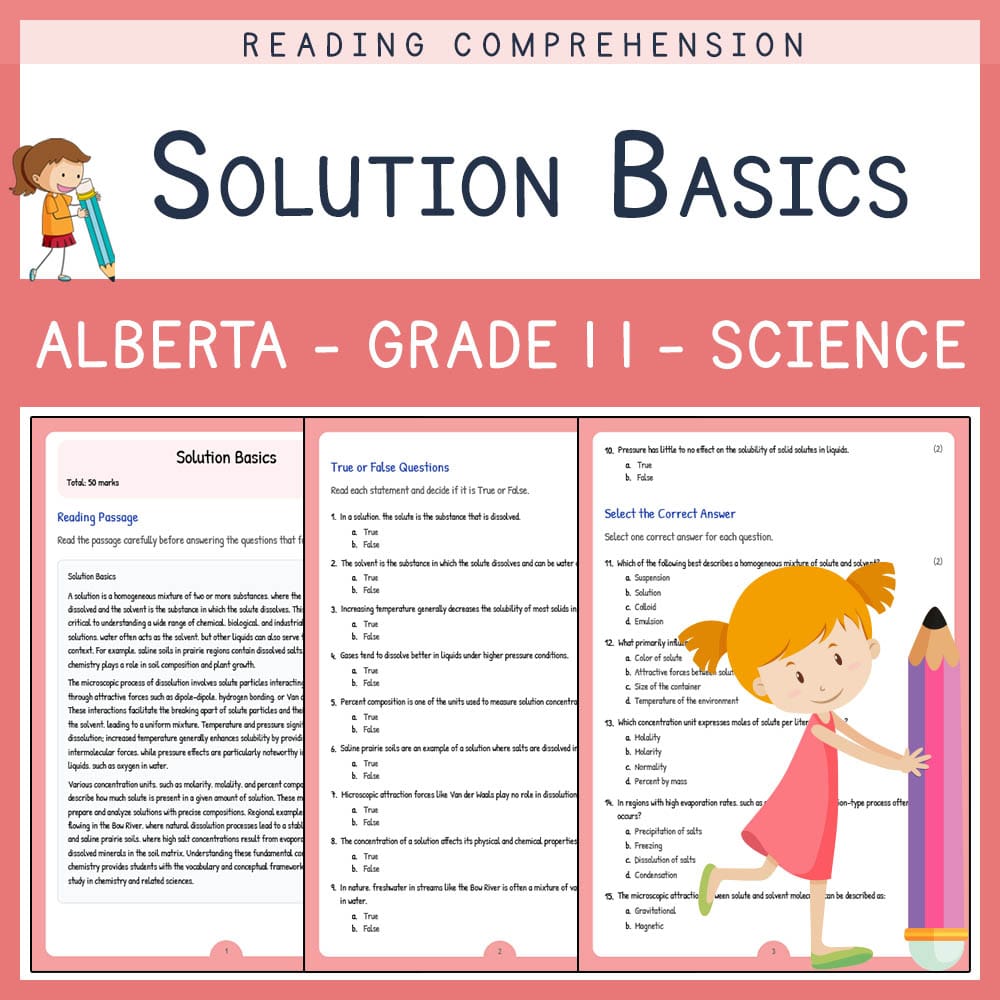
Grade 11 Science | Solution Basics Worksheet | Alberta Standards
Created byLumora LearningLearning Objectives
- Define solute and solvent in the context of solutions.
- Understand concentration units and how they describe solution strength.
- Explain the microscopic interactions during dissolution and how temperature and pressure affect solution formation.
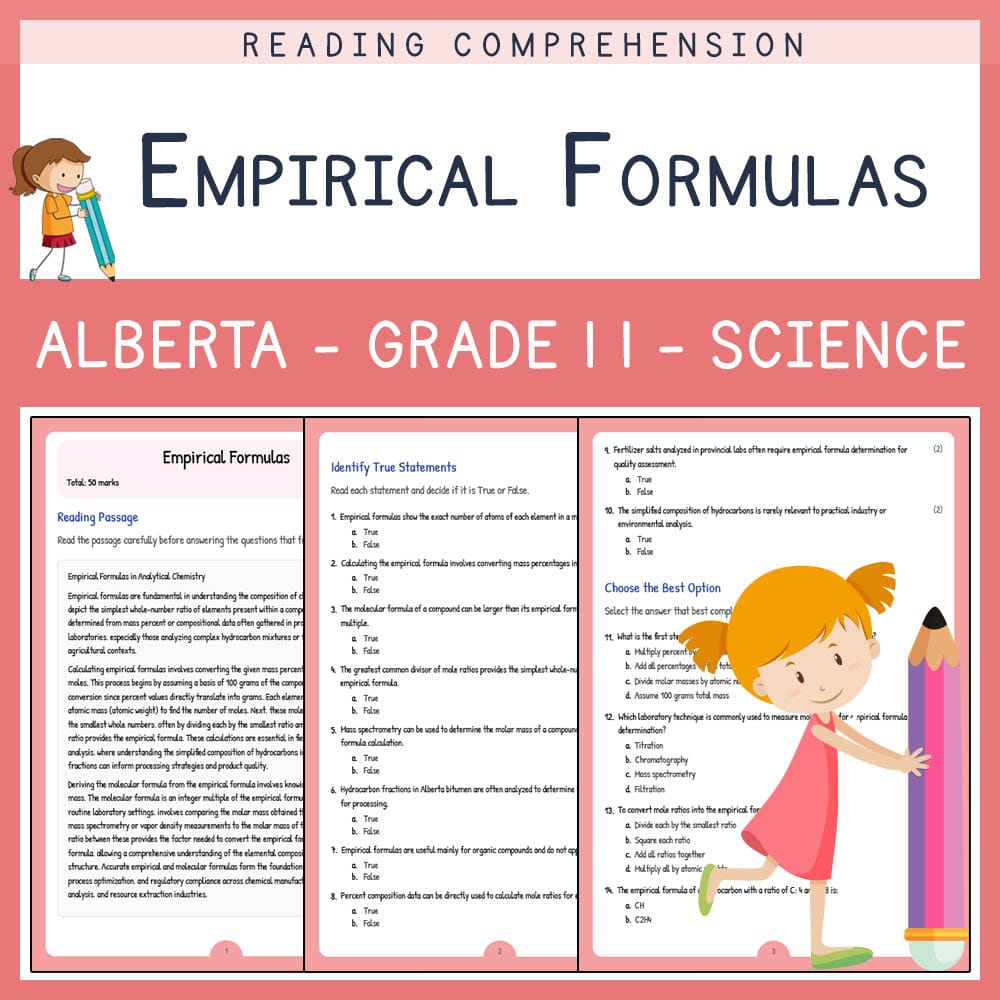
Grade 11 Science | Empirical Formulas Worksheet | Alberta Standards
Created byLumora LearningLearning Objectives
- Understand how empirical formulas are derived from mass percent and compositional data.
- Learn to convert percent composition to mole ratios for elements in a compound.
- Determine empirical and molecular formulas from analytical data.
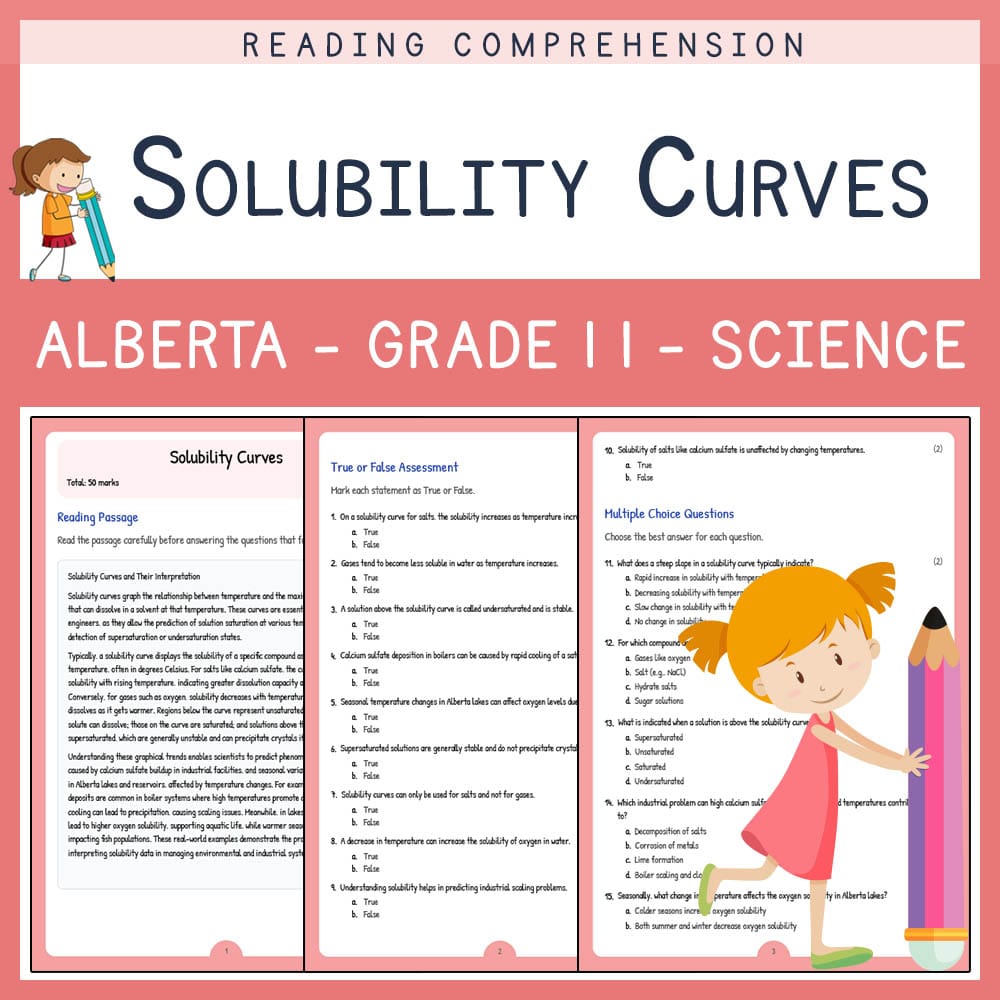
Grade 11 Science | Solubility Curves Worksheet | Alberta Standards
Created byLumora LearningLearning Objectives
- Understand how to read and interpret solubility curves for different compounds.
- Identify regions of unsaturated, saturated, and supersaturated solutions on a graph.
- Connect graphical trends to molecular interactions and predict solution states.
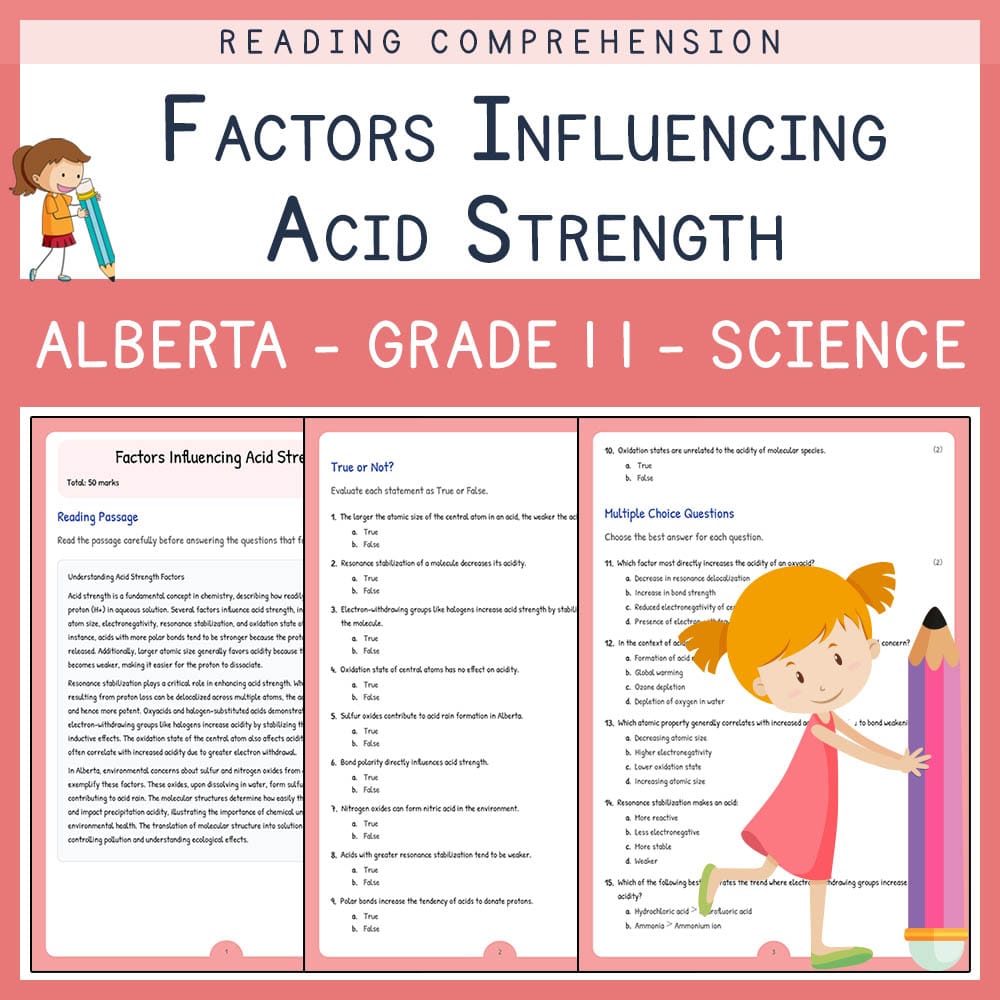
Grade 11 Science | Factors Influencing Acid Strength | Alberta Standards
Created byLumora LearningLearning Objectives
- Understand the key factors affecting acid strength such as bond polarity, atomic size, electronegativity, resonance, and oxidation state.
- Analyze how molecular structures like oxyacids and halogen substituents influence acidity.
- Explore environmental and industrial examples of acid formation, focusing on sulfur and nitrogen oxides.
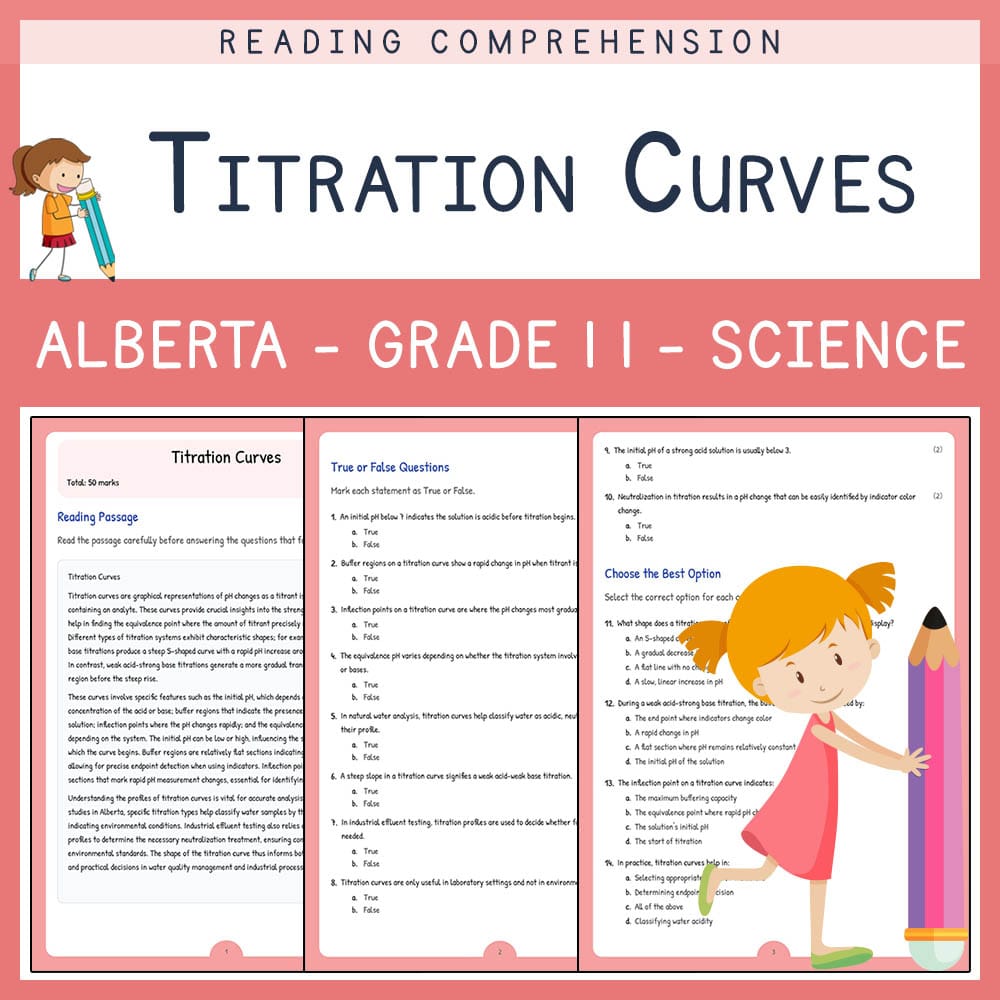
Grade 11 Science | Titration Curves Worksheet | Alberta Standards
Created byLumora LearningLearning Objectives
- Explain the shapes and features of different titration curves, including strong acid–strong base, weak acid–strong base, and weak base–strong acid systems.
- Identify key points on a titration curve such as initial pH, buffer regions, inflection points, and equivalence point pH.
- Determine the appropriate endpoint based on titration curve features for different acid–base systems.
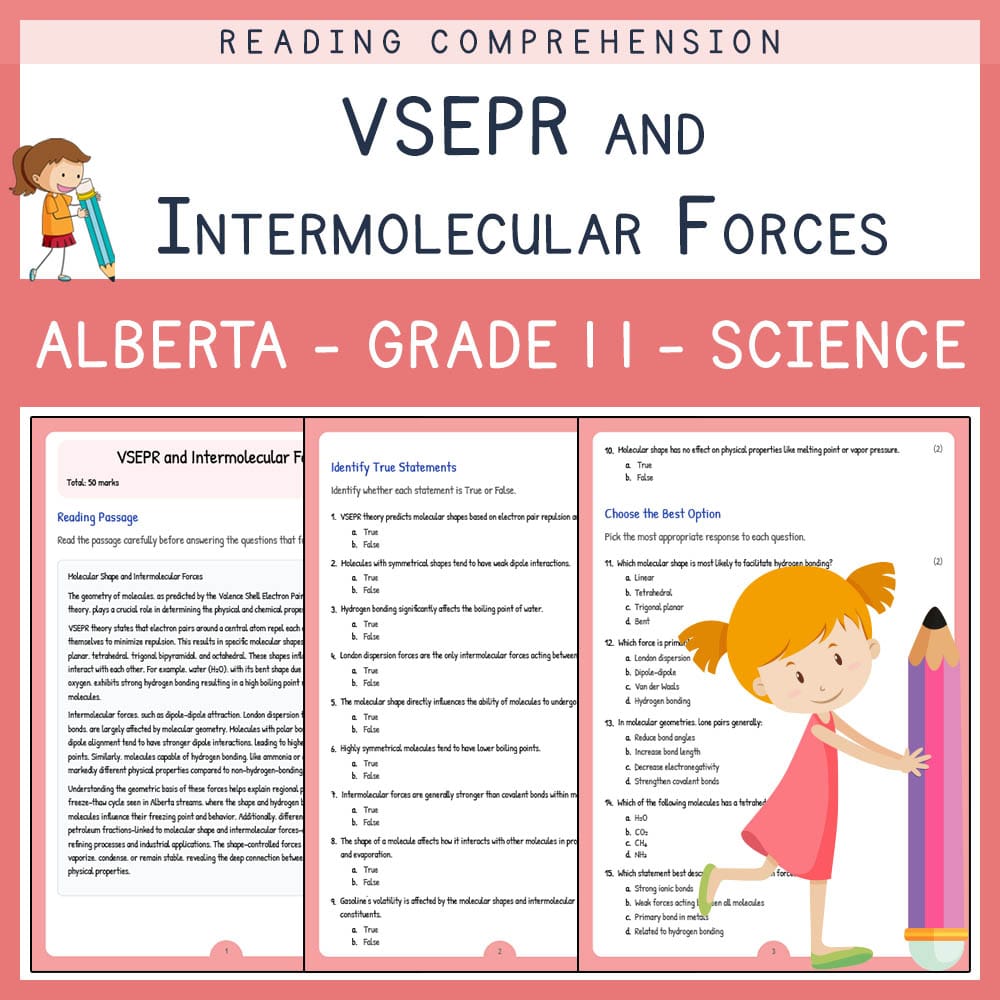
Grade 11 Science | VSEPR and Intermolecular Forces | Alberta Standards
Created byLumora LearningLearning Objectives
- Explain the VSEPR model and how molecular shapes influence intermolecular interactions.
- Describe how molecular geometry affects dipole moments and hydrogen bonding capabilities.
- Analyze the effects of molecular shape on boiling and melting points using real-world examples.
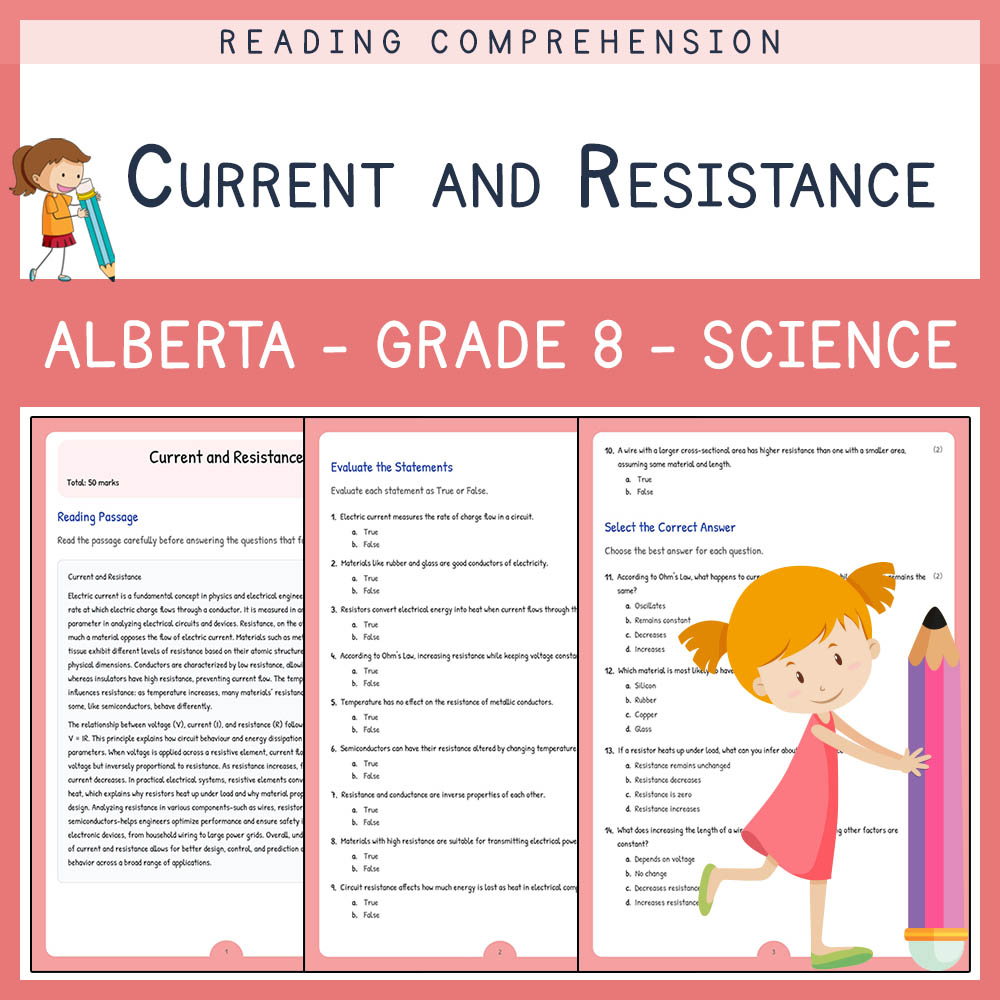
Grade 8 Science | Current and Resistance Worksheet | Alberta Standards
Created byLumora LearningLearning Objectives
- Understand the concept of electrical current and how it relates to charge flow.
- Describe resistance and factors affecting it in different materials.
- Explain the relationship between voltage, current, and resistance according to Ohm's Law.
Browse more categories
About Science Worksheets
Find Science worksheets spanning core skills, practice, and review. All 42,859 resources are instant PDF downloads for the classroom or home.
Every worksheet on MyTeachingSheets is created by independent teacher-authors and reviewed before publication. All resources download as printable PDFs for classroom, homework, or at-home practice, and many include answer keys. Preview any worksheet free before buying.