
Science Worksheets
42,859 subject resources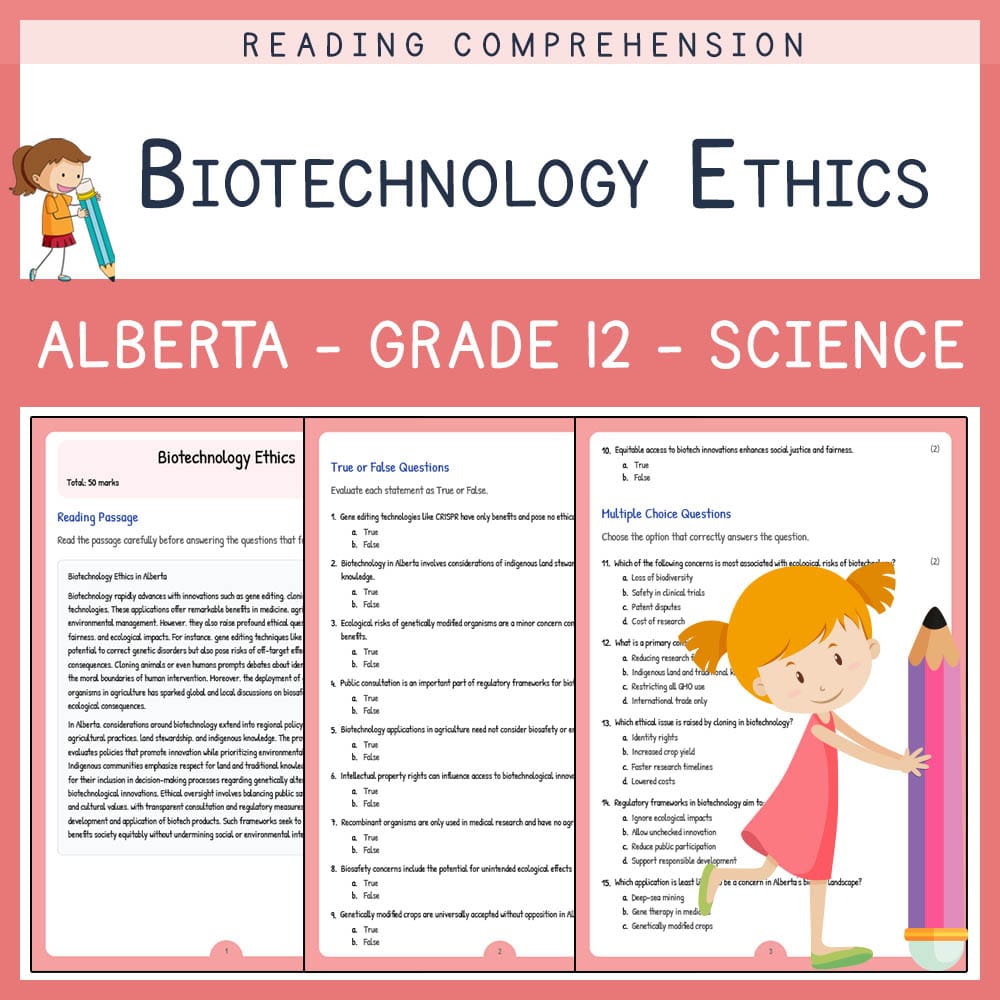
Grade 12 Science | Biotechnology Ethics Worksheet | Alberta Standards
 Created byLumora Learning
Learning Objectives
- Understand the ethical, legal, and social issues related to biotechnology applications.
- Analyze considerations such as biosafety, intellectual property, and ecological risks.
- Evaluate regulatory frameworks and public consultation processes shaping biotechnology deployment.
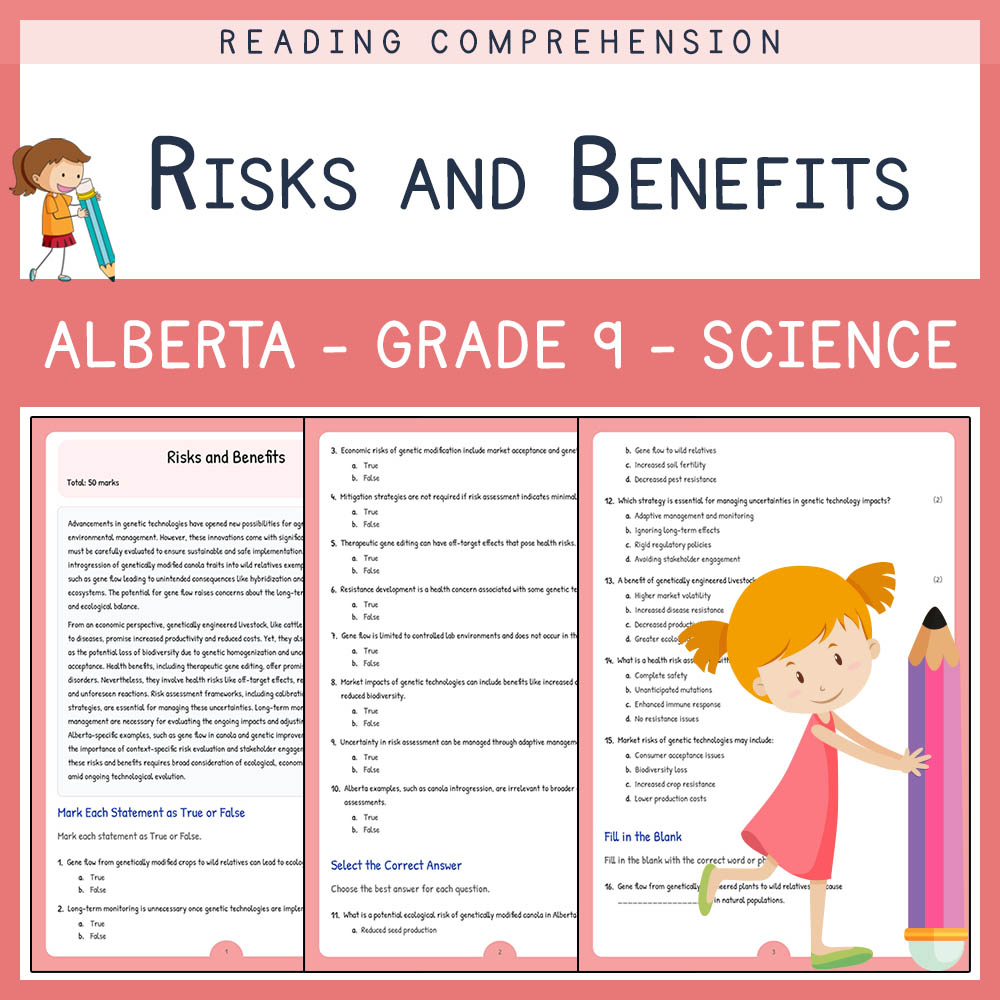
Grade 9 Science | Risks and Benefits Worksheet | Alberta Standards
Created byLumora LearningLearning Objectives
- Understand the ecological, economic, and health risks associated with genetic technologies.
- Evaluate potential benefits and trade-offs of adopting genetic approaches.
- Explain risk assessment, mitigation strategies, and long-term monitoring in biotechnology.
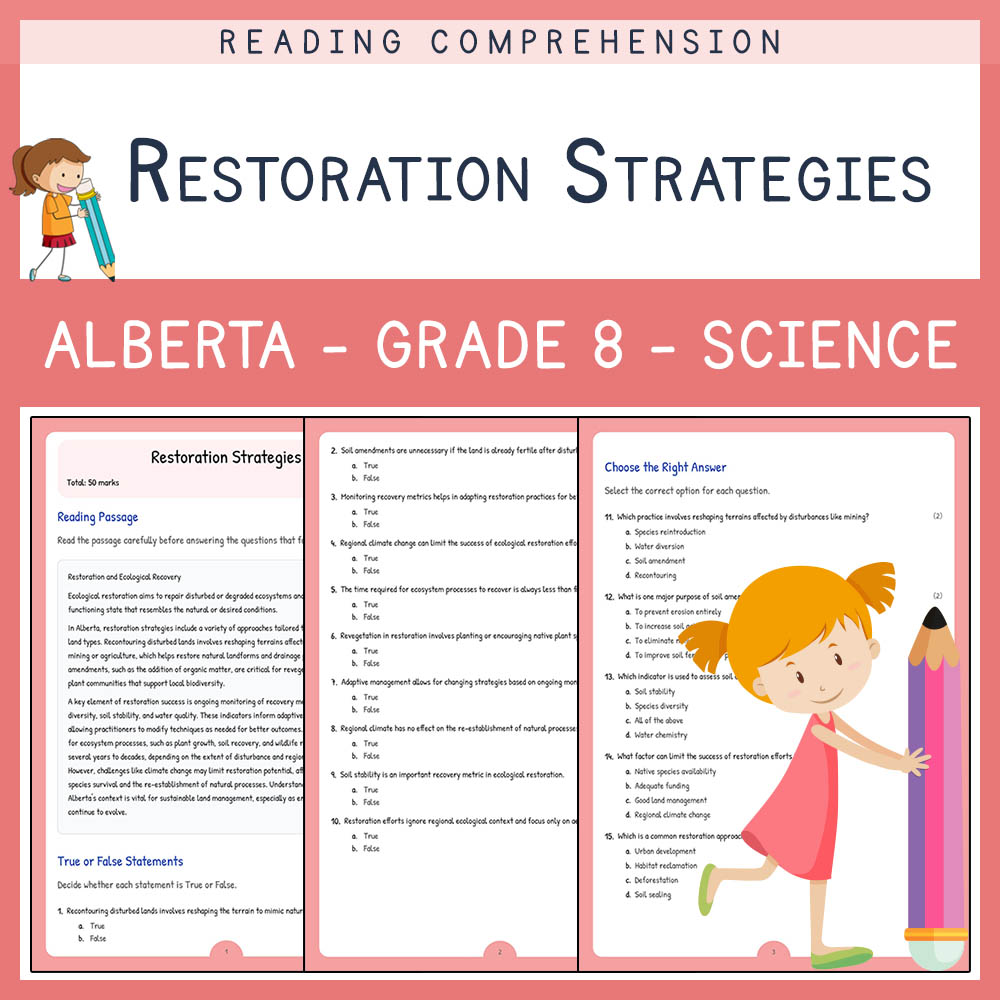
Grade 8 Science | Restoration Strategies Worksheet | Alberta Standards
Created byLumora LearningLearning Objectives
- Understand the principles of ecological restoration in Alberta contexts.
- Identify different restoration methods such as habitat reclamation and species reintroductions.
- Explain the processes of soil amendment and land recontouring in ecosystem recovery.
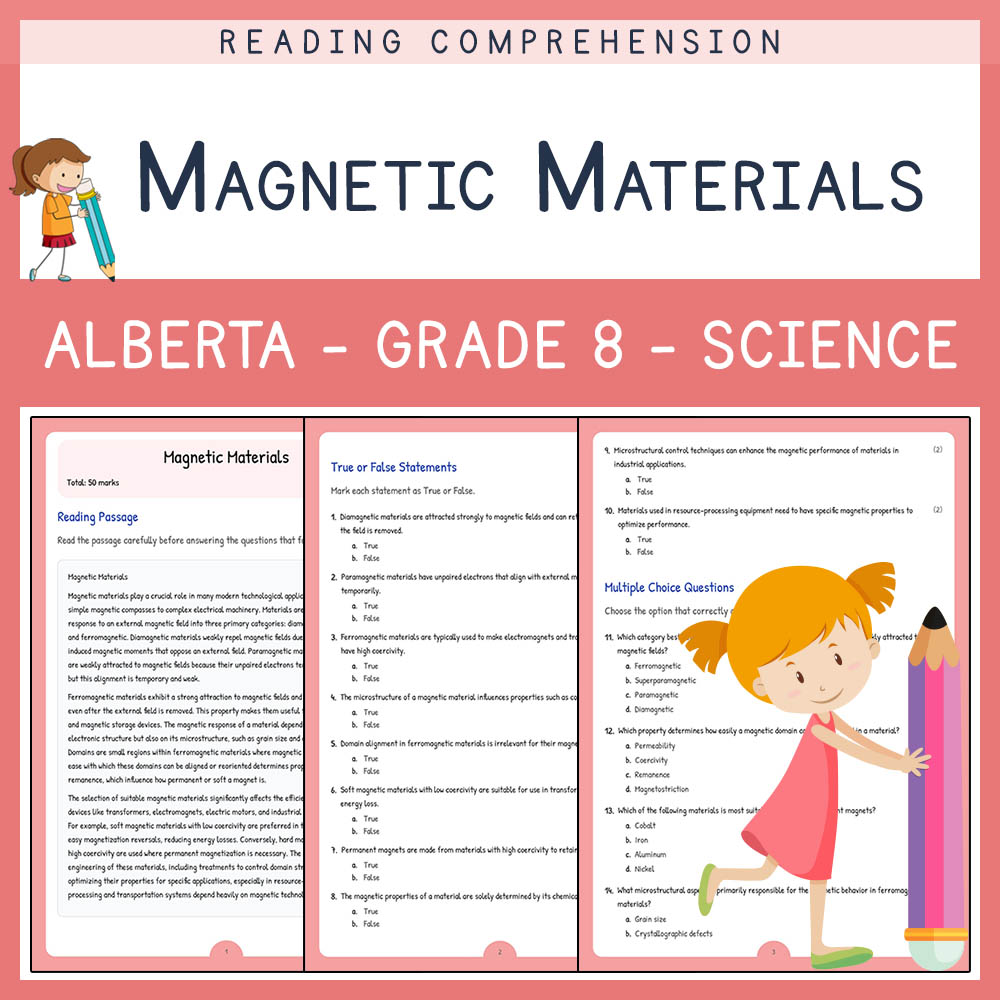
Grade 8 Science | Magnetic Materials Worksheet | Alberta Standards
Created byLumora LearningLearning Objectives
- Understand the classification of materials based on their magnetic responses: diamagnetic, paramagnetic, and ferromagnetic.
- Explain how microstructural properties influence magnetic behavior such as coercivity and remanence.
- Identify the applications of different magnetic materials in industry, including electromagnets, transformers, and separation tools.
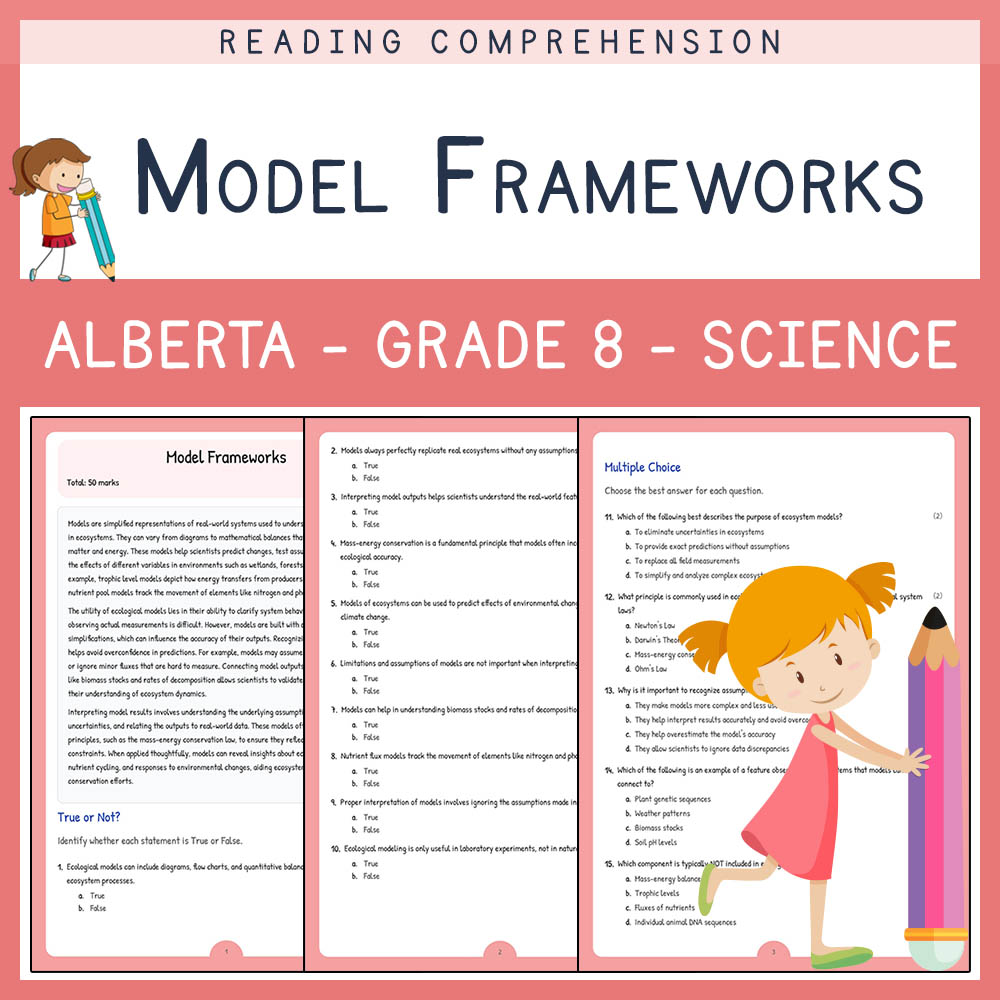
Grade 8 Science | Model Frameworks Worksheet | Alberta Standards
Created byLumora LearningLearning Objectives
- Understand the purpose and components of ecological models.
- Identify how models represent matter and energy movement in ecosystems.
- Interpret model outputs and recognize assumptions and limitations.
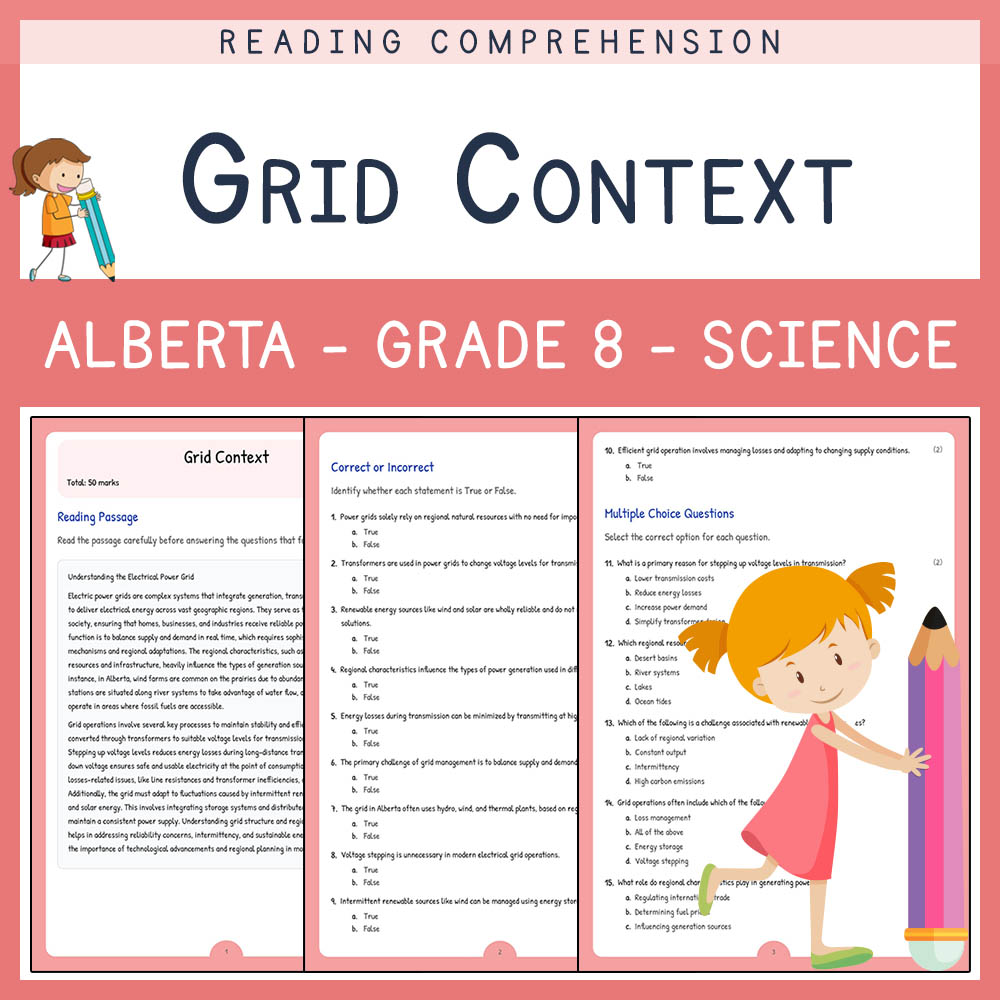
Grade 8 Science | Electricity and Power Grids Worksheet | Alberta Standard
Created byLumora LearningLearning Objectives
- Understand the components and functions of electrical power grids.
- Identify regional characteristics affecting power generation sources.
- Explain grid operations such as voltage stepping and energy losses.
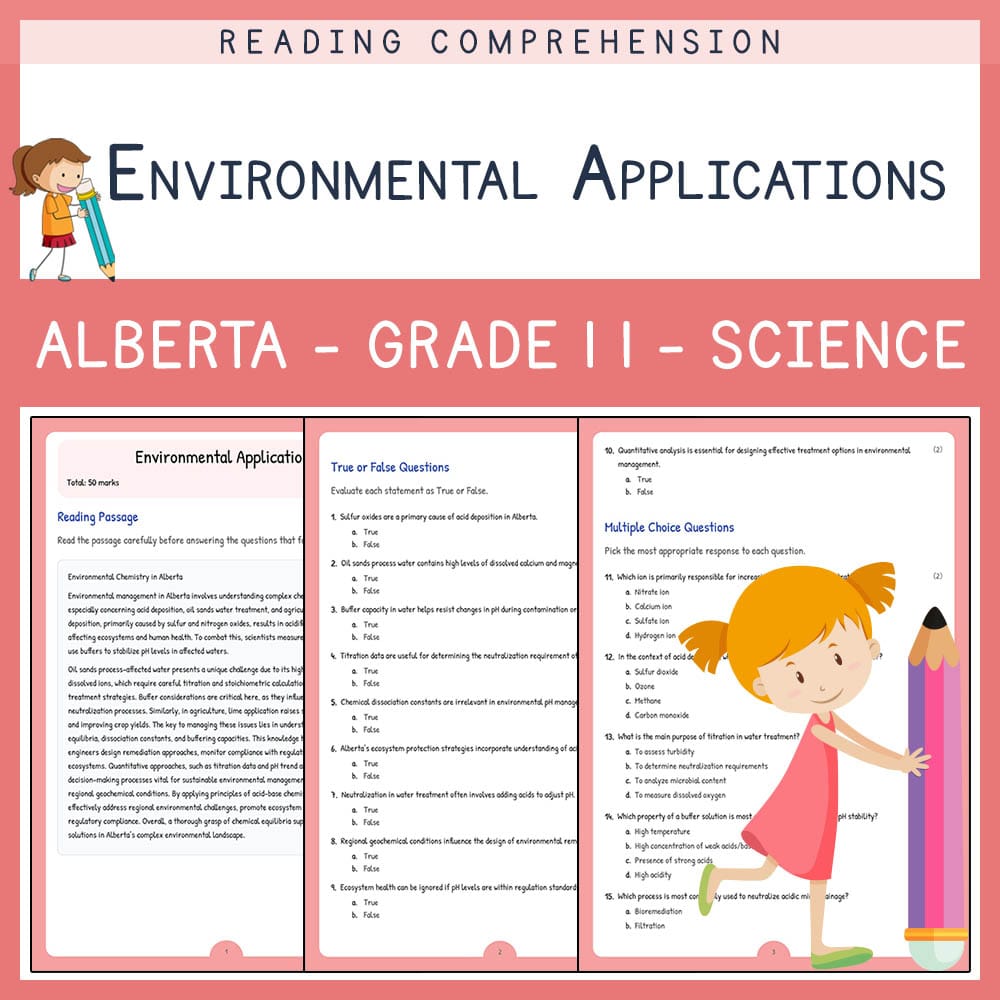
Grade 11 Science | Environmental Applications Worksheet | Alberta Standards
Created byLumora LearningLearning Objectives
- Understand the principles of acid-base chemistry in environmental contexts.
- Analyze pH trends and buffering capacity in ecological systems.
- Apply stoichiometry and titration data to assess neutralization requirements.
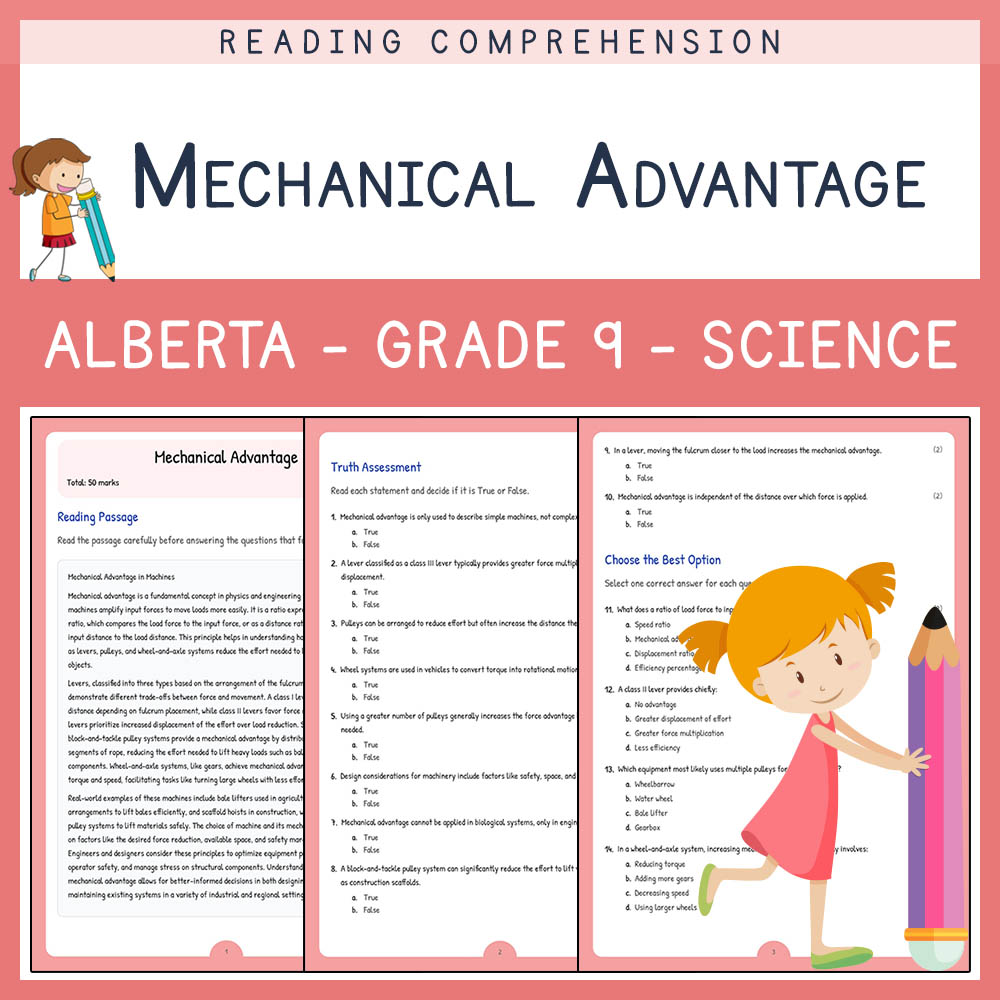
Grade 9 Science | Mechanical Advantage Worksheet | Alberta Standards
Created byLumora LearningLearning Objectives
- Explain the concept of mechanical advantage and how it is used in different machines.
- Calculate mechanical advantage for levers, pulleys, and wheel systems.
- Analyze trade-offs between force reduction and displacement in mechanical systems.
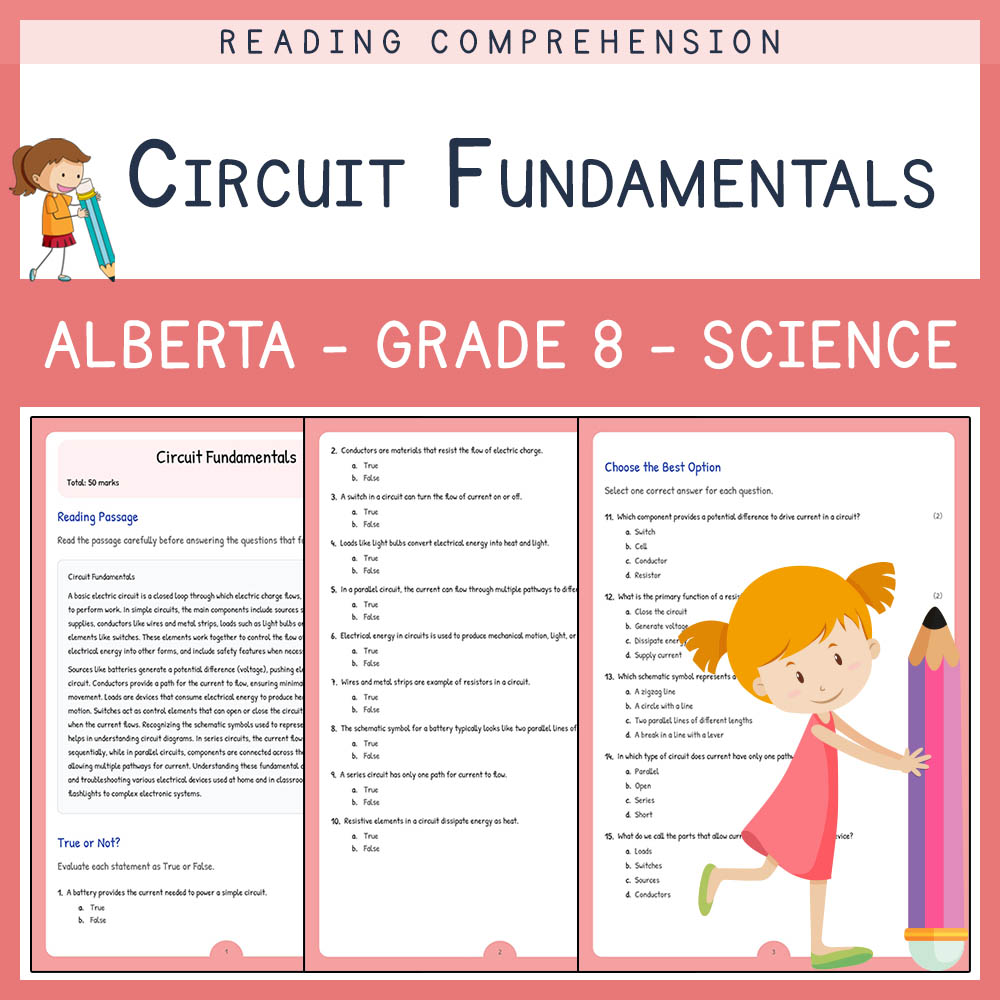
Grade 8 Science | Circuit Fundamentals Worksheet | Alberta Standard
Created byLumora LearningLearning Objectives
- Understand the basic components of a simple electric circuit and their functions.
- Identify schematic symbols for circuit elements such as sources, conductors, loads, and control devices.
- Differentiate between series and parallel circuit configurations.
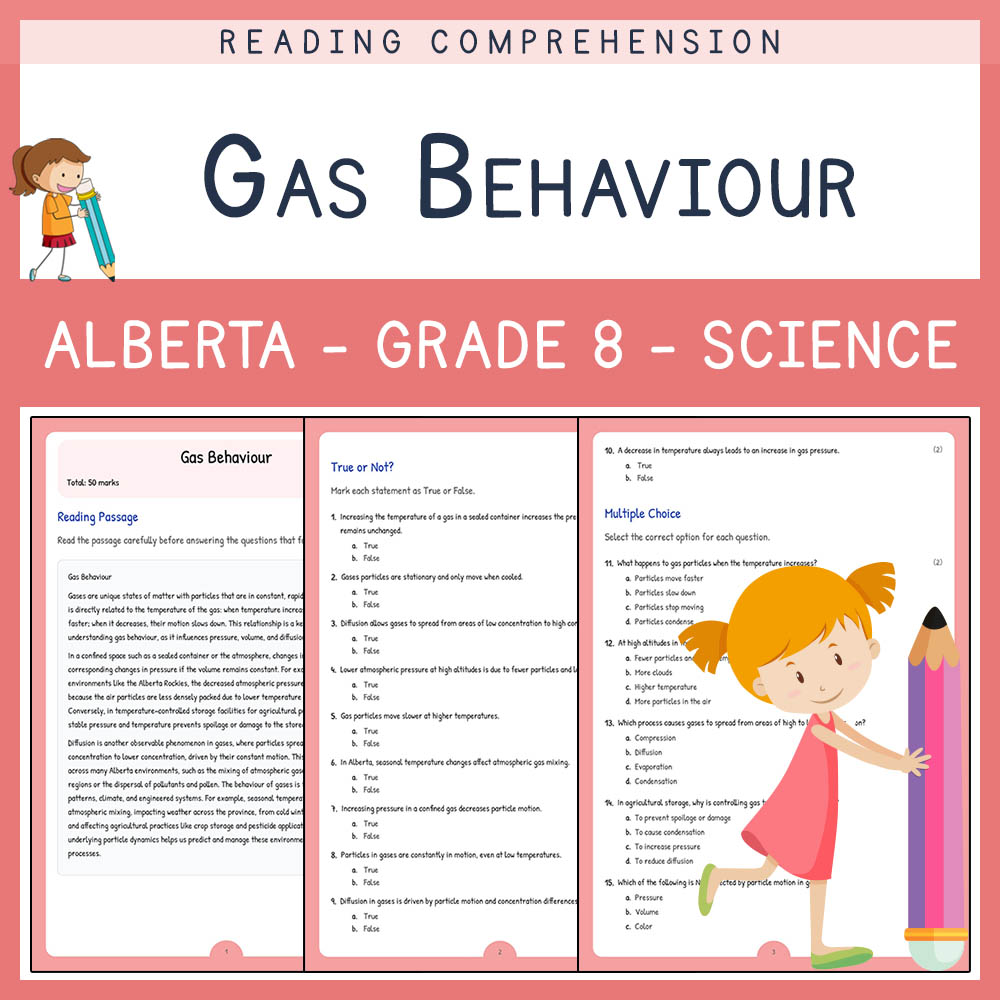
Grade 8 Science | Gas Behaviour Worksheet | Alberta Standards
Created byLumora LearningLearning Objectives
- Understand how particle motion, pressure, and temperature are interconnected in gases.
- Explain how changes in temperature can affect gas pressure and volume in closed systems.
- Describe real-world examples of gas behaviour, including atmospheric pressure variations and gas handling in agriculture.
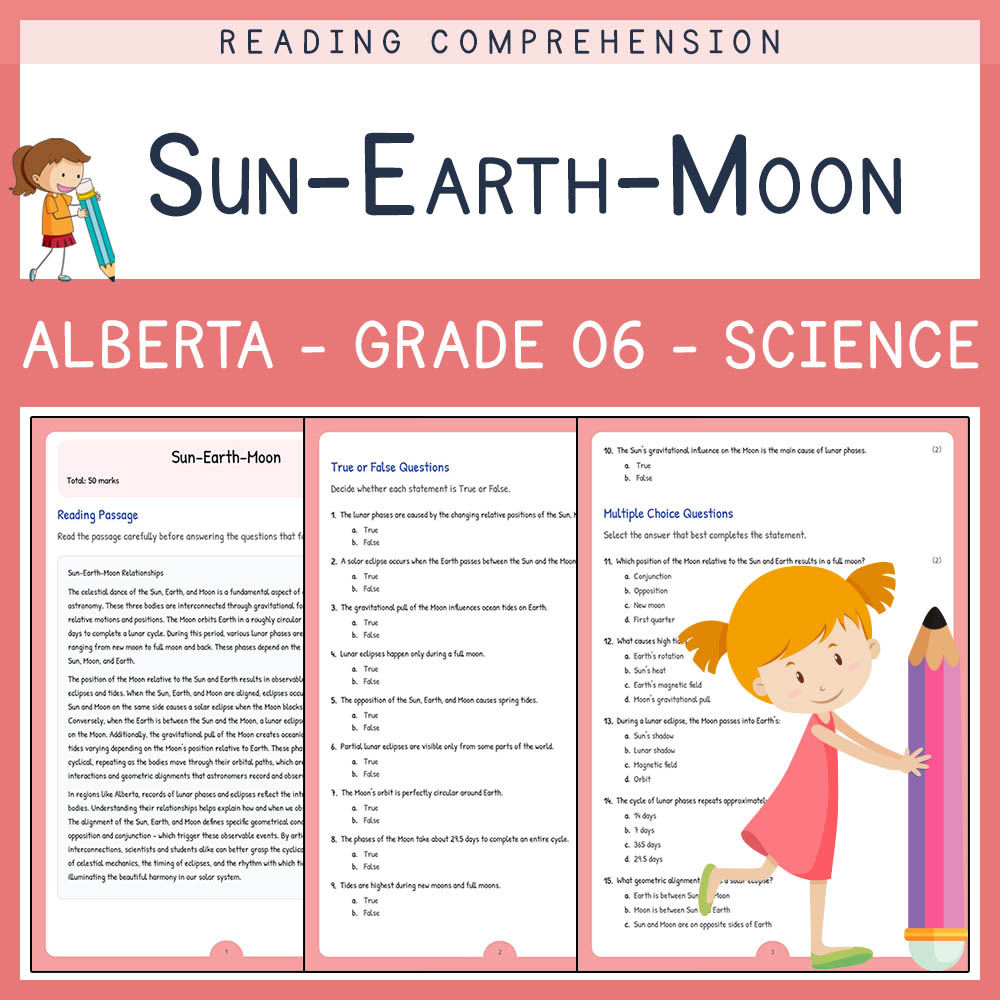
Grade 6 Science Assessment | Sun–Earth–Moon Worksheet Elena | Alberta
Created byLumora LearningLearning Objectives
- Explain the gravitational relationships between the Sun, Earth, and Moon.
- Describe how relative positions of the Sun, Earth, and Moon influence lunar phases.
- Understand the geometric conditions causing solar and lunar eclipses.
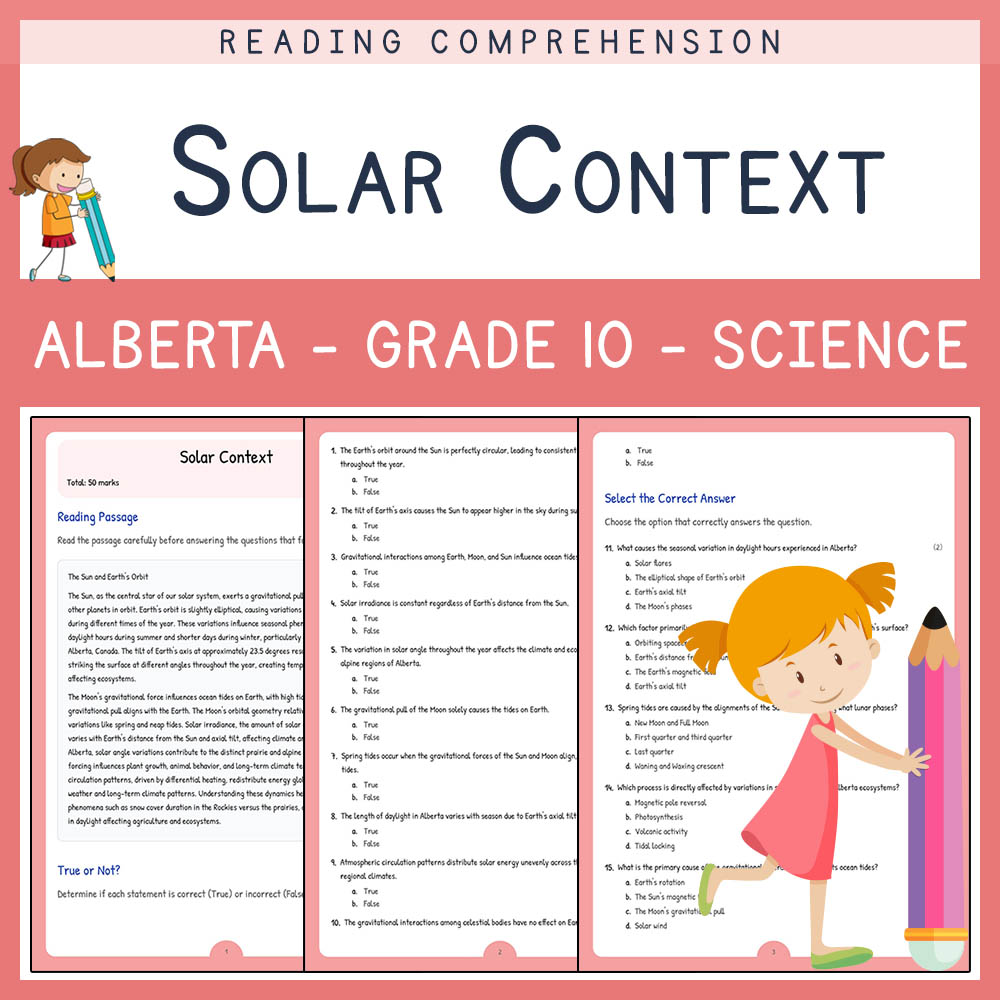
Grade 10 Science Worksheet | Solar Context | Alberta Standards
Created byLumora LearningLearning Objectives
- Describe the orbital motions of Earth, Moon, and Sun, and how these influence seasonal and daily patterns on Earth.
- Explain the concept of solar irradiance and its effect on regional ecosystems, particularly in Alberta.
- Analyze the gravitational interactions among Earth, Moon, and Sun and their impact on tides and orbital dynamics.
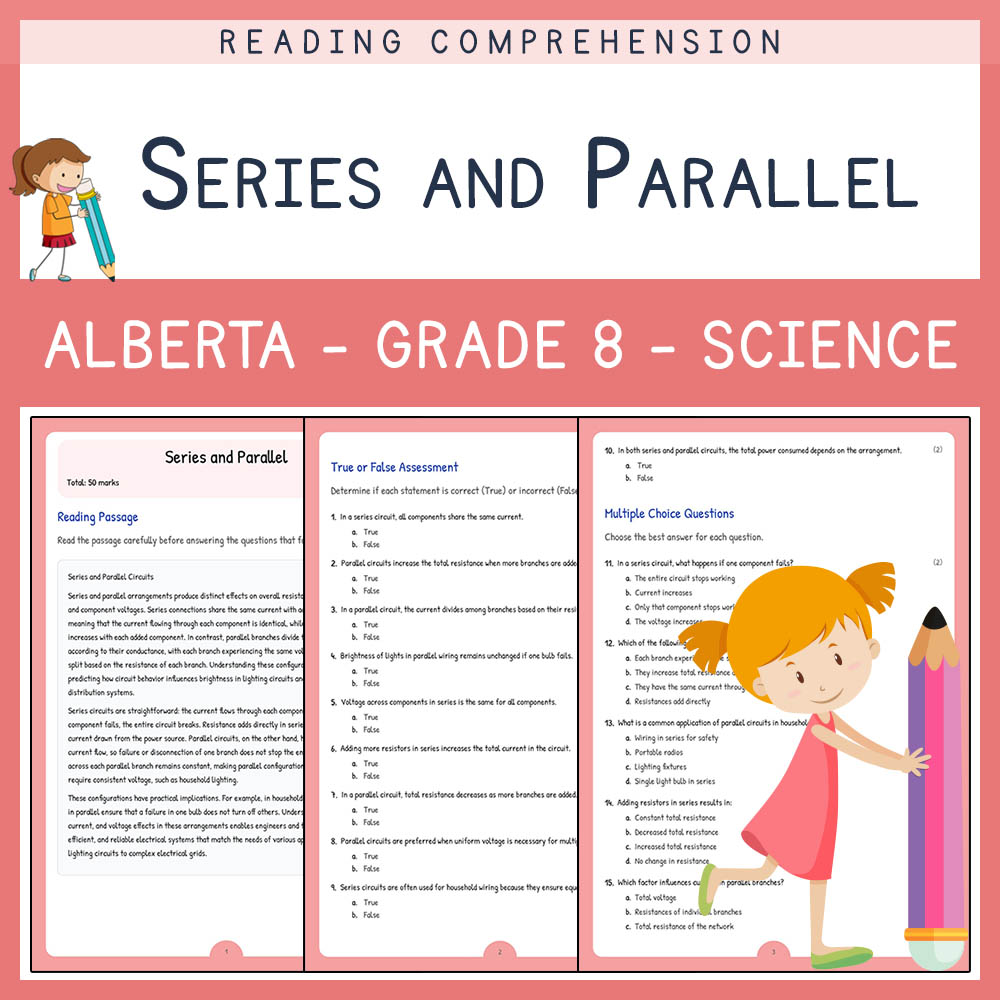
Grade 8 Science | Series and Parallel Worksheet | Alberta Standard
Created byLumora LearningLearning Objectives
- Understand the fundamental differences between series and parallel circuits.
- Identify how resistance, current, and voltage are distributed in series and parallel arrangements.
- Predict the effects of circuit configurations on brightness and power distribution.
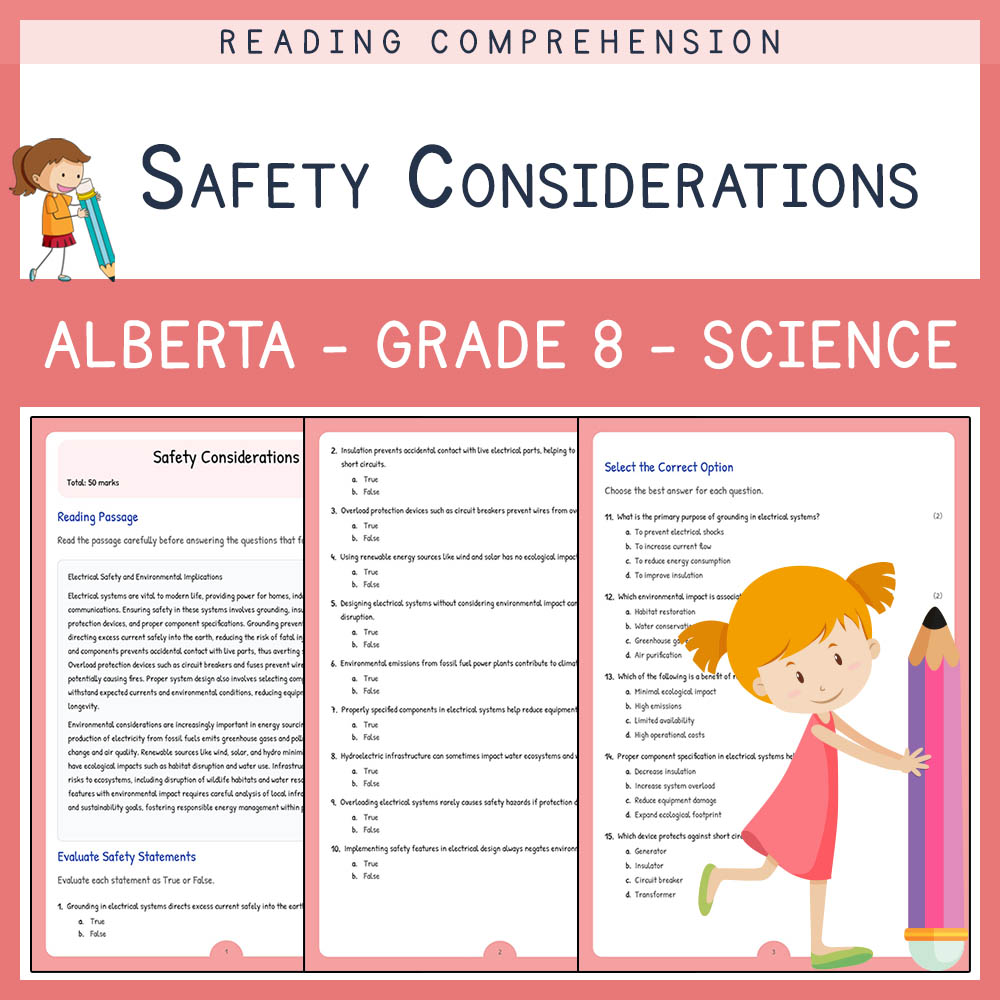
Grade 8 Science | Safety Considerations Worksheet | Alberta Standards
Created byLumora LearningLearning Objectives
- Understand the key safety features used in electrical system design.
- Identify environmental impacts associated with electrical energy sources.
- Evaluate safety and environmental trade-offs in electrical infrastructure.
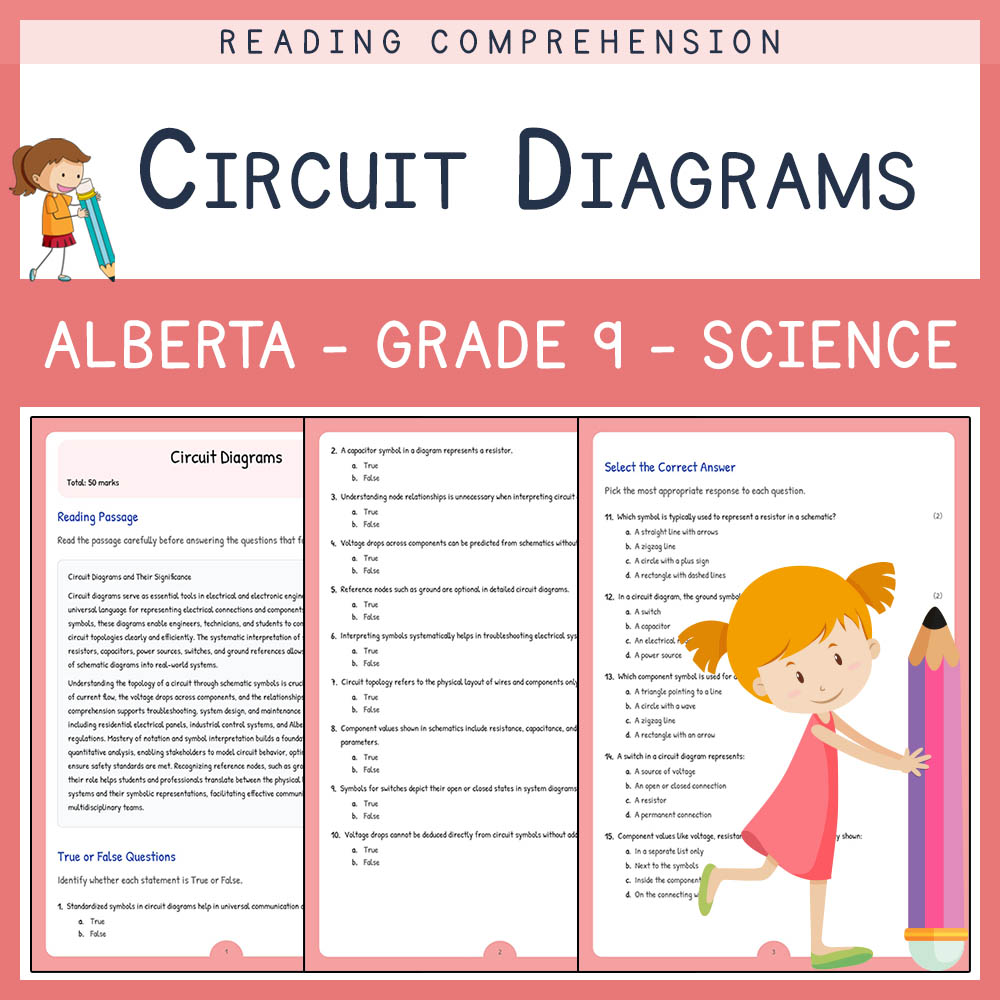
Grade 9 | Circuit Diagrams Worksheet | Alberta Standards
Created byLumora LearningLearning Objectives
- Understand and interpret standardized symbols used in circuit diagrams.
- Identify the relationship between circuit symbols and physical components.
- Translate schematic representations into physical systems and vice versa.
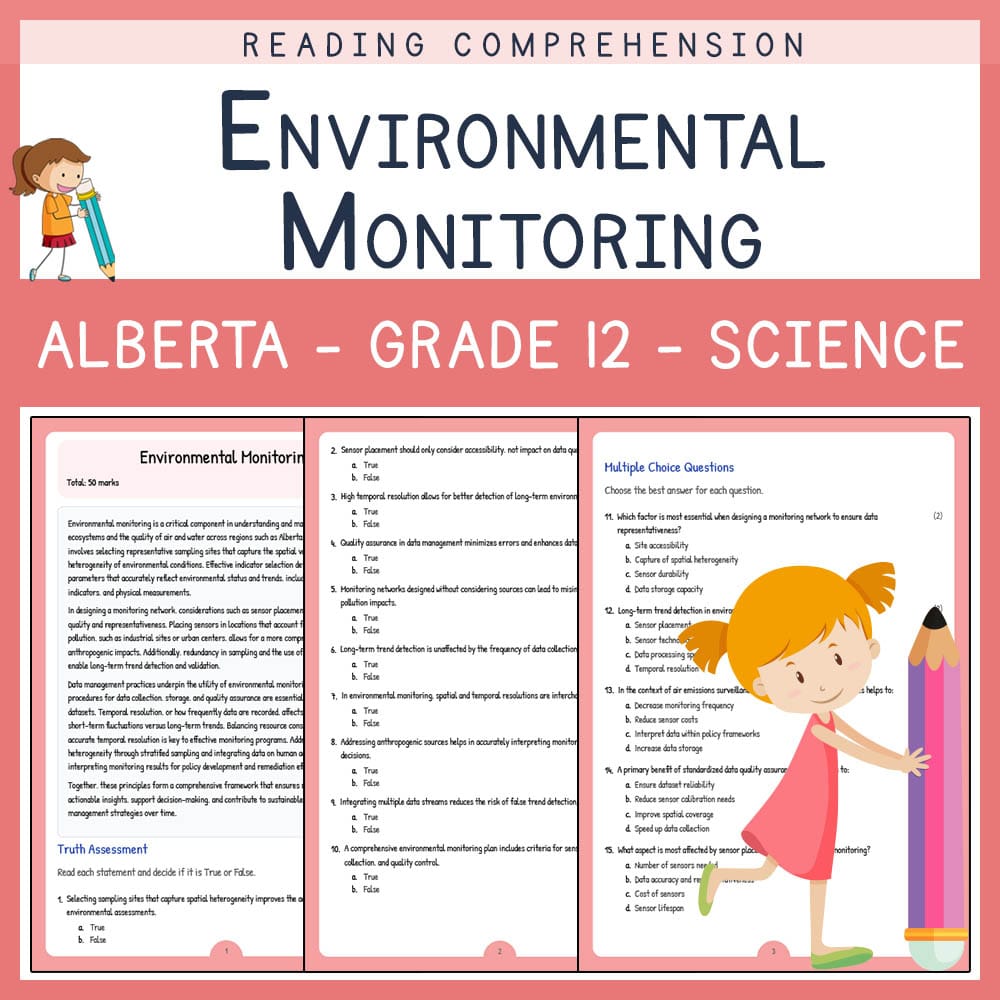
Grade 12 Science | Environmental Monitoring Worksheet | Alberta Standards
Created byLumora LearningLearning Objectives
- Understand the principles of environmental network design, indicator selection, and data management.
- Identify criteria for representative sampling and sensor placement in environmental monitoring.
- Analyze how spatial heterogeneity and anthropogenic sources influence monitoring interpretation.
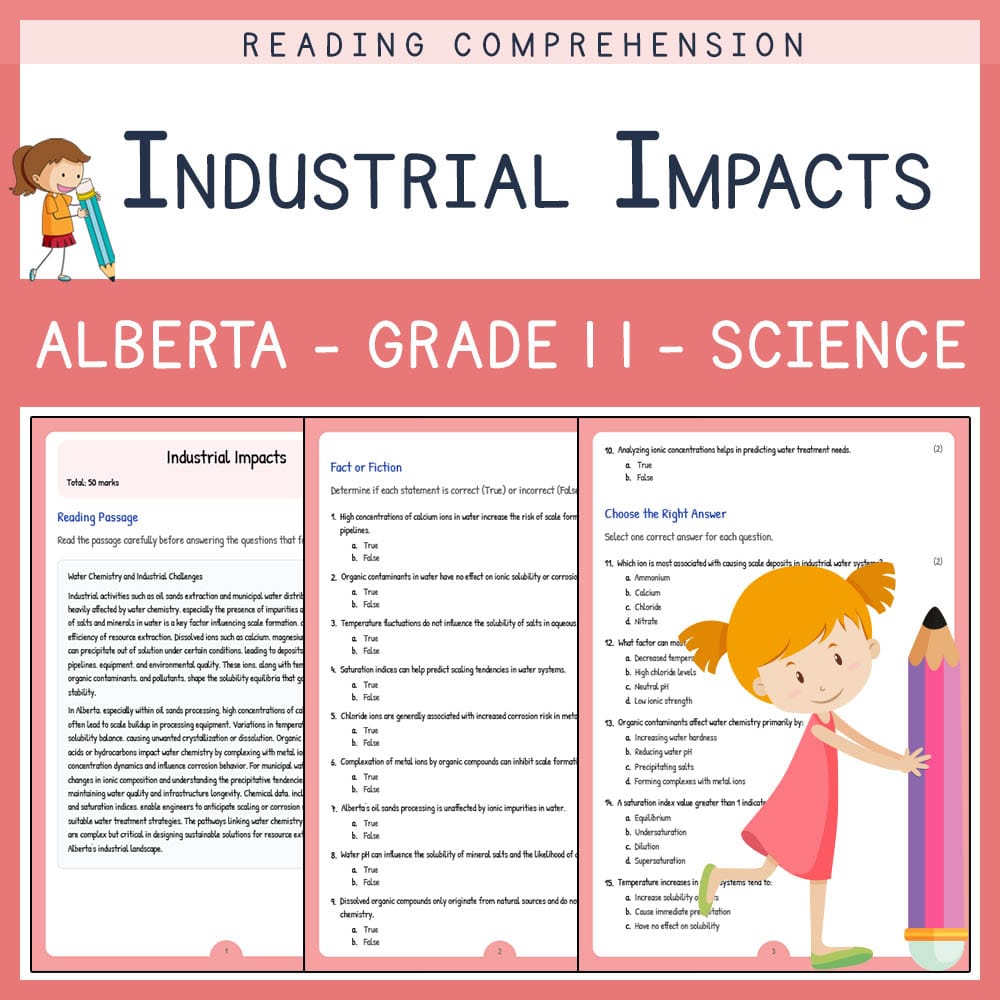
Grade 11 Science | Industrial Impacts Worksheet | Alberta Standards
Created byLumora LearningLearning Objectives
- Understand how dissolved ions, temperature shifts, and organic contaminants influence solubility equilibria in water systems.
- Interpret chemical data to evaluate operational challenges related to scale formation, corrosion, and impurity effects.
- Analyze the impact of environmental impurities on infrastructure, especially in Alberta's oil sands processing and municipal water systems.
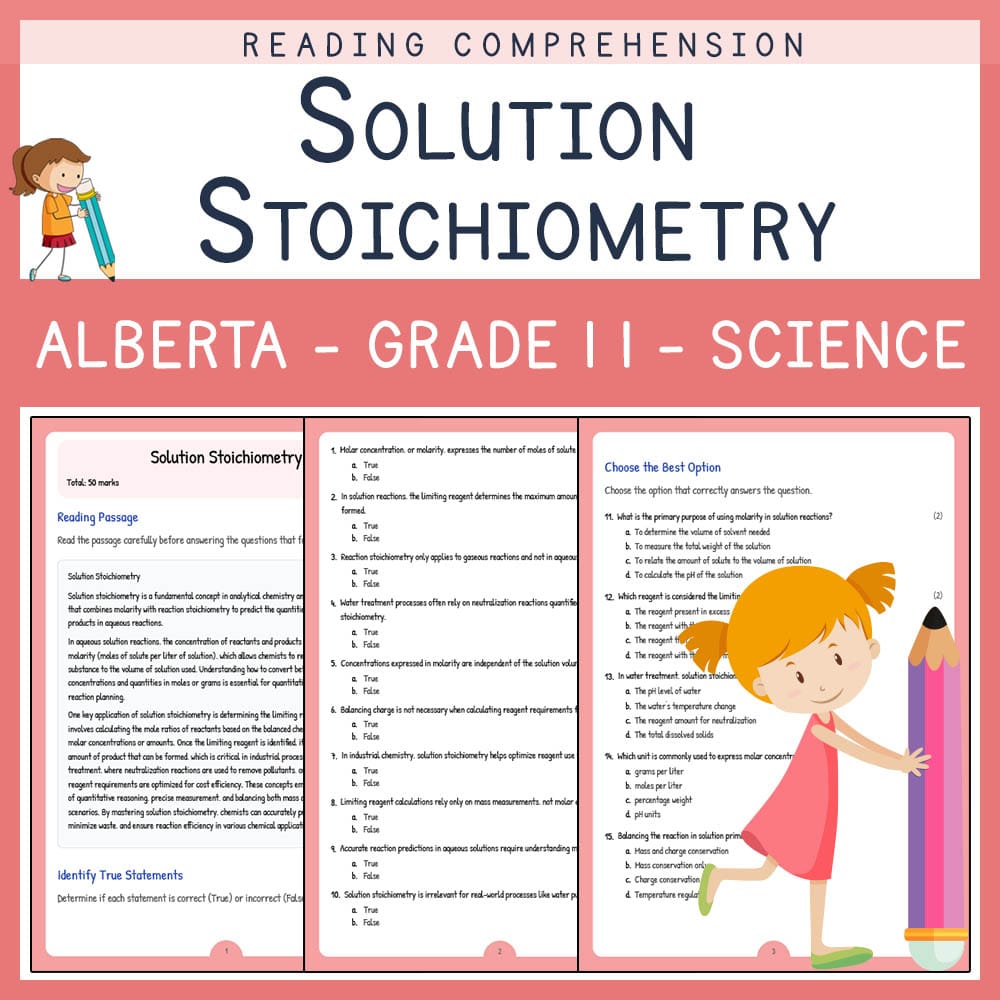
Grade 11 Science | Solution Stoichiometry Worksheet | Alberta Standards
Created byLumora LearningLearning Objectives
- Understand the concept of concentration and how it relates to molar ratios in aqueous reactions.
- Apply mole–mole relationships to predict reactant and product amounts in solution.
- Identify limiting reagents in solution-phase reactions through stoichiometric calculations.
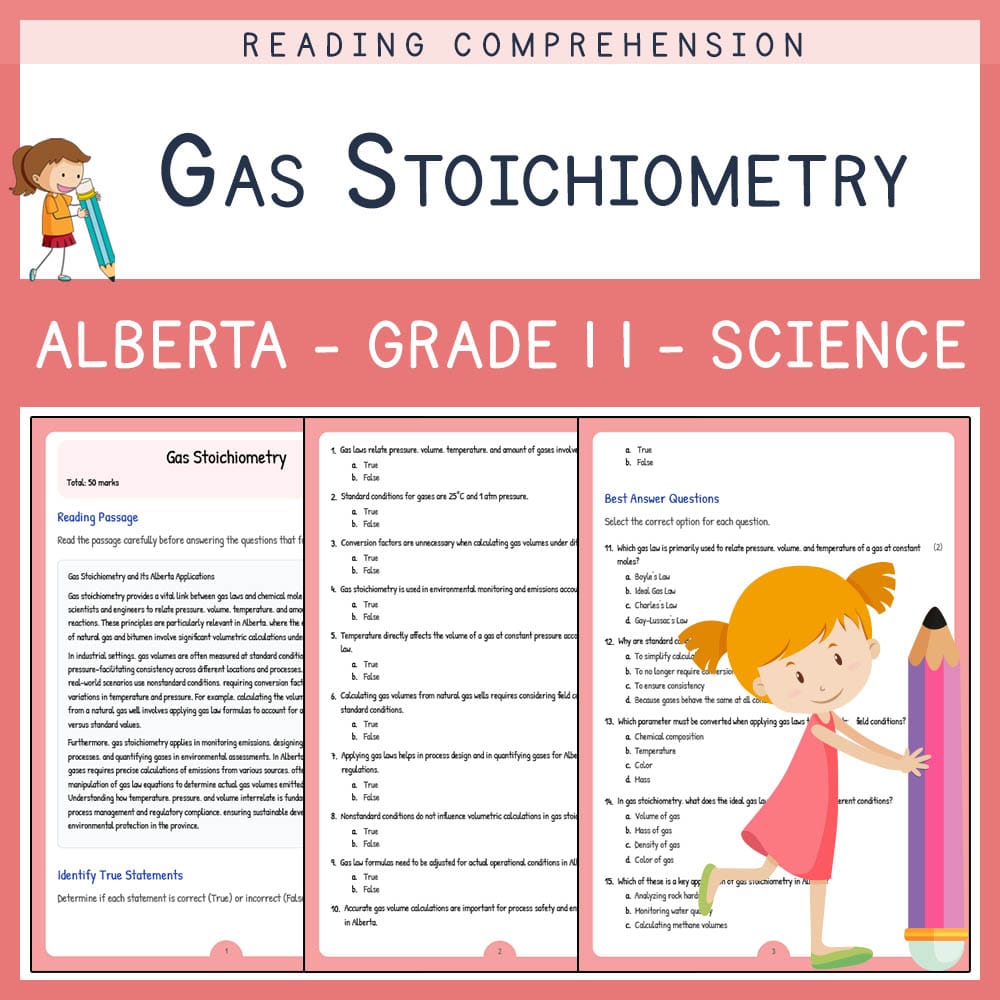
Grade 11 Science | Gas Stoichiometry Worksheet | Alberta Standards
Created byLumora LearningLearning Objectives
- Understand the principles of gas laws and how they relate to mole relationships in gas stoichiometry.
- Apply gas law equations to calculate pressures, volumes, and temperatures of gases in chemical reactions.
- Analyze how standard and nonstandard conditions impact volumetric conversions in industrial contexts.
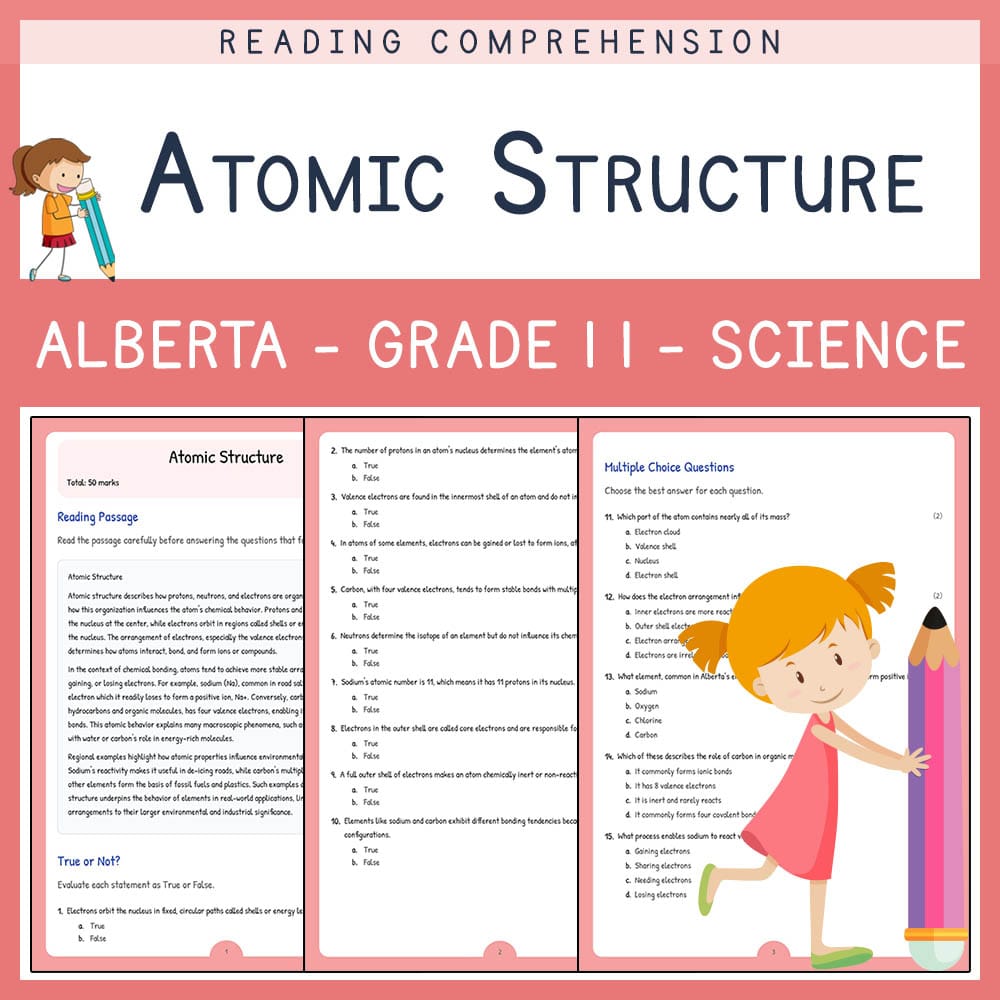
Grade 11 Science | Atomic Structure Worksheet | Alberta Standards
Created byLumora LearningLearning Objectives
- Describe the organization of protons, neutrons, and electrons within an atom.
- Explain how electron arrangements, including shells and valence electrons, influence chemical reactivity and bonding.
- Identify examples of elements used in industry and environment, such as sodium and carbon, and their atomic properties.
Grade 11 Science | Ionic Equations Worksheet | Alberta Standards
Created byLumora LearningLearning Objectives
- Understand how to convert chemical reactions into ionic equations, including complete and net forms.
- Identify spectator ions and distinguish them from reacting species in aqueous solutions.
- Apply charge balance and solubility rules to balance ionic equations accurately.
Grade 11 Science | Mole Calculations Worksheet | Alberta Standards
Created byLumora LearningLearning Objectives
- Understand the concept of the mole and its application in quantitative chemistry.
- Learn to convert between grams, moles, and particles using molar mass and Avogadro's number.
- Apply molar calculations to real-world Alberta contexts such as natural gas and fertilizer compounds.
Grade 9 Science | Biotechnology Overview Worksheet | Alberta Standards
Created byLumora LearningLearning Objectives
- Understand major genetic technologies used in biotechnology.
- Identify applications of biotechnology in agriculture and livestock.
- Describe mechanisms of trait introduction and modification at molecular and population levels.
Grade 6 Science Worksheet | Tools Safety | Alberta-Aligned Assessment
Created byLumora LearningLearning Objectives
- Understand key safety practices for handling measurement tools near Alberta field sites.
- Identify proper storage, cleaning, and maintenance procedures for field equipment.
- Learn safety precautions for using electronic devices such as thermometers, pH probes, and dataloggers.
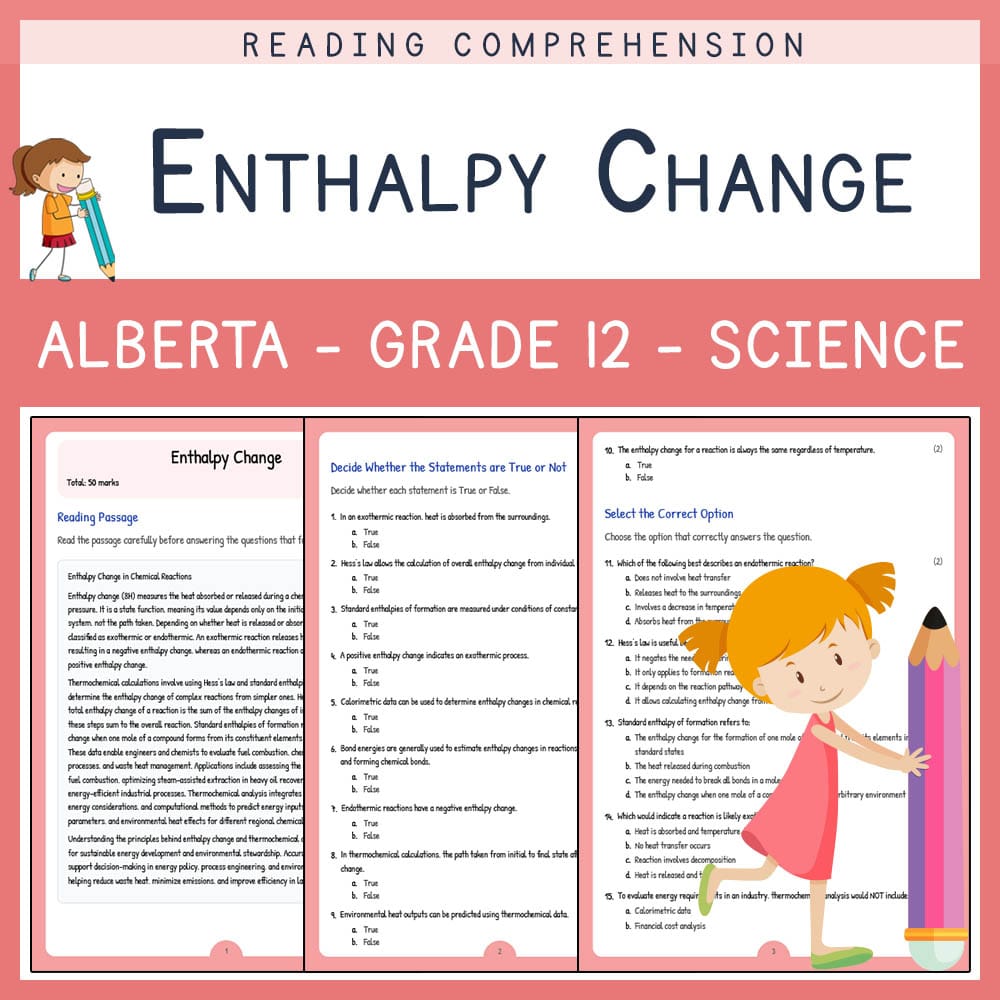
Grade 12 Science | Enthalpy Change Worksheet | Alberta Standards
Created byLumora LearningLearning Objectives
- Understand the concept of enthalpy change and its significance in chemical processes.
- Identify the signs and conventions for exothermic and endothermic reactions.
- Apply Hess’s law and standard enthalpies of formation to calculate reaction enthalpies.
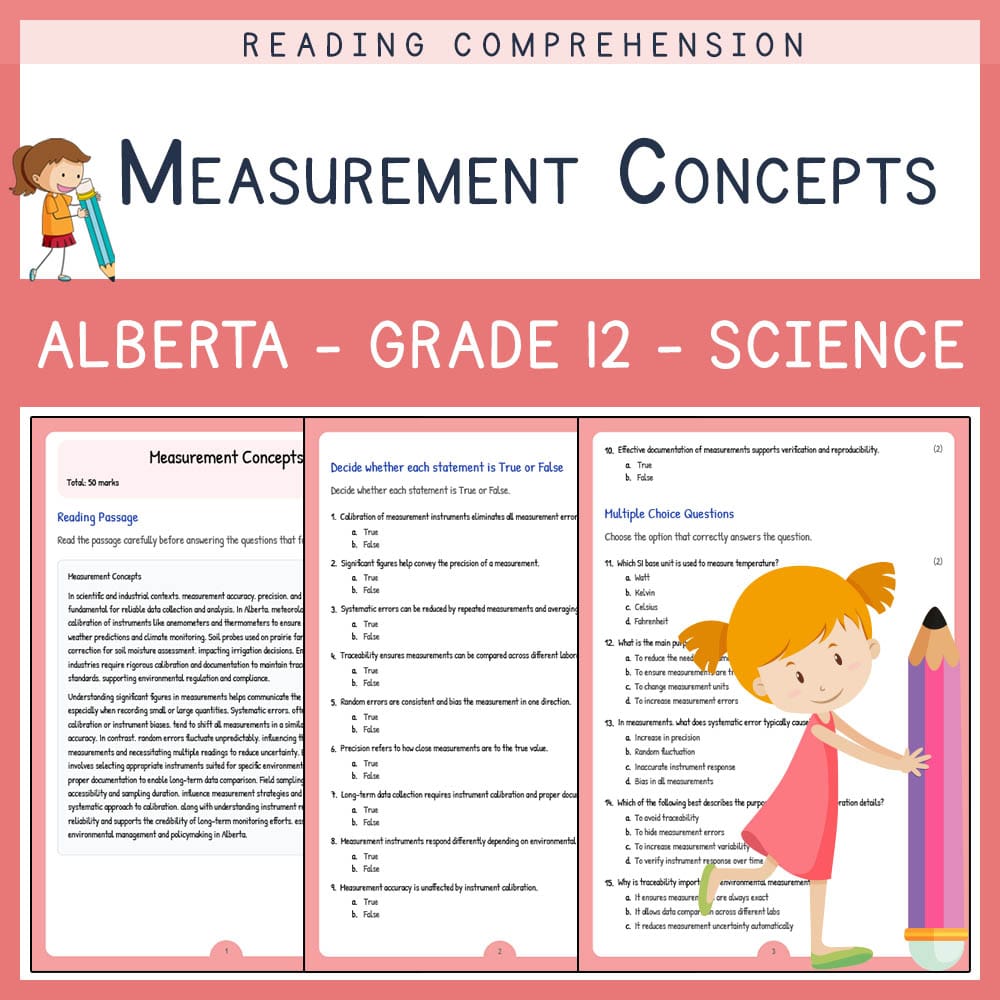
Grade 12 Science | Measurement Concepts Worksheet | Alberta Standards
Created byLumora LearningLearning Objectives
- Understand fundamental measurement units and their applications in Alberta contexts.
- Explain accuracy, precision, systematic and random errors, and traceability in measurement.
- Recognize how measurement choice and documentation impact data comparability.
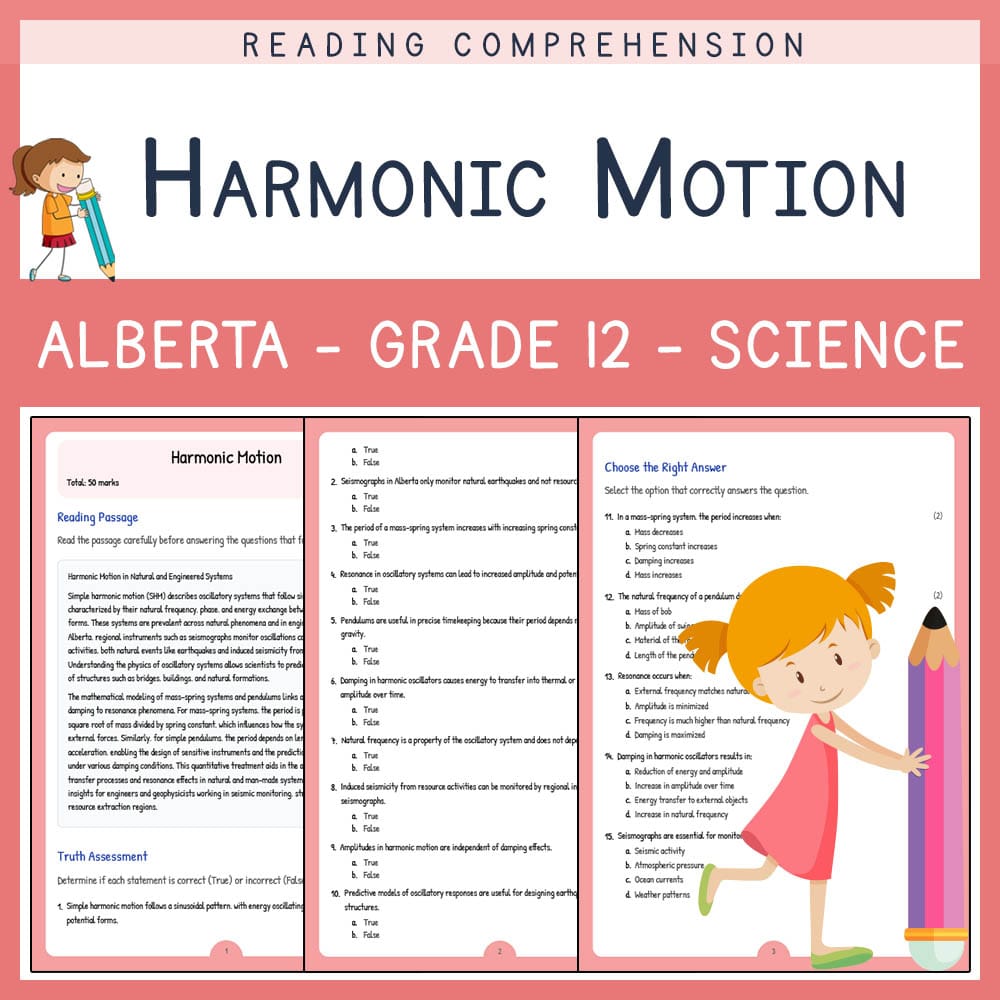
Grade 12 Science | Harmonic Motion Worksheet | Alberta Standards
Created byLumora LearningLearning Objectives
- Explain the principles of simple harmonic motion using sinusoidal models.
- Identify the relationship between amplitude, period, and resonance in oscillatory systems.
- Describe the application of oscillatory systems, such as seismographs, in monitoring natural and induced seismic activity.
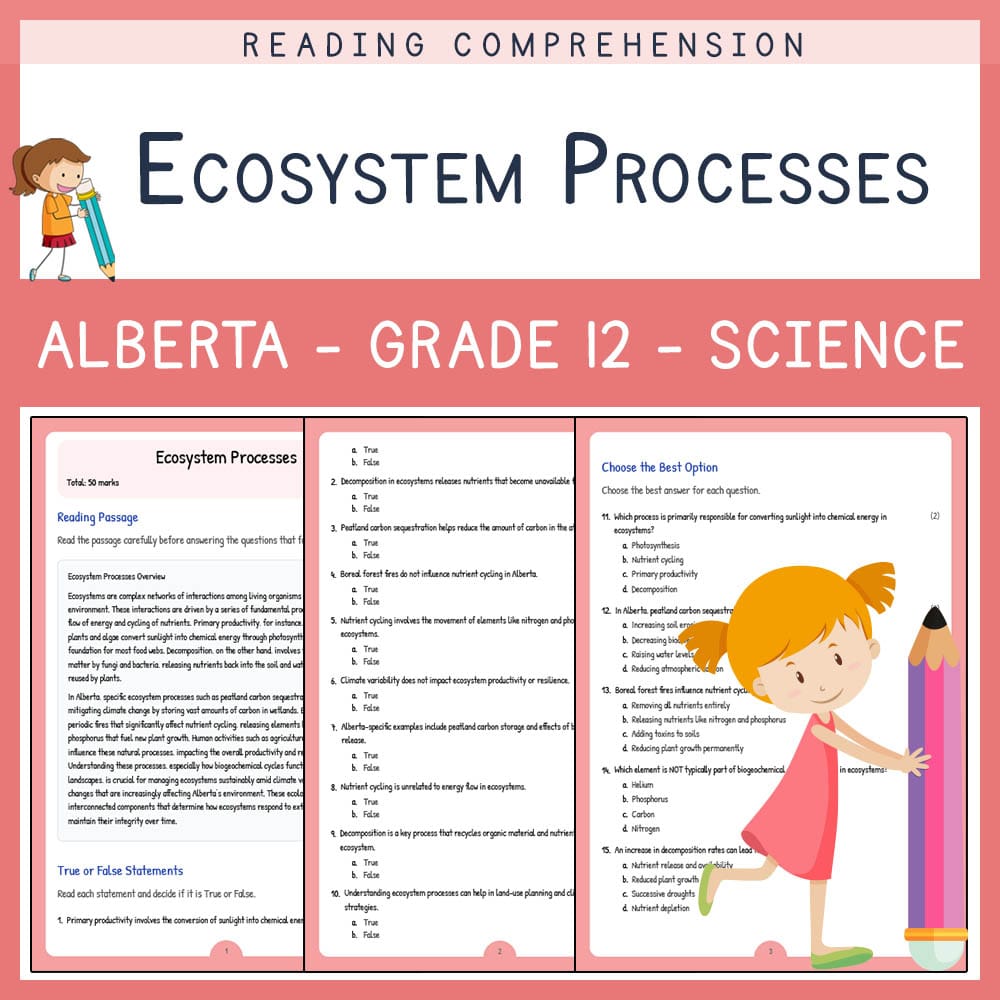
Grade 12 Science | Ecosystem Processes Worksheet | Alberta Standards
Created byLumora LearningLearning Objectives
- Describe key ecosystem processes such as primary productivity, decomposition, and nutrient cycling.
- Explain biogeochemical cycles of carbon, nitrogen, and phosphorus and their ecological significance.
- Identify Alberta-specific examples of ecosystem processes like peatland carbon sequestration and boreal fire effects.
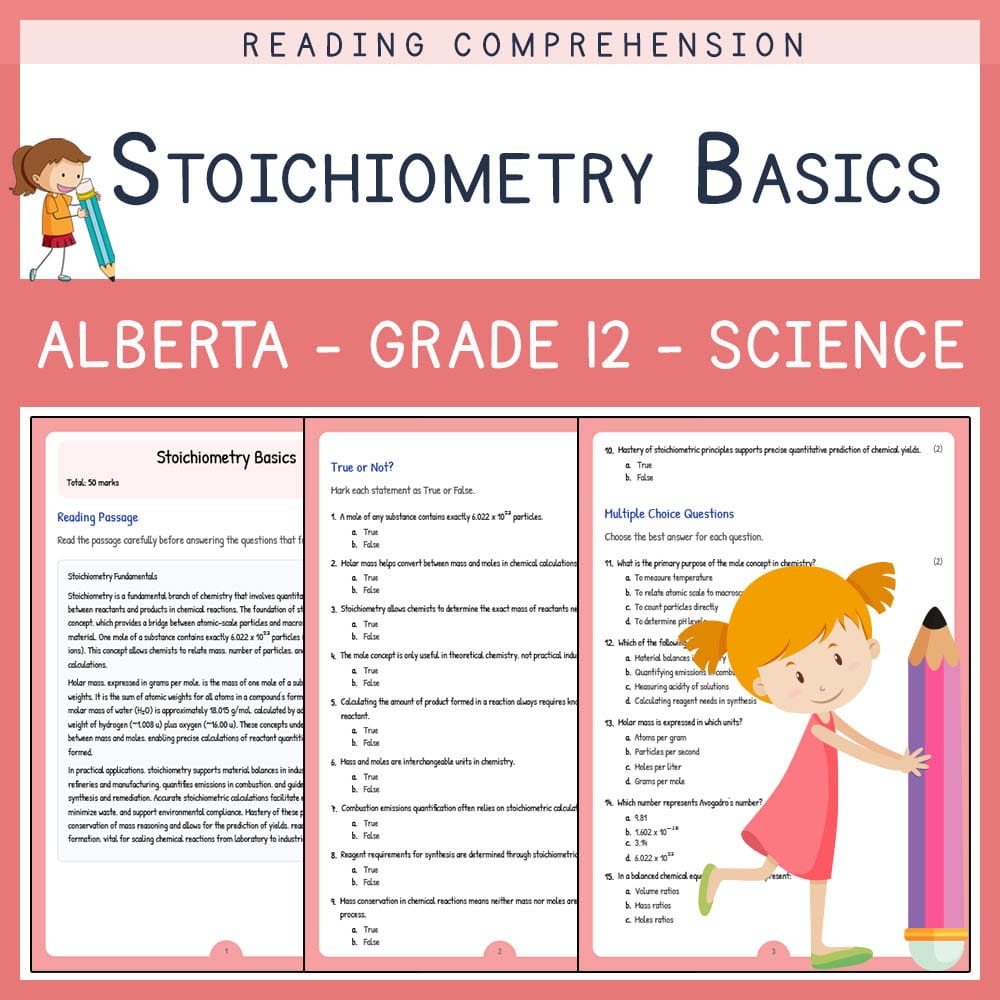
Grade 12 Science | Stoichiometry Basics Worksheet | Alberta Standards
Created byLumora LearningLearning Objectives
- Understand the mole concept and its significance in chemical calculations.
- Learn to calculate molar mass and convert between mass and moles.
- Apply mass and mole relationships to balanced chemical equations.
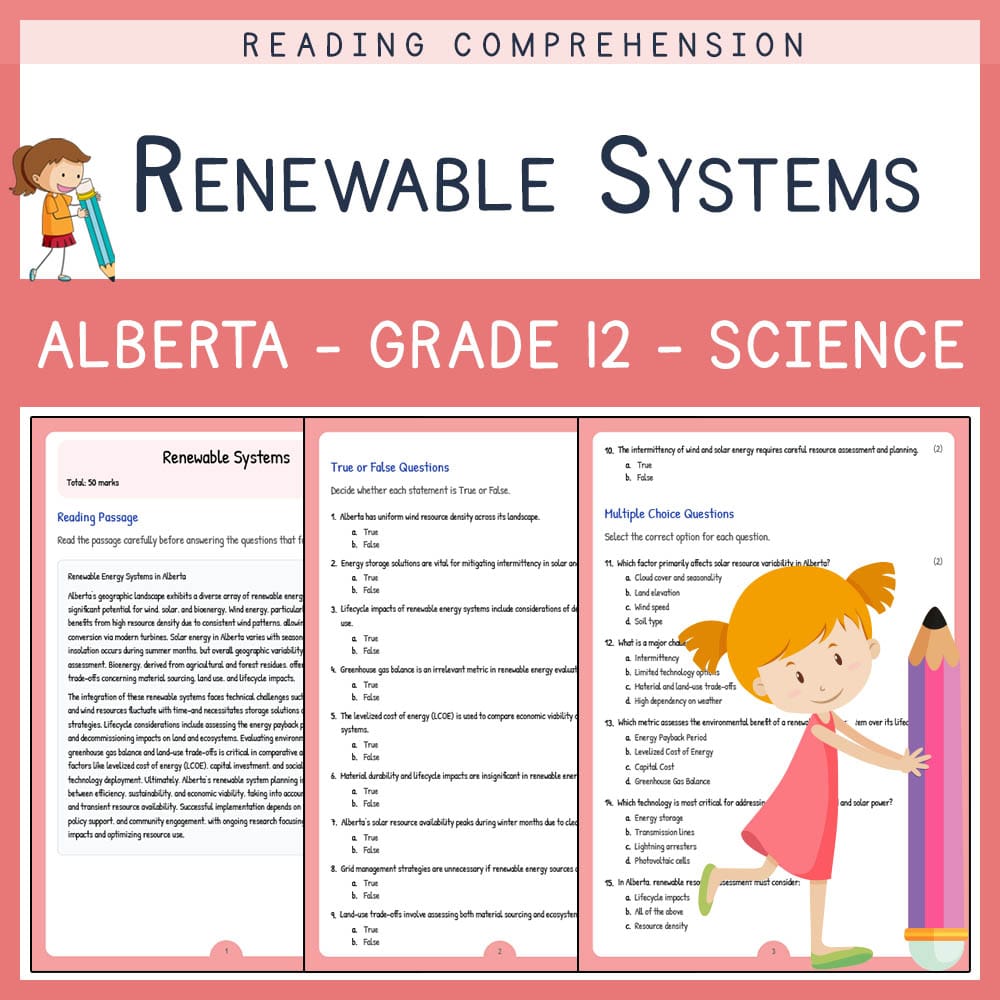
Grade 12 Science | Renewable Systems Worksheet | Alberta Standards
Created byLumora LearningLearning Objectives
- Understand the key concepts of resource assessment and conversion technologies for renewable energy in Alberta.
- Analyze challenges and lifecycle considerations of wind, solar, and bioenergy systems.
- Evaluate environmental and economic metrics used to compare renewable energy options.
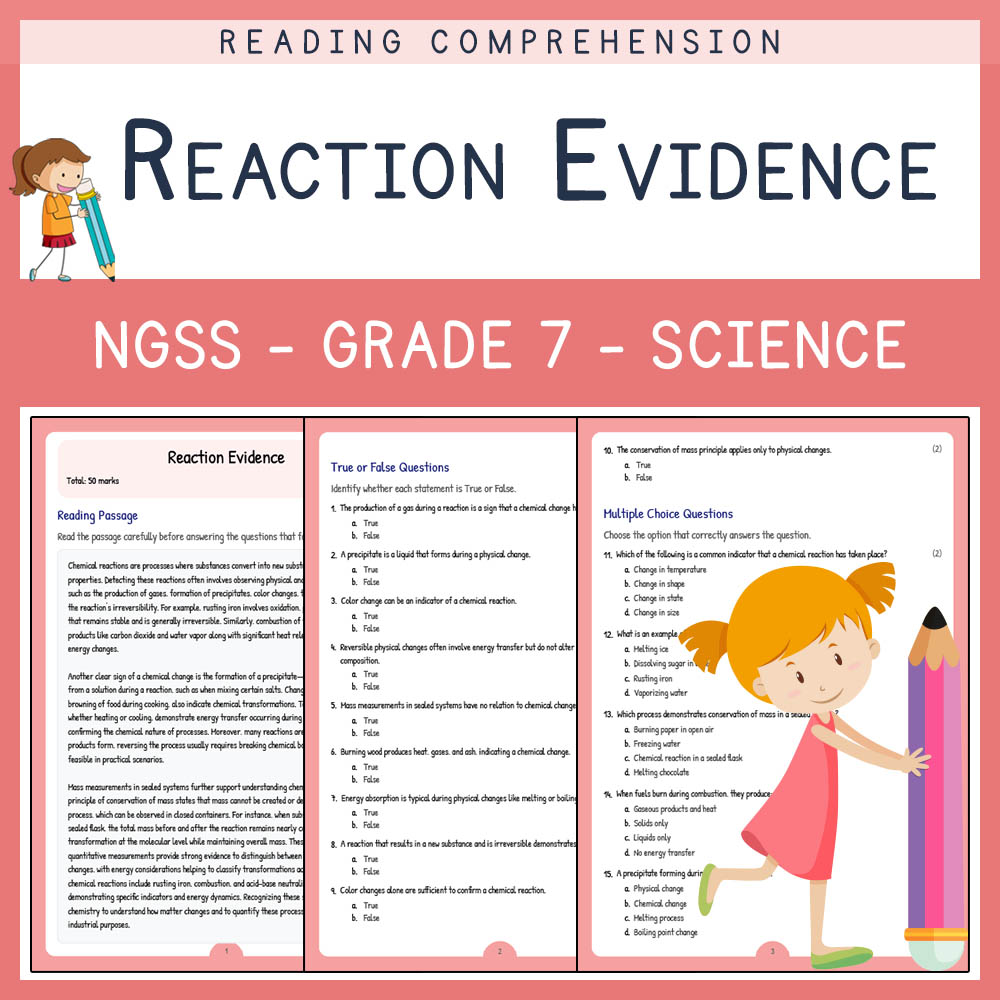
Grade 7 Science | Reaction Evidence Worksheet & Answer Key (NGSS Aligned)
Created byLumora LearningLearning Objectives
- Identify observable indicators that a chemical reaction has occurred, such as gas production, precipitate formation, color change, and temperature change.
- Explain irreversibility in chemical reactions and relate it to composition changes.
- Describe examples of chemical reactions, including rusting, combustion, and neutralization, and discuss how mass measurements in sealed systems demonstrate conservation principles.
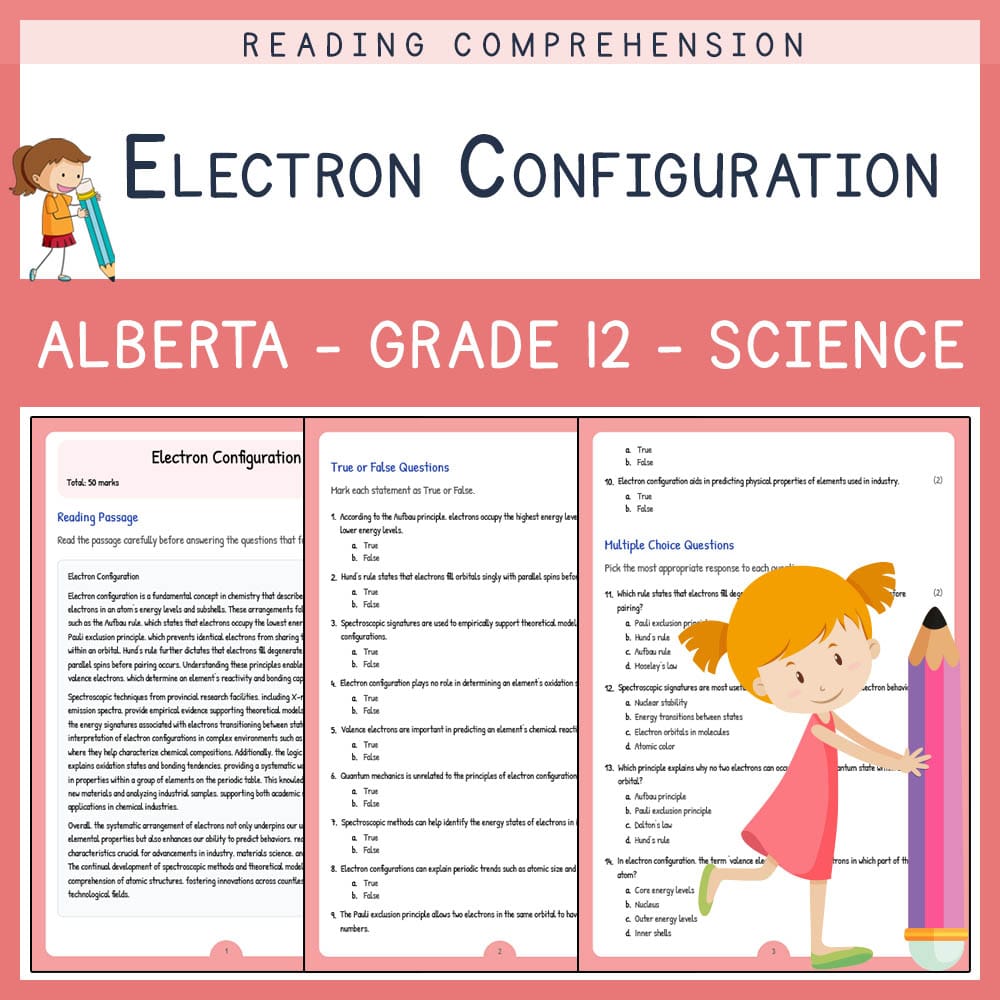
Grade 12 Science | Electron Configuration Worksheet | Alberta Standard
Created byLumora LearningLearning Objectives
- Explain the principles behind electron configuration, including Aufbau, Pauli exclusion, and Hund's rules.
- Predict element valence and chemical behavior based on electron configurations.
- Understand how spectroscopic signatures support electron configuration theories in research.
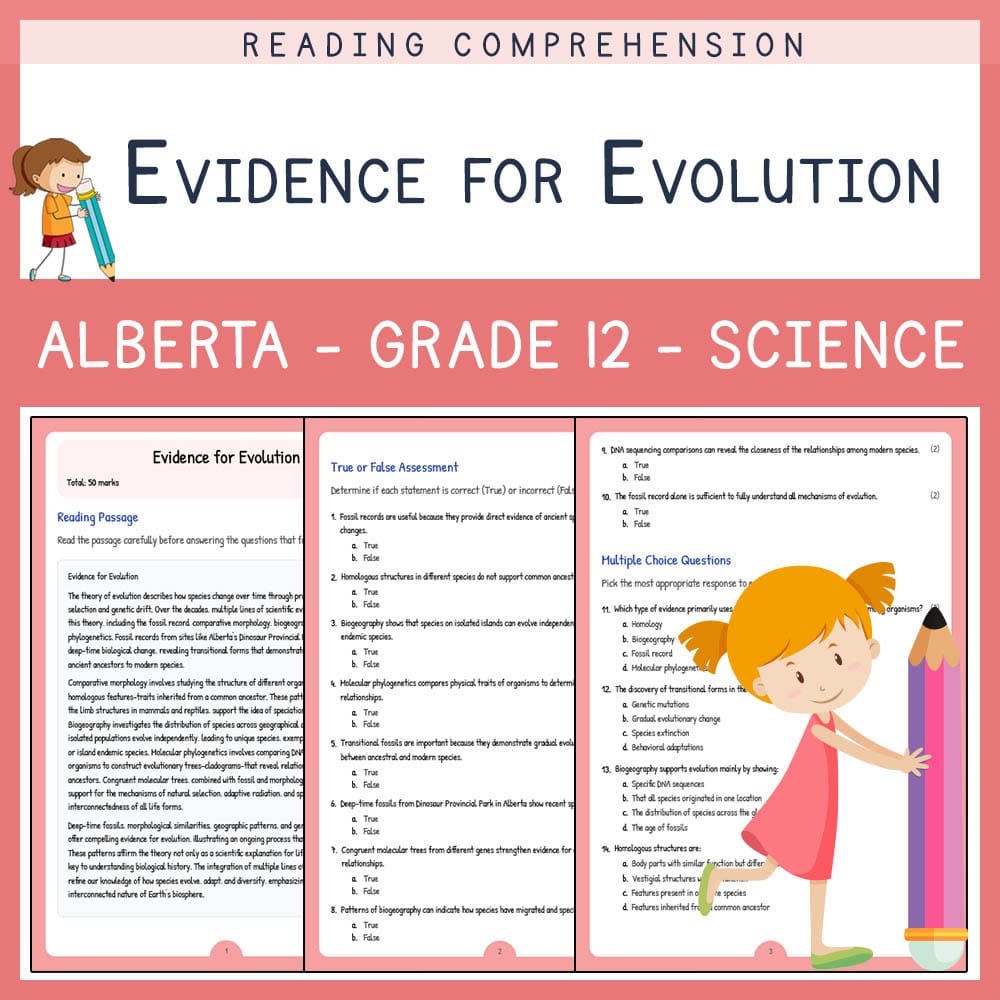
Grade 12 Science | Evidence for Evolution Worksheet | Alberta Standards
Created byLumora LearningLearning Objectives
- Understand the different types of evidence supporting the theory of evolution.
- Identify examples of fossil records, morphological similarities, and molecular data.
- Explain how biogeography and genetic analyses contribute to understanding evolutionary relationships.
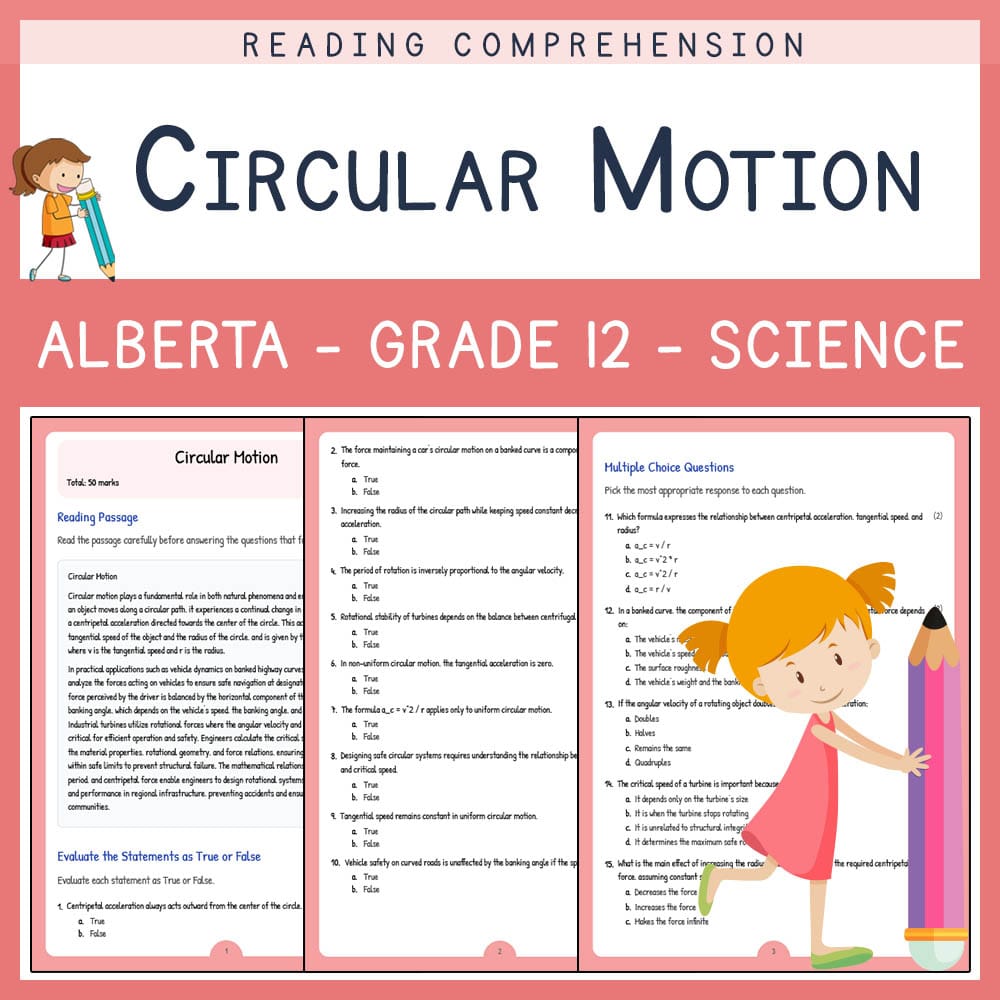
Grade 12 Science | Circular Motion Worksheet | Alberta Standards
Created byLumora LearningLearning Objectives
- Explain the basic principles of uniform and non-uniform circular motion.
- Calculate centripetal acceleration, tangential speed, and related forces in circular systems.
- Apply mathematical relations between angular velocity, period, and force to real-world scenarios.
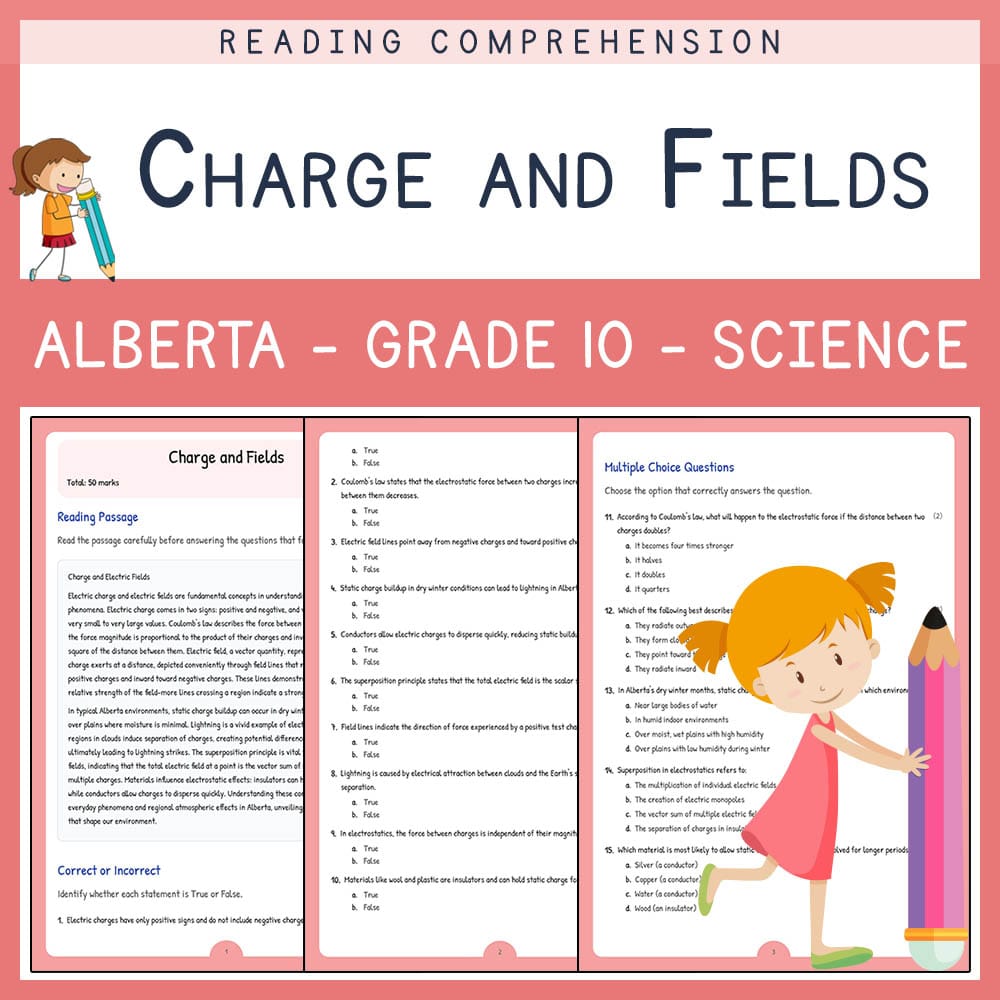
Grade 10 Science | Charge and Fields Worksheet | Alberta Standards
Created byLumora LearningLearning Objectives
- Understand the concept of electric charge, including sign and magnitude.
- Describe the electric field and how field lines represent forces at a distance.
- Explain Coulomb's law and perform force calculations between charges.
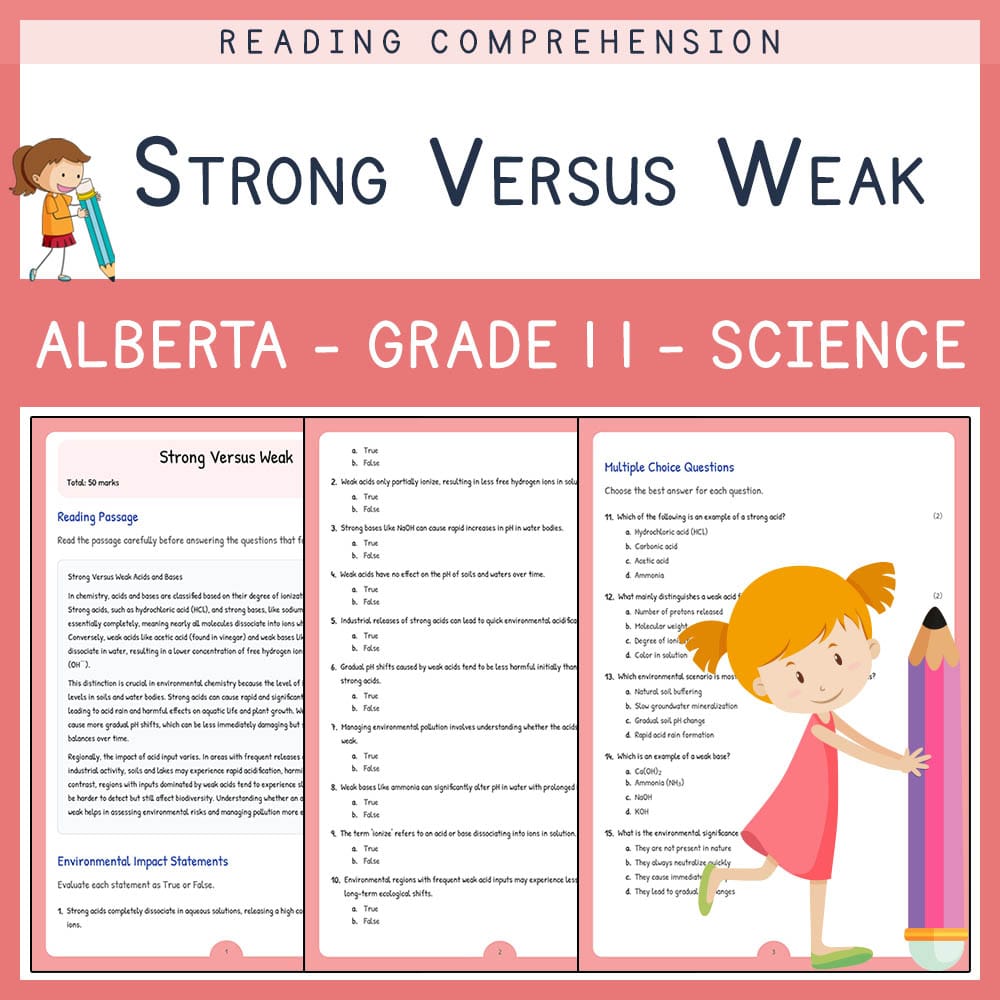
Grade 11 Science | Strong Versus Weak Acid Worksheet | Alberta Standards
Created byLumora LearningLearning Objectives
- Explain the difference between strong and weak acids and bases in terms of ionization.
- Identify examples of strong and weak acids/bases in environmental contexts.
- Understand how the strength of acids and bases impacts their environmental and biological effects.

Grade 9 Science | Two-Dimensional Motion Worksheet | AP Aligned
Created byLumora LearningLearning Objectives
- Understand how vector decomposition helps analyze motion in a plane.
- Apply parametric equations to describe projectile trajectories.
- Use vector addition to predict range, maximum height, and time-of-flight.
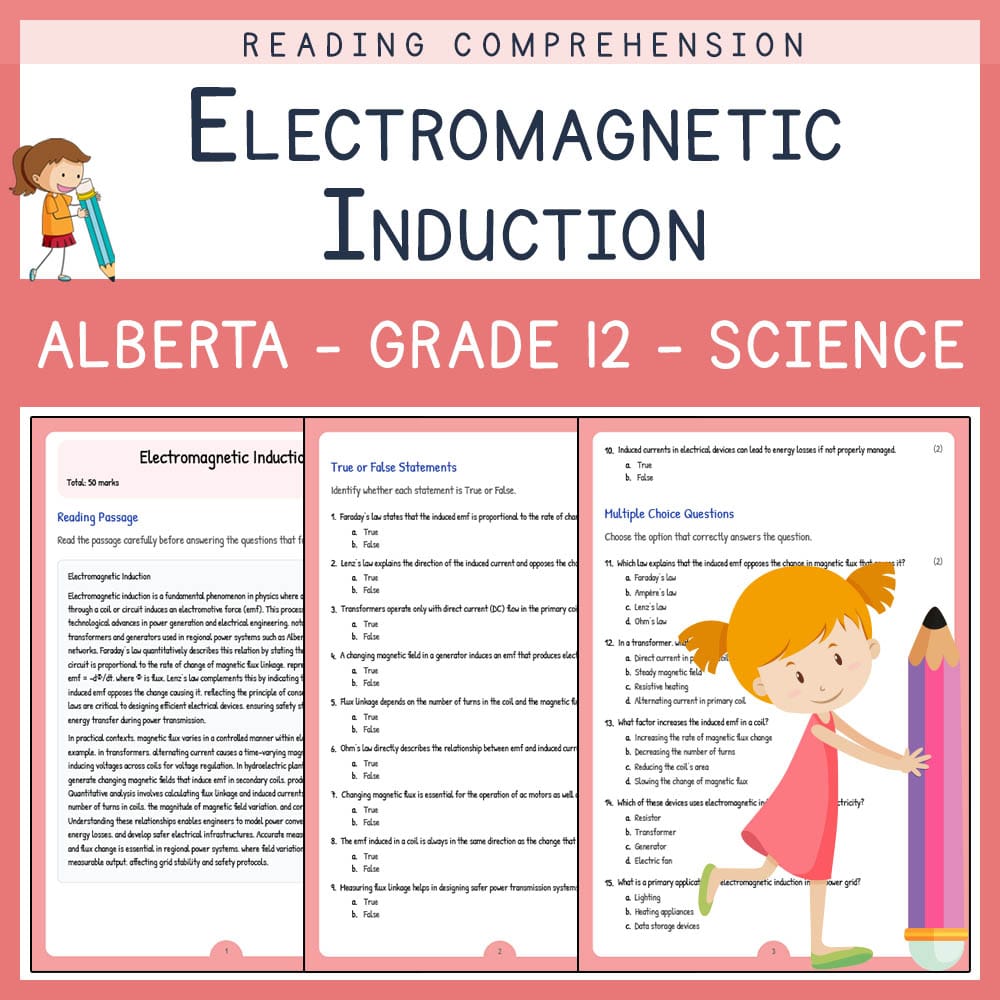
Grade 12 Science | Electromagnetic Induction Worksheet | Alberta Standards
Created byLumora LearningLearning Objectives
- Understand the principles of electromagnetic induction, including Faraday’s law and Lenz’s law.
- Analyze how changing magnetic flux induces emf in various practical applications.
- Explore the relationship between magnetic field variation, flux linkage, and induced currents.
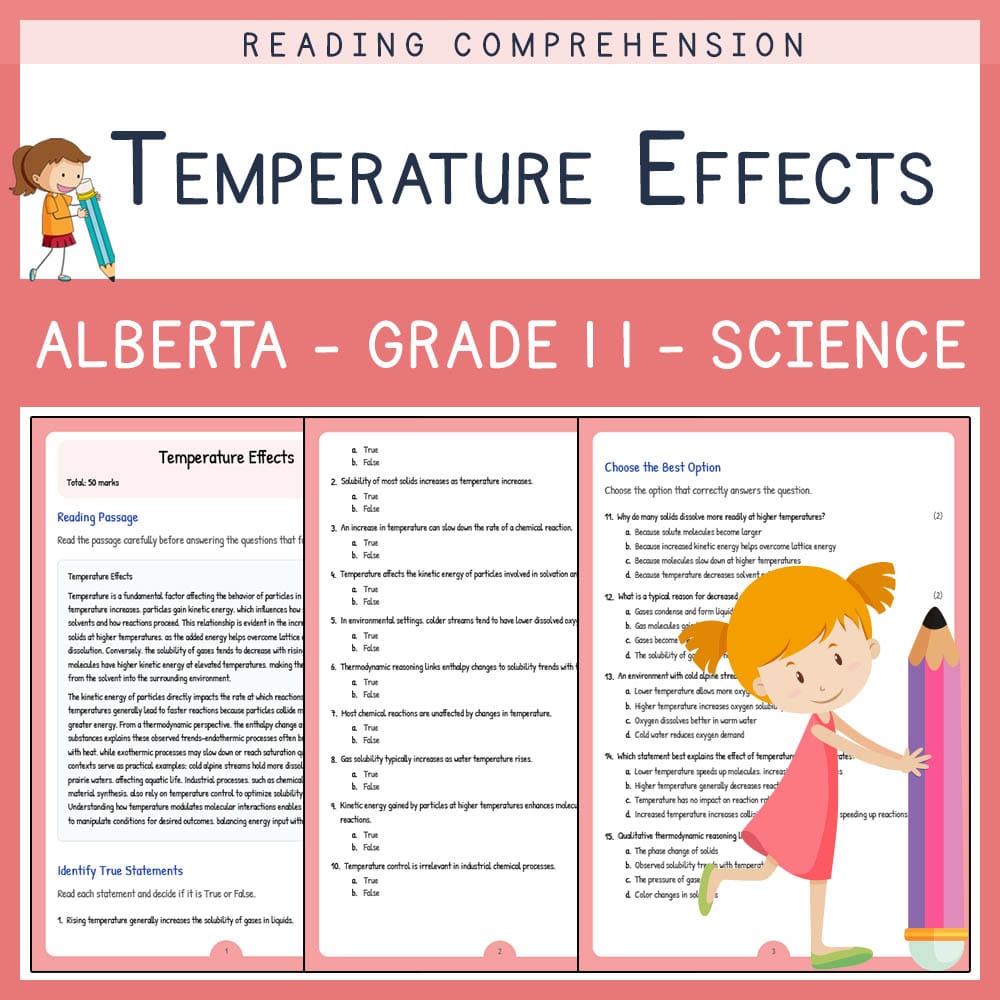
Grade 11 Science | Temperature Effects Worksheet | Alberta Standards
Created byLumora LearningLearning Objectives
- Describe how temperature influences the kinetic energy of particles and solvent–solute interactions.
- Explain why solids dissolve more readily at higher temperatures and why gas solubility decreases with increasing temperature.
- Apply qualitative thermodynamic reasoning to analyze solubility and reaction rate trends with temperature.
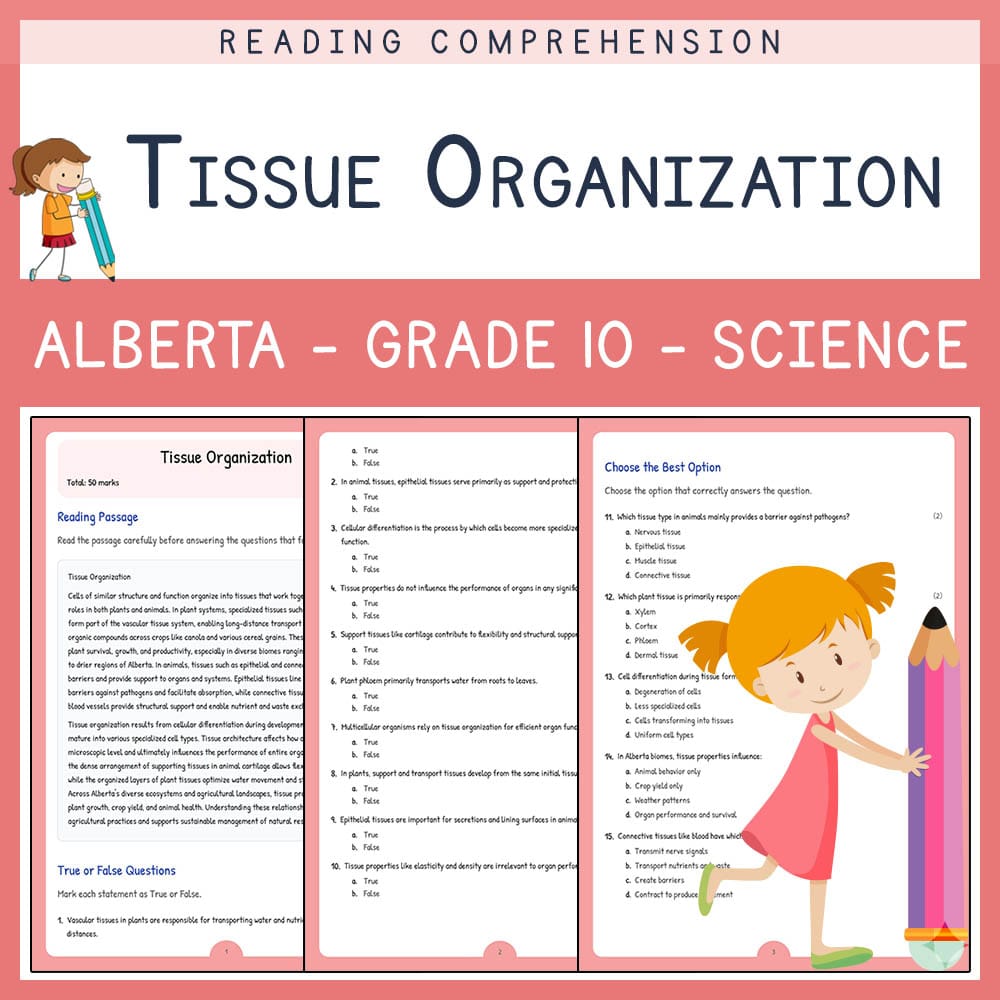
Grade 10 Science Worksheet | Tissue Organization | Alberta Standards
Created byLumora LearningLearning Objectives
- Understand the different types of tissues and their functions in plant and animal systems.
- Explain how tissue properties influence organ performance across various biomes and agricultural settings.
- Identify cellular differentiation and tissue architecture in plant and animal organisms.
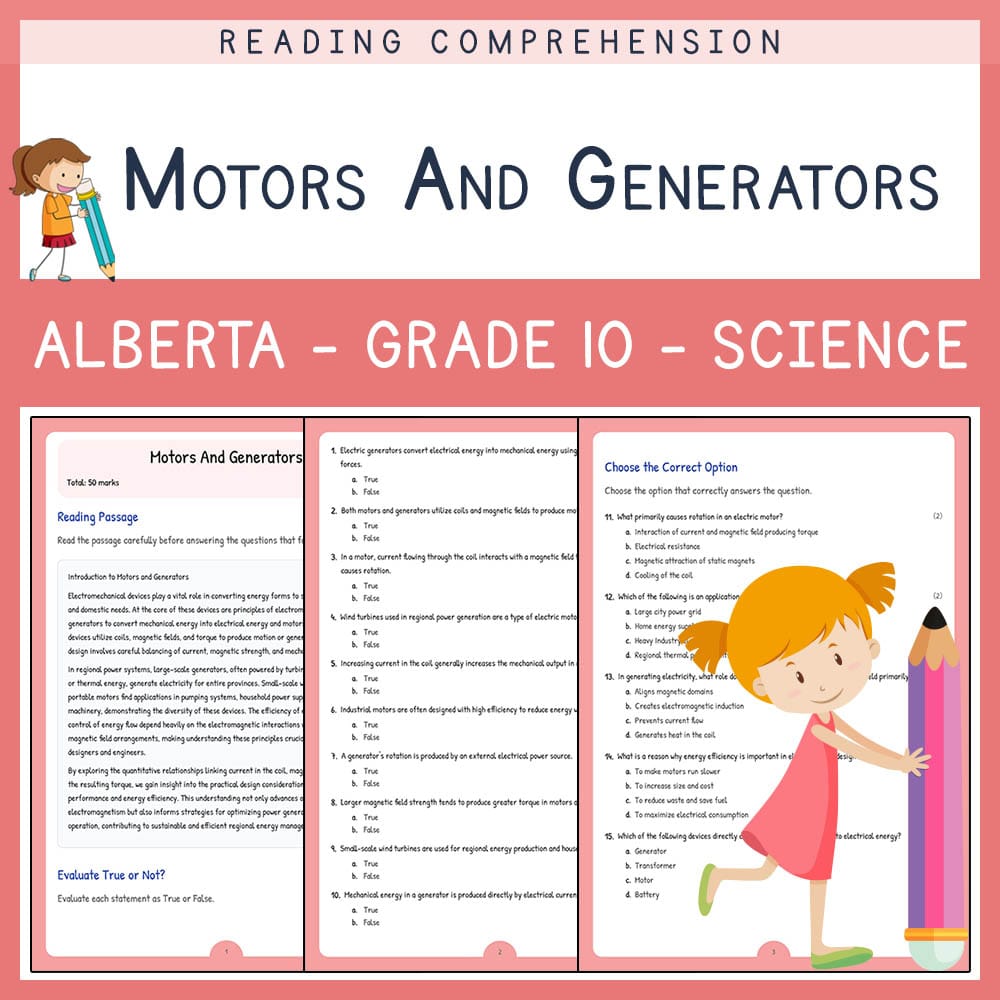
Grade 10 Science | Motors and Generators Worksheet | Alberta Standards
Created byLumora LearningLearning Objectives
- Explain the working principles of electric motors and generators through electromagnetic forces.
- Describe coil and magnetic field interactions in producing rotation in electromechanical devices.
- Compare common applications of motors and generators in regional energy systems and industry.
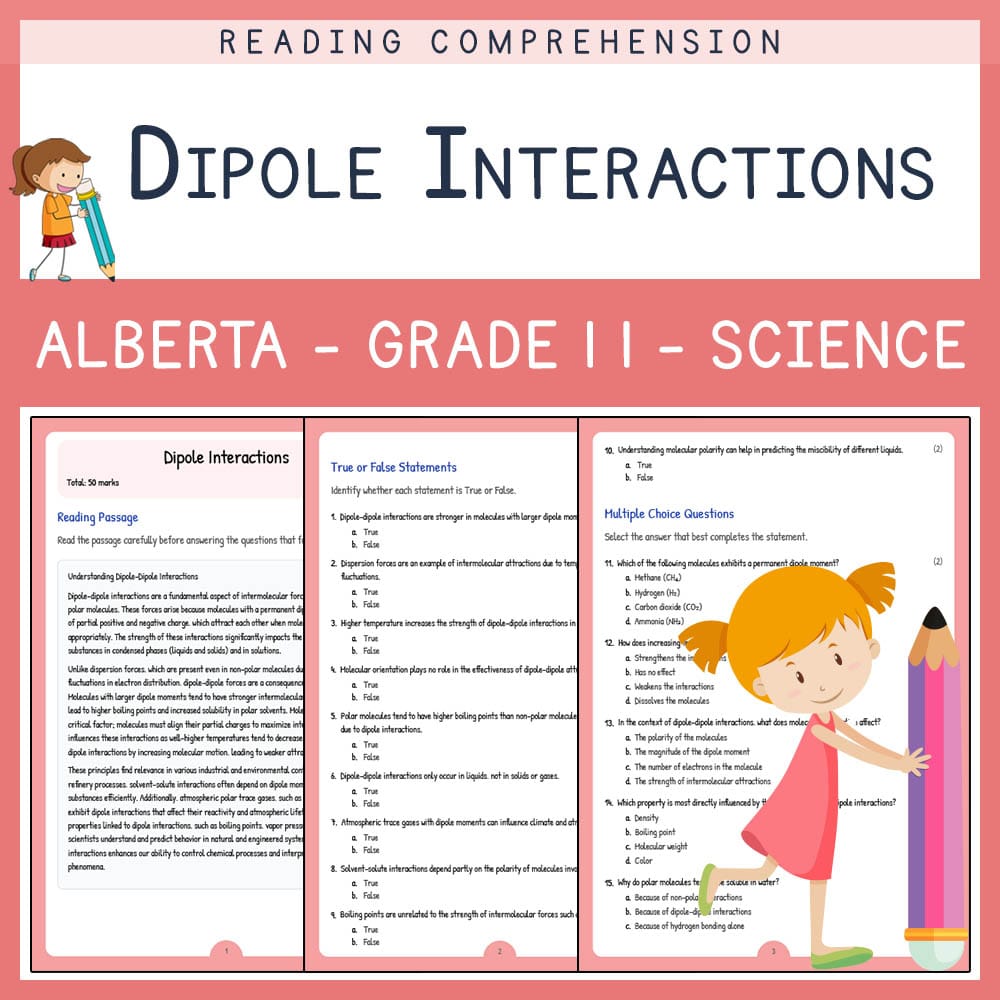
Grade 11 Science | Dipole Interactions Worksheet | Alberta Standards
Created byLumora LearningLearning Objectives
- Understand the concept of molecular dipoles and how they affect intermolecular forces.
- Explain the role of dipole–dipole interactions in determining physical properties such as boiling point and solubility.
- Analyze examples of dipole interactions in real-world applications like solvent–solute interactions and atmospheric gases.
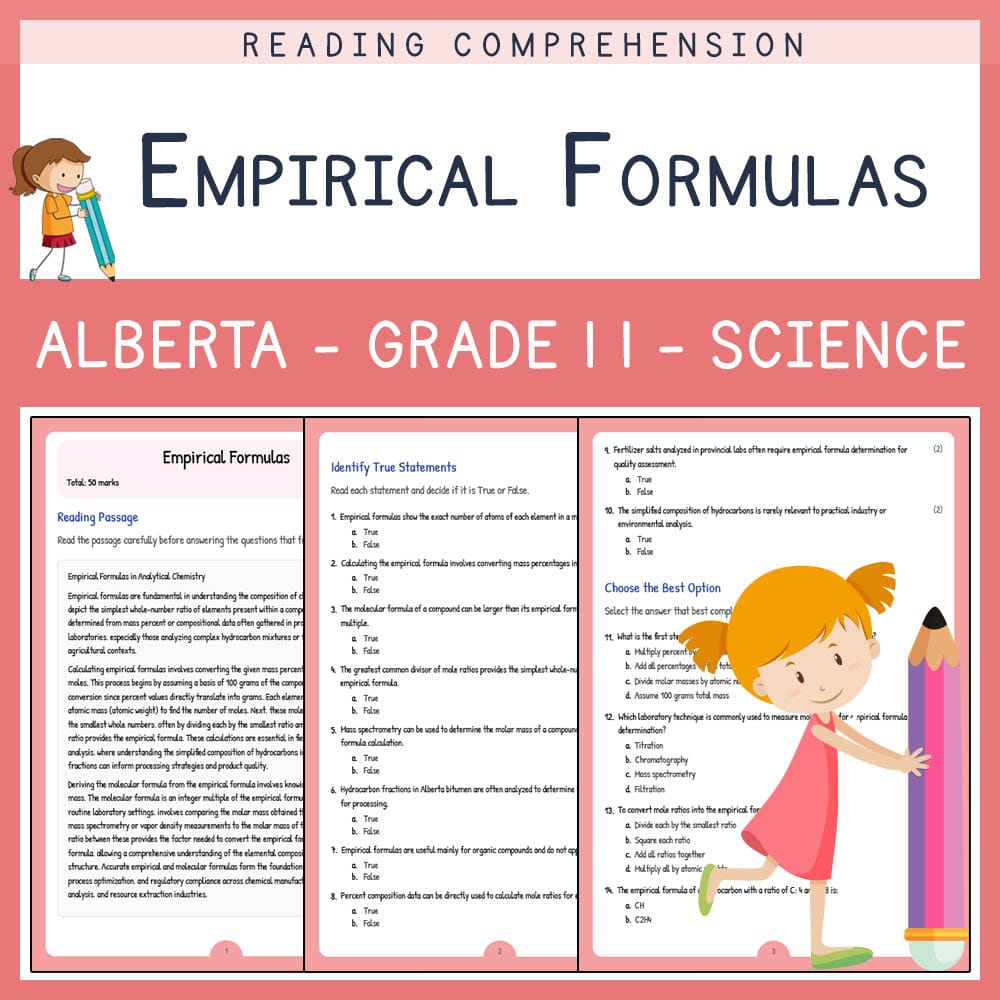
Grade 11 Science | Empirical Formulas Worksheet | Alberta Standards
Created byLumora LearningLearning Objectives
- Understand how empirical formulas are derived from mass percent and compositional data.
- Learn to convert percent composition to mole ratios for elements in a compound.
- Determine empirical and molecular formulas from analytical data.

Grade 8 Science | Population Patterns Worksheet | Alberta Standards
Created byLumora LearningLearning Objectives
- Understand key concepts of population dynamics including exponential and logistic growth.
- Identify factors influencing population fluctuations such as food supply and predation.
- Link theoretical population curves to real-world Alberta case studies like snowshoe hare and lynx cycles.

Grade 8 Science | Substance Sorting Worksheet | Alberta Standard
Created byLumora LearningLearning Objectives
- Understand the classification of substances into pure substances and mixtures.
- Identify different types of mixtures based on their composition in environmental and industrial contexts.
- Apply classification criteria to interpret material behavior in environmental and industrial settings.
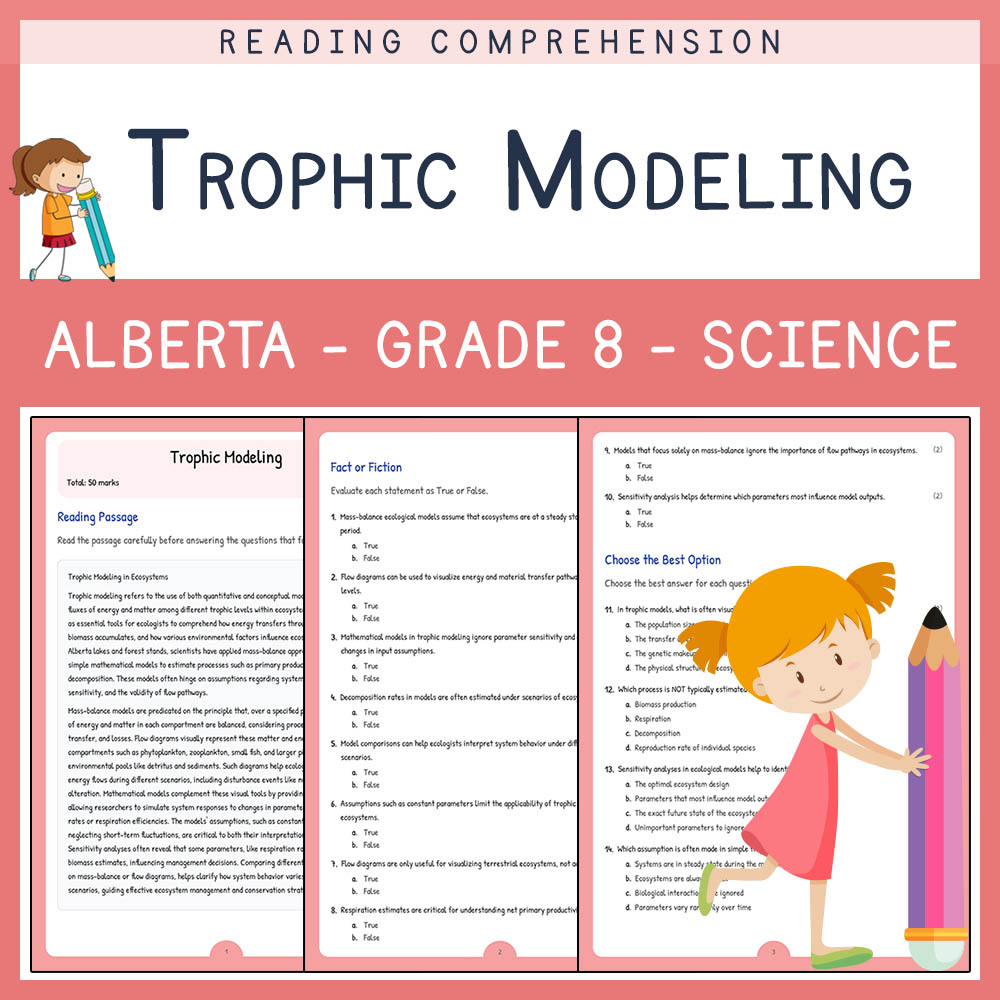
Grade 8 Science | Trophic Modeling Worksheet | Alberta Standards
Created byLumora LearningLearning Objectives
- Understand the basic concepts of trophic modeling and energy fluxes in ecosystems.
- Identify different approaches used for quantifying matter and energy flow among trophic compartments.
- Explain the assumptions and sensitivities of simple mathematical models in ecological systems.
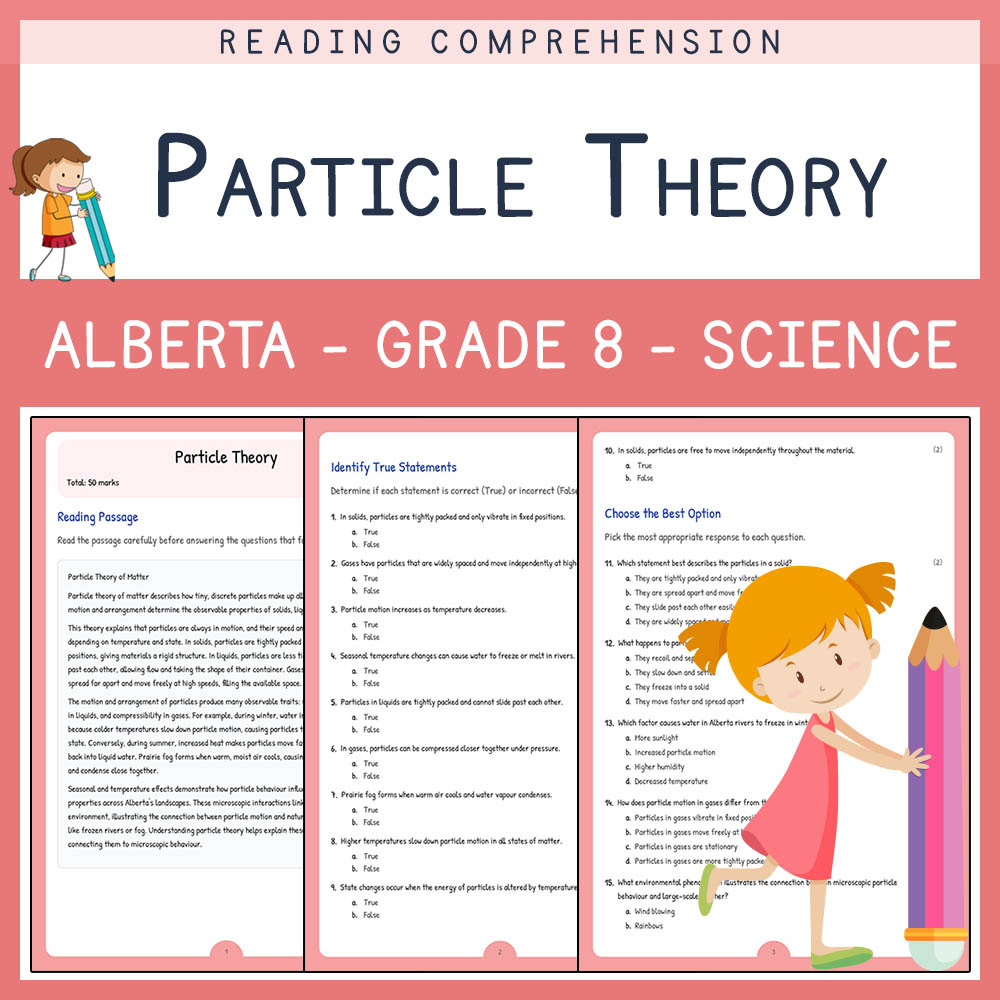
Grade 8 Science | Particle Theory Worksheet | Alberta Standard
Created byLumora LearningLearning Objectives
- Explain the basic concepts of particle theory of matter and how particles behave in solids, liquids, and gases.
- Connect microscopic particle behaviour to observable properties such as rigidity, flow, and compressibility.
- Describe how temperature and seasonal changes affect particle motion and state transitions.
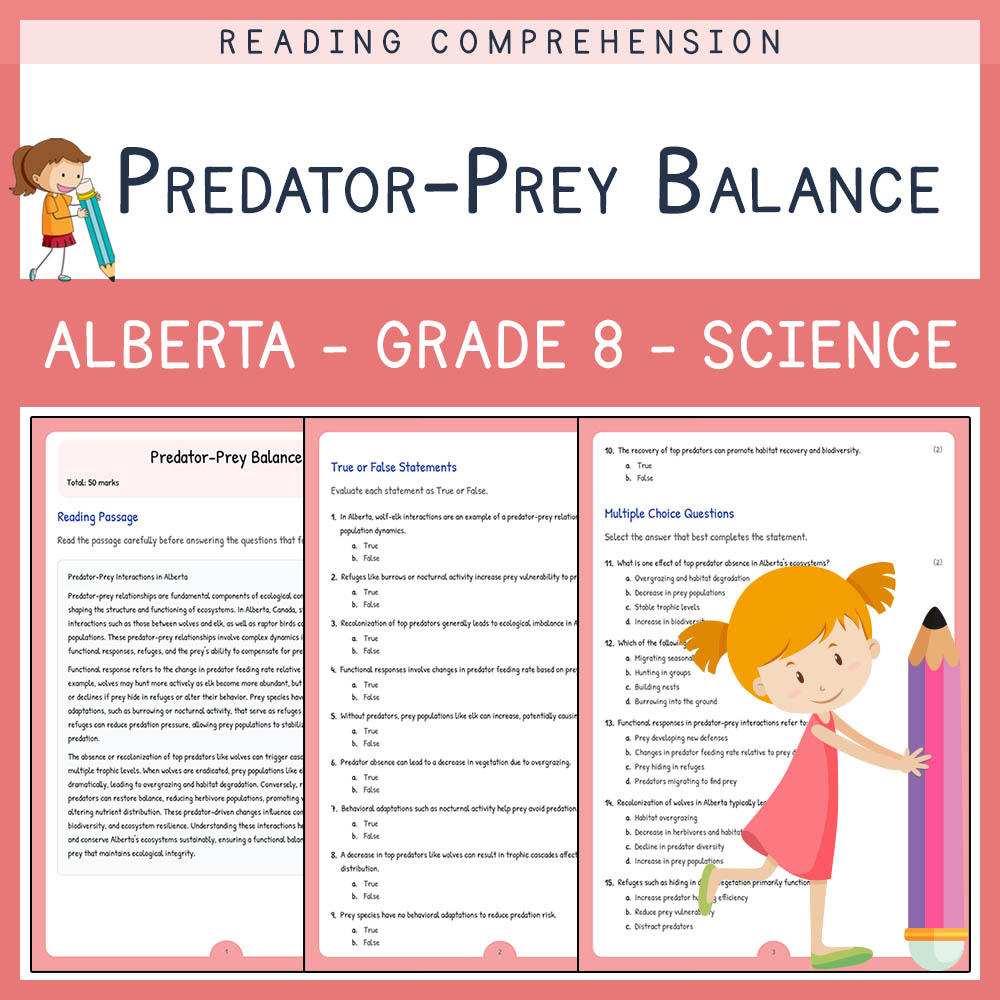
Grade 8 Science Worksheet | Predator–Prey Balance | Alberta Standards
Created byLumora LearningLearning Objectives
- Understand how predator-prey relationships influence population dynamics.
- Identify behavioral and community adaptations resulting from predation.
- Explain cascading effects caused by changes in top predator presence or recolonization.
Browse more categories
About Science Worksheets
Find Science worksheets spanning core skills, practice, and review. All 42,859 resources are instant PDF downloads for the classroom or home.
Every worksheet on MyTeachingSheets is created by independent teacher-authors and reviewed before publication. All resources download as printable PDFs for classroom, homework, or at-home practice, and many include answer keys. Preview any worksheet free before buying.