
Science Worksheets
44,295 subject resources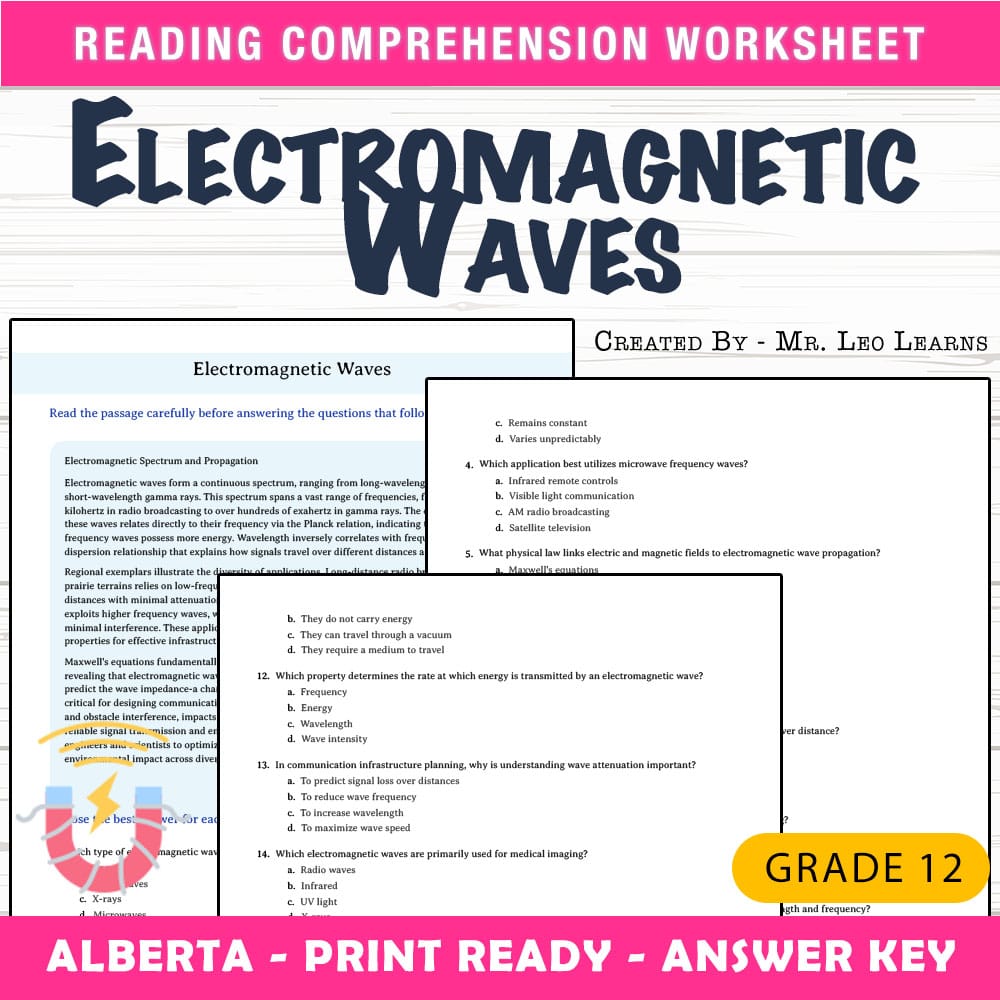
Grade 12 Science — Electromagnetic Waves Worksheet for Mastery
 Created byThe Resource Hub
Learning Objectives
- Understand the spectrum of electromagnetic waves and their properties including frequency, wavelength, and energy.
- Identify regional and practical exemplars of electromagnetic wave applications such as radio broadcasting and microwave communication.
- Apply Maxwellian concepts linking changing fields to wave propagation and calculate wave impedance, intensity, and attenuation relevant to communication infrastructure.
Also included in: Grade 12 Physics 30 Worksheets Bundle | Alberta Science Curriculum +1 more
Instant download
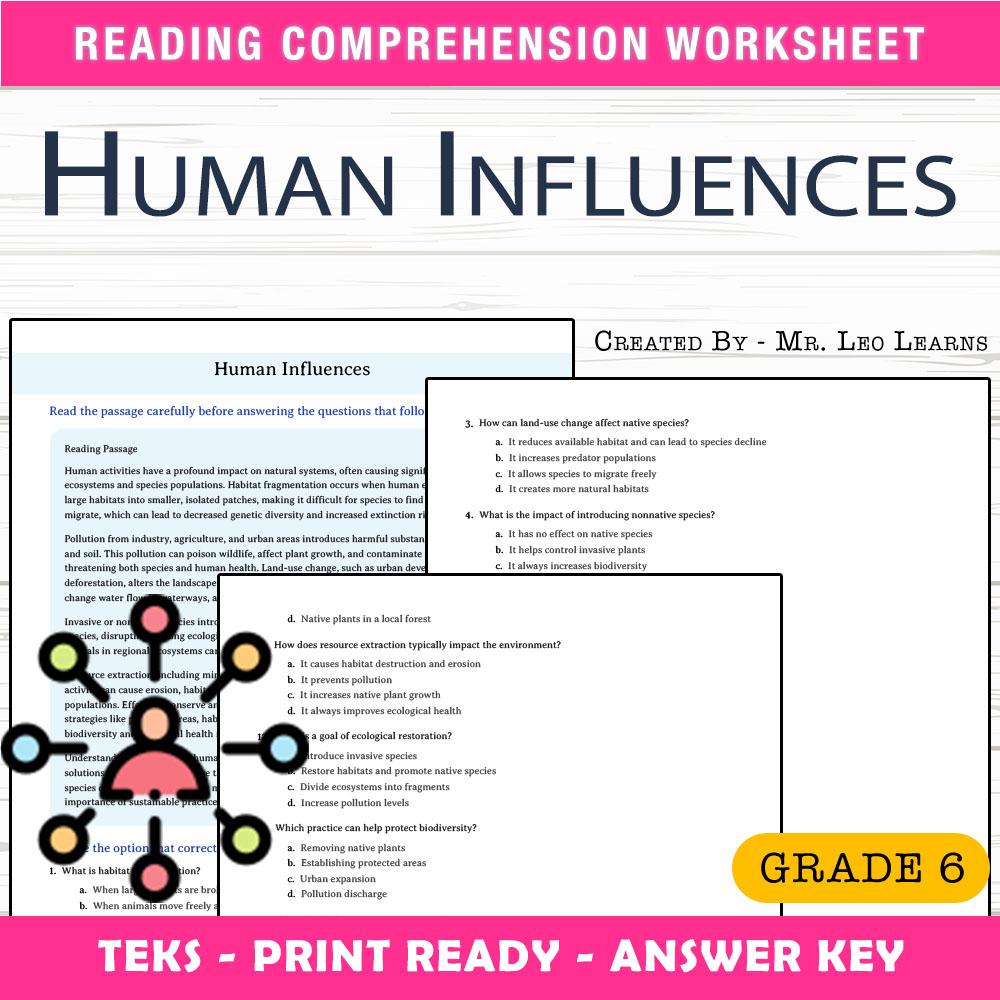
Grade 6 Science — Human Influences Worksheet for Mastery
Created byThe Resource HubLearning Objectives
- Understand human activities that affect natural ecosystems.
- Identify examples of habitat fragmentation, pollution, and resource extraction.
- Describe strategies for conservation and restoration to mitigate environmental impacts.
Also included in: Grade 6 Science Unit Bundle | Ecosystems & Environmental Relationships
Instant download
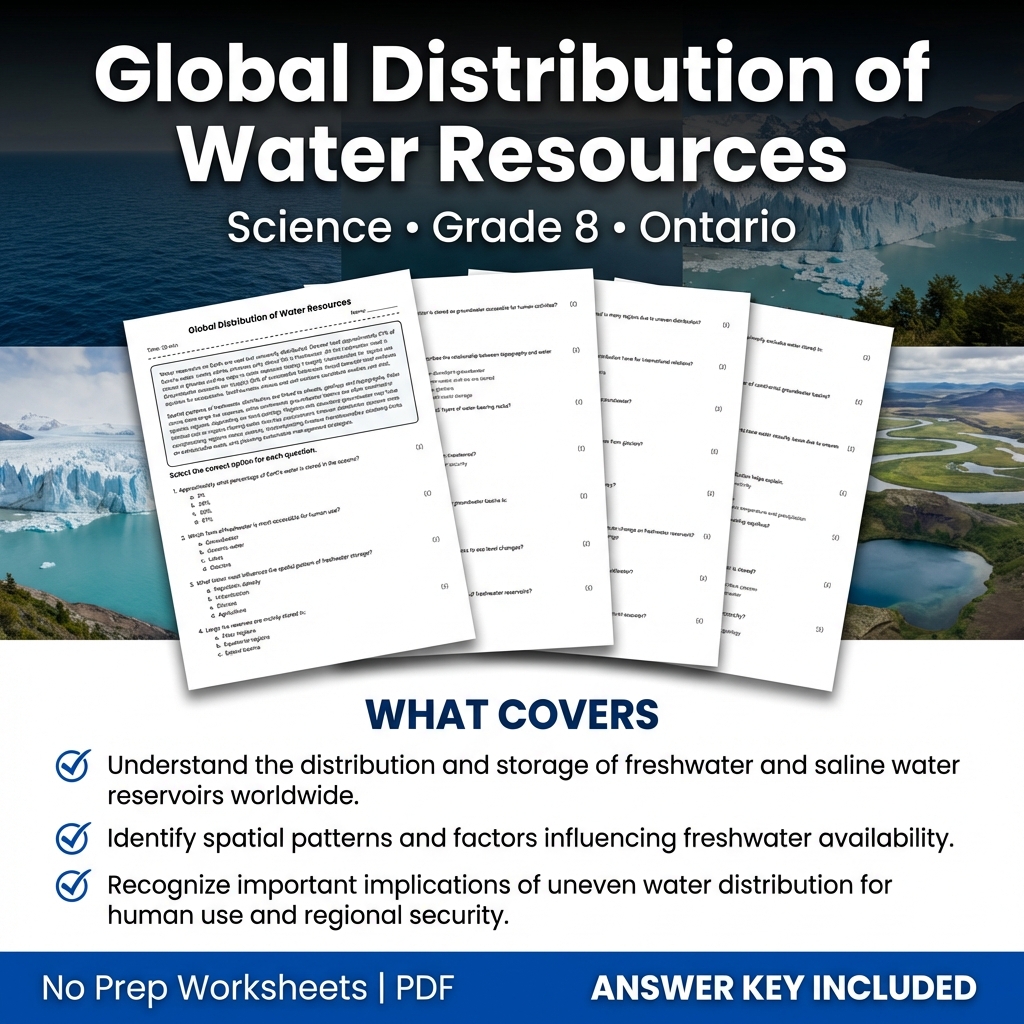
Global Distribution of Water Resources Grade 8 Science Worksheet | Ontario
 Created byCoral Reef Learning
Learning Objectives
- Understand the distribution and storage of freshwater and saline water reservoirs worldwide.
- Identify spatial patterns and factors influencing freshwater availability.
- Recognize important implications of uneven water distribution for human use and regional security.
Instant download
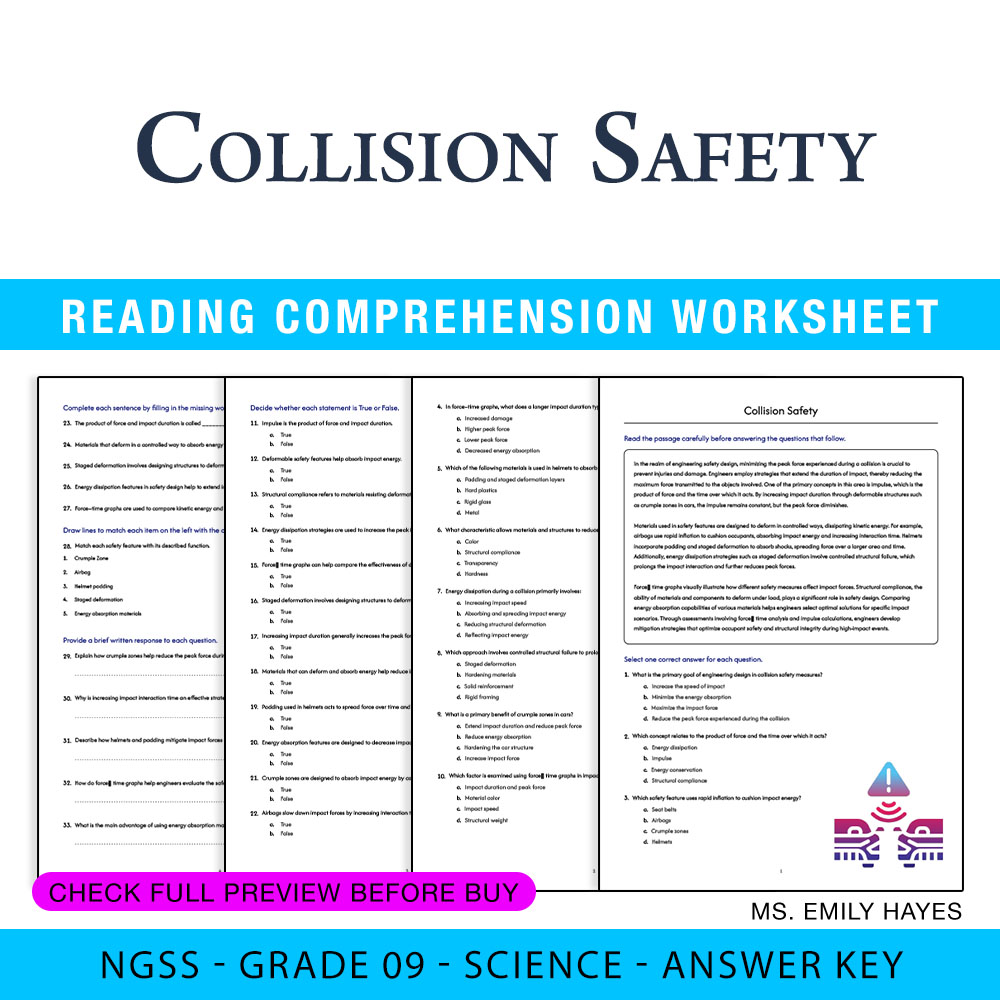
Grade 9 Science | Collision Safety Worksheet (PDF+ Answer Key)
 Created byCopper Leaf Classroom
Learning Objectives
- Understand the concepts of impulse, force, and energy dissipation in collision scenarios.
- Analyze force‑time graphs to evaluate impact mitigation methods such as crumple zones and airbags.
- Describe how materials deform and dissipate energy during collisions to reduce peak forces.
Instant download
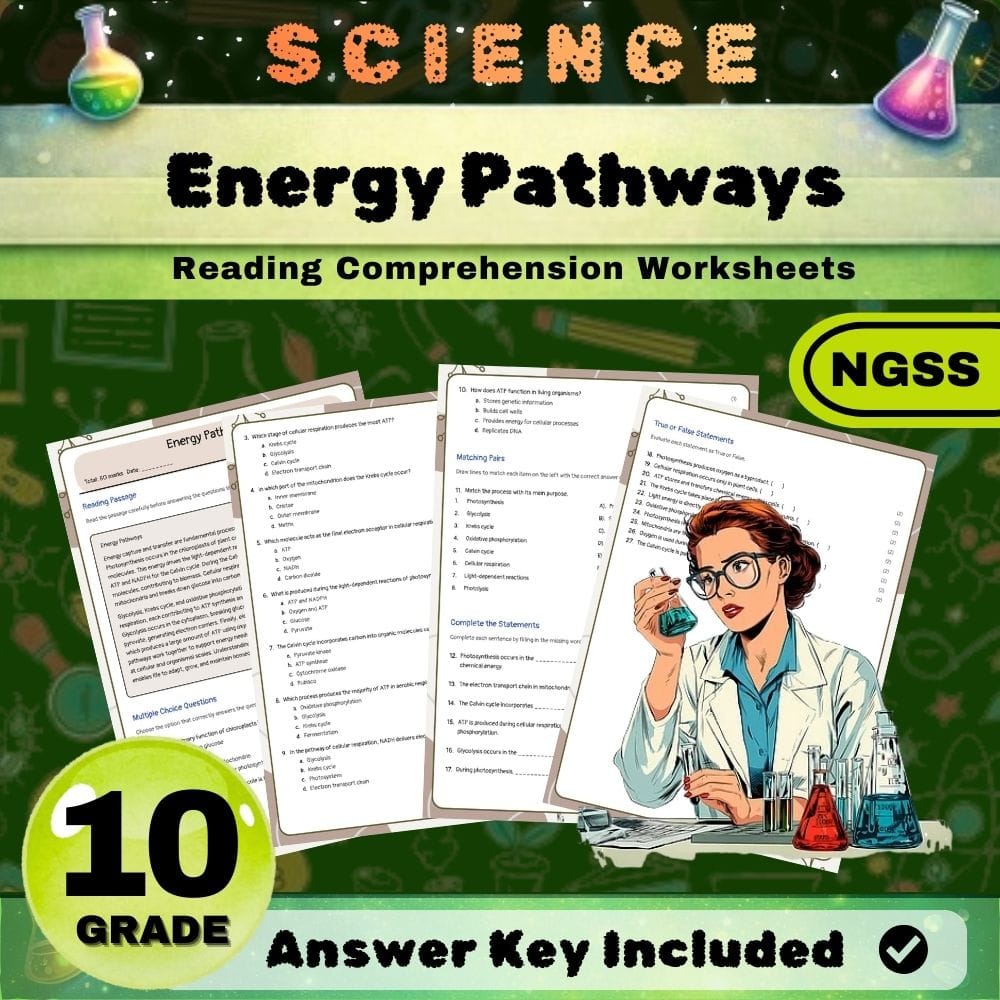
Grade 10 Science | Energy Pathways NGSS Worksheet (PDF)
 Created byMaple Path Learning
Learning Objectives
- Describe how photosynthesis captures light energy and converts it into chemical energy.
- Explain the processes of cellular respiration and how they produce ATP from glucose.
- Identify the roles of chloroplasts, mitochondria, and other cellular components in energy transfer.
Also included in: Grade 10 Science From Molecules to Organisms Lesson Bundle | NGSS +1 more
Instant download
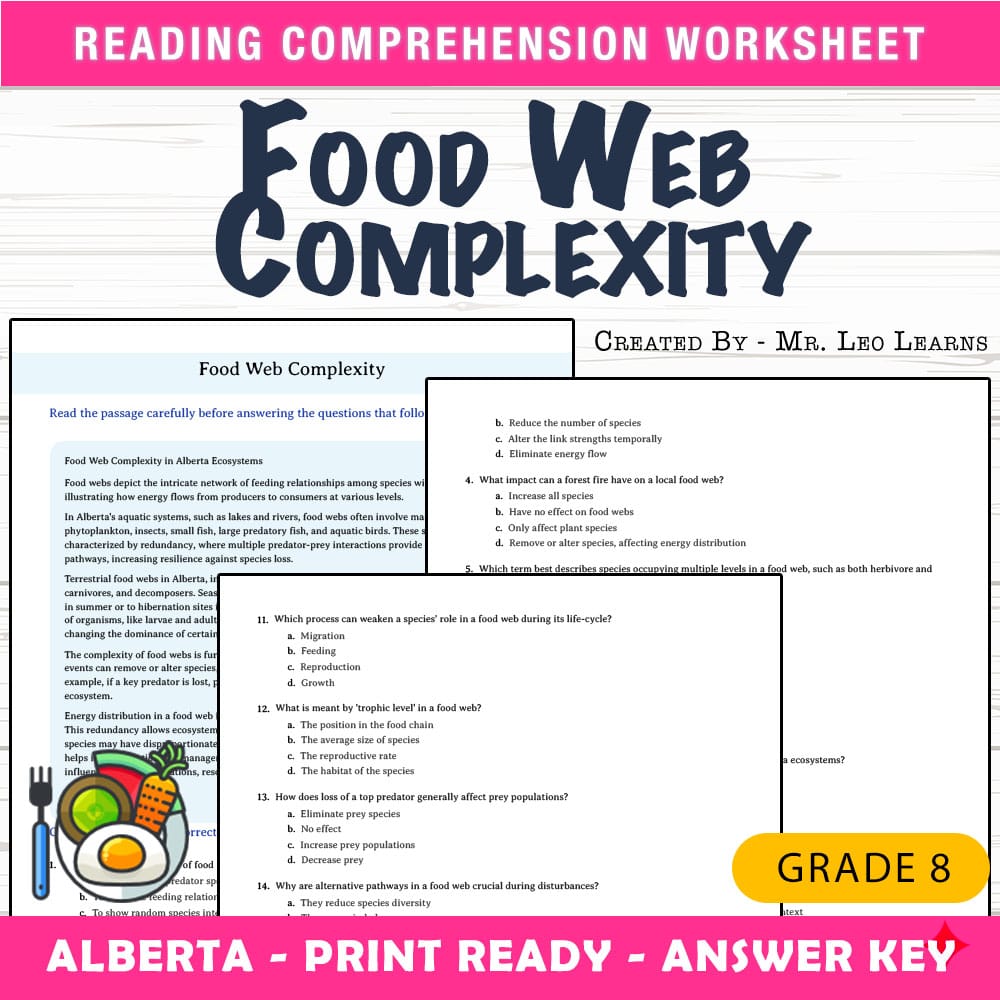
Grade 8 Science — Food Web Complexity Worksheet MCQ Paper
Created byThe Resource HubLearning Objectives
- Understand how food webs represent species interactions and energy pathways in ecosystems.
- Identify factors that influence food web stability and complexity in aquatic and terrestrial systems.
- Analyze the effects of species loss, seasonal changes, and disturbances on food web resilience.
Also included in: Grade 8 Science Bundle | Interactions and Ecosystems Worksheets +1 more
Instant download
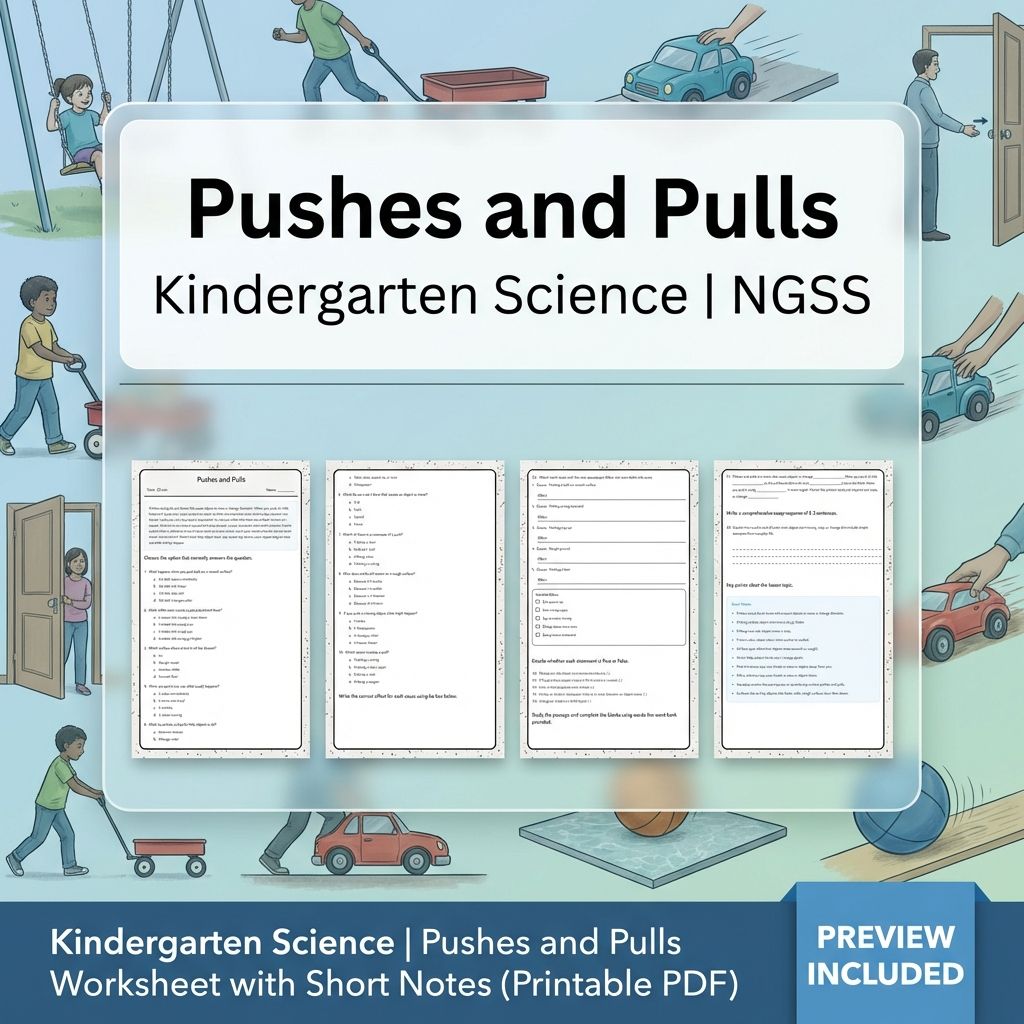
Kindergarten Science | Pushes and Pulls Worksheet with Short Notes (PDF)
 Created byMeadowlark Worksheets
Learning Objectives
- Understand how pushes and pulls cause changes in motion and direction.
- Identify everyday examples of pushes and pulls.
- Explain how contact interactions affect movement.
Also included in: Kindergarten Science Unit | Forces and Interactions NGSS Worksheet Bundle +1 more
Instant download
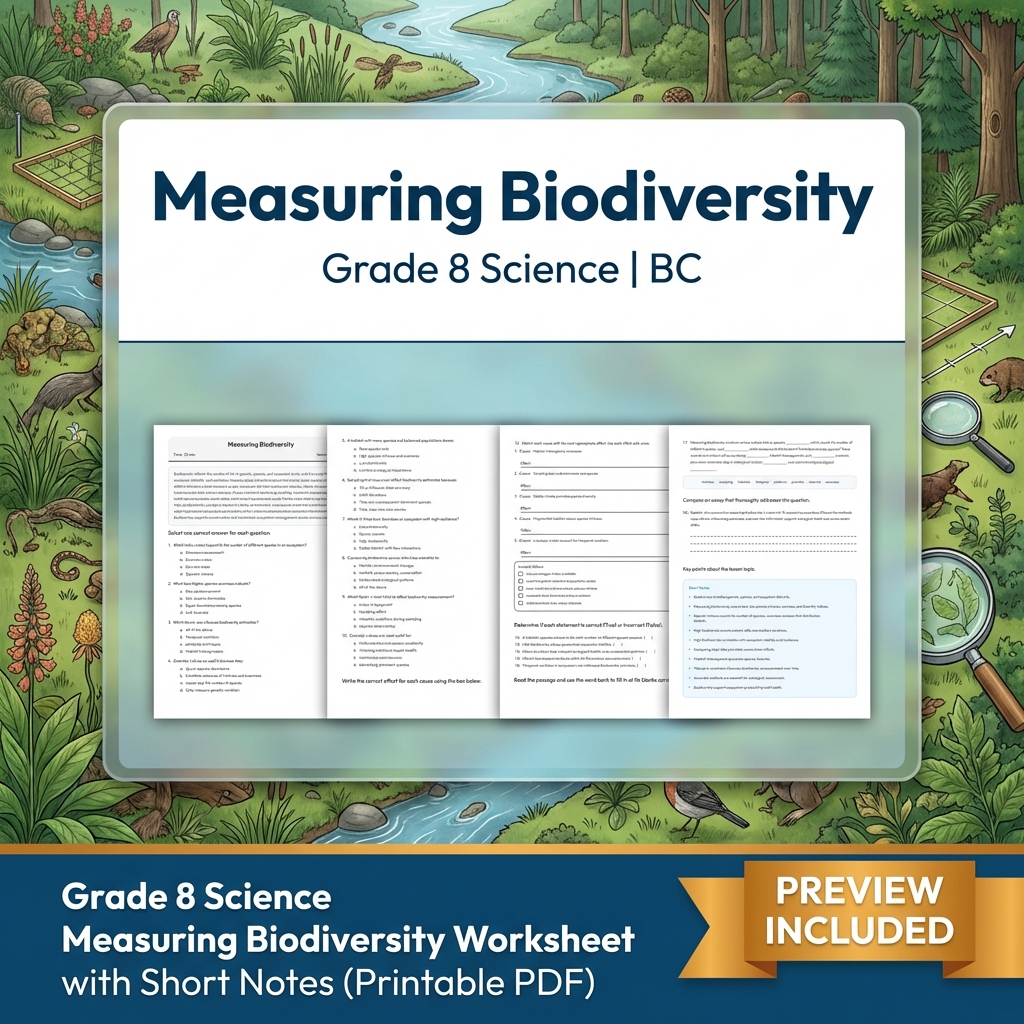
Grade 8 Science Measuring Biodiversity Worksheet with Short Notes (PDF)
Created byMeadowlark WorksheetsLearning Objectives
- Understand different methods used to measure biodiversity at genetic, species, and ecosystem levels.
- Identify factors influencing biodiversity estimates, such as sampling techniques and habitat heterogeneity.
- Describe how diversity indices interpret ecosystem health and conservation priorities.
Also included in: Grade 8 Science Lesson Bundle | Ecosystems, Biodiversity & Environmental Impacts +1 more
Instant download

Technical Communication Assessment | TEKS Grade 7 Science Standards
 Created byPrism Point Learning
Learning Objectives
- Understand the conventions used in technical drawings and schematics.
- Identify and interpret standardized symbols, units, and labels in technical documentation.
- Explain the importance of clarity, scale, and tolerances in technical communication.
Instant download
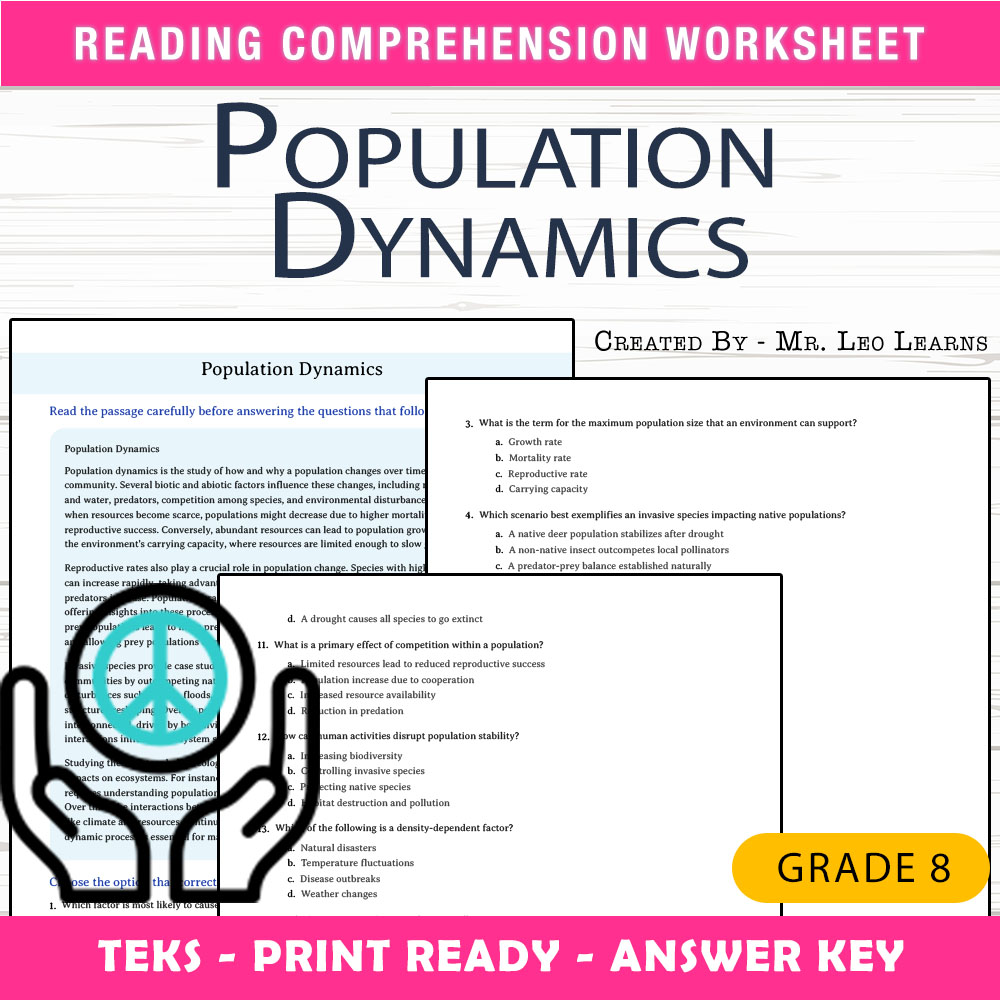
Grade 8 Science — Population Dynamics Worksheet for Mastery | PDF + Answer Key
Created byThe Resource HubLearning Objectives
- Understand the factors that influence population size and distribution.
- Analyze growth patterns and oscillations in populations using graphs.
- Explain the impact of limiting resources, competition, predation, and succession.
Also included in: Grade 8 Science Unit | Ecosystems, Evolution & Cell Processes Worksheet Pack +1 more
Instant download

Gas Stoichiometry Worksheet | Grade 11 Science Practice
Created byPrism Point LearningLearning Objectives
- Apply the ideal gas law and gas stoichiometry to relate gas volume, pressure, temperature, and moles
- Convert between standard and nonstandard conditions using Gay-Lussac/combined gas-law reasoning
- Use balanced chemical equations to determine moles and gas volumes of reactants and products
Instant download

11th Grade Science | Biodiversity Metrics Practice Worksheet (PDF + Answer Key)
Created byCopper Leaf ClassroomLearning Objectives
- Define and differentiate various measures of biodiversity including species richness, evenness, and diversity indices.
- Explain sampling considerations such as effort and rarefaction to obtain accurate biodiversity estimates.
- Distinguish between alpha, beta, and gamma diversity across spatial scales.
Instant download
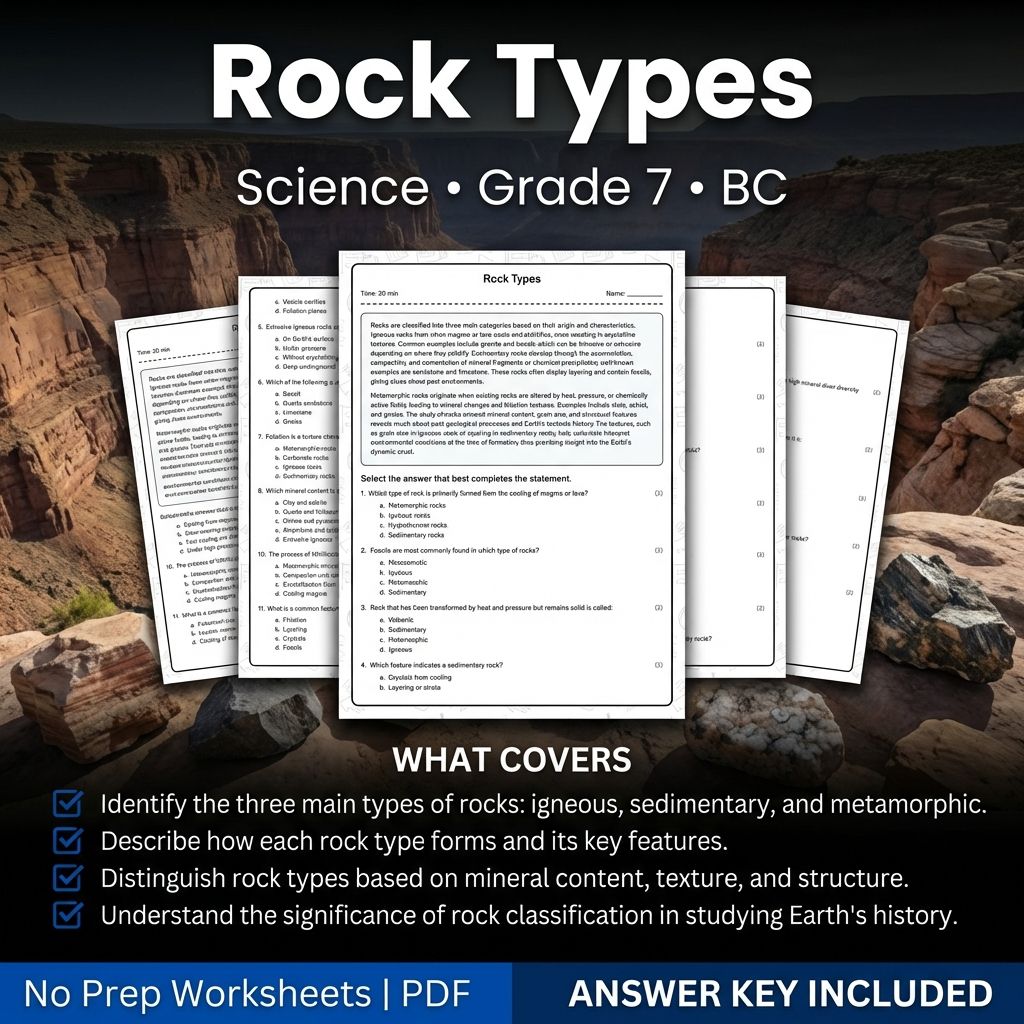
7th Grade Science | Rock Types Worksheet & Answer Key (Printable PDF)
Created byCoral Reef LearningLearning Objectives
- Identify the three main types of rocks: igneous, sedimentary, and metamorphic.
- Describe how each rock type forms and its key features.
- Distinguish rock types based on mineral content, texture, and structure.
Instant download
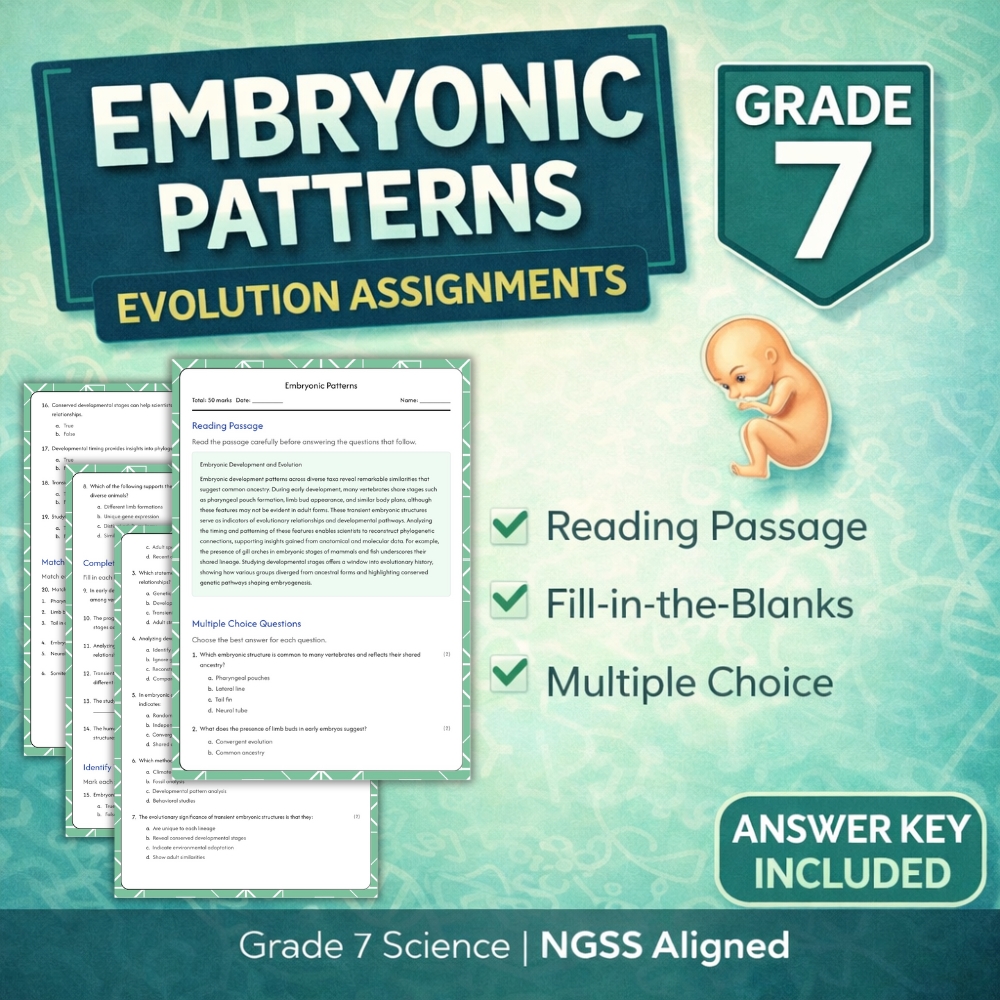
Grade 7 Science | Embryonic Patterns NGSS Worksheet (Answer Key) PDF
 Created byCedar Grove Learning
Learning Objectives
- Compare and identify developmental stages across different animal taxa.
- Explain the significance of conserved embryonic structures in evolutionary relationships.
- Analyze how patterning and timing support phylogenetic reconstruction.
Instant download
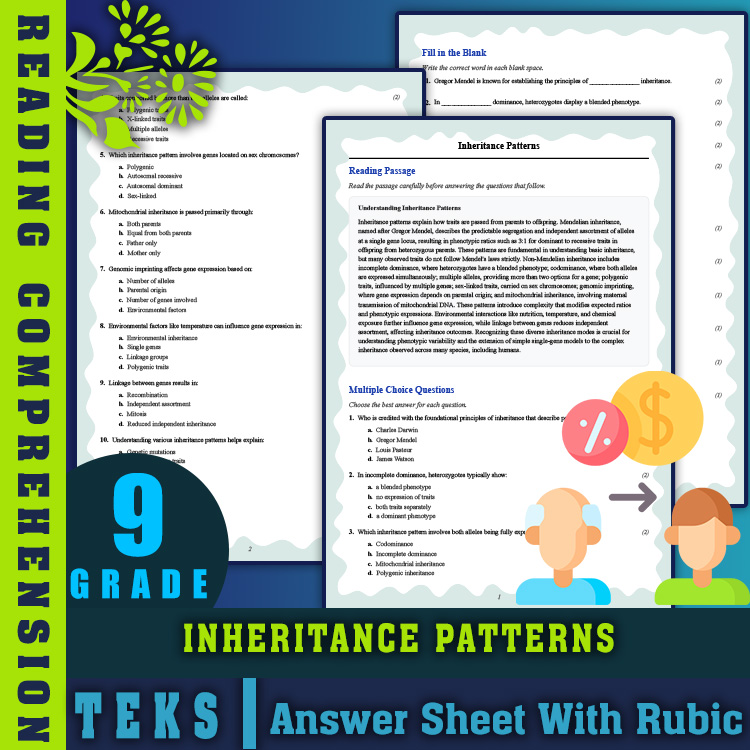
9th Grade Science | Inheritance Patterns Reading Worksheet (PDF + Answer Key)
JCreated byJ.S SheetsLearning Objectives
- Understand Mendelian inheritance, including dominant and recessive traits.
- Recognize non-Mendelian inheritance patterns such as incomplete dominance, codominance, and sex-linked traits.
- Analyze how environmental factors and gene linkage influence phenotypic variation.
Instant download
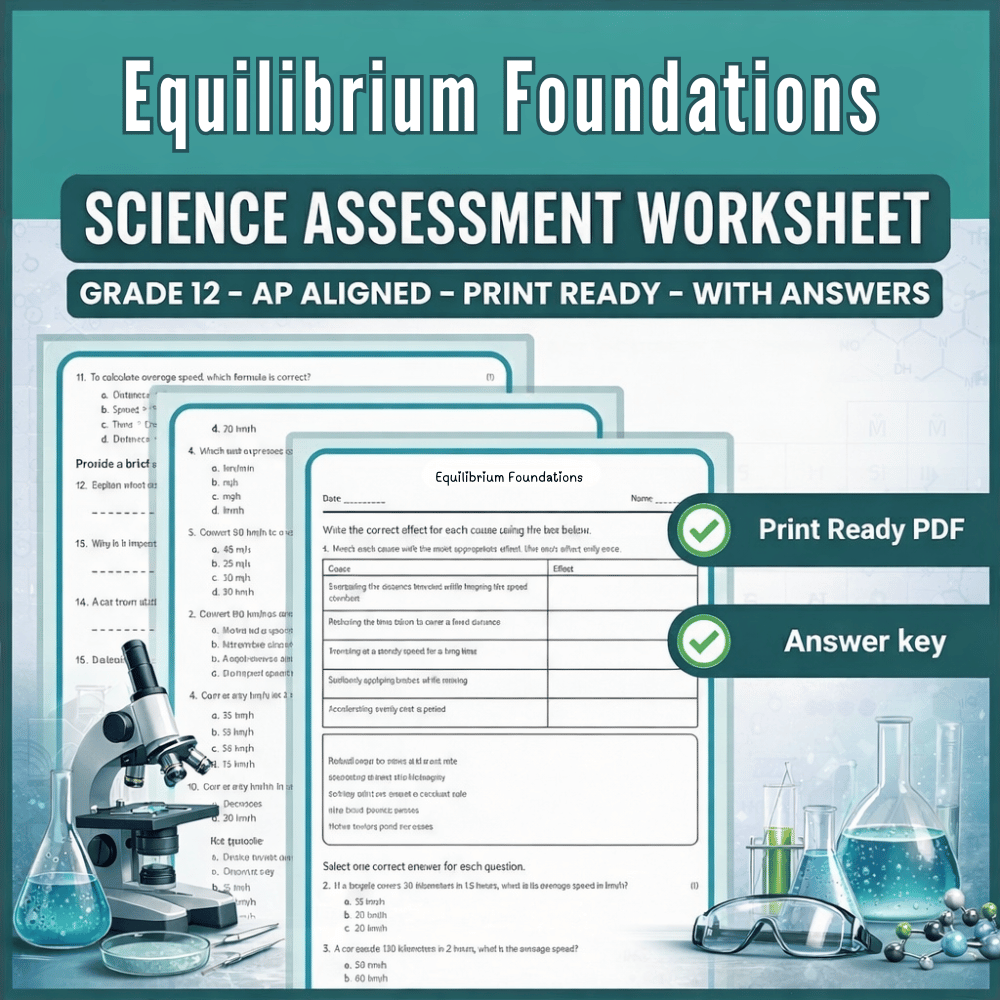
Grade 12 Science | Equilibrium Foundations Worksheet (AP) (PDF)
 Created byBright Mind Resources
Learning Objectives
- Explain the concept of chemical equilibrium as a dynamic balance between forward and reverse reactions.
- Describe the equilibrium constant as a quantitative measure of the position of equilibrium.
- Analyze how changes in concentration and pressure affect the direction of a chemical reaction.
Instant download

Grade 11 Gas Stoichiometry Worksheet | Alberta Chemistry PDF + Answer Key
 Created byEvergreen Desk Education
Learning Objectives
- Use the ideal gas law and mole ratios to relate gas volume, pressure, temperature, and amount for chemical reactions.
- Explain how standard and nonstandard conditions affect gas-volume calculations and conversions.
- Apply gas stoichiometry to real industrial gas scenarios, including emissions accounting and process monitoring.
Instant download
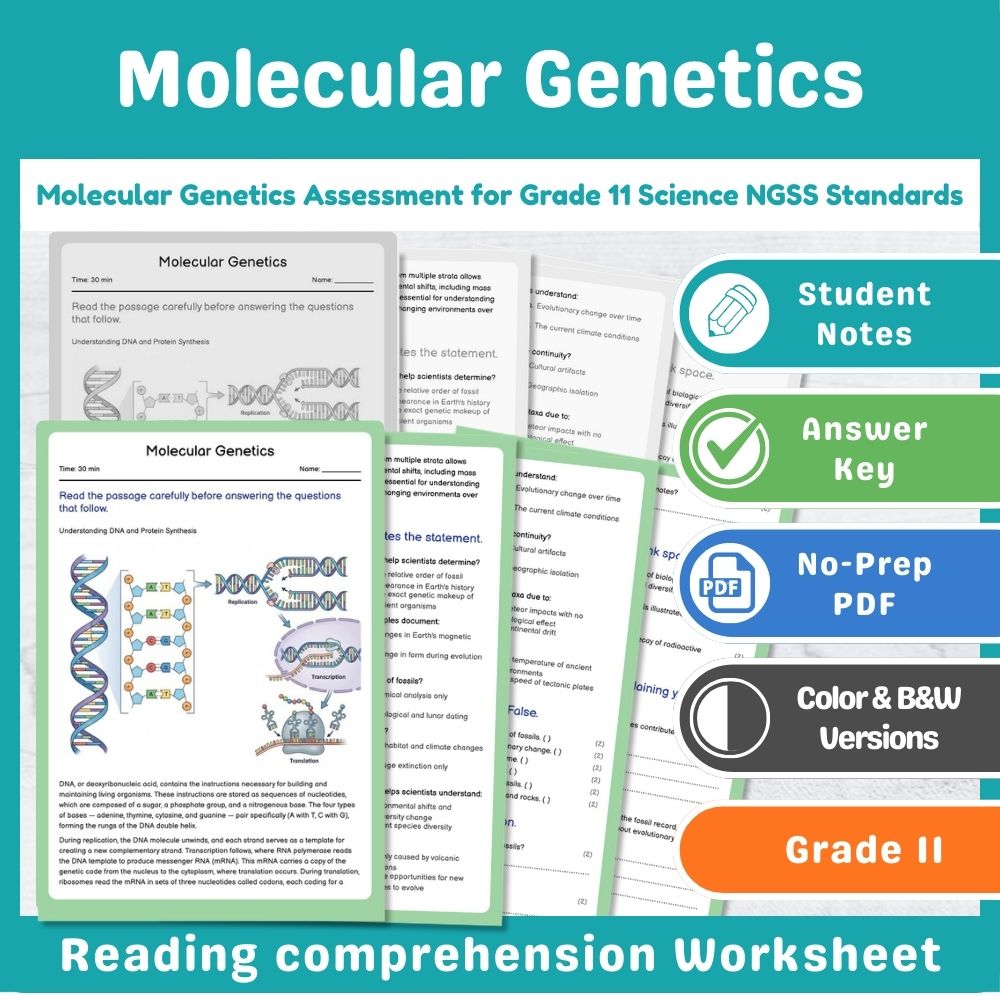
Molecular Genetics Assessment for Grade 11 Science NGSS Standards
Created byPrism Point LearningLearning Objectives
- Understand the relationship between DNA sequences and protein synthesis through replication, transcription, and translation.
- Describe the structure of DNA and the genetic code.
- Explain how chromosomal organization links molecular information to observable traits.
Also included in: Grade 11 Science Mini Bundle – Genetics & Mutation Assessment Pack
Instant download
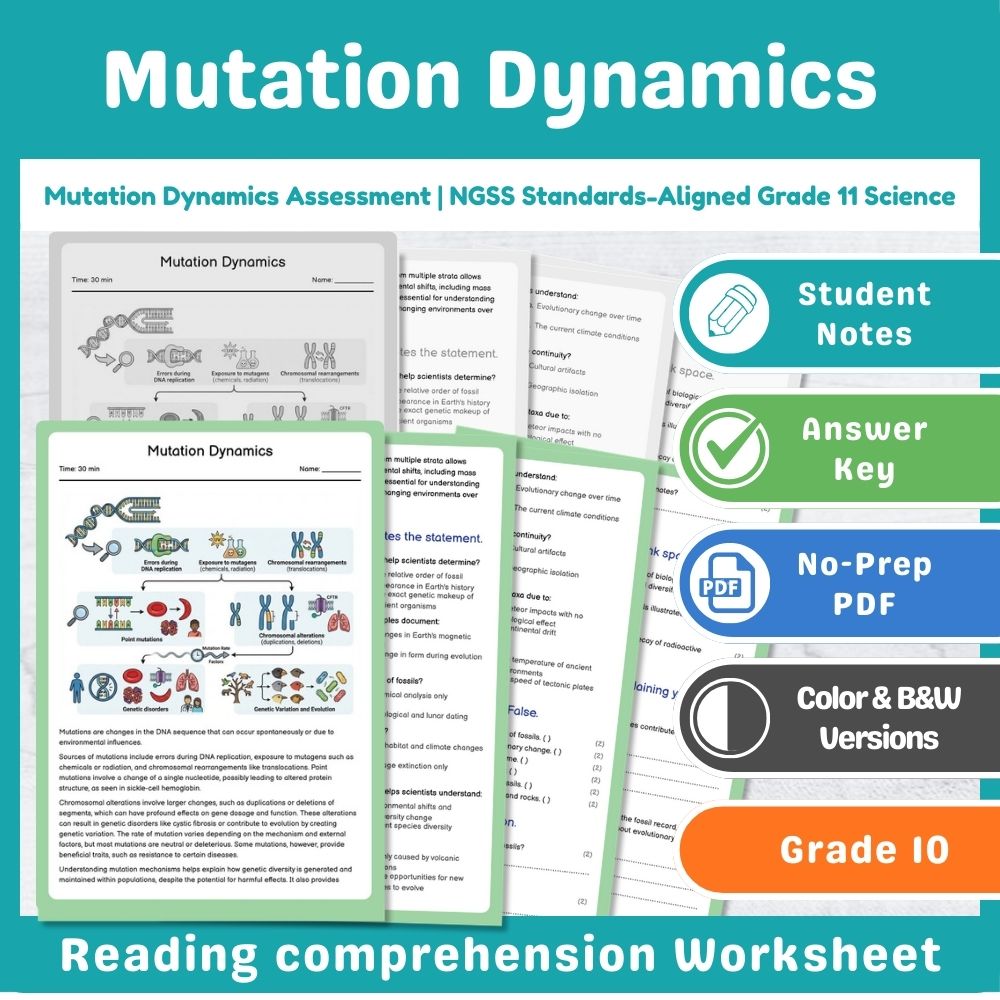
Mutation Dynamics Assessment | NGSS Standards-Aligned Grade 11 Science
Created byPrism Point LearningLearning Objectives
- Identify sources of genetic mutations and chromosomal alterations.
- Explain the mechanisms leading to mutations such as point mutations, frameshifts, duplications, deletions, and translocations.
- Evaluate the effects of mutations on protein function and trait variation.
Also included in: Grade 11 Science Mini Bundle – Genetics & Mutation Assessment Pack
Instant download
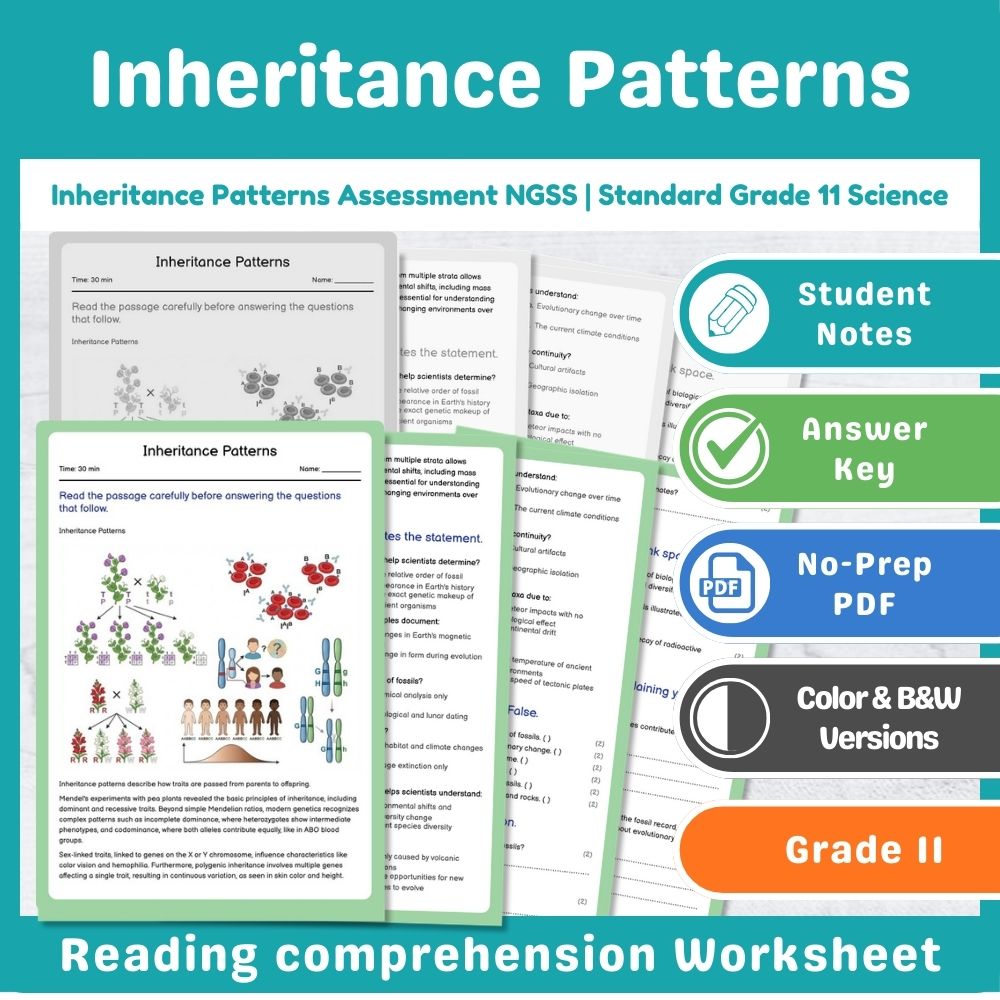
Inheritance Patterns Assessment NGSS | Standard Grade 11 Science
Created byPrism Point LearningLearning Objectives
- Understand the basic principles of Mendelian inheritance and how traits are passed through generations.
- Identify and describe various inheritance patterns beyond simple dominance, such as incomplete dominance, codominance, sex linkage, and polygenic inheritance.
- Interpret pedigrees and predict inheritance outcomes using probability and meiotic mechanisms.
Also included in: Grade 11 Science Mini Bundle – Genetics & Mutation Assessment Pack
Instant download

Grade 12 Efficiency and Constraints Worksheet | California Standards Practice PDF
 Created byClear Sky Classroom
Learning Objectives
- Explain energy conversion efficiency and identify useful energy versus energy losses.
- Interpret energy-flow models that distinguish transferred energy from dissipated energy.
- Analyze why physical constraints prevent processes from achieving 100% useful work conversion.
Instant download

Carrying Capacity Factors Worksheet | California Standards Grade 10 Science
JCreated byJ.S SheetsLearning Objectives
- Understand the key factors that influence an ecosystem's carrying capacity.
- Identify how resource availability, competition, predators, and disease affect population sizes.
- Explain how energy flow and nutrient availability impact ecosystem stability.
Also included in: Grade 10 Genetic Variation and Evolution Science Lesson Bundle +1 more
Instant download

Organelle Architecture Test Prep Printable | Grade 10 Science
Created byPrism Point LearningLearning Objectives
- Compare major eukaryotic cell organelles by structure, membrane arrangement, and electron-microscopy features.
- Explain how compartmentalization supports cellular complexity and contrasts with prokaryotic organization.
- Identify how cytoskeletal elements and membrane-bound compartments contribute to internal cell architecture.
Also included in: Grade 10 Cells & Energy Science Lesson Bundle Ontario Framework Pack
Instant download
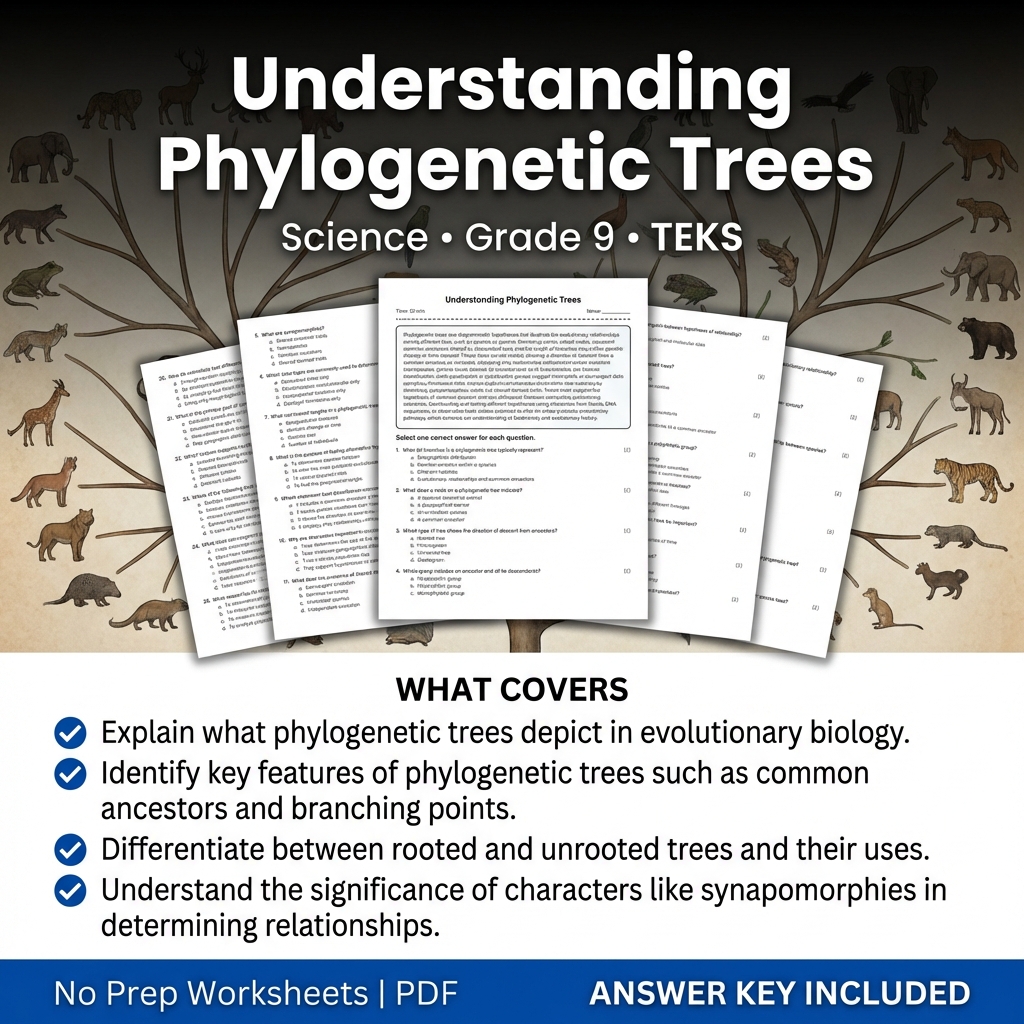
Understanding Phylogenetic Trees Science Worksheet Grade 9 | TEKS
Created byCoral Reef LearningLearning Objectives
- Explain what phylogenetic trees depict in evolutionary biology.
- Identify key features of phylogenetic trees such as common ancestors and branching points.
- Differentiate between rooted and unrooted trees and their uses.
Instant download

Grade 10 Science | Multiple Evidence Lines - Daily Reading Comprehension
Created byCoral Reef LearningLearning Objectives
- Understand how fossil records provide evidence of evolutionary change
- Identify patterns in the fossil record supporting common ancestry
- Interpret molecular data such as DNA and protein similarities among organisms
Instant download

Electron Transport Worksheet | TEKS Science Grade 9 Practice PDF
JCreated byJ.S SheetsLearning Objectives
- Explain how electron transport chains transfer electrons through sequential carriers to terminal electron acceptors
- Describe how proton pumping creates an electrochemical gradient that powers ATP synthase through chemiosmosis
- Compare electron transport in mitochondria and chloroplasts in terms of membrane location and end acceptors
Instant download
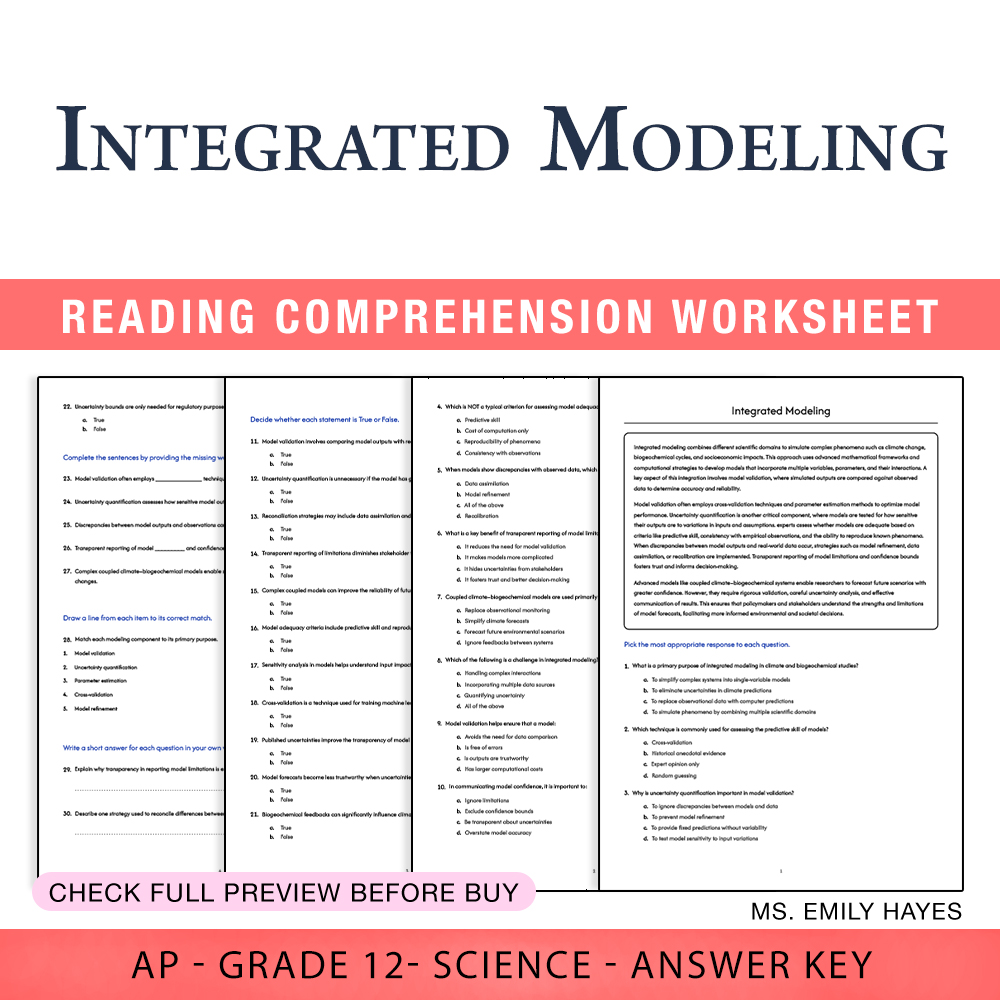
12th Grade Science | Integrated Modeling Assessment Worksheet (PDF+ Answer Key)
Created byCopper Leaf ClassroomLearning Objectives
- Understand the principles of model validation and uncertainty quantification in complex systems.
- Analyze the methods used for scenario forecasting in climate–biogeochemical models.
- Evaluate the criteria for assessing model adequacy and reconciliation strategies for discrepancies.
Also included in: Grade 12 Science AP | Data Analysis and Modeling Skills (PDF+ Answer Key) +1 more
Instant download
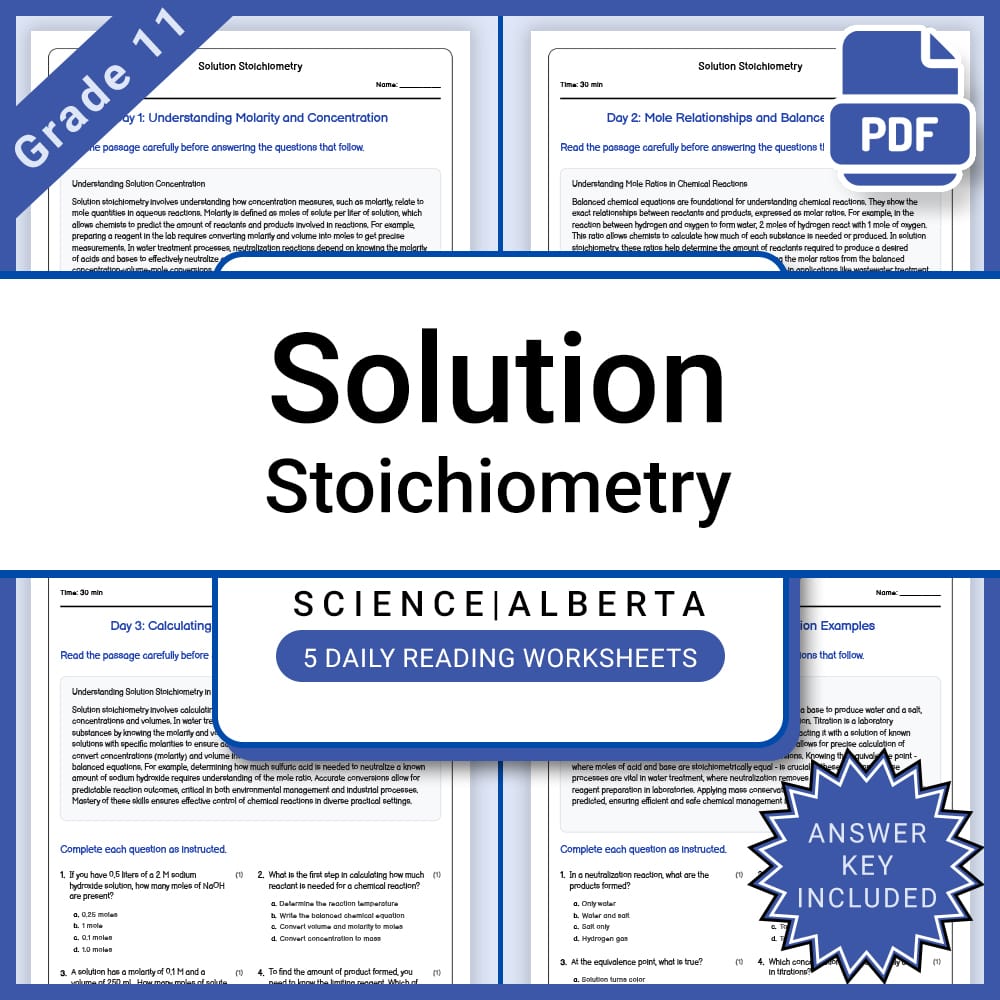
Grade 11 Science – Solution Stoichiometry Daily Reading Worksheet + Answer Key
JCreated byJ.S SheetsLearning Objectives
- Understand key concepts related to Science
- Apply knowledge through practice questions
- Demonstrate comprehension of the material
Also included in: Grade 11 Science Lesson Bundle | Core Concepts & Theories in Chemistry & Physics +1 more
Instant download
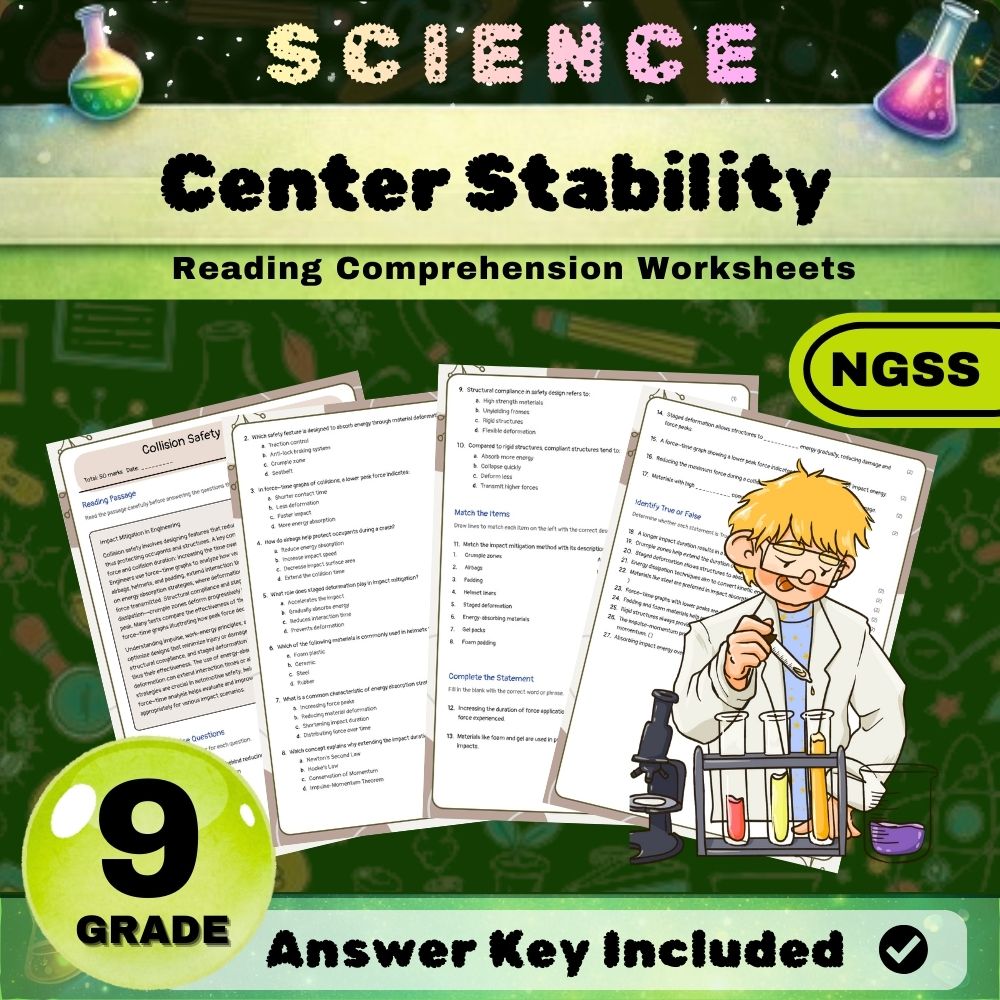
Grade 9 Science – Collision Safety Strategies Worksheet (NGSS) PDF
Created byMaple Path LearningLearning Objectives
- Understand how impulse and force-time relationships affect collision safety.
- Analyze force–time graphs to evaluate different mitigation strategies during impacts.
- Compare energy absorption and material deformation techniques for reducing peak forces.
Also included in: Grade 9 Science | Motion and Stability Forces & Interactions NGSS Unit Bundle +1 more
Instant download
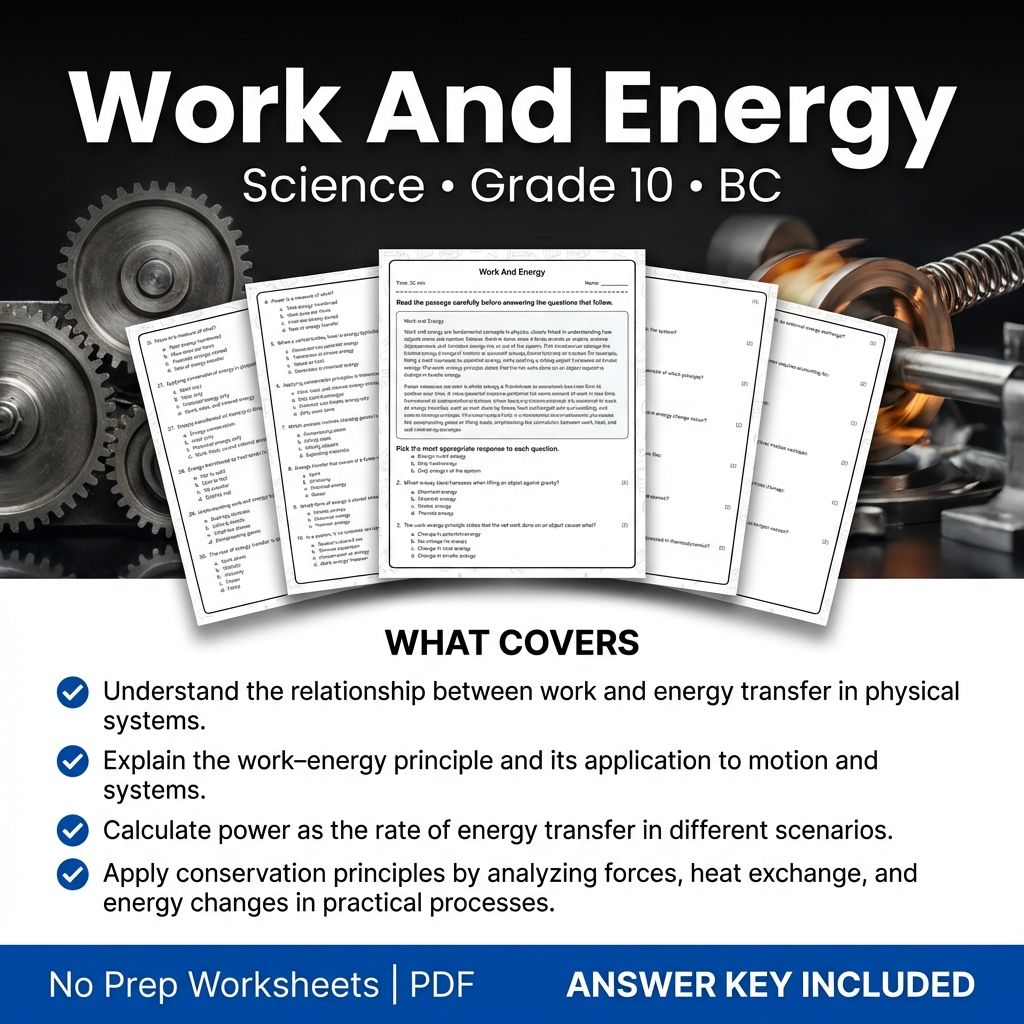
Grade 10 Science Worksheet | Work and Energy Practice PDF & Answer Key
Created byCoral Reef LearningLearning Objectives
- Understand the relationship between work and energy transfer in physical systems.
- Explain the work–energy principle and its application to motion and systems.
- Calculate power as the rate of energy transfer in different scenarios.
Instant download
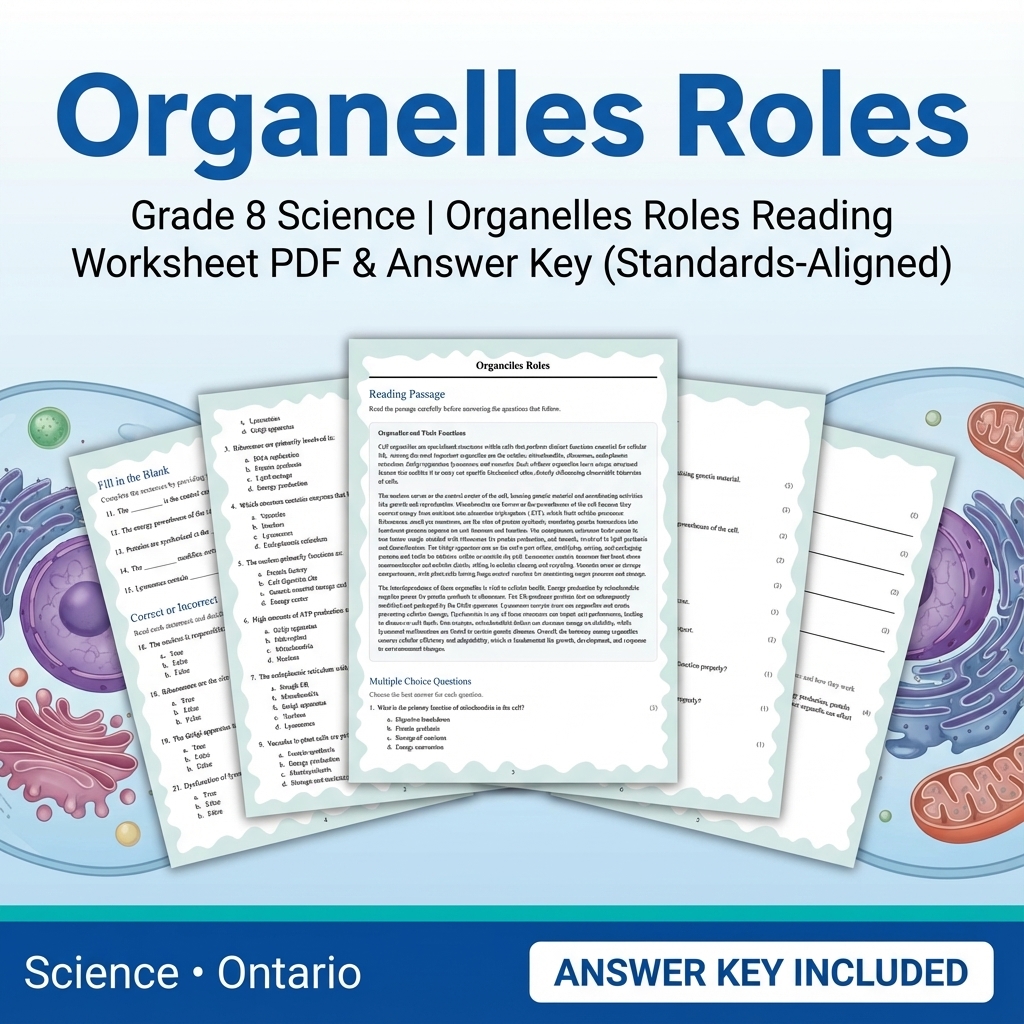
Grade 8 Science | Organelles Roles Reading Worksheet PDF & Answer Key
JCreated byJ.S SheetsLearning Objectives
- Identify the major organelles in a cell and describe their functions.
- Understand how the structure of organelles relates to their specific roles in energy, protein synthesis, and transport.
- Explain the interdependence among different organelles in cellular activities.
Also included in: Grade 8 Science Unit Bundle – Cell Structure & Function (Answer Keys Included) +1 more
Instant download
Grade 9 Science | Cell Theory Worksheet (Answer Key) – TEKS-Aligned
Created byBright Mind ResourcesLearning Objectives
- Describe the main ideas of cell theory including the role of cells in all living organisms.
- Differentiate between unicellular and multicellular organisms and understand cell specialization.
- Compare prokaryotic and eukaryotic cell structures and explain how cellular organization underlies organism functions.
Also included in: Grade 9 Science Unit | Cell Structures & Transport Mechanisms Pack(TEKS-Aligned) +3 more
Instant download

Conservation of Matter Assessment | California Standards Grade 7 Science
Created byPrism Point LearningLearning Objectives
- Explain conservation of matter in terms of atoms rearranging in a closed system
- Identify how physical and chemical changes differ while still conserving total mass
- Use evidence from mass measurements to support the claim that total mass stays constant in a closed system
Also included in: Grade 7 Forces and Matter Science Lesson Bundle: California Standards +1 more
Instant download
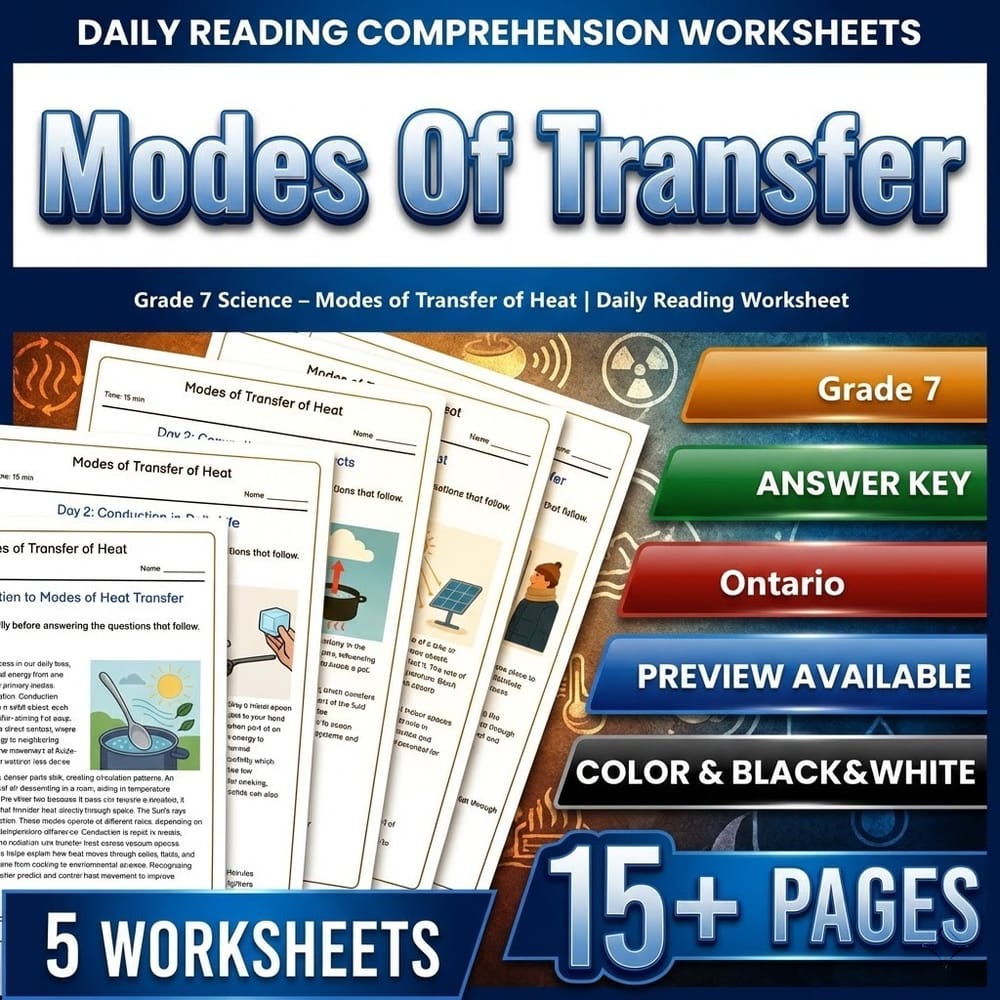
Grade 7 Science – Modes of Transfer of Heat | Daily Reading Worksheet
 Created byQuiet Forest Education
Learning Objectives
- Understand key concepts related to Science
- Apply knowledge through practice questions
- Demonstrate comprehension of the material
Also included in: Thermal Energy Grade 7 Science Daily Reading Worksheets Bundle | Ontario +1 more
Instant download
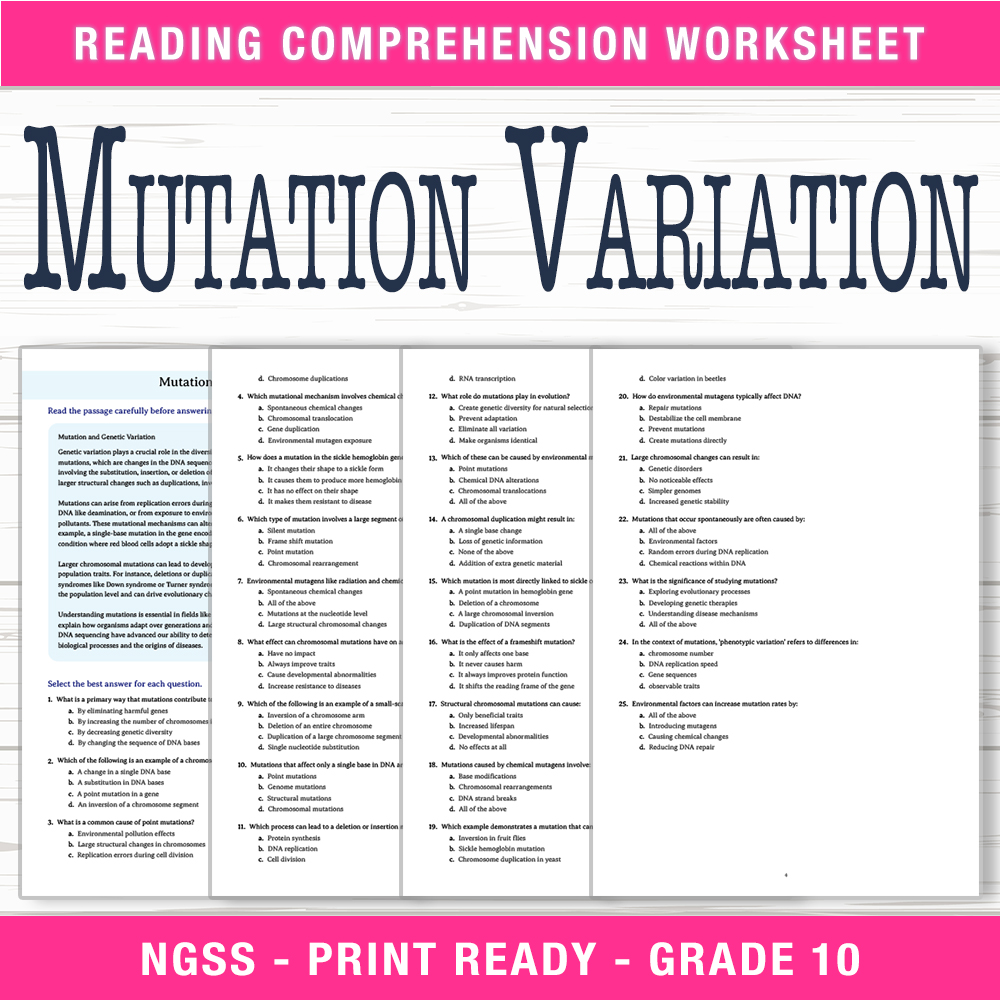
Grade 10 Science | Mutation Variation Worksheet (PDF + Answer Key)
 Created byRiverstone Classroom
Learning Objectives
- Understand the molecular mechanisms behind genetic mutations, including point mutations, insertions, deletions, and structural rearrangements.
- Identify various mutational mechanisms such as replication errors, spontaneous chemical changes, and environmental mutagens.
- Explain how mutations can alter gene function and contribute to phenotypic diversity, including human examples like sickle hemoglobin.
Instant download

Grade 7 Design Solutions Worksheet | Practice & Alberta Standards PDF
Created byClear Sky ClassroomLearning Objectives
- Explain how building orientation and south-facing glazing can support passive solar heating in Alberta’s climates.
- Describe how thermal barriers and reduced thermal bridging improve a building envelope’s thermal performance.
- Compare how heat-recovery ventilation can conserve energy while maintaining indoor air quality.
Instant download

Mass Conservation Worksheet | NGSS Grade 8 Science Assessment
 Created bySkylark Worksheets
Learning Objectives
- Explain mass conservation in chemical reactions in terms of conservation of atoms in a closed system.
- Use particulate-level models and symbolic equations to predict that total reactant mass equals total product mass.
- Connect macroscopic mass measurements to microscopic atom accounting and balanced stoichiometric relationships.
Also included in: Matter and Its Interactions Lesson Bundle | Grade 8 Science | NGSS +1 more
Instant download

Reaction Evidence Worksheet | NGSS Grade 8 Science Assessment
Created bySkylark WorksheetsLearning Objectives
- Identify evidence that indicates a chemical change (color change, gas production, precipitate formation, temperature change).
- Explain how particle rearrangement leads to new substances with new properties.
- Interpret qualitative and quantitative data from reactions to distinguish chemical change from physical mixing.
Also included in: Matter and Its Interactions Lesson Bundle | Grade 8 Science | NGSS +1 more
Instant download
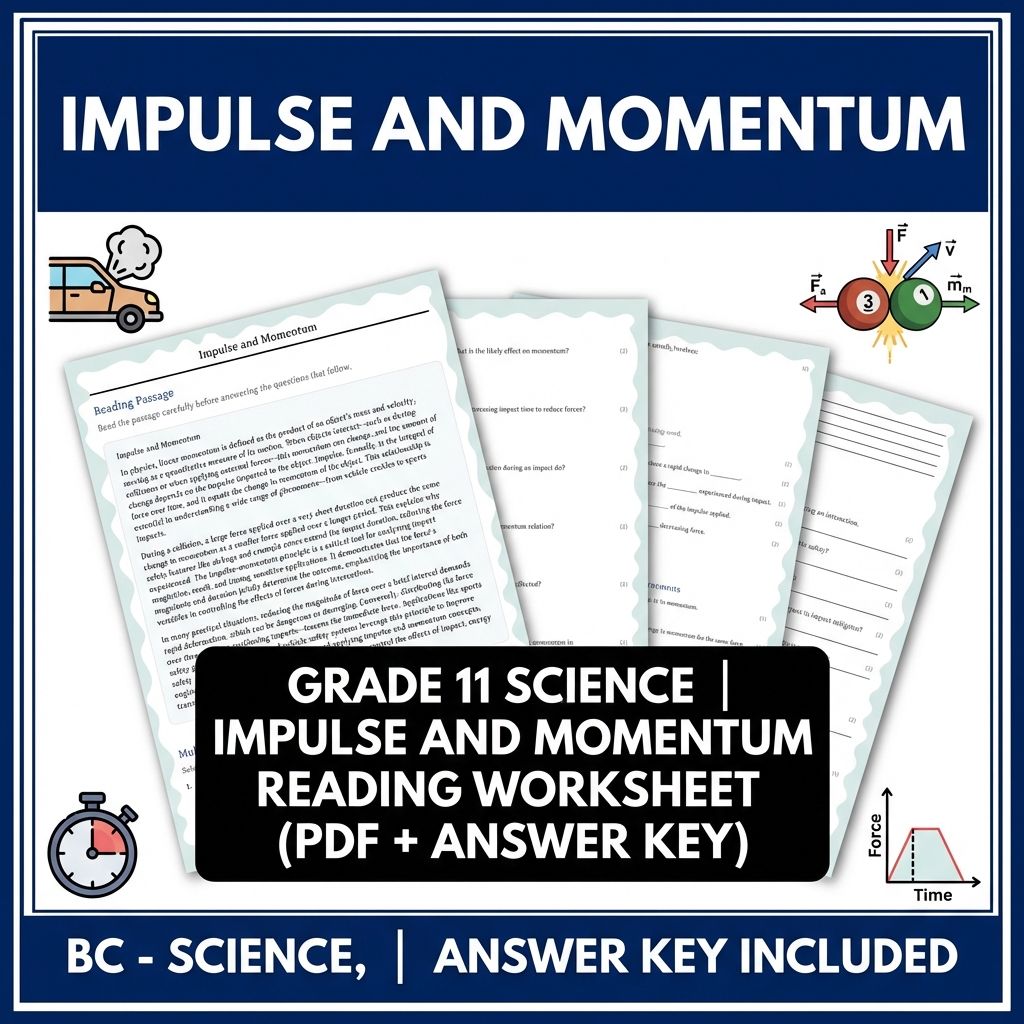
Grade 11 Science | Impulse and Momentum Reading Worksheet (PDF + Answer Key)
JCreated byJ.S SheetsLearning Objectives
- Understand the concepts of impulse and momentum in physics.
- Describe how force and time relate to changes in momentum.
- Analyze collision processes using impulse–momentum principles.
Instant download
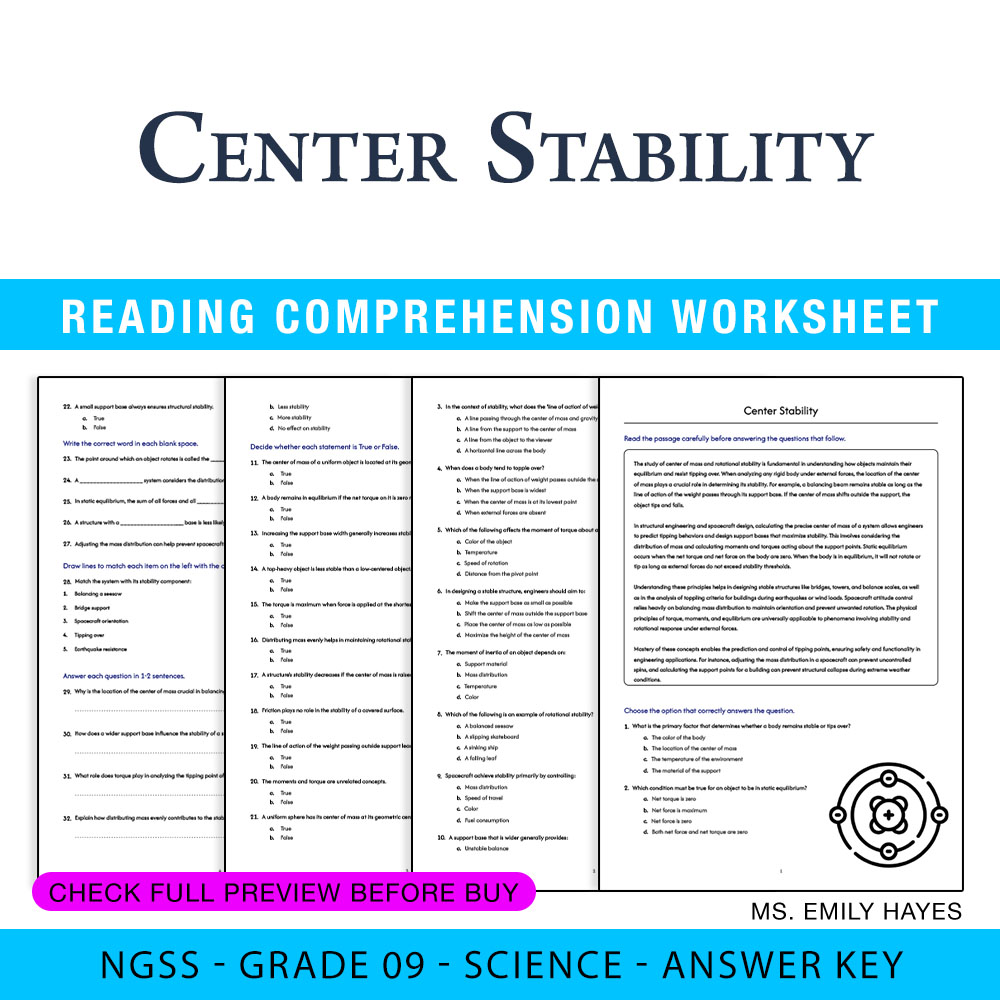
9th Grade Science | Center Stability Worksheet (PDF+ Answer Key)
Created byCopper Leaf ClassroomLearning Objectives
- Understand the concept of center of mass and how it affects rotational stability of rigid bodies.
- Apply torque and equilibrium conditions to analyze stability in structures and objects.
- Calculate the location of the center of mass for composite systems and determine tipping thresholds.
Instant download

Grade 10 Natural Selection Worksheet | General Practice PDF
Created byClear Sky ClassroomLearning Objectives
- Explain how heritable variation and differential reproduction lead to natural selection in populations
- Describe how allele frequencies can shift over generations as a result of selection pressures
- Use examples to distinguish adaptation from an organism’s lifetime responses to the environment
Instant download
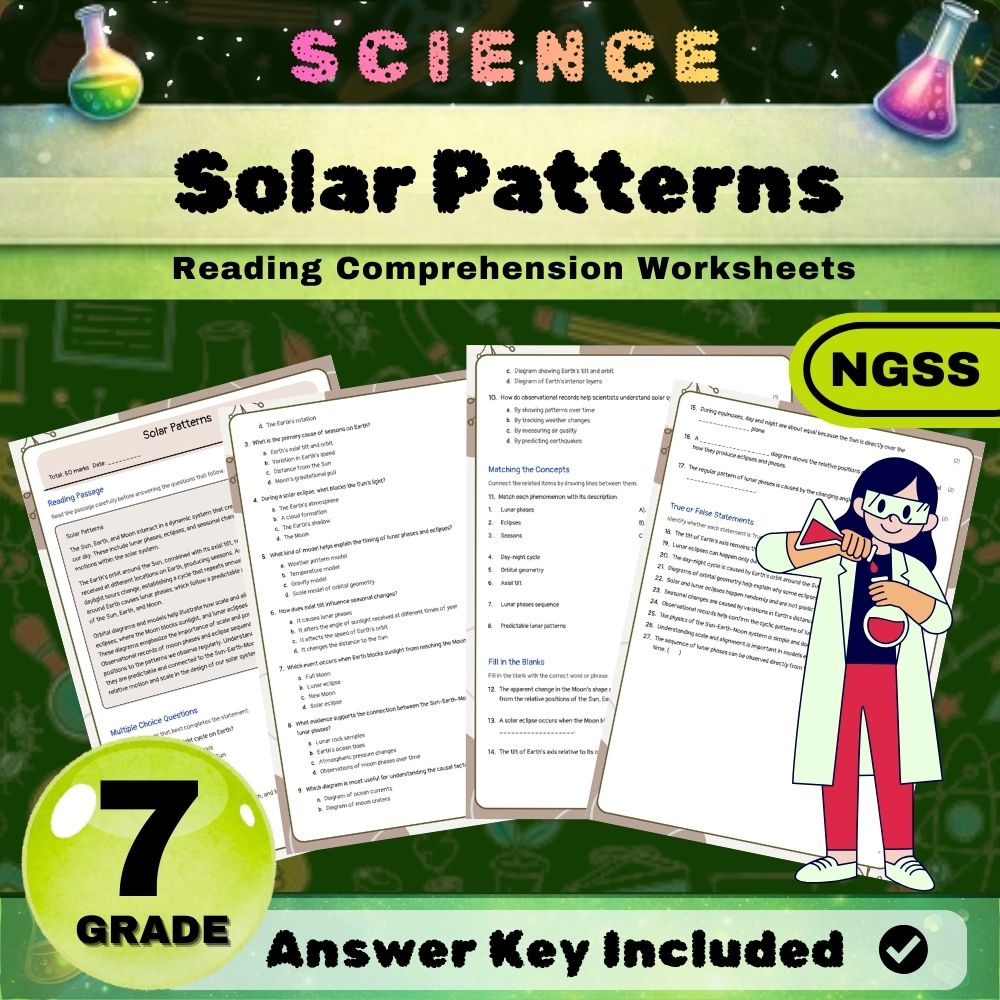
Grade 7 Science | Solar Patterns NGSS Worksheet (PDF) for Engaged Learning
Created byMaple Path LearningLearning Objectives
- Describe how relative motions of the Sun, Earth, and Moon produce observable cyclic patterns such as lunar phases, eclipses, and seasonal changes.
- Explain how diagrams of orbital geometry and axial tilt relate to day-night cycles and phase timing.
- Use observational records and phase sequences as evidence connecting positional relationships to predictable solar system patterns.
Instant download
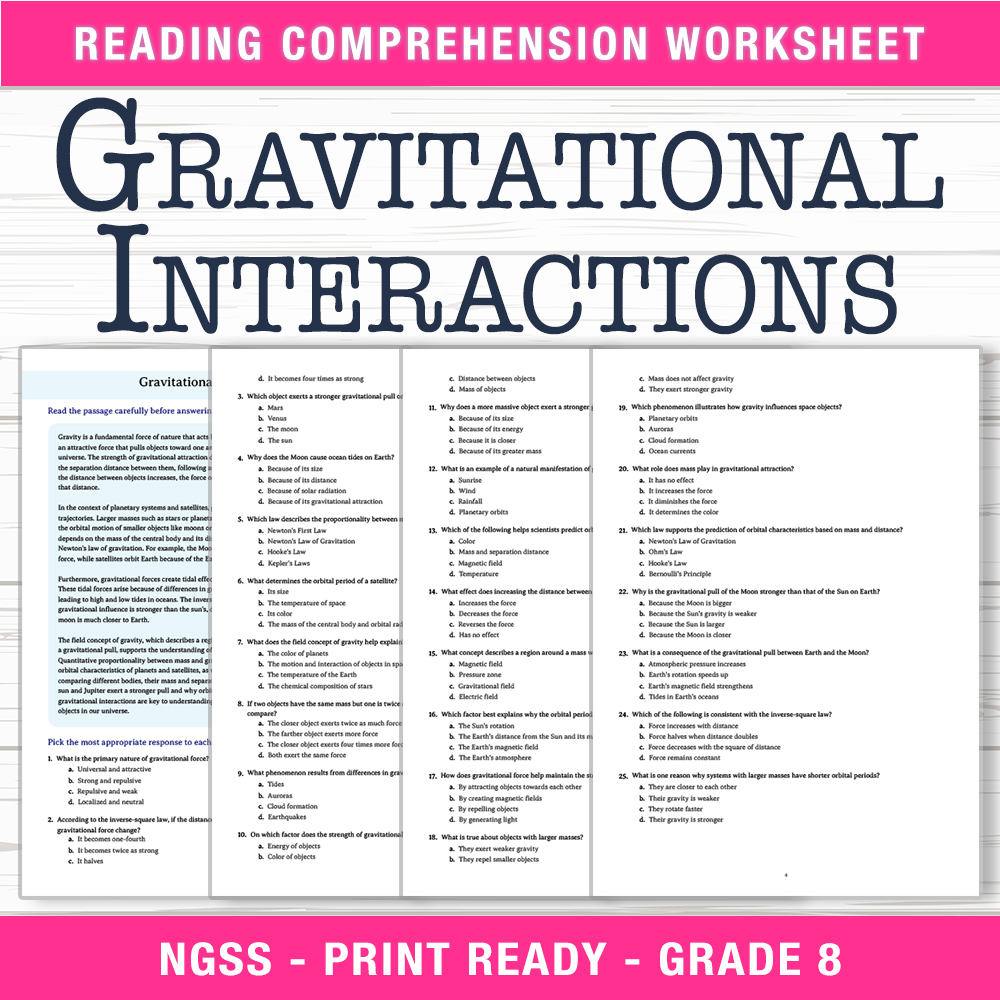
Grade 8 Science | Gravitational Interactions Worksheet (PDF + Answer Key)
Created byRiverstone ClassroomLearning Objectives
- Understand the concept of gravity as a universal attractive force between objects.
- Explain how mass and distance influence gravitational force and orbital behavior.
- Describe real-world manifestations of gravity such as planetary orbits, satellite motion, and tides.
Also included in: Grade 8 Science Unit | Momentum, Forces & Magnetism Worksheets (PDF)
Instant download
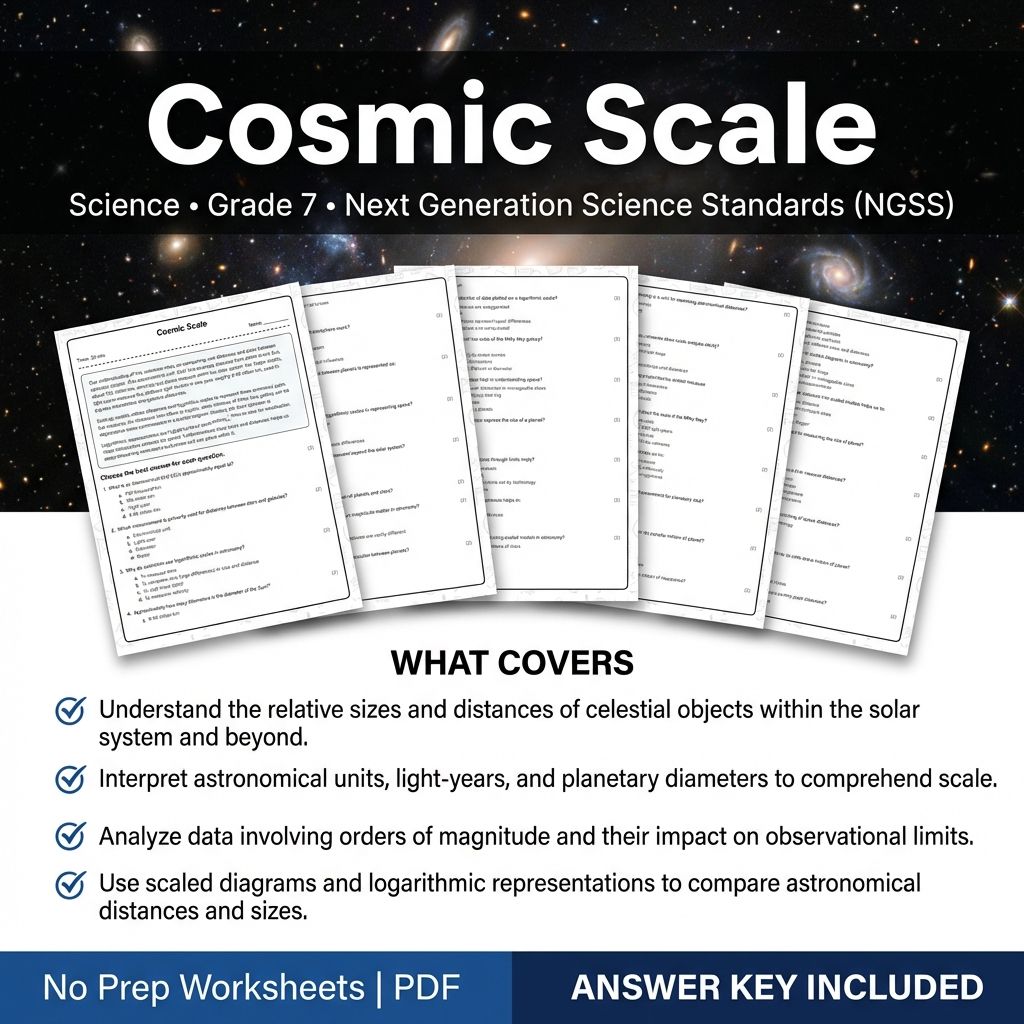
Grade 7 Science Worksheet | Cosmic Scale Concepts (PDF & Answer Key)
Created byCoral Reef LearningLearning Objectives
- Understand the relative sizes and distances of celestial objects within the solar system and beyond.
- Interpret astronomical units, light-years, and planetary diameters to comprehend scale.
- Analyze data involving orders of magnitude and their impact on observational limits.
Instant download

Grade 11 Science | Membrane Energetics Worksheet | AP Aligned
 Created byLumora Learning
Learning Objectives
- Explain the principles of bioenergetic membrane processes including proton gradients and electron transport chains.
- Analyze how electrochemical gradients drive ATP synthesis in aerobic and photosynthetic systems.
- Interpret redox potential diagrams and stoichiometric calculations related to membrane energetics.
Also included in: Grade 11 Science | Biology and Ecosystems Custom Bundle | AP Framework
Instant download
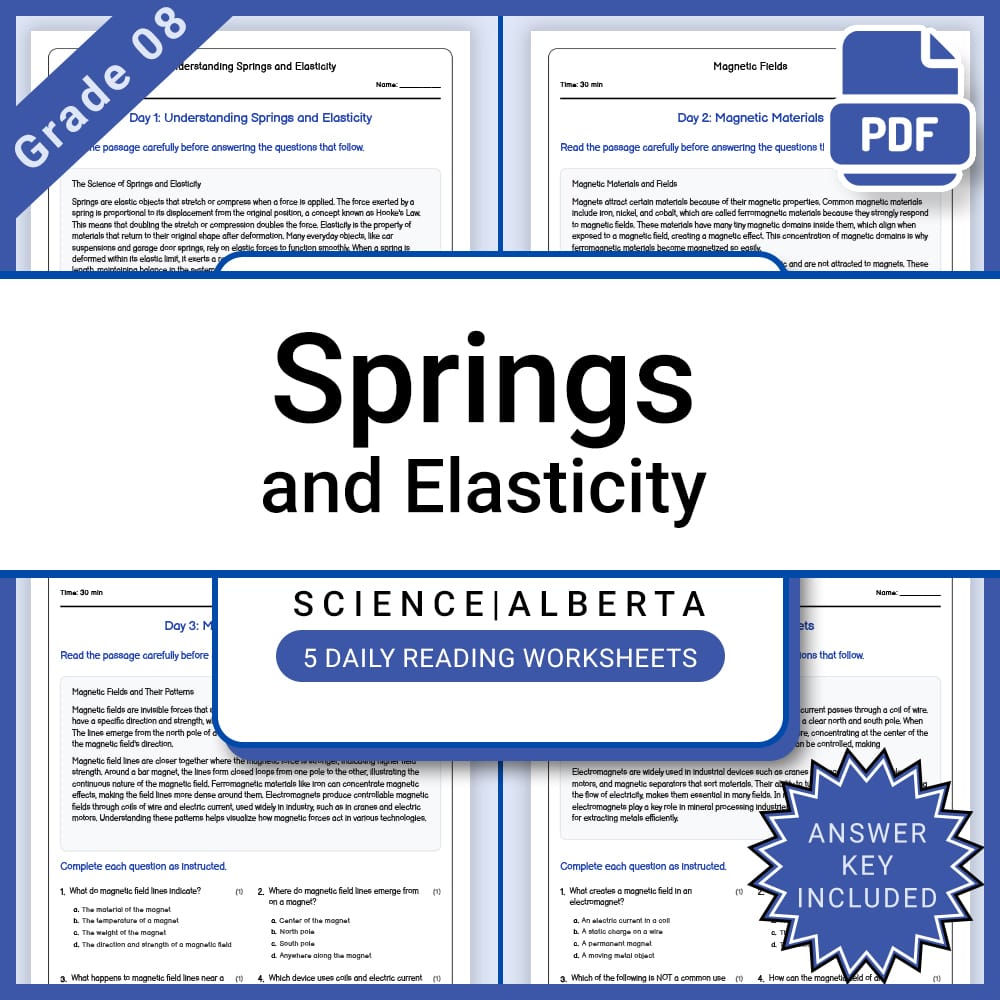
Grade 8 Science – Springs and Elasticity Daily Reading Worksheet + Answer Key
JCreated byJ.S SheetsLearning Objectives
- Identify the properties of elastic materials and forces.
- Understand the relationship between force and displacement in springs.
- Recognize real-world examples of elastic behavior.
Also included in: Grade 8 Science Lesson Bundle | Forces, Motion, and Energy +1 more
Instant download
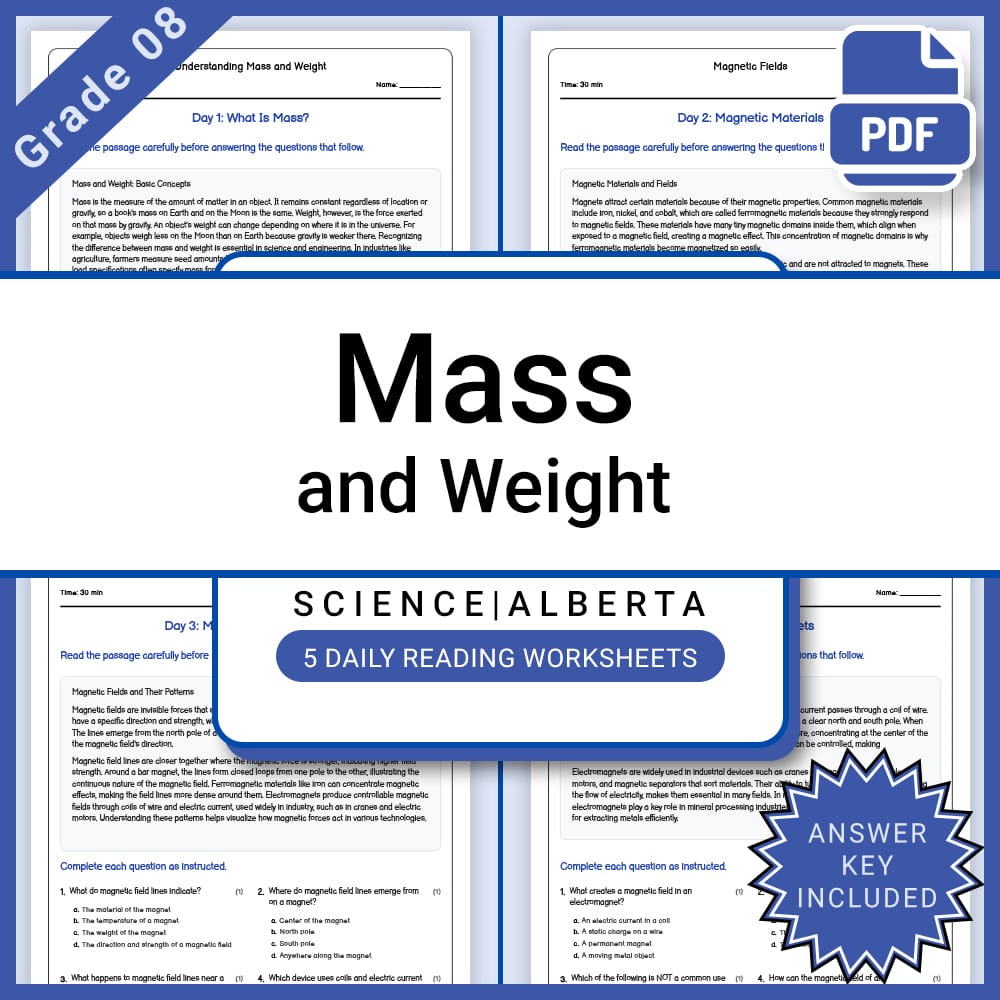
Grade 8 Science – Mass and Weight Daily Reading Worksheet + Answer Key
JCreated byJ.S SheetsLearning Objectives
- Define mass and weight and distinguish between the two concepts.
- Explain how mass is measured and how it differs from weight.
- Explore regional examples of mass and weight applications.
Also included in: Grade 8 Science Lesson Bundle | Forces, Motion, and Energy +1 more
Instant download
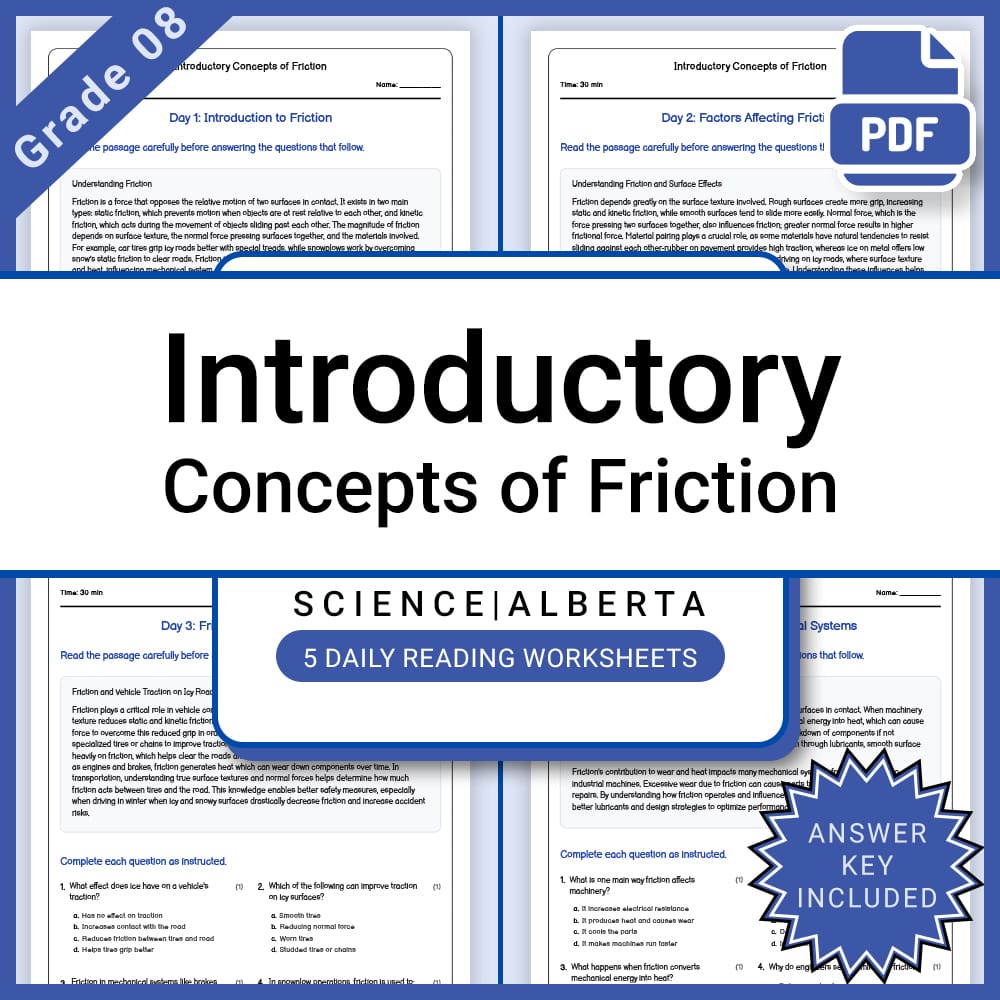
Grade 8 Science – Concepts of Friction | Daily Reading Worksheet + Answer Key
JCreated byJ.S SheetsLearning Objectives
- Define static and kinetic friction
- Identify factors affecting frictional force
- Relate examples of friction in everyday life
Also included in: Grade 8 Science Lesson Bundle | Forces, Motion, and Energy +1 more
Instant download
Browse more categories
About Science Worksheets
Find Science worksheets spanning core skills, practice, and review. All 44,295 resources are instant PDF downloads for the classroom or home.
Every worksheet on MyTeachingSheets is created by independent teacher-authors and reviewed before publication. All resources download as printable PDFs for classroom, homework, or at-home practice, and many include answer keys. Preview any worksheet free before buying.