
Science Worksheets
42,859 subject resources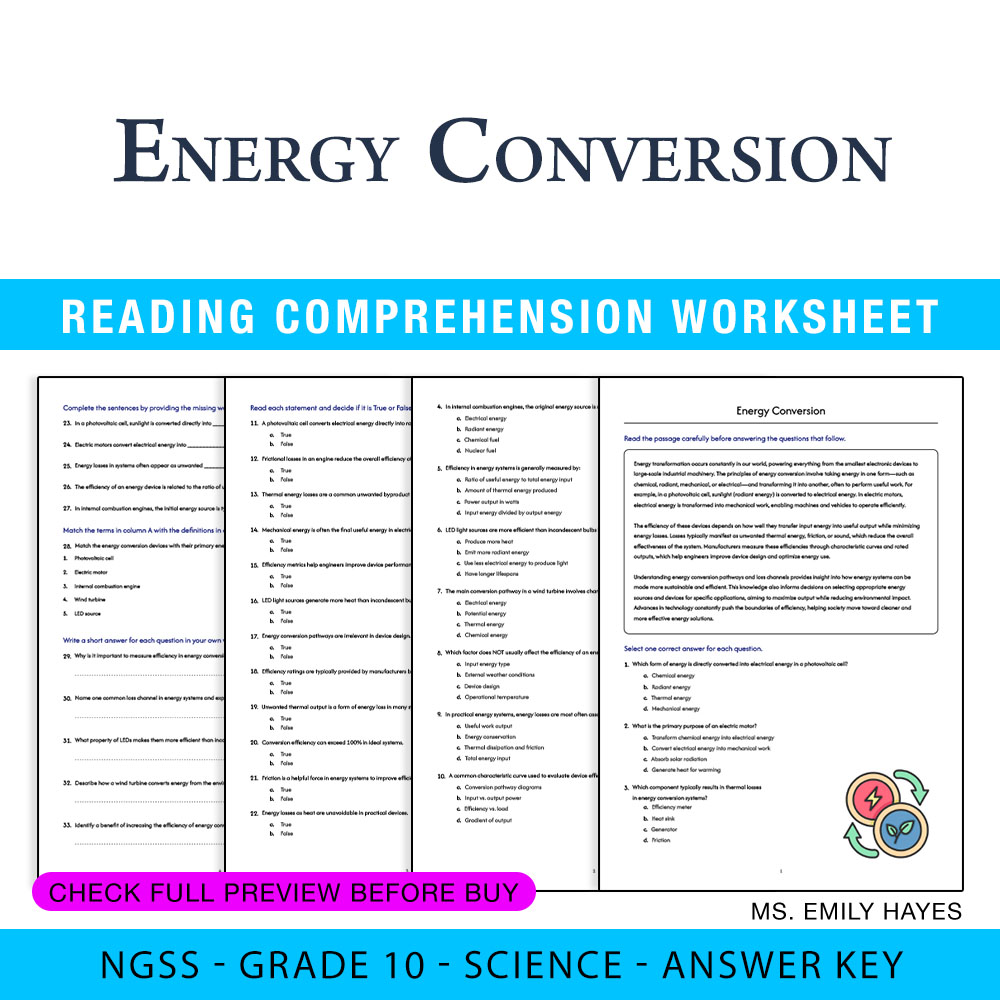
Grade 10 Science | Energy Conversion Worksheet (PDF+ Answer Key)
 Created byCopper Leaf Classroom
Learning Objectives
- Explain different forms of energy and how they convert from one to another in practical devices.
- Identify efficiency metrics and common loss channels in energy conversion systems.
- Analyze pathways of energy transfer in devices such as photovoltaic cells, motors, and engines.
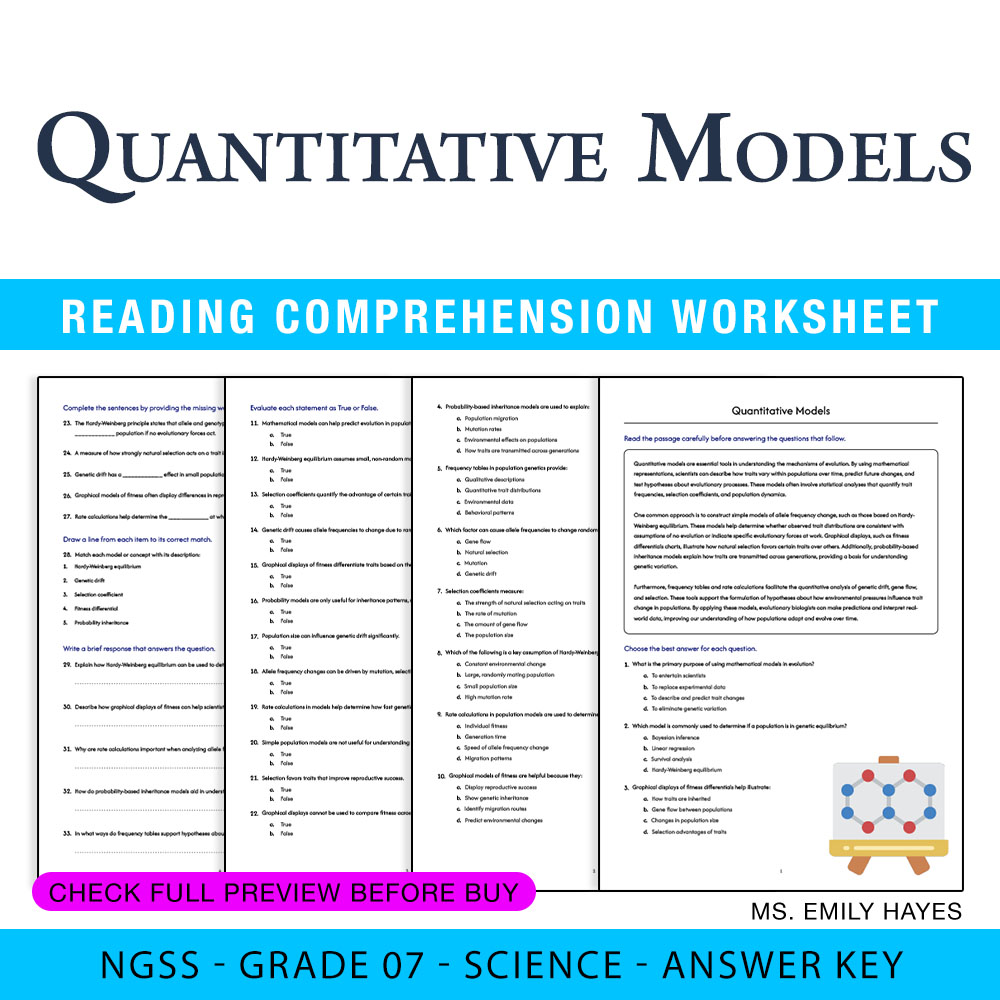
7th Grade Science | Quantitative Models Worksheet (PDF + Answer Key)
Created byCopper Leaf ClassroomLearning Objectives
- Understand how mathematical and statistical models are used to represent evolutionary processes.
- Interpret frequency tables, Hardy-Weinberg calculations, and rate data to analyze population genetics.
- Apply concepts of allele frequency change and genetic drift to real-world scenarios.
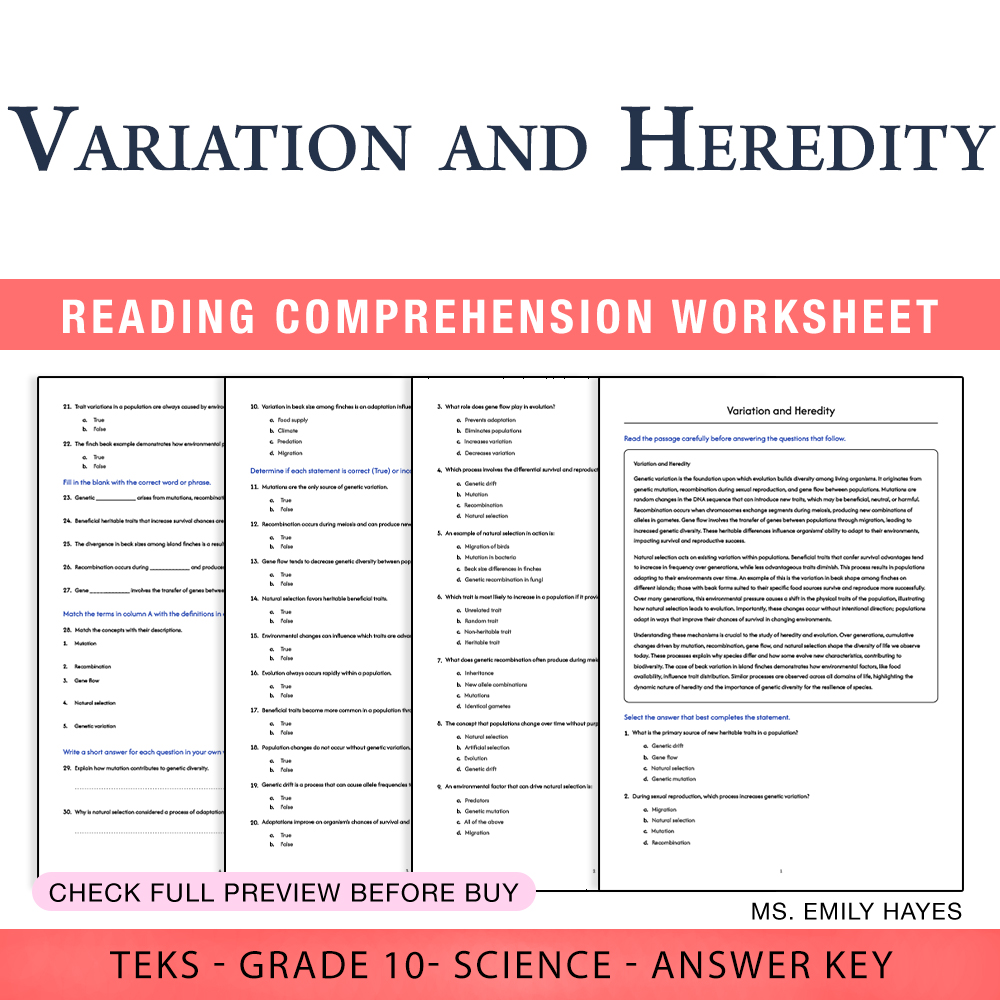
10th Grade Science | Variation and Heredity Worksheet (PDF+ Answer Key)
Created byCopper Leaf ClassroomLearning Objectives
- Understand how genetic variation arises through mutation, recombination, and gene flow.
- Explain how heritable traits influence survival and reproductive success in different environments.
- Describe natural selection and its role in changing allele frequencies over generations.
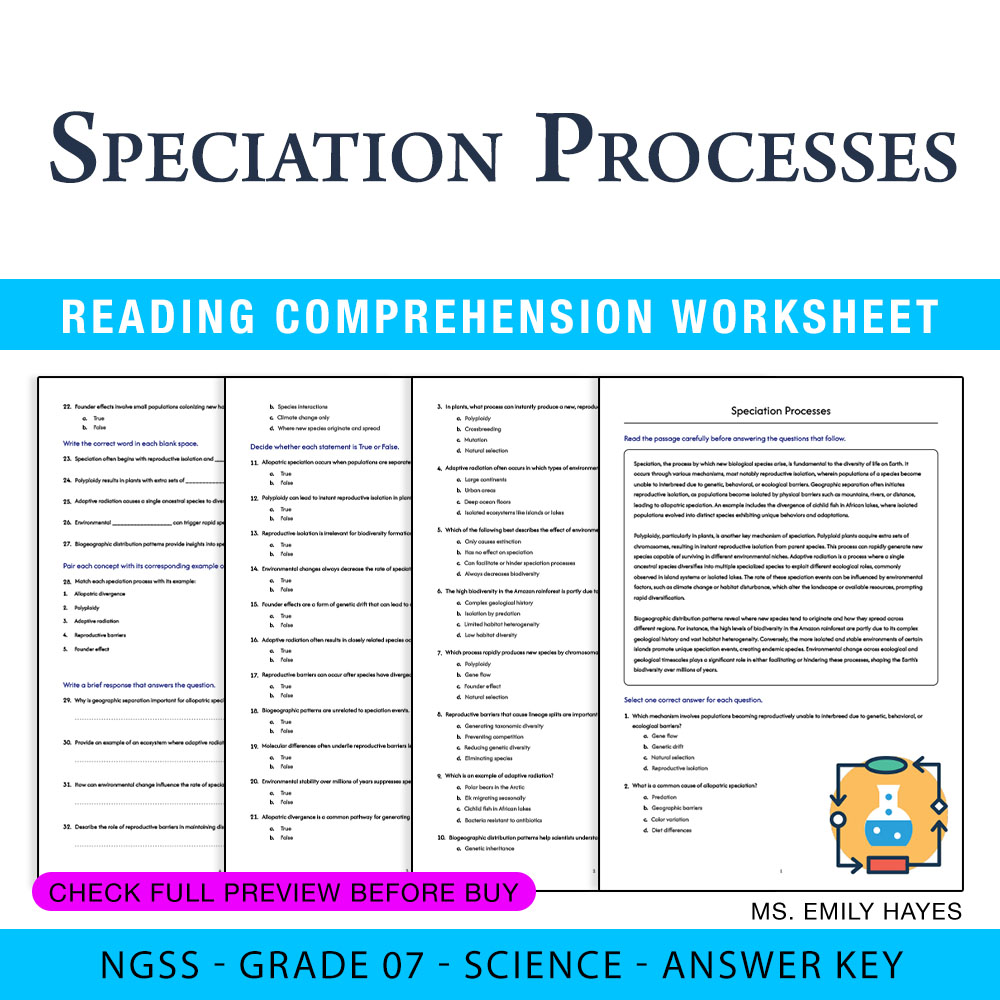
7th Grade Science | Speciation Processes Worksheet (PDF + Answer Key)
Created byCopper Leaf ClassroomLearning Objectives
- Explain the mechanisms driving speciation, including reproductive isolation and geographic separation.
- Describe examples of biodiversity resulting from speciation, such as cichlid radiations and plant polyploidization.
- Analyze how environmental changes influence rates of speciation and biodiversity over ecological and geological timescales.
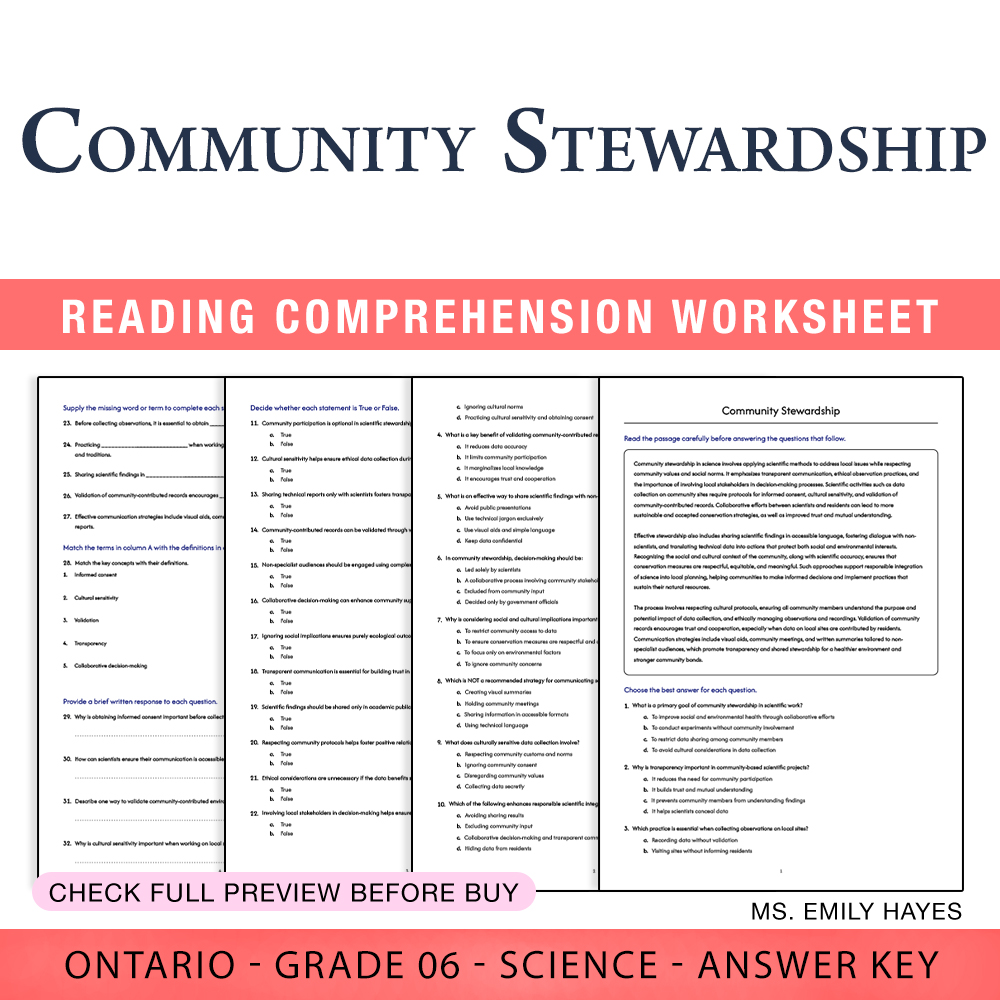
6th Grade Science | Community Stewardship Worksheet (PDF+ Answer Key)
Created byCopper Leaf ClassroomLearning Objectives
- Understand the importance of community engagement in scientific stewardship.
- Learn protocols for obtaining consent and practicing cultural sensitivity during local environmental assessments.
- Develop skills to validate and share community-contributed scientific records effectively.
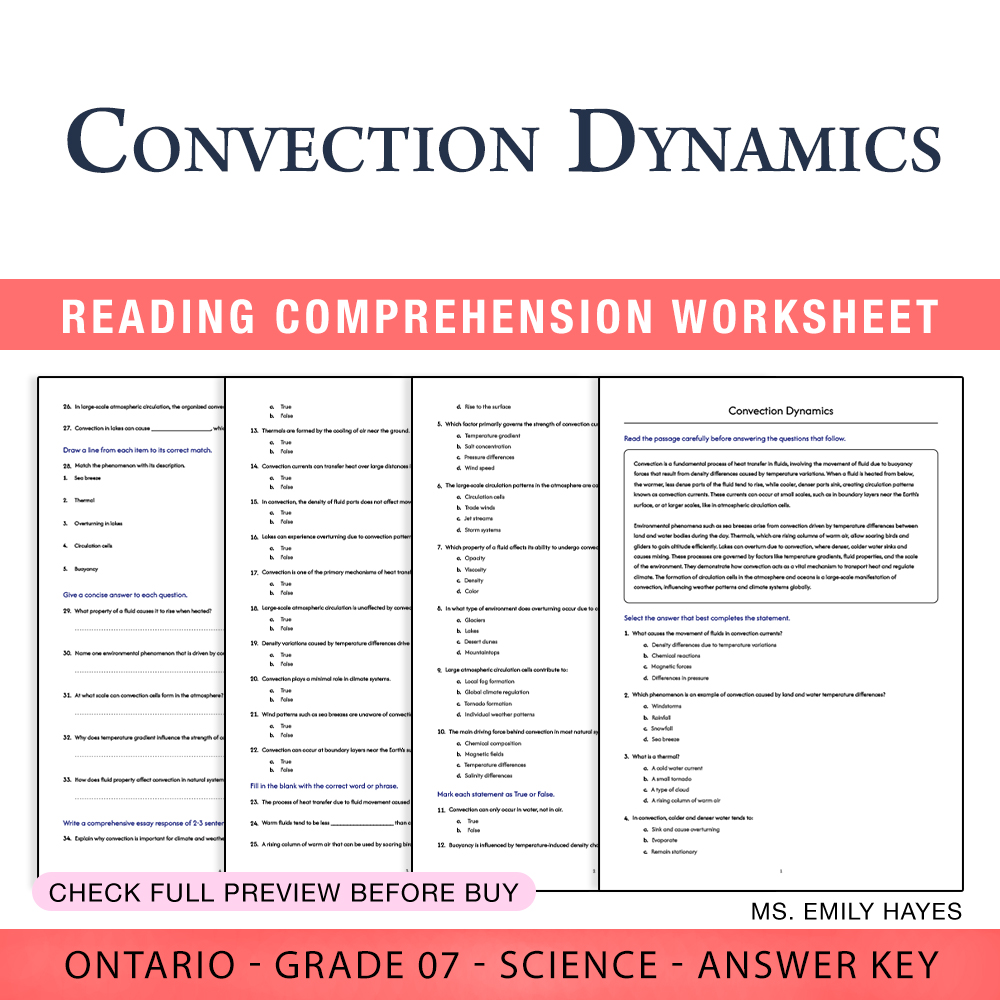
7th Grade Science | Convection Dynamics Worksheet (PDF+ Answer Key)
Created byCopper Leaf ClassroomLearning Objectives
- Explain the process of convective heat transfer in fluids.
- Describe how buoyancy and density variations drive convection in air and water.
- Identify environmental phenomena influenced by convection, such as sea breezes and thermals.
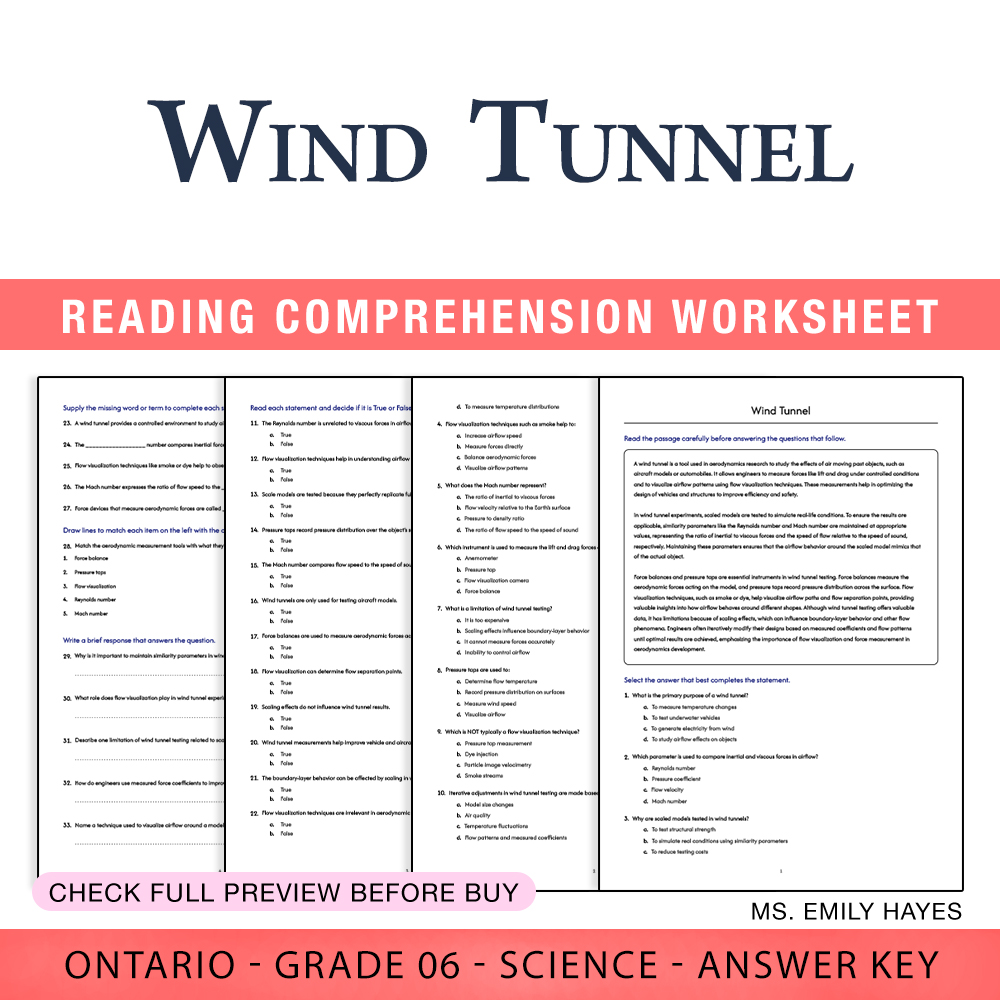
6th Grade Science | Wind Tunnel Worksheet (PDF + Answer Key)
Created byCopper Leaf ClassroomLearning Objectives
- Understand the methods used to measure aerodynamic forces and moments in wind tunnels.
- Describe the significance of similarity parameters like Reynolds and Mach numbers in scaled model testing.
- Explain how flow visualization techniques contribute to understanding airflow behaviors.
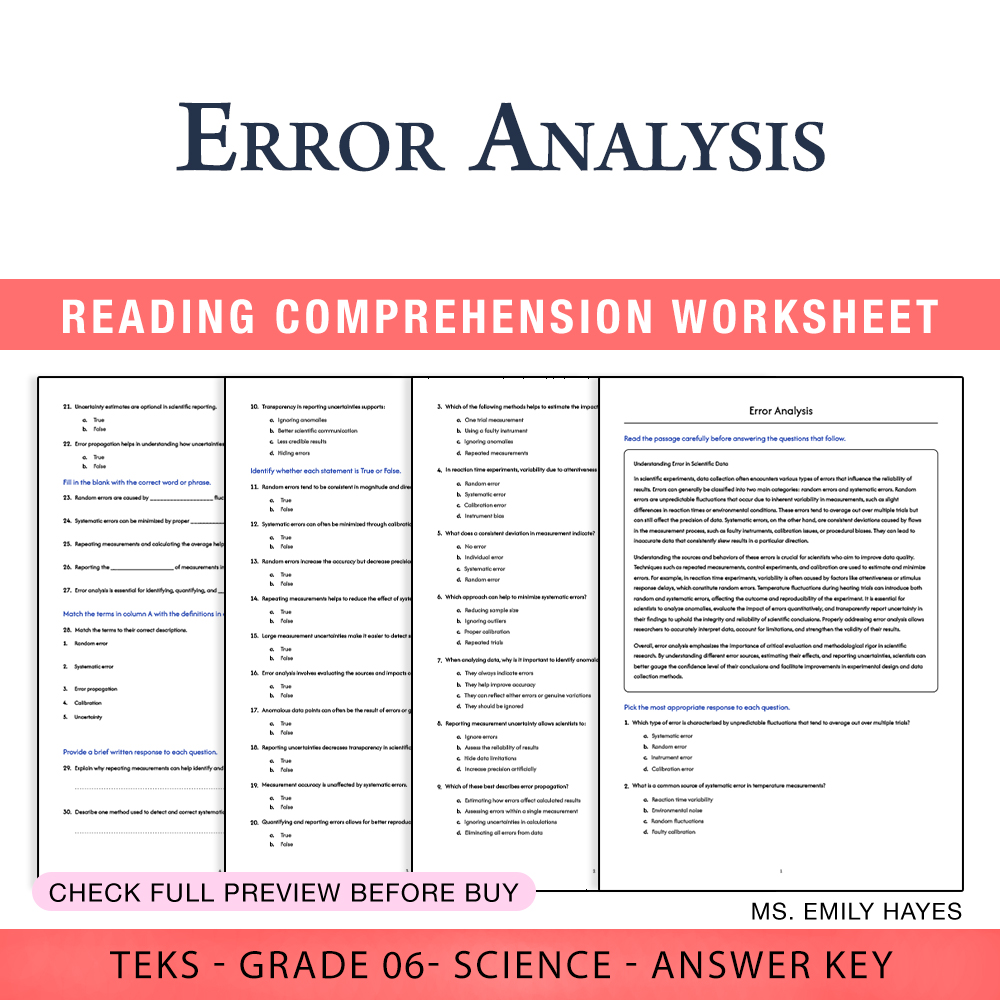
6th Grade Science | Error Analysis Worksheet (PDF+ Answer Key)
Created byCopper Leaf ClassroomLearning Objectives
- Identify different sources of error in experimental data and characterize their impact.
- Distinguish between random errors and systematic errors in scientific measurements.
- Analyze methods for estimating uncertainty and propagating errors through calculations.
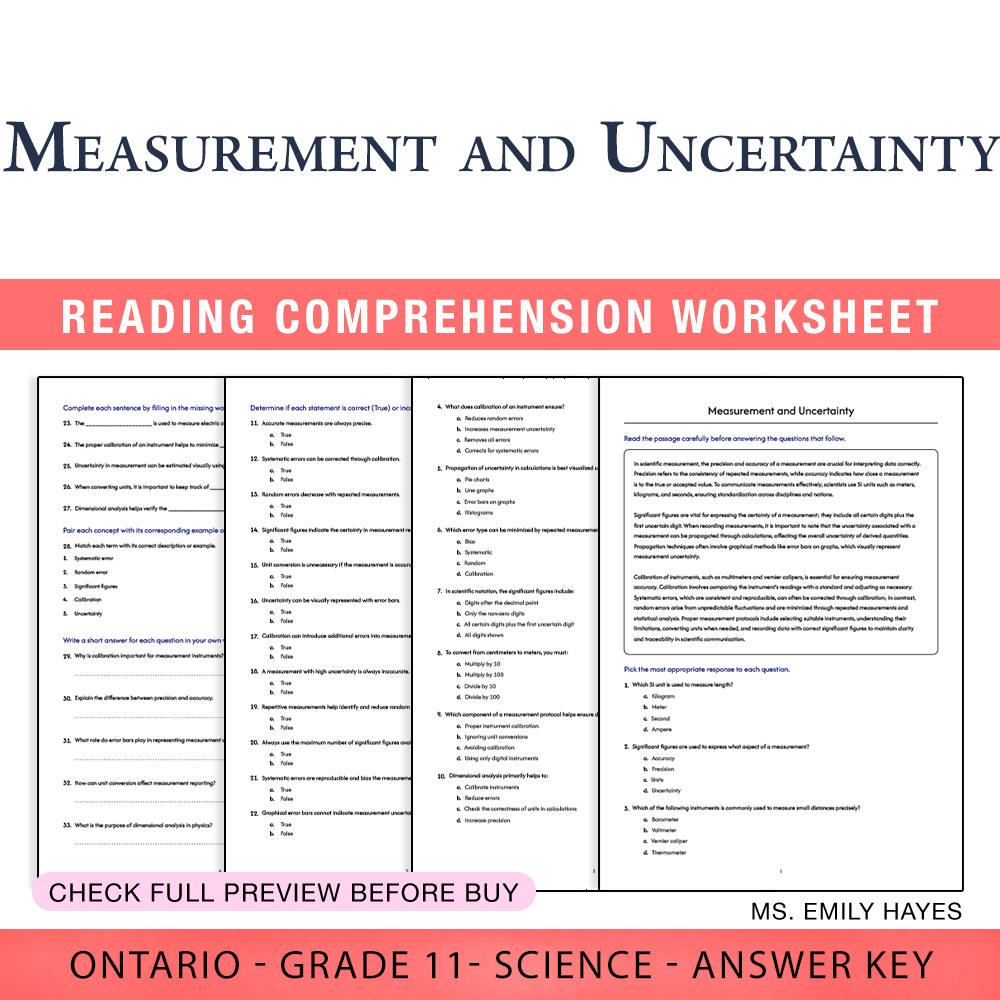
11th Grade Science | Measurement and Uncertainty Worksheet (PDF + Answer Key)
Created byCopper Leaf ClassroomLearning Objectives
- Understand the fundamental concepts of measurement, including SI units and significant figures.
- Apply principles of precision, accuracy, and uncertainty propagation in laboratory measurements.
- Evaluate systematic and random errors to ensure quantitative measurements are reliable and traceable.
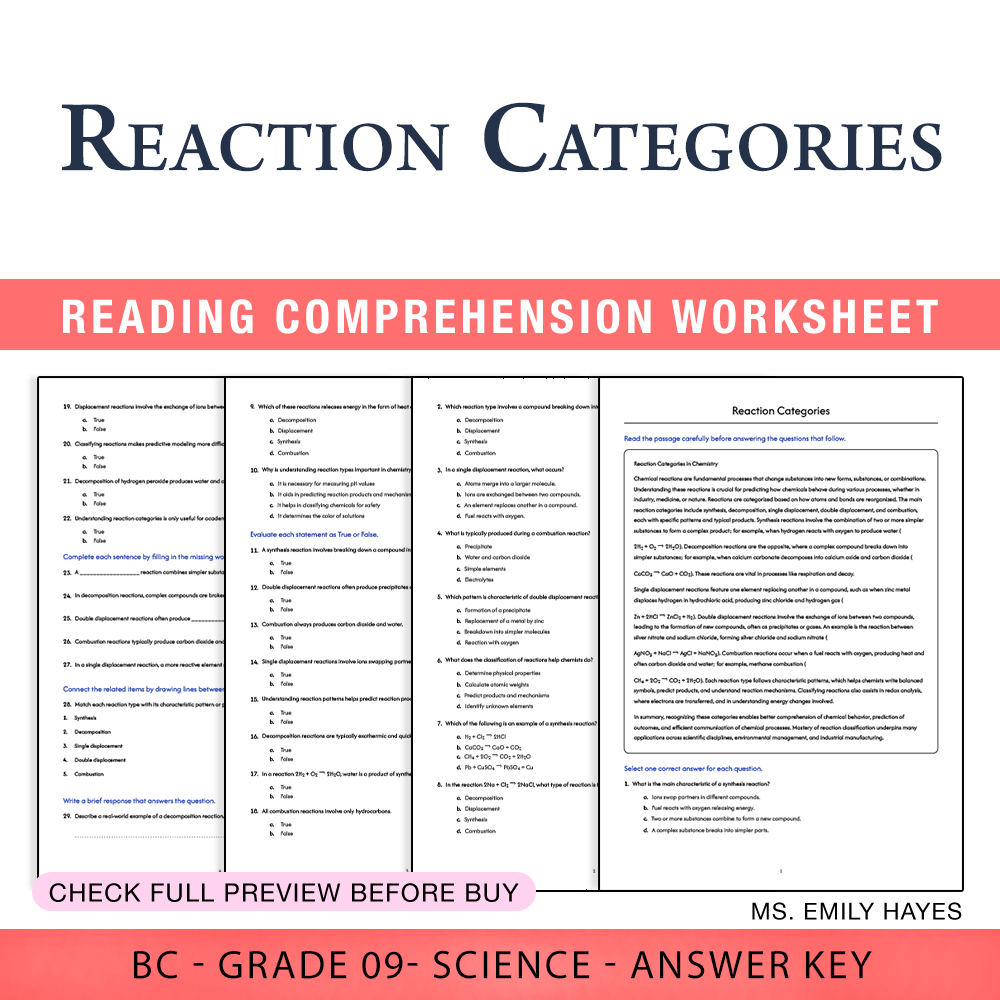
Grade 9 Science | Reaction Categories Worksheet (PDF+ Answer Key)
Created byCopper Leaf ClassroomLearning Objectives
- Identify and classify different types of chemical reactions based on reactant patterns and products.
- Understand the processes and characteristics of synthesis, decomposition, displacement, and combustion reactions.
- Predict products of various reaction types using chemical knowledge and symbolic representation.
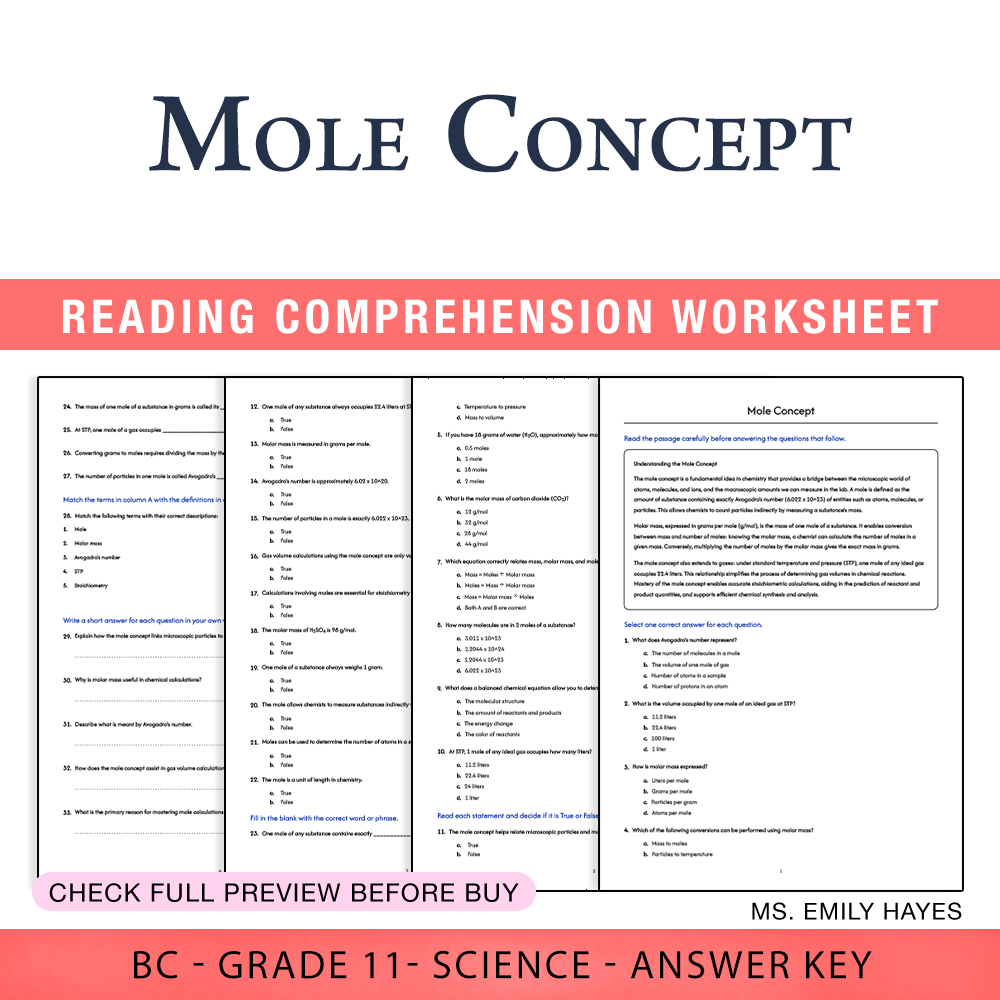
11th Grade Science | Mole Concept Worksheet (PDF + Answer Key)
Created byCopper Leaf ClassroomLearning Objectives
- Explain the fundamental principles of the mole concept and its significance in chemistry.
- Convert between mass, number of particles, and moles using molar mass and Avogadro's number.
- Apply mole calculations to determine quantities of reactants and products in chemical reactions.
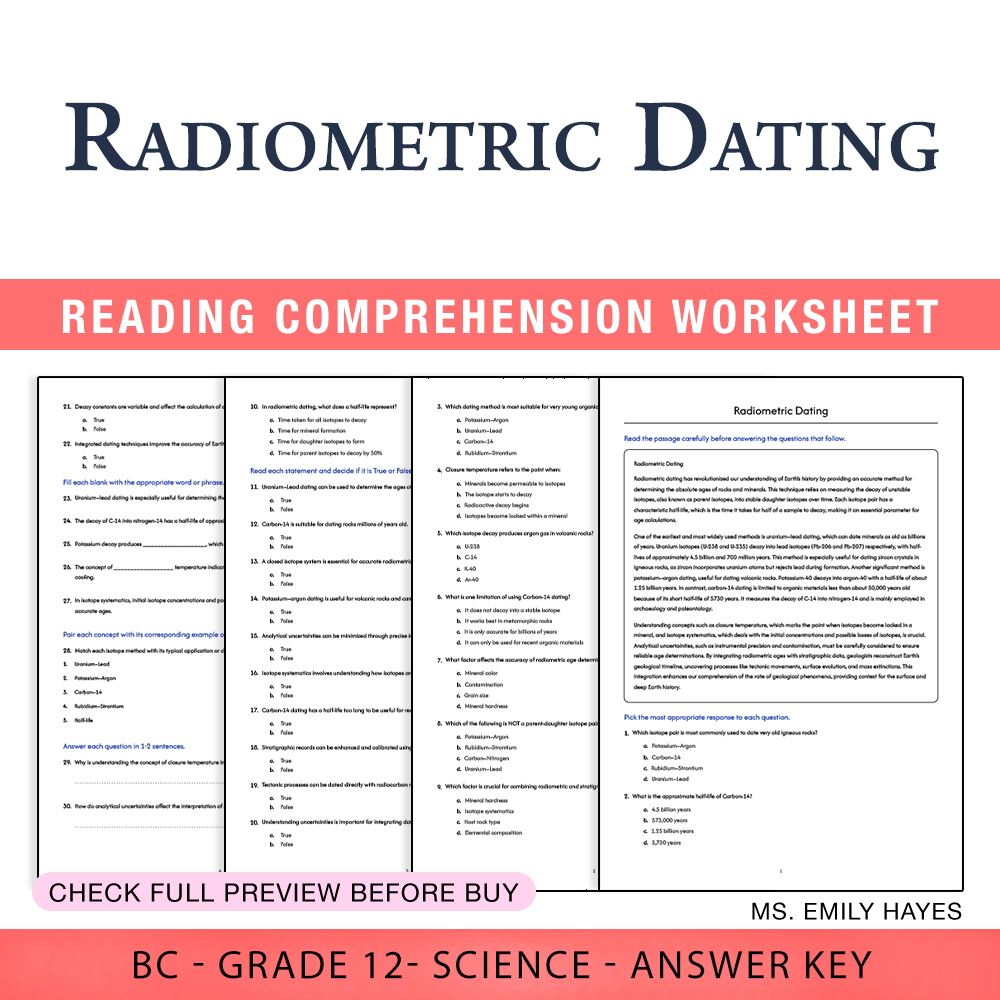
12th Grade Science | Radiometric Dating Worksheet (PDF + Answer Key)
Created byCopper Leaf ClassroomLearning Objectives
- Understand the principles of radiometric dating and isotope decay.
- Identify different radiometric methods and their applications in geology.
- Explain how isotopic systematics and uncertainties impact age calculations.
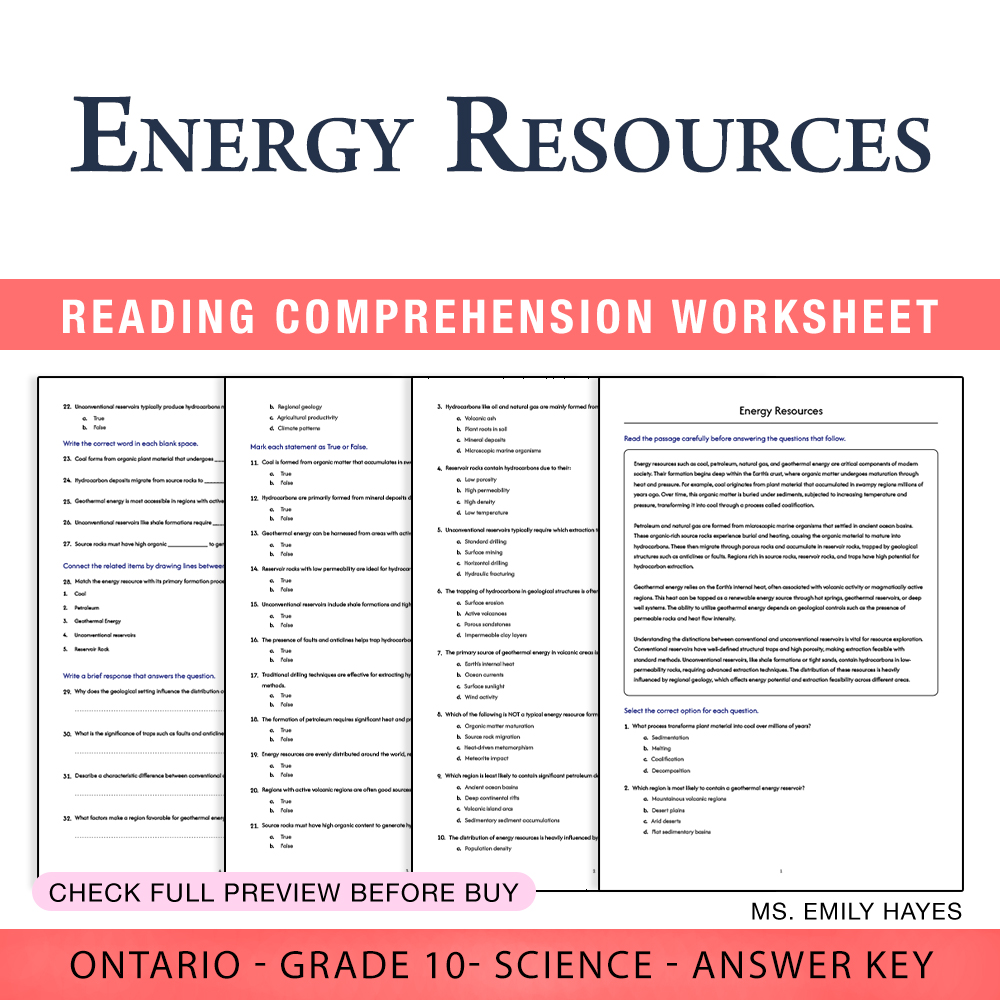
Grade 10 Science | Energy Resources Worksheet (PDF + Answer Key)
Created byCopper Leaf ClassroomLearning Objectives
- Describe the geological origins and distribution of coal, petroleum, and natural gas.
- Explain the characteristics and formation processes of geothermal energy.
- Identify and differentiate between conventional and unconventional reservoirs.
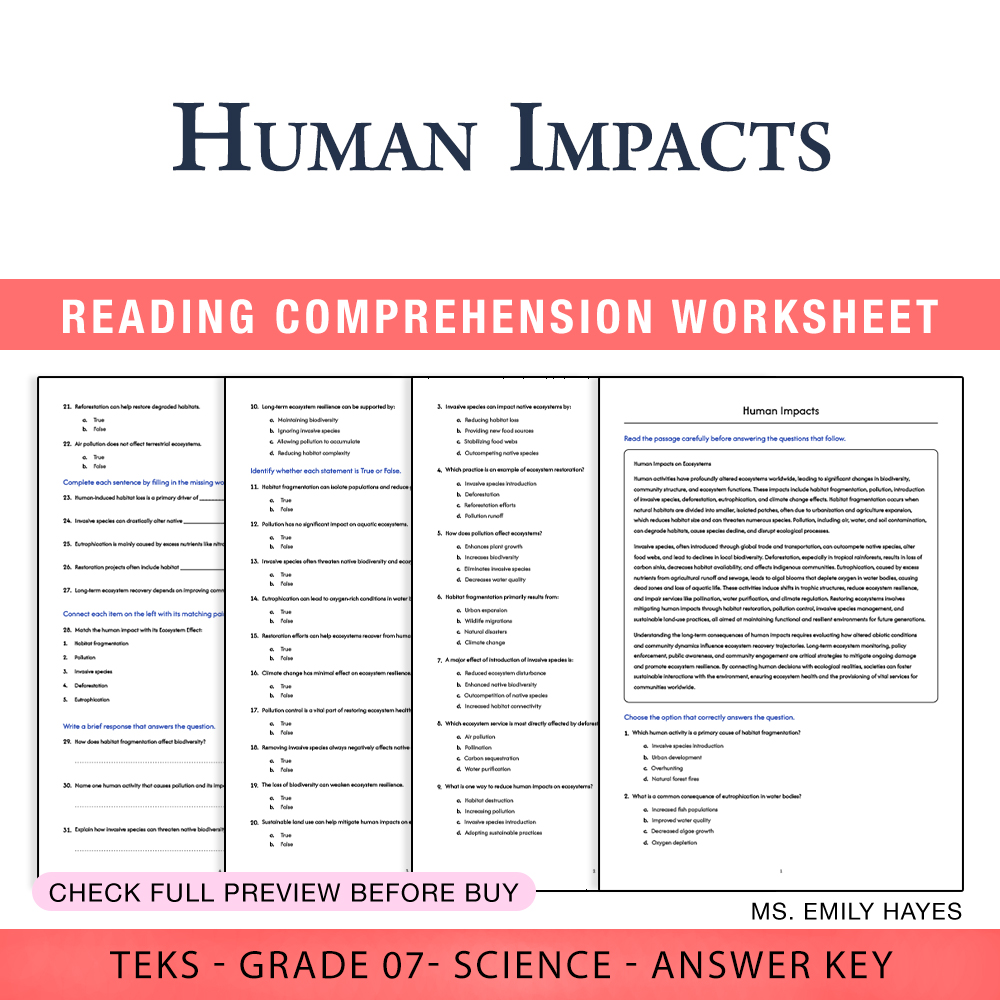
Grade 7 Science | Human Impacts Worksheet (PDF+ Answer Key)
Created byCopper Leaf ClassroomLearning Objectives
- Describe major human-induced alterations to ecosystems and their effects on biodiversity and ecosystem services.
- Identify examples of habitat fragmentation, pollution, and invasive species introductions.
- Explain how human activities lead to long-term community and ecosystem changes.
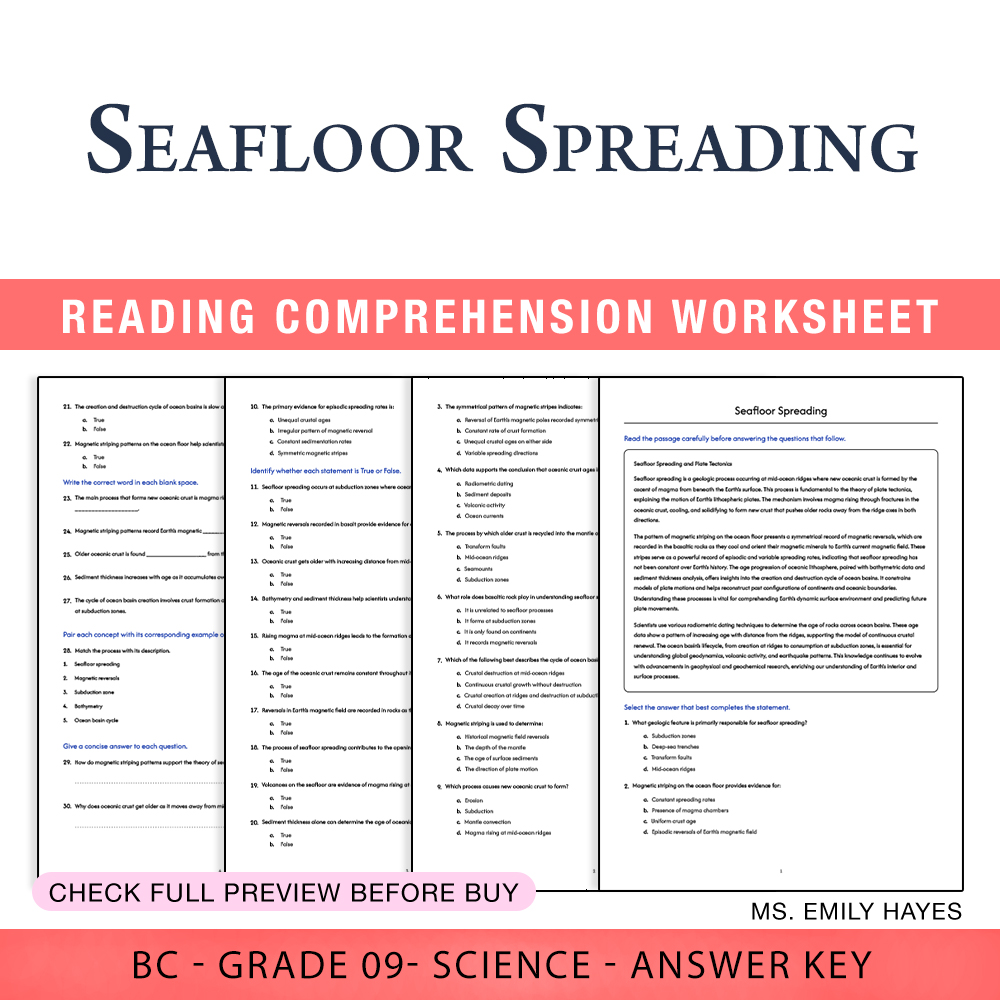
9th Grade Science | Seafloor Spreading Worksheet (PDF+ Answer Key)
Created byCopper Leaf ClassroomLearning Objectives
- Describe the process of seafloor spreading at mid-ocean ridges and how it creates new oceanic crust.
- Explain how magnetic striping provides evidence for episodic spreading rates and plate movements.
- Analyze the age progression of oceanic lithosphere and its implications for ocean basin cycles.
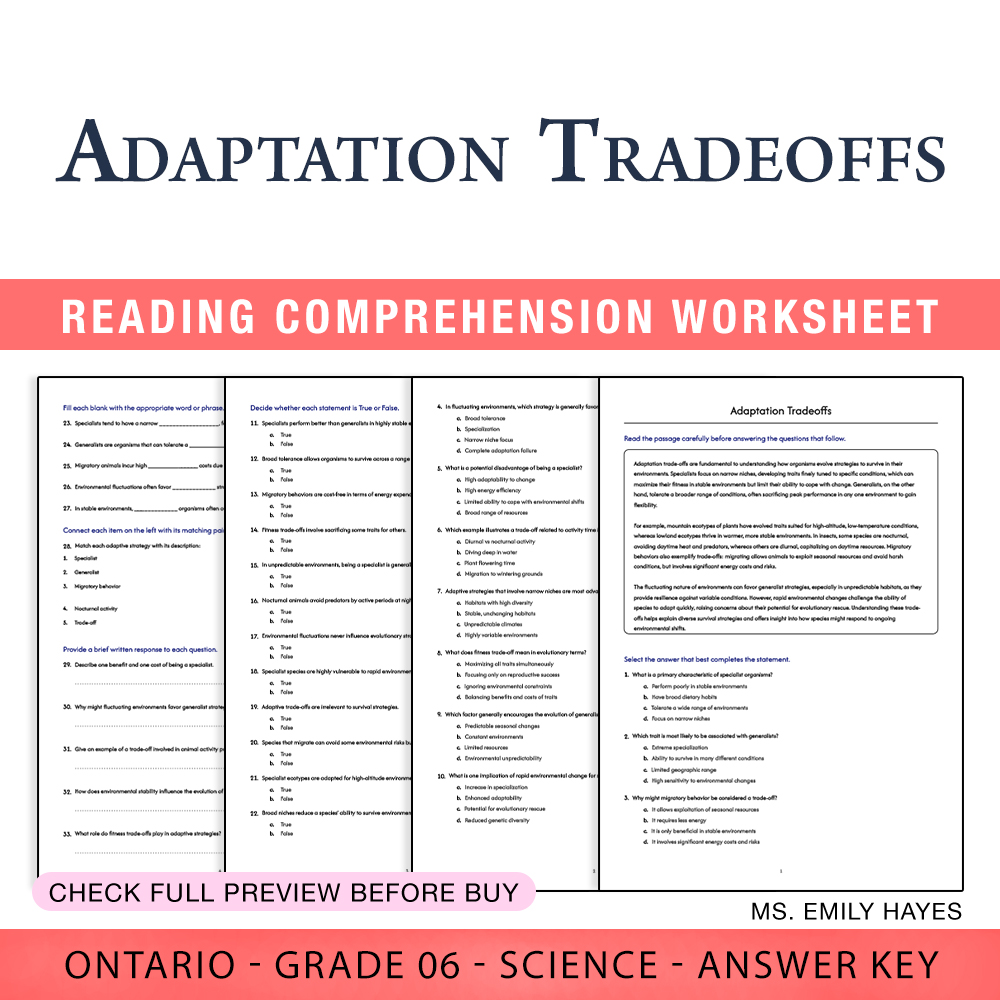
6th Grade Science | Adaptation Tradeoffs Worksheet (PDF+ Answer Key)
Created byCopper Leaf ClassroomLearning Objectives
- Explain the concept of adaptation trade-offs and how they influence species strategies.
- Compare the benefits and costs of specialization versus generalization in organisms.
- Analyze examples such as mountain versus lowland ecotypes, nocturnal versus diurnal activity, and migratory behaviors.
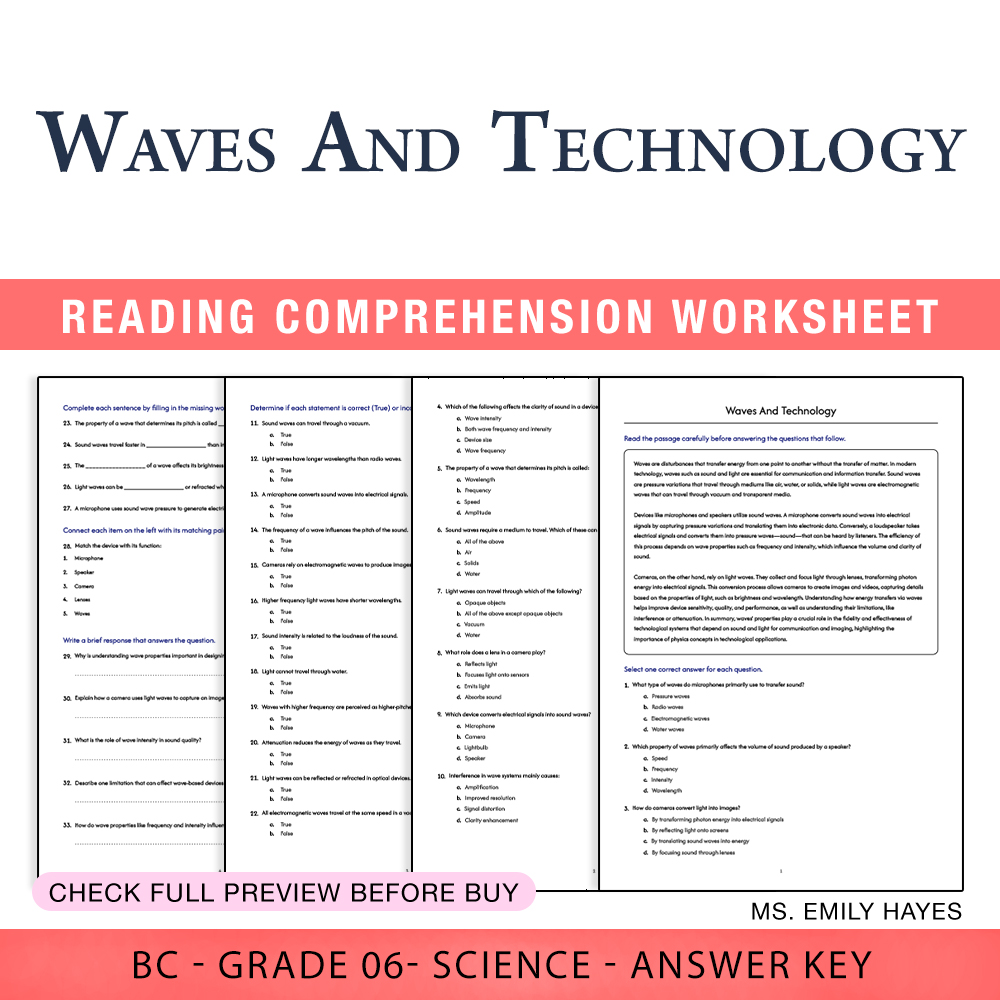
Grade 6 Science | Waves and Technology Worksheet (PDF+ Answer Key)
Created byCopper Leaf ClassroomLearning Objectives
- Describe how sound and light waves transfer energy in technological devices
- Explain how components like microphones, speakers, and cameras convert energy using waves
- Identify properties of waves such as frequency and intensity and how they affect device performance
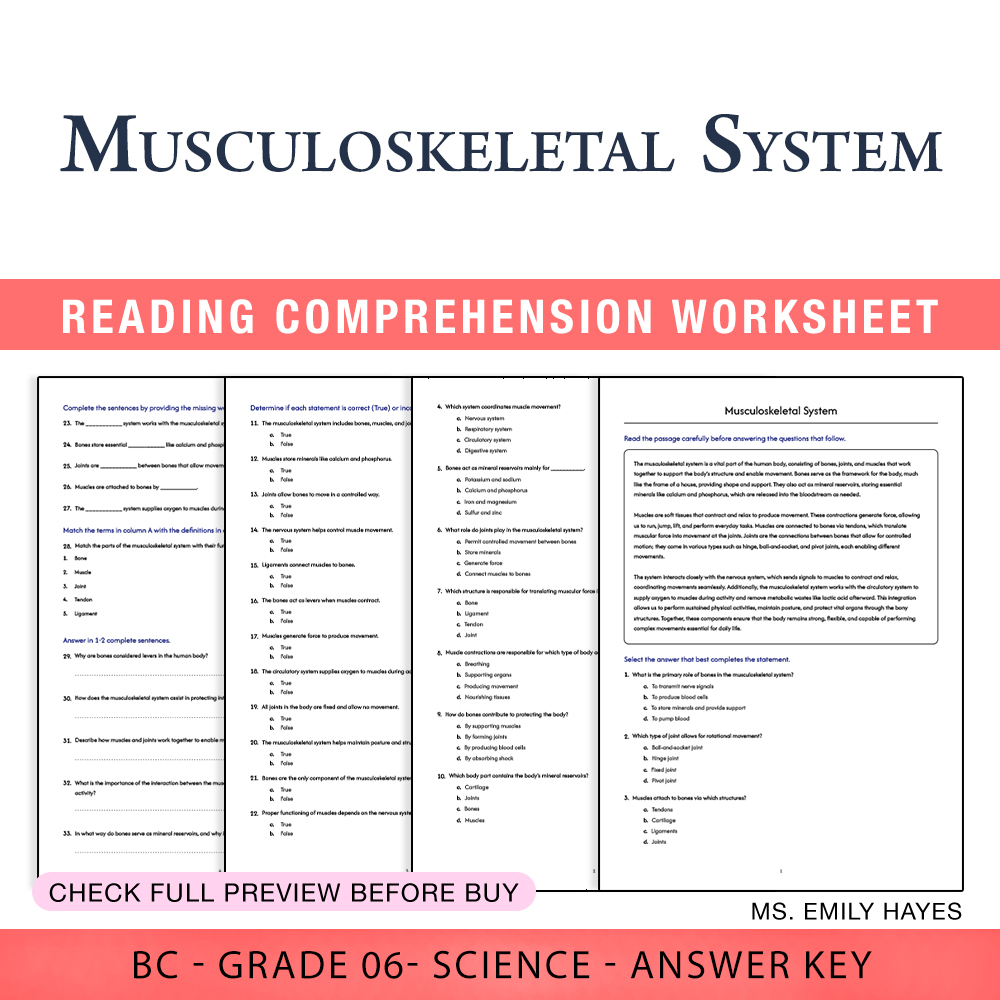
6th Grade Science | Musculoskeletal System Worksheet (PDF + Answer Key)
Created byCopper Leaf ClassroomLearning Objectives
- Describe the main components of the musculoskeletal system and their functions.
- Explain how bones, muscles, and joints work together to produce movement.
- Identify how the musculoskeletal system interacts with other body systems to support activity.
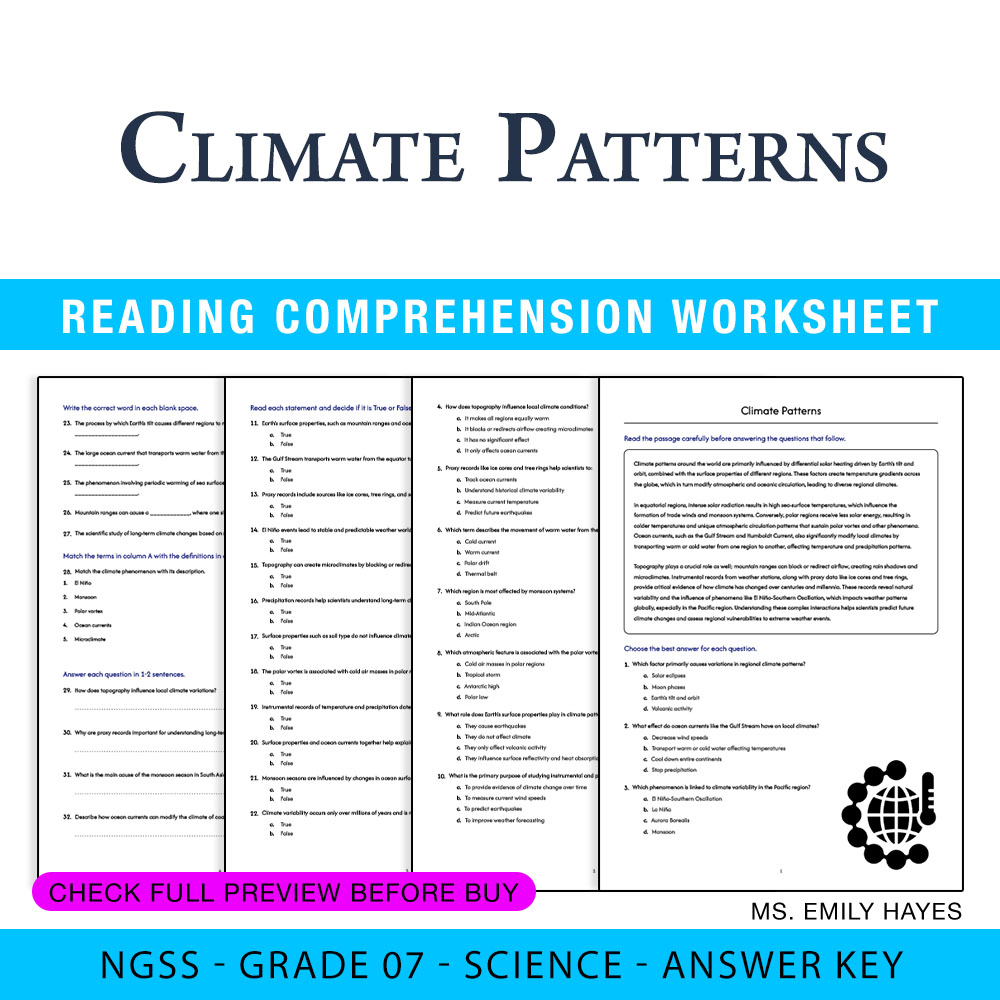
7th Grade Science | Climate Patterns Worksheet (PDF+ Answer Key)
Created byCopper Leaf ClassroomLearning Objectives
- Describe how variations in solar heating influence regional climate patterns.
- Explain the role of ocean currents and topography in modifying local climates.
- Identify key phenomena such as El Niño, monsoon regimes, and prevailing wind belts.
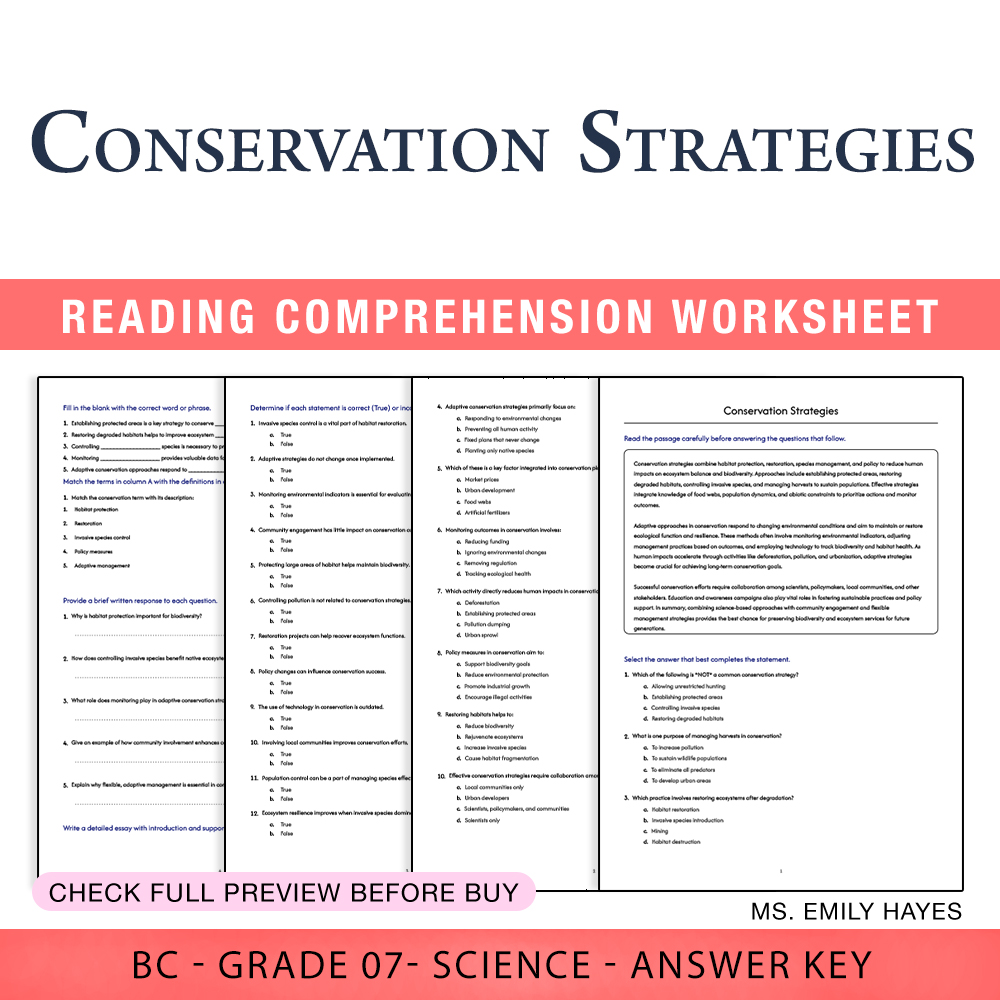
7th Grade Science | Conservation Strategies Worksheet (PDF + Answer Key)
Created byCopper Leaf ClassroomLearning Objectives
- Understand key conservation strategies used to protect ecosystems and biodiversity.
- Identify different methods such as habitat protection, restoration, and species management.
- Analyze the importance of adaptive approaches in conservation efforts.
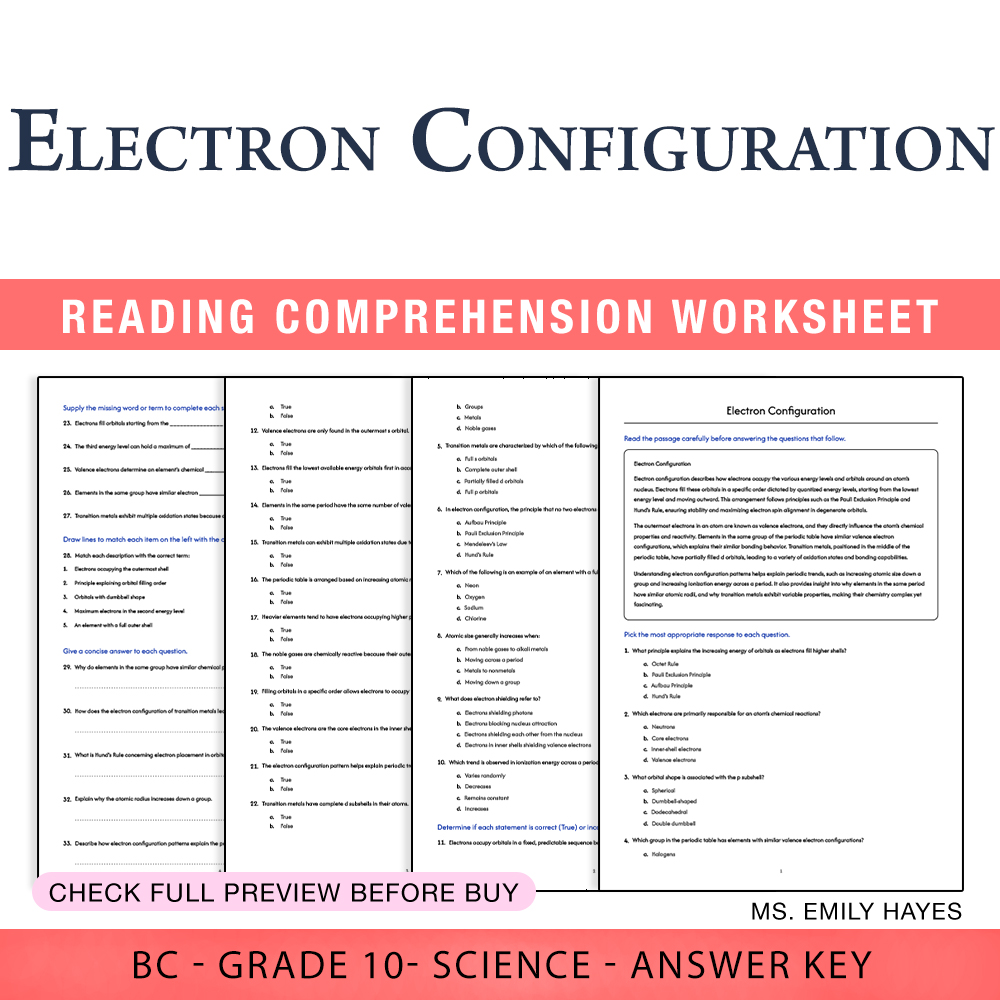
10th Grade Science | Electron Configuration Worksheet (PDF + Answer Key)
Created byCopper Leaf ClassroomLearning Objectives
- Explain how electrons occupy energy levels and orbitals in atoms.
- Identify valence electrons and their role in bonding and reactivity.
- Describe the principles governing electron distribution across shells.
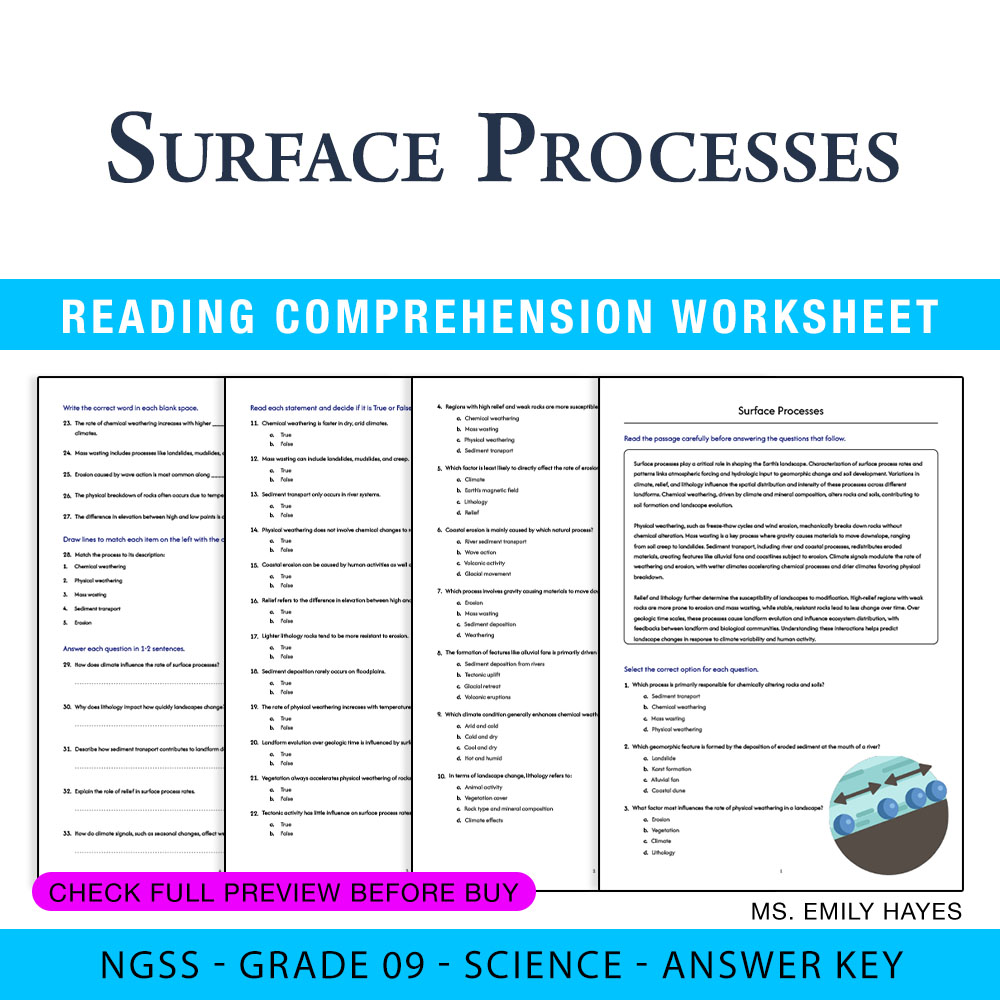
Grade 9 Science | Surface Processes Worksheet (PDF+ Answer Key)
Created byCopper Leaf ClassroomLearning Objectives
- Describe the main types of surface processes affecting landscape change.
- Analyze the factors influencing rates of chemical and physical weathering.
- Explain how mass wasting and sediment transport contribute to geomorphic patterns.
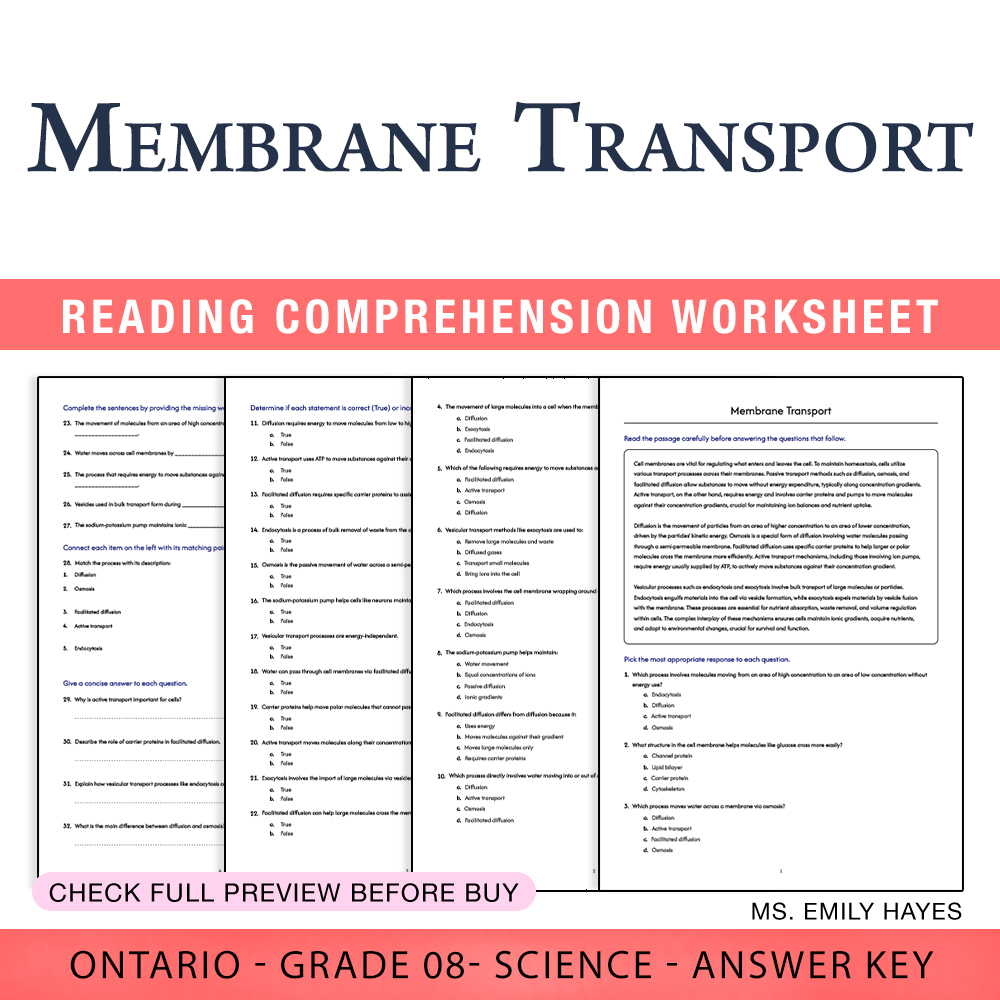
8th Grade Science | Membrane Transport Worksheet (PDF+ Answer Key)
Created byCopper Leaf ClassroomLearning Objectives
- Describe the processes of diffusion, osmosis, facilitated diffusion, and active transport across cell membranes.
- Explain the roles of carrier proteins and pumps in membrane transport.
- Understand the relationship between concentration gradients, surface area, and transport rate.
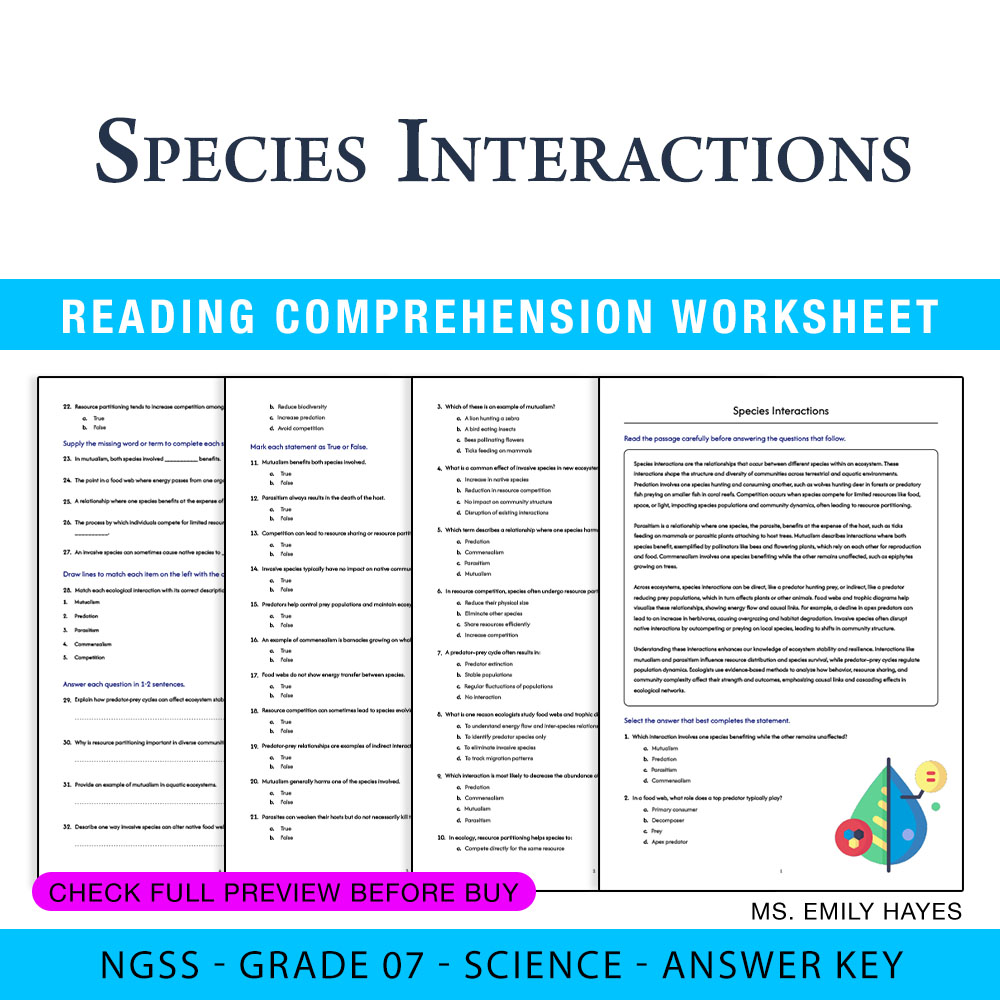
7th Grade Science | Species Interactions Worksheet (PDF +Answer Key)
Created byCopper Leaf ClassroomLearning Objectives
- Explain different types of species interactions such as predation, competition, parasitism, mutualism, and commensalism across various ecosystems.
- Analyze food web diagrams to identify direct and indirect effects among species.
- Describe how species behavior and resource partitioning influence community structure and interaction strength.
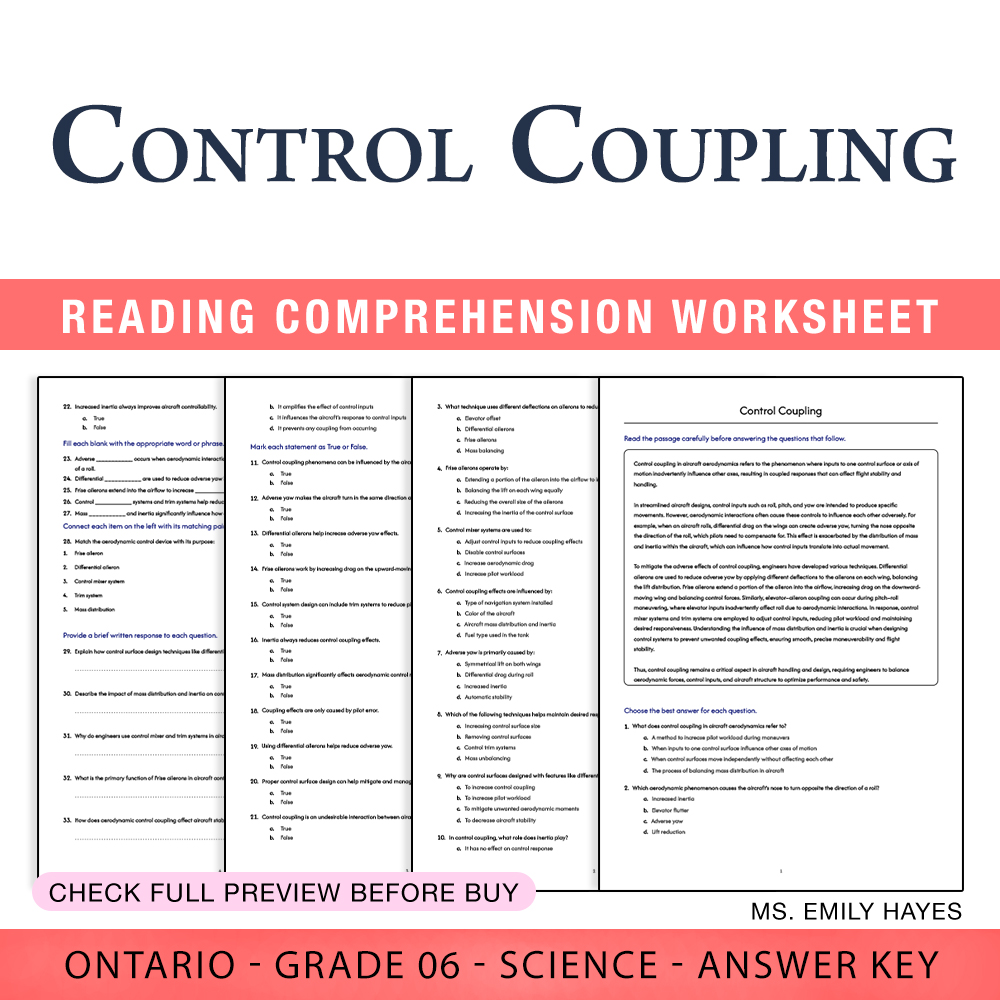
6th Grade Science | Control Coupling Worksheet (PDF + Answer Key)
Created byCopper Leaf ClassroomLearning Objectives
- Understand the principles of control coupling in aerodynamics and aircraft control surfaces.
- Identify how aerodynamic interactions such as adverse yaw and elevator–aileron coupling affect aircraft maneuverability.
- Explain techniques like differential and Frise ailerons used to mitigate control coupling effects.
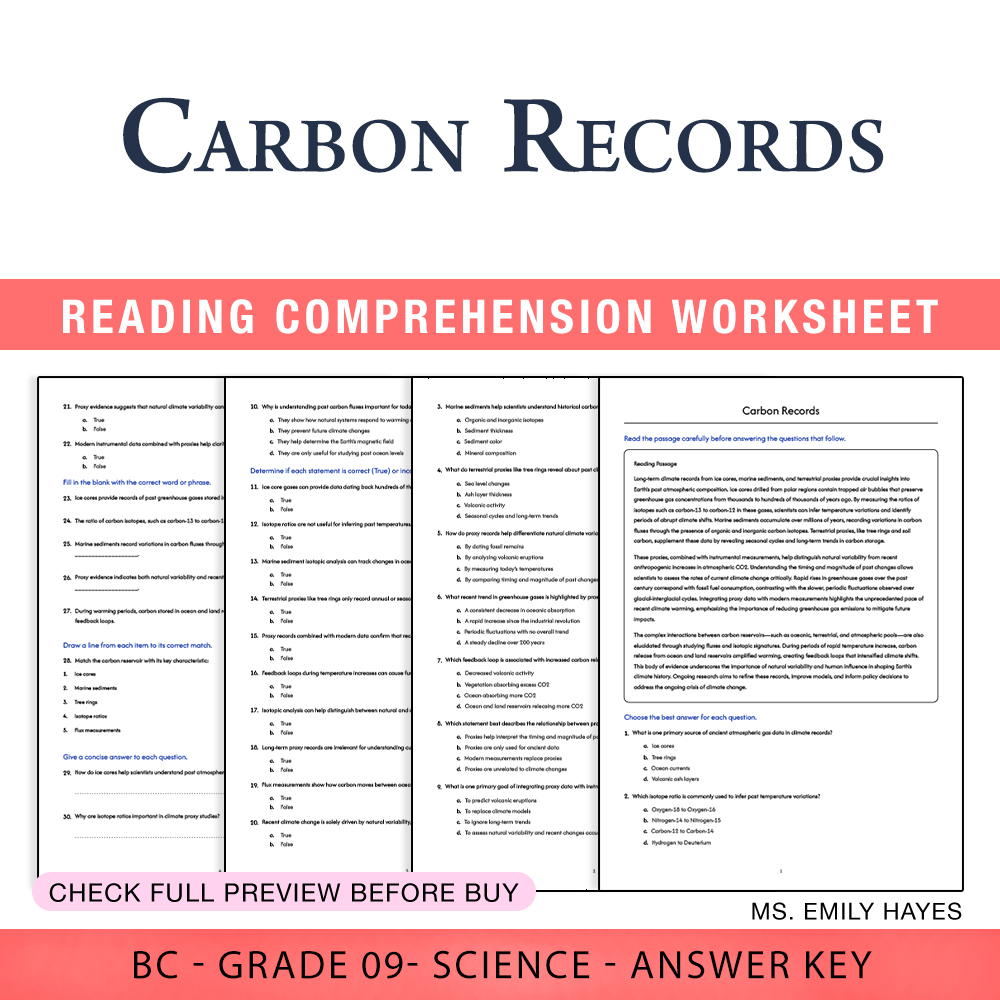
Grade 9 Science | Carbon Records Worksheet (PDF+ Answer Key)
Created byCopper Leaf ClassroomLearning Objectives
- Understand how ice cores, sediments, and proxies record past atmospheric carbon levels.
- Interpret isotope ratios and gas measurements to identify climate patterns and shifts.
- Analyze the relationship between carbon fluxes and global temperature changes.
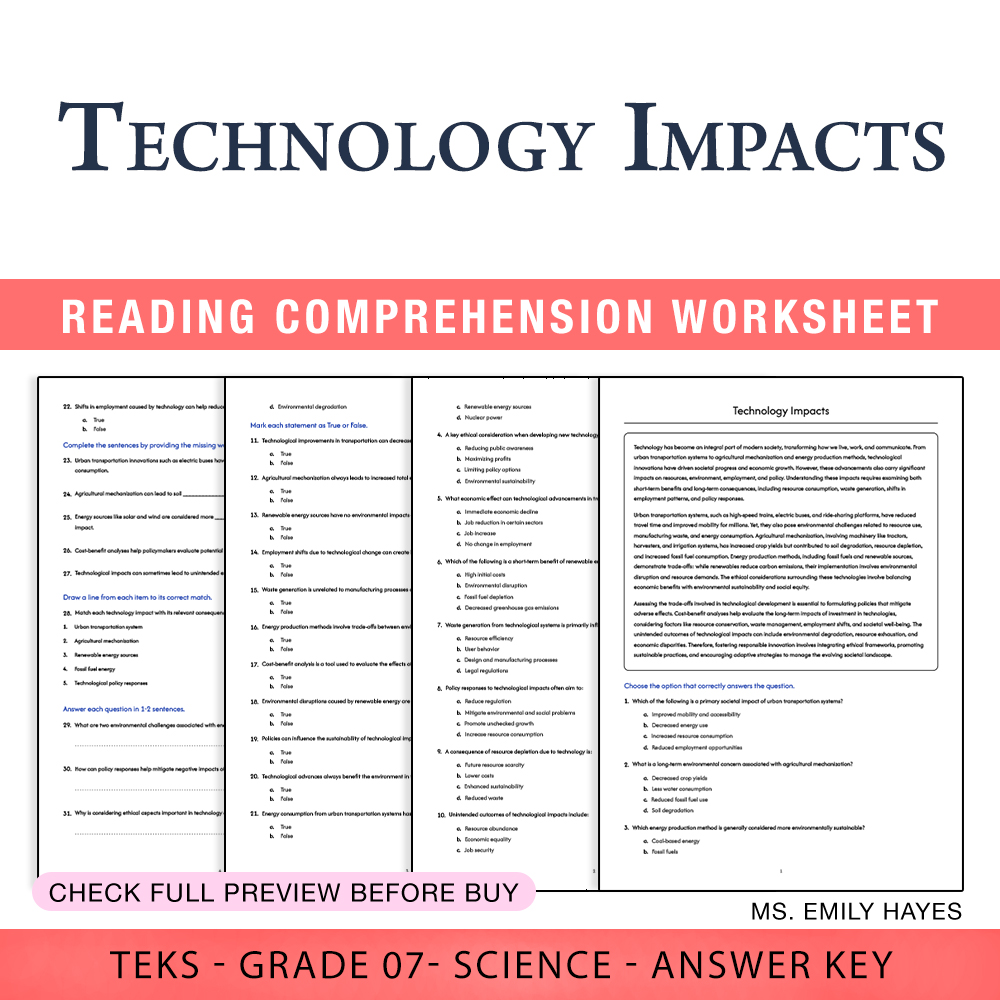
7th Grade Science | Technology Impacts Worksheet (PDF+ Answer Key)
Created byCopper Leaf ClassroomLearning Objectives
- Analyze the societal, economic, and environmental impacts of various technologies.
- Evaluate short- and long-term consequences of technological developments.
- Examine ethical considerations and policy responses related to technology impacts.
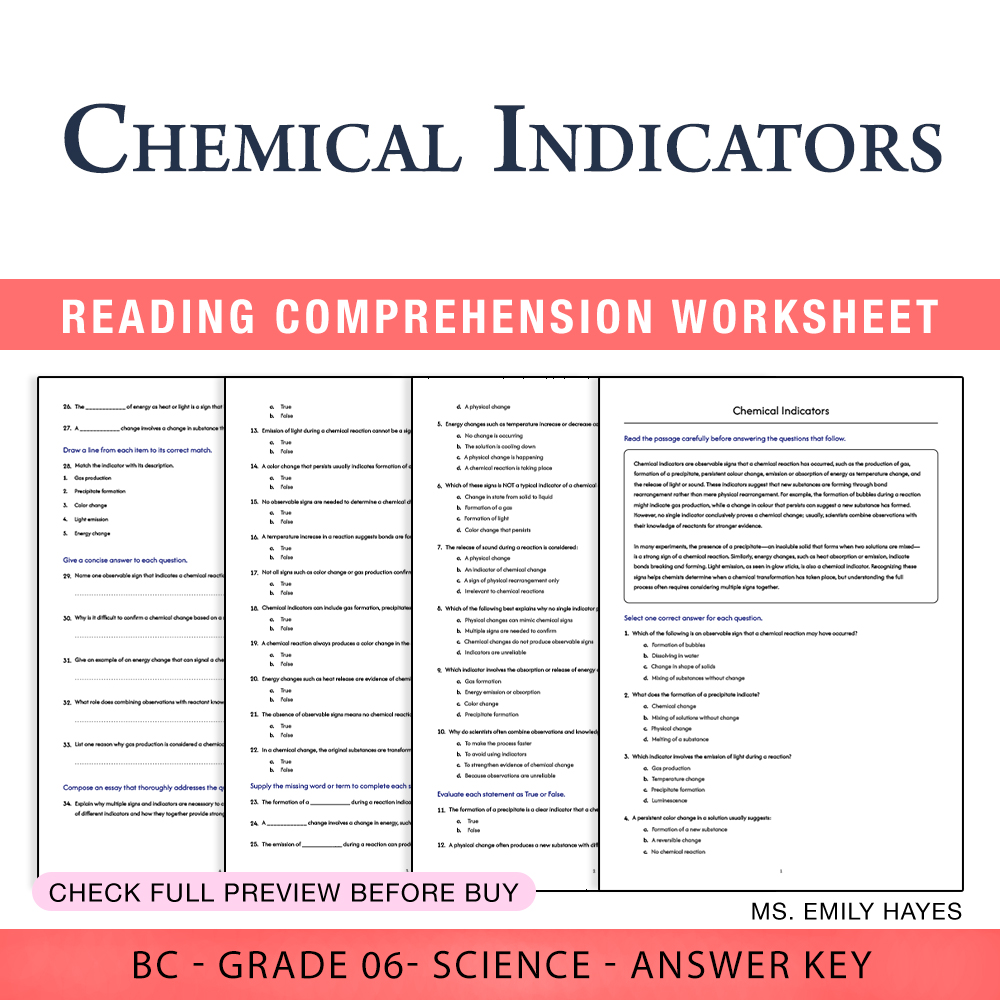
Grade 6 Science | Chemical Indicators Worksheet (PDF + Answer Key)
Created byCopper Leaf ClassroomLearning Objectives
- Identify observable signs indicating a chemical reaction has occurred
- Differentiate between physical and chemical changes using indicators
- Describe various chemical indicators and their significance in reactions
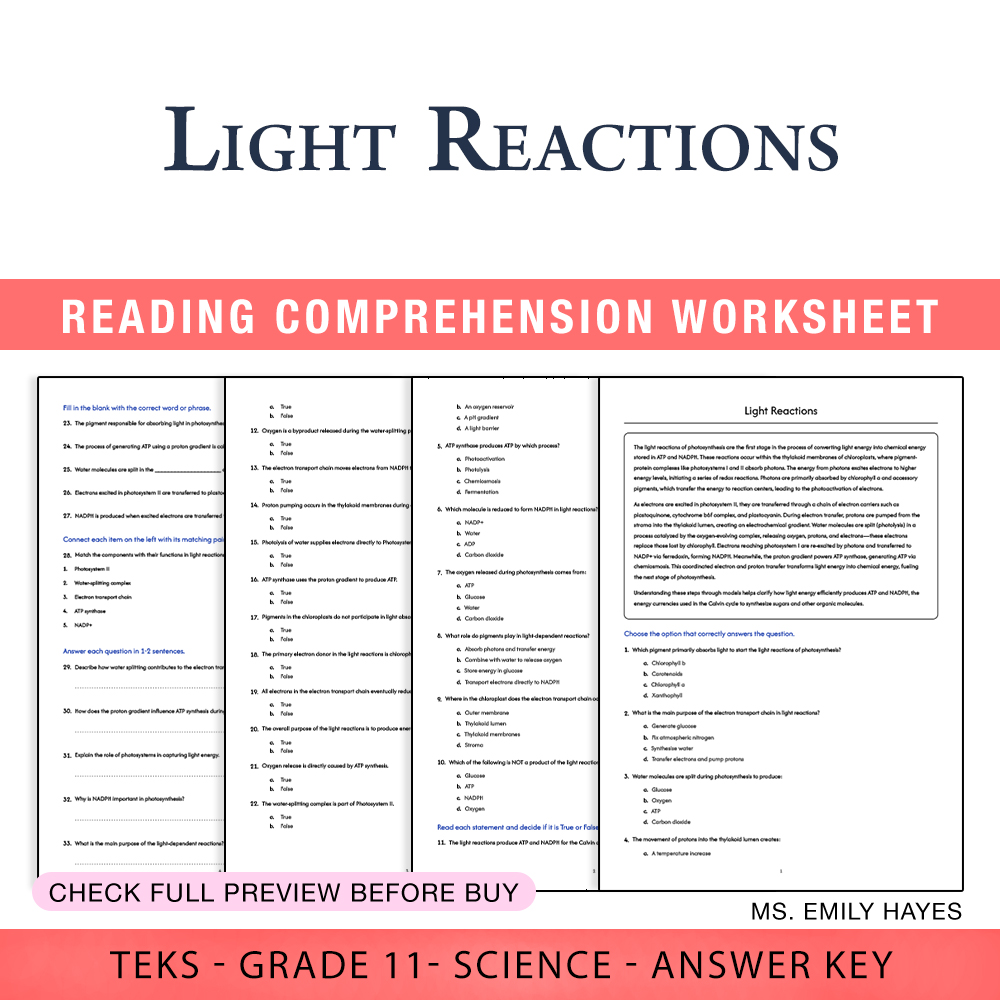
11th Grade Science | Light Reactions Worksheet (PDF+ Answer Key)
Created byCopper Leaf ClassroomLearning Objectives
- Describe the process of light-dependent reactions in photosynthesis.
- Identify the roles of pigments, electron transport chain, and ATP synthase during light reactions.
- Explain how water is split to produce oxygen during photosynthesis.
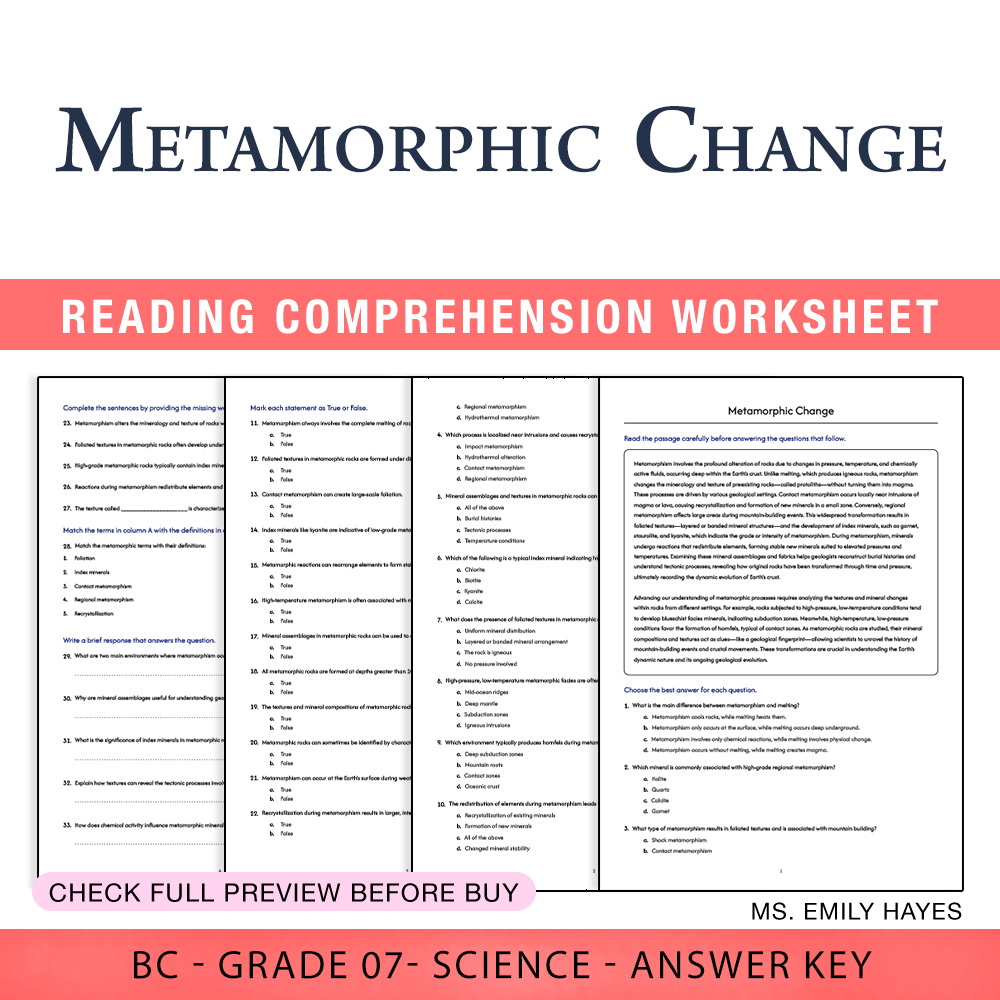
7th Grade Science | Metamorphic Change Worksheet (PDF+ Answer Key)
Created byCopper Leaf ClassroomLearning Objectives
- Describe the processes involved in metamorphism and how rocks are altered without melting.
- Differentiate between contact and regional metamorphism based on their features and environments.
- Identify mineral assemblages and textures indicative of various metamorphic grades.
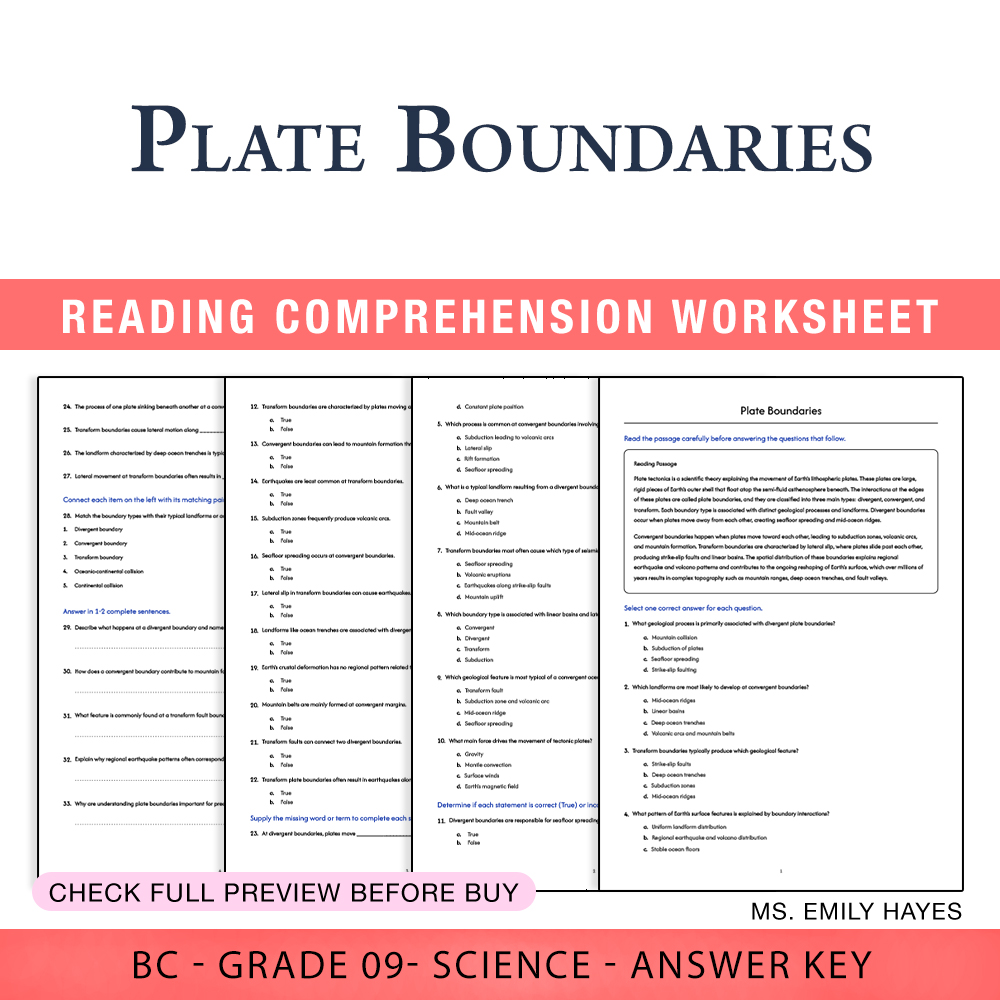
9th Grade Science | Plate Boundaries Worksheet (PDF+ Answer Key)
Created byCopper Leaf ClassroomLearning Objectives
- Identify and describe the three main types of plate boundaries: divergent, convergent, and transform.
- Explain the geological processes associated with each boundary type.
- Relate boundary types to landforms, earthquakes, and volcanic activity.
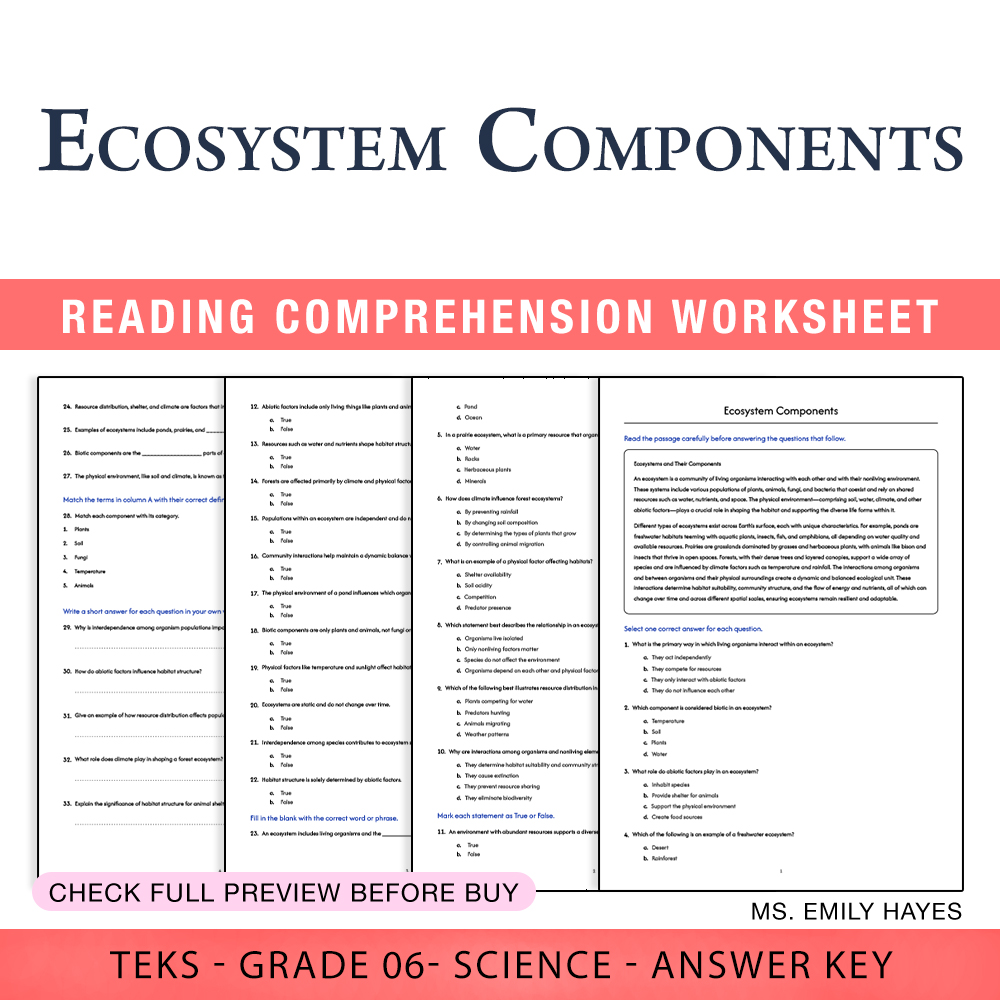
6th Grade Science | Ecosystem Components Worksheet (PDF+ Answer Key)
Created byCopper Leaf ClassroomLearning Objectives
- Define ecosystems as interacting systems of populations, communities, and physical factors.
- Differentiate between biotic and abiotic components within habitats.
- Identify examples of ecosystems such as ponds, prairies, and forests.
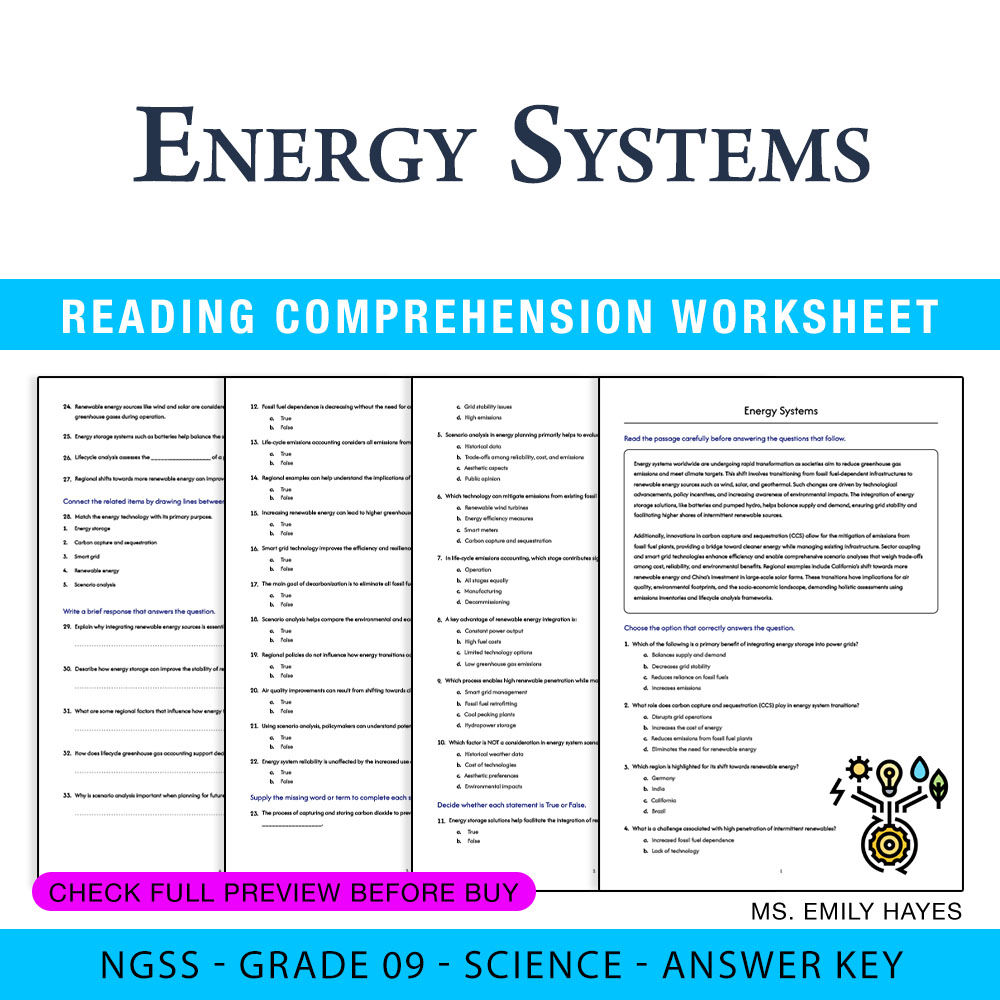
Grade 9 Science | Energy Systems Worksheet (PDF+ Answer Key)
Created byCopper Leaf ClassroomLearning Objectives
- Understand the concept of energy system transitions and decarbonization pathways.
- Analyze the trade-offs between reliability, affordability, and greenhouse gas reduction in energy scenarios.
- Evaluate the role of renewable energy, storage, and carbon capture in reducing emissions.
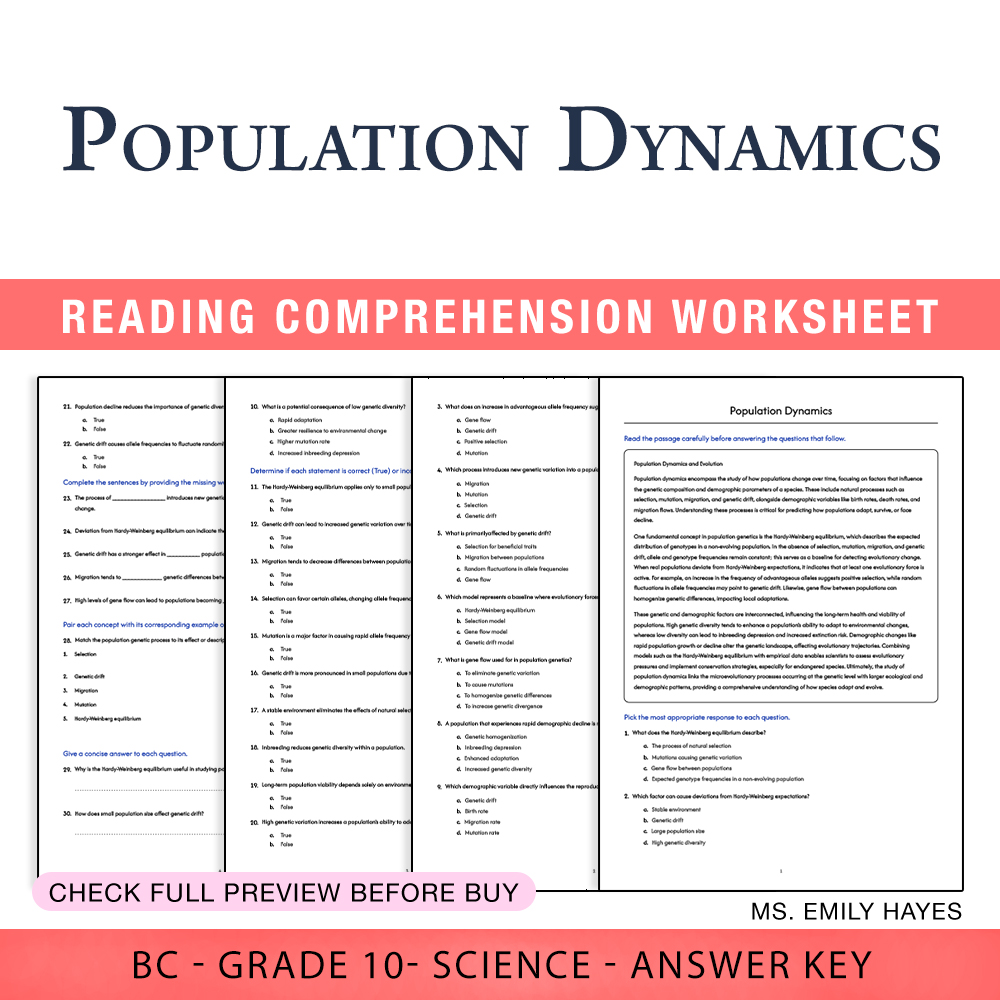
10th Grade Science | Population Dynamics Worksheet (PDF+ Answer Key)
Created byCopper Leaf ClassroomLearning Objectives
- Understand the principles of population genetics and how evolutionary forces influence allele frequencies
- Identify different models and concepts in population ecology and their significance
- Explain the Hardy-Weinberg equilibrium and what deviations indicate about evolutionary processes
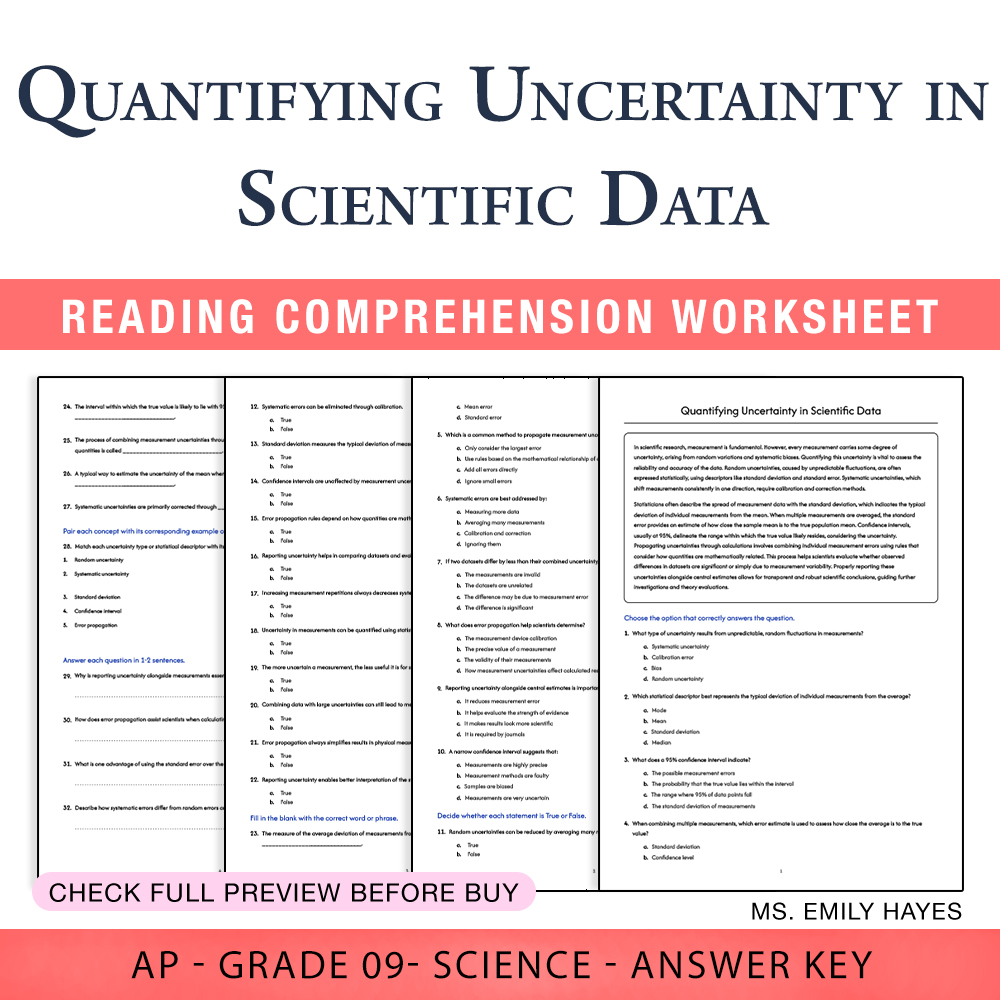
9th Grade Science | Quantifying Uncertainty in Scientific Data (PDF+ Answer Key)
Created byCopper Leaf ClassroomLearning Objectives
- Understand how to quantify and interpret random and systematic uncertainties in datasets.
- Calculate and compare standard deviation, standard error, and confidence intervals.
- Apply basic error propagation methods to combined measurements.
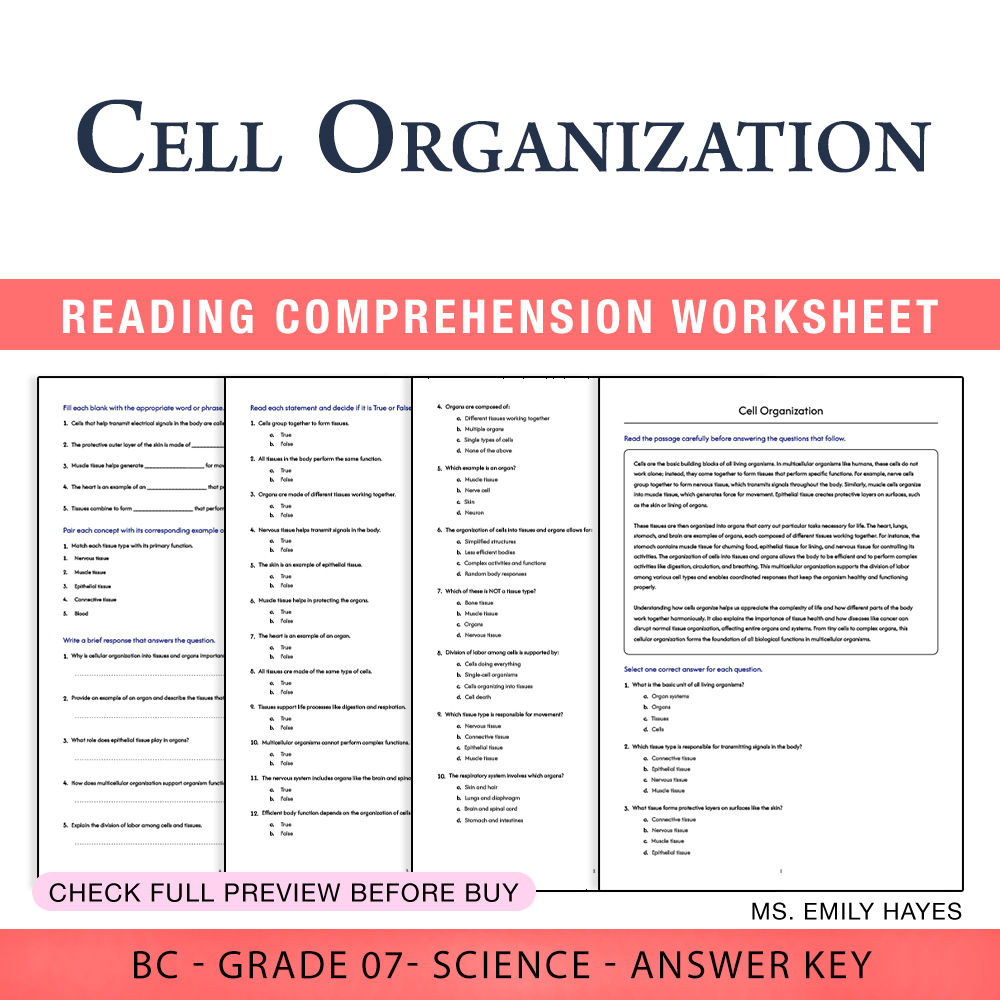
Grade 7 Science | Cell Organization Worksheet (PDF+ Answer Key)
Created byCopper Leaf ClassroomLearning Objectives
- Understand how cells group into tissues and organs to perform vital functions.
- Identify different tissue types and their roles in the body.
- Explain how multicellular organization supports complex activities and organism survival.
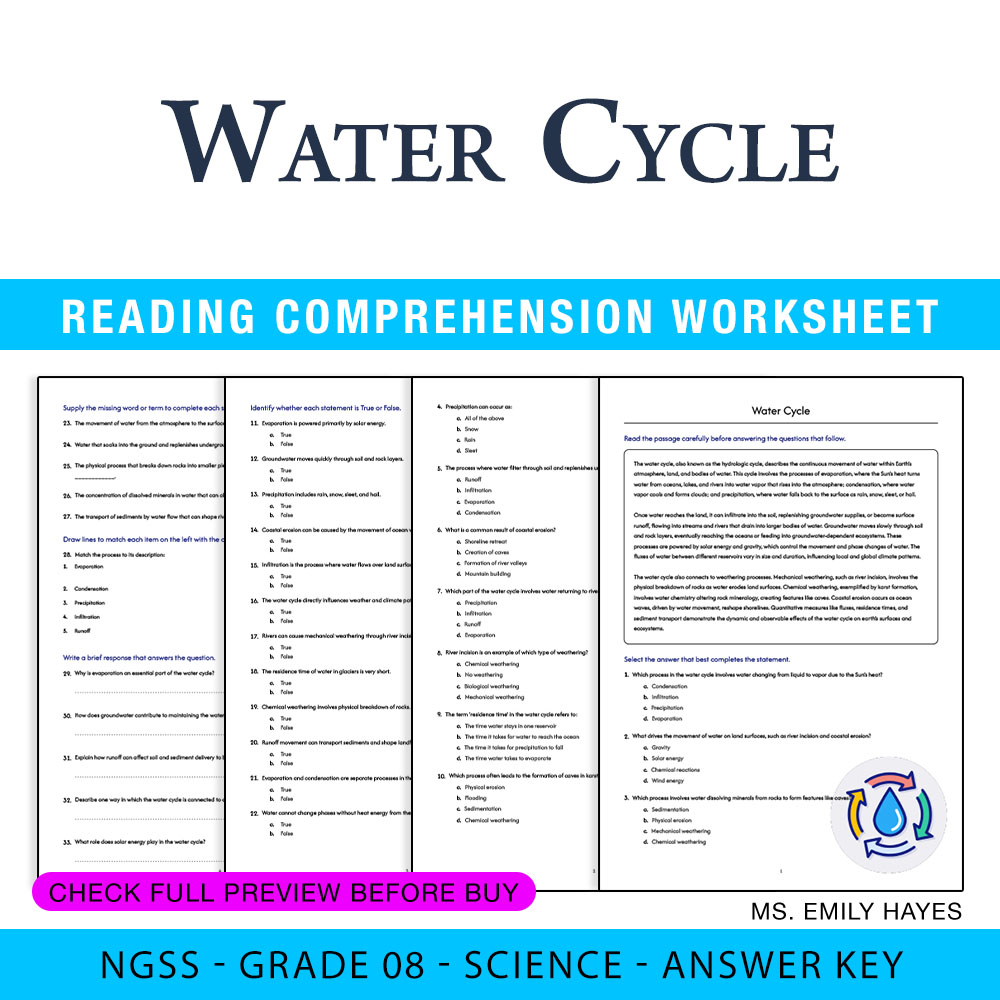
Grade 8 Science | Water Cycle Worksheet (PDF + Answer Key)
Created byCopper Leaf ClassroomLearning Objectives
- Explain the processes involved in the water cycle, including evaporation, condensation, precipitation, infiltration, runoff, and groundwater flow.
- Describe how energy from the Sun and gravity drive the processes of the water cycle.
- Connect the water cycle to chemical and mechanical weathering processes such as river incision, karst formation, and coastal erosion.
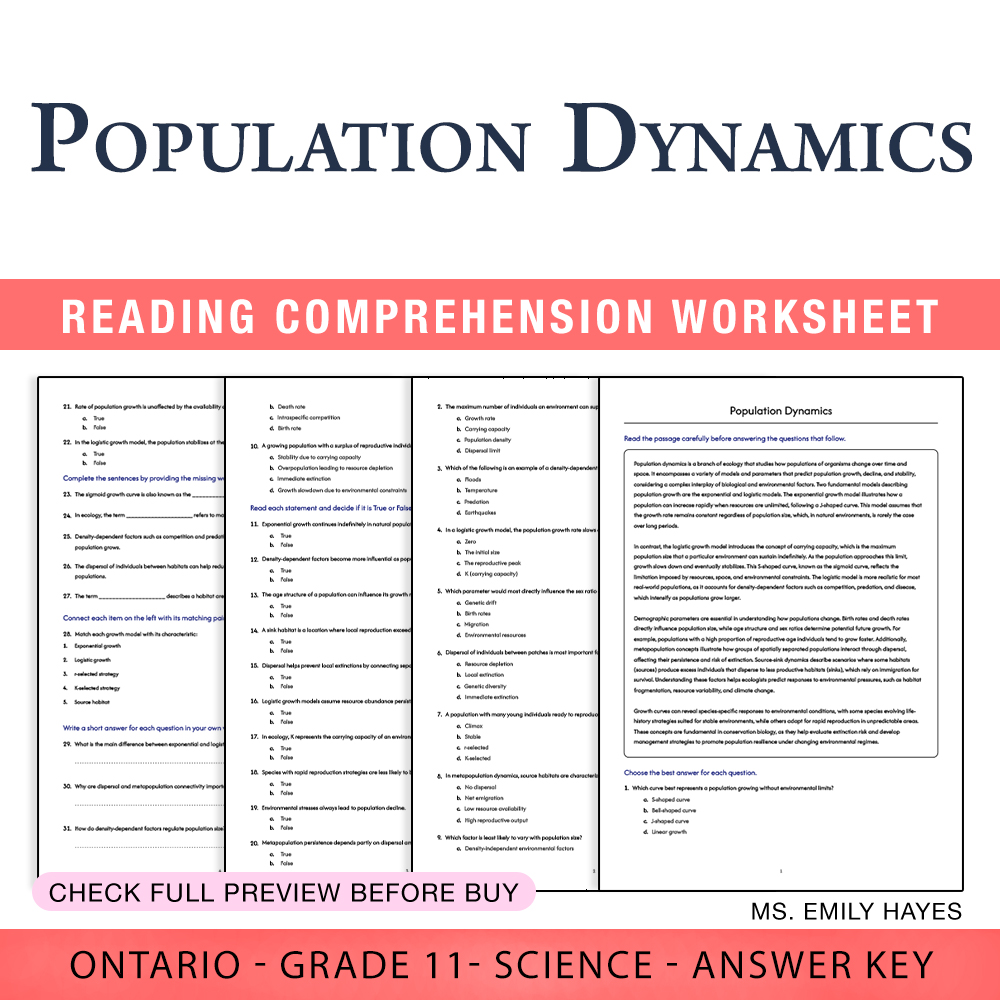
11th Grade Science | Population Dynamics Worksheet (PDF + Answer Key)
Created byCopper Leaf ClassroomLearning Objectives
- Understand and describe different population growth models, including exponential and logistic growth.
- Analyze the effects of demographic parameters such as birth rates, death rates, age structure, and sex ratio on population trajectories.
- Explain the concepts of carrying capacity, density-dependent, and density-independent factors influencing populations.
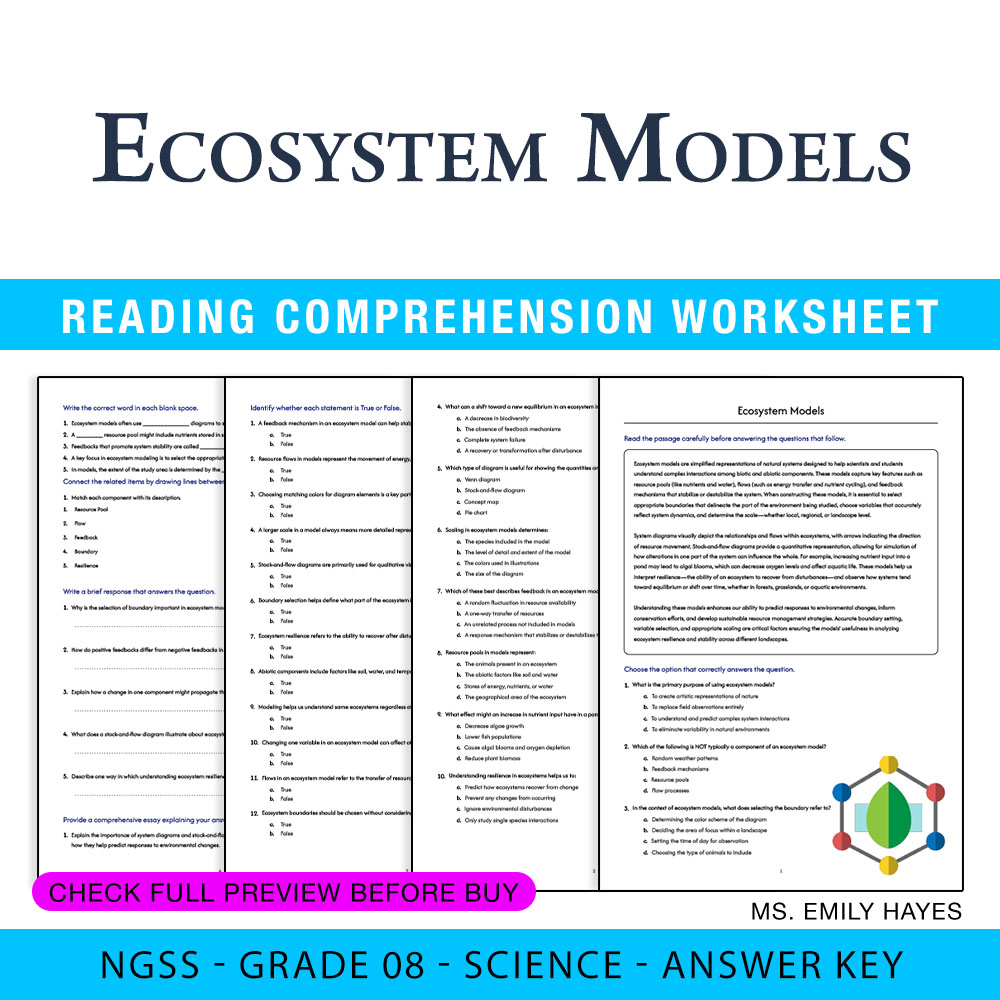
8th Grade Science | Ecosystem Models Worksheet (PDF+ Answer Key)
Created byCopper Leaf ClassroomLearning Objectives
- Understand the key components of ecosystem models, including biotic and abiotic factors.
- Interpret system diagrams and stock-and-flow representations to analyze ecosystem dynamics.
- Describe how changes in one component can propagate through an ecosystem, affecting resilience and equilibrium.
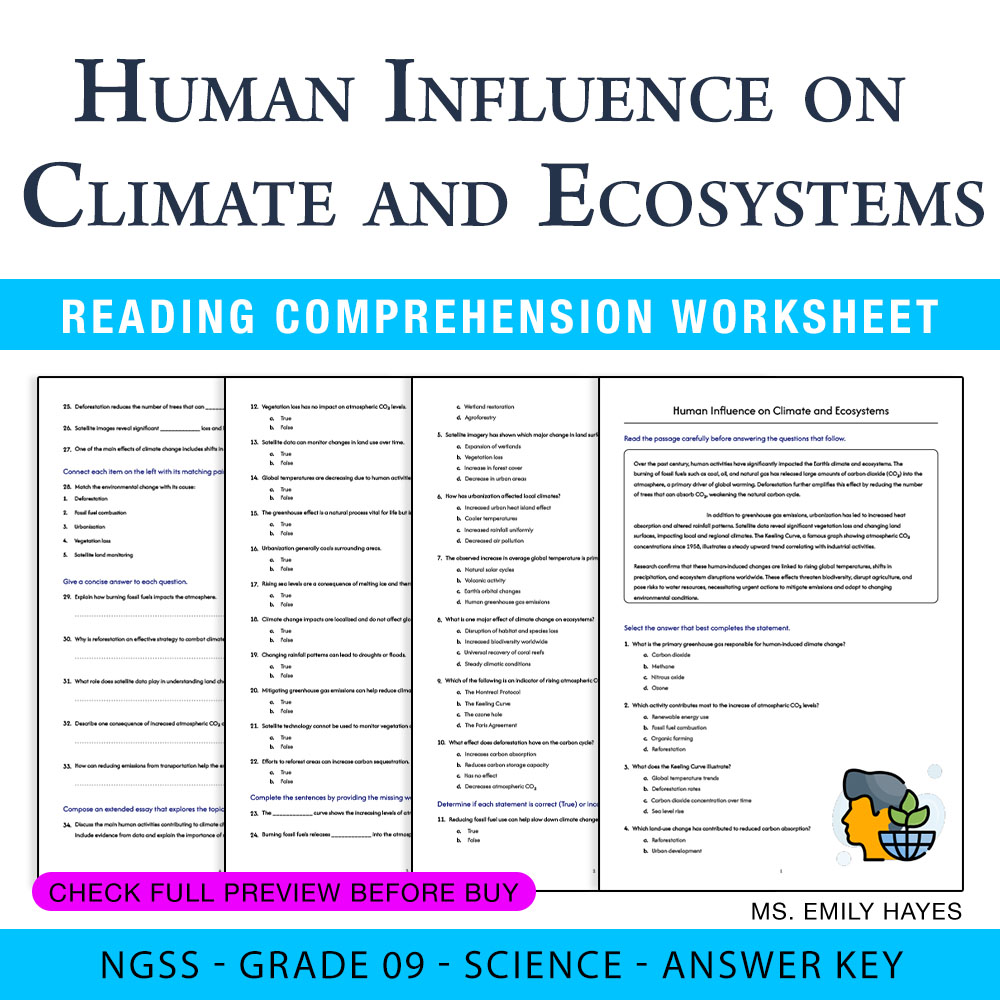
Grade 9 Science | Human Influence and Ecosystems Worksheet (PDF + Answer Key)
Created byCopper Leaf ClassroomLearning Objectives
- Understand the evidence linking human activities such as fossil fuel combustion and deforestation to climate change
- Analyze historical and satellite data indicating environmental changes over time
- Evaluate the impacts of anthropogenic change on the biosphere and hydrosphere
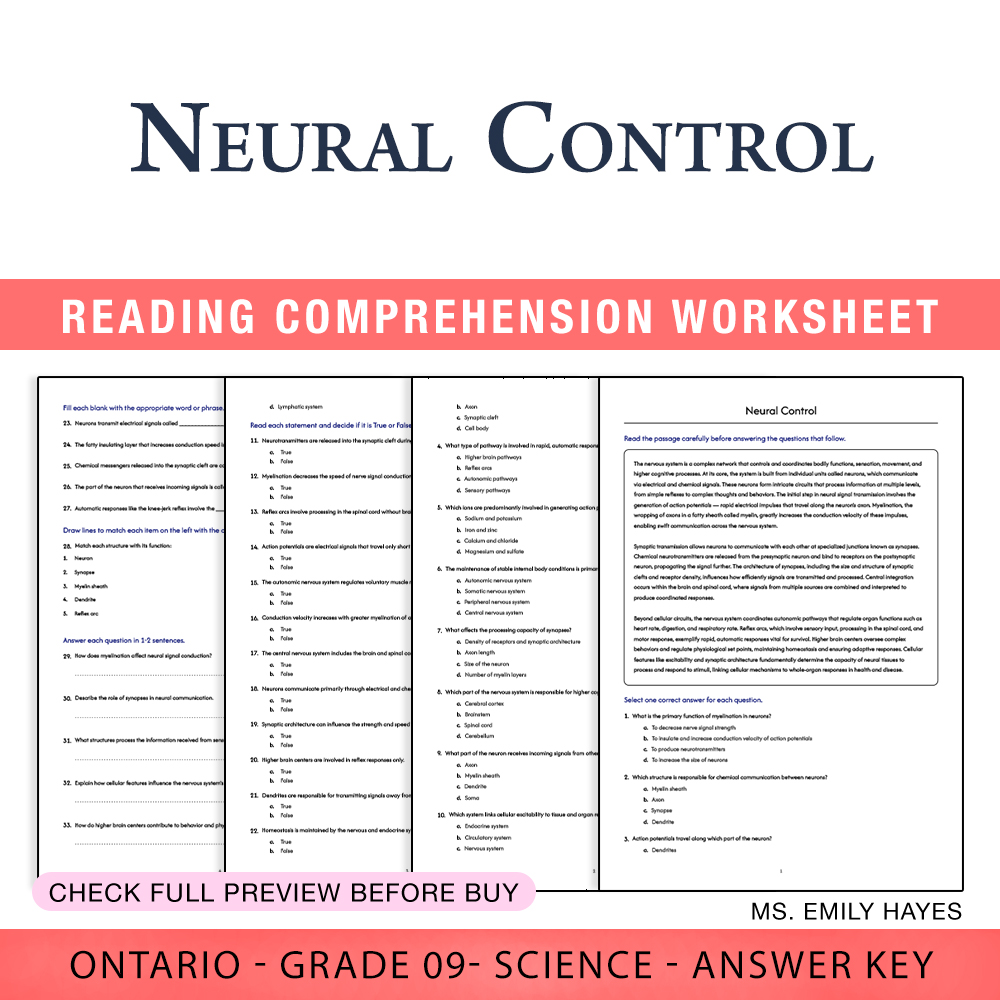
Grade 9 Science | Neural Control Worksheet (PDF + Answer Key)
Created byCopper Leaf ClassroomLearning Objectives
- Describe the organization of the nervous system from neurons and synapses to neural circuits and central integration.
- Explain how action potentials and synaptic transmission propagate signals within the nervous system.
- Relate cellular features like myelination and synaptic architecture to conduction velocity and processing capacity.
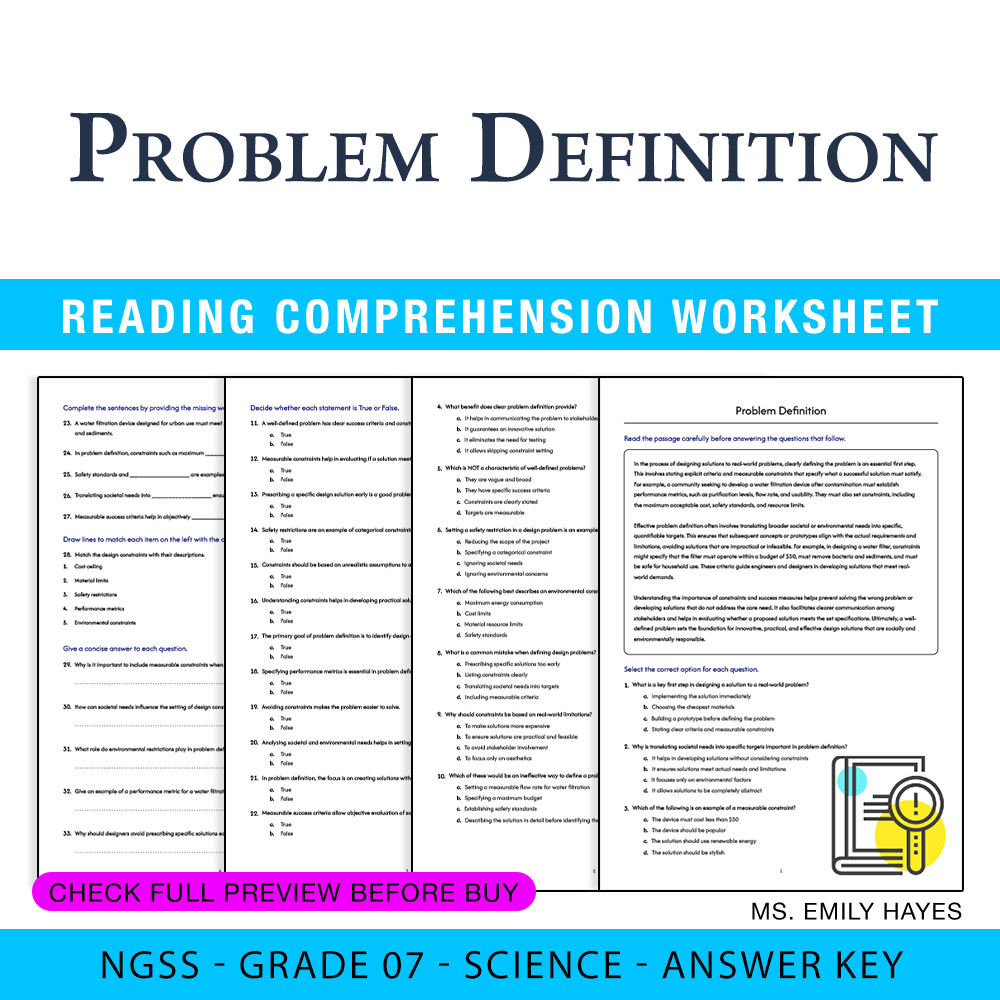
7th Grade Science | Problem Definition Worksheet (PDF+ Answer Key)
Created byCopper Leaf ClassroomLearning Objectives
- Understand how to define design problems with clear criteria and measurable constraints.
- Learn to translate societal and environmental needs into quantitative targets.
- Recognize real-world examples of problem specifications such as water filtration.
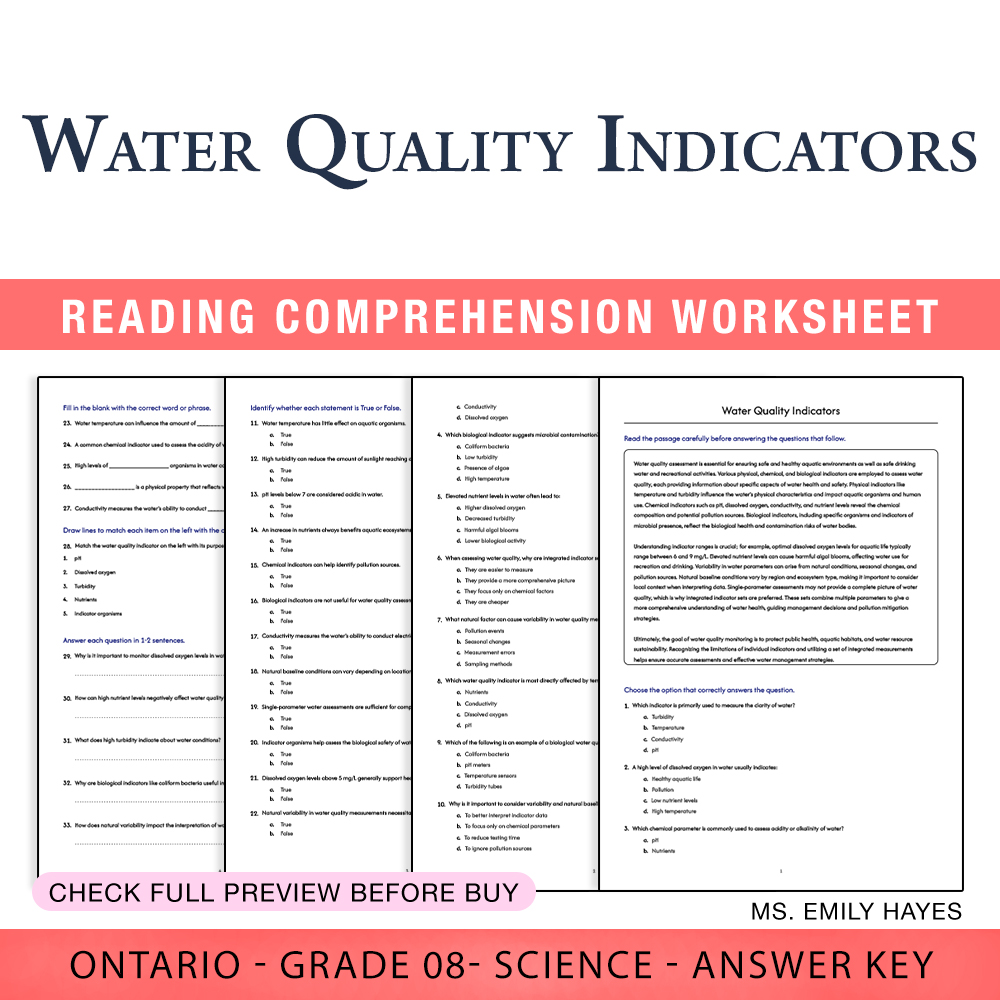
8th Grade Science | Water Quality Indicators Worksheet (PDF+ Answer Key)
Created byCopper Leaf ClassroomLearning Objectives
- Identify key physical, chemical, and biological water quality indicators.
- Interpret the significance of indicator ranges for aquatic health and human use.
- Understand sources of variability and the limitations of single-parameter assessments.
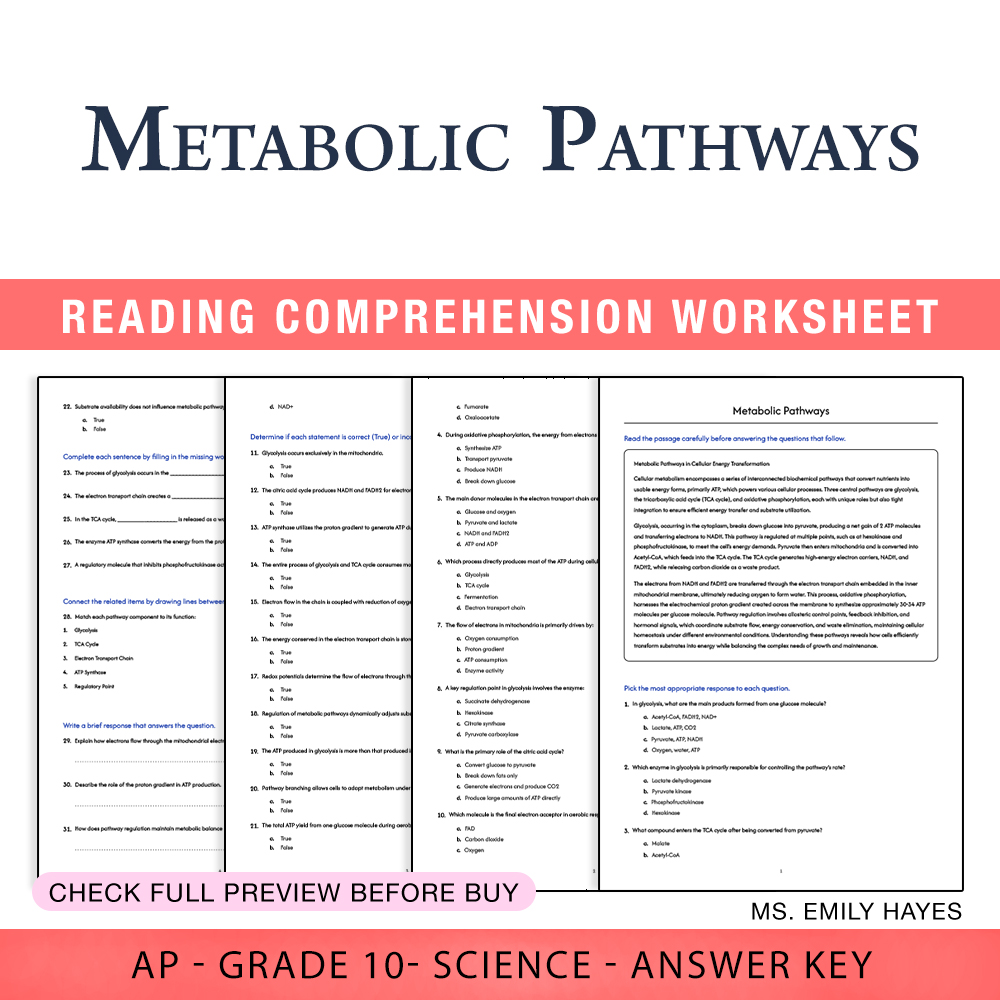
10th Grade Science | Metabolic Pathways Worksheet (PDF+ Answer Key)
Created byCopper Leaf ClassroomLearning Objectives
- Map and explain the core metabolic pathways including glycolysis, the TCA cycle, and oxidative phosphorylation.
- Identify key energy yields, electron flows, and fates of intermediates in these pathways.
- Understand the regulation and branching points that maintain cellular homeostasis under varying conditions.
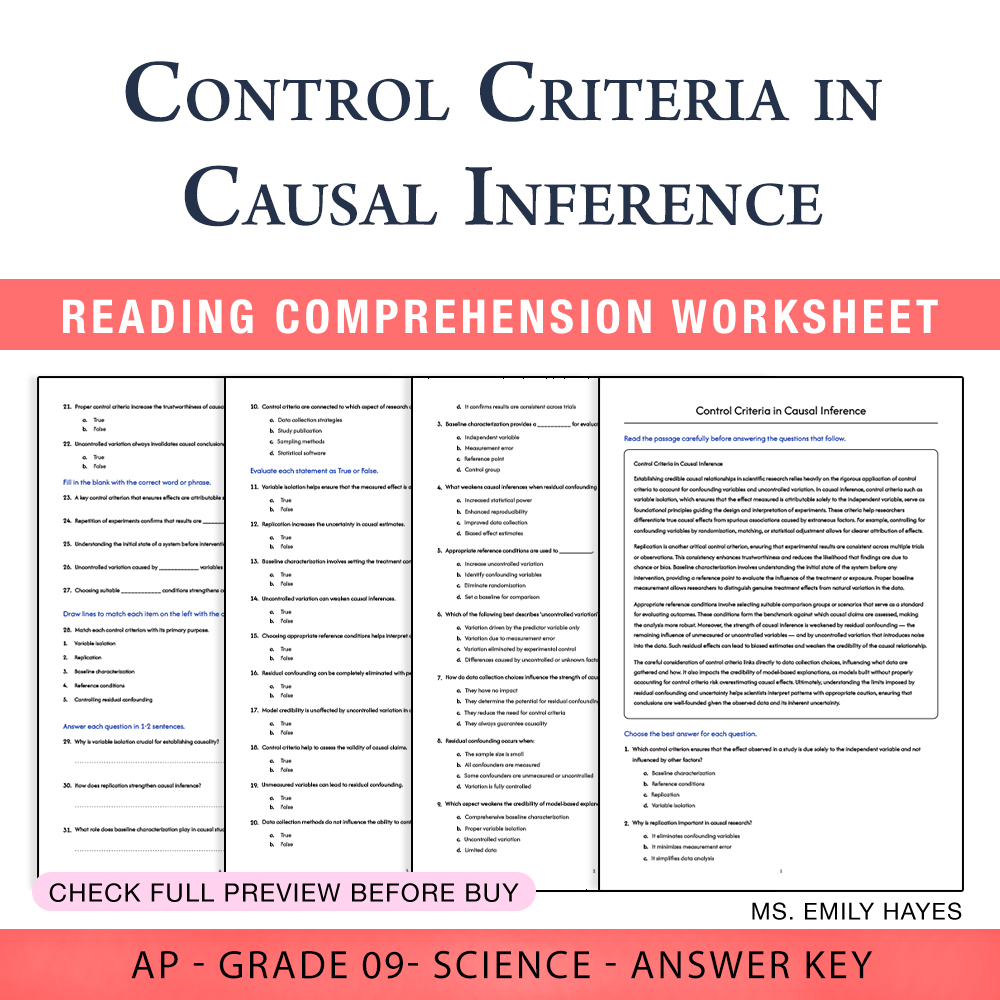
9th Grade Science | Control Criteria in Causal Inference (PDF+ Answer Key)
Created byCopper Leaf ClassroomLearning Objectives
- Define and explain the key control criteria used in establishing causality and their importance.
- Analyze how variable isolation, replication, baseline characterization, and reference conditions influence causal interpretation.
- Evaluate the impact of residual confounding and uncontrolled variation on the strength of causal claims.
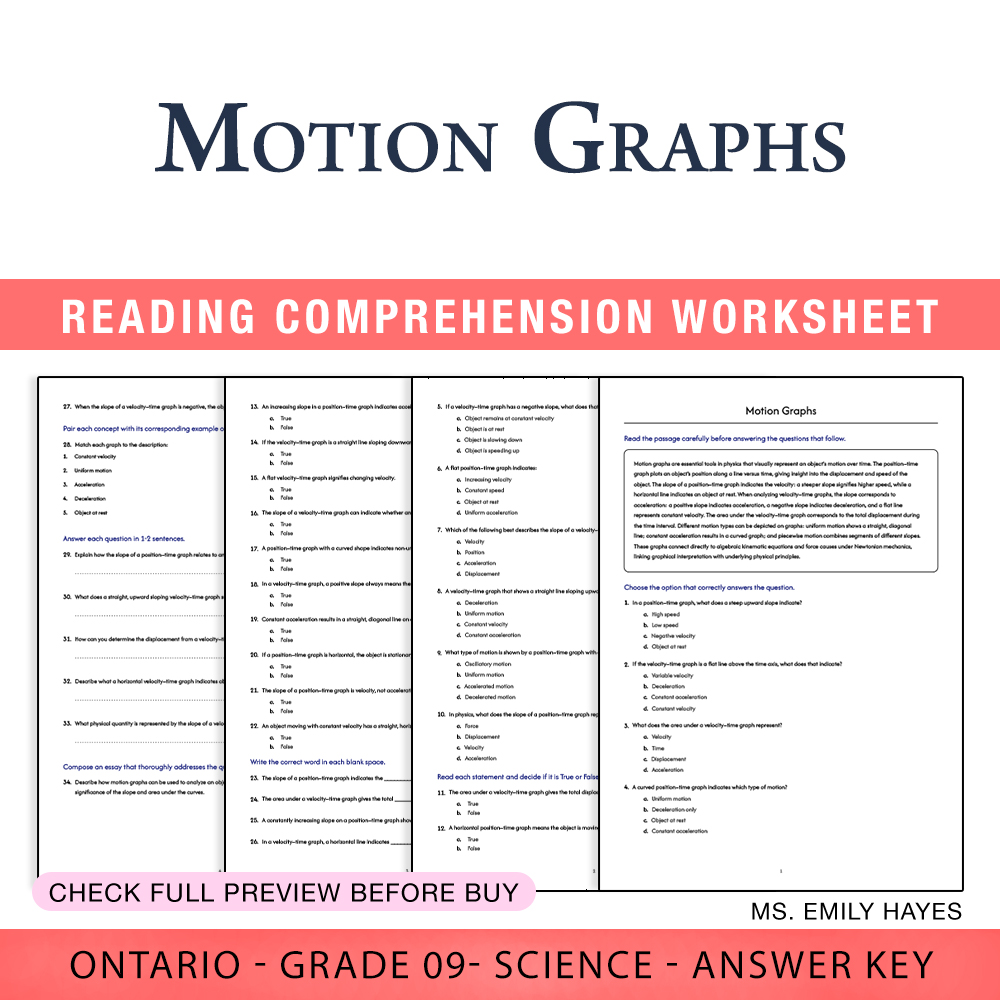
9th Grade Science | Motion Graphs Worksheet (PDF + Answer Key)
Created byCopper Leaf ClassroomLearning Objectives
- Interpret position–time graphs to determine an object's motion and understand what the slope indicates about velocity.
- Explain how the slope of a velocity–time graph relates to acceleration.
- Calculate displacement from the area under a velocity–time graph.
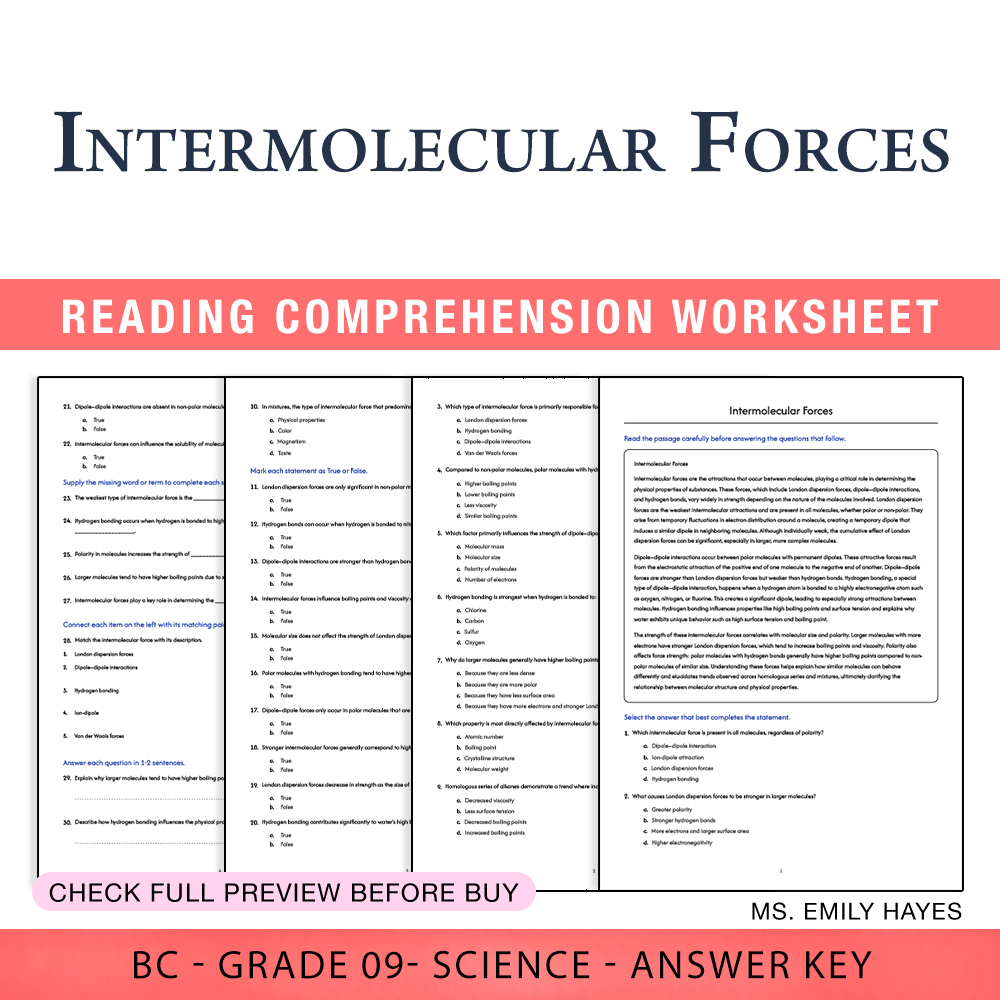
9th Grade Science | Intermolecular Forces Worksheet (PDF+ Answer Key)
Created byCopper Leaf ClassroomLearning Objectives
- Explain the types of intermolecular forces and how they affect physical properties of molecules.
- Compare London dispersion, dipole–dipole, and hydrogen bonding in terms of strength and molecular influence.
- Relate molecular structure and polarity to the strength of intermolecular forces and properties like boiling point and viscosity.
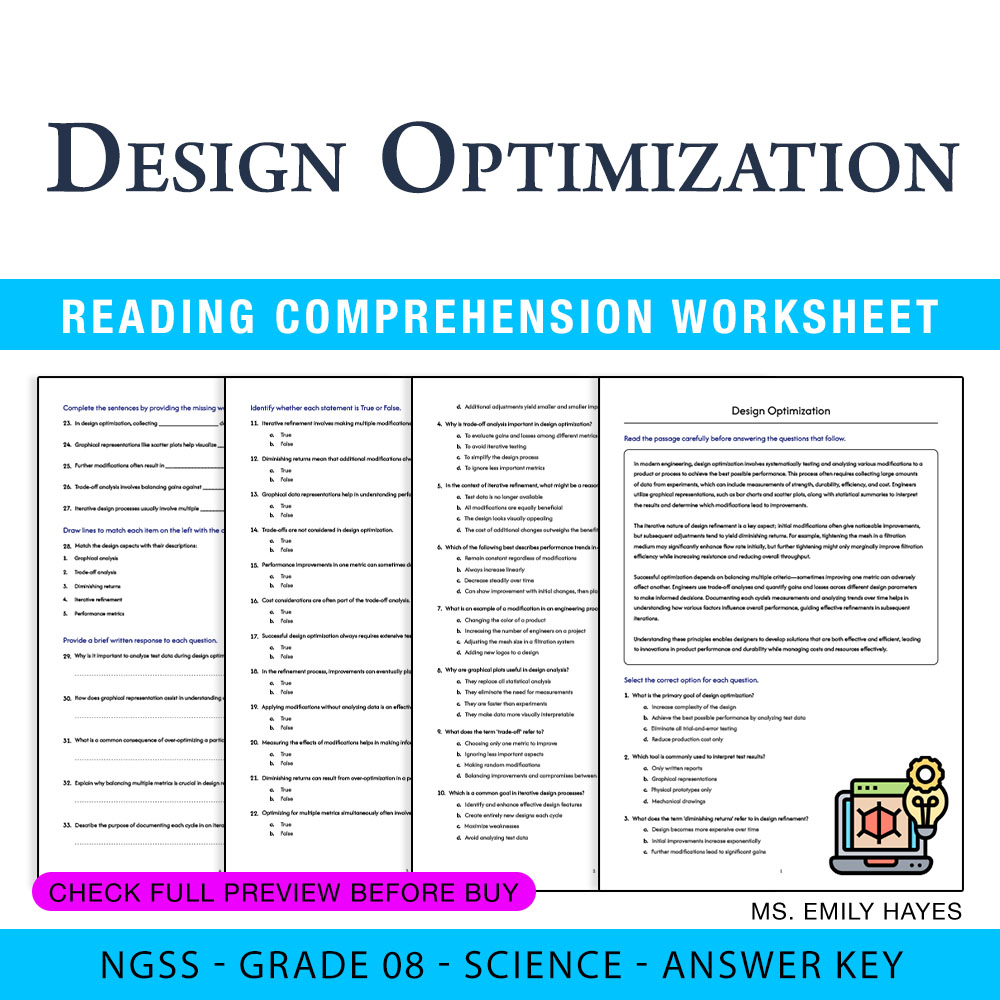
8th Grade Science | Design Optimization Worksheet (PDF+ Answer Key)
Created byCopper Leaf ClassroomLearning Objectives
- Analyze test data to identify performance trends in experimental designs.
- Use graphical and statistical methods to evaluate design modifications.
- Identify effective design characteristics and quantify trade-offs among metrics.
Browse more categories
About Science Worksheets
Find Science worksheets spanning core skills, practice, and review. All 42,859 resources are instant PDF downloads for the classroom or home.
Every worksheet on MyTeachingSheets is created by independent teacher-authors and reviewed before publication. All resources download as printable PDFs for classroom, homework, or at-home practice, and many include answer keys. Preview any worksheet free before buying.