
Science Worksheets
42,859 subject resources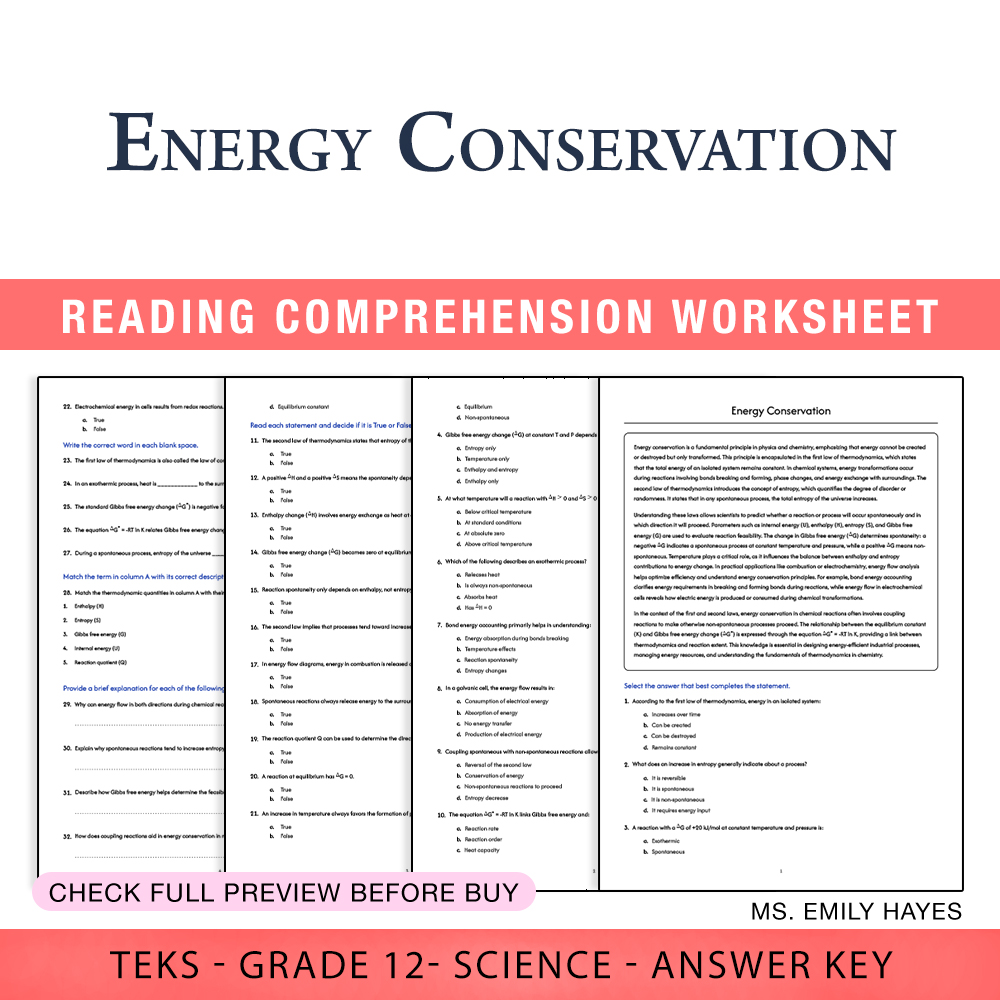
Grade 12 Science | Energy Conservation Worksheet (PDF+ Answer Key)
 Created byCopper Leaf Classroom
Learning Objectives
- Explain the first and second laws of thermodynamics and their application to chemical systems.
- Analyze how internal energy, enthalpy, entropy, and Gibbs free energy predict reaction spontaneity and equilibrium.
- Interpret free energy changes from equilibrium constants in various processes.
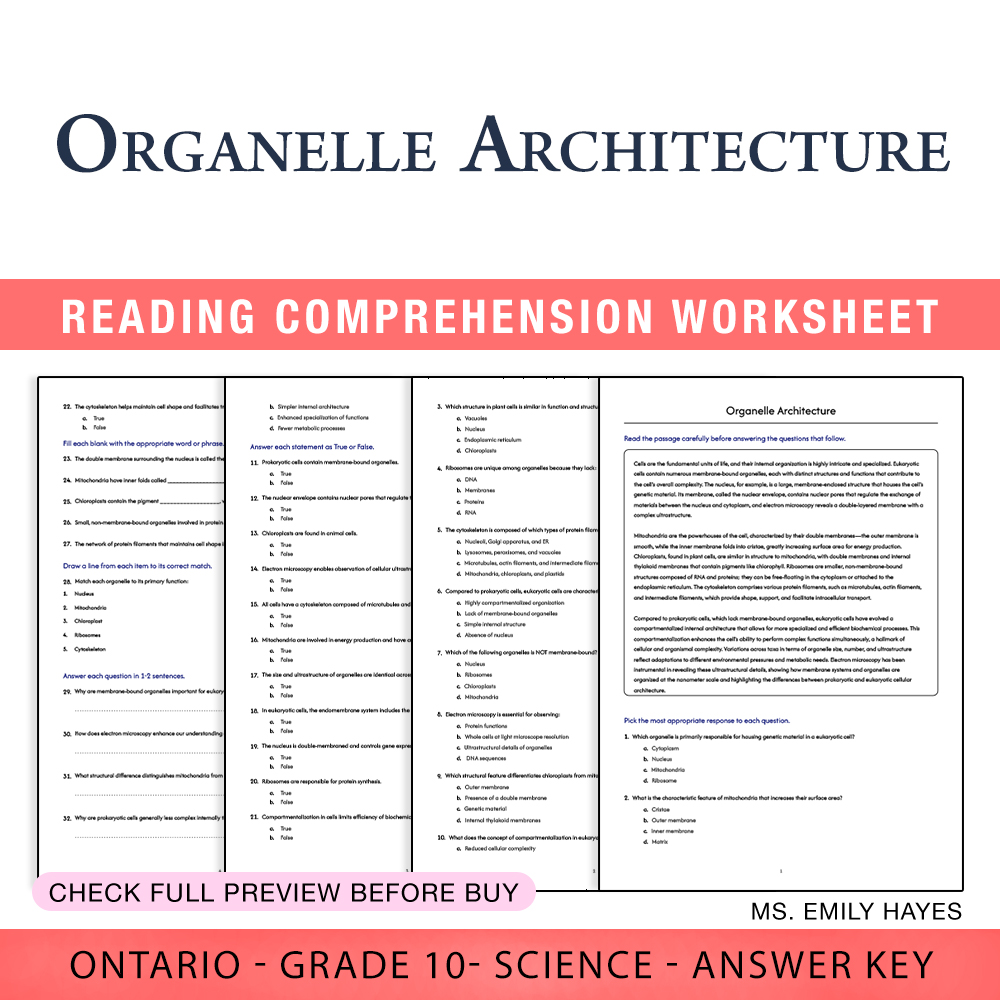
Grade 10 Science | Organelle Architecture Worksheet (PDF + Answer Key)
Created byCopper Leaf ClassroomLearning Objectives
- Describe the major cellular organelles and membrane-bound compartments, emphasizing their structural characteristics and ultrastructure.
- Compare the internal organization of prokaryotic and eukaryotic cells, focusing on compartmentalization and morphological differences.
- Explain how cellular compartmentalization contributes to cellular complexity and function observed across different taxa.
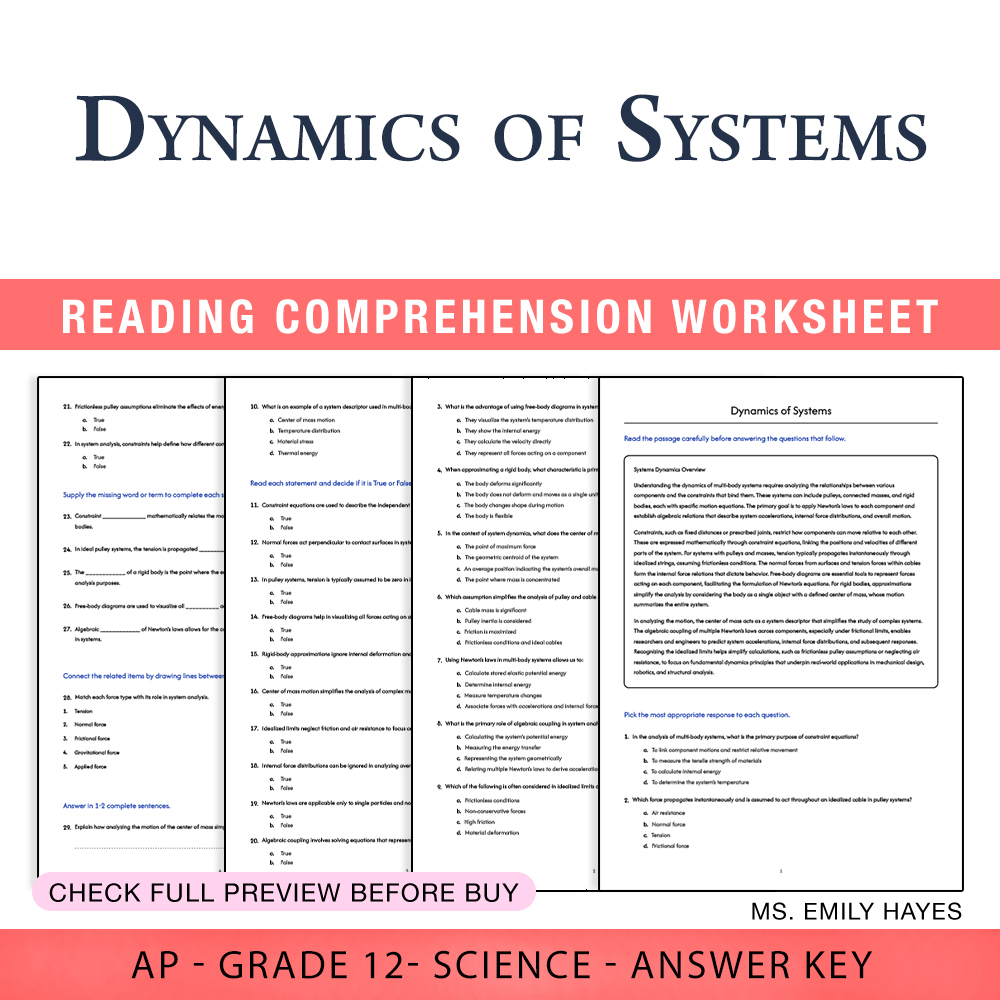
12th Grade Science | Dynamics of Systems Worksheet (PDF+ Answer Key)
Created byCopper Leaf ClassroomLearning Objectives
- Analyze multi-body systems with constraints using equations and internal force relations.
- Understand pulley, mass configurations, and rigid-body approximations in system dynamics.
- Model motion of center of mass and interpret free-body diagrams for system components.
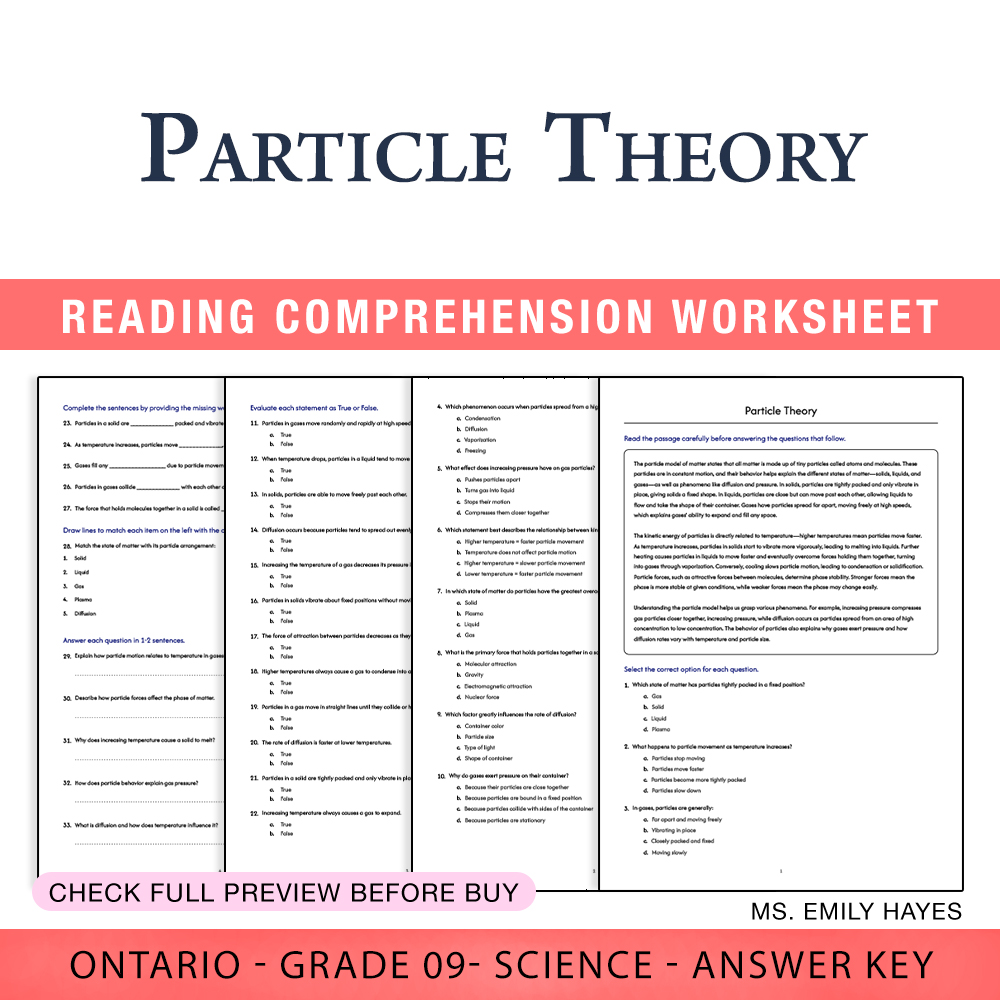
Grade 9 Science | Particle Theory Worksheet (PDF + Answer Key)
Created byCopper Leaf ClassroomLearning Objectives
- Explain the particle model as a framework for understanding states of matter, diffusion, and temperature-dependent behavior.
- Describe how particle motion, spacing, and forces determine the properties and phases of matter.
- Relate kinetic energy to temperature and explain how particle interactions influence phase stability and response to energy changes.
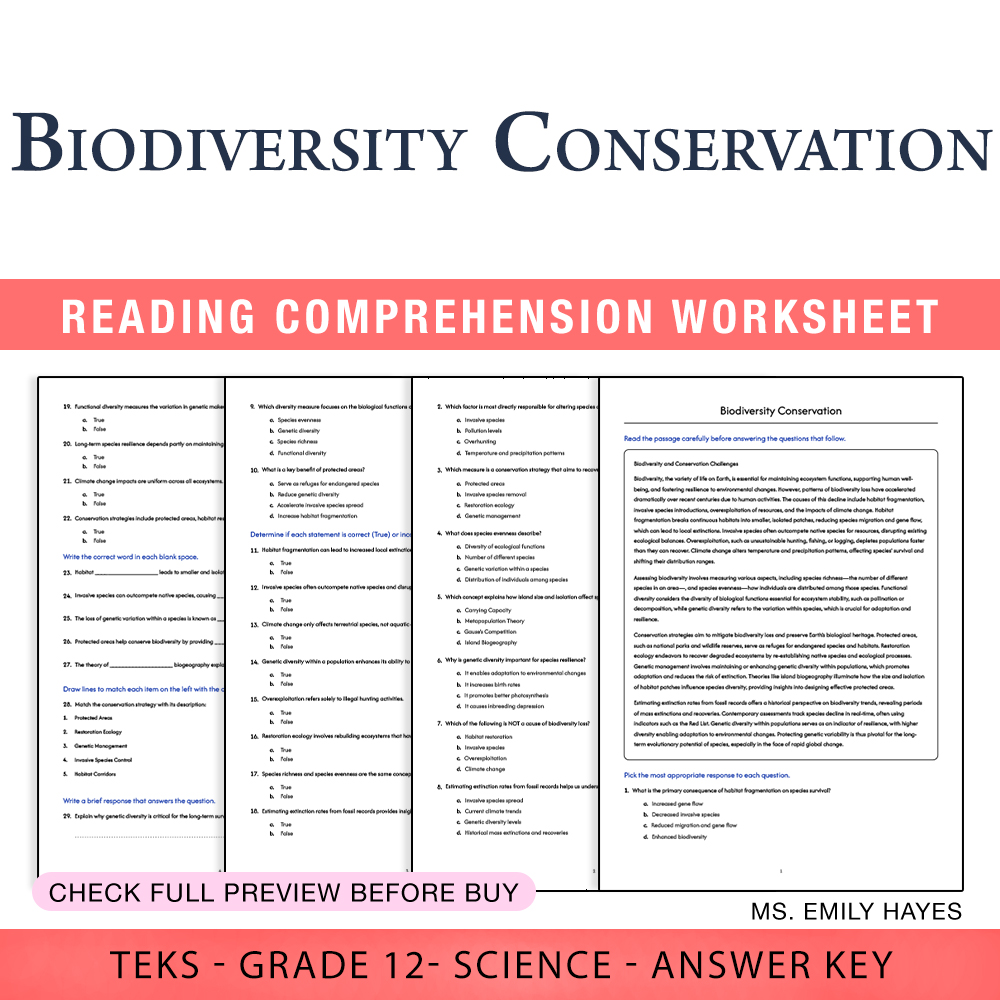
12th Grade Science | Biodiversity Conservation Worksheet (PDF+ Answer Key)
Created byCopper Leaf ClassroomLearning Objectives
- Understand key patterns and causes of biodiversity loss, including habitat fragmentation, invasive species, overexploitation, and climate change.
- Describe measures of species richness, evenness, functional and genetic diversity, and their importance in conservation.
- Explain conservation strategies such as protected areas, restoration ecology, and genetic management.
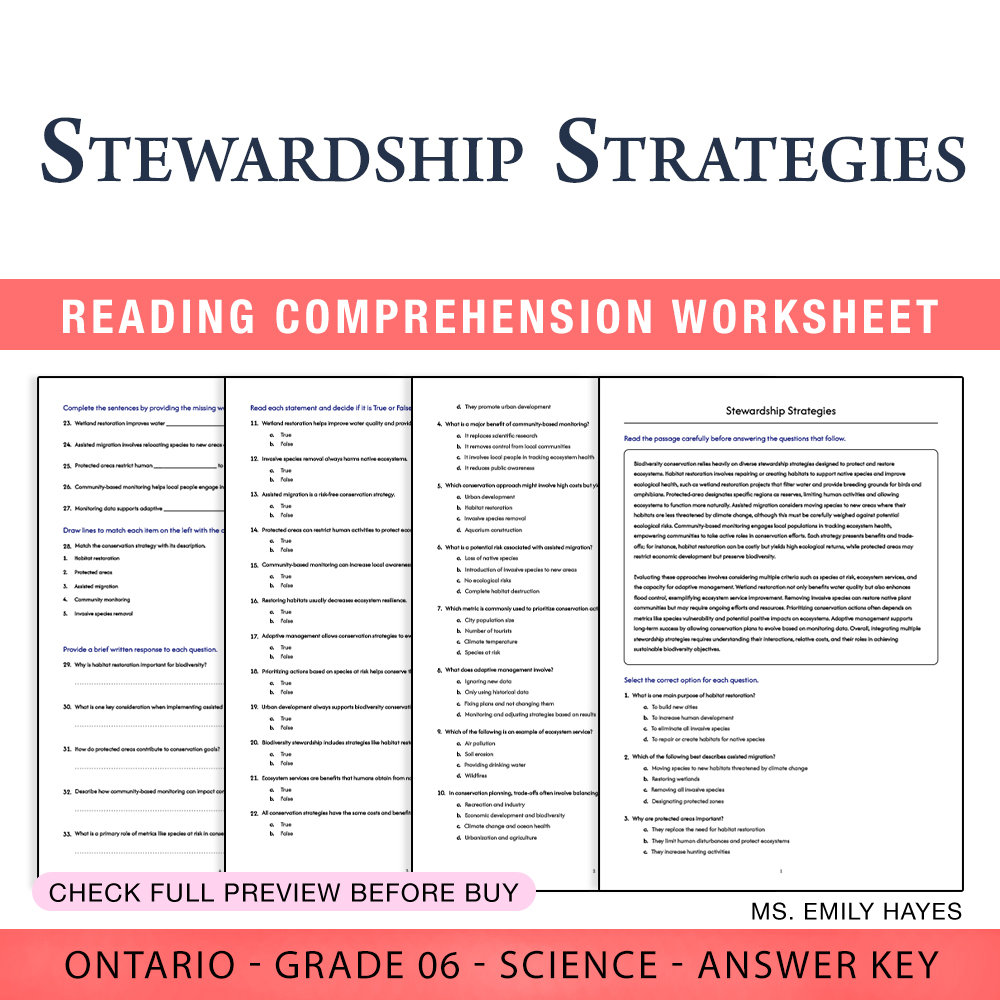
6th Grade Science | Stewardship Strategies Worksheet (PDF + Answer Key)
Created byCopper Leaf ClassroomLearning Objectives
- Understand key concepts and approaches used in biodiversity stewardship.
- Identify and evaluate different conservation strategies and their trade-offs.
- Apply knowledge of stewardship tools to real-world environmental scenarios.
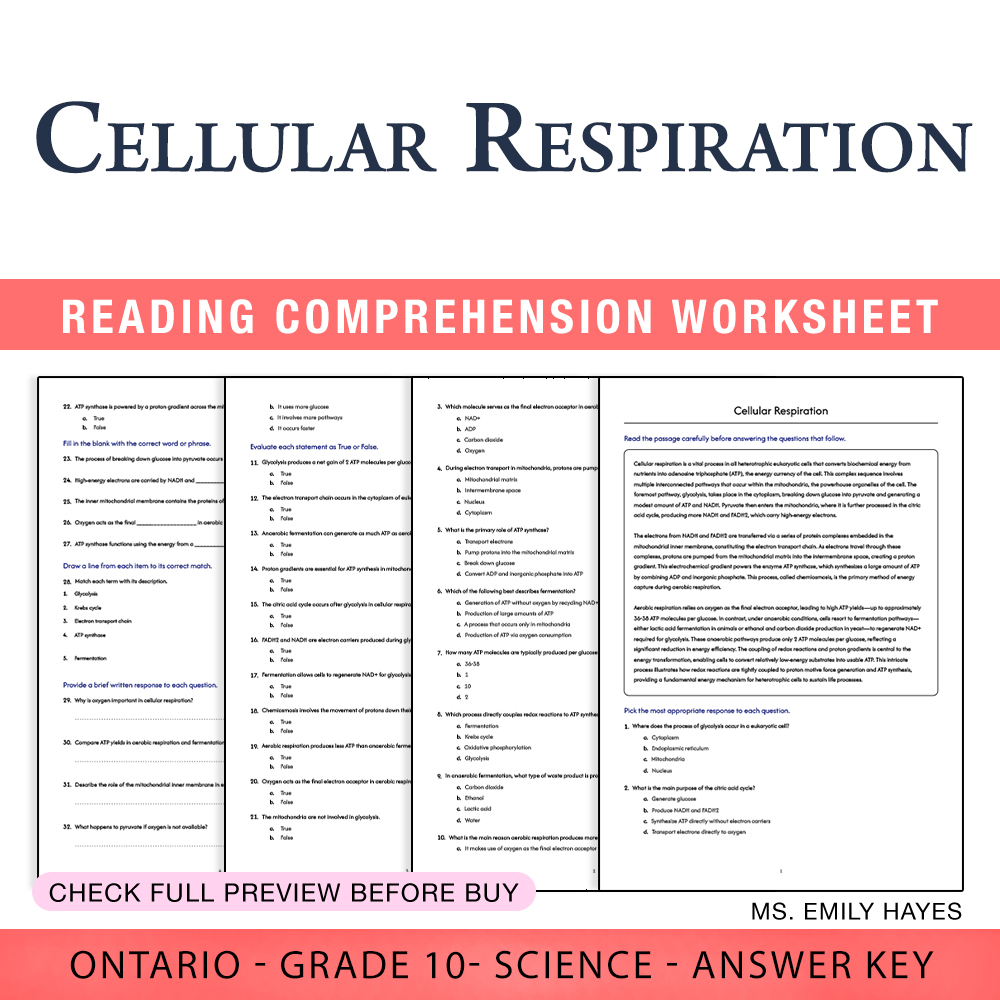
Grade 10 Science | Cellular Respiration Worksheet (PDF + Answer Key)
Created byCopper Leaf ClassroomLearning Objectives
- Describe the sequential pathways of cellular respiration: glycolysis, citric acid cycle, and electron transport chain
- Explain the role of mitochondria in eukaryotic energy production
- Contrast aerobic ATP yield versus anaerobic fermentation outcomes
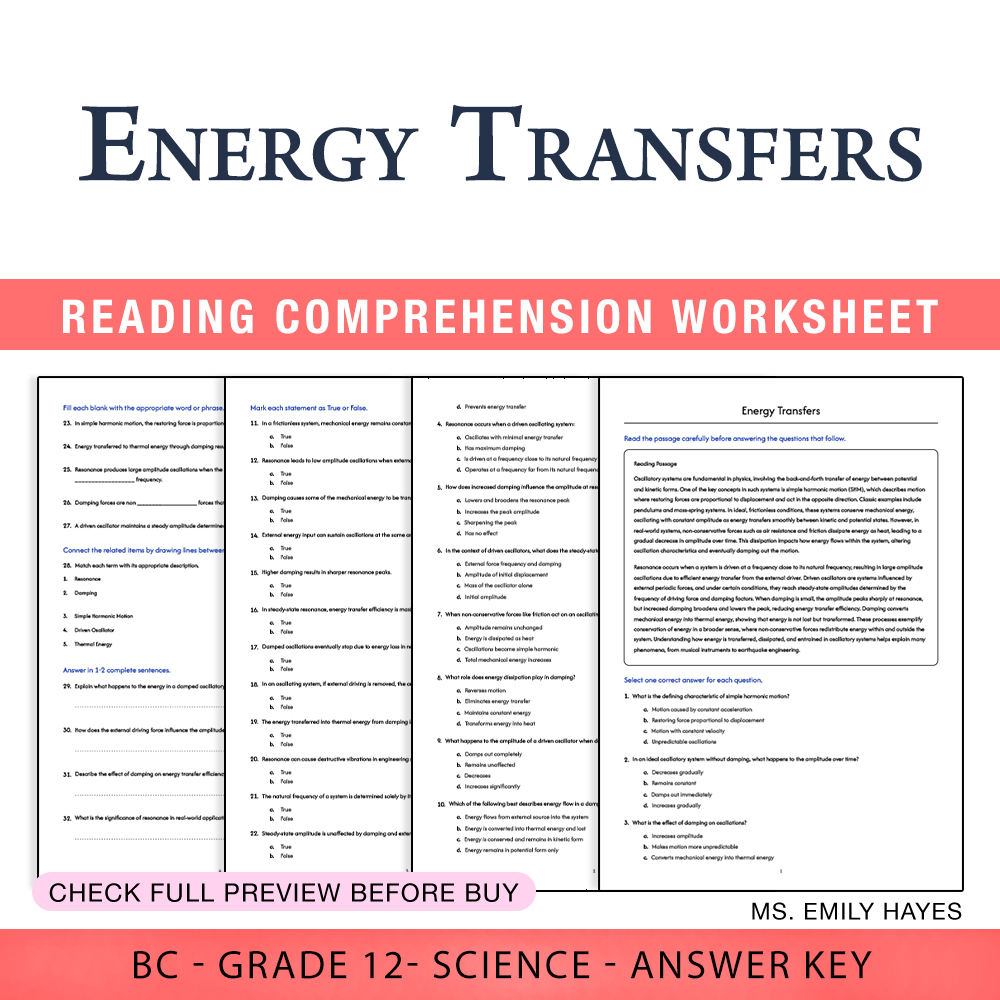
12th Grade Science | Energy Transfers Worksheet (PDF + Answer Key)
Created byCopper Leaf ClassroomLearning Objectives
- Define simple harmonic motion and describe how energy is transferred in oscillatory systems.
- Explain the concept of resonance and how damping affects energy dissipation.
- Analyze how non-conservative forces like friction influence energy flow and amplitude in oscillations.
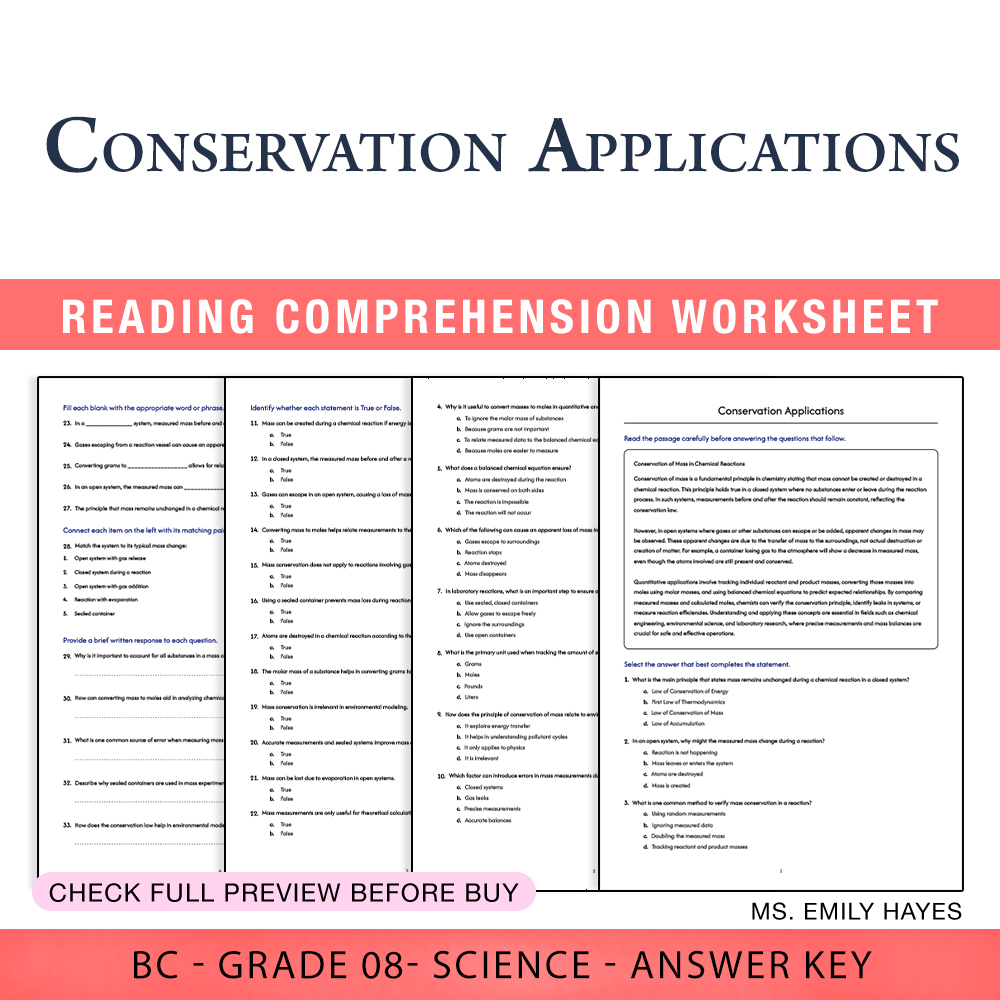
8th Grade Science | Conservation Applications Worksheet (PDF+ Answer Key)
Created byCopper Leaf ClassroomLearning Objectives
- Understand how conservation of mass applies to open and closed systems in chemical reactions.
- Learn to track reactant and product masses and convert measurements to moles for quantitative analysis.
- Apply balanced chemical equations to reconcile measured data with theoretical mass conservation.
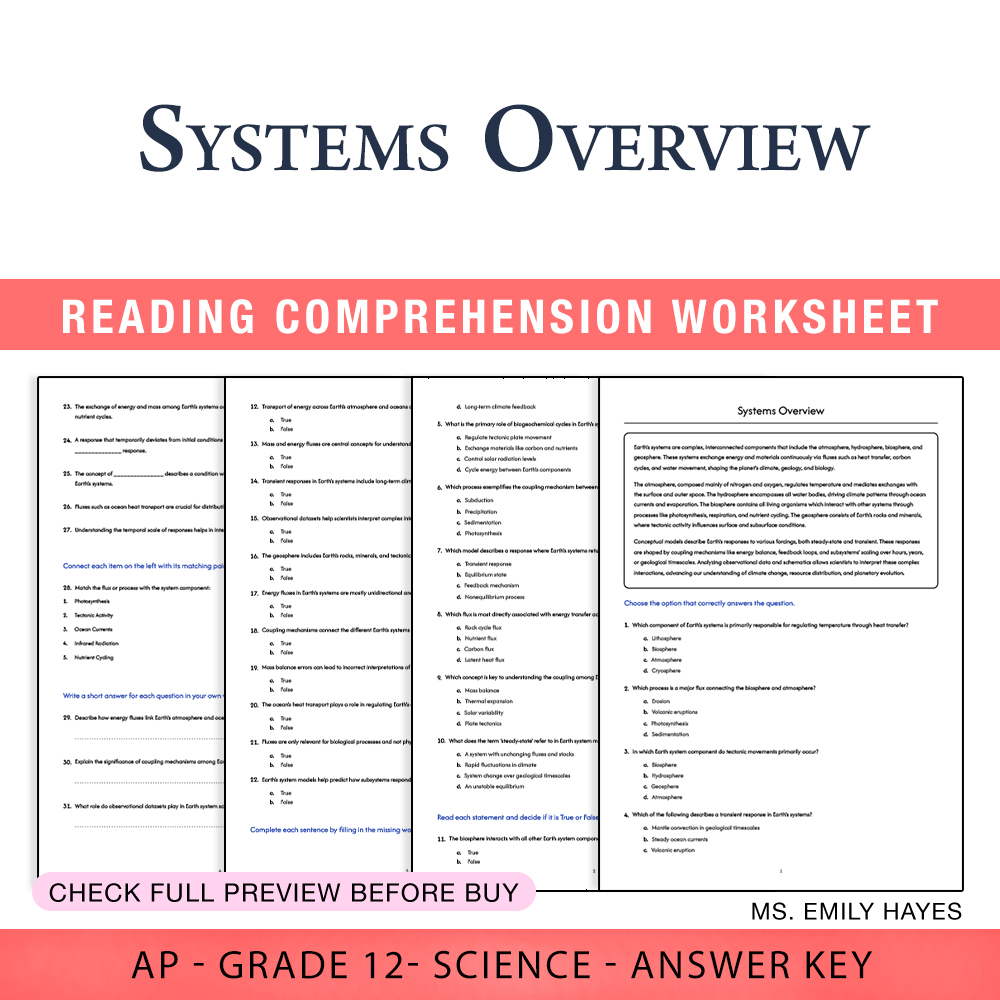
12th Grade Science | Systems Overview Worksheet (PDF+ Answer Key)
Created byCopper Leaf ClassroomLearning Objectives
- Describe the major components of Earth's systems and their interactions.
- Explain energy and mass fluxes across atmosphere, hydrosphere, biosphere, and geosphere.
- Interpret models of steady-state and transient Earth system responses.
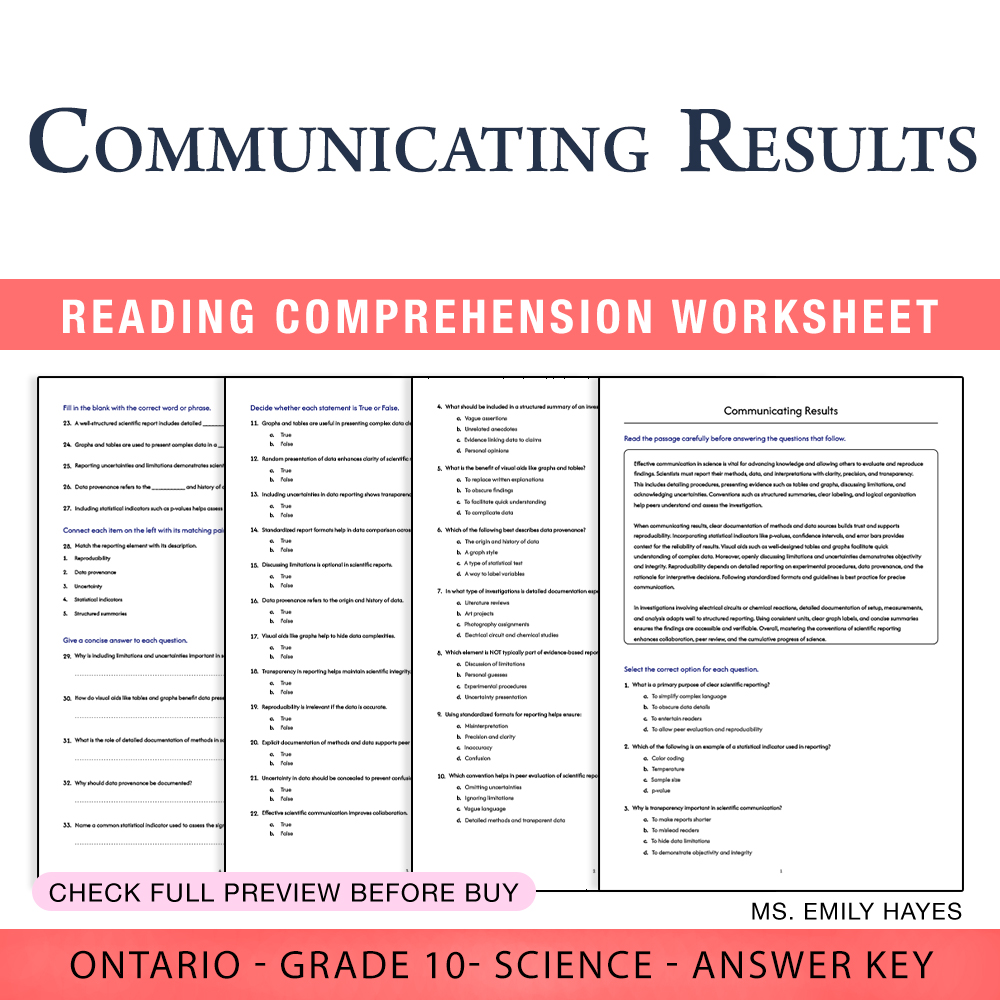
10th Grade Science | Communicating Results Worksheet (PDF + Answer Key)
Created byCopper Leaf ClassroomLearning Objectives
- Understand conventions for clear and evidence-based reporting of scientific investigations
- Learn to integrate tables, graphs, and statistical indicators to substantiate conclusions
- Develop skills for transparent presentation of data, limitations, and uncertainty
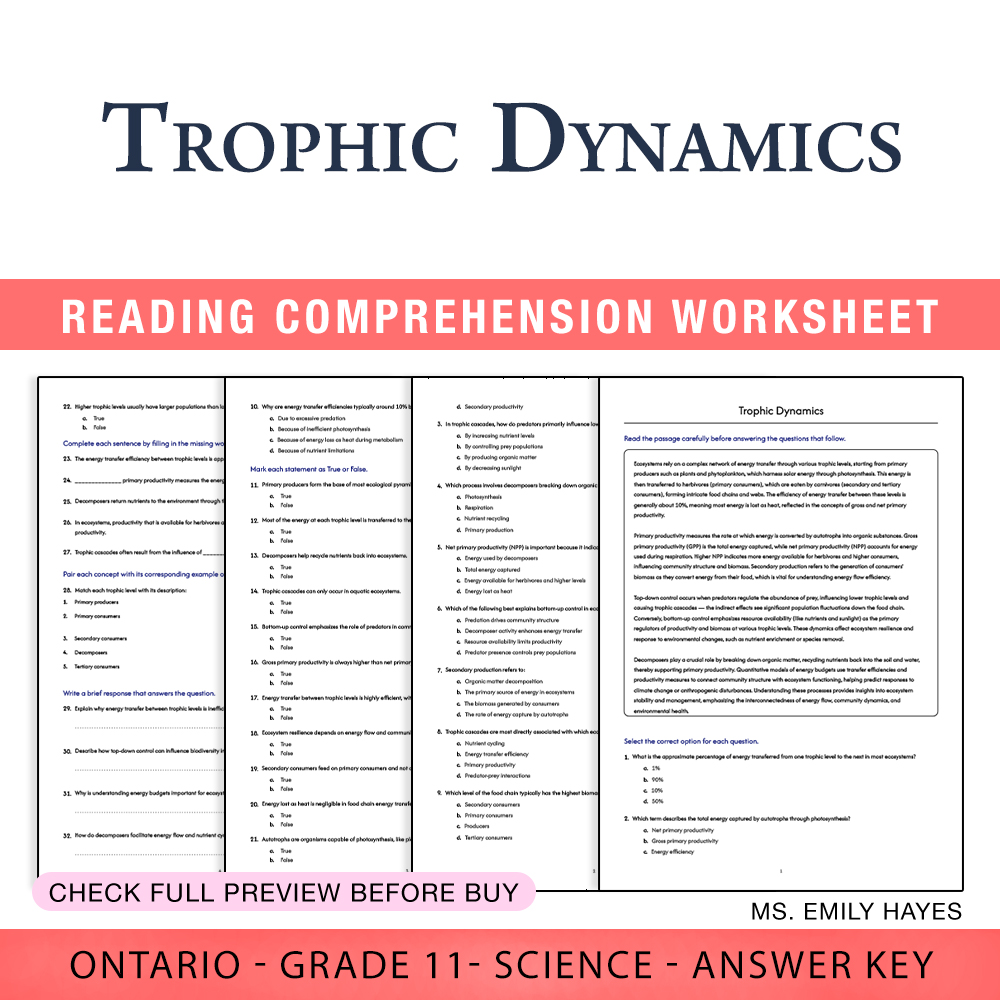
11th Grade Science | Trophic Dynamics Worksheet (PDF + Answer Key)
Created byCopper Leaf ClassroomLearning Objectives
- Understand the transfer of energy across trophic levels in ecosystems
- Analyze the concepts of primary production, gross and net productivity, and secondary production
- Explain top-down and bottom-up controls and their effects on community structure
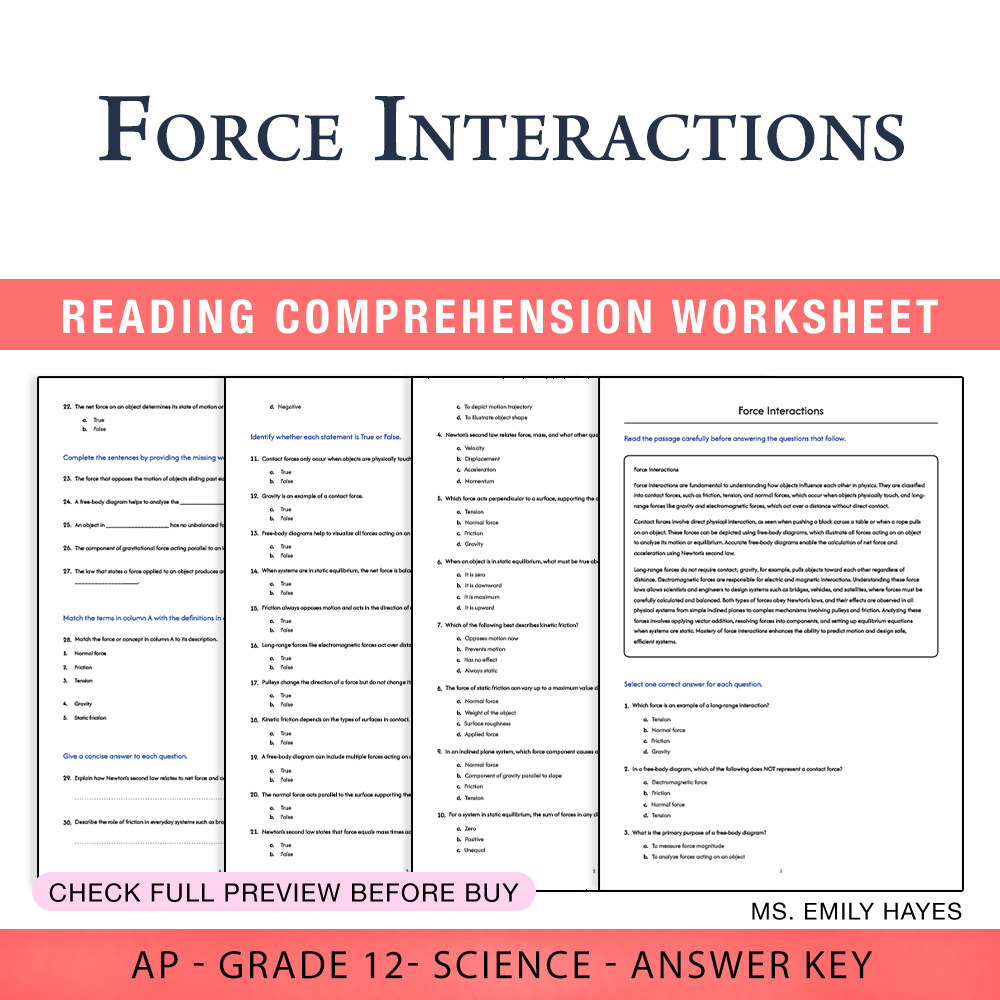
Grade 12 Science | Force Interactions Assessment Worksheet (PDF+ Answer Key)
Created byCopper Leaf ClassroomLearning Objectives
- Explain the differences between contact and long-range force interactions.
- Describe and draw free-body diagrams for various force systems.
- Apply Newton's laws to analyze systems including inclined planes, pulleys, and friction.
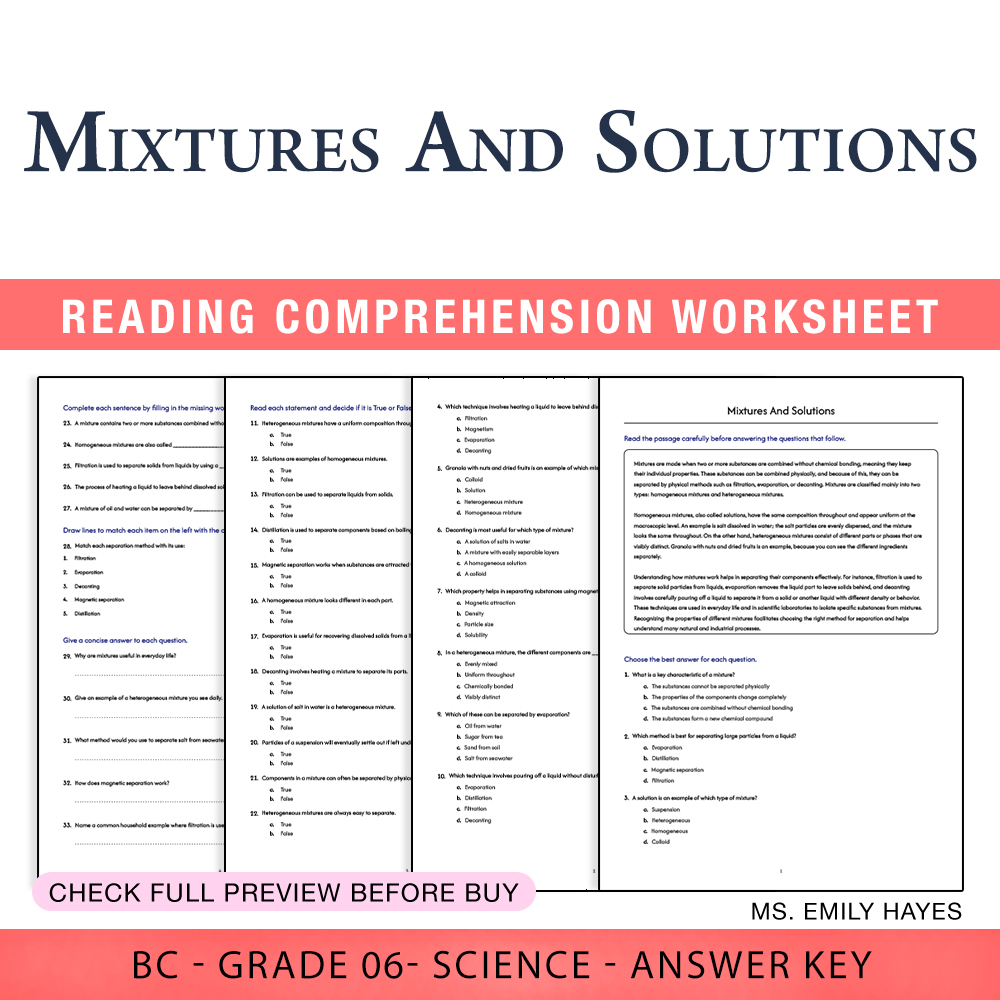
6th Grade Science | Mixtures And Solutions Worksheet (PDF+ Answer Key)
Created byCopper Leaf ClassroomLearning Objectives
- Understand the difference between mixtures and solutions.
- Identify characteristics of homogeneous and heterogeneous mixtures.
- Learn methods to separate components of mixtures such as filtration, evaporation, and decanting.
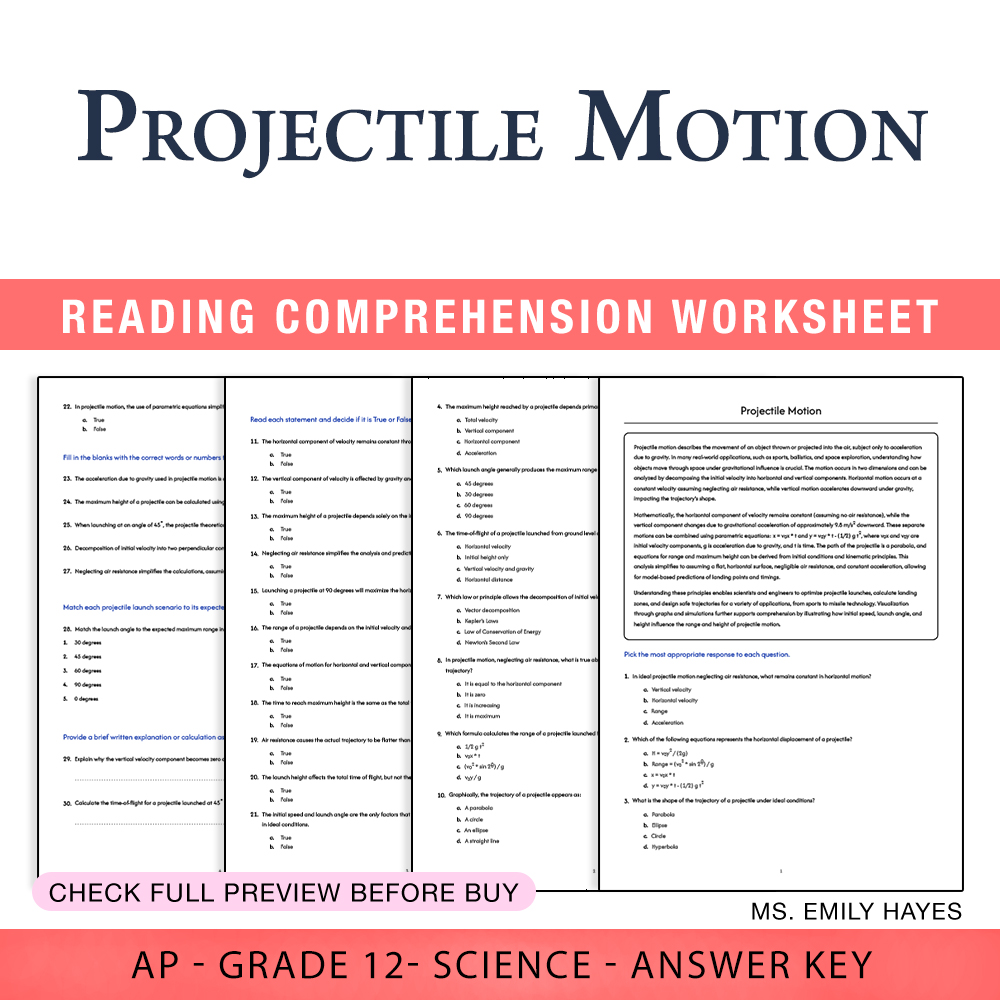
Grade 12 Science | Projectile Motion Assessment Worksheet (PDF+ Answer Key)
Created byCopper Leaf ClassroomLearning Objectives
- Understand the basic principles of projectile motion, including the components of velocity.
- Analyze the independence of horizontal and vertical motions under uniform gravity.
- Apply parametric equations to predict projectile trajectories and landing points.
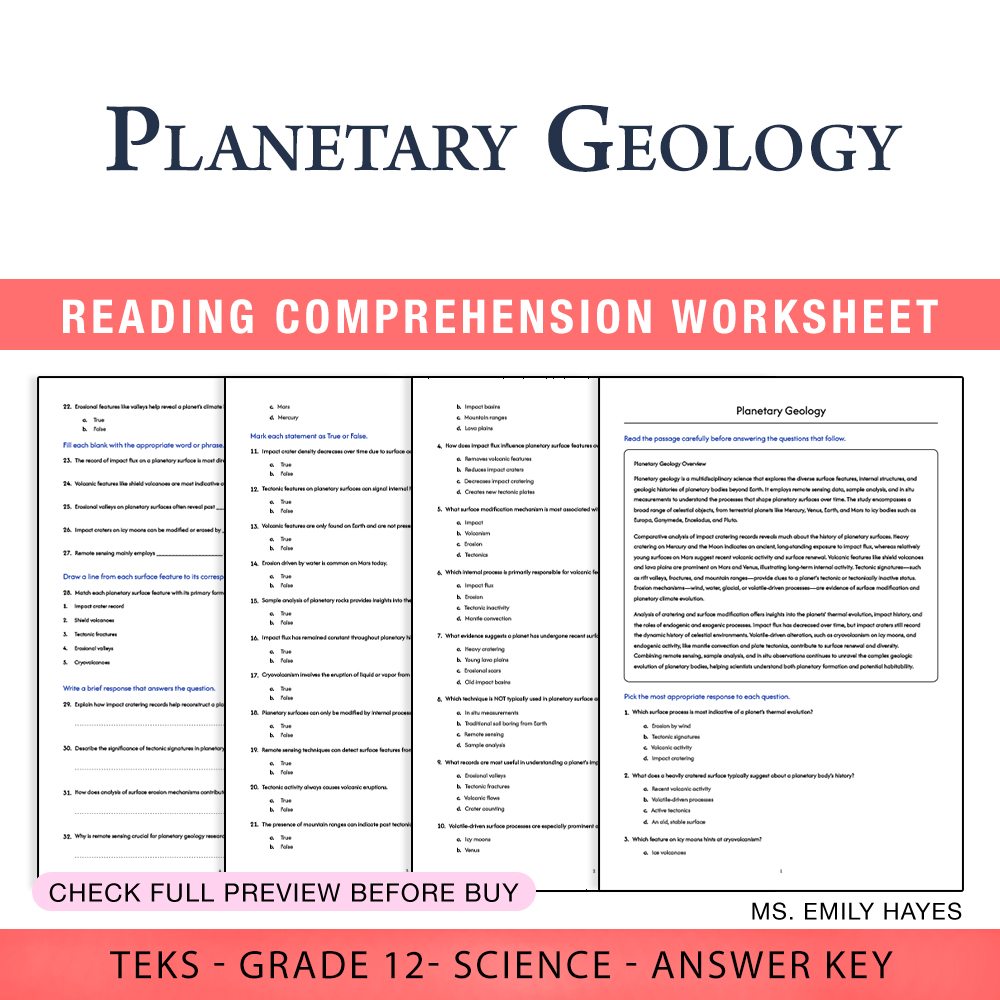
Grade 12 Science | Planetary Geology Worksheet (PDF+ Answer Key)
Created byCopper Leaf ClassroomLearning Objectives
- Compare surface processes and geological features of terrestrial and icy planetary bodies.
- Analyze impact cratering records, volcanic activity, and tectonic signatures as indicators of planetary history.
- Evaluate the roles of internal structure, impact flux, and volatile-driven processes in shaping planetary surfaces.
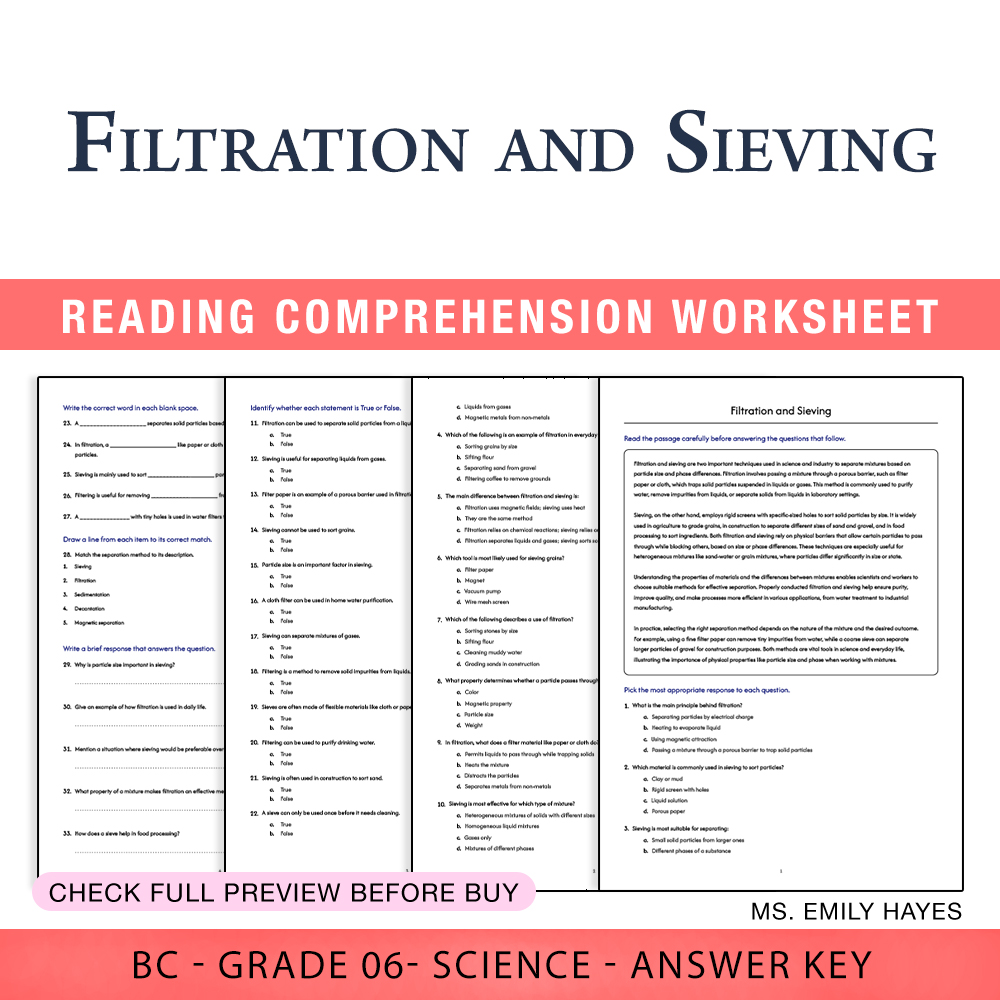
6th Grade Science | Filtration and Sieving Practice Worksheet (PDF+ Answer Key)
Created byCopper Leaf ClassroomLearning Objectives
- Understand the differences between filtration and sieving as methods for separating mixtures.
- Identify suitable materials and techniques used in filtration and sieving processes.
- Explain real-world applications of filtration and sieving in everyday life and industry.
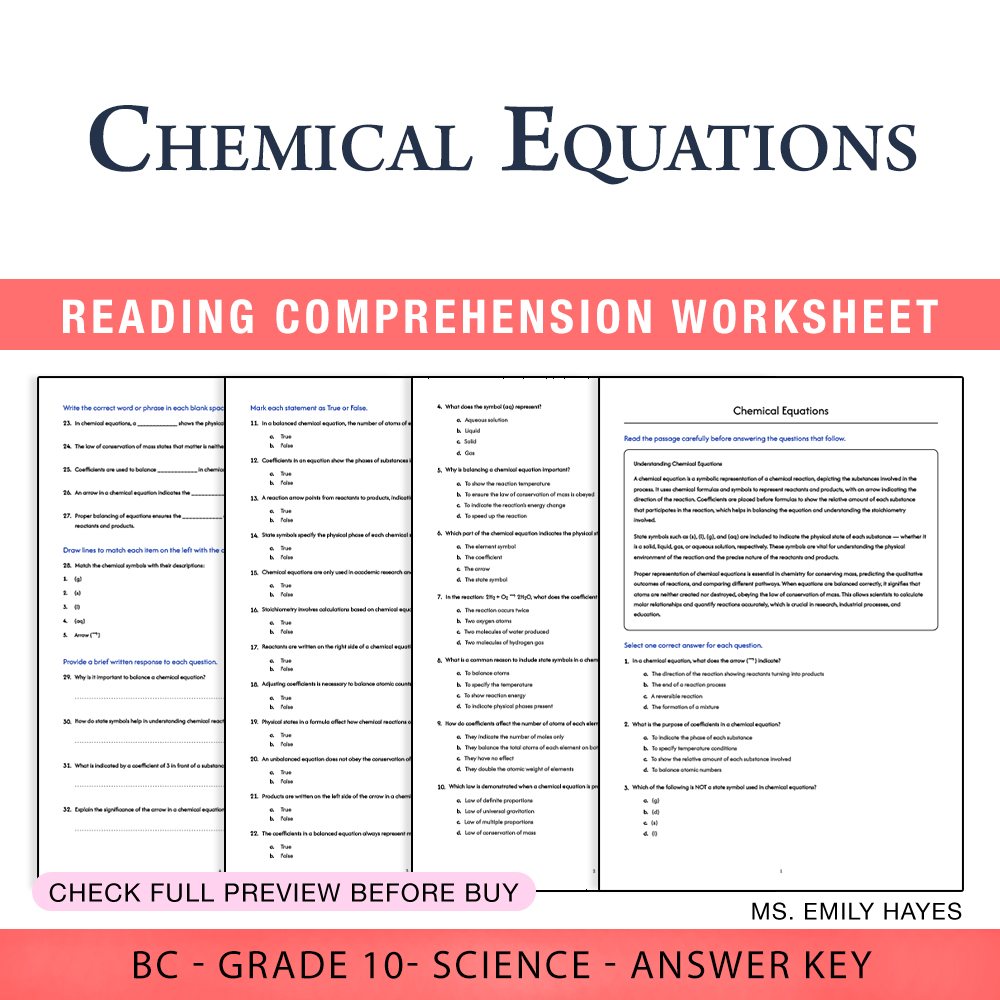
10th Grade Science | Chemical Equations Worksheet (PDF + Answer Key)
Created byCopper Leaf ClassroomLearning Objectives
- Understand the components and notation used in chemical equations.
- Analyze the roles of coefficients, formulas, and state symbols in balancing equations.
- Interpret the conservation of mass as represented in chemical equations.
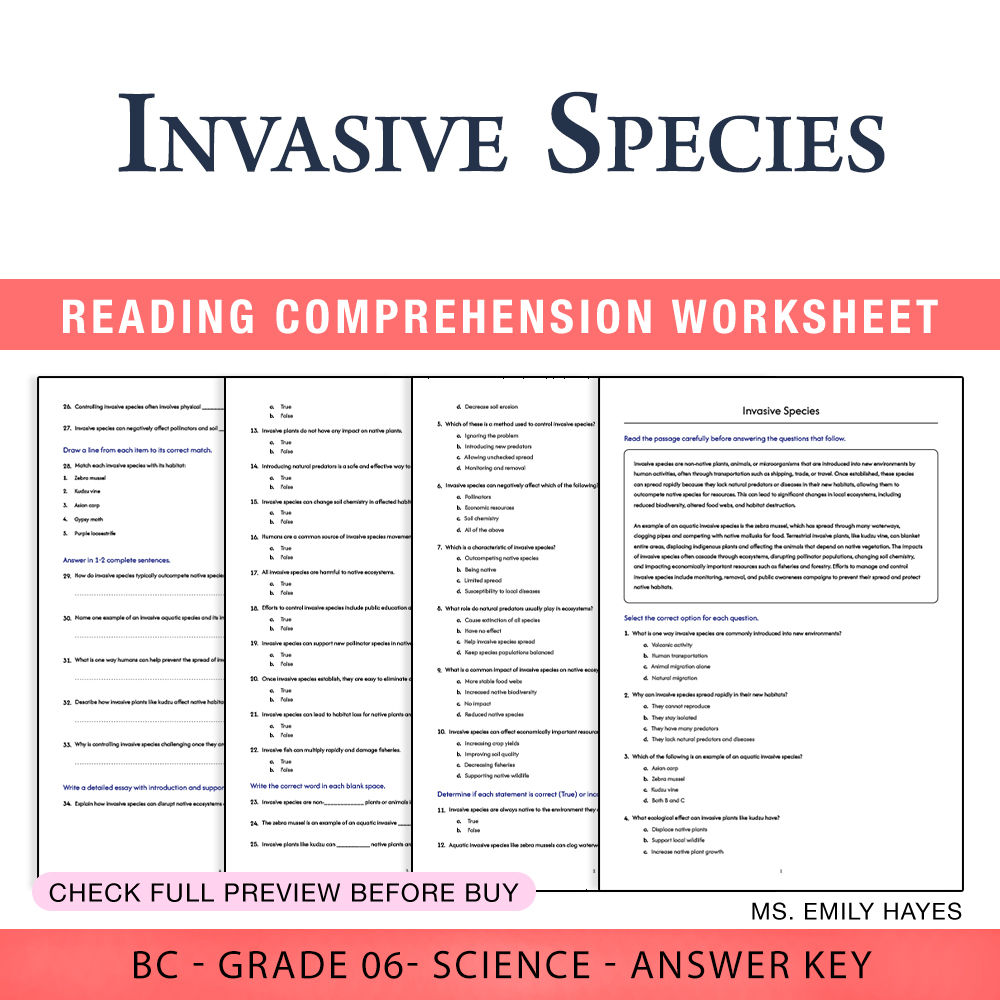
6th Grade Science | Invasive Species Worksheet (PDF+ Answer Key)
Created byCopper Leaf ClassroomLearning Objectives
- Understand what invasive species are and how they affect ecosystems.
- Identify common examples of invasive plants and animals.
- Explain the ecological impacts caused by invasive species.
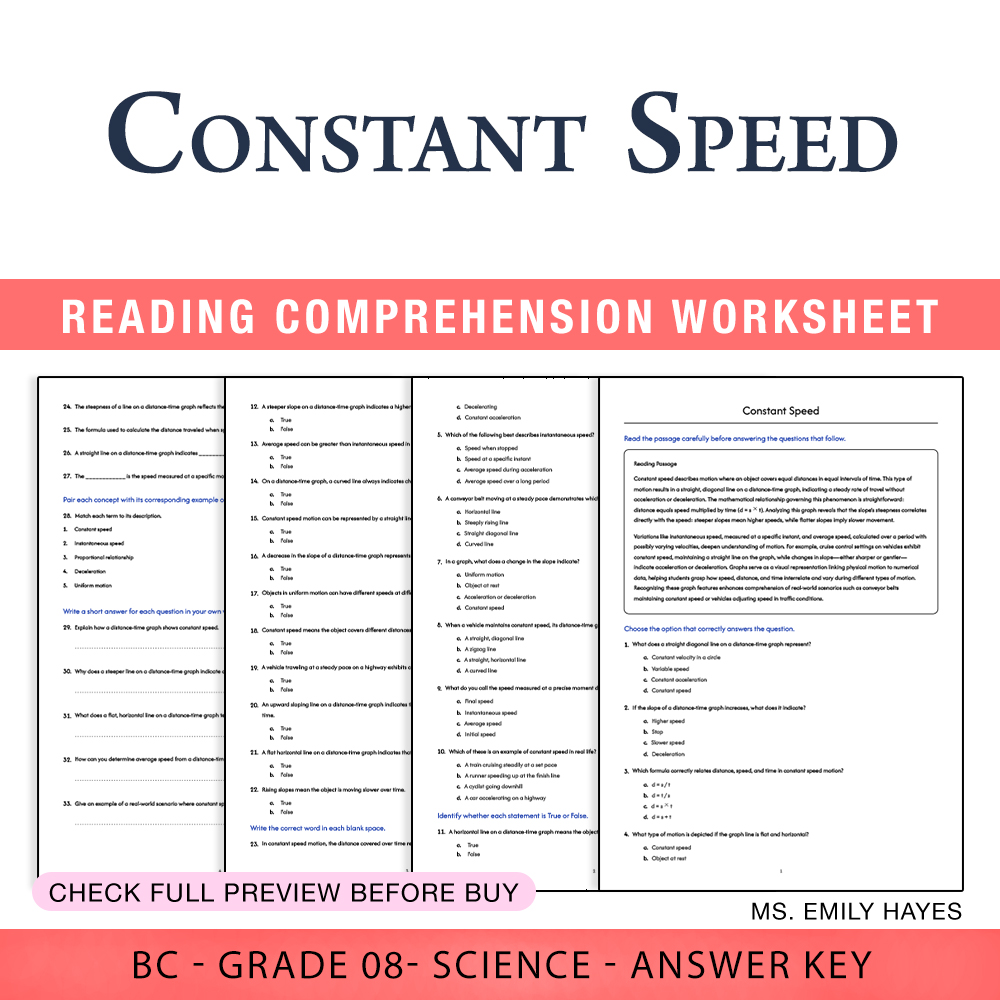
8th Grade Science | Constant Speed Worksheet (PDF+ Answer Key)
Created byCopper Leaf ClassroomLearning Objectives
- Explain the concept of constant speed and how it appears as a straight line on a distance-time graph.
- Calculate distance, speed, and time using proportional relationships in uniform motion.
- Identify how variations like instantaneous and average speed affect motion analysis.
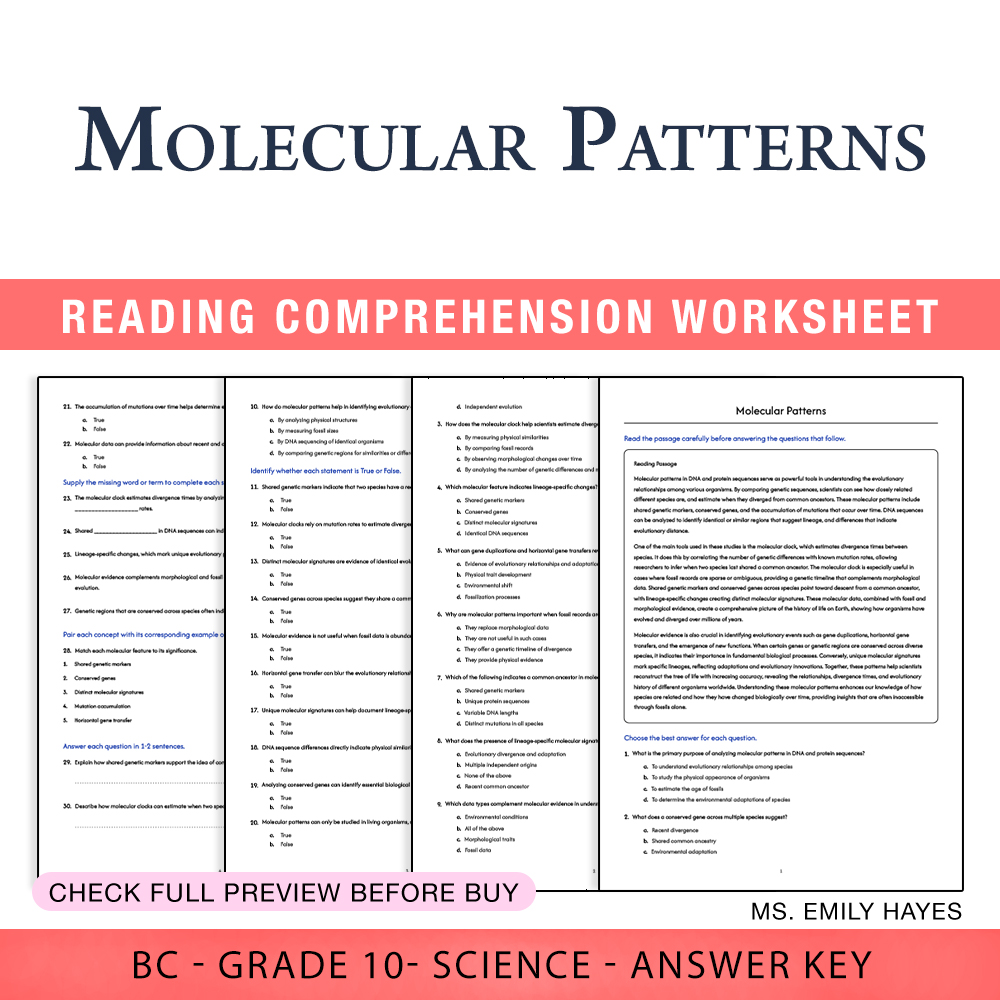
Grade 10 Science | Molecular Patterns Worksheet (PDF+ Answer Key)
Created byCopper Leaf ClassroomLearning Objectives
- Explain how molecular patterns in DNA and protein sequences reveal relatedness among organisms
- Describe how molecular clocks estimate divergence times based on mutation rates
- Identify shared genetic markers and conserved genes as evidence of common ancestry
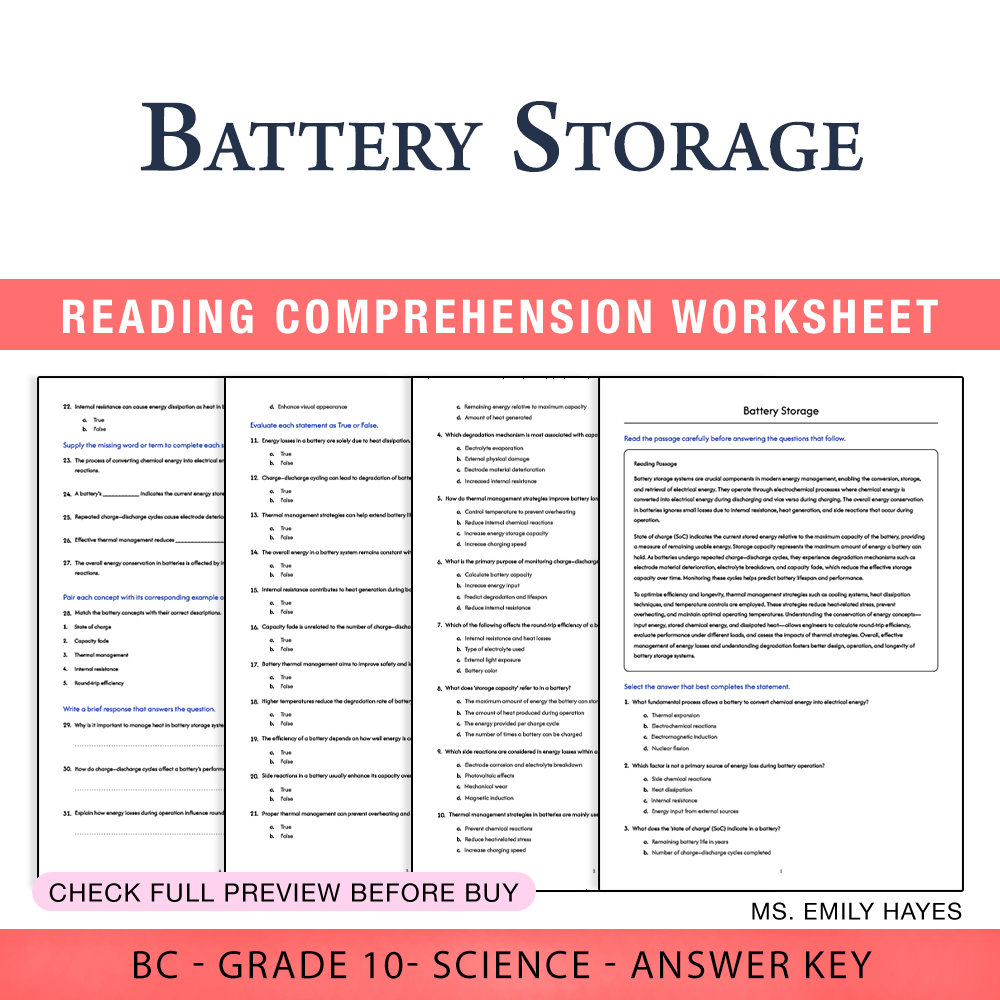
Grade 10 Science | Battery Storage Worksheet (PDF + Answer Key)
Created byCopper Leaf ClassroomLearning Objectives
- Explain how battery storage converts chemical energy to electrical energy and back, understanding energy conservation and losses.
- Describe the concepts of state of charge, storage capacity, and charge–discharge cycles in batteries.
- Analyze how energy losses affect round-trip efficiency and how thermal management impacts battery performance and longevity.
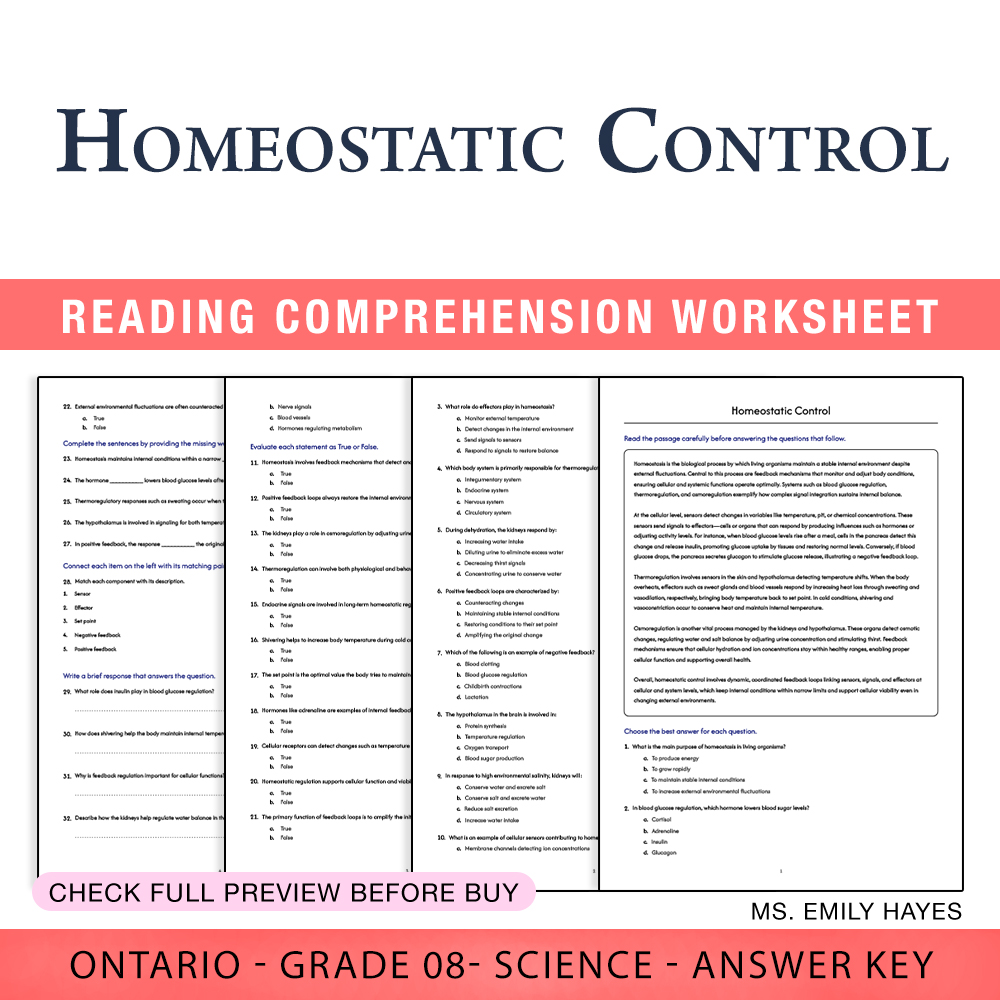
Grade 8 Science | Homeostatic Control Worksheet (PDF+ Answer Key)
Created byCopper Leaf ClassroomLearning Objectives
- Describe the mechanisms of negative and positive feedback in homeostasis.
- Explain how cellular sensors and effectors work together to maintain internal stability.
- Identify examples of homeostatic regulation such as blood glucose levels and thermoregulation.
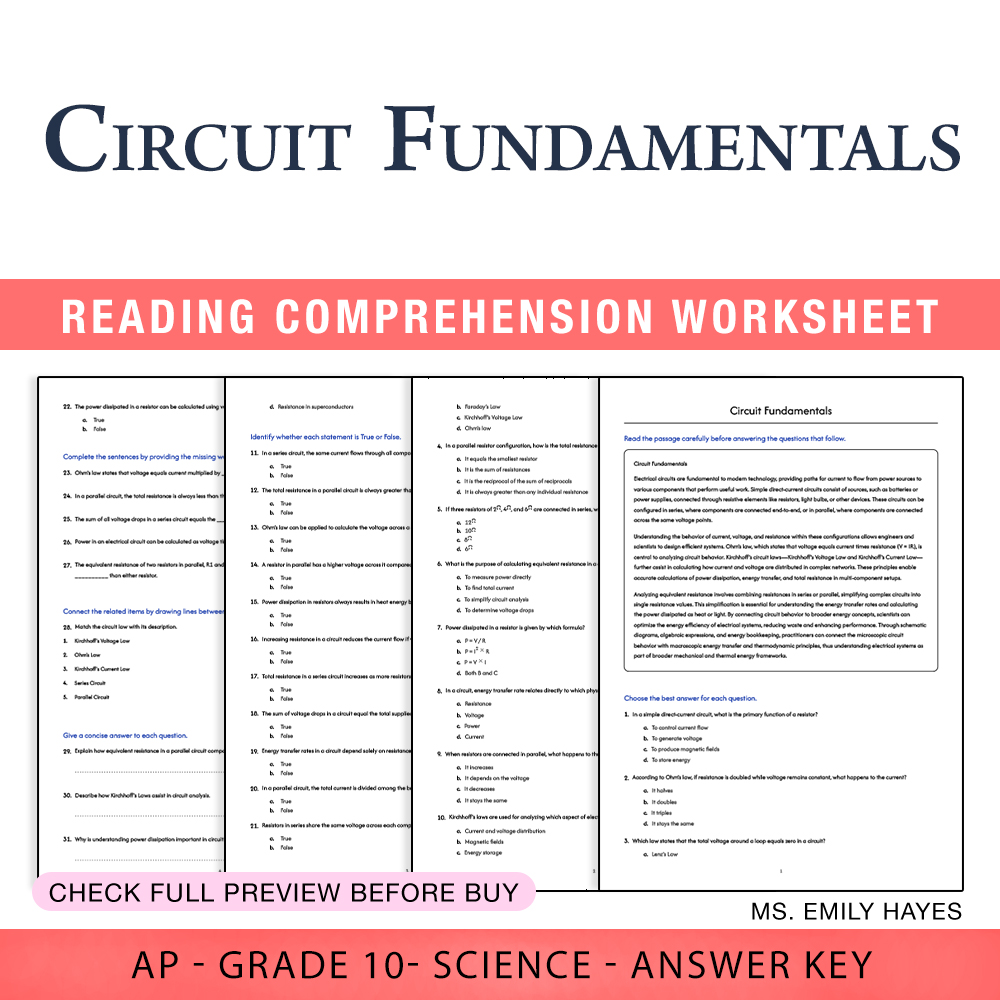
Grade 10 Science | Circuit Fundamentals Worksheet (PDF+ Answer Key)
Created byCopper Leaf ClassroomLearning Objectives
- Understand the basic components and functions of simple direct-current circuits.
- Apply Ohm's law and Kirchhoff's rules to analyze series and parallel resistor configurations.
- Calculate equivalent resistance and power dissipation in circuits.
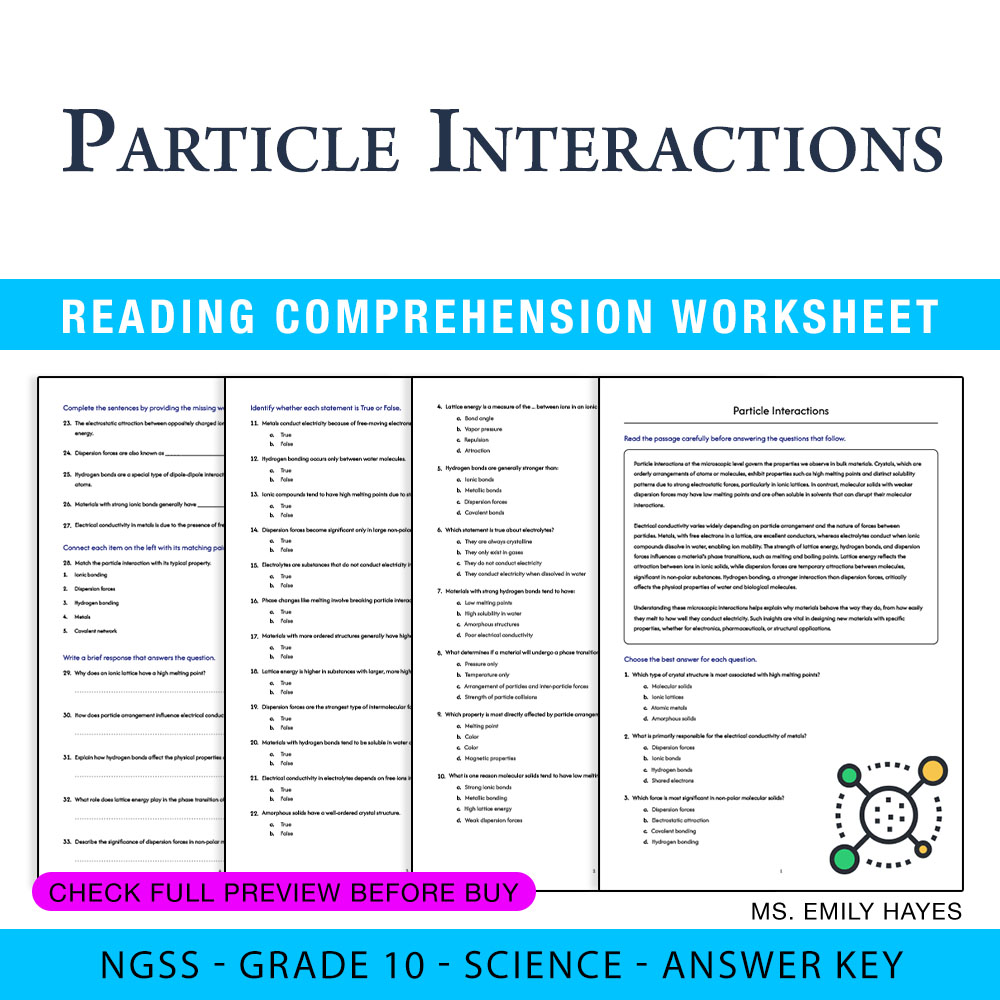
10th Grade Science | Particle Interactions Worksheet (PDF+ Answer Key)
Created byCopper Leaf ClassroomLearning Objectives
- Understand how crystal structure influences material properties such as melting point and solubility.
- Explain molecular interactions like hydrogen bonding, dispersion forces, and lattice energy.
- Describe how particle arrangement affects electrical conductivity and phase changes.
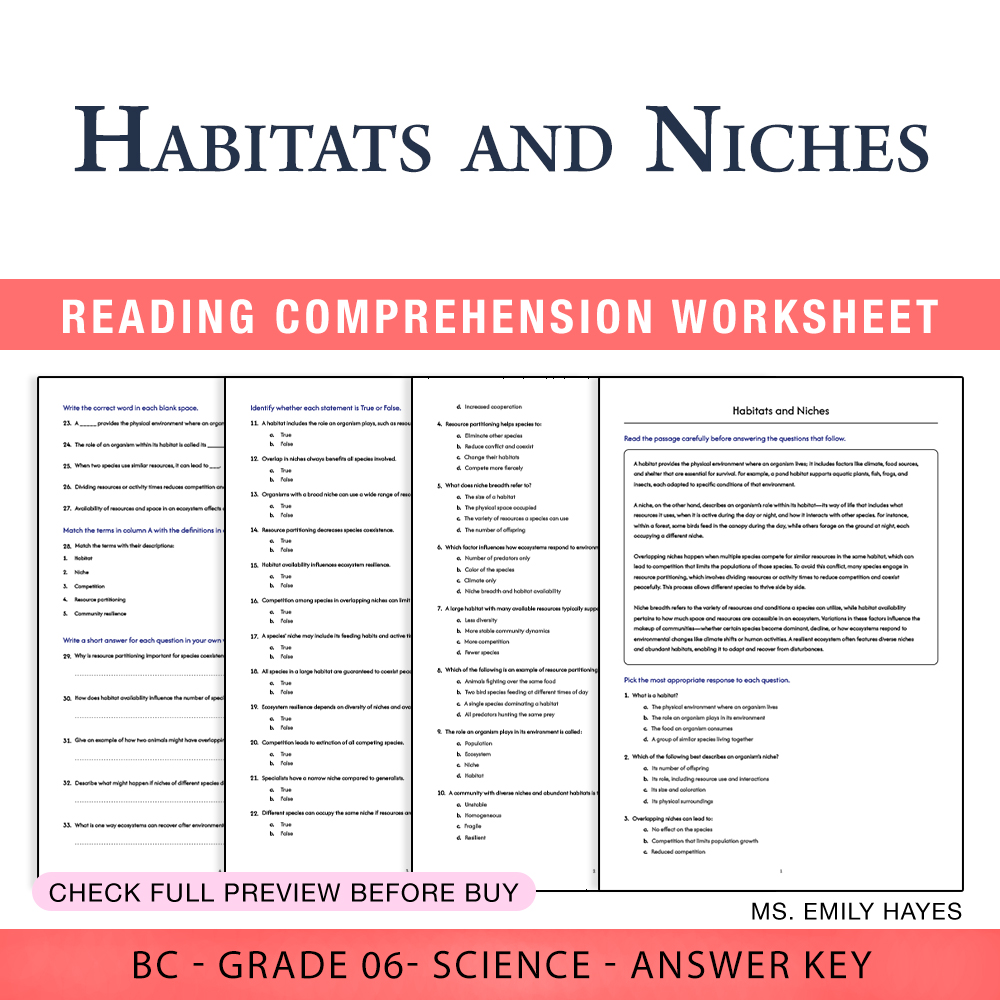
6th Grade Science | Habitats and Niches Worksheet (PDF + Answer Key)
Created byCopper Leaf ClassroomLearning Objectives
- Explain the difference between a habitat and a niche in an ecosystem.
- Identify how overlapping niches create competition among species.
- Describe the concept of resource partitioning and its role in supporting coexistence.
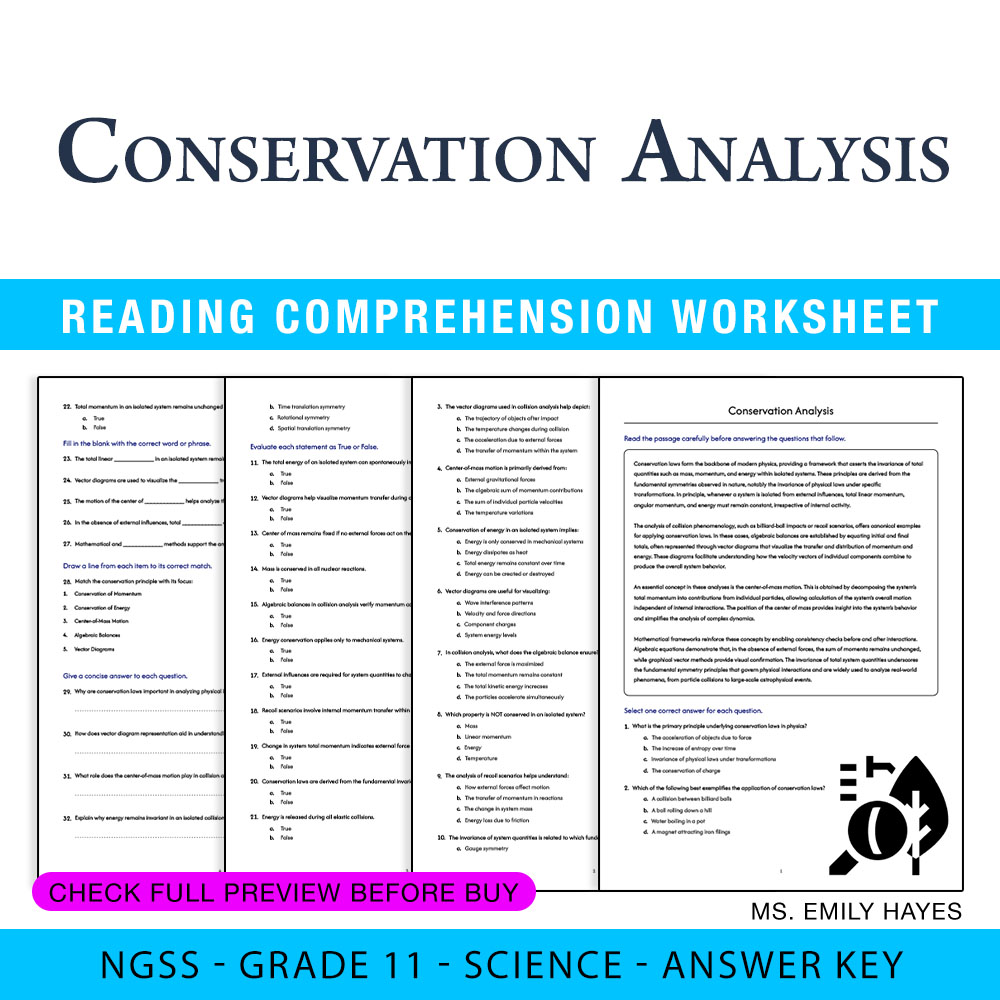
11th Grade Science | Conservation Analysis Worksheet (PDF+ Answer Key)
Created byCopper Leaf ClassroomLearning Objectives
- Understand the fundamental principles of conservation laws in physics.
- Apply algebraic and vector methods to analyze isolated interactions and collision scenarios.
- Explain the concept of center-of-mass motion and how it is derived from system components.
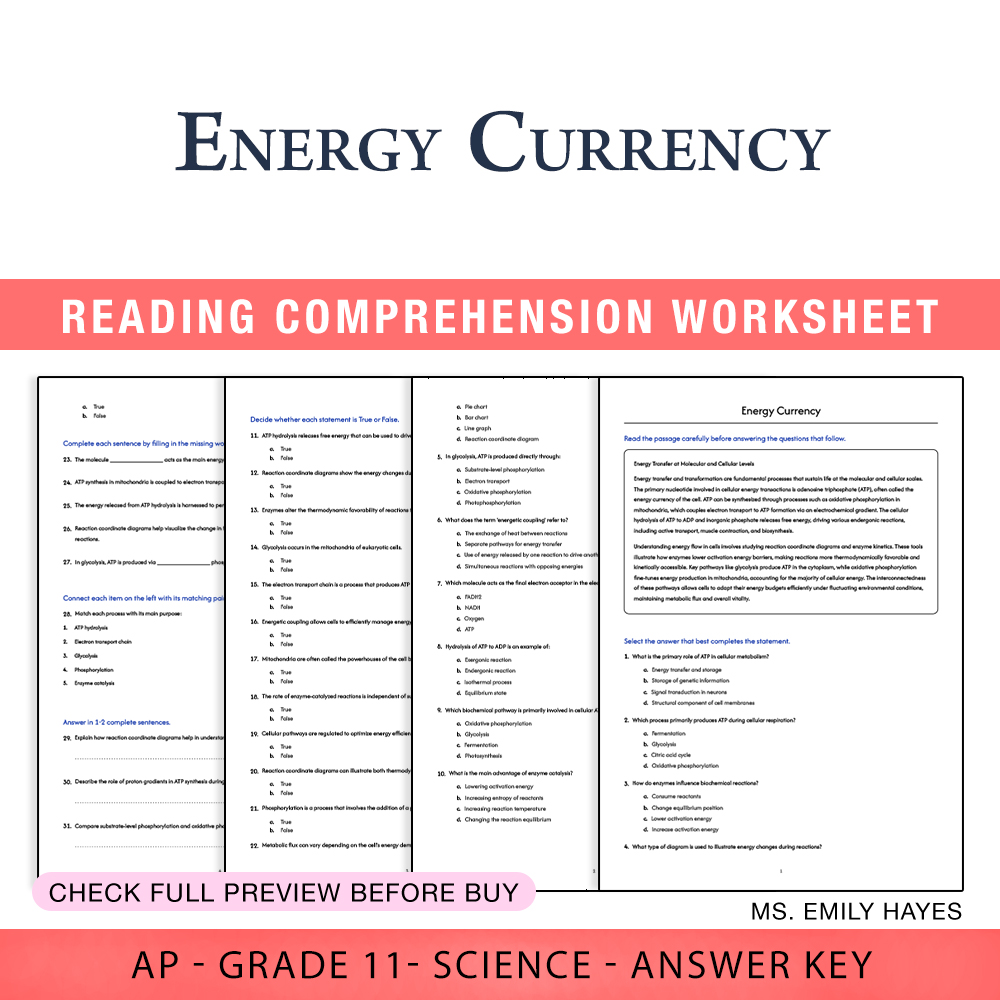
11th Grade Science | Energy Currency Worksheet (PDF+ Answer Key)
Created byCopper Leaf ClassroomLearning Objectives
- Explain the principles of molecular and cellular energy transfer and transformation.
- Describe ATP synthesis, hydrolysis, and energy coupling mechanisms in cellular processes.
- Interpret reaction coordinate diagrams and enzyme kinetics related to bioenergetics.
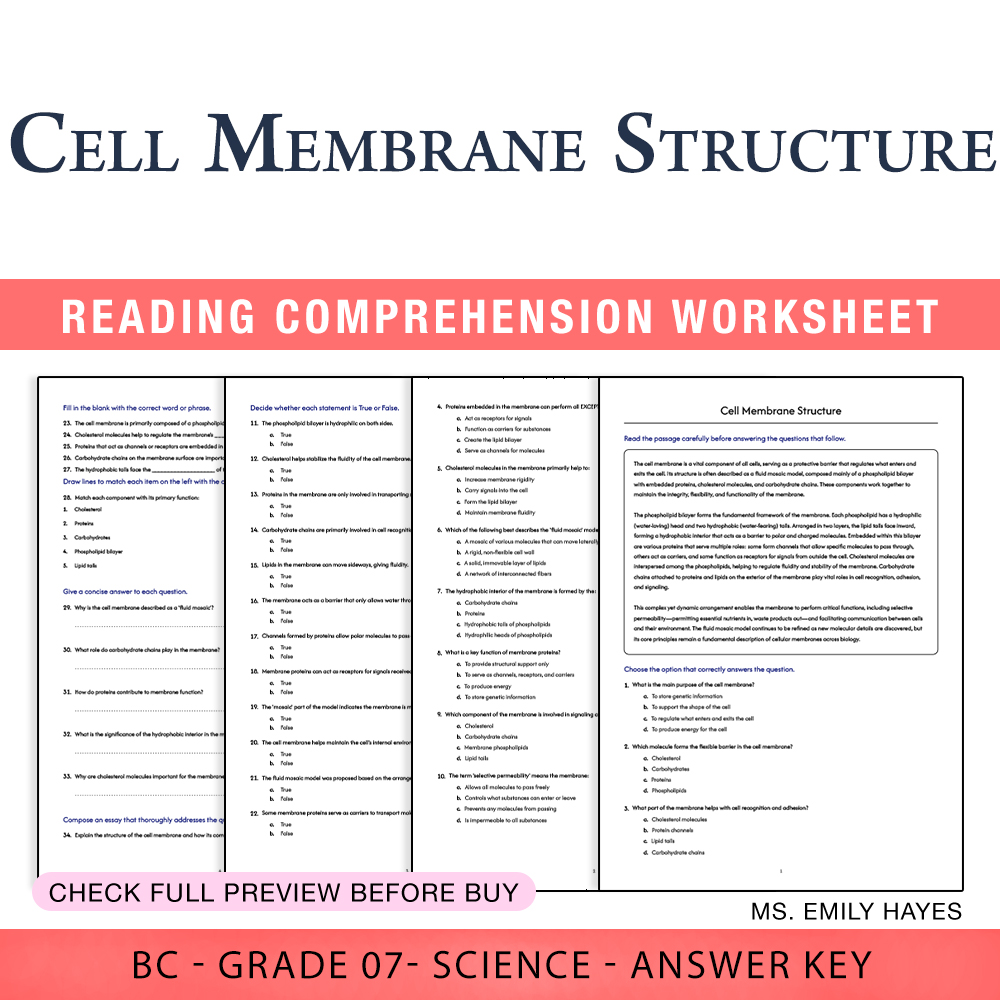
7th Grade Science | Cell Membrane Structure Worksheet (PDF+ Answer Key)
Created byCopper Leaf ClassroomLearning Objectives
- Describe the composition and organization of the cell membrane.
- Explain the functions of phospholipids, proteins, cholesterol, and carbohydrates in the membrane.
- Identify the components involved in selective permeability and communication in the cell membrane.
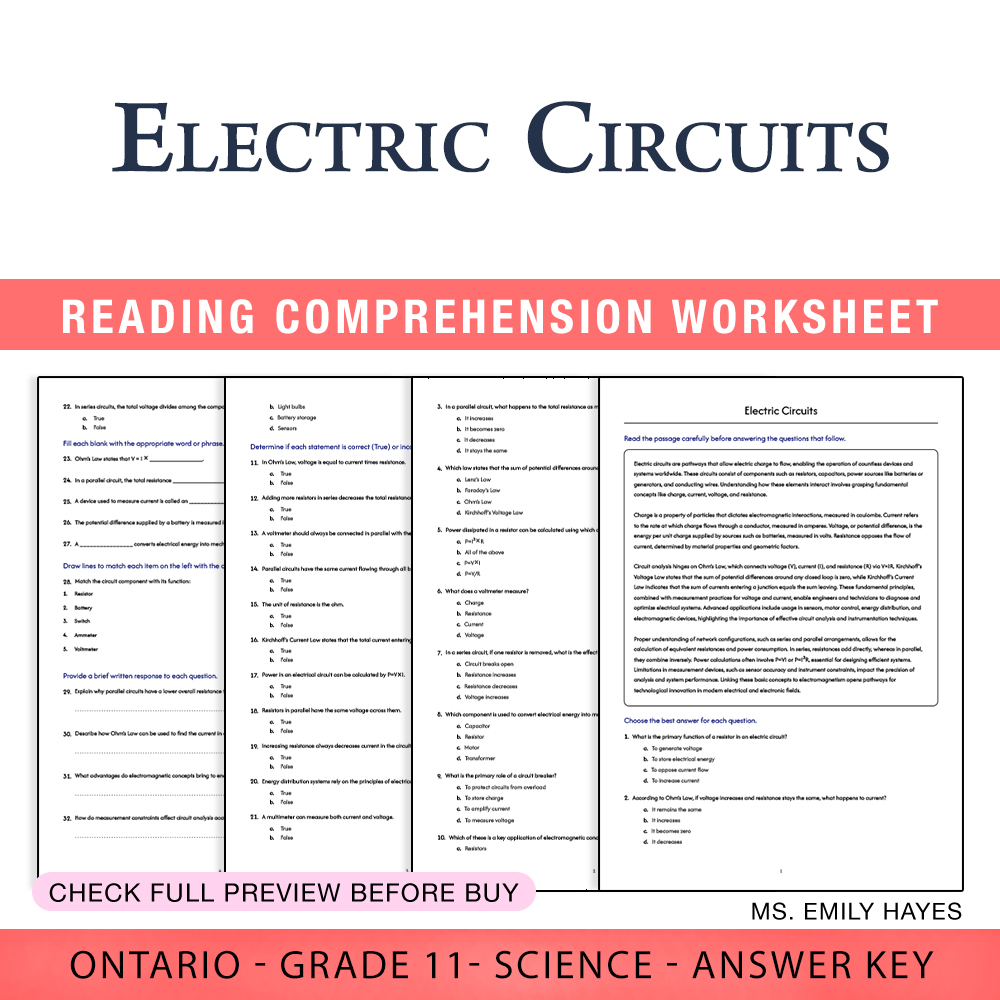
Grade 11 Science | Electric Circuits Worksheet (PDF + Answer Key)
Created byCopper Leaf ClassroomLearning Objectives
- Understand the fundamental principles of electric charge, current, voltage, and resistance.
- Apply Ohm's law and Kirchhoff's rules to analyze simple and complex circuits.
- Differentiate between series and parallel circuit configurations and calculate total resistance and power.
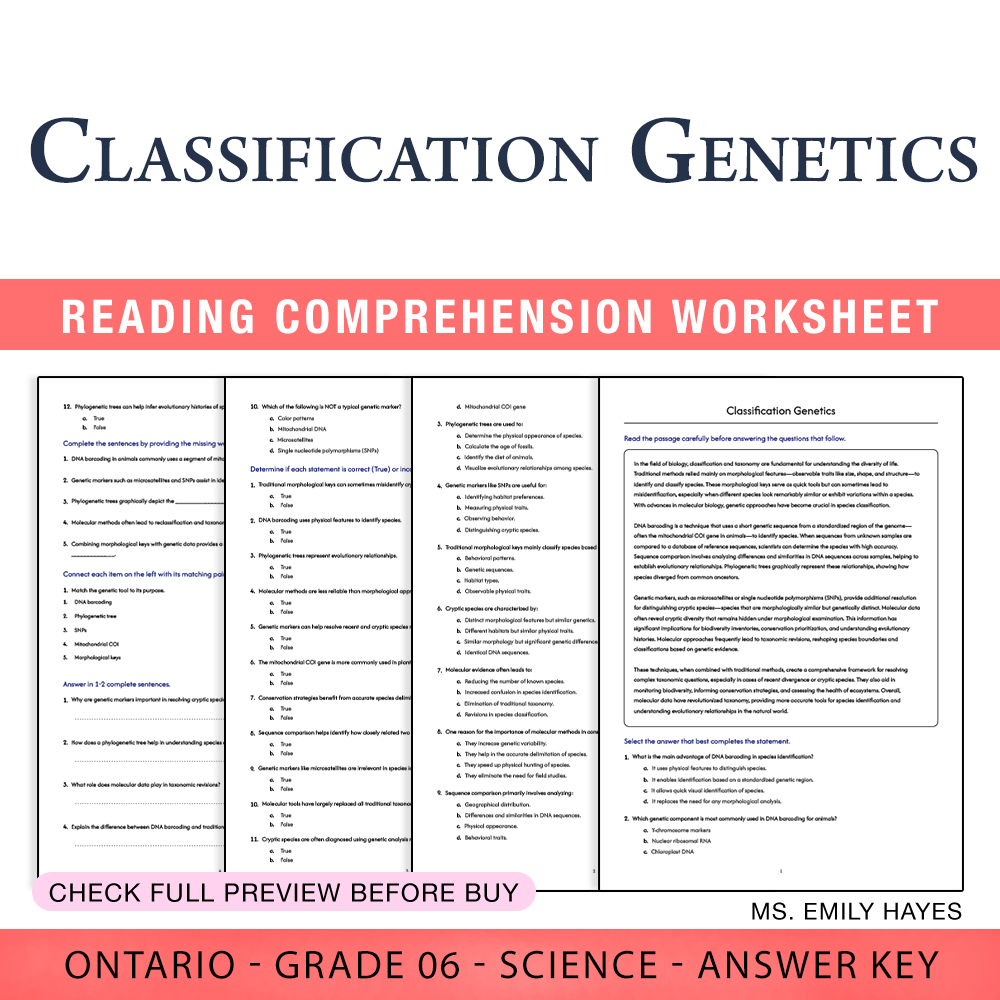
6th Grade Science | Classification Genetics Worksheet (PDF+ Answer Key)
Created byCopper Leaf ClassroomLearning Objectives
- Understand the molecular approaches used in classifying species, including DNA barcoding and sequence comparison.
- Explain how genetic markers and phylogenetic trees help determine species relationships.
- Compare morphological keys and genetic markers in species identification.
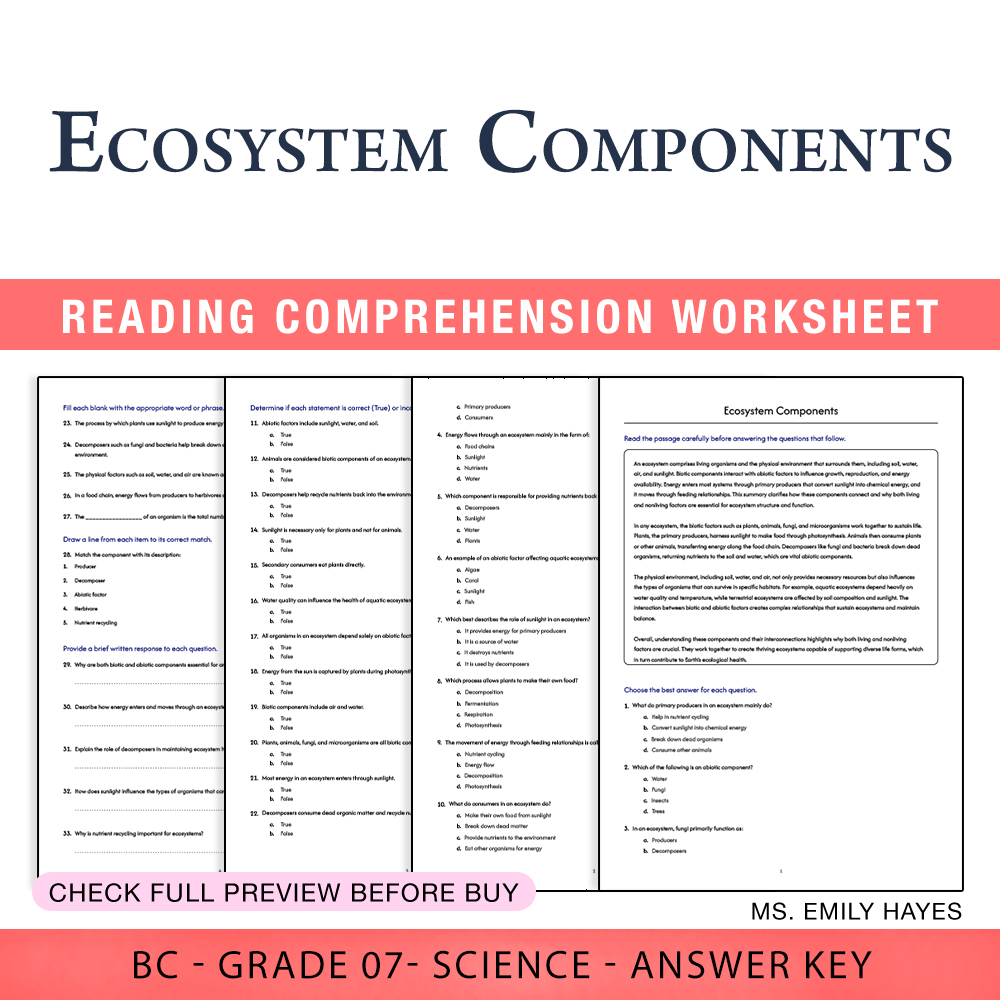
7th Grade Science | Ecosystem Components Worksheet (PDF+ Answer Key)
Created byCopper Leaf ClassroomLearning Objectives
- Describe the basic components of an ecosystem, including biotic and abiotic factors.
- Explain how energy flows through an ecosystem from primary producers to consumers.
- Identify interactions between living organisms and their environment in different ecosystems.
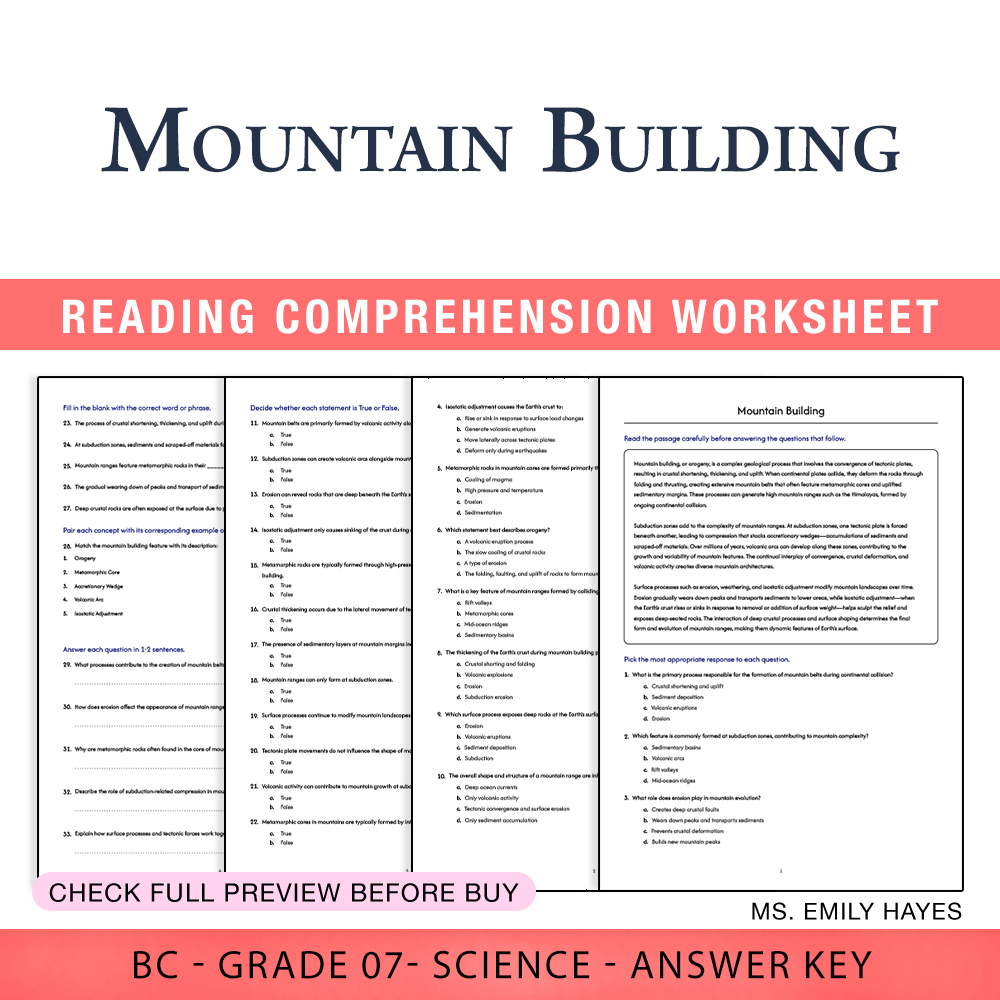
7th Grade Science | Mountain Building Worksheet (PDF+ Answer Key)
Created byCopper Leaf ClassroomLearning Objectives
- Explain the processes involved in mountain building, including orogeny and crustal deformation.
- Describe how surface processes like erosion and isostatic adjustment shape mountain landscapes.
- Identify different types of mountain formation features such as mountain belts, volcanic arcs, and metamorphic cores.
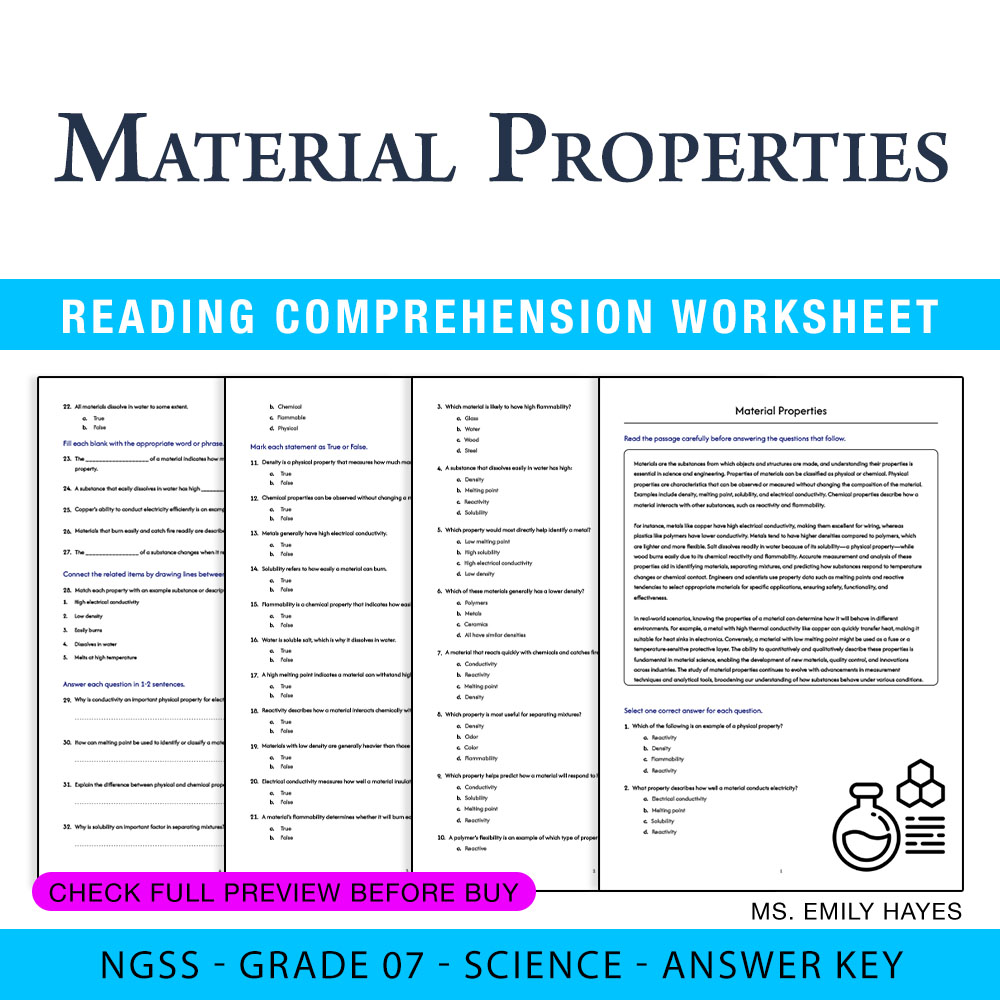
7th Grade Science | Material Properties Worksheet (PDF +Answer Key)
Created byCopper Leaf ClassroomLearning Objectives
- Identify and differentiate between physical and chemical properties of materials with examples.
- Analyze data related to density, melting point, solubility, electrical conductivity, reactivity, and flammability to classify materials.
- Understand how measurable properties support material identification and separation techniques.
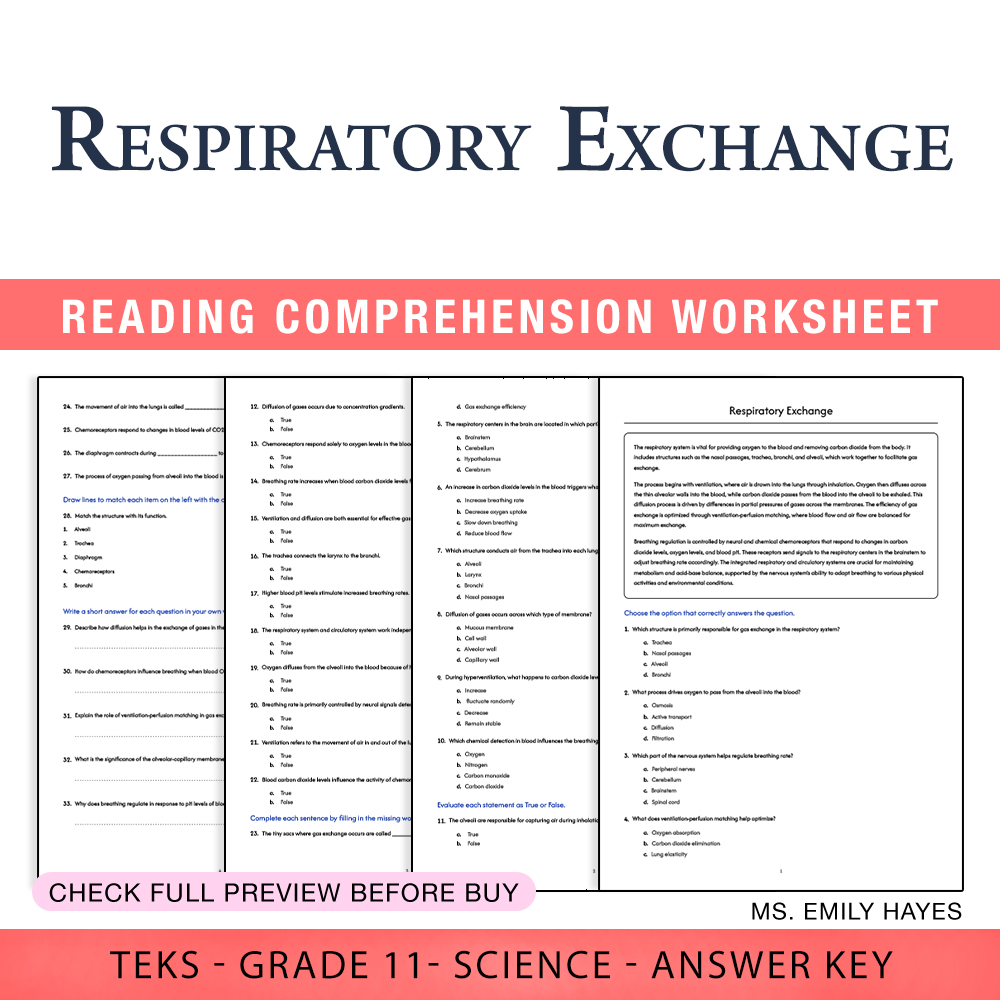
11th Grade Science | Respiratory Exchange Worksheet (PDF+ Answer Key)
Created byCopper Leaf ClassroomLearning Objectives
- Describe the structure and function of the respiratory system, including alveoli, bronchi, and trachea.
- Explain how ventilation and diffusion facilitate gas exchange in the lungs.
- Understand the role of neural and chemical chemoreceptors in regulating breathing rate.
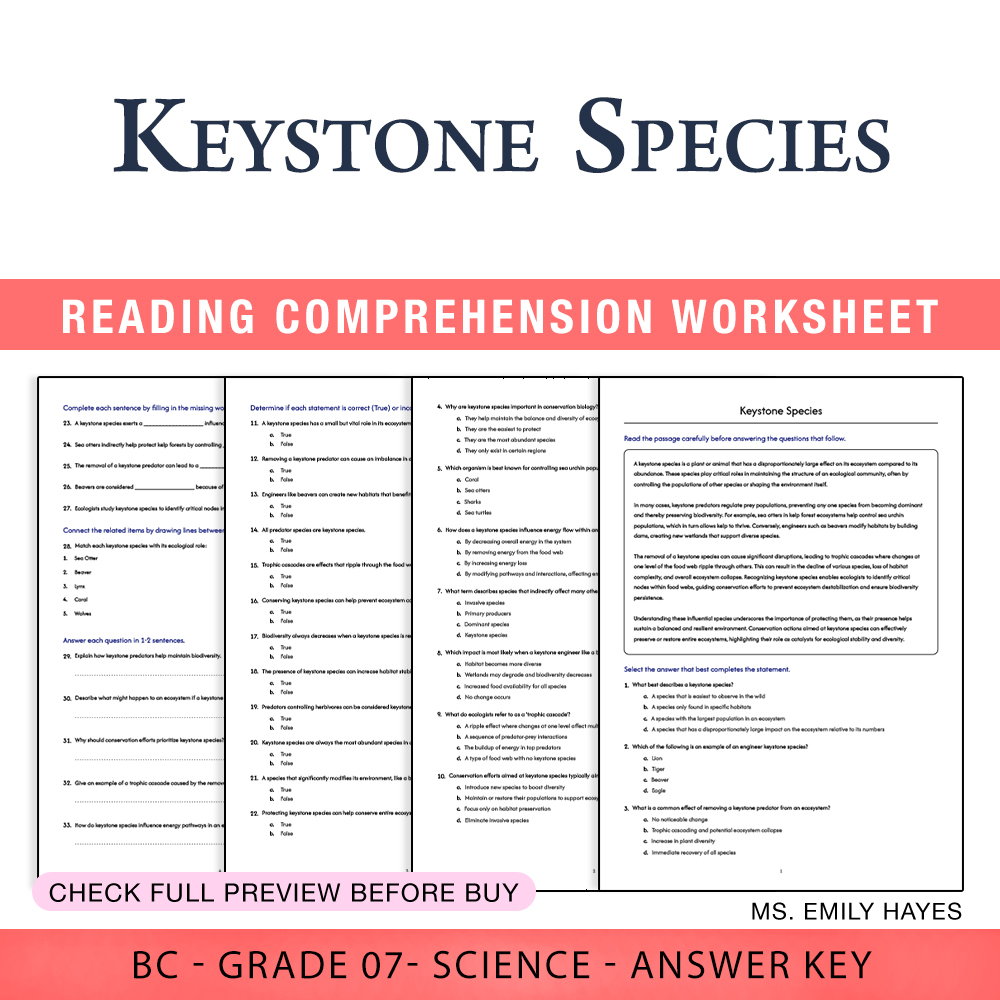
7th Grade Science | Keystone Species Worksheet (PDF+ Answer Key)
Created byCopper Leaf ClassroomLearning Objectives
- Define and explain the concept of a keystone species and its role in ecosystems.
- Identify examples of keystone species and describe their effects on biodiversity and ecosystem stability.
- Analyze the consequences of removing a keystone species from an ecosystem.
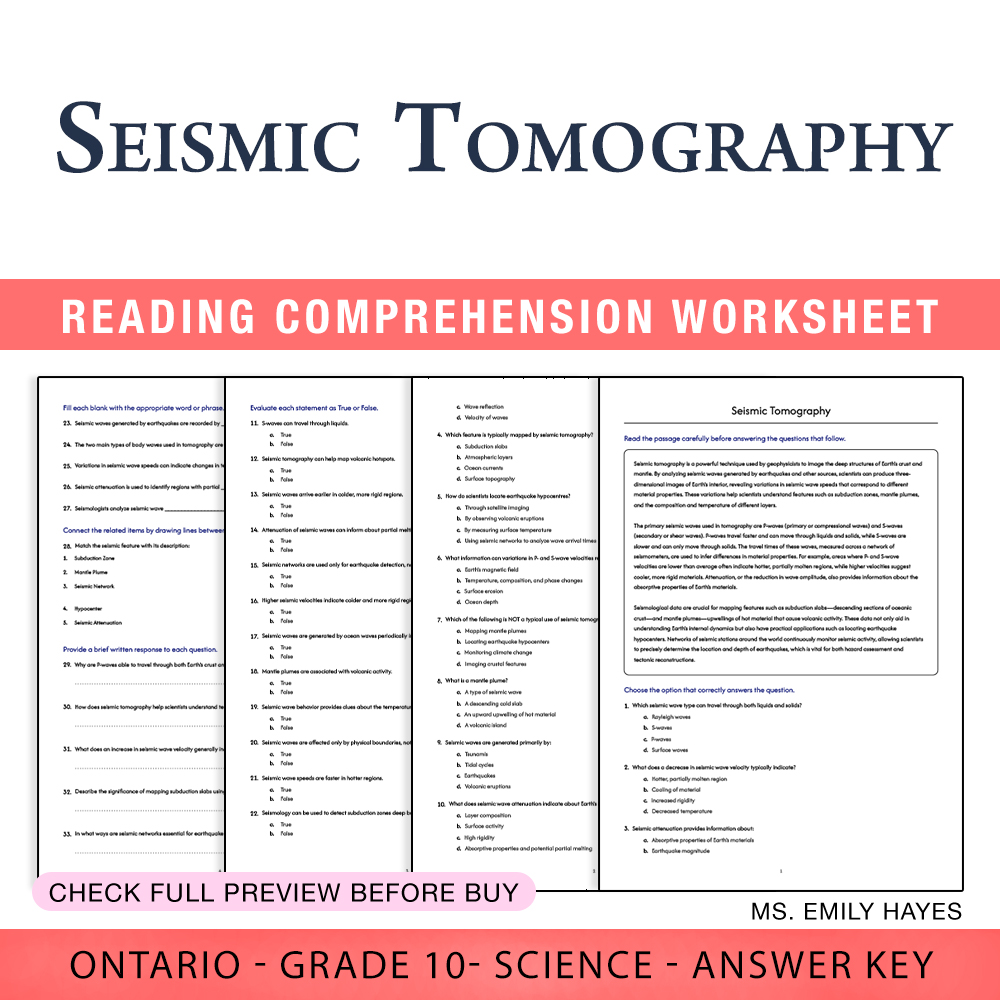
Grade 10 Science | Seismic Tomography Worksheet (PDF + Answer Key)
Created byCopper Leaf ClassroomLearning Objectives
- Explain the different types of seismic waves and their properties.
- Describe how seismic travel times and attenuation are used to image Earth's crust and mantle.
- Interpret variations in P- and S-wave velocities to infer geological features and phase changes.
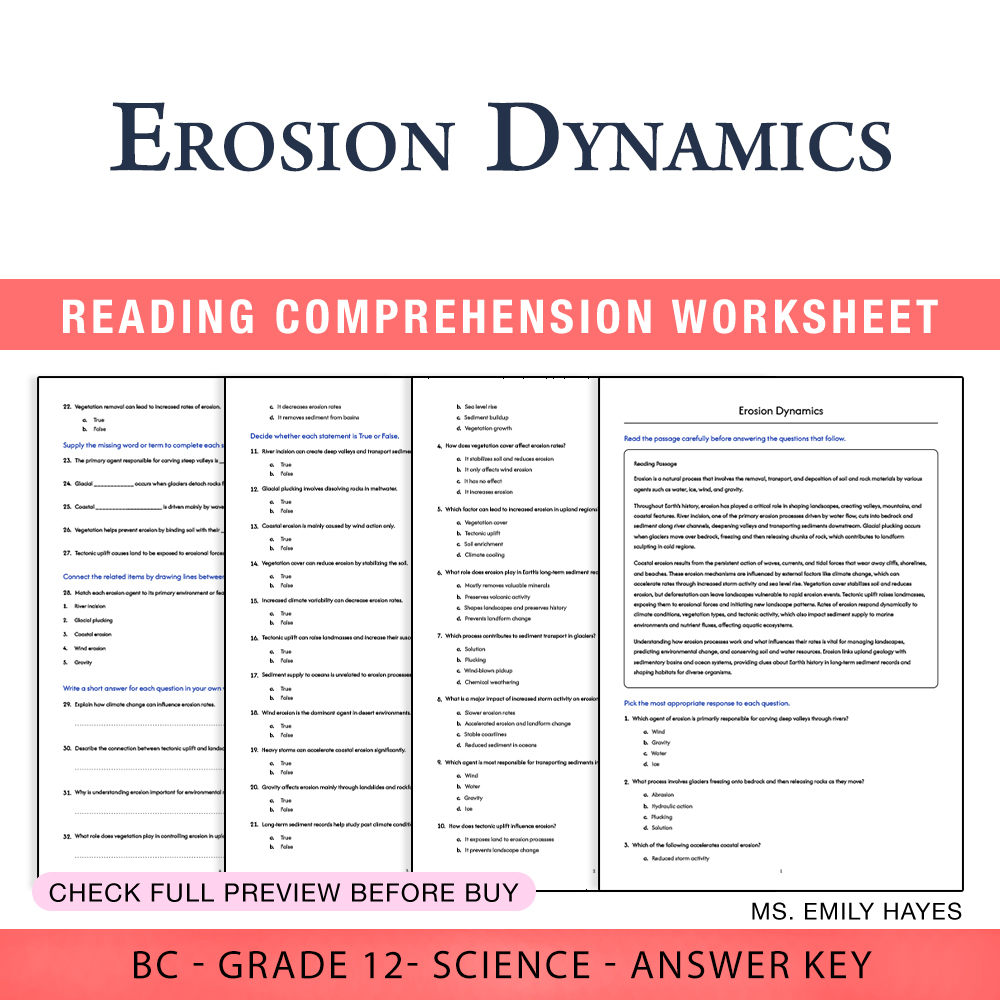
Grade 12 Science | Erosion Dynamics Worksheet (PDF + Answer Key)
Created byCopper Leaf ClassroomLearning Objectives
- Describe the processes involved in erosion, including detachment, transport, and deposition of sediments.
- Identify different erosion mechanisms such as river incision, glacial plucking, and coastal erosion.
- Analyze how climate, vegetation, and tectonic activity influence erosion rates and landscape changes.
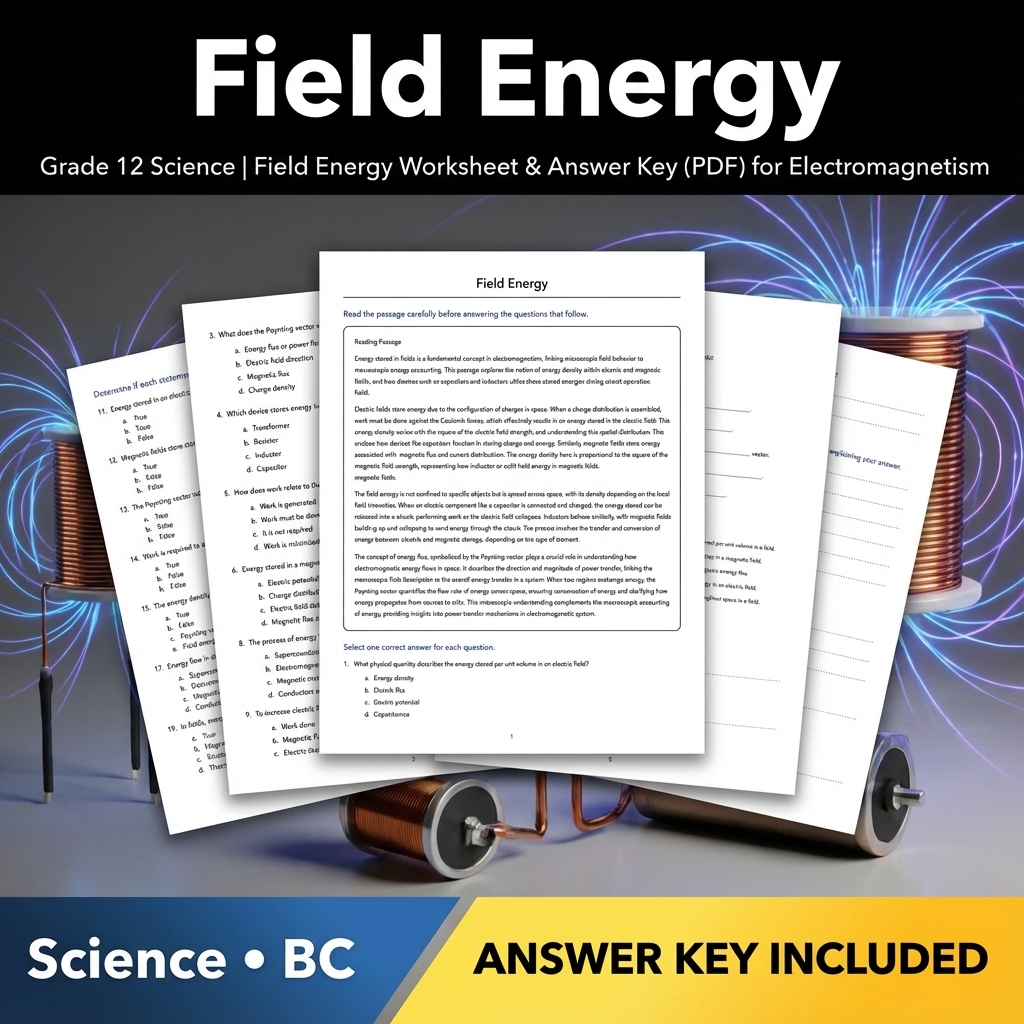
Grade 12 Science | Field Energy Worksheet (PDF+ Answer Key)
Created byCopper Leaf ClassroomLearning Objectives
- Explain the concept of energy stored in electric and magnetic fields.
- Define energy density for electrostatic and magnetic fields.
- Describe how capacitors and inductors store and release energy in circuits.
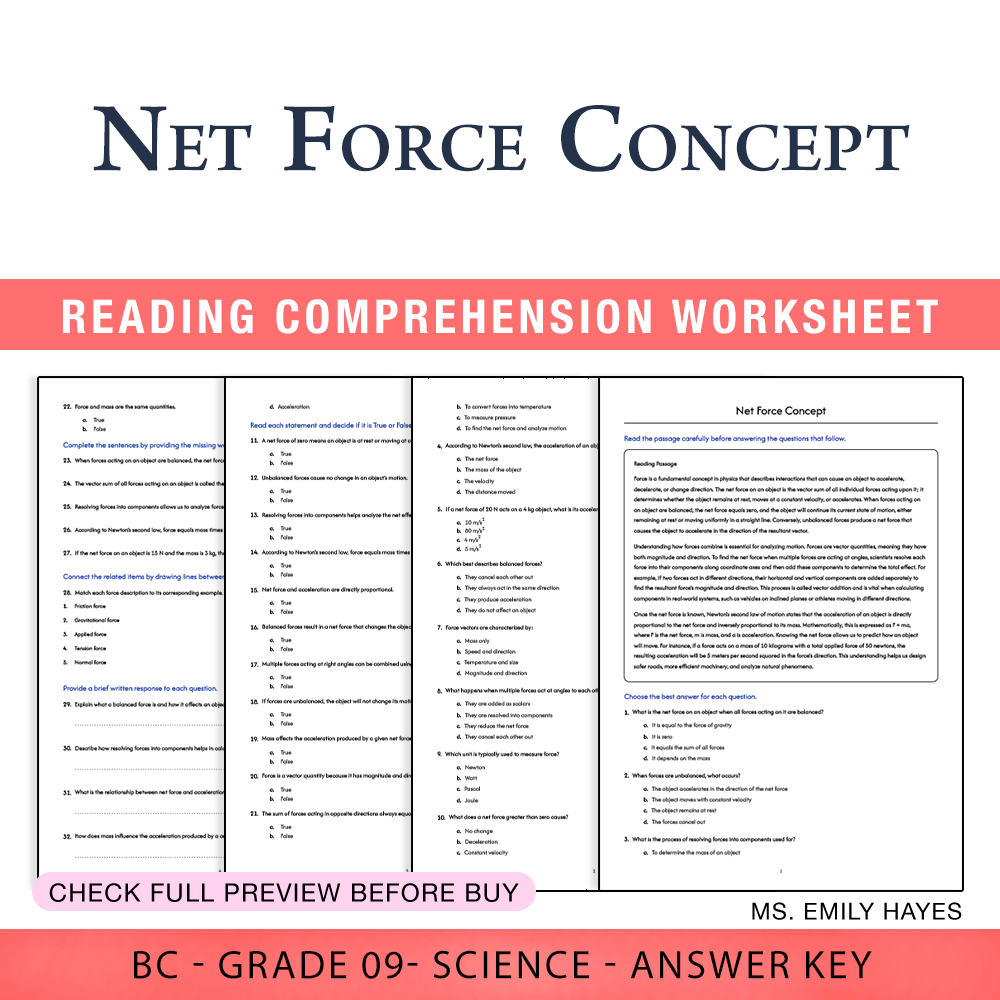
9th Grade Science | Net Force Concept Worksheet (PDF+ Answer Key)
Created byCopper Leaf ClassroomLearning Objectives
- Define and explain the concept of net force and how it affects motion.
- Describe how forces can be resolved into components and summed to find the net effect.
- Calculate the resulting acceleration when given force vectors and mass.
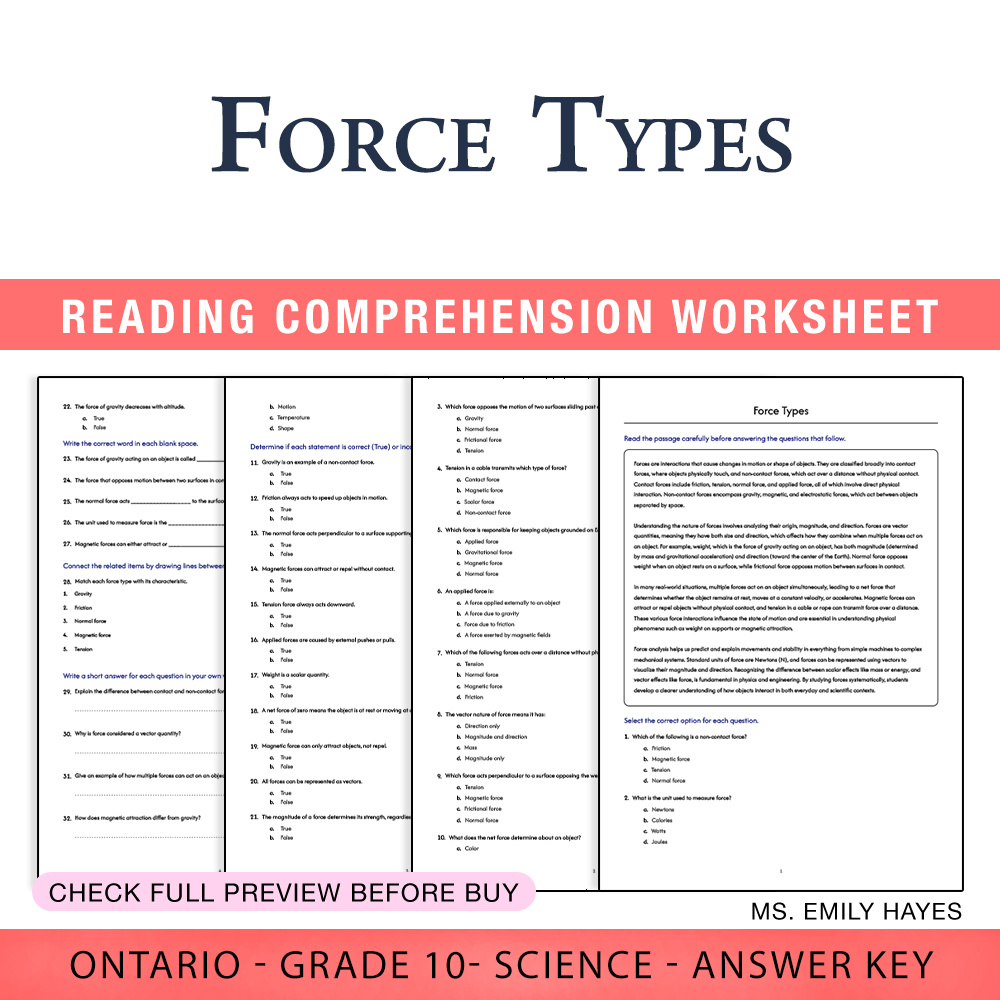
Grade 10 Science | Force Types Worksheet (PDF + Answer Key)
Created byCopper Leaf ClassroomLearning Objectives
- Identify different types of forces including contact and non-contact forces.
- Explain the characteristics of force as a vector quantity including magnitude and direction.
- Describe how various forces such as weight, normal, frictional, tension, applied, and magnetic forces influence motion.
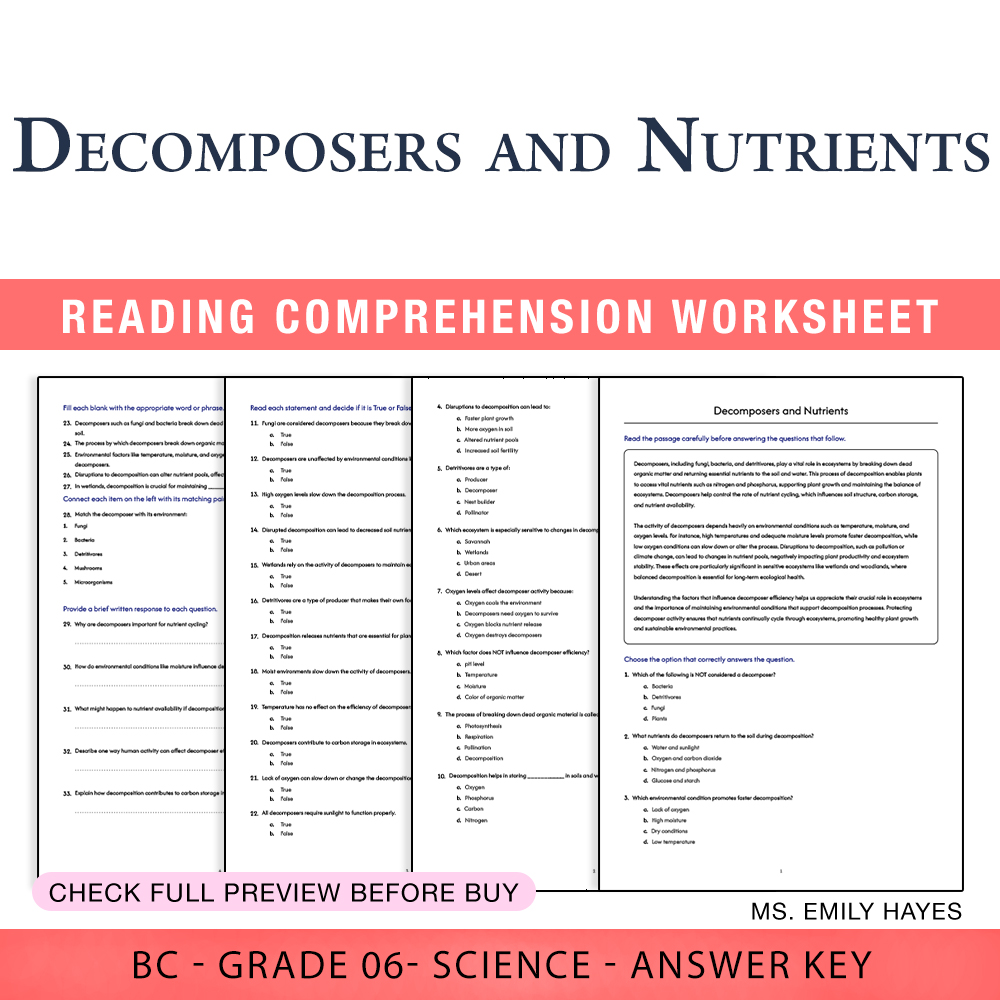
6th Grade Science | Decomposers and Nutrients Worksheet (PDF+ Answer Key)
Created byCopper Leaf ClassroomLearning Objectives
- Understand the role of decomposers in nutrient cycling and ecosystem health.
- Identify various types of decomposers and their functions.
- Explain how environmental factors influence decomposition efficiency.
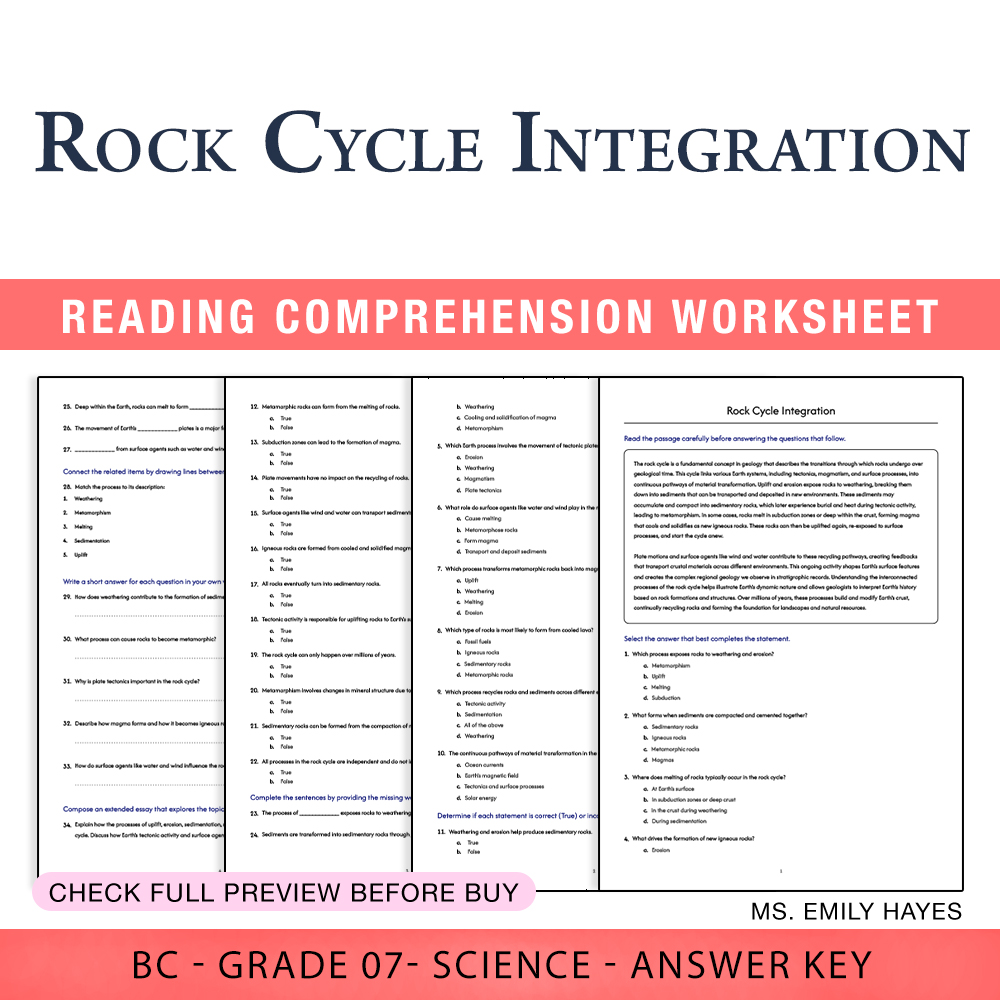
7th Grade Science | Rock Cycle Integration Worksheet (PDF + Answer Key)
Created byCopper Leaf ClassroomLearning Objectives
- Understand the processes involved in the rock cycle, including weathering, erosion, sedimentation, metamorphism, melting, and solidification.
- Identify how tectonic activity and surface processes interact to transform rocks and recycle Earth's materials.
- Describe the role of different geological environments in the formation and transformation of rocks.
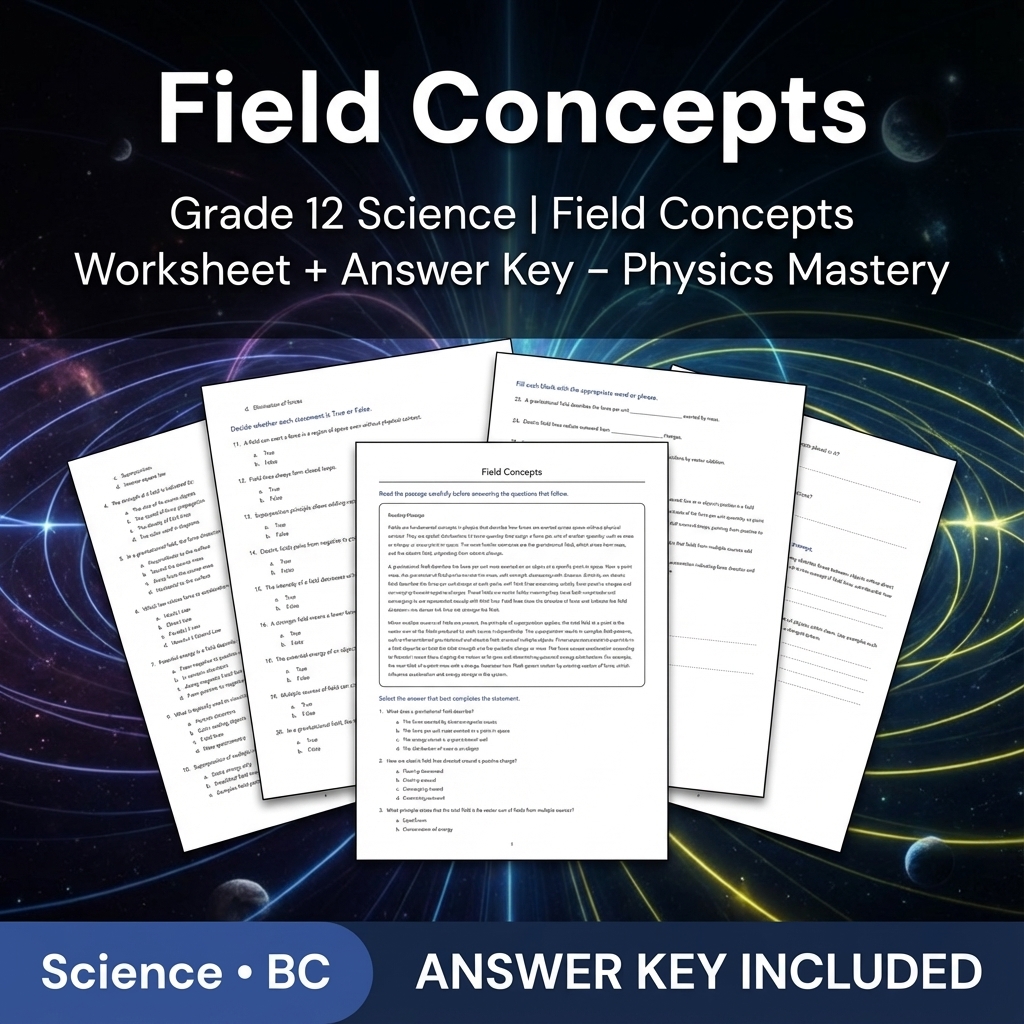
Grade 12 Science | Field Concepts Worksheet (PDF+ Answer Key)
Created byCopper Leaf ClassroomLearning Objectives
- Understand the definition and properties of physical fields as spatial distributions that exert forces.
- Describe gravitational and electric fields as vector fields assigning force per unit mass or charge.
- Explain the significance of field lines and superposition principles with multiple sources.
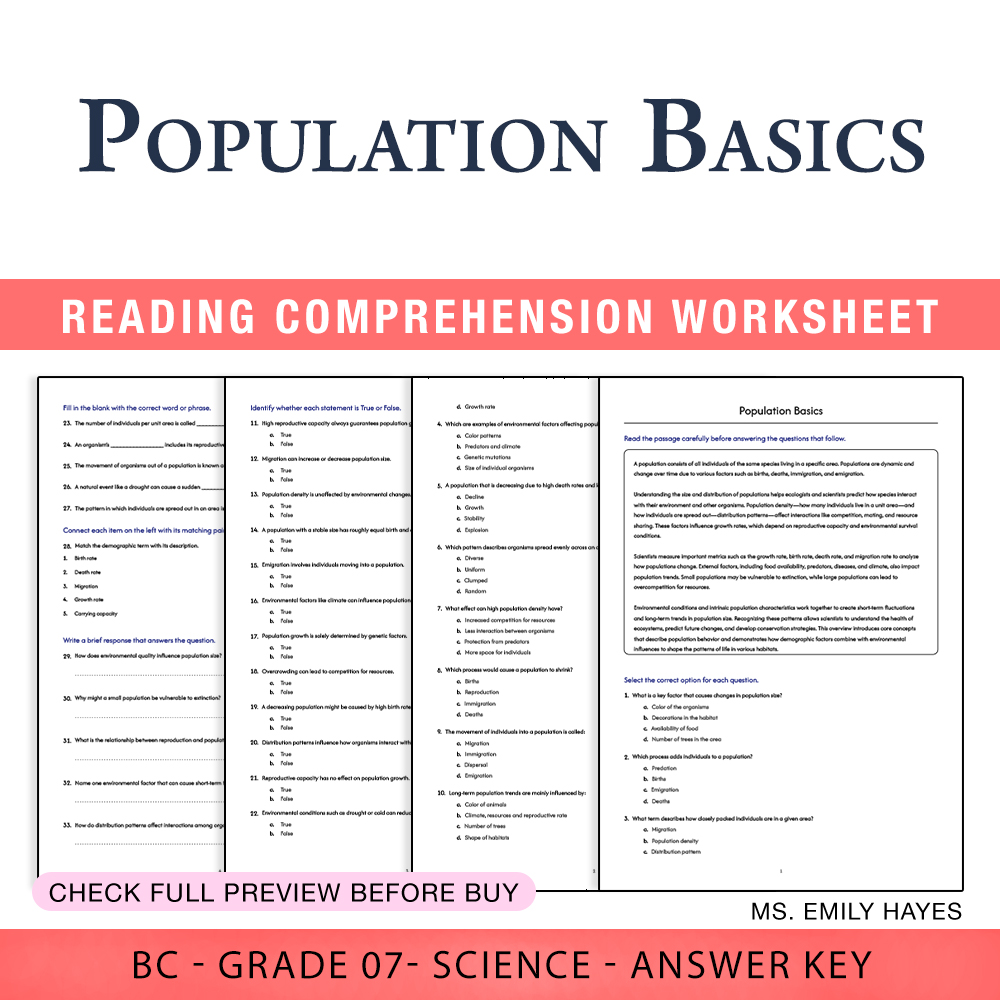
Grade 7 Science | Population Basics Worksheet (PDF+ Answer Key)
Created byCopper Leaf ClassroomLearning Objectives
- Understand the concept of a population and its components.
- Identify factors that influence population size and distribution.
- Explain how demographic and environmental factors impact population dynamics.
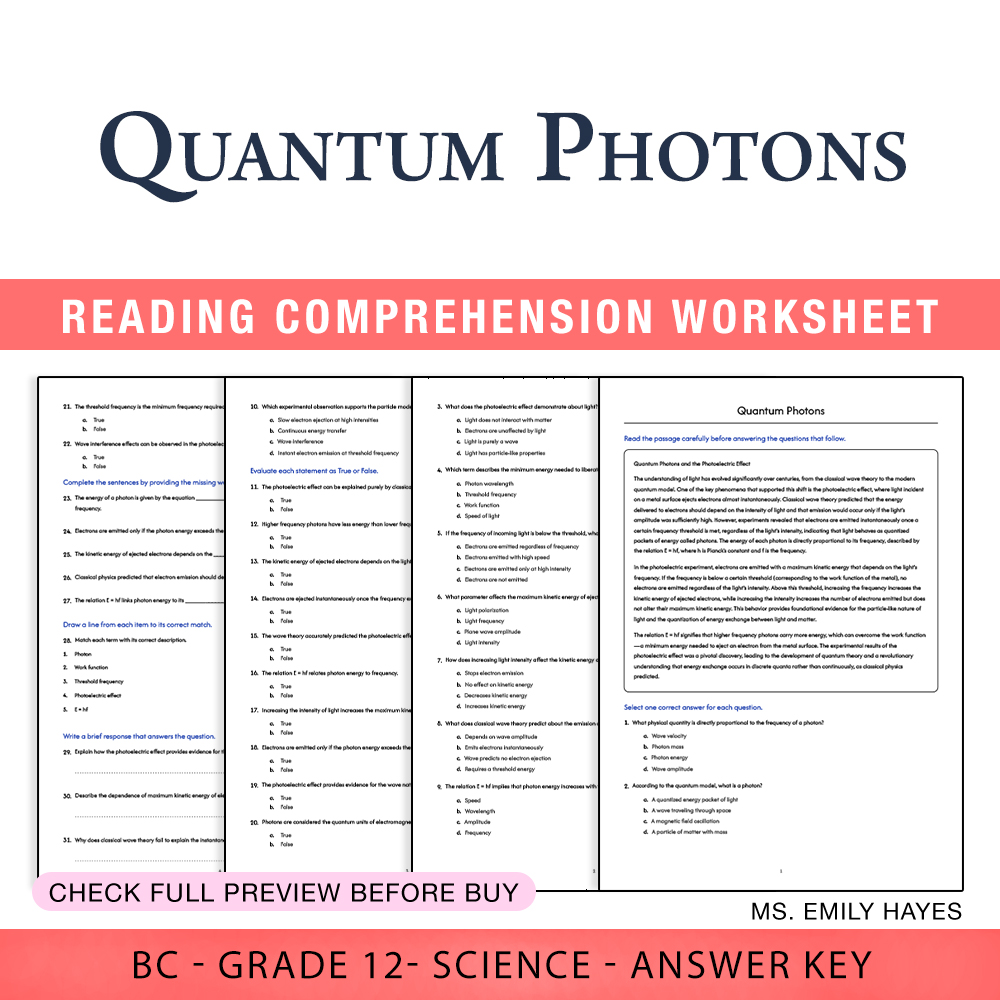
12th Grade Science | Quantum Photons Worksheet (PDF+ Answer Key)
Created byCopper Leaf ClassroomLearning Objectives
- Explain the concept of photon energy and its relation to frequency (E = hf).
- Describe the photoelectric effect and its significance in demonstrating quantized energy exchange.
- Define key terms such as work function and threshold frequency.
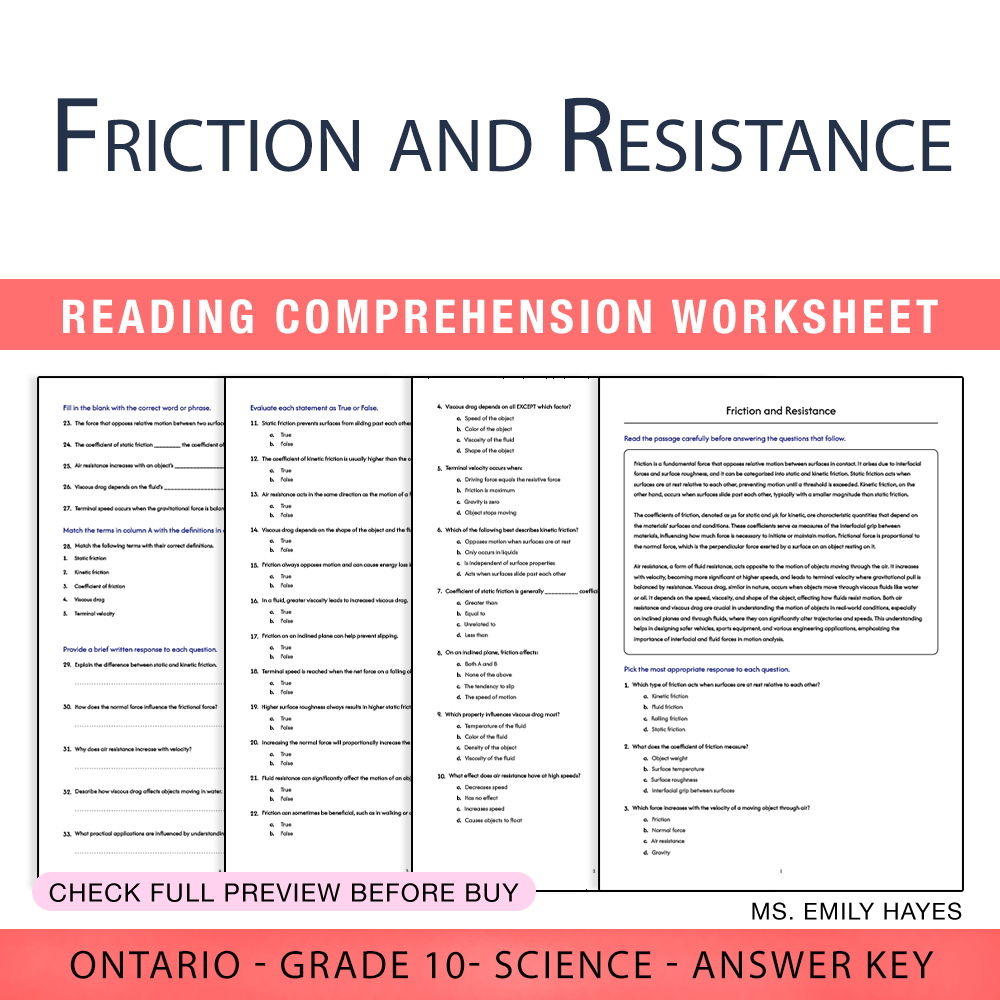
Grade 10 Science | Friction and Resistance Worksheet (PDF + Answer Key)
Created byCopper Leaf ClassroomLearning Objectives
- Describe the types of friction and their differences.
- Explain how the coefficients of friction relate to surface properties.
- Assess the effects of air resistance and viscous drag on moving objects.
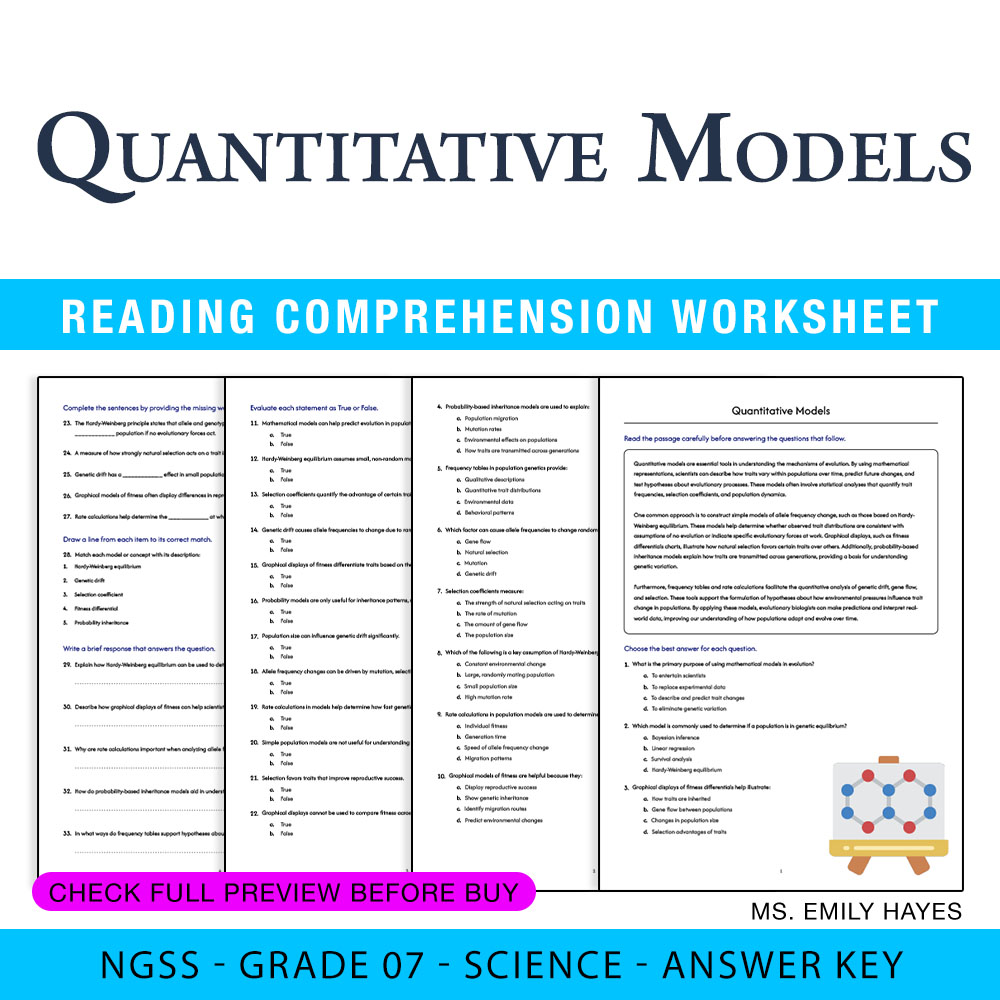
7th Grade Science | Quantitative Models Worksheet (PDF + Answer Key)
Created byCopper Leaf ClassroomLearning Objectives
- Understand how mathematical and statistical models are used to represent evolutionary processes.
- Interpret frequency tables, Hardy-Weinberg calculations, and rate data to analyze population genetics.
- Apply concepts of allele frequency change and genetic drift to real-world scenarios.
Browse more categories
About Science Worksheets
Find Science worksheets spanning core skills, practice, and review. All 42,859 resources are instant PDF downloads for the classroom or home.
Every worksheet on MyTeachingSheets is created by independent teacher-authors and reviewed before publication. All resources download as printable PDFs for classroom, homework, or at-home practice, and many include answer keys. Preview any worksheet free before buying.