
Science Worksheets
42,859 subject resources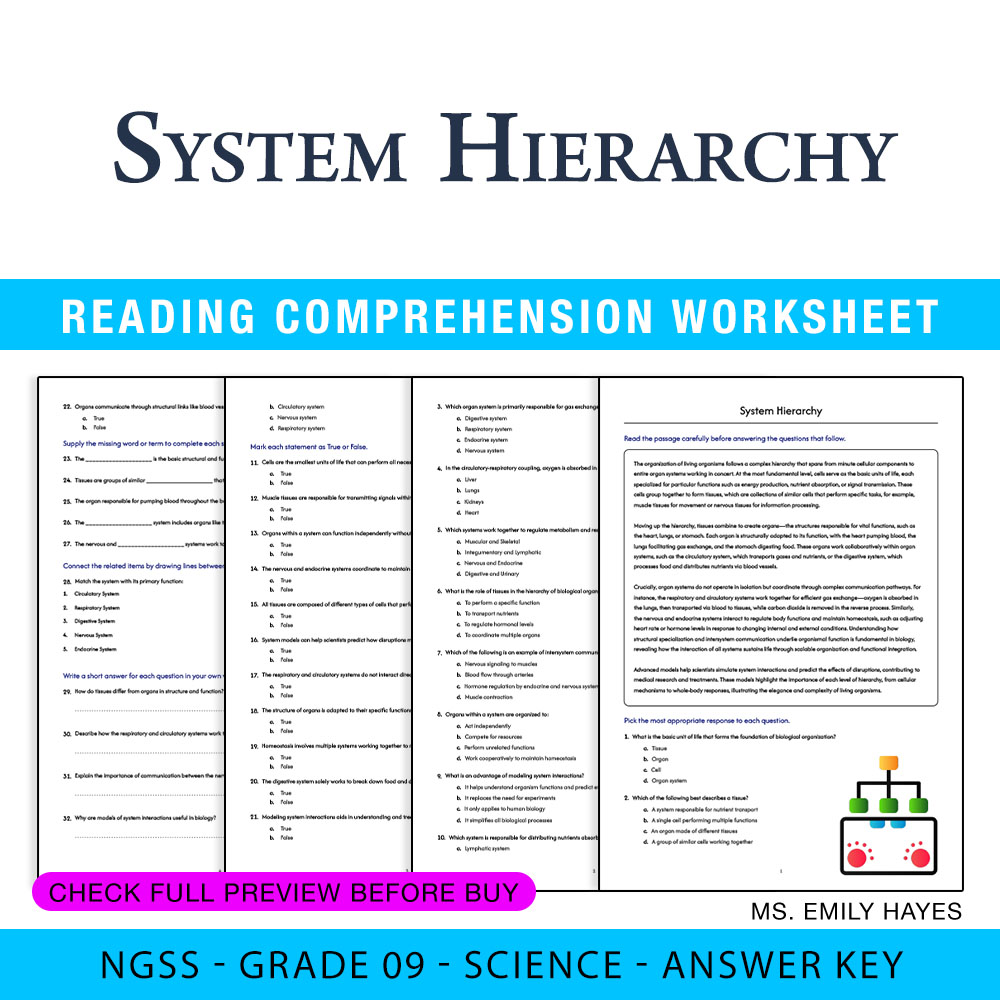
9th Grade Science | System Hierarchy Worksheet (PDF+ Answer Key)
 Created byCopper Leaf Classroom
Learning Objectives
- Explain the hierarchical organization of biological systems from cells to organismal systems.
- Identify the structural and functional relationships among cells, tissues, organs, and organ systems.
- Describe examples of system interactions such as circulatory-respiratory coupling, digestive-vascular transport, and nervous-endocrine regulation.
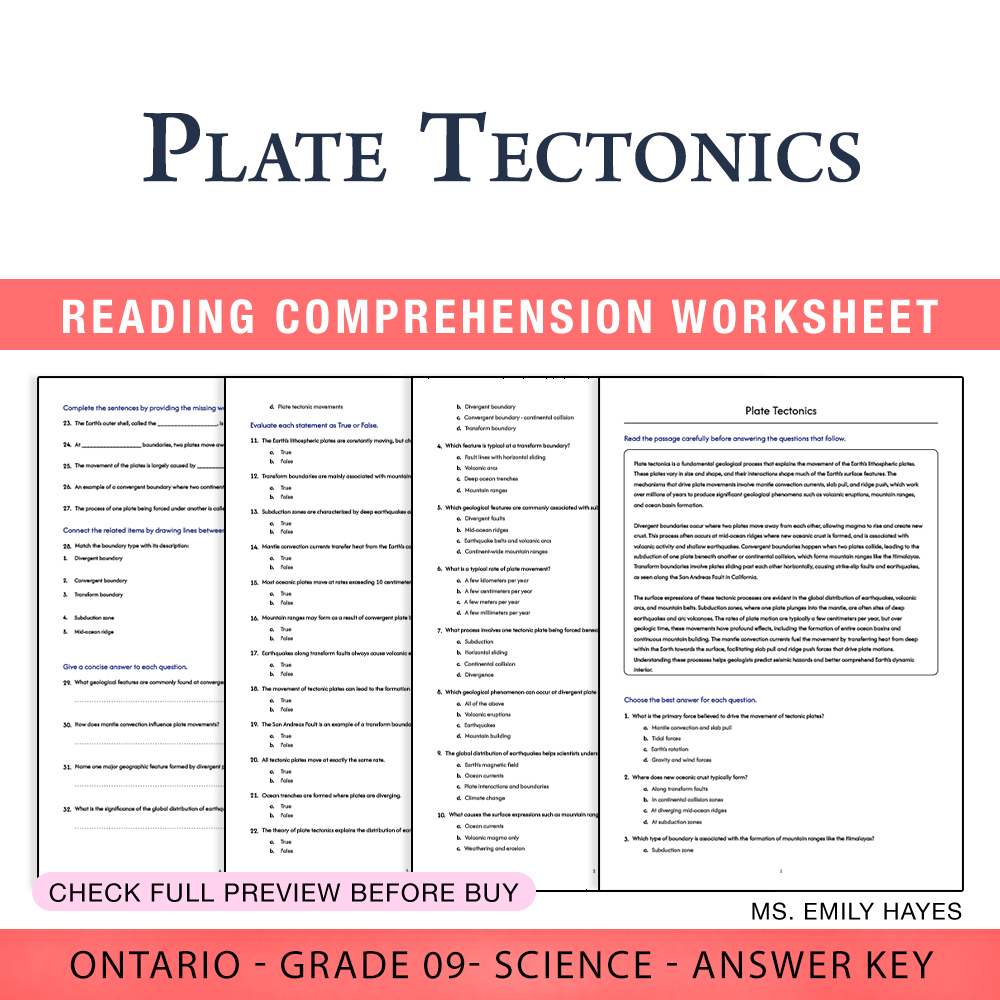
9th Grade Science | Plate Tectonics Worksheet (PDF + Answer Key)
Created byCopper Leaf ClassroomLearning Objectives
- Explain the mechanisms driving plate tectonics, including divergent, convergent, and transform boundaries.
- Describe the surface expression of plate movements, such as volcanic activity, mountain building, and ocean basin formation.
- Link mantle convection and slab pull to the forces that move tectonic plates over geological time.
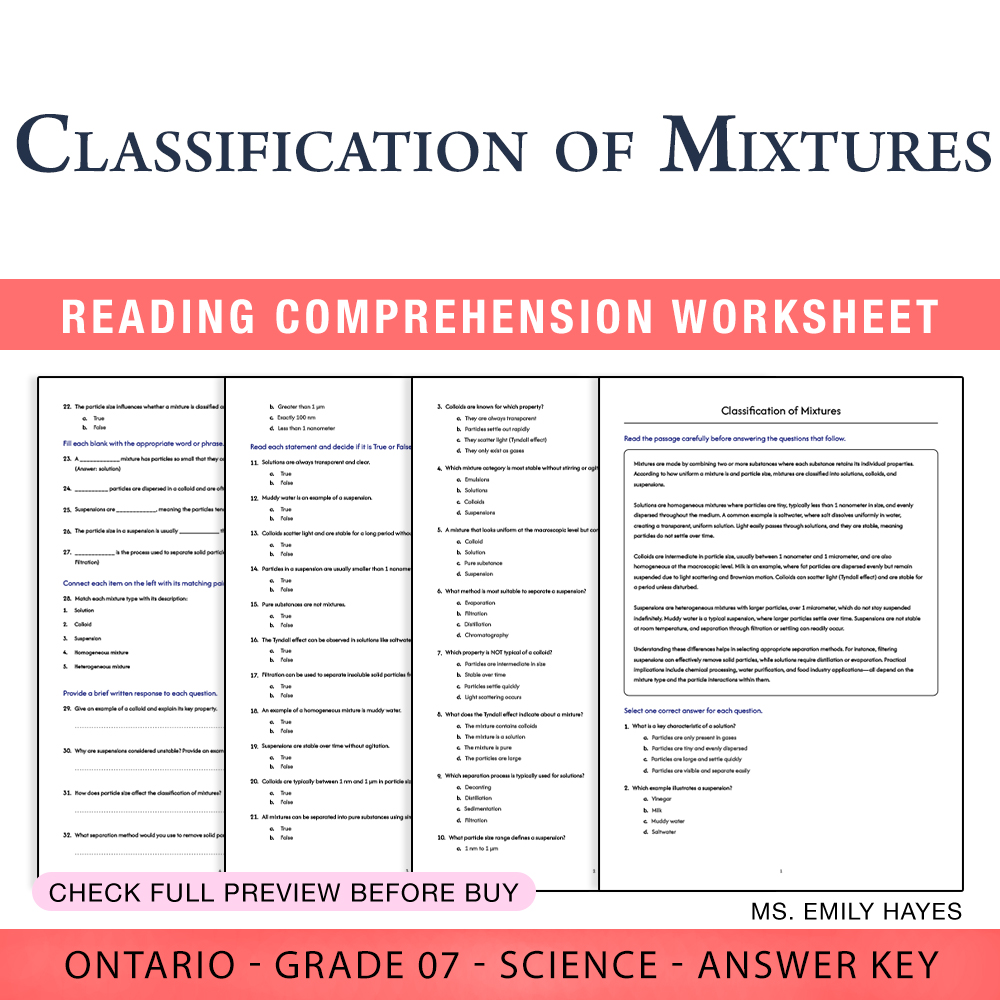
Grade 7 Science | Classification of Mixtures Worksheet (PDF+ Answer Key)
Created byCopper Leaf ClassroomLearning Objectives
- Describe the different types of mixture categories: solutions, colloids, and suspensions.
- Identify and differentiate between homogeneous and heterogeneous mixtures based on their properties.
- Explain how particle size, light scattering, and stability influence mixture classification.
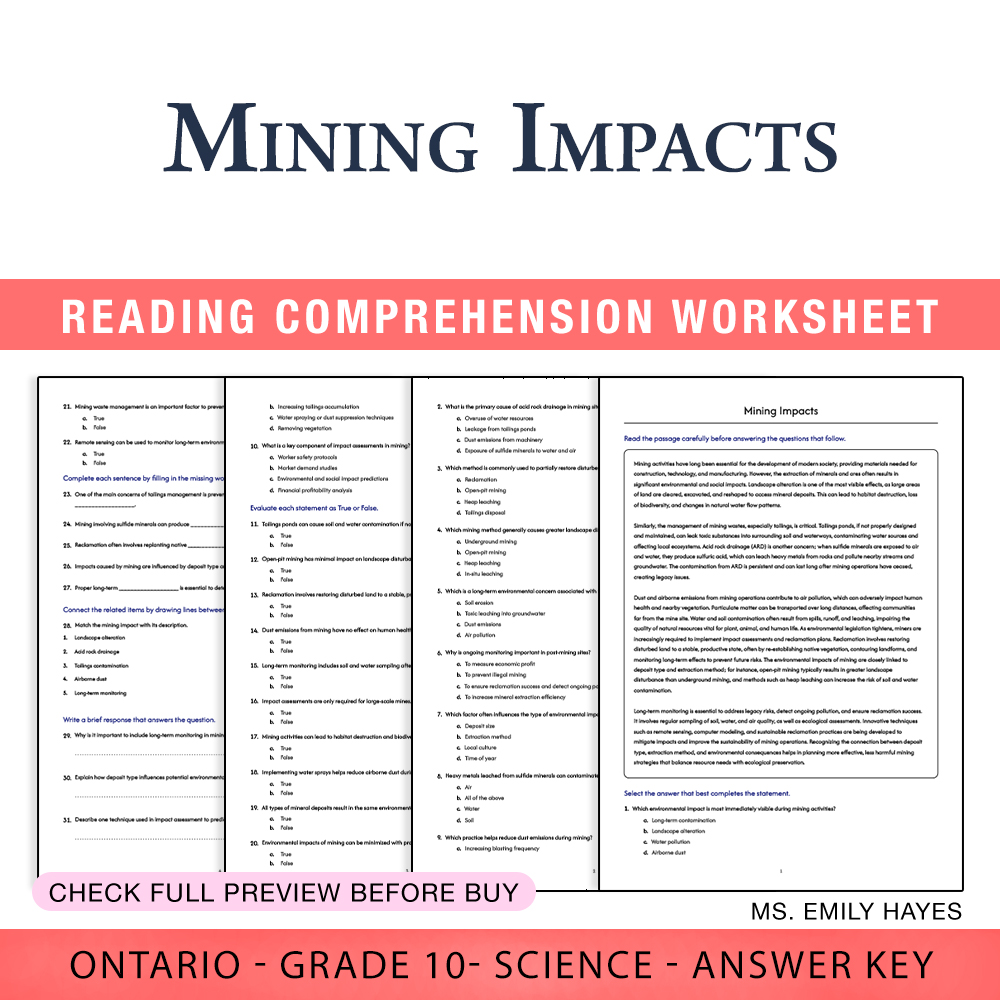
10th Grade Science | Mining Impacts Worksheet (PDF + Answer Key)
Created byCopper Leaf ClassroomLearning Objectives
- Identify and describe various environmental impacts caused by mineral extraction activities.
- Assess reclamation principles and long-term monitoring approaches used in mining sites.
- Explain the relationships between deposit type, extraction method, and potential environmental outcomes.
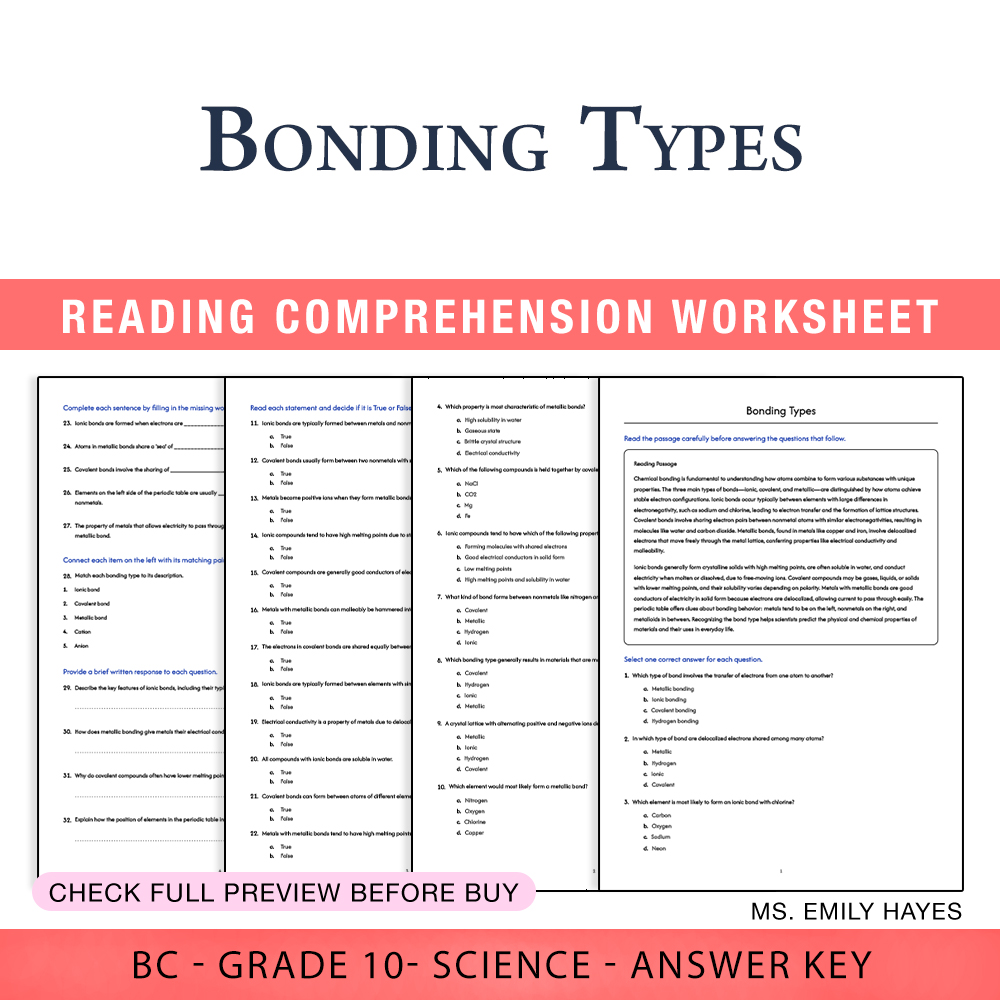
10th Grade Science | Bonding Types Worksheet (PDF + Answer Key)
Created byCopper Leaf ClassroomLearning Objectives
- Describe the differences between ionic, covalent, and metallic bonds.
- Identify examples of substances with each bonding type.
- Explain how bonding type influences properties like melting point, solubility, and conductivity.
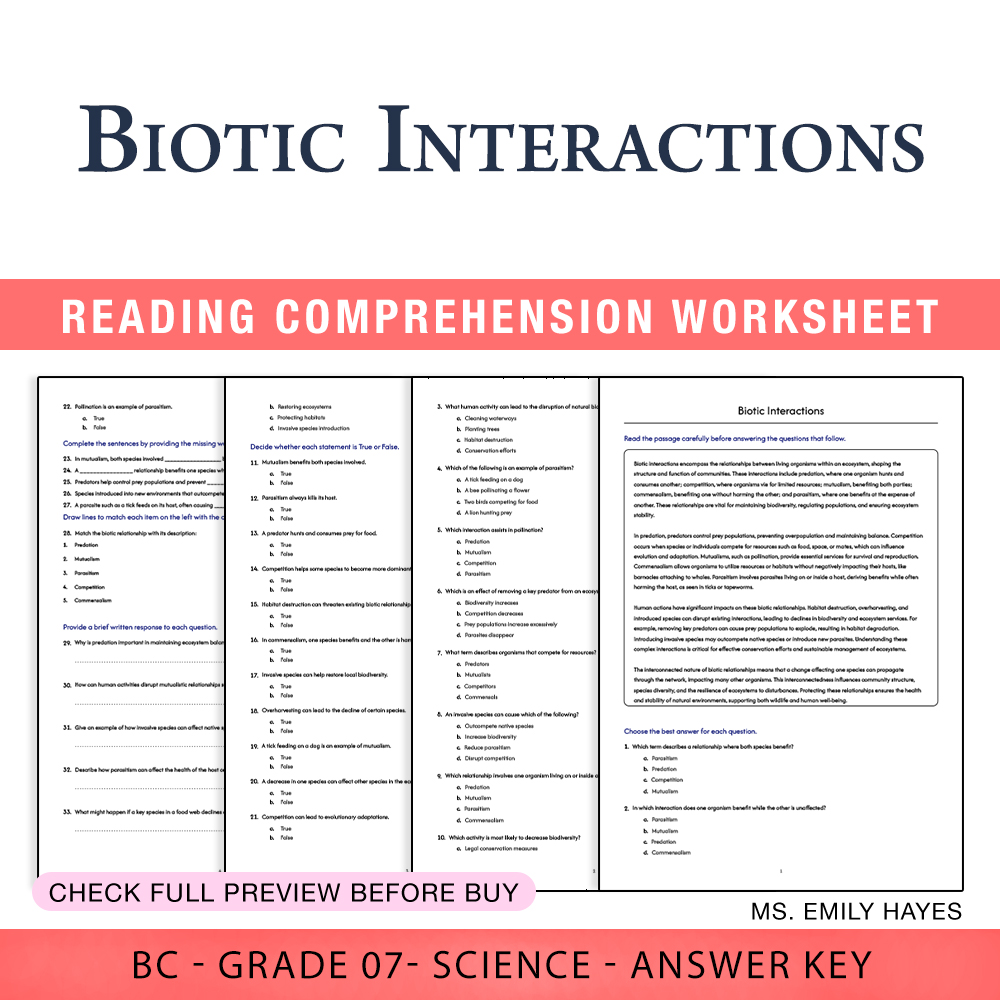
7th Grade Science | Biotic Interactions Worksheet (PDF+ Answer Key)
Created byCopper Leaf ClassroomLearning Objectives
- Describe different types of biotic interactions such as predation, competition, mutualism, commensalism, and parasitism.
- Explain how human activities can disrupt established biotic relationships and affect ecosystems.
- Analyze how changes in one species can impact community structure and biodiversity.
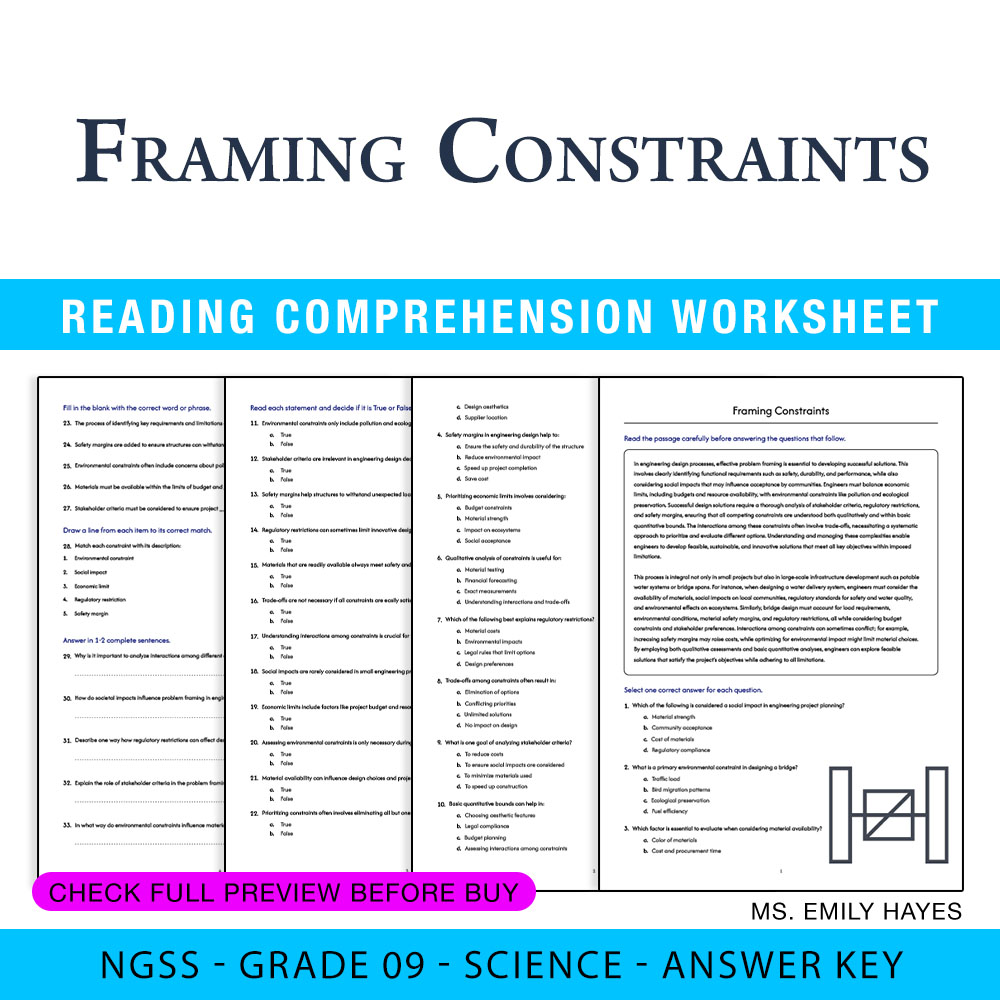
9th Grade Science | Framing Constraints Worksheet (PDF+ Answer Key)
Created byCopper Leaf ClassroomLearning Objectives
- Understand the importance of identifying and prioritizing functional requirements, social impacts, economic limits, and environmental constraints in engineering design.
- Analyze stakeholder criteria, material availability, regulatory restrictions, and safety margins to develop feasible engineering solutions.
- Evaluate interactions among competing constraints both qualitatively and quantitatively to support decision-making in complex challenges.
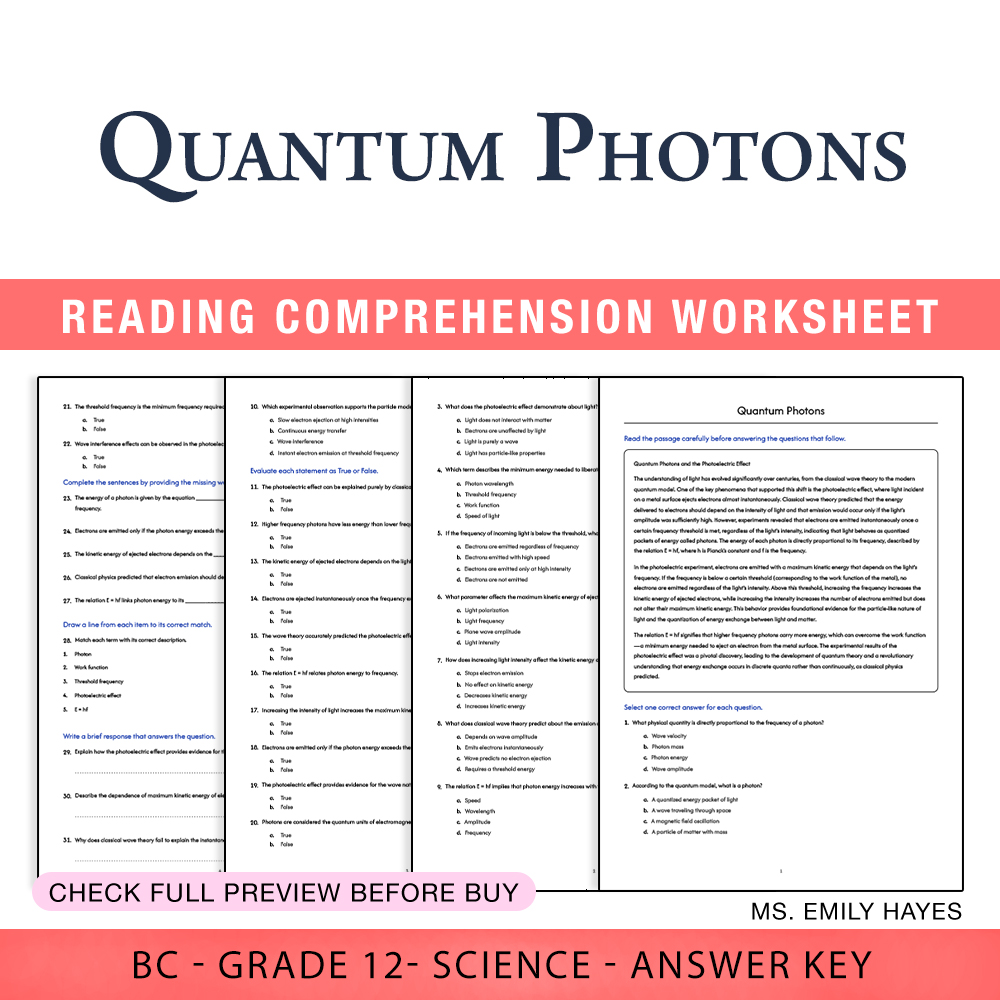
12th Grade Science | Quantum Photons Worksheet (PDF+ Answer Key)
Created byCopper Leaf ClassroomLearning Objectives
- Explain the concept of photon energy and its relation to frequency (E = hf).
- Describe the photoelectric effect and its significance in demonstrating quantized energy exchange.
- Define key terms such as work function and threshold frequency.
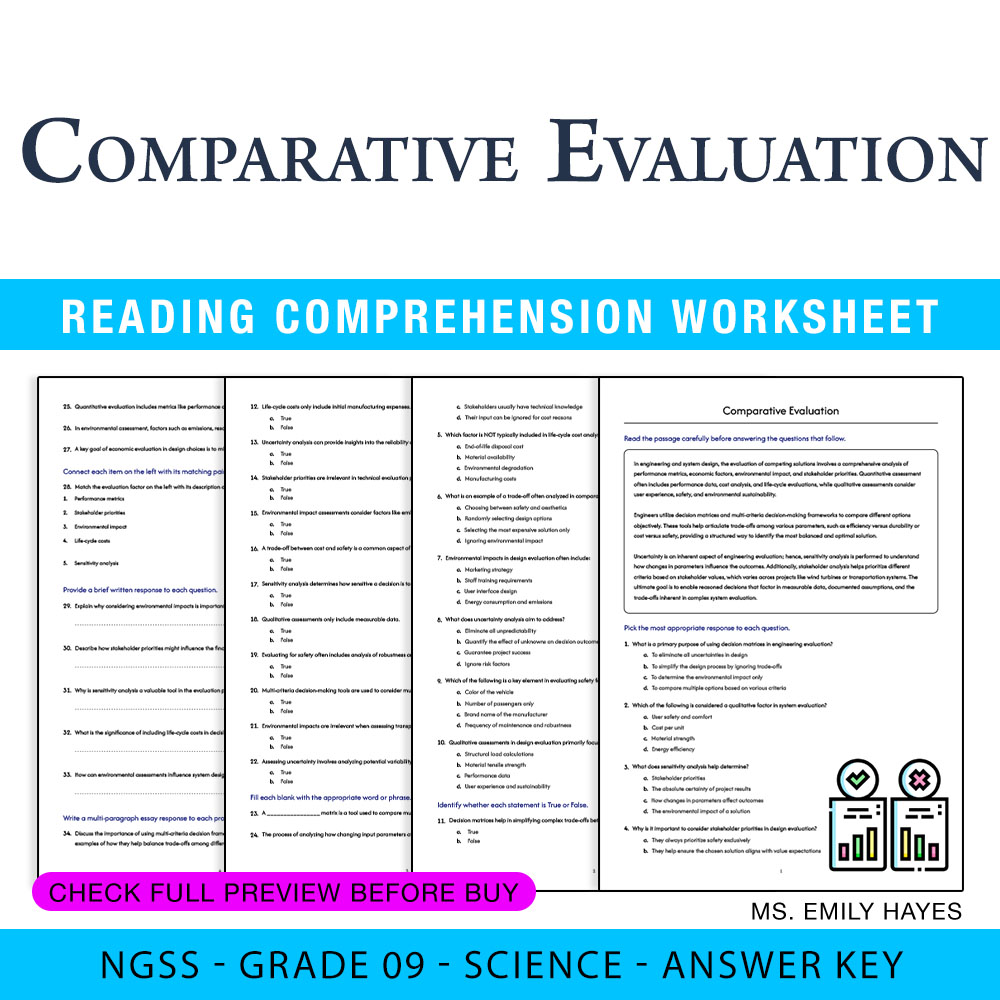
9th Grade Science | Comparative Evaluation Worksheet (PDF+ Answer Key)
Created byCopper Leaf ClassroomLearning Objectives
- Understand the process of evaluating and comparing different design solutions using quantitative and qualitative criteria.
- Learn to apply decision frameworks and matrices to analyze trade-offs among performance metrics such as efficiency, durability, cost, and safety.
- Analyze the impact of uncertainty and stakeholder priorities in the selection of optimal systems or components.
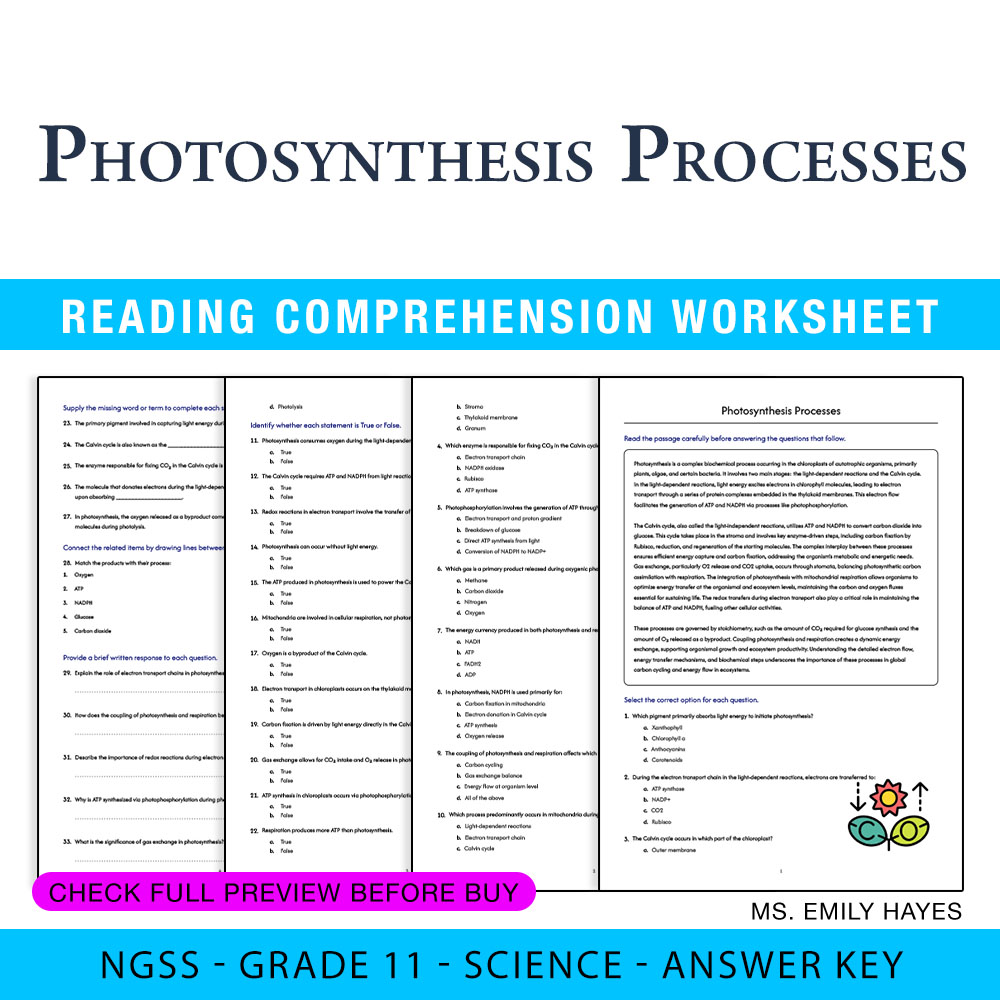
11th Grade Science | Photosynthesis Processes Worksheet (PDF + Answer Key)
Created byCopper Leaf ClassroomLearning Objectives
- Describe the light-driven and biochemical stages of photosynthesis, including electron transport, photophosphorylation, and the Calvin cycle.
- Explain the role of chloroplasts in gas exchange, ATP synthesis, and carbon fixation.
- Analyze the stoichiometry of CO2 uptake and O2 release during photosynthesis and respiration.
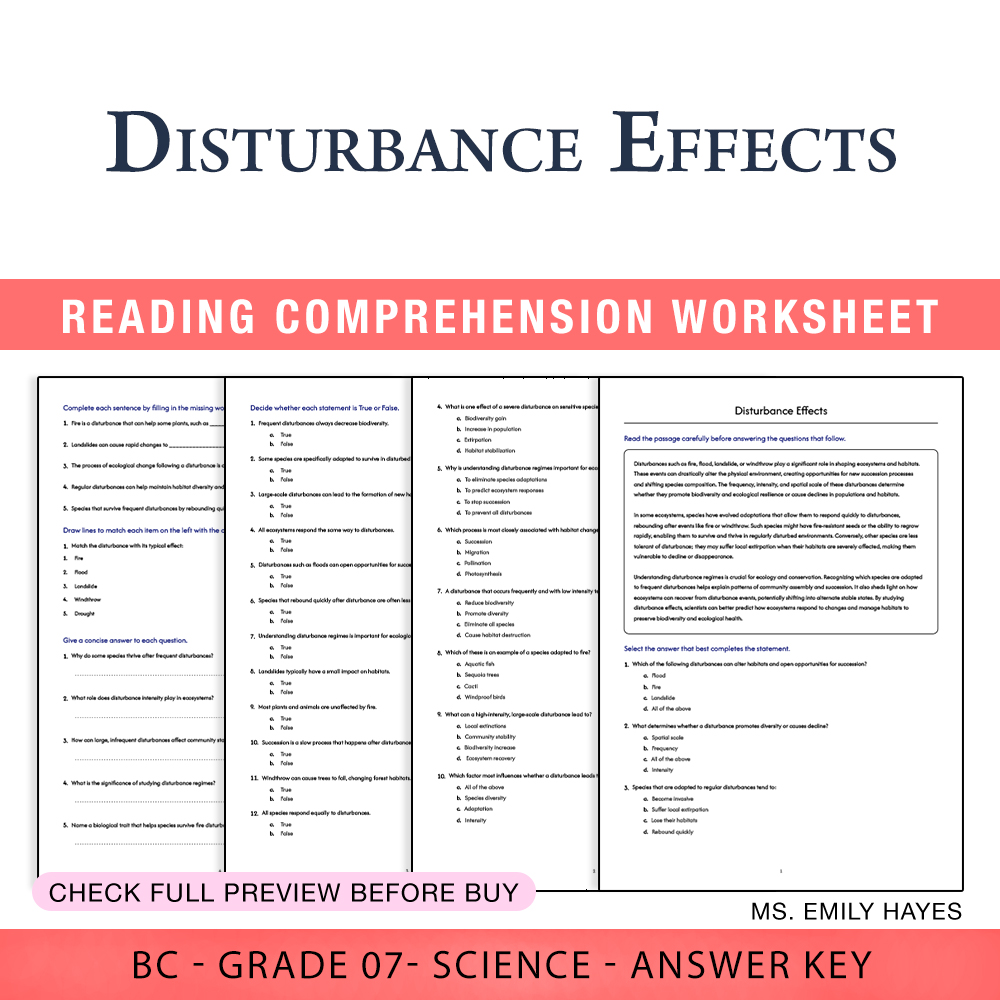
Grade 7 Science | Disturbance Effects Worksheet (PDF+ Answer Key)
Created byCopper Leaf ClassroomLearning Objectives
- Understand how different types of disturbances affect ecosystems and habitats.
- Identify species adaptations to disturbance regimes and their effects on population dynamics.
- Analyze how disturbance frequency, intensity, and spatial scale influence ecological diversity and stability.
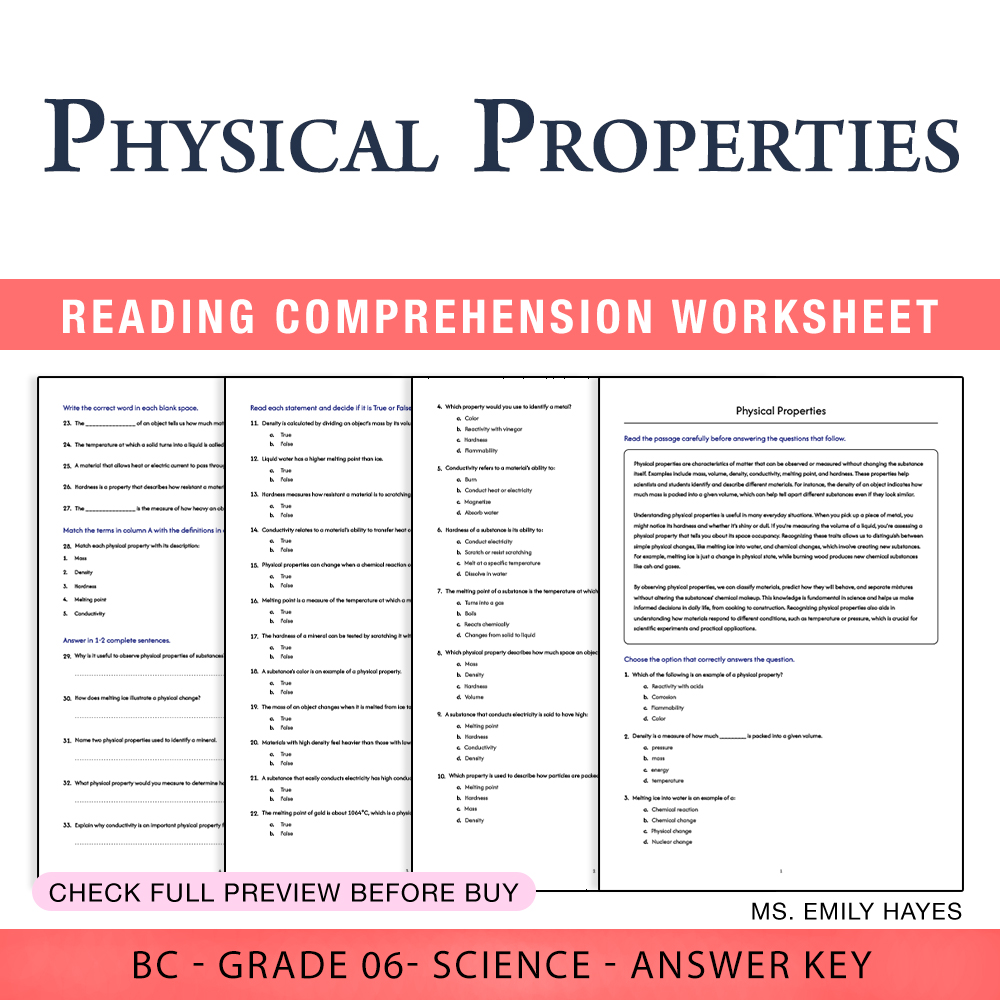
6th Grade Science | Physical Properties Worksheet (PDF+ Answer Key)
Created byCopper Leaf ClassroomLearning Objectives
- Understand and define physical properties of matter such as mass, volume, density, conductivity, melting point, and hardness.
- Differentiate between physical changes and chemical changes based on physical property observations and measurements.
- Recognize common examples of physical properties and describe how they are used to identify substances.
Grade 6 Science | Variation Factors Worksheet (PDF + Answer Key)
Created byCopper Leaf ClassroomLearning Objectives
- Understand how genetic differences and environmental factors contribute to observable variation among individuals.
- Model the effect of allele combinations, mutations, and environmental influences on traits.
- Explain the limits of genetic explanations in traits affected by environment.
9th Grade Science | Speciation Processes Worksheet (PDF + Answer Key)
Created byCopper Leaf ClassroomLearning Objectives
- Understand the mechanisms of reproductive isolation and their role in speciation.
- Explain the difference between allopatric and sympatric speciation models.
- Describe examples of adaptive radiation and hybrid zones in speciation.
11th Grade Science | Ecosystem Basics Worksheet (PDF+ Answer Key)
Created byCopper Leaf ClassroomLearning Objectives
- Explain the fundamental components of an ecosystem, including living organisms and physical environment.
- Describe how energy flows through food chains and food webs within an ecosystem.
- Understand the role of primary productivity in supporting community structures.
7th Grade Science | Material Properties Worksheet (PDF +Answer Key)
Created byCopper Leaf ClassroomLearning Objectives
- Identify and differentiate between physical and chemical properties of materials with examples.
- Analyze data related to density, melting point, solubility, electrical conductivity, reactivity, and flammability to classify materials.
- Understand how measurable properties support material identification and separation techniques.
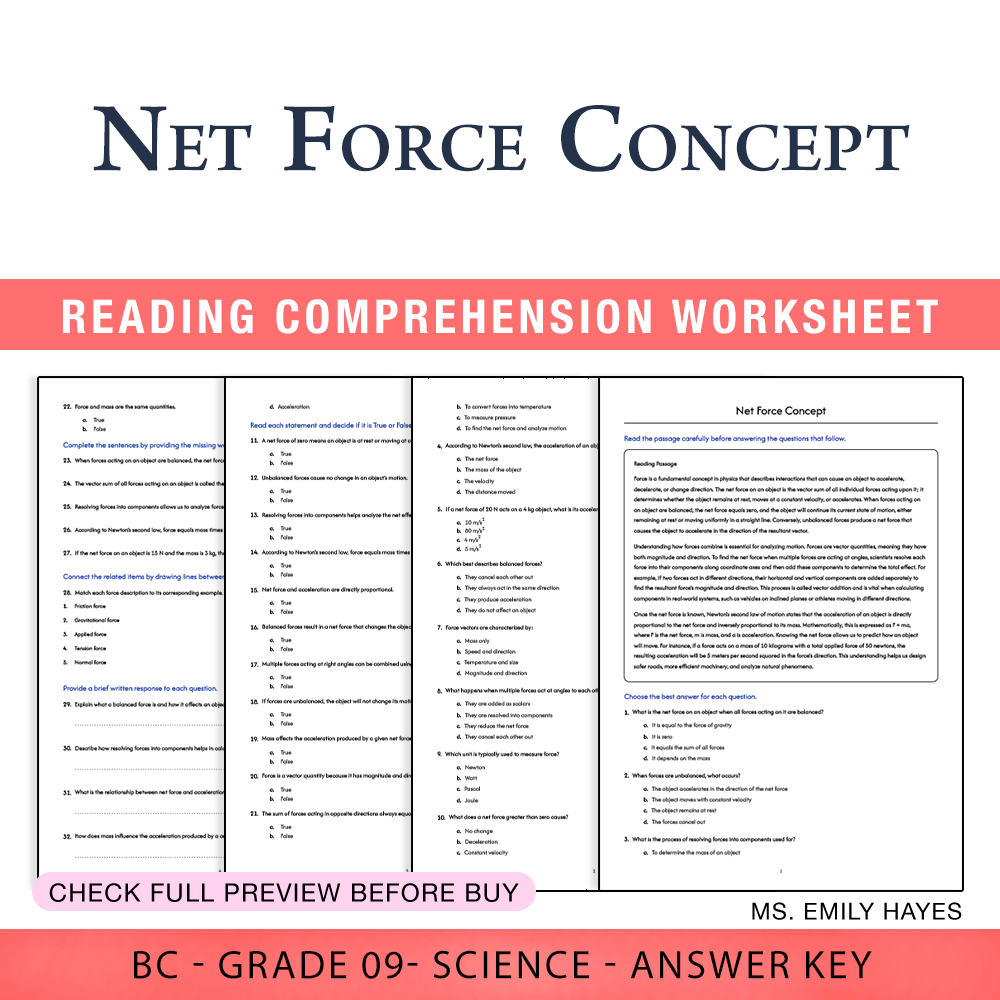
9th Grade Science | Net Force Concept Worksheet (PDF+ Answer Key)
Created byCopper Leaf ClassroomLearning Objectives
- Define and explain the concept of net force and how it affects motion.
- Describe how forces can be resolved into components and summed to find the net effect.
- Calculate the resulting acceleration when given force vectors and mass.
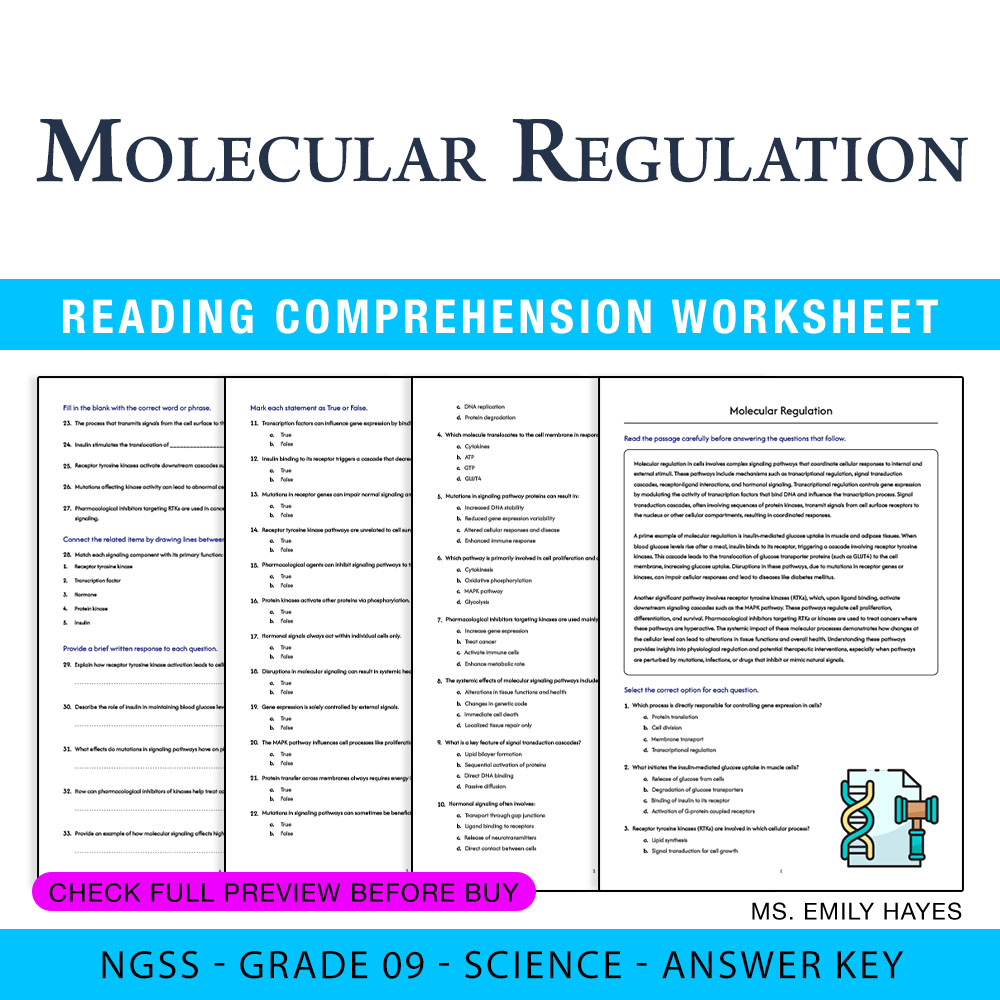
Grade 9 Science | Molecular Regulation Worksheet (PDF+ Answer Key)
Created byCopper Leaf ClassroomLearning Objectives
- Explain the key molecular signaling pathways that control gene expression and protein activity.
- Describe how regulatory networks impact cellular functions and physiological outcomes.
- Interpret the effects of perturbations such as mutations or inhibitors on molecular pathways.
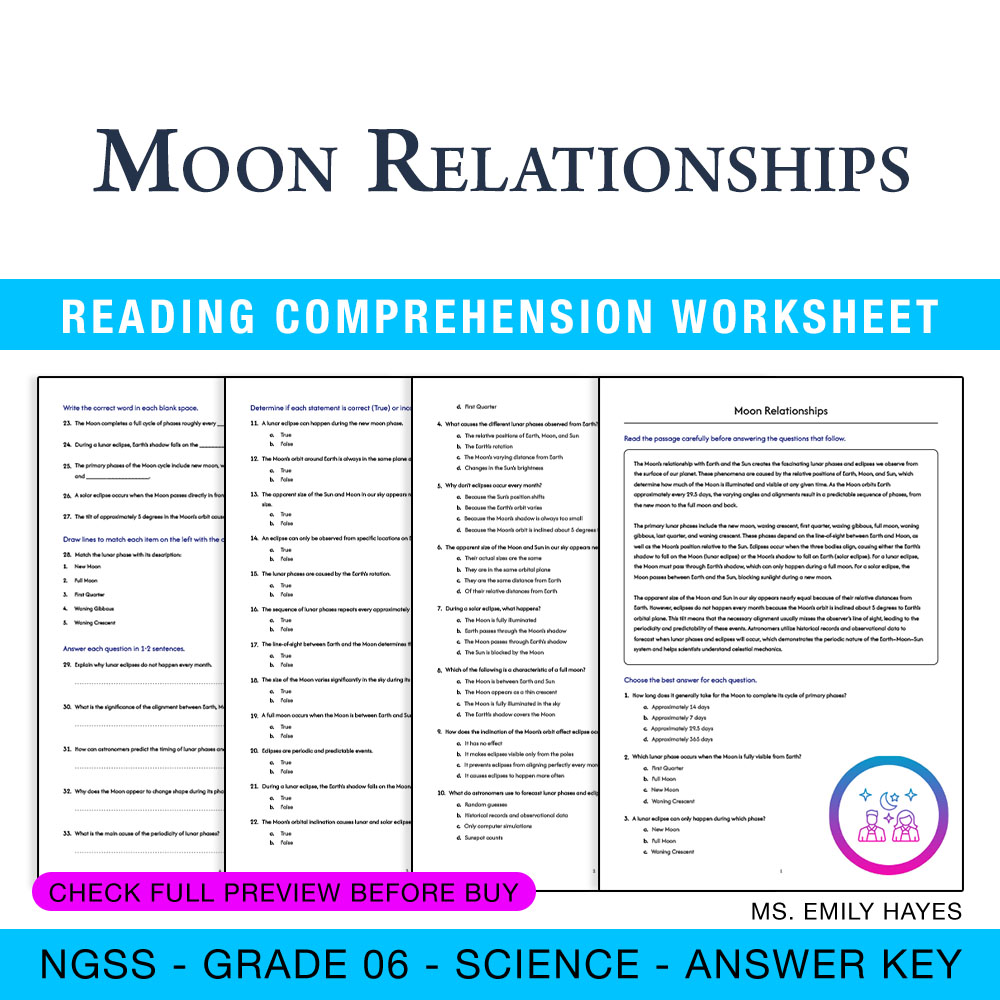
6th Grade Science | Moon Relationships Worksheet (PDF + Answer Key)
Created byCopper Leaf ClassroomLearning Objectives
- Describe the geometric relationships among Earth, Moon, and Sun that produce lunar phases and eclipses.
- Explain the sequence of primary lunar phases and conditions for solar and lunar eclipses.
- Identify the apparent size and alignment constraints involved in lunar phenomena.
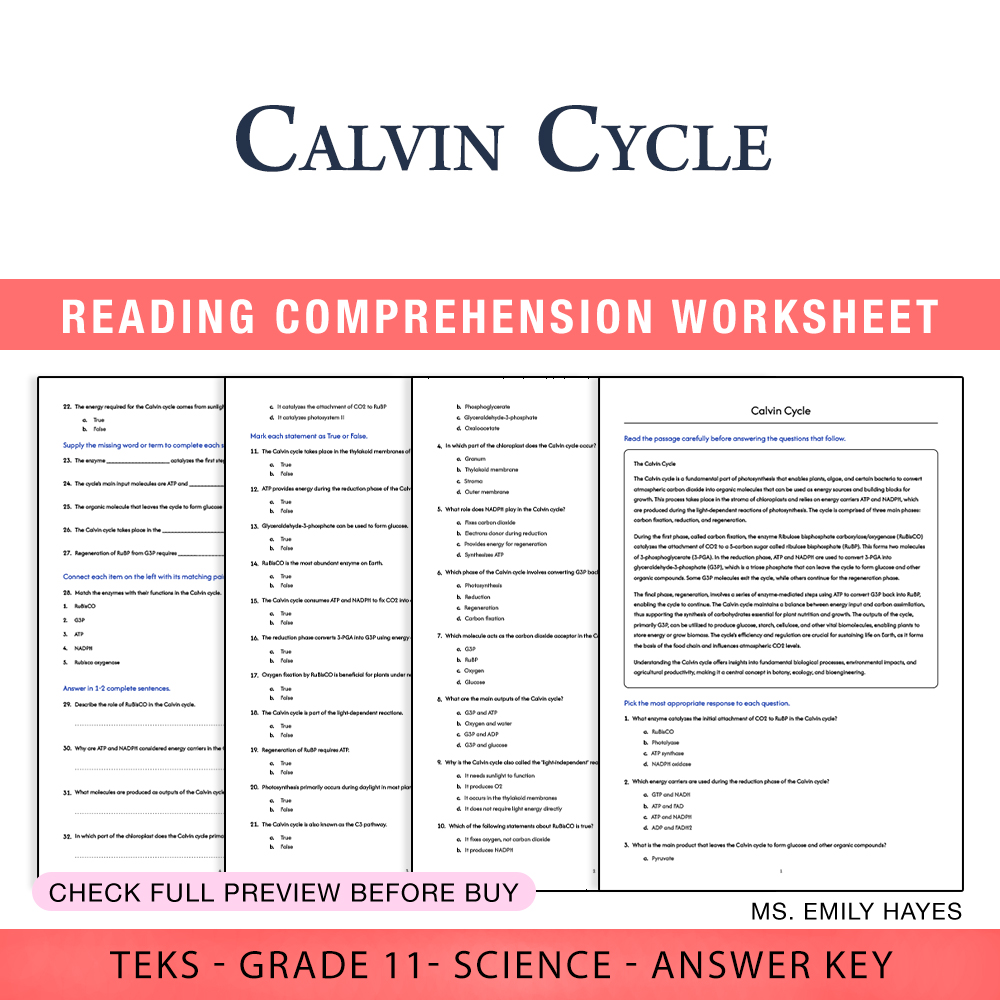
Grade 11 Science | Calvin Cycle Worksheet (PDF+ Answer Key)
Created byCopper Leaf ClassroomLearning Objectives
- Describe the main steps and phases of the Calvin cycle in photosynthesis.
- Explain the role of key enzymes such as RuBisCO in carbon fixation.
- Identify the outputs and significance of the Calvin cycle in plant metabolism.
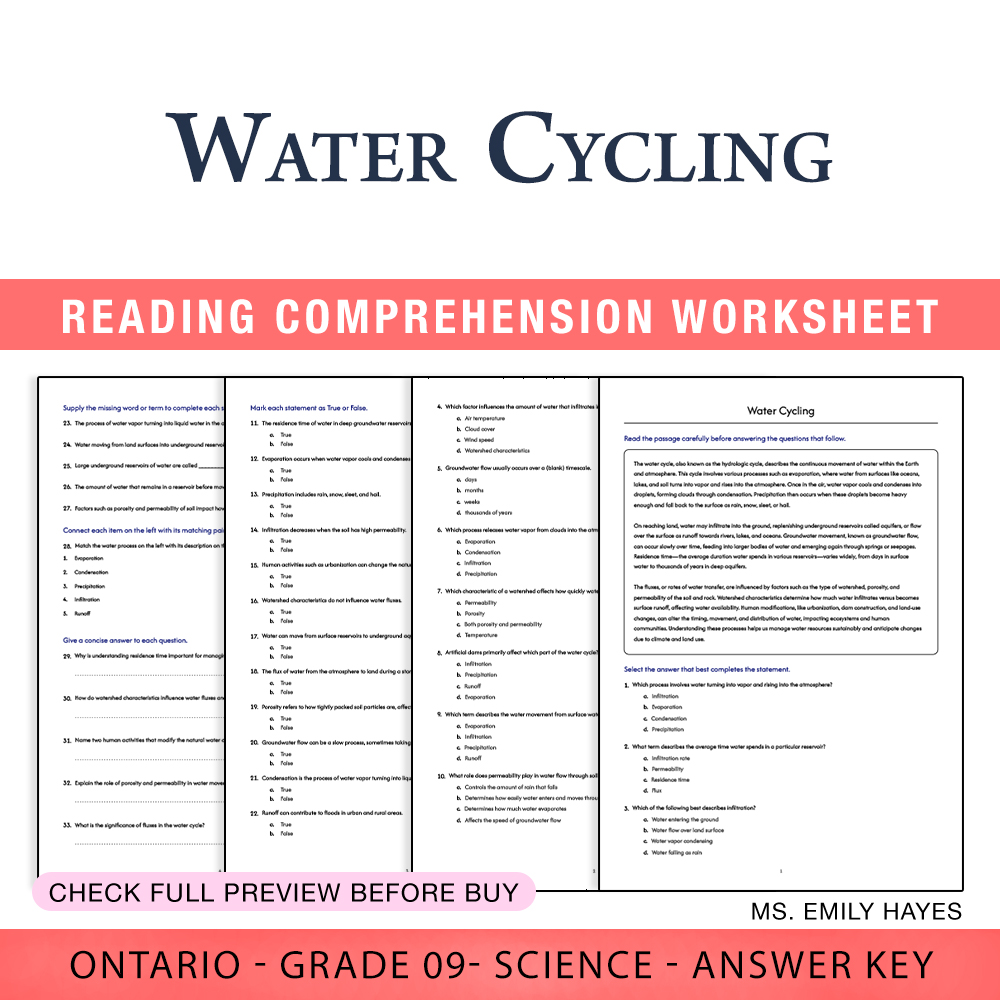
Grade 9 Science Water Cycling Worksheet (PDF + Answer Key)
Created byCopper Leaf ClassroomLearning Objectives
- Explain the processes involved in the hydrologic cycle, including evaporation, condensation, precipitation, infiltration, runoff, and groundwater flow.
- Describe how watershed characteristics, porosity, and permeability influence water movement and storage.
- Analyze human modifications such as engineered and land-use changes that affect water timing and distribution.
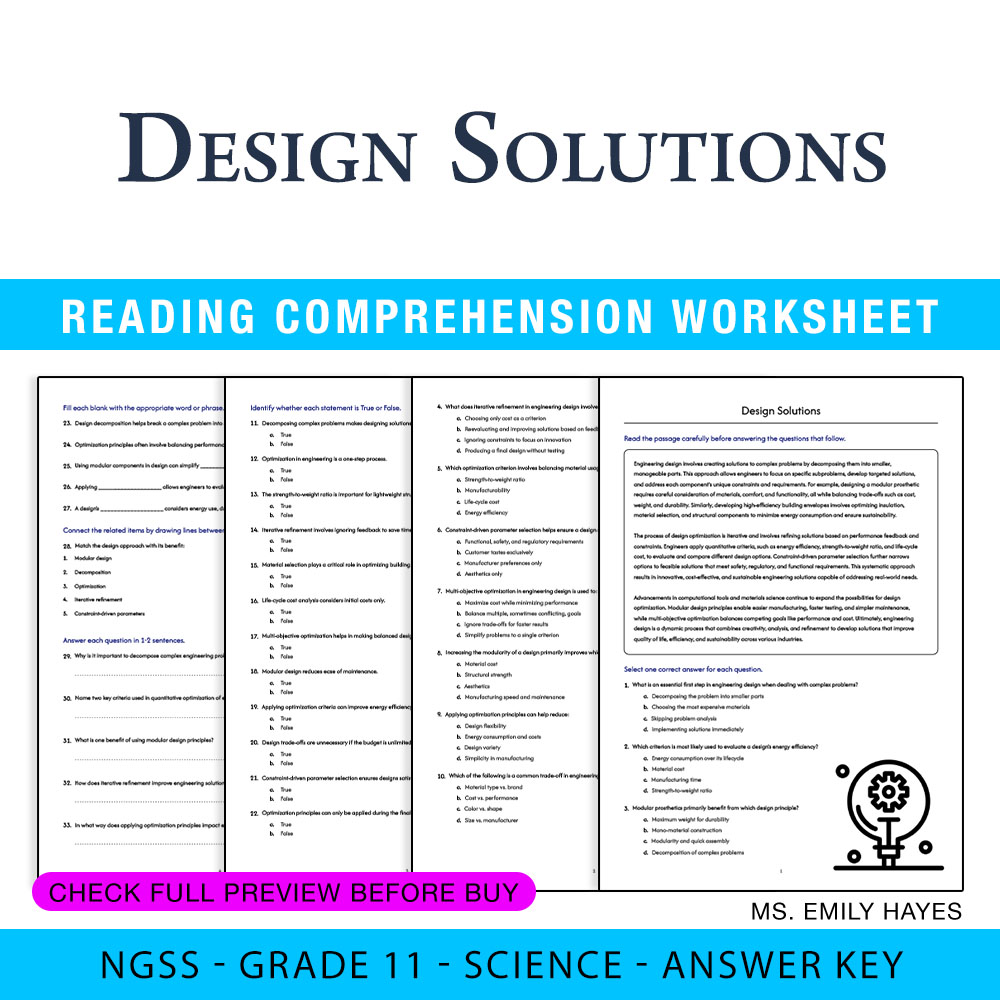
Grade 11 Science | Design Solutions Worksheet (PDF+ Answer Key)
Created byCopper Leaf ClassroomLearning Objectives
- Understand strategies for decomposing complex engineering problems into manageable subproblems.
- Apply principles of optimization such as energy efficiency, strength-to-weight ratio, and life-cycle cost in engineering design.
- Analyze examples like modular prosthetics, high-efficiency building envelopes, and aerodynamic vehicles to understand trade-offs in materials, cost, and performance.
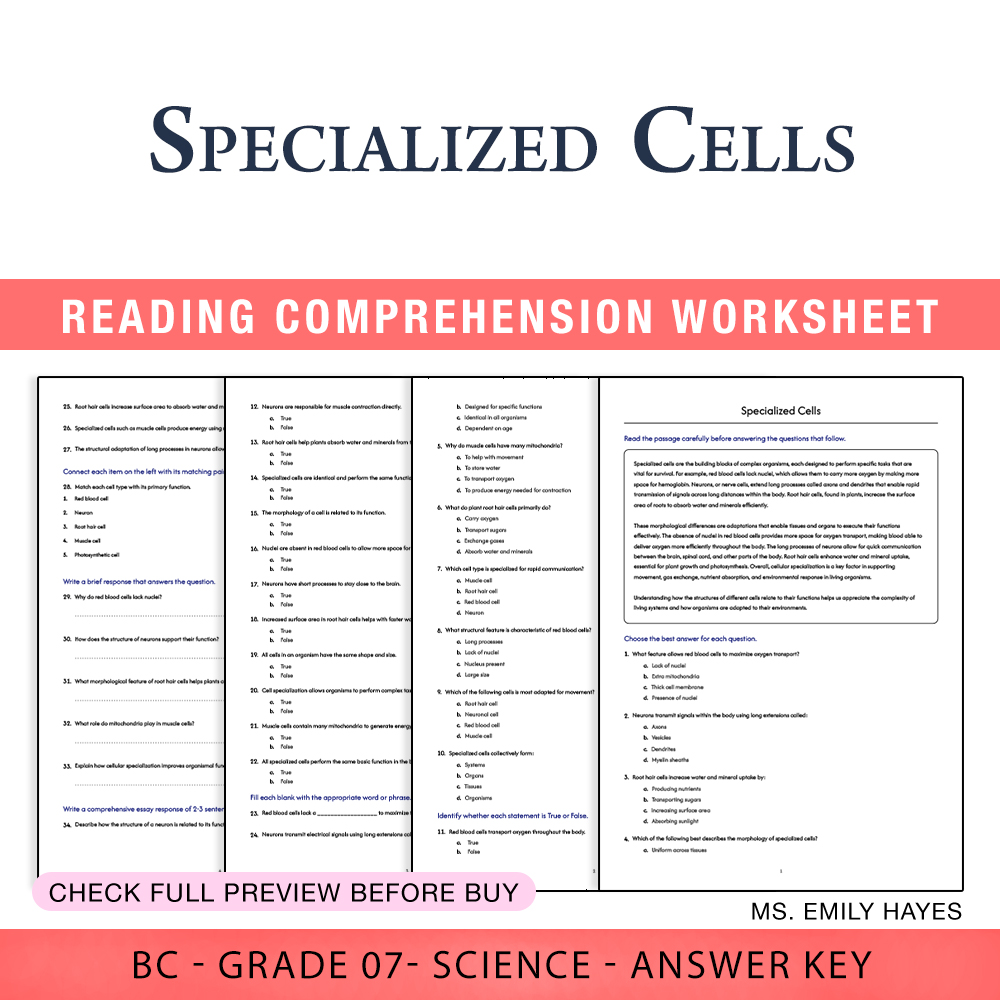
7th Grade Science | Specialized Cells Worksheet (PDF+ Answer Key)
Created byCopper Leaf ClassroomLearning Objectives
- Describe the structure and function of different specialized cells such as red blood cells, neurons, and root hair cells.
- Explain how cellular specialization enables tissues and organs to perform specific tasks efficiently.
- Identify morphological differences among various specialized cells and relate them to their roles in the organism.
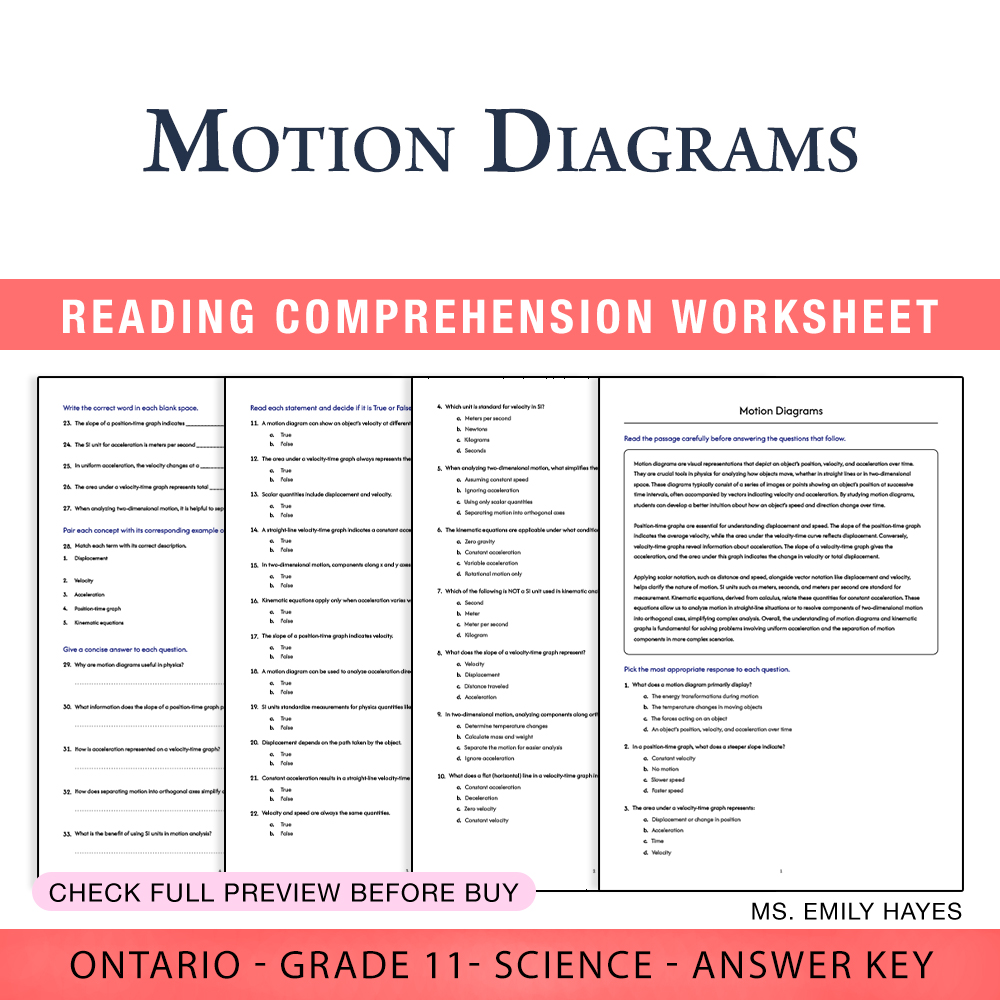
11th Grade Science | Motion Diagrams Worksheet (PDF + Answer Key)
Created byCopper Leaf ClassroomLearning Objectives
- Understand how motion diagrams visually represent an object's position, velocity, and acceleration.
- Interpret position-time and velocity-time graphs, including their slopes and areas, to analyze motion.
- Apply scalar and vector notation, SI units, and kinematic equations for uniform acceleration.
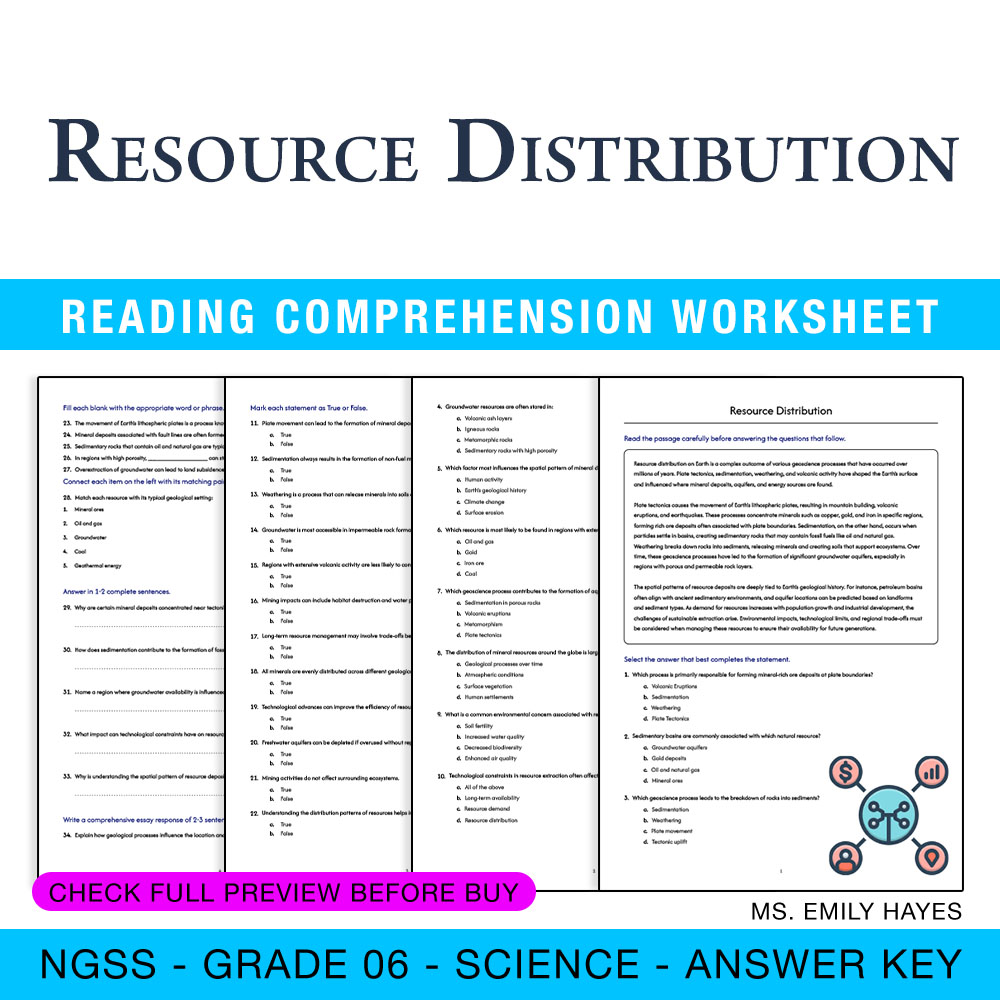
6th Grade Science | Resource Distribution Worksheet (PDF + Answer Key)
Created byCopper Leaf ClassroomLearning Objectives
- Understand the geological processes influencing resource distribution such as plate tectonics, sedimentation, and weathering
- Identify spatial patterns of mineral, energy, and groundwater resources
- Evaluate the impacts of resource extraction and technological constraints
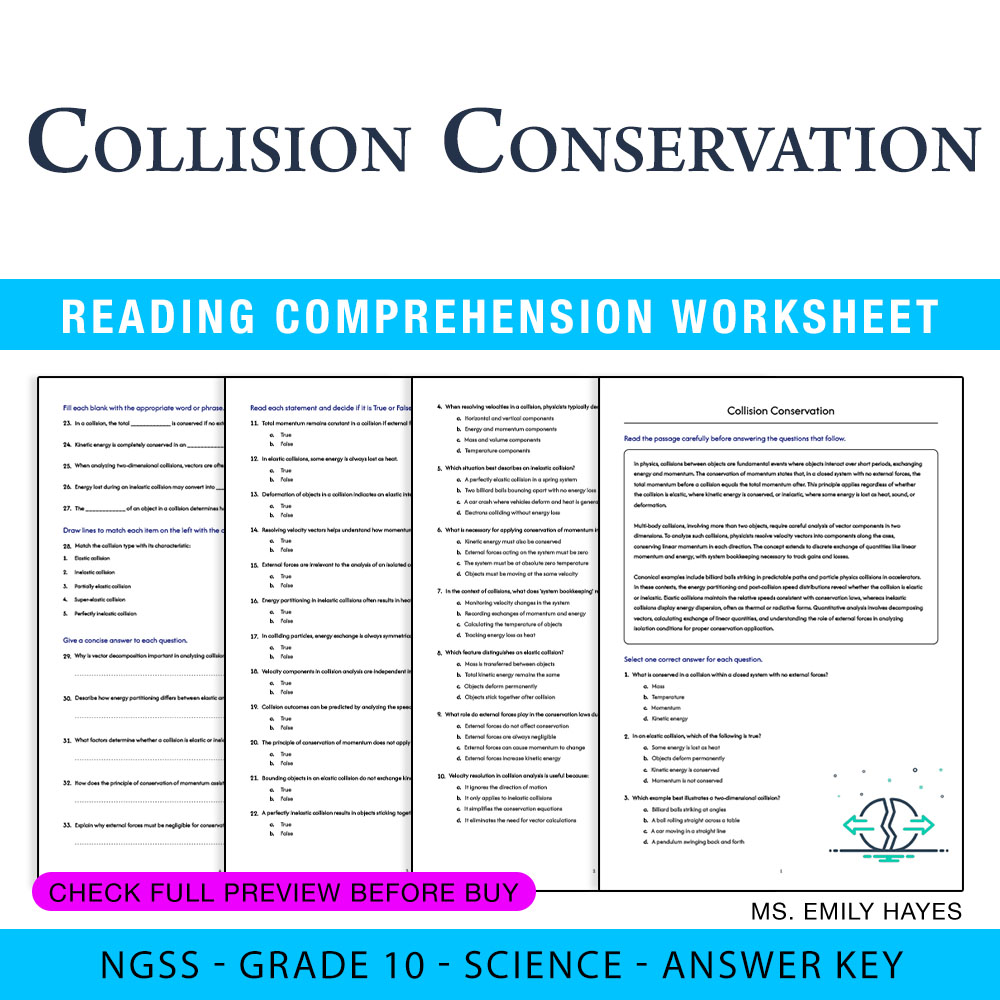
10th Grade Science | Collision Conservation Worksheet (PDF+ Answer Key)
Created byCopper Leaf ClassroomLearning Objectives
- Understand the principles of conservation of momentum and energy in multi-body collisions.
- Analyze two-dimensional collision components using vector resolution.
- Differentiate between elastic and inelastic collisions based on energy and speed distributions.
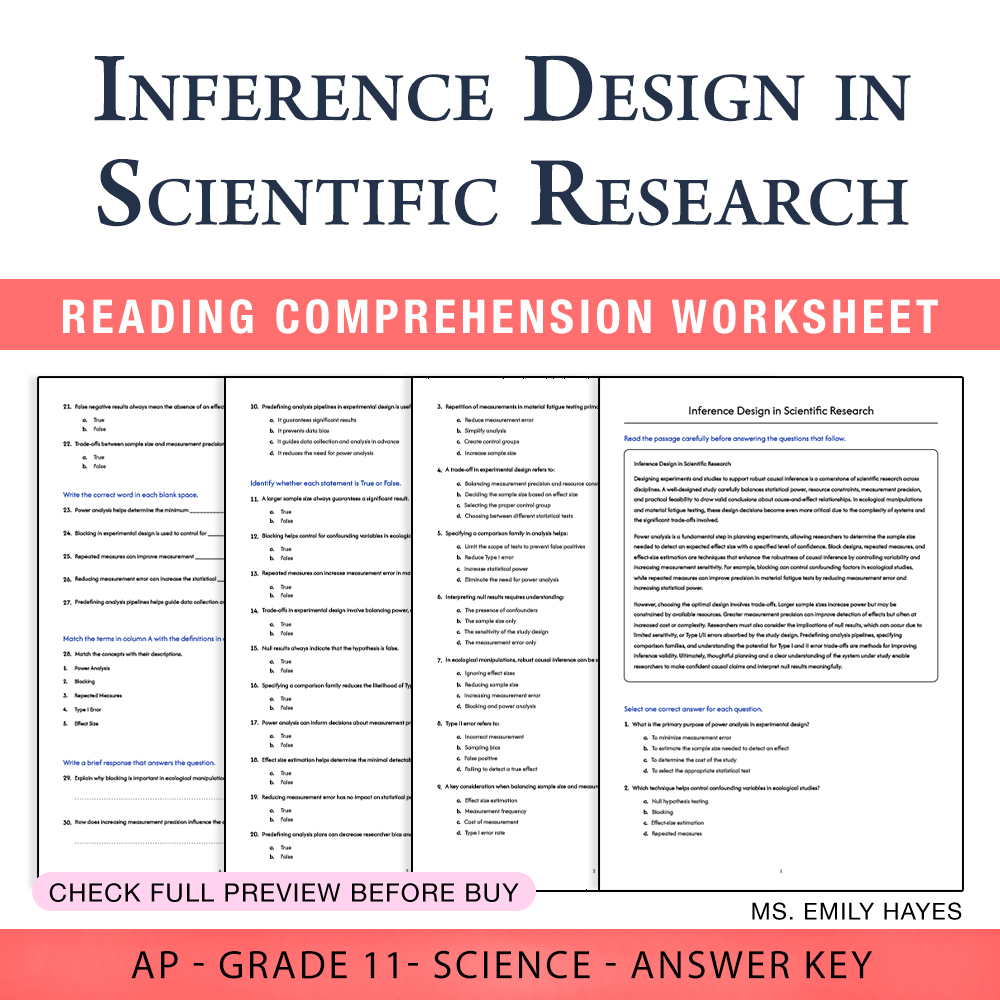
Grade 11 Science | Inference Design Worksheet (PDF+ Answer Key)
Created byCopper Leaf ClassroomLearning Objectives
- Understand how to design studies that support robust causal inference, including power analysis and effect sizes.
- Identify and apply techniques such as blocking, repeated measures, and sample size trade-offs to improve experimental robustness.
- Evaluate how design choices affect the interpretation of null results and trade-offs between measurement precision and practical constraints.
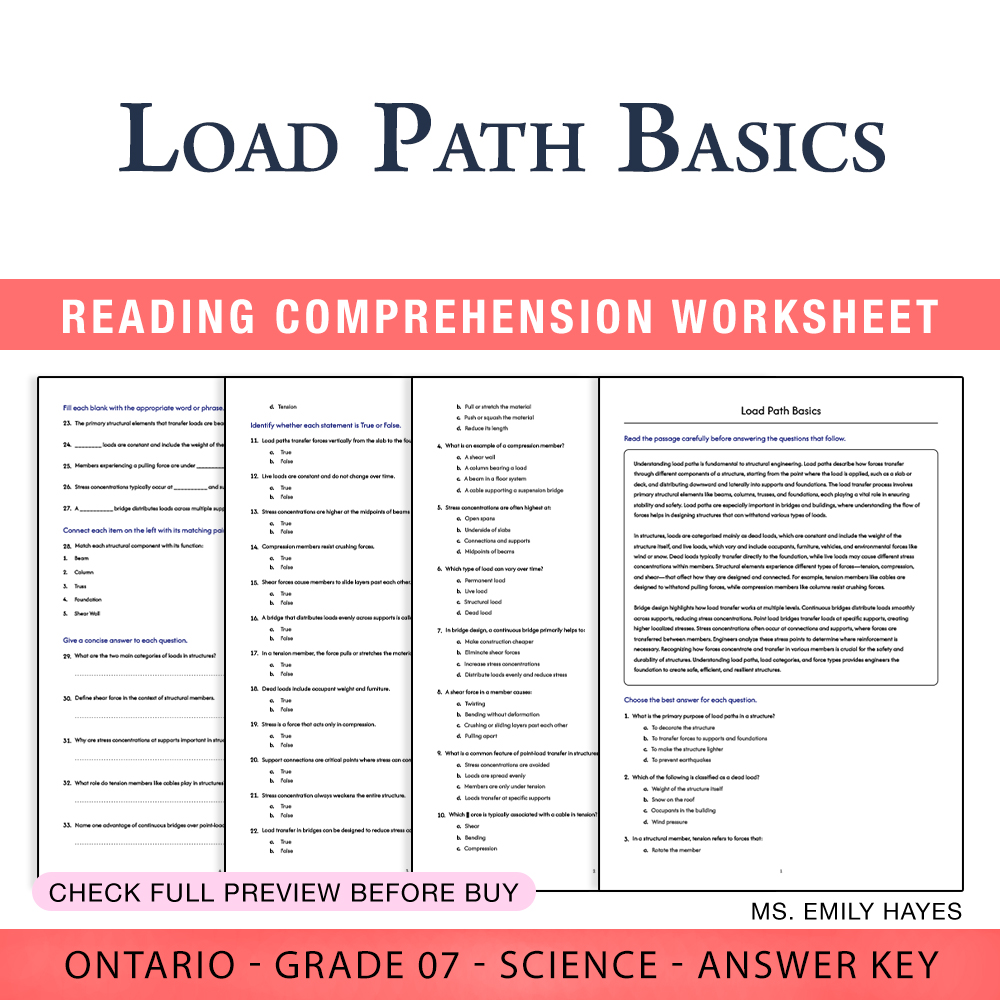
7th Grade Science | Load Path Basics Worksheet (PDF+ Answer Key)
Created byCopper Leaf ClassroomLearning Objectives
- Describe the primary structural elements involved in load transfer within structures.
- Explain how loads move from slabs or decks through beams, columns, and foundations.
- Distinguish between dead loads and live loads in structural systems.
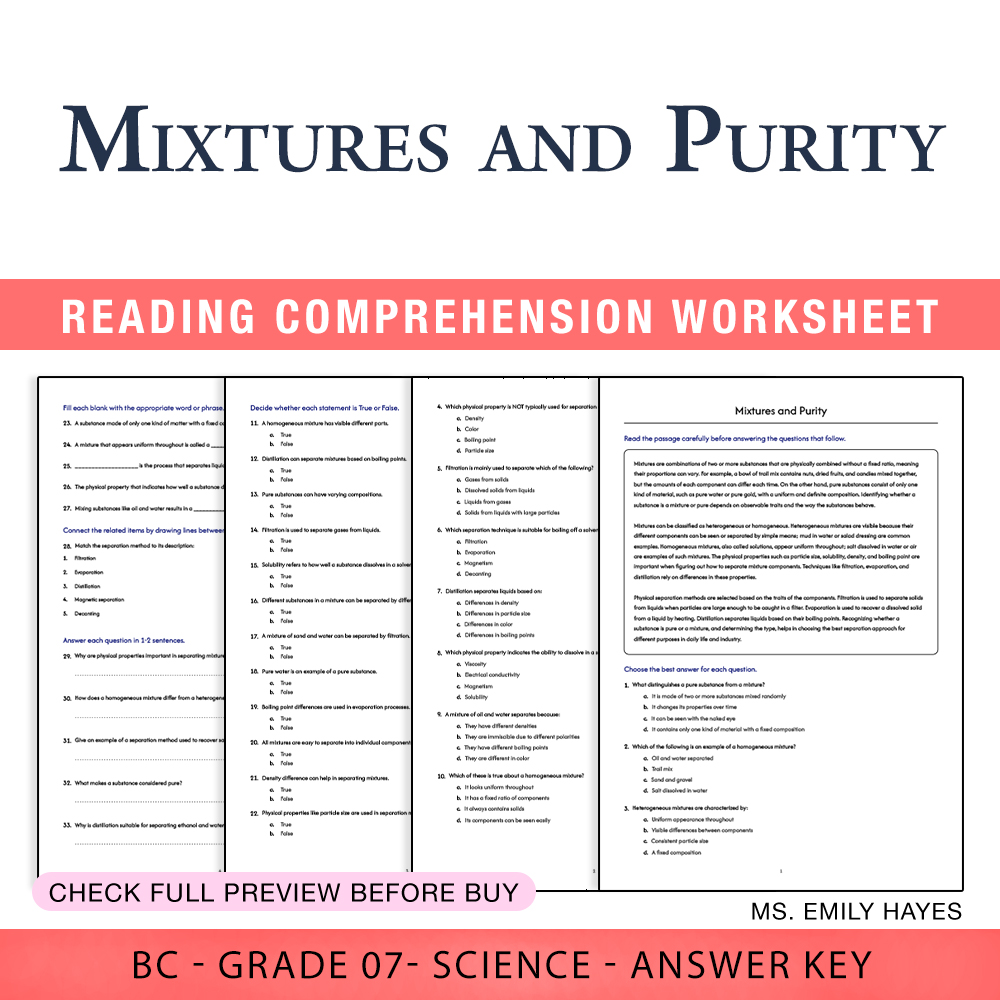
7th Grade Science | Mixtures and Purity Worksheet (PDF+ Answer Key)
Created byCopper Leaf ClassroomLearning Objectives
- Understand the difference between mixtures and pure substances.
- Identify different types of mixtures, including heterogeneous and homogeneous.
- Explain physical properties that facilitate separation methods such as filtration, evaporation, and distillation.
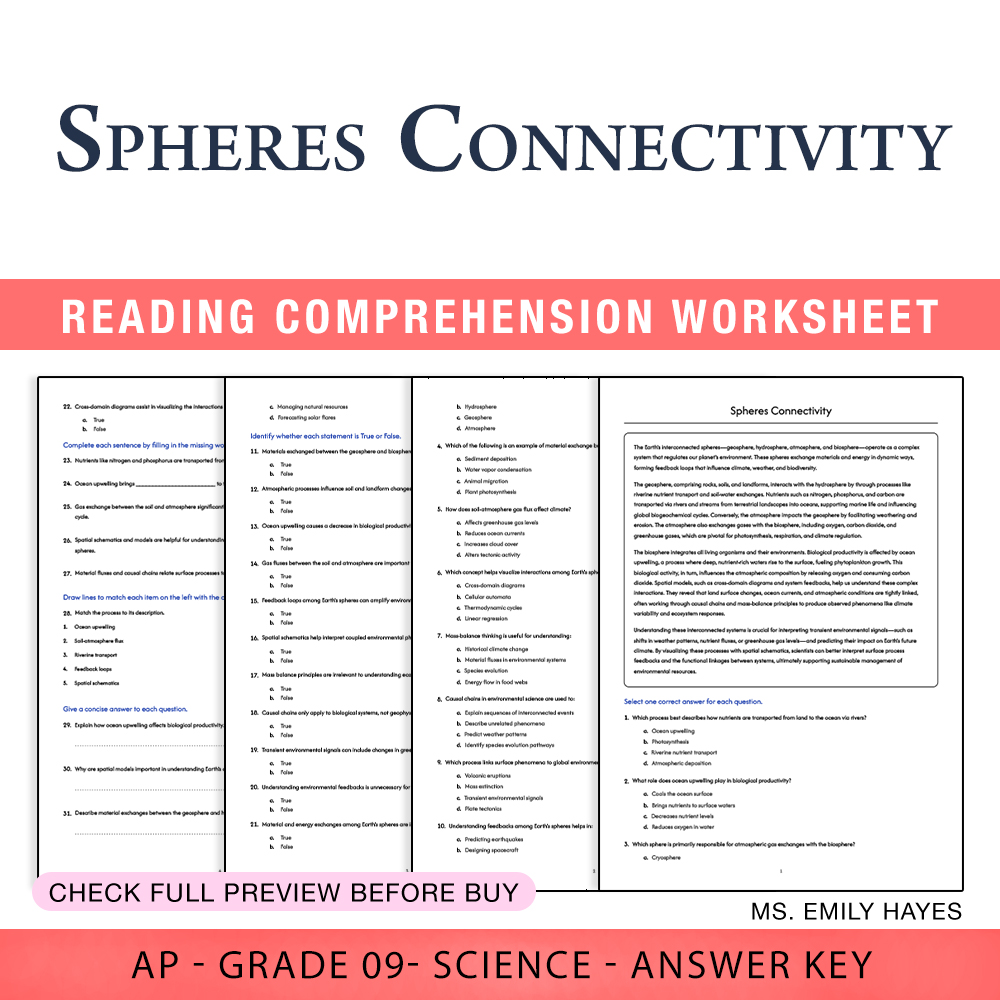
Grade 9 Science | Spheres Connectivity Worksheet (PDF+ Answer Key)
Created byCopper Leaf ClassroomLearning Objectives
- Describe interactions among geosphere, hydrosphere, atmosphere, and biosphere using models and diagrams.
- Analyze material and energy exchanges such as nutrient transport, gas fluxes, and ocean upwelling effects.
- Use spatial schematics, mass-balance thinking, and causal chains to interpret environmental phenomena.
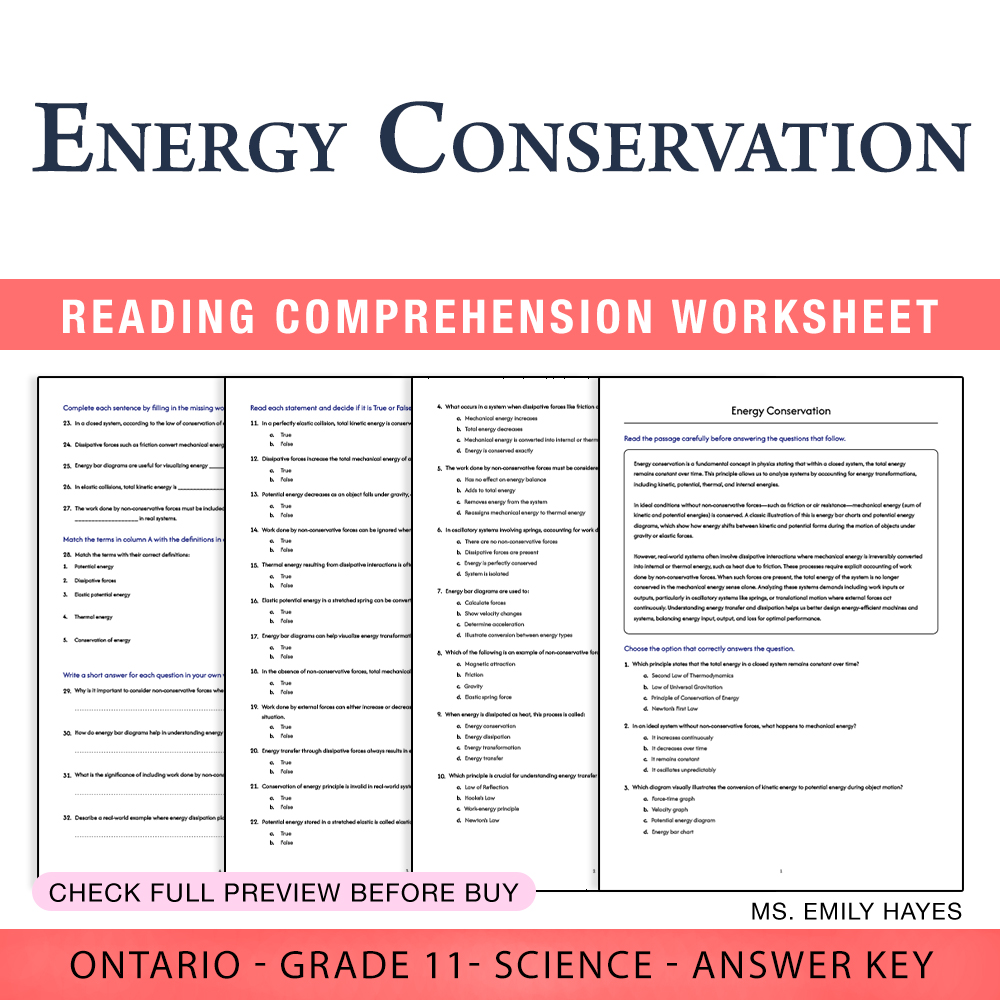
Grade 11 Science | Energy Conservation Worksheet (PDF + Answer Key)
Created byCopper Leaf ClassroomLearning Objectives
- Explain the principles of energy conservation within closed systems, including the constancy of total energy.
- Illustrate how mechanical energy is converted between kinetic and potential forms during motion in gravitational and elastic fields.
- Describe the impact of non-conservative forces and dissipative interactions on energy balances.
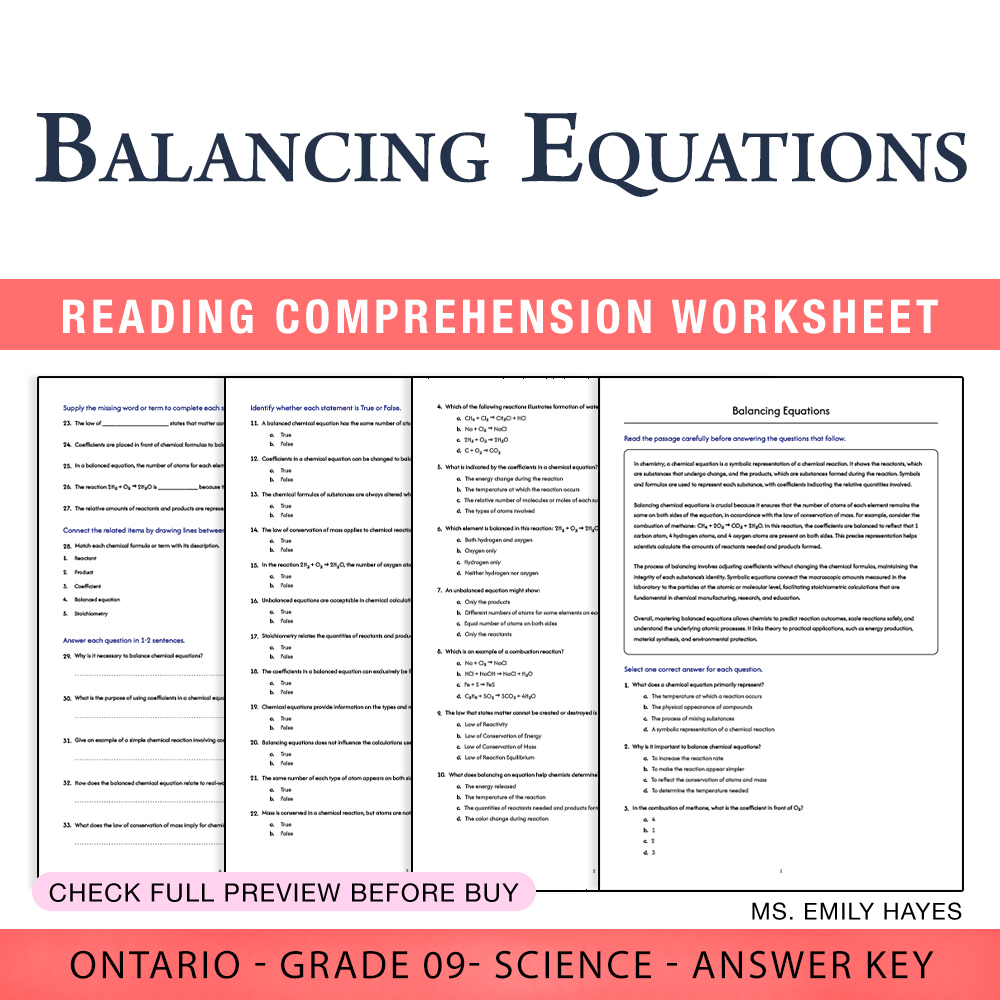
9th Grade Science | Balancing Equations Practice Worksheet (PDF + Answer Key)
Created byCopper Leaf ClassroomLearning Objectives
- Understand the importance of balancing chemical equations to reflect the law of conservation of mass.
- Recognize the symbols and notation used in chemical equations.
- Demonstrate the ability to balance simple chemical reactions such as combustion and formation of water.
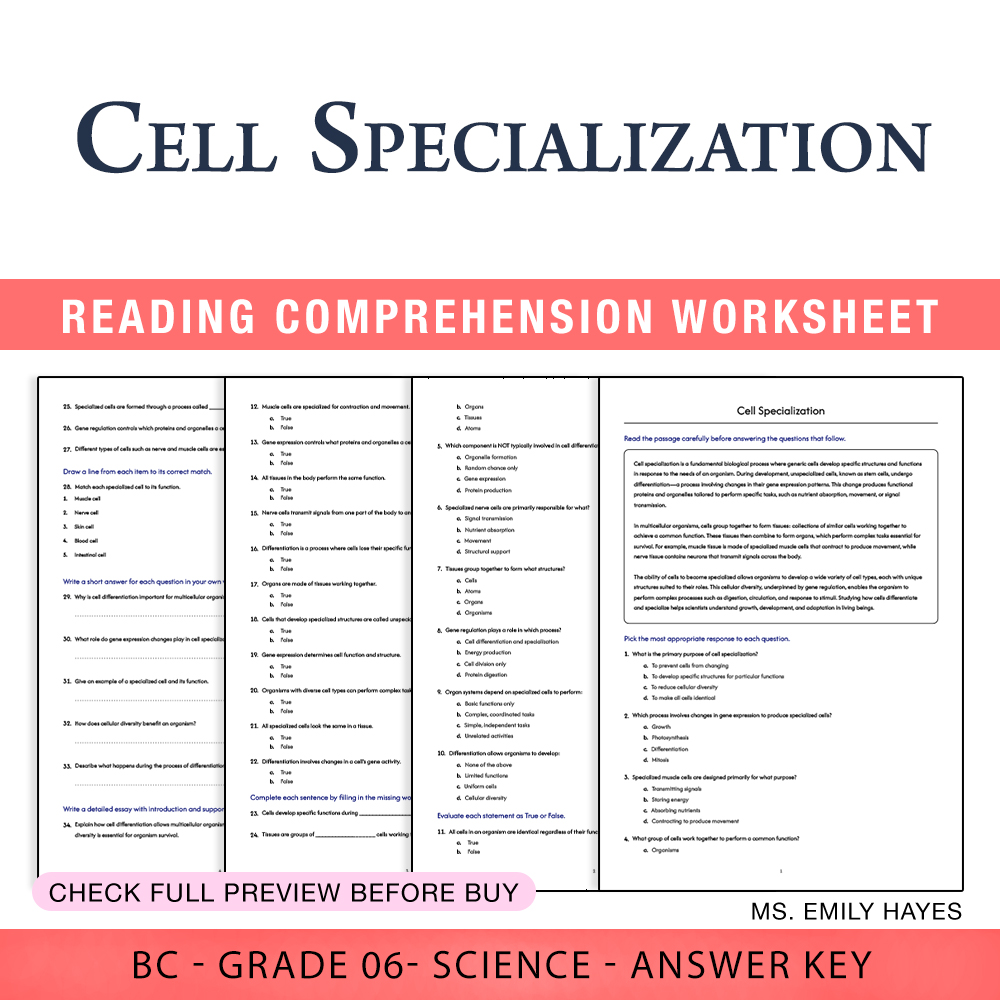
6th Grade Science | Cell Specialization Worksheet (PDF+ Answer Key)
Created byCopper Leaf ClassroomLearning Objectives
- Understand the concept of cell specialization and how cells develop specific structures for particular functions.
- Identify different types of specialized cells and their roles within tissues and organs.
- Describe the process of differentiation and how gene expression leads to functional cellular differences.
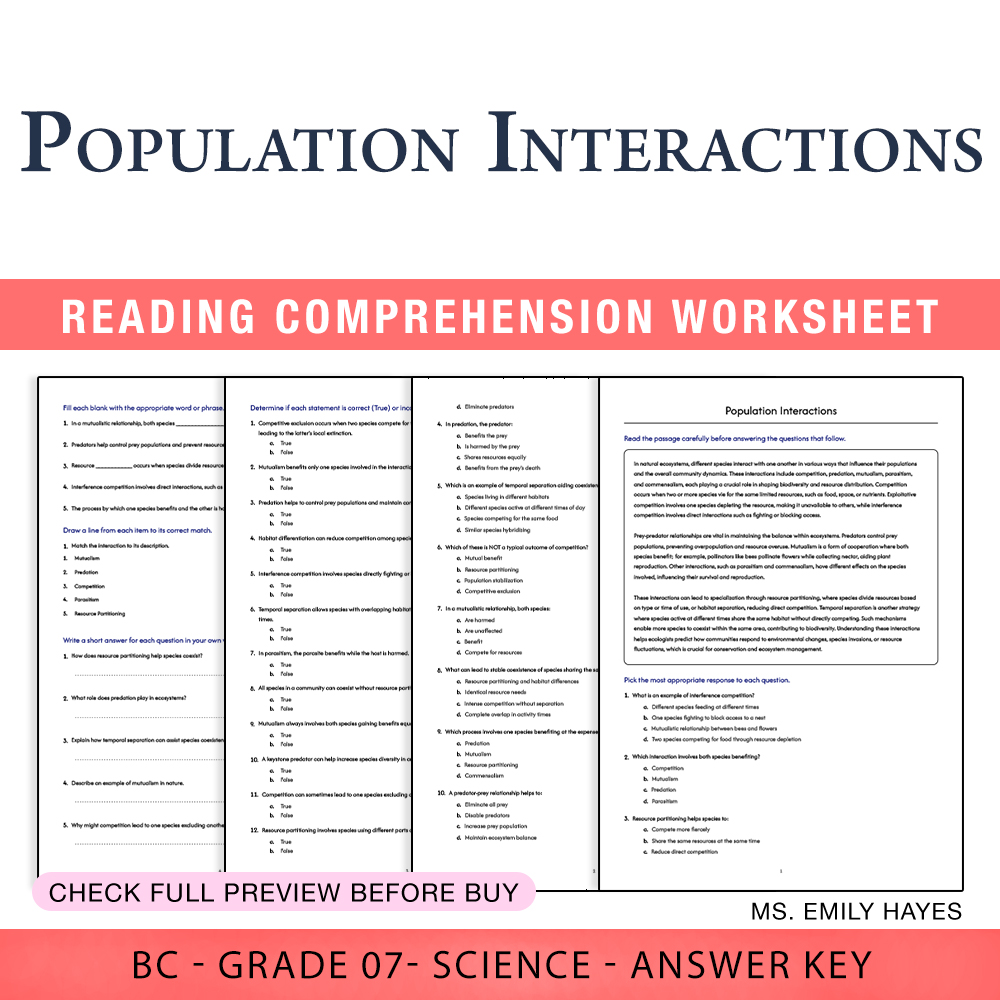
Grade 7 Science | Population Interactions Worksheet (PDF+ Answer Key)
Created byCopper Leaf ClassroomLearning Objectives
- Explain different types of interactions between populations such as competition, predation, and mutualism.
- Describe how resource partitioning, habitat differences, and temporal separation allow species to coexist.
- Analyze the effects of population interactions on community diversity and stability.
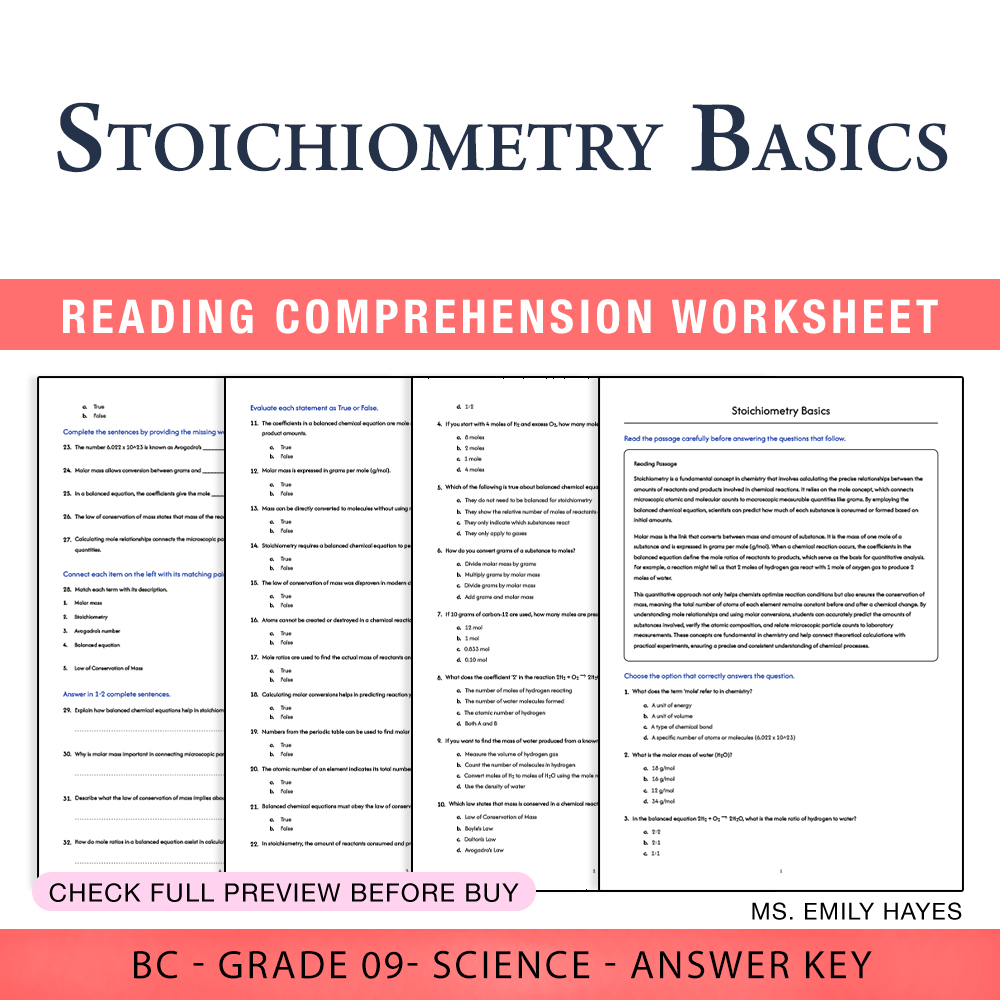
9th Grade Science | Stoichiometry Basics Worksheet (PDF+ Answer Key)
Created byCopper Leaf ClassroomLearning Objectives
- Understand how mole relationships connect reactants and products in chemical equations.
- Calculate masses and amounts of substances using molar mass and balanced equations.
- Interpret mole ratios and convert between grams and moles in chemical reactions.
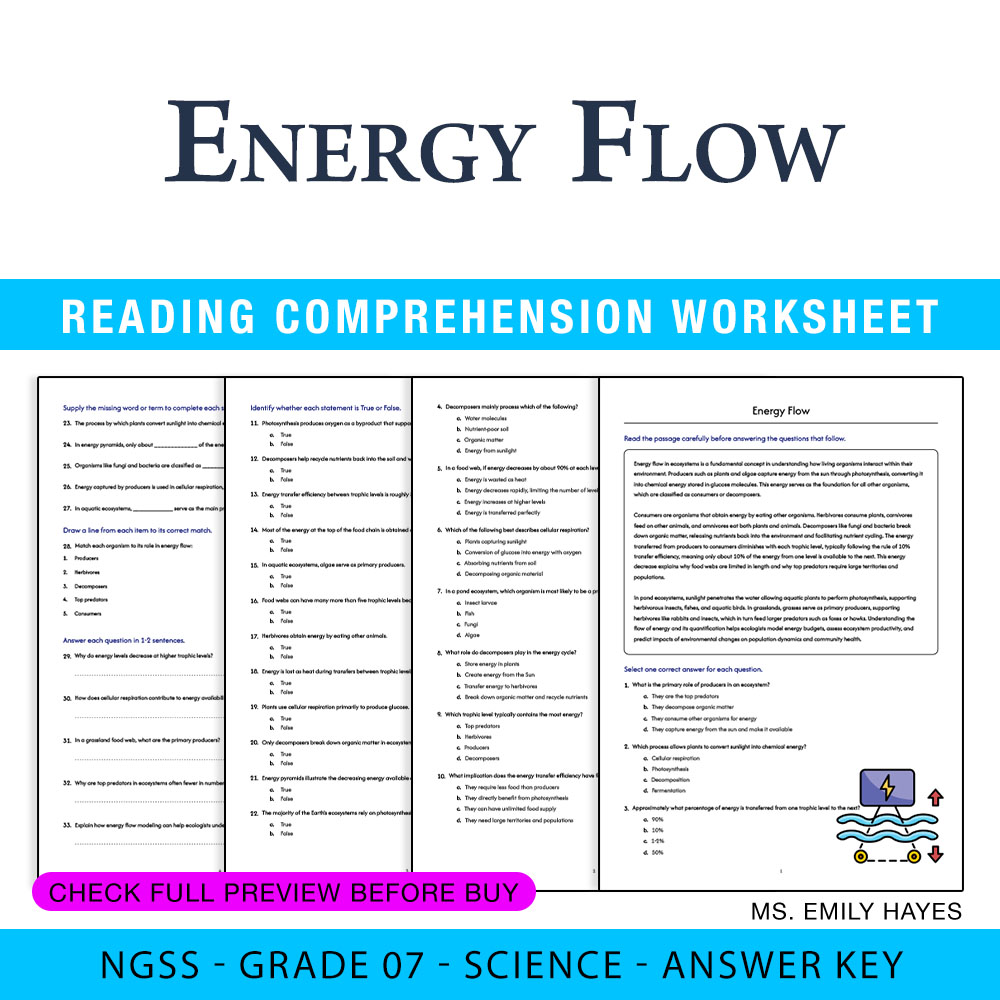
7th Grade Science | Energy Flow Worksheet (PDF +Answer Key)
Created byCopper Leaf ClassroomLearning Objectives
- Understand the transfer of energy through different trophic levels in ecosystems.
- Describe the roles of producers, consumers, and decomposers in energy pyramids and food webs.
- Explain how photosynthesis and cellular respiration contribute to energy transfer.
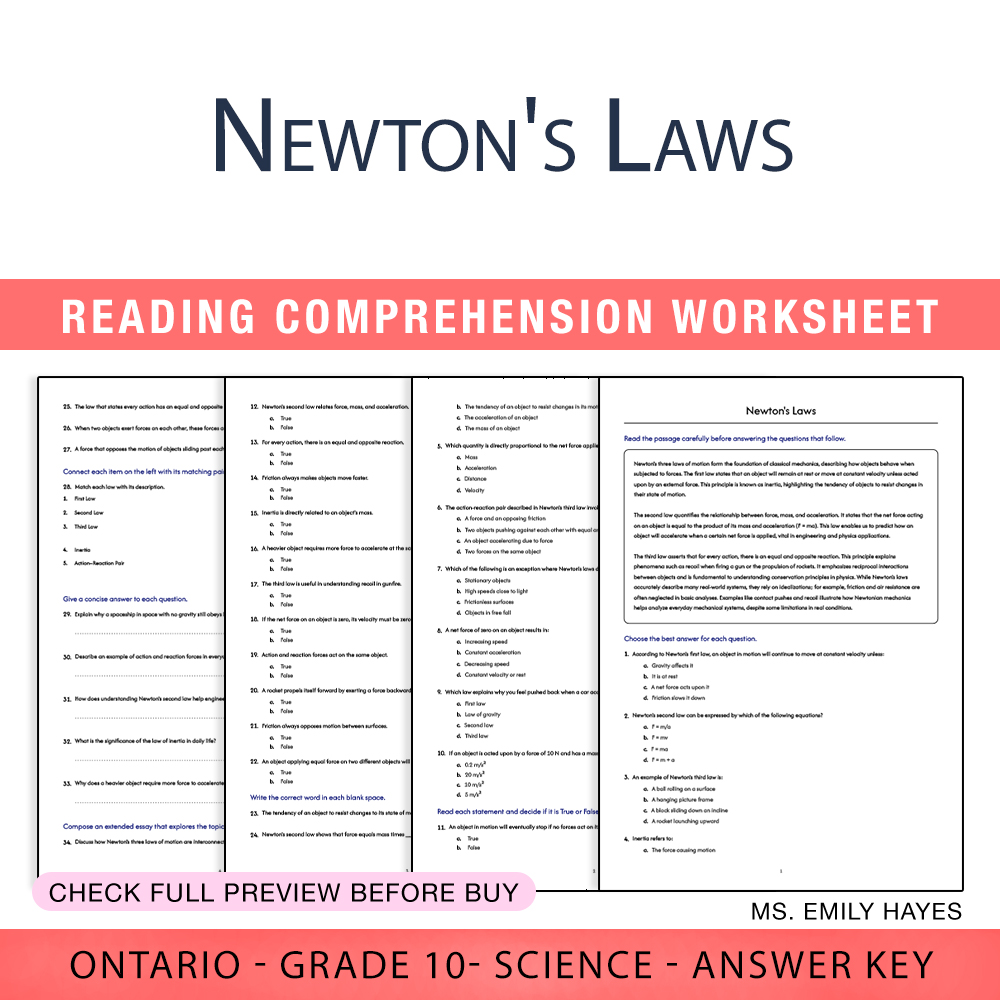
10th Grade Science | Newton's Laws Worksheet (PDF + Answer Key)
Created byCopper Leaf ClassroomLearning Objectives
- Understand and describe the three laws of motion articulated by Sir Isaac Newton.
- Connect concepts of inertia, net force, and reciprocal interactions in physical systems.
- Apply Newton's second law to predict the motion of objects based on force and mass.
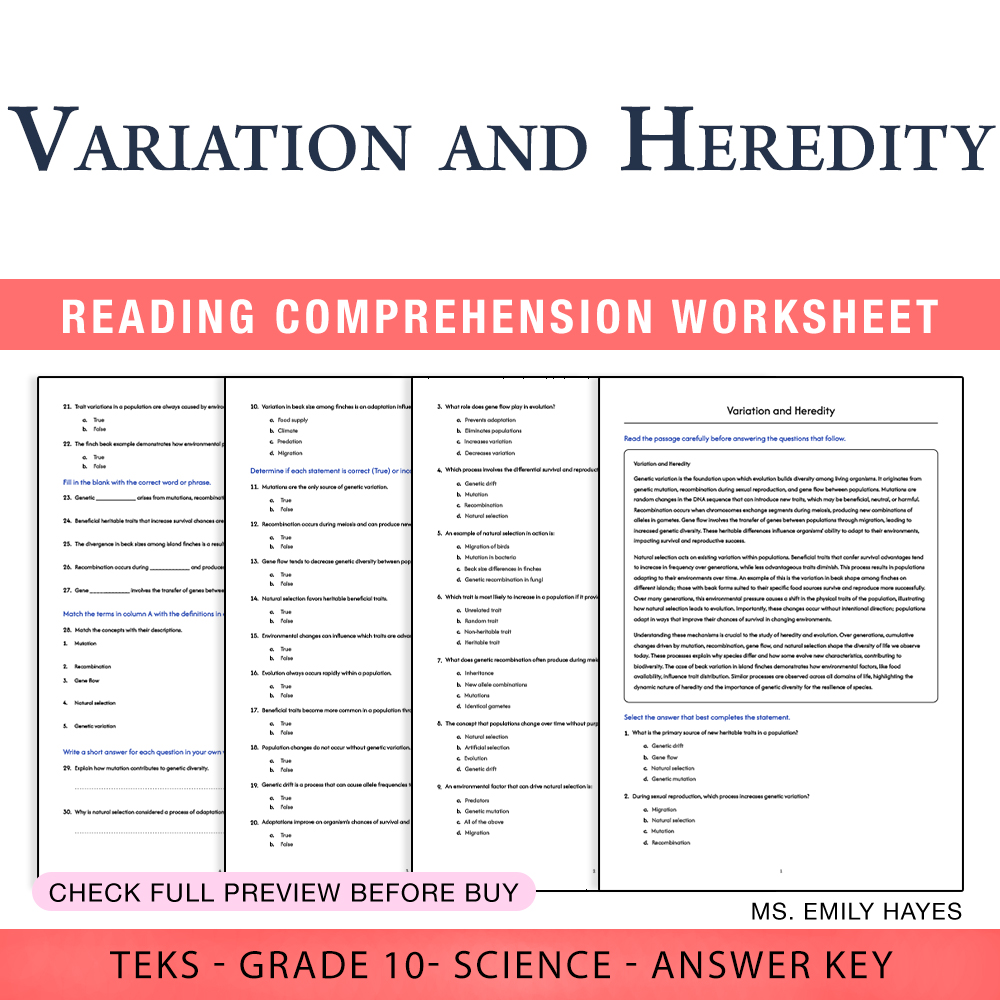
10th Grade Science | Variation and Heredity Worksheet (PDF+ Answer Key)
Created byCopper Leaf ClassroomLearning Objectives
- Understand how genetic variation arises through mutation, recombination, and gene flow.
- Explain how heritable traits influence survival and reproductive success in different environments.
- Describe natural selection and its role in changing allele frequencies over generations.
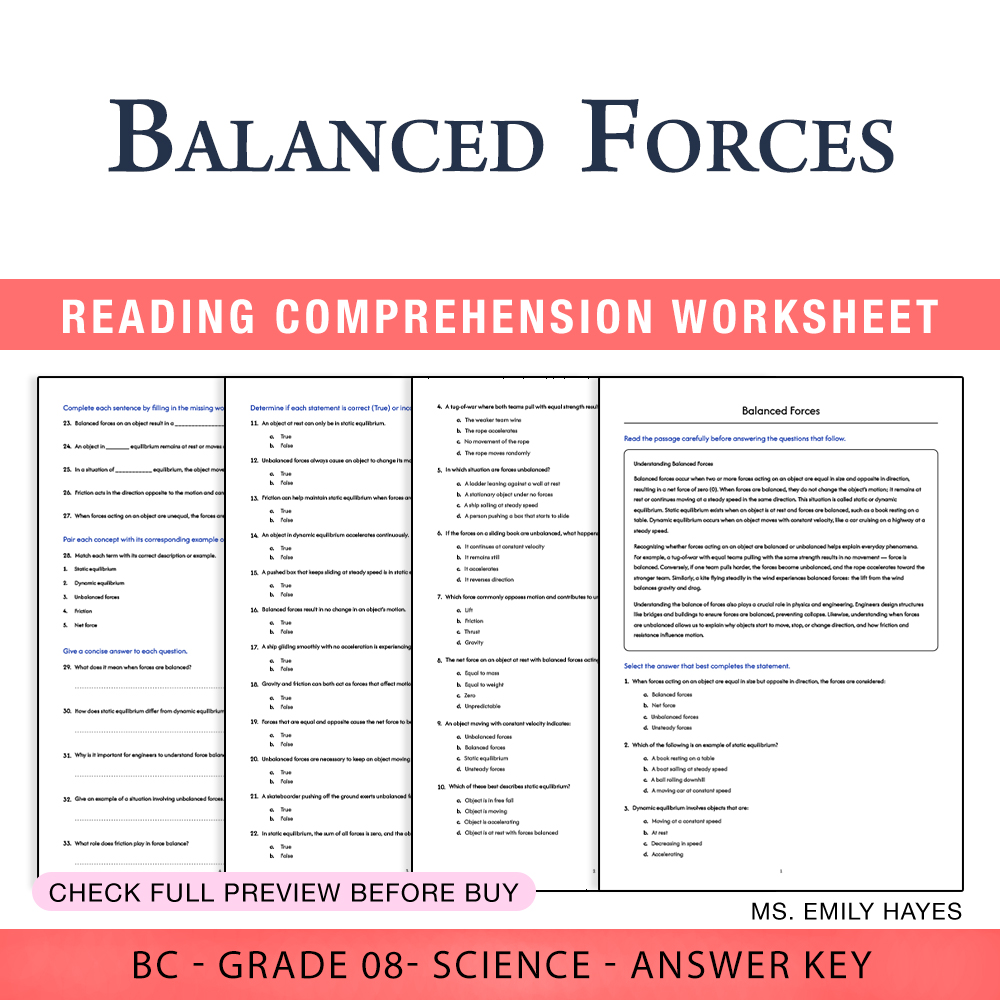
8th Grade Science | Balanced Forces Worksheet (PDF+ Answer Key)
Created byCopper Leaf ClassroomLearning Objectives
- Understand the concept of balanced and unbalanced forces and how they affect motion.
- Identify static and dynamic equilibrium situations.
- Apply the principles of balanced forces to real-world examples.
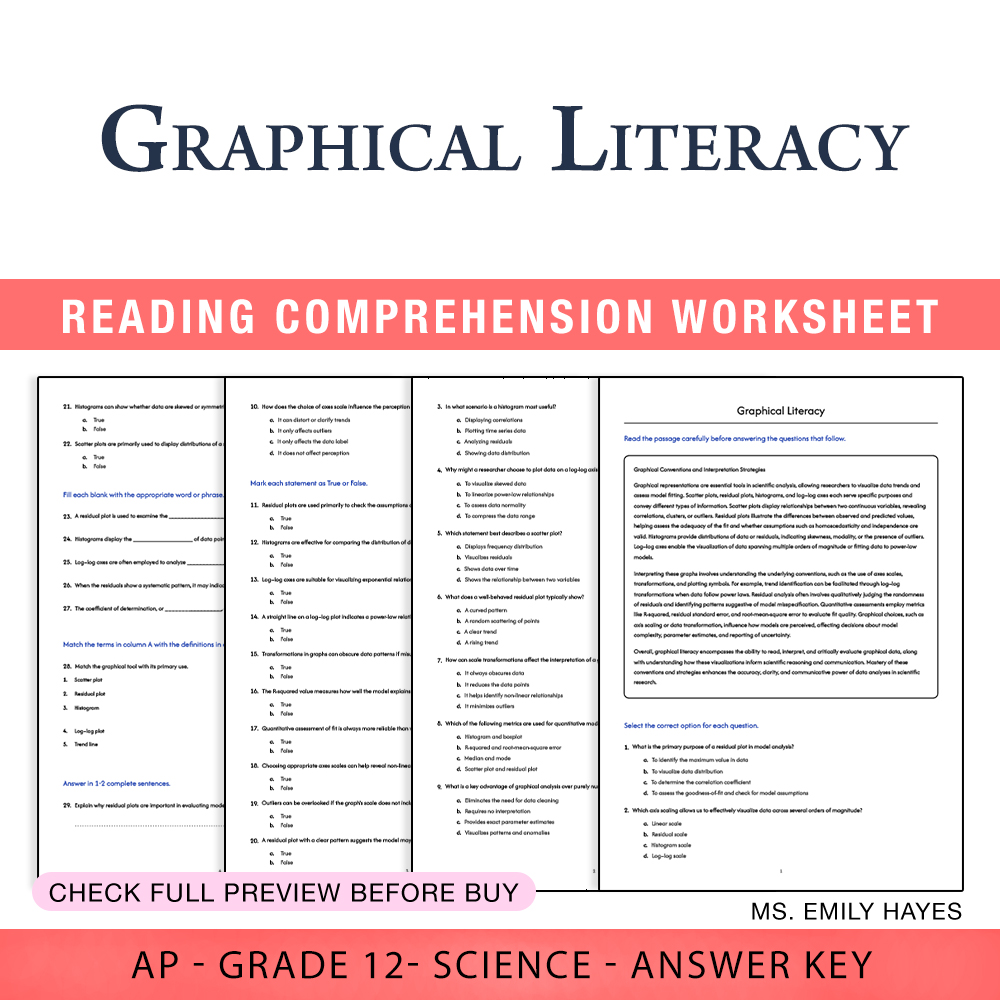
12th Grade Science | Graphical Literacy Worksheet (PDF+ Answer Key)
Created byCopper Leaf ClassroomLearning Objectives
- Understand the conventions used in graphical representations such as scatter plots, residual plots, histograms, and log–log axes.
- Interpret trends, scale choices, and transformation effects in various graphs.
- Assess the quality of model fits both qualitatively and quantitatively.
Grade 9 Science | Orbital Cycles Worksheet (PDF+ Answer Key)
Created byCopper Leaf ClassroomLearning Objectives
- Explain how Earth's axial tilt and orbital eccentricity influence seasons and climate cycles.
- Describe the variations in lunar phases and their underlying synodic cycle.
- Analyze how gravitational interactions among Earth, Moon, and Sun produce tidal patterns.
Grade 11 Science | Impulse Applications Worksheet (PDF+ Answer Key)
Created byCopper Leaf ClassroomLearning Objectives
- Explain the impulse–momentum relationship and how it applies to crash-avoidance systems.
- Design and evaluate crash-protection devices that minimize force during collisions.
- Analyze force–time data and material deformation parameters to meet safety constraints.
Grade 9 Science | Reaction Categories Worksheet (PDF+ Answer Key)
Created byCopper Leaf ClassroomLearning Objectives
- Identify and classify different types of chemical reactions based on reactant patterns and products.
- Understand the processes and characteristics of synthesis, decomposition, displacement, and combustion reactions.
- Predict products of various reaction types using chemical knowledge and symbolic representation.
11th Grade Science | Mole Concept Worksheet (PDF + Answer Key)
Created byCopper Leaf ClassroomLearning Objectives
- Explain the fundamental principles of the mole concept and its significance in chemistry.
- Convert between mass, number of particles, and moles using molar mass and Avogadro's number.
- Apply mole calculations to determine quantities of reactants and products in chemical reactions.
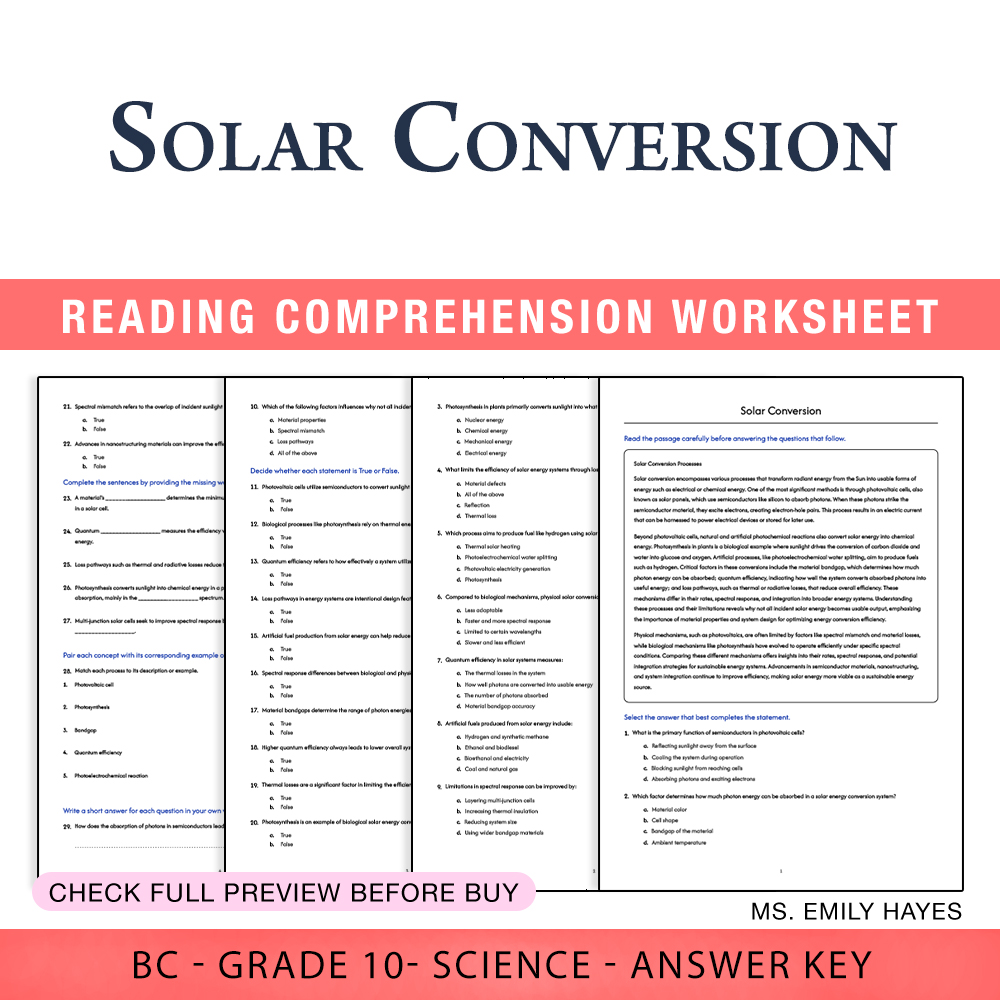
Grade 10 Science | Solar Conversion Worksheet (PDF + Answer Key)
Created byCopper Leaf ClassroomLearning Objectives
- Understand the processes involved in solar energy transformation into electrical and chemical energy.
- Describe how semiconductors absorb photons and generate electrical currents.
- Explain the role of bandgaps, quantum efficiency, and loss pathways in energy conversion.
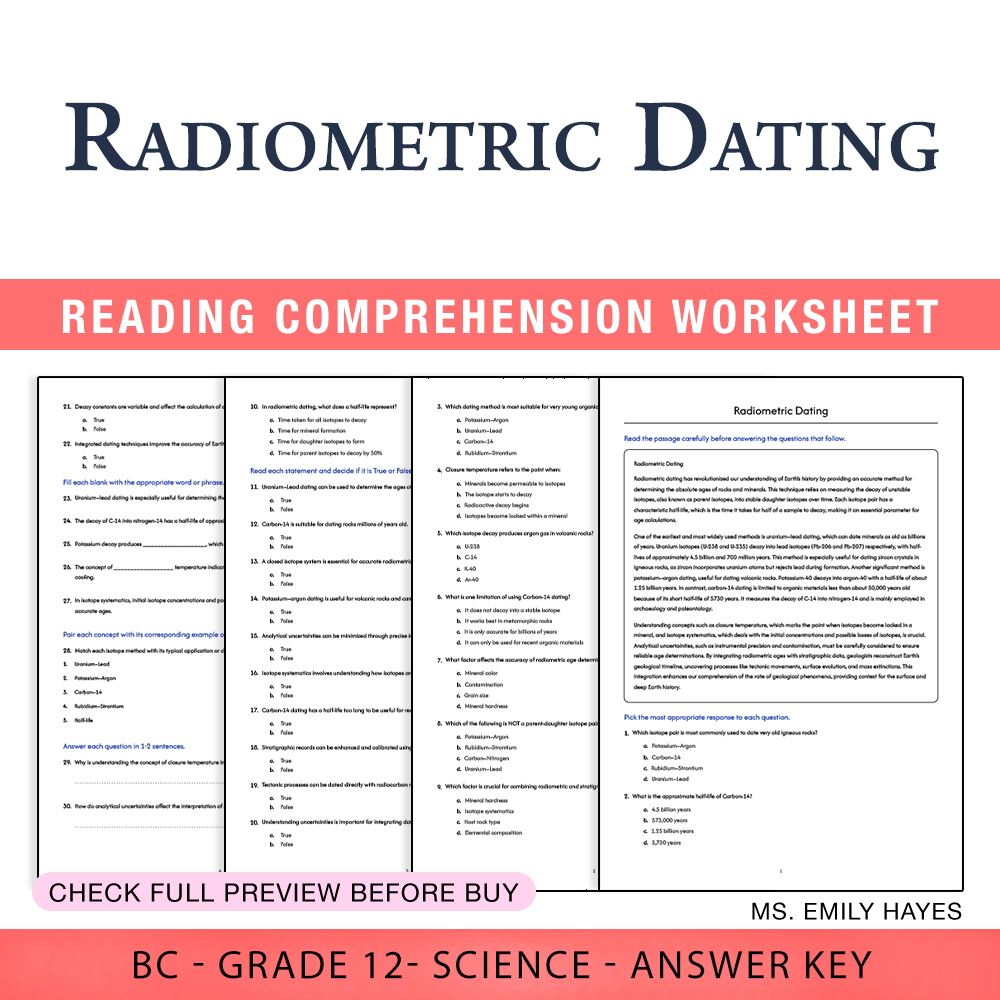
12th Grade Science | Radiometric Dating Worksheet (PDF + Answer Key)
Created byCopper Leaf ClassroomLearning Objectives
- Understand the principles of radiometric dating and isotope decay.
- Identify different radiometric methods and their applications in geology.
- Explain how isotopic systematics and uncertainties impact age calculations.
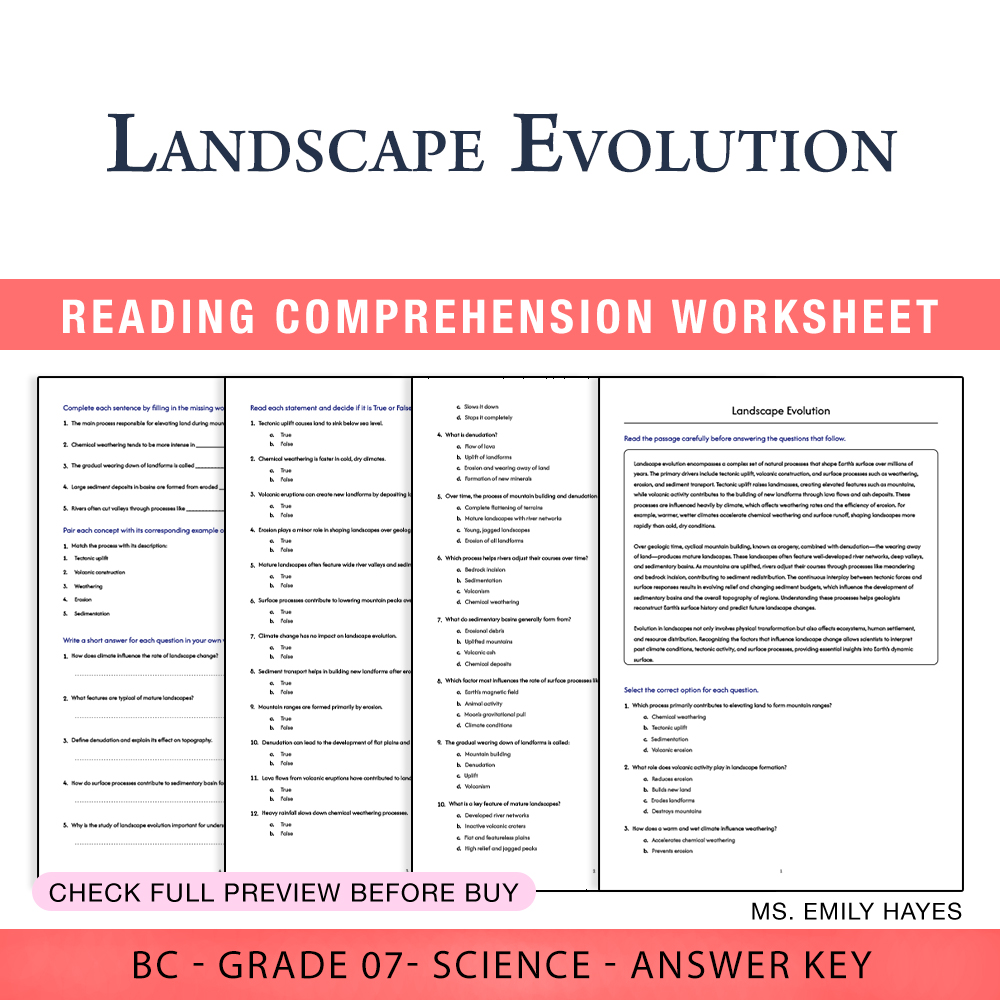
7th Grade Science | Landscape Evolution Worksheet (PDF+ Answer Key)
Created byCopper Leaf ClassroomLearning Objectives
- Describe the processes that contribute to landscape evolution, including tectonic uplift, volcanic activity, and surface processes.
- Explain how rates of erosion and uplift affect topography over geological time.
- Analyze the influence of climate change on weathering, transport, and landscape shape.
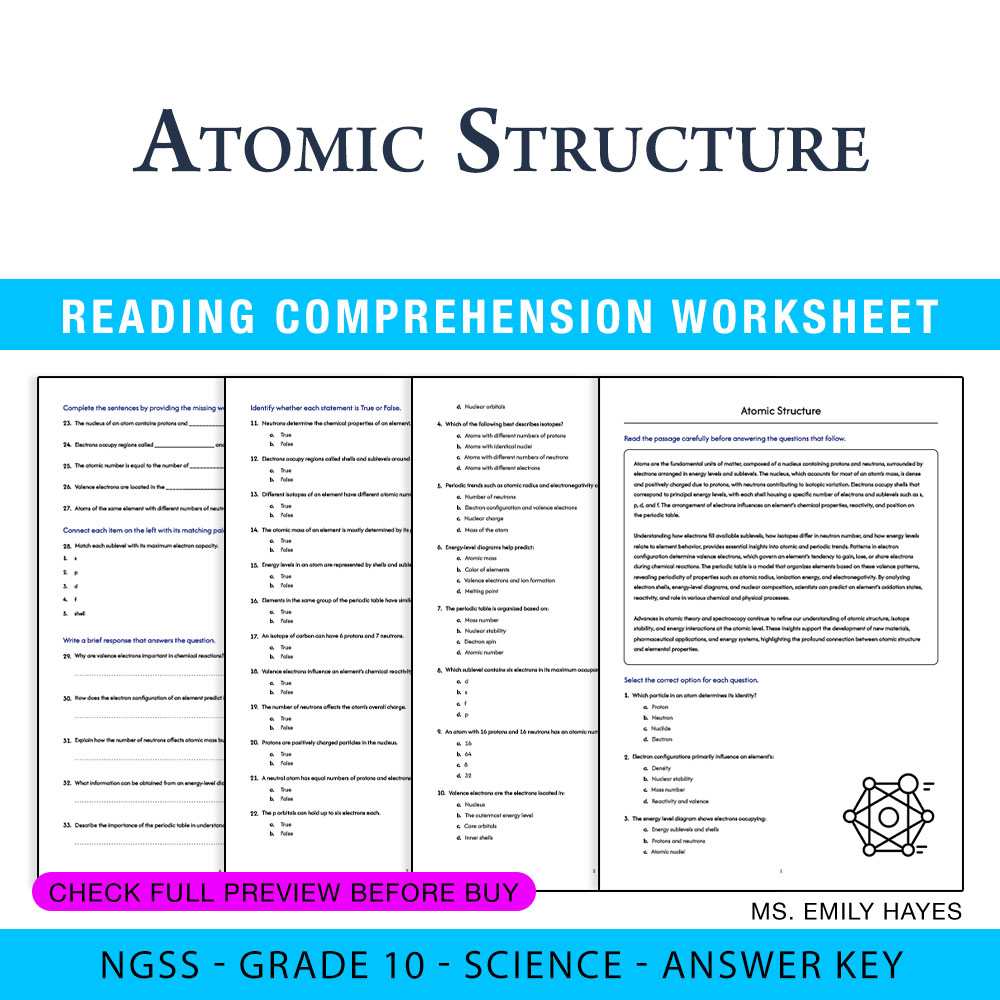
10th Grade Science | Atomic Structure Worksheet (PDF+ Answer Key)
Created byCopper Leaf ClassroomLearning Objectives
- Describe the structure of atomic nuclei and electron configurations.
- Explain periodic trends based on electron arrangements and isotope compositions.
- Interpret energy-level diagrams, sublevel occupancy, and periodicity for elemental behavior.
Browse more categories
About Science Worksheets
Find Science worksheets spanning core skills, practice, and review. All 42,859 resources are instant PDF downloads for the classroom or home.
Every worksheet on MyTeachingSheets is created by independent teacher-authors and reviewed before publication. All resources download as printable PDFs for classroom, homework, or at-home practice, and many include answer keys. Preview any worksheet free before buying.