
Science Worksheets
42,859 subject resources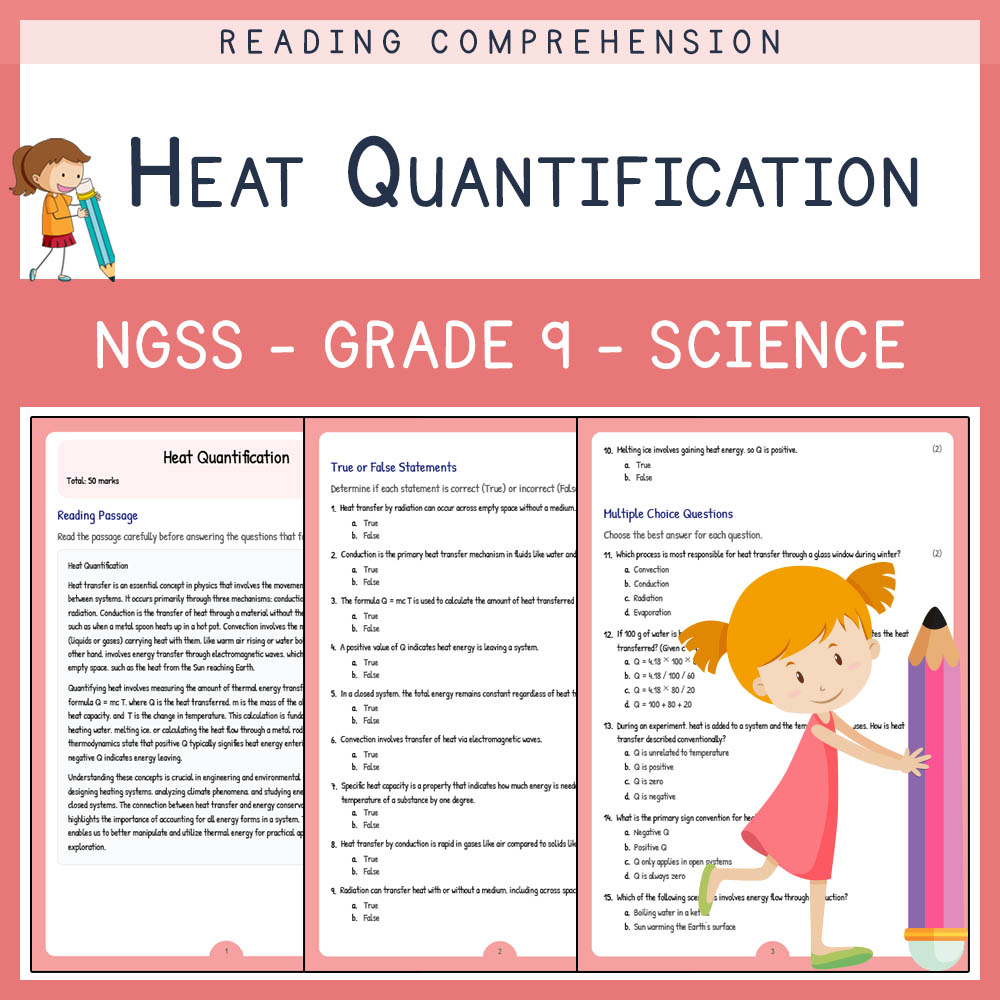
Grade 9 Science | Heat Quantification Worksheet PDF with Answer Key (NGSS Aligned)
 Created byLumora Learning
Learning Objectives
- Understand and explain the concepts of heat transfer mechanisms: conduction, convection, and radiation.
- Calculate thermal energy transfer using specific heat capacity, mass, and temperature change in different scenarios.
- Interpret sign conventions related to heat flow and energy changes in isolated and open systems.
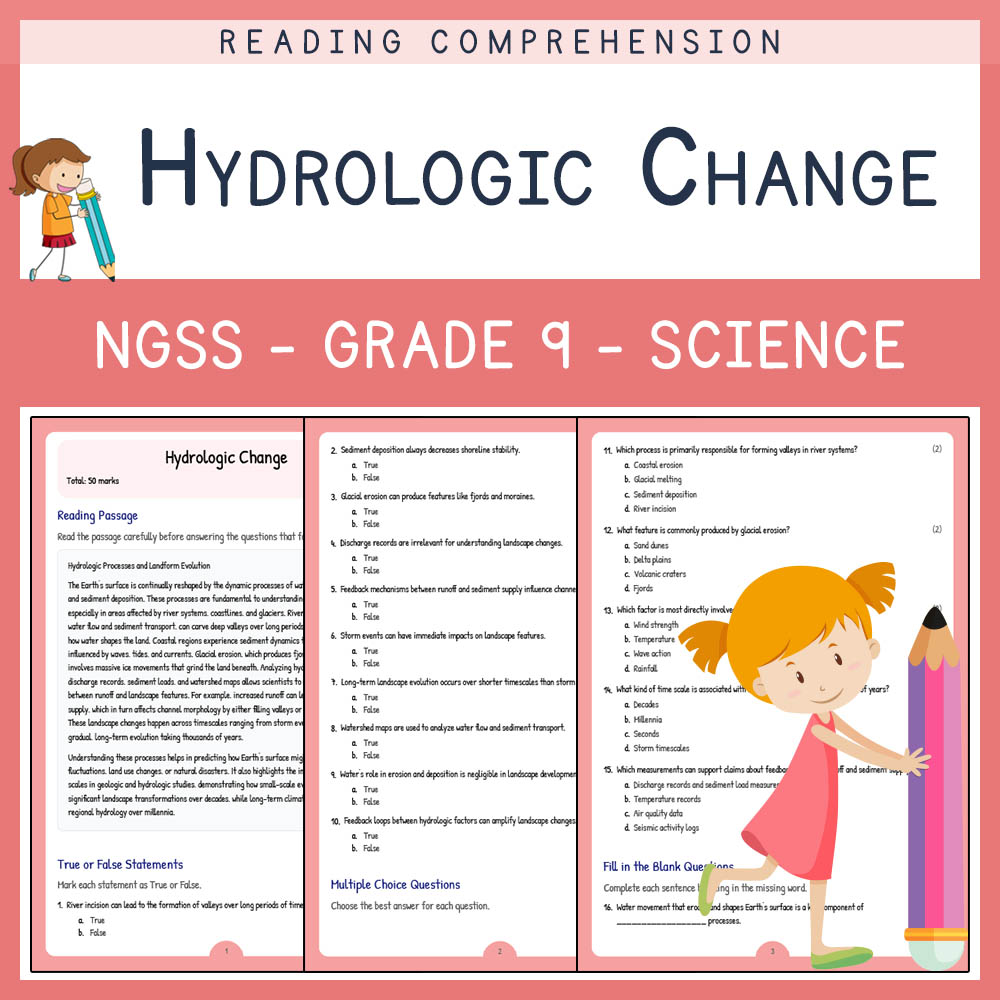
Grade 9 Science | Hydrologic Change Worksheet & Answer Key (NGSS Aligned)
Created byLumora LearningLearning Objectives
- Understand the processes of erosion, transport, and deposition in shaping Earth's surface.
- Interpret hydrologic data such as discharge records and sediment load measurements.
- Analyze the feedback mechanisms between runoff, sediment supply, and channel morphology.
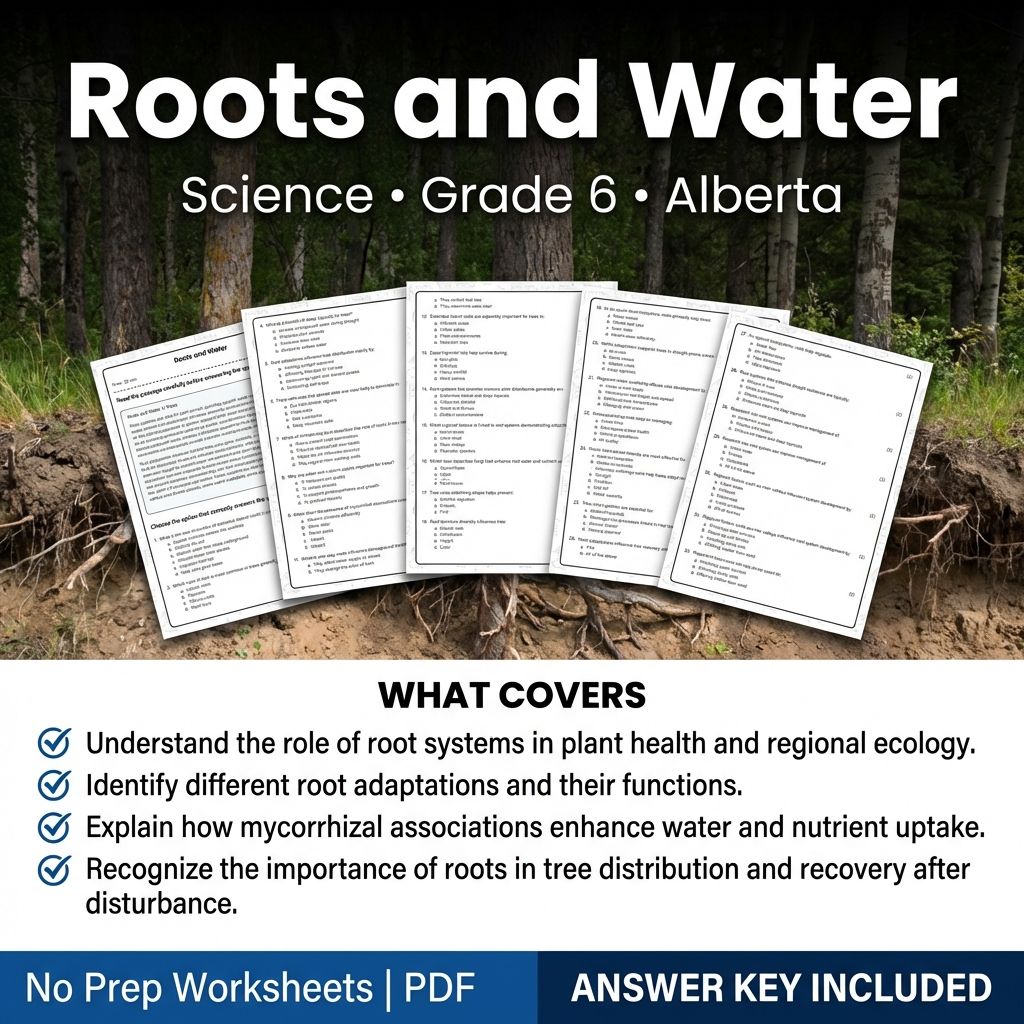
Roots and Water Grade 6 Science Worksheet | Alberta Standards
 Created byCoral Reef Learning
Learning Objectives
- Understand the role of root systems in plant health and regional ecology.
- Identify different root adaptations and their functions.
- Explain how mycorrhizal associations enhance water and nutrient uptake.
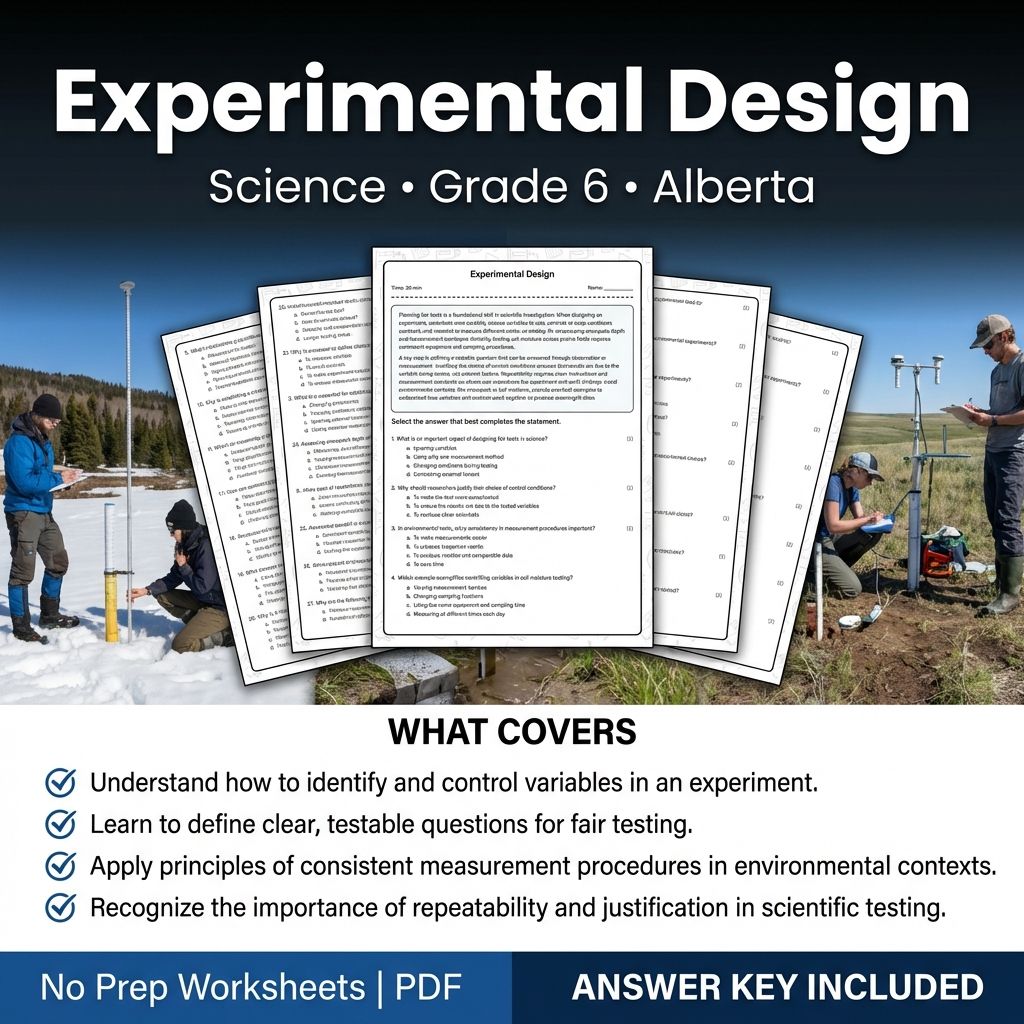
Grade 6 Science Worksheet on Experimental Design | Alberta Standard
Created byCoral Reef LearningLearning Objectives
- Understand how to identify and control variables in an experiment.
- Learn to define clear, testable questions for fair testing.
- Apply principles of consistent measurement procedures in environmental contexts.
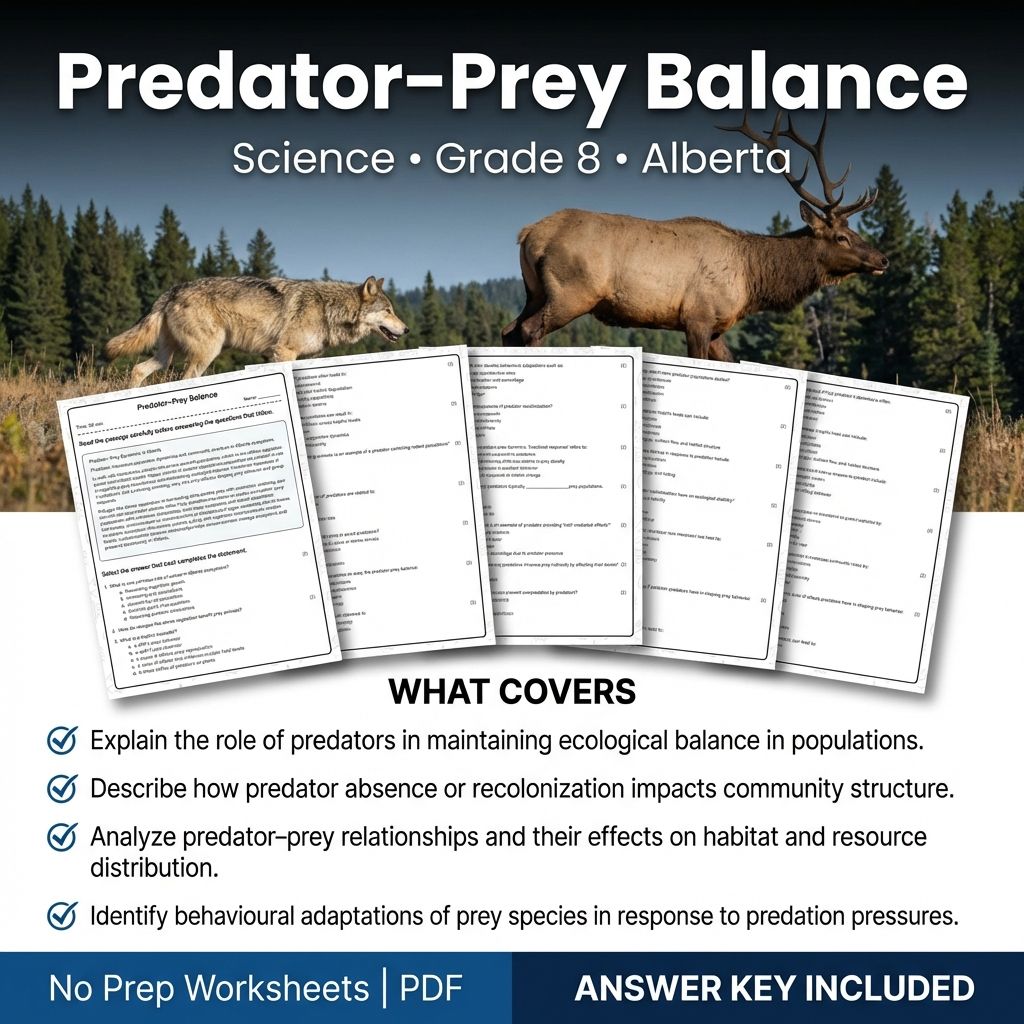
Predator–Prey Balance Worksheet | Grade 8 Science | Alberta Standards
Created byCoral Reef LearningLearning Objectives
- Explain the role of predators in maintaining ecological balance in populations.
- Describe how predator absence or recolonization impacts community structure.
- Analyze predator–prey relationships and their effects on habitat and resource distribution.
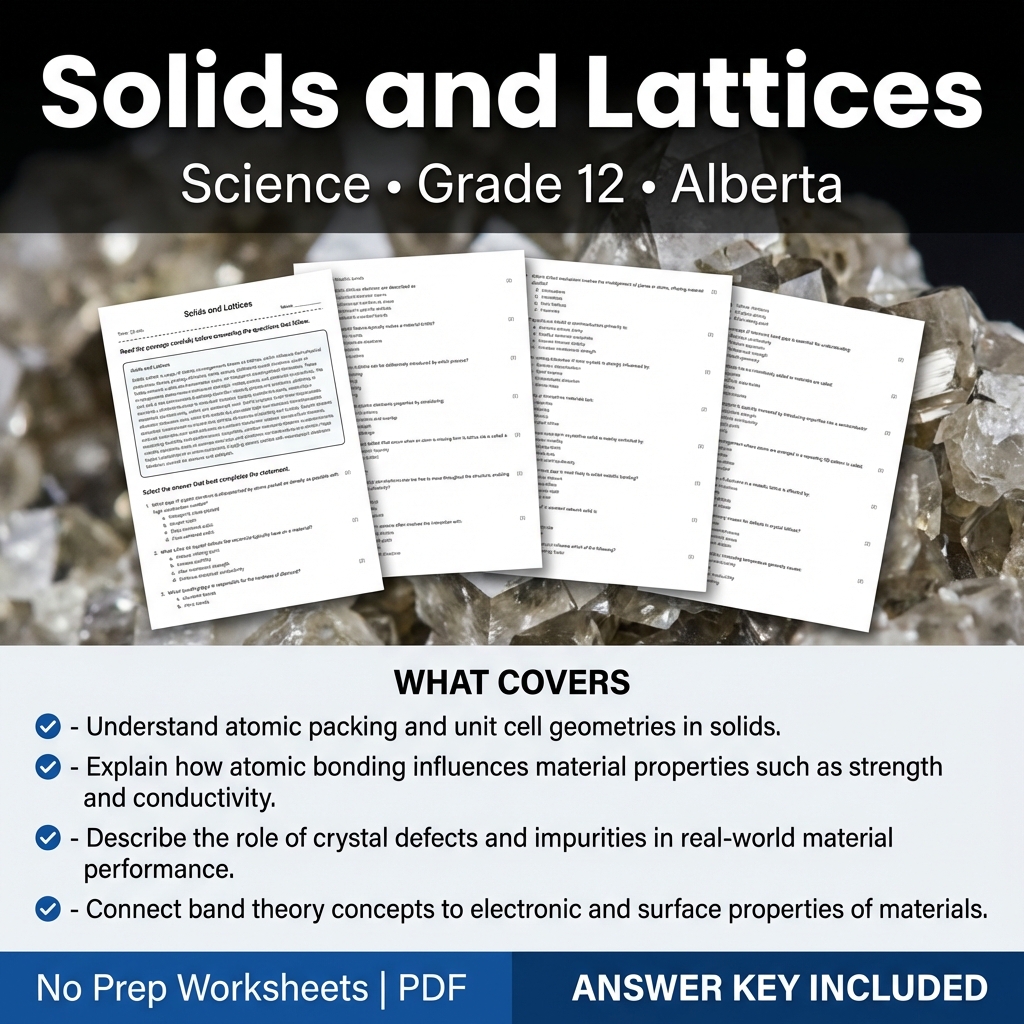
Grade 12 Science Worksheet on Solids and Lattices | Alberta Standards
Created byCoral Reef LearningLearning Objectives
- Understand atomic packing and unit cell geometries in solids.
- Explain how atomic bonding influences material properties such as strength and conductivity.
- Describe the role of crystal defects and impurities in real-world material performance.
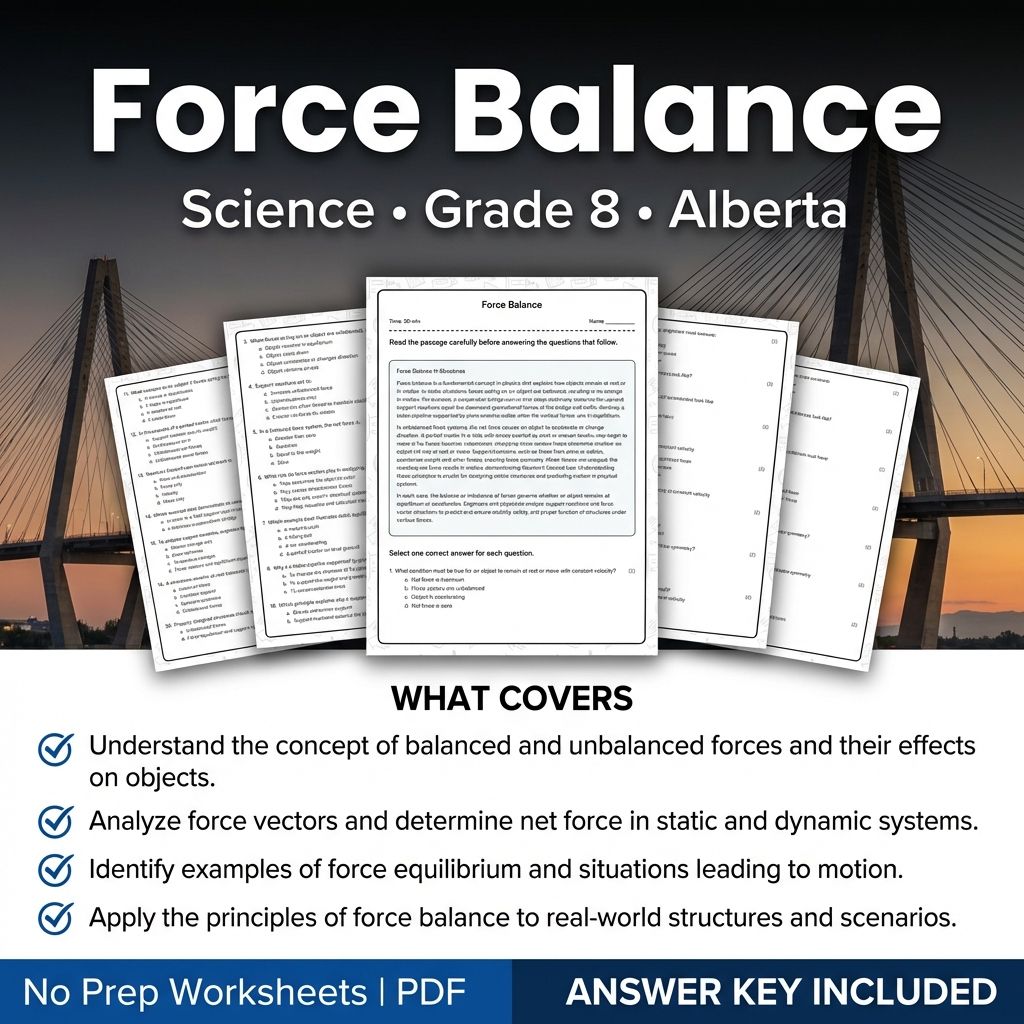
Force Balance Worksheet | Grade 8 Science Alberta Standards
Created byCoral Reef LearningLearning Objectives
- Understand the concept of balanced and unbalanced forces and their effects on objects.
- Analyze force vectors and determine net force in static and dynamic systems.
- Identify examples of force equilibrium and situations leading to motion.
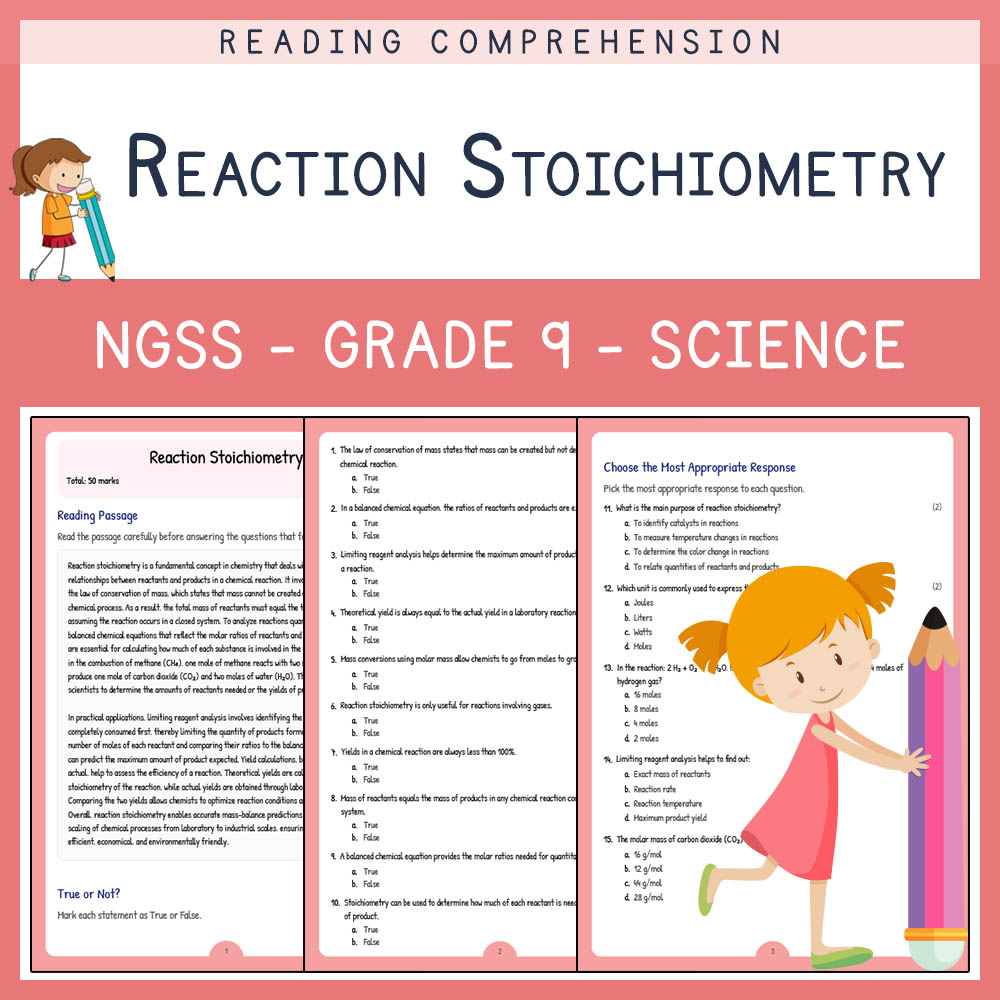
Grade 9 Science | Reaction Stoichiometry Worksheet PDF with Answer Key
Created byLumora LearningLearning Objectives
- Understand the concept of molar relationships in chemical reactions.
- Apply conservation of mass to balanced chemical equations.
- Calculate reactant and product quantities using molar mass conversions.
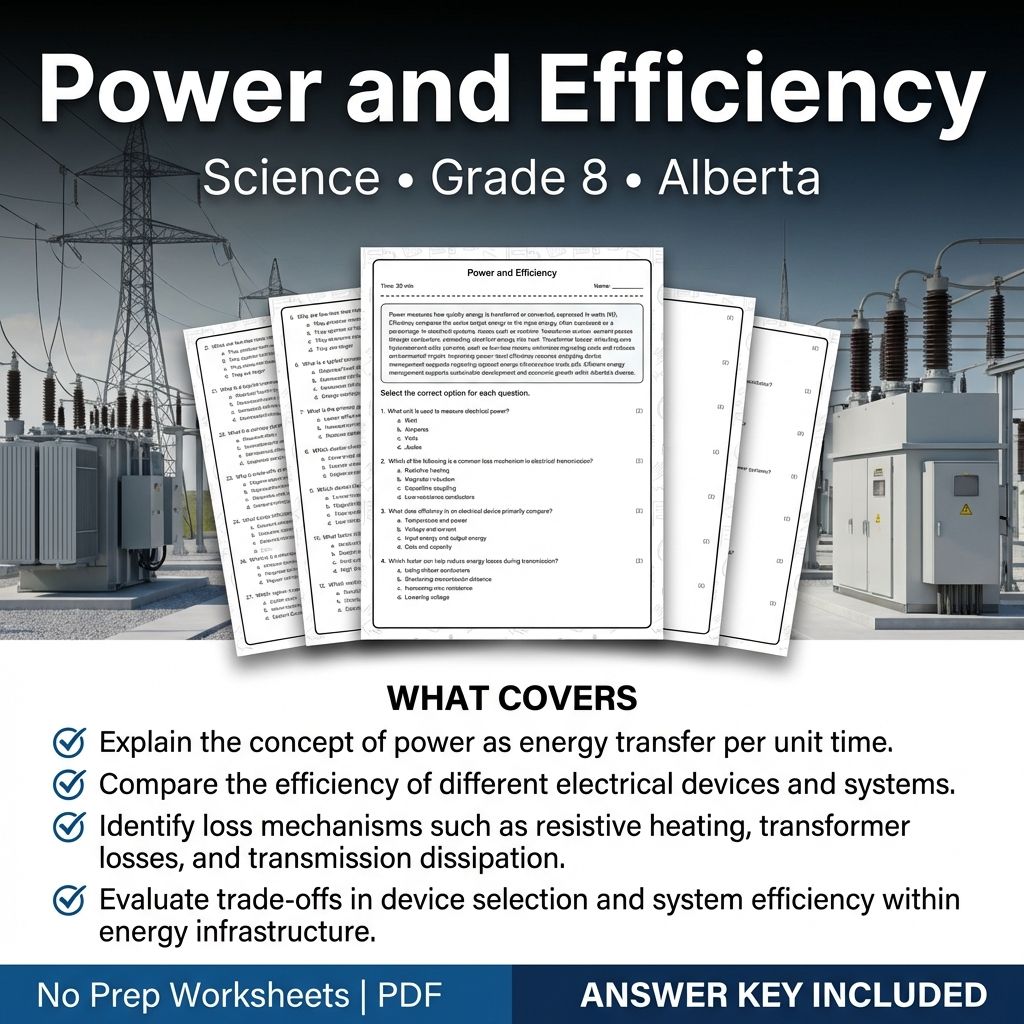
Power and Efficiency Worksheet for Grade 8 Science | Alberta Standards
Created byCoral Reef LearningLearning Objectives
- Explain the concept of power as energy transfer per unit time.
- Compare the efficiency of different electrical devices and systems.
- Identify loss mechanisms such as resistive heating, transformer losses, and transmission dissipation.
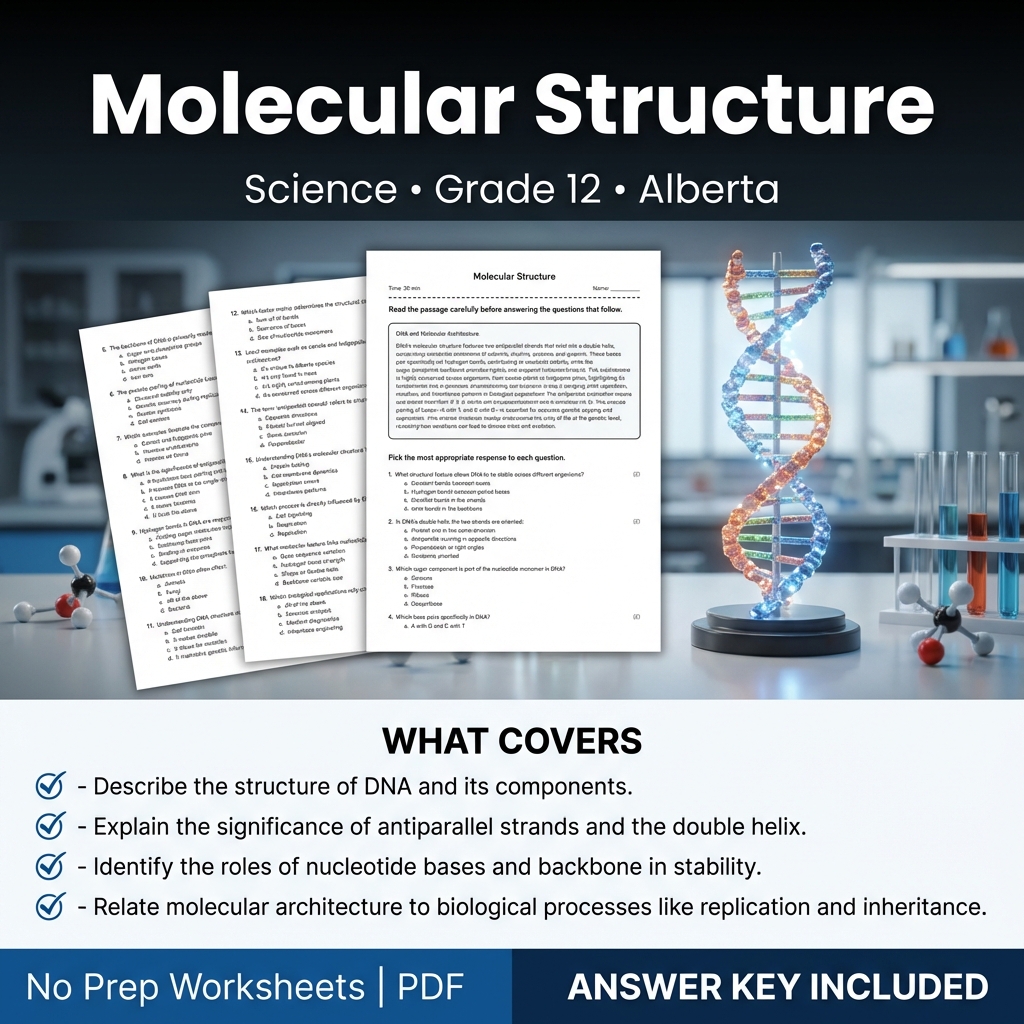
Molecular Structure Worksheet | Science Assessment | Alberta Grade 12
Created byCoral Reef LearningLearning Objectives
- Describe the structure of DNA and its components.
- Explain the significance of antiparallel strands and the double helix.
- Identify the roles of nucleotide bases and backbone in stability.
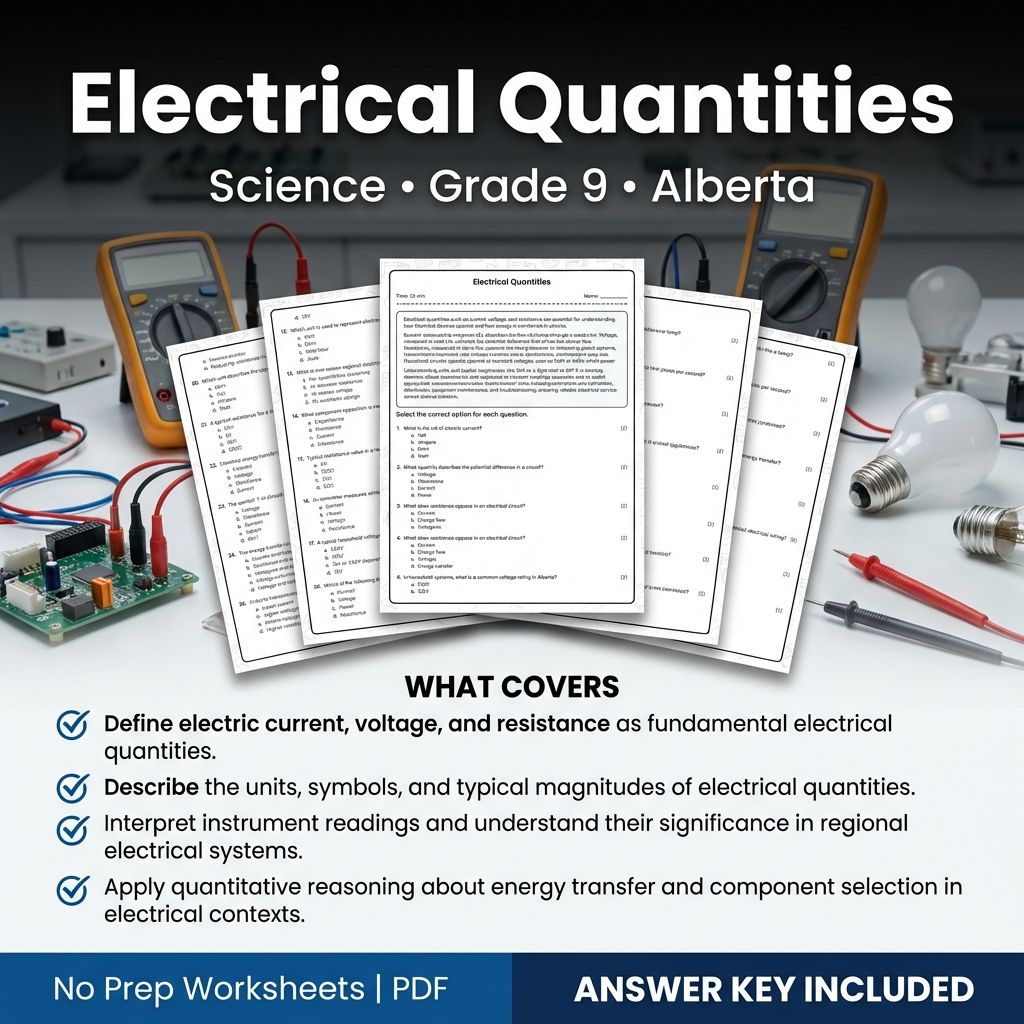
Electrical Quantities Worksheet - Science Grade 9 | Alberta Standards
Created byCoral Reef LearningLearning Objectives
- Define electric current, voltage, and resistance as fundamental electrical quantities.
- Describe the units, symbols, and typical magnitudes of electrical quantities.
- Interpret instrument readings and understand their significance in regional electrical systems.
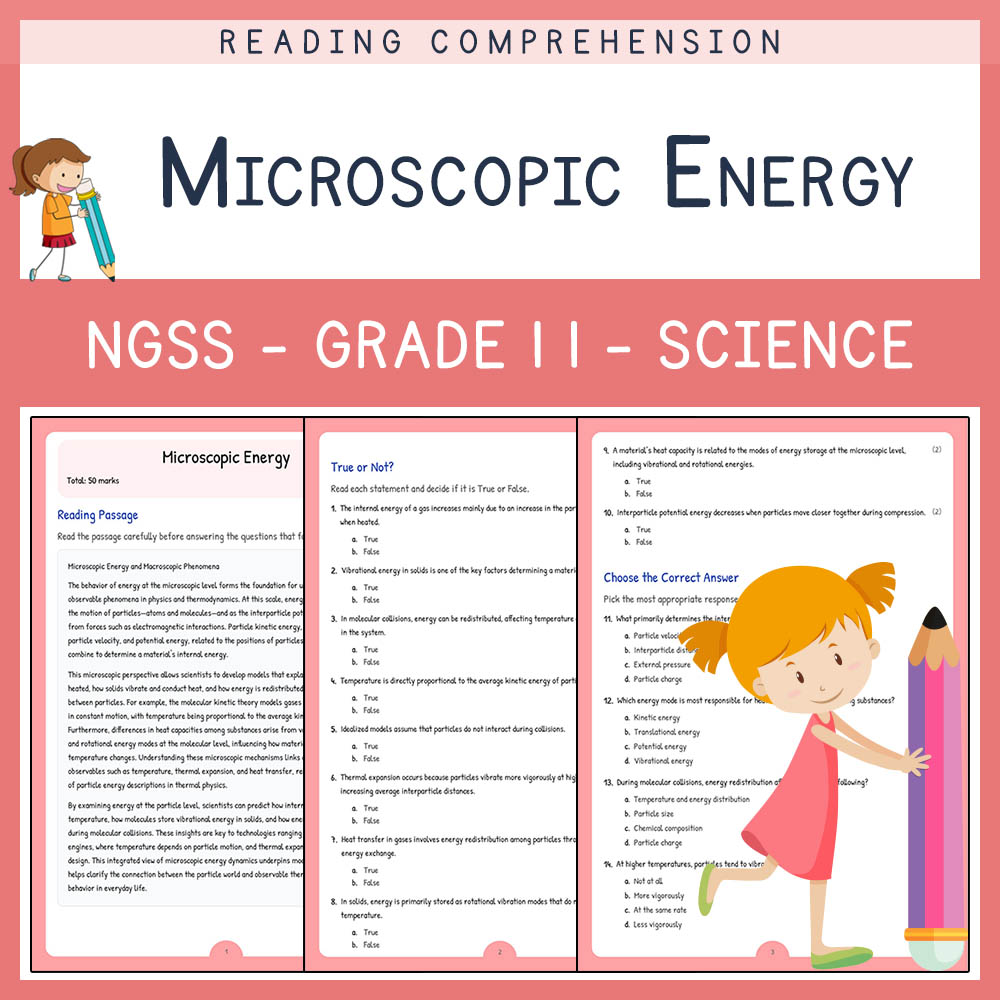
Grade 11 Science | Microscopic Energy Worksheet & Answer Key (NGSS-Aligned)
Created byLumora LearningLearning Objectives
- Explain how particle kinetic energy and potential energy contribute to macroscopic thermal and mechanical phenomena.
- Describe idealized models addressing internal energy changes, vibrational energy in solids, and collision energy redistribution.
- Relate molecular-scale energy descriptions to observable quantities like temperature and thermal expansion.
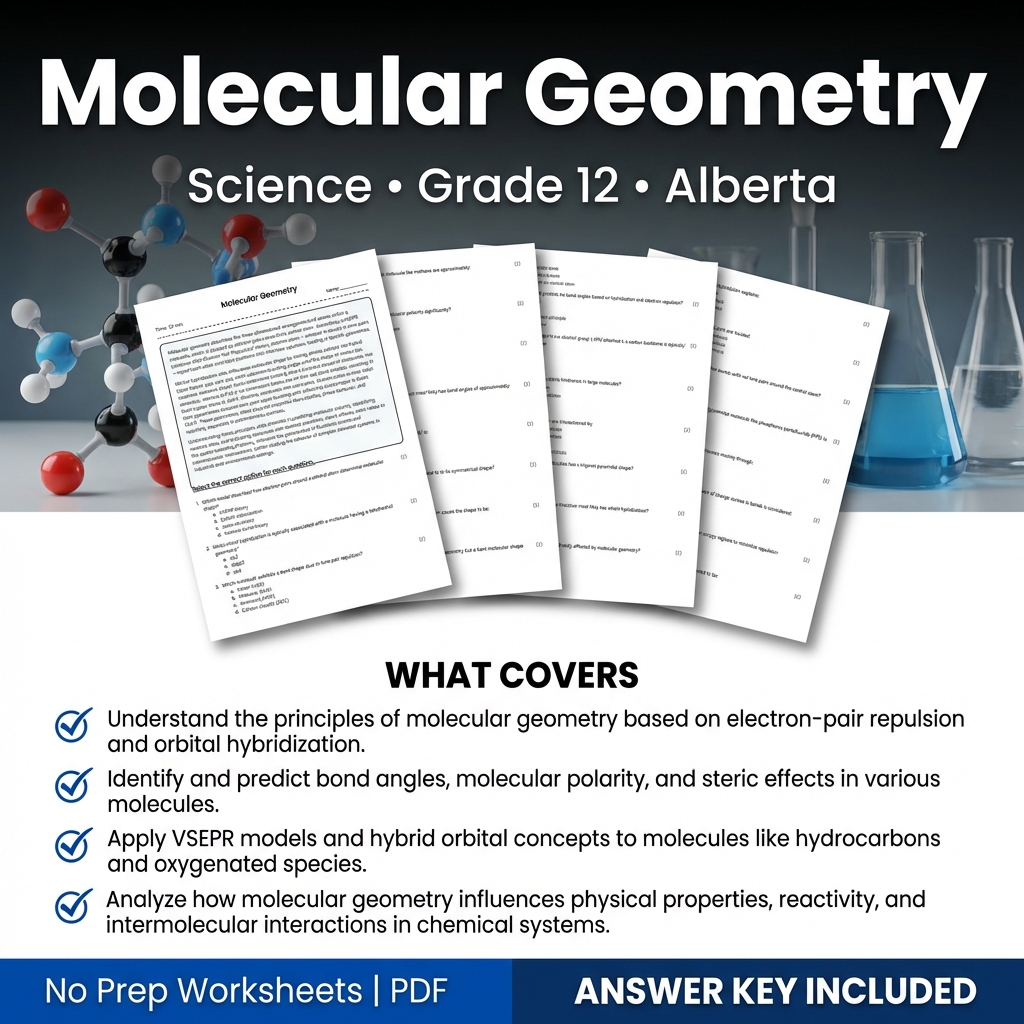
Grade 12 Science Worksheet on Molecular Geometry | Alberta Standards
Created byCoral Reef LearningLearning Objectives
- Understand the principles of molecular geometry based on electron-pair repulsion and orbital hybridization.
- Identify and predict bond angles, molecular polarity, and steric effects in various molecules.
- Apply VSEPR models and hybrid orbital concepts to molecules like hydrocarbons and oxygenated species.
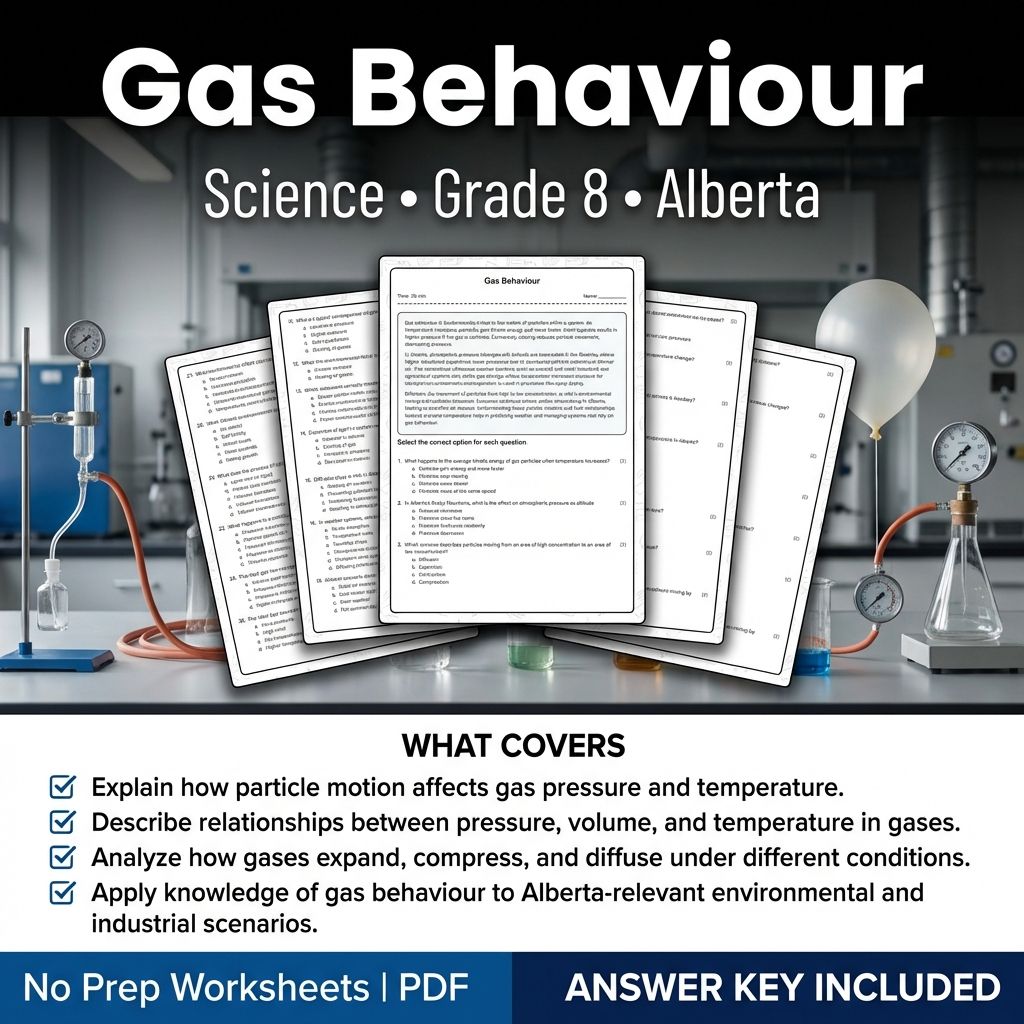
Gas Behaviour Grade 8 Science Worksheet | Alberta Standards Practice
Created byCoral Reef LearningLearning Objectives
- Explain how particle motion affects gas pressure and temperature.
- Describe relationships between pressure, volume, and temperature in gases.
- Analyze how gases expand, compress, and diffuse under different conditions.
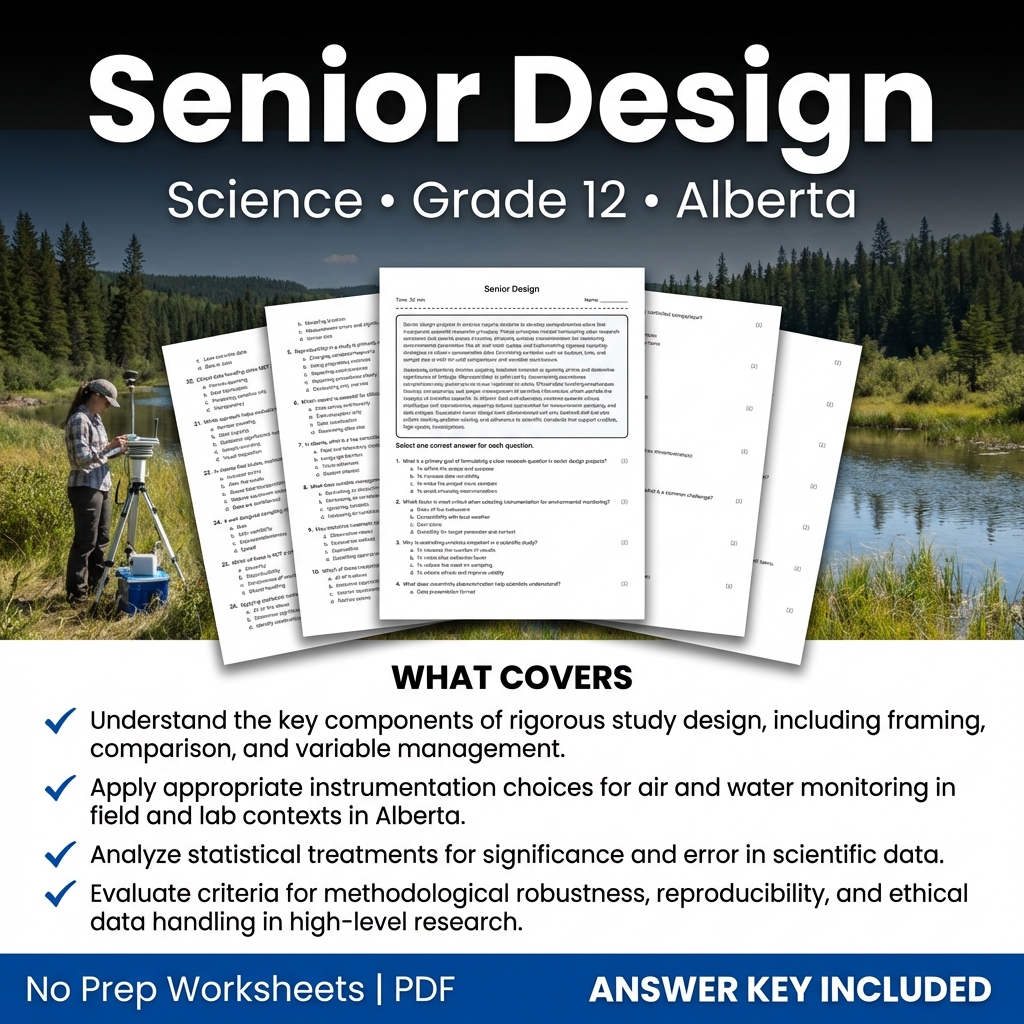
Senior Design Science Worksheet Grade 12 | Alberta Standards Practice
Created byCoral Reef LearningLearning Objectives
- Understand the key components of rigorous study design, including framing, comparison, and variable management.
- Apply appropriate instrumentation choices for air and water monitoring in field and lab contexts in Alberta.
- Analyze statistical treatments for significance and error in scientific data.
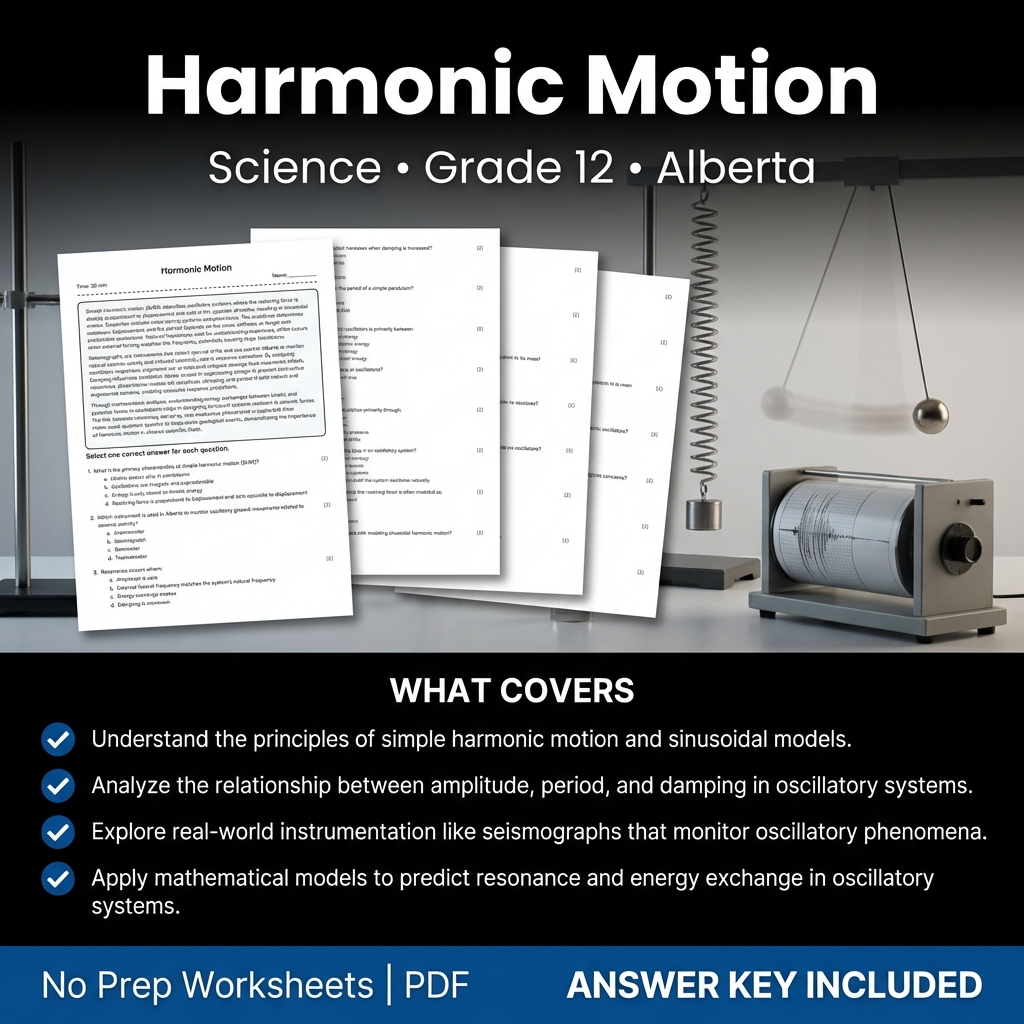
Harmonic Motion Worksheet for Grade 12 Science | Alberta Standards
Created byCoral Reef LearningLearning Objectives
- Understand the principles of simple harmonic motion and sinusoidal models.
- Analyze the relationship between amplitude, period, and damping in oscillatory systems.
- Explore real-world instrumentation like seismographs that monitor oscillatory phenomena.
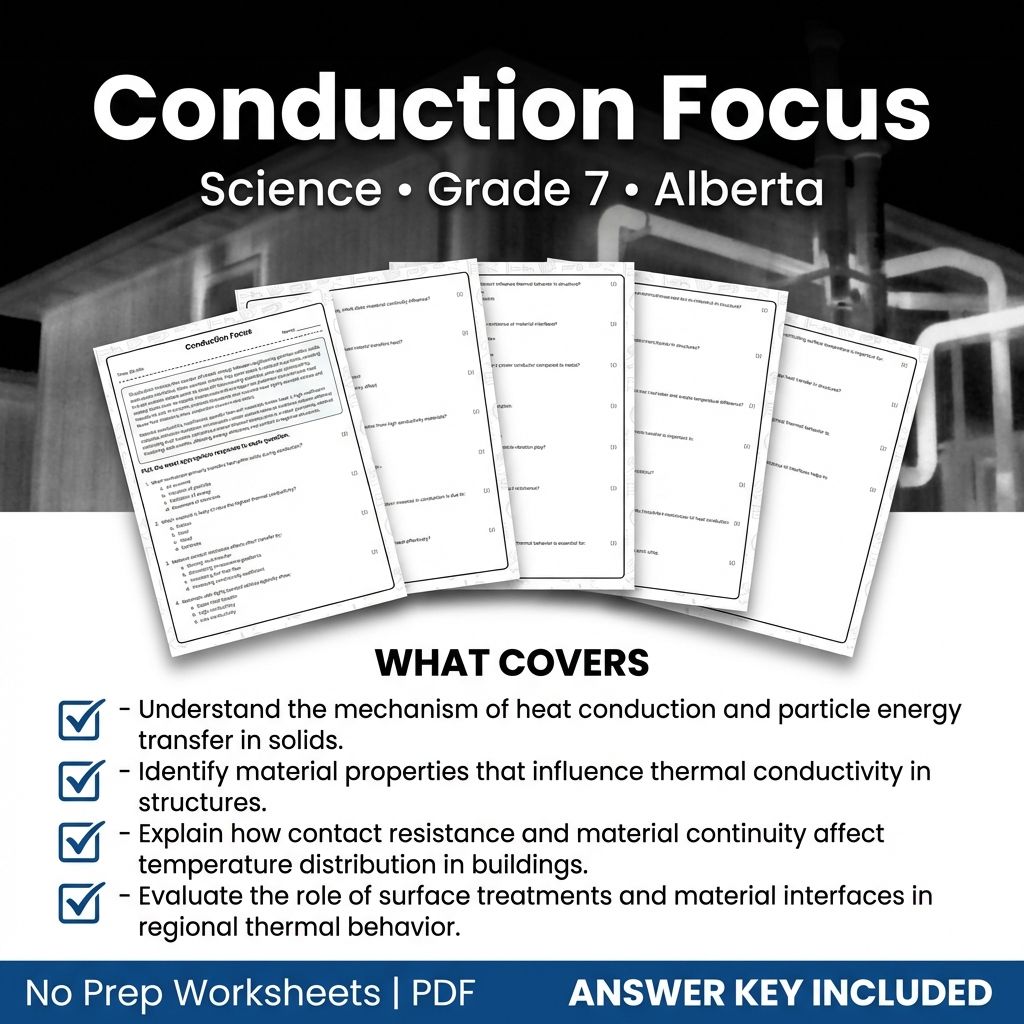
Grade 7 Science Worksheet on Conduction | Alberta Standard Practice
Created byCoral Reef LearningLearning Objectives
- Understand the mechanism of heat conduction and particle energy transfer in solids.
- Identify material properties that influence thermal conductivity in structures.
- Explain how contact resistance and material continuity affect temperature distribution in buildings.
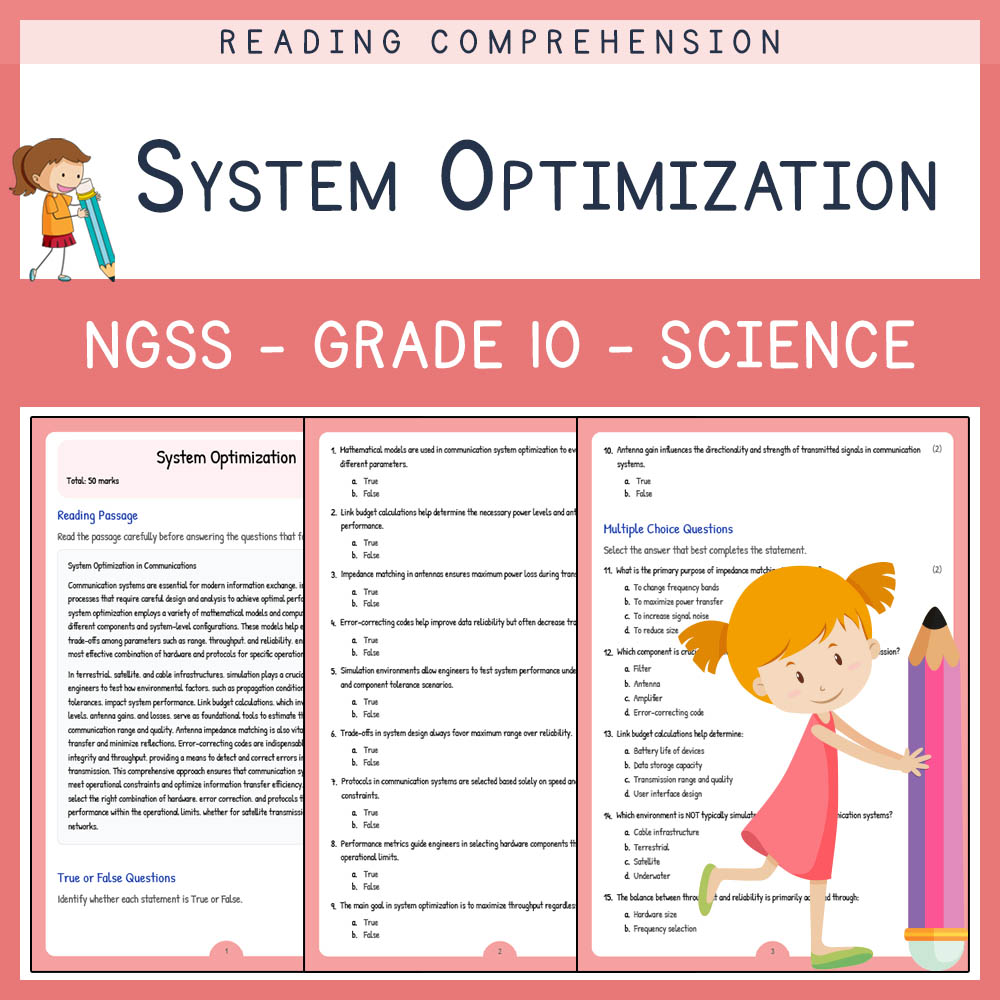
Grade 10 Science | System Optimization Worksheet (PDF + Answer Key) NGSS Aligned
Created byLumora LearningLearning Objectives
- Understand the principles of communication system optimization, including models and analysis techniques.
- Evaluate trade-offs in system components such as antenna gain, impedance matching, and error-correcting codes.
- Apply simulation and performance metrics to assess communication system designs.
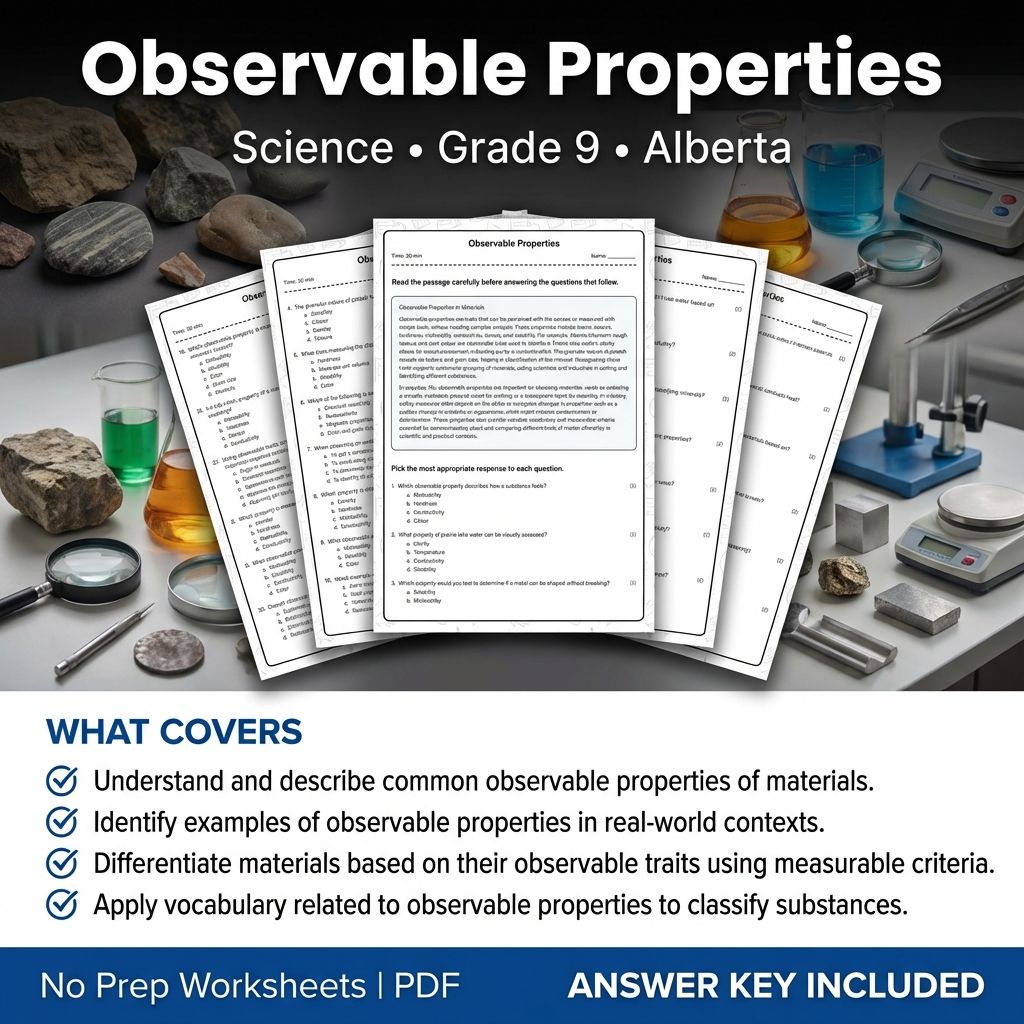
Grade 9 Science Worksheet on Observable Properties | Alberta Standards
Created byCoral Reef LearningLearning Objectives
- Understand and describe common observable properties of materials.
- Identify examples of observable properties in real-world contexts.
- Differentiate materials based on their observable traits using measurable criteria.
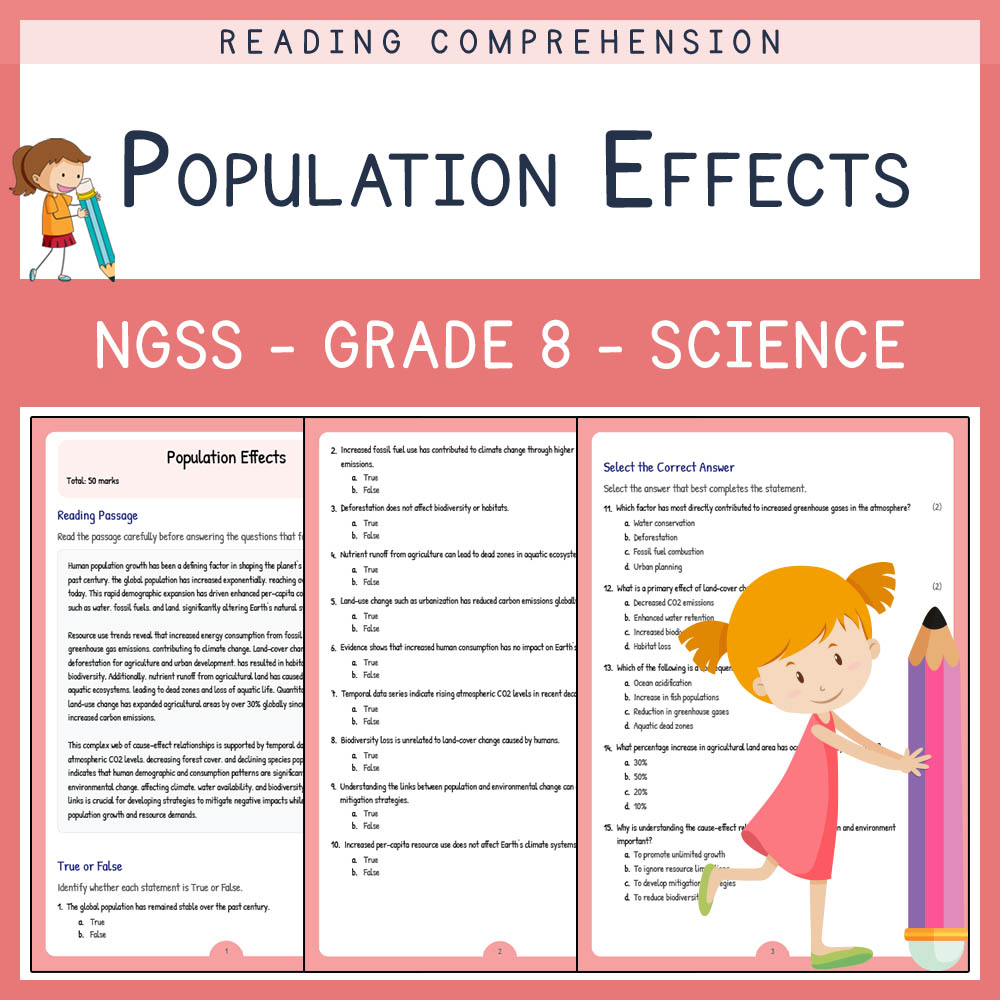
Grade 8 Science | Population Effects Worksheet (PDF + Answer Key)
Created byLumora LearningLearning Objectives
- Analyze the links between population growth, resource consumption, and environmental changes.
- Evaluate evidence related to human activities' impacts on Earth systems using quantitative data.
- Develop argumentation skills to connect demographic patterns with ecological consequences.
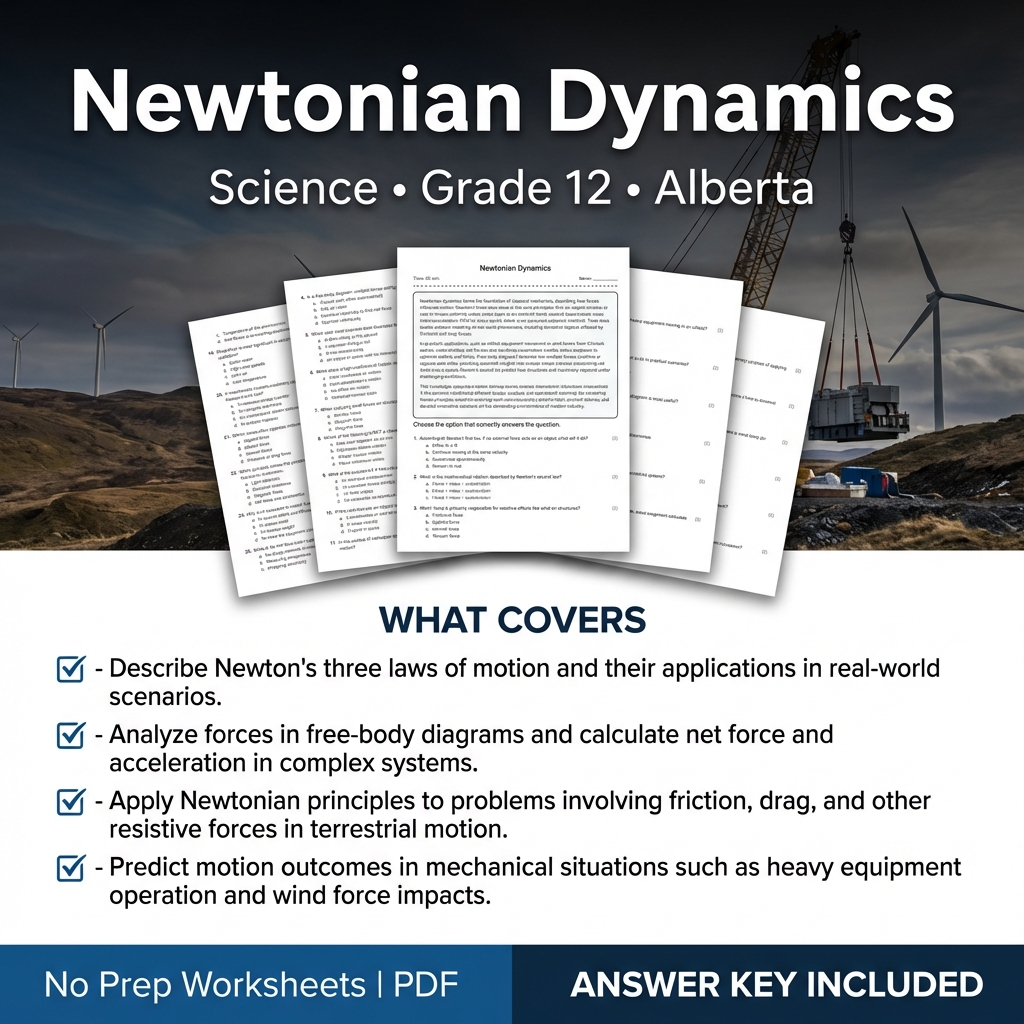
Newtonian Dynamics Grade 12 Worksheet | Classical Mechanics Practice
Created byCoral Reef LearningLearning Objectives
- Describe Newton's three laws of motion and their applications in real-world scenarios.
- Analyze forces in free-body diagrams and calculate net force and acceleration in complex systems.
- Apply Newtonian principles to problems involving friction, drag, and other resistive forces in terrestrial motion.
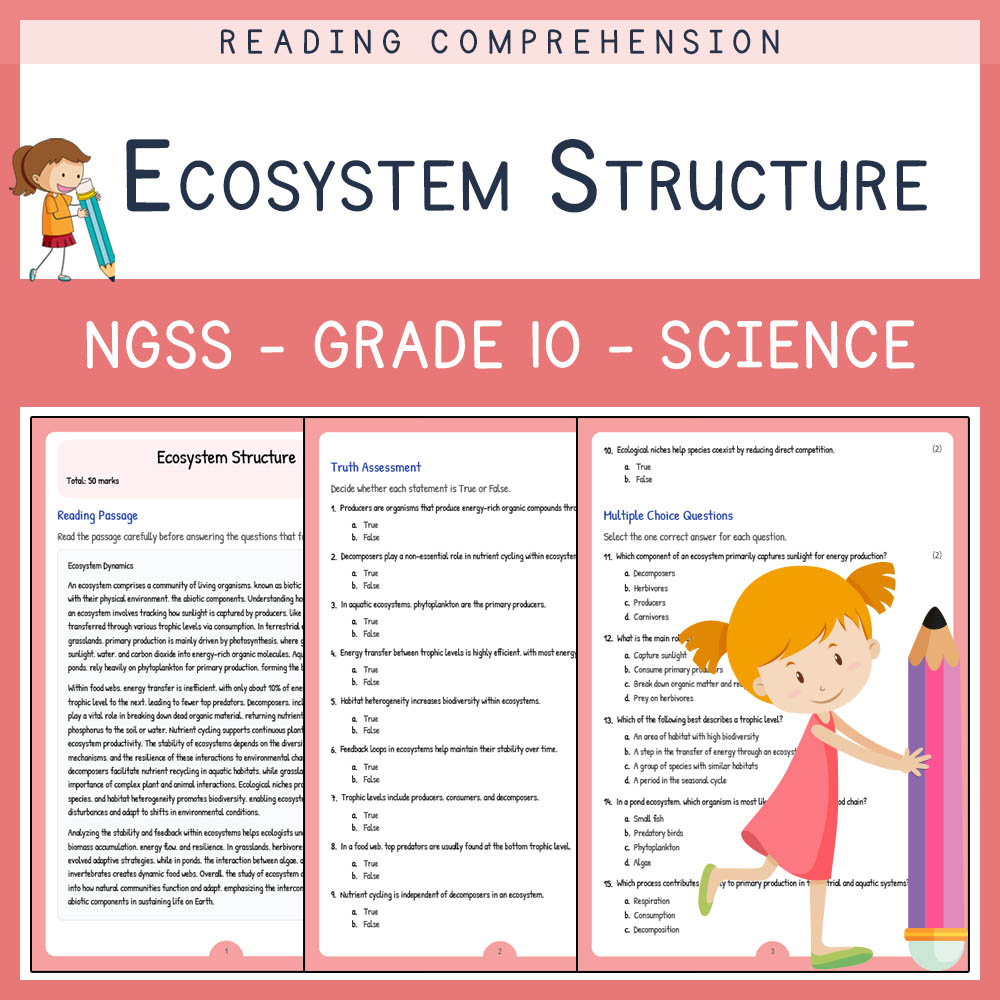
Grade 10 Science | Ecosystem Structure Worksheet & Answer Key (NGSS-Aligned)
Created byLumora LearningLearning Objectives
- Understand the components and interactions within terrestrial and aquatic ecosystems.
- Analyze energy flow, trophic levels, and food web dynamics in different habitats.
- Explain the roles of producers, consumers, and decomposers in ecosystem stability.
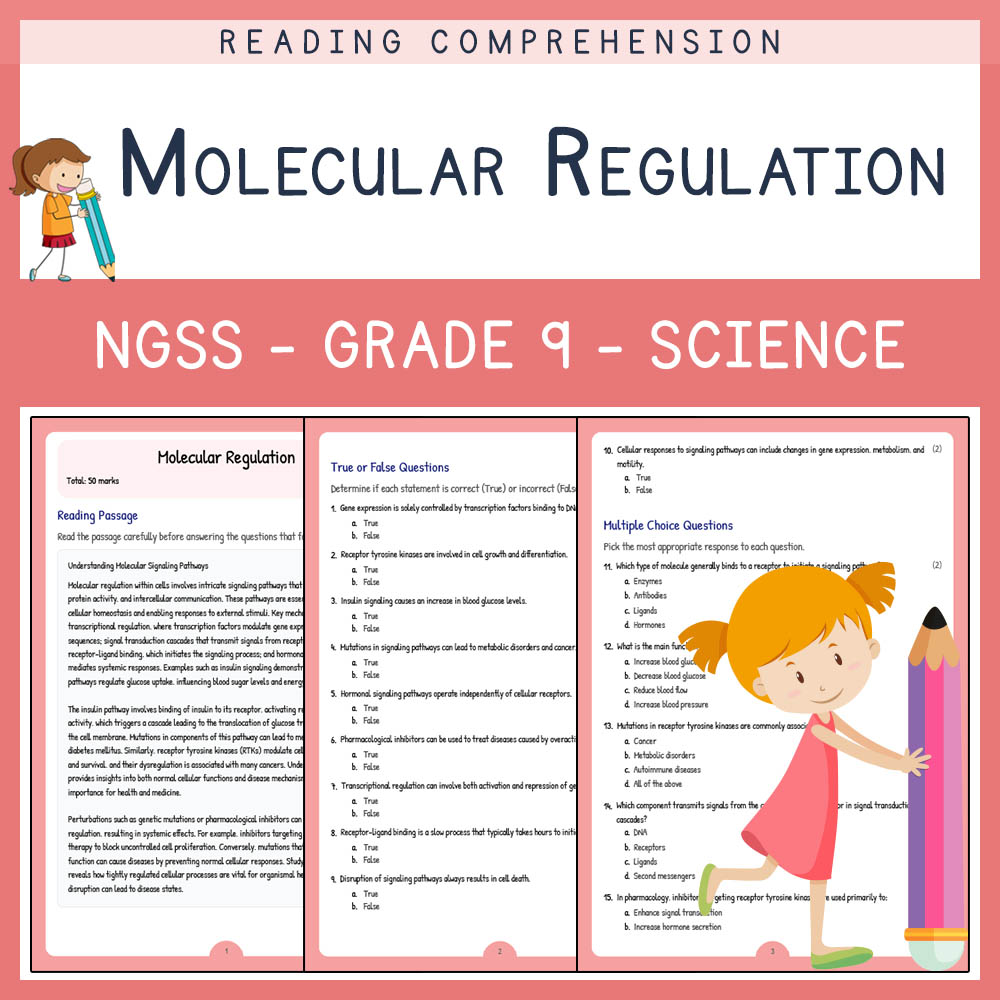
Grade 9 Science | Molecular Regulation Worksheet (NGSS-Aligned + Answer Key)
Created byLumora LearningLearning Objectives
- Explain different molecular signaling pathways involved in gene expression and protein activity regulation.
- Identify key mechanisms such as signal transduction, receptor-ligand interactions, and hormonal signaling.
- Describe examples like insulin-mediated glucose uptake and receptor tyrosine kinase pathways.
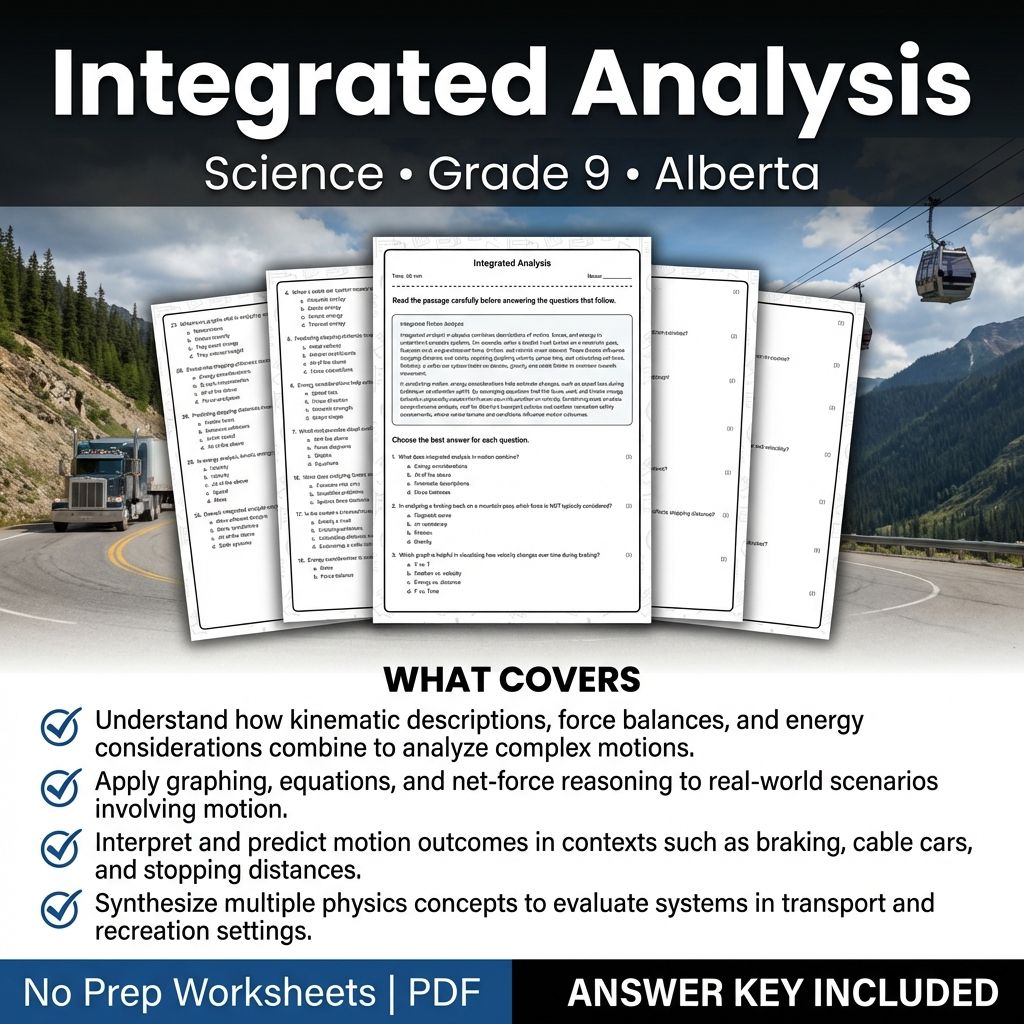
Grade 9 Science Worksheet on Integrated Analysis | Alberta Standards
Created byCoral Reef LearningLearning Objectives
- Understand how kinematic descriptions, force balances, and energy considerations combine to analyze complex motions.
- Apply graphing, equations, and net-force reasoning to real-world scenarios involving motion.
- Interpret and predict motion outcomes in contexts such as braking, cable cars, and stopping distances.
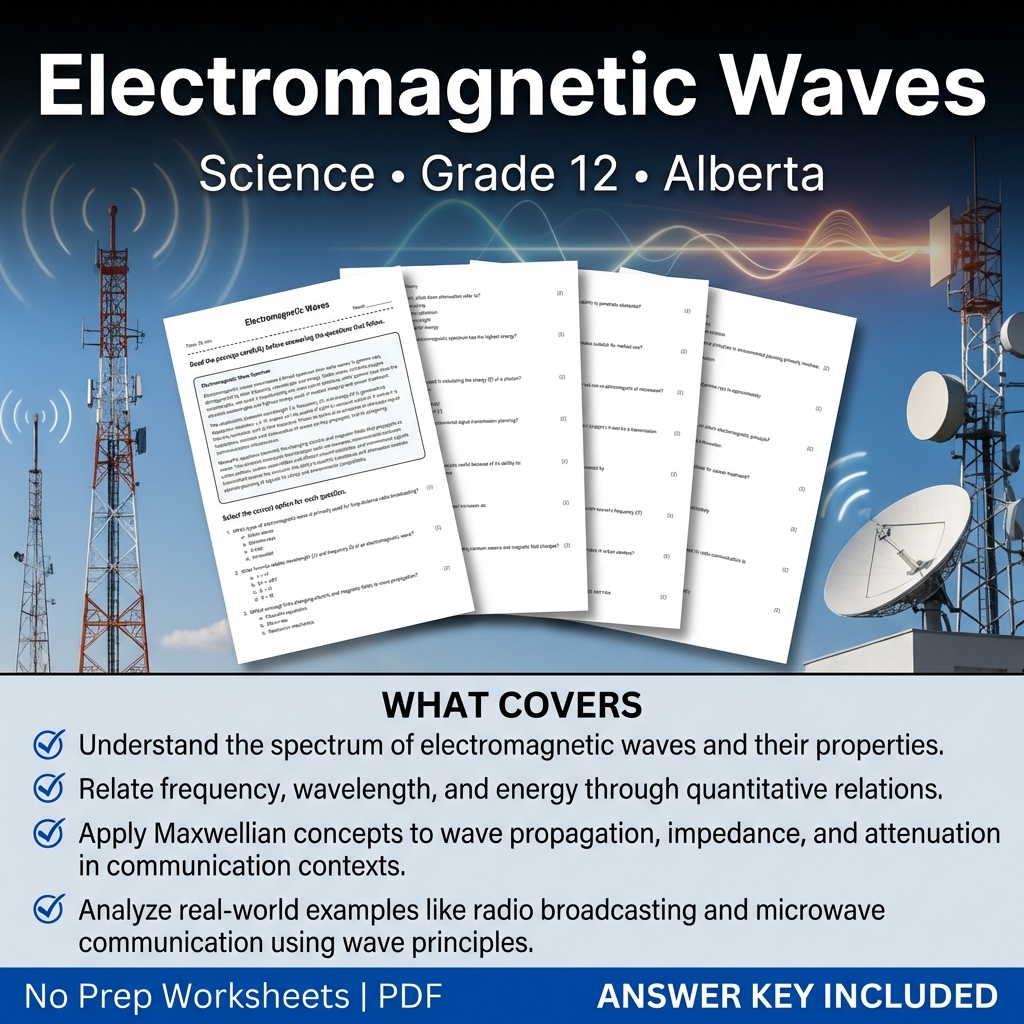
Electromagnetic Waves Worksheet | Science Practice for Grade 12 Alberta
Created byCoral Reef LearningLearning Objectives
- Understand the spectrum of electromagnetic waves and their properties.
- Relate frequency, wavelength, and energy through quantitative relations.
- Apply Maxwellian concepts to wave propagation, impedance, and attenuation in communication contexts.
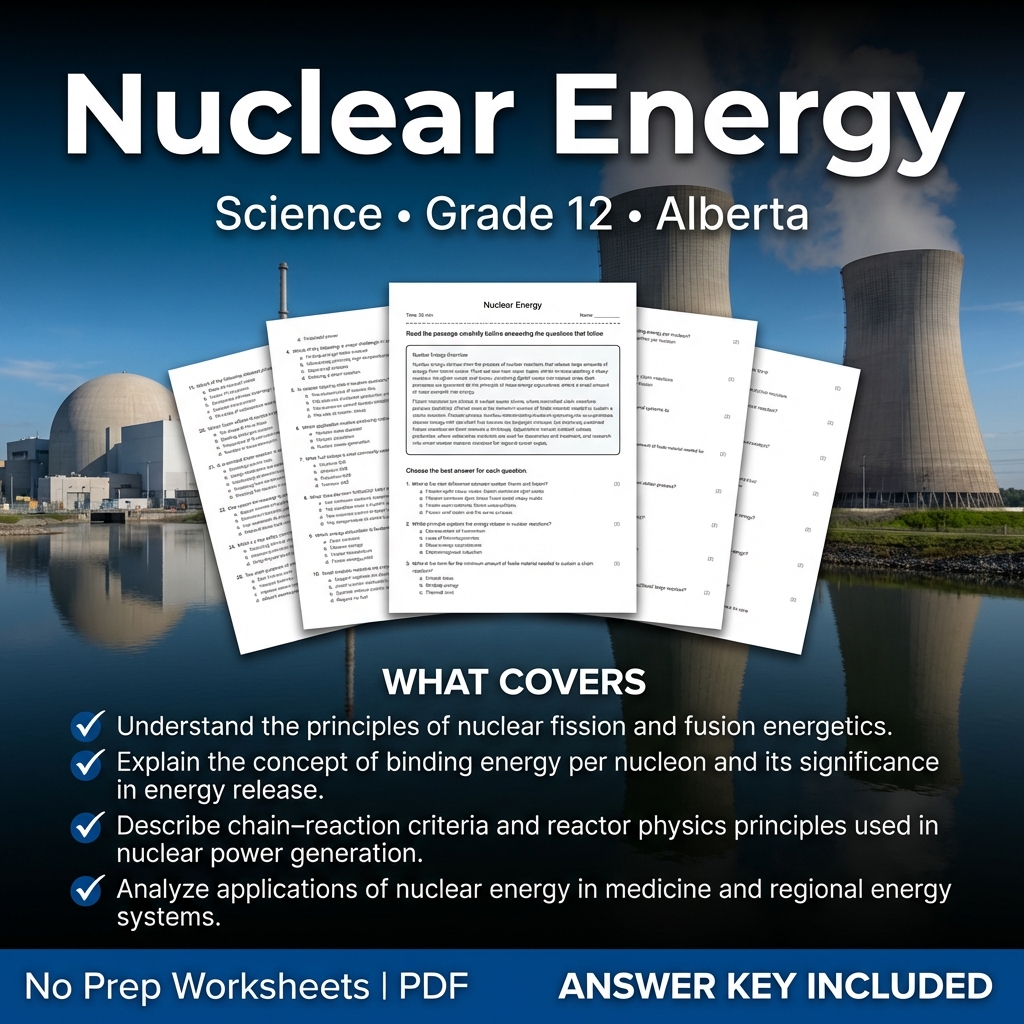
Grade 12 Science Worksheet on Nuclear Energy | Alberta Standards Practice
Created byCoral Reef LearningLearning Objectives
- Understand the principles of nuclear fission and fusion energetics.
- Explain the concept of binding energy per nucleon and its significance in energy release.
- Describe chain-reaction criteria and reactor physics principles used in nuclear power generation.
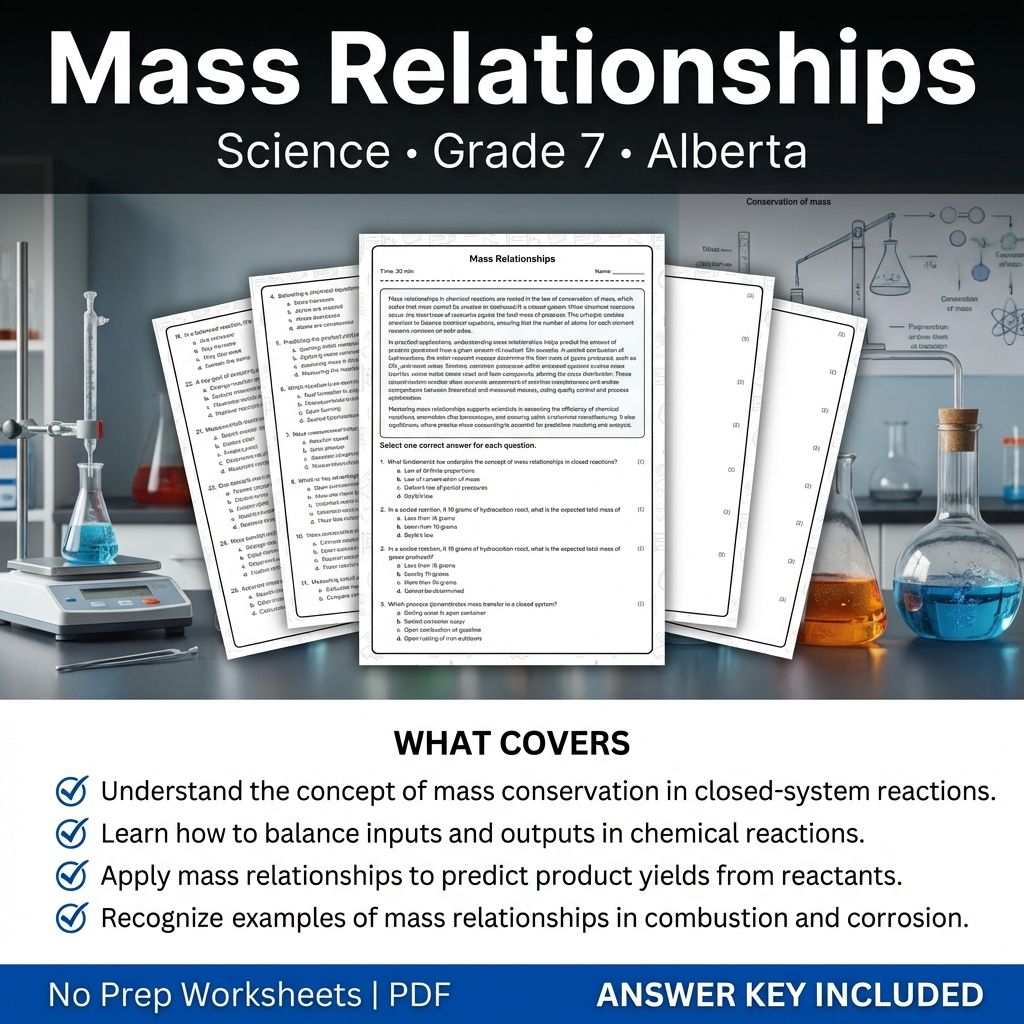
Mass Relationships Worksheet for Grade 7 Science Alberta Standards
Created byCoral Reef LearningLearning Objectives
- Understand the concept of mass conservation in closed-system reactions.
- Learn how to balance inputs and outputs in chemical reactions.
- Apply mass relationships to predict product yields from reactants.
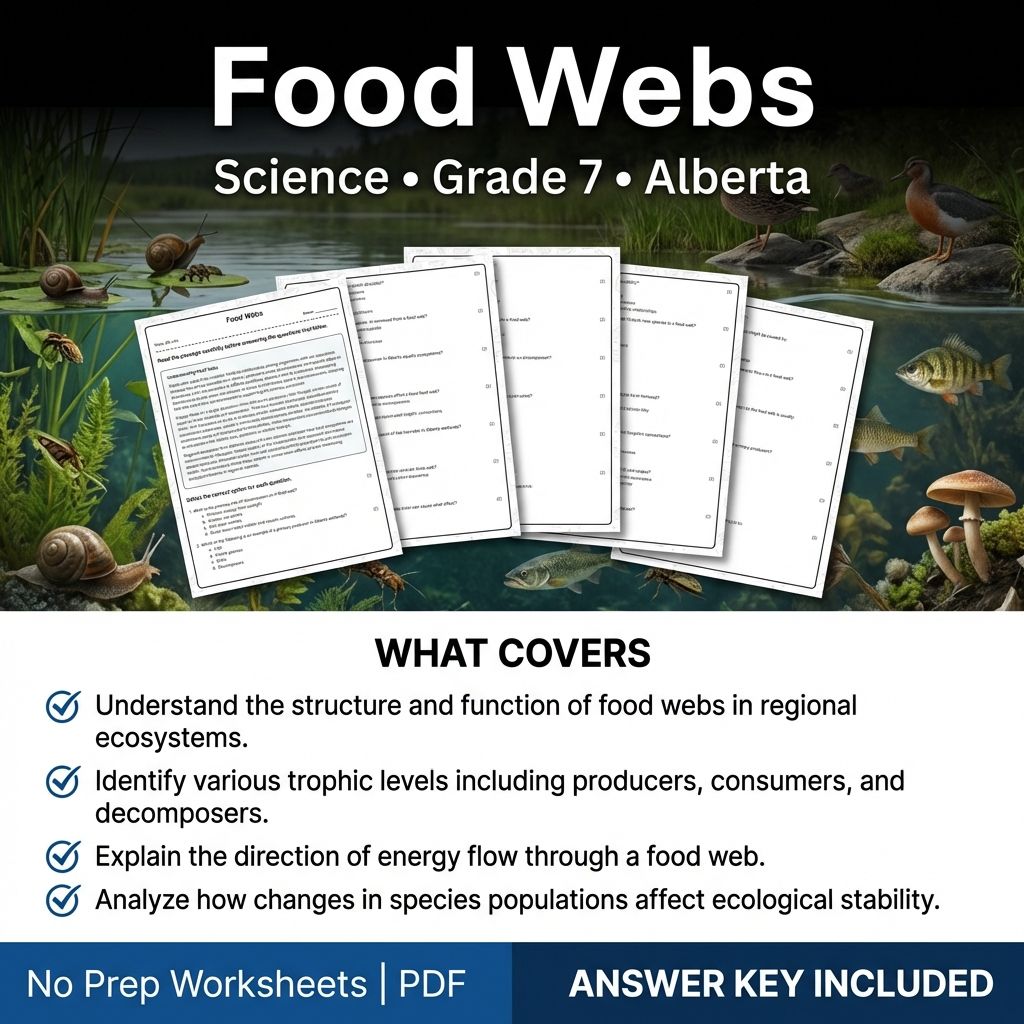
Food Webs Worksheet for Grade 7 Science | Alberta Standards Practice
Created byCoral Reef LearningLearning Objectives
- Understand the structure and function of food webs in regional ecosystems.
- Identify various trophic levels including producers, consumers, and decomposers.
- Explain the direction of energy flow through a food web.
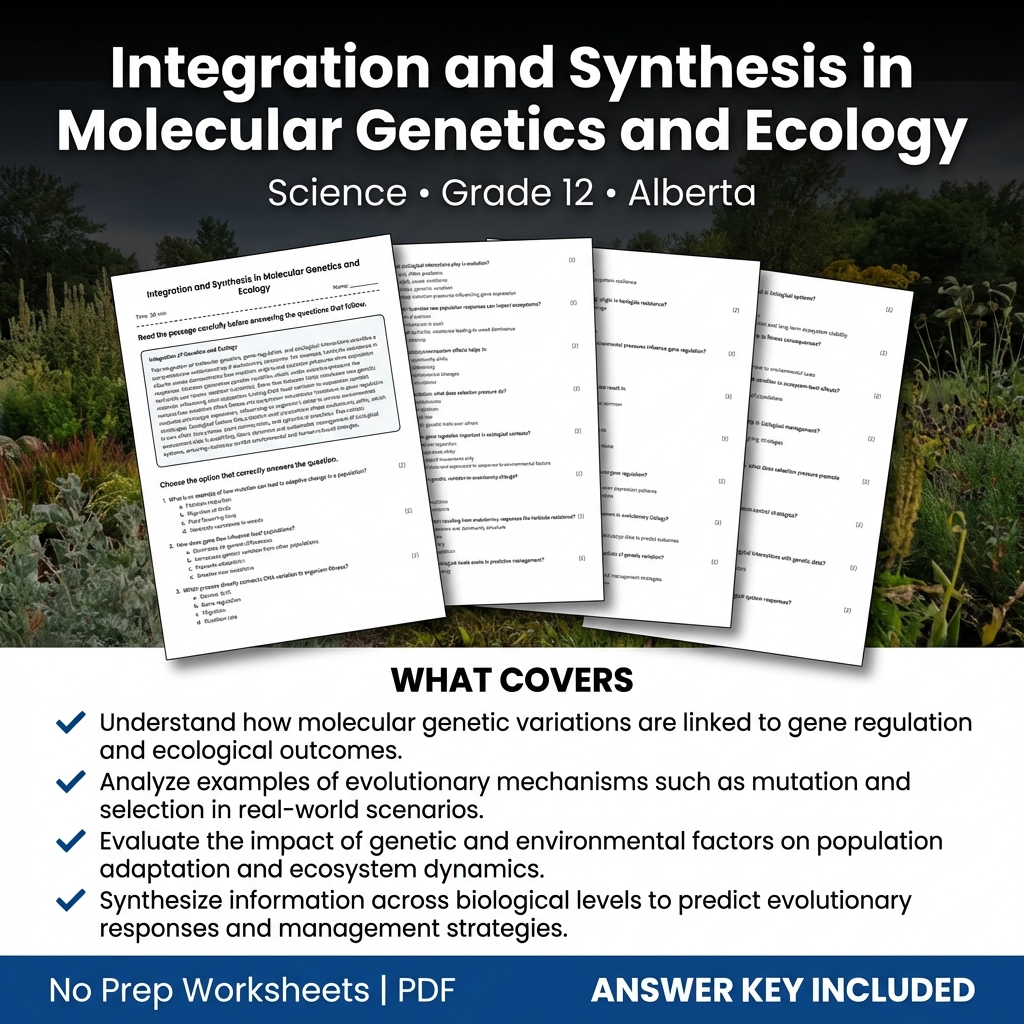
Grade 12 Science Worksheet | Integration and Synthesis in Genetics & Ecology
Created byCoral Reef LearningLearning Objectives
- Understand how molecular genetic variations are linked to gene regulation and ecological outcomes.
- Analyze examples of evolutionary mechanisms such as mutation and selection in real-world scenarios.
- Evaluate the impact of genetic and environmental factors on population adaptation and ecosystem dynamics.
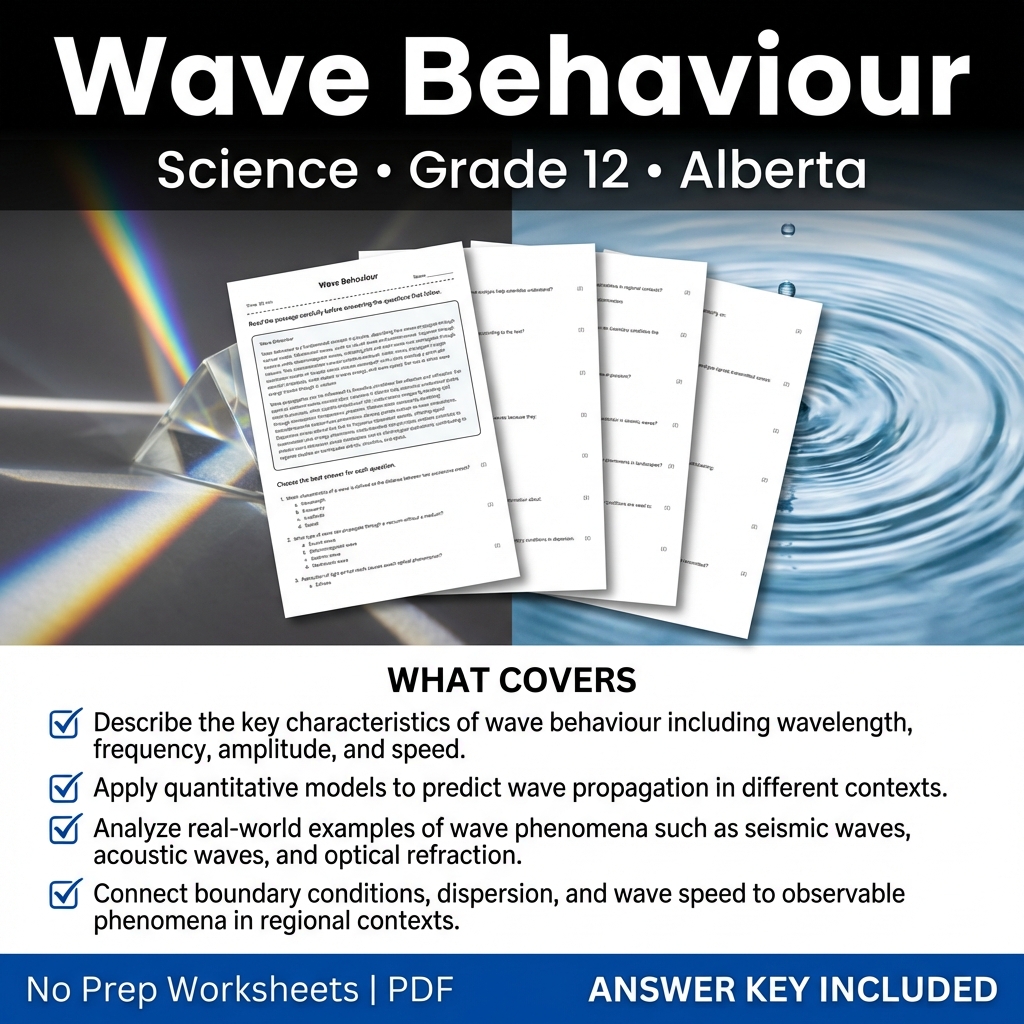
Wave Behaviour Science Worksheet Grade 12 | Alberta Standards
Created byCoral Reef LearningLearning Objectives
- Describe the key characteristics of wave behaviour including wavelength, frequency, amplitude, and speed.
- Apply quantitative models to predict wave propagation in different contexts.
- Analyze real-world examples of wave phenomena such as seismic waves, acoustic waves, and optical refraction.
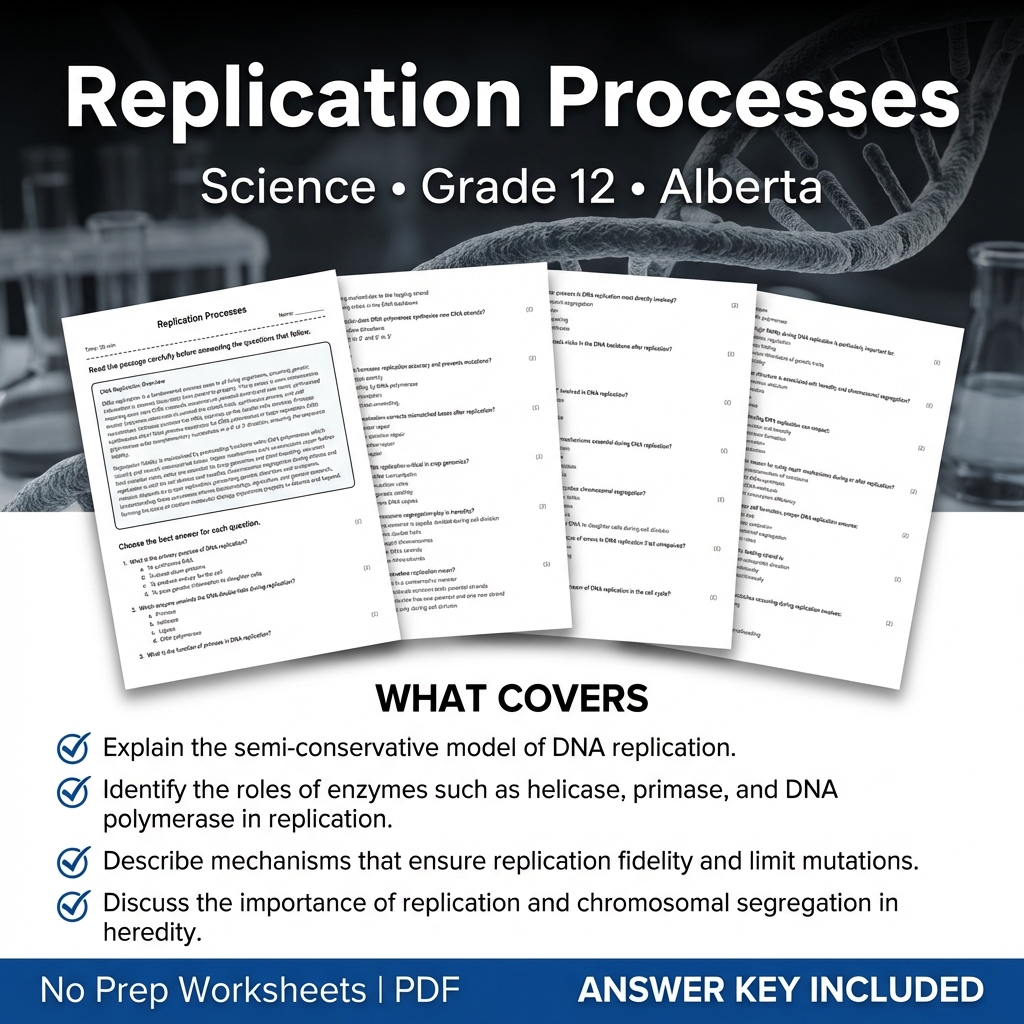
Grade 12 Science Worksheet on Replication Processes | Alberta Standards
Created byCoral Reef LearningLearning Objectives
- Explain the semi-conservative model of DNA replication.
- Identify the roles of enzymes such as helicase, primase, and DNA polymerase in replication.
- Describe mechanisms that ensure replication fidelity and limit mutations.
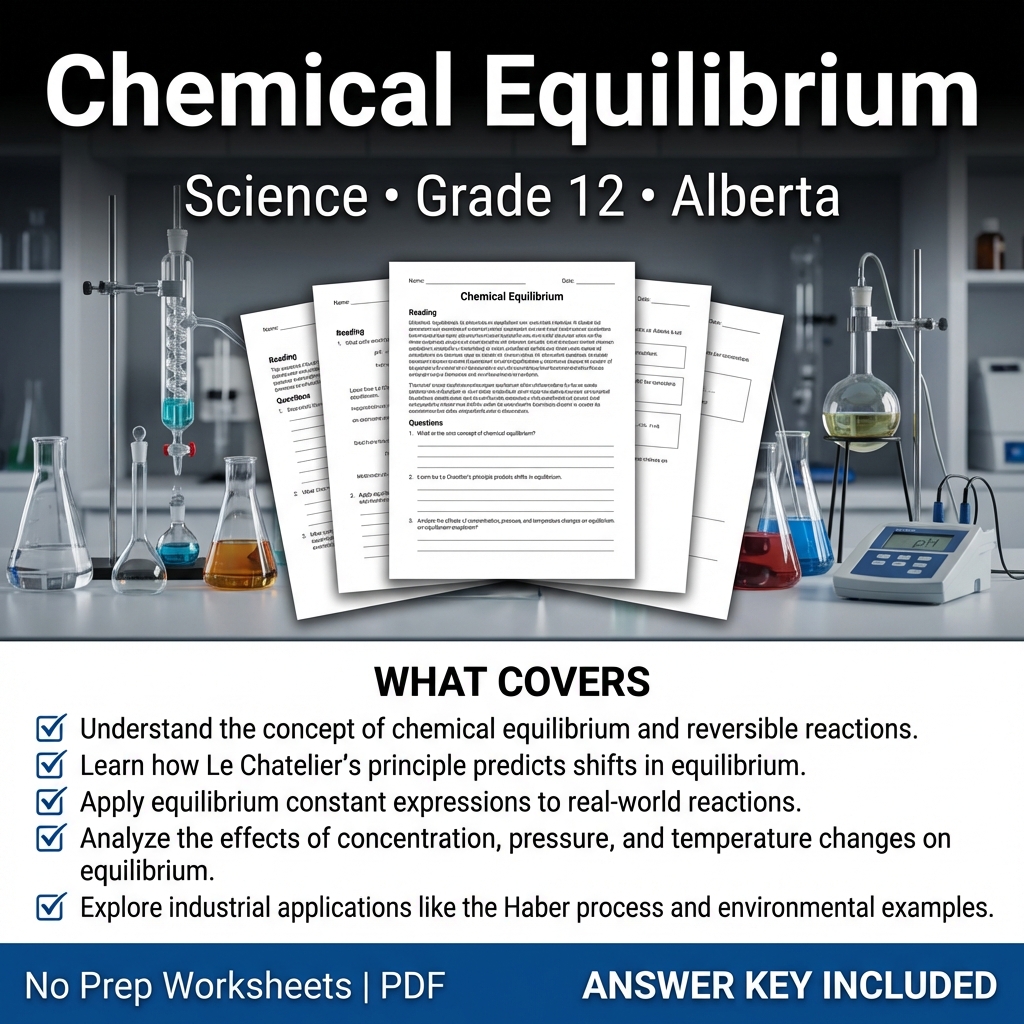
Chemical Equilibrium Worksheet for Grade 12 Science | Alberta Standards
Created byCoral Reef LearningLearning Objectives
- Understand the concept of chemical equilibrium and reversible reactions.
- Learn how Le Chatelier’s principle predicts shifts in equilibrium.
- Apply equilibrium constant expressions to real-world reactions.
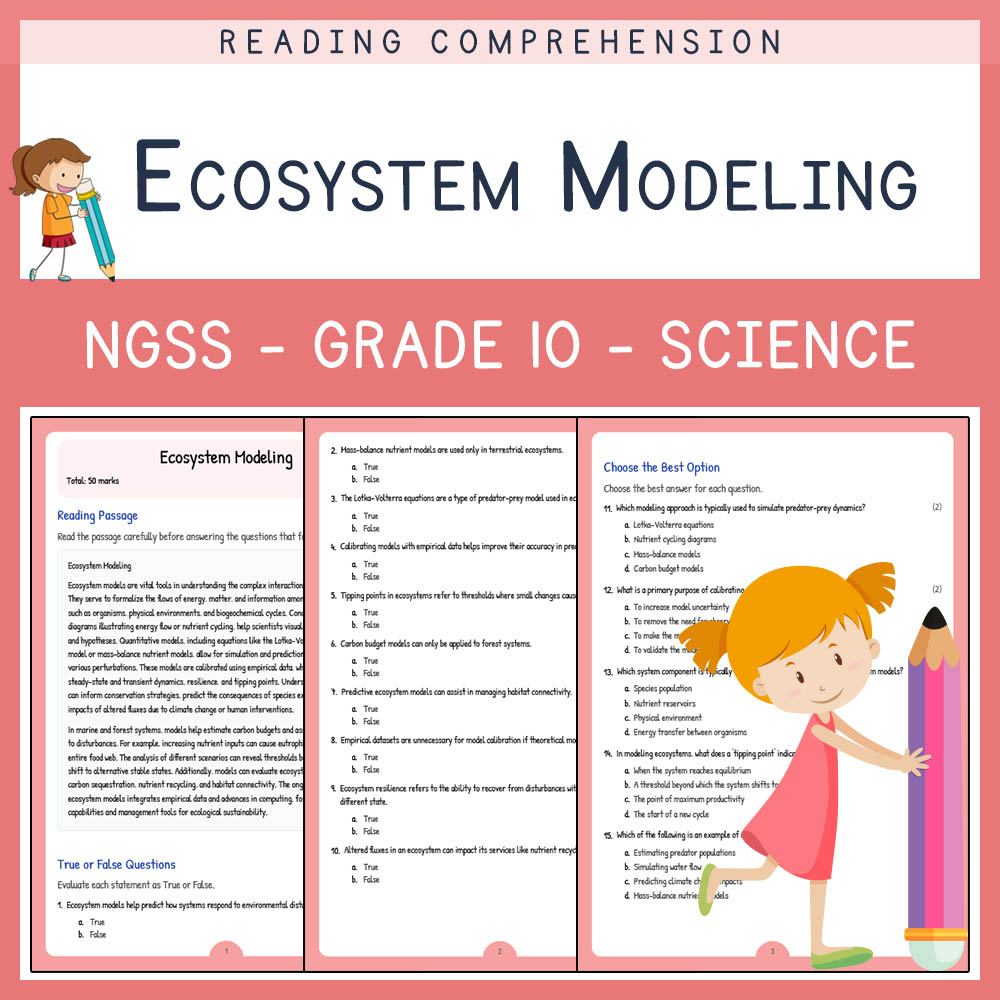
Grade 10 Science | Ecosystem Modeling Worksheet & Answer Key (NGSS-Aligned)
Created byLumora LearningLearning Objectives
- Understand the concepts of system flows of energy and matter in ecosystems.
- Interpret and develop models such as Lotka–Volterra equations, nutrient budgets, and carbon flux estimations.
- Analyze scenario-based responses and predict ecosystem behavior following perturbations.
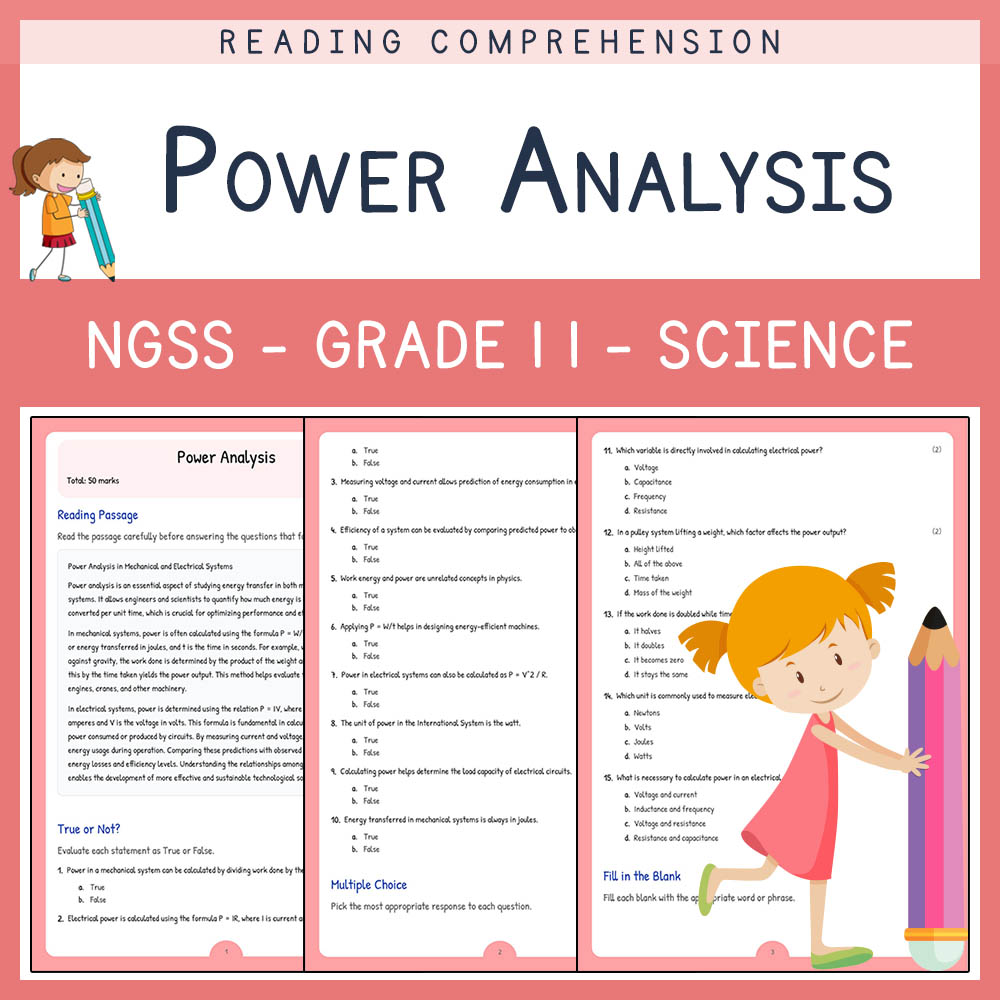
Grade 11 Science | Power Analysis Worksheet & Answer Key for NGSS Standards
Created byLumora LearningLearning Objectives
- Understand the principles of calculating power in mechanical and electrical systems.
- Apply formulas P = W/t and P = IV to experimental data to predict energy and power output.
- Compare theoretical predictions with observed measurements to evaluate system efficiency.
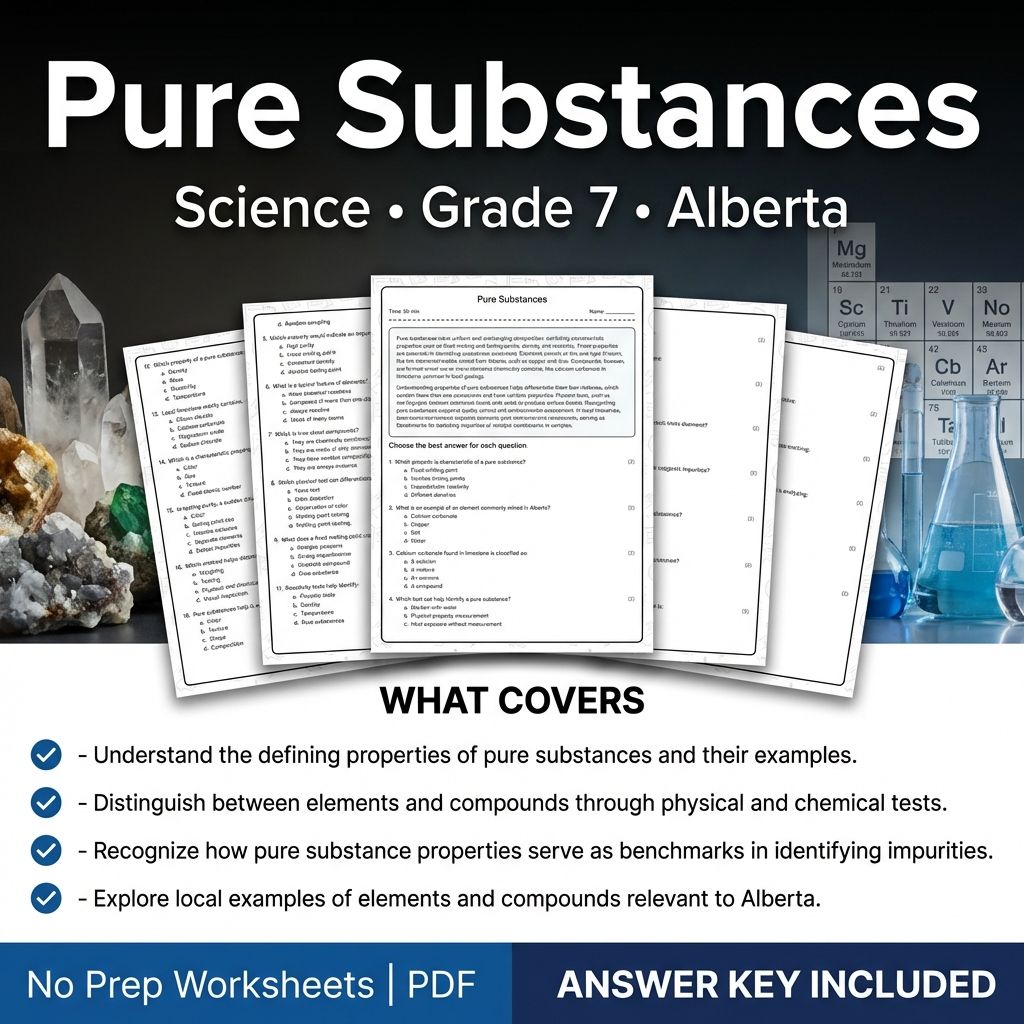
Grade 7 Science Worksheet | Pure Substances | Alberta Standards
Created byCoral Reef LearningLearning Objectives
- Understand the defining properties of pure substances and their examples.
- Distinguish between elements and compounds through physical and chemical tests.
- Recognize how pure substance properties serve as benchmarks in identifying impurities.
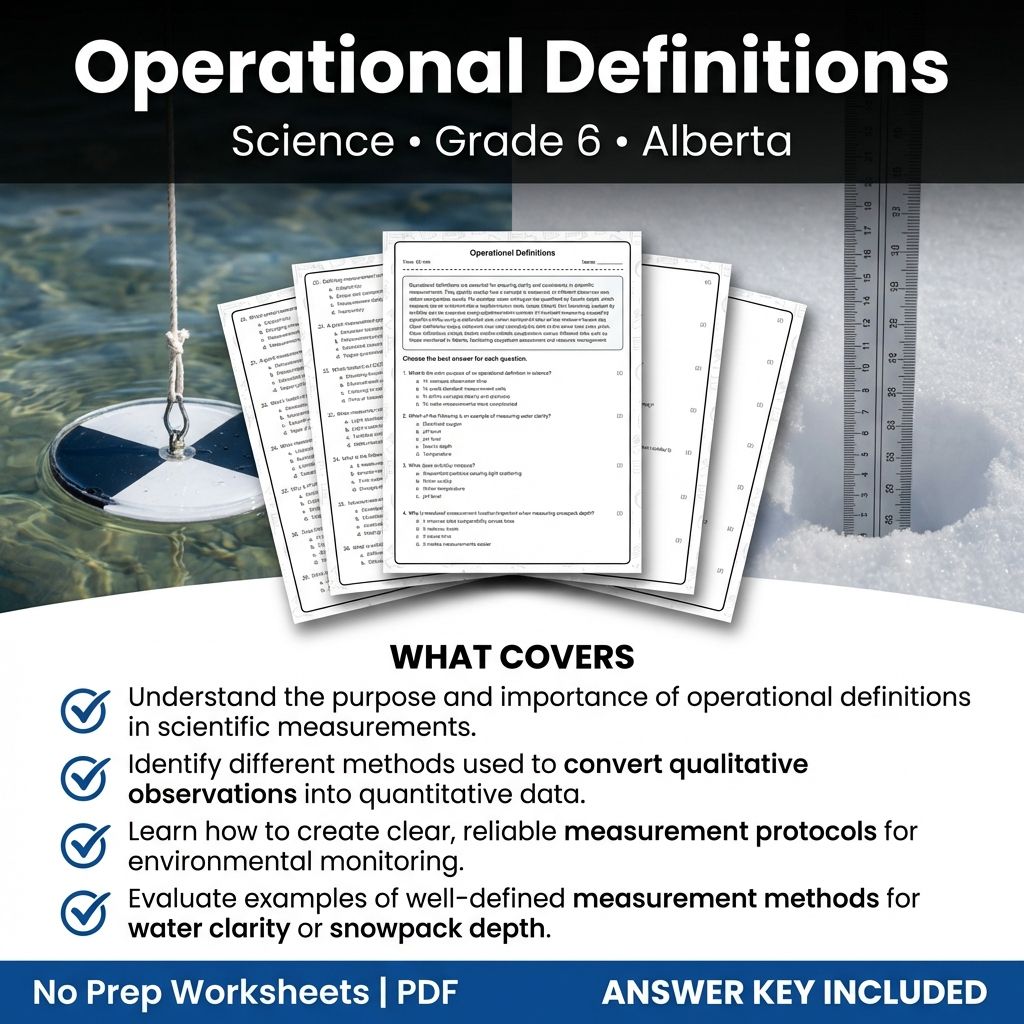
Grade 6 Science Worksheet on Operational Definitions—Alberta Standards
Created byCoral Reef LearningLearning Objectives
- Understand the purpose and importance of operational definitions in scientific measurements.
- Identify different methods used to convert qualitative observations into quantitative data.
- Learn how to create clear, reliable measurement protocols for environmental monitoring.
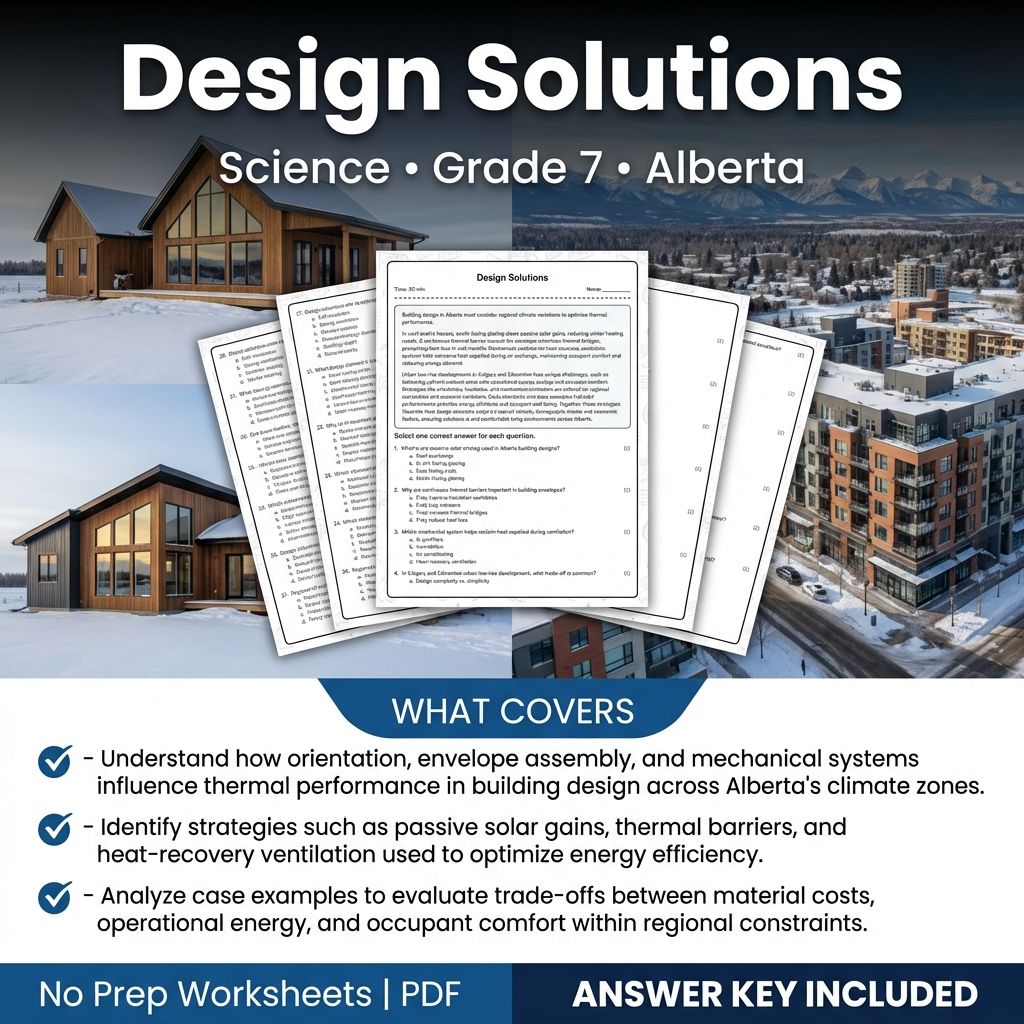
Grade 7 Science Worksheet on Design Solutions | Alberta Standards
Created byCoral Reef LearningLearning Objectives
- Understand how orientation, envelope assembly, and mechanical systems influence thermal performance in building design across Alberta's climate zones.
- Identify strategies such as passive solar gains, thermal barriers, and heat-recovery ventilation used to optimize energy efficiency.
- Analyze case examples to evaluate trade-offs between material costs, operational energy, and occupant comfort within regional constraints.
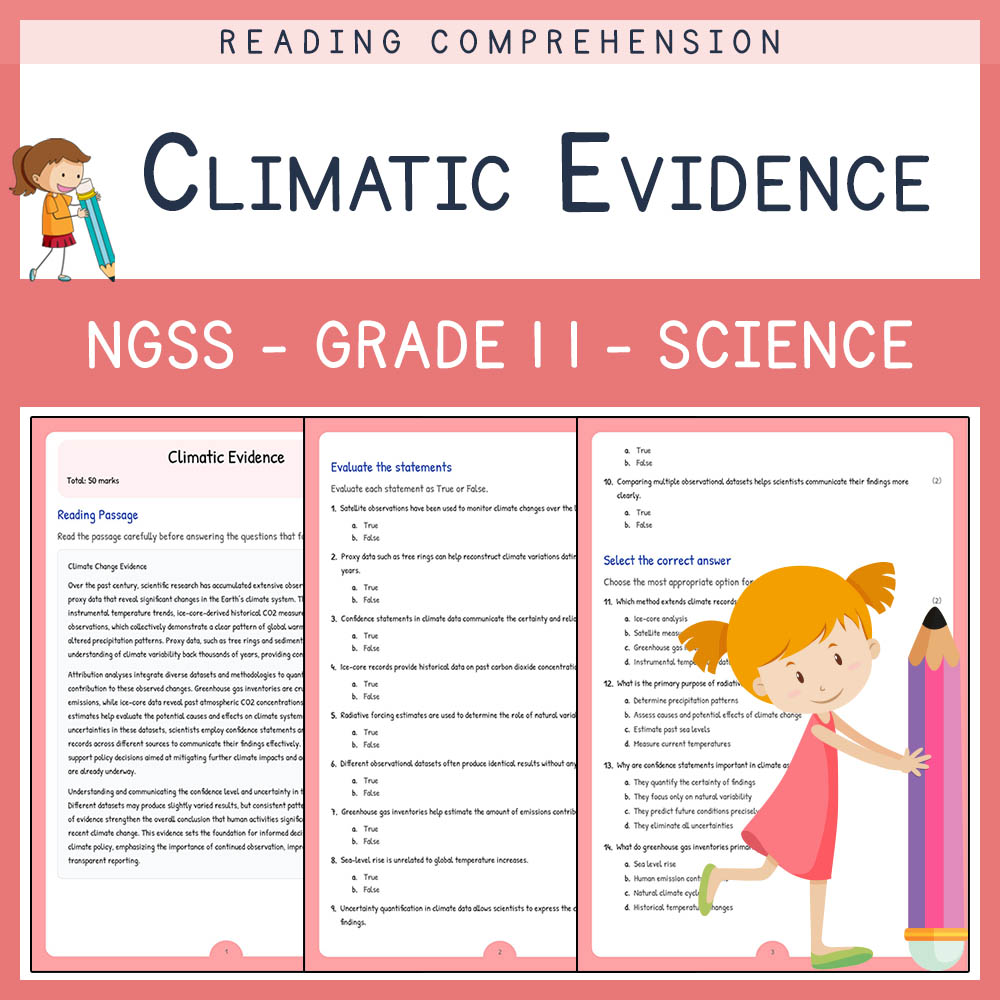
Grade 11 Science | Climatic Evidence Worksheet (NGSS-Aligned, PDF + Answer Key)
Created byLumora LearningLearning Objectives
- Analyze observational records, proxy data, and attribution analyses to understand human impacts on climate change.
- Identify and interpret various types of climate data, including greenhouse gas inventories and ice-core records.
- Evaluate uncertainty quantification and confidence statements in climate data assessments.
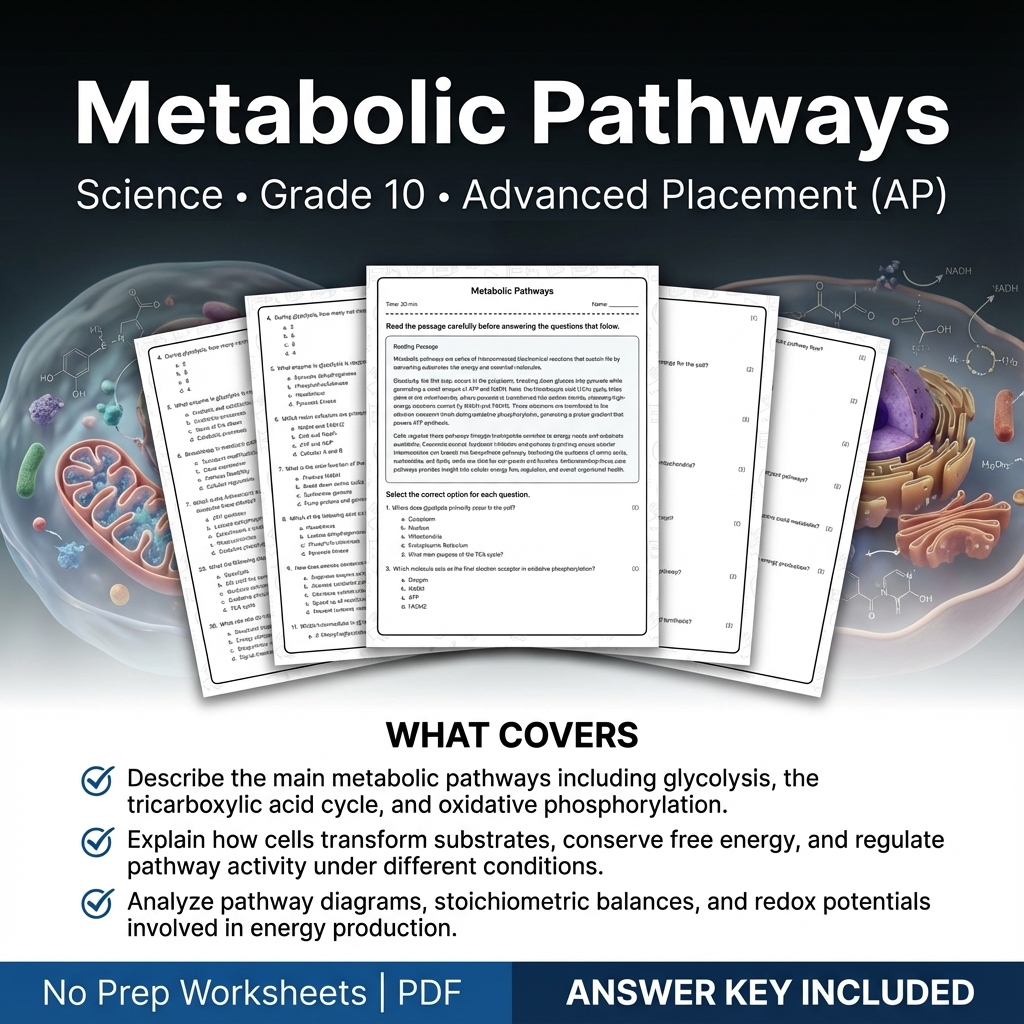
Grade 10 Science | Metabolic Pathways Worksheet (Printable PDF + Answer Key)
Created byCoral Reef LearningLearning Objectives
- Describe the main metabolic pathways including glycolysis, the tricarboxylic acid cycle, and oxidative phosphorylation.
- Explain how cells transform substrates, conserve free energy, and regulate pathway activity under different conditions.
- Analyze pathway diagrams, stoichiometric balances, and redox potentials involved in energy production.
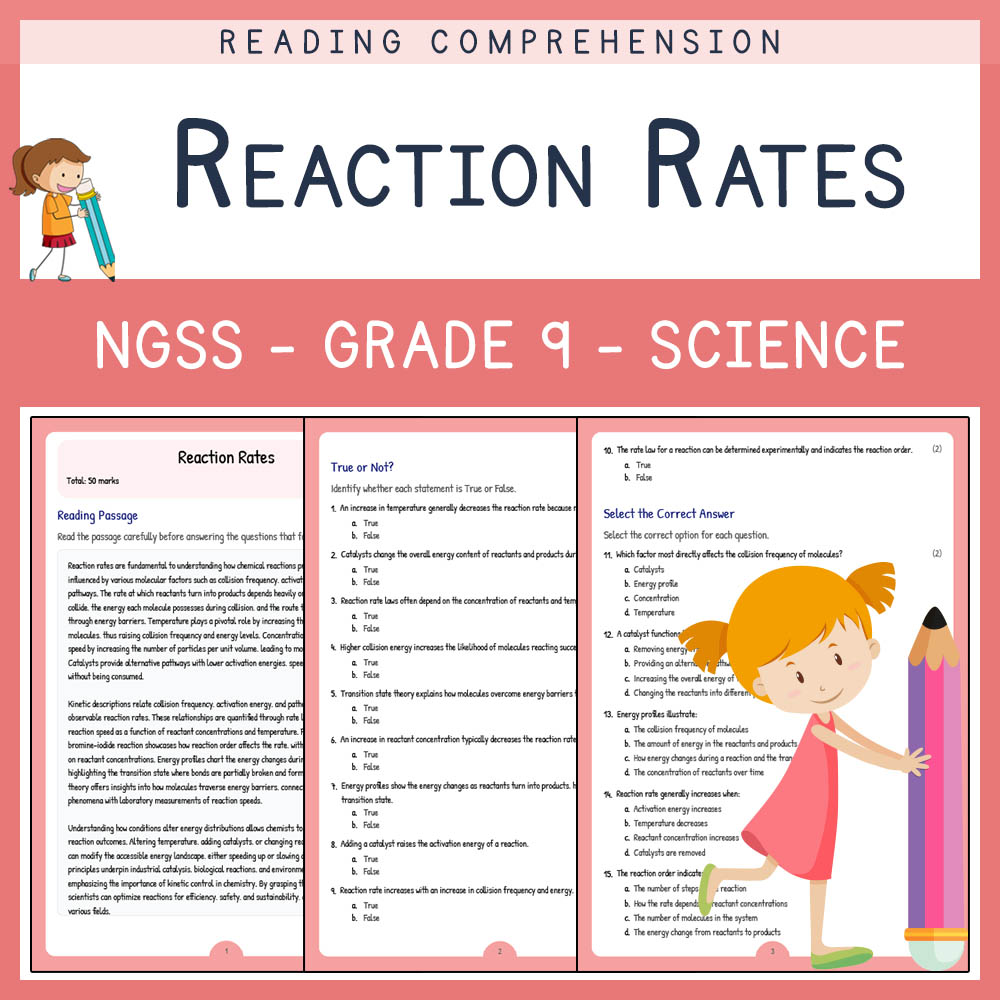
Grade 9 Science | Reaction Rates Worksheet & Answer Key (NGSS-Aligned)
Created byLumora LearningLearning Objectives
- Understand how collision frequency, activation energy, and reaction pathways influence reaction rates.
- Describe how temperature, concentration, and catalysts modify energy distributions and affect reaction speed.
- Explain the concepts of rate laws and reaction order through real-world examples.
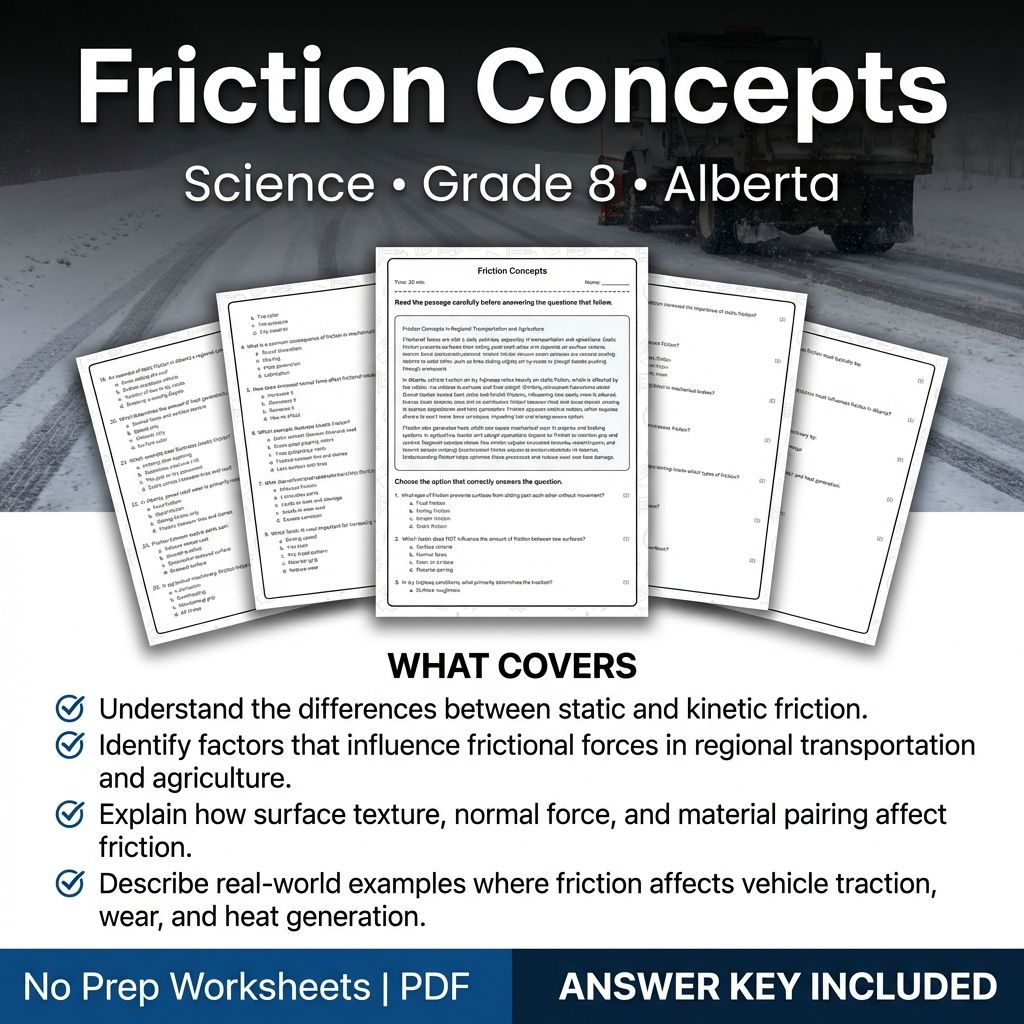
Friction Concepts Worksheet for Grade 8 Science | Alberta Standards
Created byCoral Reef LearningLearning Objectives
- Understand the differences between static and kinetic friction.
- Identify factors that influence frictional forces in regional transportation and agriculture.
- Explain how surface texture, normal force, and material pairing affect friction.
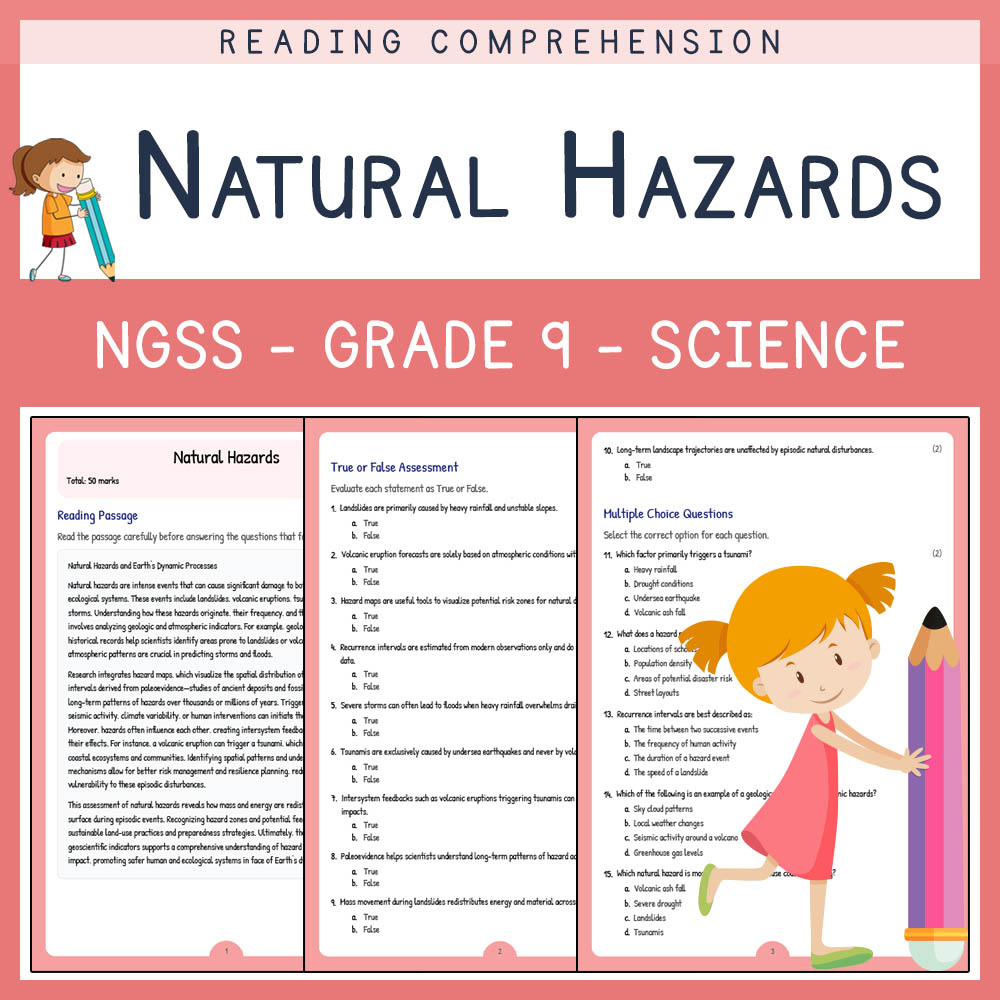
Grade 9 Science | Natural Hazards Worksheet (Answer Key & Rubric) NGSS Aligned
Created byLumora LearningLearning Objectives
- Understand the key processes and indicators used to assess natural hazards.
- Analyze spatial patterns and triggering mechanisms of various natural hazard events.
- Evaluate the impacts of natural hazards on human systems and ecological landscapes.
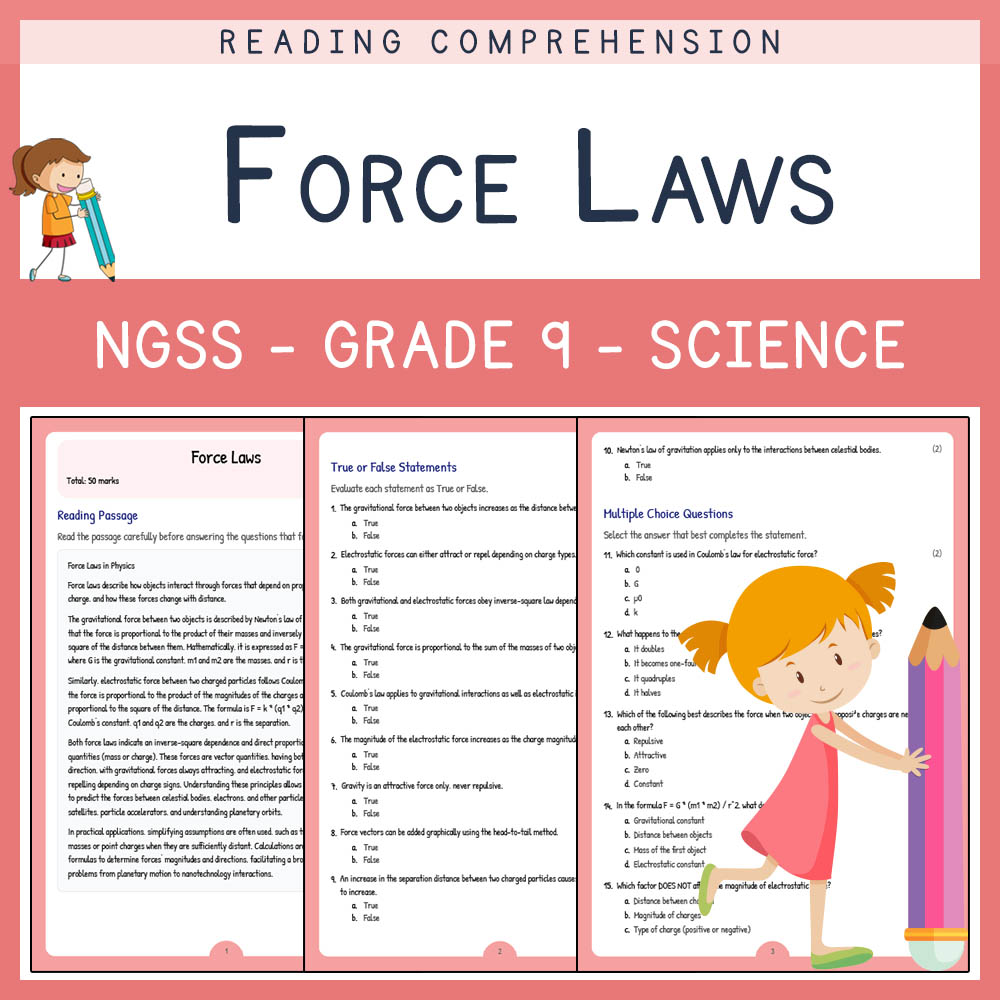
Grade 9 Science | Force Laws Worksheet with Answer Key for NGSS Alignment
Created byLumora LearningLearning Objectives
- Understand the mathematical representation of gravitational and electrostatic forces and their inverse-square dependence.
- Apply force equations to calculate magnitudes and directions of forces between objects.
- Interpret vector directions in force interactions and predict net force outcomes.
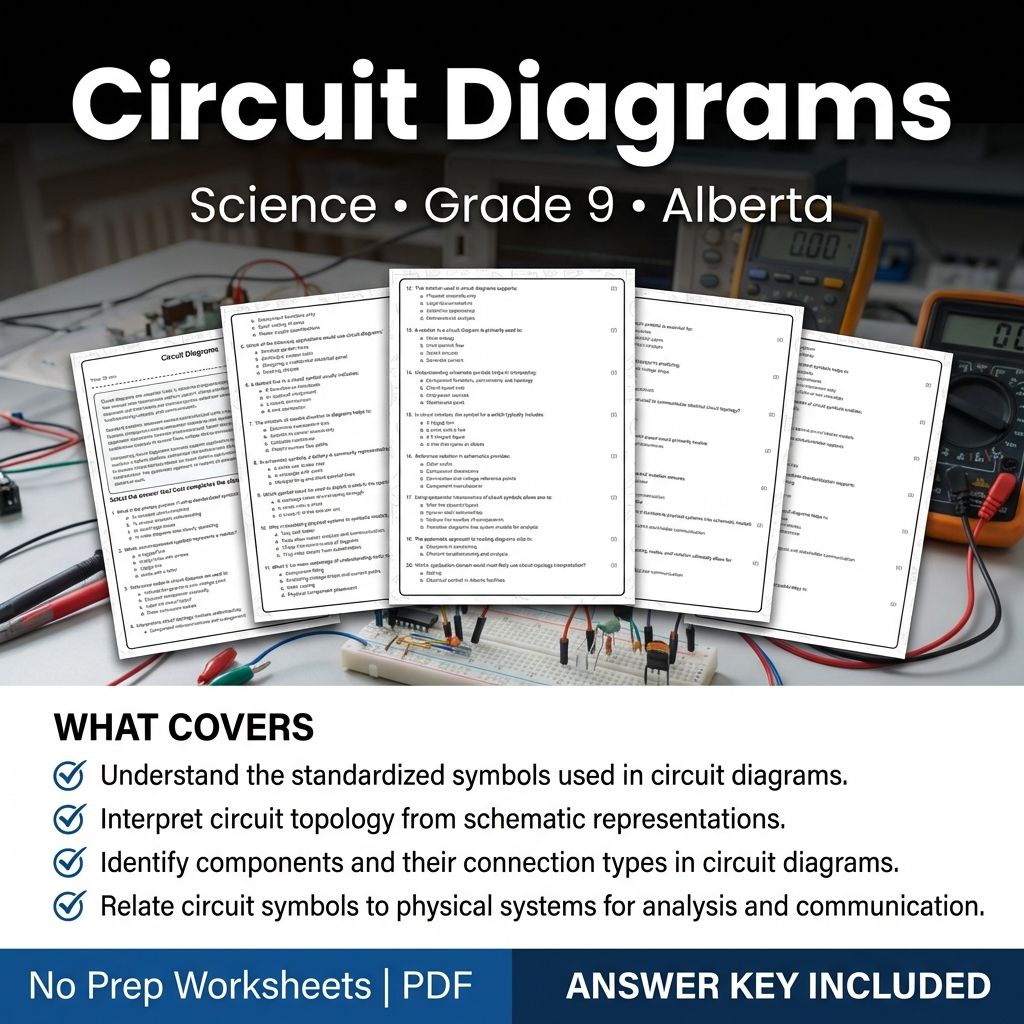
Grade 9 Science Worksheet on Circuit Diagrams | Alberta Standards
Created byCoral Reef LearningLearning Objectives
- Understand the standardized symbols used in circuit diagrams.
- Interpret circuit topology from schematic representations.
- Identify components and their connection types in circuit diagrams.
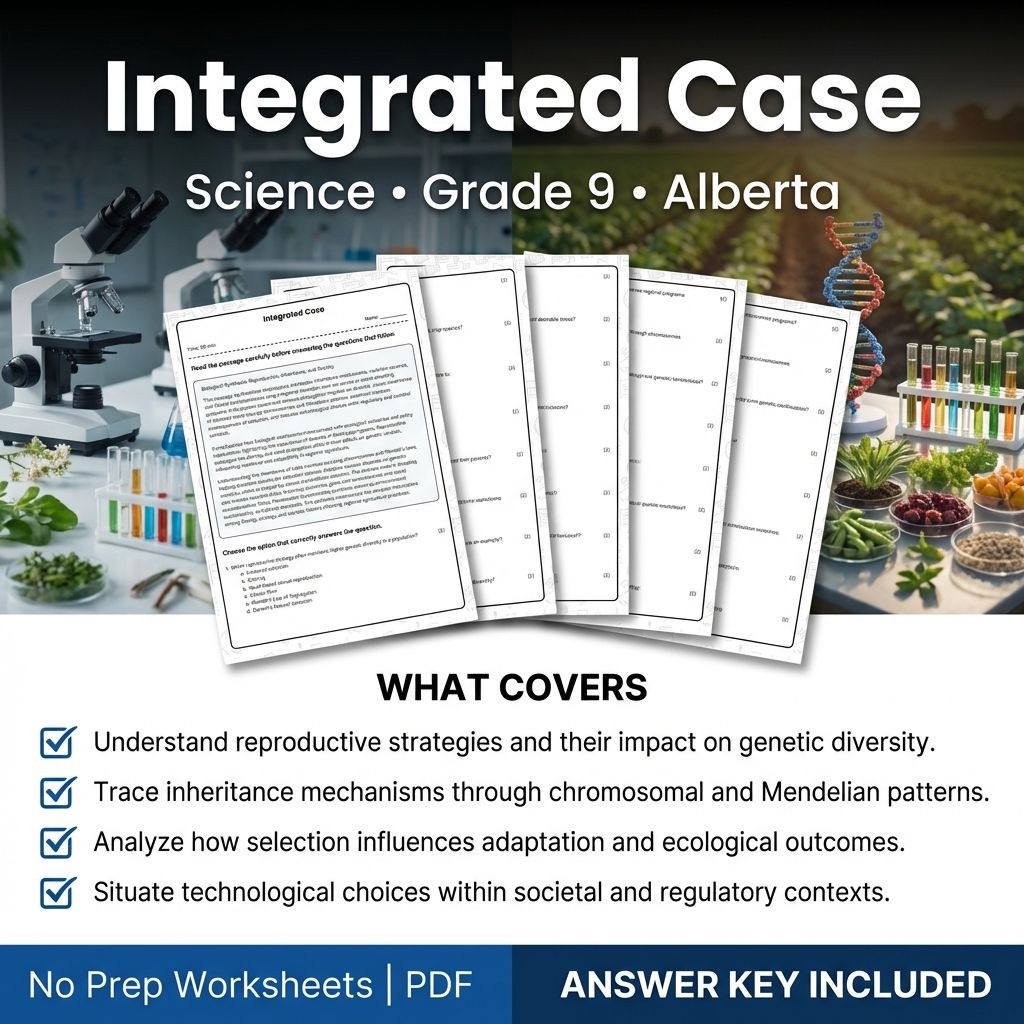
Grade 9 Science Worksheet on Integrated Case | Alberta Standards
Created byCoral Reef LearningLearning Objectives
- Understand reproductive strategies and their impact on genetic diversity.
- Trace inheritance mechanisms through chromosomal and Mendelian patterns.
- Analyze how selection influences adaptation and ecological outcomes.
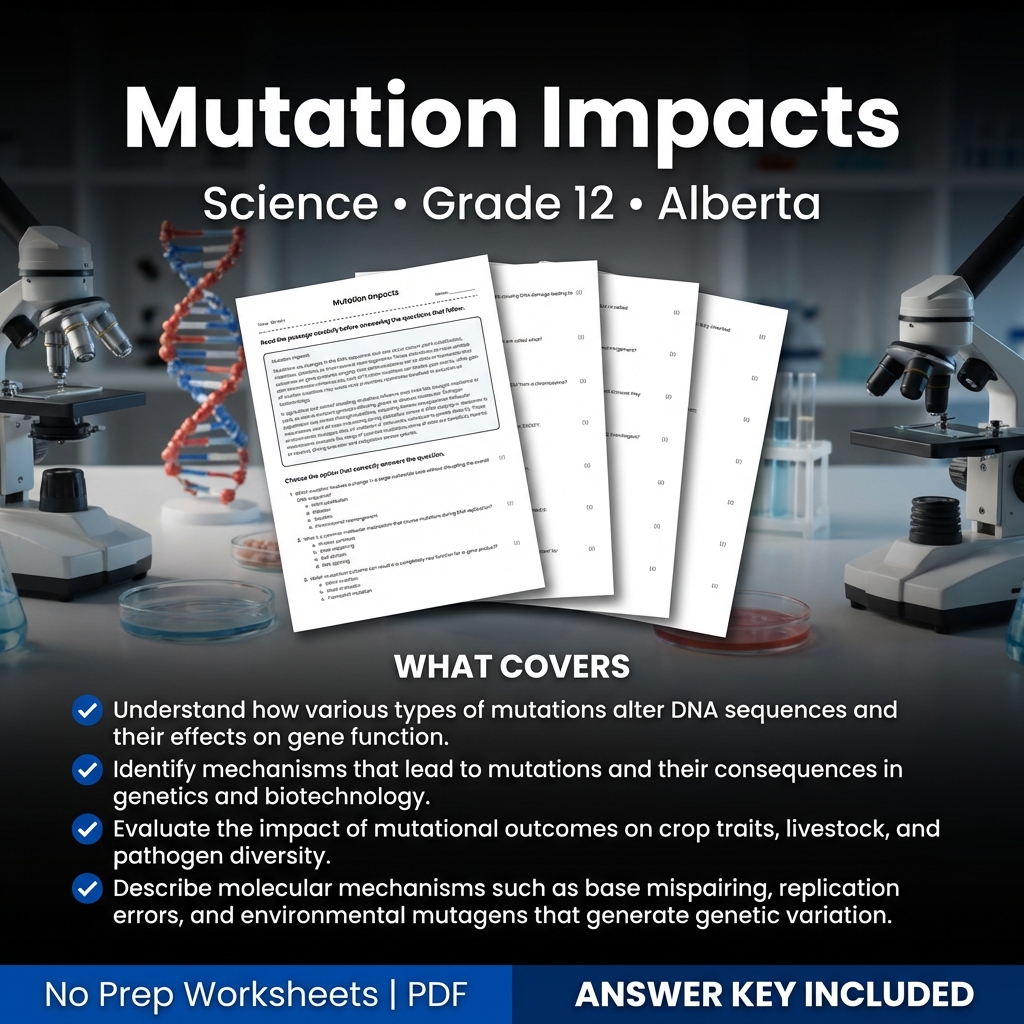
Mutation Impacts Worksheet for Grade 12 Science | Alberta Standards
Created byCoral Reef LearningLearning Objectives
- Understand how various types of mutations alter DNA sequences and their effects on gene function.
- Identify mechanisms that lead to mutations and their consequences in genetics and biotechnology.
- Evaluate the impact of mutational outcomes on crop traits, livestock, and pathogen diversity.
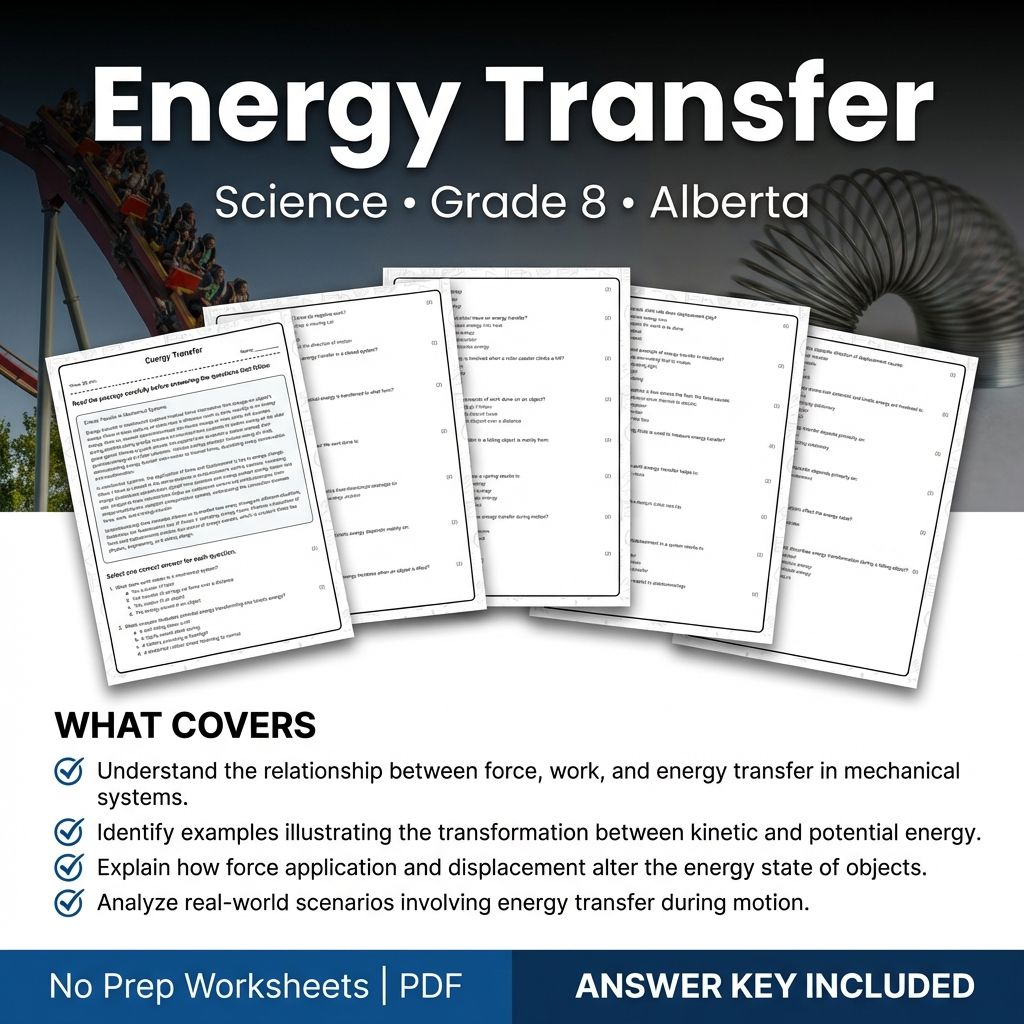
Energy Transfer Worksheet for Grade 8 Science | Alberta Standards
Created byCoral Reef LearningLearning Objectives
- Understand the relationship between force, work, and energy transfer in mechanical systems.
- Identify examples illustrating the transformation between kinetic and potential energy.
- Explain how force application and displacement alter the energy state of objects.
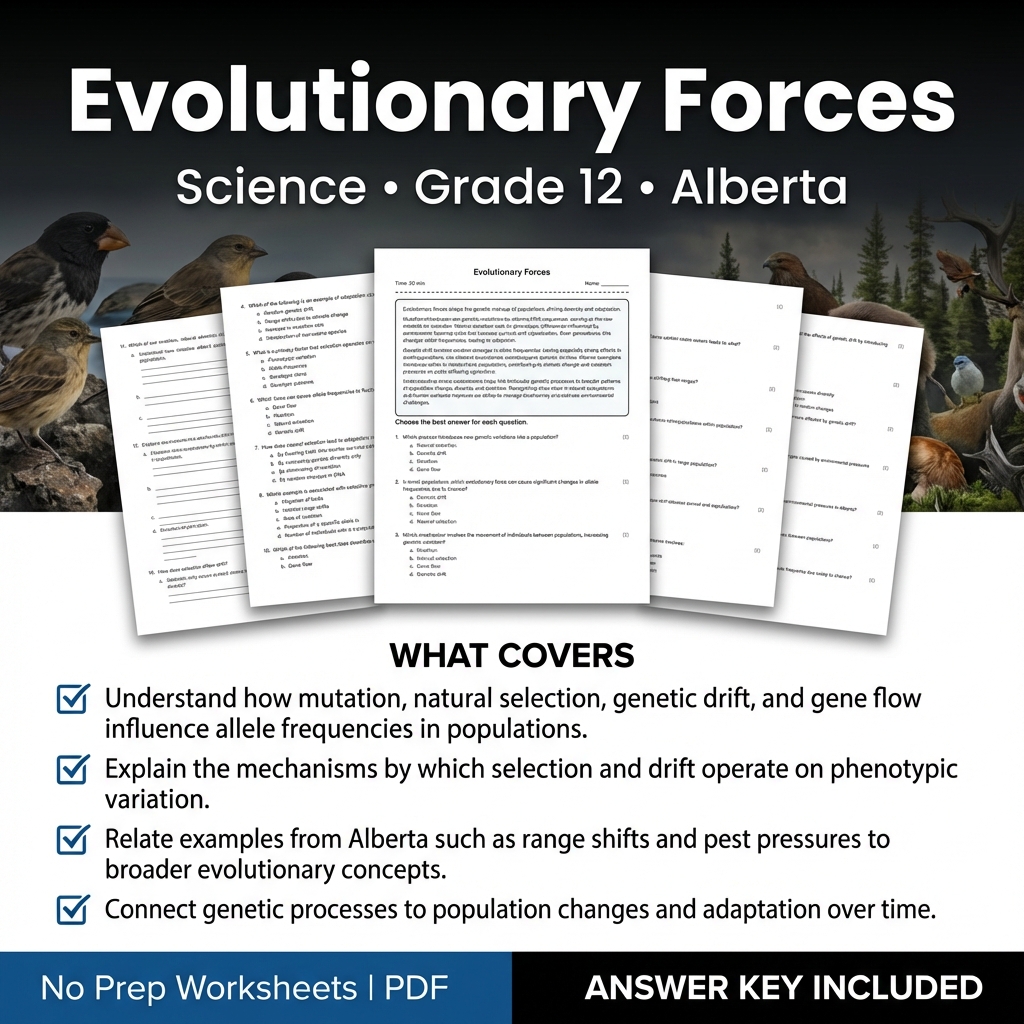
Evolutionary Forces Worksheet for Grade 12 Science | Alberta Standards
Created byCoral Reef LearningLearning Objectives
- Understand how mutation, natural selection, genetic drift, and gene flow influence allele frequencies in populations.
- Explain the mechanisms by which selection and drift operate on phenotypic variation.
- Relate examples from Alberta such as range shifts and pest pressures to broader evolutionary concepts.
Browse more categories
About Science Worksheets
Find Science worksheets spanning core skills, practice, and review. All 42,859 resources are instant PDF downloads for the classroom or home.
Every worksheet on MyTeachingSheets is created by independent teacher-authors and reviewed before publication. All resources download as printable PDFs for classroom, homework, or at-home practice, and many include answer keys. Preview any worksheet free before buying.