
Science Worksheets
42,685 subject resources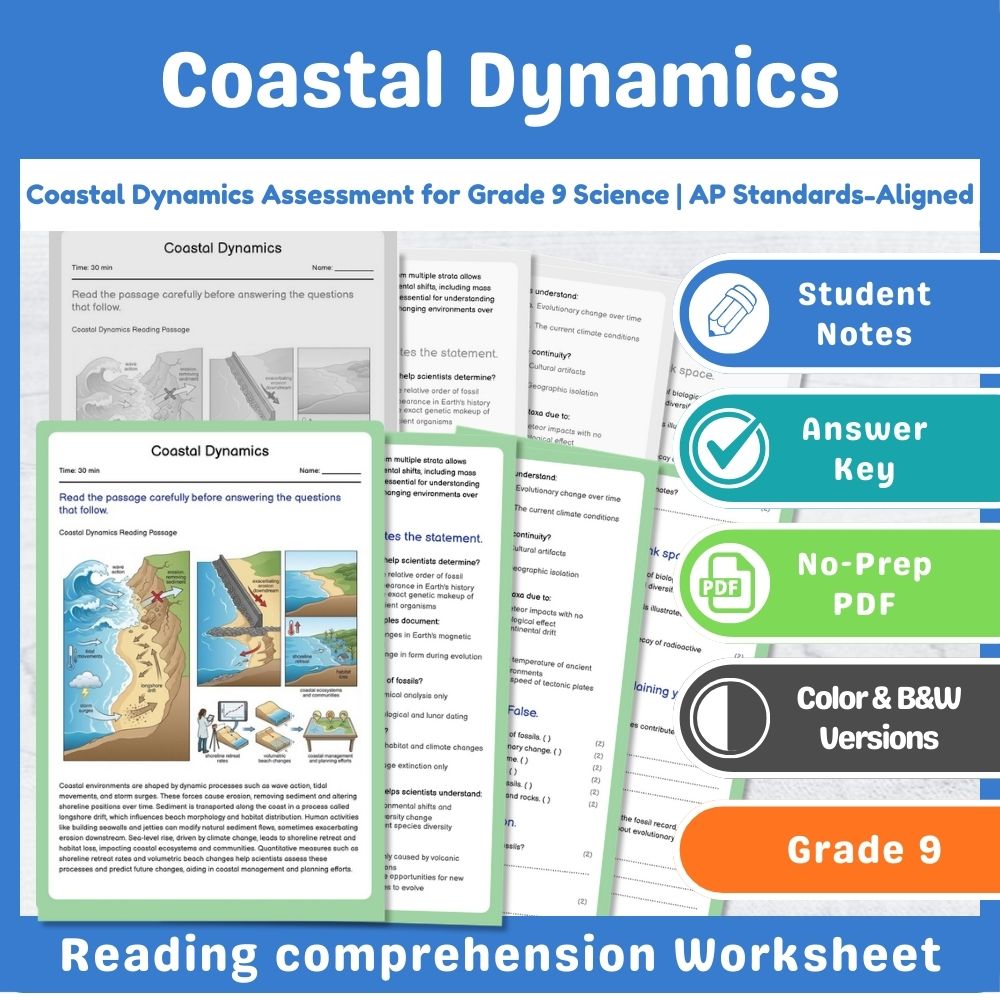
Coastal Dynamics Assessment for Grade 9 Science | AP Standards-Aligned
 Created byPrism Point Learning
Learning Objectives
- Understand the processes of coastal erosion, sediment transport, and shoreline response to natural forces.
- Analyze the impact of sea-level change on coastal morphology and habitats.
- Interpret quantitative indicators such as shoreline retreat rates and beach volume changes.
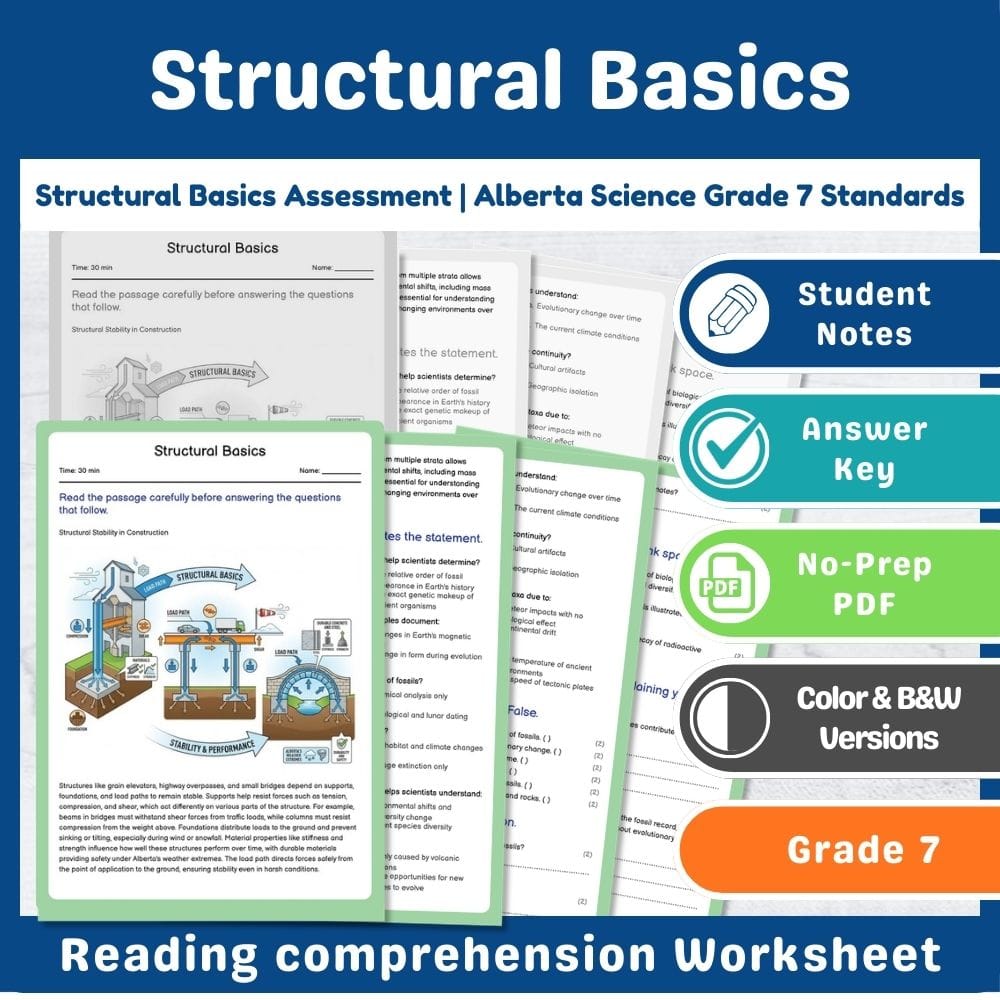
Structural Basics Assessment | Alberta Science Grade 7 Standards
Created byPrism Point LearningLearning Objectives
- Explain how supports, foundations, and load paths contribute to structural stability.
- Describe the effects of compression, tension, and shear on beams, columns, and foundations.
- Identify material properties such as stiffness, strength, and durability relevant to construction safety.

Iterative Improvement Assessment | Standards-Aligned Grade 6 Science
Created byPrism Point LearningLearning Objectives
- Understand the concept of iterative improvement and how it involves evaluation and refinement.
- Identify the steps involved in using data to improve prototypes or designs.
- Explain how trade-offs are managed during iterative design processes.
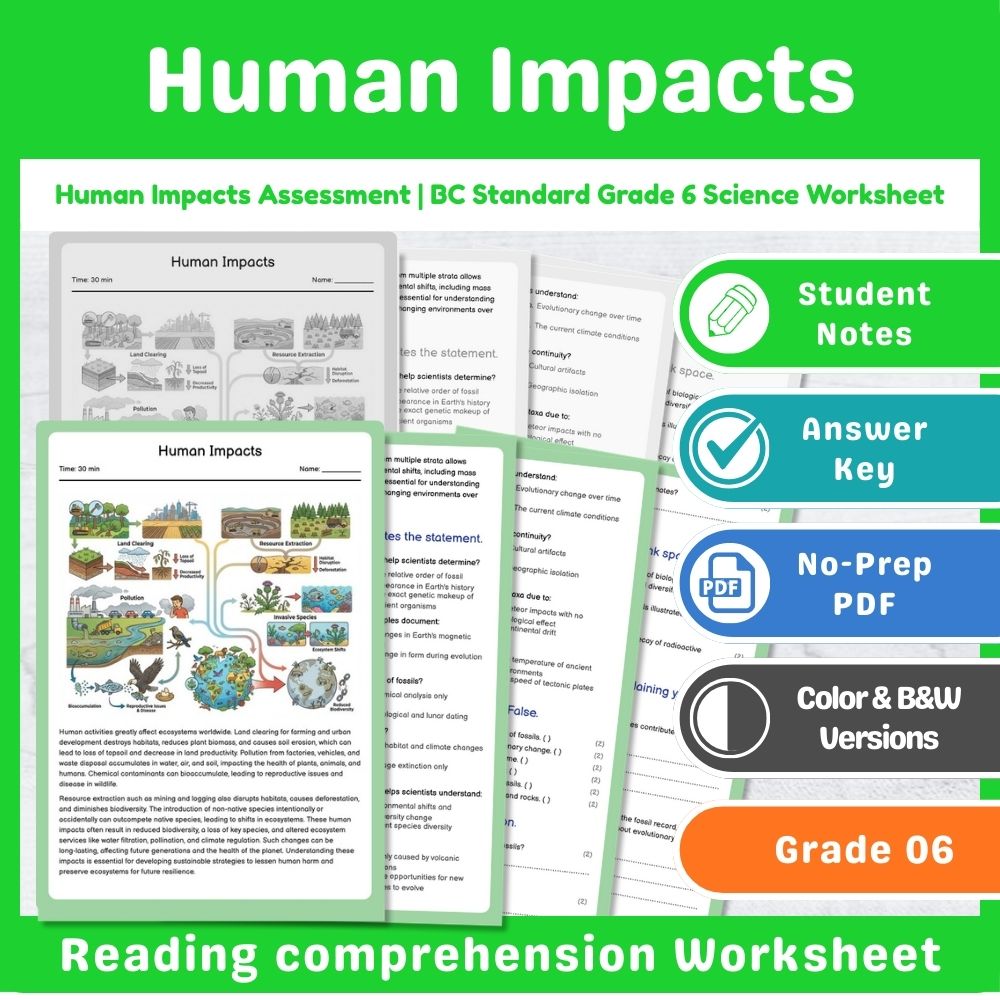
Human Impacts Assessment | BC Standards Grade 6 Science
Created byPrism Point LearningLearning Objectives
- Understand how human activities alter ecosystems through land clearing, pollution, resource extraction, and species introduction.
- Identify the effects of deforestation and pollution on biodiversity and ecosystem functions.
- Analyze how human impacts can lead to long-term environmental changes and reduced ecosystem services.

Conservation Strategies Assessment for Grade 11 Science | TEKS
Created byPrism Point LearningLearning Objectives
- Understand various conservation strategies and their roles in biodiversity preservation.
- Identify and differentiate among protected areas, habitat restoration, and policy interventions.
- Explain the importance of connectivity corridors and monitoring in conservation efforts.
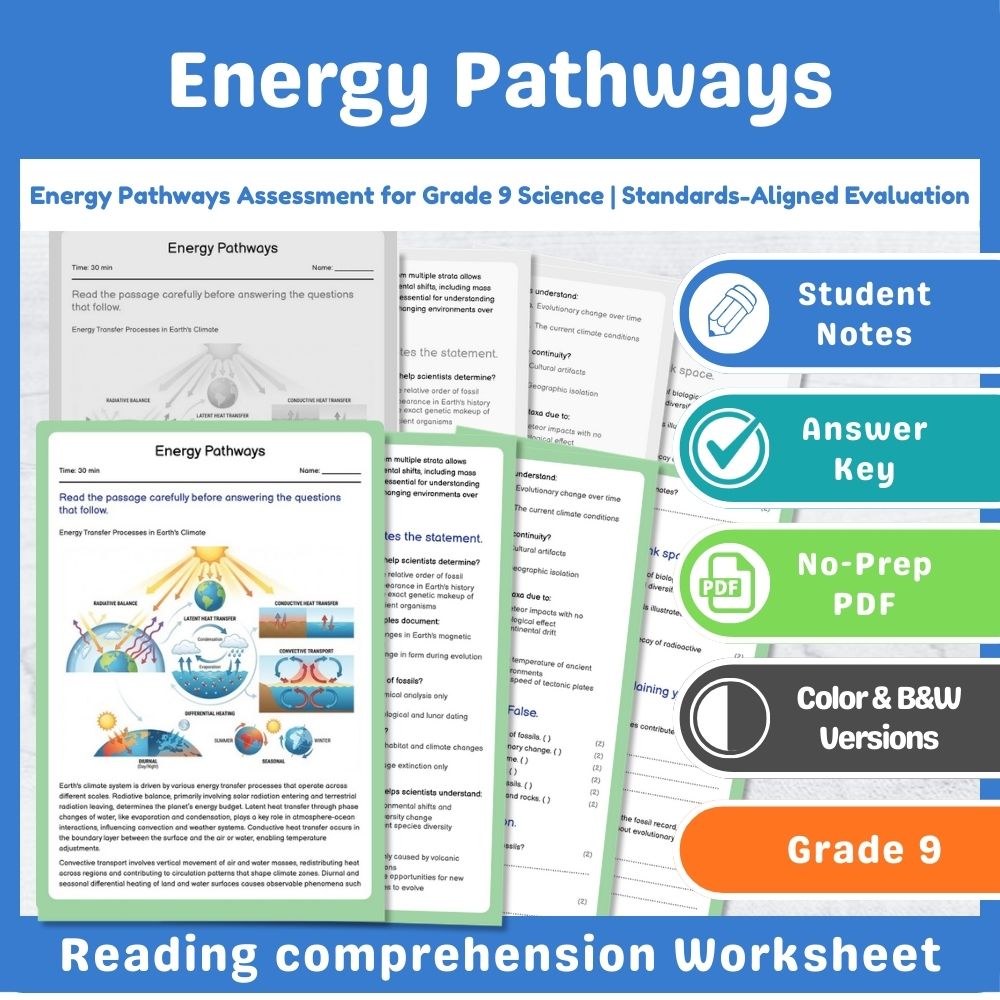
Energy Pathways Assessment for Grade 9 Science | Standards-Aligned Evaluation
Created byPrism Point LearningLearning Objectives
- Describe the processes involved in energy transfer within the atmosphere and ocean.
- Interpret how differential heating influences circulation patterns and weather.
- Identify various energy fluxes using diagrams and tables, and relate them to climate indicators.

Ecosystem Matter Cycling Assessment | Standards-Aligned Grade 8 Science
Created byPrism Point LearningLearning Objectives
- Understand how matter cycles through ecosystems involving living and nonliving components.
- Identify processes such as decomposition, gas exchange, and nutrient transformation that return elements to the environment.
- Explain how producers and consumers transfer matter within ecosystems over time.
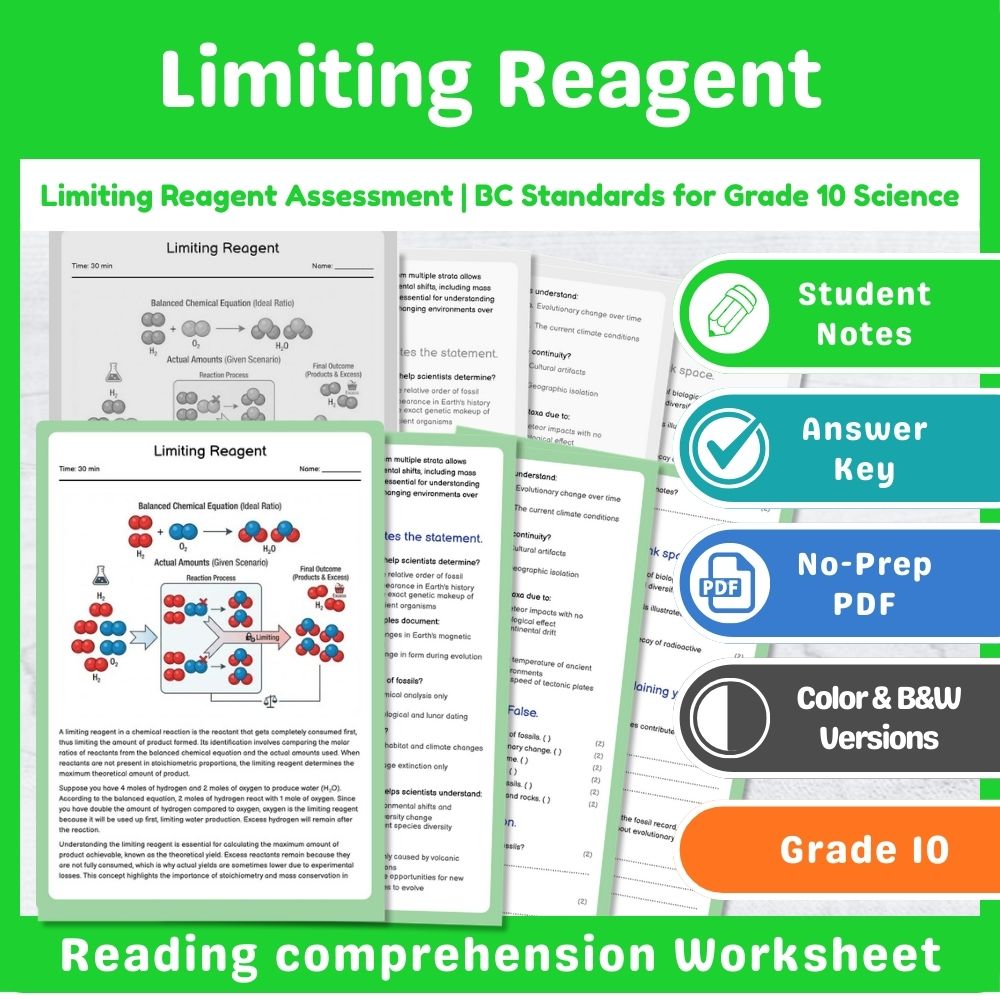
Limiting Reagent Assessment | BC Standards for Grade 10 Science
Created byPrism Point LearningLearning Objectives
- Understand the concept of a limiting reagent in a chemical reaction.
- Learn how to compare stoichiometric ratios to identify the limiting reactant.
- Calculate the theoretical yield based on limiting reagent analysis.

Analytical Techniques Assessment | Alberta Standards Grade 10 Science
Created byPrism Point LearningLearning Objectives
- Describe various spectroscopic, chromatographic, and titrimetric methods used in analytical chemistry.
- Interpret instrumental data to determine the composition of substances.
- Understand detection limits and their significance in analytical measurements.

Evidence Explanations Assessment | Standards-Aligned Grade 6 Science
Created byPrism Point LearningLearning Objectives
- Understand how evidence connects claims to scientific explanations.
- Identify different types of evidence such as trends, ranges, and matches.
- Explain how scientific concepts provide reasoning links in explanations.
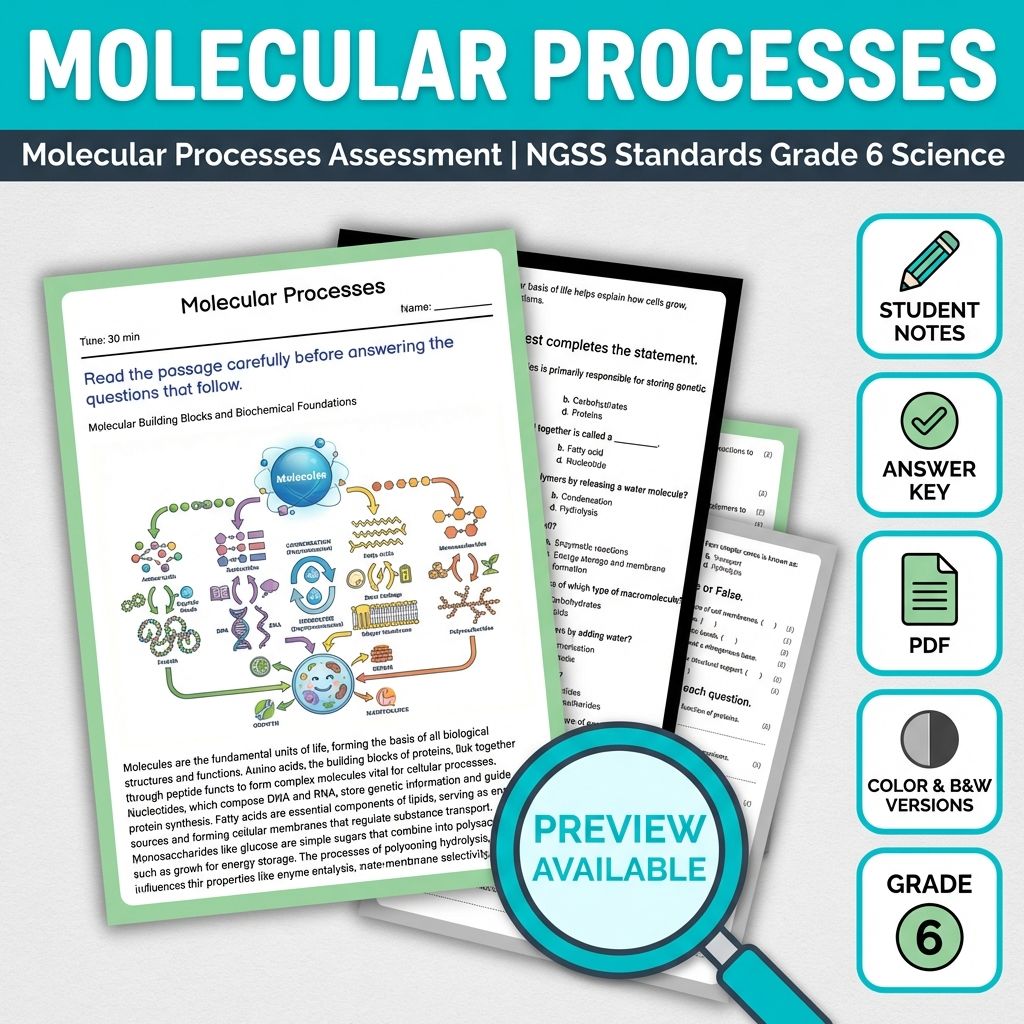
Molecular Processes Assessment | NGSS Standards Grade 6 Science
Created byPrism Point LearningLearning Objectives
- Explain the role of amino acids, nucleotides, fatty acids, and monosaccharides as molecular building blocks.
- Describe how monomers assemble into polymers via condensation reactions.
- Understand how macromolecules like proteins, nucleic acids, lipids, and carbohydrates function in biological systems.

Data Reasoning and Reliability Assessment | Standards-Aligned Grade 7 Science
Created byPrism Point LearningLearning Objectives
- Understand how patterns and variability influence data interpretation.
- Identify sources of error and their impact on measurement reliability.
- Evaluate the quality of data based on measurement consistency.
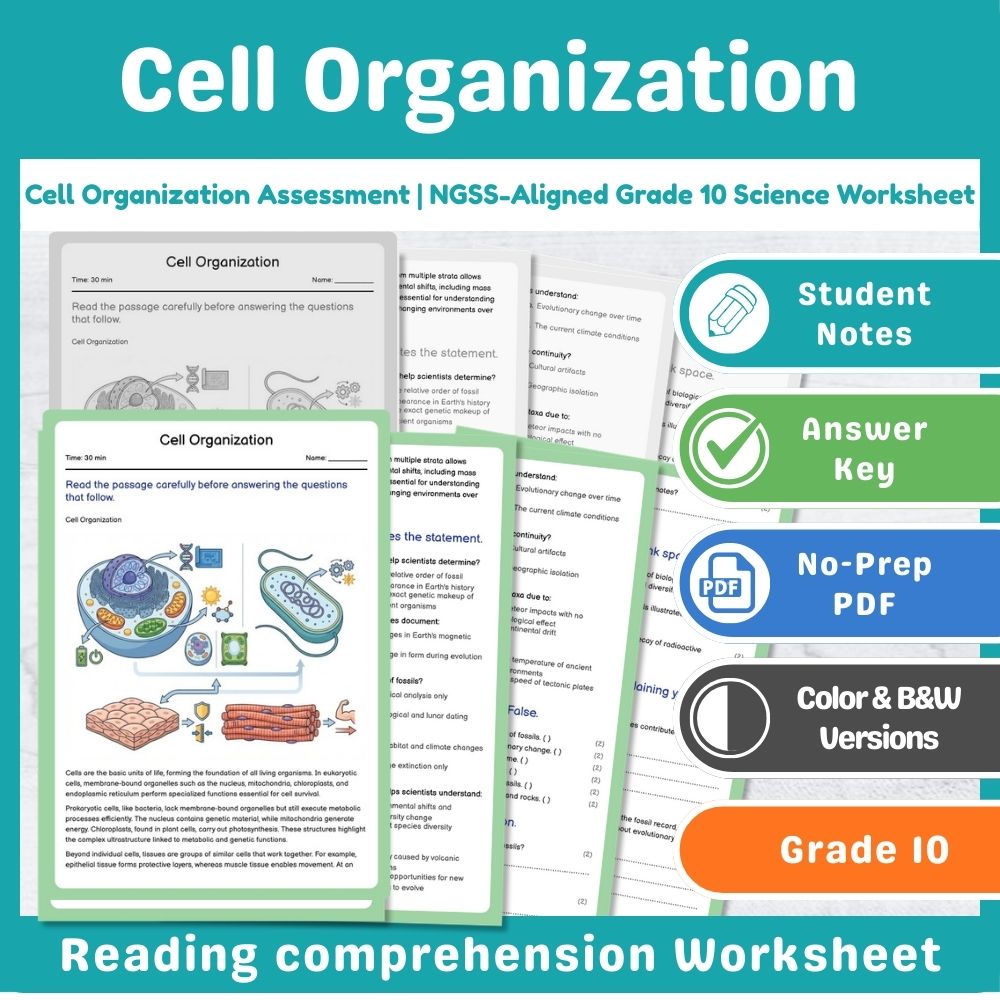
Cell Organization Assessment | NGSS-Aligned Grade 10 Science Worksheet
Created byPrism Point LearningLearning Objectives
- Identify and describe the functions of membrane-bound organelles in eukaryotic cells.
- Compare the cellular structures of prokaryotic and eukaryotic cells.
- Explain the hierarchical organization from cells to tissues and organs.
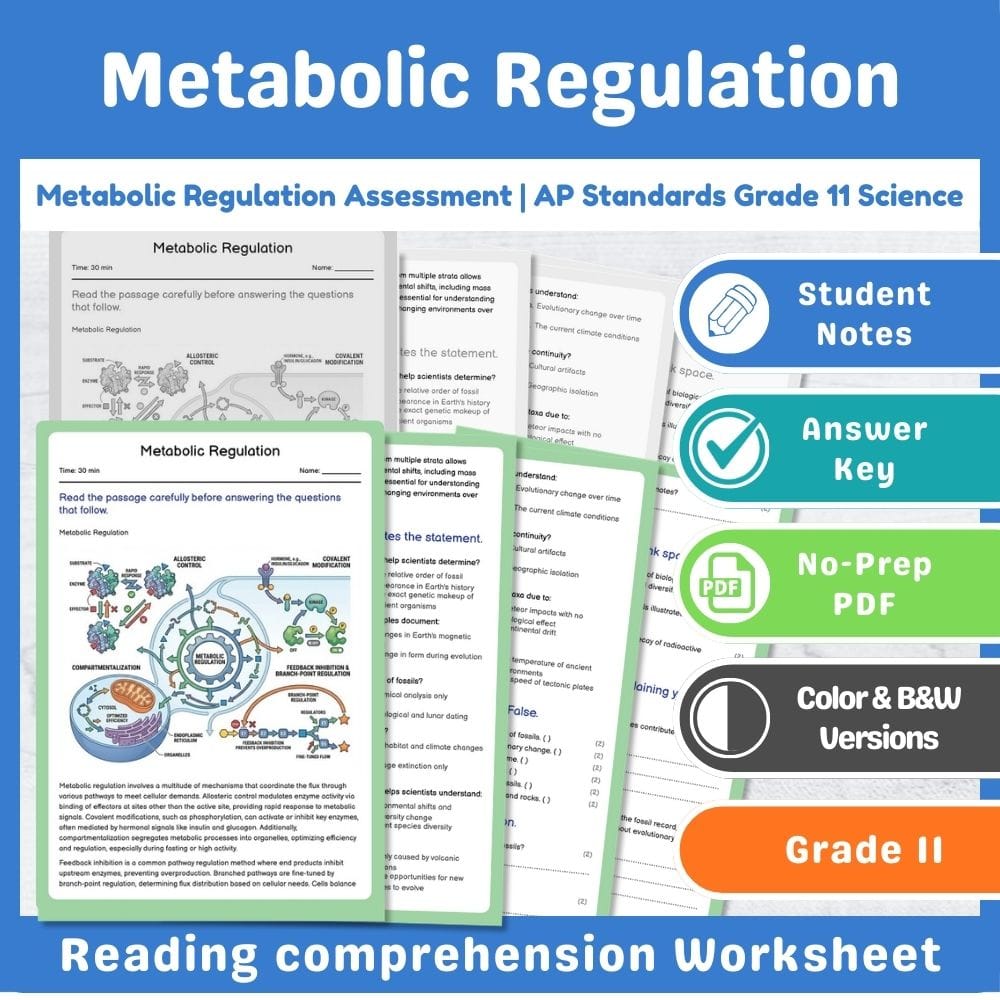
Metabolic Regulation Assessment | AP Standards Grade 11 Science
Created byPrism Point LearningLearning Objectives
- Describe mechanisms that regulate metabolic pathway flux including allosteric control and covalent modification.
- Explain how hormones and compartmentalization influence metabolic homeostasis during fasting and activity.
- Use pathway diagrams and models to analyze feedback inhibition and branch-point regulation.
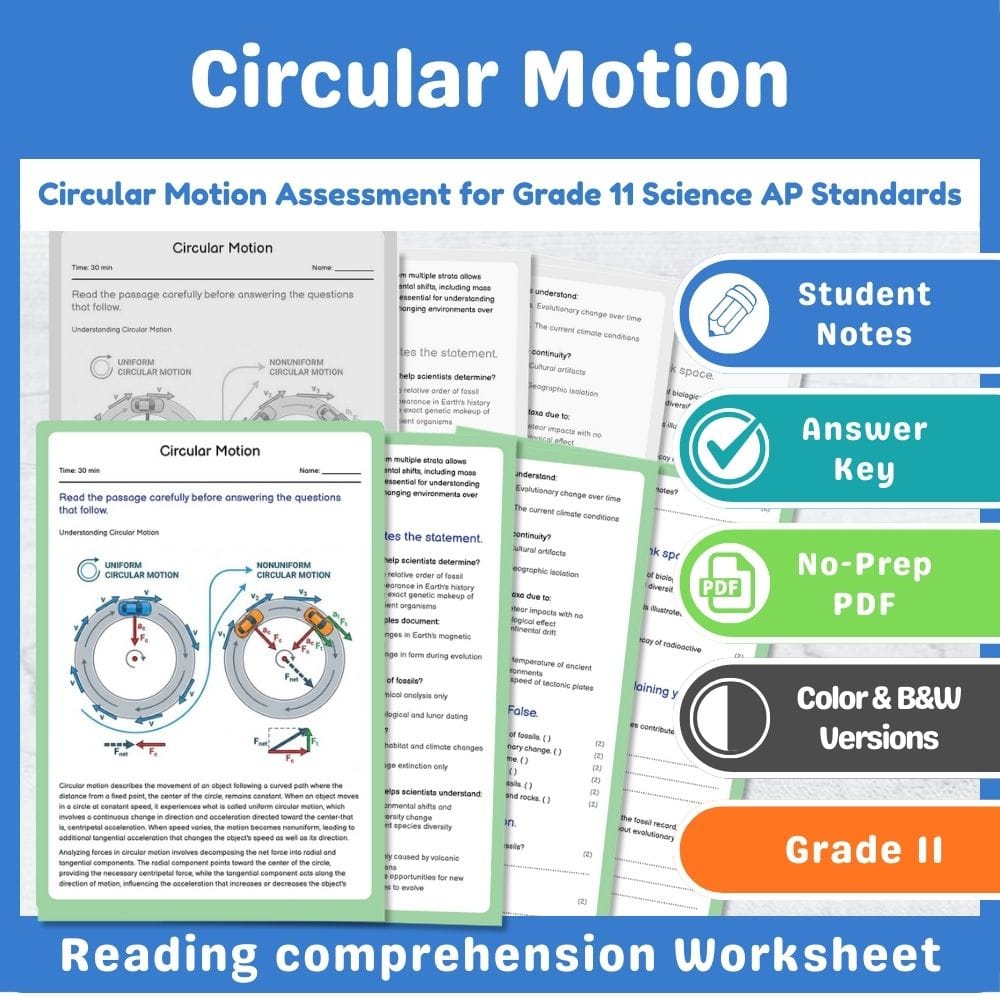
Circular Motion Assessment for Grade 11 Science AP Standards
Created byPrism Point LearningLearning Objectives
- Describe uniform and nonuniform circular motion with emphasis on centripetal and tangential accelerations.
- Model net forces in circular motion by analyzing radial and tangential components.
- Express acceleration vectors in polar coordinates and relate them to the change in velocity direction.
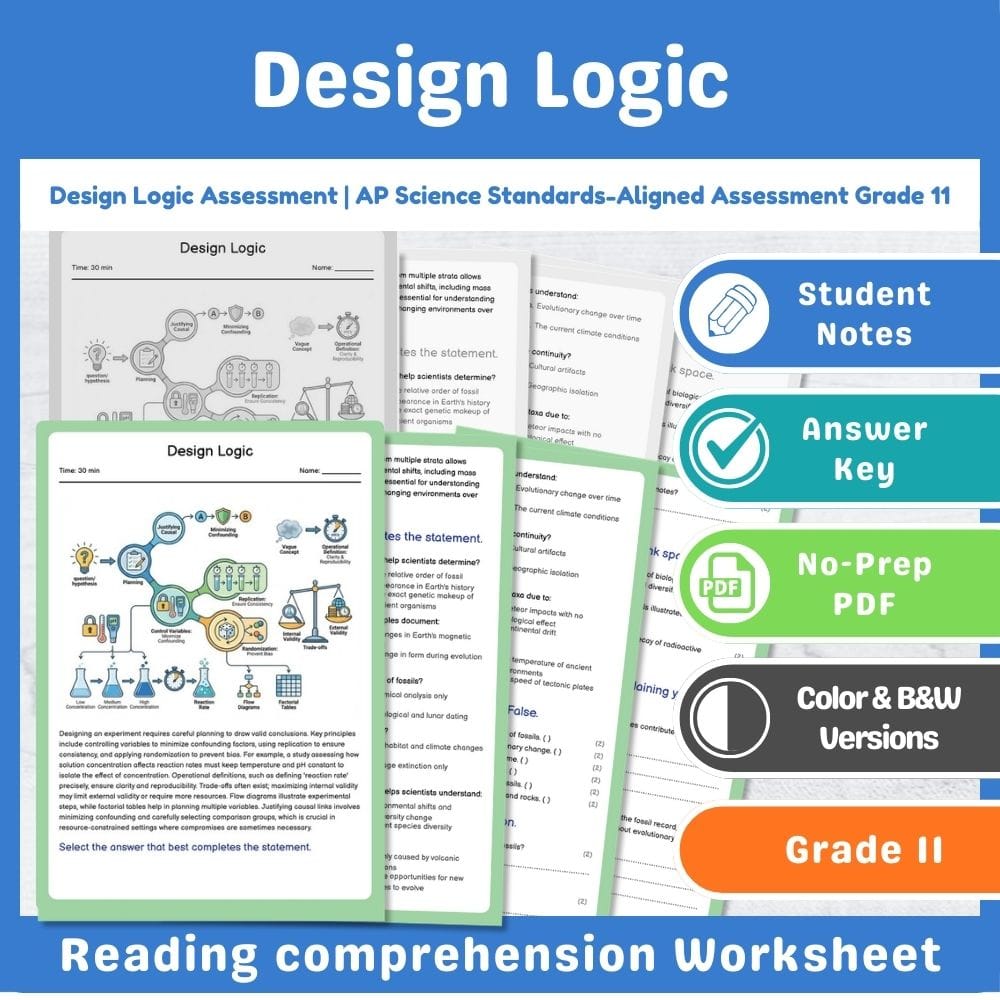
Design Logic Assessment | AP Science Standards-Aligned Assessment Grade 11
Created byPrism Point LearningLearning Objectives
- Understand the principles of experimental design, including variable control, replication, and randomization.
- Describe how operational definitions of variables enhance experimental clarity.
- Analyze examples such as solution concentration effects on reaction rates and growth chamber studies to identify design strategies.

Plate Motion and Surfaces Assessment | General Grade 8 Science Standards
Created byPrism Point LearningLearning Objectives
- Understand the different types of plate boundaries and their effects on Earth's surface.
- Identify evidence that supports the theory of plate tectonics.
- Explain how geological features like mountains, earthquakes, and volcanoes are related to plate movements.
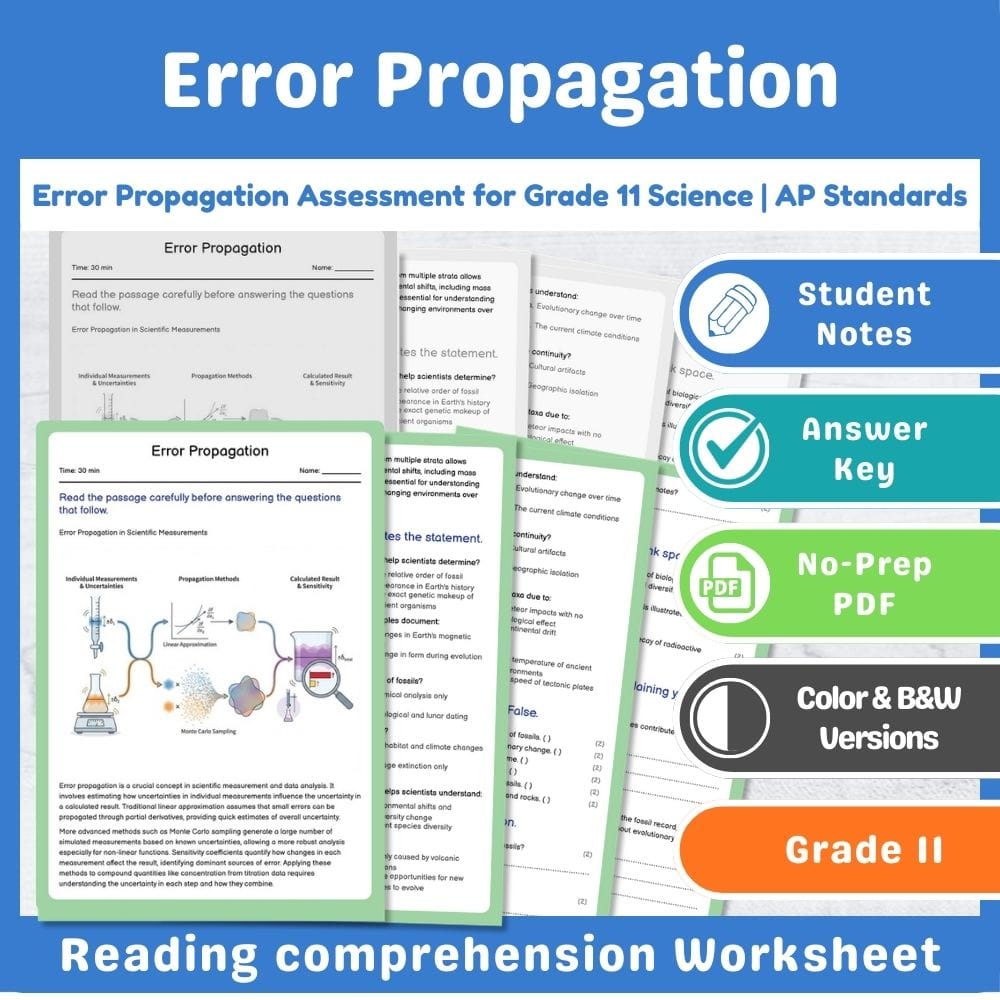
Error Propagation Assessment for Grade 11 Science | AP Standards
Created byPrism Point LearningLearning Objectives
- Understand the mathematical frameworks for propagating measurement uncertainty.
- Apply error propagation methods such as linear approximation and Monte Carlo sampling to complex quantities.
- Interpret the sources of error in experimental measurements and assess their impact on final results.
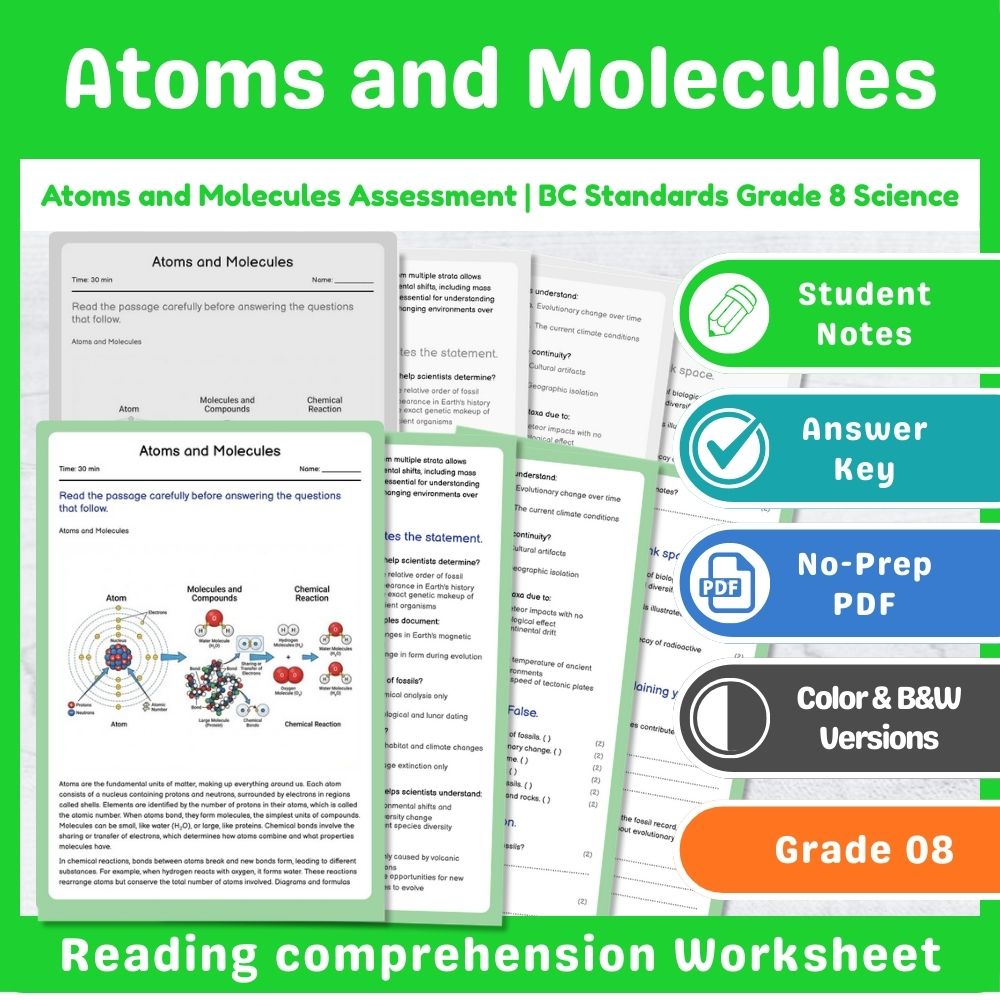
Atoms and Molecules Assessment | BC Standards Grade 8 Science
Created byPrism Point LearningLearning Objectives
- Understand the basic structure of atoms and how atoms bond to form molecules.
- Describe how chemical properties are related to atomic arrangement and bonding.
- Explain the concept of chemical reactions as bonds breaking and forming among atoms.
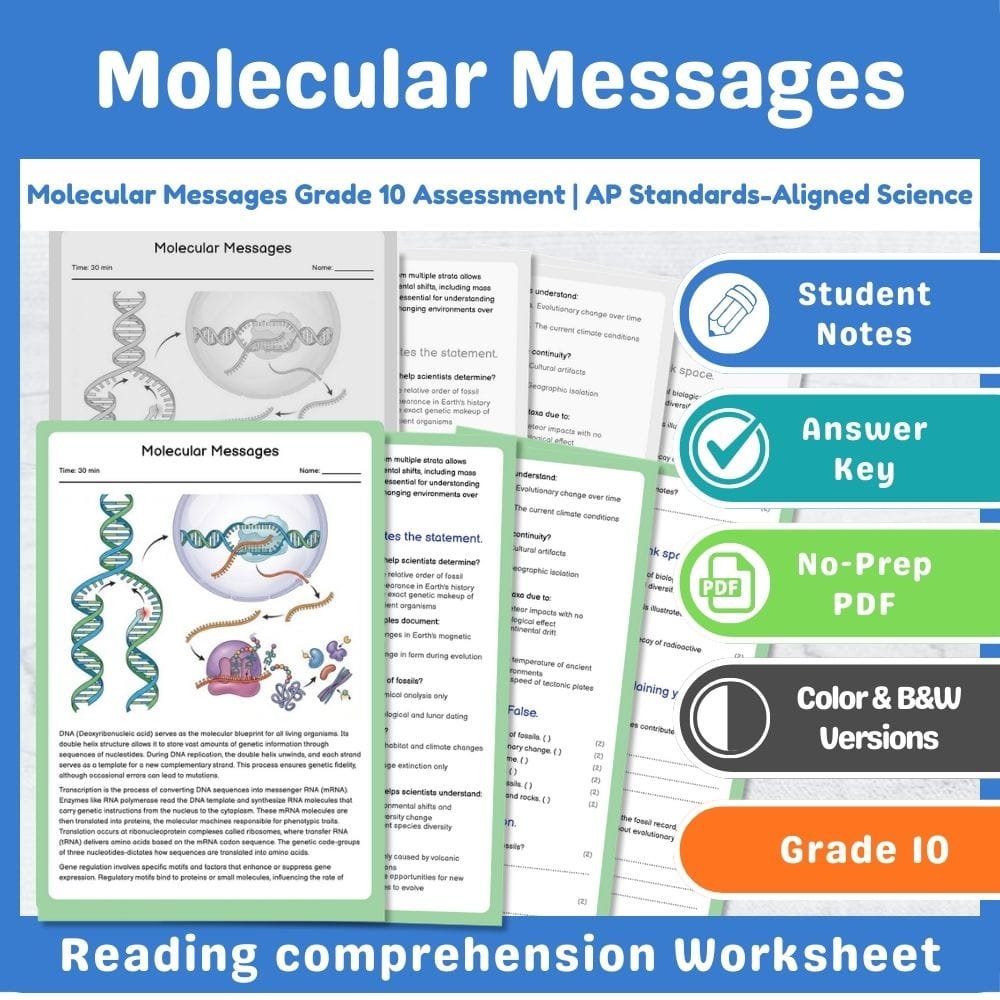
Molecular Messages Grade 10 Assessment | AP Standards-Aligned Science
Created byPrism Point LearningLearning Objectives
- Understand the structure and function of DNA and how genetic information is stored.
- Describe the processes of DNA replication, transcription, and translation.
- Explain how molecular mechanisms contribute to phenotypic expression and regulation within cells.
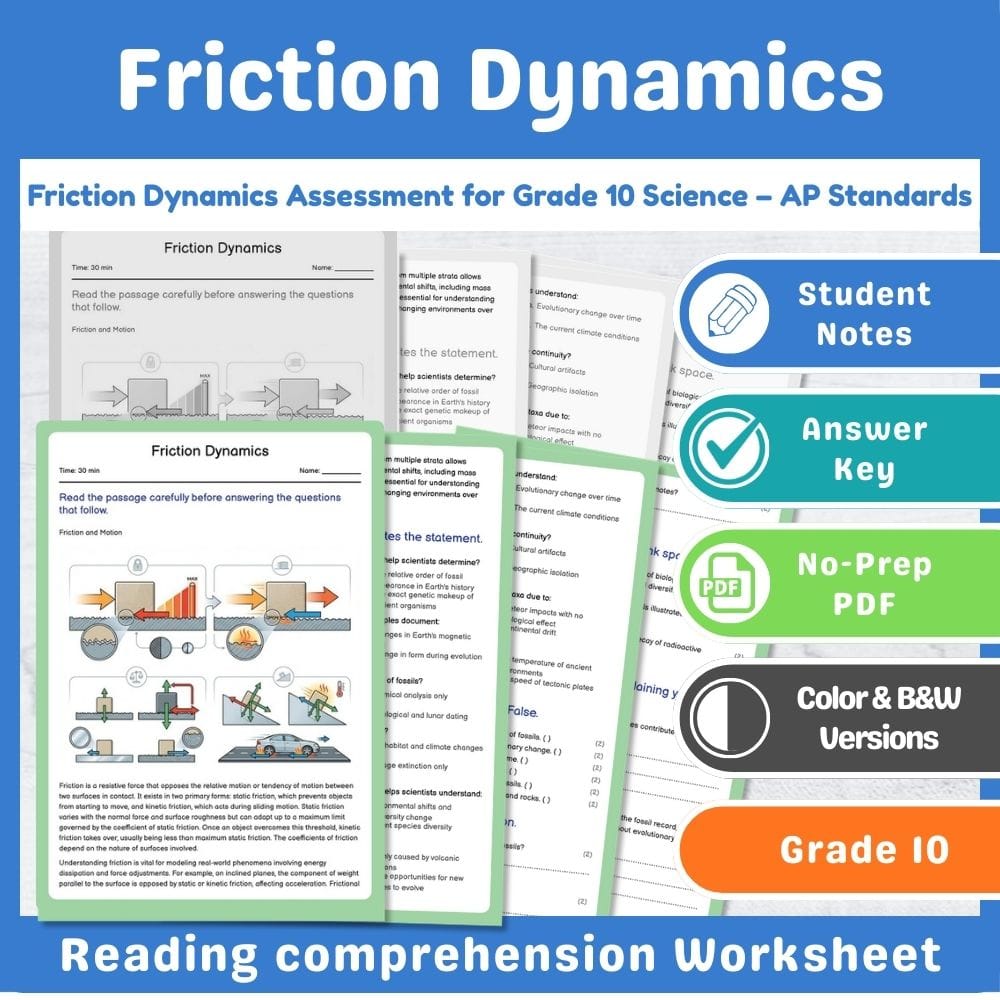
Friction Dynamics Assessment for Grade 10 Science – AP Standards
Created byPrism Point LearningLearning Objectives
- Describe the differences between static and kinetic friction and their dependence on normal force and surface properties.
- Apply coefficients of friction to predict motion and analyze energy dissipation during surface contact.
- Model the effects of frictional forces on motion using inclined-plane and surface-contact examples.
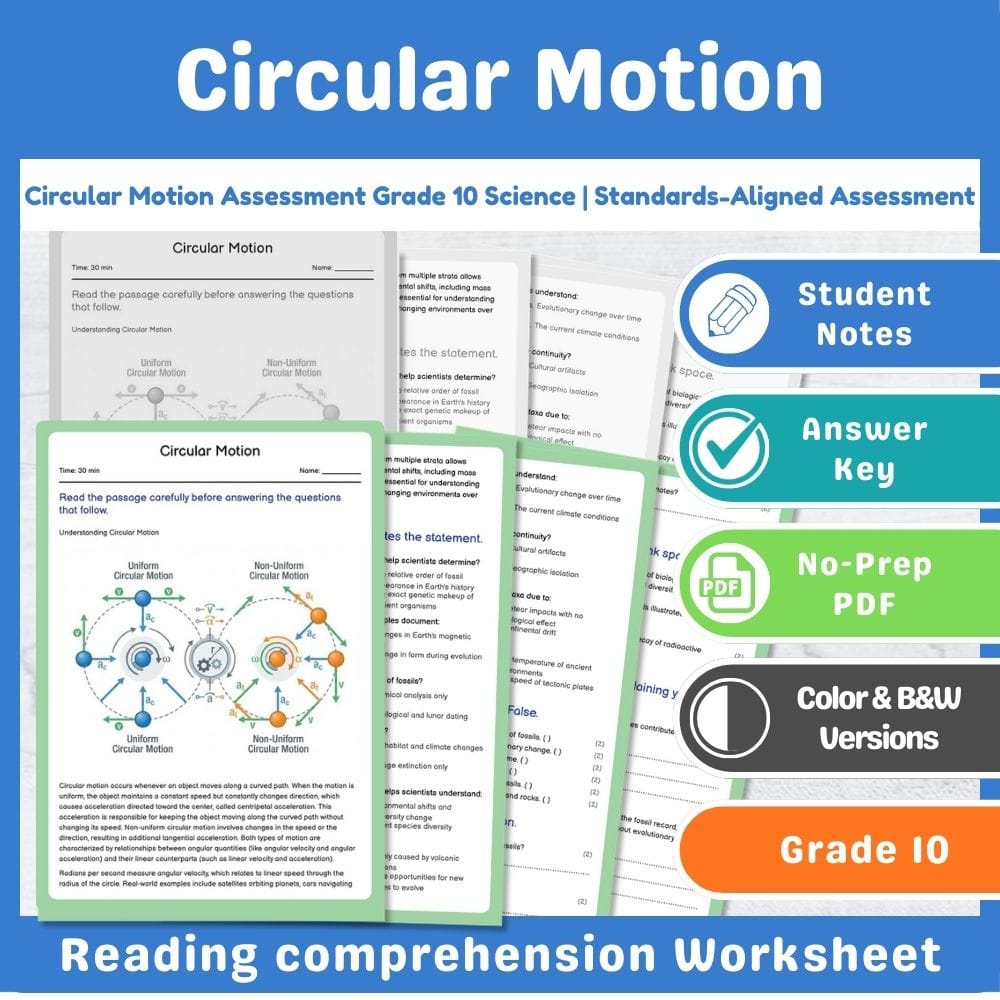
Circular Motion Assessment Grade 10 Science | Standards-Aligned Assessment
Created byPrism Point LearningLearning Objectives
- Understand the concepts of uniform and non-uniform circular motion.
- Relate angular and linear quantities such as speed, velocity, and acceleration.
- Explain the origin of centripetal acceleration and the forces involved in circular trajectories.

Governance Futures Assessment | TEKS Grade 12 Science Standards
Created byPrism Point LearningLearning Objectives
- Understand the role of regulatory standards and risk assessment in shaping scientific policy.
- Analyze the importance of international agreements and adaptive governance models in technology oversight.
- Evaluate foresight methods and scenario analysis in anticipatory planning for governance.

Cosmic Expansion Evidence Assessment | NGSSS Standards Grade 12 Science
Created byPrism Point LearningLearning Objectives
- Explain how redshift in distant galaxies provides evidence for an expanding universe
- Interpret the relationship between distance and redshift using spectral line changes
- Compare evidence from multiple observations (e.g., distant galaxies and large-scale structure) with cosmic expansion models
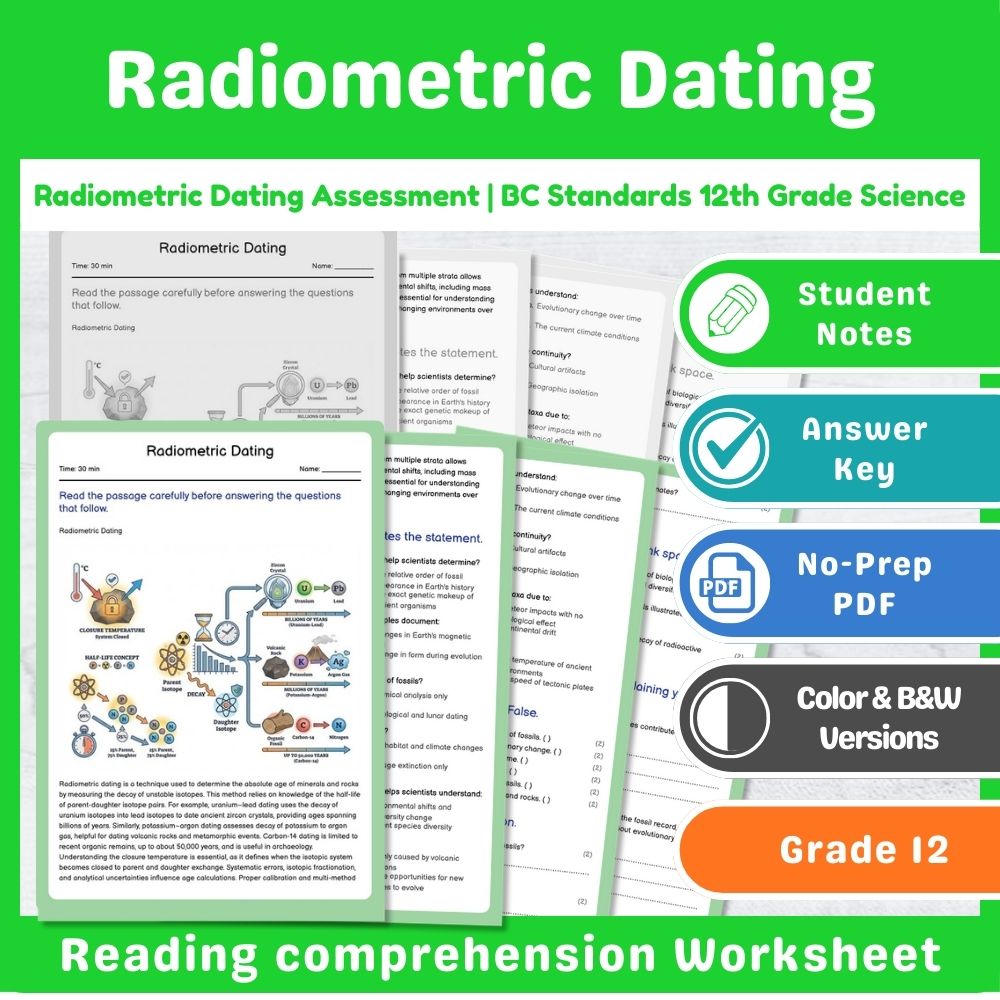
Radiometric Dating Assessment | BC Standards 12th Grade Science
Created byPrism Point LearningLearning Objectives
- Understand the principles of radiometric dating and isotopic decay.
- Identify different radiometric dating methods and their applications.
- Analyze factors affecting the accuracy of radiometric age determinations.
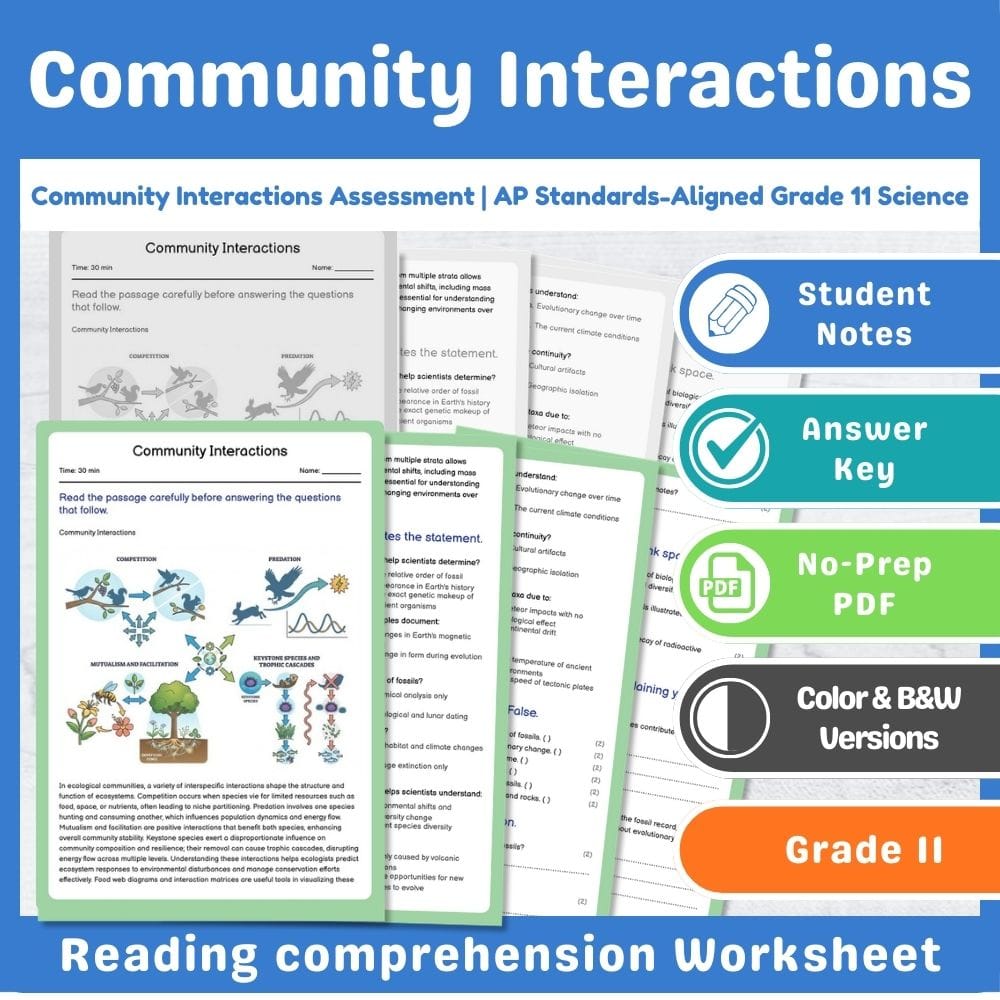
Community Interactions Assessment | AP Standards-Aligned Grade 11 Science
Created byPrism Point LearningLearning Objectives
- Analyze different types of interspecific interactions within ecological communities.
- Interpret food web diagrams and interaction matrices to understand energy flow and interaction strength.
- Evaluate the roles of keystone species, trophic cascades, and niche partitioning in community assembly and resilience.

Energy Molecules Assessment | TEKS Grade 11 Science Worksheet
Created byPrism Point LearningLearning Objectives
- Understand the role of ATP as the primary energy carrier in cells.
- Describe how ATP is produced through substrate-level and oxidative phosphorylation.
- Explain the processes by which ATP powers cellular functions such as endergonic reactions, active transport, and mechanical work.
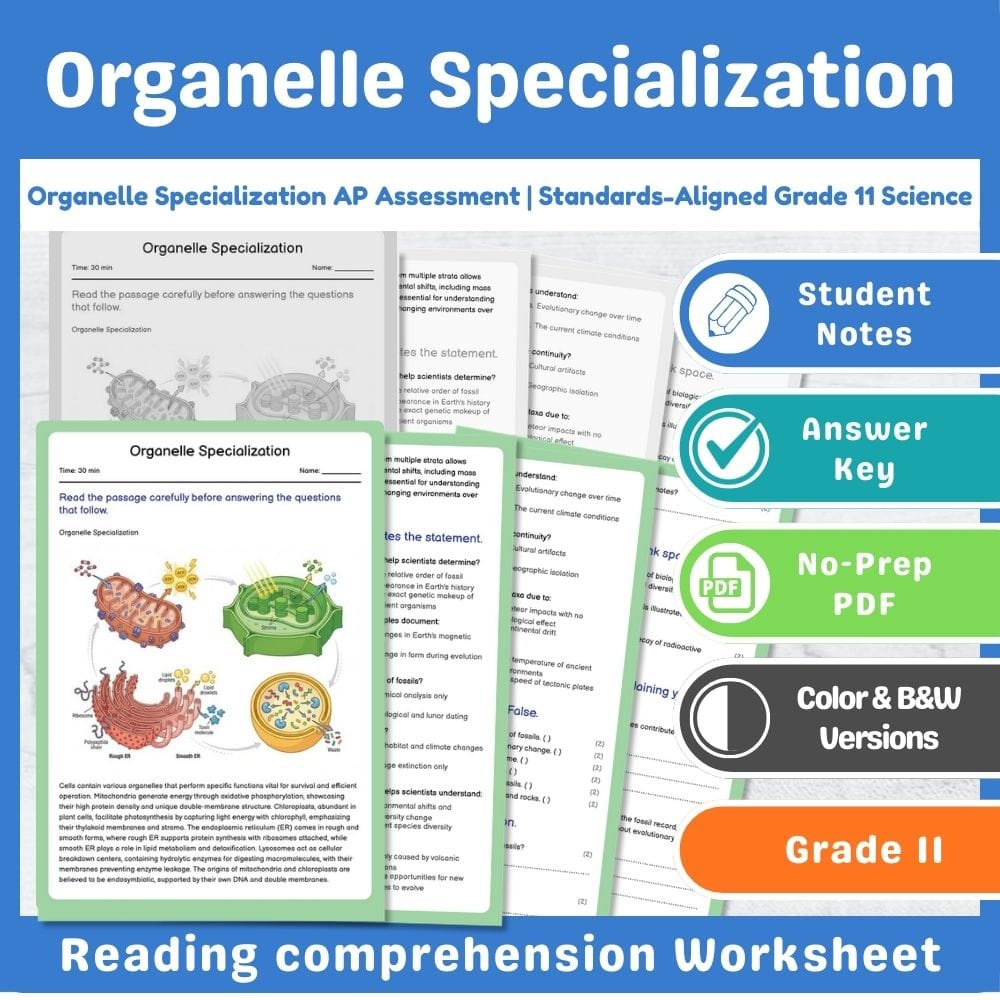
Organelle Specialization AP Assessment | Standards-Aligned Grade 11 Science
Created byPrism Point LearningLearning Objectives
- Compare structural and biochemical features of mitochondria, chloroplasts, endoplasmic reticulum, and lysosomes.
- Explain how organelle compartmentalization enhances cellular functions such as metabolism, protein trafficking, and signal transduction.
- Analyze the origins, membrane composition, and dysfunction consequences of key organelles.
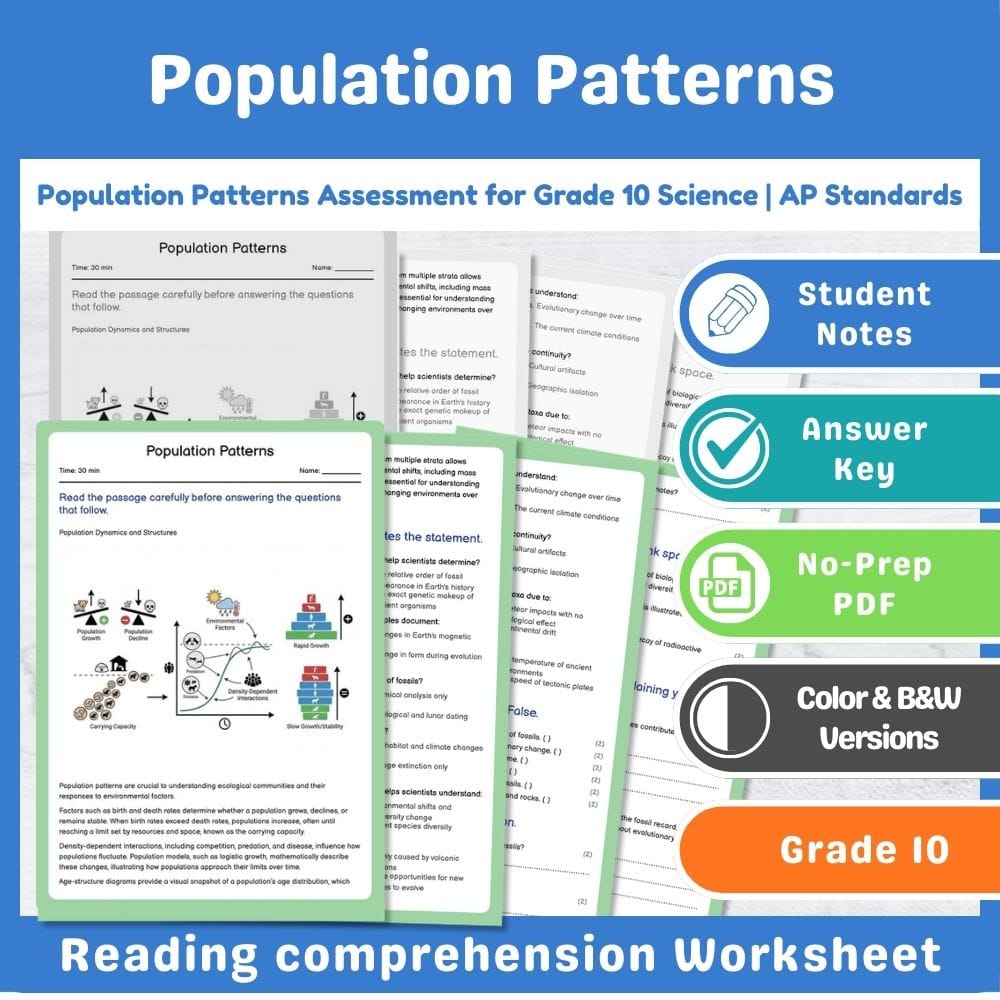
Population Patterns Assessment for Grade 10 Science | AP Standards
Created byPrism Point LearningLearning Objectives
- Explain factors that influence population growth, decline, and stability.
- Identify and interpret population models, age-structure diagrams, and population dynamics.
- Analyze how organism traits and environmental interactions affect population cycles and limits.
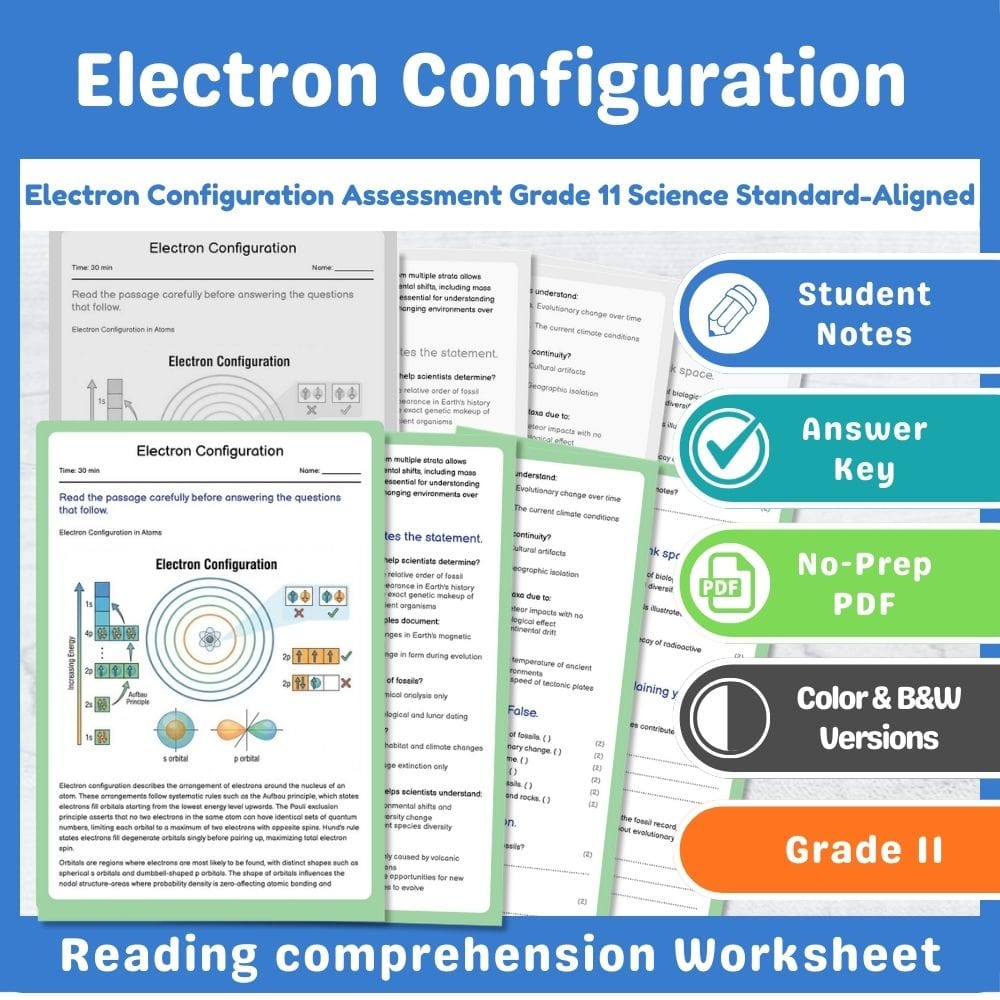
Electron Configuration Assessment Grade 11 Science Standard-Aligned
Created byPrism Point LearningLearning Objectives
- Explain the Aufbau, Pauli exclusion, and Hund's principles governing electron occupancy.
- Identify and describe orbital shapes and nodal structures.
- Connect electron configurations to valence structures and oxidation states.
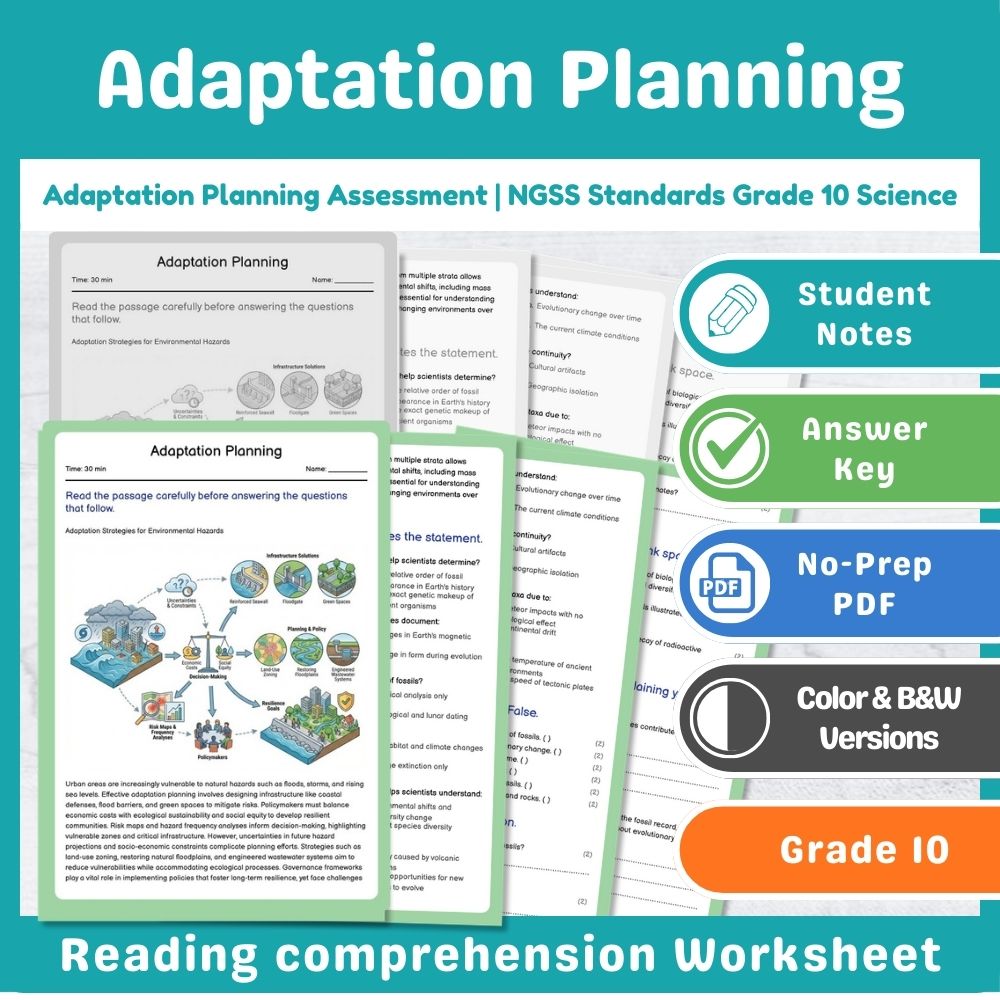
Adaptation Planning Assessment | NGSS Standards Grade 10 Science
Created byPrism Point LearningLearning Objectives
- Evaluate infrastructural and policy responses to natural hazards and environmental change.
- Analyze trade-offs involved in adaptation strategies considering economic, social, and ecological factors.
- Interpret risk maps, hazard analyses, and cost–benefit data to assess adaptation feasibility.
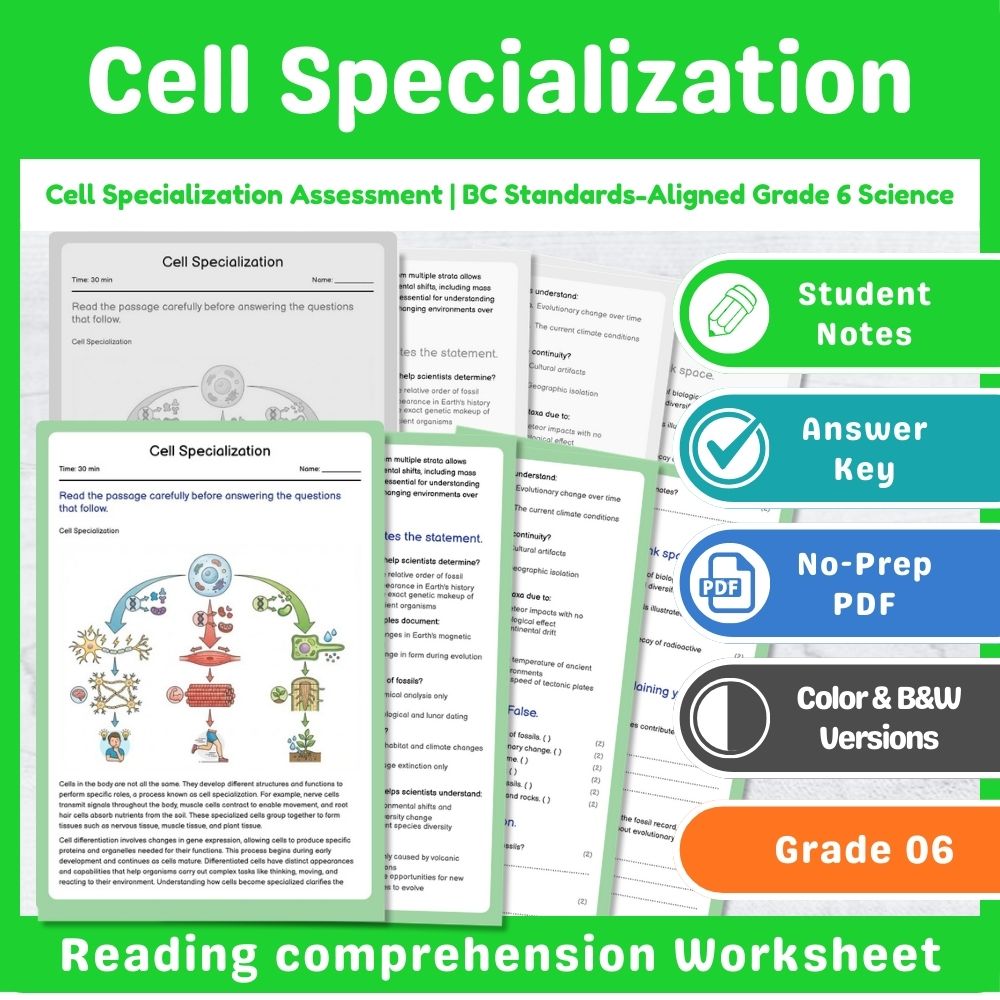
Cell Specialization Assessment | BC Standards-Aligned Grade 6 Science
Created byPrism Point LearningLearning Objectives
- Explain the concept of cell specialization and how it relates to tissue and organ function.
- Identify examples of specialized cells and their roles within an organism.
- Describe the process of differentiation and its importance in cellular diversity.

Variables Control Assessment for Grade 12 Science | TEKS-Aligned Worksheet
Created byPrism Point LearningLearning Objectives
- Identify independent, dependent, and confounding variables in experimental design.
- Understand strategies for controlling variables and implementing randomization.
- Explain the roles of blinding and replication in reducing bias.

Modeling Systems Assessment for Grade 12 Science | TEKS Standards
Created byPrism Point LearningLearning Objectives
- Understand the principles of constructing both conceptual and quantitative models in scientific systems.
- Analyze the differences between deterministic and stochastic modeling frameworks.
- Apply dimensional analysis, scaling, and sensitivity testing to evaluate model robustness.

Calvin Cycle Assessment for Grade 11 Science TEKS Standards
Created byPrism Point LearningLearning Objectives
- Understand the steps and enzymes involved in the Calvin cycle.
- Explain the role of ATP and NADPH in carbon fixation and reduction.
- Identify the output molecules of the Calvin cycle and their significance.

Data Visuals Assessment | TEKS Grade 12 Science Standards-Aligned
Created byPrism Point LearningLearning Objectives
- Understand how to select appropriate graphs, charts, and tables to represent data effectively.
- Analyze and interpret various types of data visuals including scatter plots, histograms, boxplots, and time-series charts.
- Identify key elements such as axis scaling, labels, error bars, and confidence intervals in data visuals.
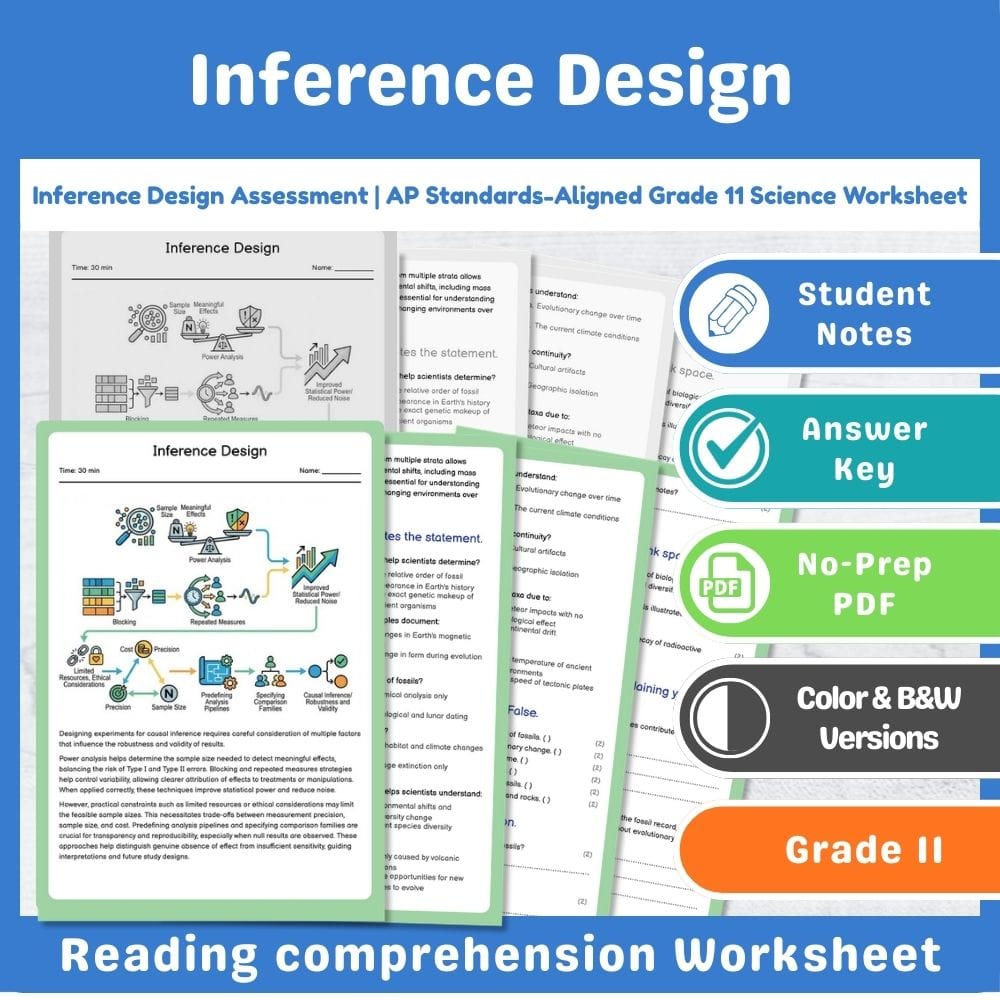
Inference Design Assessment | AP Standards-Aligned Grade 11 Science Worksheet
Created byPrism Point LearningLearning Objectives
- Understand the role of power analysis, blocking, and repeated measures in causal inference.
- Evaluate trade-offs between sample size, measurement precision, and practical constraints in experimental design.
- Apply strategies for predefining analysis pipelines and interpreting null results considering design sensitivity and error trade-offs.
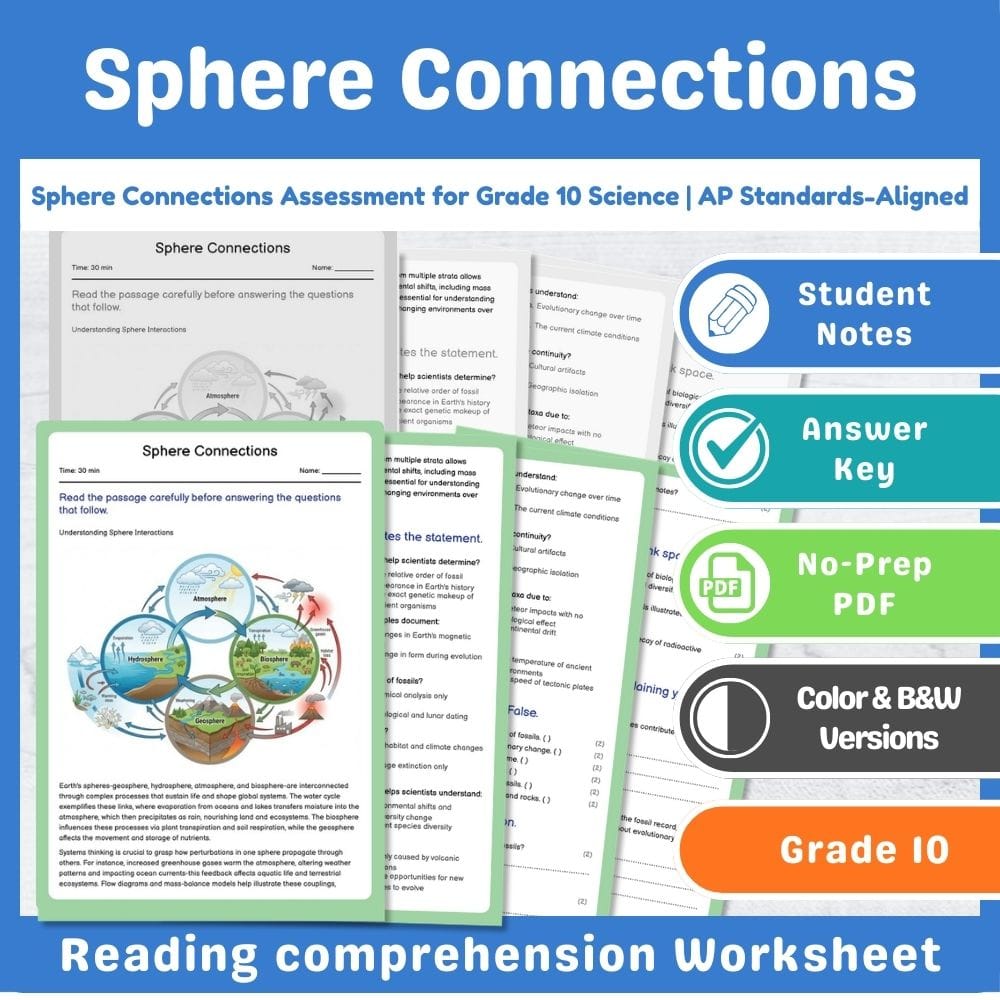
Sphere Connections Assessment for Grade 10 Science | AP Standards-Aligned
Created byPrism Point LearningLearning Objectives
- Explain how the Earth's spheres interact through processes like the water cycle, biogeochemical fluxes, and ocean-atmosphere exchange.
- Use systems thinking tools such as flow diagrams and mass-balance reasoning to illustrate sphere interactions.
- Analyze how perturbations in one sphere can propagate and cause observable changes in other spheres.
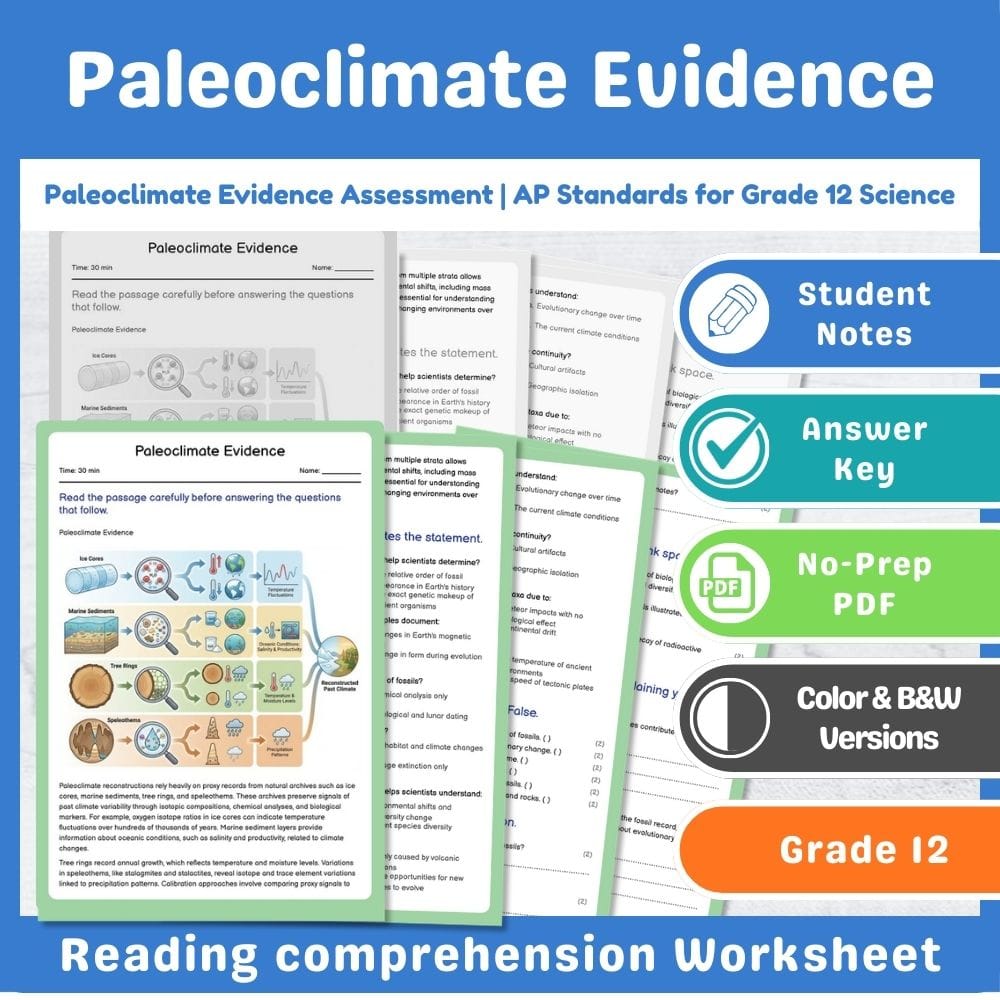
Paleoclimate Evidence Assessment | AP Standards for Grade 12 Science
Created byPrism Point LearningLearning Objectives
- Interpret proxy records from ice cores, sediments, tree rings, and speleothems to reconstruct past climate changes.
- Understand the indicators and calibration methods used in paleoclimate reconstructions.
- Connect proxy signals to external forcings such as orbital variations and volcanic events.

Radioactive Decay Dating Assessment | NGSSS Standards Grade 12 Science
Created byPrism Point LearningLearning Objectives
- Explain how radioactive decay and half-life enable absolute (numerical) age dating of rocks
- Interpret parent-to-daughter isotope information to infer elapsed time since formation
- Evaluate how radioactive dating complements relative dating methods in building geologic timelines
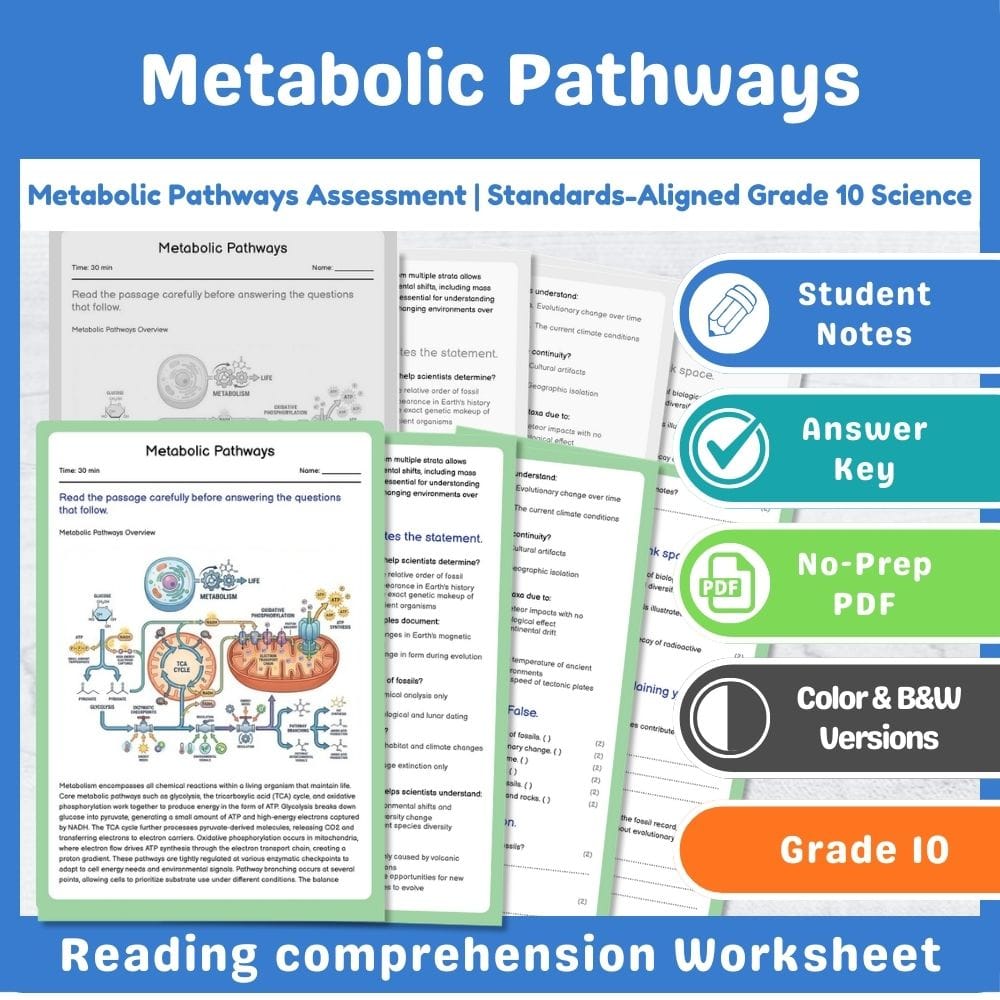
Metabolic Pathways Assessment | Standards-Aligned Grade 10 Science
Created byPrism Point LearningLearning Objectives
- Describe the main metabolic pathways including glycolysis, the tricarboxylic acid cycle, and oxidative phosphorylation.
- Explain how cells generate ATP and conserve energy through electron flow and intermediate transformations.
- Identify regulatory checkpoints and pathway branching points that control cellular metabolism.
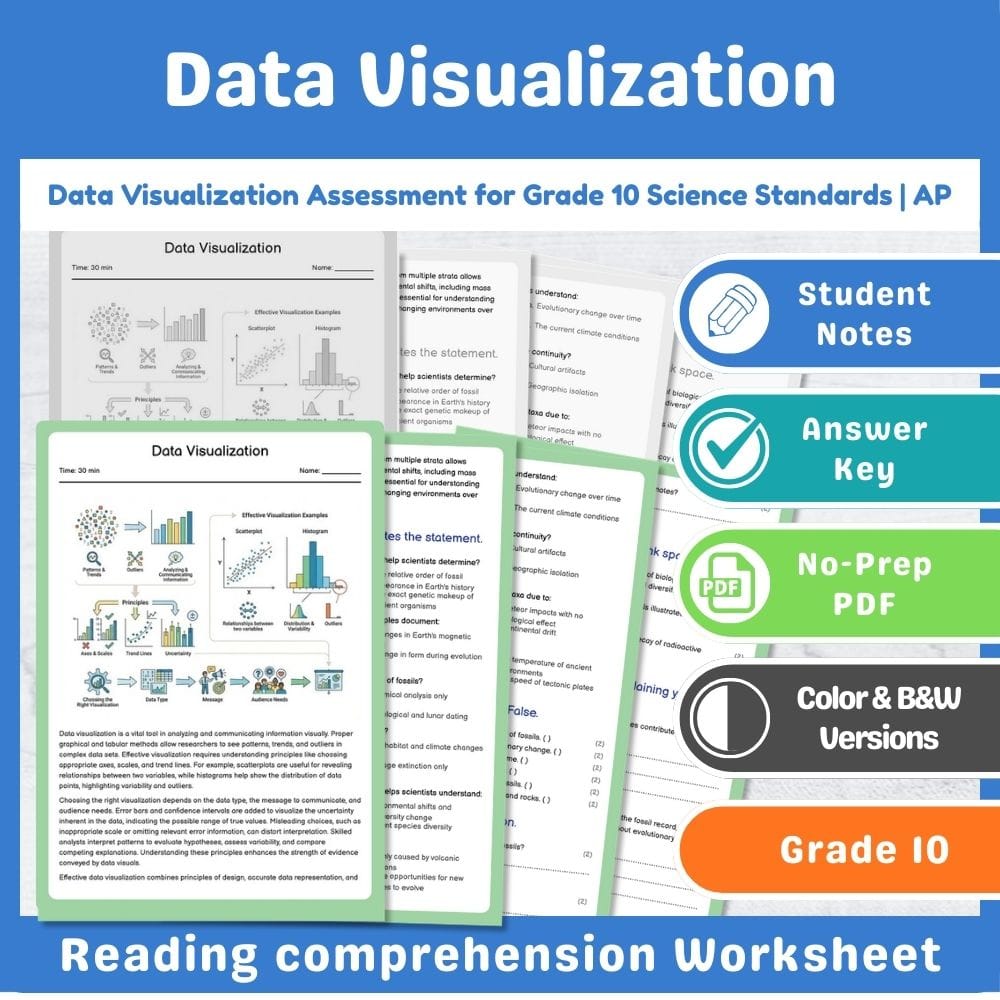
Data Visualization Assessment for Grade 10 Science Standards | AP
Created byPrism Point LearningLearning Objectives
- Describe principles and conventions for graphical and tabular representation of data.
- Identify and interpret various data visualization types such as scatterplots, histograms, and boxplots.
- Evaluate the appropriateness of different visualization choices like axes, scale, and trend lines.

Homeostatic Balance Assessment | Alberta Standards Grade 10 Science
Created byPrism Point LearningLearning Objectives
- Understand the mechanisms of homeostasis in maintaining internal stability.
- Identify examples of homeostatic processes in mammals and aquatic organisms.
- Explain the concepts of set points, tolerances, and physiological trade-offs.

Cytoskeleton Roles Grade 10 Science Assessment | TEKS Standards
Created byPrism Point LearningLearning Objectives
- Describe the structure and functions of microfilaments, intermediate filaments, and microtubules in the cytoskeleton.
- Explain how motor proteins facilitate intracellular transport along microtubules.
- Identify the roles of actin filaments in cell movement and cytokinesis.

Replication Mechanisms Assessment | TEKS Standards–Grade 11 Science
Created byPrism Point LearningLearning Objectives
- Describe the roles of enzymes involved in DNA replication.
- Explain the process of lagging strand synthesis and telomere extension.
- Identify the mechanisms that ensure high fidelity during DNA replication.
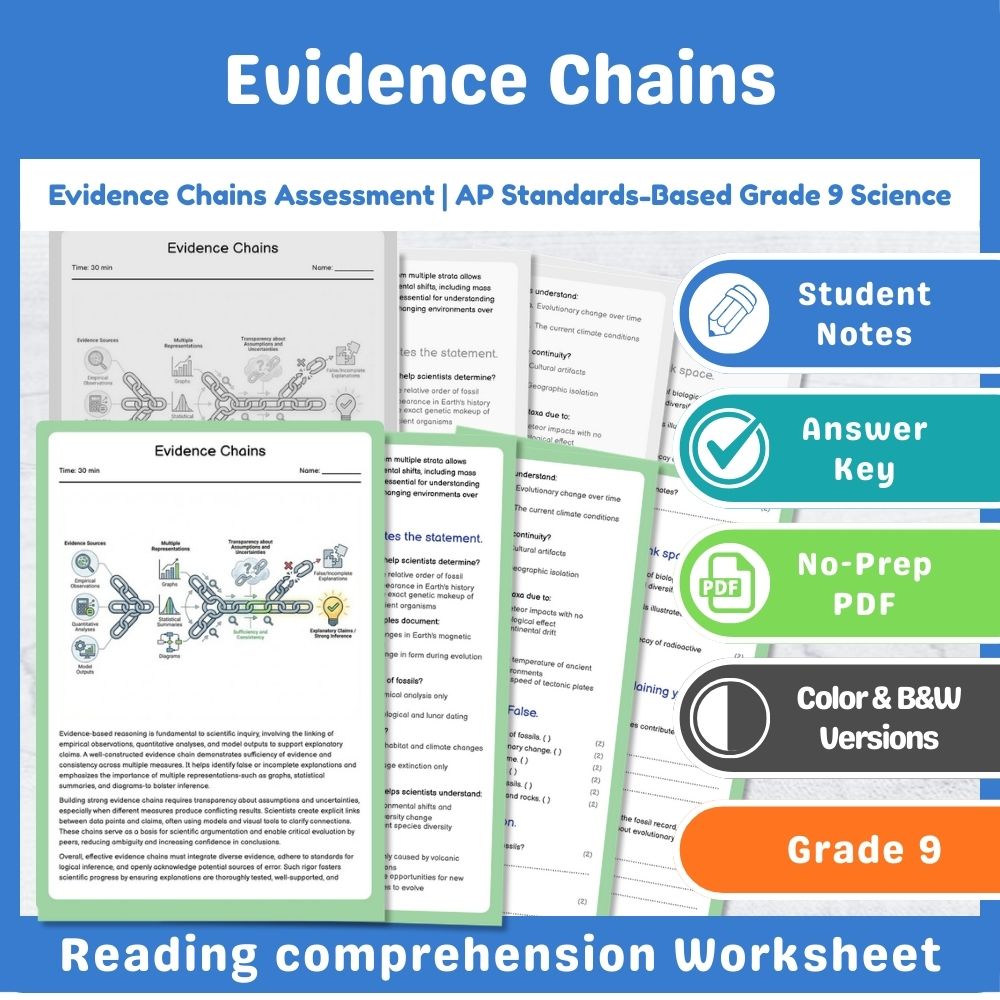
Evidence Chains Assessment | AP Standards-Based Grade 9 Science
Created byPrism Point LearningLearning Objectives
- Understand the structure of evidence-based reasoning linking observations, analyses, and claims.
- Identify criteria for sufficiency, consistency, and alternative explanations in scientific reasoning.
- Use multiple representations—graphs, summaries, diagrams—to support inferences.
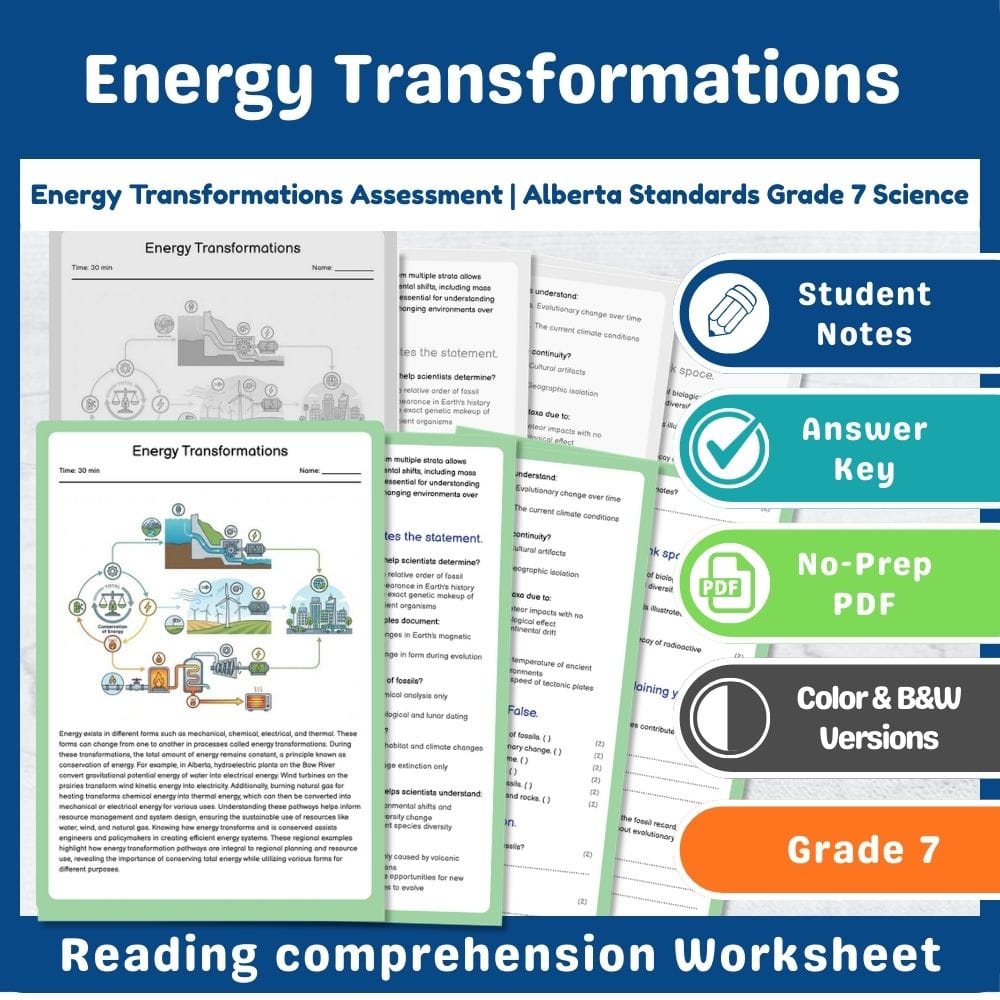
Energy Transformations Assessment | Alberta Standards Grade 7 Science
Created byPrism Point LearningLearning Objectives
- Understand the various forms of energy and how they interconvert during processes.
- Recognize examples of energy transformation in Alberta's regional resources.
- Explain the principle of energy conservation during transformations.
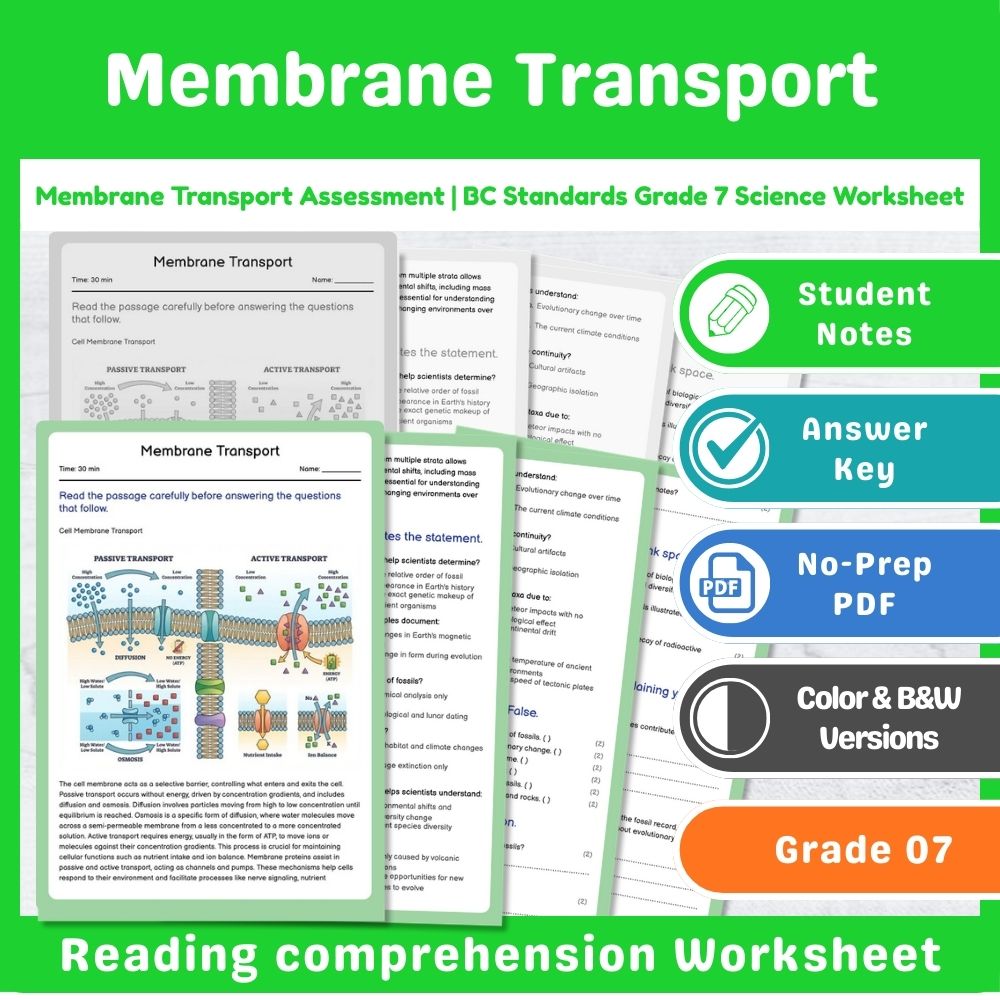
Membrane Transport Assessment | BC Standards Grade 7 Science Worksheet
Created byPrism Point LearningLearning Objectives
- Describe the mechanisms of passive and active transport across the cell membrane.
- Explain the process of diffusion, osmosis, and active transport.
- Identify the role of membrane proteins in substance regulation.
Browse more categories
About Science Worksheets
Find Science worksheets spanning core skills, practice, and review. All 42,685 resources are instant PDF downloads for the classroom or home.
Every worksheet on MyTeachingSheets is created by independent teacher-authors and reviewed before publication. All resources download as printable PDFs for classroom, homework, or at-home practice, and many include answer keys. Preview any worksheet free before buying.