
Science Worksheets
42,685 subject resources
Energy Pathways Assessment for Grade 9 Science | AP Standards-Aligned
 Created byPrism Point Learning
Learning Objectives
- Understand key concepts related to Science
- Apply knowledge through practice questions
- Demonstrate comprehension of the material

Atomic Models Assessment for Grade 12 Science | TEKS Standards-Aligned
Created byPrism Point LearningLearning Objectives
- Understand the historical development of atomic models from Dalton to Bohr.
- Explain empirical evidence such as cathode ray experiments and gold foil scattering.
- Describe concepts of nuclear charge, mass number, and isotopic abundance.

Respiratory Exchange Assessment for Grade 10 Science | TEKS-Aligned
Created byPrism Point LearningLearning Objectives
- Describe the process of alveolar gas diffusion and its role in gas exchange.
- Explain how changes in CO2 concentrations affect blood pH via the bicarbonate buffer system.
- Identify physiological mechanisms that regulate respiratory rate to maintain homeostasis.

Technology and Impacts Assessment | Standards-Aligned Grade 8 Science
Created byPrism Point LearningLearning Objectives
- Understand how technological choices affect the environment and society.
- Analyze the long-term consequences of energy sources, materials, and disposal.
- Evaluate trade-offs involved in sustainable technology solutions.
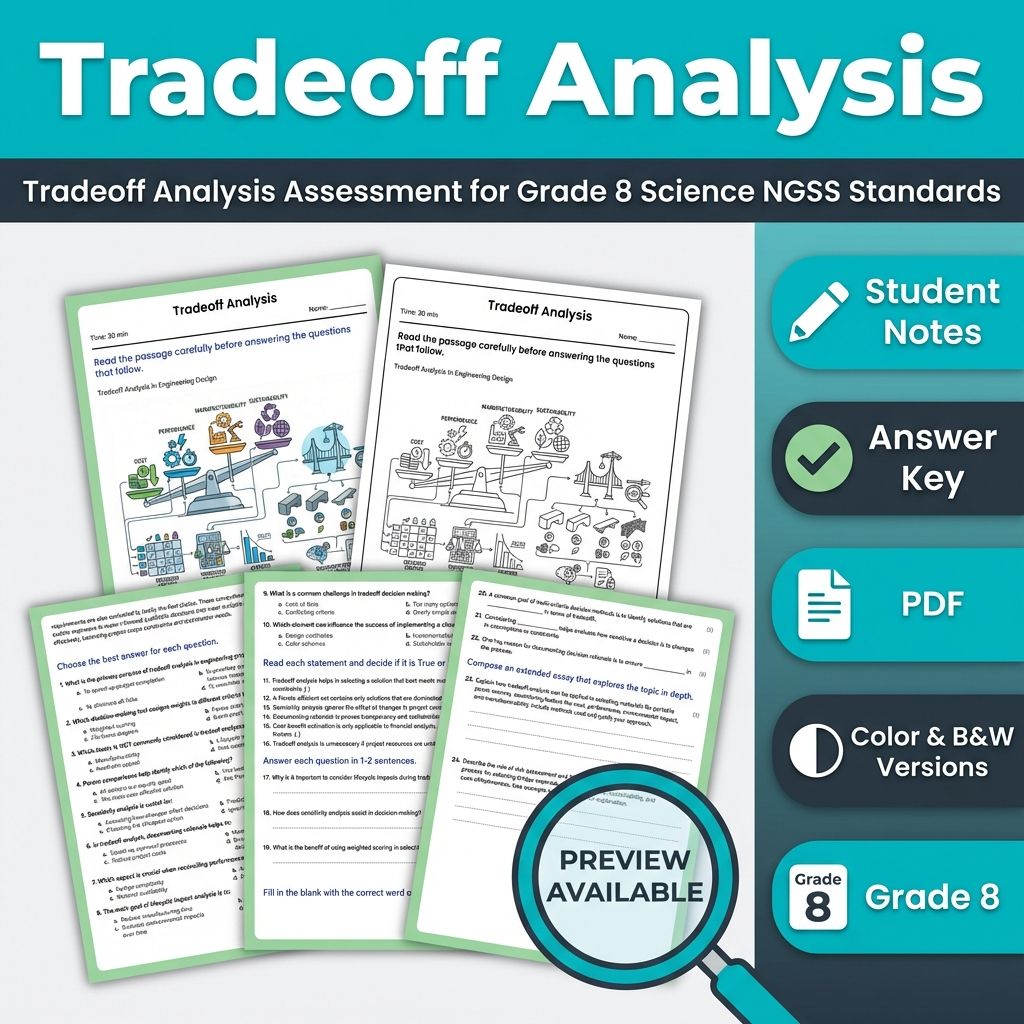
Tradeoff Analysis Assessment for Grade 8 Science NGSS Standards
Created byPrism Point LearningLearning Objectives
- Understand methods for prioritizing competing factors in decision-making.
- Apply multi-criteria decision tools like weighted scoring and Pareto analysis.
- Evaluate tradeoffs among performance, cost, manufacturability, and sustainability.

Natural Selection Assessment | TEKS Grade 11 Science Classroom Materials
Created byPrism Point LearningLearning Objectives
- Explain the concept of natural selection and its role in evolution.
- Identify different modes of selection and their effects on populations.
- Analyze real-world examples such as antibiotic resistance and camouflage.
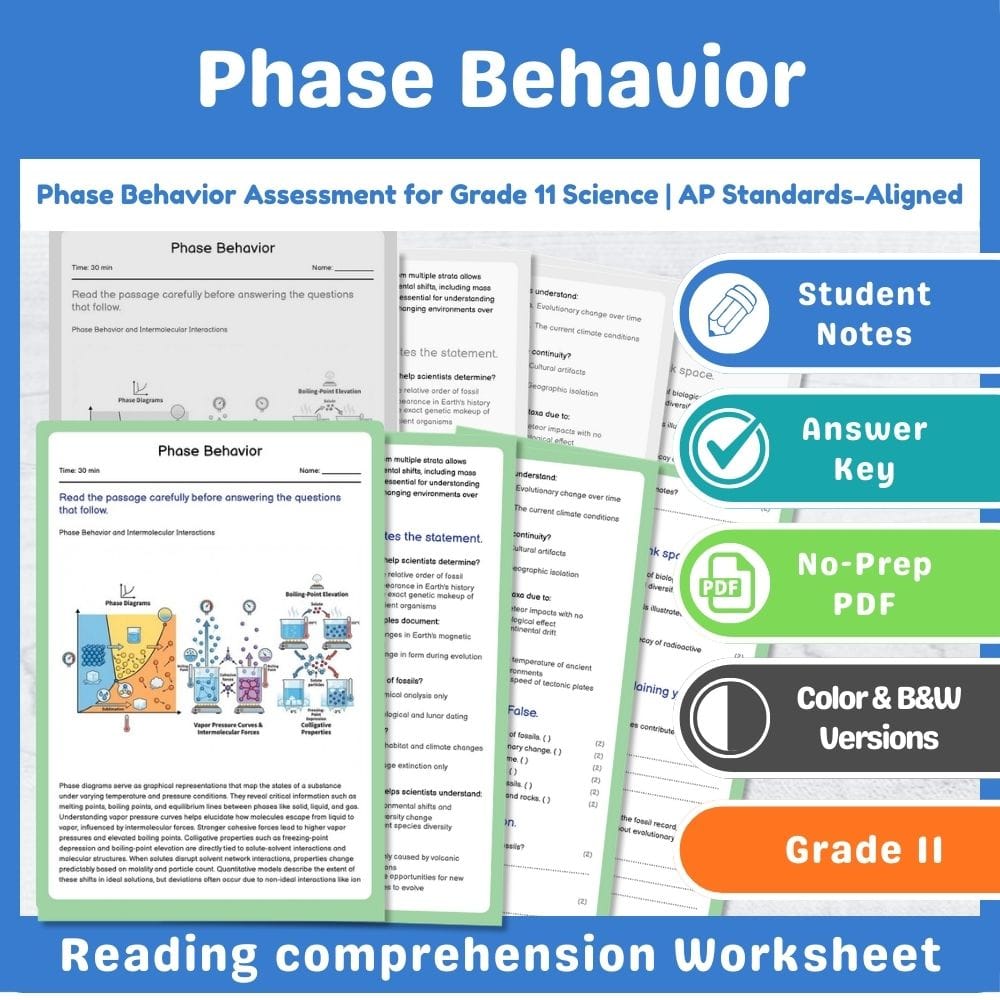
Phase Behavior Assessment for Grade 11 Science | AP Standards-Aligned
Created byPrism Point LearningLearning Objectives
- Interpret phase diagrams, vapor pressure curves, and colligative properties through intermolecular interactions.
- Connect solute-solvent interactions, vapor-liquid equilibria, and freezing-point depression to cohesive forces.
- Apply quantitative relations for boiling point elevation and osmotic behavior in idealized systems.
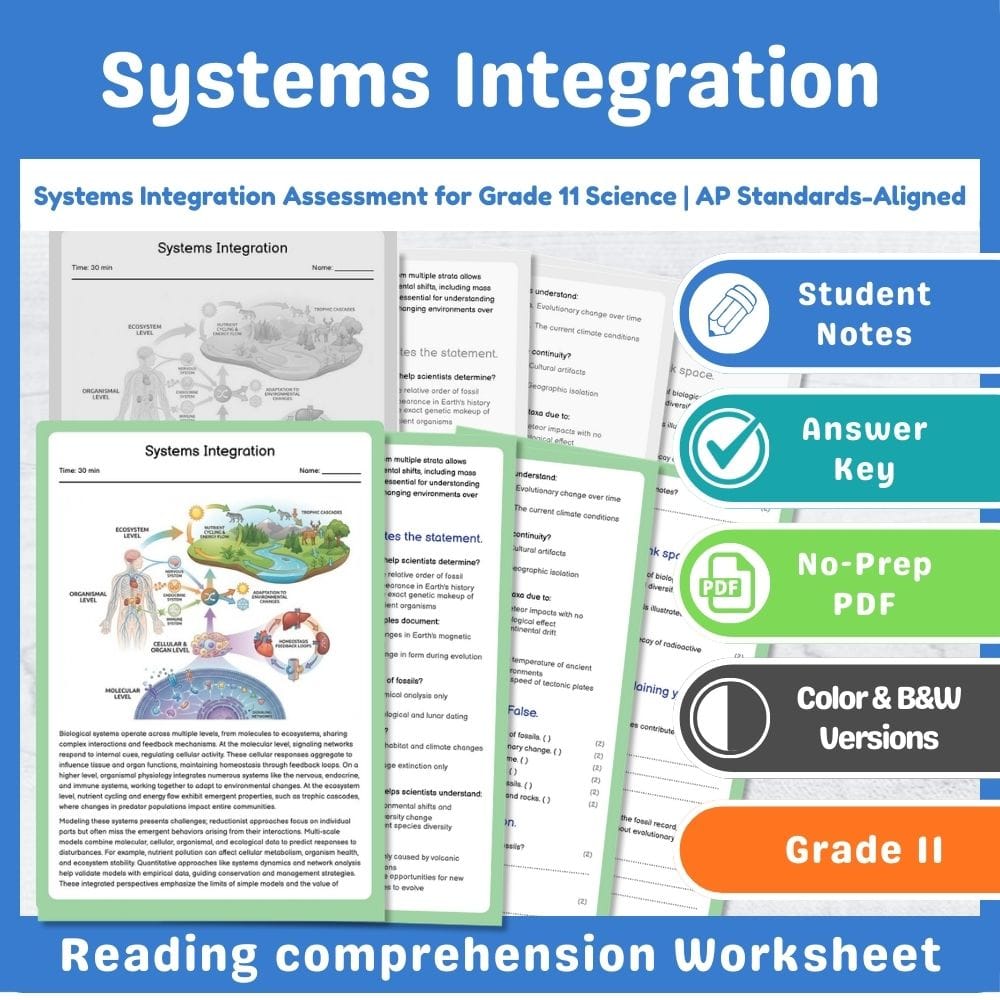
Systems Integration Assessment for Grade 11 Science | AP Standards-Aligned
Created byPrism Point LearningLearning Objectives
- Explain how biological systems integrate molecular, cellular, organismal, and ecosystem processes.
- Describe feedback loops, regulatory networks, and emergent properties in systems biology.
- Analyze examples such as nutrient cycling, homeostasis, and trophic cascades using models.
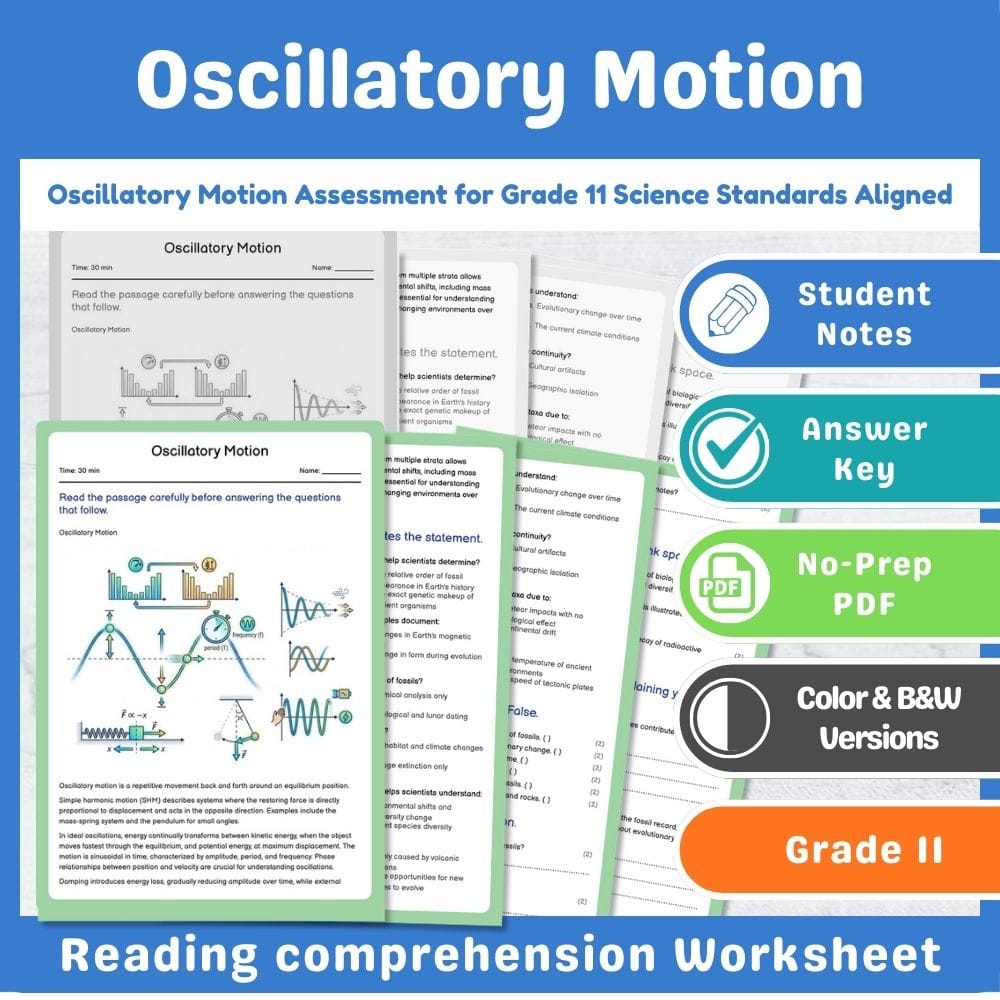
Oscillatory Motion Assessment for Grade 11 Science Standards Aligned
Created byPrism Point LearningLearning Objectives
- Understand the principles of simple harmonic motion in mass–spring systems and pendulums.
- Derive and analyze equations of motion related to oscillatory systems.
- Connect restoring force linearity to sinusoidal solutions and interpret phase relationships.
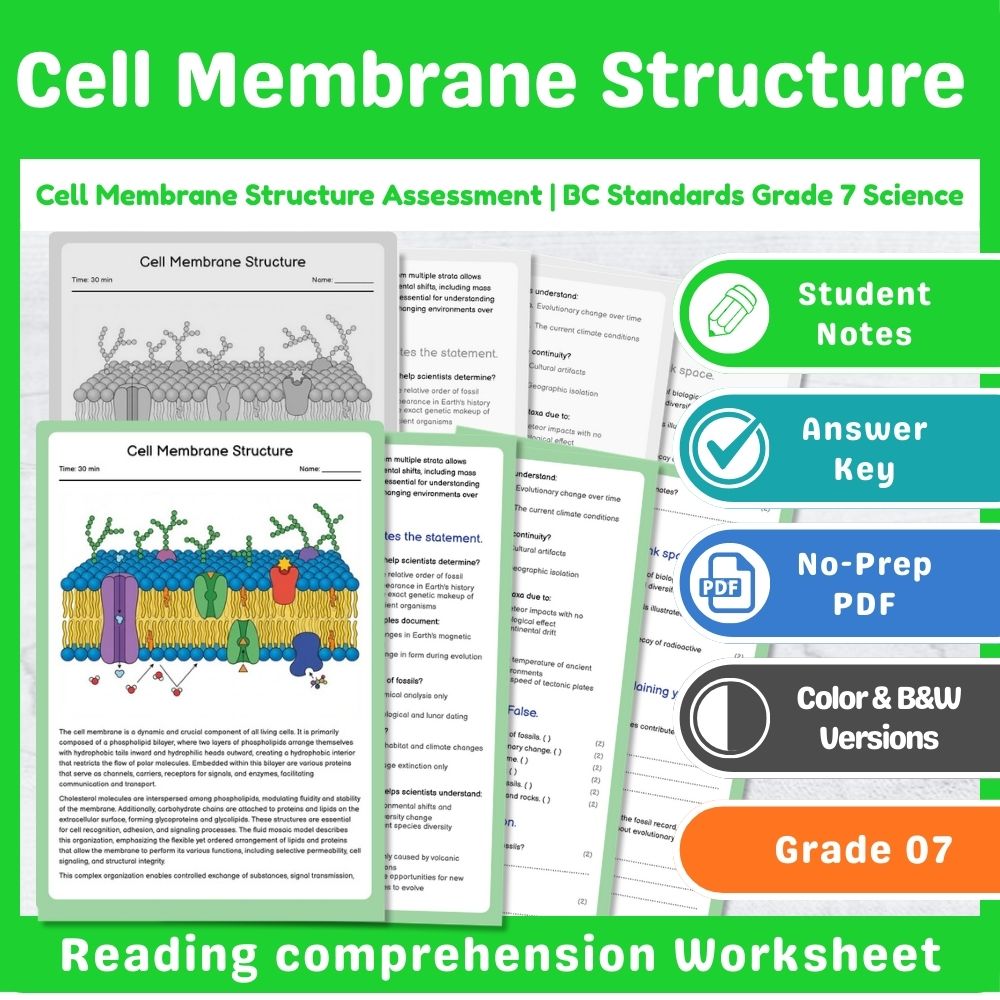
Cell Membrane Structure Assessment | BC Standards Grade 7 Science
Created byPrism Point LearningLearning Objectives
- Describe the composition of the cell membrane as a phospholipid bilayer with embedded proteins, cholesterol, and carbohydrates.
- Explain the fluid mosaic model of cell membrane organization.
- Identify the functions of membrane proteins, cholesterol, and carbohydrate chains.
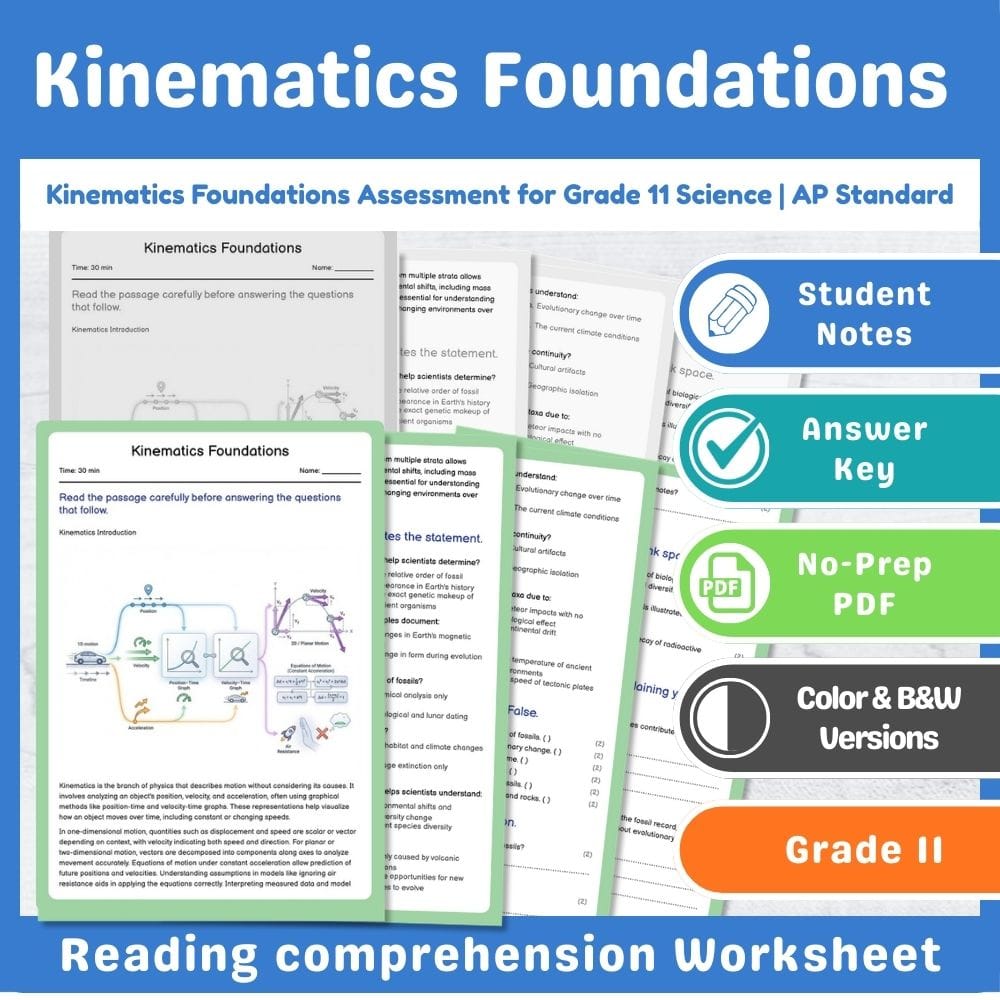
Kinematics Foundations Assessment for Grade 11 Science | AP Standard
Created byPrism Point LearningLearning Objectives
- Define key kinematic quantities: position, displacement, speed, velocity, and acceleration.
- Interpret algebraic and graphical representations of motion such as position–time and velocity–time graphs.
- Apply equations of constant acceleration to solve motion problems.
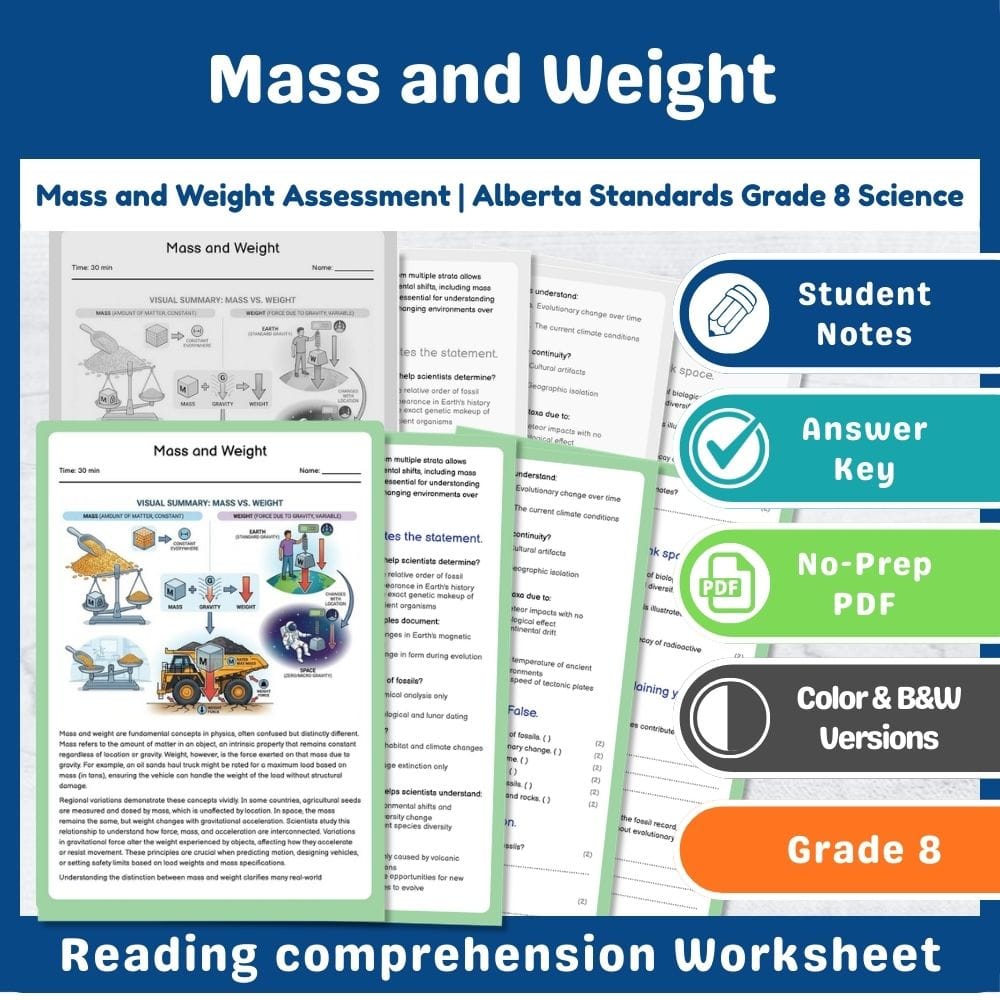
Mass and Weight Assessment | Alberta Standards Grade 8 Science
Created byPrism Point LearningLearning Objectives
- Distinguish between mass as an intrinsic property of matter and weight as the gravitational force on that mass.
- Understand how regional examples illustrate mass and weight concepts, such as load specifications and dosing.
- Explain the relationship between mass, gravitational acceleration, and weight.
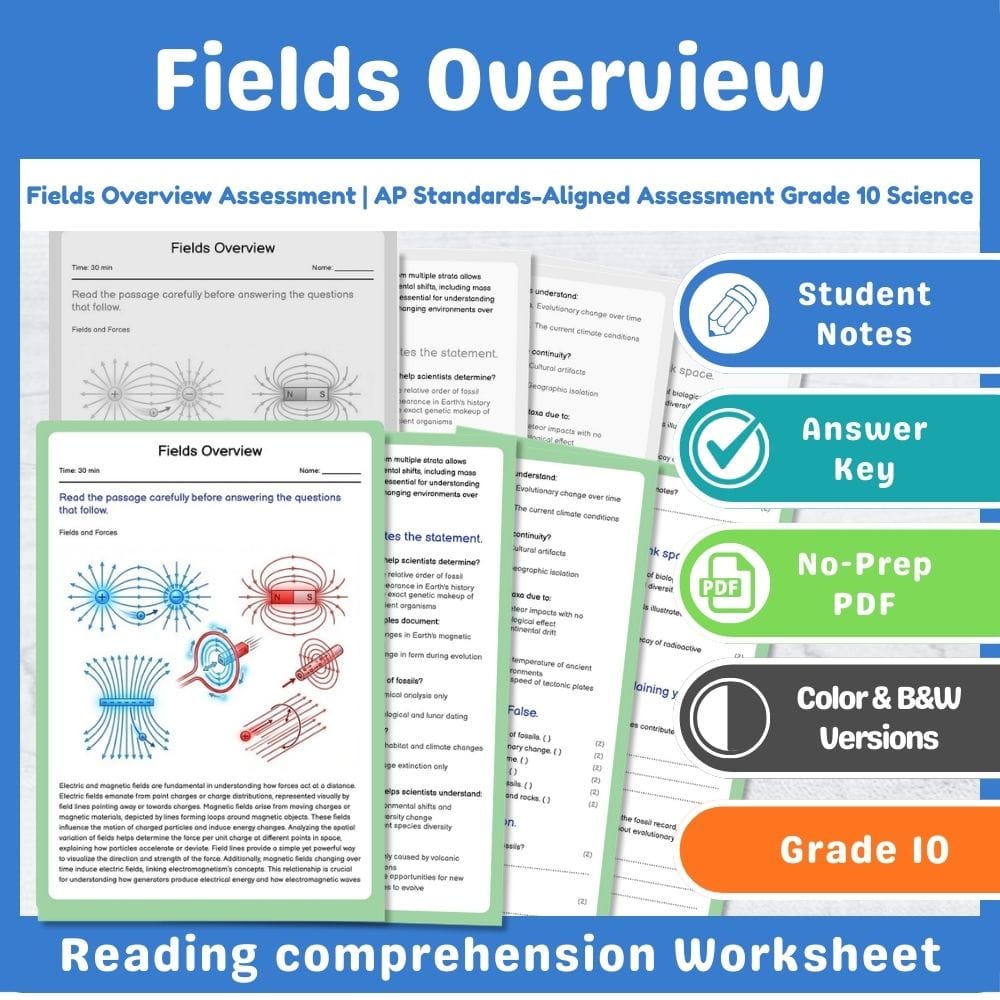
Fields Overview Assessment | AP Standards-Aligned Assessment Grade 10 Science
Created byPrism Point LearningLearning Objectives
- Understand the basic concepts of electric and magnetic fields and their representations.
- Describe how fields influence force on charges and potential energy.
- Relate field concepts to forces, motion, and electrical effects in circuits.

Weather Data Patterns Assessment | General Grade 7 Science Standards
Created byPrism Point LearningLearning Objectives
- Understand how weather data patterns are identified and compared over time and location.
- Explain the factors that influence climate variability and long-term weather trends.
- Analyze pressure changes and air mass movements to interpret weather patterns.

Cell Membrane Assessment for Grade 10 Science | TEKS Standards
Created byPrism Point LearningLearning Objectives
- Explain the structure and composition of the cell membrane.
- Describe how phospholipid bilayers and proteins contribute to membrane function.
- Identify examples of membrane transport processes like diffusion, osmosis, and protein channels.

Life Processes in Cells Assessment | Standards-Aligned Grade 6 Science
Created byPrism Point LearningLearning Objectives
- Understand the key life processes that occur within cells, including photosynthesis and cellular respiration.
- Describe how diffusion and transport mechanisms support material movement across cell membranes.
- Explain how these processes maintain conditions necessary for growth, repair, and reproduction in organisms.
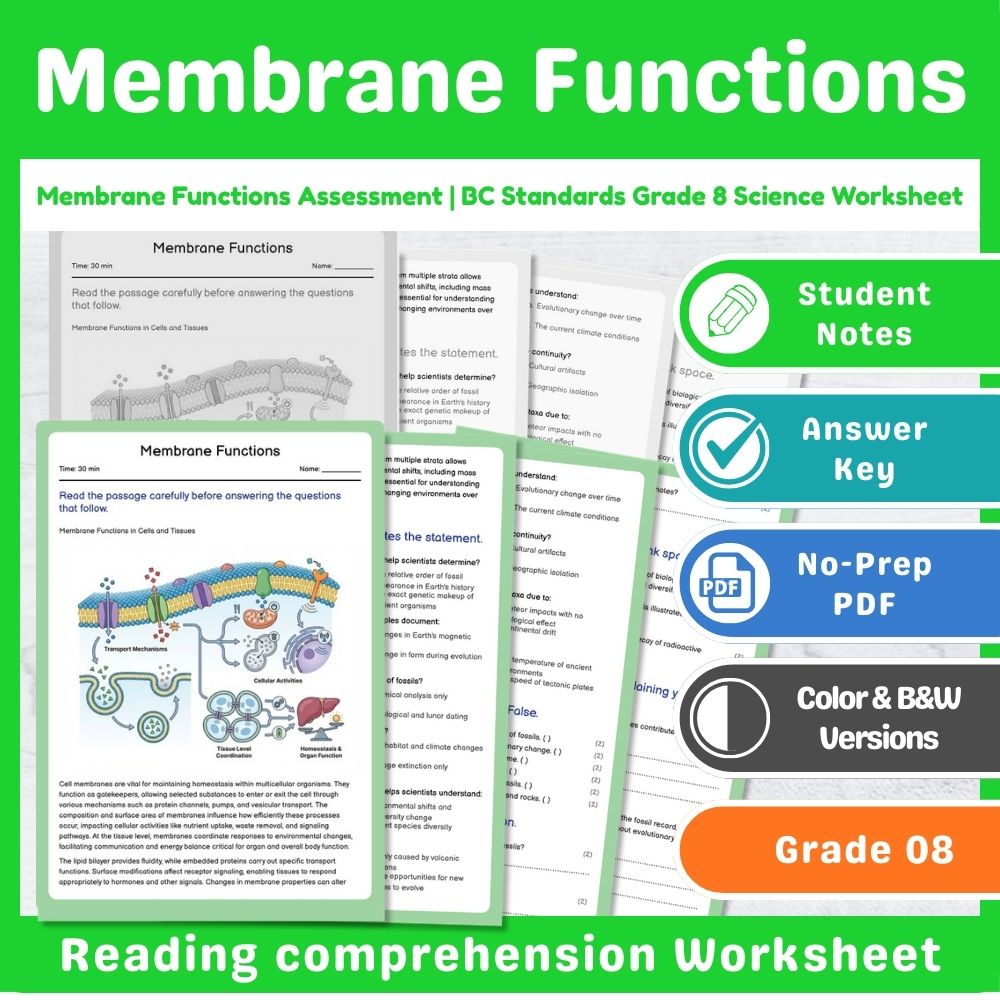
Membrane Functions Assessment | BC Standards Grade 8 Science Worksheet
Created byPrism Point LearningLearning Objectives
- Explain the role of cell membranes in regulating exchange between intracellular and extracellular environments.
- Identify various transport mechanisms such as protein channels, pumps, and vesicular transport.
- Describe how membrane composition and surface area influence diffusion and signaling.
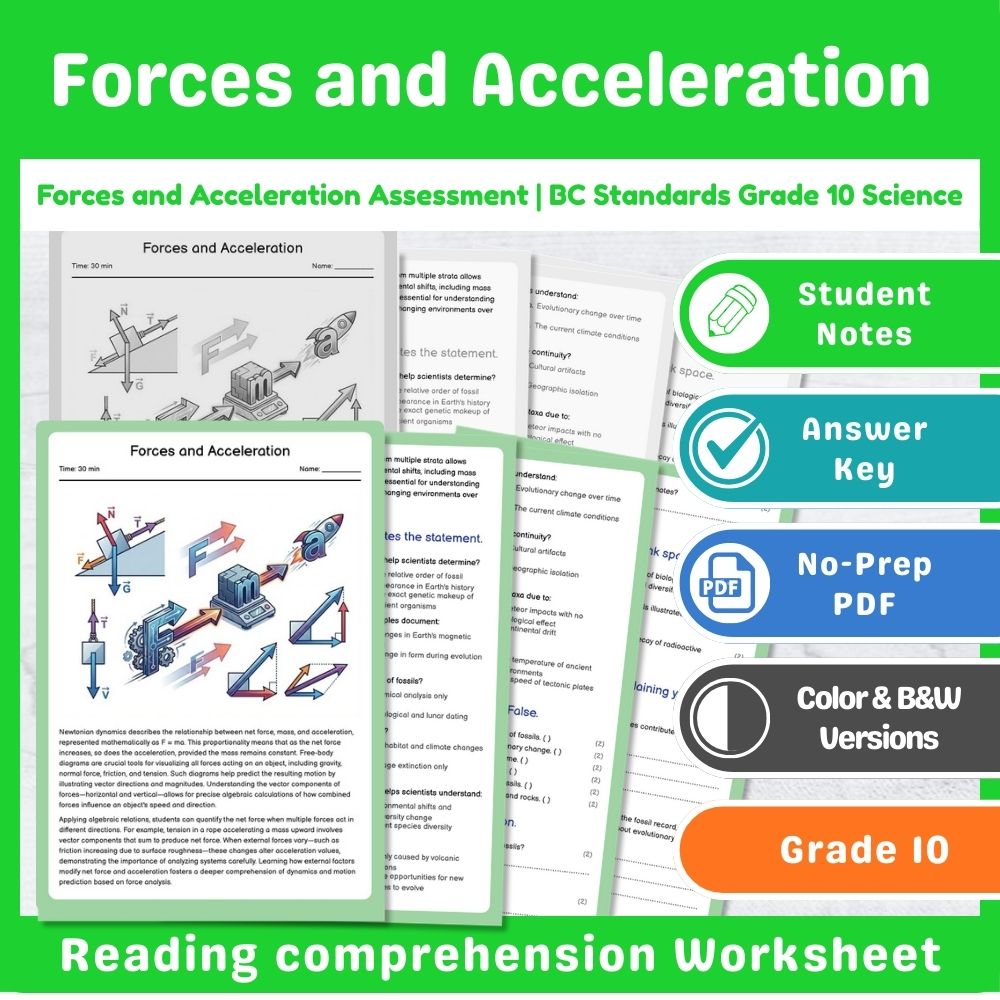
Forces and Acceleration Assessment | BC Standards Grade 10 Science
Created byPrism Point LearningLearning Objectives
- Understand how net force affects acceleration according to Newton's Second Law.
- Identify and interpret free-body diagrams representing forces like gravity, normal force, friction, and tension.
- Apply algebraic and vector methods to analyze how forces combine to change motion.
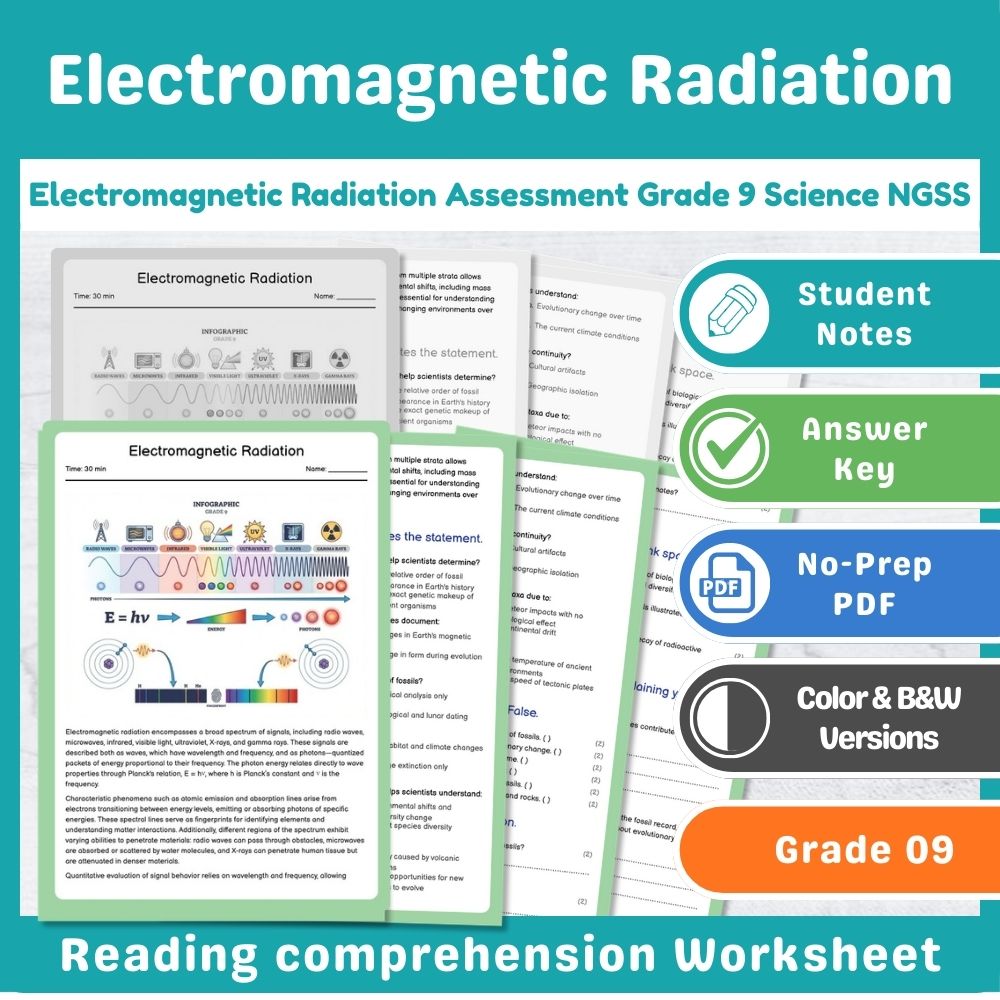
Electromagnetic Radiation Assessment Grade 9 Science NGSS
Created byPrism Point LearningLearning Objectives
- Explain the wave and photon descriptions of electromagnetic signals across the spectrum.
- Relate frequency to photon energy and their interactions with matter.
- Identify characteristic phenomena such as atomic emission and absorption lines, and spectral attenuation.

Mass Wasting Assessment for Grade 6 Science | Standards-Aligned
Created byPrism Point LearningLearning Objectives
- Understand the processes involved in mass wasting such as rockfalls, landslides, and slumps.
- Identify factors that trigger surface movements like rainfall, freeze-thaw cycles, and earthquakes.
- Explain how debris deposition affects drainage and erosion patterns.
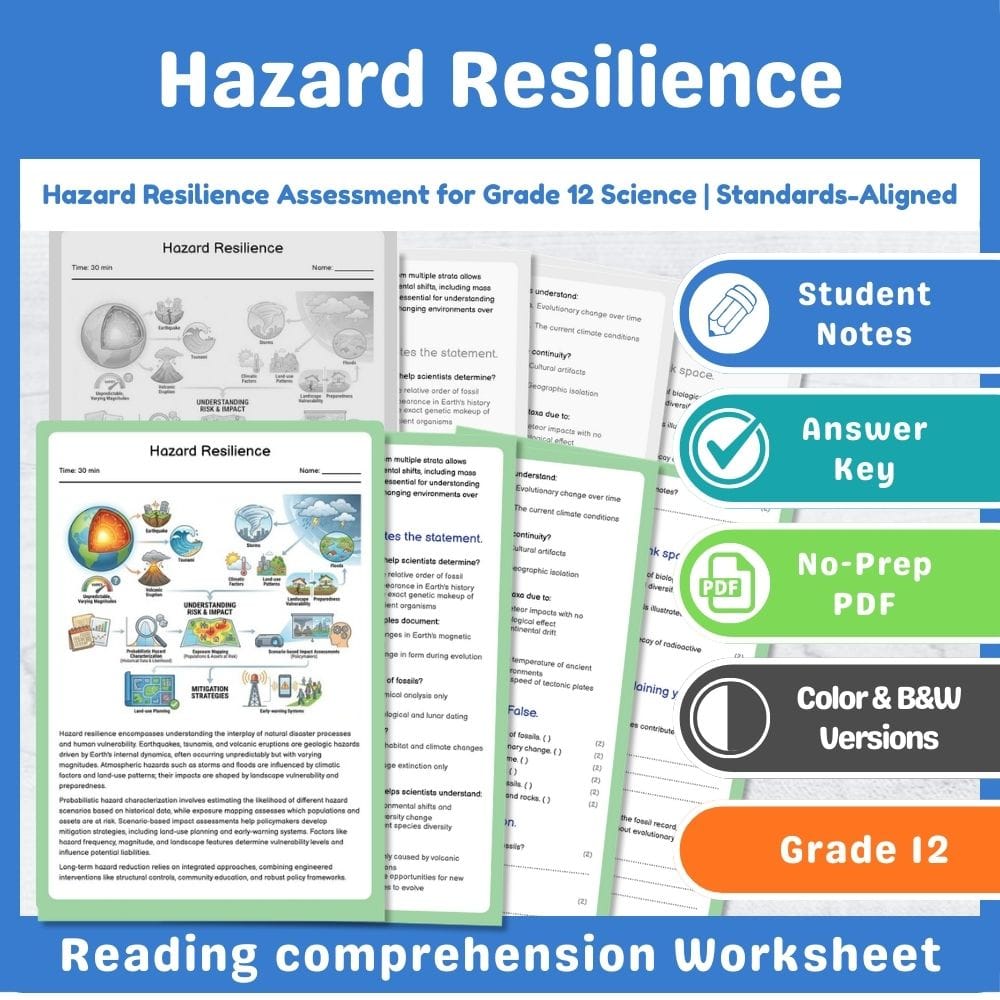
Hazard Resilience Assessment for Grade 12 Science | Standards-Aligned
Created byPrism Point LearningLearning Objectives
- Understand the key hazard processes including earthquakes, tsunamis, volcanic eruptions, landslides, floods, and extreme storms.
- Evaluate probabilistic hazard characterization, exposure mapping, and impact assessment methods.
- Analyze how hazard frequency, magnitude, and vulnerability affect landscapes and communities.

Particles Meet Energy Assessment | General Grade 8 Science
Created byPrism Point LearningLearning Objectives
- Explain how particle interactions relate to energy changes during reactions.
- Identify observable changes indicating particle rearrangements and energy shifts.
- Connect temperature changes to energy transfer in chemical reactions.
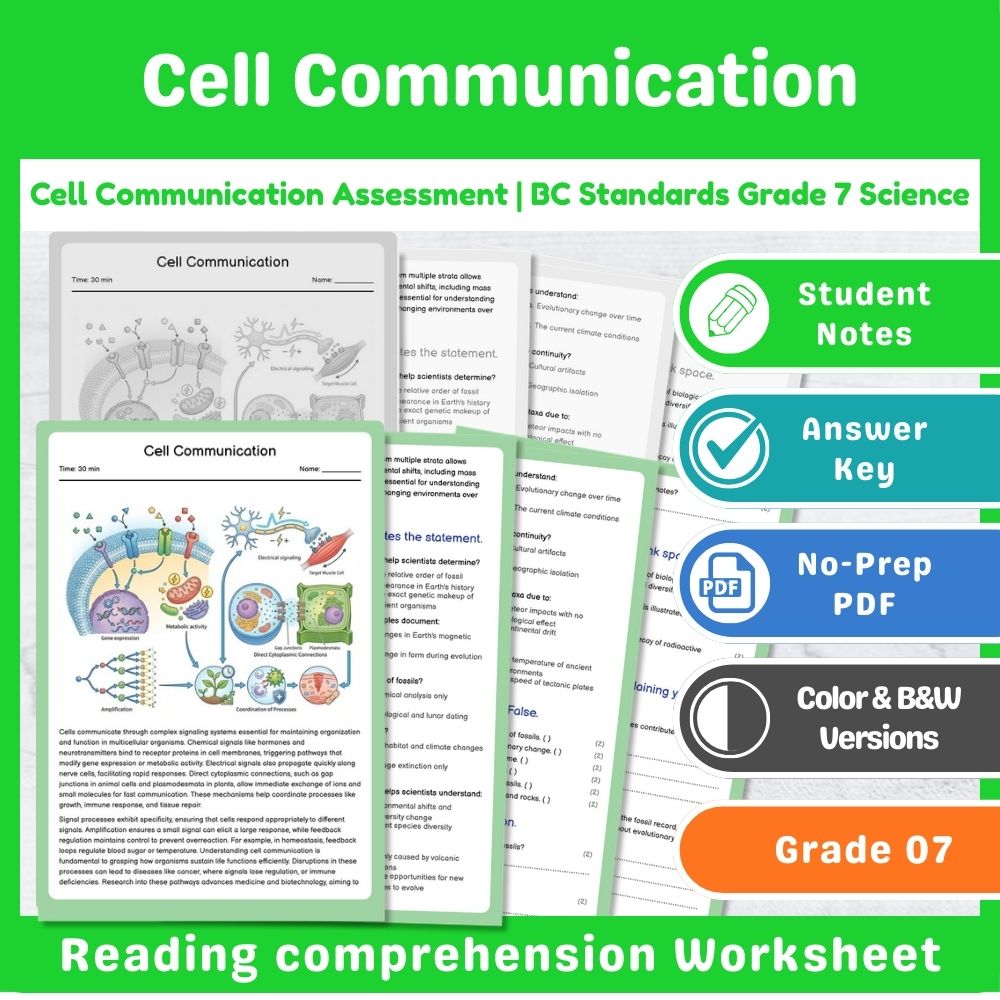
Cell Communication Assessment | BC Standards Grade 7 Science
Created byPrism Point LearningLearning Objectives
- Describe how cells communicate via chemical and electrical signals.
- Identify the roles of receptor proteins, gap junctions, and plasmodesmata in cell signaling.
- Explain how signal specificity, amplification, and feedback regulation control bodily processes.
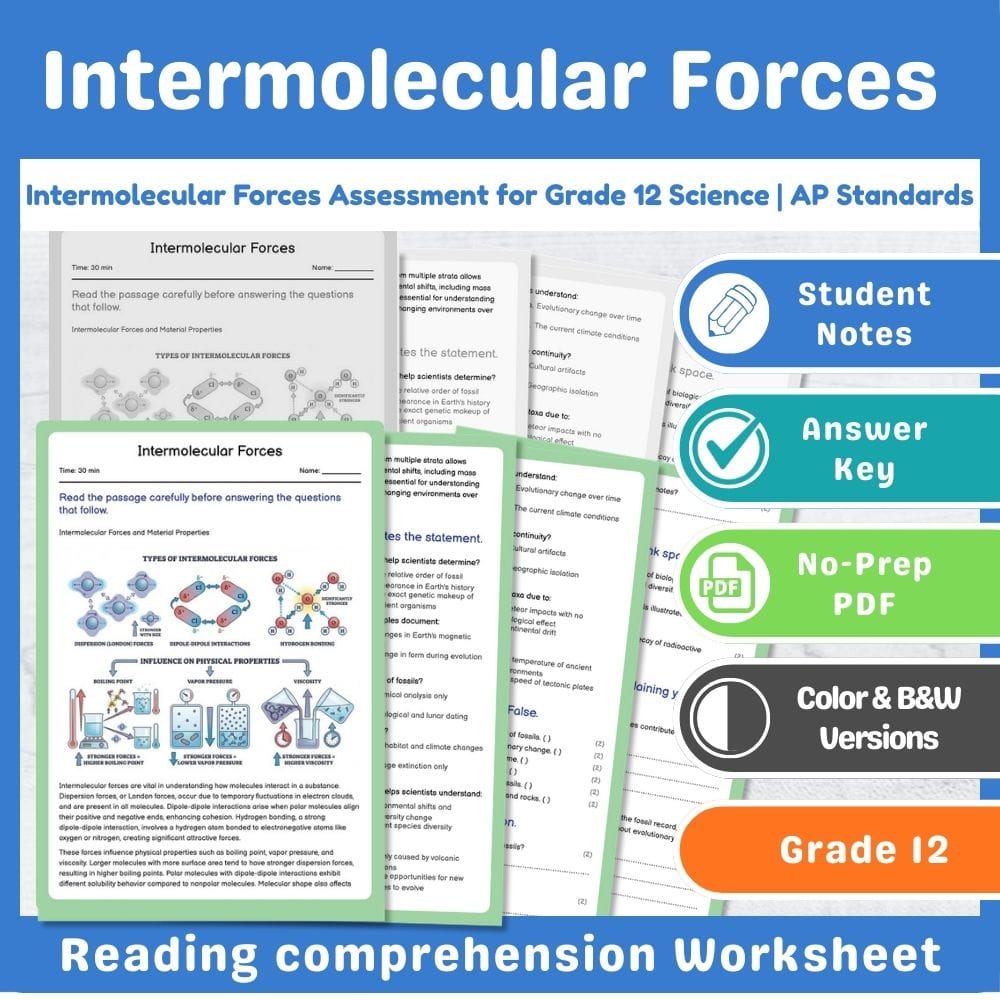
Intermolecular Forces Assessment for Grade 12 Science | AP Standards
Created byPrism Point LearningLearning Objectives
- Describe the differences between dispersion forces, dipole–dipole interactions, and hydrogen bonding.
- Explain how molecular size, shape, and polarity influence intermolecular forces.
- Relate intermolecular forces to macroscopic properties such as boiling point, vapor pressure, viscosity, and solubility.

Weather Data Patterns Assessment | General Grade 9 Science Standards
Created byPrism Point LearningLearning Objectives
- Understand how atmospheric conditions relate to observable weather patterns.
- Analyze data sets including temperature, humidity, and precipitation to identify relationships.
- Explain the impact of air mass movement and energy exchange on weather variability.
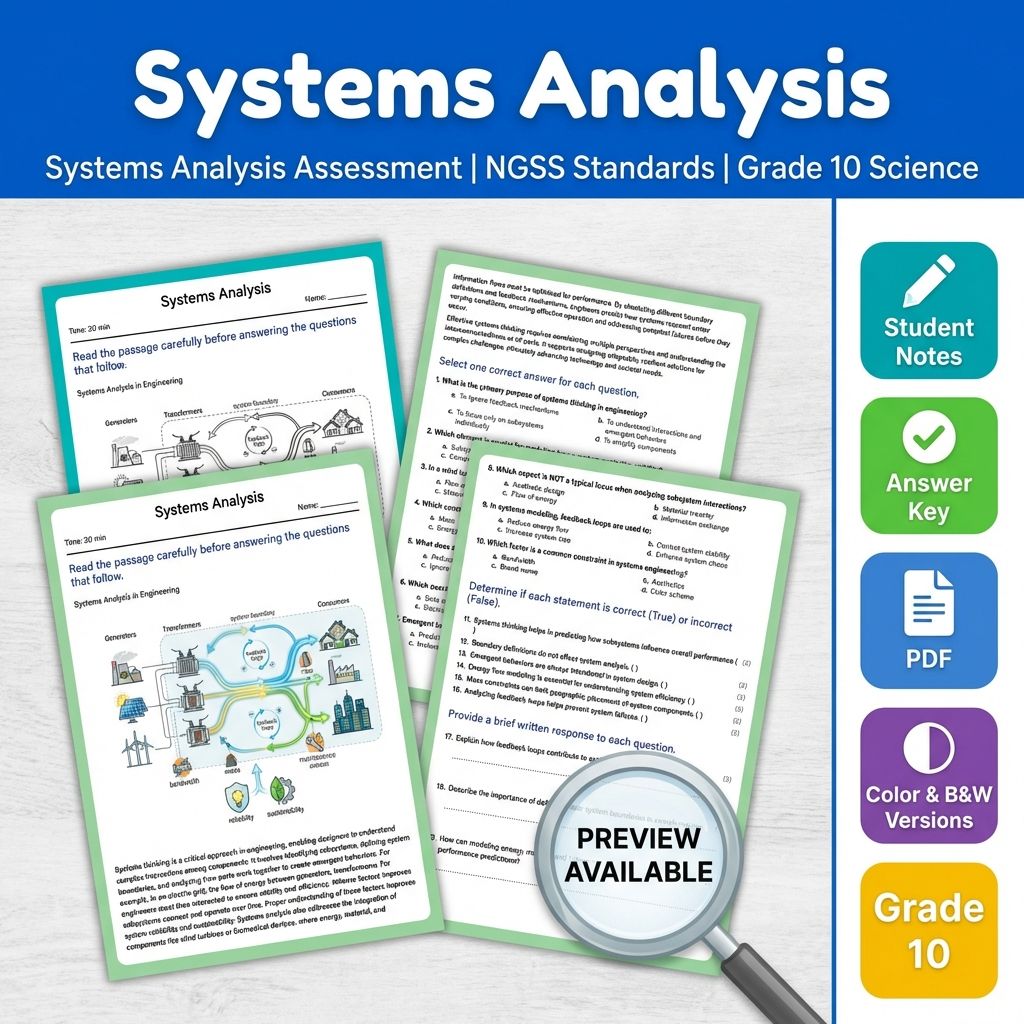
Systems Analysis Assessment | NGSS Standards | Grade 10 Science
Created byPrism Point LearningLearning Objectives
- Understand systems thinking principles and their application to engineering problems.
- Identify interactions between subsystems and define system boundaries accurately.
- Analyze emergent behaviors and feedback loops within complex systems.
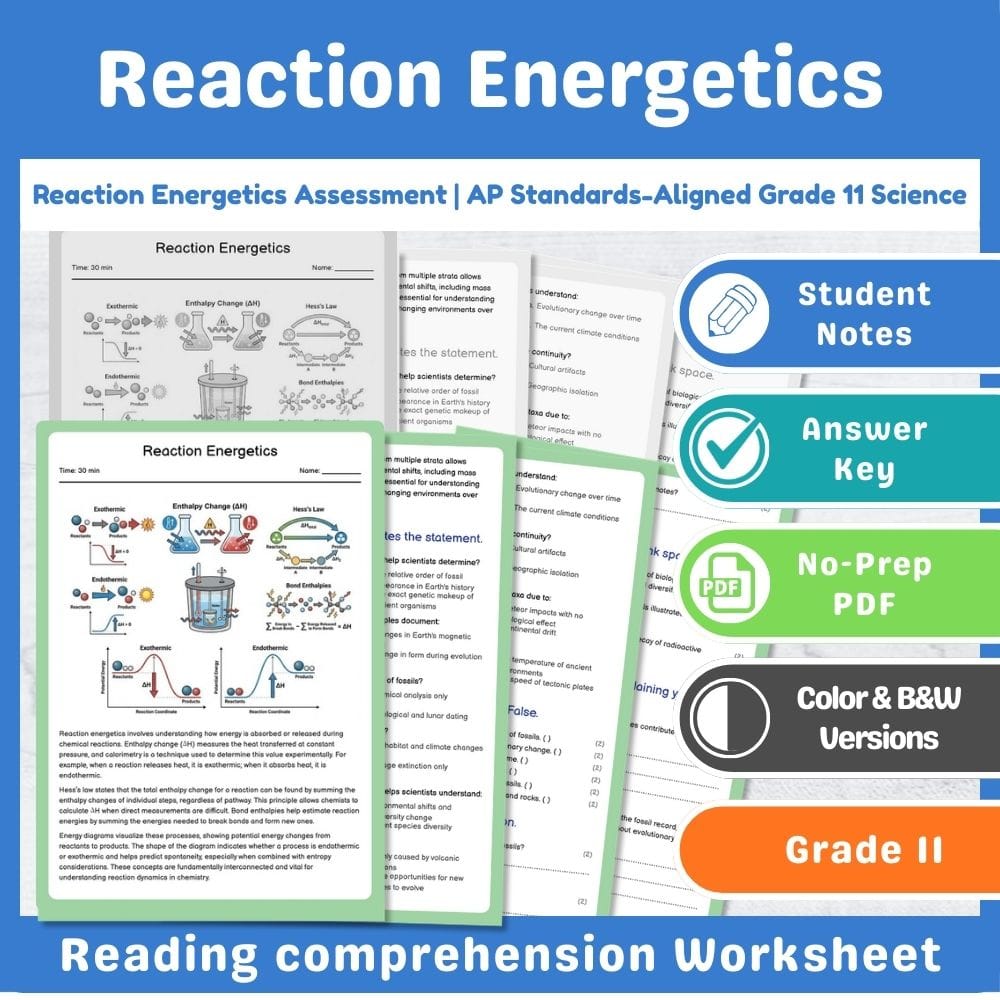
Reaction Energetics Assessment | AP Standards-Aligned Grade 11 Science
Created byPrism Point LearningLearning Objectives
- Explain the concepts of enthalpy changes and calorimetric methods in measuring reaction heat.
- Apply Hess’s law to determine overall reaction energies from individual steps.
- Relate bond enthalpies and formation energies to macroscopic enthalpy and chemical stability.
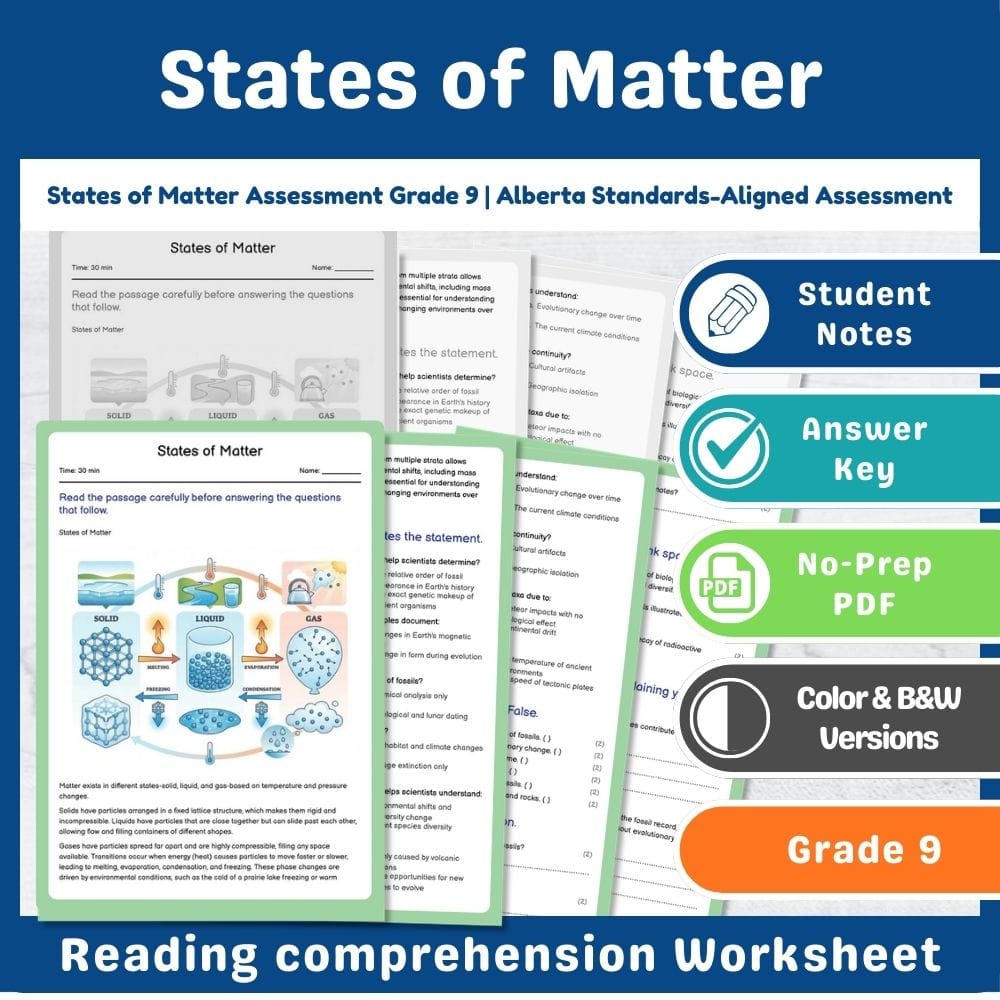
States of Matter Assessment Grade 9 | Alberta Standards-Aligned Assessment
Created byPrism Point LearningLearning Objectives
- Describe the three main states of matter: solid, liquid, and gas.
- Explain how temperature and pressure influence phase transitions.
- Identify the behaviors and properties characteristic of each state of matter.
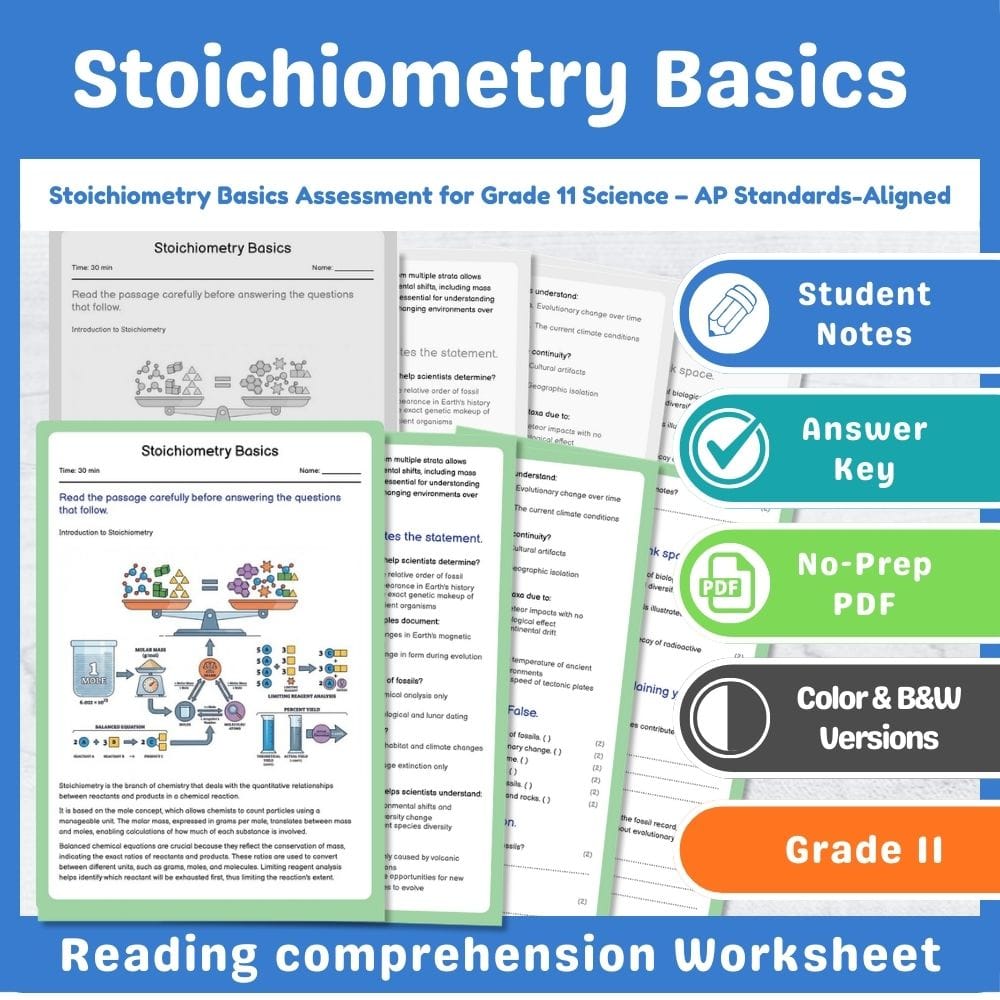
Stoichiometry Basics Assessment for Grade 11 Science – AP Standards-Aligned
Created byPrism Point LearningLearning Objectives
- Understand mole relationships and molar masses for chemical calculations.
- Interpret and balance chemical equations for mass and mole conversions.
- Apply limiting reagent concepts and calculate percent yield.

Newton's Laws Assessment for Grade 7 Science | TEKS Standards
Created byPrism Point LearningLearning Objectives
- Understand the core principles of Newton's three laws of motion.
- Identify real-world examples illustrating inertia, acceleration, and action–reaction pairs.
- Explain how mass, force, and motion are related through qualitative relationships.
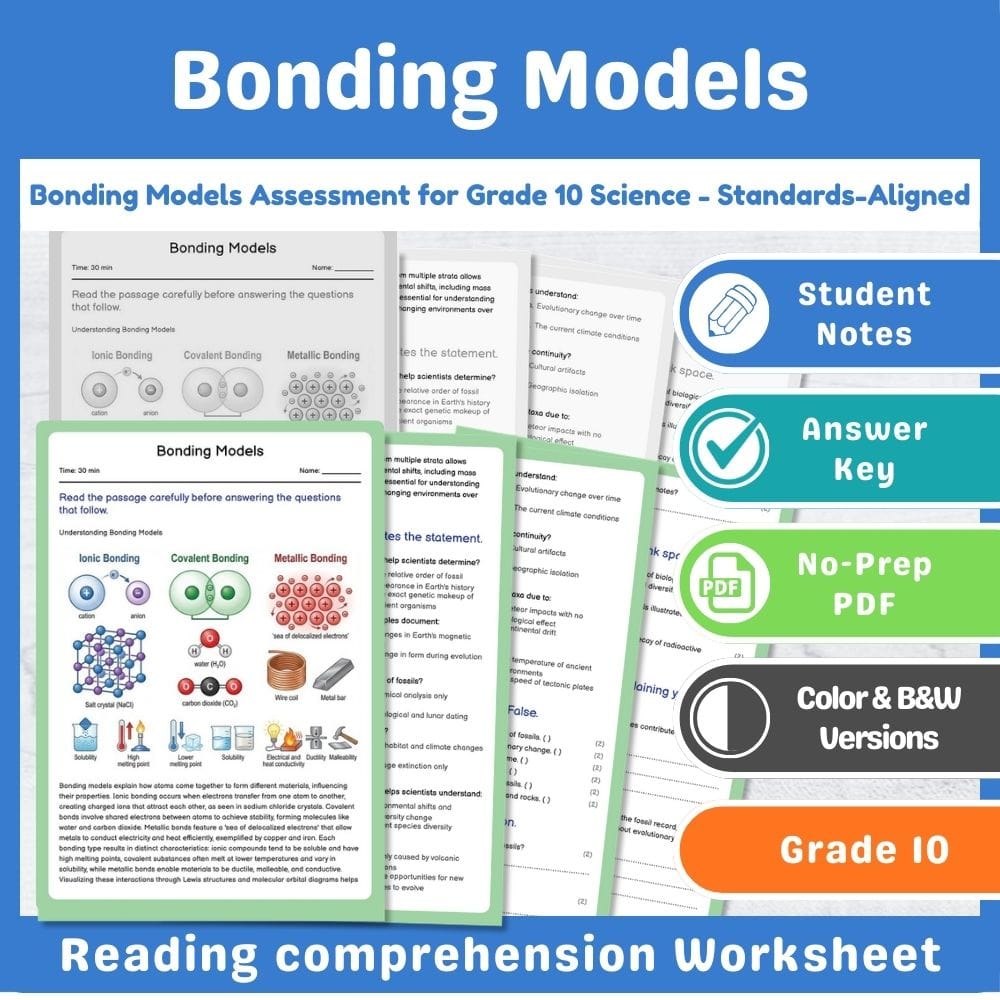
Bonding Models Assessment for Grade 10 Science - Standards-Aligned
Created byPrism Point LearningLearning Objectives
- Identify and distinguish the major types of bonding: ionic, covalent, and metallic.
- Relate bonding frameworks to material properties such as conductivity, melting point, and solubility.
- Understand Lewis structures, electron-sharing, and electron-transfer representations.
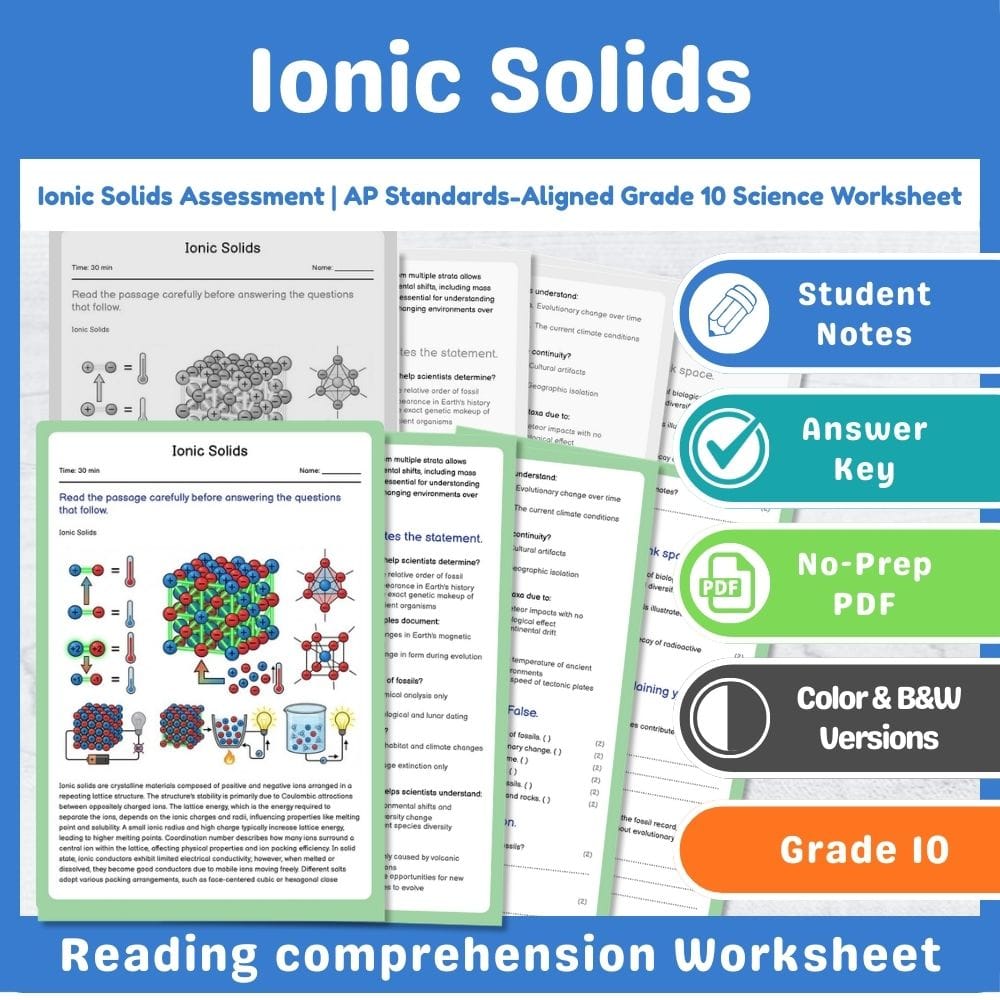
Ionic Solids Assessment | AP Standards-Aligned Grade 10 Science Worksheet
Created byPrism Point LearningLearning Objectives
- Understand the lattice structures and coordination numbers of ionic solids.
- Explain how lattice energy influences melting point, solubility, and electrical conductivity.
- Describe Coulombic interactions and ion packing models in salts.
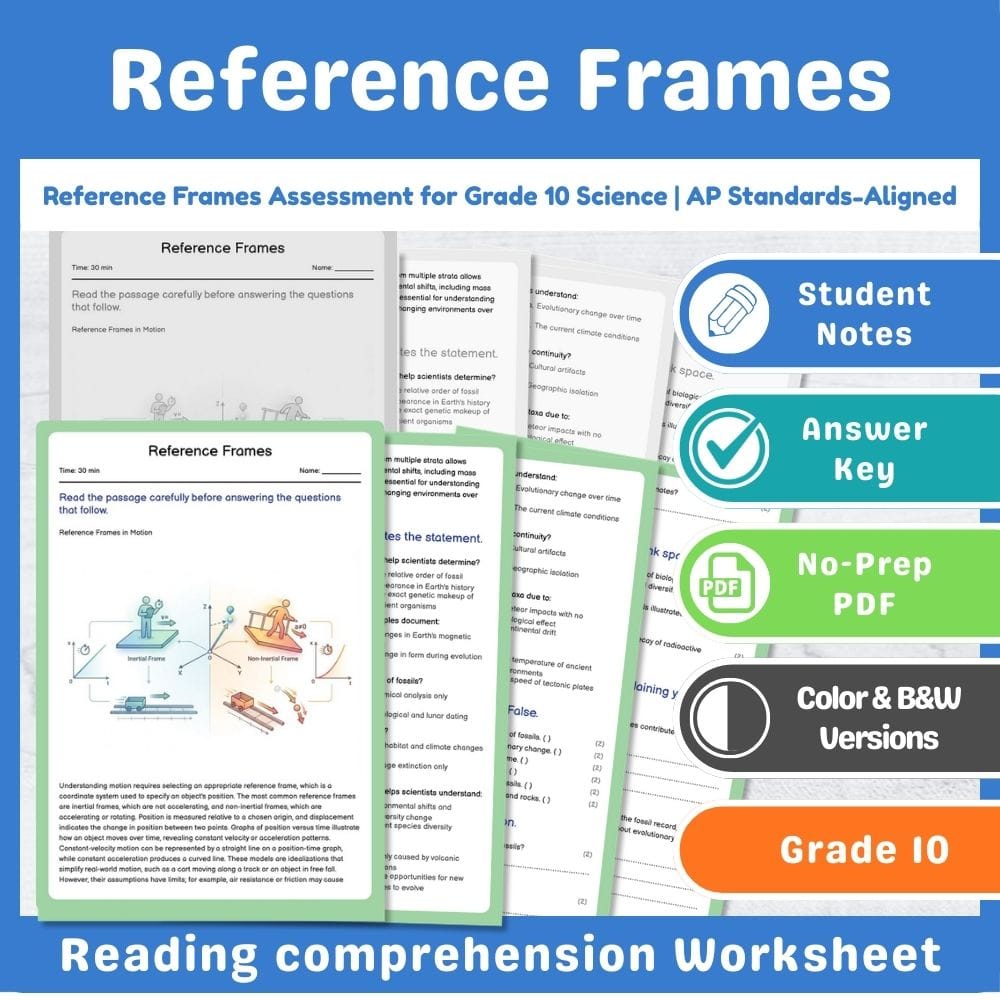
Reference Frames Assessment for Grade 10 Science | AP Standards-Aligned
Created byPrism Point LearningLearning Objectives
- Understand the concept of reference frames and their importance in describing motion.
- Distinguish between different coordinate systems used in kinematics.
- Relate position, displacement, velocity, and acceleration through algebraic expressions and graphs.

Space Technology Assessment | TEKS Grade 7 Science
Created byPrism Point LearningLearning Objectives
- Understand the key technologies used in space observation and exploration.
- Identify major historical space missions and their contributions.
- Describe the instruments and methods used for remote sensing and data collection in space.

Molecular Evidence Assessment | TEKS Grade 9 Science Standards
Created byPrism Point LearningLearning Objectives
- Understand how DNA, RNA, and protein sequences provide insights into evolutionary relationships.
- Identify the significance of conserved genetic sequences and homologous genes in common ancestry.
- Explain how molecular clocks estimate divergence times between species.
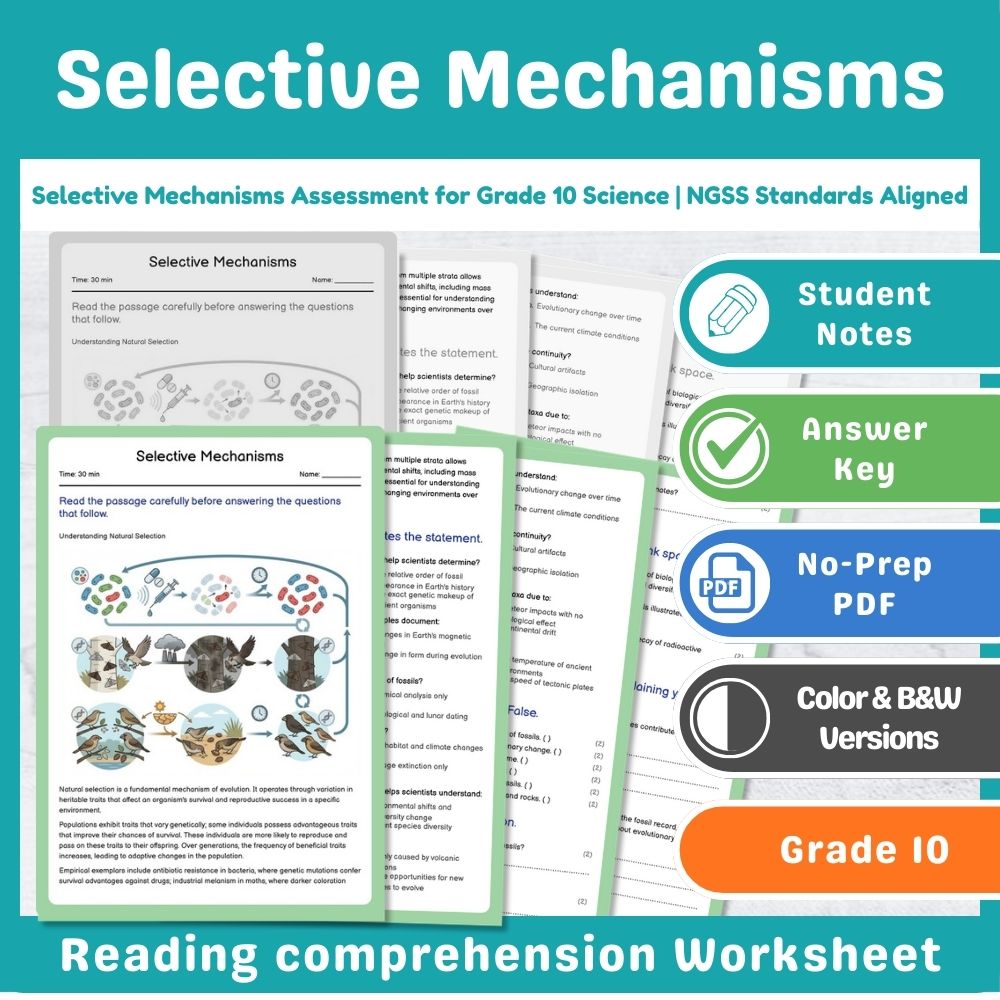
Selective Mechanisms Assessment for Grade 10 Science | NGSS Standards Aligned
Created byPrism Point LearningLearning Objectives
- Understand how natural selection operates through variation in heritable traits.
- Identify real-world examples illustrating adaptive changes due to environmental pressures.
- Analyze the role of reproductive success and fitness differentials in evolution.
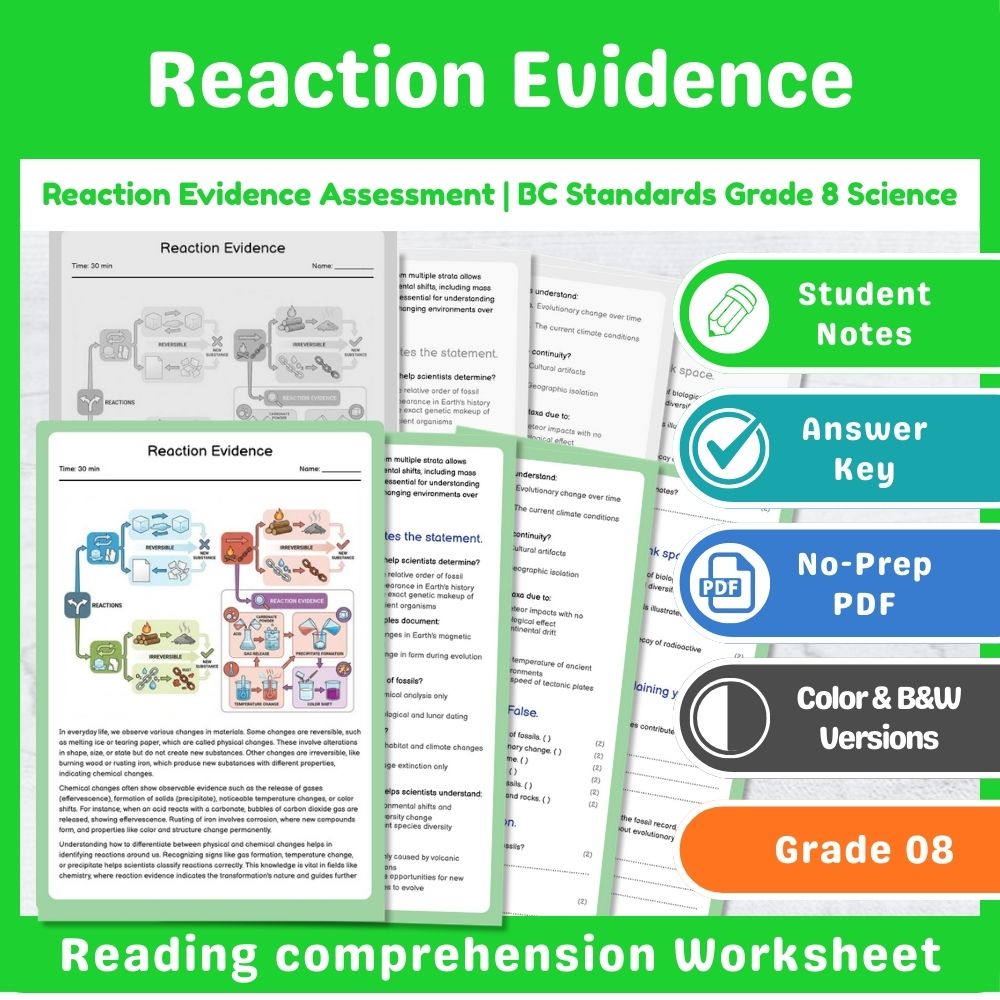
Reaction Evidence Assessment | BC Standards Grade 8 Science
Created byPrism Point LearningLearning Objectives
- Distinguish between physical and chemical changes using observable evidence.
- Identify examples of physical and chemical transformations based on reaction evidence.
- Understand how properties such as gas formation, precipitate, temperature change, and color shift indicate chemical or physical changes.
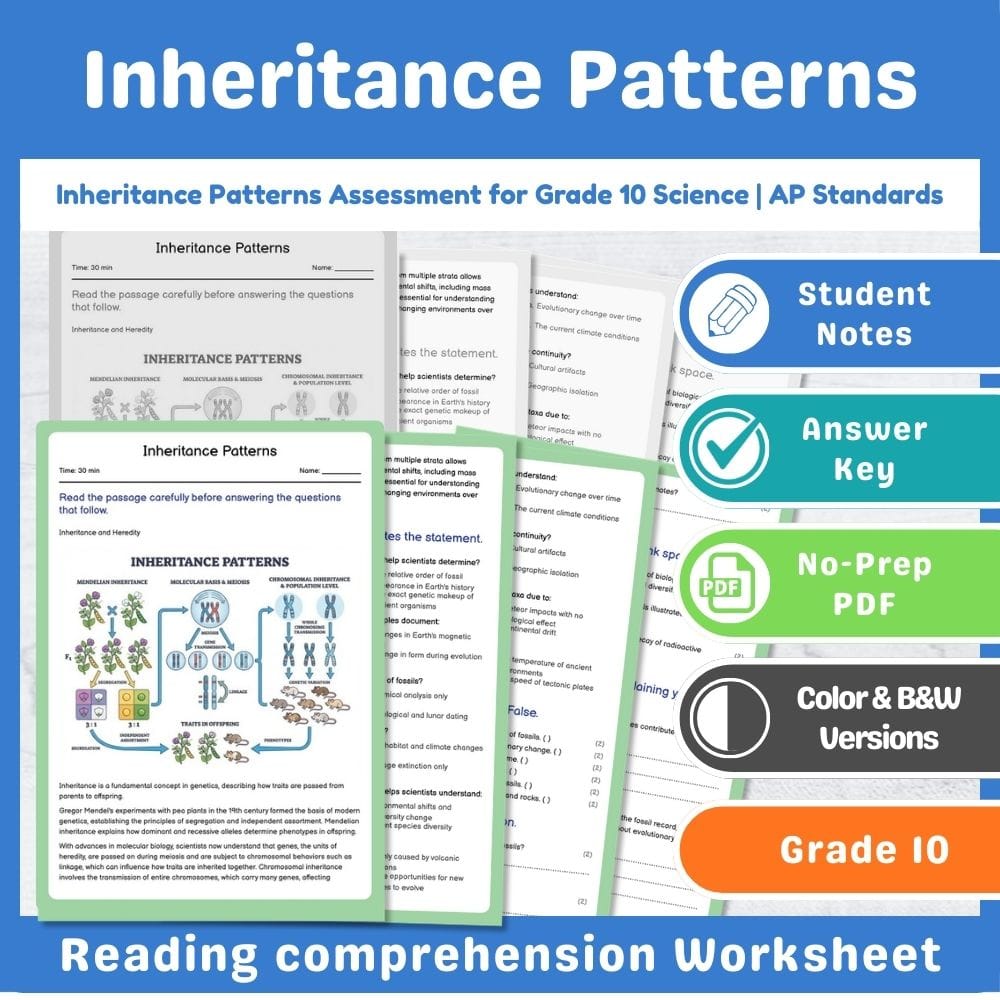
Inheritance Patterns Assessment for Grade 10 Science | AP Standards
Created byPrism Point LearningLearning Objectives
- Understand Mendelian principles of heredity, including segregation and independent assortment.
- Identify different inheritance patterns such as dominance, linkage, and chromosomal inheritance.
- Interpret pedigrees, Punnett squares, and allele frequency data to predict trait transmission.
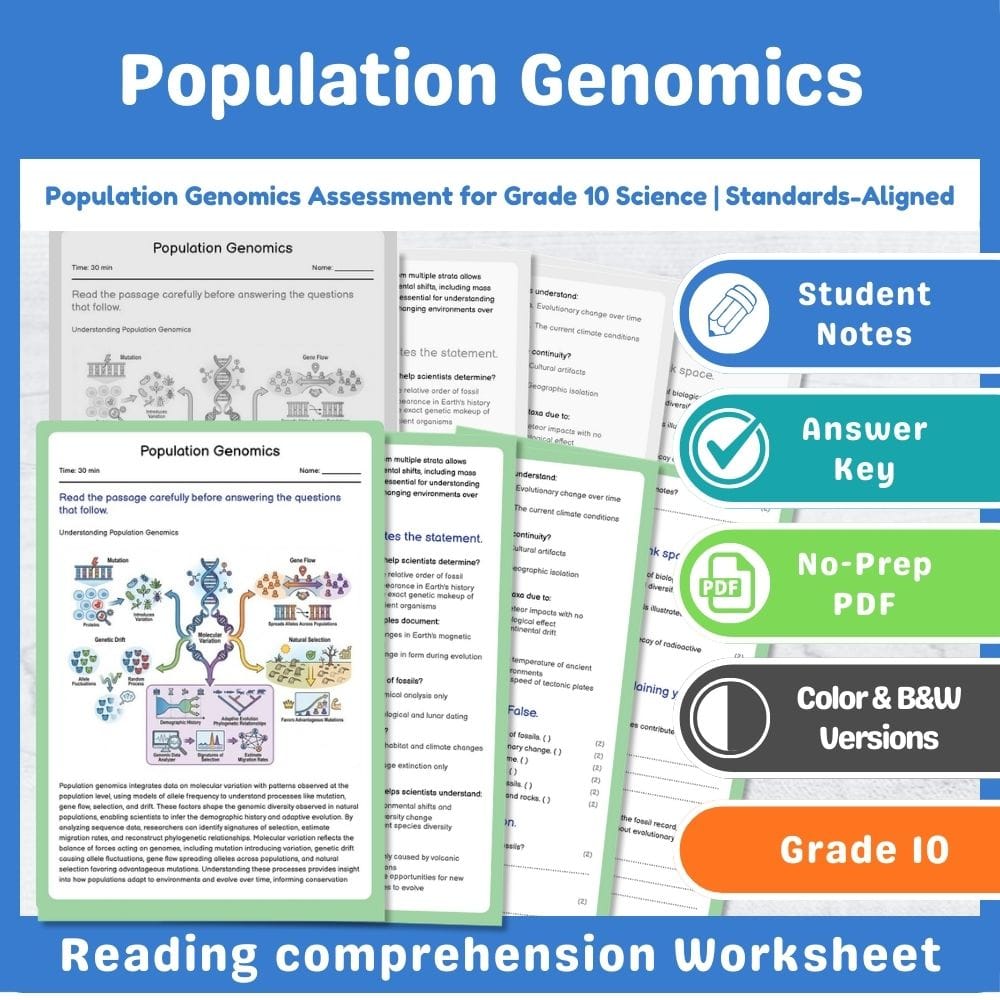
Population Genomics Assessment for Grade 10 Science | Standards-Aligned
Created byPrism Point LearningLearning Objectives
- Understand how allele frequency models help interpret molecular variation across populations.
- Describe how mutation, gene flow, selection, and genetic drift influence genomic diversity.
- Interpret sequence-based evidence to connect molecular mechanisms with population processes.
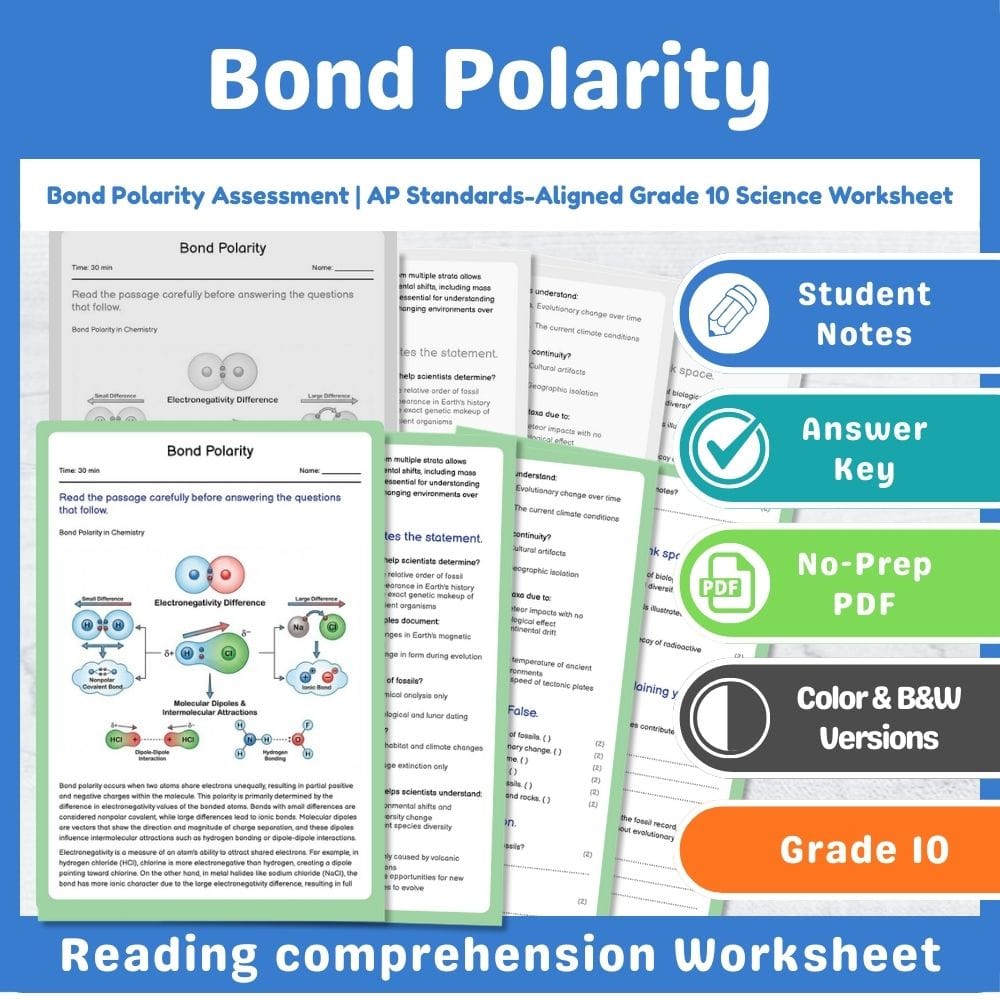
Bond Polarity Assessment | AP Standards-Aligned Grade 10 Science Worksheet
Created byPrism Point LearningLearning Objectives
- Explain the concept of bond polarity based on differences in electronegativity.
- Represent bond dipoles using vector notation and relate them to molecular polarity.
- Differentiate between polar covalent and ionic bonds on a continuum.
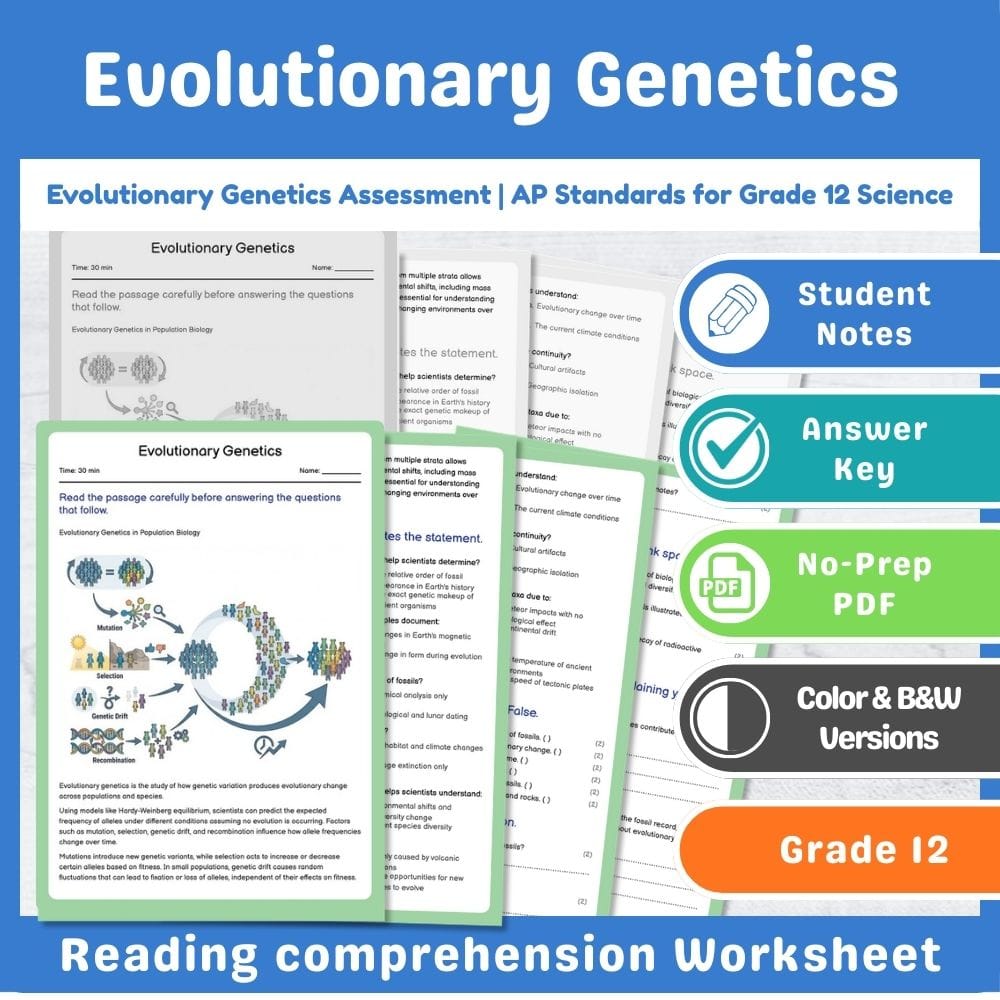
Evolutionary Genetics Assessment | AP Standards for Grade 12 Science
Created byPrism Point LearningLearning Objectives
- Describe how Hardy–Weinberg equilibrium models genetic stability in populations.
- Explain the role of mutation and selection coefficients in evolutionary change.
- Analyze the effects of genetic drift and recombination on genetic variation.
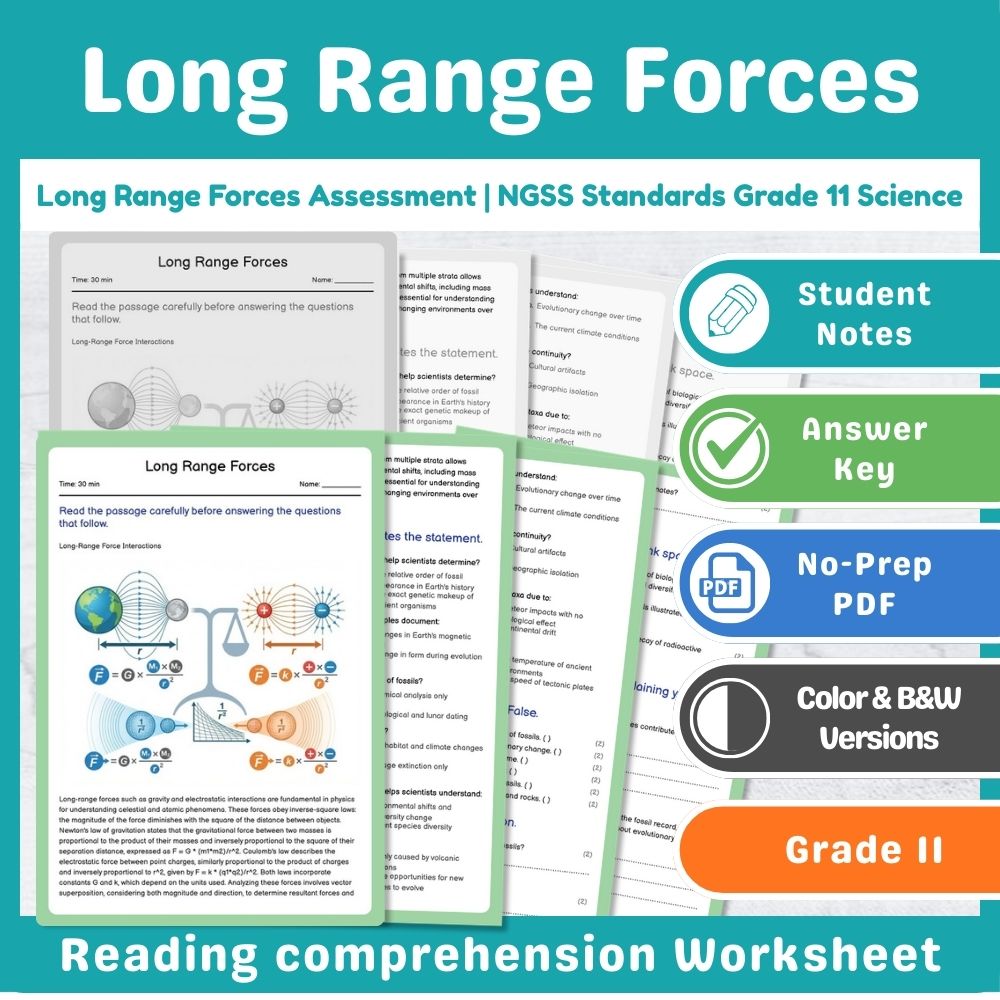
Long Range Forces Assessment | NGSS Standards Grade 11 Science
Created byPrism Point LearningLearning Objectives
- Understand how inverse-square laws describe gravitational and electrostatic forces.
- Apply Newton's law of universal gravitation and Coulomb's law to solve force problems.
- Use vector addition to determine net forces and predict motion trajectories.

Water and Resources Assessment | General Standards Grade 6 Science
Created byPrism Point LearningLearning Objectives
- Describe the stages of the water cycle and how it connects Earth's systems.
- Identify the processes involved in water movement and storage on Earth.
- Explain how land cover and temperature influence water infiltration, runoff, and ecosystem conditions.
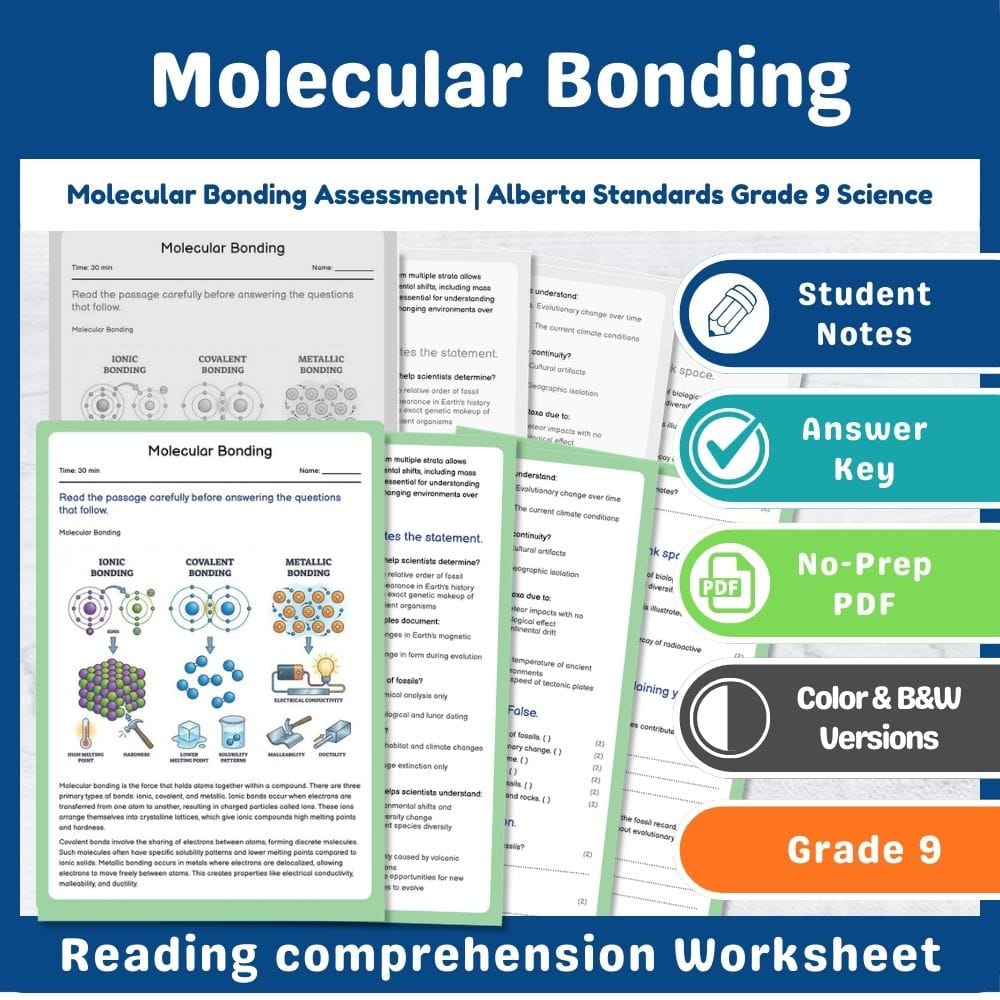
Molecular Bonding Assessment | Alberta Standards Grade 9 Science
Created byPrism Point LearningLearning Objectives
- Describe the different types of chemical bonds: ionic, covalent, and metallic.
- Identify properties of compounds based on their bonding type.
- Explain how bonding influences material properties and applications.

Physical Property Clues Assessment for Grade 7 Science | Standards-Aligned Test
Created byPrism Point LearningLearning Objectives
- Identify and describe various physical properties of substances such as color, density, melting point, boiling point, magnetism, conductivity, and solubility.
- Explain how observable behaviors related to physical properties assist in characterizing substances.
- Apply knowledge of physical properties to reason about how mixtures can be separated based on measurable differences.
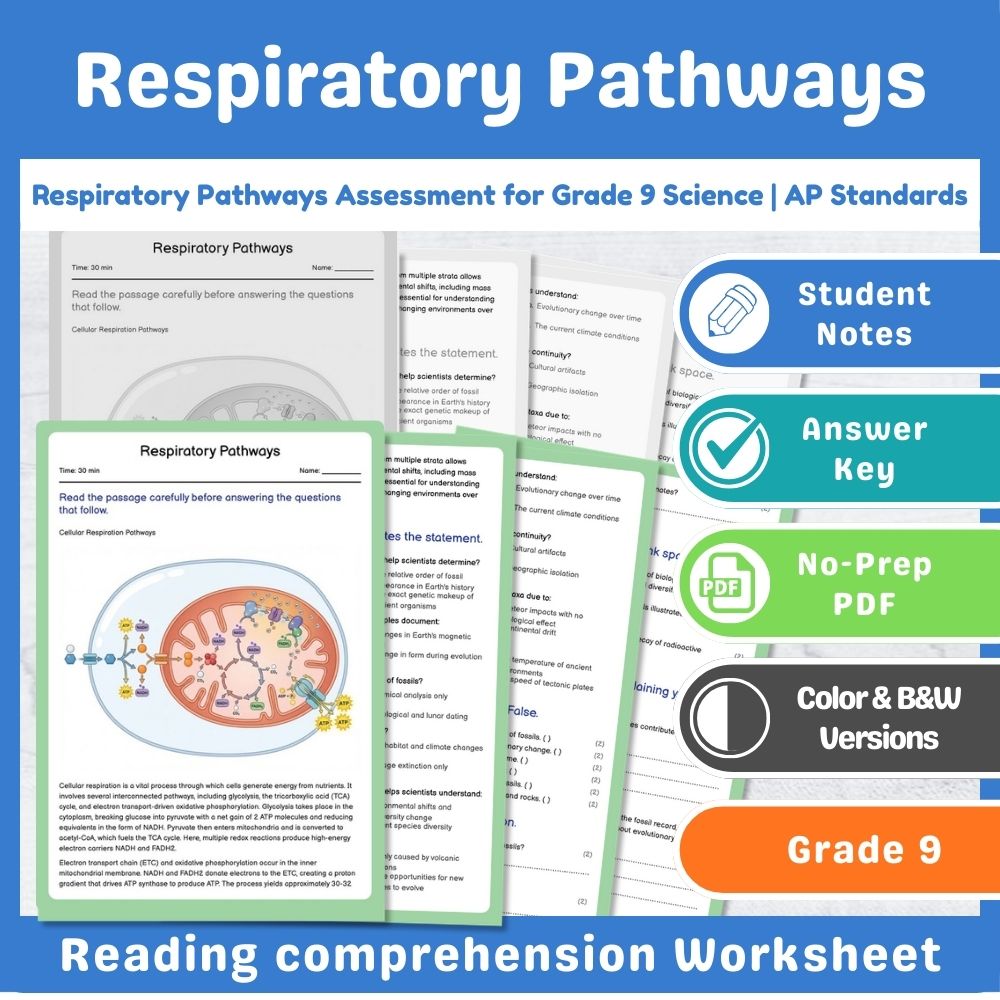
Respiratory Pathways Assessment for Grade 9 Science | AP Standards
Created byPrism Point LearningLearning Objectives
- Describe the main pathways involved in cellular respiration, including glycolysis, the TCA cycle, and electron transport chain.
- Explain the ATP yield and redox balances associated with substrate-level and oxidative phosphorylation.
- Differentiate between aerobic and anaerobic respiration outcomes in terms of energy production.

Design Criteria Assessment | General Standards + Grade 7 Science
Created byPrism Point LearningLearning Objectives
- Understand the concept of design criteria and how they guide project development.
- Identify measurable and observable criteria in design solutions.
- Analyze trade-offs when meeting multiple design constraints.
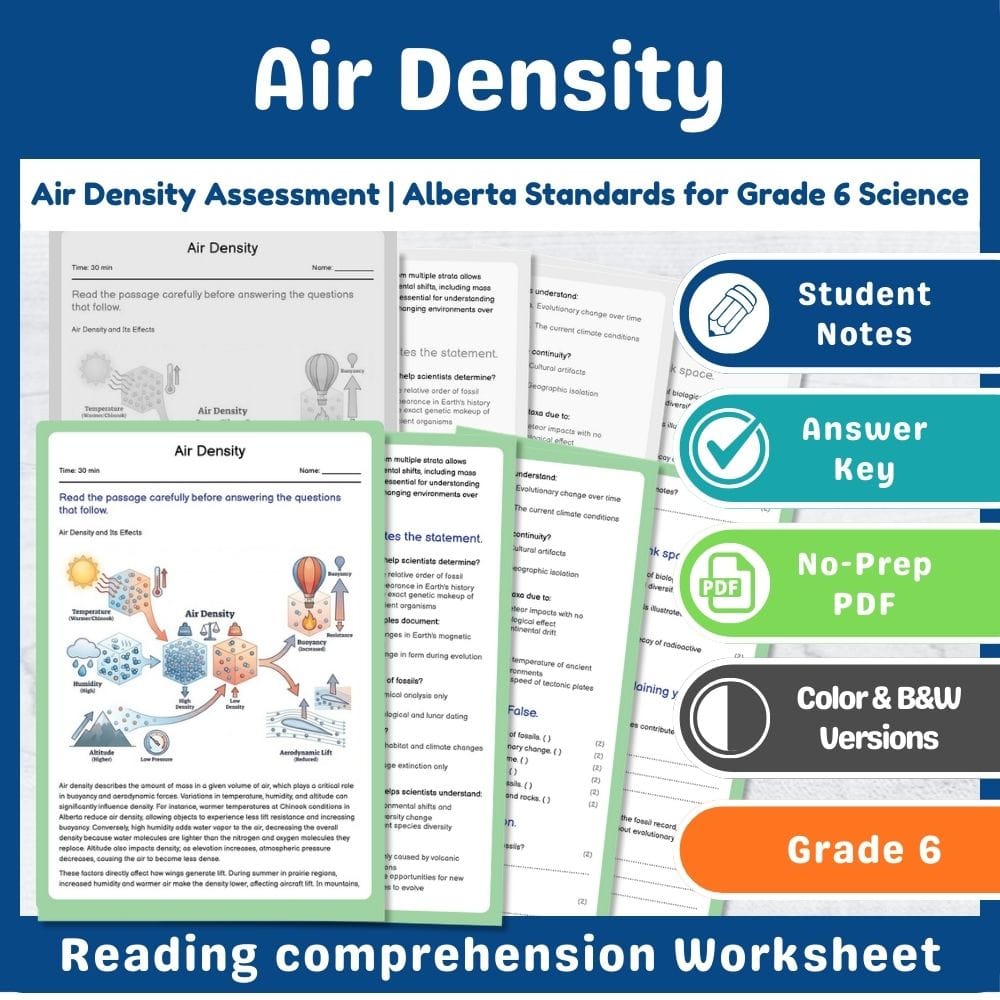
Air Density Assessment | Alberta Standards for Grade 6 Science
Created byPrism Point LearningLearning Objectives
- Understand how temperature, humidity, and altitude affect air density.
- Explain the relationship between air density and buoyancy / lift.
- Describe how atmospheric conditions influence aerodynamic forces in different environments.
Browse more categories
About Science Worksheets
Find Science worksheets spanning core skills, practice, and review. All 42,685 resources are instant PDF downloads for the classroom or home.
Every worksheet on MyTeachingSheets is created by independent teacher-authors and reviewed before publication. All resources download as printable PDFs for classroom, homework, or at-home practice, and many include answer keys. Preview any worksheet free before buying.