
Science Worksheets
42,685 subject resources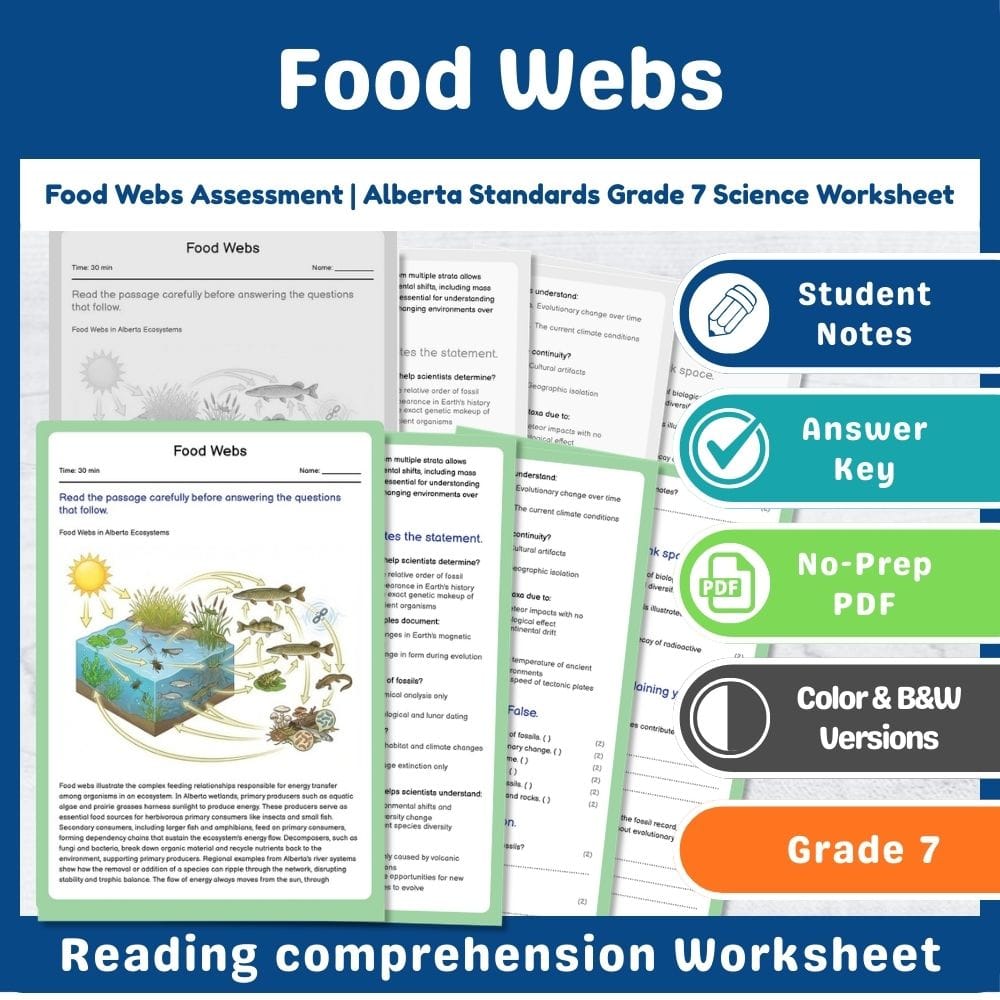
Food Webs Assessment | Alberta Standards Grade 7 Science Worksheet
 Created byPrism Point Learning
Learning Objectives
- Understand the concept of food webs and how energy transfers through ecosystems.
- Identify roles of producers, consumers, and decomposers within a regional ecological context.
- Analyze how changes in species populations can affect the stability of food webs.
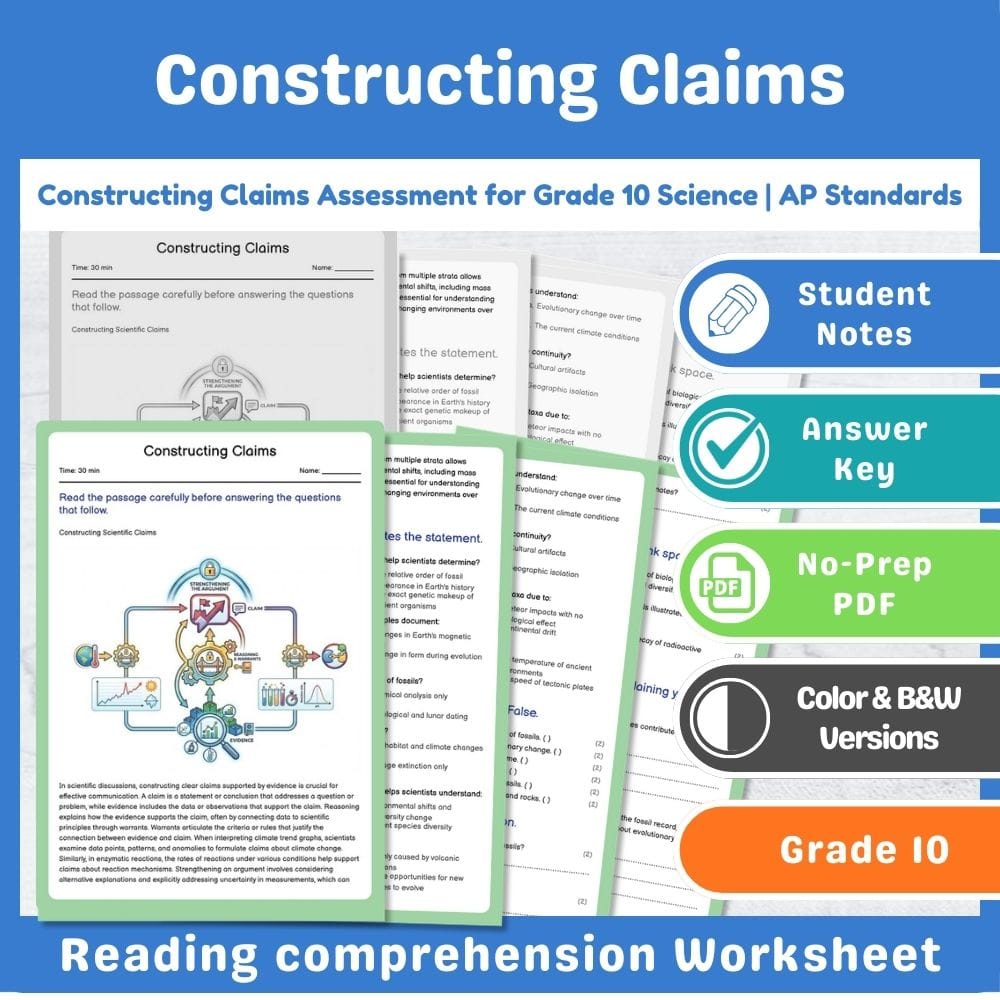
Constructing Claims Assessment for Grade 10 Science | AP Standards
Created byPrism Point LearningLearning Objectives
- Understand the structure and components of evidence-based claims, including claim, evidence, and reasoning.
- Distinguish between claim, evidence, and warrant in constructing scientific arguments.
- Apply the claim-evidence-reasoning framework to interpret data such as climate graphs and enzyme reaction rates.
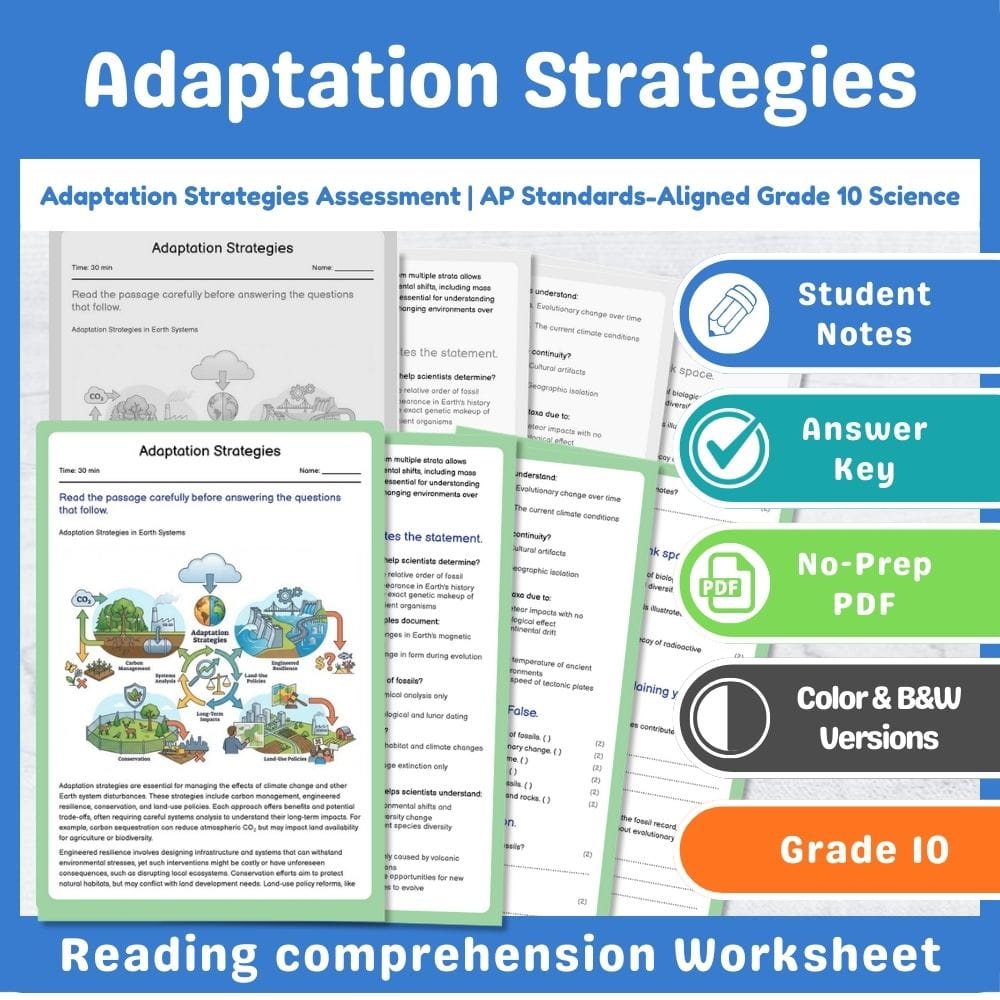
Adaptation Strategies Assessment for Grade 10 Science | Standards-Aligned
Created byPrism Point LearningLearning Objectives
- Understand different adaptation strategies in Earth systems.
- Assess trade-offs and potential effects of mitigation actions.
- Apply systems thinking and scenario analysis to evaluate intervention outcomes.

Cell Organization Assessment for Grade 8 Science BC Standards
Created byPrism Point LearningLearning Objectives
- Define the levels of cell organization in multicellular organisms.
- Explain how similar cells form tissues and how tissues form organs.
- Describe the hierarchical arrangement from cells to organ systems that support life.
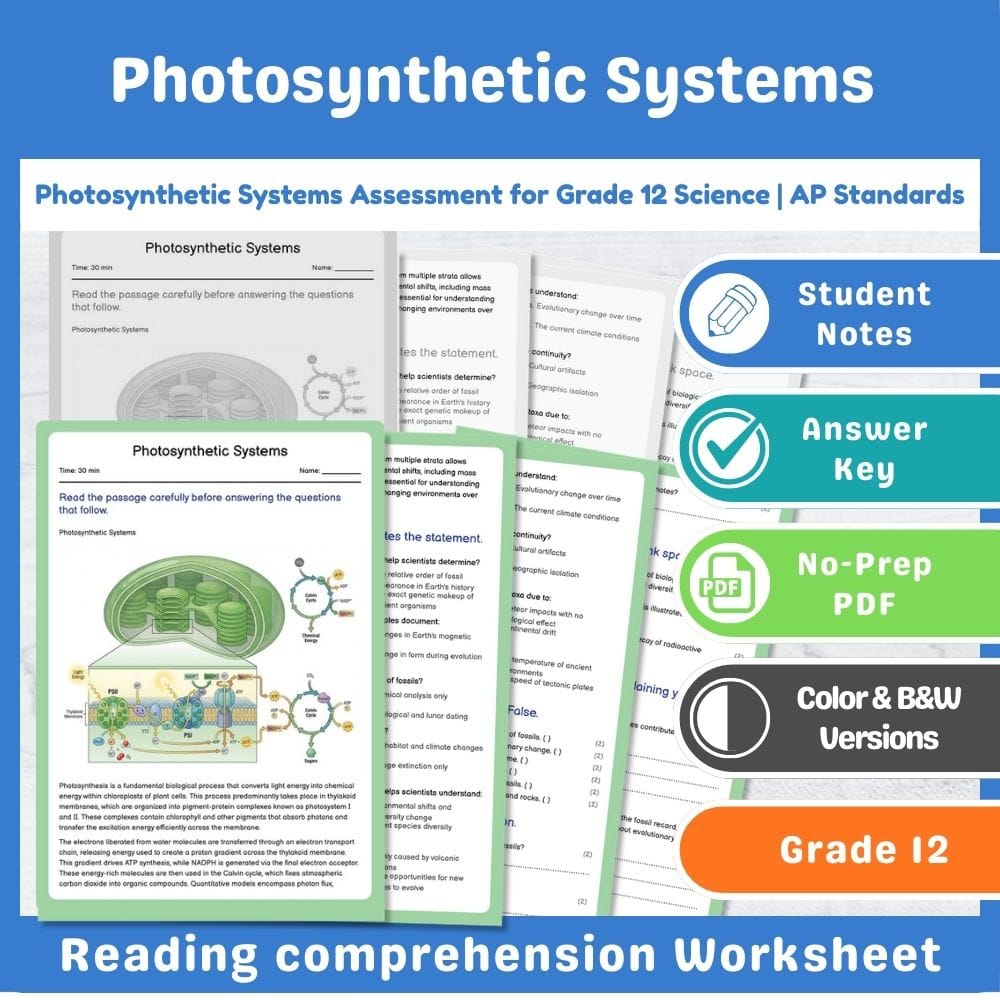
Photosynthetic Systems Assessment for Grade 12 Science | AP Standards
Created byPrism Point LearningLearning Objectives
- Describe the organization of pigments and electron transport chains in photosynthesis.
- Explain the coupling of light energy capture to the Calvin cycle and carbon fixation.
- Analyze energy budgets, quantum yield, and flux measurements in photosynthesis.
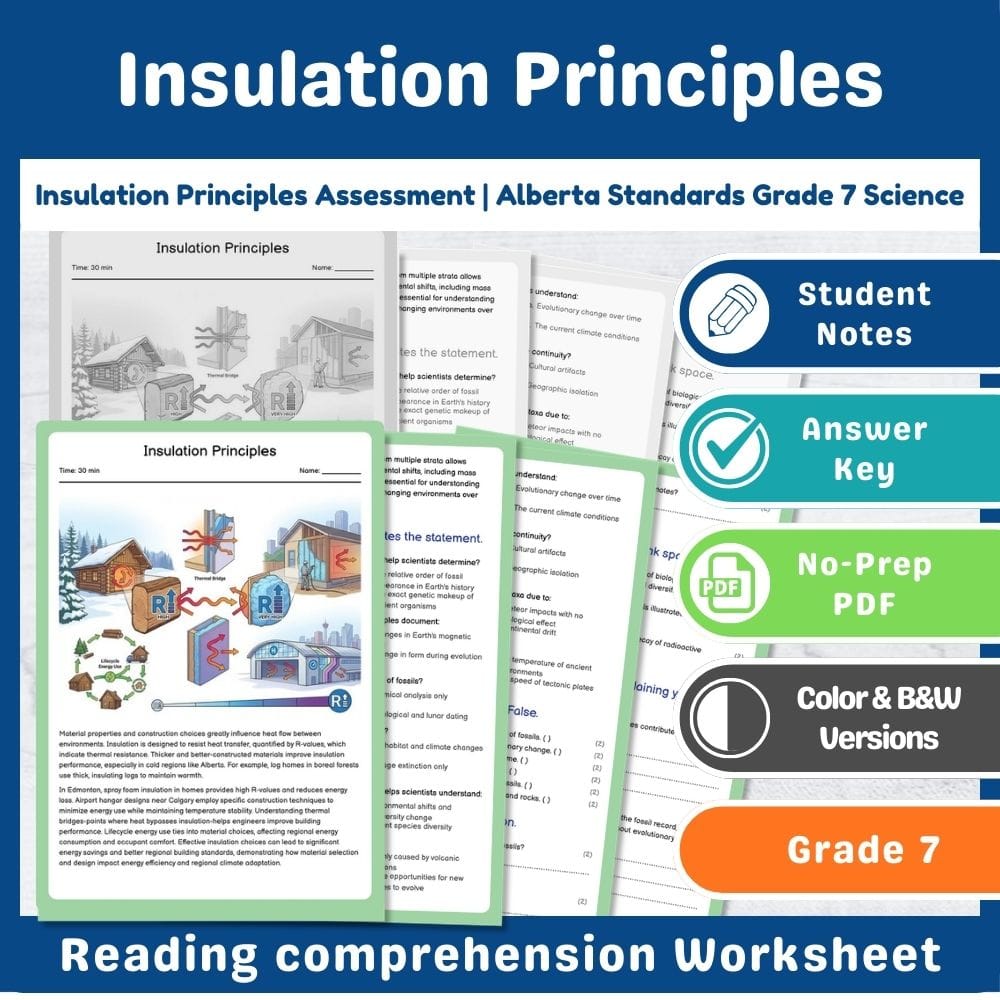
Insulation Principles Assessment | Alberta Standards Grade 7 Science
Created byPrism Point LearningLearning Objectives
- Understand how material properties influence heat flow.
- Identify regional examples of insulation techniques in Alberta.
- Determine the significance of R-values and thermal bridges in building design.
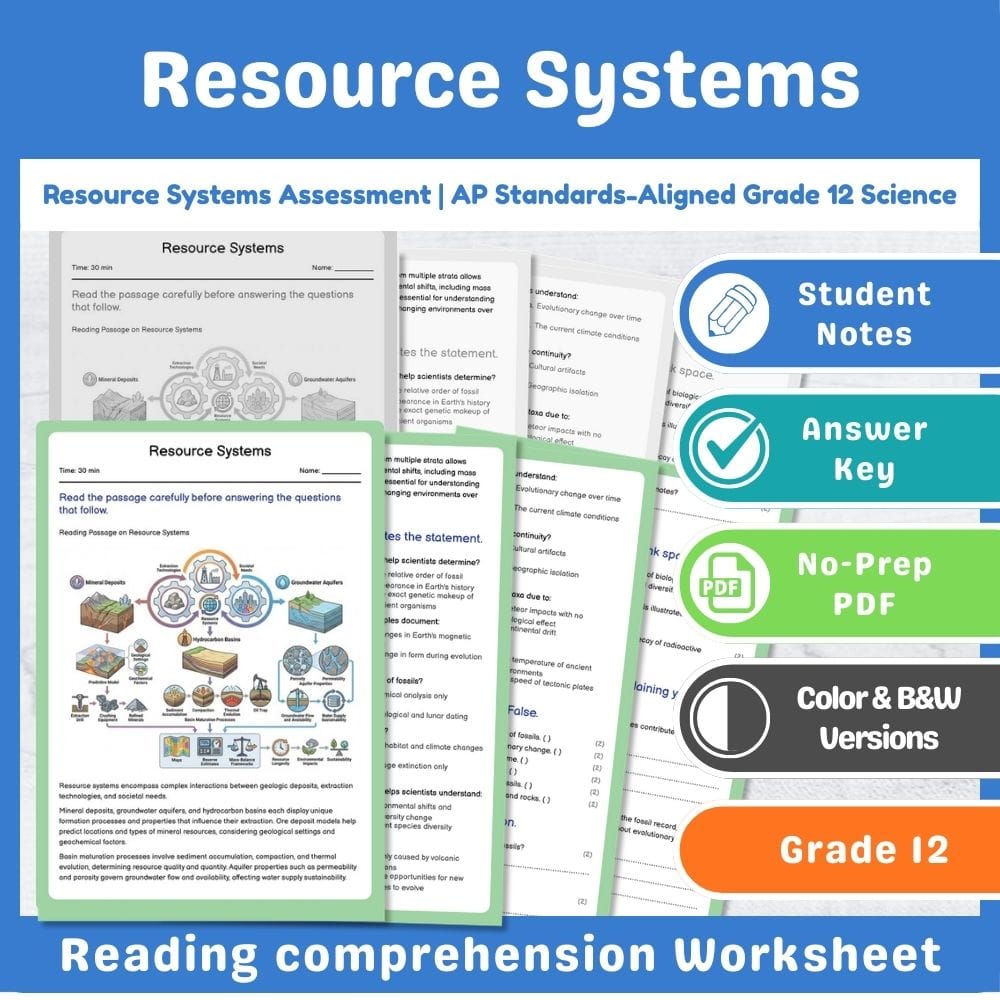
Resource Systems Assessment | AP Standards-Aligned Grade 12 Science
Created byPrism Point LearningLearning Objectives
- Analyze the interactions between geologic resources, extraction processes, and societal demands.
- Understand ore deposit models, aquifer properties, and basin maturation processes.
- Evaluate trade-offs among resource availability, environmental impact, and technological adaptation.
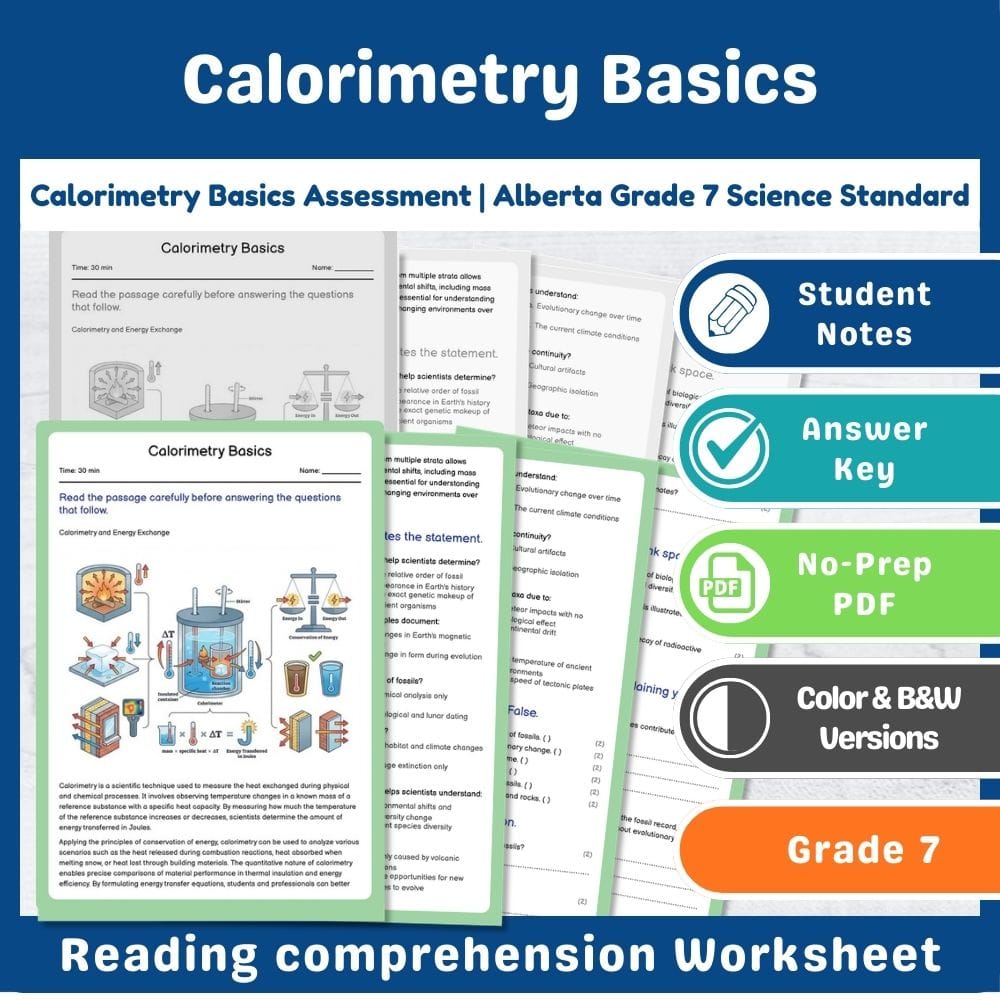
Calorimetry Basics Assessment | Alberta Grade 7 Science Standard
Created byPrism Point LearningLearning Objectives
- Explain the principles of calorimetry and how temperature changes relate to energy exchange.
- Apply energy conservation equations to quantitative heat transfer calculations.
- Describe real-world scenarios involving calorimetric reasoning in thermal performance of materials.
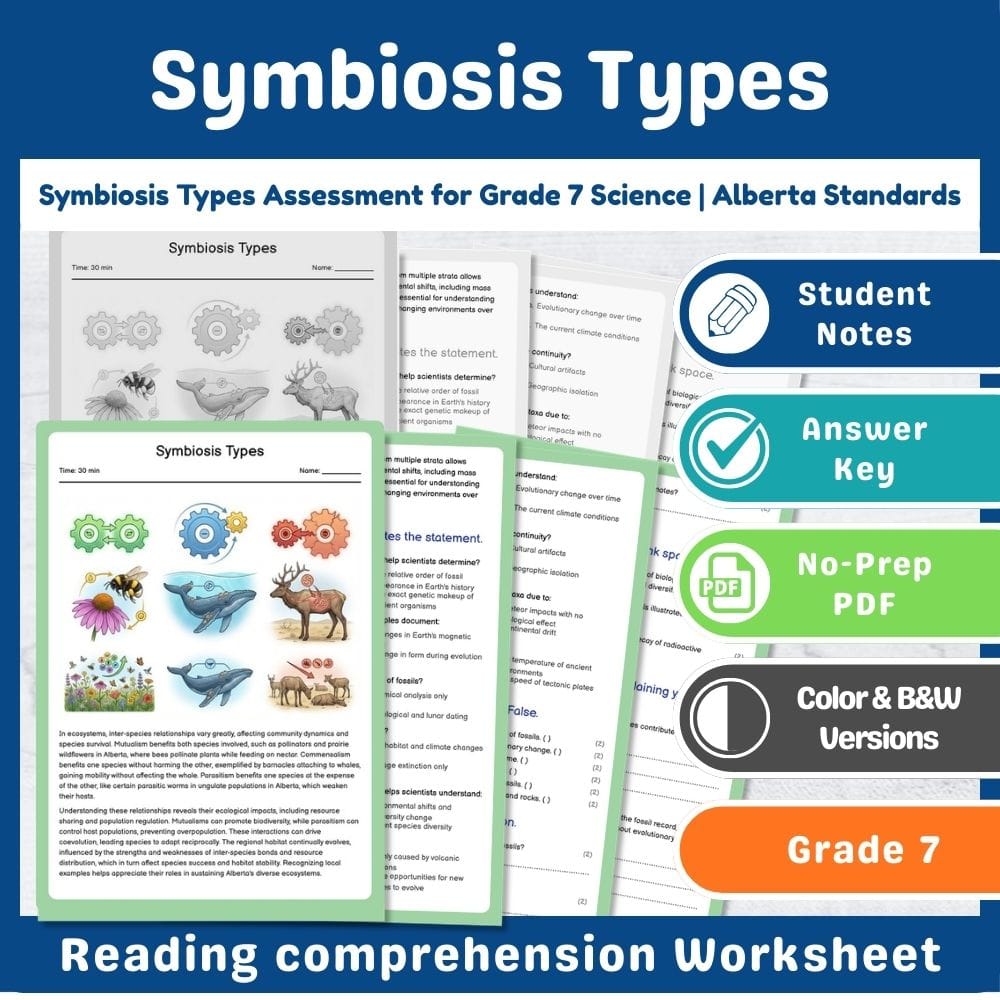
Symbiosis Types Assessment for Grade 7 Science | Alberta Standards
Created byPrism Point LearningLearning Objectives
- Define and differentiate among mutualism, commensalism, and parasitism.
- Identify Alberta-relevant examples of inter-species relationships.
- Explain ecological consequences of different symbiosis types on populations and habitats.
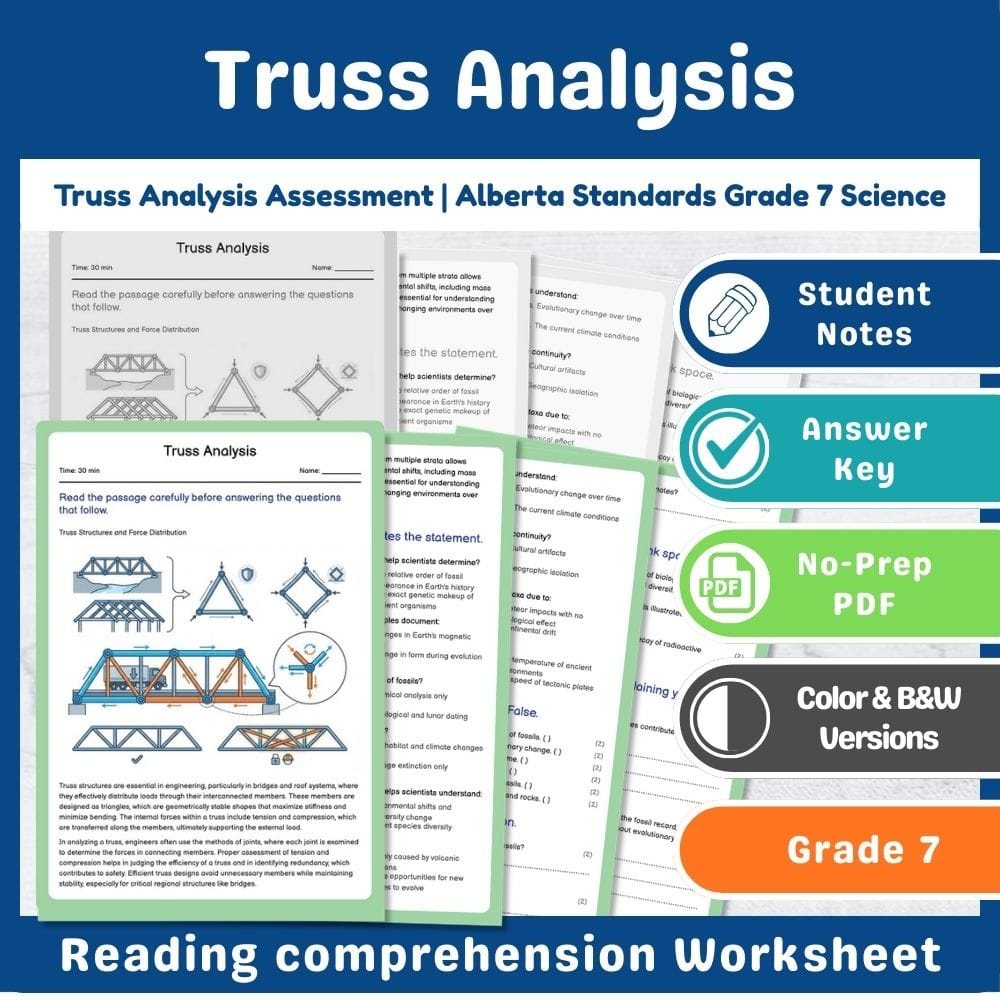
Truss Analysis Assessment | Alberta Standards Grade 7 Science
Created byPrism Point LearningLearning Objectives
- Understand the internal force distribution in truss structures.
- Analyze methods of joints to determine member tension and compression.
- Evaluate the efficiency and redundancy of various truss designs used in regional applications.

Biodiversity Overview Assessment | BC Standards Grade 10 Science
Created byPrism Point LearningLearning Objectives
- Define biodiversity and explain its levels including genetic, species, and ecosystem diversity.
- Identify factors that influence patterns of biodiversity such as habitat availability, climate stability, and disturbance rates.
- Analyze how interactions among species and environmental gradients contribute to biodiversity variation.
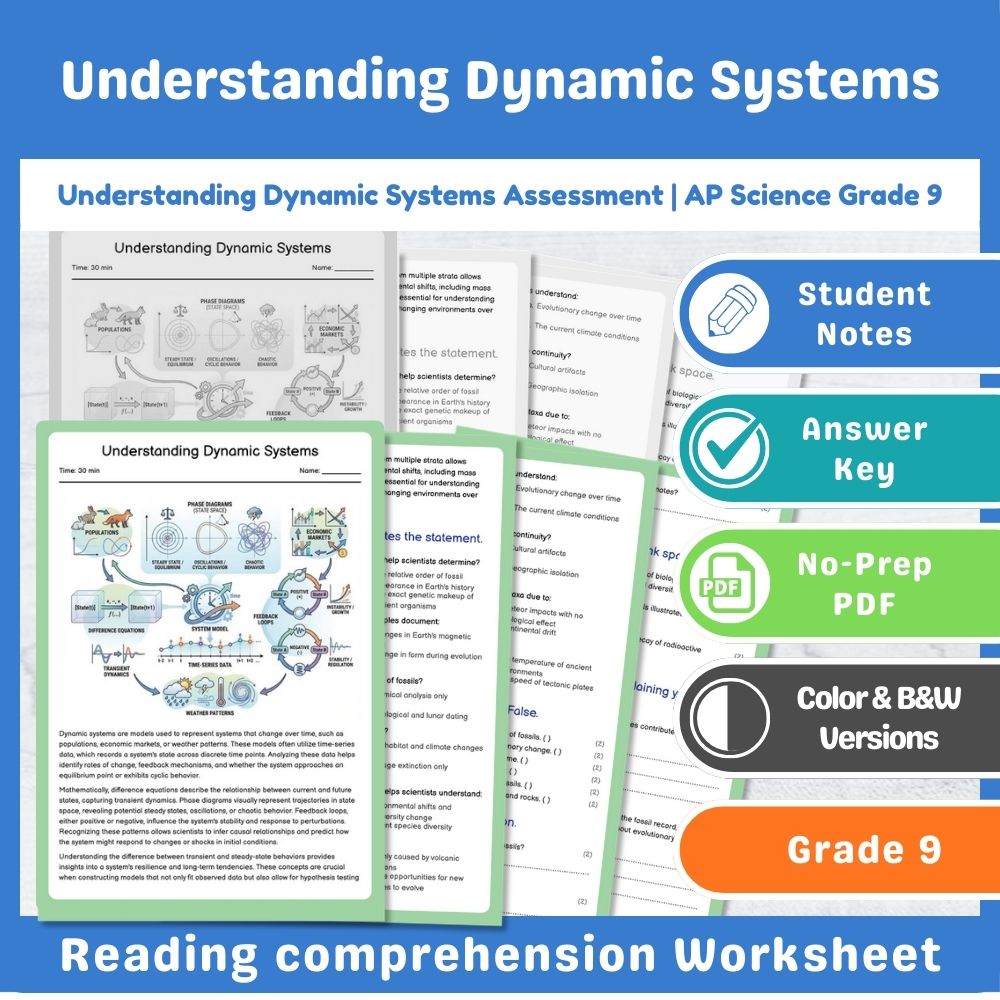
Understanding Dynamic Systems Assessment for Grade 9 Science AP
Created byPrism Point LearningLearning Objectives
- Explain how time-series data can be used to analyze changing systems
- Describe the role of difference equations and phase diagrams in modeling dynamics
- Identify feedback loops, equilibrium points, and causal structures in empirical data
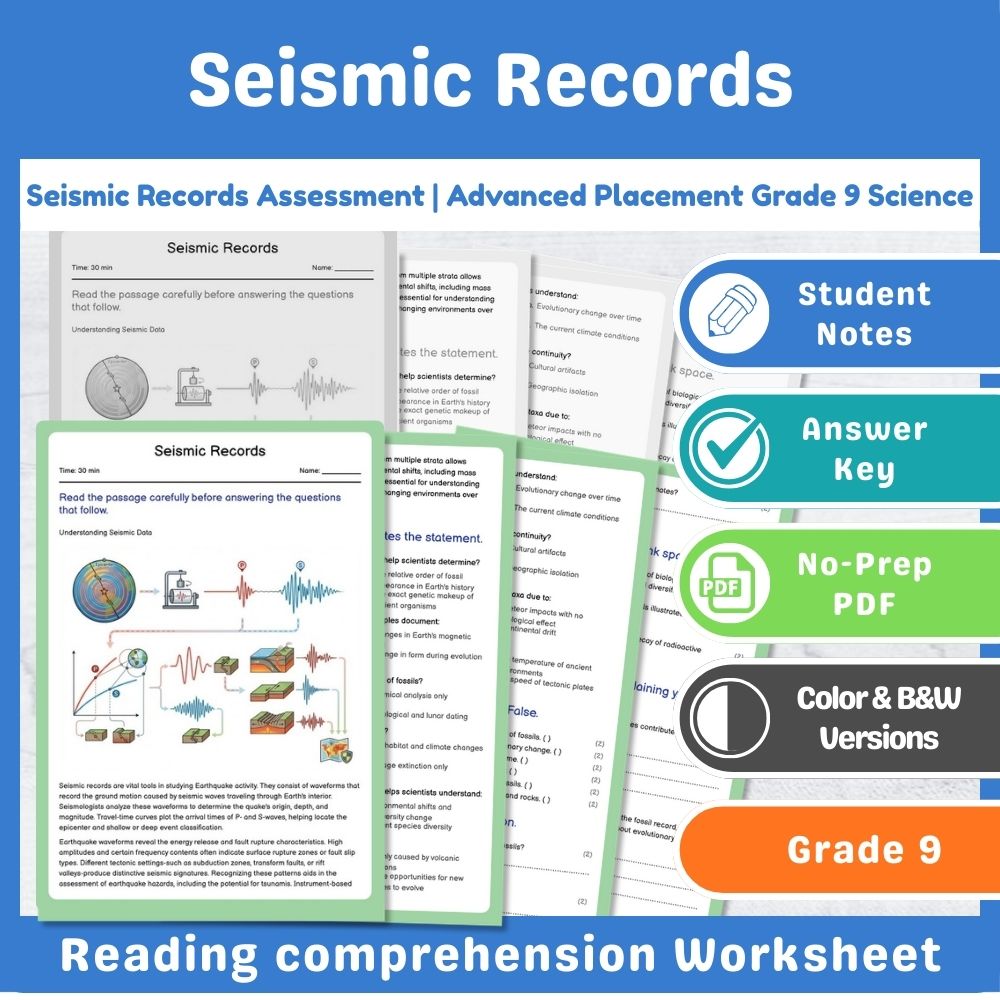
Seismic Records Assessment | Advanced Placement Grade 9 Science
Created byPrism Point LearningLearning Objectives
- Interpret earthquake waveforms and travel-time curves to infer subsurface structures.
- Compare P- and S-wave arrivals, waveform amplitudes, and frequency content to distinguish earthquake depths and locations.
- Connect seismic activity patterns to tectonic environments and surface hazard phenomena such as tsunamis.
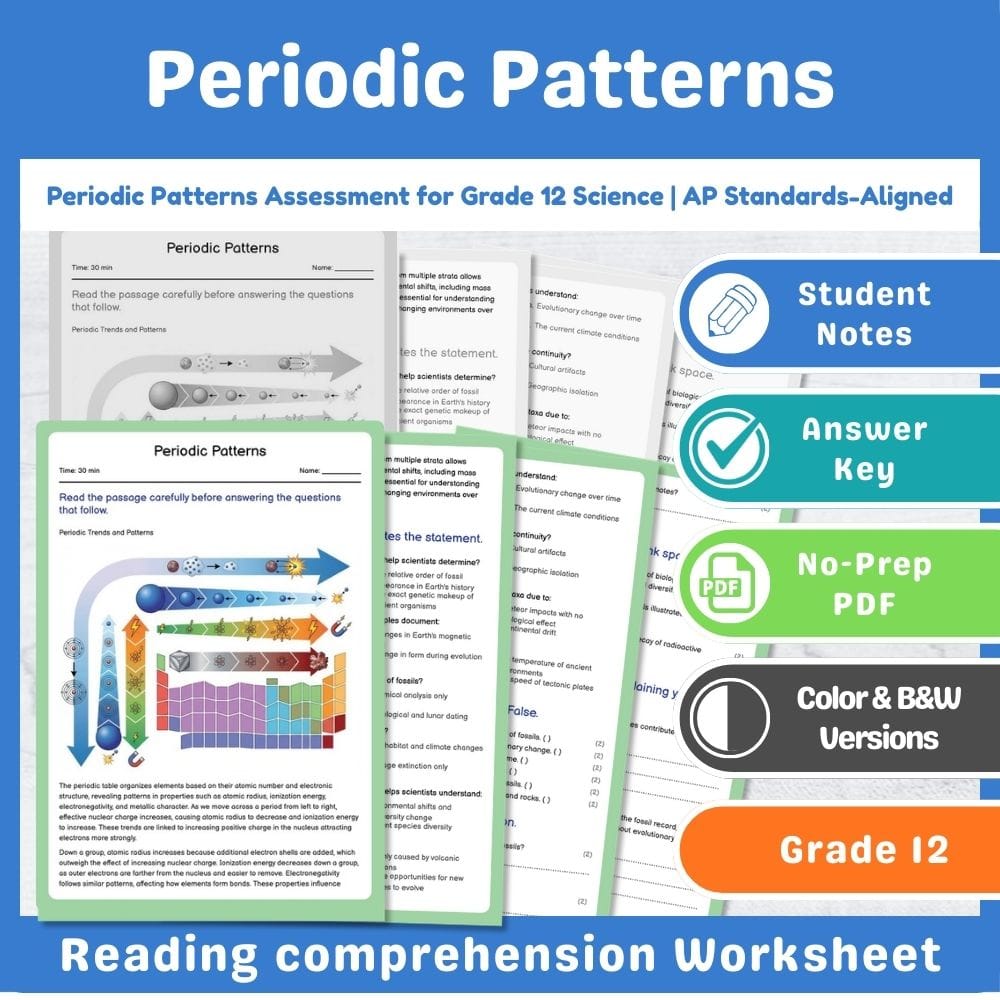
Periodic Patterns Assessment for Grade 12 Science | AP Standards-Aligned
Created byPrism Point LearningLearning Objectives
- Explain trends of effective nuclear charge, atomic radius, ionization energy, and electronegativity across the periodic table.
- Relate electronic structure to observable properties such as metallic character and reactivity.
- Use tabular and graphical data to predict element properties based on position in the periodic table.
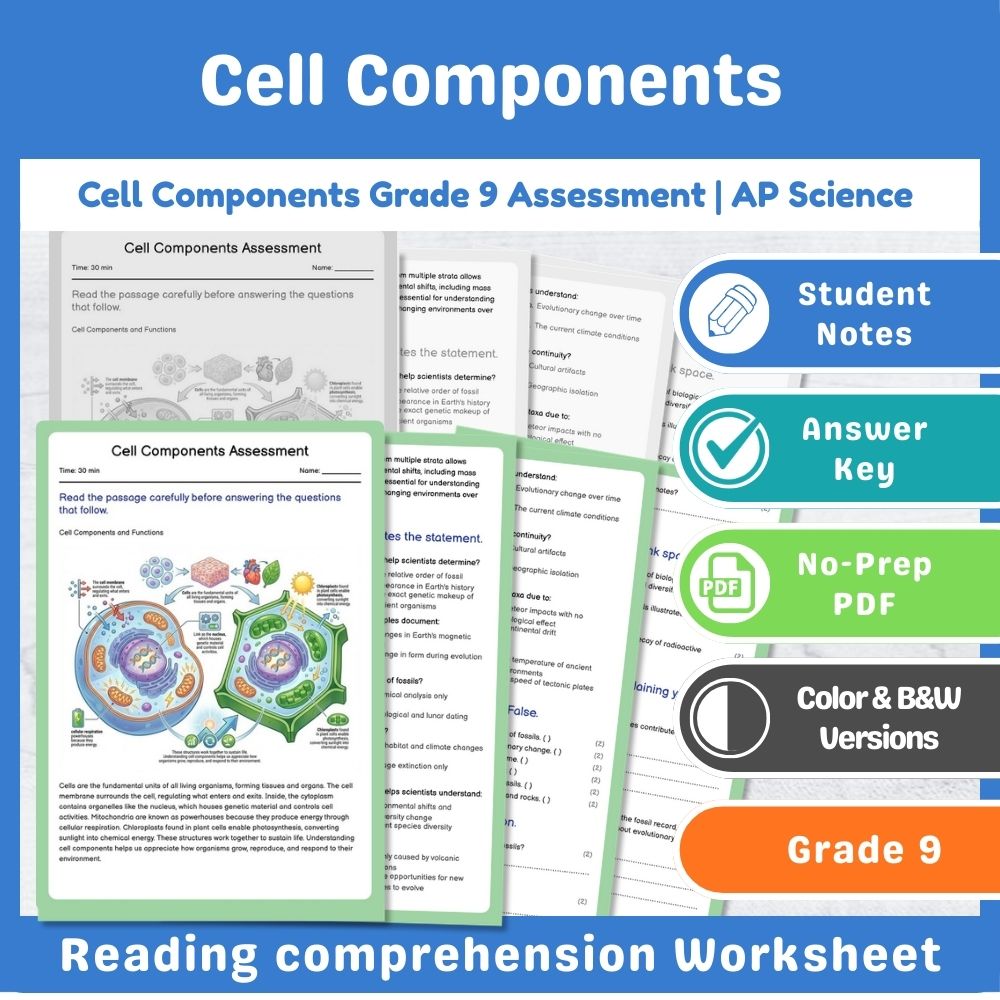
Cell Components Assessment Worksheet | AP Standards-Aligned Assessment Grade 9 Science
Created byPrism Point LearningLearning Objectives
- Identify the key components of a cell and their functions.
- Explain the differences between plant and animal cell components.
- Analyze the structure and role of cell organelles in cellular processes.
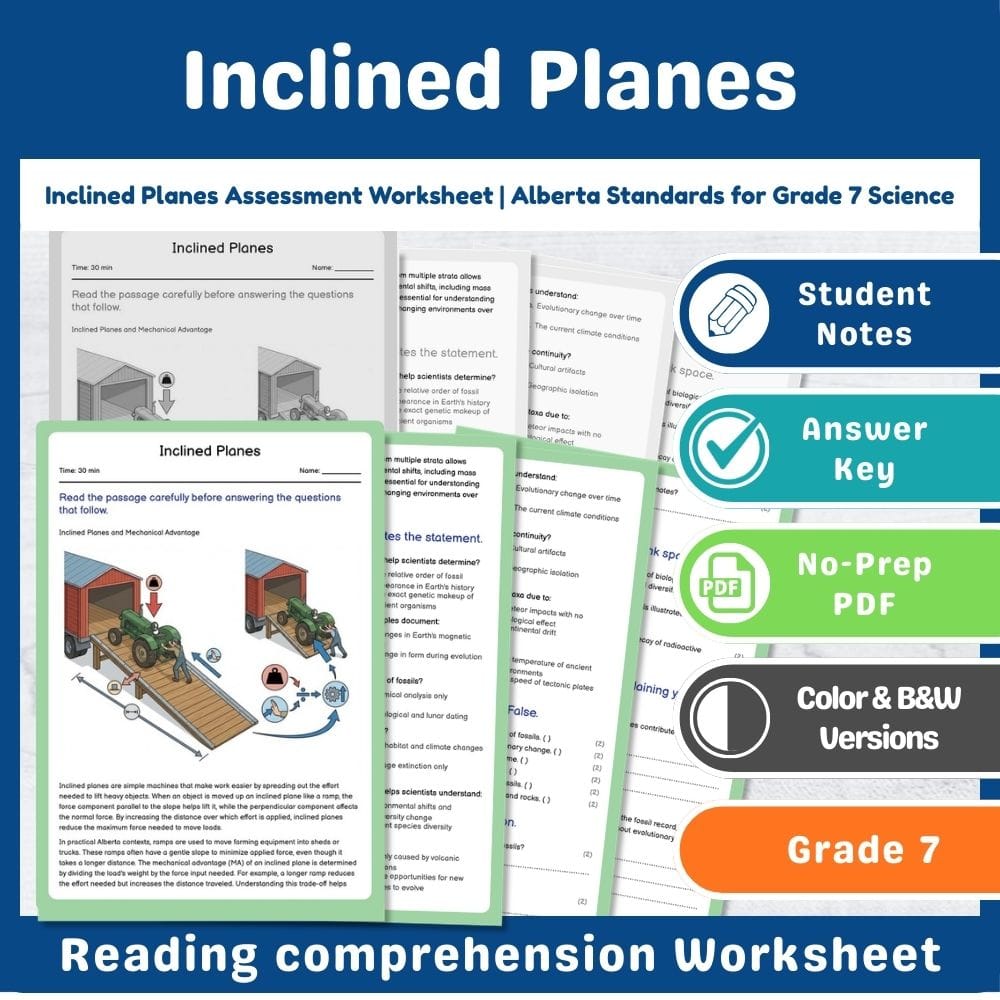
Inclined Planes Assessment Worksheet | Alberta Standards for Grade 7 Science
Created byPrism Point LearningLearning Objectives
- Understand how inclined planes reduce the force needed to move loads.
- Identify components of force parallel and perpendicular to an inclined plane.
- Calculate mechanical advantage of inclined planes based on input force and load.
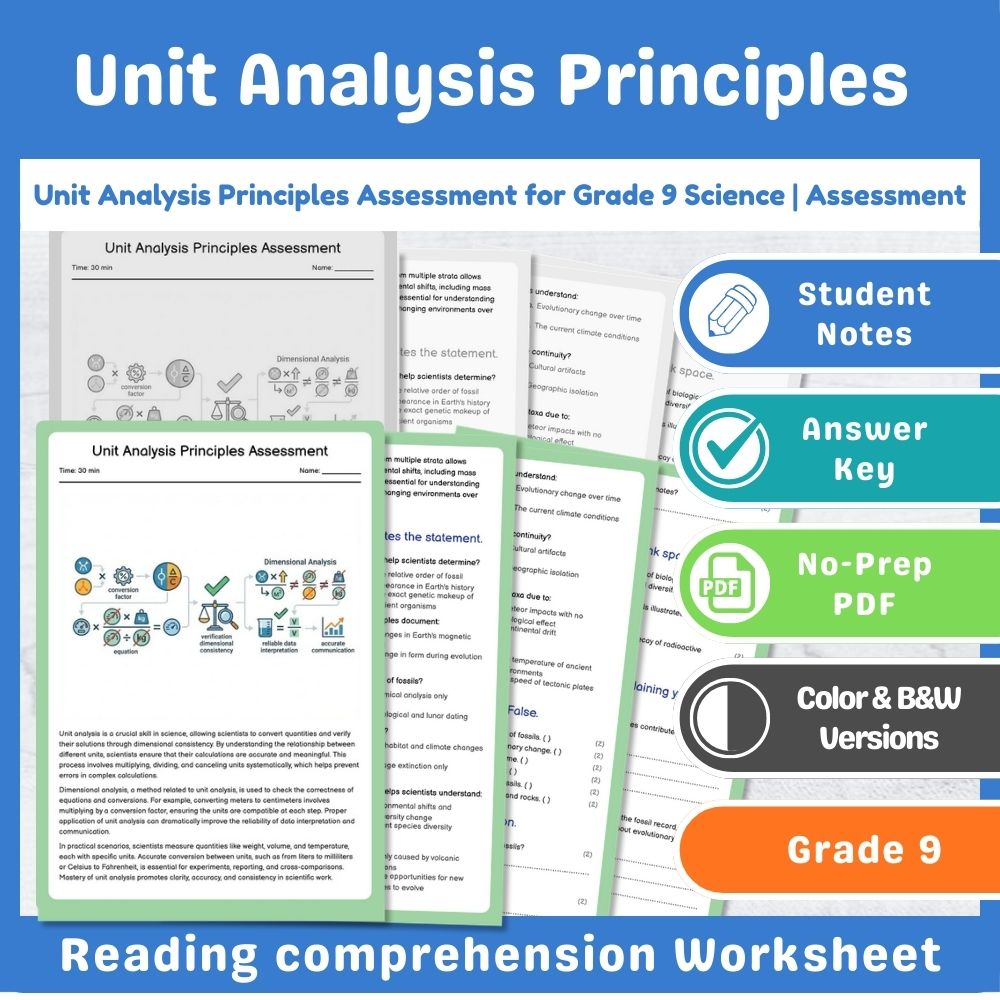
Unit Analysis Principles Assessment for Grade 9 Science | Assessment
Created byPrism Point LearningLearning Objectives
- Understand the fundamental principles of unit analysis in scientific measurements.
- Apply dimensional analysis to solve multi-step transformation problems.
- Evaluate the accuracy and precision of measurement results using unit conversions.
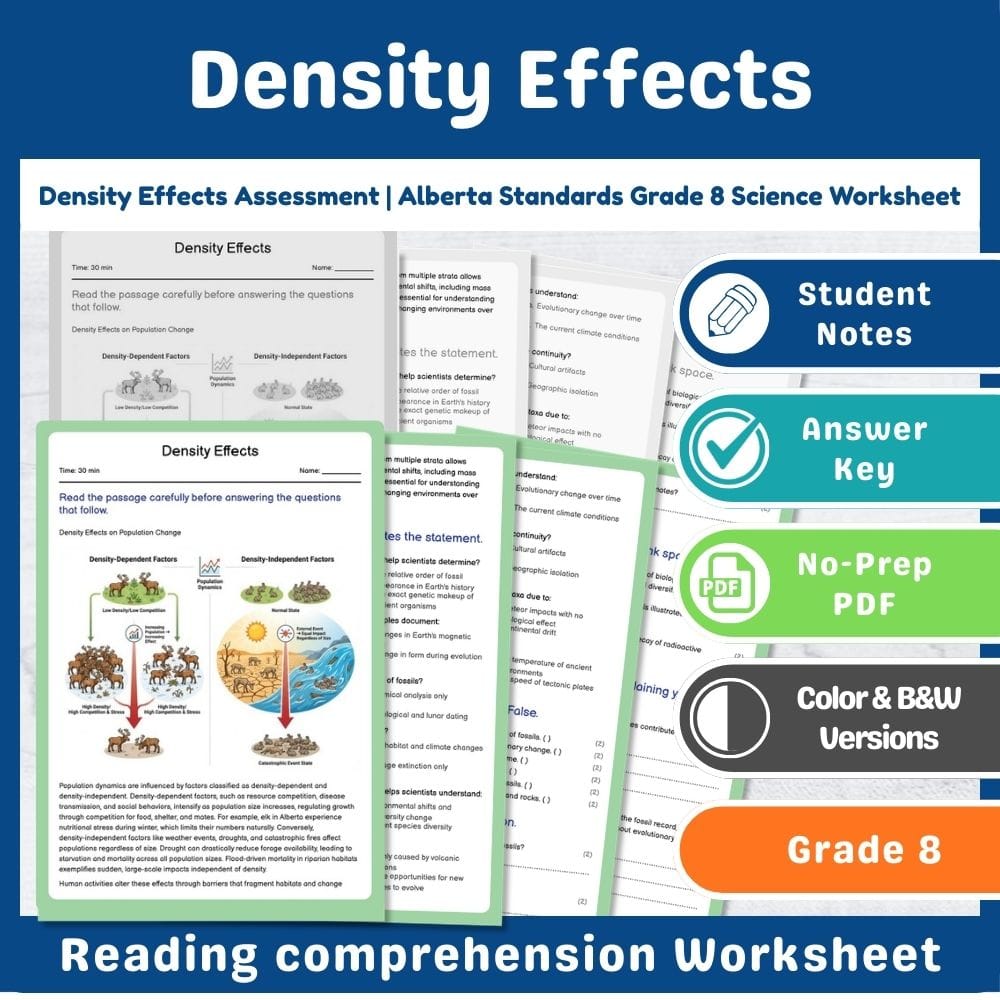
Density Effects Assessment | Alberta Standards Grade 8 Science Worksheet
Created byPrism Point LearningLearning Objectives
- Understand how density-dependent factors influence population change.
- Differentiate between density-dependent and density-independent factors.
- Analyze examples of population regulation like resource competition, drought, and fire.
Pollution Effects Assessment | Alberta Standards Grade 7 Science
Created byPrism Point LearningLearning Objectives
- Describe basic types of pollutants affecting terrestrial and aquatic ecosystems.
- Explain how pollutants travel pathways lead to bioaccumulation and community impacts.
- Identify measurable ecological effects caused by different pollutants.
Spheres Connectivity Assessment for Grade 9 Science | AP Standards
Created byPrism Point LearningLearning Objectives
- Describe the interactions among the geosphere, hydrosphere, atmosphere, and biosphere using models and diagrams.
- Explain material and energy exchanges such as nutrient transport, gas fluxes, and ocean upwelling effects.
- Use spatial schematics and causal chains to interpret coupled environmental phenomena and feedbacks.
Population Genetics Assessment for Grade 9 Science | AP Standards
Created byPrism Point LearningLearning Objectives
- Understand the mechanisms that cause allele frequencies to change in populations such as selection, drift, migration, and mutation.
- Explain the Hardy-Weinberg equilibrium as a null model for population genetics.
- Describe how fitness landscapes, selection coefficients, and effective population size influence evolution.
One-Dimensional Motion Assessment | AP Standards-Aligned Grade 9 Science
Created byPrism Point LearningLearning Objectives
- Understand and interpret position–time and velocity–time diagrams for motion along a straight line.
- Apply constant-acceleration equations to solve for displacement, velocity, and time.
- Connect algebraic models with graphical representations of motion such as slopes and areas under curves.
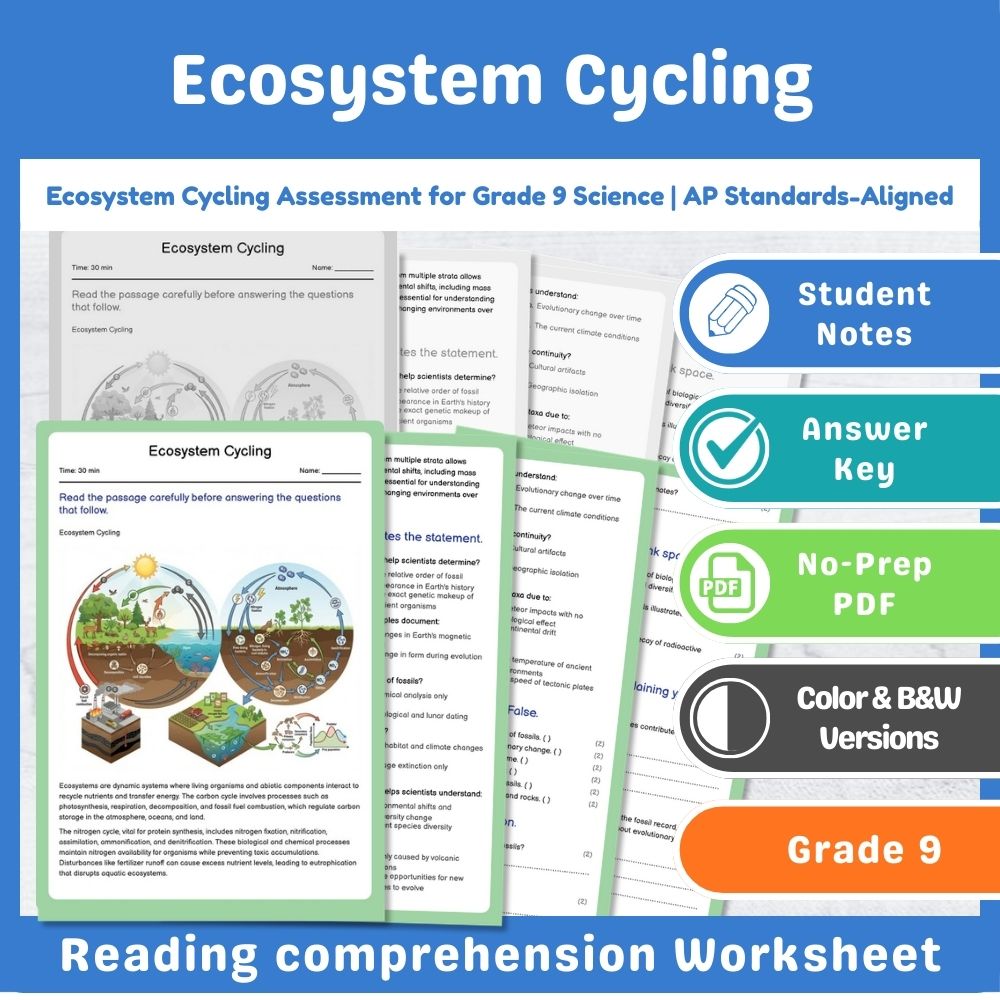
Ecosystem Cycling Assessment for Grade 9 Science | AP Standards-Aligned
Created byPrism Point LearningLearning Objectives
- Describe how organisms and abiotic components interact to drive material cycling and energy flow in ecosystems.
- Explain the roles of carbon and nitrogen cycles in maintaining ecosystem health.
- Analyze the impact of perturbations such as nutrient enrichment, habitat alteration, and invasive species on community structure and ecosystem function.
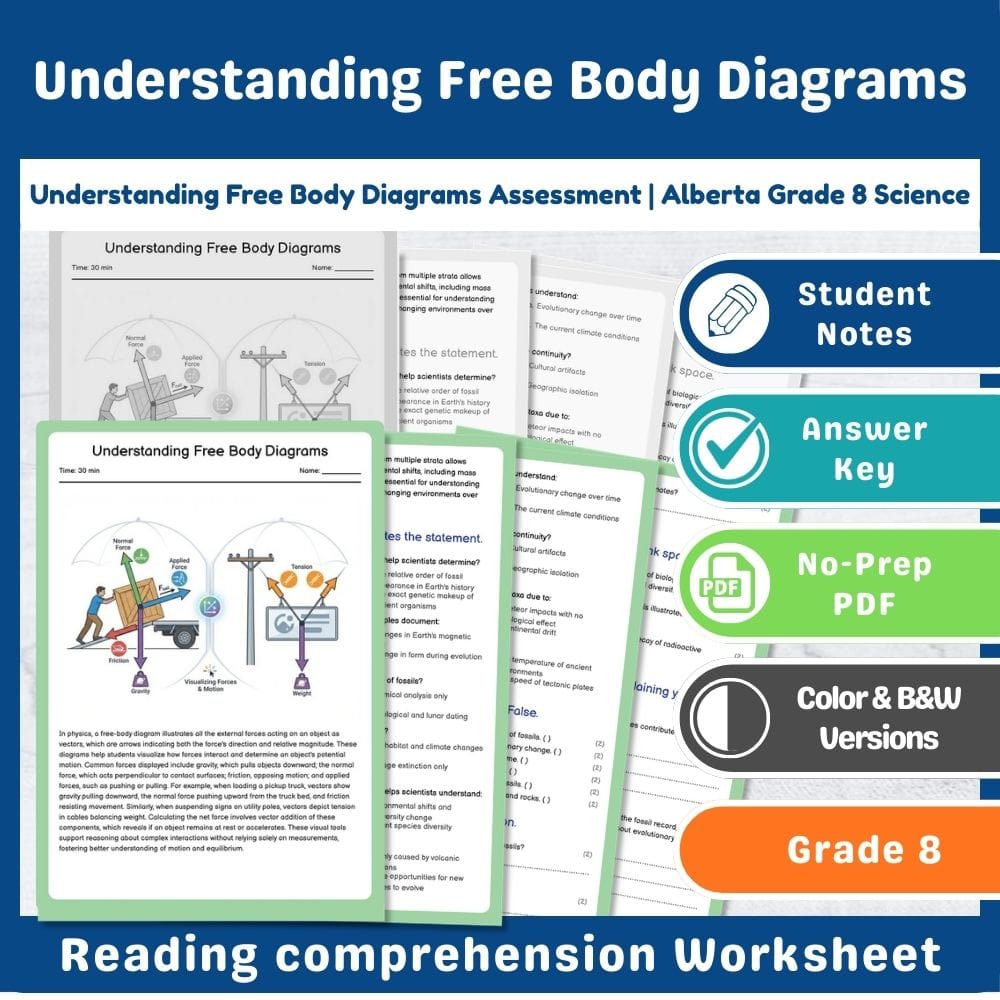
Understanding Free Body Diagrams Assessment | Alberta Grade 8 Science
Created byPrism Point LearningLearning Objectives
- Describe how forces are represented as vectors in free-body diagrams.
- Identify and distinguish between gravitational, normal, frictional, and applied forces in various scenarios.
- Support reasoning about combined forces and resulting motion using vector addition.
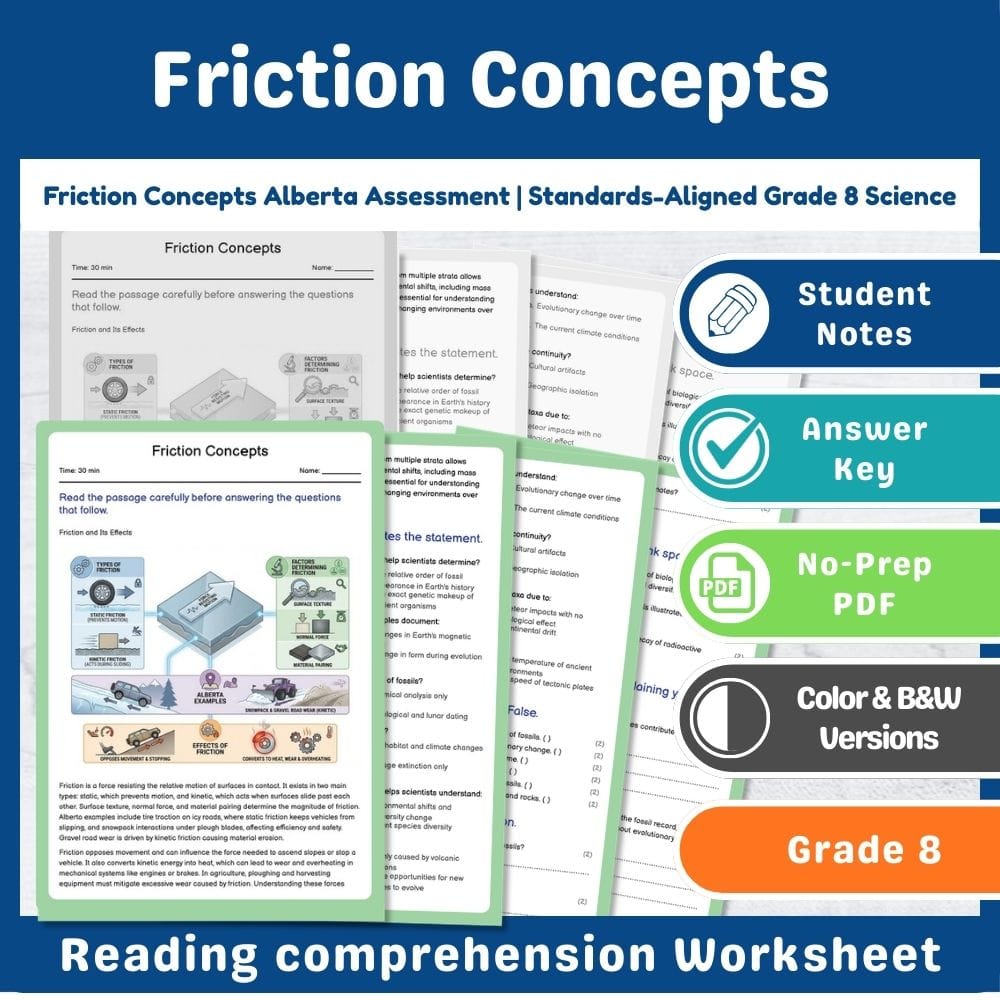
Friction Concepts Alberta Assessment | Standards-Aligned Grade 8 Science
Created byPrism Point LearningLearning Objectives
- Explain the difference between static and kinetic friction.
- Identify factors affecting the strength of frictional forces.
- Describe real-world examples of friction in transportation and agriculture.
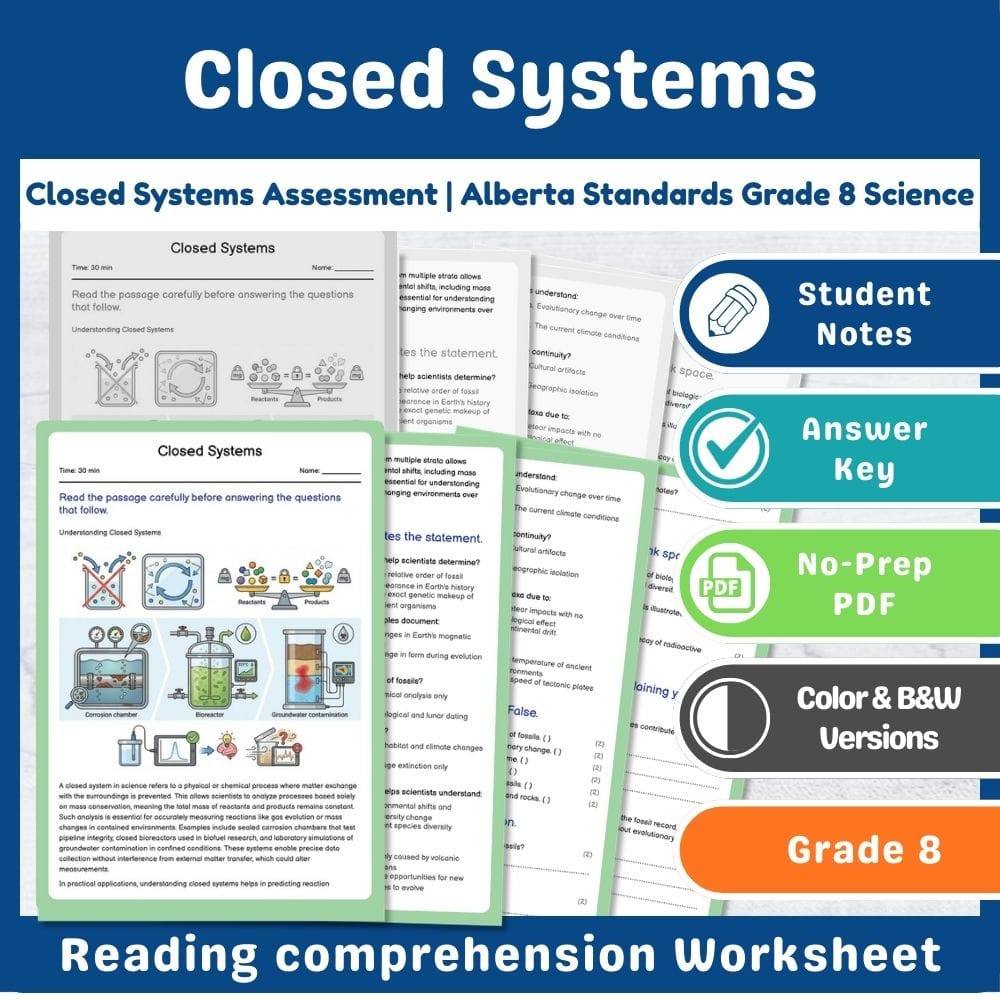
Closed Systems Assessment | Alberta Standards Grade 8 Science
Created byPrism Point LearningLearning Objectives
- Understand the concept of closed systems in chemical and physical processes.
- Identify examples and applications of closed-system analysis in real-world scenarios.
- Explain how mass conservation applies in closed environments to interpret reactions and changes.
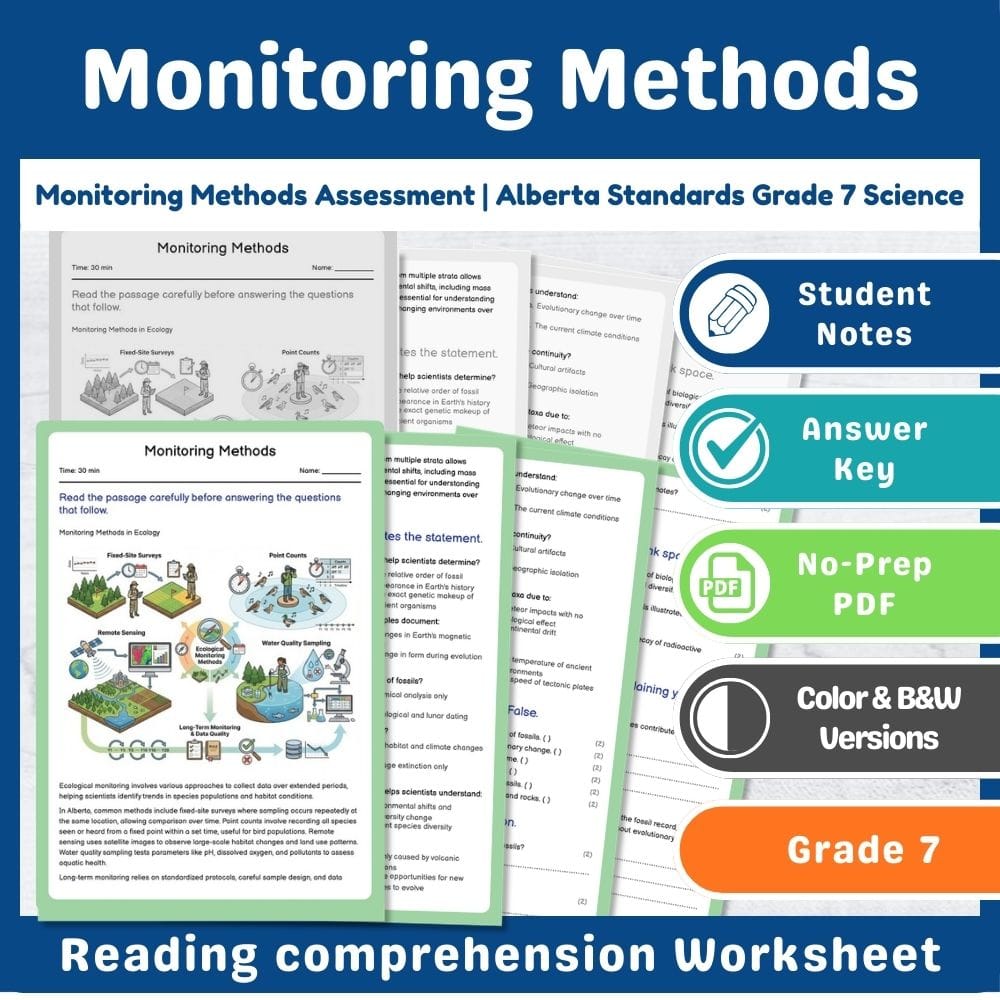
Monitoring Methods Assessment | Alberta Standards Grade 7 Science
Created byPrism Point LearningLearning Objectives
- Understand different methods used in ecological monitoring.
- Identify the importance of data consistency and data quality in long-term studies.
- Describe various sampling techniques such as fixed-site surveys, point counts, remote sensing, and water quality sampling.
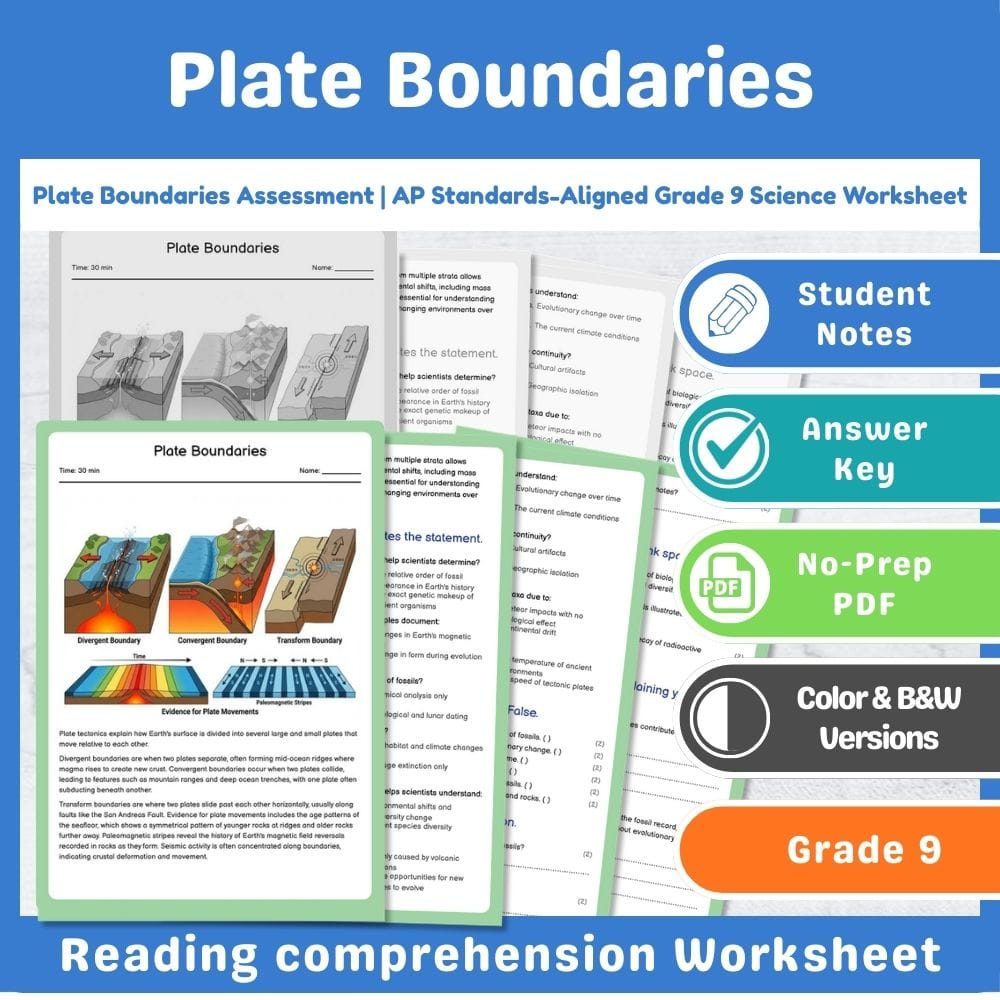
Plate Boundaries Assessment | AP Standards-Aligned Grade 9 Science Worksheet
Created byPrism Point LearningLearning Objectives
- Describe the mechanisms that drive different types of plate boundaries.
- Identify surface expressions associated with divergent, convergent, and transform margins.
- Analyze geologic evidence such as seafloor age patterns, paleomagnetic stripes, and seismic distributions to interpret plate motions.
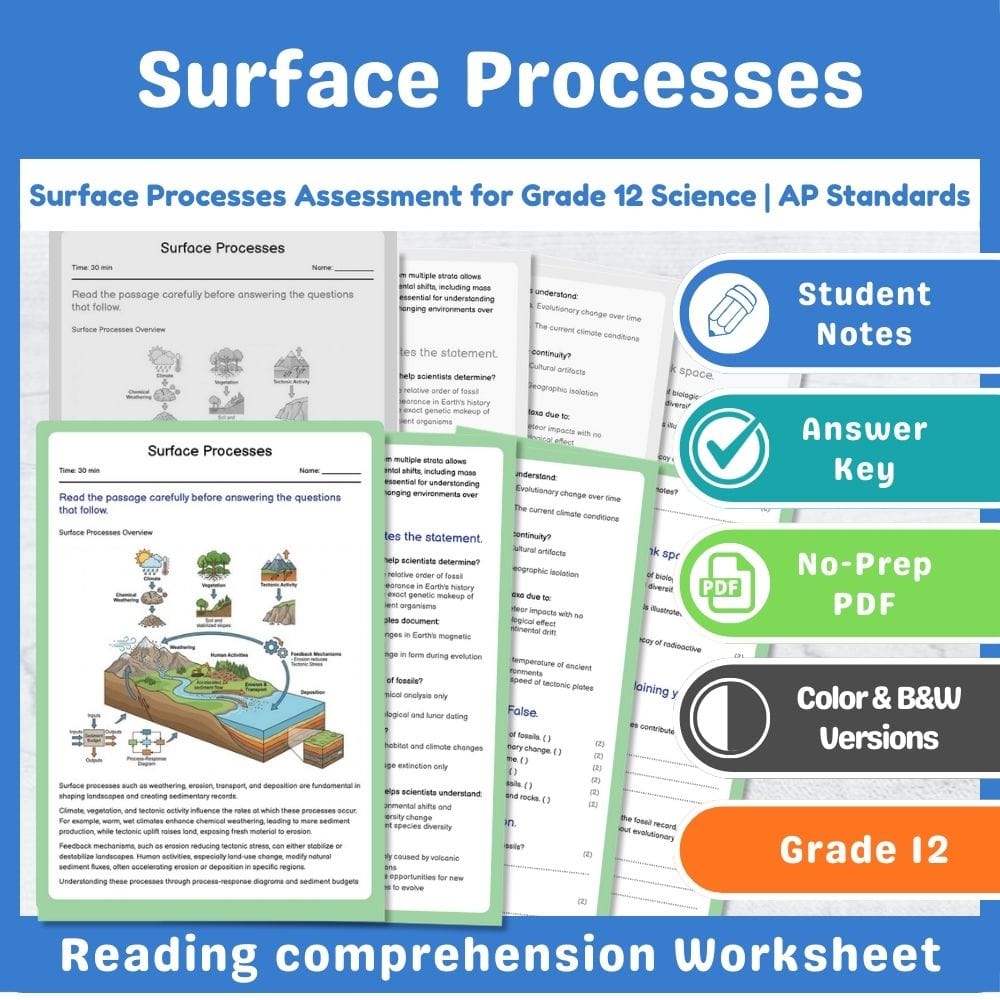
Surface Processes Assessment for Grade 12 Science | AP Standards
Created byPrism Point LearningLearning Objectives
- Understand the roles of weathering, erosion, transport, and deposition in landscape development.
- Interpret process-response diagrams and sediment budgets to relate climate and tectonic influences.
- Evaluate feedback mechanisms between surface processes and rock uplift, landscape stability, and stratigraphy.
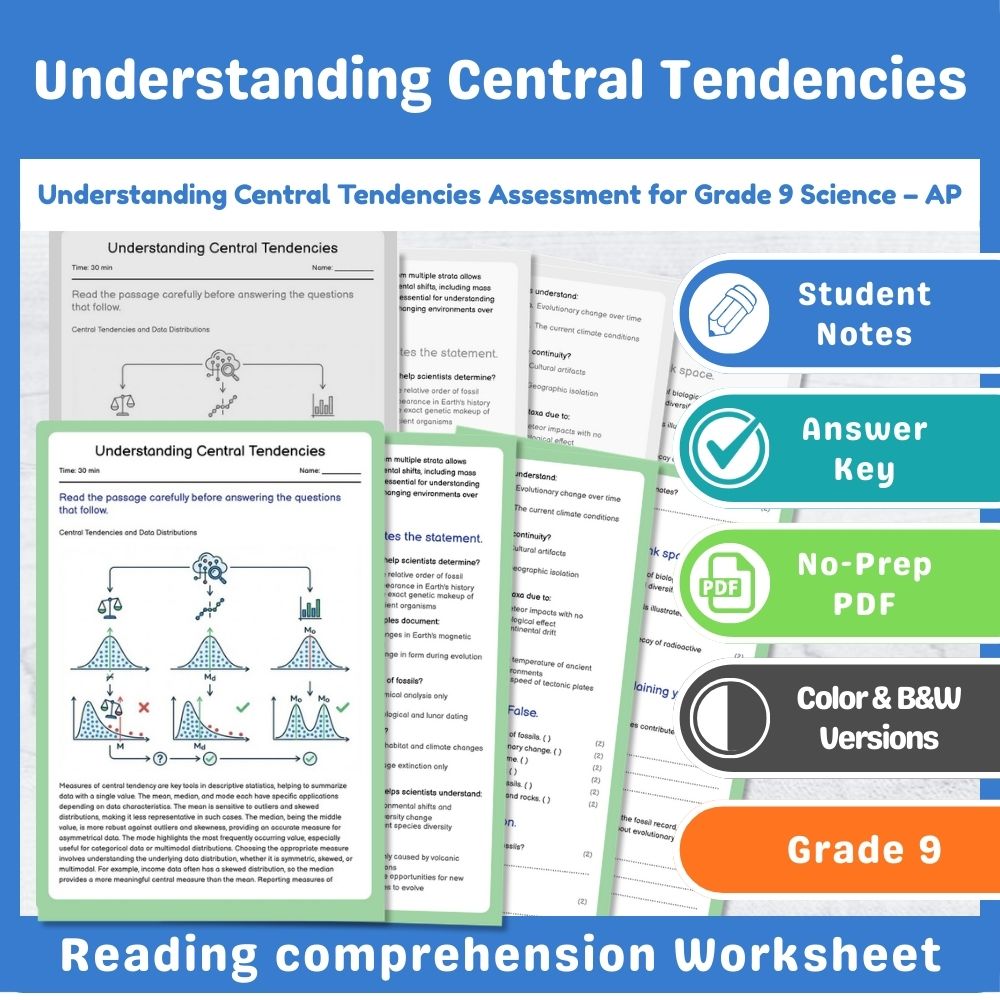
Understanding Central Tendencies Assessment for Grade 9 Science – AP
Created byPrism Point LearningLearning Objectives
- Understand key concepts related to Science
- Apply knowledge through practice questions
- Demonstrate comprehension of the material
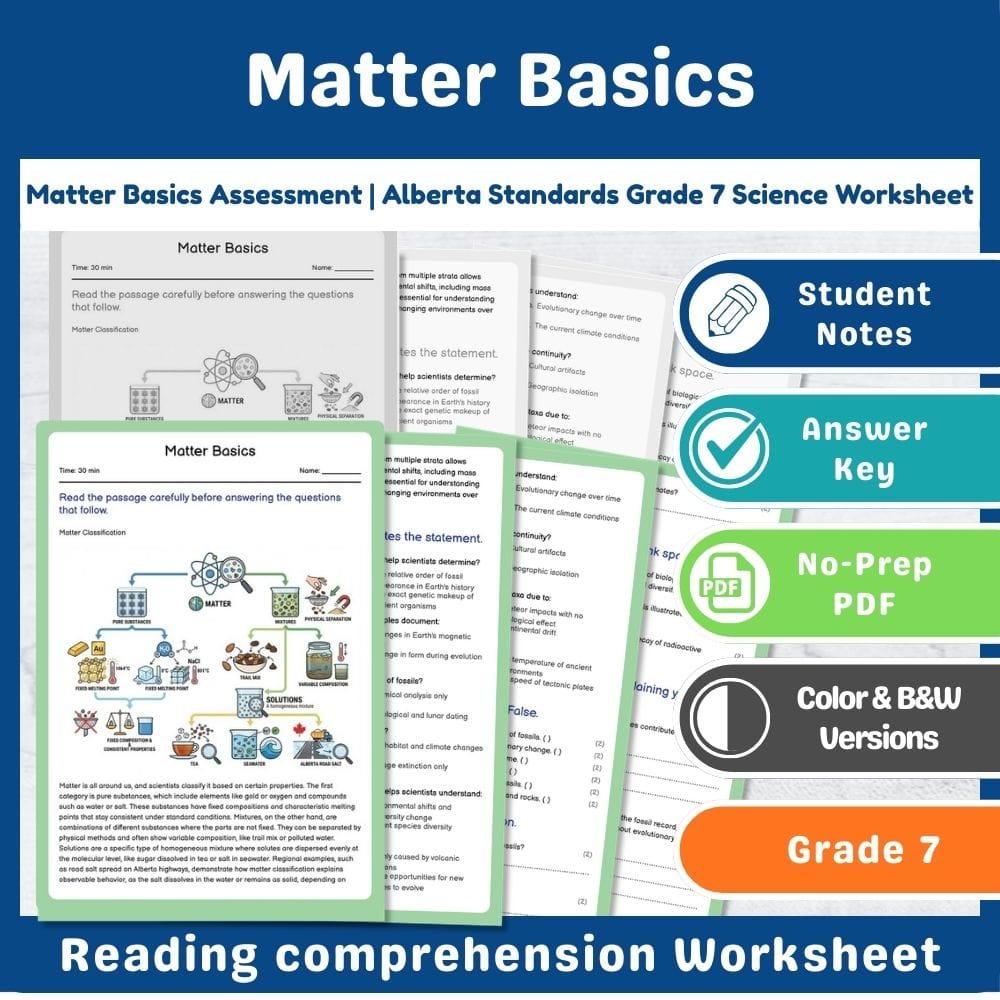
Matter Basics Assessment | Alberta Standards Grade 7 Science Worksheet
Created byPrism Point LearningLearning Objectives
- Identify and describe different types of matter including pure substances, mixtures, and solutions.
- Explain the properties that distinguish pure substances from mixtures and solutions.
- Apply regional examples, such as road salt and dissolved salts, to classify different matter types.
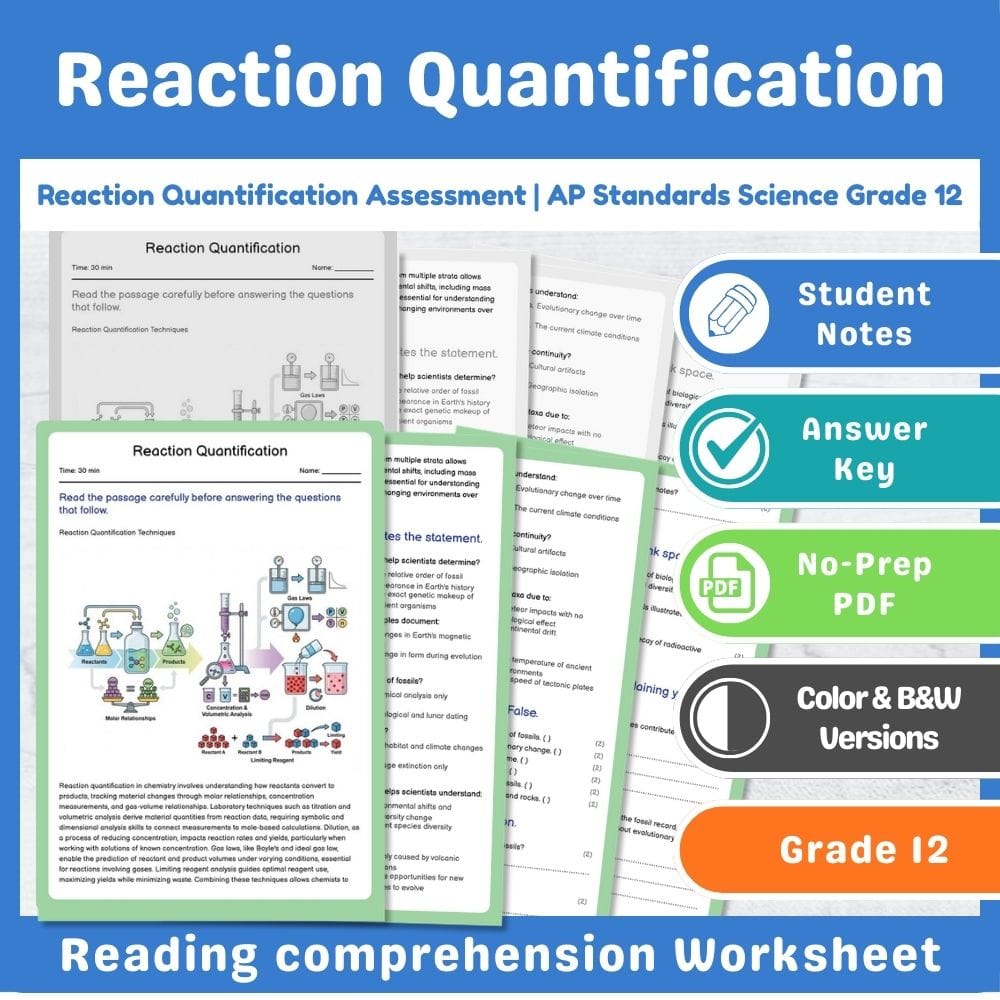
Reaction Quantification Assessment | AP Standards Science Grade 12
Created byPrism Point LearningLearning Objectives
- Understand advanced stoichiometric calculations involving concentration, molarity, and dilution.
- Apply gas-phase relationships under standard and nonstandard conditions to reaction analysis.
- Integrate limiting reagent analysis with titration and volumetric data to quantify reaction extent.
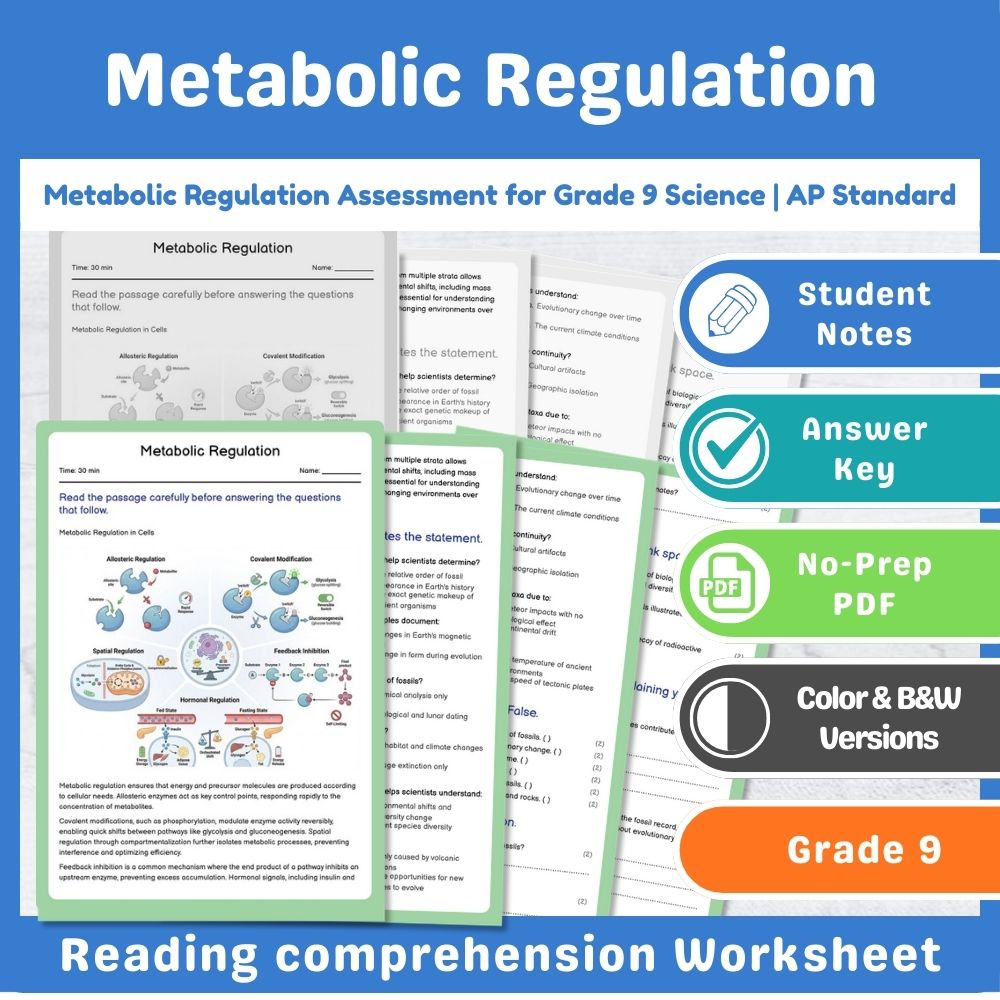
Metabolic Regulation Assessment for Grade 9 Science | AP Standard
Created byPrism Point LearningLearning Objectives
- Describe the various mechanisms of metabolic pathway regulation including allosteric control, covalent modifications, and compartment-specific regulation.
- Explain feedback inhibition and hormonal signals that shift metabolic flux between catabolism and anabolism.
- Model enzyme kinetics and substrate concentrations to understand pathway rates and system responses to perturbations.
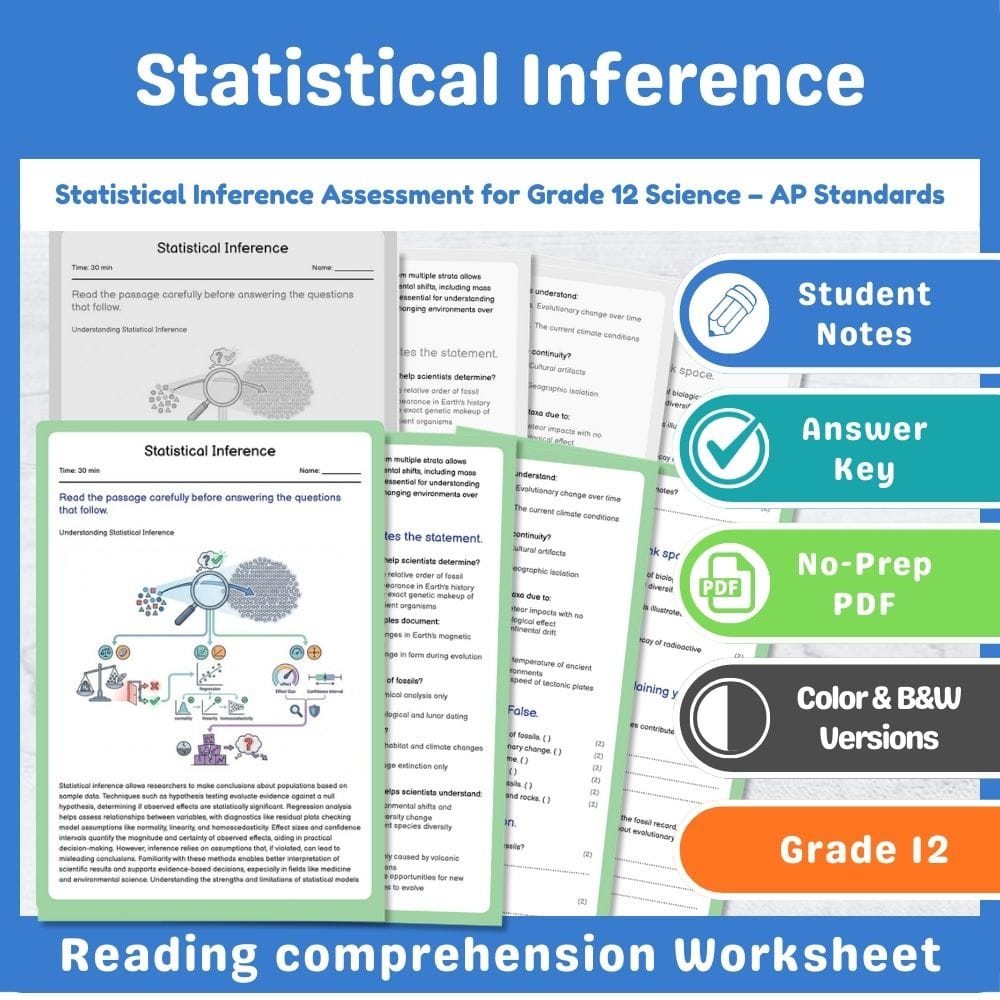
Statistical Inference Assessment for Grade 12 Science – AP Standards
Created byPrism Point LearningLearning Objectives
- Understand the principles and applications of hypothesis testing in quantitative data analysis.
- Interpret regression diagnostics and residual plots to assess model adequacy.
- Estimate effect sizes with confidence intervals and evaluate their practical significance.
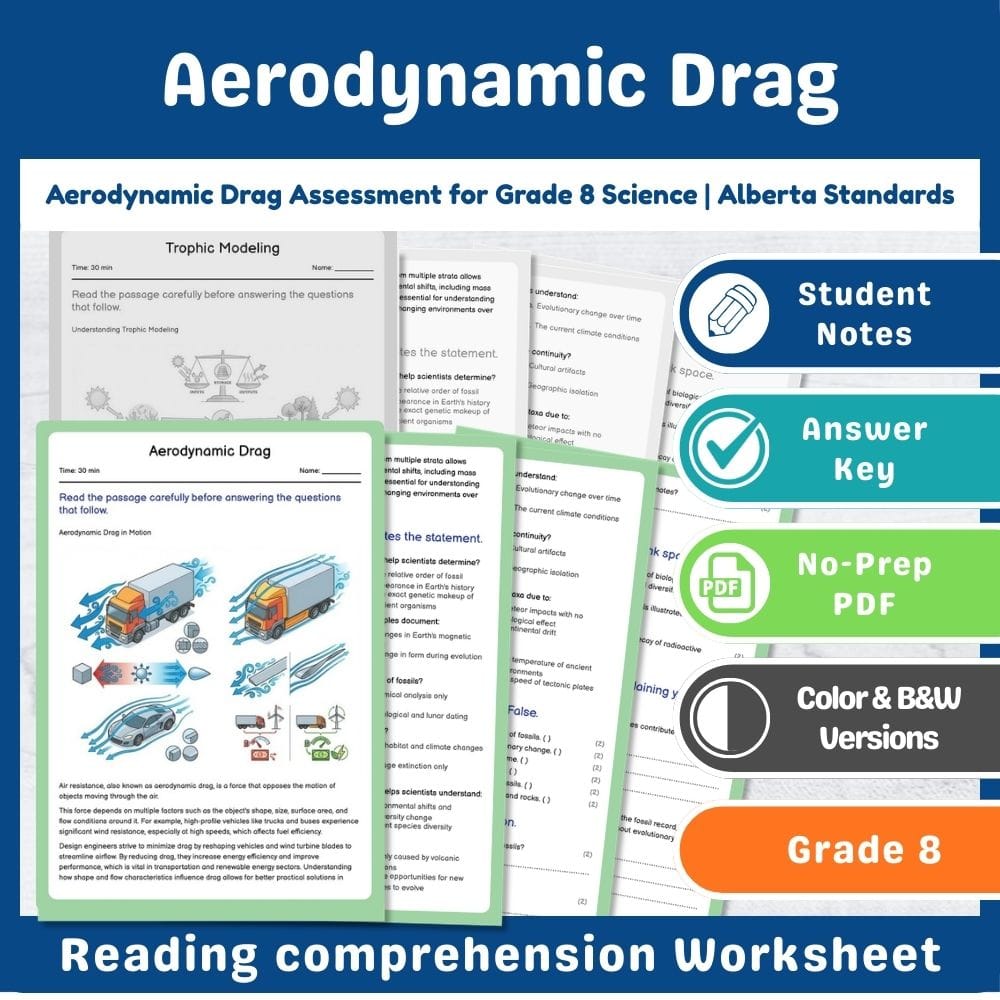
Aerodynamic Drag Assessment for Grade 8 Science | Alberta Standards
Created byPrism Point LearningLearning Objectives
- Understand the concept of aerodynamic drag and factors affecting it.
- Identify how shape and flow conditions influence air resistance.
- Analyze practical applications where drag reduction is important.
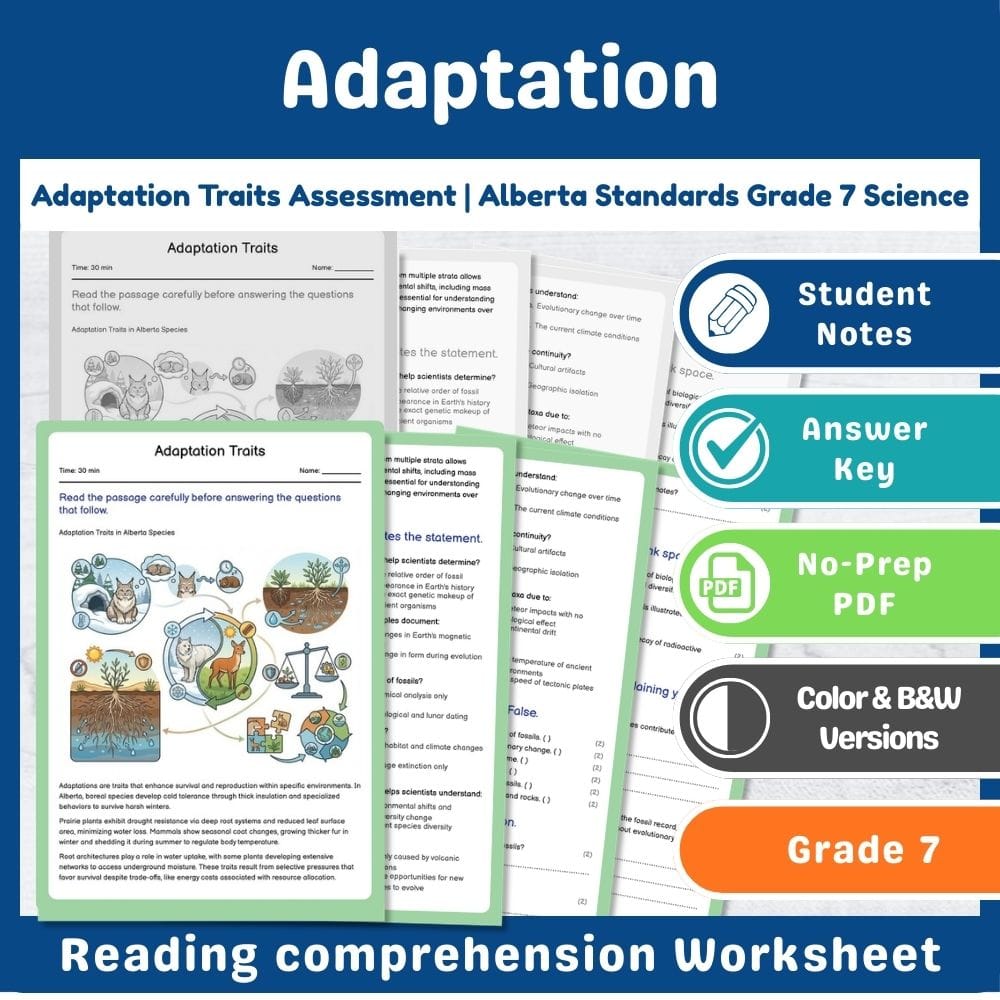
Adaptation Traits Assessment | Alberta Standards Grade 7 Science
Created byPrism Point LearningLearning Objectives
- Identify different types of adaptive traits in plants and animals.
- Understand how environmental pressures influence trait development.
- Describe various structural, physiological, and behavioral adaptations.
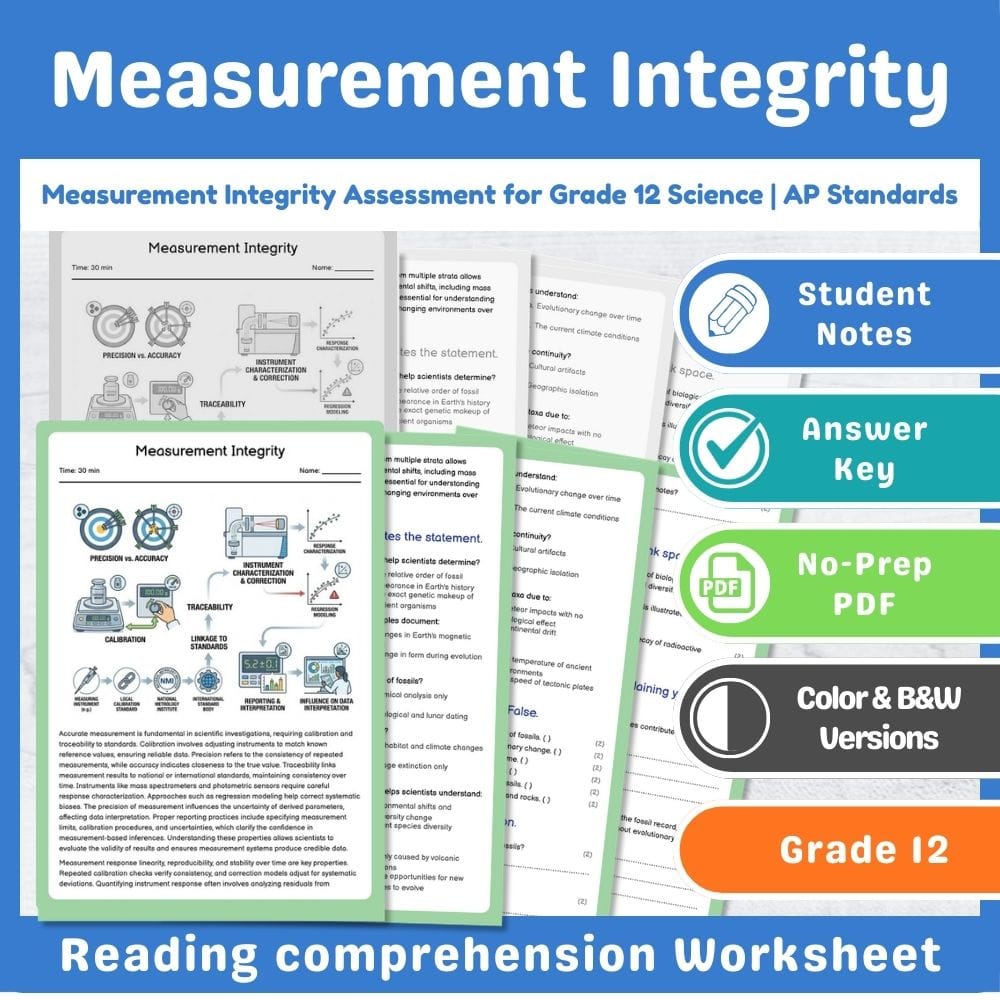
Measurement Integrity Assessment for Grade 12 Science | AP Standards
Created byPrism Point LearningLearning Objectives
- Understand the principles of calibration and traceability in measurement systems.
- Describe methods for evaluating precision, accuracy, and systematic biases.
- Explain the importance of measurement properties in data analysis and reporting.
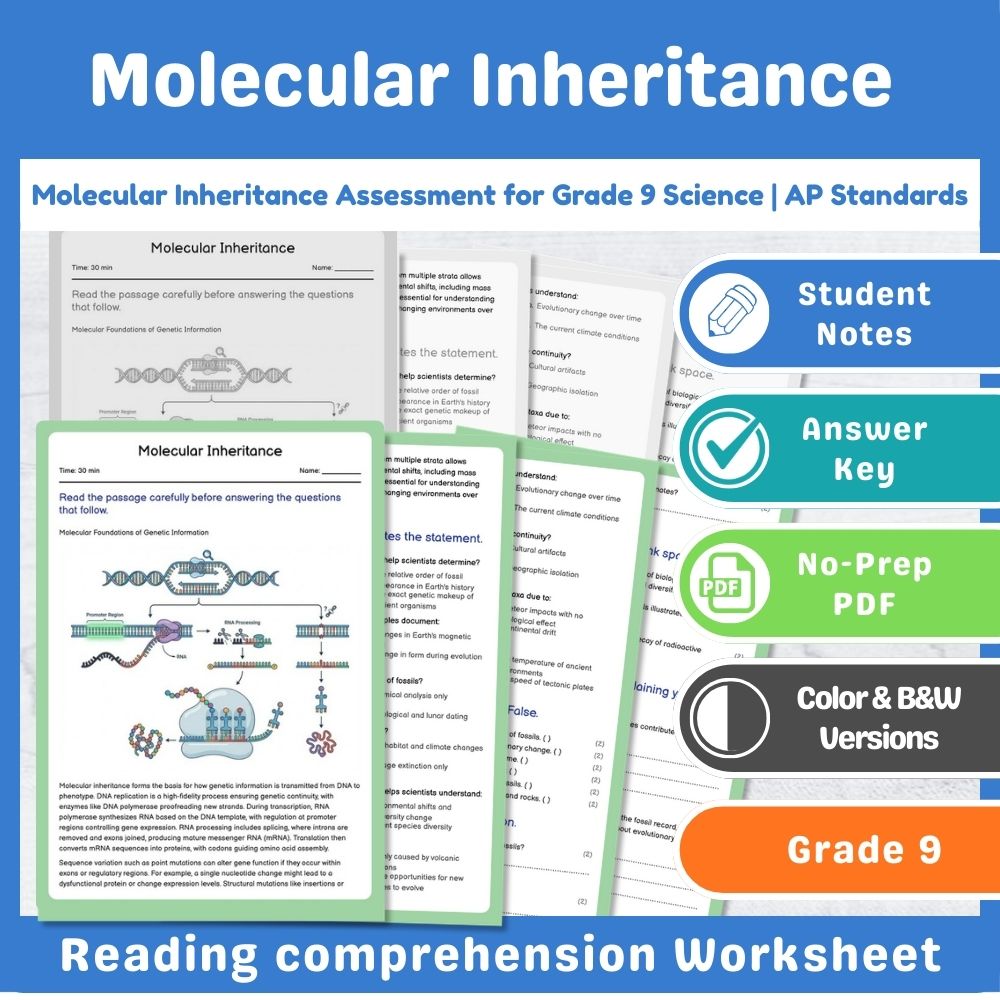
Molecular Inheritance Assessment for Grade 9 Science | AP Standards
Created byPrism Point LearningLearning Objectives
- Describe the molecular mechanisms underlying DNA replication and transcription.
- Explain how sequence variation and point mutations influence gene expression and protein function.
- Predict phenotypic consequences of specific allelic changes using molecular models and sequence reasoning.

Patterns of Inheritance Assessment | Alberta Standards Grade 9 Science
Created byPrism Point LearningLearning Objectives
- Explain Mendelian inheritance patterns including dominant and recessive alleles.
- Distinguish between genotype and phenotype in genetic traits.
- Apply Punnett square logic to predict trait segregation ratios.
Component Behavior Assessment | Alberta Standards Grade 9 Science
Created byPrism Point LearningLearning Objectives
- Understand the characteristic behaviors of electrical components such as resistance, diode conduction, and temperature dependence.
- Identify real-world examples of component behaviors in electrical circuits.
- Analyze component curves, power ratings, and operating limits to determine their impact on circuit stability, energy efficiency, and longevity.
Net Force Diagrams Assessment for Grade 7 Science – Alberta Standards
Created byPrism Point LearningLearning Objectives
- Understand how to construct and interpret free-body diagrams for various objects and situations.
- Learn vector addition techniques to determine net force magnitude and direction on objects.
- Decompose forces on inclined surfaces into perpendicular components and combine them algebraically.
Organelle Function Assessment for Grade 9 Science | Standards-Aligned
Created byPrism Point LearningLearning Objectives
- Describe the roles of major organelles such as mitochondria, chloroplasts, endoplasmic reticulum, and lysosomes in cellular functions.
- Explain how the internal structures like folded membranes and stacks contribute to organelle efficiency.
- Compare the functions of different organelles in organizing metabolic pathways and cellular maintenance.
Ocean–Atmosphere Coupling Assessment for Grade 9 Science | AP Standards
Created byPrism Point LearningLearning Objectives
- Explain the processes of ocean–atmosphere interactions and their impact on climate variability.
- Identify phenomena such as ENSO and understand their mechanisms and effects on regional weather patterns.
- Analyze time-series data and interpret lag-correlation maps related to ocean–atmosphere coupling.
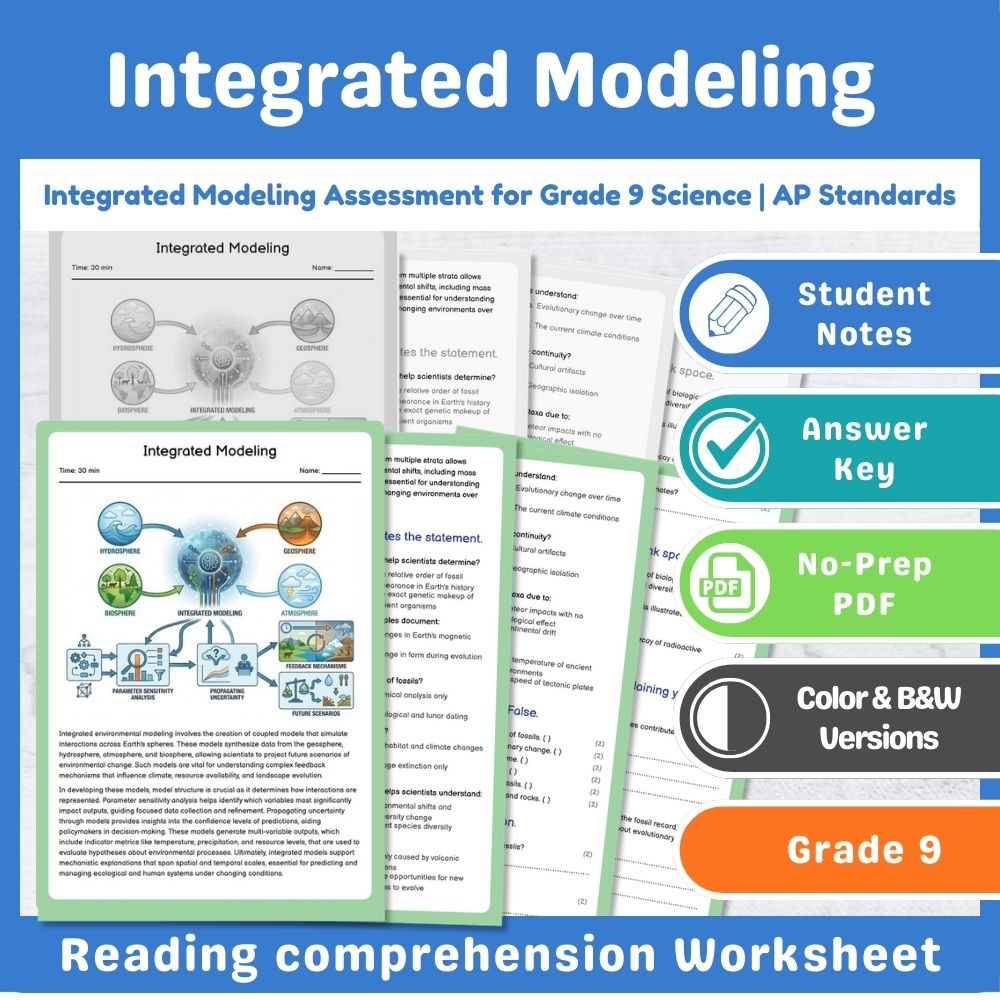
Integrated Modeling Assessment for Grade 9 Science | AP Standards
Created byPrism Point LearningLearning Objectives
- Understand the structure and purpose of coupled quantitative models in environmental science.
- Analyze how interactions among geosphere, hydrosphere, atmosphere, and biosphere influence environmental outcomes.
- Evaluate the significance of model parameters, uncertainty propagation, and hypothesis testing in environmental modeling.
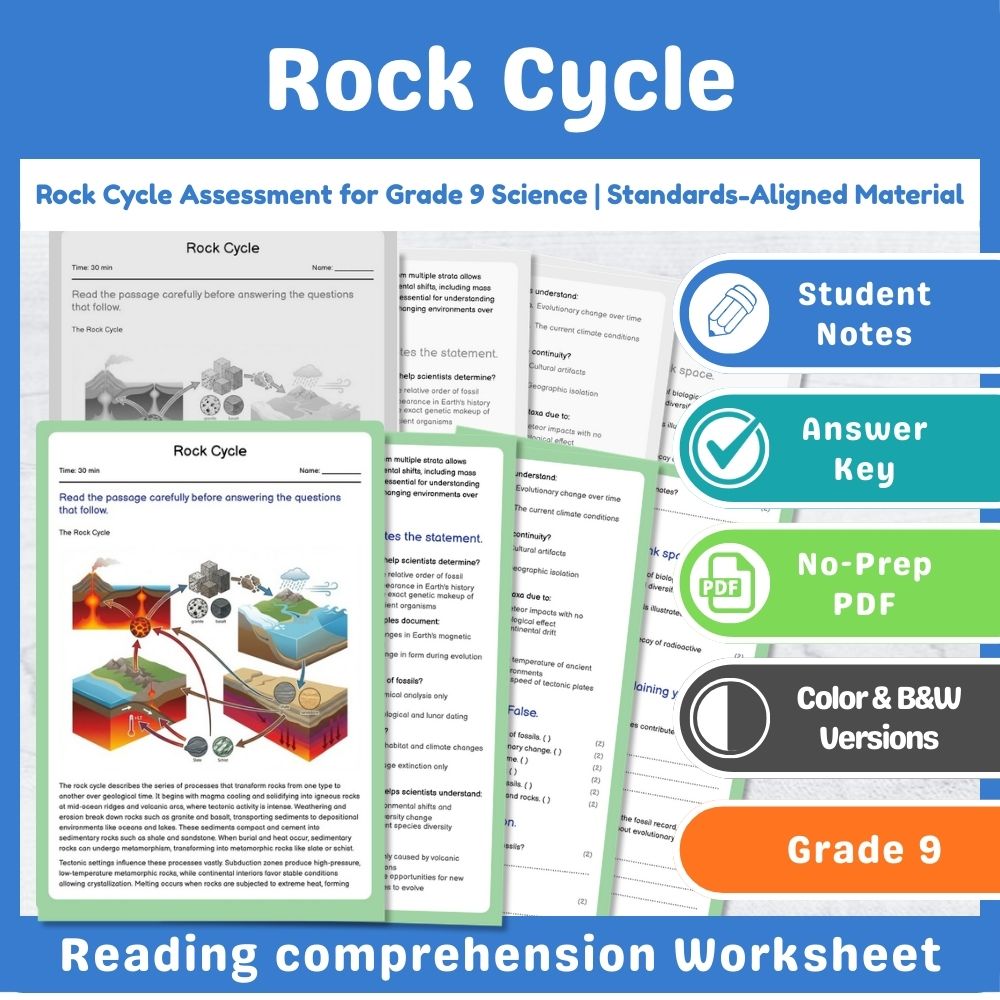
Rock Cycle Assessment for Grade 9 Science | Standards-Aligned Material
Created byPrism Point LearningLearning Objectives
- Describe the processes involved in the rock cycle and how different rocks transform through geological mechanisms.
- Explain the role of tectonic settings such as mid-ocean ridges, subduction zones, and continental interiors in rock formation.
- Identify the physical and chemical processes that drive changes in rocks and their link to landscape evolution.
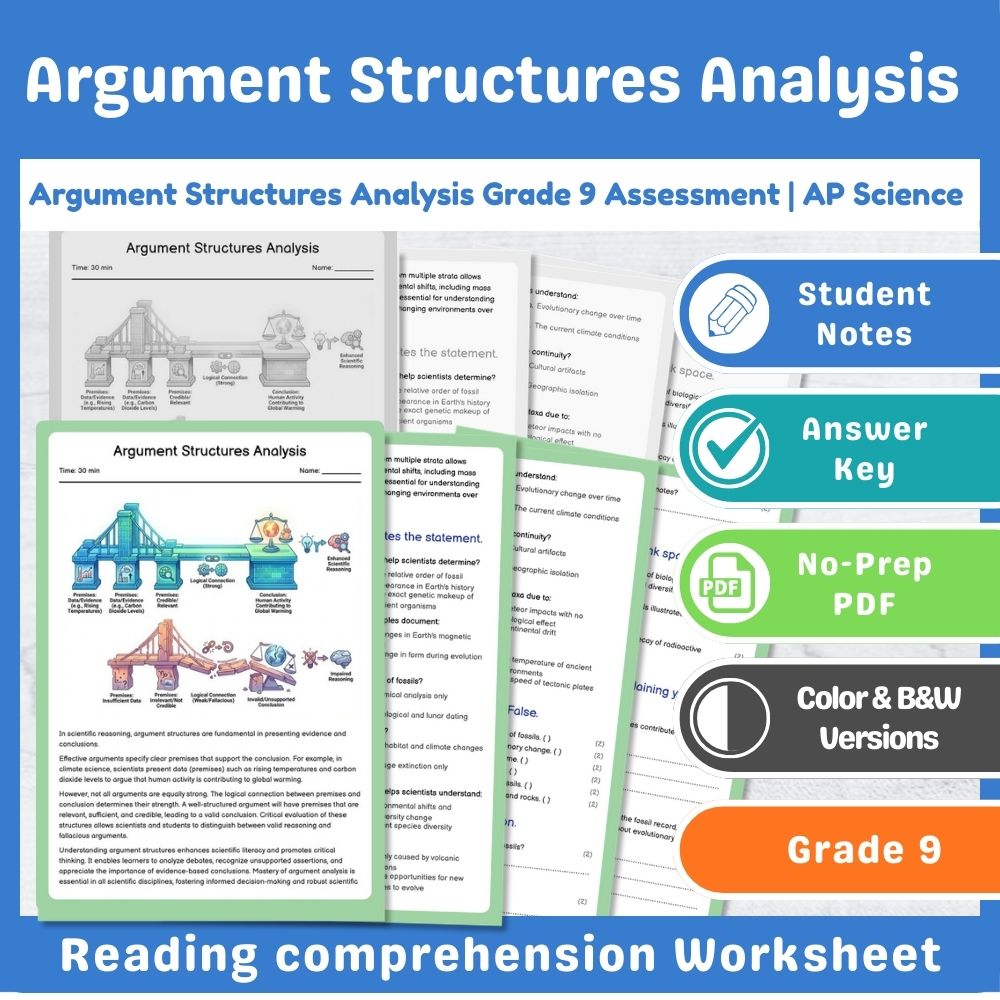
Argument Structures Analysis Assessment | Advanced Placement Grade 9 Science
Created byPrism Point LearningLearning Objectives
- Analyze different argument structures used in scientific reasoning.
- Identify premises and conclusions in argument-based texts.
- Evaluate the strength and validity of argument components.
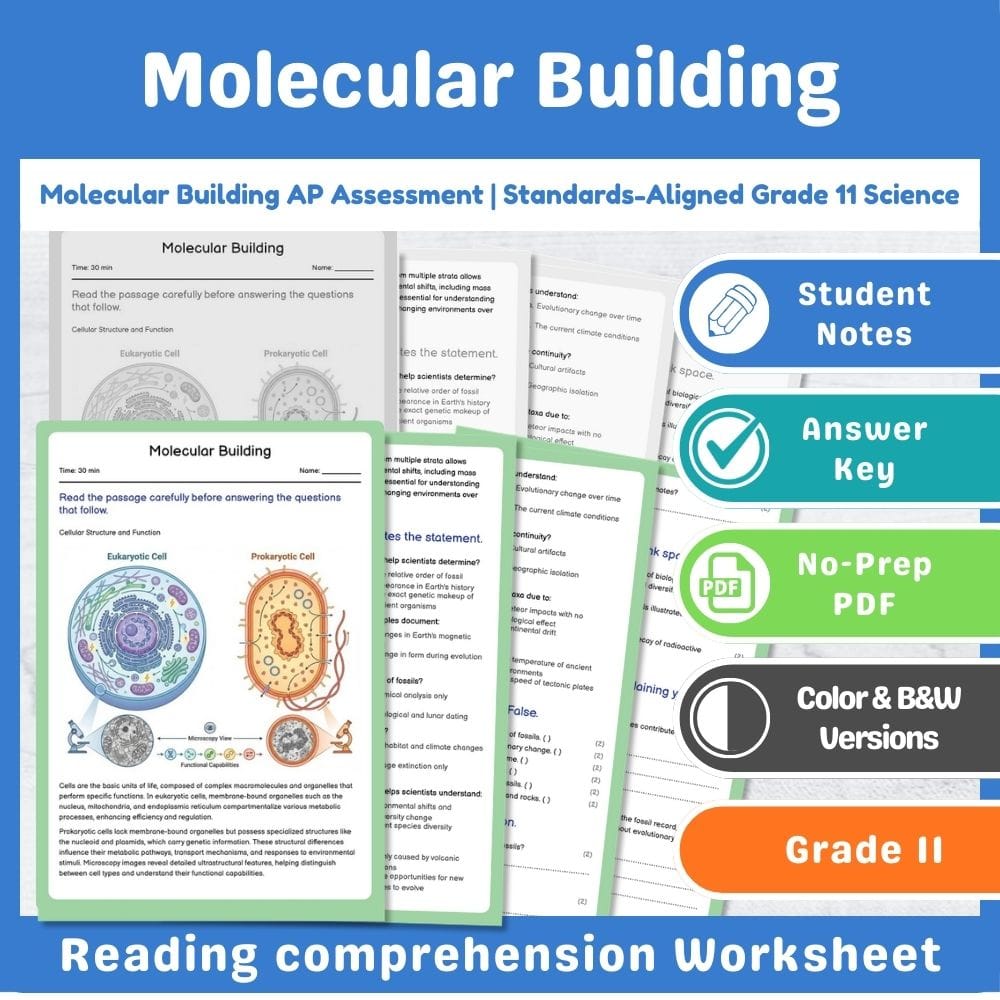
Molecular Building AP Assessment | Standards-Aligned Grade 11 Science
Created byPrism Point LearningLearning Objectives
- Understand the structural organization of cellular macromolecules and organelles.
- Compare features of prokaryotic and eukaryotic cells related to their ultrastructure.
- Explain how subcellular localization influences cellular pathways and functions.
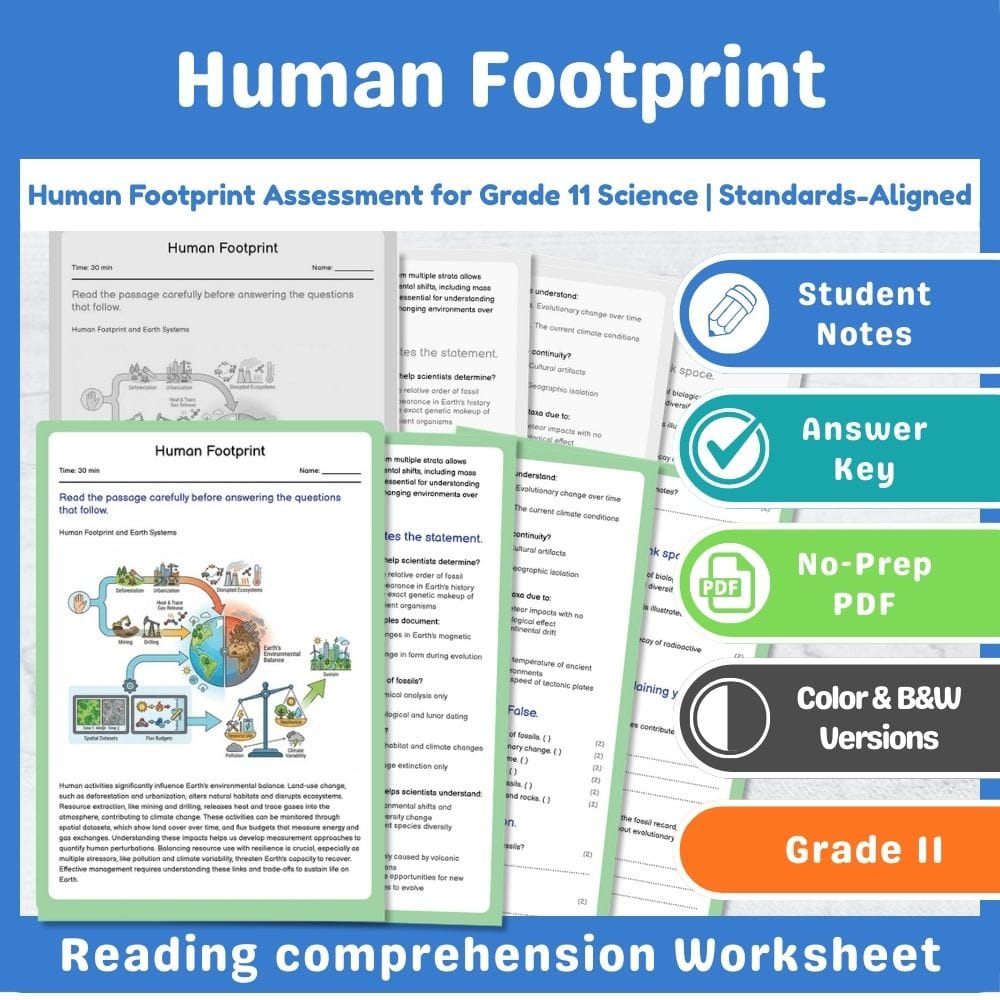
Human Footprint Assessment for Grade 11 Science | Standards-Aligned
Created byPrism Point LearningLearning Objectives
- Understand how human activities alter Earth's systems through land-use change, resource extraction, and emission of gases.
- Analyze spatial datasets and time-series data to identify environmental impacts of human actions.
- Evaluate measurement approaches for quantifying anthropogenic perturbations.
Browse more categories
About Science Worksheets
Find Science worksheets spanning core skills, practice, and review. All 42,685 resources are instant PDF downloads for the classroom or home.
Every worksheet on MyTeachingSheets is created by independent teacher-authors and reviewed before publication. All resources download as printable PDFs for classroom, homework, or at-home practice, and many include answer keys. Preview any worksheet free before buying.