
Science Worksheets
42,685 subject resources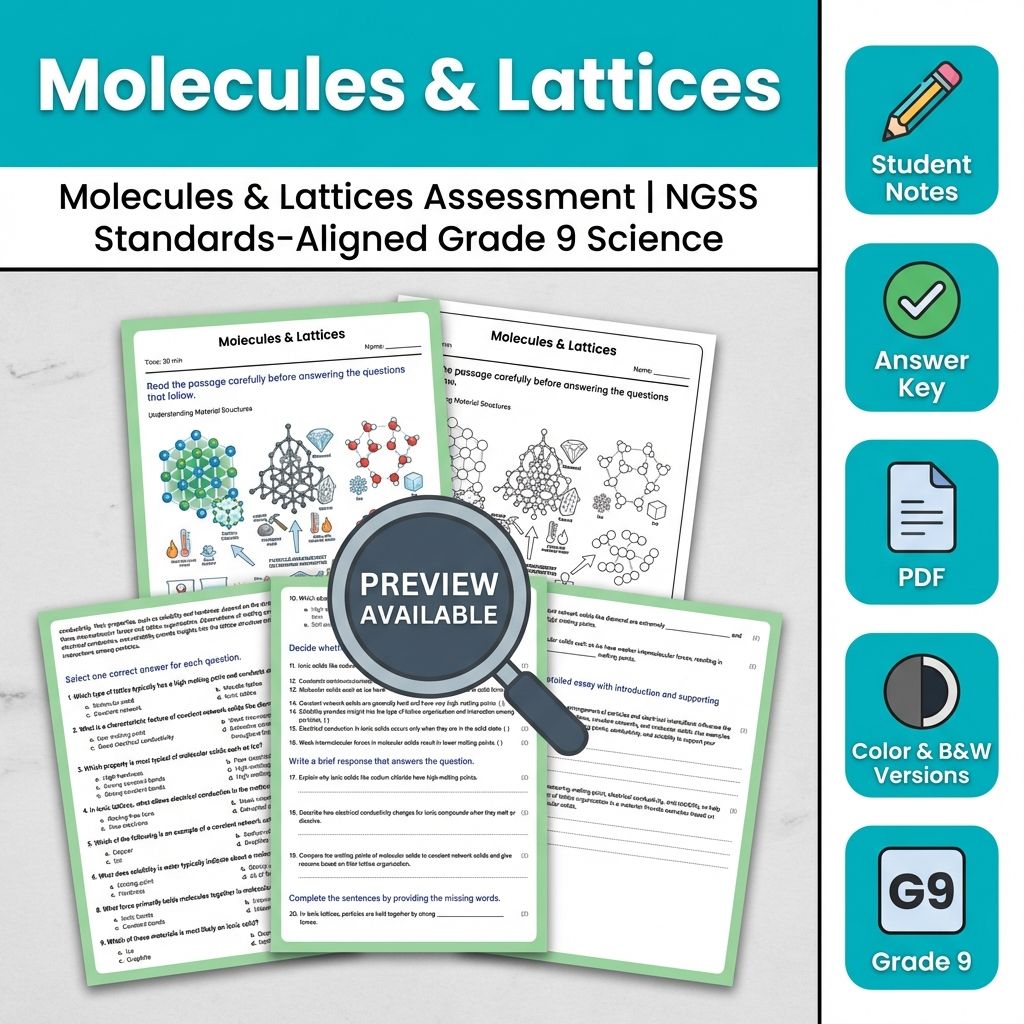
Molecules & Lattices Assessment | NGSS Standards-Aligned Grade 9 Science
 Created byPrism Point Learning
Learning Objectives
- Understand the relationship between particle arrangement and material properties in different lattice types.
- Identify characteristics of ionic, covalent network, and molecular solids based on their structure and observed physical properties.
- Analyze how melting point, electrical conductivity, hardness, and solubility reflect lattice organization and interparticle forces.
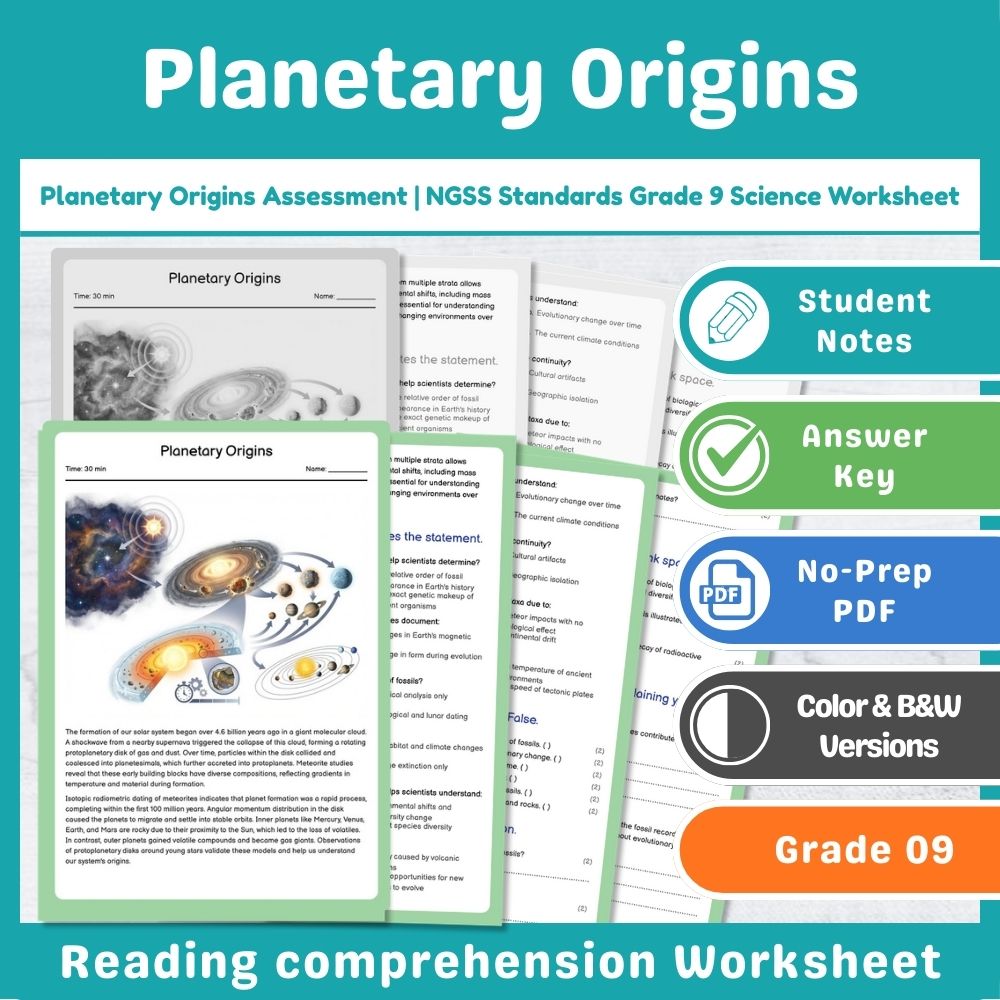
Planetary Origins Assessment | NGSS Standards Grade 9 Science Worksheet
Created byPrism Point LearningLearning Objectives
- Describe the formation processes of the solar system from a protoplanetary disk.
- Identify key evidence supporting planetary formation theories, including meteorite composition and isotopic dating.
- Explain the differences between inner rocky planets and outer gas giants based on planetary differentiation and volatile content.
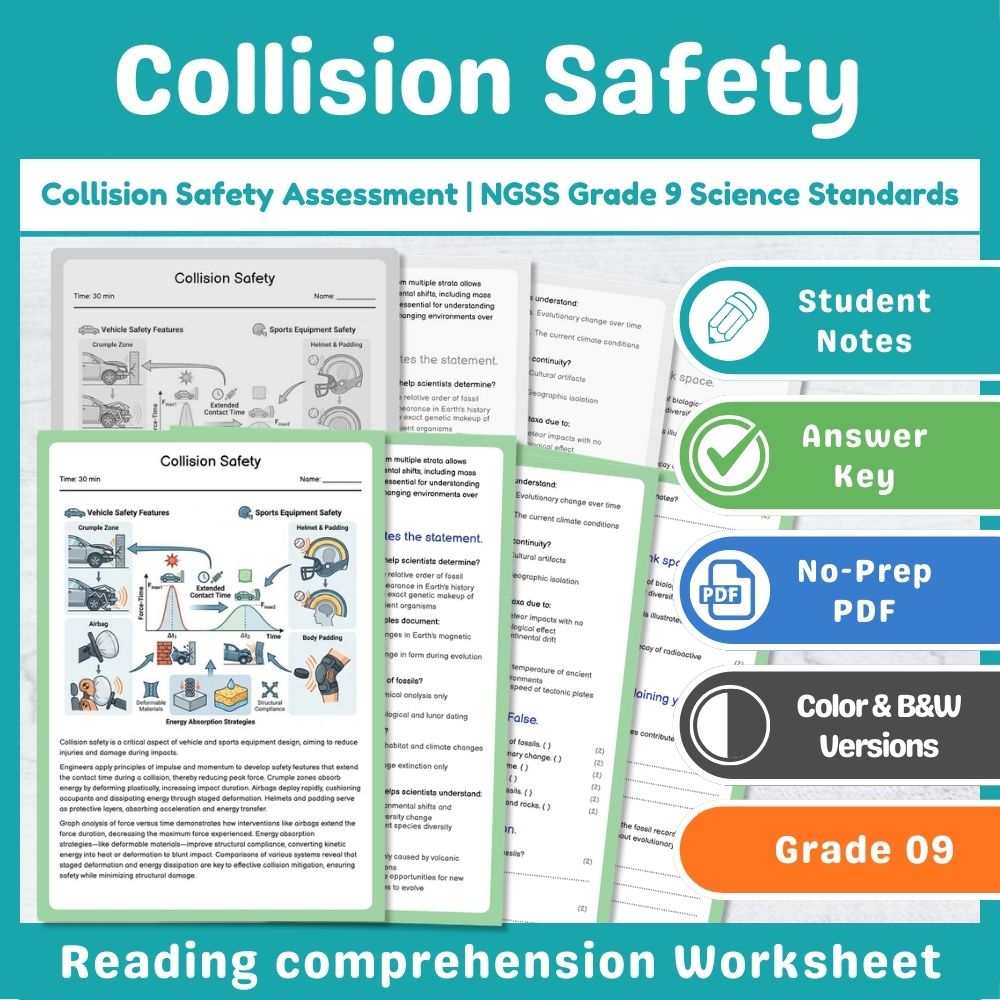
Collision Safety Assessment | NGSS Grade 9 Science Standards
Created byPrism Point LearningLearning Objectives
- Understand how impulse and force-time tradeoffs influence collision mitigation strategies.
- Identify engineering design features such as crumple zones, airbags, and helmets for safer high-impact interactions.
- Analyze force-time graphs and energy absorption techniques to evaluate shock absorption effectiveness.

Mass Conservation Assessment | BC Standards Grade 9 Science
Created byPrism Point LearningLearning Objectives
- Understand the principle of conservation of mass during chemical reactions.
- Interpret balanced chemical equations to identify atom counts.
- Explain how mass remains constant before and after a chemical change.
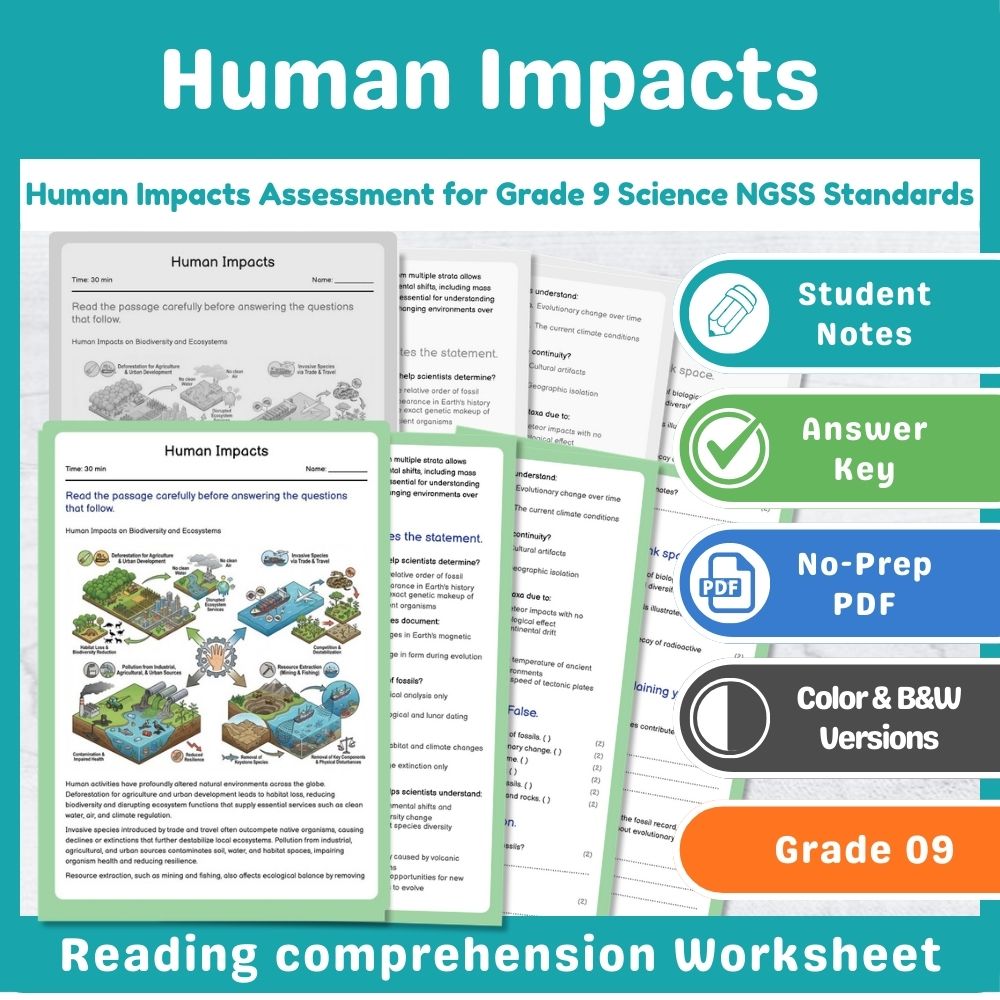
Human Impacts Assessment for Grade 9 Science NGSS Standards
Created byPrism Point LearningLearning Objectives
- Analyze how land-use change, invasive species, pollution, and resource extraction affect biodiversity and ecosystems.
- Interpret empirical data from case studies such as deforestation, coral reef degradation, and agricultural runoff.
- Evaluate trade-offs among conservation efforts, provisioning services, and socioecological outcomes.
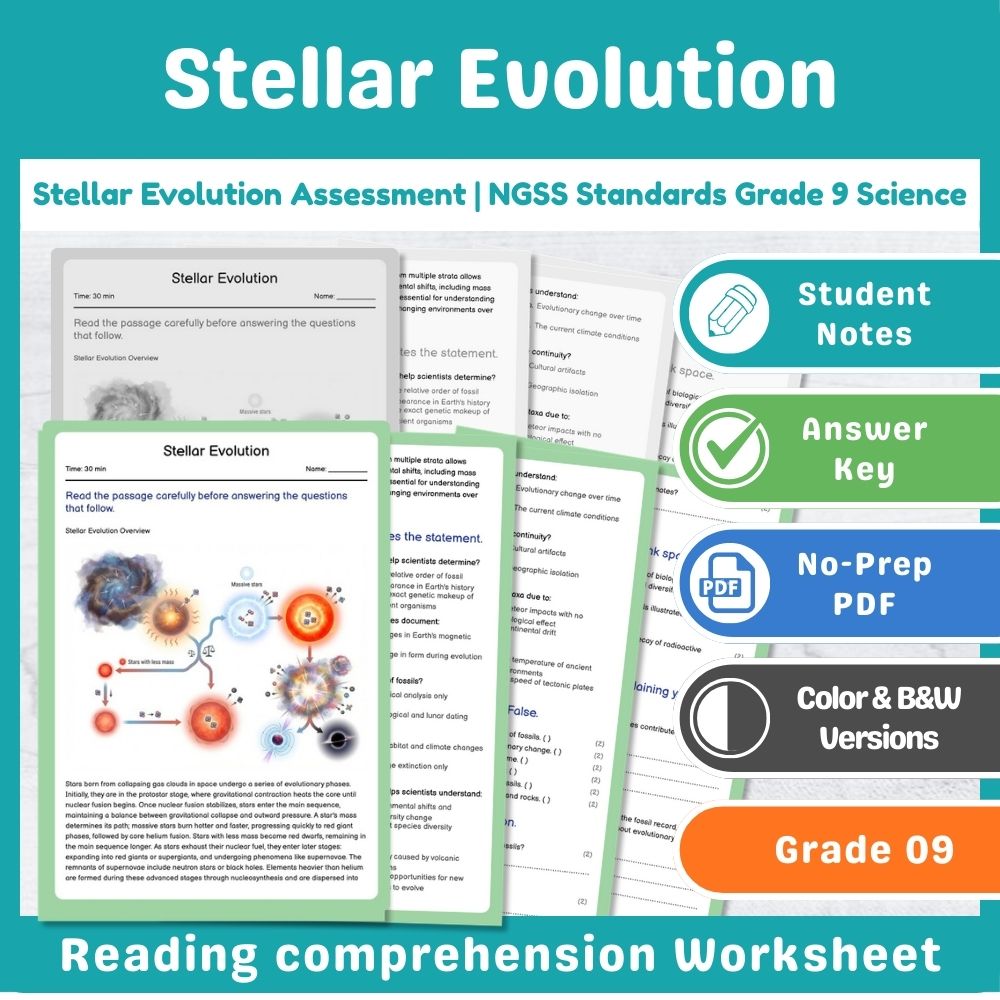
Stellar Evolution Assessment | NGSS Standards Grade 9 Science
Created byPrism Point LearningLearning Objectives
- Describe the processes involved in stellar formation and evolution.
- Identify the stages of stellar evolution from main sequence to terminal outcomes.
- Explain the use of Hertzsprung-Russell diagrams and spectral classification in understanding stars.

Predictive Models Assessment | General Grade 11 Science Standards
Created byPrism Point LearningLearning Objectives
- Understand key concepts related to Science
- Apply knowledge through practice questions
- Demonstrate comprehension of the material
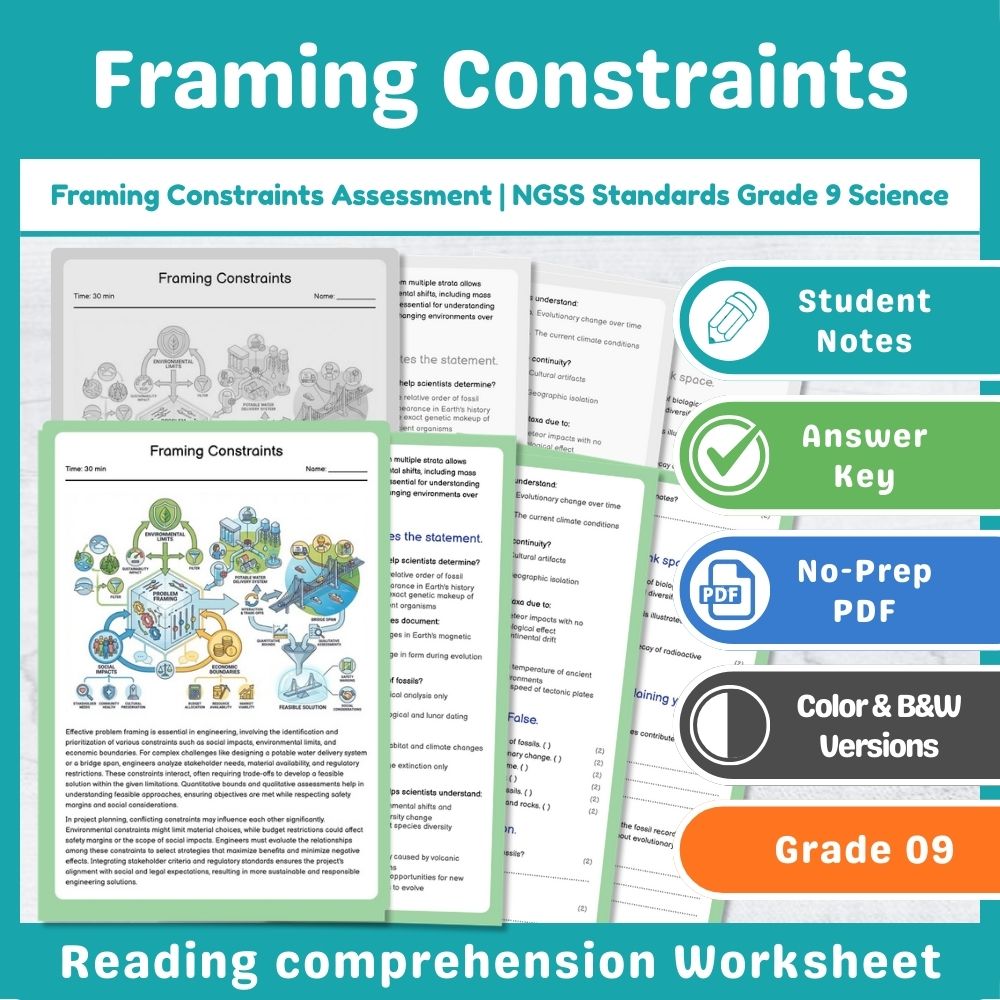
Framing Constraints Assessment | NGSS Standards Grade 9 Science
Created byPrism Point LearningLearning Objectives
- Understand the key components involved in framing constraints for engineering projects.
- Identify social, economic, and environmental factors impacting project design.
- Analyze stakeholder criteria, material availability, and regulatory restrictions.

Iterative Testing Refinement Assessment for Grade 11 Science | Standards-Aligned
Created byPrism Point LearningLearning Objectives
- Understand key concepts related to Science
- Apply knowledge through practice questions
- Demonstrate comprehension of the material

Orbital Motion Assessment for Grade 9 Science NGSS Standards
Created byPrism Point LearningLearning Objectives
- Explain the fundamental principles of orbital motion, including Kepler's laws and Newton's law of gravitation.
- Analyze relationships between orbital period, semi-major axis, and escape velocity.
- Apply concepts of conservation of angular momentum to planetary and satellite motion.
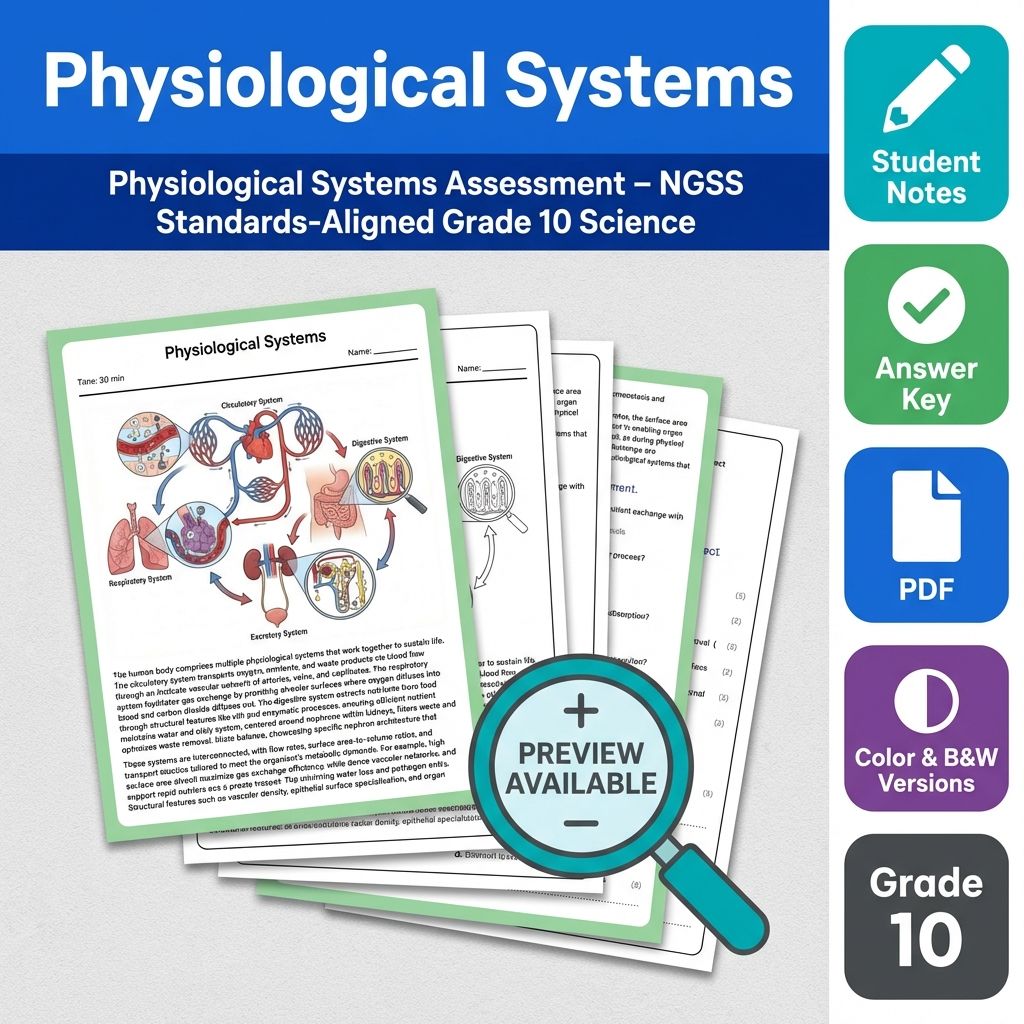
Physiological Systems Assessment – NGSS Standards-Aligned Grade 10 Science
Created byPrism Point LearningLearning Objectives
- Understand the structural features of circulatory, respiratory, digestive, excretory, and integumentary systems.
- Analyze how organ systems coordinate to meet organismal metabolic demands.
- Describe functional imperatives such as transport rates, surface area relationships, and transport kinetics.
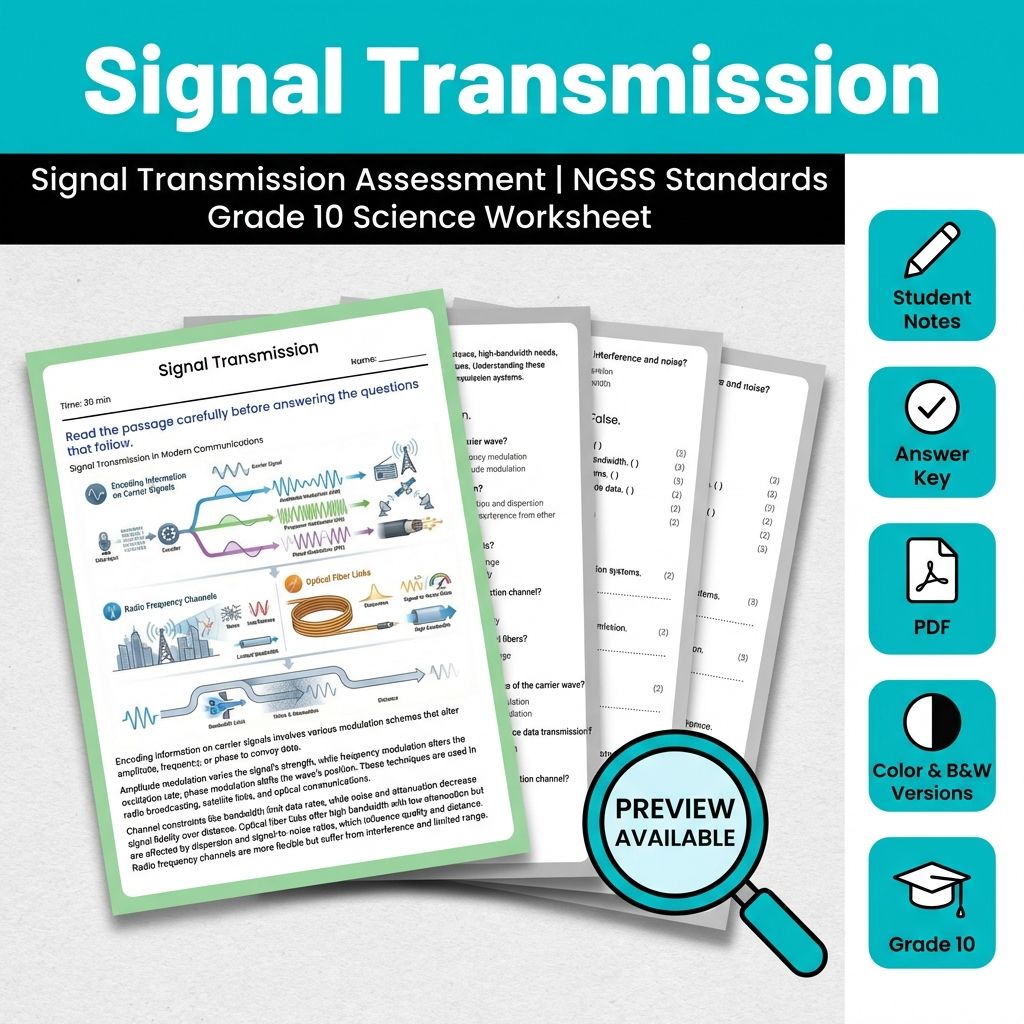
Signal Transmission Assessment | NGSS Standards Grade 10 Science Worksheet
Created byPrism Point LearningLearning Objectives
- Describe various modulation schemes used in encoding information on carrier signals.
- Evaluate the trade-offs between bandwidth, noise, and signal fidelity in different transmission modes.
- Explain how channel constraints such as attenuation and dispersion affect communication systems.
Climate Dynamics Assessment | NGSS Standards–Assessment for Grade 11 Science
Created byPrism Point LearningLearning Objectives
- Understand the components influencing climate variability, including atmospheric composition and large-scale circulation patterns.
- Analyze mechanisms such as greenhouse gas forcing, albedo feedbacks, and ocean-atmosphere interactions.
- Evaluate the evidence from instrumental records, satellite data, and paleoclimate proxies related to climate change.
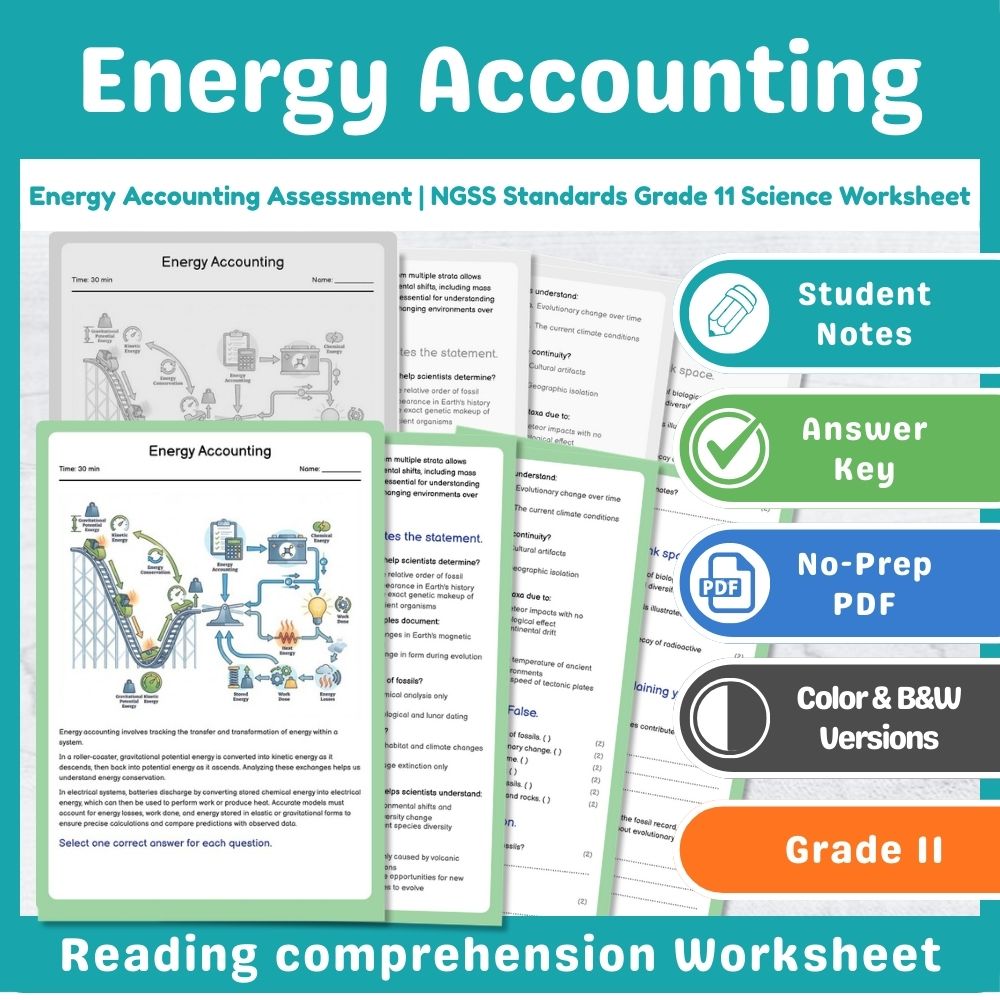
Energy Accounting Assessment | NGSS Standards Grade 11 Science Worksheet
Created byPrism Point LearningLearning Objectives
- Create computational models to analyze energy transfers among system components.
- Use computational representations to relate heat, work, and energy stored in gravitational or elastic forms.
- Compare predicted energy exchanges to data, emphasizing total energy conservation.

Inheritance Patterns Assessment for Grade 11 Science | Standards-Aligned
Created byPrism Point LearningLearning Objectives
- Explain how observable traits are connected to genetic inheritance patterns across generations.
- Describe the role of Punnett squares in predicting offspring genotypes and phenotypes.
- Differentiate between autosomal and sex-linked inheritance, including dominance and recessiveness.

DNA Gene Link Assessment | Standards-Aligned Test for Grade 11 Science
Created byPrism Point LearningLearning Objectives
- Understand the relationship between DNA, genes, and chromosomes.
- Explain how genetic information is expressed through transcription and translation.
- Describe how alleles travel together during cell division and influence traits.
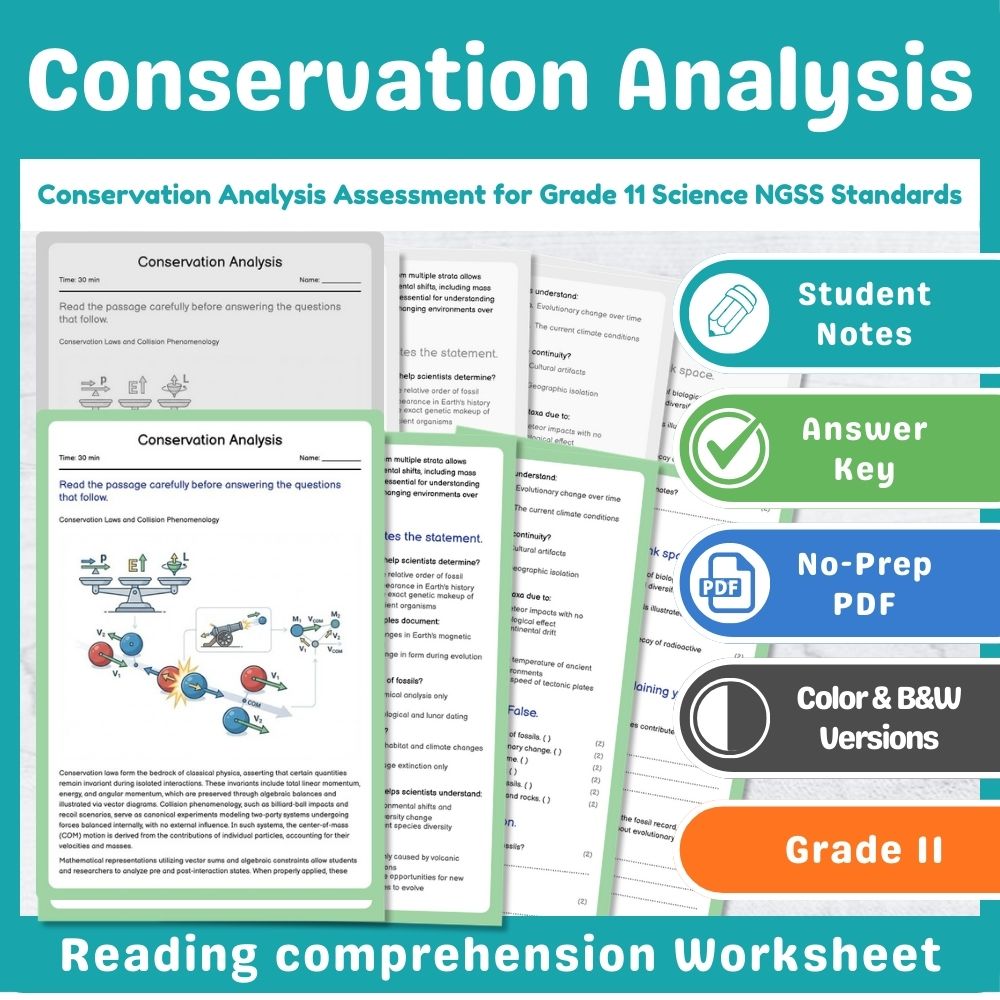
Conservation Analysis Assessment for Grade 11 Science NGSS Standards
Created byPrism Point LearningLearning Objectives
- Understand the principles of conservation laws in physics.
- Analyze collision phenomenology using algebraic balances and vector diagrams.
- Extract center-of-mass motion from system contributions and constraints.

Constraints Trade-Offs Assessment | General Standards & Grade 9 Science
Created byPrism Point LearningLearning Objectives
- Understand how design choices involve trade-offs among criteria such as cost, time, materials, safety, and reliability.
- Identify the role of constraints in limiting design options and criteria in evaluating success.
- Analyze how changing one criterion affects other aspects of a design, such as weight, safety, or cost.

Understanding Measurement Uncertainty Assessment | Standards-Aligned Grade 10 Science
Created byPrism Point LearningLearning Objectives
- Explain how measurement uncertainty affects data interpretation.
- Identify factors contributing to measurement uncertainty.
- Evaluate whether differences in measurements are meaningful considering their uncertainty ranges.
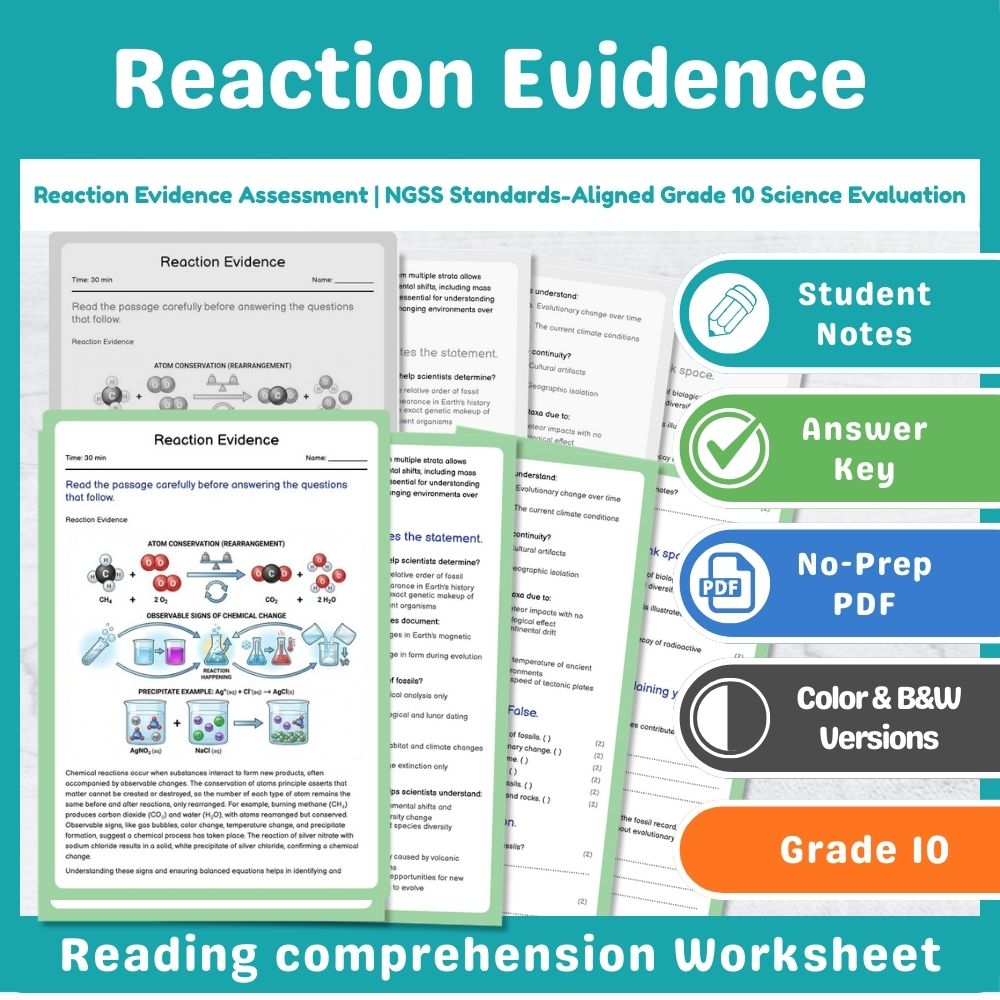
Reaction Evidence Assessment | NGSS Standards-Aligned Grade 10 Science Evaluation
Created byPrism Point LearningLearning Objectives
- Understand how conservation of atoms supports chemical reaction evidence.
- Identify observable signs indicating chemical reactions such as gas production, color change, and precipitate formation.
- Apply the principles of balanced equations to explain reaction outcomes.
Cellular Energy Pathways Assessment | NGSS-Aligned Grade 11 Science
Created byPrism Point LearningLearning Objectives
- Describe the sequence of energy transformations during cellular respiration, including glycolysis, pyruvate oxidation, the citric acid cycle, and oxidative phosphorylation.
- Explain the role of electron transport chains and proton gradients in ATP production within mitochondria.
- Calculate the approximate energy yield from different substrates used in cellular respiration and relate this to organism metabolic rates and resource consumption.

Forces and Motion Assessment | Standards-Aligned Grade 10 Science Worksheet
Created byPrism Point LearningLearning Objectives
- Understand how net force affects the motion of an object.
- Identify different types of forces such as gravity, contact forces, and friction.
- Explain the concept of inertia and its relation to motion.
Resource Influences NGSS Assessment | Grade 11 Science Standards-Aligned
Created byPrism Point LearningLearning Objectives
- Analyze how natural resource availability affects human settlement, land use, and economic development.
- Explain how natural hazards and climate change influence migration, coastal settlement, and land management decisions.
- Evaluate the feedbacks between resource extraction, ecosystem services, and sustainability across regions and history.

Evidence Supporting Evolution Assessment | General Grade 10 Science
Created byPrism Point LearningLearning Objectives
- Understand the different types of evidence used to support claims about biological change over time.
- Identify how fossil records, comparative anatomy, molecular data, and biogeography contribute to evolutionary understanding.
- Analyze how multiple lines of evidence reinforce conclusions about evolution despite limitations in individual datasets.

Ecosystem Interaction Networks Assessment for Grade 9 Science
Created byPrism Point LearningLearning Objectives
- Understand the various types of interactions among organisms within ecosystems.
- Identify how environmental factors influence population dynamics and community structure.
- Explain how changes in one species can cascade through an ecosystem affecting resources and habitats.
Detector Imaging Assessment for Grade 11 Science NGSS Standards
Created byPrism Point LearningLearning Objectives
- Evaluate the validity and reliability of claims about electromagnetic absorption across different bands.
- Analyze detector responses like CCD and photodiodes in UV, visible, IR, and X-ray spectra.
- Understand calibration procedures, uncertainties, and instrument limitations in detector imaging.
Inheritance Patterns Assessment NGSS | Standard Grade 11 Science
Created byPrism Point LearningLearning Objectives
- Understand the basic principles of Mendelian inheritance and how traits are passed through generations.
- Identify and describe various inheritance patterns beyond simple dominance, such as incomplete dominance, codominance, sex linkage, and polygenic inheritance.
- Interpret pedigrees and predict inheritance outcomes using probability and meiotic mechanisms.
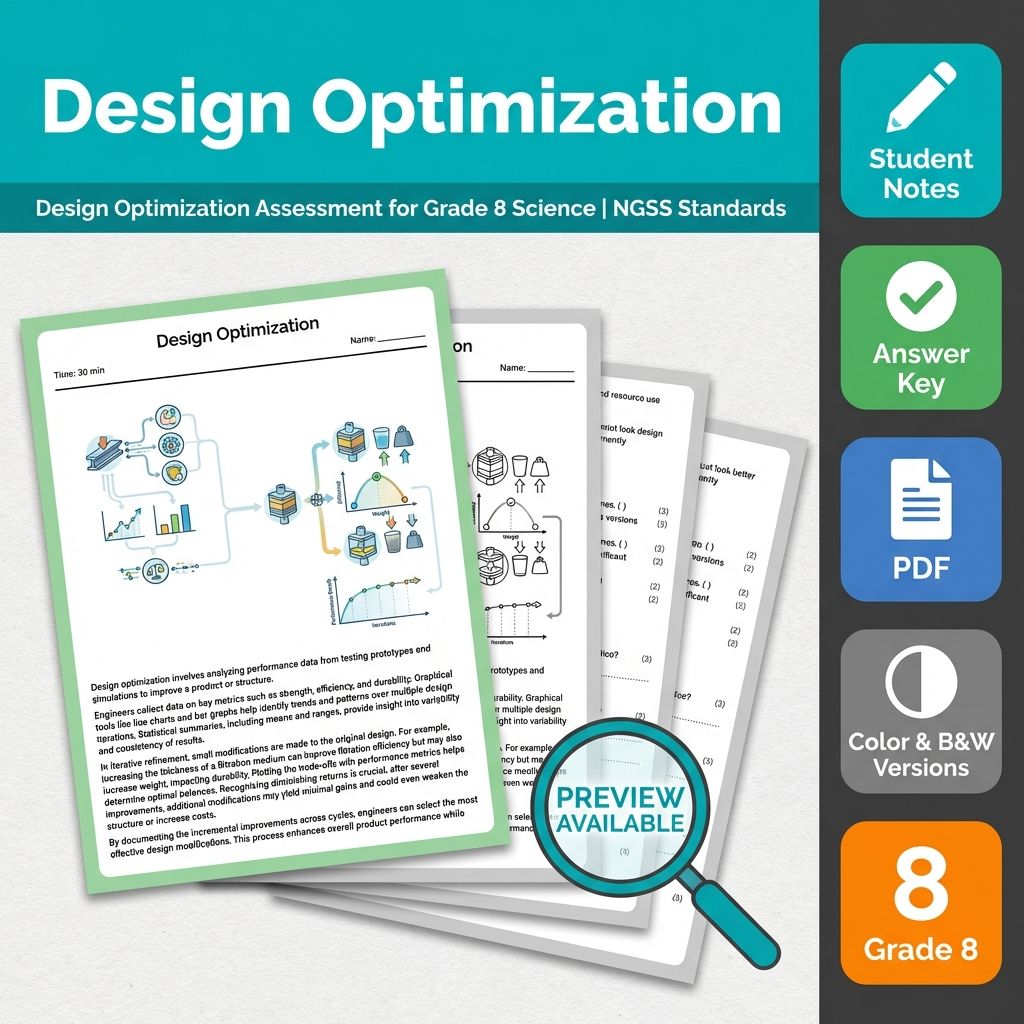
Design Optimization Assessment for Grade 8 Science | NGSS Standards
Created byPrism Point LearningLearning Objectives
- Analyze test data to identify performance trends and effective design features.
- Interpret graphical and statistical summaries to inform iterative design modifications.
- Evaluate trade-offs among different design metrics such as efficiency, strength, and durability.
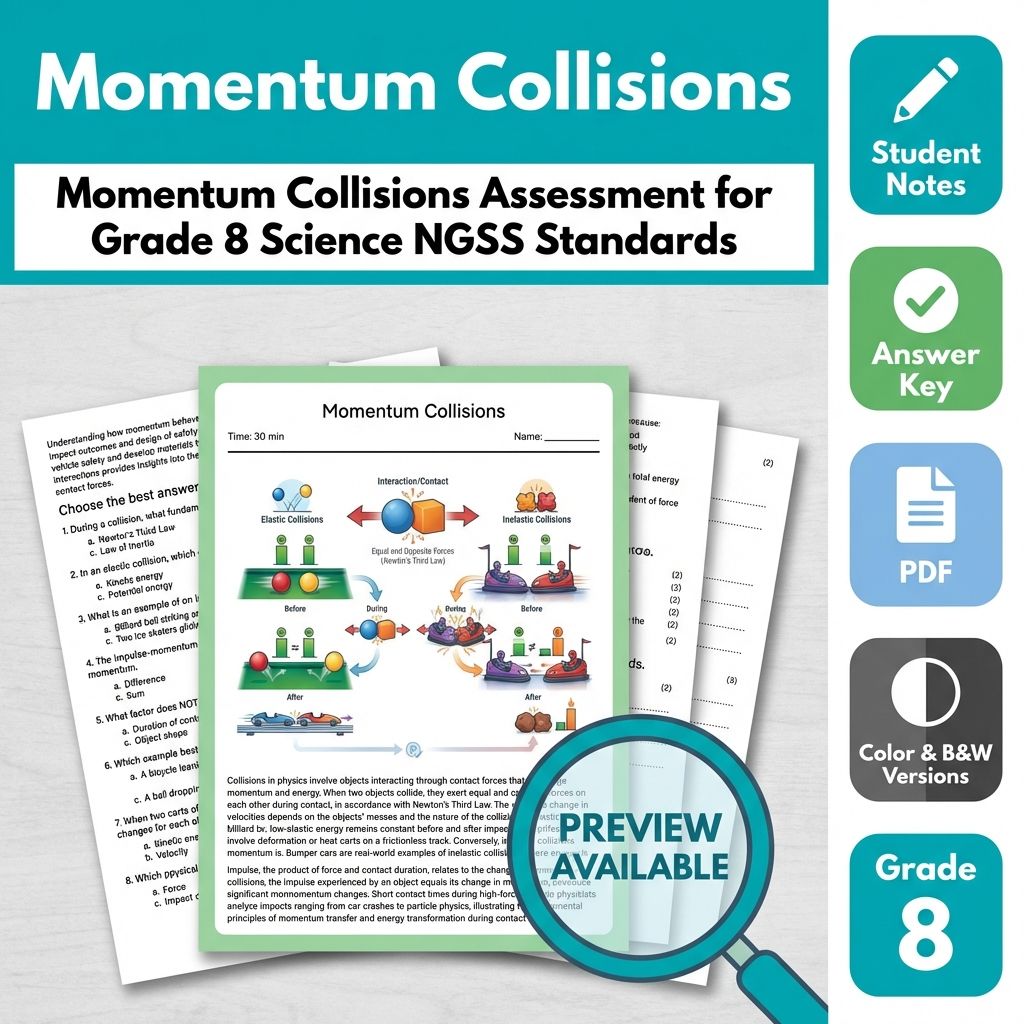
Momentum Collisions Assessment for Grade 8 Science NGSS Standards
Created byPrism Point LearningLearning Objectives
- Understand the principles of momentum exchange during collisions.
- Distinguish between elastic and inelastic collisions through conservation of kinetic energy.
- Analyze real-world examples involving impacts and velocity changes.
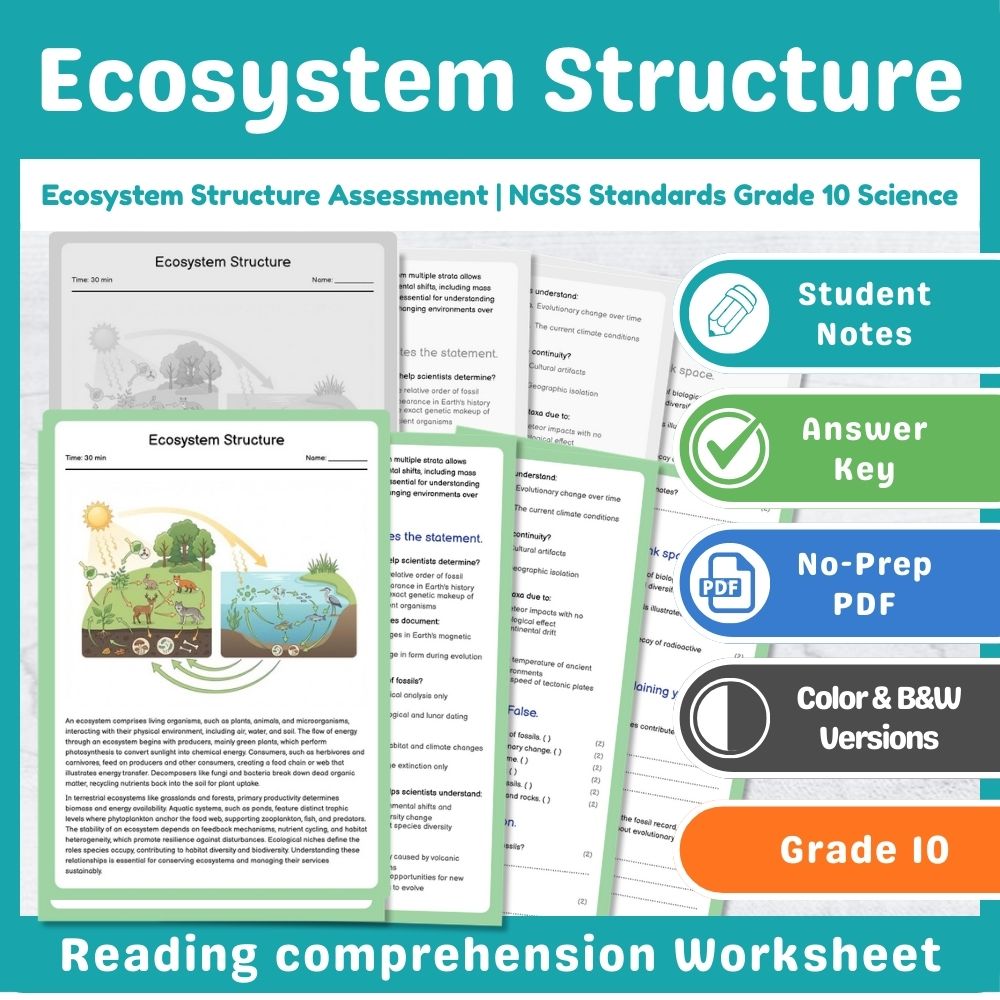
Ecosystem Structure Assessment for Grade 10 Science NGSS Standards
Created byPrism Point LearningLearning Objectives
- Explain the roles of biotic and abiotic components in ecosystems.
- Identify and analyze food webs, trophic levels, and energy flow within ecosystems.
- Understand the concepts of ecosystem stability, feedback loops, and ecological niches.
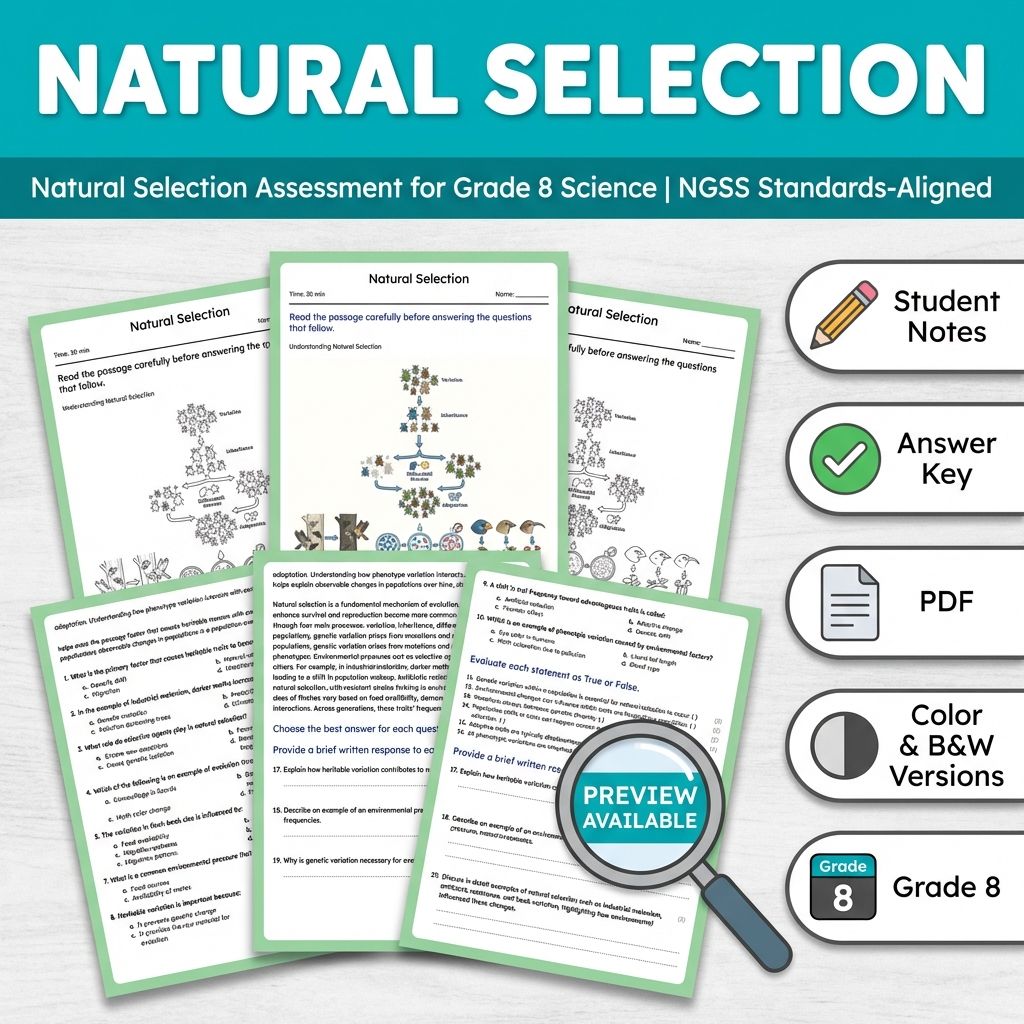
Natural Selection Assessment for Grade 8 Science | NGSS Standards-Aligned
Created byPrism Point LearningLearning Objectives
- Understand the mechanisms of variation and natural selection that drive adaptive change in populations.
- Identify examples of natural selection such as industrial melanism, antibiotic resistance, and beak variation.
- Link phenotypic variation and environmental factors to changes in trait frequencies over generations.
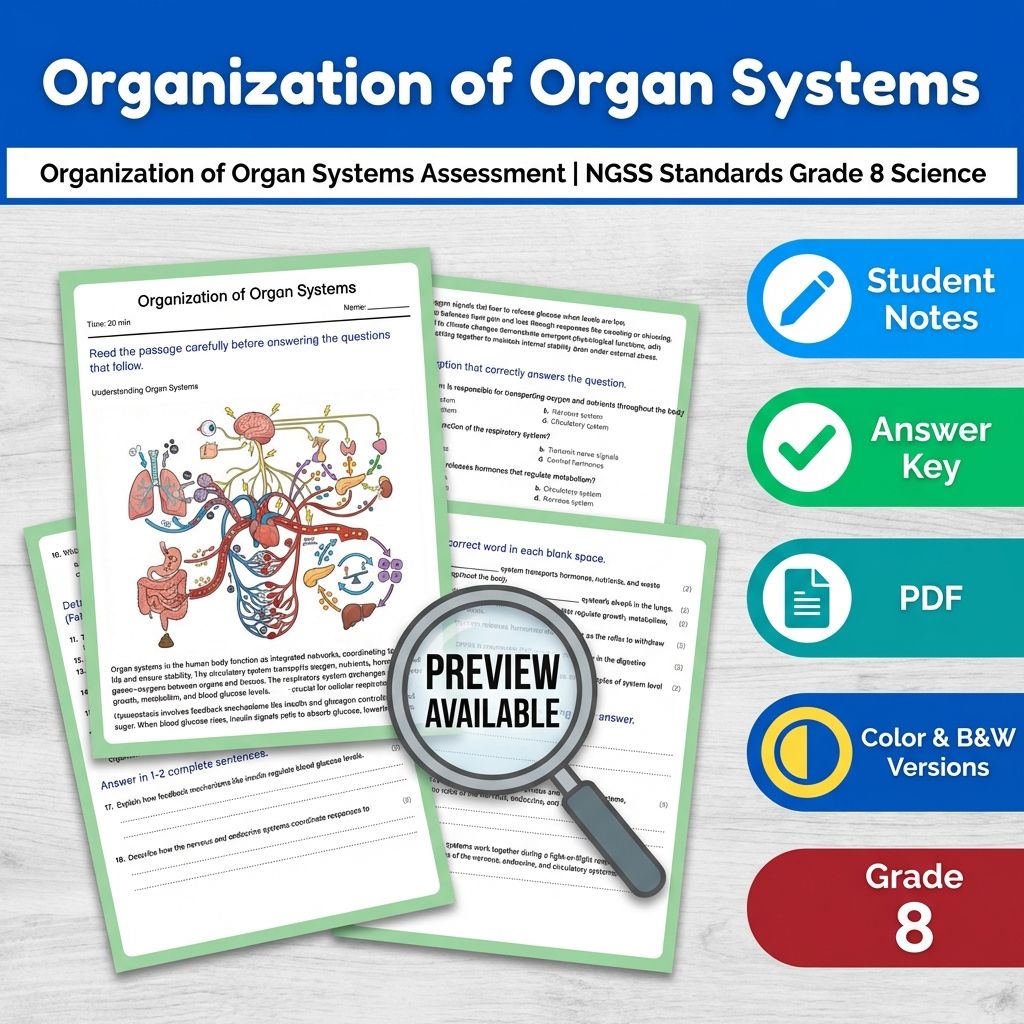
Organization of Organ Systems Assessment | NGSS Standards Grade 8 Science
Created byPrism Point LearningLearning Objectives
- Understand how body systems collaborate to maintain homeostasis.
- Identify functions of the circulatory, respiratory, digestive, nervous, and endocrine systems.
- Explain feedback mechanisms like insulin–glucagon signaling and thermoregulation.

Yield and Conditions Assessment | General Standards Ali gned Grade 12 Science
Created byPrism Point LearningLearning Objectives
- Interpret reaction yield as the extent of reactant conversion into products under specific conditions
- Explain how particle-model ideas (collisions, activation energy, depletion) affect reaction rate and final yield
- Evaluate how competing pathways can change product distribution and reduce desired yield
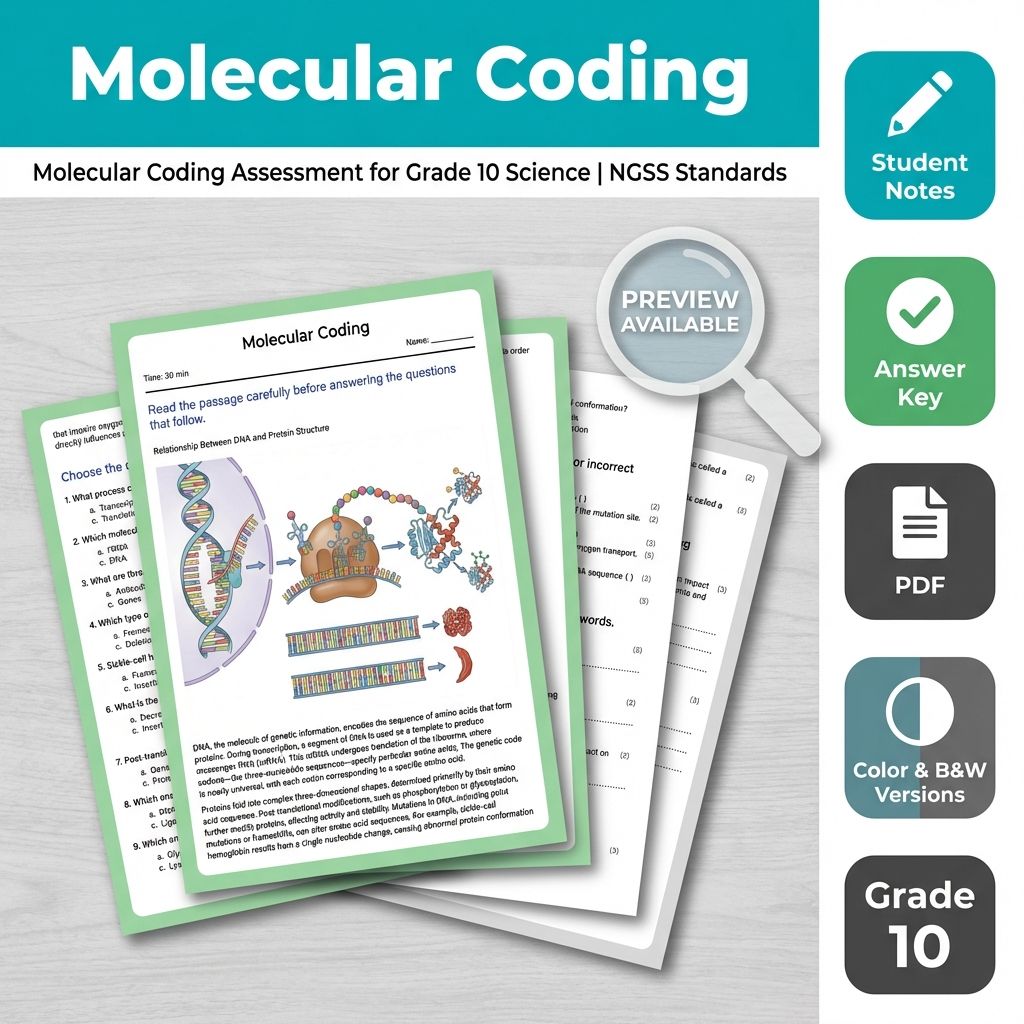
Molecular Coding Assessment for Grade 10 Science | NGSS Standards
Created byPrism Point LearningLearning Objectives
- Explain how DNA sequences determine amino acid sequences during protein synthesis.
- Describe the processes of transcription and translation in gene expression.
- Illustrate the effects of point mutations and frameshifts on protein structure.
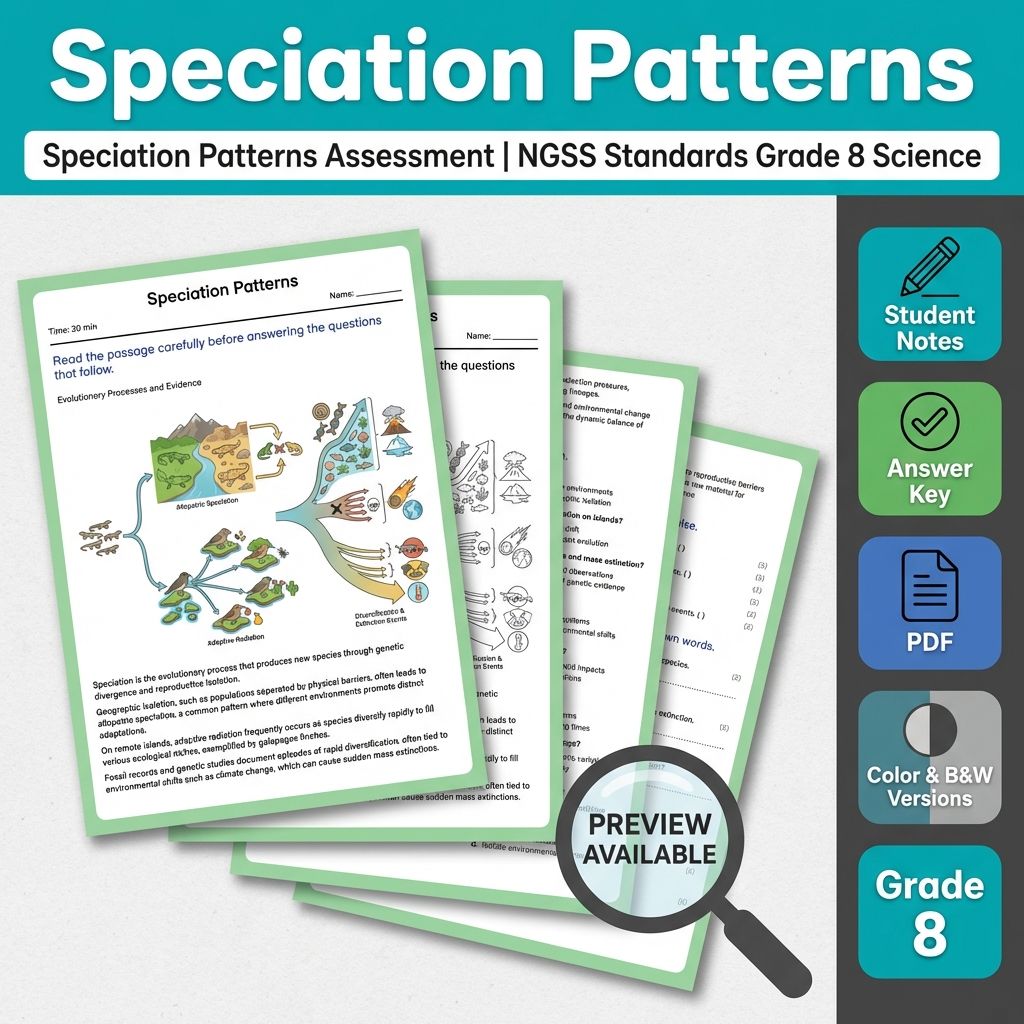
Speciation Patterns Assessment | NGSS Standards Grade 8 Science
Created byPrism Point LearningLearning Objectives
- Understand how geographic isolation leads to allopatric speciation.
- Identify processes such as genetic divergence, reproductive isolation, and environmental change that generate new species.
- Analyze fossil and genetic evidence for episodes of diversification and mass extinctions.

Earth Systems Assessment for Grade 12 Science TEKS Standards
Created byPrism Point LearningLearning Objectives
- Understand the interactions between atmosphere, hydrosphere, lithosphere, and cryosphere in climate systems.
- Analyze energy transfer mechanisms and matter cycling within Earth systems.
- Evaluate the effects of radiative balance and albedo on climate variability.
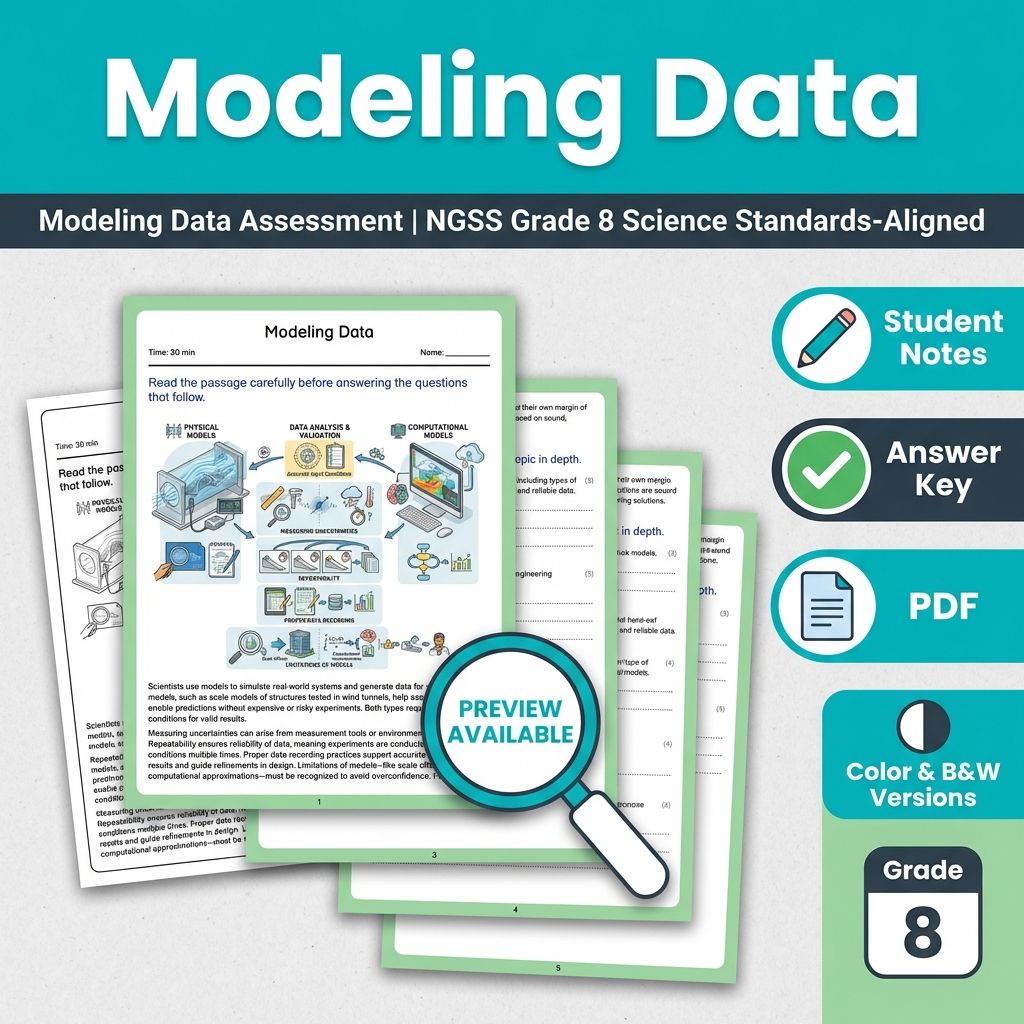
Modeling Data Assessment | NGSS Grade 8 Science Standards-Aligned
Created byPrism Point LearningLearning Objectives
- Understand the purpose of physical and computational models in generating quantitative data.
- Identify different types of models used in scientific investigation, including scale models and simple simulations.
- Explain the importance of consistent input conditions, repeatability, and proper data recording practices.

Inheritance Patterns Assessment | TEKS Grade 9 Science Standards
Created byPrism Point LearningLearning Objectives
- Describe Mendelian patterns like segregation and independent assortment.
- Identify and compare non-Mendelian inheritance patterns such as incomplete dominance and codominance.
- Recognize how environmental factors and gene linkage influence trait expression.
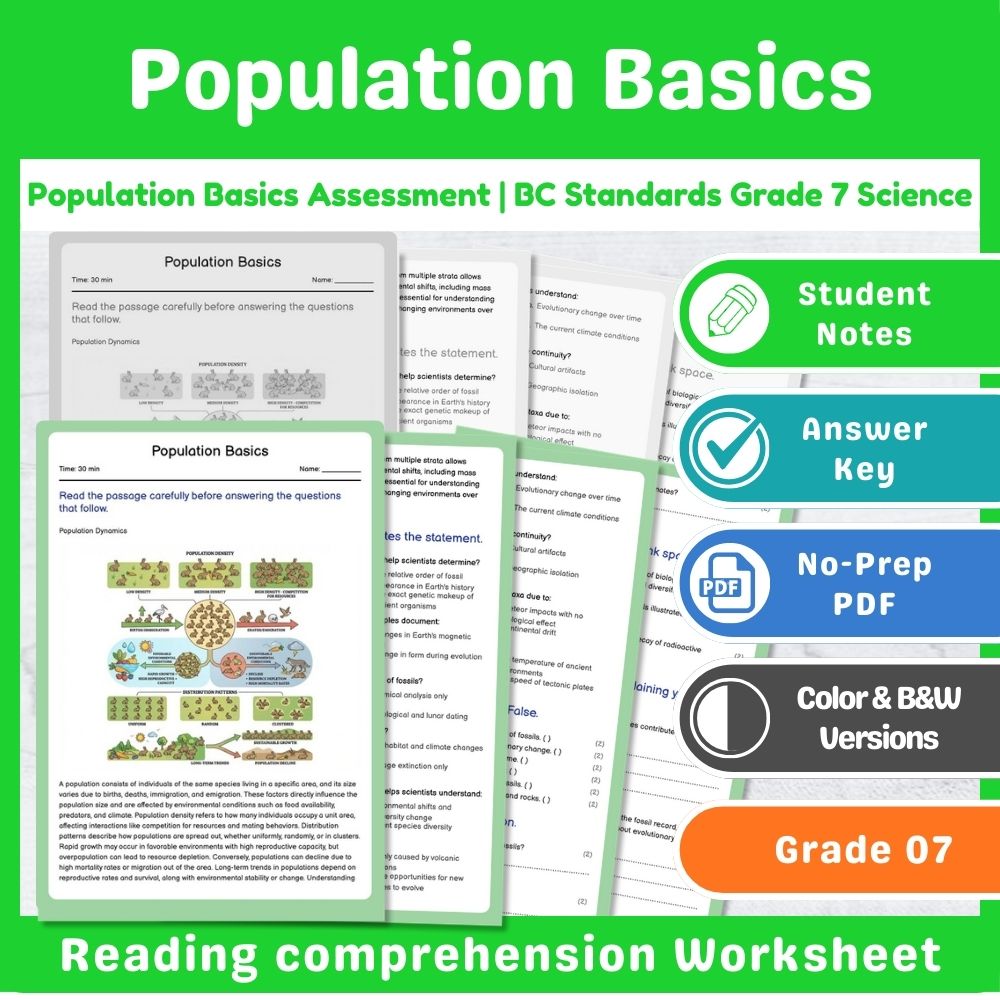
Population Basics Assessment | BC Standards Grade 7 Science
Created byPrism Point LearningLearning Objectives
- Understand the core metrics used to describe populations, such as size, density, and distribution patterns.
- Explain how demographic factors like births, deaths, immigration, and emigration influence population change.
- Analyze how environmental conditions interact with population dynamics over short-term and long-term scales.

Reaction Evidence Assessment | NGSSS Standard Grade 7 Science
Created byPrism Point LearningLearning Objectives
- Identify macroscopic evidence that indicates a chemical reaction is occurring.
- Differentiate chemical changes from physical changes using observable and irreversible signs.
- Explain how particle rearrangement connects to observations such as gas production, color change, and precipitate formation.
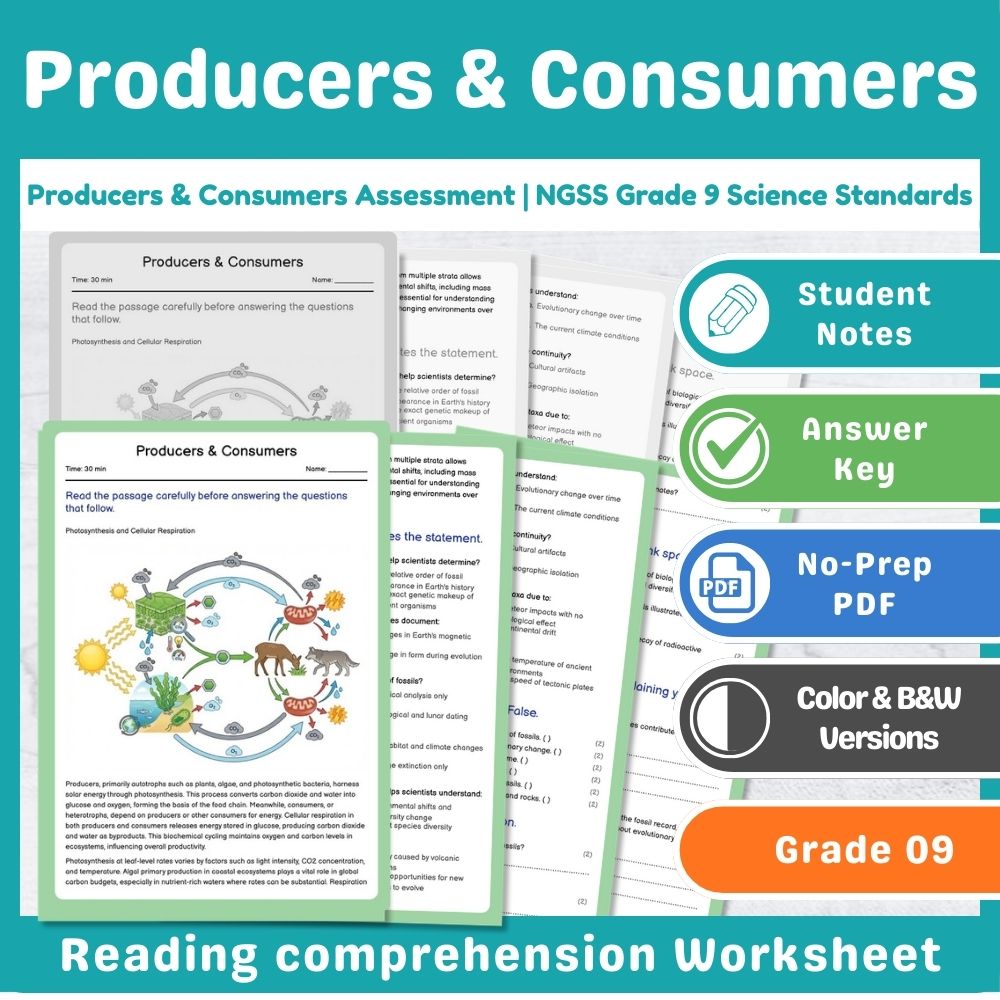
Producers & Consumers Assessment | NGSS Grade 9 Science Standards
Created byPrism Point LearningLearning Objectives
- Explain the roles of producers and consumers in an ecosystem.
- Analyze how photosynthesis and cellular respiration transfer energy and cycle carbon and oxygen.
- Evaluate factors affecting net primary productivity and biomass accumulation.
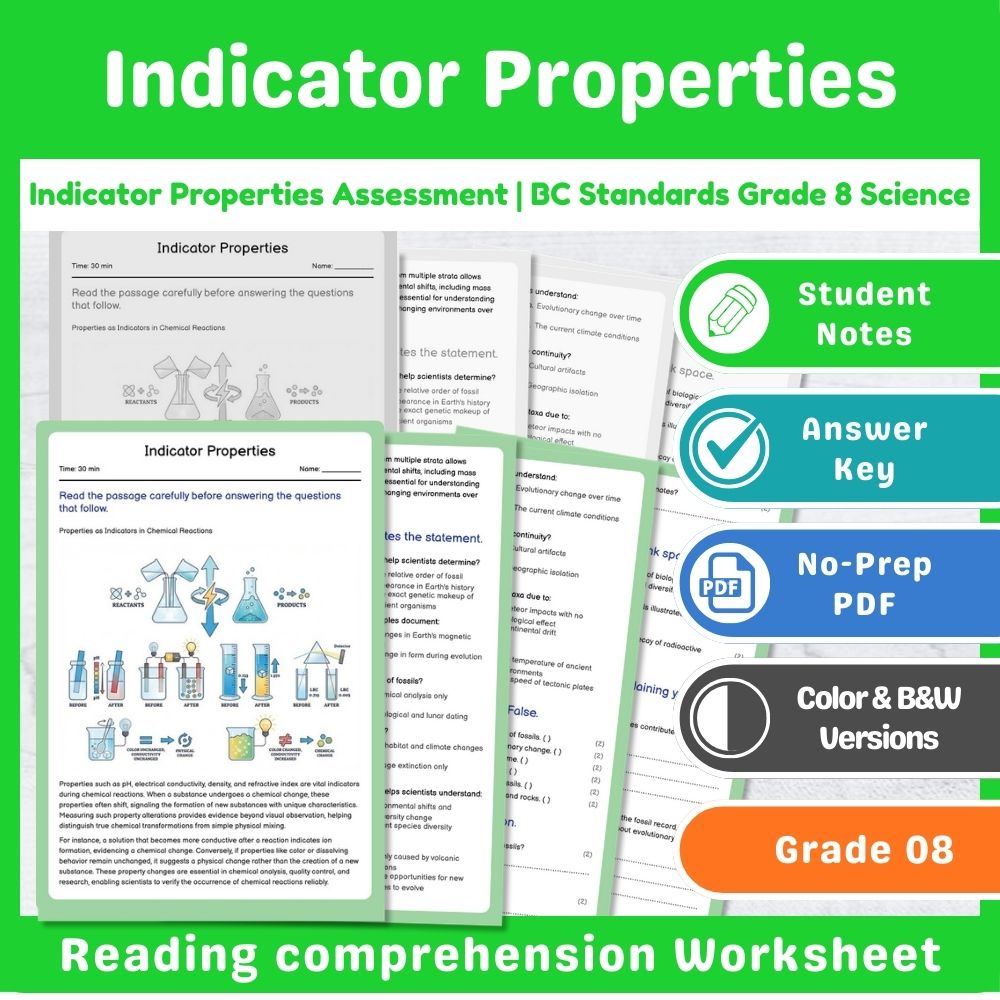
Indicator Properties Assessment | BC Standards Grade 8 Science
Created byPrism Point LearningLearning Objectives
- Understand how properties such as pH, conductivity, density, and refractive index change during chemical reactions.
- Identify property shifts indicating formation of new substances with distinct traits.
- Differentiate between physical and chemical changes using property measurements.
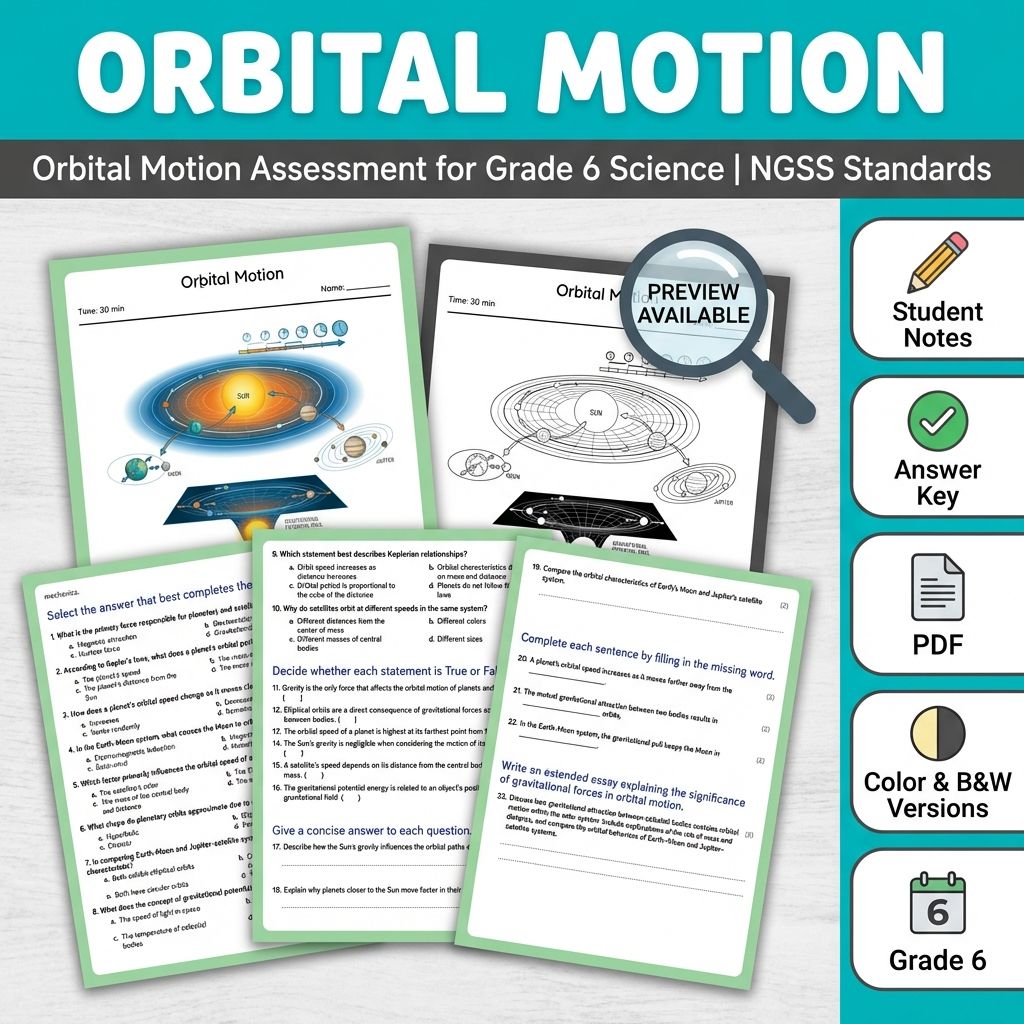
Orbital Motion Assessment for Grade 6 Science | NGSS Standards
Created byPrism Point LearningLearning Objectives
- Explain the role of gravity in planetary and satellite orbits within the solar system.
- Describe how mutual gravitational forces produce elliptical orbits and influence orbital periods and speeds.
- Compare orbital dynamics of Earth–Moon and Jupiter–satellite systems to illustrate the effects of mass and distance.

Cell Components Assessment | TEKS Grade 11 Science Standards-Aligned
Created byPrism Point LearningLearning Objectives
- Identify the major organelles within eukaryotic cells and describe their functions.
- Explain how cell structures support processes like energy production, protein synthesis, and material transport.
- Differentiate between membrane-bound and non-membrane-bound organelles and their roles in cellular activities.
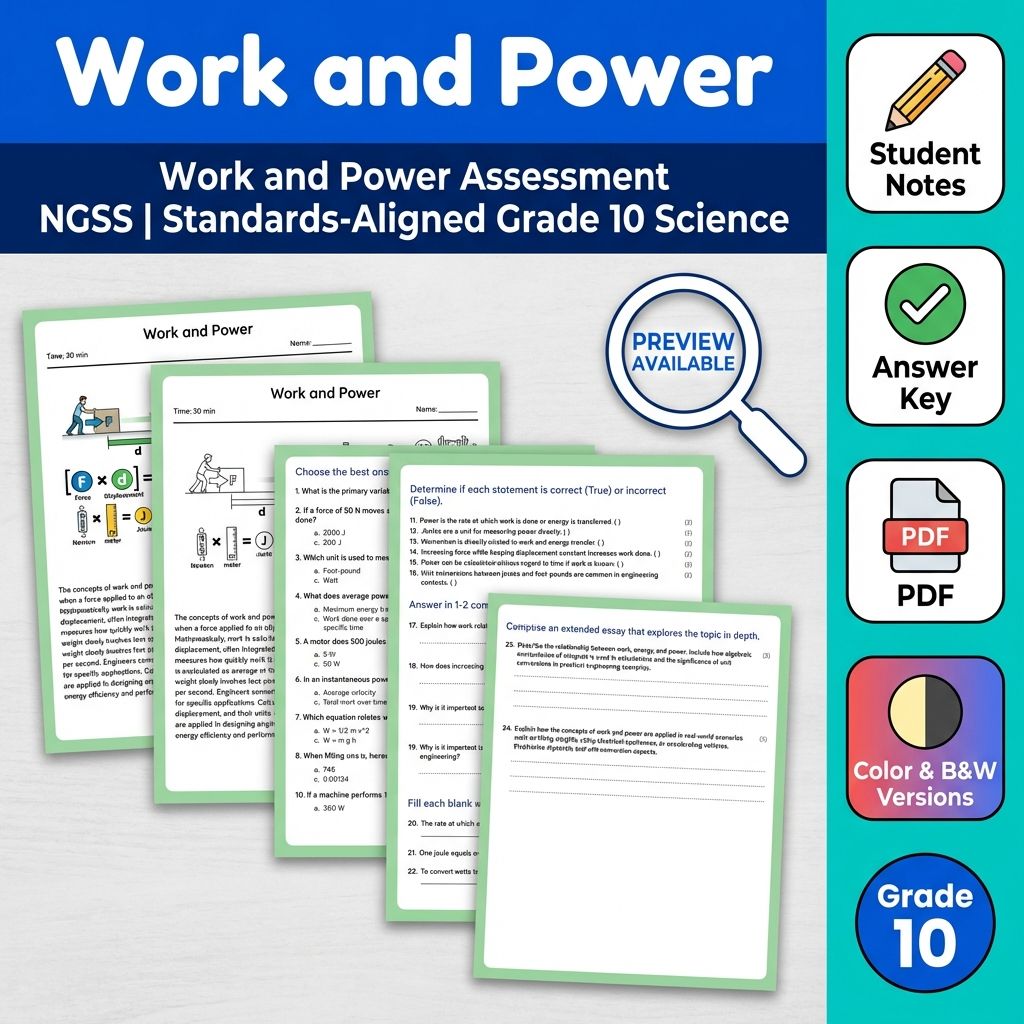
Work and Power Assessment NGSS | Standards-Aligned Grade 10 Science
Created byPrism Point LearningLearning Objectives
- Explain the relationship between force, displacement, and energy using the work–energy theorem.
- Calculate work and power in various contexts, including lifting weights and vehicle acceleration.
- Manipulate work integrals algebraically and convert units between joules, watts, and engineering units.
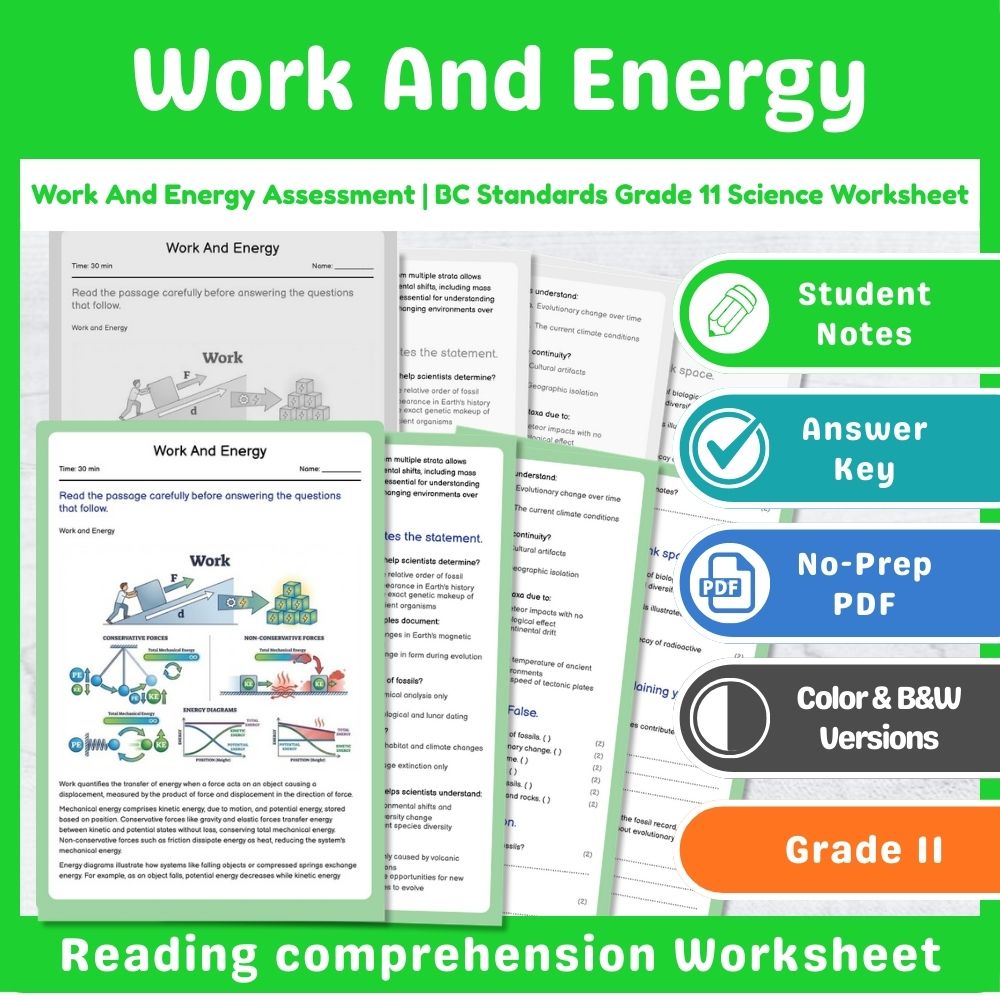
Work And Energy Assessment | BC Standards Grade 11 Science Worksheet
Created byPrism Point LearningLearning Objectives
- Explain the concept of work as energy transfer when a force causes displacement.
- Describe the forms of mechanical energy: kinetic and potential.
- Identify how conservative and non-conservative forces affect energy in a system.

Testable Predictions Assessment | Florida NGSSS Grade 6 Science
Created byPrism Point LearningLearning Objectives
- Explain how a scientific model can lead to a testable prediction.
- Describe how observations either support a prediction or show where a model needs revision.
- Use criteria and uncertainty to evaluate results and communicate confidence in findings.
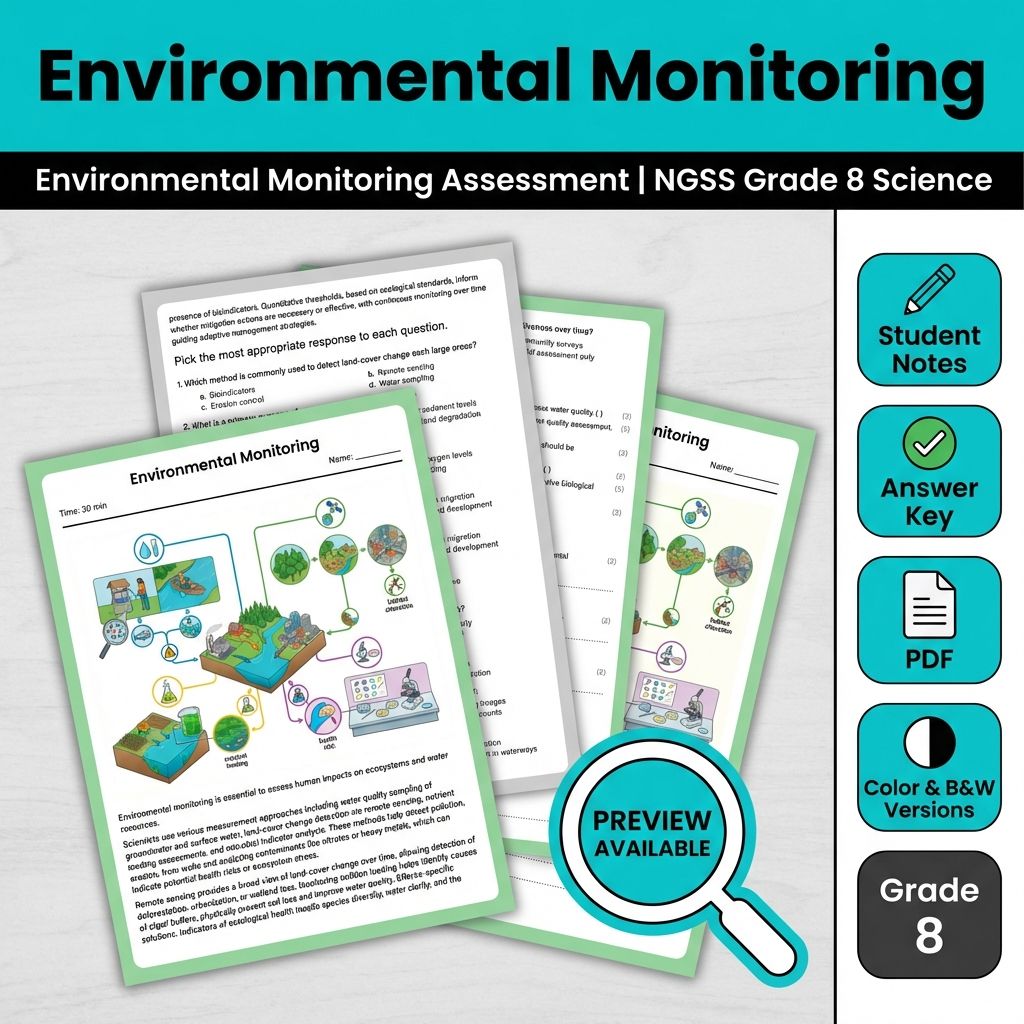
Environmental Monitoring Assessment | NGSS Grade 8 Science
Created byPrism Point LearningLearning Objectives
- Understand scientific principles used in monitoring ecosystems and water resources.
- Identify measurement approaches and indicators of ecological health.
- Evaluate mitigation options and intervention effectiveness over time.
Browse more categories
About Science Worksheets
Find Science worksheets spanning core skills, practice, and review. All 42,685 resources are instant PDF downloads for the classroom or home.
Every worksheet on MyTeachingSheets is created by independent teacher-authors and reviewed before publication. All resources download as printable PDFs for classroom, homework, or at-home practice, and many include answer keys. Preview any worksheet free before buying.