
Science Worksheets
42,685 subject resources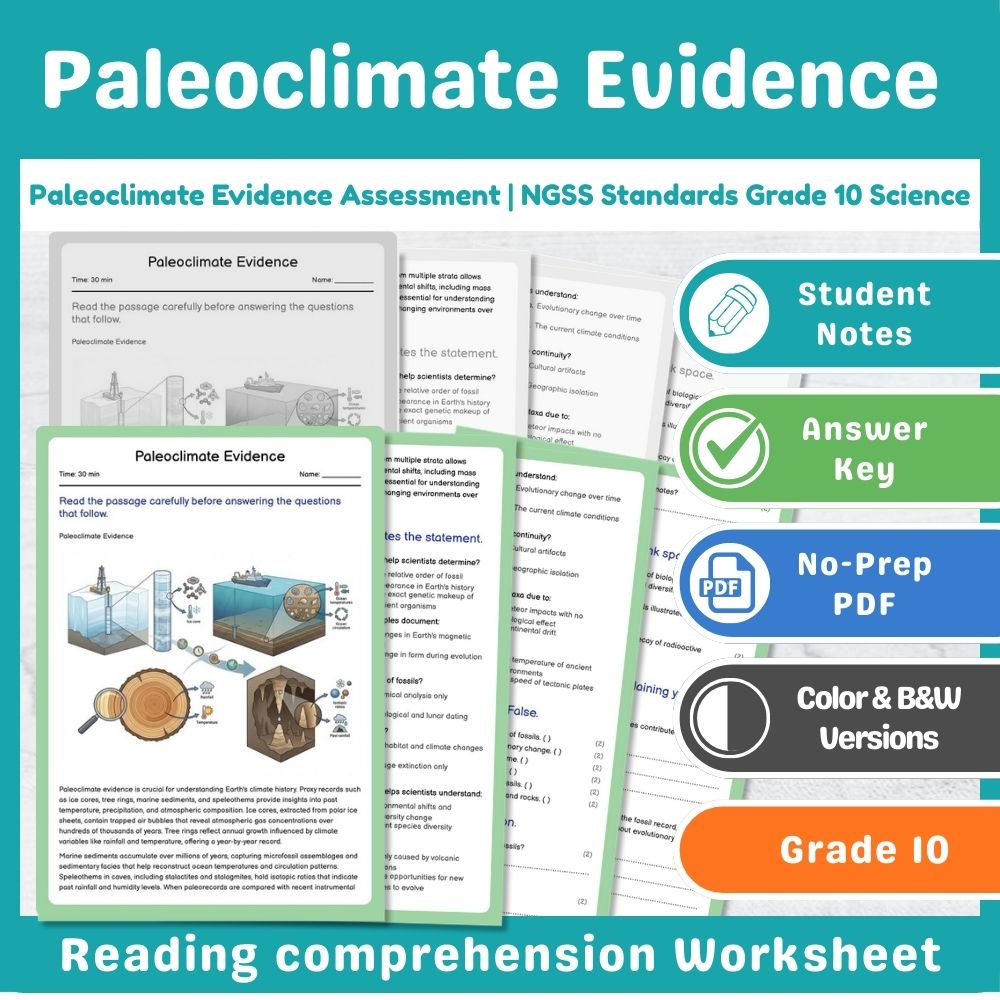
Paleoclimate Evidence Assessment | NGSS Standards Grade 10 Science
 Created byPrism Point Learning
Learning Objectives
- Understand different types of proxy records used to analyze past climate conditions.
- Identify how isotopic ratios, microfossil assemblages, and sedimentary facies provide clues about historical climate shifts.
- Compare paleoclimate reconstructions with recent instrumental data to analyze climate variability.
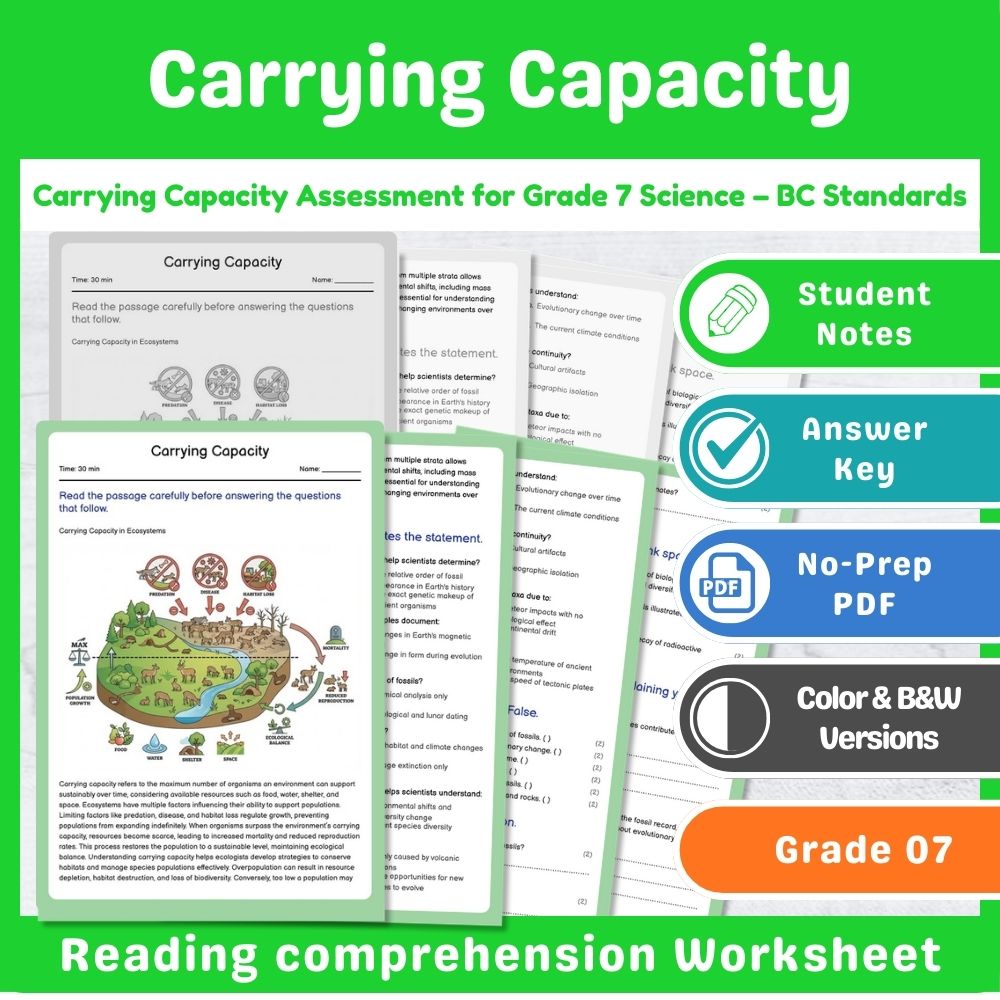
Carrying Capacity Assessment for Grade 7 Science – BC Standards
Created byPrism Point LearningLearning Objectives
- Define carrying capacity and explain its significance in ecosystems.
- Identify limiting factors that influence population growth.
- Describe the effects of exceeding carrying capacity in natural environments.
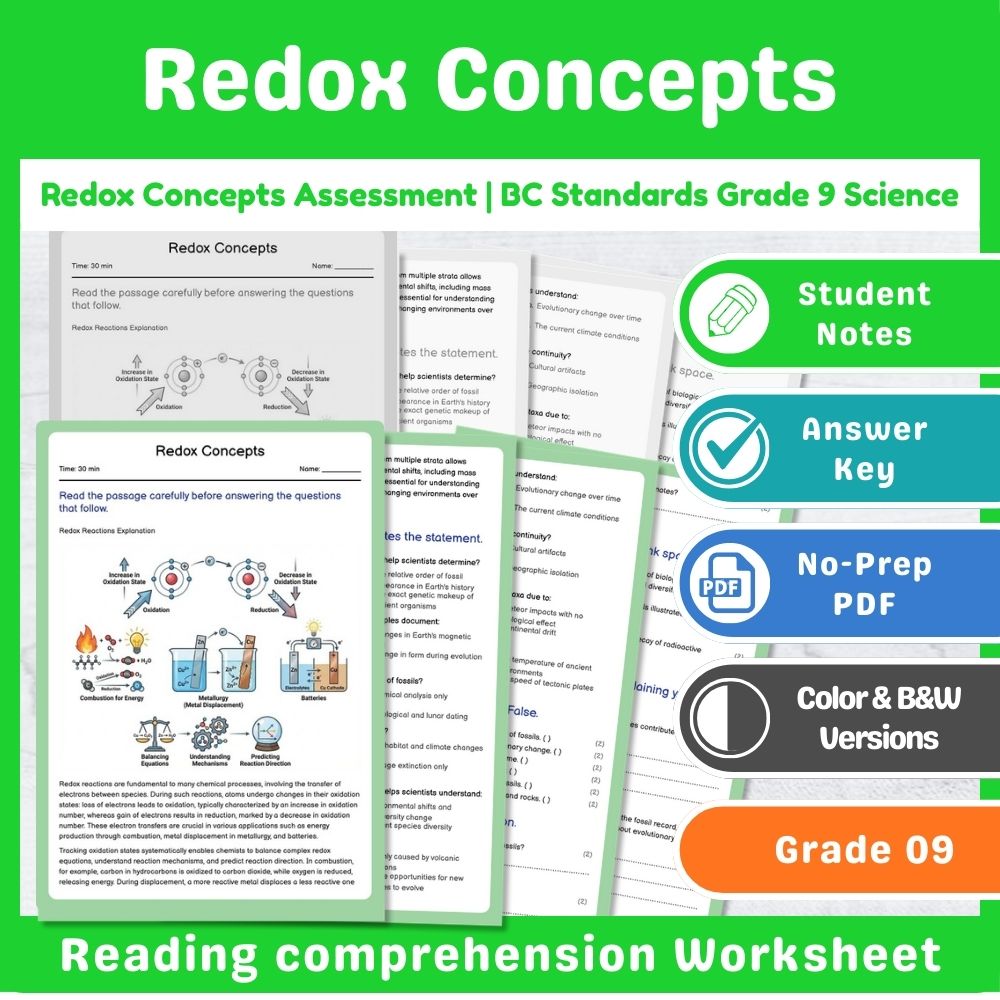
Redox Concepts Assessment | BC Standards Grade 9 Science
Created byPrism Point LearningLearning Objectives
- Explain the fundamental principles of oxidation and reduction in chemical reactions.
- Track changes in oxidation states to identify oxidizing and reducing agents.
- Balance redox equations involved in combustion and displacement reactions.

Gene Regulation Assessment for Grade 10 Science | TEKS Standards
Created byPrism Point LearningLearning Objectives
- Describe mechanisms of gene regulation at transcriptional and post-transcriptional levels.
- Identify the roles of promoters, enhancers, and transcription factors in gene expression.
- Explain how epigenetic modifications influence chromatin accessibility and gene activity.

Trait Prediction Across Generations Assessment | General Grade 9 Science
Created byPrism Point LearningLearning Objectives
- Understand how inheritance patterns influence trait prediction across multiple generations.
- Apply probability concepts to forecast phenotype ratios based on parental alleles.
- Analyze how dominant and recessive traits are expressed and masked in offspring.

Natural Selection Assessment | Florida NGSSS Grade 8 Science
Created byPrism Point LearningLearning Objectives
- Explain how variation, inheritance, and environmental pressures affect survival and reproduction
- Describe how trait frequencies change over successive generations through natural selection
- Use an example (such as antibiotic resistance) to support claims about adaptation

Data Representation Assessment | TEKS Grade 6 Science Printable Worksheet
Created byPrism Point LearningLearning Objectives
- Understand key concepts related to Science
- Apply knowledge through practice questions
- Demonstrate comprehension of the material
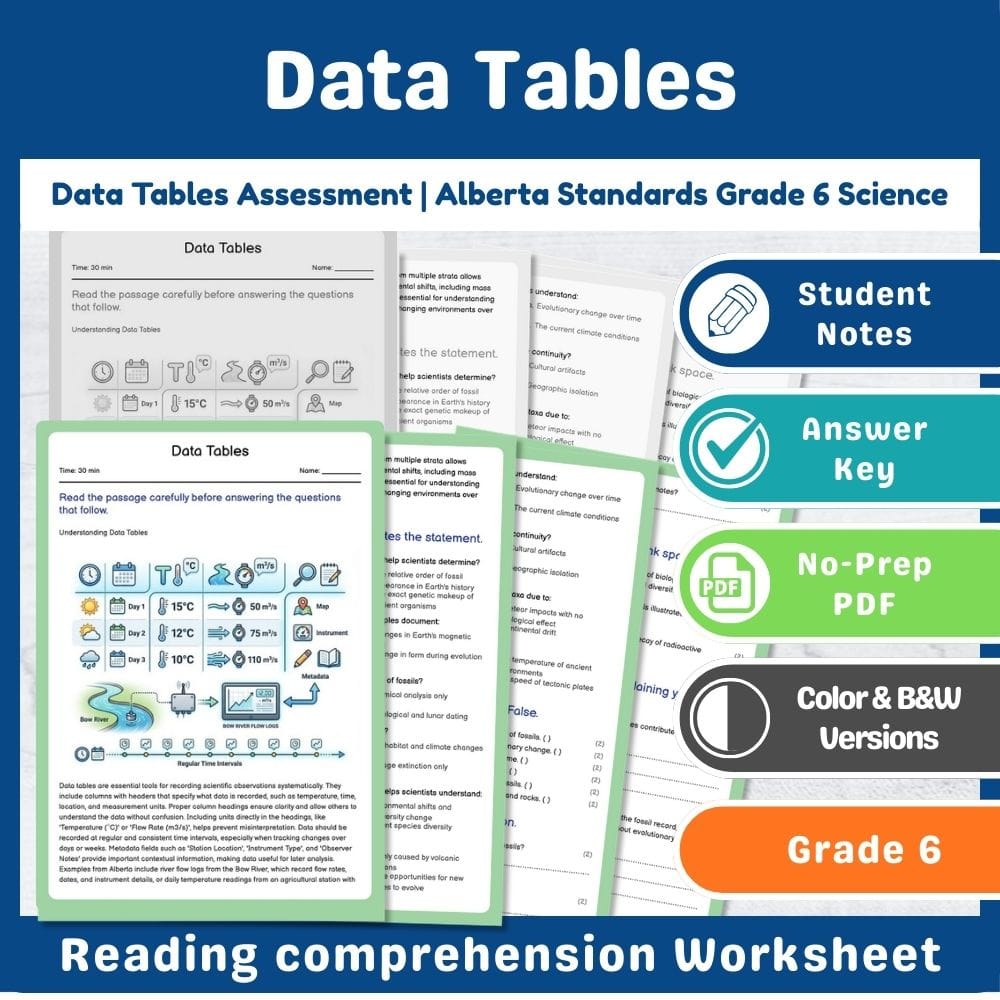
Data Tables Assessment | Alberta Standards Grade 6 Science
Created byPrism Point LearningLearning Objectives
- Understand the purpose and structure of data tables in scientific observations.
- Identify proper column headings, units, and metadata in data recording.
- Interpret data tables for analysis and reporting.
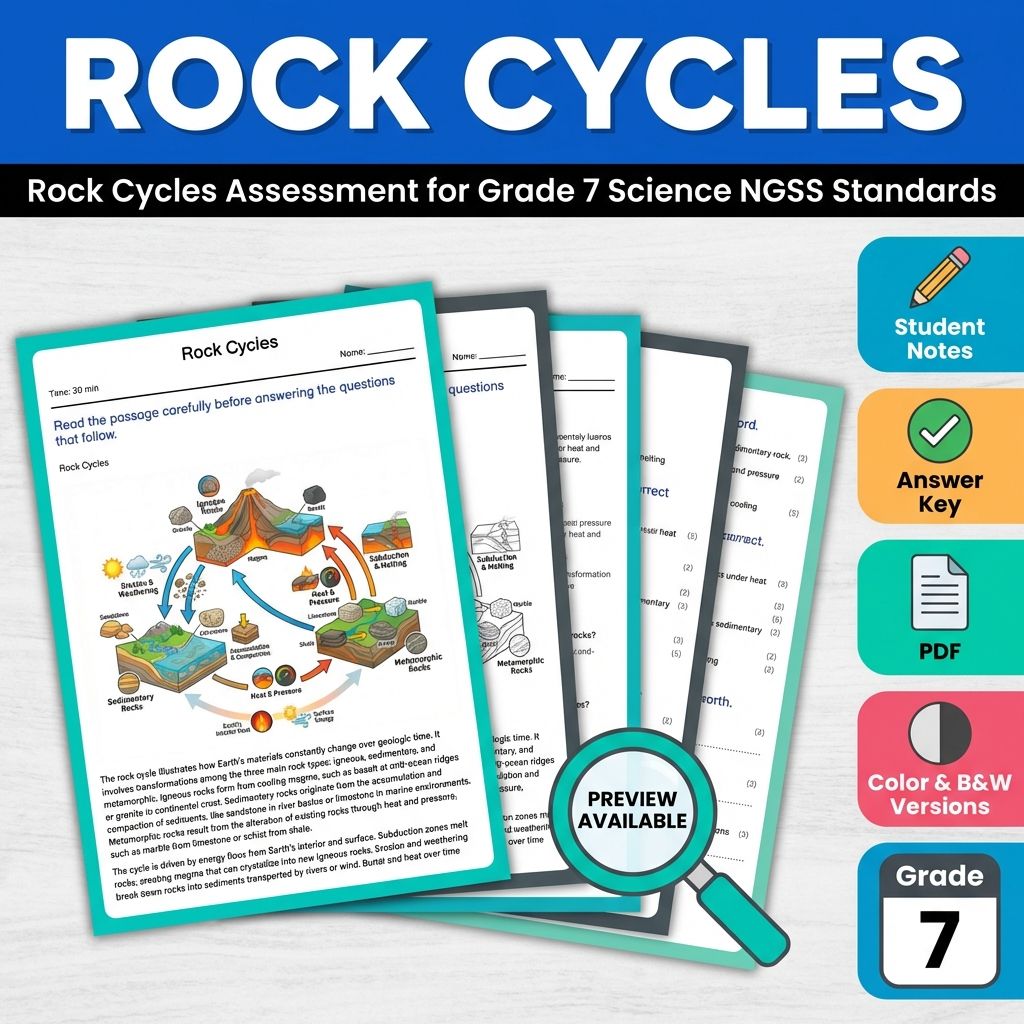
Rock Cycles Assessment for Grade 7 Science NGSS Standards
Created byPrism Point LearningLearning Objectives
- Understand the processes involved in the cycling of Earth's rocks.
- Identify the stages of igneous, sedimentary, and metamorphic rock formation.
- Explain how plate tectonics and energy flow drive rock transformations.
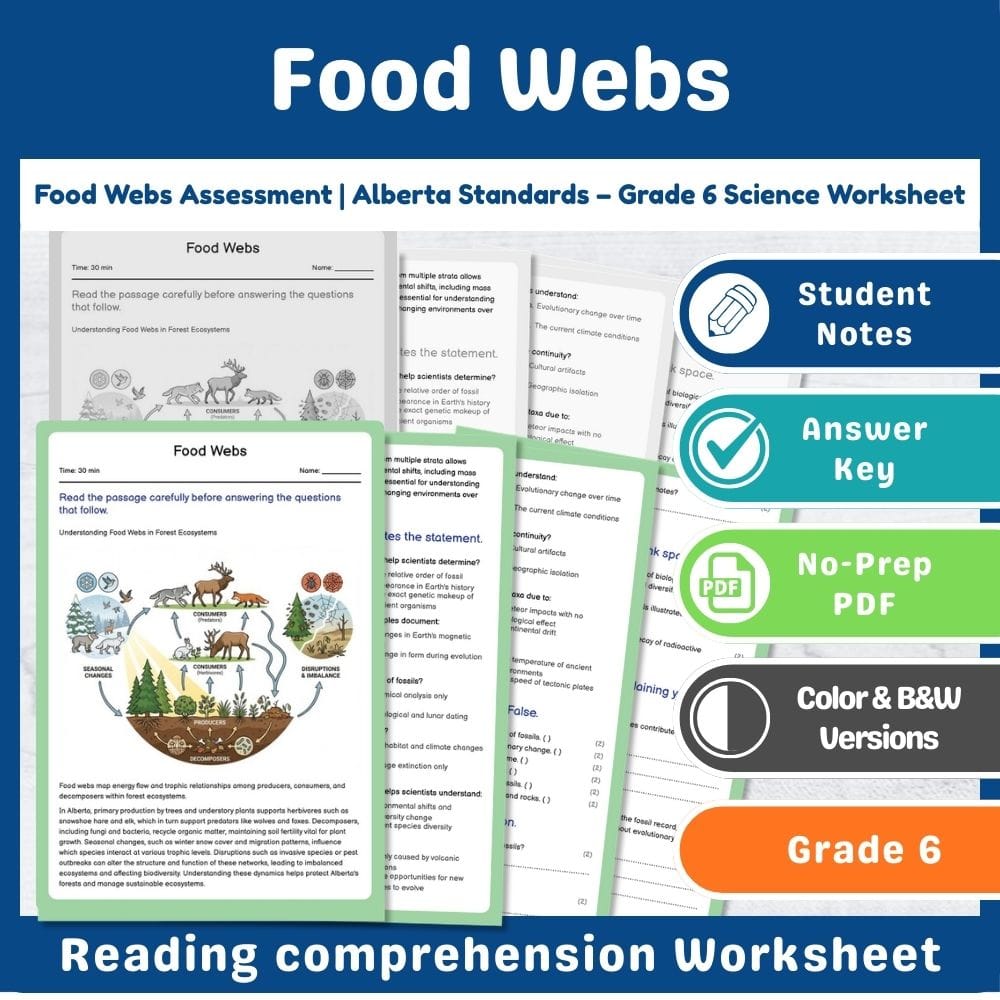
Food Webs Assessment | Alberta Standards – Grade 6 Science Worksheet
Created byPrism Point LearningLearning Objectives
- Understand key concepts related to Science
- Apply knowledge through practice questions
- Demonstrate comprehension of the material
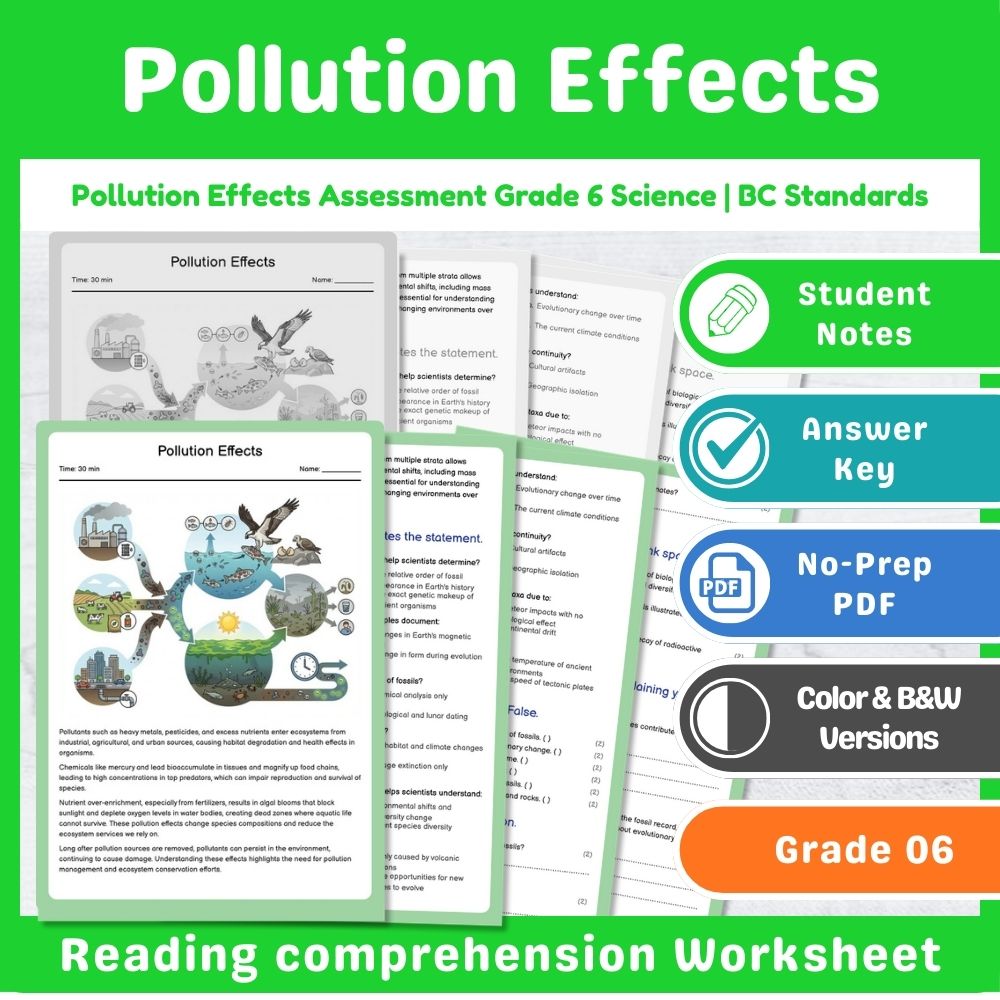
Pollution Effects Assessment | BC Standards Grade 6 Science
Created byPrism Point LearningLearning Objectives
- Understand how pollutants impact ecosystems and organisms.
- Identify bioaccumulation and biomagnification processes.
- Learn the effects of nutrient over-enrichment in aquatic environments.
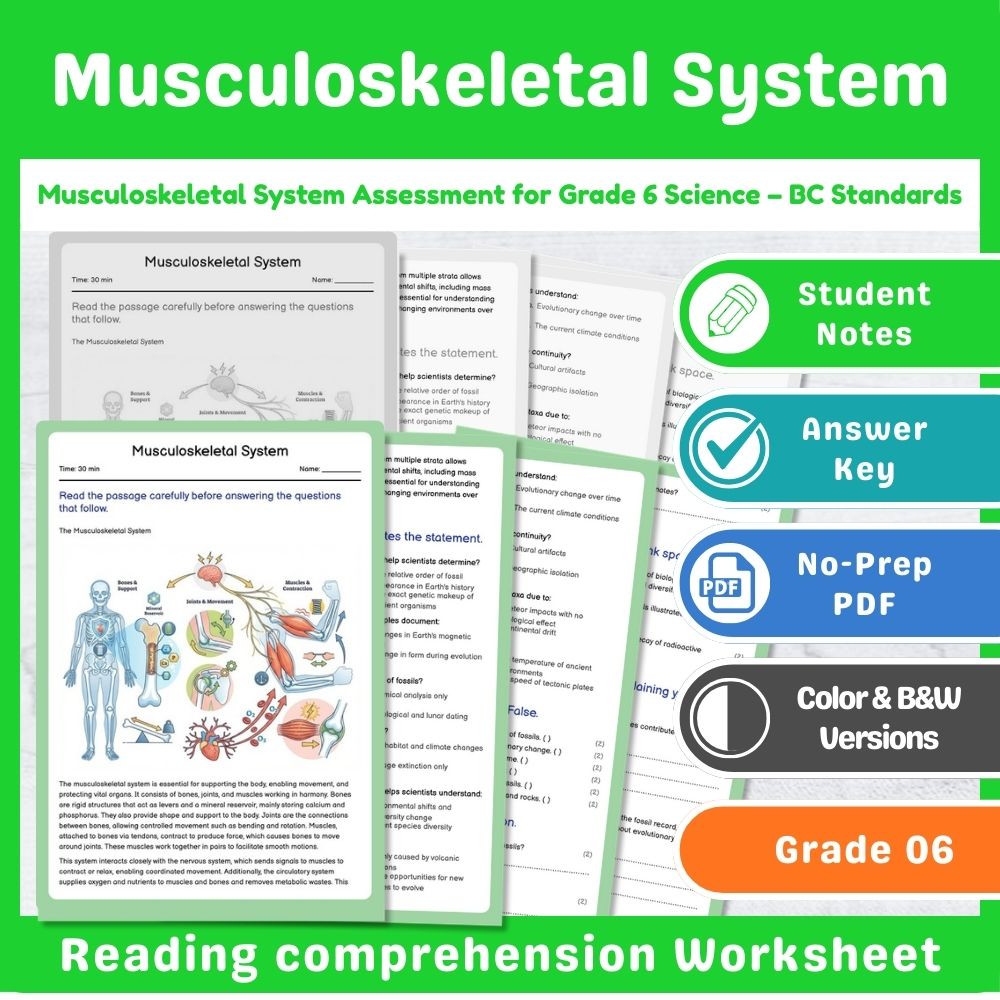
Musculoskeletal System Assessment for Grade 6 Science – BC Standards
Created byPrism Point LearningLearning Objectives
- Identify the components of the musculoskeletal system and their functions.
- Explain how bones, joints, and muscles work together to facilitate movement.
- Describe the interaction between the musculoskeletal and other systems such as the nervous and circulatory systems.

Blood Glucose Assessment | TEKS Grade 10 Science Standards-Aligned
Created byPrism Point LearningLearning Objectives
- Understand how insulin and glucagon regulate blood glucose levels.
- Describe the feedback mechanisms involved in maintaining energy homeostasis.
- Identify the roles of the pancreas, liver, adipose tissue, and muscles in glucose regulation.
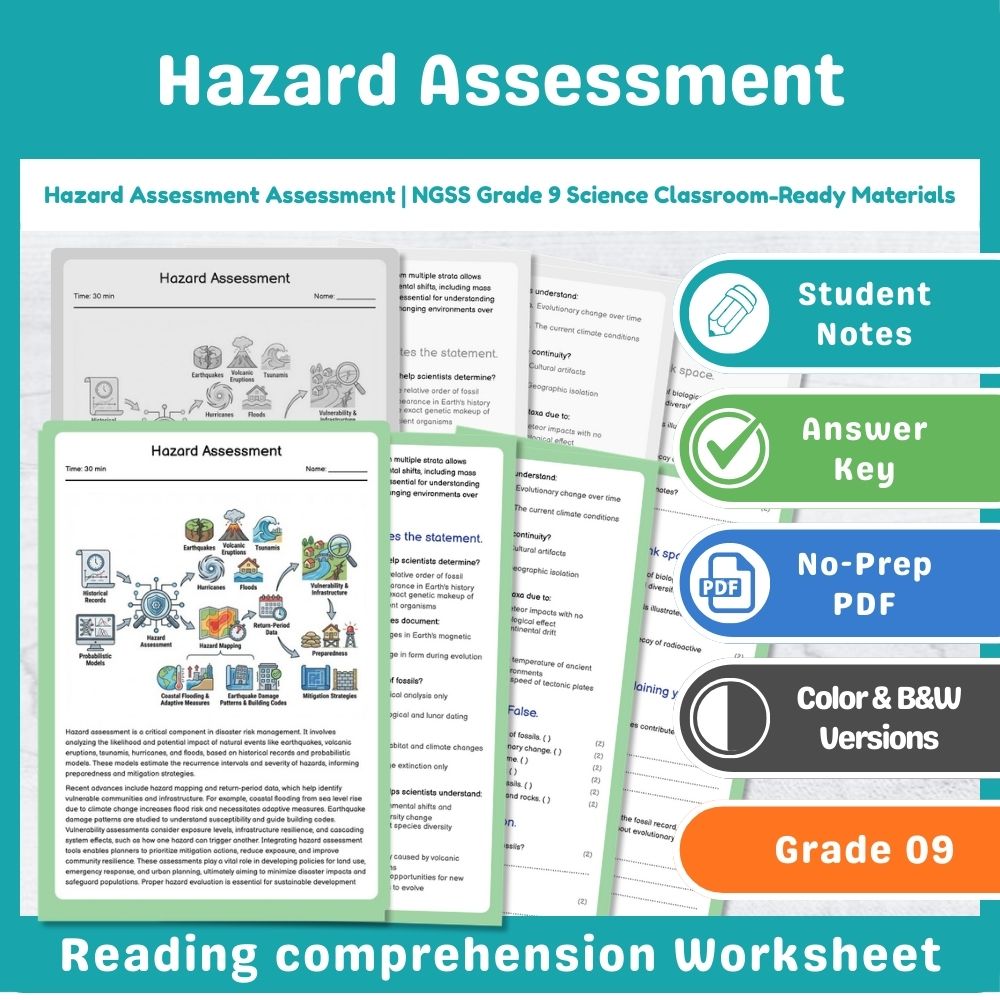
Hazard Assessment Assessment | NGSS Grade 9 Science Classroom-Ready Materials
Created byPrism Point LearningLearning Objectives
- Understand the methods used to evaluate hazard risks such as earthquakes, volcanoes, tsunamis, hurricanes, and floods.
- Analyze hazard occurrence, frequency, and consequences using historical data and probabilistic models.
- Recognize the importance of hazard mapping, return-period data, and mitigation strategies in assessing community susceptibility.
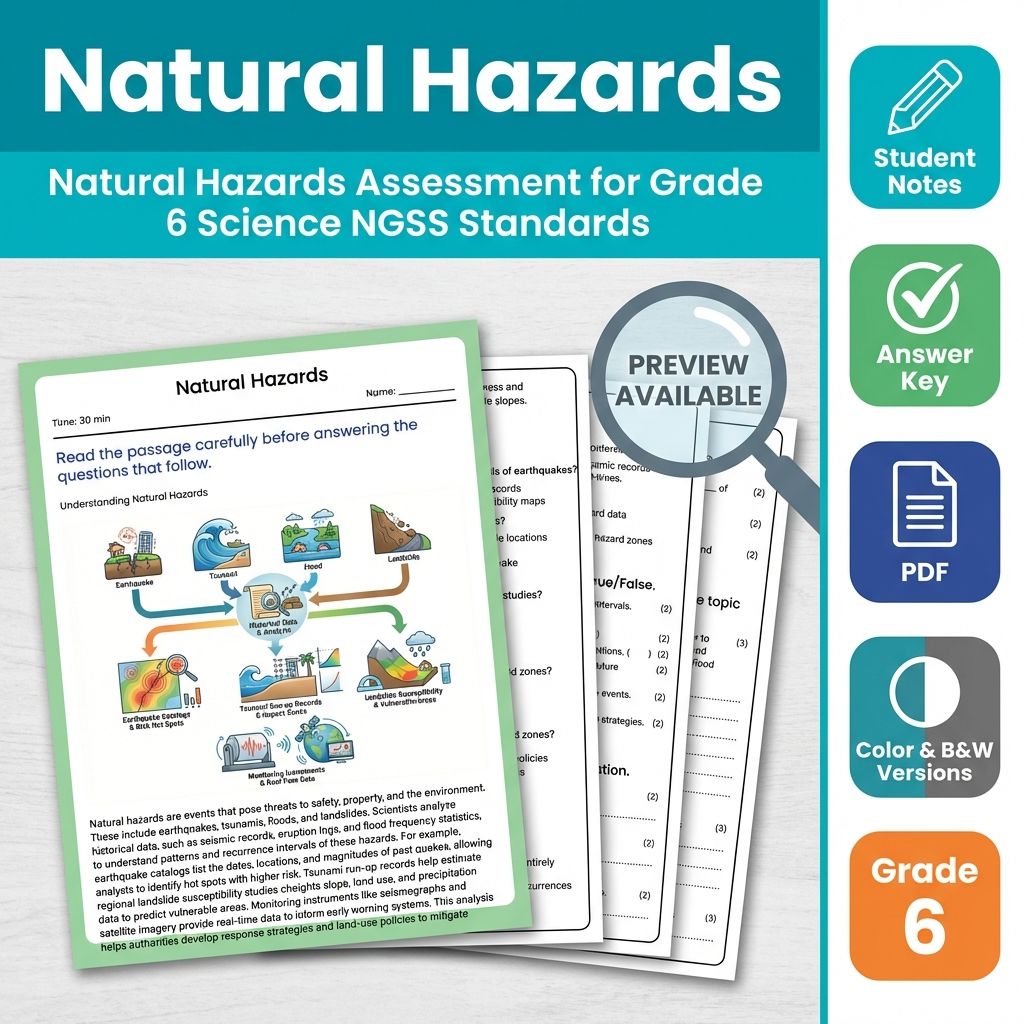
Natural Hazards Assessment for Grade 6 Science NGSS Standards
Created byPrism Point LearningLearning Objectives
- Understand methods for analyzing observational and instrumental data related to natural hazards.
- Identify patterns, recurrence intervals, and probable locations of hazards like earthquakes, tsunamis, and floods.
- Interpret data examples such as eruption histories and flood statistics to assess risks.
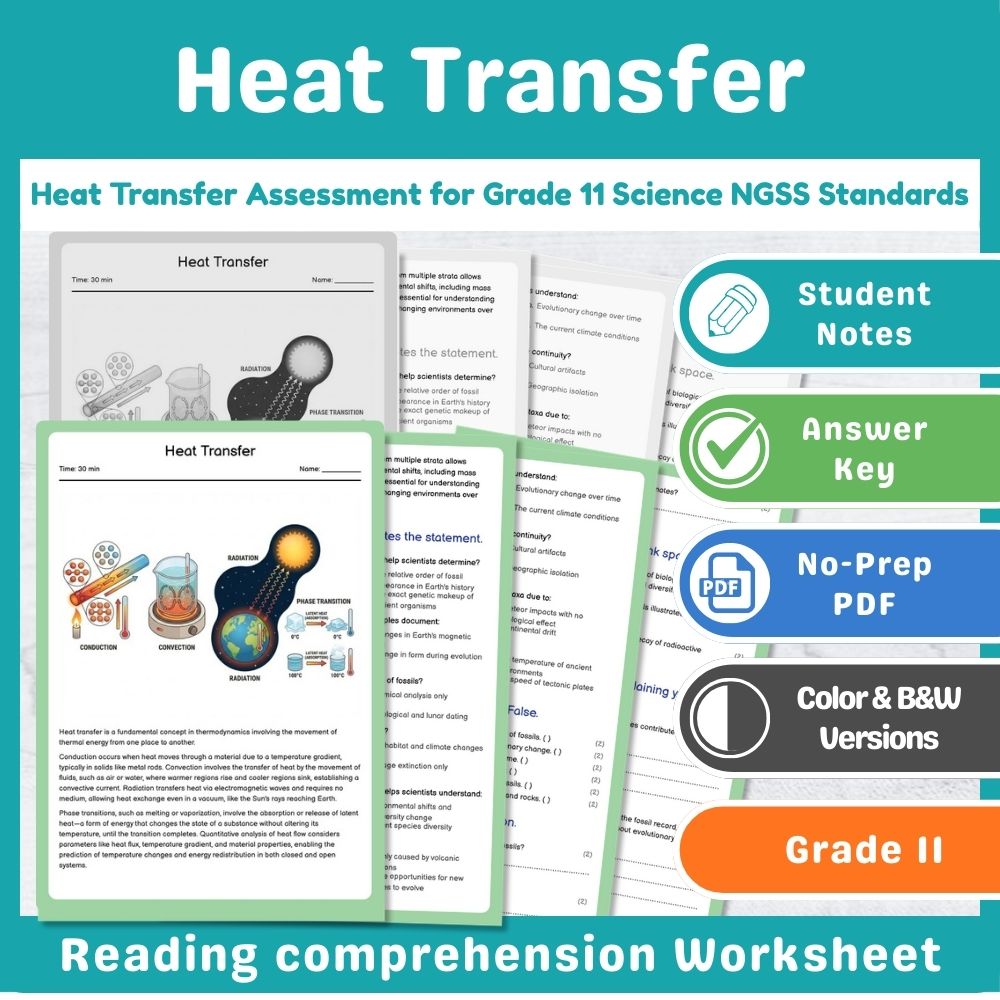
Heat Transfer Assessment for Grade 11 Science NGSS Standards
Created byPrism Point LearningLearning Objectives
- Explain the mechanisms of heat transfer: conduction, convection, and radiation.
- Apply thermodynamic principles to analyze heat flow in different systems.
- Describe phase transitions involving heat exchange, including latent heat.

Feedback Principles Assessment | TEKS Grade 9 Science Standards-Aligned
Created byPrism Point LearningLearning Objectives
- Understand the components involved in homeostatic feedback loops.
- Distinguish between negative and positive feedback mechanisms.
- Explain how signaling pathways and transport processes facilitate feedback responses.
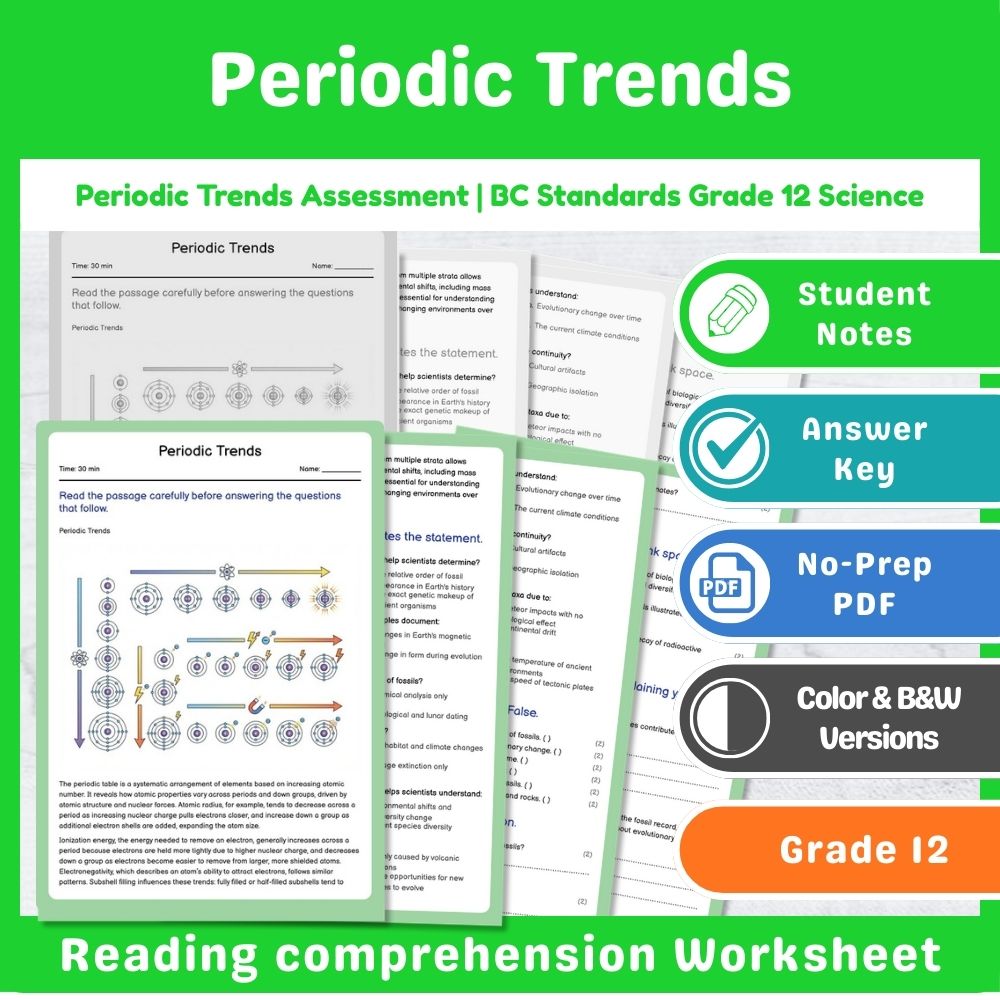
Periodic Trends Assessment | BC Standards Grade 12 Science
Created byPrism Point LearningLearning Objectives
- Explain how atomic and ionic properties vary across the periodic table.
- Understand the concepts of nuclear charge and electron shielding in relation to periodic trends.
- Predict element reactivity, ionic sizes, and bond tendencies based on periodic properties.
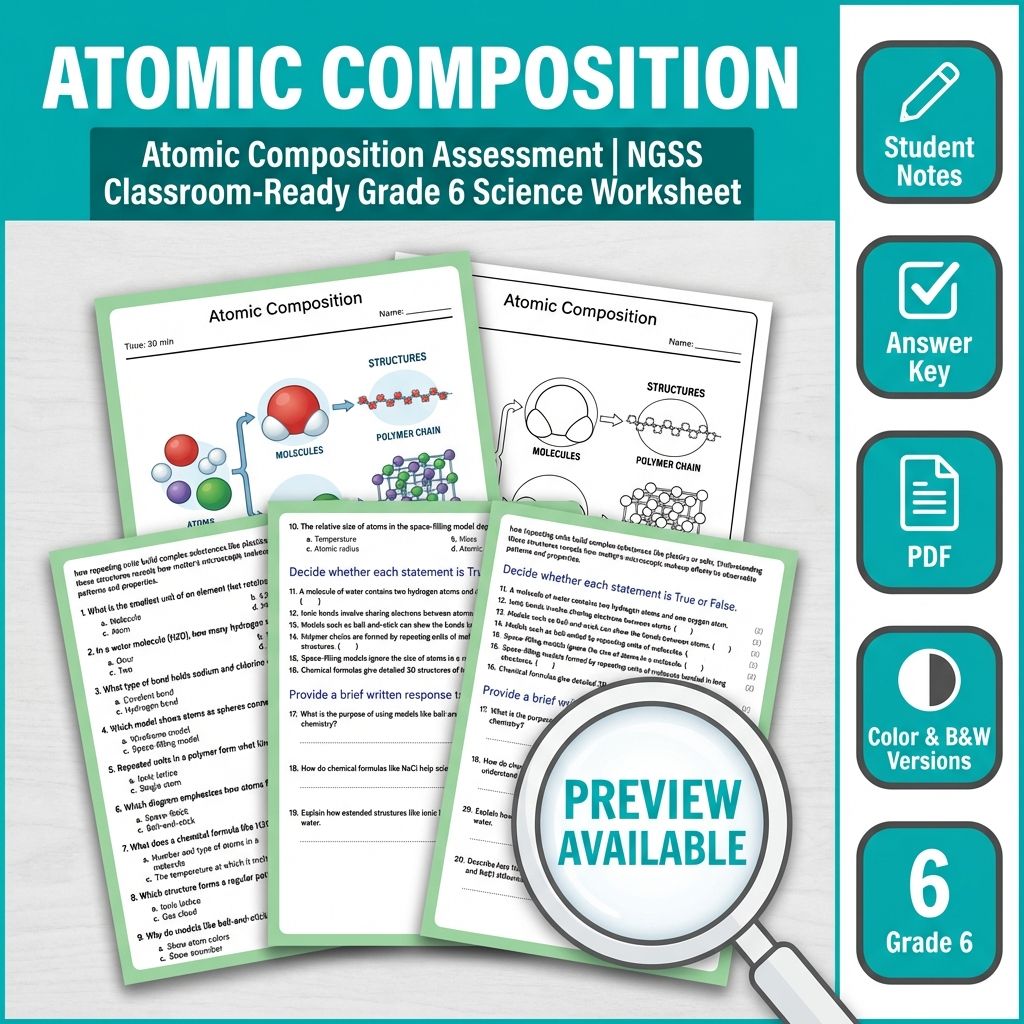
Atomic Composition Assessment | NGSS Classroom-Ready Grade 6 Science Worksheet
Created byPrism Point LearningLearning Objectives
- Describe how atoms combine to form simple molecules like H2O and NaCl.
- Understand models such as ball-and-stick and space-filling representations used in chemistry.
- Explain how molecules and extended structures are represented with chemical formulas and diagrams.

Transitional Fossils Assessment for Grade 10 Science – TEKS Standards
Created byPrism Point LearningLearning Objectives
- Understand the role of transitional fossils in illustrating evolutionary changes.
- Identify examples of fossil evidence that connect major vertebrate lineages.
- Explain the factors affecting the visibility and interpretation of transitional fossils.
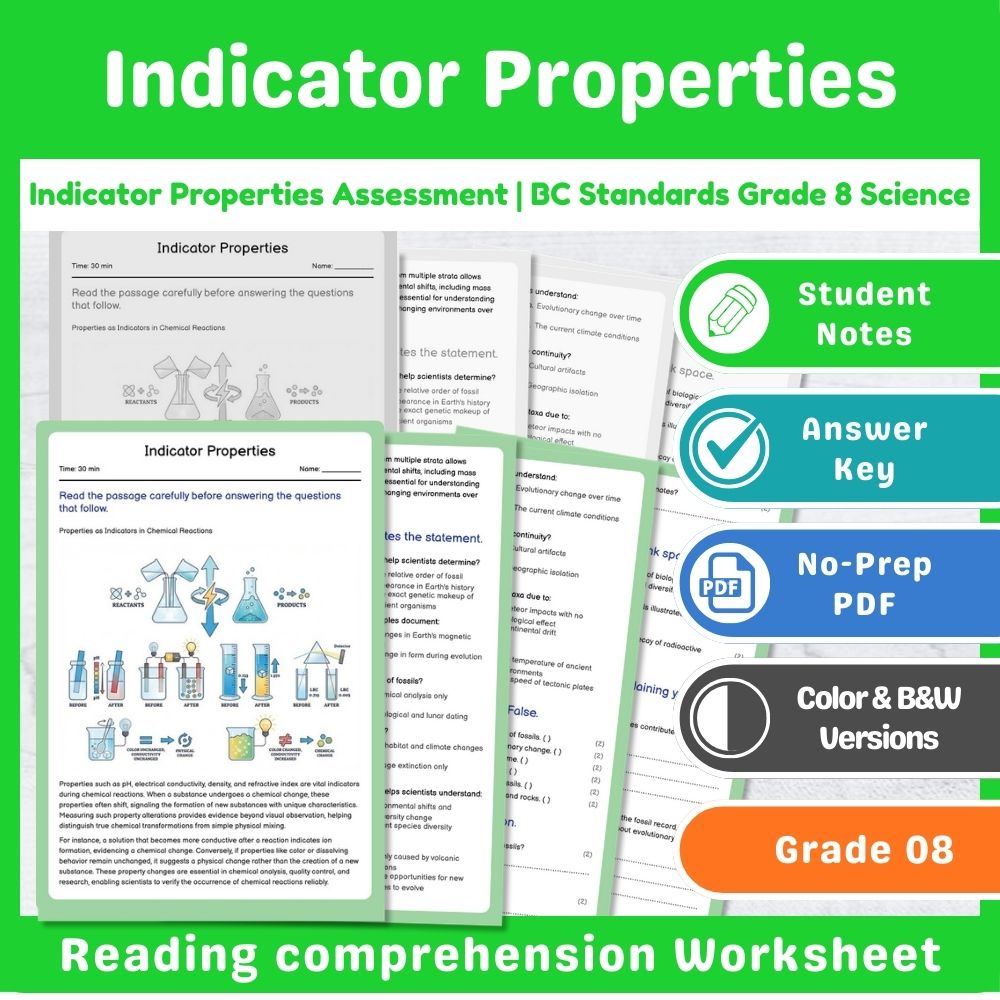
Indicator Properties Assessment | BC Standards Grade 8 Science
Created byPrism Point LearningLearning Objectives
- Understand how properties such as pH, conductivity, density, and refractive index change during chemical reactions.
- Identify property shifts indicating formation of new substances with distinct traits.
- Differentiate between physical and chemical changes using property measurements.
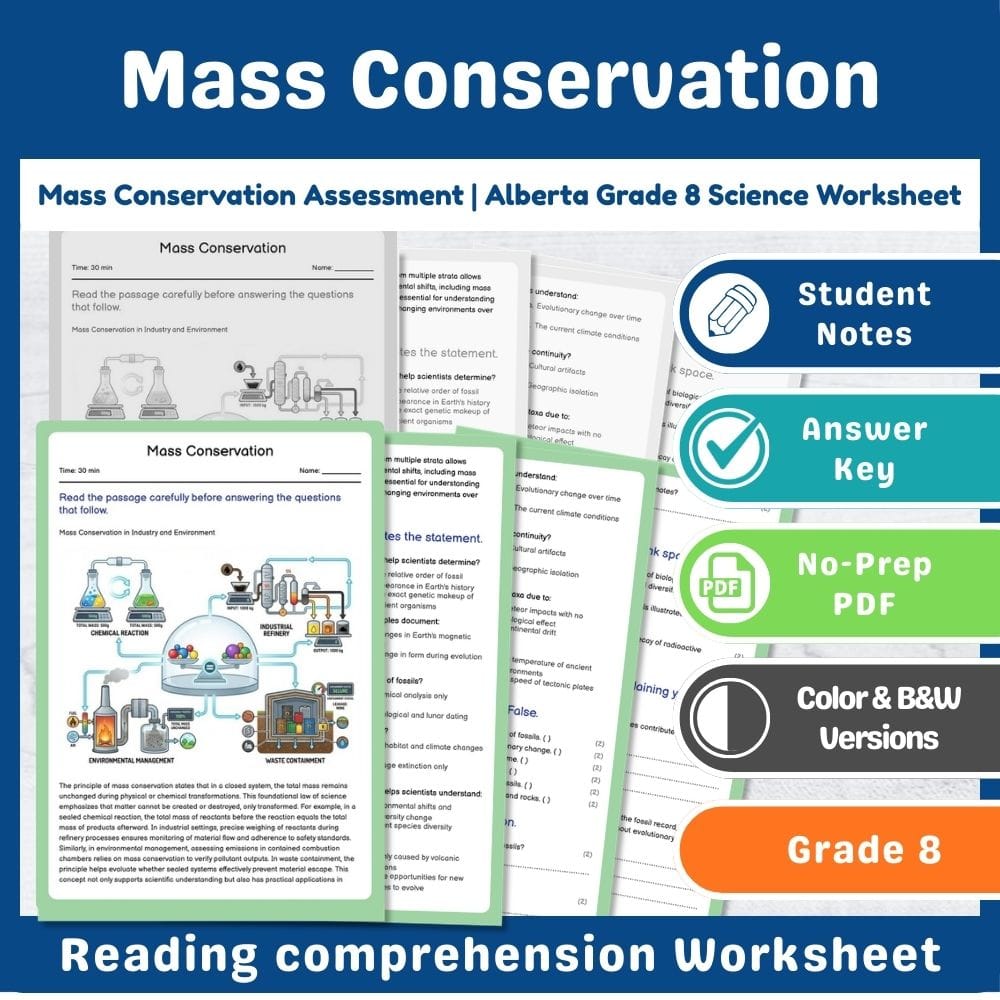
Mass Conservation Assessment | Alberta Grade 8 Science Worksheet
Created byPrism Point LearningLearning Objectives
- Understand the principle of mass conservation in physical and chemical processes.
- Identify real-world examples of mass conservation within industrial and environmental contexts.
- Apply the concept of mass conservation to solve related problems in closed systems.
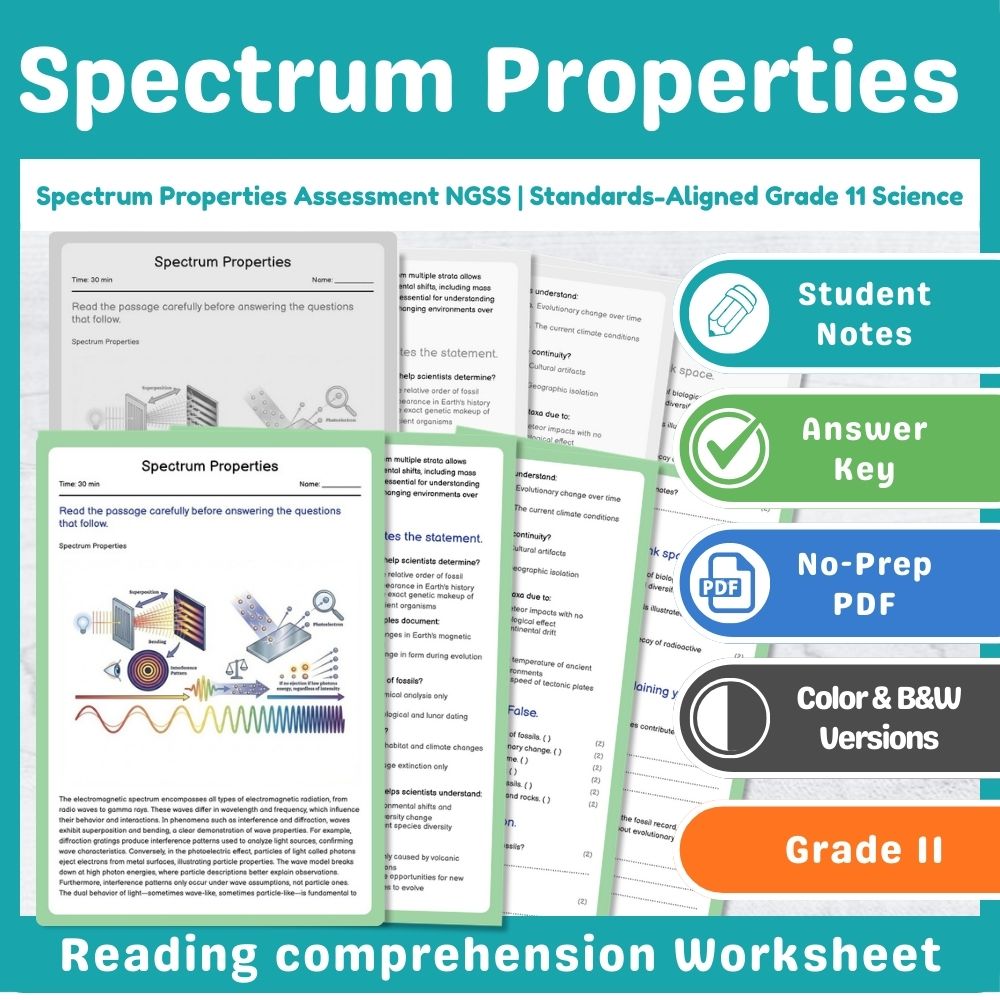
Spectrum Properties Assessment NGSS | Standards-Aligned Grade 11 Science
Created byPrism Point LearningLearning Objectives
- Evaluate evidence for wave and particle models of electromagnetic radiation using phenomena such as interference, diffraction gratings, and the photoelectric effect.
- Explain where each EM radiation model (wave or particle) works and where it breaks down.
- Describe phenomena demonstrating wave behavior and particle behavior of light.

Adaptive Radiation Assessment for Grade 10 Science | TEKS-Aligned
Created byPrism Point LearningLearning Objectives
- Define and describe the concept of adaptive radiation.
- Identify examples of adaptive radiation in natural environments.
- Explain how environmental factors and resource availability drive divergent evolution.
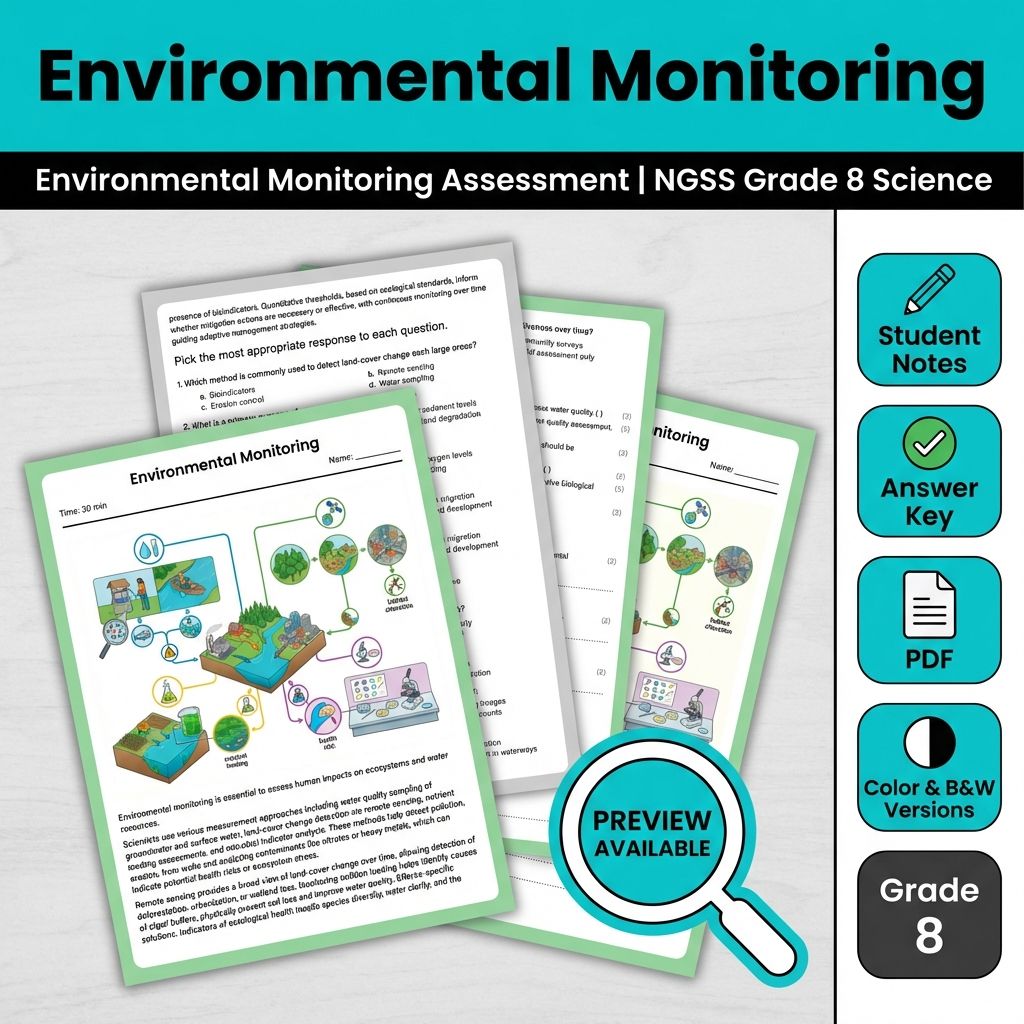
Environmental Monitoring Assessment | NGSS Grade 8 Science
Created byPrism Point LearningLearning Objectives
- Understand scientific principles used in monitoring ecosystems and water resources.
- Identify measurement approaches and indicators of ecological health.
- Evaluate mitigation options and intervention effectiveness over time.

Mutation Impacts Assessment | Alberta Standards-Aligned Assessment Grade 12 Science
Created byPrism Point LearningLearning Objectives
- Understand the different types of genetic mutations and their mechanisms.
- Identify the effects mutations can have on gene functions and organism traits.
- Analyze how mutational outcomes influence agriculture, livestock, and pathogen variation.

System Thinking In Solutions Assessment | General Grade 6 Science
Created byPrism Point LearningLearning Objectives
- Understand the concept of systems thinking and how components interact within a system.
- Identify cause-and-effect relationships in system design and performance.
- Analyze how changes to one part of a system can influence overall behavior.

Evidence Supporting Evolution Assessment | General Grade 10 Science
Created byPrism Point LearningLearning Objectives
- Understand the different types of evidence used to support claims about biological change over time.
- Identify how fossil records, comparative anatomy, molecular data, and biogeography contribute to evolutionary understanding.
- Analyze how multiple lines of evidence reinforce conclusions about evolution despite limitations in individual datasets.
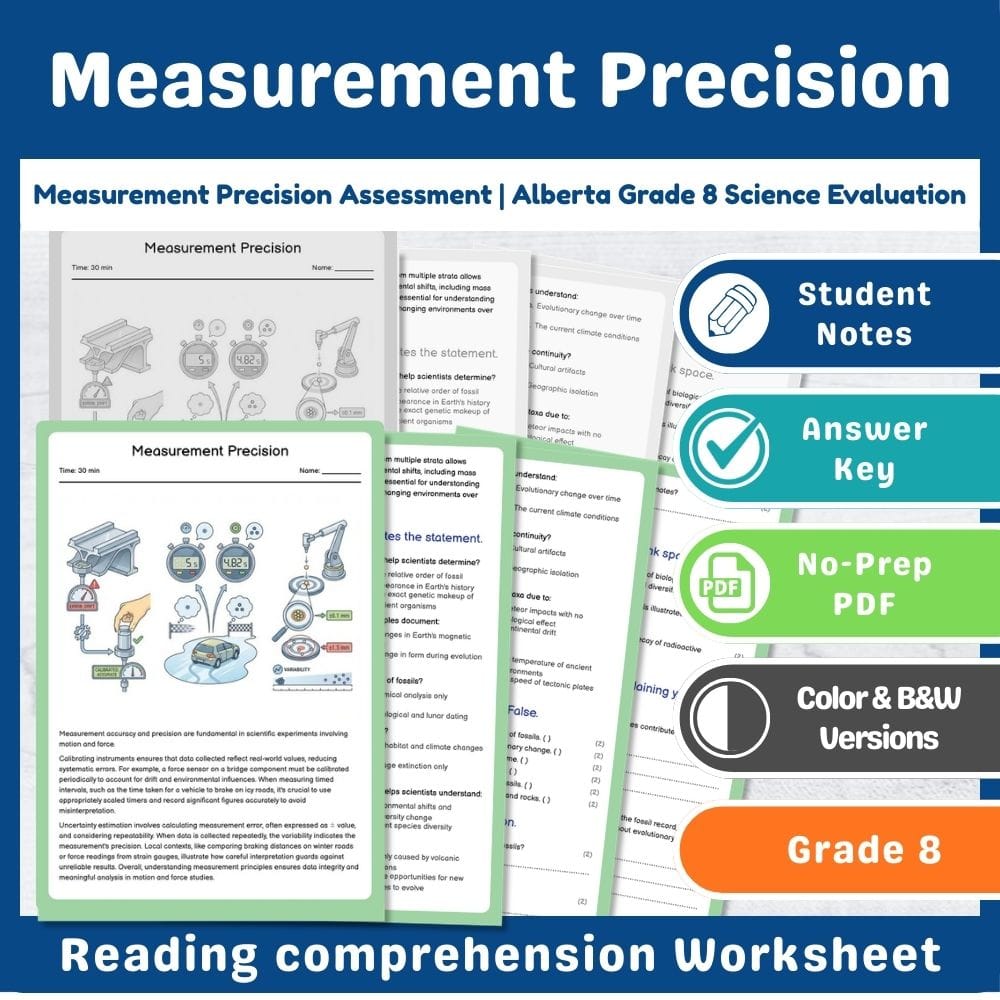
Measurement Precision Assessment | Alberta Grade 8 Science Evaluation
Created byPrism Point LearningLearning Objectives
- Understand the principles of instrument calibration and measurement uncertainty.
- Interpret measurement data considering significant figures and error estimates.
- Apply measurement concepts to real-world contexts, such as braking distances and force readings.

Membrane Structure Assessment | TEKS Grade 10 Science Standards
Created byPrism Point LearningLearning Objectives
- Explain the fluid mosaic model and the dynamic nature of the plasma membrane.
- Identify the roles of phospholipid bilayer asymmetry and cholesterol in membrane fluidity.
- Describe different membrane protein types and their functions such as receptors and transporters.

Organ Systems Assessment | TEKS Grade 9 Science Standards
Created byPrism Point LearningLearning Objectives
- Understand the roles of different organ systems in maintaining homeostasis.
- Identify the functions of the circulatory, respiratory, digestive, renal, nervous, and endocrine systems.
- Explain how organ systems communicate and regulate physiological processes.

Physiological Adaptations Assessment | BC Standards Grade 6 Science
Created byPrism Point LearningLearning Objectives
- Understand internal processes such as heat exchange, water conservation, and metabolic regulation that enable survival in extreme environments.
- Identify key hormonal mechanisms involved in temperature, hydration, and energy regulation.
- Link physiological features to survival strategies and resource access in wildlife and human adaptions.
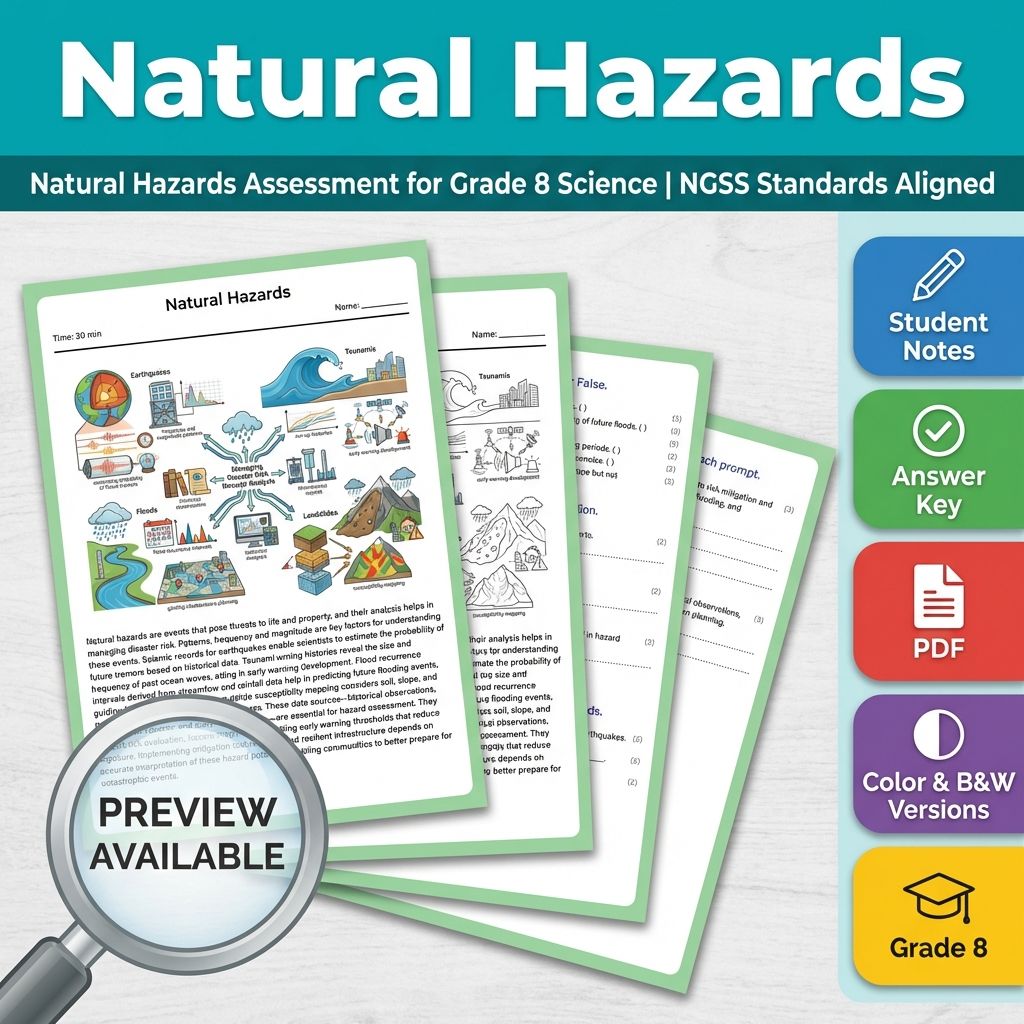
Natural Hazards Assessment for Grade 8 Science | NGSS Standards Aligned
Created byPrism Point LearningLearning Objectives
- Understand the different types of natural hazards and their patterns.
- Interpret data related to seismic records, flood recurrence, and landslide susceptibility.
- Analyze historical observations and instrumental records for hazard assessment.
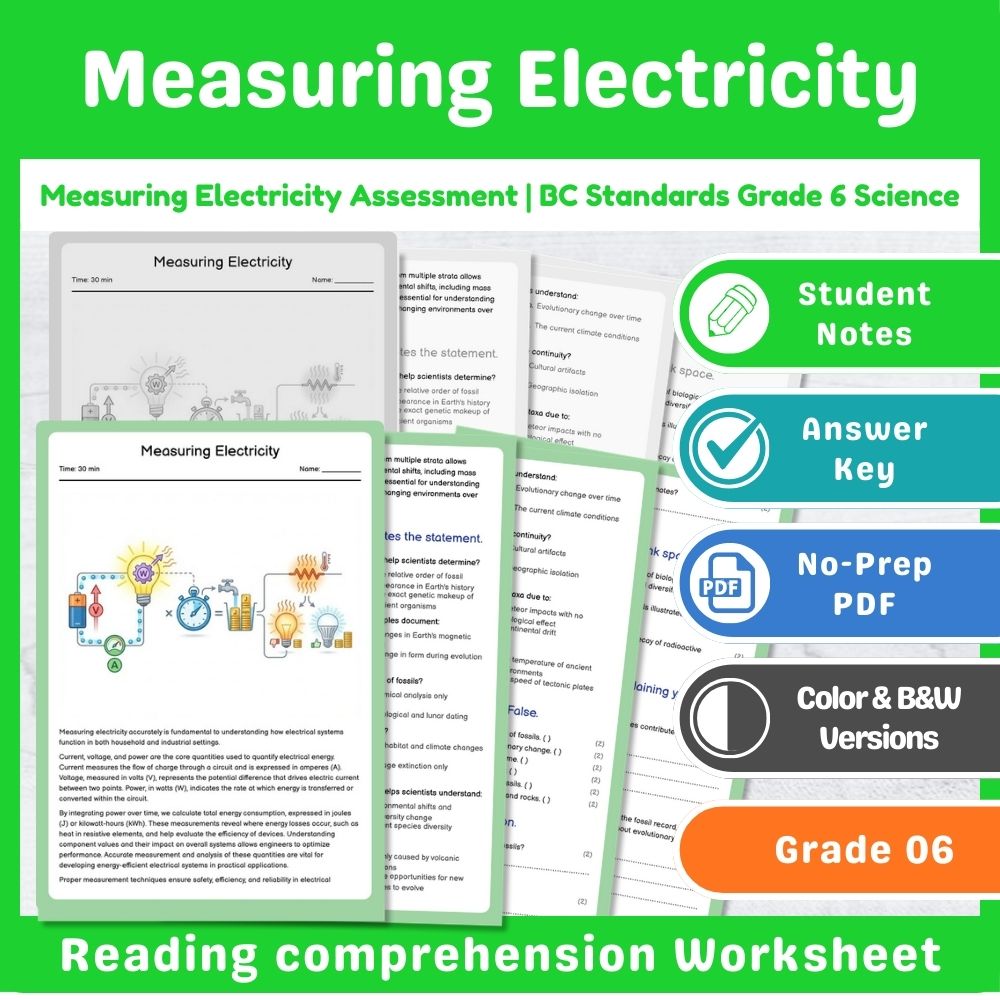
Measuring Electricity Assessment | BC Standards Grade 6 Science
Created byPrism Point LearningLearning Objectives
- Understand key electrical quantities such as current, voltage, and power.
- Identify how measurements of electricity determine energy transfer and system efficiency.
- Learn the relationship between instantaneous electrical quantities and cumulative energy consumption.

Titration Calculations Assessment for Grade 11 Science | Alberta Standards
Created byPrism Point LearningLearning Objectives
- Understand key concepts related to Science
- Apply knowledge through practice questions
- Demonstrate comprehension of the material

Body Temperature Assessment for Grade 10 Science TEKS Standards
Created byPrism Point LearningLearning Objectives
- Understand how the body's temperature is regulated through organ system responses.
- Describe the role of the hypothalamus in maintaining thermal balance.
- Identify mechanisms such as vasodilation, vasoconstriction, sweating, and shivering in temperature regulation.
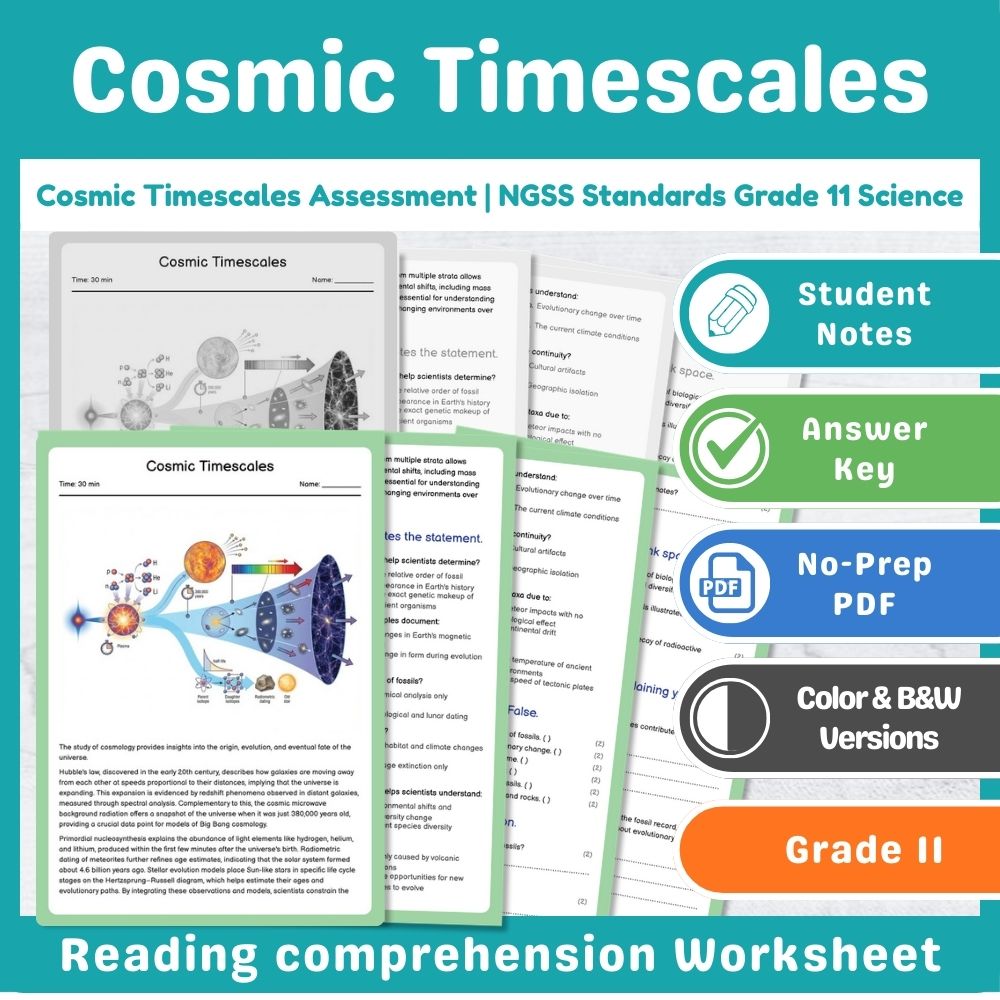
Cosmic Timescales Assessment | NGSS Standards Grade 11 Science
Created byPrism Point LearningLearning Objectives
- Understand how astronomical evidence constrains the age and evolution of the universe and solar system.
- Explain Hubble's law, galactic redshift, and cosmic microwave background measurements.
- Describe the role of primordial light elements and radiometric dating in determining cosmic ages.
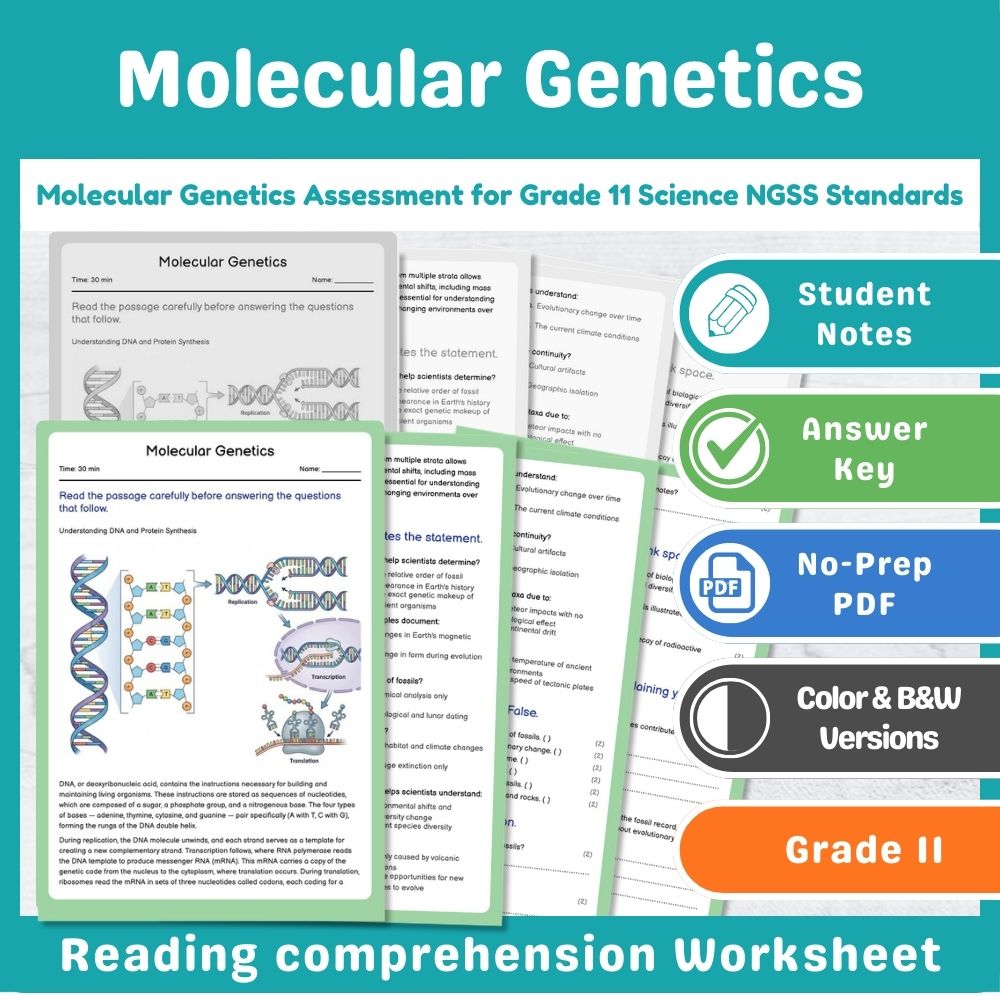
Molecular Genetics Assessment for Grade 11 Science NGSS Standards
Created byPrism Point LearningLearning Objectives
- Understand the relationship between DNA sequences and protein synthesis through replication, transcription, and translation.
- Describe the structure of DNA and the genetic code.
- Explain how chromosomal organization links molecular information to observable traits.
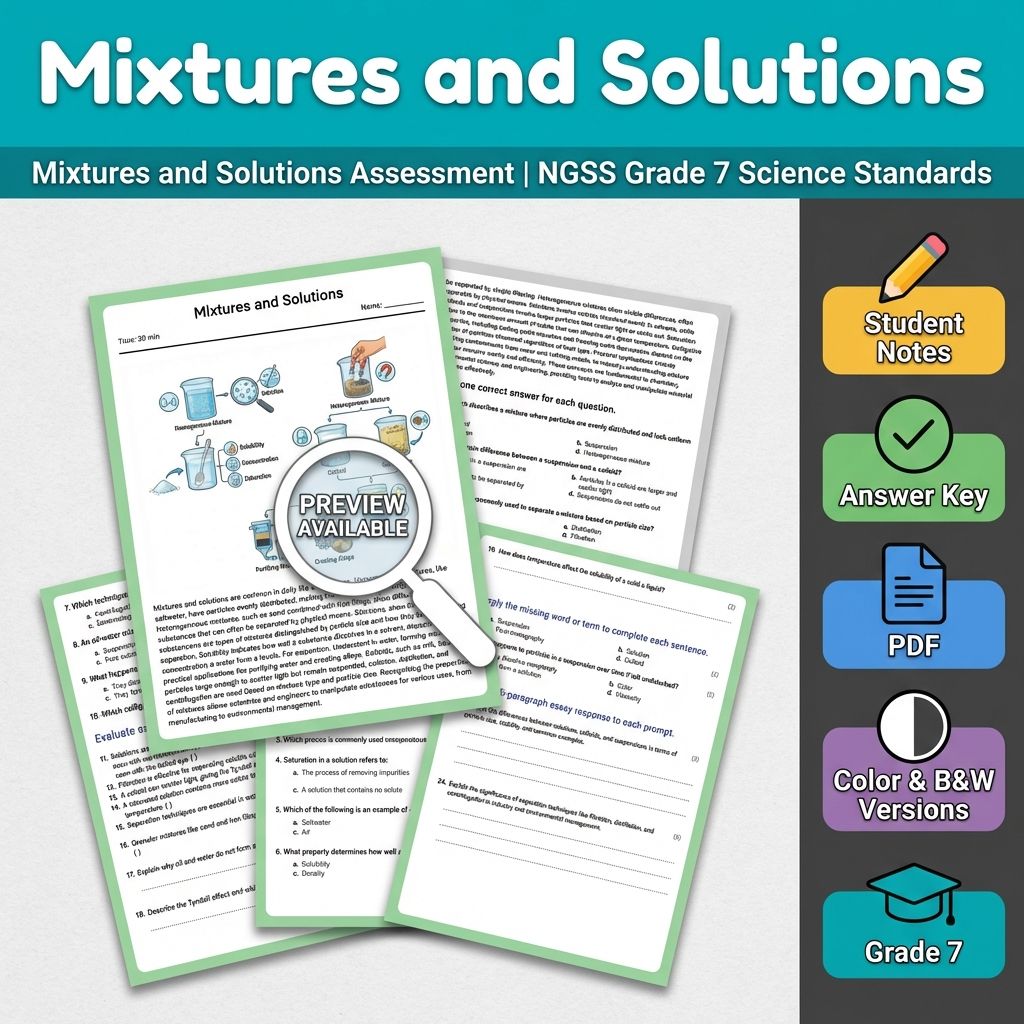
Mixtures and Solutions Assessment | NGSS Grade 7 Science Standards
Created byPrism Point LearningLearning Objectives
- Understand the differences between homogeneous and heterogeneous mixtures.
- Identify and explain properties like solubility, saturation, and concentration.
- Recognize examples of solutions, colloids, and suspensions based on particle size and separation methods.

Evidence Based Explanations Assessment | General Grade 8 Science Standards
Created byPrism Point LearningLearning Objectives
- Understand how evidence supports scientific claims and explanations.
- Differentiate between claims, reasoning, and alternative explanations.
- Evaluate explanations by comparing evidence and considering limits and uncertainties.

Evaluating Explanations Assessment Grade 11 | Florida NGSSS Science
Created byPrism Point LearningLearning Objectives
- Evaluate scientific explanations by judging the quality and limits of evidence.
- Distinguish correlation from causation when interpreting scientific claims.
- Assess whether an explanation accounts for multiple observations and considers alternative explanations.
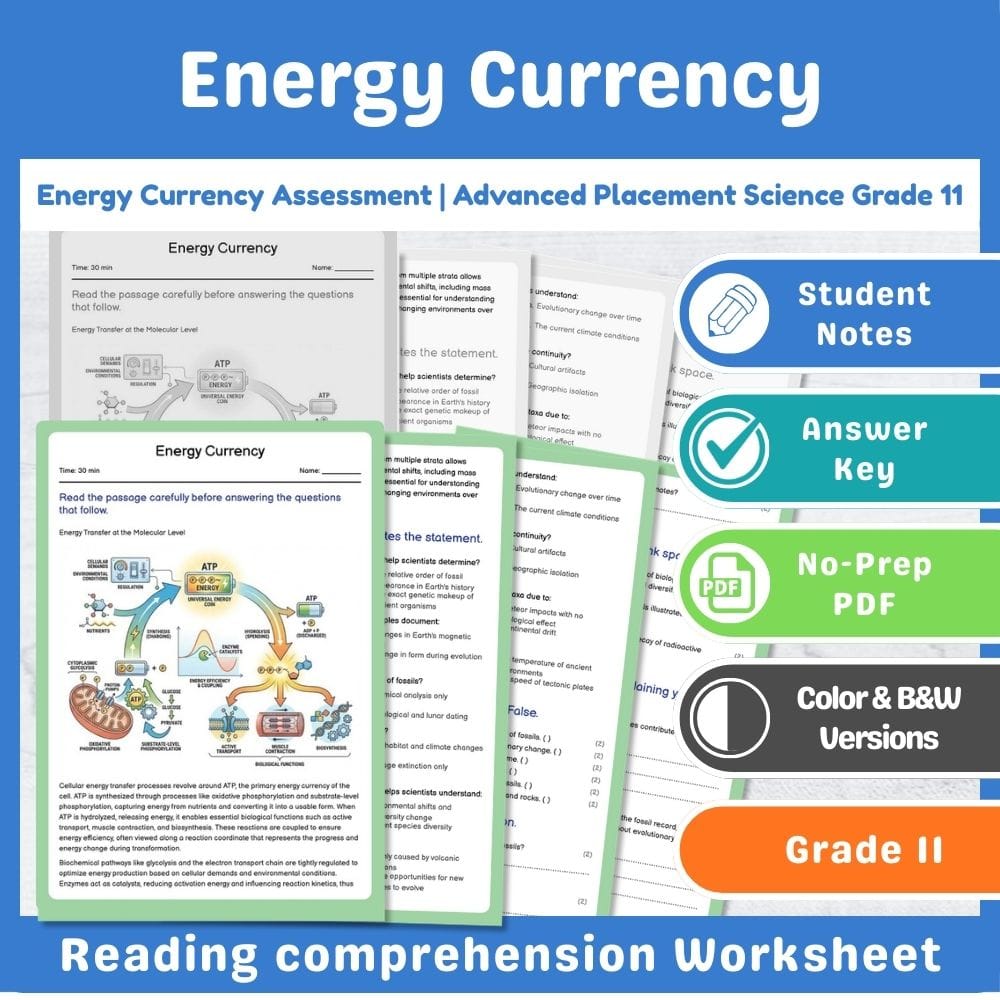
Energy Currency Assessment | Advanced Placement Science Grade 11
Created byPrism Point LearningLearning Objectives
- Describe the principles of energy transfer and transformation at molecular and cellular levels.
- Explain how ATP synthesis and hydrolysis contribute to cellular energy management.
- Interpret biochemical pathways involving energy conservation and distribution.

Atmospheric Interactions Assessment | TEKS Grade 12 Science Worksheet
Created byPrism Point LearningLearning Objectives
- Understand key atmospheric processes that influence climate and air quality.
- Interpret observational datasets and basic radiative transfer concepts related to energy balance.
- Analyze sources and sinks of greenhouse gases and their impacts on regional climate.

Data Analysis Assessment | TEKS Standards Grade 12 Science
Created byPrism Point LearningLearning Objectives
- Interpret data through graphical representations and identify trends.
- Apply model fitting techniques and assess goodness-of-fit metrics.
- Evaluate residuals and communicate uncertainty in data interpretation.

Reaction Evidence Assessment | NGSSS Standard Grade 7 Science
Created byPrism Point LearningLearning Objectives
- Identify macroscopic evidence that indicates a chemical reaction is occurring.
- Differentiate chemical changes from physical changes using observable and irreversible signs.
- Explain how particle rearrangement connects to observations such as gas production, color change, and precipitate formation.
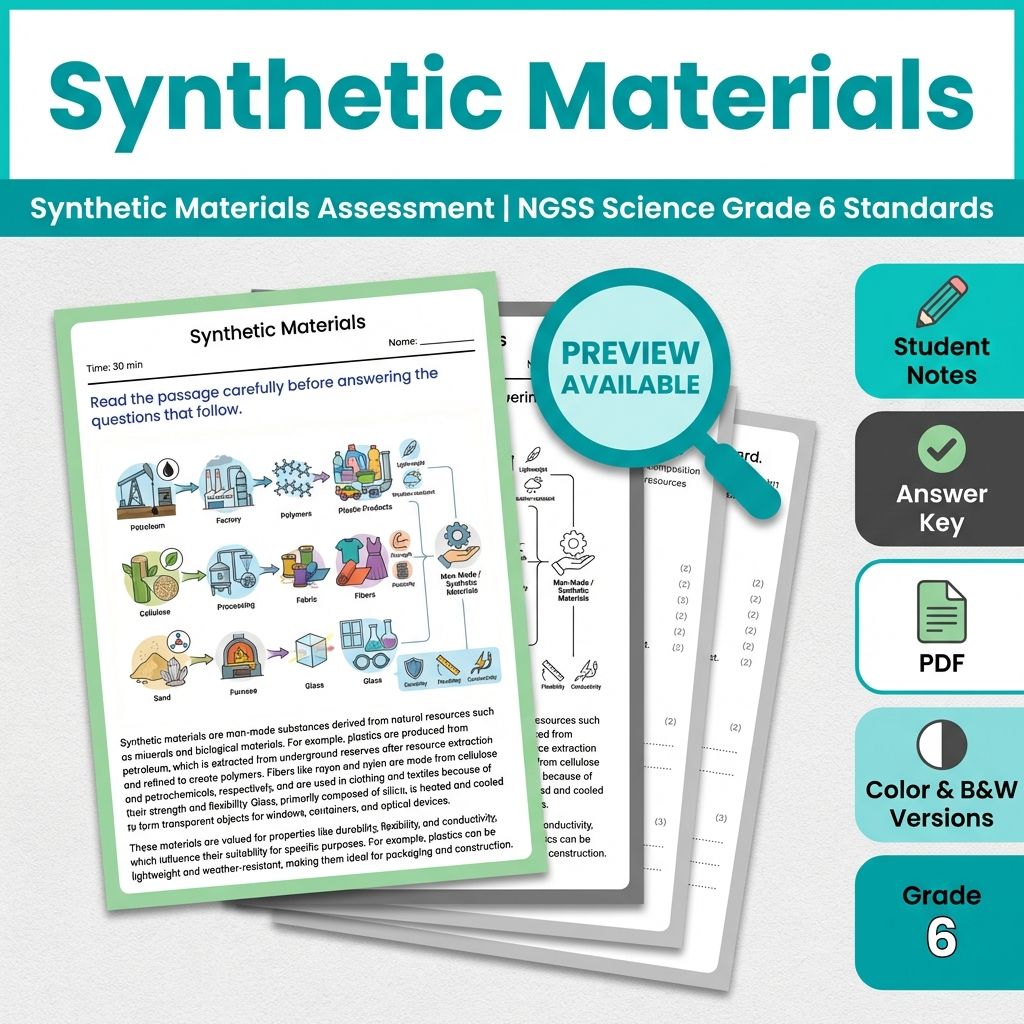
Synthetic Materials Assessment | NGSS Science Grade 6 Standards
Created byPrism Point LearningLearning Objectives
- Identify natural resources used to produce synthetic materials.
- Compare properties of natural and synthetic substances for specific applications.
- Understand processes involved in resource extraction and material manufacturing.

Matter Cycling Carbon Assessment Grade 6 | Science Standards-Aligned
Created byPrism Point LearningLearning Objectives
- Explain how carbon atoms cycle through air, water, and living organisms in an ecosystem
- Distinguish between matter cycling (conservation of atoms) and energy flow (one-way transformation)
- Describe how carbon moves from plants to animals and returns to the environment through respiration and decomposition
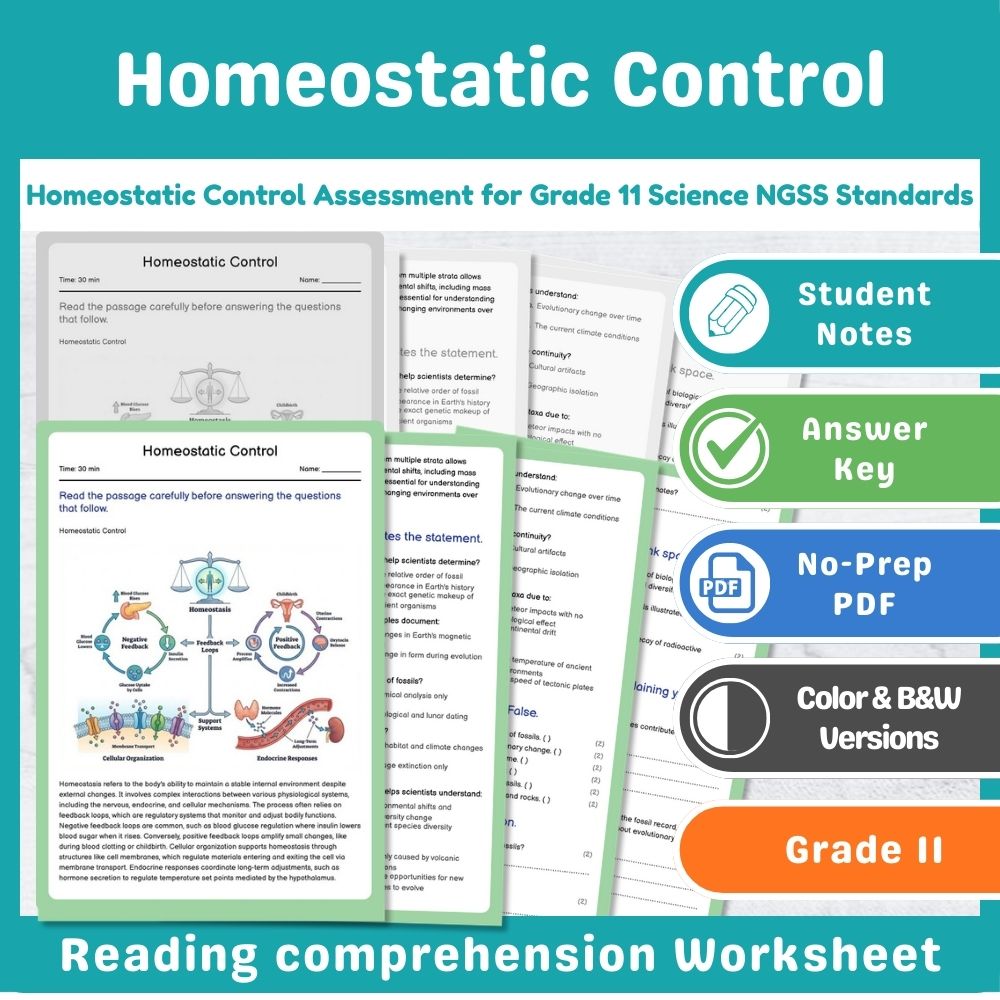
Homeostatic Control Assessment for Grade 11 Science NGSS Standards
Created byPrism Point LearningLearning Objectives
- Explain the concept of homeostasis and its importance in maintaining internal stability.
- Identify feedback mechanisms, including positive and negative feedback loops, involved in physiological regulation.
- Describe examples of homeostatic processes such as blood glucose regulation, thermoregulation, and ion gradient control.
Browse more categories
About Science Worksheets
Find Science worksheets spanning core skills, practice, and review. All 42,685 resources are instant PDF downloads for the classroom or home.
Every worksheet on MyTeachingSheets is created by independent teacher-authors and reviewed before publication. All resources download as printable PDFs for classroom, homework, or at-home practice, and many include answer keys. Preview any worksheet free before buying.