
Science Worksheets
42,685 subject resources
Reaction Rates Assessment for Grade 10 Science NGSS Standards
 Created byPrism Point Learning
Learning Objectives
- Understand how collision theory explains the factors affecting reaction rates.
- Interpret the relationships between temperature, concentration, surface area, catalysts, and reaction speed.
- Analyze empirical rate data to determine reaction mechanisms and rate laws.

Titration Calculations Assessment for Grade 11 Science | Alberta Standards
Created byPrism Point LearningLearning Objectives
- Understand key concepts related to Science
- Apply knowledge through practice questions
- Demonstrate comprehension of the material
Cellular Energy Pathways Assessment | NGSS-Aligned Grade 11 Science
Created byPrism Point LearningLearning Objectives
- Describe the sequence of energy transformations during cellular respiration, including glycolysis, pyruvate oxidation, the citric acid cycle, and oxidative phosphorylation.
- Explain the role of electron transport chains and proton gradients in ATP production within mitochondria.
- Calculate the approximate energy yield from different substrates used in cellular respiration and relate this to organism metabolic rates and resource consumption.

Seasons and Day Length Assessment | General Grade 9 Science Standards
Created byPrism Point LearningLearning Objectives
- Understand how Earth's axial tilt and orbit around the Sun cause seasonal changes.
- Explain how the angle of sunlight and day length vary with Earth's position in its orbit.
- Describe the relationship between solar energy received and Earth's seasons.

Evolutionary Forces Assessment | Alberta Standards Grade 12 Science
Created byPrism Point LearningLearning Objectives
- Understand how mutation, natural selection, genetic drift, and gene flow affect allele frequencies over time.
- Explain the role of selection and drift in producing adaptation and diversity in populations.
- Relate the mechanisms of evolution to real-world examples, including range shifts and pest adaptations.
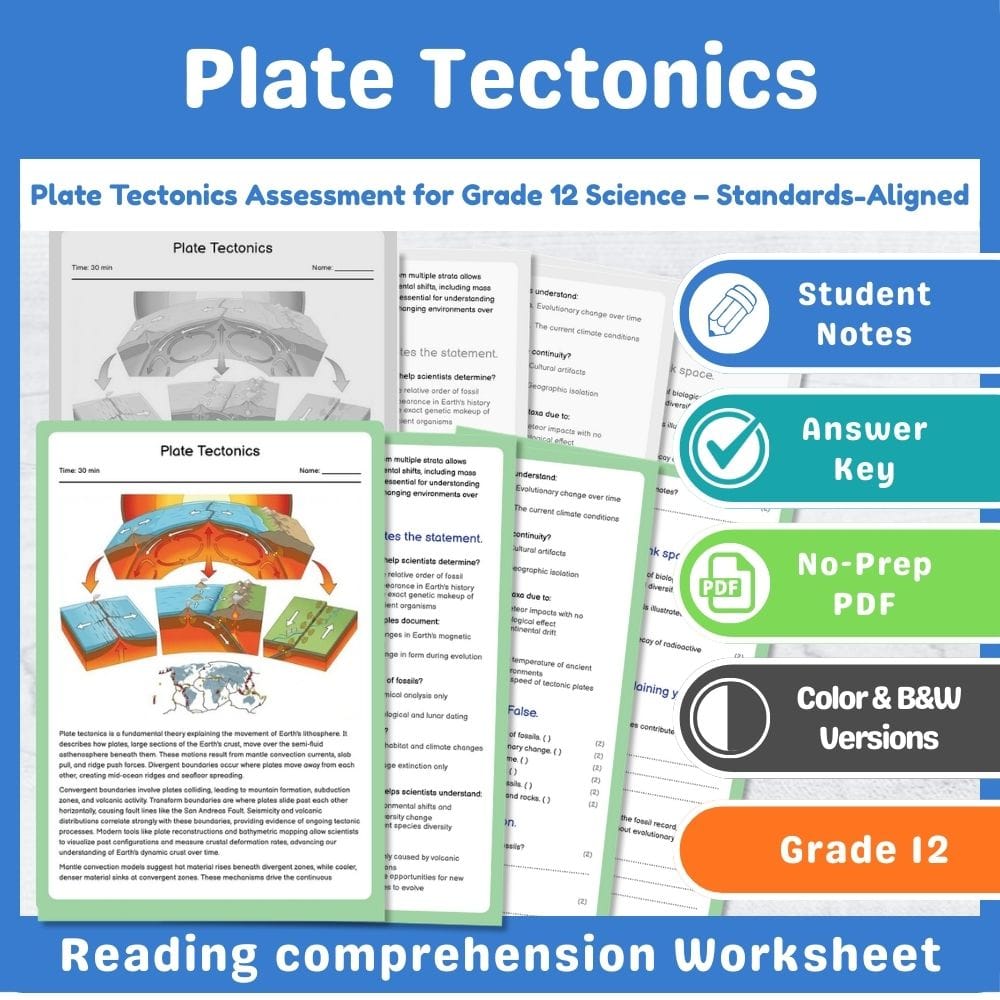
Plate Tectonics Assessment for Grade 12 Science – Standards-Aligned
Created byPrism Point LearningLearning Objectives
- Explain the mechanisms of lithospheric motion at convergent, divergent, and transform boundaries.
- Analyze seismic, volcanic, and mantle convection data to interpret tectonic processes.
- Apply plate reconstruction and bathymetric maps to understand past and present tectonic configurations.

Atmospheric Dynamics Assessment | TEKS Grade 12 Science Standards
Created byPrism Point LearningLearning Objectives
- Explain the key forces and processes driving large-scale atmospheric circulation patterns.
- Identify and describe the roles of the Coriolis force, Hadley and Ferrel cells, and jet streams.
- Analyze how pressure systems, wind patterns, and frontal systems influence weather regimes.

Cell Structure Assessment | General Grade 6 Science Standards
Created byPrism Point LearningLearning Objectives
- Identify the main parts of a cell and their functions.
- Describe the roles of the cell membrane, cytoplasm, nucleus, and organelles.
- Explain how cell parts work together to support life processes.

Cell Energy Use Assessment Grade 7 Science California Standards
Created byPrism Point LearningLearning Objectives
- Explain how cells convert chemical energy in food into usable energy for life processes
- Describe how ATP functions as an energy carrier within cells
- Connect energy transformations to the idea that matter is conserved during cellular reactions

Motion Graphs Assessment for Grade 7 Science TEKS Standards
Created byPrism Point LearningLearning Objectives
- Interpret distance–time and velocity–time graphs to describe motion patterns.
- Identify examples of uniform motion, acceleration, deceleration, and rest from graphs.
- Relate slopes to speed and analyze areas under velocity curves for displacement.
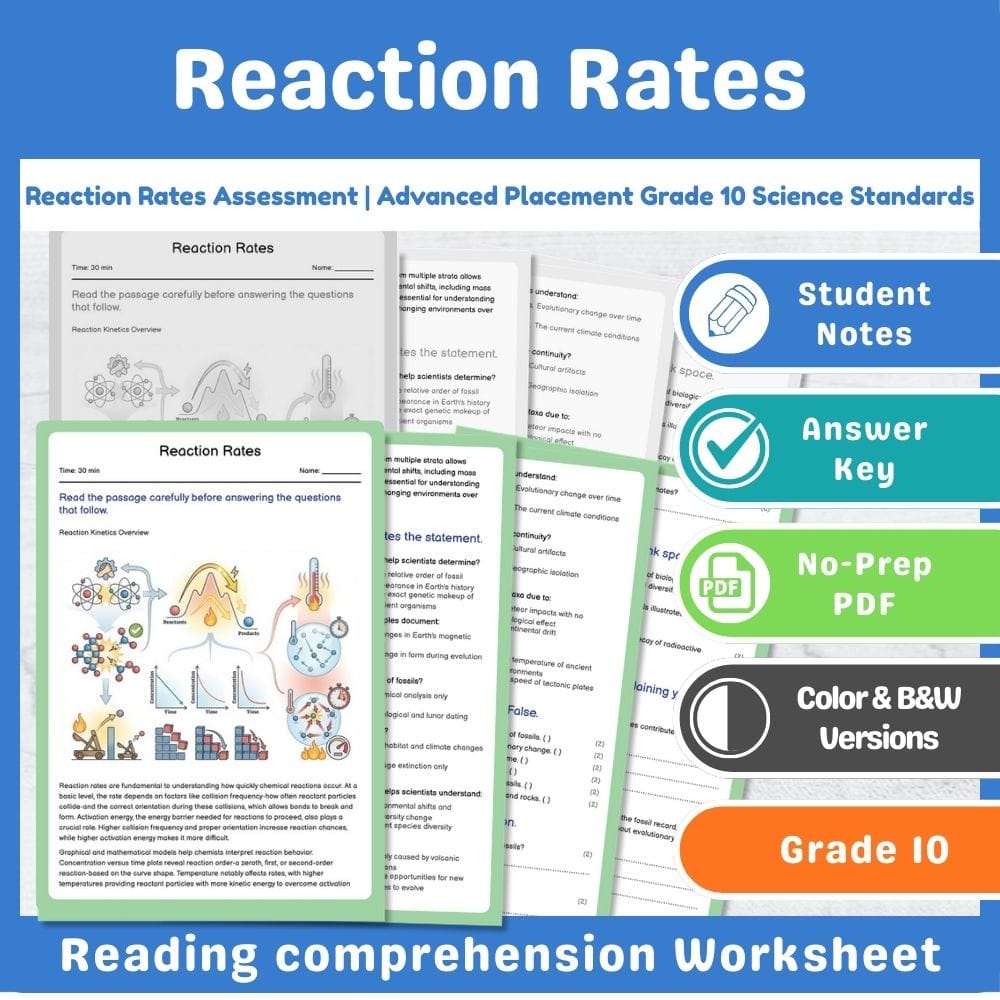
Reaction Rates Assessment | Advanced Placement Grade 10 Science Standards
Created byPrism Point LearningLearning Objectives
- Describe how collision frequency, orientation, and activation energy influence reaction rates.
- Interpret graphical and mathematical models of concentration versus time to determine reaction order.
- Explain the effects of temperature and catalysts on reaction pathways without advanced formalism.
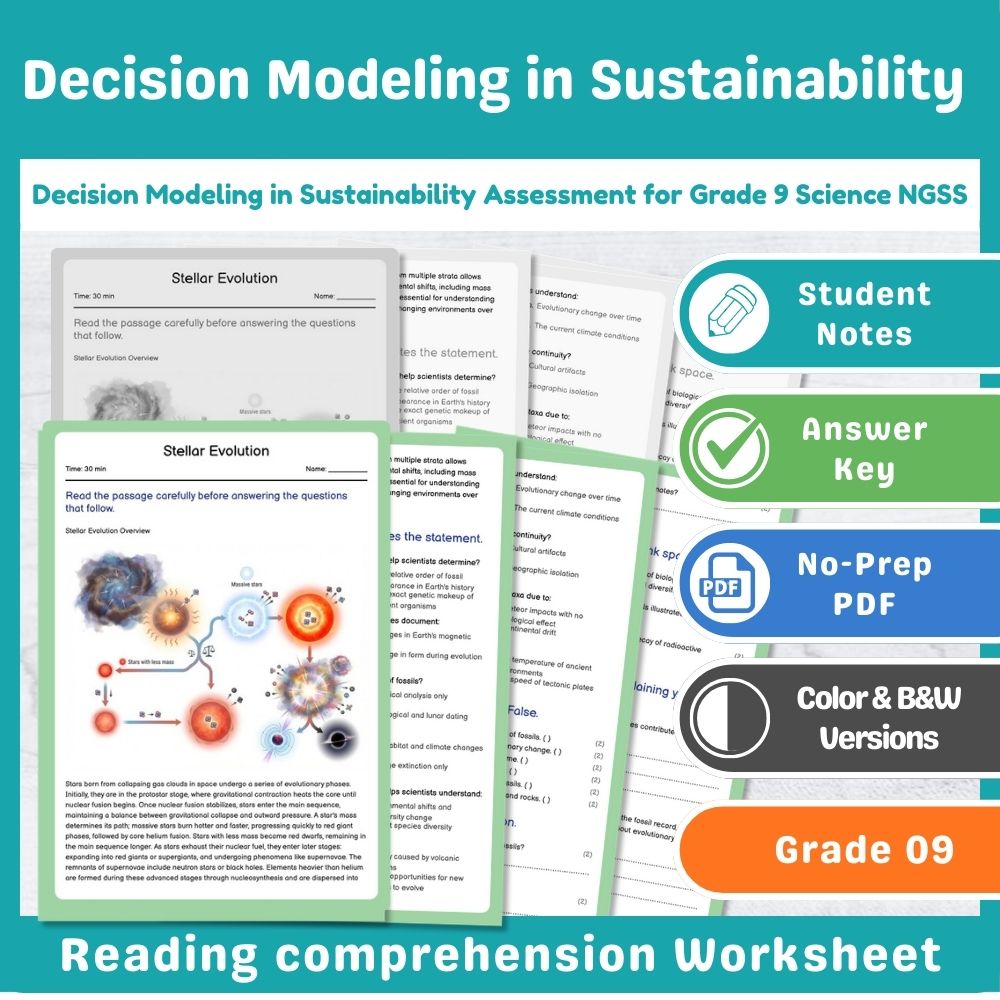
Decision Modeling in Sustainability Assessment for Grade 9 Science NGSS
Created byPrism Point LearningLearning Objectives
- Understand how decision models incorporate economic, environmental, and social variables.
- Analyze trade-offs among greenhouse gas reduction, public health, and economic development.
- Evaluate the role of policy instruments such as carbon pricing and land-use planning in mitigation strategies.
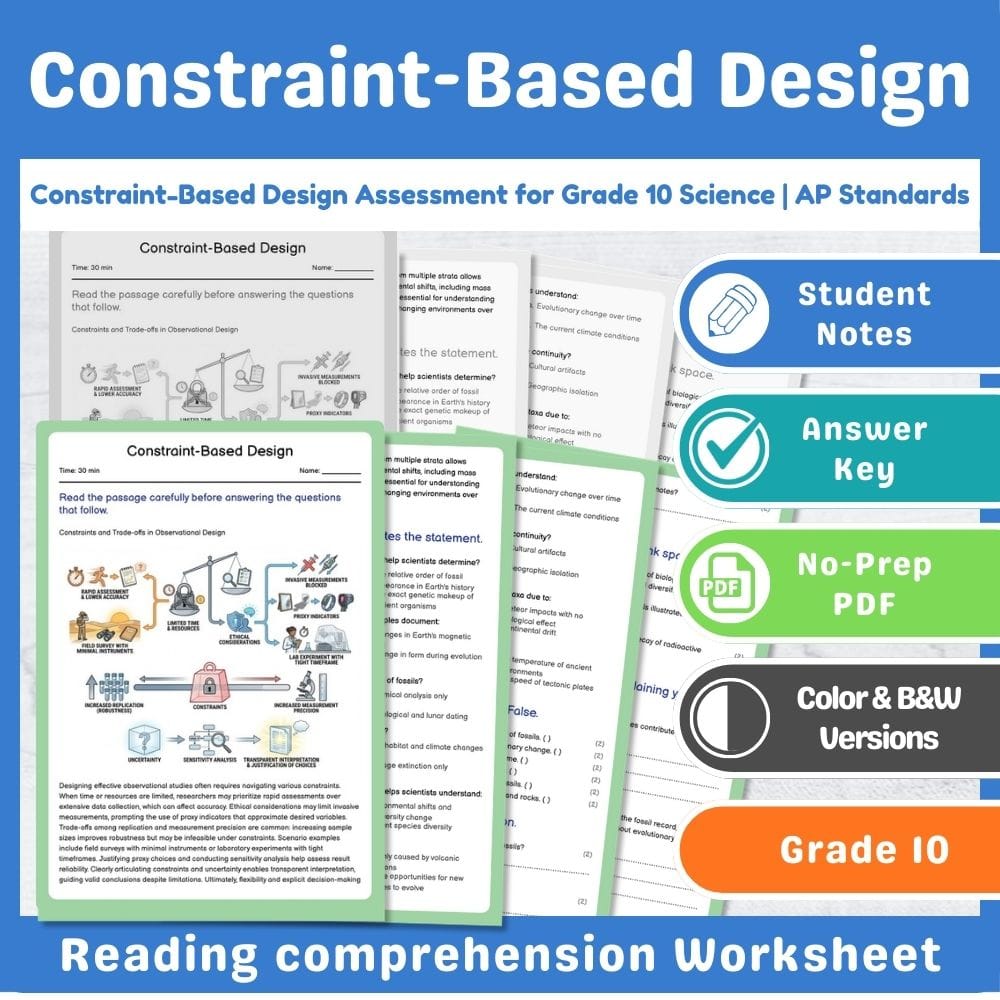
Constraint-Based Design Assessment for Grade 10 Science | AP Standards
Created byPrism Point LearningLearning Objectives
- Understand the considerations involved in designing studies under practical, ethical, or temporal constraints.
- Identify trade-offs among replication, measurement precision, and scope.
- Apply understanding of proxy measures and sensitivity analysis to assess robustness.
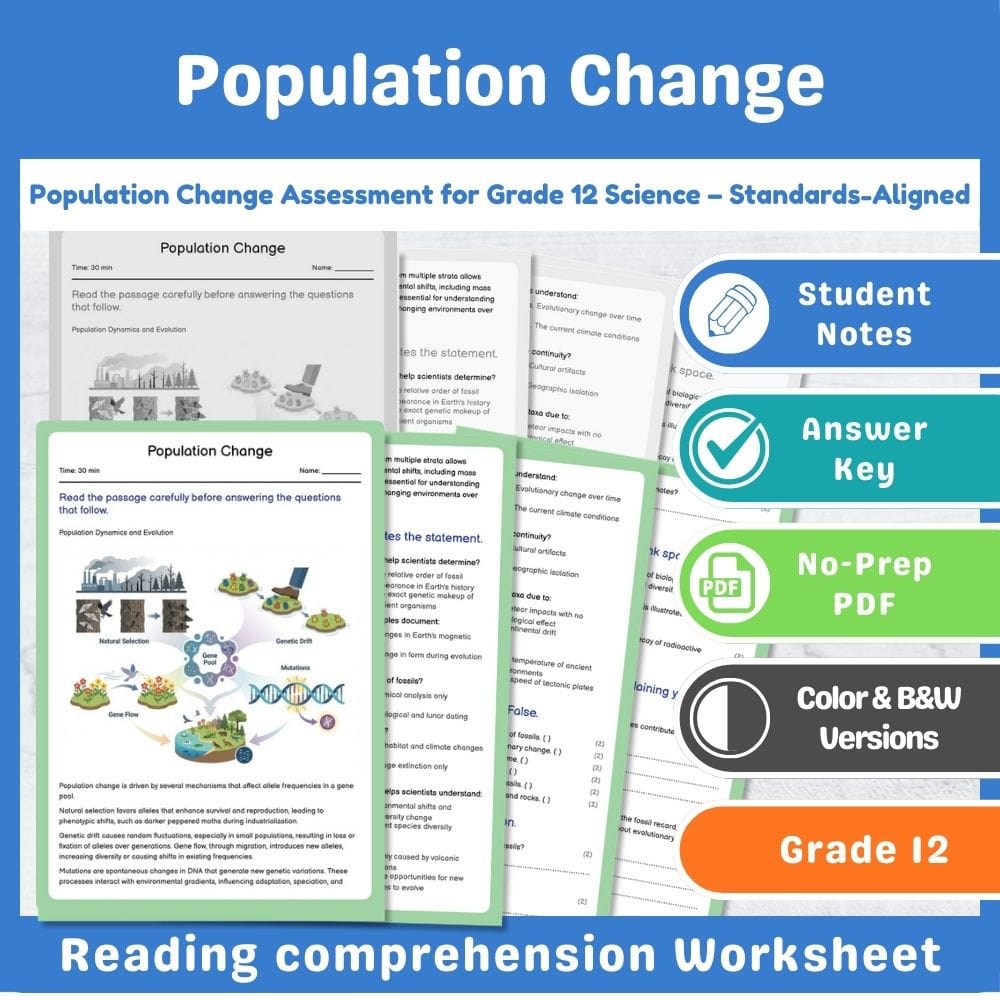
Population Change Assessment for Grade 12 Science – Standards-Aligned
Created byPrism Point LearningLearning Objectives
- Explain mechanisms that influence allele frequencies in populations, including natural selection, genetic drift, gene flow, and mutation.
- Analyze case examples illustrating phenotypic shifts and quantitative models relating fitness differences to evolutionary change.
- Evaluate evidence from morphology, molecular markers, and experiments demonstrating population-level evolutionary processes.
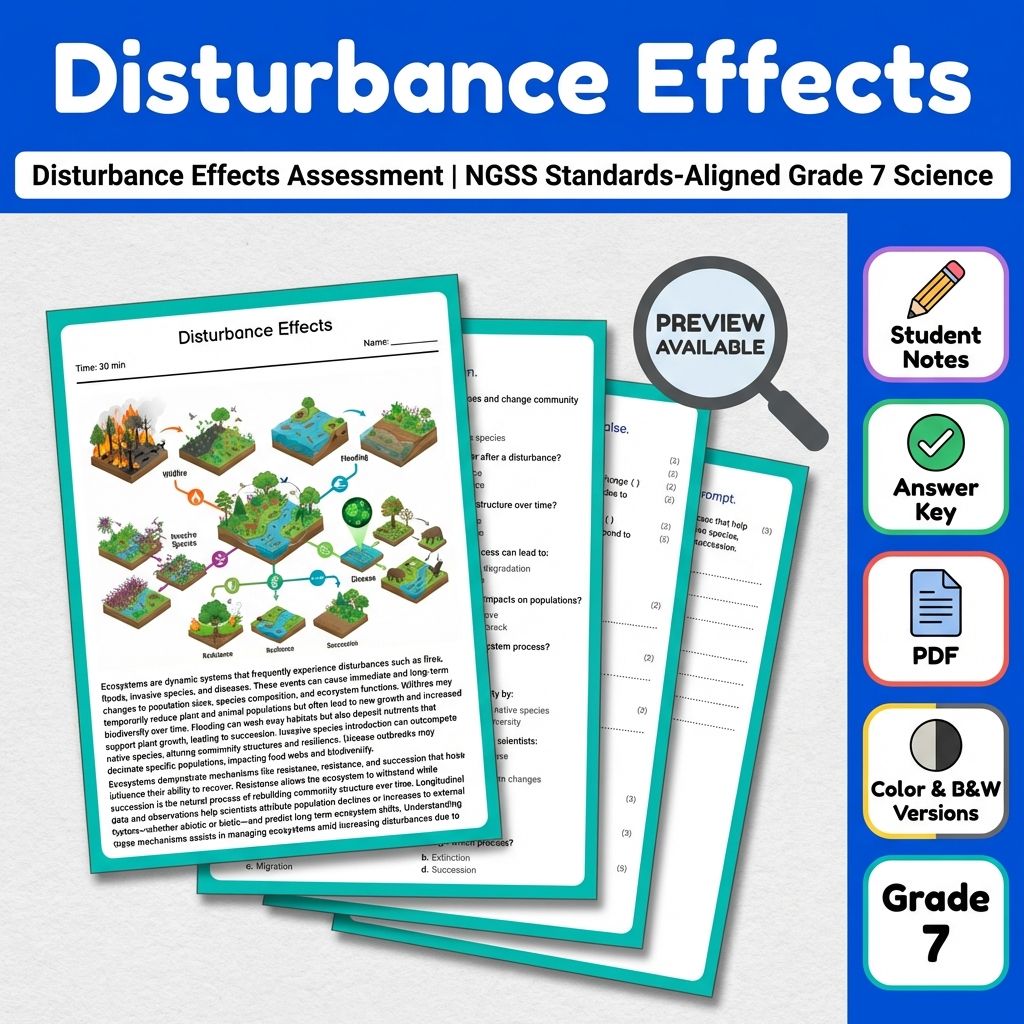
Disturbance Effects Assessment | NGSS Standards-Aligned Grade 7 Science
Created byPrism Point LearningLearning Objectives
- Understand how physical and biological disturbances impact ecosystems and populations.
- Identify mechanisms such as resilience, resistance, and succession that influence ecosystem recovery.
- Interpret empirical data and observations to determine causes of population changes.

Orbital Mechanics Assessment | TEKS Standards Grade 12 Science
Created byPrism Point LearningLearning Objectives
- Understand the principles of gravitational dynamics and Keplerian motion.
- Apply conservation laws to analyze orbital trajectories and resonances.
- Relate orbital parameters such as eccentricity, inclination, and semimajor axis to celestial phenomena.

Human Impact Evidence Grade 10 Science Assessment | General
Created byPrism Point LearningLearning Objectives
- Understand how human activities influence Earth's systems through measurable evidence.
- Identify sources and transport processes that link human actions to environmental changes.
- Analyze data from climate records, satellite observations, and chemical measurements to support claims.
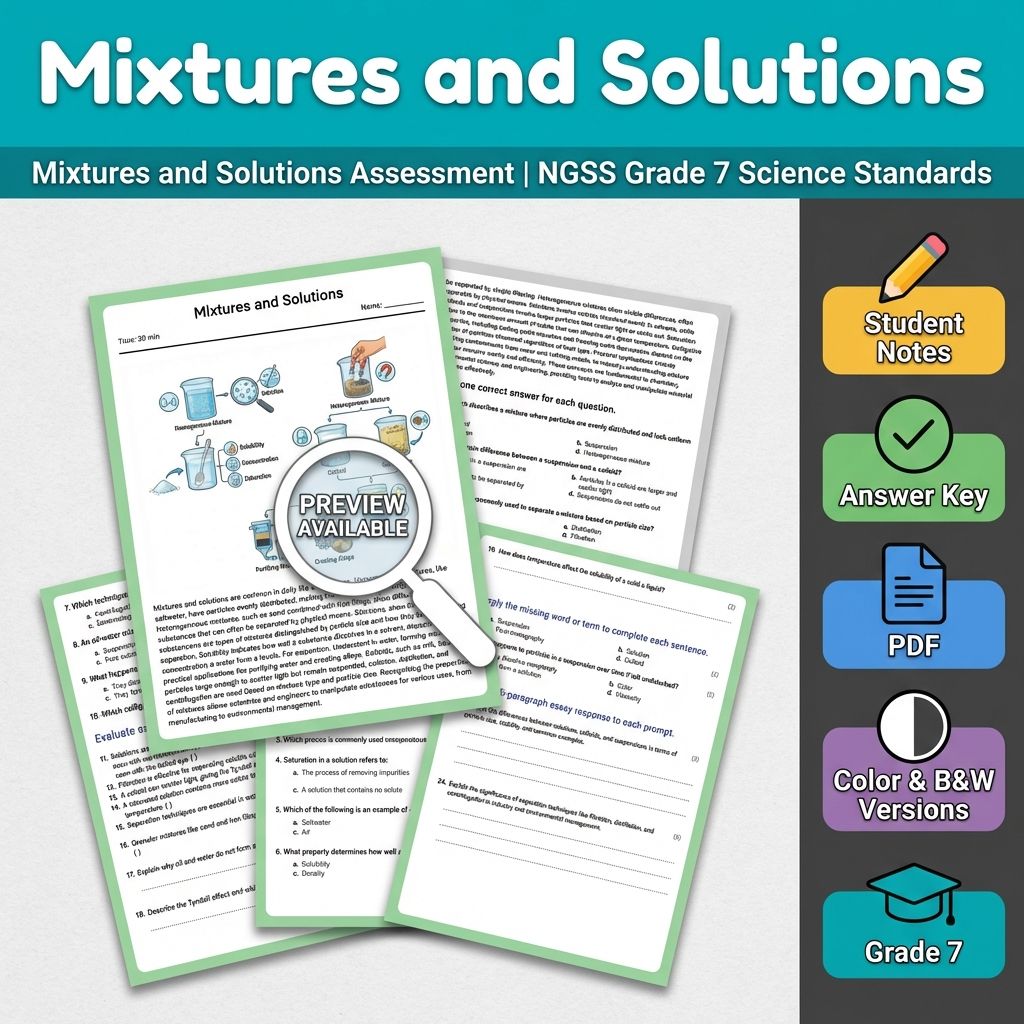
Mixtures and Solutions Assessment | NGSS Grade 7 Science Standards
Created byPrism Point LearningLearning Objectives
- Understand the differences between homogeneous and heterogeneous mixtures.
- Identify and explain properties like solubility, saturation, and concentration.
- Recognize examples of solutions, colloids, and suspensions based on particle size and separation methods.

Inheritance Patterns Assessment | TEKS Grade 9 Science Standards
Created byPrism Point LearningLearning Objectives
- Describe Mendelian patterns like segregation and independent assortment.
- Identify and compare non-Mendelian inheritance patterns such as incomplete dominance and codominance.
- Recognize how environmental factors and gene linkage influence trait expression.

Homeostatic Failure Assessment for Grade 11 Science | TEKS Standards
Created byPrism Point LearningLearning Objectives
- Understand how chronic disorders and acute insults disrupt homeostatic regulation.
- Identify systemic consequences of homeostatic failure, such as multi-organ failure.
- Analyze pathways of failure and the importance of coordinated systemic regulation.
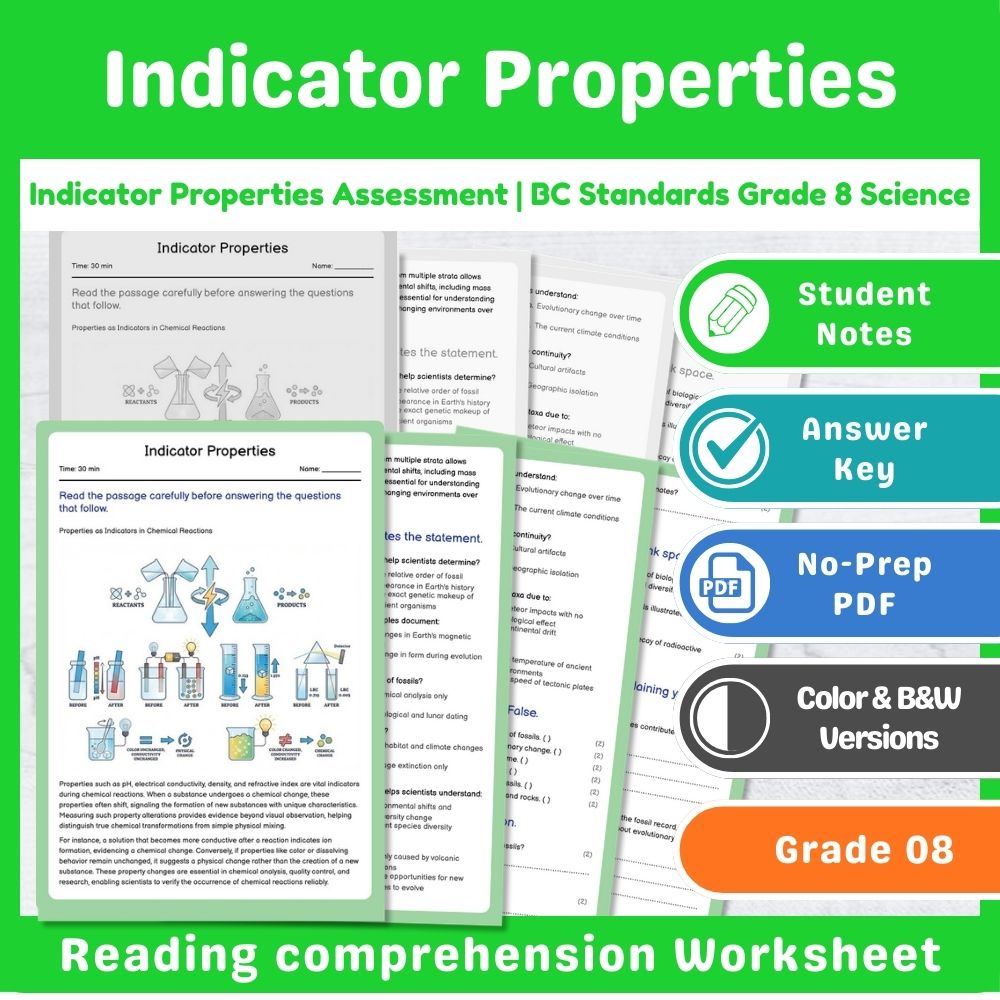
Indicator Properties Assessment | BC Standards Grade 8 Science
Created byPrism Point LearningLearning Objectives
- Understand how properties such as pH, conductivity, density, and refractive index change during chemical reactions.
- Identify property shifts indicating formation of new substances with distinct traits.
- Differentiate between physical and chemical changes using property measurements.

Measurement Precision Assessment | TEKS Grade 6 Science Standards
Created byPrism Point LearningLearning Objectives
- Understand the conventions for reporting measurements in scientific experiments.
- Identify and interpret sources of measurement uncertainty and error.
- Apply appropriate significant figures and unit notation in recording data.

Measurement Basics Assessment | TEKS Grade 8 Science Printable Worksheet
Created byPrism Point LearningLearning Objectives
- Understand key measurement conventions including accuracy, precision, SI units, and significant figures.
- Apply dimensional analysis and convert units correctly using appropriate instruments.
- Calculate density and rates by measuring mass, volume, length, and temperature with accuracy.

Cardiopulmonary Interaction Assessment for Grade 9 Science TEKS
Created byPrism Point LearningLearning Objectives
- Describe the coordination between heart and lung functions in oxygen delivery
- Explain how chemoreceptor feedback influences respiratory and circulatory adjustments
- Identify the roles of pulmonary ventilation and cardiovascular transport in maintaining homeostasis

ATP Synthase Assessment for Grade 11 Science TEKS Standards
Created byPrism Point LearningLearning Objectives
- Explain the mechanism by which ATP synthase converts a proton gradient into ATP.
- Describe the role of conformational changes in catalytic sites during ATP synthesis.
- Understand how membrane potential and redox processes are linked to energy production in cells.
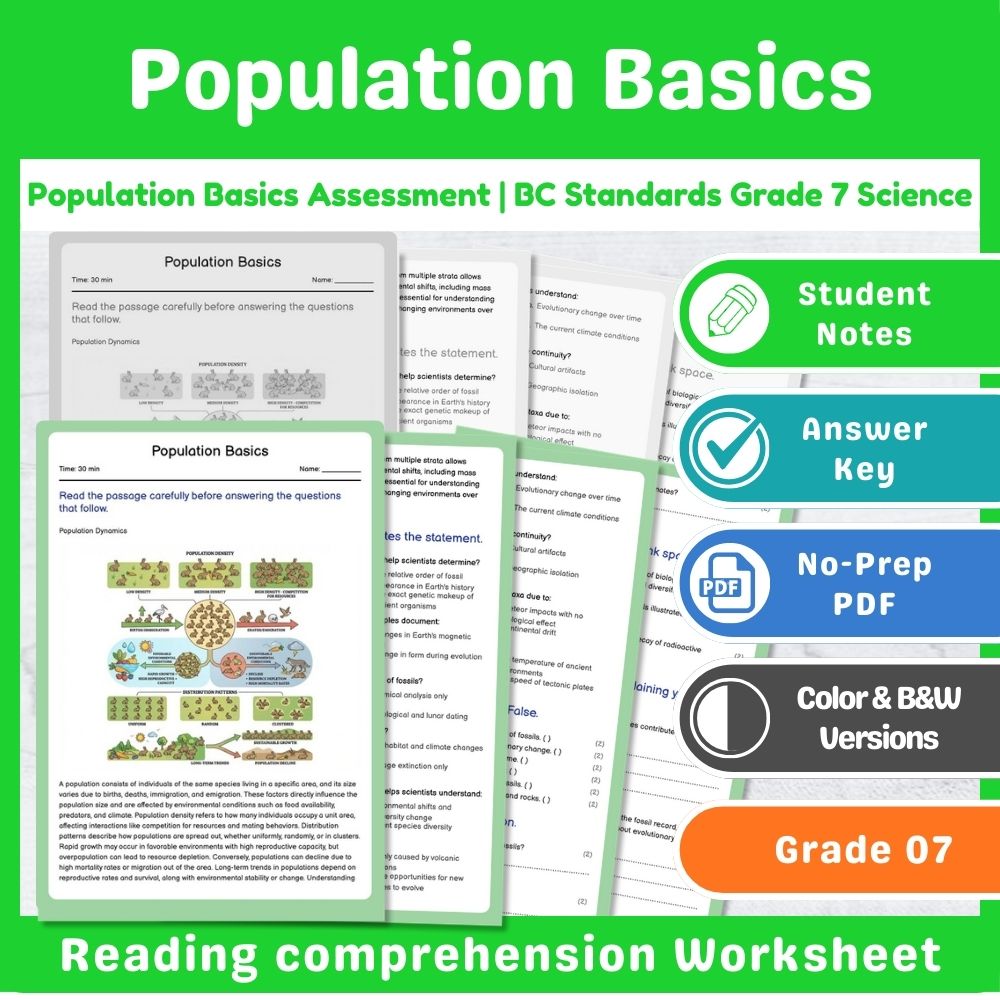
Population Basics Assessment | BC Standards Grade 7 Science
Created byPrism Point LearningLearning Objectives
- Understand the core metrics used to describe populations, such as size, density, and distribution patterns.
- Explain how demographic factors like births, deaths, immigration, and emigration influence population change.
- Analyze how environmental conditions interact with population dynamics over short-term and long-term scales.

Endothermic and Exothermic Reactions Assessment | General Grade 10 Science
Created byPrism Point LearningLearning Objectives
- Understand the energy flow in endothermic and exothermic reactions.
- Identify qualitative signs of energy absorption or release during chemical reactions.
- Explain how energy profiles relate to bond formation and breaking.

Ocean Circulation Assessment for Grade 12 Science | TEKS Standards
Created byPrism Point LearningLearning Objectives
- Explain the mechanisms of thermohaline and wind-driven ocean circulation.
- Describe how surface gyres, upwelling, and the meridional overturning circulation influence climate and nutrient transport.
- Connect oceanic heat capacity and circulation patterns to regional climate modulation and episodic phenomena like El Niño.
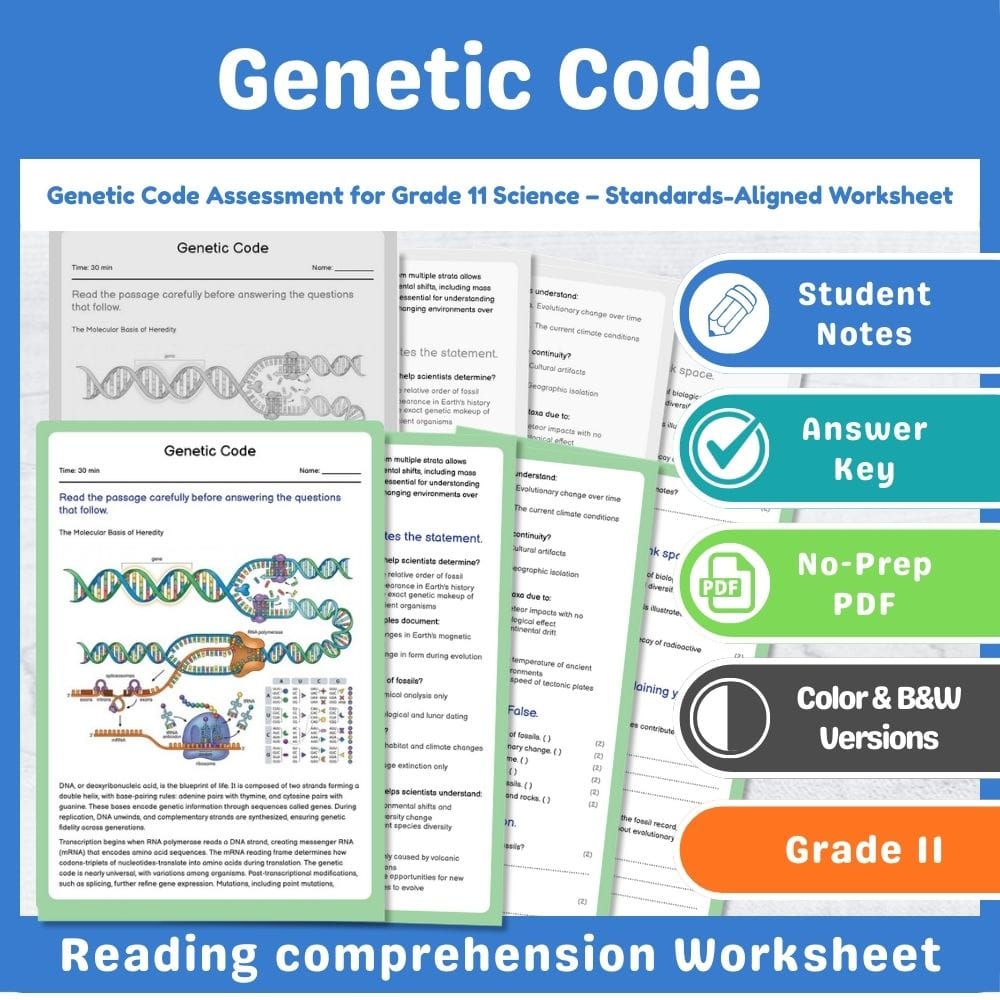
Genetic Code Assessment for Grade 11 Science – Standards-Aligned Worksheet
Created byPrism Point LearningLearning Objectives
- Understand the molecular basis of heredity through nucleic acid structure and base-pairing rules.
- Describe the processes of transcription and translation, including codon usage and reading frames.
- Identify mechanisms of mutation, recombination, and their effects on gene expression and phenotype.

Cell Structure Assessment for Grade 8 Science | TEKS Standards-Aligned
Created byPrism Point LearningLearning Objectives
- Describe the organization and functions of cellular components such as membranes, cytoplasm, the nucleus, mitochondria, and chloroplasts.
- Explain the relationship between membrane transport, compartmentalization, and cellular activity.
- Identify differences between prokaryotic and eukaryotic cells in terms of organelle presence and organization.
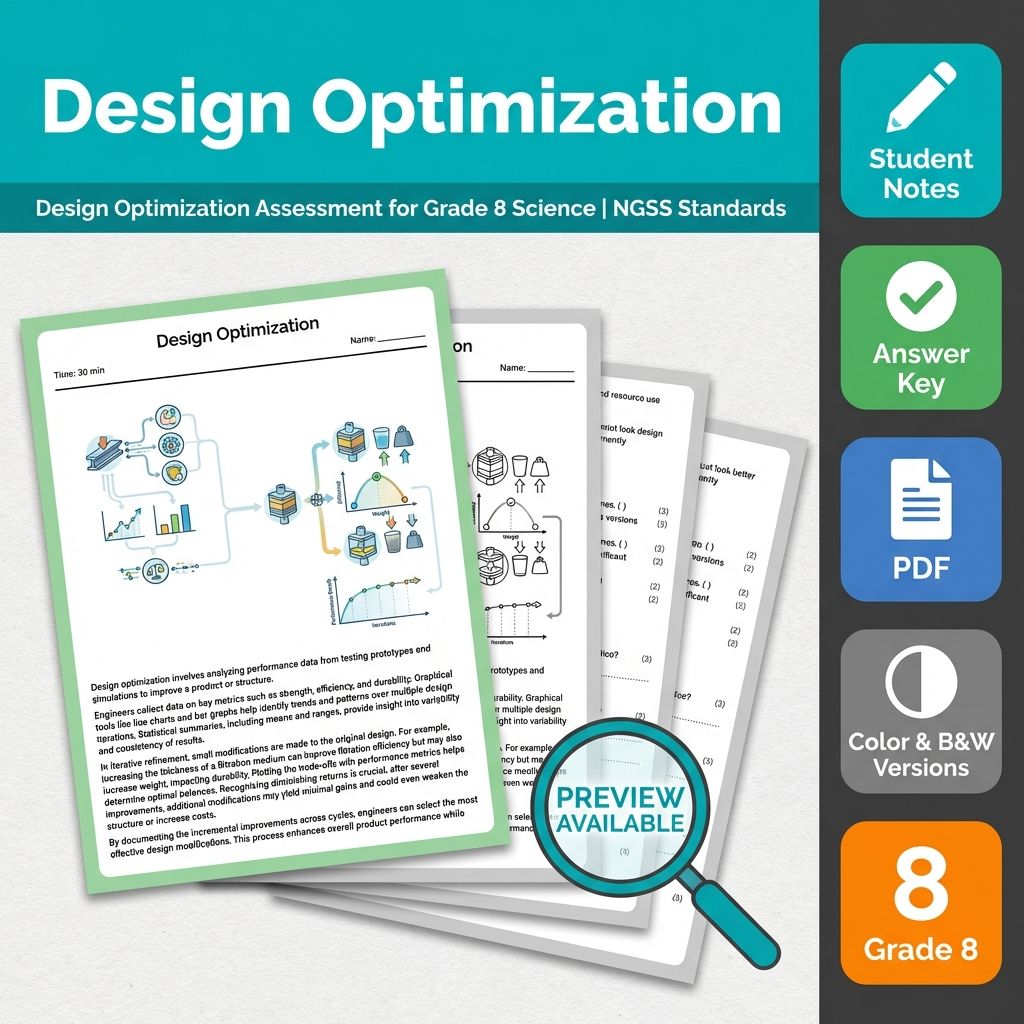
Design Optimization Assessment for Grade 8 Science | NGSS Standards
Created byPrism Point LearningLearning Objectives
- Analyze test data to identify performance trends and effective design features.
- Interpret graphical and statistical summaries to inform iterative design modifications.
- Evaluate trade-offs among different design metrics such as efficiency, strength, and durability.

Integrated Cycles Assessment | TEKS Standards Grade 11 Science
Created byPrism Point LearningLearning Objectives
- Explain how photosynthesis and cellular respiration are interconnected biochemical cycles.
- Identify the roles of carbon fixation and CO2 release in ecosystems.
- Describe how tissue specialization and transport mechanisms coordinate energy distribution in plants.
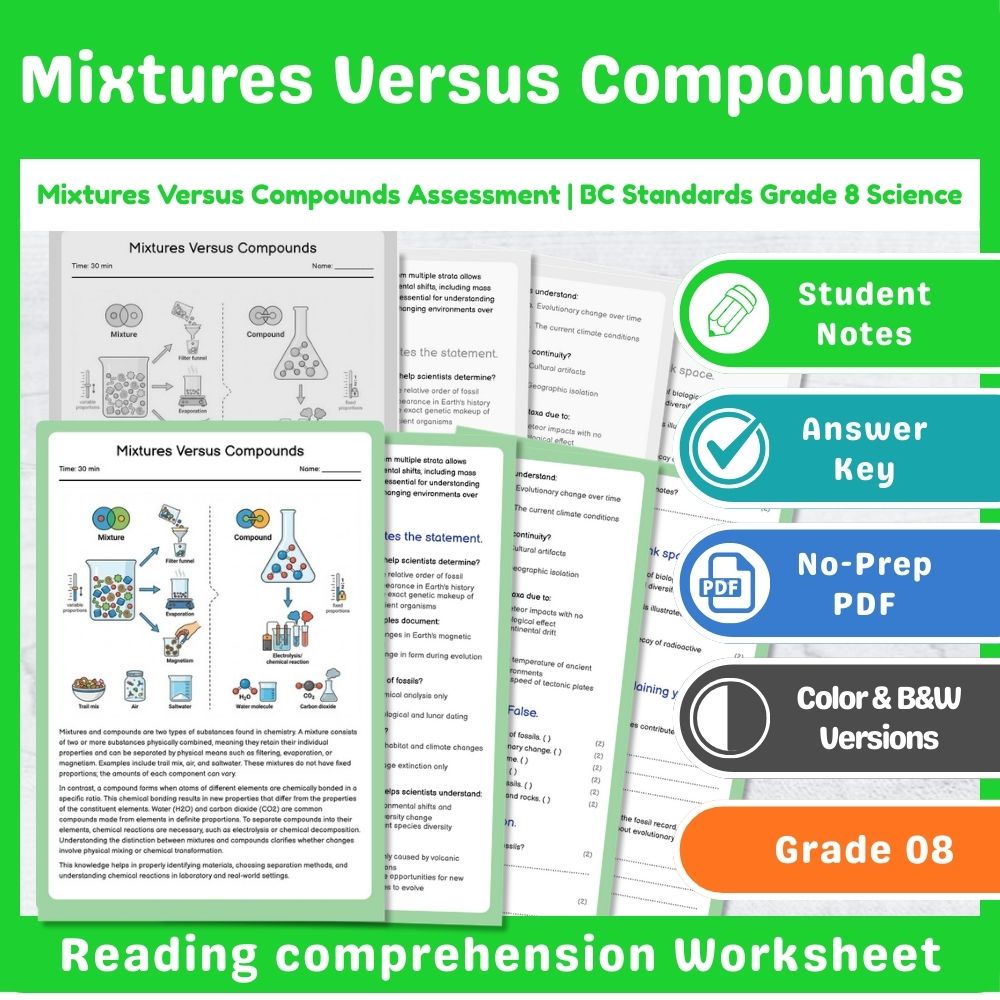
Mixtures Versus Compounds Assessment | BC Standards Grade 8 Science
Created byPrism Point LearningLearning Objectives
- Understand the differences between mixtures and compounds.
- Identify examples of mixtures and compounds in everyday life.
- Explain how mixtures can be separated physically and compounds require chemical change.
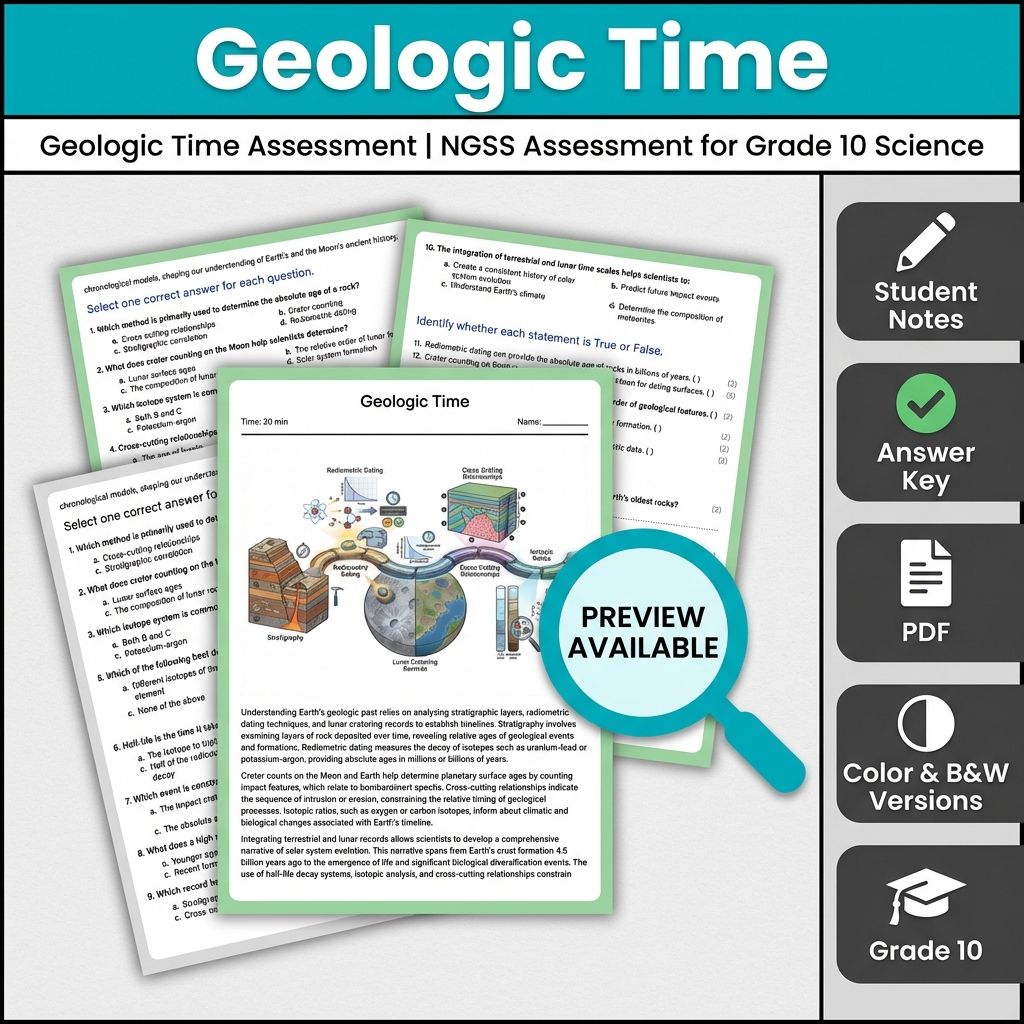
Geologic Time Assessment | NGSS Assessment for Grade 10 Science
Created byPrism Point LearningLearning Objectives
- Understand how stratigraphic sequences, radiometric dating, and crater records establish Earth's relative and absolute ages.
- Identify methods such as half-life decay systems, isotopic ratios, and cross-cutting relationships used in geochronology.
- Explain how terrestrial and lunar time scales integrate to tell Earth's history over billions of years.
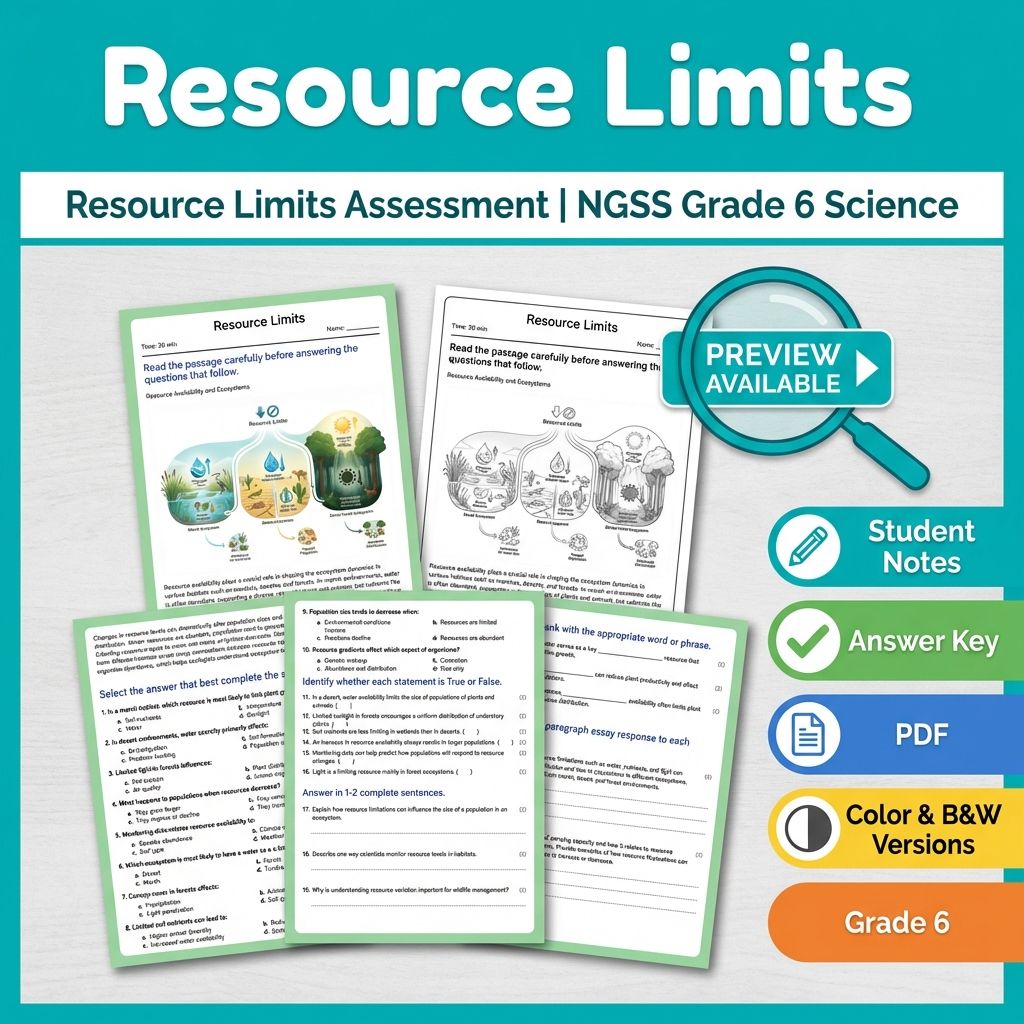
Resource Limits Assessment | NGSS Grade 6 Science
Created byPrism Point LearningLearning Objectives
- Describe how resource availability affects individual organisms and populations.
- Interpret data related to resource distribution and species abundance.
- Identify limiting resources in different ecosystems and explain their effects.
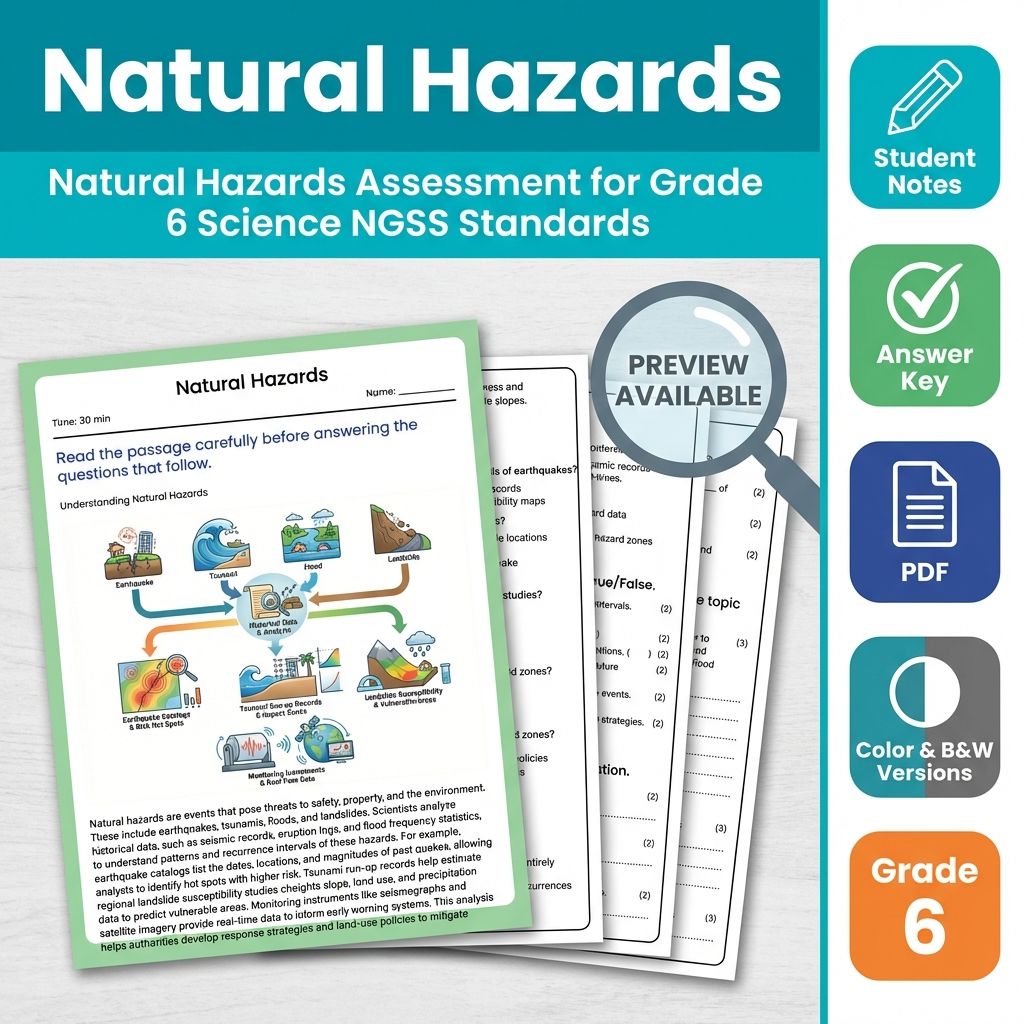
Natural Hazards Assessment for Grade 6 Science NGSS Standards
Created byPrism Point LearningLearning Objectives
- Understand methods for analyzing observational and instrumental data related to natural hazards.
- Identify patterns, recurrence intervals, and probable locations of hazards like earthquakes, tsunamis, and floods.
- Interpret data examples such as eruption histories and flood statistics to assess risks.

Meiosis and Diversity Assessment | Florida NGSSS Standard Grade 12 Science
Created byPrism Point LearningLearning Objectives
- Explain how meiosis preserves chromosome number while producing haploid gametes.
- Describe how crossing over and independent assortment increase genetic diversity.
- Connect meiotic mechanisms to allele combinations in offspring and the role of genetic variation in evolution.
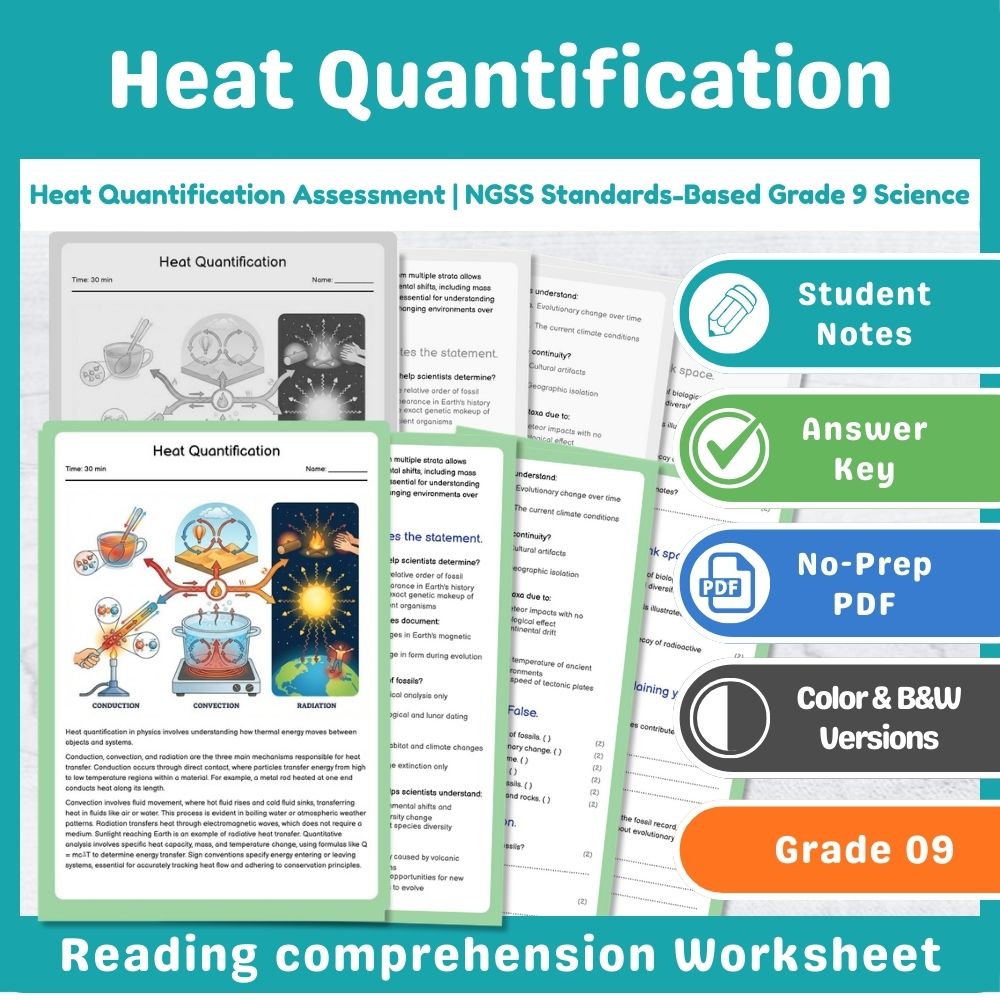
Energy Conversion Assessment | NGSS Standards Grade 9 Science
Created byPrism Point LearningLearning Objectives
- Explain the different types of energy conversion devices and processes.
- Analyze how energy transfer involves losses and efficiency considerations.
- Evaluate real-world examples of energy conversion such as photovoltaic cells, thermoelectric modules, and electrochemical cells.
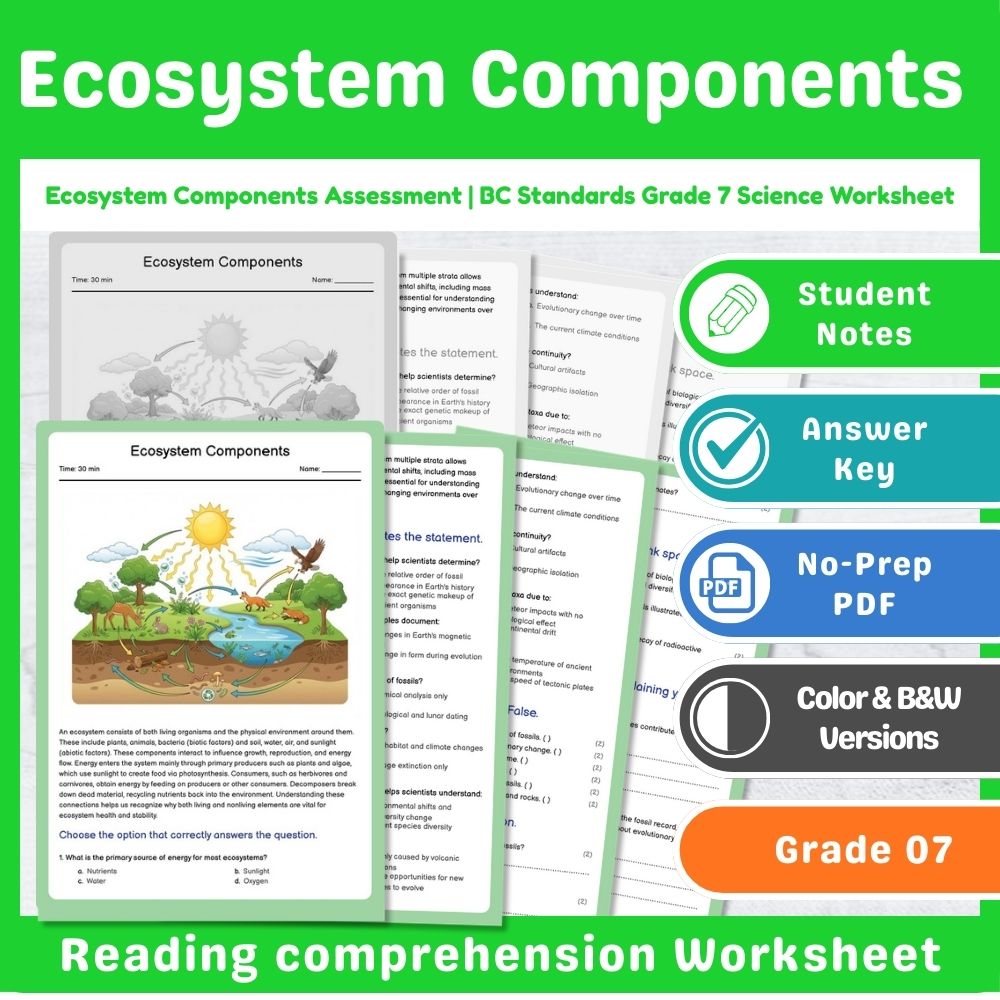
Ecosystem Components Assessment | BC Standards Grade 7 Science Worksheet
Created byPrism Point LearningLearning Objectives
- Describe the key components of an ecosystem, including both living and nonliving factors.
- Explain how biotic and abiotic components interact within an ecosystem.
- Understand the flow of energy through producers and consumers in an ecosystem.
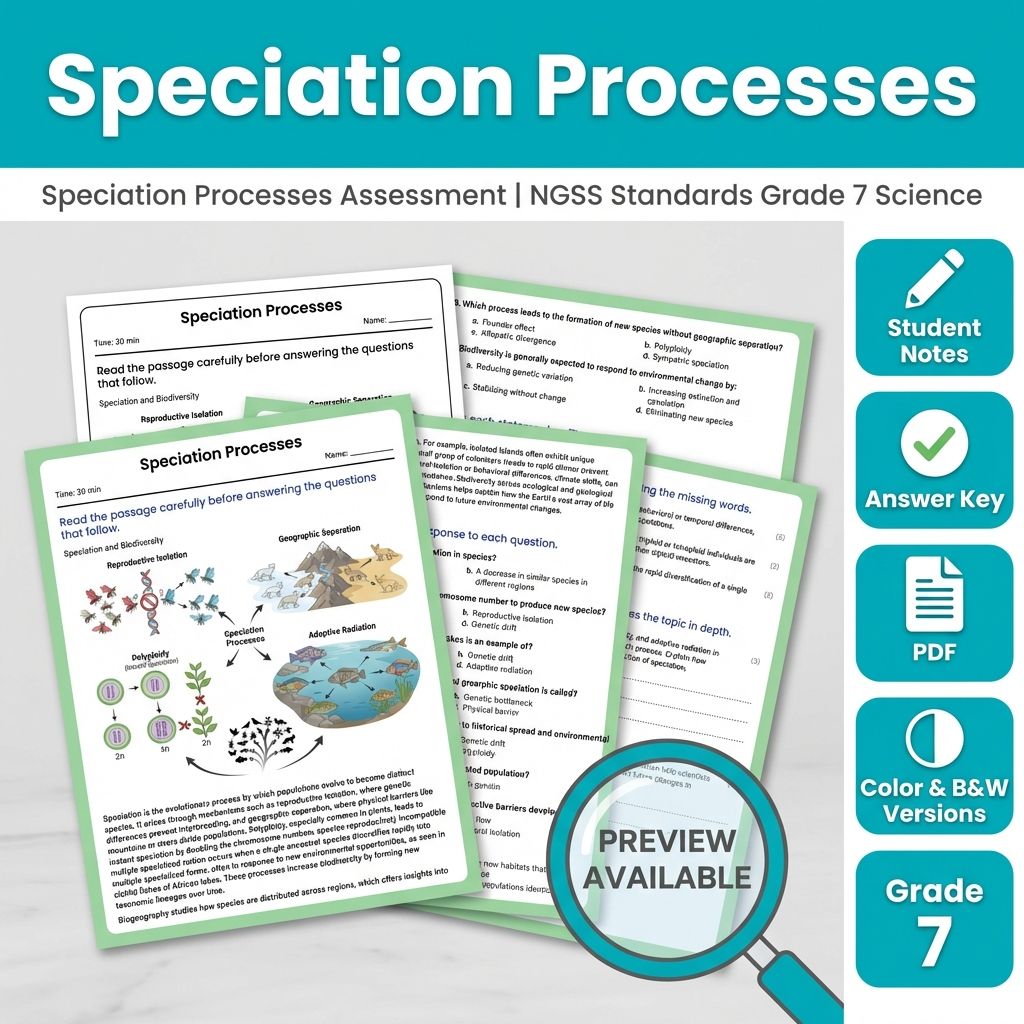
Speciation Processes Assessment | NGSS Standards Grade 7 Science
Created byPrism Point LearningLearning Objectives
- Understand the mechanisms that lead to the formation of new species, including reproductive isolation, geographic separation, polyploidy, and adaptive radiation.
- Analyze examples of speciation such as cichlid radiations in African lakes and plant polyploidization.
- Explain how environmental changes influence biodiversity over ecological and geological timescales.
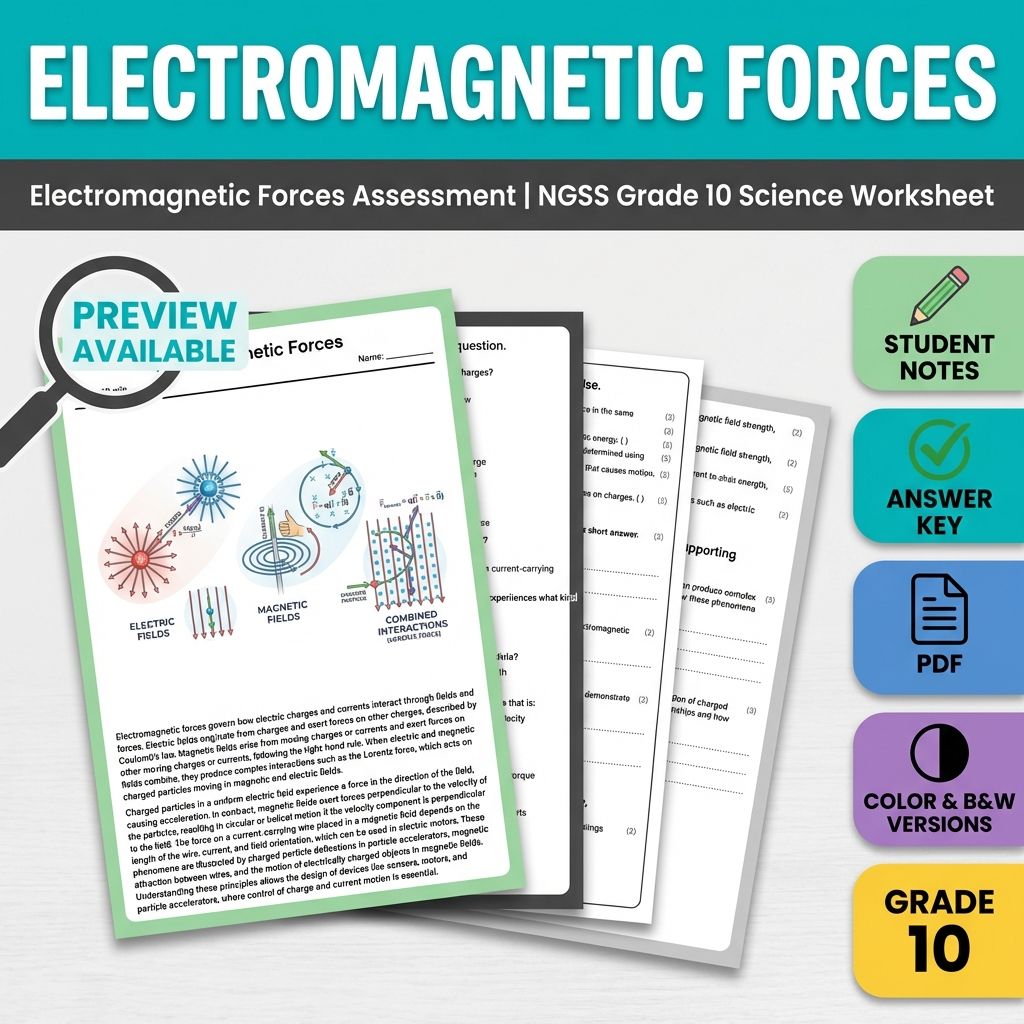
Electromagnetic Forces Assessment | NGSS Grade 10 Science Worksheet
Created byPrism Point LearningLearning Objectives
- Understand how electric and magnetic fields influence charged particles and current-carrying wires.
- Describe the forces exerted on charges in uniform electric and magnetic fields.
- Explain the Lorentz force law and its applications in real-world phenomena.

Energy Flow in Ecosystems Assessment | General Grade 8 Science
Created byPrism Point LearningLearning Objectives
- Explain how energy flows through trophic levels in an ecosystem.
- Identify the roles of producers, consumers, and decomposers in energy transfer.
- Describe why energy decreases as it moves along a food chain.

Conservation Of Mass Assessment | Standards-Aligned Assessment Grade 11 Science
Created byPrism Point LearningLearning Objectives
- Understand the principle of conservation of mass in chemical and physical processes.
- Explain how mass is conserved during reactions and processes.
- Interpret reaction equations using mass balance reasoning.

Matter Cycling Carbon Assessment Grade 6 | Science Standards-Aligned
Created byPrism Point LearningLearning Objectives
- Explain how carbon atoms cycle through air, water, and living organisms in an ecosystem
- Distinguish between matter cycling (conservation of atoms) and energy flow (one-way transformation)
- Describe how carbon moves from plants to animals and returns to the environment through respiration and decomposition
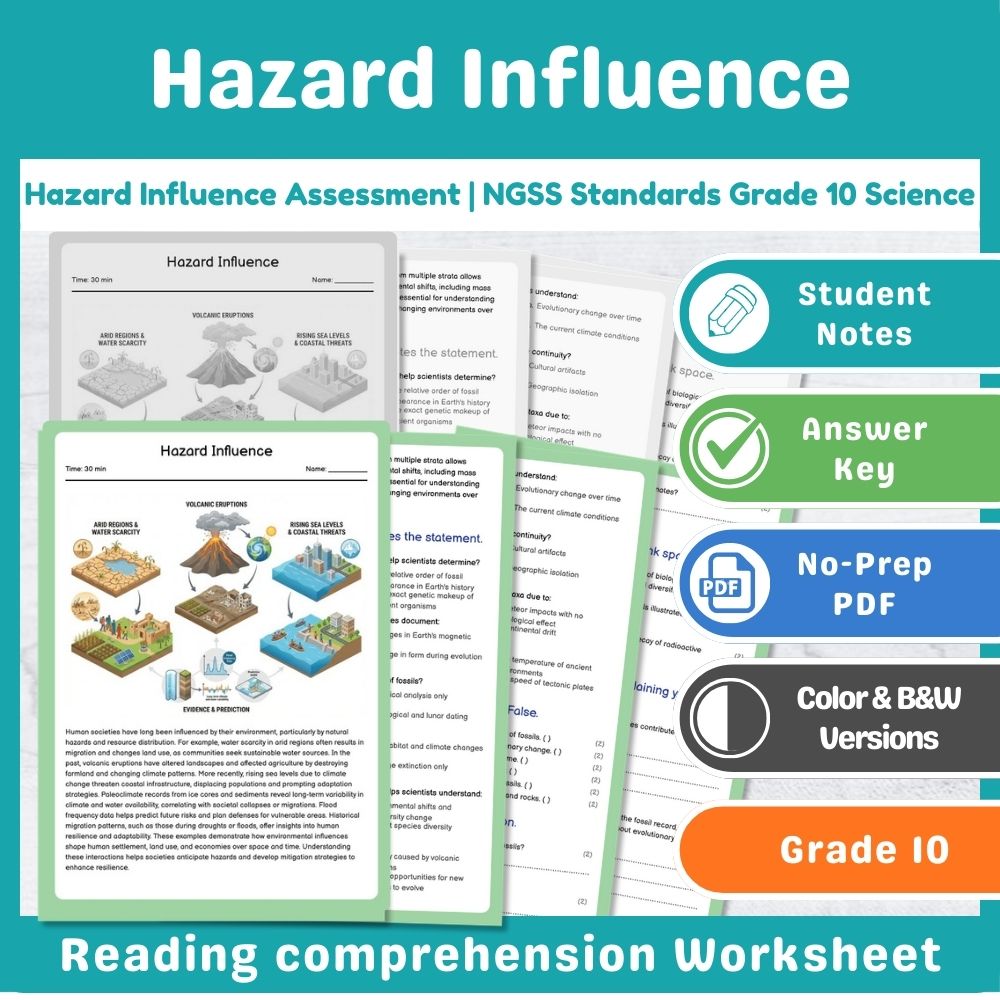
Hazard Influence Assessment | NGSS Standards Grade 10 Science
Created byPrism Point LearningLearning Objectives
- Understand how freshwater availability, natural hazards, and climate variability impact human settlement and land use.
- Analyze examples such as water scarcity, volcanic eruptions, and sea-level rise to evaluate societal responses.
- Interpret paleoclimate records, flood data, and migration patterns to recognize links between environmental factors and society.

Scientific Models Grade 12 Science Assessment | NGSSS Standards
Created byPrism Point LearningLearning Objectives
- Explain how scientific models represent real-world systems to support explanation and prediction
- Identify common types of models (diagram, mathematical, simulation) and link them to relevant variables
- Evaluate a model by stating assumptions, limitations, and how evidence could revise it

Sources of Genetic Variation Assessment for Grade 12 Science Standards
Created byPrism Point LearningLearning Objectives
- Explain how mutations create genetic differences within populations
- Describe how meiosis and sexual reproduction reshuffle alleles to generate new allele combinations
- Evaluate how differential survival and reproduction change allele frequencies over time

Atom Conservation Assessment | Standards-Aligned Grade 6 Science Worksheet
Created byPrism Point LearningLearning Objectives
- Explain conservation of atoms during chemical reactions as rearrangements of atoms into new combinations
- Use particle diagrams to track atoms in reactants and products
- Predict whether a reaction description or diagram conserves atoms by counting atoms of each element
Browse more categories
About Science Worksheets
Find Science worksheets spanning core skills, practice, and review. All 42,685 resources are instant PDF downloads for the classroom or home.
Every worksheet on MyTeachingSheets is created by independent teacher-authors and reviewed before publication. All resources download as printable PDFs for classroom, homework, or at-home practice, and many include answer keys. Preview any worksheet free before buying.