
Science Worksheets
42,685 subject resources
Intercellular Communication Assessment for Grade 10 Science TEKS
 Created byPrism Point Learning
Learning Objectives
- Explain different modes of intercellular communication including autocrine, paracrine, endocrine, and synaptic signaling.
- Identify key components of signal transduction pathways and receptor–ligand specificity.
- Describe mechanisms of direct cytoplasmic connections like gap junctions and plasmodesmata.
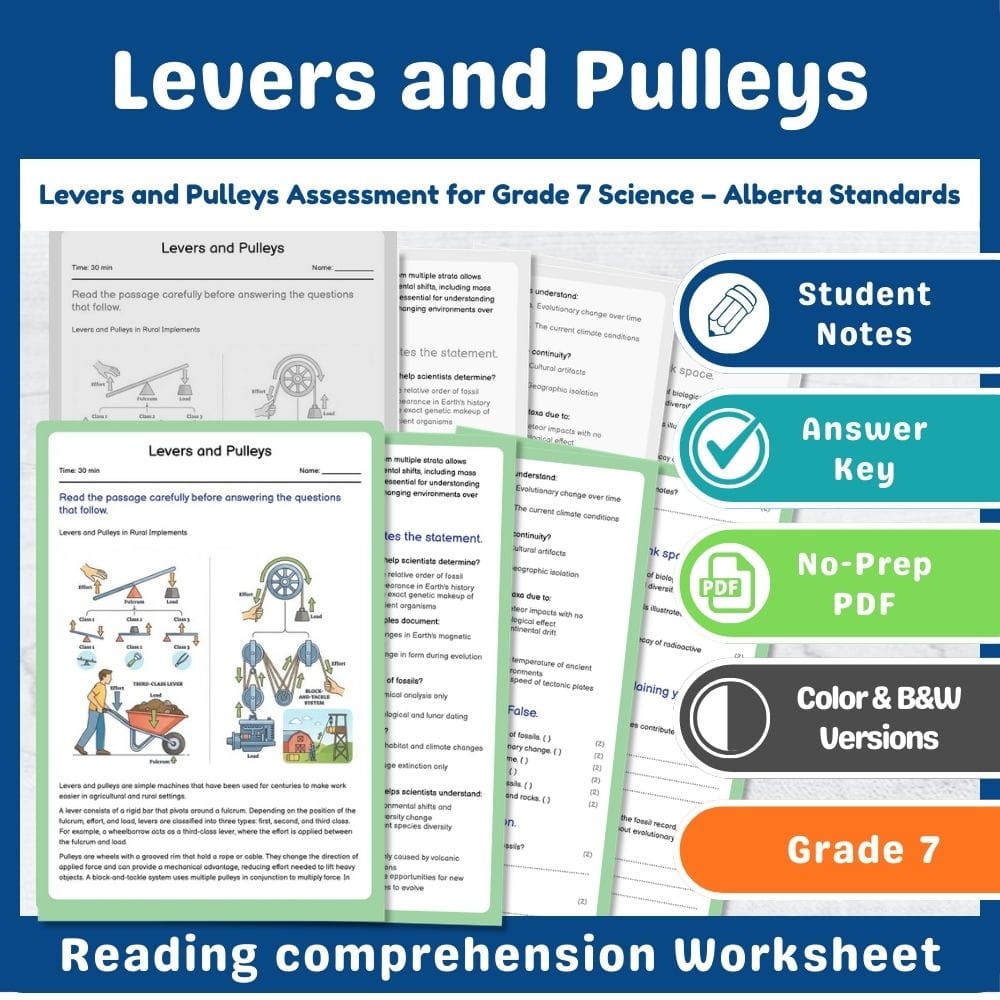
Levers and Pulleys Assessment for Grade 7 Science – Alberta Standards
Created byPrism Point LearningLearning Objectives
- Understand the principles of levers and pulleys and how they modify effort and direction.
- Explain torque, fulcrum placement, and mechanical advantage calculations.
- Identify examples of lever classes and pulley systems used in rural settings.

DNA Structure Assessment for Grade 10 Science TEKS Standards
Created byPrism Point LearningLearning Objectives
- Describe the fundamental structure of DNA, including the double helix and nucleotide subunits.
- Explain the base pairing rules: adenine with thymine, cytosine with guanine.
- Understand how the nucleotide sequence encodes genetic information and supports replication.
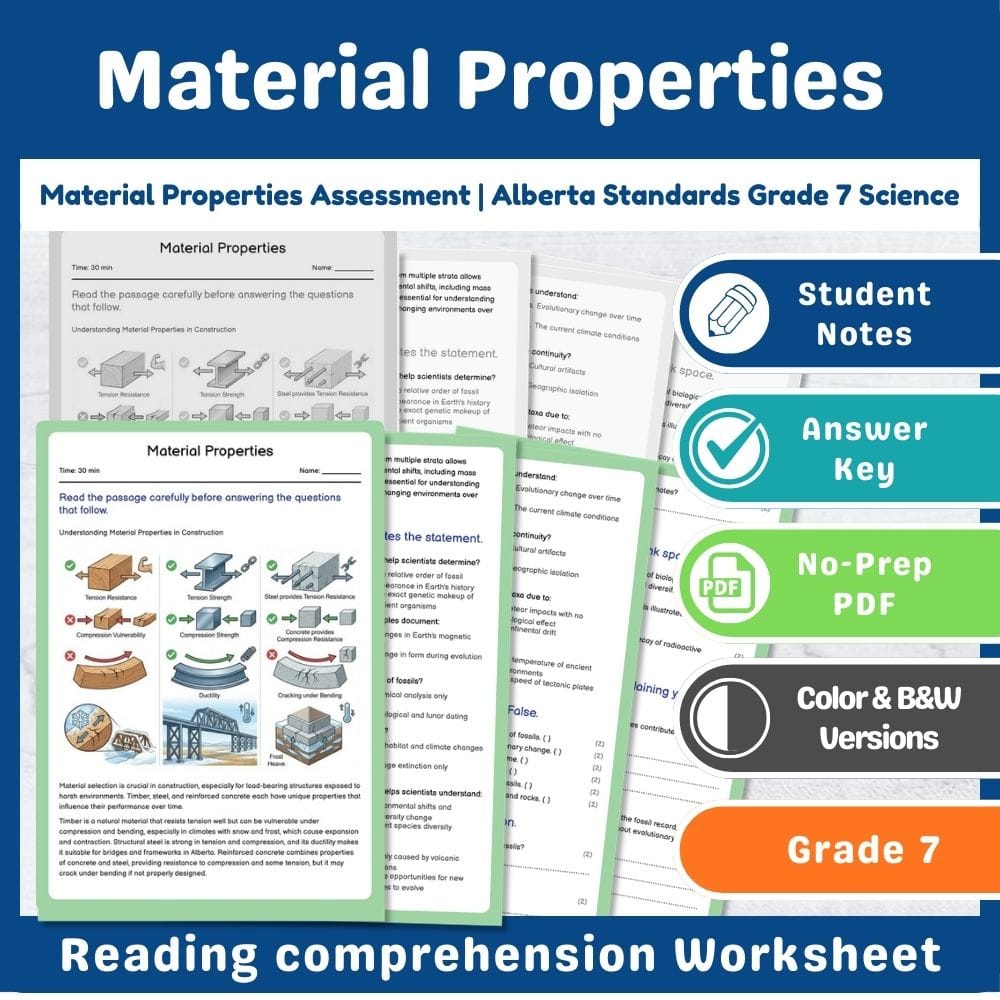
Material Properties Assessment | Alberta Standards Grade 7 Science
Created byPrism Point LearningLearning Objectives
- Understand how different materials perform under compression, tension, and bending.
- Compare timber, structural steel, and reinforced concrete in load-bearing applications.
- Analyze environmental effects on material durability in cold climates such as Alberta.
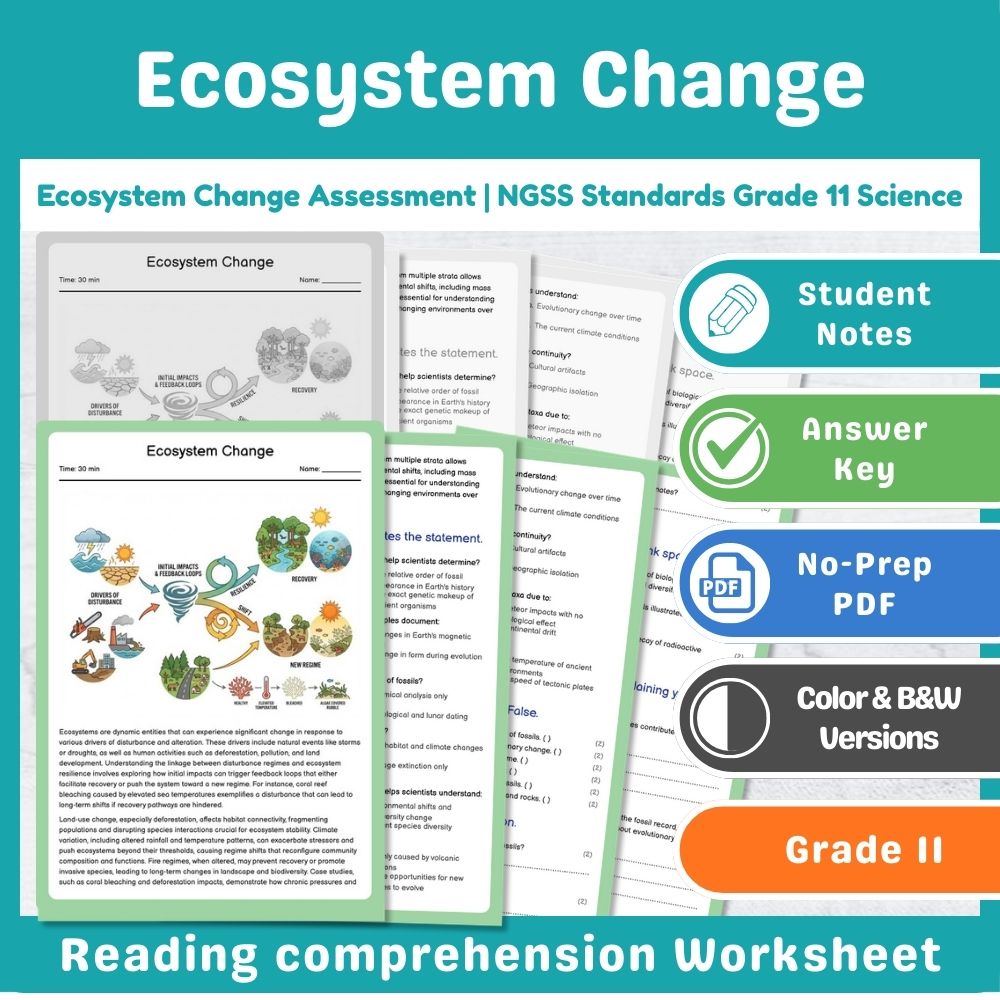
Ecosystem Change Assessment | NGSS Standards Grade 11 Science
Created byPrism Point LearningLearning Objectives
- Understand the drivers of ecosystem stability and how disturbance regimes influence change.
- Assess the impacts of land-use change, connectivity loss, and climate variation on ecosystems.
- Interpret case studies involving coral reef bleaching, deforestation, and fire regime alterations.
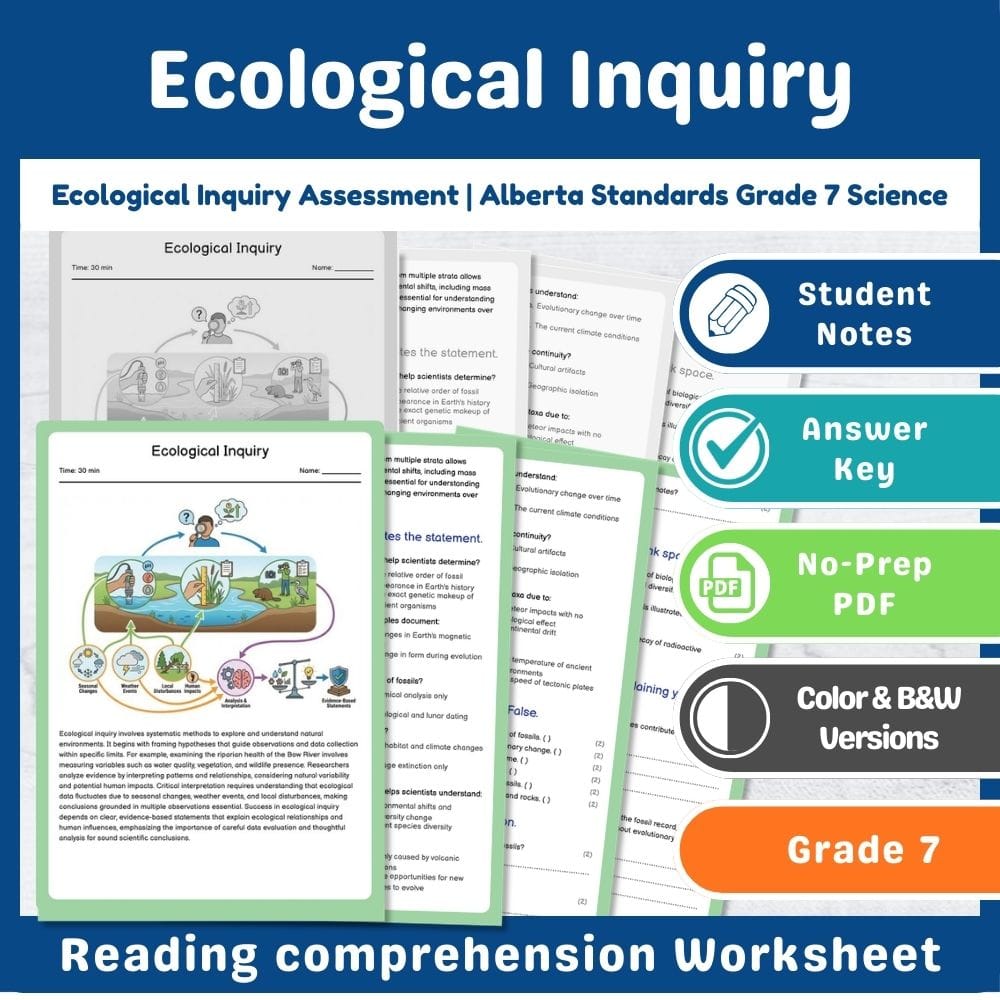
Ecological Inquiry Assessment | Alberta Standards Grade 7 Science
Created byPrism Point LearningLearning Objectives
- Understand the systematic approaches used in ecological inquiry, including posing questions and collecting observations.
- Interpret ecological data within natural variability and evaluate evidence to draw conclusions.
- Recognize local examples such as riparian health assessments and their role in ecological relationships.

Protein Synthesis Assessment | TEKS Standards Grade 10 Science Worksheet
Created byPrism Point LearningLearning Objectives
- Describe the process of transcription and translation in protein synthesis.
- Identify the roles of DNA, RNA, ribosomes, and tRNA during protein synthesis.
- Explain the stages of transcription and translation, including initiation, elongation, and termination.
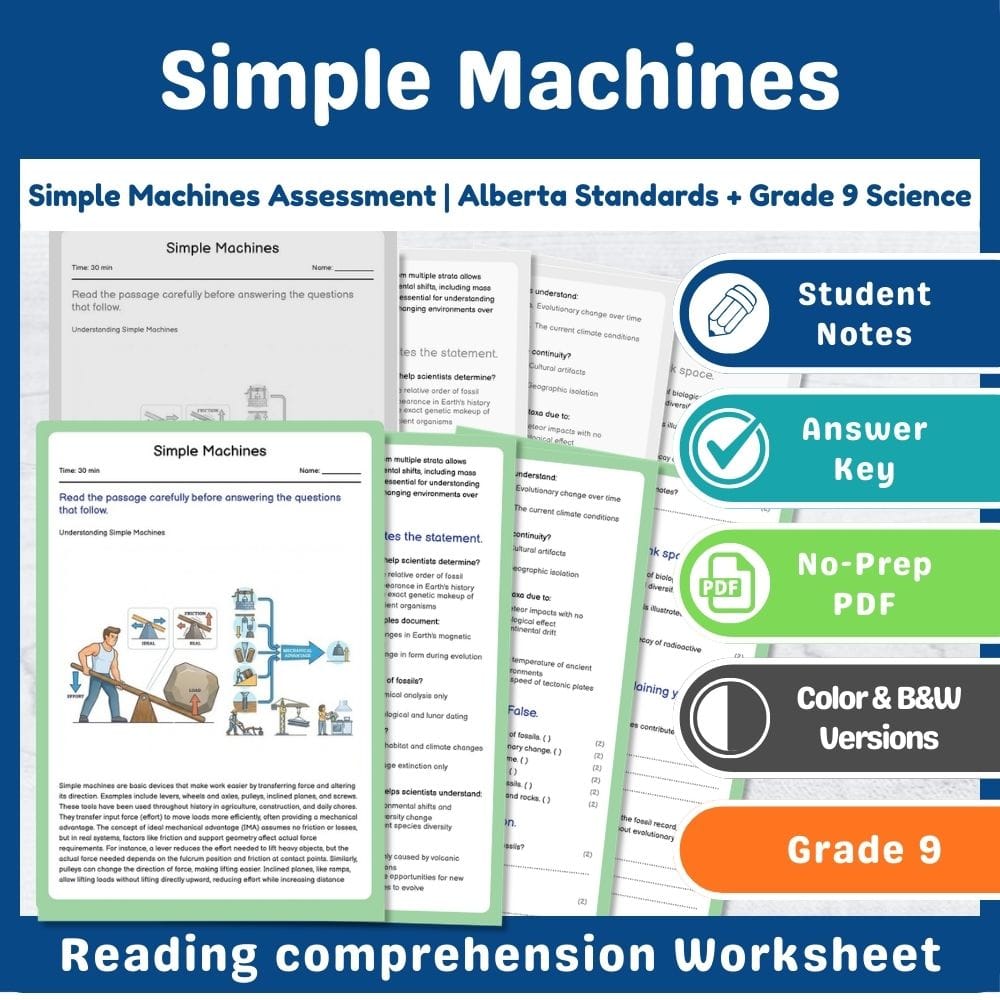
Simple Machines Assessment | Alberta Standards + Grade 9 Science
Created byPrism Point LearningLearning Objectives
- Describe the different types of simple machines and their functions.
- Explain how simple machines reduce effort and change the direction of force.
- Differentiate between ideal and actual mechanical advantage in systems involving simple machines.
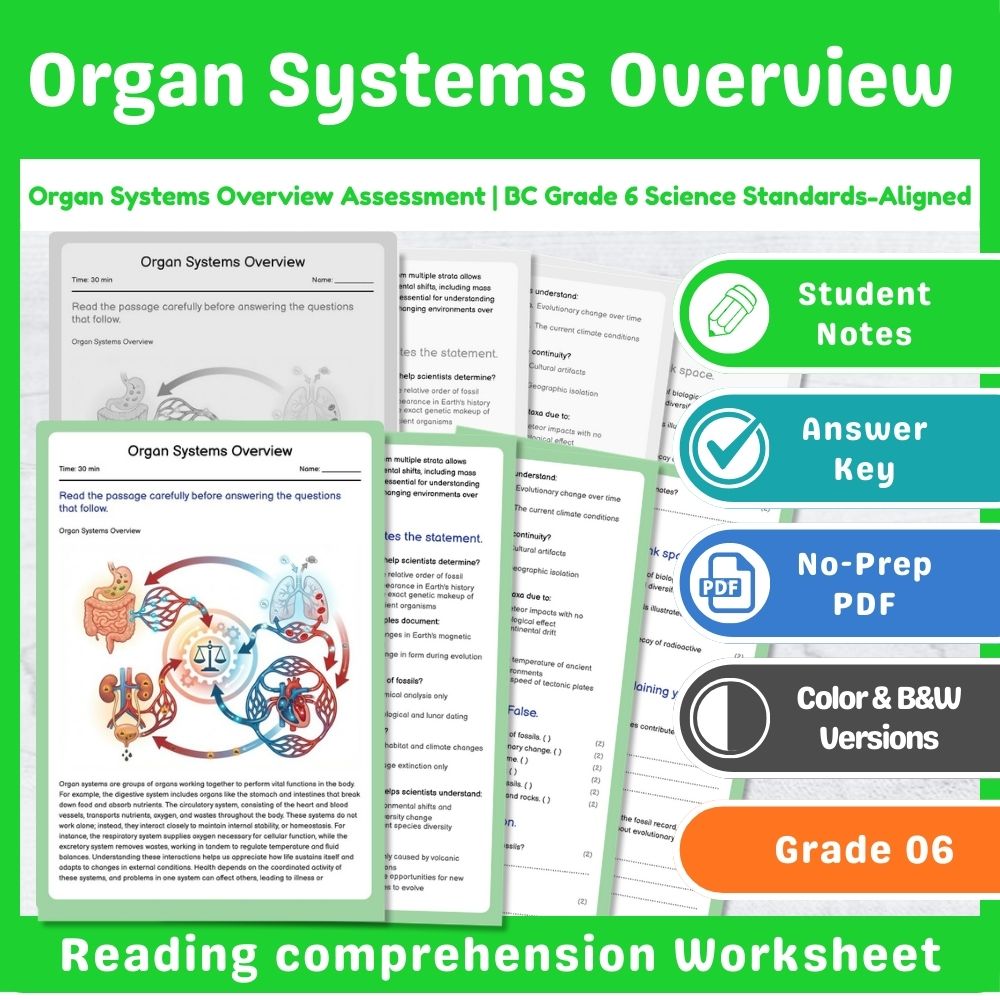
Organ Systems Overview Assessment | BC Grade 6 Science Standards-Aligned
Created byPrism Point LearningLearning Objectives
- Describe the main functions of different organ systems.
- Explain how organ systems interact to maintain homeostasis.
- Identify principal organs involved in various systems.

Food Chains Assessment for Grade 10 Science | TEKS Standards
Created byPrism Point LearningLearning Objectives
- Understand the flow of energy through food chains and food webs.
- Identify the roles of producers, consumers, and decomposers in ecosystems.
- Explain the concepts of interconnections and stability in complex food webs.
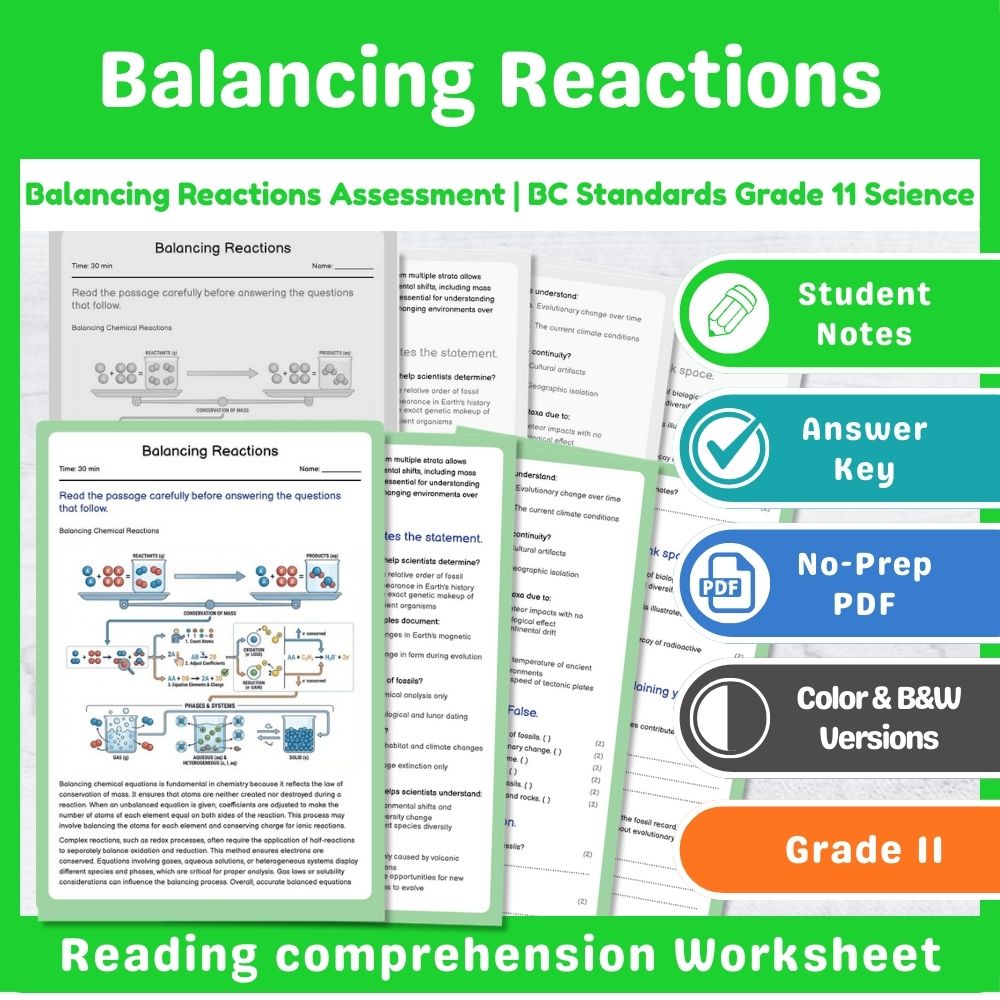
Balancing Reactions Assessment | BC Standards Grade 11 Science
Created byPrism Point LearningLearning Objectives
- Understand the purpose and importance of balancing chemical equations to obey conservation of mass and atoms.
- Identify how to adjust coefficients to balance reactions, including ionic, redox, and various phase systems.
- Apply stoichiometric ratios from balanced equations for quantitative calculations in chemical processes.
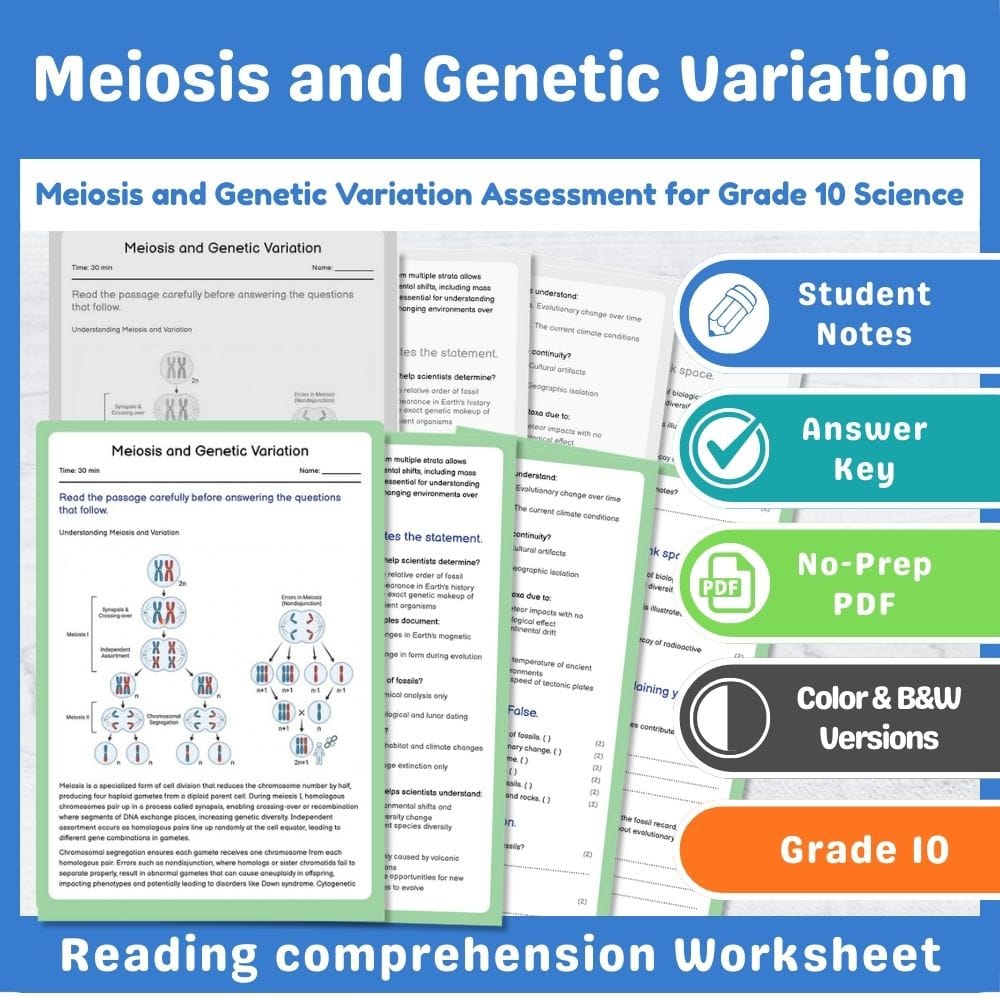
Meiosis and Genetic Variation Assessment for Grade 10 Science
Created byPrism Point LearningLearning Objectives
- Understand key concepts related to Science
- Apply knowledge through practice questions
- Demonstrate comprehension of the material

Periodic Trends Assessment | NGSSS Assessment Grade 10 Science
Created byPrism Point LearningLearning Objectives
- Explain how effective nuclear charge and electron shielding influence atomic size across a period and down a group
- Predict trends in ion formation by relating electron configuration to typical ion charges
- Use periodic trends to reason about changes in ionization energy across periods and groups
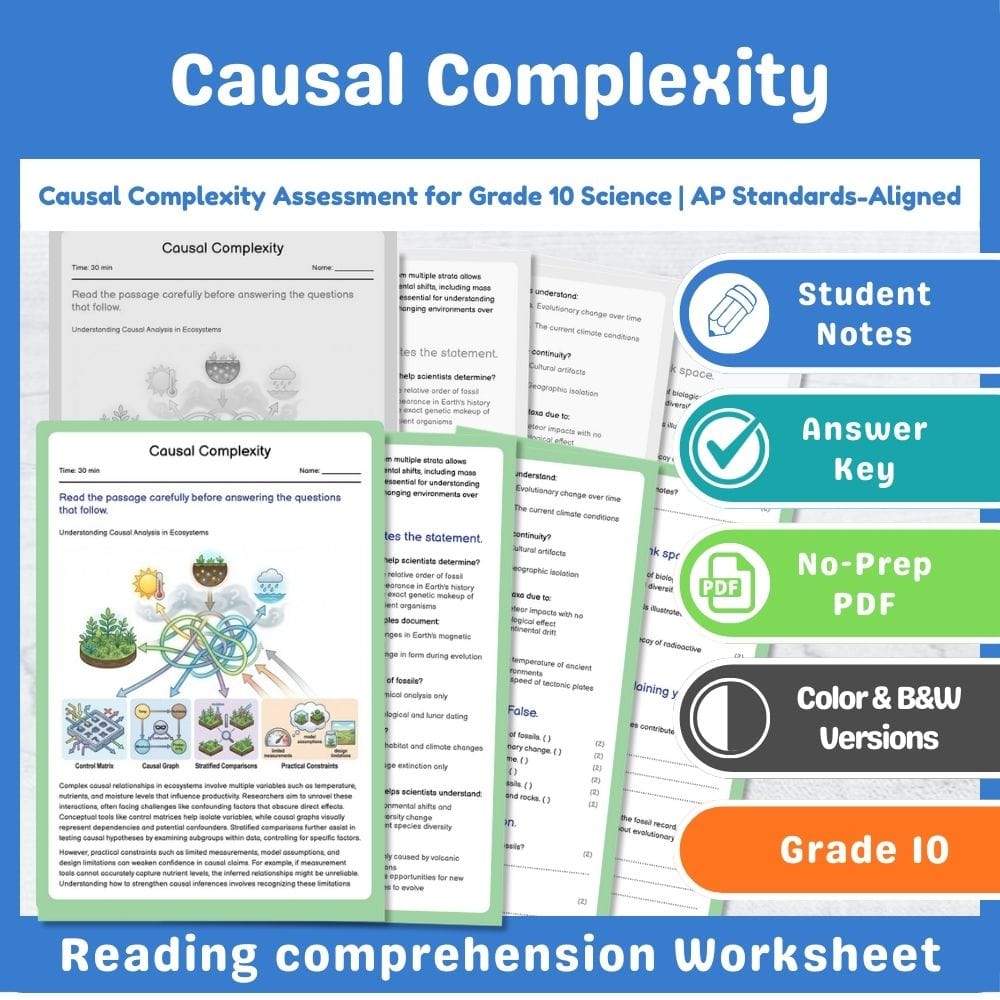
Causal Complexity Assessment for Grade 10 Science | AP Standards-Aligned
Created byPrism Point LearningLearning Objectives
- Understand methods for disentangling multivariable causal relationships in complex systems.
- Apply conceptual frameworks like control matrices, causal graphs, and stratified comparisons.
- Identify confounding factors and interaction effects in ecological and environmental contexts.
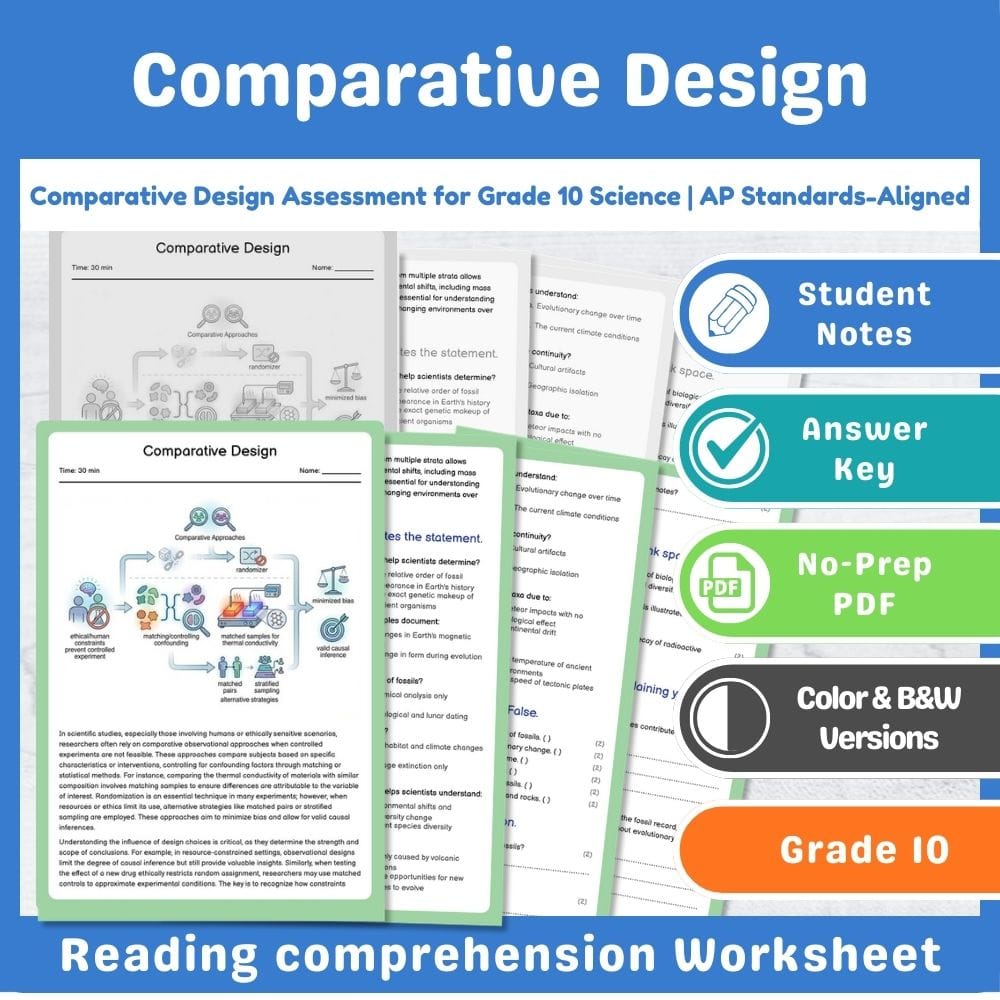
Comparative Design Assessment for Grade 10 Science | AP Standards-Aligned
Created byPrism Point LearningLearning Objectives
- Understand principles of comparative observational approaches and controlled trials.
- Identify independent and dependent variables in experimental designs.
- Recognize strategies for matching, randomization, and minimizing bias.

Energy in Cells Assessment | Florida NGSSS Standard Grade 10 Science
Created byPrism Point LearningLearning Objectives
- Explain how cells obtain and use energy to perform work such as building molecules and maintaining organization
- Describe how cellular respiration converts chemical energy from carbohydrates into ATP
- Compare energy transformation in cellular respiration with energy capture in photosynthesis
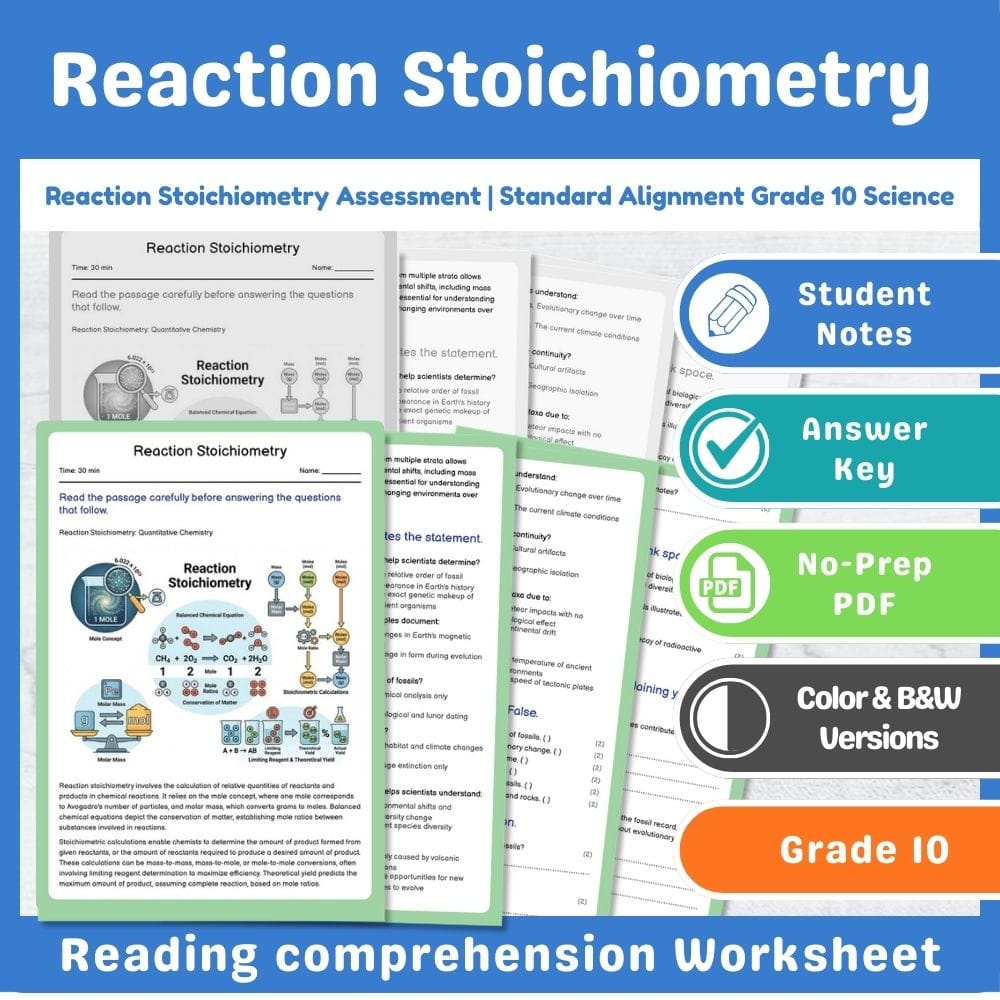
Reaction Stoichiometry Assessment | Standard Alignment Grade 10 Science
Created byPrism Point LearningLearning Objectives
- Understand the mole concept and how it relates to quantitative chemical calculations.
- Apply balanced chemical equations to determine mass, mole ratios, and theoretical yields.
- Interpret reaction equations to analyze gas volume relationships and concentration data.
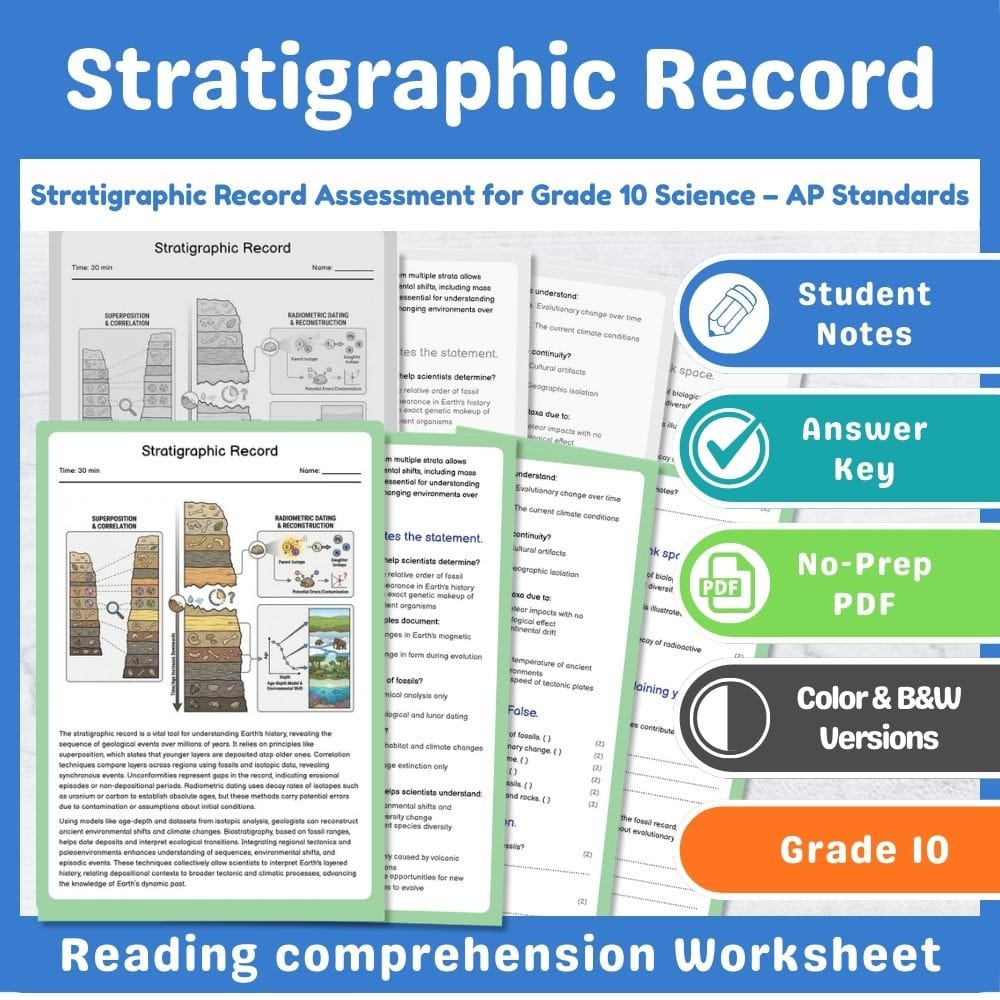
Stratigraphic Record Assessment for Grade 10 Science – AP Standards
Created byPrism Point LearningLearning Objectives
- Interpret stratigraphic sequences and fossil assemblages to infer Earth's historical timeline.
- Understand principles such as superposition, correlation, and unconformities.
- Evaluate radiometric decay methods and error considerations in determining absolute ages.
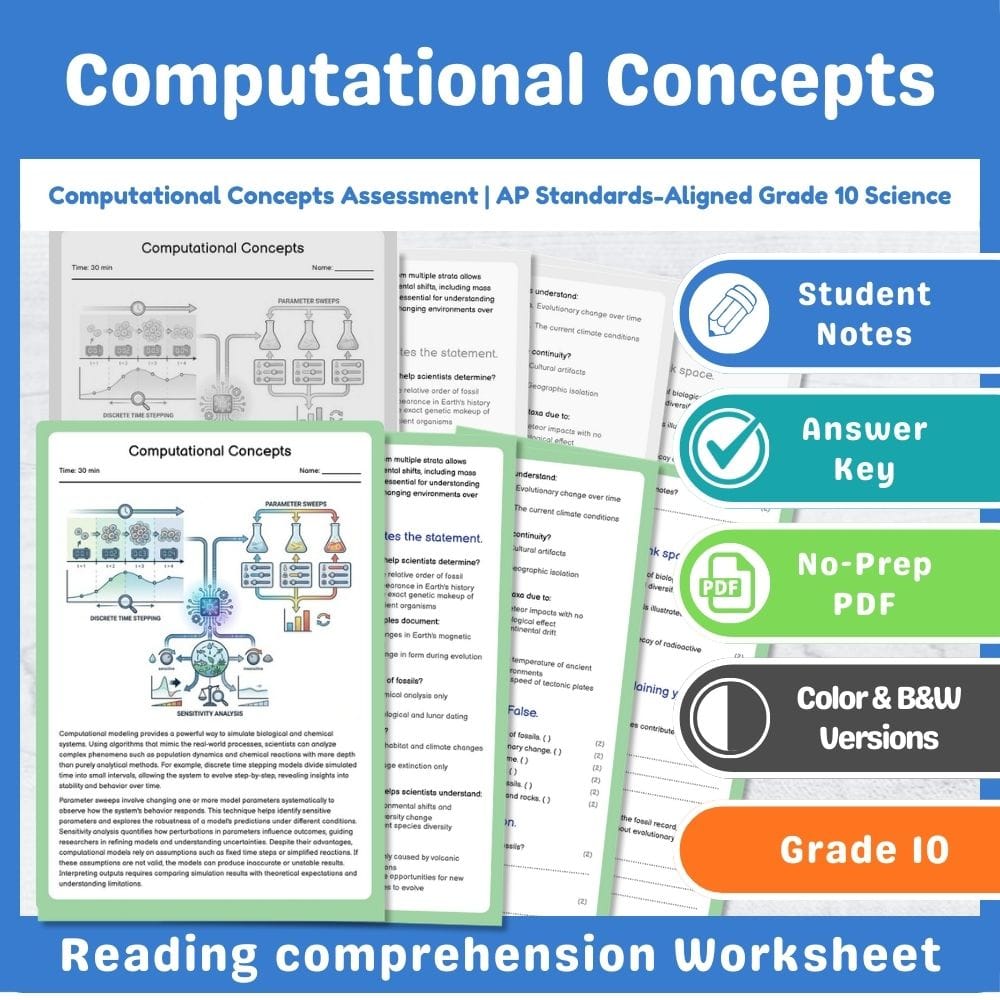
Computational Concepts Assessment | AP Standards-Aligned Grade 10 Science
Created byPrism Point LearningLearning Objectives
- Understand basic computational approaches used in modeling dynamic systems.
- Identify methods such as discrete time stepping, parameter sweeps, and sensitivity analysis.
- Recognize assumptions, stability concerns, and interpretation of simulation outputs.

Friction And Drag Assessment | NGSSS Standards Grade 10 Science
Created byPrism Point LearningLearning Objectives
- Explain how nonconservative forces like friction and drag oppose motion and remove mechanical energy
- Analyze how friction and drag affect acceleration and velocity over time
- Relate real-world observations (slowing down, reaching terminal velocity) to the concept of net force

Cell Membrane Transport Assessment for Grade 10 Science | NGSSS
Created byPrism Point LearningLearning Objectives
- Explain selective permeability and how it supports maintaining stable internal conditions in cells.
- Compare passive transport (diffusion and osmosis) with active transport (energy-requiring transport).
- Describe how water movement by osmosis affects cell size and function.

Reaction Energy Assessment | Florida NGSSS Standards Grade 10 Science
Created byPrism Point LearningLearning Objectives
- Explain how reaction energy changes when comparing reactants and products.
- Distinguish endothermic and exothermic reactions using energy absorbed or released to the surroundings.
- Interpret energy profiles in terms of bond breaking, bond forming, and activation energy.
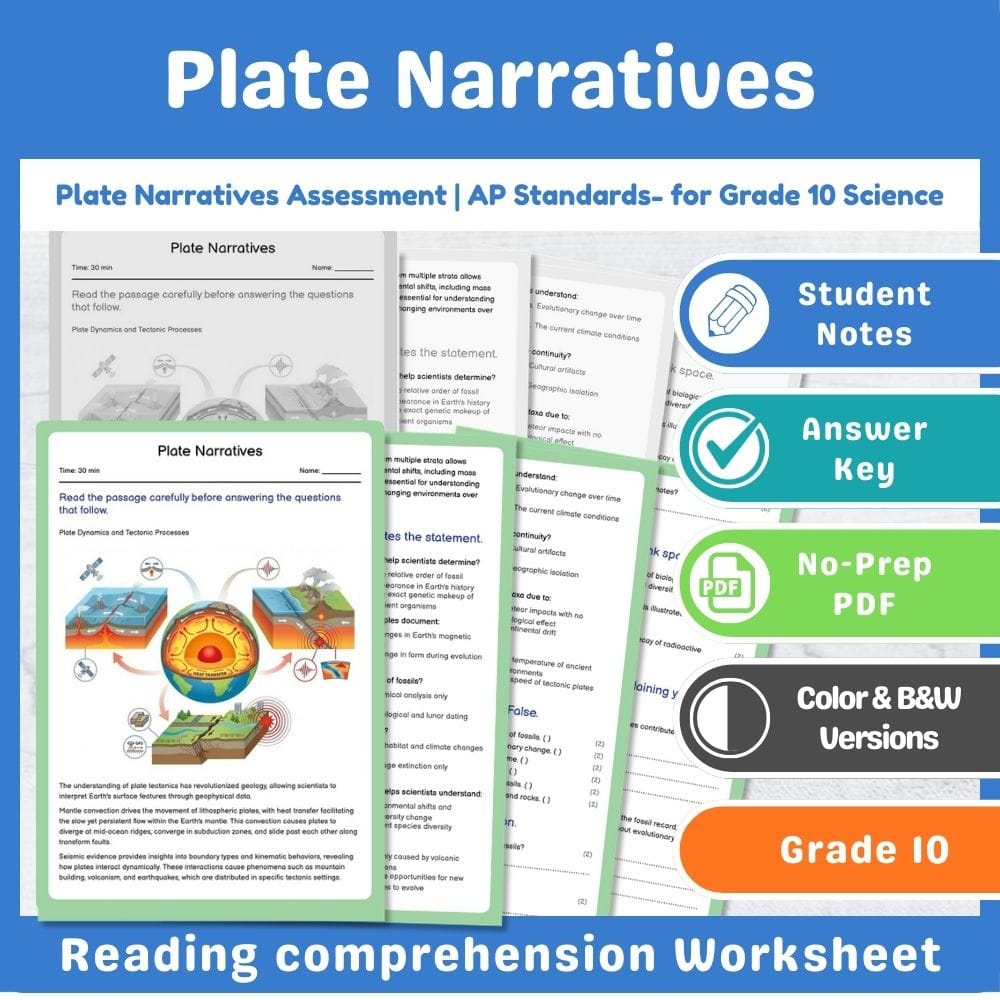
Plate Narratives Assessment | AP Standards-Aligned Evaluation for Grade 10 Science
Created byPrism Point LearningLearning Objectives
- Explain mechanisms of plate motion, mantle convection, and subduction.
- Interpret tectonic settings using maps, cross-sections, and seismic evidence.
- Connect plate interactions to mountain building, volcanism, and earthquake distribution.
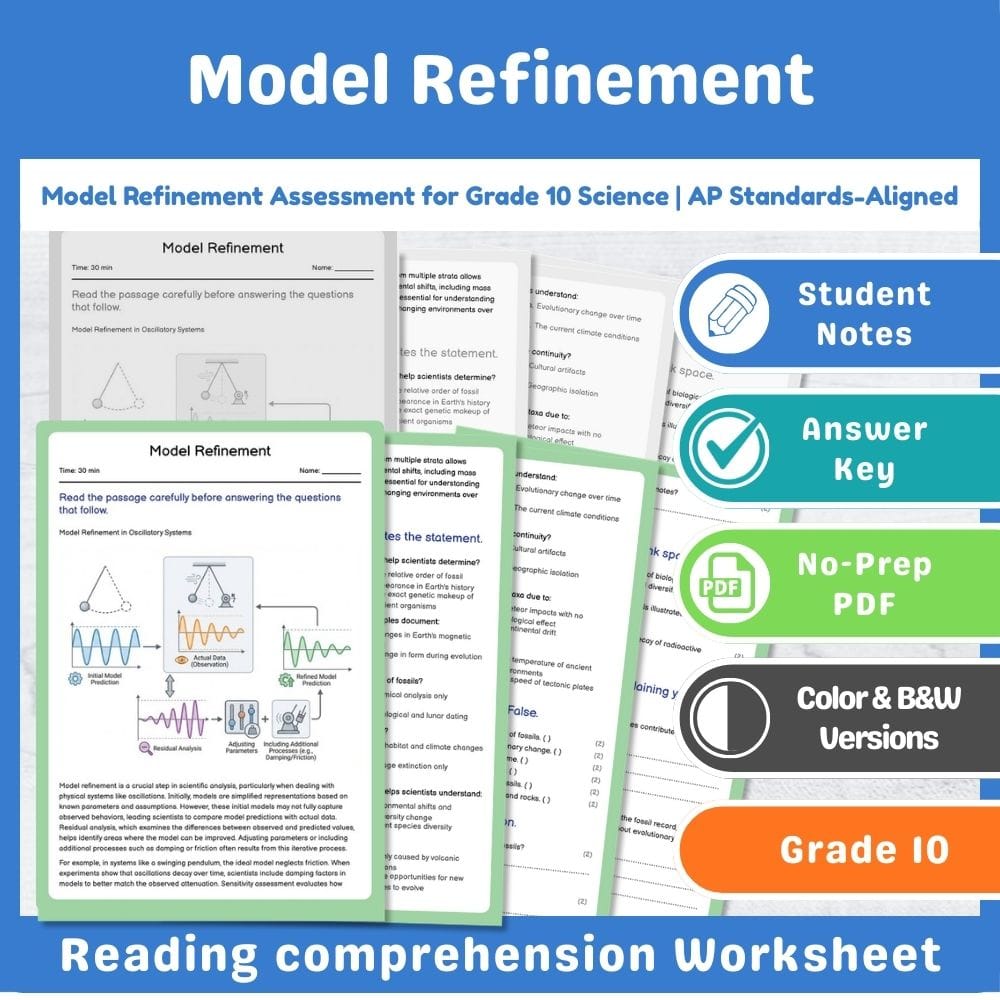
Model Refinement Assessment for Grade 10 Science | AP Standards-Aligned
Created byPrism Point LearningLearning Objectives
- Understand how iterative comparisons and residual analysis guide model improvements.
- Explain the role of parameter estimation and inclusion of additional processes like damping in refining models.
- Evaluate the criteria for choosing between simpler and more complex models based on their explanatory power and predictive accuracy.

Electromagnetic Waves Grade 10 Assessment | Florida NGSSS Standards
Created byPrism Point LearningLearning Objectives
- Explain how electromagnetic waves can travel through a vacuum and relate frequency to wavelength
- Describe how the electromagnetic spectrum connects frequency, wavelength, and energy
- Compare reflection, transmission, and absorption based on wave-material interactions
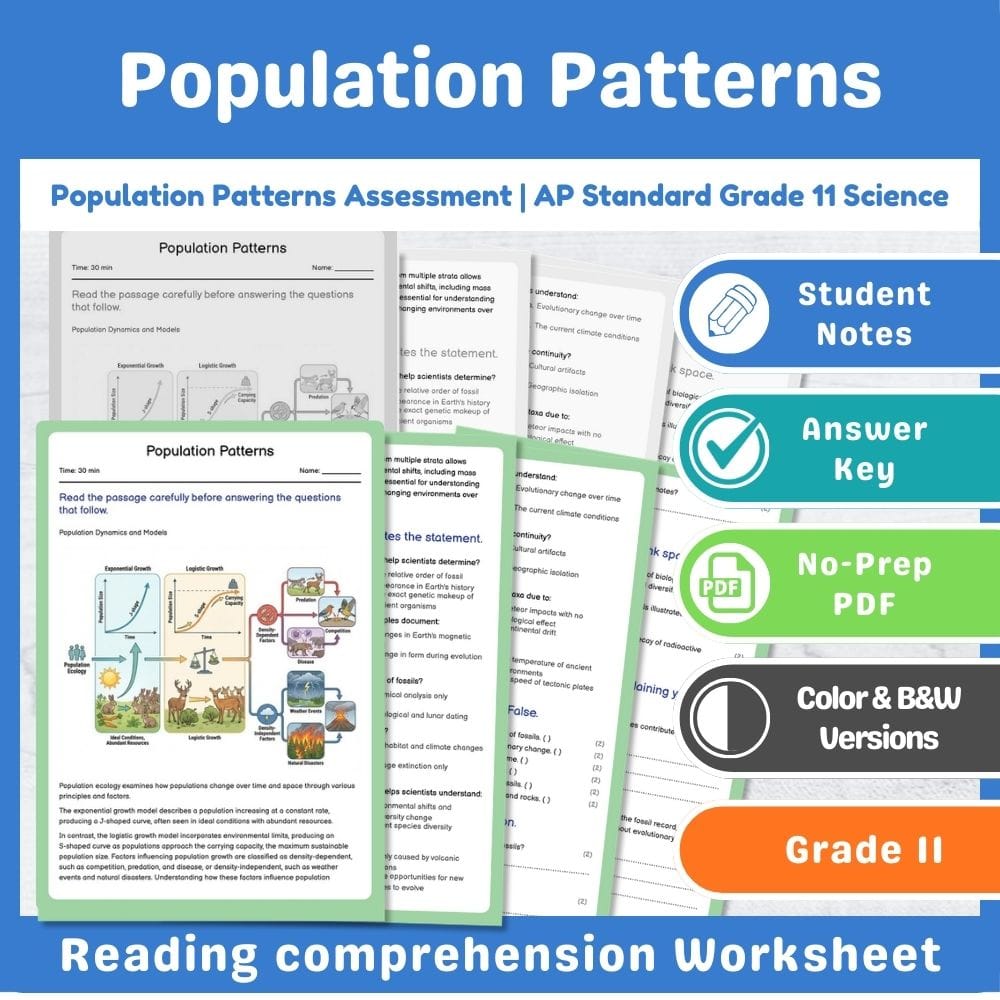
Population Patterns Assessment | AP Standard Grade 11 Science
Created byPrism Point LearningLearning Objectives
- Describe principles of population dynamics including exponential and logistic growth models.
- Interpret population fluctuations through graphical models, life-history tables, and reproductive strategies.
- Analyze case examples like invasive species and predator-prey cycles to understand population trajectories.
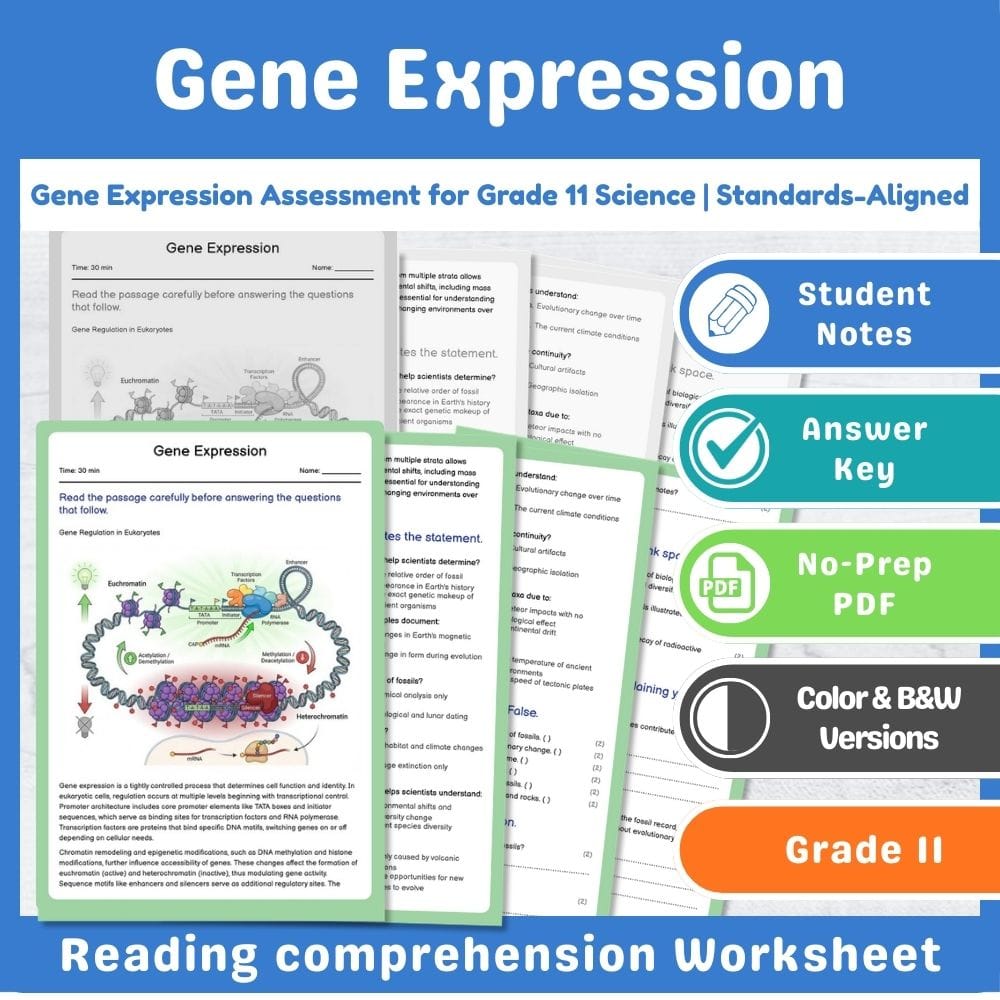
Gene Expression Assessment for Grade 11 Science | Standards-Aligned
Created byPrism Point LearningLearning Objectives
- Explain the mechanisms controlling gene expression from transcription to post-transcriptional modification and translation.
- Identify the roles of promoter architecture, transcription factors, chromatin remodeling, and epigenetic marks.
- Analyze how regulatory architecture influences phenotypic outcomes and cellular diversity.
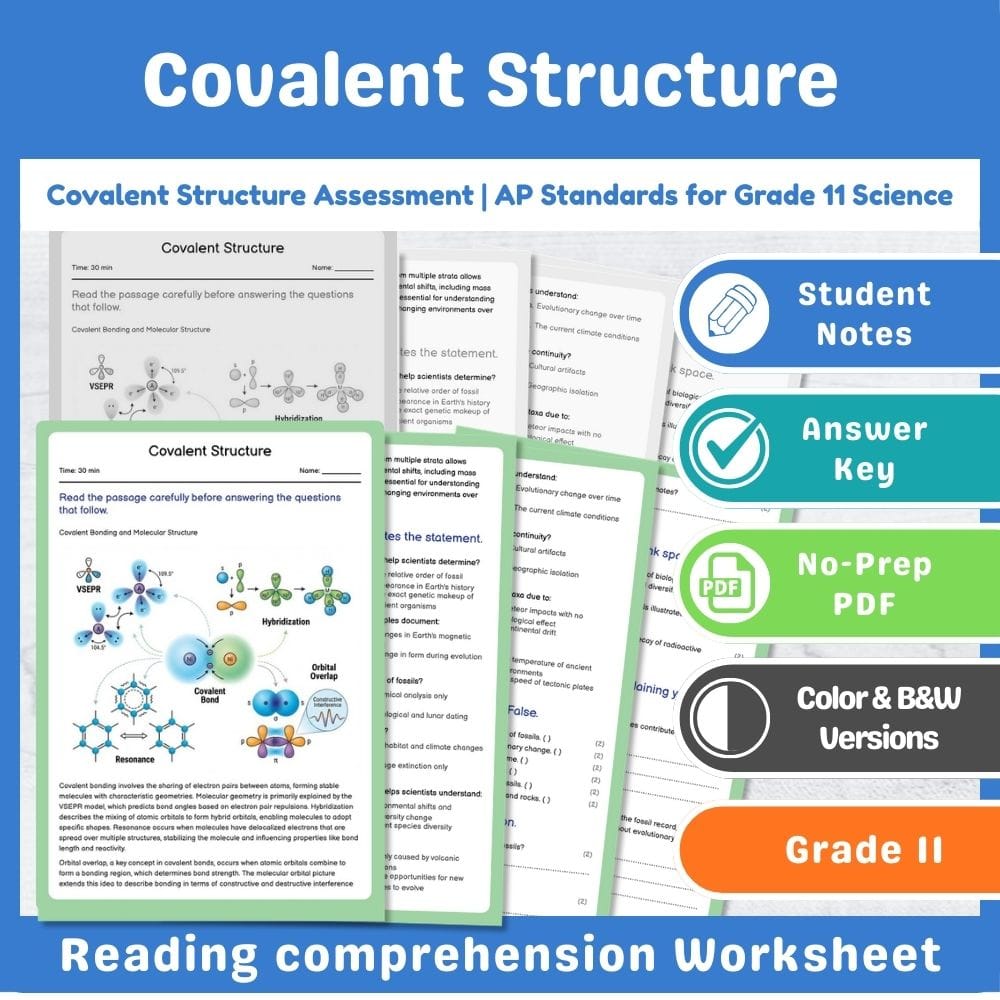
Covalent Structure Assessment | AP Standards for Grade 11 Science
Created byPrism Point LearningLearning Objectives
- Understand molecular geometry, hybridization, and resonance in covalent bonds.
- Interpret Lewis structures and VSEPR models to predict bond angles and polarity.
- Describe the significance of orbital overlap and molecular orbital theory in bonding.
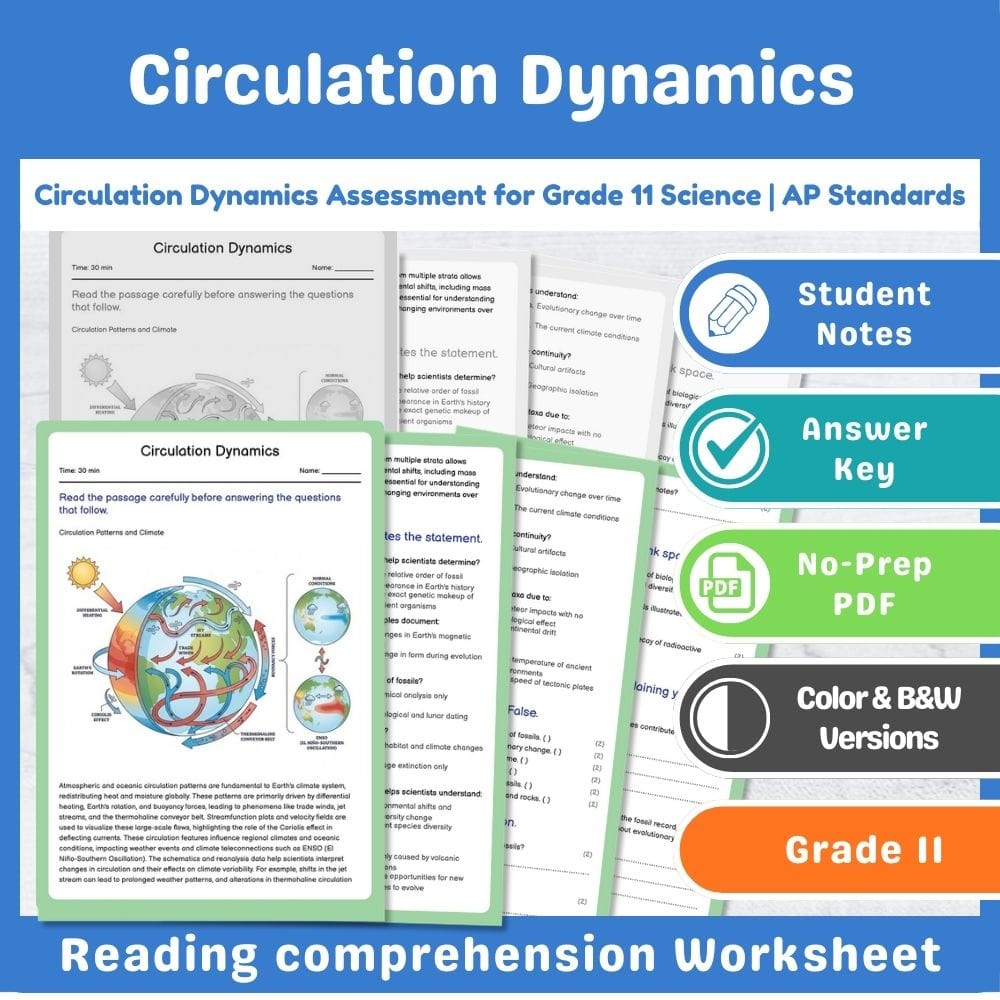
Circulation Dynamics Assessment for Grade 11 Science | AP Standards
Created byPrism Point LearningLearning Objectives
- Explain the principles of atmospheric and oceanic circulation patterns.
- Interpret streamfunction plots and velocity fields related to climate systems.
- Identify key phenomena such as jet streams, trade winds, and thermohaline circulation.
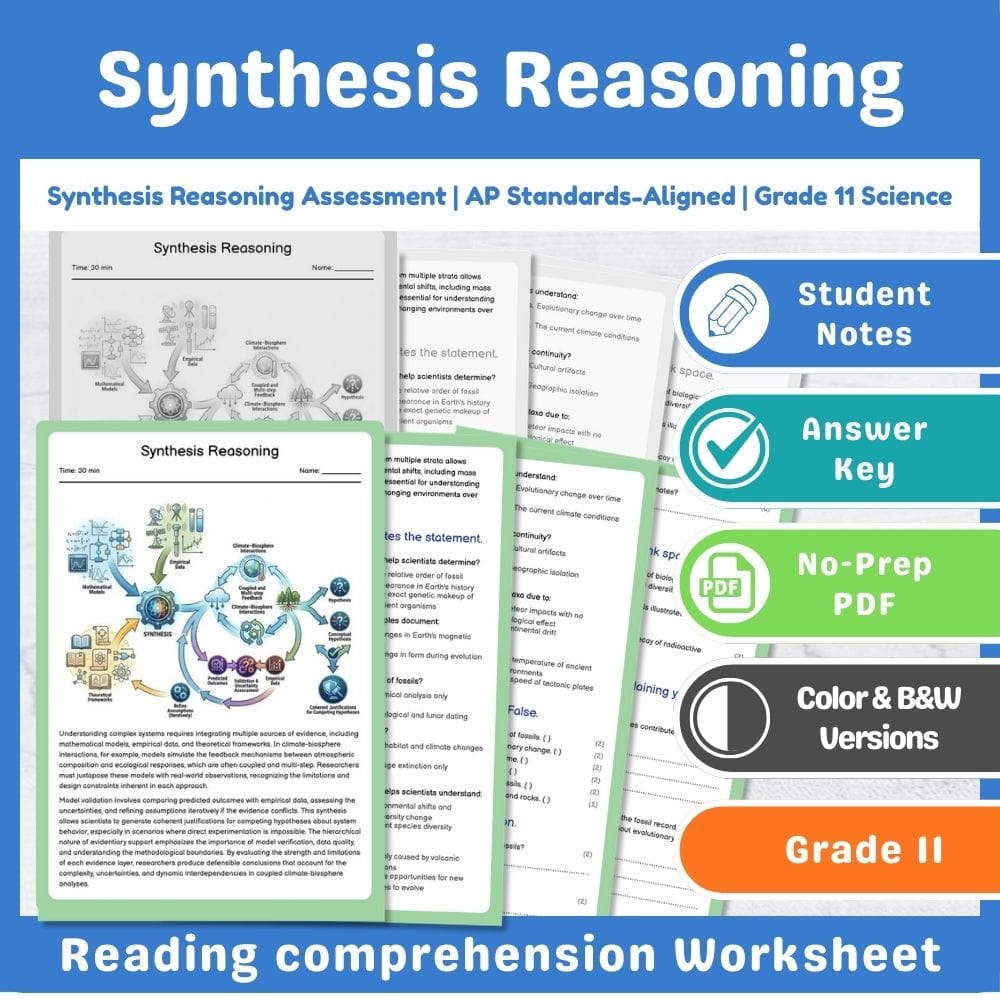
Synthesis Reasoning Assessment | AP Standards-Aligned | Grade 11 Science
Created byPrism Point LearningLearning Objectives
- Evaluate complex phenomena through model-based inference and quantitative reasoning.
- Integrate empirical summaries, model expectations, and design constraints for hypothesis testing.
- Apply uncertainty quantification and validation outcomes to support scientific conclusions.
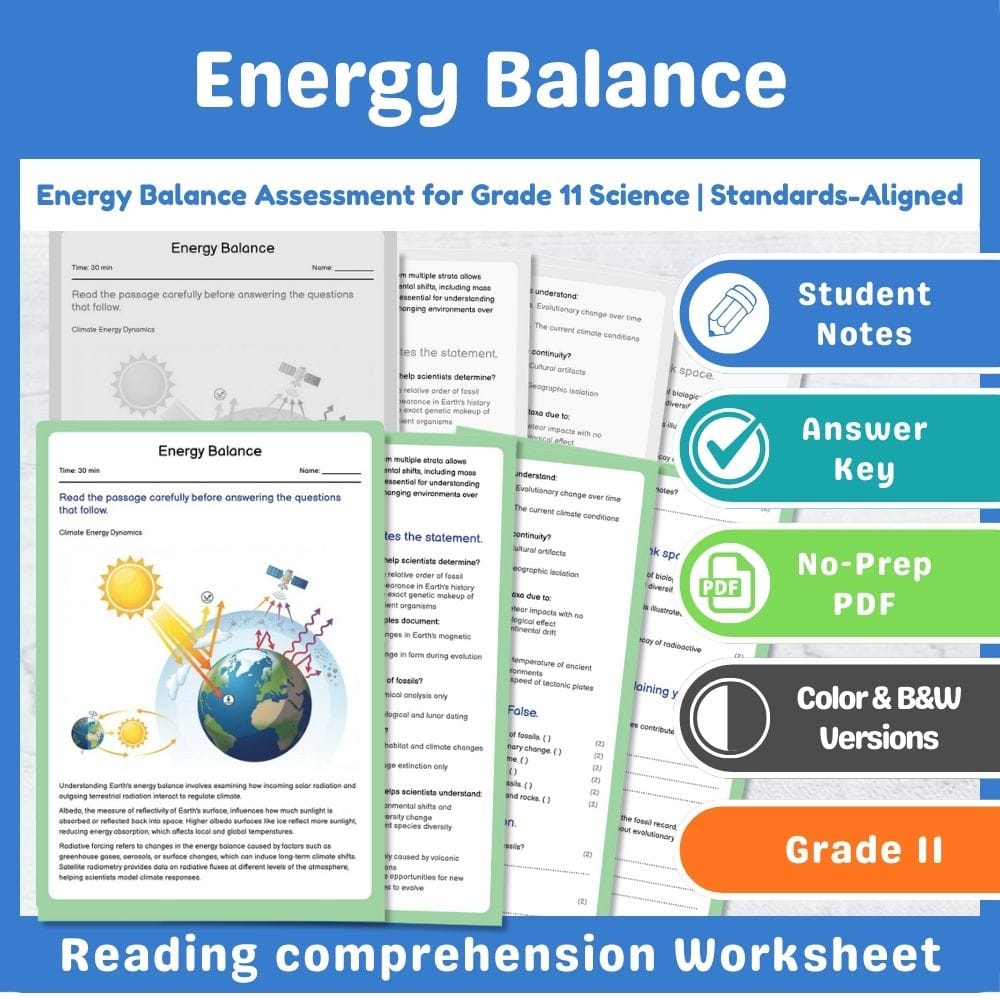
Energy Balance Assessment for Grade 11 Science | Standards-Aligned
Created byPrism Point LearningLearning Objectives
- Explain the concepts of energy balance and radiative forcing in climate systems.
- Interpret albedo maps, radiative flux diagrams, and simple energy budget models.
- Analyze phenomena such as seasonal cycles and polar amplification through feedback mechanisms.
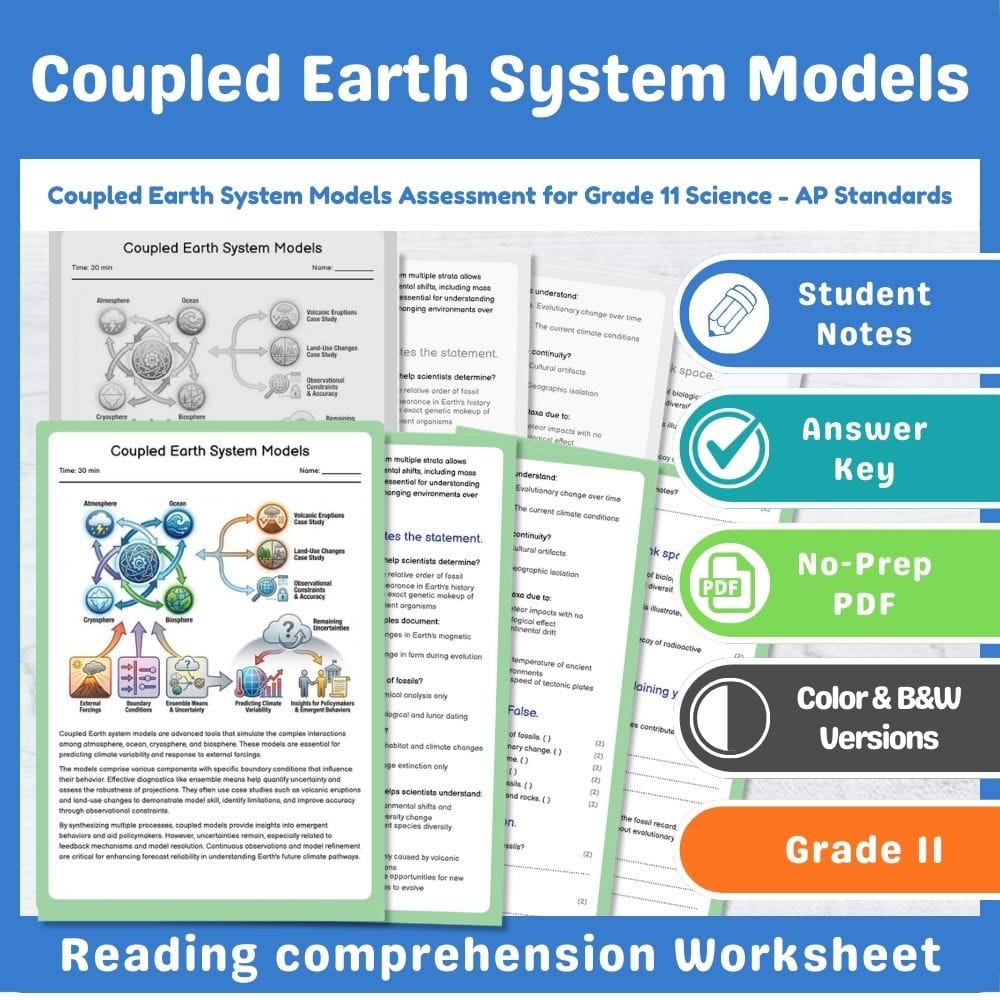
Coupled Earth System Models Assessment for Grade 11 Science - AP Standards
Created byPrism Point LearningLearning Objectives
- Understand the components and functions of coupled Earth system models.
- Describe how atmosphere, ocean, cryosphere, and biosphere processes are integrated.
- Explain the role of boundary conditions and diagnostics in model evaluation.
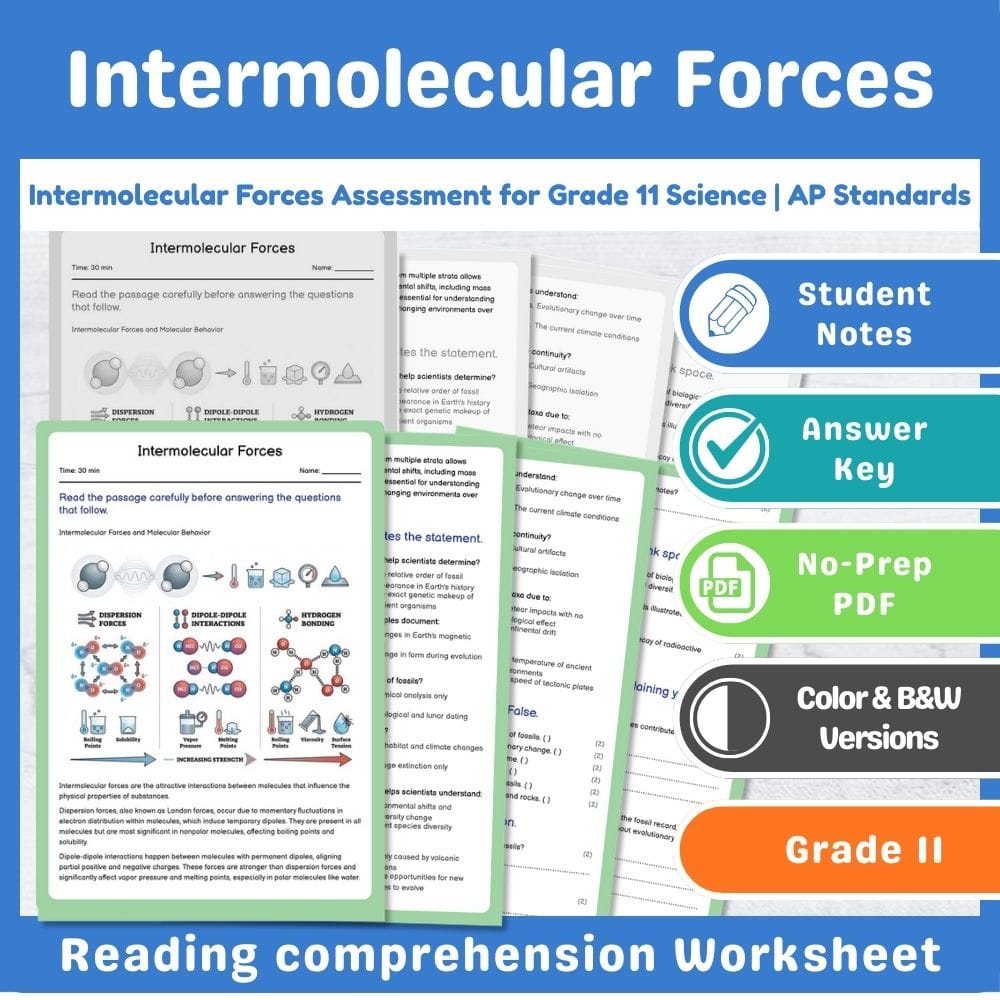
Intermolecular Forces Assessment for Grade 11 Science | AP Standards
Created byPrism Point LearningLearning Objectives
- Describe the different types of intermolecular forces: dispersion, dipole-dipole, and hydrogen bonding.
- Explain how intermolecular forces influence boiling point, vapor pressure, and solubility.
- Relate molecular polarity and surface interactions to phase behavior and macroscopic trends.
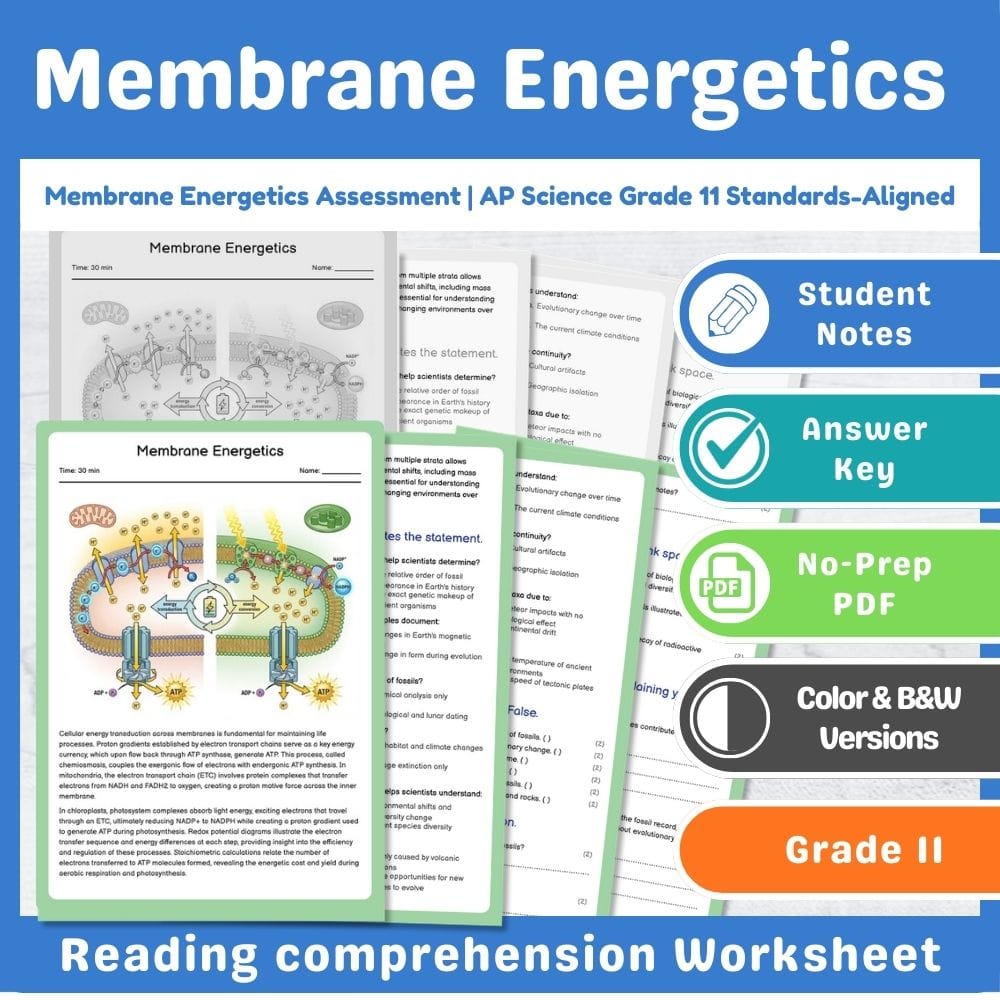
Membrane Energetics Assessment | AP Science Grade 11 Standards-Aligned
Created byPrism Point LearningLearning Objectives
- Explain the principles of membrane-associated energy transduction including proton gradients and chemiosmosis.
- Analyze electron transport chains in aerobic and photosynthetic systems using redox potential diagrams.
- Calculate ATP yield based on electron flow and proton gradients.
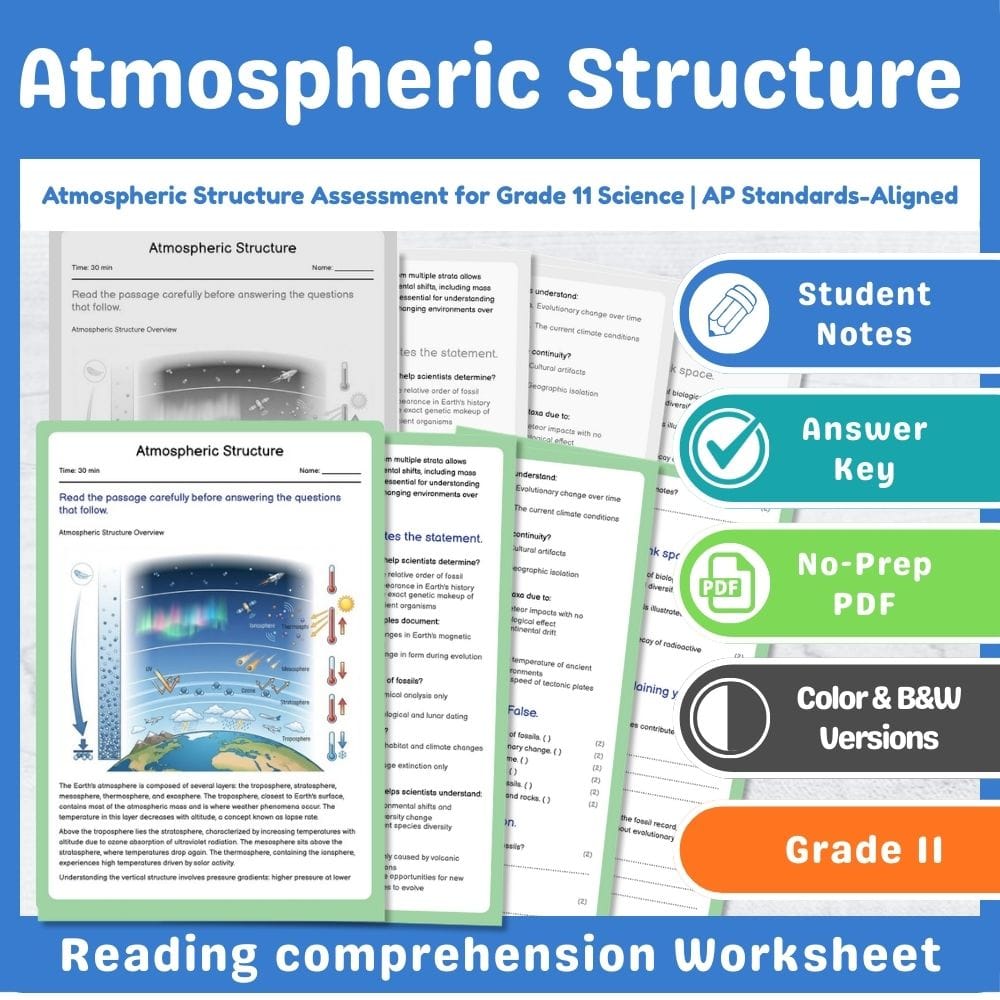
Atmospheric Structure Assessment for Grade 11 Science | AP Standards-Aligned
Created byPrism Point LearningLearning Objectives
- Describe the vertical and horizontal layers of the atmosphere and their characteristics.
- Explain pressure gradients, temperature profiles, and their role in atmospheric circulation.
- Interpret sounding profiles, pressure maps, and radiative diagrams to understand weather patterns.
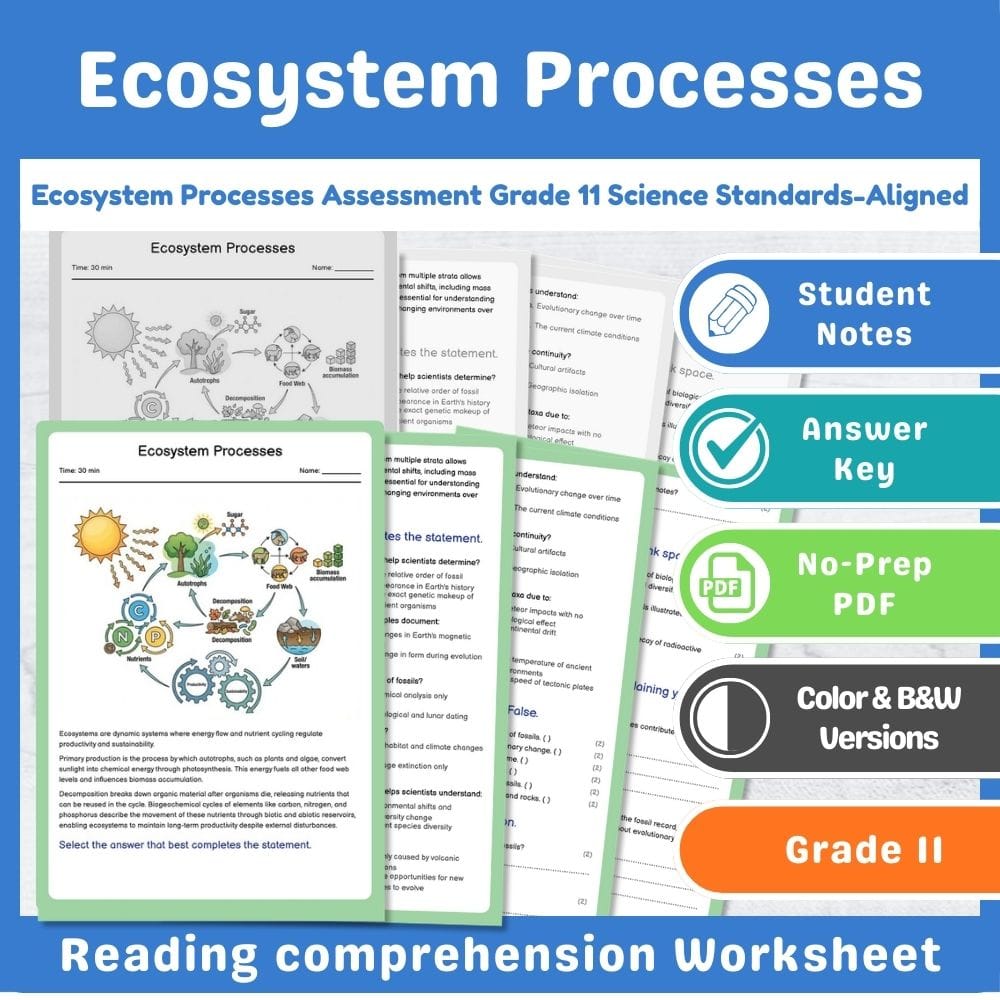
Ecosystem Processes Assessment Grade 11 Science Standards-Aligned
Created byPrism Point LearningLearning Objectives
- Explain the key processes that regulate energy flow and material cycling within ecosystems.
- Describe the roles of primary production, decomposition, and biogeochemical cycles of carbon, nitrogen, and phosphorus.
- Analyze how land-use change, nutrient inputs, and climate variability alter ecosystem cycle rates and affect ecosystem health.
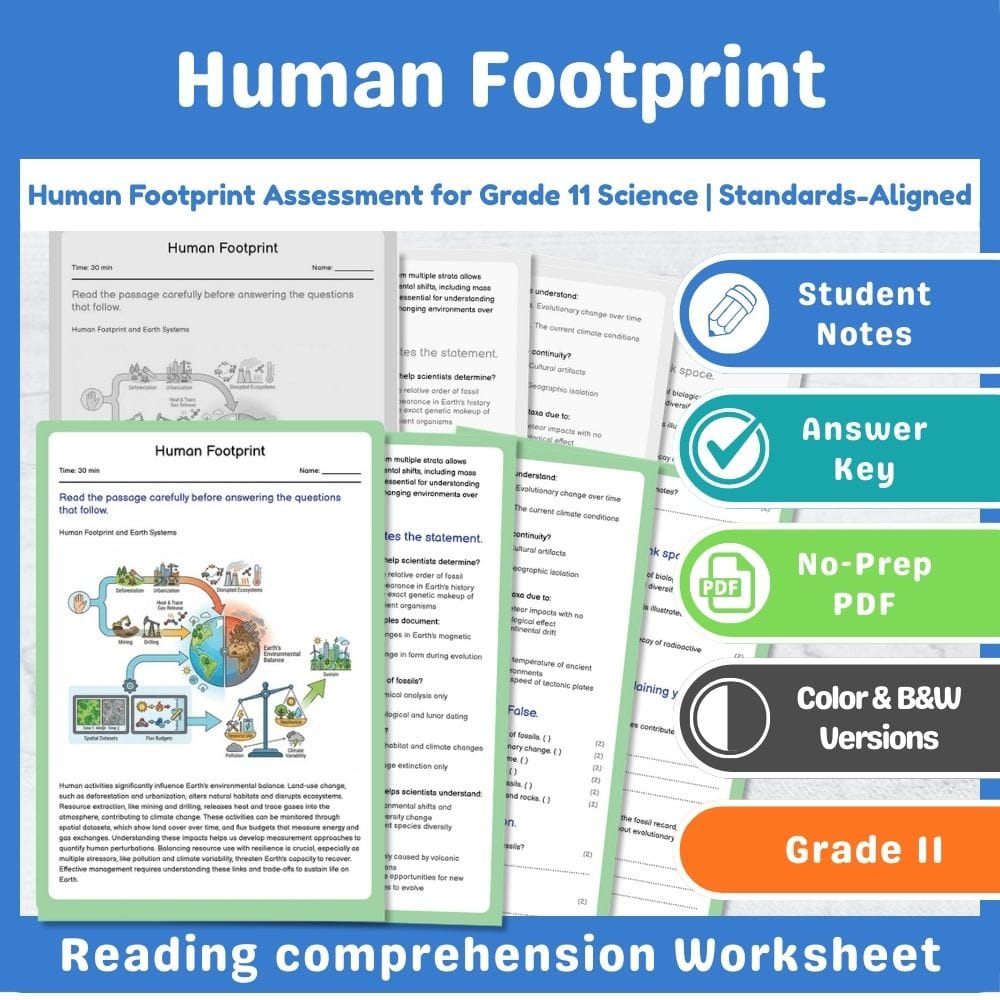
Human Footprint Assessment for Grade 11 Science | Standards-Aligned
Created byPrism Point LearningLearning Objectives
- Understand how human activities alter Earth's systems through land-use change, resource extraction, and emission of gases.
- Analyze spatial datasets and time-series data to identify environmental impacts of human actions.
- Evaluate measurement approaches for quantifying anthropogenic perturbations.
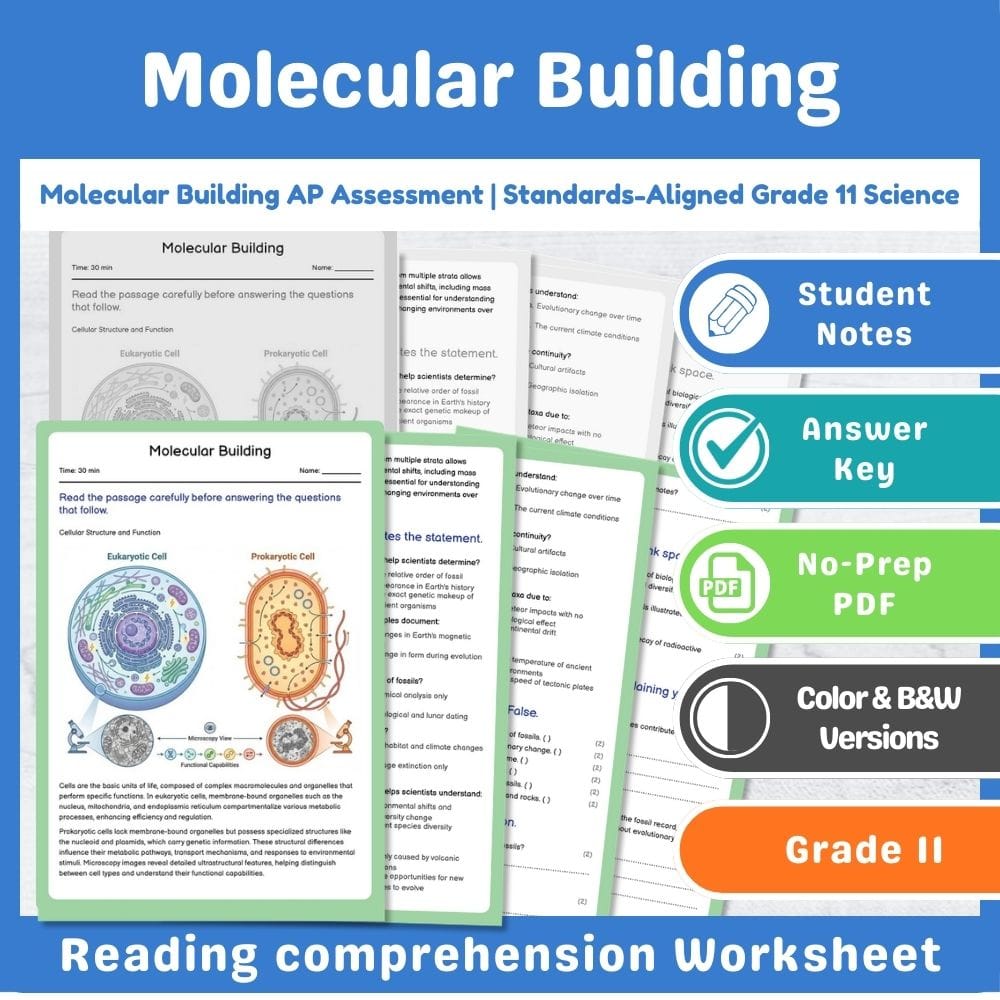
Molecular Building AP Assessment | Standards-Aligned Grade 11 Science
Created byPrism Point LearningLearning Objectives
- Understand the structural organization of cellular macromolecules and organelles.
- Compare features of prokaryotic and eukaryotic cells related to their ultrastructure.
- Explain how subcellular localization influences cellular pathways and functions.
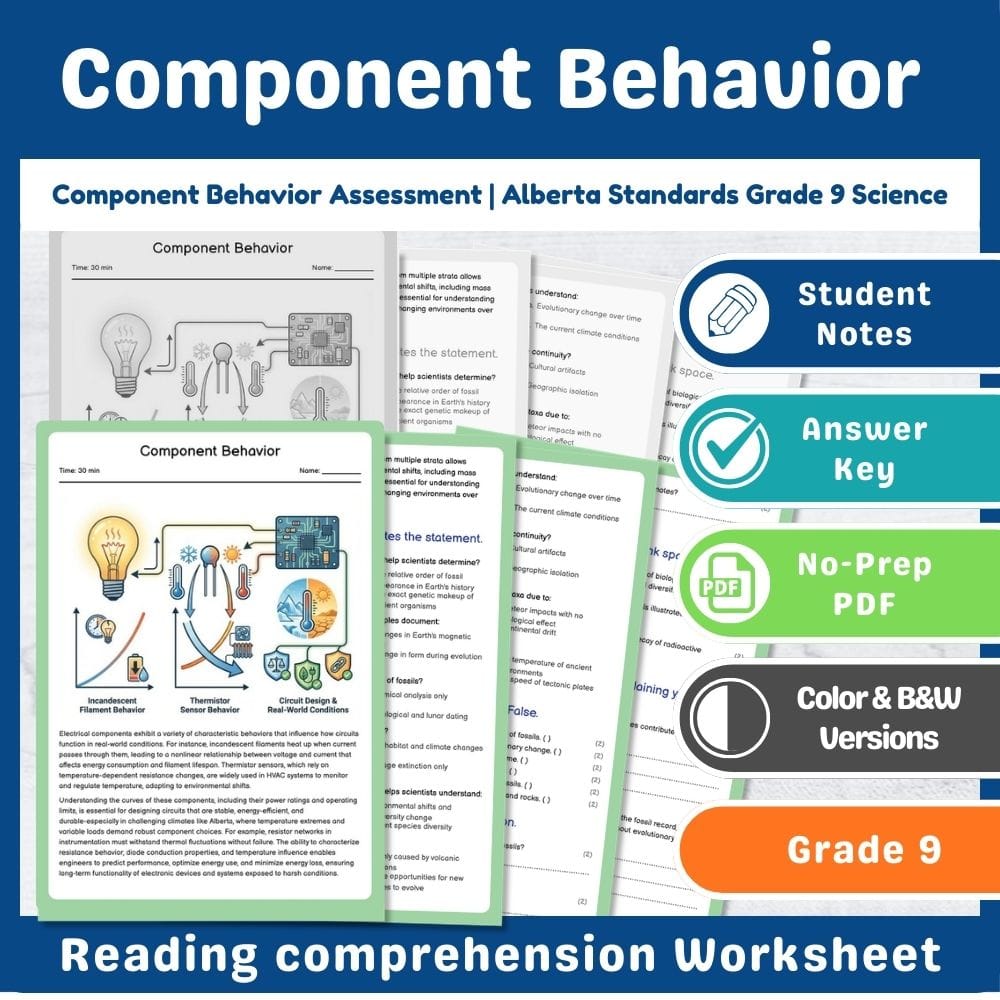
Component Behavior Assessment | Alberta Standards Grade 9 Science
Created byPrism Point LearningLearning Objectives
- Understand the characteristic behaviors of electrical components such as resistance, diode conduction, and temperature dependence.
- Identify real-world examples of component behaviors in electrical circuits.
- Analyze component curves, power ratings, and operating limits to determine their impact on circuit stability, energy efficiency, and longevity.

Patterns of Inheritance Assessment | Alberta Standards Grade 9 Science
Created byPrism Point LearningLearning Objectives
- Explain Mendelian inheritance patterns including dominant and recessive alleles.
- Distinguish between genotype and phenotype in genetic traits.
- Apply Punnett square logic to predict trait segregation ratios.
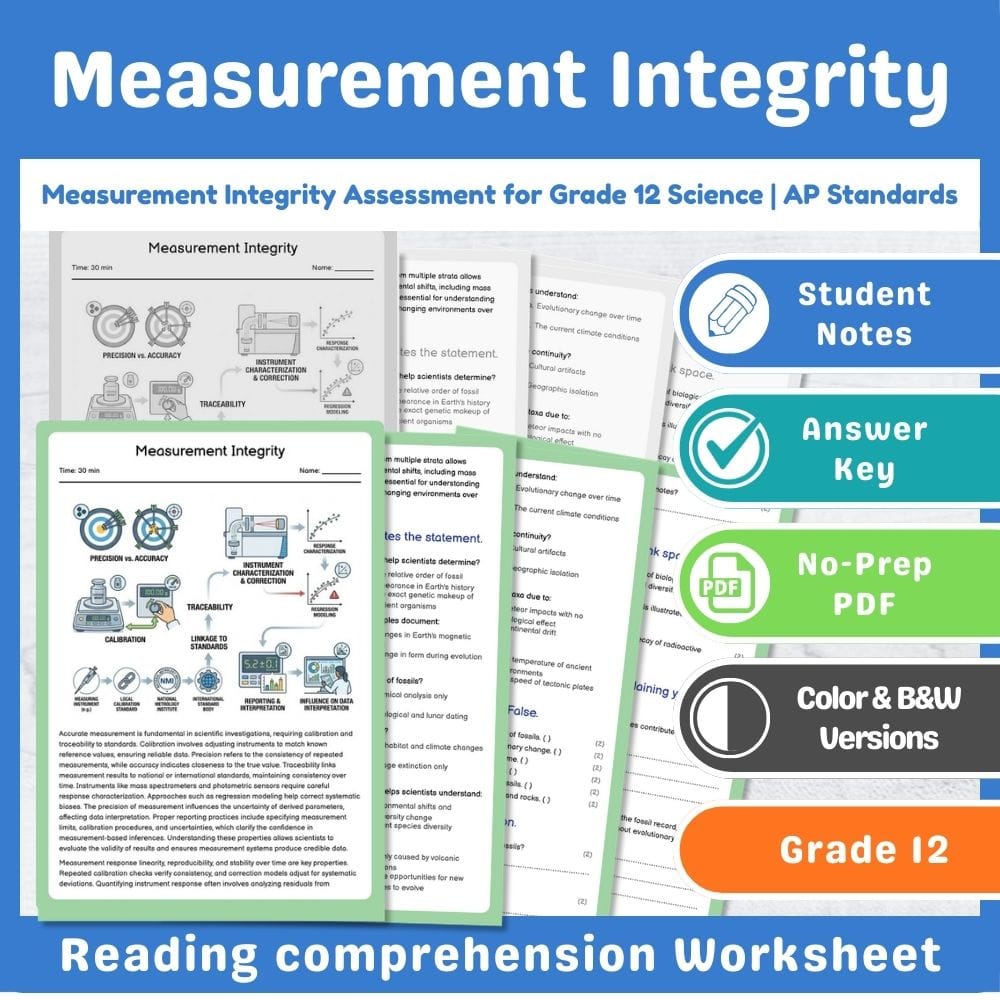
Measurement Integrity Assessment for Grade 12 Science | AP Standards
Created byPrism Point LearningLearning Objectives
- Understand the principles of calibration and traceability in measurement systems.
- Describe methods for evaluating precision, accuracy, and systematic biases.
- Explain the importance of measurement properties in data analysis and reporting.
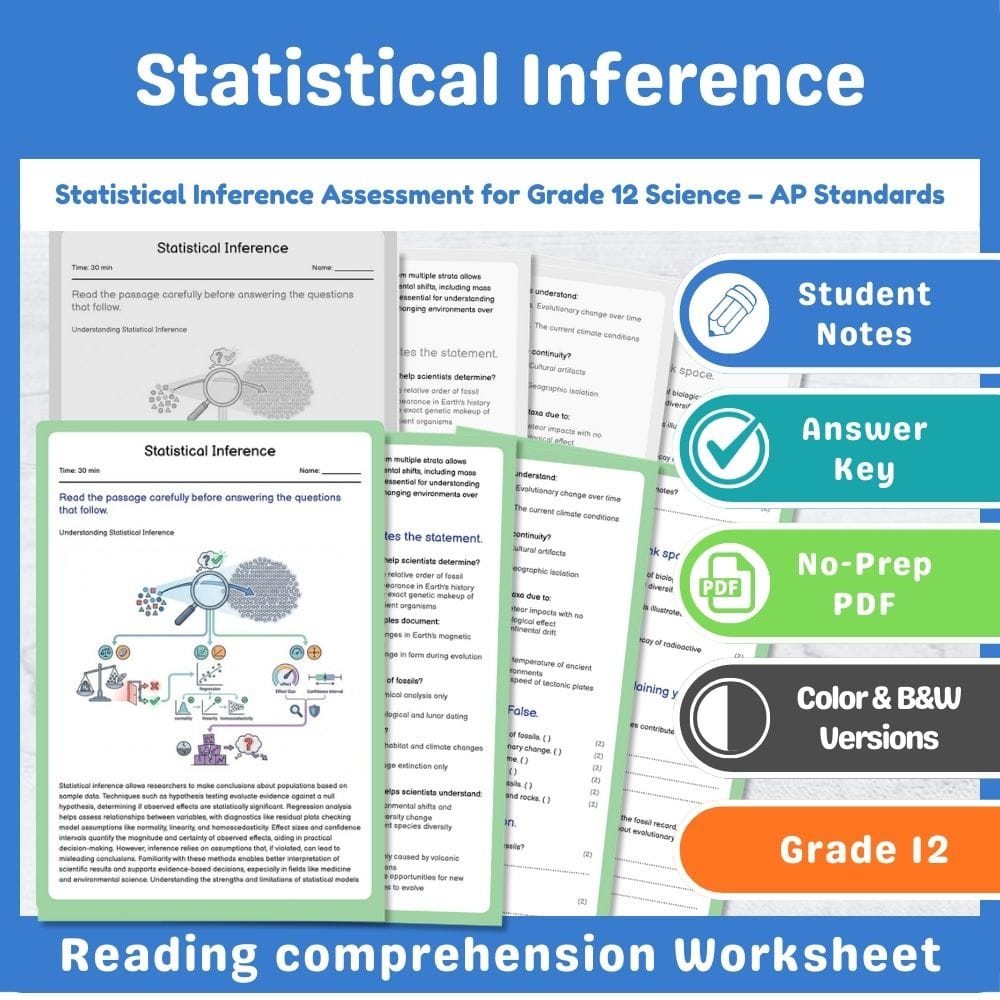
Statistical Inference Assessment for Grade 12 Science – AP Standards
Created byPrism Point LearningLearning Objectives
- Understand the principles and applications of hypothesis testing in quantitative data analysis.
- Interpret regression diagnostics and residual plots to assess model adequacy.
- Estimate effect sizes with confidence intervals and evaluate their practical significance.
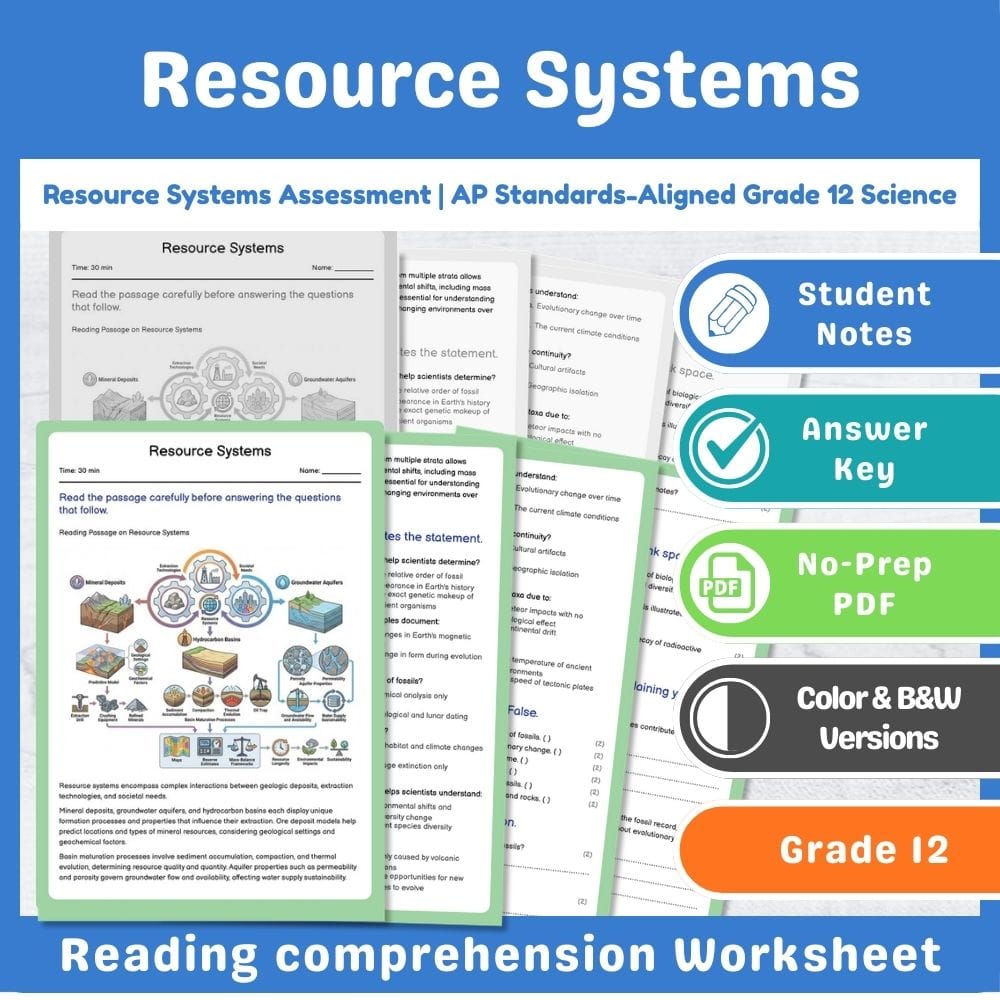
Resource Systems Assessment | AP Standards-Aligned Grade 12 Science
Created byPrism Point LearningLearning Objectives
- Analyze the interactions between geologic resources, extraction processes, and societal demands.
- Understand ore deposit models, aquifer properties, and basin maturation processes.
- Evaluate trade-offs among resource availability, environmental impact, and technological adaptation.
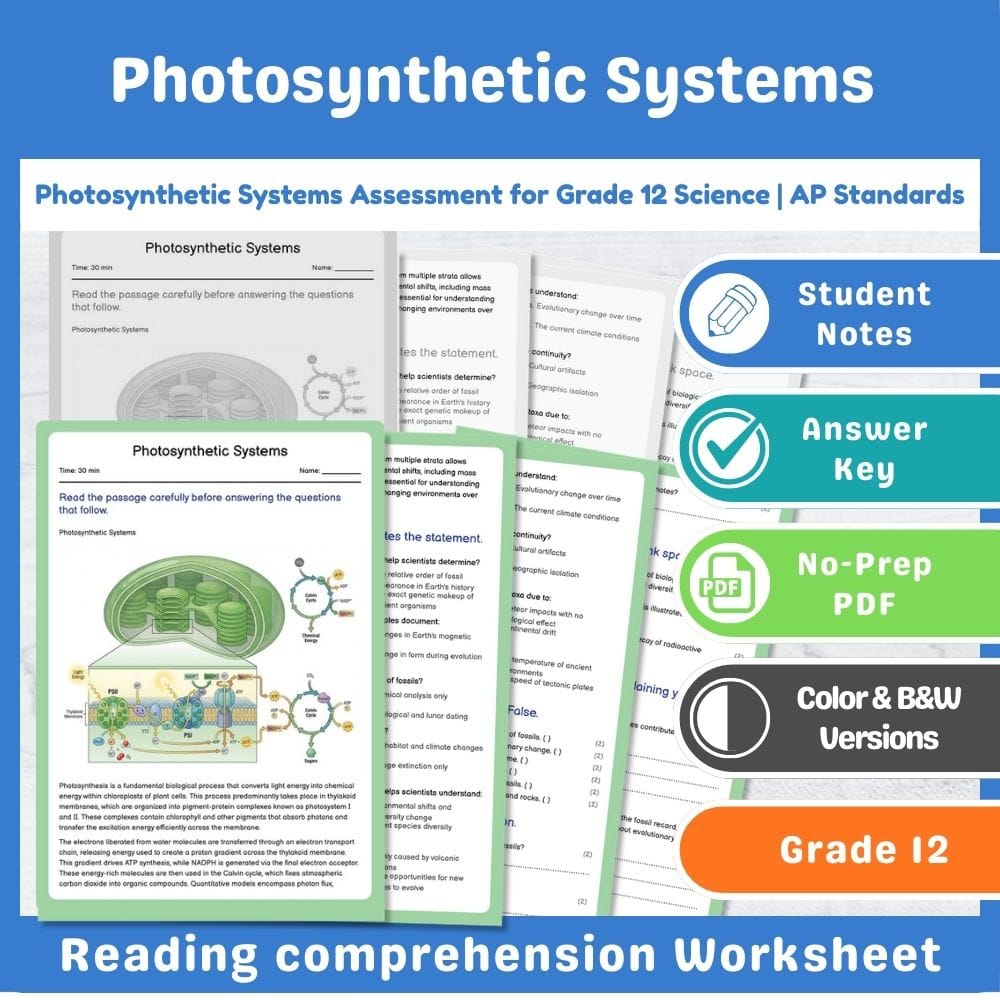
Photosynthetic Systems Assessment for Grade 12 Science | AP Standards
Created byPrism Point LearningLearning Objectives
- Describe the organization of pigments and electron transport chains in photosynthesis.
- Explain the coupling of light energy capture to the Calvin cycle and carbon fixation.
- Analyze energy budgets, quantum yield, and flux measurements in photosynthesis.
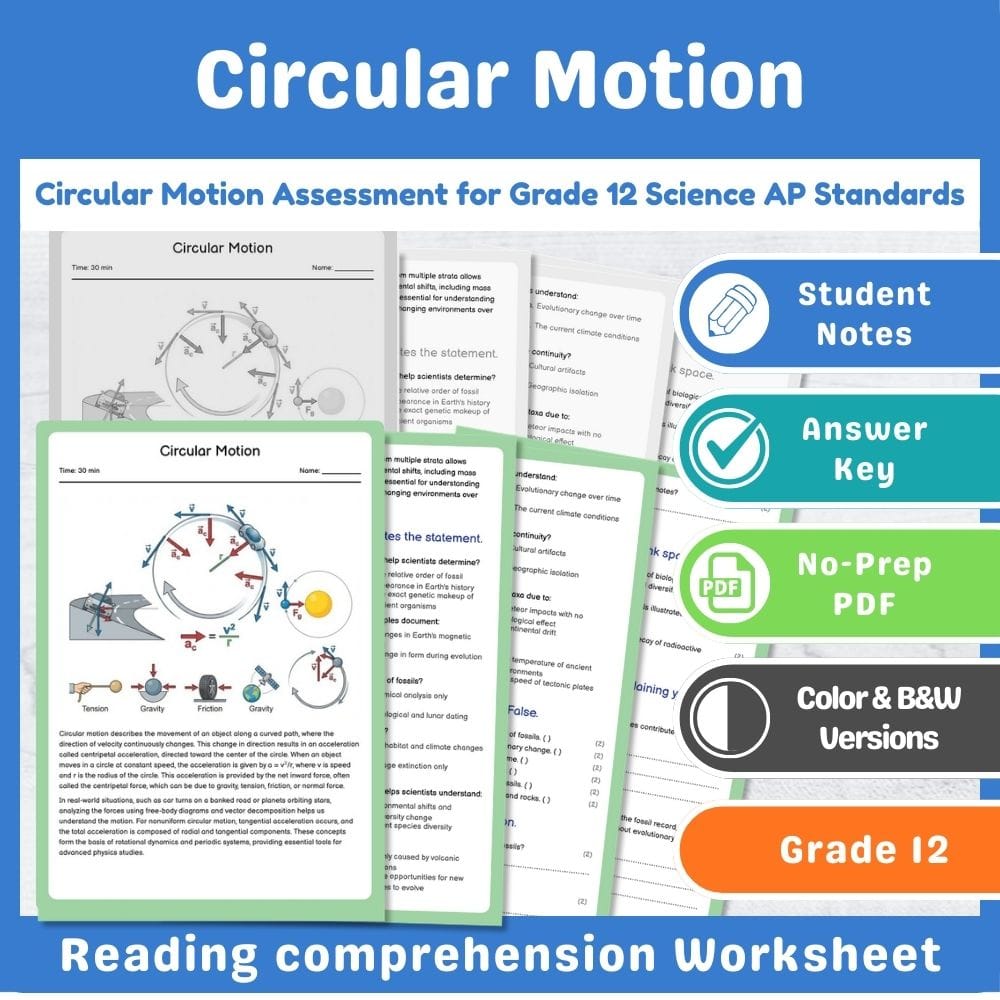
Circular Motion Assessment for Grade 12 Science AP Standards
Created byPrism Point LearningLearning Objectives
- Explain the concept of centripetal acceleration and the forces involved in uniform circular motion.
- Calculate the velocity, acceleration, and force for objects in circular paths.
- Analyze real-world examples such as banked turns and orbital motion using vector and polar-coordinate methods.
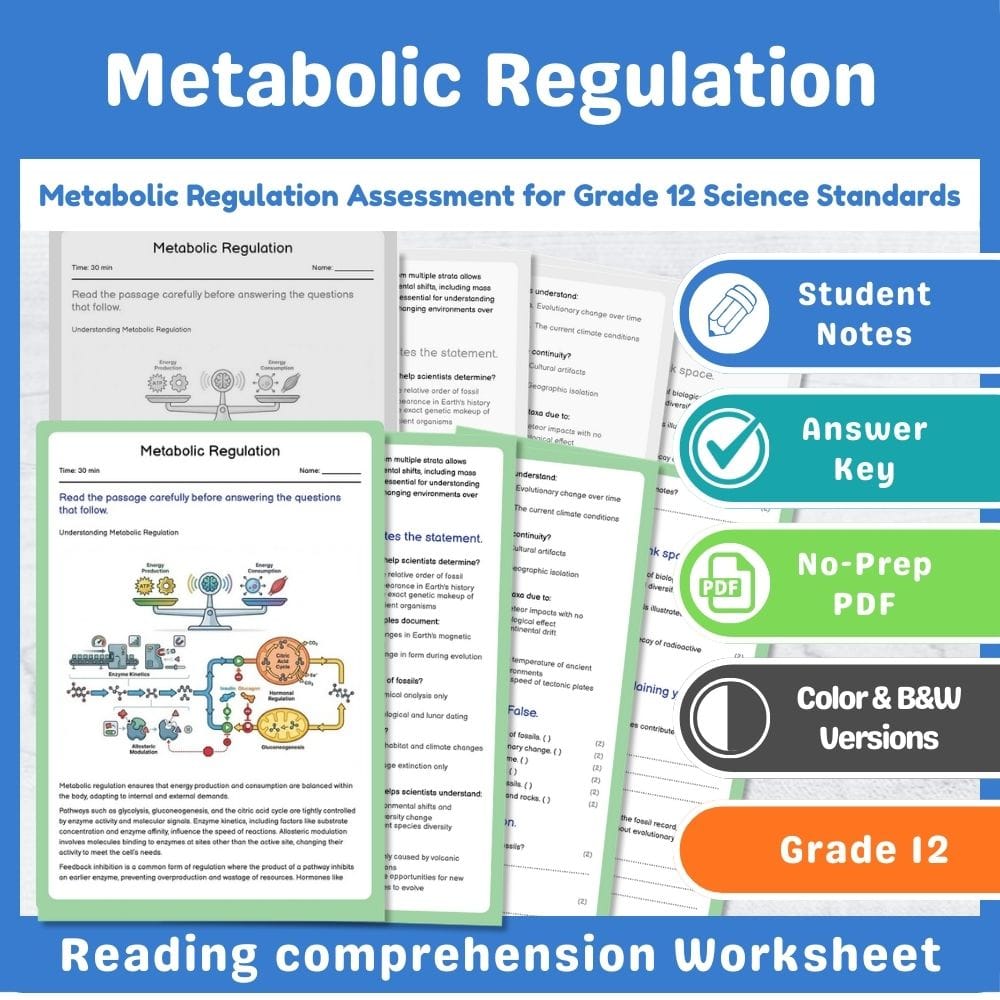
Metabolic Regulation Assessment for Grade 12 Science Standards
Created byPrism Point LearningLearning Objectives
- Explain principles of metabolic pathway control including enzyme kinetics and allosteric modulation.
- Describe feedback inhibition and hormonal regulation mechanisms maintaining homeostasis.
- Distinguish regulation at transcriptional, translational, and post-translational levels.
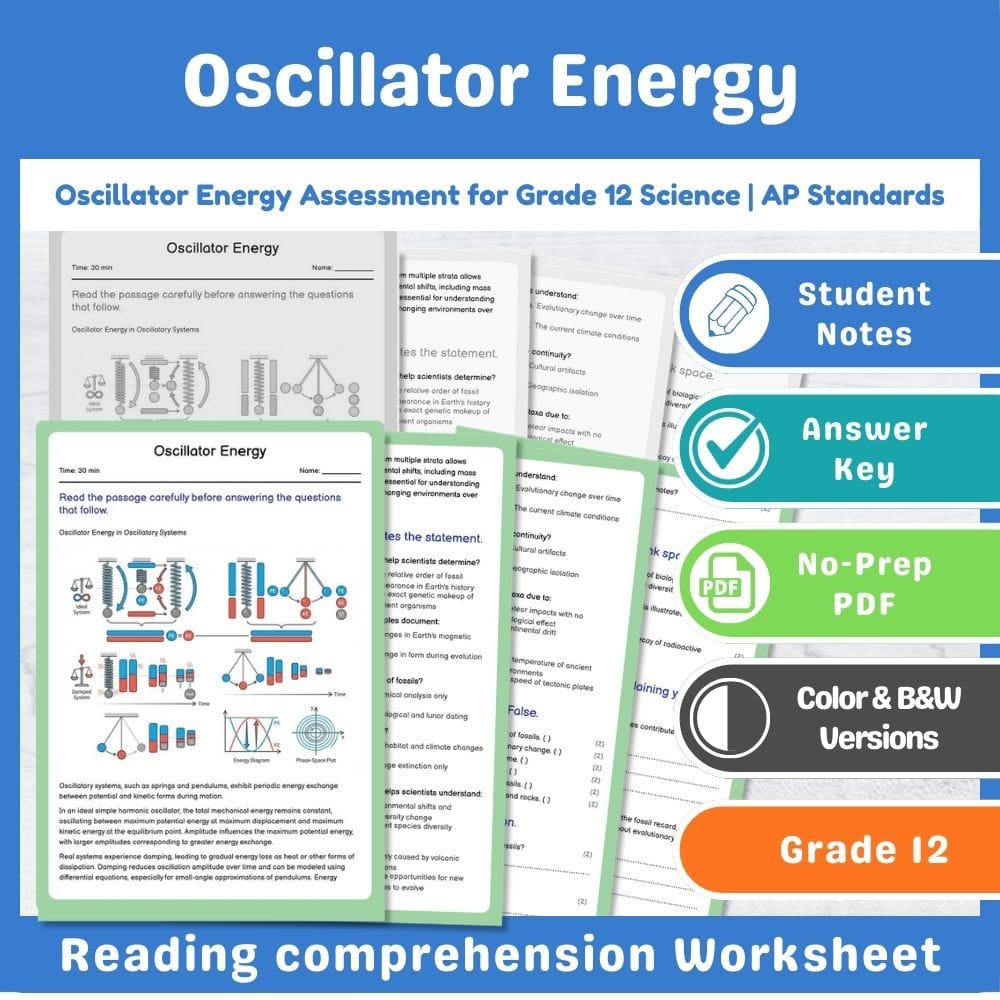
Oscillator Energy Assessment for Grade 12 Science | AP Standards
Created byPrism Point LearningLearning Objectives
- Explain the energy exchange between potential and kinetic energy in oscillatory systems.
- Analyze the role of amplitude and damping in energy dissipation during oscillations.
- Interpret phase-space and energy diagrams of simple harmonic motion.
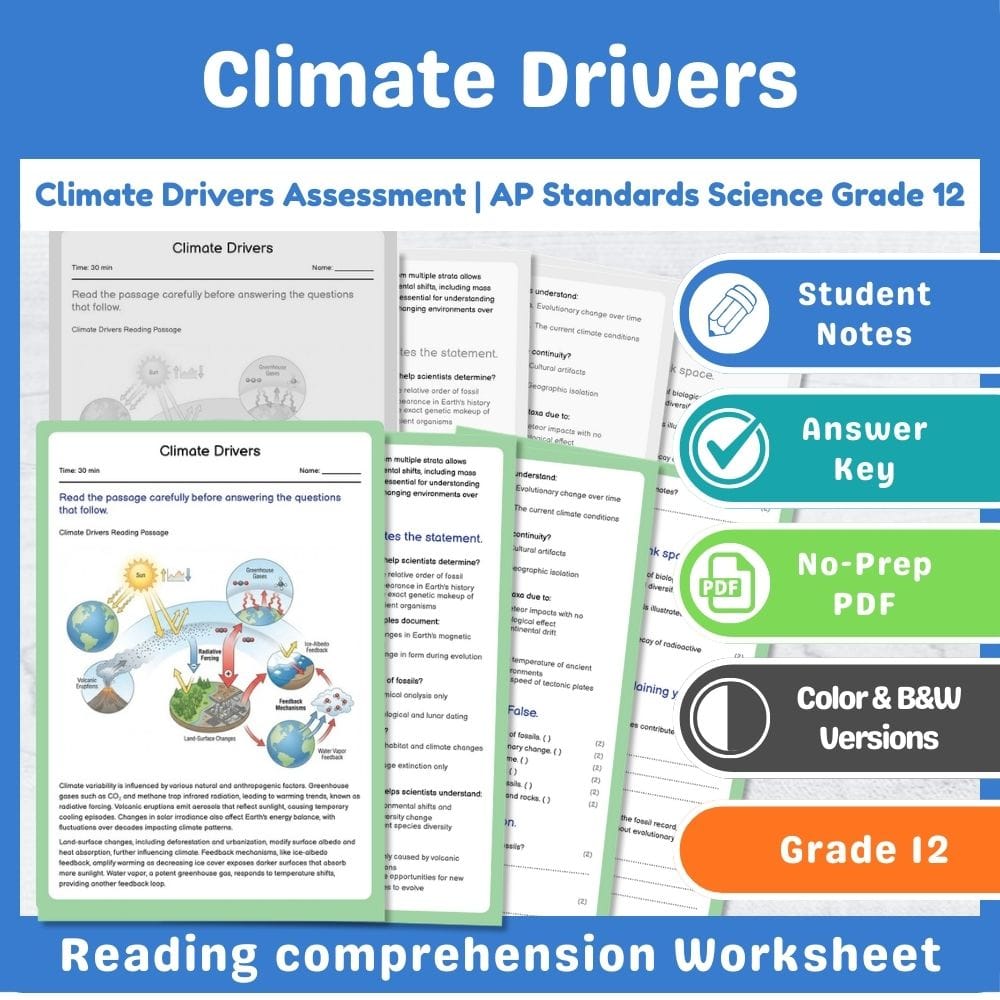
Climate Drivers Assessment | AP Standards Science Grade 12
Created byPrism Point LearningLearning Objectives
- Identify the main forcings that drive climate variability and change.
- Understand radiative forcing metrics and feedback mechanisms.
- Analyze the role of ocean heat uptake and land-surface alterations in climate dynamics.
Browse more categories
About Science Worksheets
Find Science worksheets spanning core skills, practice, and review. All 42,685 resources are instant PDF downloads for the classroom or home.
Every worksheet on MyTeachingSheets is created by independent teacher-authors and reviewed before publication. All resources download as printable PDFs for classroom, homework, or at-home practice, and many include answer keys. Preview any worksheet free before buying.