
Science Worksheets
42,685 subject resources
Rate and Concentration Assessment | General Standards-Aligned Grade 11 Science
 Created byPrism Point Learning
Learning Objectives
- Understand key concepts related to Science
- Apply knowledge through practice questions
- Demonstrate comprehension of the material

Ecosystem Components Assessment for Grade 6 Science TEKS
Created byPrism Point LearningLearning Objectives
- Define ecosystems as interacting systems of populations, communities, and physical factors.
- Identify biotic and abiotic components and their roles in habitat structure.
- Describe examples such as pond, prairie, and forest to illustrate resource distribution and community interdependence.

Iterative Testing Refinement Assessment for Grade 11 Science | Standards-Aligned
Created byPrism Point LearningLearning Objectives
- Understand key concepts related to Science
- Apply knowledge through practice questions
- Demonstrate comprehension of the material

Predictive Models Assessment | General Grade 11 Science Standards
Created byPrism Point LearningLearning Objectives
- Understand key concepts related to Science
- Apply knowledge through practice questions
- Demonstrate comprehension of the material
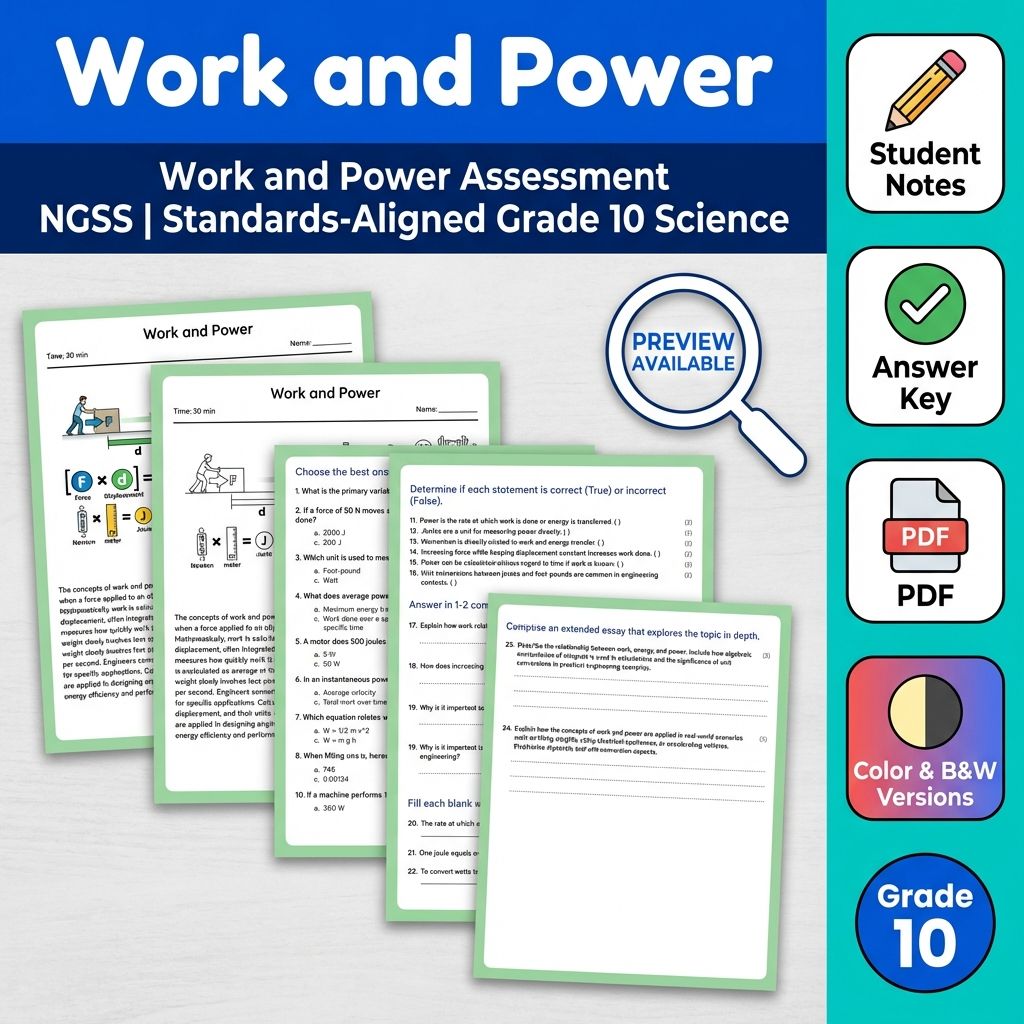
Work and Power Assessment NGSS | Standards-Aligned Grade 10 Science
Created byPrism Point LearningLearning Objectives
- Explain the relationship between force, displacement, and energy using the work–energy theorem.
- Calculate work and power in various contexts, including lifting weights and vehicle acceleration.
- Manipulate work integrals algebraically and convert units between joules, watts, and engineering units.
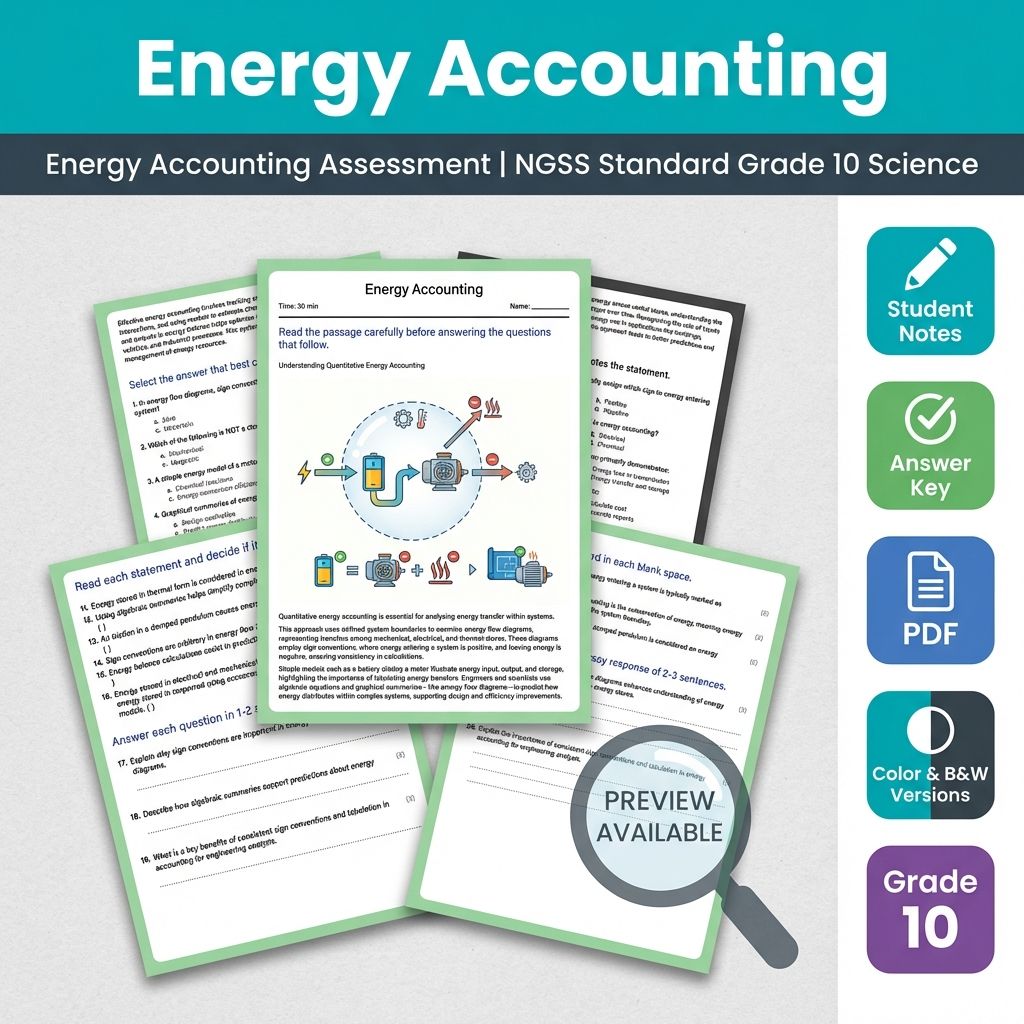
Energy Accounting Assessment | NGSS Standard Grade 10 Science
Created byPrism Point LearningLearning Objectives
- Understand and apply system boundaries, energy flow diagrams, and computational models in energy accounting.
- Identify energy transfer processes among mechanical, electrical, and thermal stores.
- Use sign conventions and tabulate energy transfers to analyze system energy distribution.

Electron Configuration Assessment | Alberta Standards Grade 12 Science
Created byPrism Point LearningLearning Objectives
- Explain the principles of electron configuration including Aufbau, Pauli exclusion, and Hund’s rules.
- Predict the valence electrons and chemical behavior of elements based on their electron configuration.
- Understand spectroscopic signatures and techniques used in industrial and research contexts to analyze electron arrangements.

Geometric Optics Assessment | Alberta Grade 12 Science Standards
Created byPrism Point LearningLearning Objectives
- Explain the principles of reflection and refraction in geometric optics.
- Apply Snell's law to calculate angles of light at interfaces.
- Describe how lenses form images and the factors influencing focal length.
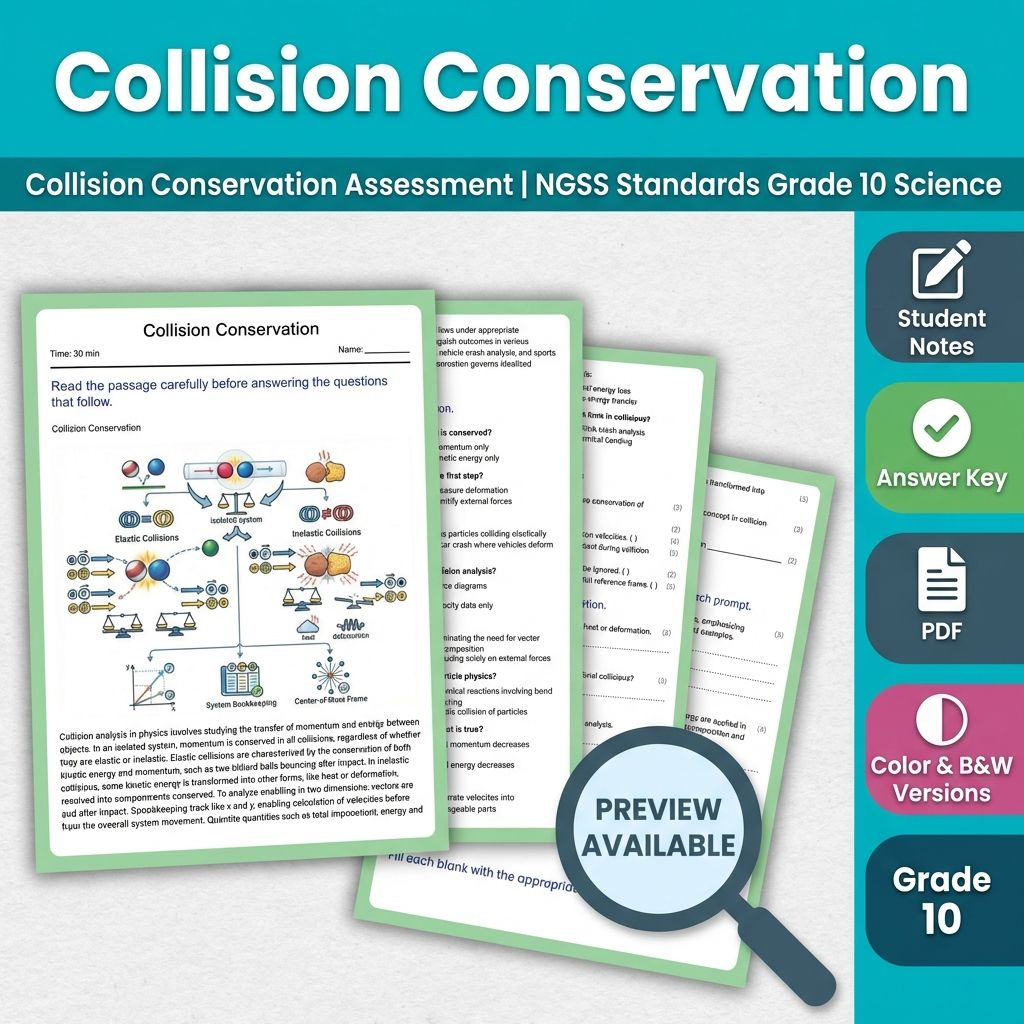
Collision Conservation Assessment | NGSS Standards Grade 10 Science
Created byPrism Point LearningLearning Objectives
- Understand the principles of conservation of momentum in multi-body collisions.
- Apply vector decomposition to resolve collision components in two dimensions.
- Differentiate between elastic and inelastic collisions based on energy transfer and post-collision behavior.

Energy Forms Assessment for Grade 6 Science | TEKS Standards-Aligned
Created byPrism Point LearningLearning Objectives
- Identify and describe common forms of energy including kinetic, potential, thermal, chemical, and electrical.
- Relate each form of energy to familiar phenomena such as moving objects, stretched springs, and batteries.
- Distinguish among different energy types based on their characteristics and associated everyday examples.

Human Impacts Assessment | Florida NGSSS Grade 8 Science
Created byPrism Point LearningLearning Objectives
- Explain how human activities can change Earth systems by altering the balance of energy and matter.
- Describe how greenhouse gases influence temperature patterns and can affect precipitation and storms.
- Analyze how land-use change affects runoff, erosion, and water quality.
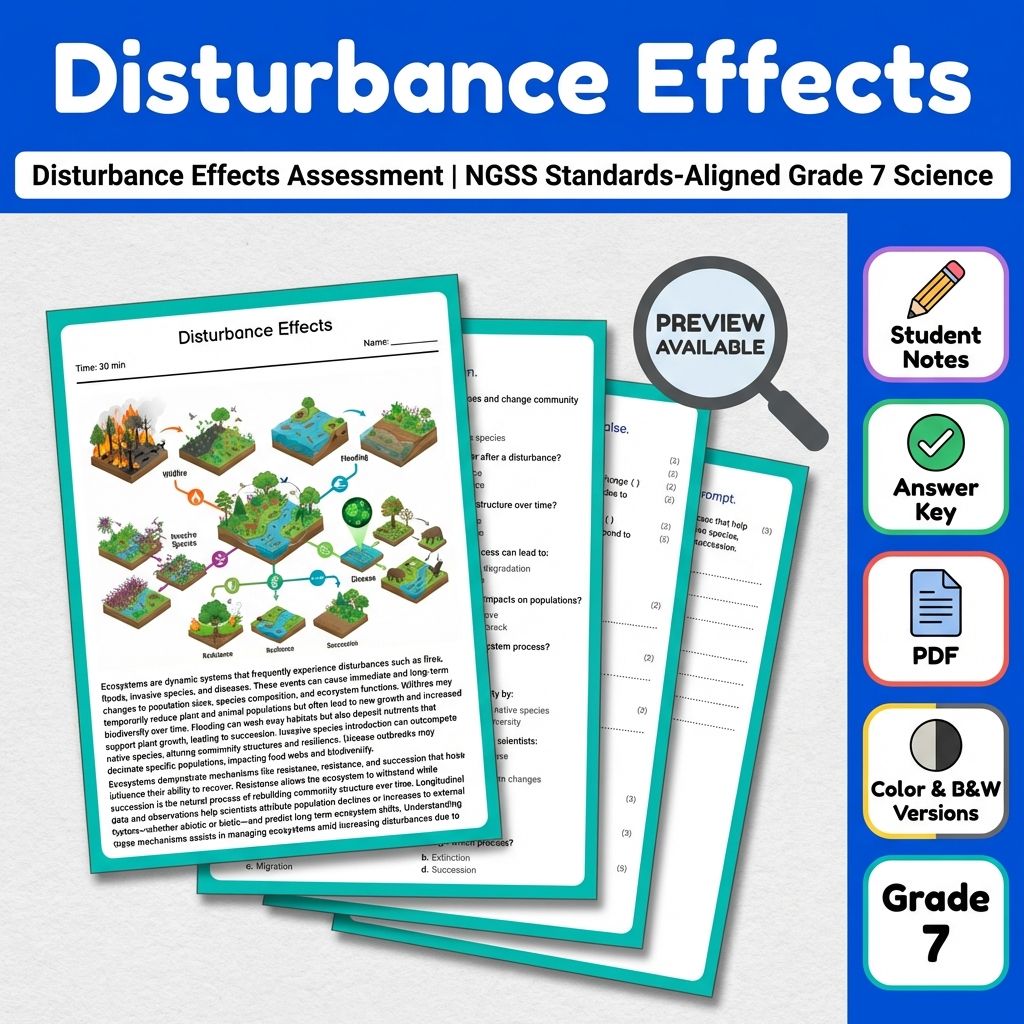
Disturbance Effects Assessment | NGSS Standards-Aligned Grade 7 Science
Created byPrism Point LearningLearning Objectives
- Understand how physical and biological disturbances impact ecosystems and populations.
- Identify mechanisms such as resilience, resistance, and succession that influence ecosystem recovery.
- Interpret empirical data and observations to determine causes of population changes.

Evaluating Explanations Assessment Grade 11 | Florida NGSSS Science
Created byPrism Point LearningLearning Objectives
- Evaluate scientific explanations by judging the quality and limits of evidence.
- Distinguish correlation from causation when interpreting scientific claims.
- Assess whether an explanation accounts for multiple observations and considers alternative explanations.

Engineering Purpose Assessment | TEKS Grade 7 Science Standards-Aligned
Created byPrism Point LearningLearning Objectives
- Understand how engineering design responds to system purpose and constraints
- Identify various engineering applications such as bridges, pulley systems, and circuits
- Evaluate trade-offs among cost, reliability, and performance in engineering systems

Earth System Interactions Assessment | NGSSS Standards Grade 7 Science
Created byPrism Point LearningLearning Objectives
- Explain how matter and energy move among the geosphere, hydrosphere, atmosphere, and biosphere.
- Describe how changes in one Earth system can cause changes in another system.
- Use evidence to support claims about Earth system interactions and their effects on landforms, ecosystems, and water availability.

Inquiry Foundations Assessment | TEKS Grade 7 Science Standards-Aligned
Created byPrism Point LearningLearning Objectives
- Understand key concepts related to Science
- Apply knowledge through practice questions
- Demonstrate comprehension of the material

Scientific Reasoning Assessment for Grade 10 Science | NGSSS Standards
Created byPrism Point LearningLearning Objectives
- Use evidence to support or refute a scientific claim through logical reasoning.
- Distinguish correlation from causation and explain why correlation alone cannot prove causation.
- Evaluate whether alternative explanations fit the same evidence and describe how scientists test them.

Data Representation Assessment for Grade 8 Science TEKS Standards
Created byPrism Point LearningLearning Objectives
- Identify different types of graphical and tabular data representations.
- Interpret data from graphs, charts, and tables accurately.
- Select appropriate data visualization methods for specific data types and contexts.

Cell Structure Assessment | Florida NGSSS Grade 10 Science Standard
Created byPrism Point LearningLearning Objectives
- Explain how eukaryotic and prokaryotic cell structures differ and how those differences support life processes
- Identify major cell components (cell membrane, cytoplasm, nucleus, genetic material) and describe their functions
- Analyze how cell specialization relates to the presence or activity of specific structures

Geologic Time Assessment | Florida NGSSS Standards – Grade 10 Science
Created byPrism Point LearningLearning Objectives
- Explain how relative dating techniques (superposition and cross-cutting relationships) can order geologic events.
- Describe how unconformities and fossil evidence (index fossils) help reconstruct gaps and time intervals in Earth’s history.
- Analyze how evidence from the rock record can be used to interpret major environmental changes and mass extinctions.

Rock Cycle Processes Assessment | Florida NGSSS Grade 10 Science
Created byPrism Point LearningLearning Objectives
- Explain how weathering, erosion, deposition, and lithification connect surface processes to the rock cycle.
- Describe how heat and pressure can cause metamorphism without melting and how this changes rock properties.
- Relate magma formation and cooling to the creation of igneous rocks within Earth’s energy and mass transfer system.

Mutations and Traits Assessment | Florida NGSSS Grade 10 Science
Created byPrism Point LearningLearning Objectives
- Explain how mutations can change DNA and lead to new genetic variants
- Describe common mutation sources and how mutations can affect gene function or expression
- Analyze how fitness and the environment influence whether mutations spread over generations

Specialized Cells Assessment | Florida NGSSS Standards - Grade 10 Science
Created byPrism Point LearningLearning Objectives
- Explain how specialized cell structures relate to specific functions in multicellular organisms
- Identify examples of cell specialization for transport, protection, absorption, and signaling
- Interpret how surface characteristics and cell connections affect tissue and system performance

Watershed Pathways Grade 6 Science Assessment | California Standards
Created byPrism Point LearningLearning Objectives
- Explain how gravity, terrain, and land cover shape water movement within a watershed
- Describe how infiltration and soil storage affect the timing of runoff
- Connect vegetation and soil stability to erosion and sediment transport

Science Assessment: Water Cycle Pathways (Grade 6) – Florida NGSSS
Created byPrism Point LearningLearning Objectives
- Describe the major pathways of the water cycle, including evaporation, condensation, precipitation, runoff, and infiltration
- Explain how energy transfer affects water’s state changes and movement between land and the atmosphere
- Use evidence from the water cycle to predict how changes can lead to droughts or flooding

Motion Graphs Assessment for Grade 7 Science TEKS Standards
Created byPrism Point LearningLearning Objectives
- Interpret distance–time and velocity–time graphs to describe motion patterns.
- Identify examples of uniform motion, acceleration, deceleration, and rest from graphs.
- Relate slopes to speed and analyze areas under velocity curves for displacement.

Cell Structure Assessment for Grade 8 Science | TEKS Standards-Aligned
Created byPrism Point LearningLearning Objectives
- Describe the organization and functions of cellular components such as membranes, cytoplasm, the nucleus, mitochondria, and chloroplasts.
- Explain the relationship between membrane transport, compartmentalization, and cellular activity.
- Identify differences between prokaryotic and eukaryotic cells in terms of organelle presence and organization.

Mixtures and Solutions Assessment for Grade 8 Science | TEKS Standards
Created byPrism Point LearningLearning Objectives
- Explain the differences between homogeneous and heterogeneous mixtures.
- Describe how solutions form and factors like solubility and saturation affect them.
- Identify and compare methods for separating mixtures such as filtration, evaporation, and distillation.

Science Assessment: Earth System Interactions (Grade 6) | Assessment Florida NGSSS
Created byPrism Point LearningLearning Objectives
- Explain how the atmosphere, hydrosphere, geosphere, and biosphere interact through matter and energy flow
- Identify processes (heating, cooling, evaporation, condensation, erosion, deposition) that change Earth systems over time
- Describe how changes in one Earth sphere can affect conditions in other spheres

Understanding Mechanical Energy Assessment for Grade 7 Science TEKS
Created byPrism Point LearningLearning Objectives
- Explain the concept of mechanical energy and how it is conserved in ideal systems.
- Describe how energy transfers among system components in phenomena like pendulums and springs.
- Identify real-world examples of mechanical energy and explain the role of energy loss to non-mechanical forms.

Energy Conservation Assessment | Florida NGSSS Grade 12 Science
Created byPrism Point LearningLearning Objectives
- Explain energy conservation using an energy-accounting approach for a closed system
- Identify how energy transforms between mechanical and thermal (internal) forms during real processes
- Use initial and final states to justify that energy is not destroyed, even when motion decreases

Argumentation Models Assessment | TEKS Grade 7 Science Standards-Aligned
Created byPrism Point LearningLearning Objectives
- Understand the components of evidence-based arguments, including claims, evidence, and reasoning.
- Evaluate the logical coherence and clarity of constructed arguments.
- Construct and critique arguments using quantitative data, graphical representations, and models.

Scientific Models Grade 12 Science Assessment | NGSSS Standards
Created byPrism Point LearningLearning Objectives
- Explain how scientific models represent real-world systems to support explanation and prediction
- Identify common types of models (diagram, mathematical, simulation) and link them to relevant variables
- Evaluate a model by stating assumptions, limitations, and how evidence could revise it

DNA to Protein Assessment | NGSSS Standards-Aligned Grade 12 Science
Created byPrism Point LearningLearning Objectives
- Explain how genetic information in DNA is used to produce proteins through transcription and translation
- Describe the roles of messenger RNA (mRNA) and ribosomes in converting codons into amino acids
- Connect protein structure and function to observable cell traits

Meiosis and Diversity Assessment | Florida NGSSS Standard Grade 12 Science
Created byPrism Point LearningLearning Objectives
- Explain how meiosis preserves chromosome number while producing haploid gametes.
- Describe how crossing over and independent assortment increase genetic diversity.
- Connect meiotic mechanisms to allele combinations in offspring and the role of genetic variation in evolution.

Glycolysis Overview Assessment | TEKS Grade 9 Science Standards
Created byPrism Point LearningLearning Objectives
- Describe the main steps involved in glycolysis.
- Identify key enzymes and intermediates in glycolysis.
- Explain the energy investment and payoff phases of glycolysis.

Thermoregulation Assessment | TEKS Grade 9 Science Evaluation
Created byPrism Point LearningLearning Objectives
- Understand the mechanisms involved in body temperature regulation.
- Identify physiological responses that maintain thermoregulation.
- Explain the roles of skin, vasculature, and nervous pathways in heat balance.

Aerobic Versus Anaerobic Assessment | TEKS Grade 10 Science Printable
Created byPrism Point LearningLearning Objectives
- Compare and contrast aerobic and anaerobic respiration pathways.
- Identify the products and energy yields of aerobic and anaerobic processes.
- Explain the significance of oxygen in cellular respiration.

Human Impacts Assessment | TEKS Standards Grade 10 Science
Created byPrism Point LearningLearning Objectives
- Understand how human activities modify ecosystems through habitat alteration and pollution.
- Identify the effects of resource extraction, invasive species, and climate change on biodiversity.
- Explain how human activities influence energy flows and nutrient cycles in ecosystems.

Trophic Efficiency Assessment for Grade 10 Science TEKS | Science Worksheet
Created byPrism Point LearningLearning Objectives
- Understand the concept of trophic efficiency and its significance in ecosystems.
- Analyze how energy transfer affects biomass pyramids and food web structures.
- Evaluate factors influencing variations in trophic efficiency among different ecosystems.
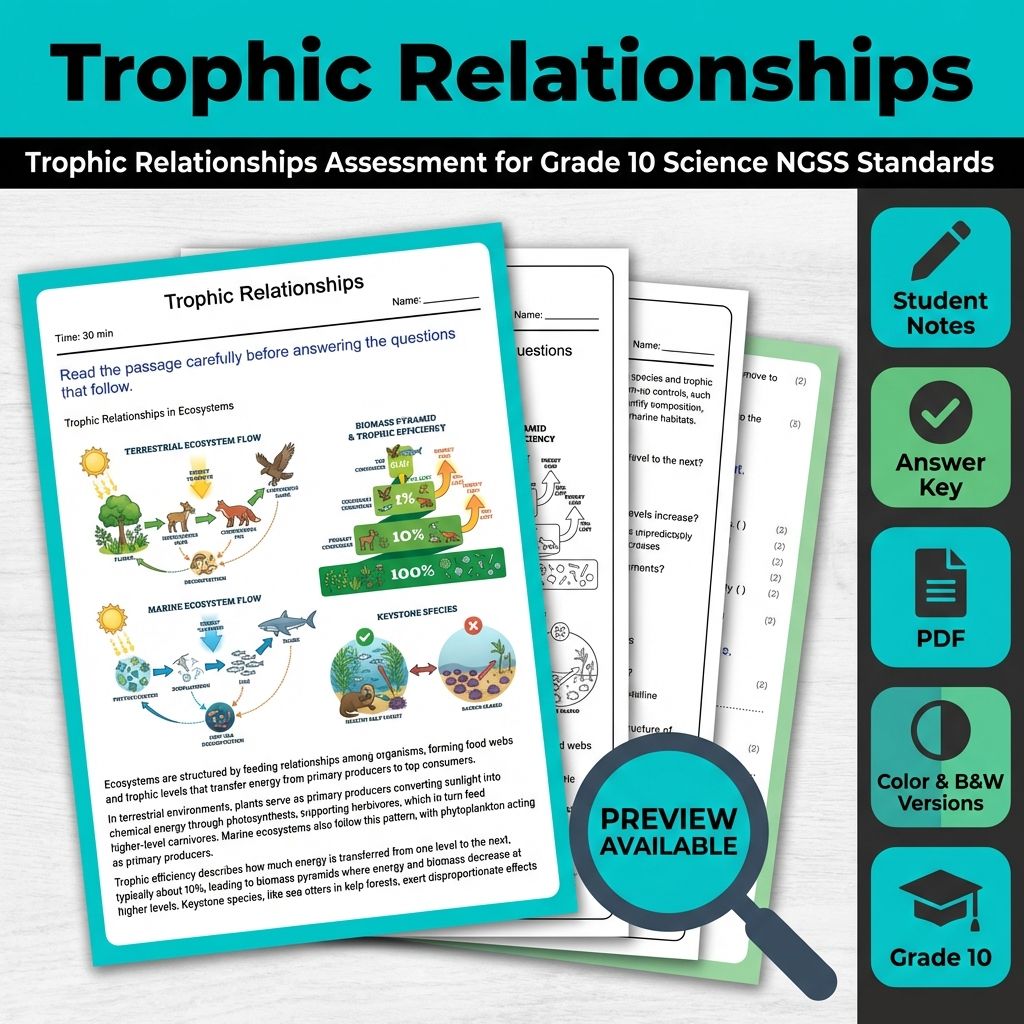
Trophic Relationships Assessment for Grade 10 Science NGSS Standards
Created byPrism Point LearningLearning Objectives
- Explain the concept of energy transfer within food webs and trophic levels.
- Analyze the effects of keystone species and trophic cascades on ecosystem stability.
- Evaluate how trophic efficiency influences biomass distribution in terrestrial and marine ecosystems.

Feedback Principles Assessment | TEKS Grade 9 Science Standards-Aligned
Created byPrism Point LearningLearning Objectives
- Understand the components involved in homeostatic feedback loops.
- Distinguish between negative and positive feedback mechanisms.
- Explain how signaling pathways and transport processes facilitate feedback responses.

Energy Flow Assessment for Grade 10 Science | TEKS Standards
Created byPrism Point LearningLearning Objectives
- Describe how energy flows through ecosystems from sunlight to various trophic levels.
- Explain the concept of energy transfer efficiency and its effect on ecosystem structure.
- Identify the role of net primary productivity in ecosystem energy balance and population dynamics.

Natural Selection Assessment for Grade 9 Science TEKS Standards
Created byPrism Point LearningLearning Objectives
- Understand the concept of natural selection and its role in evolution.
- Identify examples of natural selection in real-world scenarios.
- Differentiate between types of selection: directional, stabilizing, and disruptive.

Ecological Succession Assessment for Grade 10 Science TEKS Standards
Created byPrism Point LearningLearning Objectives
- Understand the concepts of primary and secondary succession in ecosystems.
- Identify the processes involved in succession such as colonization, competition, and facilitation.
- Explain how disturbance frequency and intensity influence succession pathways and biodiversity.

Evolution Basics Assessment for Grade 9 Science | TEKS Standards
Created byPrism Point LearningLearning Objectives
- Understand the fundamental mechanisms of evolution including natural selection, genetic drift, mutation, and gene flow.
- Explain how these mechanisms influence allele frequencies and lead to changes in populations over generations.
- Describe the long-term effects of evolution on traits and genetic diversity within species.
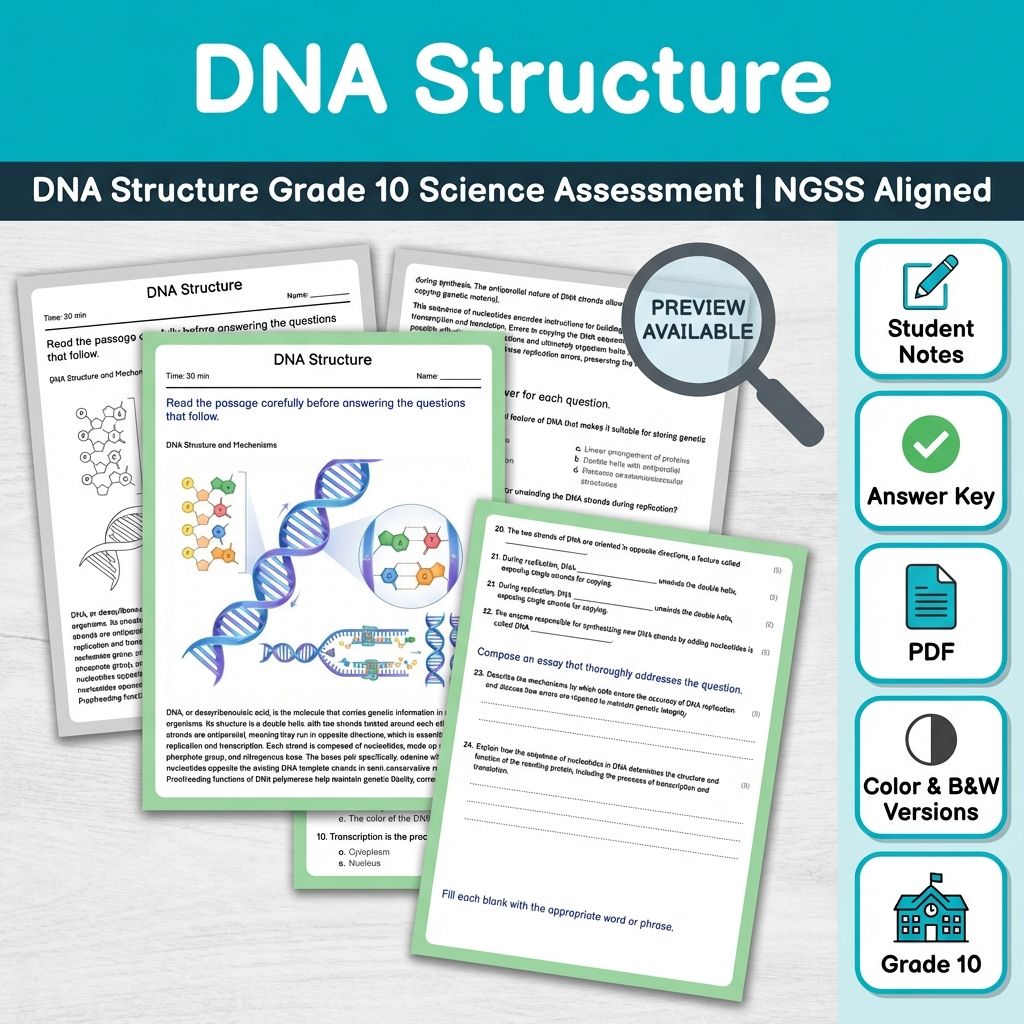
DNA Structure Grade 10 Science Assessment | NGSS Aligned
Created byPrism Point LearningLearning Objectives
- Describe the structural features of DNA, including double helix geometry, complementary base pairing, and antiparallel strands.
- Explain mechanisms of DNA replication, including the roles of DNA polymerase and helicase, and mechanisms that ensure fidelity such as proofreading and repair.
- Connect DNA sequence information to processes of transcription and translation, illustrating how nucleotide sequences encode polypeptides and how replication errors may impact gene expression.
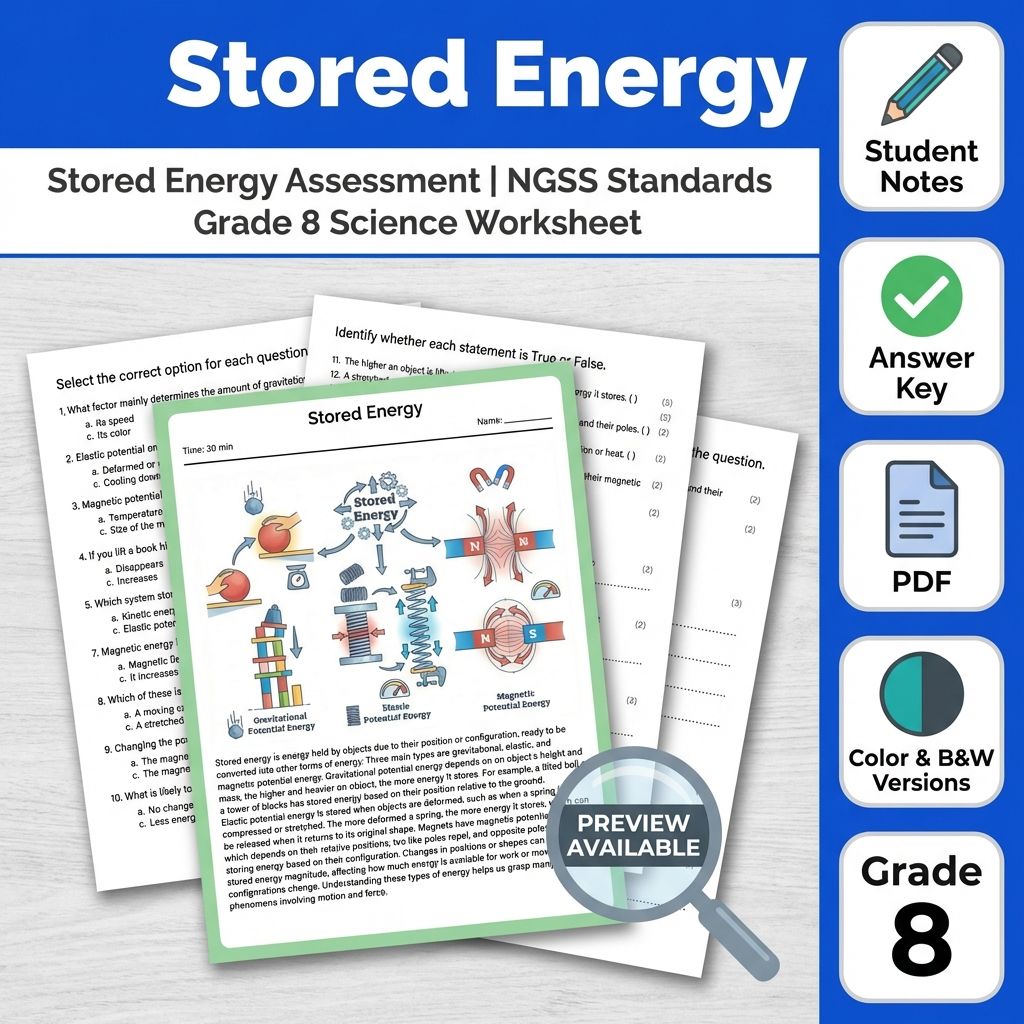
Stored Energy Assessment | NGSS Standards Grade 8 Science Worksheet
Created byPrism Point LearningLearning Objectives
- Define different forms of stored energy such as gravitational, elastic, and magnetic potential energy.
- Explain how changes in object positions and configurations alter stored energy in systems.
- Describe real-world examples of potential energy changes, including compressed springs, elevated objects, and magnets.
Browse more categories
About Science Worksheets
Find Science worksheets spanning core skills, practice, and review. All 42,685 resources are instant PDF downloads for the classroom or home.
Every worksheet on MyTeachingSheets is created by independent teacher-authors and reviewed before publication. All resources download as printable PDFs for classroom, homework, or at-home practice, and many include answer keys. Preview any worksheet free before buying.