
Science Worksheets
42,685 subject resources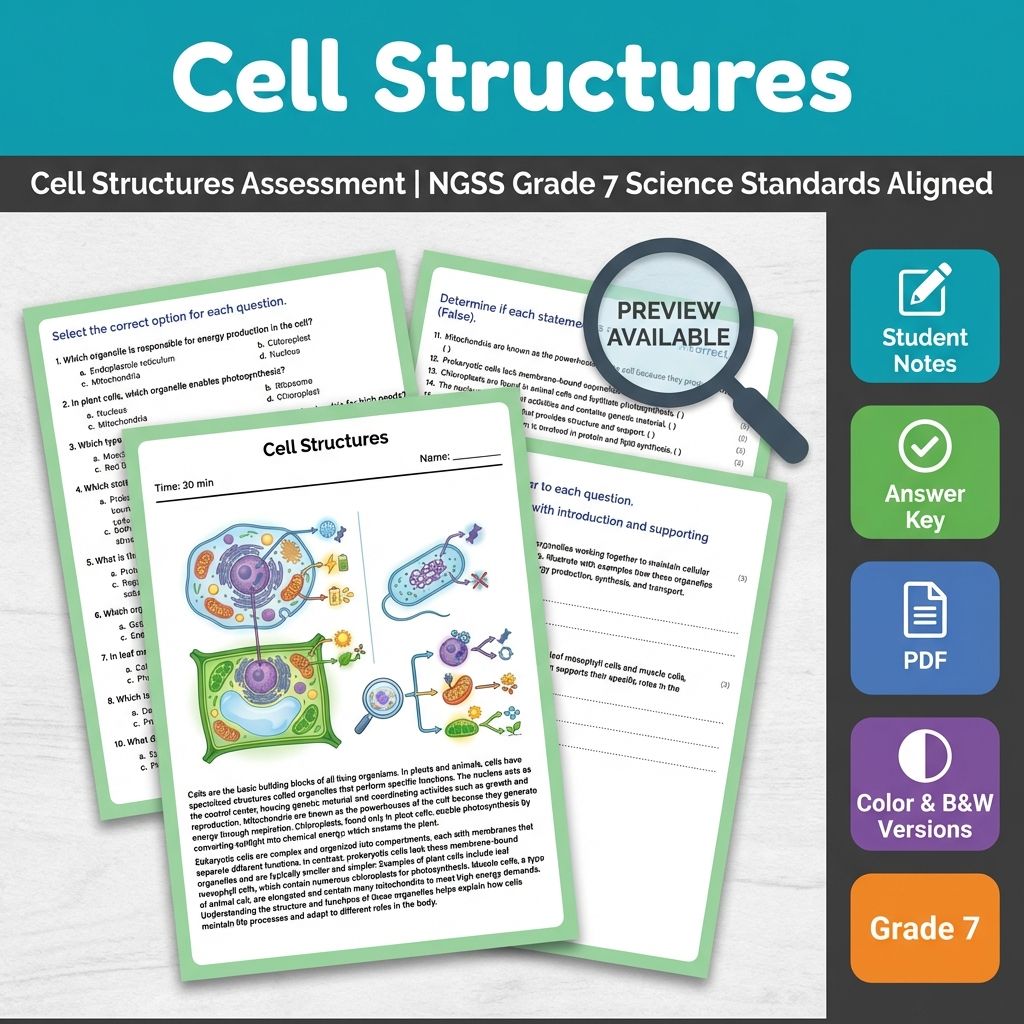
Cell Structures Assessment | NGSS Grade 7 Science Standards Aligned
 Created byPrism Point Learning
Learning Objectives
- Identify and describe the roles of key organelles in plant and animal cells.
- Connect cell structure to function, including processes like transport, synthesis, and compartmentalization.
- Compare eukaryotic and prokaryotic cells using examples of leaf mesophyll and muscle cells.

Thermodynamics Assessment for Grade 10 Science | TEKS Standards-Aligned
Created byPrism Point LearningLearning Objectives
- Understand the laws of thermodynamics and their application to biochemical reactions.
- Explain how Gibbs free energy determines reaction spontaneity.
- Analyze cellular strategies for energy efficiency during metabolism.
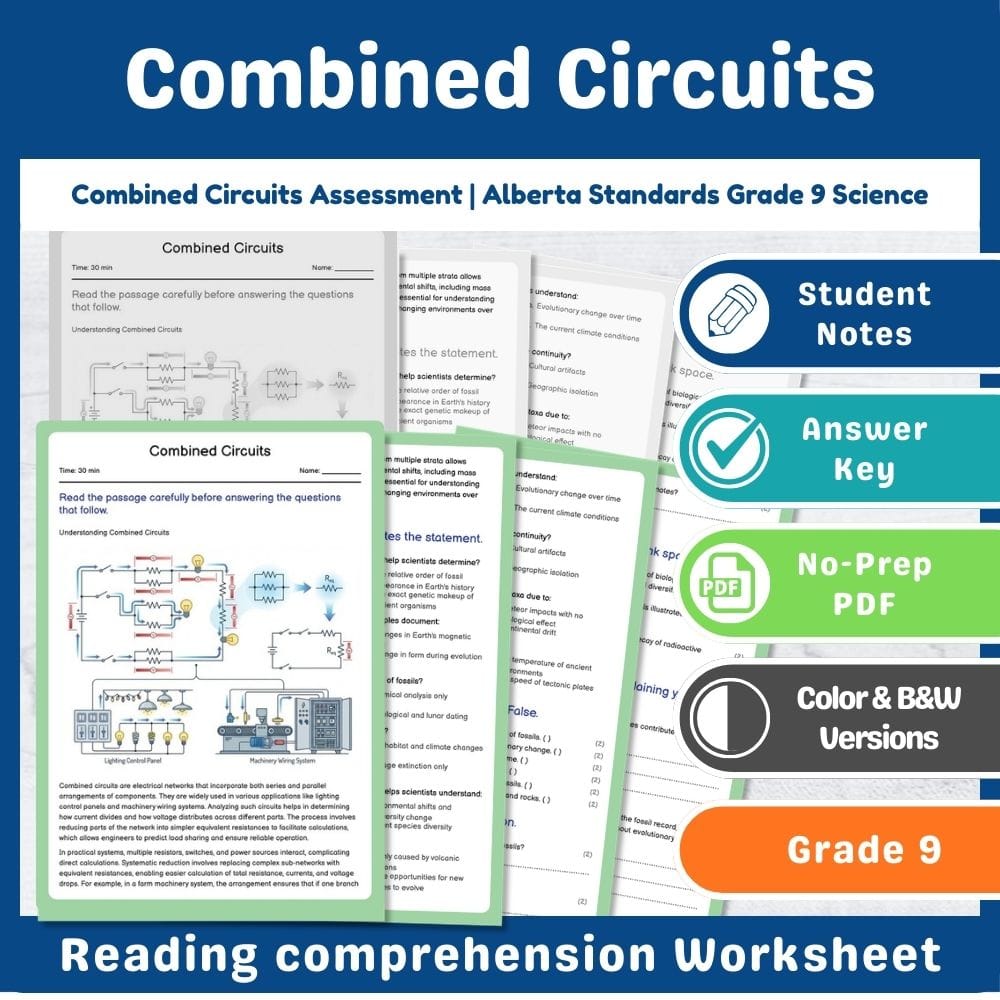
Combined Circuits Assessment | Alberta Standards Grade 9 Science
Created byPrism Point LearningLearning Objectives
- Understand the principles of combined (series and parallel) electrical circuits.
- Apply systematic reduction methods to analyze complex networks.
- Calculate equivalent resistances and trace current pathways in mixed circuits.
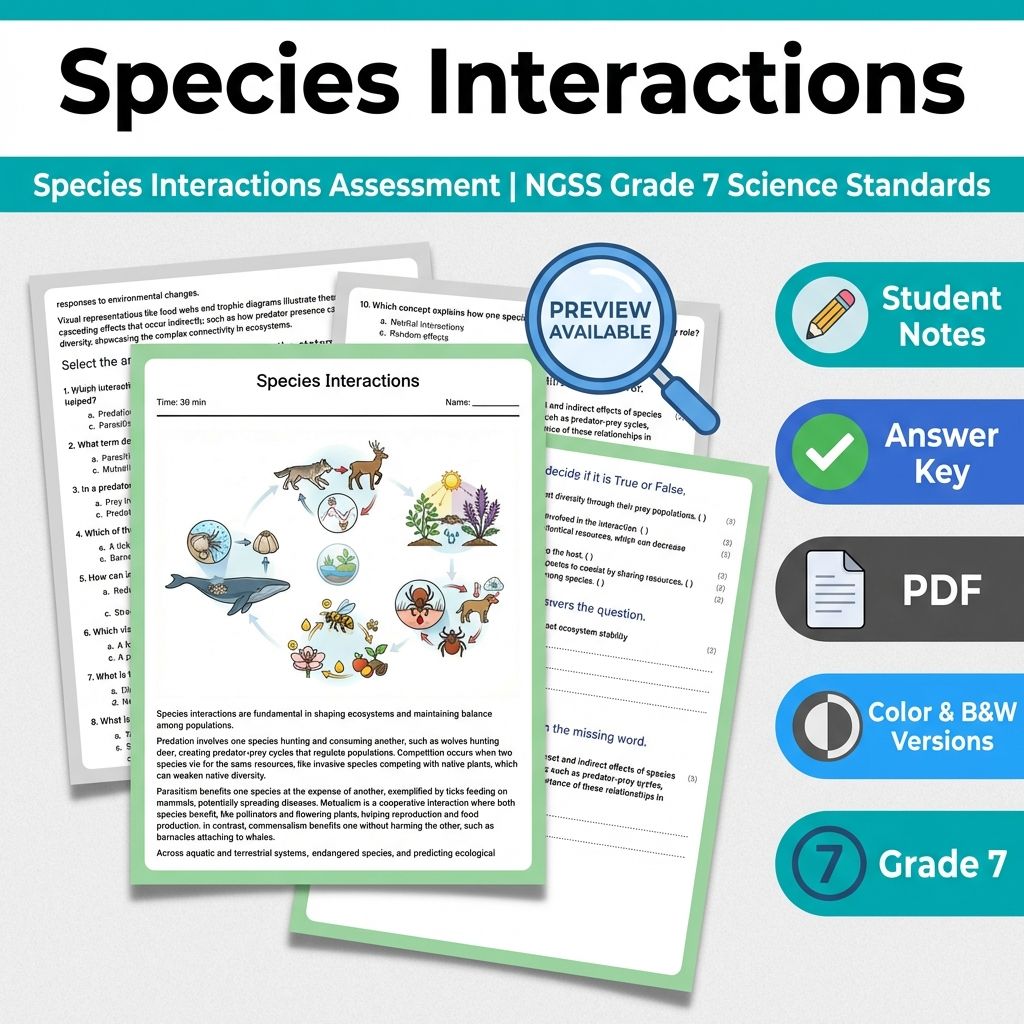
Species Interactions Assessment | NGSS Grade 7 Science Standards
Created byPrism Point LearningLearning Objectives
- Understand different types of species interactions such as predation, competition, parasitism, mutualism, and commensalism.
- Analyze influences of species behaviors on community structure and resource sharing in ecosystems.
- Interpret food webs, trophic diagrams, and interaction networks to evaluate direct and indirect effects.

Reaction Particles Assessment | NGSS-aligned Grade 10 Science Worksheet
Created byPrism Point LearningLearning Objectives
- Explain how particle collisions influence reaction rates.
- Describe energy barriers and how they affect chemical reactions.
- Analyze how temperature, concentration, and catalysts alter reaction behavior.
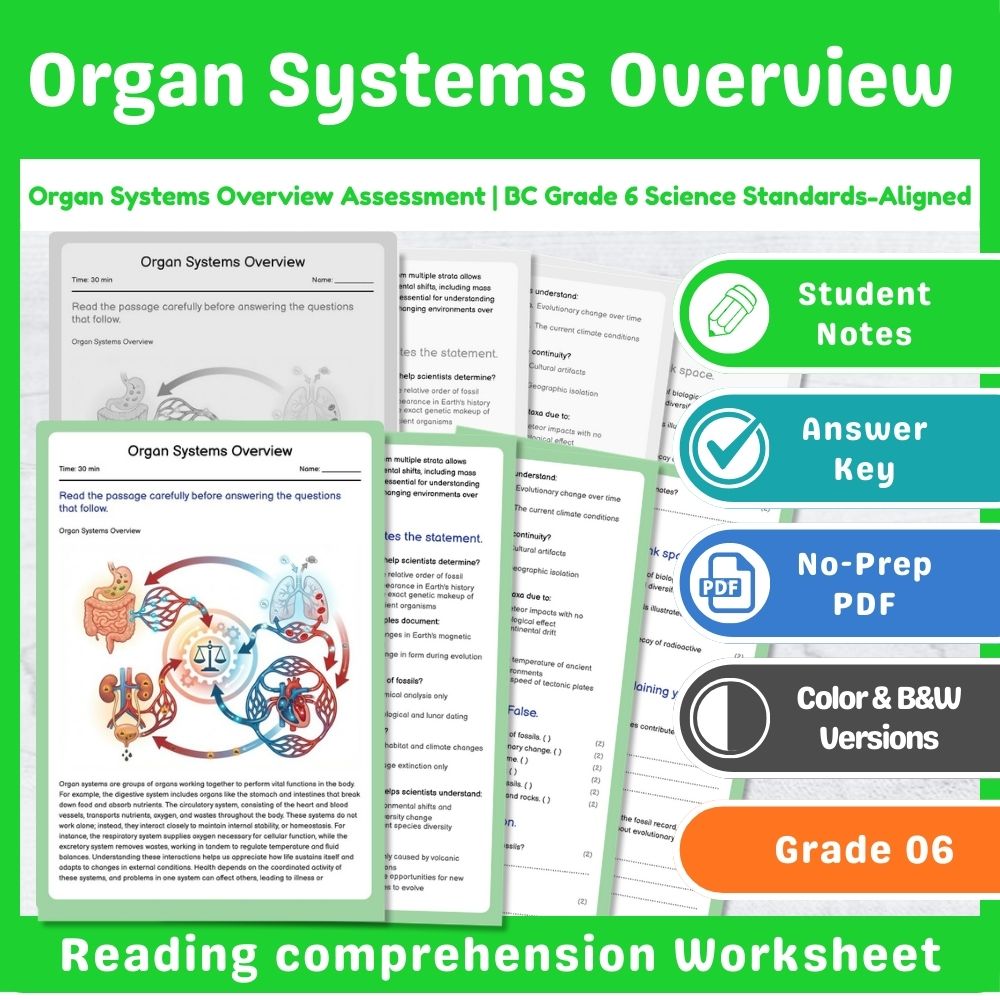
Organ Systems Overview Assessment | BC Grade 6 Science Standards-Aligned
Created byPrism Point LearningLearning Objectives
- Describe the main functions of different organ systems.
- Explain how organ systems interact to maintain homeostasis.
- Identify principal organs involved in various systems.
Impact Monitoring Assessment | NGSS Grade 11 Science Standards
Created byPrism Point LearningLearning Objectives
- Understand scientific principles in environmental monitoring techniques.
- Identify tools and protocols used for observing water, air, and land systems.
- Analyze case studies involving nutrient runoff, deforestation, and urban air quality.

Ecological Succession Assessment for Grade 10 Science TEKS Standards
Created byPrism Point LearningLearning Objectives
- Understand the concepts of primary and secondary succession in ecosystems.
- Identify the processes involved in succession such as colonization, competition, and facilitation.
- Explain how disturbance frequency and intensity influence succession pathways and biodiversity.
Evidence Supporting Evolution Assessment | NGSS Grade 11 Science
Created byPrism Point LearningLearning Objectives
- Understand the types of evidence used to support common ancestry and biological evolution.
- Identify and analyze fossil evidence, comparative anatomy, molecular similarities, biogeography, and vestigial organs.
- Evaluate the coherence among different scientific datasets and their contribution to evolutionary theory.
Rock Strata Assessment for Grade 7 Science – NGSS Standards-Aligned
Created byPrism Point LearningLearning Objectives
- Understand the principles of relative dating including superposition, original horizontality, and cross-cutting relationships.
- Identify key stratigraphic markers such as fossils, unconformities, and intrusive contacts used to correlate rock layers.
- Explain how field observations and stratigraphic data are synthesized to interpret Earth's geological history.
Surface Processes Assessment | NGSS Standards Grade 7 Science
Created byPrism Point LearningLearning Objectives
- Describe key surface geological processes such as weathering, erosion, transport, and deposition.
- Differentiate between mechanical and chemical weathering mechanisms.
- Explain how landforms like canyons, deltas, and moraines are formed by these processes.

Investigation Design Controls Assessment | General Standards + Grade 9 Science
Created byPrism Point LearningLearning Objectives
- Understand the importance of controls in scientific investigations.
- Identify key safety practices to ensure reliable data collection.
- Explain how variables are managed to attribute causes to effects.

Trophic Energy Transfer Assessment | California Standards Grade 7 Science
Created byPrism Point LearningLearning Objectives
- Explain how energy moves through trophic levels in a food chain or food web.
- Describe why only a few trophic levels are typically supported in ecosystems.
- Use energy transfer efficiency to predict how biomass changes across trophic levels.
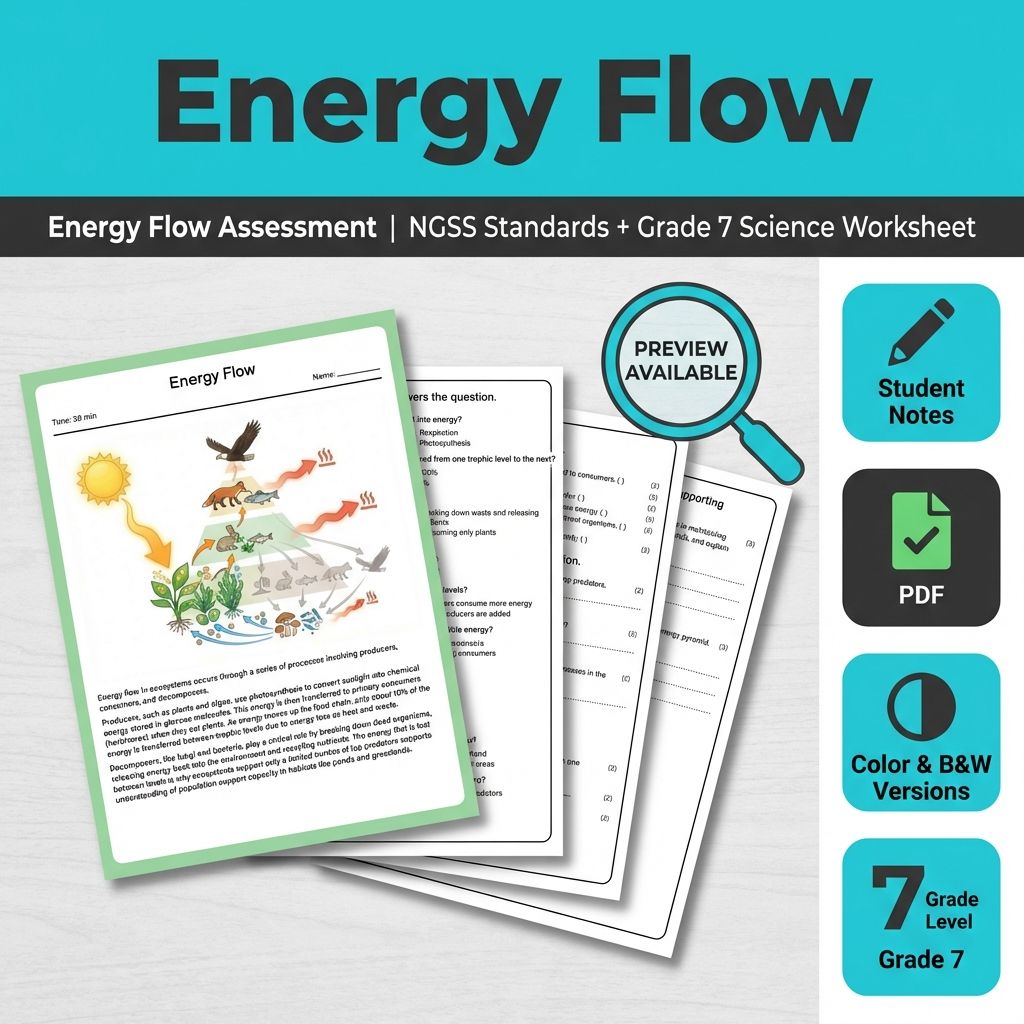
Energy Flow Assessment | NGSS Standards + Grade 7 Science Worksheet
Created byPrism Point LearningLearning Objectives
- Describe the transfer of energy through trophic levels in food webs.
- Explain the roles of producers, consumers, and decomposers in ecosystems.
- Understand how photosynthesis and cellular respiration are mechanisms for energy capture and release.
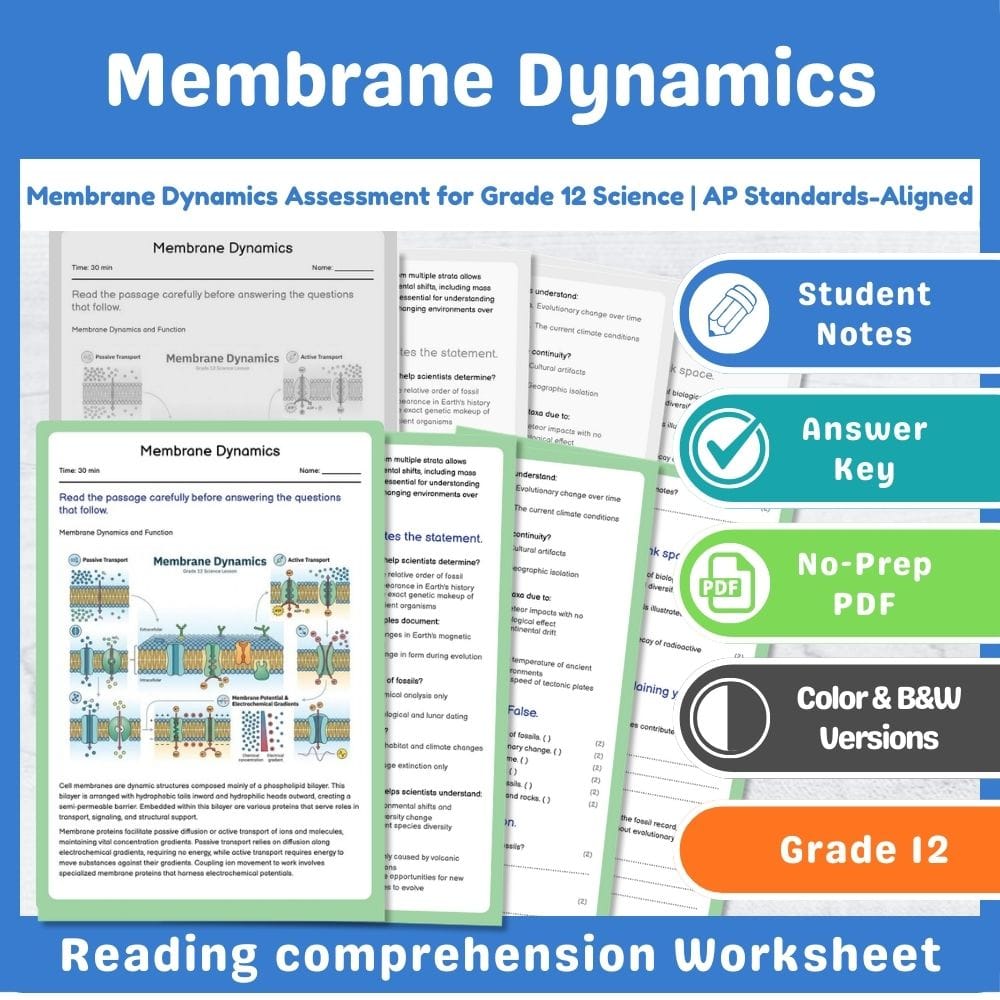
Membrane Dynamics Assessment for Grade 12 Science | AP Standards-Aligned
Created byPrism Point LearningLearning Objectives
- Explain the structure and function of lipid bilayer organization in cell membranes.
- Describe the roles of membrane proteins in transport and signaling.
- Understand the mechanisms of passive and active transport across membranes.
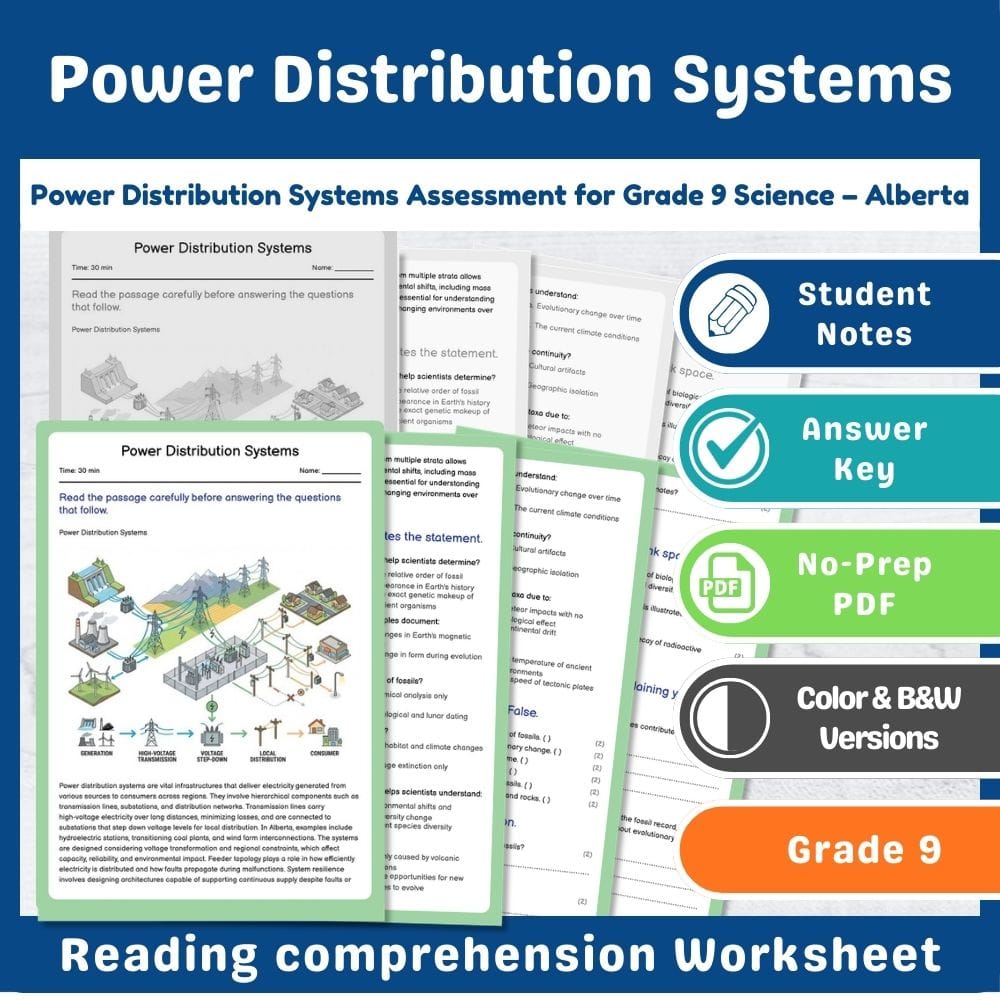
Power Distribution Systems Assessment for Grade 9 Science – Alberta
Created byPrism Point LearningLearning Objectives
- Understand the main components and functions of power distribution systems.
- Analyze how voltage transformation and feeder topology affect system reliability and capacity.
- Evaluate the environmental impacts and resilience considerations in power grid design.
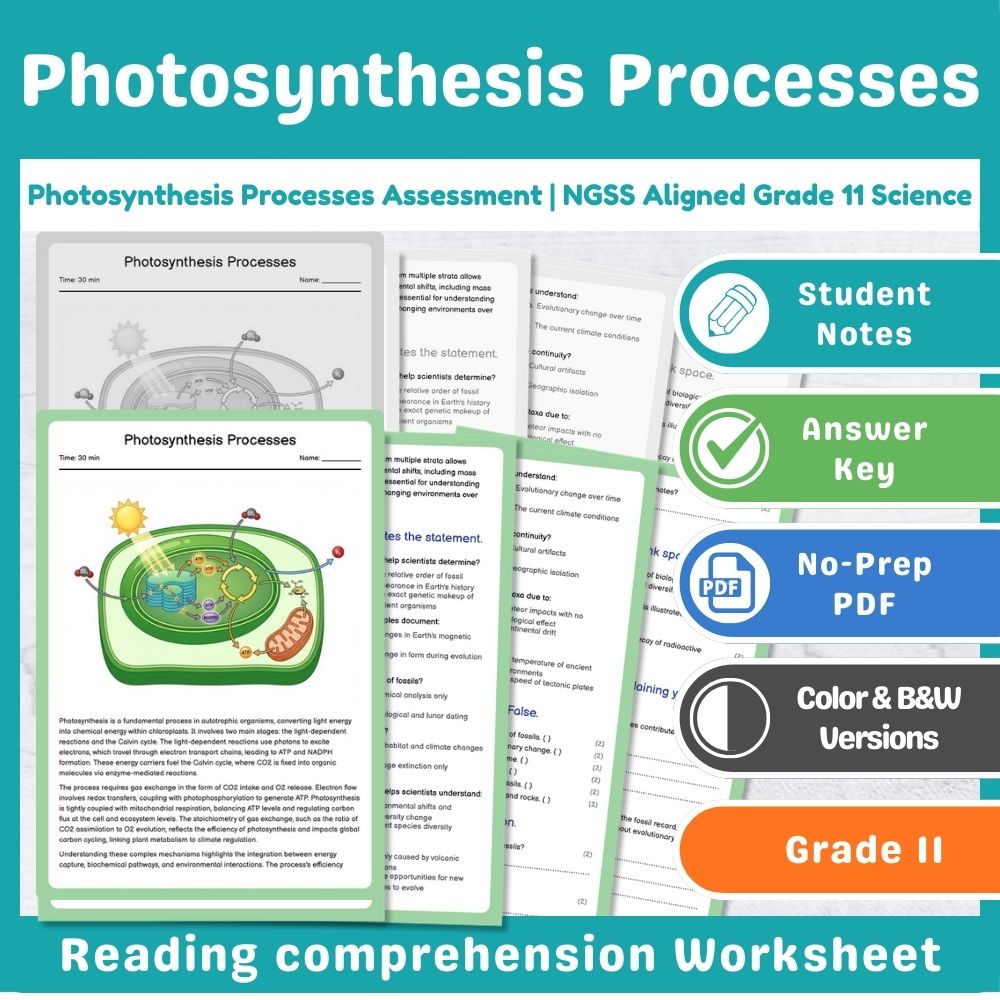
Photosynthesis Processes Assessment | NGSS Aligned Grade 11 Science
Created byPrism Point LearningLearning Objectives
- Explain the light-driven and biochemical stages of photosynthesis, including electron transport, photophosphorylation, and the Calvin cycle.
- Describe the integration of photosynthesis with mitochondrial respiration, focusing on gas exchange, ATP balance, and carbon flux.
- Analyze the stoichiometry of CO2 uptake and O2 release during photosynthesis and respiration.
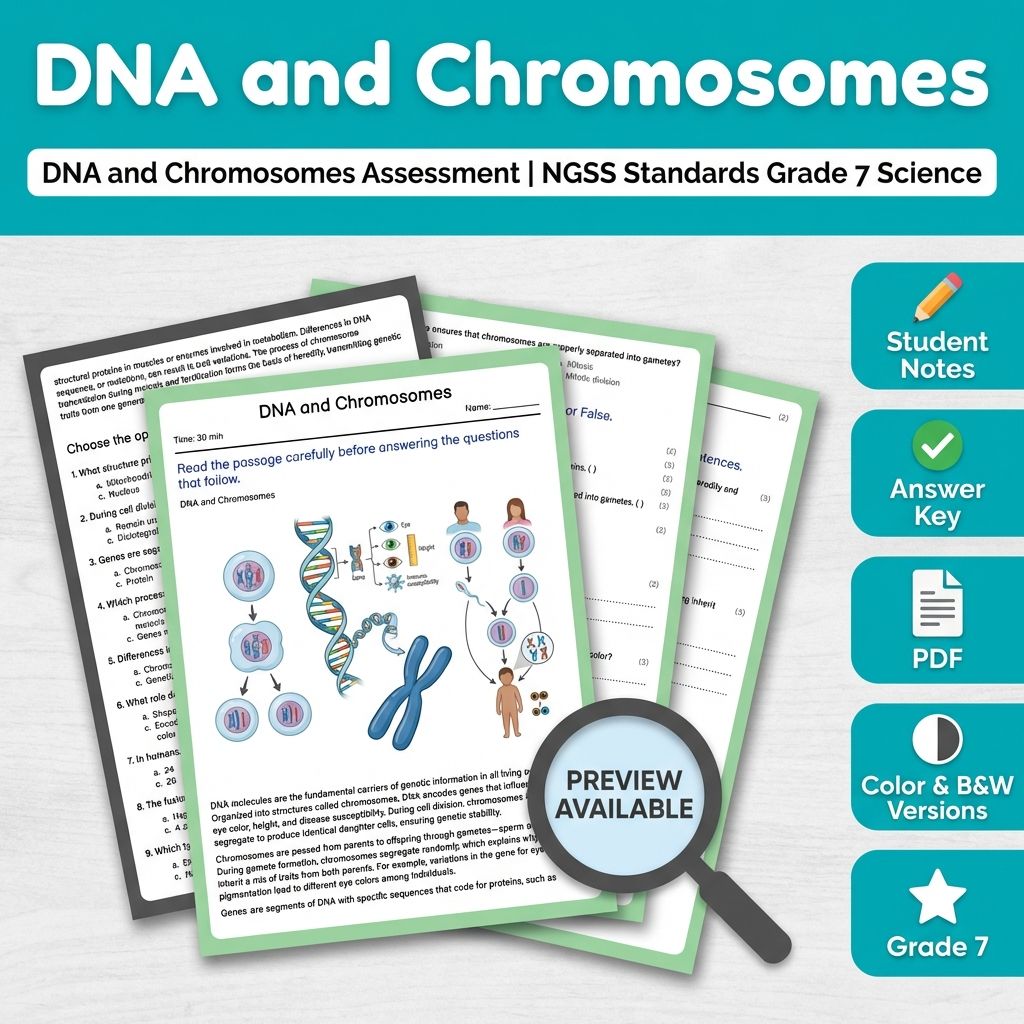
DNA and Chromosomes Assessment | NGSS Standards Grade 7 Science
Created byPrism Point LearningLearning Objectives
- Explain the role of DNA molecules in encoding genetic traits.
- Describe how chromosomes organize and transmit genetic information during cell division.
- Illustrate the process of chromosome segregation during gamete formation and fusion.
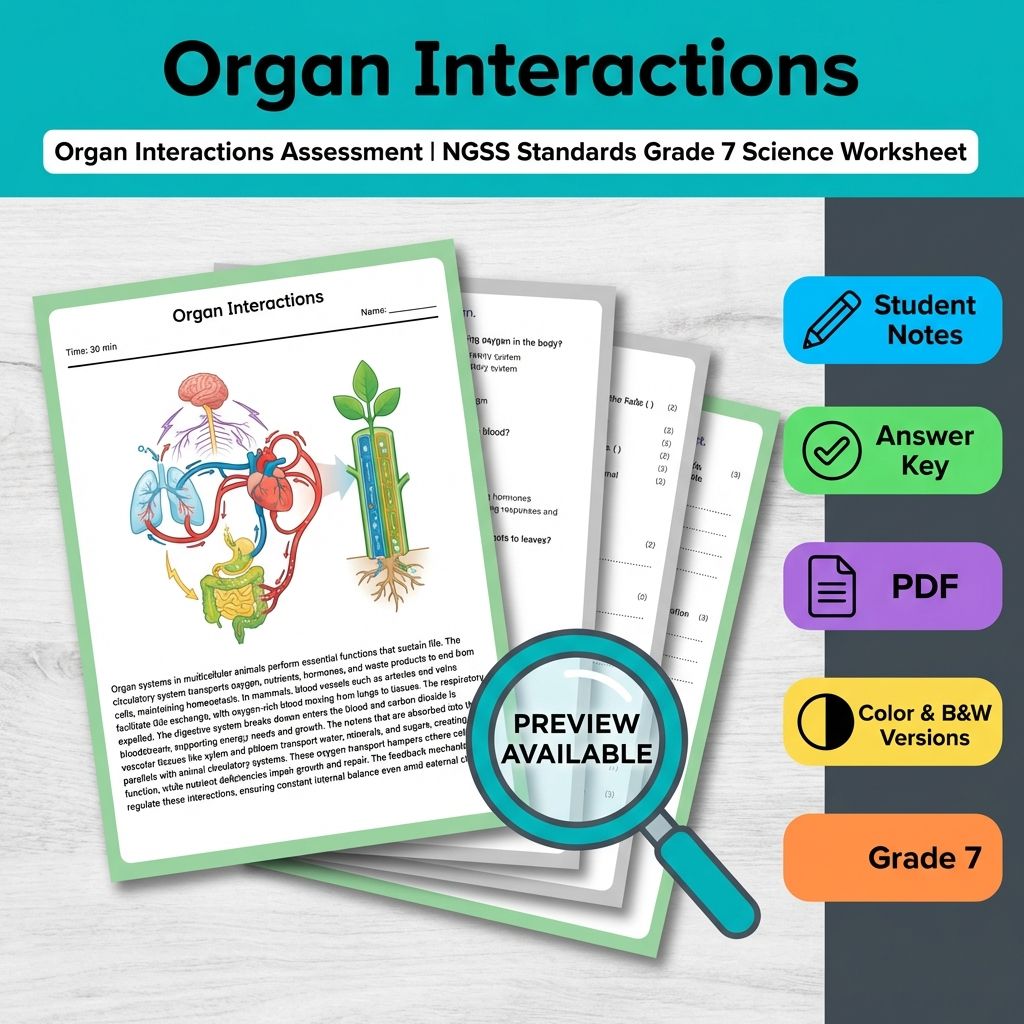
Organ Interactions Assessment | NGSS Standards Grade 7 Science Worksheet
Created byPrism Point LearningLearning Objectives
- Describe the functions of circulatory, respiratory, digestive, and nervous systems in multicellular animals.
- Explain how organ systems cooperate to support processes like gas exchange, nutrient transport, and homeostasis.
- Illustrate system-level dependencies and feedback mechanisms in organ interactions.

Evidence Supporting Evolution Assessment | General Grade 10 Science
Created byPrism Point LearningLearning Objectives
- Understand the different types of evidence used to support claims about biological change over time.
- Identify how fossil records, comparative anatomy, molecular data, and biogeography contribute to evolutionary understanding.
- Analyze how multiple lines of evidence reinforce conclusions about evolution despite limitations in individual datasets.
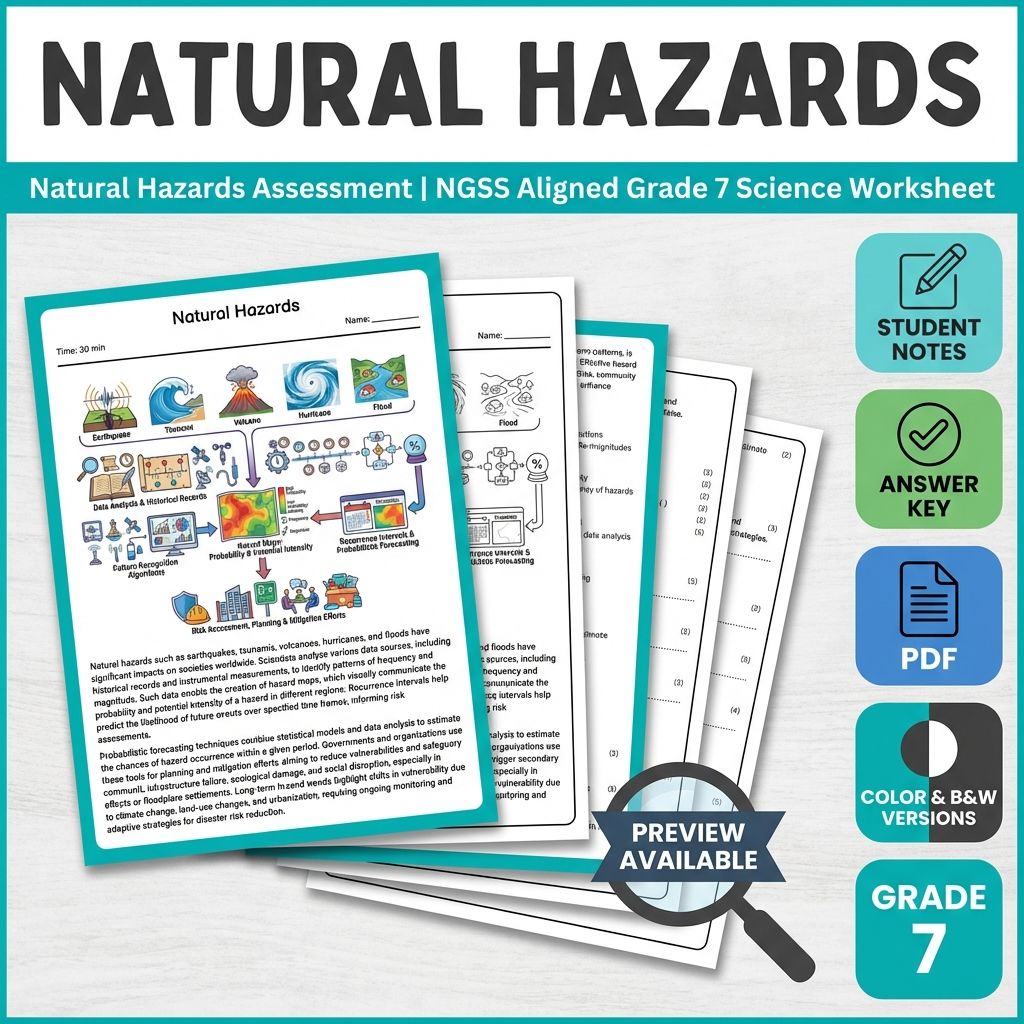
Natural Hazards Assessment | NGSS Aligned Grade 7 Science Worksheet
Created byPrism Point LearningLearning Objectives
- Understand key concepts related to Science
- Apply knowledge through practice questions
- Demonstrate comprehension of the material
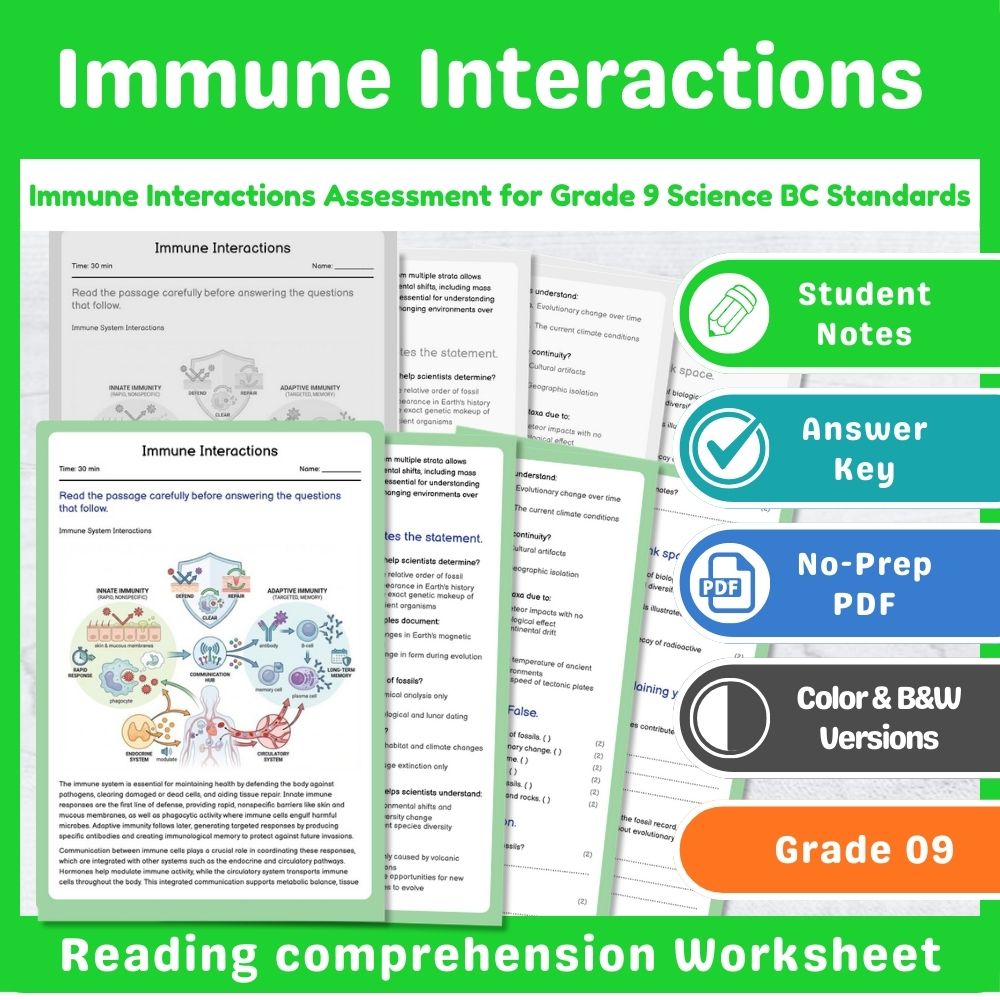
Immune Interactions Assessment for Grade 9 Science BC Standards
Created byPrism Point LearningLearning Objectives
- Explain the roles of innate and adaptive immunity in protecting the body.
- Describe how immune responses coordinate with other systems to maintain homeostasis.
- Identify key components and functions of the immune system.
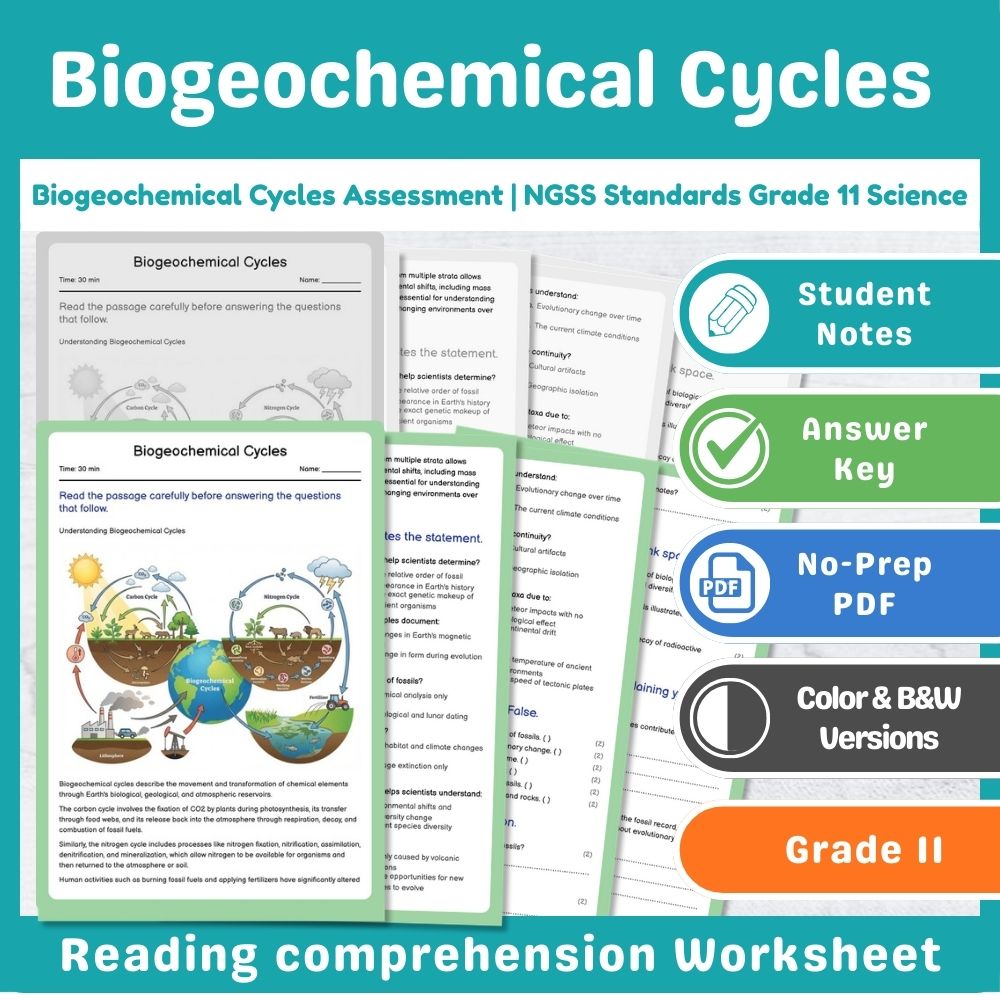
Biogeochemical Cycles Assessment | NGSS Standards Grade 11 Science
Created byPrism Point LearningLearning Objectives
- Understand the key processes involved in biogeochemical cycles such as carbon, nitrogen, phosphorus, and water.
- Identify the reservoirs and flow pathways of elements through biological, geological, and atmospheric systems.
- Explain human impacts like fossil fuel combustion and fertilizer use on nutrient pools and fluxes.
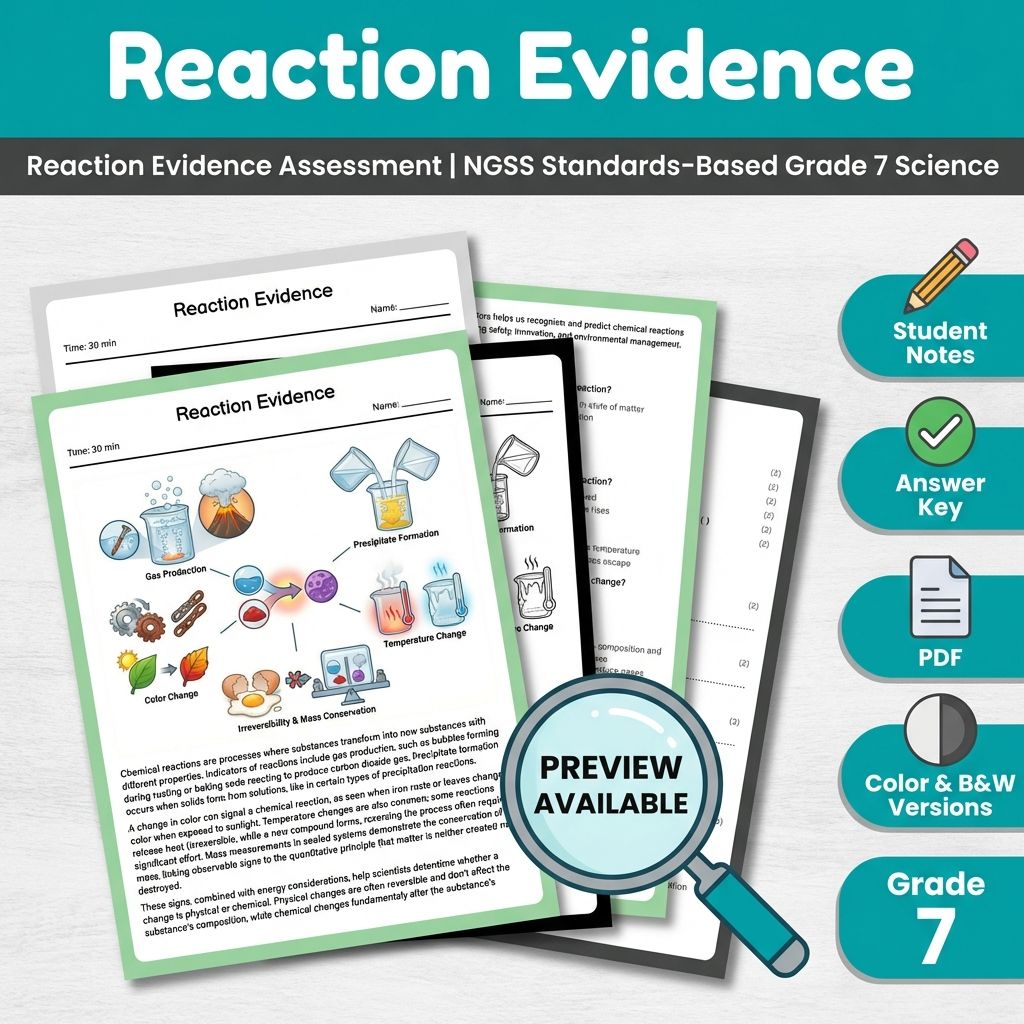
Reaction Evidence Assessment | NGSS Standards-Based Grade 7 Science
Created byPrism Point LearningLearning Objectives
- Identify key indicators that a chemical reaction has occurred.
- Describe observable signs of chemical reactions, including gas production and color change.
- Understand how mass measurements and energy considerations distinguish chemical changes from physical changes.
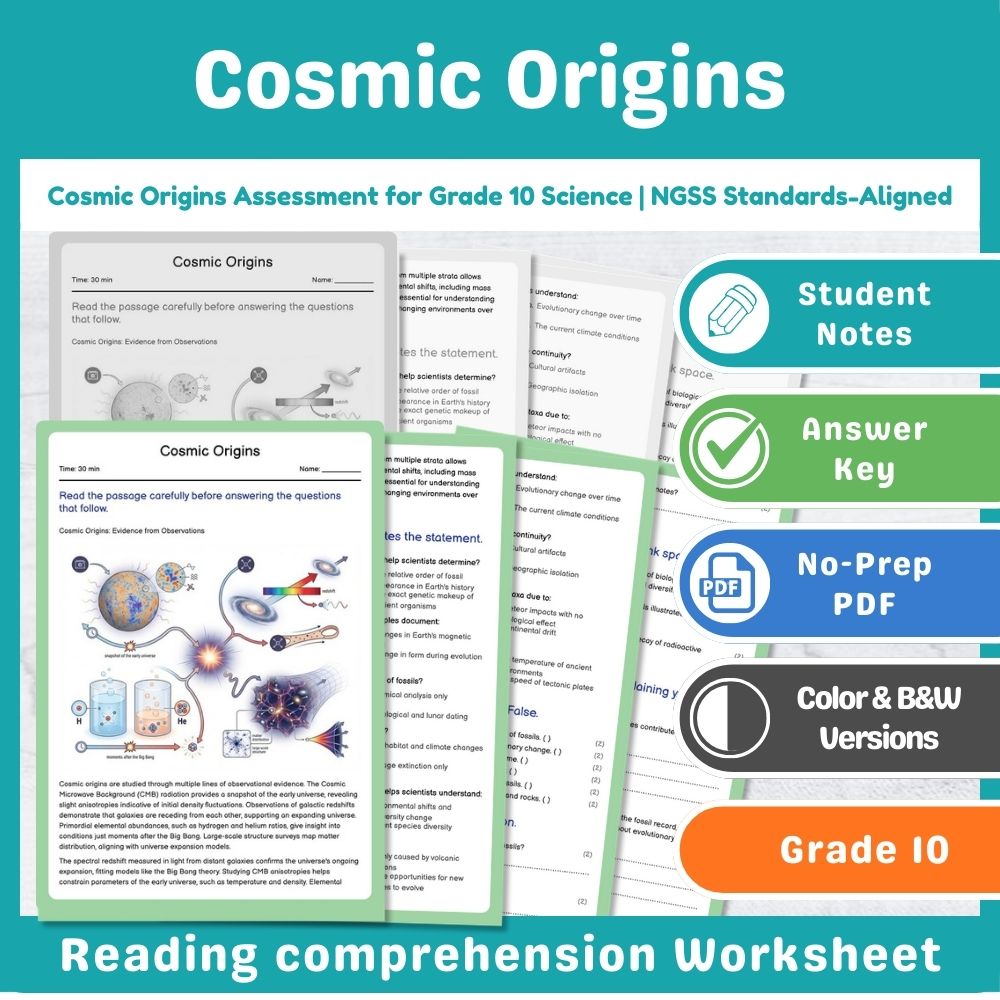
Cosmic Origins Assessment for Grade 10 Science | NGSS Standards-Aligned
Created byPrism Point LearningLearning Objectives
- Understand the evidence supporting models of cosmic origins, including cosmic microwave background radiation, galactic redshifts, and elemental abundances.
- Analyze how observational data support universe expansion and early universe conditions.
- Evaluate the significance of large-scale structures and spectral measurements in cosmology.
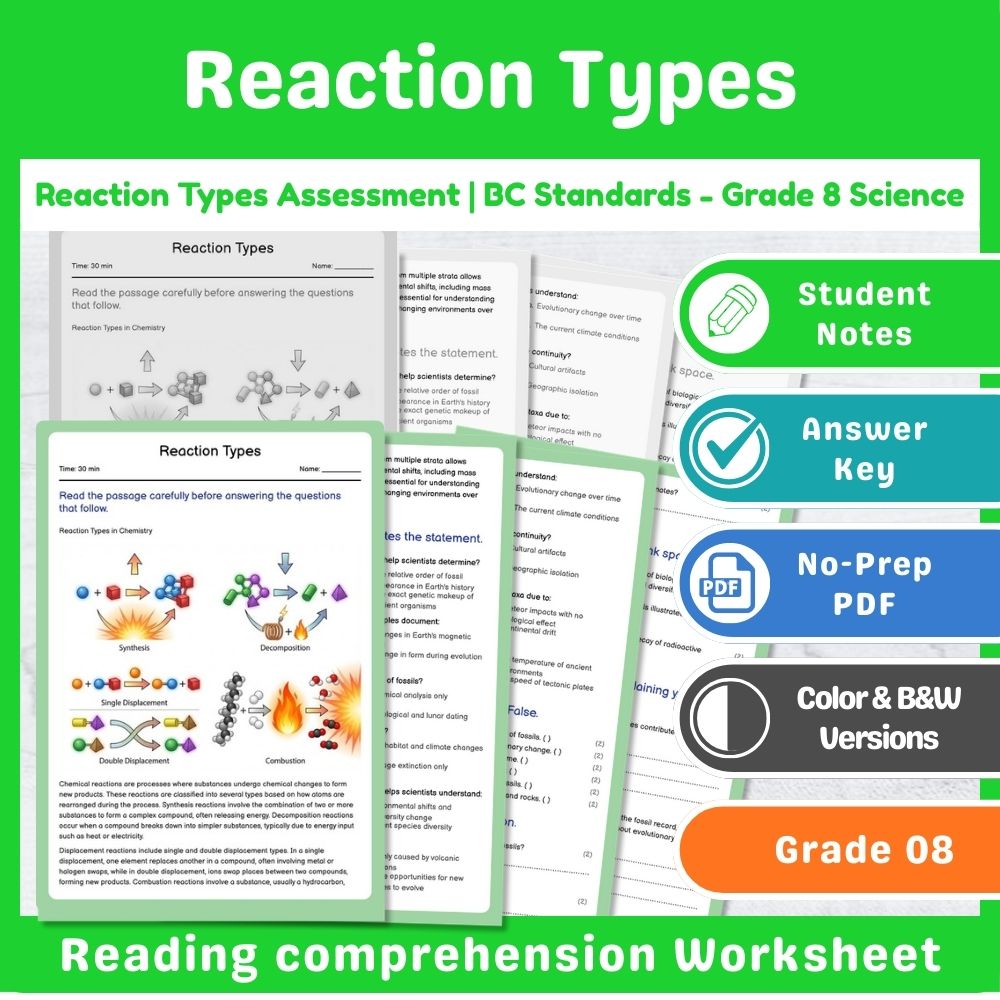
Reaction Types Assessment | BC Standards - Grade 8 Science
Created byPrism Point LearningLearning Objectives
- Identify the various types of chemical reactions and their characteristic patterns.
- Explain how atoms rearrange during synthesis, decomposition, displacement, and combustion reactions.
- Predict possible products based on reaction type.

Species Interactions Assessment for Grade 11 Science Florida NGSSS
Created byPrism Point LearningLearning Objectives
- Explain how competition, predation, and symbiosis affect survival and reproduction in ecosystems.
- Analyze how ecological interactions can regulate population sizes and community composition over time.
- Use ecological vocabulary (competition, predation, mutualism, parasitism) to interpret real-world examples.

Net Force And Acceleration Assessment Grade 9 Science Florida NGSSS
Created byPrism Point LearningLearning Objectives
- Explain how acceleration is determined by the net force and the direction of that net force
- Predict how changing mass affects acceleration when the net force is constant
- Interpret real-world situations using net force (including multiple forces) and Newton’s Second Law
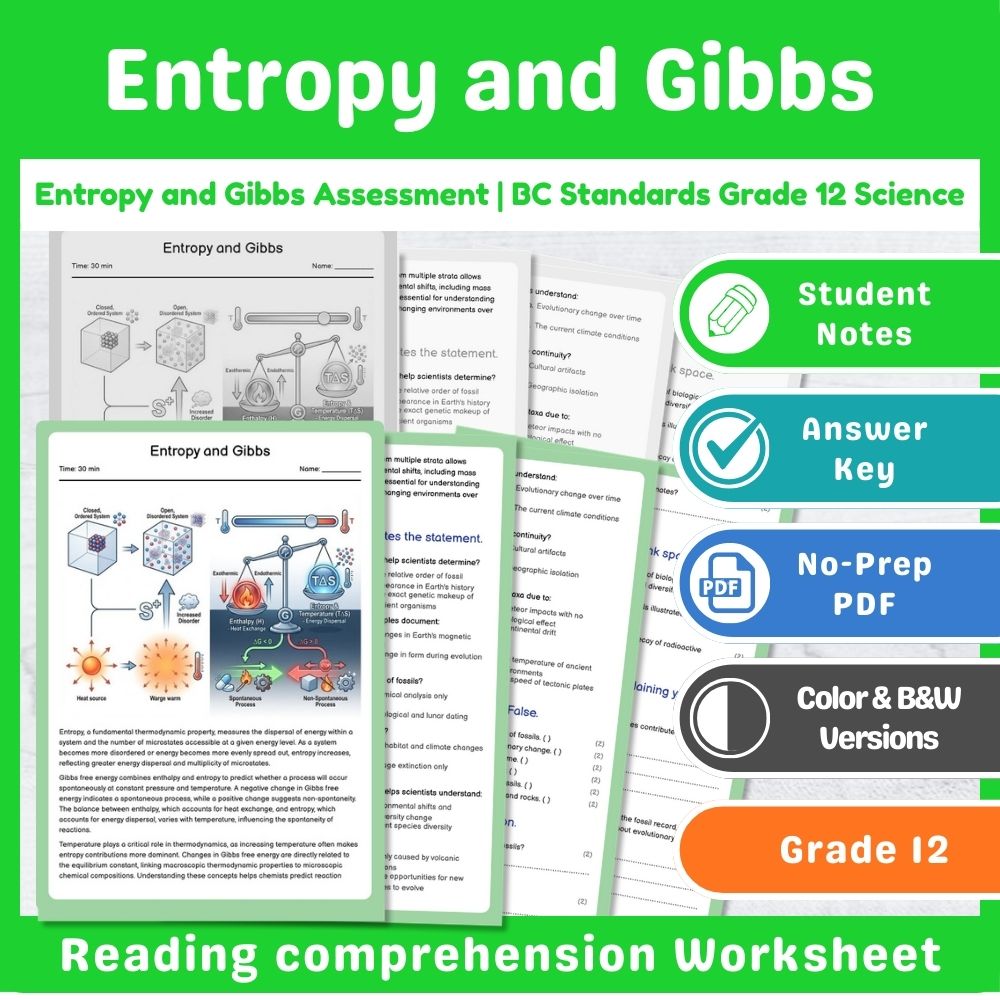
Entropy and Gibbs Assessment | BC Standards Grade 12 Science
Created byPrism Point LearningLearning Objectives
- Explain the concept of entropy and how it relates to energy dispersal and microstates.
- Describe Gibbs free energy and its role in predicting the spontaneity of chemical reactions.
- Analyze how enthalpy and entropy contributions influence temperature-dependent spontaneity.

Force Types Assessment for Grade 11 Science | Florida NGSSS
Created byPrism Point LearningLearning Objectives
- Differentiate between gravitational force, normal force, friction, and tension
- Explain how net force determines an object’s acceleration and direction of motion
- Use correct scientific vocabulary (force, vector, net force, acceleration, friction, tension) to describe real-world situations
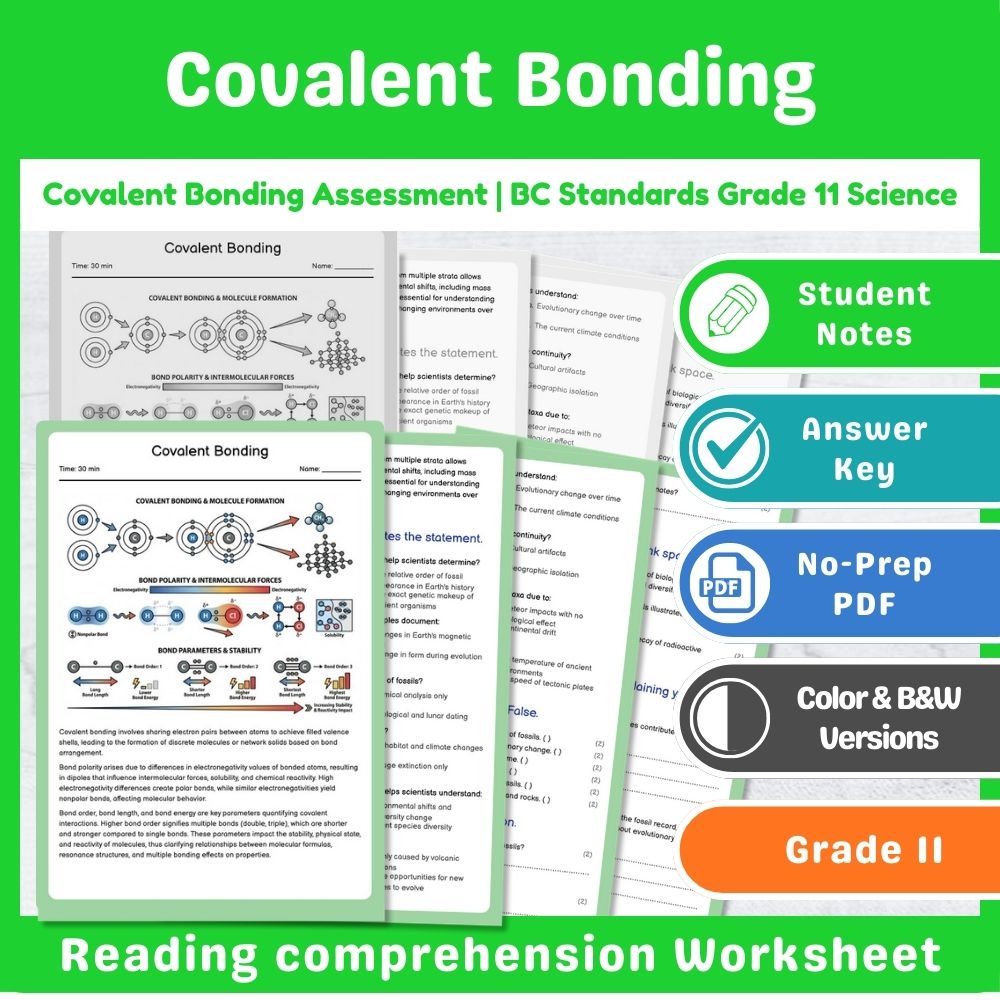
Covalent Bonding Assessment | BC Standards Grade 11 Science
Created byPrism Point LearningLearning Objectives
- Explain the concept of covalent bonding and how atoms share electrons to form molecules.
- Describe how bond polarity arises from differences in electronegativity and its effects on molecular properties.
- Understand and evaluate bond order, bond length, and bond energy in covalent bonds and their influence on stability.

Natural Selection Assessment for Grade 11 Science – Standards-Aligned
Created byPrism Point LearningLearning Objectives
- Explain how natural selection changes the frequency of heritable traits in a population over generations
- Identify the role of environmental pressure and fitness in determining which traits become more common
- Describe how adaptation can lead to evolutionary divergence over long periods

Reaction Types Assessment for Grade 11 Science NGSSS | Classroom-Ready Materials
Created byPrism Point LearningLearning Objectives
- Classify chemical reactions as synthesis, decomposition, single replacement, or double replacement based on reactant/product patterns
- Predict likely products using conservation of atoms and typical reaction rules
- Identify evidence of reaction type from observations such as gas, precipitate, color change, and temperature change
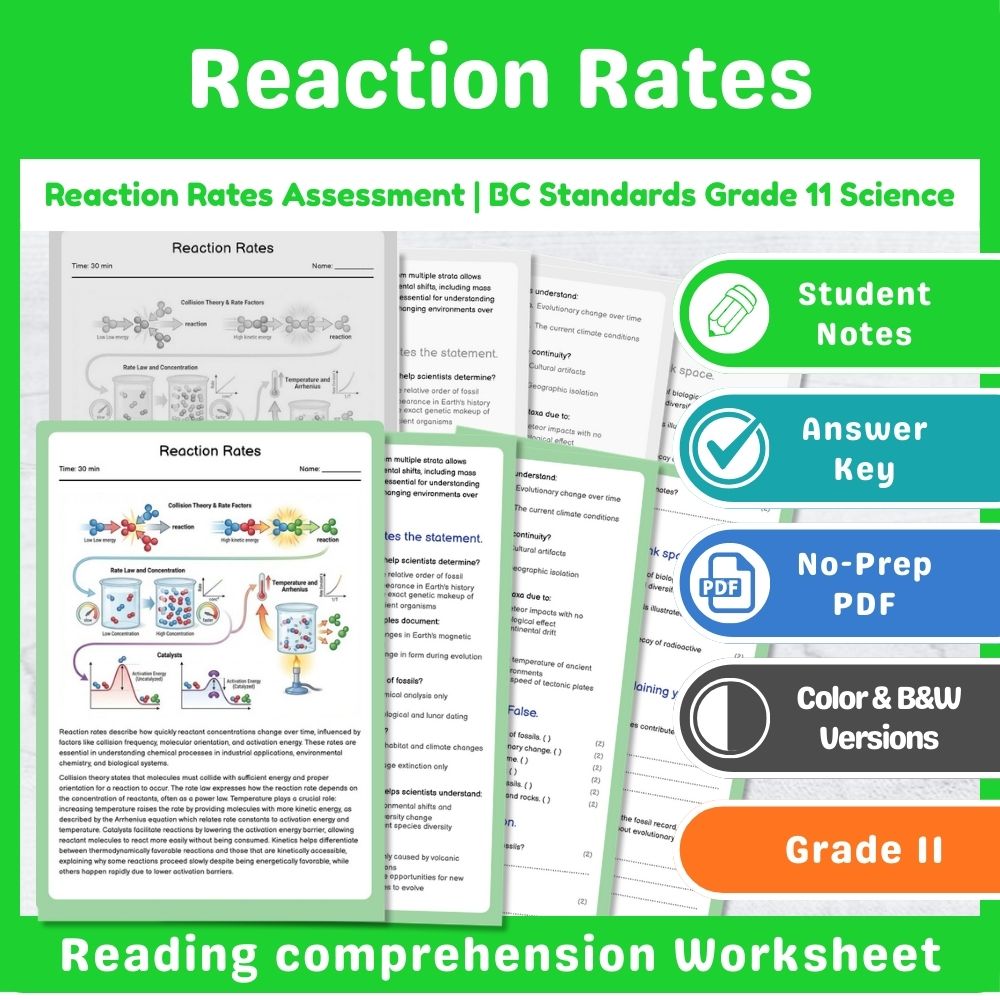
Reaction Rates Assessment | BC Standards Grade 11 Science
Created byPrism Point LearningLearning Objectives
- Explain the factors influencing reaction rates, including collision frequency, molecular orientation, and activation energy.
- Describe rate laws and how they relate reactant concentrations to reaction speed.
- Understand the Arrhenius equation and how temperature affects rate constants.
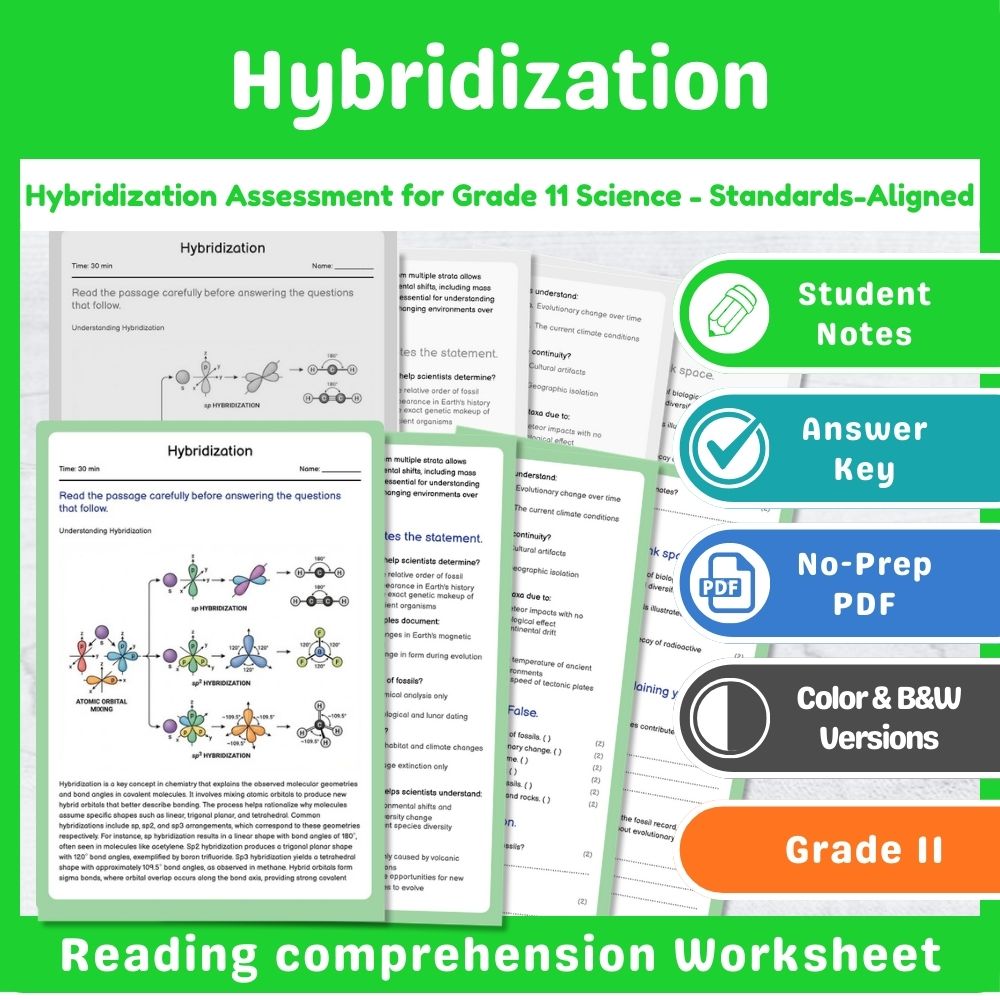
Hybridization Assessment for Grade 11 Science - Standards-Aligned
Created byPrism Point LearningLearning Objectives
- Understand the concept of atomic orbital hybridization and how it relates to molecular geometry.
- Identify the types of hybridization such as sp, sp2, and sp3 and their corresponding shapes.
- Explain the roles of sigma and pi bonds in covalent molecules and how hybridization influences bonding.
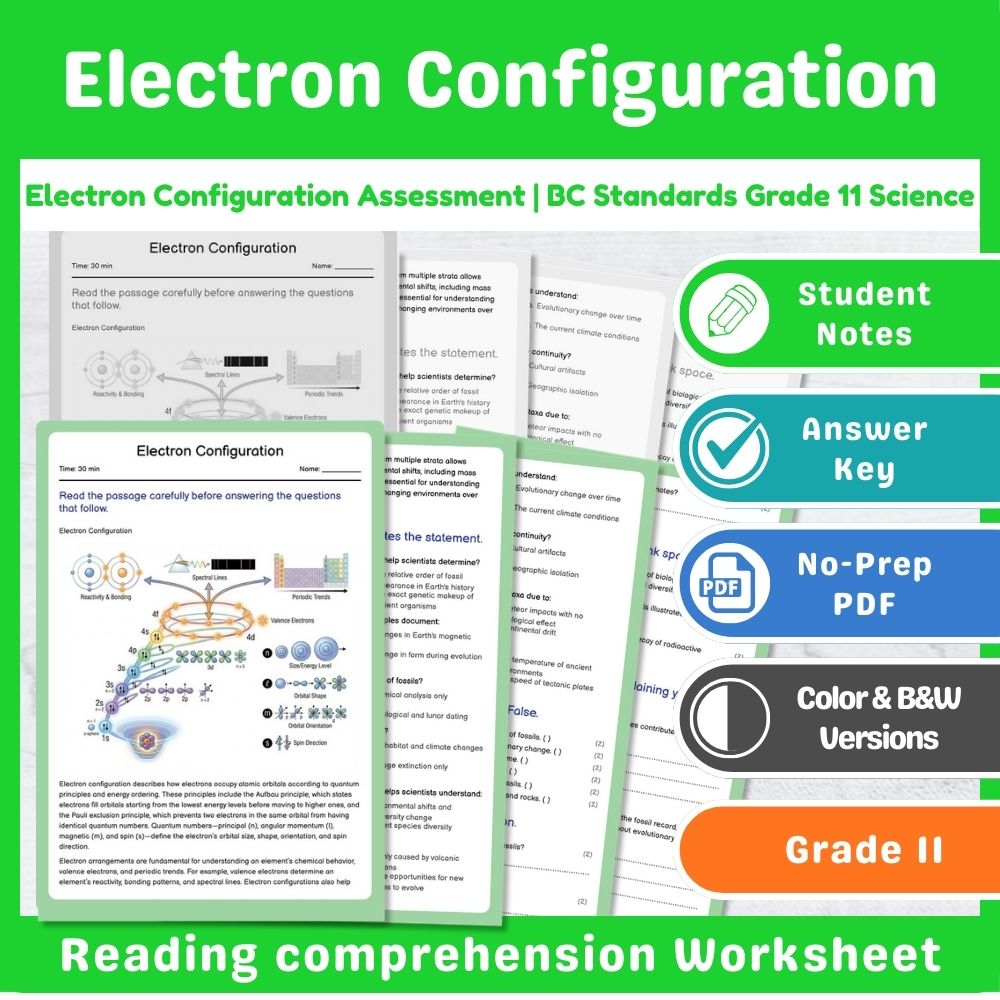
Electron Configuration Assessment | BC Standards Grade 11 Science
Created byPrism Point LearningLearning Objectives
- Explain how electrons occupy atomic orbitals according to quantum principles.
- Describe the role of quantum numbers, Pauli exclusion, and Aufbau principles in electron filling.
- Relate electron arrangements to elemental chemical behavior, valence electrons, and periodic trends.
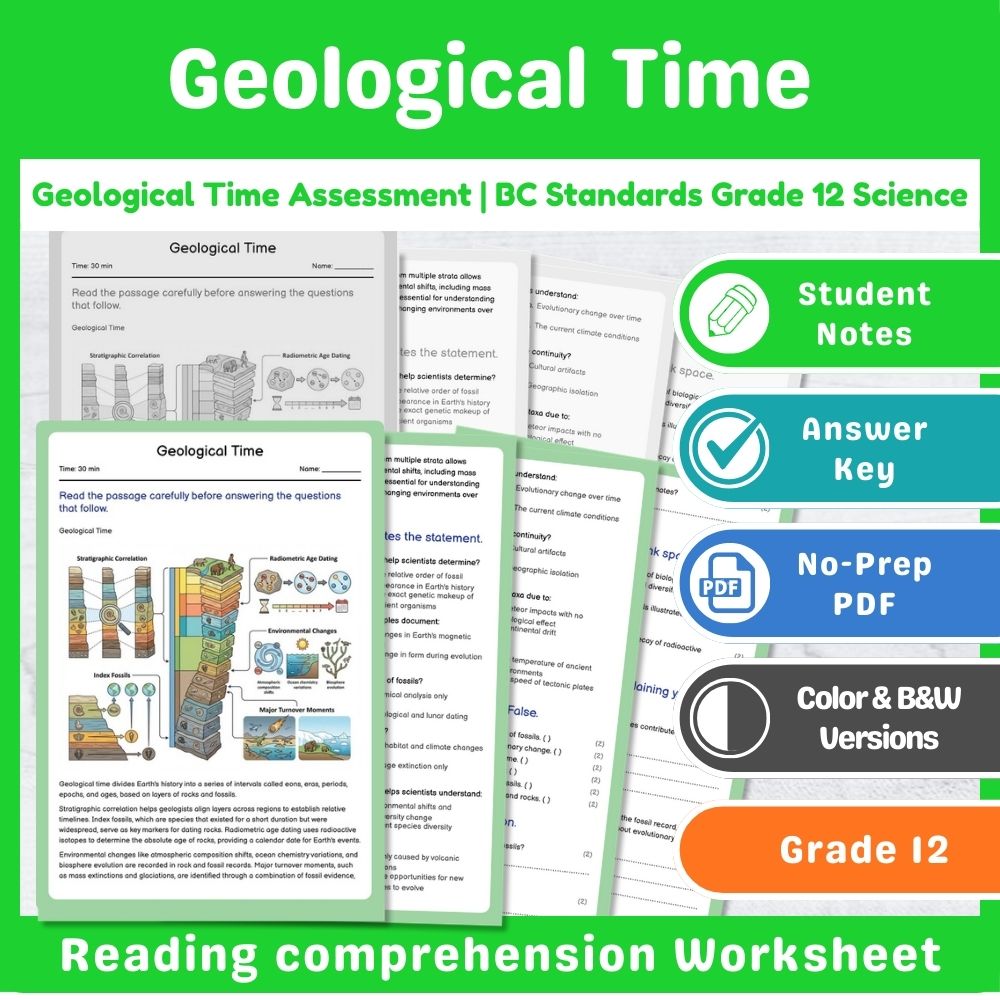
Geological Time Assessment | BC Standards Grade 12 Science
Created byPrism Point LearningLearning Objectives
- Understand the methods used to sequence Earth's history, including rock layers, fossils, and radiometric dating.
- Identify various markers of global environmental change, such as mass extinctions and glaciations.
- Explain the relationships between Earth's atmospheric, oceanic, and biospheric changes over geological time.

Net Force Outcomes Assessment for Grade 10 Science – Standards-Aligned
Created byPrism Point LearningLearning Objectives
- Understand how multiple forces interact to produce net force and acceleration.
- Predict motion changes when forces oppose or align with each other.
- Connect concepts of force, opposition, and acceleration to everyday situations like pushing and sliding.

Power And Rates Assessment Grade 9 Science | Florida NGSSS
Created byPrism Point LearningLearning Objectives
- Explain power as the rate of energy transfer or work done over time
- Compare situations using the relationship between energy transferred and time
- Interpret everyday wattage ratings in terms of energy per second

Conservation Heat Assessment | General Standards 12th Grade Science
Created byPrism Point LearningLearning Objectives
- Explain how energy conservation applies to thermal processes between a system and its surroundings.
- Use calorimetry reasoning to relate temperature change to heat transfer using mass and specific heat.
- Apply sign conventions for heat gained and heat lost in closed systems involving physical and chemical changes.

Motion Graphs Assessment for Grade 10 Science | Standards-Aligned Assessment
Created byPrism Point LearningLearning Objectives
- Interpret position-time graphs to determine velocity from slope and identify changes in motion from curvature.
- Interpret velocity-time graphs to determine acceleration from slope and identify changes in acceleration from sign changes or curvature.
- Connect graph features (flat sections, straight lines, sign changes) to real physical motion over time.

Positive Feedback Assessment | TEKS Grade 10 Science Standards-Aligned
Created byPrism Point LearningLearning Objectives
- Understand the concept and mechanisms of positive feedback in biological systems.
- Identify examples of positive feedback mechanisms, such as childbirth and blood clotting.
- Differentiate between positive and negative feedback in physiology.

Energy in Earth Systems Assessment | Florida NGSSS Grade 9 Science
Created byPrism Point LearningLearning Objectives
- Explain how incoming solar radiation and outgoing infrared radiation drive Earth’s energy balance.
- Describe how energy moves within Earth systems through conduction, convection, and phase changes (latent heat).
- Connect energy absorption differences across surface types to long-term temperature and climate patterns.
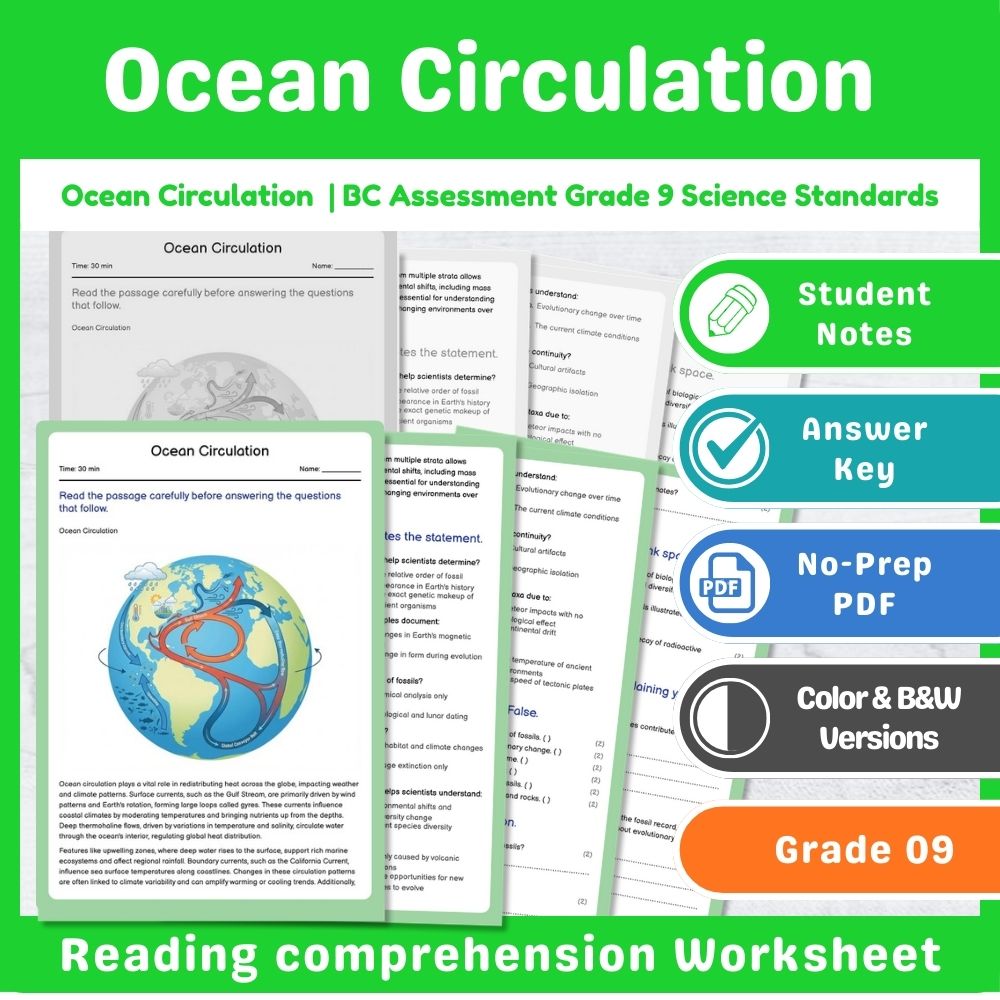
Ocean Circulation Quiz | BC Assessment Grade 9 Science Standards
Created byPrism Point LearningLearning Objectives
- Explain the mechanisms driving ocean surface and deep currents.
- Identify features like gyres, upwelling zones, and boundary currents.
- Assess the impact of ocean circulation on regional climates and weather patterns.

Material Cycling Assessment | California Standards Grade 6 Science Test
Created byPrism Point LearningLearning Objectives
- Explain how weathering, sediment transport, and deposition move Earth materials through cycles.
- Describe how living things add organic matter to soils and affect water retention.
- Use cause-and-effect reasoning to connect transformations across Earth’s spheres.

Tradeoff Mapping Assessment | California Standards Grade 7 Science
Created byPrism Point LearningLearning Objectives
- Explain how tradeoffs occur when improving one design criterion can worsen another due to constraints
- Map competing design options to criteria and constraints to decide which tradeoffs are acceptable
- Use intended function and acceptable limits (such as safety and feasibility) to justify design choices
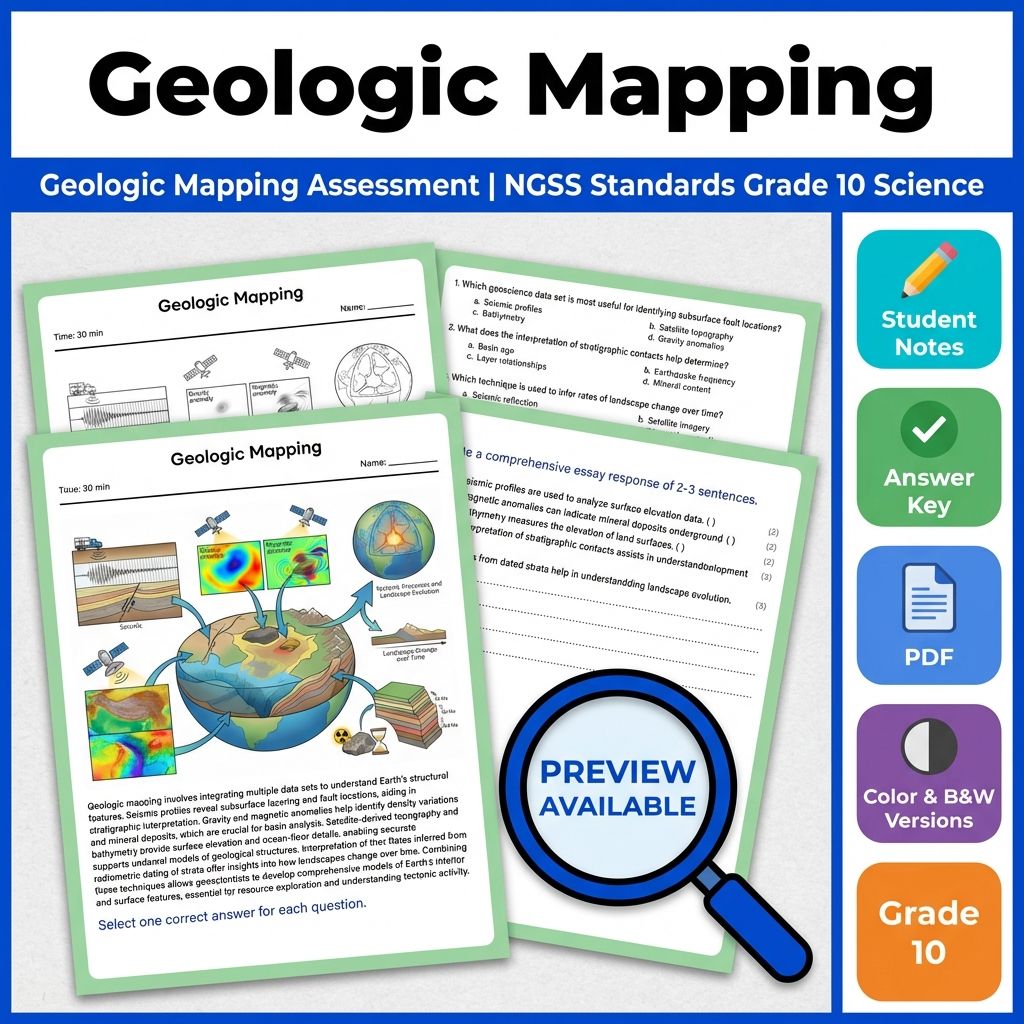
Geologic Mapping Assessment | NGSS Standards Grade 10 Science
Created byPrism Point LearningLearning Objectives
- Understand the components and data sources used in geologic mapping.
- Interpret stratigraphic contacts, fault systems, and basin structures from geological data.
- Explain how rates from geochronology support landscape evolution models.
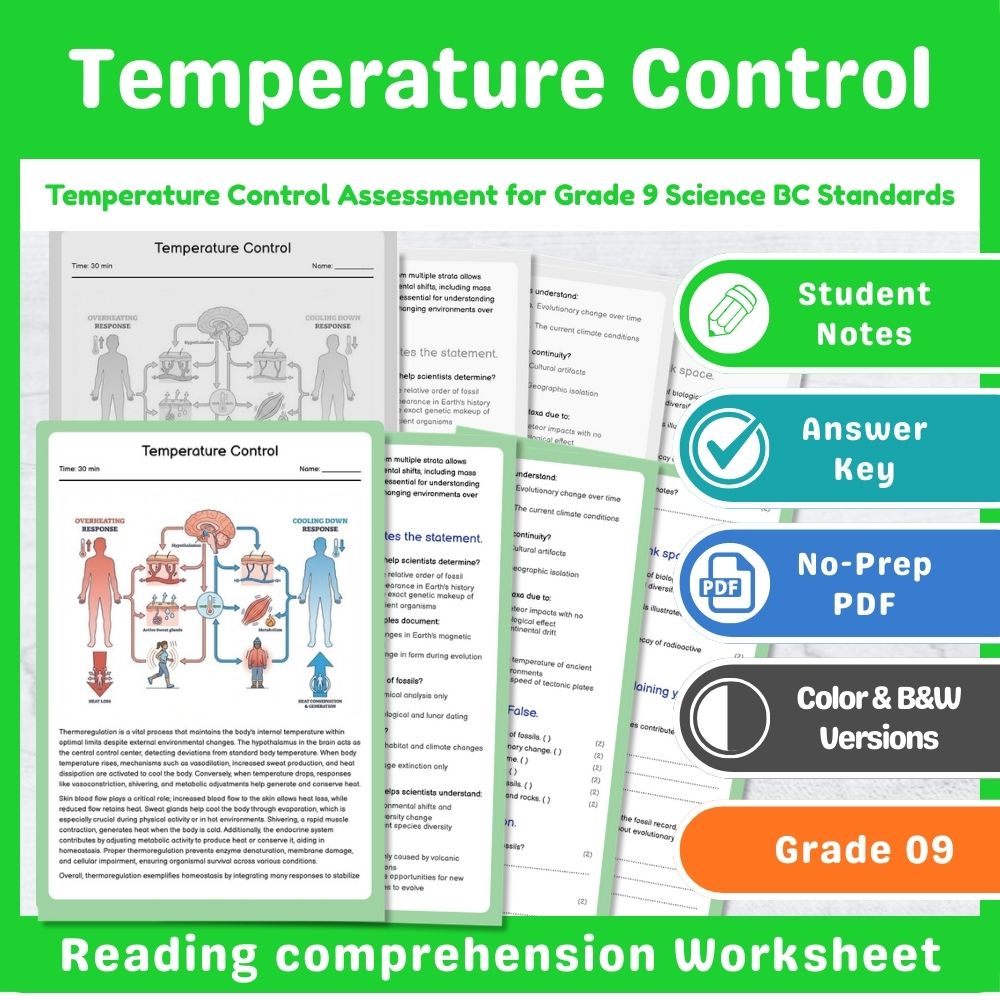
Temperature Control Assessment for Grade 9 Science BC Standards
Created byPrism Point LearningLearning Objectives
- Understand how the body maintains internal temperature through thermoregulation.
- Identify key mechanisms such as sweating, shivering, and blood flow adjustments.
- Explain the role of the hypothalamus in temperature regulation.
Browse more categories
About Science Worksheets
Find Science worksheets spanning core skills, practice, and review. All 42,685 resources are instant PDF downloads for the classroom or home.
Every worksheet on MyTeachingSheets is created by independent teacher-authors and reviewed before publication. All resources download as printable PDFs for classroom, homework, or at-home practice, and many include answer keys. Preview any worksheet free before buying.