
Science Worksheets
42,685 subject resources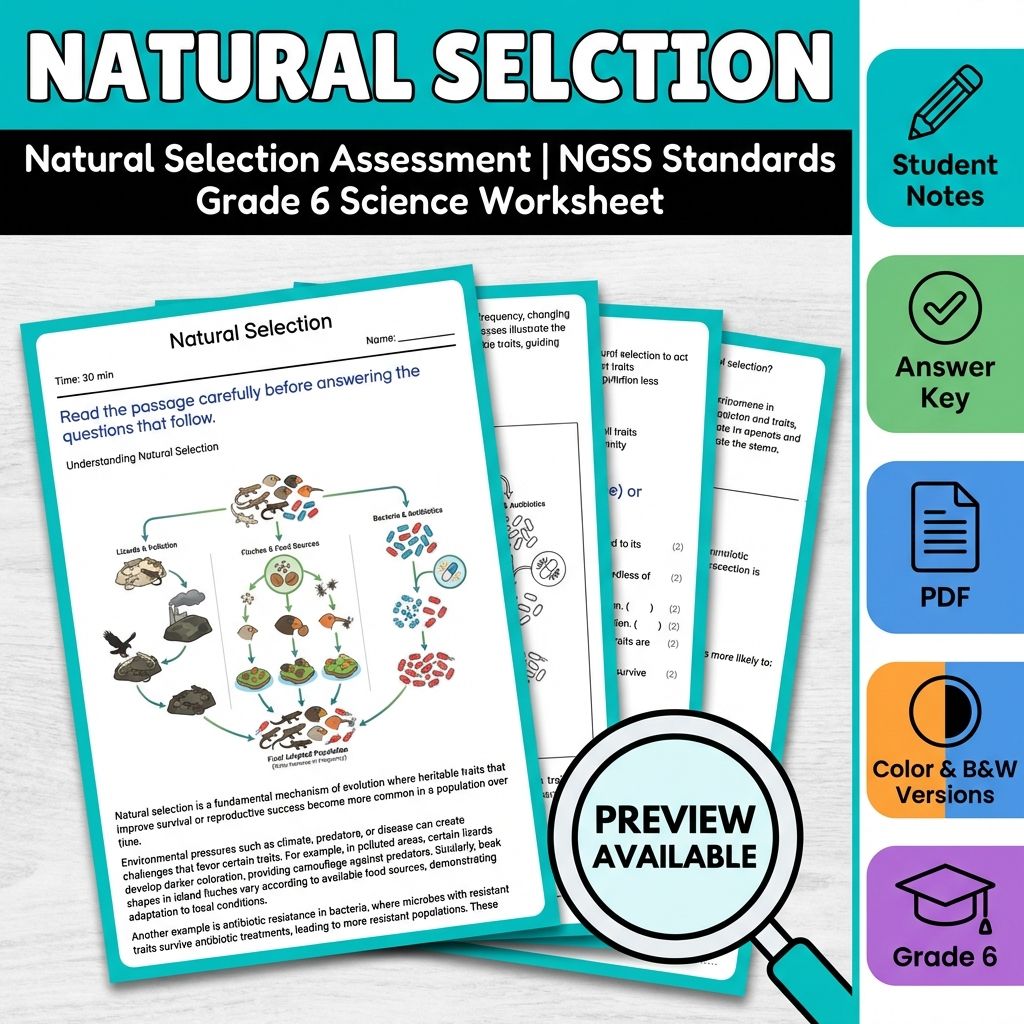
Natural Selection Assessment | NGSS Standards Grade 6 Science Worksheet
 Created byPrism Point Learning
Learning Objectives
- Describe the process of natural selection and how it leads to changes in trait frequencies within populations.
- Explain how environmental pressures influence the survival and reproduction of organisms with different heritable traits.
- Identify real-world examples of natural selection, such as pigmentation changes, beak variation, and antibiotic resistance.
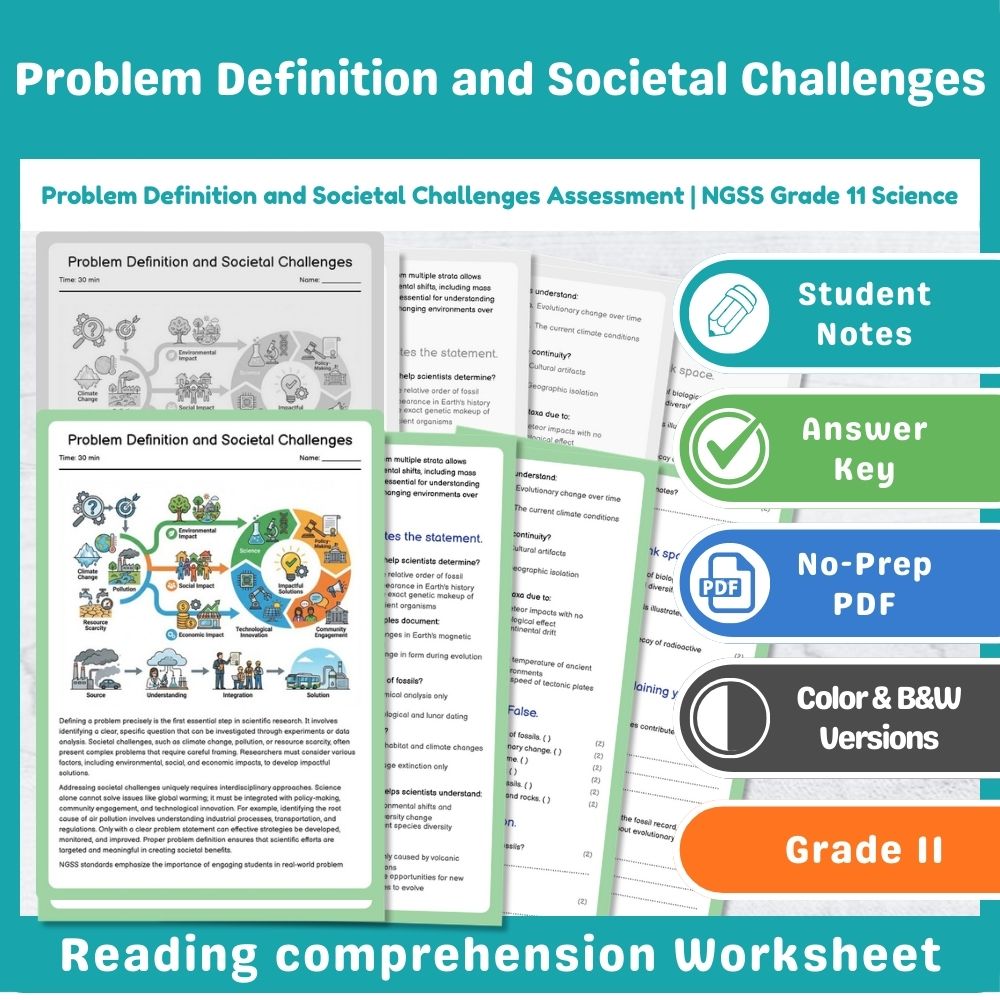
Problem Definition and Societal Challenges Assessment | NGSS Grade 11 Science
Created byPrism Point LearningLearning Objectives
- Understand the importance of clear problem definition in scientific research.
- Analyze how societal challenges influence scientific problem framing.
- Evaluate different approaches to addressing global issues through science.

Cell Types Assessment | TEKS Grade 11 Science Printable Worksheet
Created byPrism Point LearningLearning Objectives
- Differentiate between prokaryotic and eukaryotic cell structures.
- Identify key features of prokaryotic and eukaryotic cells.
- Explain how cell organization impacts function and organism complexity.

Societal Tradeoffs Assessment for Grade 12 Science TEKS Standards
Created byPrism Point LearningLearning Objectives
- Analyze societal implications of scientific and technological choices.
- Evaluate trade-offs related to benefits, harms, and distributional effects.
- Assess case examples such as energy transitions, vaccine distribution, and data privacy.

Thermoregulation Assessment | TEKS Grade 9 Science Evaluation
Created byPrism Point LearningLearning Objectives
- Understand the mechanisms involved in body temperature regulation.
- Identify physiological responses that maintain thermoregulation.
- Explain the roles of skin, vasculature, and nervous pathways in heat balance.

Phylogenetic Trees Assessment for Grade 11 Science – TEKS Standards
Created byPrism Point LearningLearning Objectives
- Understand the structure and components of phylogenetic trees.
- Interpret evolutionary relationships and divergence events from tree diagrams.
- Distinguish between homologous traits and convergent similarities in phylogenetics.

Trophic Efficiency Assessment for Grade 10 Science TEKS | Science Worksheet
Created byPrism Point LearningLearning Objectives
- Understand the concept of trophic efficiency and its significance in ecosystems.
- Analyze how energy transfer affects biomass pyramids and food web structures.
- Evaluate factors influencing variations in trophic efficiency among different ecosystems.
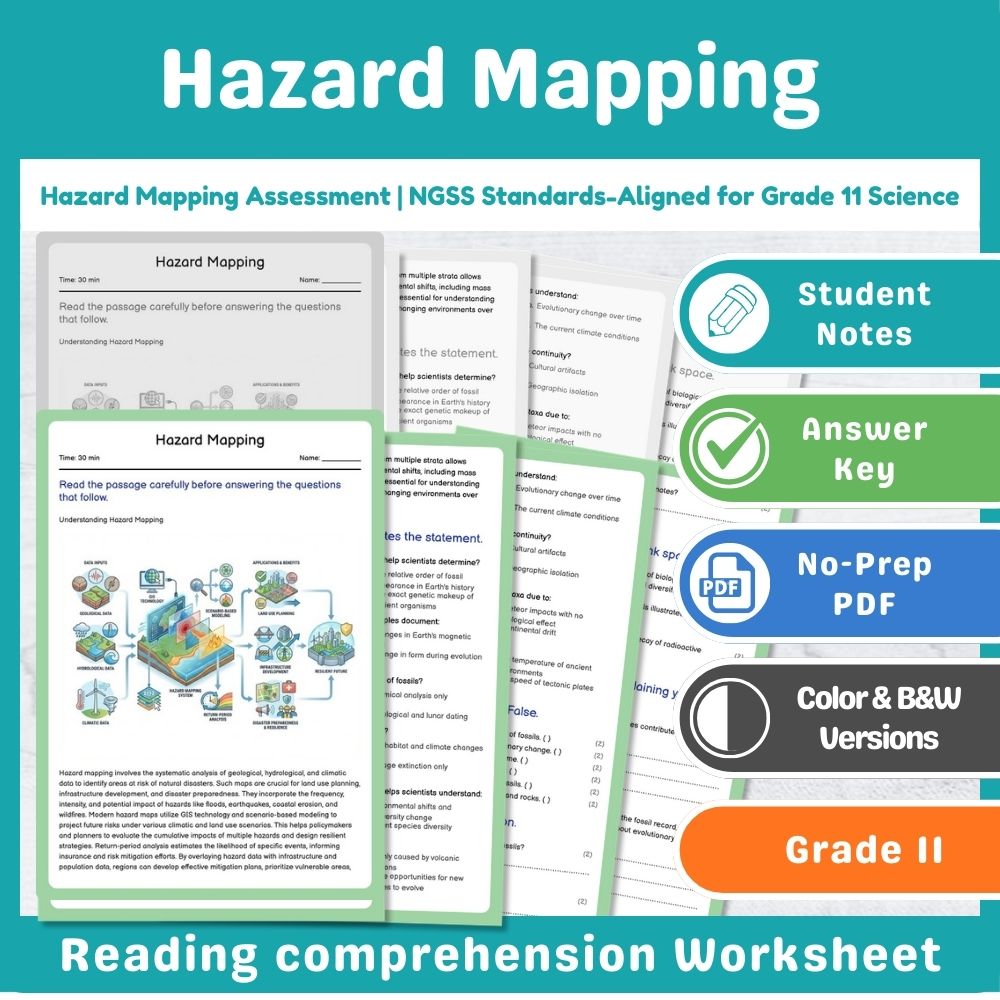
Hazard Mapping Assessment | NGSS Standards Grade 11 Science Worksheet
Created byPrism Point LearningLearning Objectives
- Understand various natural hazards and their spatial distribution
- Analyze the role of hazard mapping in regional planning and resilience
- Evaluate different data sources used in hazard assessment
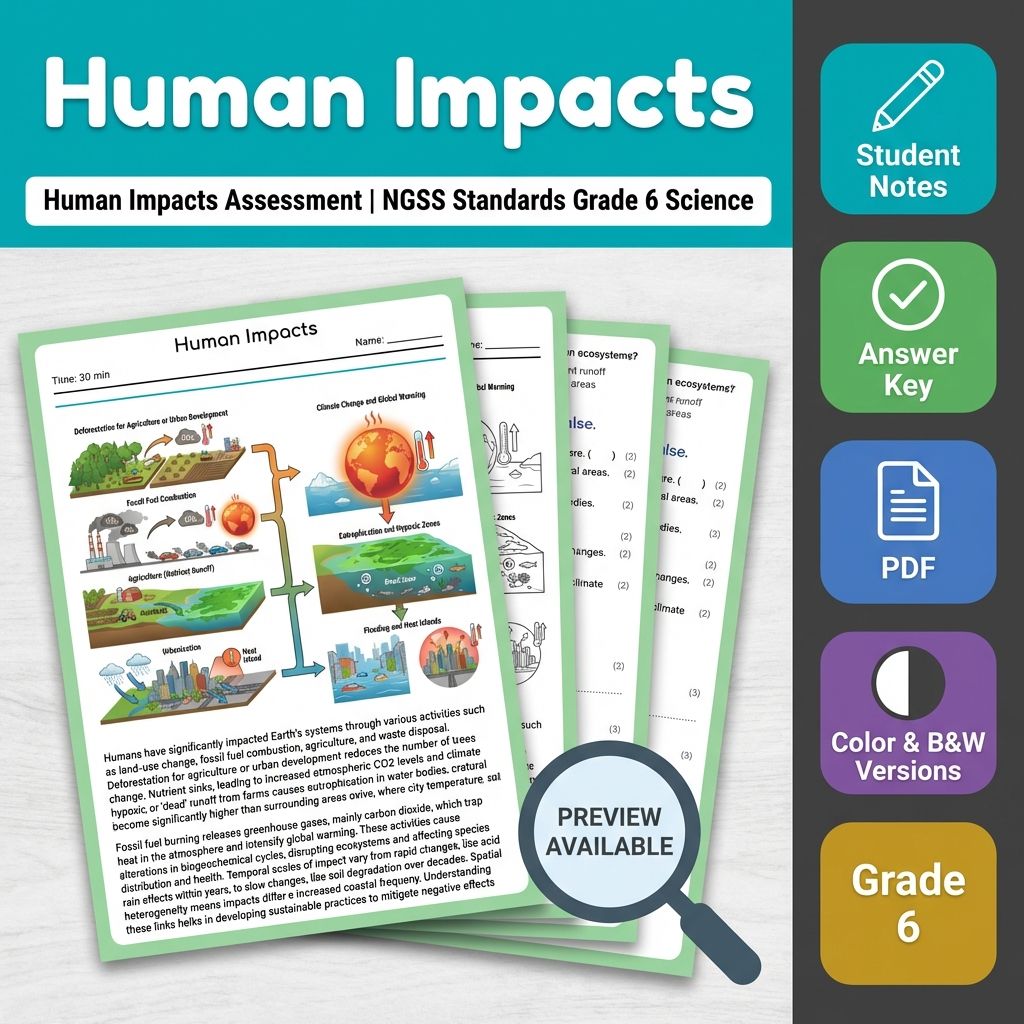
Human Impacts Assessment | NGSS Standards Grade 6 Science
Created byPrism Point LearningLearning Objectives
- Describe human activities that alter land, air, and water systems.
- Analyze how land-use change, fossil fuel use, and waste management affect environmental cycles.
- Explain the causal links between human actions and environmental trends.
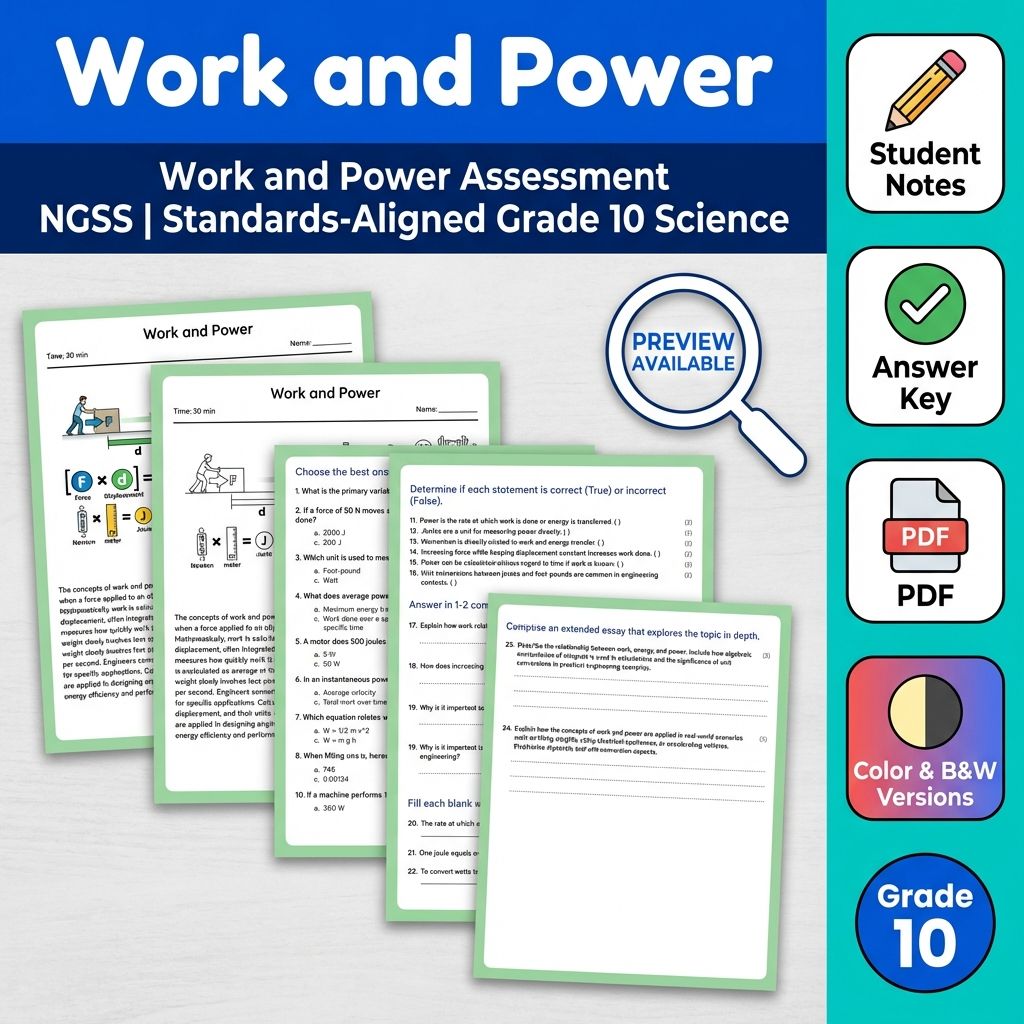
Work and Power Assessment NGSS | Standards-Aligned Grade 10 Science
Created byPrism Point LearningLearning Objectives
- Explain the relationship between force, displacement, and energy using the work–energy theorem.
- Calculate work and power in various contexts, including lifting weights and vehicle acceleration.
- Manipulate work integrals algebraically and convert units between joules, watts, and engineering units.

Earth Systems Assessment for Grade 12 Science TEKS Standards
Created byPrism Point LearningLearning Objectives
- Understand the interactions between atmosphere, hydrosphere, lithosphere, and cryosphere in climate systems.
- Analyze energy transfer mechanisms and matter cycling within Earth systems.
- Evaluate the effects of radiative balance and albedo on climate variability.

Trade-off Decisions Assessment for Grade 6 Science | Standards-Aligned
Created byPrism Point LearningLearning Objectives
- Understand how design choices involve trade-offs affecting properties like strength, flexibility, and insulation.
- Identify the impact of material choices on weight, cost, and usability in shelter design.
- Analyze how trade-offs relate to user needs and environmental constraints.

Fossil Evidence Assessment | TEKS Standards-Aligned Grade 11 Science
Created byPrism Point LearningLearning Objectives
- Understand how fossil evidence records morphological changes over geological time.
- Identify methods used to establish relative and absolute ages of fossils.
- Explain the significance of transitional forms in evolutionary history.

Forces and Motion Assessment Grade 6 | Science Standards-Aligned Test
Created byPrism Point LearningLearning Objectives
- Understand how forces influence the motion of objects.
- Identify examples of balanced and unbalanced forces in everyday situations.
- Explain how different types of forces affect speed and direction.
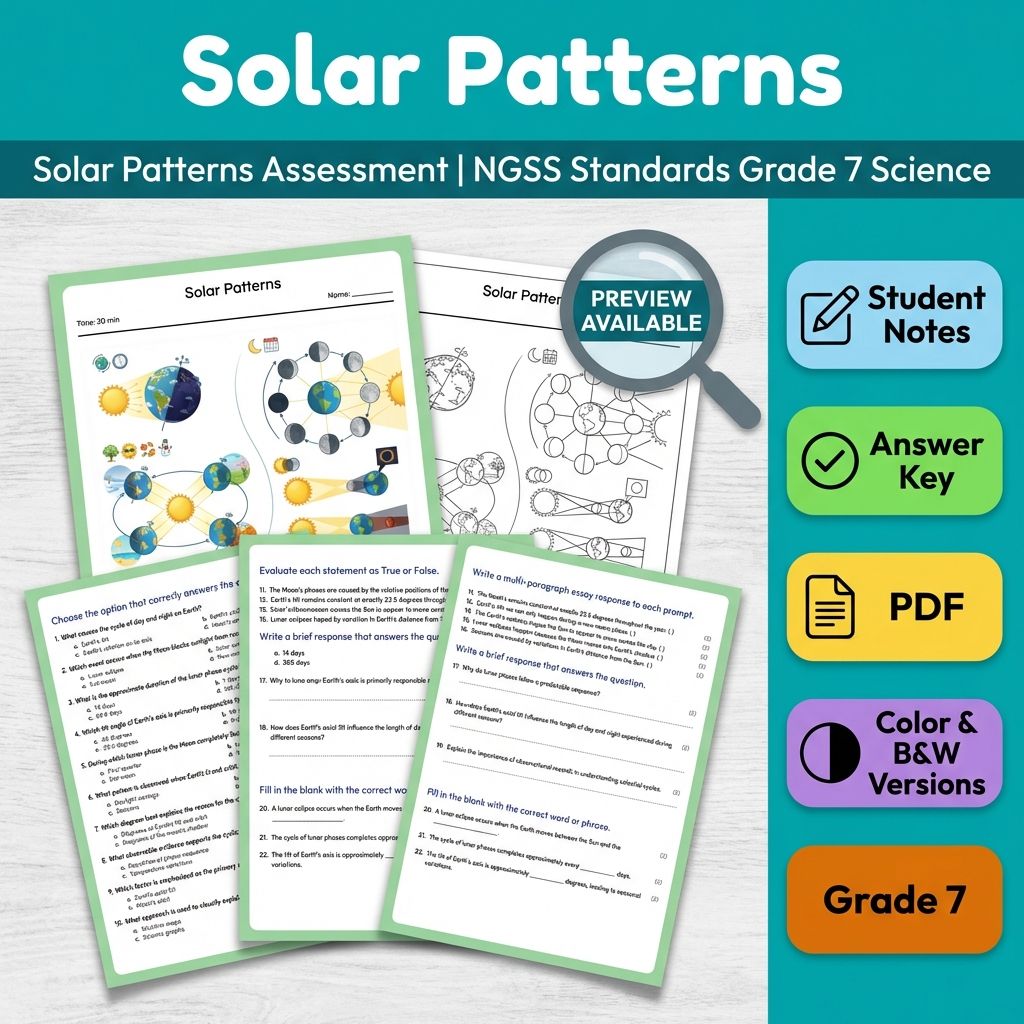
Solar Patterns Assessment | NGSS Standards Grade 7 Science
Created byPrism Point LearningLearning Objectives
- Describe the cyclic patterns produced by the relative motions of the Sun, Earth, and Moon.
- Explain how orbital geometry and axial tilt contribute to day-night cycles and seasonal changes.
- Analyze observational records to understand predictable temporal patterns in the solar system.

Cell Organization Assessment | TEKS Grade 11 Science Worksheet
Created byPrism Point LearningLearning Objectives
- Describe the hierarchical levels of cell organization in multicellular organisms.
- Explain how cellular differentiation leads to specialized functions.
- Identify mechanisms that regulate cellular specialization and coordination.
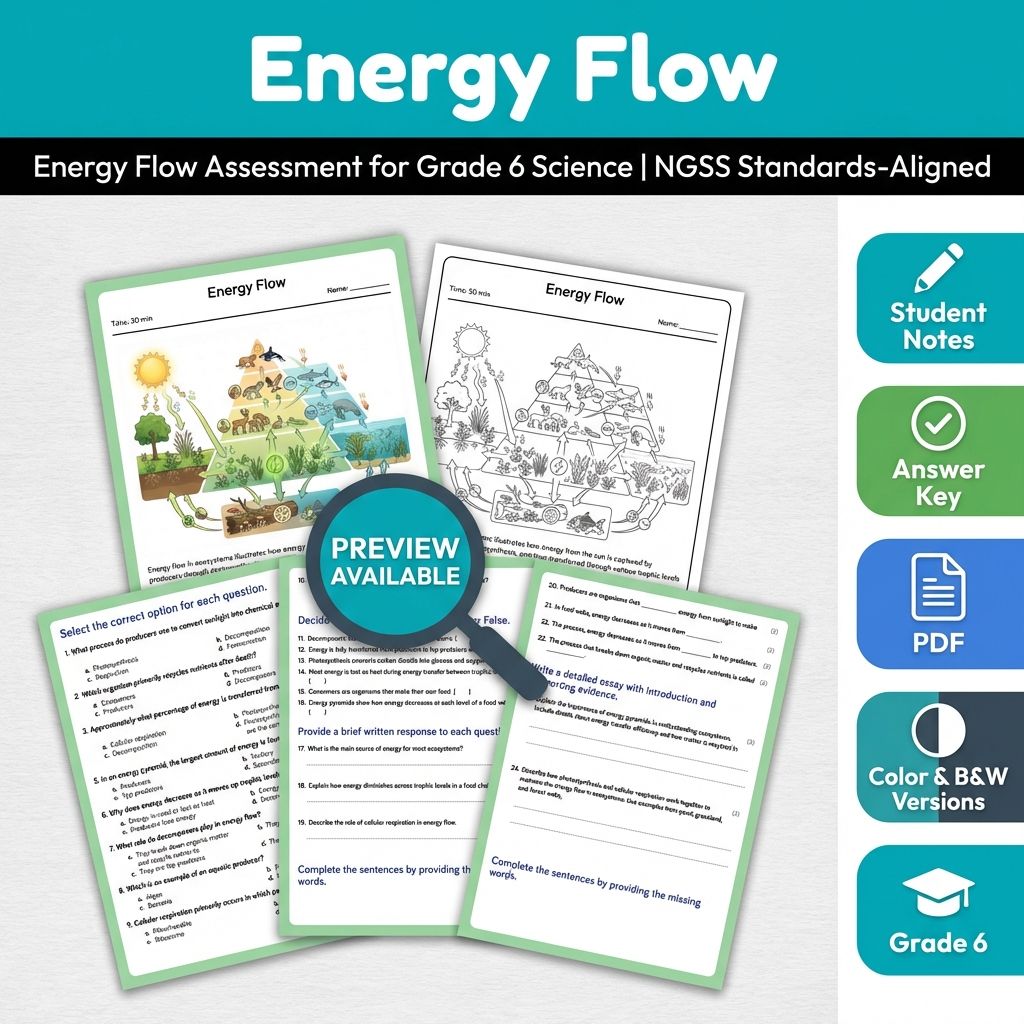
Energy Flow Assessment for Grade 6 Science | NGSS Standards-Aligned
Created byPrism Point LearningLearning Objectives
- Describe the components of food webs including producers, consumers, and decomposers.
- Explain the concept of energy pyramids and trophic transfer efficiency.
- Understand how photosynthesis and cellular respiration contribute to energy budgets.
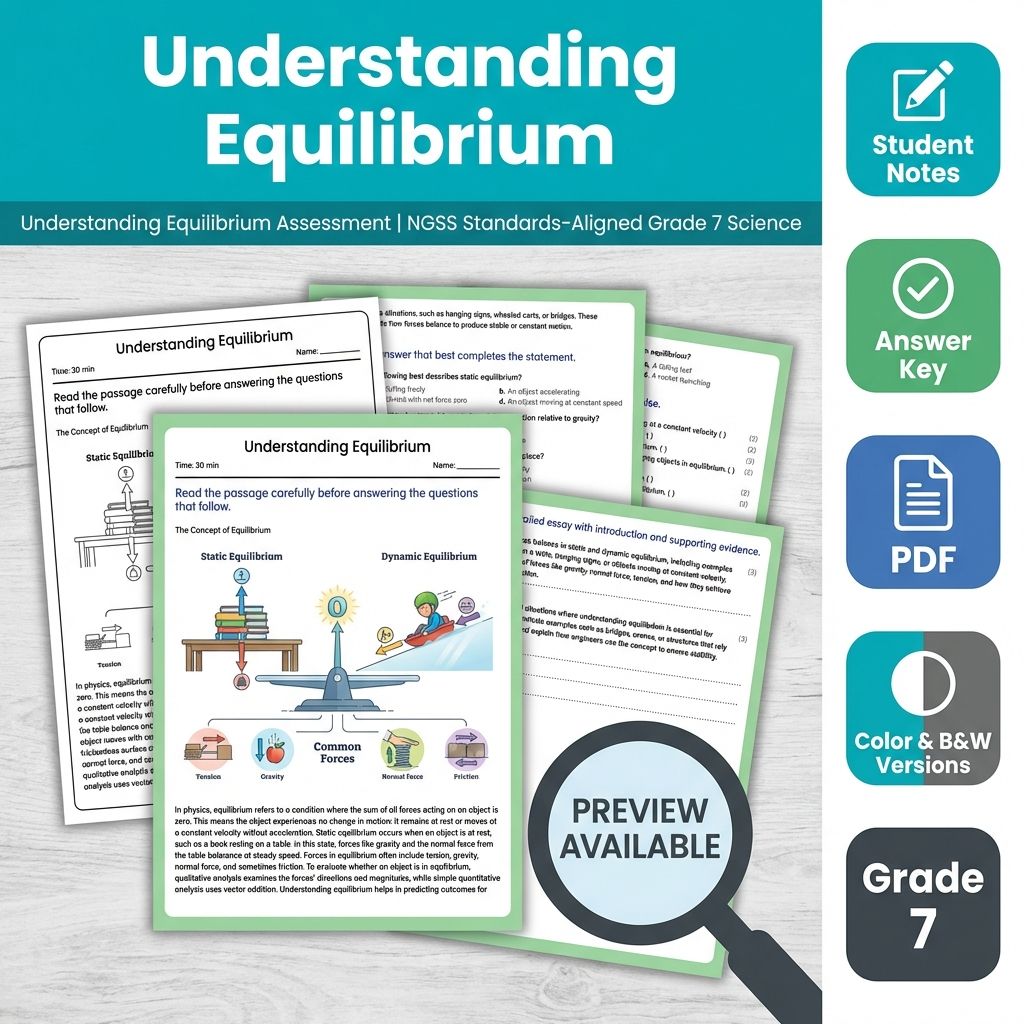
Understanding Equilibrium Assessment | NGSS Standards-Aligned Grade 7 Science
Created byPrism Point LearningLearning Objectives
- Explain the concept of equilibrium as the balance of forces in an object.
- Differentiate between static and dynamic equilibrium in real-world scenarios.
- Apply qualitative and simple quantitative analyses to predict objects' behavior at rest or moving with constant velocity.

Fermentation Pathways Assessment for Grade 11 Science TEKS Standards
Created byPrism Point LearningLearning Objectives
- Explain the process of anaerobic fermentation pathways and their role in ATP regeneration.
- Differentiate between lactic acid and alcoholic fermentation in terms of products and energy yield.
- Describe how cells adapt biochemical pathways to maintain energy production without oxygen.
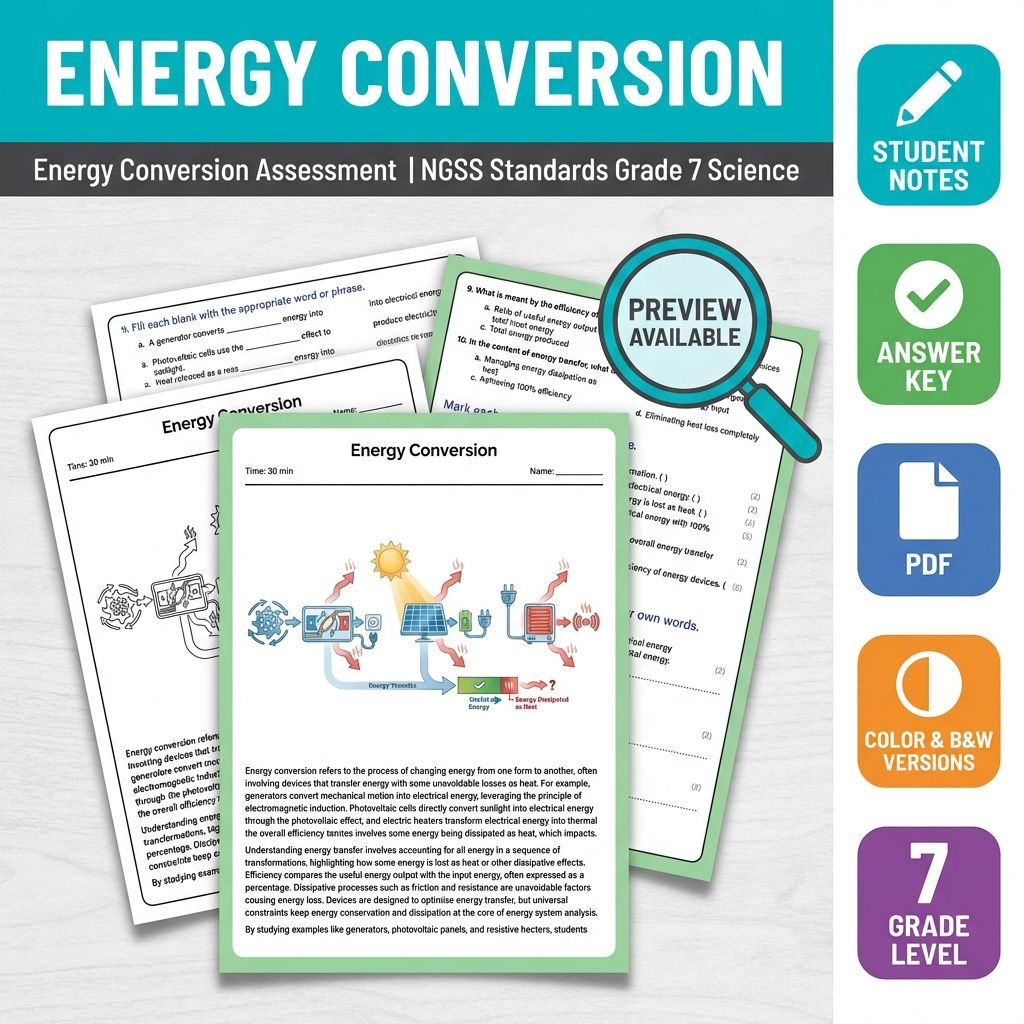
Energy Conversion Assessment | NGSS Standards Grade 7 Science
Created byPrism Point LearningLearning Objectives
- Explain the principles behind devices that convert energy from one form to another.
- Identify examples of energy transfer and conservation in everyday devices.
- Understand the concept of energy efficiency and dissipative processes in energy transformations.

Organ Systems Survival Assessment Grade 8 Science | Standards-Aligned
Created byPrism Point LearningLearning Objectives
- Understand the functions of different organ systems in maintaining homeostasis.
- Identify how organ systems collaborate to support survival needs like nutrient intake, gas exchange, and movement.
- Explain the relationship between structure and function in various organs.

Atmospheric Dynamics Assessment | TEKS Grade 12 Science Standards
Created byPrism Point LearningLearning Objectives
- Explain the key forces and processes driving large-scale atmospheric circulation patterns.
- Identify and describe the roles of the Coriolis force, Hadley and Ferrel cells, and jet streams.
- Analyze how pressure systems, wind patterns, and frontal systems influence weather regimes.

Renal Regulation Assessment | TEKS Grade 11 Science Standards
Created byPrism Point LearningLearning Objectives
- Understand how the kidneys regulate fluid, electrolyte, and acid-base balance.
- Identify the hormonal controls involved in renal function, such as aldosterone and antidiuretic hormone.
- Describe the processes of filtration, reabsorption, secretion, and excretion in nephrons.

Homeostatic Failure Assessment for Grade 11 Science | TEKS Standards
Created byPrism Point LearningLearning Objectives
- Understand how chronic disorders and acute insults disrupt homeostatic regulation.
- Identify systemic consequences of homeostatic failure, such as multi-organ failure.
- Analyze pathways of failure and the importance of coordinated systemic regulation.

Energy Conservation Assessment | TEKS Grade 8 Science Worksheet
Created byPrism Point LearningLearning Objectives
- Analyze the principles of mechanical energy conservation in near-ideal systems.
- Understand energy conversions between gravitational potential and kinetic energy.
- Recognize energy dissipation effects like friction and air resistance affecting energy conservation.
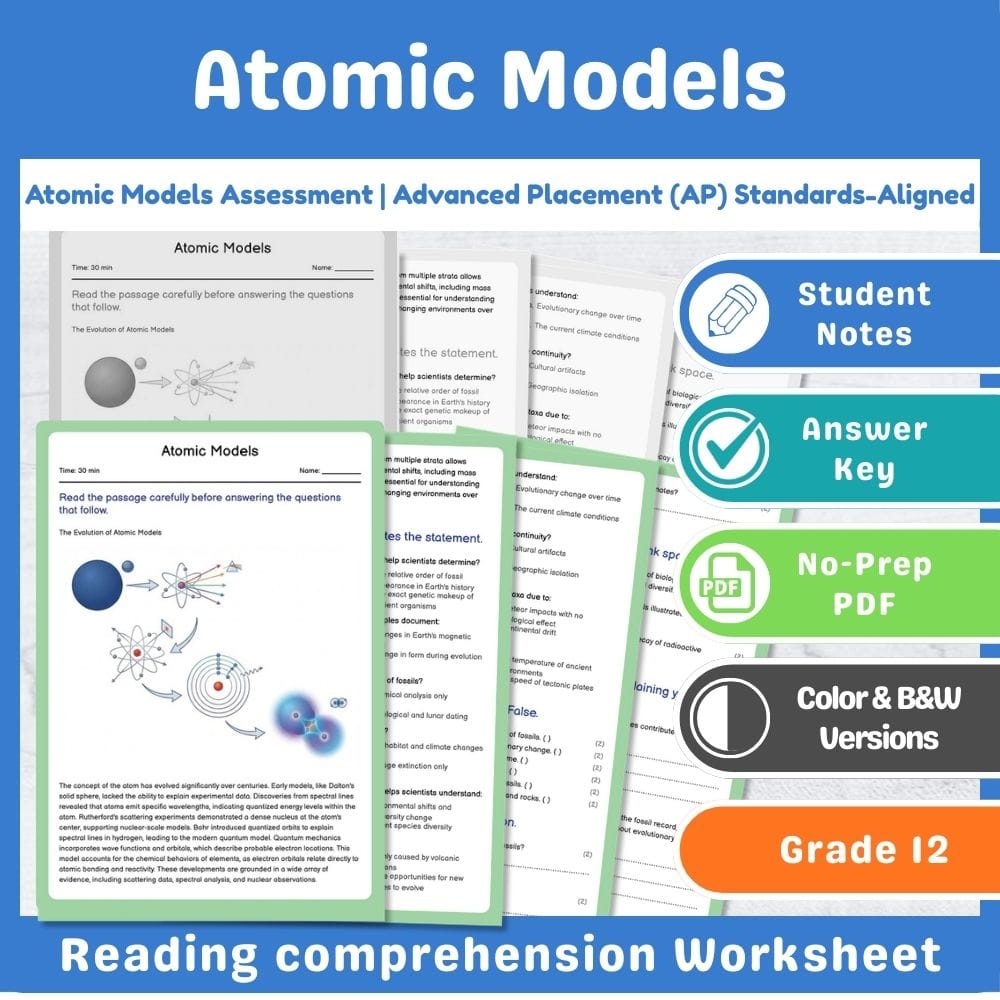
Atomic Models Assessment | Advanced Placement (AP) Standards-Aligned
Created byPrism Point LearningLearning Objectives
- Describe the evolution of atomic models from early theories to modern quantum models.
- Explain the evidence from spectral lines, scattering experiments, and nuclear observations that support discrete energy states and nuclear mass.
- Understand the roles of quantum numbers and orbital shapes in predicting chemical behavior and properties of elements.

ATP Synthase Assessment for Grade 11 Science TEKS Standards
Created byPrism Point LearningLearning Objectives
- Explain the mechanism by which ATP synthase converts a proton gradient into ATP.
- Describe the role of conformational changes in catalytic sites during ATP synthesis.
- Understand how membrane potential and redox processes are linked to energy production in cells.
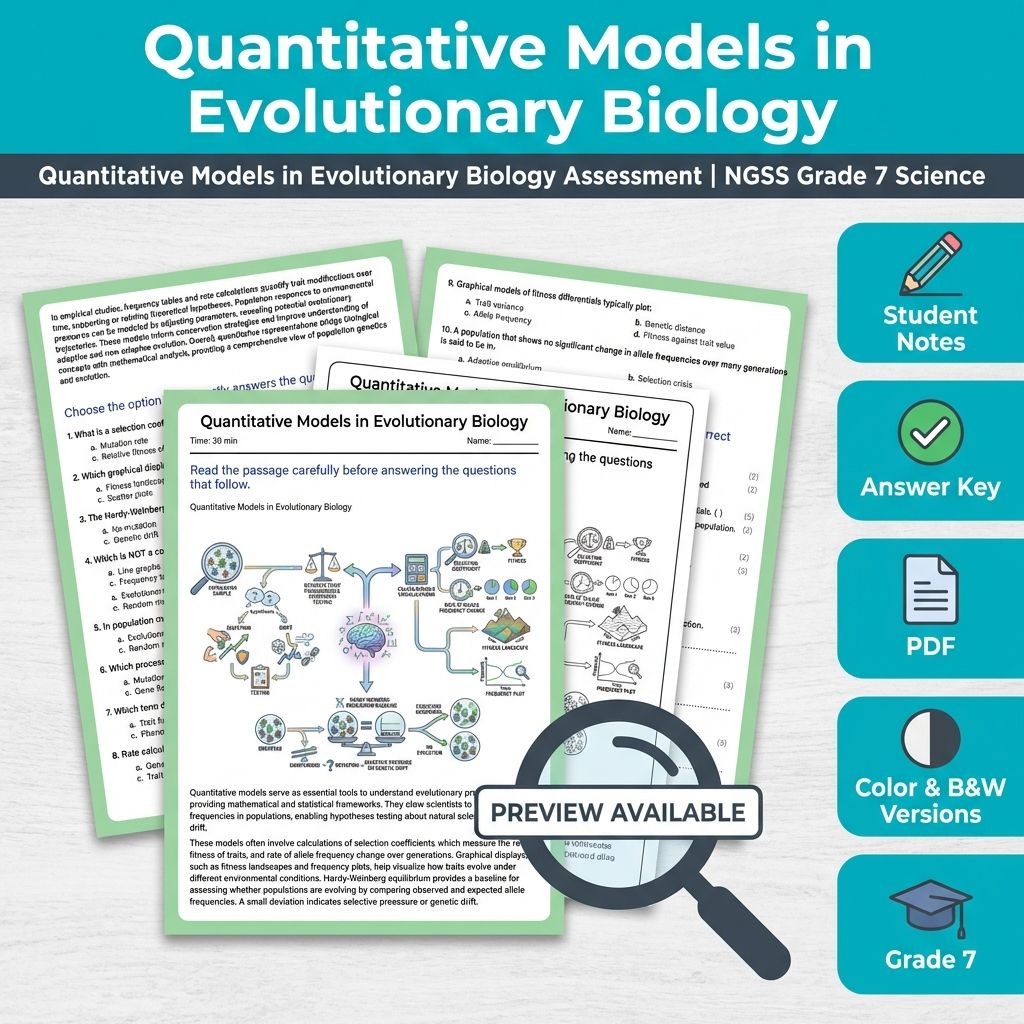
Quantitative Models in Evolutionary Biology Assessment | NGSS Grade 7 Science
Created byPrism Point LearningLearning Objectives
- Understand how mathematical models quantify trait frequencies, selection coefficients, and population dynamics.
- Interpret graphical displays of fitness differentials and allele frequency changes.
- Apply Hardy-Weinberg principles and rate calculations to analyze genetic data.
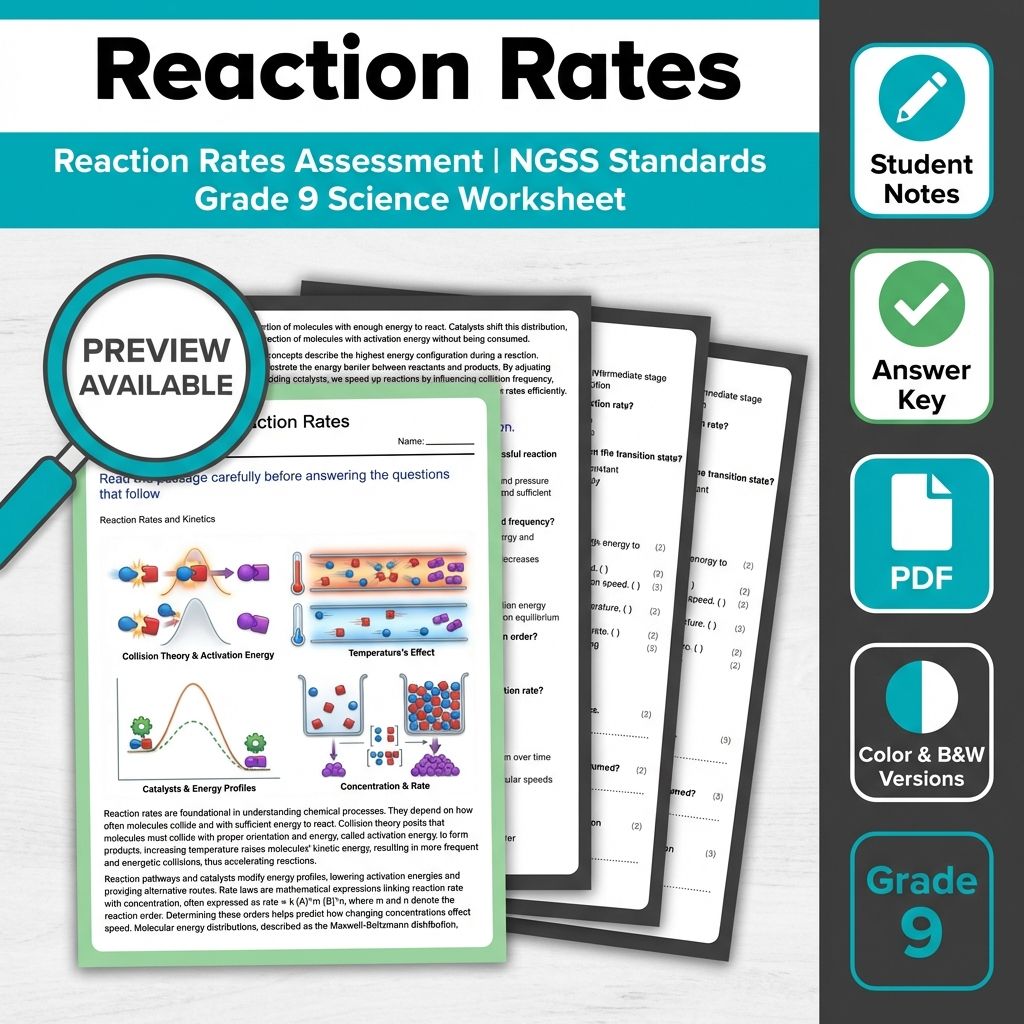
Reaction Rates Assessment | NGSS Standards Grade 9 Science Worksheet
Created byPrism Point LearningLearning Objectives
- Explain how collision frequency, activation energy, and reaction pathways influence reaction rates.
- Describe how temperature, concentration, and catalysts alter energy distributions and affect reaction speeds.
- Interpret rate laws and determine reaction order from experimental data.

Integrated Cycles Assessment | TEKS Standards Grade 11 Science
Created byPrism Point LearningLearning Objectives
- Explain how photosynthesis and cellular respiration are interconnected biochemical cycles.
- Identify the roles of carbon fixation and CO2 release in ecosystems.
- Describe how tissue specialization and transport mechanisms coordinate energy distribution in plants.
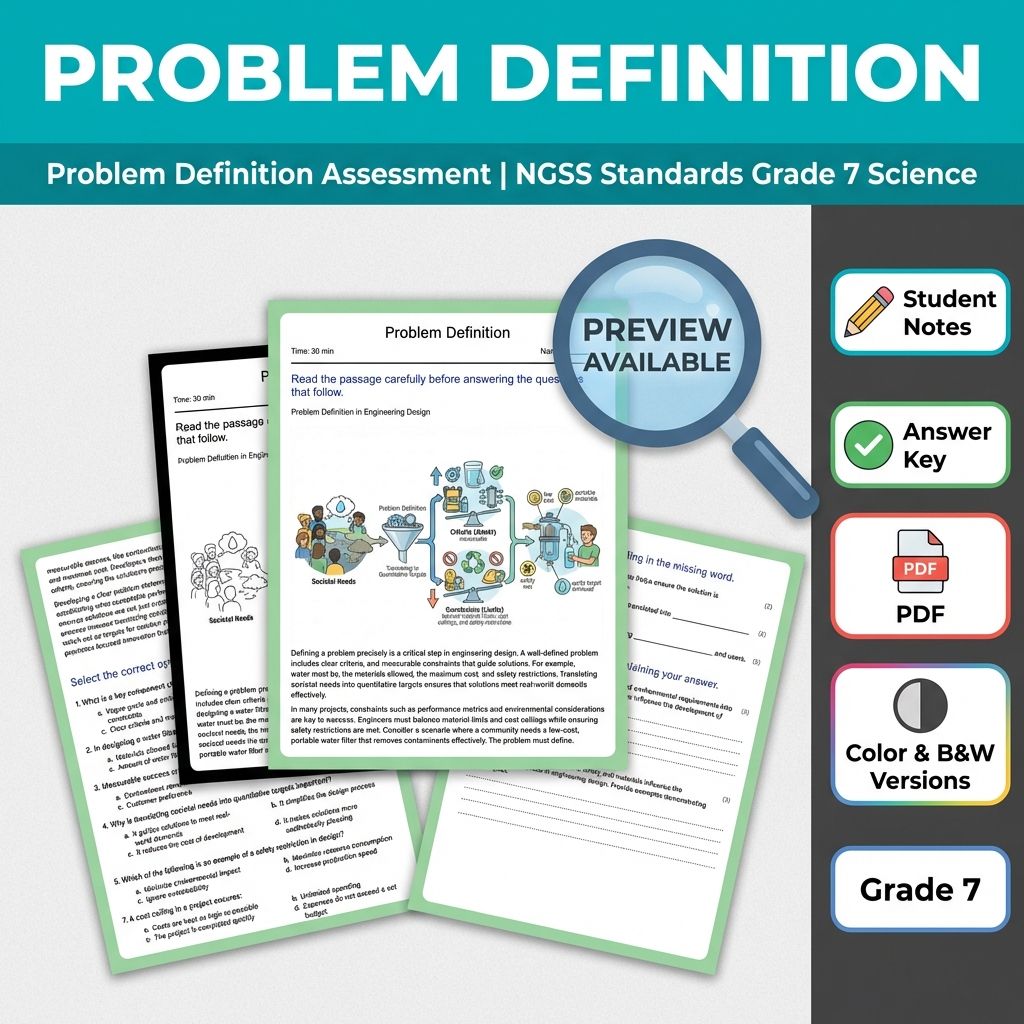
Problem Definition Assessment | NGSS Standards Grade 7 Science
Created byPrism Point LearningLearning Objectives
- Understand how to define design problems with clear criteria and measurable constraints.
- Learn to translate societal and environmental needs into quantitative targets.
- Identify real-world examples of specifying success measures and constraints in product design.

Energy Flow in Ecosystems Assessment | General Grade 8 Science
Created byPrism Point LearningLearning Objectives
- Explain how energy flows through trophic levels in an ecosystem.
- Identify the roles of producers, consumers, and decomposers in energy transfer.
- Describe why energy decreases as it moves along a food chain.
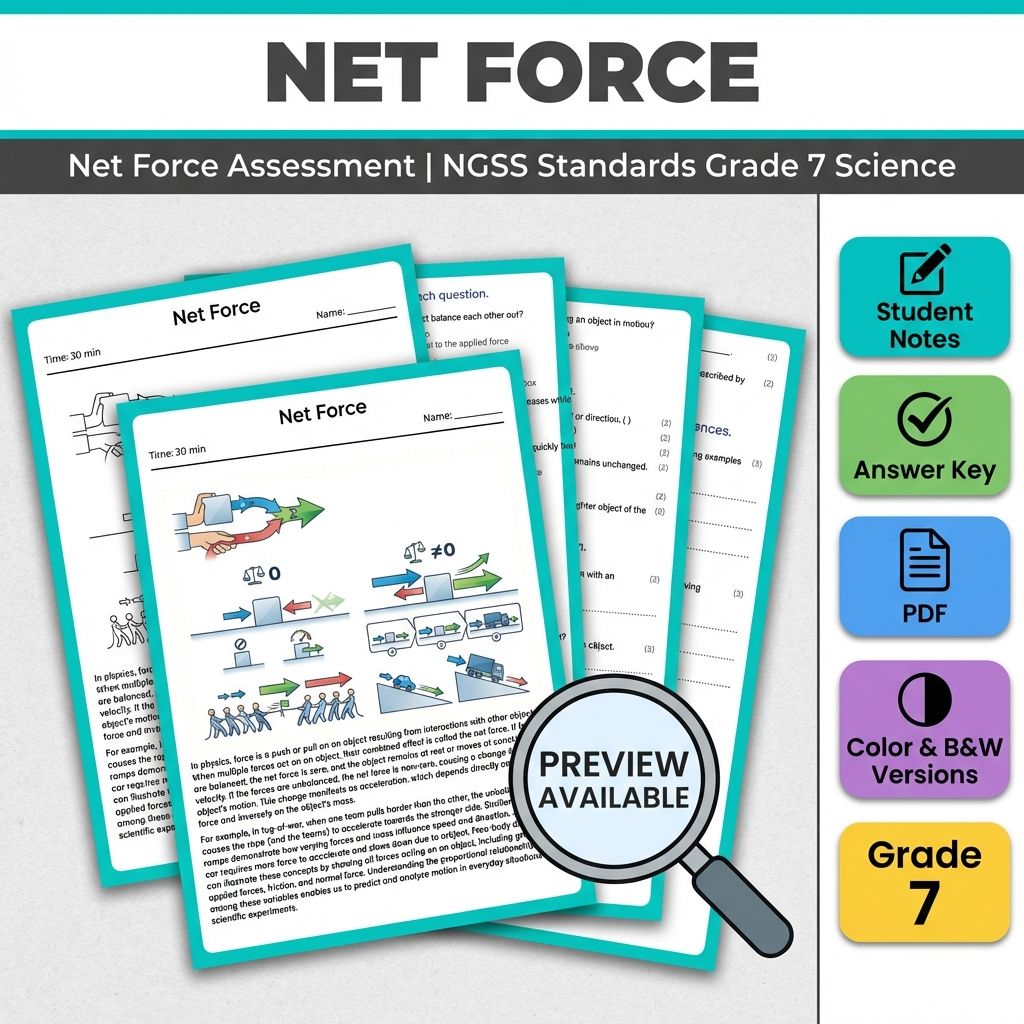
Net Force Assessment | NGSS Standards Grade 7 Science
Created byPrism Point LearningLearning Objectives
- Define net force as the vector sum of forces acting on an object.
- Explain how unbalanced forces cause changes in motion using free-body diagrams.
- Relate net force, mass, and acceleration proportionally through quantitative reasoning.

Metabolic Regulation Assessment | TEKS Standards Grade 10 Science
Created byPrism Point LearningLearning Objectives
- Explain how enzyme activity is modulated through allosteric regulation and feedback inhibition.
- Describe the role of covalent modifications in enzyme activity control.
- Understand the influence of hormones like insulin and glucagon on carbohydrate metabolism.
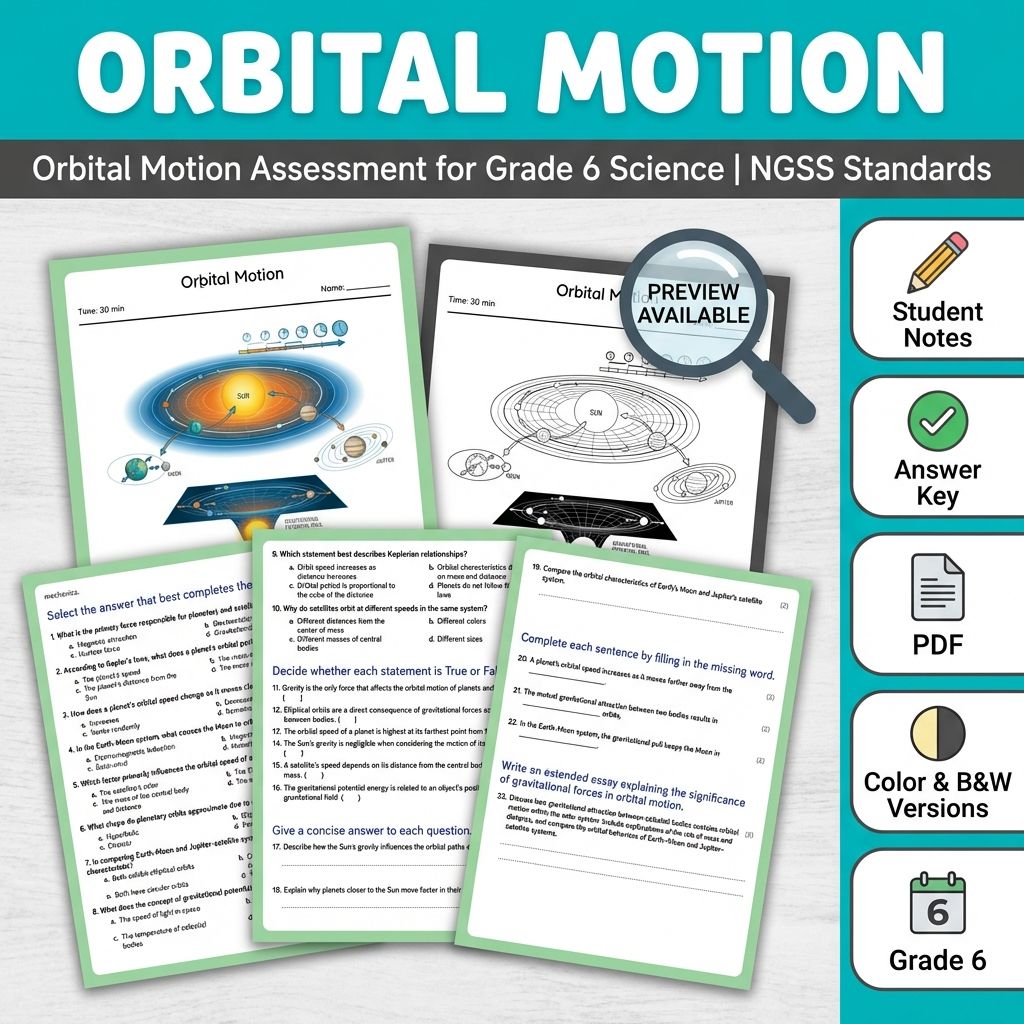
Orbital Motion Assessment for Grade 6 Science | NGSS Standards
Created byPrism Point LearningLearning Objectives
- Explain the role of gravity in planetary and satellite orbits within the solar system.
- Describe how mutual gravitational forces produce elliptical orbits and influence orbital periods and speeds.
- Compare orbital dynamics of Earth–Moon and Jupiter–satellite systems to illustrate the effects of mass and distance.
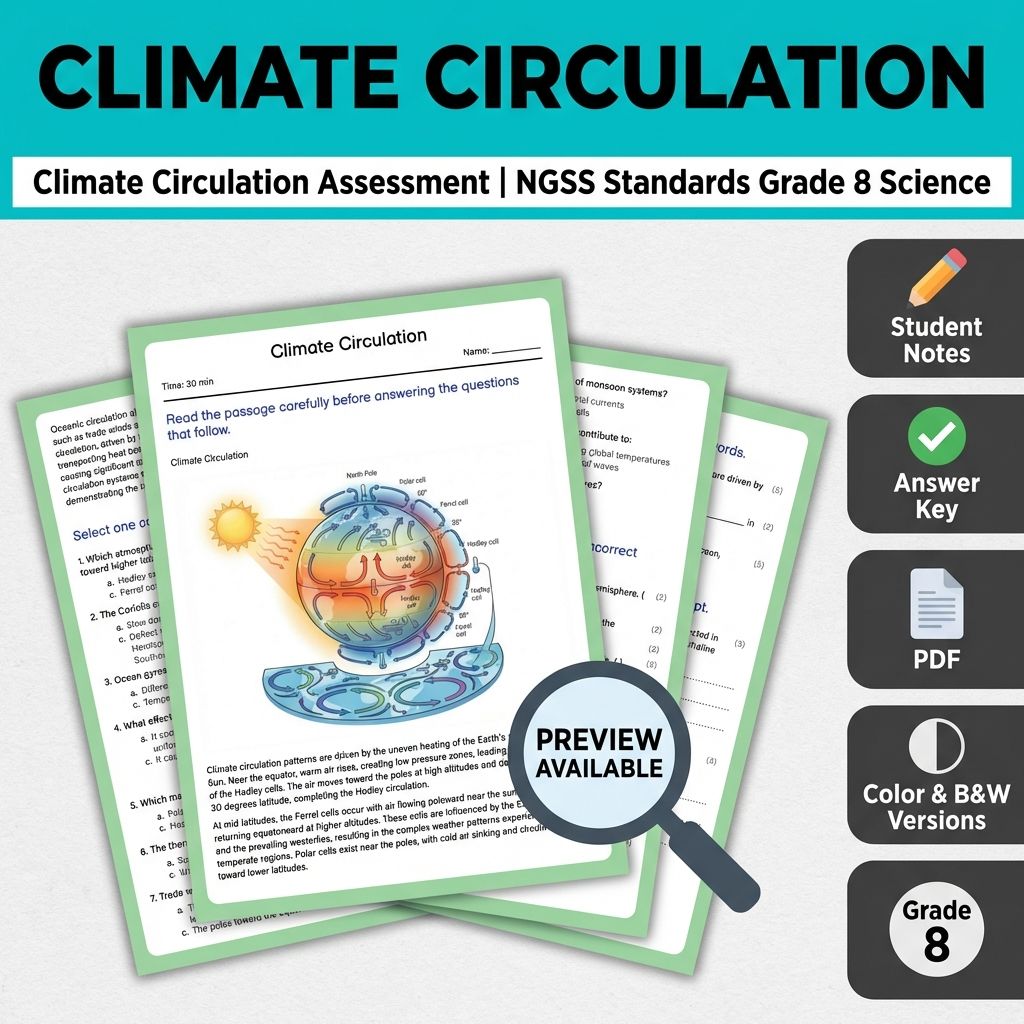
Climate Circulation Assessment | NGSS Standards Grade 8 Science
Created byPrism Point LearningLearning Objectives
- Describe the models of Hadley, Ferrel, and polar cells and their role in atmospheric circulation.
- Explain how planetary rotation affects wind patterns via the Coriolis effect.
- Analyze how oceanic circulation, including gyres and thermohaline circulation, influences regional climates.
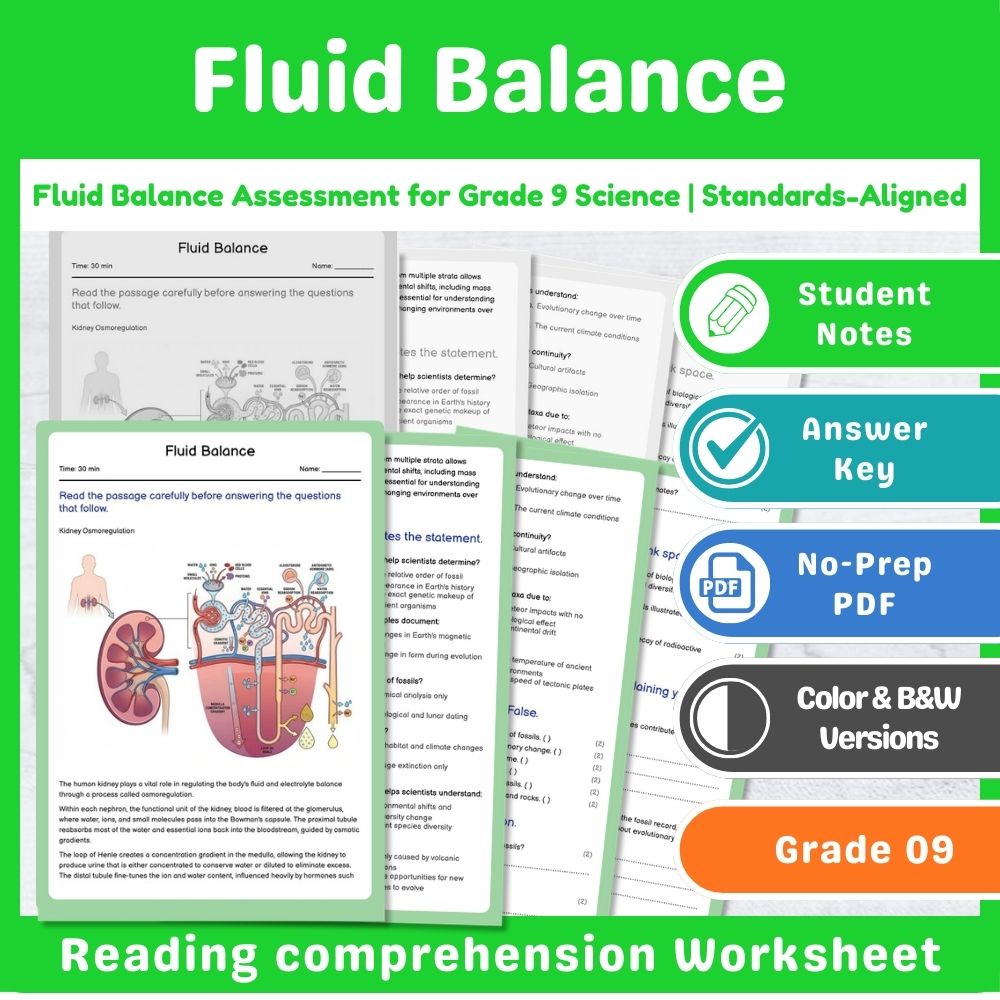
Fluid Balance Assessment for Grade 9 Science | Standards-Aligned
Created byPrism Point LearningLearning Objectives
- Understand the process of kidney osmoregulation and its role in maintaining water and ion balance.
- Identify the functions of filtration, reabsorption, secretion, and concentration in nephrons.
- Explain how hormones like antidiuretic hormone (ADH) and aldosterone regulate fluid and electrolyte balance.
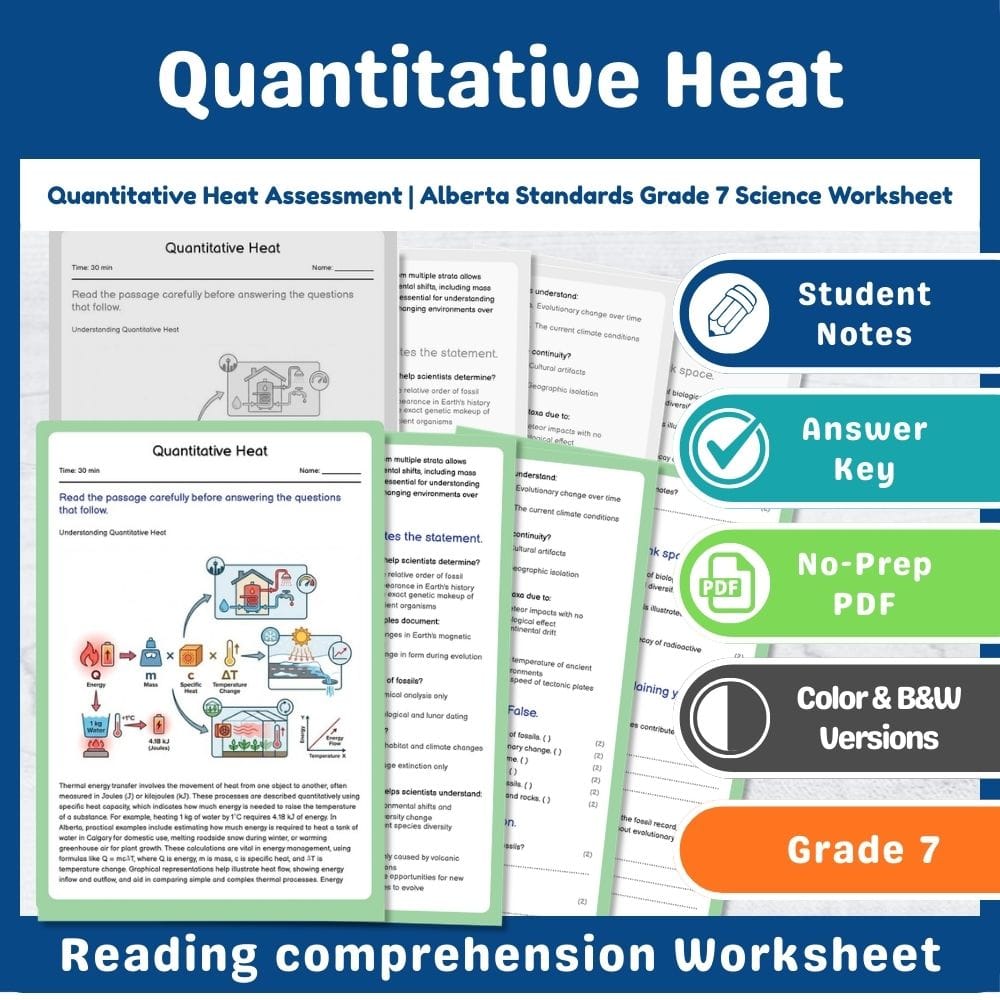
Quantitative Heat Assessment | Alberta Standards Grade 7 Science Worksheet
Created byPrism Point LearningLearning Objectives
- Understand how to quantify energy transfer in thermal processes using numerical representations.
- Apply calculations involving specific heat, mass, and temperature change to solve energy transfer problems.
- Interpret practical examples of heat transfer in real-world contexts such as heating water, melting snow, and warming air.
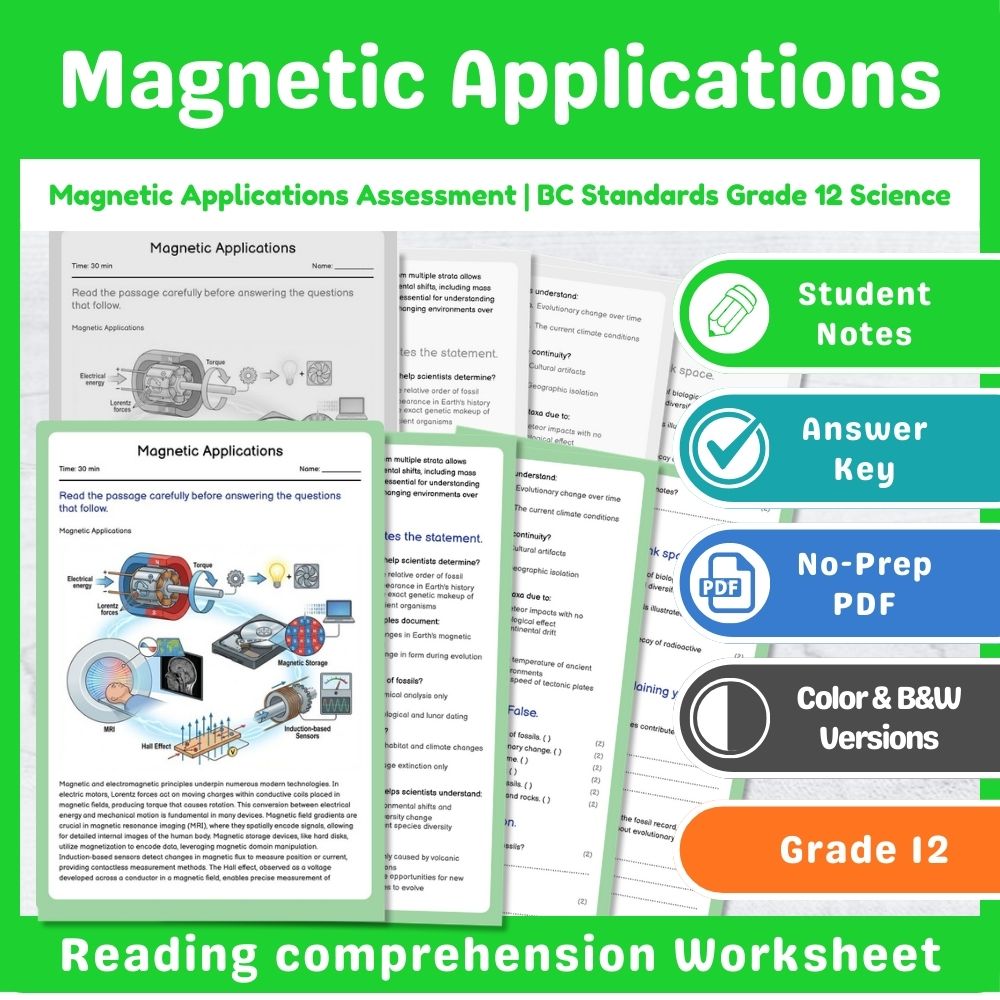
Magnetic Applications Assessment | BC Standards Grade 12 Science
Created byPrism Point LearningLearning Objectives
- Describe how Lorentz forces generate torque in electric motors.
- Explain how magnetic field gradients enable imaging techniques such as MRI.
- Understand the principles behind magnetic storage, induction sensing, and the Hall effect.
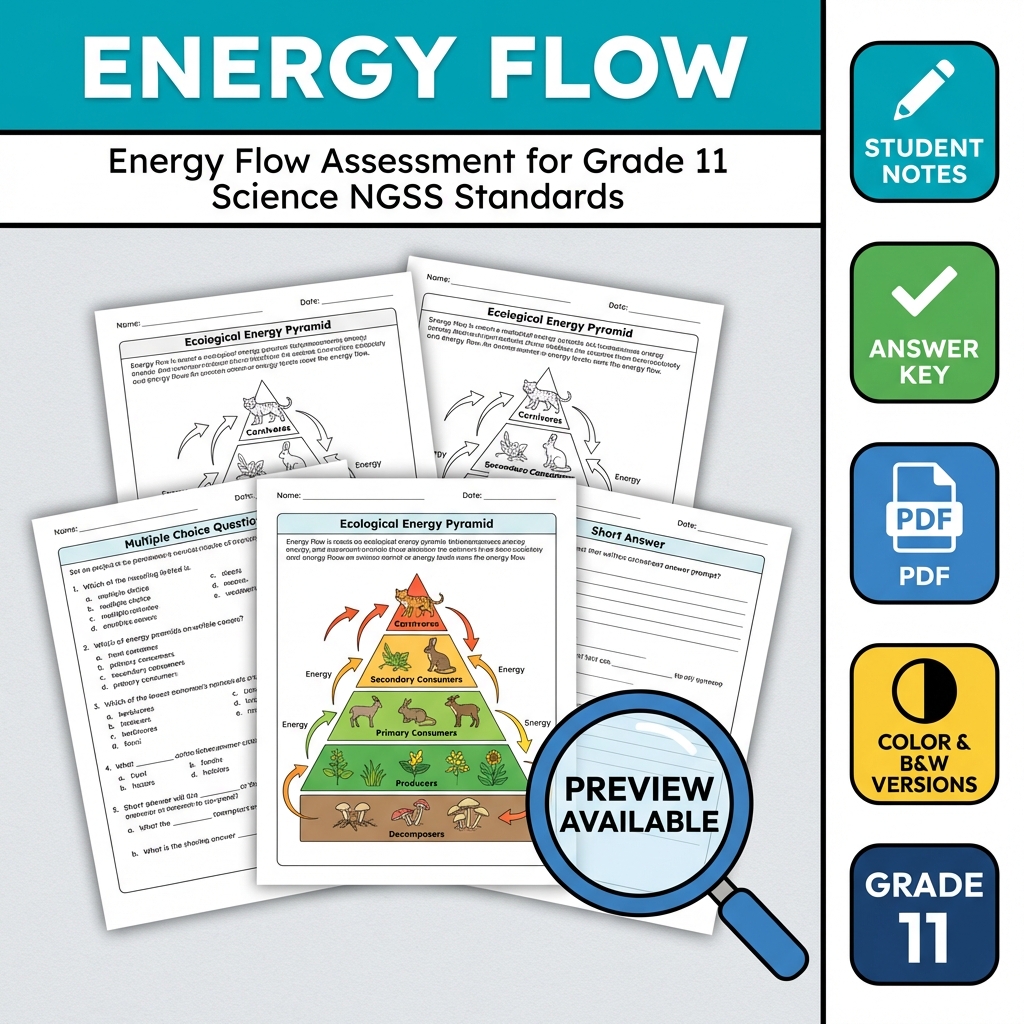
Energy Flow Assessment for Grade 11 Science NGSS Standards
Created byPrism Point LearningLearning Objectives
- Describe the transfer of energy through different trophic levels in food webs.
- Explain concepts of biomass pyramids, primary productivity, and energy loss in ecosystems.
- Analyze the impact of energy transfer efficiency on community structure and species abundance.
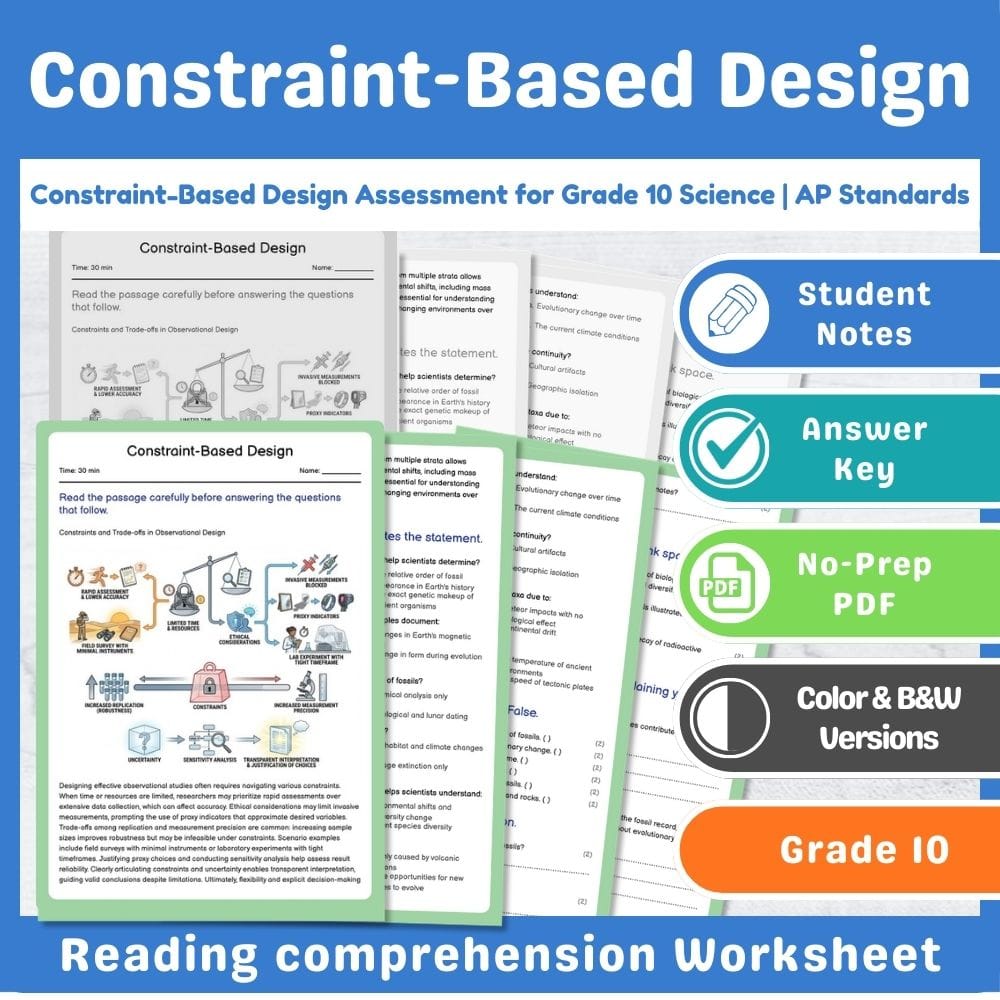
Constraint-Based Design Assessment for Grade 10 Science | AP Standards
Created byPrism Point LearningLearning Objectives
- Understand the considerations involved in designing studies under practical, ethical, or temporal constraints.
- Identify trade-offs among replication, measurement precision, and scope.
- Apply understanding of proxy measures and sensitivity analysis to assess robustness.
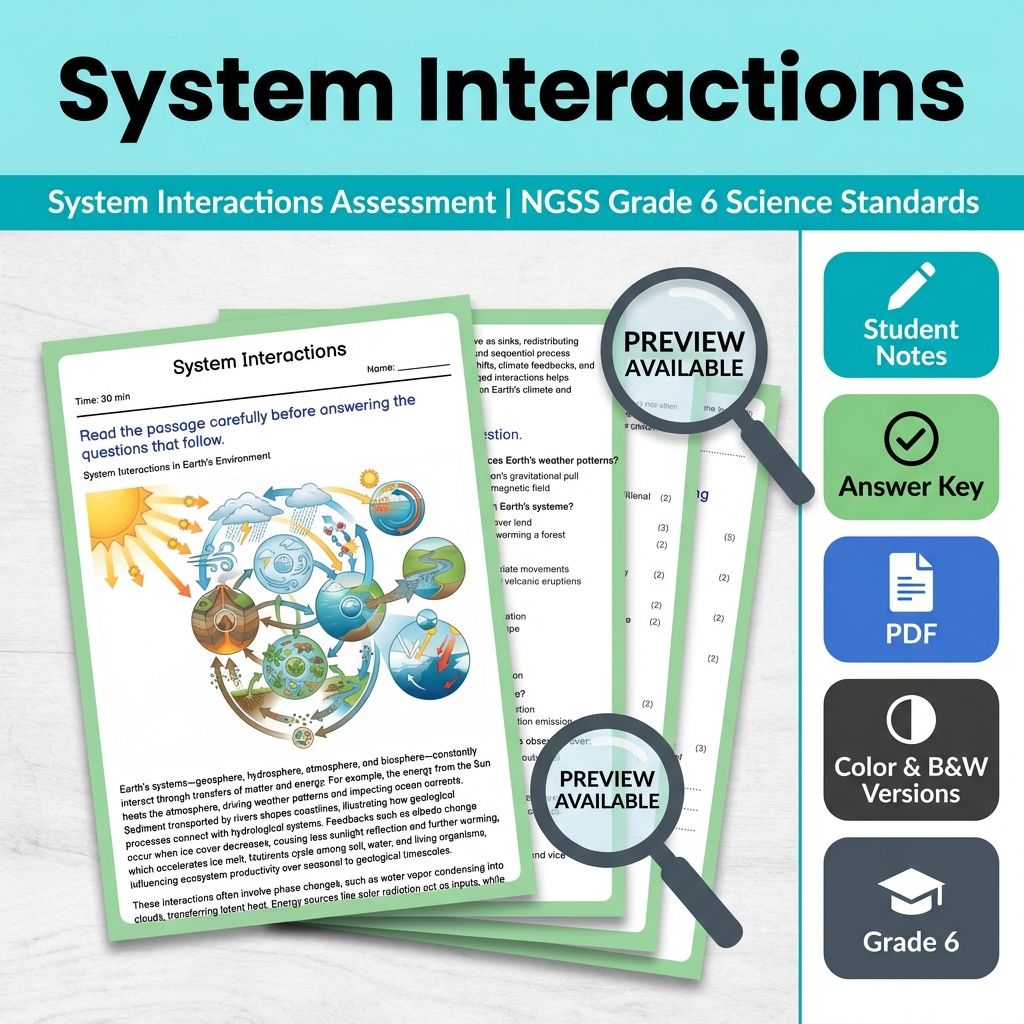
System Interactions Assessment | NGSS Grade 6 Science Standards
Created byPrism Point LearningLearning Objectives
- Describe how Earth's systems interact through the transfer of matter and energy.
- Explain feedback mechanisms such as albedo changes and sediment transport.
- Identify energy sources, sinks, and phase-change energy transfers within Earth's systems.

Model-Based Predictions Assessment | Standards-Aligned Grade 7 Science
Created byPrism Point LearningLearning Objectives
- Understand how models translate observations into representations for predictions.
- Identify different types of models: physical, diagrammatic, and computational.
- Explain the role of diagrams linking Earth, Moon, and Sun in lunar phases.
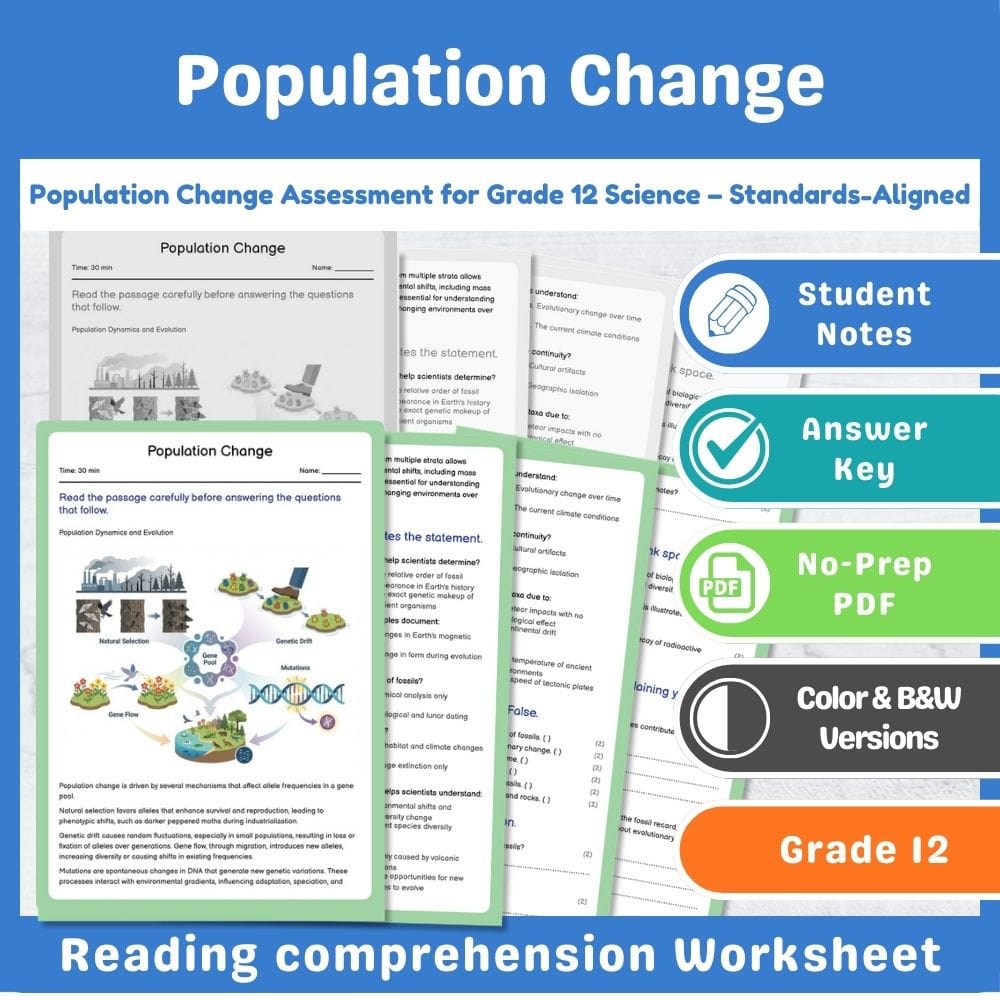
Population Change Assessment for Grade 12 Science – Standards-Aligned
Created byPrism Point LearningLearning Objectives
- Explain mechanisms that influence allele frequencies in populations, including natural selection, genetic drift, gene flow, and mutation.
- Analyze case examples illustrating phenotypic shifts and quantitative models relating fitness differences to evolutionary change.
- Evaluate evidence from morphology, molecular markers, and experiments demonstrating population-level evolutionary processes.

Carrying Capacity Limits Assessment | TEKS Standards Grade 11 Science
Created byPrism Point LearningLearning Objectives
- Understand the concept of carrying capacity and its significance in ecology.
- Identify factors that influence the carrying capacity of environments.
- Differentiate between density-dependent and density-independent effects on populations.
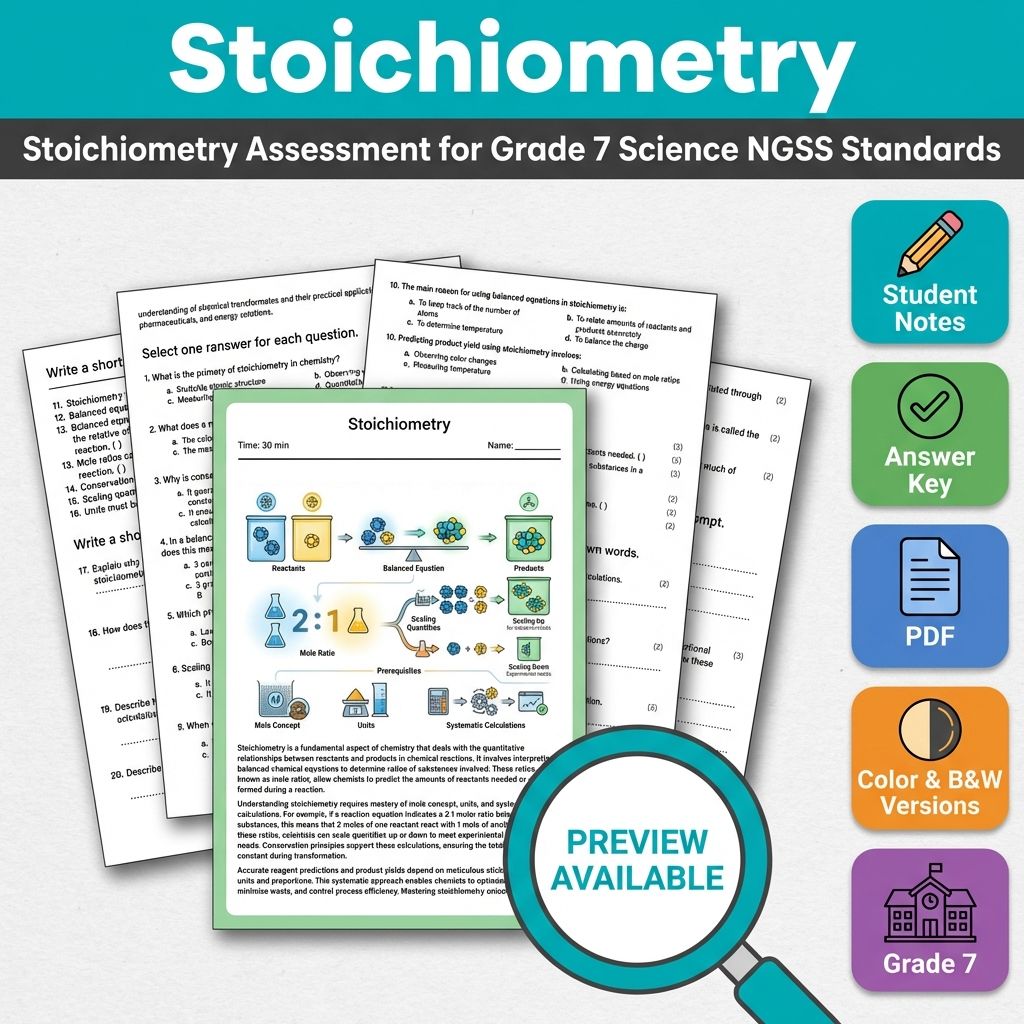
Stoichiometry Assessment for Grade 7 Science NGSS Standards
Created byPrism Point LearningLearning Objectives
- Describe how balanced chemical equations depict the quantitative relationships between reactants and products.
- Understand and apply mole ratios to calculate amounts of substances involved in chemical reactions.
- Use conservation of mass principles to predict reagent requirements and product yields in chemical transformations.

Cardiopulmonary Interaction Assessment for Grade 9 Science TEKS
Created byPrism Point LearningLearning Objectives
- Describe the coordination between heart and lung functions in oxygen delivery
- Explain how chemoreceptor feedback influences respiratory and circulatory adjustments
- Identify the roles of pulmonary ventilation and cardiovascular transport in maintaining homeostasis

Population Growth Assessment for Grade 11 Science TEKS standards
Created byPrism Point LearningLearning Objectives
- Understand the key factors influencing population dynamics, including birth rates, death rates, immigration, and emigration.
- Differentiate between exponential and logistic growth models and their real-world applications.
- Analyze the impact of density-dependent and density-independent factors on population trajectories.
Browse more categories
About Science Worksheets
Find Science worksheets spanning core skills, practice, and review. All 42,685 resources are instant PDF downloads for the classroom or home.
Every worksheet on MyTeachingSheets is created by independent teacher-authors and reviewed before publication. All resources download as printable PDFs for classroom, homework, or at-home practice, and many include answer keys. Preview any worksheet free before buying.