
Science Worksheets
42,685 subject resources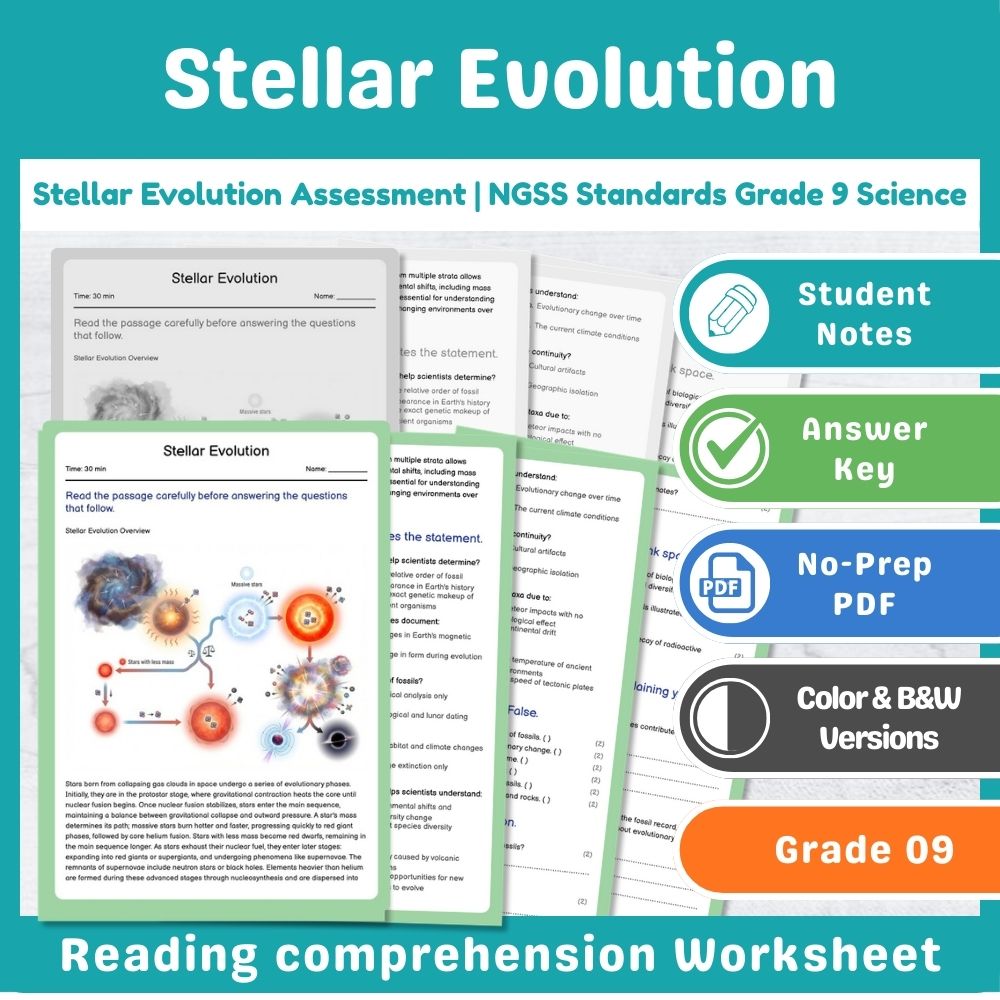
Stellar Evolution Assessment | NGSS Standards Grade 9 Science
 Created byPrism Point Learning
Learning Objectives
- Describe the processes involved in stellar formation and evolution.
- Identify the stages of stellar evolution from main sequence to terminal outcomes.
- Explain the use of Hertzsprung-Russell diagrams and spectral classification in understanding stars.

Integrated Systems Assessment | TEKS Grade 11 Science Standards
Created byPrism Point LearningLearning Objectives
- Understand how cellular specialization contributes to tissue and organ functions.
- Explain the role of chemical signaling, gap junctions, and extracellular matrix in intercellular communication.
- Describe how division of labor among cells enables physiological processes like gas exchange and immune defense.

Thermoregulation Assessment for Grade 11 Science TEKS Standards
Created byPrism Point LearningLearning Objectives
- Understand the mechanisms of temperature homeostasis involving heat production, conservation, and dissipation.
- Identify the roles of the hypothalamus and other systems in thermoregulation.
- Explain how environmental factors and fever influence thermoregulatory responses.
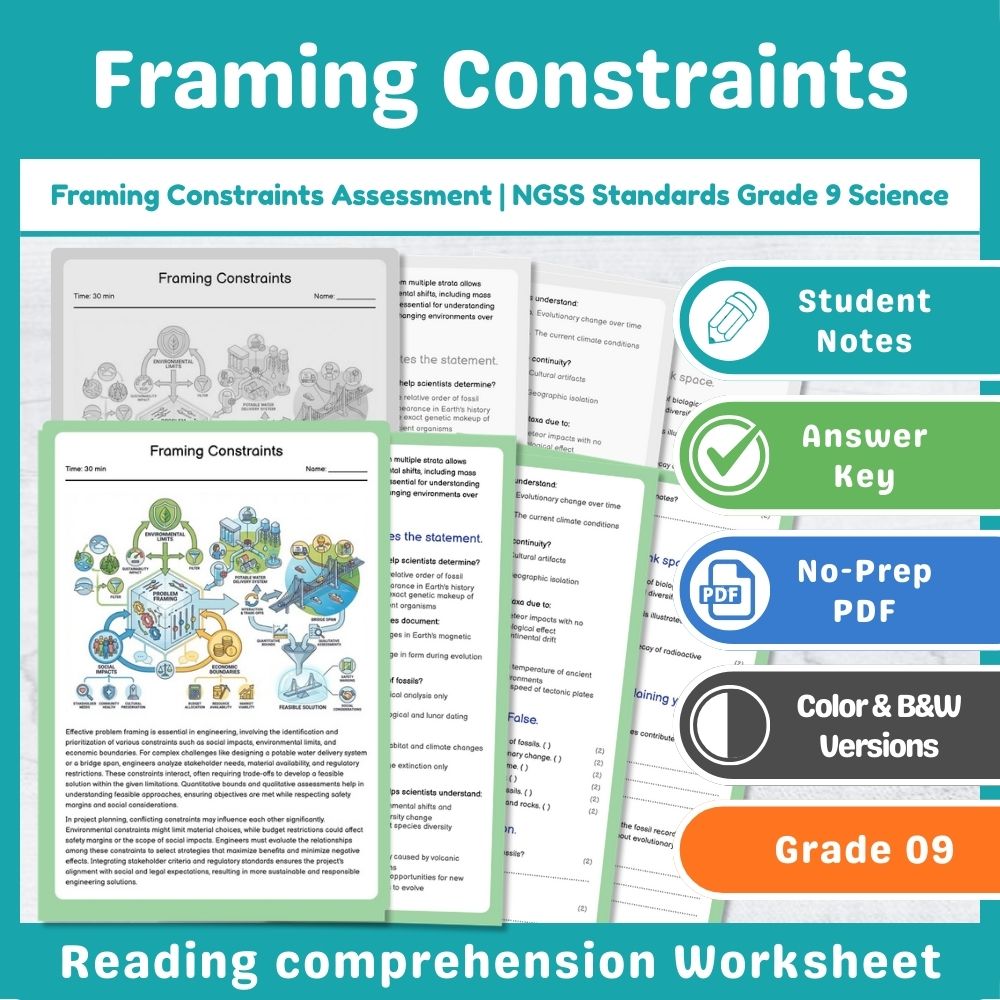
Framing Constraints Assessment | NGSS Standards Grade 9 Science
Created byPrism Point LearningLearning Objectives
- Understand the key components involved in framing constraints for engineering projects.
- Identify social, economic, and environmental factors impacting project design.
- Analyze stakeholder criteria, material availability, and regulatory restrictions.
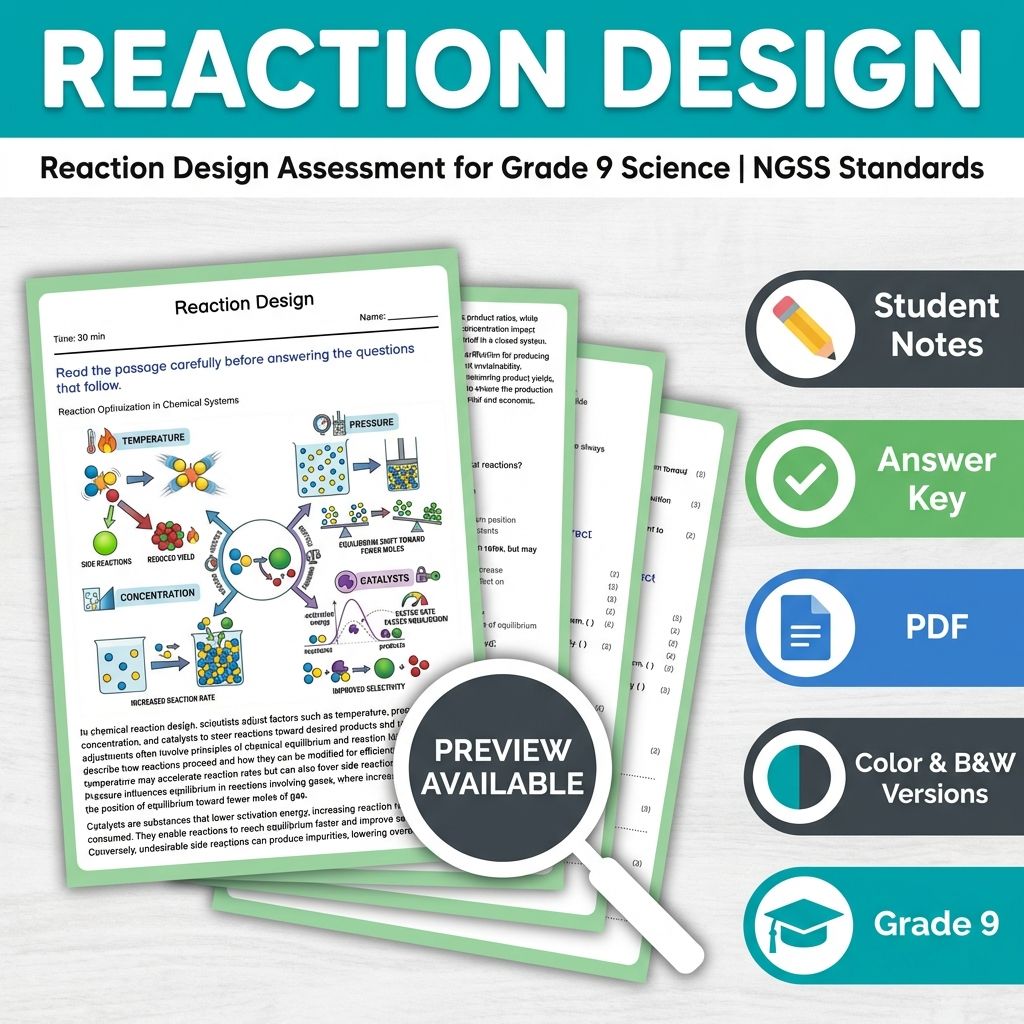
Reaction Design Assessment for Grade 9 Science | NGSS Standards
Created byPrism Point LearningLearning Objectives
- Understand how temperature, pressure, concentration, and catalysts influence chemical reactions.
- Apply principles of equilibrium and kinetics to optimize reaction conditions.
- Use quantitative tools like equilibrium constants and reaction-rate expressions to predict product distribution.
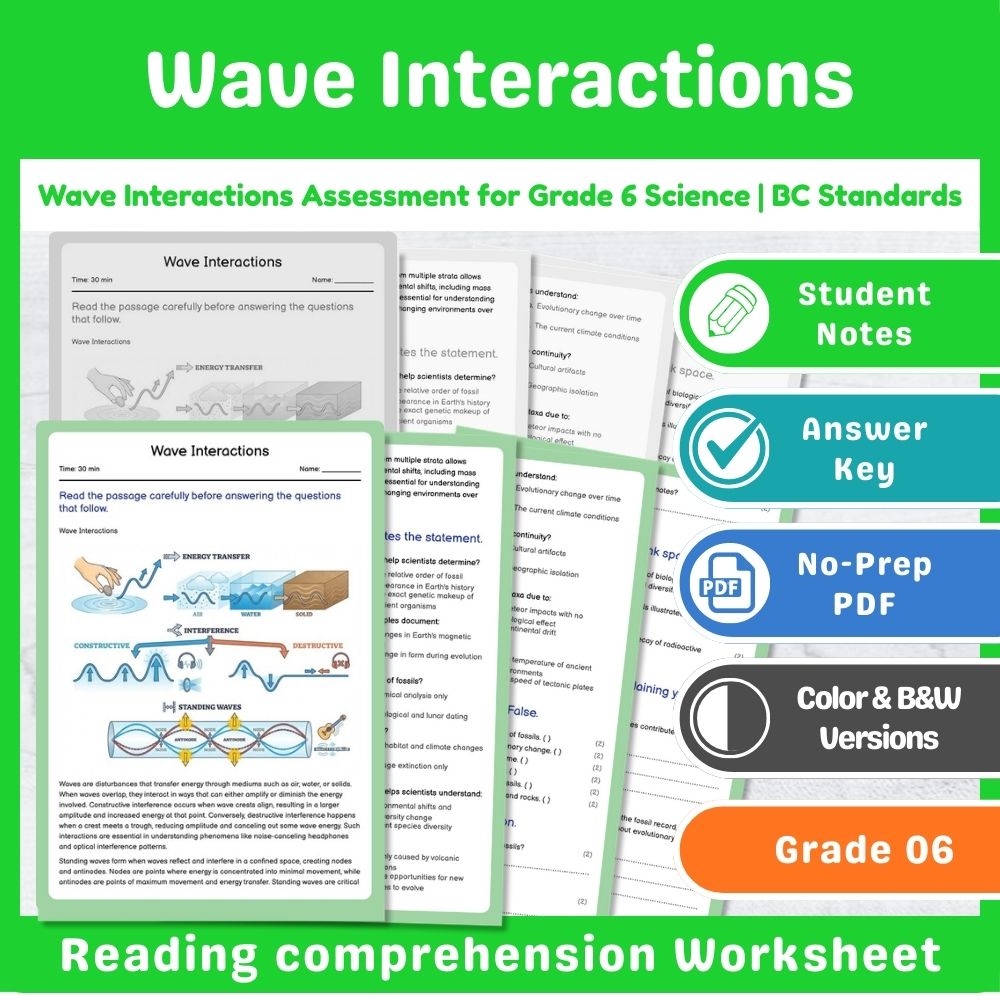
Wave Interactions Assessment for Grade 6 Science | BC Standards
Created byPrism Point LearningLearning Objectives
- Understand how wave interactions such as interference, superposition, and resonance affect sound and light.
- Identify concepts of constructive and destructive interference and their effects on wave energy.
- Describe the formation of standing waves and their role in resonance and energy concentration.

Orbital Motion Assessment for Grade 9 Science NGSS Standards
Created byPrism Point LearningLearning Objectives
- Explain the fundamental principles of orbital motion, including Kepler's laws and Newton's law of gravitation.
- Analyze relationships between orbital period, semi-major axis, and escape velocity.
- Apply concepts of conservation of angular momentum to planetary and satellite motion.
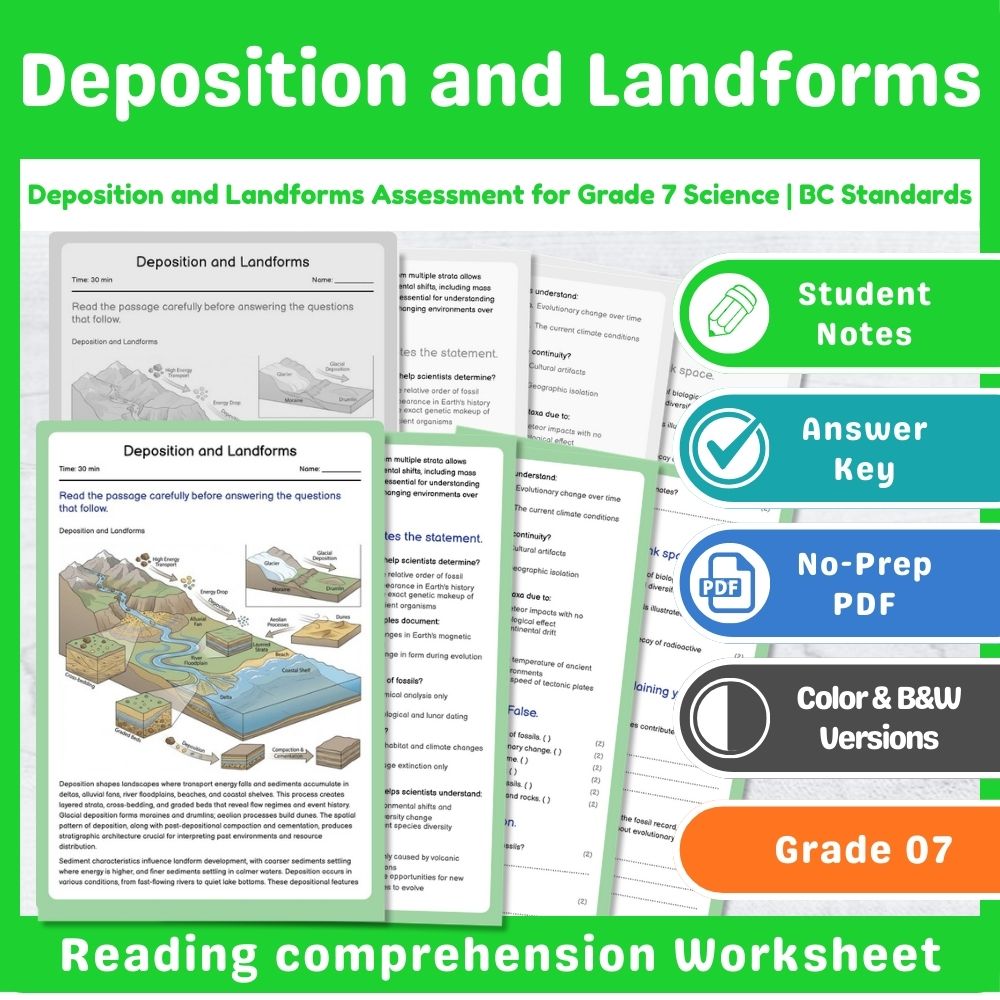
Deposition and Landforms Assessment for Grade 7 Science | BC Standards
Created byPrism Point LearningLearning Objectives
- Understand the processes of deposition and how they shape landforms.
- Identify different types of depositional features such as deltas, beaches, and moraines.
- Describe the characteristics of sediments involved in depositional environments.
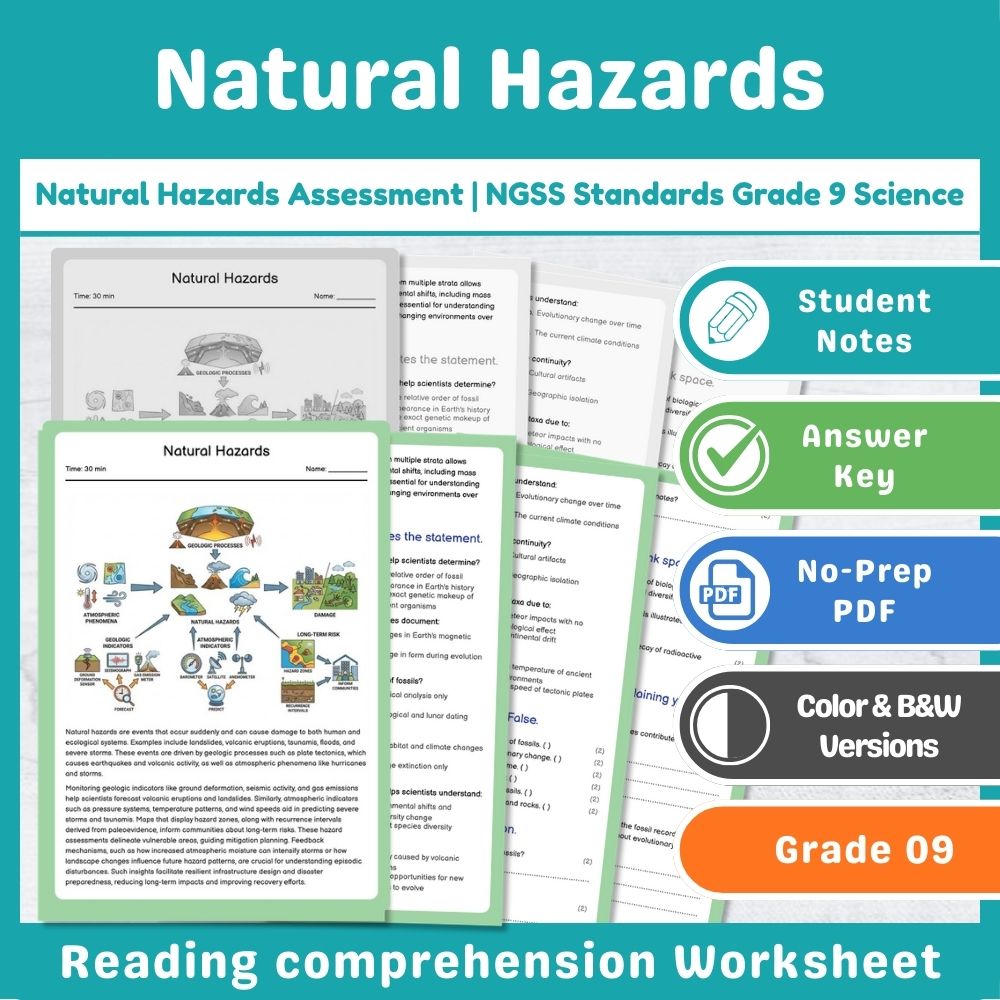
Natural Hazards Assessment | NGSS Standards Grade 9 Science
Created byPrism Point LearningLearning Objectives
- Describe the various types of natural hazards and their causes.
- Identify geologic and atmospheric indicators used to assess hazard risk.
- Interpret hazard maps and recurrence intervals to evaluate potential impacts.
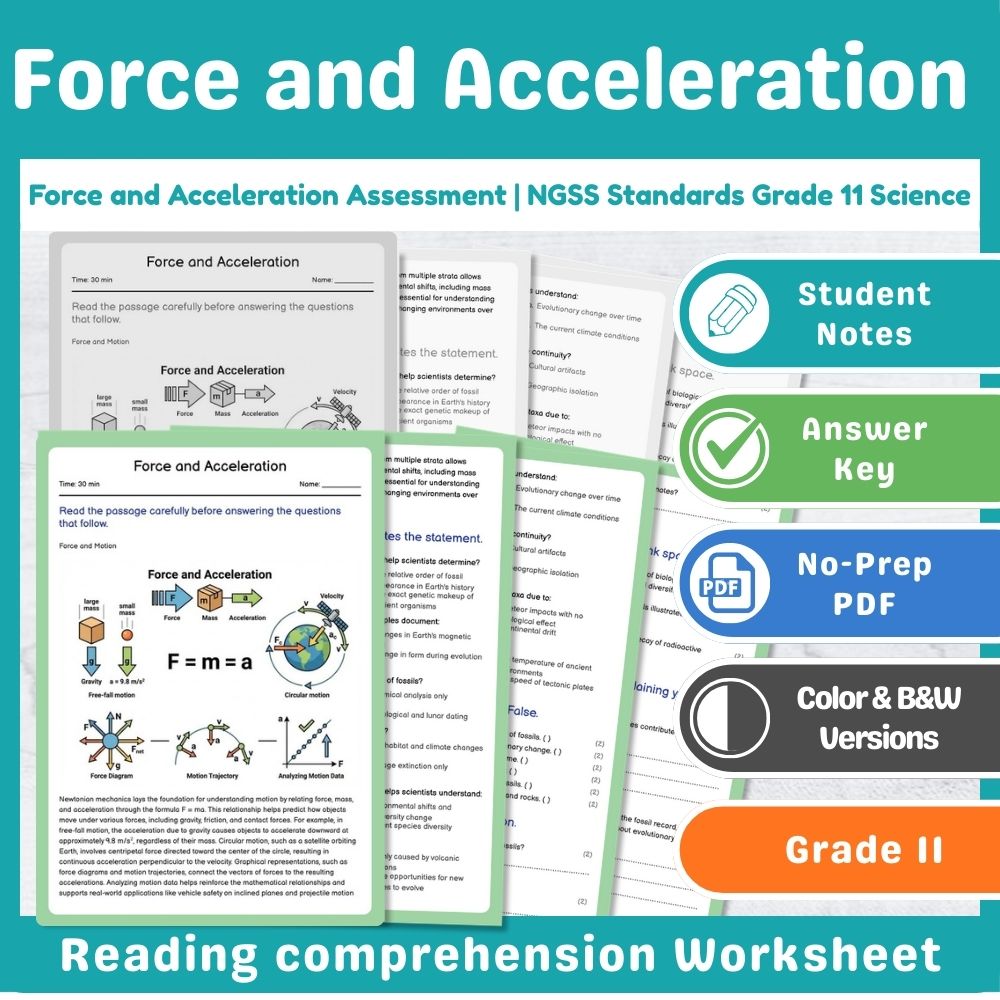
Force and Acceleration Assessment | NGSS Standards Grade 11 Science
Created byPrism Point LearningLearning Objectives
- Explain the fundamental relationship between force, mass, and acceleration using Newton's second law.
- Analyze the effects of free-fall motion and uniform circular motion through graphical and algebraic representations.
- Interpret motion data within terrestrial scenarios involving frictional and contact forces, such as inclined planes and projectile motion.
Climate Dynamics Assessment | NGSS Standards–Assessment for Grade 11 Science
Created byPrism Point LearningLearning Objectives
- Understand the components influencing climate variability, including atmospheric composition and large-scale circulation patterns.
- Analyze mechanisms such as greenhouse gas forcing, albedo feedbacks, and ocean-atmosphere interactions.
- Evaluate the evidence from instrumental records, satellite data, and paleoclimate proxies related to climate change.
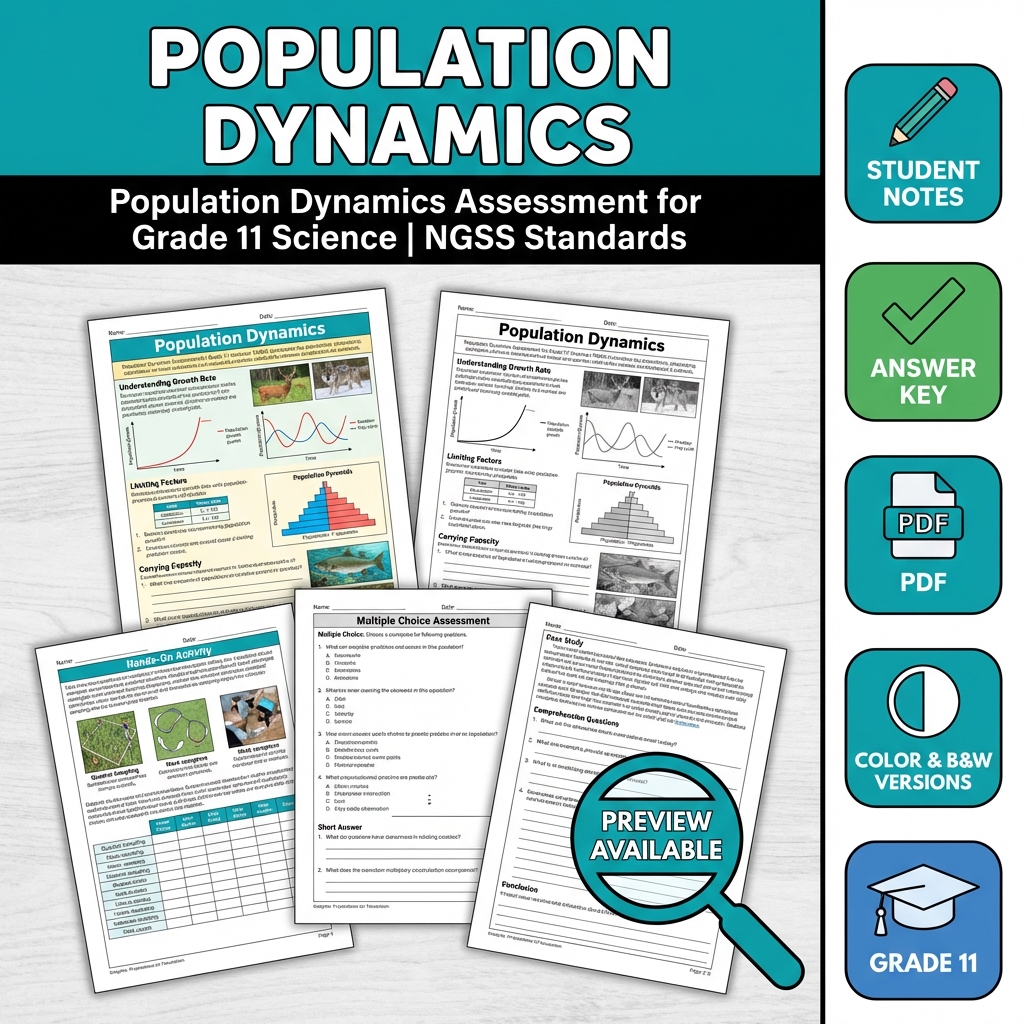
Population Dynamics Assessment for Grade 11 Science | NGSS Standards
Created byPrism Point LearningLearning Objectives
- Describe the key factors influencing population size changes including birth/death rates and migration.
- Explain different models of population growth such as exponential and logistic trajectories.
- Analyze the impact of predator-prey interactions, environmental disturbances, and regulation mechanisms on populations.
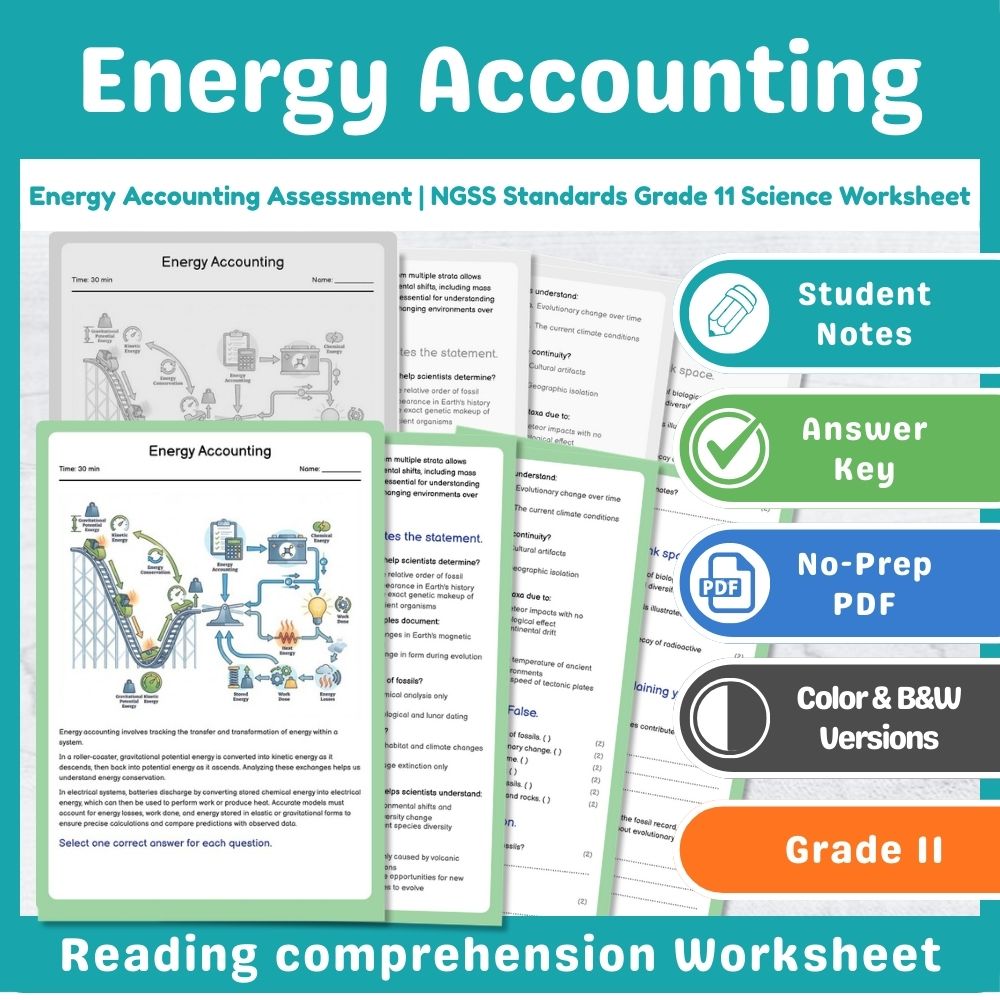
Energy Accounting Assessment | NGSS Standards Grade 11 Science Worksheet
Created byPrism Point LearningLearning Objectives
- Create computational models to analyze energy transfers among system components.
- Use computational representations to relate heat, work, and energy stored in gravitational or elastic forms.
- Compare predicted energy exchanges to data, emphasizing total energy conservation.
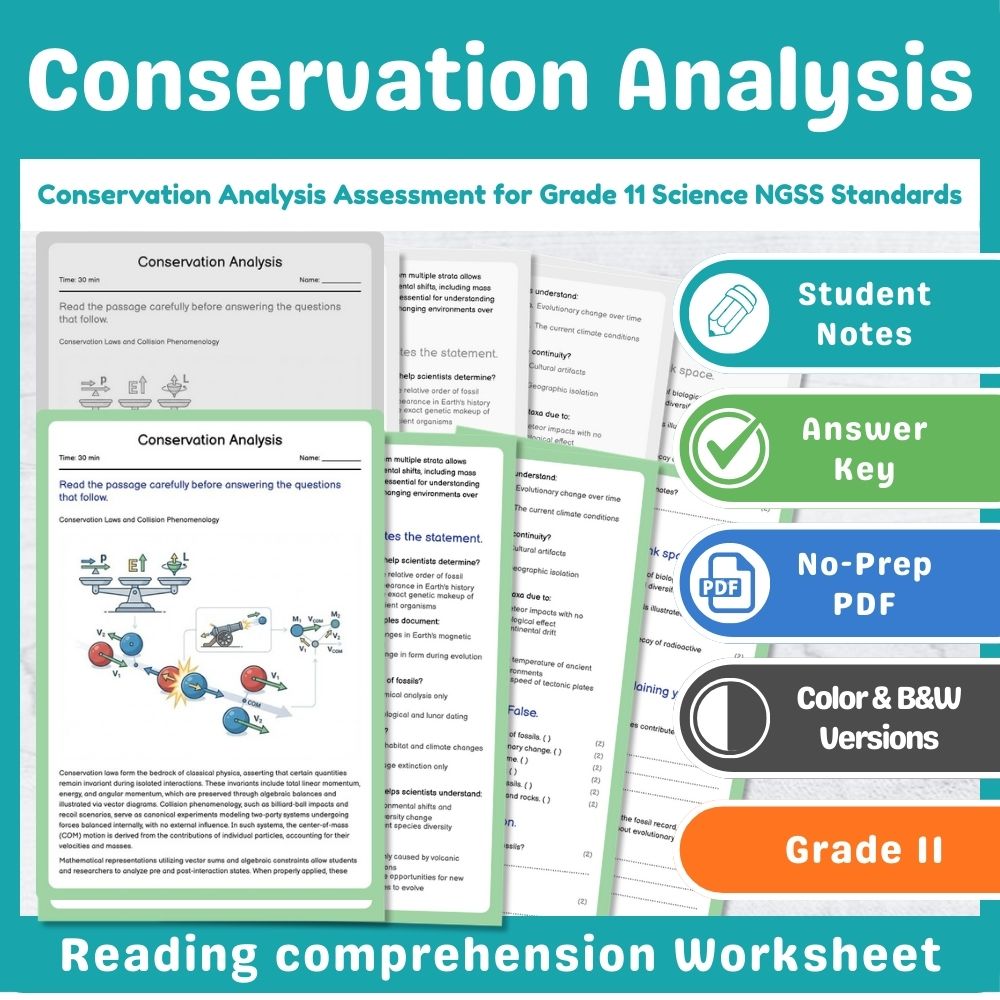
Conservation Analysis Assessment for Grade 11 Science NGSS Standards
Created byPrism Point LearningLearning Objectives
- Understand the principles of conservation laws in physics.
- Analyze collision phenomenology using algebraic balances and vector diagrams.
- Extract center-of-mass motion from system contributions and constraints.
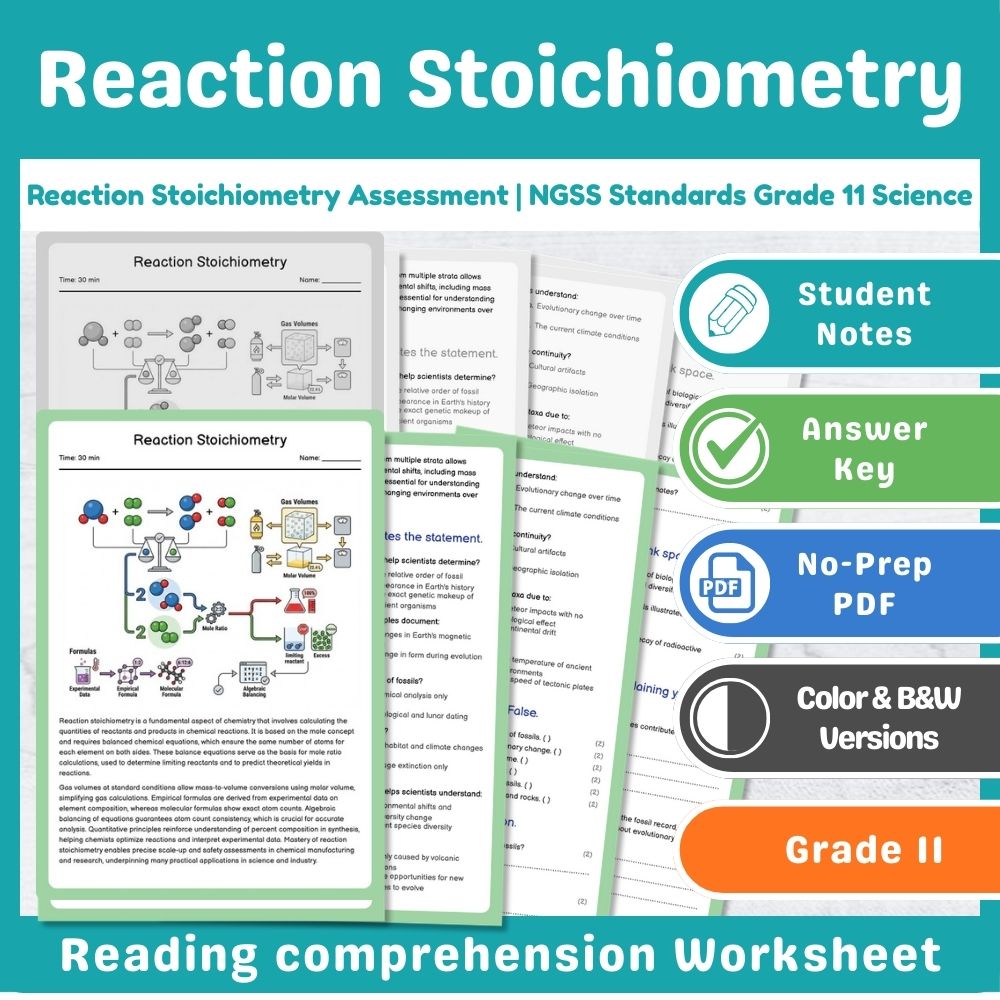
Reaction Stoichiometry Assessment | NGSS Standards Grade 11 Science
Created byPrism Point LearningLearning Objectives
- Understand and apply mole concepts and balanced chemical equations in stoichiometric calculations.
- Determine limiting reactants and calculate theoretical yields in chemical reactions.
- Perform mass-to-mass, mass-to-mole, and molar volume conversions for gases under standard conditions.
Cellular Energy Pathways Assessment | NGSS-Aligned Grade 11 Science
Created byPrism Point LearningLearning Objectives
- Describe the sequence of energy transformations during cellular respiration, including glycolysis, pyruvate oxidation, the citric acid cycle, and oxidative phosphorylation.
- Explain the role of electron transport chains and proton gradients in ATP production within mitochondria.
- Calculate the approximate energy yield from different substrates used in cellular respiration and relate this to organism metabolic rates and resource consumption.
Enthalpy Calculations Assessment | BC Standards Grade 12 Science
Created byPrism Point LearningLearning Objectives
- Understand the concept of enthalpy and its role in heat change calculations.
- Apply standard enthalpies of formation and combustion to compute reaction enthalpies.
- Use algebraic methods reflecting Hess's law to combine enthalpy terms.
Atomic Composition Assessment | NGSS Classroom-Ready Grade 6 Science Worksheet
Created byPrism Point LearningLearning Objectives
- Describe how atoms combine to form simple molecules like H2O and NaCl.
- Understand models such as ball-and-stick and space-filling representations used in chemistry.
- Explain how molecules and extended structures are represented with chemical formulas and diagrams.
Carrying Capacity Assessment for Grade 7 Science – BC Standards
Created byPrism Point LearningLearning Objectives
- Define carrying capacity and explain its significance in ecosystems.
- Identify limiting factors that influence population growth.
- Describe the effects of exceeding carrying capacity in natural environments.
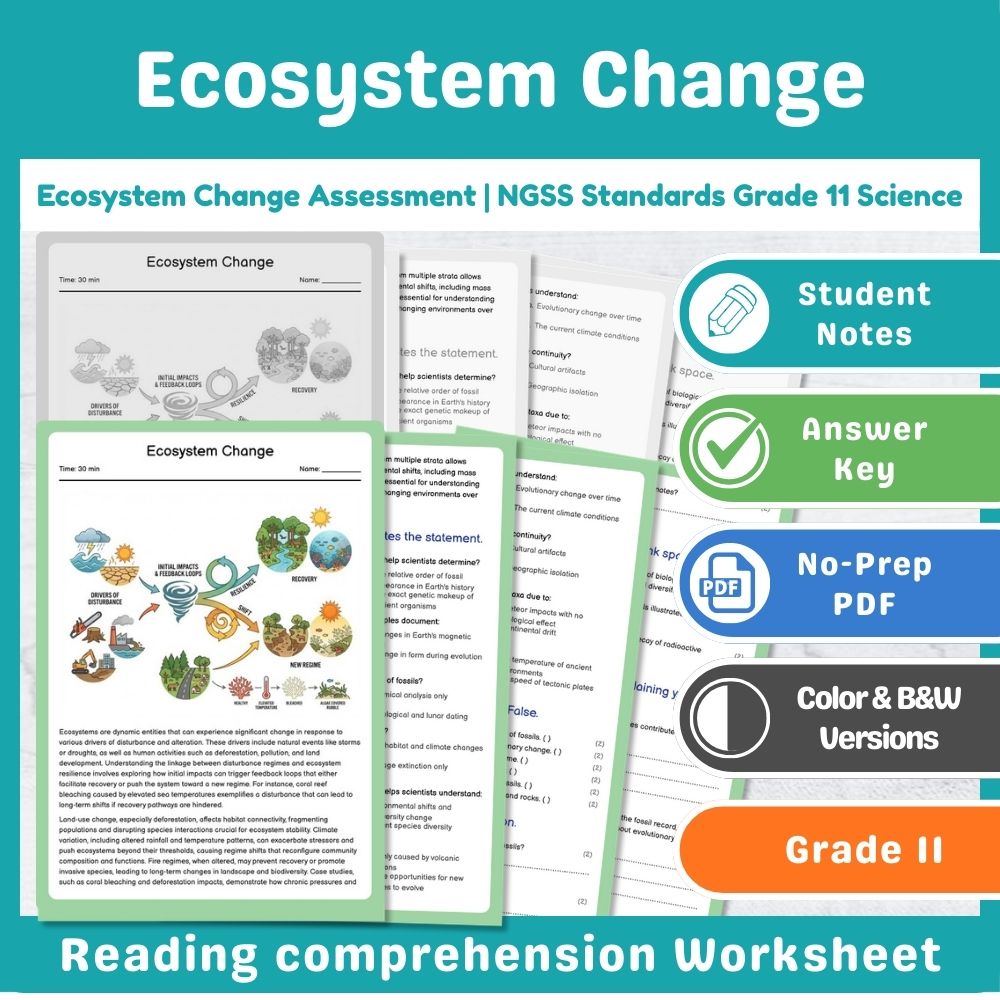
Ecosystem Change Assessment | NGSS Standards Grade 11 Science
Created byPrism Point LearningLearning Objectives
- Understand the drivers of ecosystem stability and how disturbance regimes influence change.
- Assess the impacts of land-use change, connectivity loss, and climate variation on ecosystems.
- Interpret case studies involving coral reef bleaching, deforestation, and fire regime alterations.

Design Communication Assessment | General Grade 9 Science Standards
Created byPrism Point LearningLearning Objectives
- Understand how to effectively communicate design decisions using data, diagrams, and reasoning.
- Learn to interpret and create labeled diagrams that show component relationships.
- Analyze data summaries to compare results to criteria and assess uncertainty or variation.

Seasons and Day Length Assessment | General Grade 9 Science Standards
Created byPrism Point LearningLearning Objectives
- Understand how Earth's axial tilt and orbit around the Sun cause seasonal changes.
- Explain how the angle of sunlight and day length vary with Earth's position in its orbit.
- Describe the relationship between solar energy received and Earth's seasons.
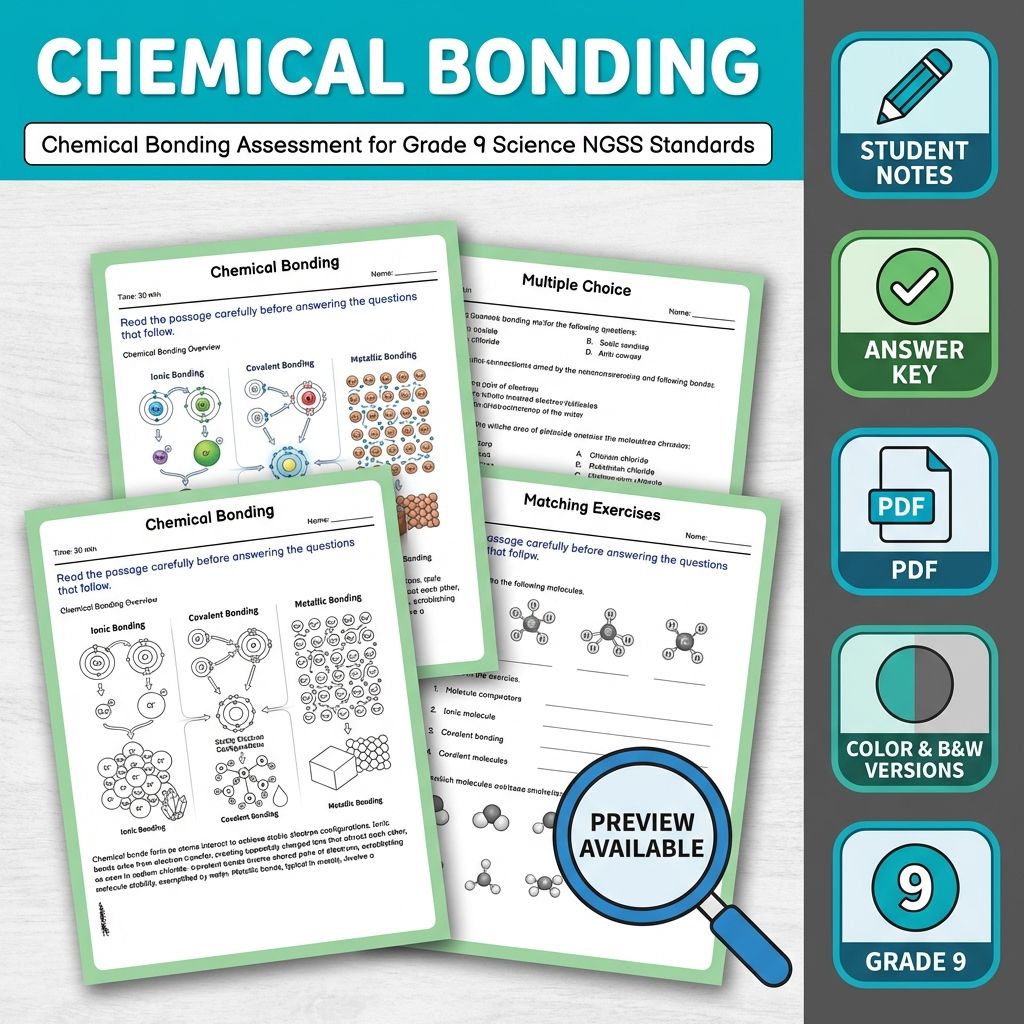
Chemical Bonding Assessment for Grade 9 Science NGSS Standards
Created byPrism Point LearningLearning Objectives
- Understand the types of chemical bonds and their properties.
- Interpret Lewis structures and electron-sharing models to predict molecular geometry.
- Explain how bonding influences physical properties like melting point and solubility.

Forces Basics Assessment | TEKS Grade 6 Science Standards-Aligned
Created byPrism Point LearningLearning Objectives
- Explain the difference between contact and noncontact forces, including gravity, friction, and normal force.
- Describe how balanced and unbalanced forces affect the motion of objects.
- Understand the concept of net force and its effect on everyday objects.
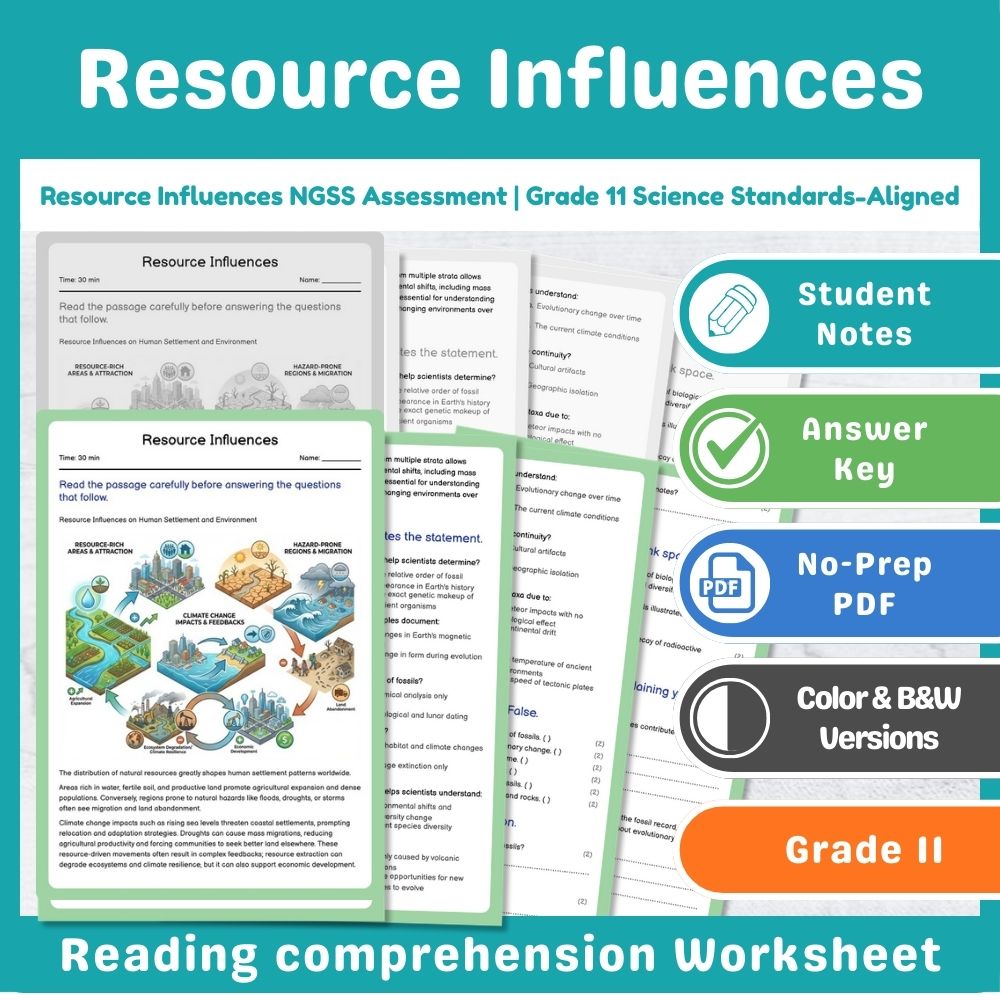
Resource Influences NGSS Assessment | Grade 11 Science Standards-Aligned
Created byPrism Point LearningLearning Objectives
- Analyze how natural resource availability affects human settlement, land use, and economic development.
- Explain how natural hazards and climate change influence migration, coastal settlement, and land management decisions.
- Evaluate the feedbacks between resource extraction, ecosystem services, and sustainability across regions and history.
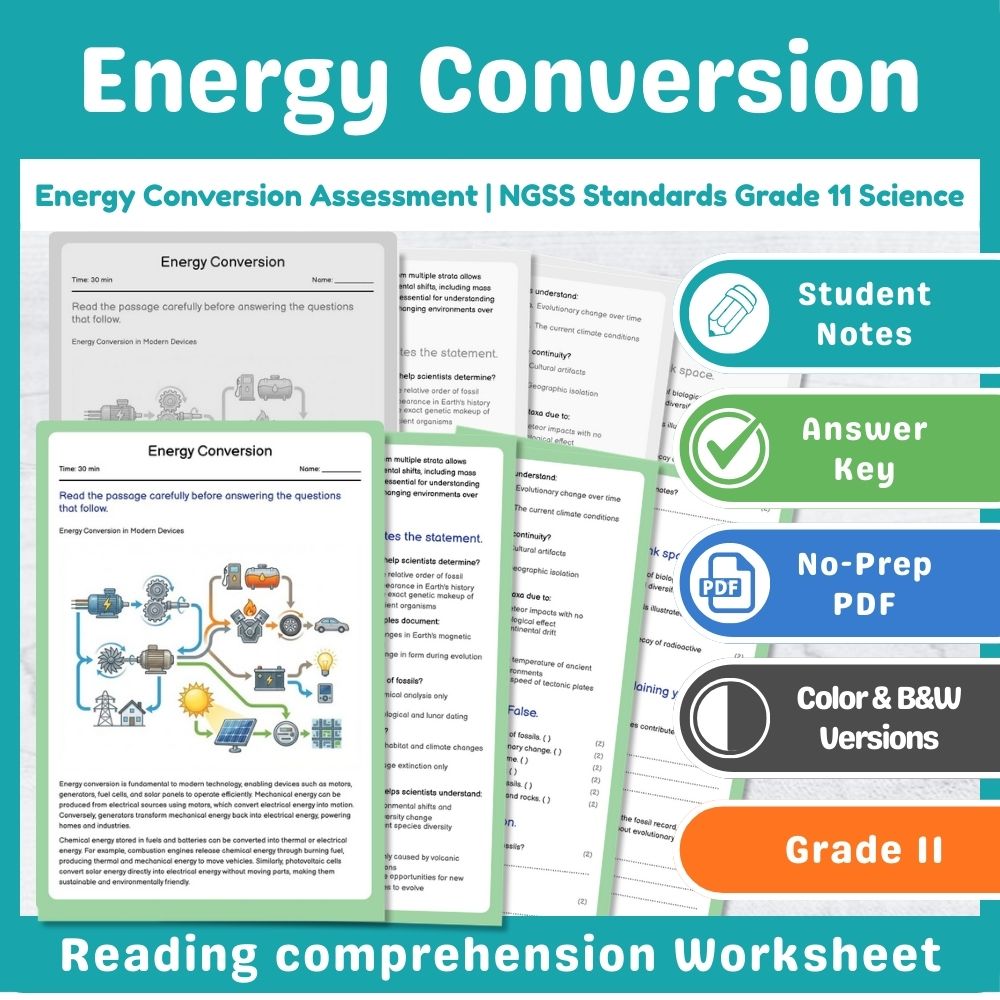
Energy Conversion Assessment | NGSS Standards Grade 11 Science
Created byPrism Point LearningLearning Objectives
- Understand the different forms of energy and their conversions
- Design and evaluate devices that convert energy between mechanical, electrical, chemical, and thermal forms
- Analyze efficiency and energy losses in energy conversion systems

Rate and Concentration Assessment | General Standards-Aligned Grade 11 Science
Created byPrism Point LearningLearning Objectives
- Understand key concepts related to Science
- Apply knowledge through practice questions
- Demonstrate comprehension of the material
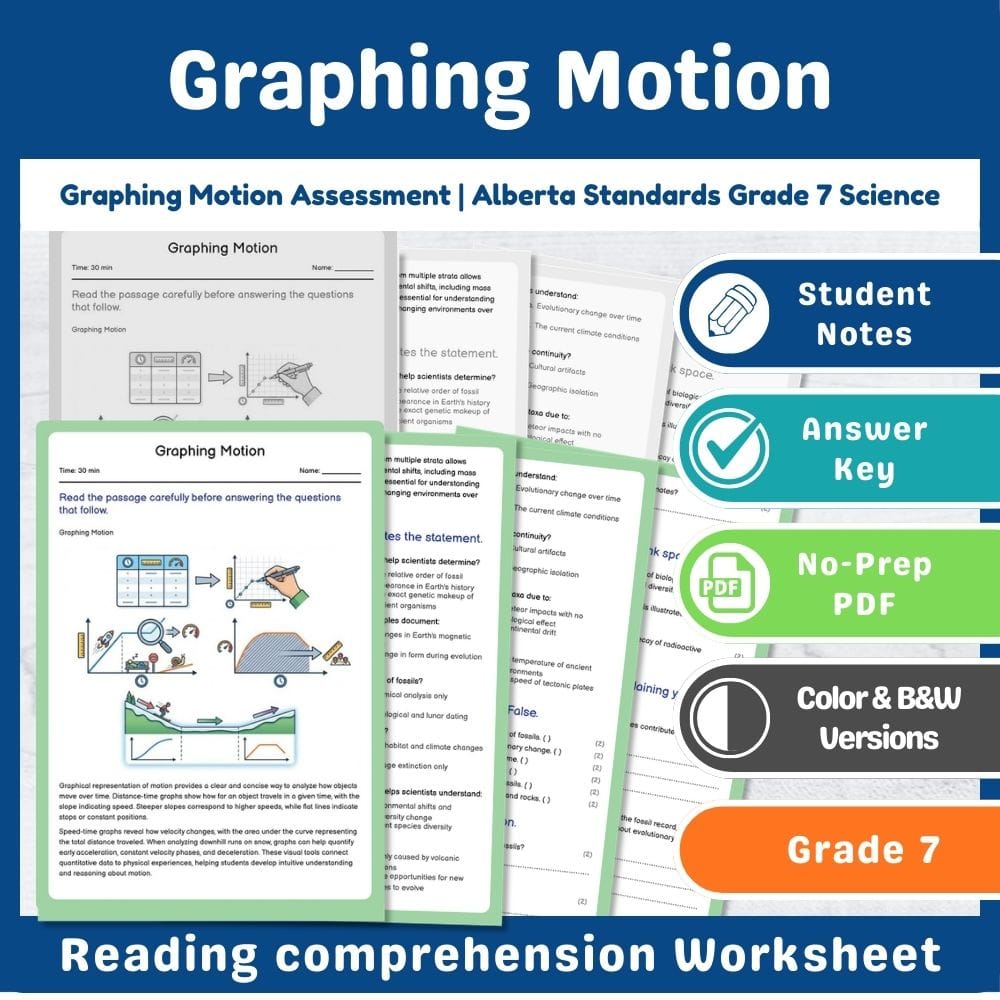
Graphing Motion Assessment | Alberta Standards Grade 7 Science
Created byPrism Point LearningLearning Objectives
- Understand how to interpret distance–time and speed–time graphs.
- Explain the significance of slope, area under curves, and rate calculations in motion graphs.
- Translate tabulated numerical data into accurate graphical representations.
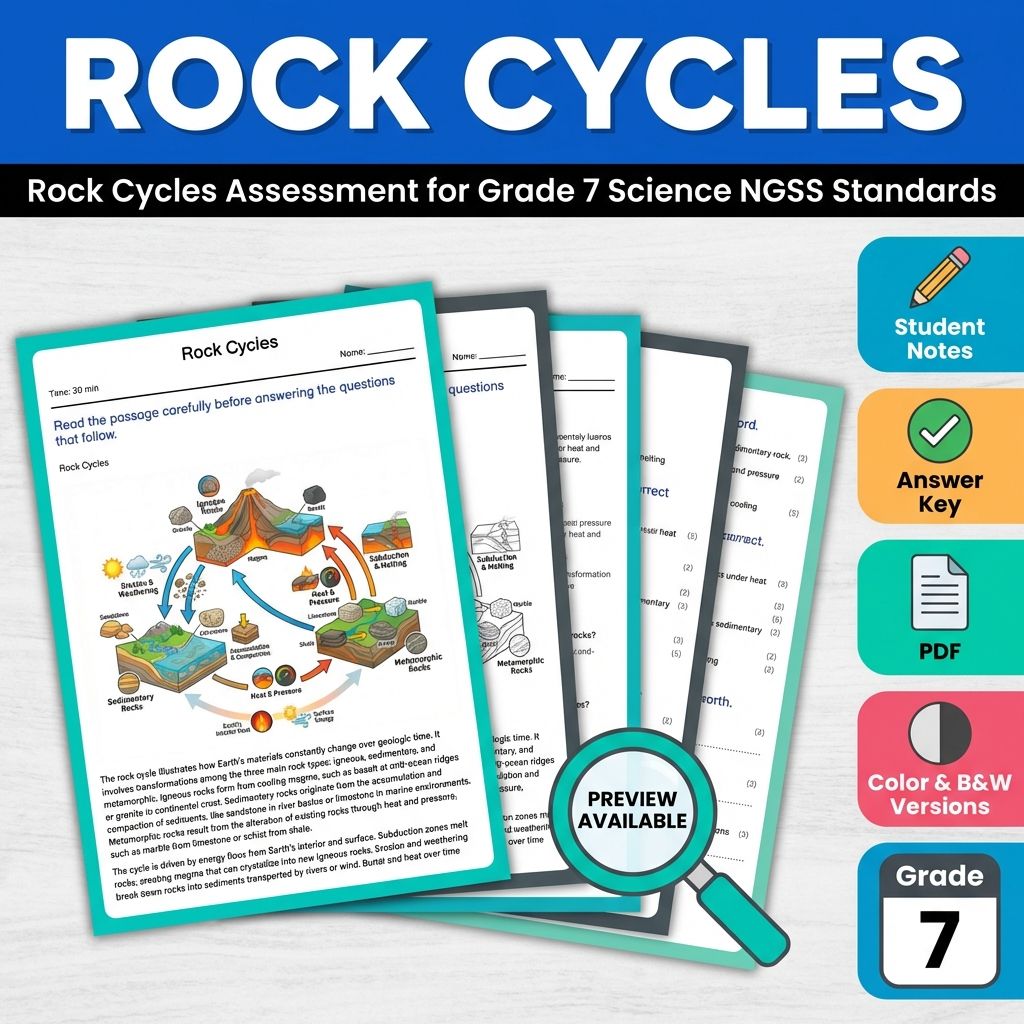
Rock Cycles Assessment for Grade 7 Science NGSS Standards
Created byPrism Point LearningLearning Objectives
- Understand the processes involved in the cycling of Earth's rocks.
- Identify the stages of igneous, sedimentary, and metamorphic rock formation.
- Explain how plate tectonics and energy flow drive rock transformations.
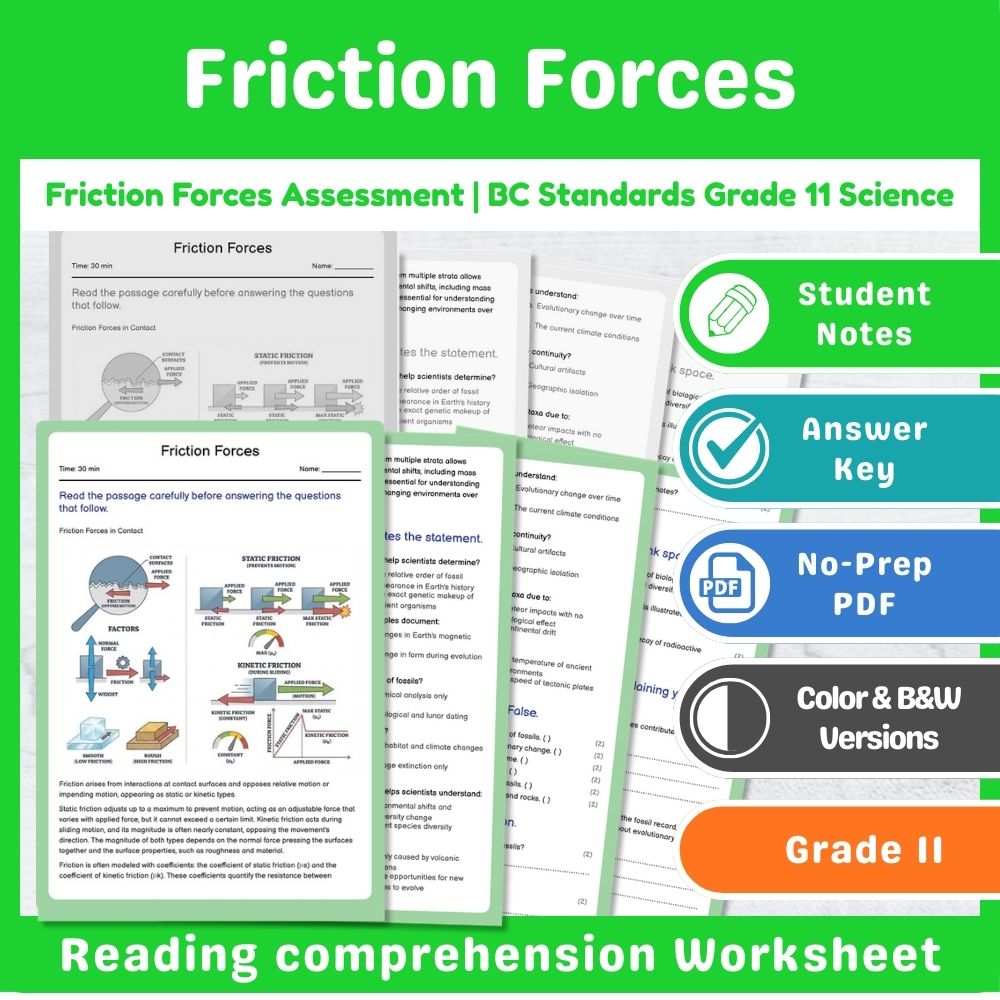
Friction Forces Assessment | BC Standards Grade 11 Science
Created byPrism Point LearningLearning Objectives
- Understand the types of friction and how they oppose motion.
- Describe the factors affecting static and kinetic friction.
- Explain how surface properties and normal force influence frictional resistance.
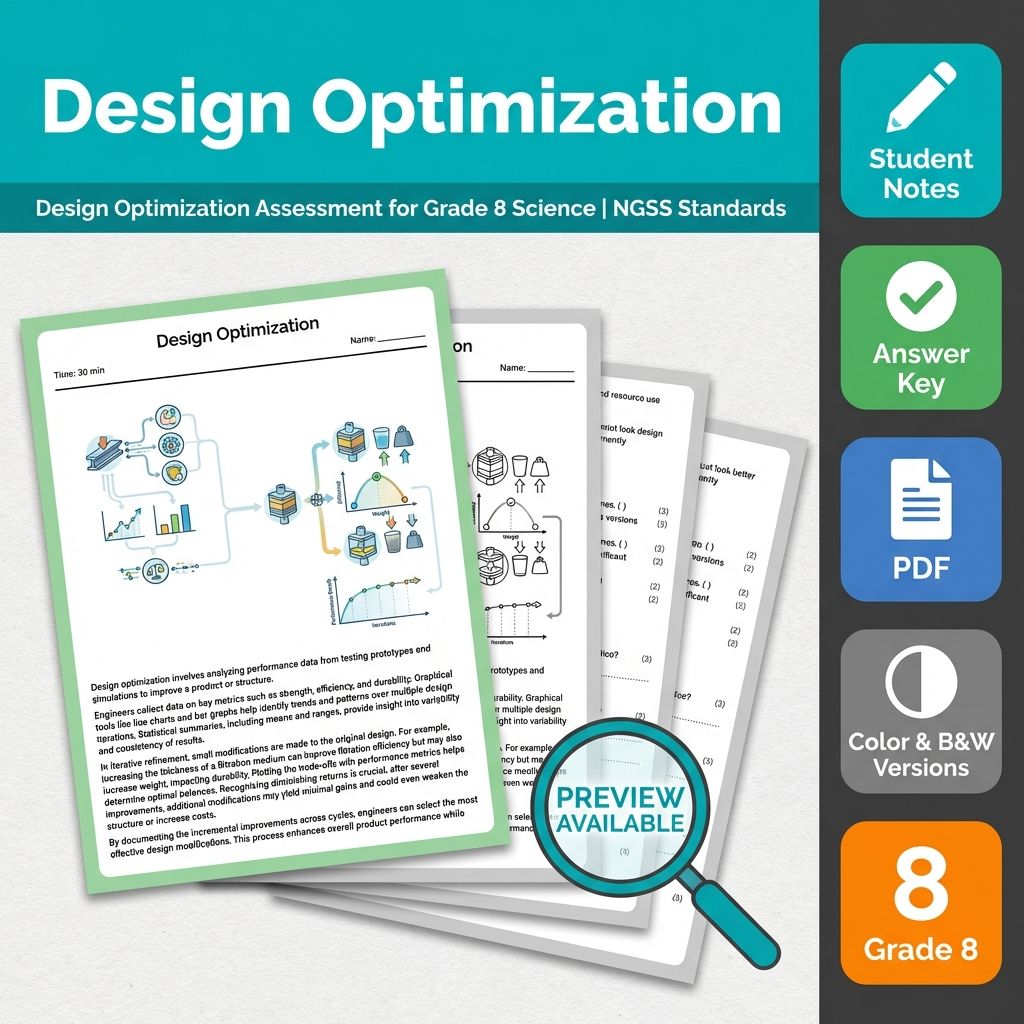
Design Optimization Assessment for Grade 8 Science | NGSS Standards
Created byPrism Point LearningLearning Objectives
- Analyze test data to identify performance trends and effective design features.
- Interpret graphical and statistical summaries to inform iterative design modifications.
- Evaluate trade-offs among different design metrics such as efficiency, strength, and durability.
Redox Concepts Assessment | BC Standards Grade 9 Science
Created byPrism Point LearningLearning Objectives
- Explain the fundamental principles of oxidation and reduction in chemical reactions.
- Track changes in oxidation states to identify oxidizing and reducing agents.
- Balance redox equations involved in combustion and displacement reactions.

Inheritance Patterns Assessment for Grade 11 Science | Standards-Aligned
Created byPrism Point LearningLearning Objectives
- Explain how observable traits are connected to genetic inheritance patterns across generations.
- Describe the role of Punnett squares in predicting offspring genotypes and phenotypes.
- Differentiate between autosomal and sex-linked inheritance, including dominance and recessiveness.
Detector Imaging Assessment for Grade 11 Science NGSS Standards
Created byPrism Point LearningLearning Objectives
- Evaluate the validity and reliability of claims about electromagnetic absorption across different bands.
- Analyze detector responses like CCD and photodiodes in UV, visible, IR, and X-ray spectra.
- Understand calibration procedures, uncertainties, and instrument limitations in detector imaging.
Inheritance Patterns Assessment NGSS | Standard Grade 11 Science
Created byPrism Point LearningLearning Objectives
- Understand the basic principles of Mendelian inheritance and how traits are passed through generations.
- Identify and describe various inheritance patterns beyond simple dominance, such as incomplete dominance, codominance, sex linkage, and polygenic inheritance.
- Interpret pedigrees and predict inheritance outcomes using probability and meiotic mechanisms.
Earth Materials Assessment | NGSS Grade 8 Science Standards
Created byPrism Point LearningLearning Objectives
- Describe the processes involved in Earth's material cycles, including melting, crystallization, uplift, weathering, transport, and deposition.
- Explain the energy sources driving Earth's geosphere, such as internal heat and gravitational potential.
- Model the interactions between Earth's geosphere, hydrosphere, and atmosphere in surface processes and material flow.
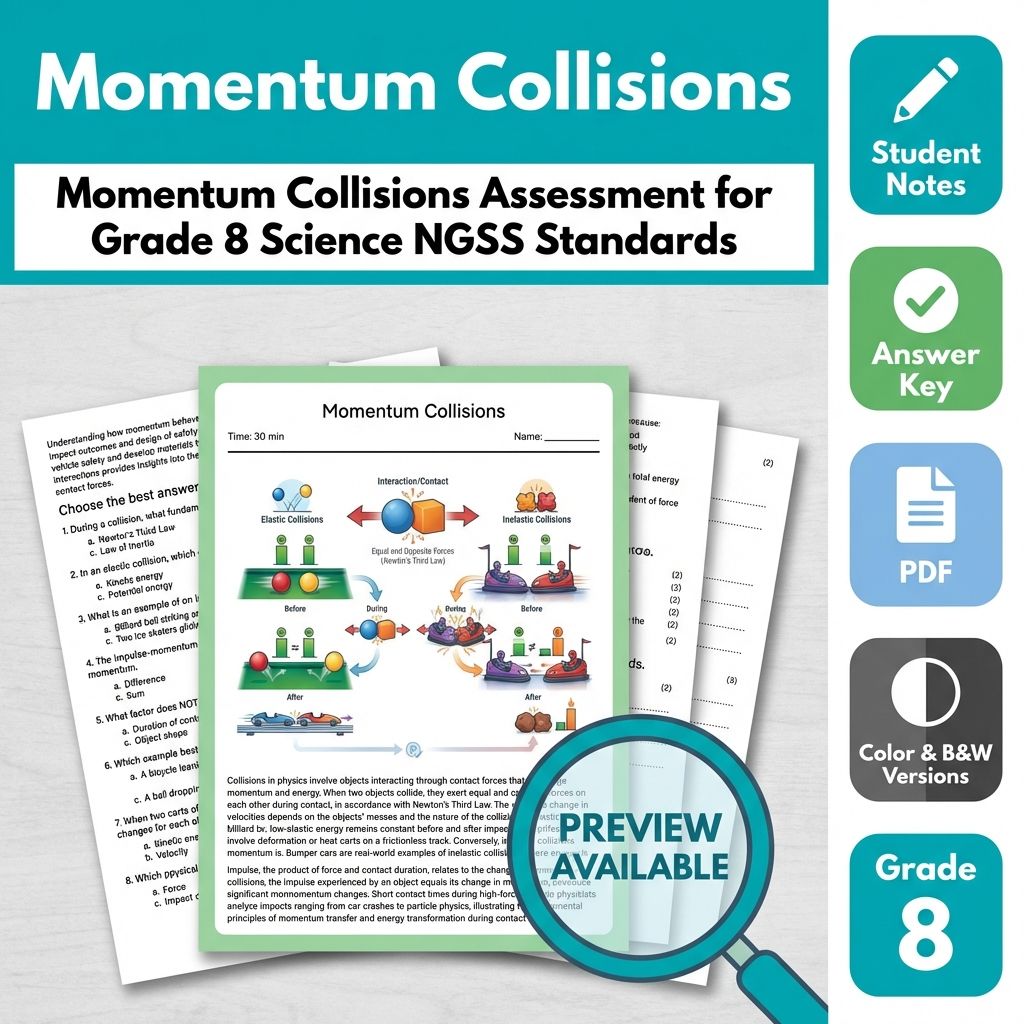
Momentum Collisions Assessment for Grade 8 Science NGSS Standards
Created byPrism Point LearningLearning Objectives
- Understand the principles of momentum exchange during collisions.
- Distinguish between elastic and inelastic collisions through conservation of kinetic energy.
- Analyze real-world examples involving impacts and velocity changes.
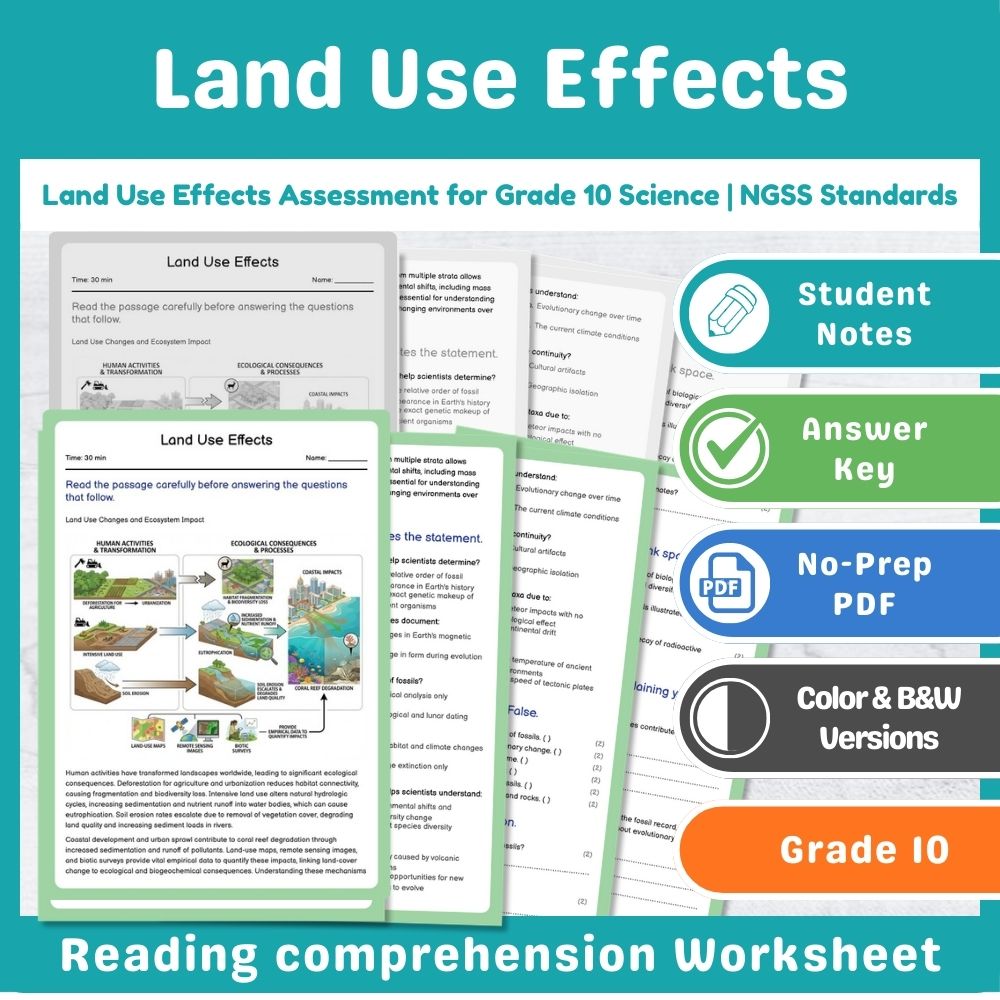
Land Use Effects Assessment for Grade 10 Science | NGSS Standards
Created byPrism Point LearningLearning Objectives
- Analyze human impacts on Earth systems through land-cover changes.
- Identify indicators such as habitat fragmentation, nutrient loading, soil erosion, and coral reef degradation.
- Interpret empirical land-use data from maps, remote sensing, and surveys to assess ecological consequences.

Organelles Assessment | TEKS Grade 10 Science Standards-Aligned
Created byPrism Point LearningLearning Objectives
- Understand the structure and functions of various cellular organelles.
- Compare membrane-bound and non-membrane-bound organelles.
- Explain how compartmentalization enhances cellular efficiency.

Variable Control Assessment | General Standards-Aligned Assessment Grade 6 Science
Created byPrism Point LearningLearning Objectives
- Understand the importance of controlling variables in scientific experiments.
- Identify different types of variables and how to keep them constant.
- Explain how variable control contributes to reliable evidence and conclusions.
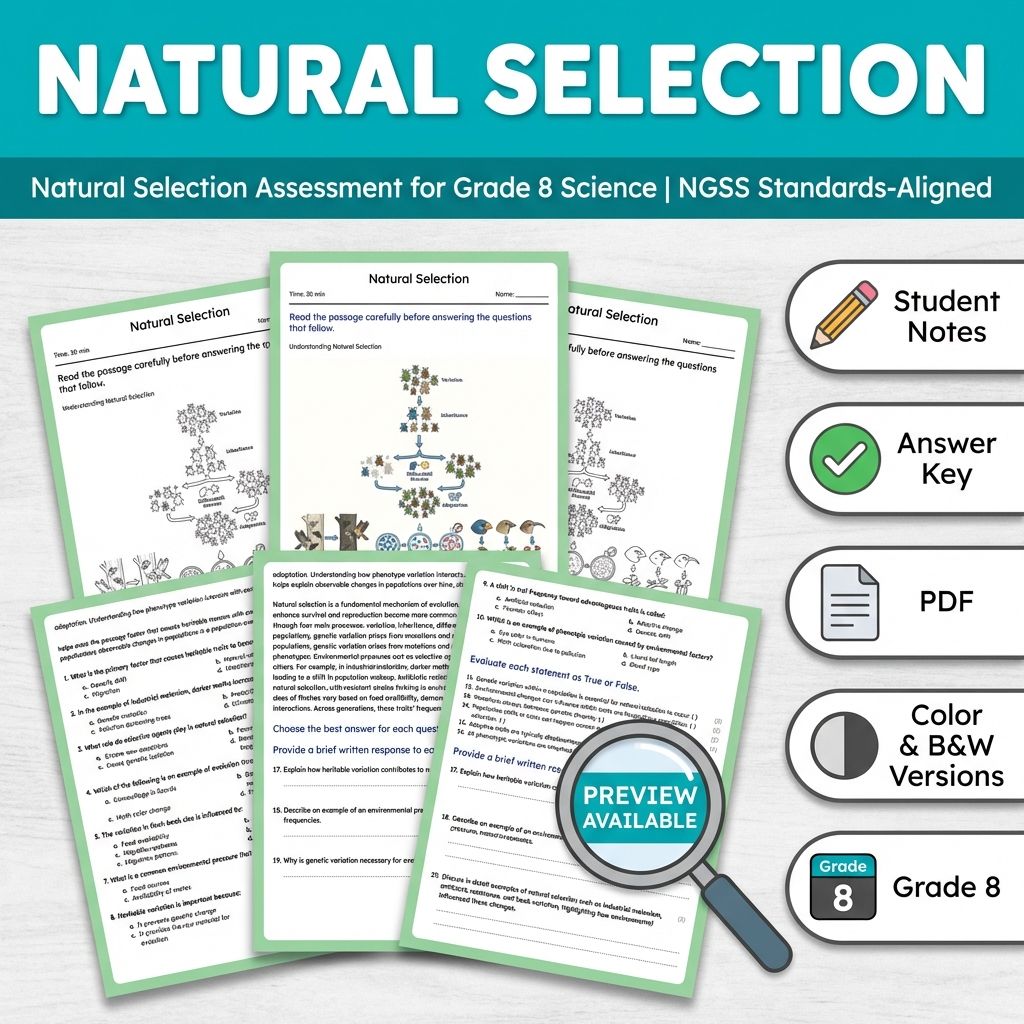
Natural Selection Assessment for Grade 8 Science | NGSS Standards-Aligned
Created byPrism Point LearningLearning Objectives
- Understand the mechanisms of variation and natural selection that drive adaptive change in populations.
- Identify examples of natural selection such as industrial melanism, antibiotic resistance, and beak variation.
- Link phenotypic variation and environmental factors to changes in trait frequencies over generations.

Climate Drivers Over Time Assessment | General Grade 7 Science
Created byPrism Point LearningLearning Objectives
- Understand how natural records and measurements are used to assess past and present climate conditions.
- Identify key climate drivers that influence long-term climate change.
- Explain how factors like greenhouse gases, ocean currents, and volcanic activity affect Earth's energy balance.
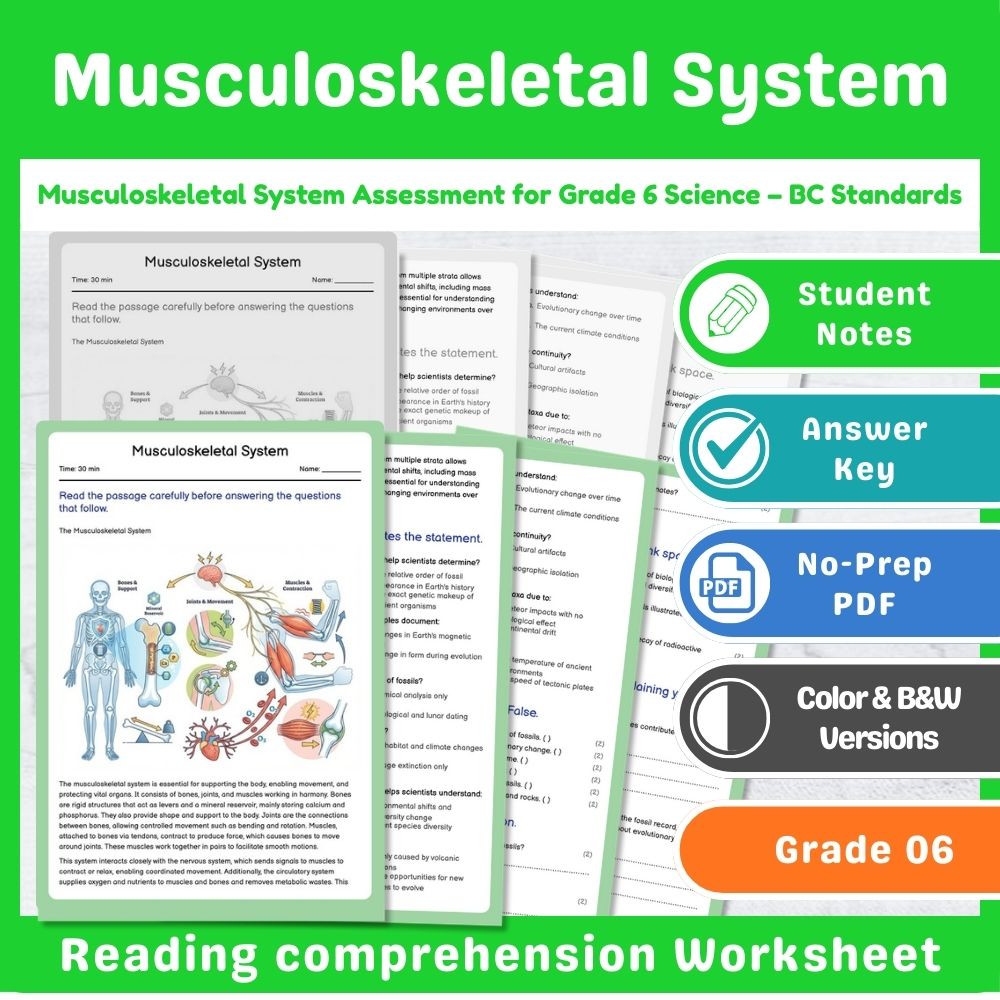
Musculoskeletal System Assessment for Grade 6 Science – BC Standards
Created byPrism Point LearningLearning Objectives
- Identify the components of the musculoskeletal system and their functions.
- Explain how bones, joints, and muscles work together to facilitate movement.
- Describe the interaction between the musculoskeletal and other systems such as the nervous and circulatory systems.

Trait Prediction Across Generations Assessment | General Grade 9 Science
Created byPrism Point LearningLearning Objectives
- Understand how inheritance patterns influence trait prediction across multiple generations.
- Apply probability concepts to forecast phenotype ratios based on parental alleles.
- Analyze how dominant and recessive traits are expressed and masked in offspring.
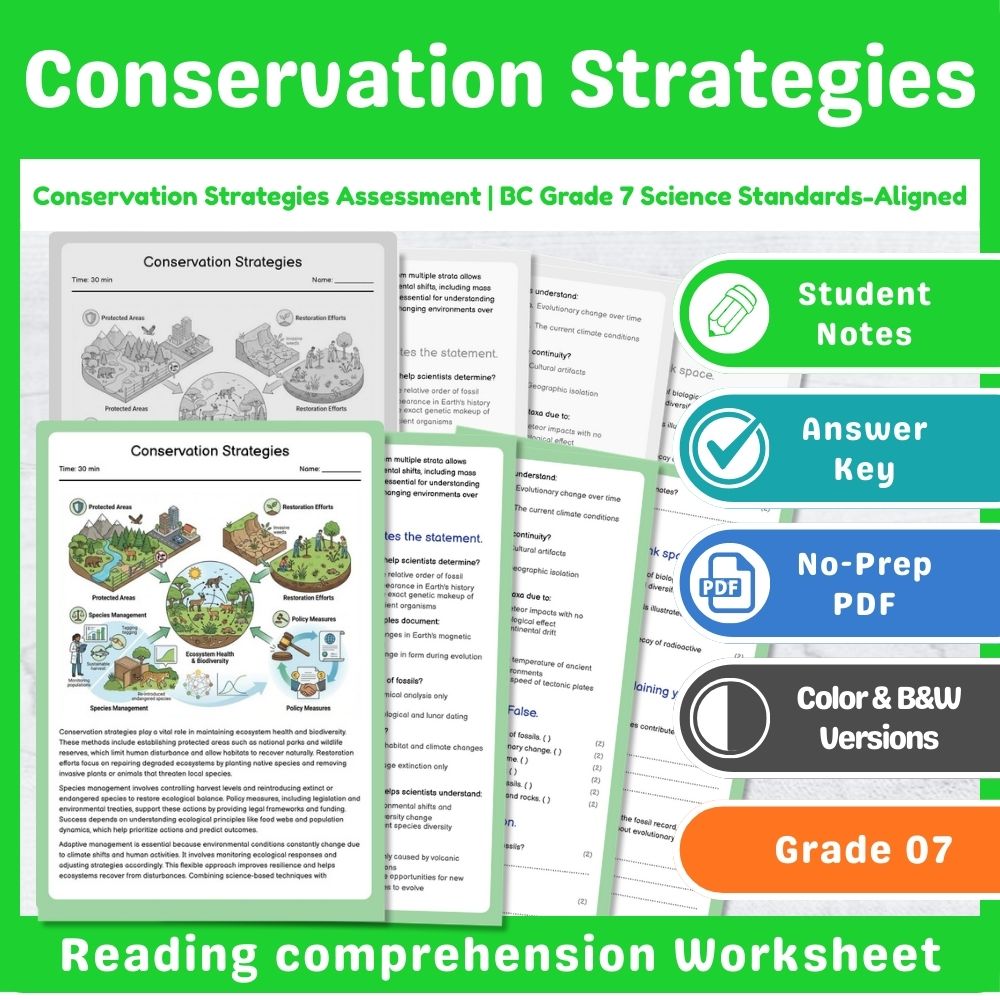
Conservation Strategies Assessment for Grade 7 Science | BC Standards
Created byPrism Point LearningLearning Objectives
- Understand various conservation strategies used to protect ecosystems.
- Identify key actions involved in habitat restoration and management.
- Explain how adaptive approaches help sustain biodiversity.
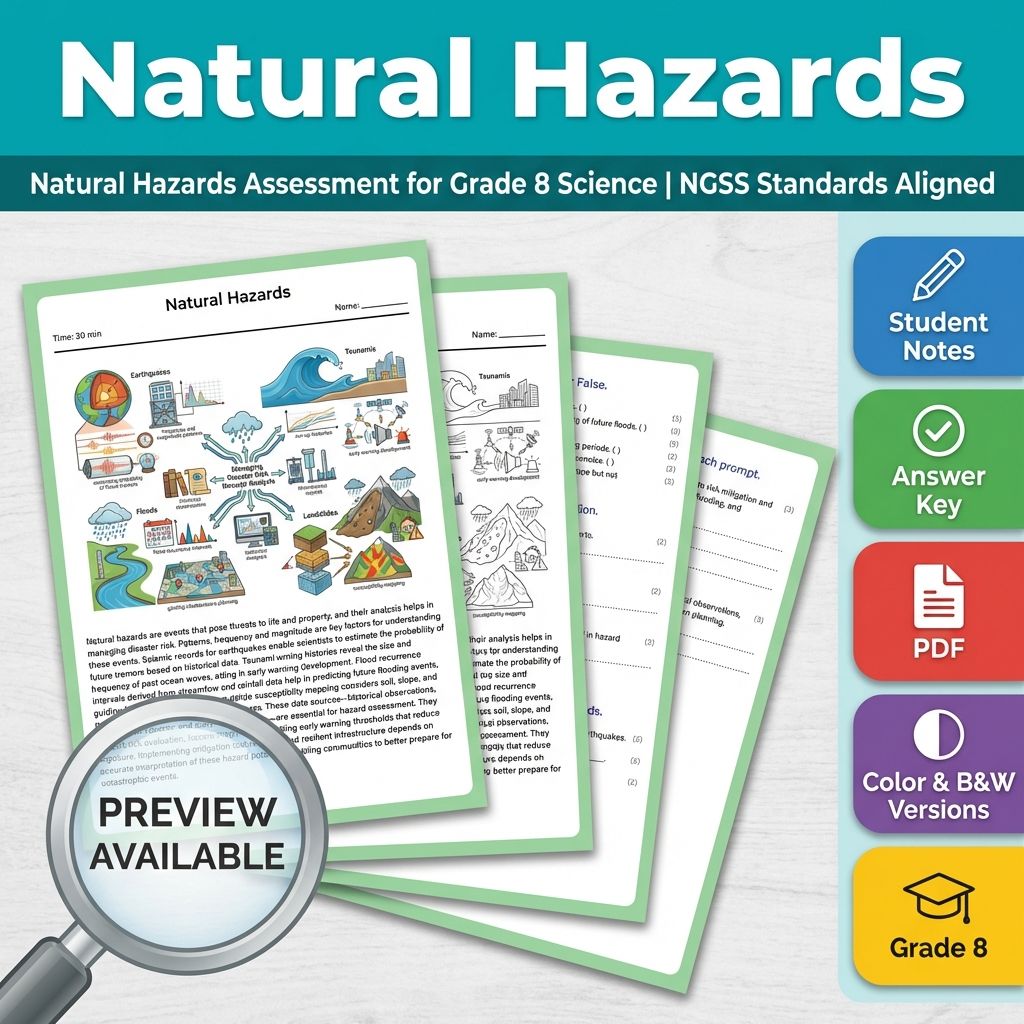
Natural Hazards Assessment for Grade 8 Science | NGSS Standards Aligned
Created byPrism Point LearningLearning Objectives
- Understand the different types of natural hazards and their patterns.
- Interpret data related to seismic records, flood recurrence, and landslide susceptibility.
- Analyze historical observations and instrumental records for hazard assessment.
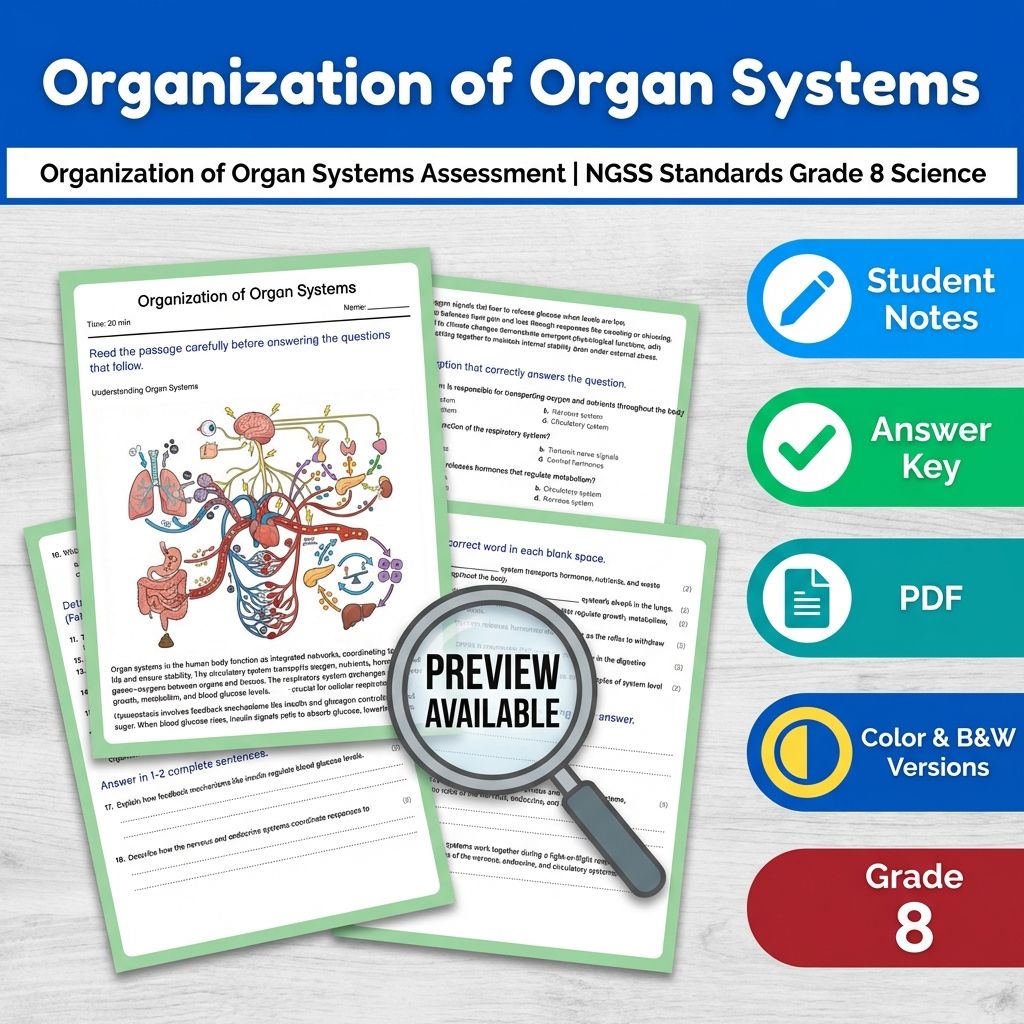
Organization of Organ Systems Assessment | NGSS Standards Grade 8 Science
Created byPrism Point LearningLearning Objectives
- Understand how body systems collaborate to maintain homeostasis.
- Identify functions of the circulatory, respiratory, digestive, nervous, and endocrine systems.
- Explain feedback mechanisms like insulin–glucagon signaling and thermoregulation.
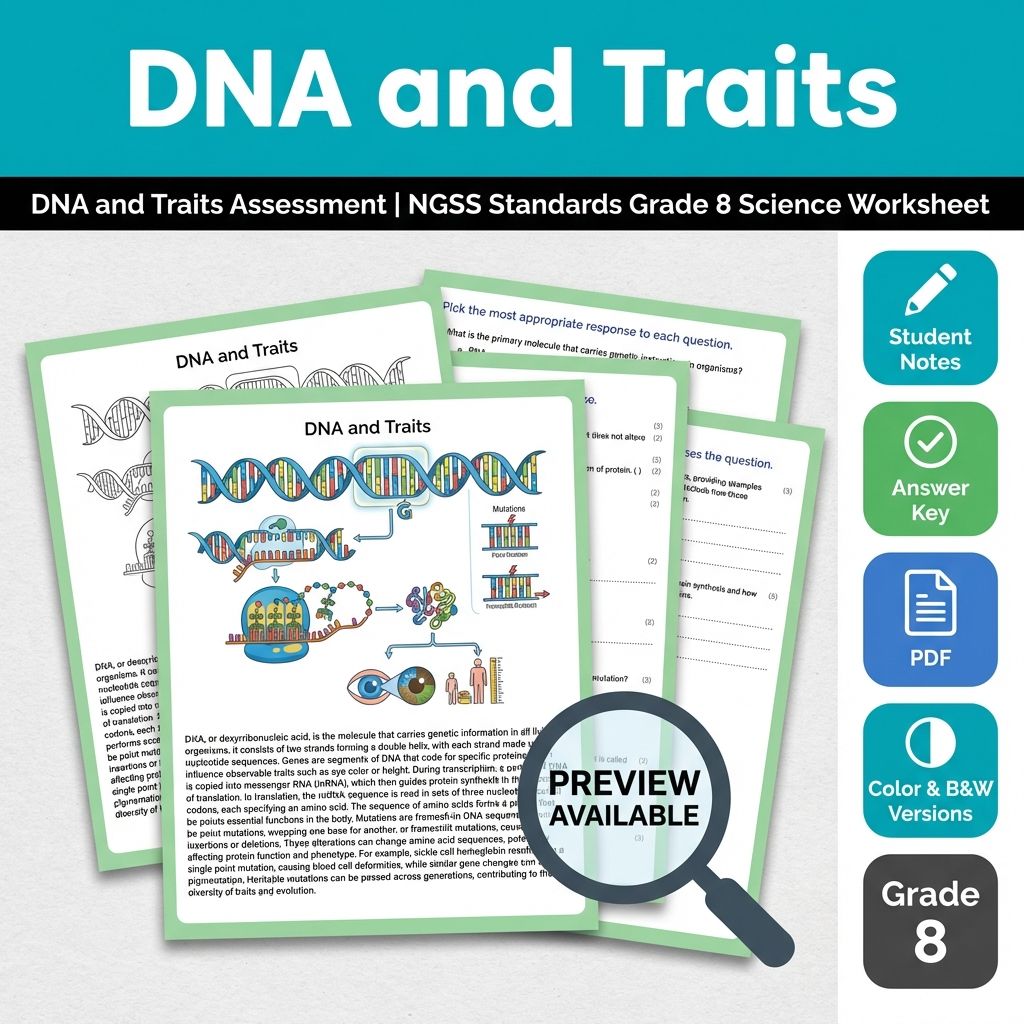
DNA and Traits Assessment | NGSS Standards Grade 8 Science Worksheet
Created byPrism Point LearningLearning Objectives
- Explain the relationship between DNA sequences and protein synthesis.
- Identify how mutations can alter amino acid sequences and affect traits.
- Describe gene structure, transcription, translation, and mutation effects.
Browse more categories
About Science Worksheets
Find Science worksheets spanning core skills, practice, and review. All 42,685 resources are instant PDF downloads for the classroom or home.
Every worksheet on MyTeachingSheets is created by independent teacher-authors and reviewed before publication. All resources download as printable PDFs for classroom, homework, or at-home practice, and many include answer keys. Preview any worksheet free before buying.