
Science Worksheets
42,685 subject resources
DNA Gene Link Assessment | Standards-Aligned Test for Grade 11 Science
 Created byPrism Point Learning
Learning Objectives
- Understand the relationship between DNA, genes, and chromosomes.
- Explain how genetic information is expressed through transcription and translation.
- Describe how alleles travel together during cell division and influence traits.

Mutation Impacts Assessment | Alberta Standards-Aligned Assessment Grade 12 Science
Created byPrism Point LearningLearning Objectives
- Understand the different types of genetic mutations and their mechanisms.
- Identify the effects mutations can have on gene functions and organism traits.
- Analyze how mutational outcomes influence agriculture, livestock, and pathogen variation.
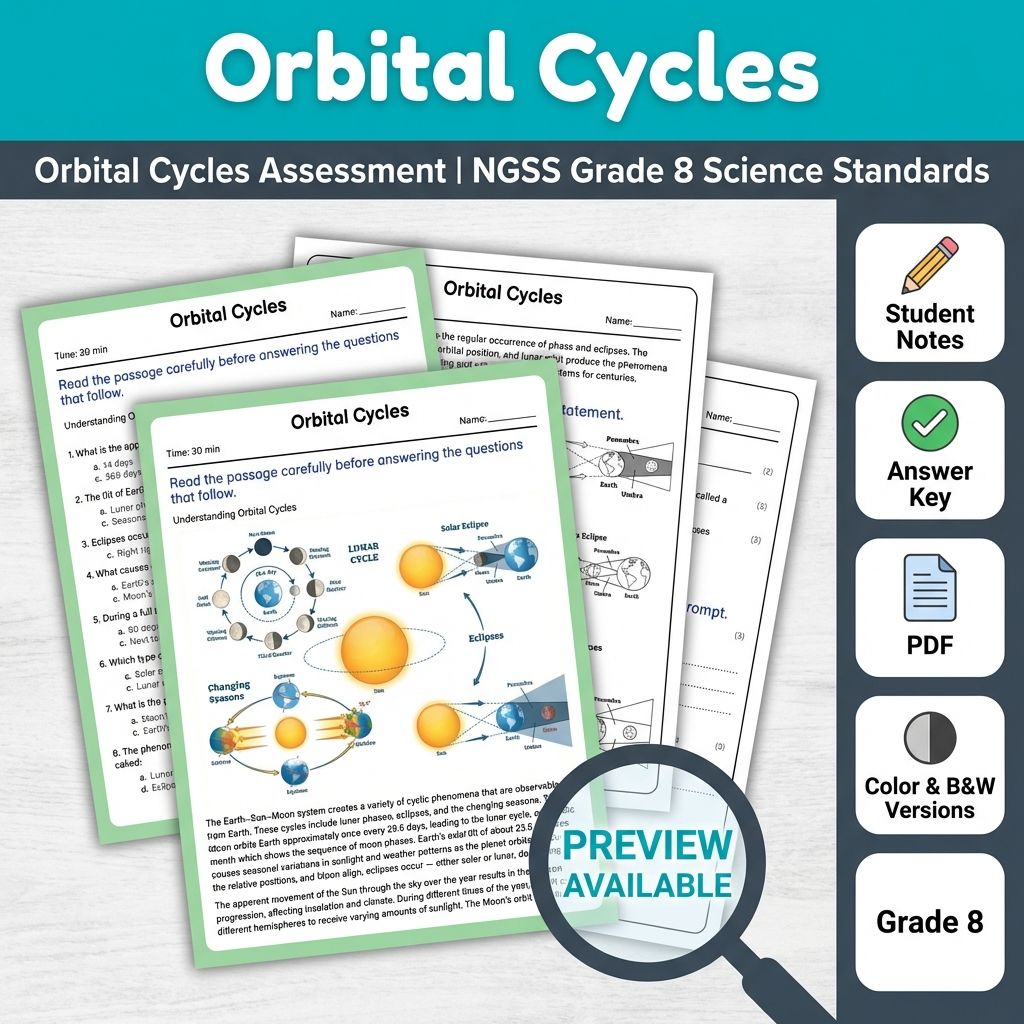
Orbital Cycles Assessment | NGSS Grade 8 Science Standards
Created byPrism Point LearningLearning Objectives
- Describe the relative positions and motions of the Earth, Moon, and Sun that produce lunar phases, eclipses, and seasonal changes.
- Explain how orbital geometry and axial tilt influence observable sky phenomena and calendar cycles.
- Analyze the relationship between Earth's orbit, the lunar cycle, and seasonal insolation differences.
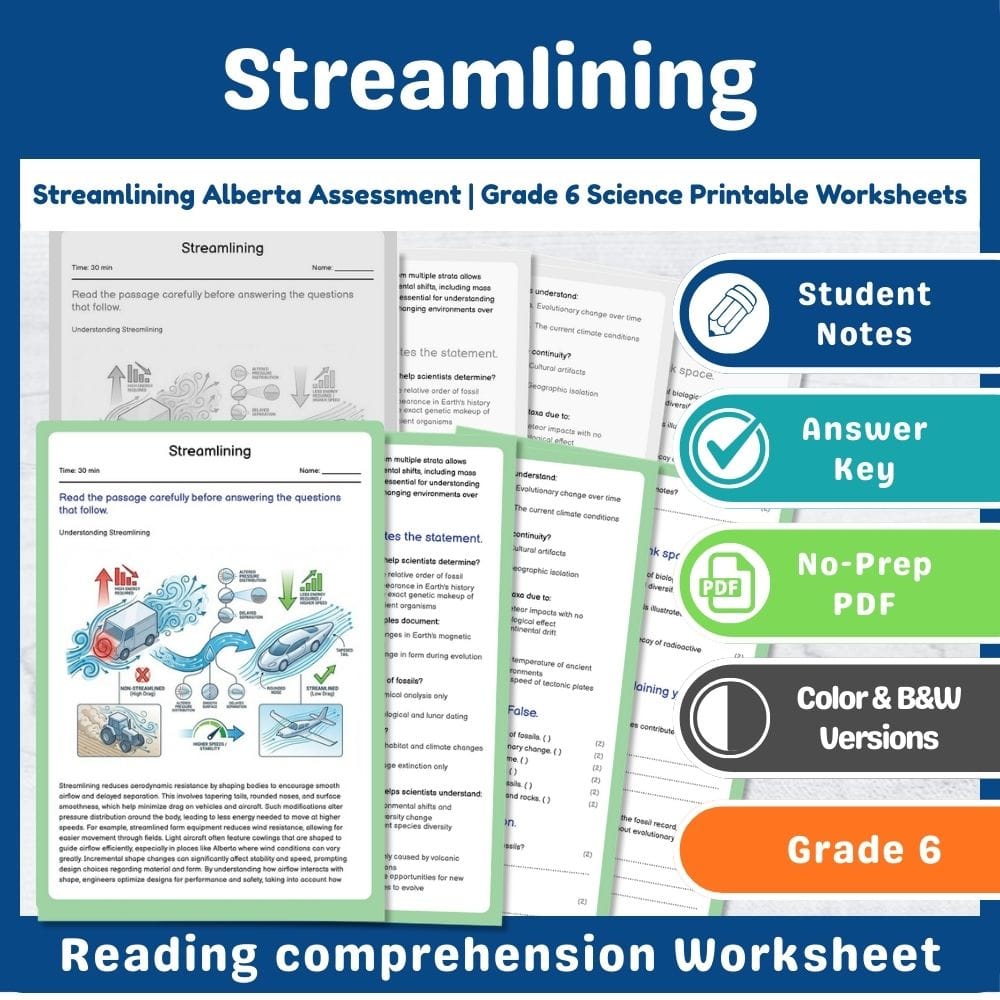
Streamlining Alberta Assessment | Grade 6 Science Printable Worksheets
Created byPrism Point LearningLearning Objectives
- Understand how the shape of objects affects their airflow and resistance.
- Identify key features like tapered tails and rounded noses that improve aerodynamics.
- Explain how shape changes influence pressure distribution and energy use in flight and machinery.

Conservation Of Mass Assessment | Standards-Aligned Assessment Grade 11 Science
Created byPrism Point LearningLearning Objectives
- Understand the principle of conservation of mass in chemical and physical processes.
- Explain how mass is conserved during reactions and processes.
- Interpret reaction equations using mass balance reasoning.
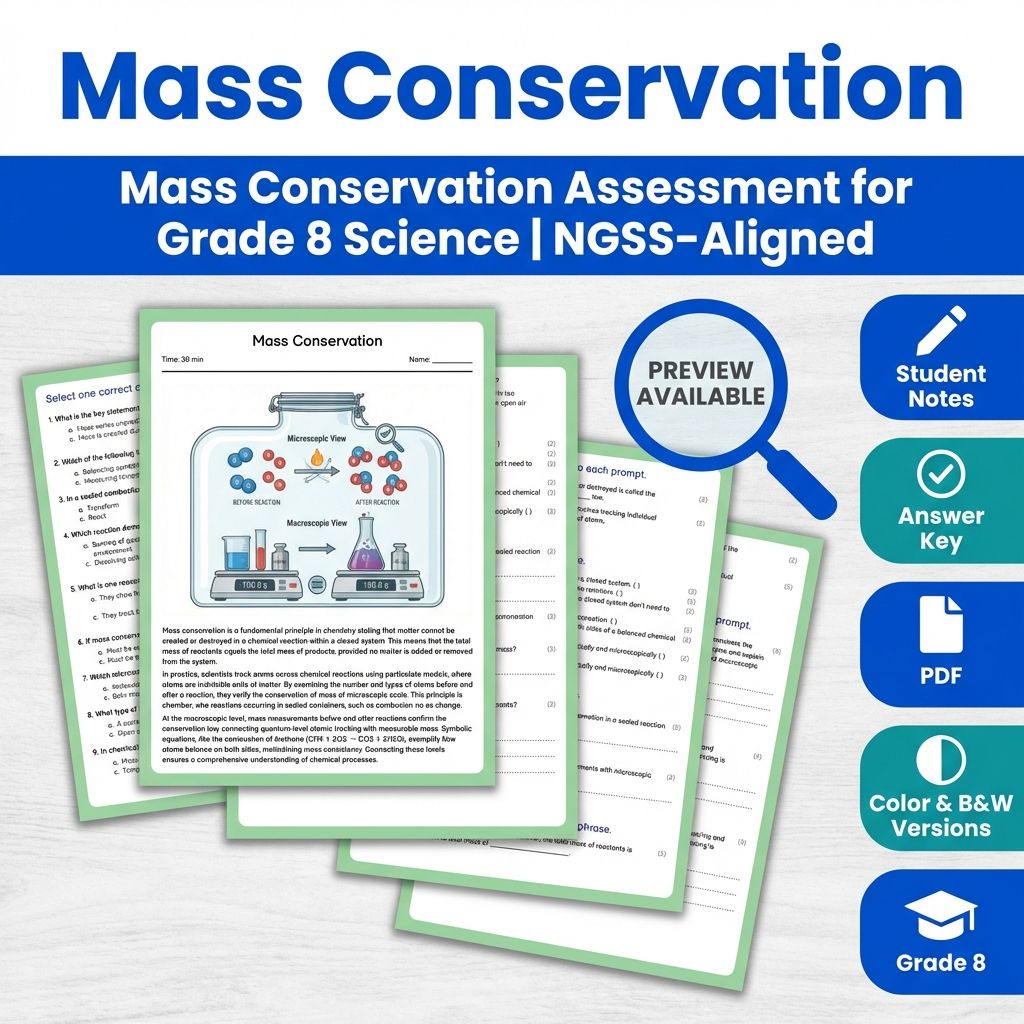
Mass Conservation Assessment for Grade 8 Science | NGSS-Aligned
Created byPrism Point LearningLearning Objectives
- Explain the principle of mass conservation in chemical reactions within closed systems.
- Track atoms across reactants and products at the particulate level to understand mass balance.
- Interpret symbolic chemical equations in terms of atomic and mass conservation.
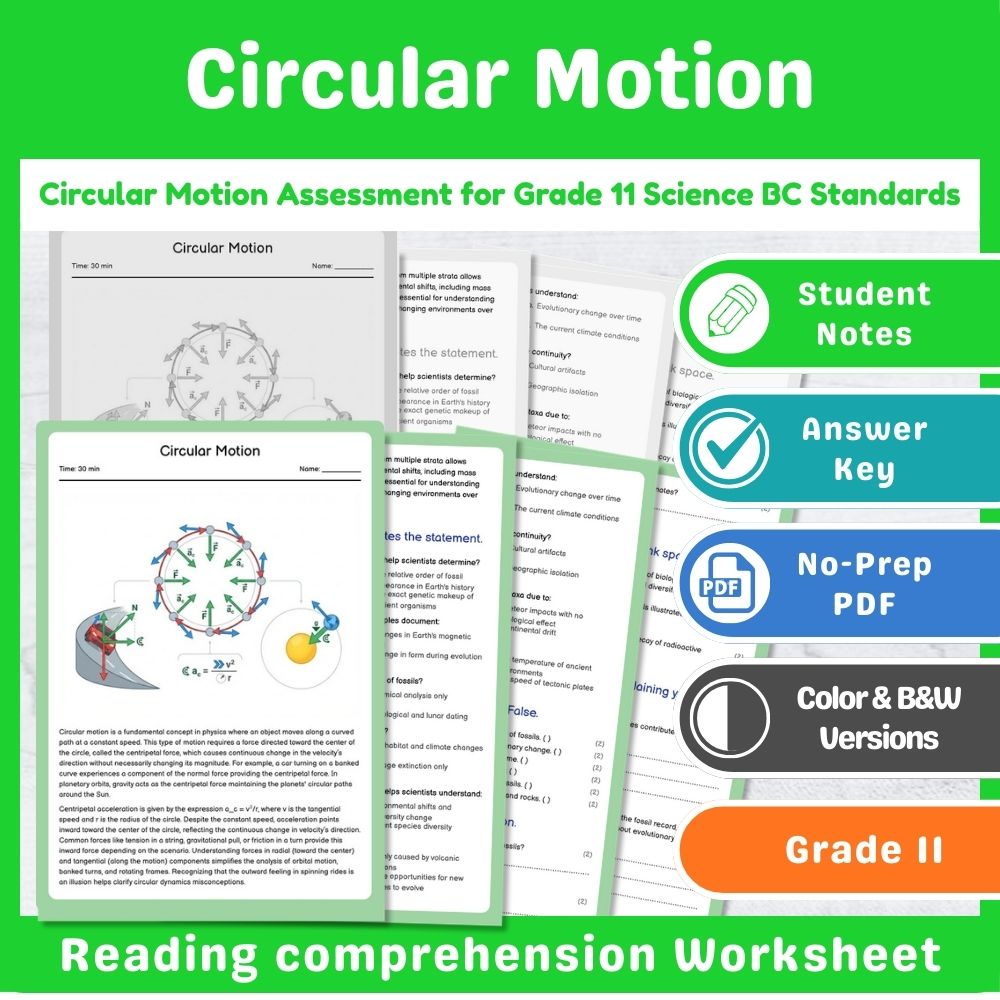
Circular Motion Assessment for Grade 11 Science BC Standards
Created byPrism Point LearningLearning Objectives
- Explain the concept of centripetal force and its role in uniform circular motion.
- Derive and calculate centripetal acceleration using the formula v²/r.
- Identify forces such as tension, gravity, and friction that provide centripetal force in various contexts.
Reaction Evidence Assessment | NGSS-Aligned Grade 8 Science Standards
Created byPrism Point LearningLearning Objectives
- Identify observable indicators of chemical change such as color change, gas production, precipitate formation, and temperature change.
- Interpret qualitative and quantitative data to distinguish between chemical and physical reactions.
- Analyze reaction processes like corrosion, combustion, and acid-base interactions to understand particle rearrangements and formation of new substances.

Effective Oral Scientific Presentation Assessment Grade 12 | TEKS
Created byPrism Point LearningLearning Objectives
- Understand key principles of effective oral scientific presentation and poster communication.
- Identify norms for slide design, timing, and visual integration in presentations.
- Apply strategies for clear hypothesis presentation, data interpretation, and concise summaries.

Evidence Based Explanations Assessment | General Grade 8 Science Standards
Created byPrism Point LearningLearning Objectives
- Understand how evidence supports scientific claims and explanations.
- Differentiate between claims, reasoning, and alternative explanations.
- Evaluate explanations by comparing evidence and considering limits and uncertainties.
Sun–Earth–Moon Assessment for Grade 6 Science – Alberta Standards
Created byPrism Point LearningLearning Objectives
- Explain the gravitational relationships between the Sun, Earth, and Moon.
- Describe how relative positions of celestial bodies produce phases, eclipses, and tides.
- Identify observable phenomena related to the alignment of the Sun, Earth, and Moon.
Problem Definition Assessment | NGSS Standards Grade 8 Science Worksheet
Created byPrism Point LearningLearning Objectives
- Understand the criteria and constraints involved in defining engineering problems.
- Identify key stakeholder needs and safety requirements for problem statements.
- Analyze scenarios like water filtration and bridge design to evaluate trade-offs.
Gravitational Interactions Assessment for Grade 8 Science NGSS Standards
Created byPrism Point LearningLearning Objectives
- Understand the inverse-square law pattern of gravitational force.
- Explain how mass and distance influence gravitational attraction.
- Describe the manifestations of gravity such as planetary orbits and tides.
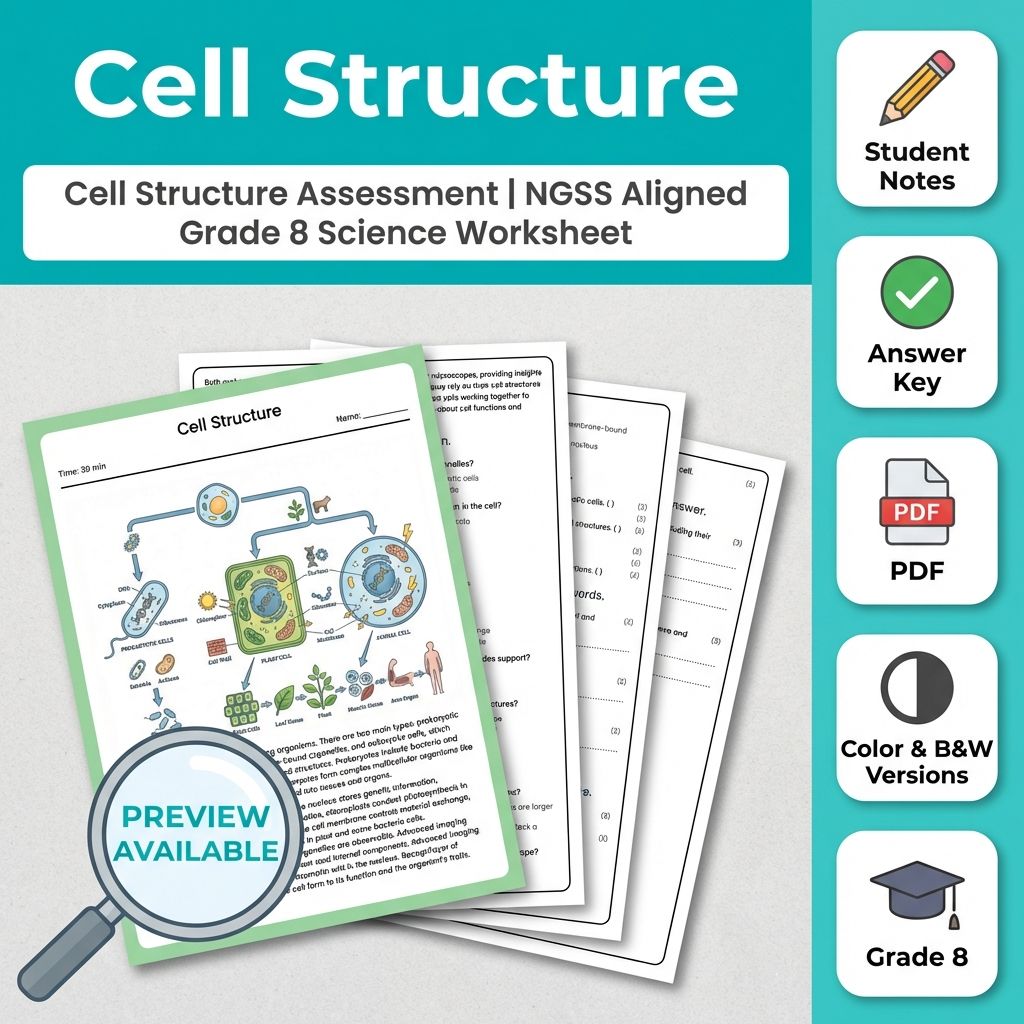
Cell Structure Assessment | NGSS Aligned Grade 8 Science Worksheet
Created byPrism Point LearningLearning Objectives
- Describe the anatomical and functional features of different cell organelles.
- Compare prokaryotic and eukaryotic cells, highlighting key differences.
- Differentiate between single-celled and multicellular organisms based on cellular organization.
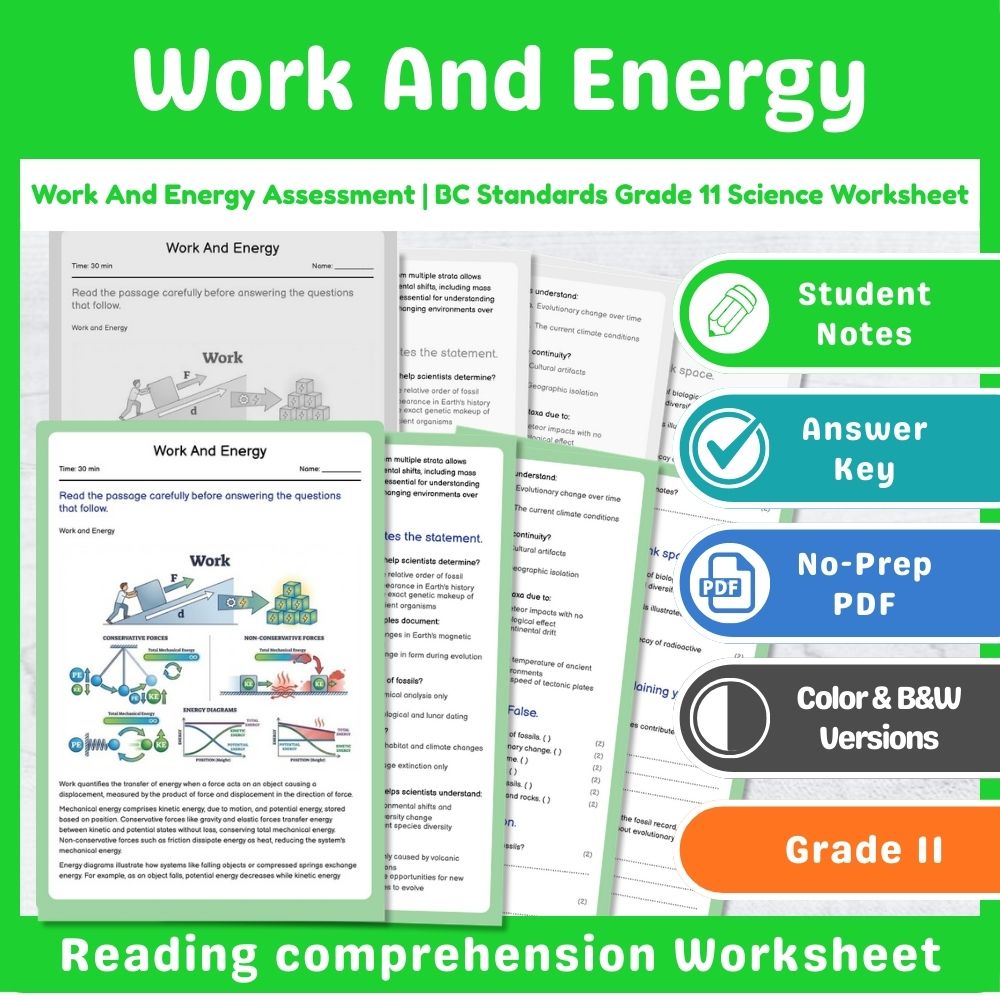
Work And Energy Assessment | BC Standards Grade 11 Science Worksheet
Created byPrism Point LearningLearning Objectives
- Explain the concept of work as energy transfer when a force causes displacement.
- Describe the forms of mechanical energy: kinetic and potential.
- Identify how conservative and non-conservative forces affect energy in a system.
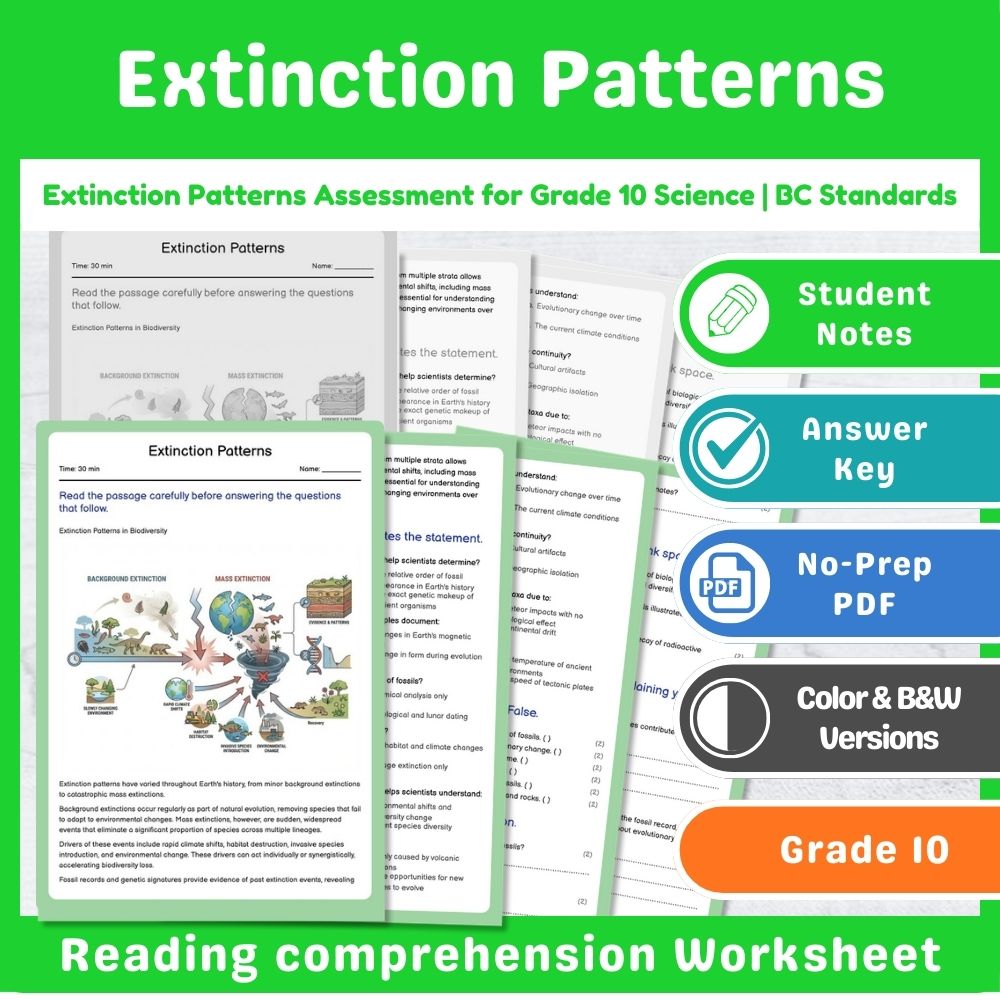
Extinction Patterns Assessment for Grade 10 Science | BC Standards
Created byPrism Point LearningLearning Objectives
- Understand various extinction patterns from background losses to mass extinctions.
- Identify causes and drivers of extinction events such as environmental changes and invasive species.
- Explain how fossil and genetic signatures reveal past biodiversity crises.

Iterative Testing Refinement Assessment for Grade 11 Science | Standards-Aligned
Created byPrism Point LearningLearning Objectives
- Understand key concepts related to Science
- Apply knowledge through practice questions
- Demonstrate comprehension of the material

Aerobic Versus Anaerobic Assessment | TEKS Grade 10 Science Printable
Created byPrism Point LearningLearning Objectives
- Compare and contrast aerobic and anaerobic respiration pathways.
- Identify the products and energy yields of aerobic and anaerobic processes.
- Explain the significance of oxygen in cellular respiration.

Endothermic and Exothermic Reactions Assessment | General Grade 10 Science
Created byPrism Point LearningLearning Objectives
- Understand the energy flow in endothermic and exothermic reactions.
- Identify qualitative signs of energy absorption or release during chemical reactions.
- Explain how energy profiles relate to bond formation and breaking.
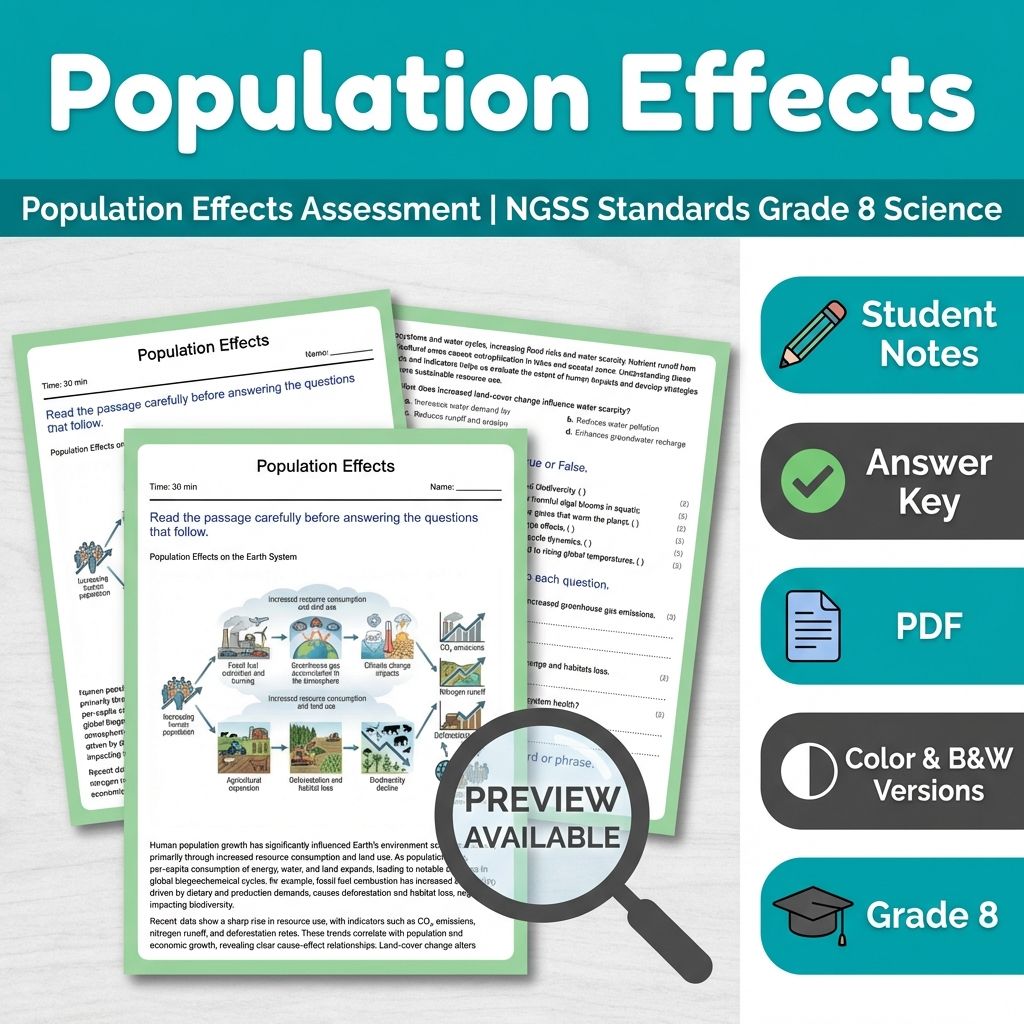
Population Effects Assessment | NGSS Standards Grade 8 Science
Created byPrism Point LearningLearning Objectives
- Analyze the links between population growth, resource consumption, and environmental change.
- Evaluate quantitative indicators and data trends related to climate, land use, and biogeochemical fluxes.
- Apply cause–effect reasoning to assess how demographic and consumption patterns impact Earth systems.

Atmospheric Interactions Assessment | TEKS Grade 12 Science Worksheet
Created byPrism Point LearningLearning Objectives
- Understand key atmospheric processes that influence climate and air quality.
- Interpret observational datasets and basic radiative transfer concepts related to energy balance.
- Analyze sources and sinks of greenhouse gases and their impacts on regional climate.

Energy Transformations Assessment for Grade 12 Science | TEKS Standards
Created byPrism Point LearningLearning Objectives
- Describe the biochemical pathways involved in energy capture and conversion in cells.
- Explain the processes of photosynthesis and cellular respiration, including light and dark reactions.
- Compare aerobic and anaerobic respiration pathways and their energy yields.
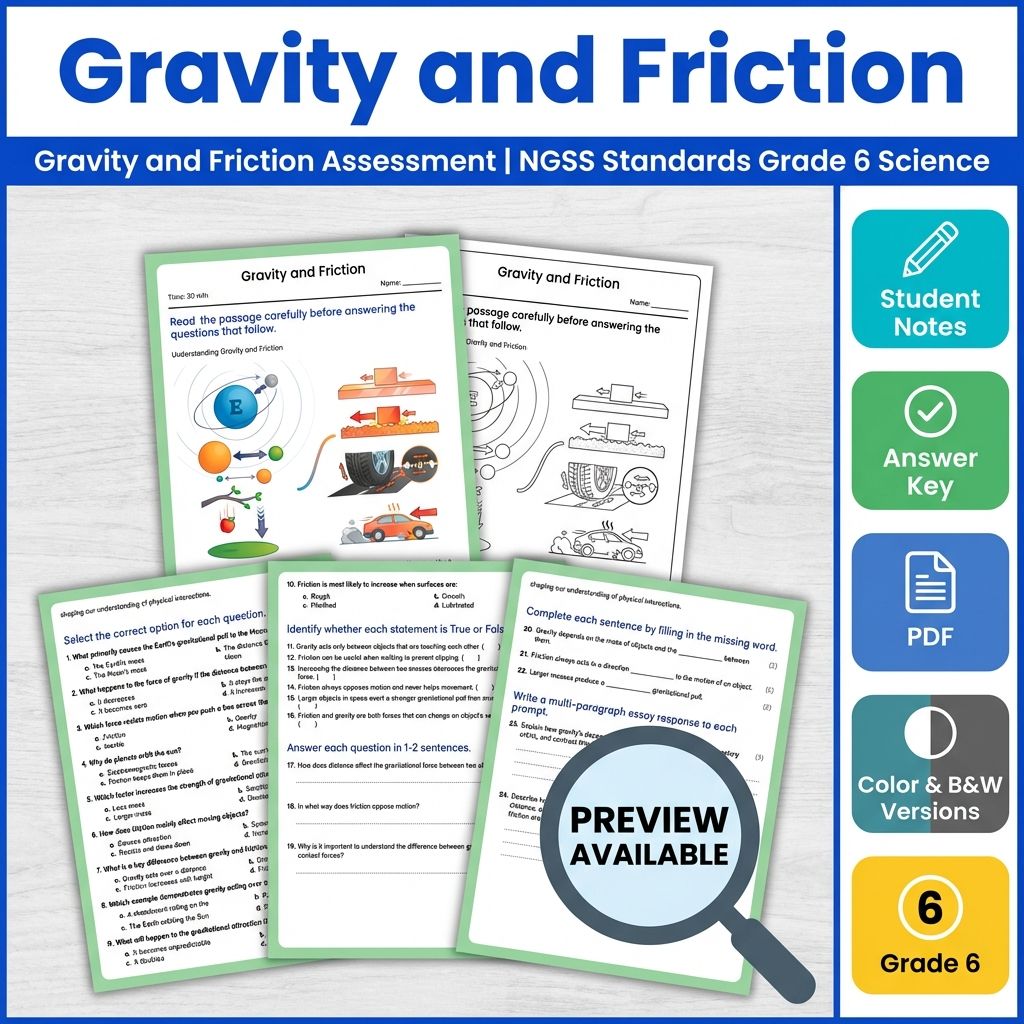
Gravity and Friction Assessment | NGSS Standards Grade 6 Science
Created byPrism Point LearningLearning Objectives
- Explain how gravity depends on mass and distance, using examples like Earth-Moon interactions and planetary orbits.
- Describe how contact forces like friction resist motion and differ from gravitational forces.
- Analyze quantitative patterns showing stronger attraction with larger masses and weaker attraction with increased distance.

Data Analysis Assessment | TEKS Standards Grade 12 Science
Created byPrism Point LearningLearning Objectives
- Interpret data through graphical representations and identify trends.
- Apply model fitting techniques and assess goodness-of-fit metrics.
- Evaluate residuals and communicate uncertainty in data interpretation.

Surface Process Evidence Assessment | General Grade 7 Science
Created byPrism Point LearningLearning Objectives
- Understand how Earth's surface is shaped by internal and external processes.
- Identify evidence of surface processes in landform patterns and rock formations.
- Explain how landforms such as deltas and floodplains are formed through external processes.

Natural Selection Assessment for Grade 9 Science TEKS Standards
Created byPrism Point LearningLearning Objectives
- Understand the concept of natural selection and its role in evolution.
- Identify examples of natural selection in real-world scenarios.
- Differentiate between types of selection: directional, stabilizing, and disruptive.
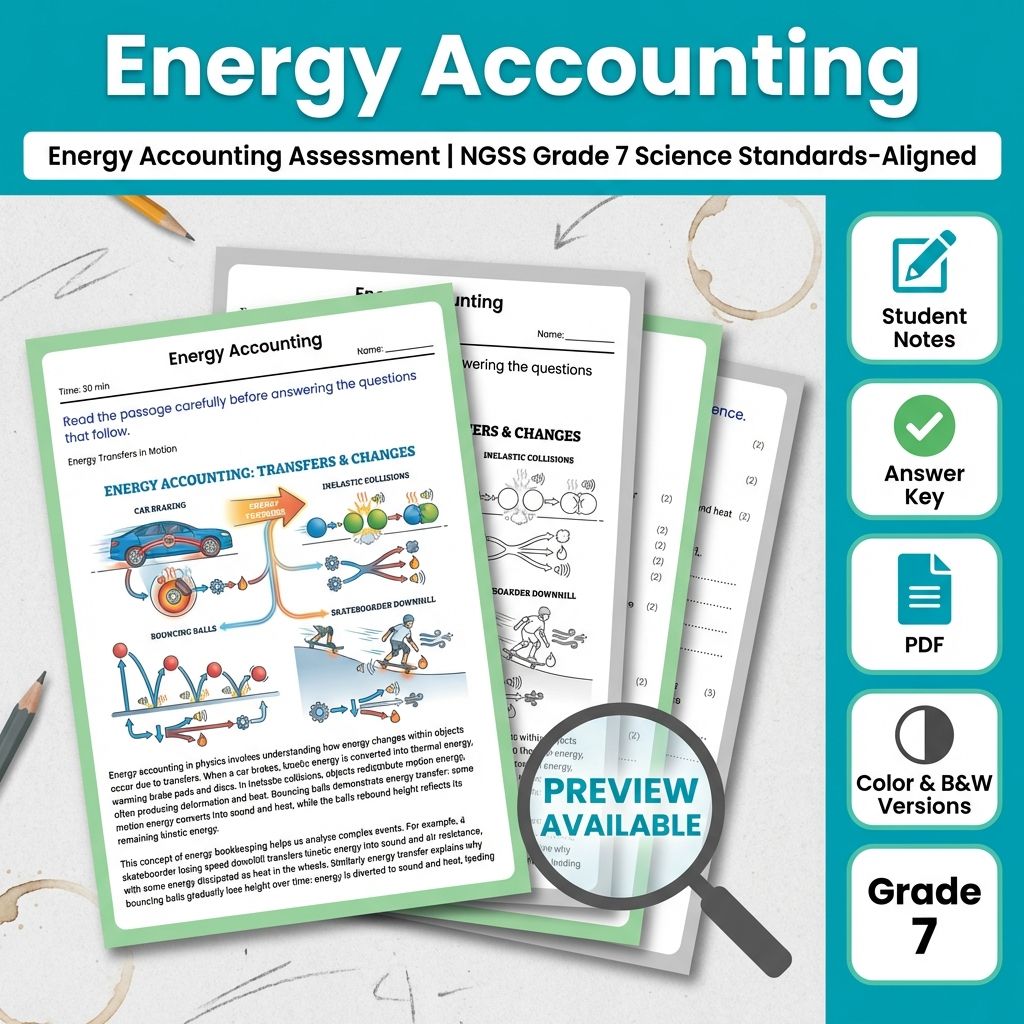
Energy Accounting Assessment | NGSS Grade 7 Science Standards-Aligned
Created byPrism Point LearningLearning Objectives
- Explain how changes in an object's motion energy are linked to energy transfers into or out of the object.
- Identify real-world scenarios where energy transformation occurs, such as braking a car or bouncing a ball.
- Quantitatively and qualitatively analyze energy transfers during different physical events.
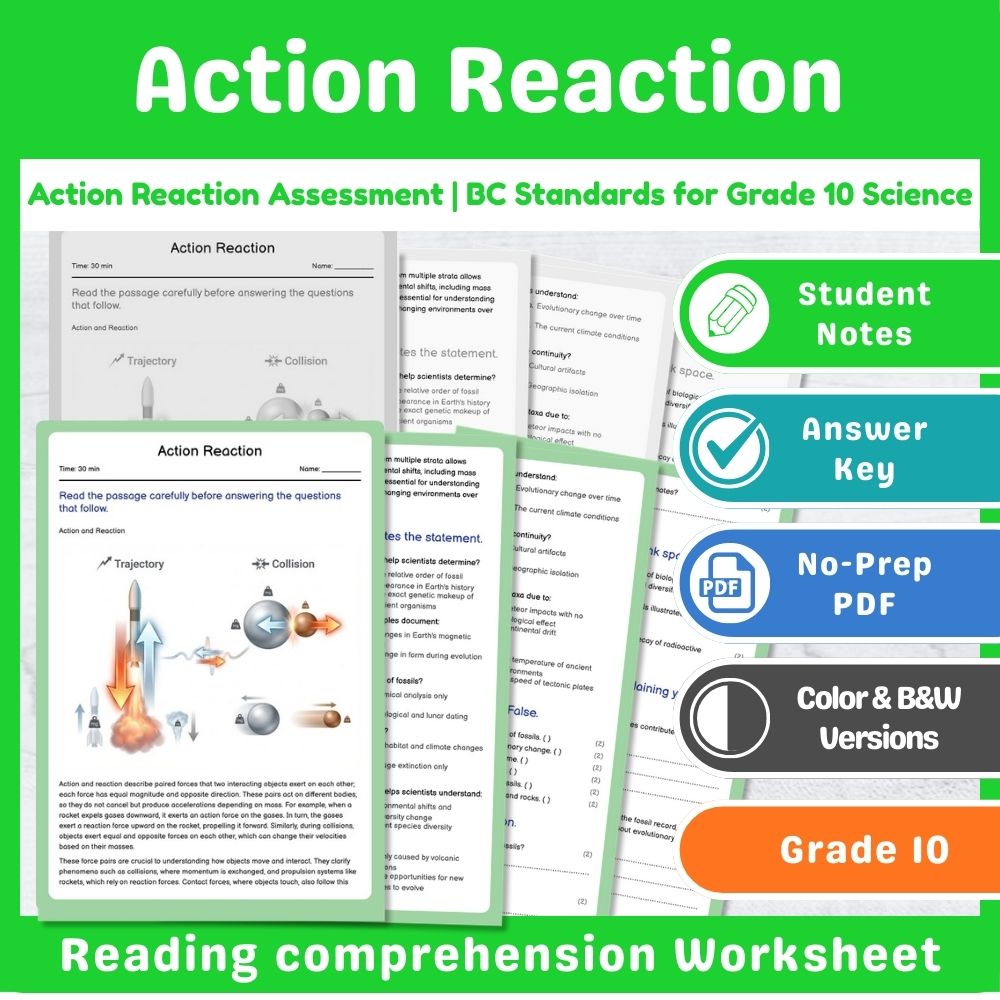
Action Reaction Assessment | BC Standards for Grade 10 Science
Created byPrism Point LearningLearning Objectives
- Explain the concept of Newton's third law of motion in terms of action-reaction pairs.
- Identify real-life examples of action-reaction forces such as collisions and rocket thrust.
- Describe how forces act on different objects and result in acceleration depending on mass.
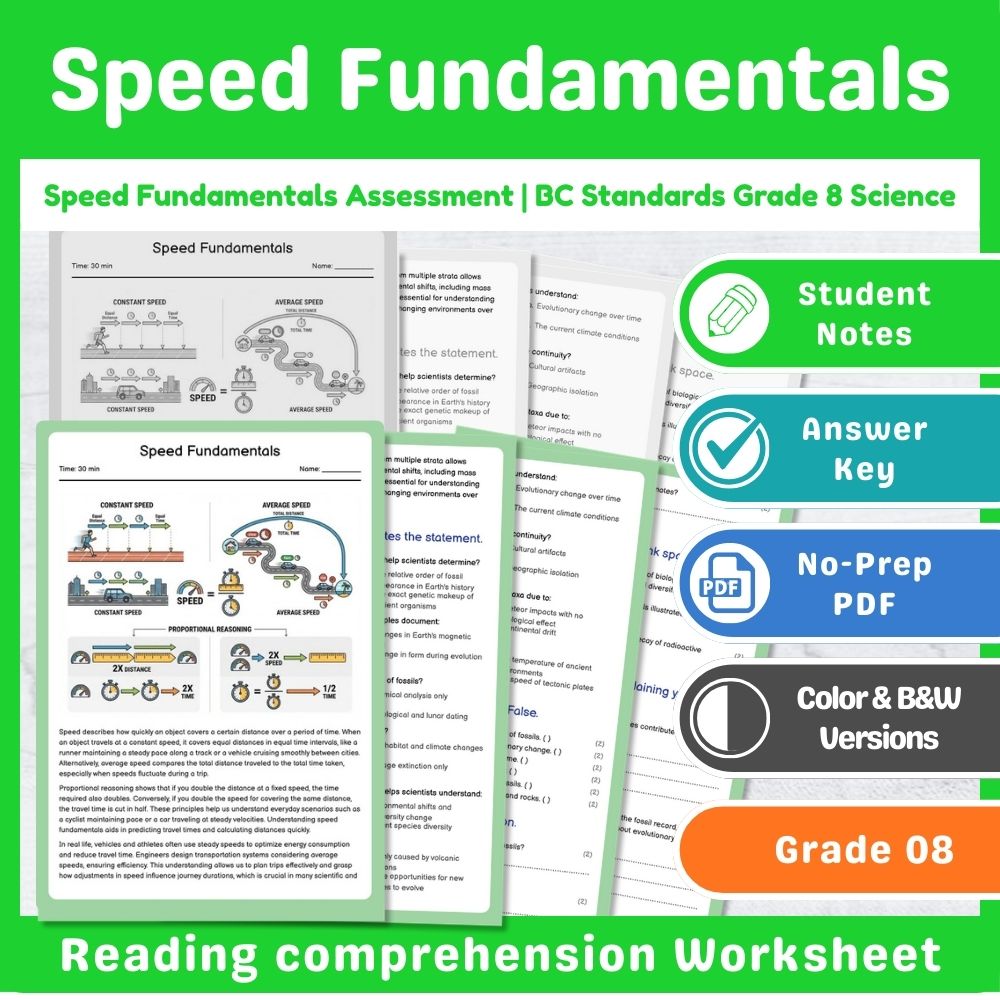
Speed Fundamentals Assessment | BC Standards Grade 8 Science
Created byPrism Point LearningLearning Objectives
- Define speed as the ratio of distance over time.
- Differentiate between constant and average speed.
- Apply proportional reasoning to solve speed, distance, and time problems.
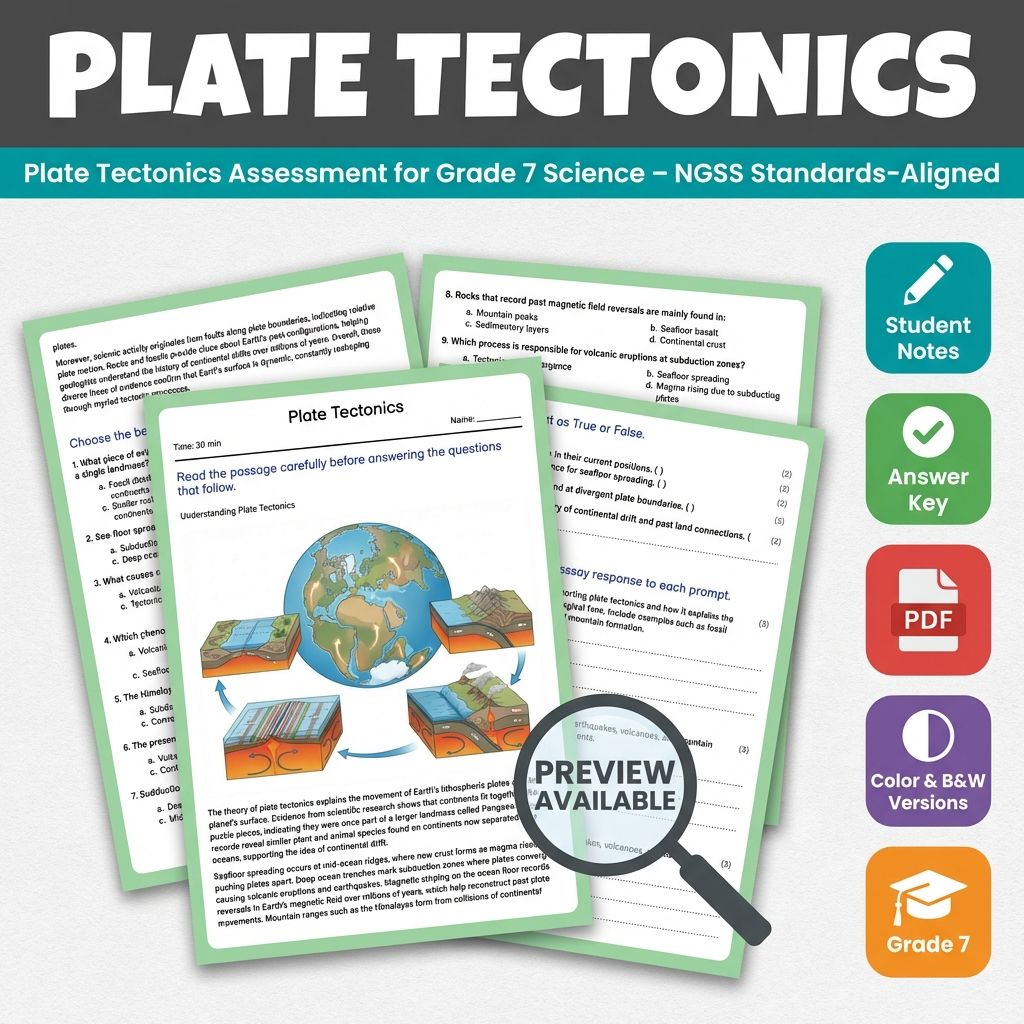
Plate Tectonics Assessment for Grade 7 Science – NGSS Standards-Aligned
Created byPrism Point LearningLearning Objectives
- Understand how geologic and fossil evidence supports the theory of plate tectonics and continental movement.
- Identify features such as mid-ocean ridges, trenches, and mountain ranges as evidence of tectonic activity.
- Explain how rock types, fossil distribution, and seafloor structures record Earth's geological history.

Adaptation Function Assessment | General Grade 7 Science Standards-Aligned
Created byPrism Point LearningLearning Objectives
- Understand how structural, behavioral, and functional adaptations support survival.
- Identify examples of adaptations that facilitate specific life processes.
- Explain the trade-offs involved in functional adaptations and their impact on survival.
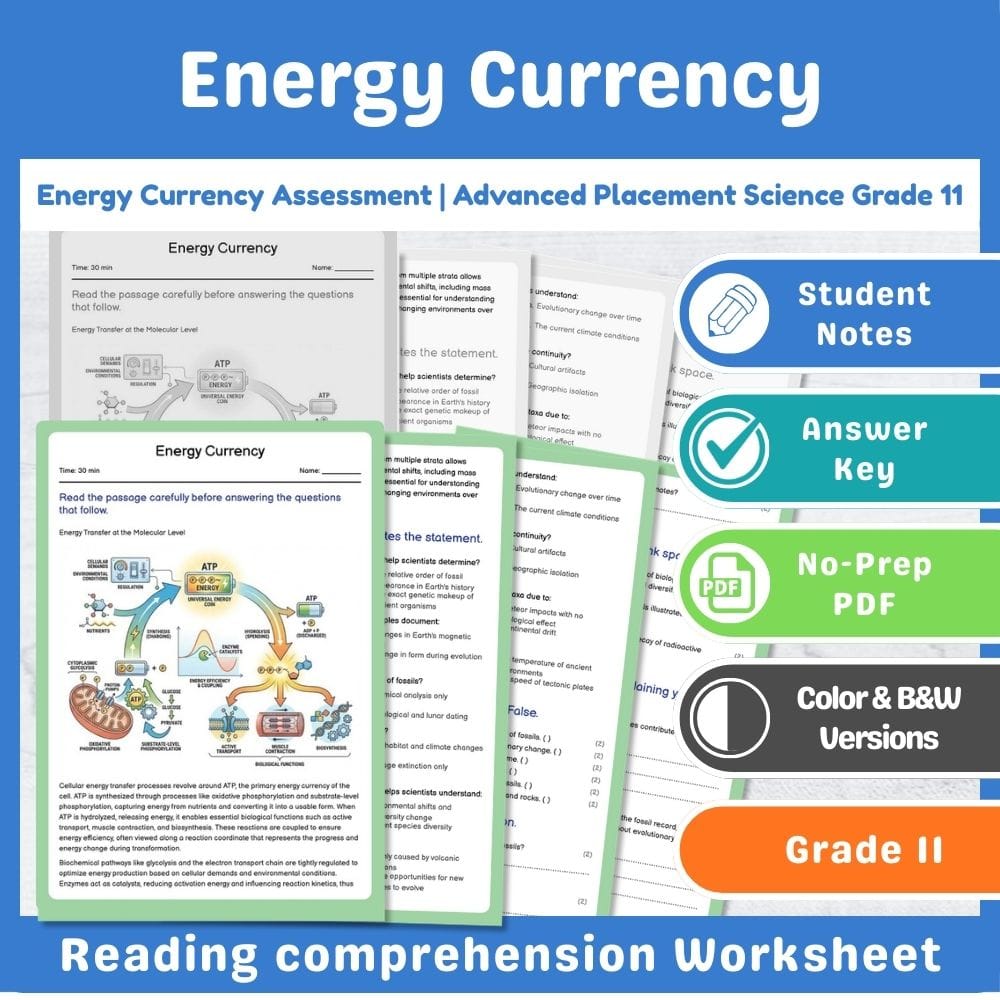
Energy Currency Assessment | Advanced Placement Science Grade 11
Created byPrism Point LearningLearning Objectives
- Describe the principles of energy transfer and transformation at molecular and cellular levels.
- Explain how ATP synthesis and hydrolysis contribute to cellular energy management.
- Interpret biochemical pathways involving energy conservation and distribution.

Energy Flow Assessment for Grade 10 Science | TEKS Standards
Created byPrism Point LearningLearning Objectives
- Describe how energy flows through ecosystems from sunlight to various trophic levels.
- Explain the concept of energy transfer efficiency and its effect on ecosystem structure.
- Identify the role of net primary productivity in ecosystem energy balance and population dynamics.
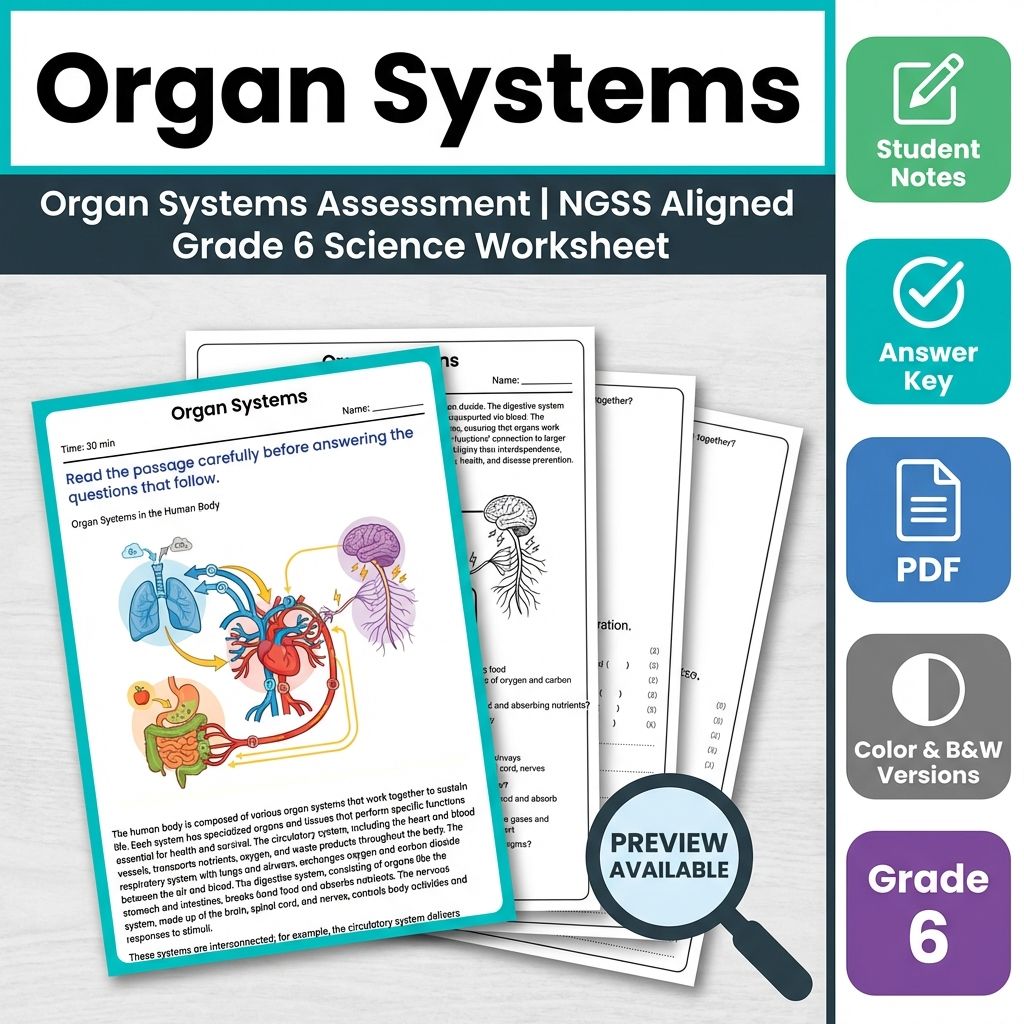
Organ Systems Assessment | NGSS Aligned Grade 6 Science Worksheet
Created byPrism Point LearningLearning Objectives
- Describe the structure and function of main organ systems involved in body organization.
- Explain how tissues and organs work together within the circulatory, respiratory, digestive, and nervous systems.
- Identify the interactions and interdependence among different organ systems and relate cellular functions to system-level processes.

Heredity and Variation Assessment for Grade 8 Science | Standards-Aligned
Created byPrism Point LearningLearning Objectives
- Understand how genetic inheritance contributes to variation among offspring.
- Identify evidence of genetic variation in families and populations.
- Explain how recombination and genetic changes over time produce variation.
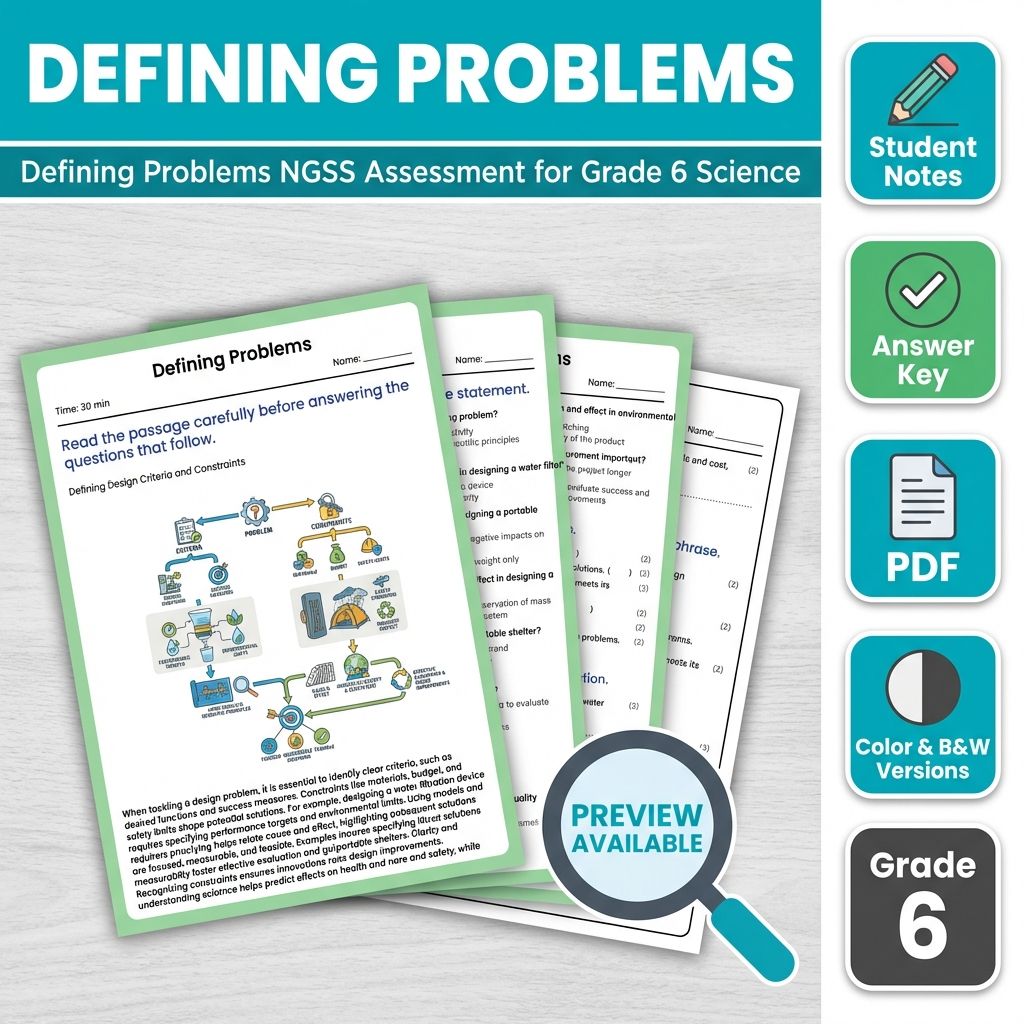
Defining Problems NGSS Assessment for Grade 6 Science
Created byPrism Point LearningLearning Objectives
- Understand how to define criteria and constraints for a design problem.
- Identify measurable outcomes such as functions, success measures, and limits.
- Apply scientific principles to relate cause and effect in problem-solving.

Human Impact Evidence Grade 10 Science Assessment | General
Created byPrism Point LearningLearning Objectives
- Understand how human activities influence Earth's systems through measurable evidence.
- Identify sources and transport processes that link human actions to environmental changes.
- Analyze data from climate records, satellite observations, and chemical measurements to support claims.

Nutrients and Energy Flow Assessment for Grade 11 Science – Standards-Aligned
Created byPrism Point LearningLearning Objectives
- Understand key concepts related to Science
- Apply knowledge through practice questions
- Demonstrate comprehension of the material

Predictive Models Assessment | General Grade 11 Science Standards
Created byPrism Point LearningLearning Objectives
- Understand key concepts related to Science
- Apply knowledge through practice questions
- Demonstrate comprehension of the material

Sources of Genetic Variation Assessment for Grade 12 Science Standards
Created byPrism Point LearningLearning Objectives
- Explain how mutations create genetic differences within populations
- Describe how meiosis and sexual reproduction reshuffle alleles to generate new allele combinations
- Evaluate how differential survival and reproduction change allele frequencies over time
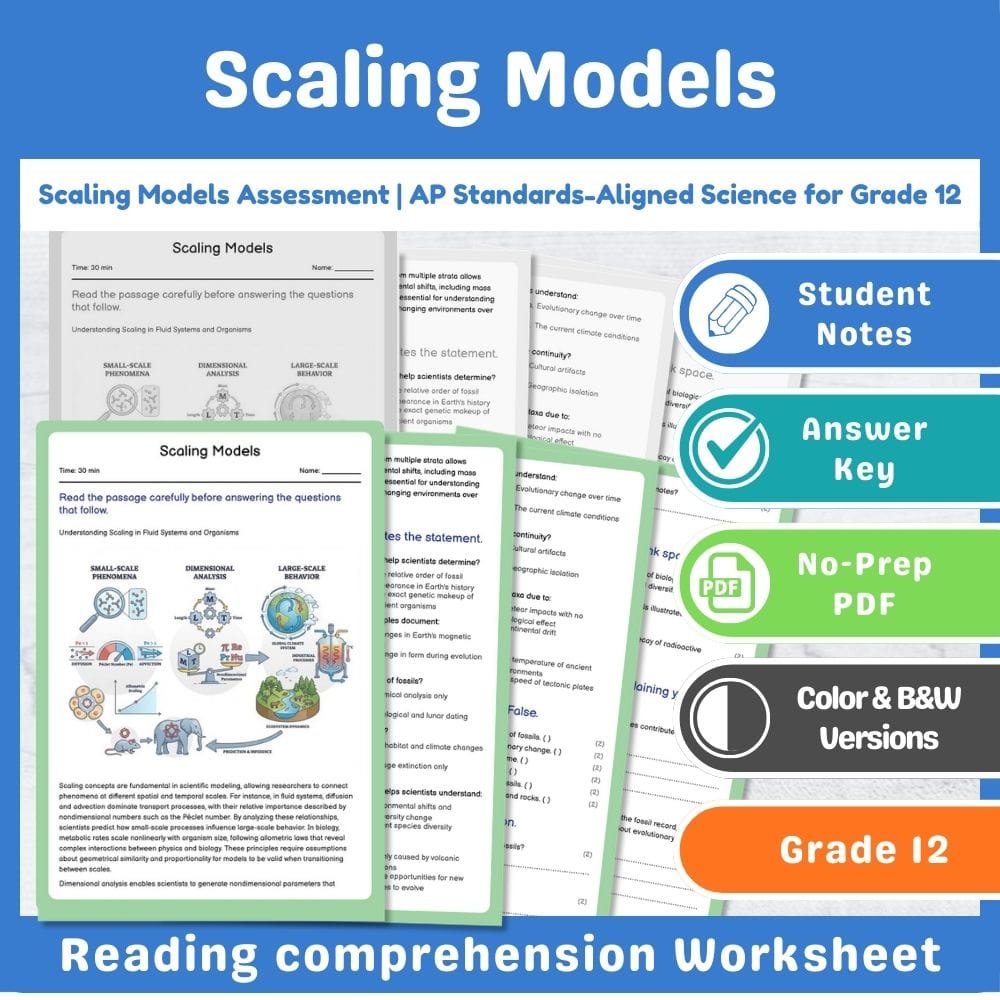
Scaling Models Assessment | AP Standards-Aligned Science for Grade 12
Created byPrism Point LearningLearning Objectives
- Understand the concept of scaling relationships and their use in scientific modeling.
- Analyze how dimensional analysis connects models across different spatial and temporal scales.
- Explore phenomena such as diffusion, advection, and metabolic scaling to illustrate nonlinearities and emergent behaviors.

Planetary Geology Assessment for Grade 12 Science | TEKS Standards
Created byPrism Point LearningLearning Objectives
- Compare surface features and processes of terrestrial and icy planetary bodies.
- Analyze the internal structures and geologic histories of planets beyond Earth.
- Evaluate the evidence from remote sensing, sample analysis, and in situ measurements.

Speciation Processes Assessment | TEKS Standards Grade 10 Science
Created byPrism Point LearningLearning Objectives
- Understand the various mechanisms and modes of speciation.
- Identify reproductive barriers and their causes in species divergence.
- Explain how genetic changes contribute to the formation of new species.

Phylogenetic Trees Assessment Grade 10 Science TEKS | Printable Worksheet
Created byPrism Point LearningLearning Objectives
- Understand the concept of phylogenetic trees and their role in evolutionary biology.
- Identify shared derived traits, molecular data, and fossil evidence used to construct trees.
- Interpret branching diagrams to analyze relationships among species.

Pure Mixtures Assessment | General Grade 6 Science Standards
Created byPrism Point LearningLearning Objectives
- Understand what constitutes a mixture and recognize different types of mixtures.
- Identify observable properties that distinguish mixtures from pure substances.
- Learn different separation techniques based on mixture properties.

Resource Management Assessment | TEKS Grade 12 Science Standards
Created byPrism Point LearningLearning Objectives
- Evaluate the sustainability of renewable and nonrenewable resource strategies.
- Analyze water budgeting, energy portfolios, and waste handling systems.
- Assess lifecycle impacts and trade-offs in resource extraction and reclamation.
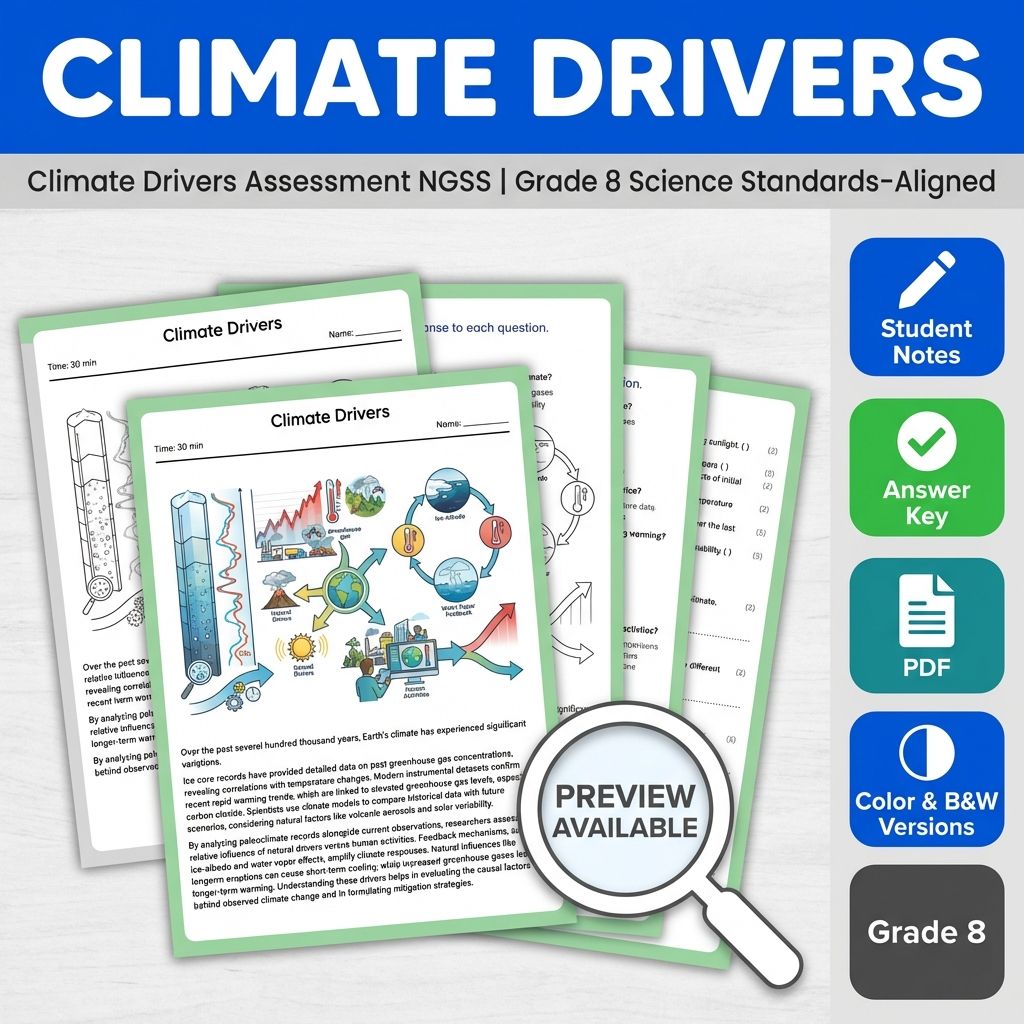
Climate Drivers Assessment NGSS | Grade 8 Science Standards-Aligned
Created byPrism Point LearningLearning Objectives
- Identify the main factors influencing global temperature changes over time.
- Evaluate multiple lines of evidence related to climate change.
- Differentiate between natural and anthropogenic climate drivers.
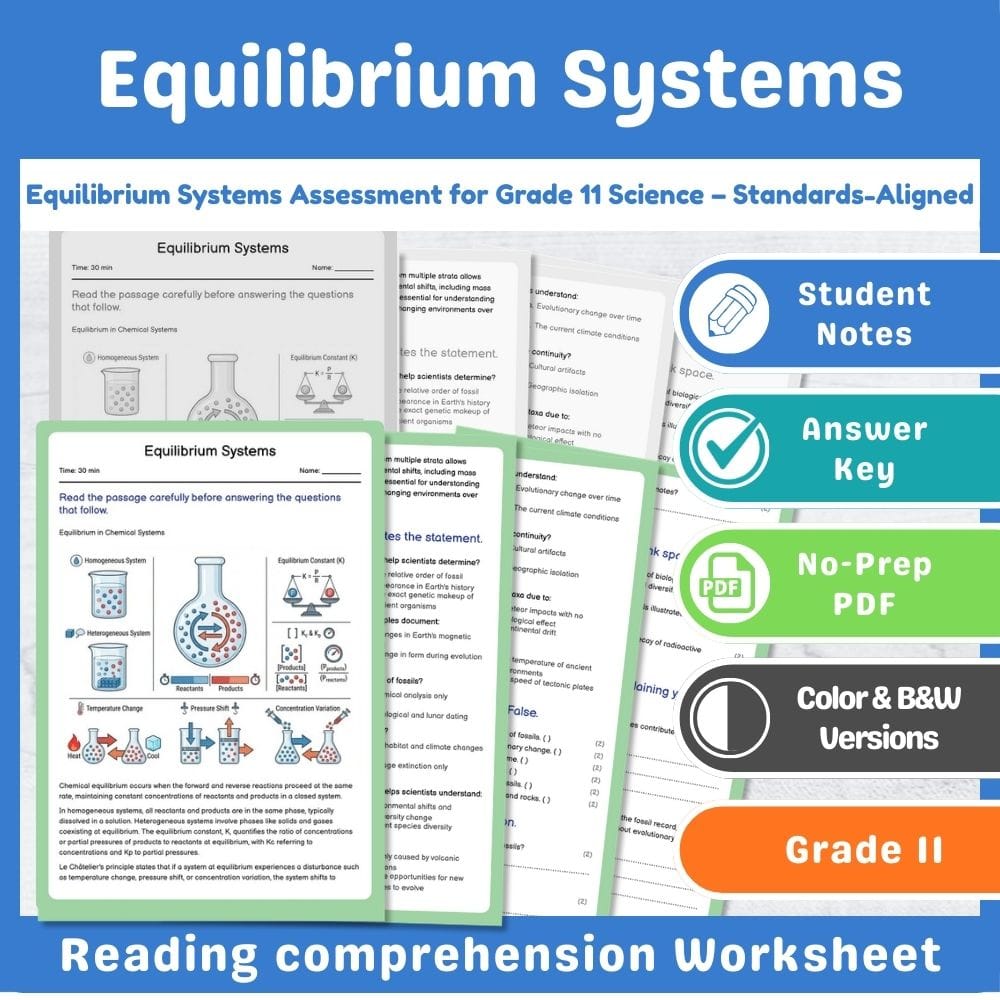
Equilibrium Systems Assessment for Grade 11 Science – Standards-Aligned
Created byPrism Point LearningLearning Objectives
- Understand the principles of dynamic chemical equilibrium in homogeneous and heterogeneous systems.
- Apply equilibrium constants (Kc and Kp) to predict the direction of reactions and final compositions.
- Use reaction quotient (Q) comparisons, Le Châtelier's principle, and stoichiometry to analyze shifts in equilibrium.
Browse more categories
About Science Worksheets
Find Science worksheets spanning core skills, practice, and review. All 42,685 resources are instant PDF downloads for the classroom or home.
Every worksheet on MyTeachingSheets is created by independent teacher-authors and reviewed before publication. All resources download as printable PDFs for classroom, homework, or at-home practice, and many include answer keys. Preview any worksheet free before buying.