
Science Worksheets
42,685 subject resources
Computational Modeling Assessment | NGSS Standards Grade 11 Science
 Created byPrism Point Learning
Learning Objectives
- Understand the application of computational simulation techniques in engineering
- Analyze impacts of boundary conditions on systems using modeling approaches
- Evaluate the importance of validation, sensitivity analysis, and scenario projection in models

Understanding Measurement Uncertainty Assessment | Standards-Aligned Grade 10 Science
Created byPrism Point LearningLearning Objectives
- Explain how measurement uncertainty affects data interpretation.
- Identify factors contributing to measurement uncertainty.
- Evaluate whether differences in measurements are meaningful considering their uncertainty ranges.

Mixtures and Solutions Assessment for Grade 8 Science | TEKS Standards
Created byPrism Point LearningLearning Objectives
- Explain the differences between homogeneous and heterogeneous mixtures.
- Describe how solutions form and factors like solubility and saturation affect them.
- Identify and compare methods for separating mixtures such as filtration, evaporation, and distillation.

Reaction Particles Assessment | NGSS-aligned Grade 10 Science Worksheet
Created byPrism Point LearningLearning Objectives
- Explain how particle collisions influence reaction rates.
- Describe energy barriers and how they affect chemical reactions.
- Analyze how temperature, concentration, and catalysts alter reaction behavior.
Cell Evidence Assessment for Grade 7 Science | NGSS-Aligned Assessment
Created byPrism Point LearningLearning Objectives
- Understand how microscopy provides evidence for cellular organization in organisms.
- Identify differences between unicellular and multicellular organisms through observations of plant and protist cells.
- Recognize cellular features such as cell boundaries, plasma membranes, and cell walls in microscopic images.
Reaction Rates Assessment for Grade 10 Science NGSS Standards
Created byPrism Point LearningLearning Objectives
- Understand how collision theory explains the factors affecting reaction rates.
- Interpret the relationships between temperature, concentration, surface area, catalysts, and reaction speed.
- Analyze empirical rate data to determine reaction mechanisms and rate laws.

Cell Structure Assessment for Grade 8 Science | TEKS Standards-Aligned
Created byPrism Point LearningLearning Objectives
- Describe the organization and functions of cellular components such as membranes, cytoplasm, the nucleus, mitochondria, and chloroplasts.
- Explain the relationship between membrane transport, compartmentalization, and cellular activity.
- Identify differences between prokaryotic and eukaryotic cells in terms of organelle presence and organization.
Chemical Bonding Assessment for Grade 9 Science NGSS Standards
Created byPrism Point LearningLearning Objectives
- Understand the types of chemical bonds and their properties.
- Interpret Lewis structures and electron-sharing models to predict molecular geometry.
- Explain how bonding influences physical properties like melting point and solubility.
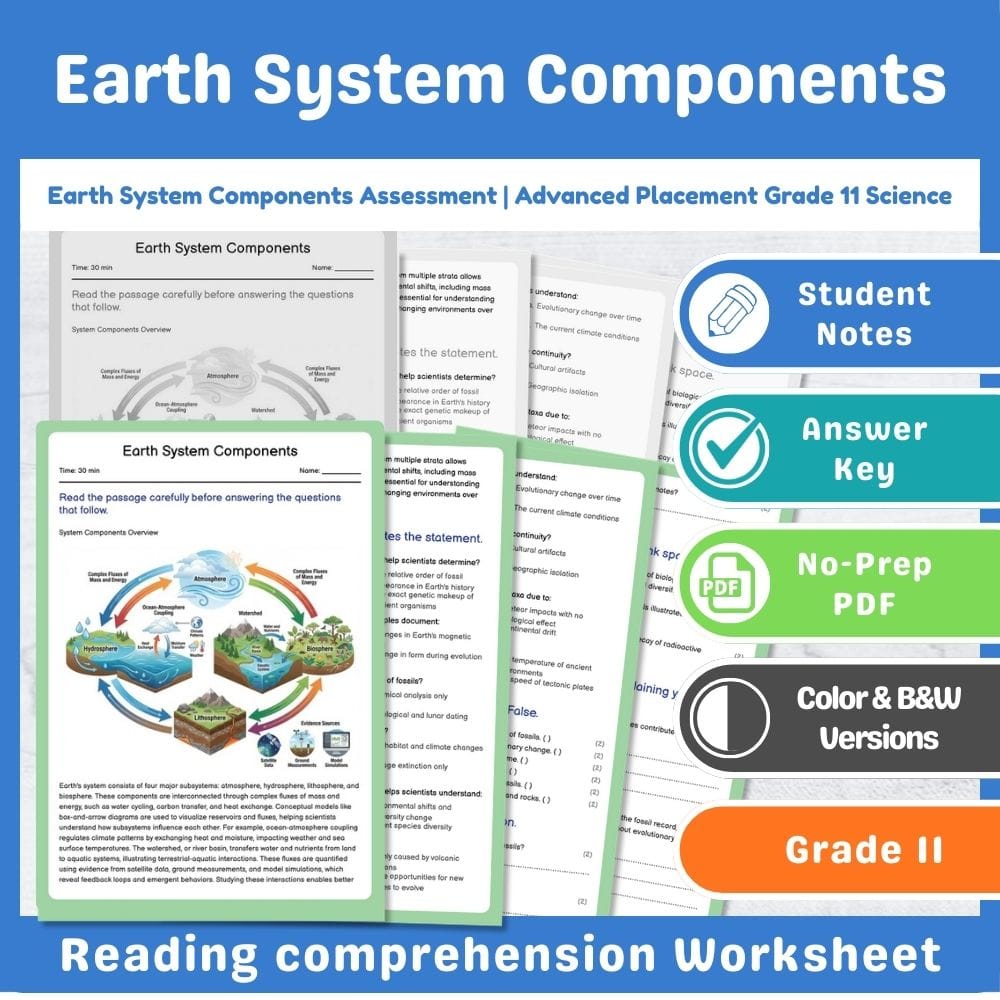
Earth System Components Assessment | Advanced Placement Grade 11 Science
Created byPrism Point LearningLearning Objectives
- Identify the major Earth subsystems and explain their roles and interactions.
- Understand mass and energy fluxes among atmosphere, hydrosphere, lithosphere, and biosphere.
- Use conceptual models to analyze subsystem exchanges and feedback mechanisms.
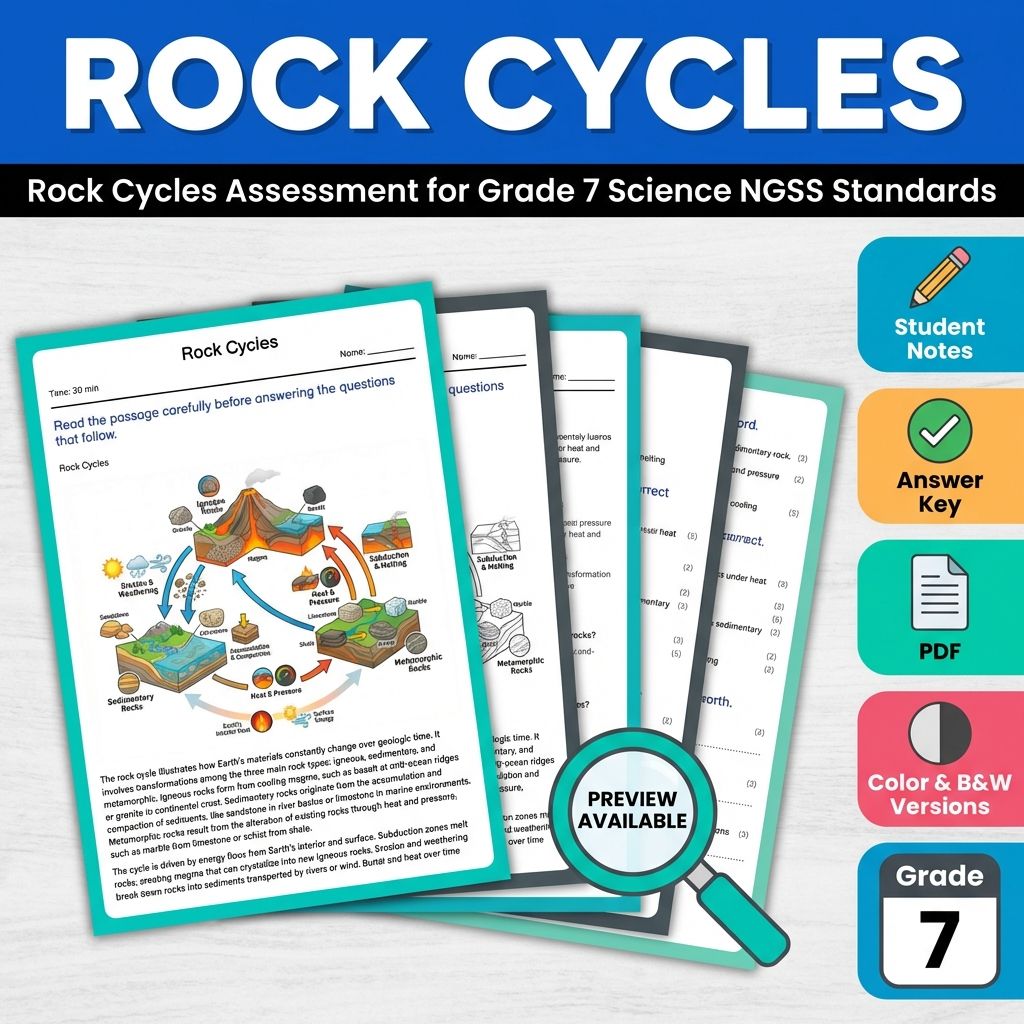
Rock Cycles Assessment for Grade 7 Science NGSS Standards
Created byPrism Point LearningLearning Objectives
- Understand the processes involved in the cycling of Earth's rocks.
- Identify the stages of igneous, sedimentary, and metamorphic rock formation.
- Explain how plate tectonics and energy flow drive rock transformations.

Measurement Basics Assessment | TEKS Grade 8 Science Printable Worksheet
Created byPrism Point LearningLearning Objectives
- Understand key measurement conventions including accuracy, precision, SI units, and significant figures.
- Apply dimensional analysis and convert units correctly using appropriate instruments.
- Calculate density and rates by measuring mass, volume, length, and temperature with accuracy.
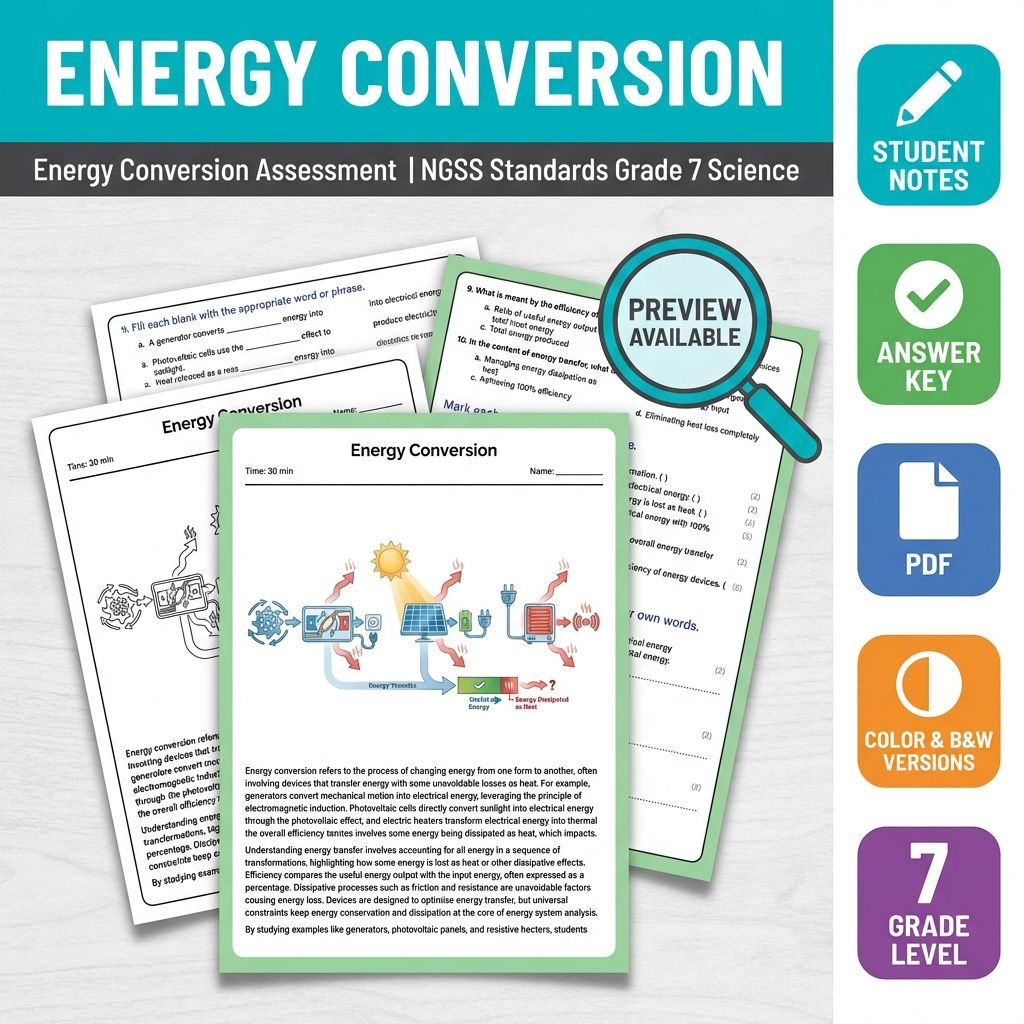
Energy Conversion Assessment | NGSS Standards Grade 7 Science
Created byPrism Point LearningLearning Objectives
- Explain the principles behind devices that convert energy from one form to another.
- Identify examples of energy transfer and conservation in everyday devices.
- Understand the concept of energy efficiency and dissipative processes in energy transformations.

Mutation Impacts Assessment | Alberta Standards-Aligned Assessment Grade 12 Science
Created byPrism Point LearningLearning Objectives
- Understand the different types of genetic mutations and their mechanisms.
- Identify the effects mutations can have on gene functions and organism traits.
- Analyze how mutational outcomes influence agriculture, livestock, and pathogen variation.
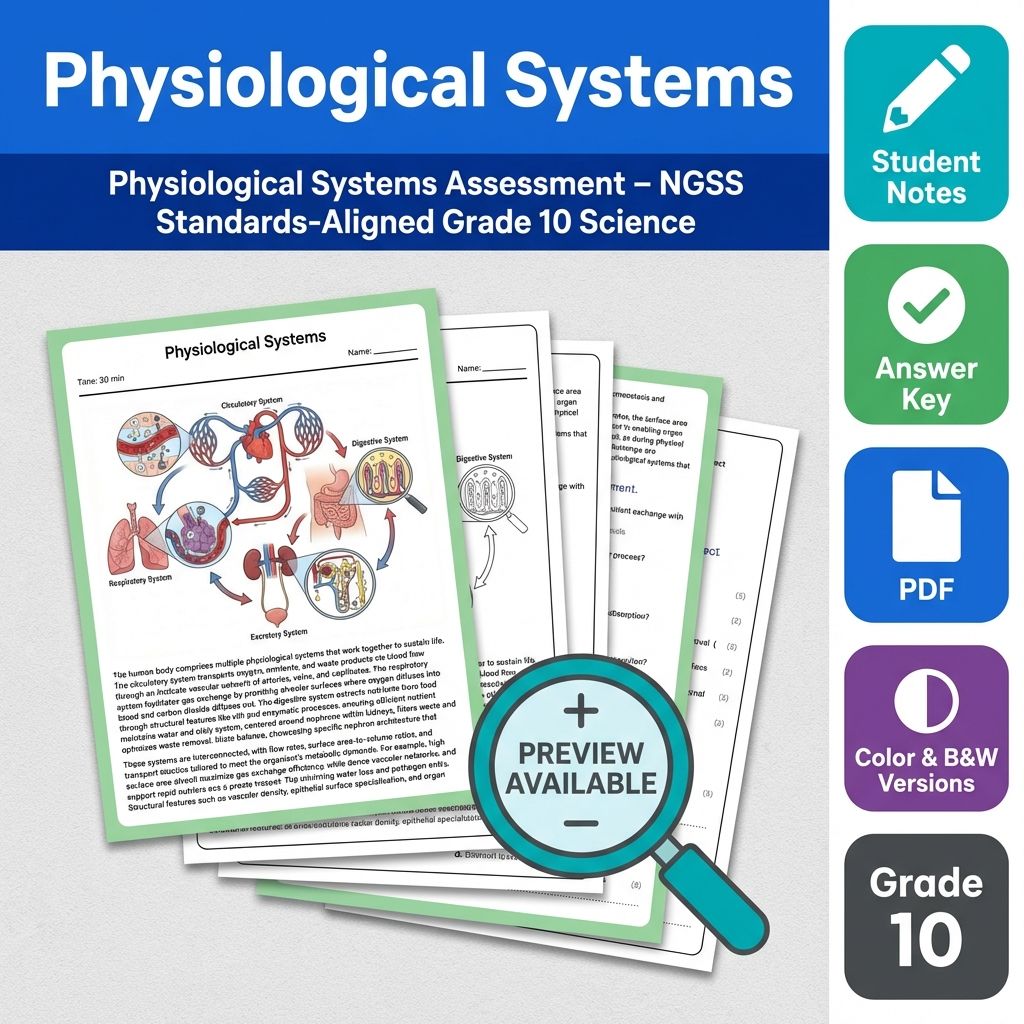
Physiological Systems Assessment – NGSS Standards-Aligned Grade 10 Science
Created byPrism Point LearningLearning Objectives
- Understand the structural features of circulatory, respiratory, digestive, excretory, and integumentary systems.
- Analyze how organ systems coordinate to meet organismal metabolic demands.
- Describe functional imperatives such as transport rates, surface area relationships, and transport kinetics.
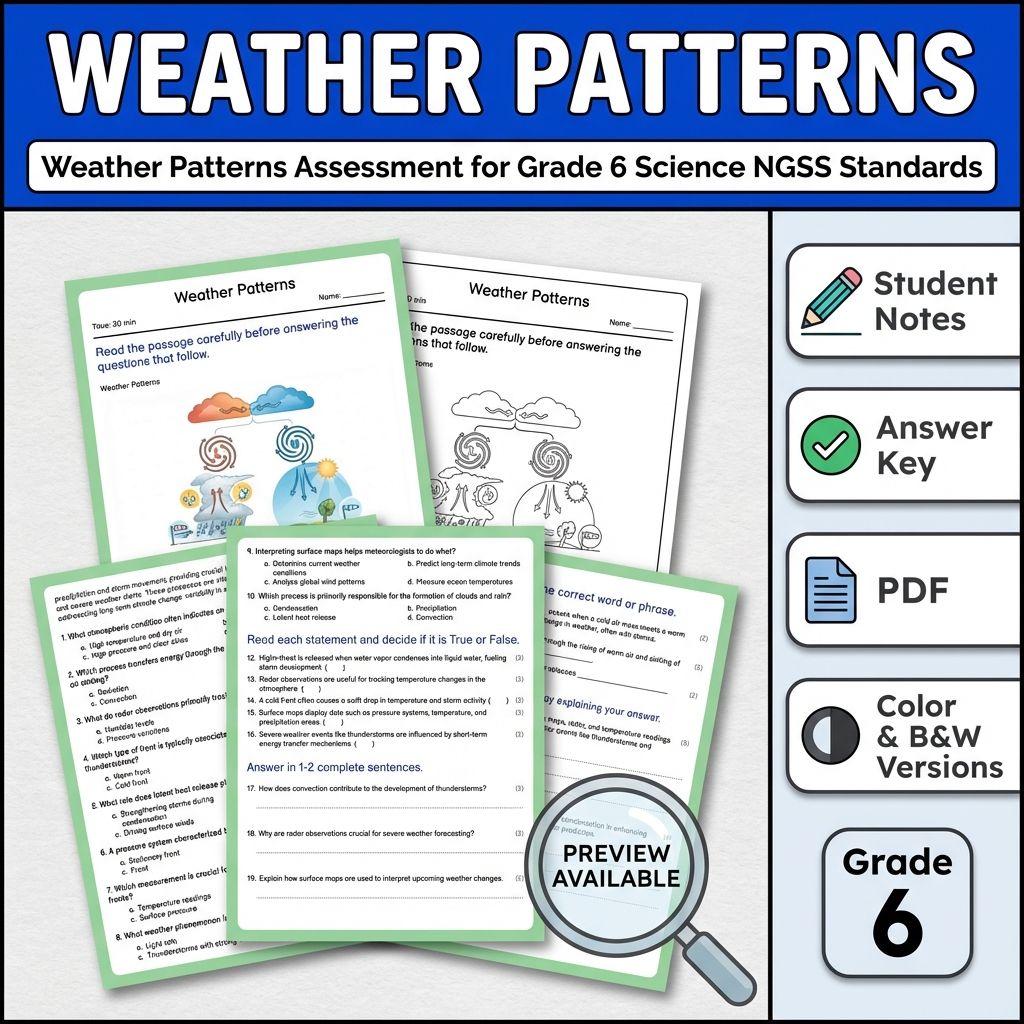
Weather Patterns Assessment for Grade 6 Science NGSS Standards
Created byPrism Point LearningLearning Objectives
- Understand atmospheric processes that influence local and regional weather.
- Interpret surface maps, temperature, and pressure data to analyze weather events.
- Identify and describe different types of weather fronts, wind shifts, and precipitation patterns.

Momentum Transfer Assessment | Alberta Standards Grade 10 Science
Created byPrism Point LearningLearning Objectives
- Explain the principle of conservation of momentum in closed systems.
- Analyze how impulse affects velocity changes during collisions.
- Compare energy conservation with momentum conservation in dynamic interactions.

Data Representation Assessment for Grade 8 Science TEKS Standards
Created byPrism Point LearningLearning Objectives
- Identify different types of graphical and tabular data representations.
- Interpret data from graphs, charts, and tables accurately.
- Select appropriate data visualization methods for specific data types and contexts.
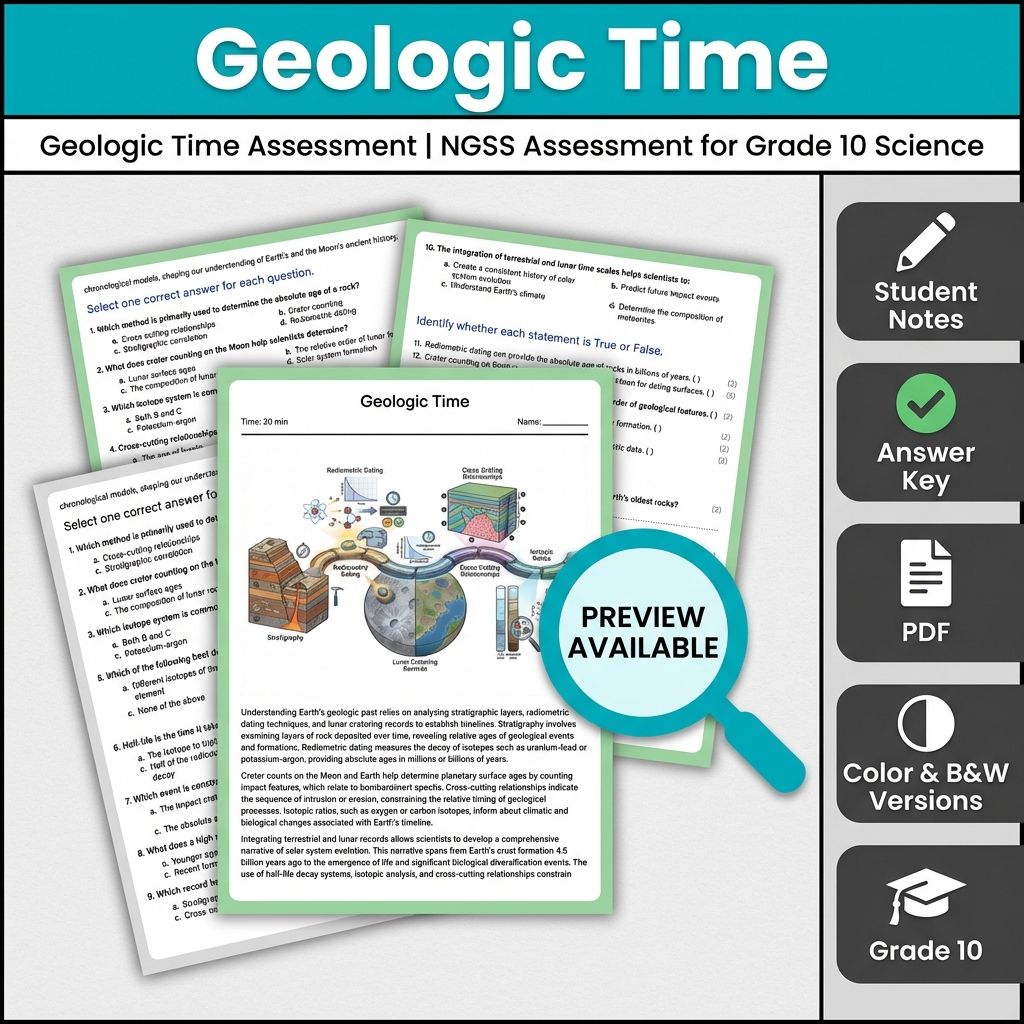
Geologic Time Assessment | NGSS Assessment for Grade 10 Science
Created byPrism Point LearningLearning Objectives
- Understand how stratigraphic sequences, radiometric dating, and crater records establish Earth's relative and absolute ages.
- Identify methods such as half-life decay systems, isotopic ratios, and cross-cutting relationships used in geochronology.
- Explain how terrestrial and lunar time scales integrate to tell Earth's history over billions of years.
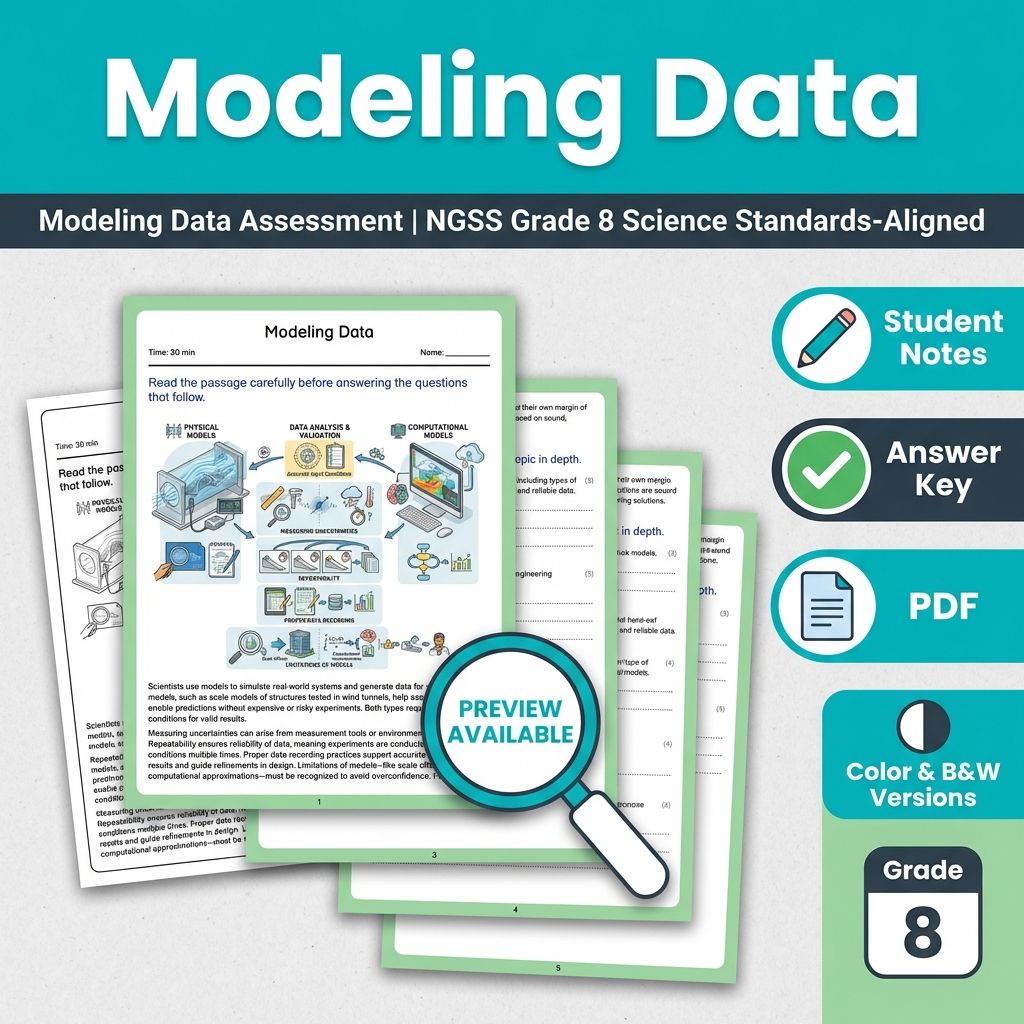
Modeling Data Assessment | NGSS Grade 8 Science Standards-Aligned
Created byPrism Point LearningLearning Objectives
- Understand the purpose of physical and computational models in generating quantitative data.
- Identify different types of models used in scientific investigation, including scale models and simple simulations.
- Explain the importance of consistent input conditions, repeatability, and proper data recording practices.
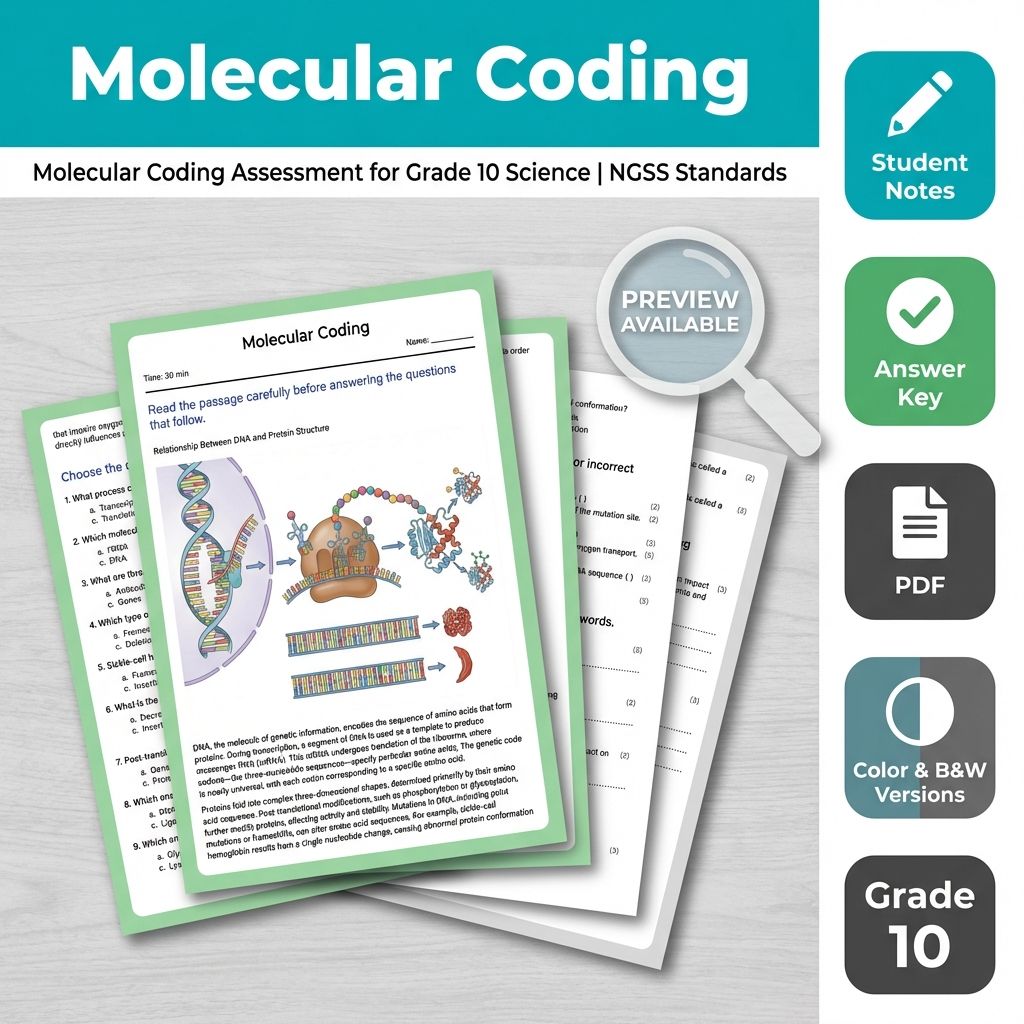
Molecular Coding Assessment for Grade 10 Science | NGSS Standards
Created byPrism Point LearningLearning Objectives
- Explain how DNA sequences determine amino acid sequences during protein synthesis.
- Describe the processes of transcription and translation in gene expression.
- Illustrate the effects of point mutations and frameshifts on protein structure.

Gene Regulation Assessment for Grade 10 Science | TEKS Standards
Created byPrism Point LearningLearning Objectives
- Describe mechanisms of gene regulation at transcriptional and post-transcriptional levels.
- Identify the roles of promoters, enhancers, and transcription factors in gene expression.
- Explain how epigenetic modifications influence chromatin accessibility and gene activity.

Yield and Conditions Assessment | General Standards Ali gned Grade 12 Science
Created byPrism Point LearningLearning Objectives
- Interpret reaction yield as the extent of reactant conversion into products under specific conditions
- Explain how particle-model ideas (collisions, activation energy, depletion) affect reaction rate and final yield
- Evaluate how competing pathways can change product distribution and reduce desired yield
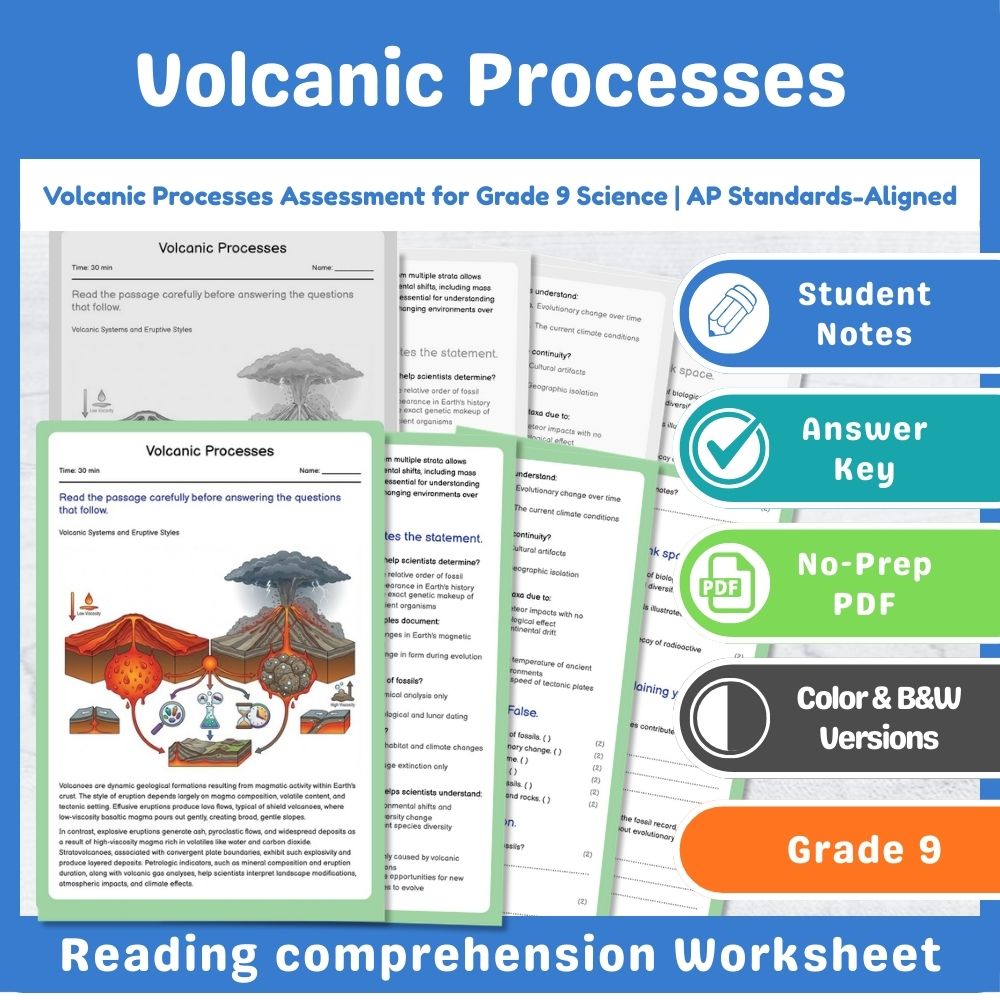
Volcanic Processes Assessment for Grade 9 Science | AP Standards-Aligned
Created byPrism Point LearningLearning Objectives
- Describe magmatic systems and eruptive styles linked to compositional and tectonic factors.
- Compare effusive shield volcanism and explosive stratovolcano behavior based on magma viscosity and volatile content.
- Explain how petrologic indicators, eruption chronologies, and volcanic gases influence landscape, climate, and biogeochemical cycles.
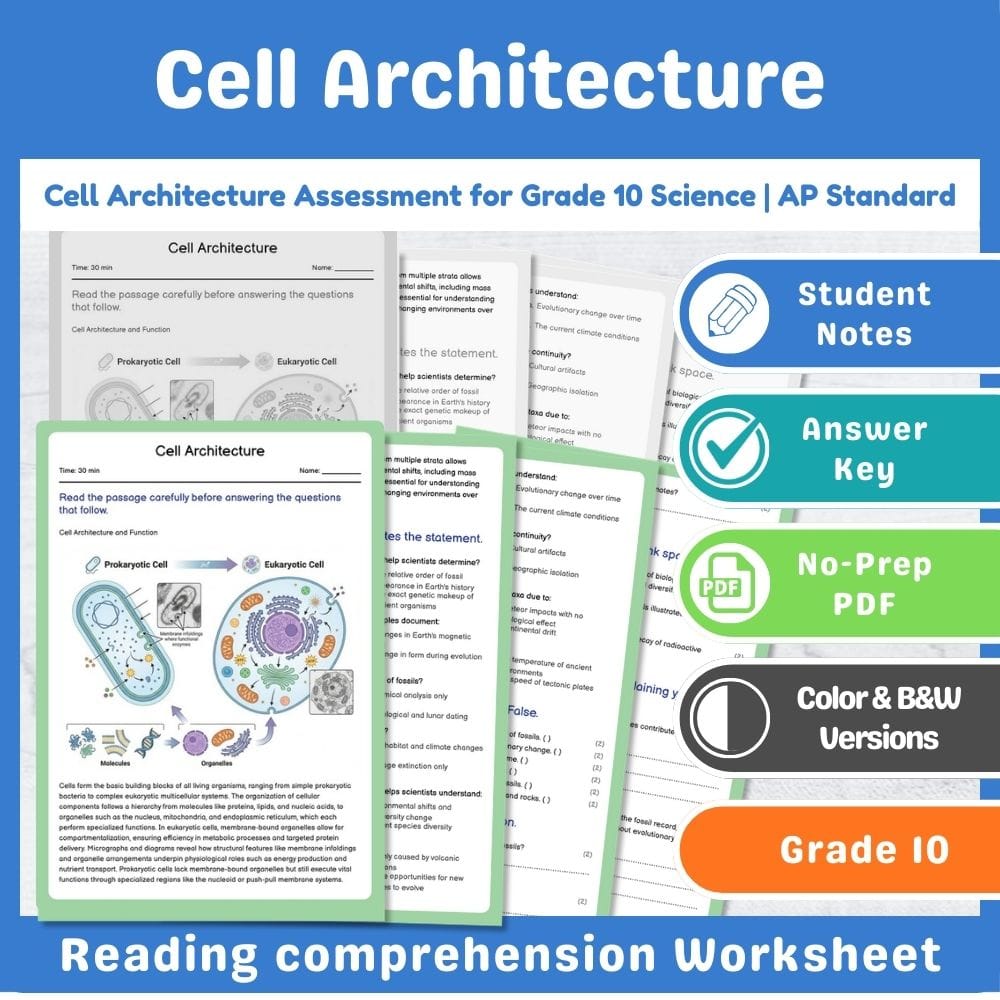
Cell Architecture Assessment for Grade 10 Science | AP Standard
Created byPrism Point LearningLearning Objectives
- Describe the hierarchical organization of cell components from macromolecules to organ systems.
- Compare and contrast prokaryotic and eukaryotic cellular structures and functions.
- Explain how ultrastructural features relate to cellular physiological roles such as compartmentalization and protein targeting.
Model Evaluation Assessment | NGSS Grade 10 Science Standards
Created byPrism Point LearningLearning Objectives
- Understand the role of quantitative analysis in model validation.
- Analyze prototype data and compare it with simulation outcomes.
- Evaluate model reliability and predict failure modes using statistical metrics.

Evidence Based Explanations Assessment | General Grade 8 Science Standards
Created byPrism Point LearningLearning Objectives
- Understand how evidence supports scientific claims and explanations.
- Differentiate between claims, reasoning, and alternative explanations.
- Evaluate explanations by comparing evidence and considering limits and uncertainties.

Atmospheric Interactions Assessment | TEKS Grade 12 Science Worksheet
Created byPrism Point LearningLearning Objectives
- Understand key atmospheric processes that influence climate and air quality.
- Interpret observational datasets and basic radiative transfer concepts related to energy balance.
- Analyze sources and sinks of greenhouse gases and their impacts on regional climate.
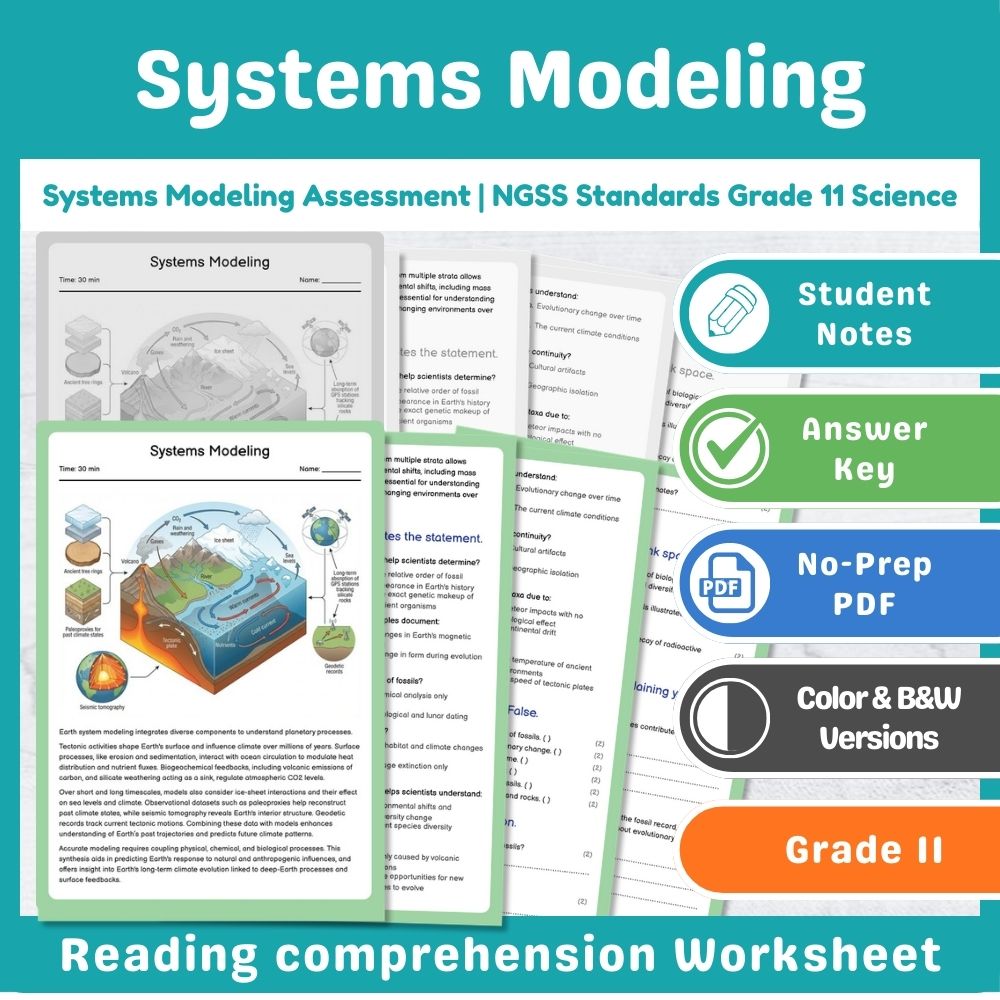
Systems Modeling Assessment | NGSS Standards Grade 11 Science
Created byPrism Point LearningLearning Objectives
- Understand the components and interactions within Earth system models, including tectonics, surface processes, and ocean circulation.
- Analyze the role of biogeochemical feedbacks, such as volcanic carbon sources and silicate weathering sinks, over various timescales.
- Evaluate observational data constraints, including paleoproxies and seismic tomography, in testing Earth system hypotheses.

Inquiry Foundations Assessment | TEKS Grade 7 Science Standards-Aligned
Created byPrism Point LearningLearning Objectives
- Understand key concepts related to Science
- Apply knowledge through practice questions
- Demonstrate comprehension of the material

Data Analysis Assessment | TEKS Standards Grade 12 Science
Created byPrism Point LearningLearning Objectives
- Interpret data through graphical representations and identify trends.
- Apply model fitting techniques and assess goodness-of-fit metrics.
- Evaluate residuals and communicate uncertainty in data interpretation.

Engineering Purpose Assessment | TEKS Grade 7 Science Standards-Aligned
Created byPrism Point LearningLearning Objectives
- Understand how engineering design responds to system purpose and constraints
- Identify various engineering applications such as bridges, pulley systems, and circuits
- Evaluate trade-offs among cost, reliability, and performance in engineering systems
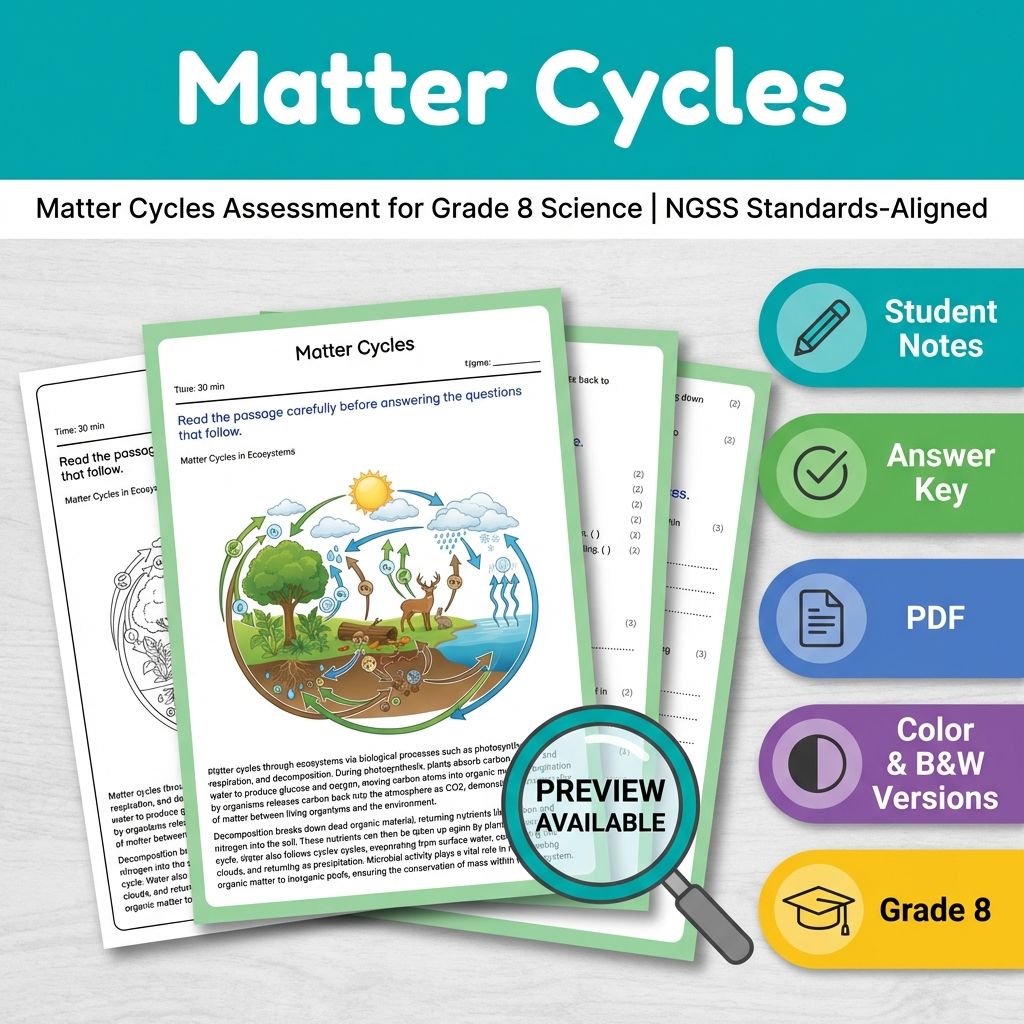
Matter Cycles Assessment for Grade 8 Science | NGSS Standards-Aligned
Created byPrism Point LearningLearning Objectives
- Understand the cycling of matter between living organisms and the abiotic environment.
- Explain the processes of photosynthesis, respiration, and decomposition in matter transfer.
- Trace atoms of elements like carbon and water through different parts of ecosystems and reservoirs.
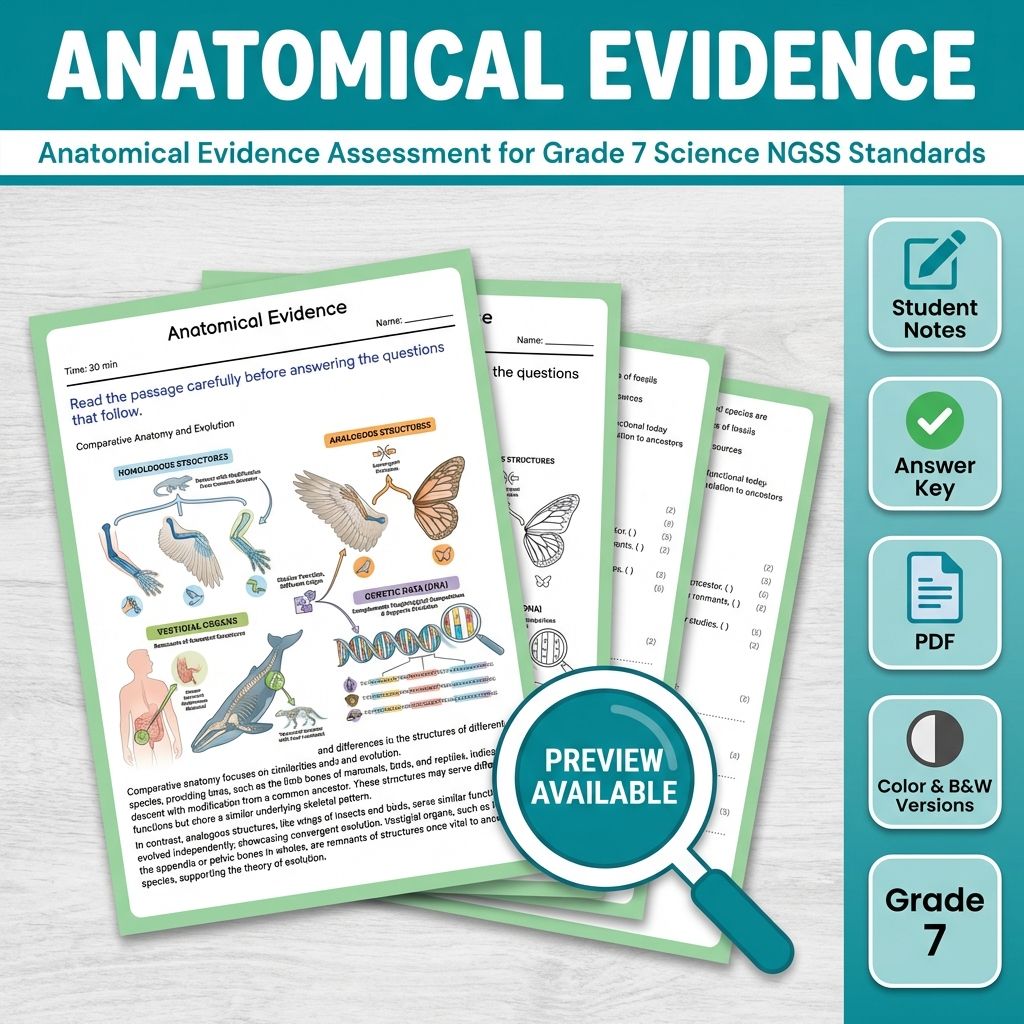
Anatomical Evidence Assessment for Grade 7 Science NGSS Standards
Created byPrism Point LearningLearning Objectives
- Understand how comparative anatomical data provide evidence for evolution.
- Identify homologous and analogous structures in different species.
- Explain how limb bone arrangements, skull morphology, and vestigial organs support descent with modification.

Change Evidence Assessment | TEKS Grade 6 Science Standards-Aligned
Created byPrism Point LearningLearning Objectives
- Differentiate between physical and chemical changes based on observable indicators.
- Identify characteristic evidence such as gas formation, precipitate, color change, and temperature change in chemical processes.
- Recognize physical alterations like shape or phase reversibility and understand substance conservation.

Conservation Laws Assessment for Grade 12 Science | Alberta Standards
Created byPrism Point LearningLearning Objectives
- Understand the principle of conservation of energy and momentum in isolated systems.
- Identify and differentiate between elastic, inelastic, and perfectly inelastic collisions.
- Apply algebraic conservation equations to solve real-world collision and energy transfer problems.
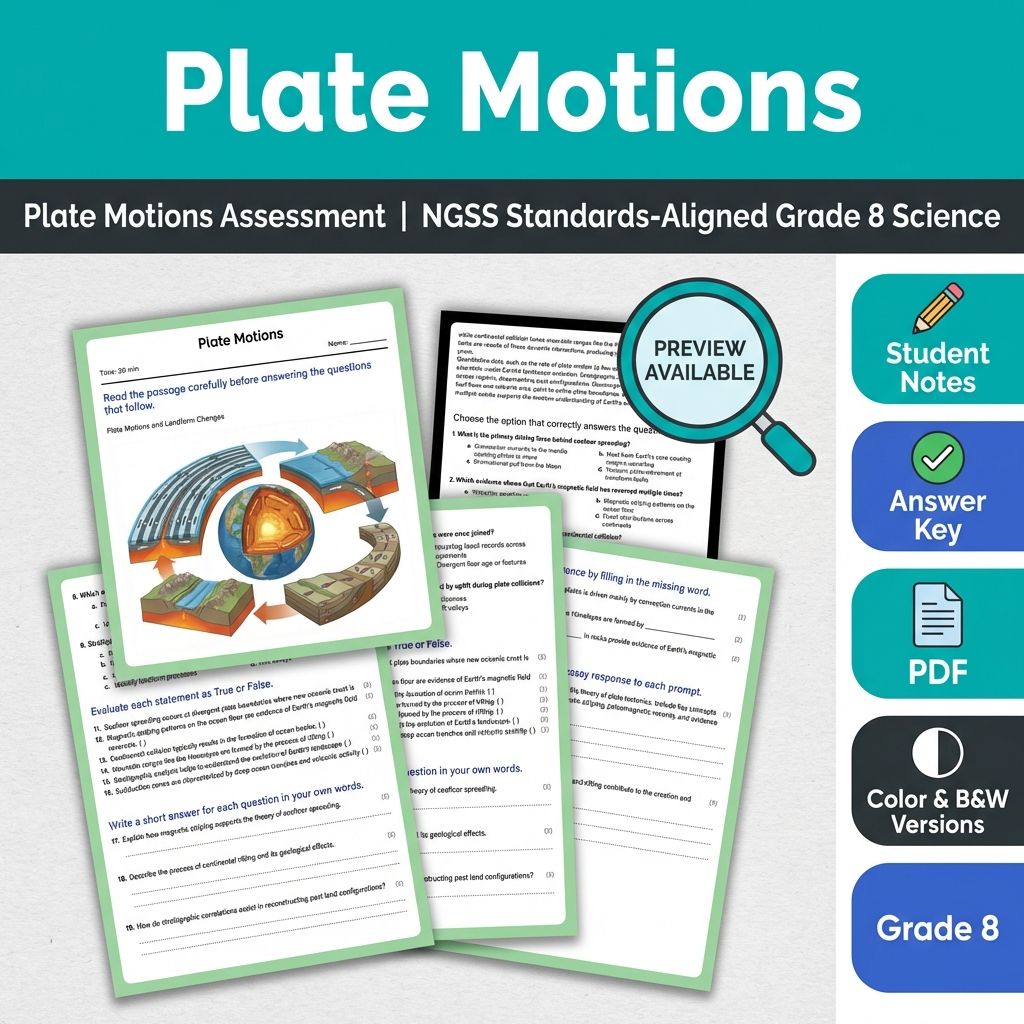
Plate Motions Assessment | NGSS Standards-Aligned Grade 8 Science
Created byPrism Point LearningLearning Objectives
- Understand the mechanisms of plate tectonics and how they shape Earth's landforms.
- Identify key evidence supporting theories of seafloor spreading, magnetic striping, and paleomagnetism.
- Explain processes such as subduction, rifting, continental collision, and uplift.
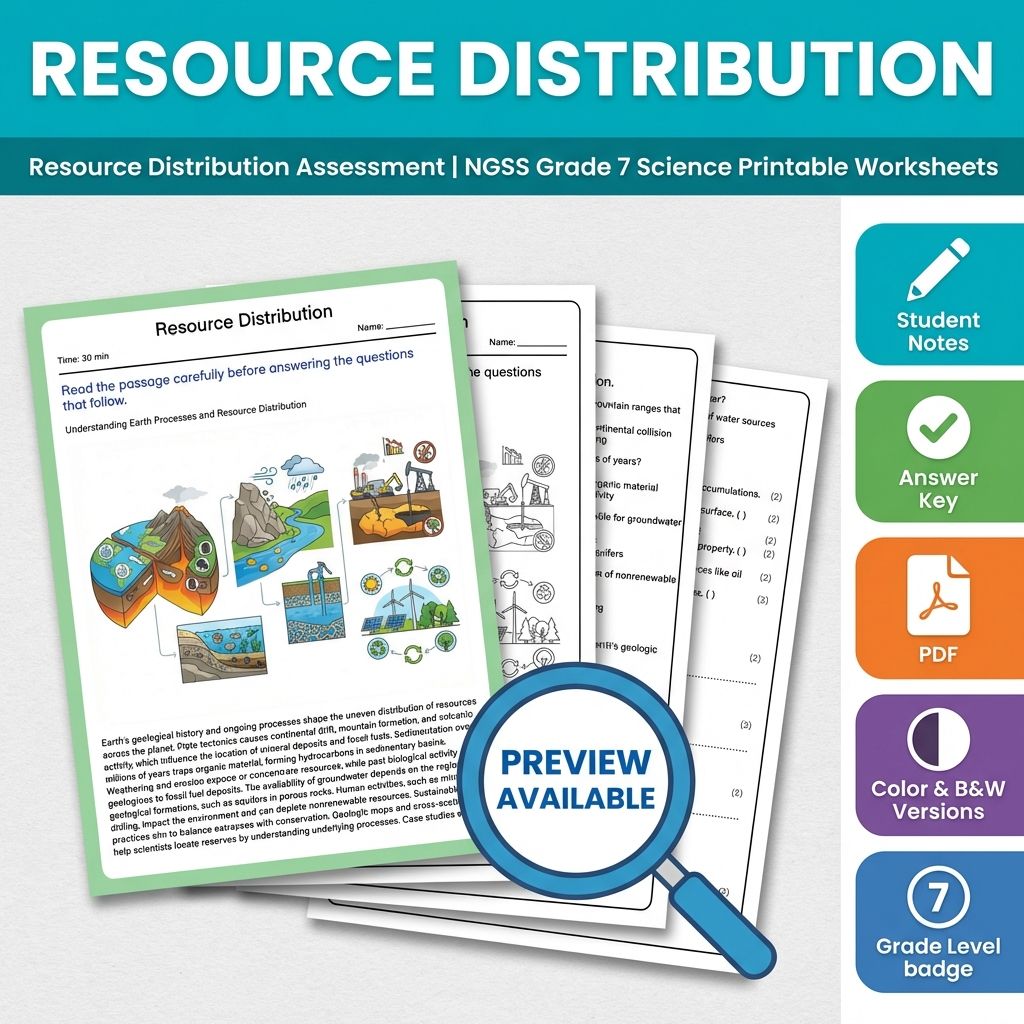
Resource Distribution Assessment | NGSS Grade 7 Science Printable Worksheets
Created byPrism Point LearningLearning Objectives
- Understand how geologic processes influence the distribution of mineral, energy, and groundwater resources.
- Connect plate tectonics, sedimentation, weathering, and biological activity to resource locations.
- Evaluate the impacts of resource extraction and consider sustainability and access issues.
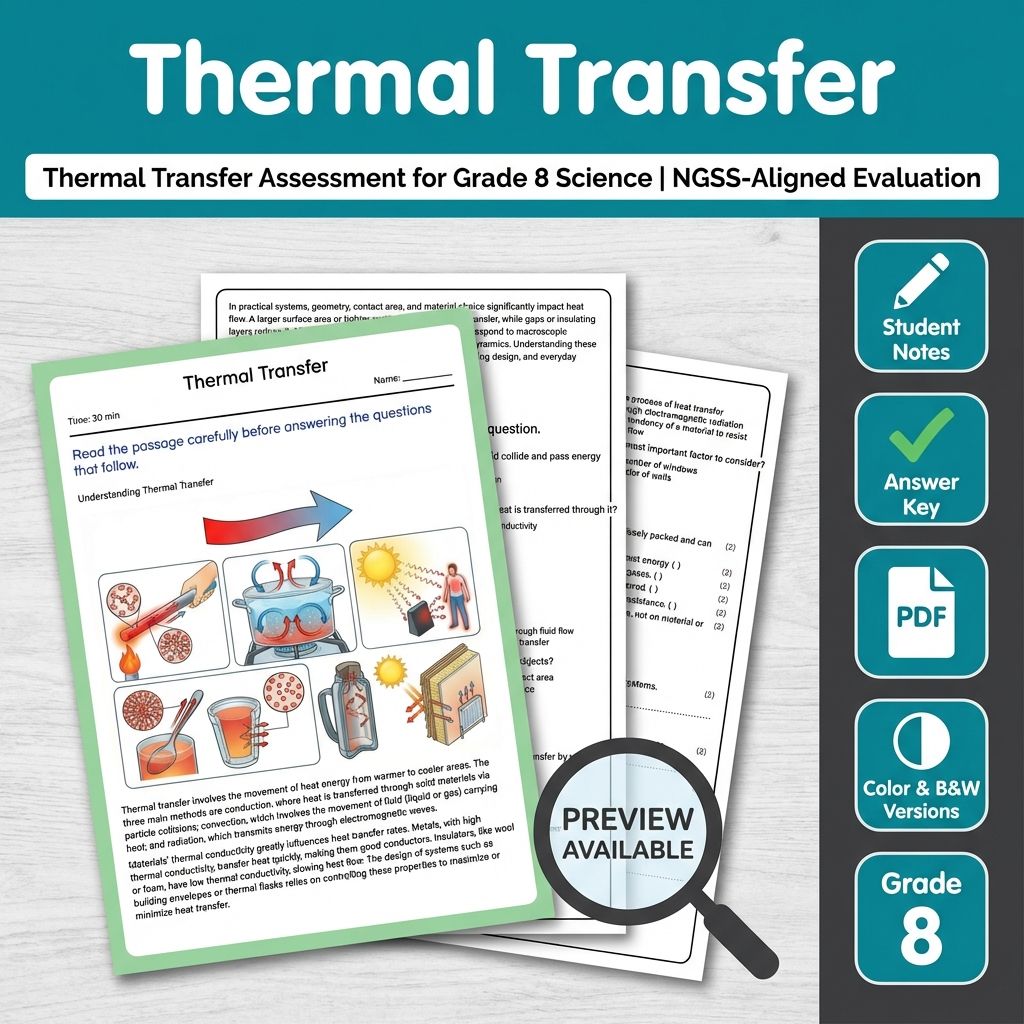
Thermal Transfer Assessment for Grade 8 Science | NGSS-Aligned Evaluation
Created byPrism Point LearningLearning Objectives
- Describe the mechanisms of conduction, convection, and radiation in thermal transfer.
- Explain how material properties influence heat flow in systems.
- Identify insulation strategies and their effectiveness in reducing heat transfer.
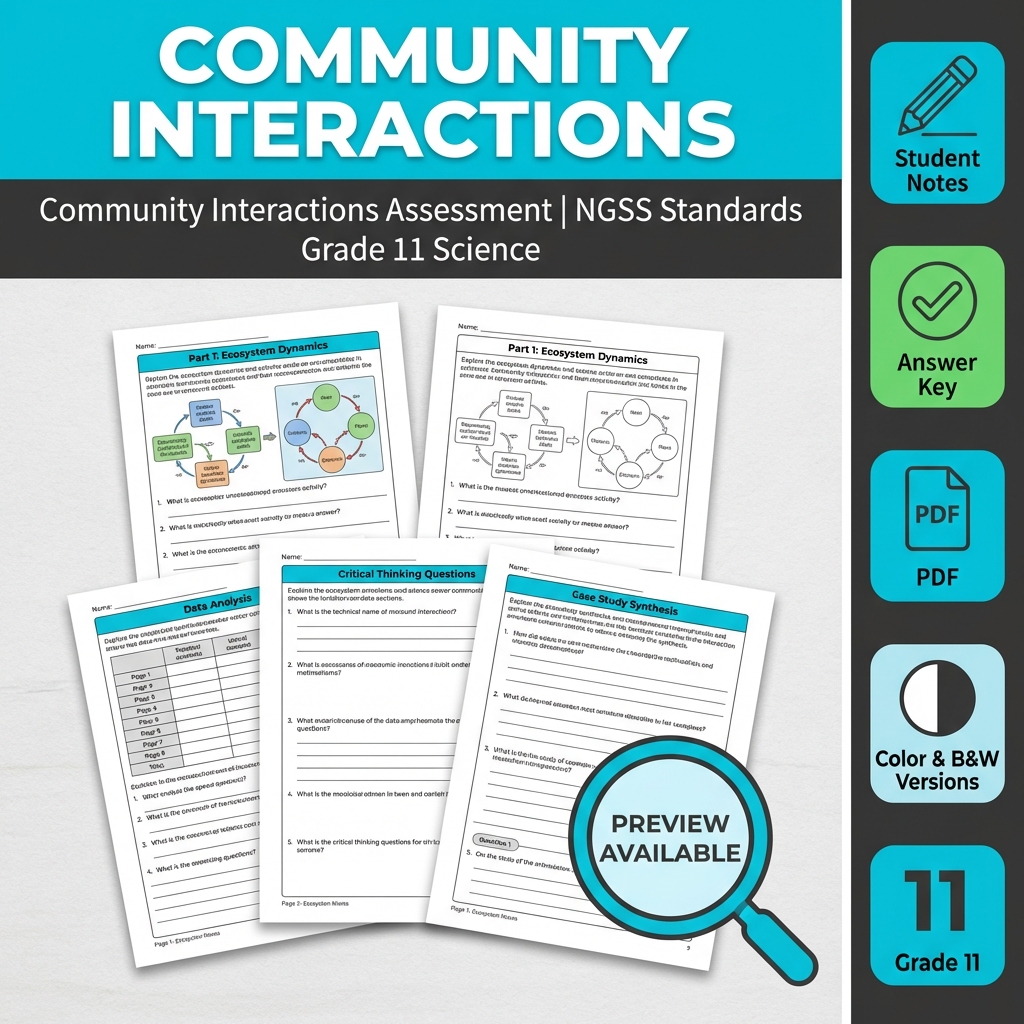
Community Interactions Assessment | NGSS Standards Grade 11 Science
Created byPrism Point LearningLearning Objectives
- Analyze various species interactions within communities, including competition, mutualism, predation, parasitism, facilitation, and niche partitioning.
- Explain the roles of keystone species, trophic cascades, and interaction networks in shaping community structure.
- Evaluate examples such as sea otter-kelp forest dynamics and pollinator networks to understand the consequences of species interactions.

Science and Technology Assessment | TEKS Grade 6 Science Worksheet
Created byPrism Point LearningLearning Objectives
- Understand how scientific investigation and technological development influence each other.
- Identify tools and instruments that extend observation and measurement in science.
- Explain how technological improvements can shape scientific inquiries and models.
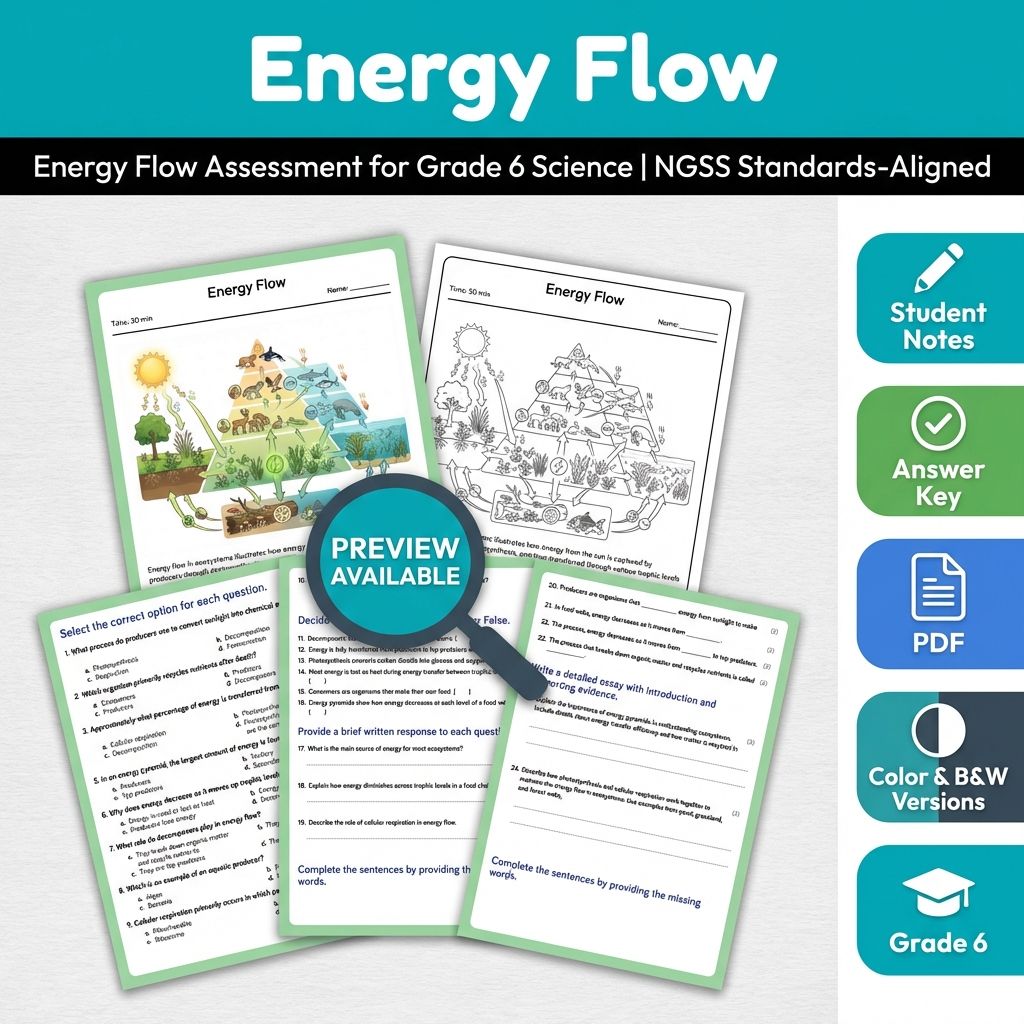
Energy Flow Assessment for Grade 6 Science | NGSS Standards-Aligned
Created byPrism Point LearningLearning Objectives
- Describe the components of food webs including producers, consumers, and decomposers.
- Explain the concept of energy pyramids and trophic transfer efficiency.
- Understand how photosynthesis and cellular respiration contribute to energy budgets.
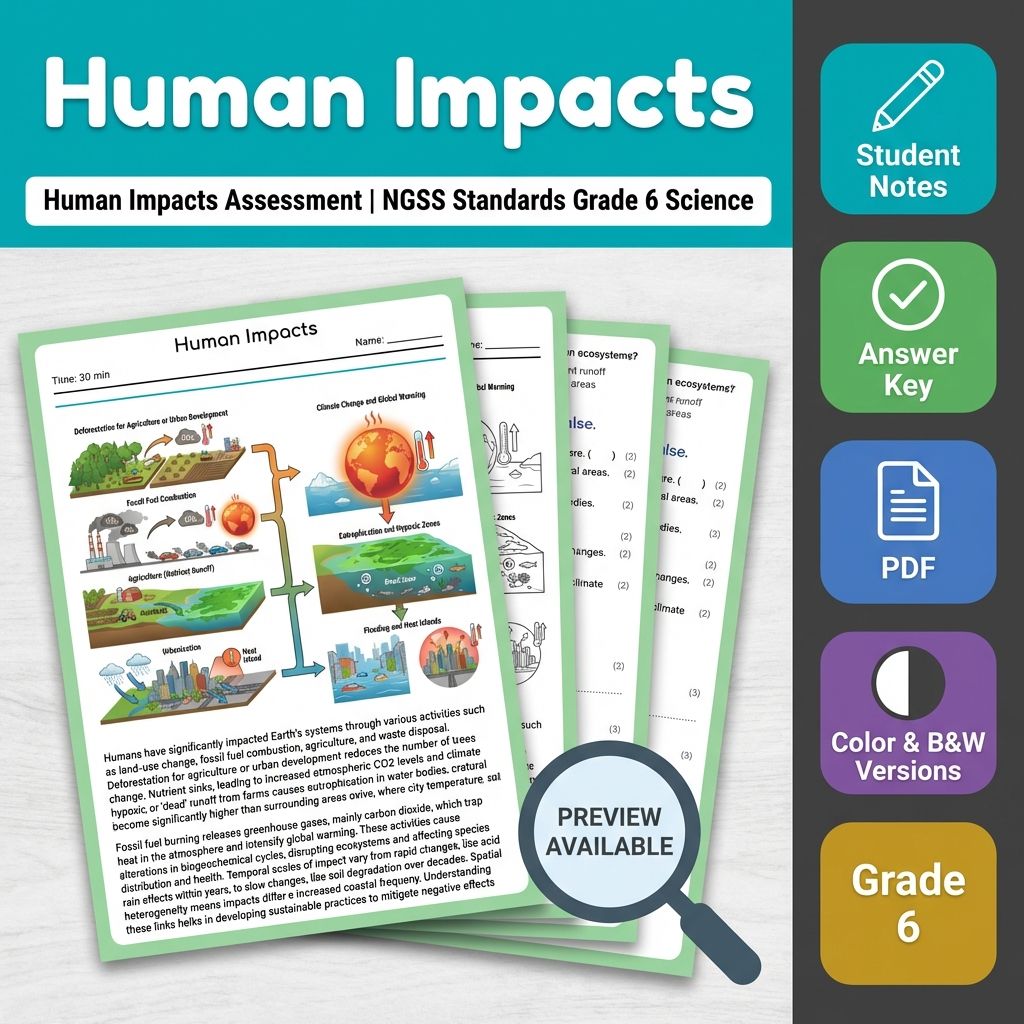
Human Impacts Assessment | NGSS Standards Grade 6 Science
Created byPrism Point LearningLearning Objectives
- Describe human activities that alter land, air, and water systems.
- Analyze how land-use change, fossil fuel use, and waste management affect environmental cycles.
- Explain the causal links between human actions and environmental trends.
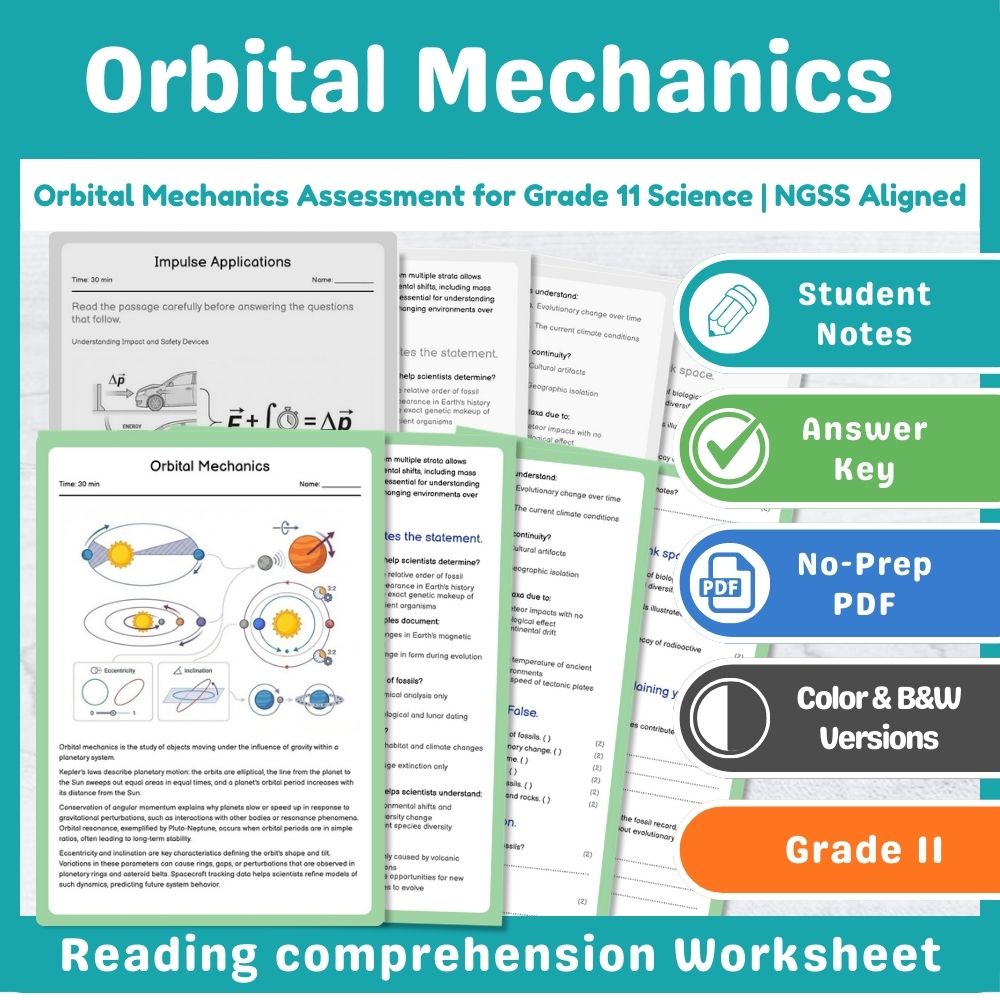
Orbital Mechanics Assessment for Grade 11 Science | NGSS Aligned
Created byPrism Point LearningLearning Objectives
- Explain the fundamental principles of orbital motion and Kepler's laws.
- Analyze the effects of gravitational interactions and orbital perturbations.
- Describe phenomena such as orbital resonance, eccentricity, and inclination.
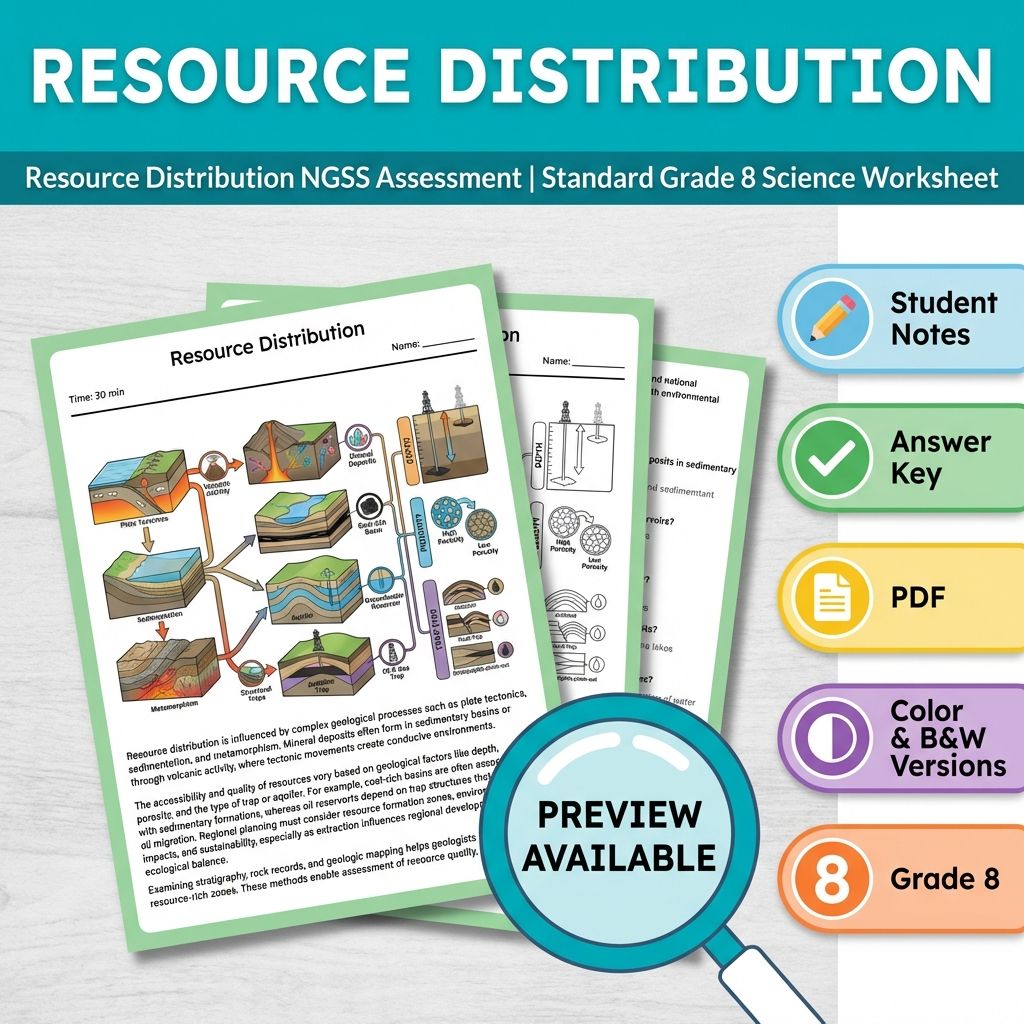
Resource Distribution NGSS Assessment | Standard Grade 8 Science Worksheet
Created byPrism Point LearningLearning Objectives
- Analyze the geological processes influencing resource formation and distribution.
- Identify key types of mineral, energy, and groundwater resources and their locations.
- Understand the factors affecting resource accessibility and quality.
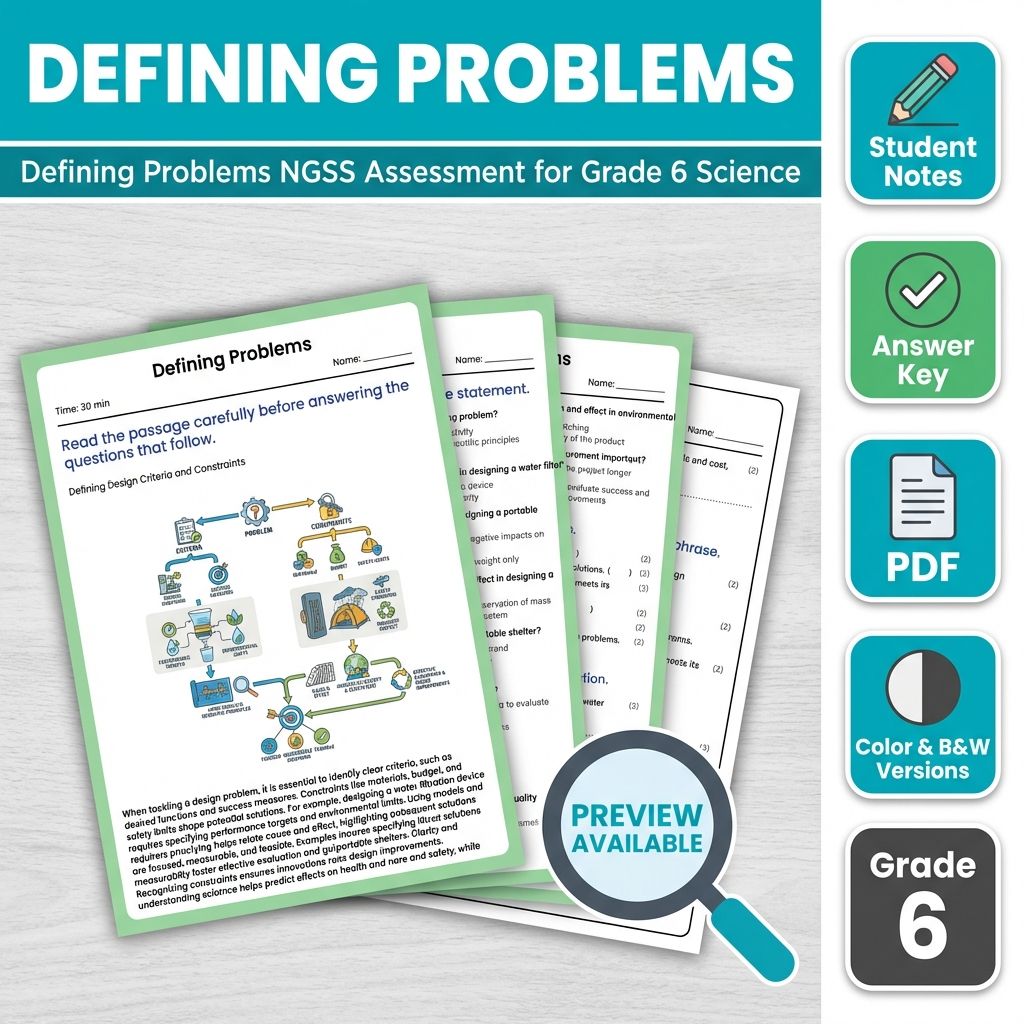
Defining Problems NGSS Assessment for Grade 6 Science
Created byPrism Point LearningLearning Objectives
- Understand how to define criteria and constraints for a design problem.
- Identify measurable outcomes such as functions, success measures, and limits.
- Apply scientific principles to relate cause and effect in problem-solving.
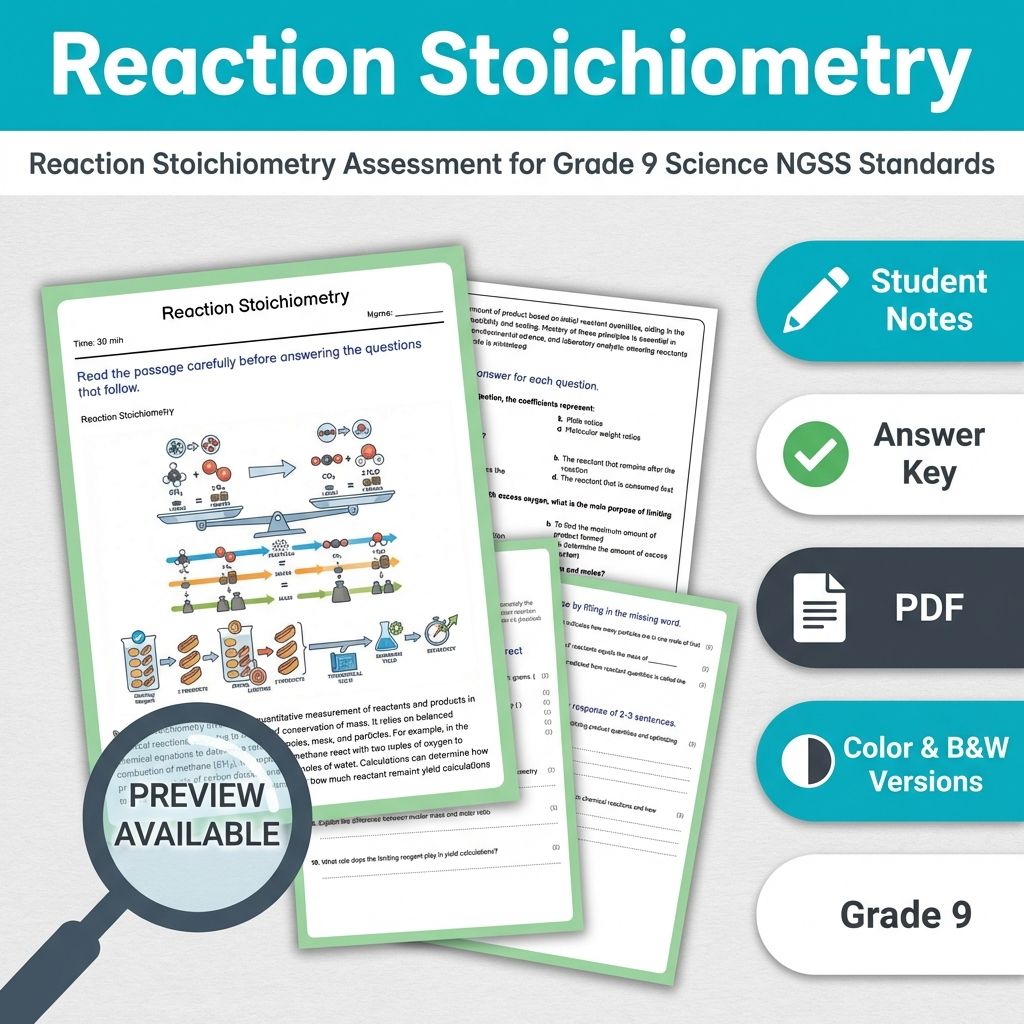
Reaction Stoichiometry Assessment for Grade 9 Science NGSS Standards
Created byPrism Point LearningLearning Objectives
- Understand the principles of mole ratios in balanced chemical equations.
- Apply molar mass conversions to relate mass and moles in reactions.
- Analyze limiting reagents and determine theoretical yields in chemical reactions.

Circular Motion Assessment for Grade 12 Science | Alberta Standards
Created byPrism Point LearningLearning Objectives
- Explain the concepts of centripetal acceleration and tangential speed in uniform and non-uniform circular motion.
- Apply mathematical relations involving angular velocity, period, and centripetal force to analyze the stability of rotating systems.
- Assess real-world applications of circular motion such as vehicle dynamics on banked curves and rotational forces in turbines.
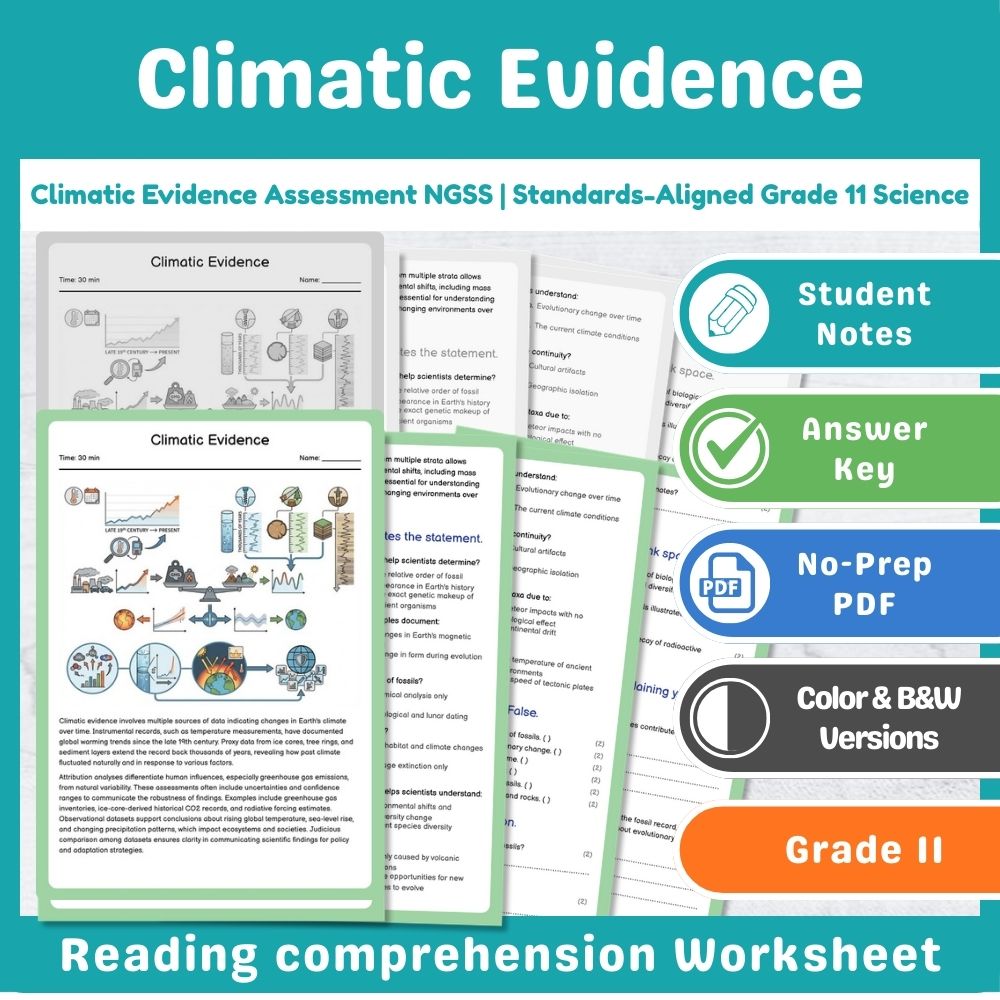
Climatic Evidence Assessment NGSS | Standards-Aligned Grade 11 Science
Created byPrism Point LearningLearning Objectives
- Understand how observational records and proxy data provide evidence of climate change.
- Analyze the methods used to attribute human contributions to observed climate variations.
- Evaluate the impacts of climate change on sea-level, precipitation patterns, and temperature extremes.
Browse more categories
About Science Worksheets
Find Science worksheets spanning core skills, practice, and review. All 42,685 resources are instant PDF downloads for the classroom or home.
Every worksheet on MyTeachingSheets is created by independent teacher-authors and reviewed before publication. All resources download as printable PDFs for classroom, homework, or at-home practice, and many include answer keys. Preview any worksheet free before buying.