
Science Worksheets
42,550 subject resources
Model-Based Predictions Assessment | Standards-Aligned Grade 7 Science
 Created byPrism Point Learning
Learning Objectives
- Understand how models translate observations into representations for predictions.
- Identify different types of models: physical, diagrammatic, and computational.
- Explain the role of diagrams linking Earth, Moon, and Sun in lunar phases.

Wave Energy Properties Assessment | General Grade 9 Science Standards
Created byPrism Point LearningLearning Objectives
- Understand the properties of waves—frequency, wavelength, and amplitude—and how they relate to wave energy.
- Explain how wave properties influence observable wave behavior.
- Identify the links between wave properties and the energy transferred by waves.

Human System Feedbacks Assessment for Grade 7 Science | Standard General
Created byPrism Point LearningLearning Objectives
- Understand how human activities impact Earth's spheres and create feedback loops.
- Identify examples of human activities that influence the atmosphere, biosphere, and geosphere.
- Explain how feedback mechanisms can amplify or reduce environmental changes.

System Thinking In Solutions Assessment | General Grade 6 Science
Created byPrism Point LearningLearning Objectives
- Understand the concept of systems thinking and how components interact within a system.
- Identify cause-and-effect relationships in system design and performance.
- Analyze how changes to one part of a system can influence overall behavior.
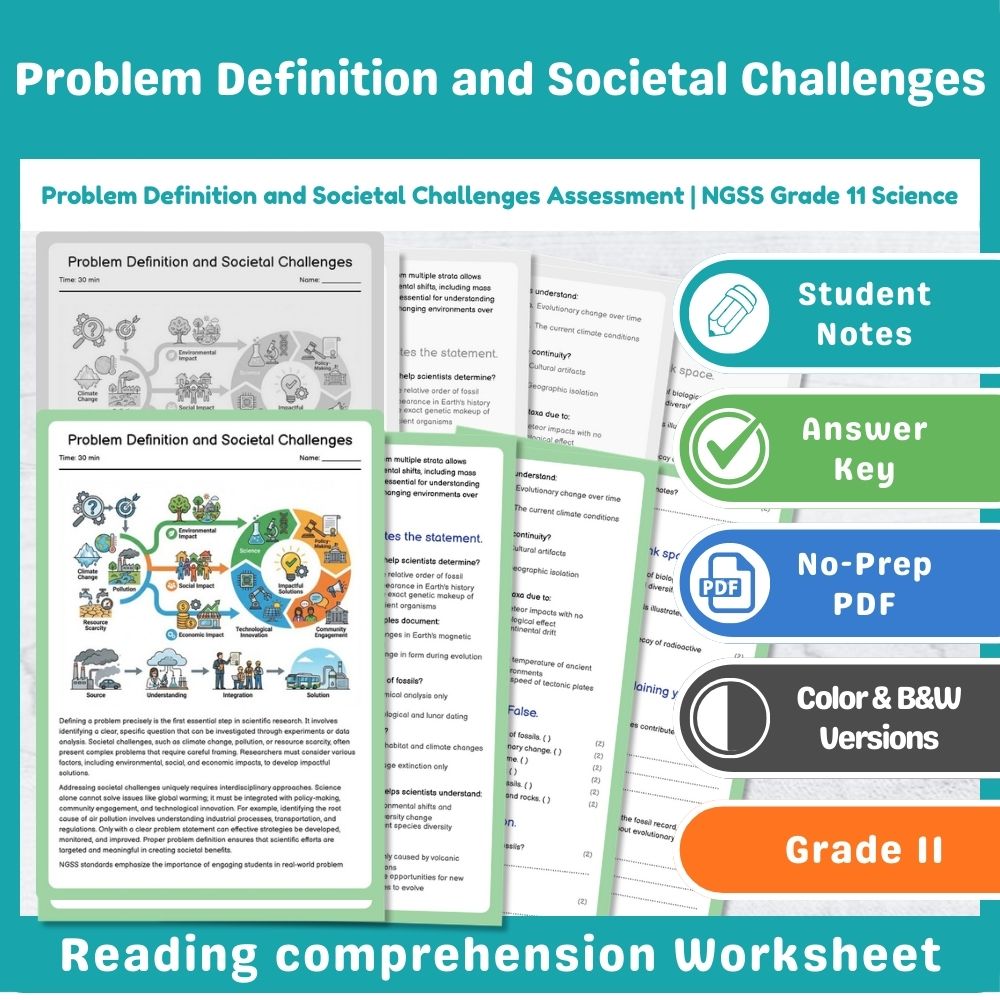
Problem Definition and Societal Challenges Assessment | NGSS Grade 11 Science
Created byPrism Point LearningLearning Objectives
- Understand the importance of clear problem definition in scientific research.
- Analyze how societal challenges influence scientific problem framing.
- Evaluate different approaches to addressing global issues through science.

Carrying Capacity Limits Assessment | TEKS Standards Grade 11 Science
Created byPrism Point LearningLearning Objectives
- Understand the concept of carrying capacity and its significance in ecology.
- Identify factors that influence the carrying capacity of environments.
- Differentiate between density-dependent and density-independent effects on populations.

Atom Conservation Assessment | Standards-Aligned Grade 6 Science Worksheet
Created byPrism Point LearningLearning Objectives
- Explain conservation of atoms during chemical reactions as rearrangements of atoms into new combinations
- Use particle diagrams to track atoms in reactants and products
- Predict whether a reaction description or diagram conserves atoms by counting atoms of each element
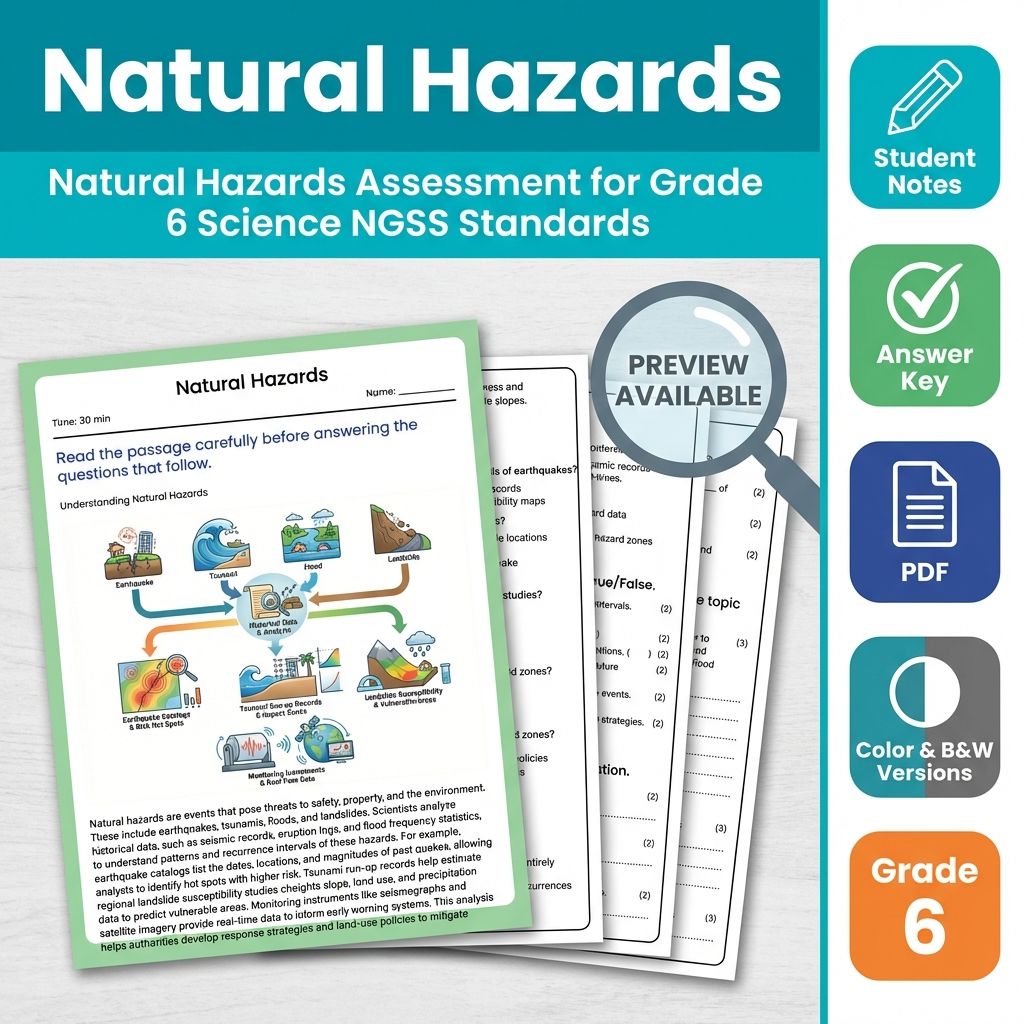
Natural Hazards Assessment for Grade 6 Science NGSS Standards
Created byPrism Point LearningLearning Objectives
- Understand methods for analyzing observational and instrumental data related to natural hazards.
- Identify patterns, recurrence intervals, and probable locations of hazards like earthquakes, tsunamis, and floods.
- Interpret data examples such as eruption histories and flood statistics to assess risks.
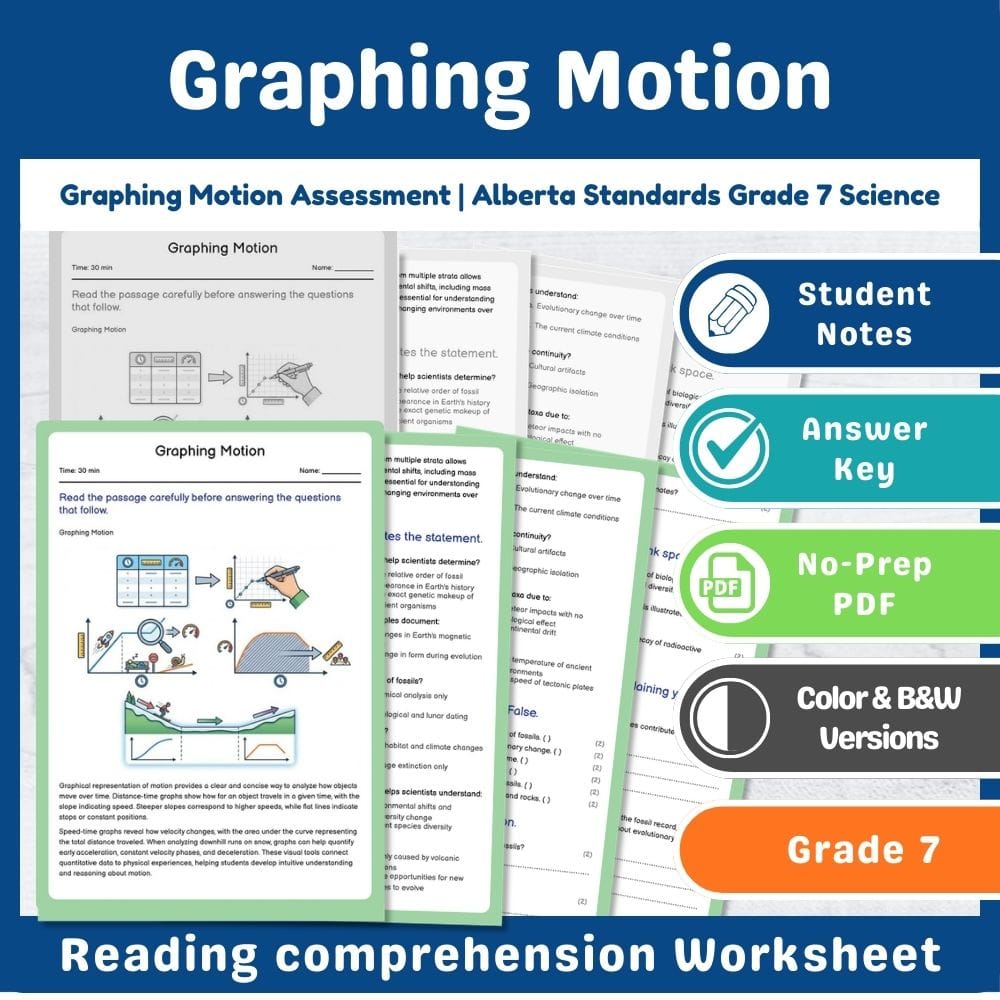
Graphing Motion Assessment | Alberta Standards Grade 7 Science
Created byPrism Point LearningLearning Objectives
- Understand how to interpret distance–time and speed–time graphs.
- Explain the significance of slope, area under curves, and rate calculations in motion graphs.
- Translate tabulated numerical data into accurate graphical representations.

Population Growth Assessment for Grade 11 Science TEKS standards
Created byPrism Point LearningLearning Objectives
- Understand the key factors influencing population dynamics, including birth rates, death rates, immigration, and emigration.
- Differentiate between exponential and logistic growth models and their real-world applications.
- Analyze the impact of density-dependent and density-independent factors on population trajectories.

Forces Basics Assessment | TEKS Grade 6 Science Standards-Aligned
Created byPrism Point LearningLearning Objectives
- Explain the difference between contact and noncontact forces, including gravity, friction, and normal force.
- Describe how balanced and unbalanced forces affect the motion of objects.
- Understand the concept of net force and its effect on everyday objects.
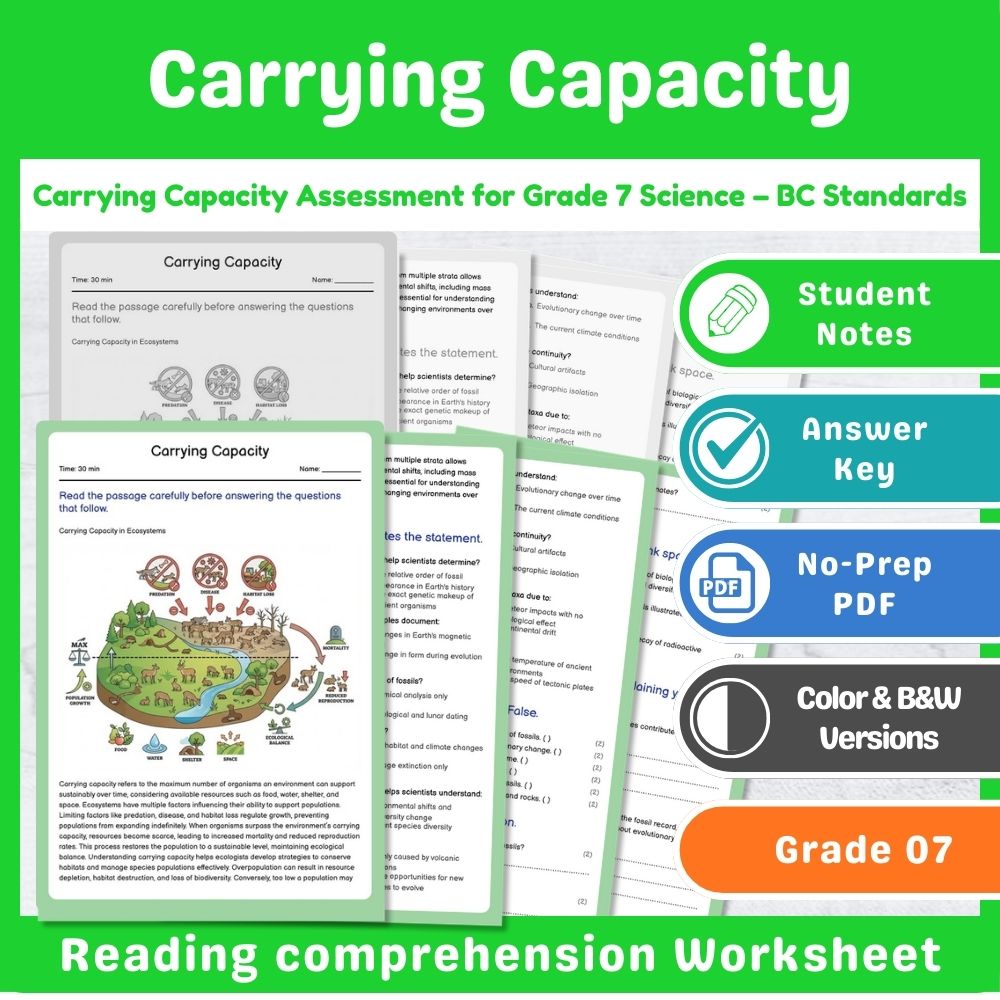
Carrying Capacity Assessment for Grade 7 Science – BC Standards
Created byPrism Point LearningLearning Objectives
- Define carrying capacity and explain its significance in ecosystems.
- Identify limiting factors that influence population growth.
- Describe the effects of exceeding carrying capacity in natural environments.
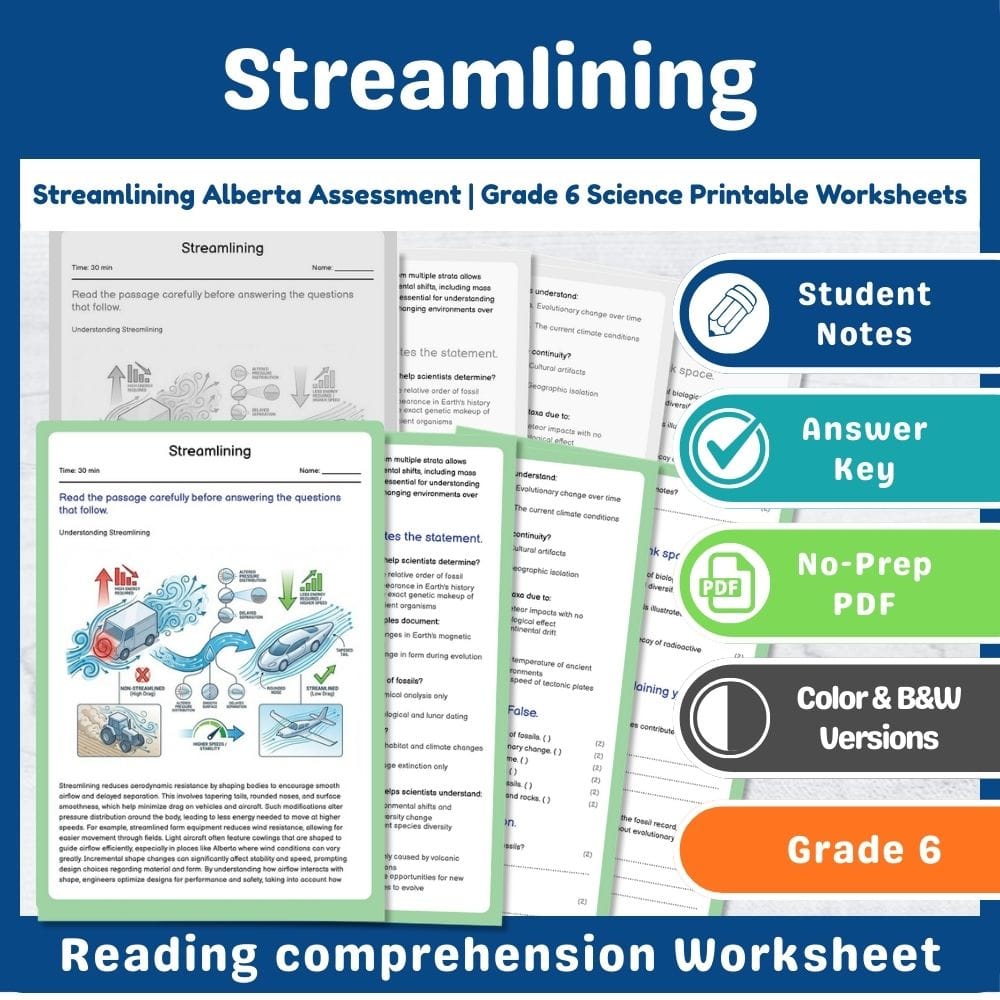
Streamlining Alberta Assessment | Grade 6 Science Printable Worksheets
Created byPrism Point LearningLearning Objectives
- Understand how the shape of objects affects their airflow and resistance.
- Identify key features like tapered tails and rounded noses that improve aerodynamics.
- Explain how shape changes influence pressure distribution and energy use in flight and machinery.
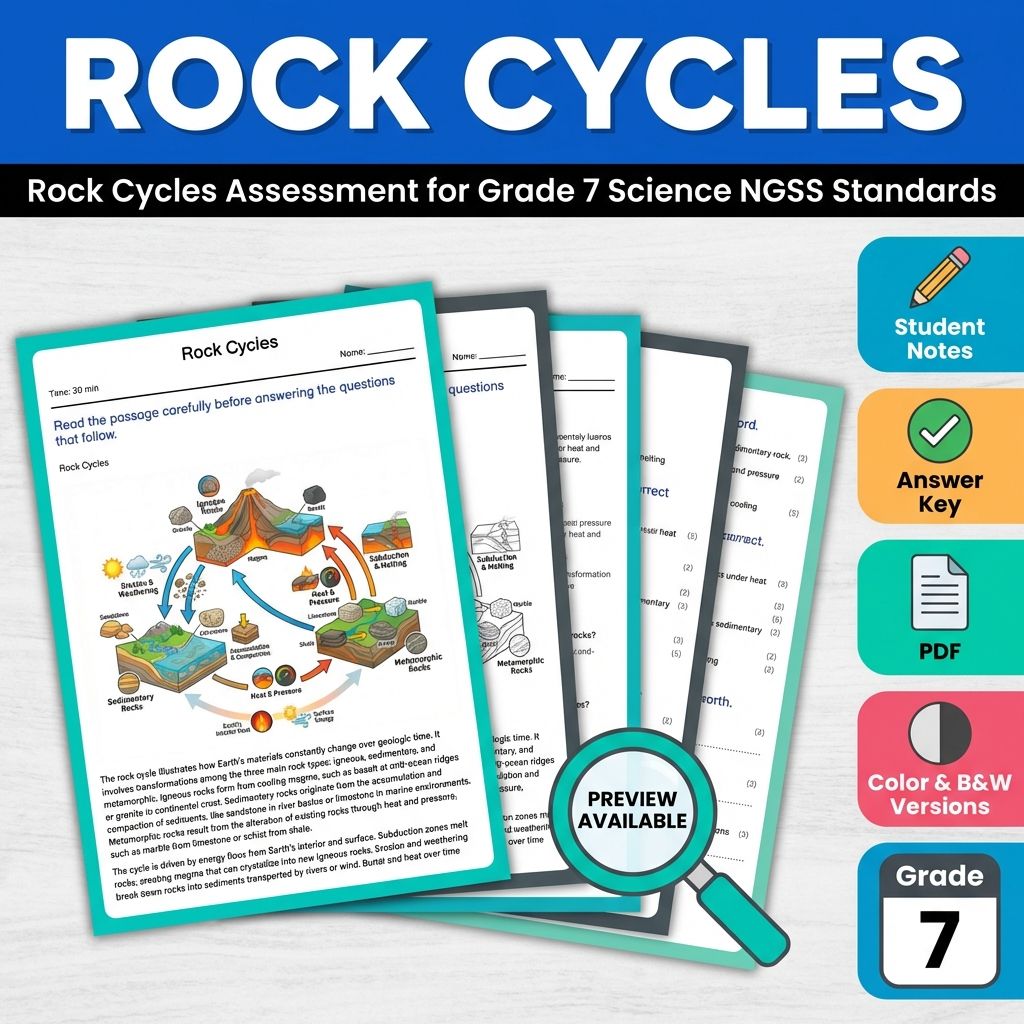
Rock Cycles Assessment for Grade 7 Science NGSS Standards
Created byPrism Point LearningLearning Objectives
- Understand the processes involved in the cycling of Earth's rocks.
- Identify the stages of igneous, sedimentary, and metamorphic rock formation.
- Explain how plate tectonics and energy flow drive rock transformations.
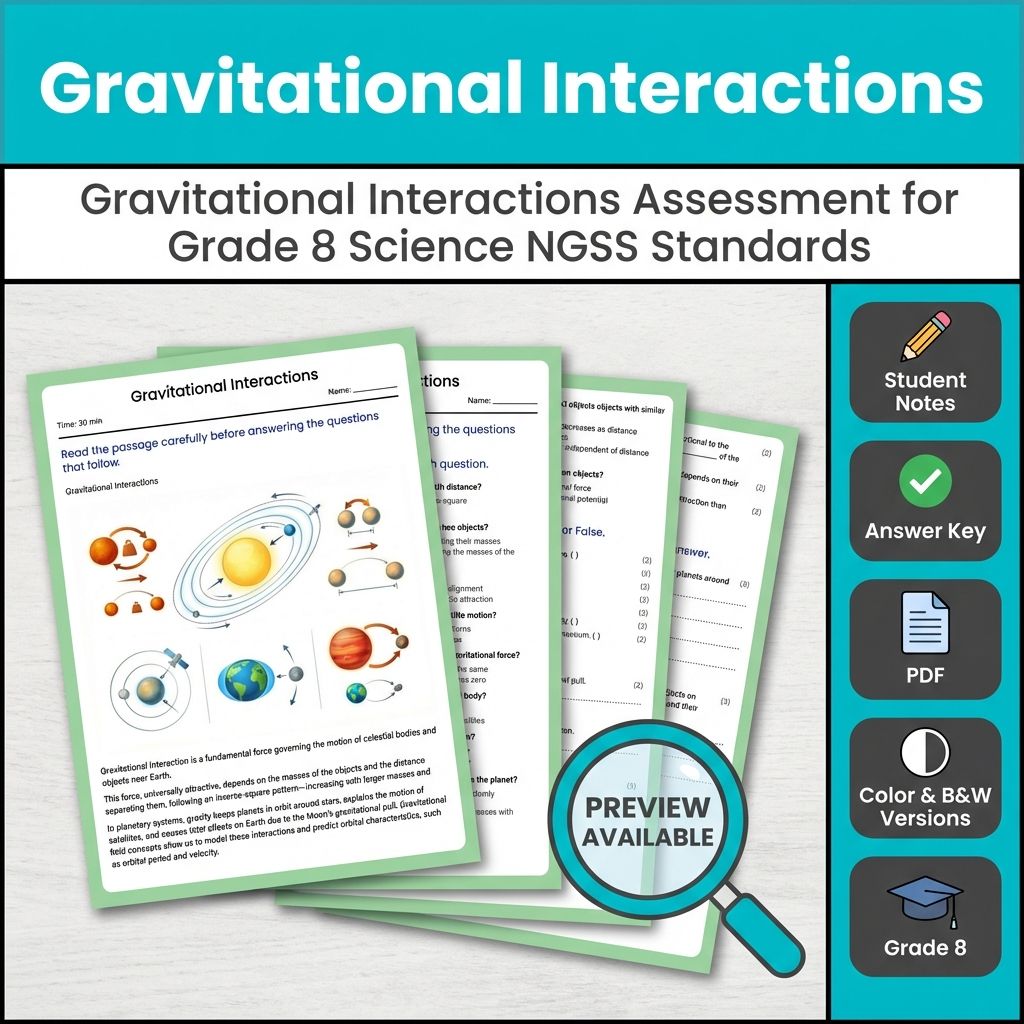
Gravitational Interactions Assessment for Grade 8 Science NGSS Standards
Created byPrism Point LearningLearning Objectives
- Understand the inverse-square law pattern of gravitational force.
- Explain how mass and distance influence gravitational attraction.
- Describe the manifestations of gravity such as planetary orbits and tides.
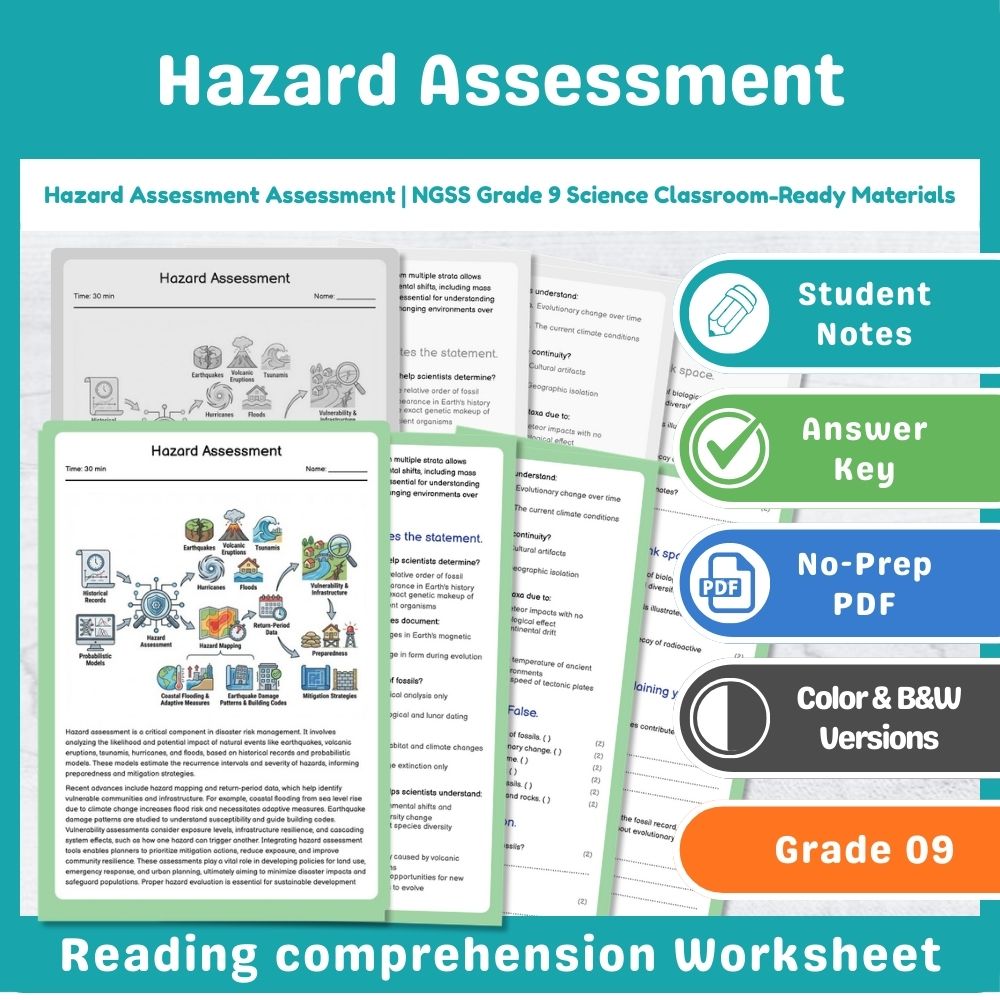
Hazard Assessment Assessment | NGSS Grade 9 Science Classroom-Ready Materials
Created byPrism Point LearningLearning Objectives
- Understand the methods used to evaluate hazard risks such as earthquakes, volcanoes, tsunamis, hurricanes, and floods.
- Analyze hazard occurrence, frequency, and consequences using historical data and probabilistic models.
- Recognize the importance of hazard mapping, return-period data, and mitigation strategies in assessing community susceptibility.
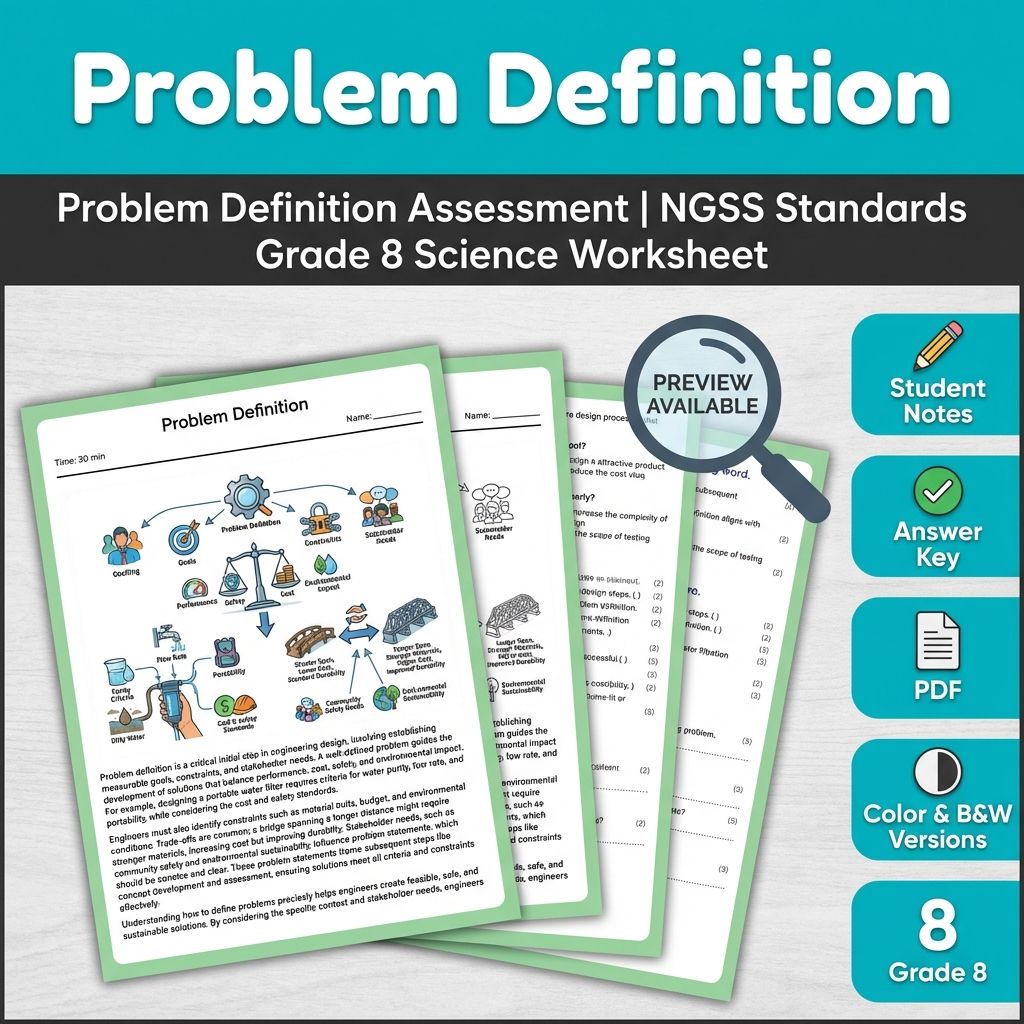
Problem Definition Assessment | NGSS Standards Grade 8 Science Worksheet
Created byPrism Point LearningLearning Objectives
- Understand the criteria and constraints involved in defining engineering problems.
- Identify key stakeholder needs and safety requirements for problem statements.
- Analyze scenarios like water filtration and bridge design to evaluate trade-offs.
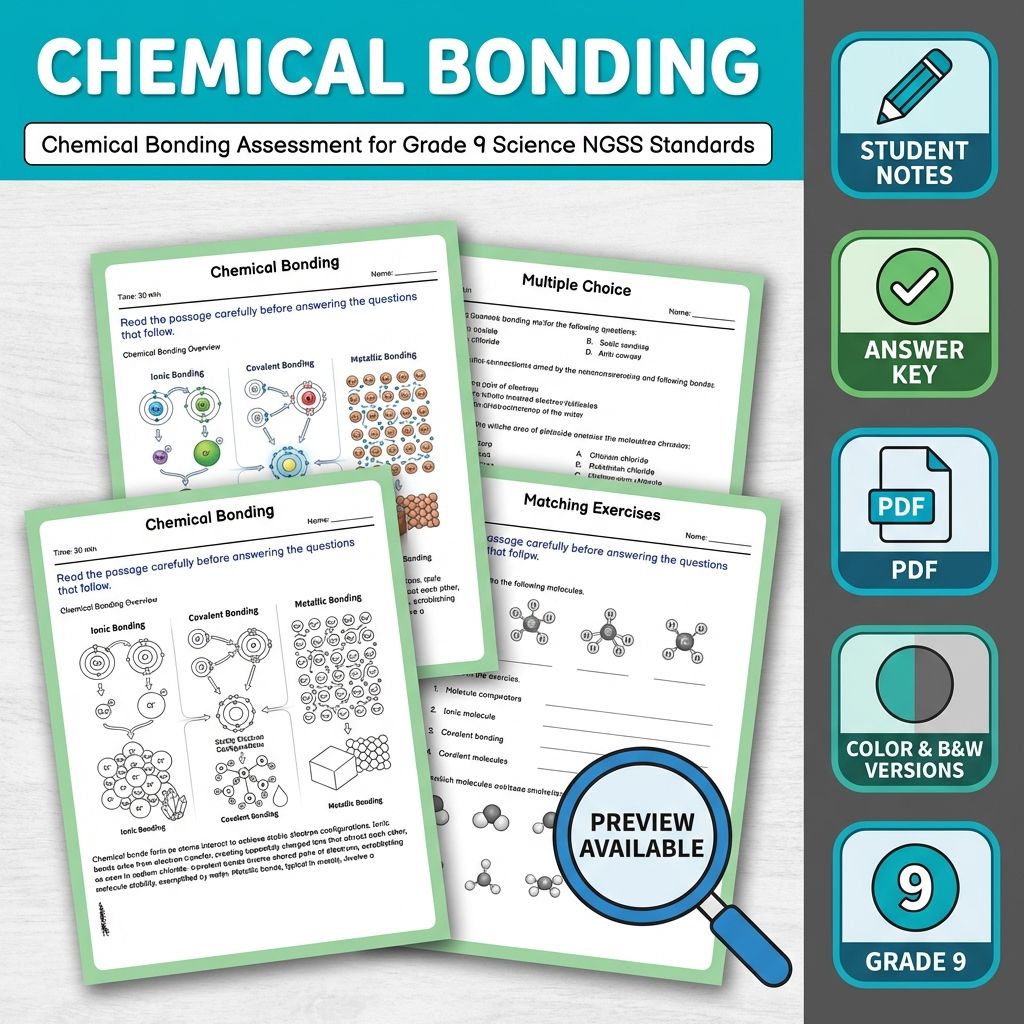
Chemical Bonding Assessment for Grade 9 Science NGSS Standards
Created byPrism Point LearningLearning Objectives
- Understand the types of chemical bonds and their properties.
- Interpret Lewis structures and electron-sharing models to predict molecular geometry.
- Explain how bonding influences physical properties like melting point and solubility.
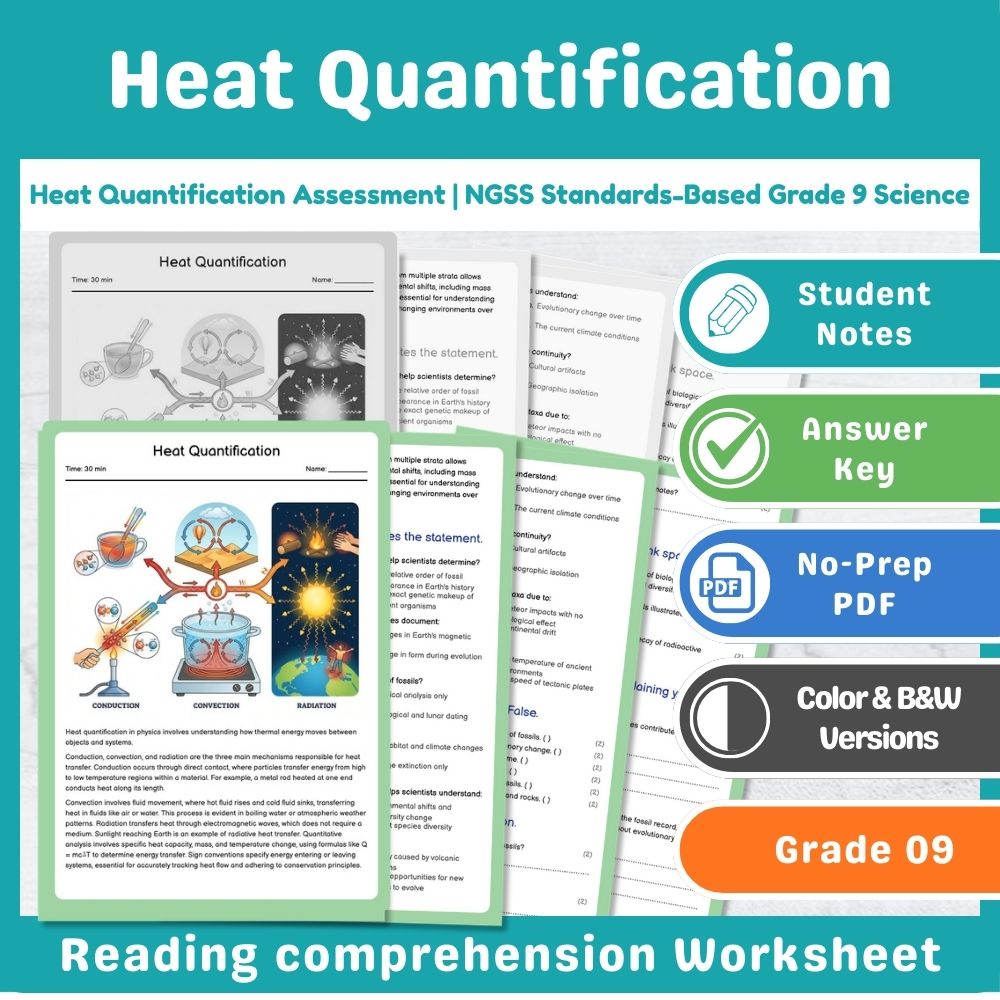
Heat Quantification Assessment | NGSS Standards-Based Grade 9 Science
Created byPrism Point LearningLearning Objectives
- Understand the mathematical representations of heat transfer, including conduction, convection, and radiation.
- Apply formulas involving specific heat capacity, mass, and temperature change to calculate thermal energy transfer.
- Distinguish sign conventions for energy flow and relate energy changes to conservation principles in closed systems.
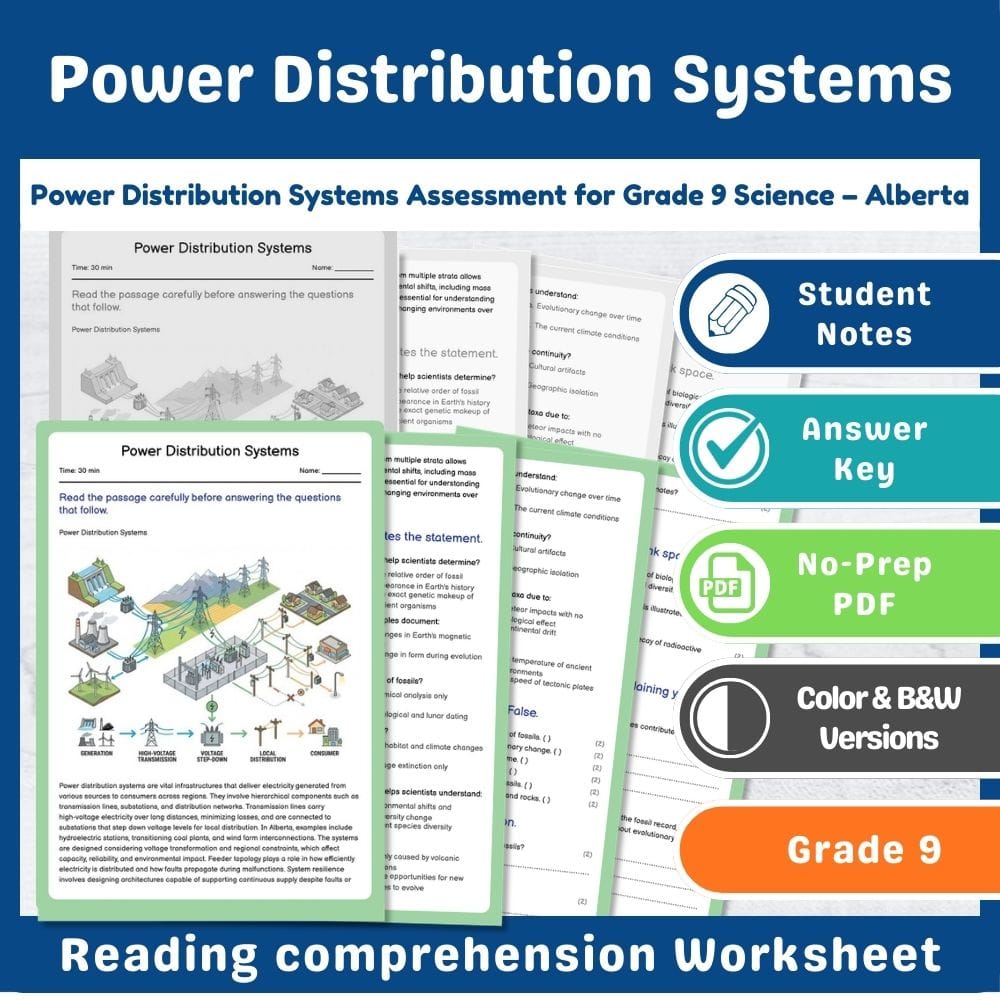
Power Distribution Systems Assessment for Grade 9 Science – Alberta
Created byPrism Point LearningLearning Objectives
- Understand the main components and functions of power distribution systems.
- Analyze how voltage transformation and feeder topology affect system reliability and capacity.
- Evaluate the environmental impacts and resilience considerations in power grid design.
Natural Selection Assessment for Grade 9 Science – NGSS Standards
Created byPrism Point LearningLearning Objectives
- Explain the mechanisms of natural selection, including variation, inheritance, and selection pressures.
- Identify classic examples of natural selection, such as finch beak morphology and bacterial resistance.
- Describe how models of fitness and allele frequency determine different types of selection.
Resource Limits Assessment | NGSS Grade 6 Science
Created byPrism Point LearningLearning Objectives
- Describe how resource availability affects individual organisms and populations.
- Interpret data related to resource distribution and species abundance.
- Identify limiting resources in different ecosystems and explain their effects.
Population Effects Assessment | NGSS Standards Grade 8 Science
Created byPrism Point LearningLearning Objectives
- Analyze the links between population growth, resource consumption, and environmental change.
- Evaluate quantitative indicators and data trends related to climate, land use, and biogeochemical fluxes.
- Apply cause–effect reasoning to assess how demographic and consumption patterns impact Earth systems.
Indicator Properties Assessment | BC Standards Grade 8 Science
Created byPrism Point LearningLearning Objectives
- Understand how properties such as pH, conductivity, density, and refractive index change during chemical reactions.
- Identify property shifts indicating formation of new substances with distinct traits.
- Differentiate between physical and chemical changes using property measurements.
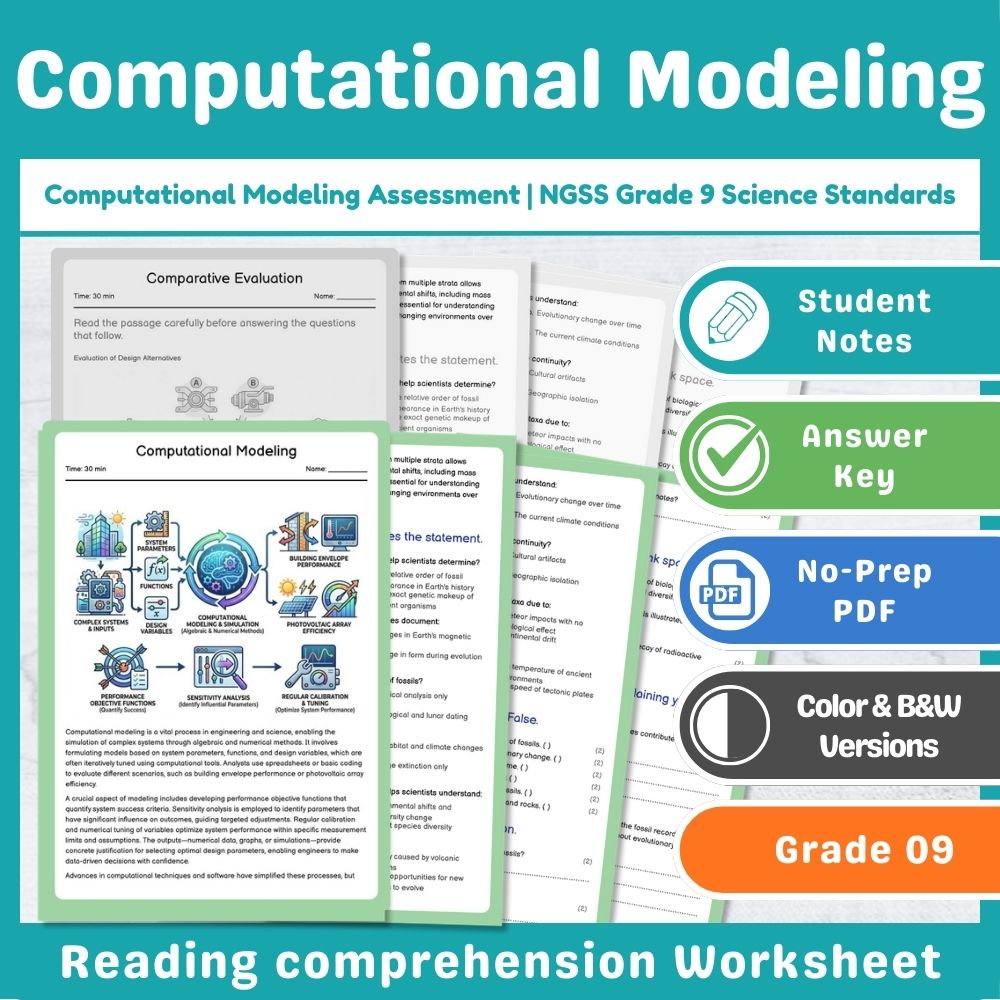
Computational Modeling Assessment | NGSS Grade 9 Science Standards
Created byPrism Point LearningLearning Objectives
- Understand the application of mathematical and computational methods in system modeling.
- Analyze how parameters and variables influence system performance.
- Develop and evaluate models using spreadsheets and simple code simulations.
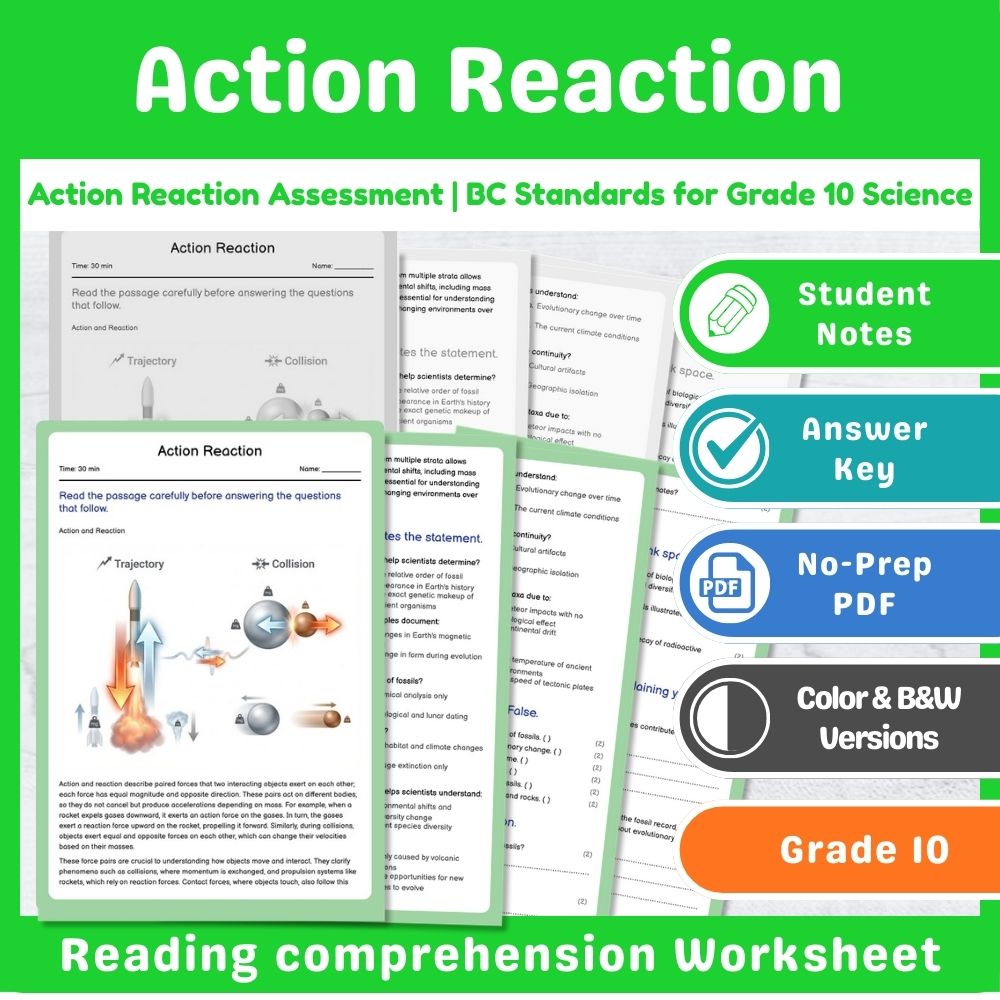
Action Reaction Assessment | BC Standards for Grade 10 Science
Created byPrism Point LearningLearning Objectives
- Explain the concept of Newton's third law of motion in terms of action-reaction pairs.
- Identify real-life examples of action-reaction forces such as collisions and rocket thrust.
- Describe how forces act on different objects and result in acceleration depending on mass.
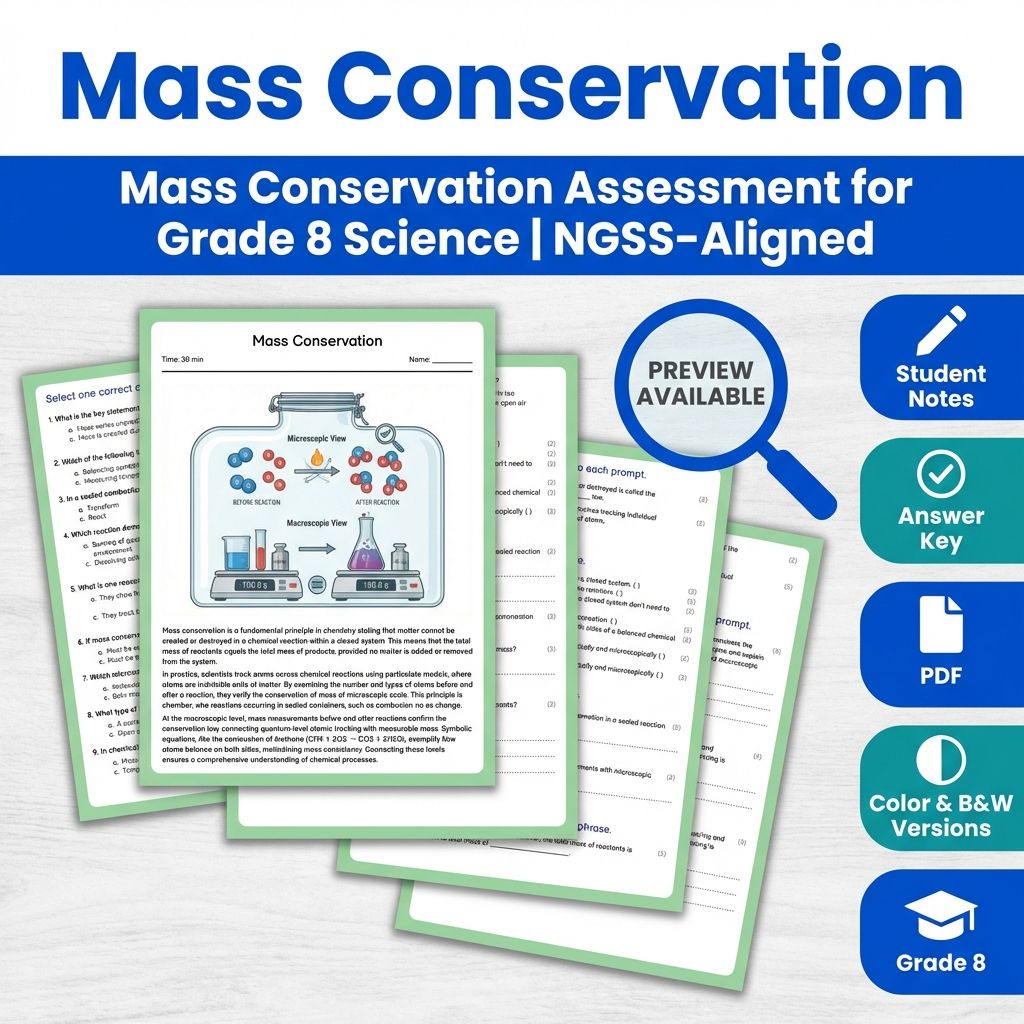
Mass Conservation Assessment for Grade 8 Science | NGSS-Aligned
Created byPrism Point LearningLearning Objectives
- Explain the principle of mass conservation in chemical reactions within closed systems.
- Track atoms across reactants and products at the particulate level to understand mass balance.
- Interpret symbolic chemical equations in terms of atomic and mass conservation.
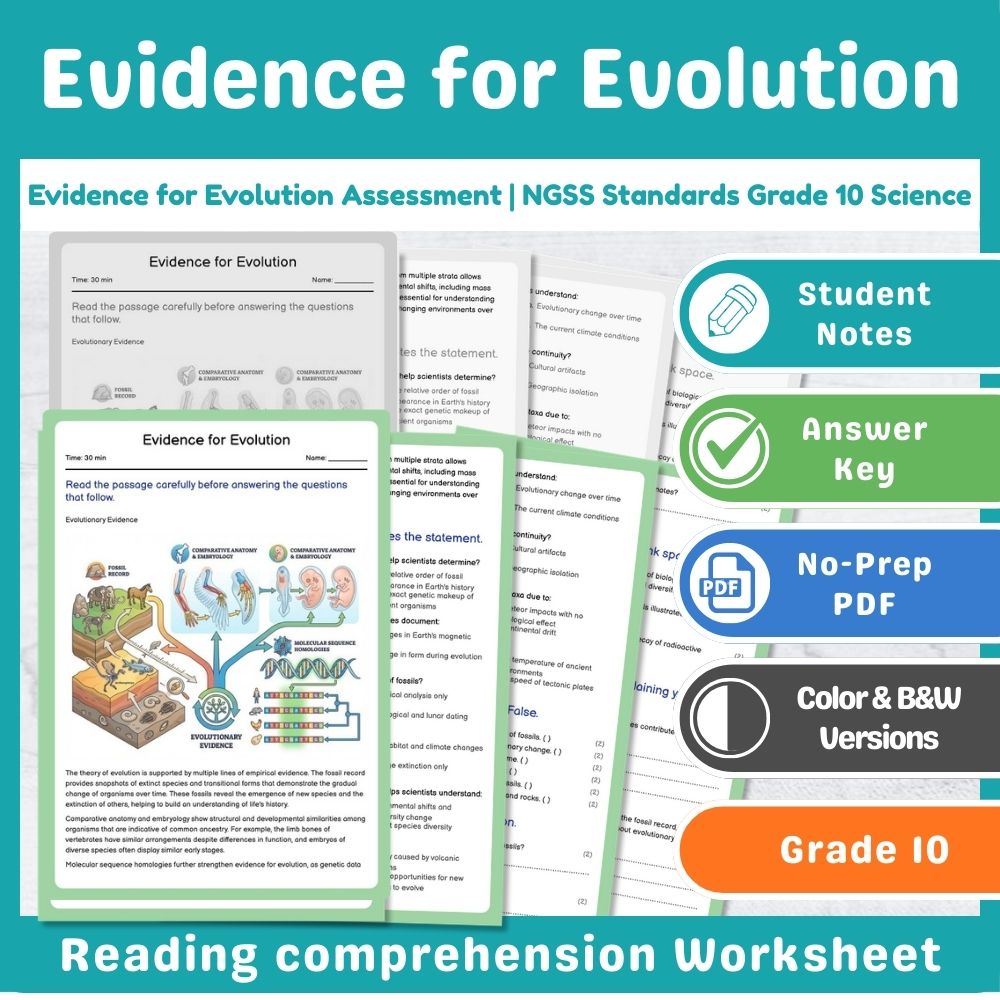
Evidence for Evolution Assessment | NGSS Standards Grade 10 Science
Created byPrism Point LearningLearning Objectives
- Understand the key lines of scientific evidence supporting common ancestry and evolution.
- Identify how fossil records, comparative anatomy, embryology, and molecular data corroborate evolutionary theory.
- Analyze the role of radiometric dating and biogeography in establishing evolutionary timelines.

Climate Drivers Over Time Assessment | General Grade 7 Science
Created byPrism Point LearningLearning Objectives
- Understand how natural records and measurements are used to assess past and present climate conditions.
- Identify key climate drivers that influence long-term climate change.
- Explain how factors like greenhouse gases, ocean currents, and volcanic activity affect Earth's energy balance.
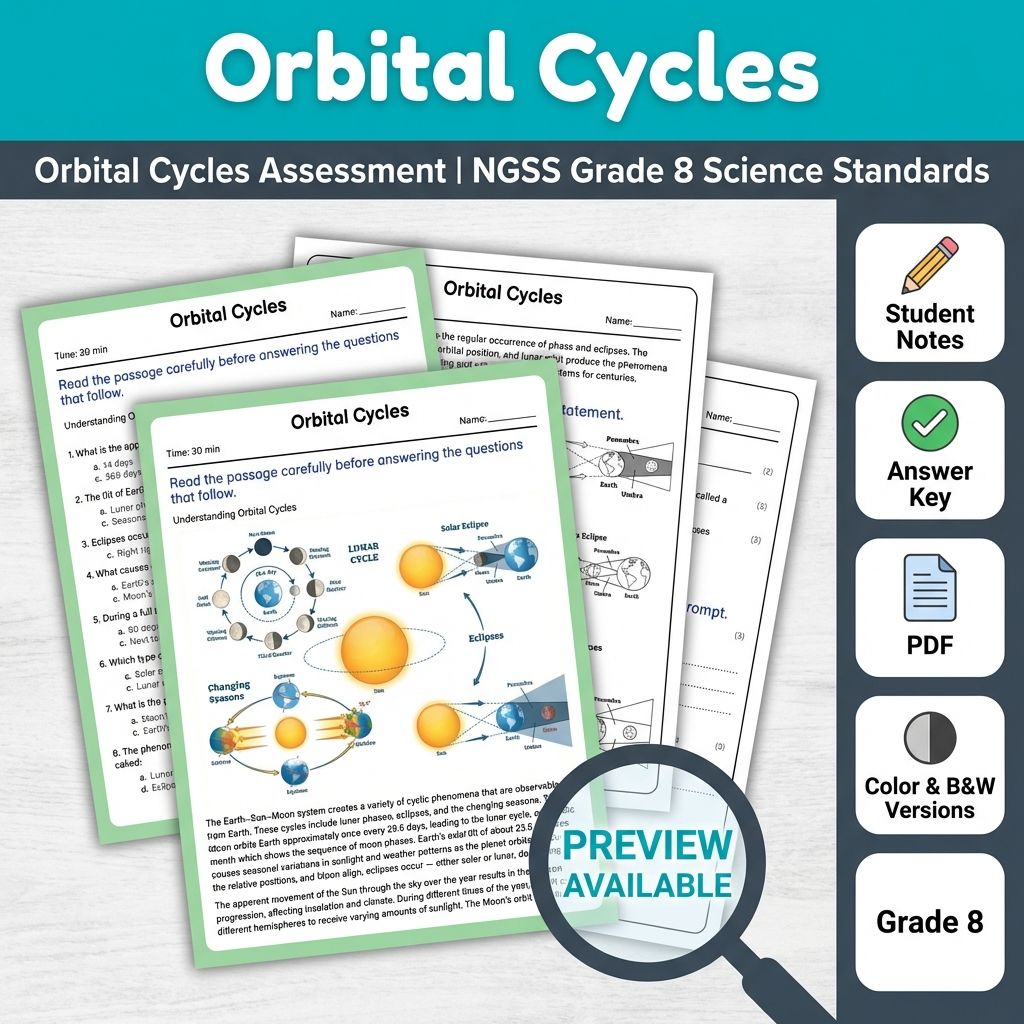
Orbital Cycles Assessment | NGSS Grade 8 Science Standards
Created byPrism Point LearningLearning Objectives
- Describe the relative positions and motions of the Earth, Moon, and Sun that produce lunar phases, eclipses, and seasonal changes.
- Explain how orbital geometry and axial tilt influence observable sky phenomena and calendar cycles.
- Analyze the relationship between Earth's orbit, the lunar cycle, and seasonal insolation differences.
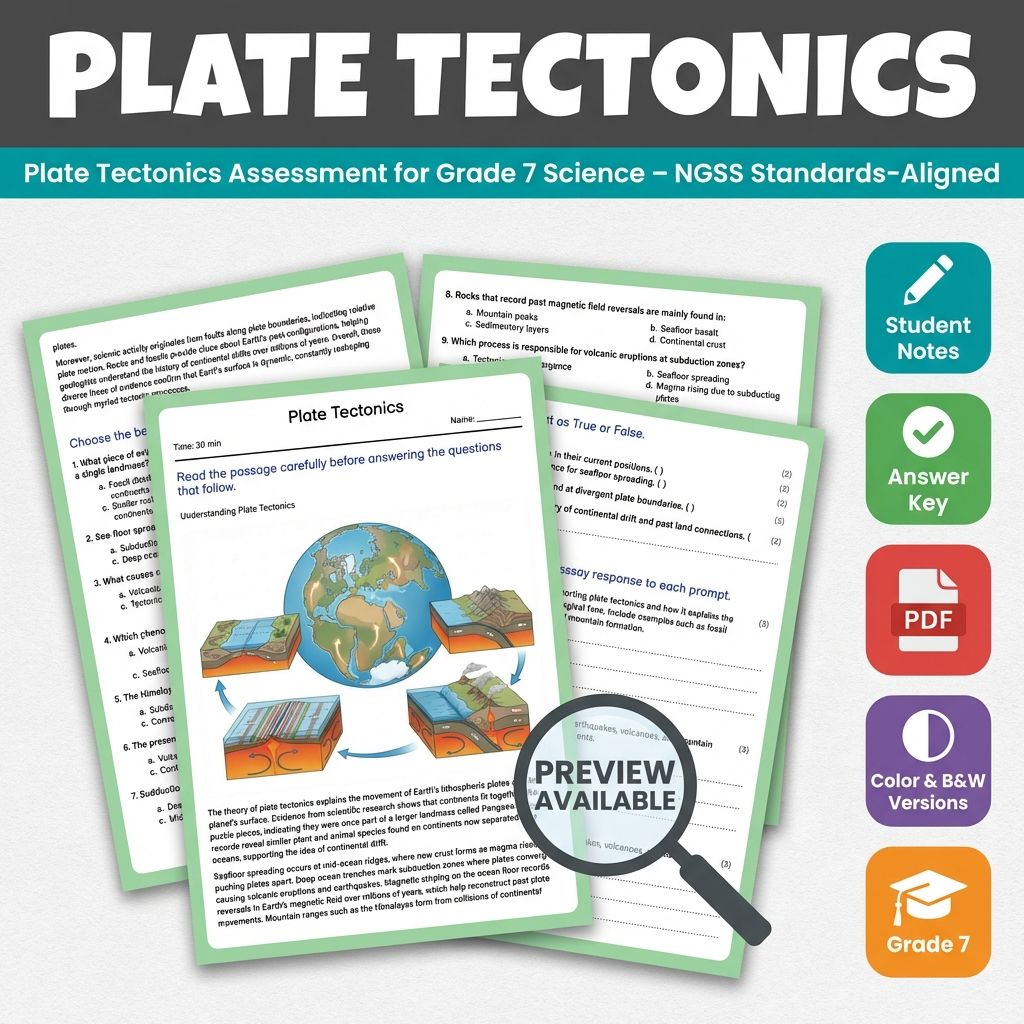
Plate Tectonics Assessment for Grade 7 Science – NGSS Standards-Aligned
Created byPrism Point LearningLearning Objectives
- Understand how geologic and fossil evidence supports the theory of plate tectonics and continental movement.
- Identify features such as mid-ocean ridges, trenches, and mountain ranges as evidence of tectonic activity.
- Explain how rock types, fossil distribution, and seafloor structures record Earth's geological history.
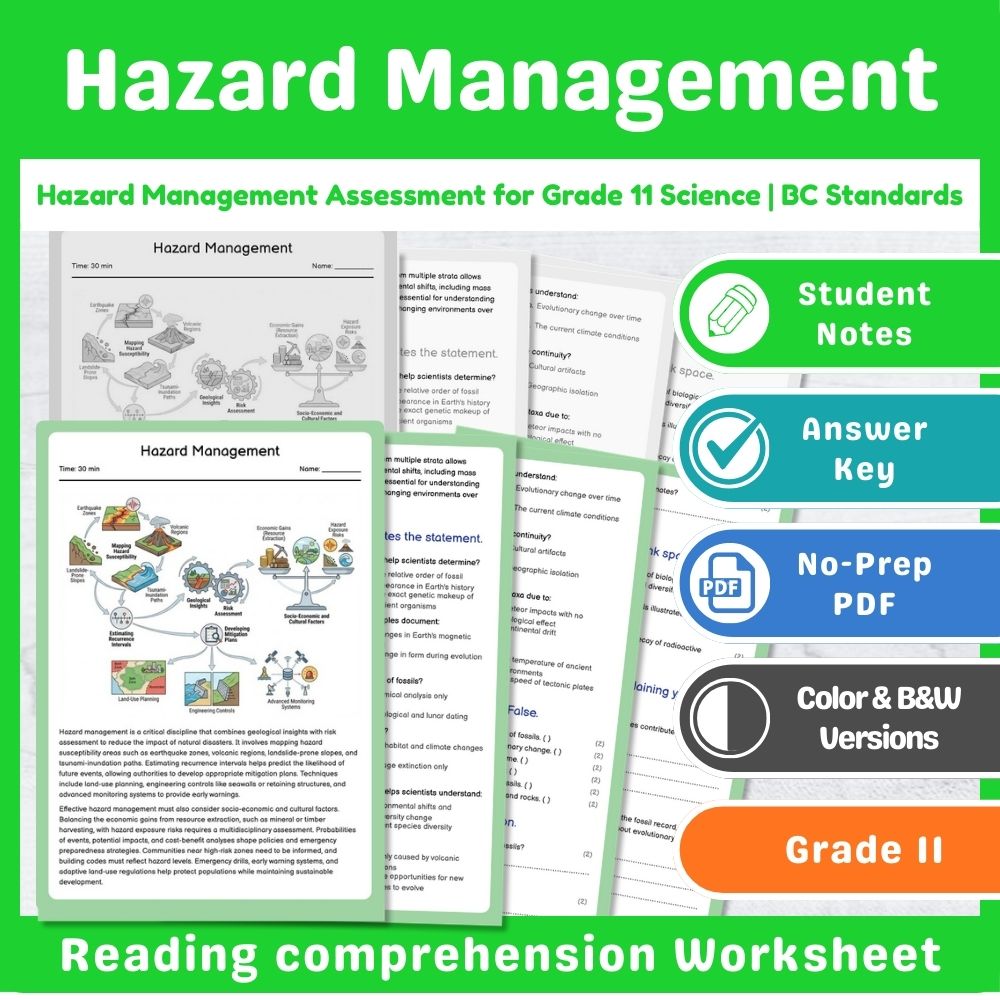
Hazard Management Assessment | BC Standards Grade 11 Science
Created byPrism Point LearningLearning Objectives
- Understand different hazard types and their management techniques.
- Identify risk assessment processes and mitigation strategies.
- Evaluate the balance between resource benefits and hazard exposure.
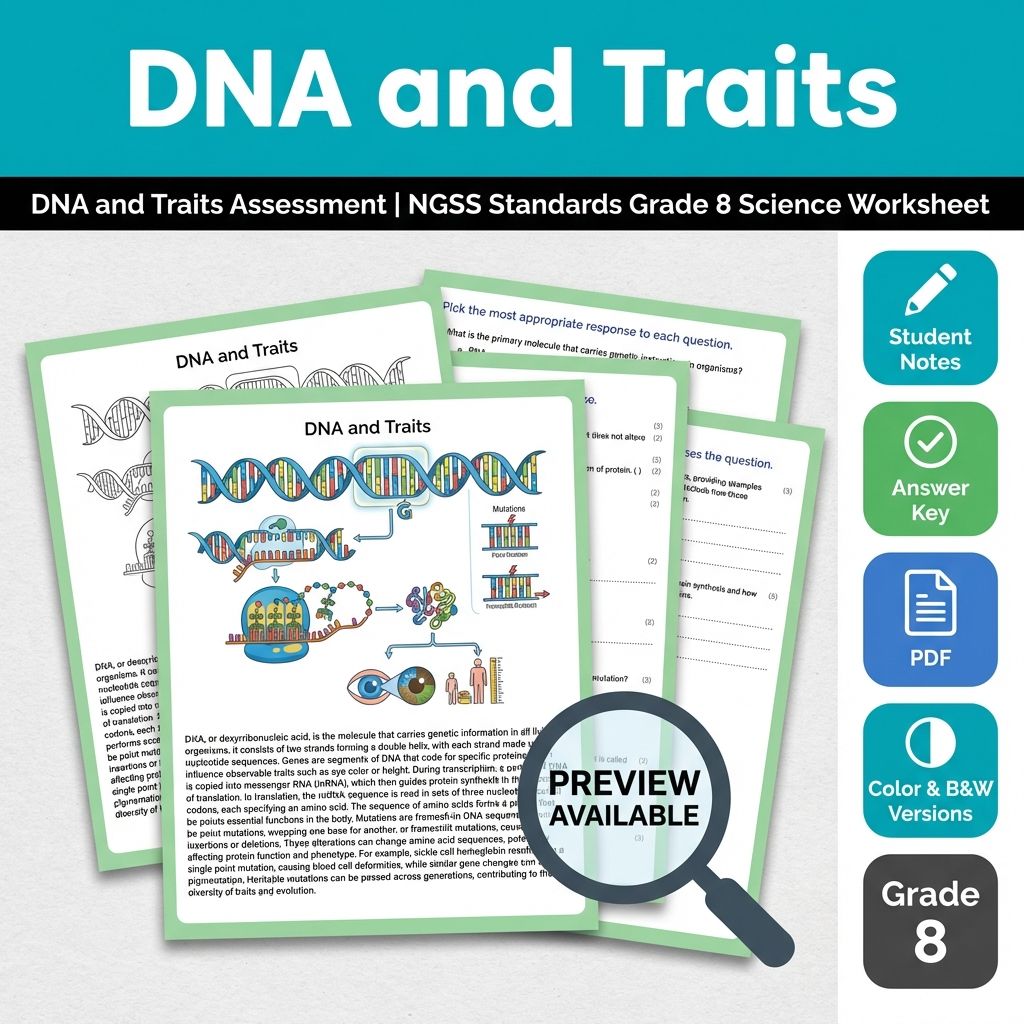
DNA and Traits Assessment | NGSS Standards Grade 8 Science Worksheet
Created byPrism Point LearningLearning Objectives
- Explain the relationship between DNA sequences and protein synthesis.
- Identify how mutations can alter amino acid sequences and affect traits.
- Describe gene structure, transcription, translation, and mutation effects.

Speciation Processes Assessment | TEKS Standards Grade 10 Science
Created byPrism Point LearningLearning Objectives
- Understand the various mechanisms and modes of speciation.
- Identify reproductive barriers and their causes in species divergence.
- Explain how genetic changes contribute to the formation of new species.
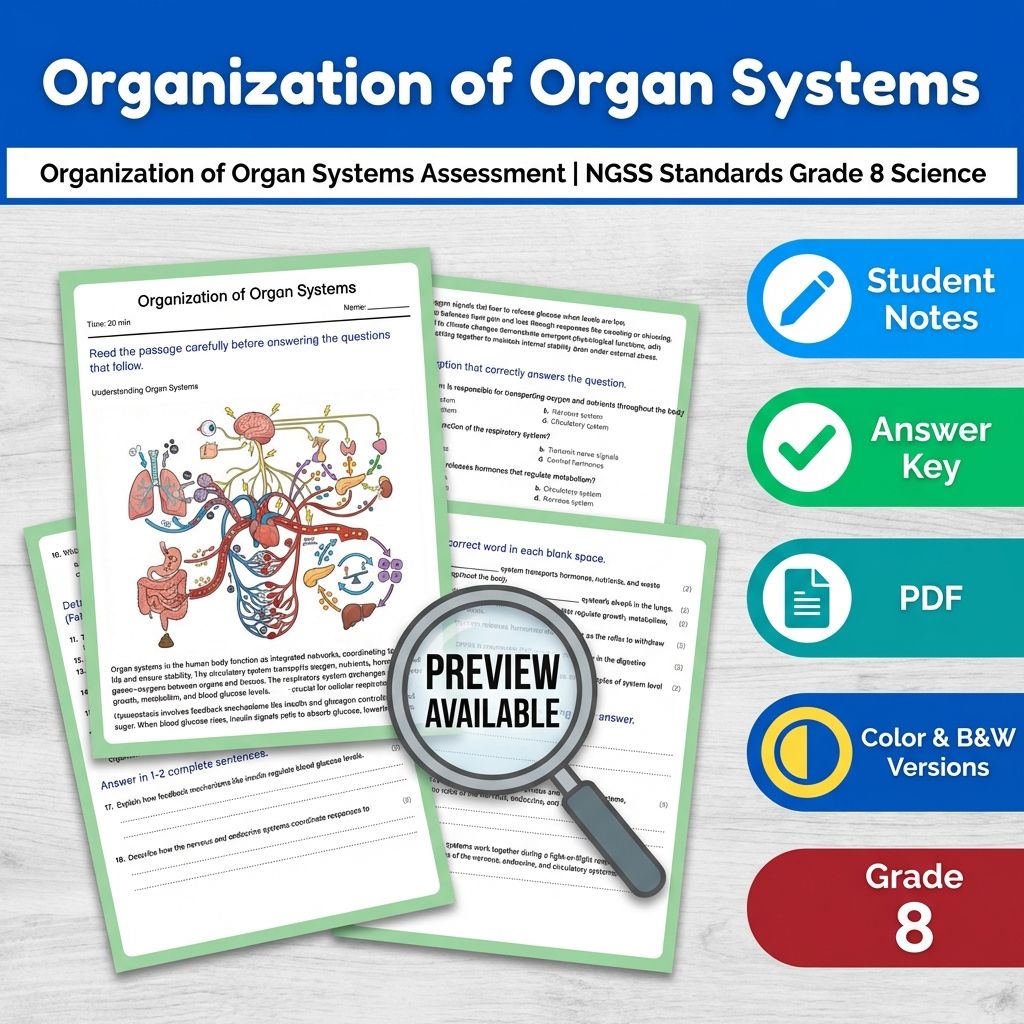
Organization of Organ Systems Assessment | NGSS Standards Grade 8 Science
Created byPrism Point LearningLearning Objectives
- Understand how body systems collaborate to maintain homeostasis.
- Identify functions of the circulatory, respiratory, digestive, nervous, and endocrine systems.
- Explain feedback mechanisms like insulin–glucagon signaling and thermoregulation.
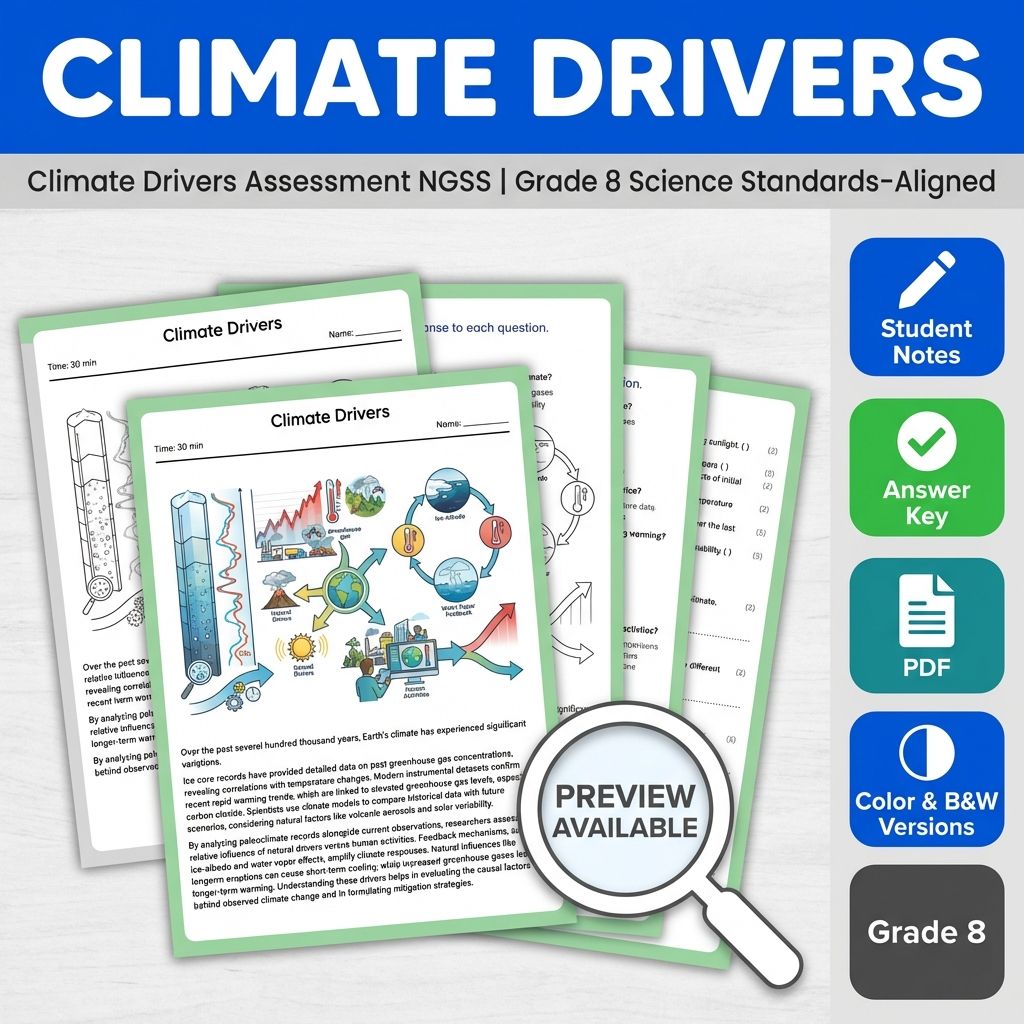
Climate Drivers Assessment NGSS | Grade 8 Science Standards-Aligned
Created byPrism Point LearningLearning Objectives
- Identify the main factors influencing global temperature changes over time.
- Evaluate multiple lines of evidence related to climate change.
- Differentiate between natural and anthropogenic climate drivers.

Trait Prediction Across Generations Assessment | General Grade 9 Science
Created byPrism Point LearningLearning Objectives
- Understand how inheritance patterns influence trait prediction across multiple generations.
- Apply probability concepts to forecast phenotype ratios based on parental alleles.
- Analyze how dominant and recessive traits are expressed and masked in offspring.
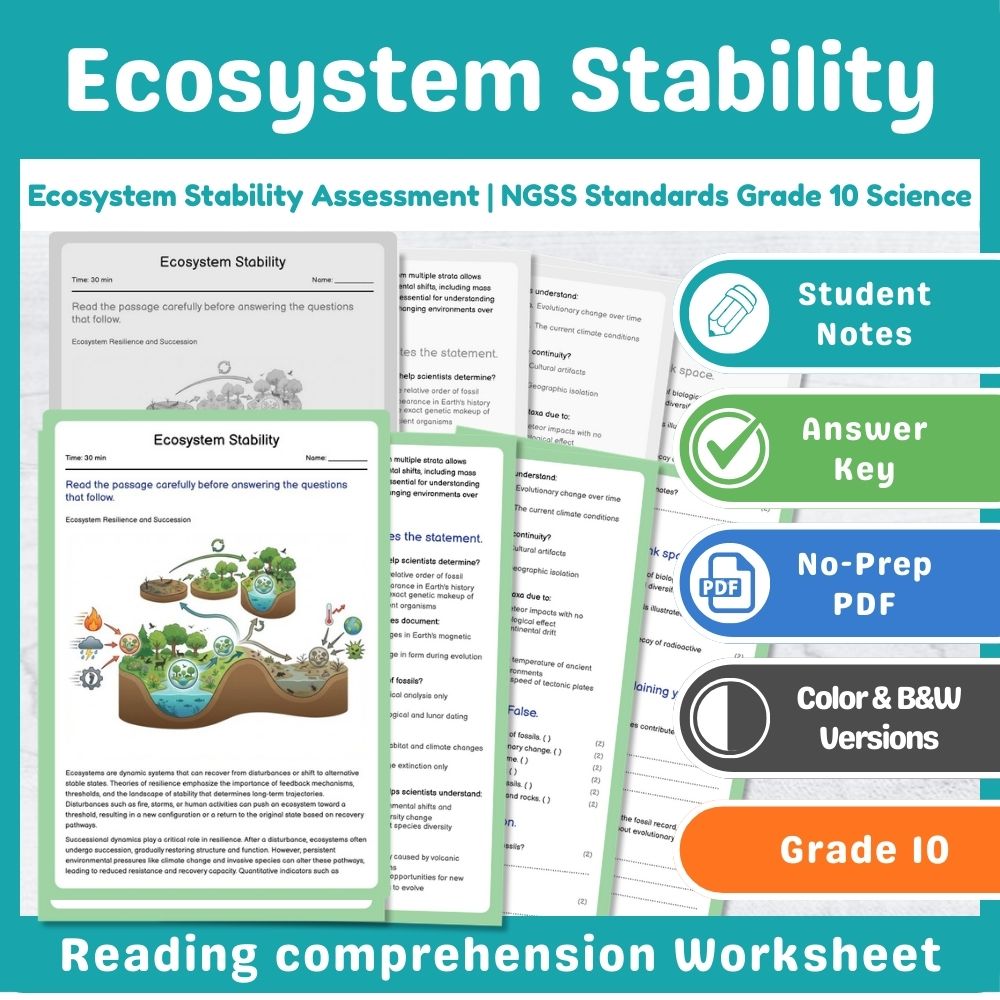
Ecosystem Stability Assessment | NGSS Standards Grade 10 Science
Created byPrism Point LearningLearning Objectives
- Understand the concepts of resilience and stability landscapes in ecosystems.
- Describe how natural and human disturbances affect ecosystem recovery pathways and thresholds.
- Identify indicators used to assess resistance, recovery time, and functional redundancy in ecosystems.
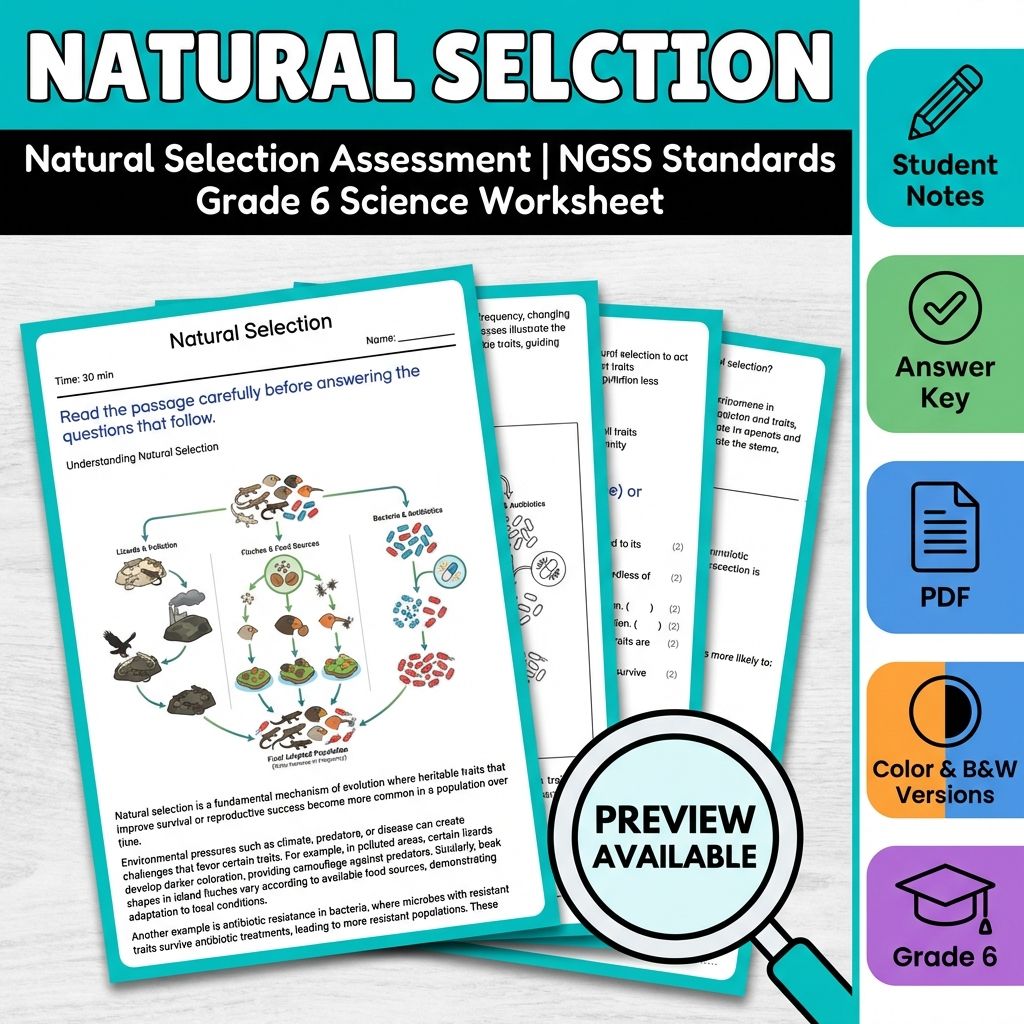
Natural Selection Assessment | NGSS Standards Grade 6 Science Worksheet
Created byPrism Point LearningLearning Objectives
- Describe the process of natural selection and how it leads to changes in trait frequencies within populations.
- Explain how environmental pressures influence the survival and reproduction of organisms with different heritable traits.
- Identify real-world examples of natural selection, such as pigmentation changes, beak variation, and antibiotic resistance.
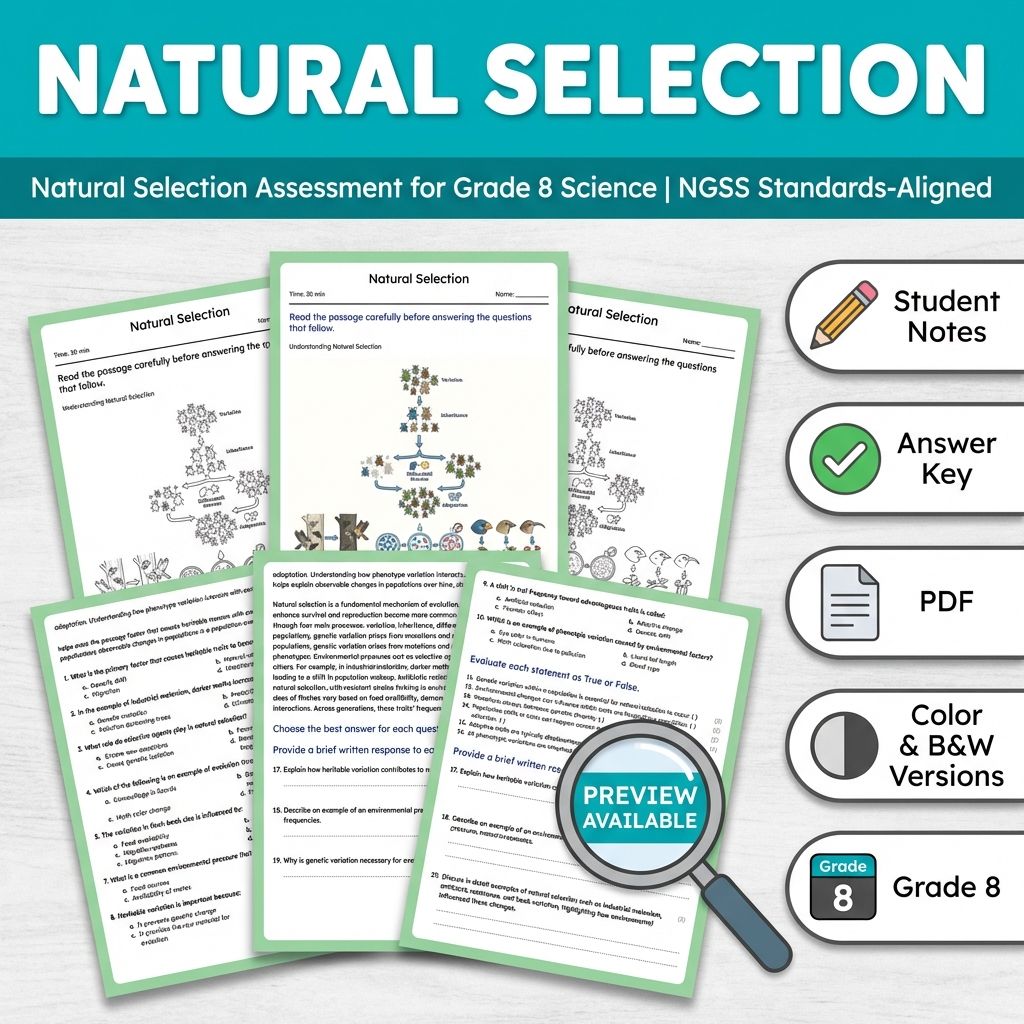
Natural Selection Assessment for Grade 8 Science | NGSS Standards-Aligned
Created byPrism Point LearningLearning Objectives
- Understand the mechanisms of variation and natural selection that drive adaptive change in populations.
- Identify examples of natural selection such as industrial melanism, antibiotic resistance, and beak variation.
- Link phenotypic variation and environmental factors to changes in trait frequencies over generations.
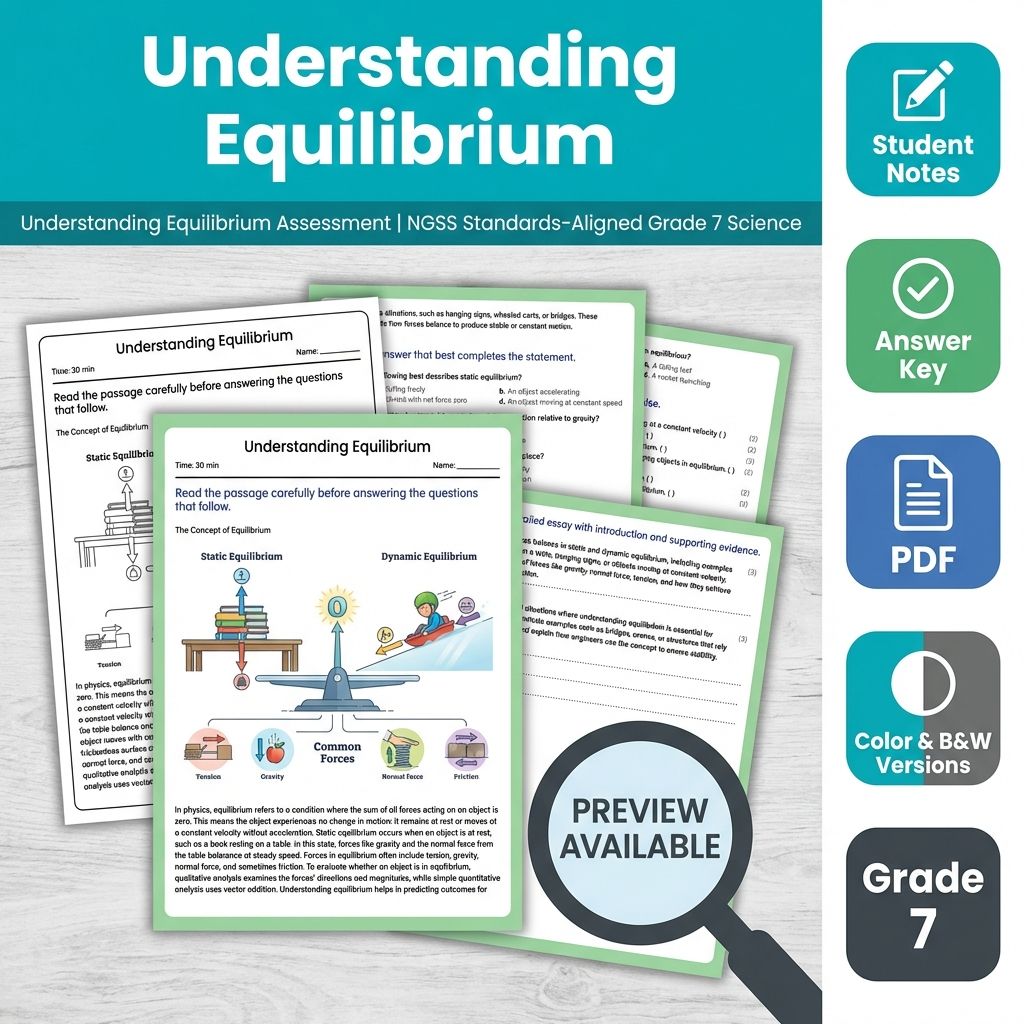
Understanding Equilibrium Assessment | NGSS Standards-Aligned Grade 7 Science
Created byPrism Point LearningLearning Objectives
- Explain the concept of equilibrium as the balance of forces in an object.
- Differentiate between static and dynamic equilibrium in real-world scenarios.
- Apply qualitative and simple quantitative analyses to predict objects' behavior at rest or moving with constant velocity.
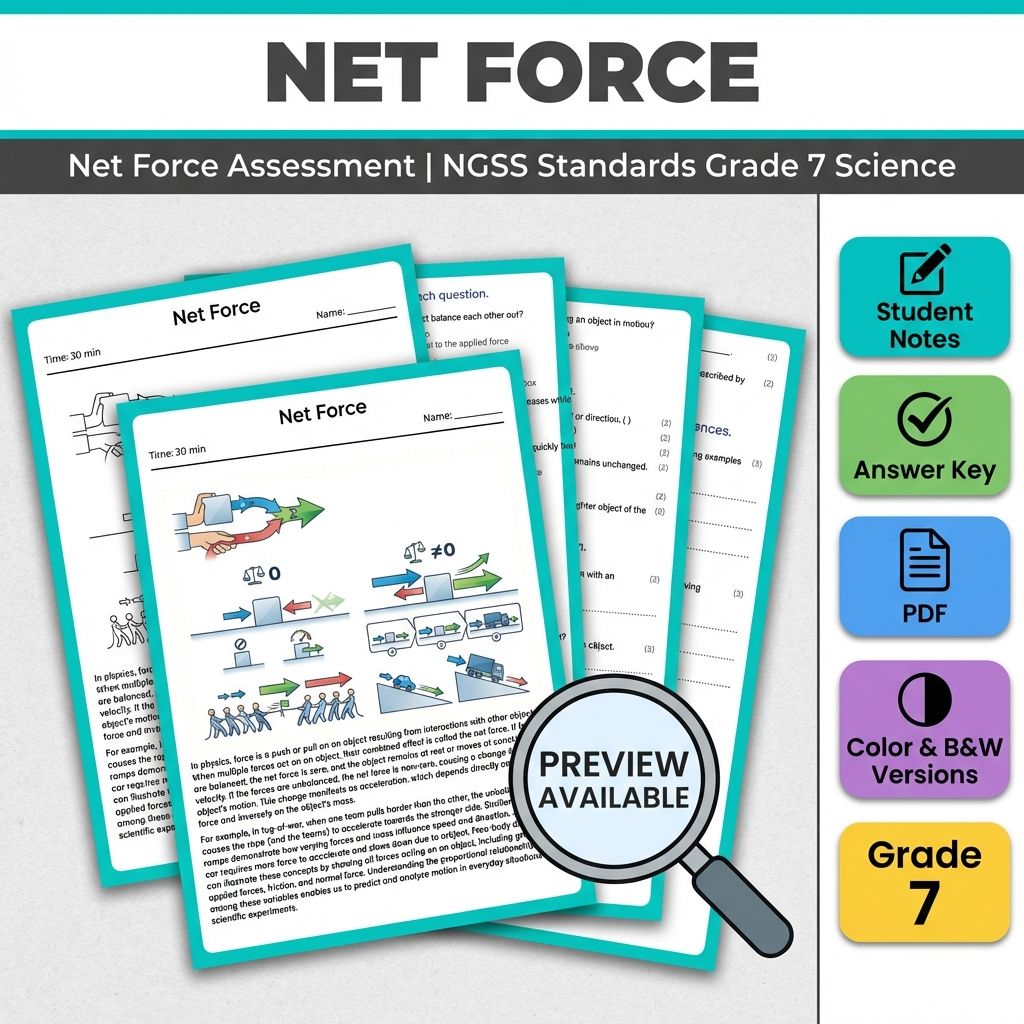
Net Force Assessment | NGSS Standards Grade 7 Science
Created byPrism Point LearningLearning Objectives
- Define net force as the vector sum of forces acting on an object.
- Explain how unbalanced forces cause changes in motion using free-body diagrams.
- Relate net force, mass, and acceleration proportionally through quantitative reasoning.
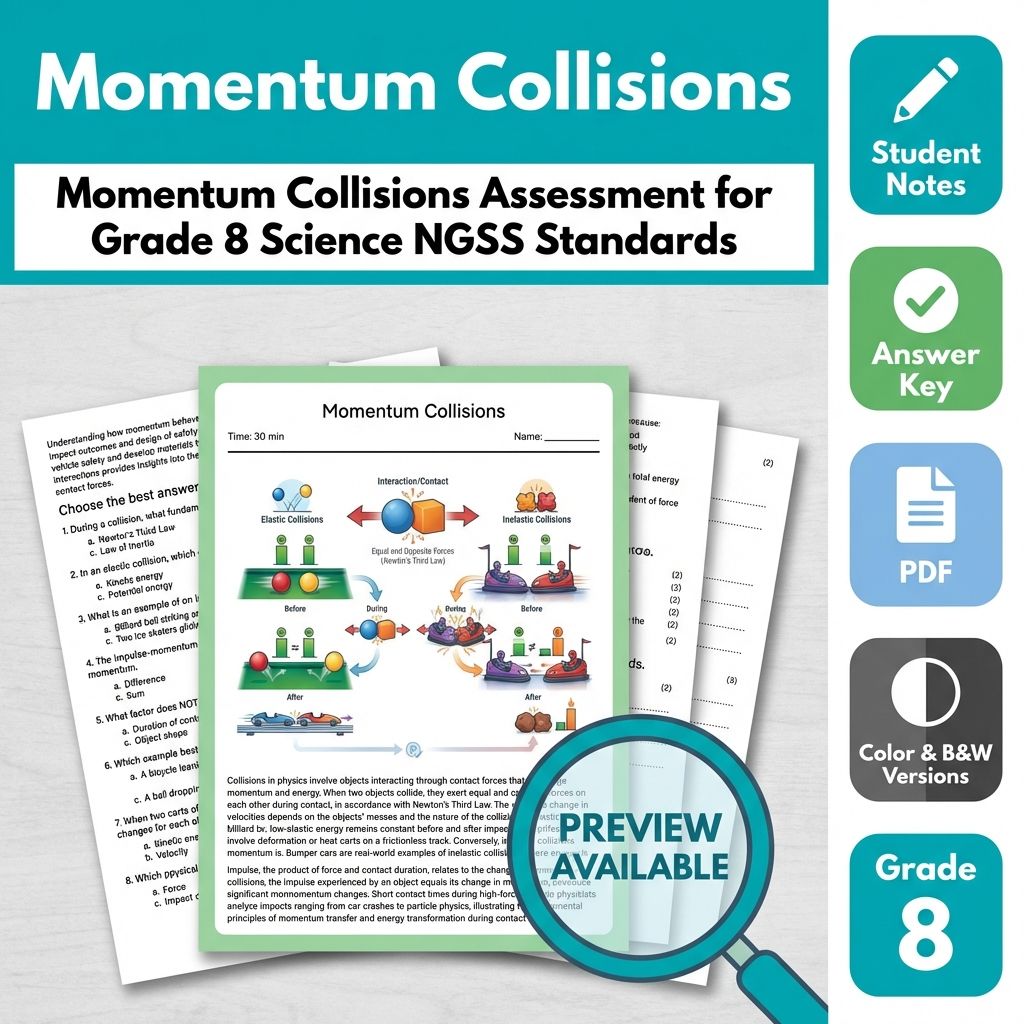
Momentum Collisions Assessment for Grade 8 Science NGSS Standards
Created byPrism Point LearningLearning Objectives
- Understand the principles of momentum exchange during collisions.
- Distinguish between elastic and inelastic collisions through conservation of kinetic energy.
- Analyze real-world examples involving impacts and velocity changes.
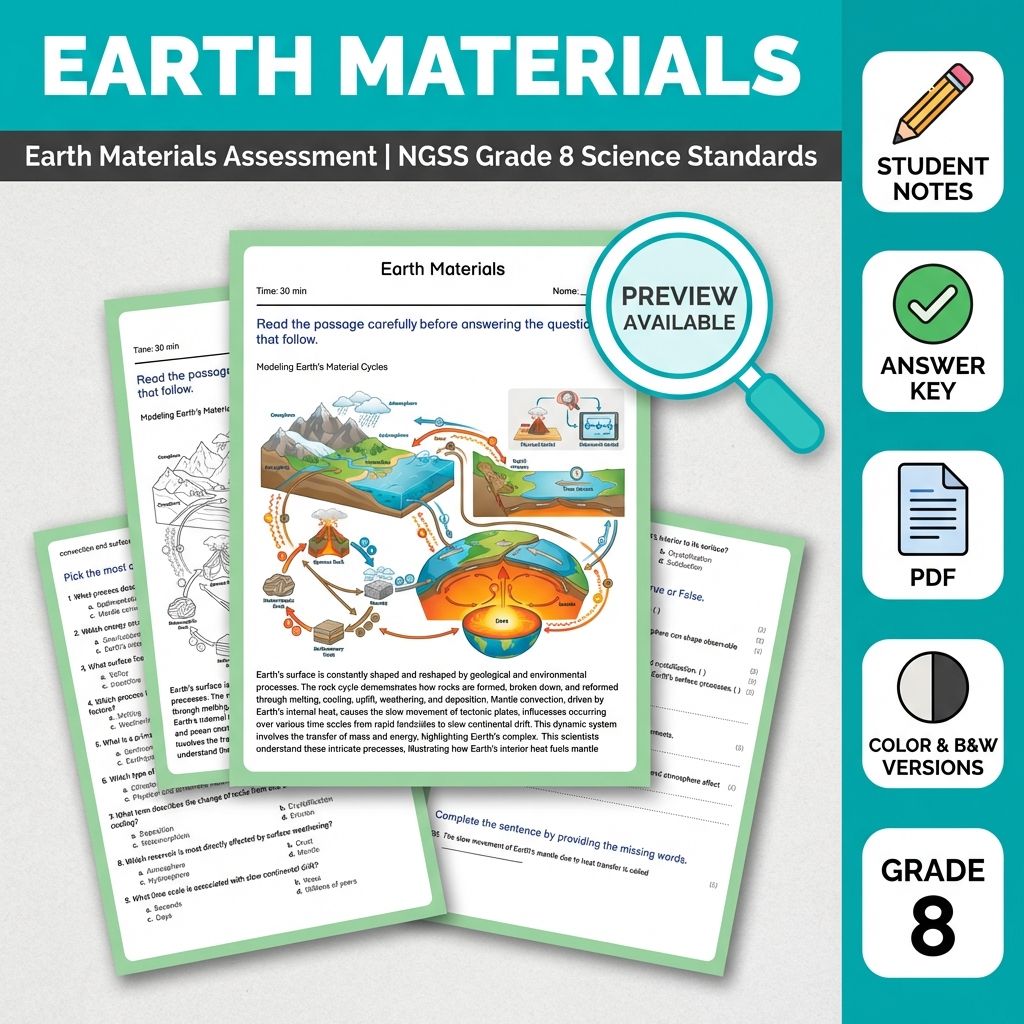
Earth Materials Assessment | NGSS Grade 8 Science Standards
Created byPrism Point LearningLearning Objectives
- Describe the processes involved in Earth's material cycles, including melting, crystallization, uplift, weathering, transport, and deposition.
- Explain the energy sources driving Earth's geosphere, such as internal heat and gravitational potential.
- Model the interactions between Earth's geosphere, hydrosphere, and atmosphere in surface processes and material flow.
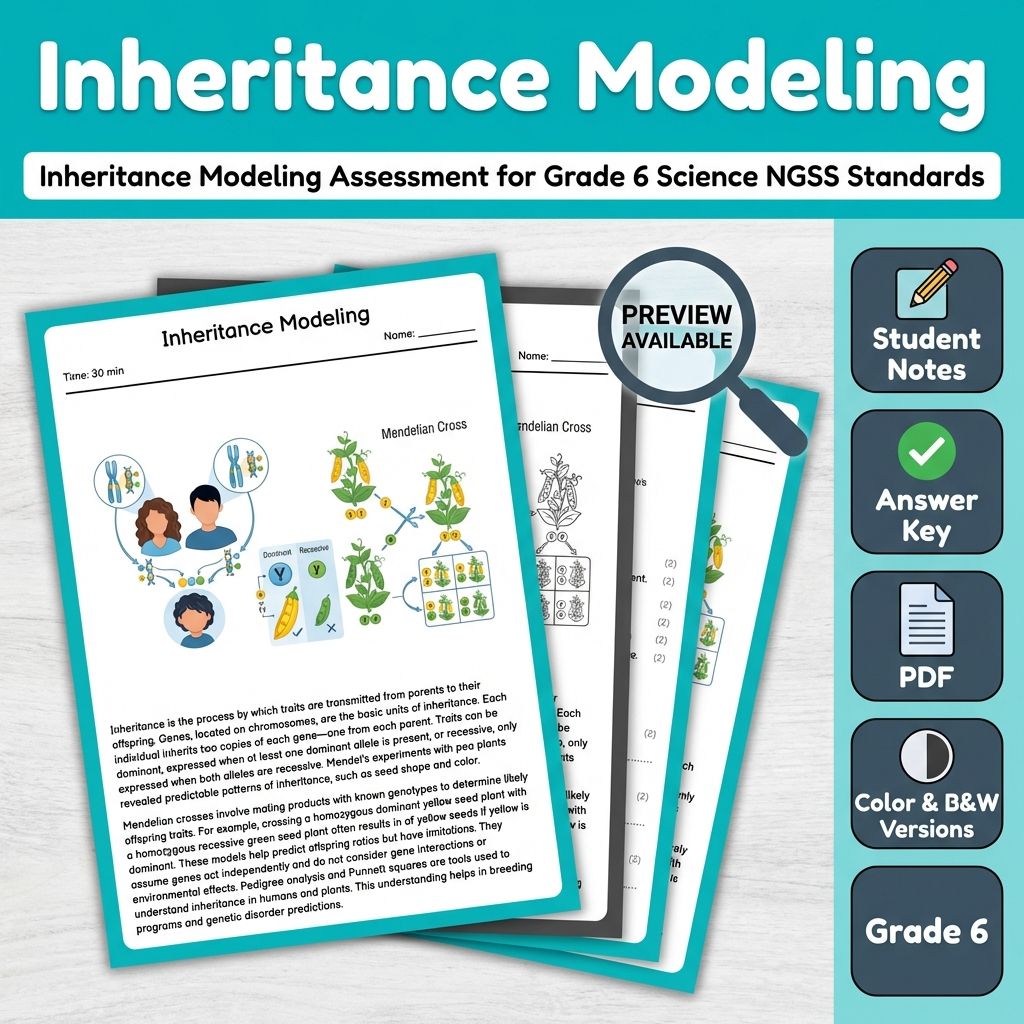
Inheritance Modeling Assessment for Grade 6 Science NGSS Standards
Created byPrism Point LearningLearning Objectives
- Understand how traits are transmitted from parents to offspring through genes.
- Identify the difference between dominant and recessive inheritance patterns.
- Use Punnett squares to predict offspring trait ratios in Mendelian cross examples.

Organelles Assessment | TEKS Grade 10 Science Standards-Aligned
Created byPrism Point LearningLearning Objectives
- Understand the structure and functions of various cellular organelles.
- Compare membrane-bound and non-membrane-bound organelles.
- Explain how compartmentalization enhances cellular efficiency.
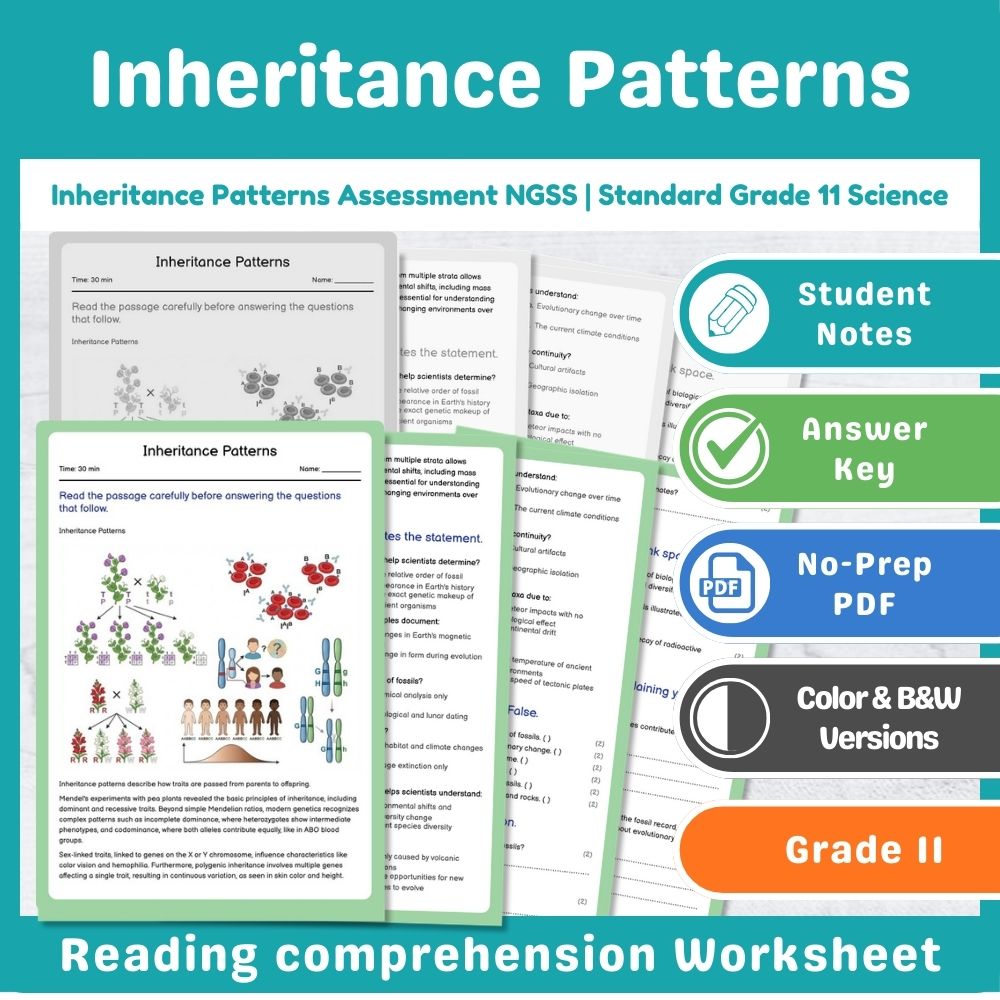
Inheritance Patterns Assessment NGSS | Standard Grade 11 Science
Created byPrism Point LearningLearning Objectives
- Understand the basic principles of Mendelian inheritance and how traits are passed through generations.
- Identify and describe various inheritance patterns beyond simple dominance, such as incomplete dominance, codominance, sex linkage, and polygenic inheritance.
- Interpret pedigrees and predict inheritance outcomes using probability and meiotic mechanisms.
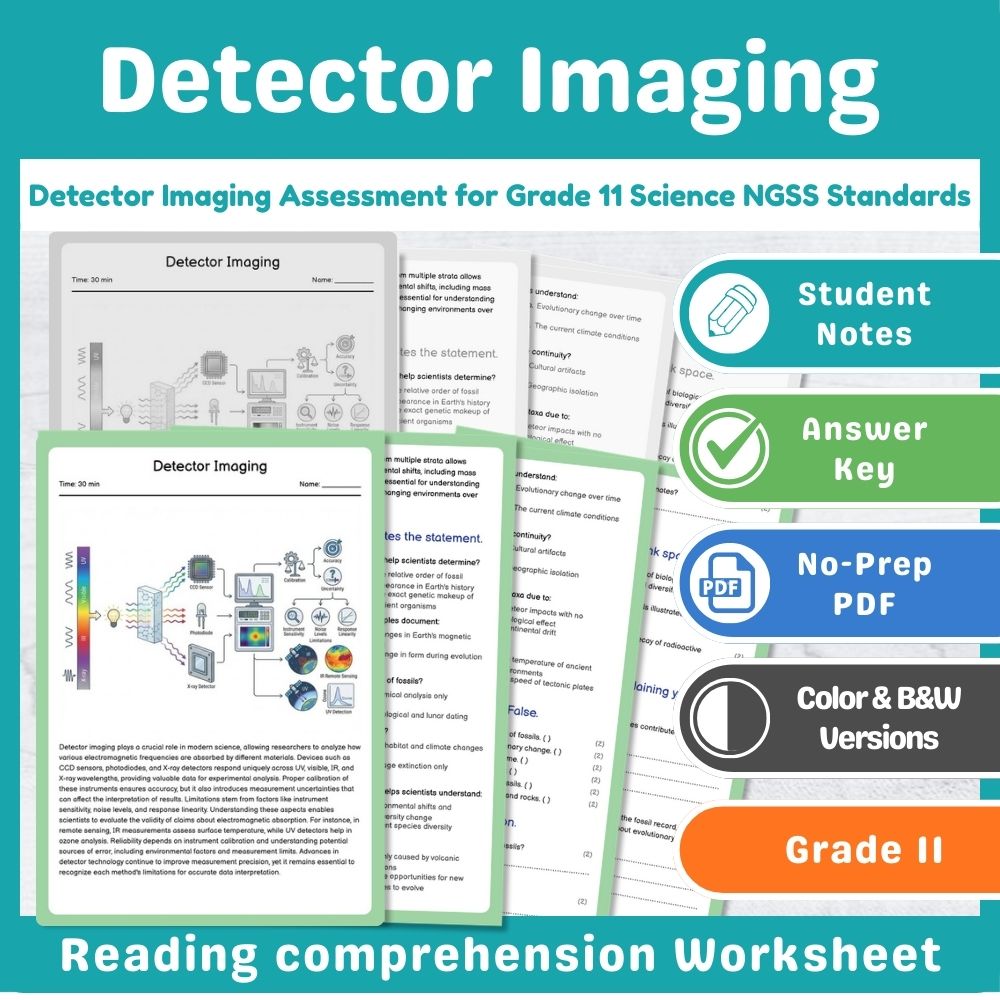
Detector Imaging Assessment for Grade 11 Science NGSS Standards
Created byPrism Point LearningLearning Objectives
- Evaluate the validity and reliability of claims about electromagnetic absorption across different bands.
- Analyze detector responses like CCD and photodiodes in UV, visible, IR, and X-ray spectra.
- Understand calibration procedures, uncertainties, and instrument limitations in detector imaging.
Browse more categories
About Science Worksheets
Find Science worksheets spanning core skills, practice, and review. All 42,550 resources are instant PDF downloads for the classroom or home.
Every worksheet on MyTeachingSheets is created by independent teacher-authors and reviewed before publication. All resources download as printable PDFs for classroom, homework, or at-home practice, and many include answer keys. Preview any worksheet free before buying.