
Science Worksheets
42,685 subject resources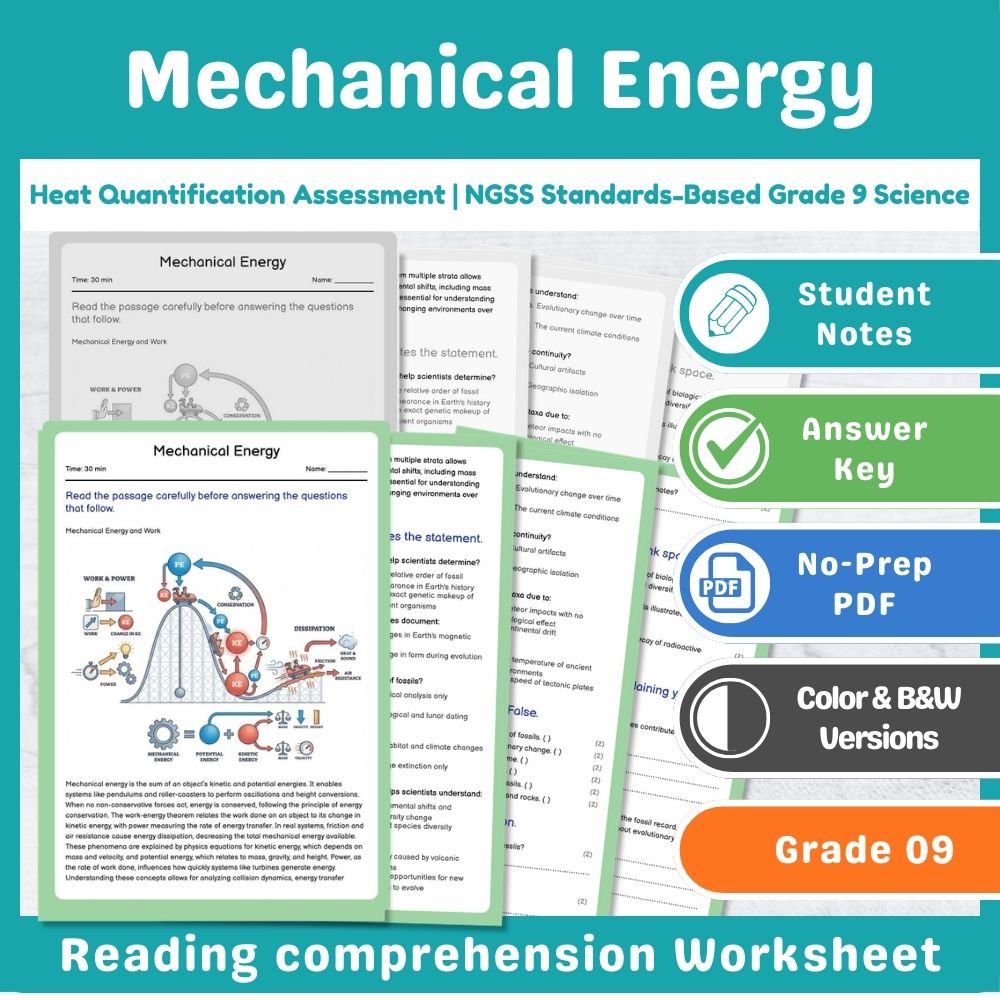
Mechanical Energy Assessment | NGSS Grade 9 Science Standards
 Created byPrism Point Learning
Learning Objectives
- Explain the concepts of kinetic and potential energy in mechanical systems.
- Apply work-energy principles to analyze motion and energy transfer.
- Calculate power in mechanical contexts and understand the effect of non-conservative forces.
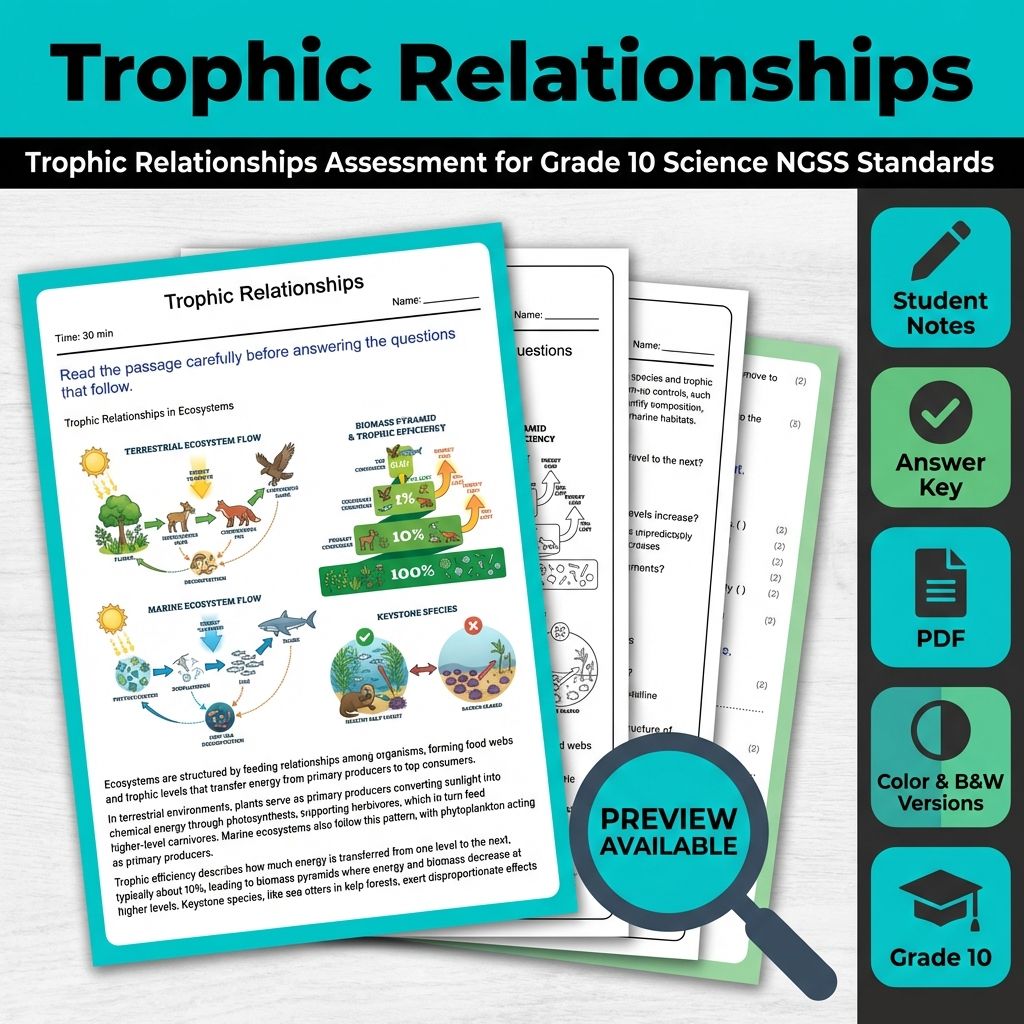
Trophic Relationships Assessment for Grade 10 Science NGSS Standards
Created byPrism Point LearningLearning Objectives
- Explain the concept of energy transfer within food webs and trophic levels.
- Analyze the effects of keystone species and trophic cascades on ecosystem stability.
- Evaluate how trophic efficiency influences biomass distribution in terrestrial and marine ecosystems.

Membrane Structure Assessment | TEKS Grade 10 Science Standards
Created byPrism Point LearningLearning Objectives
- Explain the fluid mosaic model and the dynamic nature of the plasma membrane.
- Identify the roles of phospholipid bilayer asymmetry and cholesterol in membrane fluidity.
- Describe different membrane protein types and their functions such as receptors and transporters.
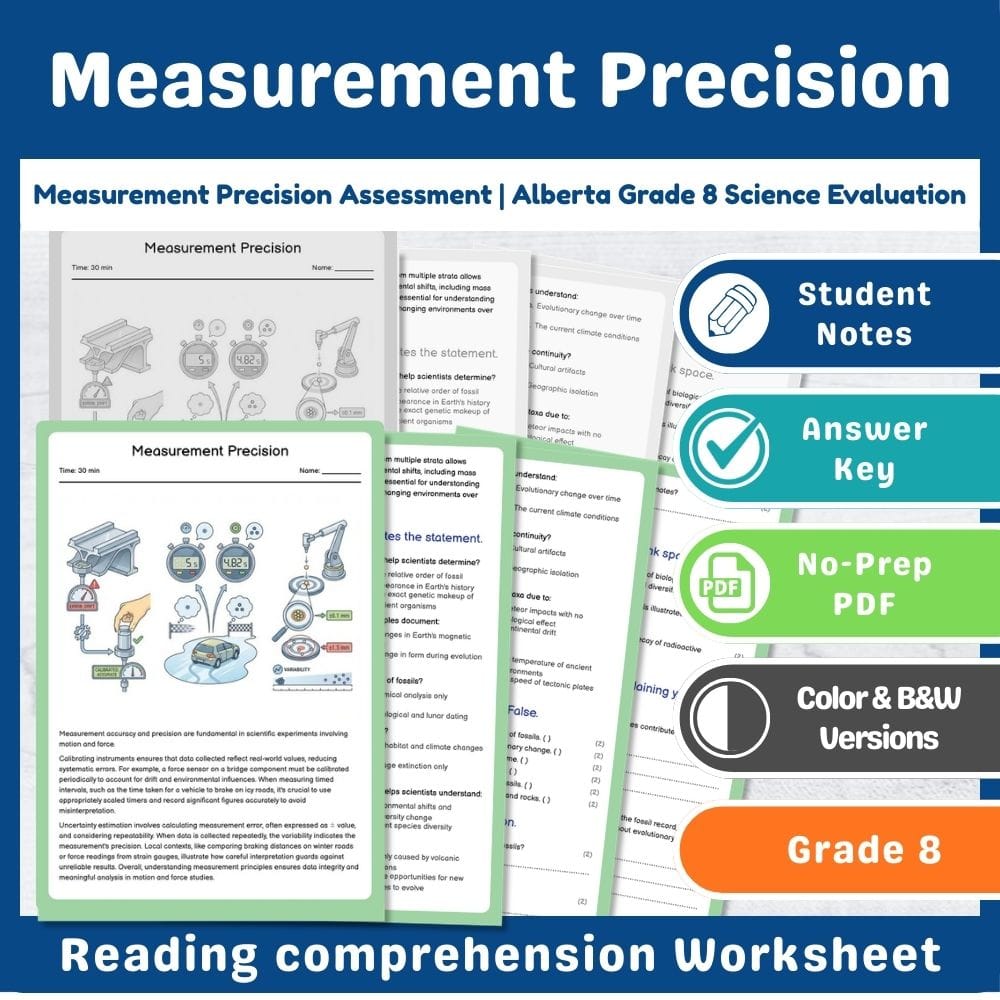
Measurement Precision Assessment | Alberta Grade 8 Science Evaluation
Created byPrism Point LearningLearning Objectives
- Understand the principles of instrument calibration and measurement uncertainty.
- Interpret measurement data considering significant figures and error estimates.
- Apply measurement concepts to real-world contexts, such as braking distances and force readings.

Speciation Processes Assessment | TEKS Standards Grade 10 Science
Created byPrism Point LearningLearning Objectives
- Understand the various mechanisms and modes of speciation.
- Identify reproductive barriers and their causes in species divergence.
- Explain how genetic changes contribute to the formation of new species.

Climate Modeling Assessment for Grade 12 Science TEKS | Print-Ready
Created byPrism Point LearningLearning Objectives
- Understand the conceptual and quantitative approaches used in climate modeling.
- Identify key components such as energy-balance models, radiative transfer, and ocean–atmosphere interactions.
- Evaluate methods for model validation using paleoclimate proxies and instrumental records.

Adaptive Radiation Assessment for Grade 10 Science | TEKS-Aligned
Created byPrism Point LearningLearning Objectives
- Define and describe the concept of adaptive radiation.
- Identify examples of adaptive radiation in natural environments.
- Explain how environmental factors and resource availability drive divergent evolution.
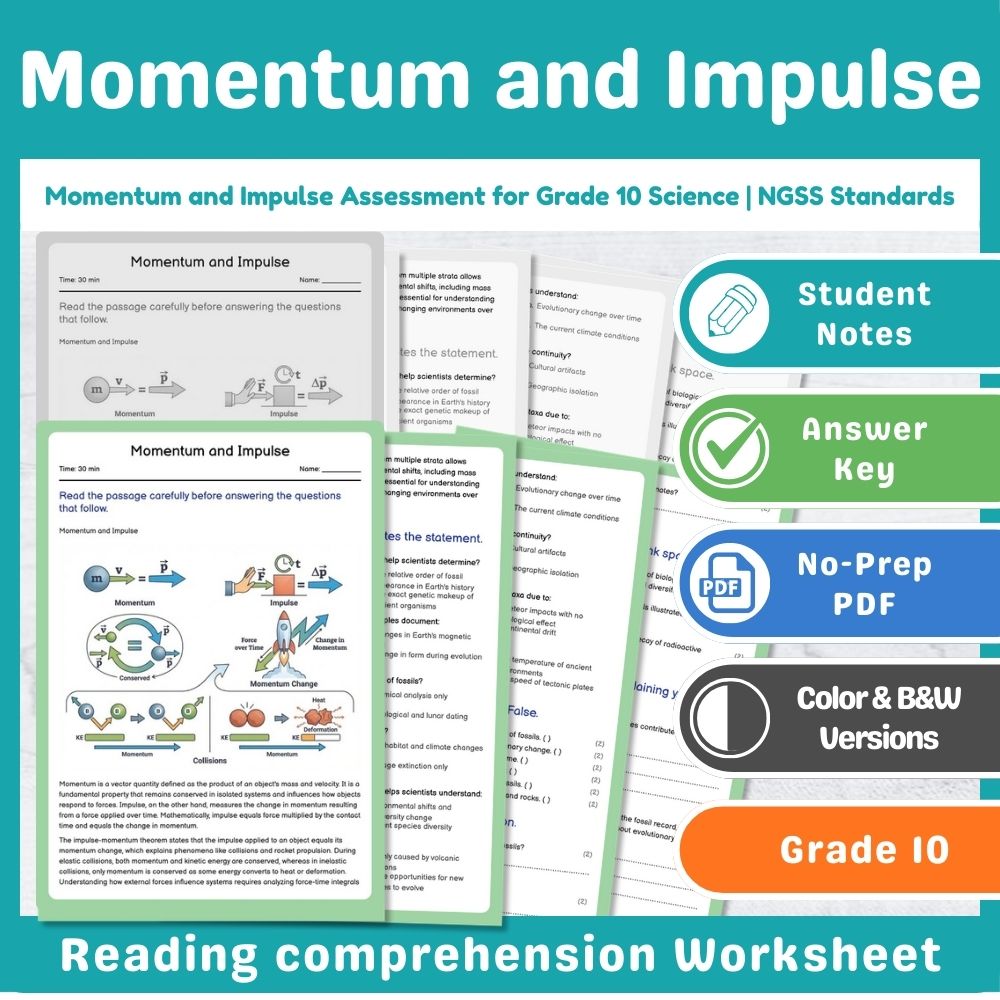
Momentum and Impulse Assessment for Grade 10 Science | NGSS Standards
Created byPrism Point LearningLearning Objectives
- Understand the concepts of momentum and impulse and their quantitative relationships.
- Apply the impulse-momentum theorem to analyze collisions and interactions.
- Describe conservation of momentum in closed systems during elastic and inelastic collisions.
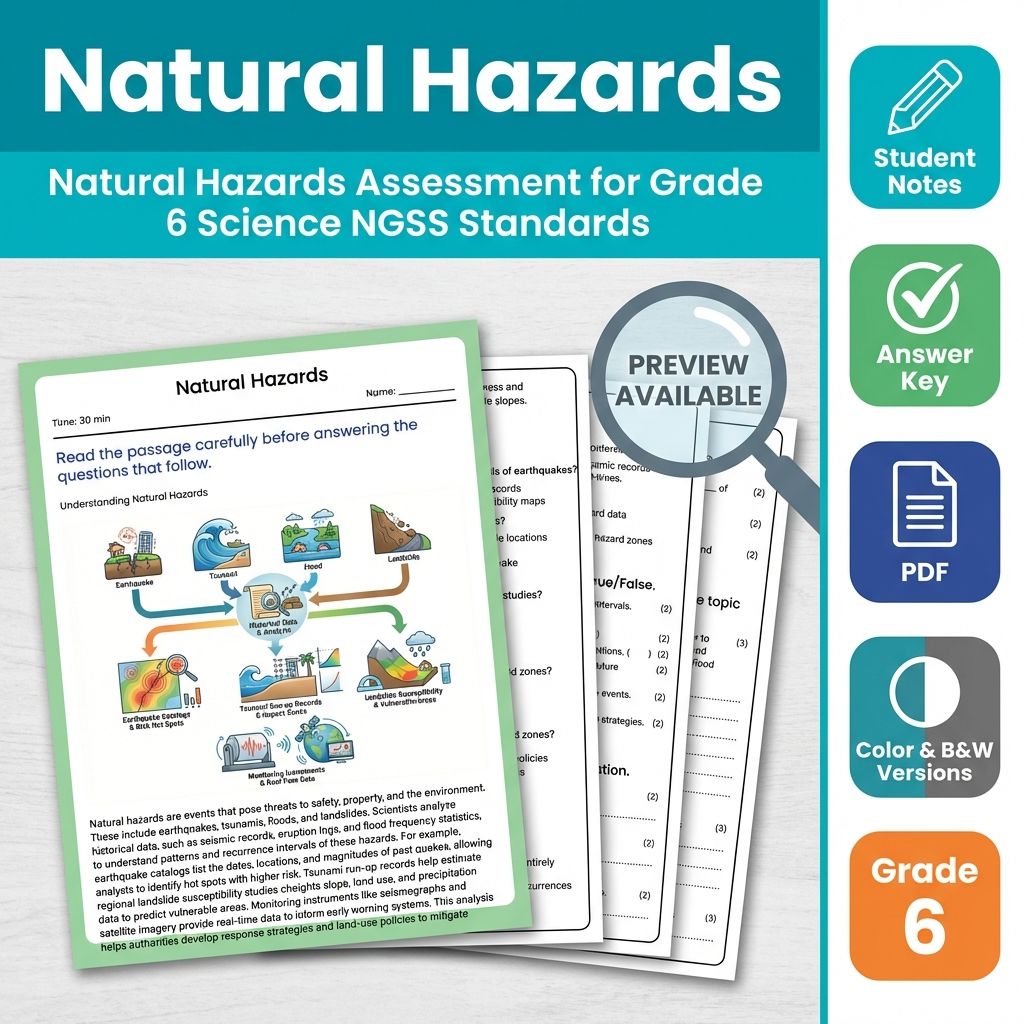
Natural Hazards Assessment for Grade 6 Science NGSS Standards
Created byPrism Point LearningLearning Objectives
- Understand methods for analyzing observational and instrumental data related to natural hazards.
- Identify patterns, recurrence intervals, and probable locations of hazards like earthquakes, tsunamis, and floods.
- Interpret data examples such as eruption histories and flood statistics to assess risks.
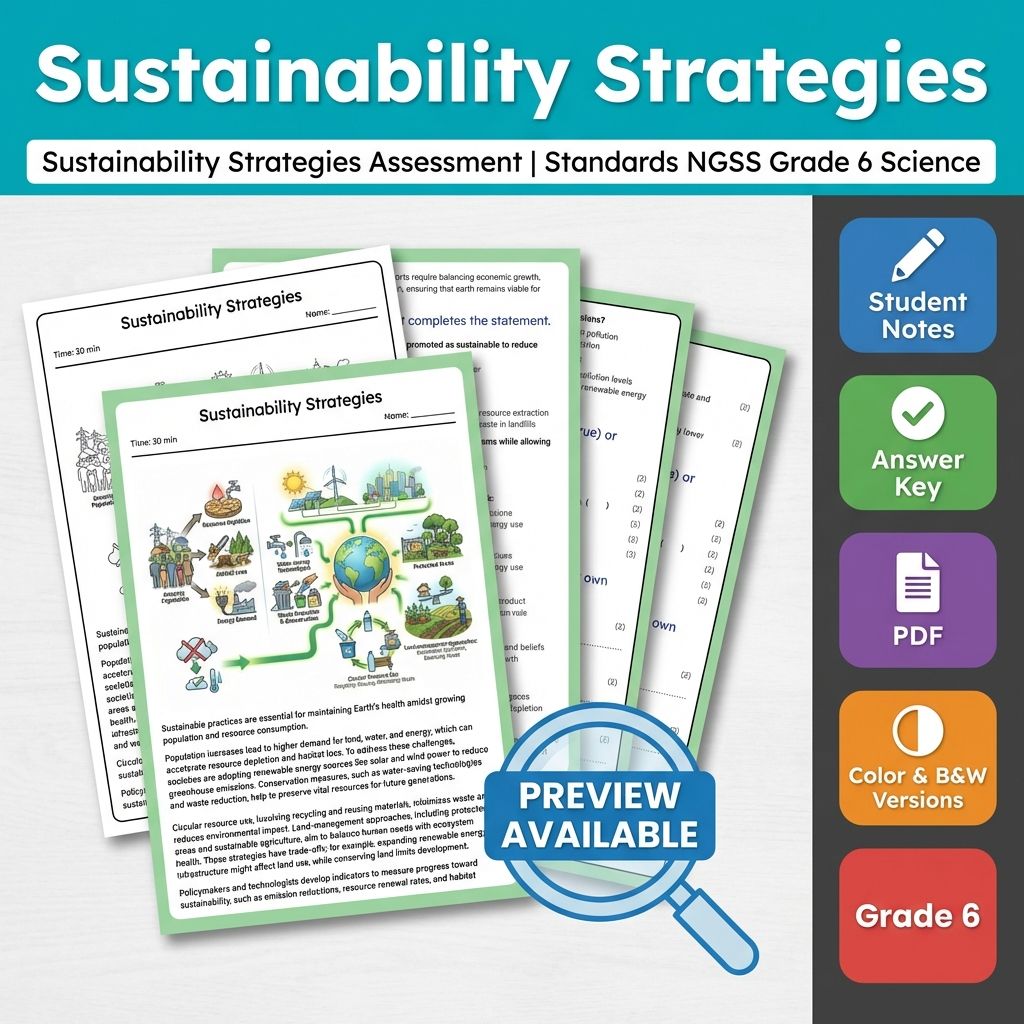
Sustainability Strategies Assessment | Standards NGSS Grade 6 Science
Created byPrism Point LearningLearning Objectives
- Evaluate how population trends and resource use impact earth systems and sustainability.
- Identify and compare different sustainable practices such as renewable energy, conservation, and land management.
- Analyze trade-offs among economic, social, and environmental priorities in sustainability planning.
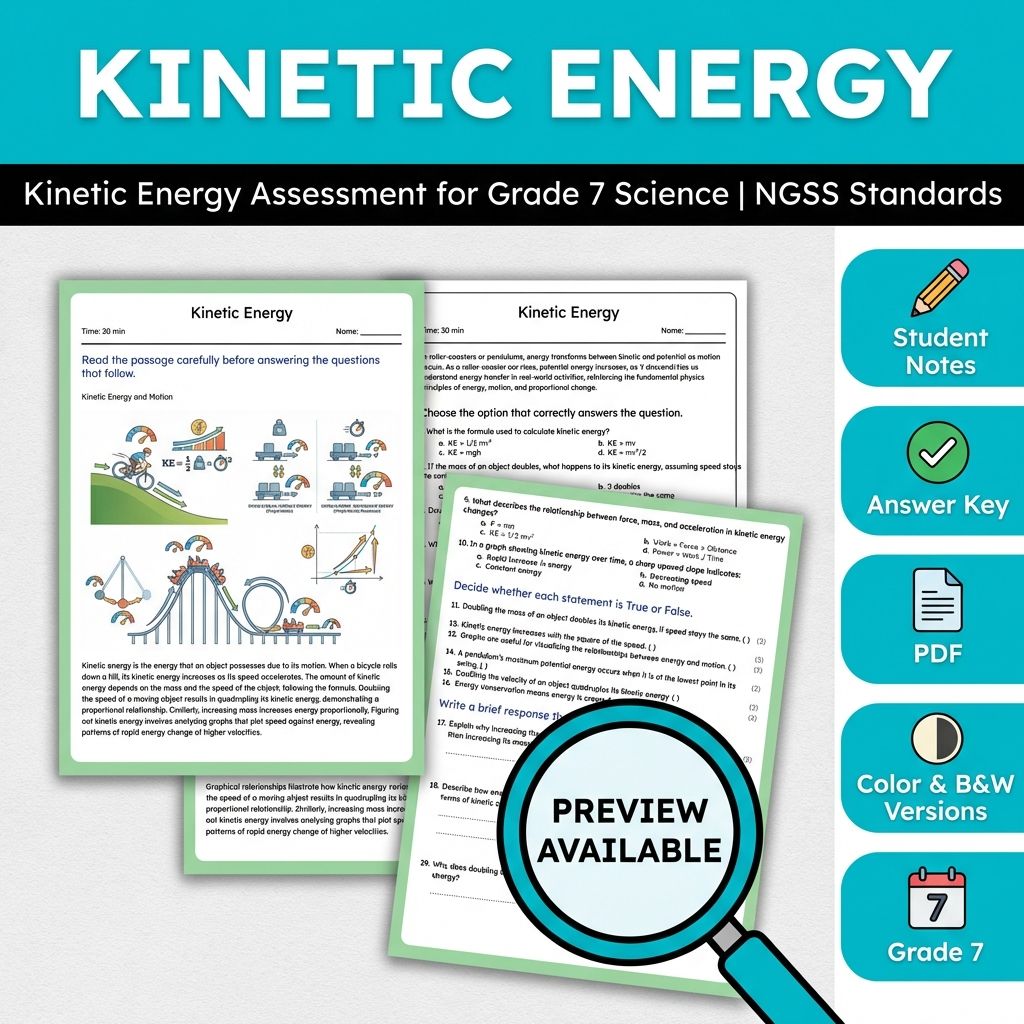
Kinetic Energy Assessment for Grade 7 Science | NGSS Standards
Created byPrism Point LearningLearning Objectives
- Construct and interpret graphical relationships between kinetic and potential energy, mass, and speed.
- Analyze how changes in mass and speed affect kinetic energy using examples like a bicycle, pendulum, and roller-coaster.
- Calculate kinetic energy and understand its proportional relationships in real-world motion.

Cardiopulmonary Interaction Assessment for Grade 9 Science TEKS
Created byPrism Point LearningLearning Objectives
- Describe the coordination between heart and lung functions in oxygen delivery
- Explain how chemoreceptor feedback influences respiratory and circulatory adjustments
- Identify the roles of pulmonary ventilation and cardiovascular transport in maintaining homeostasis
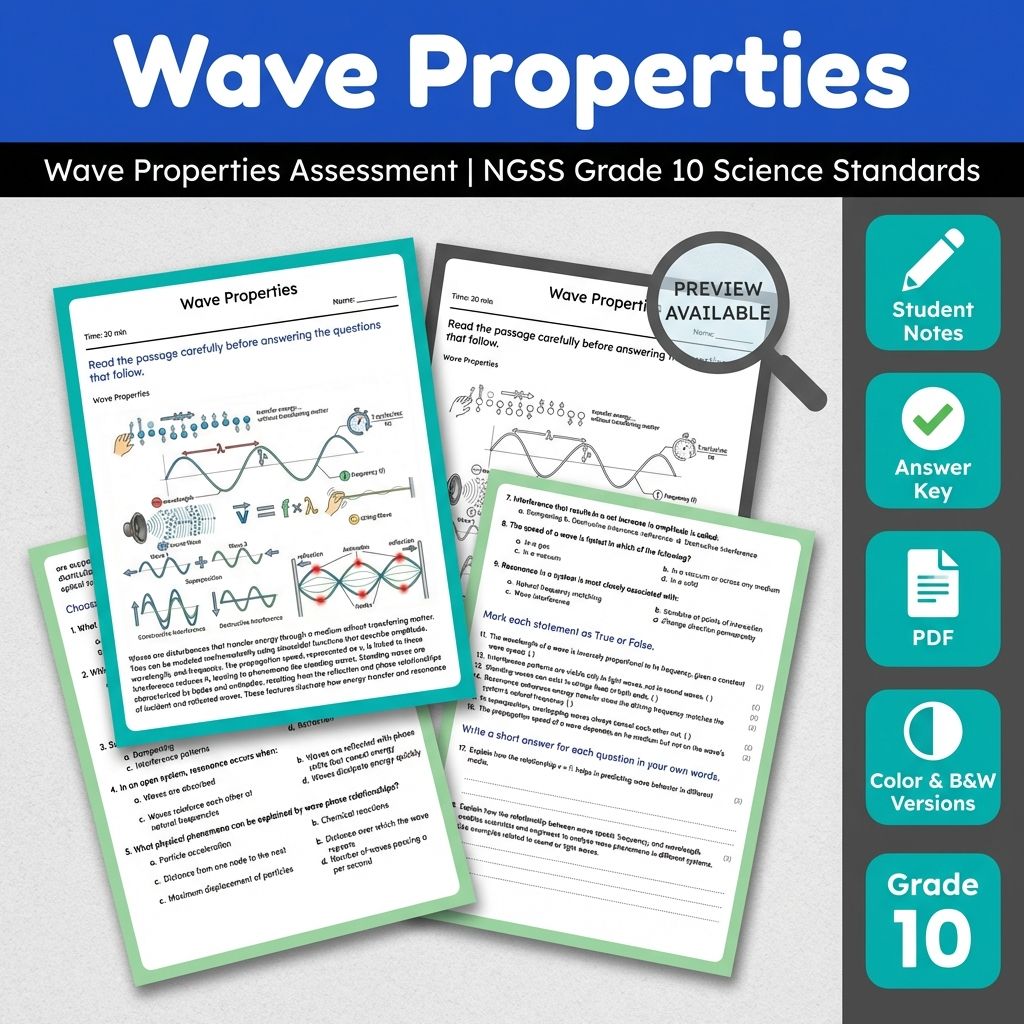
Wave Properties Assessment | NGSS Grade 10 Science Standards
Created byPrism Point LearningLearning Objectives
- Understand the mathematical descriptions of waves, including amplitude, wavelength, frequency, and propagation speed.
- Interpret the relationships between wave parameters, particularly the equation v = fλ, in various mechanical wave contexts.
- Explain the phenomenon of superposition and interference patterns, including standing waves, using trigonometric functions and phase relationships.
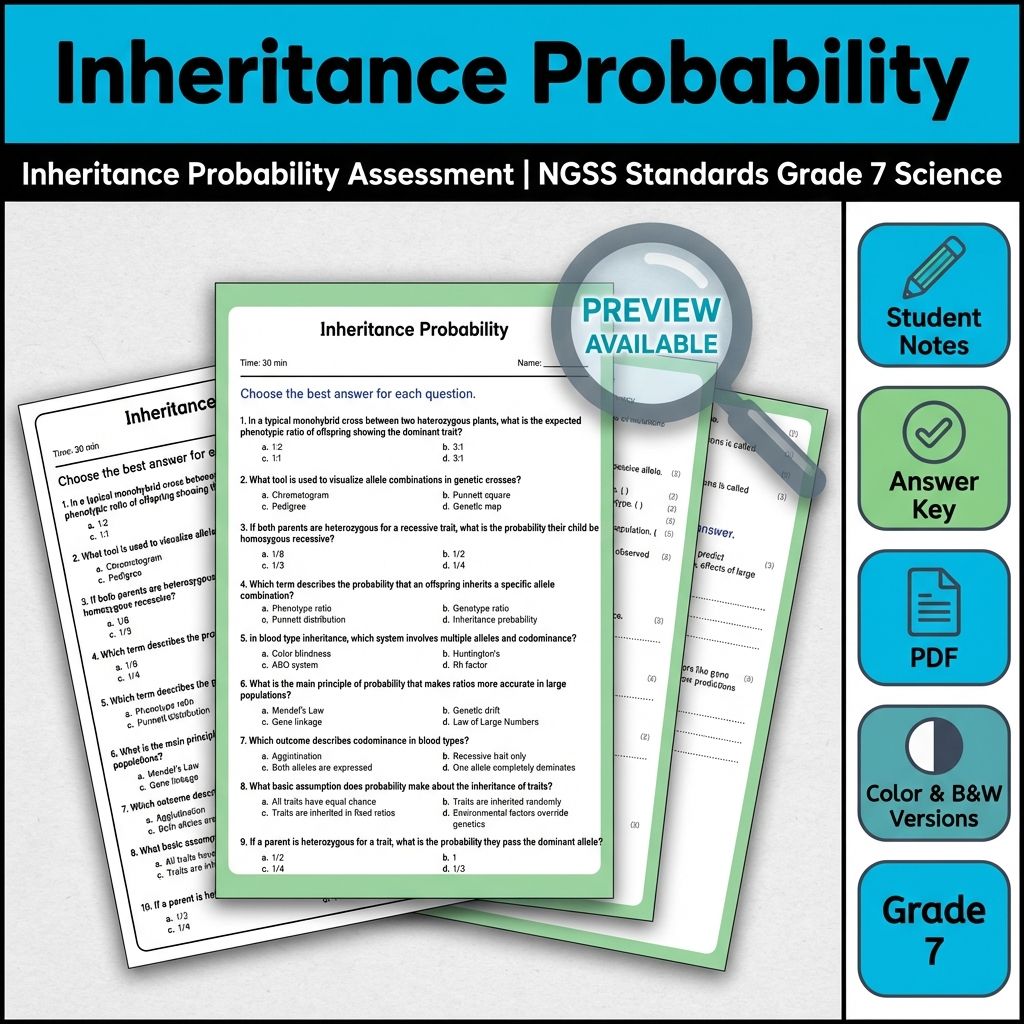
Inheritance Probability Assessment | NGSS Standards Grade 7 Science
Created byPrism Point LearningLearning Objectives
- Understand how probability concepts apply to predicting genetic variation among offspring.
- Interpret genotype and phenotype ratios resulting from monohybrid crosses using Punnett squares.
- Calculate expected proportions of different genotypes and phenotypes in genetic crosses.

System Thinking In Solutions Assessment | General Grade 6 Science
Created byPrism Point LearningLearning Objectives
- Understand the concept of systems thinking and how components interact within a system.
- Identify cause-and-effect relationships in system design and performance.
- Analyze how changes to one part of a system can influence overall behavior.

Nutrients and Energy Flow Assessment for Grade 11 Science – Standards-Aligned
Created byPrism Point LearningLearning Objectives
- Understand key concepts related to Science
- Apply knowledge through practice questions
- Demonstrate comprehension of the material
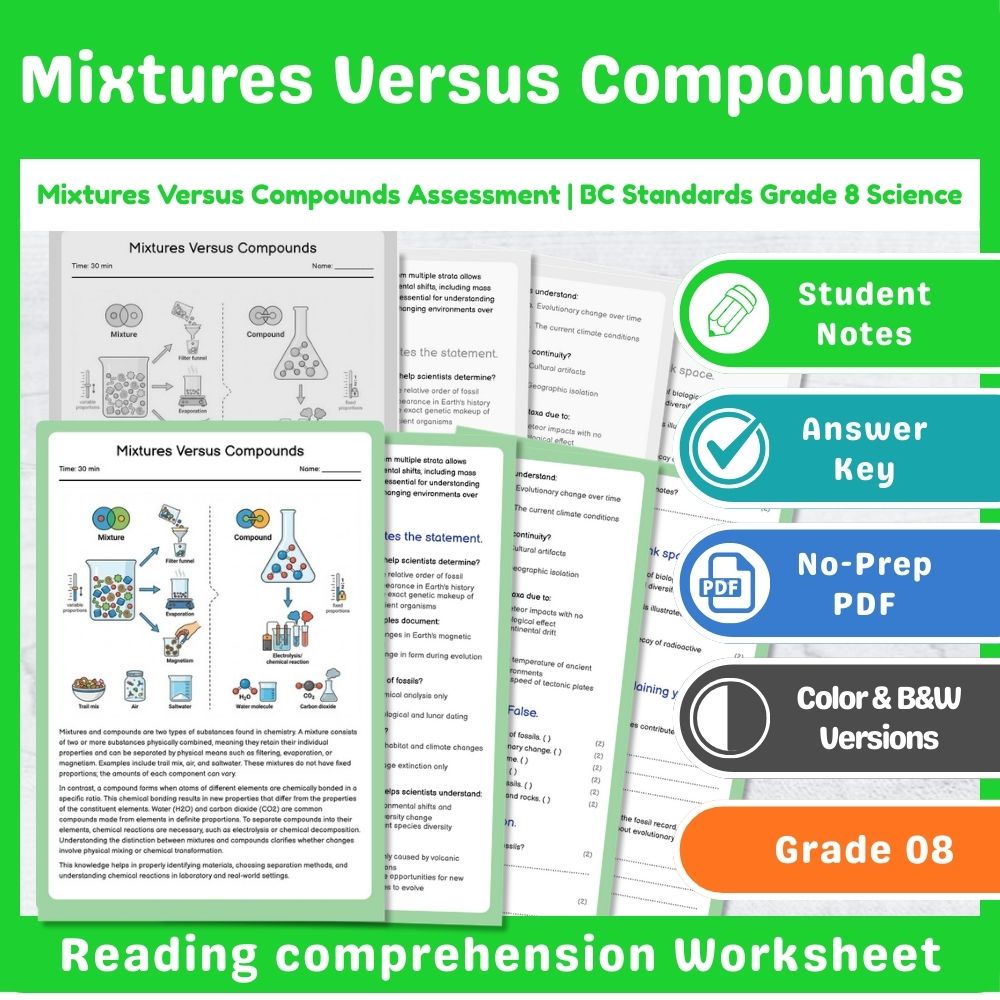
Mixtures Versus Compounds Assessment | BC Standards Grade 8 Science
Created byPrism Point LearningLearning Objectives
- Understand the differences between mixtures and compounds.
- Identify examples of mixtures and compounds in everyday life.
- Explain how mixtures can be separated physically and compounds require chemical change.
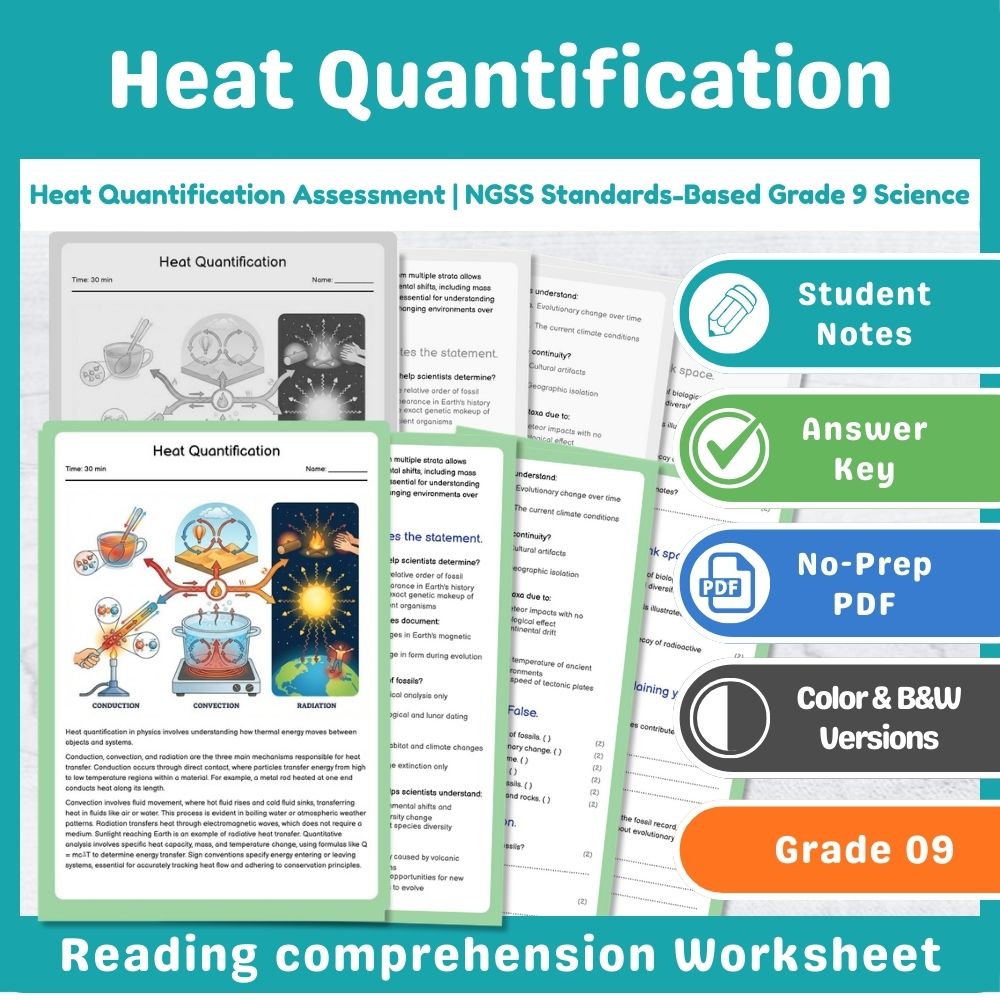
Energy Conversion Assessment | NGSS Standards Grade 9 Science
Created byPrism Point LearningLearning Objectives
- Explain the different types of energy conversion devices and processes.
- Analyze how energy transfer involves losses and efficiency considerations.
- Evaluate real-world examples of energy conversion such as photovoltaic cells, thermoelectric modules, and electrochemical cells.

Factors Affecting Reaction Rates Assessment | Alberta Grade 10 Science
Created byPrism Point LearningLearning Objectives
- Identify key factors that influence the rate of chemical reactions.
- Explain how temperature, concentration, surface area, and catalysts modify reaction speeds.
- Apply understanding of reaction rate factors to real-world industrial and environmental scenarios.
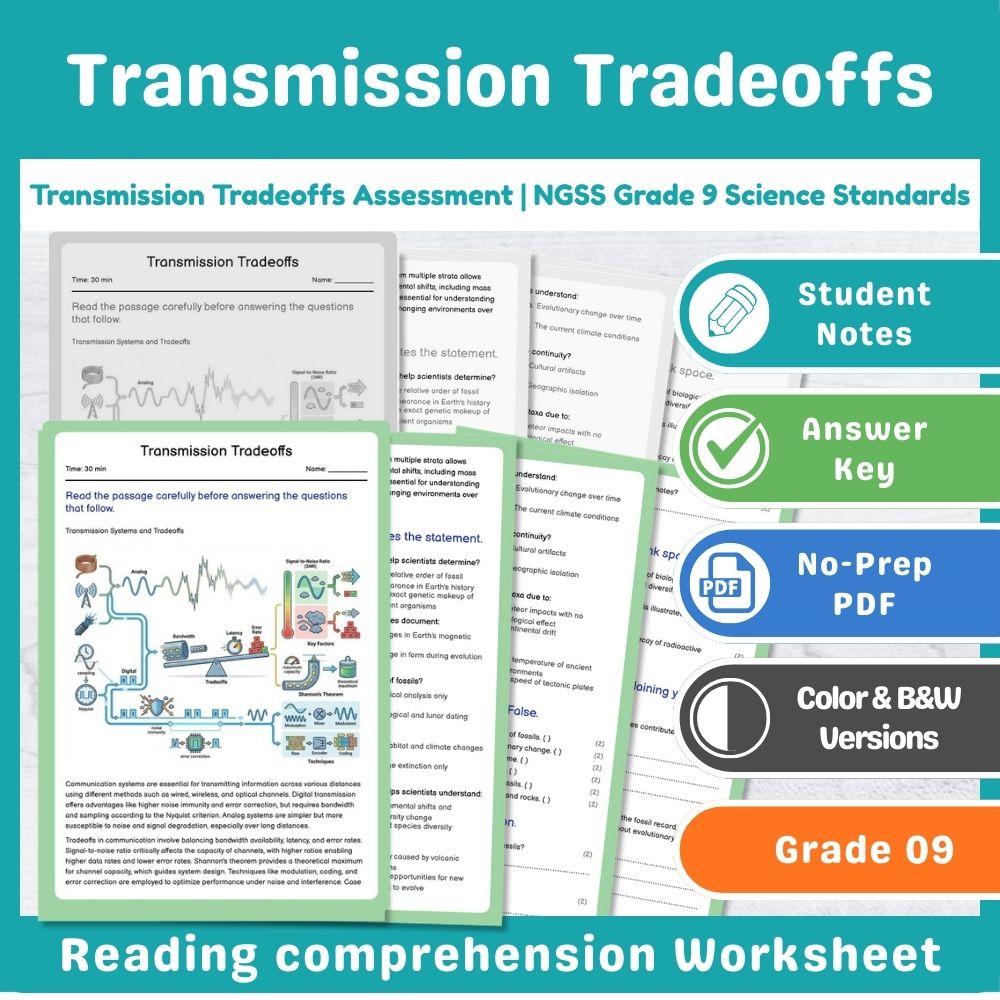
Transmission Tradeoffs Assessment | NGSS Grade 9 Science Standards
Created byPrism Point LearningLearning Objectives
- Understand the tradeoffs involved in digital and analog communication systems.
- Analyze the impact of bandwidth constraints, signal-to-noise ratio, and sampling criteria on transmission quality.
- Evaluate error-correcting techniques and their effect on data integrity in noisy environments.

Ocean Circulation Assessment for Grade 12 Science | TEKS Standards
Created byPrism Point LearningLearning Objectives
- Explain the mechanisms of thermohaline and wind-driven ocean circulation.
- Describe how surface gyres, upwelling, and the meridional overturning circulation influence climate and nutrient transport.
- Connect oceanic heat capacity and circulation patterns to regional climate modulation and episodic phenomena like El Niño.
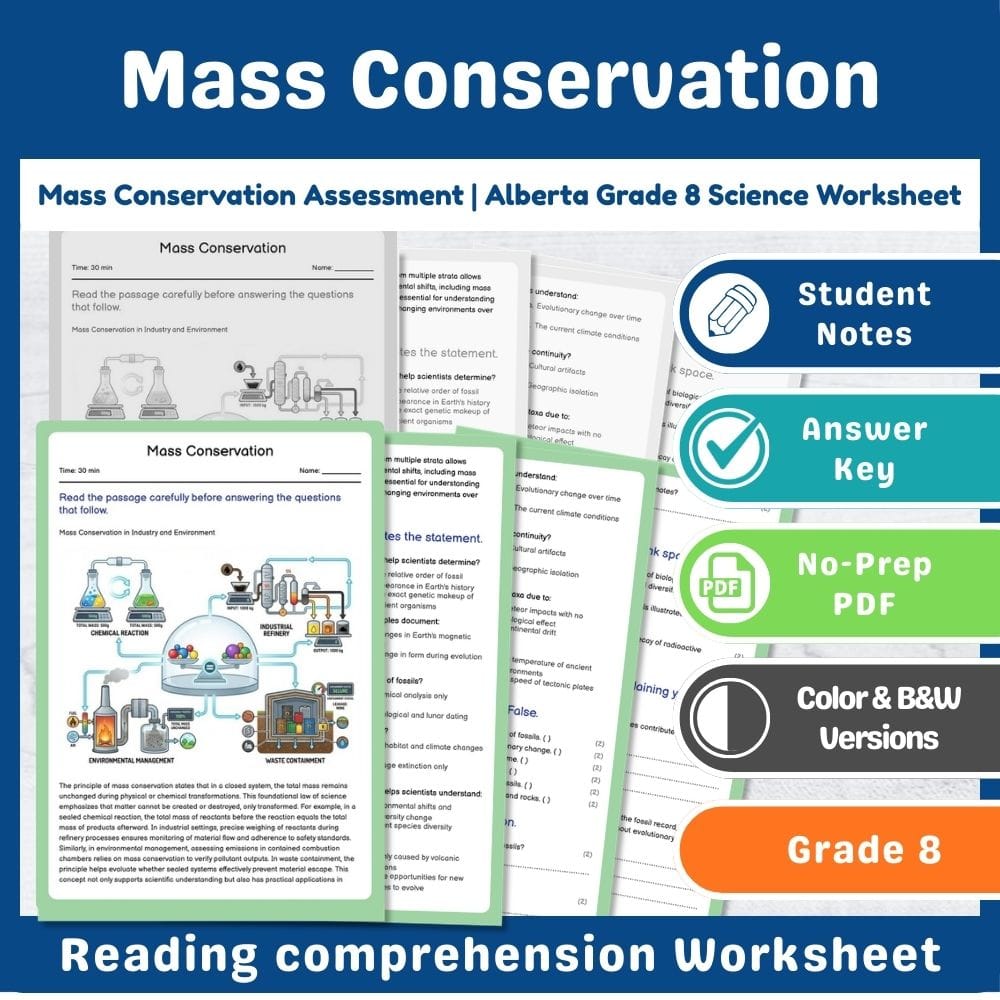
Mass Conservation Assessment | Alberta Grade 8 Science Worksheet
Created byPrism Point LearningLearning Objectives
- Understand the principle of mass conservation in physical and chemical processes.
- Identify real-world examples of mass conservation within industrial and environmental contexts.
- Apply the concept of mass conservation to solve related problems in closed systems.

Statistical Reasoning Assessment | TEKS Grade 12 Science Standards
Created byPrism Point LearningLearning Objectives
- Understand the principles of hypothesis testing, confidence intervals, and p-values.
- Interpret statistical metrics such as effect sizes and power in research.
- Differentiate between parametric and nonparametric tests and their assumptions.
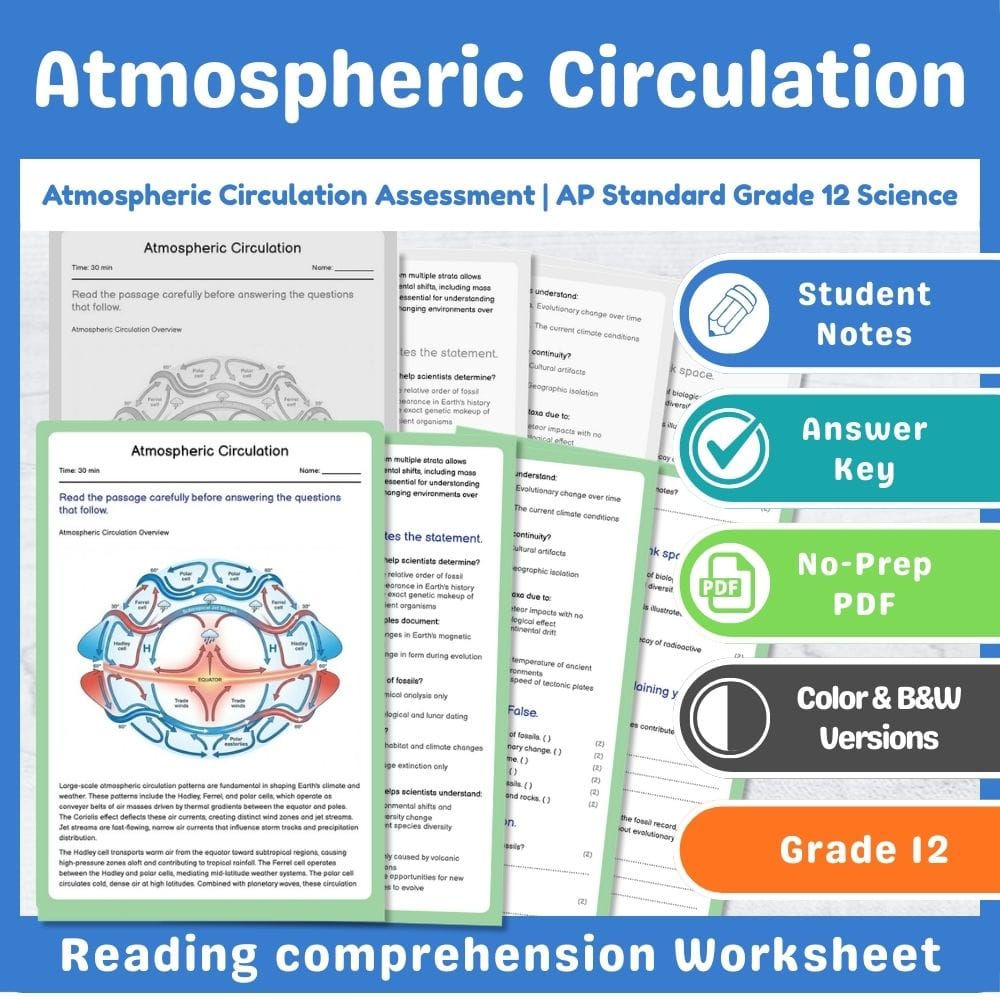
Atmospheric Circulation Assessment | AP Standard Grade 12 Science
Created byPrism Point LearningLearning Objectives
- Explain the global-scale atmospheric circulation patterns including Hadley, Ferrel, and polar cells.
- Describe the influence of thermal gradients and the Coriolis effect on pressure systems and storm tracks.
- Interpret circulation diagrams, pressure maps, and potential vorticity to understand weather regimes and climate shifts.

Iterative Testing Refinement Assessment for Grade 11 Science | Standards-Aligned
Created byPrism Point LearningLearning Objectives
- Understand key concepts related to Science
- Apply knowledge through practice questions
- Demonstrate comprehension of the material
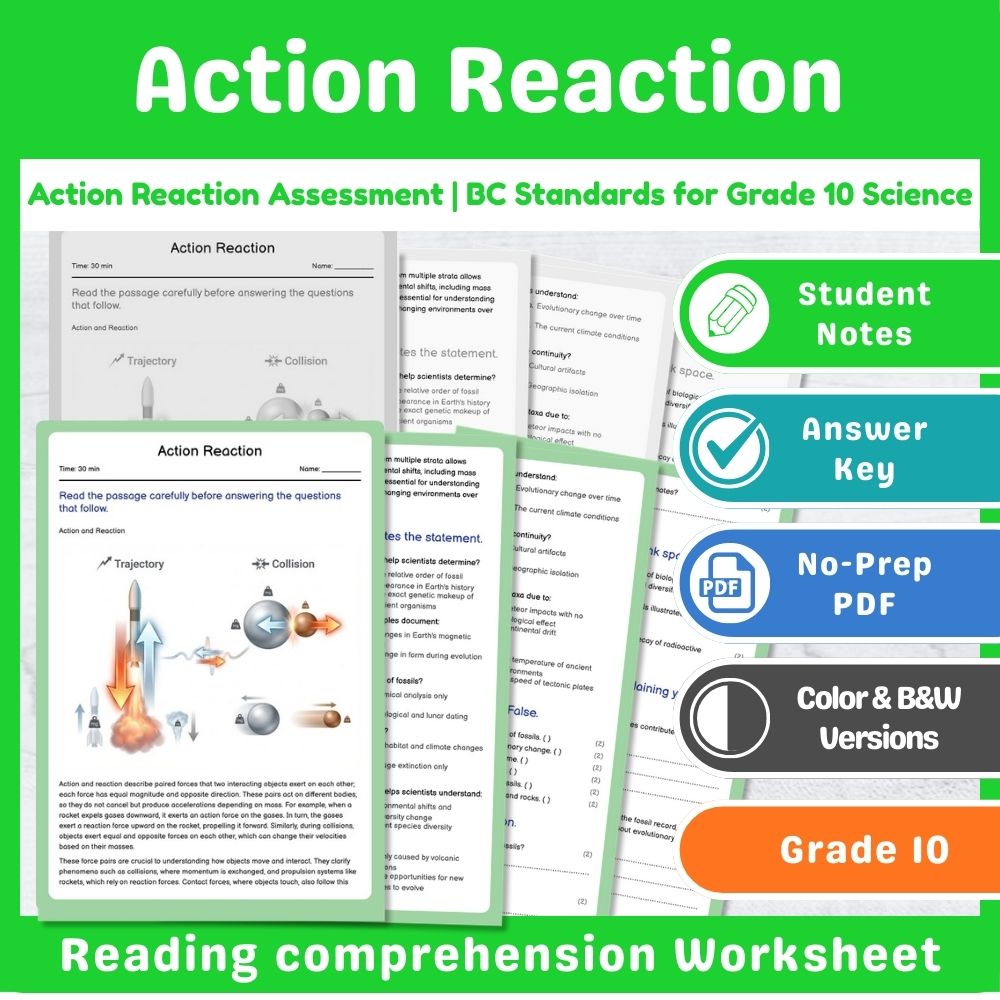
Action Reaction Assessment | BC Standards for Grade 10 Science
Created byPrism Point LearningLearning Objectives
- Explain the concept of Newton's third law of motion in terms of action-reaction pairs.
- Identify real-life examples of action-reaction forces such as collisions and rocket thrust.
- Describe how forces act on different objects and result in acceleration depending on mass.

Evaporation and Transpiration Assessment | California Standards Grade 6 Science
Created byPrism Point LearningLearning Objectives
- Explain how evaporation and transpiration add water vapor to the atmosphere
- Describe how temperature and available liquid water affect the amount of water vapor
- Connect phase changes to the water cycle, including condensation and precipitation

Material Cycling Assessment | California Standards Grade 6 Science Test
Created byPrism Point LearningLearning Objectives
- Explain how weathering, sediment transport, and deposition move Earth materials through cycles.
- Describe how living things add organic matter to soils and affect water retention.
- Use cause-and-effect reasoning to connect transformations across Earth’s spheres.

Ecosystem Structure Assessment for Grade 8 Science | TEKS Standards
Created byPrism Point LearningLearning Objectives
- Describe components and biomes of ecosystems, including abiotic factors.
- Explain trophic roles of producers, consumers, and decomposers within food webs.
- Analyze energy flow and matter cycling patterns in different biomes.

Third Law Pairs Assessment | NGSSS Standards Grade 9 Science
Created byPrism Point LearningLearning Objectives
- Explain Newton’s Third Law using the action–reaction model and identify force pairs acting on different objects.
- Predict the direction, magnitude relationship, and object involved for forces in common real-world interactions.
- Distinguish between forces on one body versus forces on two different bodies and explain why they do not cancel on a single object.

Clouds and Precipitation Assessment | California Standards Grade 7 Science
Created byPrism Point LearningLearning Objectives
- Explain how cooling air leads to condensation and cloud formation.
- Describe how temperature and moisture determine cloud type and precipitation type.
- Connect energy transfers during phase changes to weather patterns.

Gene Expression Pathway Assessment for Grade 12 Science | Standards-Aligned
Created byPrism Point LearningLearning Objectives
- Explain how transcription and translation enable cells to express genetic information as proteins.
- Describe how regulation at multiple steps can create different phenotypes from the same genome.
- Analyze how timing and cell-type specific control of gene expression influence traits.

Groundwater and Baseflow Assessment | California Standards Grade 6 Science
Created byPrism Point LearningLearning Objectives
- Explain how precipitation can infiltrate, percolate, and recharge groundwater aquifers.
- Describe how groundwater contributes to streamflow as baseflow during dry periods.
- Interpret how permeability and landscape geometry affect the groundwater–surface water connection.

Food Building Blocks Assessment | California Standards Grade 7 Science
Created byPrism Point LearningLearning Objectives
- Explain how food molecules can be used for building body structures and for providing usable energy
- Describe how digestion and cellular processes transform food molecules into forms the body can use
- Connect eating habits to changes in growth, repair, and body condition over time
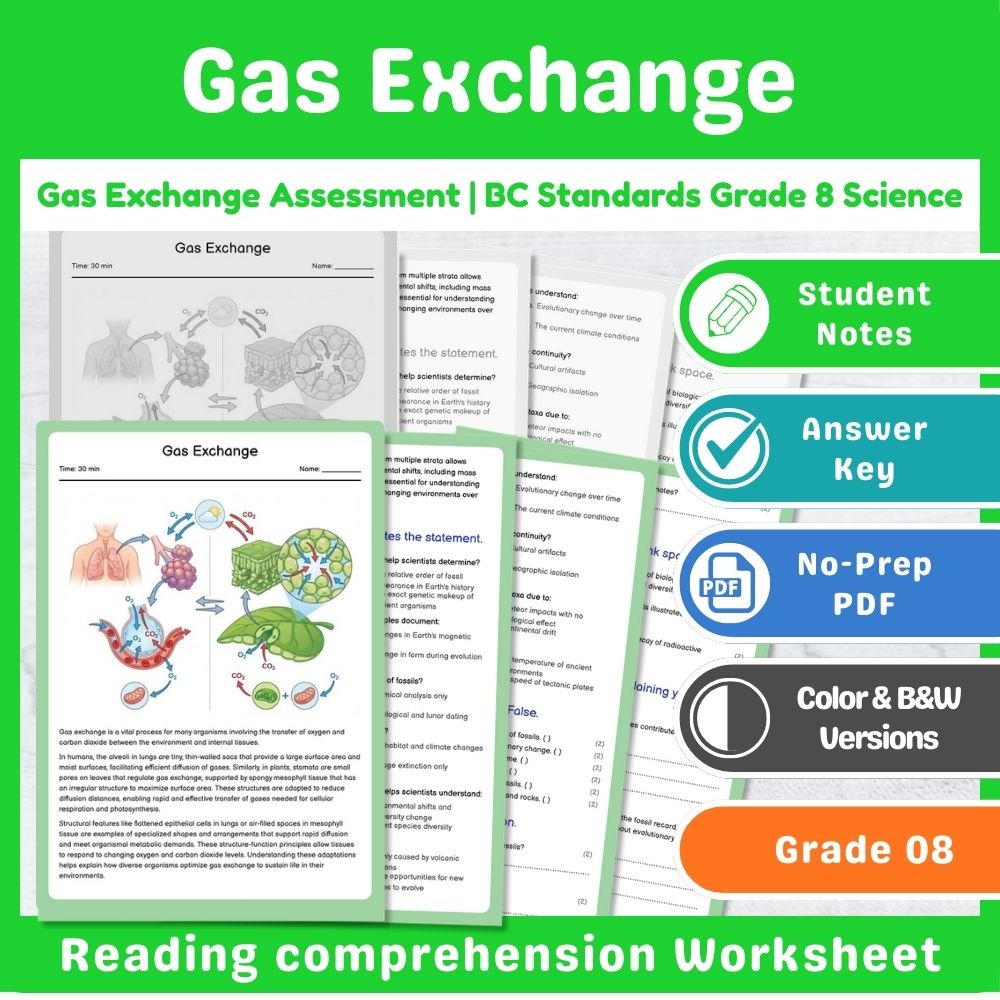
Gas Exchange Assessment | BC Standards Grade 8 Science
Created byPrism Point LearningLearning Objectives
- Understand how thin, moist surfaces facilitate gas exchange in organisms.
- Identify different structures involved in gas exchange, such as alveoli and stomata.
- Explain structural adaptations that support efficient diffusion of gases.

Matter Cycles Assessment for Grade 9 Science – Florida NGSSS Standards
Created byPrism Point LearningLearning Objectives
- Explain how chemical elements (carbon, nitrogen, and phosphorus) cycle through ecosystems between living things and the physical environment.
- Describe how processes like respiration, decomposition, and nutrient uptake connect trophic levels.
- Distinguish between how energy flows through ecosystems and how matter cycles in ecosystems.

Deep Time Processes Assessment | Florida NGSSS Grade 12 Science
Created byPrism Point LearningLearning Objectives
- Explain how weathering, erosion, and deposition shape landscapes over geologic time.
- Describe how plate tectonics and catastrophic events (volcanoes and earthquakes) modify Earth’s surface.
- Use evidence from rocks and landforms to infer relationships between process rate and deep time.

Species Interactions Assessment for Grade 8 Science | Florida NGSSS
Created byPrism Point LearningLearning Objectives
- Explain how competition, predation, mutualism, commensalism, and parasitism affect survival and reproduction
- Describe how species interactions can change population sizes over time
- Use evidence from examples to identify the type of species interaction and its ecosystem impact
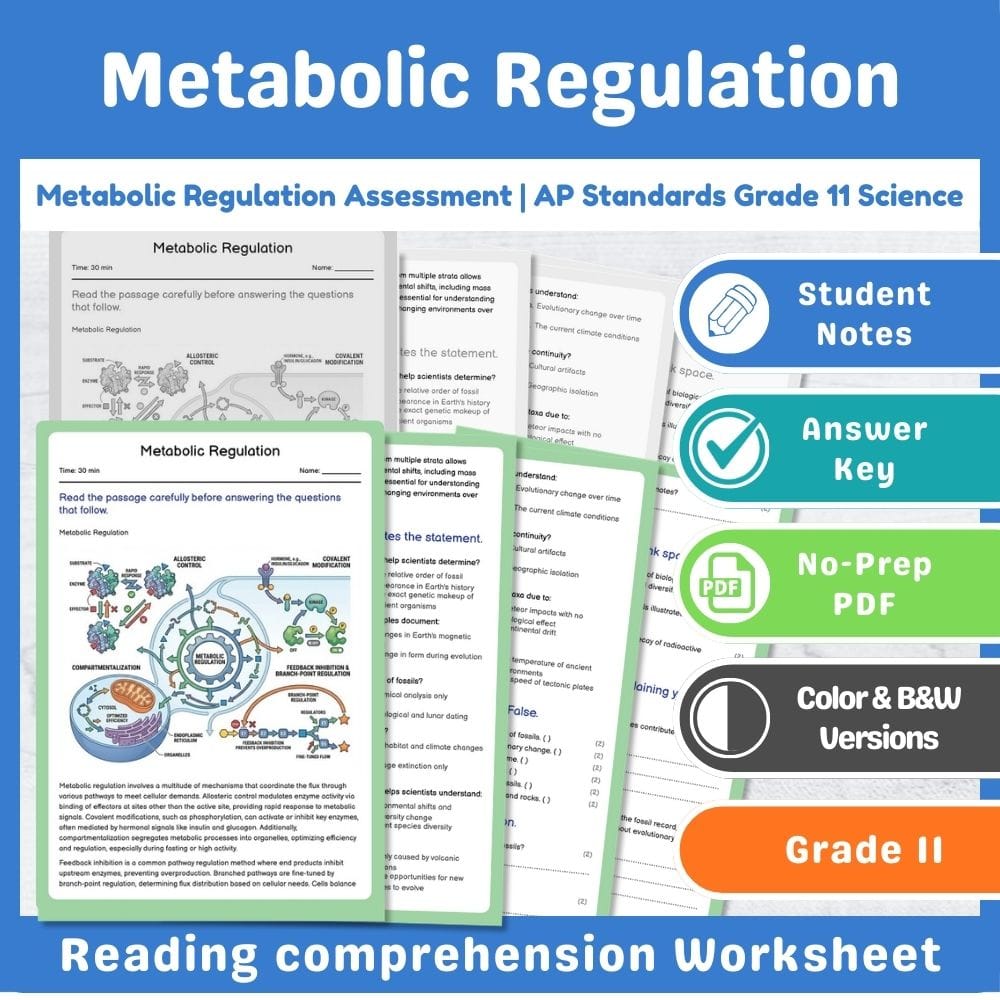
Metabolic Regulation Assessment | AP Standards Grade 11 Science
Created byPrism Point LearningLearning Objectives
- Describe mechanisms that regulate metabolic pathway flux including allosteric control and covalent modification.
- Explain how hormones and compartmentalization influence metabolic homeostasis during fasting and activity.
- Use pathway diagrams and models to analyze feedback inhibition and branch-point regulation.
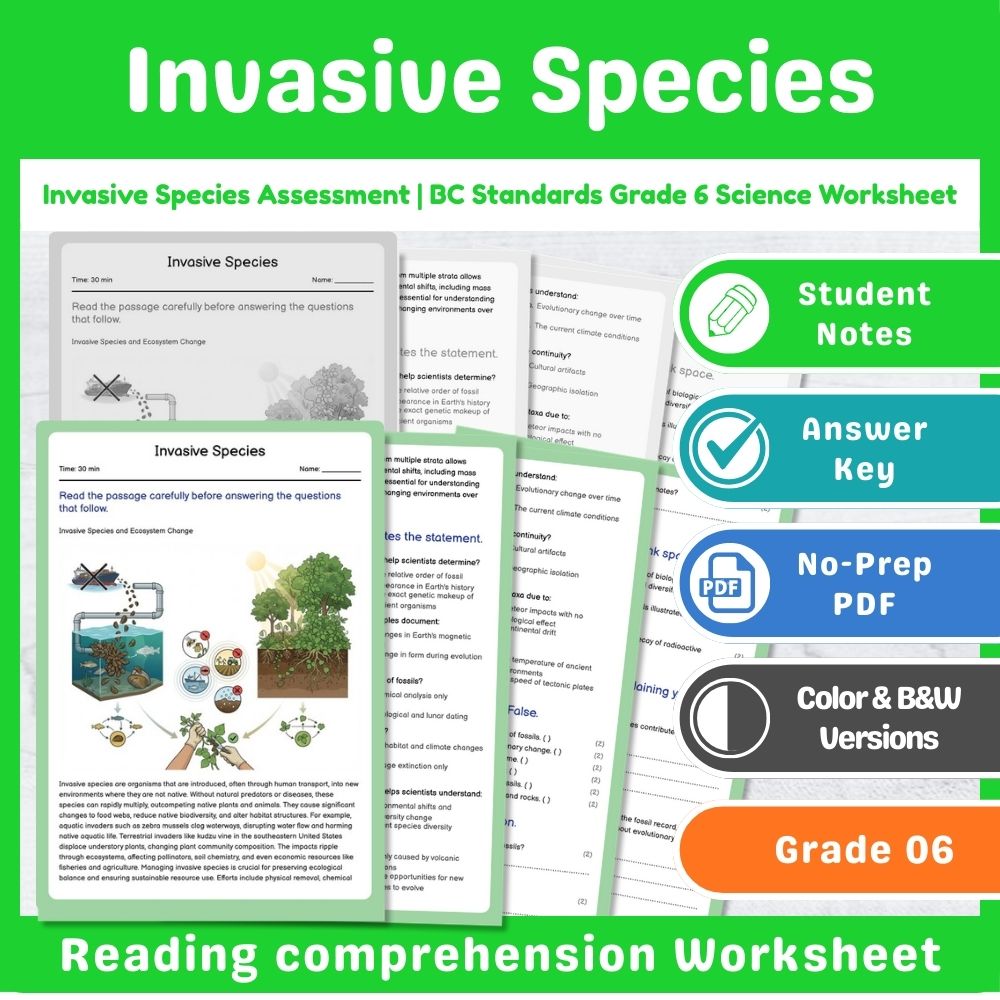
Invasive Species Assessment | BC Standards Grade 6 Science Worksheet
Created byPrism Point LearningLearning Objectives
- Understand the definition and characteristics of invasive species.
- Identify examples and impacts of invasive species on ecosystems.
- Analyze how invasive species outcompete native organisms and alter habitats.
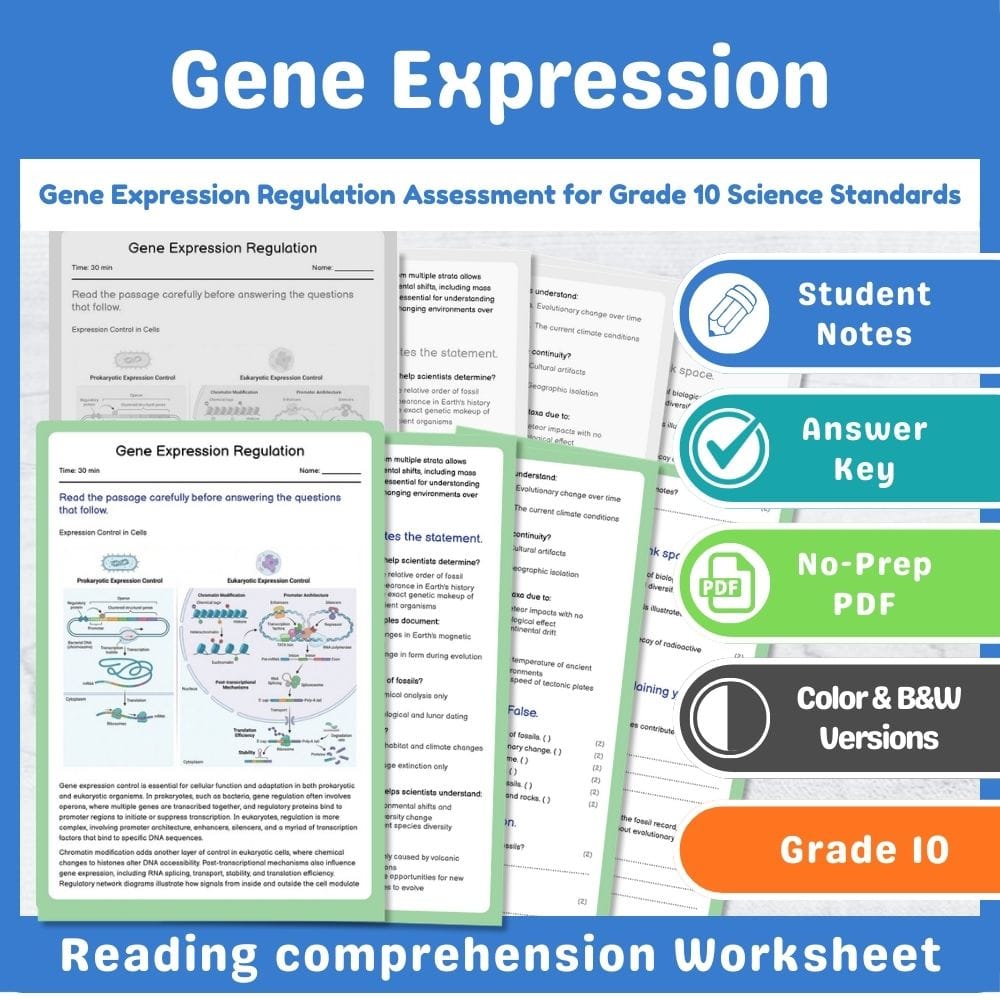
Gene Expression Regulation Assessment for Grade 10 Science Standards
Created byPrism Point LearningLearning Objectives
- Describe the mechanisms regulating gene expression in prokaryotic and eukaryotic systems.
- Identify the roles of promoter architecture, transcription factors, chromatin modification, and post-transcriptional control.
- Interpret regulatory network diagrams and expression profiles to understand signal integration effects.
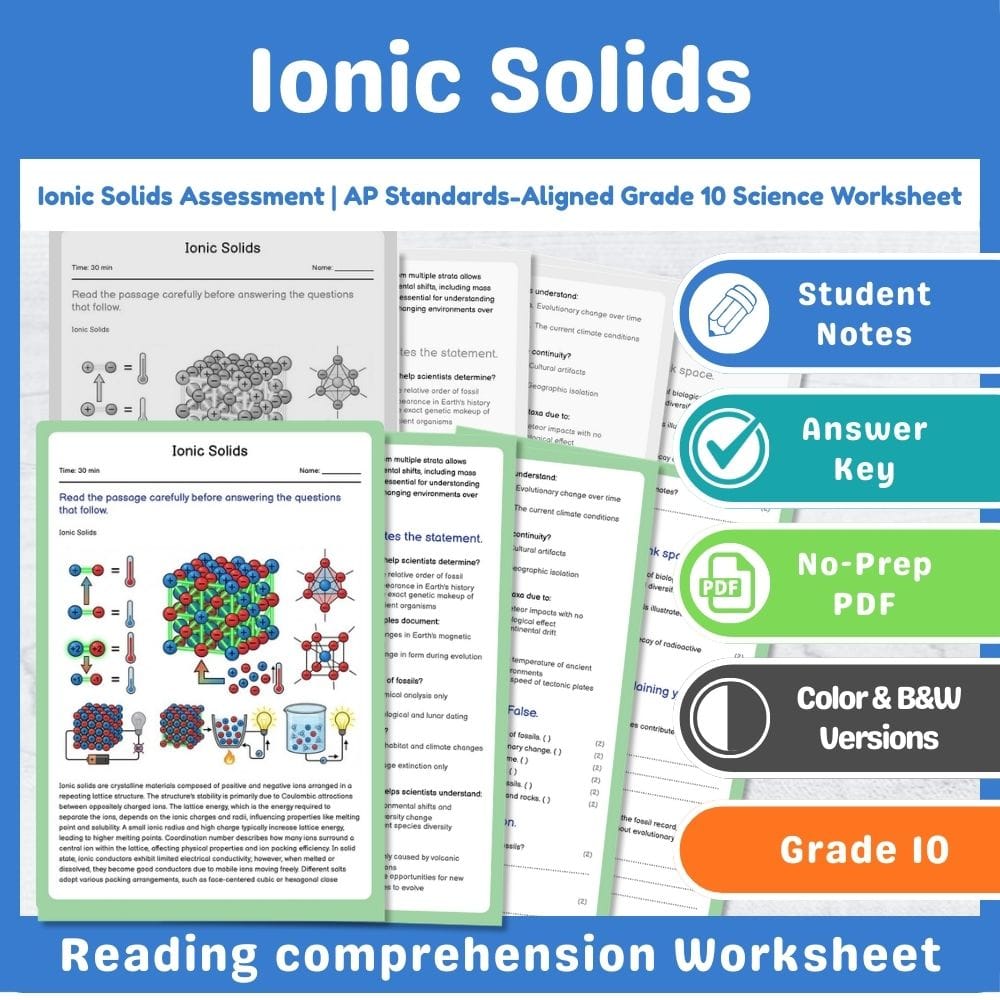
Ionic Solids Assessment | AP Standards-Aligned Grade 10 Science Worksheet
Created byPrism Point LearningLearning Objectives
- Understand the lattice structures and coordination numbers of ionic solids.
- Explain how lattice energy influences melting point, solubility, and electrical conductivity.
- Describe Coulombic interactions and ion packing models in salts.

Ionic and Covalent Bonding Assessment for Grade 11 Science
Created byPrism Point LearningLearning Objectives
- Explain the differences between ionic and covalent bonds in terms of electron distribution.
- Describe how bonding types influence properties like melting point, electrical conductivity, and solubility.
- Identify examples of materials with ionic and covalent bonds and analyze their structural differences.

Circulatory Transport Assessment for Grade 6 Science | General Standards
Created byPrism Point LearningLearning Objectives
- Understand the structure and function of the circulatory system.
- Identify the roles of arteries, veins, and capillaries in blood transport.
- Explain how the heart's rhythmic pumping creates blood pressure.
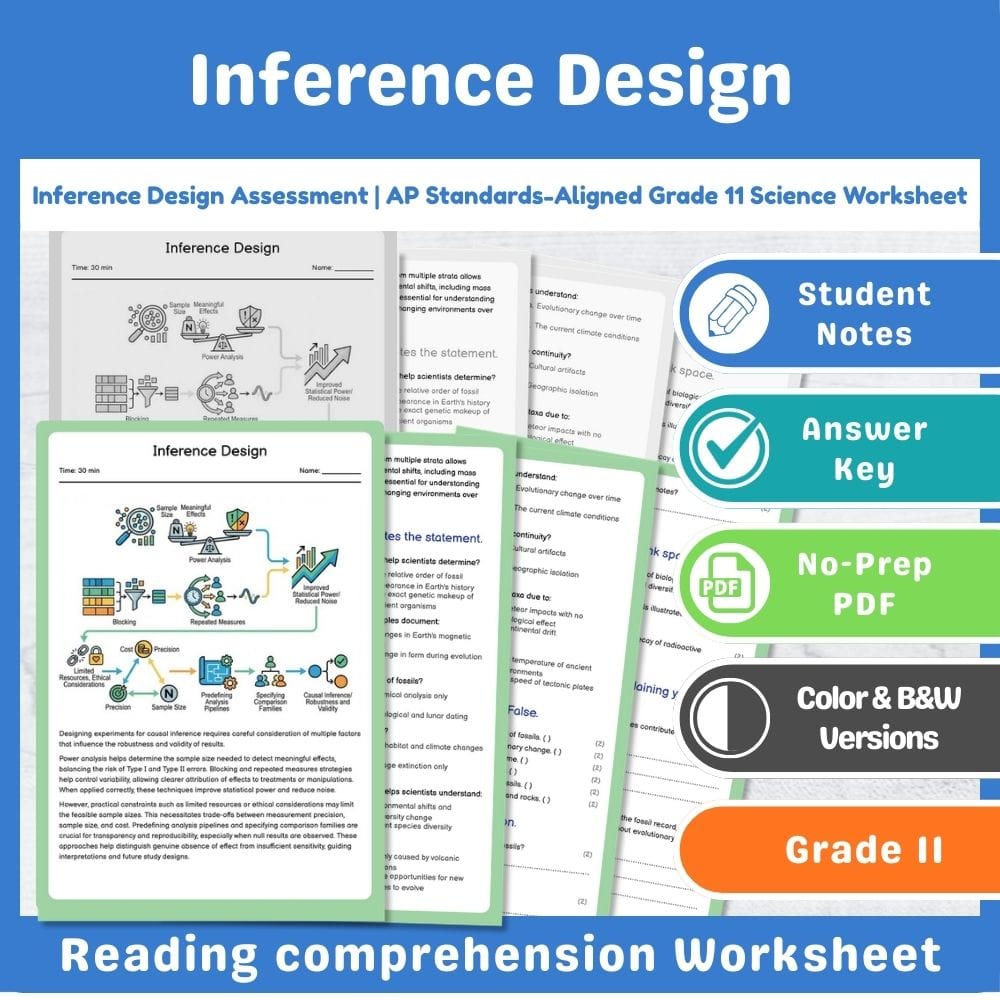
Inference Design Assessment | AP Standards-Aligned Grade 11 Science Worksheet
Created byPrism Point LearningLearning Objectives
- Understand the role of power analysis, blocking, and repeated measures in causal inference.
- Evaluate trade-offs between sample size, measurement precision, and practical constraints in experimental design.
- Apply strategies for predefining analysis pipelines and interpreting null results considering design sensitivity and error trade-offs.
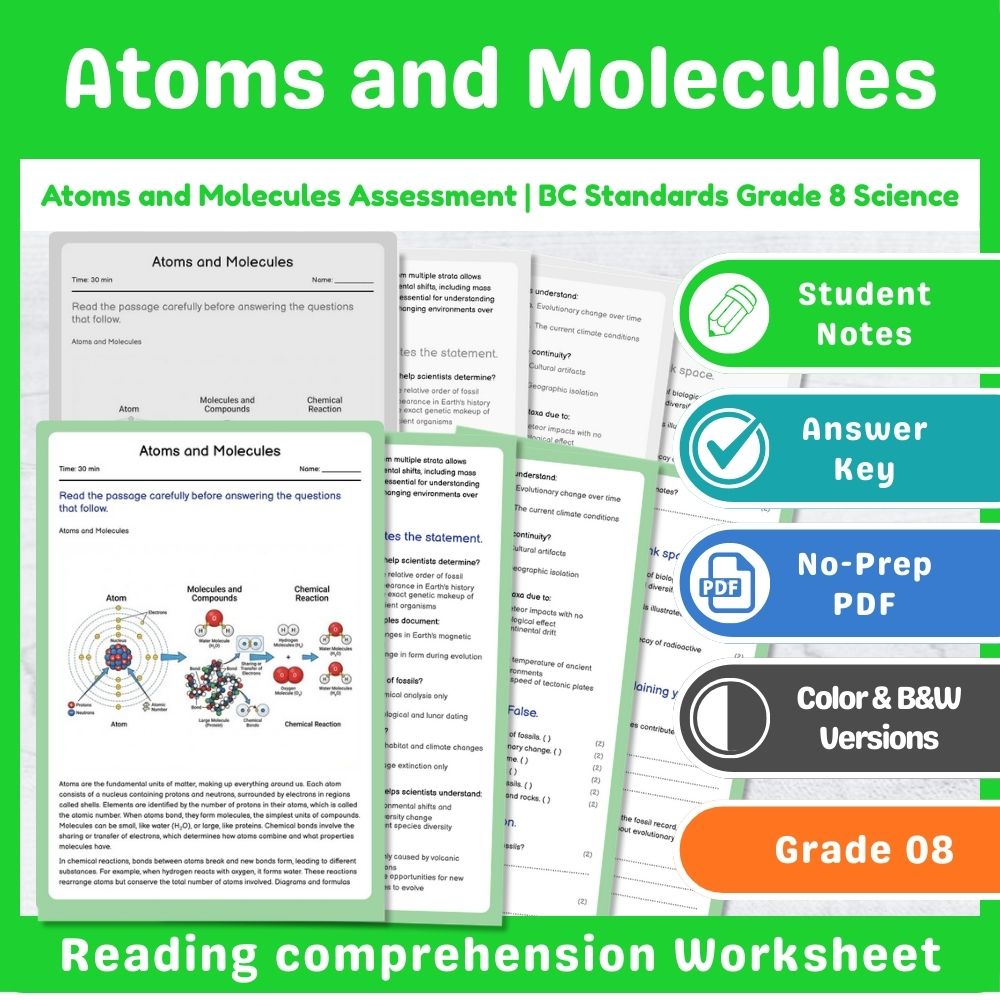
Atoms and Molecules Assessment | BC Standards Grade 8 Science
Created byPrism Point LearningLearning Objectives
- Understand the basic structure of atoms and how atoms bond to form molecules.
- Describe how chemical properties are related to atomic arrangement and bonding.
- Explain the concept of chemical reactions as bonds breaking and forming among atoms.

Wave Energy Transfer Assessment for Grade 7 Science | Standards-Aligned
Created byPrism Point LearningLearning Objectives
- Understand how waves transfer energy without moving matter permanently.
- Differentiate between transverse and longitudinal waves based on particle motion.
- Explain the relationship between amplitude, wavelength, and energy in waves.

Data Visuals Assessment | TEKS Grade 12 Science Standards-Aligned
Created byPrism Point LearningLearning Objectives
- Understand how to select appropriate graphs, charts, and tables to represent data effectively.
- Analyze and interpret various types of data visuals including scatter plots, histograms, boxplots, and time-series charts.
- Identify key elements such as axis scaling, labels, error bars, and confidence intervals in data visuals.
Browse more categories
About Science Worksheets
Find Science worksheets spanning core skills, practice, and review. All 42,685 resources are instant PDF downloads for the classroom or home.
Every worksheet on MyTeachingSheets is created by independent teacher-authors and reviewed before publication. All resources download as printable PDFs for classroom, homework, or at-home practice, and many include answer keys. Preview any worksheet free before buying.