
Science Worksheets
42,685 subject resources
Data Visuals Assessment | TEKS Grade 12 Science Standards-Aligned
 Created byPrism Point Learning
Learning Objectives
- Understand how to select appropriate graphs, charts, and tables to represent data effectively.
- Analyze and interpret various types of data visuals including scatter plots, histograms, boxplots, and time-series charts.
- Identify key elements such as axis scaling, labels, error bars, and confidence intervals in data visuals.
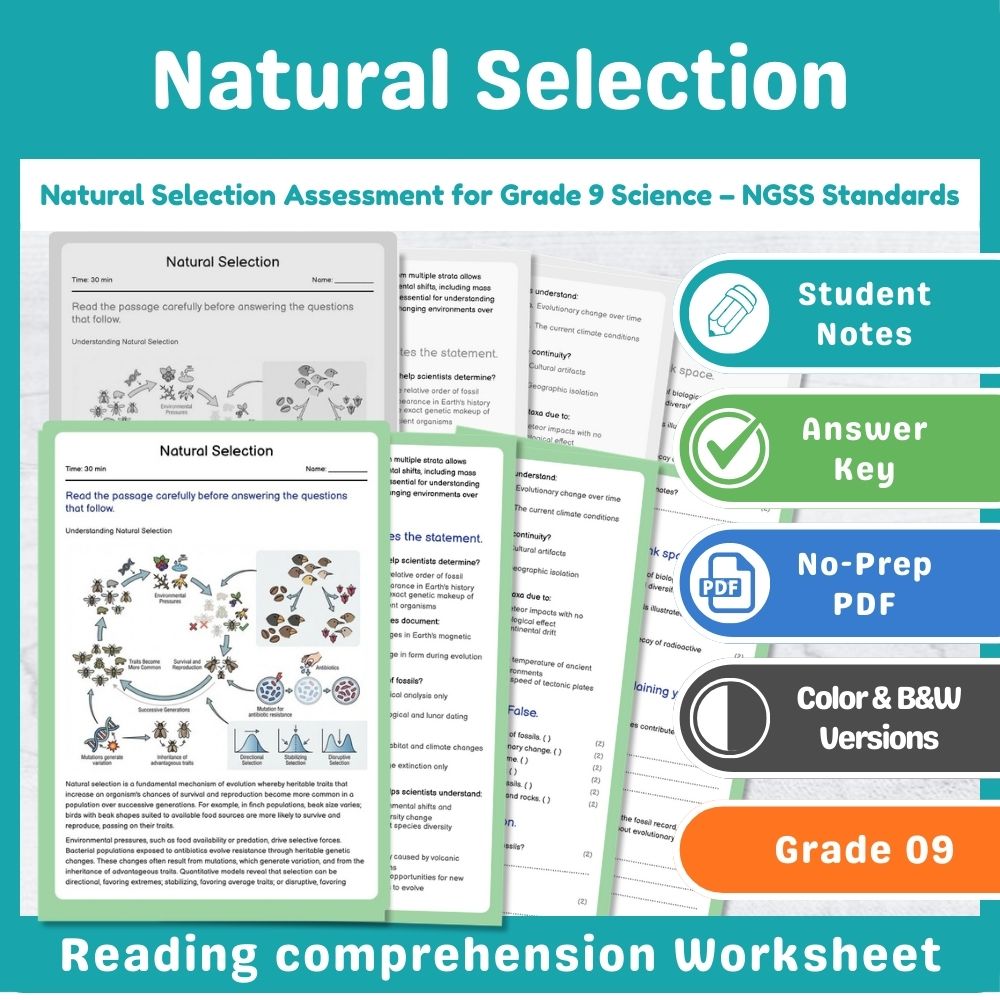
Natural Selection Assessment for Grade 9 Science – NGSS Standards
Created byPrism Point LearningLearning Objectives
- Explain the mechanisms of natural selection, including variation, inheritance, and selection pressures.
- Identify classic examples of natural selection, such as finch beak morphology and bacterial resistance.
- Describe how models of fitness and allele frequency determine different types of selection.
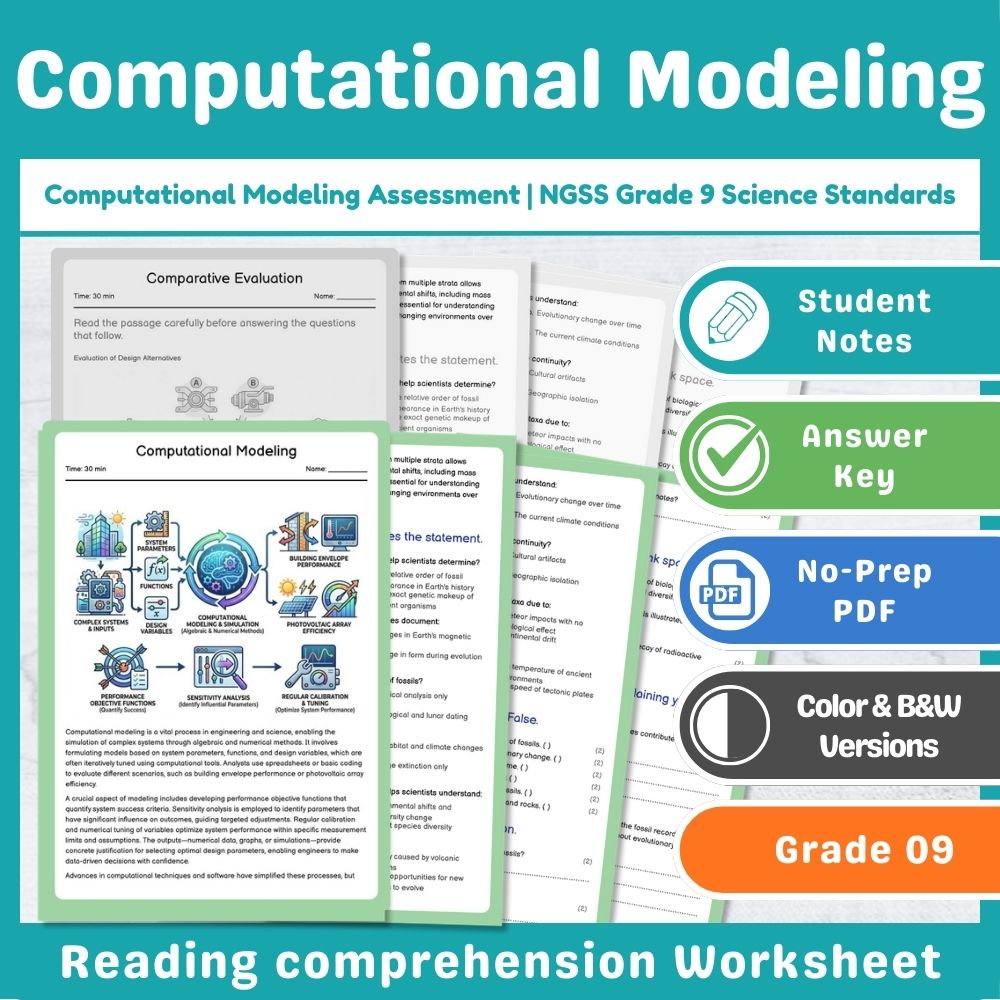
Computational Modeling Assessment | NGSS Grade 9 Science Standards
Created byPrism Point LearningLearning Objectives
- Understand the application of mathematical and computational methods in system modeling.
- Analyze how parameters and variables influence system performance.
- Develop and evaluate models using spreadsheets and simple code simulations.

Atomic Models Assessment for Grade 12 Science | TEKS Standards-Aligned
Created byPrism Point LearningLearning Objectives
- Understand the historical development of atomic models from Dalton to Bohr.
- Explain empirical evidence such as cathode ray experiments and gold foil scattering.
- Describe concepts of nuclear charge, mass number, and isotopic abundance.
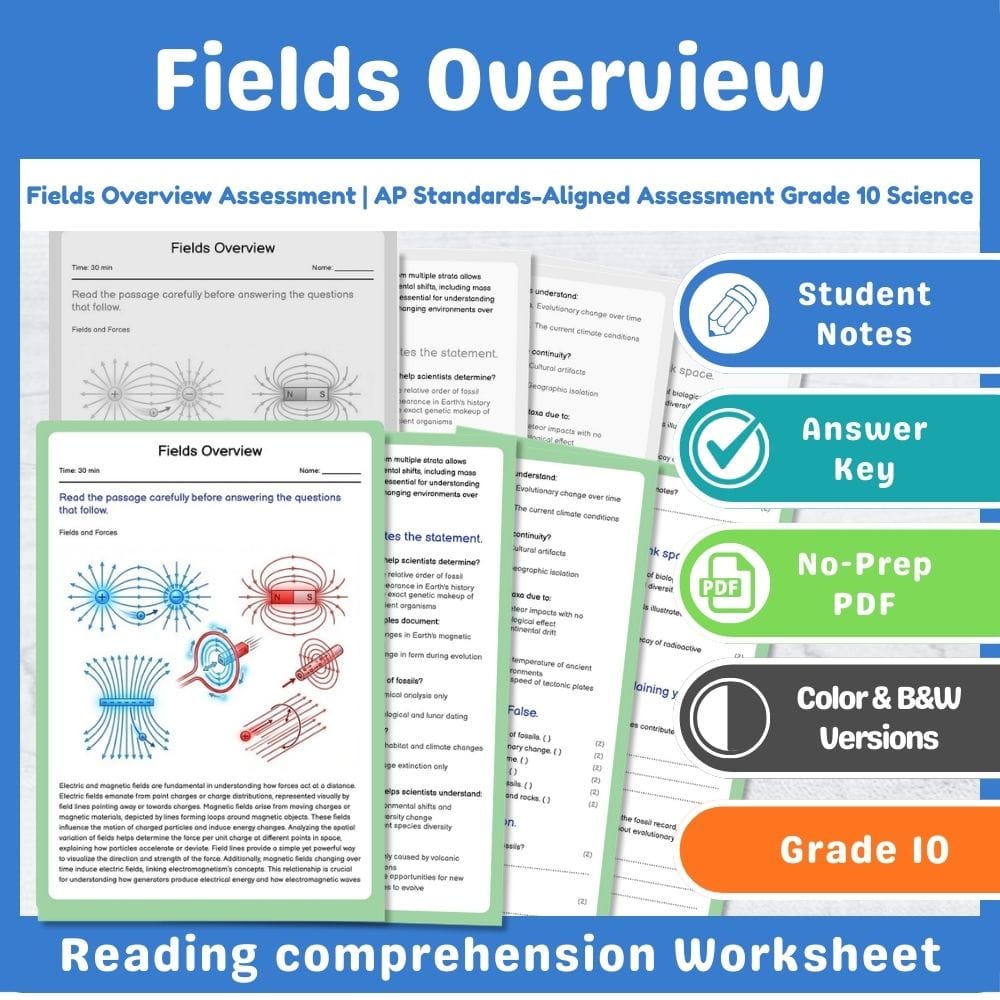
Fields Overview Assessment | AP Standards-Aligned Assessment Grade 10 Science
Created byPrism Point LearningLearning Objectives
- Understand the basic concepts of electric and magnetic fields and their representations.
- Describe how fields influence force on charges and potential energy.
- Relate field concepts to forces, motion, and electrical effects in circuits.
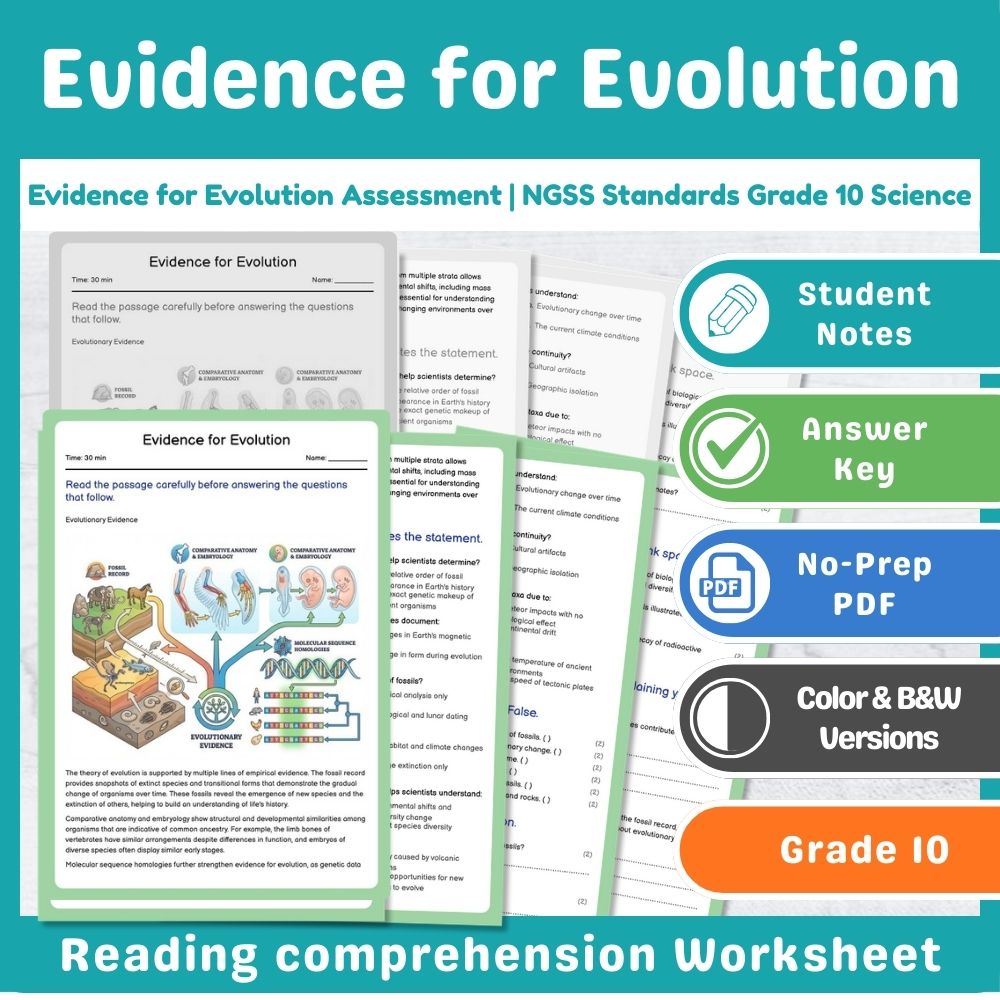
Evidence for Evolution Assessment | NGSS Standards Grade 10 Science
Created byPrism Point LearningLearning Objectives
- Understand the key lines of scientific evidence supporting common ancestry and evolution.
- Identify how fossil records, comparative anatomy, embryology, and molecular data corroborate evolutionary theory.
- Analyze the role of radiometric dating and biogeography in establishing evolutionary timelines.
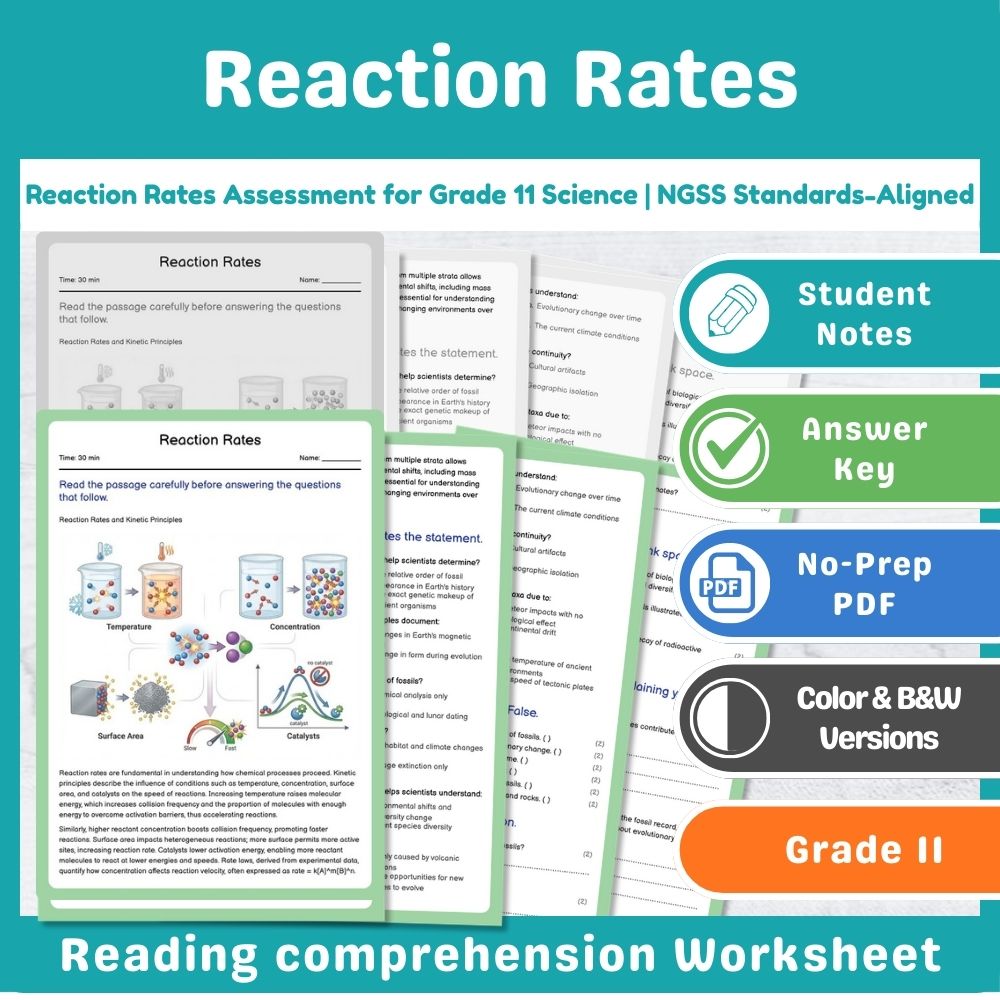
Reaction Rates Assessment for Grade 11 Science | NGSS Standards-Aligned
Created byPrism Point LearningLearning Objectives
- Explain how temperature, concentration, surface area, and catalysts influence reaction rates through collision and activation energies.
- Apply rate laws and concentration dependencies to elementary reaction steps.
- Interpret potential energy diagrams and Arrhenius parameters to understand temperature's effect on reaction rates.

Design Criteria Assessment | General Standards + Grade 7 Science
Created byPrism Point LearningLearning Objectives
- Understand the concept of design criteria and how they guide project development.
- Identify measurable and observable criteria in design solutions.
- Analyze trade-offs when meeting multiple design constraints.

Orbital Forcing Assessment | Alberta Standards Grade 10 Science
Created byPrism Point LearningLearning Objectives
- Understand how Earth's orbital parameters influence climate cycles over long timescales.
- Describe the mechanisms by which orbital variations affect insolation and seasonal contrast.
- Distinguish between orbital drivers and short-term atmospheric or anthropogenic influences on regional climate.

Heat and Work Assessment for Grade 9 Science | Standards-Aligned Worksheet
Created byPrism Point LearningLearning Objectives
- Understand the concepts of heat transfer and work in physical and chemical changes.
- Identify pathways of energy transfer during different processes.
- Explain how energy flows between a system and its surroundings through heat and work.

Reaction Balancing Assessment | General Standards + Grade 9 Science
Created byPrism Point LearningLearning Objectives
- Understand the conservation of atoms in chemical reactions.
- Learn how to balance simple chemical equations accurately.
- Explain the significance of coefficients in representing particle ratios.
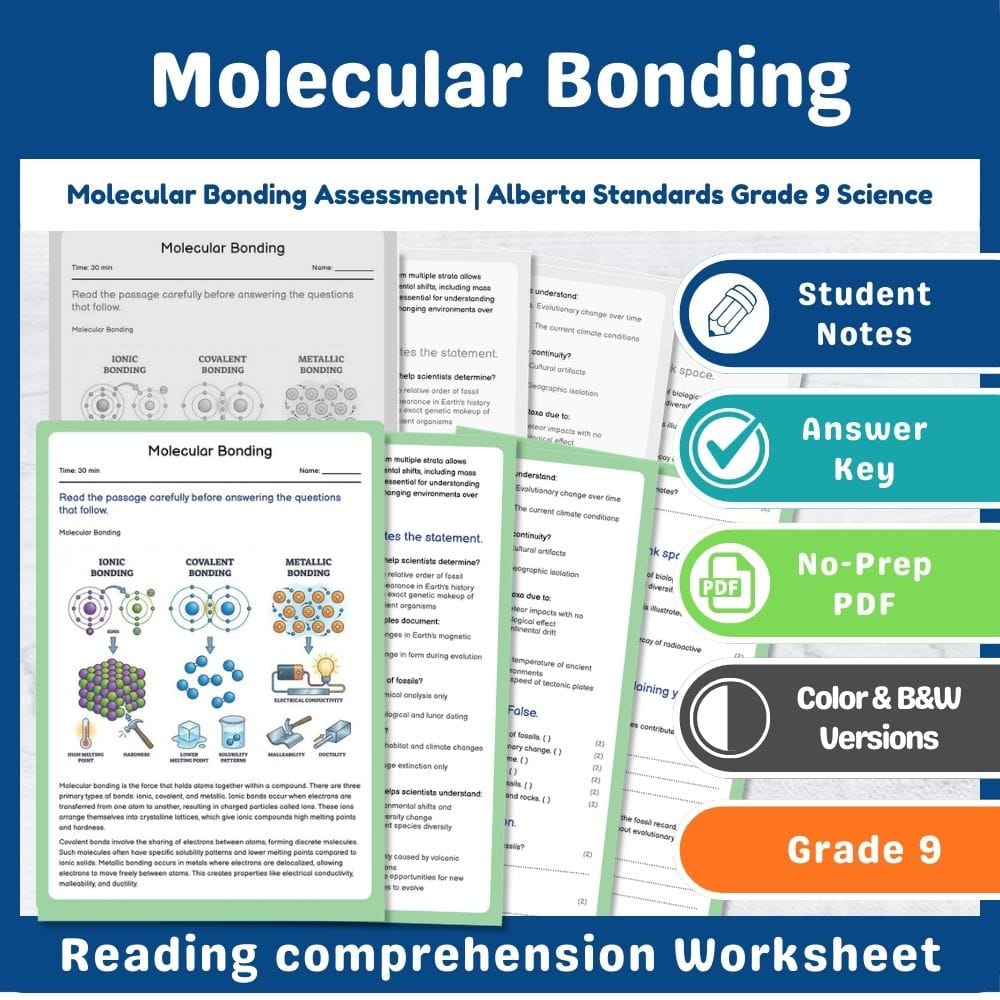
Molecular Bonding Assessment | Alberta Standards Grade 9 Science
Created byPrism Point LearningLearning Objectives
- Describe the different types of chemical bonds: ionic, covalent, and metallic.
- Identify properties of compounds based on their bonding type.
- Explain how bonding influences material properties and applications.

Particles Meet Energy Assessment | General Grade 8 Science
Created byPrism Point LearningLearning Objectives
- Explain how particle interactions relate to energy changes during reactions.
- Identify observable changes indicating particle rearrangements and energy shifts.
- Connect temperature changes to energy transfer in chemical reactions.
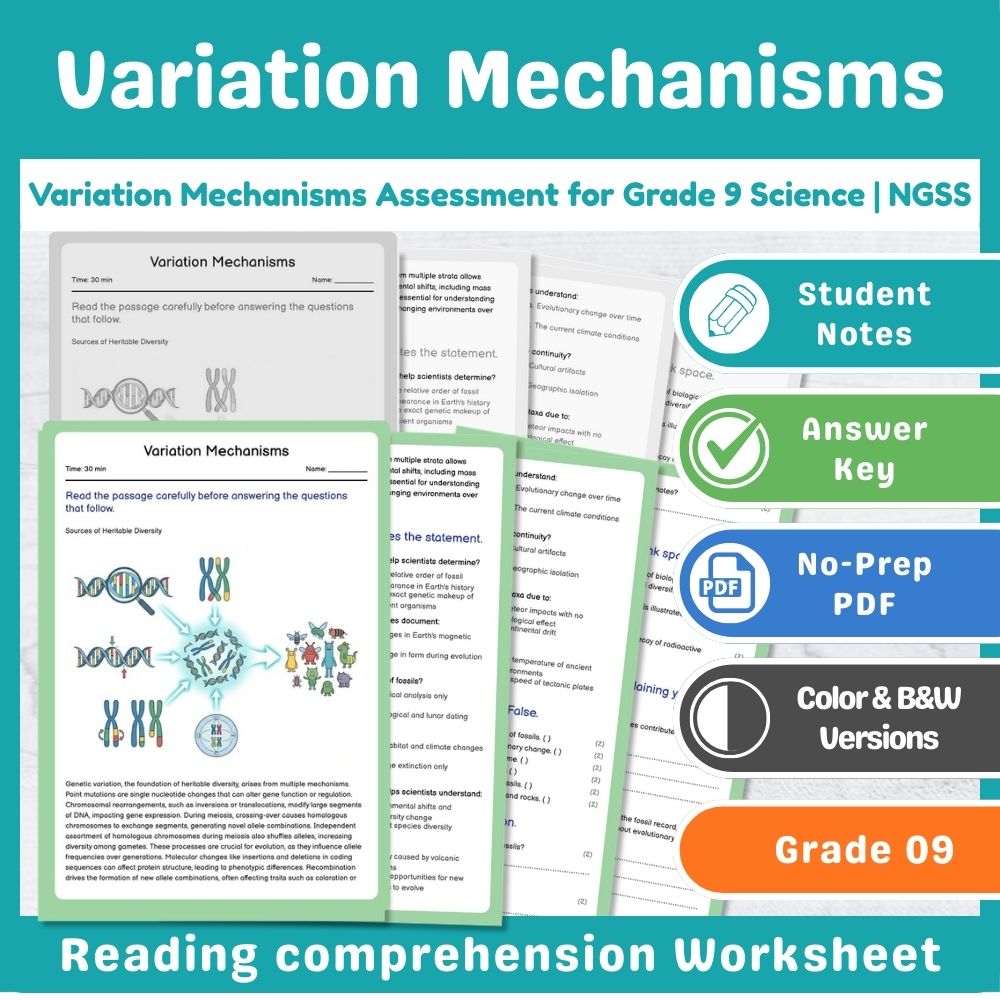
Variation Mechanisms Assessment for Grade 9 Science | NGSS
Created byPrism Point LearningLearning Objectives
- Describe the main sources of heritable genetic variation such as point mutations, chromosomal rearrangements, and recombination.
- Explain how mechanisms like crossing-over and independent assortment contribute to allelic and phenotypic diversity.
- Connect molecular changes to effects on gene expression, protein function, and trait variation at the population level.
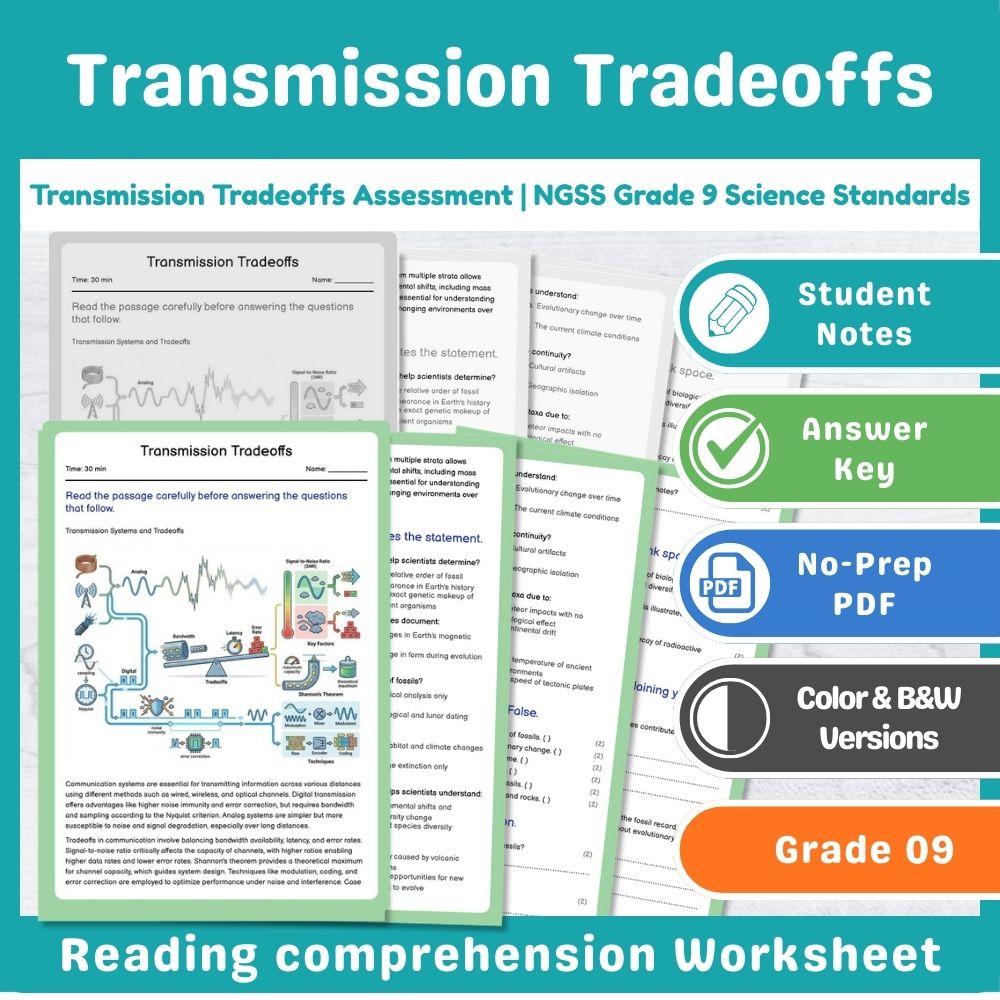
Transmission Tradeoffs Assessment | NGSS Grade 9 Science Standards
Created byPrism Point LearningLearning Objectives
- Understand the tradeoffs involved in digital and analog communication systems.
- Analyze the impact of bandwidth constraints, signal-to-noise ratio, and sampling criteria on transmission quality.
- Evaluate error-correcting techniques and their effect on data integrity in noisy environments.
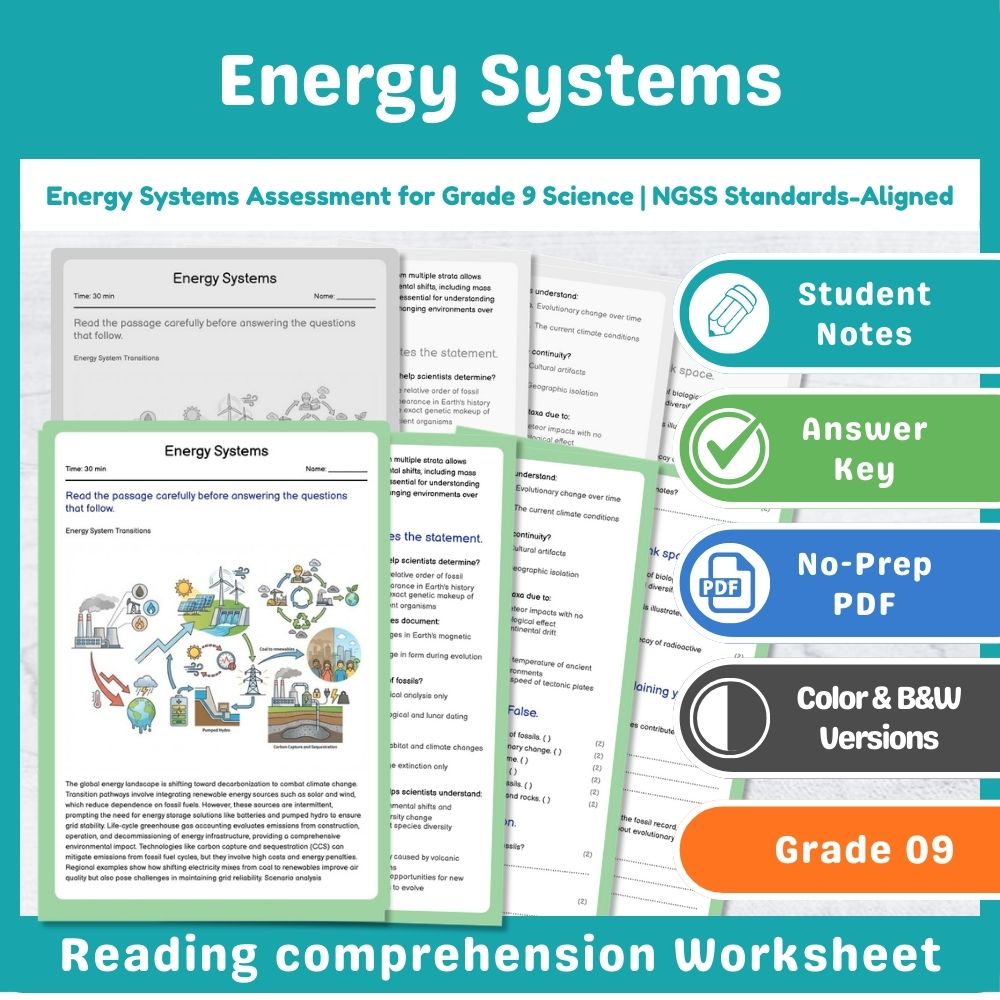
Energy Systems Assessment for Grade 9 Science | NGSS Standards-Aligned
Created byPrism Point LearningLearning Objectives
- Explain the processes involved in energy system transitions and decarbonization pathways.
- Analyze life-cycle greenhouse gas emissions for various energy technologies.
- Evaluate the trade-offs between reliability, affordability, and emissions reductions in energy planning.
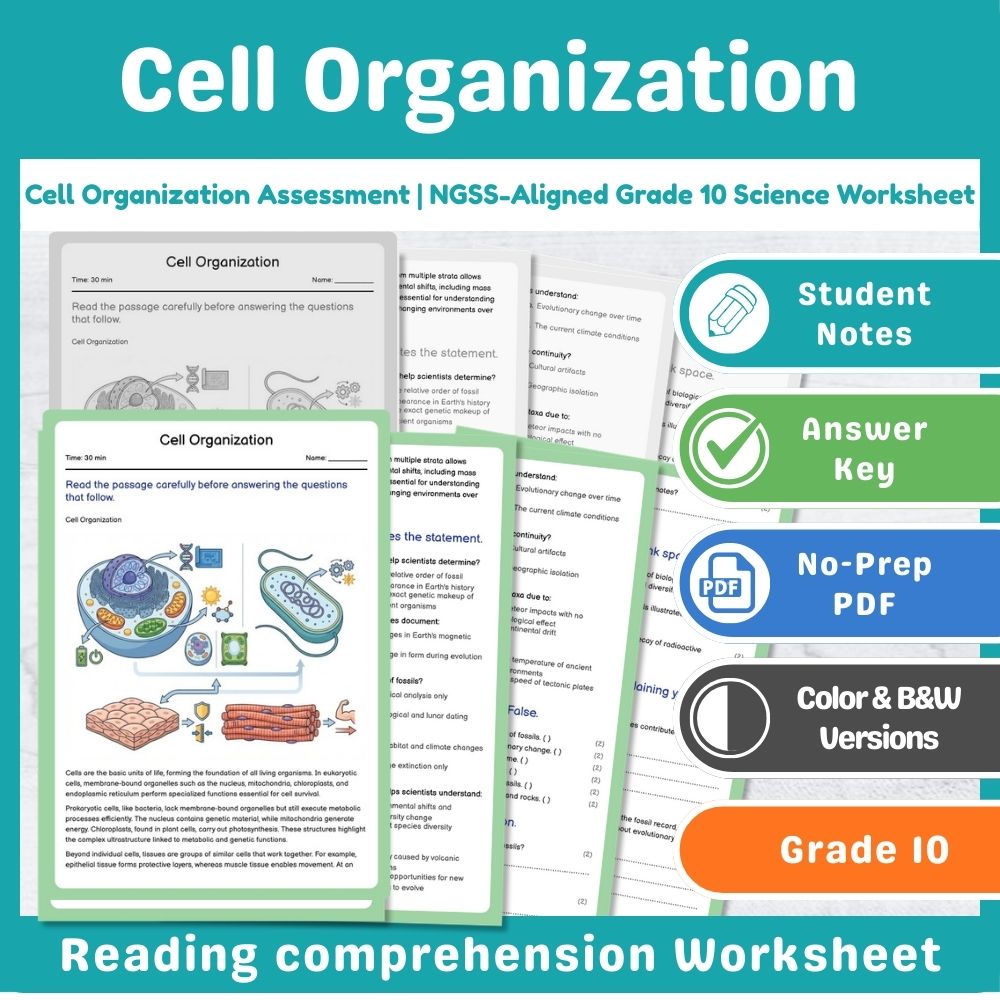
Cell Organization Assessment | NGSS-Aligned Grade 10 Science Worksheet
Created byPrism Point LearningLearning Objectives
- Identify and describe the functions of membrane-bound organelles in eukaryotic cells.
- Compare the cellular structures of prokaryotic and eukaryotic cells.
- Explain the hierarchical organization from cells to tissues and organs.
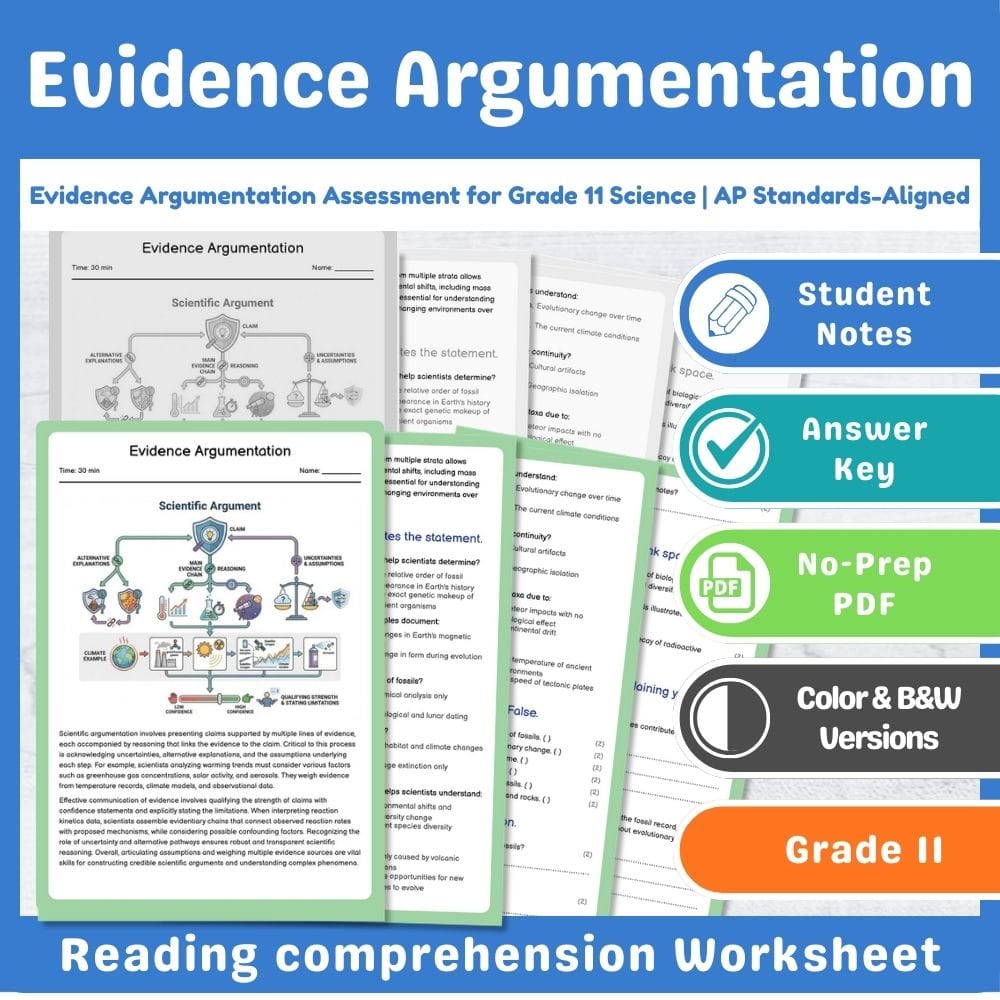
Evidence Argumentation Assessment for Grade 11 Science | AP Standards-Aligned
Created byPrism Point LearningLearning Objectives
- Understand the structure of scientific arguments connecting claims, evidence, and reasoning.
- Identify methods for articulating assumptions and qualifying claims with confidence statements.
- Assess various lines of evidence and interpret their implications for scientific hypotheses.
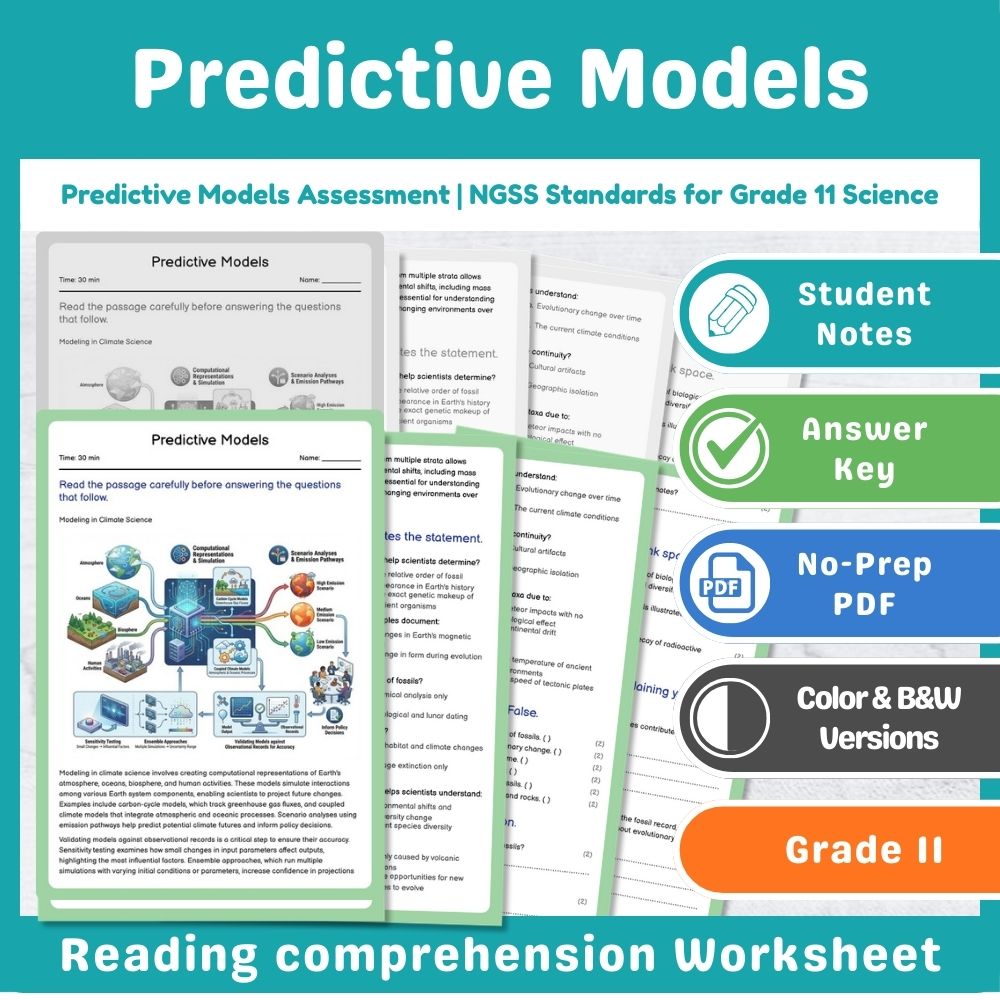
Predictive Models Assessment | NGSS Standards-Aligned Assessment for Grade 11 Science
Created byPrism Point LearningLearning Objectives
- Understand the role of modeling in projecting climate-related variables.
- Identify different types of climate models and their purposes.
- Evaluate the importance of model validation and sensitivity testing.
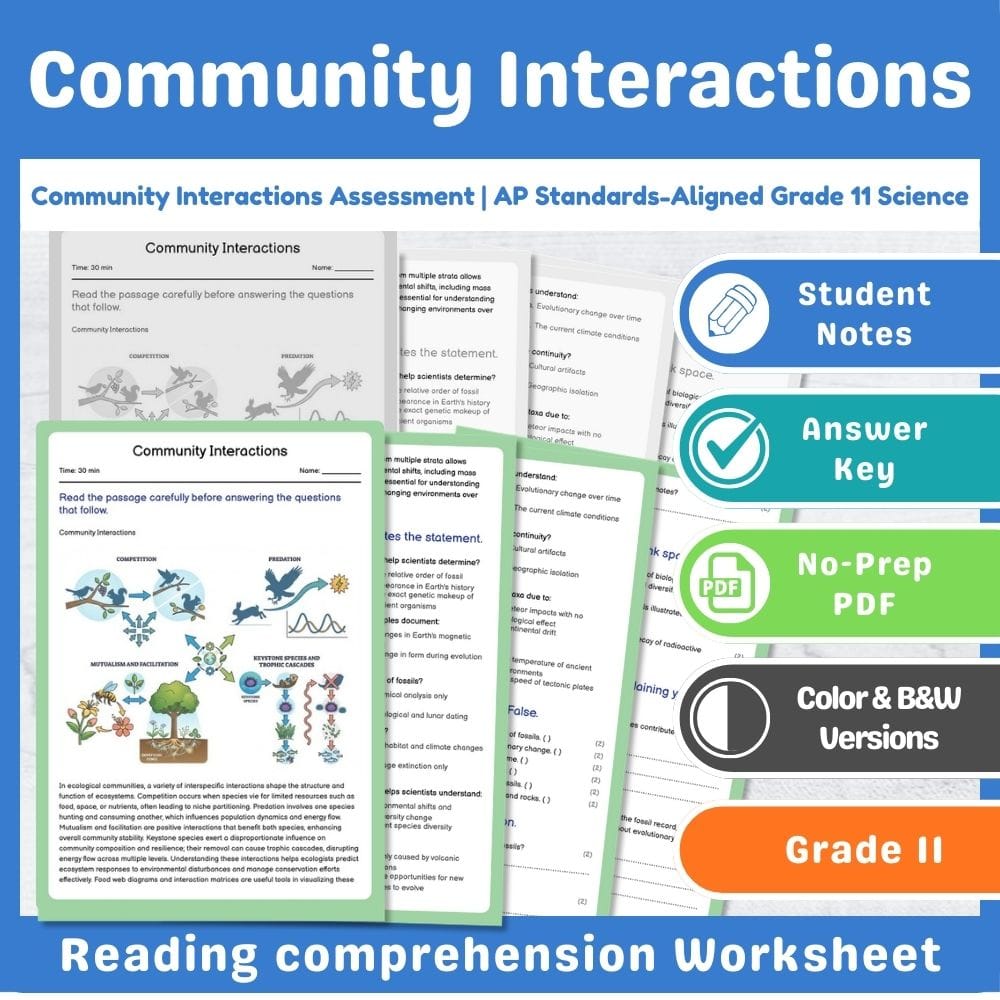
Community Interactions Assessment | AP Standards-Aligned Grade 11 Science
Created byPrism Point LearningLearning Objectives
- Analyze different types of interspecific interactions within ecological communities.
- Interpret food web diagrams and interaction matrices to understand energy flow and interaction strength.
- Evaluate the roles of keystone species, trophic cascades, and niche partitioning in community assembly and resilience.
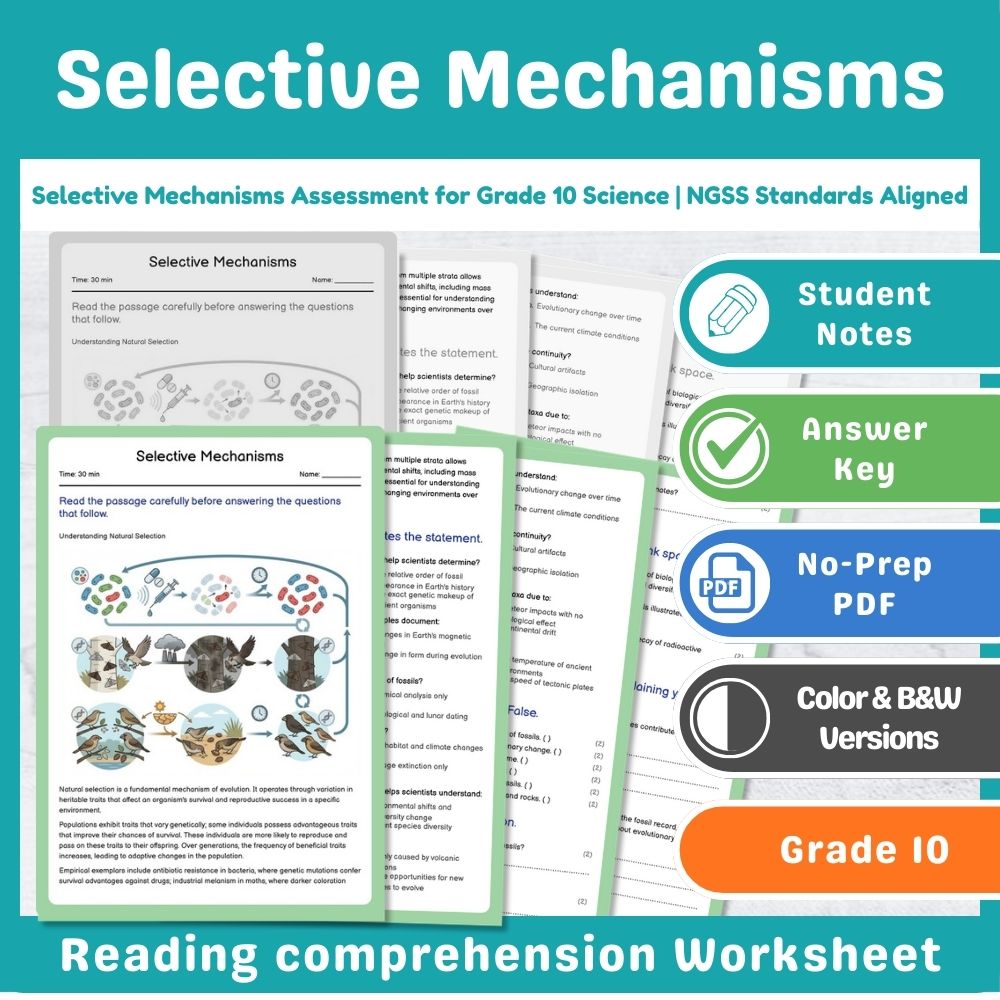
Selective Mechanisms Assessment for Grade 10 Science | NGSS Standards Aligned
Created byPrism Point LearningLearning Objectives
- Understand how natural selection operates through variation in heritable traits.
- Identify real-world examples illustrating adaptive changes due to environmental pressures.
- Analyze the role of reproductive success and fitness differentials in evolution.

Newton's Laws Assessment for Grade 7 Science | TEKS Standards
Created byPrism Point LearningLearning Objectives
- Understand the core principles of Newton's three laws of motion.
- Identify real-world examples illustrating inertia, acceleration, and action–reaction pairs.
- Explain how mass, force, and motion are related through qualitative relationships.
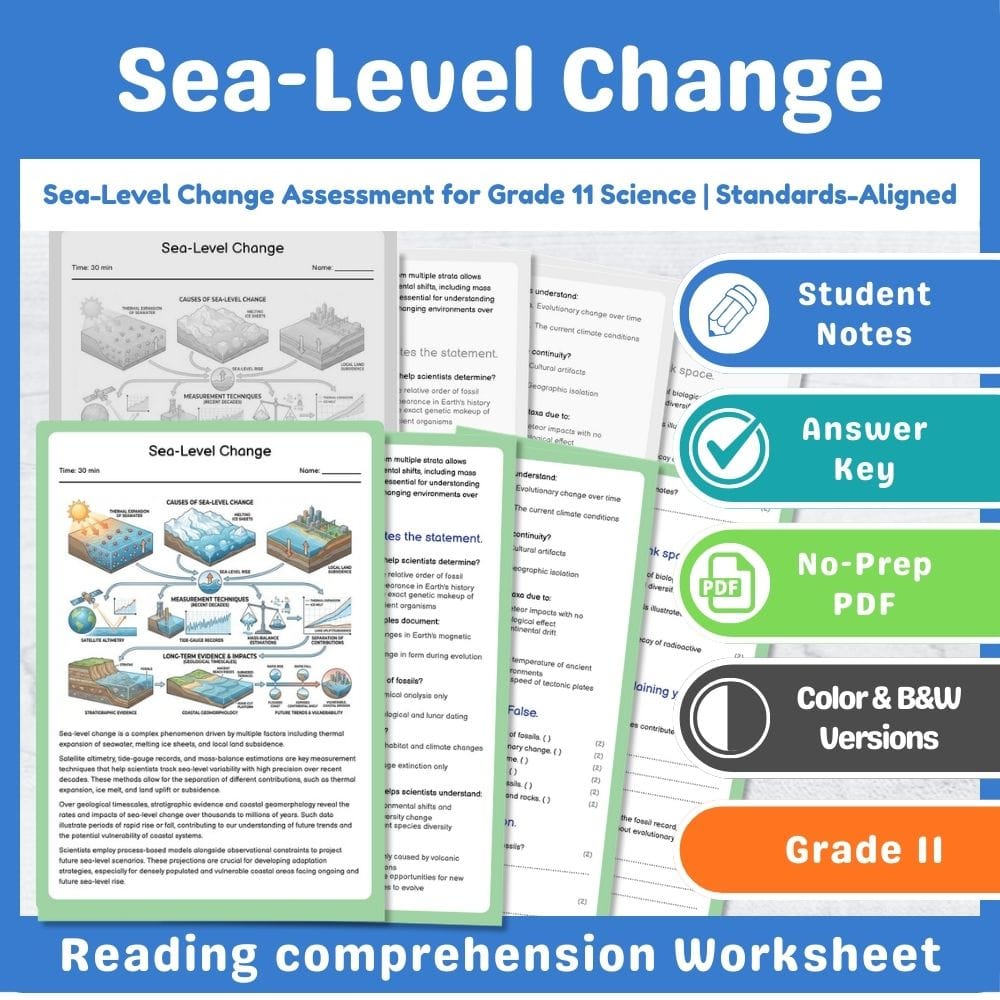
Sea-Level Change Assessment for Grade 11 Science | Standards-Aligned
Created byPrism Point LearningLearning Objectives
- Understand the causes of sea-level variability, including thermal expansion and ice-sheet mass loss.
- Analyze methods used to measure sea-level changes, such as satellite altimetry and tide-gauge records.
- Evaluate the impacts of sea-level change over different timescales using stratigraphic and geomorphological evidence.
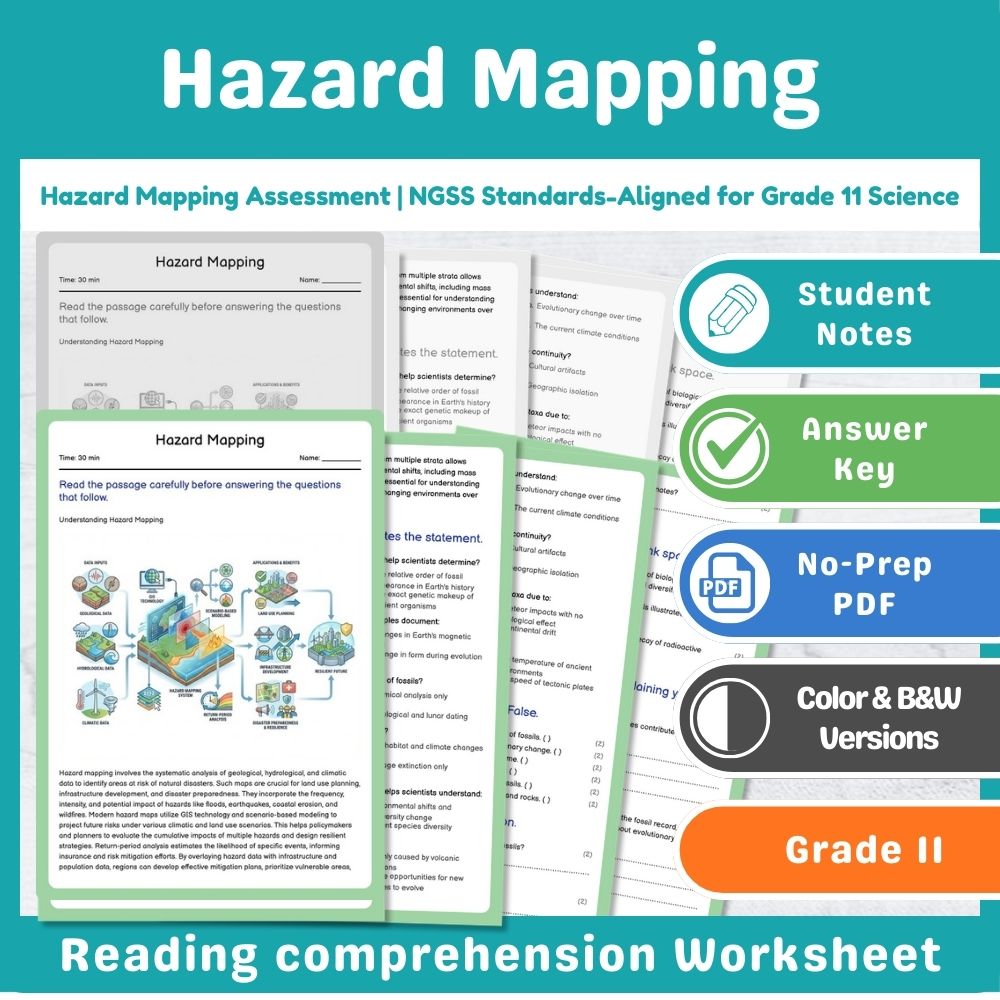
Hazard Mapping Assessment | NGSS Standards Grade 11 Science Worksheet
Created byPrism Point LearningLearning Objectives
- Understand various natural hazards and their spatial distribution
- Analyze the role of hazard mapping in regional planning and resilience
- Evaluate different data sources used in hazard assessment
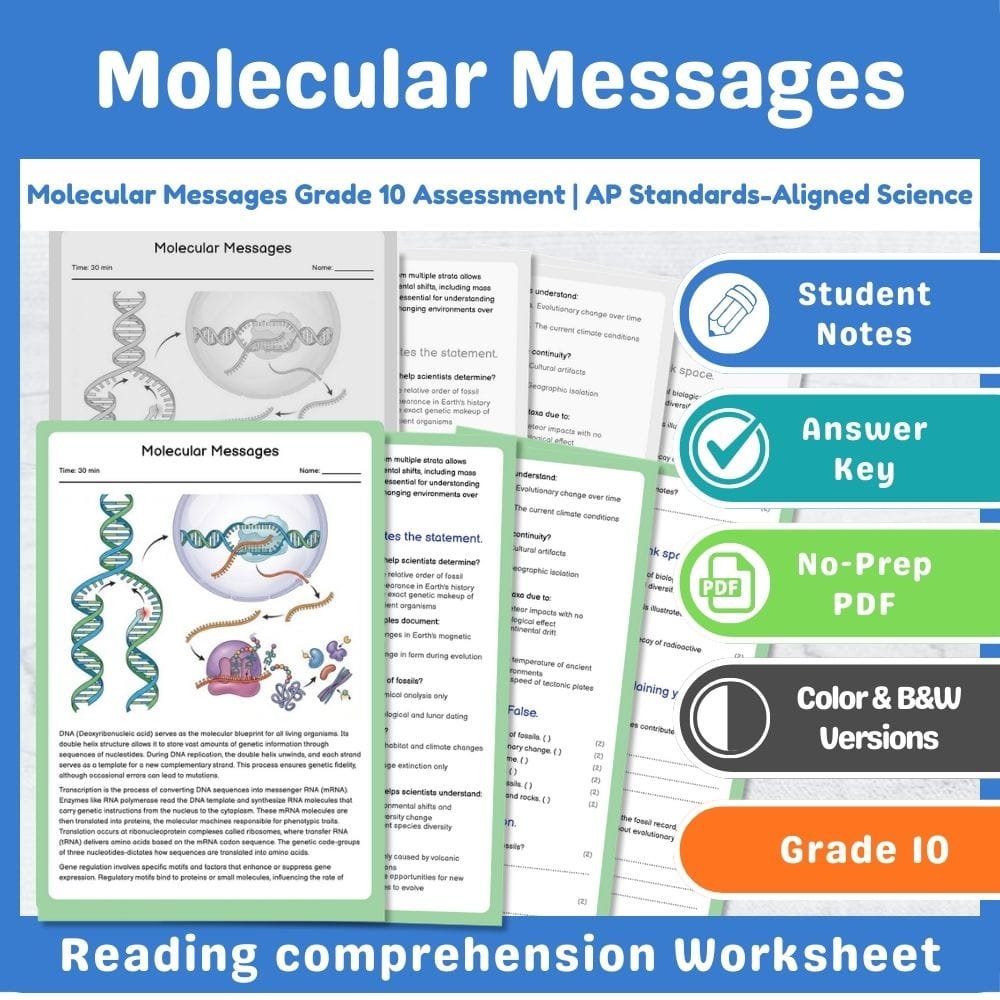
Molecular Messages Grade 10 Assessment | AP Standards-Aligned Science
Created byPrism Point LearningLearning Objectives
- Understand the structure and function of DNA and how genetic information is stored.
- Describe the processes of DNA replication, transcription, and translation.
- Explain how molecular mechanisms contribute to phenotypic expression and regulation within cells.
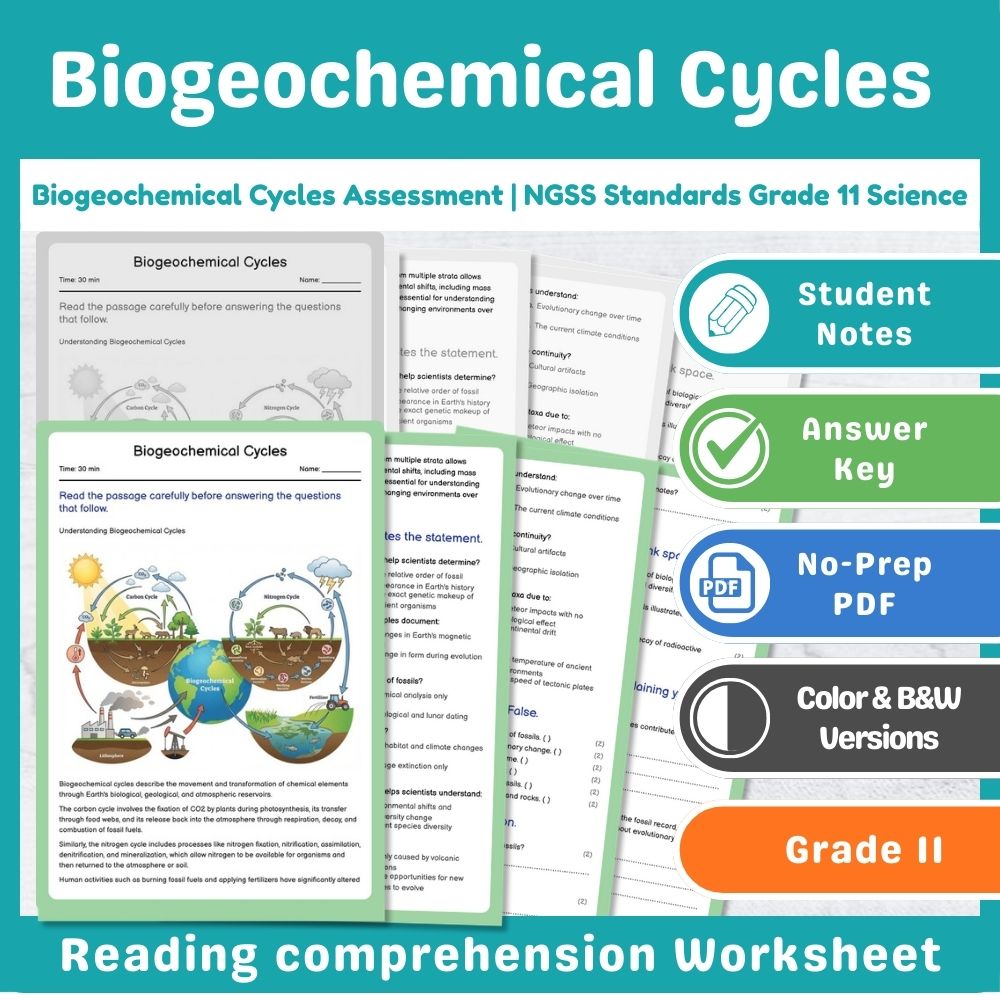
Biogeochemical Cycles Assessment | NGSS Standards Grade 11 Science
Created byPrism Point LearningLearning Objectives
- Understand the key processes involved in biogeochemical cycles such as carbon, nitrogen, phosphorus, and water.
- Identify the reservoirs and flow pathways of elements through biological, geological, and atmospheric systems.
- Explain human impacts like fossil fuel combustion and fertilizer use on nutrient pools and fluxes.
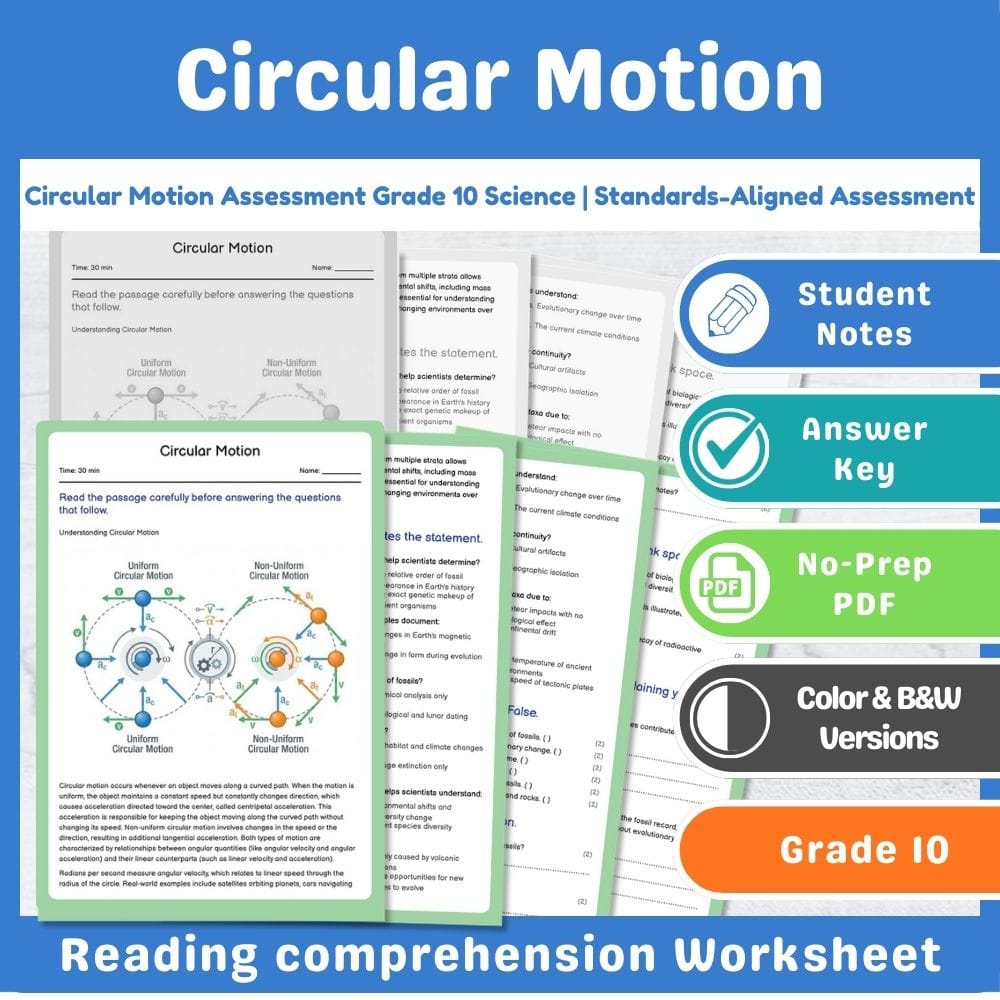
Circular Motion Assessment Grade 10 Science | Standards-Aligned Assessment
Created byPrism Point LearningLearning Objectives
- Understand the concepts of uniform and non-uniform circular motion.
- Relate angular and linear quantities such as speed, velocity, and acceleration.
- Explain the origin of centripetal acceleration and the forces involved in circular trajectories.

Life Processes in Cells Assessment | Standards-Aligned Grade 6 Science
Created byPrism Point LearningLearning Objectives
- Understand the key life processes that occur within cells, including photosynthesis and cellular respiration.
- Describe how diffusion and transport mechanisms support material movement across cell membranes.
- Explain how these processes maintain conditions necessary for growth, repair, and reproduction in organisms.

Physical Property Clues Assessment for Grade 7 Science | Standards-Aligned Test
Created byPrism Point LearningLearning Objectives
- Identify and describe various physical properties of substances such as color, density, melting point, boiling point, magnetism, conductivity, and solubility.
- Explain how observable behaviors related to physical properties assist in characterizing substances.
- Apply knowledge of physical properties to reason about how mixtures can be separated based on measurable differences.
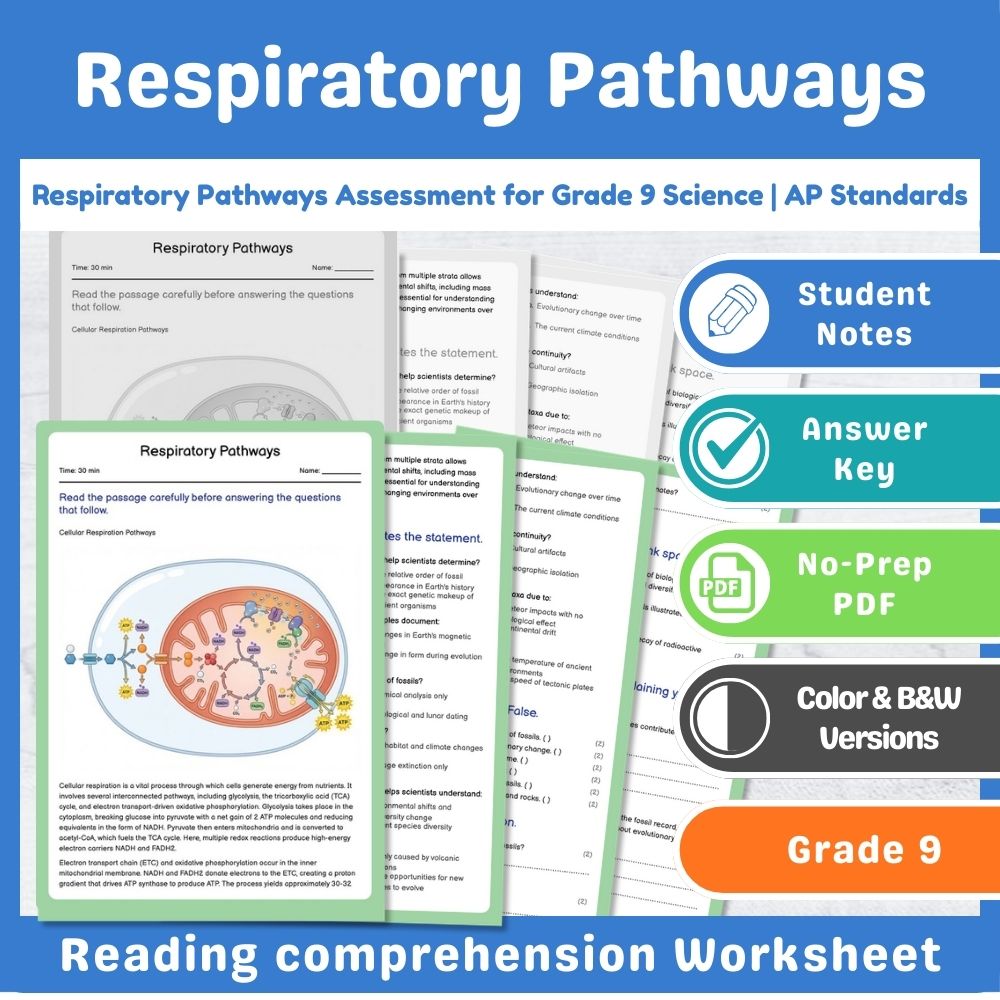
Respiratory Pathways Assessment for Grade 9 Science | AP Standards
Created byPrism Point LearningLearning Objectives
- Describe the main pathways involved in cellular respiration, including glycolysis, the TCA cycle, and electron transport chain.
- Explain the ATP yield and redox balances associated with substrate-level and oxidative phosphorylation.
- Differentiate between aerobic and anaerobic respiration outcomes in terms of energy production.
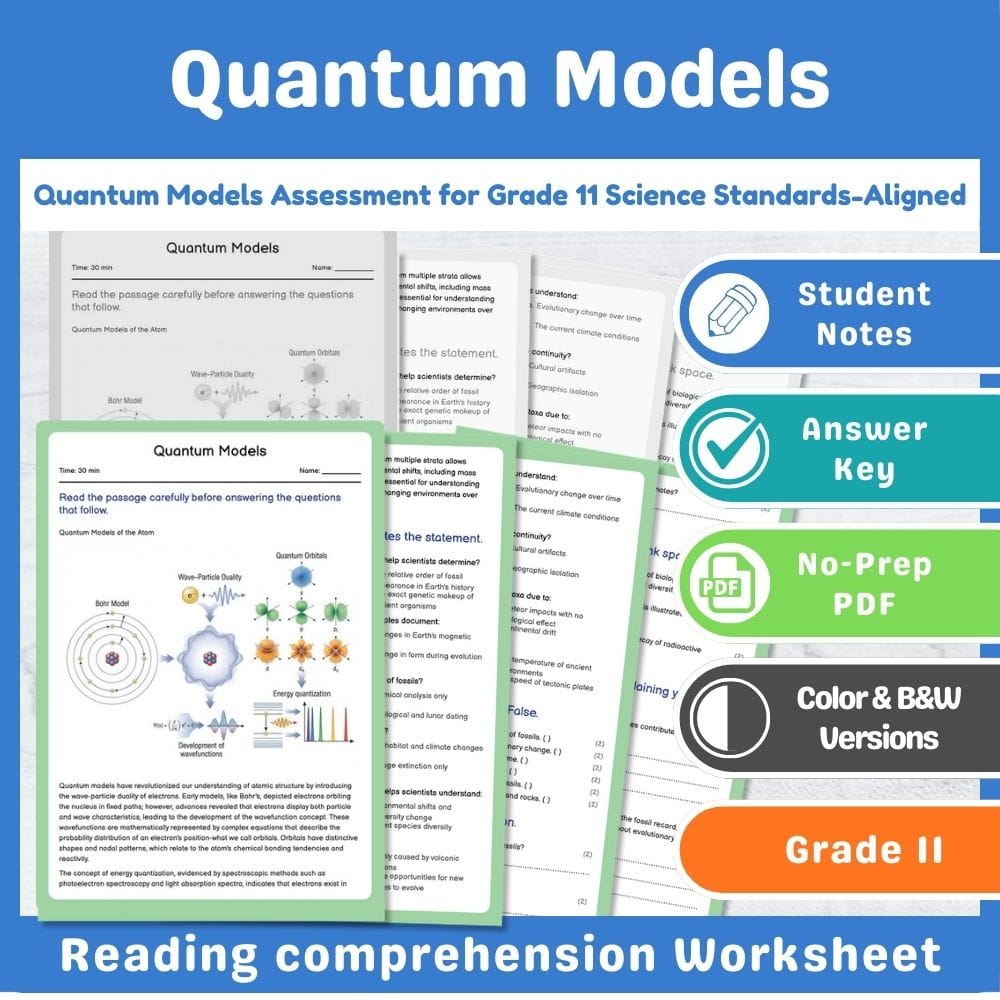
Quantum Models Assessment for Grade 11 Science Standards-Aligned
Created byPrism Point LearningLearning Objectives
- Explain the development of quantum models including wave–particle duality and orbital hybridization.
- Describe how energy quantization affects atomic spectra and chemical bonding.
- Apply mathematical representations of atomic orbitals to predict electron behavior and properties.

Safety and Reporting Assessment for Grade 6 Science | Standards-Aligned
Created byPrism Point LearningLearning Objectives
- Understand the importance of safety practices in scientific experiments.
- Identify proper reporting methods for data and safety concerns.
- Recognize ethical standards in scientific communication.
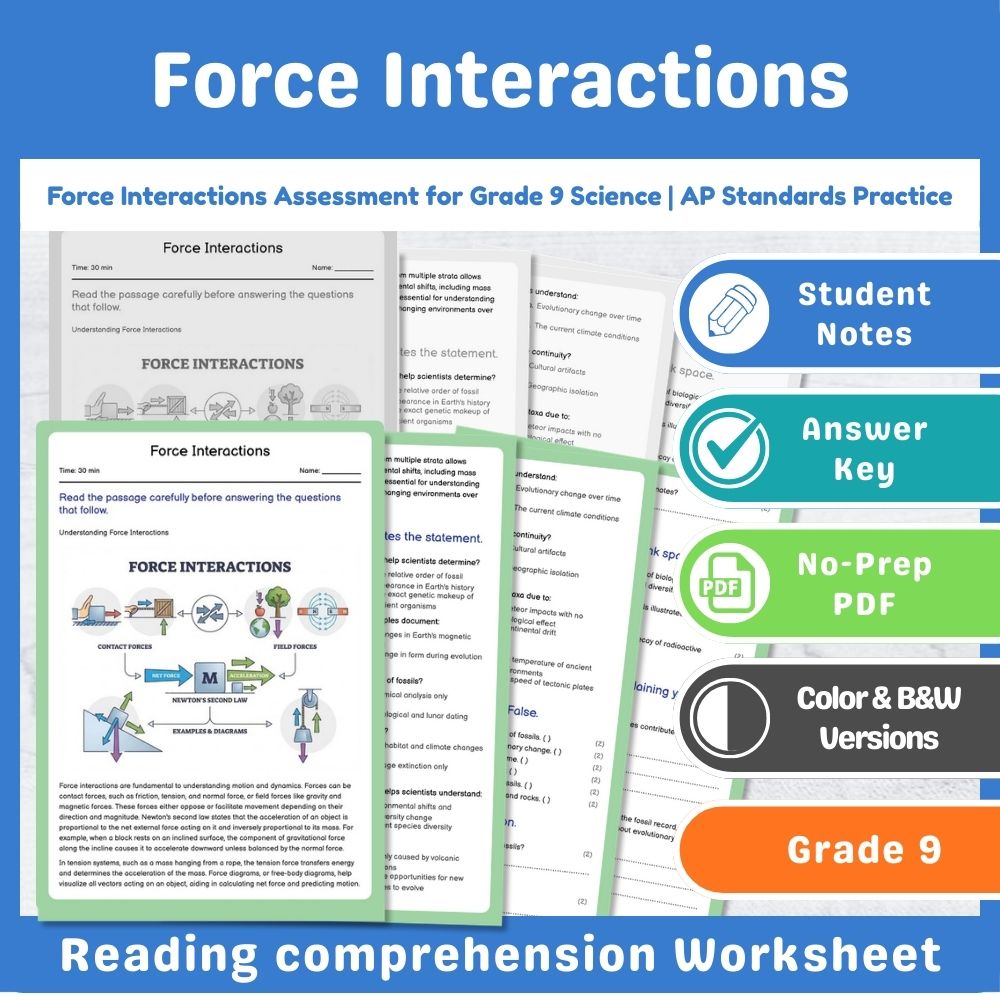
Force Interactions Assessment for Grade 9 Science | AP Standards Practice
Created byPrism Point LearningLearning Objectives
- Describe how net external forces influence the motion of objects.
- Explain the differences between contact and field forces using examples.
- Apply Newton's second law to analyze how varying forces affect acceleration.

Mass Wasting Assessment for Grade 6 Science | Standards-Aligned
Created byPrism Point LearningLearning Objectives
- Understand the processes involved in mass wasting such as rockfalls, landslides, and slumps.
- Identify factors that trigger surface movements like rainfall, freeze-thaw cycles, and earthquakes.
- Explain how debris deposition affects drainage and erosion patterns.

Evidence Explanations Assessment | Standards-Aligned Grade 6 Science
Created byPrism Point LearningLearning Objectives
- Understand how evidence connects claims to scientific explanations.
- Identify different types of evidence such as trends, ranges, and matches.
- Explain how scientific concepts provide reasoning links in explanations.
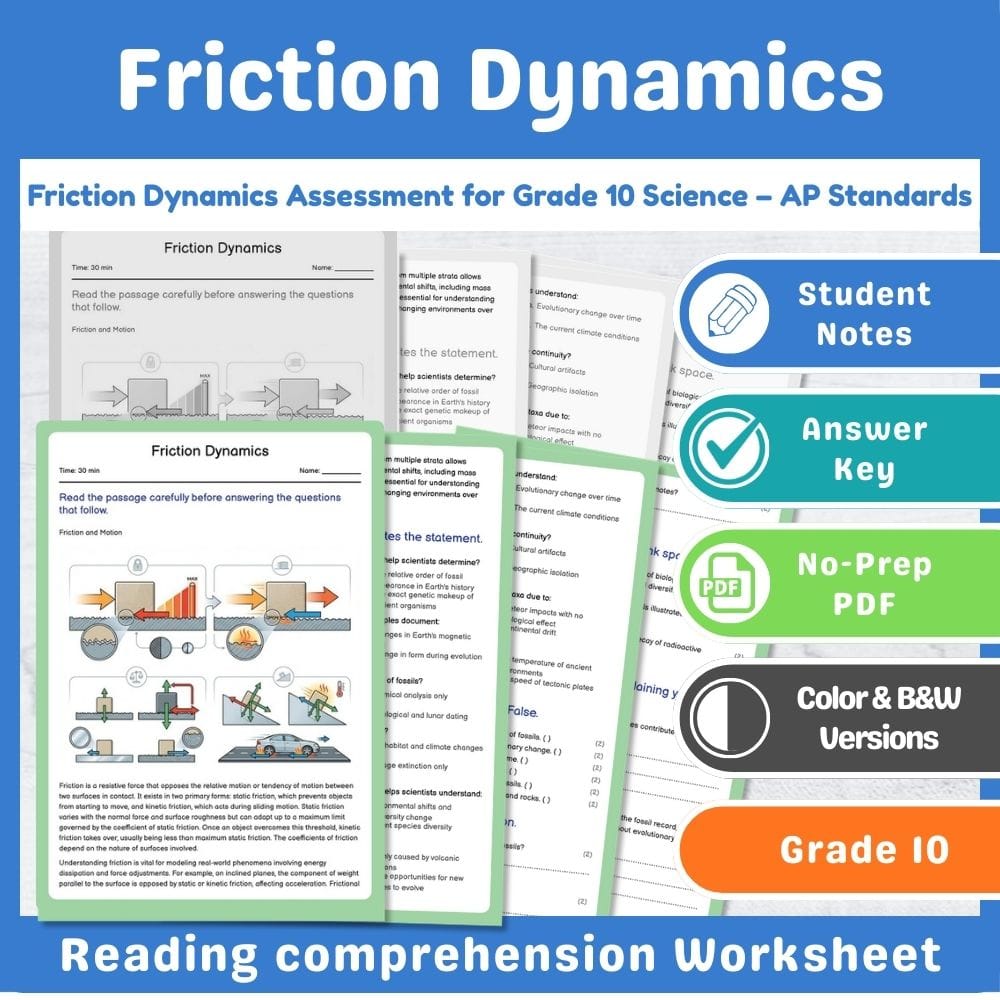
Friction Dynamics Assessment for Grade 10 Science – AP Standards
Created byPrism Point LearningLearning Objectives
- Describe the differences between static and kinetic friction and their dependence on normal force and surface properties.
- Apply coefficients of friction to predict motion and analyze energy dissipation during surface contact.
- Model the effects of frictional forces on motion using inclined-plane and surface-contact examples.
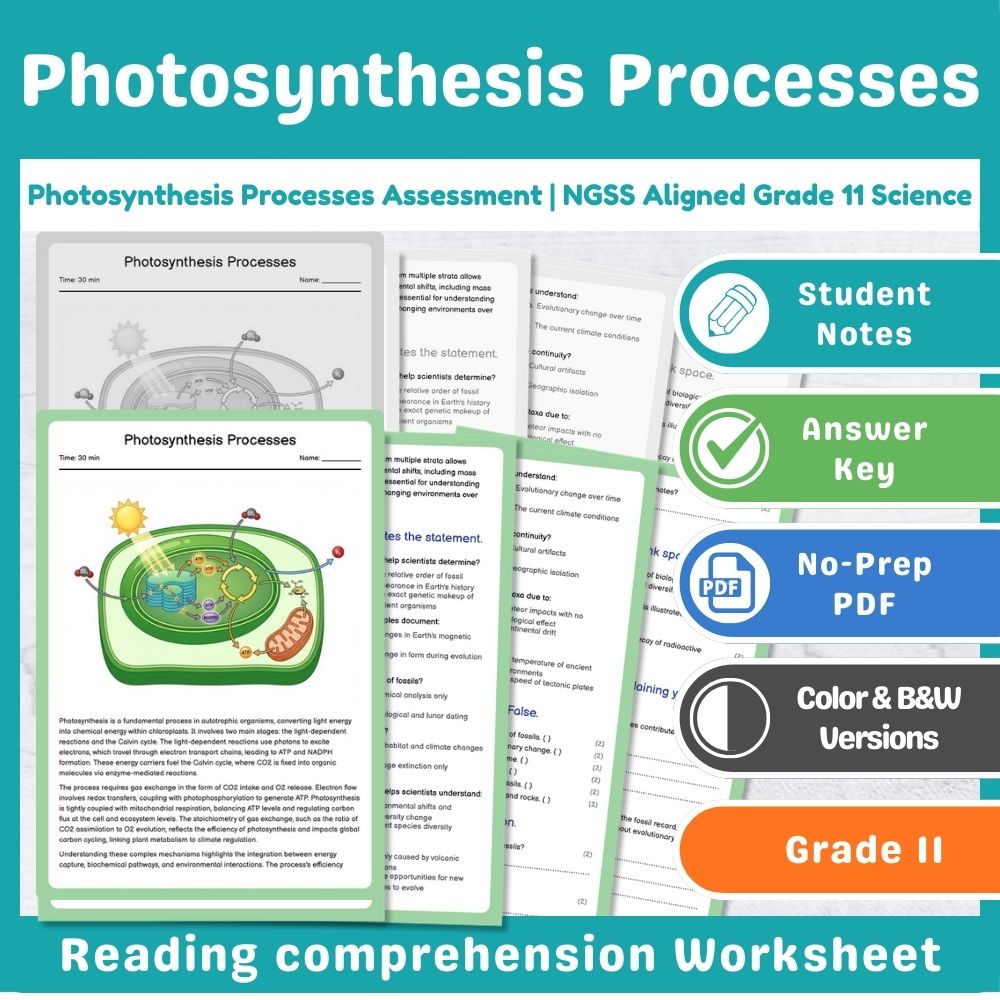
Photosynthesis Processes Assessment | NGSS Aligned Grade 11 Science
Created byPrism Point LearningLearning Objectives
- Explain the light-driven and biochemical stages of photosynthesis, including electron transport, photophosphorylation, and the Calvin cycle.
- Describe the integration of photosynthesis with mitochondrial respiration, focusing on gas exchange, ATP balance, and carbon flux.
- Analyze the stoichiometry of CO2 uptake and O2 release during photosynthesis and respiration.
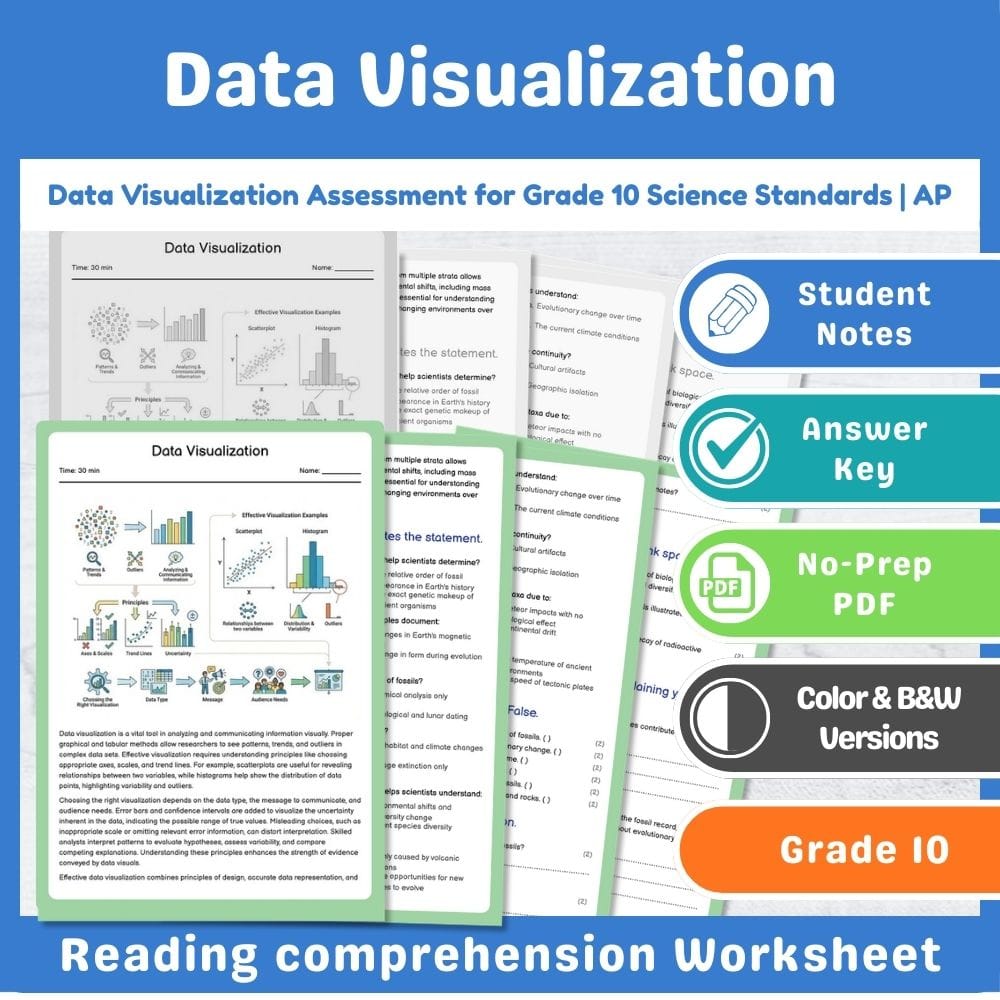
Data Visualization Assessment for Grade 10 Science Standards | AP
Created byPrism Point LearningLearning Objectives
- Describe principles and conventions for graphical and tabular representation of data.
- Identify and interpret various data visualization types such as scatterplots, histograms, and boxplots.
- Evaluate the appropriateness of different visualization choices like axes, scale, and trend lines.
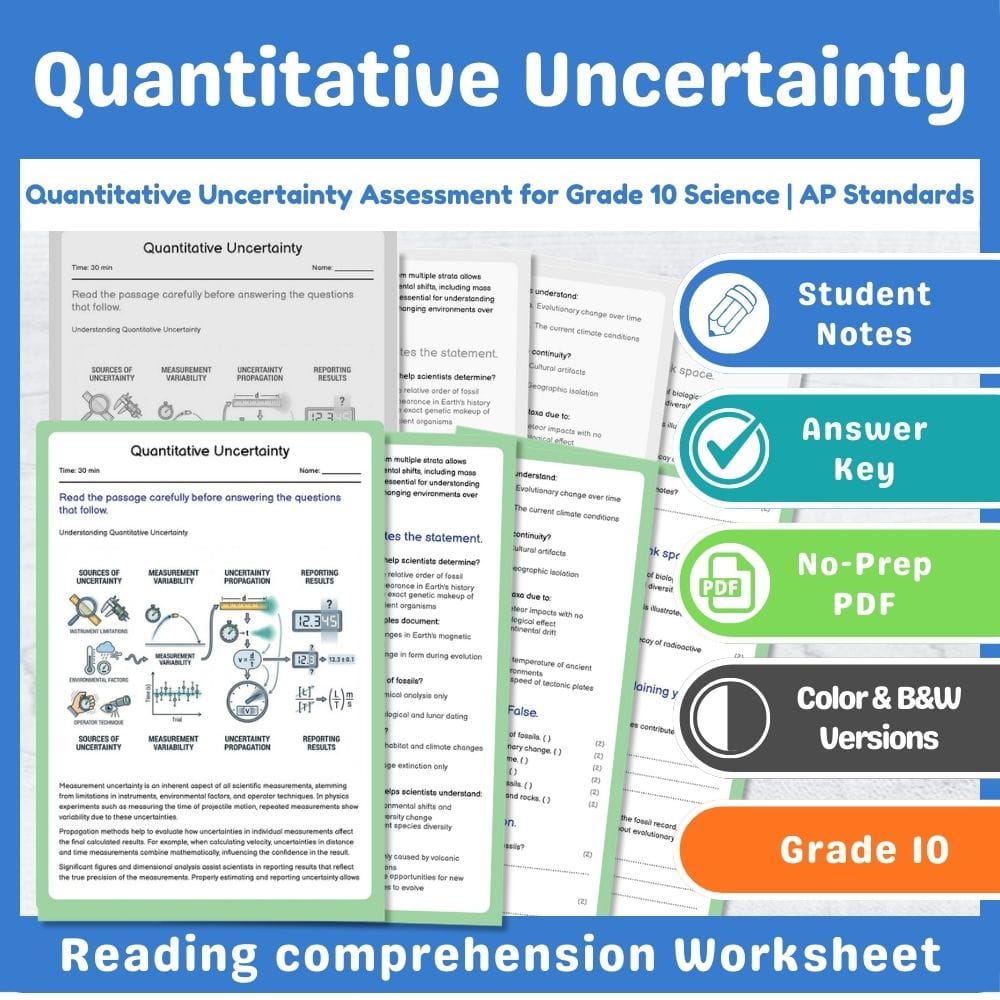
Quantitative Uncertainty Assessment for Grade 10 Science | AP Standards
Created byPrism Point LearningLearning Objectives
- Understand the concept of measurement uncertainty and its sources.
- Apply propagation methods to combine uncertainties in calculations.
- Interpret and report uncertainties using significant figures and dimensional analysis.

Iterative Improvement Assessment | Standards-Aligned Grade 6 Science
Created byPrism Point LearningLearning Objectives
- Understand the concept of iterative improvement and how it involves evaluation and refinement.
- Identify the steps involved in using data to improve prototypes or designs.
- Explain how trade-offs are managed during iterative design processes.

Design Principles in Scientific Research Assessment | TEKS Grade 12 Science
Created byPrism Point LearningLearning Objectives
- Understand key principles of experimental design including control, replication, and randomization.
- Identify appropriate statistical methods for analyzing experimental data.
- Evaluate the importance of sample size, power, and effect size in research planning.
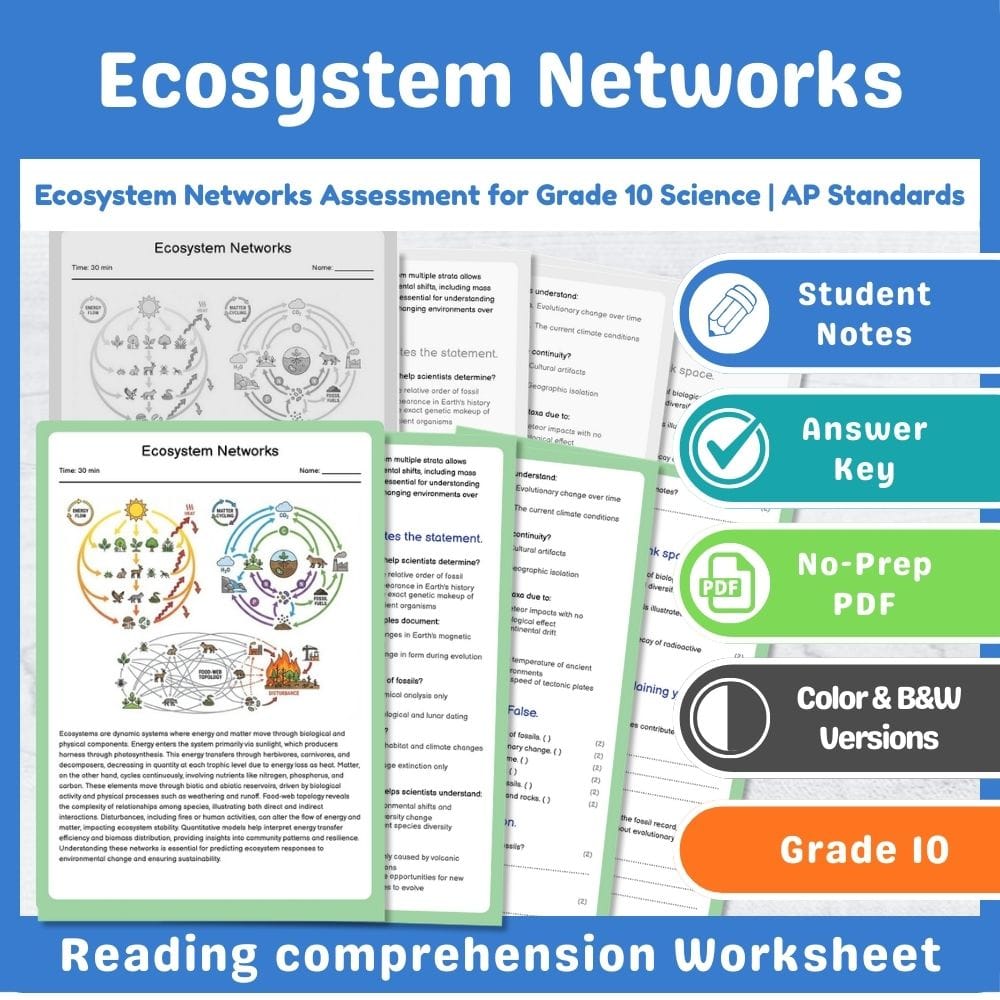
Ecosystem Networks Assessment for Grade 10 Science | AP Standards
Created byPrism Point LearningLearning Objectives
- Describe how energy flows through different levels of an ecosystem.
- Explain the cycling of matter and nutrients within ecosystems.
- Analyze the roles of species interactions and disturbances in ecosystem stability.

Model Evaluation Assessment for Grade 7 Science | Standards-Aligned
Created byPrism Point LearningLearning Objectives
- Understand how to evaluate scientific models and compare predicted outcomes with evidence.
- Identify assumptions in models that may be oversimplified or incomplete.
- Learn how computational simulations can reveal the impact of input changes on model outputs.

Measurement Uncertainty Assessment | TEKS Grade 12 Science Standards
Created byPrism Point LearningLearning Objectives
- Understand different types of measurement errors and their sources.
- Apply principles of calibration and propagation of uncertainty in quantitative analysis.
- Interpret significance of error analysis in scientific measurements.

Heat and States Assessment | General Grade 6 Science Standards
Created byPrism Point LearningLearning Objectives
- Understand how heat transfer causes changes in the state of matter.
- Identify examples of melting, evaporation, and boiling in everyday life.
- Explain how energy affects particle movement and matter organization.

Molecular Phylogeny Assessment for Grade 11 Science TEKS Standards
Created byPrism Point LearningLearning Objectives
- Understand the principles of molecular phylogeny and how DNA, RNA, and protein sequences are used to infer evolutionary relationships.
- Describe the processes of sequence alignment and how models of molecular evolution account for substitution rates.
- Explain the concept of molecular clocks and how they are calibrated using fossil or biogeographic data.
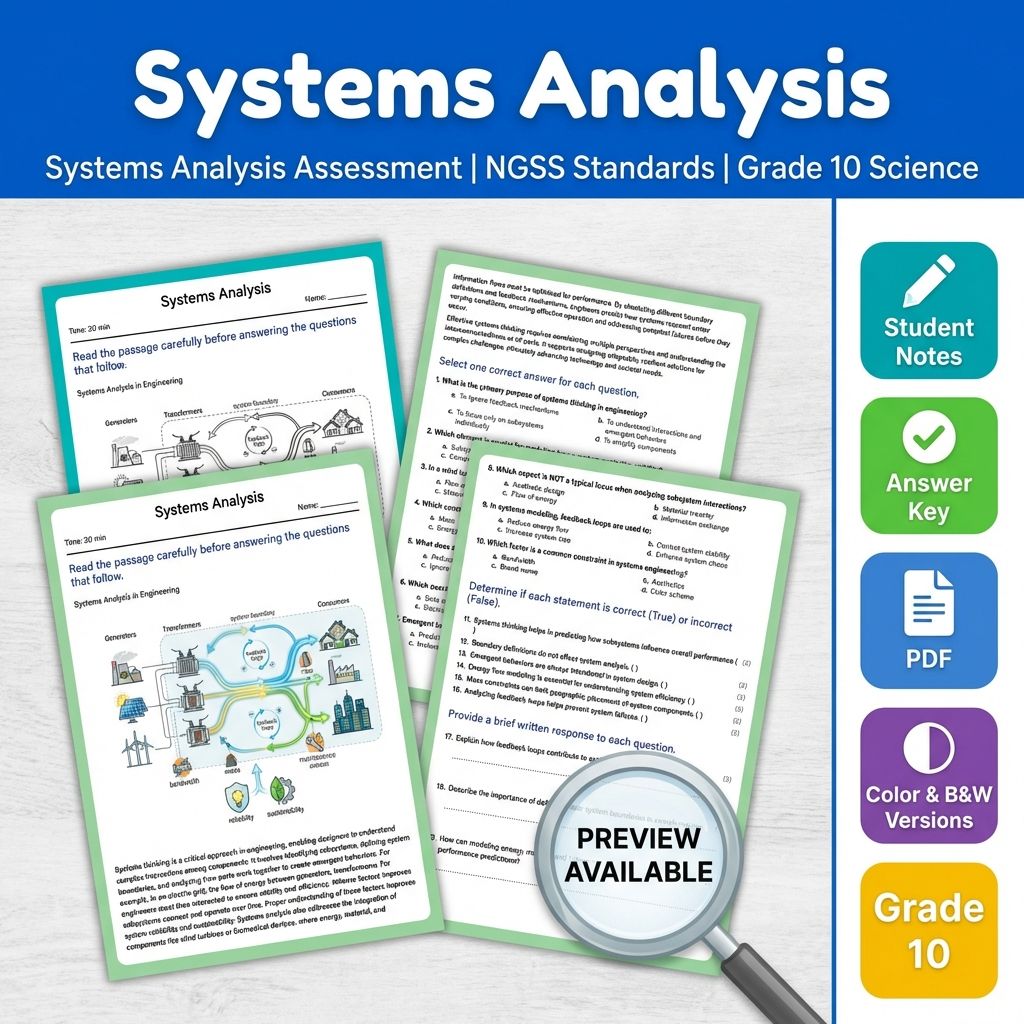
Systems Analysis Assessment | NGSS Standards | Grade 10 Science
Created byPrism Point LearningLearning Objectives
- Understand systems thinking principles and their application to engineering problems.
- Identify interactions between subsystems and define system boundaries accurately.
- Analyze emergent behaviors and feedback loops within complex systems.

Gene Regulation Assessment for Grade 11 Science | TEKS Standards
Created byPrism Point LearningLearning Objectives
- Understand the mechanisms involved in gene regulation and expression.
- Identify cis-regulatory elements and their roles in gene activation.
- Explain how chromatin structure and epigenetic modifications influence gene accessibility.
Browse more categories
About Science Worksheets
Find Science worksheets spanning core skills, practice, and review. All 42,685 resources are instant PDF downloads for the classroom or home.
Every worksheet on MyTeachingSheets is created by independent teacher-authors and reviewed before publication. All resources download as printable PDFs for classroom, homework, or at-home practice, and many include answer keys. Preview any worksheet free before buying.