
Science Worksheets
42,685 subject resources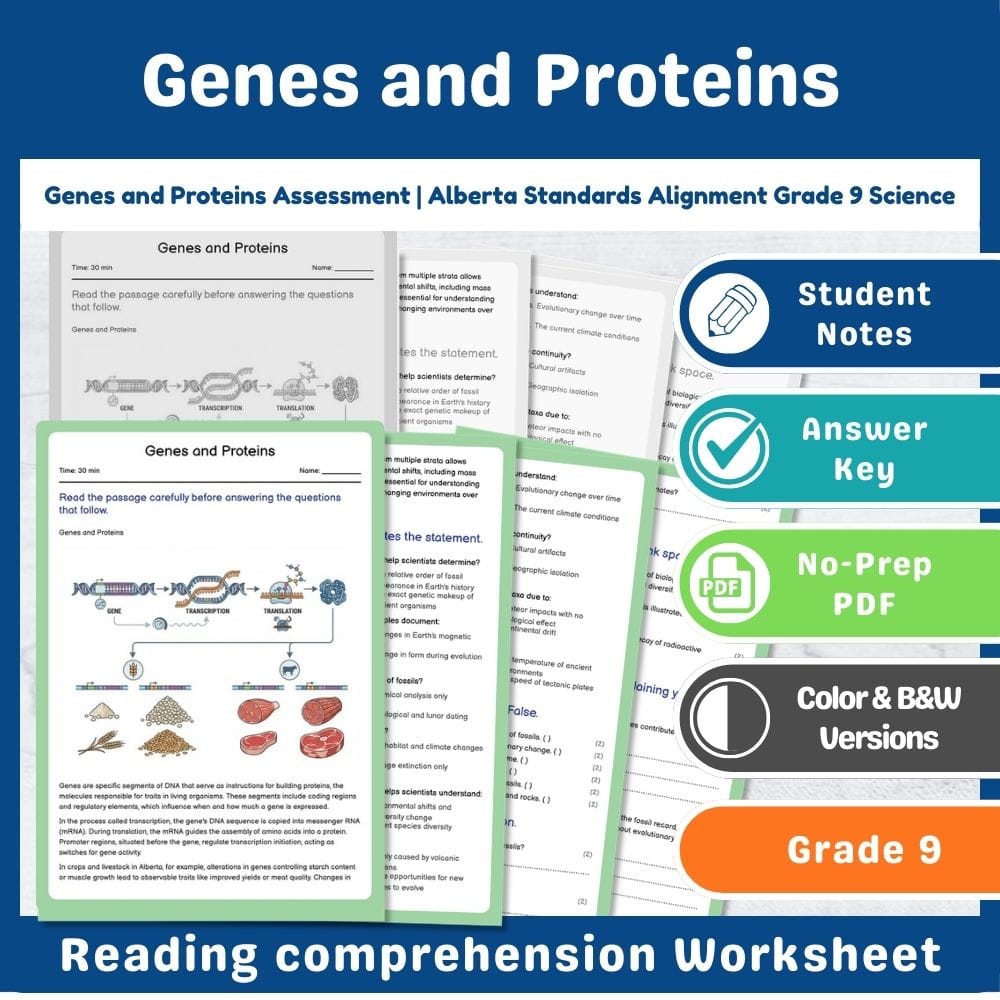
Genes and Proteins Assessment | Alberta Standards Alignment Grade 9 Science
 Created byPrism Point Learning
Learning Objectives
- Explain the role of genes as DNA segments that encode proteins and influence traits.
- Describe the processes of transcription and translation in gene expression.
- Understand the impact of gene regulation, such as promoter function and regulatory changes, on phenotype.

Ecological Interactions Assessment Grade 12 Science | Alberta Standards
Created byPrism Point LearningLearning Objectives
- Understand key concepts of population dynamics, trophic relationships, and nutrient cycling in Alberta ecosystems.
- Analyze the impacts of habitat alteration, invasive species, and climate variability on community structure.
- Interpret quantitative descriptors such as carrying capacity, growth rates, and energy transfer efficiencies.
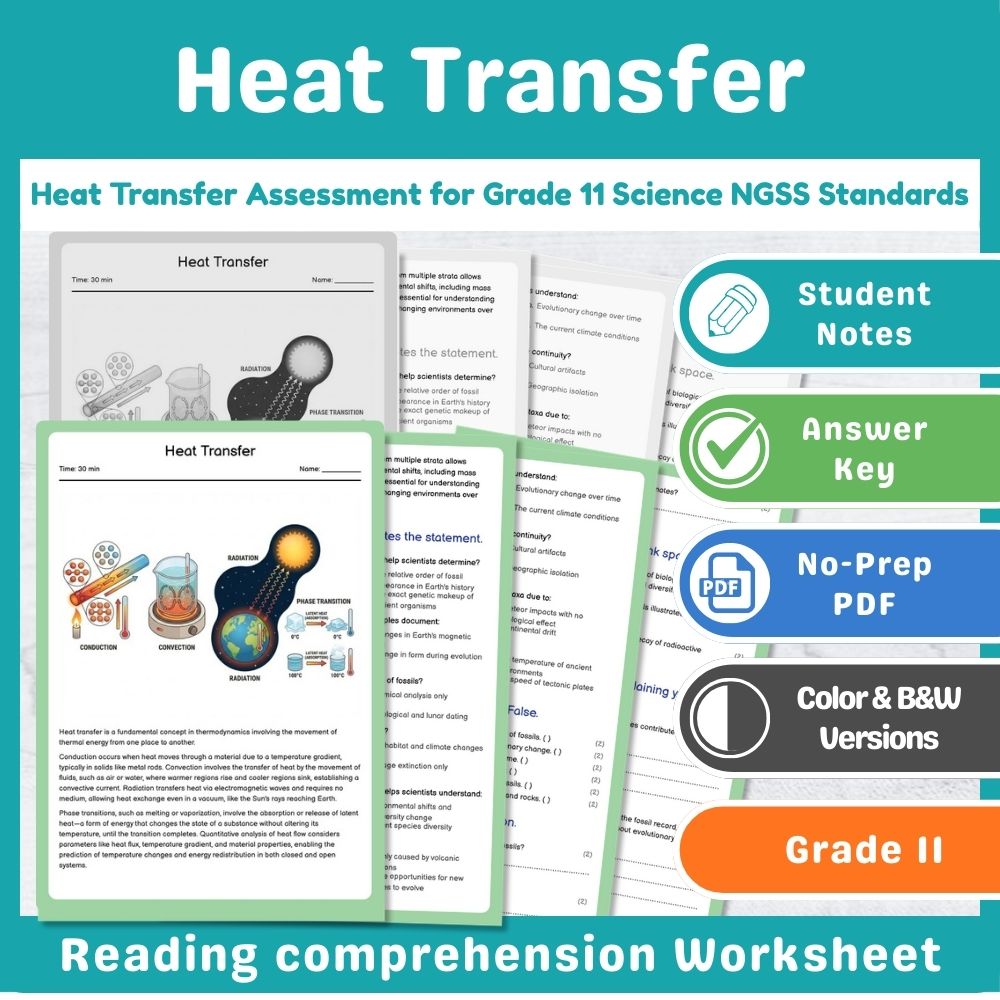
Heat Transfer Assessment for Grade 11 Science NGSS Standards
Created byPrism Point LearningLearning Objectives
- Explain the mechanisms of heat transfer: conduction, convection, and radiation.
- Apply thermodynamic principles to analyze heat flow in different systems.
- Describe phase transitions involving heat exchange, including latent heat.

Enthalpy Change Assessment | Alberta Standards Grade 12 Science
Created byPrism Point LearningLearning Objectives
- Understand the concept of enthalpy change and its significance in chemical reactions.
- Apply Hess’s law and standard enthalpies of formation to calculate reaction enthalpies.
- Analyze thermochemical data to assess energy requirements and environmental impacts in industrial processes.
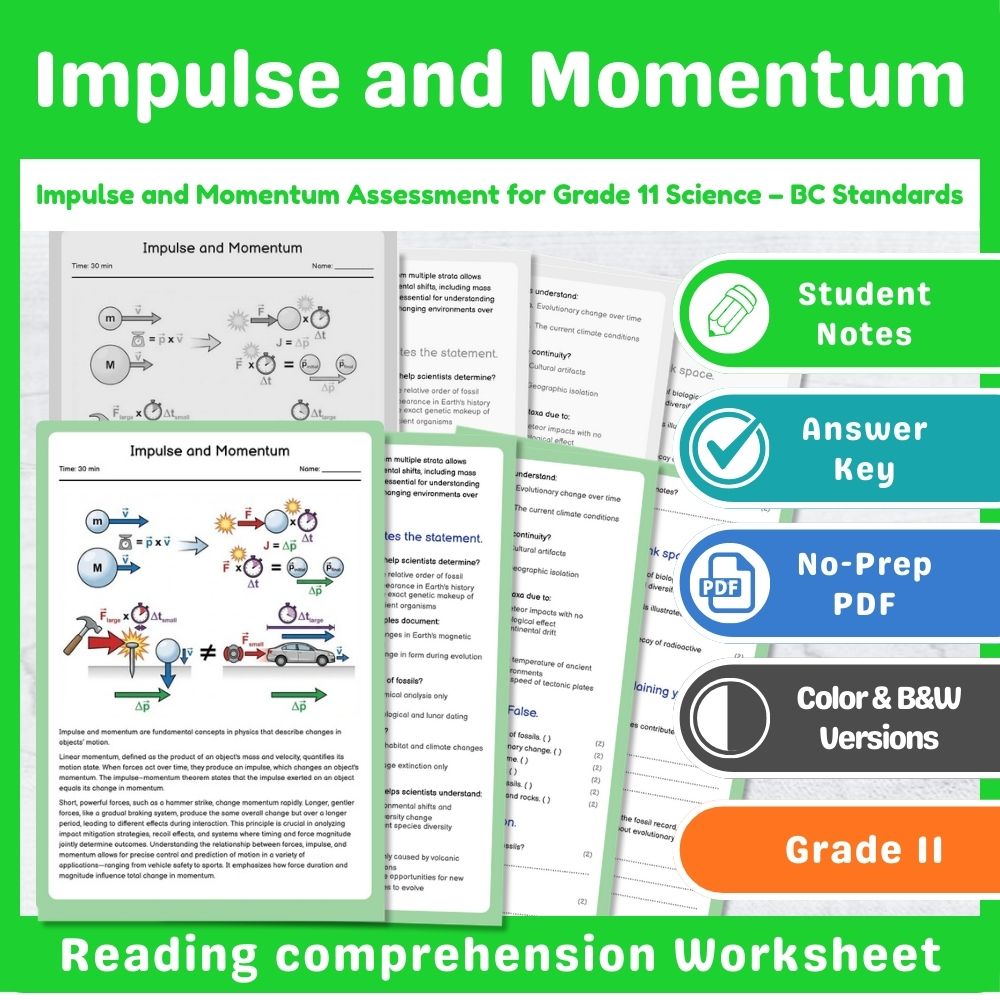
Impulse and Momentum Assessment for Grade 11 Science – BC Standards
Created byPrism Point LearningLearning Objectives
- Understand the concepts of impulse and momentum as they relate to forces and motion.
- Apply the impulse–momentum theorem to analyze collision effects and impact outcomes.
- Calculate changes in momentum based on applied forces over time.

Atomic Spectra Assessment | Alberta Standards Grade 12 Science
Created byPrism Point LearningLearning Objectives
- Explain the origin of atomic spectra and their significance in spectral analysis.
- Identify factors that influence line broadening and energy quantization in atomic spectra.
- Describe the application of spectroscopic techniques in environmental monitoring, geological analysis, and resource assessment.
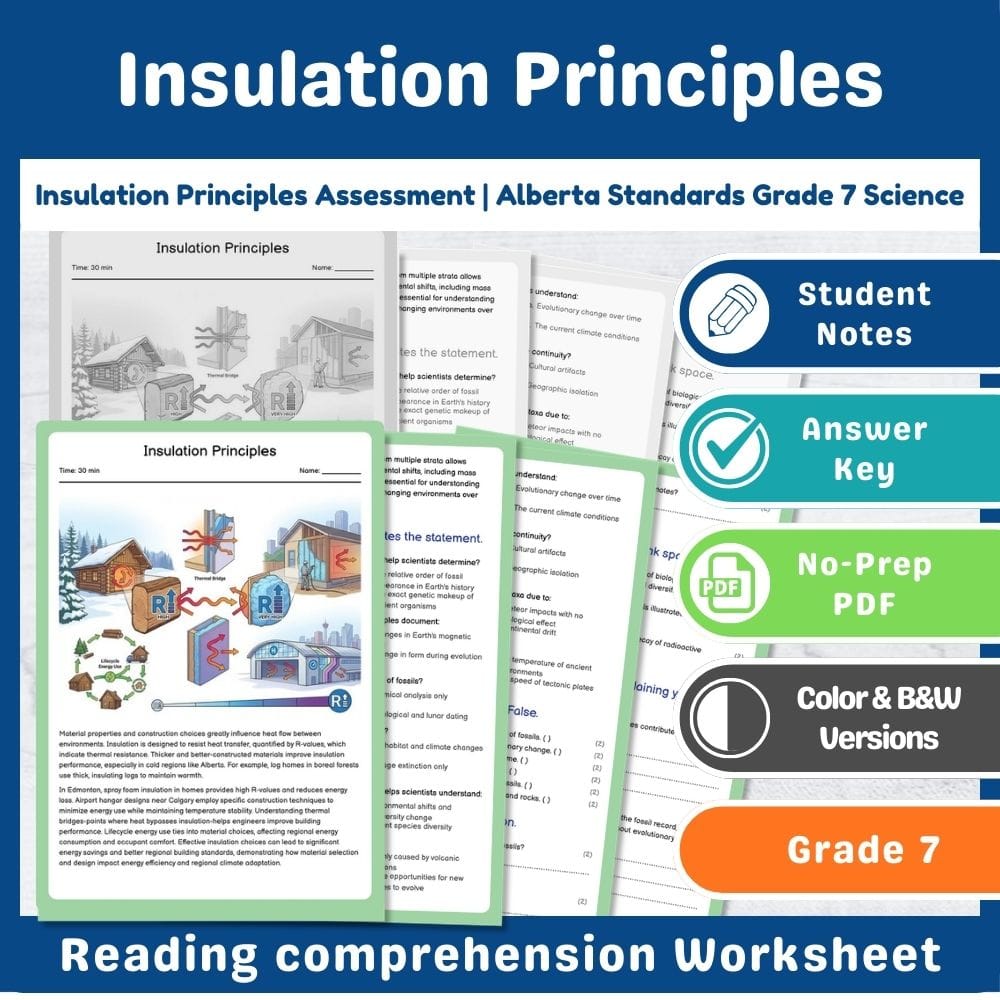
Insulation Principles Assessment | Alberta Standards Grade 7 Science
Created byPrism Point LearningLearning Objectives
- Understand how material properties influence heat flow.
- Identify regional examples of insulation techniques in Alberta.
- Determine the significance of R-values and thermal bridges in building design.

Integration and Synthesis Assessment | Alberta Grade 12 Science Standards
Created byPrism Point LearningLearning Objectives
- Explain how molecular genetics, gene regulation, and evolutionary mechanisms influence biological outcomes.
- Analyze real-world examples, such as herbicide resistance in weeds, to understand mutation and selection.
- Link DNA variation to expression patterns, fitness consequences, and ecosystem effects for holistic biological assessment.

Evidence for Evolution Assessment | Alberta Standard Grade 12 Science
Created byPrism Point LearningLearning Objectives
- Identify various lines of evidence supporting the theory of evolution.
- Explain how fossil records, morphology, biogeography, and molecular data inform evolutionary relationships.
- Recognize Alberta exemplars, such as Dinosaur Provincial Park fossils, demonstrating deep-time biological change.

Environmental Monitoring Assessment | Alberta Standards Grade 12 Science
Created byPrism Point LearningLearning Objectives
- Understand key principles of environmental network design and data collection.
- Identify indicators and methods used in environmental monitoring across Alberta.
- Explain the importance of data quality assurance and long-term trend detection.

Electromagnetic Waves Assessment | Alberta Standard Grade 12 Science
Created byPrism Point LearningLearning Objectives
- Describe the electromagnetic spectrum and identify different types of waves based on frequency and wavelength.
- Explain the relationship between energy, frequency, and wavelength in electromagnetic radiation.
- Apply Maxwell's concepts to understand wave propagation and calculate wave impedance and attenuation.

Reaction Rates Assessment | Alberta Standards Grade 12 Science
Created byPrism Point LearningLearning Objectives
- Understand how concentration affects reaction rate.
- Explain the influence of temperature, surface area, and catalysts on reaction speed.
- Interpret rate laws and reaction order from experimental data.

Ecosystem Processes Assessment | Alberta Standards Grade 12 Science
Created byPrism Point LearningLearning Objectives
- Explain the key ecosystem processes including primary productivity, decomposition, and nutrient cycling.
- Describe biogeochemical cycles of carbon, nitrogen, and phosphorus.
- Apply Alberta-specific ecosystem examples to real-world land-use and climate change scenarios.

Regulatory Networks Assessment | Alberta Standards Grade 12 Science
Created byPrism Point LearningLearning Objectives
- Understand the components and functions of gene regulatory networks in development and environmental responses.
- Identify how epigenetic modifications influence gene expression patterns.
- Analyze examples of regulatory networks in prairie grasses and cattle immune responses.
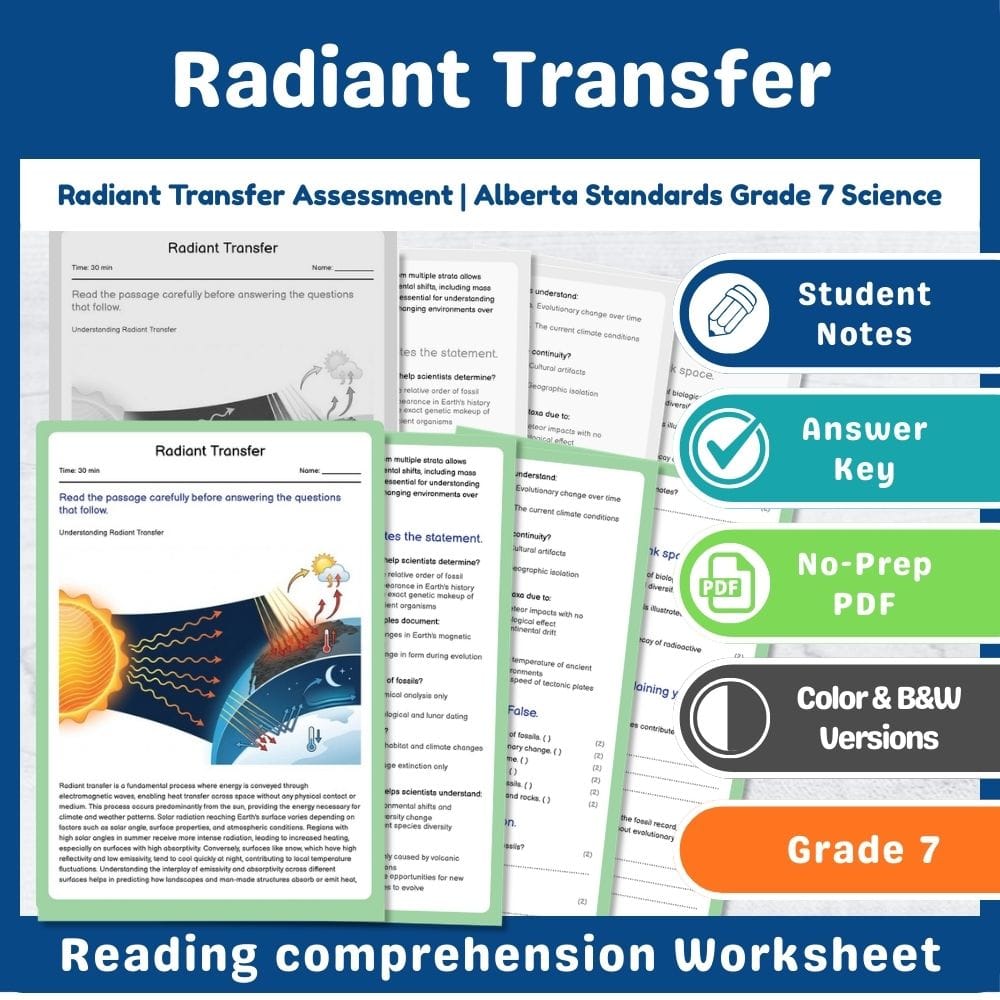
Radiant Transfer Assessment | Alberta Standards Grade 7 Science
Created byPrism Point LearningLearning Objectives
- Explain the concept of radiant transfer and how energy moves through electromagnetic waves without needing a medium.
- Identify factors such as solar radiation intensity, surface absorptivity, and emissivity that influence radiative heating.
- Describe how seasonal variations and surface types affect radiative balances and microclimates.

Population Dynamics Assessment | Alberta Standards Grade 12 Science
Created byPrism Point LearningLearning Objectives
- Describe the key factors influencing population size and structure over time.
- Apply models such as exponential and logistic growth to real-world scenarios.
- Differentiate between density-dependent and density-independent factors affecting populations.
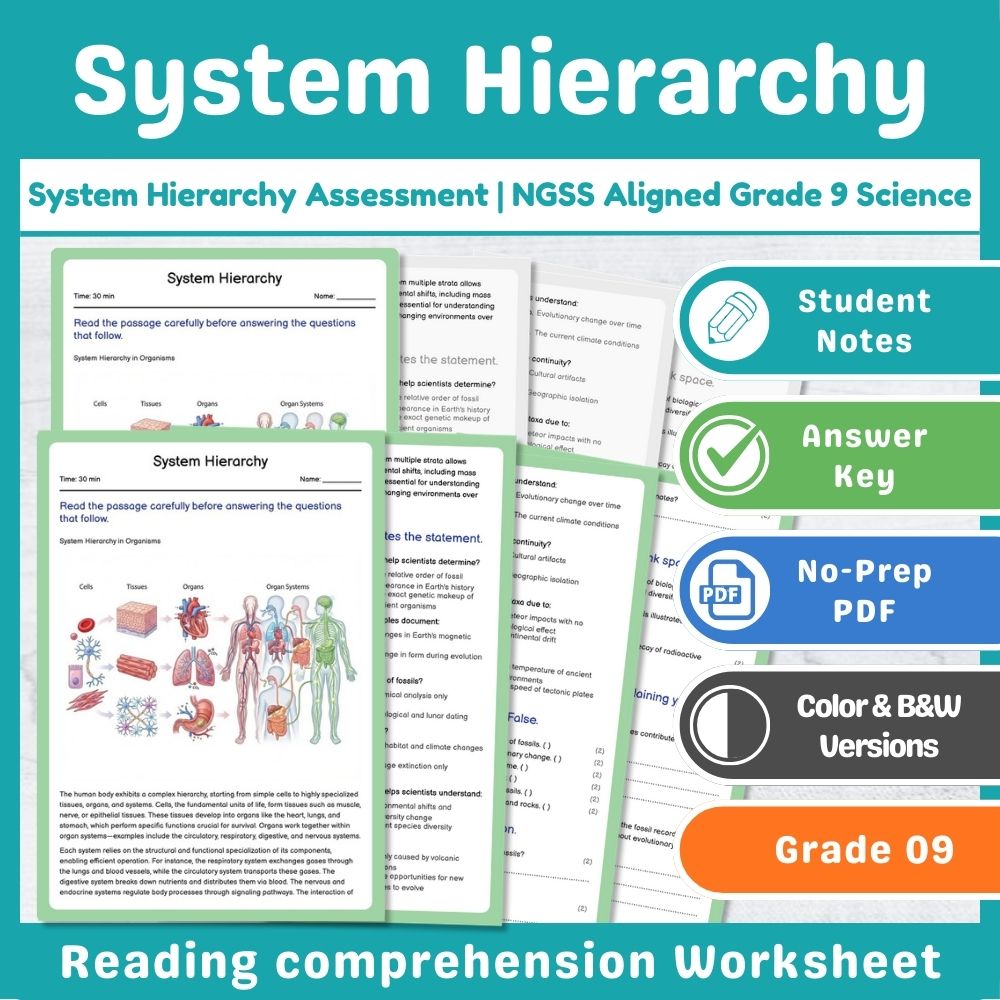
System Hierarchy Assessment | NGSS Aligned Grade 9 Science
Created byPrism Point LearningLearning Objectives
- Describe the hierarchical organization of the body from cells to organ systems.
- Explain how tissues, organs, and organ systems interact to maintain organismal functions.
- Identify examples of physiological coupling, such as circulatory-respiratory and digestive-vascular systems.
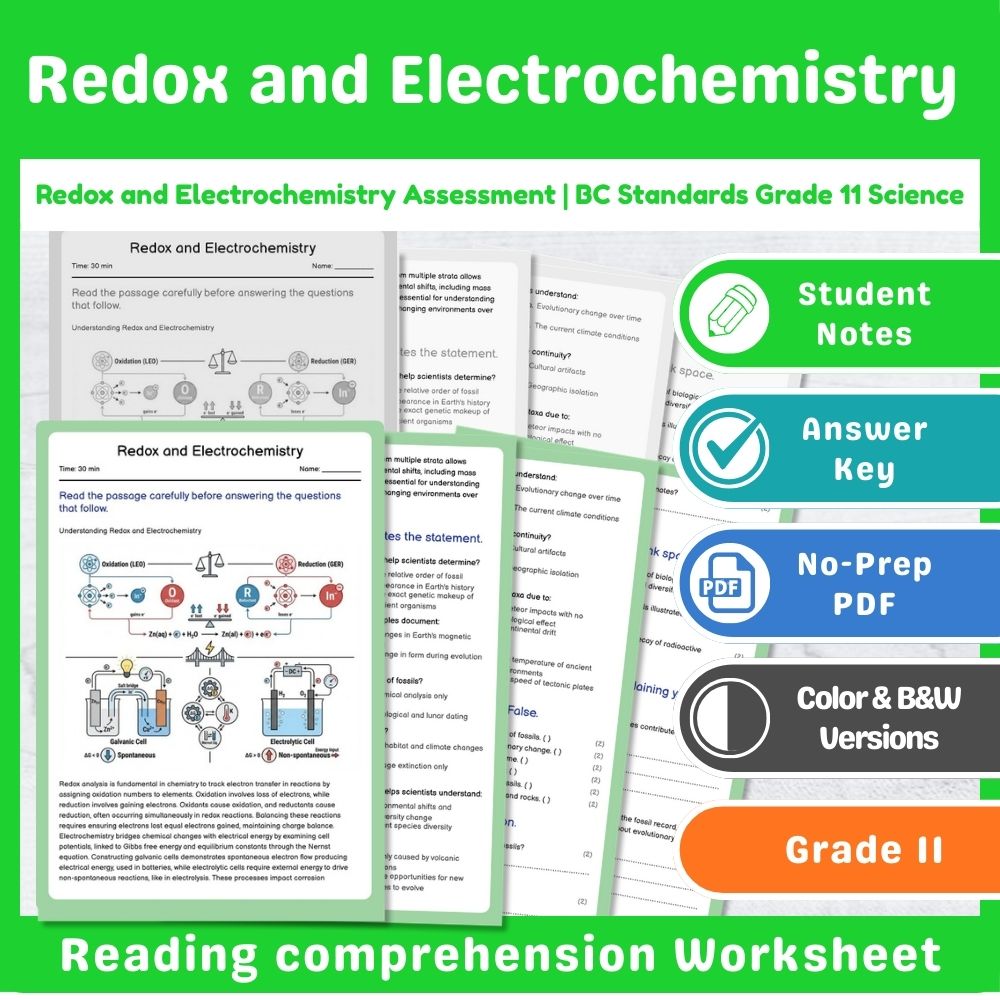
Redox and Electrochemistry Assessment | BC Standards Grade 11 Science
Created byPrism Point LearningLearning Objectives
- Understand how oxidation numbers are assigned and used to analyze redox reactions.
- Explain the concepts of oxidants and reductants in electron transfer.
- Describe the relationship between cell potentials, Gibbs free energy, and equilibrium constants.

Mass Wasting and Coasts Assessment | Florida NGSSS Grade 7 Science
Created byPrism Point LearningLearning Objectives
- Explain how gravity and water-driven forces contribute to mass wasting and coastal erosion
- Describe how prolonged rain can trigger landslides by changing soil or rock stability
- Identify how waves and storm surge reshape coastlines by moving and removing sediment

Integrated Synthesis Assessment | Alberta Standard Grade 12 Science
Created byPrism Point LearningLearning Objectives
- Understand key concepts related to Science
- Apply knowledge through practice questions
- Demonstrate comprehension of the material
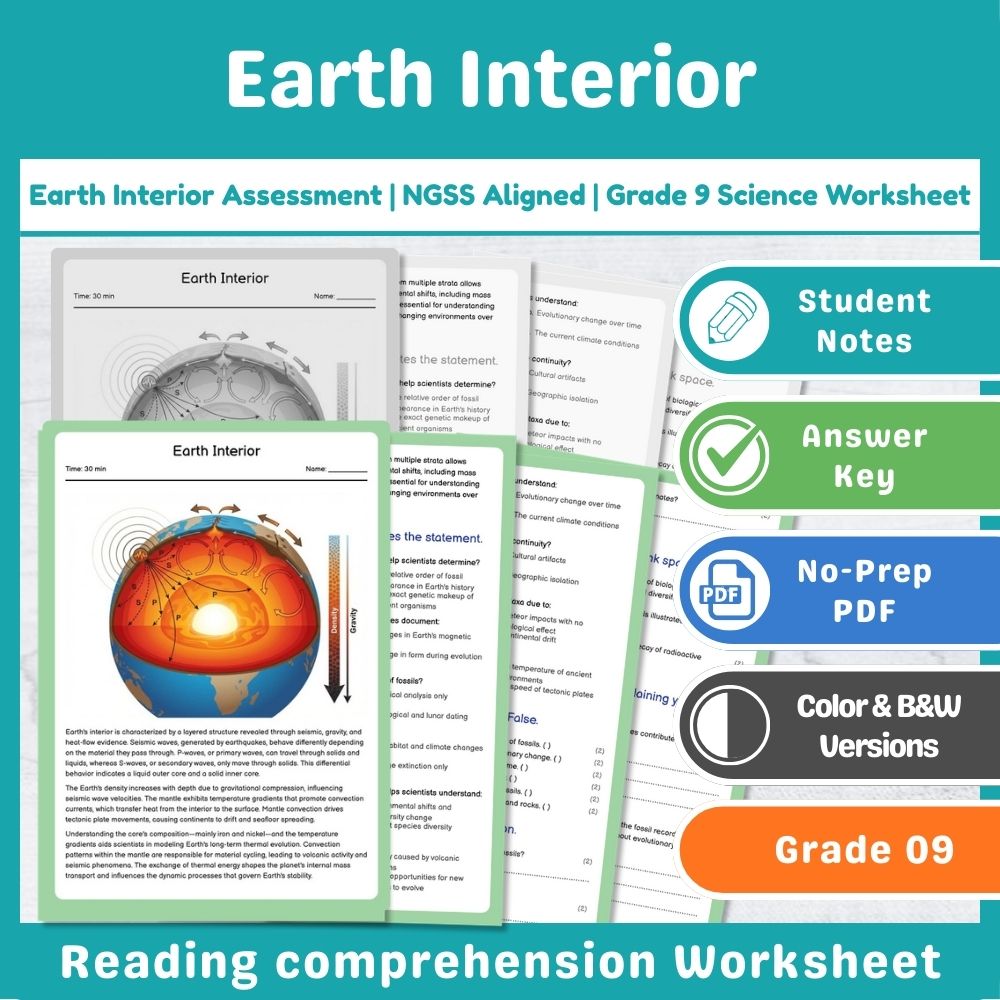
Earth Interior Assessment | NGSS Aligned | Grade 9 Science Worksheet
Created byPrism Point LearningLearning Objectives
- Describe the layered structure of Earth's interior based on seismic evidence.
- Interpret the behaviors of P-waves and S-waves to understand Earth's composition.
- Explain the transfer of thermal energy within Earth and its impact on planetary processes.

Photoelectric Effect Assessment for Grade 12 Science Standard-Aligned
Created byPrism Point LearningLearning Objectives
- Understand the fundamental principles of the photoelectric effect and its relation to quantum mechanics.
- Analyze how photon energy and work function influence electron emission in photoelectric experiments.
- Interpret experimental data such as threshold frequency, stopping potential, and photon flux in the context of particle-like light behavior.
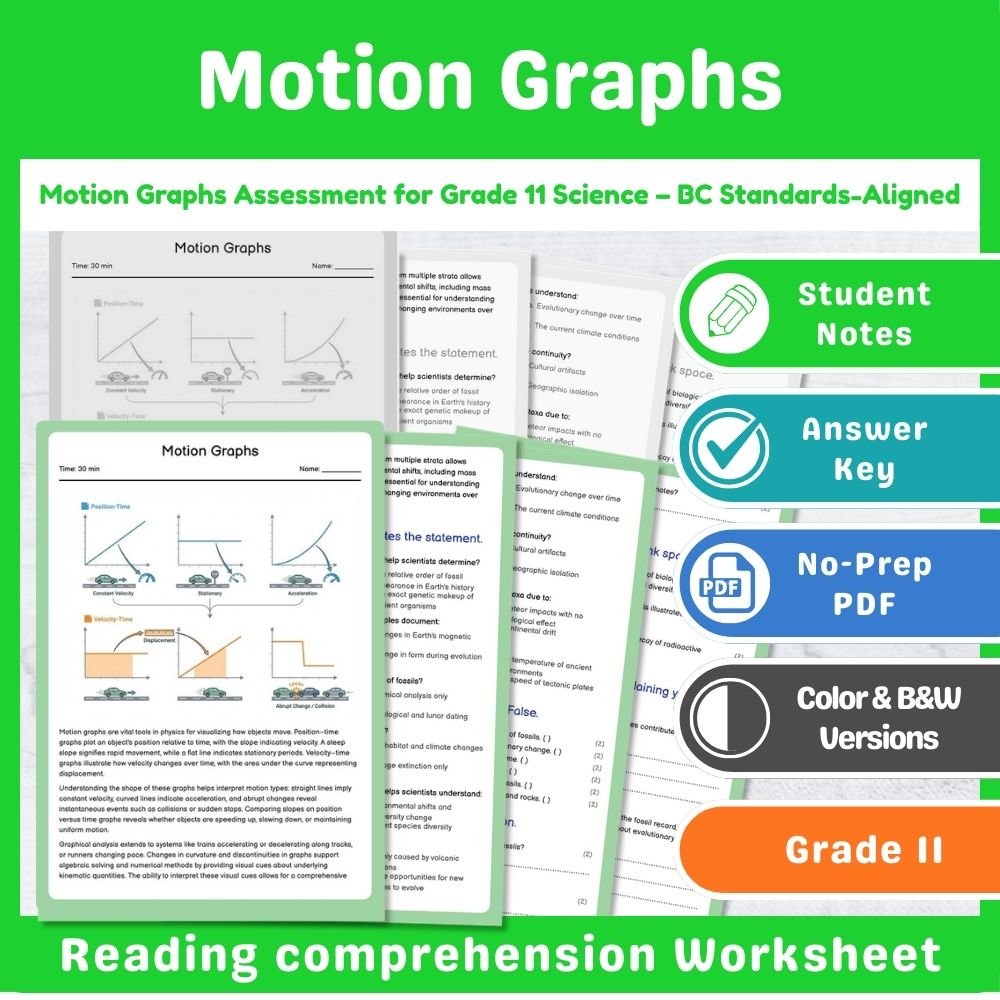
Motion Graphs Assessment for Grade 11 Science – BC Standards-Aligned
Created byPrism Point LearningLearning Objectives
- Understand how position–time graphs represent motion and interpret their slopes.
- Analyze velocity–time graphs to determine acceleration and displacement.
- Identify different types of motion such as uniform velocity, constant acceleration, and instantaneous events from graphs.

Kinematics Vectors Assessment | Alberta Standards Grade 12 Science
Created byPrism Point LearningLearning Objectives
- Understand the representation of displacement, velocity, and acceleration as vectors in one- and two-dimensional motion.
- Apply vector decomposition and parametric equations to model projectile trajectories under regional conditions.
- Analyze relative motion and effects of wind in the context of drone flight and agricultural applications.
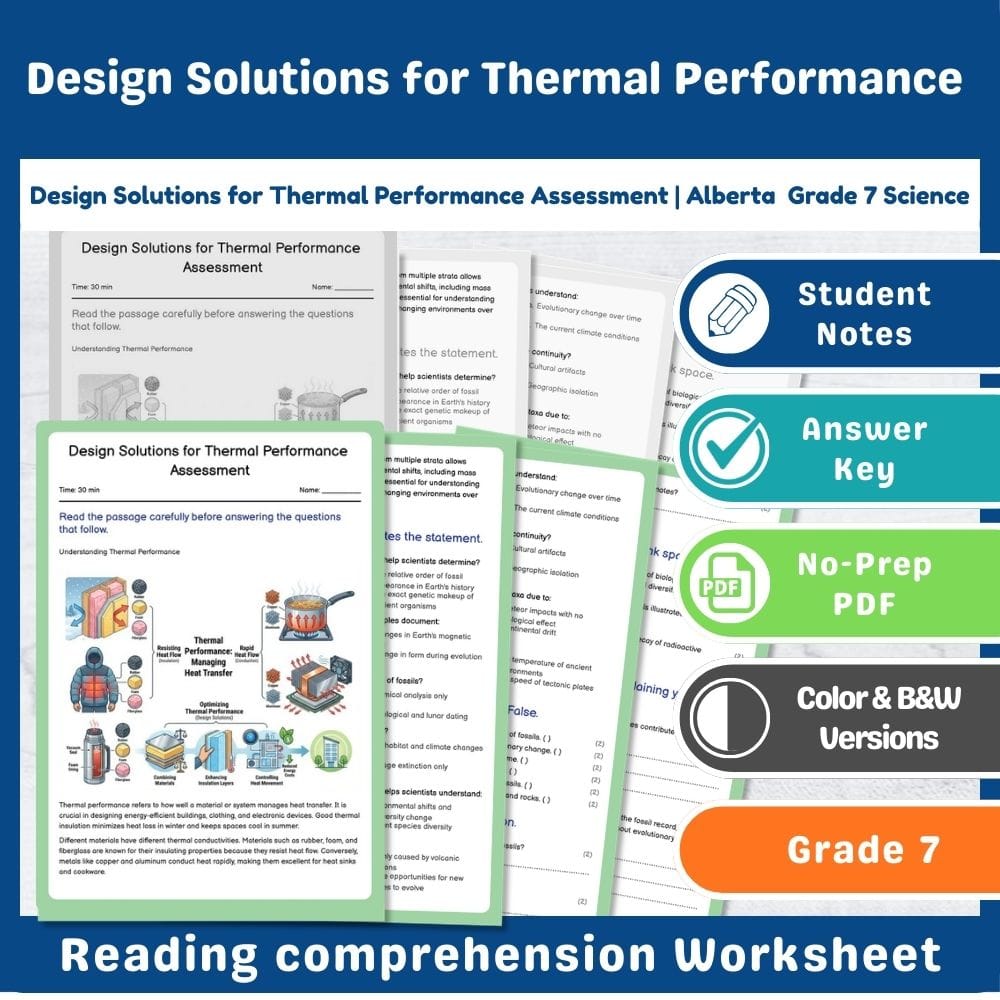
Design Solutions for Thermal Performance Assessment | Alberta Assessment Grade 7 Science
Created byPrism Point LearningLearning Objectives
- Understand key factors affecting thermal performance of materials.
- Analyze different design solutions to optimize thermal performance.
- Evaluate the effectiveness of various insulation and cooling techniques.

Wave Superposition Assessment for Grade 12 Science – Alberta Standards
Created byPrism Point LearningLearning Objectives
- Explain the principle of wave superposition and how waves interact.
- Differentiate between constructive and destructive interference.
- Identify real-world examples of wave superposition phenomena.

Understanding STSE Contexts Grade 12 Assessment | Alberta Science
Created byPrism Point LearningLearning Objectives
- Analyze the relationship between science, technology, society, and the environment through regional examples.
- Evaluate trade-offs among technological choices, economic factors, and environmental impacts.
- Understand how policy decisions are influenced by societal values and scientific knowledge.
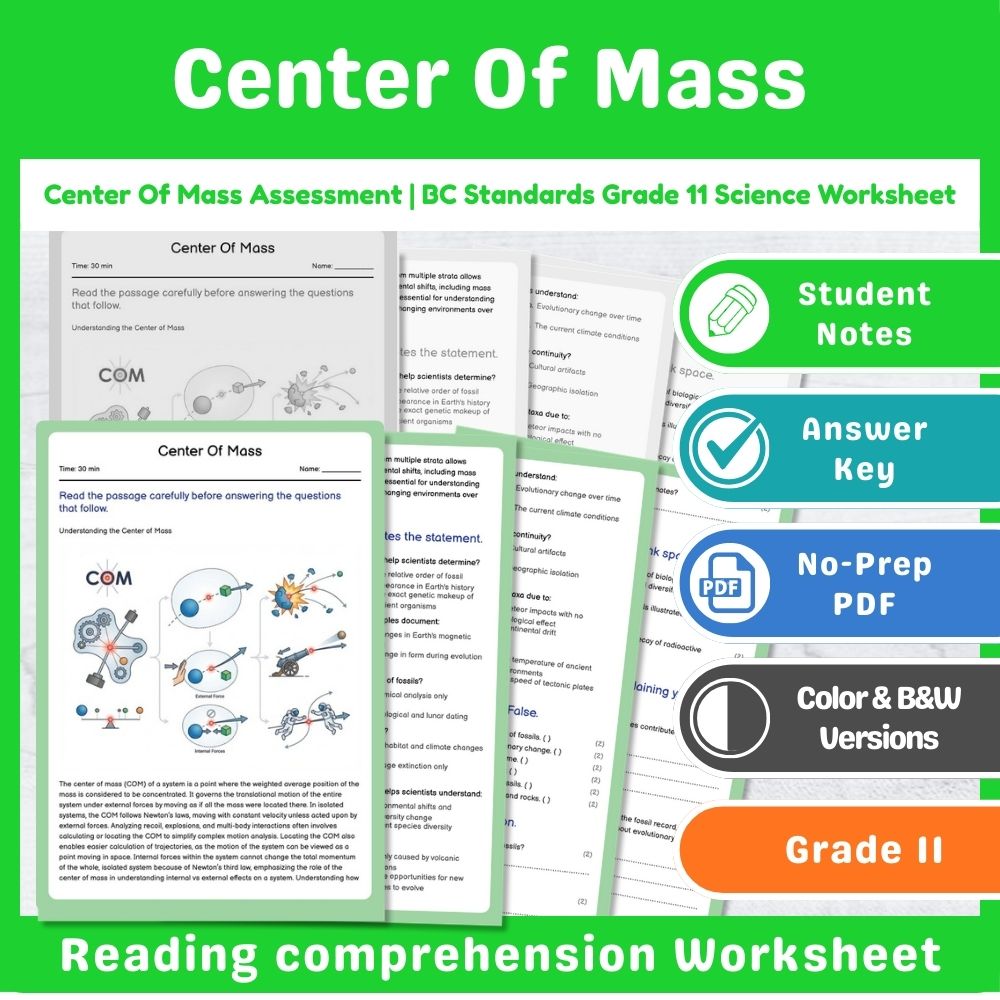
Center Of Mass Assessment | BC Standards Grade 11 Science Worksheet
Created byPrism Point LearningLearning Objectives
- Understand the concept of the center of mass in physical systems.
- Apply the principles of momentum conservation relative to the center of mass.
- Analyze system trajectories and internal forces using the center of mass concept.
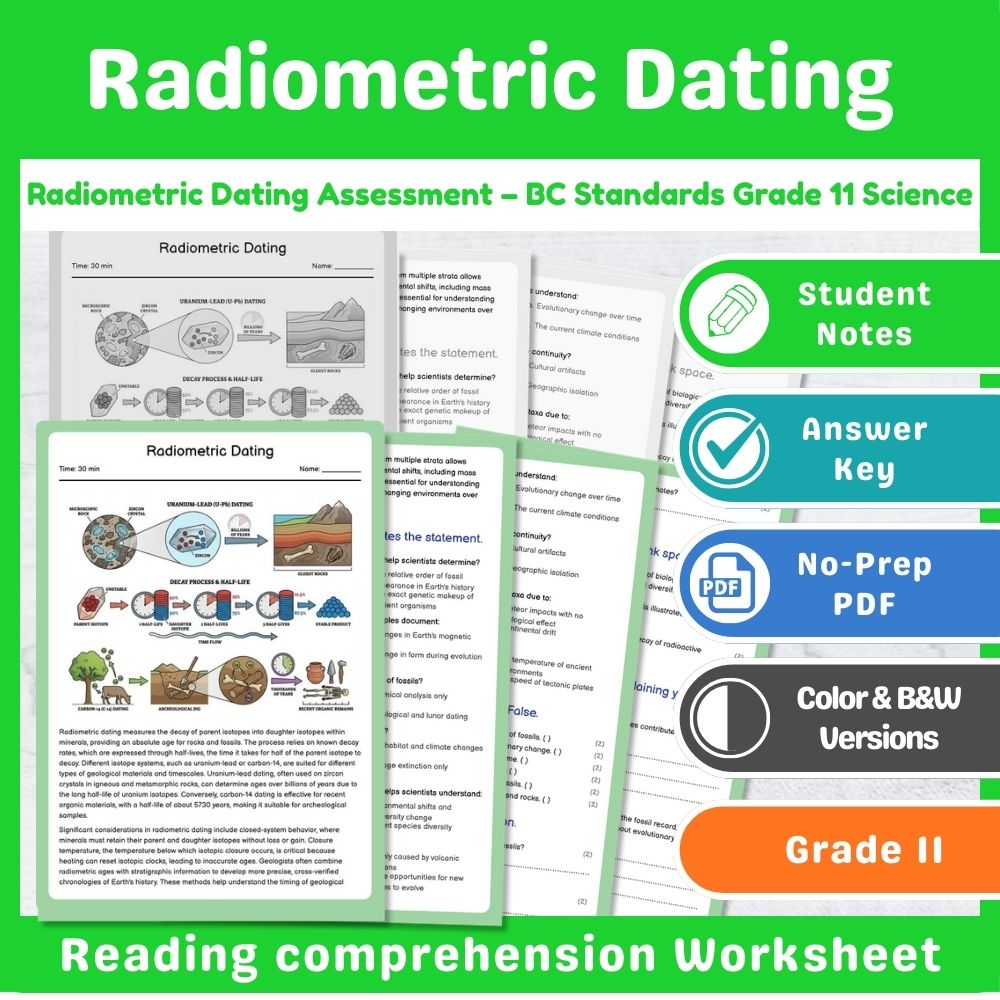
Radiometric Dating Assessment – BC Standards Grade 11 Science
Created byPrism Point LearningLearning Objectives
- Understand the principles of radiometric dating and how isotopic decay is used to determine geological ages.
- Identify different parent-daughter isotope systems suitable for various timescales and rock types.
- Explain the significance of closure temperature and how it affects isotopic retention in rocks.

Capstone Integration Alberta Assessment | Standard Aligned Grade 12 Science
Created byPrism Point LearningLearning Objectives
- Analyze complex regional challenges using multi-criteria decision frameworks.
- Synthesize biological, chemical, and physical data to support evidence-based conclusions.
- Apply quantitative reasoning and uncertainty analysis in environmental or resource management scenarios.

Renewable Systems Grade 12 Assessment | Alberta Standards-Aligned
Created byPrism Point LearningLearning Objectives
- Understand the key concepts of resource assessment, technology conversion, and lifecycle analysis for renewable energy sources.
- Evaluate geographic variability, intermittency mitigation strategies, and trade-offs involved in renewable systems.
- Compare environmental and economic metrics such as energy payback and greenhouse gas emissions for wind, solar, and bioenergy.

Molecular Structure Assessment for Grade 12 Science | Alberta Standards
Created byPrism Point LearningLearning Objectives
- Describe the double helix structure of DNA and the role of nucleotide monomers.
- Explain how phosphodiester backbones and hydrogen bonds contribute to DNA stability.
- Identify examples of genetic material in local Alberta species and discuss their molecular architecture.
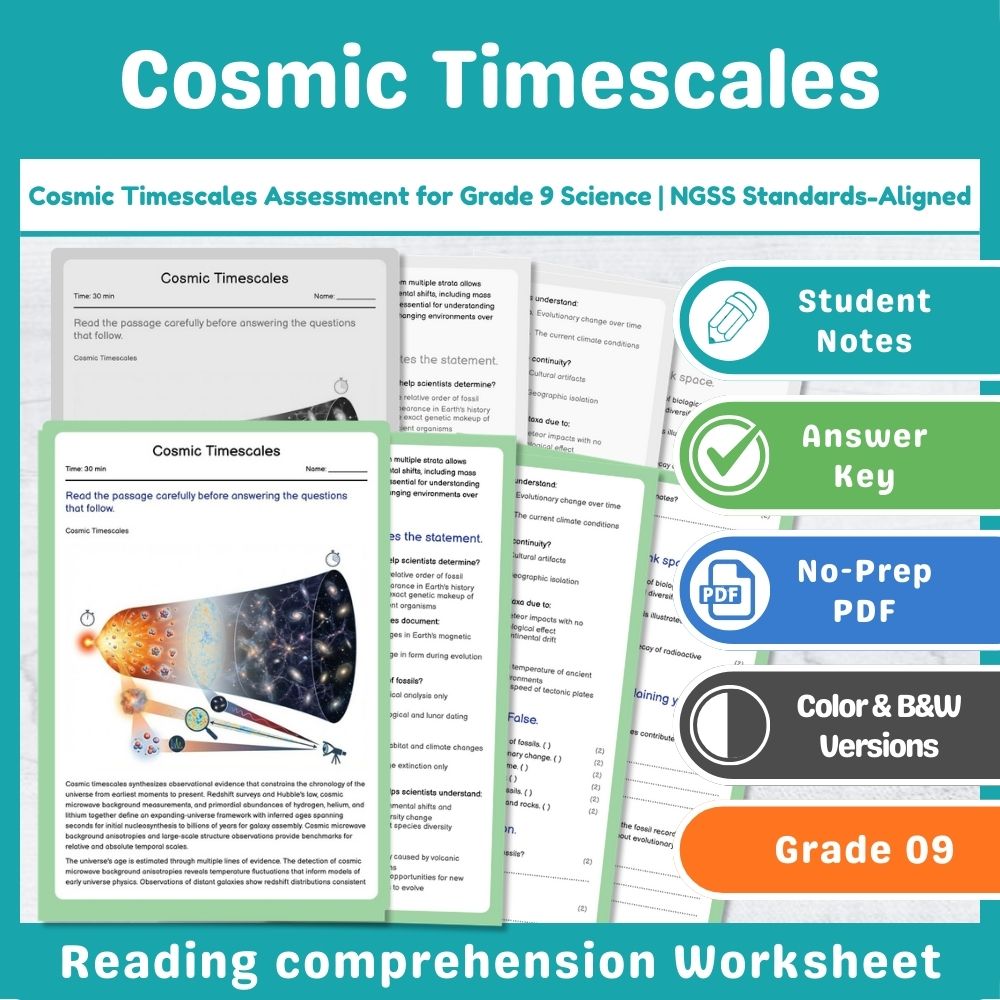
Cosmic Timescales Assessment for Grade 9 Science | NGSS Standards-Aligned
Created byPrism Point LearningLearning Objectives
- Understand key observational evidence constraining the age and expansion of the universe
- Identify the significance of redshift surveys, Hubble's law, and cosmic microwave background measurements
- Describe processes related to primordial element abundances and their role in cosmic chronology

Stoichiometry Basics Assessment | Alberta Standards Grade 12 Science
Created byPrism Point LearningLearning Objectives
- Define the mole concept and understand its significance in chemical calculations.
- Calculate molar masses and perform mass-to-mole conversions.
- Apply balanced chemical equations to determine reactant and product quantities.

Molecular Geometry Assessment for Grade 12 Science | Alberta Standards
Created byPrism Point LearningLearning Objectives
- Understand the principles of electron-pair repulsion and their role in determining molecular shapes.
- Apply VSEPR models to predict bond angles and molecular geometries in complex molecules.
- Analyze the influence of hybridization on molecular structure and reactivity patterns.
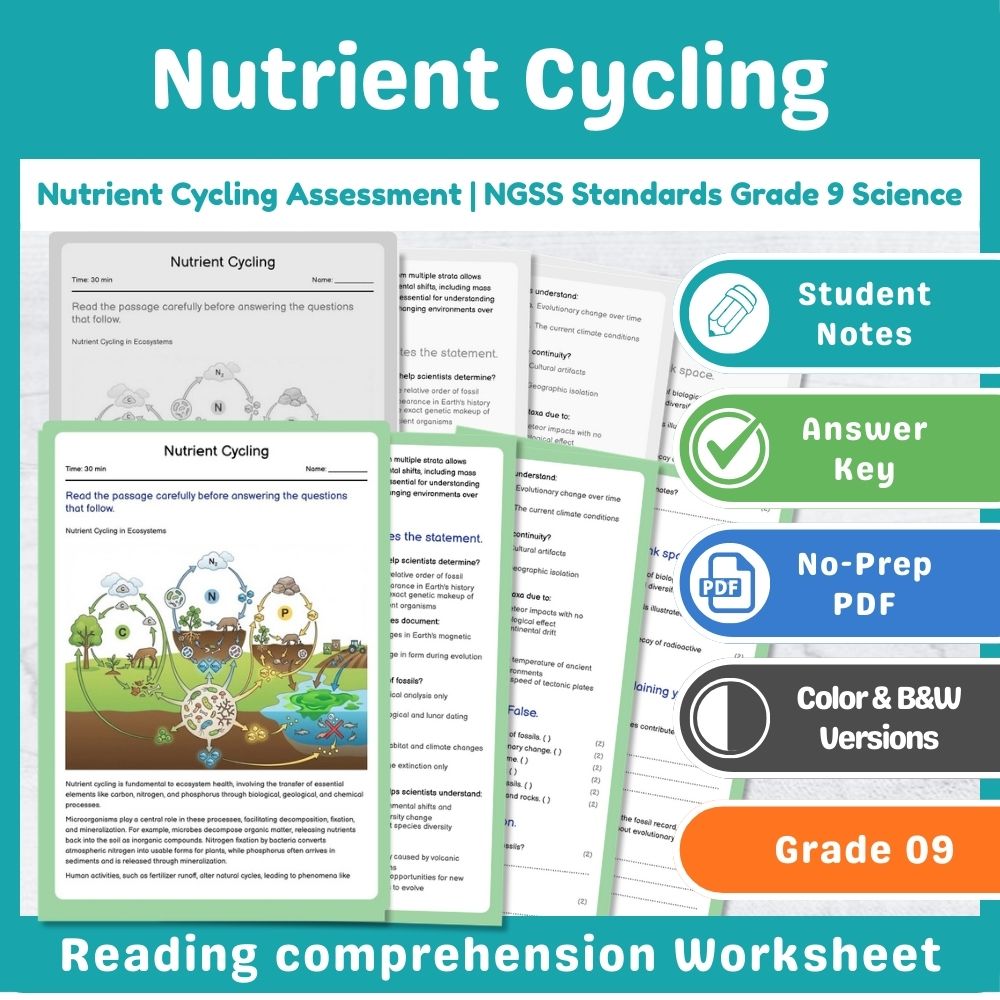
Nutrient Cycling Assessment | NGSS Standards Grade 9 Science
Created byPrism Point LearningLearning Objectives
- Understand the processes involved in the cycling of carbon, nitrogen, and phosphorus within ecosystems.
- Identify human activities that disrupt nutrient cycles and recognize their ecological impacts.
- Explain how changes in nutrient cycling rates influence ecosystem productivity and soil carbon storage.

Electromagnetic Induction Assessment for Grade 12 Science | Alberta Standards
Created byPrism Point LearningLearning Objectives
- Explain the principles of electromagnetic induction, including Faraday's and Lenz's laws.
- Analyze the effects of changing magnetic flux on induced emf and current.
- Describe practical applications of electromagnetic induction in transformers and generators.

Quantitative Reasoning Assessment | Alberta Standards Grade 12 Science
Created byPrism Point LearningLearning Objectives
- Understand and apply statistical concepts such as confidence intervals and hypothesis testing in environmental and public health contexts.
- Evaluate measurement errors and propagate uncertainties in data analysis.
- Interpret model validation results to make justified decisions under uncertainty.

Biodiversity Overview Assessment | BC Standards Grade 10 Science
Created byPrism Point LearningLearning Objectives
- Define biodiversity and explain its levels including genetic, species, and ecosystem diversity.
- Identify factors that influence patterns of biodiversity such as habitat availability, climate stability, and disturbance rates.
- Analyze how interactions among species and environmental gradients contribute to biodiversity variation.
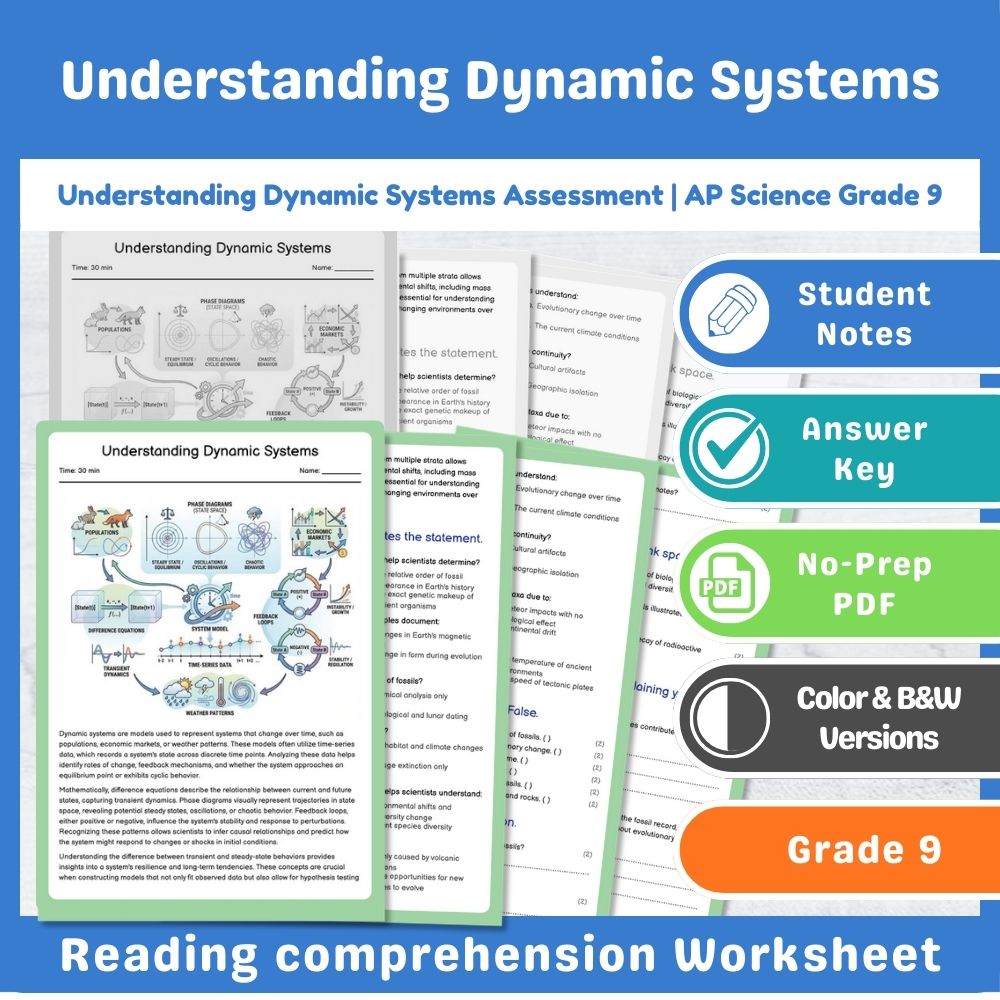
Understanding Dynamic Systems Assessment for Grade 9 Science AP
Created byPrism Point LearningLearning Objectives
- Explain how time-series data can be used to analyze changing systems
- Describe the role of difference equations and phase diagrams in modeling dynamics
- Identify feedback loops, equilibrium points, and causal structures in empirical data
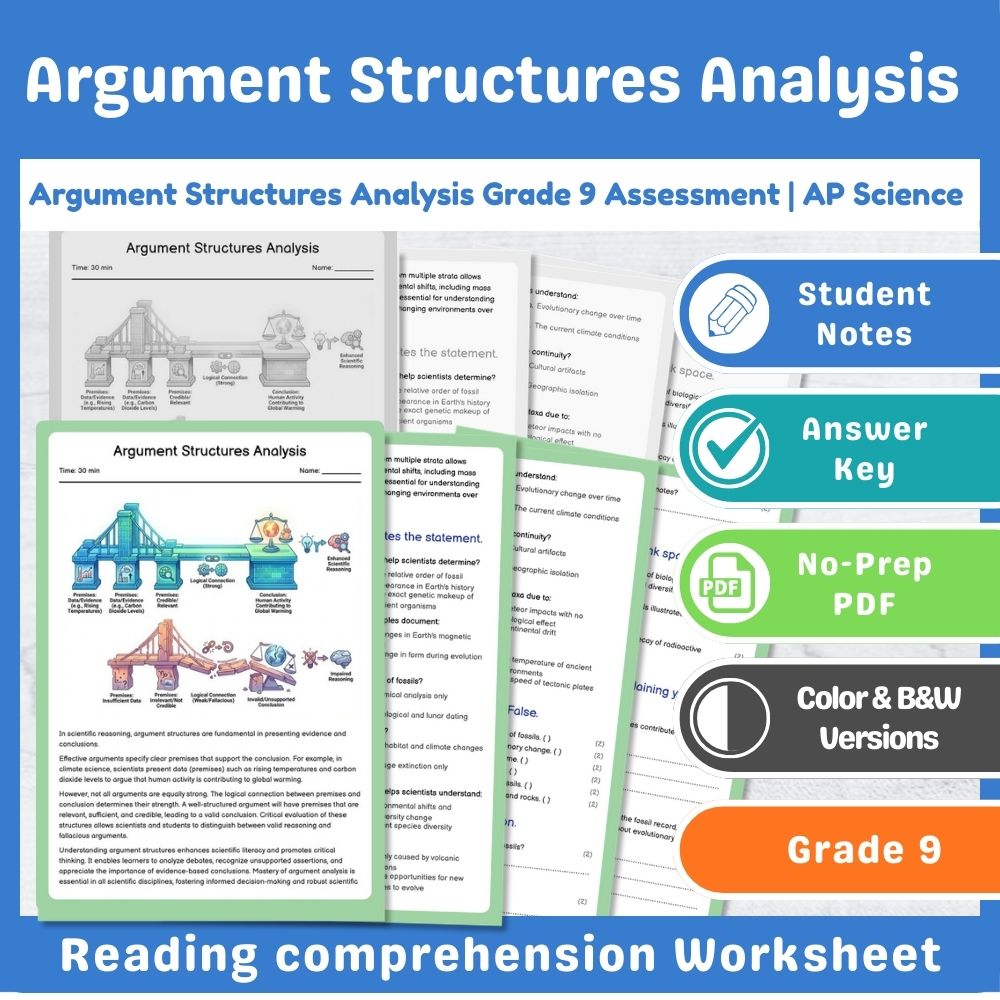
Argument Structures Analysis Assessment | Advanced Placement Grade 9 Science
Created byPrism Point LearningLearning Objectives
- Analyze different argument structures used in scientific reasoning.
- Identify premises and conclusions in argument-based texts.
- Evaluate the strength and validity of argument components.
Rock Cycle Assessment for Grade 9 Science | Standards-Aligned Material
Created byPrism Point LearningLearning Objectives
- Describe the processes involved in the rock cycle and how different rocks transform through geological mechanisms.
- Explain the role of tectonic settings such as mid-ocean ridges, subduction zones, and continental interiors in rock formation.
- Identify the physical and chemical processes that drive changes in rocks and their link to landscape evolution.
Molecular Inheritance Assessment for Grade 9 Science | AP Standards
Created byPrism Point LearningLearning Objectives
- Describe the molecular mechanisms underlying DNA replication and transcription.
- Explain how sequence variation and point mutations influence gene expression and protein function.
- Predict phenotypic consequences of specific allelic changes using molecular models and sequence reasoning.
Understanding Central Tendencies Assessment for Grade 9 Science – AP
Created byPrism Point LearningLearning Objectives
- Understand key concepts related to Science
- Apply knowledge through practice questions
- Demonstrate comprehension of the material
Ecosystem Cycling Assessment for Grade 9 Science | AP Standards-Aligned
Created byPrism Point LearningLearning Objectives
- Describe how organisms and abiotic components interact to drive material cycling and energy flow in ecosystems.
- Explain the roles of carbon and nitrogen cycles in maintaining ecosystem health.
- Analyze the impact of perturbations such as nutrient enrichment, habitat alteration, and invasive species on community structure and ecosystem function.
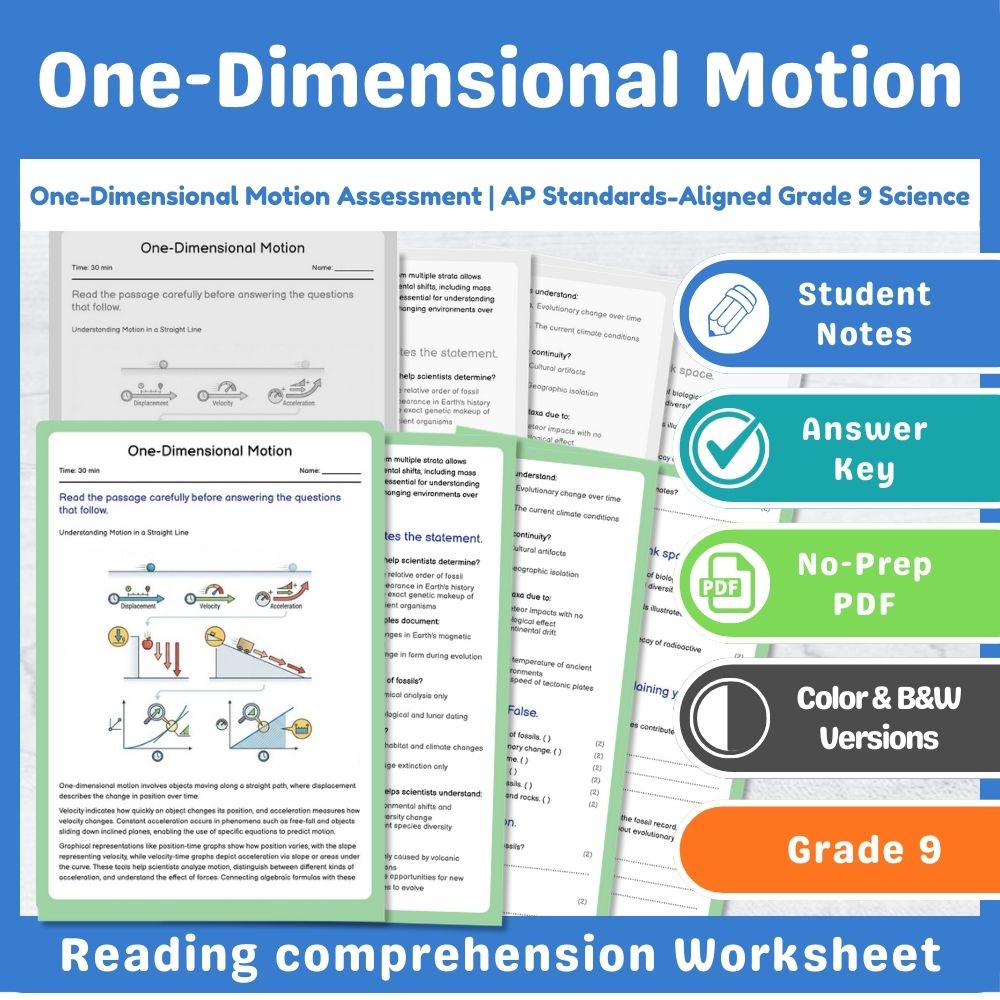
One-Dimensional Motion Assessment | AP Standards-Aligned Grade 9 Science
Created byPrism Point LearningLearning Objectives
- Understand and interpret position–time and velocity–time diagrams for motion along a straight line.
- Apply constant-acceleration equations to solve for displacement, velocity, and time.
- Connect algebraic models with graphical representations of motion such as slopes and areas under curves.
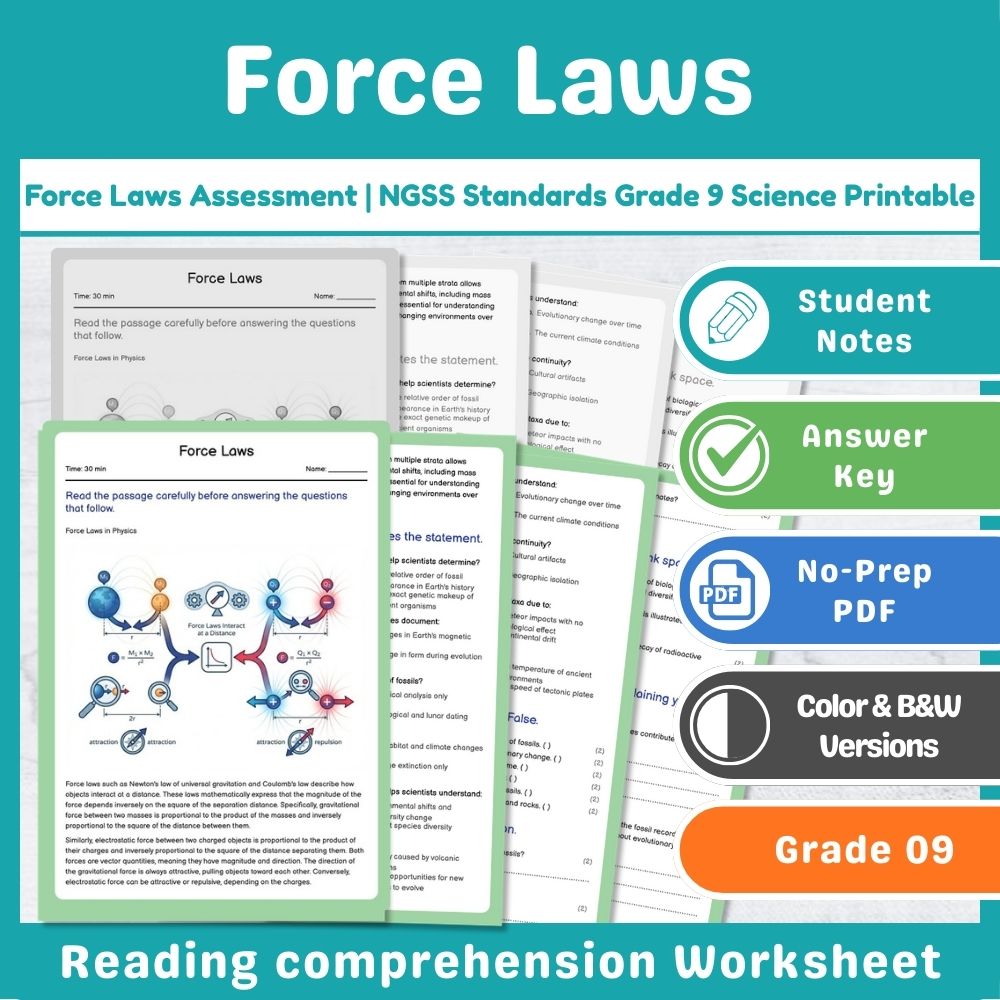
Field Dynamics Assessment | NGSS Standards Grade 9 Science
Created byPrism Point LearningLearning Objectives
- Understand the concepts of electric and magnetic fields and how they influence forces on charges and currents.
- Interpret field vectors and maps, and utilize field lines to represent direction and magnitude.
- Apply principles of superposition, forces, and motion curvature in uniform magnetic fields.
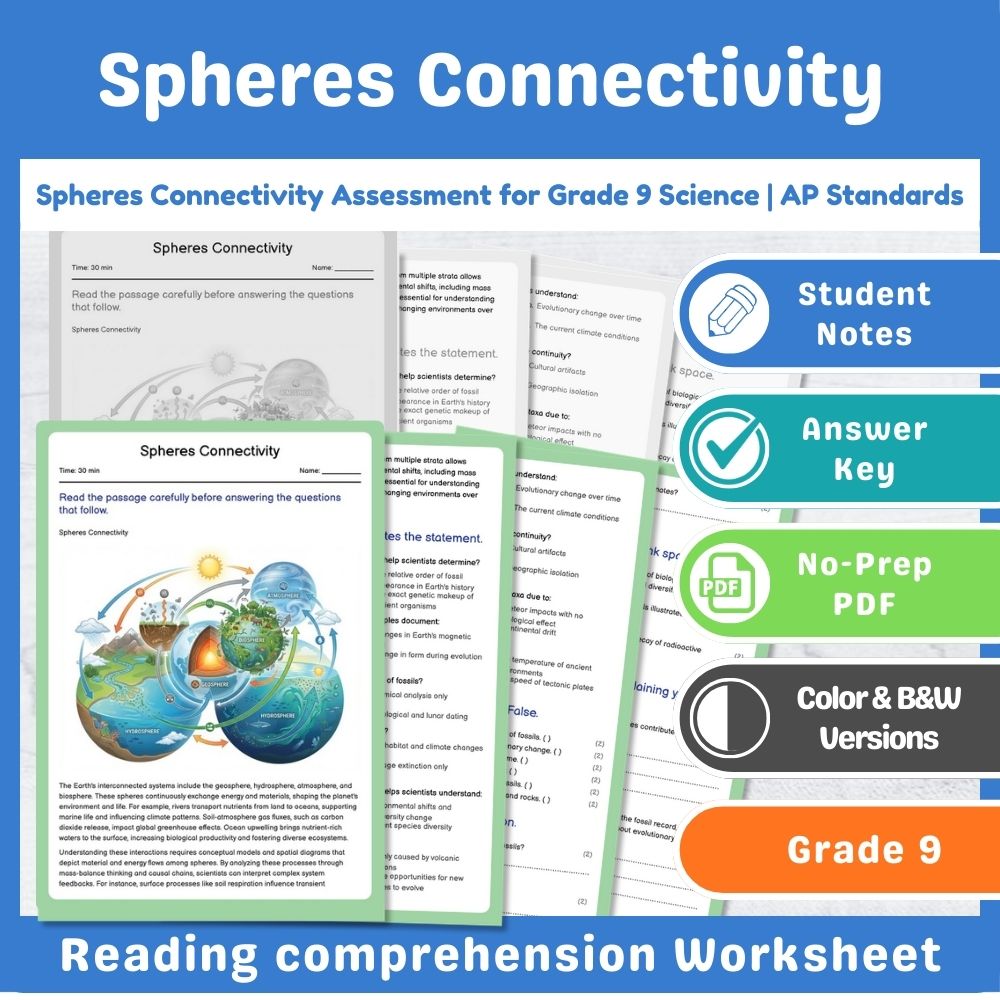
Spheres Connectivity Assessment for Grade 9 Science | AP Standards
Created byPrism Point LearningLearning Objectives
- Describe the interactions among the geosphere, hydrosphere, atmosphere, and biosphere using models and diagrams.
- Explain material and energy exchanges such as nutrient transport, gas fluxes, and ocean upwelling effects.
- Use spatial schematics and causal chains to interpret coupled environmental phenomena and feedbacks.
Browse more categories
About Science Worksheets
Find Science worksheets spanning core skills, practice, and review. All 42,685 resources are instant PDF downloads for the classroom or home.
Every worksheet on MyTeachingSheets is created by independent teacher-authors and reviewed before publication. All resources download as printable PDFs for classroom, homework, or at-home practice, and many include answer keys. Preview any worksheet free before buying.