
Science Worksheets
42,685 subject resources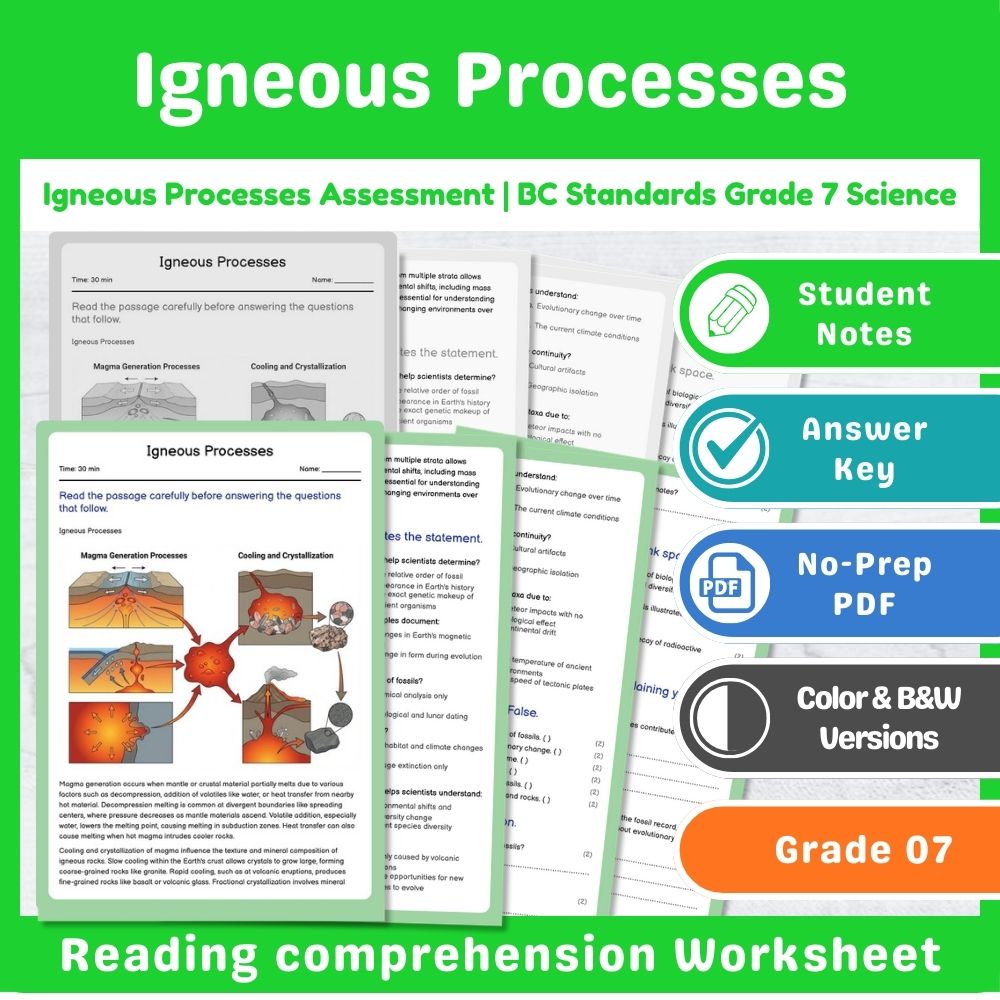
Igneous Processes Assessment | BC Standards Grade 7 Science
 Created byPrism Point Learning
Learning Objectives
- Describe how magma forms through partial melting due to decompression, volatiles, or heat transfer.
- Explain the processes of cooling and crystallization that determine rock textures and mineral assemblages.
- Identify the roles of fractional crystallization and magma mixing in producing diverse igneous rocks.

Endocrine Coordination Assessment for Grade 10 Science – TEKS Standards
Created byPrism Point LearningLearning Objectives
- Understand the role of hormones and glands in human physiology.
- Identify the feedback mechanisms involved in hormonal regulation.
- Explain how endocrine signals control growth, metabolism, and stress responses.
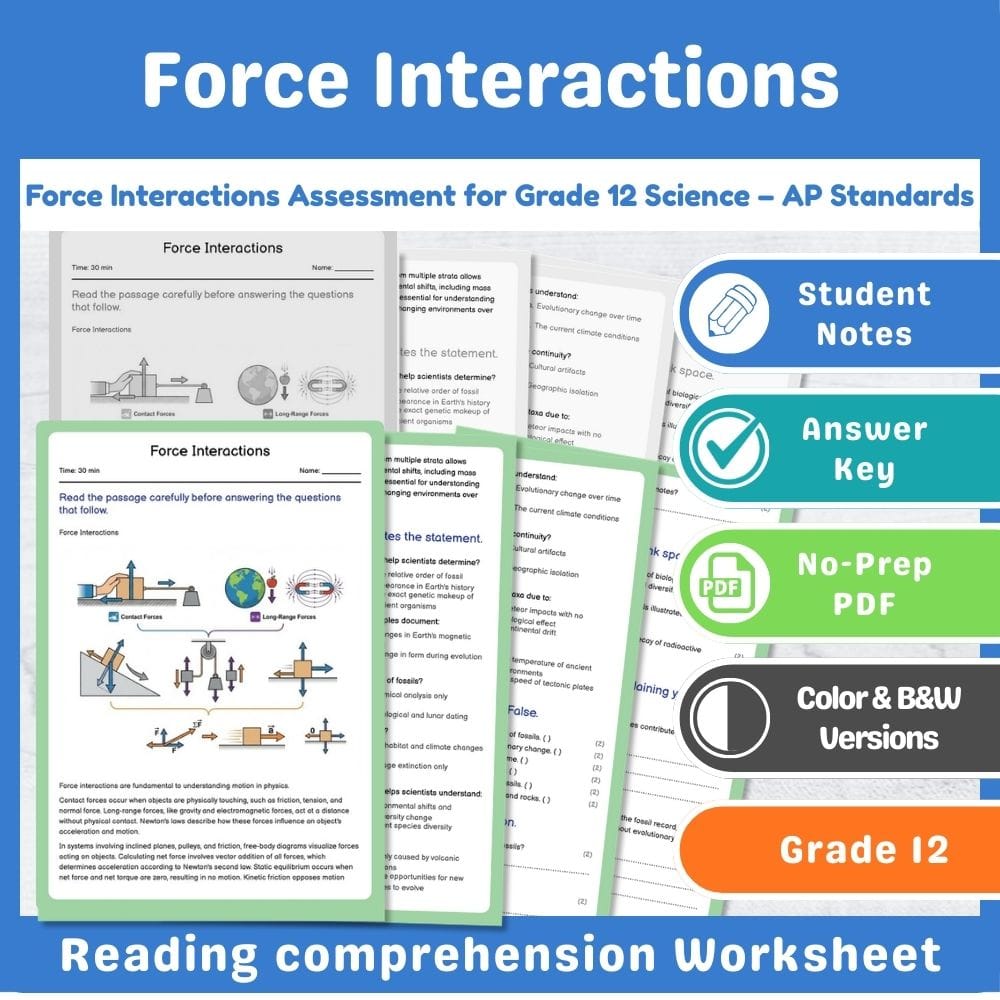
Force Interactions Assessment for Grade 12 Science – AP Standards
Created byPrism Point LearningLearning Objectives
- Describe contact and long-range force interactions and their laws.
- Analyze free-body diagrams and apply Newton's laws to various systems.
- Calculate net forces and accelerations on objects in equilibrium and non-equilibrium.
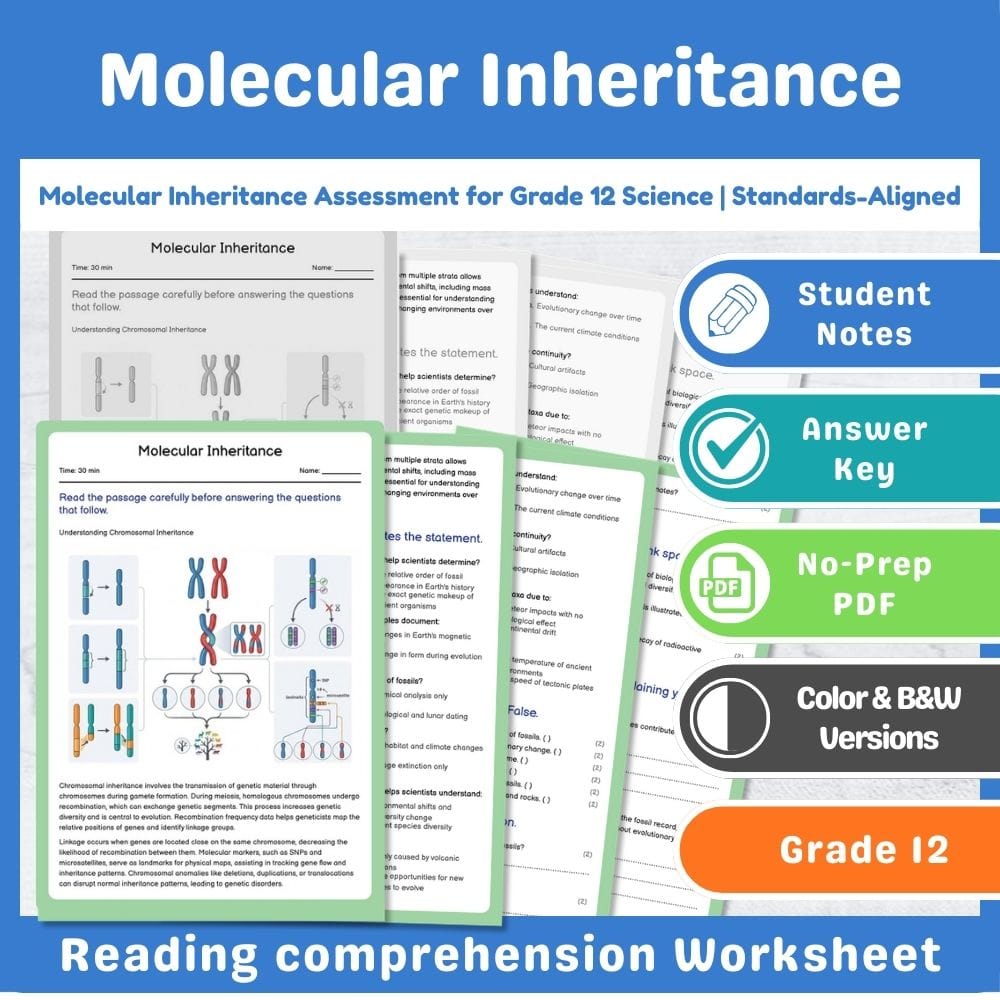
Molecular Inheritance Assessment for Grade 12 Science | Standards-Aligned
Created byPrism Point LearningLearning Objectives
- Understand chromosomal behavior and mechanisms of inheritance.
- Explain the concepts of recombination, linkage, and molecular markers.
- Differentiate between single-gene effects and polygenic influences on inheritance patterns.
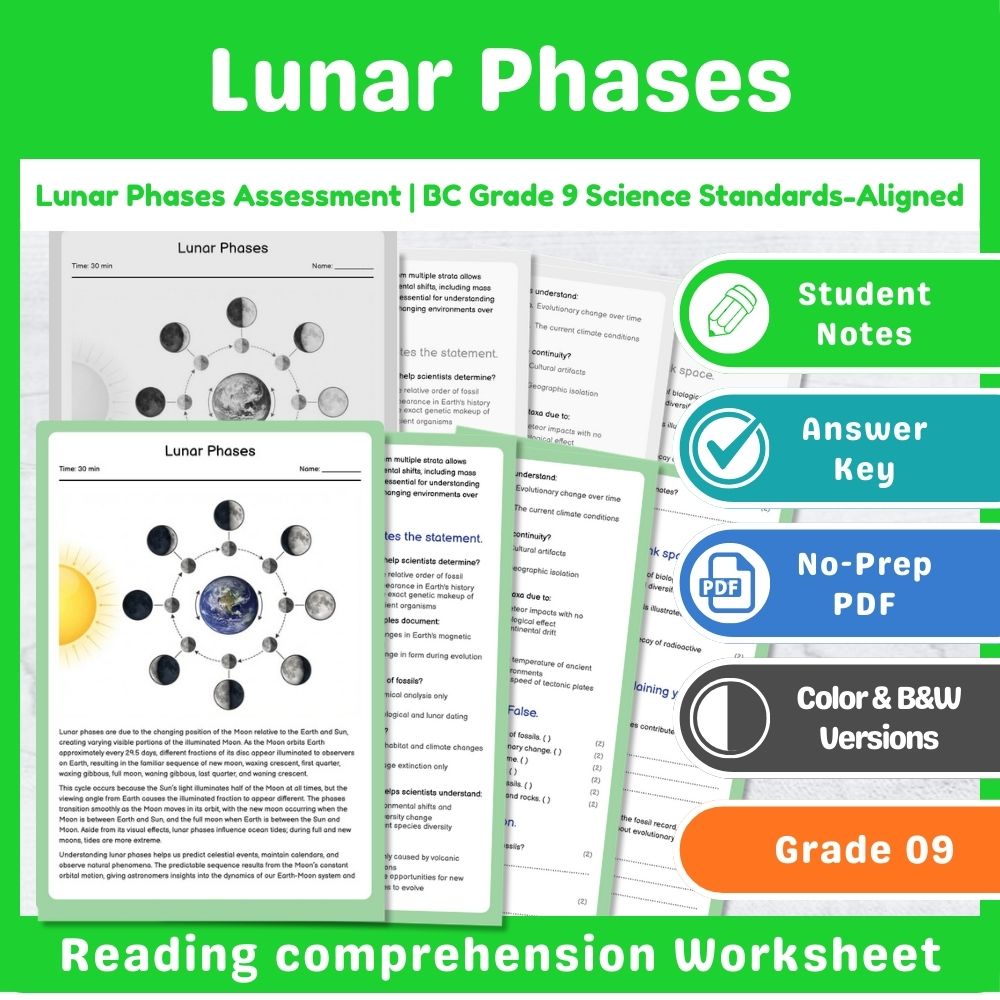
Lunar Phases Assessment | BC Grade 9 Science Standards-Aligned
Created byPrism Point LearningLearning Objectives
- Understand the sequence and causes of lunar phases.
- Identify the relationship between the Sun, Earth, and Moon in lunar cycles.
- Describe how lunar phases influence tides and nocturnal illumination.
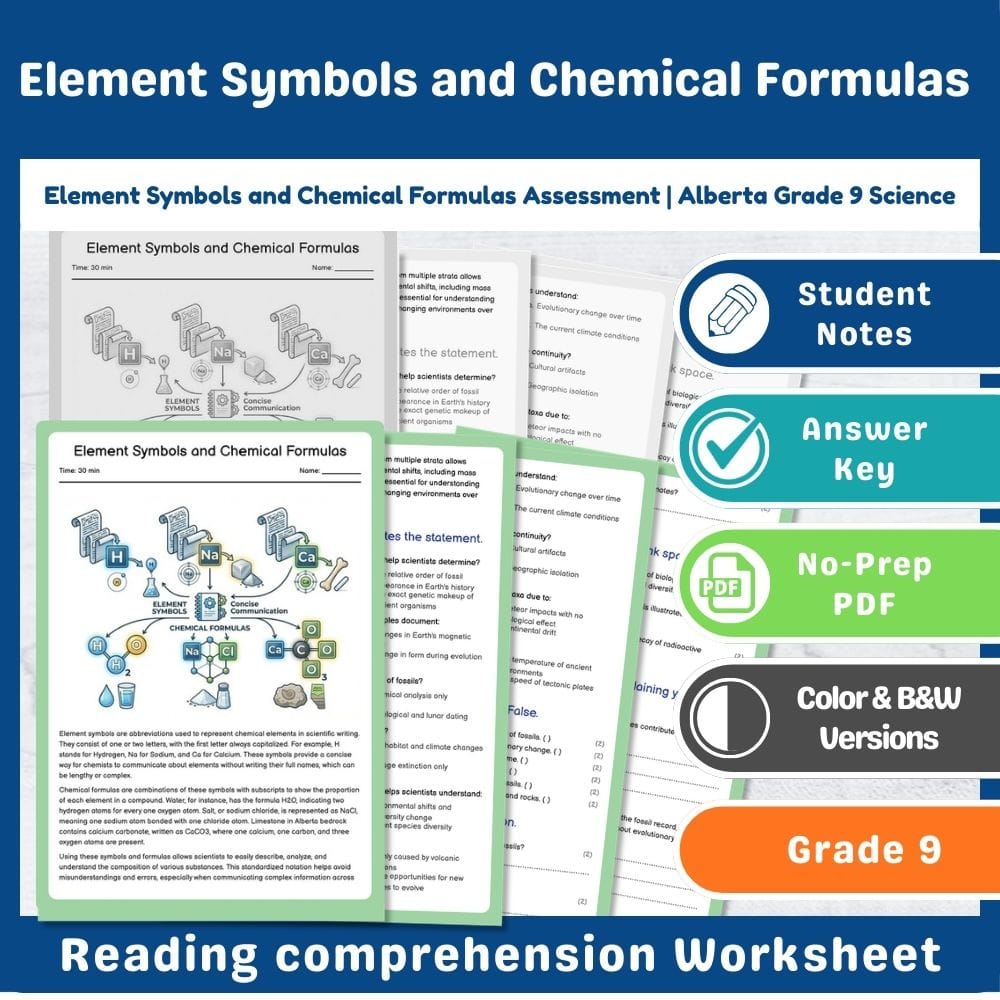
Element Symbols and Chemical Formulas Assessment | Alberta Grade 9 Science
Created byPrism Point LearningLearning Objectives
- Understand the use of element symbols and chemical formulas to represent elements and compounds.
- Identify and interpret common chemical formulas such as H2O, NaCl, and CaCO3.
- Explain how formulas indicate the proportions of elements in a substance.
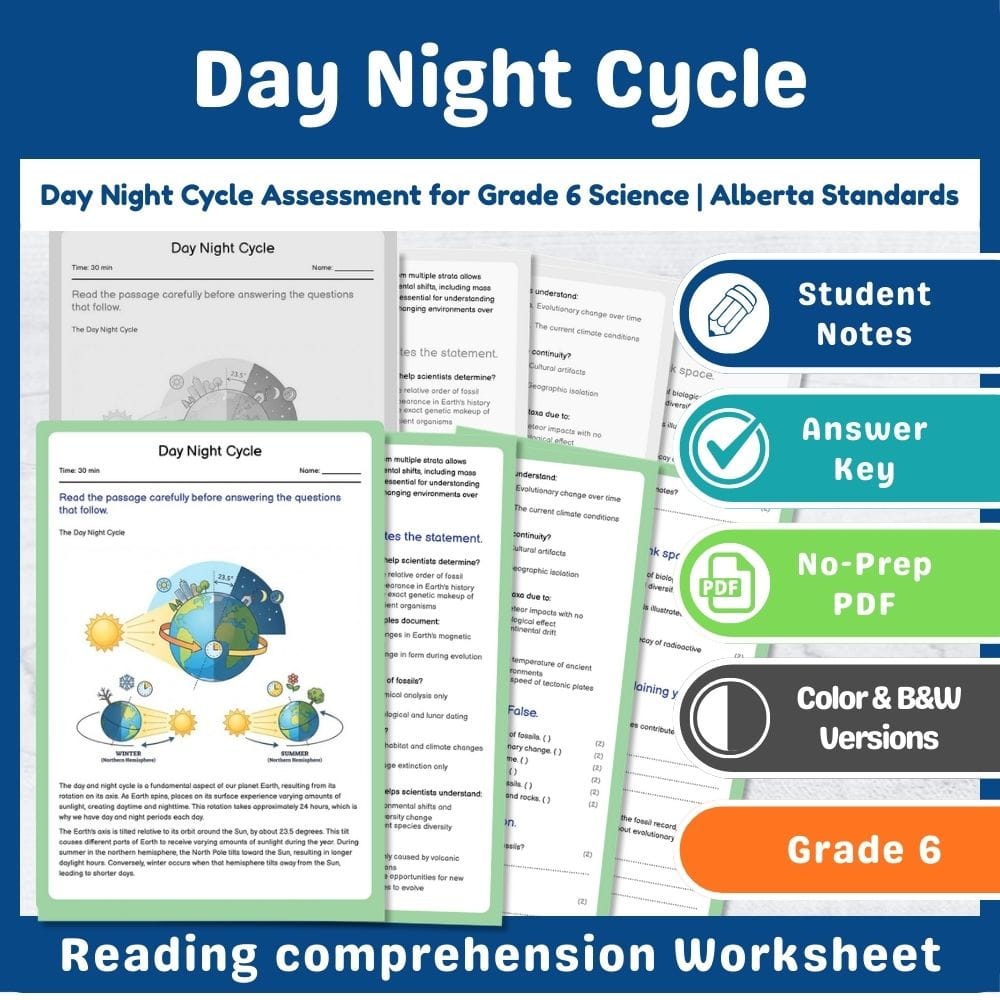
Day Night Cycle Assessment for Grade 6 Science | Alberta Standards
Created byPrism Point LearningLearning Objectives
- Explain how Earth's rotation causes day and night.
- Describe the effect of Earth's axial tilt on daylight duration throughout the year.
- Relate observed day length patterns in Alberta to Earth's position and movement around the Sun.
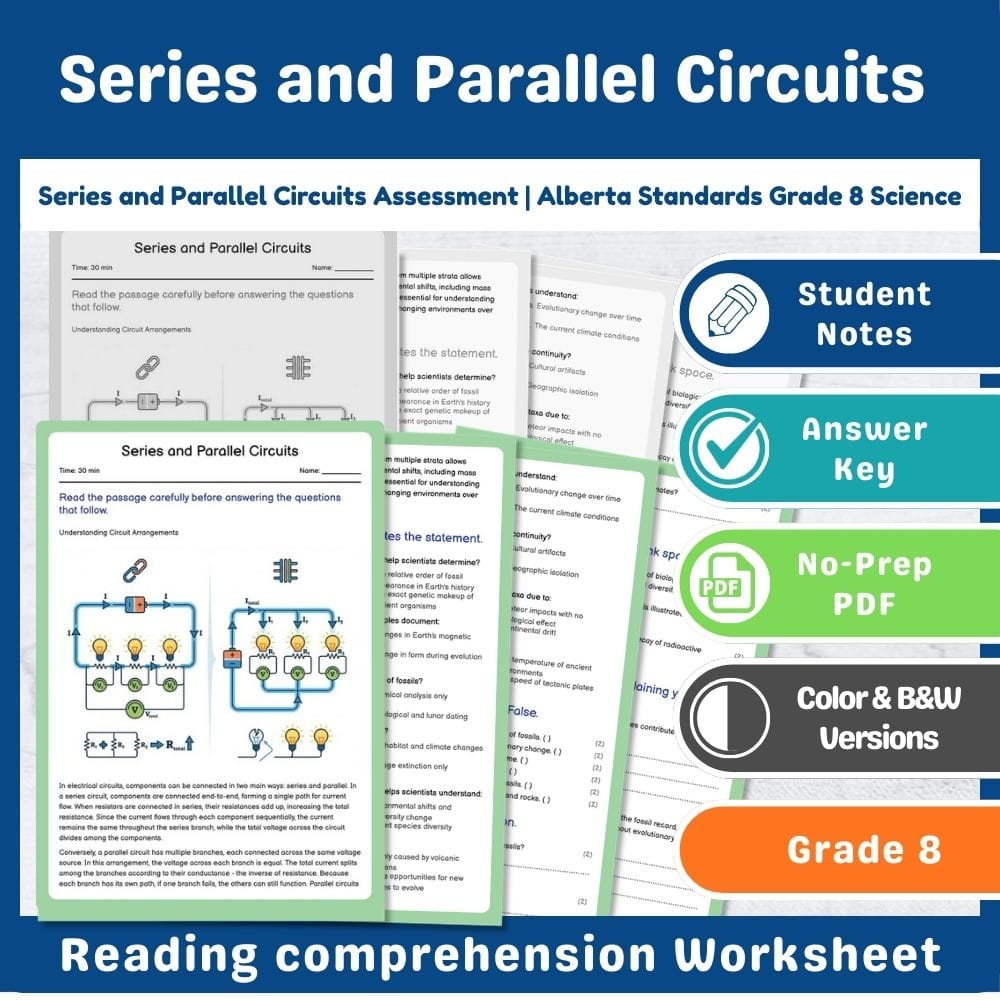
Series and Parallel Circuits Assessment | Alberta Standards Grade 8 Science
Created byPrism Point LearningLearning Objectives
- Understand the differences between series and parallel circuit arrangements.
- Predict how circuit behavior changes in series and parallel configurations.
- Compare resistances, current distribution, and voltages in series and parallel circuits.

Positive Feedback Assessment | TEKS Grade 10 Science Standards-Aligned
Created byPrism Point LearningLearning Objectives
- Understand the concept and mechanisms of positive feedback in biological systems.
- Identify examples of positive feedback mechanisms, such as childbirth and blood clotting.
- Differentiate between positive and negative feedback in physiology.

Fitness and Survival Assessment | NGSSS Standards Grade 7 Science
Created byPrism Point LearningLearning Objectives
- Explain how fitness relates to survival and reproduction in a specific environment
- Describe how natural selection can favor different traits when selection pressures change
- Connect heritable variation to how populations can change over time
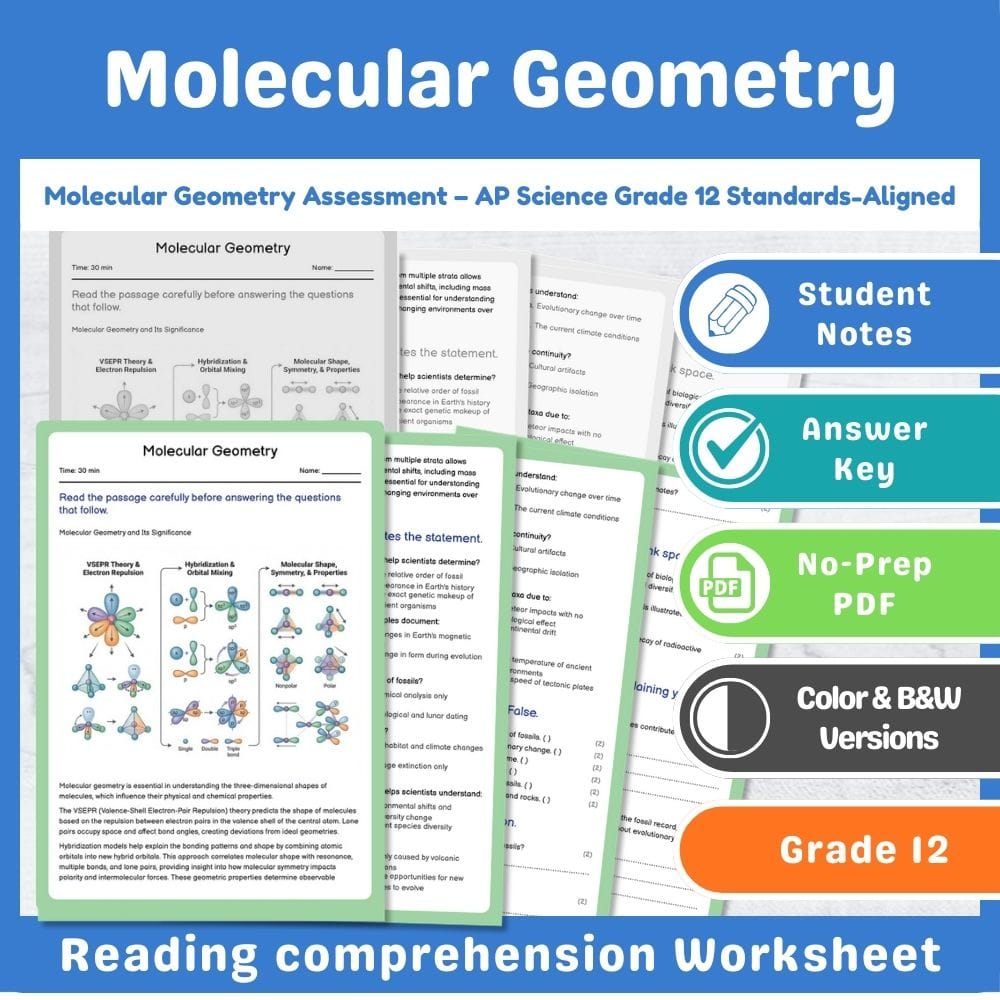
Molecular Geometry Assessment – AP Science Grade 12 Standards-Aligned
Created byPrism Point LearningLearning Objectives
- Explain the VSEPR model to predict molecular shapes and Bond angles.
- Describe the effects of lone pairs, multiple bonds, and resonance on molecular geometry.
- Relate molecular geometry to polarity, symmetry, and observable properties such as dipole moments.
Molecular Foundations Assessment | AP Standards-Aligned Grade 12 Science
Created byPrism Point LearningLearning Objectives
- Explain the relationship between molecular structure and function in biological macromolecules.
- Identify key types of macromolecules and their roles in cellular processes.
- Analyze how molecular interactions and bonds influence stability and specificity.

Fossil Formation Assessment for Grade 10 Science | TEKS Standards
Created byPrism Point LearningLearning Objectives
- Understand the processes involved in fossil formation and preservation.
- Identify methods used for dating fossils and their significance.
- Describe how fossil evidence helps scientists study historical life and evolution.
Sea Level Change Assessment for Grade 12 Science | AP Standards
Created byPrism Point LearningLearning Objectives
- Understand the key drivers that influence sea level variability, including thermal expansion, land-ice melt, and glacio-isostatic adjustment.
- Interpret data from tide gauges and satellite altimetry records to analyze sea level trends.
- Explain how human activities and regional factors affect sea level changes and coastal systems.
Constant Speed Assessment | BC Standards-Aligned Grade 8 Science
Created byPrism Point LearningLearning Objectives
- Define and explain the concept of constant speed in motion.
- Interpret distance-time graphs to identify constant speed scenarios.
- Calculate average and instantaneous speed in various contexts.
Argument Construction Assessment for Grade 12 Science Standards
Created byPrism Point LearningLearning Objectives
- Understand how to construct evidence-based arguments in scientific contexts.
- Identify components such as claims, warrants, and backing in case studies.
- Evaluate relevance, sufficiency, and alternative hypotheses in argumentation.
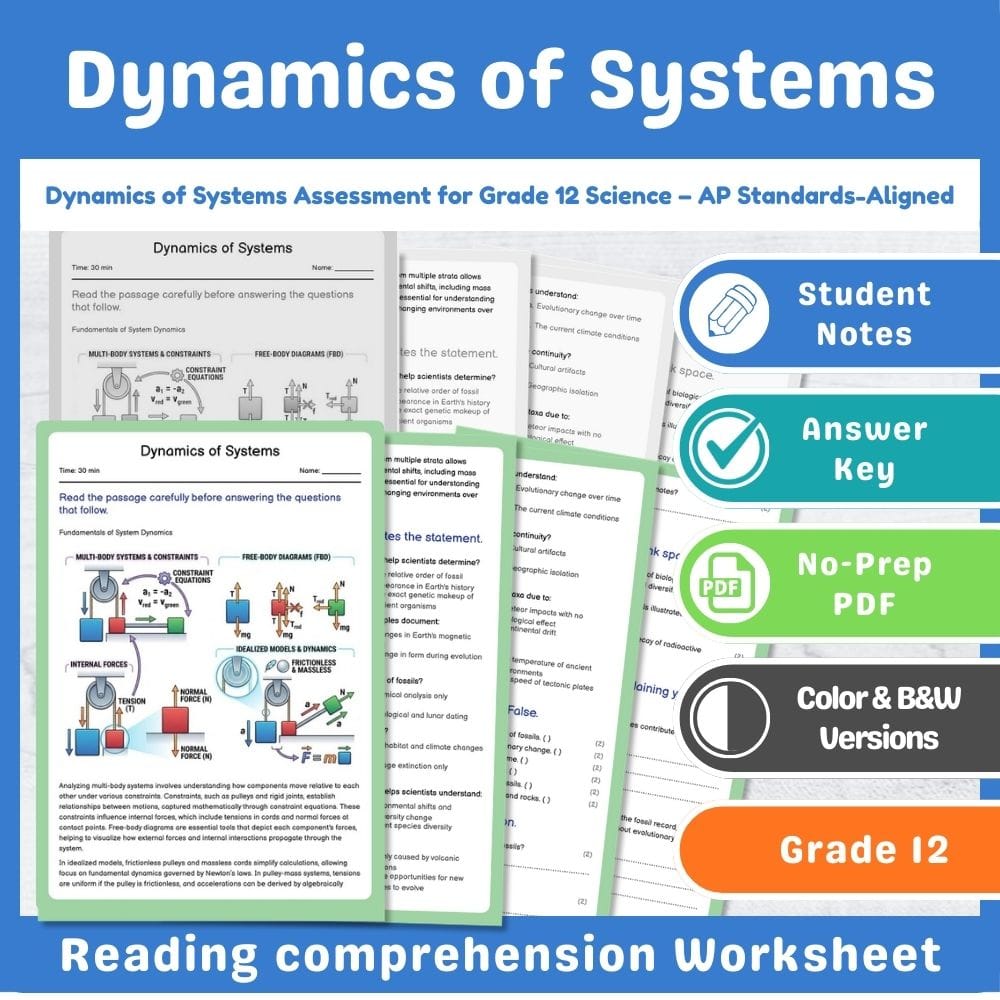
Dynamics of Systems Assessment for Grade 12 Science – AP Standards-Aligned
Created byPrism Point LearningLearning Objectives
- Understand the use of constraint equations in multi-body systems.
- Analyze pulley, connected-mass configurations, and rigid-body approximations.
- Apply Newton’s laws algebraically to derive system accelerations and internal forces.

Ecosystem Interactions Assessment | Standards-Aligned Grade 12 Science
Created byPrism Point LearningLearning Objectives
- Explain how predation, competition, mutualism, and parasitism influence population dynamics within ecosystems.
- Describe how energy flows through trophic levels and how interactions form food webs.
- Predict how changes in one population can cascade to affect other species and community structure.

Ecosystem Change and Resilience Assessment | General Grade 9 Science
Created byPrism Point LearningLearning Objectives
- Understand how disturbances impact ecosystem stability and composition.
- Identify factors that influence ecosystem resilience and recovery.
- Analyze evidence from population trends and community changes to infer ecological shifts.

Mixtures and Changes Assessment for Grade 8 Science | NGSSS
Created byPrism Point LearningLearning Objectives
- Explain how mixtures differ from pure substances and how component properties affect the mixture.
- Describe solutions as mixtures and distinguish solute and solvent based on particle behavior.
- Differentiate physical changes from chemical changes using evidence and particle-level ideas.
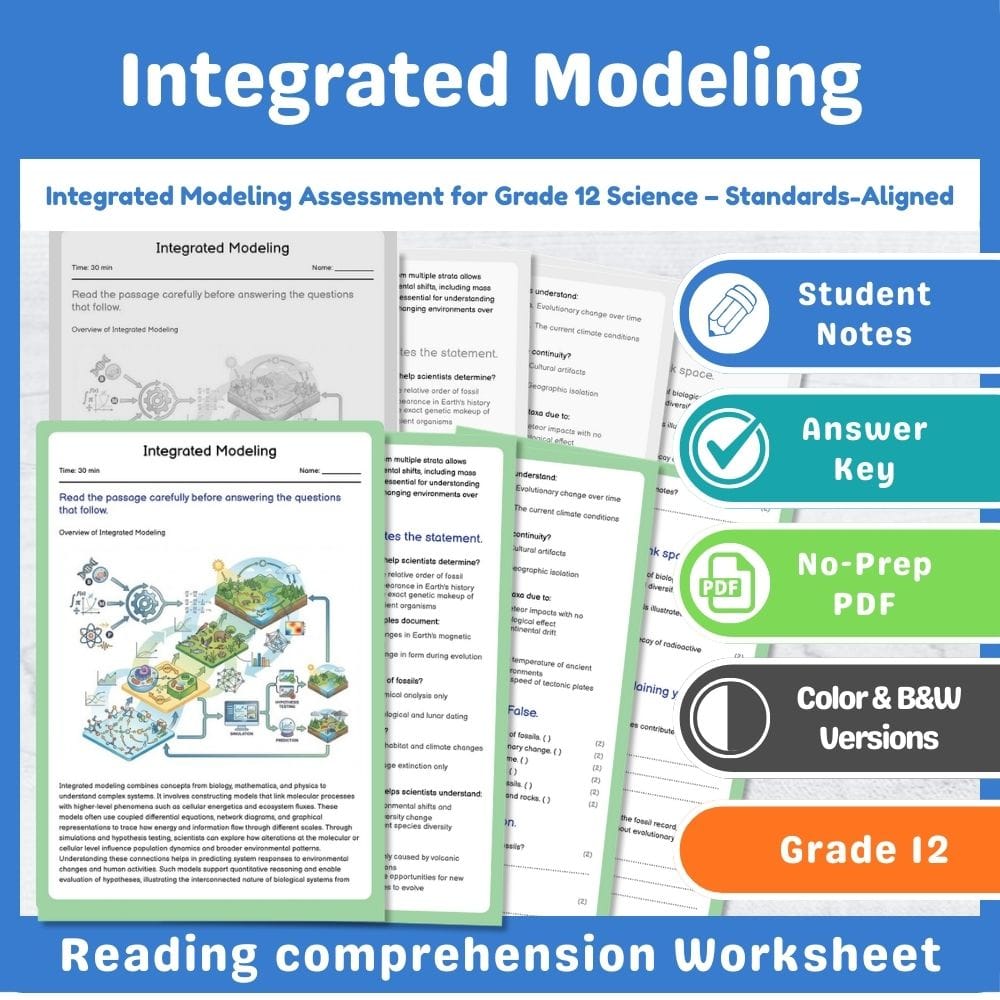
Integrated Modeling Assessment for Grade 12 Science – Standards-Aligned
Created byPrism Point LearningLearning Objectives
- Understand how molecular processes influence cellular energetics and genetic regulation.
- Describe the use of mathematical models such as differential equations and network diagrams in biological systems.
- Explain how changes at one biological level propagate to others within ecosystems.
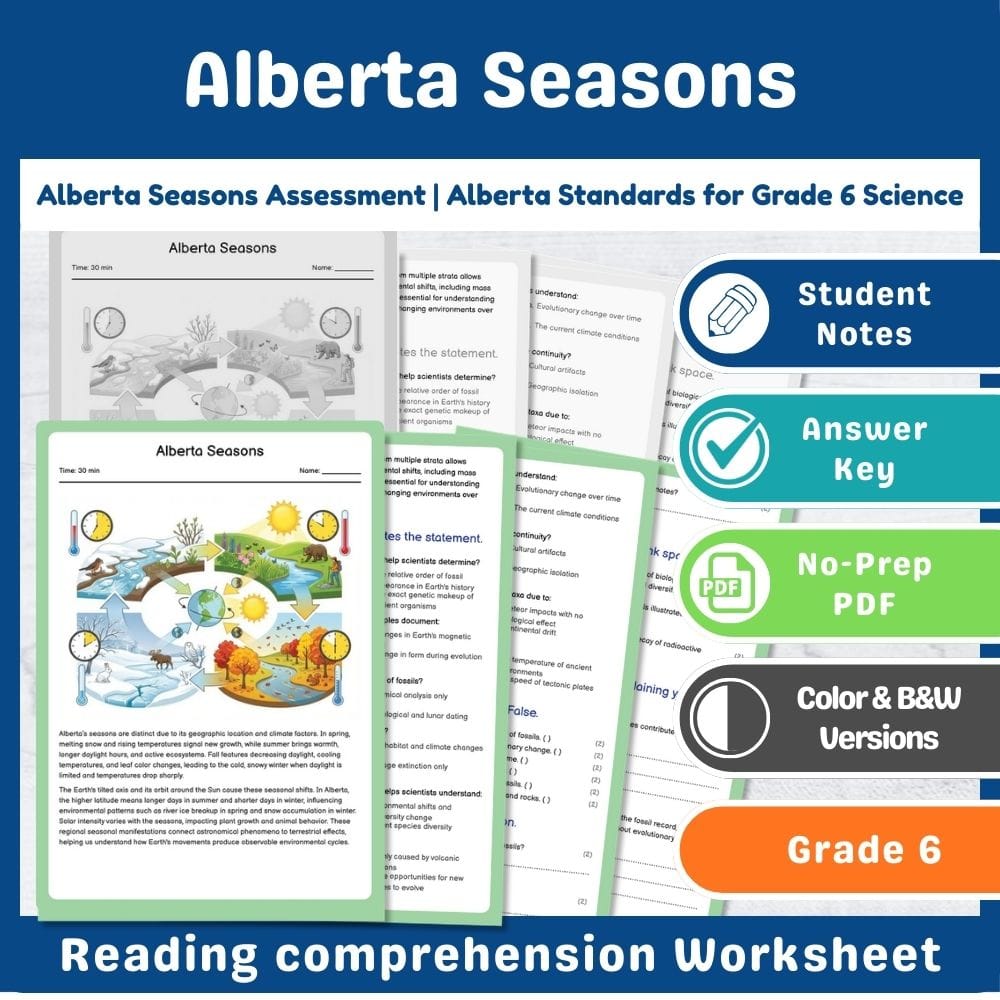
The Apparent Sun Path Grade 6 Science Assessment | Alberta Standards
Created byPrism Point LearningLearning Objectives
- Understand how the Sun's apparent path varies with seasons and latitude.
- Describe how solar elevation at noon affects day length and intensity.
- Compare the Sun's apparent motion in different geographic locations, like Calgary and northern communities.

Net Force Causes Assessment | General Grade 9 Science Standards-Aligned
Created byPrism Point LearningLearning Objectives
- Understand how unbalanced forces cause changes in motion.
- Identify the difference between balanced and unbalanced forces.
- Explain how net force relates to acceleration and motion outcomes.
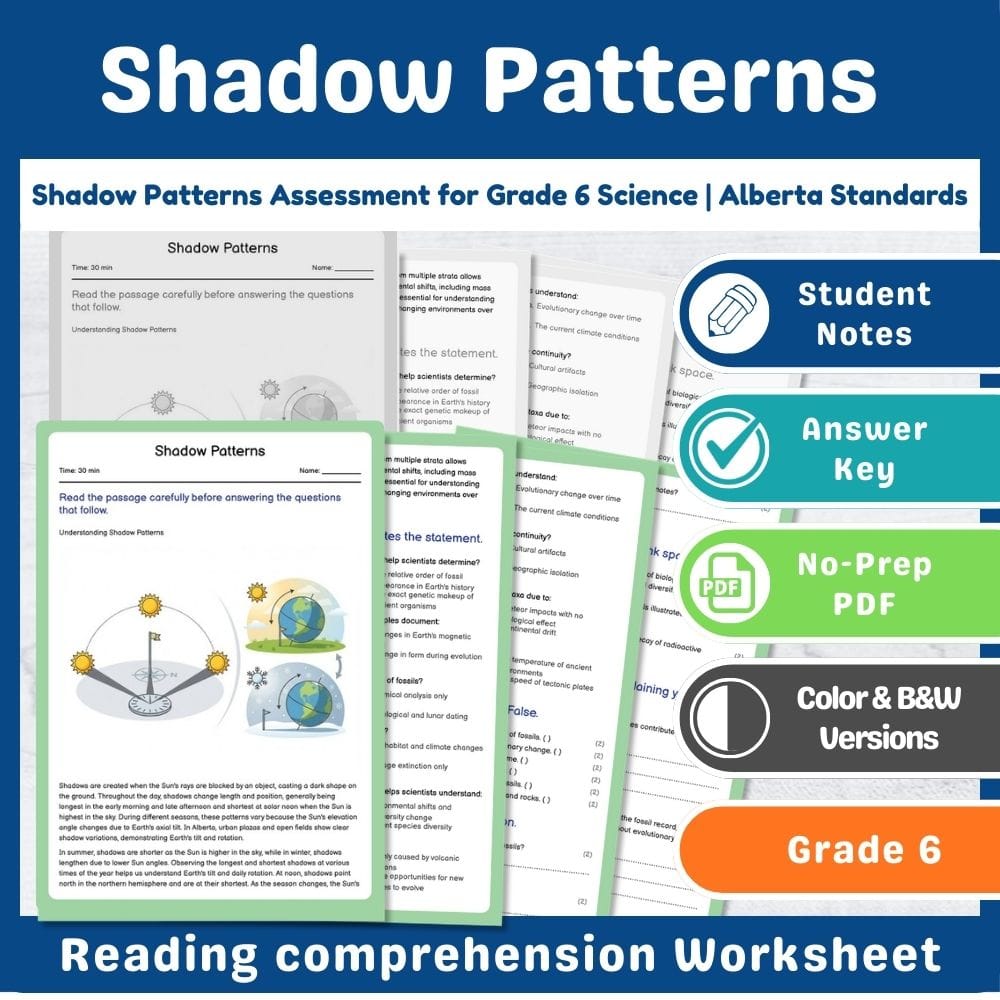
Shadow Patterns Assessment for Grade 6 Science | Alberta Standards
Created byPrism Point LearningLearning Objectives
- Describe how daily and seasonal changes in Sun angle affect shadow length and direction.
- Identify different shadow patterns such as noon shadows, longest shadows, and shortest shadows.
- Explain how Earth's motion and axial tilt influence shadow characteristics across seasons.
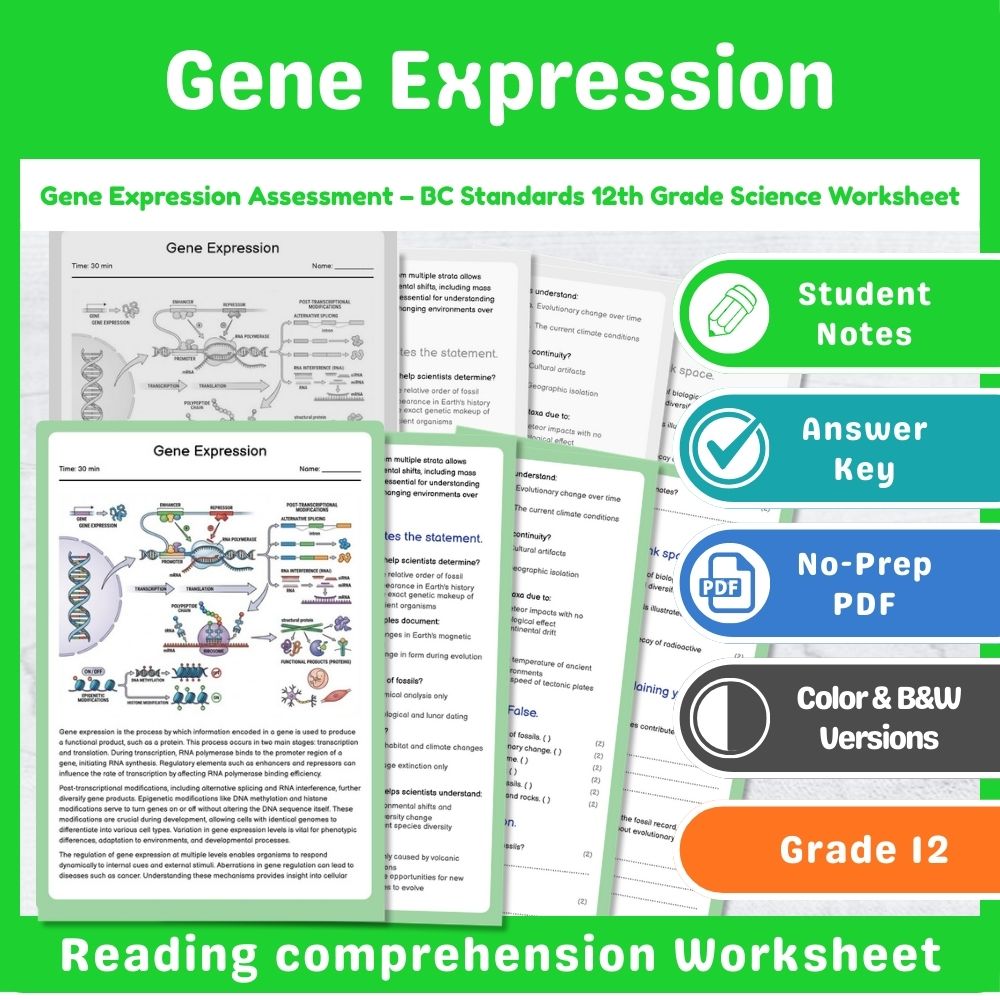
Gene Expression Assessment – BC Standards 12th Grade Science Worksheet
Created byPrism Point LearningLearning Objectives
- Understand the mechanisms of gene transcription and translation.
- Identify various levels of regulation in gene expression.
- Describe the roles of promoters, enhancers, and repressors in transcription.
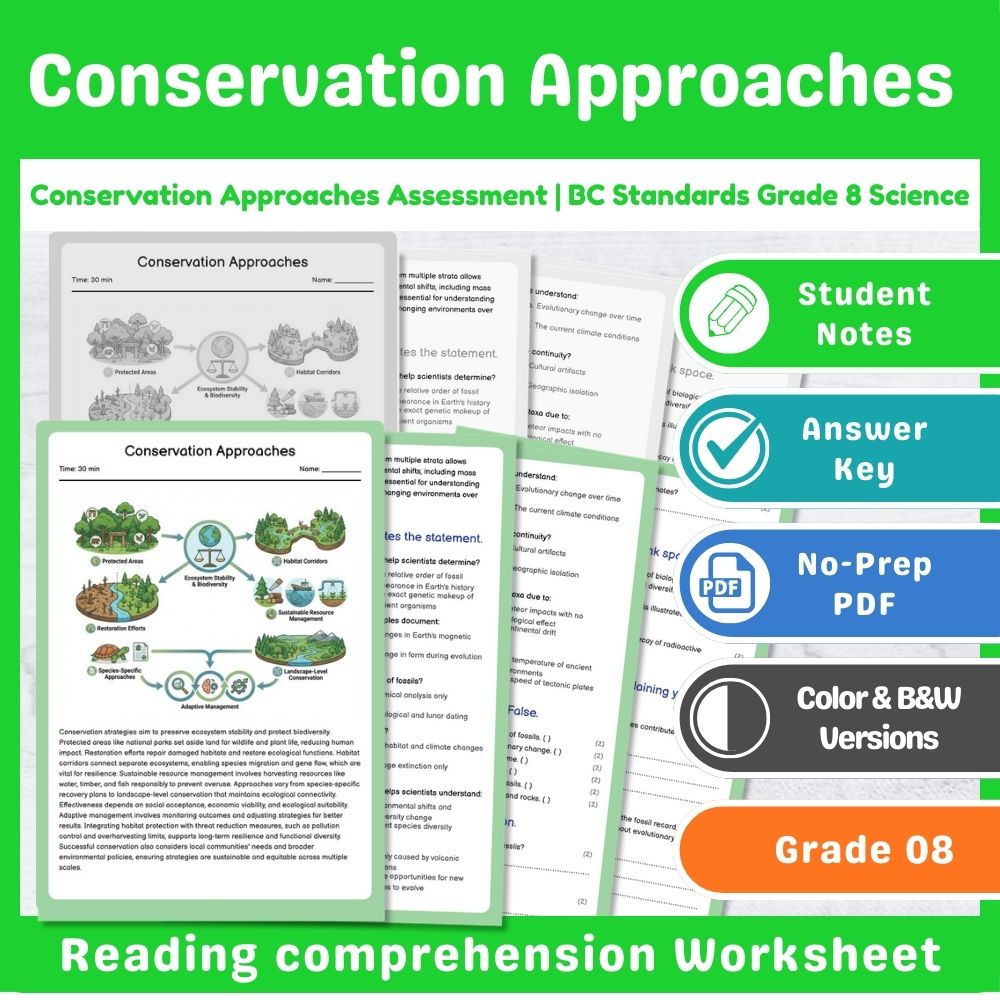
Conservation Approaches Assessment | BC Standards Grade 8 Science
Created byPrism Point LearningLearning Objectives
- Understand various conservation strategies such as protected areas, habitat corridors, and sustainable resource management.
- Identify factors that influence the effectiveness of conservation efforts.
- Explain the role of social, economic, and ecological contexts in conservation planning.

Climate Data Trends Assessment for Grade 8 Science | NGSSS Standards
Created byPrism Point LearningLearning Objectives
- Interpret climate indicators by comparing temperature, precipitation, and storm-frequency data over time.
- Distinguish long-term climate trends from short-term weather variability and single extreme events.
- Explain how El Niño and La Niña can affect rainfall patterns using evidence from data records.
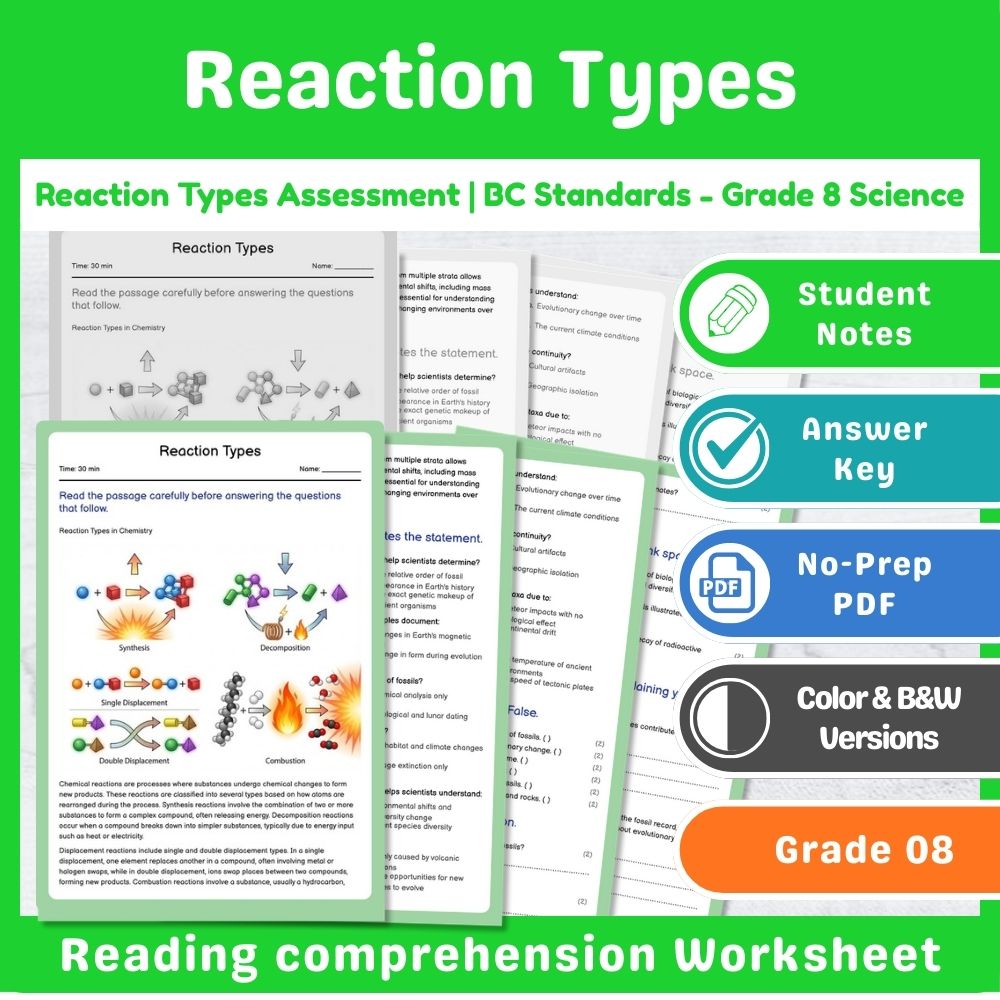
Reaction Types Assessment | BC Standards - Grade 8 Science
Created byPrism Point LearningLearning Objectives
- Identify the various types of chemical reactions and their characteristic patterns.
- Explain how atoms rearrange during synthesis, decomposition, displacement, and combustion reactions.
- Predict possible products based on reaction type.

Atmospheric Systems Assessment | TEKS Grade 7 Science Standards
Created byPrism Point LearningLearning Objectives
- Understand how energy transfer influences atmospheric processes.
- Describe large-scale circulation patterns and their effects on climate.
- Identify key phenomena such as fronts, jet streams, and greenhouse gases.

Circuit Fundamentals Assessment | Alberta Grade 10 Science Standards
Created byPrism Point LearningLearning Objectives
- Define current, voltage, and resistance and explain their interrelationships.
- Understand Ohm's law and its application in simple circuits.
- Differentiate between series and parallel electrical circuits.
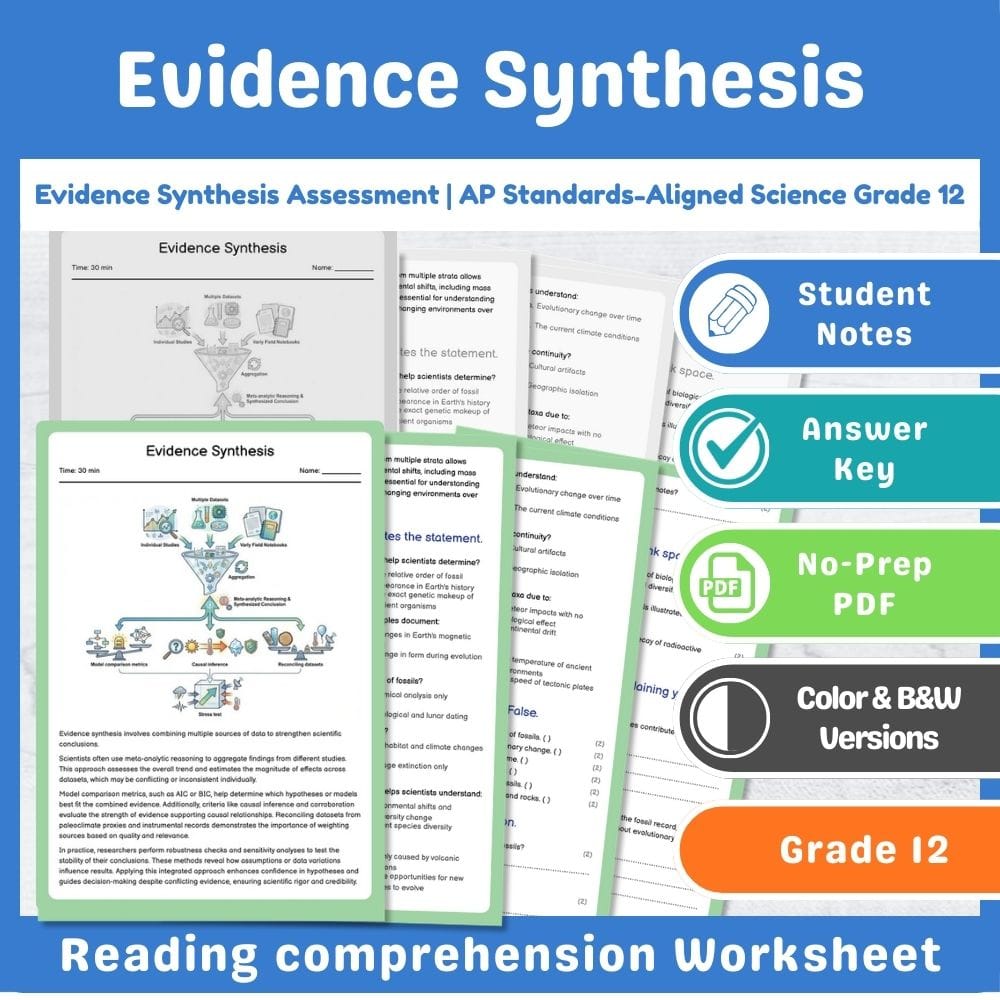
Evidence Synthesis Assessment | AP Standards-Aligned Science Grade 12
Created byPrism Point LearningLearning Objectives
- Understand methods for integrating multiple lines of evidence in scientific research.
- Analyze contrasting datasets and assess their compatibility using model comparison metrics.
- Evaluate how combined evidence influences confidence in hypotheses and conclusions.
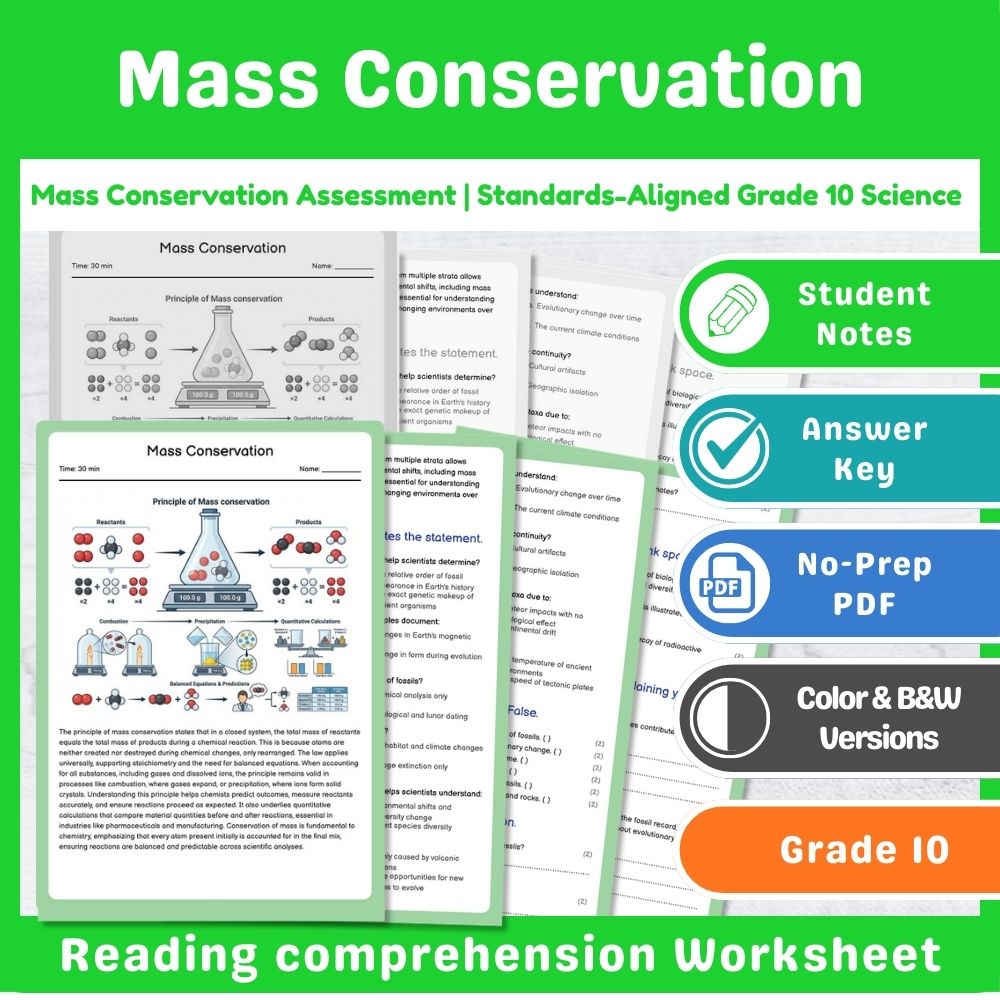
Mass Conservation Assessment | Standards-Aligned Grade 10 Science Worksheet
Created byPrism Point LearningLearning Objectives
- Understand the principle of conservation of mass in chemical reactions.
- Identify how mass is conserved in different types of chemical processes.
- Apply the concept of mass conservation to balance chemical equations.
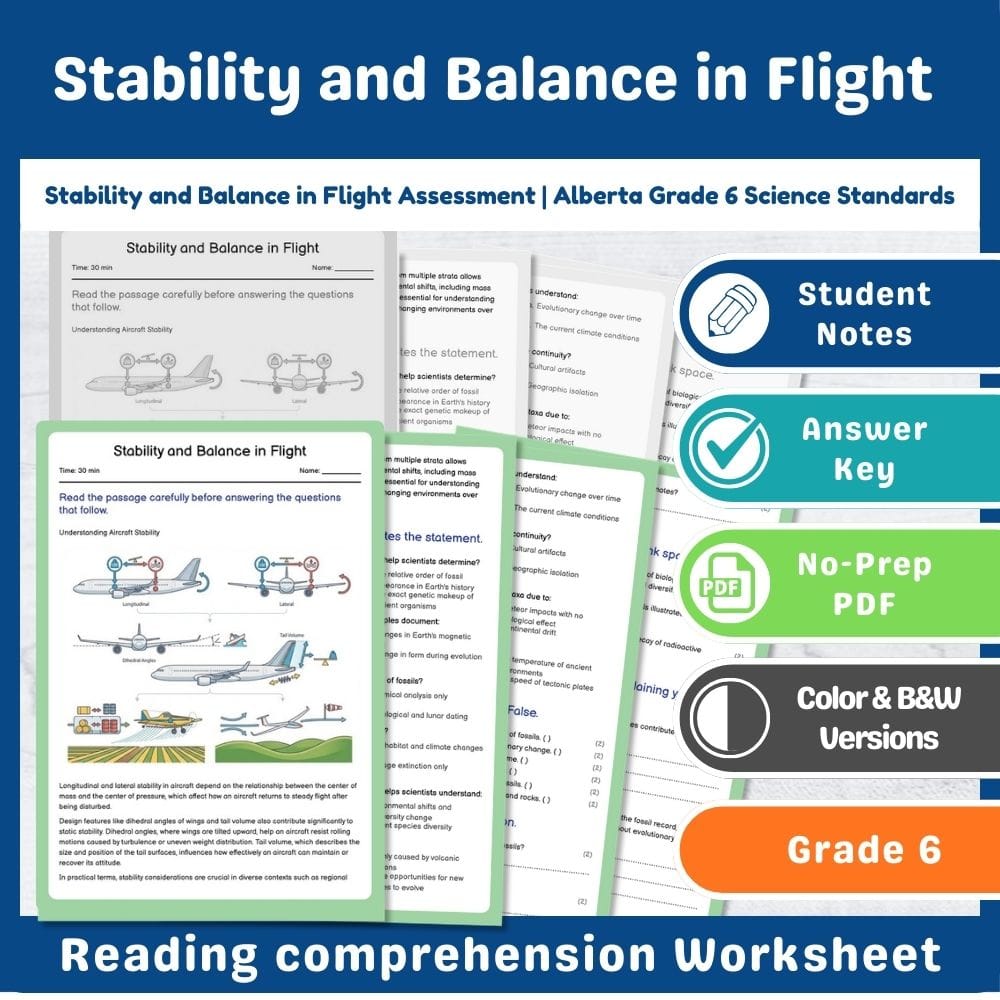
Stability and Balance in Flight Assessment | Alberta Grade 6 Science Standards
Created byPrism Point LearningLearning Objectives
- Understand how center of mass and center of pressure affect aircraft stability.
- Explain how design features like dihedral angles and tail volume influence static stability.
- Describe how balance impacts aircraft behavior under different payloads and wind conditions.
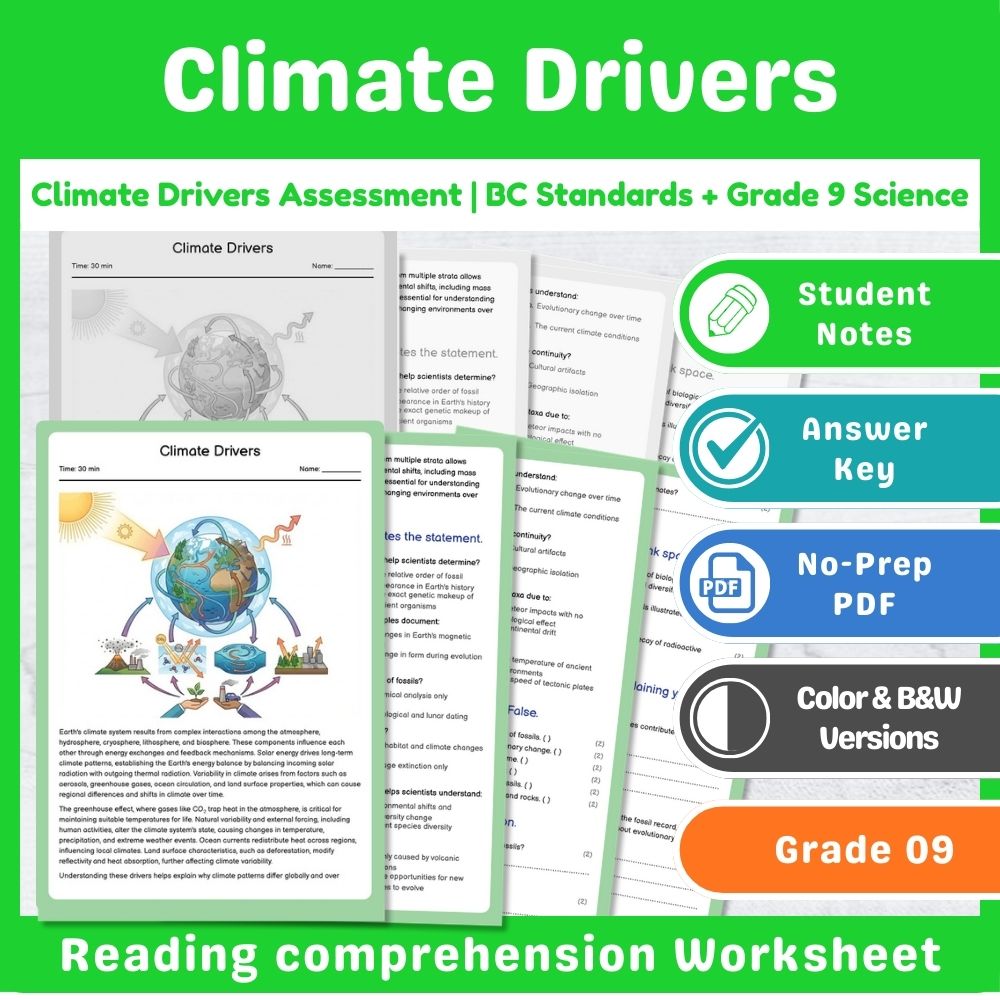
Climate Drivers Assessment | BC Standards + Grade 9 Science
Created byPrism Point LearningLearning Objectives
- Understand how Earth's climate is influenced by various natural and external factors.
- Identify the roles of atmosphere, hydrosphere, cryosphere, lithosphere, and biosphere in climate systems.
- Explain the concept of energy balance and its significance in climate regulation.
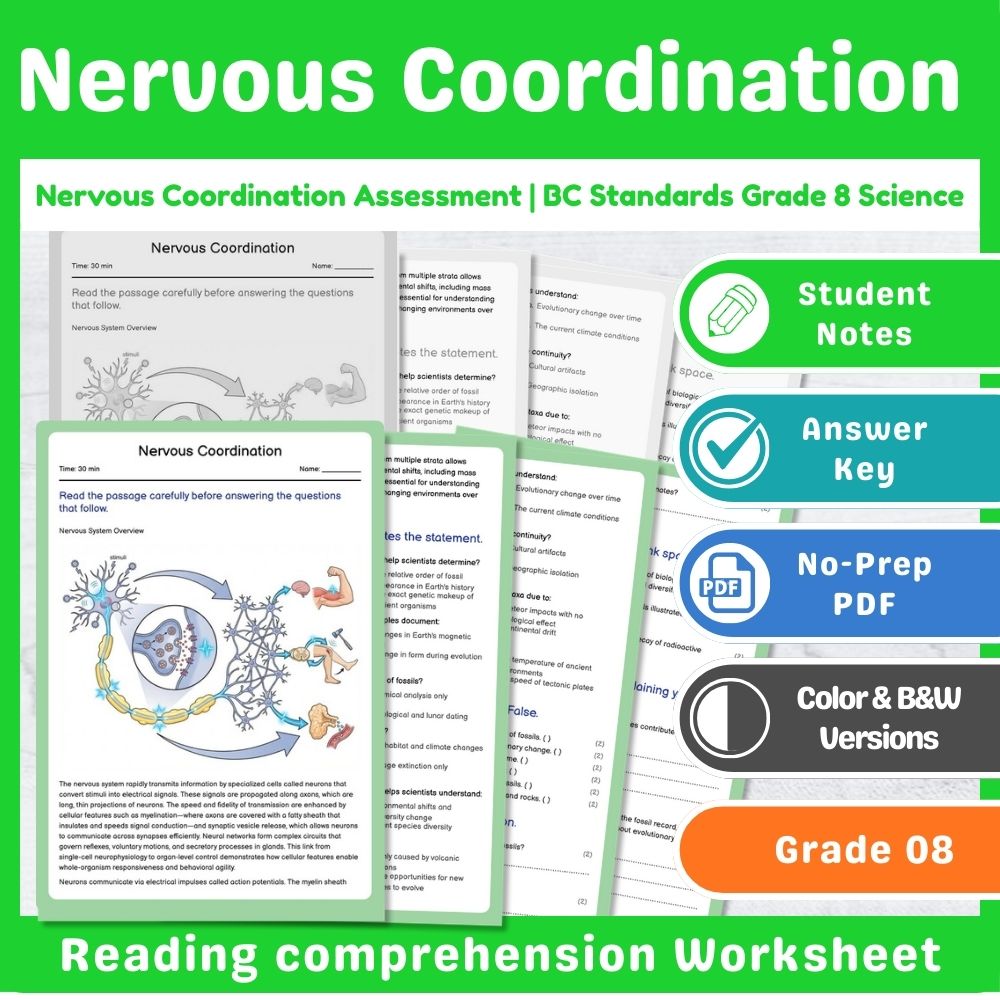
Nervous Coordination Assessment | BC Standards Grade 8 Science
Created byPrism Point LearningLearning Objectives
- Understand how neurons transmit electrical signals for nervous communication.
- Identify cellular features that enhance the speed and fidelity of nerve signaling.
- Explain the neural circuits involved in reflexes, voluntary movements, and gland secretion.
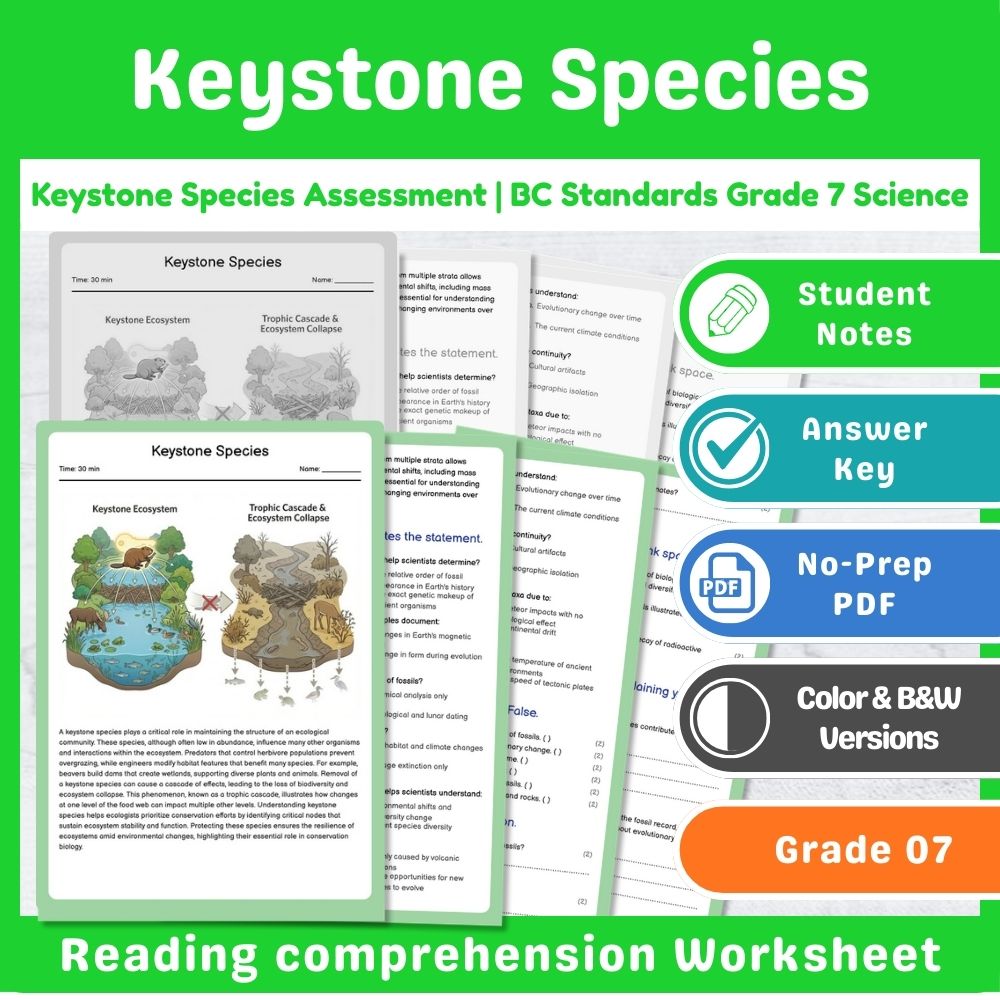
Keystone Species Assessment | BC Standards Grade 7 Science Worksheet
Created byPrism Point LearningLearning Objectives
- Define what a keystone species is and explain its importance in ecosystems.
- Identify different types of keystone species and their roles in maintaining ecosystem balance.
- Understand the effects of removing a keystone species on ecological communities.

Organelle Roles Assessment | TEKS Standards-Aligned Test for Grade 9 Science
Created byPrism Point LearningLearning Objectives
- Identify major eukaryotic cell organelles and their functions.
- Connect organelle structure to cellular tasks in different tissue types.
- Describe the roles of the nucleus, mitochondria, chloroplasts, endoplasmic reticulum, Golgi apparatus, lysosomes, ribosomes, and plasma membrane.
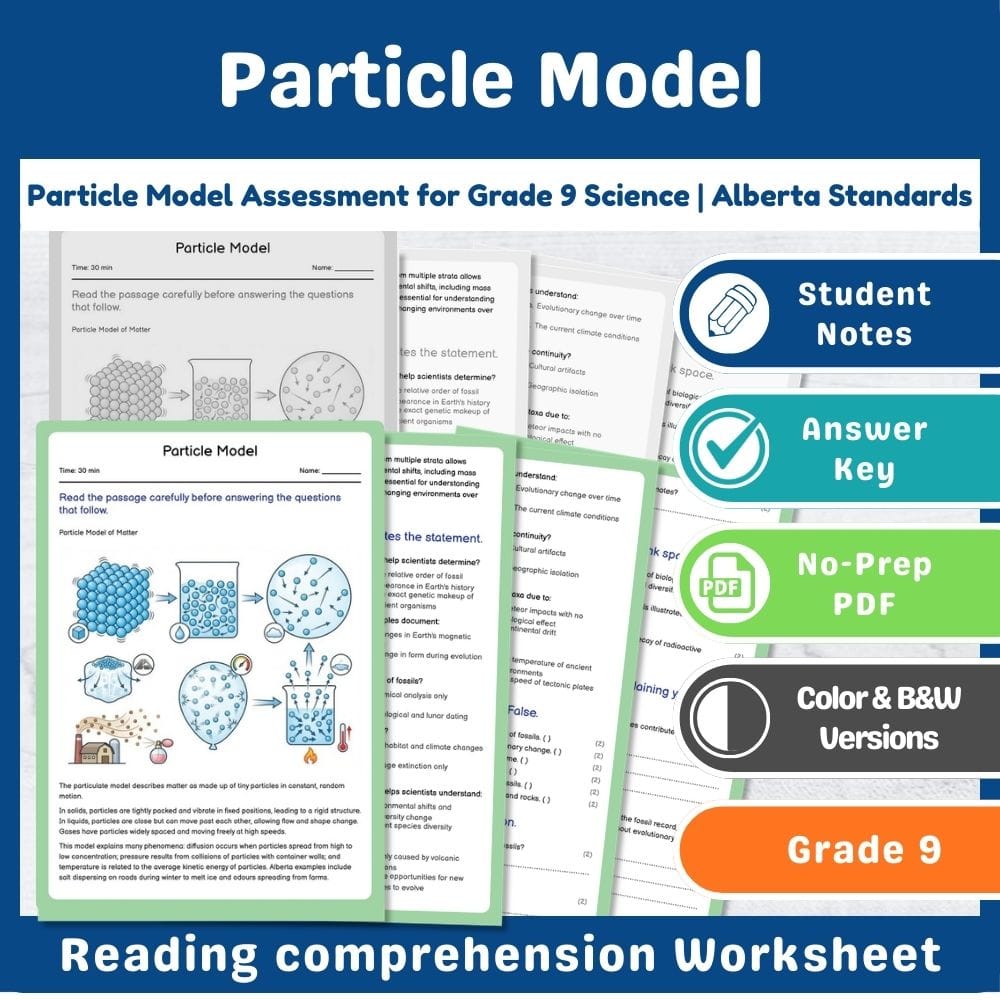
Particle Model Assessment for Grade 9 Science | Alberta Standards
Created byPrism Point LearningLearning Objectives
- Understand the basic principles of the particle model of matter.
- Explain how particle behavior affects macroscopic phenomena such as diffusion and pressure.
- Relate the particle model to real-world examples like salt dispersal on roads and odour spread.
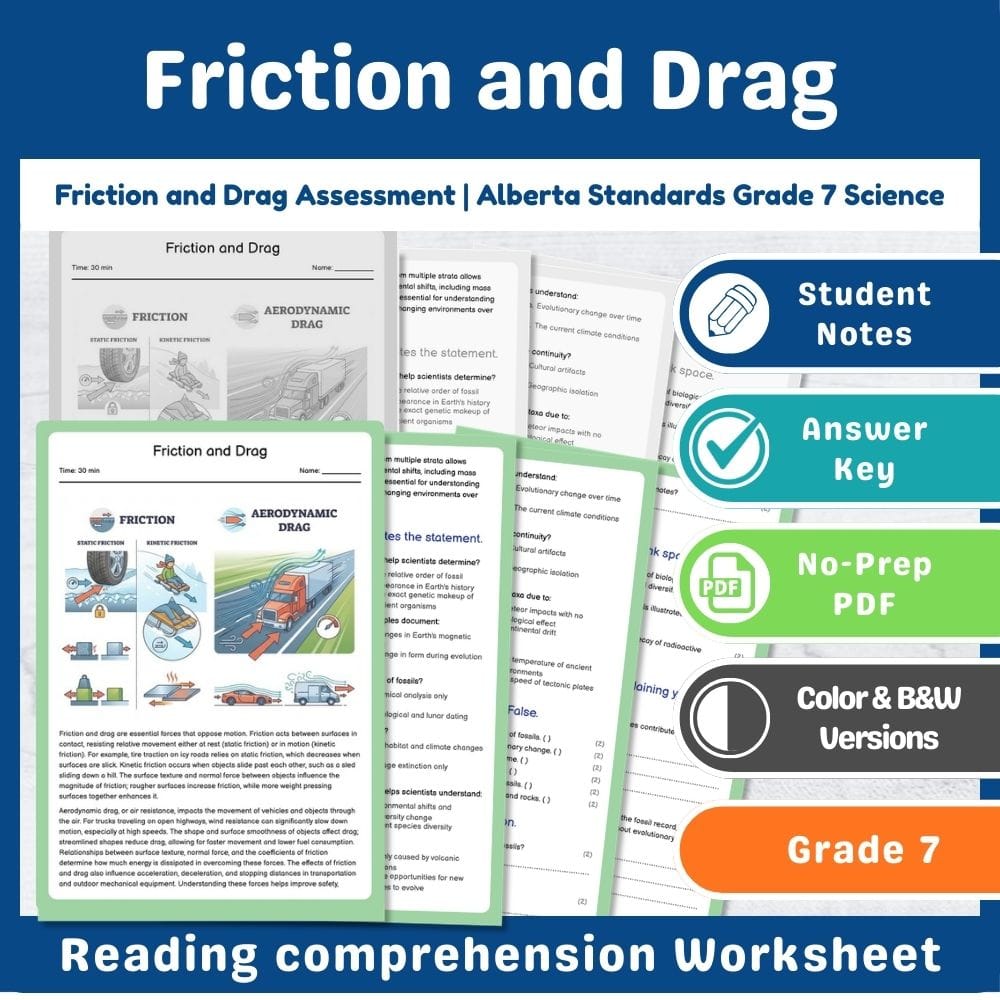
Friction and Drag Assessment | Alberta Standards Grade 7 Science
Created byPrism Point LearningLearning Objectives
- Explain the concepts of static and kinetic friction with examples.
- Describe how surface texture and normal force affect friction.
- Analyze how aerodynamic drag influences motion in real-world scenarios.

Population Ecology Assessment Grade 9 Science TEKS
Created byPrism Point LearningLearning Objectives
- Understand the key factors that influence population growth and decline.
- Identify the differences between density-dependent and density-independent factors.
- Analyze how population patterns affect community structure and ecosystem dynamics.
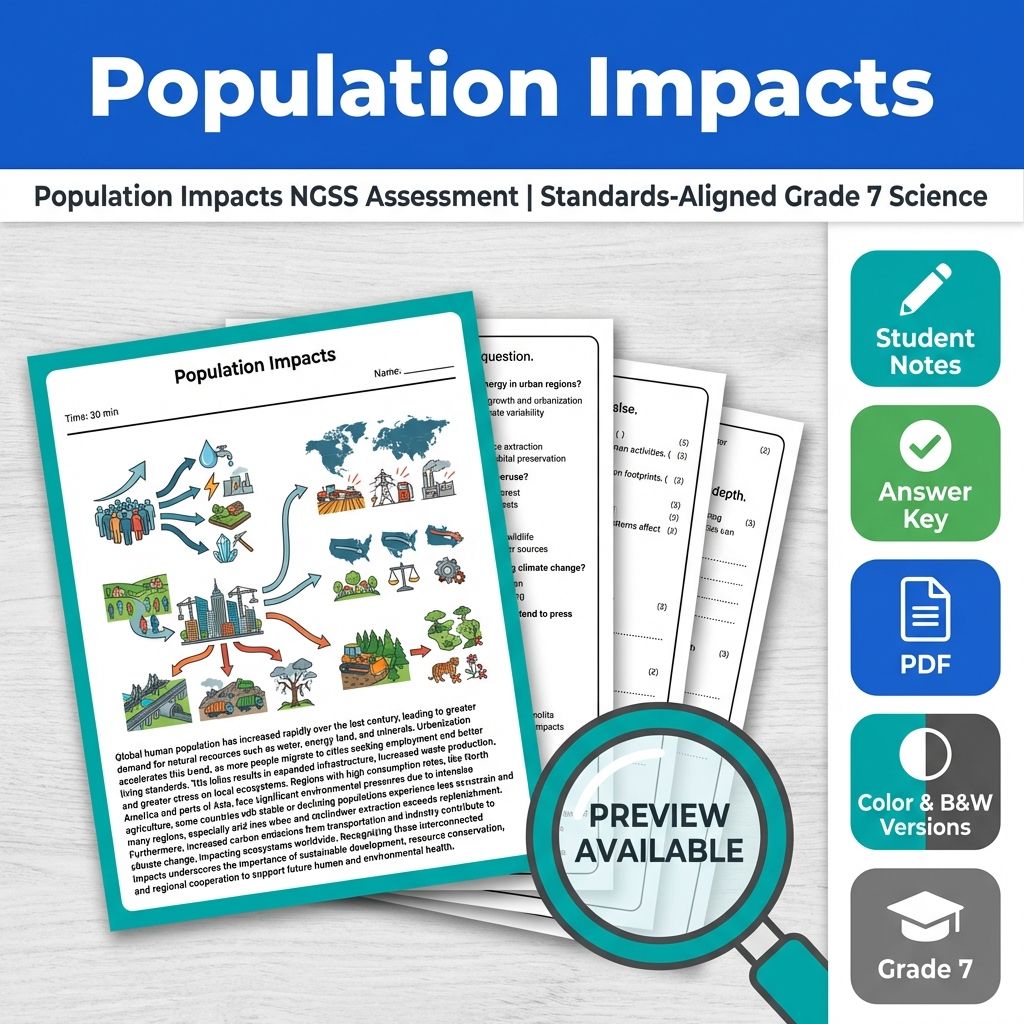
Population Impacts NGSS Assessment | Standards-Aligned Grade 7 Science
Created byPrism Point LearningLearning Objectives
- Understand how increased human population affects demand for water, energy, land, and raw materials.
- Analyze the consequences of population growth on ecosystems, biodiversity, and resource cycles.
- Evaluate regional examples to compare how consumption patterns influence environmental pressures.
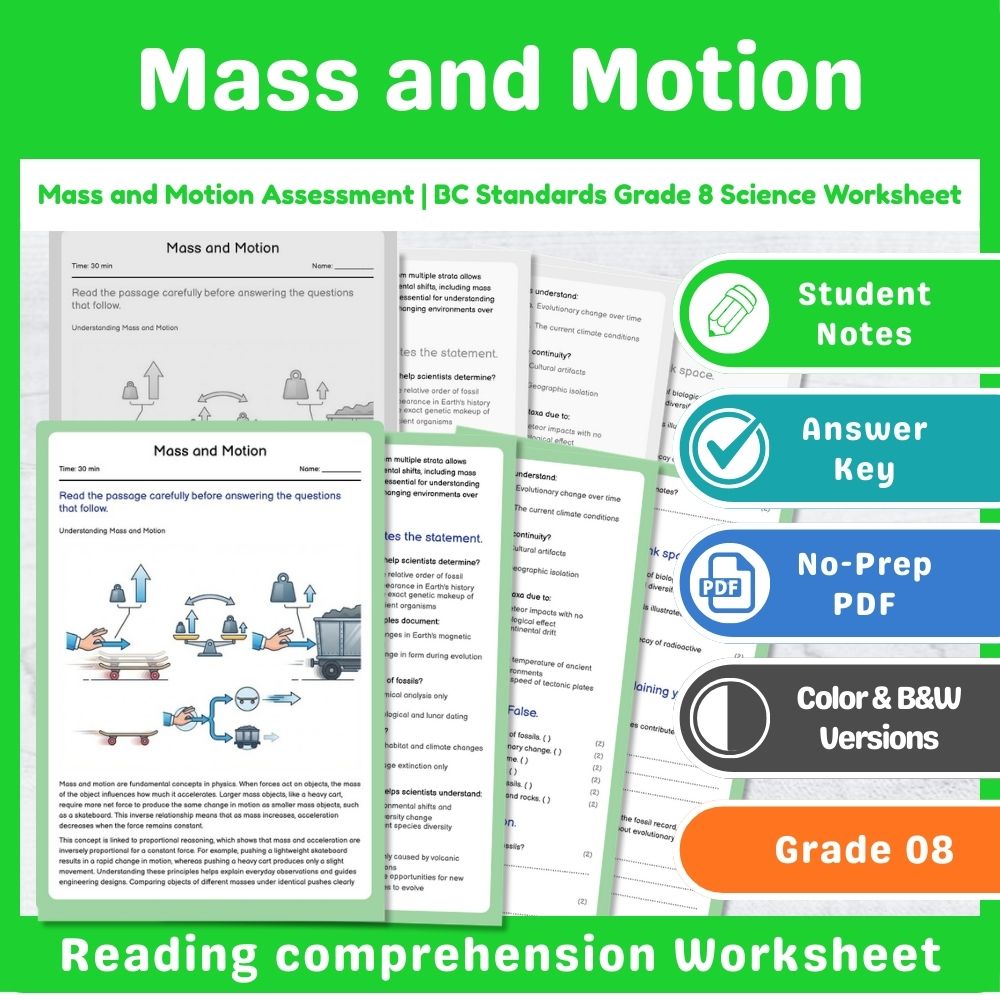
Mass and Motion Assessment | BC Standards Grade 8 Science Worksheet
Created byPrism Point LearningLearning Objectives
- Explain how mass influences the response of objects to net force.
- Describe the inverse relationship between mass and acceleration for a given force.
- Compare the effects of the same push on objects of different masses, such as a skateboard and a heavy cart.

Energy in Earth Systems Assessment | Florida NGSSS Grade 9 Science
Created byPrism Point LearningLearning Objectives
- Explain how incoming solar radiation and outgoing infrared radiation drive Earth’s energy balance.
- Describe how energy moves within Earth systems through conduction, convection, and phase changes (latent heat).
- Connect energy absorption differences across surface types to long-term temperature and climate patterns.
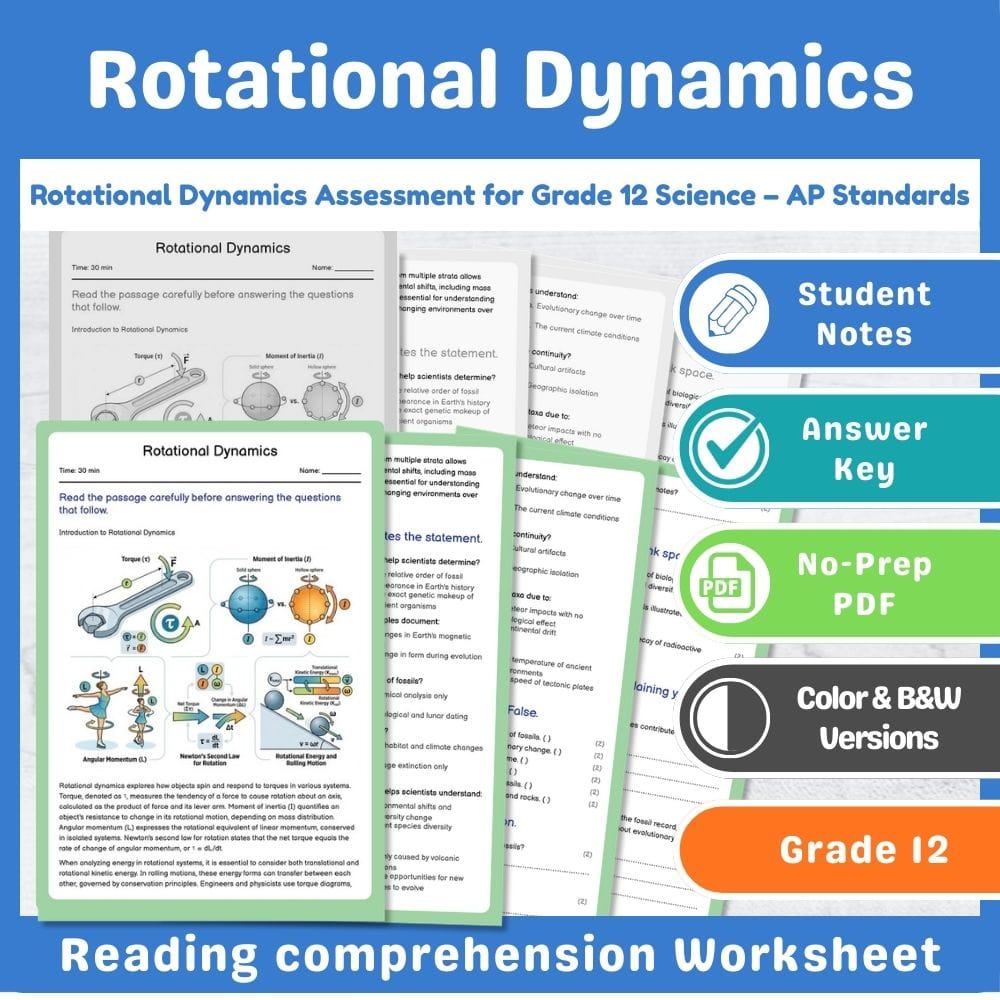
Rotational Dynamics Assessment for Grade 12 Science – AP Standards
Created byPrism Point LearningLearning Objectives
- Understand the concept of torque and how it relates to rotational motion.
- Define and explain the significance of moment of inertia and angular momentum in rigid bodies.
- Develop and apply equations linking net torque to angular acceleration.

Electron Transport Chain Assessment for Grade 9 Science TEKS
Created byPrism Point LearningLearning Objectives
- Explain the process of electron transport in mitochondria and chloroplasts.
- Identify the role of electron carriers and proton gradients in ATP synthesis.
- Compare mitochondrial and thylakoid electron transport mechanisms.
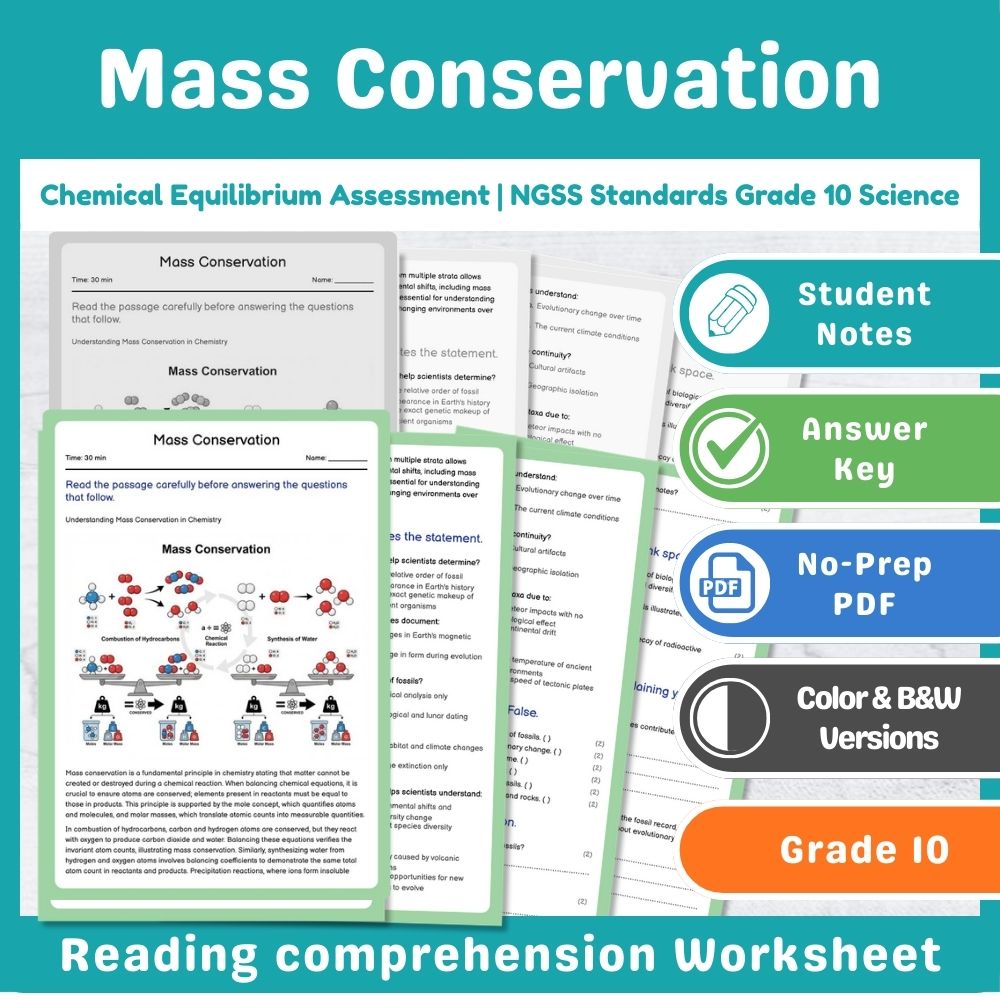
Mass Conservation Assessment for Grade 10 Science NGSS Standards
Created byPrism Point LearningLearning Objectives
- Understand the concept of atomic and mass conservation during chemical reactions.
- Apply balancing techniques to demonstrate atom count invariance across reactions.
- Utilize quantitative representations like mole concepts and molar masses to verify mass invariance.
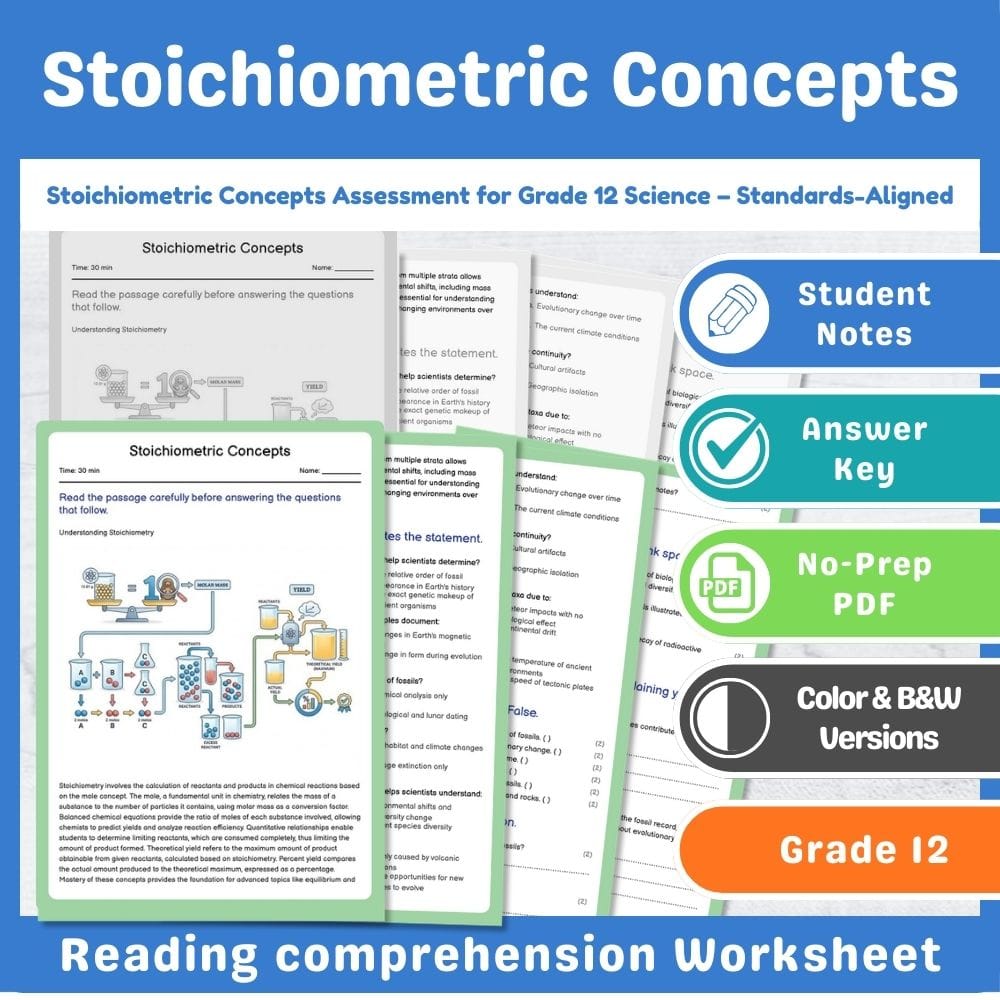
Stoichiometric Concepts Assessment for Grade 12 Science – Standards-Aligned
Created byPrism Point LearningLearning Objectives
- Define and understand the mole concept, molar mass, and balanced chemical equations.
- Calculate limiting reactants, theoretical yield, and percent yield from experimental data.
- Relate mass, particle counts, and molar relationships using symbolic and arithmetic methods.
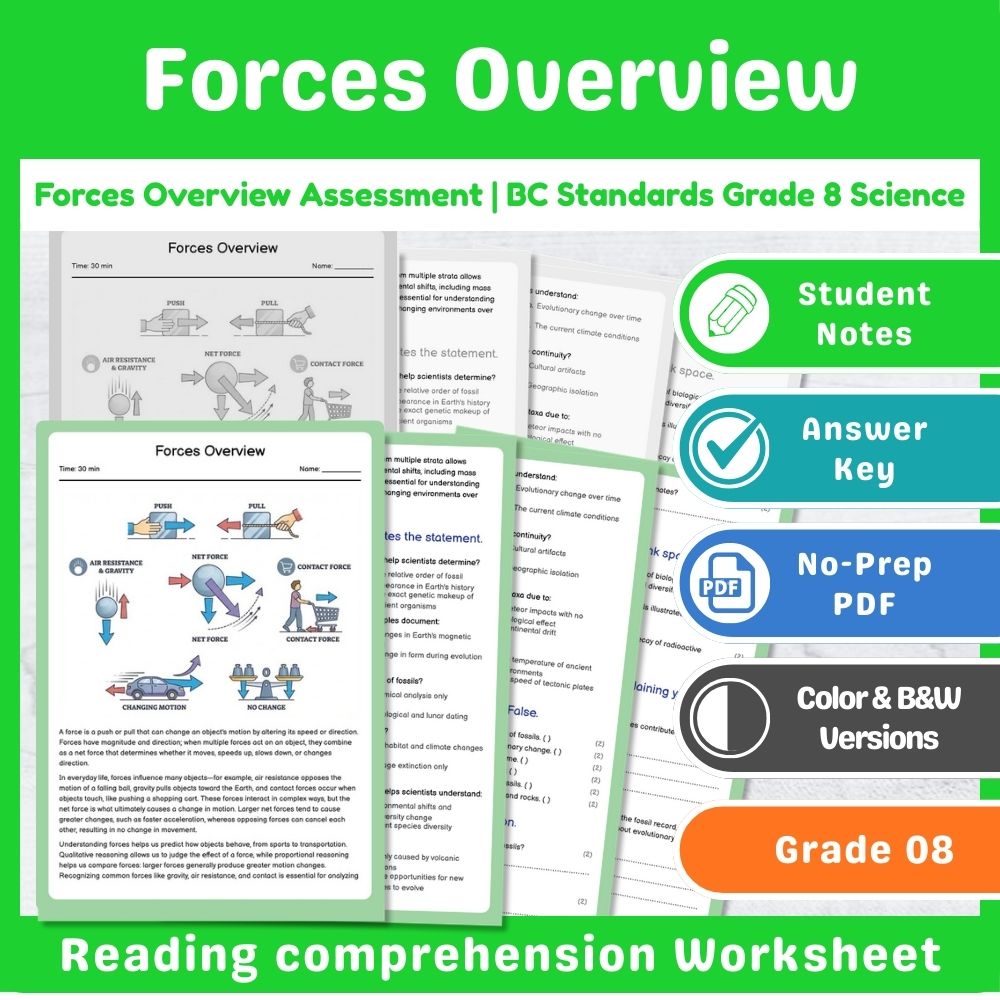
Forces Overview Assessment | BC Standards Grade 8 Science
Created byPrism Point LearningLearning Objectives
- Define what a force is and identify different types of forces
- Explain how net force affects an object's motion
- Describe everyday forces like gravity and air resistance
Browse more categories
About Science Worksheets
Find Science worksheets spanning core skills, practice, and review. All 42,685 resources are instant PDF downloads for the classroom or home.
Every worksheet on MyTeachingSheets is created by independent teacher-authors and reviewed before publication. All resources download as printable PDFs for classroom, homework, or at-home practice, and many include answer keys. Preview any worksheet free before buying.