
Grade 6 Science Worksheets
5,969 worksheets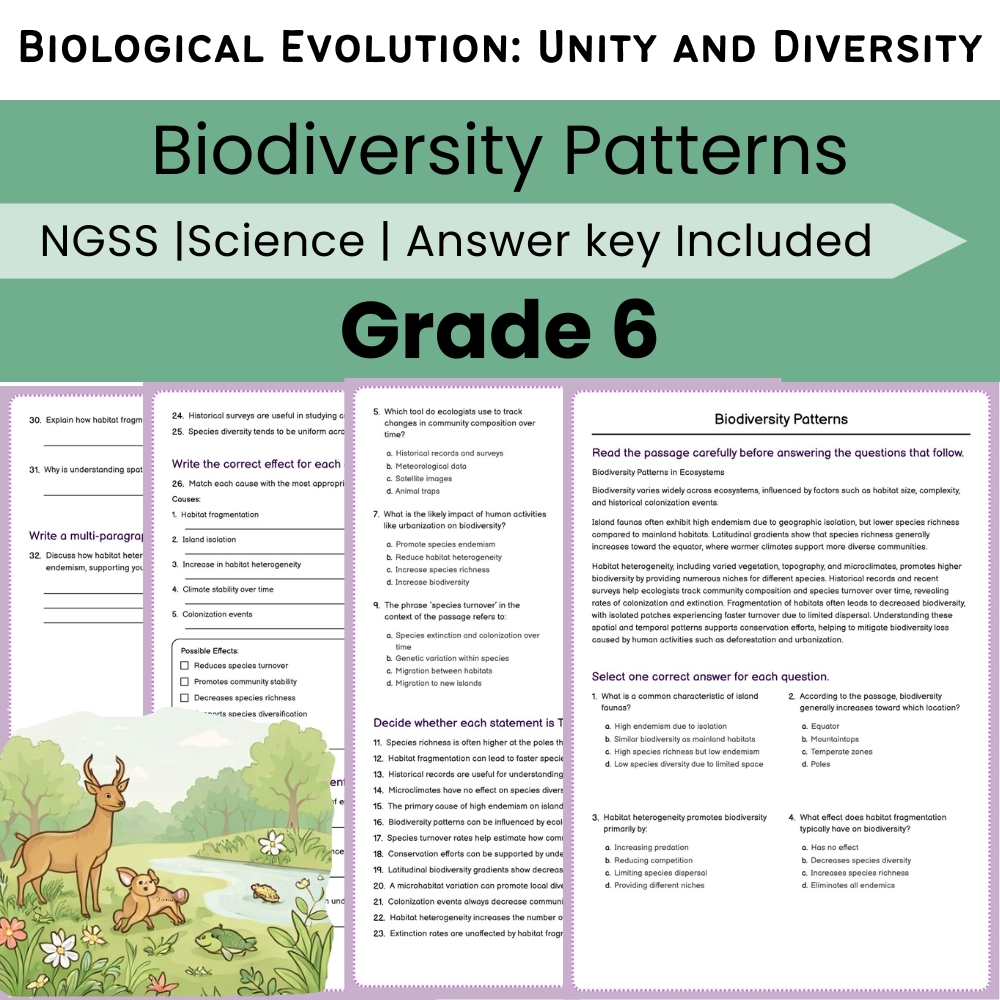
Grade 6 Science | Biodiversity Patterns Worksheet (Printable PDF & Assessment)
Learning Objectives
- Understand how species occurrence and richness reveal biodiversity patterns across ecosystems.
- Compare biodiversity variations in island, latitudinal, and habitat contexts.
- Interpret ecological and historical factors influencing biodiversity distribution.
Also included in: Grade 6 Science | Biological Evolution: Unity and Diversity Unit Bundle (NGSS-aligned Worksheets) +1 more
Instant download
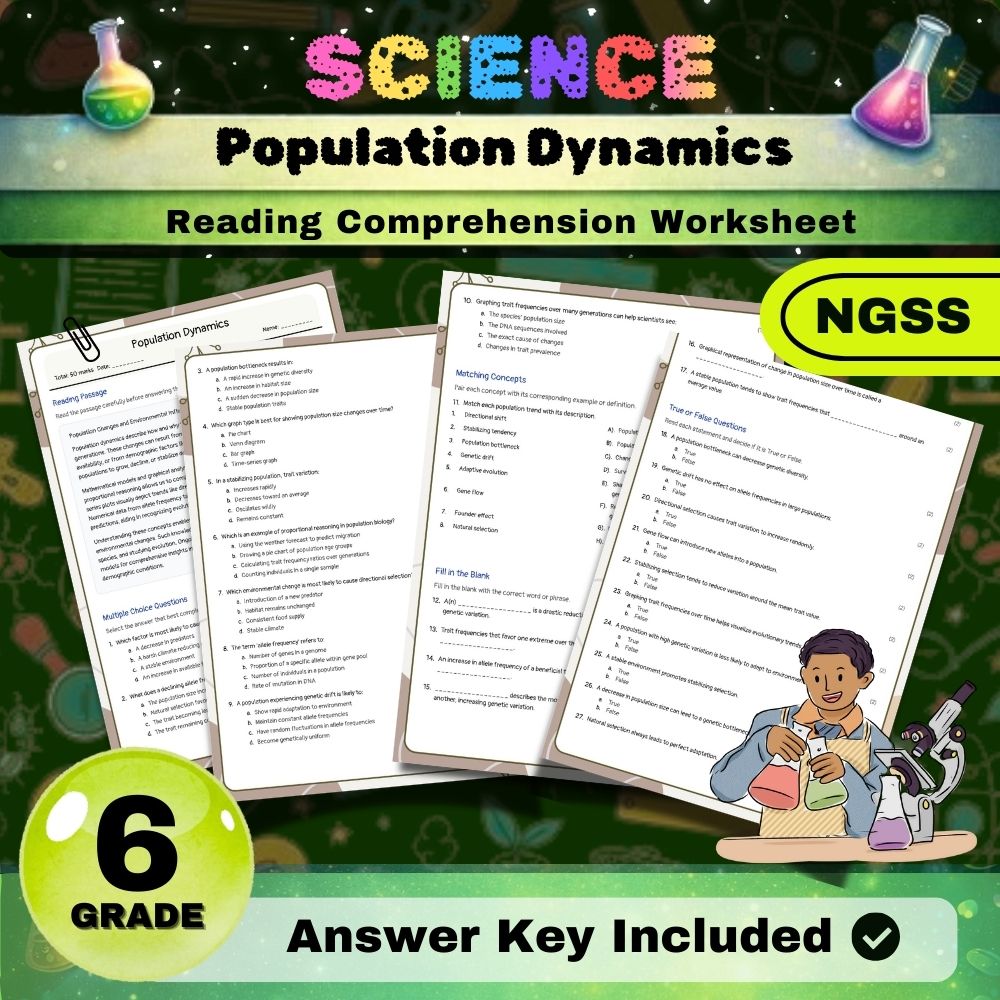
6th Grade Science | Population Dynamics Worksheet (PDF + Google Form) NGSS
 Created byMaple Path Learning
Learning Objectives
- Explain how trait frequencies and population sizes change over generations due to environmental and demographic factors.
- Use proportional reasoning, graphs, and numerical data to analyze population changes.
- Compare different population scenarios such as stabilizing tendencies and bottlenecks using models and data.
Also included in: Grade 6 Science Bundle | Evolution, Natural Selection & Biodiversity Worksheets +1 more
Instant download
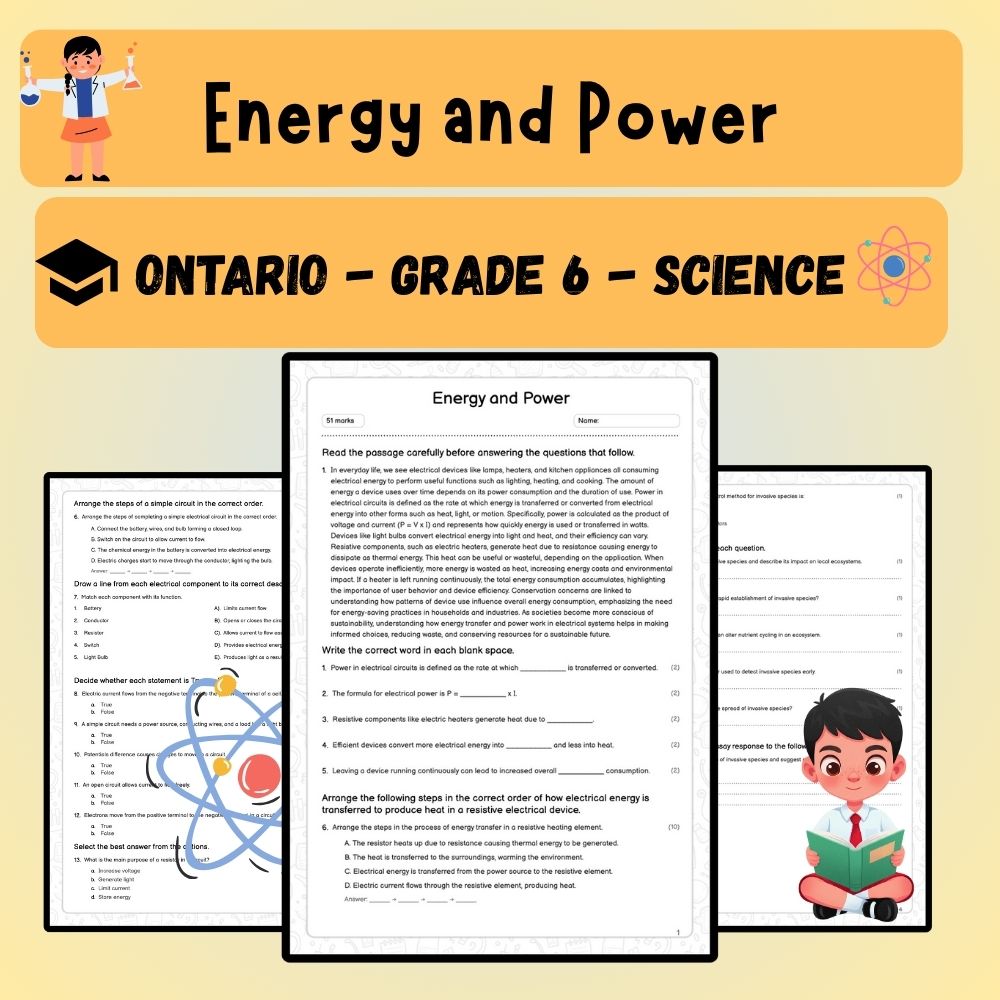
6th Grade Science | Energy and Power Worksheet (PDF ) – Ontario Standards
 Created byPrism Point Learning
Learning Objectives
- Explain the relationship between electrical energy transfer and power dissipation in circuit elements.
- Describe how power relates to current and voltage in electrical devices.
- Identify everyday examples of power usage and discuss efficiency considerations.
Also included in: Grade 6 Science Unit – Circuits & Electricity Worksheet Bundle
Instant download
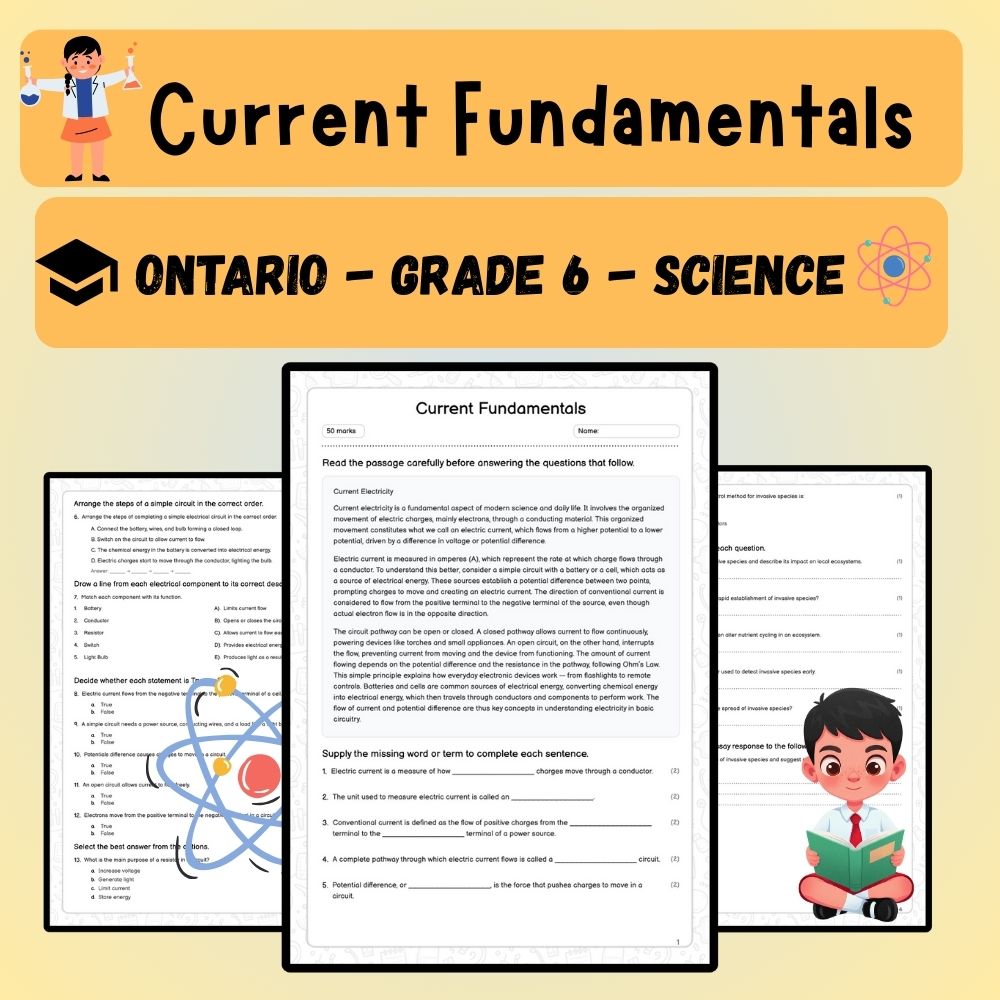
6th Grade Science | Current Fundamentals Worksheet (PDF )
Created byPrism Point LearningLearning Objectives
- Understand the concept of electric current as the organized movement of charges through a conductor.
- Distinguish between conventional current direction and electron flow.
- Explain potential difference as the driving force for current.
Also included in: Grade 6 Science Unit – Circuits & Electricity Worksheet Bundle
Instant download
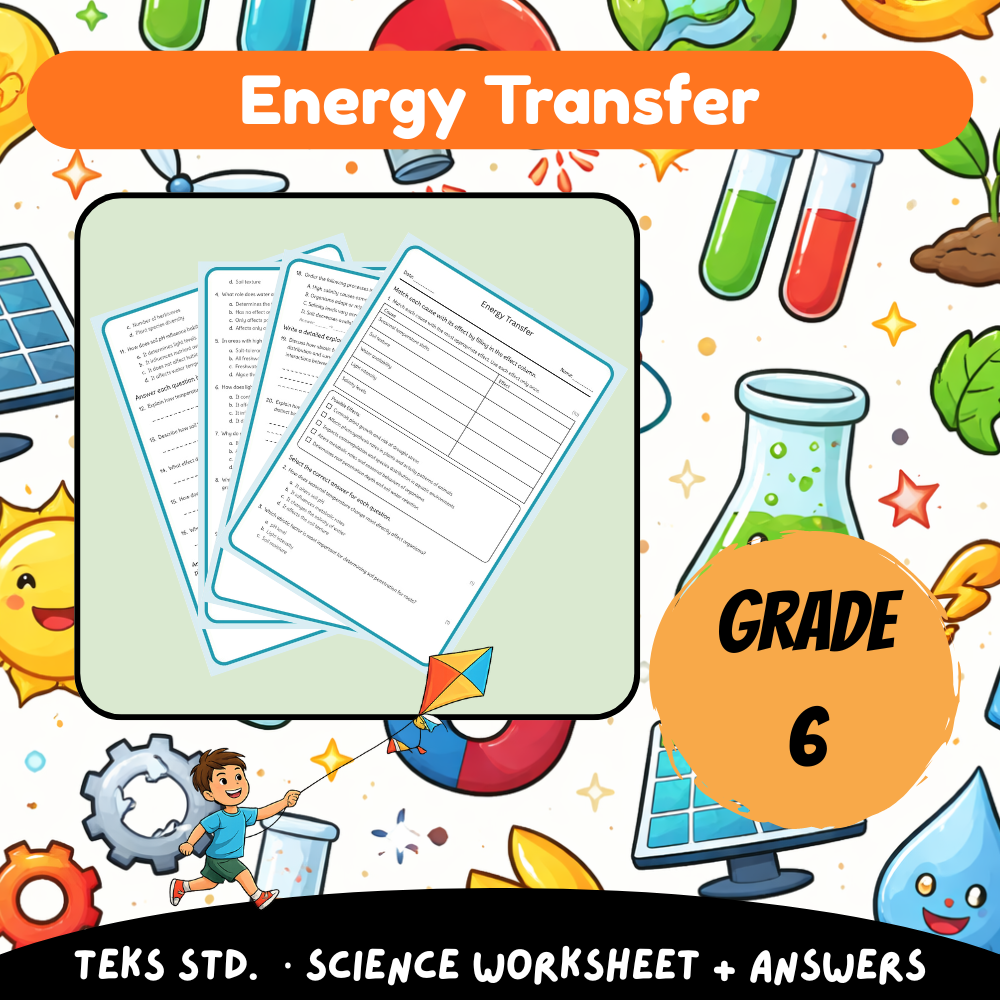
6th Grade Science | Energy Transfer Worksheet (Worksheet + Answer Key) – TEKS Aligned
 Created byBright Mind Resources
Learning Objectives
- Describe the mechanisms of thermal energy transfer: conduction, convection, and radiation.
- Identify real-world examples of heat transfer processes.
- Explain how energy transfer affects temperature changes and material properties like thermal conductivity.
Instant download
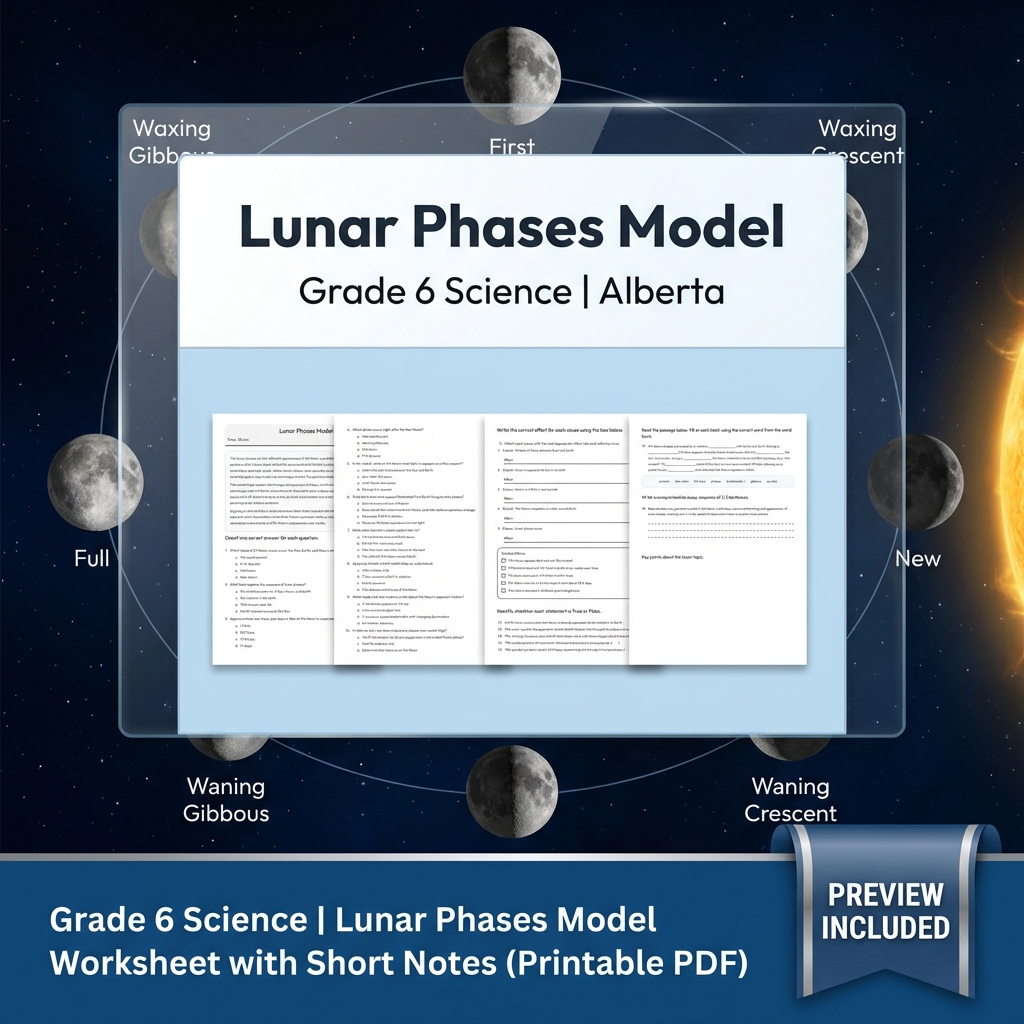
Grade 6 Science | Lunar Phases Model Worksheet with Short Notes (Printable PDF)
 Created byMeadowlark Worksheets
Learning Objectives
- Understand the geometric relationship between Sun, Earth, and Moon in lunar phases.
- Identify and describe the sequence and timing of lunar phases using the model.
- Apply the lunar phases model to observe and predict the Moon's appearance and illumination.
Also included in: Grade 6 Science Sky Science Unit Bundle | Alberta Curriculum Worksheets +1 more
Instant download
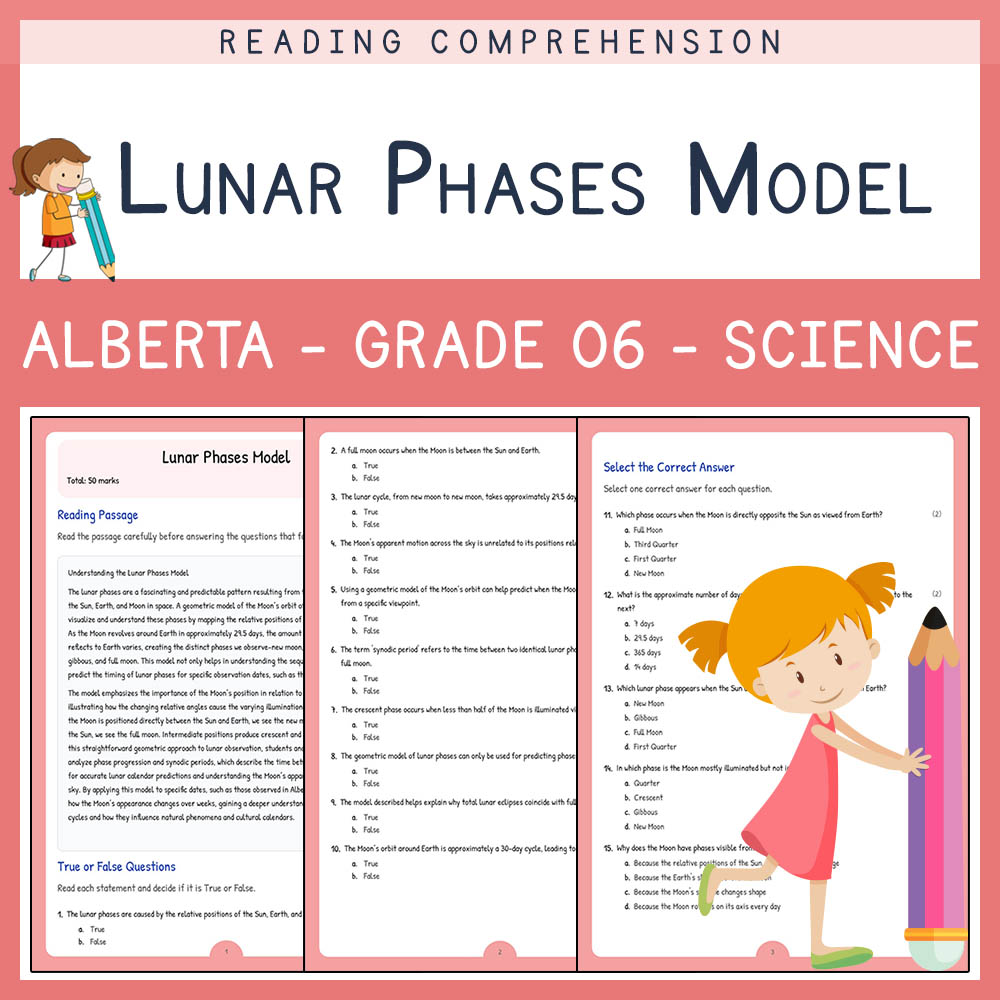
Science Grade 6 Assessment | Lunar Phases Model Worksheet | Alberta
 Created byLumora Learning
Learning Objectives
- Understand how the geometric model explains the lunar phases by mapping Sun, Earth, and Moon positions.
- Identify the sequence and timing of lunar phases such as crescent, quarter, gibbous, and full.
- Apply the lunar phases model to interpret observation dates and predict changes in moon illumination.
Instant download
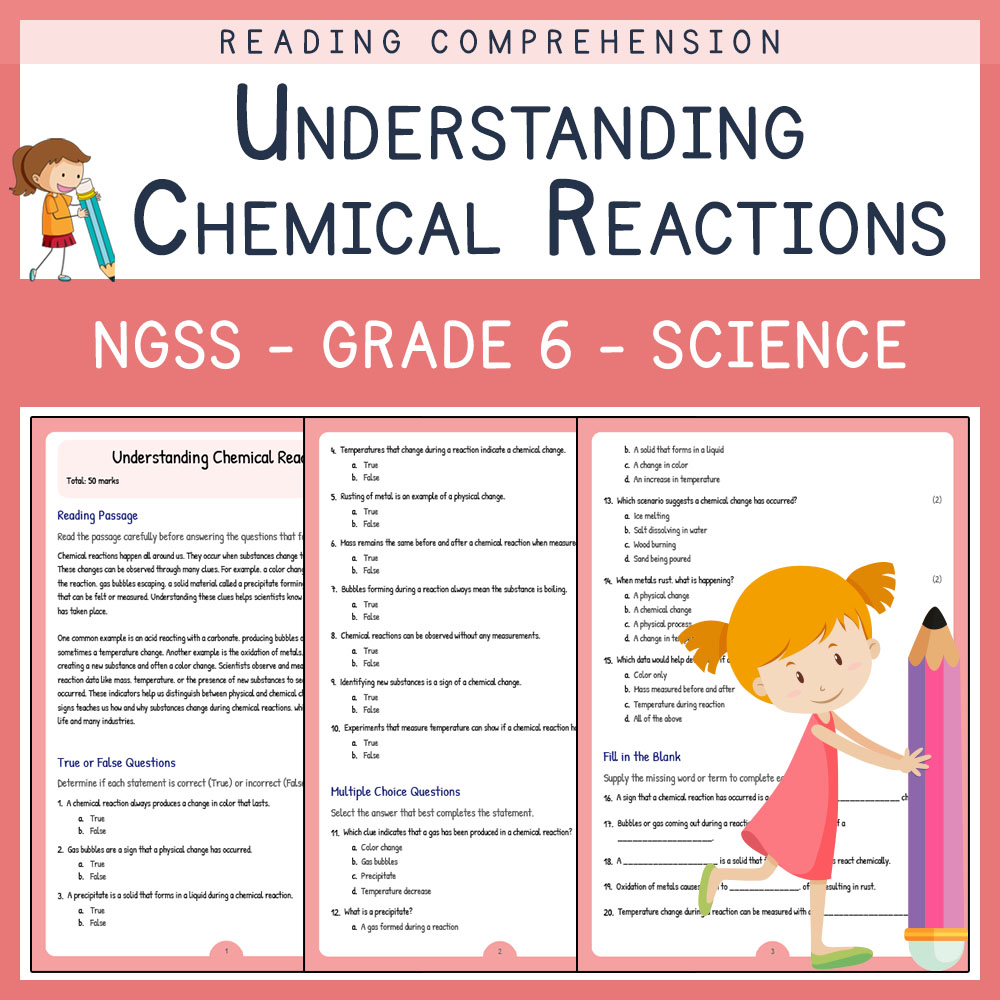
Grade 6 Science | Chemical Reactions Worksheet (PDF) | NGSS Aligned
Created byLumora LearningLearning Objectives
- Identify observable signs that indicate a chemical reaction has occurred.
- Analyze pre- and post-reaction data to determine if a new substance has formed.
- Describe examples of chemical reactions, such as acid–carbonate reactions and metal oxidation.
Instant download
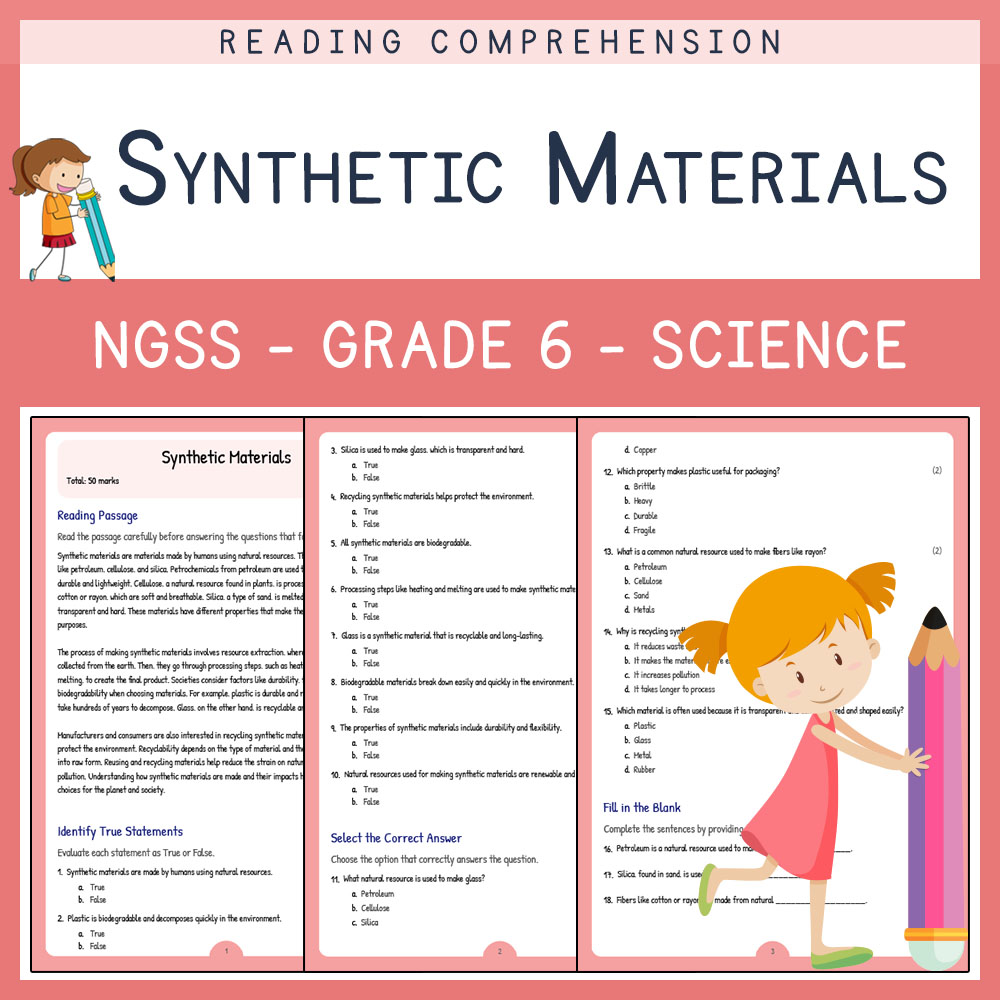
Grade 6 Science | Synthetic Materials Worksheet (PDF) | NGSS Aligned
Created byLumora LearningLearning Objectives
- Understand the origins of synthetic materials from natural resources
- Compare properties of different substances used for specific purposes
- Learn about the processing steps of synthetic materials
Instant download
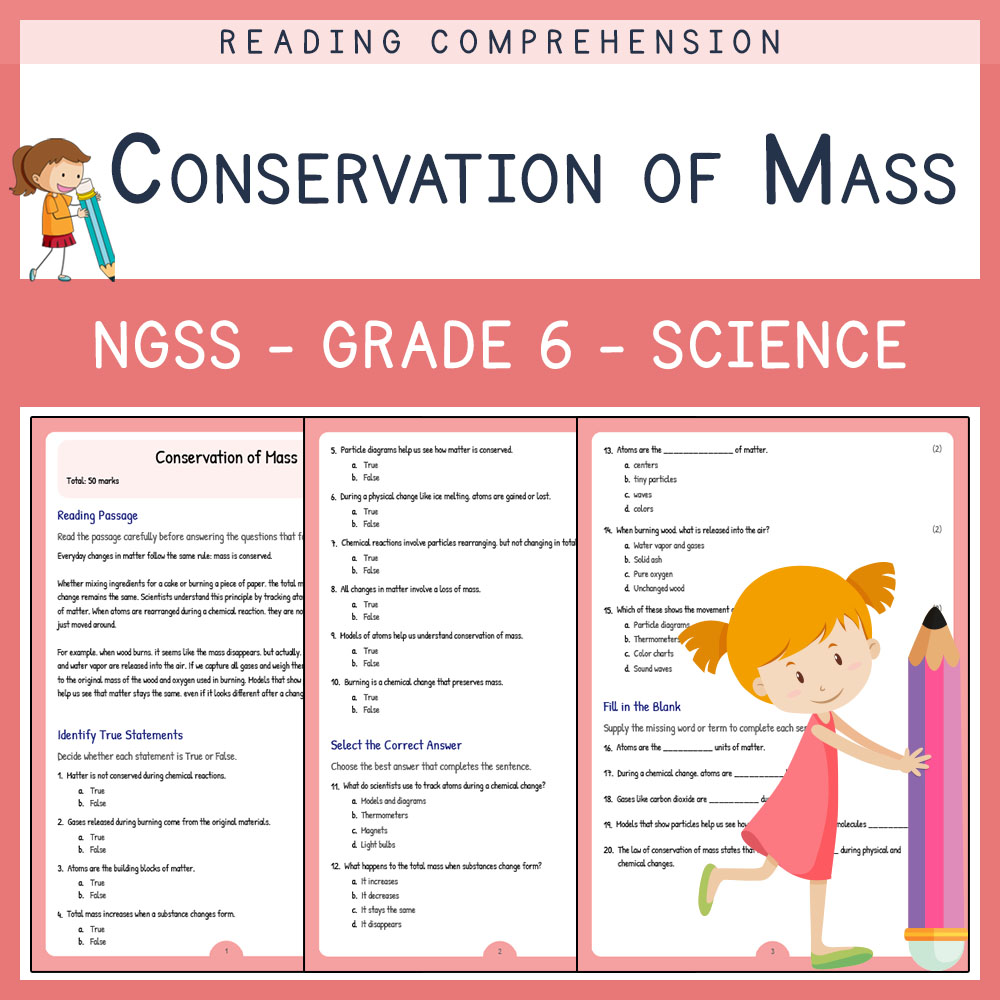
Grade 6 Science | Conservation of Mass Worksheet (PDF) | NGSS Aligned
Created byLumora LearningLearning Objectives
- Understand that matter is conserved during physical and chemical changes.
- Trace atoms and mass through different reactions to see that total mass stays the same.
- Use particle diagrams and models to explain how mass and atoms are conserved.
Instant download
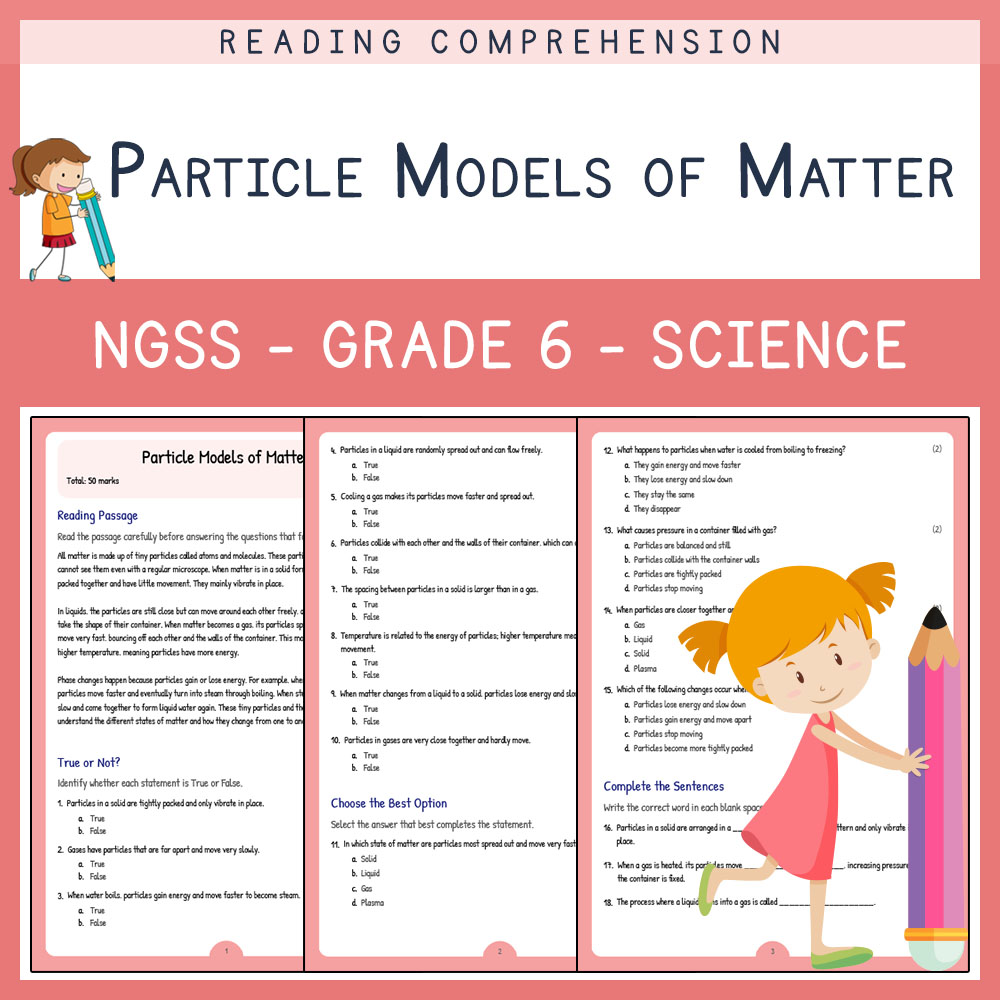
Grade 6 Science | Particle Models of Matter Worksheet (PDF) | NGSS Aligned
Created byLumora LearningLearning Objectives
- Describe matter as made up of tiny particles
- Explain how particle motion relates to temperature and states of matter
- Use particle models to understand phase changes like melting, freezing, boiling, and condensation
Instant download

6th Grade Science | Constructing Effective Identification Keys (PDF+ Answer Key)
 Created byCopper Leaf Classroom
Learning Objectives
- Understand the purpose and function of dichotomous and multi-access keys in biological identification.
- Learn procedures for constructing binary decision trees for accurate classification.
- Identify limitations of morphological keys, including cryptic species, developmental stages, and sexual dimorphism.
Instant download

Charge Concepts Worksheet | Ontario Grade 6 Science Assessment
 Created byCedar Grove Learning
Learning Objectives
- Define electric charge and describe how charge separation can occur between materials.
- Compare static electricity on insulators with electric current in conductors.
- Explain attraction and sparks as evidence of charge imbalance and electric potential.
Also included in: Grade 6 Electricity and Circuits Science lesson bundle: Ontario framework +1 more
Instant download
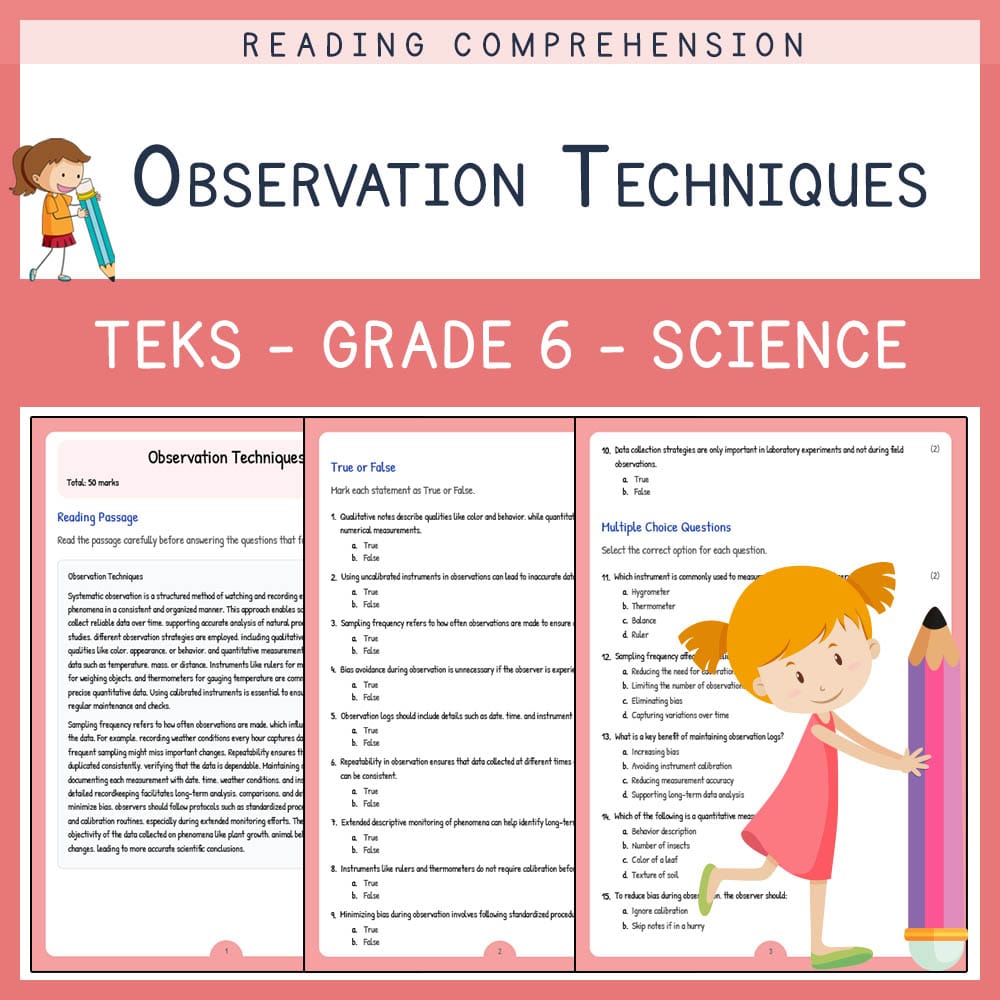
Grade 6 Science | Observation Techniques Worksheet | TEKS Alligned
Created byLumora LearningLearning Objectives
- Define systematic observation and differentiate between qualitative and quantitative data collection methods.
- Identify common instruments used in scientific observations, such as rulers, balances, and thermometers.
- Describe sampling strategies like frequency and repeatability to ensure accurate data recording.
Instant download

Grade 6 Science | Communication Quality Worksheet | TEKS Aligned
Created byLumora LearningLearning Objectives
- Understand the standards and best practices for communicating scientific findings.
- Formulate clear claims supported by empirical evidence and logical reasoning.
- Utilize visual summaries and proper citations to enhance scientific communication.
Instant download
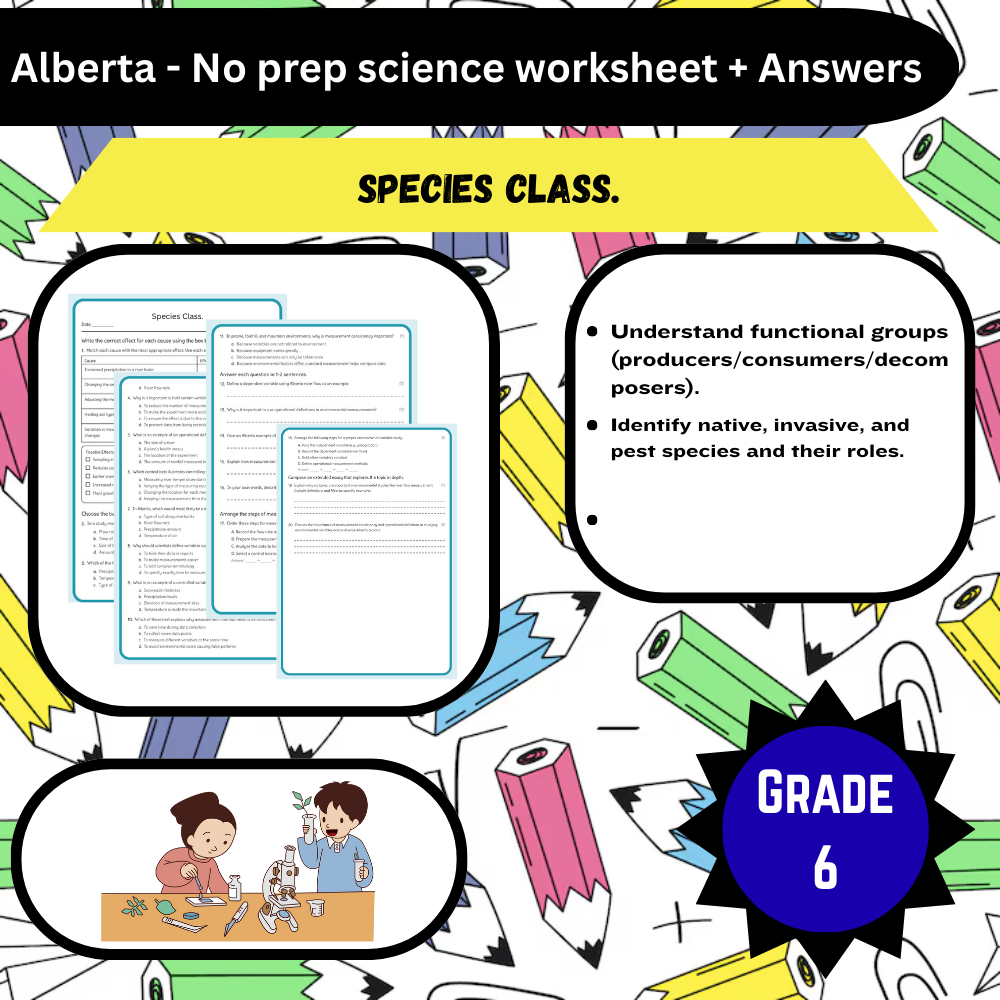
Grade 6 Science | Species Classification Worksheet (PDF) – Alberta Standards
Created byBright Mind ResourcesLearning Objectives
- Understand how organisms are classified into functional groups such as producers, consumers, and decomposers.
- Identify native, invasive, and pest species and their roles in ecosystems.
Instant download
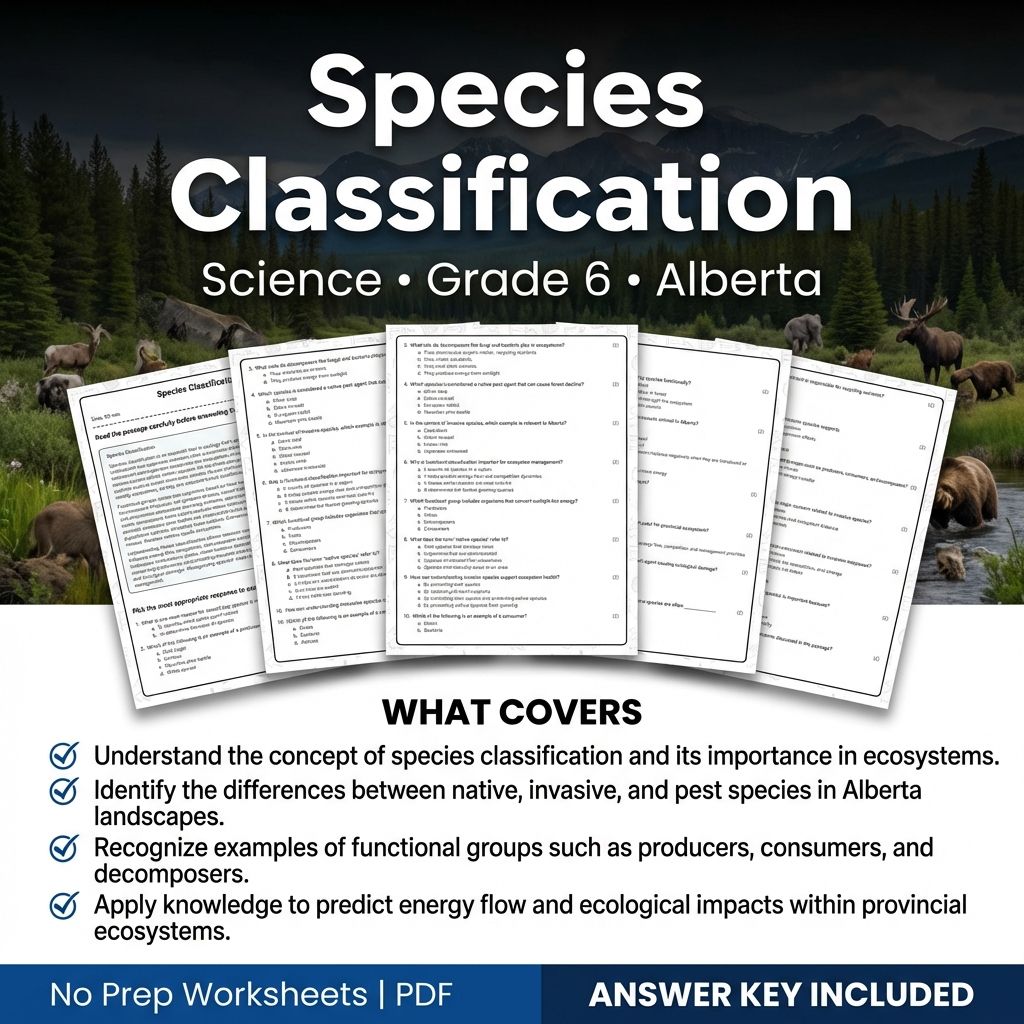
Species Classification Worksheet for Grade 6 Science | Alberta Standards
 Created byCoral Reef Learning
Learning Objectives
- Understand the concept of species classification and its importance in ecosystems.
- Identify the differences between native, invasive, and pest species in Alberta landscapes.
- Recognize examples of functional groups such as producers, consumers, and decomposers.
Instant download

6th Grade Science | Defining Problems | NGSS Aligned ( Worksheet + Answer Key )
Created byCedar Grove LearningLearning Objectives
- Identify criteria and constraints for a design problem, including success measures, materials, cost, and safety.
- Use scientific principles to relate cause and effect when defining problem parameters.
- Develop clear and measurable outcomes for solutions such as water filters or portable shelters.
Also included in: Grade 6 Science Unit Bundle | Engineering Design & Problem Solving Worksheets +1 more
Instant download

Species Classification Worksheet | Alberta Grade 6 Science Assessments
JCreated byJ.S SheetsLearning Objectives
- Understand the different functional groups of organisms in ecosystems.
- Distinguish native species from invasive or pest species relevant to Alberta.
- Recognize examples of species classification and their ecological roles.
Instant download

6th Grade Science Worksheet | Life Processes in Cells (PDF) Standard Basics
 Created byEvergreen Desk Education
Learning Objectives
- Explain how cells convert energy and exchange materials to support life processes.
- Describe photosynthesis and cellular respiration as linked pathways for energy transfer and gas exchange.
- Use the ideas of diffusion and transport to predict how materials move across cell membranes.
Also included in: Grade 6 Life Processes & Ecosystem Interactions Science Lesson Bundle: General +1 more
Instant download
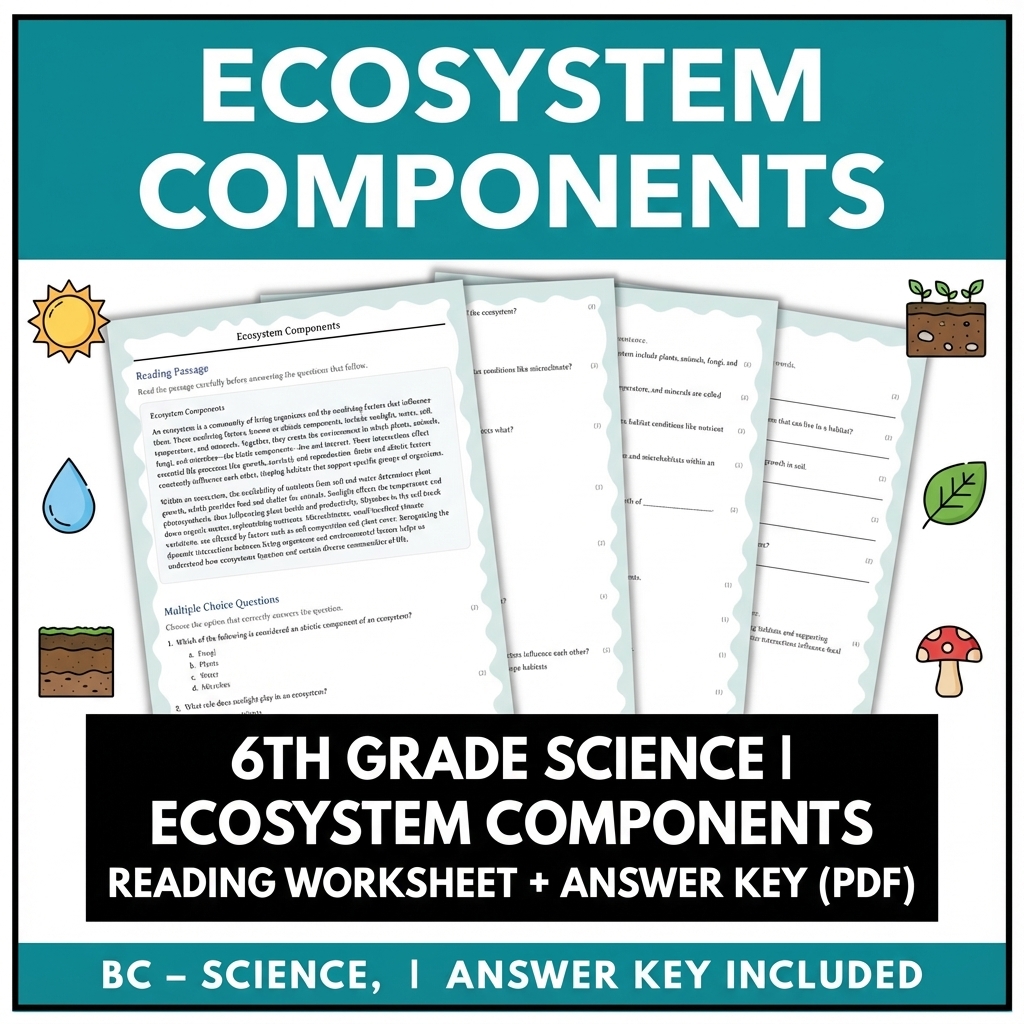
6th Grade Science | Ecosystem Components Reading Worksheet + Answer Key (PDF)
JCreated byJ.S SheetsLearning Objectives
- Understand the key elements that make up an ecosystem.
- Differentiate between biotic and abiotic components in habitats.
- Explain how interactions between living and nonliving factors influence ecosystems.
Instant download

Developing Solutions Science Worksheet | NGSS Aligned Grade 6 Practice
JCreated byJ.S SheetsLearning Objectives
- Compare multiple design solutions using matrices, rubrics, and prototypes.
- Assess solutions based on efficiency, durability, manufacturability, and cost.
- Use evidence and simple models to justify rankings and refine solutions.
Also included in: Grade 6 Engineering Design Science Lesson Bundle | NGSS Worksheets +1 more
Instant download

Optimizing Designs Worksheet | NGSS-Aligned Grade 6 Science Assessment
JCreated byJ.S SheetsLearning Objectives
- Analyze data from comparative tests to identify performance characteristics and trade-offs.
- Support optimizing performance among design alternatives using graphs, averages, and error discussion.
- Understand strategies to balance competing goals such as strength versus weight or cost versus durability.
Also included in: Grade 6 Engineering Design Science Lesson Bundle | NGSS Worksheets +1 more
Instant download
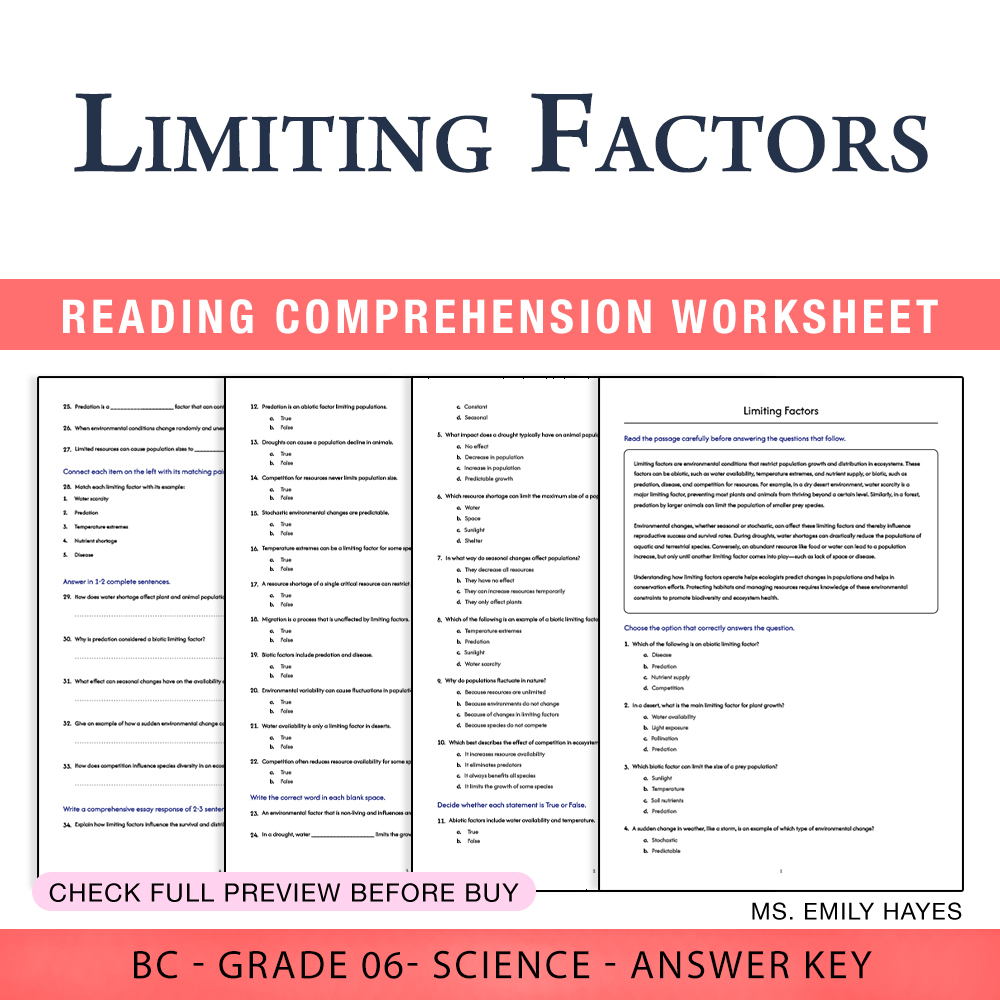
6th Grade Science | Limiting Factors Worksheet (PDF+ Answer Key)
Created byCopper Leaf ClassroomLearning Objectives
- Understand what limiting factors are and their role in ecosystems
- Identify abiotic and biotic factors that can limit population growth
- Analyze examples of limiting factors affecting species in different habitats
Also included in: Grade 6 Science BC | Ecosystems and Human Impact Unit (PDF + Answer Keys) +1 more
Instant download
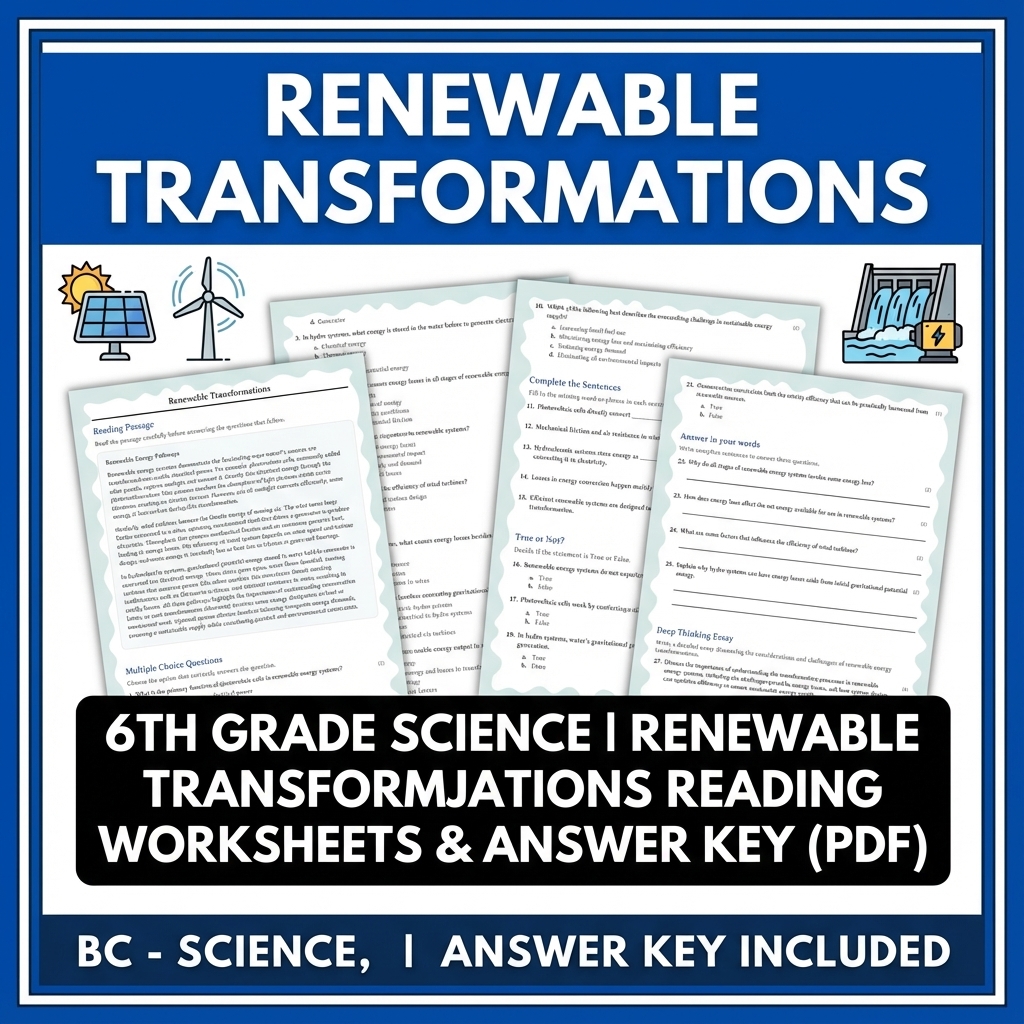
6th Grade Science | Renewable Transformations Worksheets & Answer Key (PDF)
JCreated byJ.S SheetsLearning Objectives
- Describe how photovoltaic cells, wind turbines, and hydro systems convert environmental sources into electrical energy.
- Explain the energy losses involved in each stage of renewable energy systems.
- Analyze how storage and conversion choices impact net usable energy in renewable systems.
Instant download
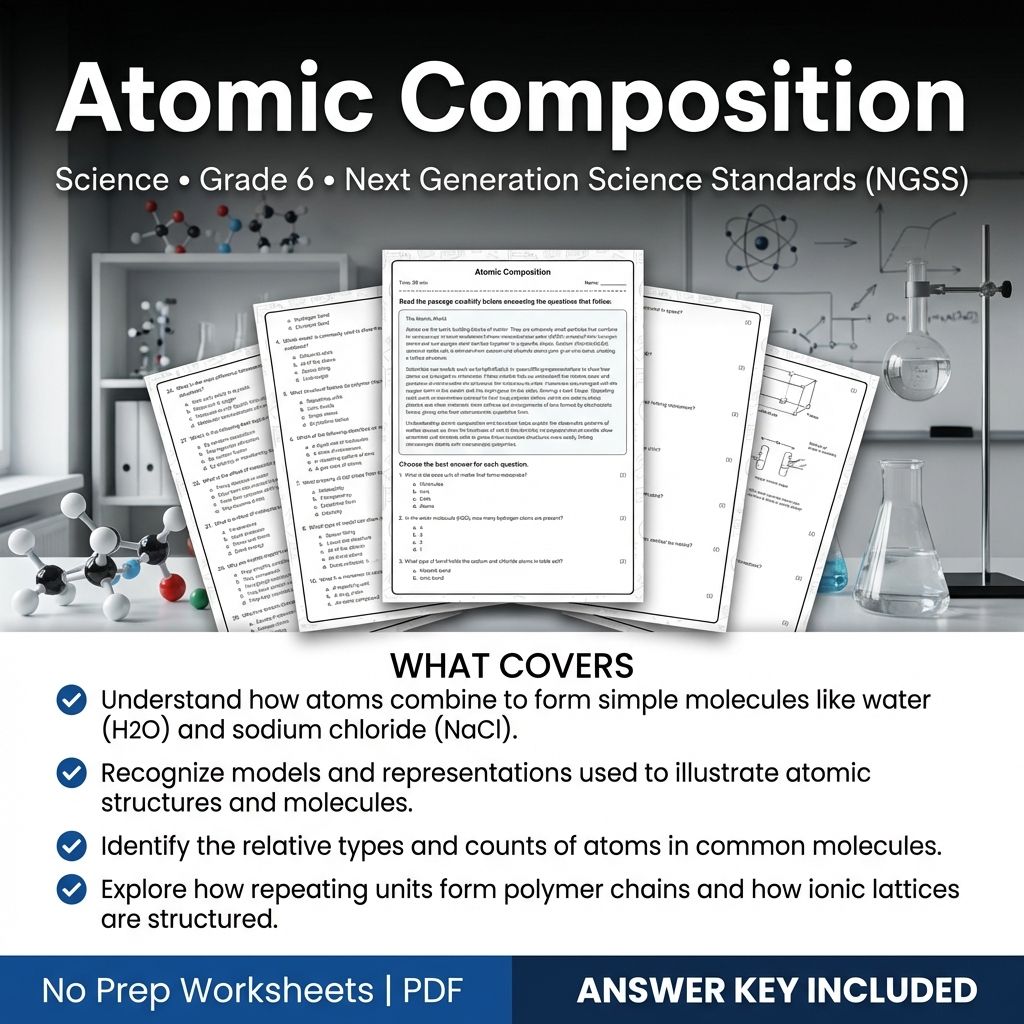
6th Grade Science | Atomic Composition Worksheet & Answer Key (Printable PDF)
Created byCoral Reef LearningLearning Objectives
- Understand how atoms combine to form simple molecules like water (H2O) and sodium chloride (NaCl).
- Recognize models and representations used to illustrate atomic structures and molecules.
- Identify the relative types and counts of atoms in common molecules.
Instant download
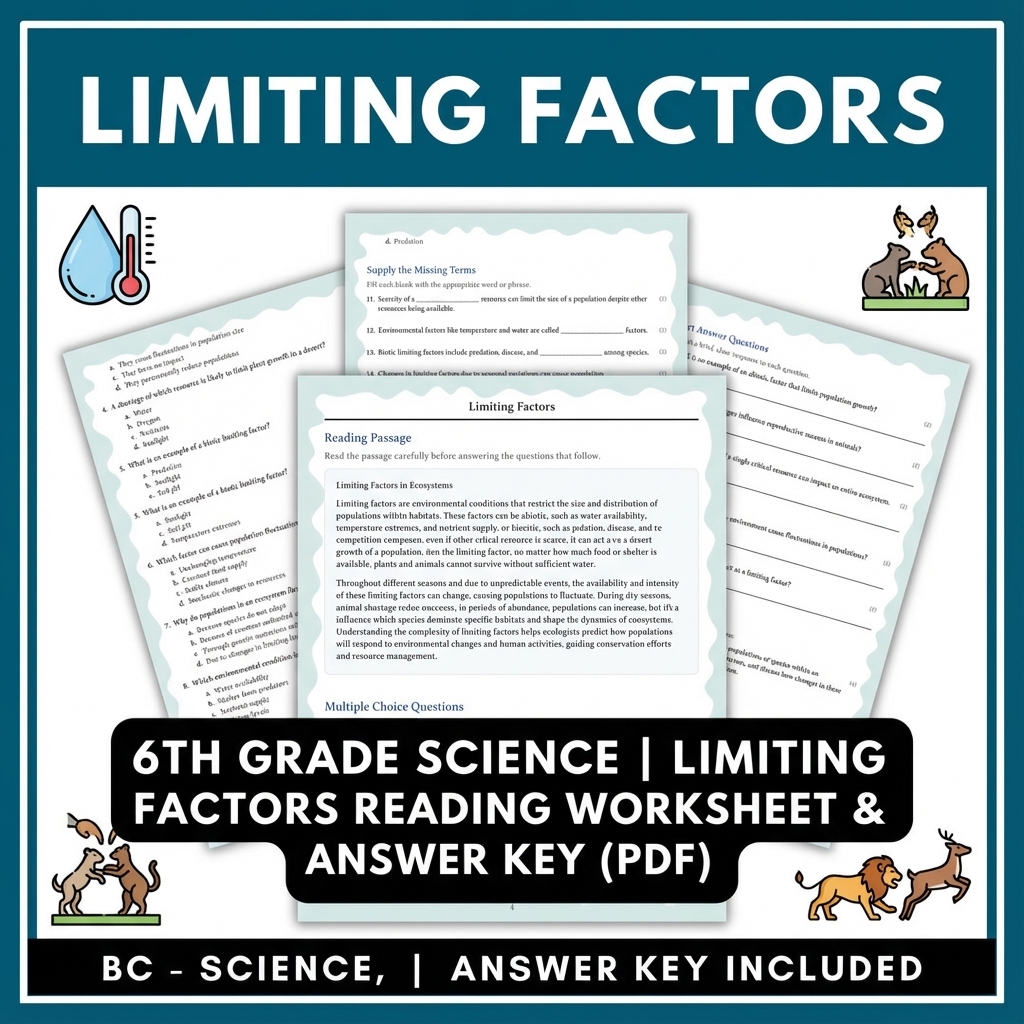
6th Grade Science | Limiting Factors Reading Worksheet & Answer Key (PDF)
JCreated byJ.S SheetsLearning Objectives
- Understand what limiting factors are and how they affect populations.
- Identify environmental and biological factors that restrict population growth.
- Explain how fluctuations in limiting factors influence ecosystems.
Instant download
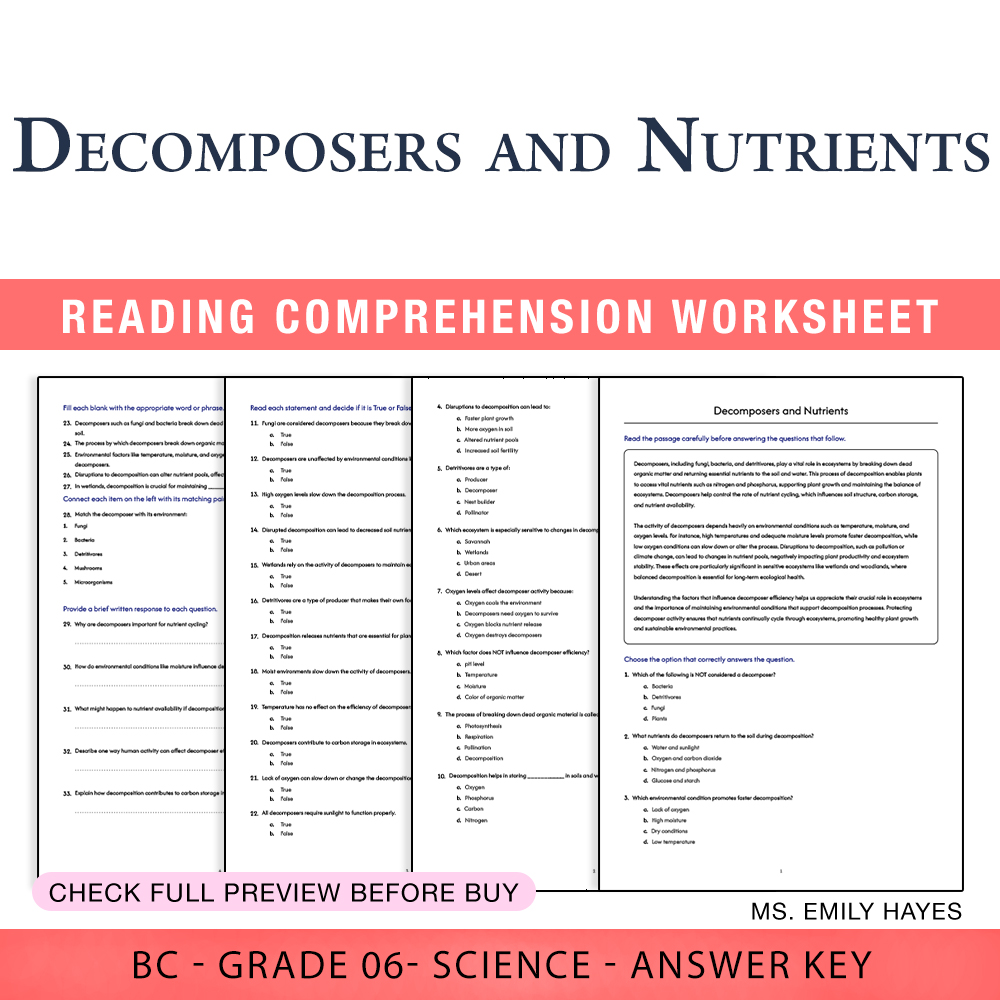
6th Grade Science | Decomposers and Nutrients Worksheet (PDF+ Answer Key)
Created byCopper Leaf ClassroomLearning Objectives
- Understand the role of decomposers in nutrient cycling and ecosystem health.
- Identify various types of decomposers and their functions.
- Explain how environmental factors influence decomposition efficiency.
Also included in: Grade 6 Science BC | Ecosystems and Human Impact Unit (PDF + Answer Keys) +1 more
Instant download
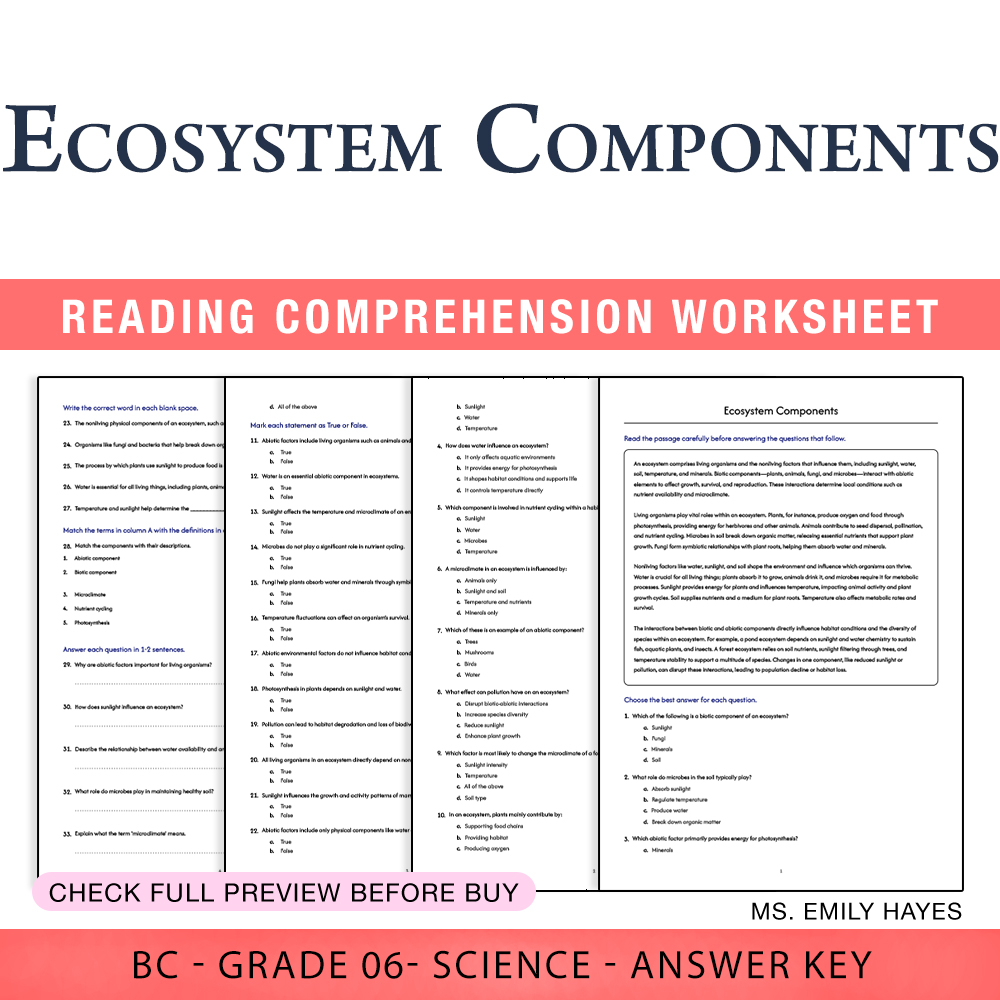
6th Grade Science | Ecosystem Components Worksheet (PDF+ Answer Key)
Created byCopper Leaf ClassroomLearning Objectives
- Identify the key biotic and abiotic components of an ecosystem.
- Explain how living organisms interact with nonliving environmental factors.
- Describe how interactions between components influence habitats and population sizes.
Also included in: Grade 6 Science BC | Ecosystems and Human Impact Unit (PDF + Answer Keys) +1 more
Instant download

Grade 6 Science | Heat & Temperature - Daily Reading Comprehension
Created byCoral Reef LearningLearning Objectives
- Understand the difference between heat and temperature
- Identify how energy transfers due to temperature differences
- Recognize systems that involve heat and temperature in real-world contexts
Instant download
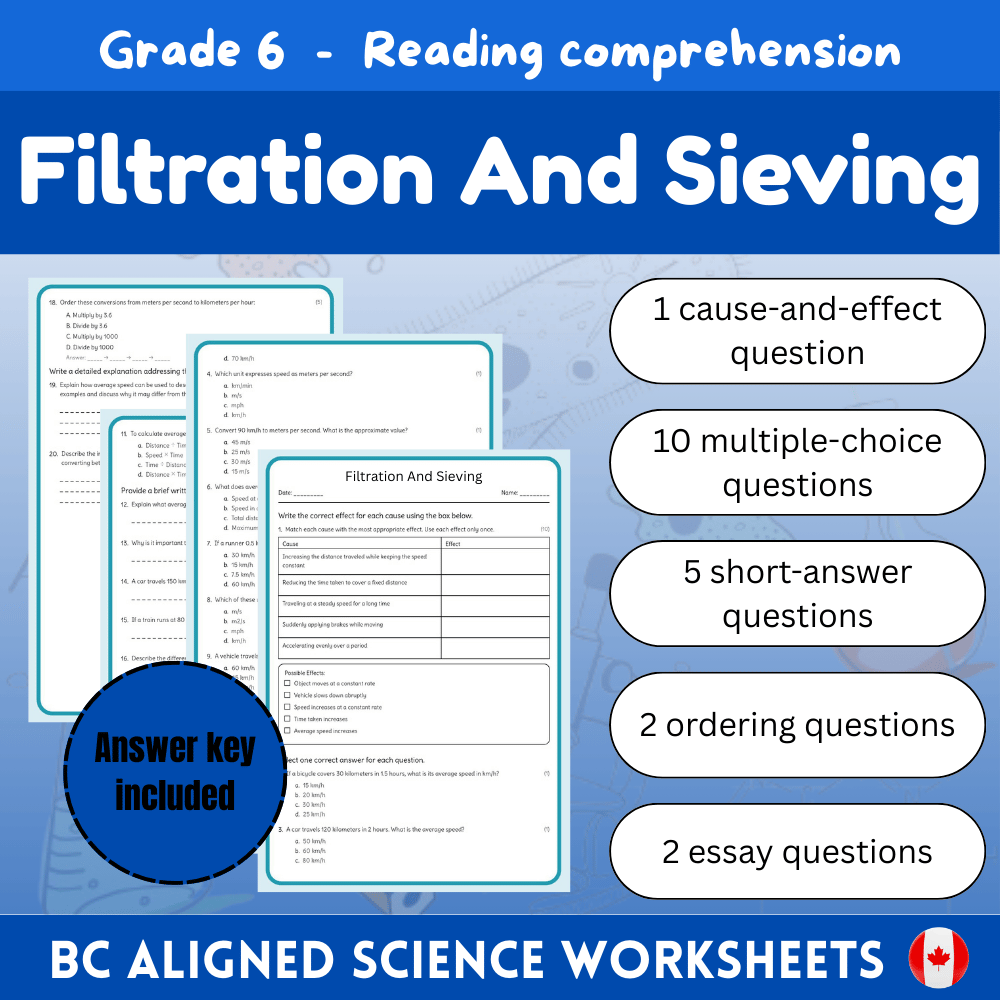
6th Grade Science | Filtration & Sieving Techniques Worksheet (PDF)
Created byBright Mind ResourcesLearning Objectives
- Understand the differences between filtration and sieving as methods of separating mixtures.
- Identify examples of mixtures suitable for filtration and sieving.
- Explain how particle size and phase difference influence the separation process.
Instant download
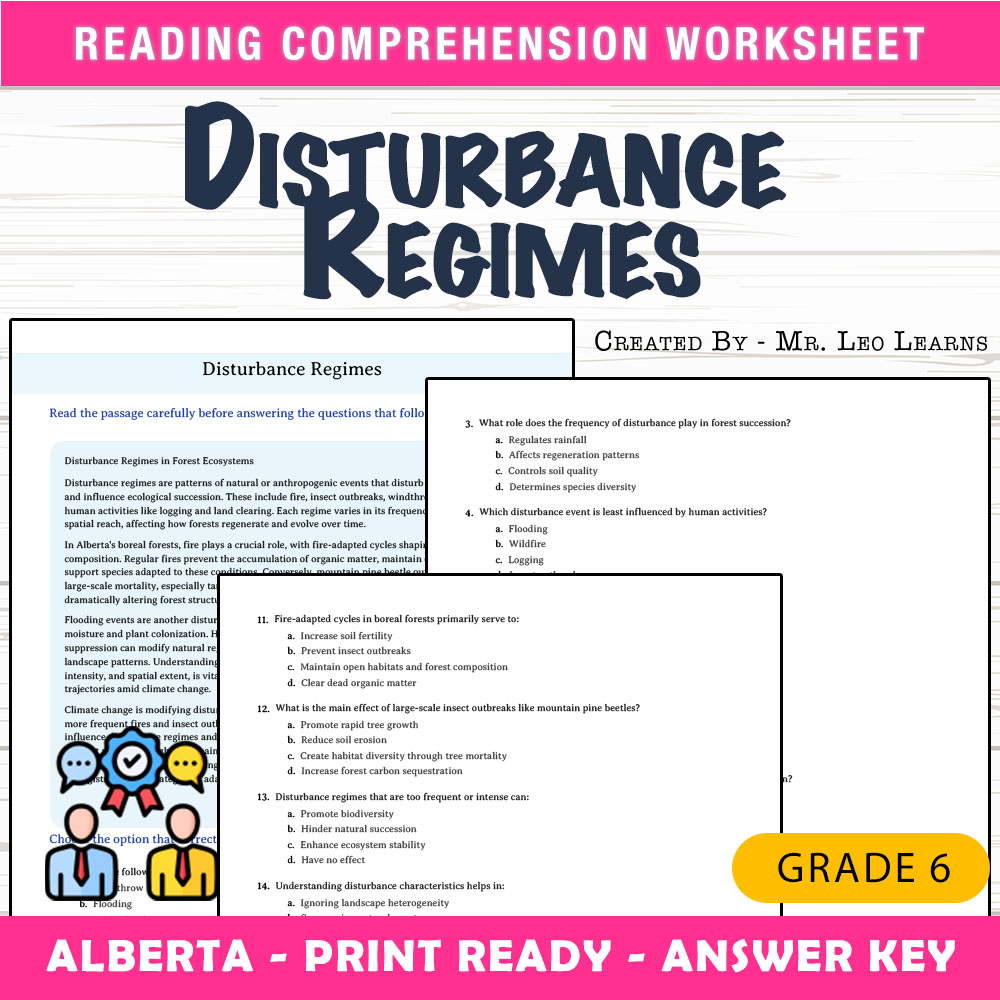
Grade 6 Science — Disturbance Regimes Worksheet MCQ Paper for Mastery
 Created byThe Resource Hub
Learning Objectives
- Understand different types of disturbance regimes and their characteristics in forest ecosystems.
- Identify how disturbance frequency, intensity, and spatial extent influence forest succession and habitat diversity.
- Describe specific disturbance events such as fires and insect outbreaks in Alberta boreal forests.
Also included in: Grade 6 Science | Trees and Forests Unit Bundle for Alberta (Worksheet Pack) +1 more
Instant download
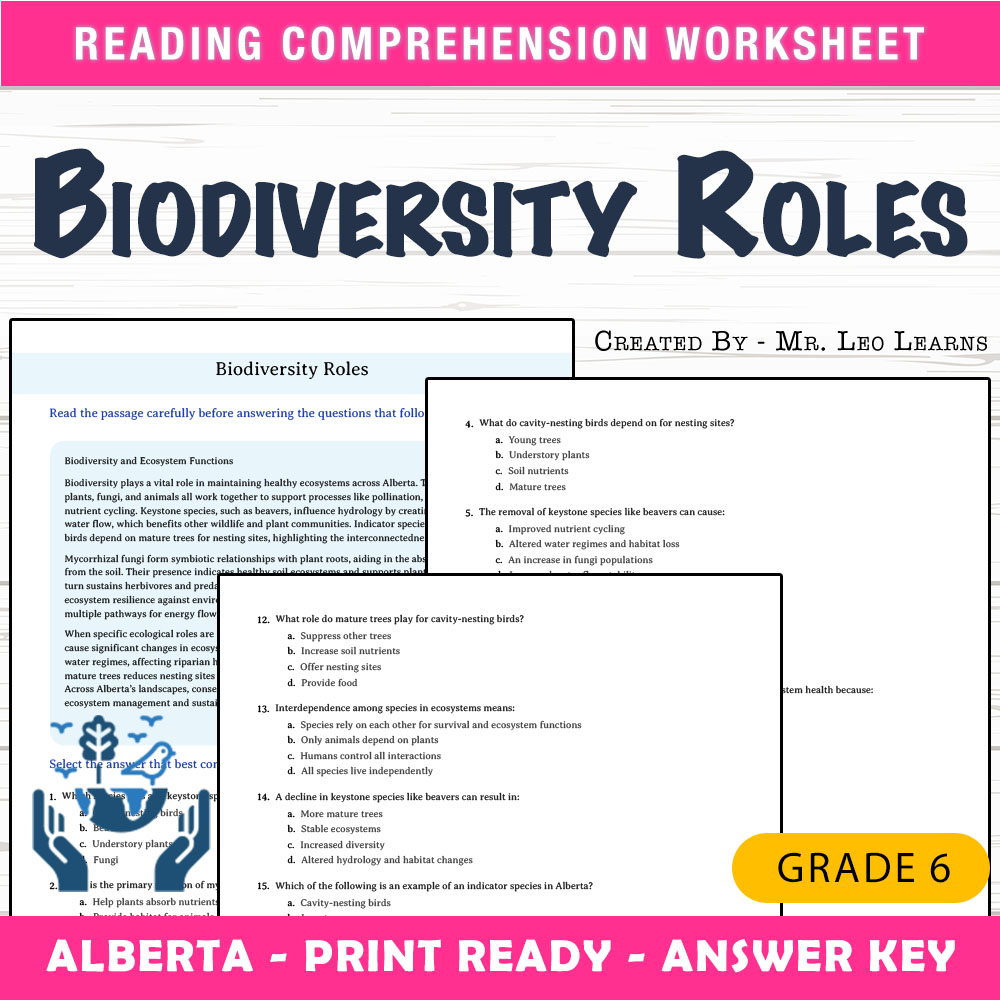
Grade 6 Science — Biodiversity Roles Worksheet MCQ Paper
Created byThe Resource HubLearning Objectives
- Understand the interactions among trees, plants, fungi, and animals in ecosystems.
- Identify key species such as keystone and indicator species in Alberta.
- Explain how species diversity contributes to ecosystem resilience.
Also included in: Grade 6 Science | Trees and Forests Unit Bundle for Alberta (Worksheet Pack) +1 more
Instant download
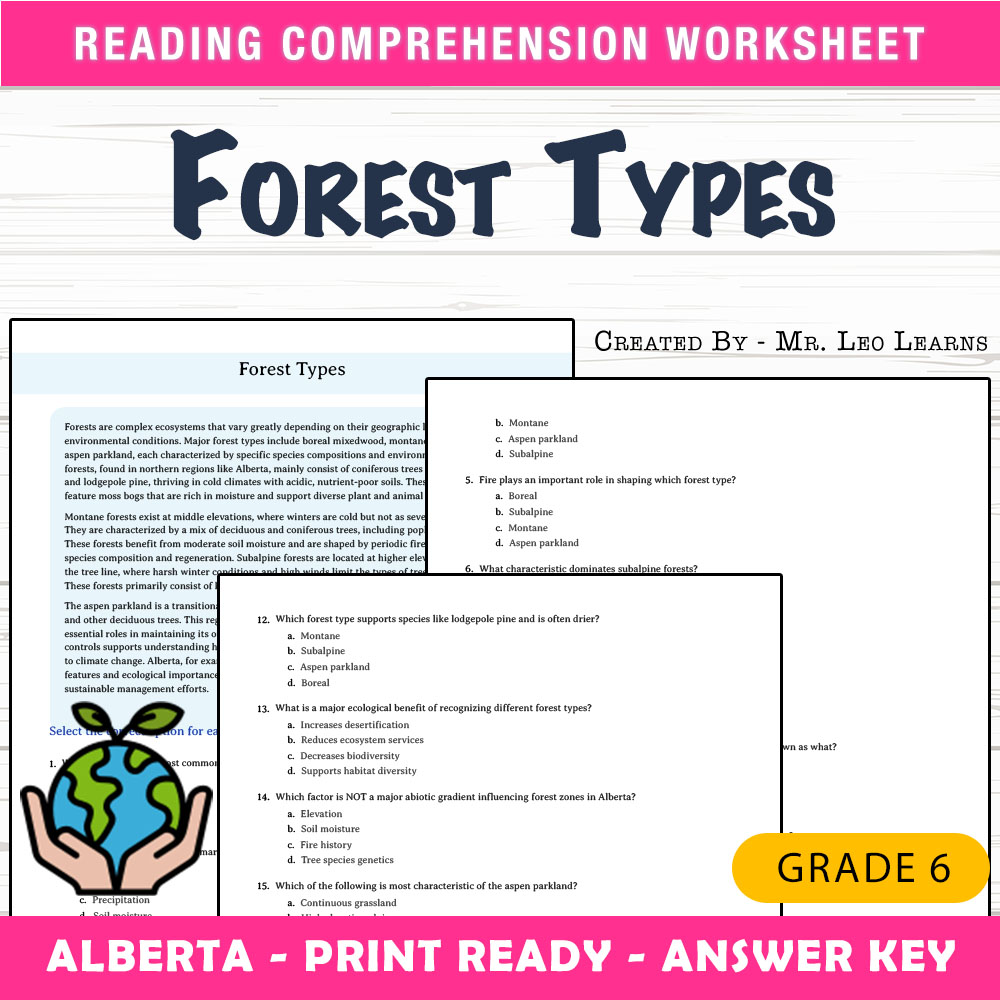
Grade 6 Science — Forest Types Worksheet for Mastery
Created byThe Resource HubLearning Objectives
- Identify different major regional forest types and their characteristic species.
- Understand how environmental factors influence forest distribution and boundaries.
- Recognize examples of forest types found in Alberta.
Also included in: Grade 6 Science | Trees and Forests Unit Bundle for Alberta (Worksheet Pack) +1 more
Instant download
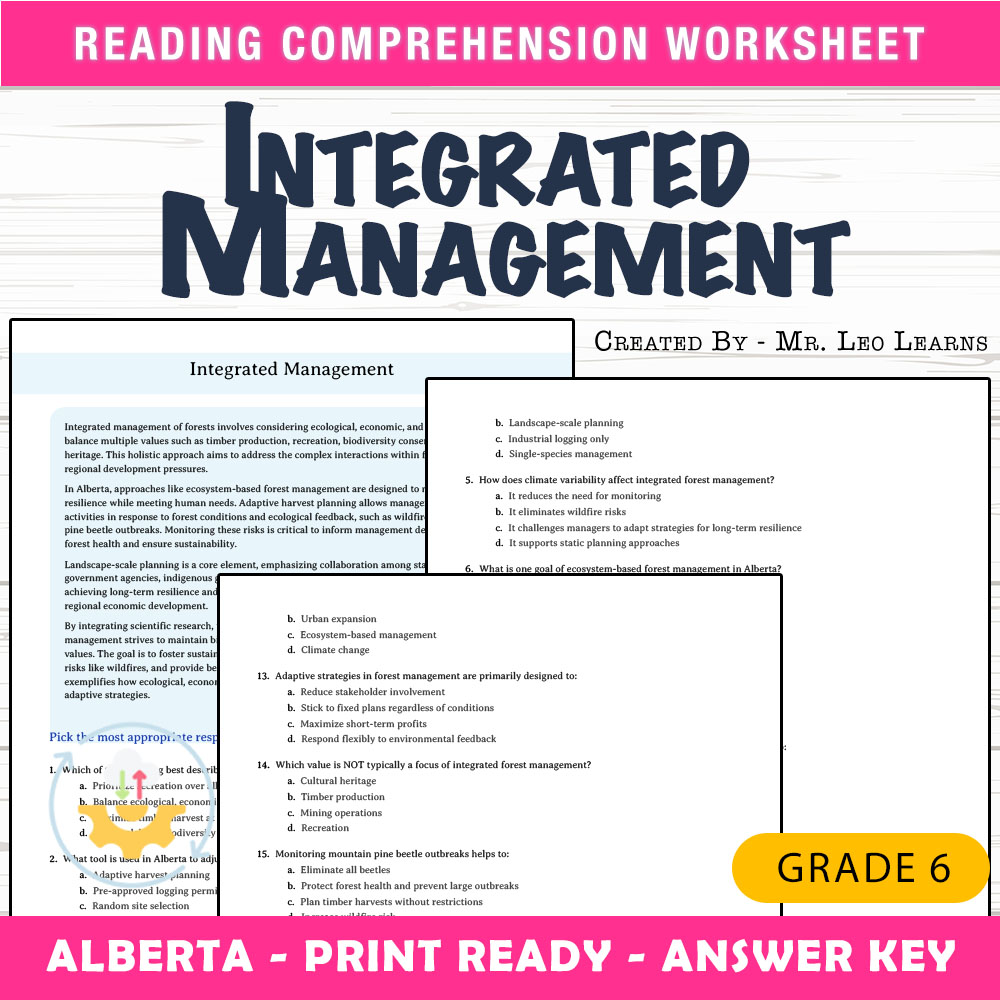
Grade 6 Science — Worksheet MCQ Paper for Mastering Integrated Management
Created byThe Resource HubLearning Objectives
- Understand the key concepts of integrated management in forest ecosystems.
- Identify approaches used in Alberta for sustainable forest management.
- Recognize the importance of ecological, economic, and social objectives.
Also included in: Grade 6 Science | Trees and Forests Unit Bundle for Alberta (Worksheet Pack) +1 more
Instant download
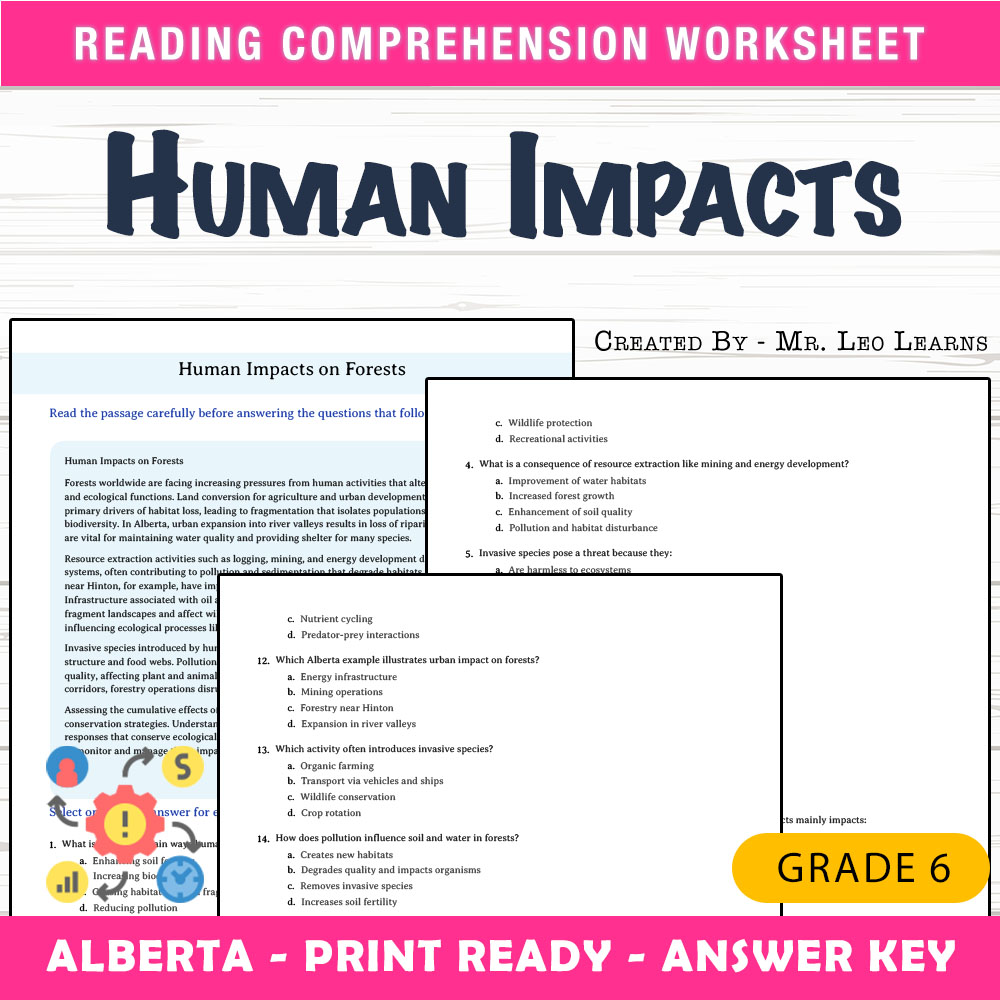
Grade 6 Science — Human Impacts on Forests Worksheet MCQ Paper
Created byThe Resource HubLearning Objectives
- Identify various human activities that affect forest ecosystems.
- Understand the consequences of habitat fragmentation and pollution.
- Recognize examples of human impacts in Alberta and their ecological effects.
Also included in: Grade 6 Science | Trees and Forests Unit Bundle for Alberta (Worksheet Pack) +1 more
Instant download
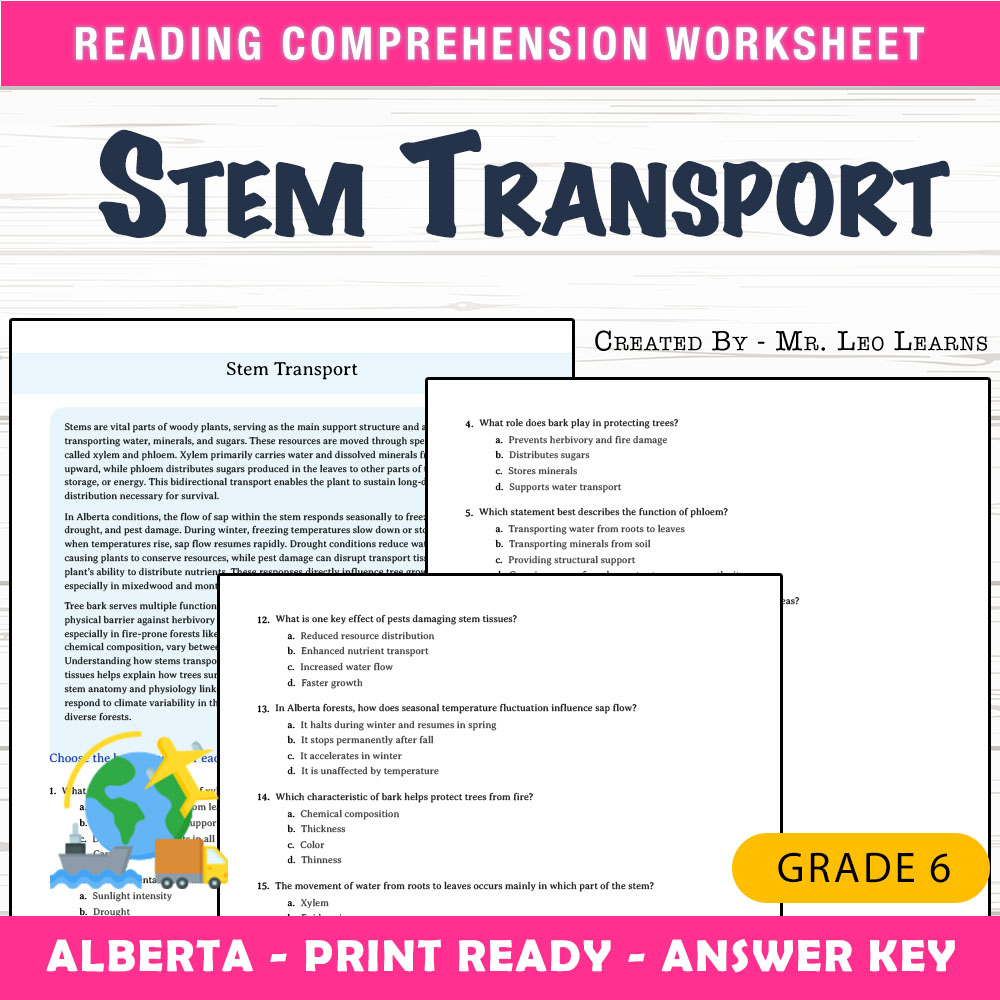
Grade 6 Science — Stem Transport Worksheet for Mastery
Created byThe Resource HubLearning Objectives
- Understand how water, minerals, and sugars are transported within a plant stem via xylem and phloem.
- Explain how stem characteristics contribute to protection and resource allocation in trees.
- Connect stem transport mechanisms to how trees respond to environmental factors like climate, pests, and fire.
Also included in: Grade 6 Science | Trees and Forests Unit Bundle for Alberta (Worksheet Pack) +1 more
Instant download
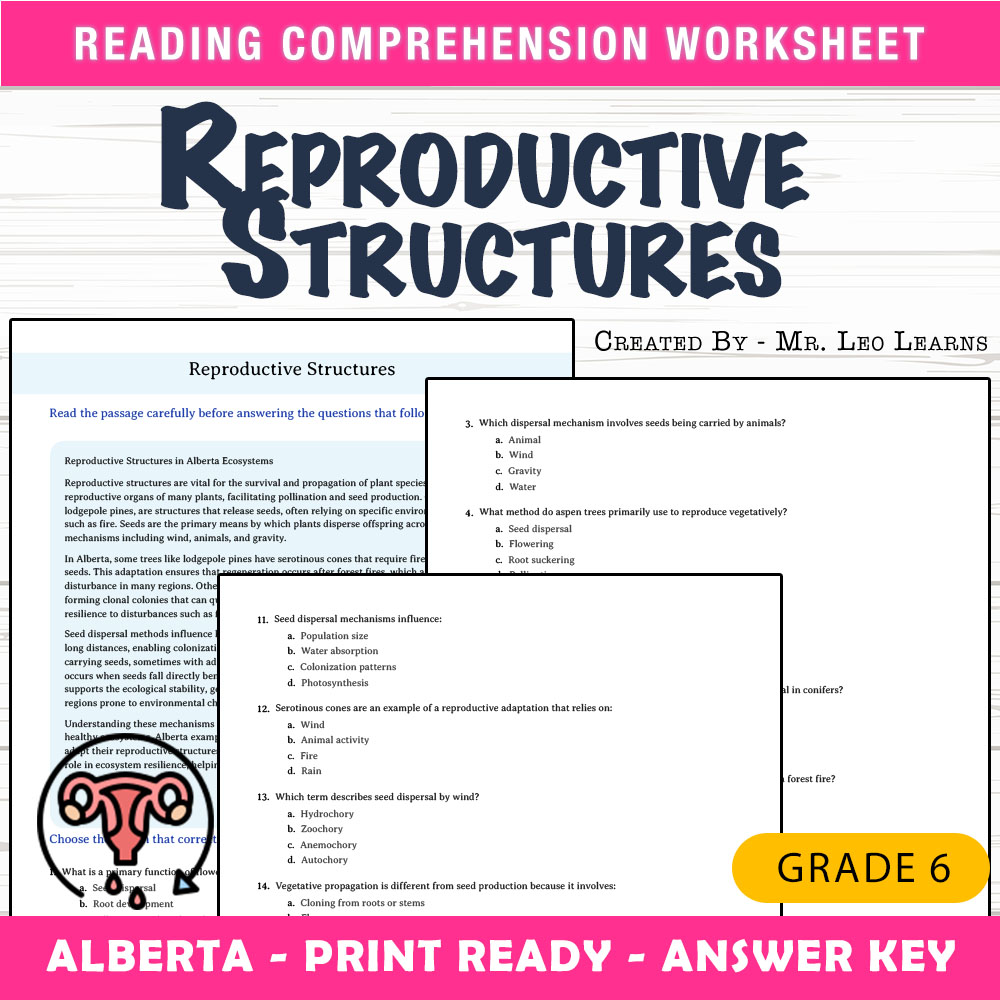
Grade 6 Science — Reproductive Structures Worksheet MCQ Paper
Created byThe Resource HubLearning Objectives
- Understand the different reproductive structures such as flowers, cones, and seeds.
- Identify examples of reproductive strategies like seed dispersal and vegetative propagation.
- Explain how reproductive diversity affects population dynamics and ecosystem resilience.
Also included in: Grade 6 Science | Trees and Forests Unit Bundle for Alberta (Worksheet Pack) +1 more
Instant download
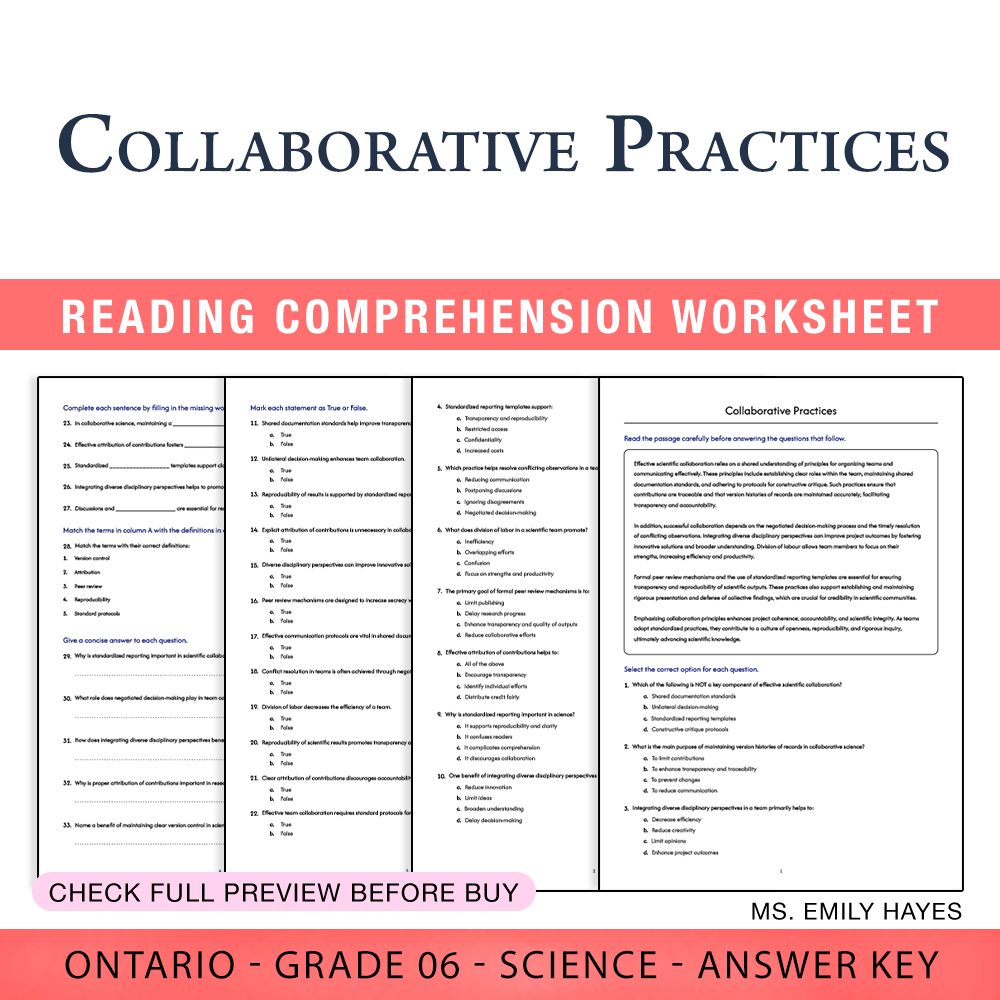
6th Grade Science | Collaborative Practices Worksheet (PDF+ Answer Key)
Created byCopper Leaf ClassroomLearning Objectives
- Understand principles of team-based organization and communication in scientific collaboration.
- Identify key components such as versioning, attribution, and peer review in scientific teamwork.
- Evaluate the importance of diverse disciplinary perspectives and standard protocols in collaboration.
Instant download
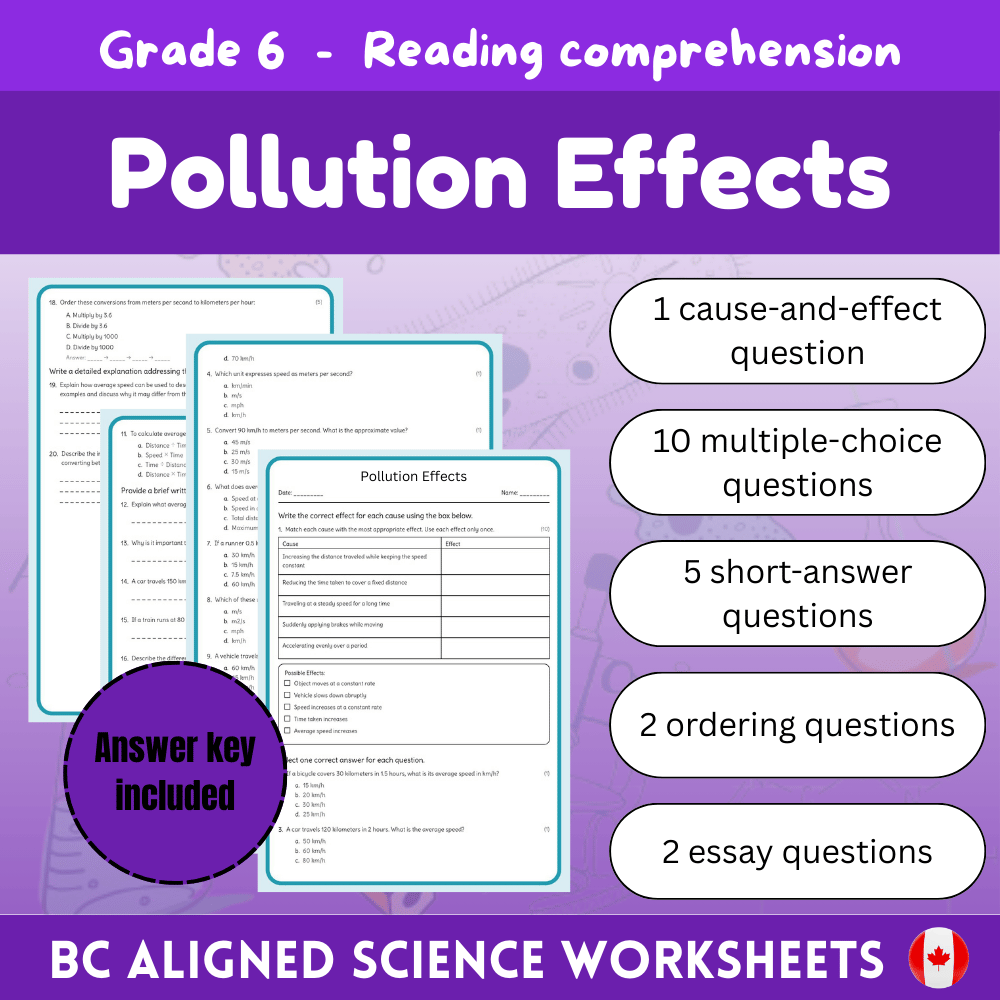
6th Grade Science | Pollution Effects Worksheet + Answer Key (PDF)
Created byBright Mind ResourcesLearning Objectives
- Explain how pollutants enter ecosystems and their impacts on organisms.
- Identify the processes of bioaccumulation and biomagnification in food chains.
- Describe how nutrient over-enrichment causes hypoxia and dead zones.
Instant download
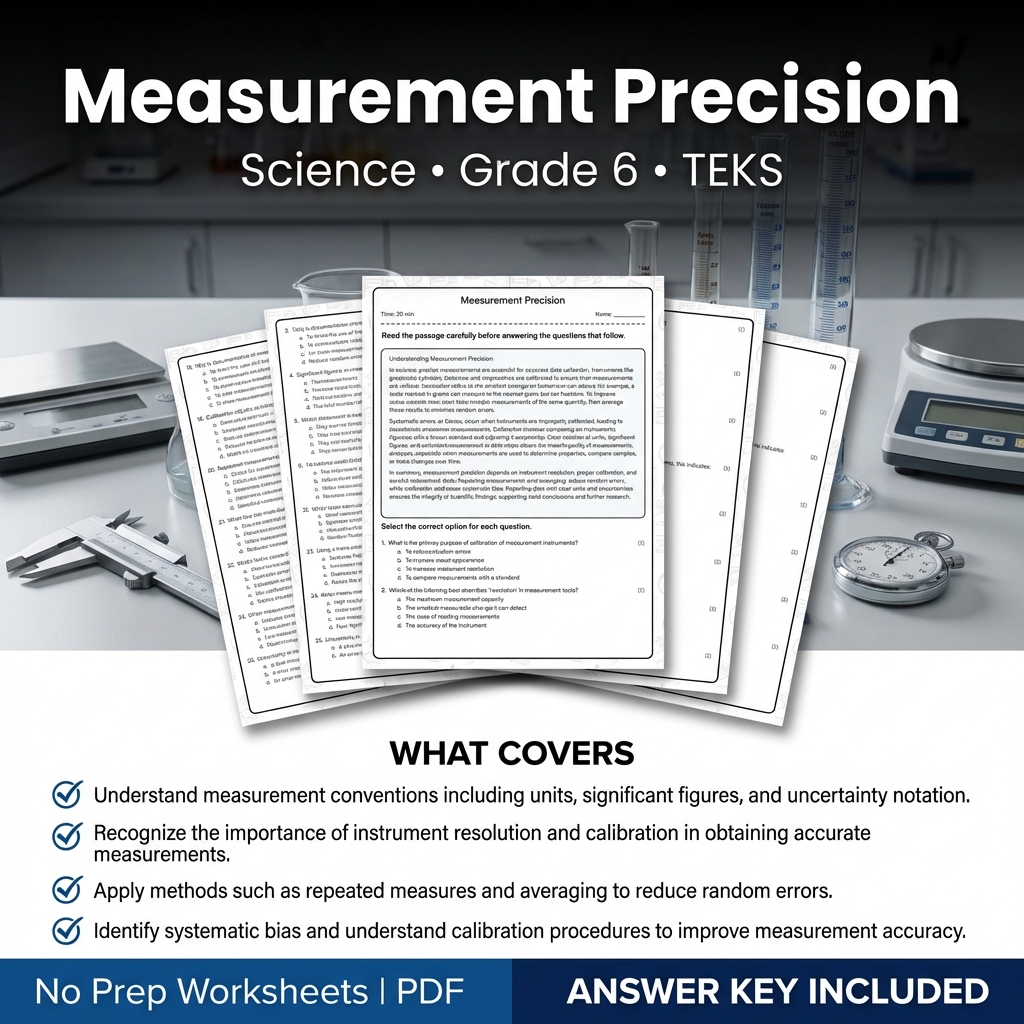
Grade 6 Science Worksheet on Measurement Precision TEKS Alignment
Created byCoral Reef LearningLearning Objectives
- Understand measurement conventions including units, significant figures, and uncertainty notation.
- Recognize the importance of instrument resolution and calibration in obtaining accurate measurements.
- Apply methods such as repeated measures and averaging to reduce random errors.
Instant download
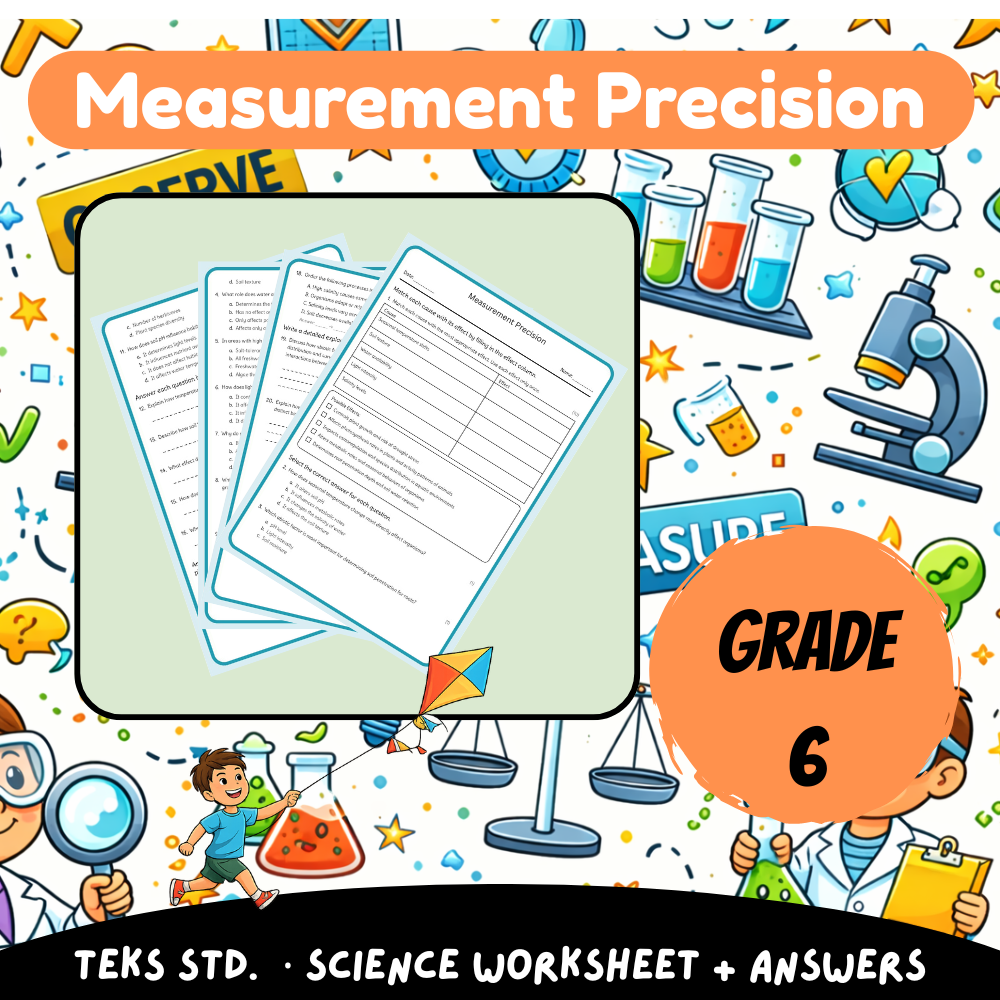
6th Grade Science | Measurement Precision Worksheet (Worksheet + Answer Key) - TEKS Aligned
Created byBright Mind ResourcesLearning Objectives
- Understand the conventions of quantitative measurement, including units and significant figures.
- Explain the role of instrument resolution and measurement uncertainty.
- Describe methods to reduce errors through repeated measurements and calibration.
Instant download

Variation Effects Worksheet for Grade 6 Science NGSS Practice and Assessment
JCreated byJ.S SheetsLearning Objectives
- Understand how genetic and environmental factors influence phenotypic variation.
- Identify examples of phenotypic variation caused by genetic and environmental interactions.
- Explain the links between DNA, gene expression, and organism traits.
Also included in: Grade 6 Cellular Processes and Feedback Science Lesson Bundle – NGSS +1 more
Instant download

Cell Evidence Worksheet | Standards-Aligned Grade 6 Science Practice
JCreated byJ.S SheetsLearning Objectives
- Identify observable characteristics that distinguish single-celled from multicellular organisms.
- Understand the relationship between cells, tissues, organs, and whole organisms.
- Recognize empirical features such as membrane-bound compartments, cell size ranges, and specialization in different organism types.
Also included in: Grade 6 Cellular Processes and Feedback Science Lesson Bundle – NGSS +1 more
Instant download

Measurement Precision Worksheet | TEKS Grade 6 Science Assessment
JCreated byJ.S SheetsLearning Objectives
- Explain how instrument resolution affects what digits we record in scientific measurements
- Use consistent units and correct significant figures when reporting measurements
- Describe how calibration reduces systematic error and how repeated trials and averaging reduce random error
Instant download
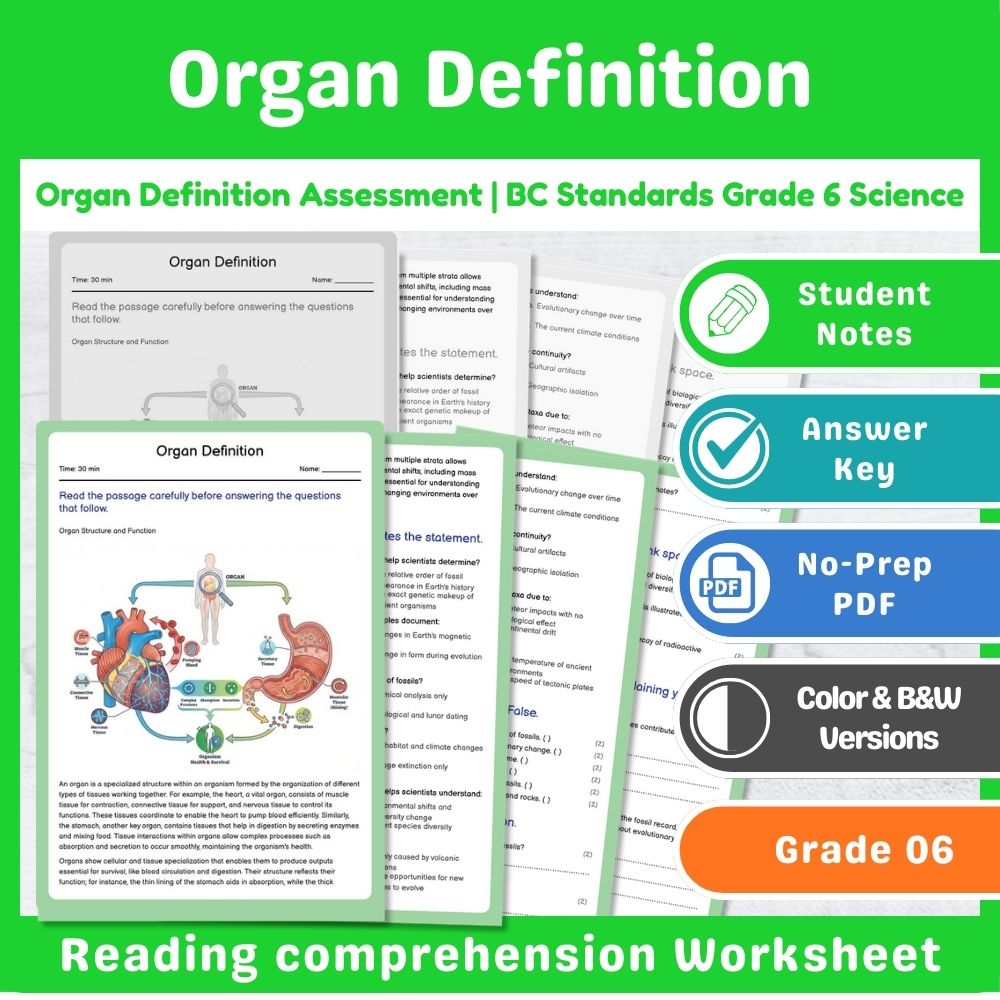
Organ Definition Assessment | BC Standards Grade 6 Science
Created byPrism Point LearningLearning Objectives
- Understand what an organ is and its composition of tissue types
- Recognize examples of organs and their functions
- Describe how tissue interactions within organs support organism survival and system regulation
Instant download
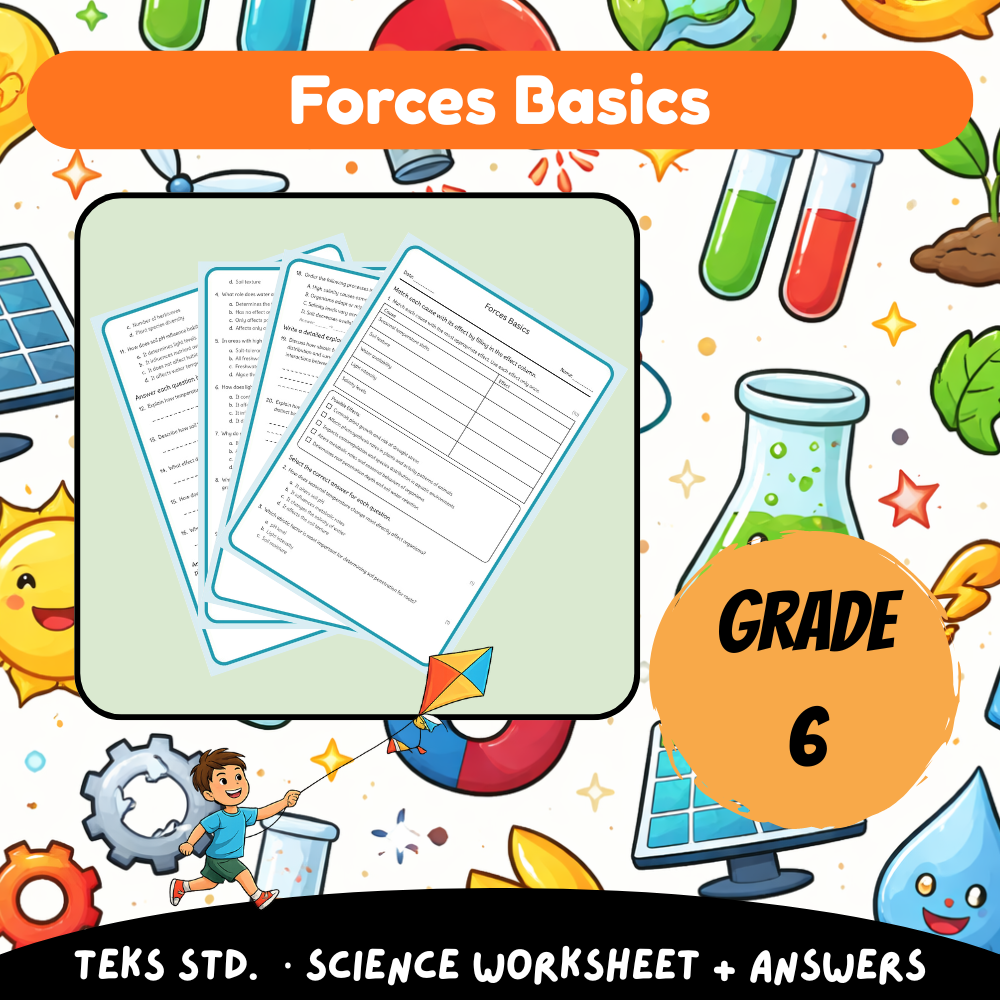
6th Grade Science | Forces Basics (Worksheet + Answer Key) – TEKS Aligned
Created byBright Mind ResourcesLearning Objectives
- Identify contact and non-contact forces such as gravity, friction, and normal force.
- Understand the concepts of balanced and unbalanced forces and their effects on motion.
- Explain qualitative relationships between force magnitude, direction, and resulting motion.
Instant download
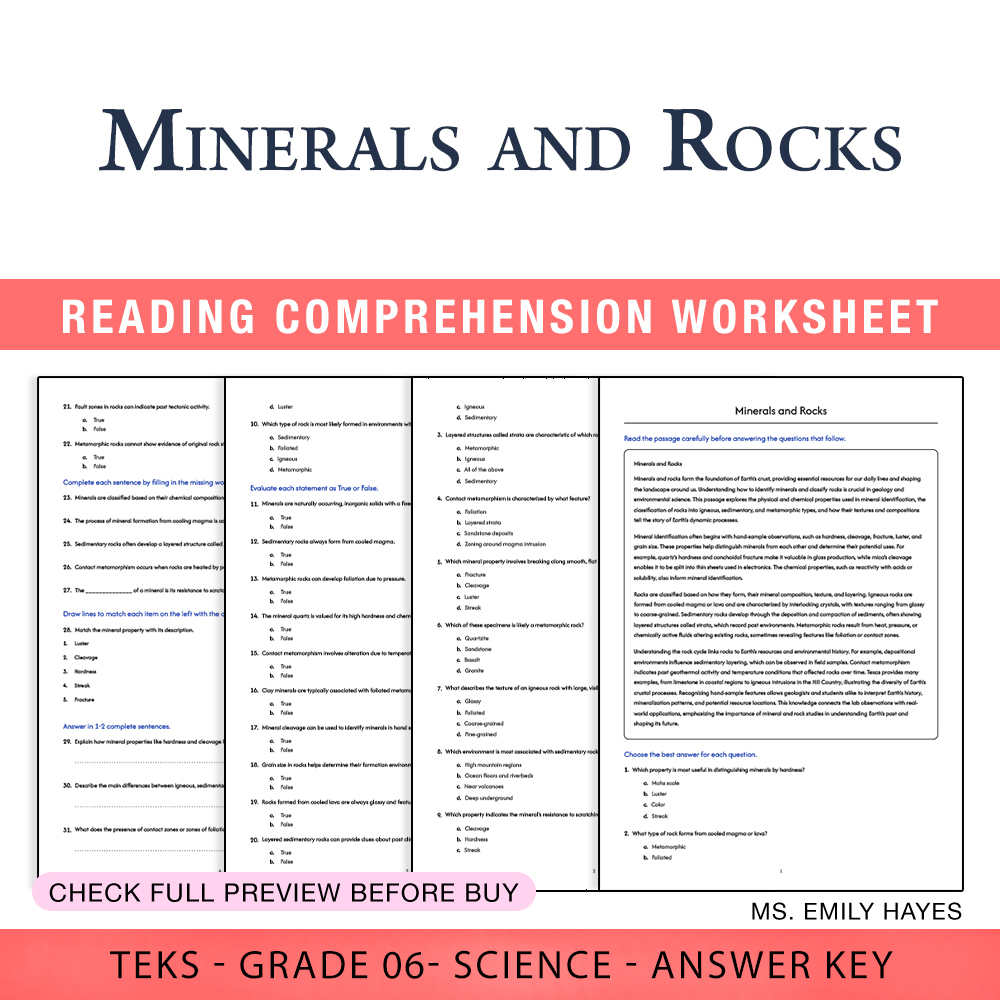
6th Grade Science | Minerals and Rocks Worksheet (PDF+ Answer Key)
Created byCopper Leaf ClassroomLearning Objectives
- Identify and classify different types of rocks based on textural and compositional criteria.
- Understand physical and chemical properties used in mineral identification.
- Describe the processes involved in the formation of igneous, sedimentary, and metamorphic rocks.
Instant download
About Grade 6 Science Worksheets
Explore Grade 6 Science worksheets for classwork, homework, or review. Our 5,969 printables download instantly as PDFs.
MyTeachingSheets worksheets are made by real teacher-authors and checked before they go live. Download any as a print-ready PDF for lessons, homework, or independent practice — most include answer keys, and previews are always free.