
Grade 6 Science Worksheets
5,997 worksheets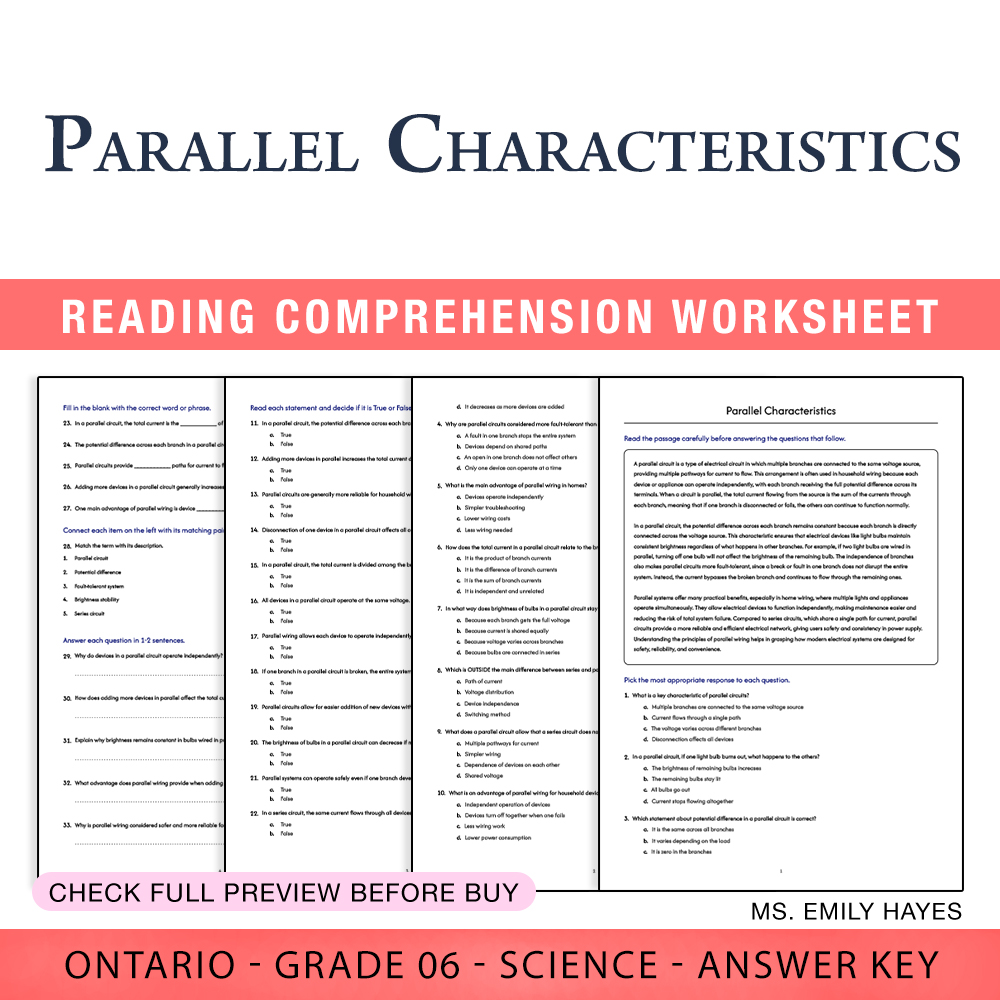
6th Grade Science | Parallel Characteristics Worksheet (PDF + Answer Key)
 Created byCopper Leaf Classroom
Learning Objectives
- Explain the concept of parallel circuits and how they differ from series circuits.
- Describe how potential difference remains the same across parallel branches and how overall current is distributed.
- Identify practical advantages of parallel wiring in household electrical systems.
Instant download
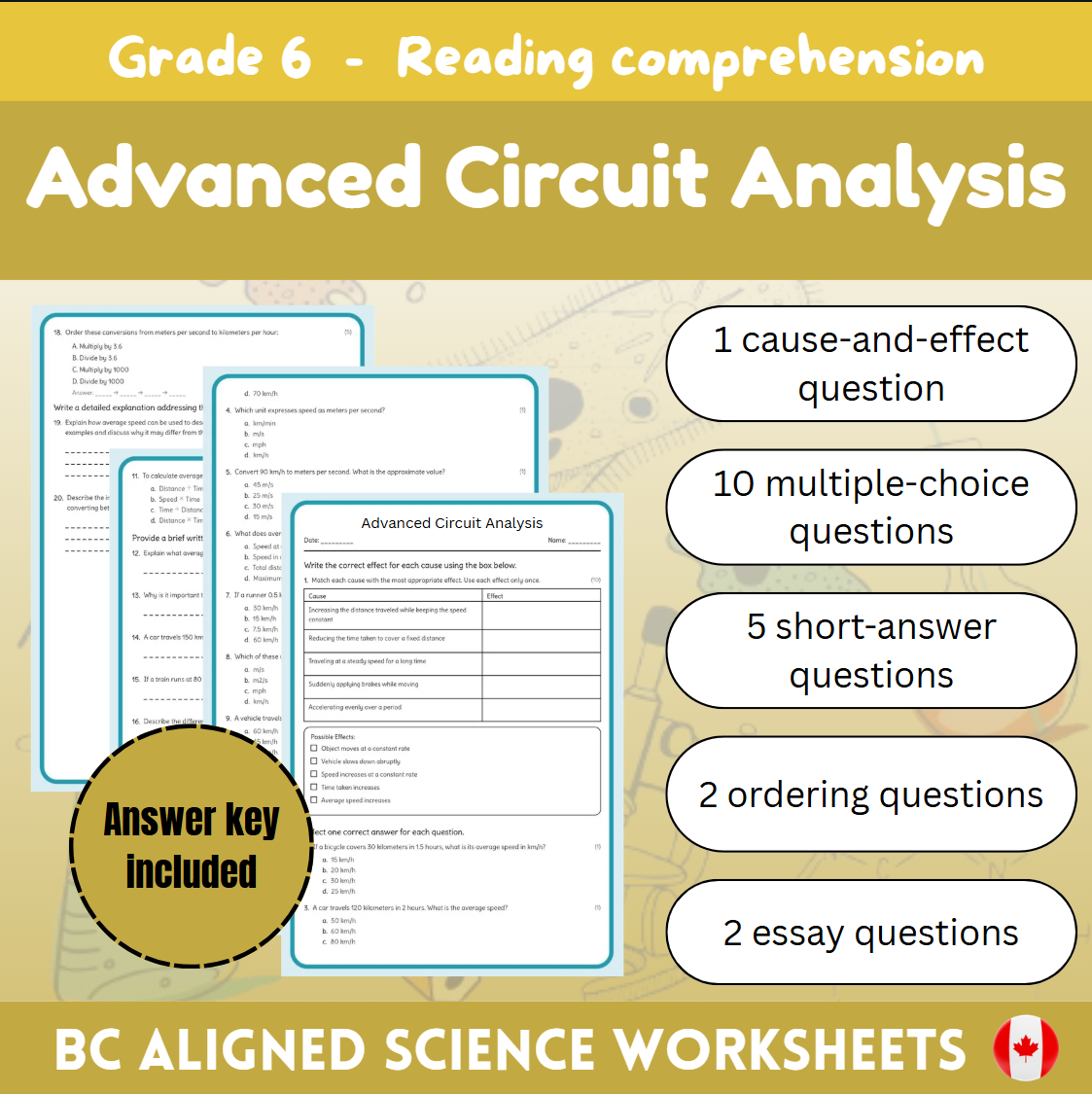
6th Grade Science | Advanced Circuit Analysis Worksheet (Answer Key PDF)
 Created byBright Mind Resources
Learning Objectives
- Understand how component behaviour affects energy distribution in circuits.
- Explain the relationship between power dissipation, internal resistance, and energy transfer.
- Analyze how internal resistance reduces available voltage under load.
Instant download
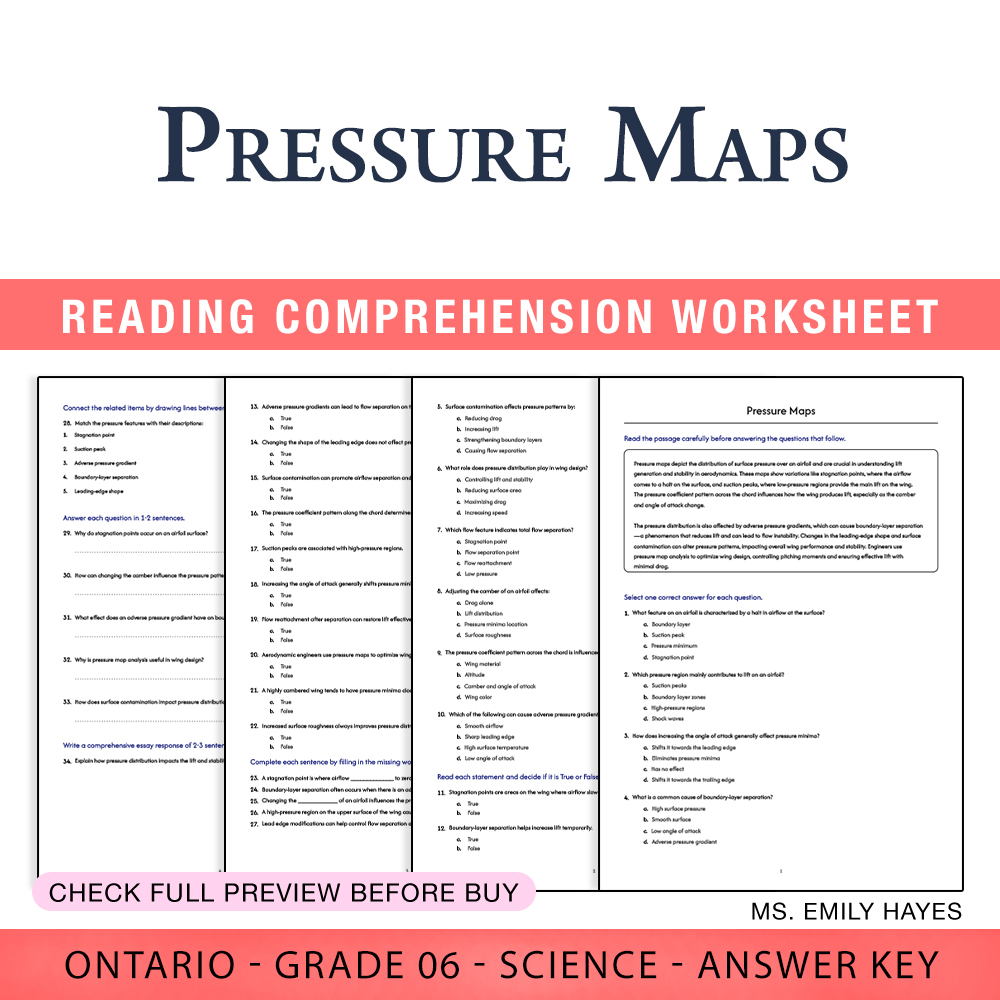
6th Grade Science | Pressure Maps Worksheet (PDF + Answer Key)
Created byCopper Leaf ClassroomLearning Objectives
- Understand the concept of surface pressure distribution around wing sections and how it affects lift and pitching moments.
- Identify and explain key pressure features such as stagnation points, suction peaks, and pressure coefficient patterns.
- Analyze how camber and angle of attack influence the placement of pressure minima and the resulting aerodynamic forces.
Instant download
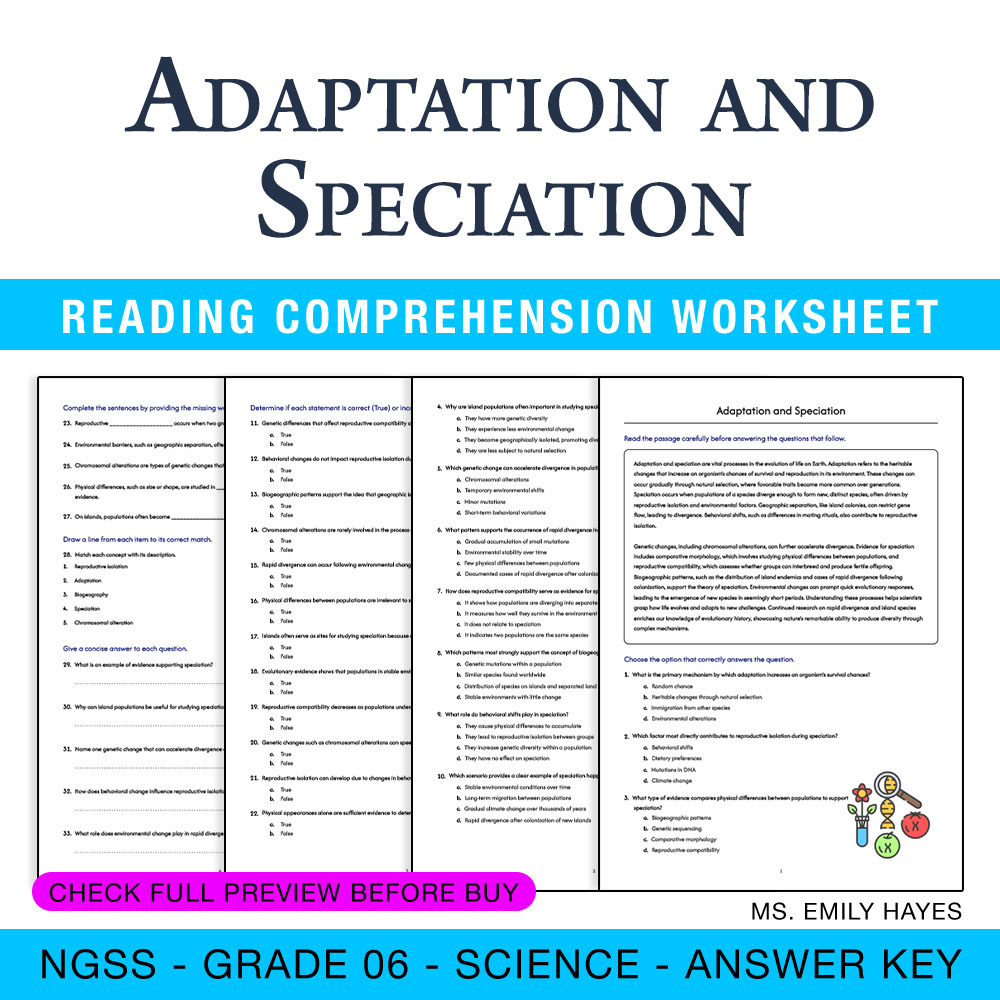
6th Grade Science | Adaptation and Speciation Worksheet (PDF+ Answer Key)
Created byCopper Leaf ClassroomLearning Objectives
- Explain the processes involved in adaptation and how they lead to speciation.
- Identify evidence that supports the occurrence of speciation events in different environments.
- Analyze different factors that contribute to populations diverging into new species.
Instant download

Earth’s Rotation and Seasonal Day Length Worksheets Grade 6 Science
 Created bySunny Desk Resources
Learning Objectives
- Explain how Earth’s rotation creates day and night.
- Describe how axial tilt and orbital position affect the length of daylight during the year.
- Interpret how daylight duration changes with seasons and latitude in Alberta.
Also included in: Sky Science Grade 6 Bundle | Alberta Science Worksheets & Activities +1 more
Instant download
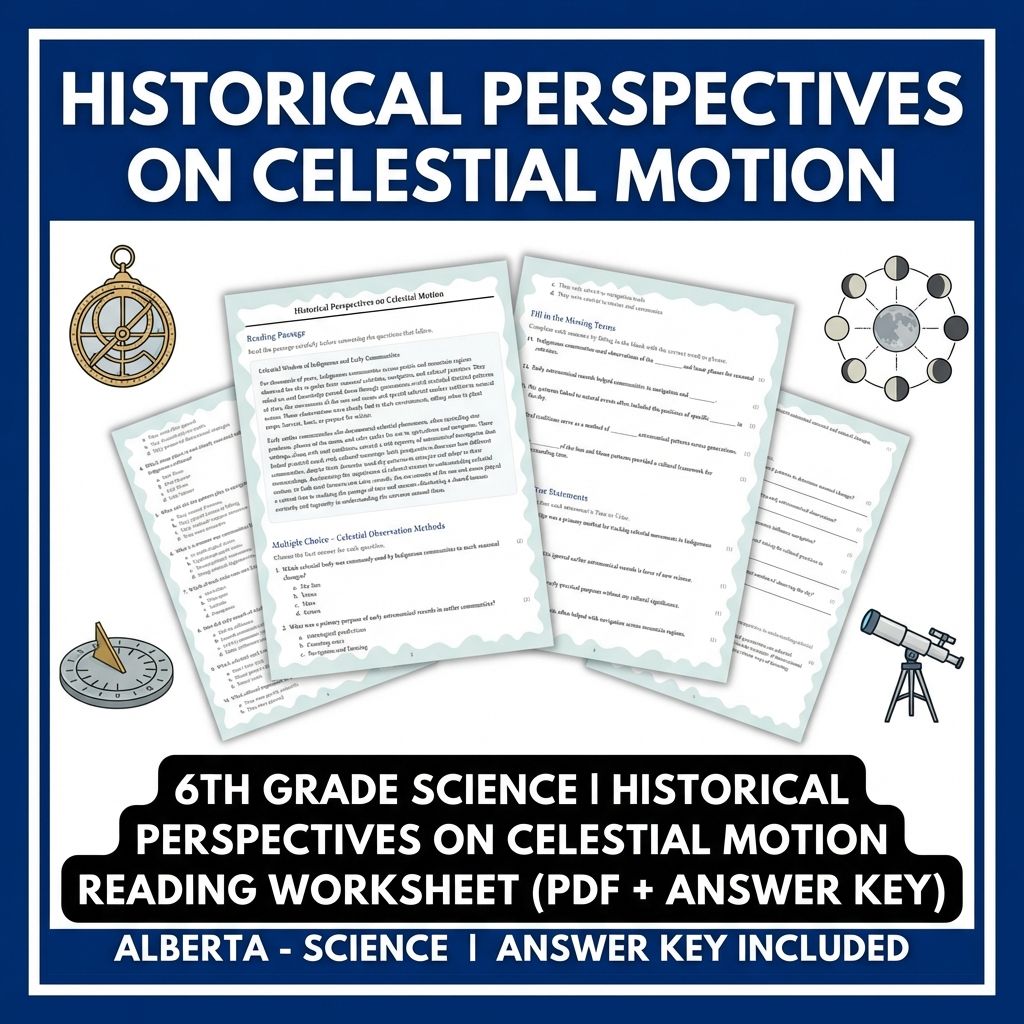
6th Grade | Historical Perspectives on Celestial Motion (PDF + Answer Key)
JCreated byJ.S SheetsLearning Objectives
- Understand how Indigenous and settler communities historically interpreted celestial patterns.
- Describe how oral knowledge and early astronomical records relate to seasonal and navigation practices.
- Explain the cultural significance of sky observations across different communities and time periods.
Also included in: Grade 6 Science | Celestial Motion & Sky Observation Worksheets Bundle +1 more
Instant download
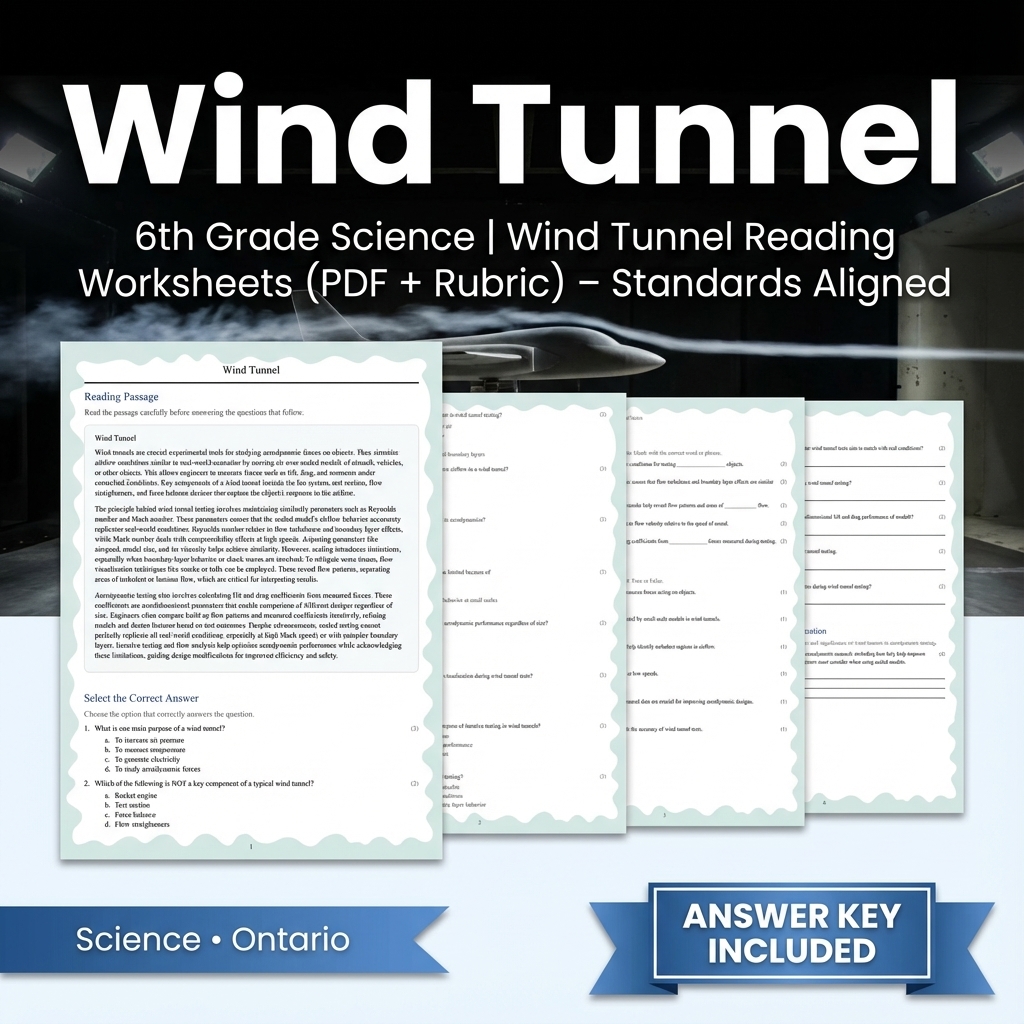
6th Grade Science | Wind Tunnel Reading Worksheets (PDF + Rubric)
JCreated byJ.S SheetsLearning Objectives
- Understand the basic principles and components of a wind tunnel.
- Explain how aerodynamic forces such as lift and drag are measured and calculated.
- Describe the significance of similarity parameters like Reynolds and Mach numbers in scaled testing.
Also included in: Grade 6 Science | Aerodynamics & Flight Unit Worksheet Pack (PDF + Answer Keys) +1 more
Instant download
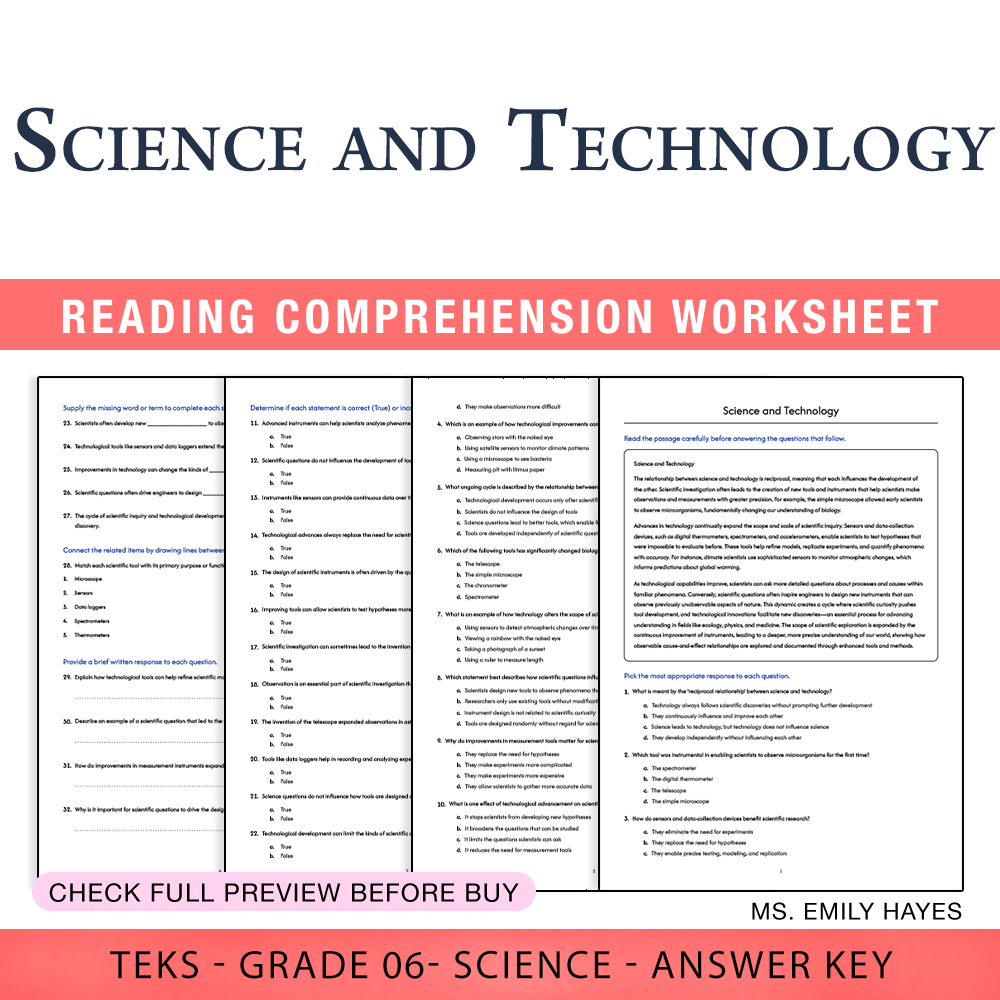
6th Grade Science | Technology and Innovation Worksheet (PDF+ Answer Key)
Created byCopper Leaf ClassroomLearning Objectives
- Understand how scientific investigation and technological development influence each other.
- Identify tools and instruments that extend observation and measurement.
- Explain how technological improvements expand scientific inquiry and how scientific questions inform tool design.
Instant download

6th Grade Science | Evidence Explanations Worksheet (PDF) – General Standards
 Created byEvergreen Desk Education
Learning Objectives
- Explain how to connect a scientific claim to evidence using clear reasoning
- Describe evidence in terms of patterns, ranges, and matches between expected and observed values
- Use established scientific ideas to support or refute explanations
Also included in: Grade 6 Science Inquiry Lesson Bundle: Variable Control & Models (General) +1 more
Instant download

Elements in Compounds Grade 6 Science Assessment | California Standards
 Created byPrism Point Learning
Learning Objectives
- Explain what compounds are and how they form from atoms of different elements.
- Describe how particle models show compounds with definite bonding arrangements.
- Use element ratios in compounds to predict properties and understand macroscopic differences.
Also included in: Grade 6 Atoms and Chemical Change Science lesson bundle | California Standards +1 more
Instant download
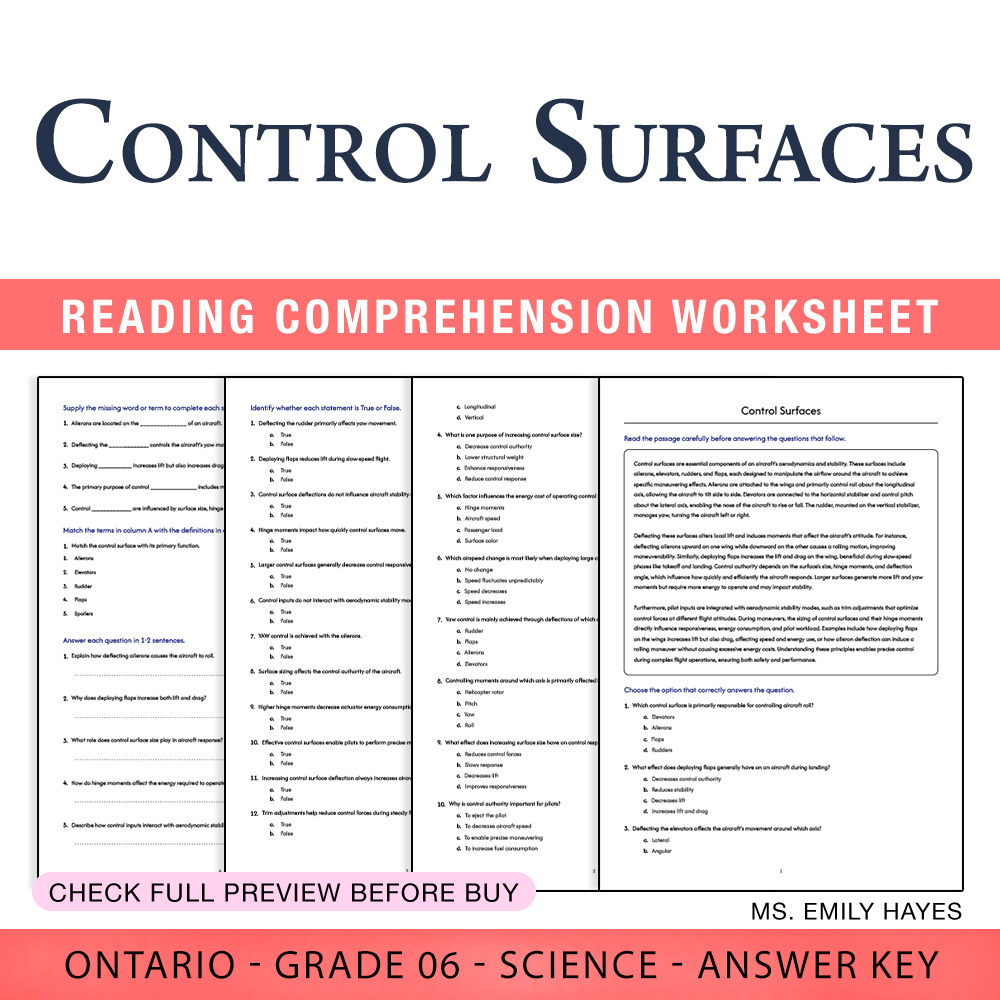
6th Grade Science | Control Surfaces Worksheet (PDF + Answer Key)
Created byCopper Leaf ClassroomLearning Objectives
- Understand the primary control surfaces (ailerons, elevators, rudder, flaps) and their roles in aircraft maneuvering.
- Explain how deflections of control surfaces affect lift, drag, and aircraft stability modes.
- Describe the concepts of control authority and how surface sizing and hinge moments influence response and energy costs.
Instant download
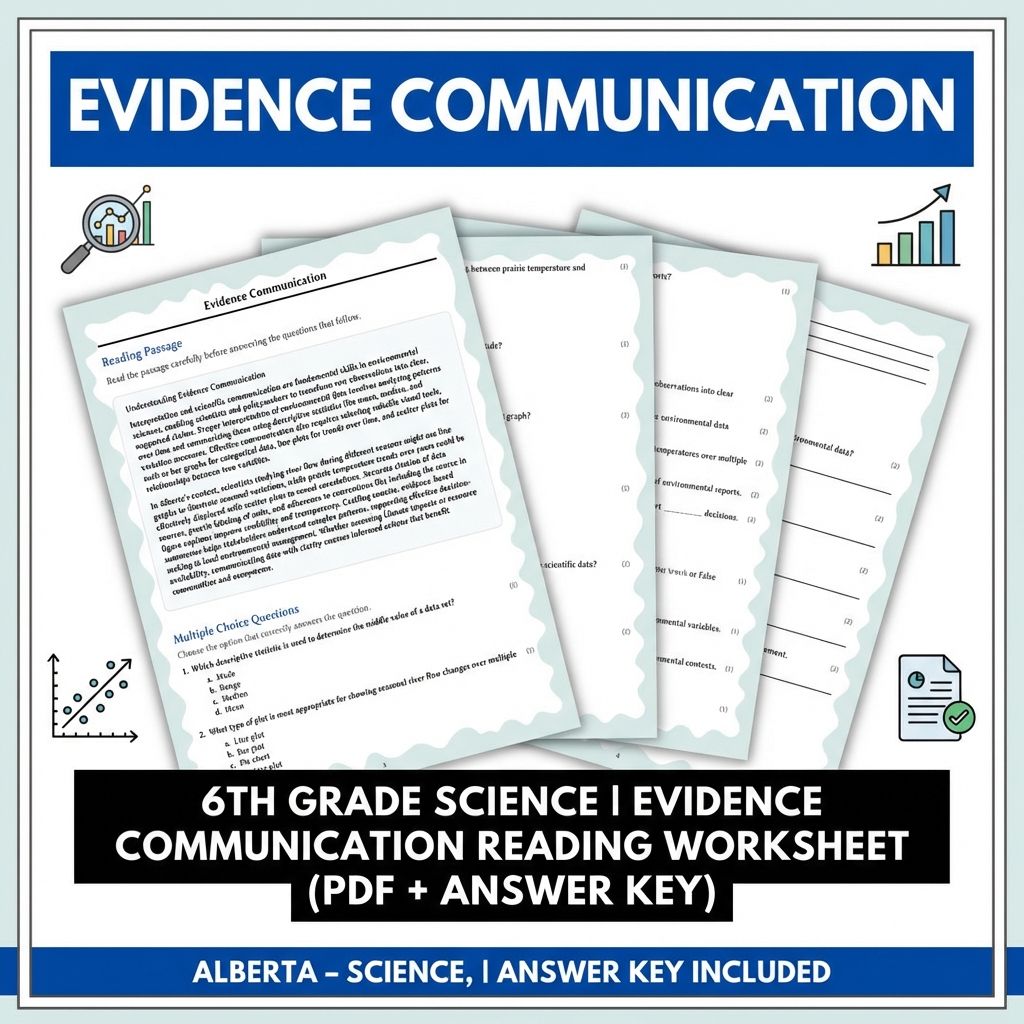
6th Grade Science | Evidence Communication Reading Worksheet (PDF + Answer Key)
JCreated byJ.S SheetsLearning Objectives
- Understand how to interpret patterns in environmental data.
- Learn methods for summarizing observational data using descriptive statistics.
- Identify appropriate visualizations like bar, line, and scatter plots for specific phenomena.
Also included in: Grade 6 Science Bundle – Data Analysis, Scientific Inquiry & Measurement Skills +1 more
Instant download
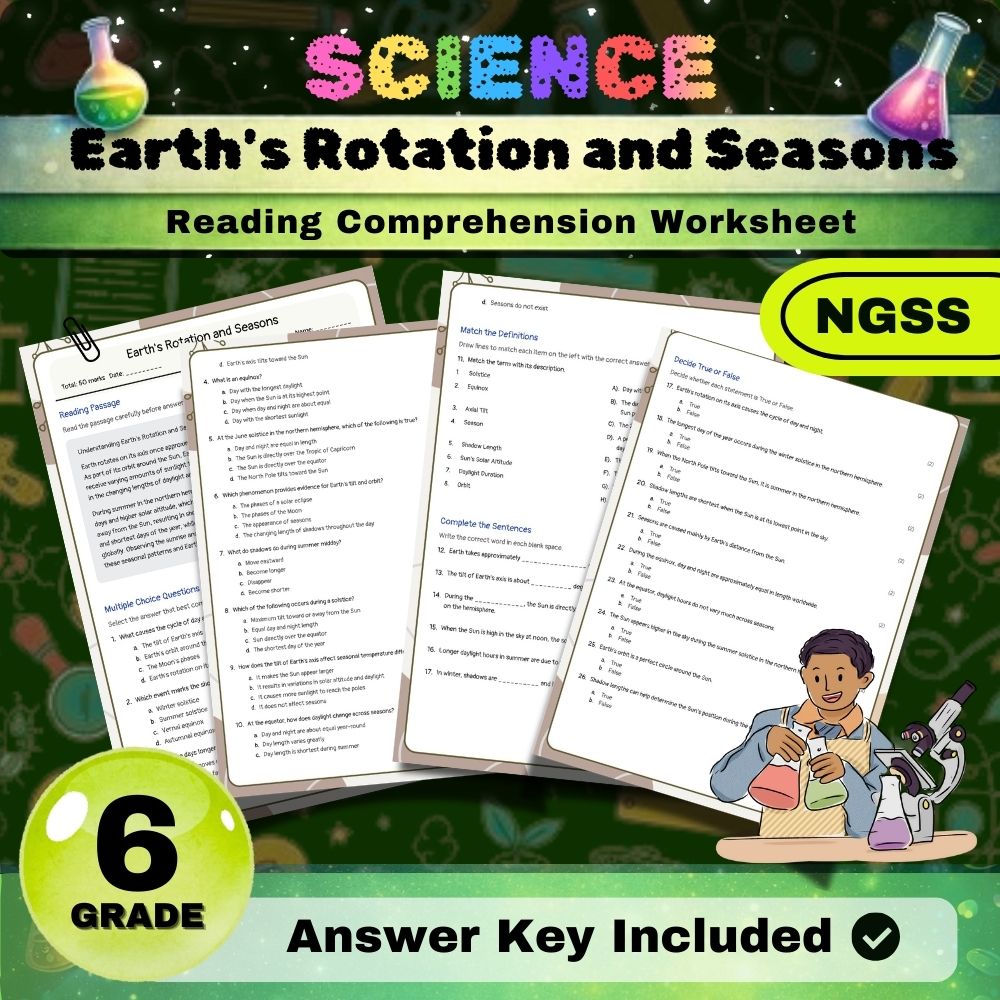
6th Grade Science | Earth's Rotation & Seasons NGSS Worksheet (PDF + Answer Key)
 Created byMaple Path Learning
Learning Objectives
- Explain how Earth's rotation causes day and night.
- Describe how Earth's orbit and axial tilt produce seasons and variations in daylight and temperature.
- Identify key phenomena such as solstices and equinoxes as markers of seasonal change.
Also included in: Grade 6 Science | Earth's Rotation, Seasons & Orbital Motion Worksheet Bundle +1 more
Instant download

6th Grade Science | Wing Shapes Worksheet (Alberta) with Answer Key (PDF)
Created byEvergreen Desk EducationLearning Objectives
- Explain how wing shape features (camber, thickness, and aspect ratio) affect lift and drag
- Compare high-aspect-ratio glider wings with low-aspect, robust wings used on short-field aircraft
- Use pressure-distribution ideas to describe how curvature and taper influence airflow
Instant download

Environmental Data Pattern Analysis Grade 6 Science Worksheet
Created bySunny Desk ResourcesLearning Objectives
- Describe how temporal and spatial patterns can be identified in environmental data
- Use descriptive statistics and moving averages to support observations about datasets
- Explain how seasonal decomposition helps separate trends, seasonal cycles, and irregular changes
Also included in: Evidence & Investigation Grade 6 Science Worksheets | Alberta +1 more
Instant download

Evidence-Based Scientific Communication Grade 6 Science Worksheets
Created bySunny Desk ResourcesLearning Objectives
- Explain how to turn analyzed observations into clear, evidence-supported claims
- Identify appropriate descriptive statistics and visuals for representing patterns in data
- Use scientific communication conventions such as labels, units, and citing data sources
Also included in: Evidence & Investigation Grade 6 Science Worksheets | Alberta +1 more
Instant download

Scientific Evidence and Claims Evaluation Worksheets Grade 6
Created bySunny Desk ResourcesLearning Objectives
- Explain how to judge whether a claim follows from given data and methods.
- Identify whether evidence is relevant, consistent with patterns, and considers uncertainty.
- Match the scope of a claim to how strong the dataset is.
Also included in: Evidence & Investigation Grade 6 Science Worksheets | Alberta +1 more
Instant download

Evidence and Investigation Worksheets: Environmental Data Grade 6
Created bySunny Desk ResourcesLearning Objectives
- Explain how question framing, fair design, and measurement choices affect the strength of evidence from data.
- Describe how to combine data from multiple sites while keeping data provenance and cross-site comparability.
- Write evidence-based conclusions that include limitations when using integrated datasets.
Also included in: Evidence & Investigation Grade 6 Science Worksheets | Alberta +1 more
Instant download

6th Grade Science Worksheet | Conservation Concepts TEKS (PDF)
Created byEvergreen Desk EducationLearning Objectives
- Explain how the law of conservation of mass applies to closed systems during physical and chemical changes.
- Use before-and-after measurements to make evidence-based conclusions about mass conservation.
- Distinguish between closed systems and open systems, noting how mass exchange affects measured mass.
Instant download
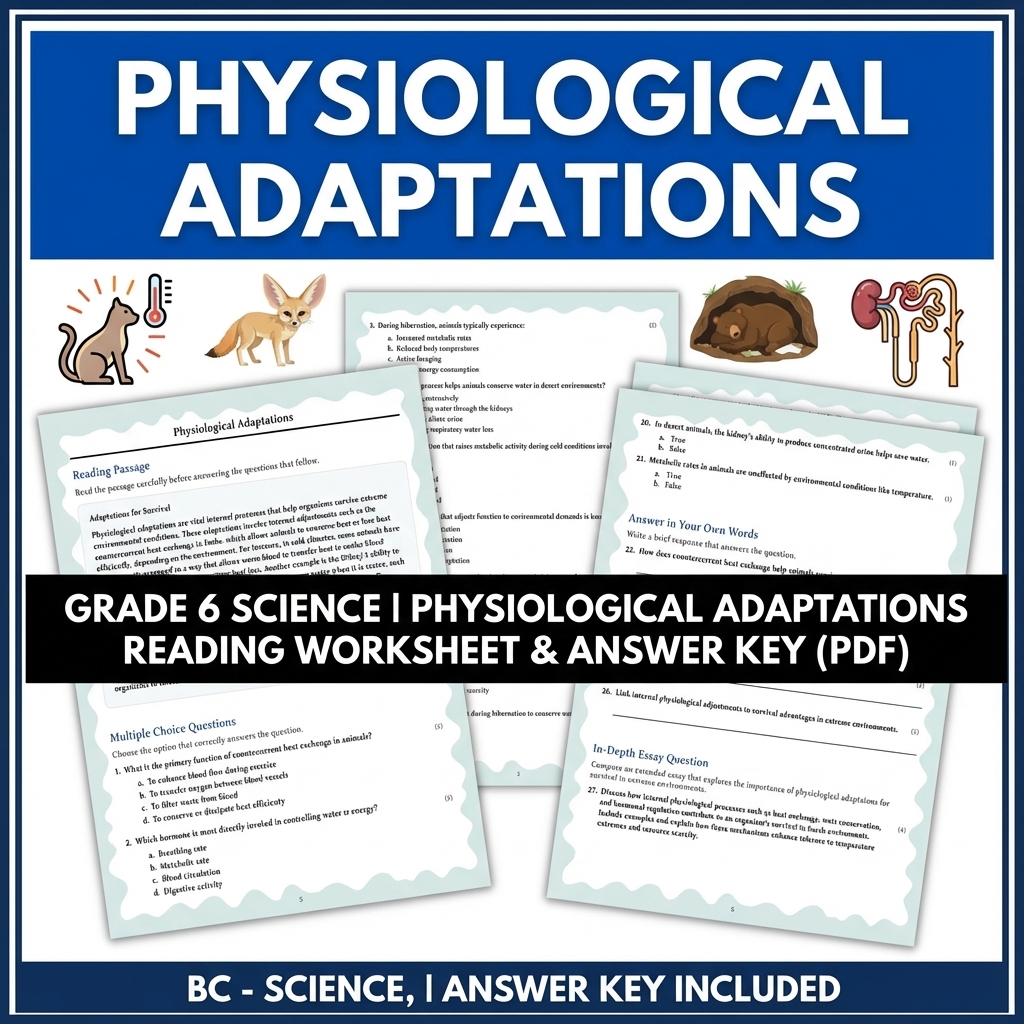
Grade 6 Science | Physiological Adaptations Reading Worksheet & Answer Key (PDF)
JCreated byJ.S SheetsLearning Objectives
- Understand internal processes that enable organisms to survive in extreme environments.
- Identify different types of physiological adaptations such as heat exchange, water conservation, and metabolic regulation.
- Explain how hormonal mechanisms contribute to temperature, hydration, and energy balance.
Instant download
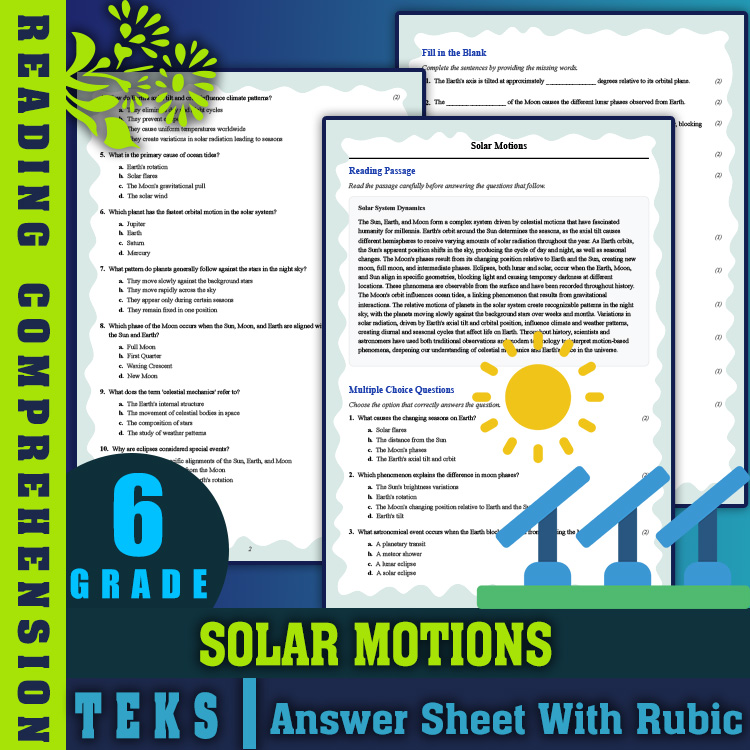
6th Grade Science | Solar Motions Reading Worksheets (PDF + Answer Key)
JCreated byJ.S SheetsLearning Objectives
- Understand the orbital motion of the Earth and its effects on seasons.
- Describe the phases of the Moon and the reasons for eclipses.
- Explain the relationship between the Sun's position, day length, and climate patterns.
Instant download

6th Grade Science – Drag Components Worksheet (Ontario Standard) (PDF)
Created byBright Mind ResourcesLearning Objectives
- Understand the different types of drag and how they affect flight.
- Identify characteristics of parasitic and induced drag.
- Explain how wing design choices influence drag and lift.
Instant download
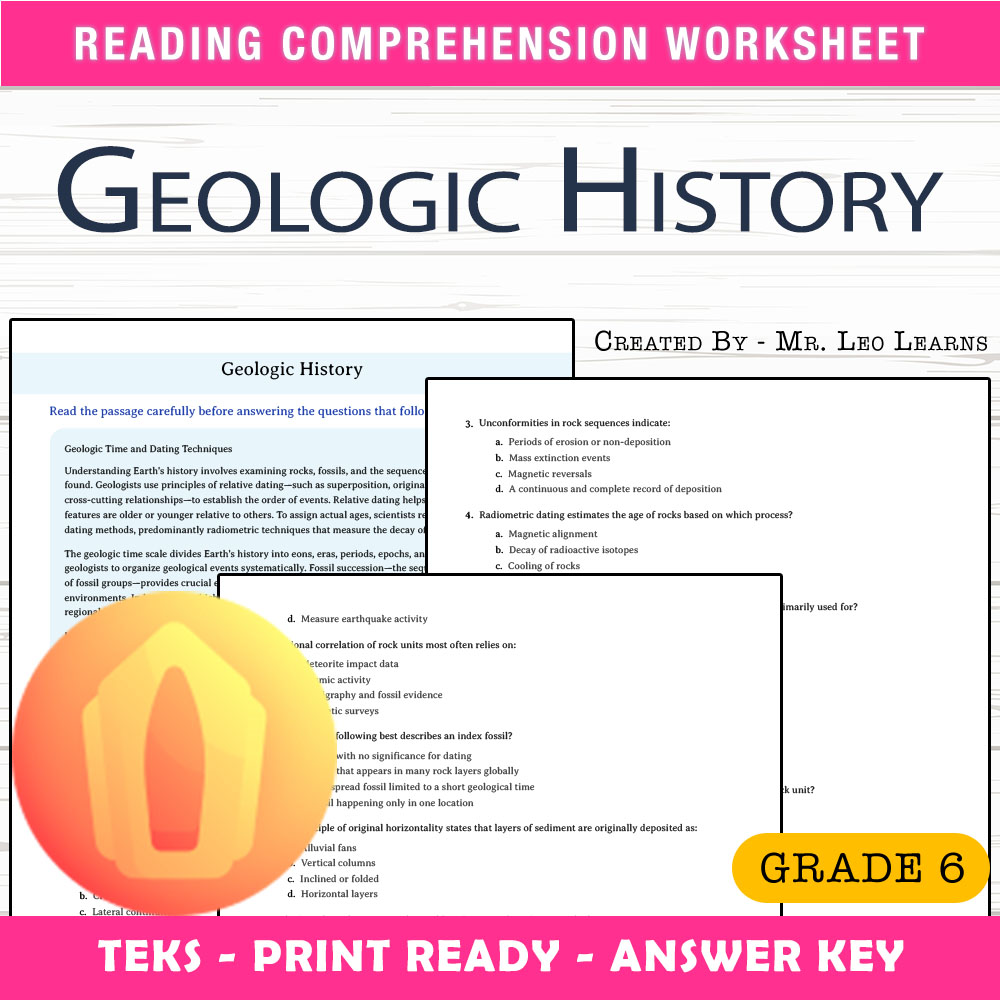
Grade 6 Science — Geologic History Worksheet for Mastery
 Created byThe Resource Hub
Learning Objectives
- Understand the principles of relative and absolute dating used in geology
- Identify key features of the geologic time scale and fossil succession
- Explain methods of radiometric dating and their applications
Instant download

Biodiversity Patterns & Measuring Diversity Worksheets | Grade 6 Science
Created byPrism Point LearningLearning Objectives
- Explain how richness, abundance, and evenness describe biodiversity
- Describe how transects and quadrats support consistent sampling
- Interpret simple biodiversity indices to compare habitats
Instant download

Biodiversity Richness and Turnover Worksheets | Grade 6 Science
 Created byTeachers Club
Learning Objectives
- Describe how species richness and species occurrence can show biodiversity patterns across space and time
- Compare island faunas, latitudinal gradients, and habitat heterogeneity as examples of biodiversity variation
- Explain how turnover and community composition can be assessed using historical records and present-day surveys
Also included in: Biological Evolution & Unity and Diversity | Grade 6 Science NGSS +2 more
Instant download

Population Dynamics Over Generations: Grade 6 Science Worksheets
Created byTeachers ClubLearning Objectives
- Interpret frequency tables and allele frequencies to describe how traits change in populations over generations
- Read and compare time-series graphs of population size to identify increasing, decreasing, and bottleneck patterns
- Use proportional reasoning to calculate how allele frequencies change and to predict outcomes for a simple scenario
Also included in: Biological Evolution & Unity and Diversity | Grade 6 Science NGSS +2 more
Instant download

Common Ancestry: Homologous Structures & DNA Evidence Worksheets
Created byTeachers ClubLearning Objectives
- Explain how homologous structures and conserved DNA sequences support common ancestry.
- Use phylogenetic trees to describe divergence among related taxa over generations.
- Interpret vestigial organs and morphological gradients as clues about ancestral traits.
Also included in: Biological Evolution & Unity and Diversity | Grade 6 Science NGSS +2 more
Instant download

Grade 6 Science | Human Impacts Worksheet | BC Standards
 Created byLumora Learning
Learning Objectives
- Understand how human activities alter ecosystems and affect biodiversity.
- Identify specific impacts of pollution, resource extraction, and land clearing.
- Explain the consequences of habitat loss and environmental pollution on ecosystems.
Instant download
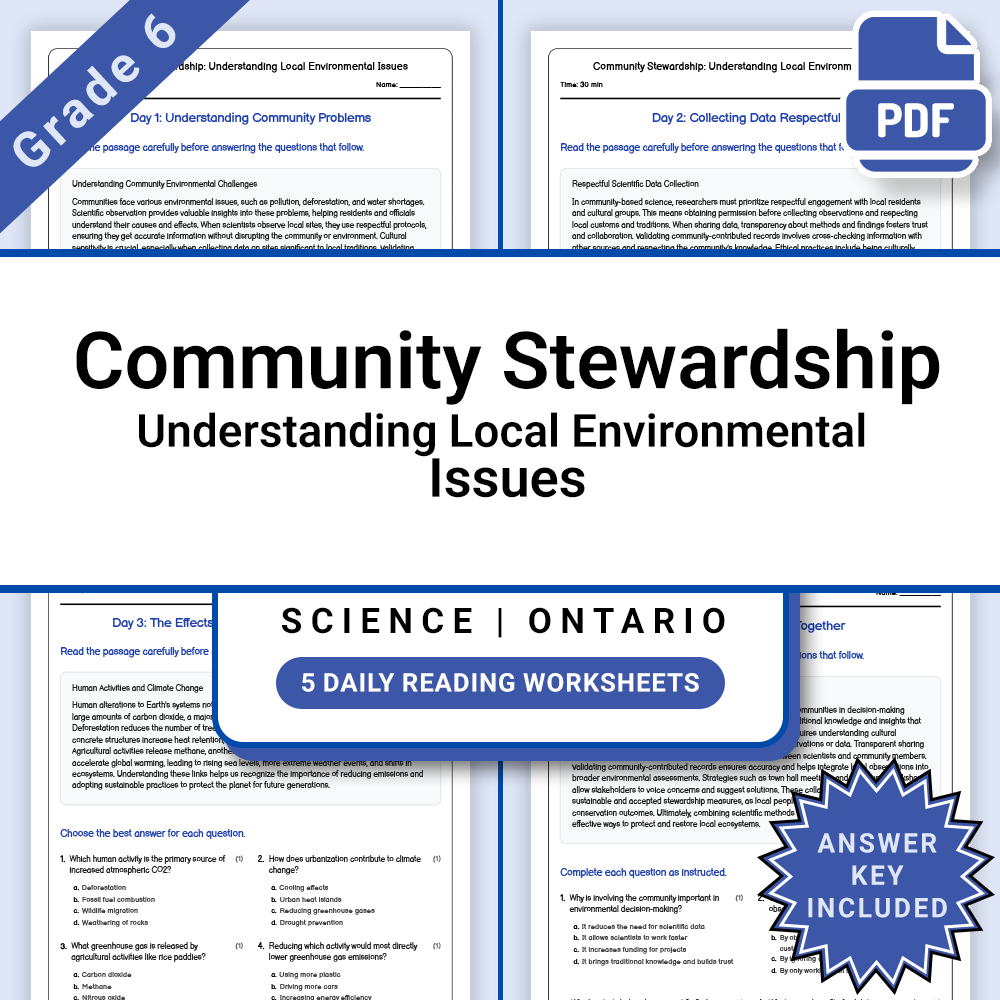
Grade 6 Science – Communicating Evidence Daily Reading Worksheet with Answer Key
JCreated byJ.S SheetsLearning Objectives
- Understand how to link scientific claims with supporting evidence.
- Identify different ways to communicate scientific data effectively.
- Recognize the importance of clarity and audience consideration in presenting evidence.
Also included in: Grade 6 Science STEM Skills and Connections Lesson Bundle with Ontario Framework +1 more
Instant download
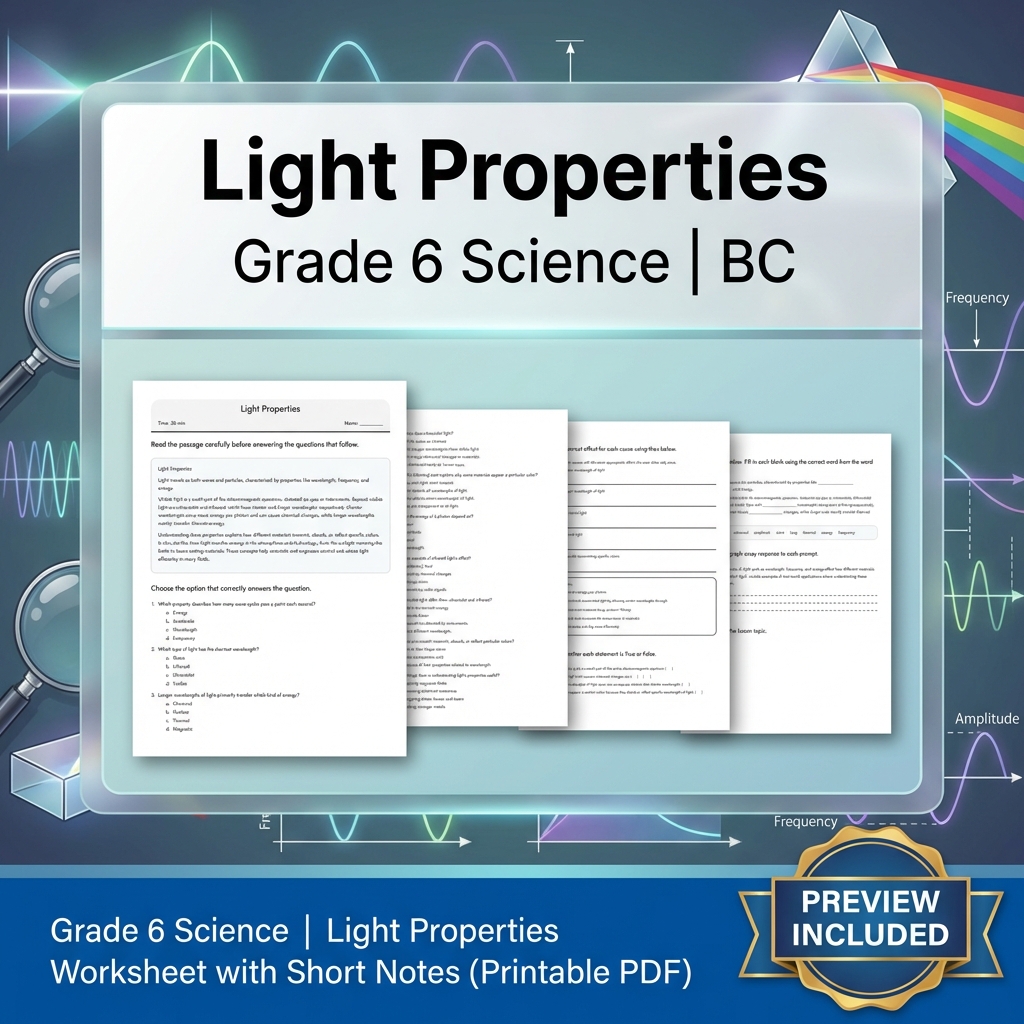
Grade 6 Science | Light Properties Worksheet with Short Notes (Printable PDF)
 Created byMeadowlark Worksheets
Learning Objectives
- Understand how light behaves as waves and particles.
- Identify the properties of wavelength, frequency, and energy of light.
- Differentiate between visible, ultraviolet, and infrared light.
Also included in: Grade 6 Science | Energy, Waves & Circuits UNIT Bundle (BC Frame work) +1 more
Instant download
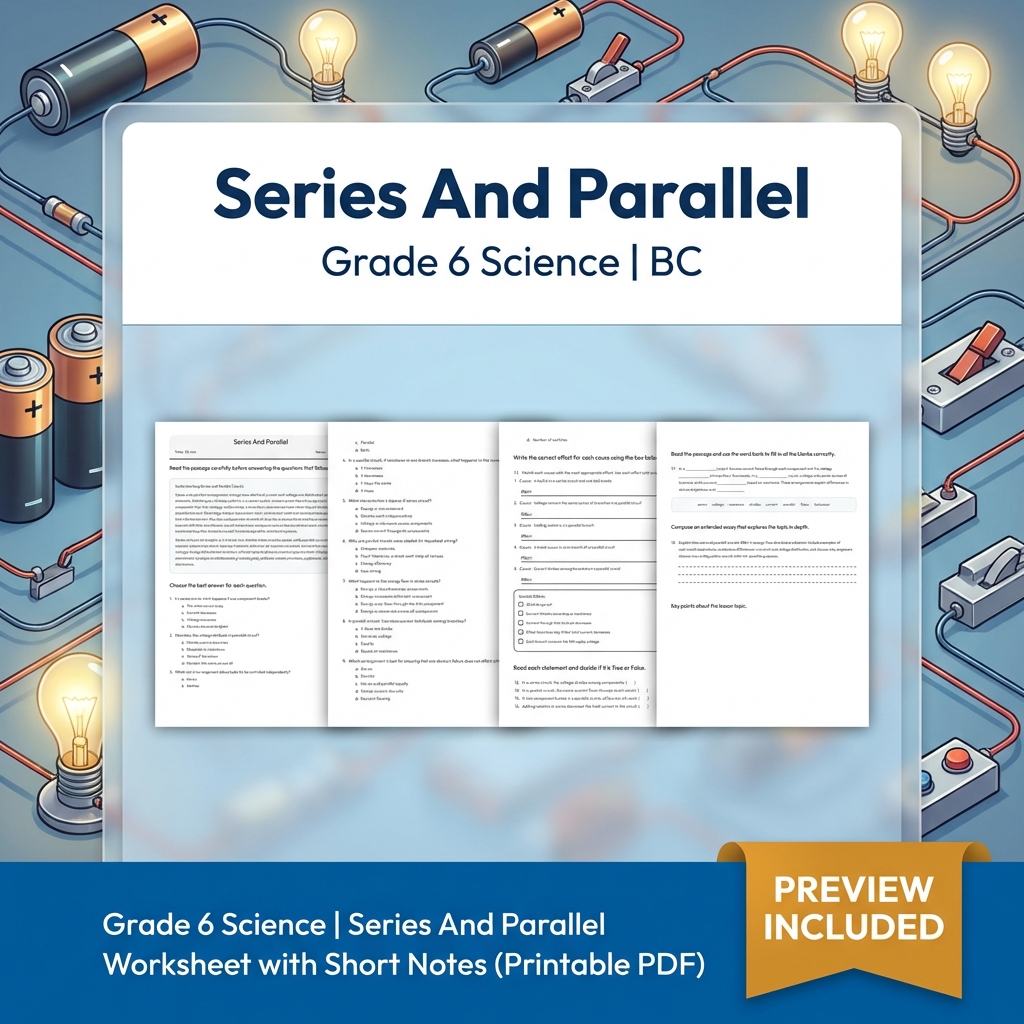
Grade 6 Science | Series And Parallel Worksheet with Short Notes (Printable PDF)
Created byMeadowlark WorksheetsLearning Objectives
- Understand the differences between series and parallel electrical circuits.
- Explain how current and voltage are distributed in series and parallel arrangements.
- Identify real-world applications of series and parallel circuits.
Also included in: Grade 6 Science | Energy, Waves & Circuits UNIT Bundle (BC Frame work) +1 more
Instant download
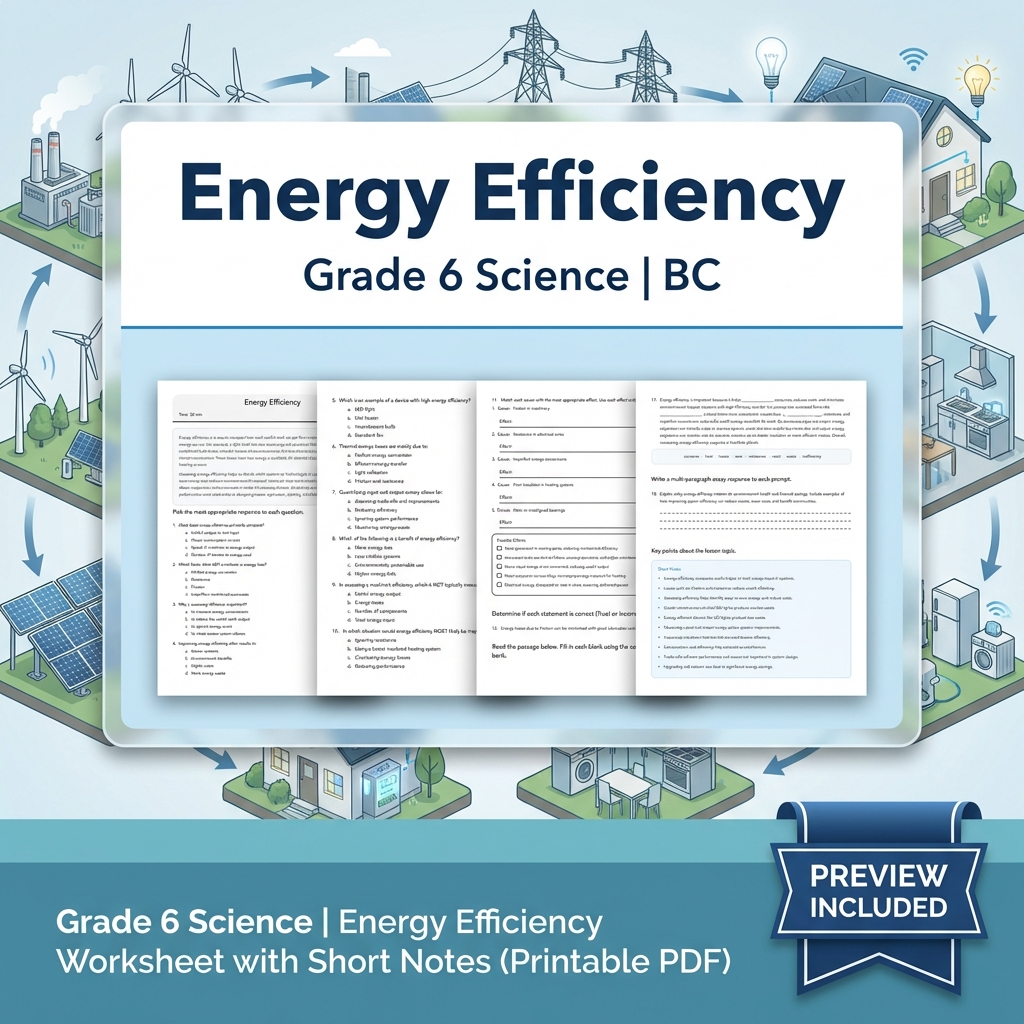
Grade 6 Science | Energy Efficiency Worksheet with Short Notes (Printable PDF)
Created byMeadowlark WorksheetsLearning Objectives
- Understand the concept of energy efficiency and how it compares useful output to total input.
- Identify common causes of energy loss such as friction and resistance.
- Analyze different scenarios to evaluate system performance and efficiency.
Also included in: Grade 6 Science | Energy, Waves & Circuits UNIT Bundle (BC Frame work) +1 more
Instant download
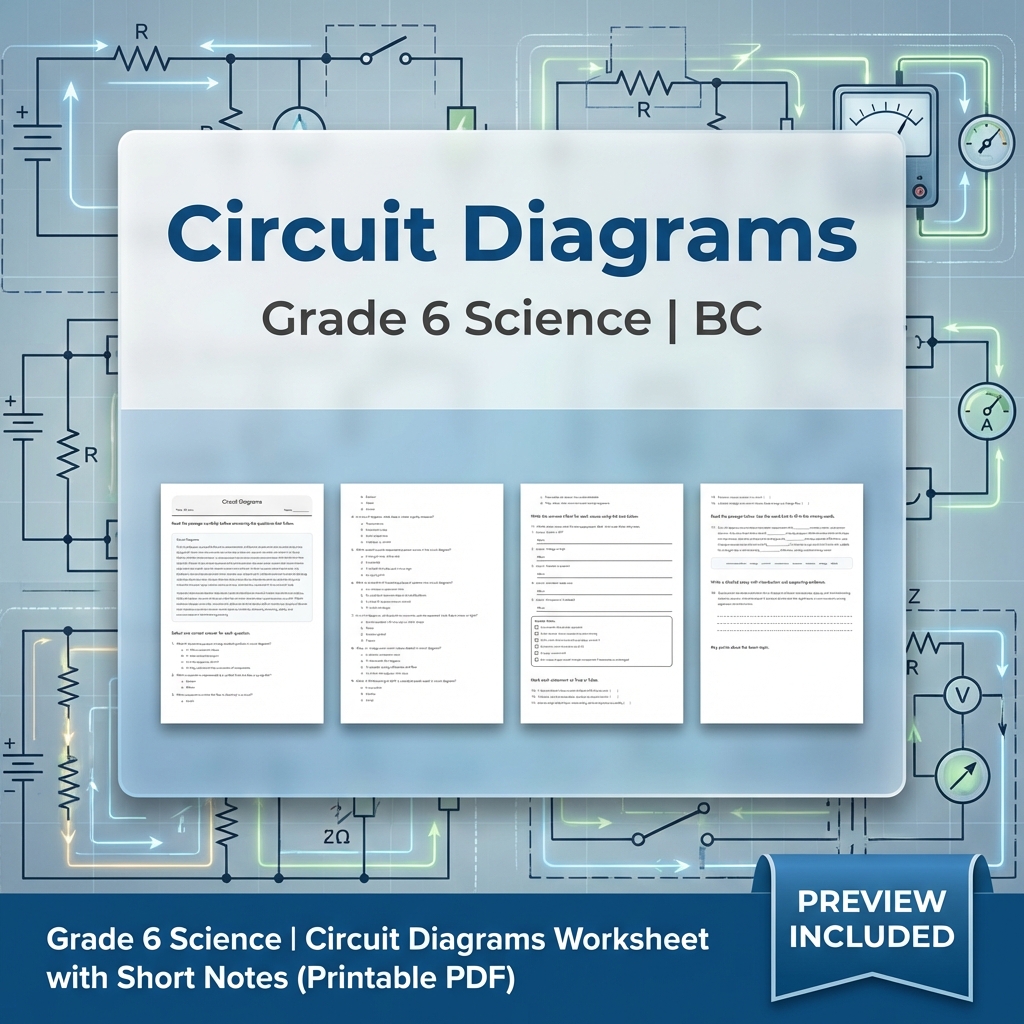
Grade 6 Science | Circuit Diagrams Worksheet with Short Notes (Printable PDF)
Created byMeadowlark WorksheetsLearning Objectives
- Understand standard symbols used in circuit diagrams.
- Identify different components and their functions in electrical systems.
- Translate physical electrical systems into schematic diagrams.
Also included in: Grade 6 Science | Energy, Waves & Circuits UNIT Bundle (BC Frame work) +1 more
Instant download
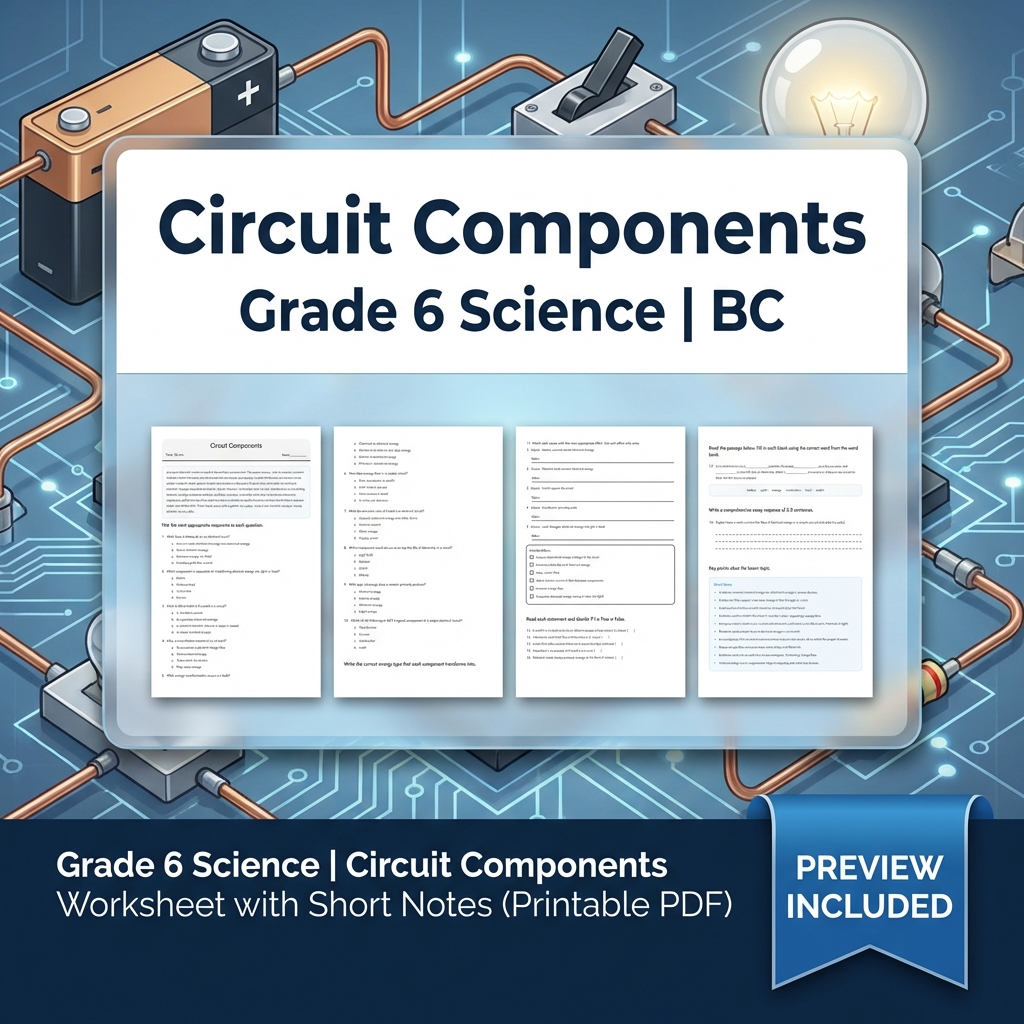
Grade 6 Science | Circuit Components Worksheet with Short Notes (Printable PDF)
Created byMeadowlark WorksheetsLearning Objectives
- Identify the main components of a simple electrical circuit.
- Explain the roles of sources, conductors, loads, and control elements in an electrical circuit.
- Describe how energy is transformed within circuit components.
Also included in: Grade 6 Science | Energy, Waves & Circuits UNIT Bundle (BC Frame work) +1 more
Instant download
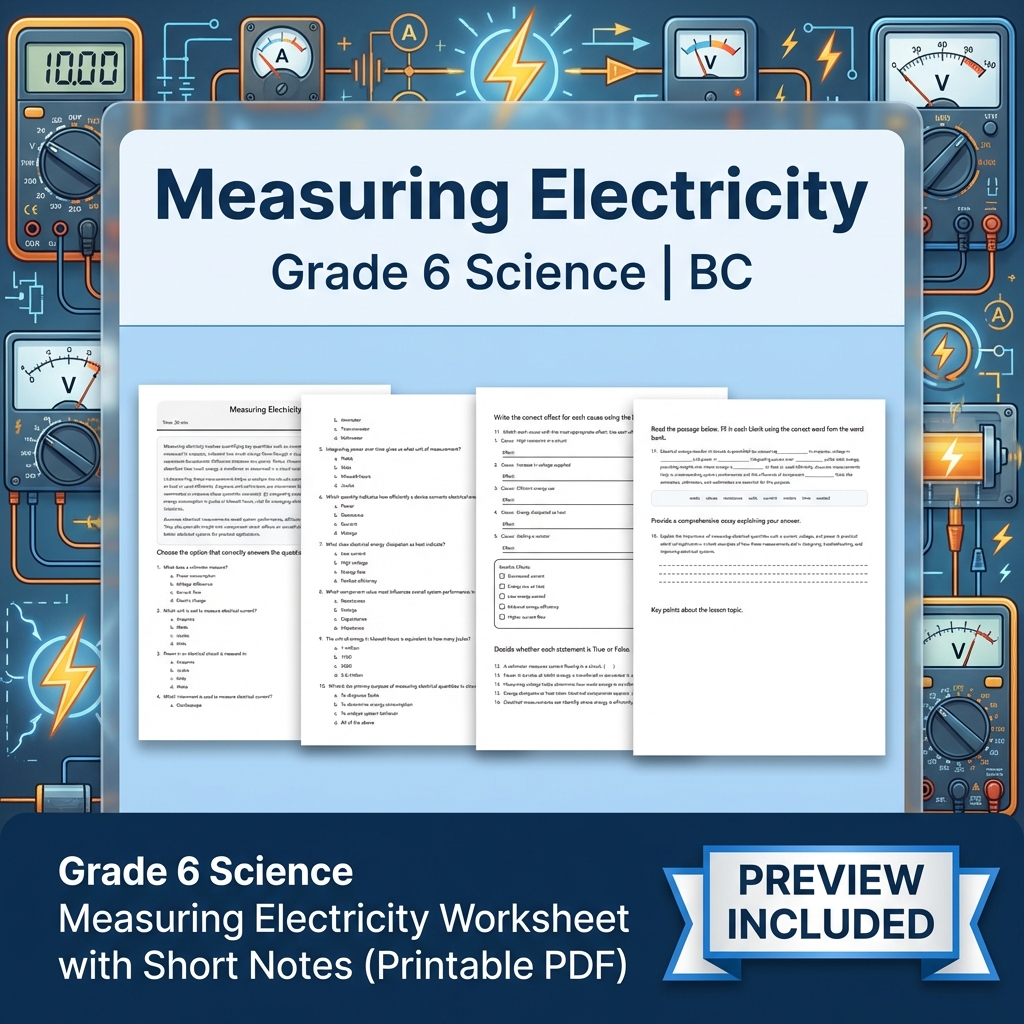
Grade 6 Science Measuring Electricity Worksheet with Short Notes (Printable PDF)
Created byMeadowlark WorksheetsLearning Objectives
- Understand the key electrical quantities: current, voltage, and power.
- Learn how to measure electrical quantities using appropriate instruments.
- Explore the relationship between power, energy, and time in electrical systems.
Also included in: Grade 6 Science | Energy, Waves & Circuits UNIT Bundle (BC Frame work) +1 more
Instant download
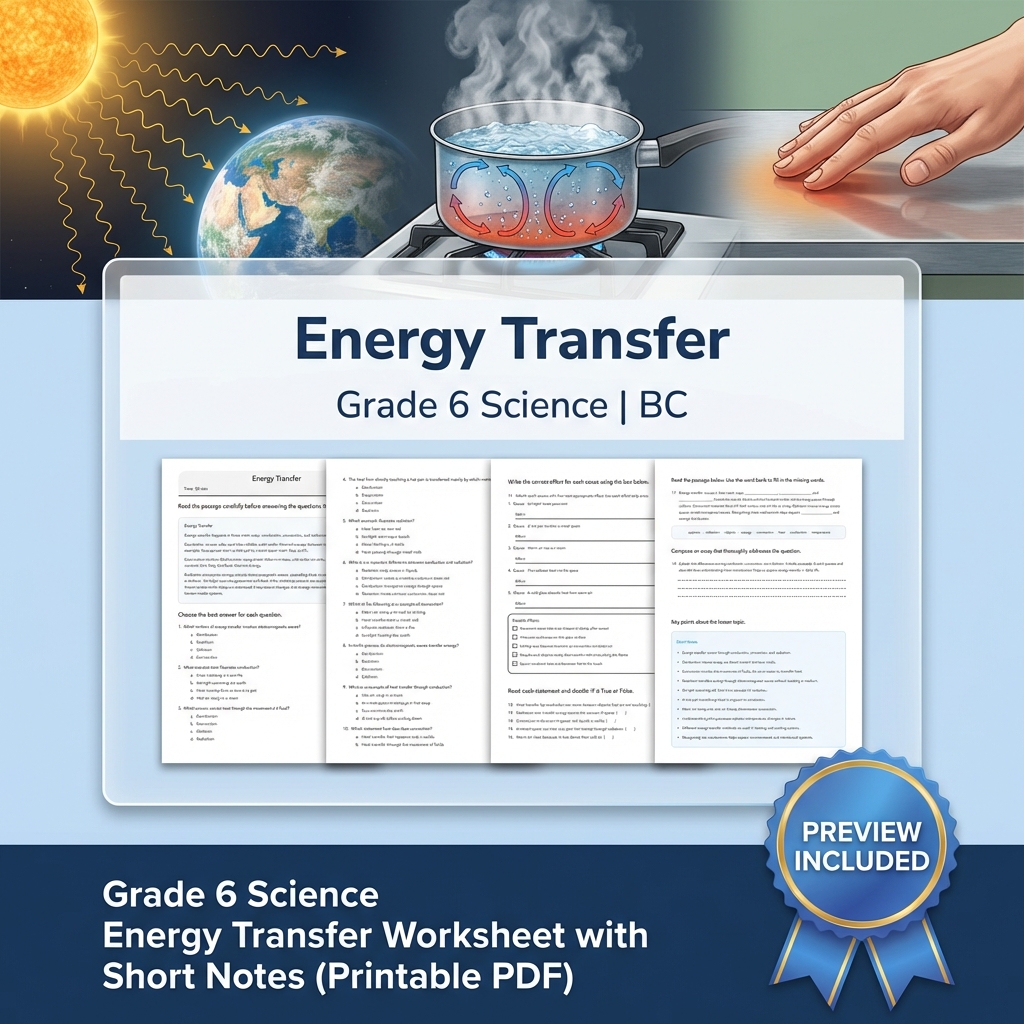
Grade 6 Science Energy Transfer Worksheet with Short Notes (Printable PDF)
Created byMeadowlark WorksheetsLearning Objectives
- Describe the three main modes of energy transfer: conduction, convection, and radiation.
- Identify examples of energy transfer in everyday life.
- Distinguish between conduction, convection, and radiation based on how they transfer energy.
Also included in: Grade 6 Science | Energy, Waves & Circuits UNIT Bundle (BC Frame work) +1 more
Instant download
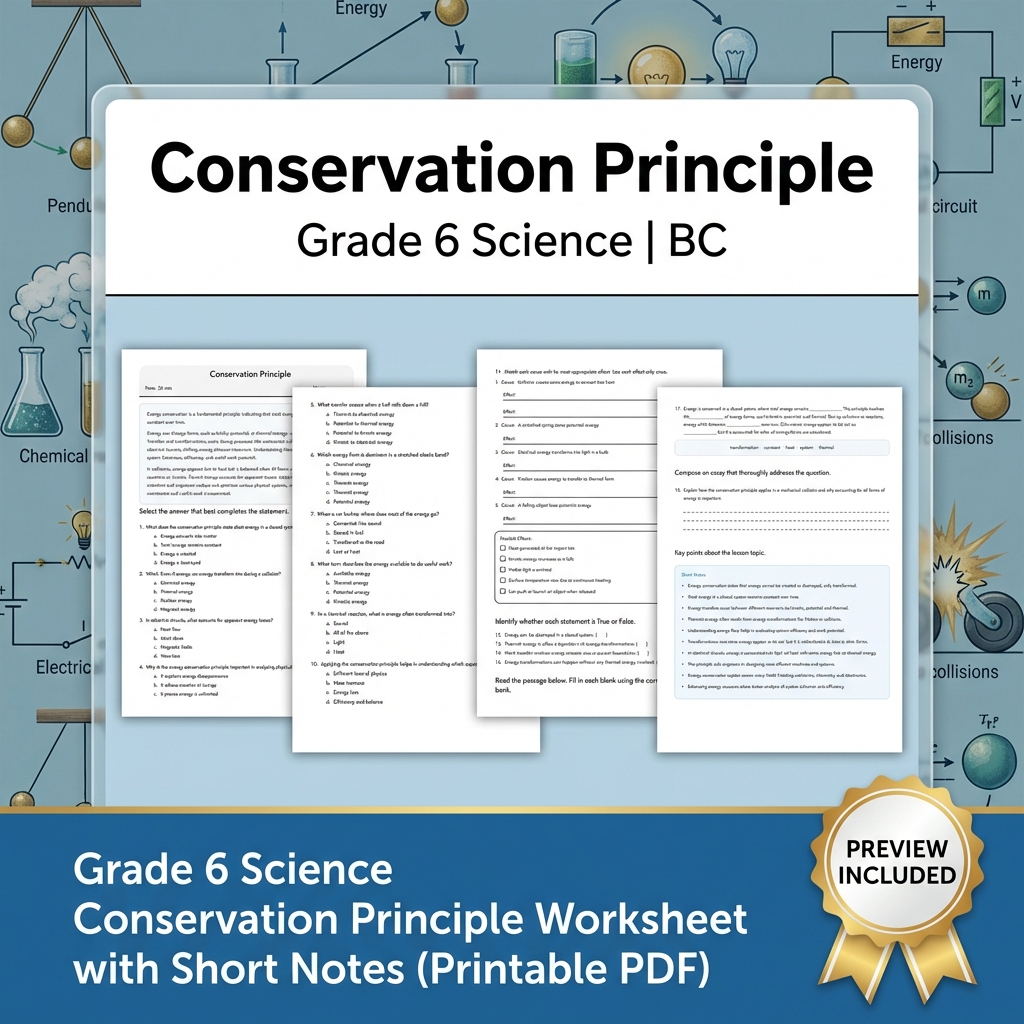
Grade 6 Science Conservation Principle Worksheet with Short Notes (PDF)
Created byMeadowlark WorksheetsLearning Objectives
- Understand the concept of energy conservation and how energy transforms within a system.
- Identify different forms of energy and how they relate to conservation.
- Apply the conservation principle to diverse physical scenarios such as collisions, reactions, and circuits.
Also included in: Grade 6 Science | Energy, Waves & Circuits UNIT Bundle (BC Frame work) +1 more
Instant download
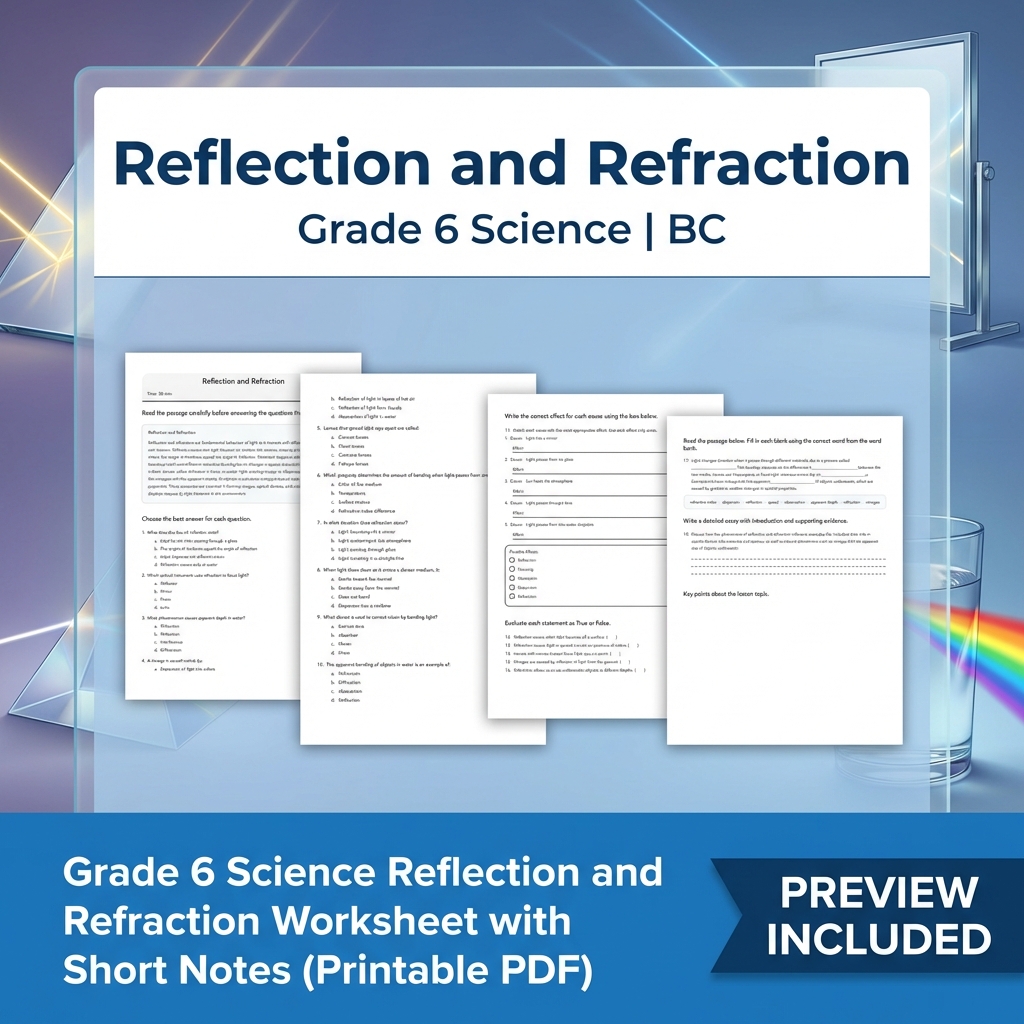
Grade 6 Science Reflection and Refraction Worksheet with Short Notes (PDF)
Created byMeadowlark WorksheetsLearning Objectives
- Understand how light interacts with surfaces through reflection and refraction.
- Identify the laws governing reflection and refraction of light.
- Explain how lenses focus or disperse light using refraction.
Also included in: Grade 6 Science | Energy, Waves & Circuits UNIT Bundle (BC Frame work) +1 more
Instant download

Physical Properties Worksheet for Grade 6 Science | Standards-Aligned Practice
JCreated byJ.S SheetsLearning Objectives
- Identify and describe observable physical properties of matter.
- Differentiate between physical changes and chemical changes based on properties.
- Understand how physical properties help in classifying and analyzing matter.
Instant download

Photosynthesis Energy Conversion Worksheet | Standards-Aligned Grade 6 Science
JCreated byJ.S SheetsLearning Objectives
- Understand the process of photosynthesis and how it converts light energy into chemical energy.
- Identify the key components involved in photosynthesis, including inputs and outputs.
- Explain the significance of photosynthesis for energy flow in ecosystems.
Also included in: Grade 6 Life Science Science Lesson Bundle – California Standards +1 more
Instant download
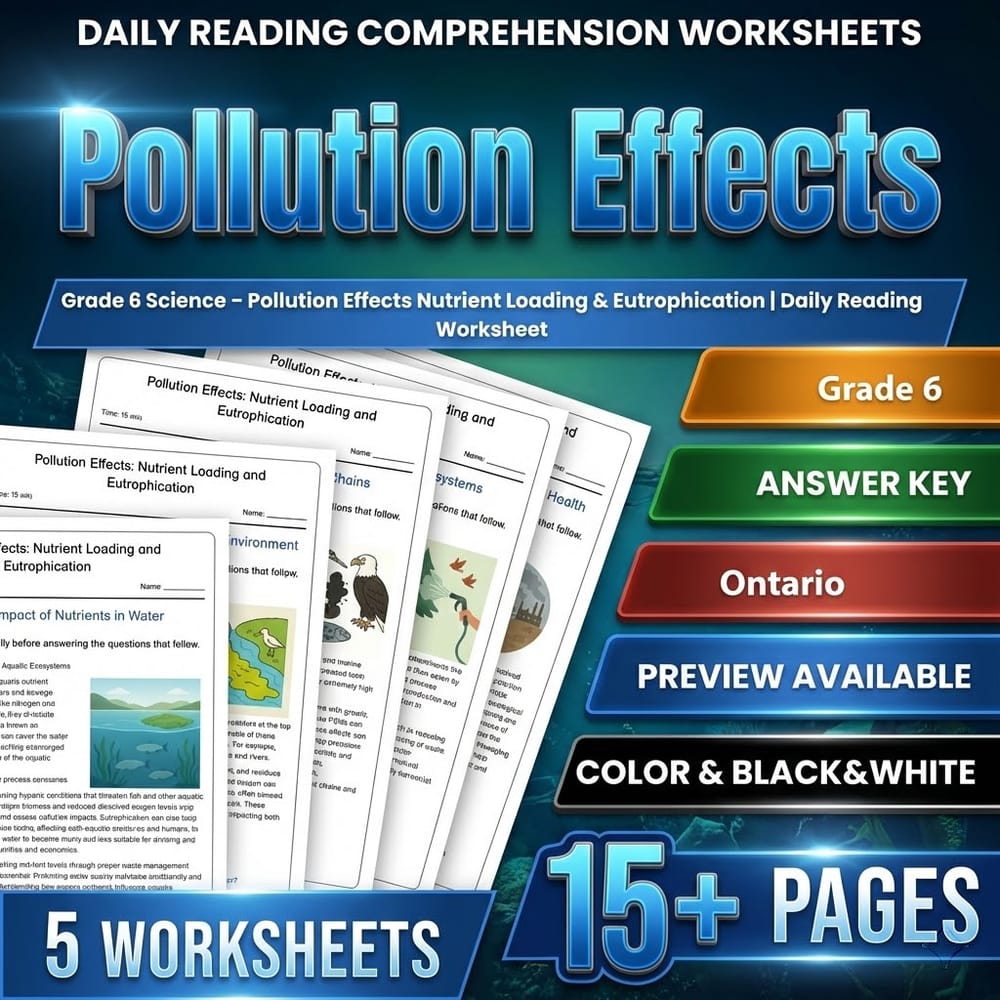
Grade 6 Science – Pollution Effects Nutrient & Eutrophication | Daily Worksheet
 Created byQuiet Forest Education
Learning Objectives
- Understand how nutrient loading impacts aquatic ecosystems
- Identify the process of eutrophication in lakes
- Recognize measurable indicators of water quality related to pollution
Also included in: Ecosystems and Environment Grade 6 Science Daily Worksheets Bundle | Ontario +1 more
Instant download

Conservation Principle Worksheet | Standards-Aligned Grade 6 Science Practice
JCreated byJ.S SheetsLearning Objectives
- Understand the concept of energy conservation within closed systems.
- Identify different forms of energy and how they transform and transfer.
- Apply the conservation principle to analyze system behavior, efficiency, and useful work.
Instant download

Pollution and Eutrophication Worksheet | Grade 6 Biodiversity Science
Created byPrism Point LearningLearning Objectives
- Explain how nutrient loading affects aquatic and terrestrial communities
- Identify ecosystem indicators linked to pollution effects
- Describe how chemical contaminants affect ecosystem functioning
Instant download

Dichotomous Keys & Classification Worksheets | Grade 6 Science
Created byPrism Point LearningLearning Objectives
- Explain how observable traits support organism classification
- Use a dichotomous key to identify an organism
- Describe hierarchical levels from kingdom to species
Instant download

Respiratory System Worksheet | Standards-Aligned Grade 6 Science Practice
JCreated byJ.S SheetsLearning Objectives
- Understand how the respiratory system enables gas exchange between the environment and tissues.
- Identify the structures involved in the respiratory process and their functions.
- Describe how surface area adaptations increase the efficiency of gas exchange.
Instant download

Grade 6 Science | Biodiversity Solutions - Daily Reading Comprehension
 Created byCoral Reef Learning
Learning Objectives
- Understand the importance of coral reefs for biodiversity.
- Identify different strategies used to protect coral reefs.
- Evaluate ecological trade-offs of conservation strategies.
Instant download
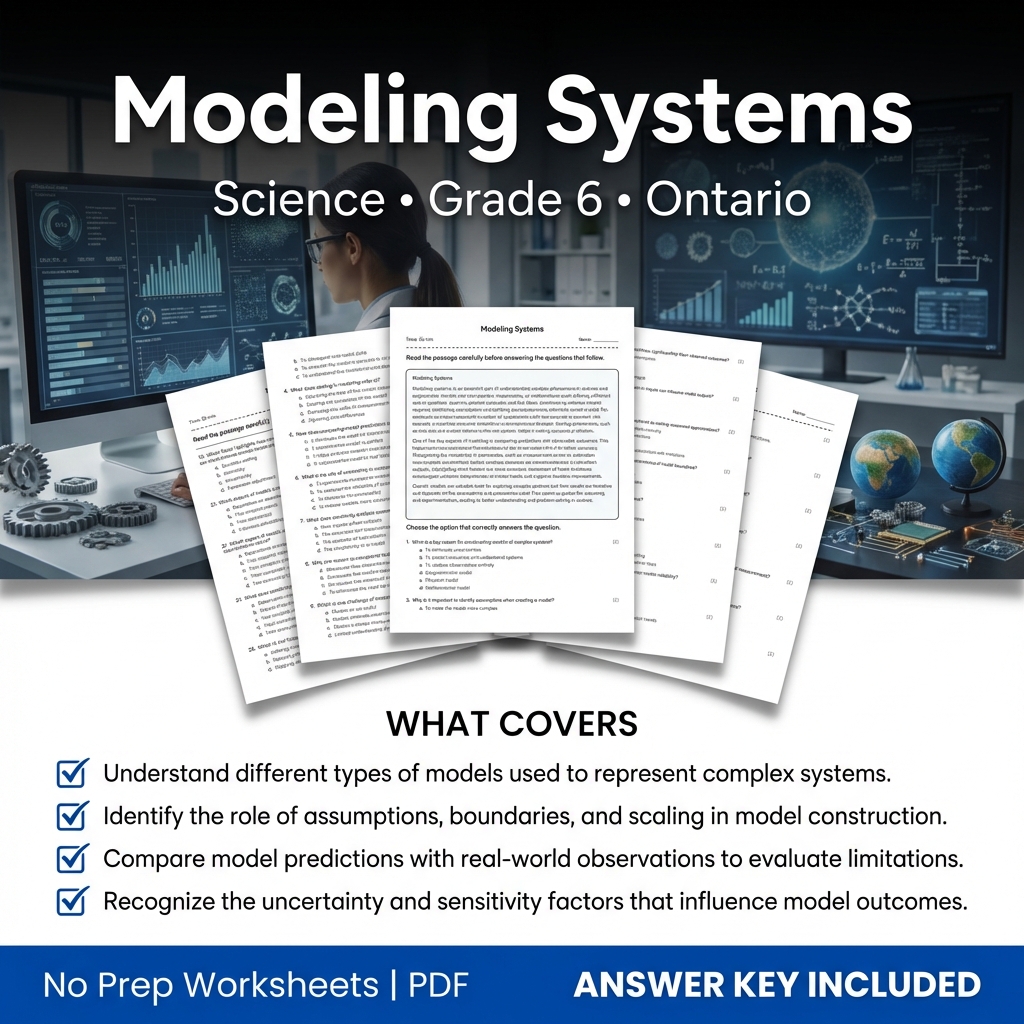
Modeling Systems Grade 6 Science Worksheet | Ontario Standards
Created byCoral Reef LearningLearning Objectives
- Understand different types of models used to represent complex systems.
- Identify the role of assumptions, boundaries, and scaling in model construction.
- Compare model predictions with real-world observations to evaluate limitations.
Instant download
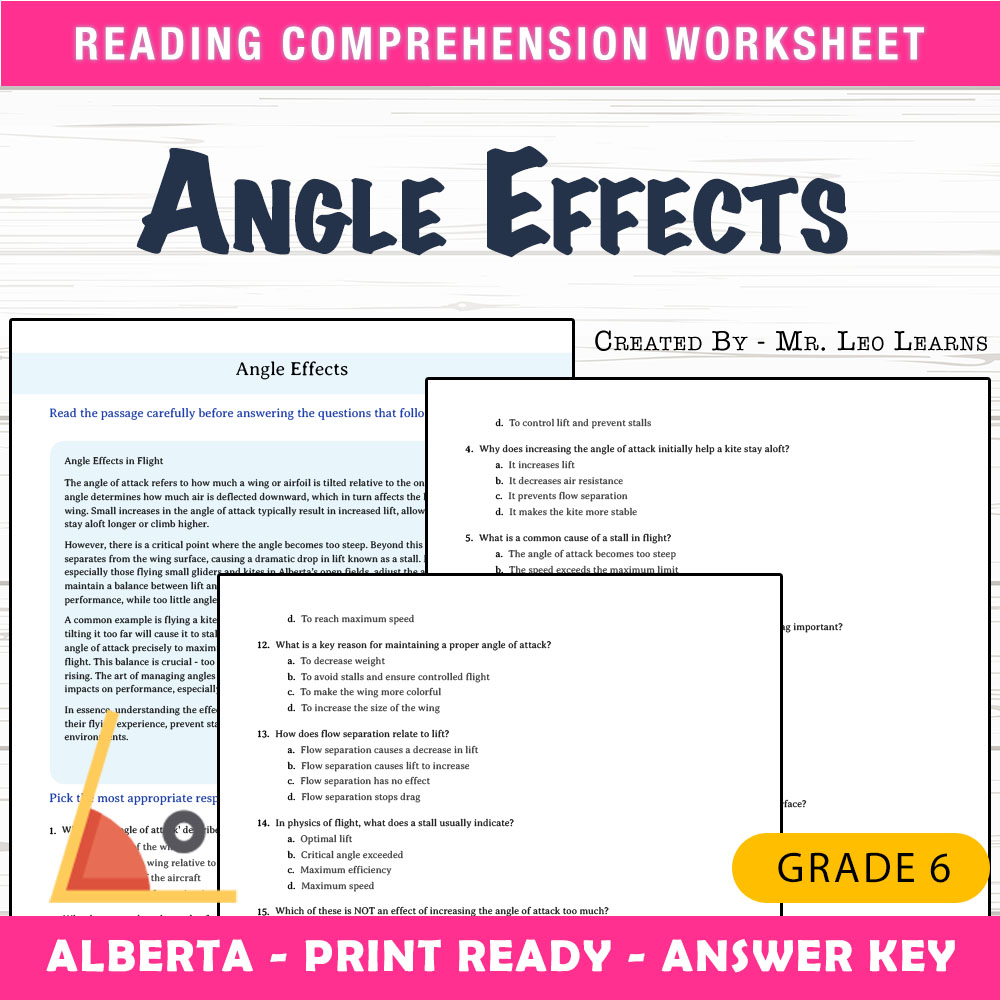
Grade 6 Science — Angle Effects Worksheet MCQ Paper for Master
Created byThe Resource HubLearning Objectives
- Understand how the angle of attack influences lift and drag in flight.
- Identify the critical point where increasing angle reduces lift and causes stall.
- Explain with examples how adjusting the angle affects performance of gliders and kites.
Also included in: Grade 6 Science | Air and Aerodynamics UNIT Worksheet Bundle (Alberta Framework) +1 more
Instant download
About Grade 6 Science Worksheets
Explore Grade 6 Science worksheets for classwork, homework, or review. Our 5,997 printables download instantly as PDFs.
MyTeachingSheets worksheets are made by real teacher-authors and checked before they go live. Download any as a print-ready PDF for lessons, homework, or independent practice — most include answer keys, and previews are always free.