
Grade 6 Science Worksheets
5,997 worksheets
El Niño Effects Worksheet Pack | Grade 6 Science Weather & Climate
 Created byPrism Point Learning
Learning Objectives
- Explain how El Niño conditions in the tropical Pacific can change evaporation, cloud formation, and wind patterns
- Describe how shifts in ocean-atmosphere conditions can lead to changes in rainfall and temperatures in other regions
- Compare typical patterns with El Niño and La Niña impacts using evidence from precipitation and wind trends
Also included in: Grade 6 Weather & Climate Science Lesson Bundle | Florida NGSSS
Instant download

Food Web Energy Paths Worksheet | Grade 6 Ecosystems Science
Created byPrism Point LearningLearning Objectives
- Explain how energy moves through ecosystems from producers to consumers and decomposers.
- Describe how food webs show multiple feeding relationships instead of a single chain.
- Use vocabulary such as producer, consumer, decomposer, trophic level, and nutrient cycling in context.
Also included in: Animals Matter Lesson Bundle | Grade 6 Science | California Standards
Instant download
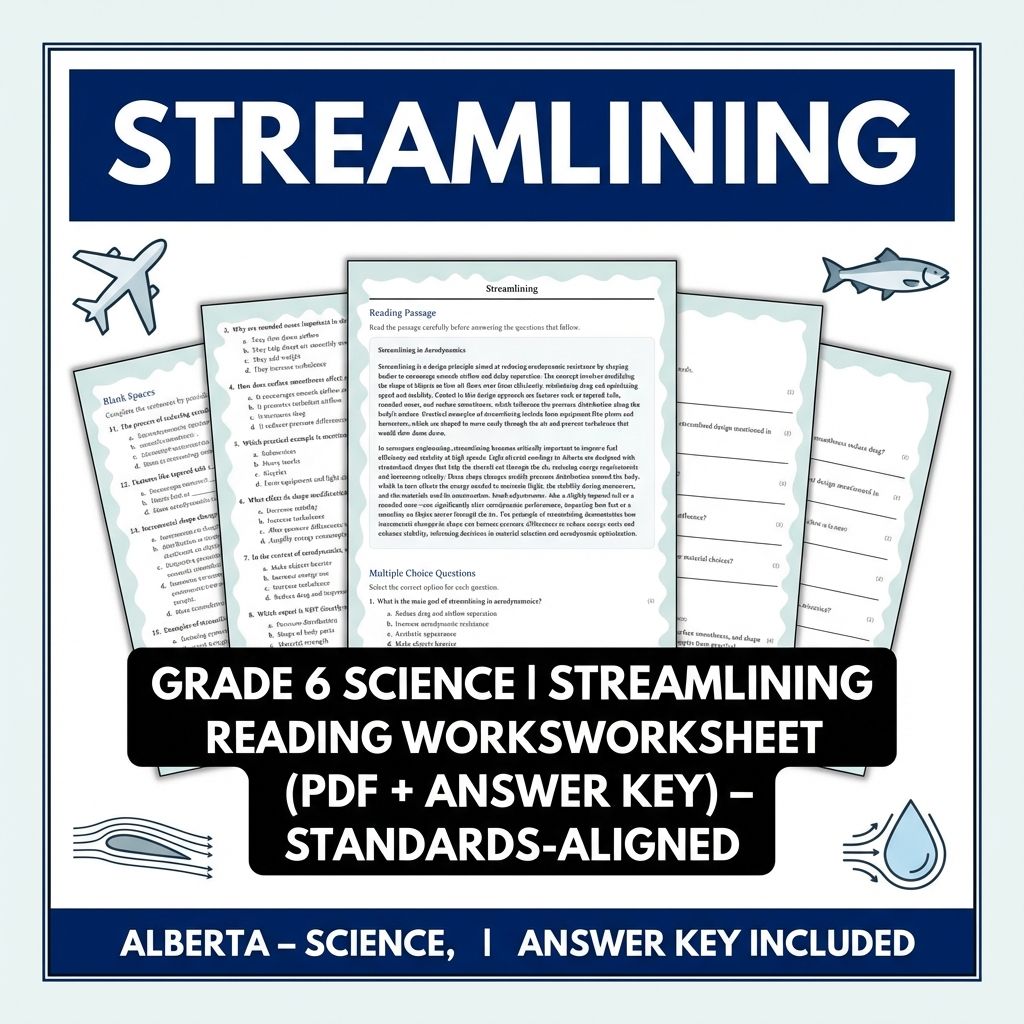
Grade 6 Science | Streamlining Reading Worksheet (PDF + Answer Key)
JCreated byJ.S SheetsLearning Objectives
- Understand the principles of streamlining and how shape impacts airflow
- Identify features such as tapered tails, rounded noses, and surface smoothness that contribute to aerodynamic efficiency
- Connect practical examples like farm equipment and aircraft cowlings to streamline concepts
Also included in: Grade 6 Science | Flight Physics & Aerodynamics UNIT Pack (Answer Keys Included) +1 more
Instant download

Grade 6 Science Worksheet on Carbon Cycling | Standards-Aligned Practice
JCreated byJ.S SheetsLearning Objectives
- Describe how carbon moves through living systems in ecosystems.
- Explain the processes of photosynthesis, respiration, and decomposition in the carbon cycle.
- Identify the roles of organisms in exchanging and storing carbon.
Also included in: Grade 6 Ecosystem Adaptations and Energy Flow Science Lesson Bundle | Florida NGSSS +1 more
Instant download
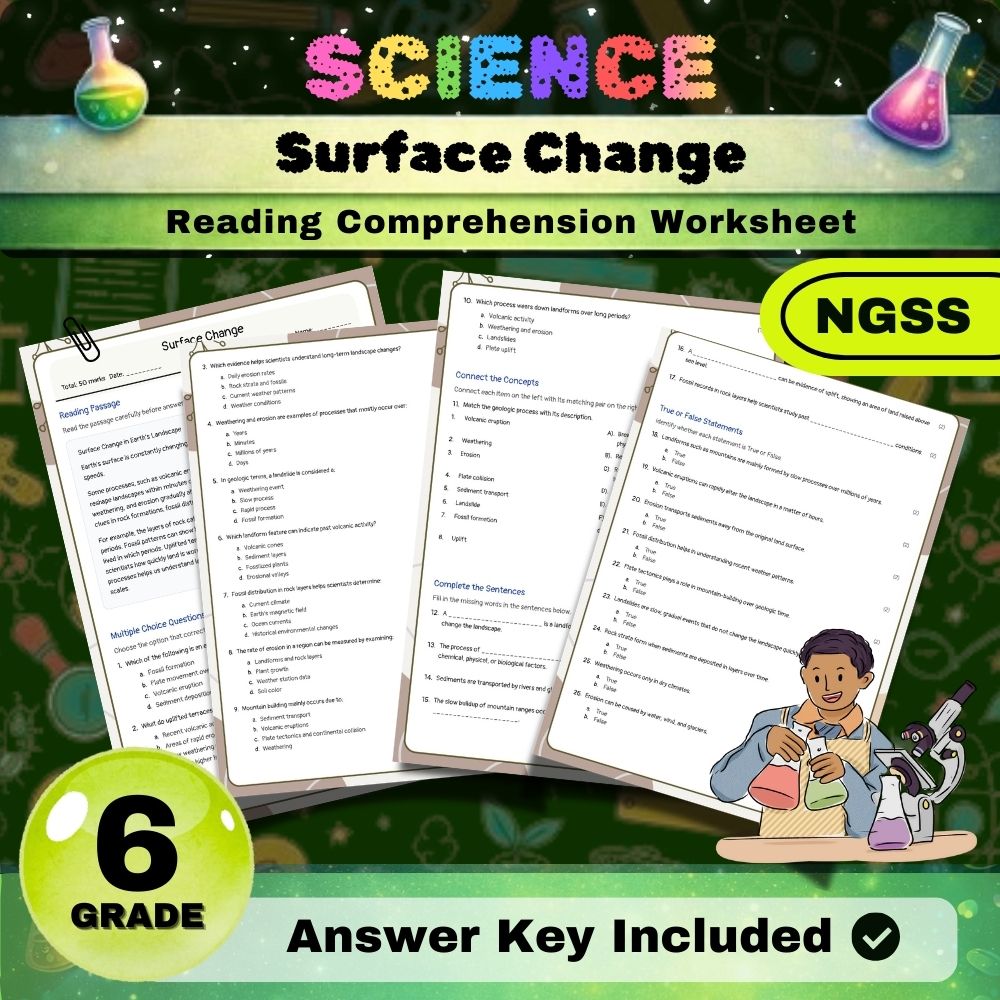
6th Grade Science | Surface Change NGSS Worksheet (PDF)
 Created byMaple Path Learning
Learning Objectives
- Explain geologic processes that modify Earth's surface over different time scales.
- Identify evidence such as rock strata, fossils, and landforms that demonstrate landscape evolution.
- Distinguish between rapid and slow surface change events, understanding their observable indicators.
Also included in: Grade 6 Science | Weather, Water Cycle & Earth Systems NGSS Unit Bundle (PDF) +1 more
Instant download

Parallel Characteristics Test Prep Printables | Grade 6 Science
Created byPrism Point LearningLearning Objectives
- Explain how current and potential difference behave in parallel circuits with multiple branching pathways
- Use the idea of independent branch operation to predict how loads affect current in parallel branches
- Compare the fault tolerance of parallel circuits with the vulnerability of series circuits
Also included in: Grade 6 Circuits & Electricity Science lesson bundle: Ontario
Instant download
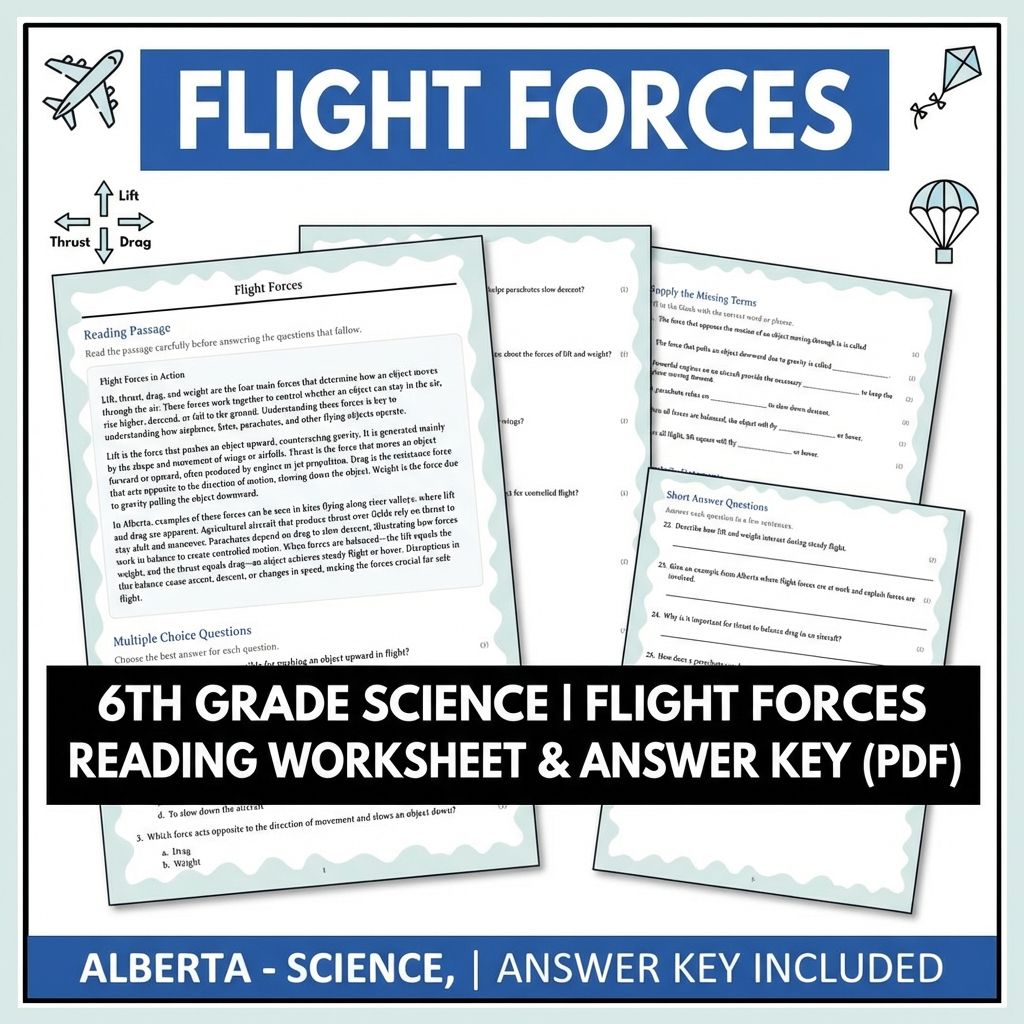
6th Grade Science | Flight Forces Reading Worksheet & Answer Key (PDF)
JCreated byJ.S SheetsLearning Objectives
- Explain the four primary forces that act on an object in flight: lift, thrust, drag, and weight.
- Describe how these forces interact to produce controlled flight or descent.
- Identify real-world examples of flight forces, such as kites, aircraft, and parachutes.
Also included in: Grade 6 Science | Flight Physics & Aerodynamics UNIT Pack (Answer Keys Included) +1 more
Instant download
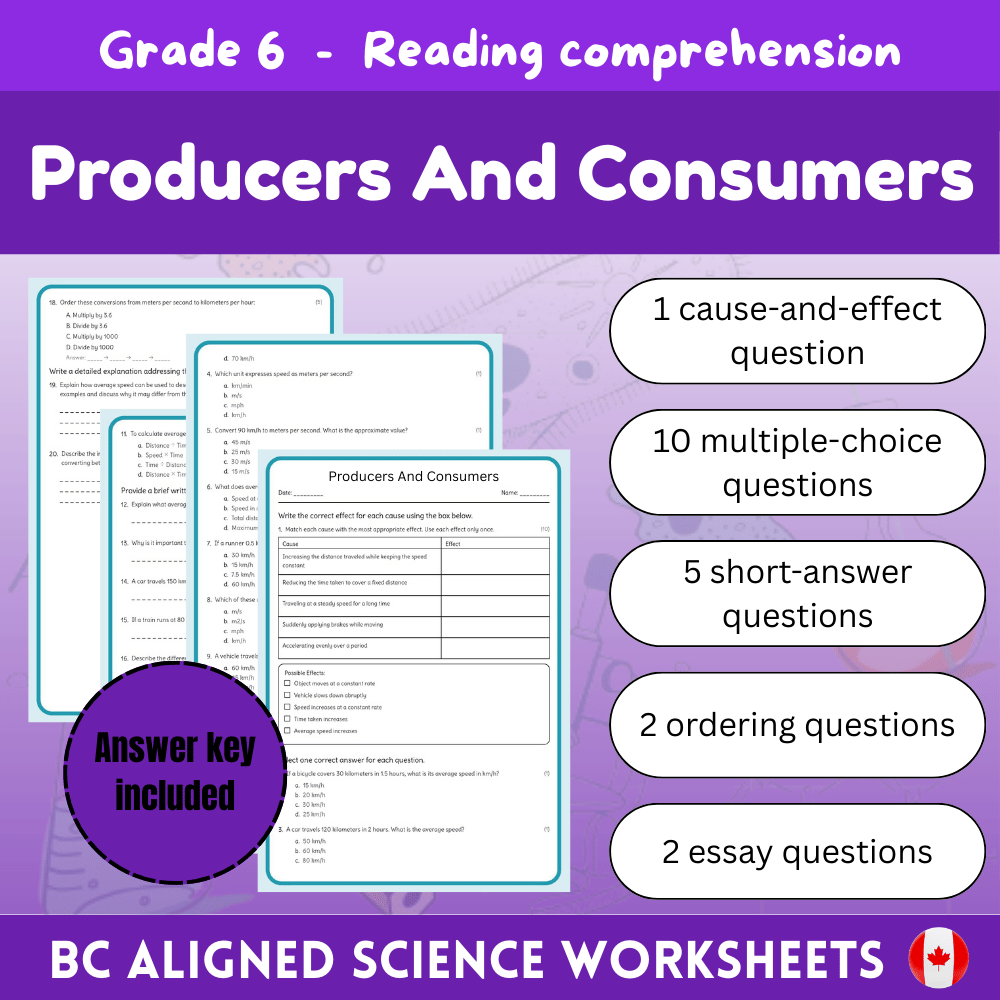
6th Grade Science | Producers & Consumers Worksheet (PDF) – BC Standards
 Created byBright Mind Resources
Learning Objectives
- Understand the roles of producers and consumers in an ecosystem.
- Identify the different levels of consumers and their diets.
- Explain how energy transfer between trophic levels is limited and impacts ecosystems.
Instant download

6th Grade Science Worksheet | Abiotic Influences TEKS (PDF)
 Created byEvergreen Desk Education
Learning Objectives
- Explain how temperature, water availability, light intensity, soil composition, pH, and salinity (abiotic factors) affect habitat conditions
- Describe how environmental gradients (changes across space or seasons) influence where organisms can survive and how they move or select microhabitats
- Use examples to connect physical conditions to biological processes such as metabolism, root growth, and population changes
Instant download
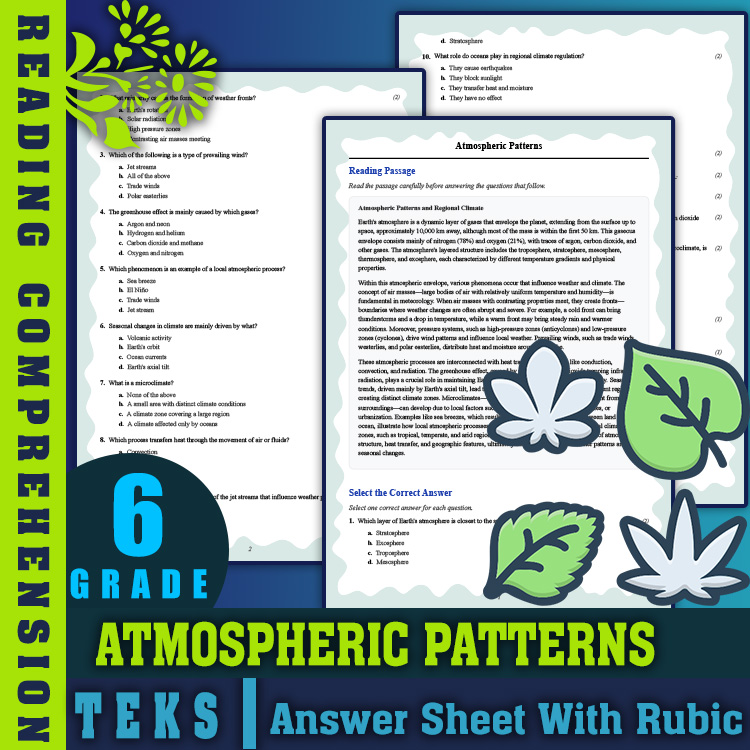
6th Grade Science | Atmospheric Patterns Reading Worksheet & Answer Key PDF
JCreated byJ.S SheetsLearning Objectives
- Understand the structure and components of Earth's atmosphere.
- Identify and describe different atmospheric phenomena such as fronts, pressure systems, and winds.
- Connect heat transfer mechanisms and the greenhouse effect to regional climate variability.
Instant download
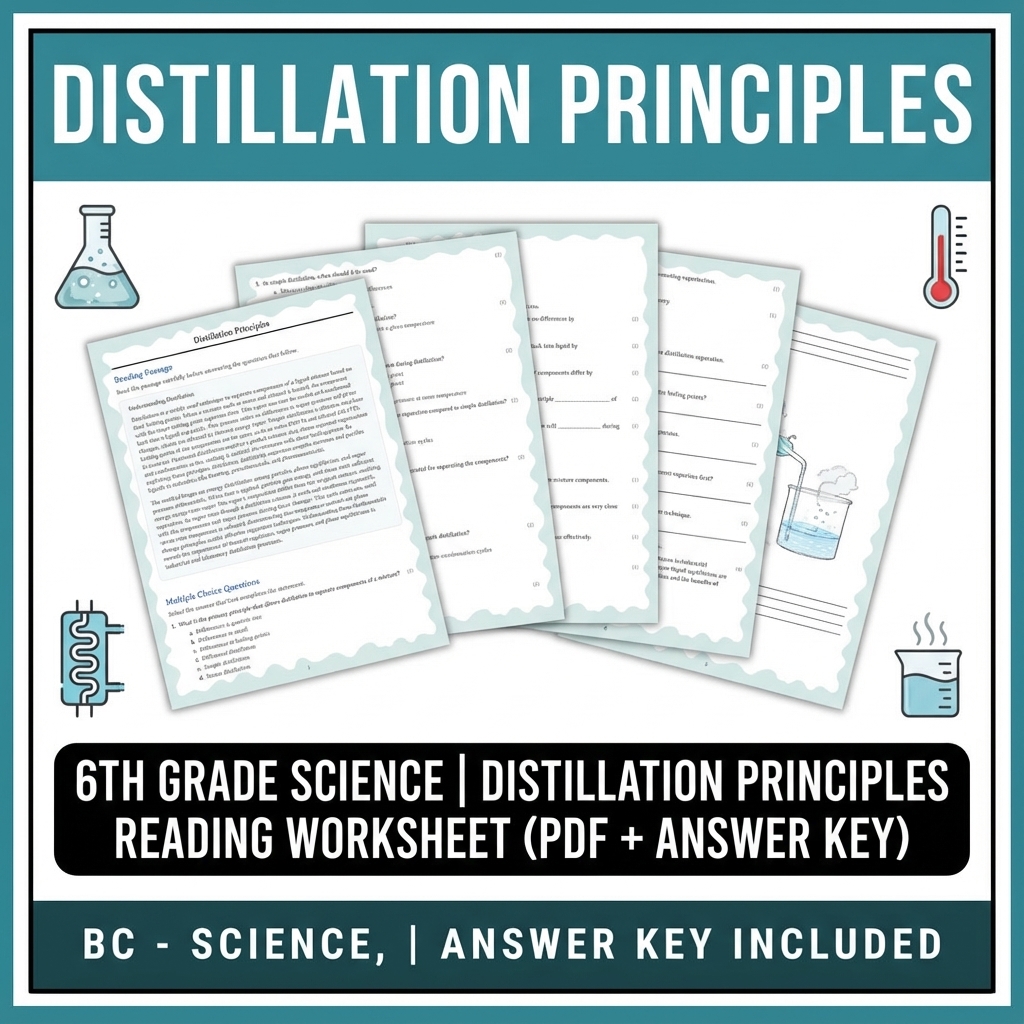
6th Grade Science | Distillation Principles Reading Worksheet (PDF + Answer Key)
JCreated byJ.S SheetsLearning Objectives
- Explain the basic principles of distillation and how they separate mixtures based on boiling points.
- Differentiate between simple distillation and fractional distillation methods.
- Describe the role of vapor pressure and phase changes in the distillation process.
Instant download

Population Dynamics Worksheet | Grade 6 Science Activities
Created byPrism Point LearningLearning Objectives
- Explain how population size can change over time and distinguish exponential growth from logistic growth.
- Define carrying capacity and describe how limited resources can stabilize or reduce population growth.
- Identify density-dependent and density-independent factors that affect populations, including predator–prey interactions.
Also included in: Grade 6 Ecosystem Interactions Science Lesson Bundle Worksheets | TEKS +1 more
Instant download

Ecosystem Components Worksheet | Grade 6 Science Practice & Review
Created byPrism Point LearningLearning Objectives
- Define an ecosystem as an interacting system of biotic (living) and abiotic (nonliving) components
- Identify examples of biotic and abiotic factors in habitats such as ponds, prairies, and forests
- Explain how physical factors influence where populations can survive and how communities change over time
Also included in: Grade 6 Ecosystem Interactions Science Lesson Bundle Worksheets | TEKS +1 more
Instant download
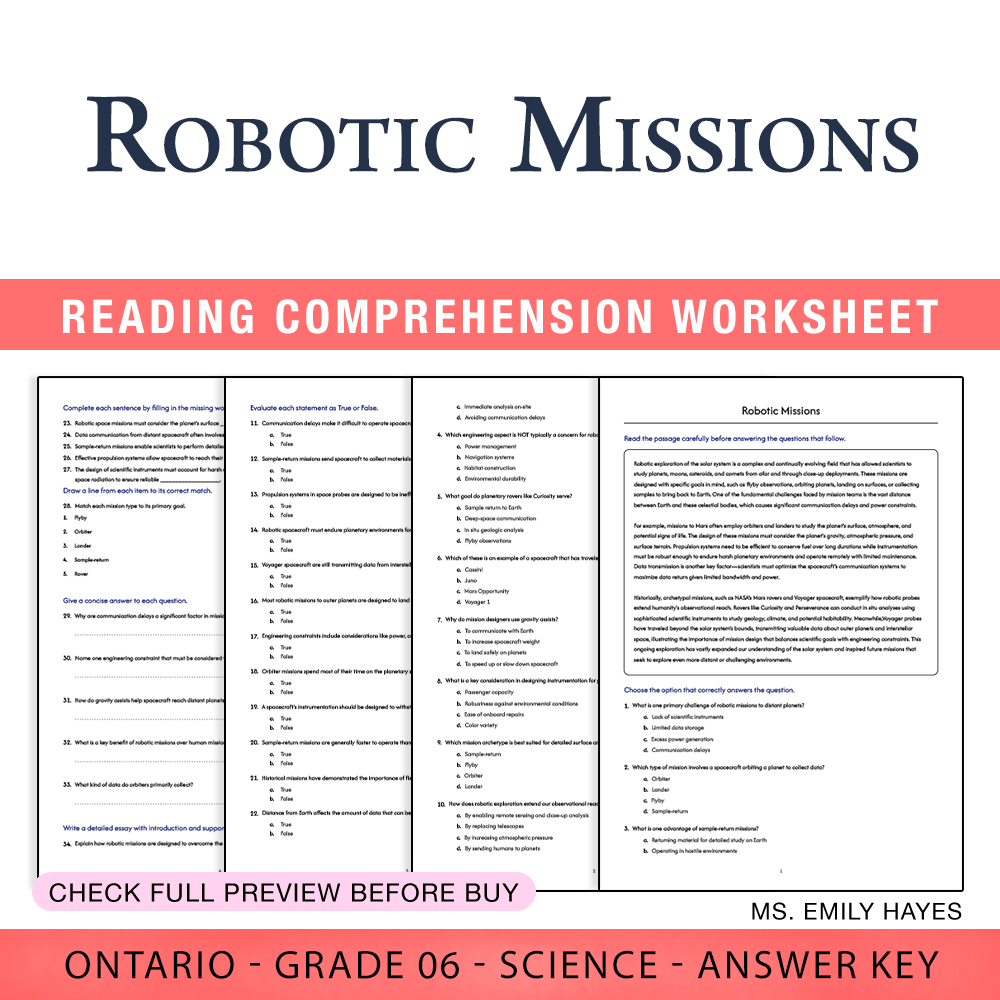
6th Grade Science | Robotic Missions Worksheet (PDF + Answer Key)
 Created byCopper Leaf Classroom
Learning Objectives
- Explain different types of robotic space missions and their purposes.
- Describe engineering constraints faced during robotic exploration of the solar system.
- Identify how mission design choices overcome distance and environmental challenges.
Instant download
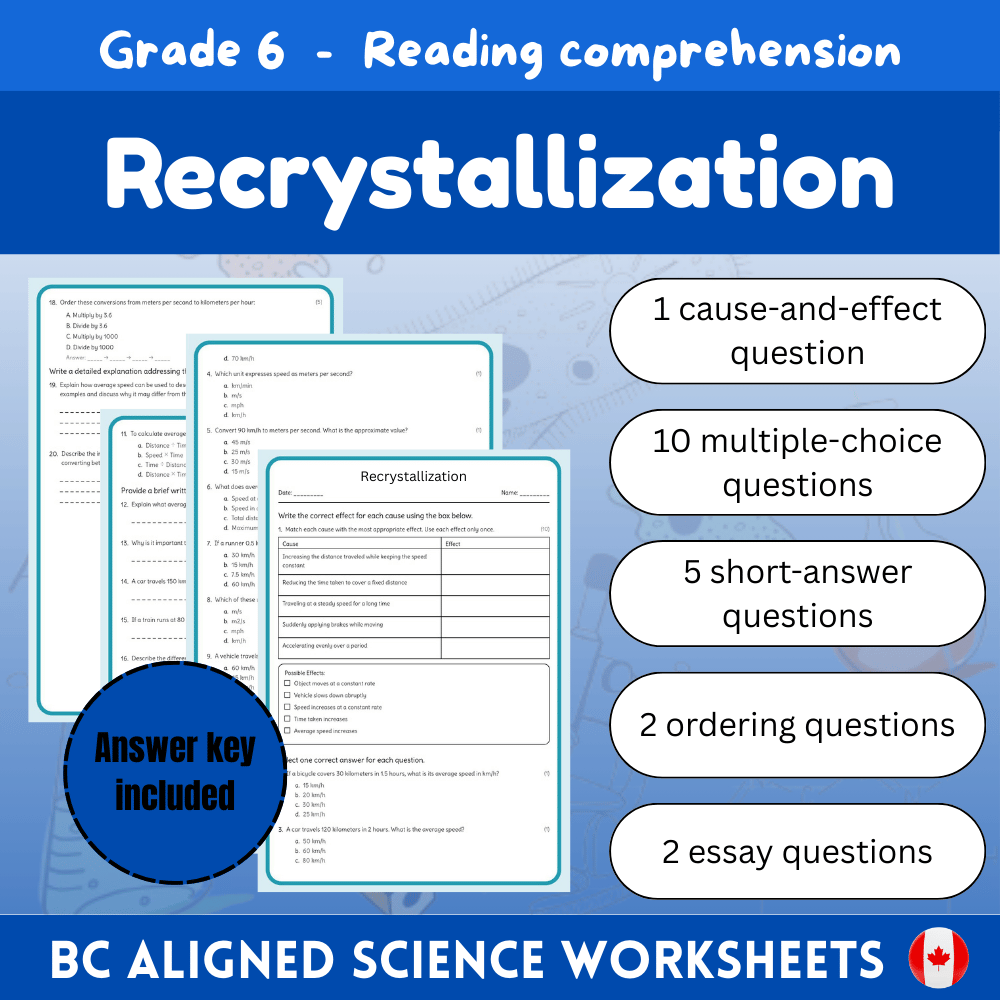
6th Grade Science | Recrystallization Explanation & Practice Worksheet (PDF)
Created byBright Mind ResourcesLearning Objectives
- Explain the process of recrystallization and how it purifies dissolved solids.
- Identify factors that influence crystal size and purity during recrystallization.
- Describe how solubility curves and temperature control assist in separating substances.
Instant download
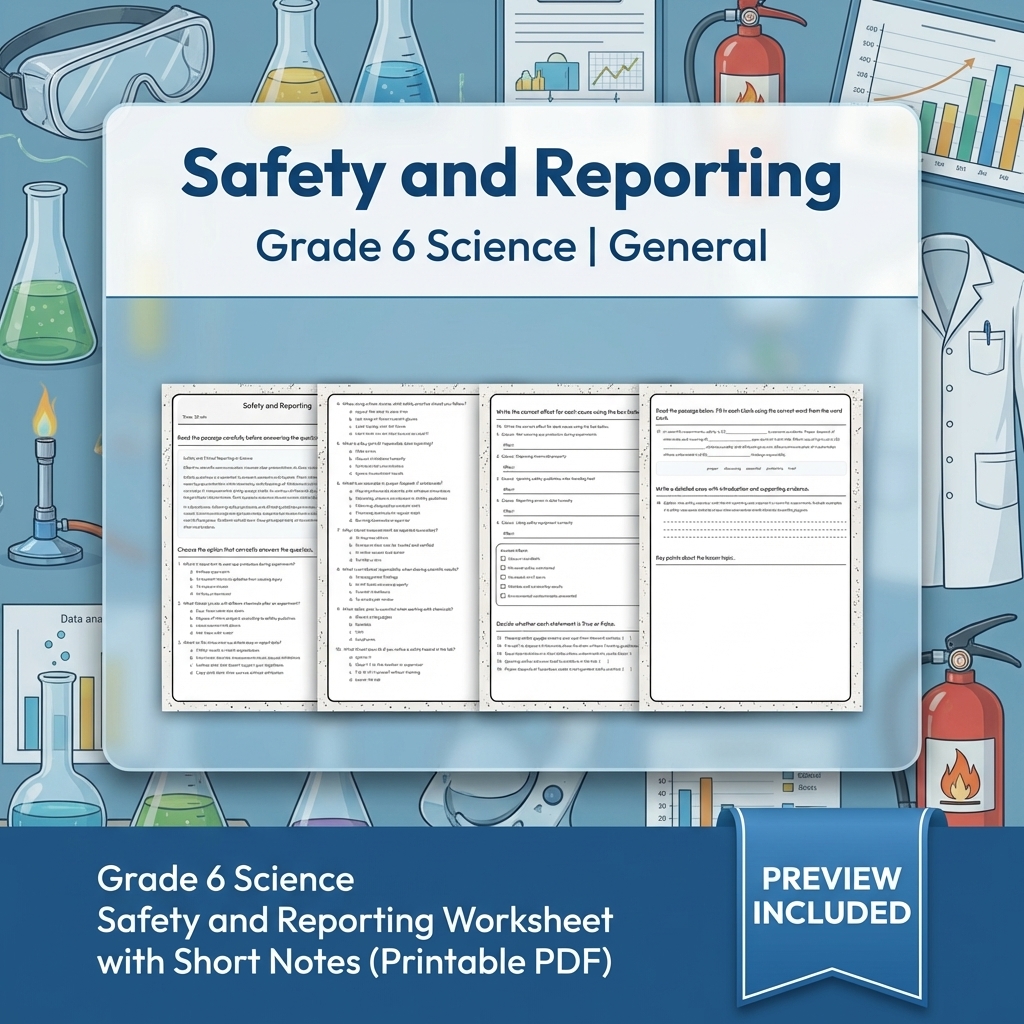
Grade 6 Science Safety and Reporting Worksheet with Short Notes (Printable PDF)
 Created byMeadowlark Worksheets
Learning Objectives
- Understand the importance of clear communication of results in scientific reporting.
- Identify safe practices when handling materials and risks in experiments.
- Learn how to ethically report data, including limitations and proper attribution.
Also included in: Grade 6 Science Lesson Group | Comprehensive Worksheets & Activities +1 more
Instant download
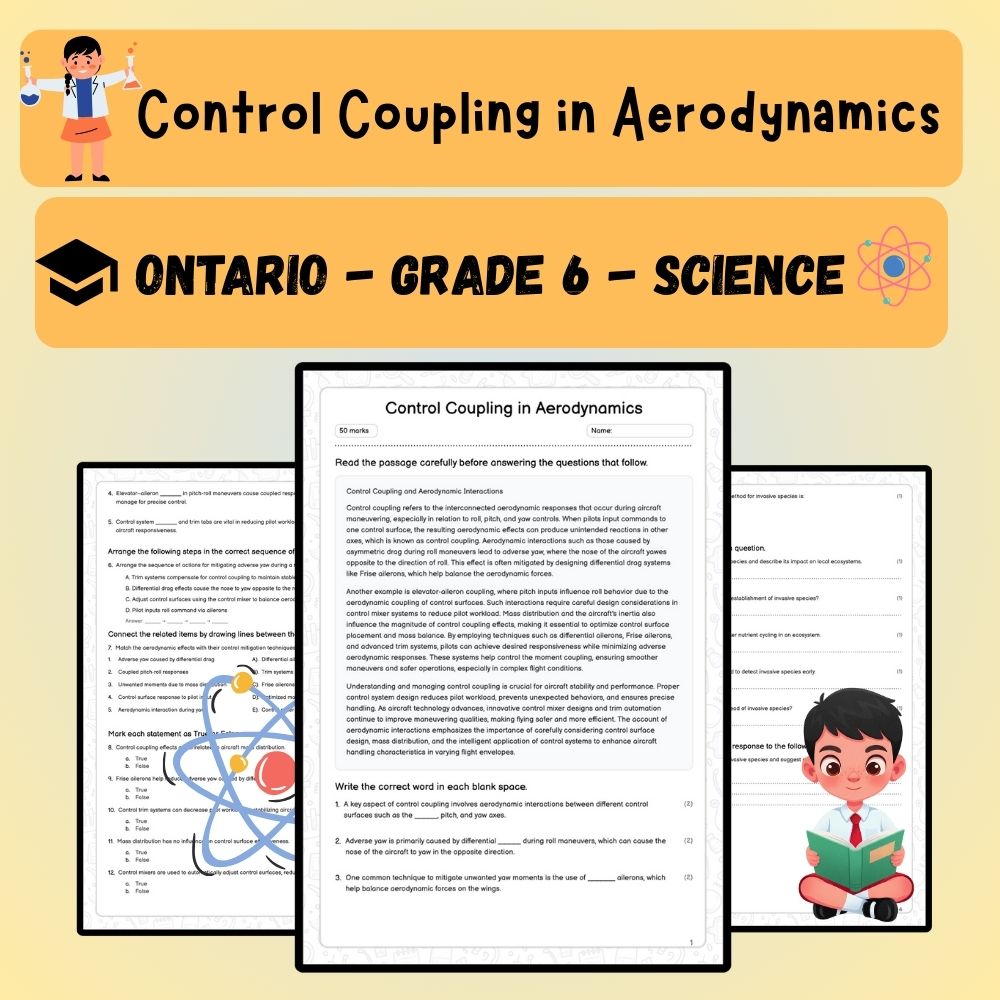
6th Grade Science | Control Coupling in Aerodynamics Worksheet (PDF )
Created byPrism Point LearningLearning Objectives
- Understand the concept of control coupling and how it affects aircraft maneuvering
- Identify different techniques used to mitigate adverse aerodynamic effects such as yaw and control moment coupling
- Explain how mass distribution and control system design influence control coupling effects
Instant download

6th Grade Science Worksheet | Stewardship Practices (PDF) Aligned with Alberta Standards
Created byEvergreen Desk EducationLearning Objectives
- Describe how different stewardship practices (community planting, shelterbelts, urban canopy programs, and Indigenous knowledge) support local landscapes.
- Explain how stewardship actions can improve habitat connectivity, carbon storage, and water regulation.
- Identify stewardship examples from Alberta and connect them to the environmental benefits they provide.
Instant download
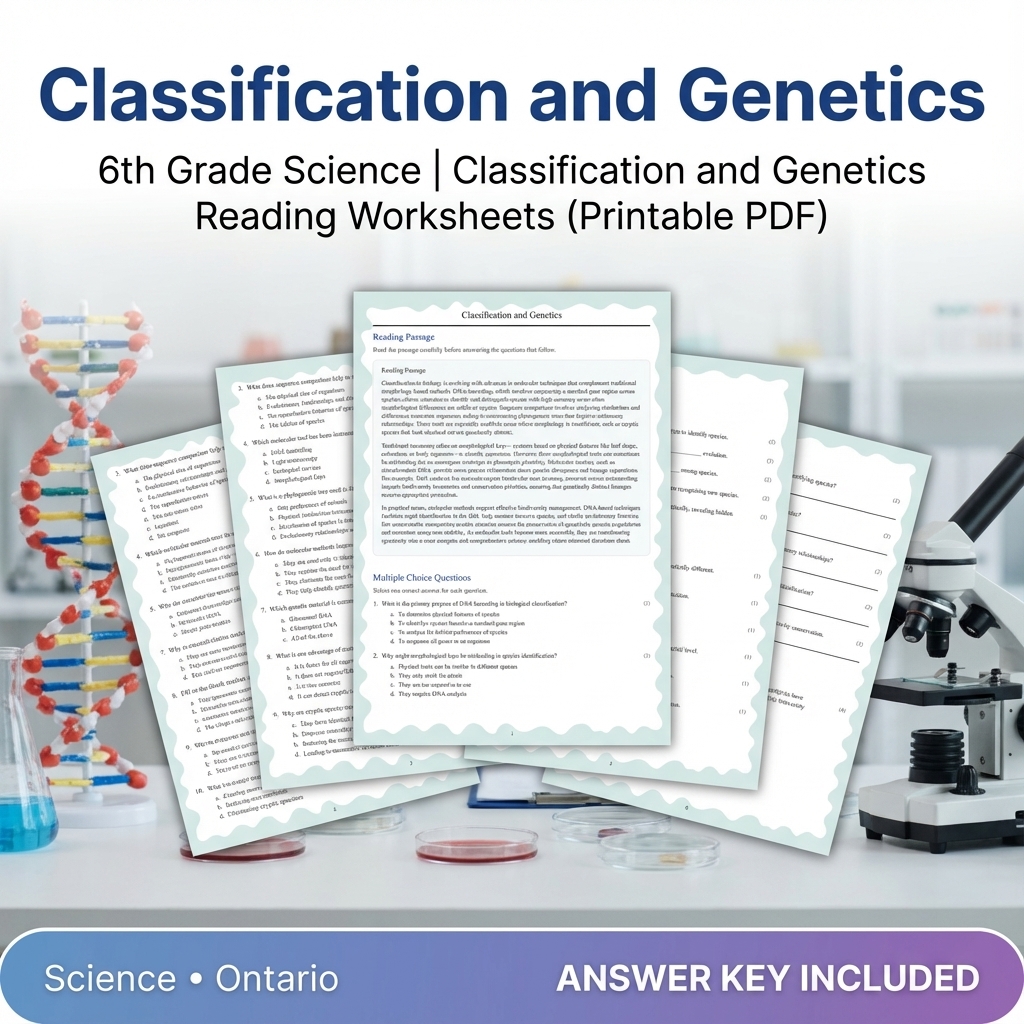
6th Grade Science | Classification and Genetics Reading Worksheets (Printable PDF)
JCreated byJ.S SheetsLearning Objectives
- Understand how DNA barcoding and sequence comparison are used in species classification
- Compare morphological keys with genetic markers for identifying species
- Explain how molecular evidence can reveal cryptic species and inform taxonomic revisions
Also included in: Grade 6 Science Unit Bundle – Ecosystems, Biodiversity & Environmental Impact +1 more
Instant download

6th Grade Science Worksheet | Reproductive Structures & Plant Reproduction (PDF)
Created byEvergreen Desk EducationLearning Objectives
- Describe how flowers, cones, seeds, and vegetative propagation help plants reproduce.
- Explain how seed dispersal mechanisms (wind, animals, gravity) affect where plants grow.
- Compare examples of reproductive adaptations in Alberta (e.g., lodgepole pine cones and aspen root suckering) and relate them to survival after disturbance.
Instant download
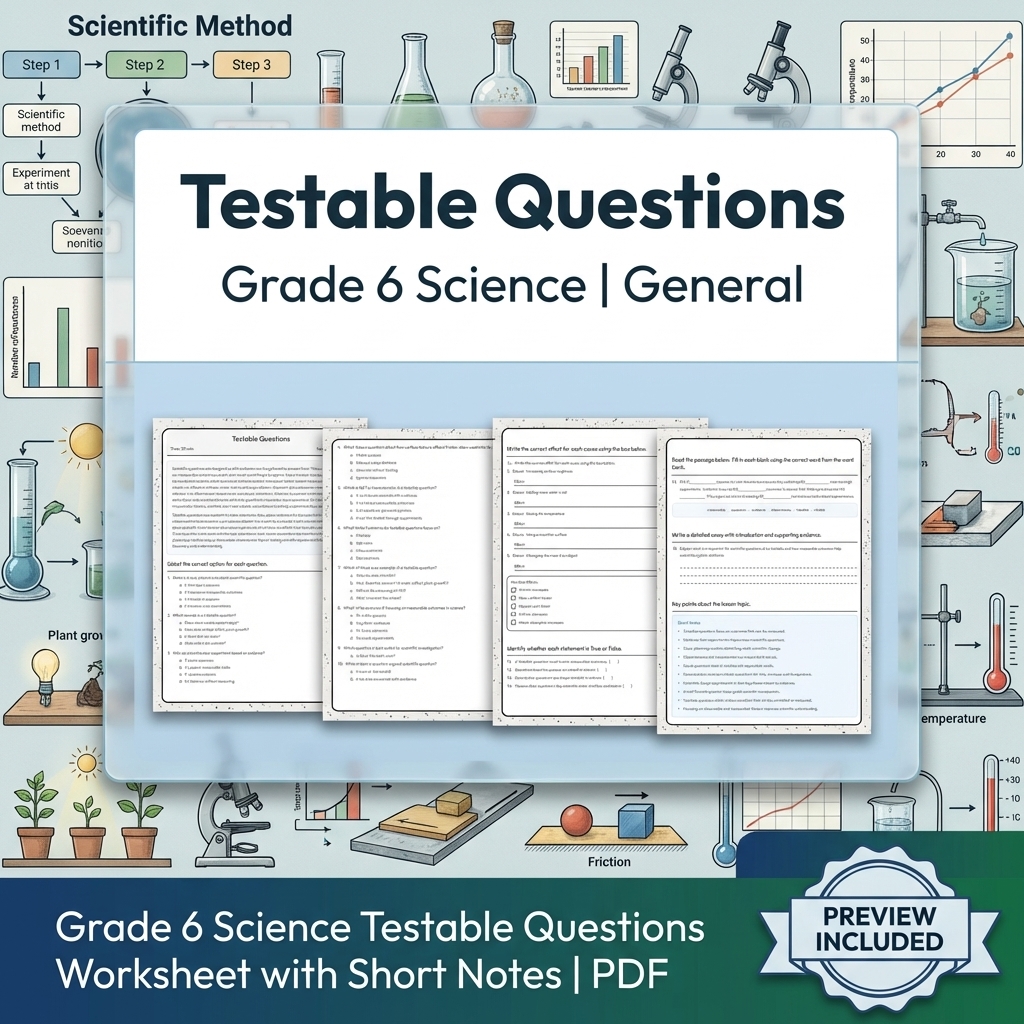
Grade 6 Science Testable Questions Worksheet with Short Notes | PDF
Created byMeadowlark WorksheetsLearning Objectives
- Understand what makes a question testable with measurable outcomes.
- Identify different types of scientific questions and how evidence addresses them.
- Learn how to plan experiments based on measurable and observable outcomes.
Also included in: Grade 6 Science Lesson Group | Comprehensive Worksheets & Activities +1 more
Instant download
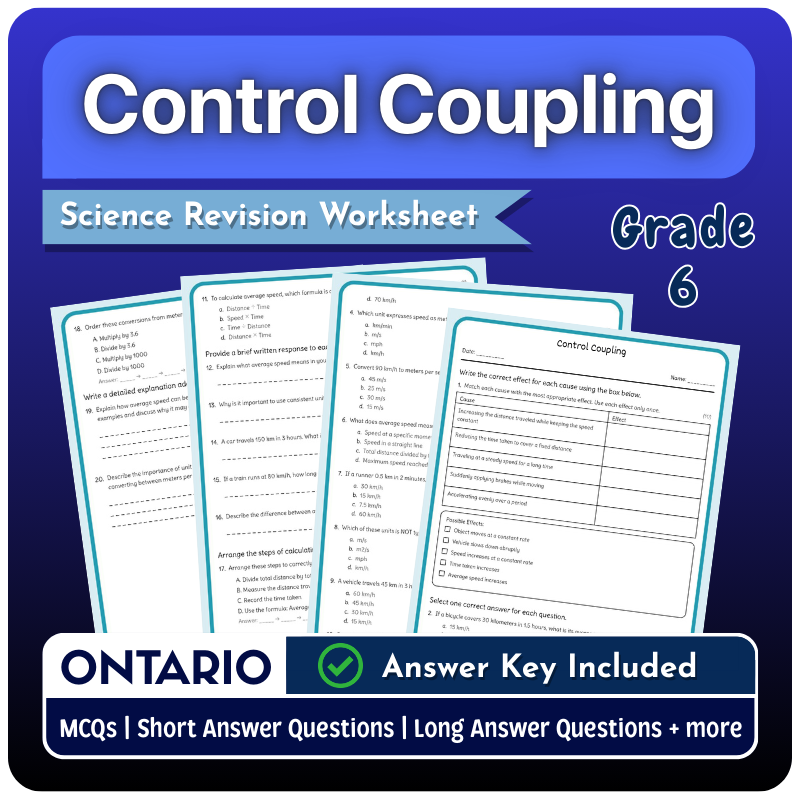
6th Grade Science – Control Coupling Worksheet (Ontario) (PDF)
Created byBright Mind ResourcesLearning Objectives
- Understand the concept of control coupling and its effects in aerodynamics.
- Identify causes of adverse yaw and techniques to mitigate it.
- Explain how control inputs can produce coupled responses in aircraft controls.
Instant download
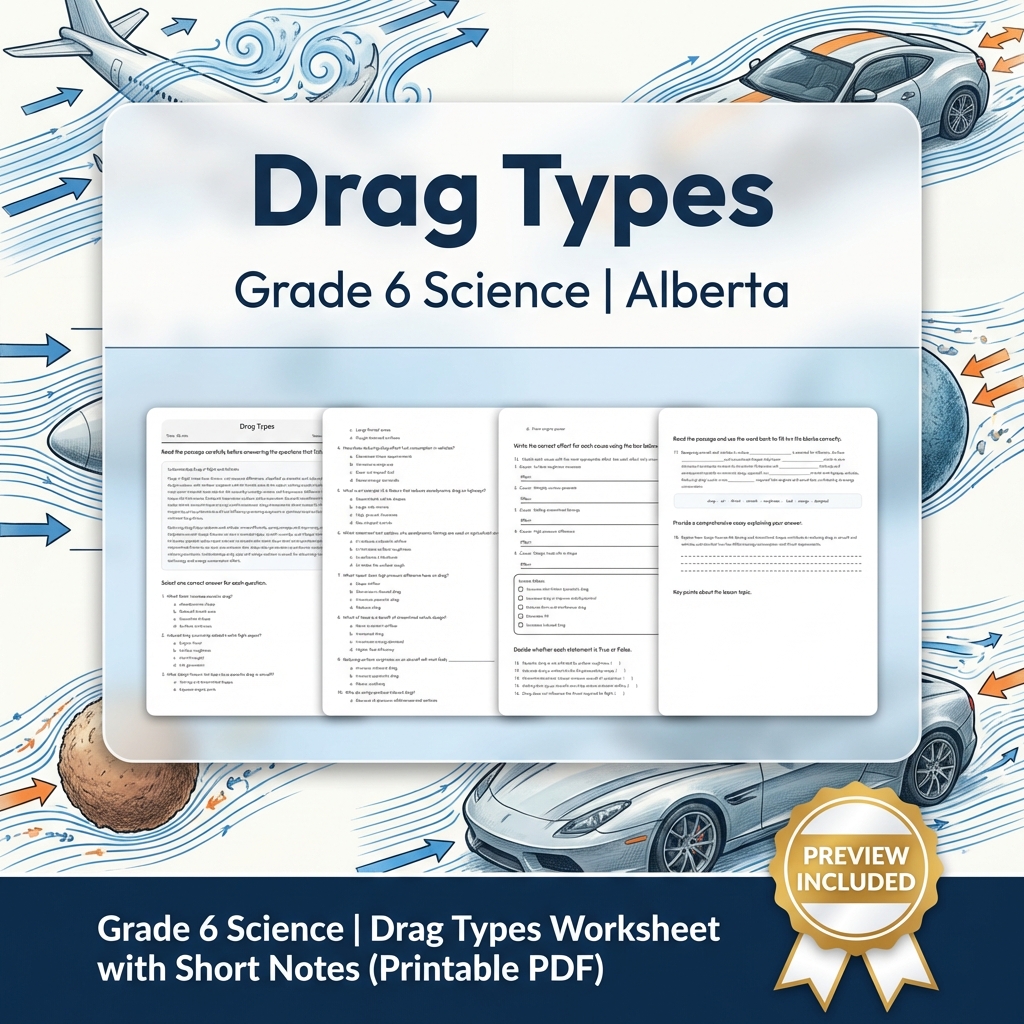
Grade 6 Science | Drag Types Worksheet with Short Notes (Printable PDF)
Created byMeadowlark WorksheetsLearning Objectives
- Understand how friction and pressure differences contribute to drag in flight and vehicle design
- Identify the categories of parasitic and induced drag
- Explain design features that reduce drag, such as streamlined shapes and fairings
Also included in: Grade 6 Science – Air and Aerodynamics UNIT Bundle | Alberta Curriculum Resources +1 more
Instant download
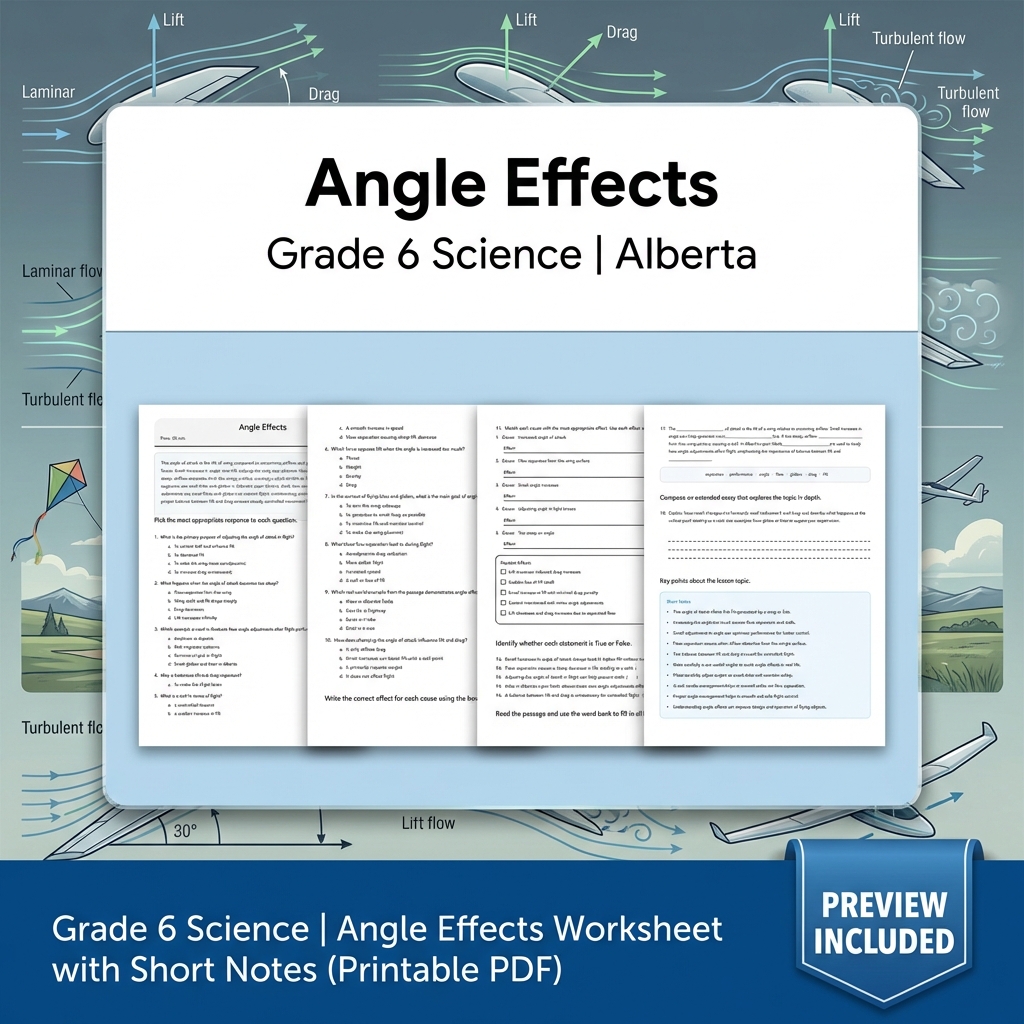
Grade 6 Science | Angle Effects Worksheet with Short Notes (Printable PDF)
Created byMeadowlark WorksheetsLearning Objectives
- Understand how the angle of attack influences lift and drag in flight.
- Explain the concept of stall and how it relates to angle changes.
- Describe real-world examples of angle adjustments in gliders and kites.
Also included in: Grade 6 Science – Air and Aerodynamics UNIT Bundle | Alberta Curriculum Resources +1 more
Instant download
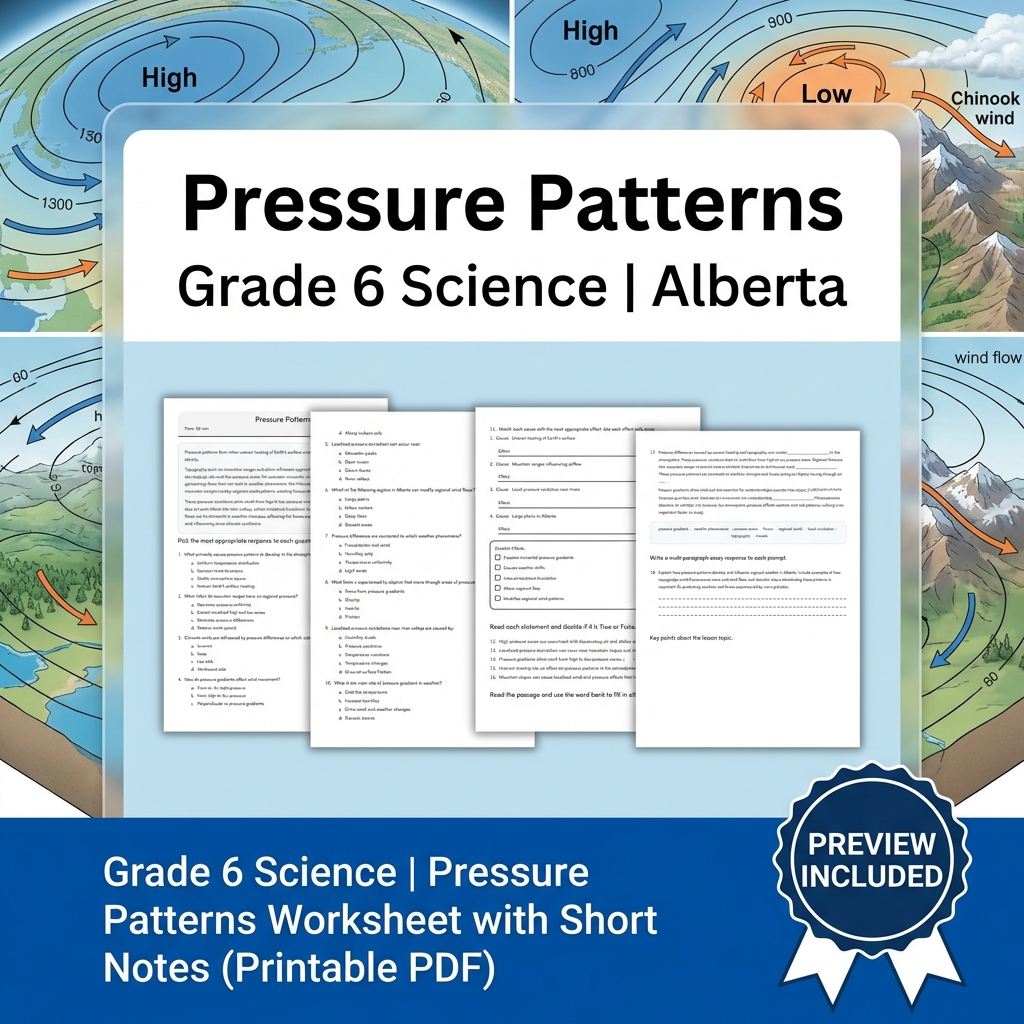
Grade 6 Science | Pressure Patterns Worksheet with Short Notes (Printable PDF)
Created byMeadowlark WorksheetsLearning Objectives
- Describe how pressure differences develop from uneven heating and topography.
- Explain how pressure gradients influence wind direction and speed.
- Identify regions such as mountain ranges and plains that modify regional pressure systems.
Also included in: Grade 6 Science – Air and Aerodynamics UNIT Bundle | Alberta Curriculum Resources +1 more
Instant download
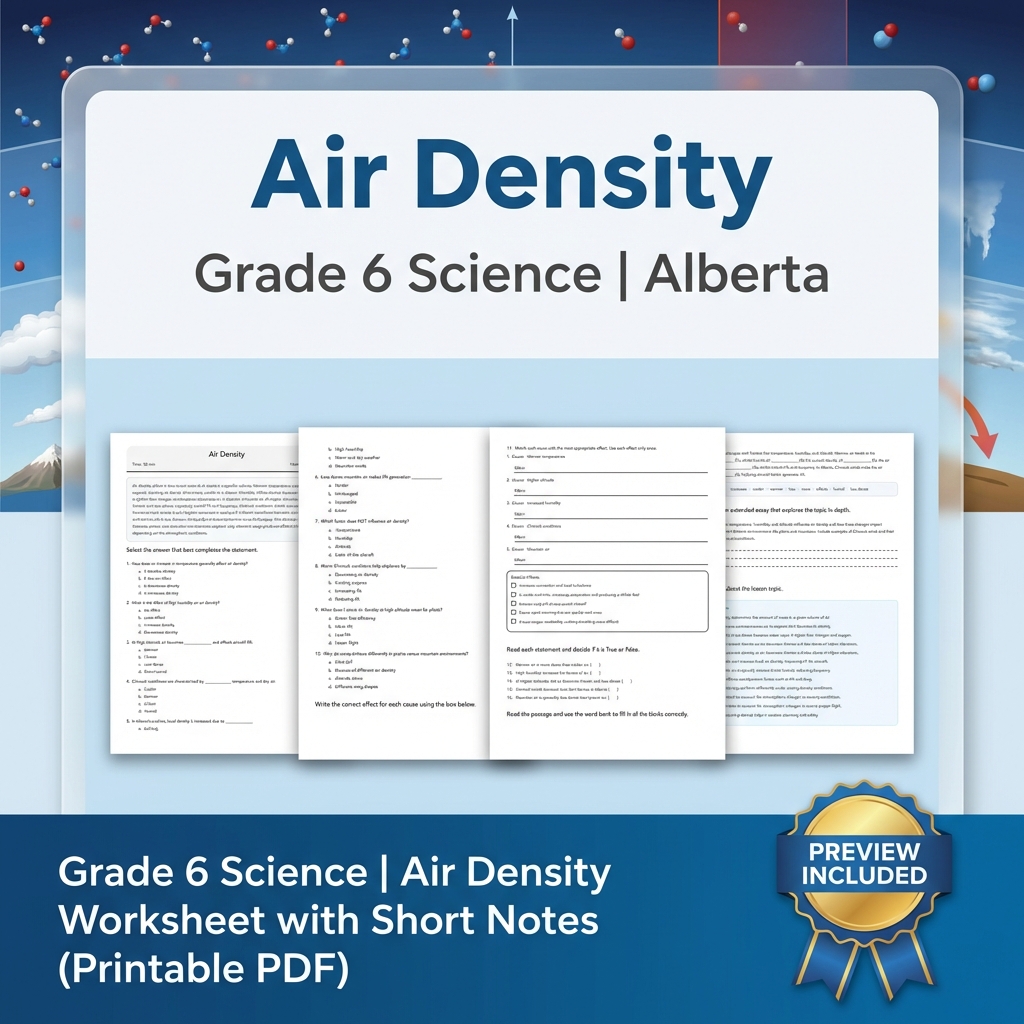
Grade 6 Science | Air Density Worksheet with Short Notes (Printable PDF)
Created byMeadowlark WorksheetsLearning Objectives
- Explain how temperature, humidity, and altitude affect air density.
- Understand the influence of air density on buoyancy and lift.
- Describe how local atmospheric conditions change in different environments like prairie and mountain areas.
Also included in: Grade 6 Science – Air and Aerodynamics UNIT Bundle | Alberta Curriculum Resources +1 more
Instant download
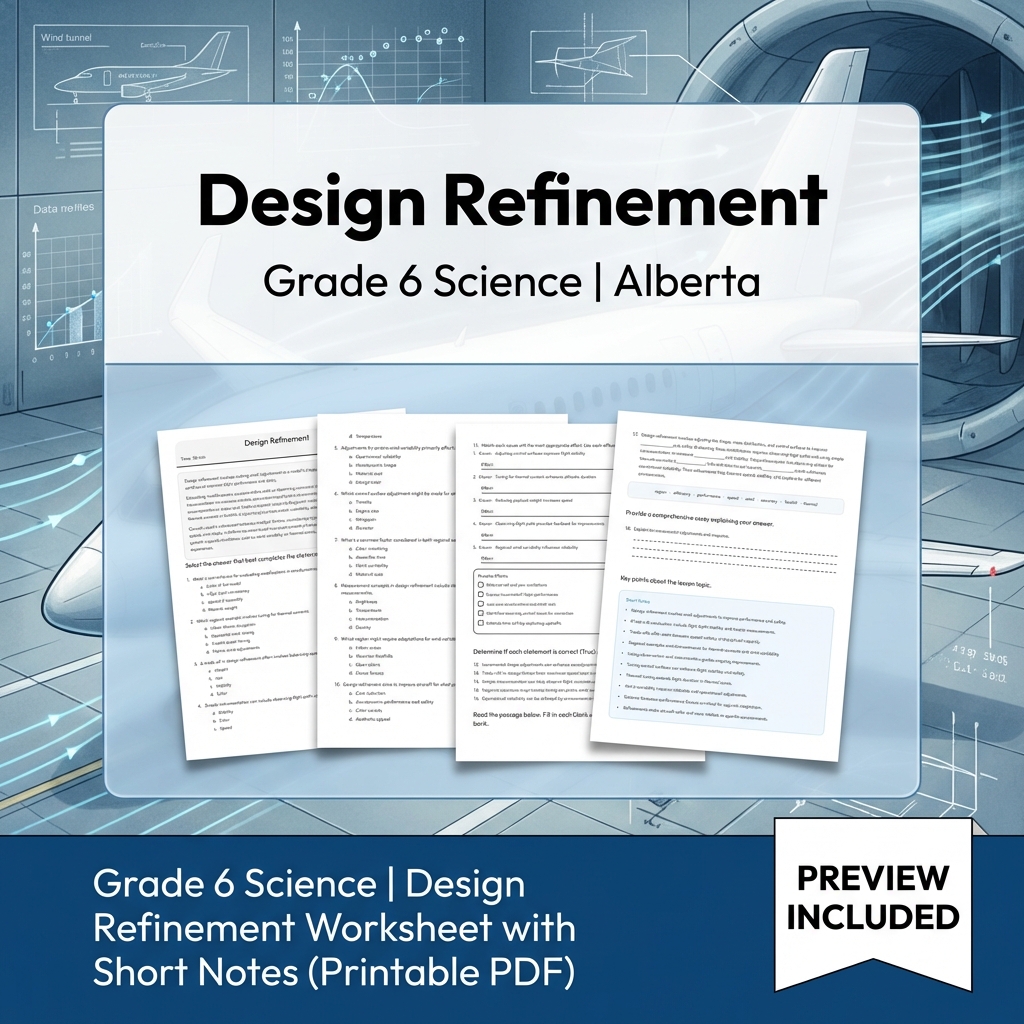
Grade 6 Science | Design Refinement Worksheet with Short Notes (Printable PDF)
Created byMeadowlark WorksheetsLearning Objectives
- Understand how incremental adjustments affect aerodynamic performance and safety.
- Learn to evaluate modifications based on flight paths and simple instrumentation.
- Identify trade-offs between speed, stability, and payload in design refinement.
Also included in: Grade 6 Science – Air and Aerodynamics UNIT Bundle | Alberta Curriculum Resources +1 more
Instant download
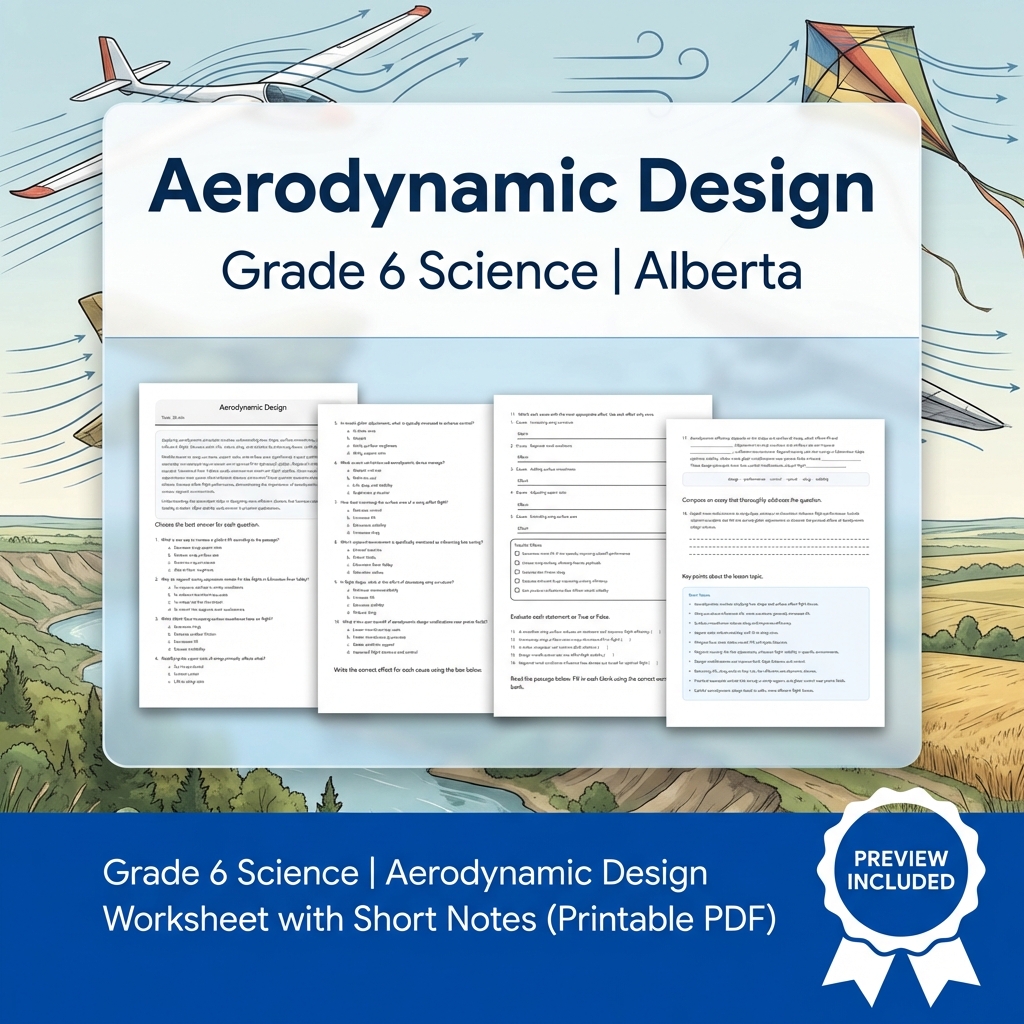
Grade 6 Science | Aerodynamic Design Worksheet with Short Notes (Printable PDF)
Created byMeadowlark WorksheetsLearning Objectives
- Understand the principles of aerodynamics and how shape, surface, and orientation affect flight.
- Identify how design modifications influence lift, drag, and stability in flight.
- Apply regional examples like kite tuning and glider adjustments to practical aerodynamics.
Also included in: Grade 6 Science – Air and Aerodynamics UNIT Bundle | Alberta Curriculum Resources +1 more
Instant download
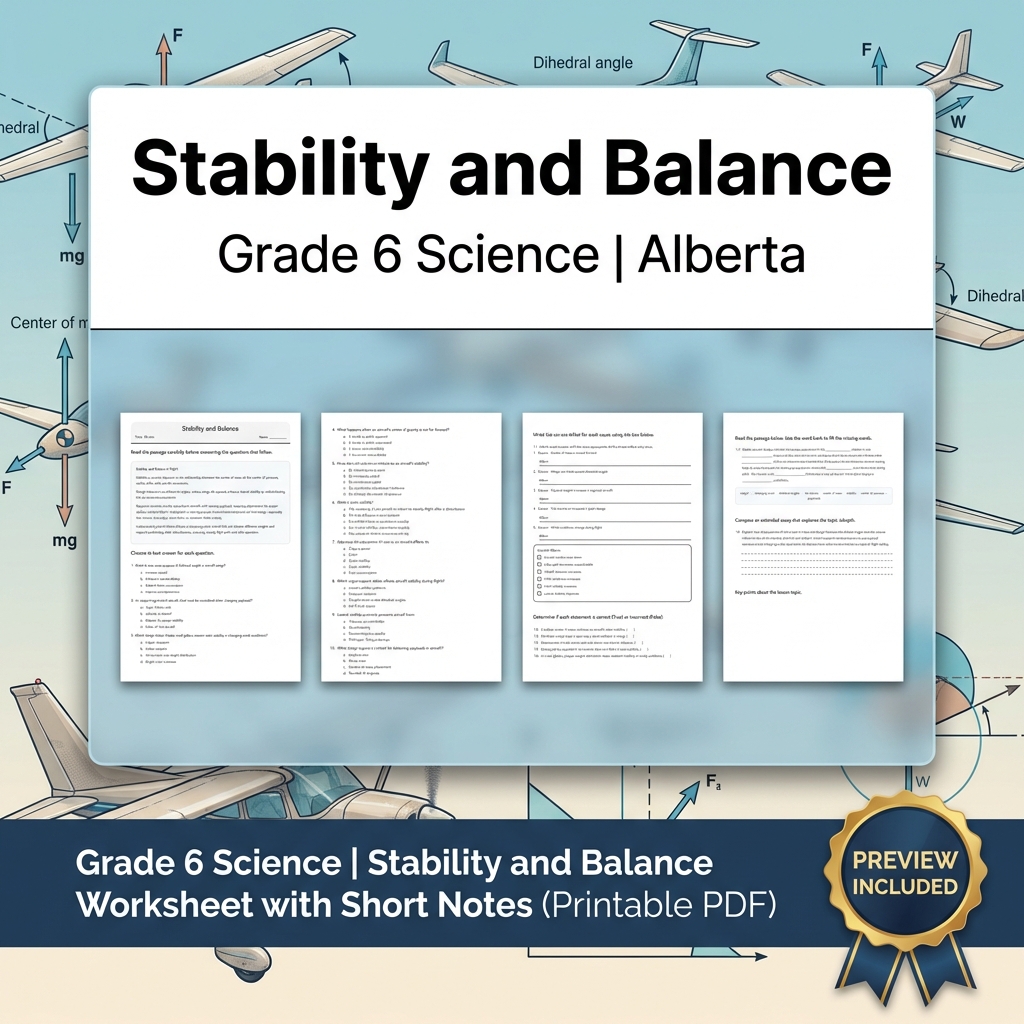
Grade 6 Science | Stability and Balance Worksheet with Short Notes PDF)
Created byMeadowlark WorksheetsLearning Objectives
- Understand how center of mass and center of pressure affect a vehicle's stability.
- Explain the role of design features like dihedral angles and tail volume in static stability.
- Describe how balance influences the ability of aircraft and gliders to return to steady attitudes after disturbances.
Also included in: Grade 6 Science – Air and Aerodynamics UNIT Bundle | Alberta Curriculum Resources +1 more
Instant download
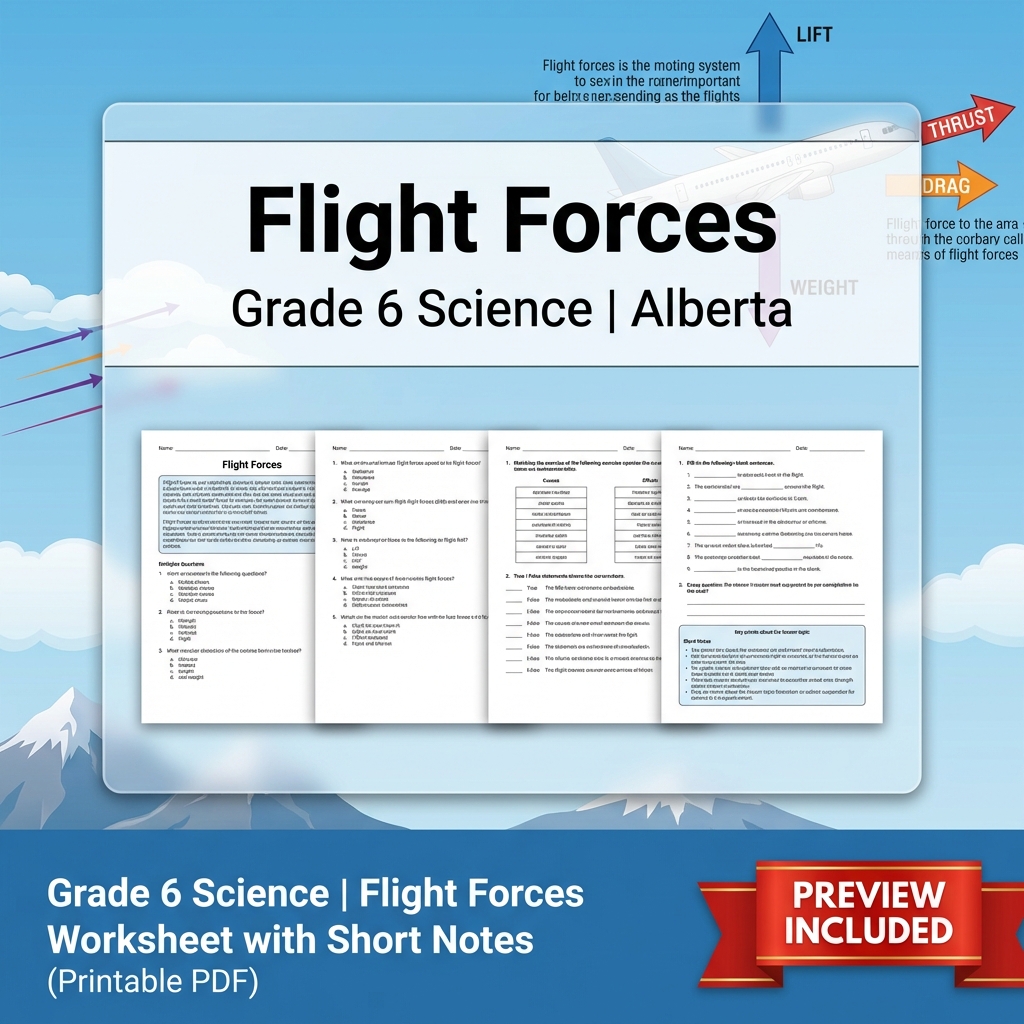
Grade 6 Science | Flight Forces Worksheet with Short Notes (Printable PDF)
Created byMeadowlark WorksheetsLearning Objectives
- Understand the four primary forces in flight: lift, thrust, drag, and weight.
- Describe how these forces interact to enable steady flight or descent.
- Identify examples of flight forces in real-world Alberta scenarios such as kites, aircraft, and parachutes.
Also included in: Grade 6 Science – Air and Aerodynamics UNIT Bundle | Alberta Curriculum Resources +1 more
Instant download
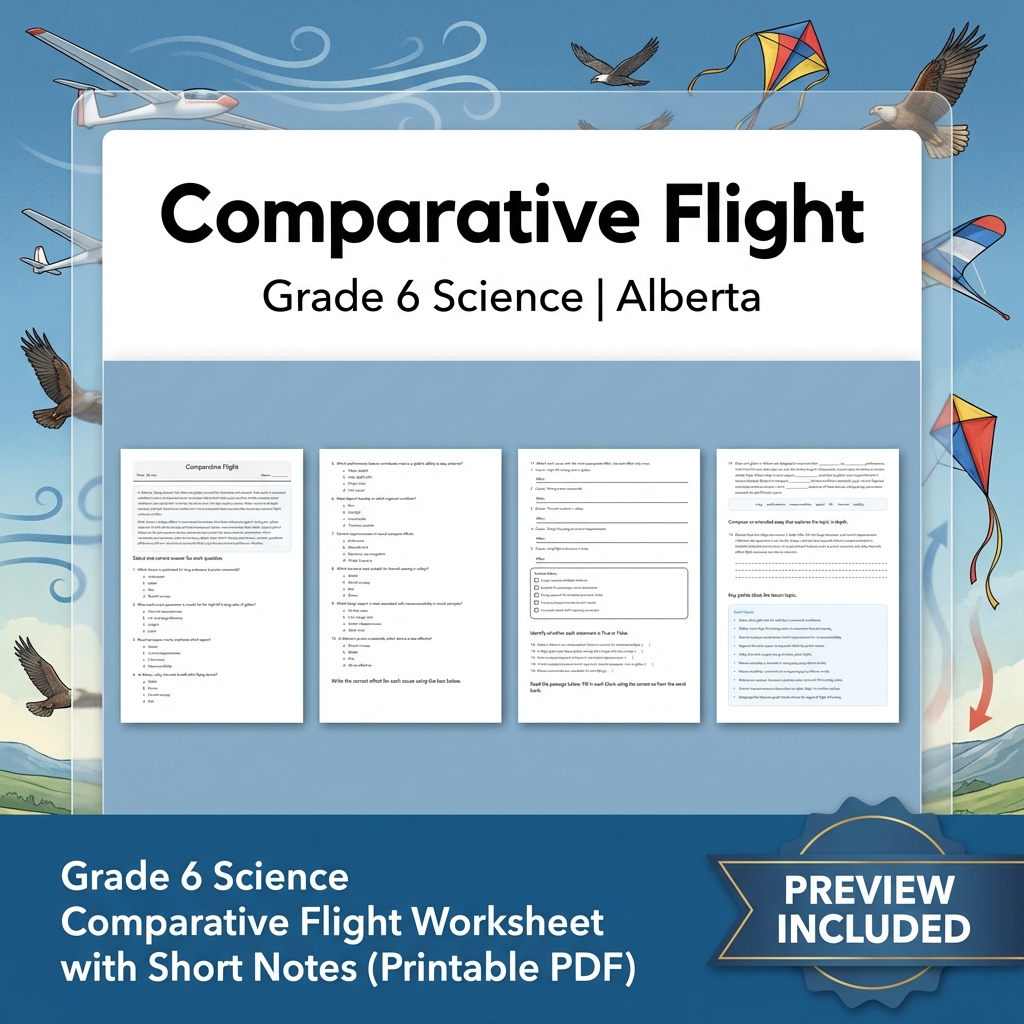
Grade 6 Science Comparative Flight Worksheet with Short Notes (Printable PDF)
Created byMeadowlark WorksheetsLearning Objectives
- Compare and contrast the flight performance of kites, gliders, and round canopies.
- Explain how design parameters like glide ratio and lift-to-drag performance affect flight endurance and maneuverability.
- Assess the influence of regional atmospheric conditions on flying device operations in Alberta contexts.
Also included in: Grade 6 Science – Air and Aerodynamics UNIT Bundle | Alberta Curriculum Resources +1 more
Instant download
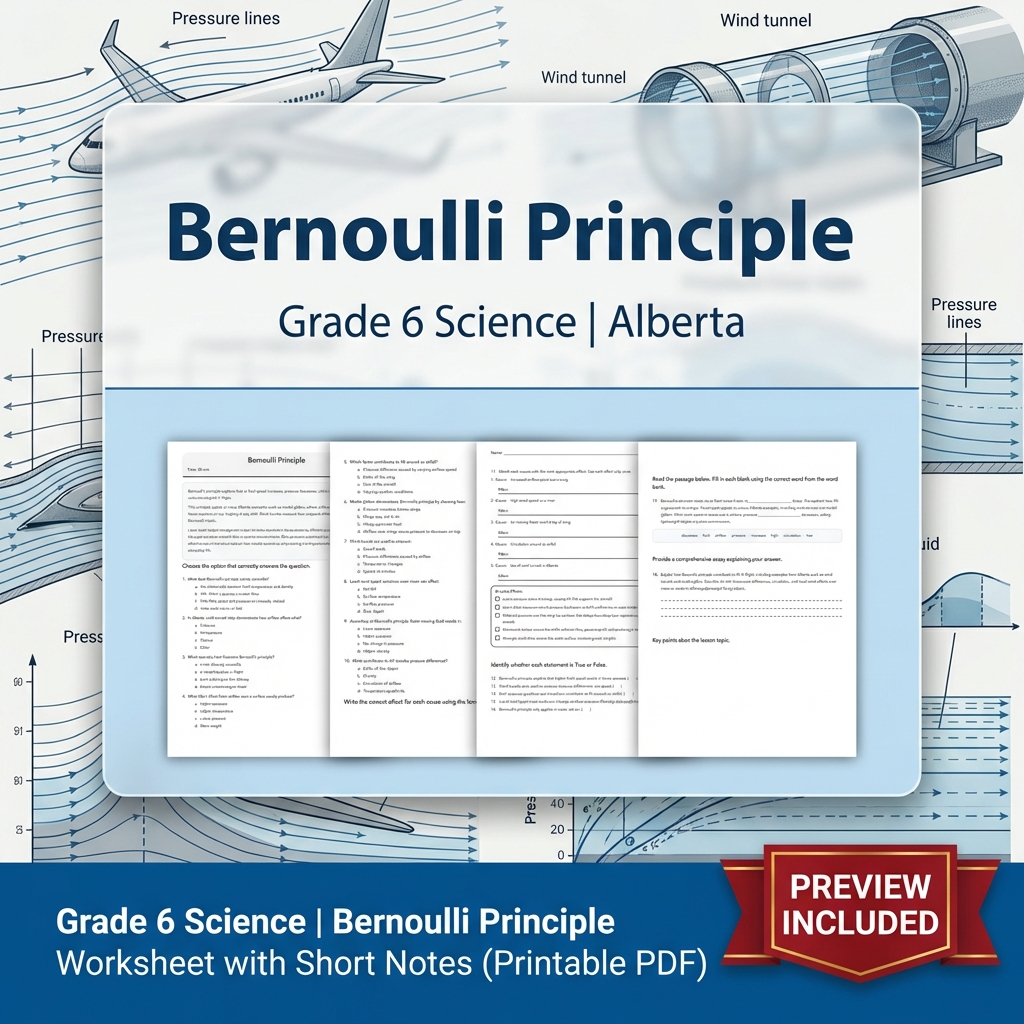
Grade 6 Science | Bernoulli Principle Worksheet with Short Notes (Printable PDF)
Created byMeadowlark WorksheetsLearning Objectives
- Understand how Bernoulli’s principle relates fluid speed and pressure
- Explain how pressure differences contribute to lift on airfoils
- Identify examples of Bernoulli’s principle in real-world Alberta environments
Also included in: Grade 6 Science – Air and Aerodynamics UNIT Bundle | Alberta Curriculum Resources +1 more
Instant download

Atoms and Particles Grade 6 Science Worksheet | Standards-Aligned Practice
JCreated byJ.S SheetsLearning Objectives
- Understand that matter is made of tiny particles called atoms.
- Identify the basic units that make up elements and substances.
- Connect particle models to properties like density, melting point, and reactivity.
Also included in: Grade 6 Physical Science Lesson Bundle for Science – California Standards +1 more
Instant download

6th Grade Science | Solar Timekeeping Worksheet (PDF) – Alberta Standards
 Created bySilver Birch Teaching
Learning Objectives
- Explain how local solar noon is determined by the Sun’s highest apparent altitude
- Compare solar time to clock time and identify why they differ
- Describe how longitude, time zones, and the equation of time affect timekeeping
Also included in: Grade 6 Celestial Motion & Seasons Science Lesson Bundle | Alberta +1 more
Instant download
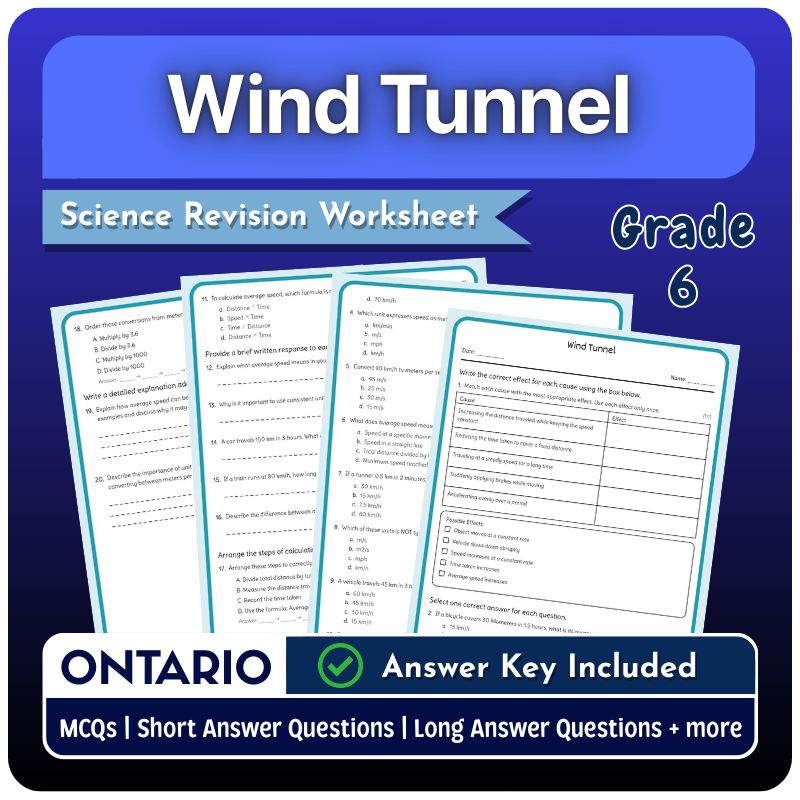
6th Grade Science | Wind Tunnel Worksheet (Ontario Standards) (PDF)
Created byBright Mind ResourcesLearning Objectives
- Understand the methods used to measure aerodynamic forces and moments.
- Identify and explain the concept of similarity parameters such as Reynolds and Mach numbers.
- Describe flow visualization techniques and their importance in wind tunnel testing.
Instant download
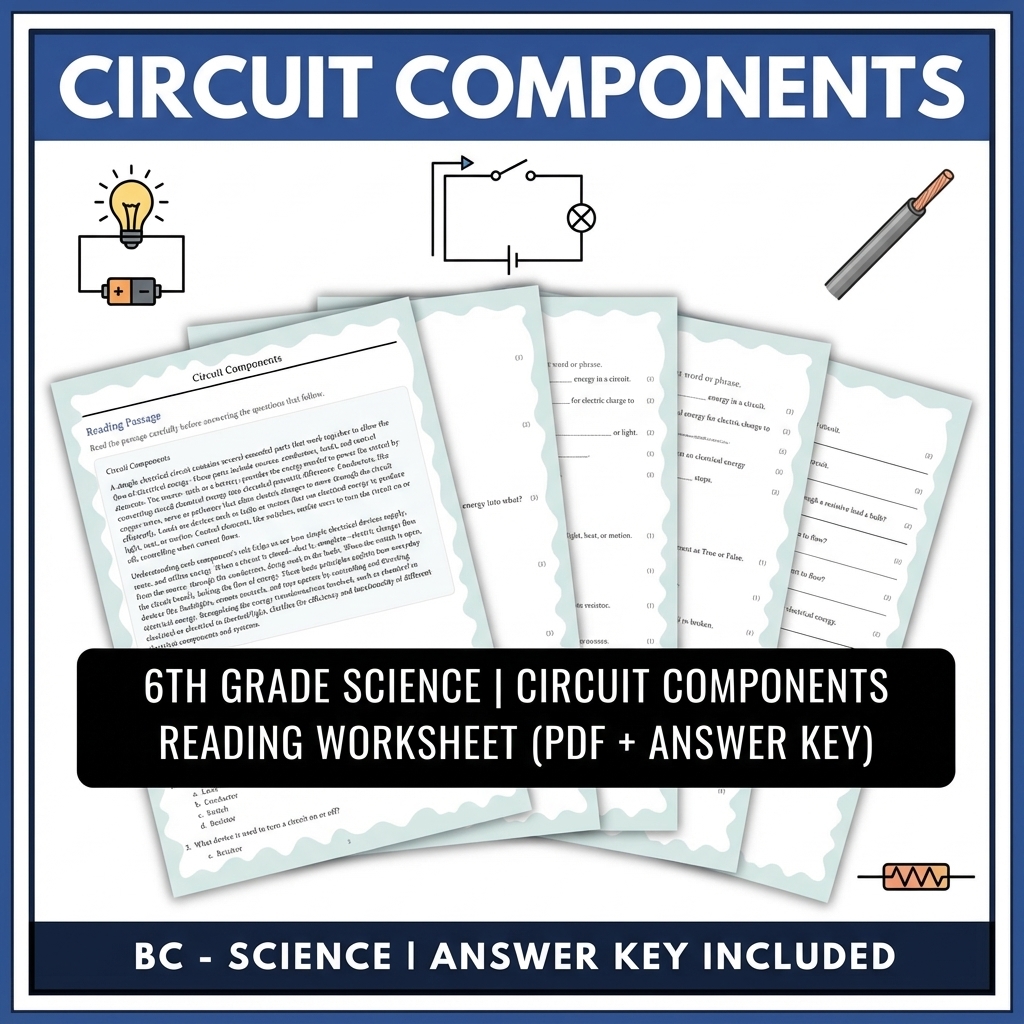
6th Grade Science | Circuit Components Reading Worksheet (PDF + Answer Key)
JCreated byJ.S SheetsLearning Objectives
- Identify the roles of different components in a simple electrical circuit.
- Explain how energy transformations occur within a circuit.
- Describe the functions of sources, conductors, loads, and switches in electrical devices.
Instant download
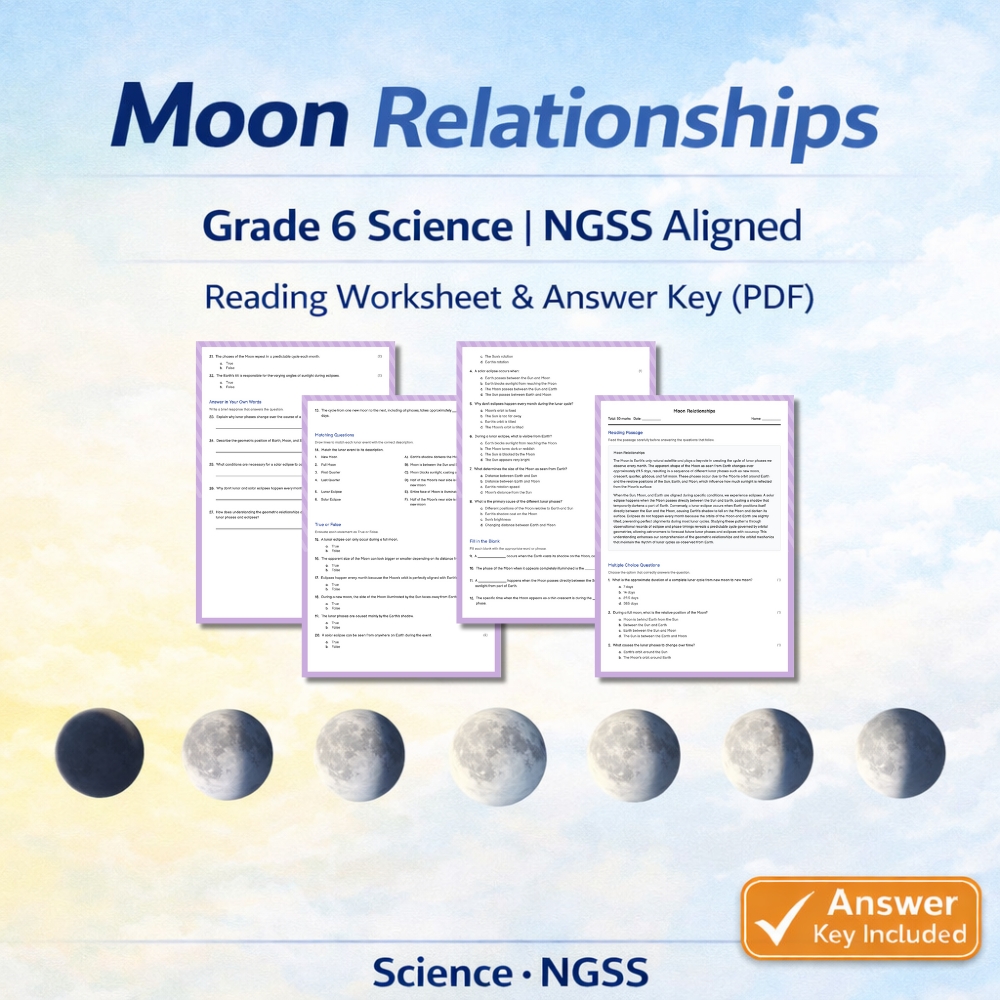
6th Grade Science | Moon Relationships | NGSS ( Worksheet + Answer Key )
 Created byCedar Grove Learning
Learning Objectives
- Describe the geometric relationships among Earth, Moon, and Sun that produce lunar phases and eclipses.
- Explain how the relative positions of Earth, Moon, and Sun create different lunar phases and eclipse conditions.
- Predict lunar phases and eclipse occurrences using observational data of Earth–Moon–Sun configurations.
Also included in: Grade 6 Science Unit Bundle | Space, Motion & Earth Cycles NGSS Worksheets +1 more
Instant download

Conductivity Worksheets: Conductor Properties Grade 6 Science Practice
Created byPrism Point LearningLearning Objectives
- Describe how free electrons enable charge movement through conductors
- Compare conductivity among copper, aluminum, graphite, and plastics
- Explain how temperature affects conductivity in metal conductors
Also included in: Grade 6 Electricity Lesson Bundle | Ontario Science Framework
Instant download

Voltage and Current Measurements in Circuits Worksheets Grade 6
Created byPrism Point LearningLearning Objectives
- Explain how voltage and current readings describe circuit performance
- Identify appropriate meter placement for measuring voltage and current
- Compare current readings to infer relative resistance between components
Also included in: Grade 6 Electricity Lesson Bundle | Ontario Science Framework
Instant download
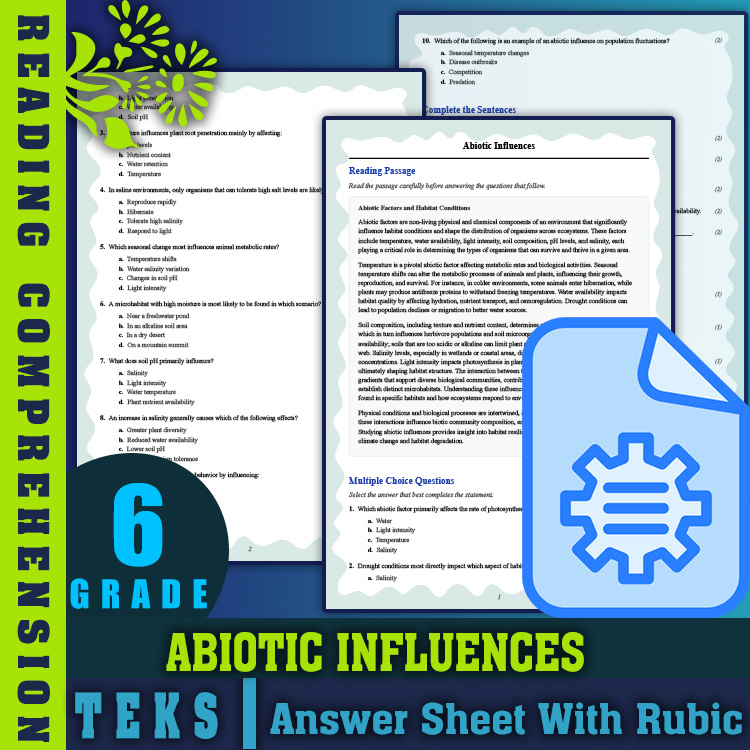
6th Grade Science | Abiotic Influences Reading Worksheet & Answer Key (PDF)
JCreated byJ.S SheetsLearning Objectives
- Understand how abiotic factors such as temperature, water, light, soil, pH, and salinity influence habitat conditions.
- Describe how abiotic factors affect organism distribution and population fluctuations.
- Explain interactions between physical environmental gradients and biological processes in ecosystems.
Instant download
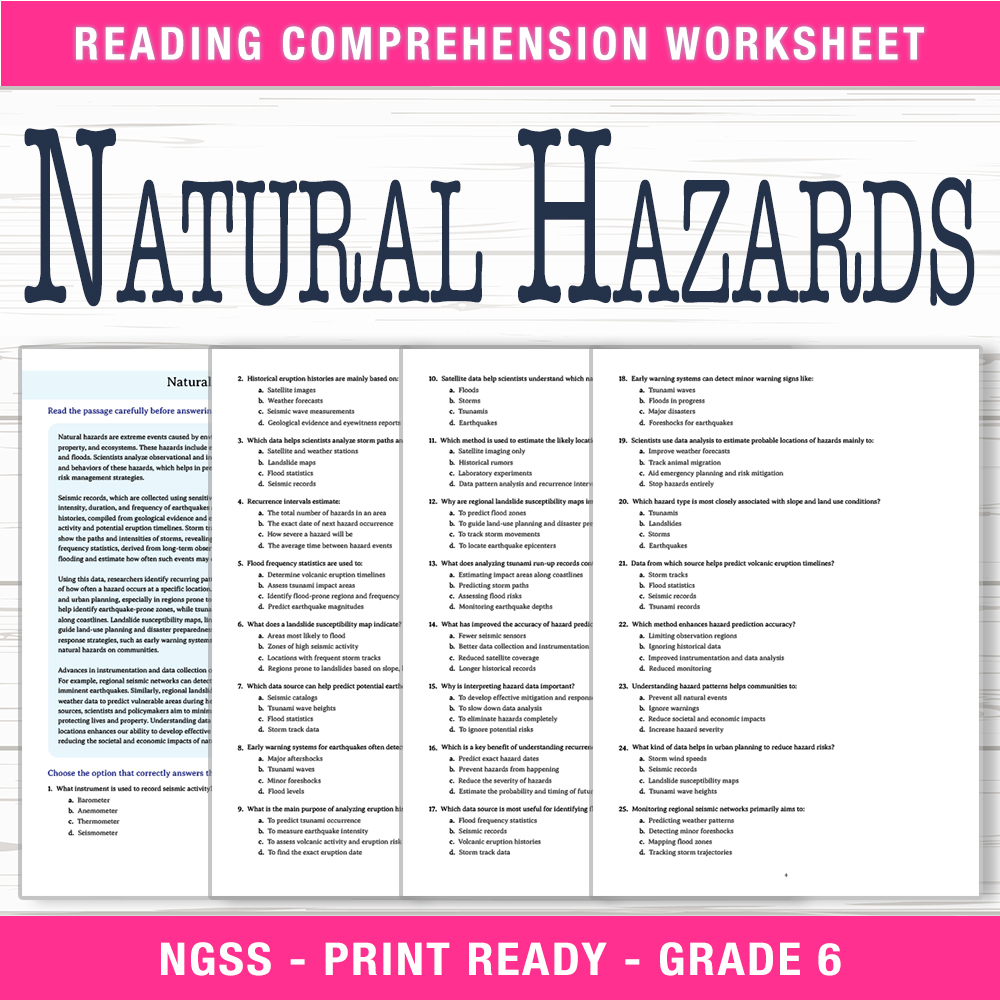
6th Grade Science | Natural Hazards Worksheet (PDF + Answer Key)
 Created byRiverstone Classroom
Learning Objectives
- Describe the types of natural hazards and how observational data are used to analyze them.
- Interpret data such as seismic records, eruption histories, and flood statistics to understand patterns.
- Explain methods for estimating the recurrence intervals and potential locations of natural hazards.
Instant download
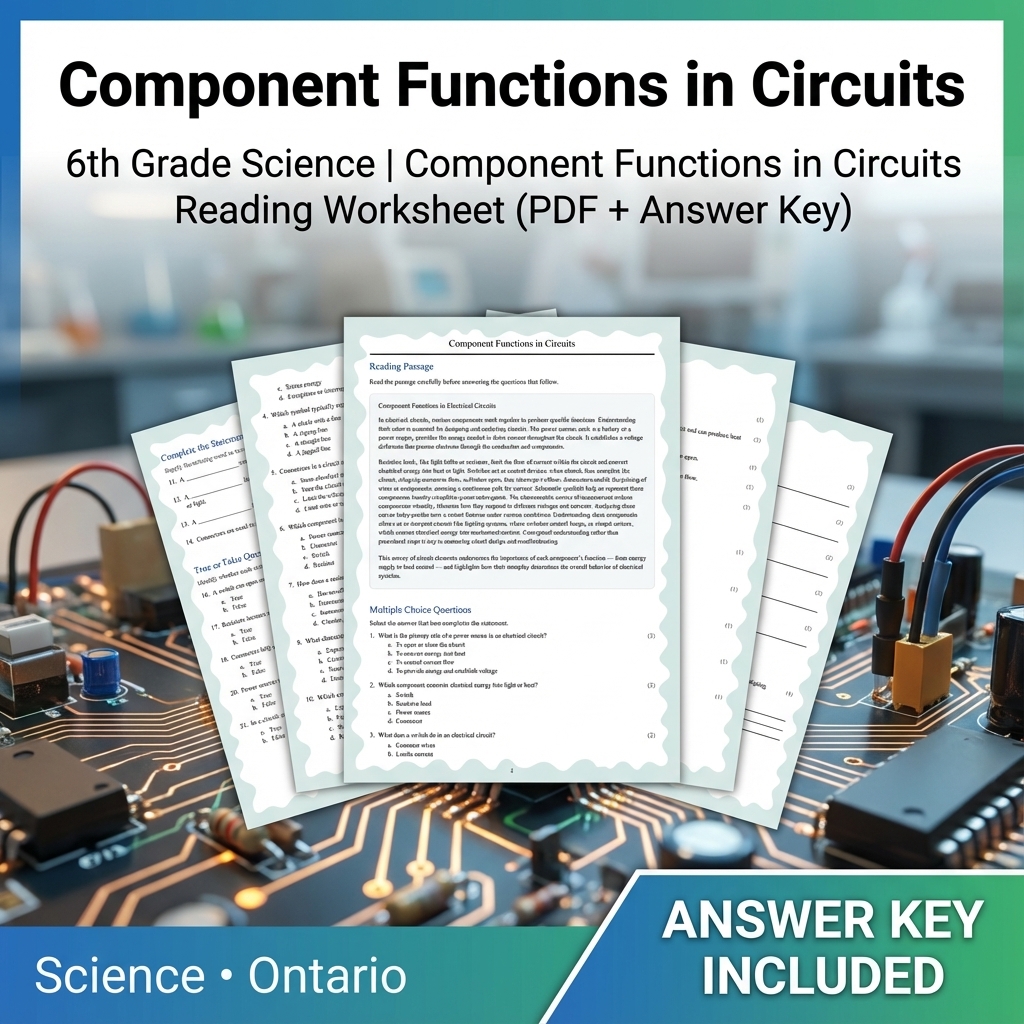
6th Grade Science | Component Functions in Circuits Reading (PDF + Answer Key)
JCreated byJ.S SheetsLearning Objectives
- Understand the purpose of common electrical circuit components such as power sources, resistive loads, switches, and connectors.
- Explain how each component affects current and voltage within a circuit.
- Interpret schematic symbols and relate them to physical components.
Also included in: Grade 6 Science Circuit & Electricity Unit Bundle – Worksheets & Answer Keys +1 more
Instant download
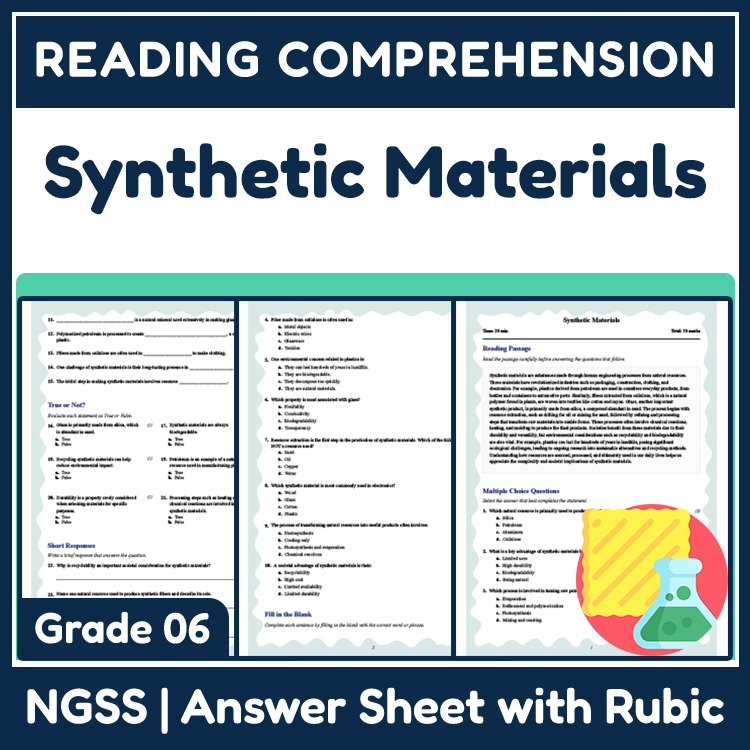
6th Grade Science | Synthetic Materials Reading Worksheet with Answer Key (PDF)
JCreated byJ.S SheetsLearning Objectives
- Understand the sources and origins of various synthetic materials used in daily life.
- Compare the properties of natural versus synthetic materials and relate them to their uses.
- Describe the processes involved in extracting and processing resources for manufacturing synthetic materials.
Instant download

6th Grade Science Worksheet | Energy Transfer & Heat Transfer (PDF)
Created byEvergreen Desk EducationLearning Objectives
- Explain how conduction, convection, and radiation transfer energy from one place to another.
- Identify which energy-transfer process best matches a real-world temperature change.
- Use evidence from observations (touching, air/fluid movement, and light emission) to justify answers.
Instant download
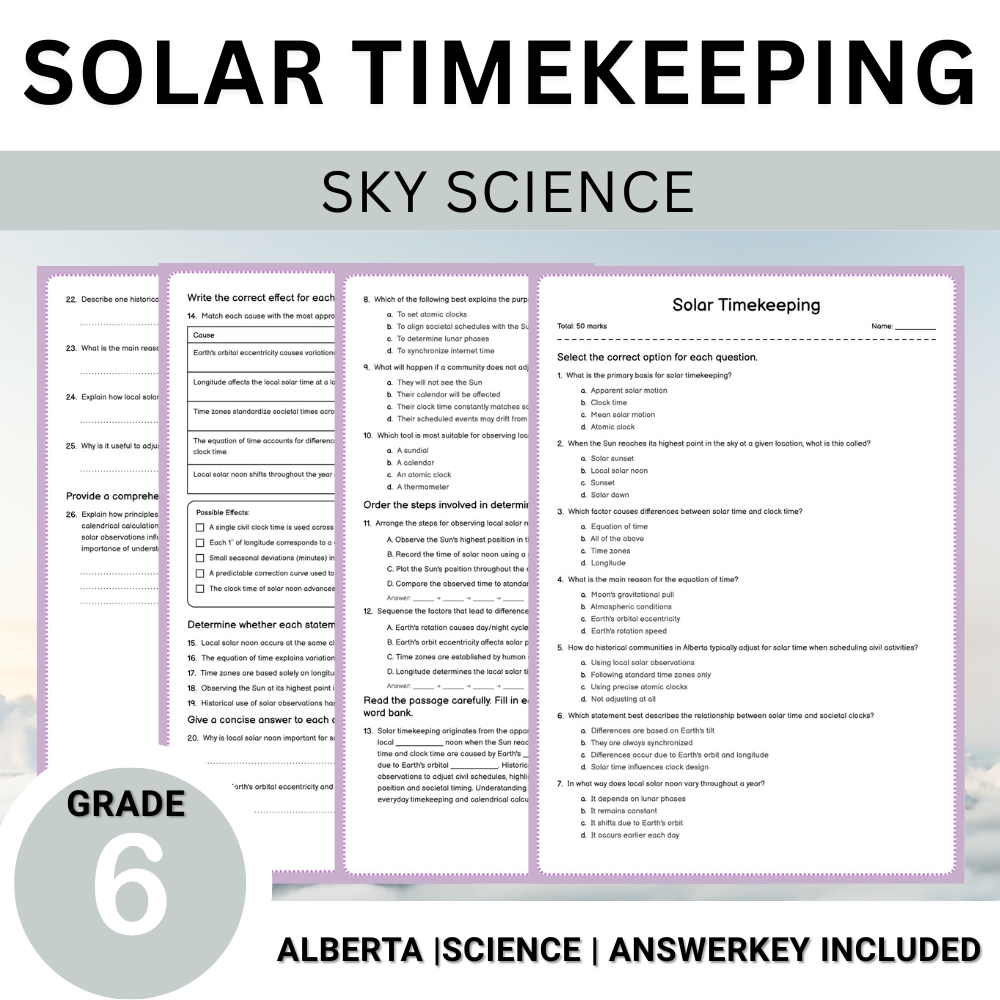
Grade 6 Science | Solar Timekeeping Worksheet & Assessment (Printable PDF)
Learning Objectives
- Understand the principles of apparent solar motion and local solar noon.
- Identify factors that cause differences between solar time and clock time.
- Describe historical and modern uses of solar time in communities.
Also included in: Grade 6 Science | Celestial & Space Phenomena UNIT Worksheet Bundle (Assessment & Practice) +1 more
Instant download
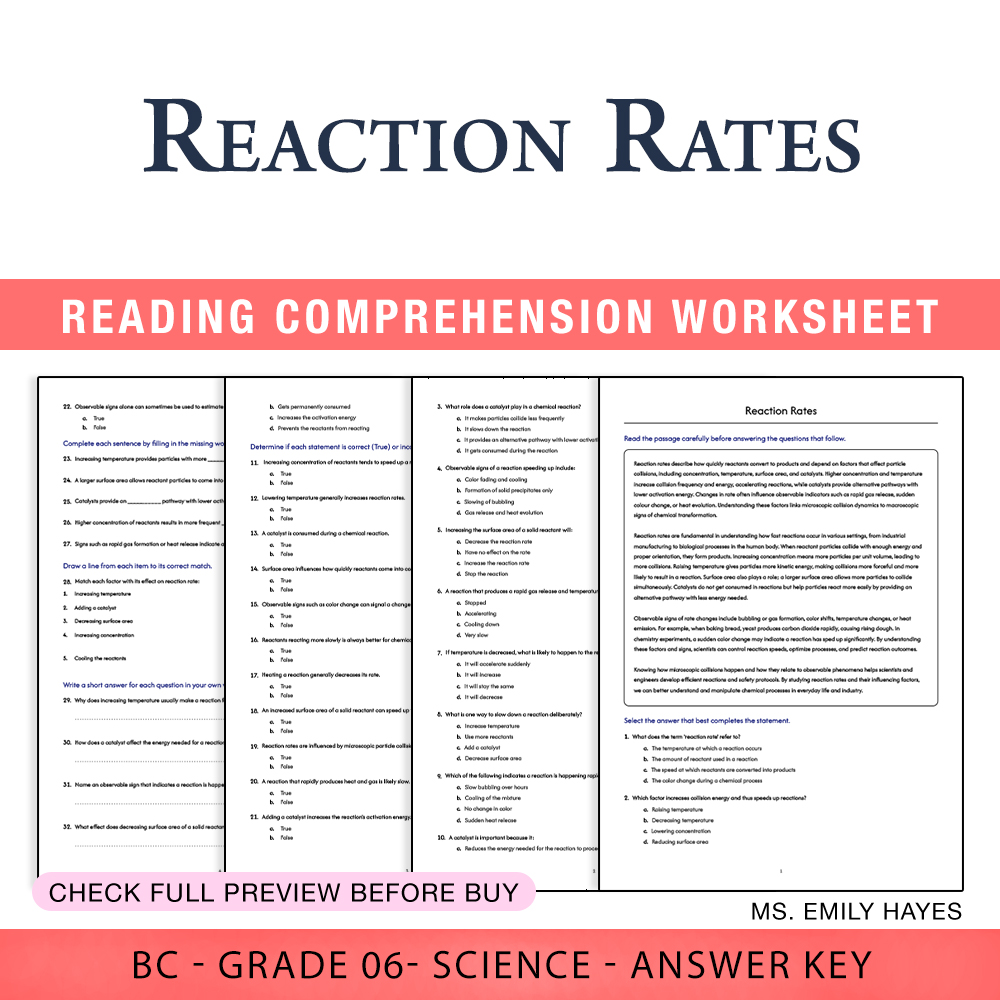
Grade 6 Science | Reaction Rates Worksheet (PDF+ Answer Key)
Created byCopper Leaf ClassroomLearning Objectives
- Explain what reaction rates are and how they describe the speed of chemical reactions.
- Identify factors that influence reaction rates such as concentration, temperature, surface area, and catalysts.
- Describe the observable signs indicating changes in reaction rates during chemical processes.
Also included in: Grade 6 Science BC| Reaction Rates & Chemical Properties (PDF+ Answer Keys) +1 more
Instant download

6th Grade Science | Wind Tunnel Worksheet (Ontario Standards) (PDF)
Created byEvergreen Desk EducationLearning Objectives
- Explain how a wind tunnel measures aerodynamic forces and moments on models using force balances and pressure taps
- Describe how similarity parameters (Reynolds and Mach numbers) affect scaled testing and boundary-layer behavior
- Calculate lift and drag coefficients from measured forces and interpret flow-visualization evidence
Also included in: Grade 6 Flight & Aerodynamics Science Lesson Bundle Worksheets (Ontario) +1 more
Instant download
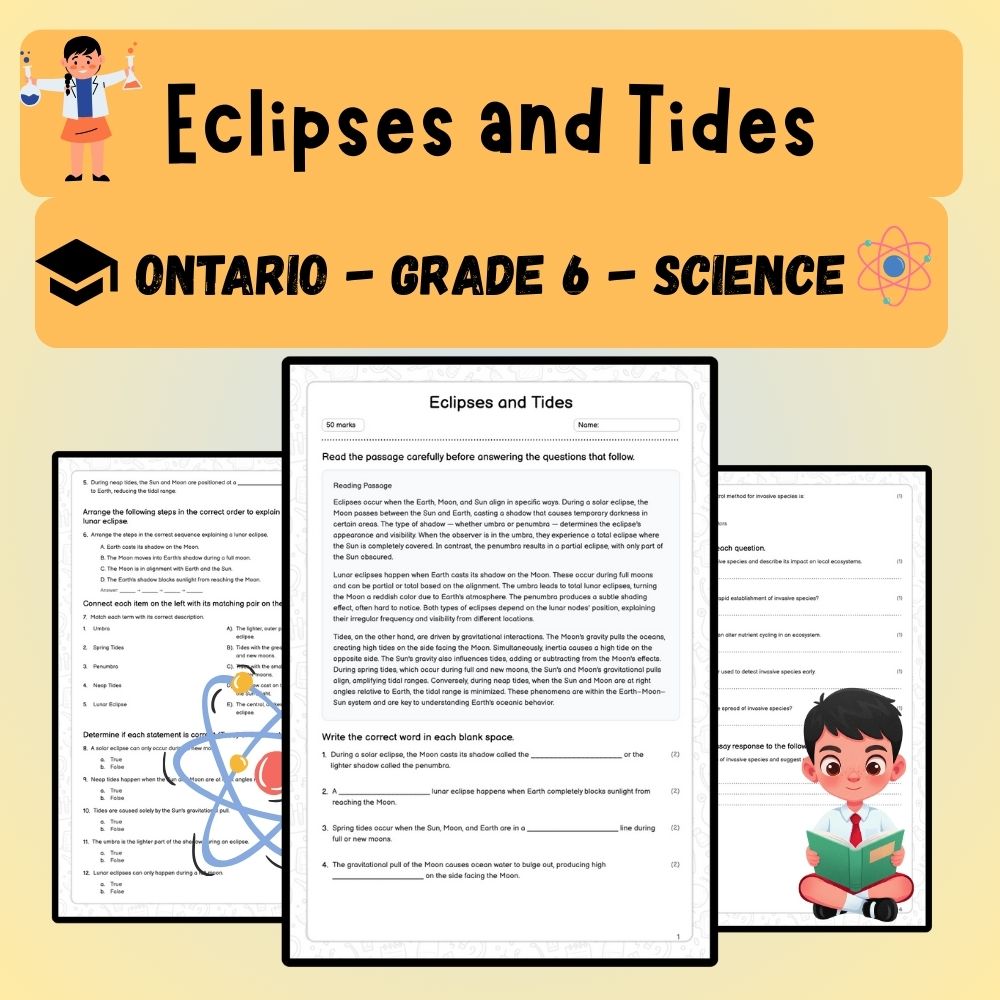
6th Grade Science | Eclipses and Tides Worksheet (PDF )
Created byPrism Point LearningLearning Objectives
- Explain the geometric and observational aspects of solar and lunar eclipses, including umbra and penumbra effects.
- Describe the gravitational mechanisms behind tides, including the effects of the Moon and Sun, and distinguish between spring and neap tides.
Instant download
About Grade 6 Science Worksheets
Explore Grade 6 Science worksheets for classwork, homework, or review. Our 5,997 printables download instantly as PDFs.
MyTeachingSheets worksheets are made by real teacher-authors and checked before they go live. Download any as a print-ready PDF for lessons, homework, or independent practice — most include answer keys, and previews are always free.