
Grade 6 Science Worksheets
5,997 worksheets
6th Grade Science Worksheet – Integrated Management in Forests (PDF)
 Created byEvergreen Desk Education
Learning Objectives
- Explain how integrated management balances ecological, economic, and social objectives in forest planning.
- Describe ecosystem-based forest management, adaptive harvest planning, and monitoring risks such as mountain pine beetle and wildfire.
- Use stakeholder collaboration to support long-term resilience in Alberta forest landscapes.
Instant download
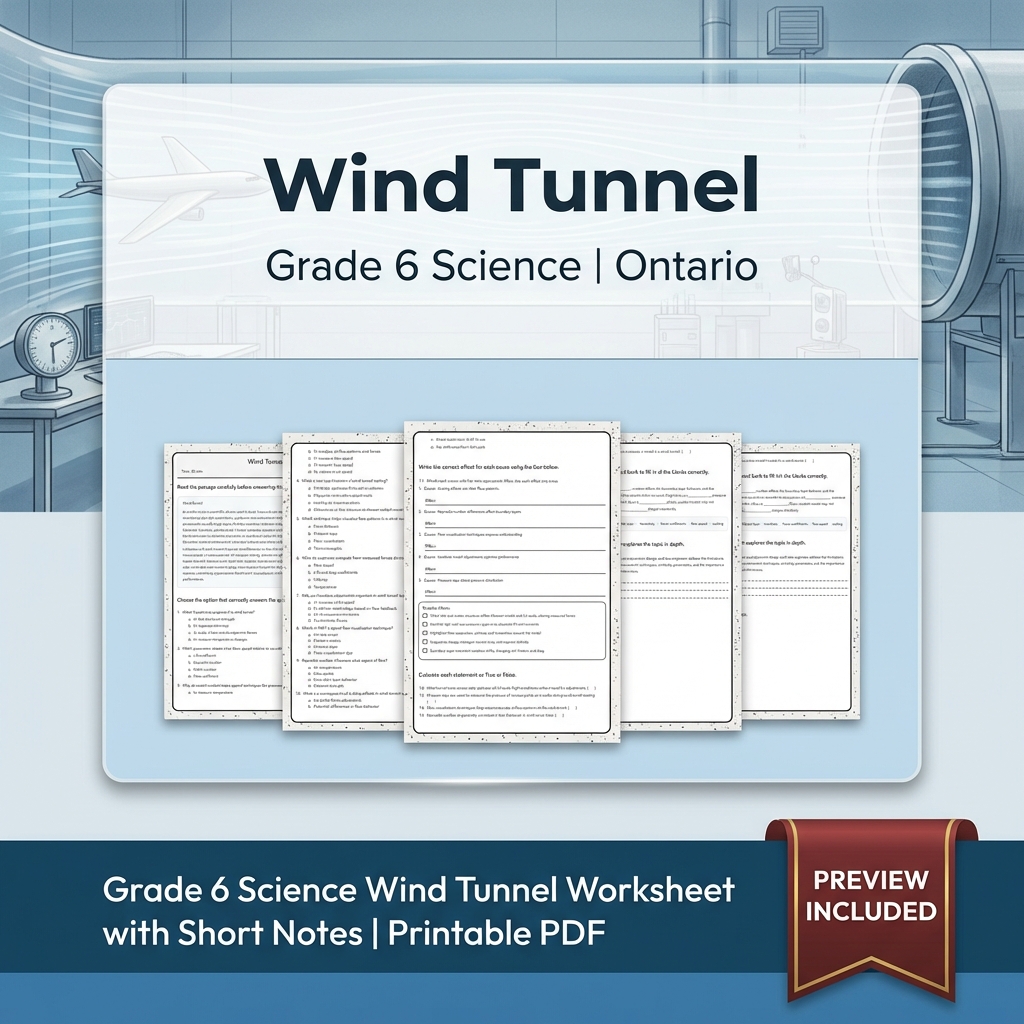
Grade 6 Science Wind Tunnel Worksheet with Short Notes | Printable PDF
 Created byMeadowlark Worksheets
Learning Objectives
- Understand the purpose and methods of wind tunnel testing for aerodynamic forces.
- Identify key concepts such as Reynolds and Mach numbers in scaled models.
- Explain techniques like pressure taps, flow visualization, and force measurement.
Also included in: Grade 6 Science Lesson Group Bundle – Ontario Framework Worksheets +1 more
Instant download
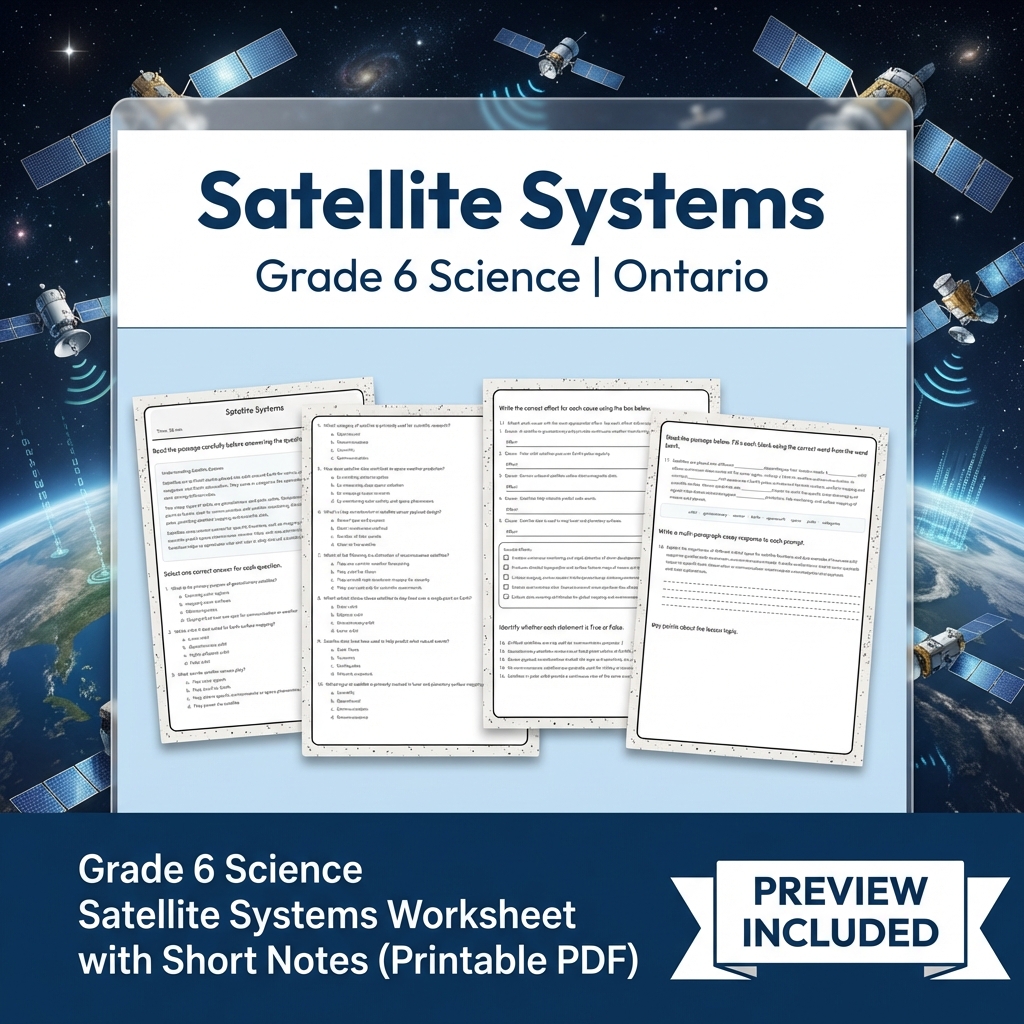
Grade 6 Science Satellite Systems Worksheet with Short Notes (Printable PDF)
Created byMeadowlark WorksheetsLearning Objectives
- Understand the functions and categories of artificial satellites.
- Learn about orbital types such as geostationary and polar orbits.
- Explore how satellite data contribute to Earth observation and scientific monitoring.
Also included in: Grade 6 Science Lesson Group Bundle – Ontario Curriculum Worksheets +1 more
Instant download

Grade 6 Variation Factors in Science Worksheet with Answer Key | NGSS
 Created byBRIGHT PATH RESOURCES
Learning Objectives
- Understand the difference between genetic traits and mutations.
- Identify environmental factors that influence observable traits.
- Distinguish between inherited and nonheritable variations.
Also included in: Variation & Inheritance Grade 6 Science Daily Reading Lesson Bundle | NGSS +2 more
Instant download

Surface Change Practice Worksheets | Grade 6 Science NGSS Review Assessment
 Created byPrism Point Learning
Learning Objectives
- Explain how slow and rapid geologic processes modify Earth’s surface over different time scales.
- Use evidence such as rock strata, fossils, uplifted terraces, and erosion rates to support claims about landscape evolution.
- Compare how rivers and glaciers transport sediment and reshape landforms.
Also included in: Grade 6 Weather & Climate Systems Science Lesson Bundle NGSS
Instant download
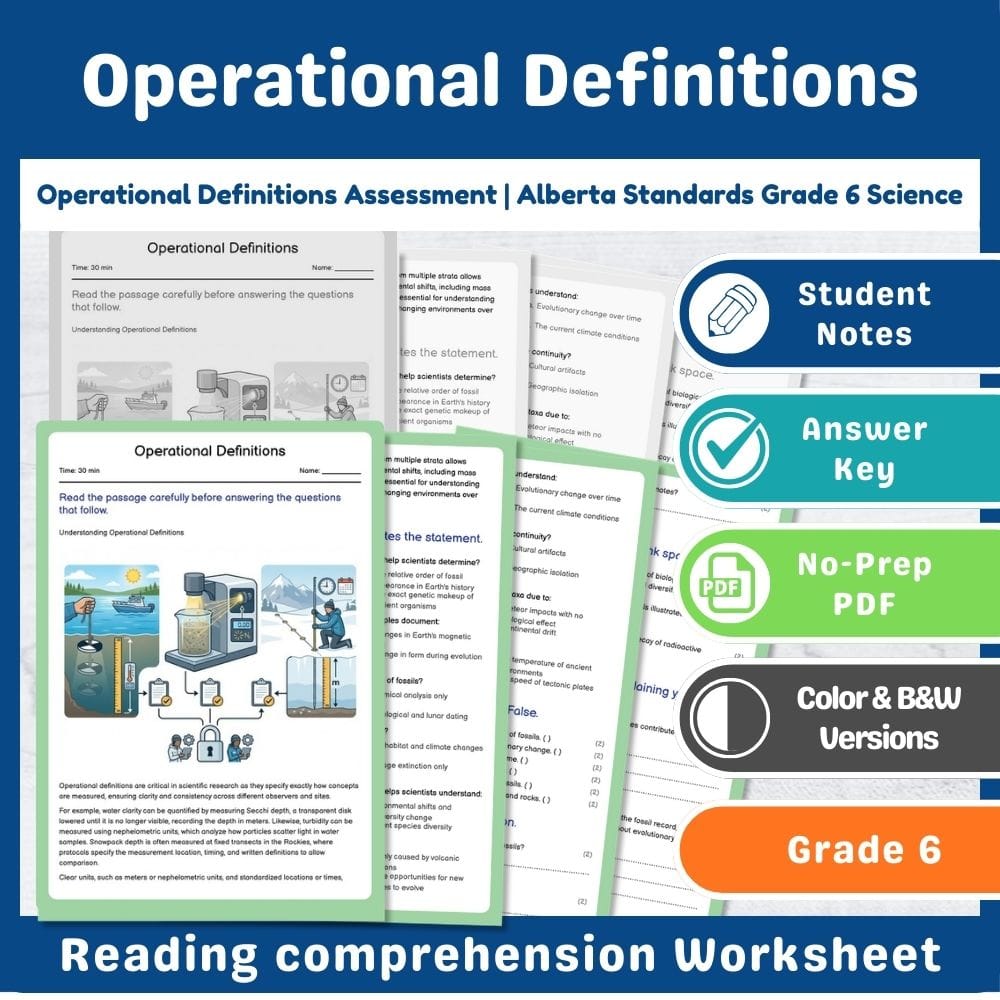
Operational Definitions Assessment | Alberta Standards Grade 6 Science
Created byPrism Point LearningLearning Objectives
- Understand key concepts related to Science
- Apply knowledge through practice questions
- Demonstrate comprehension of the material
Also included in: Lesson Grade 6 Science Mini Bundle | Evidence and Investigation
Instant download

Nervous System Grade 6 Science Worksheet | Standards-Aligned Practice
JCreated byJ.S SheetsLearning Objectives
- Understand the main functions of the nervous system in collecting, processing, and responding to sensory information.
- Identify the structure and function of neurons, including axons and synapses.
- Describe how the nervous system works with the endocrine system to maintain body stability and behavior.
Instant download

Grade 6 Independent Dependent & Controlled Variables Worksheet | Alberta
Created byBRIGHT PATH RESOURCESLearning Objectives
- Identify the independent, dependent, and controlled variables in a simple investigation.
- Explain why controlled variables must be kept constant to see clear patterns.
- Use operational definitions and consistent measurement intervals to reduce confusion from environmental noise.
Also included in: Inquiry Data Grade 6 Science Daily Reading Worksheets Lesson Bundle | Alberta +1 more
Instant download
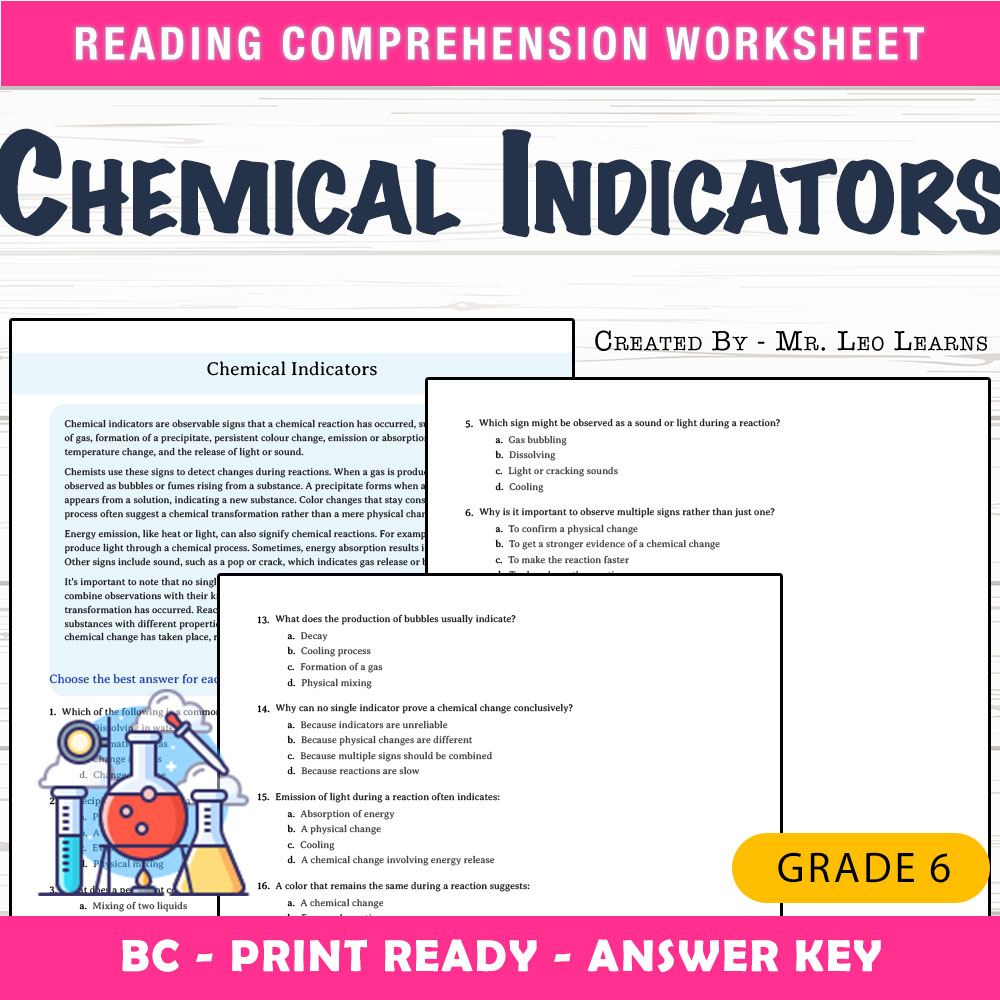
Grade 6 Science — Worksheet MCQ Paper for Mastering Chemical Indicators
 Created byThe Resource Hub
Learning Objectives
- Understand what chemical indicators are and how they signal chemical reactions.
- Identify various observable signs of chemical changes.
- Learn that multiple indicators together give stronger evidence of chemical reactions.
Also included in: Grade 6 Science | Matter, Properties & Change Worksheet Bundle (BC Framework) +1 more
Instant download
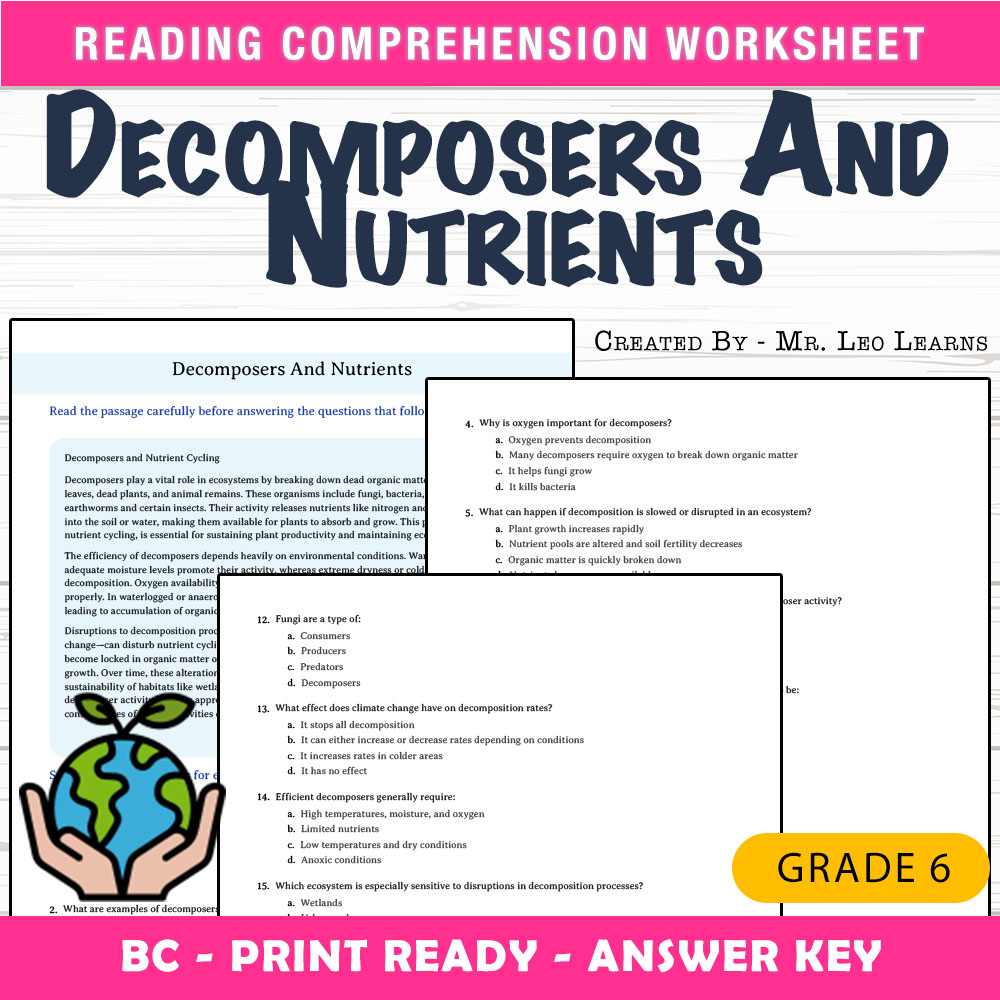
Grade 6 Science — Decomposers and Nutrients Worksheet MCQ PDF + Answer Key
Created byThe Resource HubLearning Objectives
- Understand the role of decomposers in nutrient cycling.
- Identify different types of decomposers such as fungi, bacteria, and detritivores.
- Explain how environmental factors affect decomposer efficiency.
Also included in: Grade 6 Science Ecosystems & Interdependence Worksheet Bundle – BC Curriculum +1 more
Instant download
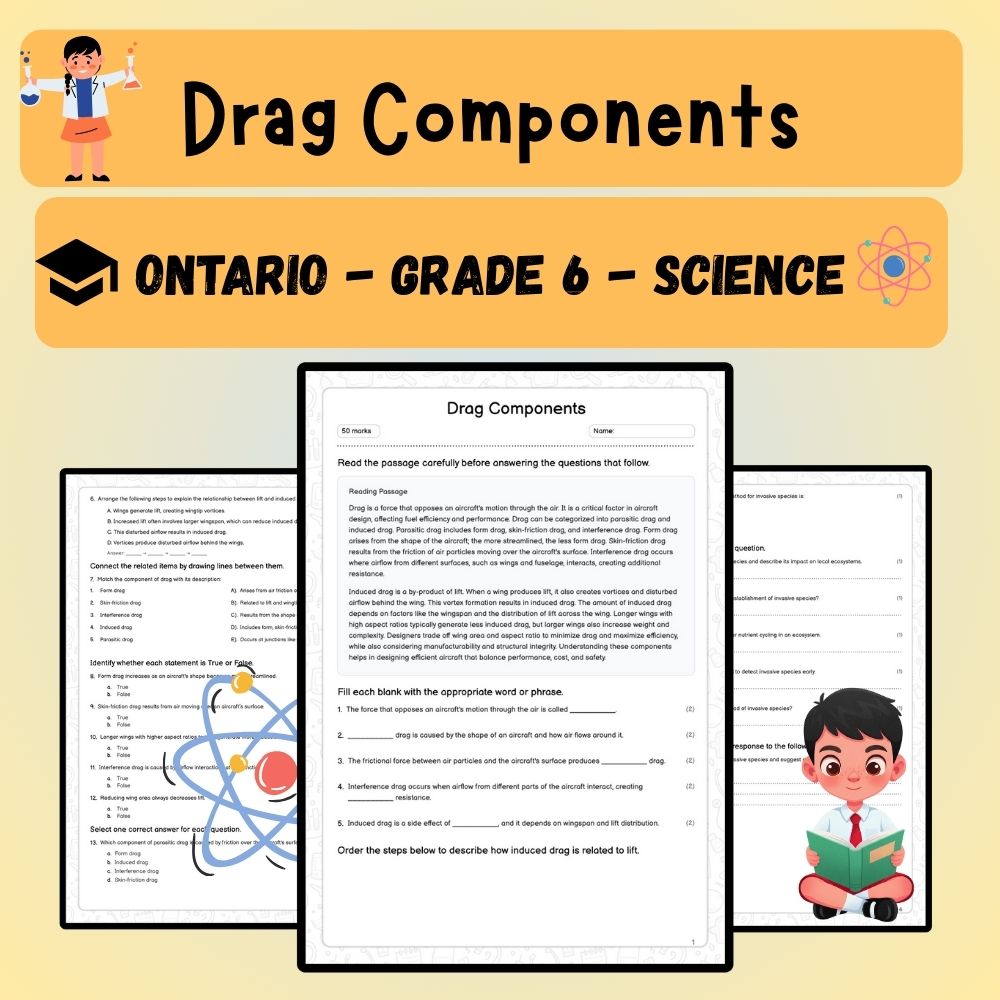
Grade 6 Science – Drag Components Worksheet (PDF ) - Ontario Standards
Created byPrism Point LearningLearning Objectives
- Understand the categorization of drag into parasitic and induced sources.
- Identify and explain the components of parasitic drag: form, skin-friction, and interference drag.
- Describe the concept of induced drag and how it relates to lift generation.
Instant download

Cell Specialization Worksheet | Standards-Aligned Grade 6 Science Assessment
JCreated byJ.S SheetsLearning Objectives
- Understand the concept of cell specialization and its role in organisms.
- Identify different types of specialized cells and their functions.
- Explain how differentiation leads to cell specialization and tissue formation.
Instant download

Quantitative Circuits Worksheet | Grade 6 Science PDF | Ontario
 Created byCedar Grove Learning
Learning Objectives
- Explain how voltage, current, and resistance are related using proportional reasoning (Ohm’s law).
- Calculate an unknown circuit quantity when two values are given (V, I, or R).
- Predict how current changes when resistance changes for a fixed voltage in series contexts and parallel contexts.
Also included in: Grade 6 Electricity and Circuits Science lesson bundle: Ontario framework +1 more
Instant download
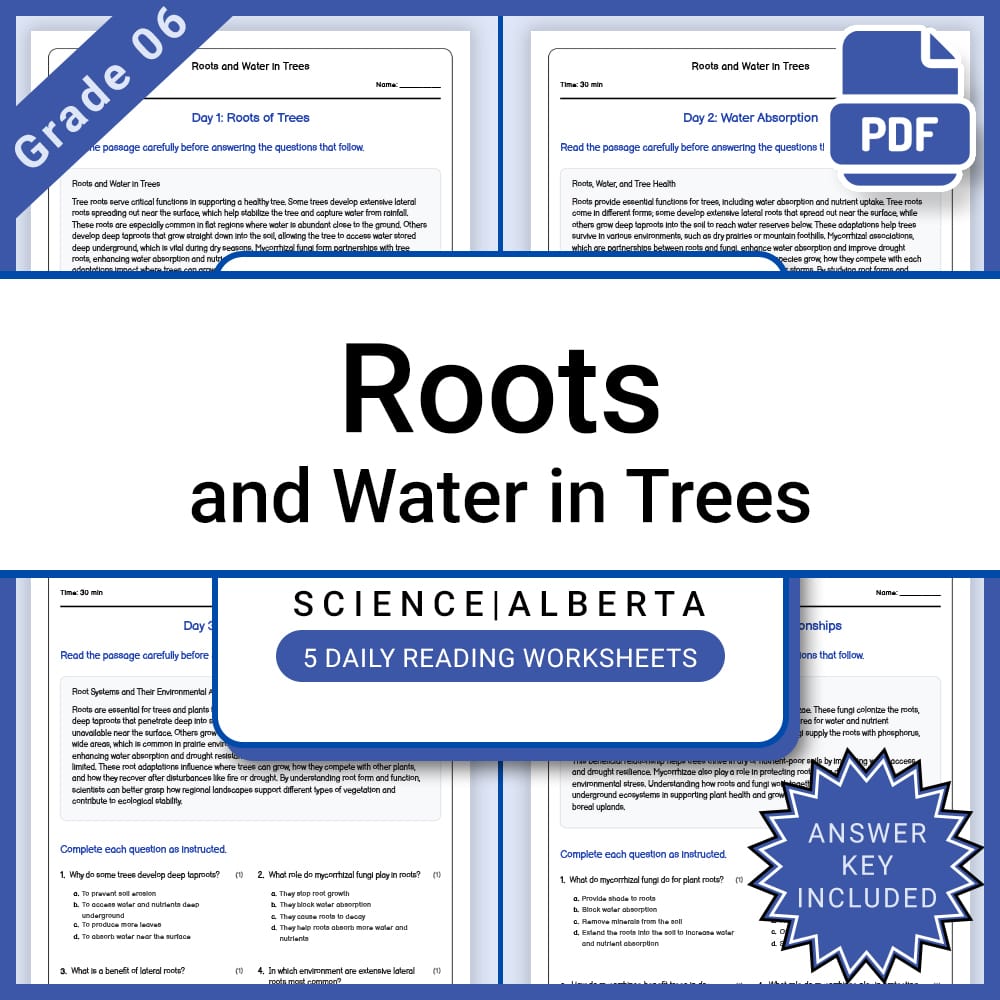
Grade 6 Science Roots and Water in Trees | Daily Reading Worksheet + Answer Key
JCreated byJ.S SheetsLearning Objectives
- Identify and describe different types of tree roots.
- Understand how roots help trees absorb water and nutrients.
- Explain the adaptations of roots that enable trees to survive in various environments.
Also included in: Grade 6 Science Lesson Bundle – Ecosystems, Trees, and Land Management +1 more
Instant download

Grade 6 Defining Problems in Science Worksheet | NGSS Engineering Design
Created byBRIGHT PATH RESOURCESLearning Objectives
- Understand key concepts related to Science
- Apply knowledge through practice questions
- Demonstrate comprehension of the material
Also included in: Engineering Design Grade 6 Science Daily Reading Worksheets Lesson Bundle | Ngss +2 more
Instant download

Energy Drives Change Assessment | California Standards Grade 6 Science
Created byPrism Point LearningLearning Objectives
- Explain how energy from the Sun and gravity influence Earth system processes such as heating, water movement, and sediment transport.
- Describe how phase changes in water relate to evaporation and cloud formation.
- Use cause-and-effect reasoning to predict how energy and gravity shape the distribution of sediments and soils over time.
Also included in: Grade 6 Water in Earth Systems Science Lesson Bundle: California Standards +1 more
Instant download
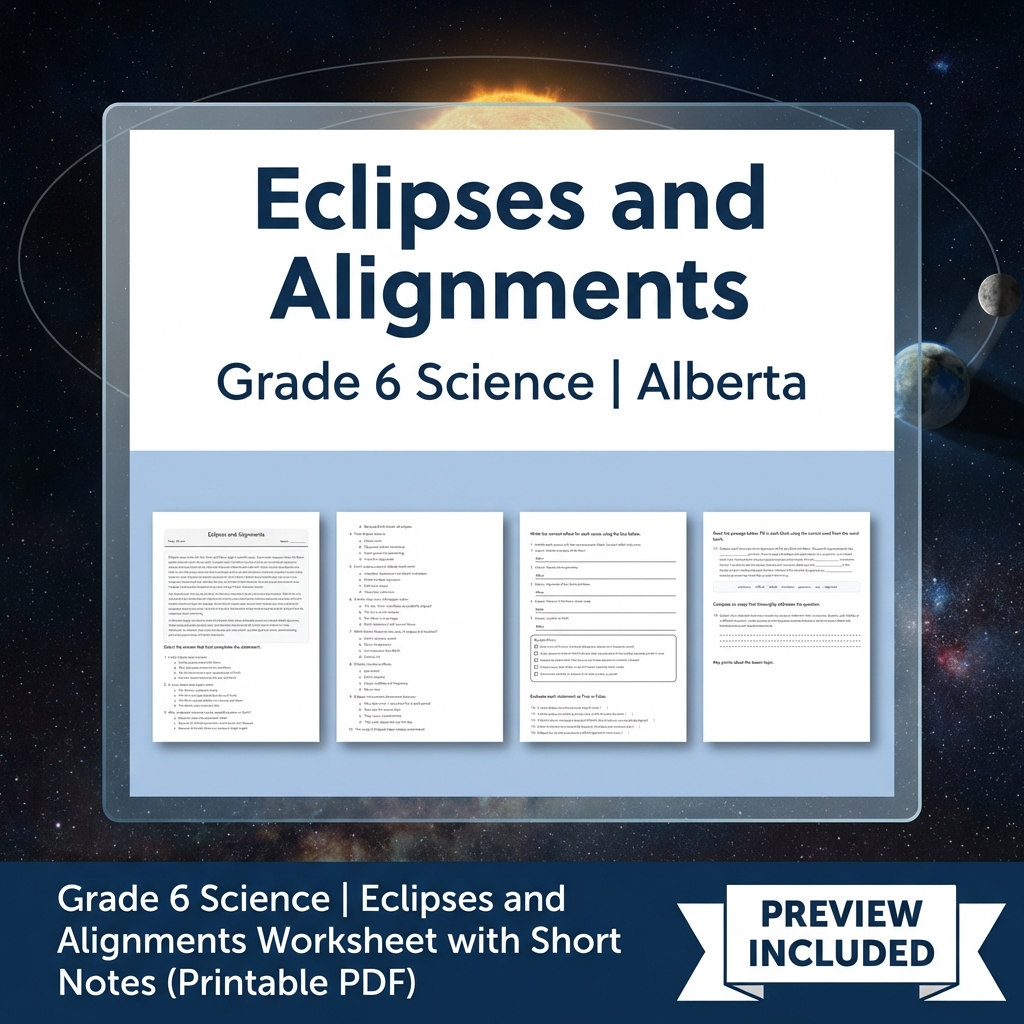
Grade 6 Science | Eclipses and Alignments Worksheet with Short Notes (PDF)
Created byMeadowlark WorksheetsLearning Objectives
- Explain how the Sun, Earth, and Moon align during solar and lunar eclipses.
- Describe why eclipses are relatively rare at specific locations.
- Identify conditions necessary for partial, total, and annular eclipses.
Also included in: Grade 6 Science Sky Science Unit Bundle | Alberta Curriculum Worksheets +1 more
Instant download

Grade 6 Cycles of Matter and Energy in Ecosystems Worksheet | Practice & PDF
 Created byClear Sky Classroom
Learning Objectives
- Explain how energy flows through ecosystems and how matter cycles through them.
- Identify examples of Earth systems processes that support nutrient recycling.
- Use scientific vocabulary to complete and answer questions about biotic and abiotic interactions.
Also included in: Grade 6 Scientific Investigation Science Full Year Bundle Alberta
Instant download
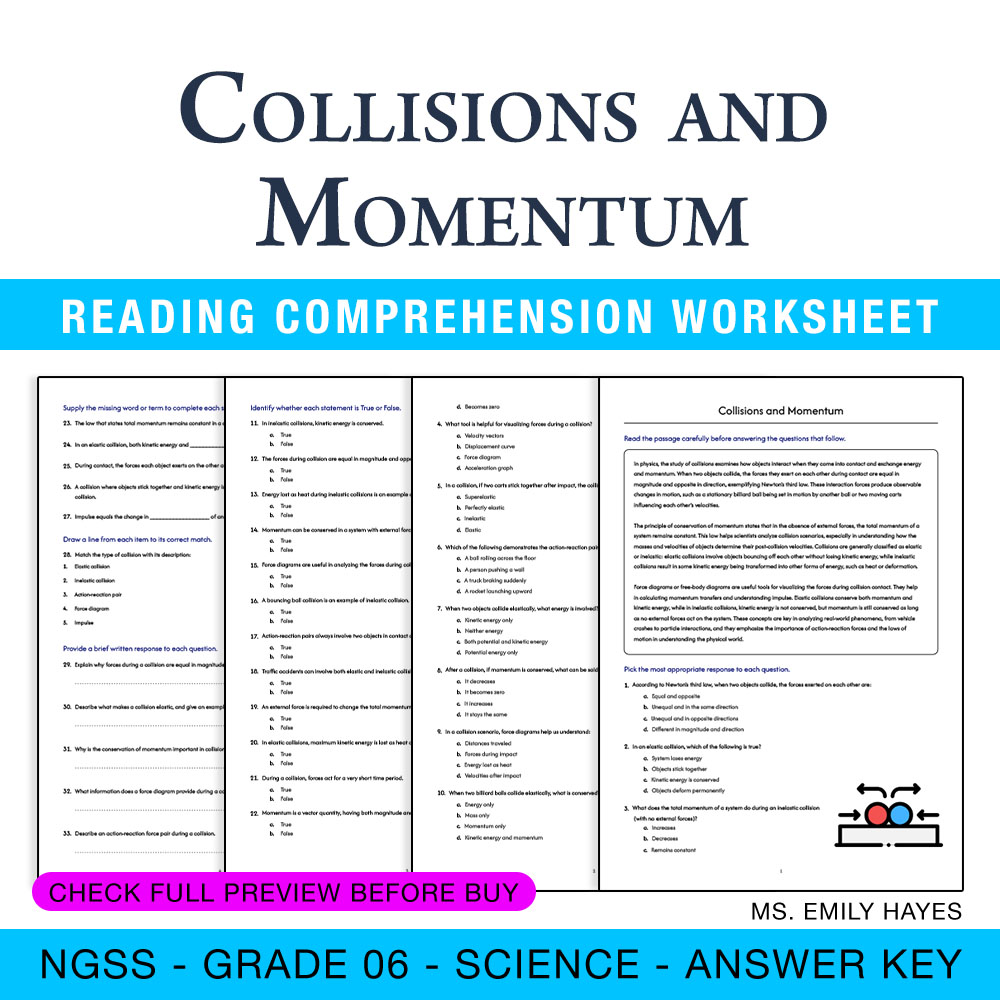
6th Grade Science | Collisions and Momentum Worksheet (PDF + Answer Key)
 Created byCopper Leaf Classroom
Learning Objectives
- Understand the principle of conservation of momentum during two-body collisions.
- Differentiate between elastic and inelastic collisions based on outcome observations.
- Analyze forces during collision events using force diagrams and momentum calculations.
Instant download

Grade 6 Science | Change Examples Worksheet | BC Aligned
 Created byLumora Learning
Learning Objectives
- Understand the difference between physical and chemical changes.
- Identify examples of physical and chemical changes in everyday life.
- Explain how to distinguish between reversible and irreversible changes.
Instant download

Grade 6 Science | Crystal Structures Worksheet | BC Aligned
Created byLumora LearningLearning Objectives
- Understand the differences between crystalline and amorphous solids at the particle level.
- Explain how ordered particle arrangements influence the physical properties of solids.
- Describe how particle bonding strength affects the mechanical properties of solids.
Instant download

Grade 6 Science Worksheet on Human Impacts | Alberta Standards (PDF)
 Created bySilver Birch Teaching
Learning Objectives
- Describe how human activities affect forest ecosystems, including habitat connectivity, soil, and water quality
- Identify ways that fragmentation and pollution can change species composition
- Explain why invasive species can increase ecological harm over time
Also included in: Grade 6 Ecosystem Interactions Science Lesson Bundle: Alberta Framework +1 more
Instant download
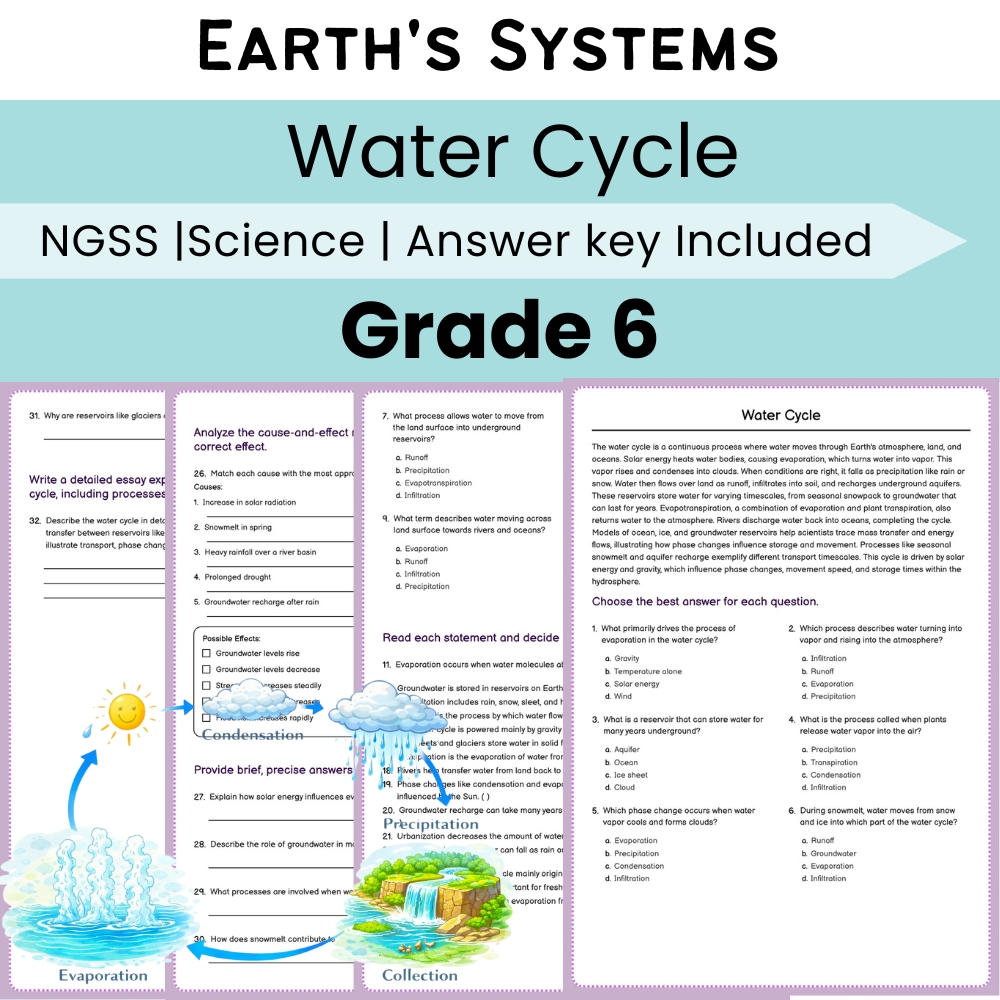
Water Cycle Worksheet | Science Assessment for Grade 6 | NGSS Standards
Learning Objectives
- Describe the processes involved in the water cycle, including evaporation, condensation, precipitation, runoff, infiltration, and groundwater storage.
- Explain how solar energy and gravity drive the water cycle processes.
- Identify and interpret models of reservoirs like oceans, ice, and groundwater in the context of water transfer and energy flow.
Also included in: Grade 6 Science | Earth's Systems Unit Worksheet Bundle (NGSS Aligned) +1 more
Instant download

Geologic History Assessment for Grade 6 Science TEKS Standards
Created byPrism Point LearningLearning Objectives
- Understand principles of relative and absolute dating used in geology.
- Identify and interpret key features of the geologic time scale and fossil succession.
- Explain the methods of correlation and radiometric techniques to determine Earth's history.
Instant download
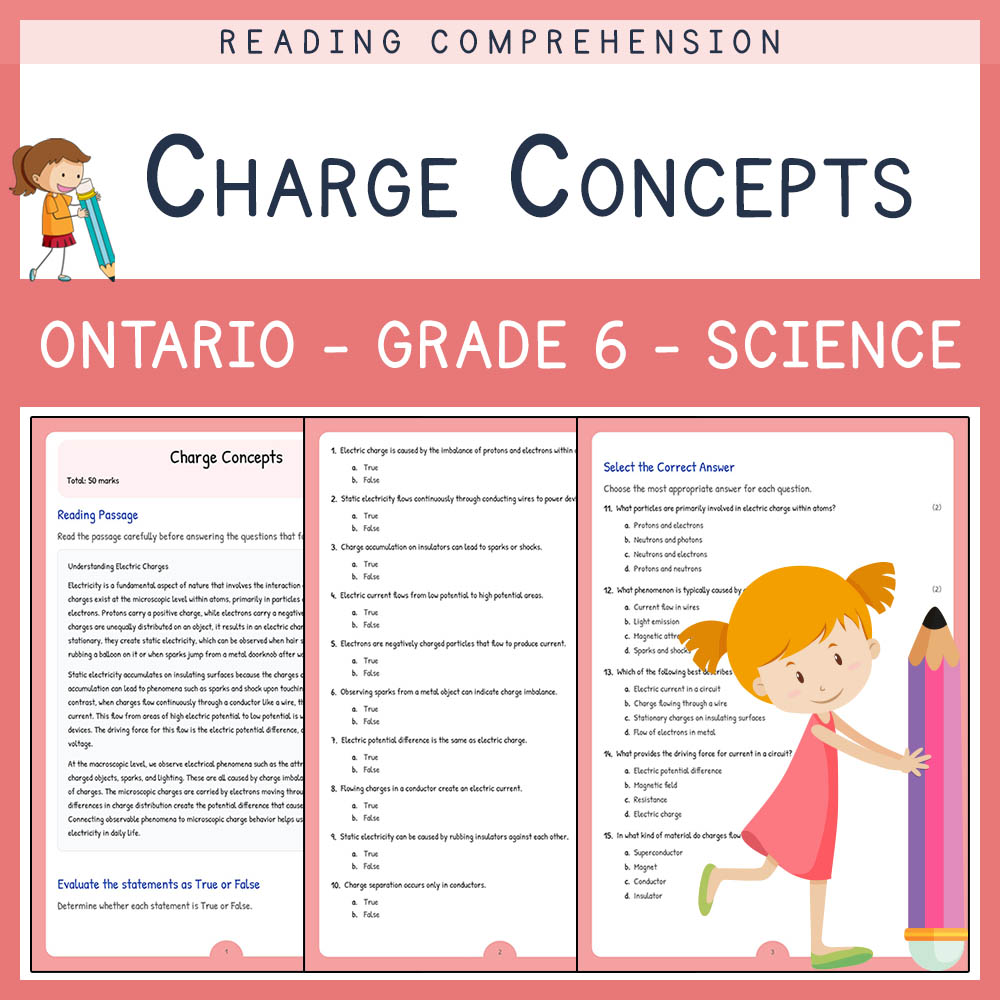
Grade 6 Science | Charge Concepts Worksheet with Answer Key (PDF)
Created byLumora LearningLearning Objectives
- Define electric charge and distinguish between static and current electricity.
- Explain charge separation and how it leads to observable phenomena like sparks and hair attraction.
- Connect microscopic charge carriers to macroscopic electrical phenomena.
Also included in: Grade 6 Science | Electricity Unit Custom Bundle | Ontario Framework
Instant download

Grade 6 Science | Food Webs Worksheet | BC-Aligned
Created byLumora LearningLearning Objectives
- Understand the concept of a food web and its components.
- Identify key species interactions within an ecosystem food web.
- Analyze how changes in one species can affect others in a web.
Instant download
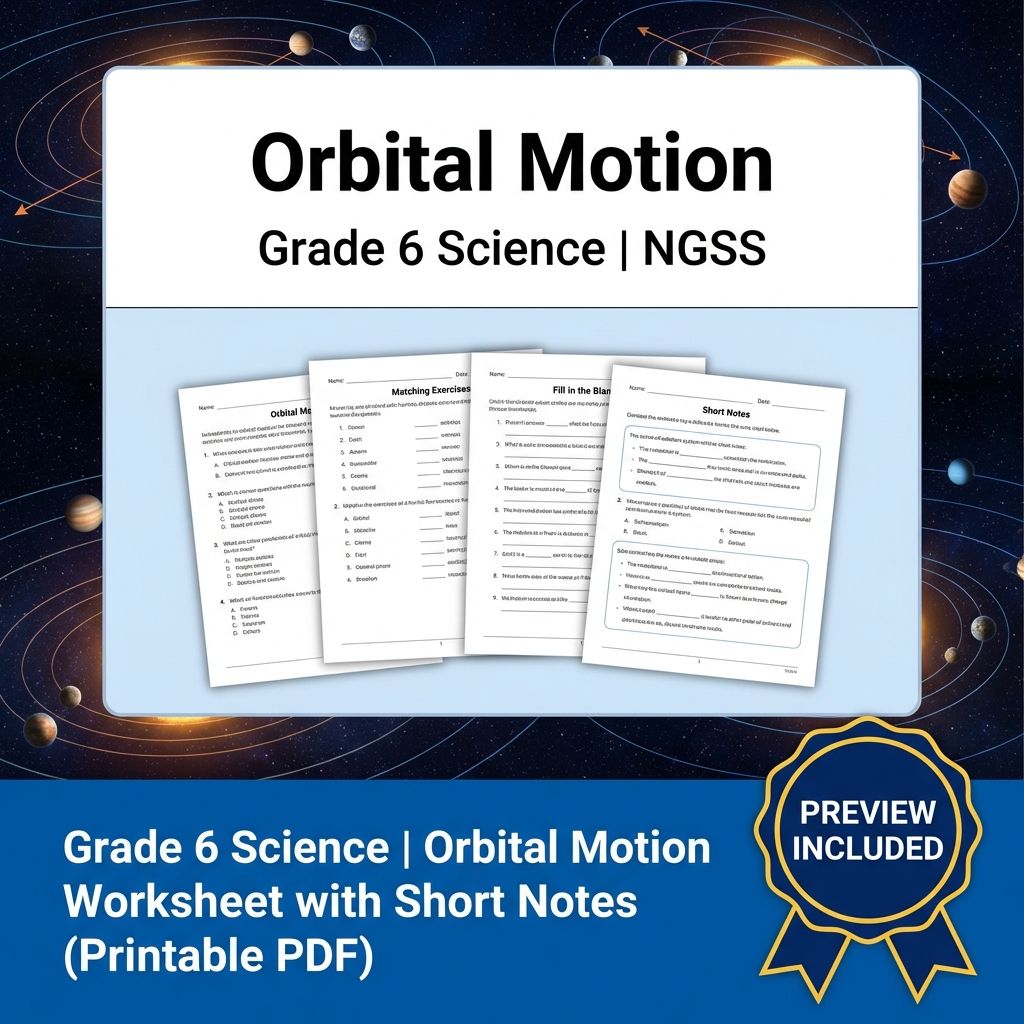
Grade 6 Science | Orbital Motion Worksheet with Short Notes (Printable PDF)
Created byMeadowlark WorksheetsLearning Objectives
- Understand how gravitational attraction governs planetary and satellite orbits.
- Describe the elliptical nature of planetary orbits and Keplerian relationships.
- Explain the role of central gravitational potential in maintaining orbital paths.
Also included in: Grade 6 Science | Earth's Place in the Universe Unit Bundle (NGSS Worksheets) +1 more
Instant download

Grade 6 Biodiversity Patterns Worksheet | NGSS Practice PDF
Created byClear Sky ClassroomLearning Objectives
- Understand how species occurrence and richness reveal biodiversity patterns across ecosystems.
- Identify different factors influencing biodiversity, such as habitat heterogeneity and colonization.
- Interpret data displays related to species diversity and endemism.
Also included in: Grade 6 Biological Evolution: Unity & Diversity Science lesson bundle NGSS +1 more
Instant download

Grade 6 Science | Pollution Effects Worksheet | BC Aligned
Created byLumora LearningLearning Objectives
- Understand the types of pollutants and their sources in ecosystems.
- Explain how pollutants bioaccumulate and biomagnify in food chains.
- Identify the impacts of nutrient over-enrichment and algal blooms on ecosystems.
Instant download

6th Grade Science | Safety and Ethical Reporting Worksheet (PDF)
Created byEvergreen Desk EducationLearning Objectives
- Explain how to follow safety procedures when using common lab materials and heat sources.
- Identify ethical expectations for reporting results accurately, honestly, and with proper attribution.
- Present data clearly by describing results, limitations, and any safety-relevant observations.
Also included in: Grade 6 Science Inquiry Lesson Bundle: Variable Control & Models (General) +1 more
Instant download
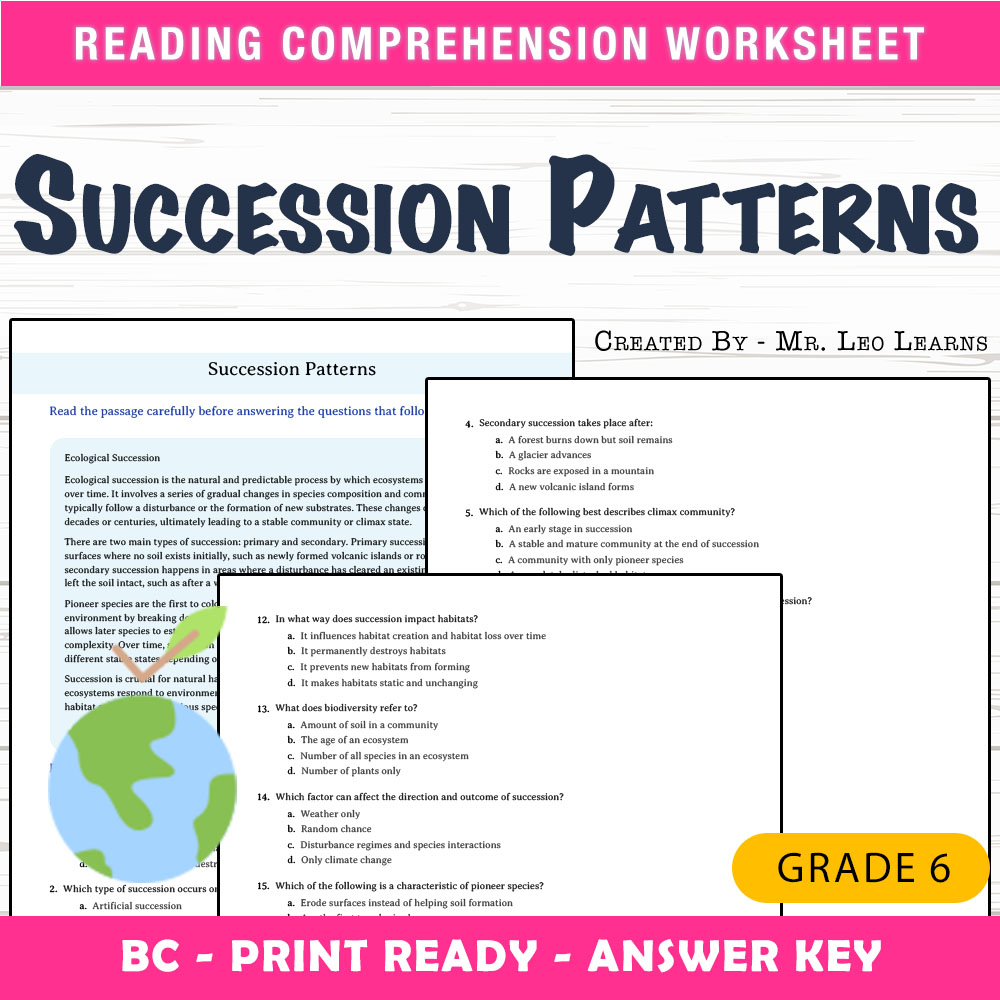
Grade 6 Science — Succession Patterns Worksheet MCQ Paper
Created byThe Resource HubLearning Objectives
- Understand the process of ecological succession and its types.
- Identify the roles of pioneer species in succession.
- Differentiate between primary and secondary succession.
Also included in: Grade 6 Science Ecosystems & Interdependence Worksheet Bundle – BC Curriculum +1 more
Instant download

Trait Heritability Worksheet | Ontario Grade 6 Science Assessment
Created byCedar Grove LearningLearning Objectives
- Explain what heritability means in terms of variation caused by genetic differences
- Distinguish heritable influences from environmental influences on a trait
- Describe how natural selection can change allele frequencies across generations
Also included in: Grade 6 Biodiversity and Adaptations Science Lesson Bundle Ontario +1 more
Instant download
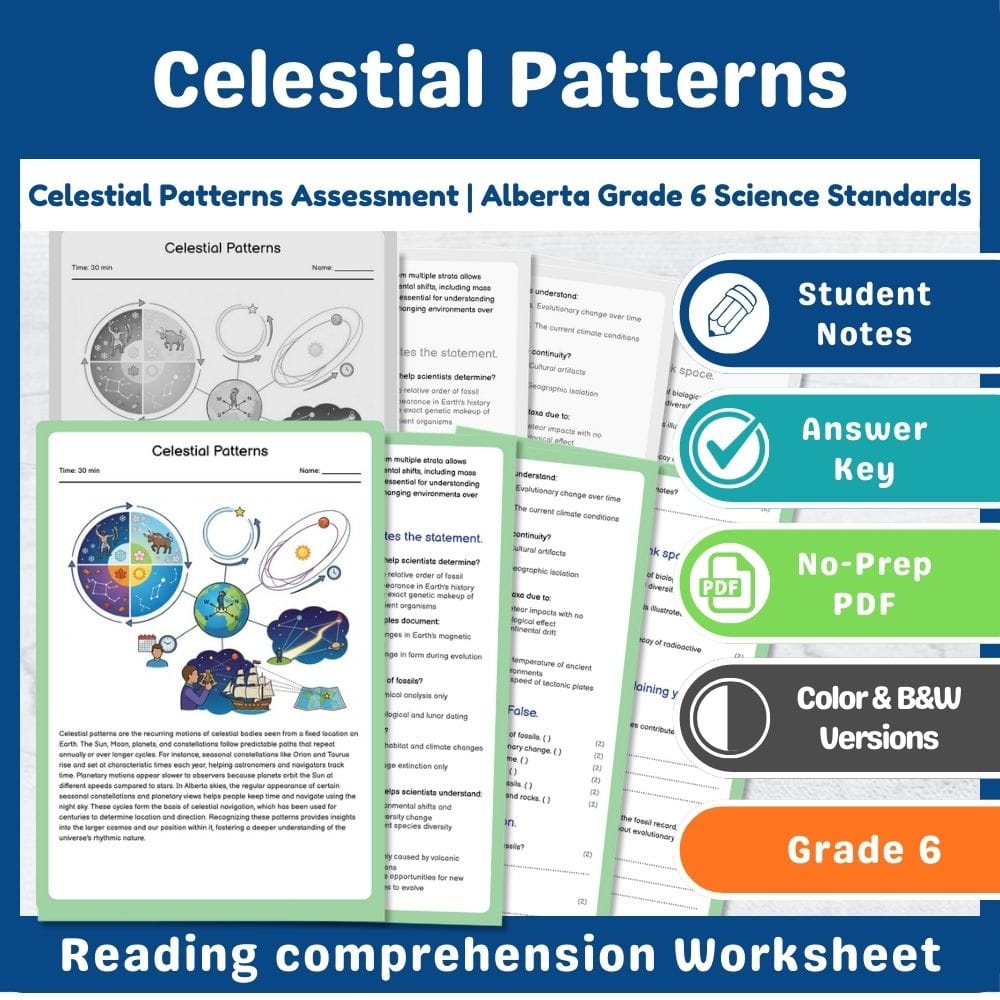
Celestial Patterns Assessment | Alberta Grade 6 Science Standards
Created byPrism Point LearningLearning Objectives
- Describe the predictable paths of the Sun, Moon, planets, and constellations as seen from a fixed location.
- Explain how seasonal constellations and planetary motions are used for timekeeping and navigation.
- Identify key celestial patterns observed in Alberta skies and their significance for predictability.
Also included in: Lesson Grade 6 Science Assessment | Celestial & Earth Movements
Instant download

Friction Effects Worksheet | Standards-Aligned Grade 6 Science Practice
JCreated byJ.S SheetsLearning Objectives
- Understand how different surfaces affect the amount of friction between objects.
- Explain how friction converts kinetic energy into thermal energy.
- Recognize how air resistance influences moving objects in fluids.
Also included in: Grade 6 Matter, Energy, and Forces Science lesson bundle – Florida (NGSSS) +1 more
Instant download

Atomic Composition Worksheet Grade 6 NGSS Atoms Matter & Molecules
 Created byNorthstar Worksheets
Learning Objectives
- Use models (ball-and-stick and space-filling) to describe how atoms combine to form simple molecules and extended structures.
- Interpret chemical formulas to identify the relative atom types and counts in H2O and NaCl.
- Explain how repeating units build polymer chains and how ionic charges relate to ionic lattices.
Also included in: Grade 6 Matter & Chemical Reactions Lesson Bundle | NGSS | Science +1 more
Instant download

Grade 6 Ecosystem Components Science Daily Reading TEKS Worksheet
Created byBRIGHT PATH RESOURCESLearning Objectives
- Define an ecosystem as an interacting system of biotic and abiotic components.
- Identify key biotic (living) and abiotic (nonliving) factors in a habitat.
- Explain how organism relationships and physical factors affect ecosystem balance.
Also included in: TEKS Ecosystems Grade 6 Science Daily Reading Worksheets Lesson Bundle | TEKS +1 more
Instant download

Wave Interactions Test Prep Worksheet | Grade 6 Science
Created byPrism Point LearningLearning Objectives
- Explain how superposition leads to constructive and destructive interference in sound and light.
- Describe how resonance and standing waves create patterns and amplify specific frequencies.
- Relate damping to how wave energy decreases over time.
Also included in: Energy, Waves & Circuits Lesson Bundle | Grade 6 Science | BC Framework +1 more
Instant download

Trophic Levels Worksheet Grade 6 Science Florida NGSSS Ecosystems
Created byPrism Point LearningLearning Objectives
- Explain how trophic levels describe how organisms obtain energy in an ecosystem
- Identify producers, primary consumers, secondary consumers, higher-level consumers, and decomposers by role
- Describe how energy transfer between trophic levels affects population patterns
Instant download
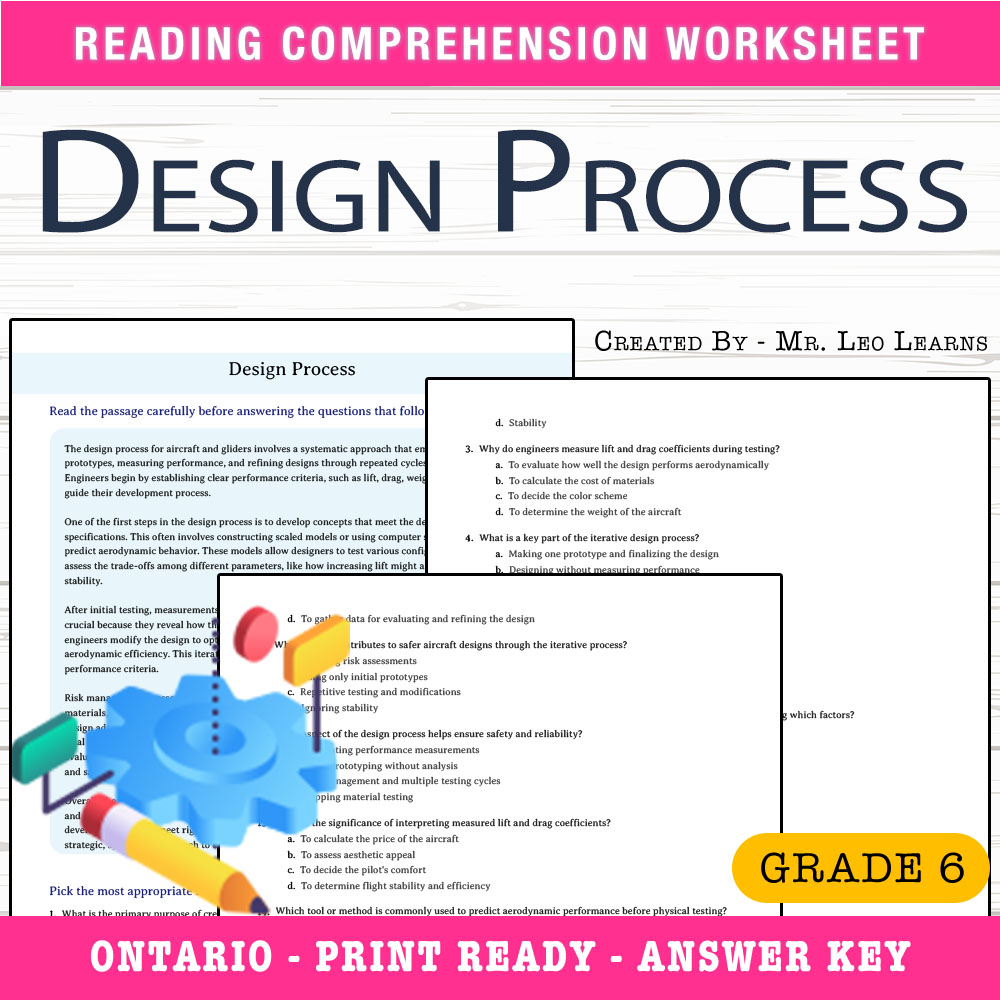
Grade 6 Science – Design Process Worksheet for Mastering Engineering Concepts
Created byThe Resource HubLearning Objectives
- Understand the steps involved in the iterative design process for aircraft and glider concepts.
- Identify key factors such as lift, drag, weight, and stability that influence aerodynamic performance.
- Explain how models and computational simulations are used to evaluate designs.
Also included in: Grade 6 Science | Aerodynamics & Engineering Unit Workbook (Worksheet Pack) +1 more
Instant download

6th Grade Science | Forest Types Worksheet (PDF) Alberta Standards
Created bySilver Birch TeachingLearning Objectives
- Identify major forest types (boreal/mixedwood, montane, subalpine, aspen parkland) using characteristic species and conditions
- Explain how abiotic gradients such as elevation, soil moisture, and fire history influence where forest types occur
- Use forest type knowledge to describe habitat diversity and potential impacts of climatic shifts
Also included in: Grade 6 Ecosystem Interactions Science Lesson Bundle: Alberta Framework +1 more
Instant download

Grade 6 Science – Measurement & Precision Daily Reading Worksheet | NGSSS
 Created byBright Mind Resources
Learning Objectives
- Identify different measurement tools used in science experiments.
- Understand the importance of units and scales in obtaining accurate measurements.
- Distinguish between precision and accuracy in measurement.
Also included in: Scientific Inquiry Grade 6 Science Daily Reading Worksheets Bundle | FL NGSSS +1 more
Instant download

Grade 6 Science – Energy & Water Cycle Reading Worksheet | California Standards
Created byBright Mind ResourcesLearning Objectives
- Understand how solar energy causes water to evaporate and form clouds
- Identify the processes of evaporation and cloud formation
- Explain the role of sunlight in Earth's water cycle
Also included in: Water Cycle Grade 6 Science Lesson Bundle Daily Reading | California Standards +1 more
Instant download

Grade 6 Organ Systems Worksheet | NGSS Human Body Science with Answer Key
Created byNorthstar WorksheetsLearning Objectives
- Explain how the circulatory, respiratory, digestive, and nervous systems work together to support cell survival.
- Describe the roles of specific organs (heart, lungs, liver, and brain/nerves) in transporting or processing materials.
- Connect cellular needs (nutrients and gases) to system-level processes and outcomes.
Also included in: Cells & Human Body Systems Lesson Bundle | Grade 6 Science | NGSS +1 more
Instant download

Grade 6 Environmental Science Digital Sources Worksheet | Alberta
Created byBRIGHT PATH RESOURCESLearning Objectives
- Explain what digital sources provide for environmental investigations.
- Describe how metadata, temporal resolution, and spatial coverage help users evaluate digital datasets.
- Identify ways standardized formats and licensing affect how data can be combined and used.
Also included in: Inquiry Data Grade 6 Science Daily Reading Worksheets Lesson Bundle | Alberta +1 more
Instant download
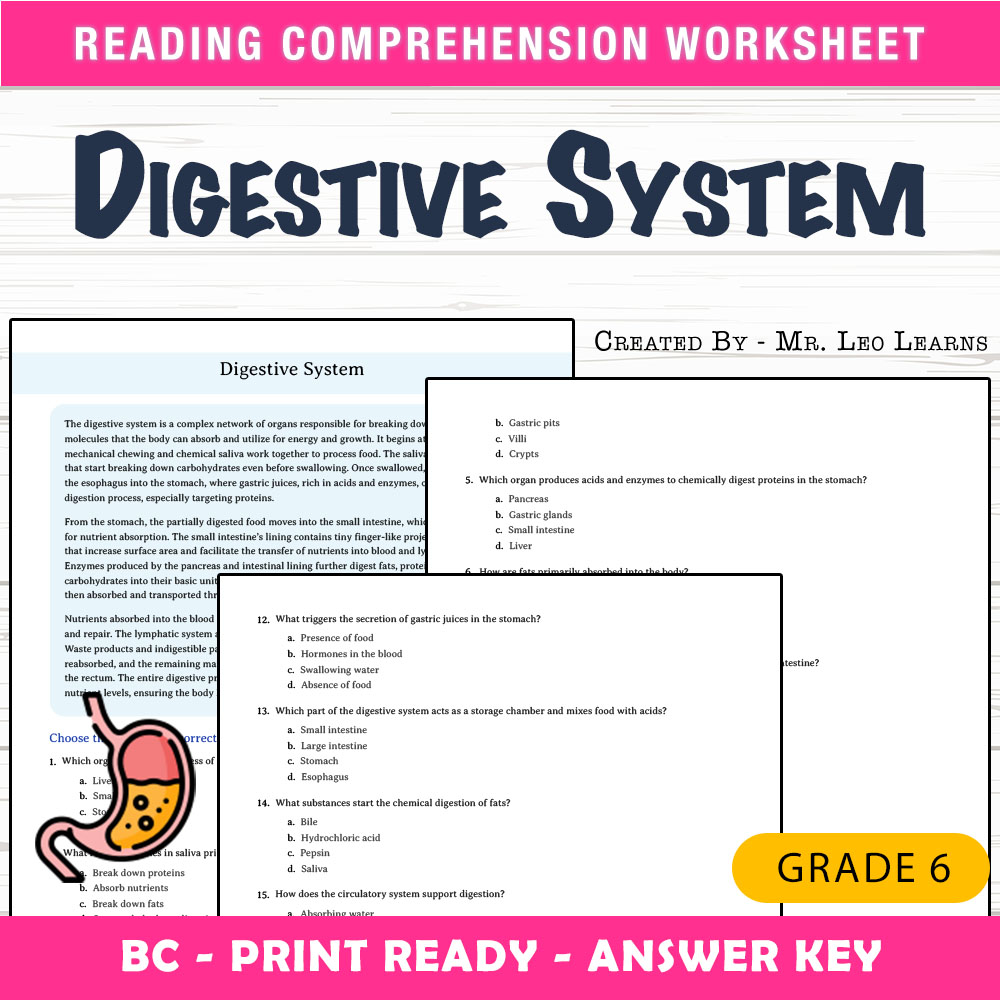
Grade 6 Science | Digestive System MCQ Worksheet for Mastery
Created byThe Resource HubLearning Objectives
- Describe the main organs involved in the digestive process.
- Understand how enzymes and acids chemically digest food.
- Explain how nutrients are absorbed into the blood and lymph.
Also included in: Grade 6 Science Unit | Multicellular Systems & Functions Worksheet Bundle +1 more
Instant download

Grade 6 Collaborative Practices Science Worksheet & Doodle Notes
 Created byChalk and Compass
Learning Objectives
- Explain how assigning roles and documenting shared work improve scientific teamwork.
- Use versioning and attribution to keep track of changes and contributions in group investigations.
- Describe protocols for constructive critique and how teams resolve conflicting observations.
Also included in: Grade 6 Science Scientific Inquiry and Evidence Lesson Bundle | Ontario +1 more
Instant download

6th Grade Science | Air Properties Worksheet (PDF) Alberta Standards
Created bySilver Birch TeachingLearning Objectives
- Explain how the composition and motion of gas molecules relate to air pressure
- Describe how air density changes with temperature and altitude
- Use real-world examples to connect air properties to weather and everyday phenomena
Also included in: Grade 6 Aerodynamics & Flight Forces Science Lesson Bundle: Alberta +1 more
Instant download
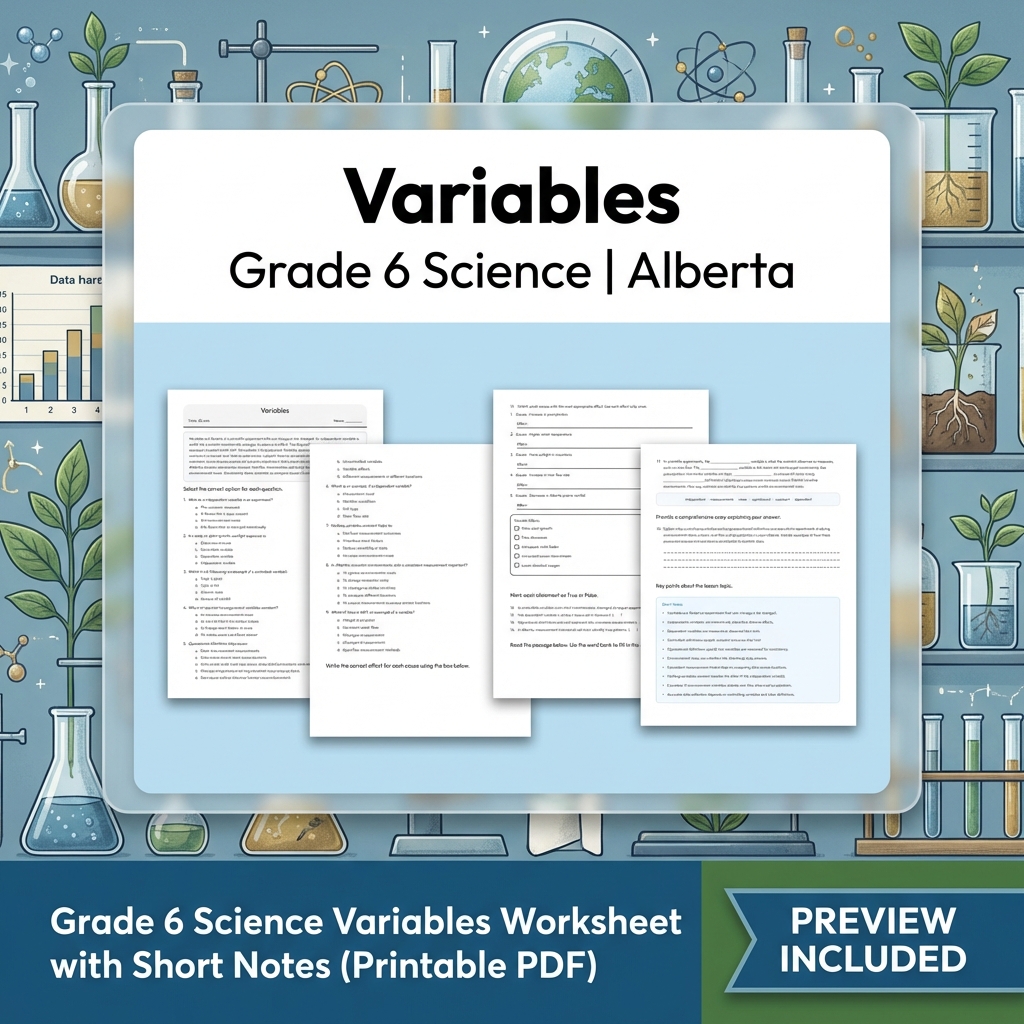
Grade 6 Science Variables Worksheet with Short Notes (Printable PDF)
Created byMeadowlark WorksheetsLearning Objectives
- Understand the different types of variables in scientific investigations.
- Identify examples of independent, dependent, and controlled variables in environmental contexts.
- Explain why controlling variables is important for accurate data collection.
Also included in: Grade 6 Science | Evidence & Investigation Unit Worksheet Bundle +1 more
Instant download
About Grade 6 Science Worksheets
Explore Grade 6 Science worksheets for classwork, homework, or review. Our 5,997 printables download instantly as PDFs.
MyTeachingSheets worksheets are made by real teacher-authors and checked before they go live. Download any as a print-ready PDF for lessons, homework, or independent practice — most include answer keys, and previews are always free.