
Grade 7 Science Worksheets
6,039 worksheets
Grade 7 Science | Indigenous Knowledge Reading Worksheet (PDF & Answer Key)
JCreated byJ.S SheetsLearning Objectives
- Understand the concept of traditional ecological knowledge and its role in land management.
- Identify how oral histories and place-based knowledge contribute to ecological understanding.
- Explore examples of stewardship and land practices in Alberta communities.
Also included in: Grade 7 Science Bundle | Ecology, Ecosystems & Environmental Topics (Pack) +1 more
Instant download
Grade 7 Science | Biodiversity Measures Reading Worksheets PDF (Answer Key)
JCreated byJ.S SheetsLearning Objectives
- Understand different methods of measuring biodiversity, including richness, evenness, and habitat heterogeneity.
- Interpret what biodiversity metrics reveal about ecosystem resilience and function.
- Explore the relationship between habitat complexity and species assemblages in Alberta contexts.
Also included in: Grade 7 Science Bundle | Ecology, Ecosystems & Environmental Topics (Pack) +1 more
Instant download
Grade 7 Science | Conservation Status Reading Worksheet with Answer Key (PDF)
JCreated byJ.S SheetsLearning Objectives
- Understand the criteria used to assess species' conservation risk.
- Interpret evidence such as population trends and threats to determine conservation status.
- Recognize examples of species at risk, including provincial cases like the swift fox and at-risk plants.
Also included in: Grade 7 Science Bundle | Ecology, Ecosystems & Environmental Topics (Pack) +1 more
Instant download
Grade 7 Science | Levels Of Organization Reading Worksheet & Answer Key (PDF)
JCreated byJ.S SheetsLearning Objectives
- Understand the different levels of ecological organization from individual organisms to ecosystems.
- Identify examples of each level within Alberta's environment.
- Recognize how patterns emerge at higher levels that are not obvious from individual traits.
Also included in: Grade 7 Science Bundle | Ecology, Ecosystems & Environmental Topics (Pack) +1 more
Instant download
7th Grade Science | Biotic & Abiotic Interactions Worksheet (PDF + Answer Key)
JCreated byJ.S SheetsLearning Objectives
- Understand the roles of biotic and abiotic components within ecosystems.
- Describe how environmental factors like sunlight, water, and soil influence living organisms.
- Explain cause-and-effect relationships between non-living elements and community patterns across regional landscapes.
Also included in: Grade 7 Science Bundle | Ecology, Ecosystems & Environmental Topics (Pack) +1 more
Instant download
7th Grade Science | Ecological Inquiry Reading Worksheet & Answer Key (PDF)
JCreated byJ.S SheetsLearning Objectives
- Understand the process of ecological inquiry including hypothesis framing and data interpretation.
- Recognize the role of measurable variables and evidence in ecological studies.
- Apply critical thinking to analyze ecological data and consider natural variability.
Also included in: Grade 7 Science Bundle | Ecology, Ecosystems & Environmental Topics (Pack) +1 more
Instant download
Grade 7 Science | Wetland Functions Reading Worksheet & Answer Key (PDF)
JCreated byJ.S SheetsLearning Objectives
- Identify the key hydrological, chemical, and biological functions of wetlands.
- Understand how wetlands contribute to ecosystem services like water storage, nutrient cycling, and habitat provision.
- Differentiate among various wetland types such as peatlands and marshes and their specific functions.
Also included in: Grade 7 Science Bundle | Ecology, Ecosystems & Environmental Topics (Pack) +1 more
Instant download
Grade 7 Science | Migration Patterns – Alberta Standards (PDF + Answer Key)
JCreated byJ.S SheetsLearning Objectives
- Understand the drivers and influences behind seasonal and annual migration patterns.
- Identify examples of migration routes and behaviors in Alberta wildlife.
- Explain the factors such as food availability, breeding needs, and timing cues that trigger migration.
Also included in: Grade 7 Science Bundle | Ecology, Ecosystems & Environmental Topics (Pack) +1 more
Instant download
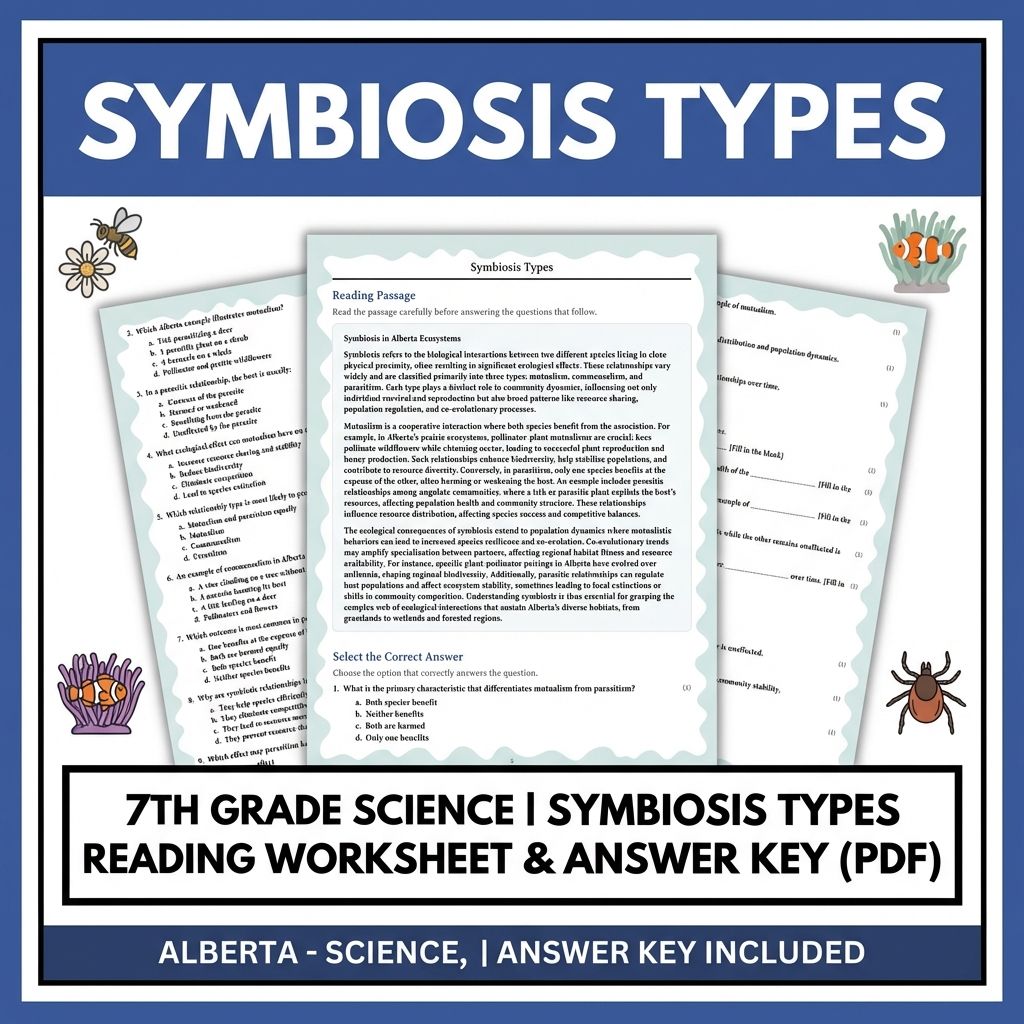
7th Grade Science | Symbiosis Types Reading Worksheet & Answer Key (PDF)
JCreated byJ.S SheetsLearning Objectives
- Identify and distinguish between mutualism, commensalism, and parasitism in ecosystems.
- Describe regional examples of symbiotic relationships, including Alberta-specific environments.
- Analyze the ecological consequences of different symbiosis types on community structure and species success.
Also included in: Grade 7 Science Bundle | Ecology, Ecosystems & Environmental Topics (Pack) +1 more
Instant download
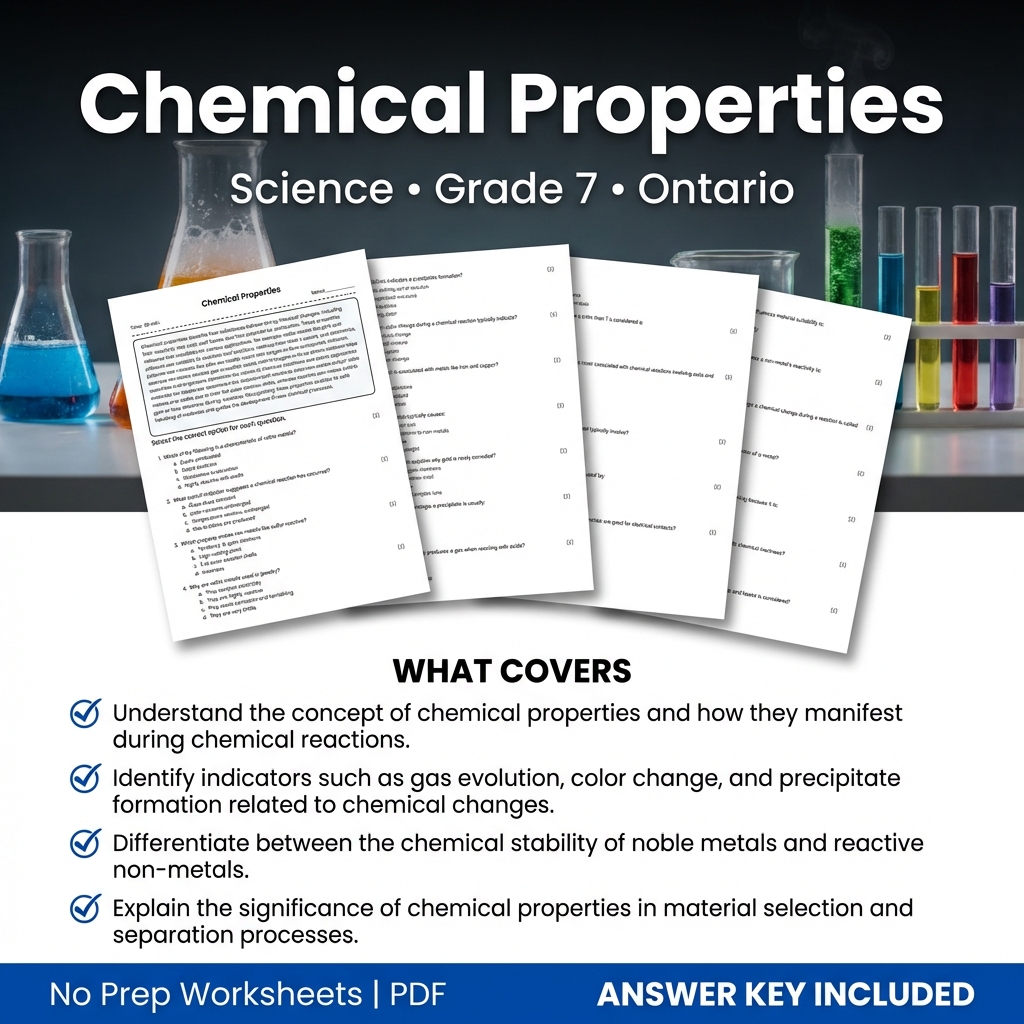
Grade 7 Science Worksheet on Chemical Properties | Classroom Printable PDF
 Created byCoral Reef Learning
Learning Objectives
- Understand the concept of chemical properties and how they manifest during chemical reactions.
- Identify indicators such as gas evolution, color change, and precipitate formation related to chemical changes.
- Differentiate between the chemical stability of noble metals and reactive non-metals.
Instant download
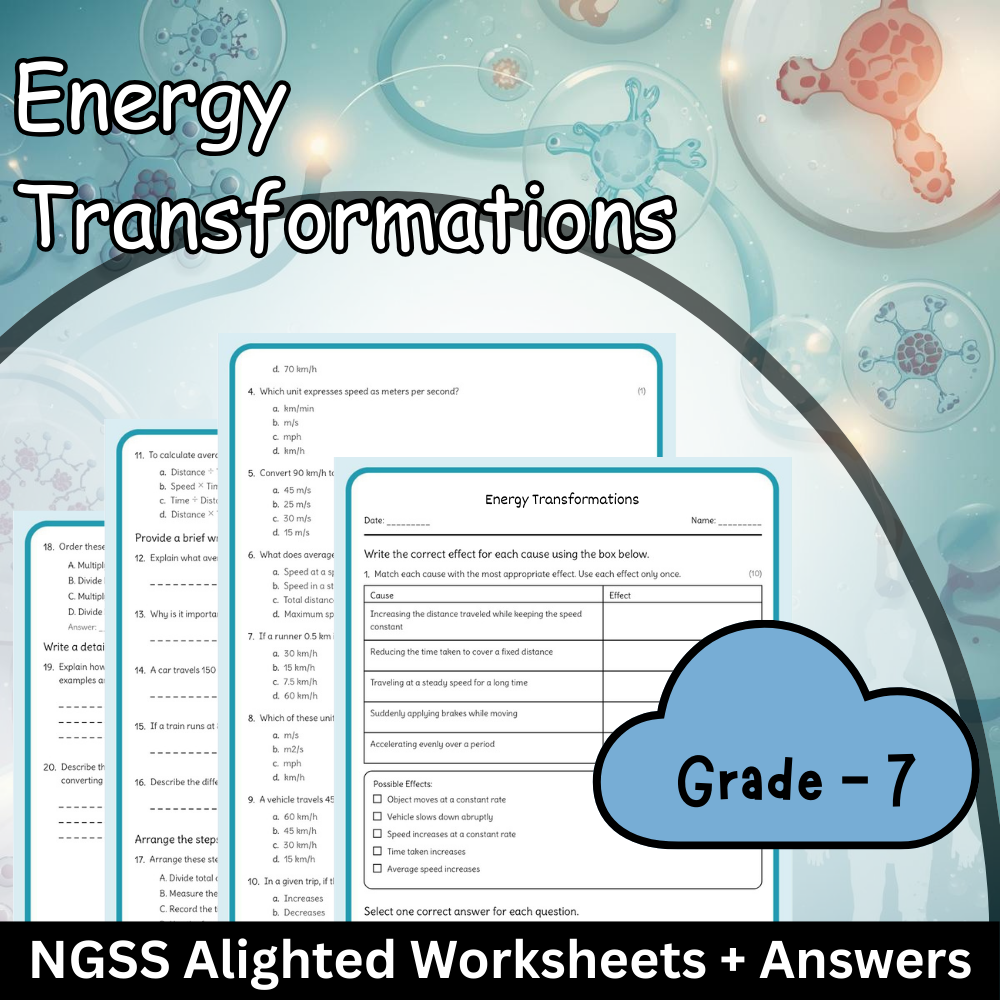
Grade 7 Science | Energy Transformations Worksheet (Answer Key) NGSS Aligned
 Created byBright Mind Resources
Learning Objectives
- Understand how light energy is converted into chemical energy during photosynthesis.
- Describe how cellular respiration releases stored energy for cellular processes.
- Connect the processes occurring in chloroplasts and mitochondria across different organisms.
Instant download

Equilibrium Practice Worksheet | Grade 7 Science NGSS Review
 Created byPrism Point Learning
Learning Objectives
- Explain equilibrium as a condition where the vector sum of forces is zero, resulting in constant velocity or rest
- Differentiate static equilibrium and dynamic equilibrium using examples involving normal and gravitational forces
- Use qualitative reasoning to predict how motion changes when net force and net acceleration are (or are not) zero
Also included in: Grade 7 Forces & Interactions Science Lesson Bundle for NGSS Review
Instant download
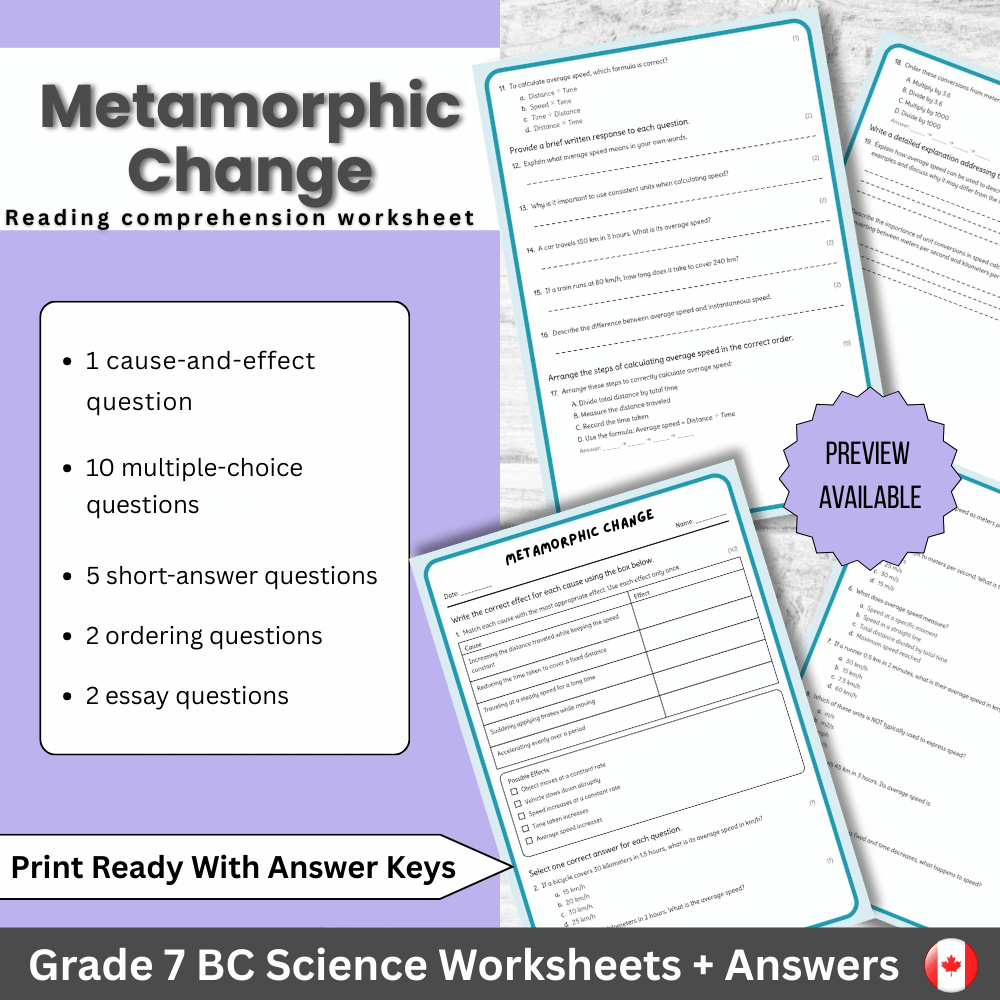
Grade 7 Science | Metamorphic Change Worksheet (Answer Key) | BC Standards
Created byBright Mind ResourcesLearning Objectives
- Describe the process of metamorphism and how it alters rocks.
- Differentiate between contact and regional metamorphism.
- Identify mineral assemblages that indicate metamorphic grade and history.
Instant download
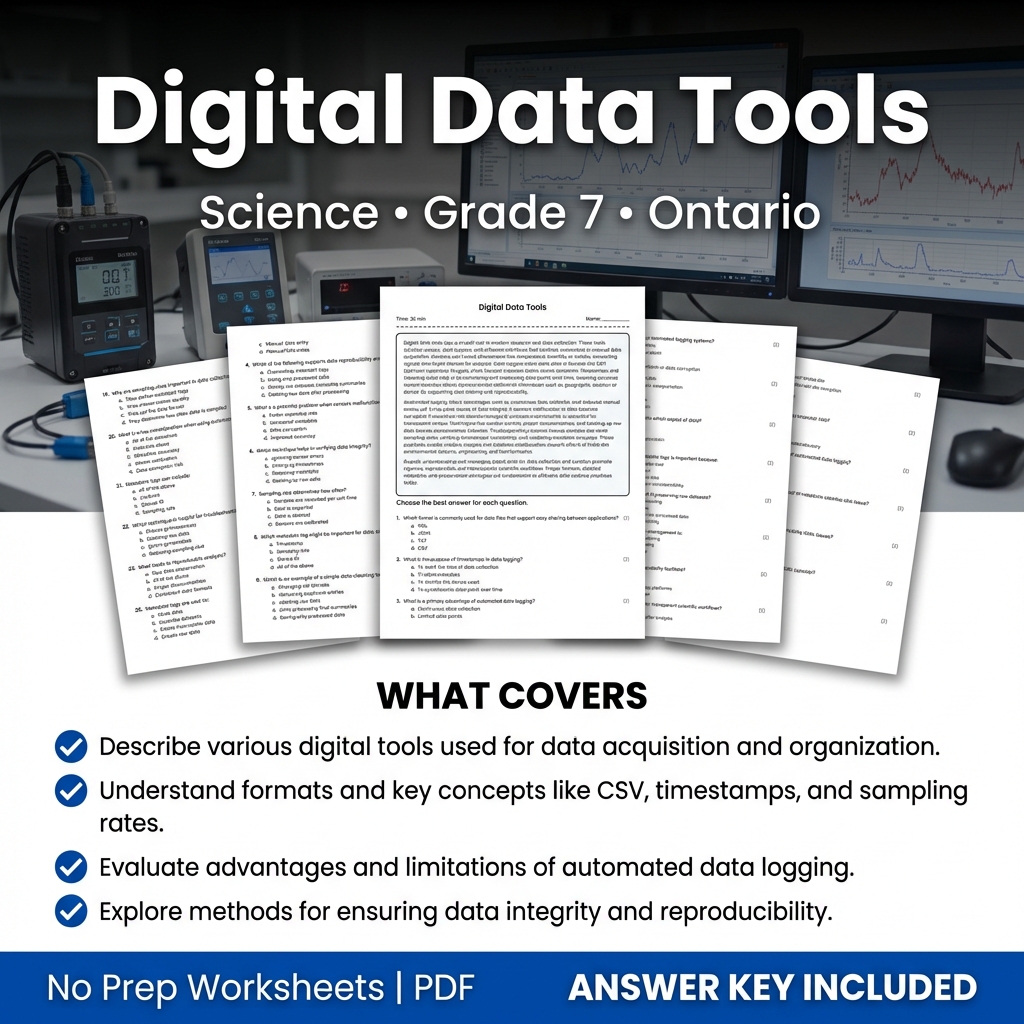
Grade 7 Science Worksheet on Digital Data Tools | Ontario Standards
Created byCoral Reef LearningLearning Objectives
- Describe various digital tools used for data acquisition and organization.
- Understand formats and key concepts like CSV, timestamps, and sampling rates.
- Evaluate advantages and limitations of automated data logging.
Instant download
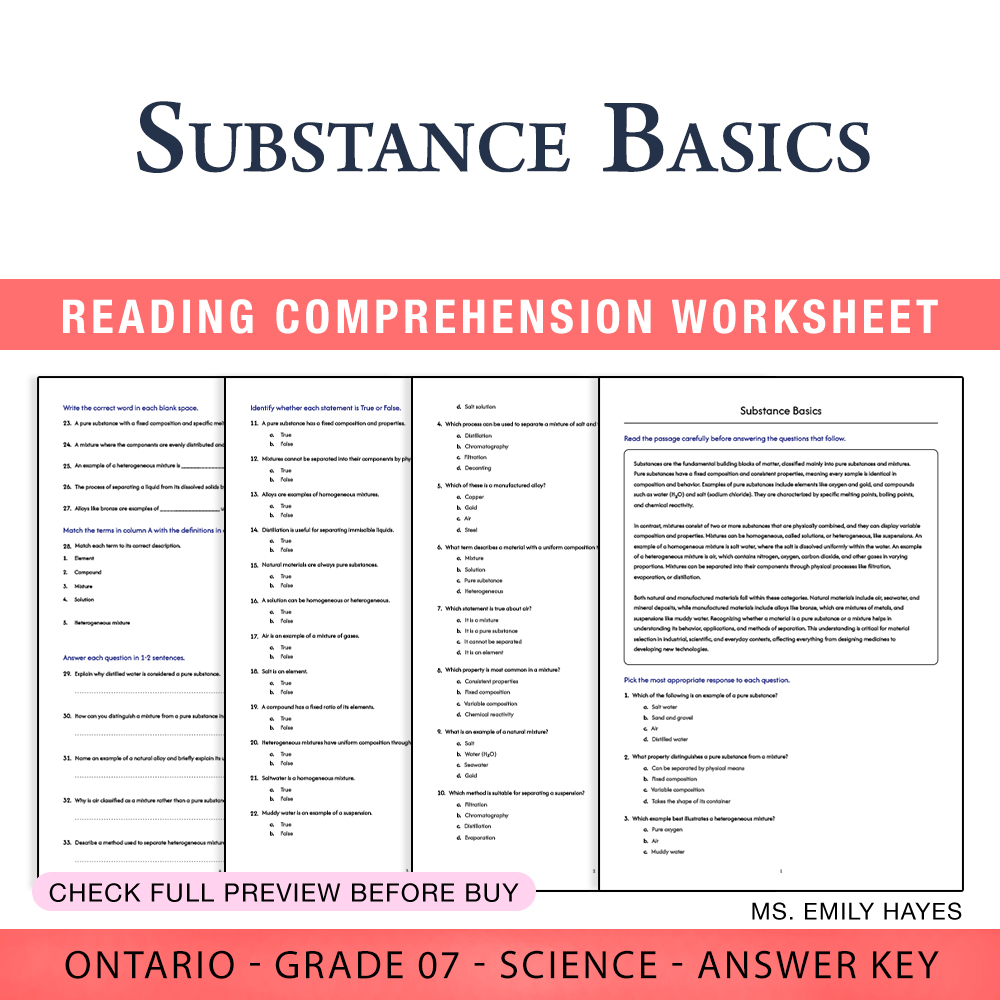
7th Grade Science | Substance Basics Worksheet (PDF+ Answer Key)
 Created byCopper Leaf Classroom
Learning Objectives
- Understand the differences between pure substances and mixtures based on composition and properties.
- Identify examples of elements, compounds, and mixtures from everyday contexts.
- Describe the criteria for classifying a substance as pure or mixed.
Instant download

Grade 7 Trophic Energy Transfer Worksheet | NGSS Practice PDF
 Created byClear Sky Classroom
Learning Objectives
- Explain how energy moves through trophic levels in a food web and food chain.
- Describe why only a fraction of energy becomes biomass at each step.
- Interpret how energy transfer efficiency affects the size of predator populations.
Instant download
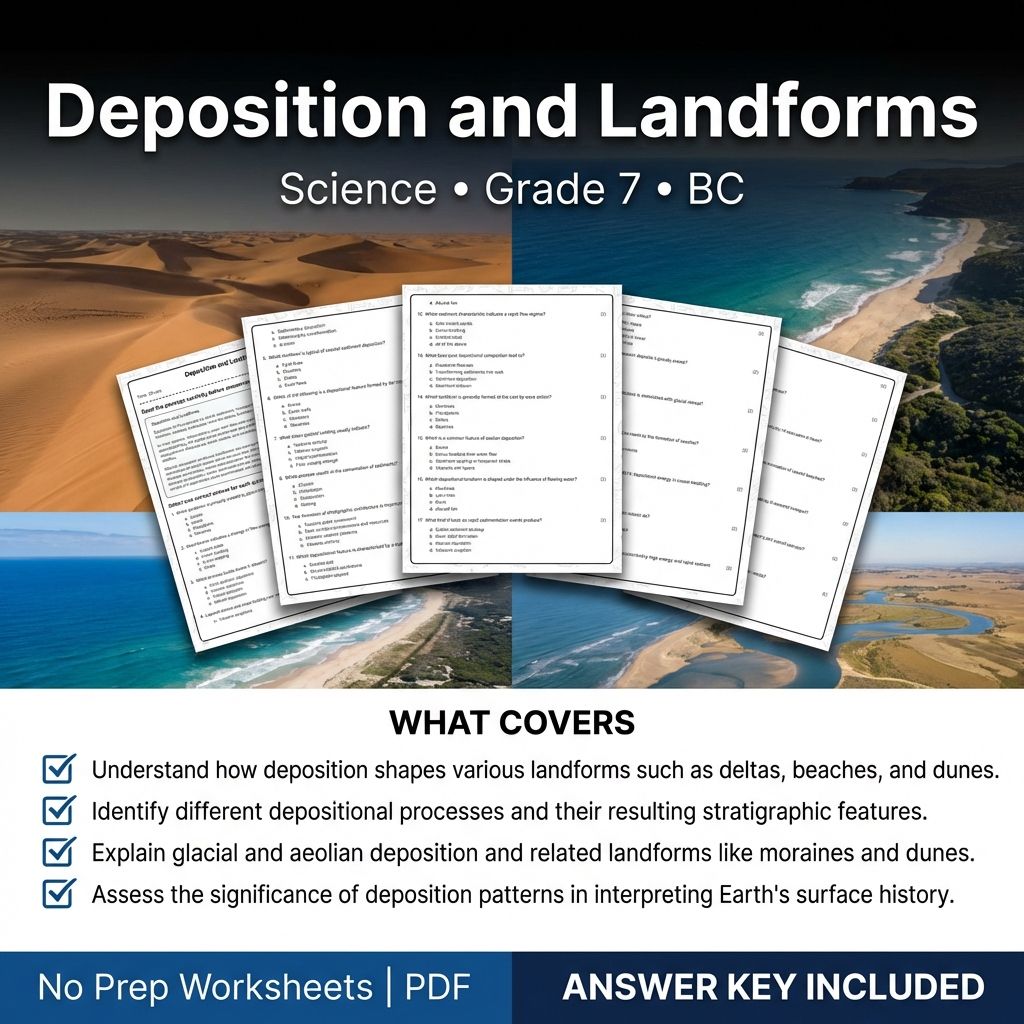
7th Grade Science | Deposition and Landforms Worksheet with Answer Key (Printable PDF)
Created byCoral Reef LearningLearning Objectives
- Understand how deposition shapes various landforms such as deltas, beaches, and dunes.
- Identify different depositional processes and their resulting stratigraphic features.
- Explain glacial and aeolian deposition and related landforms like moraines and dunes.
Instant download

Grade 7 Science – Quantitative Heat & Energy Transfer | Daily Reading Worksheet
Created byBright Mind ResourcesLearning Objectives
- Understand how heat and energy transfer are measured and expressed mathematically.
- Learn about specific heat capacity, mass, and temperature change in energy calculations.
- Interpret practical examples of thermal energy transfer, such as heating water, melting snow, and warming air.
Also included in: Grade 7 Heat Transfer Science Daily Reading Worksheets Lesson Bundle | Alberta +2 more
Instant download

Grade 7 Science – Convection Systems Daily Reading Worksheet | Alberta Standards
Created byBright Mind ResourcesLearning Objectives
- Understand the basic concept of convection
- Identify natural and forced convection in daily life
- Recognize how temperature differences cause fluid movement
Also included in: Grade 7 Heat Transfer Science Daily Reading Worksheets Lesson Bundle | Alberta +2 more
Instant download
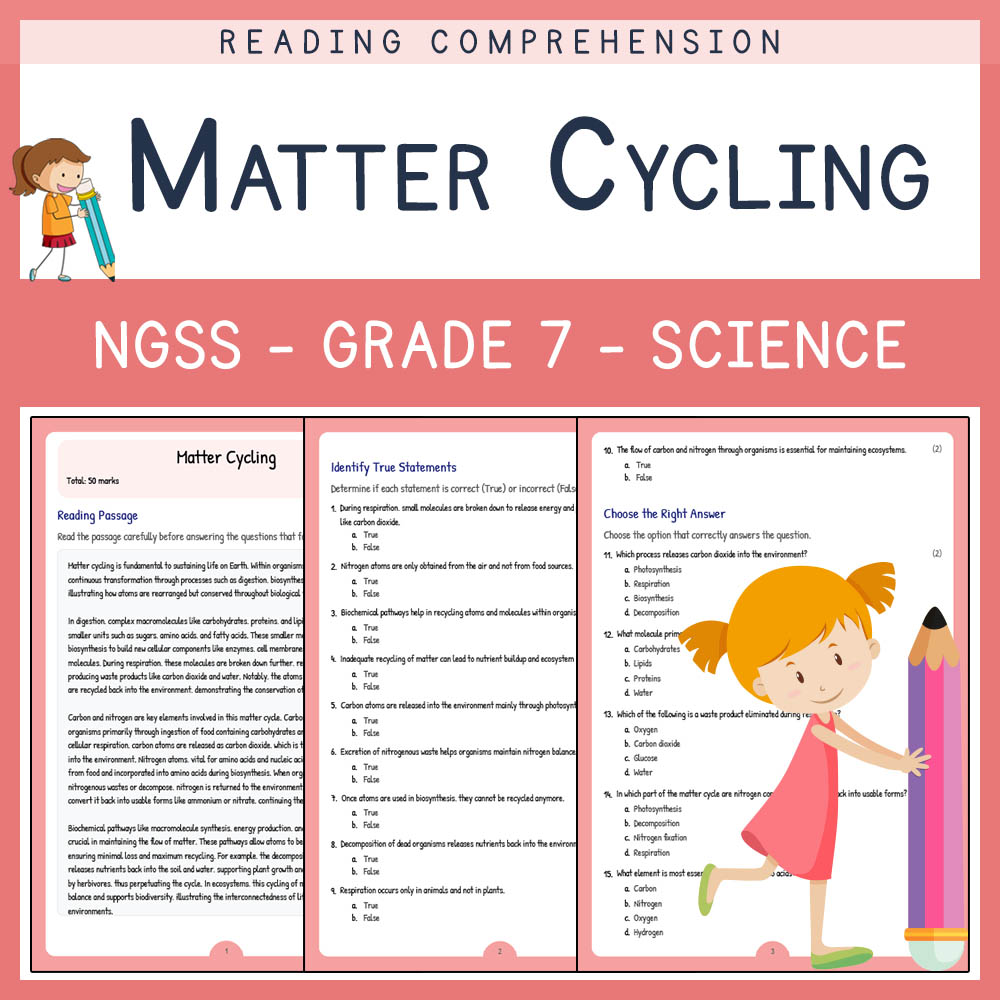
Grade 7 Science | Matter Cycling Worksheet + Answer Key – NGSS Aligned
 Created byLumora Learning
Learning Objectives
- Describe the process of matter cycling within organisms, including digestion, biosynthesis, and respiration.
- Explain the conservation of matter during biochemical pathways such as macromolecule synthesis and decomposition.
- Identify how carbon and nitrogen flow through organisms and are eventually released or excreted.
Instant download
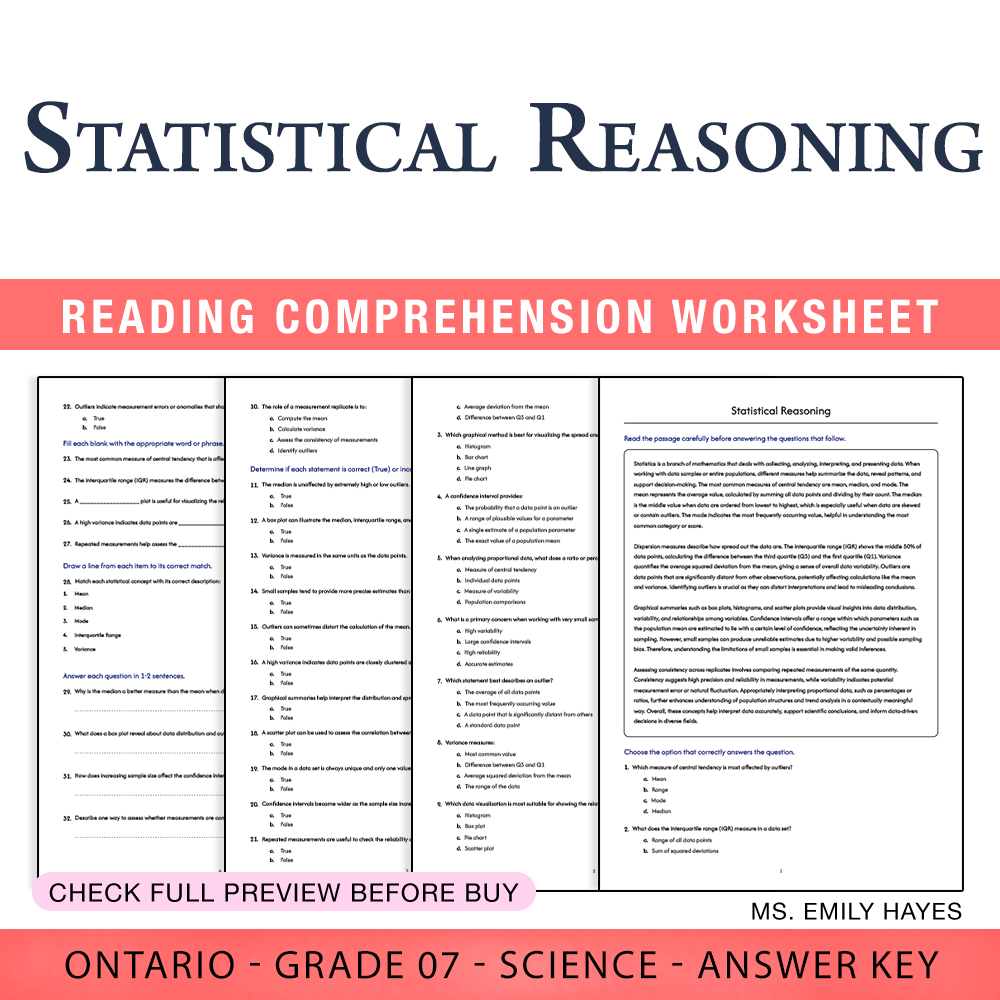
7th Grade Science | Statistical Reasoning Worksheet (PDF+ Answer Key)
Created byCopper Leaf ClassroomLearning Objectives
- Understand and define key descriptive statistics such as mean, median, and mode.
- Interpret measures of dispersion including interquartile range, variance, and the role of outliers.
- Create and analyze simple graphical summaries of data.
Instant download
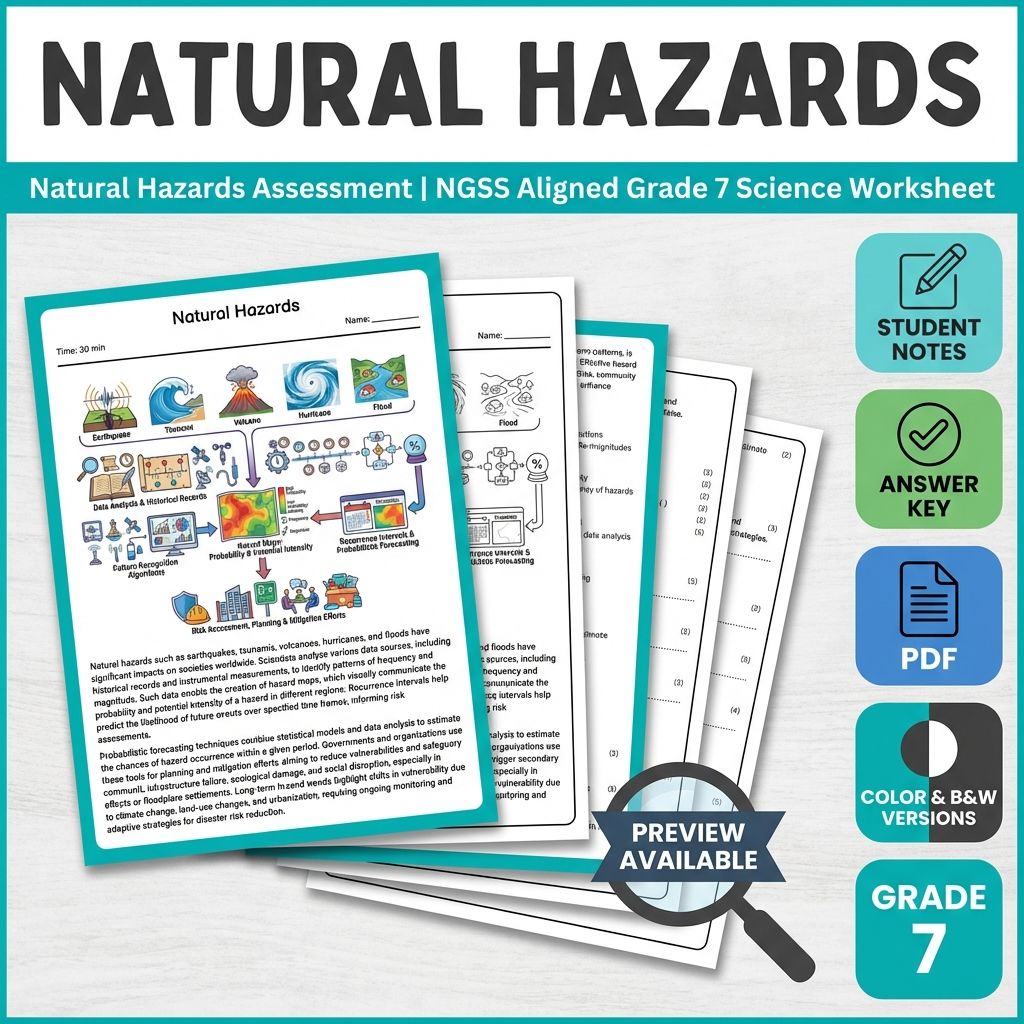
Natural Hazards Assessment | NGSS Aligned Grade 7 Science Worksheet
Created byPrism Point LearningLearning Objectives
- Understand key concepts related to Science
- Apply knowledge through practice questions
- Demonstrate comprehension of the material
Also included in: Grade 7 Science Mini Bundle | Earth and Human Activity NGSS Not specified +1 more
Instant download
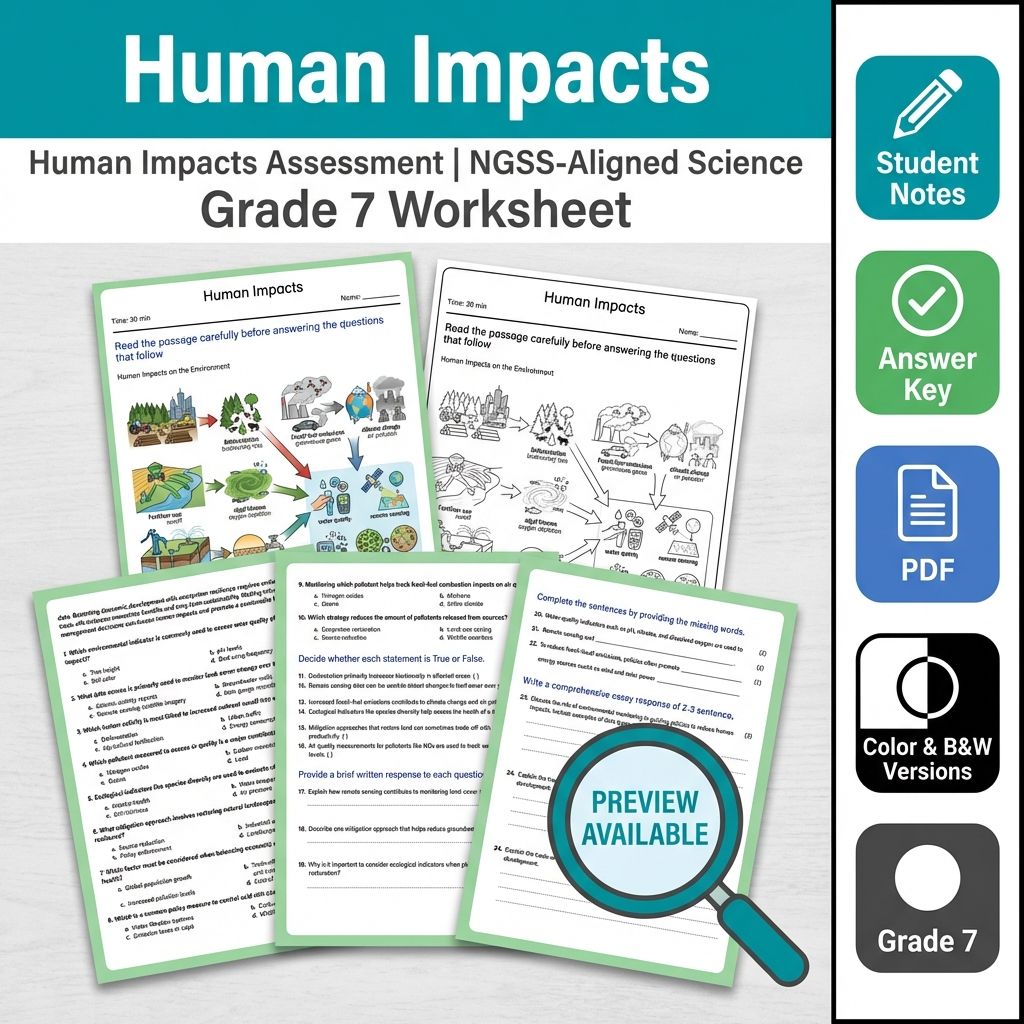
Human Impacts Assessment | NGSS-Aligned Science Grade 7 Worksheet
Created byPrism Point LearningLearning Objectives
- Understand the scientific principles used to monitor human impacts on the environment.
- Identify indicators and data sources used to assess environmental changes.
- Evaluate mitigation approaches and their trade-offs among economic, ecological, and social factors.
Also included in: Grade 7 Science Mini Bundle | Earth and Human Activity NGSS Not specified +1 more
Instant download
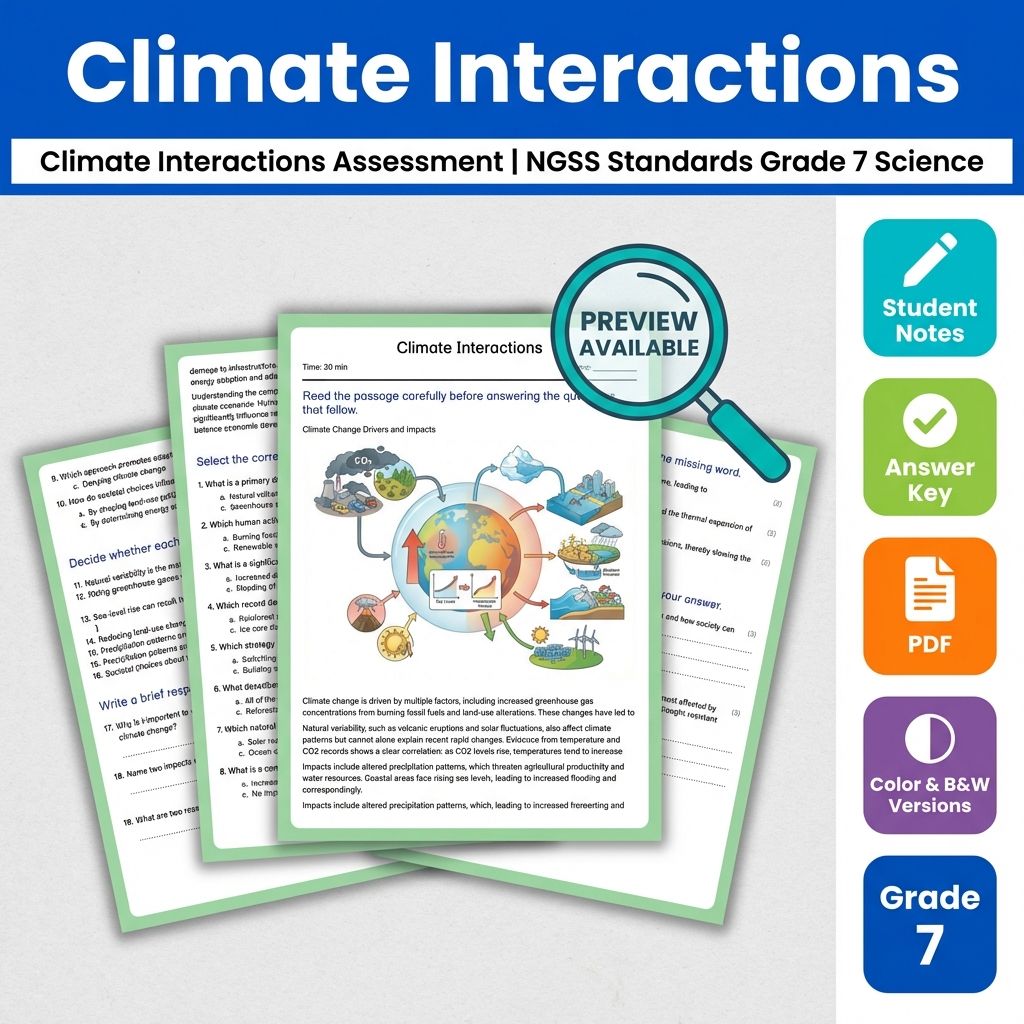
Climate Interactions Assessment | NGSS Standards Grade 7 Science
Created byPrism Point LearningLearning Objectives
- Examine evidence for climate change drivers, including greenhouse gases, land-use change, and natural variability.
- Assess impacts of climate change on sea levels, precipitation patterns, and agriculture.
- Analyze temperature and CO2 records, and understand carbon-cycle exchanges.
Also included in: Grade 7 Science Mini Bundle | Earth and Human Activity NGSS Not specified +1 more
Instant download
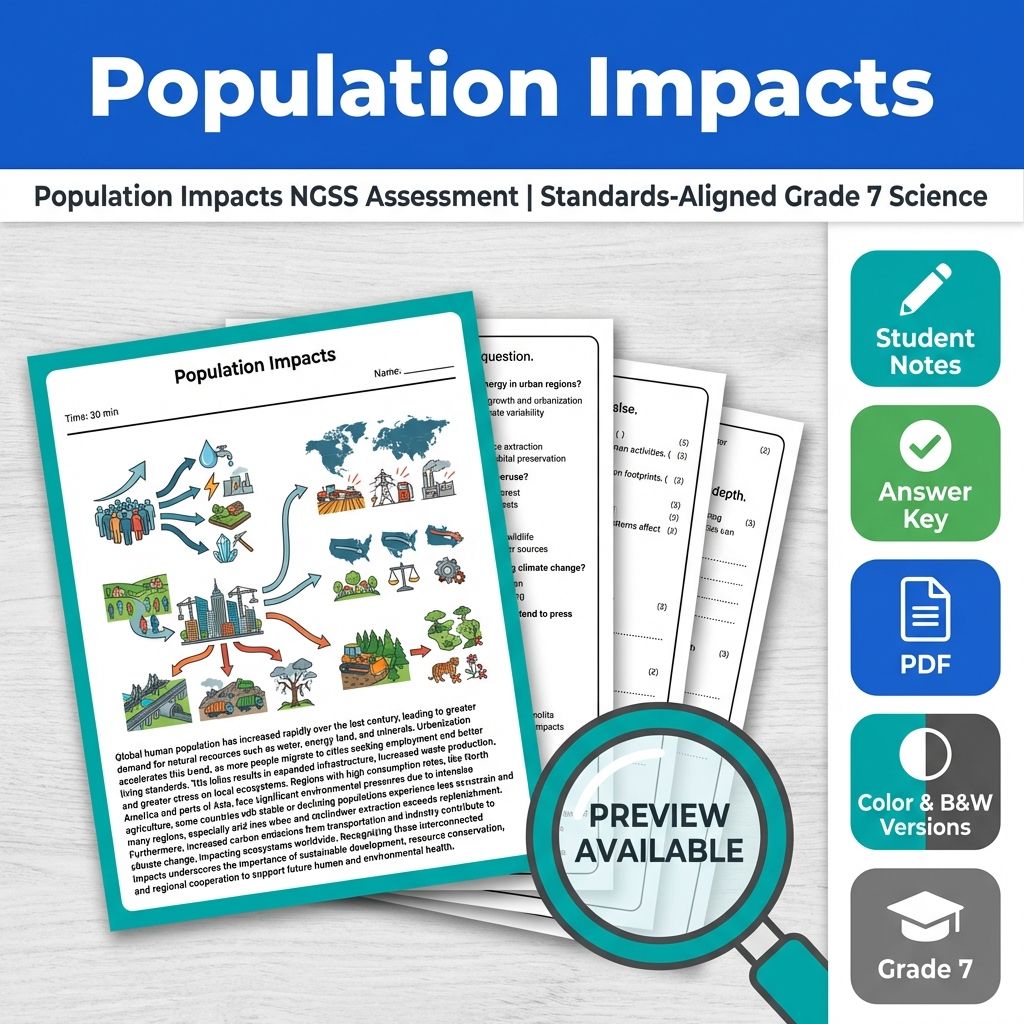
Population Impacts NGSS Assessment | Standards-Aligned Grade 7 Science
Created byPrism Point LearningLearning Objectives
- Understand how increased human population affects demand for water, energy, land, and raw materials.
- Analyze the consequences of population growth on ecosystems, biodiversity, and resource cycles.
- Evaluate regional examples to compare how consumption patterns influence environmental pressures.
Also included in: Grade 7 Science Mini Bundle | Earth and Human Activity NGSS Not specified +1 more
Instant download
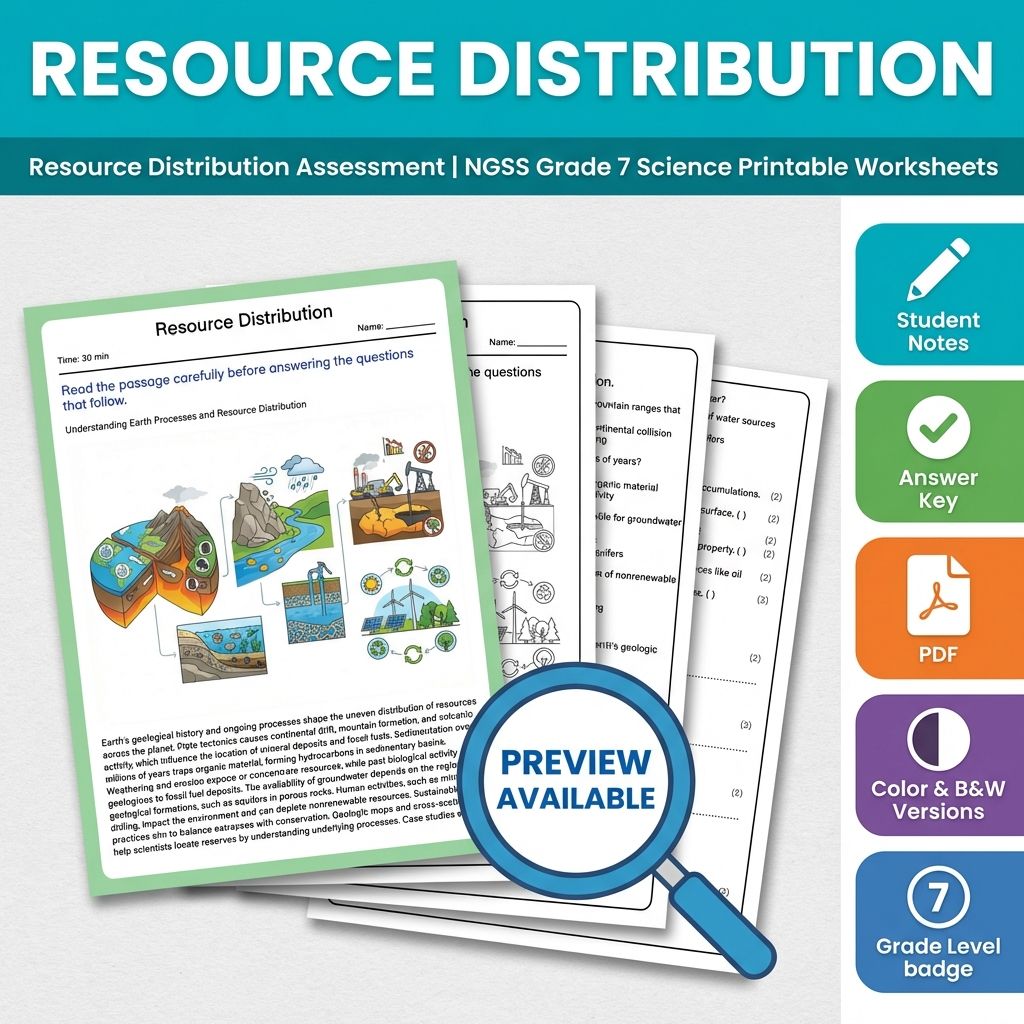
Resource Distribution Assessment | NGSS Grade 7 Science Printable Worksheets
Created byPrism Point LearningLearning Objectives
- Understand how geologic processes influence the distribution of mineral, energy, and groundwater resources.
- Connect plate tectonics, sedimentation, weathering, and biological activity to resource locations.
- Evaluate the impacts of resource extraction and consider sustainability and access issues.
Also included in: Grade 7 Science Mini Bundle | Earth and Human Activity NGSS Not specified +1 more
Instant download
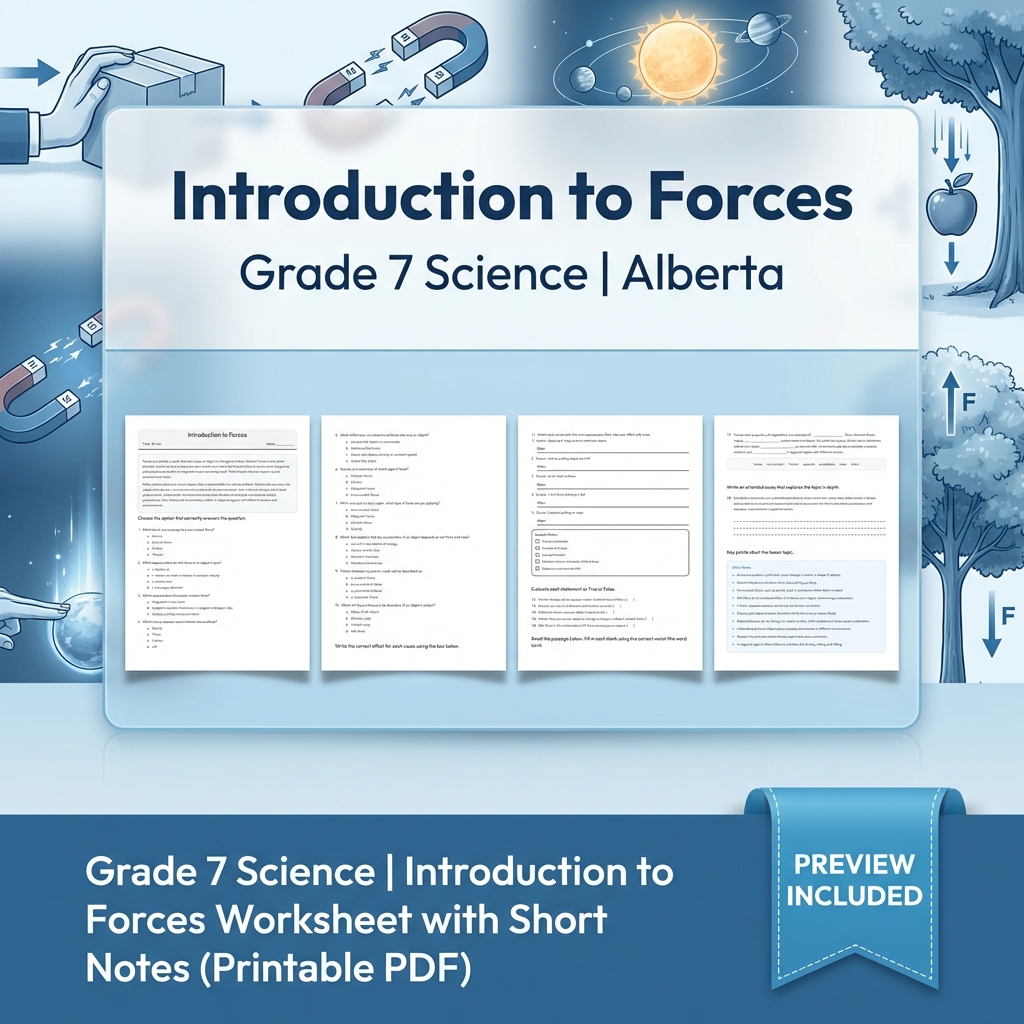
Grade 7 Science | Introduction to Forces Worksheet with Short Notes (PDF)
 Created byMeadowlark Worksheets
Learning Objectives
- Define and distinguish between contact and non-contact forces.
- Explain how net force influences the motion of objects.
- Identify real-life examples of different forces such as friction and gravity.
Also included in: Grade 7 Science | Forces, Structures & Motion UNIT Worksheet Bundle
Instant download
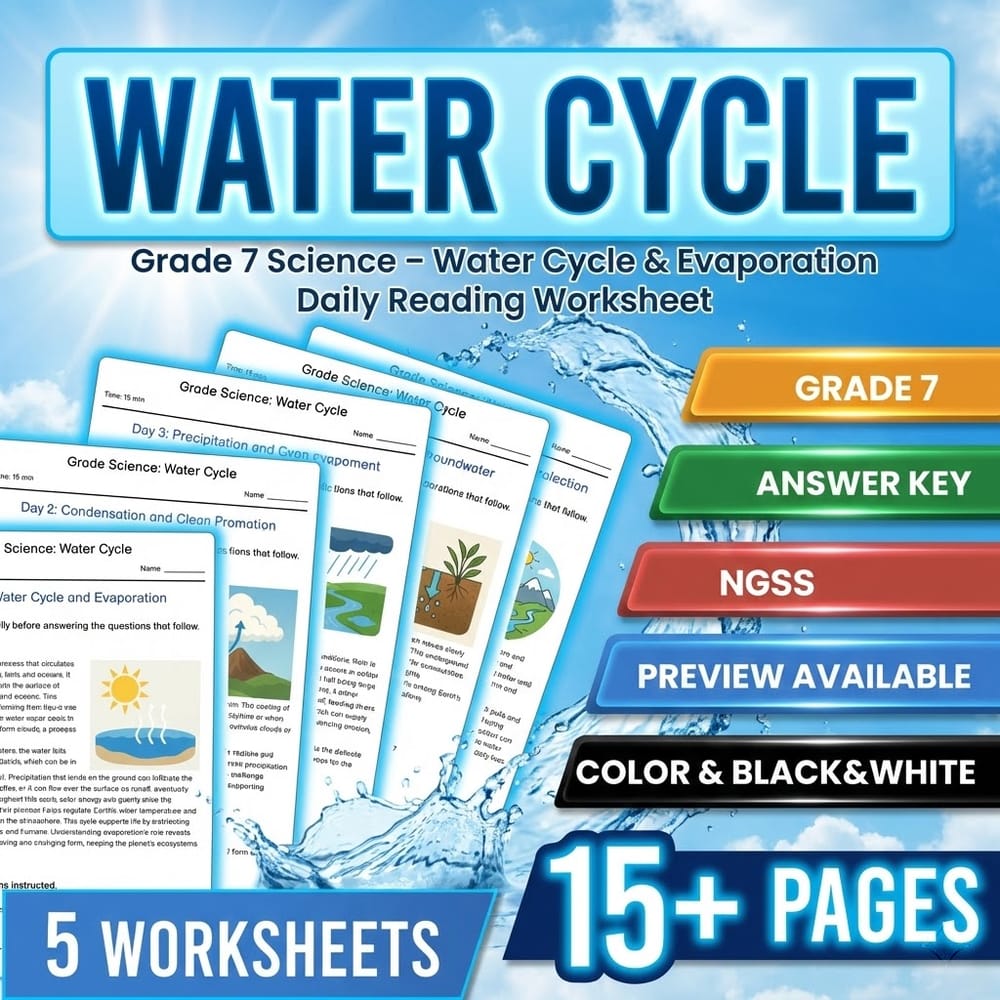
Grade 7 Science – Water Cycle & Evaporation Daily Reading Worksheet
 Created byElena Brooks
Learning Objectives
- Understand the processes involved in the water cycle, including evaporation, condensation, precipitation, infiltration, and runoff.
- Explain how solar energy drives evaporation and influences Earth's water distribution.
- Identify the interactions between Earth's atmosphere, hydrosphere, and geosphere in the water cycle.
Also included in: Water Cycle & Landforms Grade 7 Science Daily Reading Worksheets Bundle | NGSS +1 more
Instant download
Grade 7 Science – Introduction to Scientific Inquiry & Daily Reading Worksheet
 Created byQuiet Forest Education
Learning Objectives
- Understand the basic components of scientific questions.
- Learn how to formulate clear and testable hypotheses.
- Recognize the importance of operational definitions and variables.
Also included in: STEM Skills and Connections Grade 7 Science Daily Worksheets Bundle | Ontario +1 more
Instant download
Grade 7 Science – Optimization Methods & Design | Daily Reading Worksheet
Created byQuiet Forest EducationLearning Objectives
- Understand key concepts related to Science
- Apply knowledge through practice questions
- Demonstrate comprehension of the material
Also included in: STEM Skills and Connections Grade 7 Science Daily Worksheets Bundle | Ontario +1 more
Instant download
Grade 7 Science – Risk Assessment & Safety Protocols | Daily Reading Worksheet
Created byQuiet Forest EducationLearning Objectives
- Understand the concept of hazards in laboratory and field settings.
- Identify different types of hazards such as chemical, biological, electrical, and mechanical risks.
- Learn how to interpret safety data sheets and hazard classifications.
Also included in: STEM Skills and Connections Grade 7 Science Daily Worksheets Bundle | Ontario +1 more
Instant download
Grade 7 Science – Ethics & Communication in STEM | Daily Reading Worksheet
Created byQuiet Forest EducationLearning Objectives
- Understand the importance of data integrity in scientific research
- Identify responsible practices for technical reporting and graphical annotation
- Recognize ethical considerations in community consultation and data sharing
Also included in: STEM Skills and Connections Grade 7 Science Daily Worksheets Bundle | Ontario +1 more
Instant download
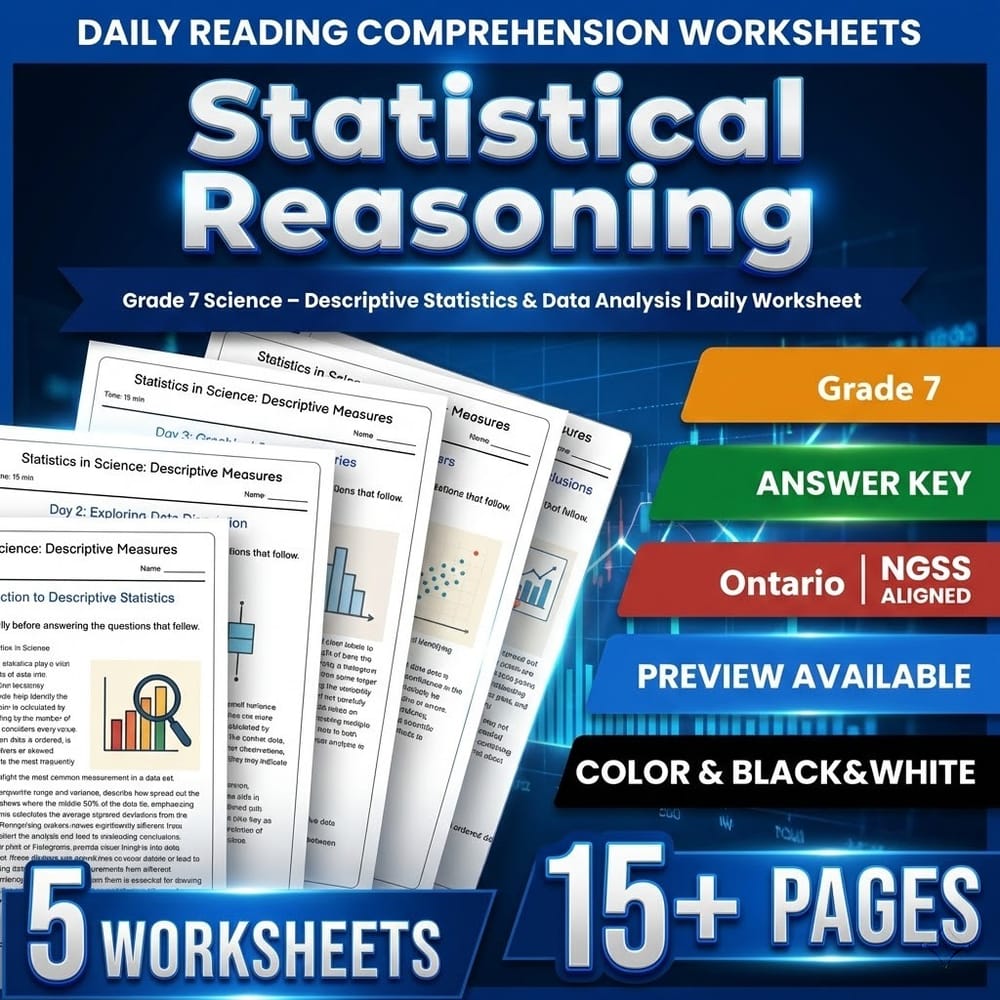
Grade 7 Science – Descriptive Statistics & Data Analysis | Daily Worksheet
Created byQuiet Forest EducationLearning Objectives
- Define and differentiate between mean, median, and mode.
- Describe the concept of dispersion including interquartile range and variance.
- Identify outliers and understand their impact on statistical data.
Also included in: STEM Skills and Connections Grade 7 Science Daily Worksheets Bundle | Ontario +1 more
Instant download
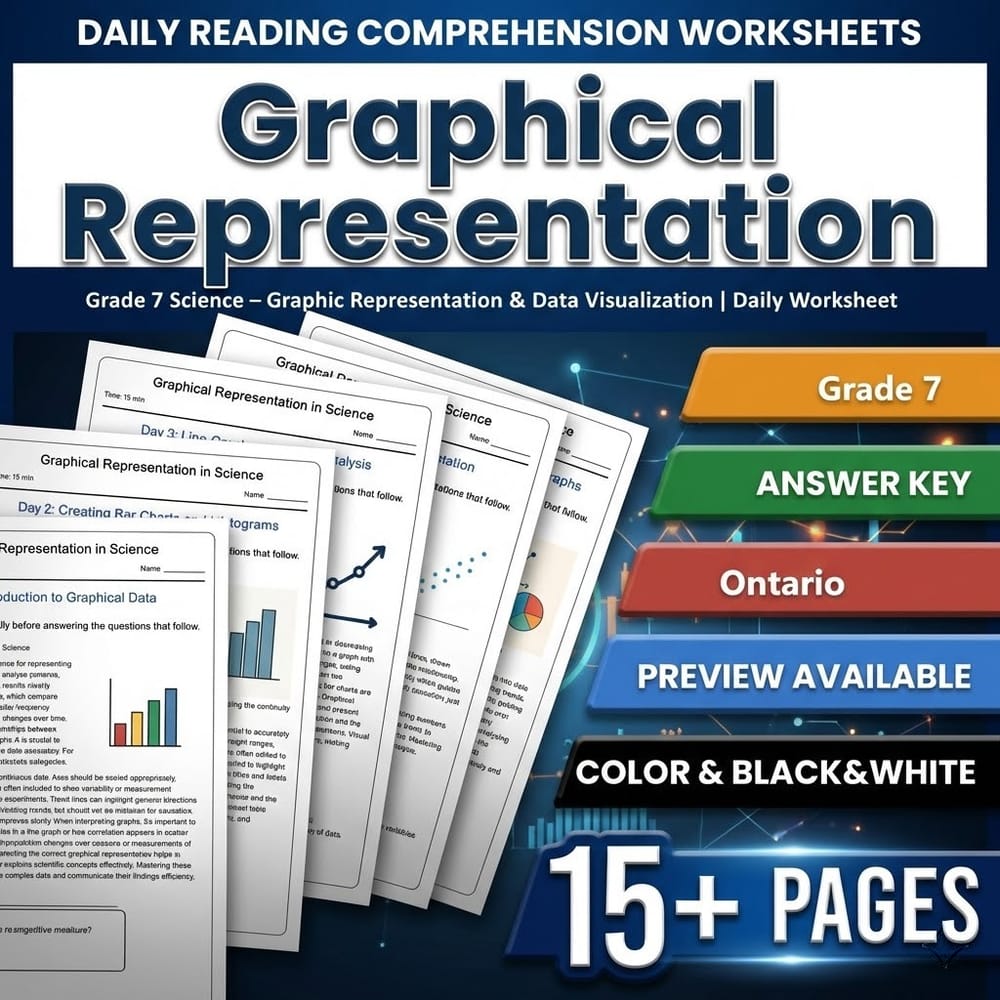
Grade 7 Science – Graphic Representation & Data Visualization | Daily Worksheet
Created byQuiet Forest EducationLearning Objectives
- Understand different types of graphs used in science data presentation
- Learn how to interpret axes, proportional representations, and error bars
- Identify appropriate graph types for various data sets
Also included in: STEM Skills and Connections Grade 7 Science Daily Worksheets Bundle | Ontario +1 more
Instant download
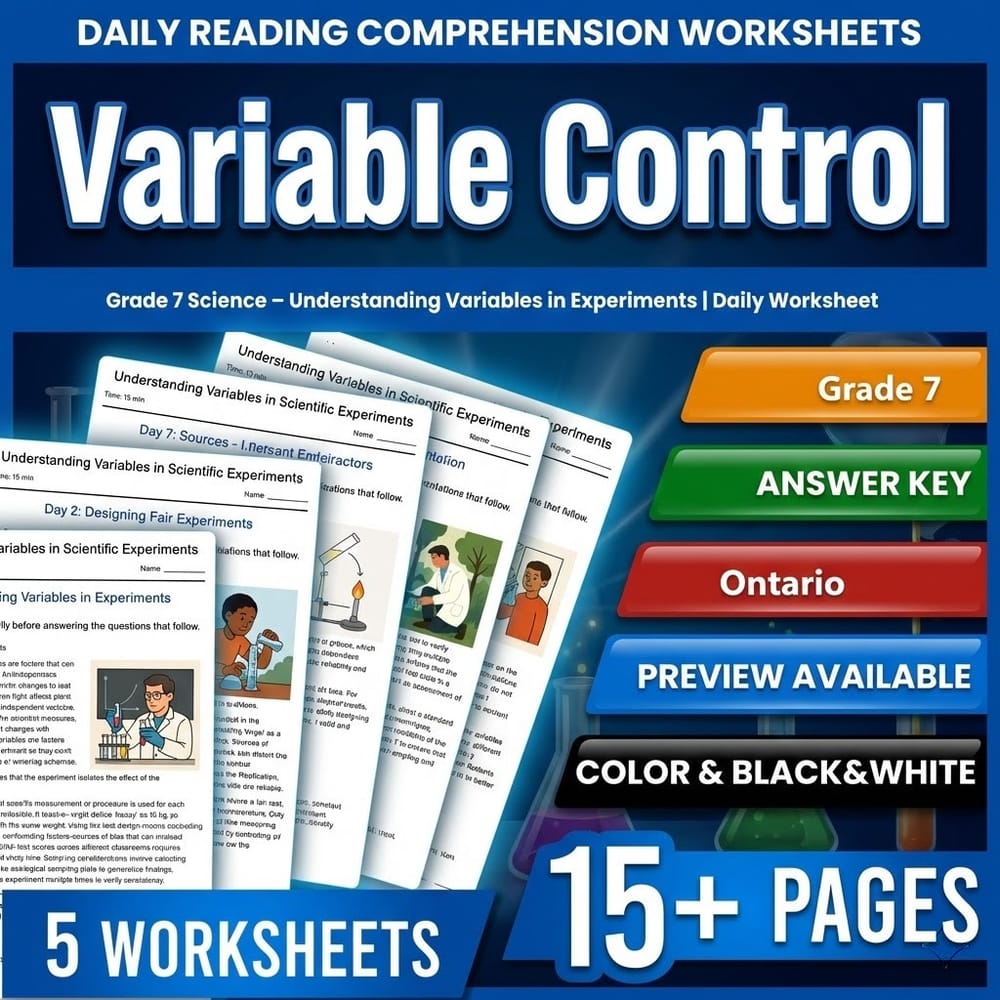
Grade 7 Science – Understanding Variables in Experiments | Daily Worksheet
Created byQuiet Forest EducationLearning Objectives
- Identify independent, dependent, and controlled variables in experiments
- Understand the importance of operational definitions and fair test design
- Recognize sources of confounding variables and ways to control them
Also included in: STEM Skills and Connections Grade 7 Science Daily Worksheets Bundle | Ontario +1 more
Instant download
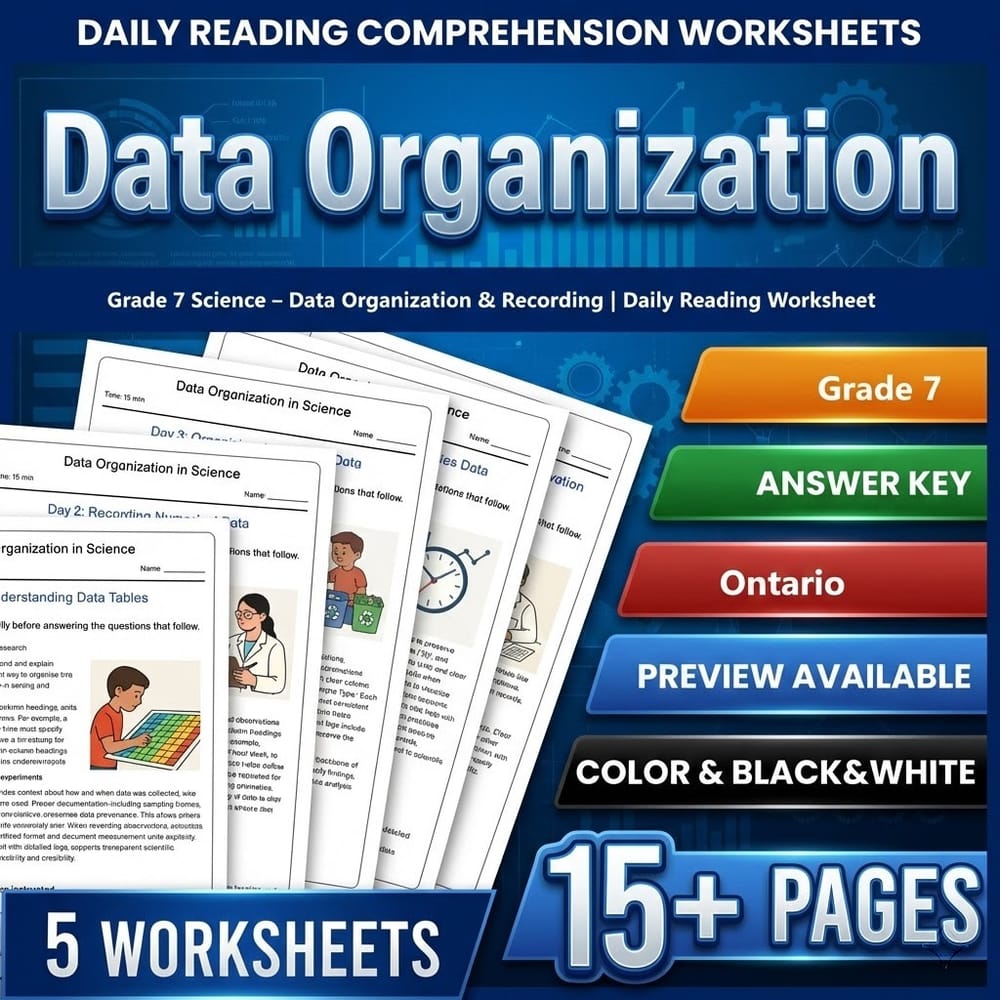
Grade 7 Science – Data Organization & Recording | Daily Reading Worksheet
Created byQuiet Forest EducationLearning Objectives
- Understand different types of data structures such as tables and logs
- Identify proper formatting and units in recorded data
- Learn the importance of metadata and documentation for scientific data
Also included in: STEM Skills and Connections Grade 7 Science Daily Worksheets Bundle | Ontario +1 more
Instant download
Grade 7 Science – Digital Data Tools & Data Collection | Daily Reading Worksheet
Created byQuiet Forest EducationLearning Objectives
- Understand key concepts related to Science
- Apply knowledge through practice questions
- Demonstrate comprehension of the material
Also included in: STEM Skills and Connections Grade 7 Science Daily Worksheets Bundle | Ontario +1 more
Instant download
Grade 7 Science – Measurement & Uncertainty Daily Worksheet | Ontario Standards
Created byQuiet Forest EducationLearning Objectives
- Understand the concept of measurement units and their importance.
- Learn how to select appropriate instruments for different measurements.
- Explore the significance of accuracy and precision in scientific measurements.
Also included in: STEM Skills and Connections Grade 7 Science Daily Worksheets Bundle | Ontario +1 more
Instant download
Grade 7 Science – Modeling & Simulation | Daily Reading Worksheet
Created byQuiet Forest EducationLearning Objectives
- Understand what models are and their purpose in scientific investigation
- Identify different types of models used in science, such as conceptual and computational
- Recognize key practices in creating effective models, including abstraction, assumptions, and validation
Also included in: STEM Skills and Connections Grade 7 Science Daily Worksheets Bundle | Ontario +1 more
Instant download

Grade 7 Science Worksheets – Invasive Species Impacts (PDF)
 Created byEvergreen Desk Education
Learning Objectives
- Explain how invasive, non-native species can harm ecosystems through competition, changed food webs, and habitat structure.
- Describe common pathways by which non-native species are introduced and identify factors that help them become established.
- Evaluate how invasive species can create economic costs and increased long-term management needs.
Also included in: Grade 7 Ecosystem Dynamics Science Lesson Bundle (Ontario) Worksheets +1 more
Instant download

Science Grade 7 Worksheet: Optimization Methods | Ontario Standards
JCreated byJ.S SheetsLearning Objectives
- Explain what optimization means in design and identify common performance metrics.
- Describe how constraints are incorporated into an optimization decision.
- Use parameter variation and sensitivity analysis to compare design choices.
Instant download

Grade 7 Science | Energy Transformations in Plants - Daily Reading Comprehension
Created byCoral Reef LearningLearning Objectives
- Understand how photosynthesis converts light energy into chemical energy.
- Identify the roles of chloroplasts and mitochondria in energy transfer.
- Recognize factors affecting photosynthesis rates and metabolic energy use.
Instant download

Evaporation Crystallization Worksheet Grade 7 Science Ontario
 Created byChalk and Compass
Learning Objectives
- Explain how evaporation and controlled cooling lead to nucleation and crystal growth.
- Describe how evaporation rate, cooling profile, and impurities affect crystal size and purity.
- Relate recrystallization to improved purity using well-ordered crystal lattices.
Also included in: Separation of Mixtures & Matter Properties Lesson Bundle – Grade 7 Science +1 more
Instant download

Grade 7 Science | Adaptation Traits Worksheet (Alberta) (PDF)
Created byEvergreen Desk EducationLearning Objectives
- Explain how adaptation traits (structural, physiological, and behavioural) help organisms survive and reproduce in specific environments.
- Describe examples of adaptation in boreal and prairie habitats, including cold tolerance, drought resistance, seasonal coat changes, and root architecture.
- Connect trait variation to selective pressures and trade-offs in how organisms allocate energy and resources.
Instant download
Grade 7 Science – Chromatography Techniques DailyWorksheet | Ontario Standards
Created byQuiet Forest EducationLearning Objectives
- Understand the basic principles of chromatography, including the roles of stationary and mobile phases.
- Identify different types of chromatography, such as paper and thin-layer chromatography.
- Interpret retention factors and recognize factors affecting separation resolution.
Also included in: Elements & Compounds Grade 7 Science Daily Reading Worksheets Bundle | Ontario +1 more
Instant download

Grade 7 Membrane Transport Worksheet | Practice & BC PDF
Created byClear Sky ClassroomLearning Objectives
- Explain how diffusion and osmosis move substances across a selectively permeable cell membrane
- Describe how active transport uses energy to move molecules against concentration gradients
- Identify roles of membrane proteins in selective transport and maintaining ion balance
Instant download
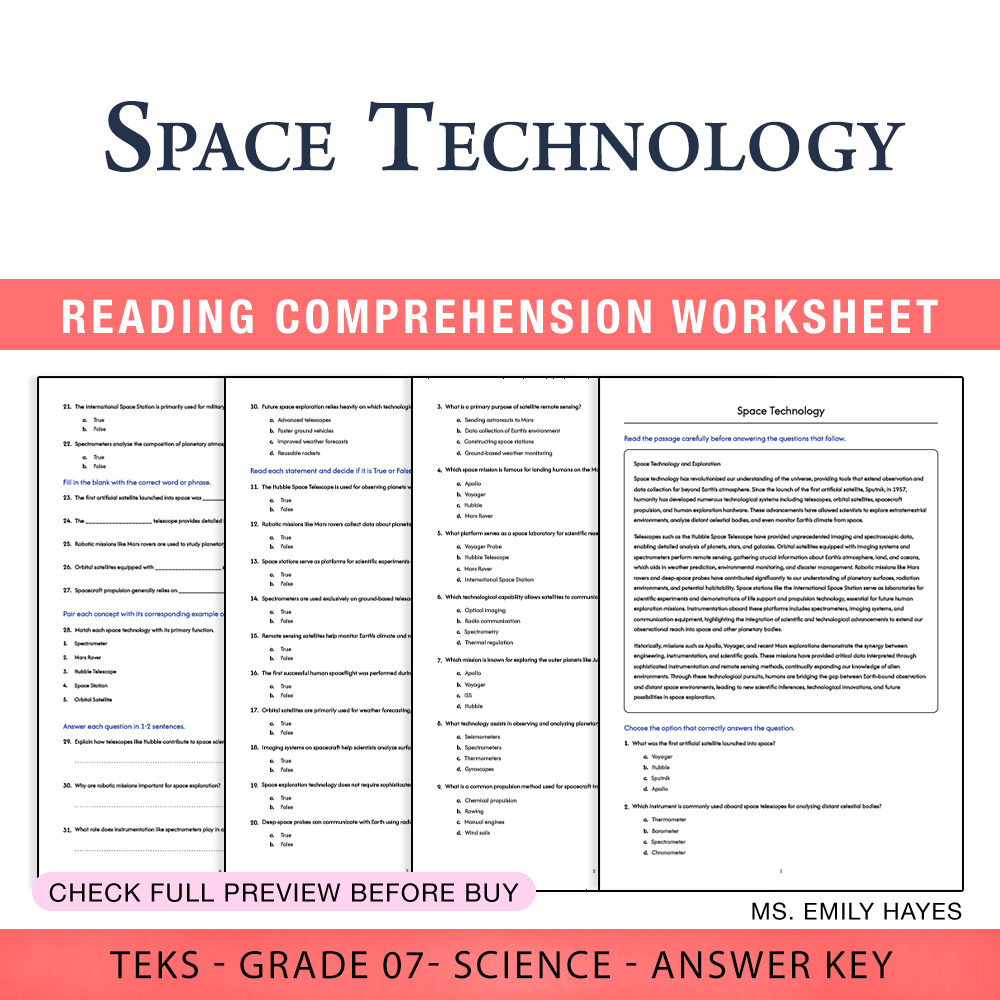
7th Grade Science | Space Technology Worksheet (PDF+ Answer Key)
Created byCopper Leaf ClassroomLearning Objectives
- Understand the various technologies used in space exploration, including telescopes, satellites, and spacecraft.
- Describe the roles of robotic missions and space stations in data collection and analysis.
- Identify key instruments such as spectrometers and imaging systems used in space missions.
Instant download

Grade 7 Science | Mixtures and Purity Worksheet | BC Standards
Created byLumora LearningLearning Objectives
- Understand the differences between mixtures and pure substances.
- Identify the observable traits of heterogeneous and homogeneous mixtures.
- Learn methods of separation based on physical properties such as filtration, evaporation, and distillation.
Also included in: Grade 7 Science | Matter & Chemical Change Unit Bundle | BC Aligned
Instant download
About Grade 7 Science Worksheets
Browse 6,039 printable Grade 7 Science worksheets — ready-to-print PDFs with answer keys where available.
Every worksheet on MyTeachingSheets is created by independent teacher-authors and reviewed before publication. All resources download as printable PDFs for classroom, homework, or at-home practice, and many include answer keys. Preview any worksheet free before buying.