
Grade 7 Science Worksheets
6,039 worksheets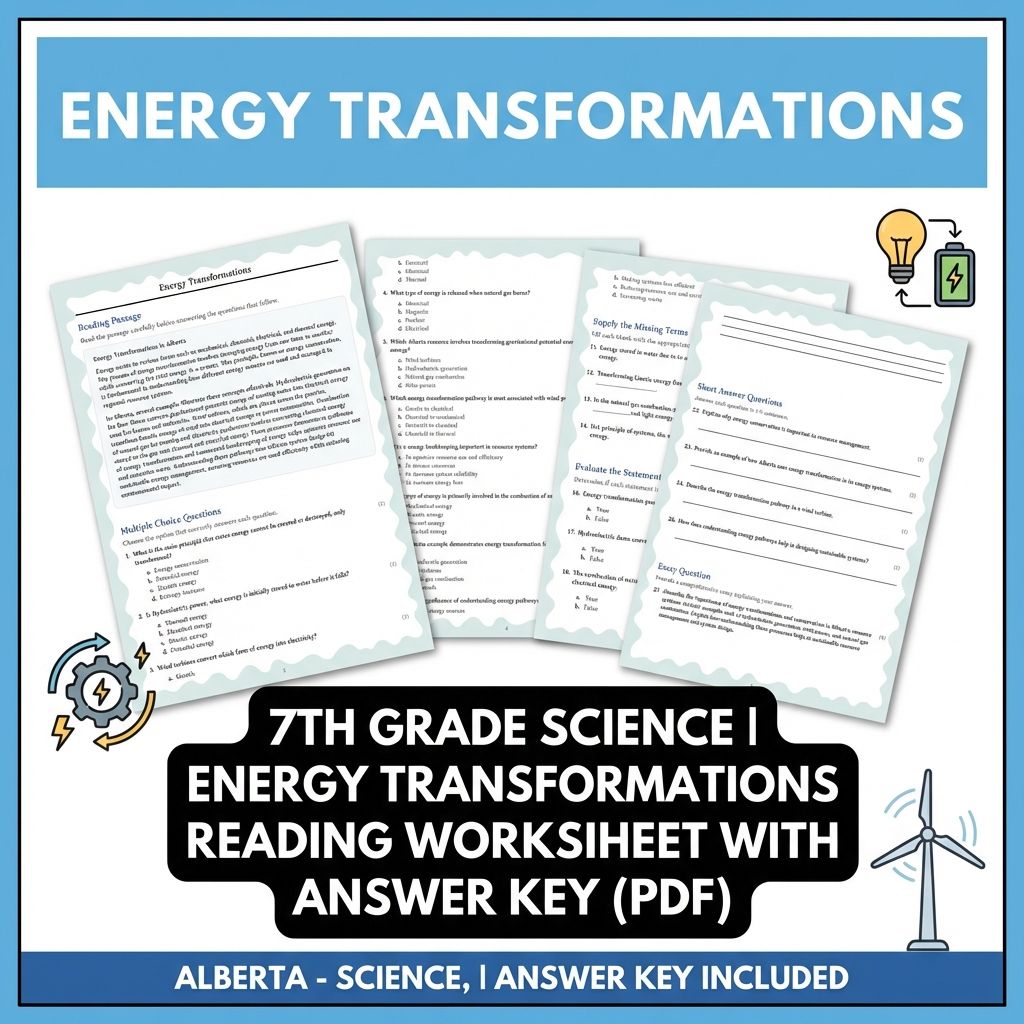
7th Grade Science | Energy Transformations Worksheet with Answer Key (PDF)
JCreated byJ.S SheetsLearning Objectives
- Understand different forms of energy and how they transform from one type to another.
- Identify real-world examples of energy transformations in Alberta's resource systems.
- Explain the principle of energy conservation during transformations.
Also included in: Grade 7 Science UNIT Bundle | Heat Transfer, Convection & Energy Worksheets +1 more
Instant download

Grade 7 Science – Systems Modeling Worksheet (TEKS PDF)
 Created byEvergreen Desk Education
Learning Objectives
- Explain how diagrams, scale models, and quantitative representations help predict the behavior of a system.
- Interpret model outputs and identify assumptions, limitations, and scaling effects that affect accuracy.
- Distinguish between different model types (e.g., free-body diagrams, circuit schematics, and block diagrams) and what each is used for.
Instant download
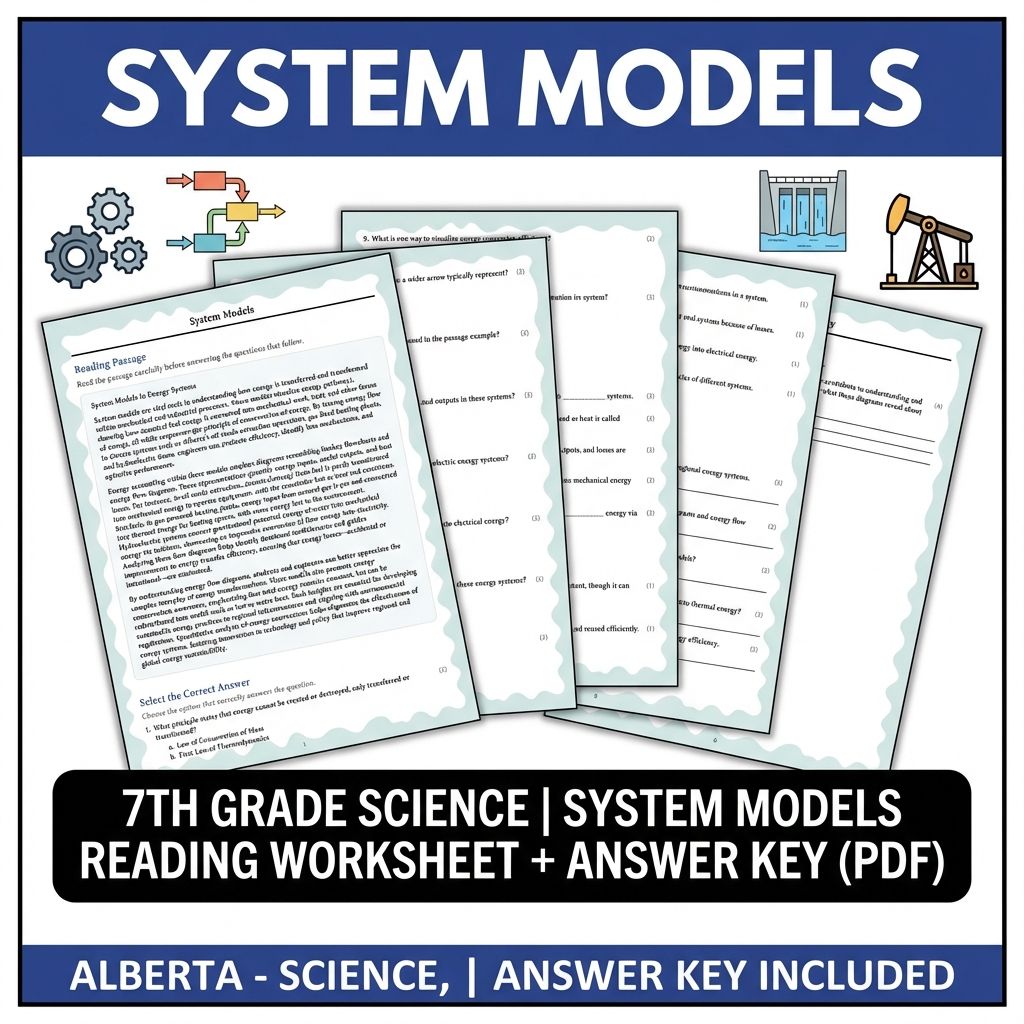
7th Grade Science | System Models Reading Worksheet + Answer Key (PDF)
JCreated byJ.S SheetsLearning Objectives
- Understand how energy flows and transforms within mechanical and industrial systems.
- Interpret energy flow diagrams and Sankey diagrams to quantify inputs, useful outputs, and waste heat.
- Explain the conservation of energy principles in various energy systems such as oil sands extraction, heating plants, and hydroelectric infrastructure.
Also included in: Grade 7 Science UNIT Bundle | Heat Transfer, Convection & Energy Worksheets +1 more
Instant download
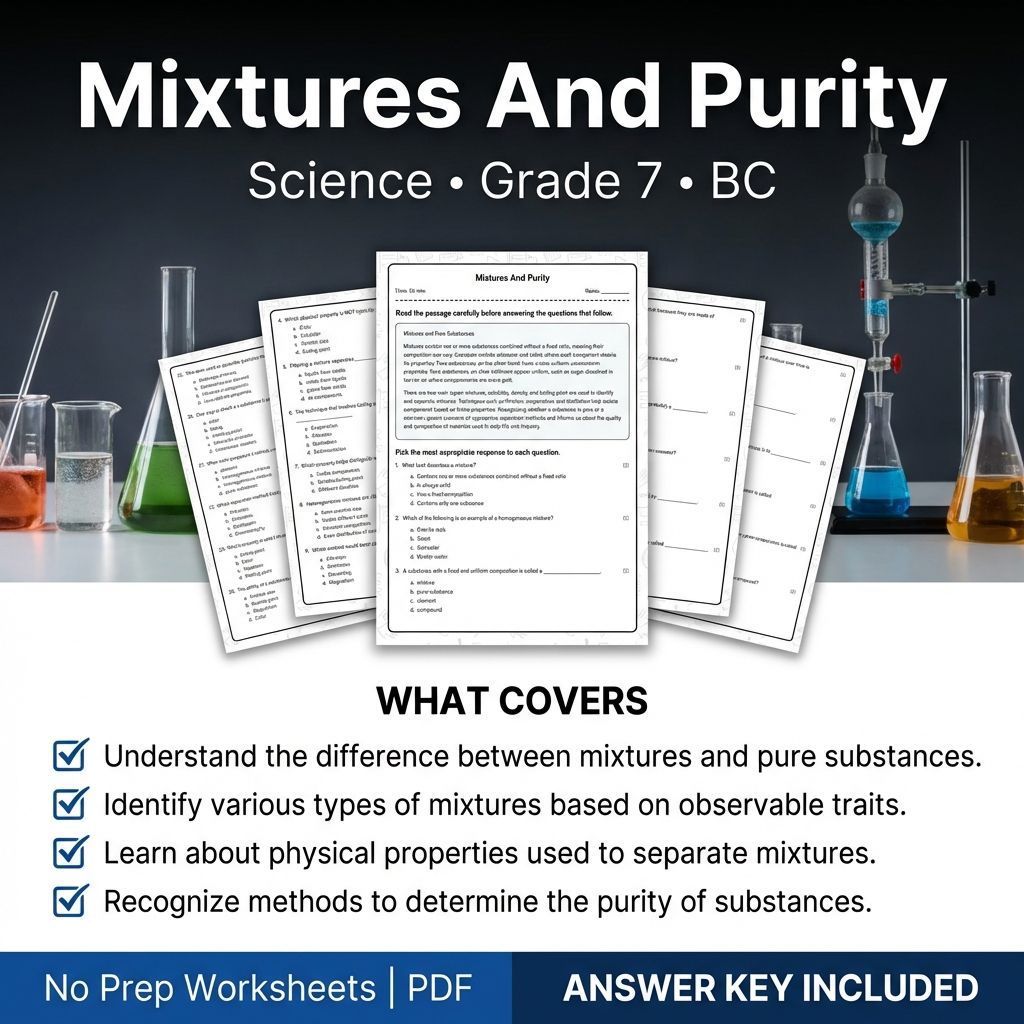
7th Grade Science | Mixtures and Purity Worksheet with Answer Key (Printable PDF)
 Created byCoral Reef Learning
Learning Objectives
- Understand the difference between mixtures and pure substances.
- Identify various types of mixtures based on observable traits.
- Learn about physical properties used to separate mixtures.
Instant download
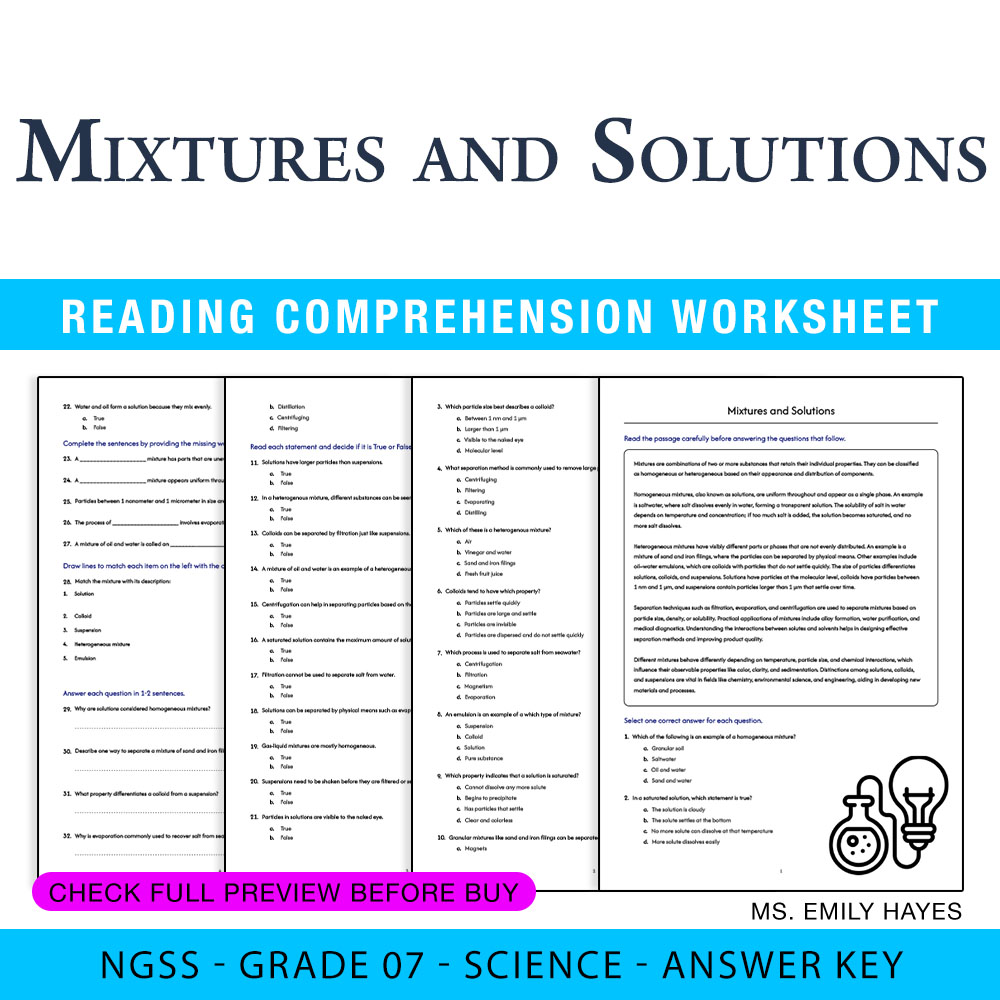
7th Grade Science | Mixtures and Solutions Worksheet (PDF +Answer Key)
 Created byCopper Leaf Classroom
Learning Objectives
- Identify the differences between homogeneous and heterogeneous mixtures.
- Explain how solubility, saturation, and concentration affect solutions.
- Describe methods used to separate mixtures and their practical applications.
Instant download
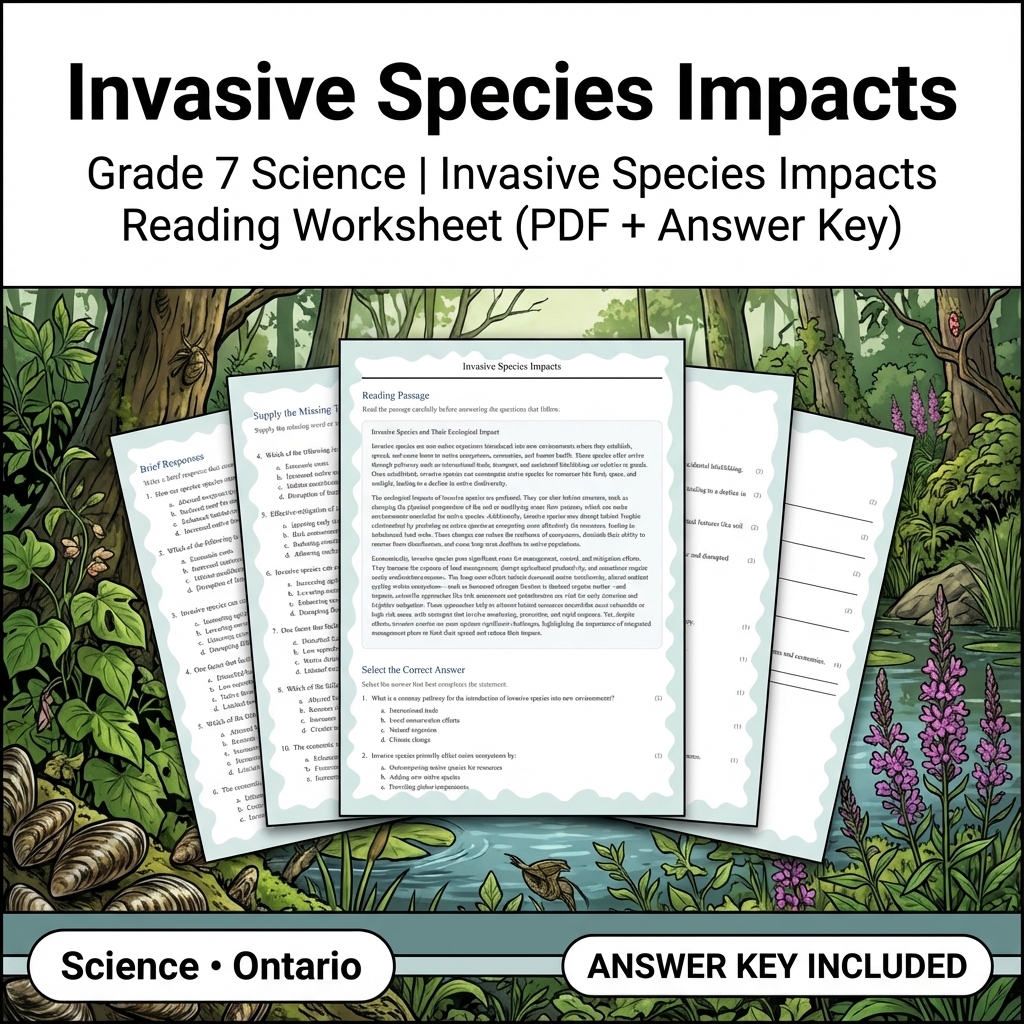
Grade 7 Science | Invasive Species Impacts Reading Worksheet (PDF + Answer Key)
JCreated byJ.S SheetsLearning Objectives
- Understand the ecological consequences of invasive species introductions.
- Recognize pathways and factors facilitating the establishment of invasive species.
- Evaluate the long-term ecological and economic effects of non-native species.
Also included in: Grade 7 Science | Ecosystems, Biodiversity & Environmental Stewardship +1 more
Instant download
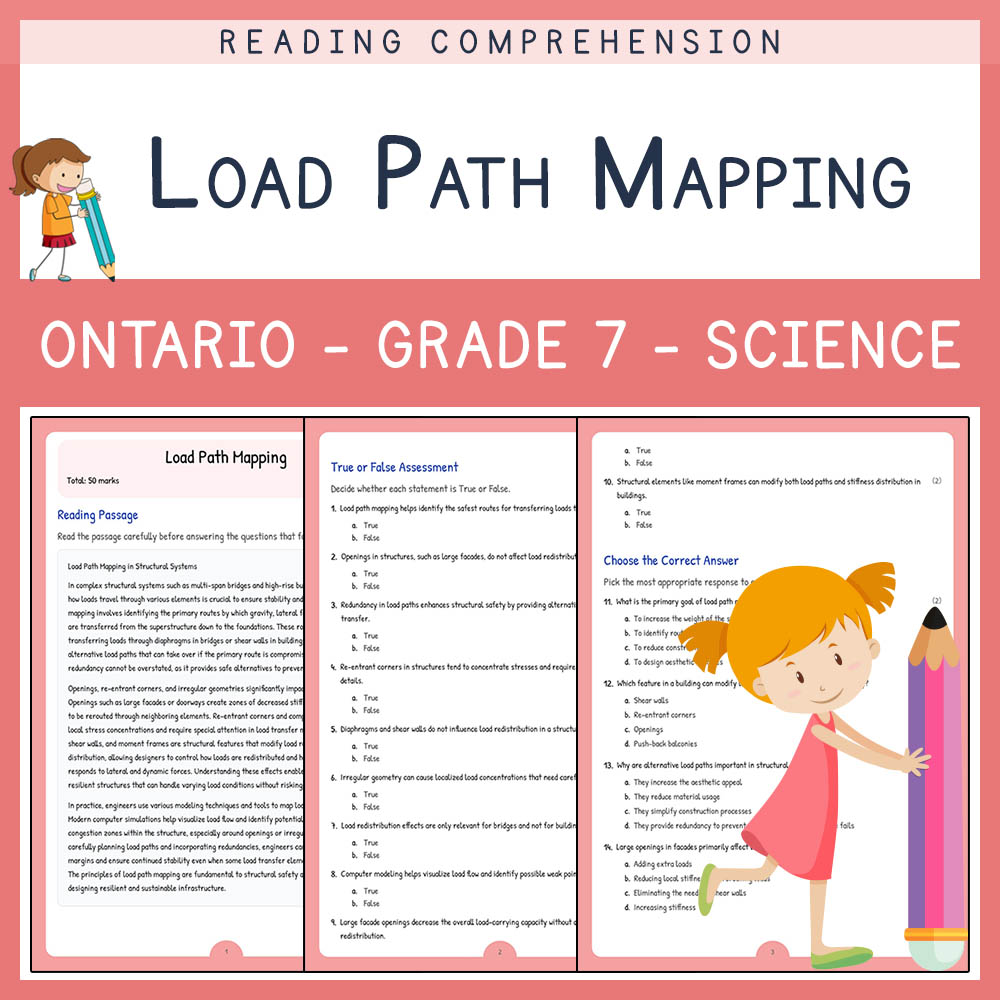
Grade 7 Science | Load Path Mapping Worksheet & Answer Key – Ontario Standards
 Created byLumora Learning
Learning Objectives
- Understand methods for mapping load paths in complex structures.
- Identify primary and secondary load routes transferring gravity and lateral loads.
- Analyze how openings, corners, and geometry influence load redistribution.
Also included in: Grade 7 Science | Form Function Design Structures Unit Bundle | Ontario
Instant download

Grade 7 Science – Net Force Diagrams Worksheet (Alberta Standards) (PDF)
 Created bySilver Birch Teaching
Learning Objectives
- Explain how free-body diagrams represent all forces acting on an object
- Determine the net force magnitude and direction by combining perpendicular force components
- Decompose forces on inclined surfaces into parallel and perpendicular components
Also included in: Grade 7 Simple Machines and Forces Science Lesson Bundle: Alberta +1 more
Instant download
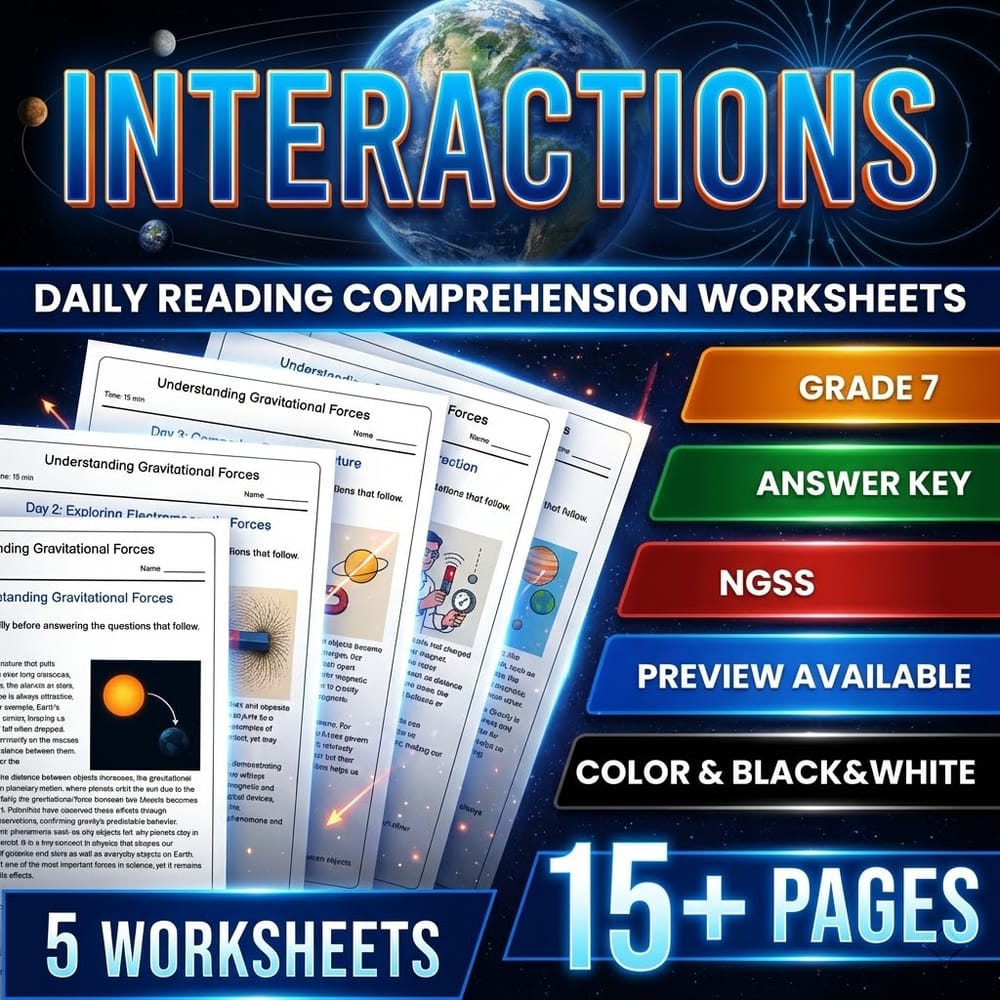
Grade 7 Science – Gravitational Forces & Evidence | Daily Reading Worksheet
 Created byElena Brooks
Learning Objectives
- Recognize gravity as a long-range, attractive force that acts between objects with mass.
- Describe how gravity depends on mass and distance.
- Identify examples of gravitational interactions in daily life and planetary motion.
Also included in: Force and Motion Grade 7 Science Daily Reading Worksheets Bundle | NGSS +1 more
Instant download
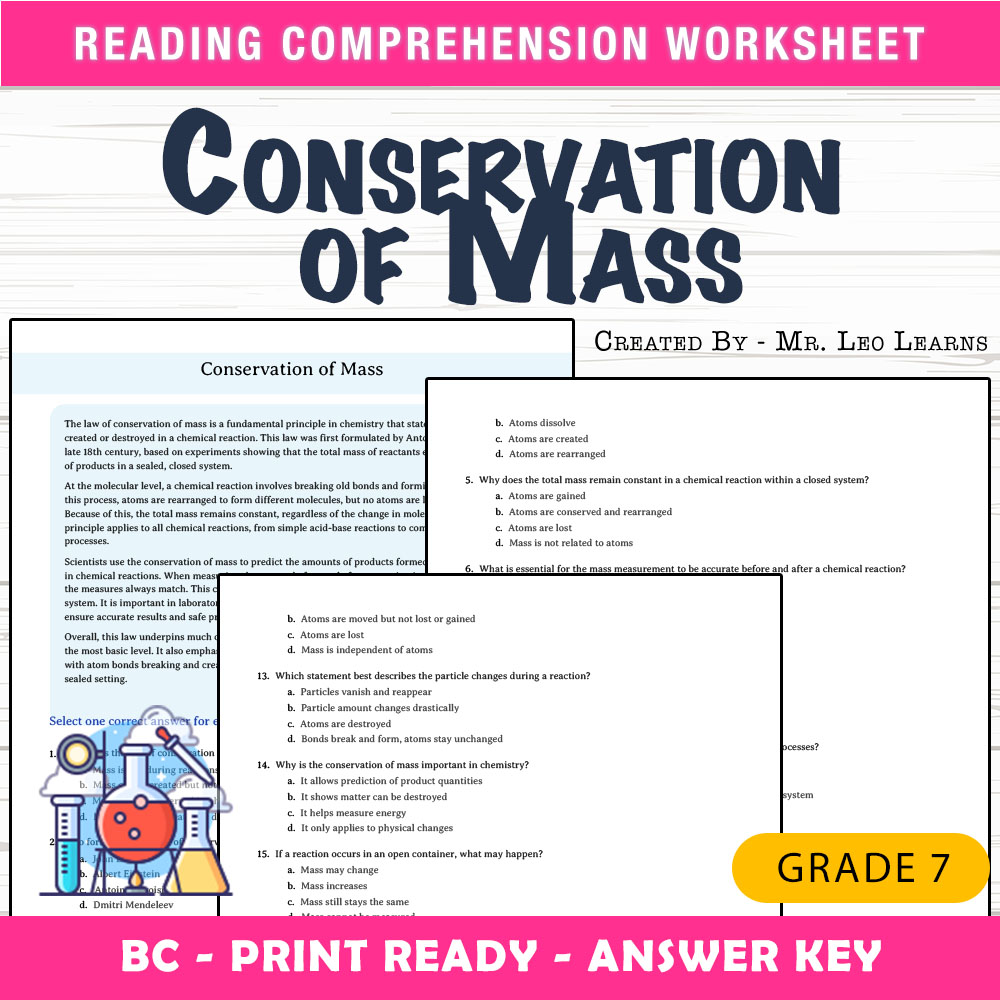
Grade 7 Science — Worksheet MCQ Paper for Mastering Conservation of Mass
 Created byThe Resource Hub
Learning Objectives
- Understand the principle of conservation of mass in chemical reactions.
- Identify how atoms are conserved during reactions at the particle level.
- Recognize the significance of closed systems in mass measurement before and after reactions.
Also included in: Grade 7 Science | Matter & Chemical Change Worksheet Bundle – BC Framework +1 more
Instant download
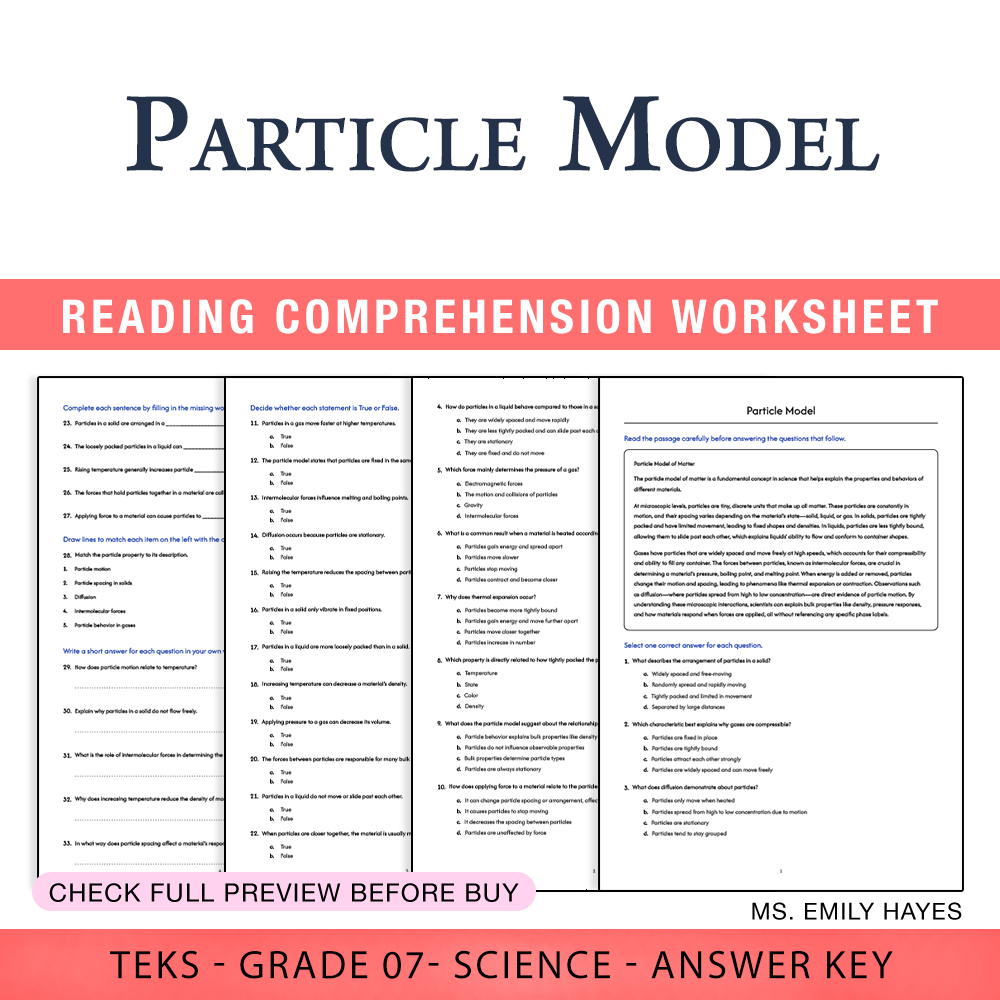
7th Grade Science | Particle Model Worksheet (PDF+ Answer Key)
Created byCopper Leaf ClassroomLearning Objectives
- Explain the basic principles of the particle model of matter and how particles behave in different states
- Describe how particle spacing, motion, and forces account for observable properties like density, pressure, and compressibility
- Relate micro-scale particle interactions to macro-scale measurements such as diffusion, thermal expansion, and response to applied forces
Instant download
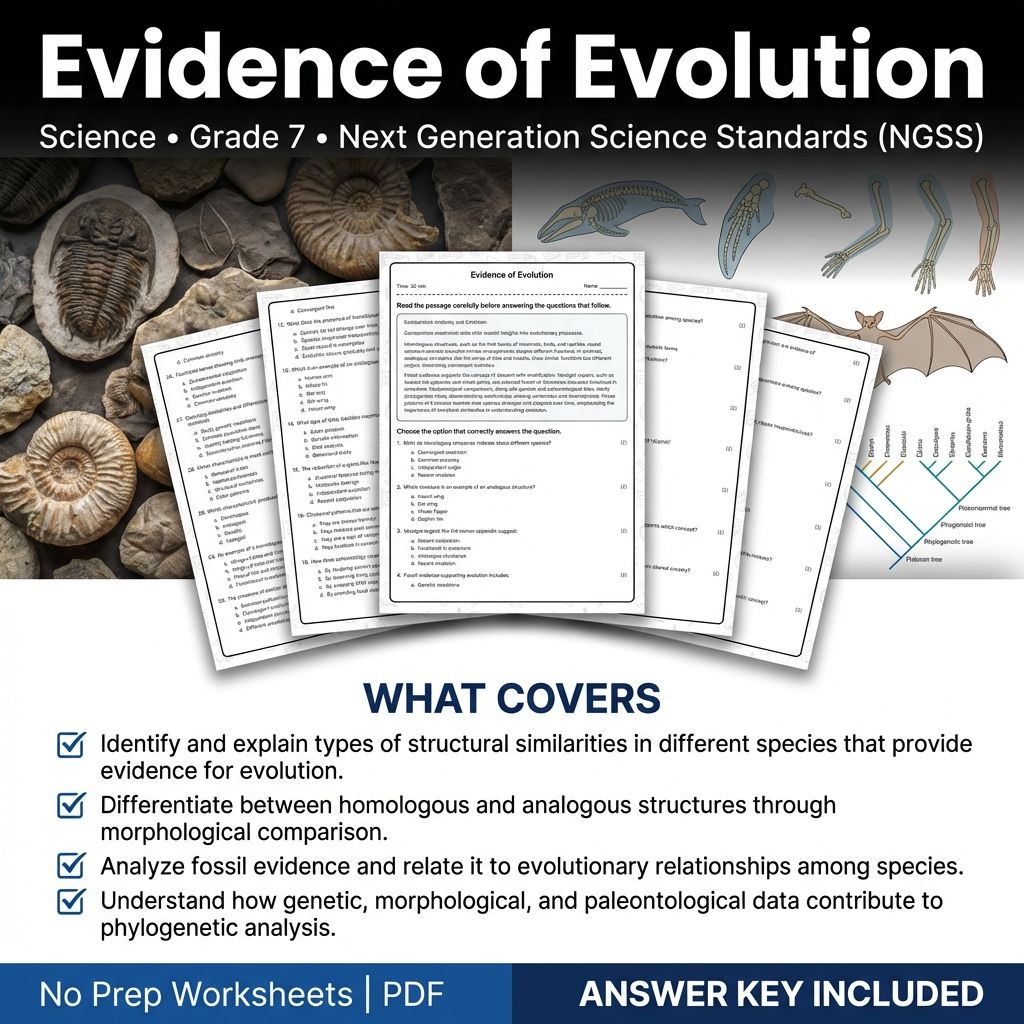
7th Grade Science | Evidence of Evolution Worksheet & Answer Key (Printable PDF)
Created byCoral Reef LearningLearning Objectives
- Identify and explain types of structural similarities in different species that provide evidence for evolution.
- Differentiate between homologous and analogous structures through morphological comparison.
- Analyze fossil evidence and relate it to evolutionary relationships among species.
Instant download
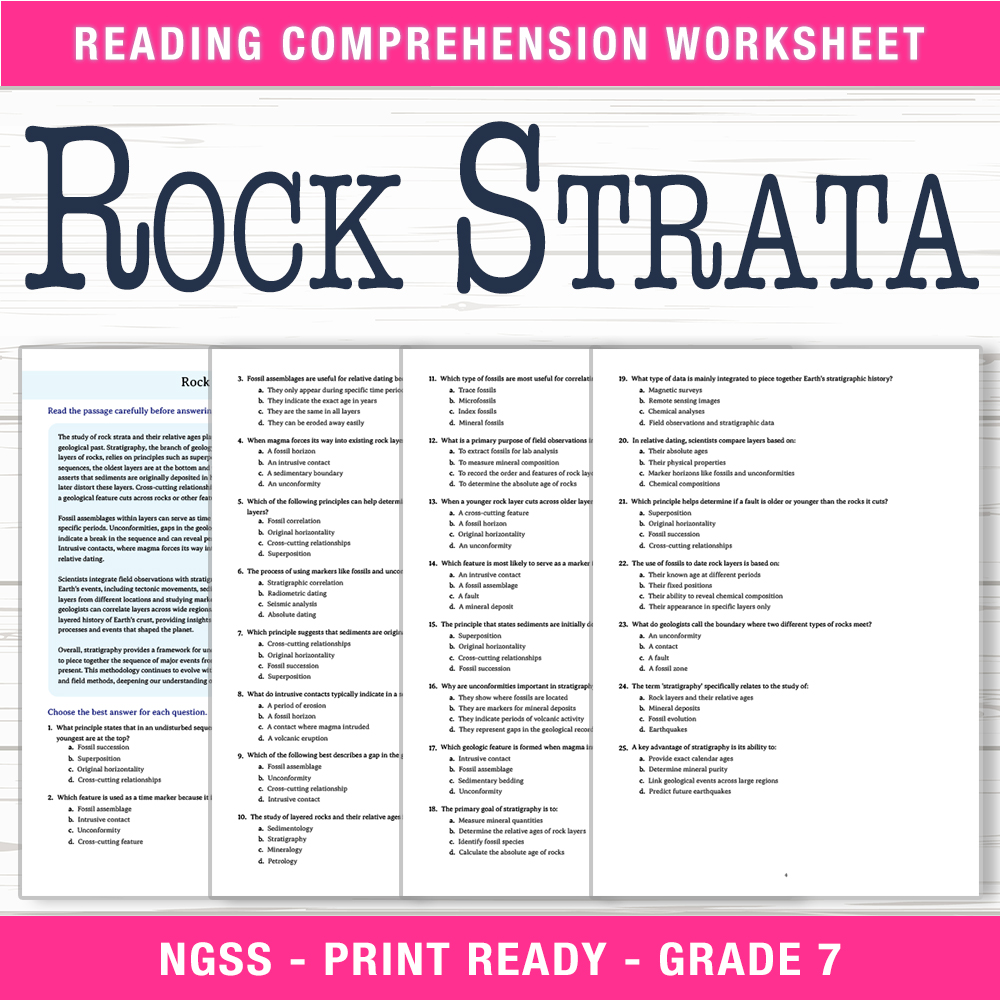
Grade 7 Science | Rock Strata Worksheet (PDF + Answer Key)
 Created byRiverstone Classroom
Learning Objectives
- Understand the principles of relative dating such as superposition, original horizontality, and cross-cutting relationships.
- Identify key stratigraphic markers like fossils, unconformities, and intrusions used in correlating rock layers.
- Explain how field observations and stratigraphic data are used to reconstruct Earth's geological history.
Instant download

Grade 7 Science Representations Worksheet | NGSS Graphs & Models
 Created byAmber Owl Education
Learning Objectives
- Explain how symbolic chemical equations, graphs, and tables can represent matter interactions without assuming microscopic causes
- Interpret quantitative relationships in graphs (e.g., mass or temperature vs. time) and connect them to other representations
- Use balanced equations to infer stoichiometric ratios and communicate what changes occur during a reaction
Also included in: Grade 7 Science Stoichiometry, Mixtures & Material Properties Lesson Bundle | NGSS +1 more
Instant download

Temperature Measurement Worksheet | Grade 7 Science Assessment Practice
 Created byPrism Point Learning
Learning Objectives
- Explain how different thermometers measure temperature and identify their typical ranges and accuracy limits.
- Use Celsius scale conventions, including fixed points, to interpret temperature readings correctly.
- Describe how calibration, thermal contact, and environmental factors affect measurement uncertainty.
Instant download
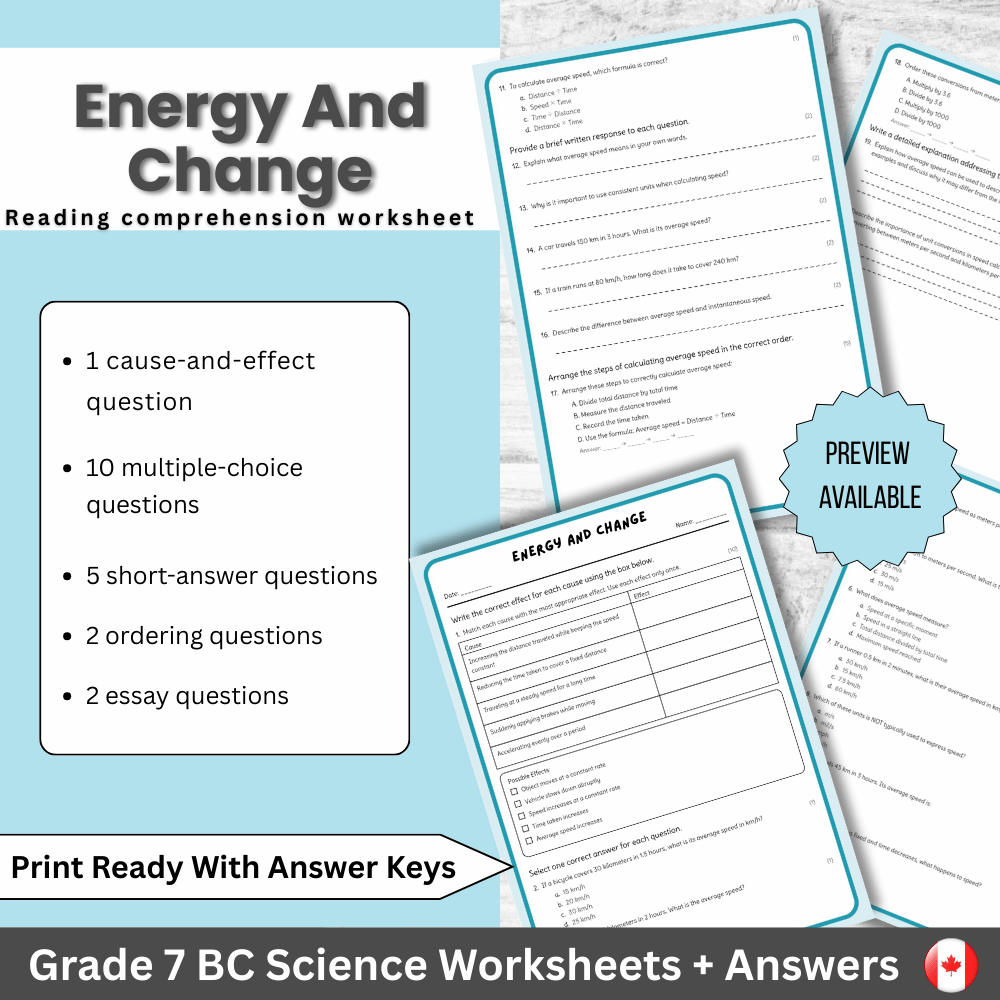
Grade 7 Science | Energy and Change Worksheet (Answer Key) – BC Standards
 Created byBright Mind Resources
Learning Objectives
- Understand how energy changes occur during chemical reactions, including exothermic and endothermic processes.
- Identify signs of energy transfer in physical and chemical changes.
- Describe how bond breaking and formation involve energy input and release.
Instant download
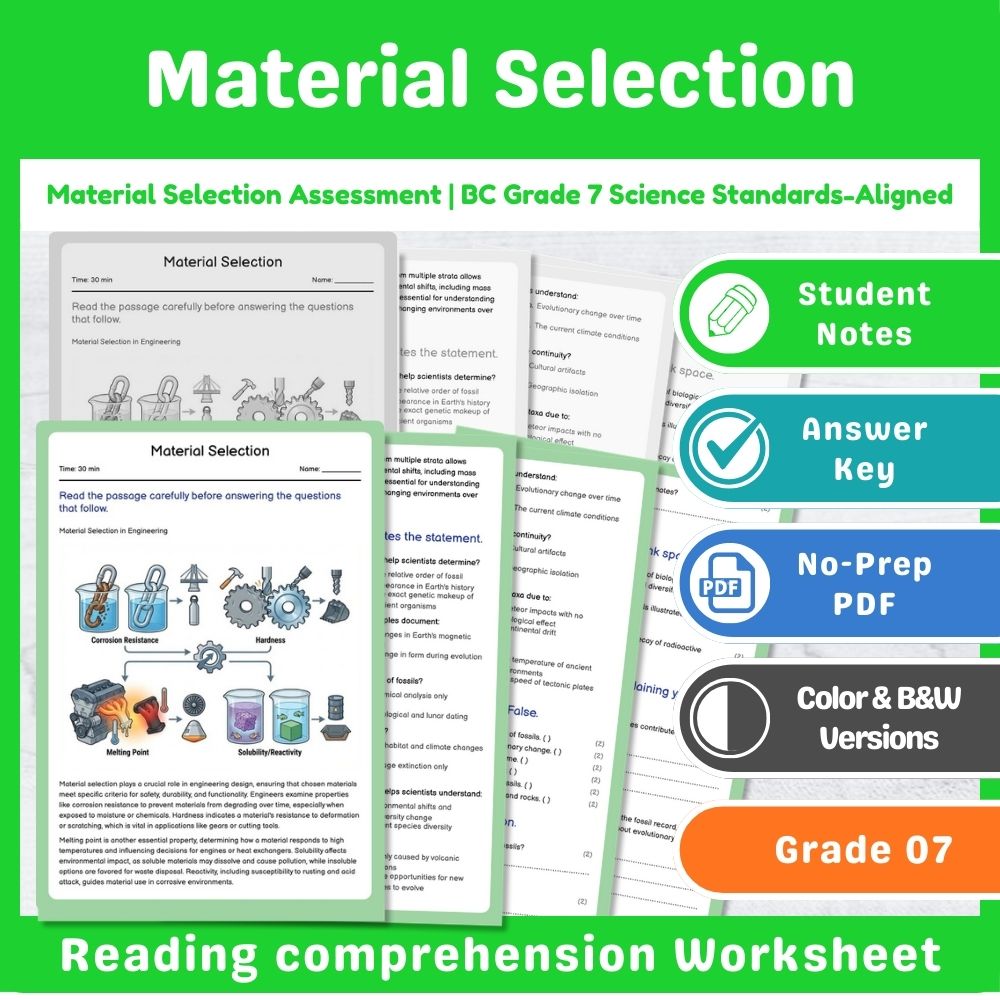
Material Selection Assessment | BC Grade 7 Science Standards-Aligned
Created byPrism Point LearningLearning Objectives
- Understand how physical and chemical properties influence the suitability of materials for various applications.
- Identify key properties such as corrosion resistance, hardness, melting point, and solubility.
- Relate material properties to environmental and structural considerations.
Instant download

Grade 7 Modeling and Simulation Worksheet | Ontario Science Activity
 Created byChalk and Compass
Learning Objectives
- Explain how models use abstraction to represent complex systems in manageable ways.
- Identify assumptions, parameters, and units when interpreting or building a numerical model.
- Describe how sensitivity testing and validation help determine whether a model’s predictions are useful.
Also included in: Grade 7 Science Scientific Inquiry & Data Analysis Lesson Bundle | Ontario +1 more
Instant download

Grade 7 Measurement Uncertainty Worksheet | Ontario Science Activity
Created byChalk and CompassLearning Objectives
- Identify standard units and explain why instrument choice affects measurement quality.
- Read measurements accurately using correct scale divisions and significant figures.
- Distinguish random error from systematic error and describe uncertainty in readings.
Also included in: Grade 7 Science Scientific Inquiry & Data Analysis Lesson Bundle | Ontario +1 more
Instant download
Grade 7 Science – Energy Flow Daily Reading Worksheet + Answer Key
Created byCopper Leaf ClassroomLearning Objectives
- Understand how energy transfers through trophic levels in ecosystems.
- Identify roles of producers, consumers, and decomposers in energy pyramids.
- Explain photosynthesis and cellular respiration as energy mechanisms.
Instant download
7th Grade Science | Plate Tectonics Worksheet (NGSS) – Lesson & Assessment PDF
 Created byCedar Grove Learning
Learning Objectives
- Explain how geologic evidence such as fossils, rock types, and seafloor features support the theory of plate tectonics.
- Identify key features of Earth's crust, including mid-ocean ridges, trenches, and mountain ranges, and connect them to plate movements.
- Evaluate how seismic activity, volcanic eruptions, and magnetic striping provide evidence for the relative motion of tectonic plates.
Also included in: Grade 7 Science Bundle | Earth Systems & Processes NGSS (Worksheet Pack)
Instant download

Grade 7 Science | Designing Water Systems Worksheet | California Standards
Created byLumora LearningLearning Objectives
- Identify major freshwater water-supply and treatment options and describe their key tradeoffs.
- Explain how design constraints (water quality, infrastructure limits, and ecosystem impacts) affect water-system decisions.
- Use cause-and-effect reasoning to predict risks from scarcity, pollution, or altered flow patterns.
Instant download
7th Grade Science | Modeling and Simulation Worksheet (PDF+ Answer Key)
Created byCopper Leaf ClassroomLearning Objectives
- Understand the purpose and practices of conceptual and computational modeling in science.
- Identify key steps in building, testing, and validating models against real-world observations.
- Recognize applications of simple models in phenomena such as population dynamics, fluid flow, and motion.
Instant download
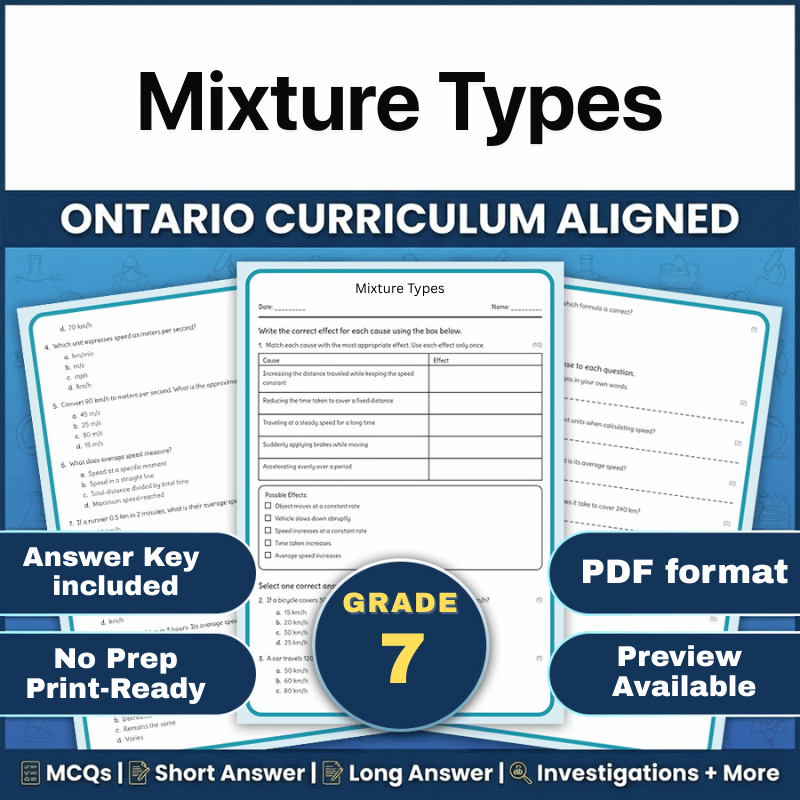
Grade 7 Science – Mixture Types Worksheet (Ontario Standards) (PDF)
Created byBright Mind ResourcesLearning Objectives
- Classify mixtures as solutions, colloids, or suspensions based on particle size and uniformity.
- Describe examples of each mixture type such as salt water, milk, and muddy water.
- Explain the concepts of homogeneity and heterogeneity in mixtures.
Instant download

Grade 7 Science | Tissue Types Worksheet | BC Aligned
Created byLumora LearningLearning Objectives
- Identify the four main types of tissues and their functions.
- Describe how tissue organization contributes to organ function.
- Differentiate between epithelial, connective, muscle, and nervous tissues.
Instant download

Grade 7 Science – Adaptive Traits Analysis Worksheet (TEKS) (PDF)
Created byEvergreen Desk EducationLearning Objectives
- Explain how variation, heritability, and selective pressures can cause adaptive traits to become more common in a population.
- Use examples (pesticide resistance and camouflage) to describe differential survival and reproduction across generations.
- Predict how environmental change can shift which traits are favored and how that affects populations and ecosystems.
Instant download

Recoil and Thrust Worksheet for Grade 7 Science | Standard-Aligned Practice
JCreated byJ.S SheetsLearning Objectives
- Understand how action-reaction forces operate in recoil and thrust scenarios.
- Describe how different masses affect acceleration during interactions.
- Explain the principle of conservation of momentum in recoil and thrust systems.
Also included in: Grade 7 Forces and Matter Science lesson bundle – California Standards +1 more
Instant download

Food Building Blocks Worksheet Grade 7 Science | Nutrients & Molecules
Created byPrism Point LearningLearning Objectives
- Explain how food molecules are broken down and rearranged inside the body to support growth and repair
- Describe how chemical energy in food becomes usable energy for life processes
- Identify the roles of carbohydrates, proteins, lipids, and vitamins/minerals as food components
Also included in: Life Science - Grade 7 Bundle
Instant download

Speed Calculations Worksheet for Grade 7 Science – Standards-Aligned Practice
JCreated byJ.S SheetsLearning Objectives
- Calculate average speed using distance and time with correct units
- Convert between meters per second (m/s) and kilometers per hour (km/h)
- Differentiate average speed from instantaneous speed using real-world examples
Instant download
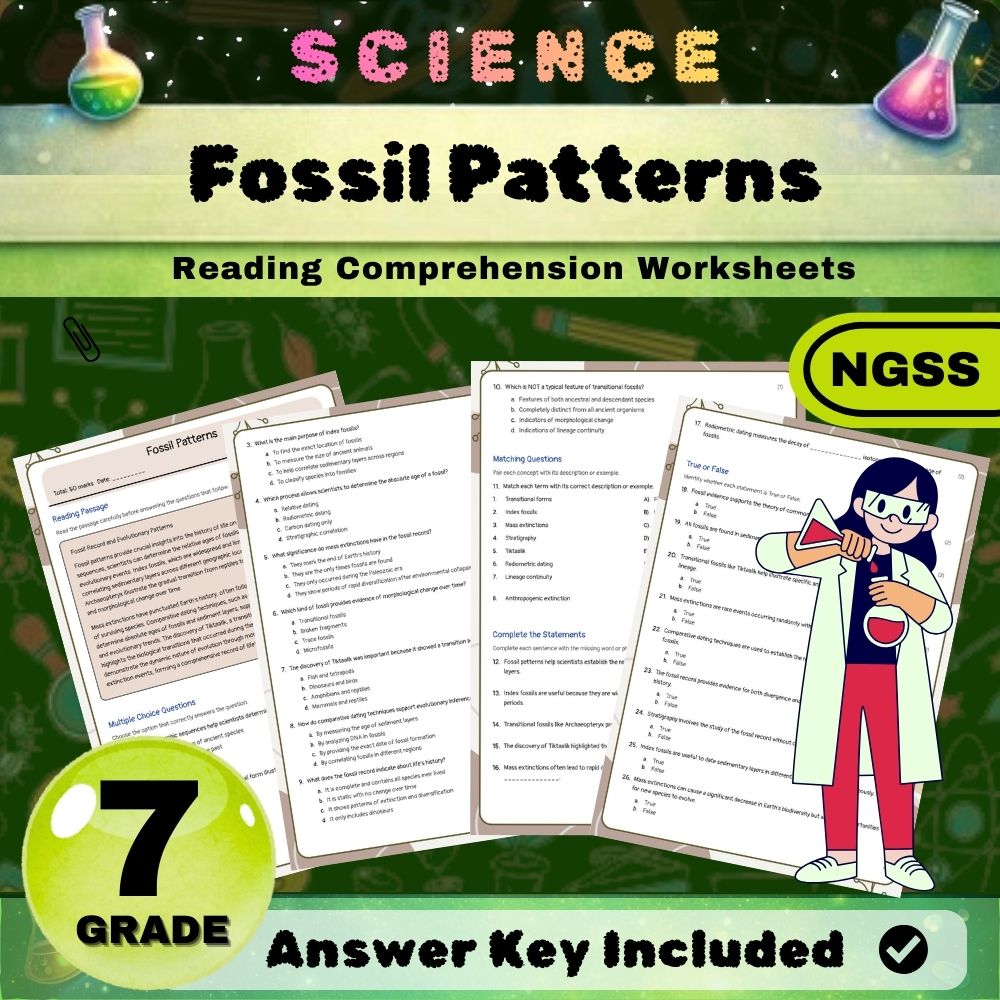
Grade 7 Science | Fossil Patterns NGSS Worksheet (PDF)
 Created byMaple Path Learning
Learning Objectives
- Understand the significance of fossil patterns in revealing evolutionary history.
- Identify key concepts such as stratigraphy, index fossils, transitional forms, and macroevolutionary trends.
- Analyze fossil evidence to infer common ancestry and extinction events.
Also included in: Grade 7 Science | Evolution & Adaptation NGSS Worksheet Bundle +1 more
Instant download
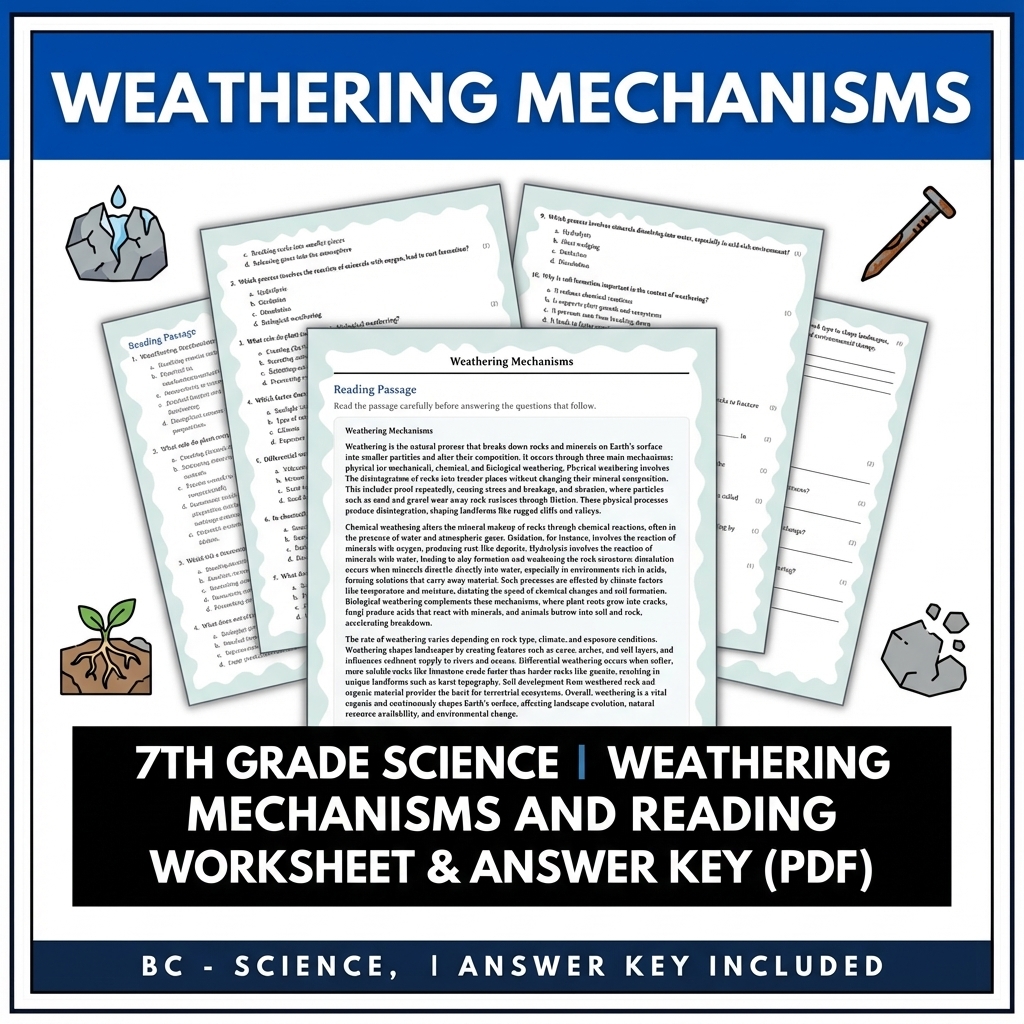
7th Grade Science | Weathering Mechanisms Reading Worksheet & Answer Key (PDF)
JCreated byJ.S SheetsLearning Objectives
- Understand the processes involved in physical, chemical, and biological weathering of rocks.
- Identify factors that influence the rate and effects of weathering on landforms.
- Describe how weathering contributes to soil formation and landscape development.
Instant download
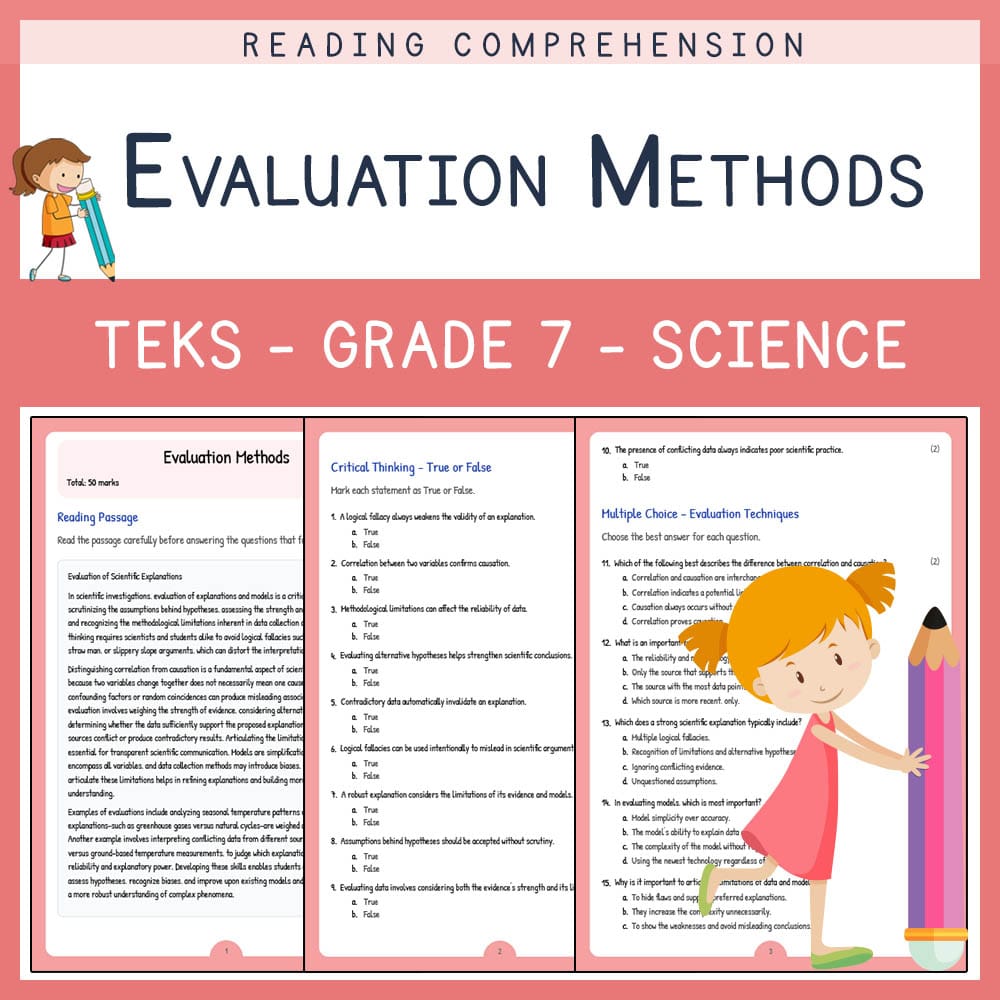
Grade 7 Science | Evaluation Methods Worksheet | TEKS Alligned
Created byLumora LearningLearning Objectives
- Apply critical thinking skills to evaluate explanations, models, and evidence quality.
- Identify logical fallacies, differentiate correlation and causation, and assess limitations of data.
- Evaluate competing explanations and interpret conflicting data sources for reliability.
Instant download
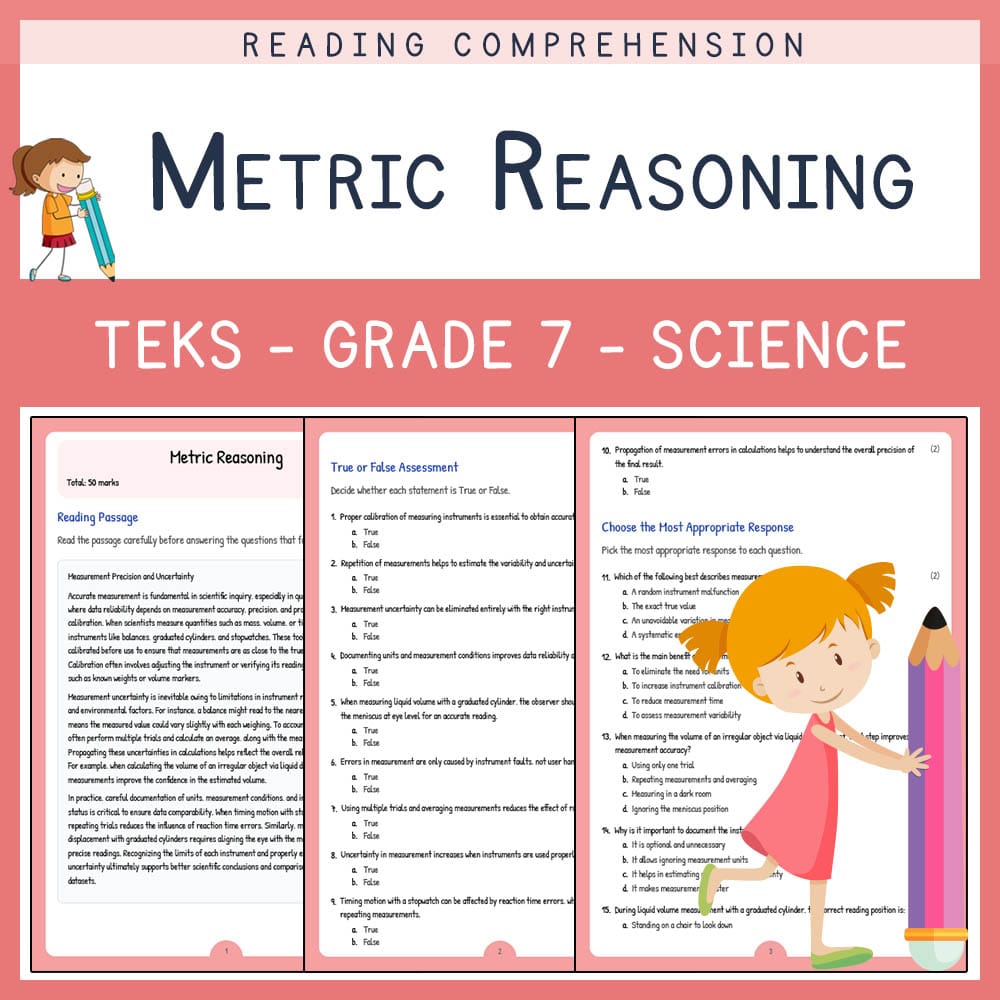
Grade 7 Science | Metric Reasoning Worksheet | TEKS Alligned
Created byLumora LearningLearning Objectives
- Understand the importance of measurement precision and uncertainty in scientific observations.
- Apply proper calibration techniques for balances and graduated cylinders.
- Use repetition of measurements to assess variability and estimate measurement error.
Instant download
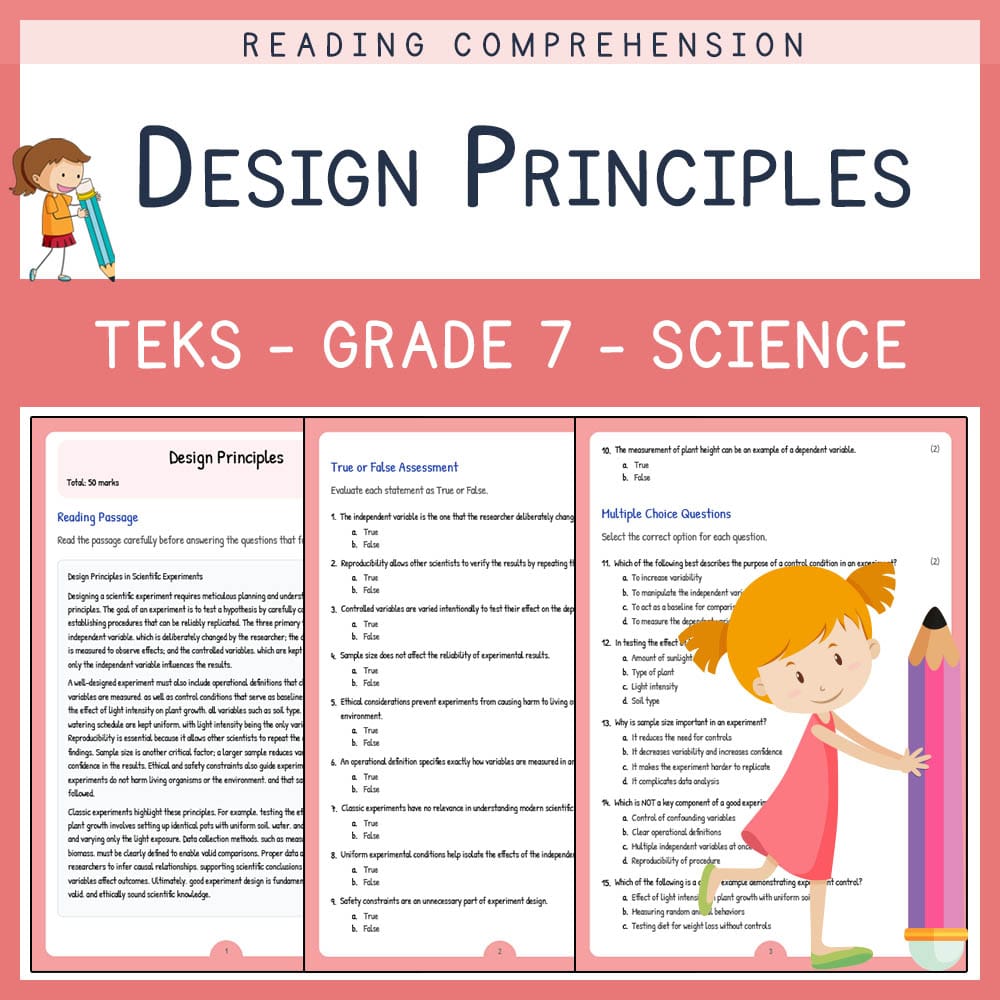
Grade 7 Science | Design Principles Worksheet | TEKS-Aligned
Created byLumora LearningLearning Objectives
- Understand the key elements of designing a fair experiment.
- Identify and define variables in experimental setups.
- Learn the importance of reproducibility, sample size, and safety considerations.
Instant download
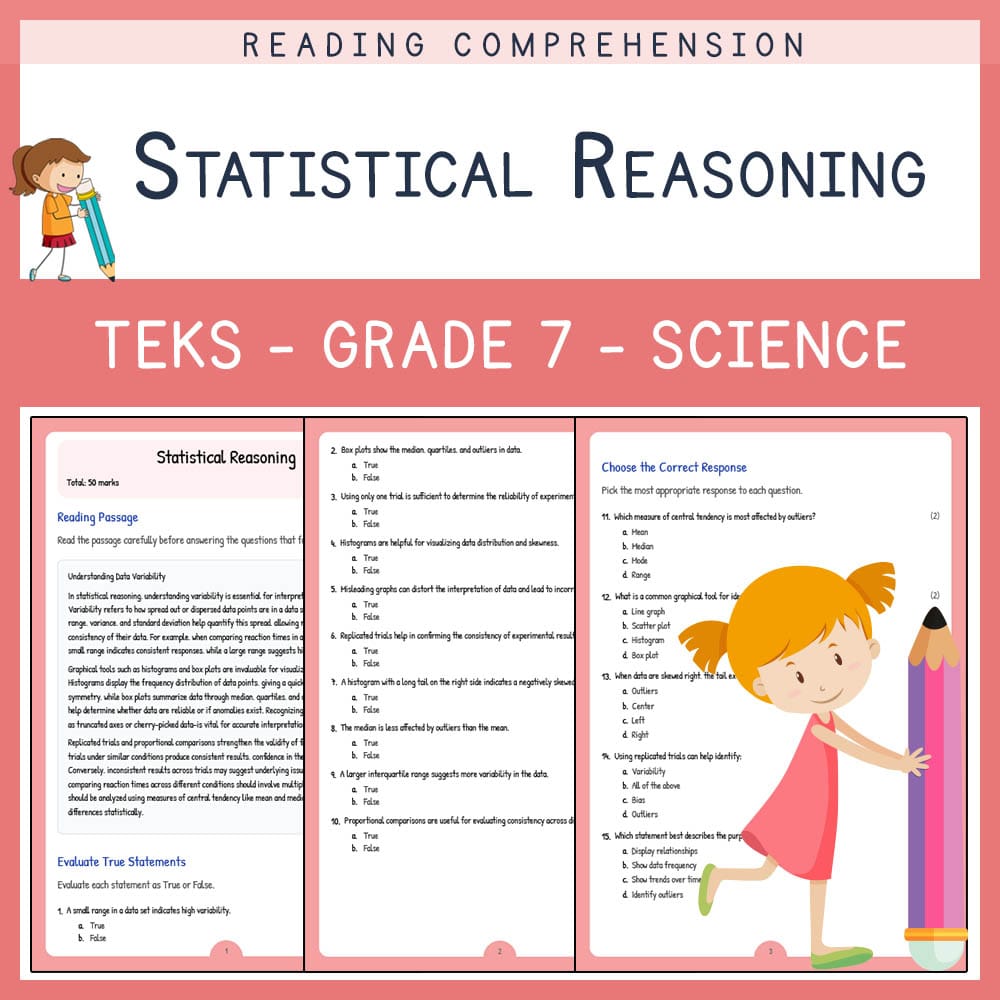
Grade 7 Science | Statistical Reasoning Worksheet | TEKS-Aligned
Created byLumora LearningLearning Objectives
- Interpret variability and measures of central tendency to assess data consistency
- Use graphical cues such as box plots and histograms to evaluate reliability and significance
- Compare and calculate mean, median, and range across data sets
Instant download
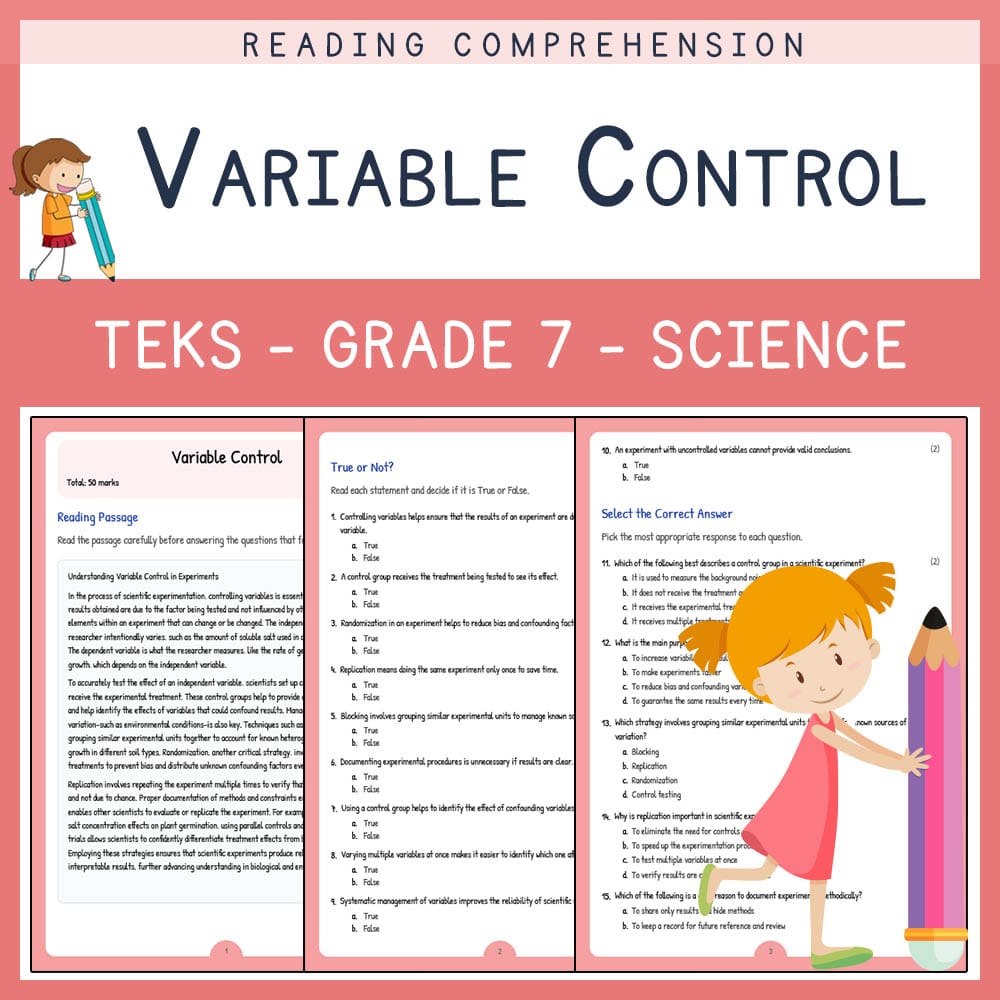
Grade 7 Science | Variable Control Worksheet | TEKS Alligned
Created byLumora LearningLearning Objectives
- Identify and describe the purpose of variables in controlled experiments.
- Understand methods for managing variables, including control groups, randomization, and replication.
- Explain how systematic variable management reduces confounding influences.
Instant download
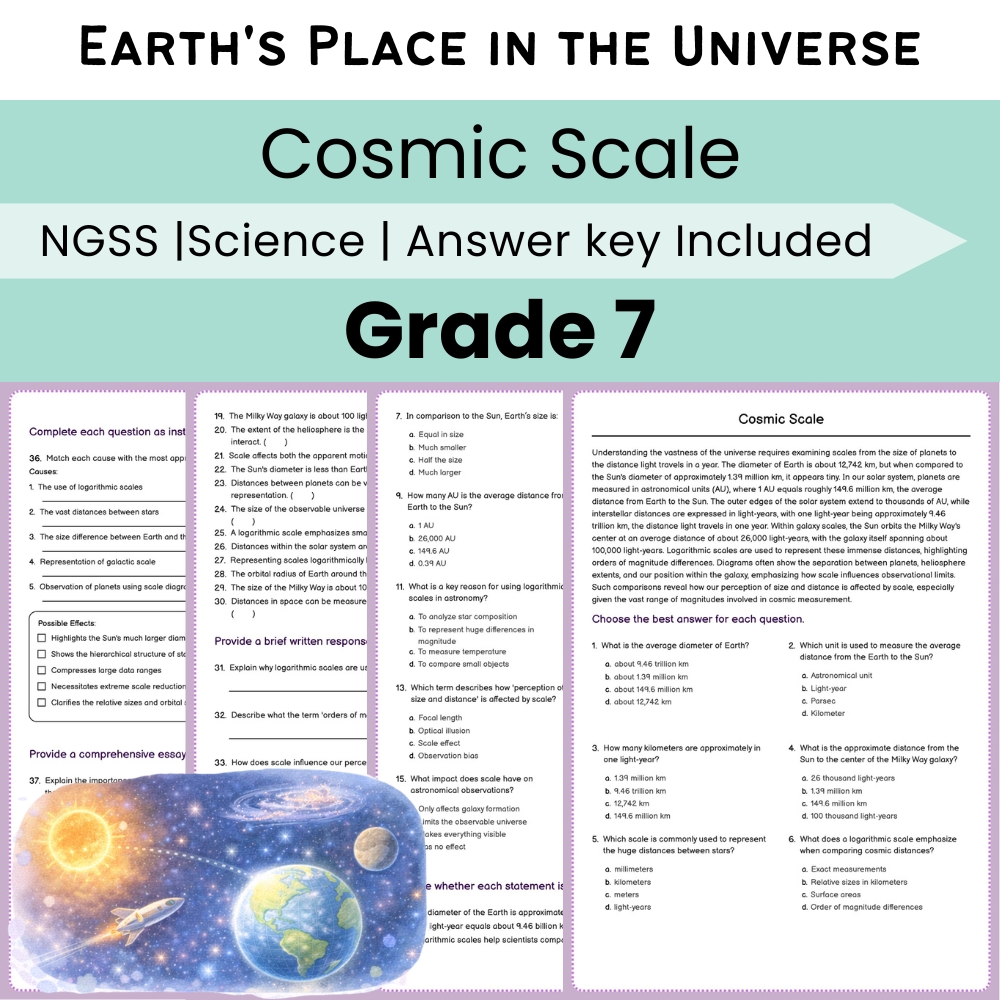
Cosmic Scale Worksheet for Grade 7 Science | NGSS Assessment & Practice
Learning Objectives
- Understand relative sizes and distances within the solar system and beyond.
- Express astronomical measurements using units such as astronomical units, light-years, and planetary diameters.
- Analyze orders of magnitude differences and their impact on observations and scale perception.
Also included in: Grade 7 Science NGSS Lesson Bundle – Earth's Place in the Universe Worksheets +1 more
Instant download
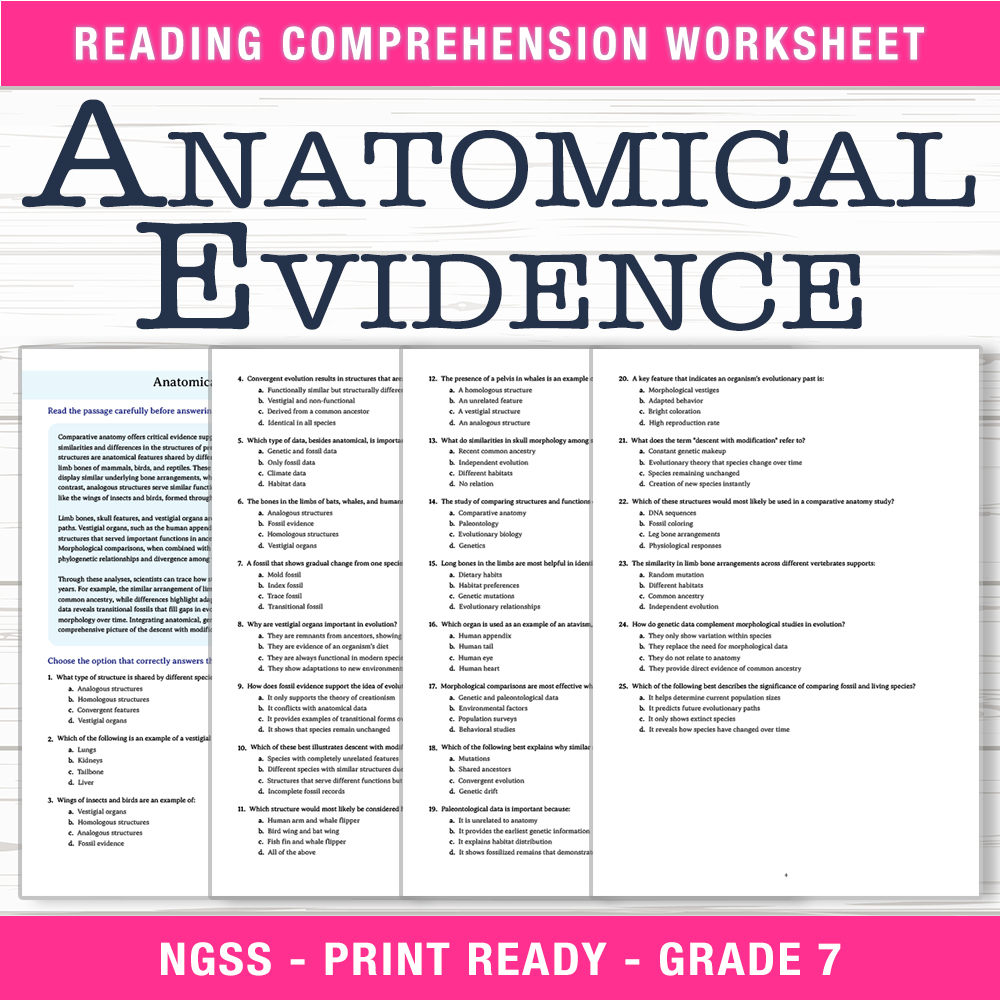
Grade 7 Science | Anatomical Evidence Worksheet (PDF + Answer Key)
Created byRiverstone ClassroomLearning Objectives
- Describe how homologous and analogous structures provide evidence for evolution.
- Identify different morphological features used to compare species, such as limb arrangements and skull morphology.
- Explain the significance of vestigial organs in understanding evolutionary relationships.
Instant download

Cell Structure Assessment for Grade 7 Science TEKS Standards
Created byPrism Point LearningLearning Objectives
- Identify key organelles in a cell and describe their functions.
- Understand how cellular structures contribute to organismal roles and survival.
- Compare organelle specialization in producers versus consumers.
Instant download

Ecosystem Dynamics Assessment | TEKS Standards Grade 7 Science
Created byPrism Point LearningLearning Objectives
- Describe energy flow and matter cycling within ecosystems using food chains, food webs, and trophic pyramids.
- Explain the roles of decomposers in nutrient recycling and how energy transfer efficiency affects ecosystems.
- Analyze how alterations in inputs or energy pathways can change community composition and ecosystem processes.
Instant download
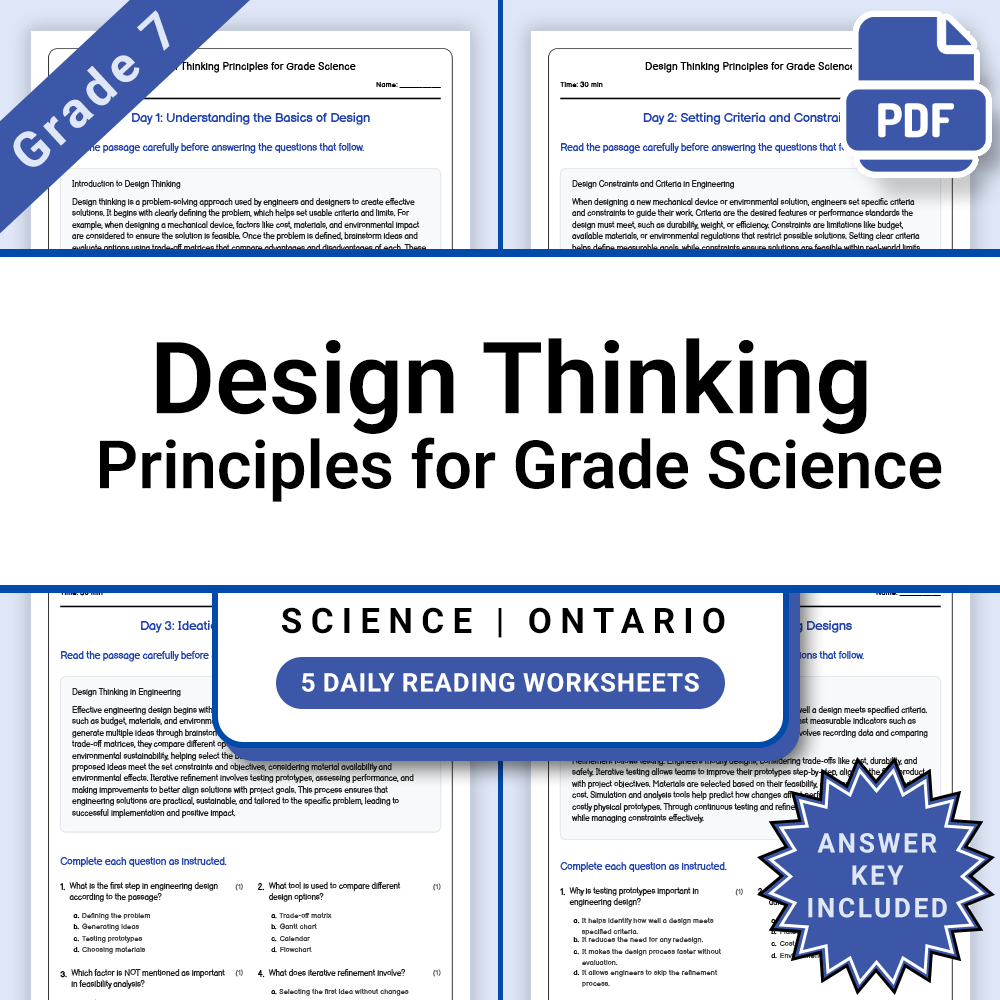
Grade 7 Science – Design Thinking Principles Worksheet with Answer Key
JCreated byJ.S SheetsLearning Objectives
- Understand the fundamentals of engineering design processes.
- Learn to define clear problems and set criteria and constraints.
- Explore how trade-offs influence materials and environmental considerations.
Also included in: Grade 7 Science Lesson Bundle | Ontario Curriculum Reading Worksheets +1 more
Instant download
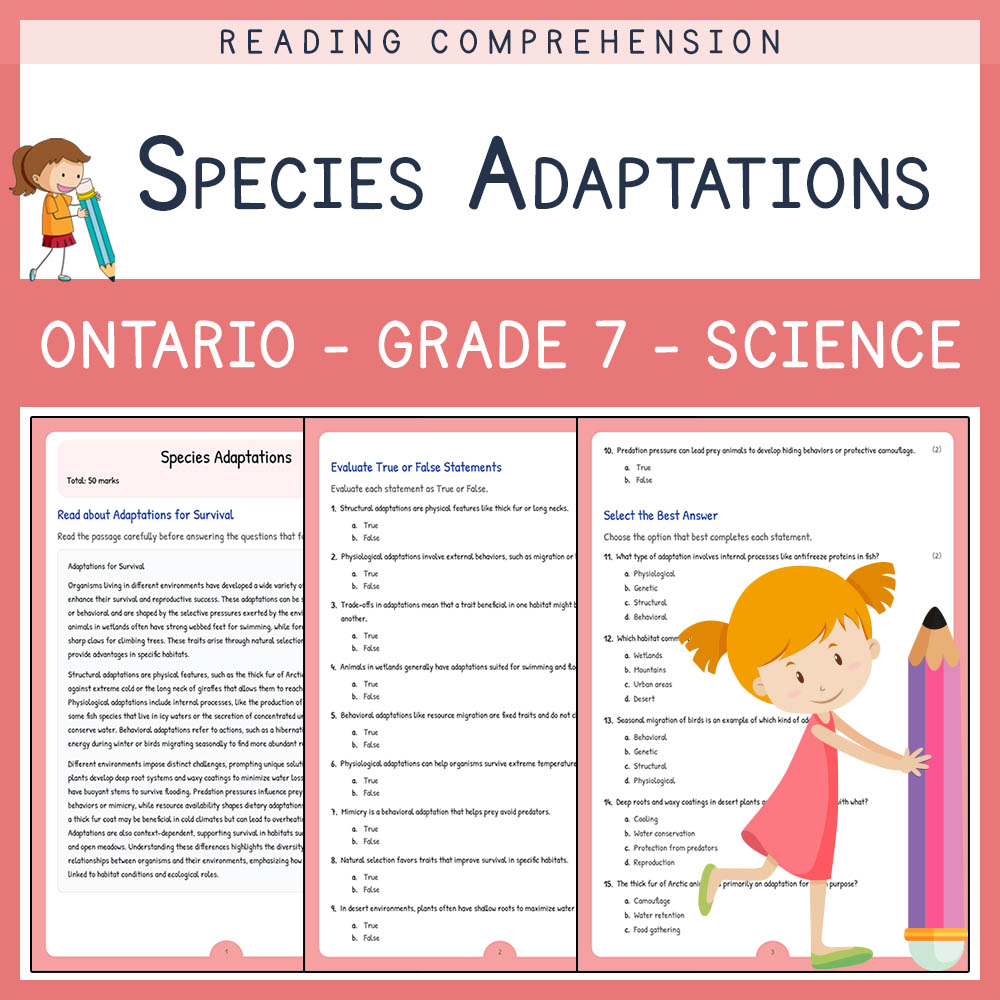
Grade 7 Science | Species Adaptations Worksheet (PDF + Answer Key) for Ontario
Created byLumora LearningLearning Objectives
- Understand the different types of adaptations organisms have for survival.
- Identify environmental factors that influence adaptations.
- Explain how structural, physiological, and behavioral traits help organisms thrive in specific habitats.
Instant download

Grade 7 Science | Restoration Strategies Worksheet & Answer Key (PDF)
Created byLumora LearningLearning Objectives
- Explain the principles of ecological restoration, including reference conditions and long-term monitoring.
- Differentiate between active and passive restoration approaches.
- Identify factors influencing species selection and habitat connectivity in restoration projects.
Instant download

Restoration Strategies Worksheet Grade 7 Science Ecology Activity
Created byChalk and CompassLearning Objectives
- Explain how reference conditions and restoration goals guide ecological restoration decisions.
- Compare active versus passive restoration approaches and identify appropriate success indicators.
- Describe how species selection, genetic considerations, and habitat connectivity support long-term resilience.
Also included in: Grade 7 Science Ecosystems & Sustainability Lesson Bundle | Ontario +1 more
Instant download

Human Stewardship Worksheet Grade 7 Science | Ecosystems & Sustainability
Created byChalk and CompassLearning Objectives
- Summarize how human activities can alter ecosystems, including habitat loss, pollution, resource extraction, and invasive species.
- Explain how these impacts can change species composition, disrupt ecosystem functions, and reduce long-term resilience.
- Describe stewardship principles such as mitigation, habitat protection, restoration priorities, and evidence-based monitoring.
Also included in: Grade 7 Science Ecosystems & Sustainability Lesson Bundle | Ontario +1 more
Instant download

Decomposition Cycles Worksheet | Nutrient Cycling Science Grade 7
Created byChalk and CompassLearning Objectives
- Explain how detritivores, fungi, and bacteria break down organic matter and how abiotic factors affect decomposition rates.
- Describe carbon and nitrogen transformations that occur during decomposition and nutrient cycling.
- Connect decomposition rate to soil fertility and ecosystem productivity across wetlands, forests, and grasslands.
Also included in: Grade 7 Science Ecosystems & Sustainability Lesson Bundle | Ontario +1 more
Instant download

Ecosystem Basics Worksheet Grade 7 Science | Food Chains & Habitats
Created byChalk and CompassLearning Objectives
- Identify biotic and abiotic components of an ecosystem and explain how they affect organisms.
- Classify organisms as producers, consumers, or decomposers and describe their roles.
- Explain energy flow from sunlight to organic matter and how matter cycles through ecosystems.
Also included in: Grade 7 Science Ecosystems & Sustainability Lesson Bundle | Ontario +1 more
Instant download

Succession Patterns Worksheet Grade 7 Science | Ontario Curriculum
Created byChalk and CompassLearning Objectives
- Explain how ecological succession changes a community after disturbance
- Distinguish primary and secondary succession and identify common stages
- Describe drivers of succession, including soil development, seed dispersal, competition, and facilitation
Also included in: Grade 7 Science Ecosystems & Sustainability Lesson Bundle | Ontario +1 more
Instant download
About Grade 7 Science Worksheets
Browse 6,039 printable Grade 7 Science worksheets — ready-to-print PDFs with answer keys where available.
Every worksheet on MyTeachingSheets is created by independent teacher-authors and reviewed before publication. All resources download as printable PDFs for classroom, homework, or at-home practice, and many include answer keys. Preview any worksheet free before buying.