
Grade 8 Science Worksheets
6,006 worksheets
Grade 8 Science | Ecological Restoration Strategies for Ecosystem Recovery
 Created byCoral Reef Learning
Learning Objectives
- Understand the principles of habitat reclamation and restoration.
- Identify different strategies used to restore ecological functions.
- Analyze the importance of monitoring recovery metrics.
Also included in: Interactions and Ecosystems Lesson Bundle Grade 8 Science – Alberta +1 more
Instant download
Grade 8 Science | Watershed Systems Worksheet (Ontario, Science 1) (PDF)
 Created byBright Mind Resources
Learning Objectives
- Describe characteristics of drainage basins and watershed boundaries.
- Explain how runoff generation, stream networks, and tributary hierarchy affect watershed functions.
- Analyze the influence of land cover, slope, and soil type on infiltration and overland flow.
Instant download

Grade 8 Magnetic Fields Worksheet | NGSS Practice PDF
 Created byClear Sky Classroom
Learning Objectives
- Explain how magnetic fields are produced by magnets and by moving electric charges in current-carrying conductors.
- Use field line ideas to describe polarity, relative strength, and how field patterns form around magnets.
- Compare the behavior of ferromagnetic materials to non-magnetic materials in magnetic fields.
Instant download

Grade 8 Science Worksheet | Regional Hydrology Case Study (Ontario PDF)
 Created byEvergreen Desk Education
Learning Objectives
- Explain how the hydrologic cycle shapes water availability in a large basin
- Describe how watershed connectivity influences nutrient loading and ecosystem impacts
- Distinguish groundwater–surface water exchange and identify possible contaminant pathways
Also included in: Grade 8 Watershed and Water Quality Science Lesson Bundle (Ontario) +1 more
Instant download
Grade 8 Science | Weather Patterns Worksheet (Worksheet + Answer Key)
Created byBright Mind ResourcesLearning Objectives
- Understand the relationship between air mass motions and weather changes.
- Identify how synoptic-scale analyses explain shifts in weather conditions.
- Describe the processes of frontogenesis and cyclogenesis.
Also included in: Grade 8 Science Unit | Weather, Water Cycle & Climate Circulation Worksheets +2 more
Instant download
Grade 8 Science – Earthquake Catalogs & Seismic Data | Daily Reading Worksheet
 Created byElena Brooks
Learning Objectives
- Understand how earthquake catalogs are compiled and interpreted.
- Analyze seismic data to identify patterns and recurrence intervals.
- Explore the role of fault maps and volcanic histories in hazard assessment.
Instant download

Grade 8 Energy Metabolism Worksheet | Ontario Science Cells & Energy
Created byClear Sky ClassroomLearning Objectives
- Explain how aerobic respiration converts chemical energy into ATP through glycolysis, the Krebs cycle, and oxidative phosphorylation
- Describe the role of mitochondria and proton gradients in chemiosmosis
- Compare aerobic ATP production with anaerobic fermentation and connect energy pathways to oxygen availability
Instant download

Population Change Dynamics Worksheet | NGSS Grade 8 Science Assessment
 Created byCedar Grove Learning
Learning Objectives
- Analyze factors that influence population growth and decline in ecosystems.
- Identify and describe biotic and abiotic influences such as resource availability, invasive species, and environmental events.
- Interpret population graphs and birth/death rate trends to understand long-term population stability.
Instant download
Grade 8 Science – Matter Cycles & Water Cycle | Daily Reading Worksheet
Created byElena BrooksLearning Objectives
- Understand the processes involved in the water cycle, including evaporation, condensation, precipitation, and collection.
- Identify key processes in the cycling of matter within ecosystems, especially photosynthesis, respiration, decomposition, and nutrient transformation.
- Explain how matter, such as water and carbon, moves through living organisms and the environment, and how mass is conserved in these processes.
Instant download

Grade 8 Science Worksheet – Nutrient Cycling | Alberta Standards (PDF)
 Created bySilver Birch Teaching
Learning Objectives
- Explain how matter cycles through ecosystems using decomposition, mineralization, nitrogen fixation, and sedimentation.
- Describe carbon and nitrogen pathways and how soil organic matter connects biotic and abiotic pools.
- Analyze how temperature, moisture, and altered river flows affect nutrient availability and ecosystem productivity.
Also included in: Grade 8 Trophic Modeling & Ecosystems Science Lesson Bundle for Alberta Standards +1 more
Instant download

Grade 8 Science | Climate Patterns and Feedbacks Worksheet | General Standards
 Created byLumora Learning
Learning Objectives
- Explain how climate patterns are identified by summarizing many years of weather data into trends and averages.
- Distinguish natural variability from persistent climate change using evidence and reasoning.
- Describe how feedbacks (such as ice-albedo and water-vapor effects) can amplify or reduce climate change.
Instant download

Circuit Analysis Worksheet | Grade 8 Science Activities
 Created byPrism Point Learning
Learning Objectives
- Use Ohm’s law and equivalent resistance to find currents and voltages in simple series and parallel circuits.
- Apply conservation ideas (Kirchhoff’s laws) to check consistency between expected and measured electrical values.
- Calculate electrical power from voltage and current and interpret how changes in components affect a circuit.
Also included in: Grade 8 Science Electricity & Electromagnetism Lesson Bundle | Alberta
Instant download

Energy Dissipation Worksheet | Grade 8 Science Standard BC Practice
JCreated byJ.S SheetsLearning Objectives
- Understand how mechanical energy transforms into less useful forms such as thermal energy.
- Identify mechanisms of energy dissipation like friction, air resistance, and inelastic deformation.
- Explain the concept of efficiency in mechanical systems and how energy losses affect it.
Instant download

Solution Comparison Worksheet | Grade 8 NGSS Science Engineering Design
 Created byAmber Owl Education
Learning Objectives
- Use solution-comparison criteria, constraints, and measurable performance indicators to evaluate design alternatives.
- Create and interpret trade-off matrices that compare multiple concepts using both qualitative and quantitative information.
- Explain how evidence from tests supports a final selection and identifies limitations for each candidate solution.
Also included in: Grade 8 Science Engineering Design Lesson Bundle | NGSS +1 more
Instant download
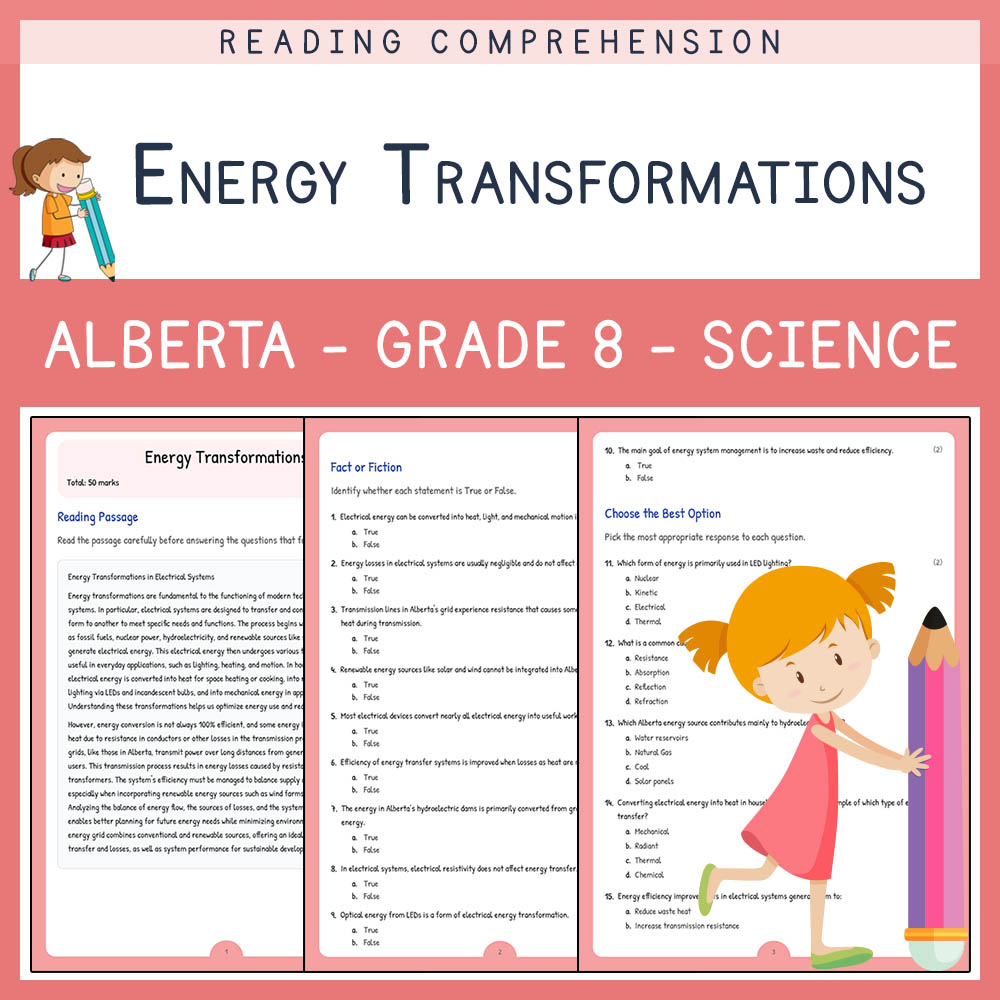
Grade 8 Science | Energy Transformations Worksheet | Alberta Standards
Created byLumora LearningLearning Objectives
- Understand how energy transforms between electrical, thermal, radiant, and mechanical forms.
- Identify real-world examples of energy conversions and their efficiencies.
- Explain the sources of energy loss in electrical systems and transmission.
Instant download

Failure Trade-Offs Worksheet Grade 8 Science Practice + Assessment
Created byPrism Point LearningLearning Objectives
- Identify common failure points in engineering designs and explain why they happen
- Describe how design changes can involve trade-offs among strength, safety, cost, weight, and function
- Use evidence-based reasoning to choose between competing design options
Instant download
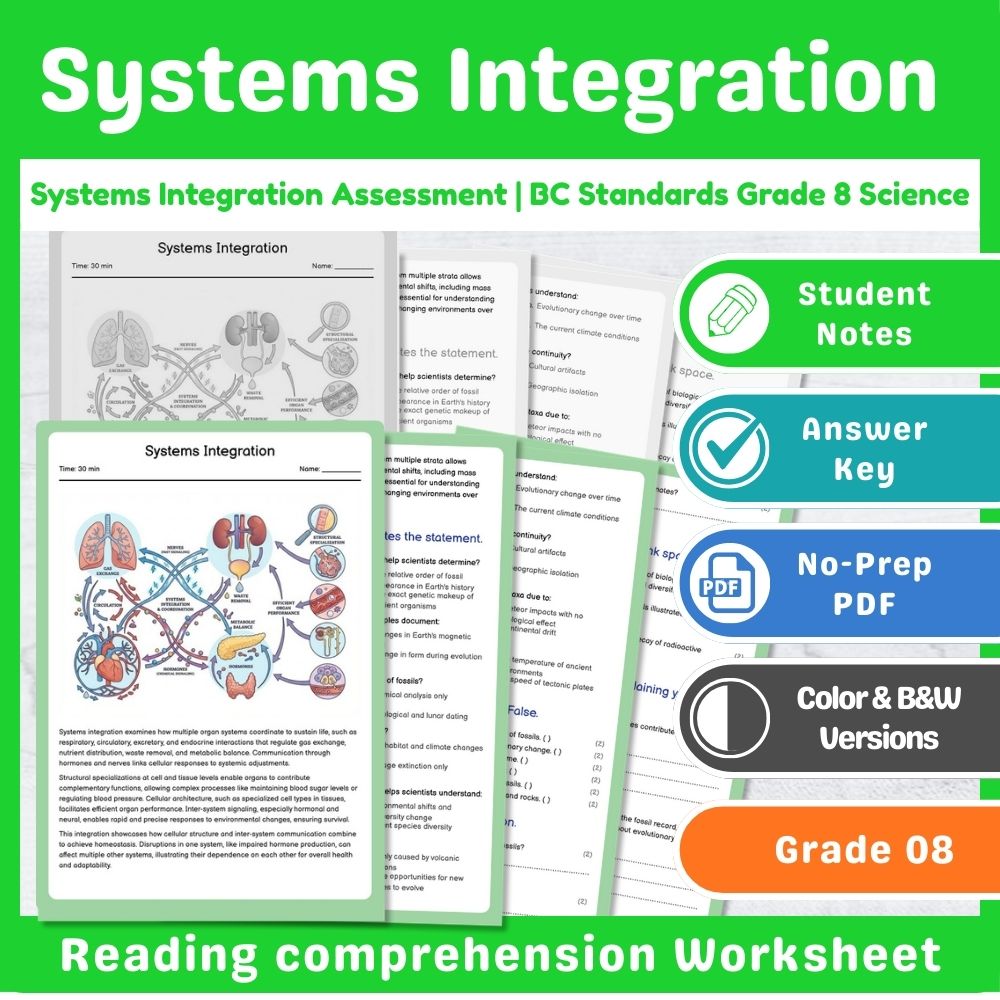
Systems Integration Assessment | BC Standards Grade 8 Science
Created byPrism Point LearningLearning Objectives
- Understand how multiple organ systems coordinate to maintain homeostasis.
- Identify key functions of respiratory, circulatory, excretory, and endocrine systems.
- Explain how cellular structures support systemic functions.
Instant download

Grade 8 Earth Materials Worksheet | NGSS Rock Cycle & Earth Systems Activity
Created byAmber Owl EducationLearning Objectives
- Model how Earth's rock cycle transfers mass between reservoirs using processes such as melting, crystallization, uplift, weathering, transport, and deposition
- Explain how Earth's internal heat and gravitational potential energy influence energy flow and observable surface features
- Interpret how mantle convection drives long-term changes that interact with faster surface processes
Also included in: Grade 8 Science Earth Systems & Weather Patterns Lesson Bundle: NGSS +1 more
Instant download

Grade 8 Science | Natural Selection Evidence - Daily Reading Comprehension
Created byCoral Reef LearningLearning Objectives
- Understand what natural selection is
- Identify different types of evidence supporting natural selection
- Recognize how environmental pressures influence traits
Instant download
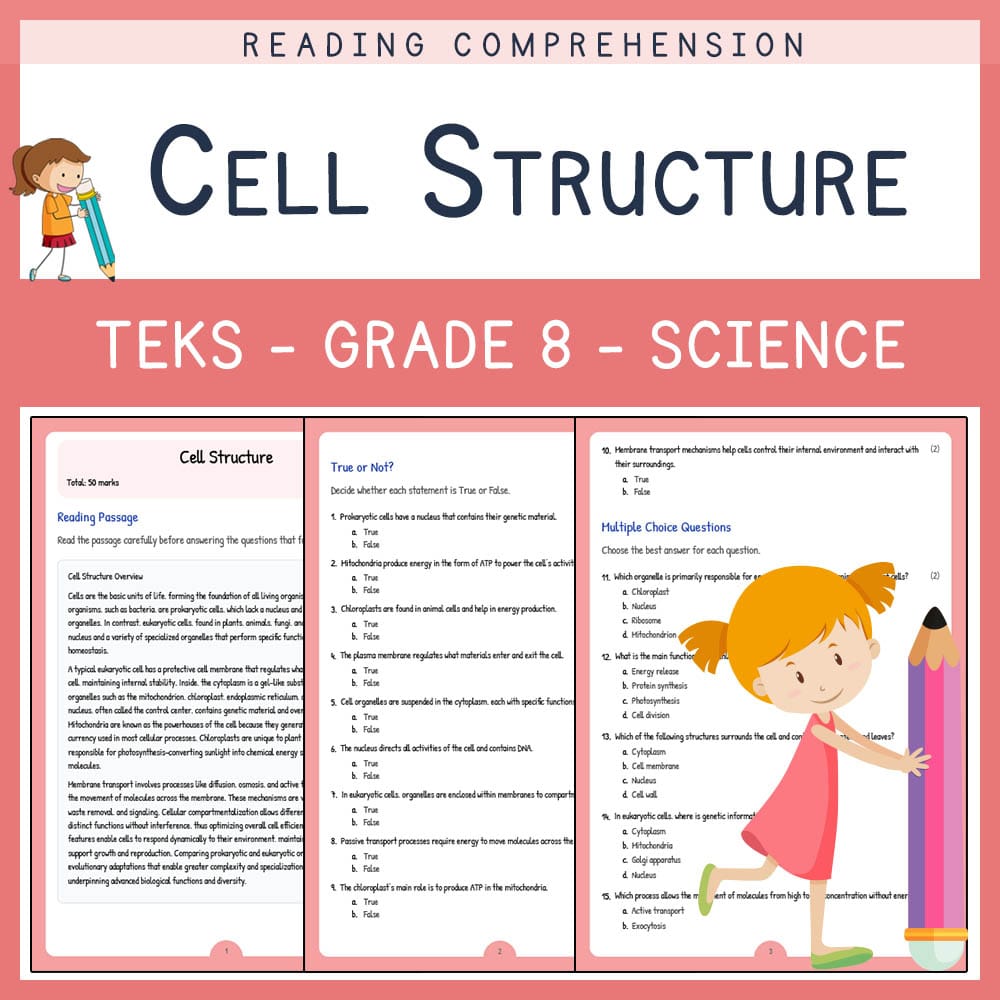
Grade 8 Science | Cell Structure Worksheet | TEKS-Aligned
Created byLumora LearningLearning Objectives
- Describe the organization and functions of cellular membrane, cytoplasm, and organelles.
- Explain the roles of nucleus, mitochondrion, chloroplast, and other structures in maintaining cell function and homeostasis.
- Understand the relationship between membrane transport, compartmentalization, and overall cell activity.
Also included in: Grade 8 Science | Organisms and Environments Unit Bundle | TEKS Aligned
Instant download
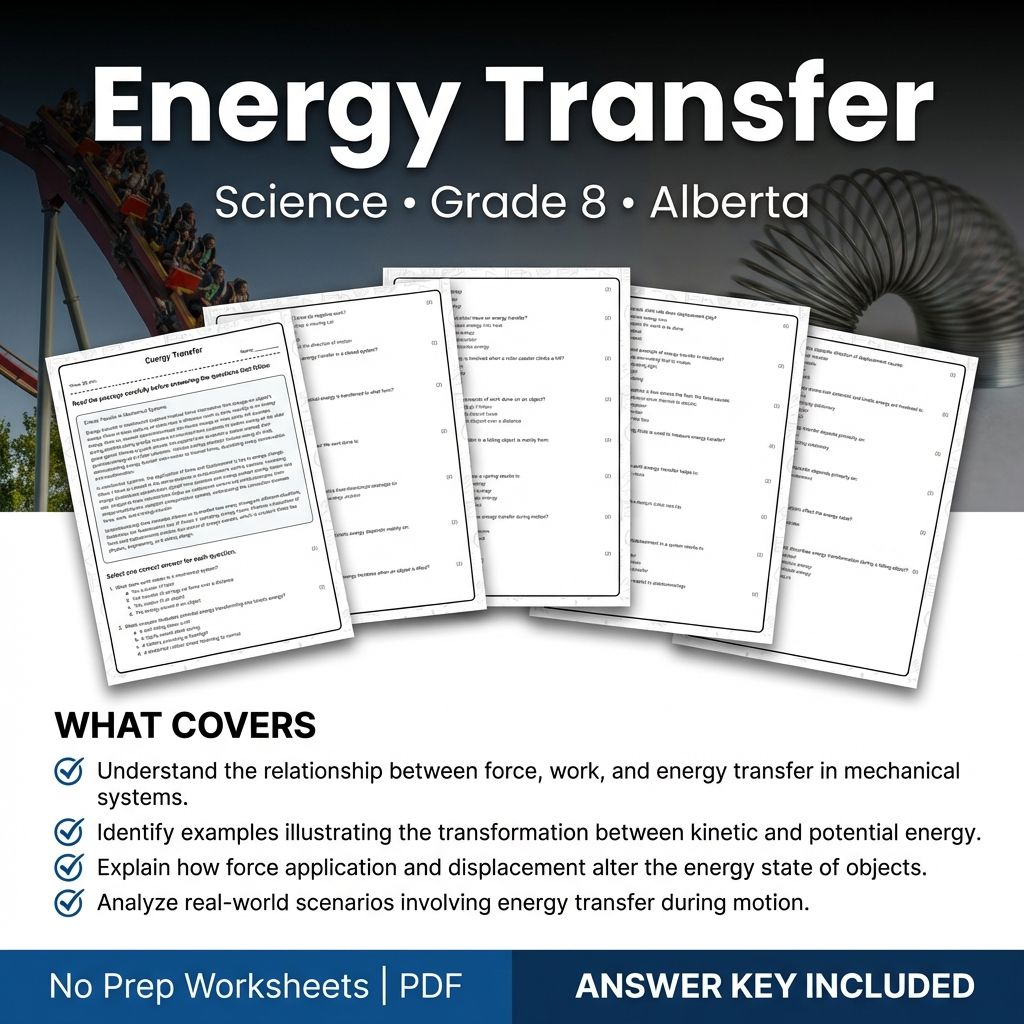
Energy Transfer Worksheet for Grade 8 Science | Alberta Standards
Created byCoral Reef LearningLearning Objectives
- Understand the relationship between force, work, and energy transfer in mechanical systems.
- Identify examples illustrating the transformation between kinetic and potential energy.
- Explain how force application and displacement alter the energy state of objects.
Instant download

Grade 8 Electric Charge Static vs Current Worksheet | Alberta Science
 Created byBRIGHT PATH RESOURCES
Learning Objectives
- Define electric charge and describe how it relates to electrostatic effects and electric current.
- Distinguish static electricity from current electricity by origin, mobility, and typical effects.
- Identify key safety and everyday examples of electric charge.
Also included in: Grade 8 Alberta Science Electricity and Magnetism Worksheet Bundle +1 more
Instant download

Optical vs Electron Microscopy Worksheets | Grade 8 Science
Created byPrism Point LearningLearning Objectives
- Explain how magnification differs from resolution in microscopy
- Interpret how contrast affects visibility in micrographs
- Compare optical microscopy and stereomicroscopy for cellular visualization
Also included in: Cells Lesson Bundle | Grade 8 Science | Ontario Framework +1 more
Instant download
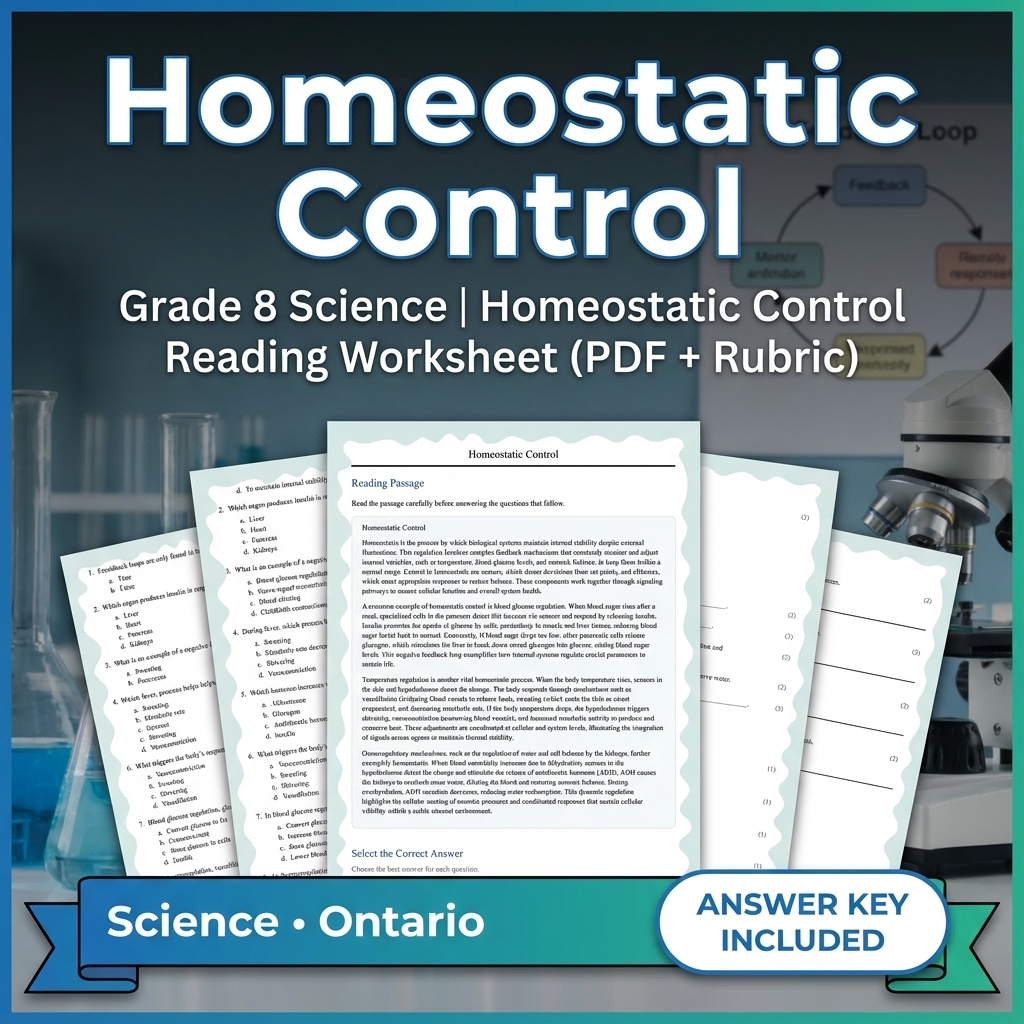
Grade 8 Science | Homeostatic Control Reading Worksheet (PDF + Rubric)
JCreated byJ.S SheetsLearning Objectives
- Understand the mechanisms of negative and positive feedback in biological systems.
- Identify key examples of homeostatic regulation such as blood glucose and temperature control.
- Explain how cellular sensors and effectors coordinate to maintain internal stability.
Also included in: Grade 8 Science Unit Bundle – Cell Structure & Function (Answer Keys Included) +1 more
Instant download
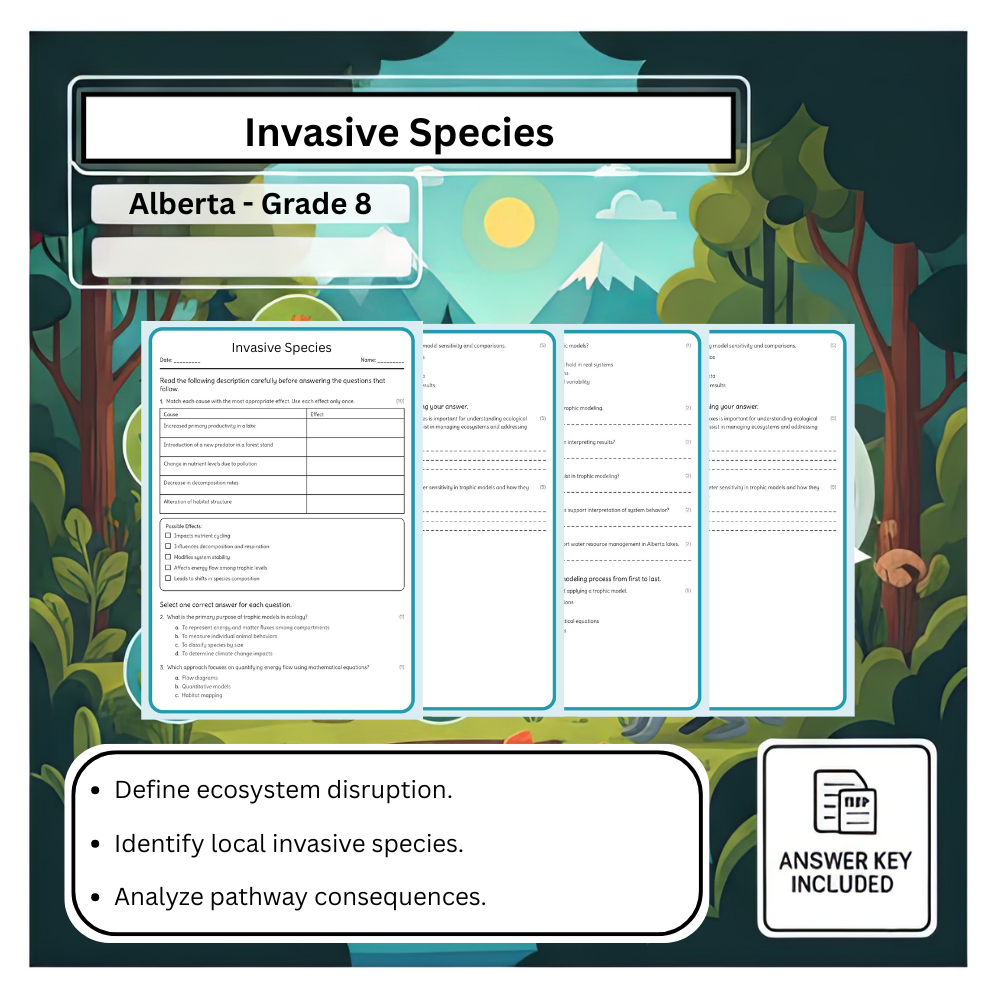
Grade 8 Science | Invasive Species Worksheet (Worksheet + Answer Key) – Alberta Standards
Created byBright Mind ResourcesLearning Objectives
- Understand how non-native species disrupt ecosystems and native biodiversity.
- Identify specific invasive plants and aquatic organisms in Alberta and their impacts.
- Analyze pathway dynamics and ecological consequences of invasive species.
Instant download

Aerodynamic Drag and Net Force Worksheet | Grade 8 Alberta Science
Created byBRIGHT PATH RESOURCESLearning Objectives
- Explain how drag acts as a velocity-dependent force that opposes motion through air.
- Identify how shape, cross-sectional area, and flow conditions affect the size of drag.
- Describe how drag changes the net force and the motion of moving objects.
Also included in: Grade 8 Alberta Science Forces and Motion Physics Worksheet Bundle +1 more
Instant download

Grade 8 Resource Sustainability Worksheet | NGSS Practice PDF
Created byClear Sky ClassroomLearning Objectives
- Explain the difference between renewable and nonrenewable resources and why time scale matters
- Describe major environmental impacts of extracting and using Earth resources
- Use evidence from environmental indicators to evaluate whether resource use is sustainable over time
Instant download
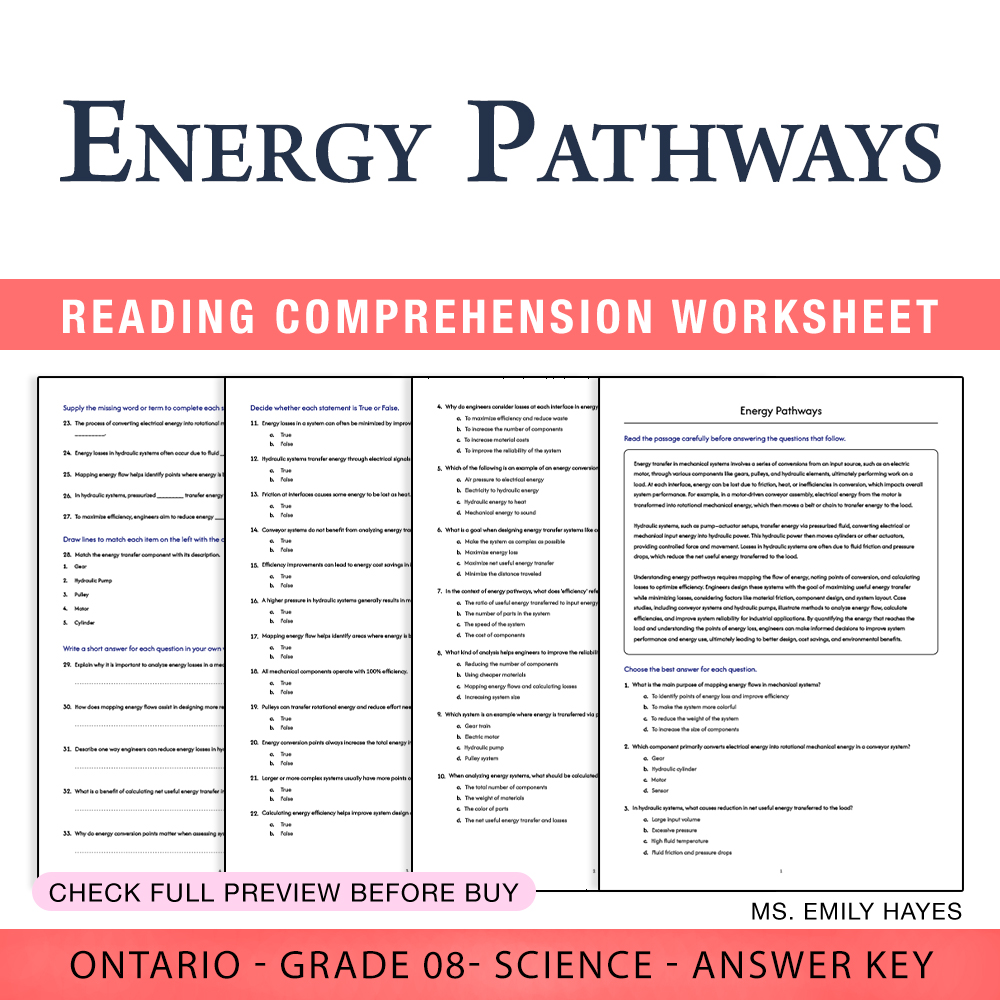
Grade 8 Science | Energy Pathways Worksheet (PDF+ Answer Key)
 Created byCopper Leaf Classroom
Learning Objectives
- Describe the process of energy transfer through mechanical systems such as gears, pulleys, and hydraulic elements.
- Analyze how energy is converted at different points within coupled energy systems including identifying losses and efficiencies.
- Calculate the net useful energy transfer in complex systems like motor-driven conveyors and pump–actuator setups.
Instant download
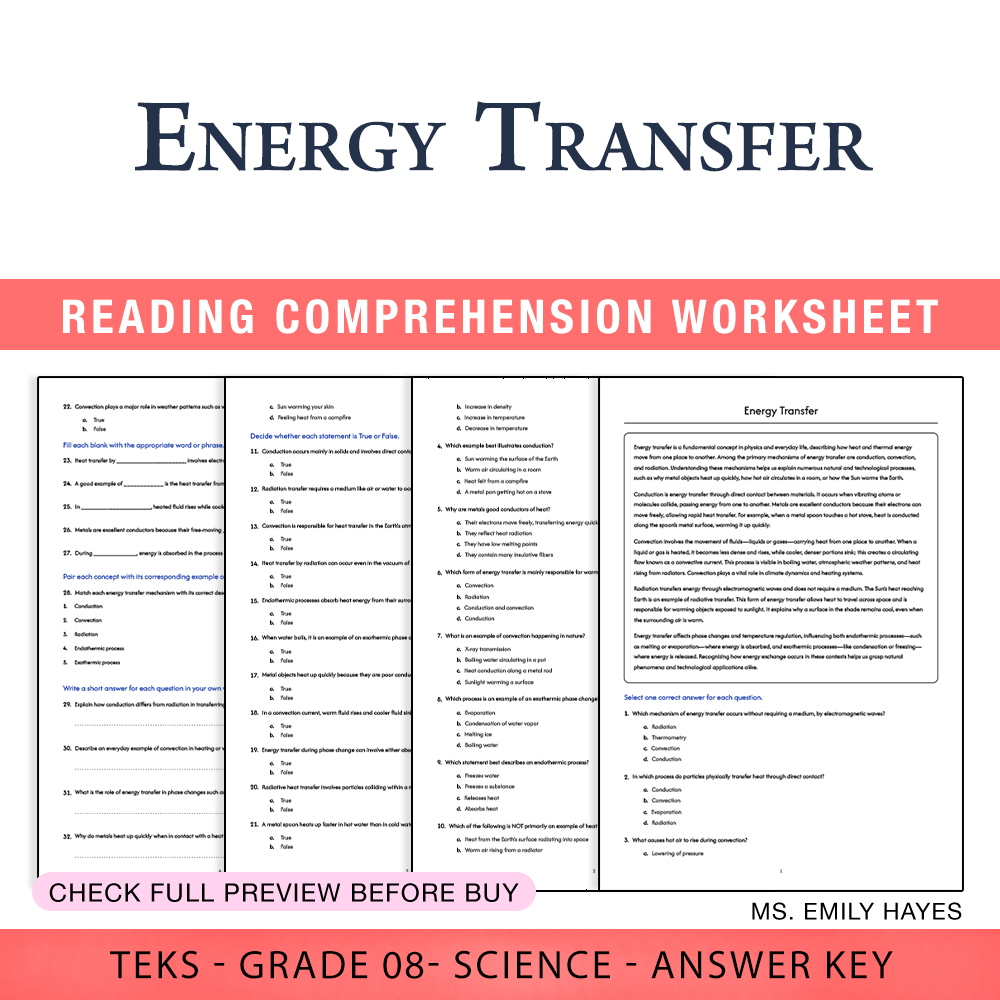
Grade 8 Science | Energy Transfer Worksheet (PDF+ Answer Key)
Created byCopper Leaf ClassroomLearning Objectives
- Understand the different mechanisms of energy transfer: conduction, convection, and radiation.
- Describe examples of thermal energy transfer in everyday phenomena.
- Explain how energy transfer leads to observable temperature changes and phase transitions.
Instant download
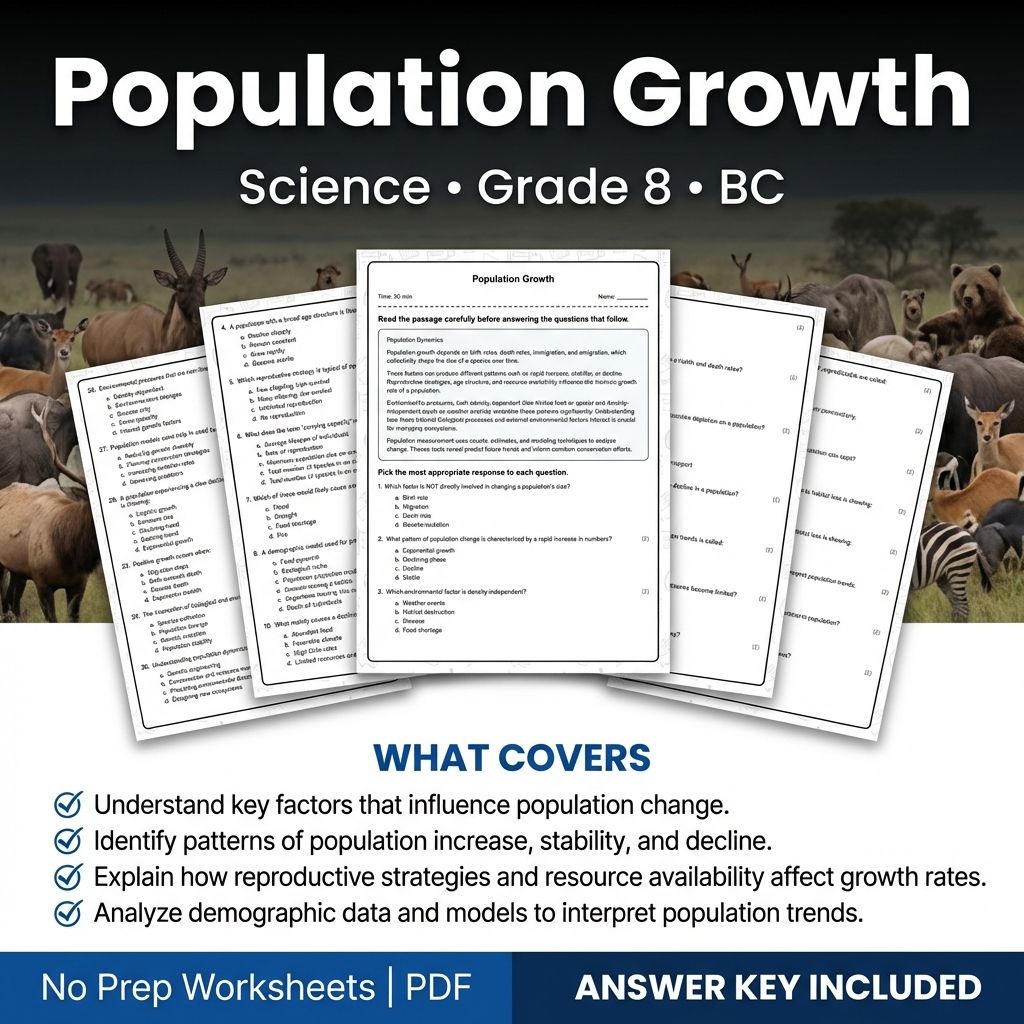
Grade 8 Science | Population Growth Worksheet & Answer Key (PDF)
Created byCoral Reef LearningLearning Objectives
- Understand key factors that influence population change.
- Identify patterns of population increase, stability, and decline.
- Explain how reproductive strategies and resource availability affect growth rates.
Instant download
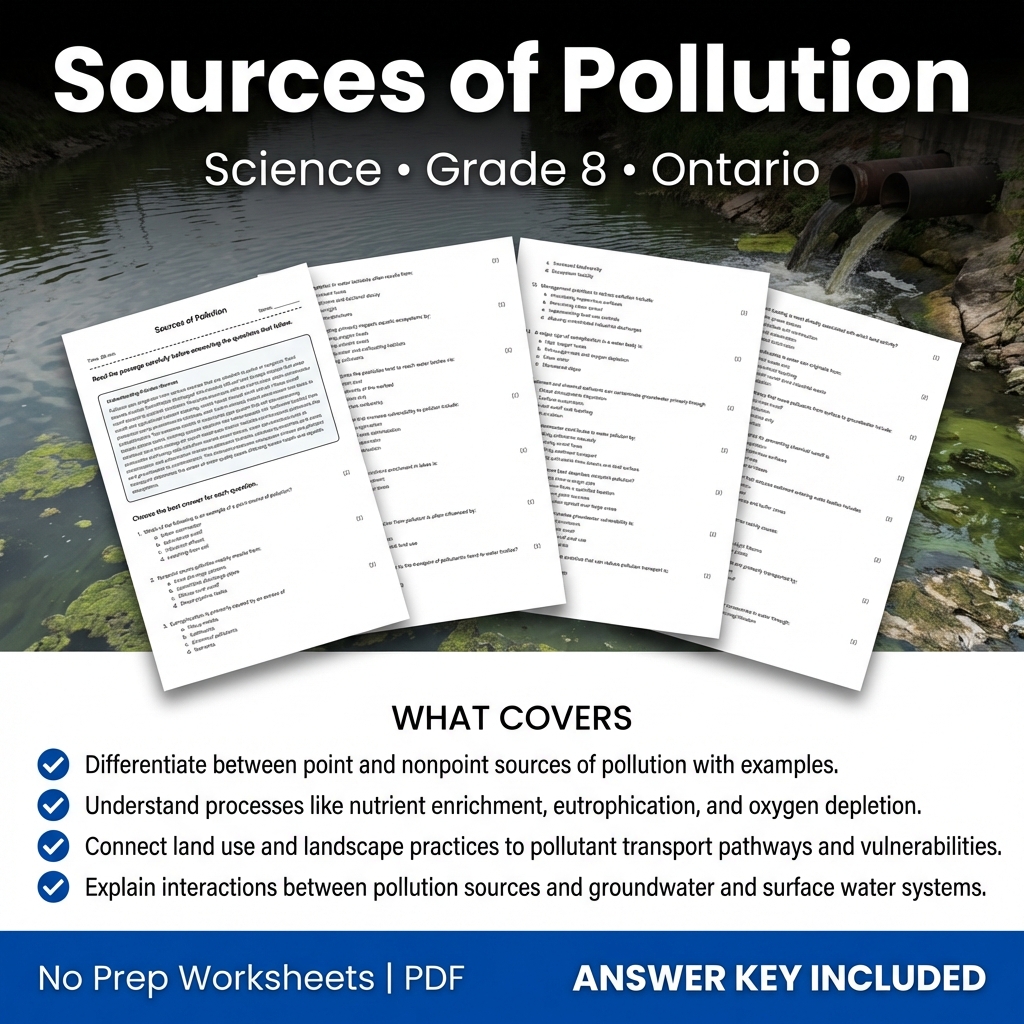
Sources of Pollution Worksheet Grade 8 Science Ontario Standards PDF
Created byCoral Reef LearningLearning Objectives
- Differentiate between point and nonpoint sources of pollution with examples.
- Understand processes like nutrient enrichment, eutrophication, and oxygen depletion.
- Connect land use and landscape practices to pollutant transport pathways and vulnerabilities.
Instant download

Resource Use Impacts Worksheet Grade 8 Science Human Impact Practice
Created byPrism Point LearningLearning Objectives
- Explain how human resource use changes land, water, and air systems
- Use cause-and-effect reasoning to describe impacts on ecosystems
- Identify examples of extraction, pollution, and land conversion and their likely consequences
Instant download
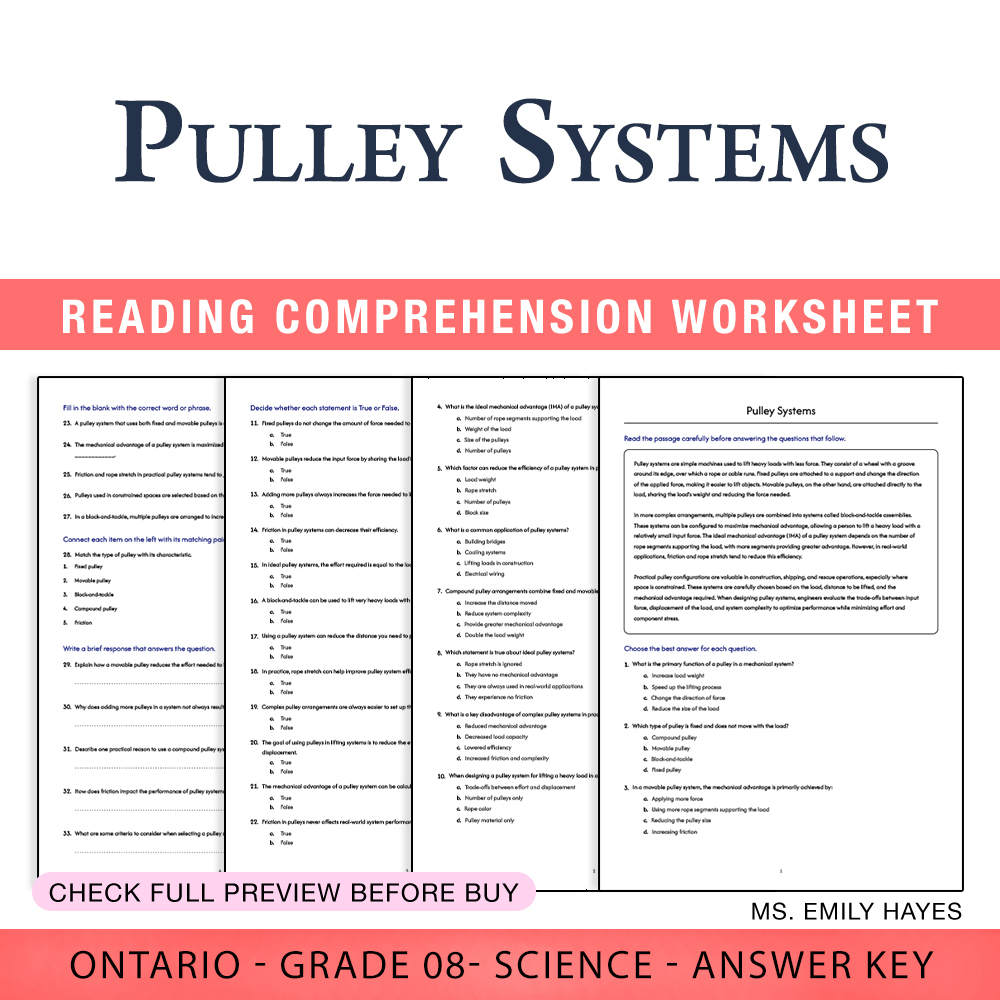
Grade 8 Science | Pulley Systems Worksheet (PDF+ Answer Key)
Created byCopper Leaf ClassroomLearning Objectives
- Describe the differences between fixed, movable, and compound pulley arrangements.
- Explain how block-and-tackle systems provide mechanical advantage and how to calculate it.
- Analyze force distribution and tension in different pulley configurations.
Instant download

Grade 8 Reaction Evidence And Matter Worksheet | General Practice PDF
Created byClear Sky ClassroomLearning Objectives
- Identify reaction evidence (color change, precipitate, gas production) that suggests new substances formed.
- Explain how particle models support conservation of matter during chemical reactions.
- Use evidence to describe what happens to atoms and total mass in a closed system.
Instant download

Grade 8 Contaminant Transport Worksheet | Ontario Science Activity
Created byClear Sky ClassroomLearning Objectives
- Explain how advection, dispersion, and diffusion move contaminants through surface and subsurface water
- Describe how sorption and biodegradation/biogeochemical reactions affect contaminant fate and attenuation
- Interpret how contaminant plumes form and migrate in aquifers, including preferential flow paths
Instant download

Grade 8 Molecular Structure Worksheet | NGSS Molecules & Particle Models
Created byAmber Owl EducationLearning Objectives
- Use particle models and chemical formulas to represent the relative numbers and types of atoms in simple molecules (e.g., H2O, CO2).
- Differentiate discrete molecular units from continuous extended solids using structural models (including ionic lattices).
- Relate observable properties (such as conductivity for ionic substances) to microscopic bonding arrangements and structure.
Also included in: Grade 8 Science Thermal Effects & Chemical Reactions Lesson Bundle | NGSS +1 more
Instant download

Grade 8 Science – Water Quality Indicators & Assessment | Daily Worksheet
 Created byQuiet Forest Education
Learning Objectives
- Identify key physical, chemical, and biological water quality indicators.
- Understand the significance of parameters such as temperature, turbidity, pH, and dissolved oxygen.
- Interpret indicator ranges in relation to aquatic health and water use.
Also included in: Grade 8 Science Full Year Bundle Ontario Daily Reading Worksheets
Instant download
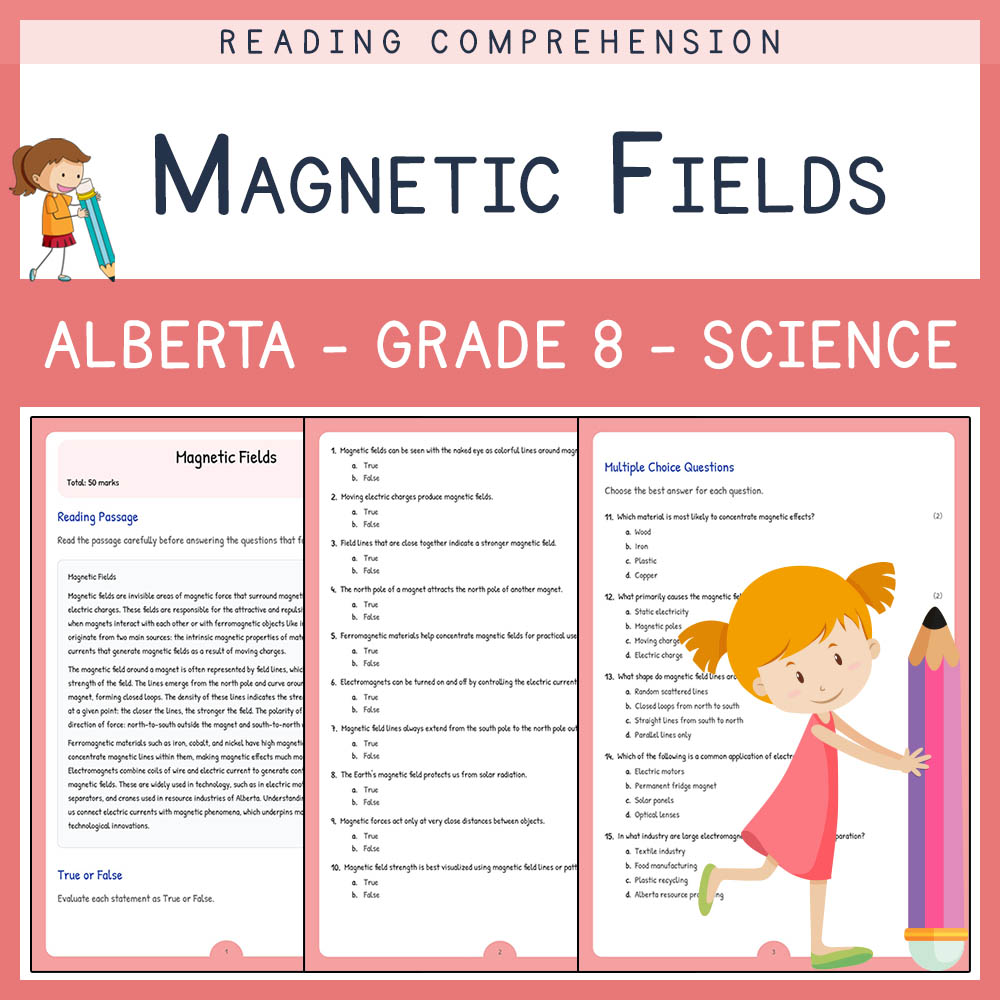
Grade 8 Science | Magnetic Fields Worksheet | Alberta Standards
Created byLumora LearningLearning Objectives
- Explain how magnetic fields arise from magnetic materials and moving charges.
- Interpret field patterns and lines to determine magnetic strength and polarity.
- Understand the properties of ferromagnetic materials and their effect on magnetic fields.
Instant download

Friction Effects Worksheet | Ontario Grade 8 Science Assessment
Created byCedar Grove LearningLearning Objectives
- Explain how static and kinetic friction differ and how friction depends on normal force
- Describe how surface texture and lubrication affect frictional force and energy loss in mechanical systems
- Identify how aerodynamic drag influences the motion of wheels, carts, and other moving parts
Instant download

Magnetic Fields and Field Lines Grade 8 Science Worksheets
 Created bySunny Desk Resources
Learning Objectives
- Describe how magnetic fields are produced by magnets and moving electric charges.
- Interpret magnetic field lines to determine direction and relative field strength.
- Explain how ferromagnetic materials and electromagnets affect magnetic field patterns.
Also included in: Electricity and Magnetism Grade 8 Alberta Unit Lesson Bundle +1 more
Instant download

Design Optimization Assessment for Grade 8 Science | NGSS Standards
Created byPrism Point LearningLearning Objectives
- Analyze test data to identify performance trends and effective design features.
- Interpret graphical and statistical summaries to inform iterative design modifications.
- Evaluate trade-offs among different design metrics such as efficiency, strength, and durability.
Also included in: Grade 8 Science Mini Bundle – Engineering Design Unit & Assessments +1 more
Instant download

Grade 8 Science – Springs and Elasticity Worksheet (PDF) | Alberta Standards
Created byEvergreen Desk EducationLearning Objectives
- Explain how elastic forces in springs relate to deformation (displacement) for linear elastic behavior.
- Describe the direction of restorative force and how elastic components help achieve force balance in systems.
- Identify limits where proportional (linear) behavior may no longer hold for springs and elastic elements.
Instant download

Grade 8 Science – Mechanical Advantage and Levers | Worksheet + Answer Key
JCreated byJ.S SheetsLearning Objectives
- Understand the concept of mechanical advantage in simple machines.
- Calculate the ideal mechanical advantage for levers, pulleys, and inclined planes.
- Differentiate between ideal and real mechanical advantage considering friction.
Also included in: Grade 8 Science Lesson Group – TEKS-Aligned Daily Reading Worksheets Bundle +1 more
Instant download

Natural Selection Worksheet | Grade 8 Science NGSSS Evolution + Answer Key
Created byEvergreen Desk EducationLearning Objectives
- Explain how variation and environmental conditions affect which traits survive and reproduce
- Describe how advantageous traits become more common over successive generations
- Use an example, such as antibiotic resistance, to connect natural selection to real-world outcomes
Instant download
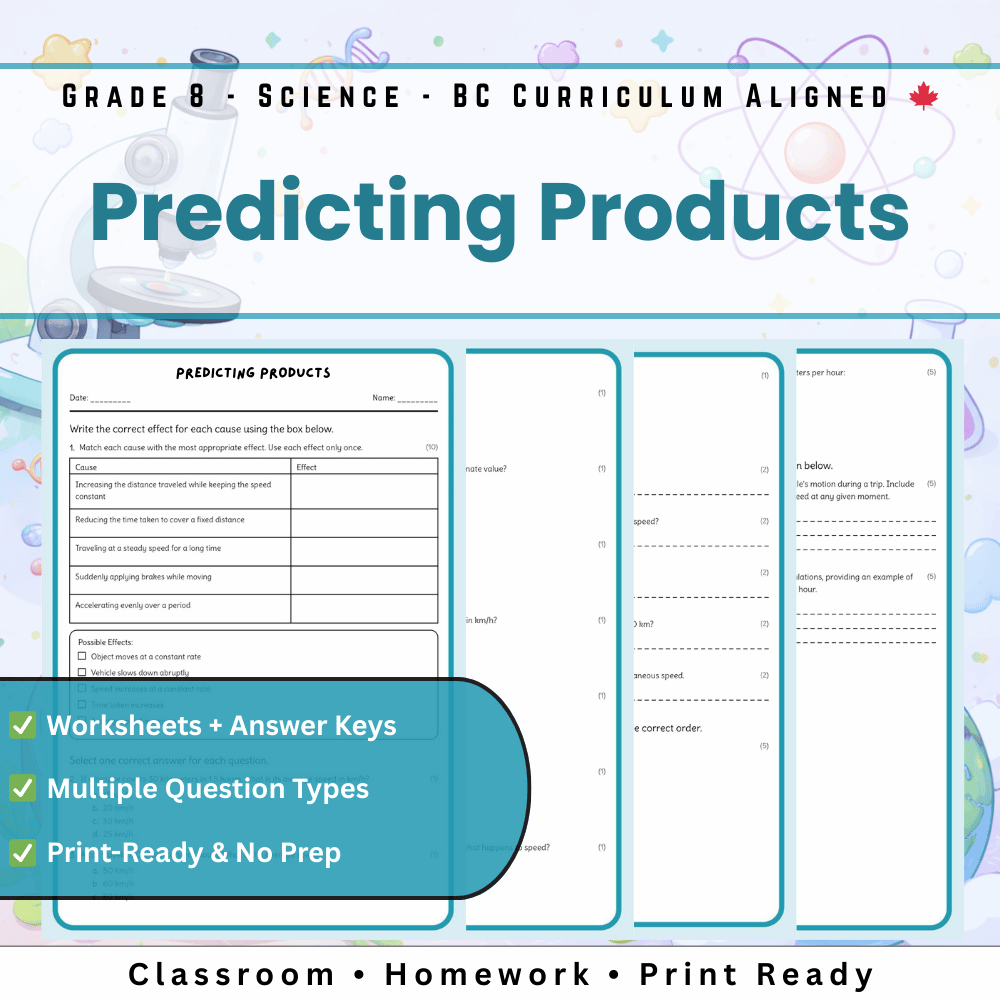
Grade 8 Science | Predicting Reaction Products Worksheet(Answer Key) BC Standard
Created byBright Mind ResourcesLearning Objectives
- Understand how to predict reaction products based on reactant identities and reaction patterns.
- Apply conservation of atoms to determine possible formulas and quantities of products.
- Balance chemical equations to ensure atom conservation and guide predictions.
Instant download
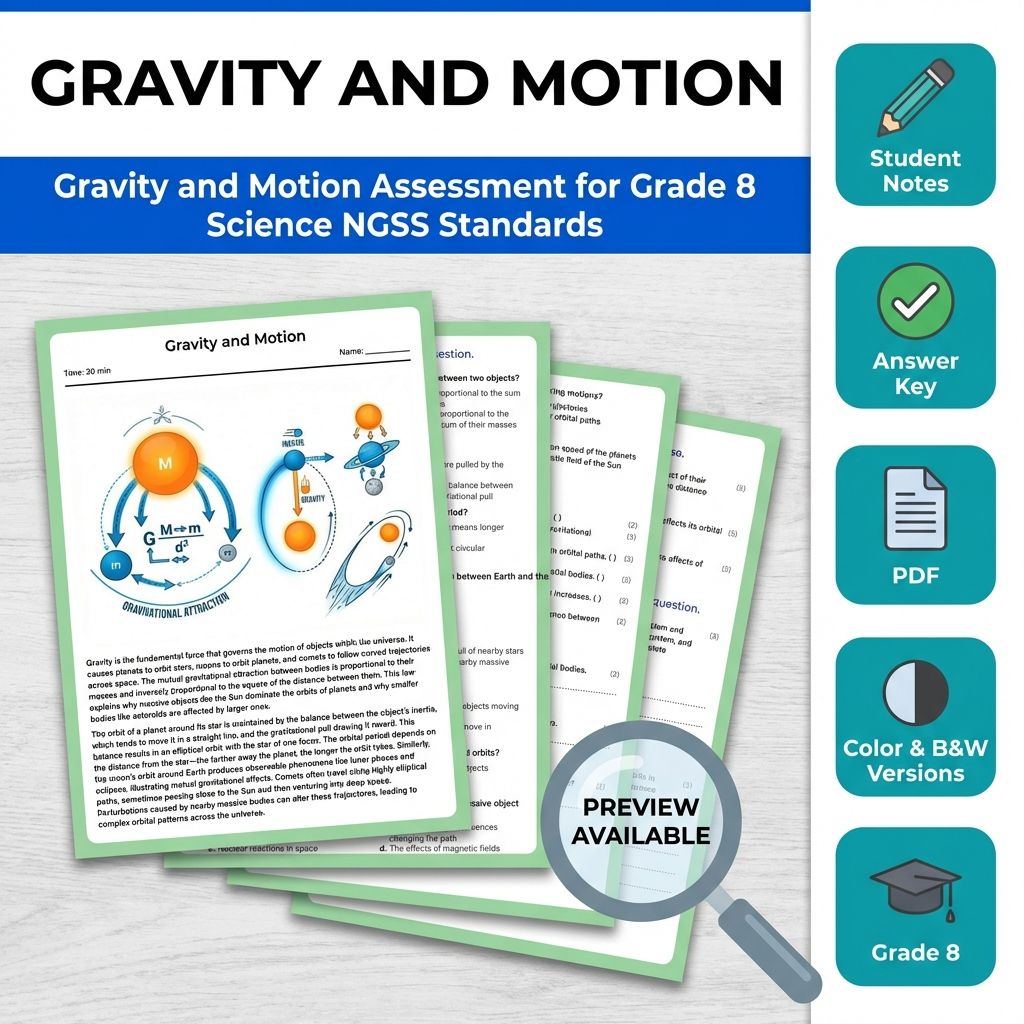
Gravity and Motion Assessment for Grade 8 Science NGSS Standards
Created byPrism Point LearningLearning Objectives
- Explain how gravity influences the orbital paths of celestial bodies in the solar system and galaxies.
- Identify the key factors that determine orbital trajectories, such as mutual gravitational attraction and centripetal acceleration.
- Analyze the balance between inertia and gravity that results in elliptical orbits and orbital periods.
Also included in: Grade 8 Science Mini Bundle | Earth's Place in the Universe – NGSS +1 more
Instant download

Grade 8 Thermal Transfer Modes Worksheet | Conduction Convection Radiation
Created byEvergreen Desk EducationLearning Objectives
- Explain how conduction, convection, and radiation transfer thermal energy
- Use evidence from everyday situations to identify which thermal transfer mode is happening
- Compare how different environments affect heating patterns using the three modes
Instant download

Grade 8 Science | Understanding Relative Motion - Daily Reading Comprehension
Created byCoral Reef LearningLearning Objectives
- Define relative motion and explain how observed speed varies with reference frames.
- Calculate combined velocities when objects move in the same or opposite directions.
- Apply proportional relationships among speed, distance, and time within different frames.
Instant download
About Grade 8 Science Worksheets
Explore Grade 8 Science worksheets for classwork, homework, or review. Our 6,006 printables download instantly as PDFs.
Each resource here is built by an independent educator and reviewed for quality. Worksheets print straight from PDF and suit classroom use, homework, or extra practice; most come with answer keys, and you can preview before purchasing.