
Science Worksheets
44,295 subject resources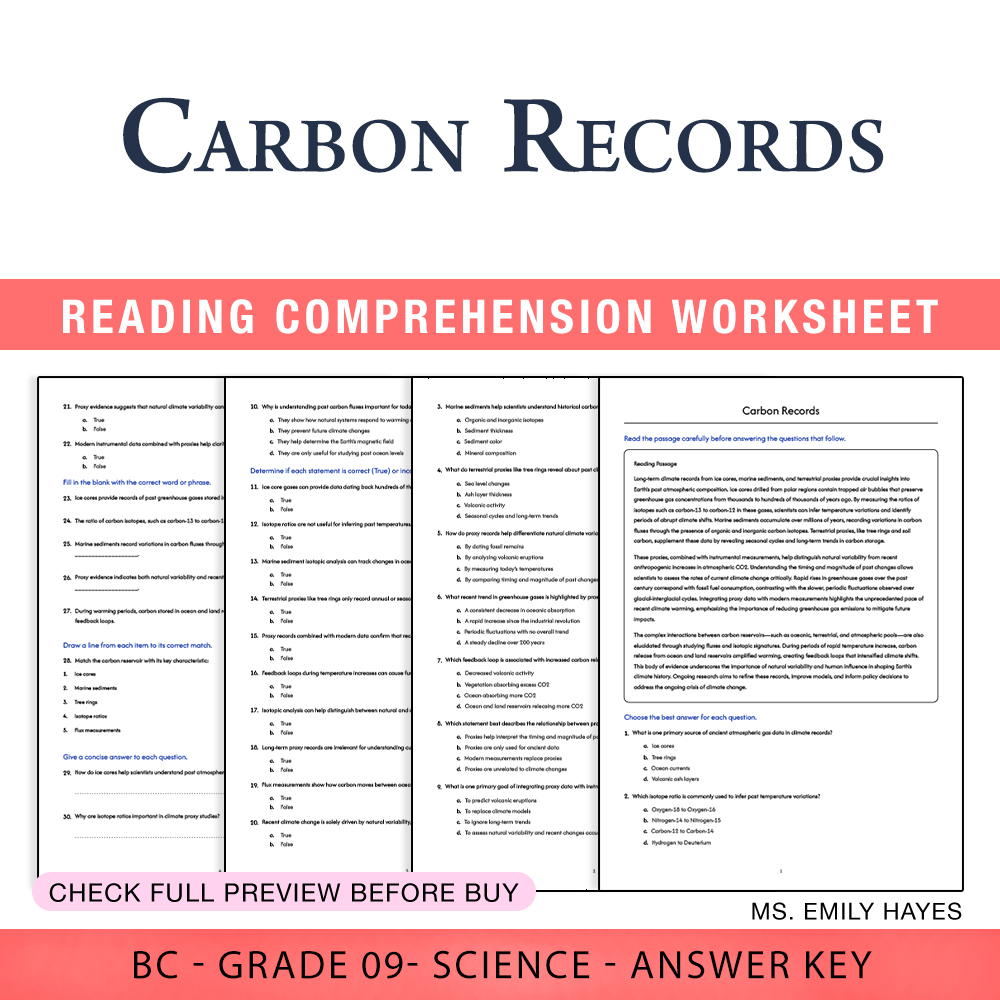
Grade 9 Science | Carbon Records Worksheet (PDF+ Answer Key)
 Created byCopper Leaf Classroom
Learning Objectives
- Understand how ice cores, sediments, and proxies record past atmospheric carbon levels.
- Interpret isotope ratios and gas measurements to identify climate patterns and shifts.
- Analyze the relationship between carbon fluxes and global temperature changes.
Also included in: Grade 9 Science Worksheet Bundle | Earth's Dynamic Processes (PDF + Answer Key) +1 more
Instant download
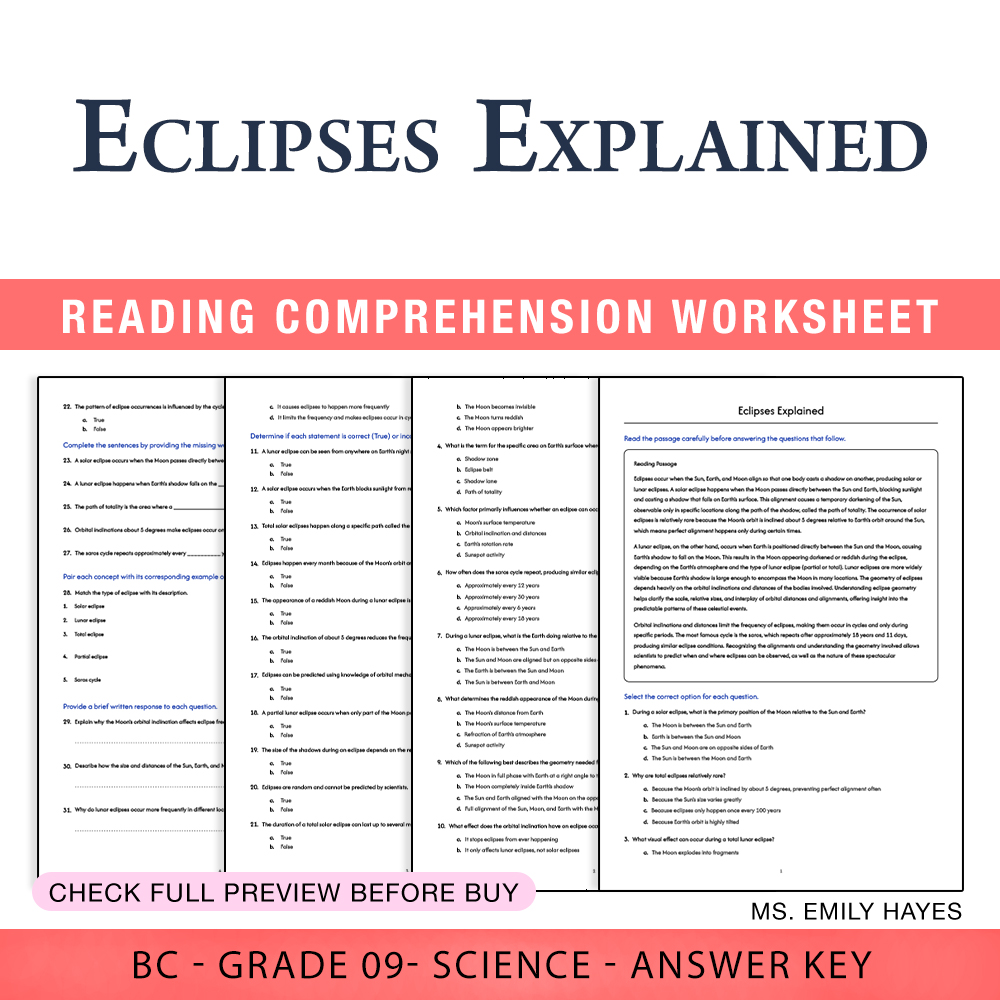
Grade 9 Science | Eclipses Explained Worksheet (PDF+ Answer Key)
Created byCopper Leaf ClassroomLearning Objectives
- Understand the basic geometry of solar and lunar eclipses.
- Identify the positions of the Sun, Earth, and Moon during different types of eclipses.
- Explain how orbital inclinations influence the occurrence and visibility of eclipses.
Also included in: Grade 9 Science Worksheet Bundle | Earth's Dynamic Processes (PDF + Answer Key) +1 more
Instant download
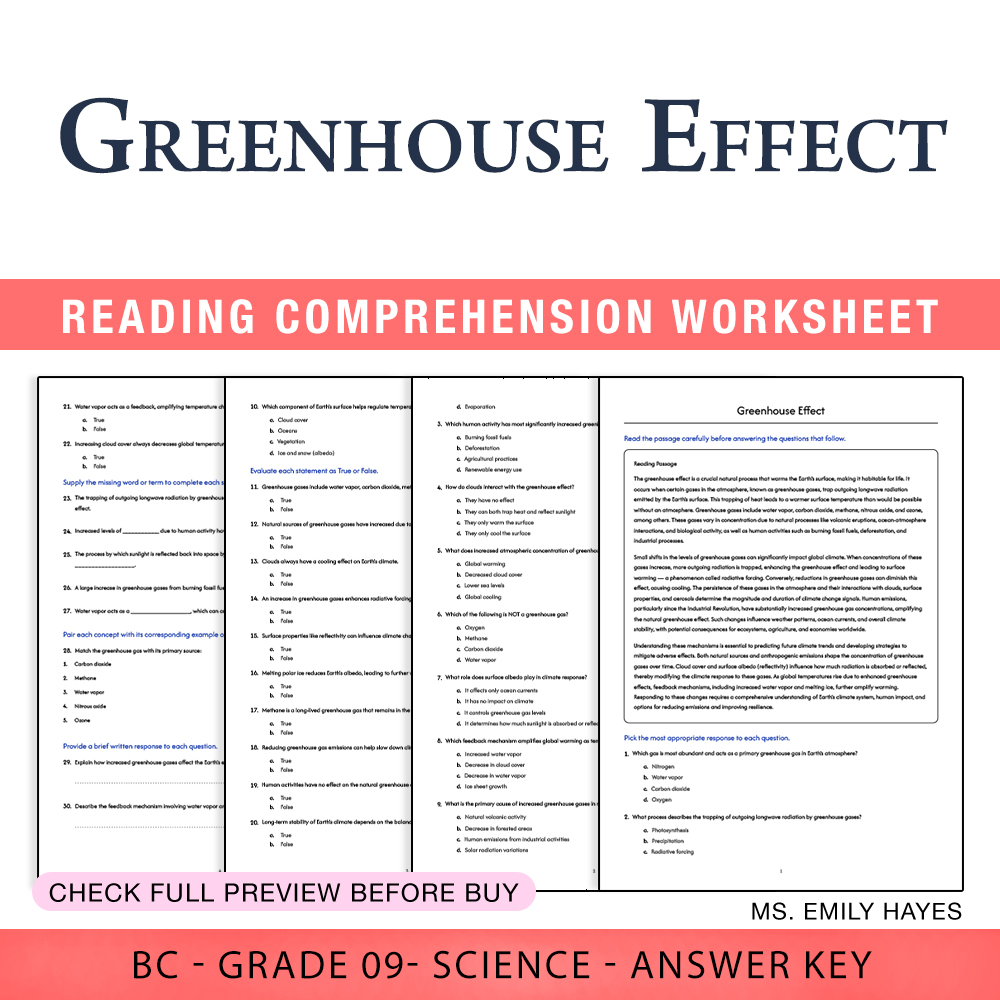
Grade 9 Science | Greenhouse Effect Worksheet (PDF+ Answer Key)
Created byCopper Leaf ClassroomLearning Objectives
- Explain the greenhouse effect and identify key greenhouse gases.
- Analyze how natural and human activities influence Earth's climate.
- Describe how changes in atmospheric composition affect radiative forcing and surface temperature.
Also included in: Grade 9 Science Worksheet Bundle | Earth's Dynamic Processes (PDF + Answer Key) +1 more
Instant download
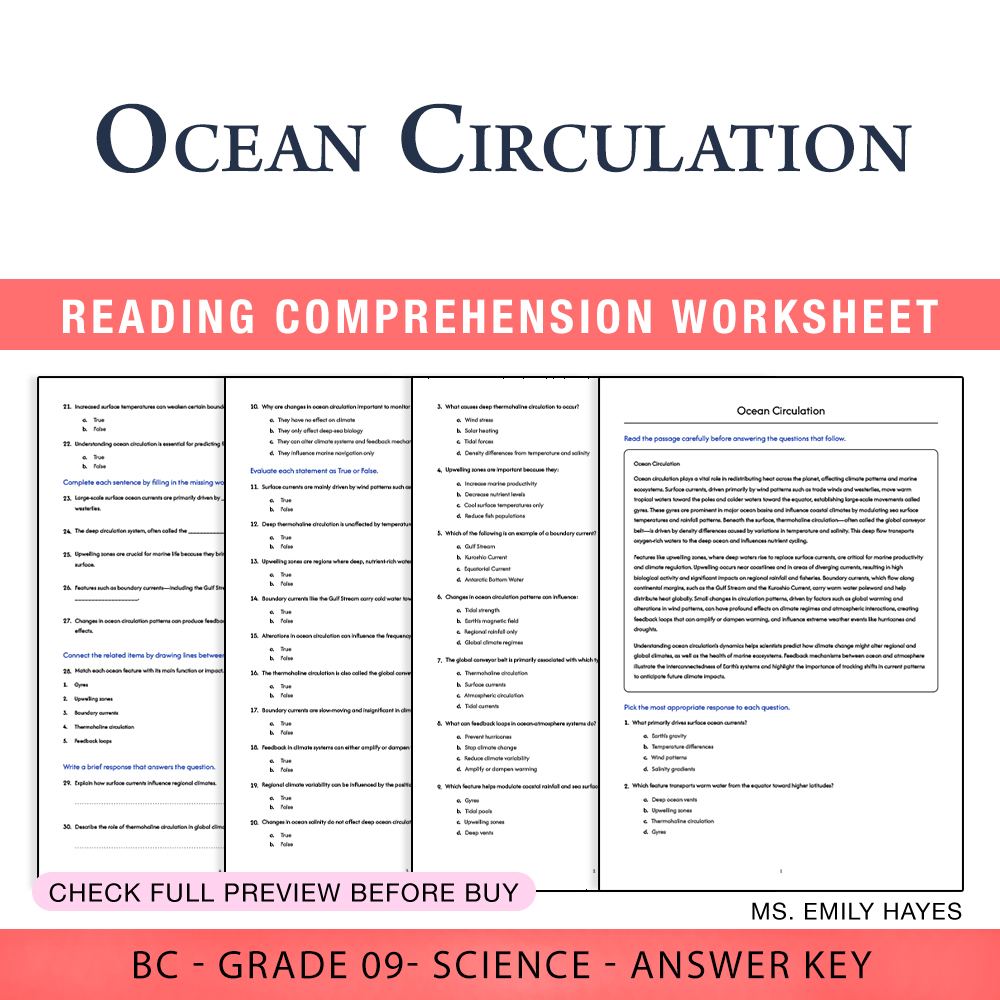
Grade 9 Science | Ocean Circulation Worksheet (PDF+ Answer Key)
Created byCopper Leaf ClassroomLearning Objectives
- Understand the mechanisms driving ocean surface and deep currents.
- Describe features such as gyres, upwelling zones, and boundary currents.
- Explain how ocean circulation influences regional climates and feedback systems.
Also included in: Grade 9 Science Worksheet Bundle | Earth's Dynamic Processes (PDF + Answer Key) +1 more
Instant download
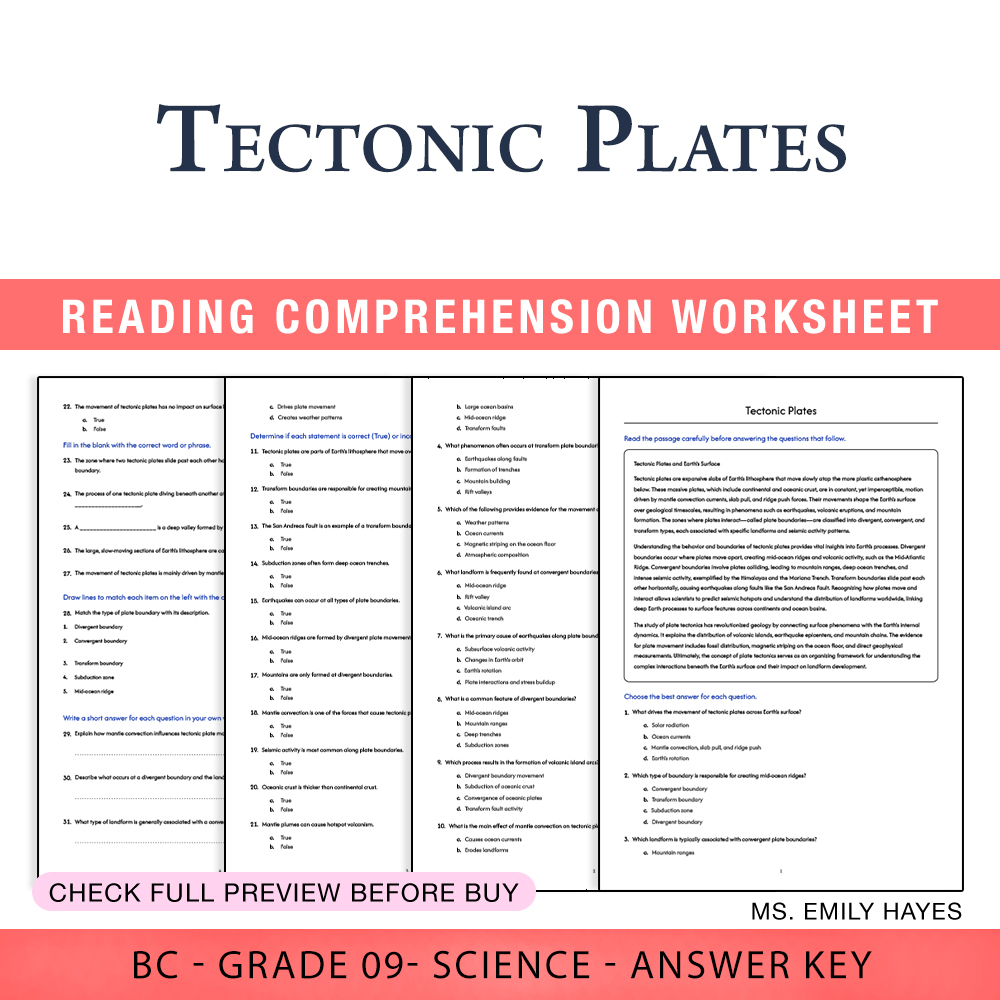
9th Grade Science | Tectonic Plates Worksheet (PDF+ Answer Key)
Created byCopper Leaf ClassroomLearning Objectives
- Understand the concept of tectonic plates and their movement.
- Identify causes and effects of plate interactions.
- Explain the types of plate boundaries and associated landforms and seismic activity.
Also included in: Grade 9 Science Worksheet Bundle | Earth's Dynamic Processes (PDF + Answer Key) +1 more
Instant download
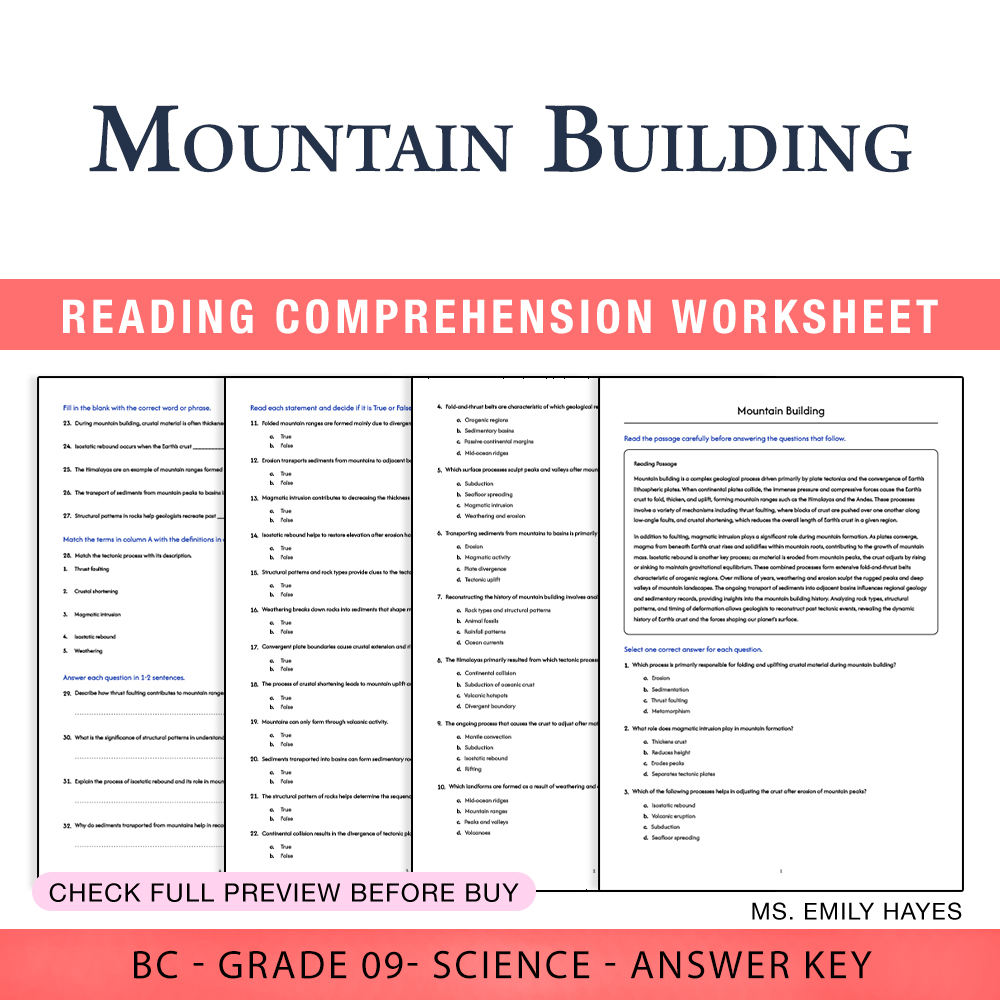
9th Grade Science | Mountain Building Worksheet (PDF+ Answer Key)
Created byCopper Leaf ClassroomLearning Objectives
- Understand the geological processes involved in mountain building resulting from plate convergence and continental collision.
- Identify the various tectonic mechanisms such as thrust faulting, crustal shortening, magmatic intrusion, and isostatic rebound.
- Explain how weathering and erosion shape mountain landscapes and transport sediments.
Also included in: Grade 9 Science Worksheet Bundle | Earth's Dynamic Processes (PDF + Answer Key) +1 more
Instant download
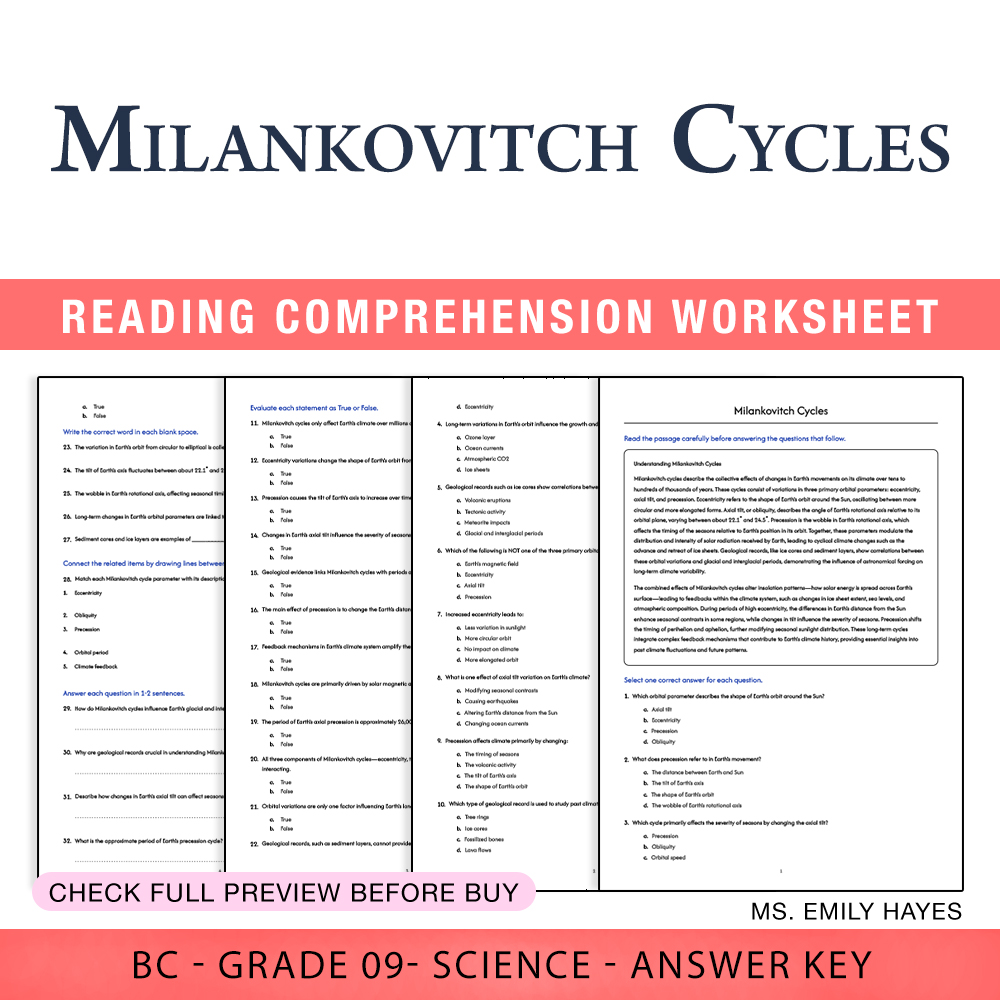
9th Grade Science | Milankovitch Cycles Worksheet (PDF+ Answer Key)
Created byCopper Leaf ClassroomLearning Objectives
- Understand the concept of Milankovitch cycles and their impact on Earth's climate.
- Identify the three main orbital parameters involved in the cycles: eccentricity, axial tilt, and precession.
- Explain how these cycles influence glacial and interglacial periods over long timescales.
Also included in: Grade 9 Science Worksheet Bundle | Earth's Dynamic Processes (PDF + Answer Key) +1 more
Instant download
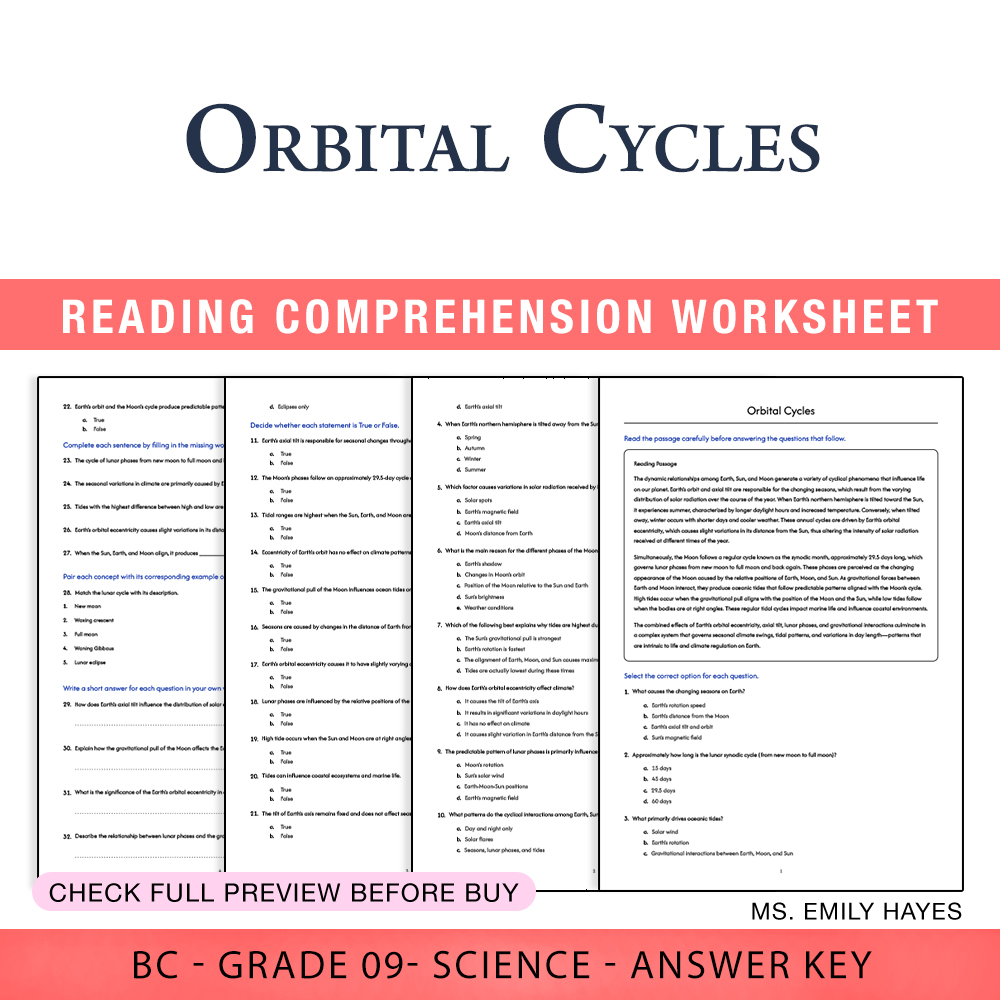
Grade 9 Science | Orbital Cycles Worksheet (PDF+ Answer Key)
Created byCopper Leaf ClassroomLearning Objectives
- Explain how Earth's axial tilt and orbital eccentricity influence seasons and climate cycles.
- Describe the variations in lunar phases and their underlying synodic cycle.
- Analyze how gravitational interactions among Earth, Moon, and Sun produce tidal patterns.
Also included in: Grade 9 Science Worksheet Bundle | Earth's Dynamic Processes (PDF + Answer Key) +1 more
Instant download
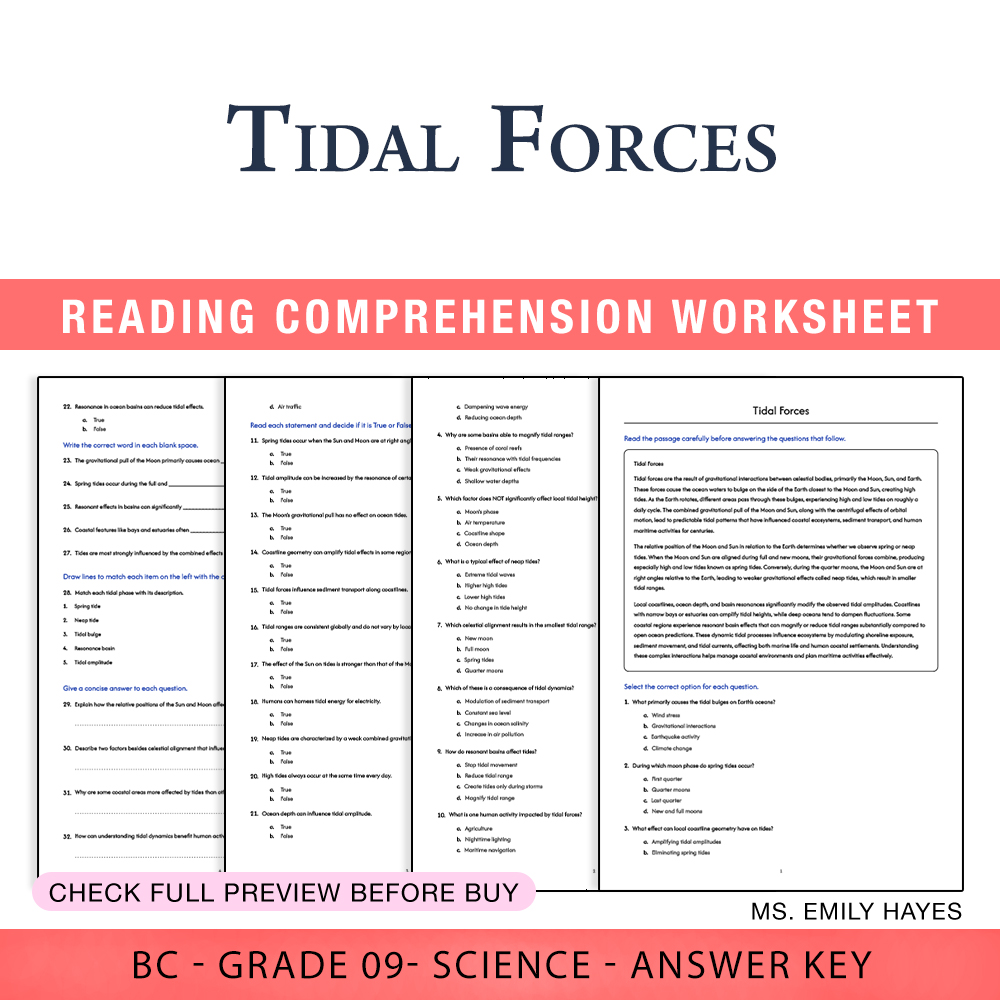
9th Grade Science | Tidal Forces Worksheet (PDF+ Answer Key)
Created byCopper Leaf ClassroomLearning Objectives
- Explain how gravitational interactions among the Moon, Sun, and Earth produce tidal forces.
- Describe the phenomena of spring and neap tides and their relation to celestial alignments.
- Analyze how local geography and basin resonance influence tidal amplitudes.
Also included in: Grade 9 Science Worksheet Bundle | Earth's Dynamic Processes (PDF + Answer Key) +1 more
Instant download
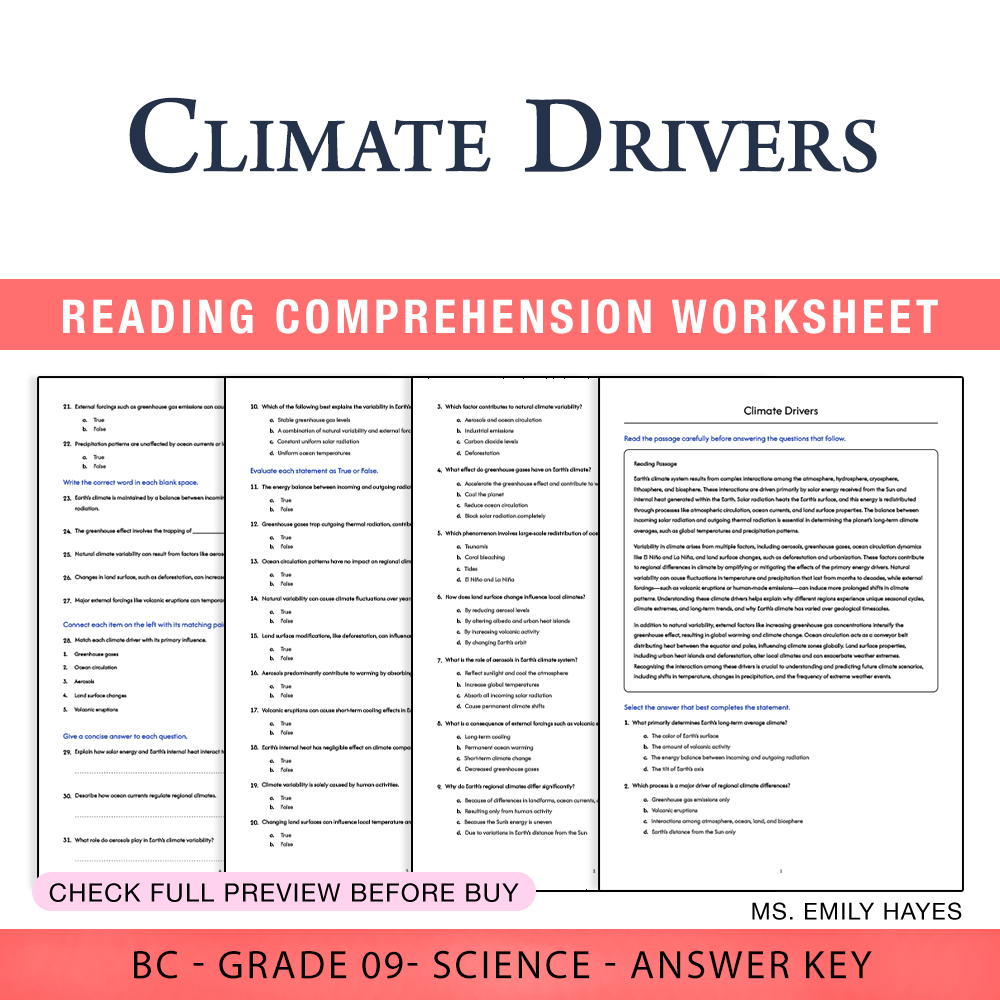
9th Grade Science | Climate Drivers Worksheet (PDF+ Answer Key)
Created byCopper Leaf ClassroomLearning Objectives
- Understand the main components influencing Earth's climate system.
- Identify how energy balance affects climate stability.
- Describe the roles of natural variability and external forcings in climate change.
Also included in: Grade 9 Science Worksheet Bundle | Earth's Dynamic Processes (PDF + Answer Key) +1 more
Instant download
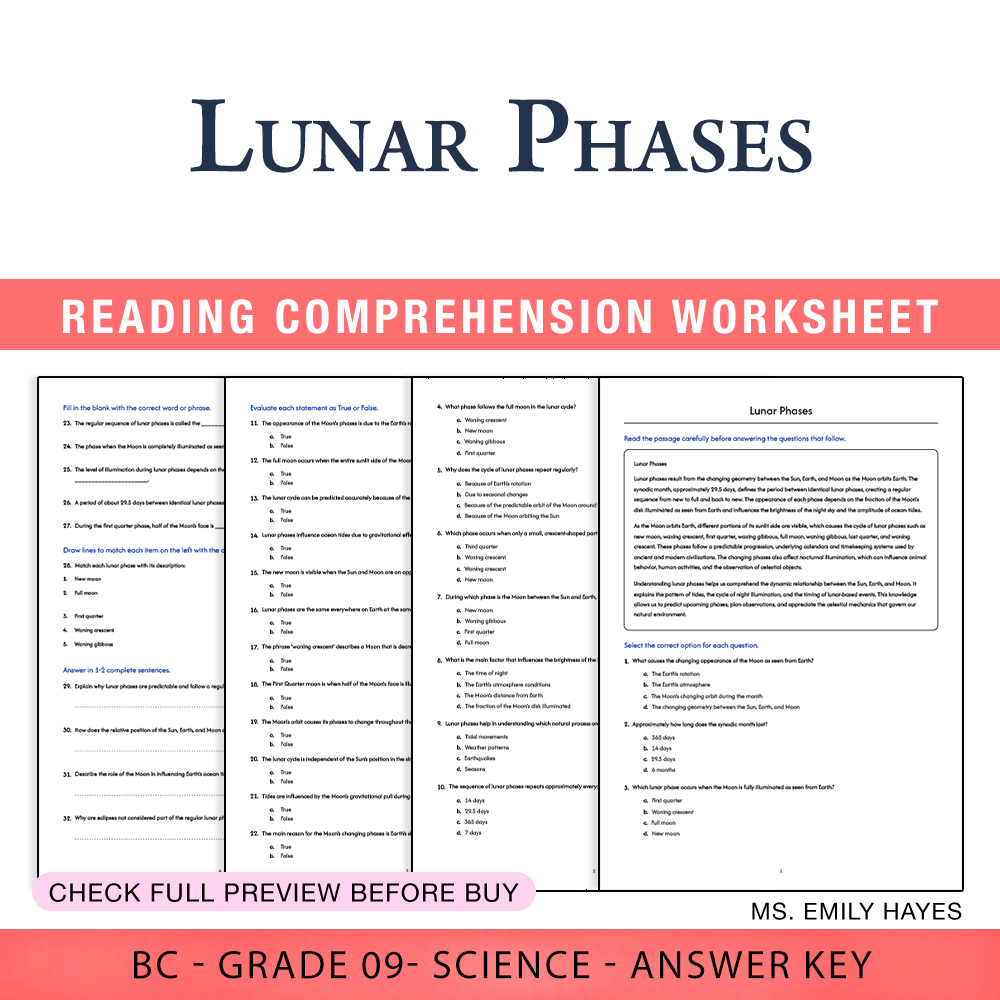
9th Grade Science | Lunar Phases Worksheet (PDF + Answer Key)
Created byCopper Leaf ClassroomLearning Objectives
- Explain the sequence of lunar phases and their causes.
- Describe how the Moon's position affects its visible appearance from Earth.
- Predict the lunar phase based on the geometry between Sun, Earth, and Moon.
Also included in: Grade 9 Science Worksheet Bundle | Earth's Dynamic Processes (PDF + Answer Key) +1 more
Instant download
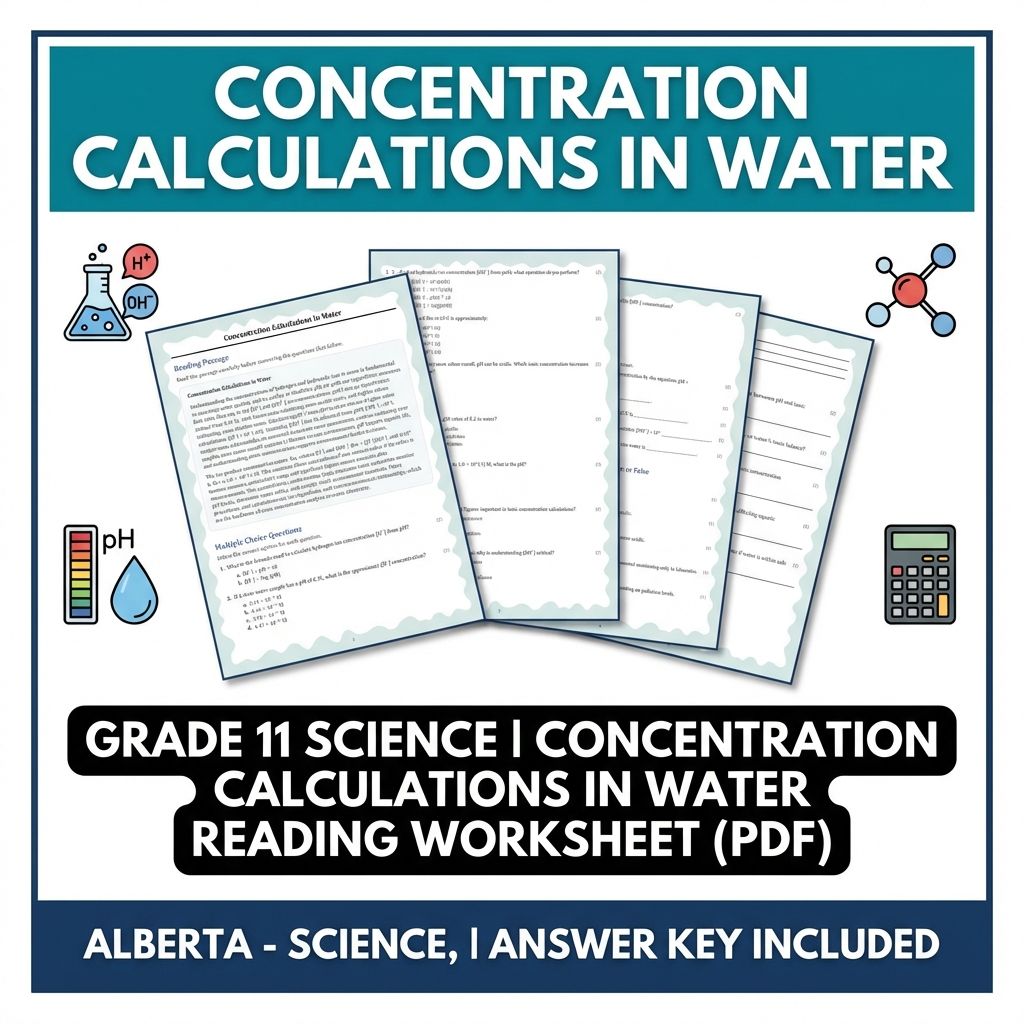
Grade 11 Science | Concentration Calculations in Water Reading Worksheet (PDF)
JCreated byJ.S SheetsLearning Objectives
- Understand how to convert between hydrogen/hydroxide ion concentrations and pH or pOH using logarithmic relationships.
- Learn procedures for determining [H⁺] from pH and [OH⁻] from pOH.
- Apply the ion product constant for water (Kw) to relate ionic concentrations in natural waters.
Instant download

Grade 5 Data Communication Worksheet | Practice & Assessment PDF
 Created byClear Sky Classroom
Learning Objectives
- Collect and organize observations into data tables and graphs with clear labels and units
- Interpret graphs and maps to identify patterns and compare changes over time
- Communicate data clearly using captions that describe what the data show and note possible uncertainty
Instant download

Grade 12 Science | Population Change - Daily Reading Comprehension
 Created byCoral Reef Learning
Learning Objectives
- Understand key concepts related to Science
- Apply knowledge through practice questions
- Demonstrate comprehension of the material
Also included in: Biology and Ecosystems Lesson Bundle | Grade 12 Science | AP +1 more
Instant download

Grade 3 Structural Forms and Load Behavior Science Worksheet Ontario
 Created byChalk and Compass
Learning Objectives
- Identify common structural forms (arches, beams, frames) and describe how their shapes help carry loads.
- Compare compressive and bending behavior using simple, real-world construction examples.
- Explain how span and connections affect strength and stability in basic structures.
Also included in: Grade 3 Science Simple Structures Lesson Bundle | Ontario +1 more
Instant download
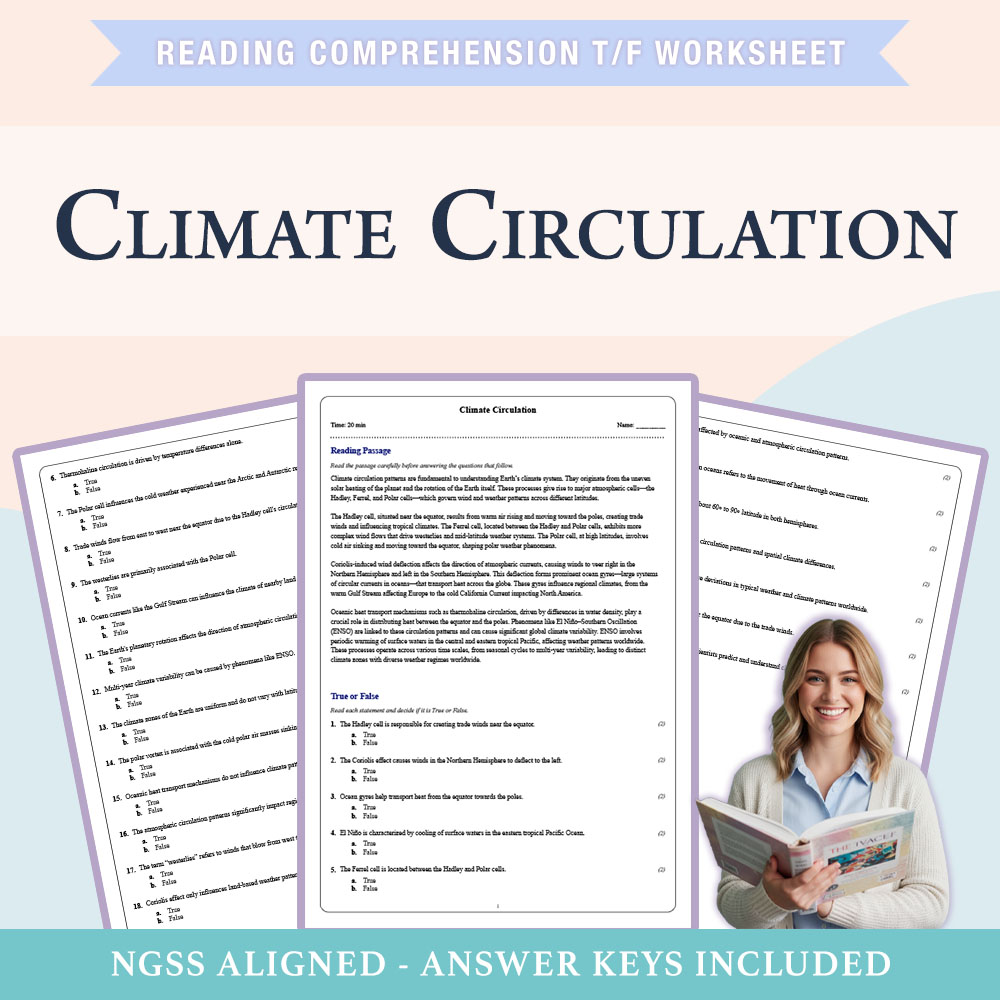
Grade 8 Science | Climate Circulation Worksheet (PDF + Answer Key)
Created byCopper Leaf ClassroomLearning Objectives
- Understand the patterns of atmospheric and oceanic circulation
- Describe how circulation influences regional climates
- Identify models like Hadley, Ferrel, and polar cells
Also included in: Grade 8 Science Unit Bundle | Earth Materials Worksheets (PDF + Answer Key) +1 more
Instant download

Grade 8 Science – Weather Patterns & Air Masses | Daily Reading Worksheet
 Created byBright Mind Resources
Learning Objectives
- Understand different types of air masses and their characteristics
- Recognize how air mass movements influence weather patterns
- Analyze observational datasets related to weather changes
Also included in: Grade 8 Earth Systems Science Daily Reading Worksheets Lesson Bundle | NGSS +1 more
Instant download
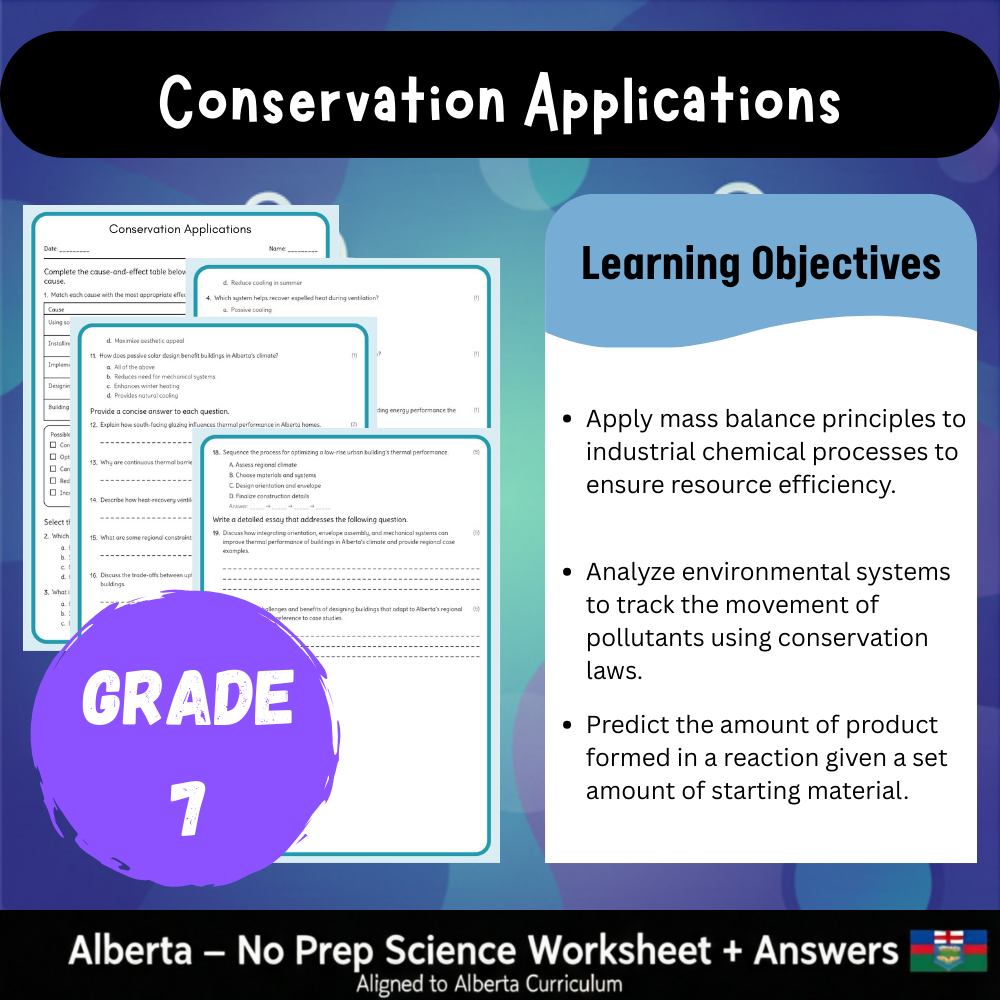
Grade 7 Science | Conservation Applications Worksheet (PDF) – Alberta Standards
Created byBright Mind ResourcesLearning Objectives
- Understand how mass conservation principles apply to chemical and environmental systems.
- Identify practical examples of mass balancing in real-world applications.
- Analyze scenarios involving mass accounting in closed or sealed systems.
Instant download

Adaptation Forms Worksheet | Grade 7 Science Practice
 Created byPrism Point Learning
Learning Objectives
- Define morphological, physiological, and behavioral adaptations and identify examples in real organisms.
- Explain how traits improve survival and reproductive success in specific environments.
- Differentiate adaptations from acclimation and describe adaptive trade-offs.
Also included in: Ecosystems & Adaptations Grade 7 Science Lesson Bundle TEKS Worksheets
Instant download

Abiotic Influences Worksheet | Grade 7 Science Practice Activities
Created byPrism Point LearningLearning Objectives
- Explain how abiotic factors (nonliving conditions) such as temperature, light, and water availability affect where organisms can live.
- Describe how gradients and microclimates create variation in habitat suitability across an ecosystem.
- Use terrestrial and aquatic examples to link abiotic constraints to species distribution and ecosystem productivity.
Also included in: Ecosystems & Adaptations Grade 7 Science Lesson Bundle TEKS Worksheets
Instant download

Ecosystem Dynamics Worksheet | Grade 7 Science Assessments
Created byPrism Point LearningLearning Objectives
- Explain how energy flows through food chains, food webs, and trophic pyramids
- Describe matter cycling in ecosystems, including the role of decomposers in nutrient recycling
- Compare how changes in inputs or energy pathways can shift community structure and ecosystem processes
Also included in: Ecosystems & Adaptations Grade 7 Science Lesson Bundle TEKS Worksheets
Instant download

Population Change Worksheet | Grade 7 Science Activities
Created byPrism Point LearningLearning Objectives
- Explain how birth and death rates and migration affect population size and distribution
- Compare exponential and logistic growth patterns using carrying capacity and limiting factors
- Describe how resources, disease, and competition influence population dynamics and species interactions
Also included in: Ecosystems & Adaptations Grade 7 Science Lesson Bundle TEKS Worksheets
Instant download
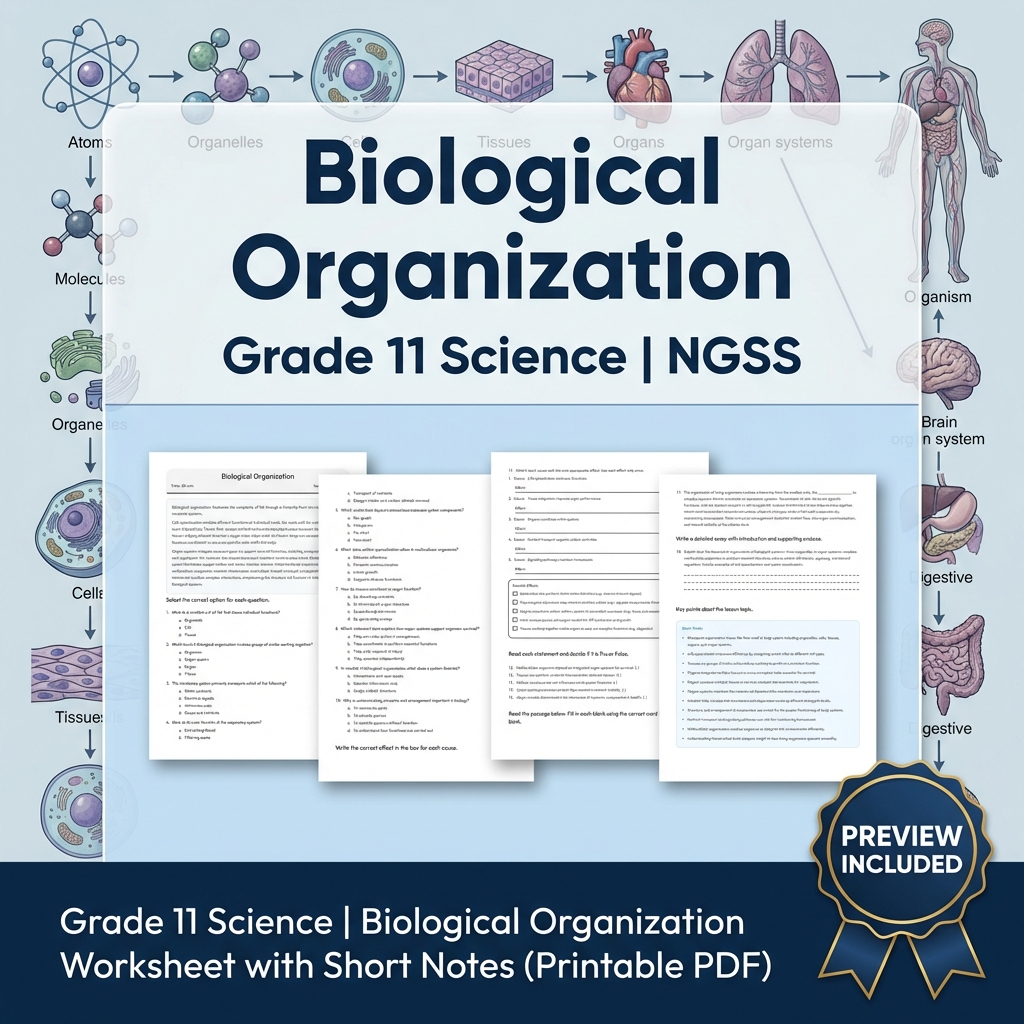
Grade 11 Science | Biological Organization Worksheet with Short Notes (PDF)
 Created byMeadowlark Worksheets
Learning Objectives
- Describe the hierarchical levels of biological systems from organelles to organ systems.
- Explain how specialized cell types and tissues coordinate to perform functions.
- Analyze models depicting cell, tissue, and organ system interactions.
Also included in: Grade 11 Science NGSS | From Molecules to Organisms: Structures & Processes +1 more
Instant download
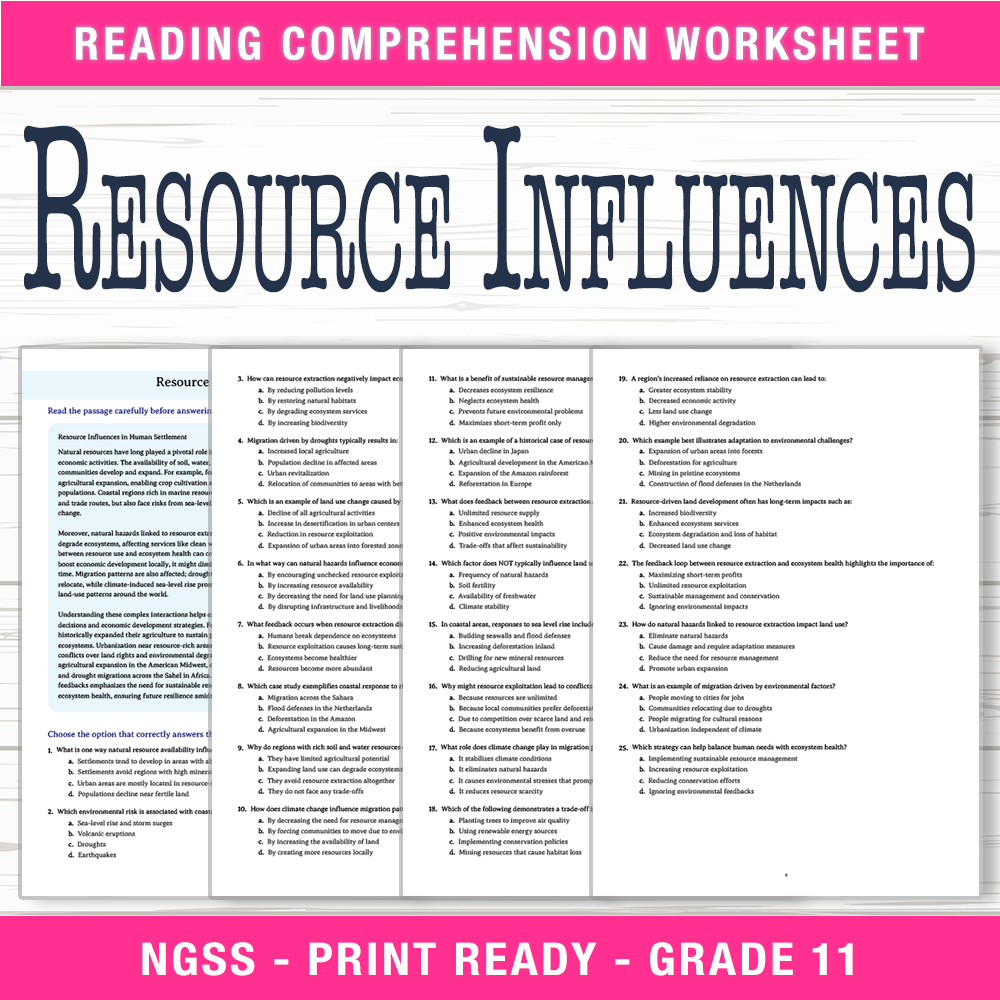
Grade 11 Science | Resource Influences Worksheet (PDF + Answer Key)
 Created byRiverstone Classroom
Learning Objectives
- Analyze how natural resource availability, hazards, and climate change influence patterns of human settlement and land use.
- Evaluate examples of resource-driven land development, migration, and coastal responses to environmental challenges.
- Identify trade-offs between resource extraction and ecosystem services and understand sustainability implications.
Instant download

Volcanic Processes Worksheet for Grade 9 Science | AP Earth Science
Created byPrism Point LearningLearning Objectives
- Explain how magma composition and tectonic setting influence volcanic eruption style and hazard potential.
- Compare effusive shield volcanism and explosive stratovolcano behavior using magma viscosity and volatile content.
- Use volcanic gas emissions and basic eruption timelines to describe how volcanoes modify landscapes and can affect climate.
Also included in: Earth Systems & Climate Evidence Lesson Bundle | Grade 9 Science | AP
Instant download
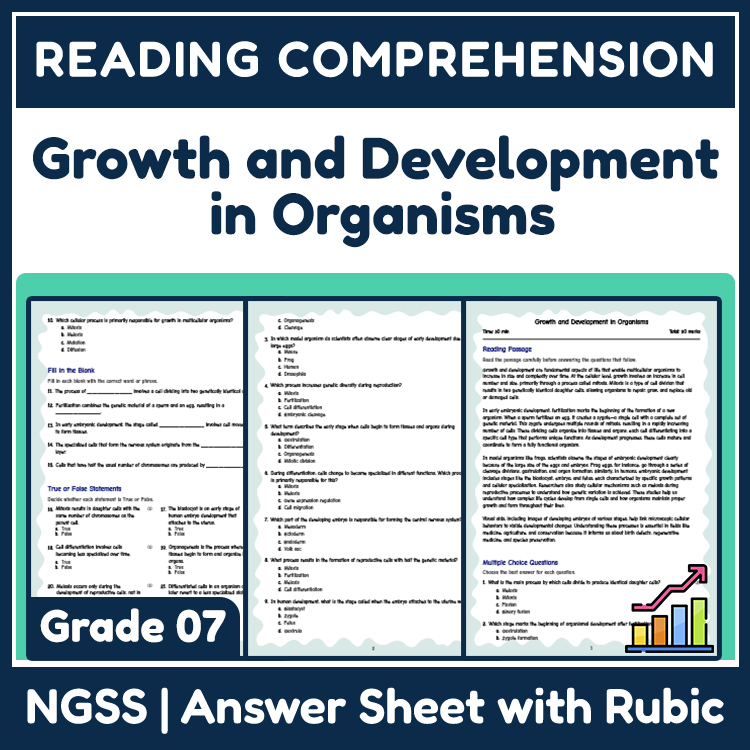
7th Grade Science | Growth and Development in Organisms Reading Worksheet
JCreated byJ.S SheetsLearning Objectives
- Understand cell division processes such as mitosis and fertilization
- Describe stages of organismal growth and development
- Link cellular changes to macroscopic development in multicellular organisms
Instant download
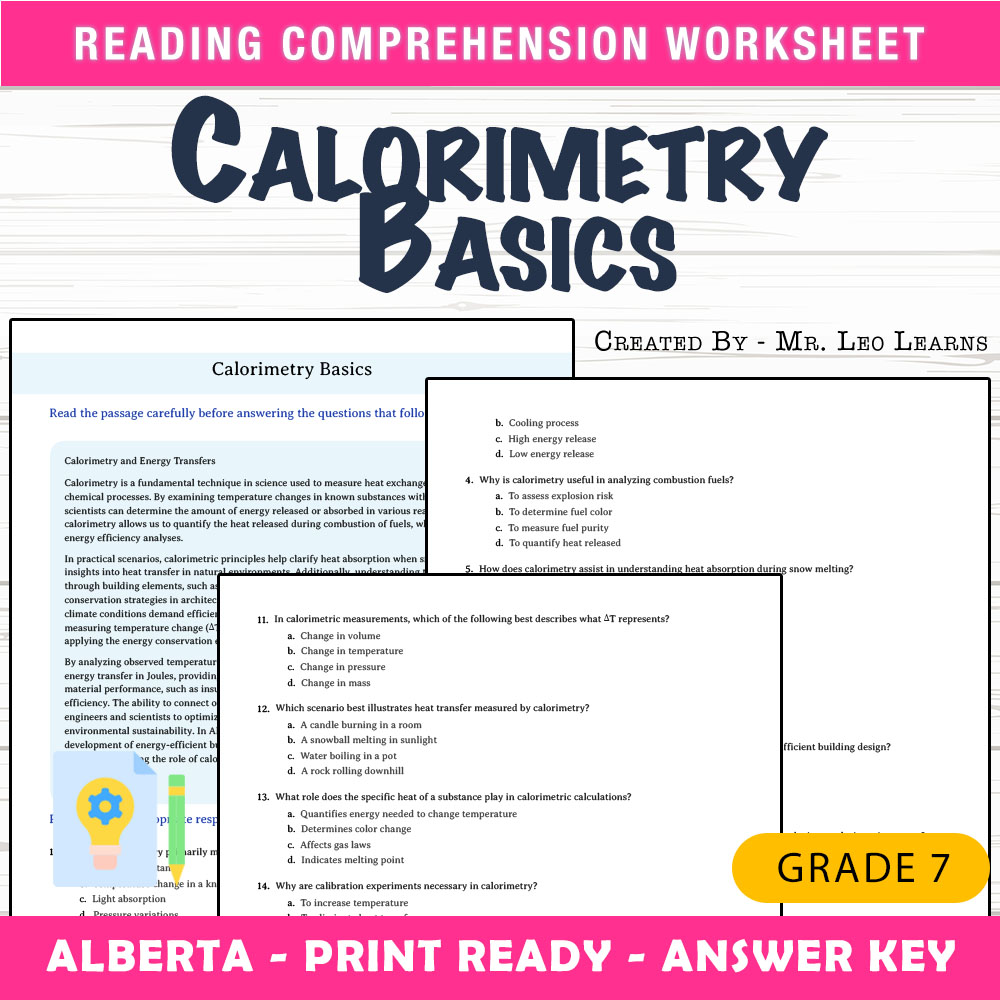
Grade 7 Science — Calorimetry MCQ Worksheet for Mastery
 Created byThe Resource Hub
Learning Objectives
- Understand the principles of calorimetry and energy transfer measurements.
- Apply calorimetric reasoning to real-world thermal scenarios.
- Interpret energy conservation equations related to heat transfer and temperature change.
Also included in: Grade 7 Science Alberta Energy Heat Thermal Processes Worksheet Bundle +1 more
Instant download
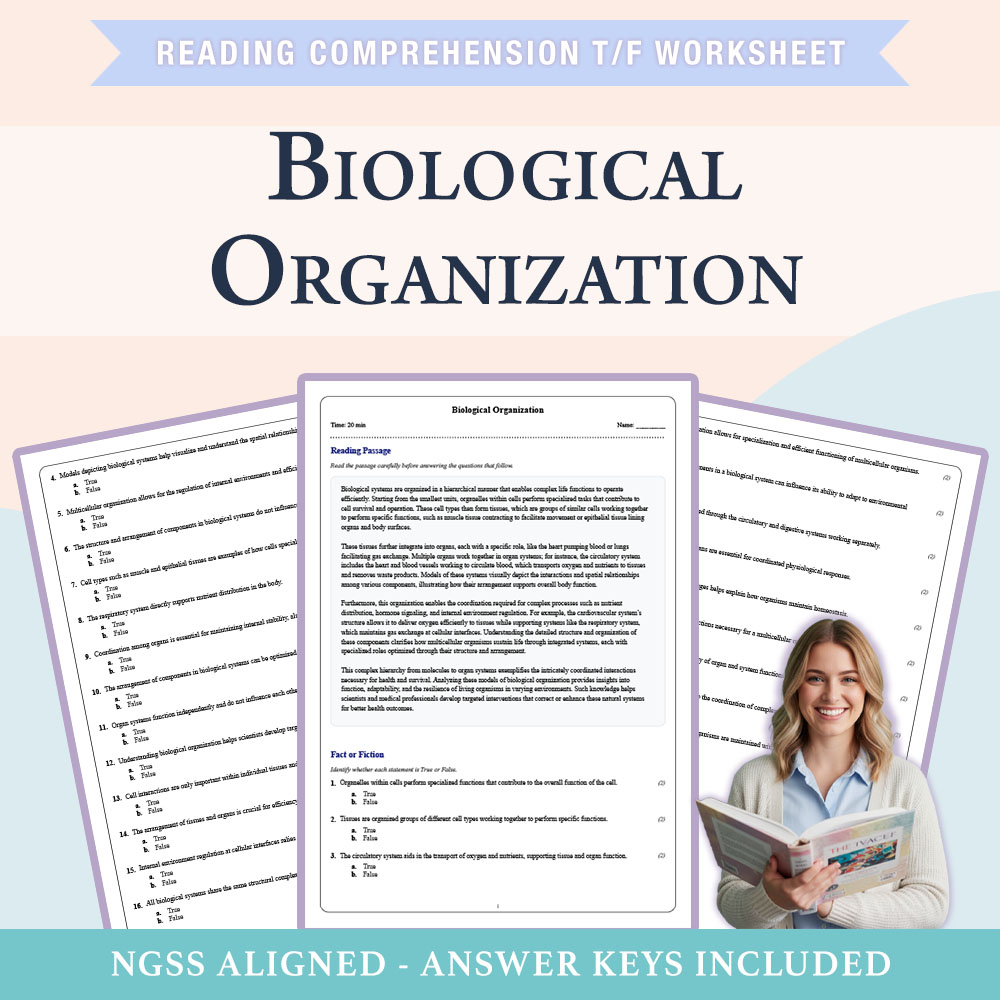
11th Grade Science | Biological Organization Worksheet (PDF + Answer Key)
Created byCopper Leaf ClassroomLearning Objectives
- Understand the hierarchical levels of biological systems from organelles to organ systems.
- Recognize models depicting specialized cell types, tissue integration, and system interactions.
- Explain how multicellular organization supports nutrient distribution and internal environment maintenance.
Also included in: Grade 11 Science Bundle | Cellular Metabolism & Organization (PDF + Answer Key) +1 more
Instant download
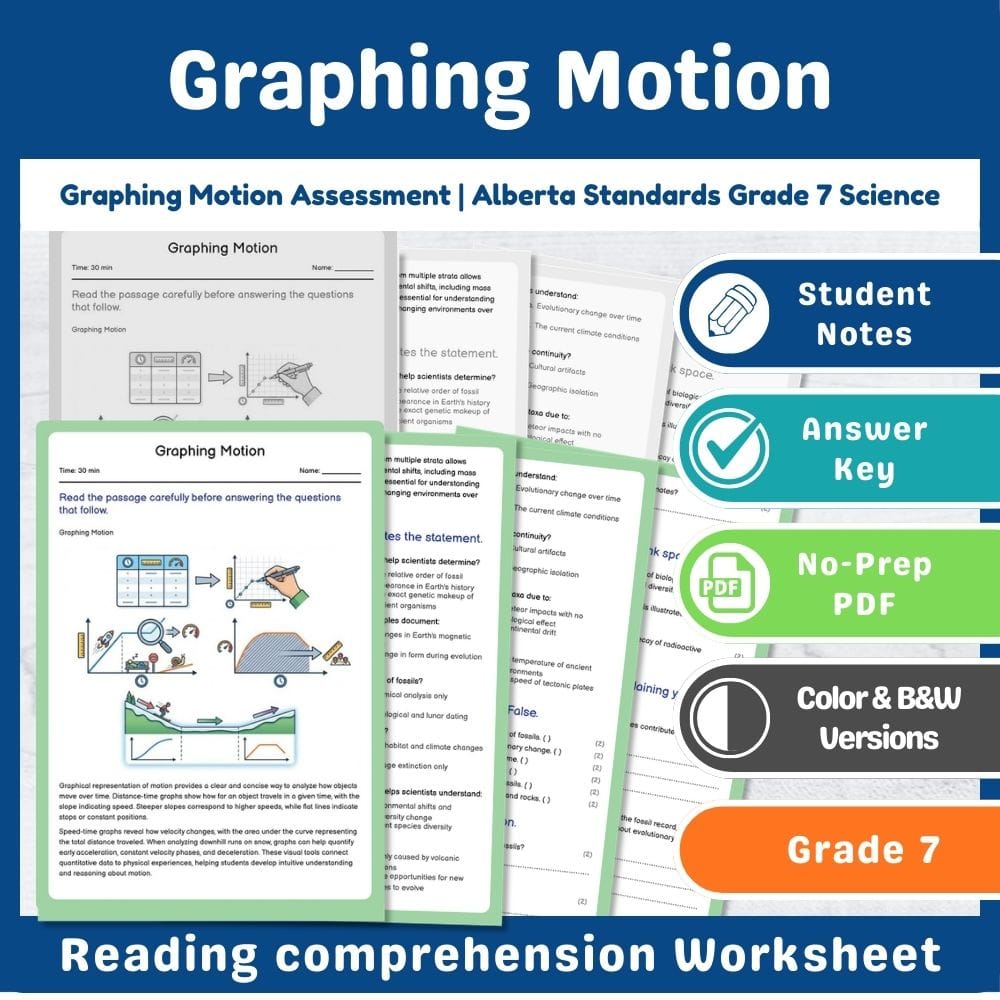
Graphing Motion Assessment | Alberta Standards Grade 7 Science
Created byPrism Point LearningLearning Objectives
- Understand how to interpret distance–time and speed–time graphs.
- Explain the significance of slope, area under curves, and rate calculations in motion graphs.
- Translate tabulated numerical data into accurate graphical representations.
Also included in: Lesson Bundle Grade 7 Science Forces Structures and Motion | Alberta Standards +1 more
Instant download
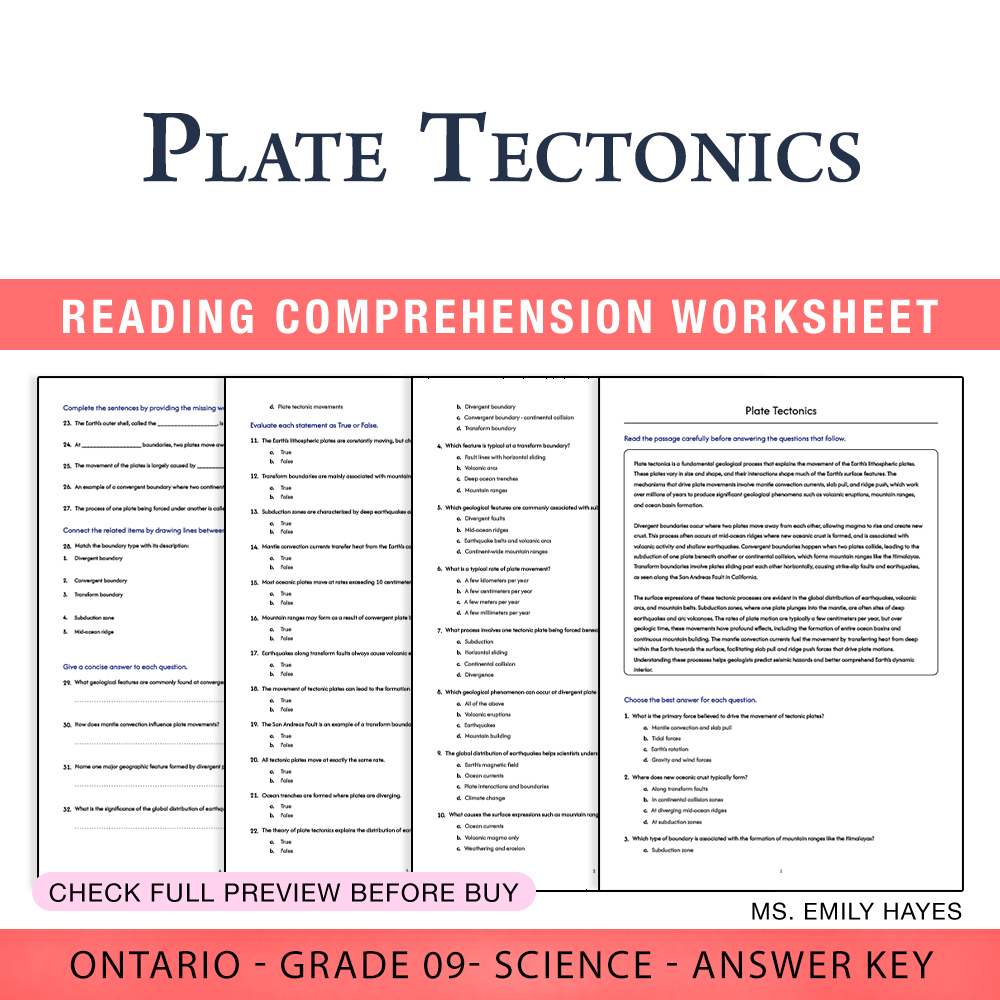
9th Grade Science | Plate Tectonics Worksheet (PDF + Answer Key)
Created byCopper Leaf ClassroomLearning Objectives
- Explain the mechanisms driving plate tectonics, including divergent, convergent, and transform boundaries.
- Describe the surface expression of plate movements, such as volcanic activity, mountain building, and ocean basin formation.
- Link mantle convection and slab pull to the forces that move tectonic plates over geological time.
Instant download
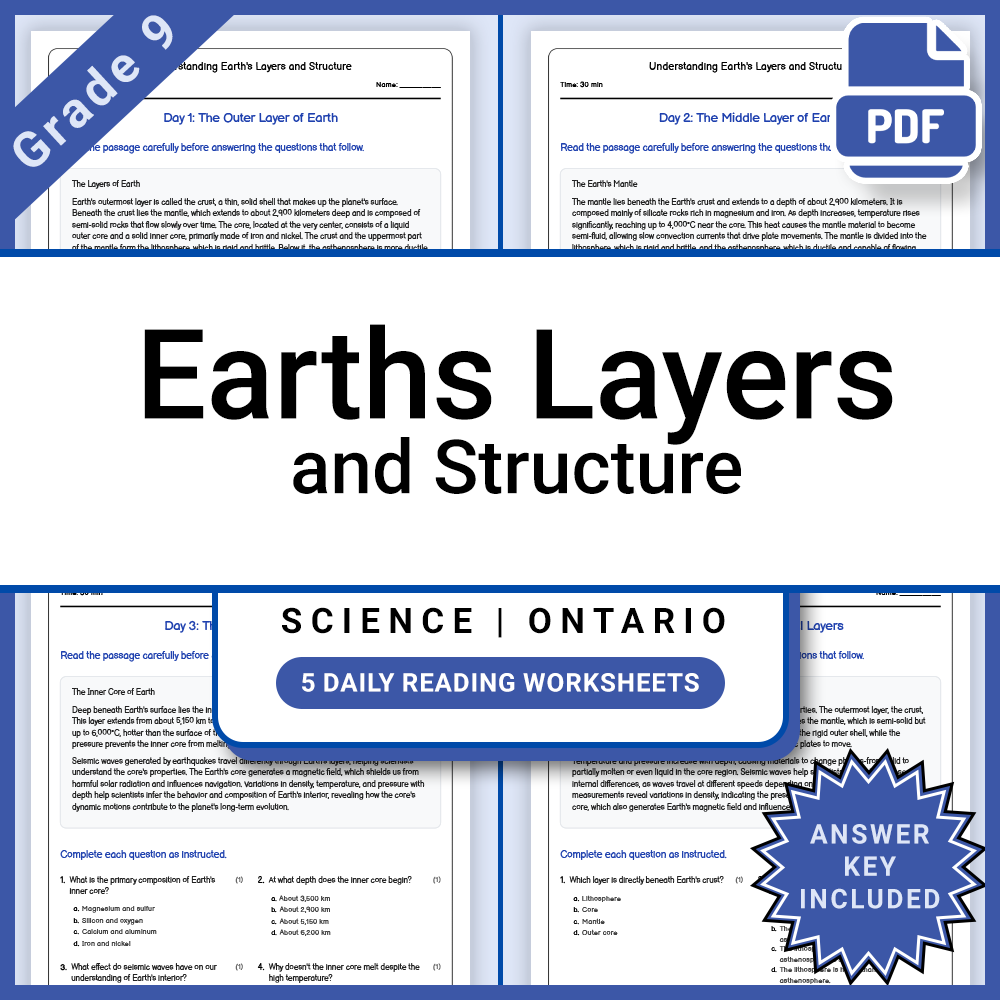
Grade 9 Science – Earth's Layers Daily Reading Worksheet + Answer Key
JCreated byJ.S SheetsLearning Objectives
- Identify the different layers of Earth and describe their characteristics.
- Explain the differences between the lithosphere and asthenosphere.
- Understand how seismic waves help scientists learn about Earth's interior.
Also included in: Grade 9 Science Lesson Group Bundle – Earth Systems & Planetary Concepts +1 more
Instant download
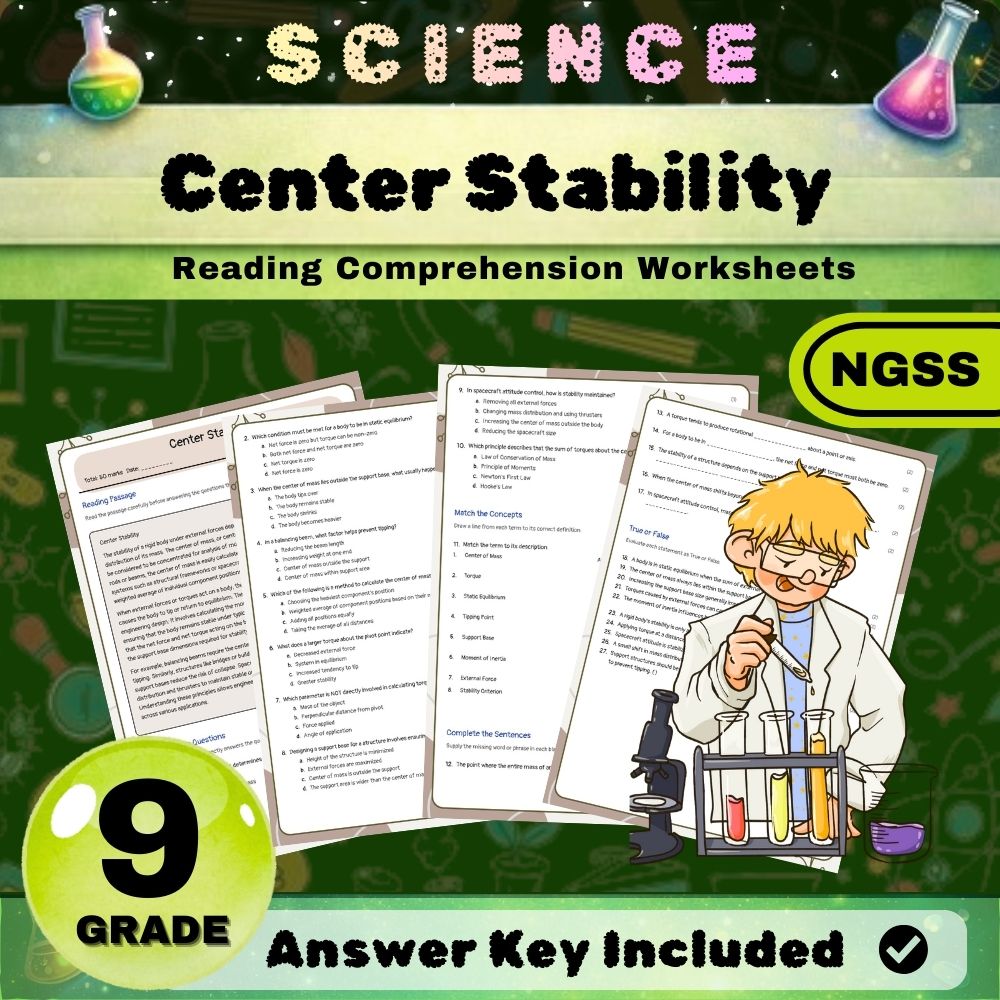
Grade 9 Science | Center Stability Worksheet (NGSS) (PDF)
 Created byMaple Path Learning
Learning Objectives
- Understand the concepts of center of mass and how it affects the stability of rigid bodies.
- Calculate the center of mass for composite systems and analyze their stability.
- Apply torque and equilibrium conditions to determine tipping thresholds for structures.
Also included in: Grade 9 Science | Motion and Stability Forces & Interactions NGSS Unit Bundle +1 more
Instant download

Energy Molecules Assessment | TEKS Grade 9 Science Standards
Created byPrism Point LearningLearning Objectives
- Understand the structure and role of ATP in cellular energy transfer.
- Explain how hydrolysis of ATP releases energy for cellular activities.
- Describe the process of ATP regeneration through phosphorylation.
Instant download
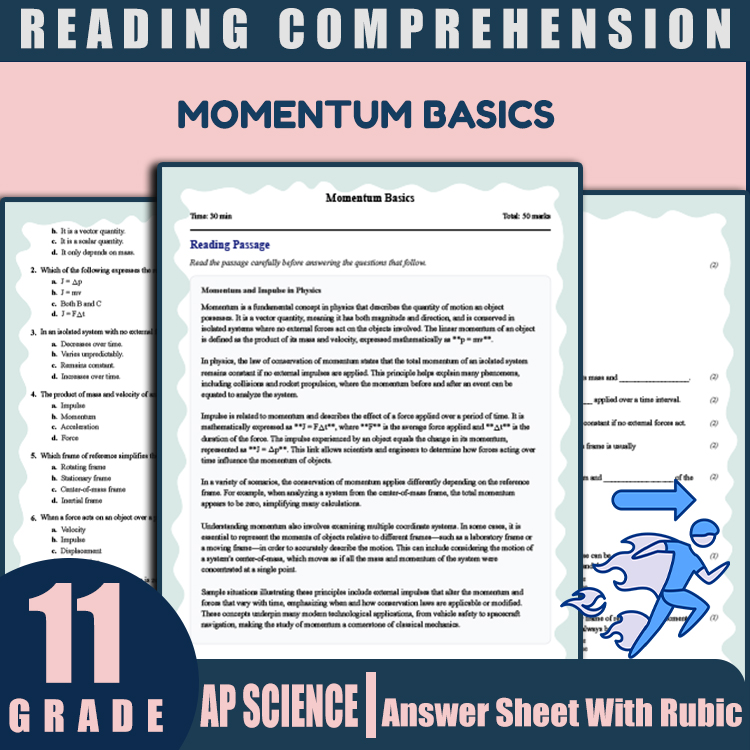
11th Grade Science | Momentum Basics Reading Worksheet & Answer Key PDF
JCreated byJ.S SheetsLearning Objectives
- Understand and define linear momentum as a conserved vector quantity.
- Explain how impulse relates to changes in momentum through the force-time relationship.
- Apply algebraic conservation laws to analyze isolated systems in motion.
Also included in: Grade 11 Physics Unit | Motion, Waves & Energy Worksheets (PDF + Rubric Bundle) +1 more
Instant download
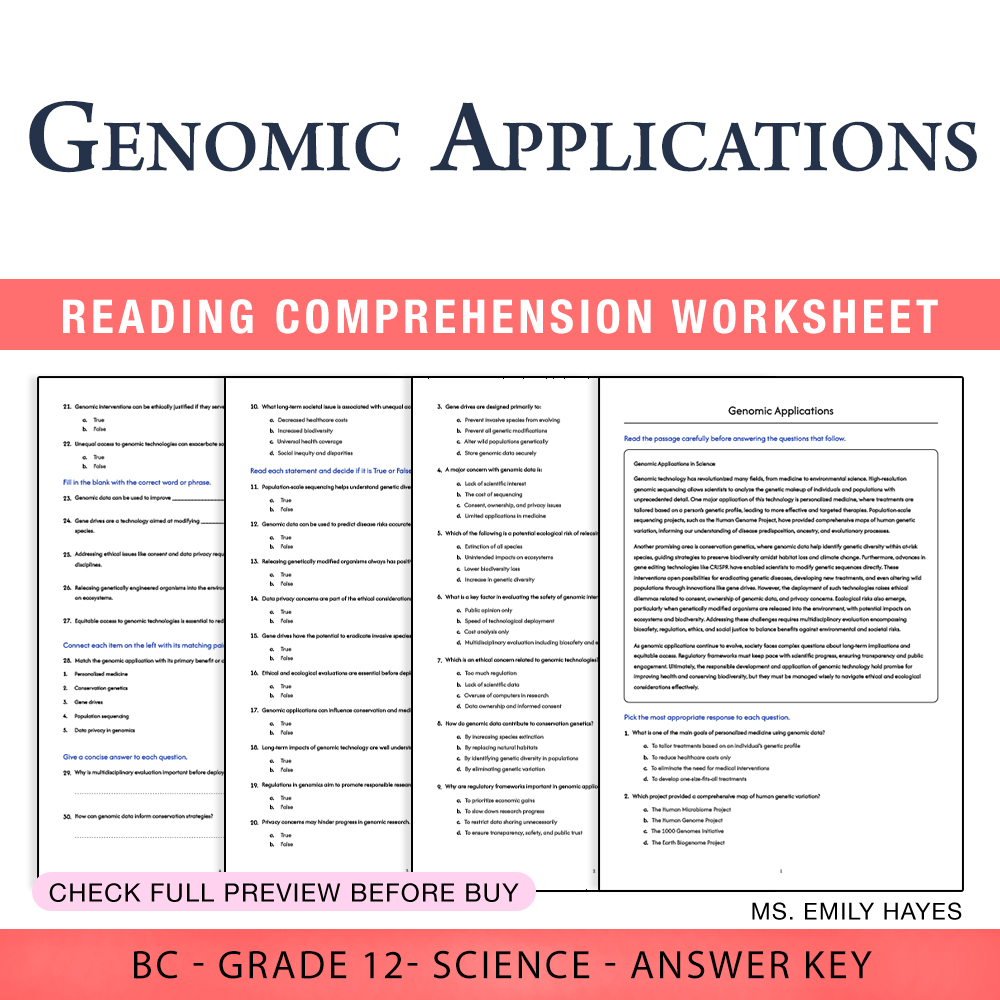
Grade 12 Science | Genomic Applications Worksheet (PDF + Answer Key)
Created byCopper Leaf ClassroomLearning Objectives
- Understand the key uses of genomic technology in medicine and conservation.
- Analyze ethical and ecological considerations associated with genomic interventions.
- Evaluate benefits and risks of population-scale sequencing and gene editing.
Also included in: Grade 12 Science | Genetics, Evolution & Ecology (PDF+ Answer Keys) +1 more
Instant download
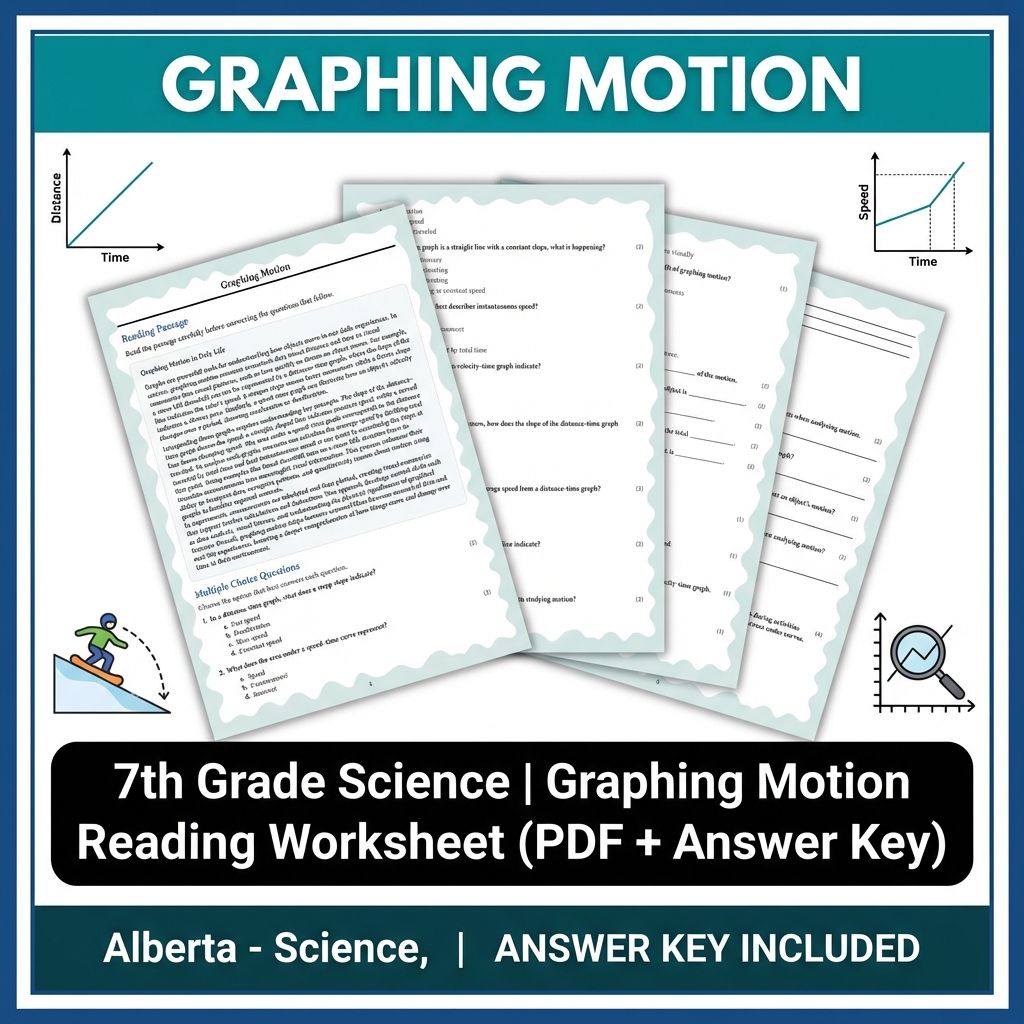
7th Grade Science | Graphing Motion Reading Worksheet (PDF + Answer Key)
JCreated byJ.S SheetsLearning Objectives
- Understand how distance–time and speed–time graphs represent motion.
- Interpret the meaning of slopes and areas under curves in motion graphs.
- Learn methods to compute average and instantaneous rates from graphs.
Also included in: Grade 7 Science | Forces, Motion & Structural Concepts (Answer Keys Included) +1 more
Instant download
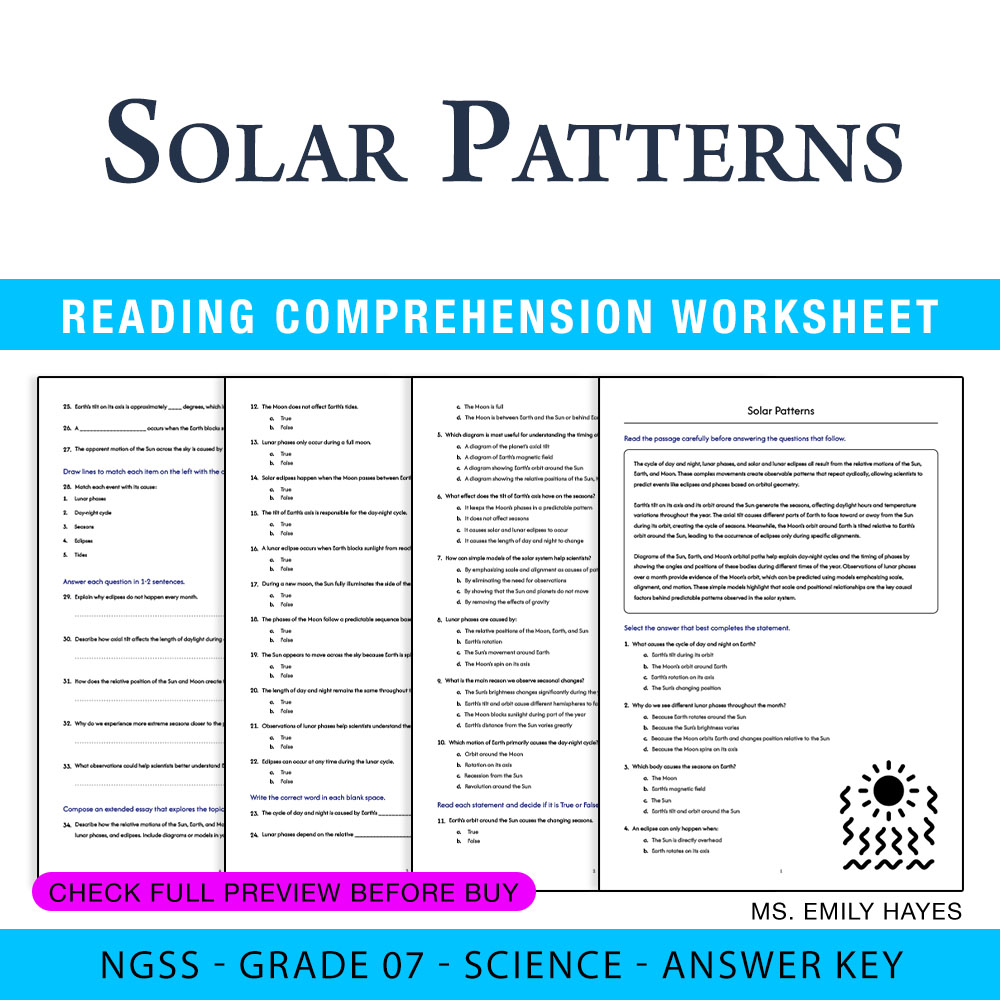
Grade 7 Science | Solar Patterns Worksheet (PDF+ Answer Key)
Created byCopper Leaf ClassroomLearning Objectives
- Understand the cyclic patterns produced by the relative motions of the Sun, Earth, and Moon.
- Explain how lunar phases, eclipses, and seasonal changes are caused by orbital geometry and tilt.
- Interpret diagrams of orbital motion and axial tilt to describe day-night cycles.
Instant download

Grade 11 Science – Seasons & Orbits Daily Reading Worksheet | NGSSS
Created byBright Mind ResourcesLearning Objectives
- Understand how Earth's rotation causes day and night.
- Learn the relationship between Earth's orbit and seasonal changes.
- Identify the factors influencing the intensity and angle of sunlight on Earth.
Also included in: Earth and Space Science Grade 11 Science Lesson Bundle | Florida NGSSS +1 more
Instant download

Grade 11 Science | Thermoregulation Worksheet | TEKS-Aligned
 Created byLumora Learning
Learning Objectives
- Explain the role of the hypothalamus in maintaining core body temperature.
- Describe the mechanisms involved in heat production, conservation, and dissipation.
- Analyze how environmental factors and fever influence thermoregulatory responses.
Instant download
Earth Sun Moon Worksheet for Grade 4 Science | Printable PDF + Answer Key
Created byMeadowlark WorksheetsLearning Objectives
- Understand the relationship between the Sun, Earth, and Moon and how they affect daily patterns.
- Identify how the Moon's position changes and influences its appearance from Earth.
- Explain the basic motions of Earth and the Moon and their effects on observed phenomena.
Also included in: Grade 4 Science Weather and Earth Cycles Lesson Bundle +1 more
Instant download
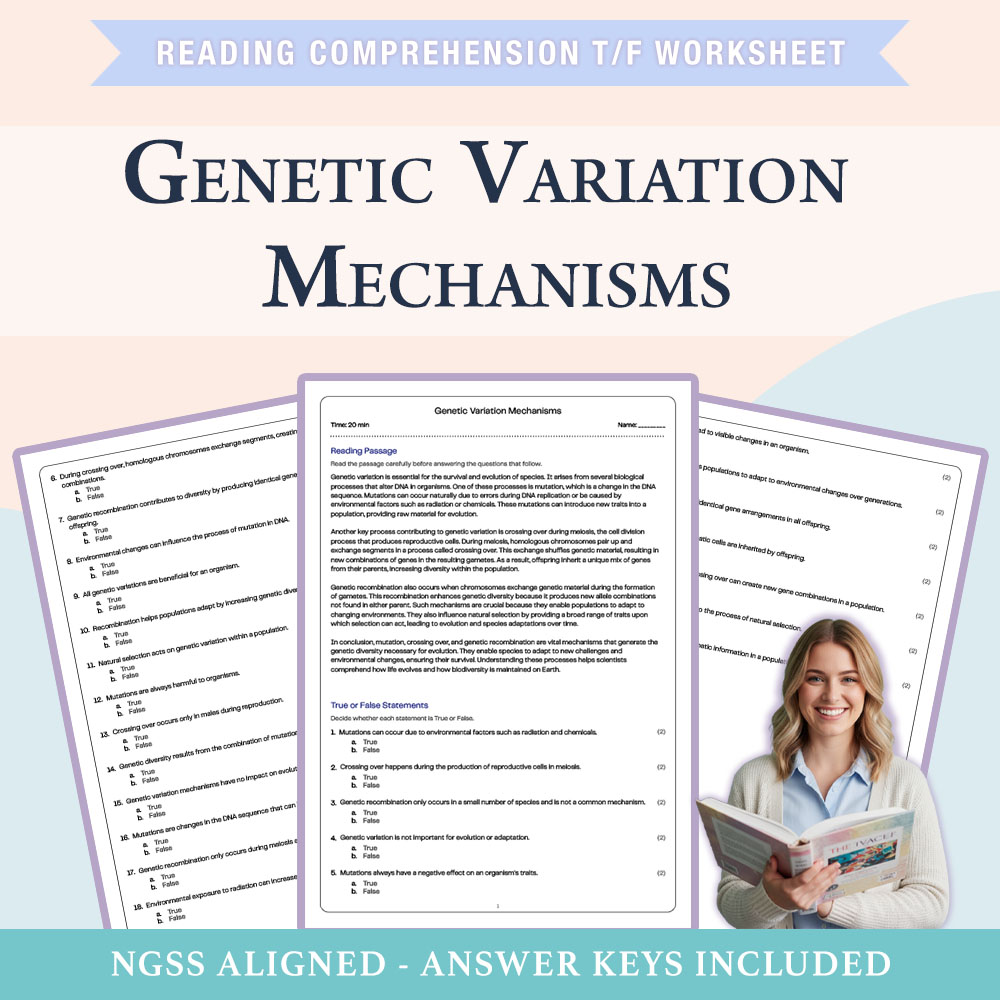
6th Grade Science | Genetic Variation Mechanisms True or False(PDF +Answer Key)
Created byCopper Leaf ClassroomLearning Objectives
- Understand the biological processes that generate genetic variation
- Explain how mutation, crossing over, and genetic recombination contribute to diversity
- Connect genetic variation mechanisms to evolution, natural selection, and adaptation
Instant download
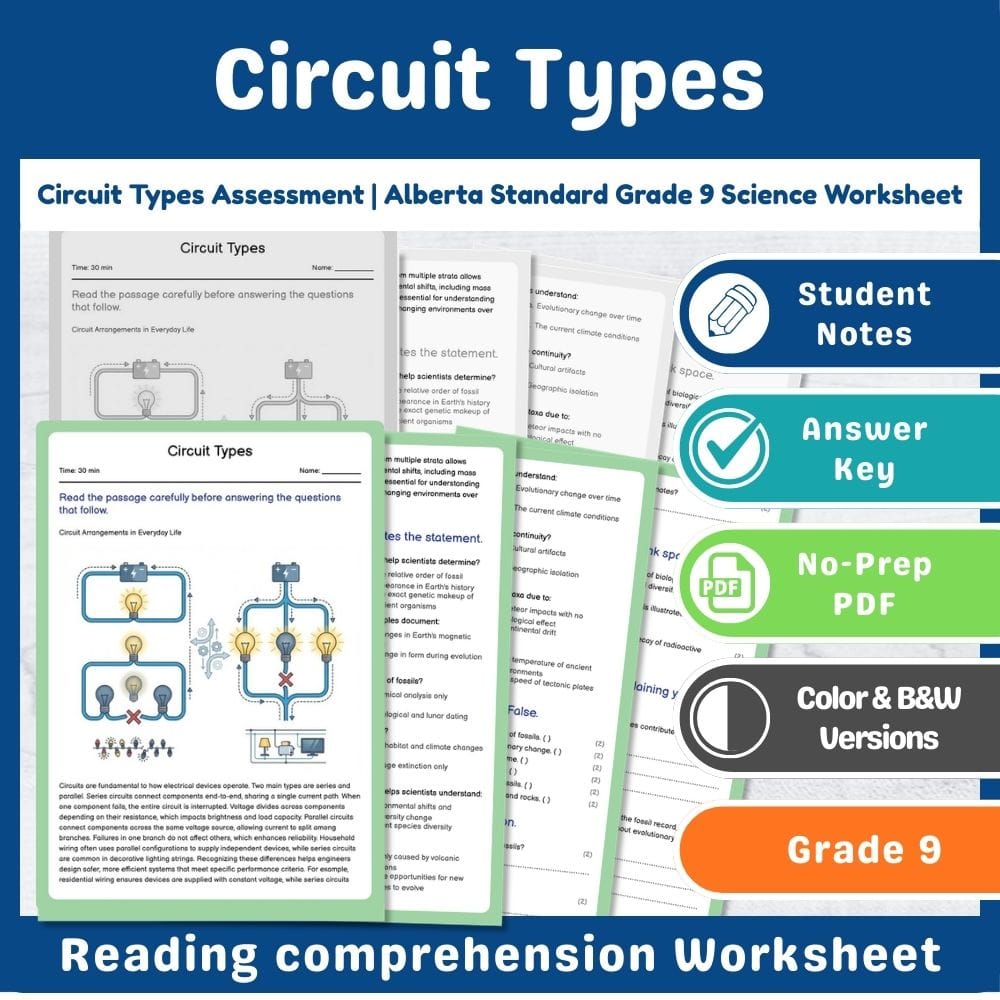
Circuit Types Assessment | Alberta Standard Grade 9 Science Worksheet
Created byPrism Point LearningLearning Objectives
- Understand the difference between series and parallel circuits.
- Identify the behavior of current and voltage in different circuit arrangements.
- Analyze the effects of circuit configuration on brightness, reliability, and performance.
Also included in: Grade 9 Electricity and Magnetism Science Lesson Bundle | Alberta Framework +1 more
Instant download

Modelling Ecosystems Worksheet | Grade 7 Science Practice
Created byPrism Point LearningLearning Objectives
- Explain how ecological models use assumptions to simplify complex ecosystem relationships.
- Identify common model inputs and how models are tested using real-world observations.
- Compare conceptual and quantitative modelling approaches and describe their strengths and limits.
Also included in: Grade 7 Ecosystems & Biodiversity Science Lesson Bundle | Alberta
Instant download

Conservation Status Worksheet | Grade 7 Science Activities
Created byPrism Point LearningLearning Objectives
- Explain how conservation status is assessed using population trends, threat severity, and recovery potential
- Describe how land use, genetic diversity, and habitat connectivity affect a species’ vulnerability
- Interpret conservation evidence to understand regional species persistence
Also included in: Grade 7 Ecosystems & Biodiversity Science Lesson Bundle | Alberta
Instant download
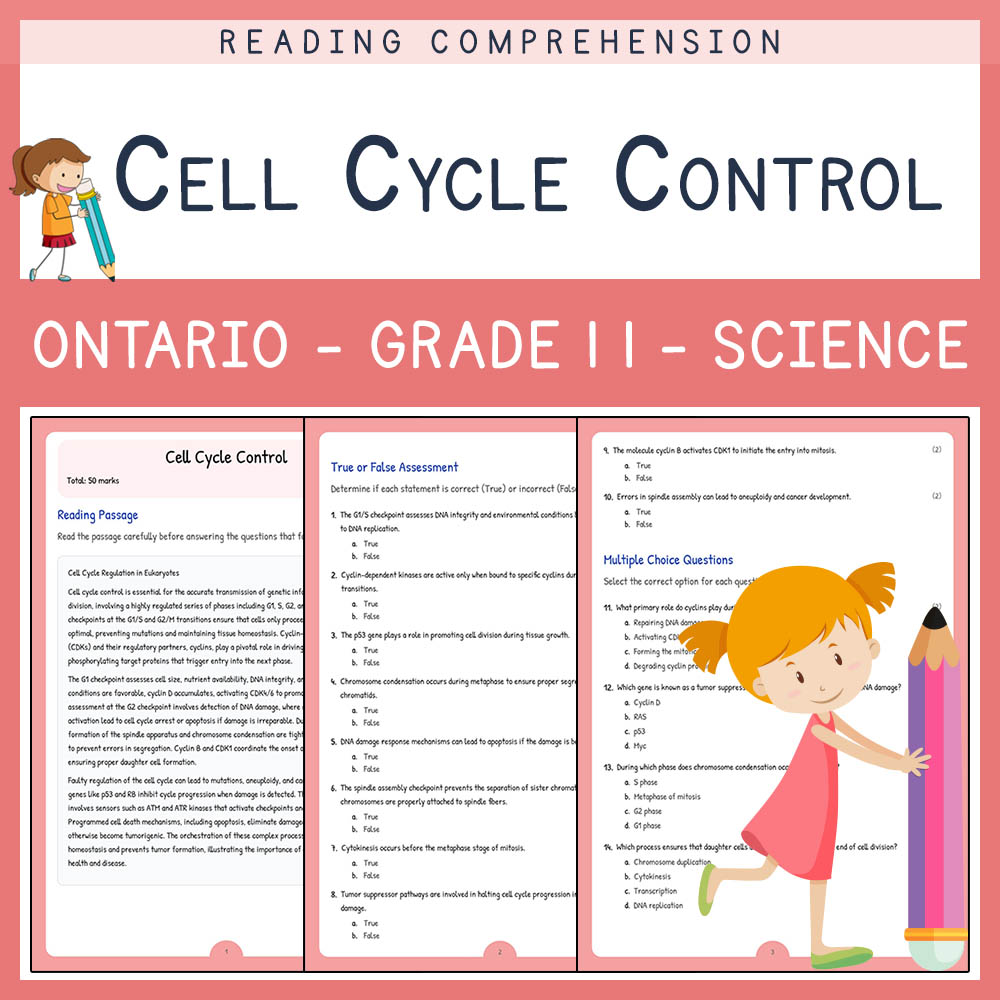
Grade 11 Science Assessment | Cell Cycle Control Worksheet Elena | Ontario
Created byLumora LearningLearning Objectives
- Understand the phases of the eukaryotic cell cycle and checkpoints that regulate transitions.
- Describe how cyclin-dependent kinases and regulatory factors orchestrate mitosis.
- Explain mechanisms of DNA damage response, programmed cell death, and tumor suppressor pathways.
Instant download
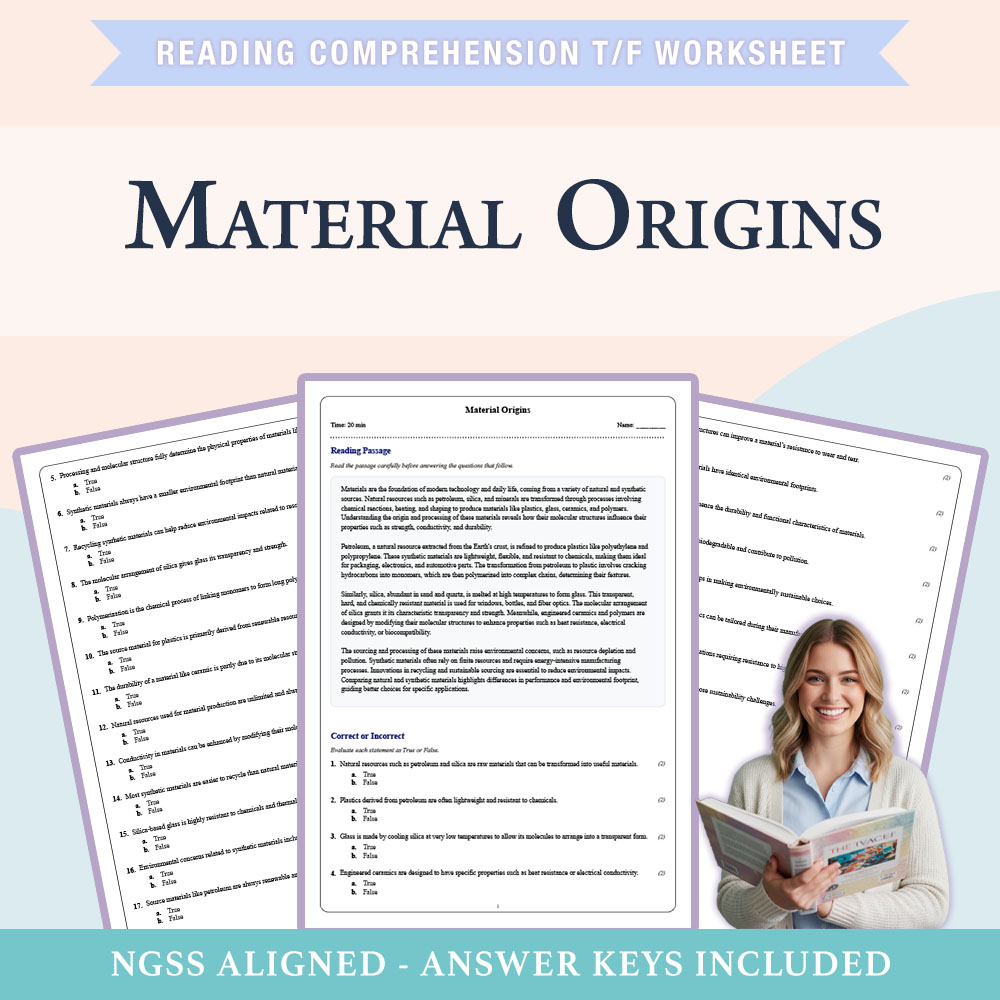
8th Grade Science | Material Origins Worksheet (PDF + Answer Key)
Created byCopper Leaf ClassroomLearning Objectives
- Understand how natural resources are transformed into synthetic materials.
- Identify examples of materials derived from natural sources.
- Explain how processing and composition influence material properties.
Also included in: Grade 8 Science Bundle| Critical Concepts & Applications Unit (PDF + Answer Key) +1 more
Instant download
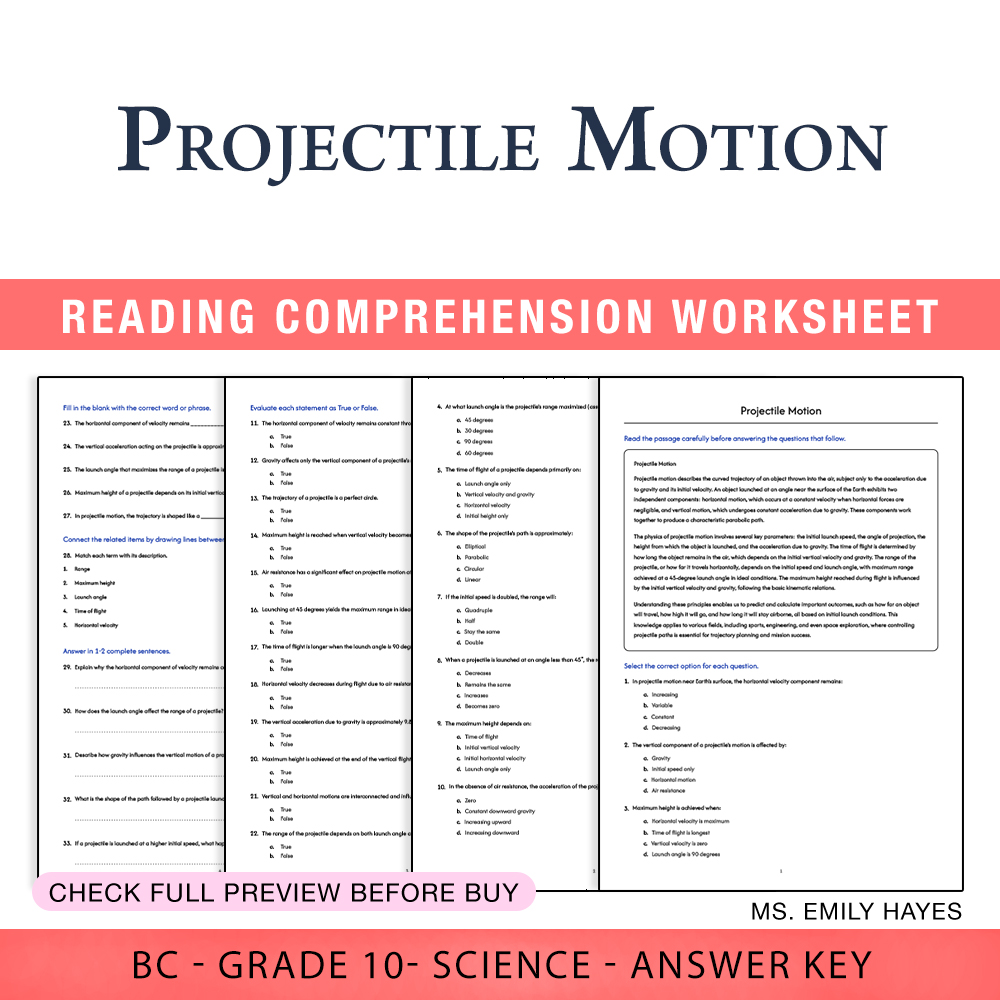
10th Grade Science | Projectile Motion Worksheet (PDF+ Answer Key)
Created byCopper Leaf ClassroomLearning Objectives
- Understand the components of projectile motion and their independence
- Explain how initial velocity and launch angle influence the range and height
- Apply kinematic equations to solve problems involving projectile motion
Also included in: Grade 10 Science BC | Forces, Motion & Fields Worksheets (PDF + Answer Key) +1 more
Instant download
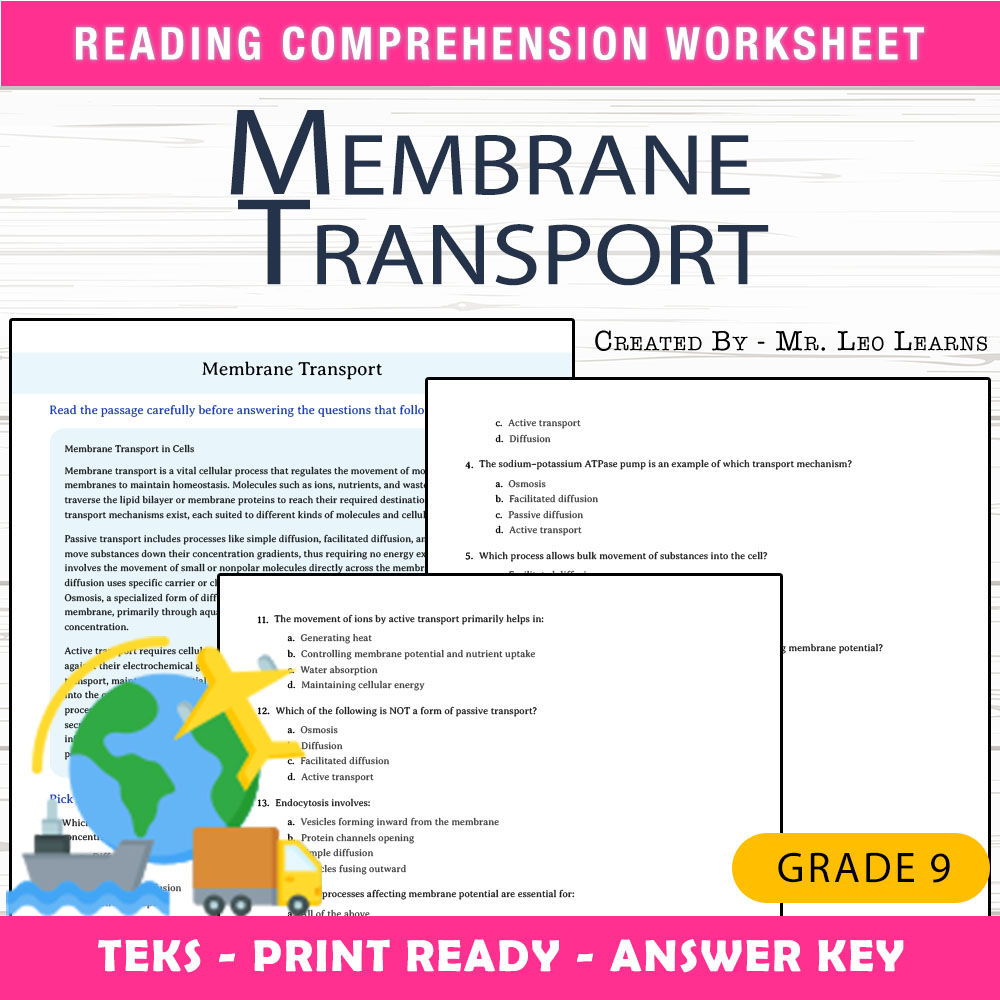
Grade 9 Science – Membrane Transport Worksheet for Mastery
Created byThe Resource HubLearning Objectives
- Understand the different mechanisms of membrane transport including passive and active processes.
- Differentiate between diffusion, facilitated diffusion, osmosis, and active transport.
- Explain the role of vesicular transport such as endocytosis and exocytosis in cellular function.
Also included in: Grade 9 Science Unit | Human Body Systems & Homeostasis Worksheet Bundle +1 more
Instant download
Browse more categories
About Science Worksheets
Find Science worksheets spanning core skills, practice, and review. All 44,295 resources are instant PDF downloads for the classroom or home.
Every worksheet on MyTeachingSheets is created by independent teacher-authors and reviewed before publication. All resources download as printable PDFs for classroom, homework, or at-home practice, and many include answer keys. Preview any worksheet free before buying.