
Science Worksheets
44,627 subject resources
Grade 10 Science | Carrying Capacity in Ecosystems - Daily Reading Comprehension
 Created byCoral Reef Learning
Learning Objectives
- Define carrying capacity and understand its significance in ecology.
- Identify factors that influence an environment's carrying capacity.
- Analyze how resource availability and environmental changes affect populations.
Instant download

Chemical Reactions Evidence Worksheets: Conservation of Atoms Grade 10
 Created byTeachers Club
Learning Objectives
- Identify observable evidence that indicates new substances formed
- Explain how conservation of atoms supports reaction outcomes
- Relate gas, color, temperature, and precipitate evidence to products
Also included in: Grade 10 Science Worksheets | NGSS Matter & Interactions Bundle +1 more
Instant download
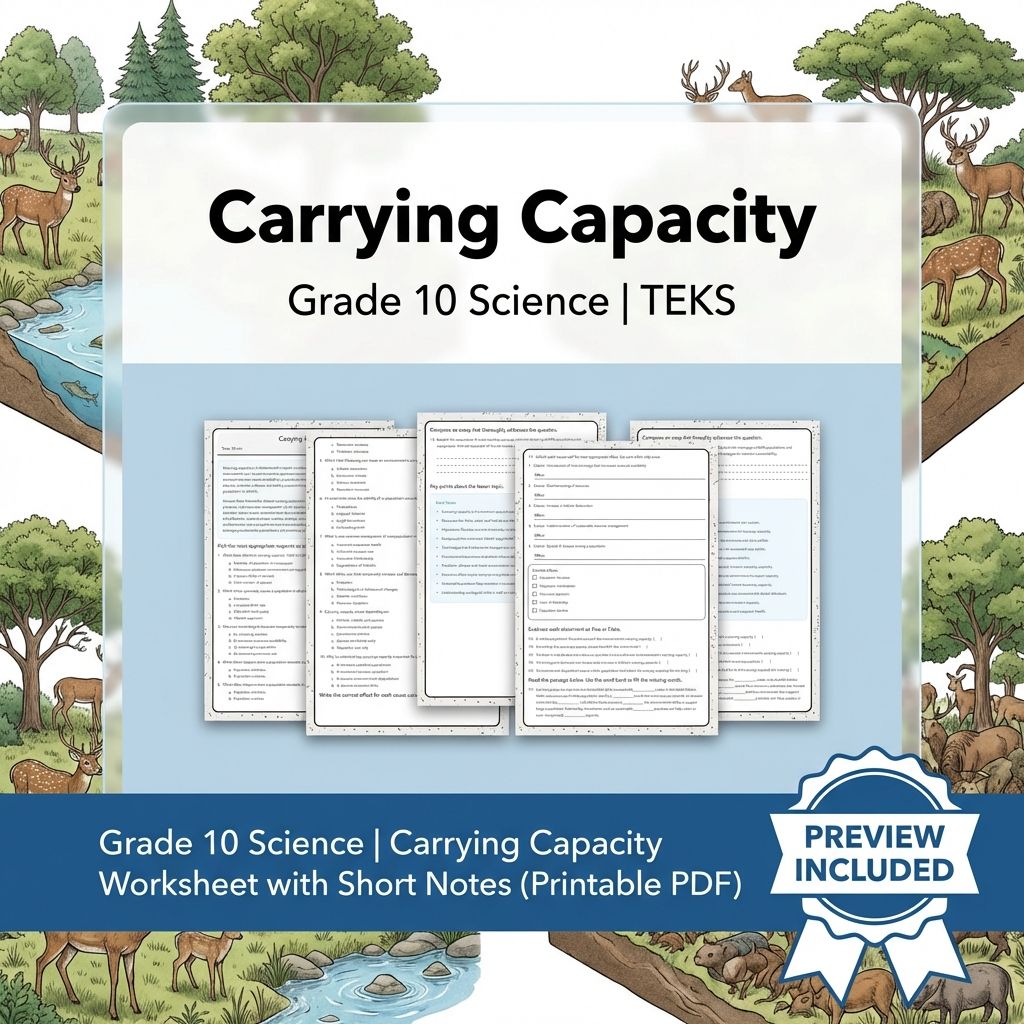
Grade 10 Science | Carrying Capacity Worksheet with Short Notes (PDF)
 Created byMeadowlark Worksheets
Learning Objectives
- Define carrying capacity and explain its significance in ecology.
- Identify factors that influence an environment's carrying capacity.
- Analyze how human activities can impact population sustainability.
Instant download

Grade 10 Science – Carrying Capacity in Ecosystems | Worksheet + Answer Key
JCreated byJ.S SheetsLearning Objectives
- Define carrying capacity and explain its importance in ecology.
- Identify factors that influence carrying capacity of environments.
- Analyze how environmental changes affect population sizes.
Also included in: Grade 10 Science Lesson Group – Ecosystems and Environmental Impact Worksheets +1 more
Instant download

Grade 10 Science – Carrying Capacity Worksheet (TEKS) PDF
 Created byEvergreen Desk Education
Learning Objectives
- Define carrying capacity and explain why it is context-dependent
- Identify factors that increase or decrease carrying capacity in real ecosystems
- Use population dynamics ideas (overshoot, crash, oscillation) to predict outcomes
Instant download

Carrying Capacity Worksheet | Grade 10 Science Activities
 Created byPrism Point Learning
Learning Objectives
- Define carrying capacity and explain how it depends on resources, habitat, and ecosystem interactions.
- Identify factors that lower or raise carrying capacity, including predation, disease, and waste accumulation.
- Describe how populations typically fluctuate around carrying capacity and what happens when they exceed it.
Instant download

Energy and Bonds Worksheet | NGSS-Aligned Science Practice for Grade 11
JCreated byJ.S SheetsLearning Objectives
- Explain how chemical energy changes are represented by bond formation and breaking.
- Describe how enthalpy change is determined by bond energies and the use of calorimetry data.
- Apply Hess's law to relate reaction enthalpies to molecular structures.
Also included in: Grade 11 Ecology and Ecosystem Dynamics Science Lesson Bundle – NGSS Framework +1 more
Instant download
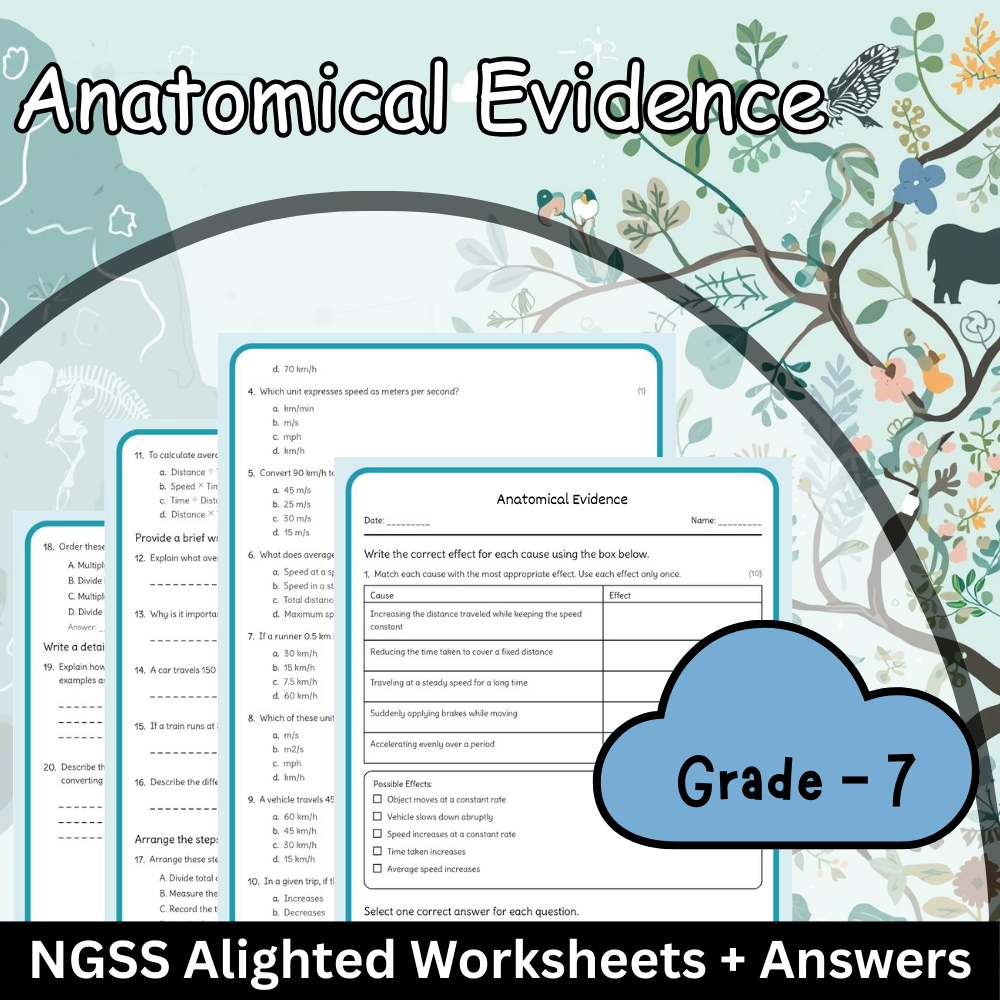
Grade 7 Science – Anatomical Evidence Worksheet (NGSS Aligned) – PDF
 Created byBright Mind Resources
Learning Objectives
- Explain how comparative anatomy provides evidence for evolution.
- Identify homologous and analogous structures among species.
- Describe how morphological and genetic data clarify evolutionary relationships.
Instant download
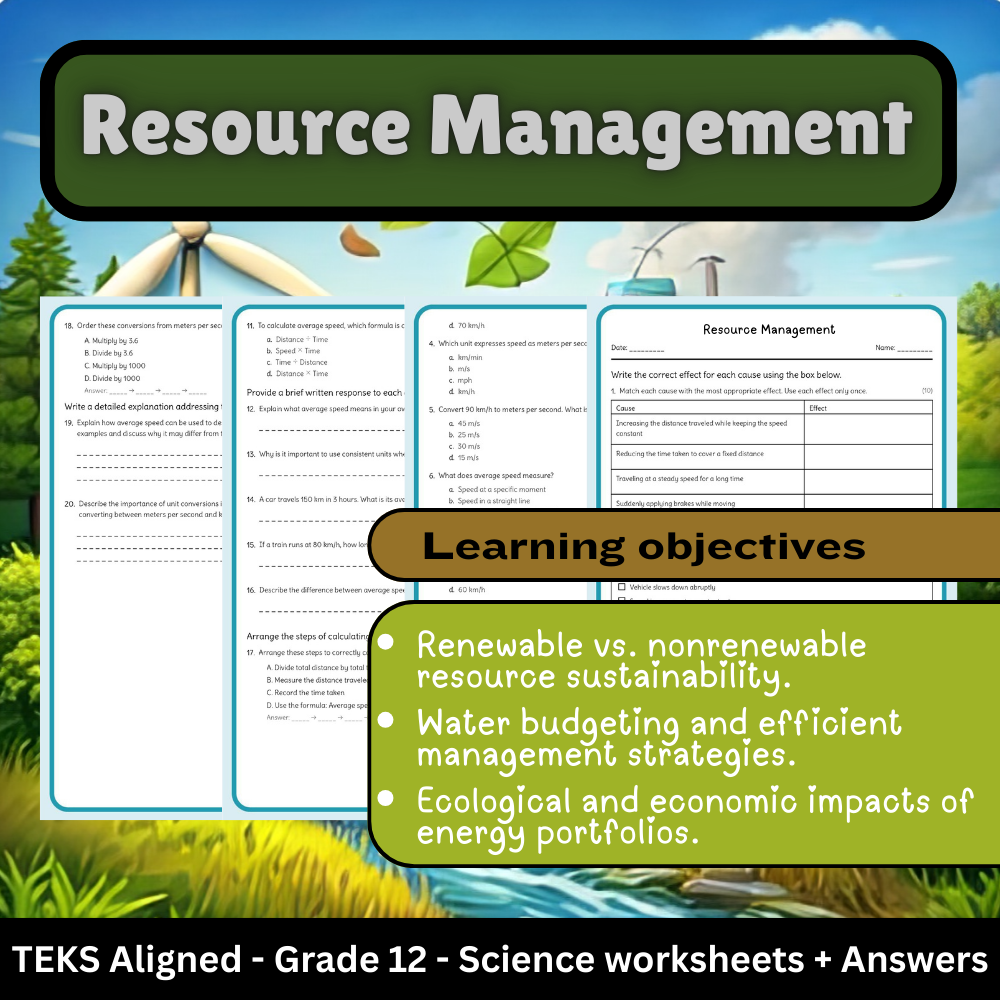
Grade 12 Science Resource Management Worksheet – TEKS Standards (PDF)
Created byBright Mind ResourcesLearning Objectives
- Evaluate the differences between renewable and nonrenewable resources and their sustainable use.
- Analyze water budgeting and identify strategies for efficient water management.
- Compare various energy portfolio options and their ecological and economic impacts.
Instant download

Grade 11 Model Revision Worksheet | Florida NGSSS Science with Answer Key
Created byEvergreen Desk EducationLearning Objectives
- Explain why scientific models and explanations are revised when new evidence or improved methods reveal gaps.
- Use the model-revision process: compare predictions to evidence, identify mismatches, and update assumptions or structure.
- Distinguish model revision from starting over in science by describing how accumulated findings reshape models.
Instant download

Grade 7 Science – Resource Availability | Daily Reading Worksheet
Created byBright Mind ResourcesLearning Objectives
- Understand natural water sources and their limitations
- Identify factors that affect water availability such as natural events and human use
- Analyze how environmental conditions influence resource access and societal responses
Also included in: Water Cycle & Weather Grade 7 Science Daily Reading Lesson Bundle | CA Standards +1 more
Instant download

Resource Availability Science Worksheet | California Standards Grade 7
JCreated byJ.S SheetsLearning Objectives
- Understand how natural processes and human activities affect Earth's land, water, and air resources.
- Identify factors that influence resource availability, such as precipitation, geological storage, and ecosystem capacity.
- Analyze how natural events like droughts and floods impact resource access.
Also included in: Grade 7 Engineering Tradeoffs & Optimization Science Lesson Bundle +1 more
Instant download

Resource Availability California Standards | Assessment for Grade 7 Science
Created byPrism Point LearningLearning Objectives
- Explain how natural processes and human use affect the availability of Earth’s resources (land, water, and air).
- Describe how events such as drought and flooding can reduce access to clean water or productive land.
- Use evidence to support a claim about how societies respond to limited shared resources.
Also included in: Grade 7 Earth Systems Science Lesson Bundle Assessments | California Standards +1 more
Instant download

Grade 7 Science | Resource Availability - Daily Reading Comprehension
Created byCoral Reef LearningLearning Objectives
- Understand natural water sources and how drought impacts water availability
- Learn how natural processes and human activities influence resource supplies
- Explore the factors affecting the accessibility of Earth’s land, water, and air resources
Instant download

Water Availability and Resources Worksheet Grade 7 Science | California Standards
Created byPrism Point LearningLearning Objectives
- Explain how natural processes and human use affect the availability of land, water, and air resources.
- Describe how precipitation patterns and groundwater storage influence access to freshwater.
- Evaluate how droughts, floods, and human demand can change ecosystem stress and resource availability.
Instant download
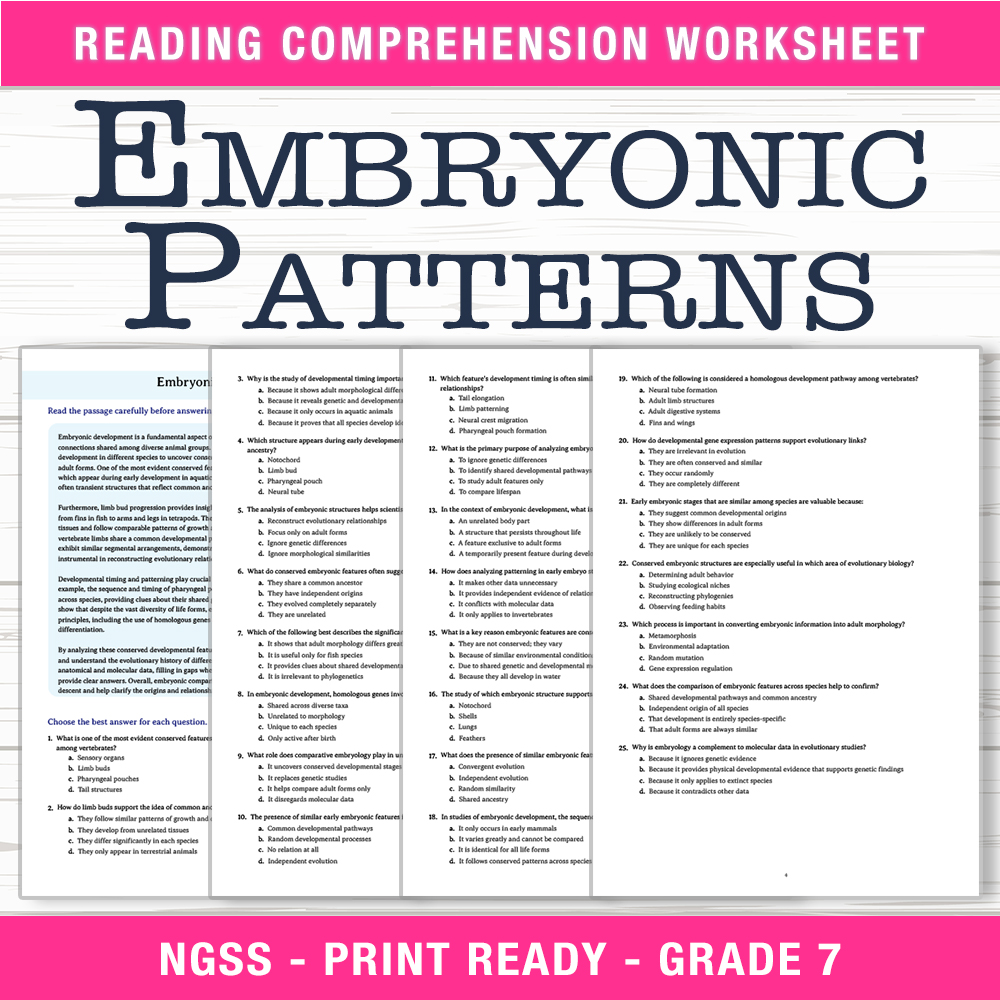
Grade 7 Science | Embryonic Patterns Worksheet (PDF + Answer Key)
 Created byRiverstone Classroom
Learning Objectives
- Understand the concept of conserved embryonic development stages across different taxa.
- Identify morphological similarities in early embryonic structures that reflect evolutionary relationships.
- Analyze how developmental timing and patterning support phylogenetic reconstruction.
Instant download
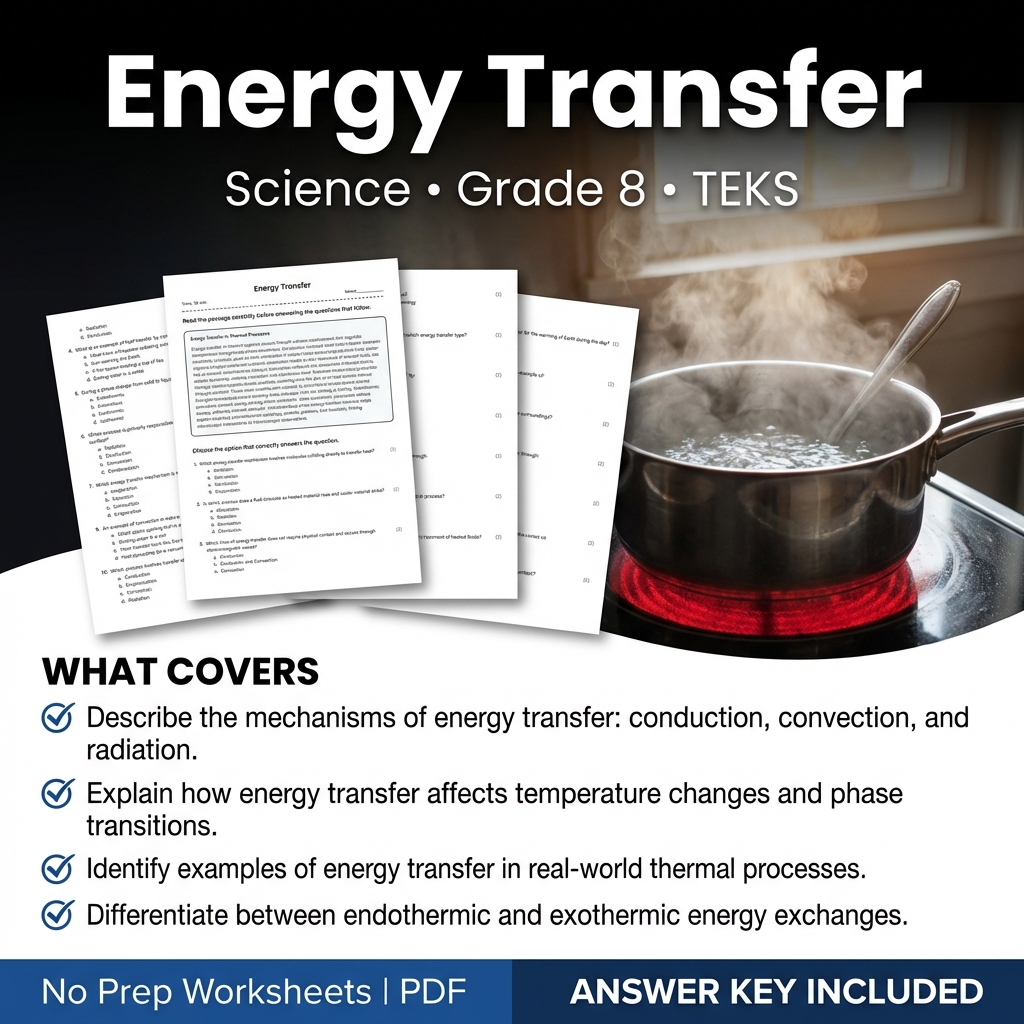
Energy Transfer Worksheet for Grade 8 Science | TEKS Aligned
Created byCoral Reef LearningLearning Objectives
- Describe the mechanisms of energy transfer: conduction, convection, and radiation.
- Explain how energy transfer affects temperature changes and phase transitions.
- Identify examples of energy transfer in real-world thermal processes.
Instant download
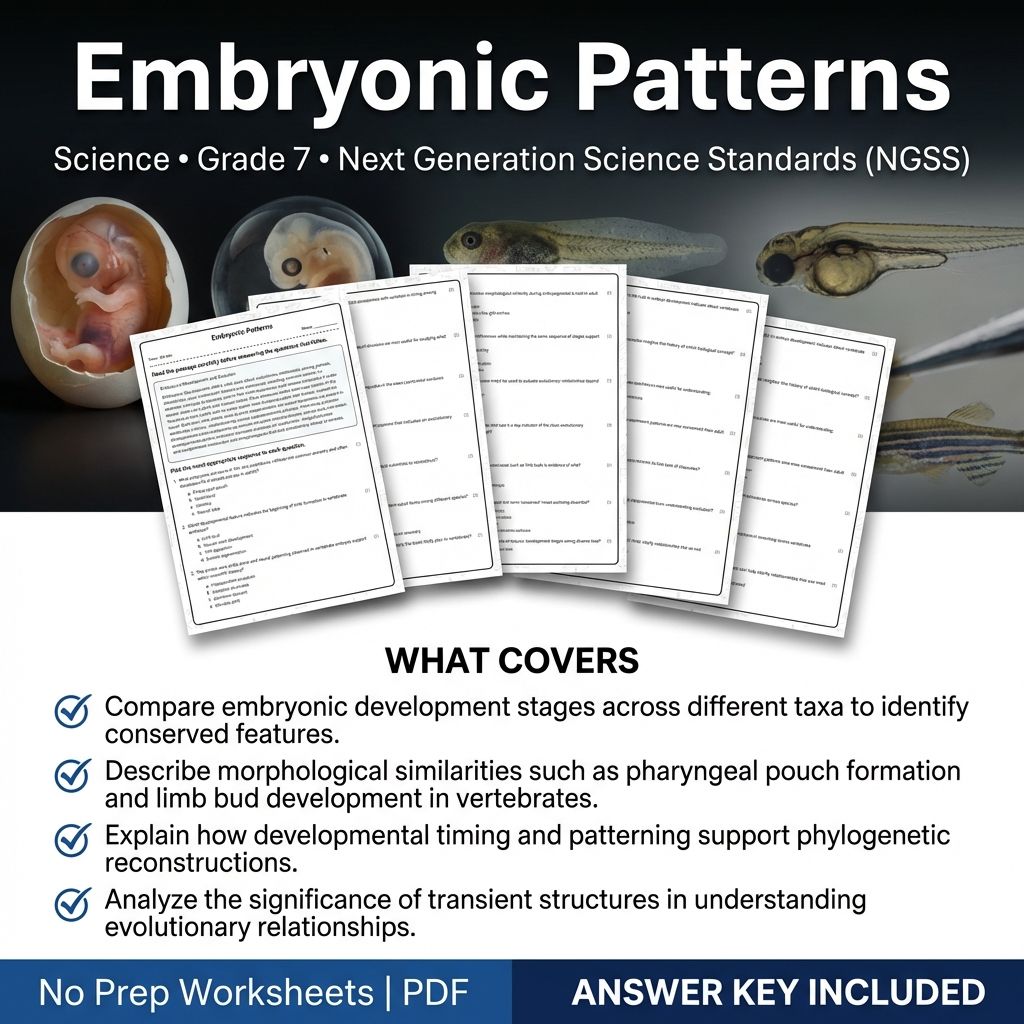
Grade 7 Science | Embryonic Patterns Worksheet & Answer Key (Printable PDF)
Created byCoral Reef LearningLearning Objectives
- Compare embryonic development stages across different taxa to identify conserved features.
- Describe morphological similarities such as pharyngeal pouch formation and limb bud development in vertebrates.
- Explain how developmental timing and patterning support phylogenetic reconstructions.
Instant download

Embryonic Development and Evolution Worksheets | Grade 7 Science
 Created bythe curious pencil
Learning Objectives
- Describe how embryonic similarities provide evolutionary evidence
- Identify conserved developmental features in vertebrate embryos
- Explain the role of transient developmental structures
Also included in: Biological Evolution Worksheets Bundle | Grade 7 Science NGSS +2 more
Instant download

Grade 7 Embryonic Patterns and Evolution Worksheet | NGSS Life Science
 Created byBRIGHT PATH RESOURCES
Learning Objectives
- Identify key stages of embryonic development across different animal groups
- Compare and contrast embryonic features among taxa to understand evolutionary relationships
- Recognize conserved structures such as pharyngeal pouches and limb buds
Also included in: Evolution & Genetics Grade 7 Science Worksheets Lesson Bundle | NGSS +2 more
Instant download
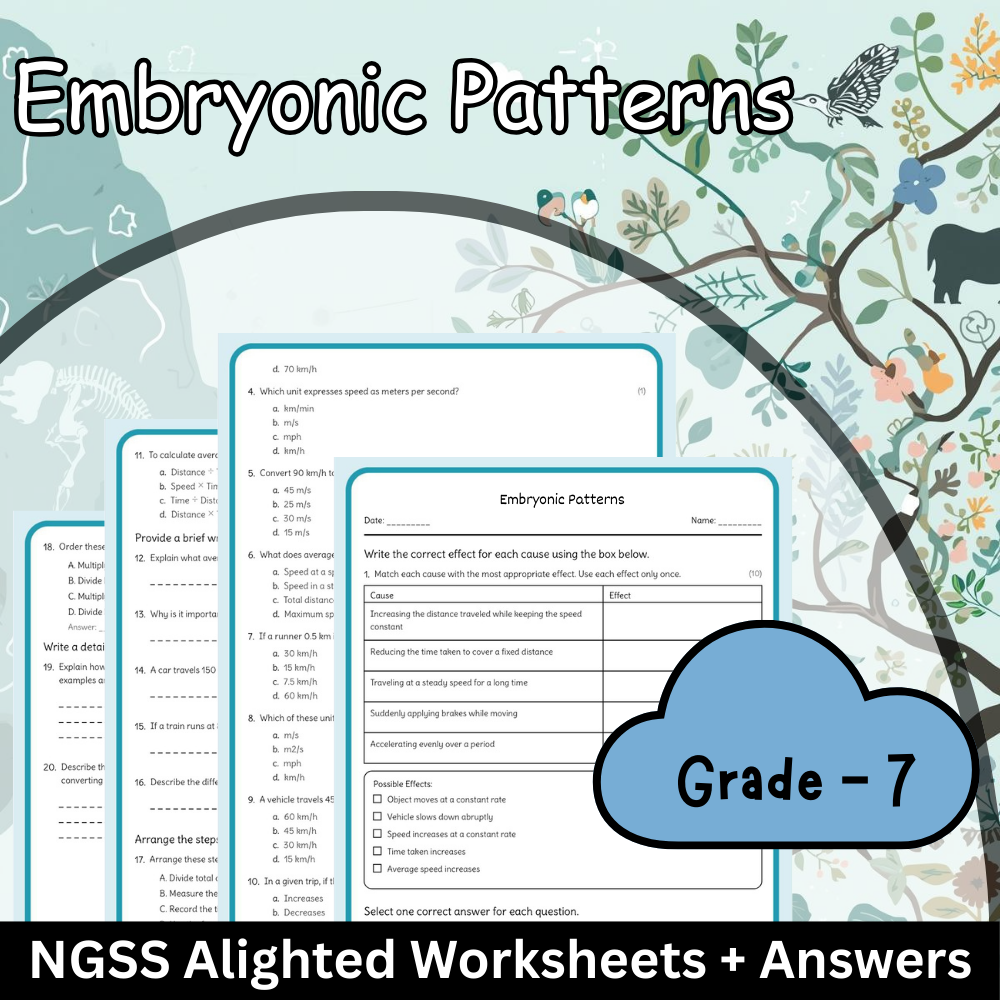
7th Grade Science | Embryonic Patterns Worksheet (Answer Key) NGSS Aligned
Created byBright Mind ResourcesLearning Objectives
- Compare embryonic development stages across different animal taxa.
- Identify conserved structures such as pharyngeal pouches and limb buds during development.
- Understand how developmental timing and patterning inform evolutionary relationships.
Instant download

Embryonic Patterns Practice Worksheet | Grade 7 Science NGSS Review
Created byPrism Point LearningLearning Objectives
- Compare embryonic development across animal groups to identify conserved stages and transient structures.
- Explain how developmental timing and patterning can support evolutionary relationships.
- Use embryology evidence (e.g., pharyngeal pouches and limb buds) to make claims about shared developmental pathways.
Also included in: Grade 7 Evolution, Natural Selection Science Lesson Bundle for NGSS
Instant download

Grade 7 Science Worksheet on Embryonic Patterns | NGSS Assessments
 Created bySkylark Worksheets
Learning Objectives
- Explain how early embryonic structures can be conserved across different animal groups
- Compare embryonic features (pharyngeal pouches, limb buds, and body-plan patterns) across taxa
- Use developmental timing to support ideas about evolutionary relationships
Also included in: Grade 7 Speciation and Evolution Evidence Science Lesson Bundle NGSS +1 more
Instant download
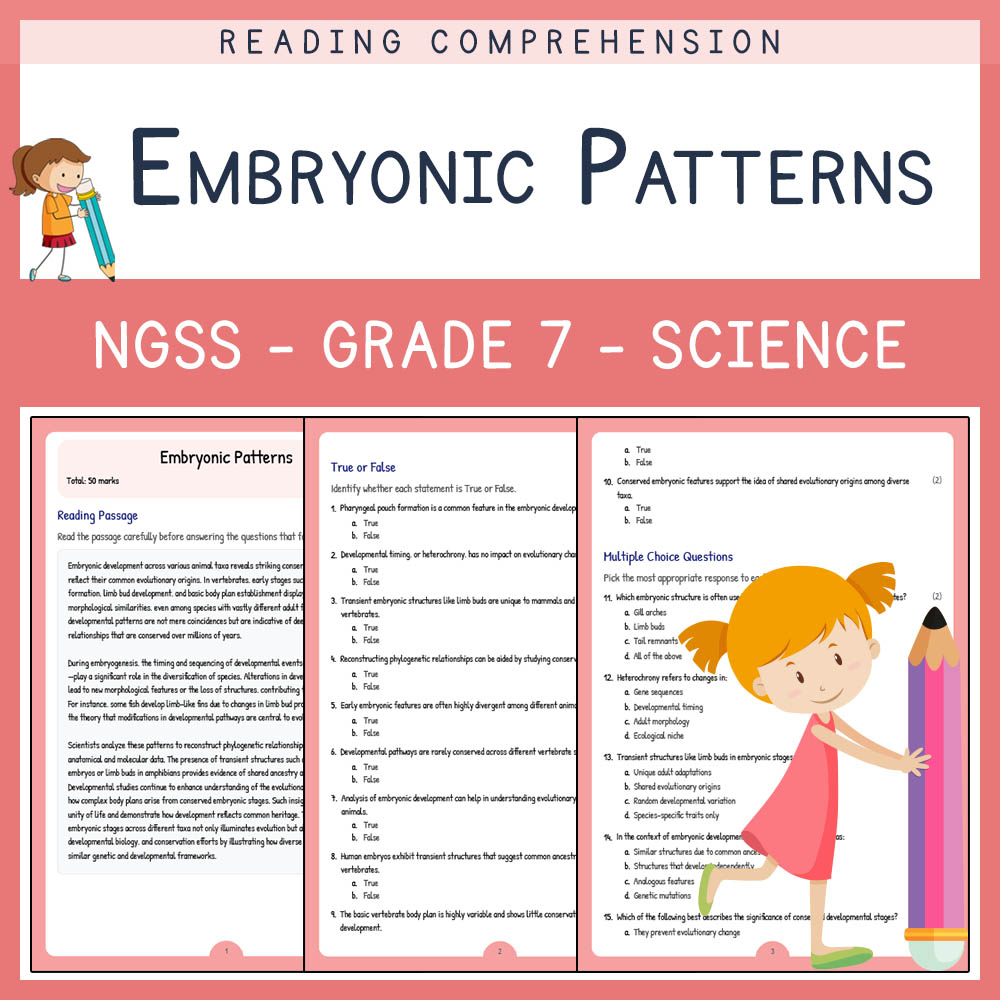
Grade 7 Science | Embryonic Patterns Worksheet PDF | NGSS-Aligned
 Created byLumora Learning
Learning Objectives
- Understand the key stages in embryonic development across different taxa.
- Identify conserved embryonic structures and their significance in evolution.
- Analyze developmental timing and patterning to infer phylogenetic relationships.
Instant download

Grade 7 Embryonic Patterns Worksheet | NGSS Practice PDF
 Created byClear Sky Classroom
Learning Objectives
- Compare embryonic development stages across different taxa.
- Identify conserved developmental structures such as pharyngeal pouches and limb buds.
- Analyze how developmental timing supports evolutionary relationships.
Also included in: Grade 7 Natural Selection & Adaptation Science Lesson Bundle for NGSS +1 more
Instant download

Embryonic Patterns Worksheet | NGSS-Aligned Science Practice for Grade 7
JCreated byJ.S SheetsLearning Objectives
- Compare embryonic development stages across different taxa to identify conserved features.
- Explain how developmental structures like pharyngeal pouches and limb buds reflect evolutionary relationships.
- Analyze developmental timing and patterning to understand phylogenetic connections among vertebrates.
Also included in: Grade 7 Evolution Evidence and Speciation Processes Science Lesson Bundle – NGSS +1 more
Instant download

Physiological Systems Practice Test | Grade 10 Science NGSS Worksheet
Created byPrism Point LearningLearning Objectives
- Compare how major physiological systems coordinate to move materials through the body (transport, gas exchange, nutrient delivery, and waste removal).
- Explain how structure supports function in circulatory, respiratory, digestive, excretory, and integumentary systems.
- Use surface area-to-volume and transport ideas to describe how organism demands are met.
Also included in: Grade 10 Cellular Regulation and Energy Science Lesson Bundle (NGSS)
Instant download
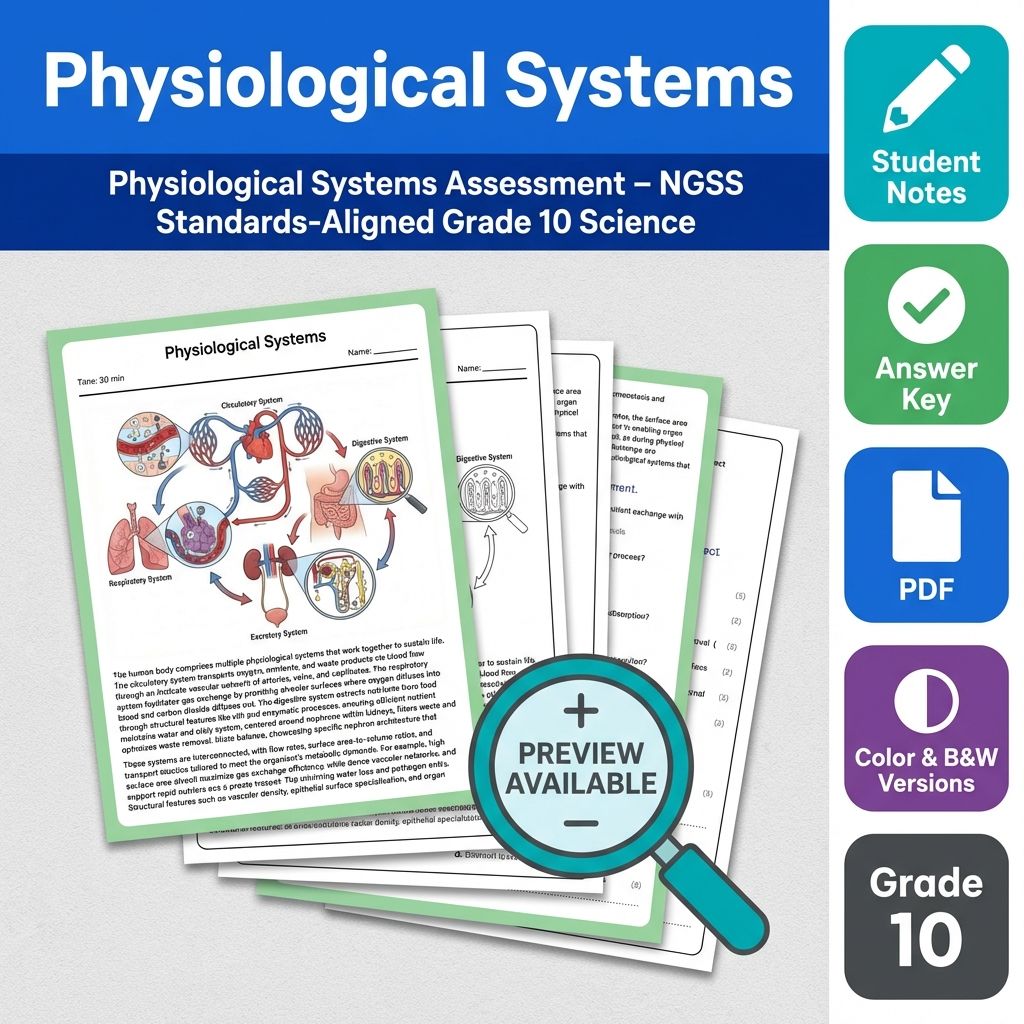
Physiological Systems Assessment – NGSS Standards-Aligned Grade 10 Science
Created byPrism Point LearningLearning Objectives
- Understand the structural features of circulatory, respiratory, digestive, excretory, and integumentary systems.
- Analyze how organ systems coordinate to meet organismal metabolic demands.
- Describe functional imperatives such as transport rates, surface area relationships, and transport kinetics.
Also included in: Grade 10 Science | Cell Signaling & Physiology NGSS Assessment Bundle
Instant download

Grade 10 Science – Circulatory System Daily Reading Worksheet | NGSS Aligned
Created byBright Mind ResourcesLearning Objectives
- Understand the structure and function of the circulatory system.
- Identify components such as blood vessels, chambers of the heart, and blood flow pathways.
- Explain how blood circulation supports other physiological systems.
Also included in: Homeostasis Grade 10 Science Daily Reading Worksheets Lesson Bundle | NGSS +2 more
Instant download
Grade 10 Science | Physiological Systems Worksheet & Answer Key (PDF)
Created byLumora LearningLearning Objectives
- Describe the structural features of different physiological systems and their functional significance.
- Compare how organ systems integrate to meet organismal metabolic demands.
- Explain the relationship between structure and function in systems such as circulatory, respiratory, digestive, excretory, and integumentary.
Instant download
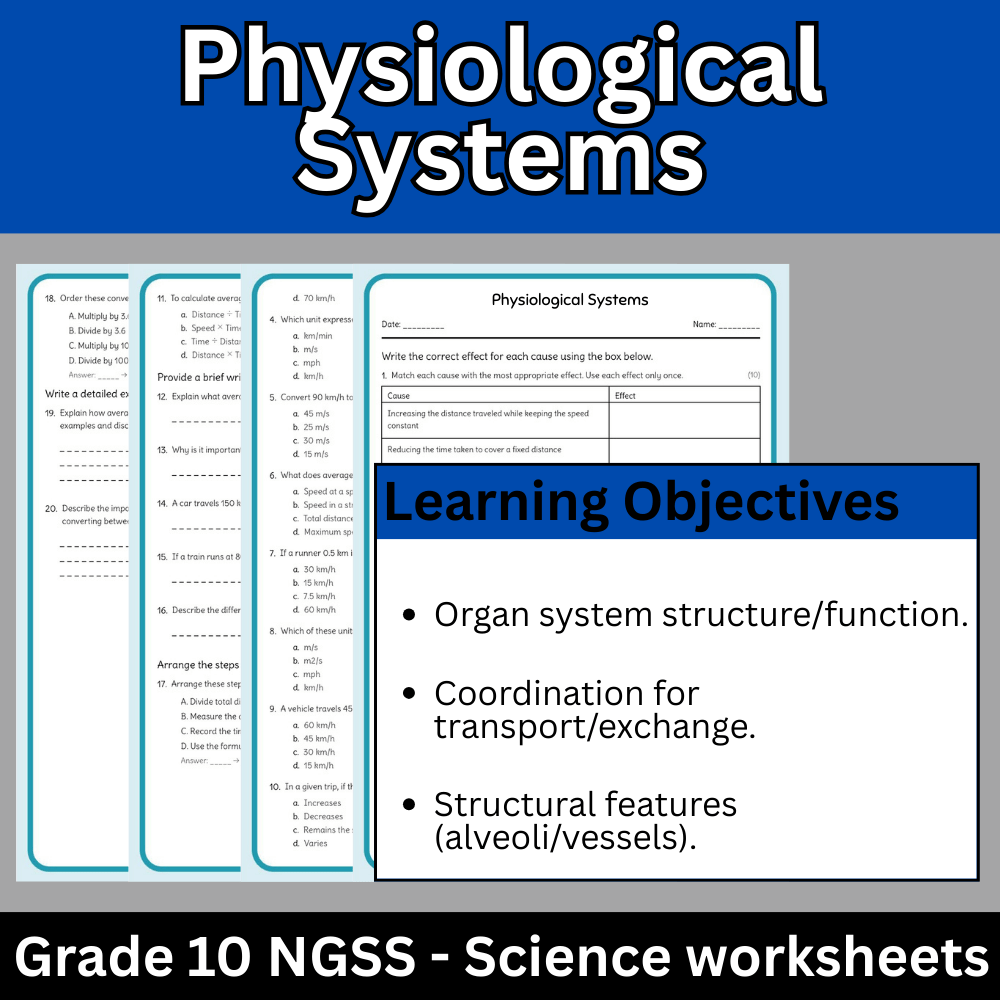
Grade 10 Science | Physiological Systems Worksheet (NGSS Aligned, PDF)
Created byBright Mind ResourcesLearning Objectives
- Compare and analyze the structure and function of circulatory, respiratory, digestive, excretory, and integumentary systems.
- Explain how different organ systems coordinate to meet organismal needs for transport, gas exchange, nutrient distribution, and waste removal.
- Describe the relationship between structural features like vascular networks and alveoli with their functional imperatives.
Instant download
10th Grade Science | Physiological Systems Reading Worksheet (PDF & Answer Key)
JCreated byJ.S SheetsLearning Objectives
- Understand the structural features and functions of various physiological systems including circulatory, respiratory, digestive, excretory, and integumentary systems.
- Analyze how organ systems work together to meet organismal metabolic demands through flow rates, surface area, and transport mechanisms.
- Compare structural features such as vascular networks, alveoli, nephron architecture, and epithelial barriers and relate them to their functions.
Also included in: Grade 10 Science Unit | Cellular & Physiological Systems Worksheets
Instant download
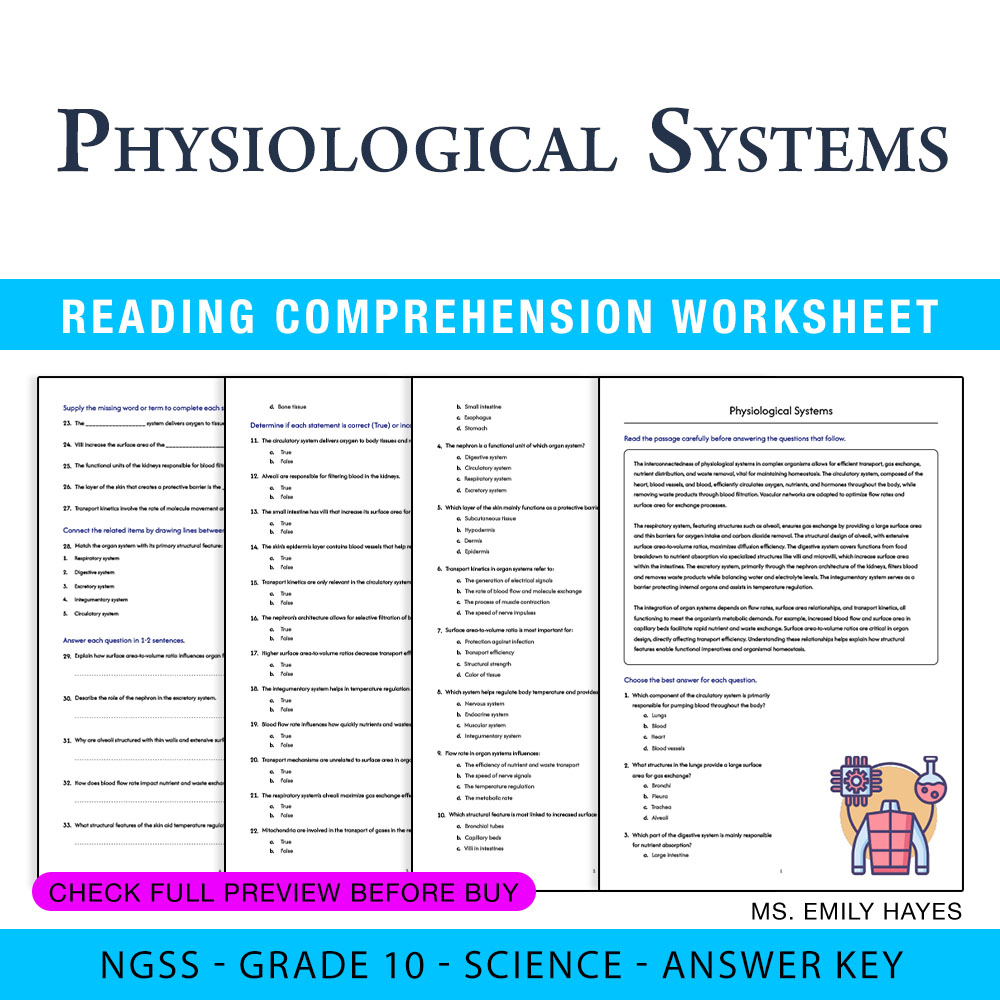
Grade 10 Science | Physiological Systems Worksheet (PDF+ Answer Key)
 Created byCopper Leaf Classroom
Learning Objectives
- Describe the structural features and functions of the circulatory, respiratory, digestive, excretory, and integumentary systems.
- Analyze how different organ systems coordinate to meet organismal demands using flow rates, surface area relationships, and transport mechanisms.
- Compare and contrast structural adaptations and their functional implications across various physiological systems.
Instant download

Species Interactions Assessment for Grade 8 Science | Florida NGSSS
Created byPrism Point LearningLearning Objectives
- Explain how competition, predation, mutualism, commensalism, and parasitism affect survival and reproduction
- Describe how species interactions can change population sizes over time
- Use evidence from examples to identify the type of species interaction and its ecosystem impact
Also included in: Grade 8 Evolution and Genetics Science Lesson Bundle | Florida NGSSS
Instant download

Physiological Systems Worksheet for Grade 10 Science | NGSS Assessment
Learning Objectives
- Compare how the circulatory, respiratory, digestive, excretory, and integumentary systems support internal transport and homeostasis
- Explain how structure (e.g., vascular networks, alveoli, nephrons, epithelial barriers) supports function (e.g., diffusion, filtration, reabsorption, waste removal)
- Describe how flow rates, surface area-to-volume ratios, and transport kinetics affect the movement of gases, nutrients, and wastes
Also included in: From Molecules to Organisms Lesson Bundle | Grade 10 Science | NGSS
Instant download

Species Interactions Worksheet Pack | Grade 8 Ecology Science Activities
Created byPrism Point LearningLearning Objectives
- Explain how competition, predation, mutualism, commensalism, and parasitism affect survival and reproduction
- Describe how symbiotic relationships can change growth and population sizes in ecosystems
- Connect species interactions to ecosystem stability and biodiversity
Also included in: Grade 8 Genetics, Evolution & Ecosystems Lesson Bundle | Florida NGSSS
Instant download
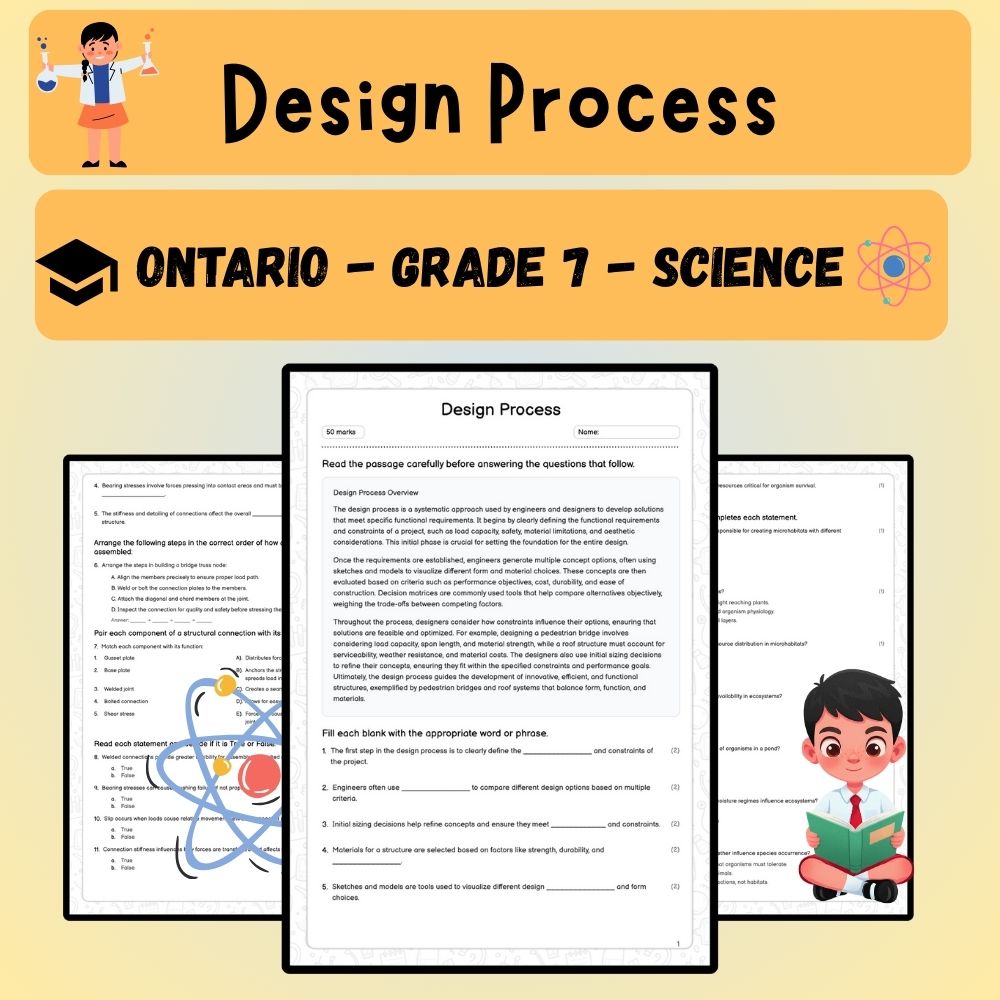
Grade 7 Science - Design Process Worksheet (PDF) – Ontario Standards
Created byPrism Point LearningLearning Objectives
- Understand the steps involved in the design process from defining requirements to selecting solutions.
- Identify key performance objectives and how they influence design choices.
- Apply decision matrices and sketches to compare different design alternatives.
Also included in: Grade 7 Science Unit | Structural Engineering & Material Testing Worksheets Bundle +1 more
Instant download
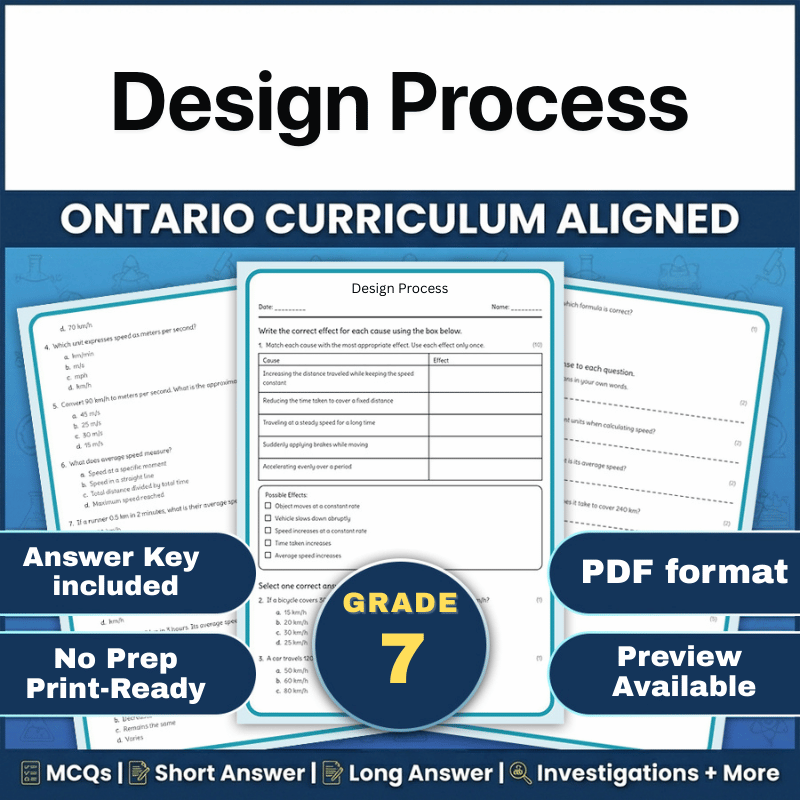
Grade 7 Science – Design Process Worksheet (Ontario) (PDF)
Created byBright Mind ResourcesLearning Objectives
- Understand the steps involved in the design process from requirements to decision-making.
- Identify and evaluate design constraints, specifications, and performance objectives.
- Apply decision matrices and sketches to compare alternative solutions.
Instant download
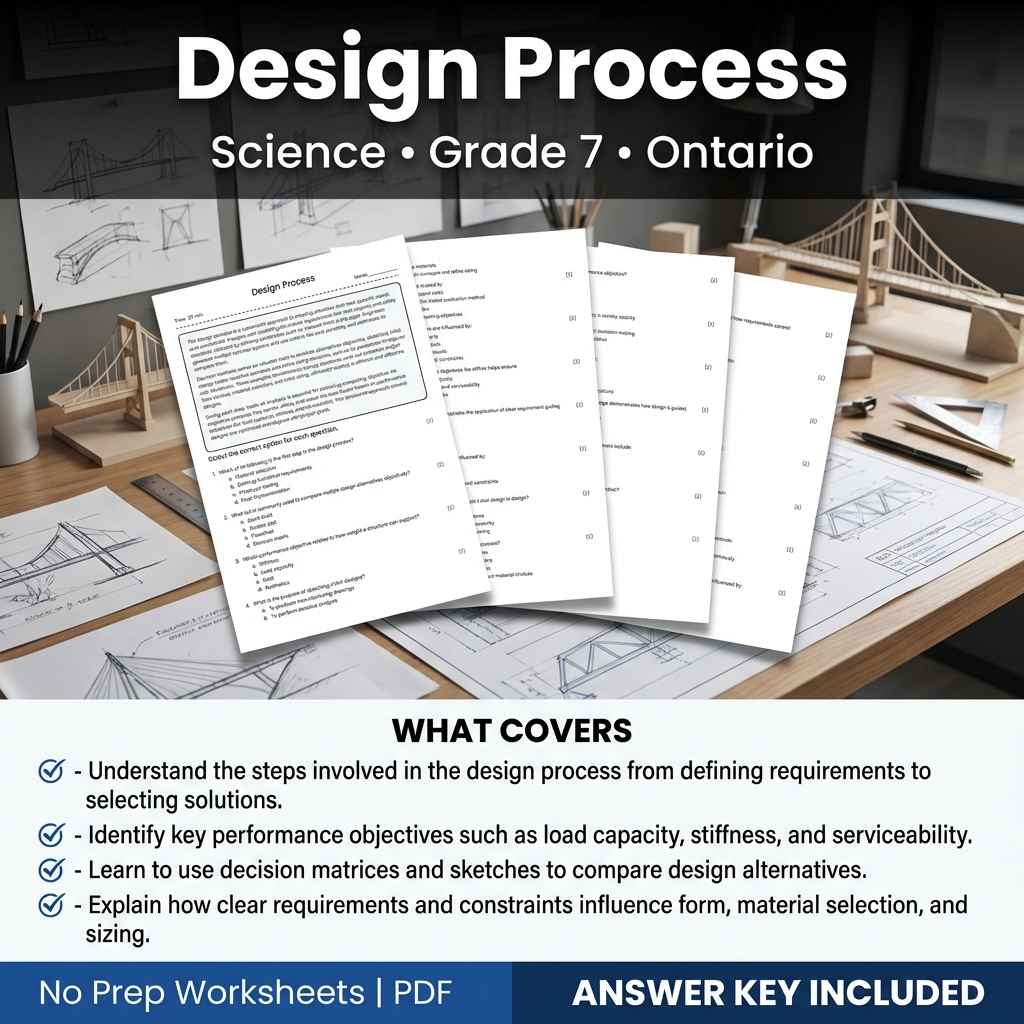
Grade 7 Science Worksheet on Design Process | Ontario Standards
Created byCoral Reef LearningLearning Objectives
- Understand the steps involved in the design process from defining requirements to selecting solutions.
- Identify key performance objectives such as load capacity, stiffness, and serviceability.
- Learn to use decision matrices and sketches to compare design alternatives.
Instant download

Science Grade 7 Worksheet | Design Process—Requirements, Constraints & Tools
JCreated byJ.S SheetsLearning Objectives
- Explain how functional requirements and constraints guide the steps of the design process.
- Use performance objectives (load capacity, stiffness, serviceability) to compare and select design options.
- Describe how decision matrices, sketches, and trade-off analysis support choosing a preferred solution.
Instant download

Species Interactions Worksheet | Grade 8 Science NGSSS Ecology + Answer Key
Created byEvergreen Desk EducationLearning Objectives
- Identify major types of species interactions (competition, predation, mutualism, commensalism, and parasitism).
- Explain how interactions affect survival, reproduction, and population size in ecosystems.
- Describe how symbiotic relationships can influence ecosystem stability and biodiversity.
Instant download
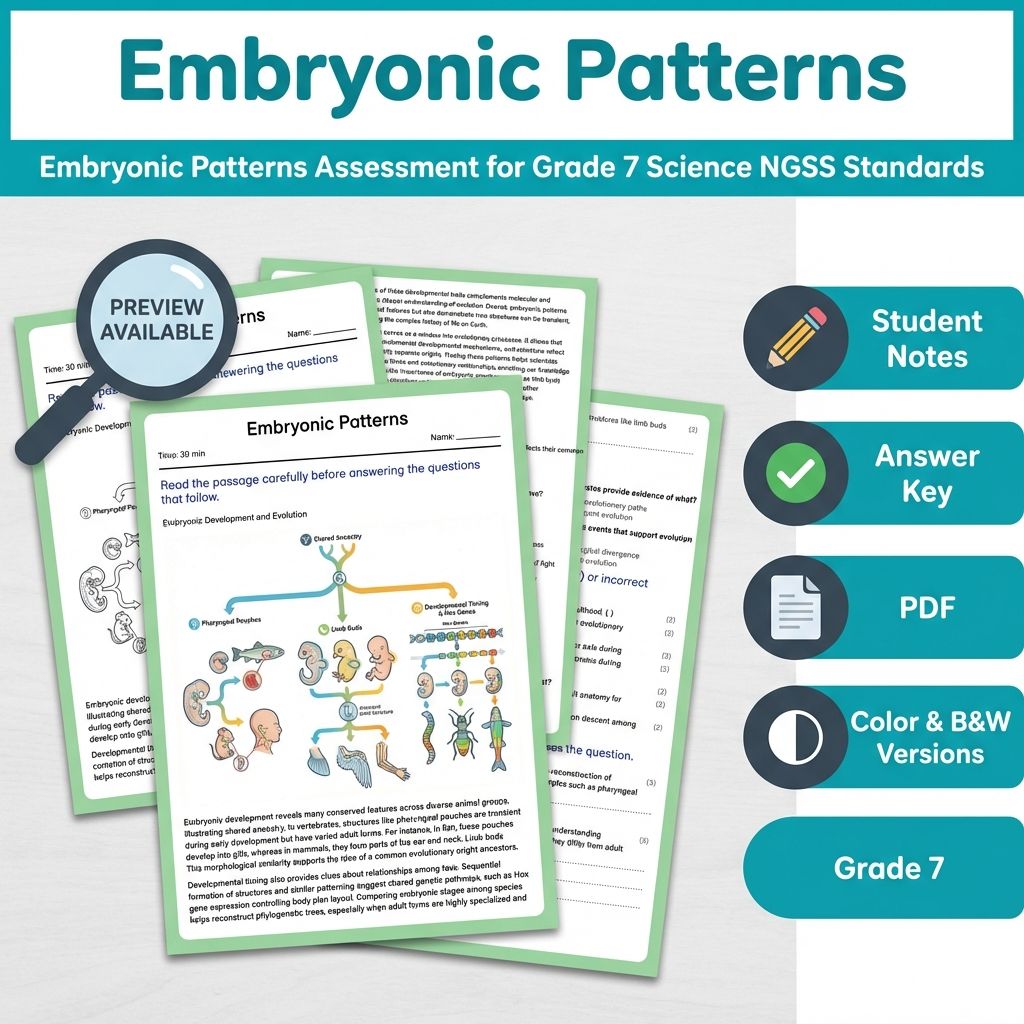
Embryonic Patterns Assessment for Grade 7 Science NGSS Standards
Created byPrism Point LearningLearning Objectives
- Compare embryonic development stages across different taxa to identify conserved features.
- Analyze morphological similarities in embryonic structures such as pharyngeal pouches and limb buds.
- Understand how developmental timing aids in reconstructing evolutionary relationships.
Also included in: Grade 7 Science Mini Bundle – Biological Evolution: Unity & Diversity +1 more
Instant download

Grade 8 Science | Model-Based Refinement in Science - Daily Reading Practice
Created byCoral Reef LearningLearning Objectives
- Understand the use of models in scientific testing and design.
- Identify different types of scientific models and their applications.
- Explain how model outputs guide improvements in design features.
Instant download
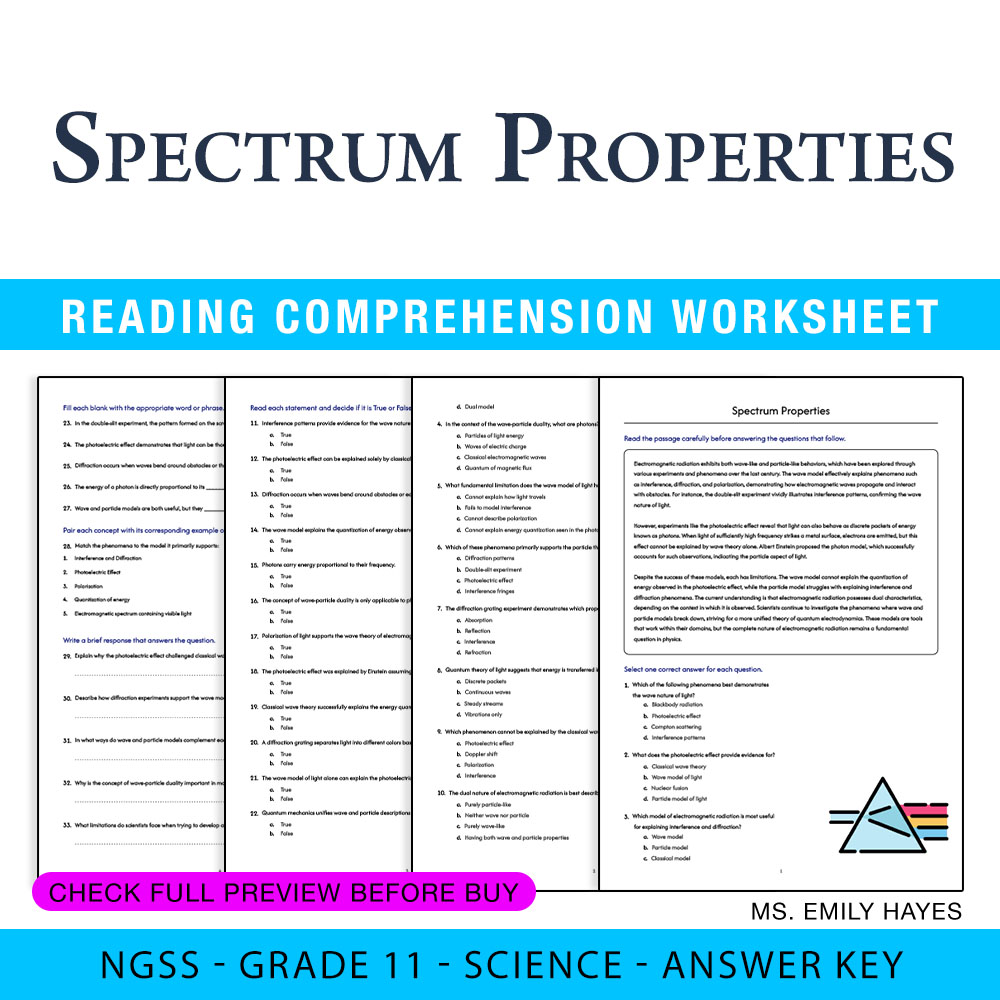
Grade 11 Science | Spectrum Properties Worksheet (PDF+ Answer Key)
Created byCopper Leaf ClassroomLearning Objectives
- Understand the evidence supporting wave and particle models of electromagnetic radiation.
- Explain how phenomena like interference, diffraction, and the photoelectric effect support different models.
- Evaluate where each model of electromagnetic radiation applies and where it breaks down.
Instant download
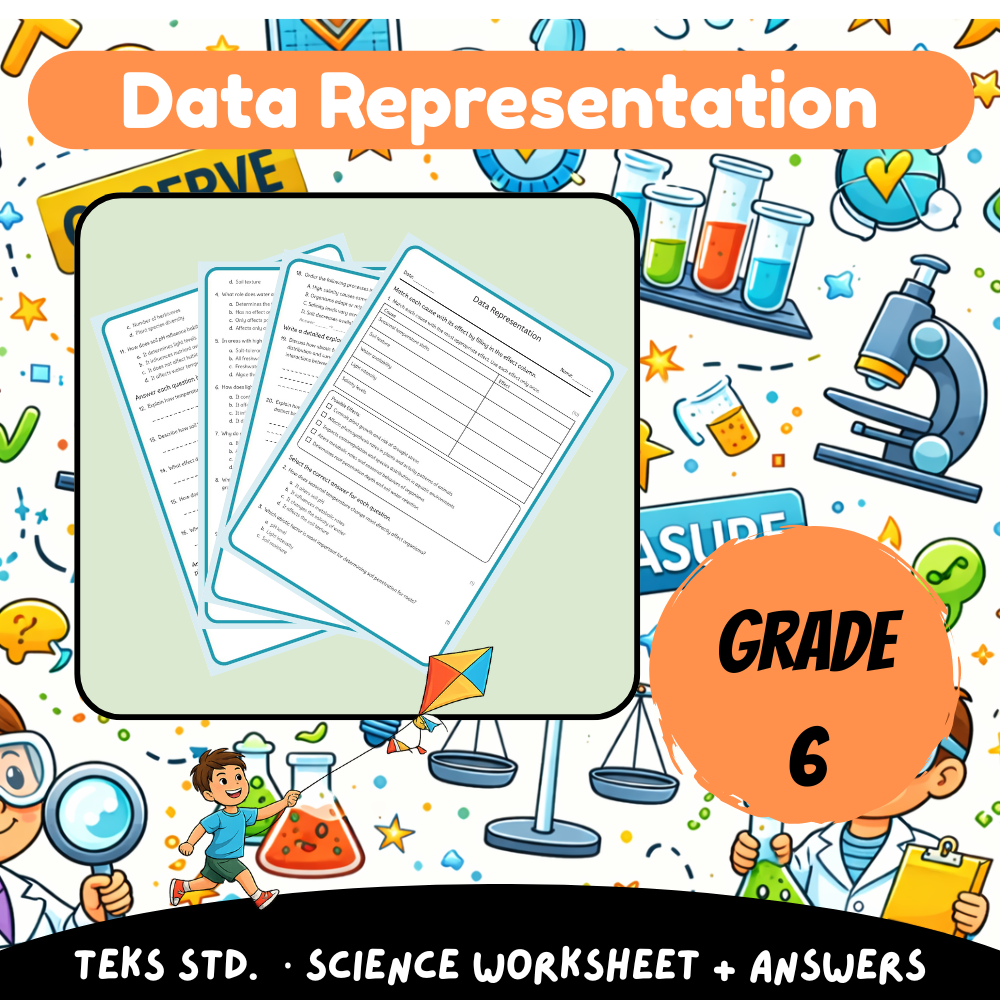
6th Grade Science | Data Representation Worksheet (PDF) – TEKS Standards
Created byBright Mind ResourcesLearning Objectives
- Understand different methods of data organization such as tables, line graphs, bar graphs, and scatter plots
- Learn proper axis labeling, scale selection, and interpretation of graphs
- Apply data representation techniques to real-world examples like mass change over time and distance over time
Instant download

Argumentation Models Worksheet | Grade 7 Science Activities
Created byPrism Point LearningLearning Objectives
- Construct evidence-based scientific arguments using claims, evidence, and reasoning that are logically coherent.
- Critique and compare argumentation models by evaluating data quality, graphical representations, and limits of inference.
- Use quantitative results and model-based explanations to support or refute a hypothesis while citing sources of information.
Also included in: Grade 7 Scientific Data & Argumentation Science Lesson Bundle (TEKS)
Instant download
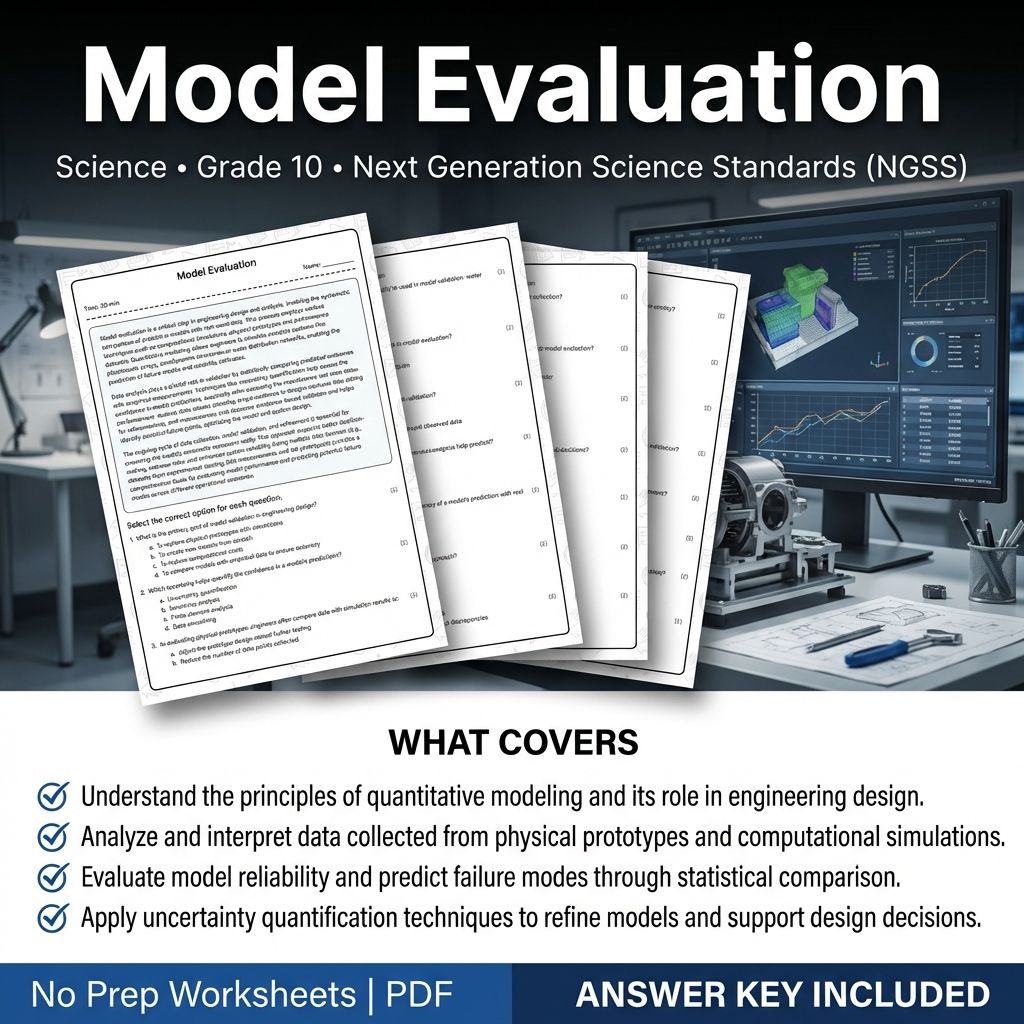
10th Grade Science | Model Evaluation Worksheet & Answer Key (Printable PDF)
Created byCoral Reef LearningLearning Objectives
- Understand the principles of quantitative modeling and its role in engineering design.
- Analyze and interpret data collected from physical prototypes and computational simulations.
- Evaluate model reliability and predict failure modes through statistical comparison.
Also included in: Grade 10 Science | Engineering & Systems Analysis Worksheet Bundle (PDF) +1 more
Instant download
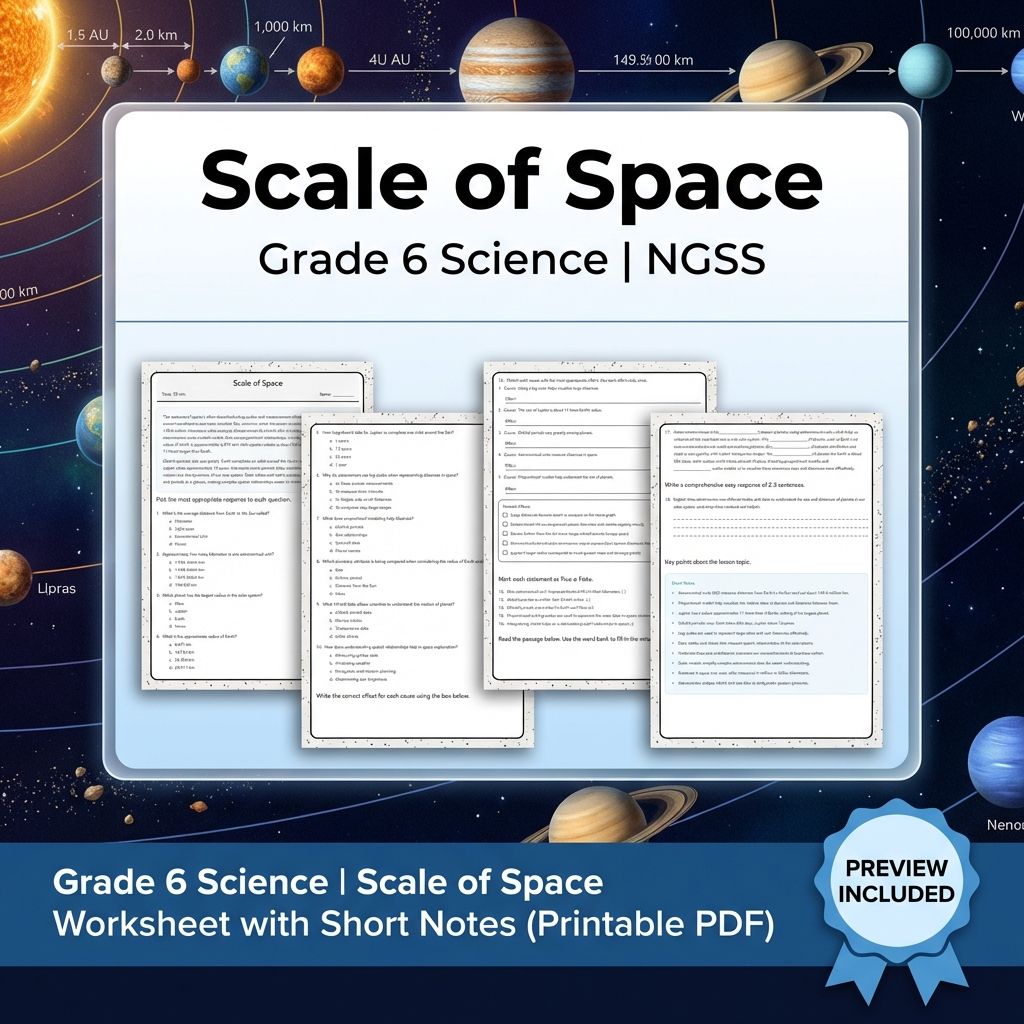
Grade 6 Science | Scale of Space Worksheet with Short Notes (Printable PDF)
Created byMeadowlark WorksheetsLearning Objectives
- Understand the concept of astronomical units and how they relate to distances in space.
- Compare the sizes and orbital periods of planets within the solar system.
- Interpret data tables and charts to analyze spatial relationships among planets.
Also included in: Grade 6 Science | Earth's Place in the Universe Unit Bundle (NGSS Worksheets) +1 more
Instant download
Browse more categories
About Science Worksheets
Find Science worksheets spanning core skills, practice, and review. All 44,627 resources are instant PDF downloads for the classroom or home.
Every worksheet on MyTeachingSheets is created by independent teacher-authors and reviewed before publication. All resources download as printable PDFs for classroom, homework, or at-home practice, and many include answer keys. Preview any worksheet free before buying.