
Science Worksheets
44,773 subject resources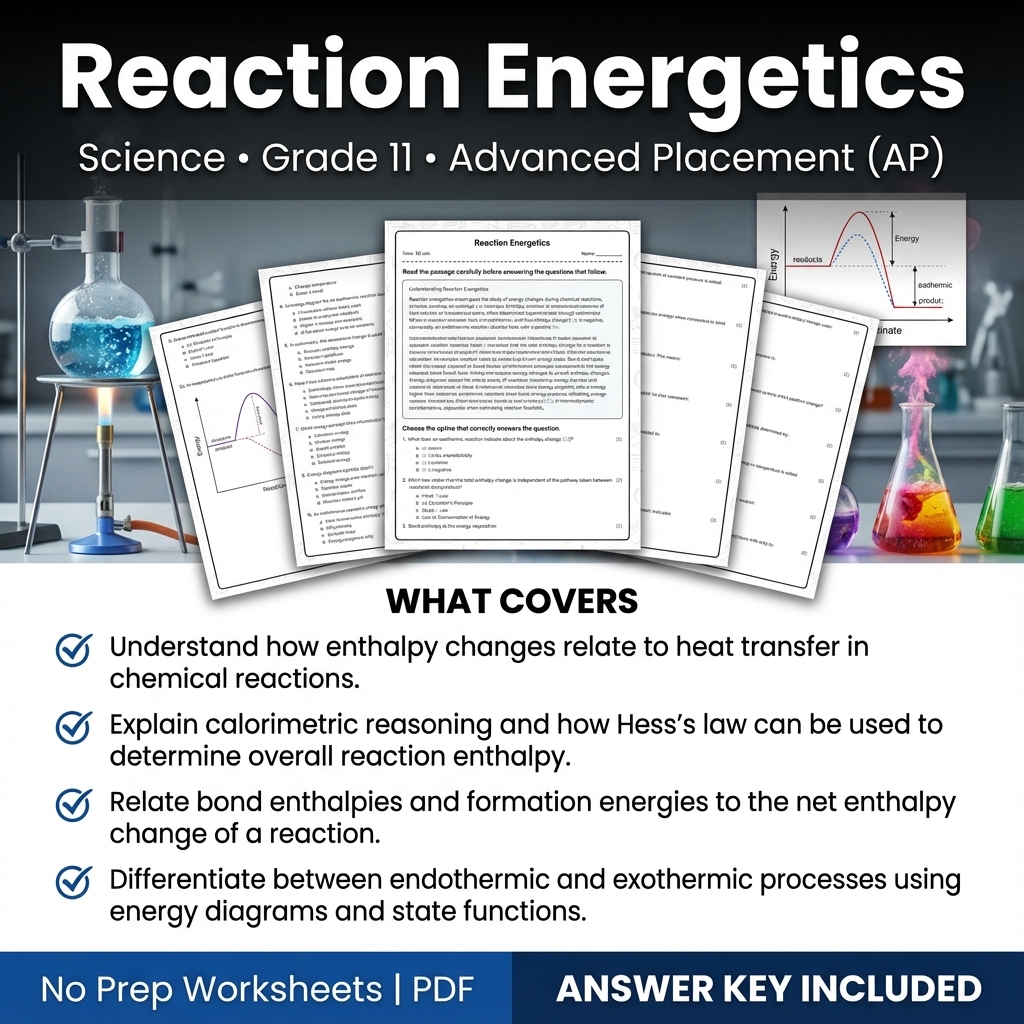
11th Grade Science | Reaction Energetics Worksheet (Printable PDF + Answer Key)
 Created byCoral Reef Learning
Learning Objectives
- Understand how enthalpy changes relate to heat transfer in chemical reactions.
- Explain calorimetric reasoning and how Hess’s law can be used to determine overall reaction enthalpy.
- Relate bond enthalpies and formation energies to the net enthalpy change of a reaction.
Also included in: Grade 11 Science Unit Worksheet Pack | Chemistry & Atomic Structure +1 more
Instant download
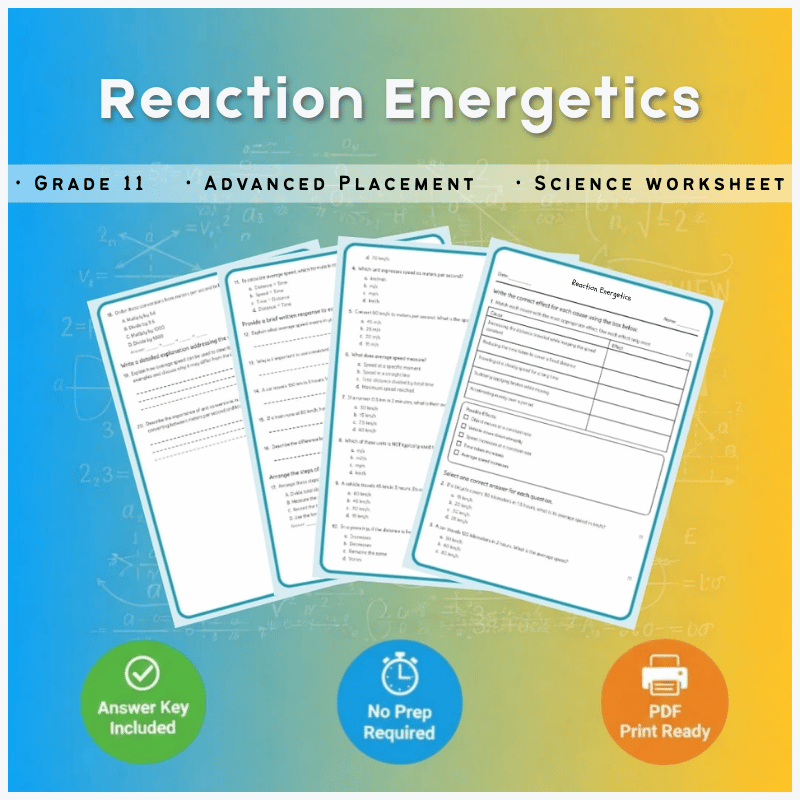
Grade 11 Science | Reaction Energetics Worksheet (Answer Key) | AP Standards
 Created byBright Mind Resources
Learning Objectives
- Understand enthalpy changes and how calorimetry measures reaction heat.
- Explain Hess’s law and how energy steps are combined to determine overall reaction enthalpy.
- Relate bond enthalpies and formation energies to reaction stability and macroscopic enthalpy.
Instant download
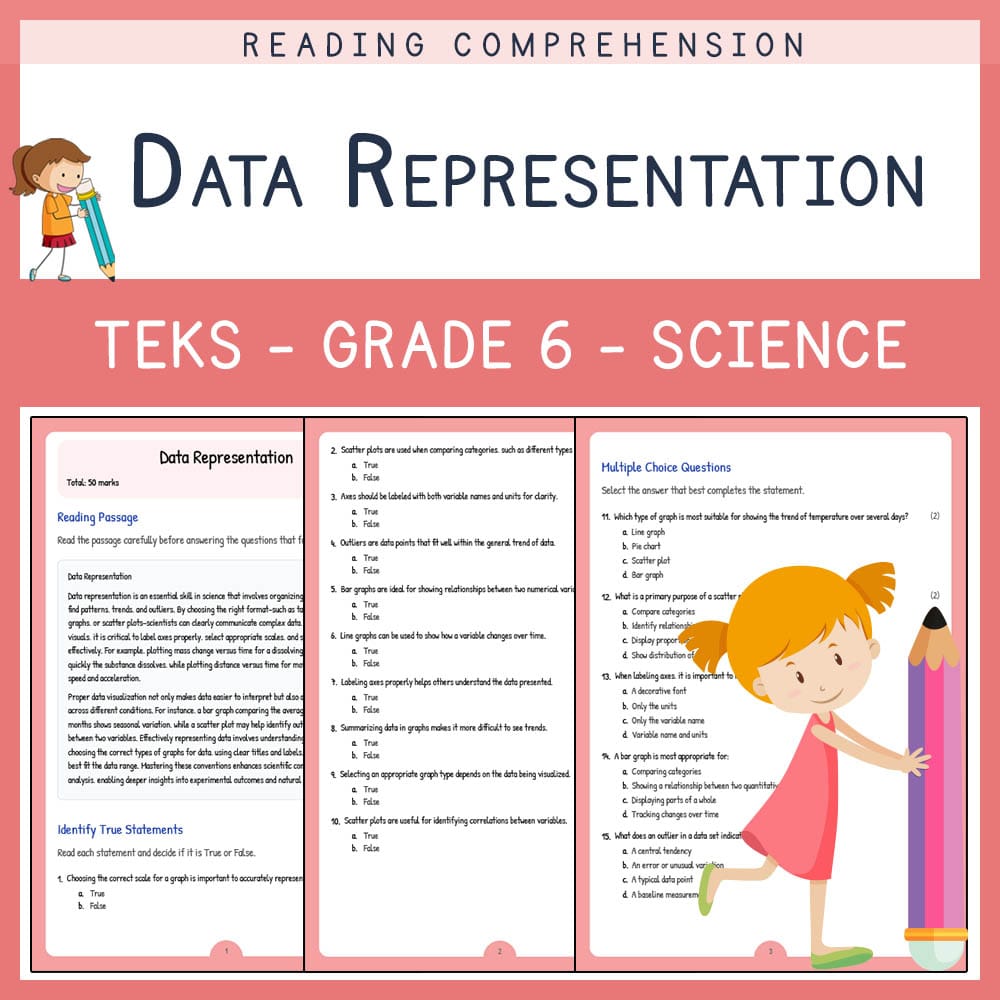
Grade 6 Science | Data Representation Worksheet | TEKS Alligned
 Created byLumora Learning
Learning Objectives
- Understand conventions for organizing data in tables and graphs.
- Identify proper labeling, scaling, and effective graphical summaries.
- Apply data representation to real-world examples to interpret trends.
Instant download

Grade 6 Science | Data Representation in Science - Daily Reading Comprehension
Created byCoral Reef LearningLearning Objectives
- Understand how to organize data into tables
- Interpret information from data tables
- Identify trends and patterns in graphical data
Instant download

Science Grade 11 Model Revision Worksheet | NGSSS Aligned Assessment
JCreated byJ.S SheetsLearning Objectives
- Explain how scientific models are revised when new evidence or improved methods reveal gaps
- Use the process of comparing model predictions to evidence to identify mismatches and update assumptions or structure
- Describe how accumulated findings reshape models over time rather than restarting scientific work
Also included in: Grade 11 Models, Evidence & Explanations Science Lesson Bundle | Florida (NGSSS) +1 more
Instant download

Data Representation Worksheet | TEKS Aligned Grade 6 Science Practice
JCreated byJ.S SheetsLearning Objectives
- Identify how tables and graphs (line, bar, and scatter) represent data and reveal patterns
- Select appropriate axis labels, units, and scales to make graphs accurate and readable
- Interpret trends, relationships, central tendency summaries, and outliers in data displays
Instant download

Data Representation Worksheet Pack | Grade 6 Science Activities
 Created byPrism Point Learning
Learning Objectives
- Use tables and graphs to organize data and communicate meaning clearly.
- Identify correct axis labels and choose an appropriate scale for graphs.
- Recognize patterns and relationships (trends, clusters, or outliers) in data representations.
Also included in: Grade 6 Scientific Investigation Practices Science Lesson Bundle TEKS +1 more
Instant download

6th Grade Science | Data Representation Worksheet (PDF) TEKS Aligned
 Created byEvergreen Desk Education
Learning Objectives
- Use proper conventions to label axes and choose scales when creating tables and graphs.
- Interpret data displays (tables, line graphs, bar graphs, scatter plots) to identify trends and relationships.
- Recognize outliers and patterns in data representations and use them to compare results across conditions.
Instant download

Plate Tectonic Time Worksheet | California Standards Grade 12 Science
JCreated byJ.S SheetsLearning Objectives
- Understand the processes involved in Earth's geologic time scale, including tectonic activity, mountain building, earthquakes, and volcanism.
- Explain how surface processes like weathering and erosion reshape landforms over time.
- Connect present geological features to past events through analysis of Earth's evolving structure.
Also included in: Grade 12 Earth and Space Systems Science Lesson Bundle: California Standards +1 more
Instant download
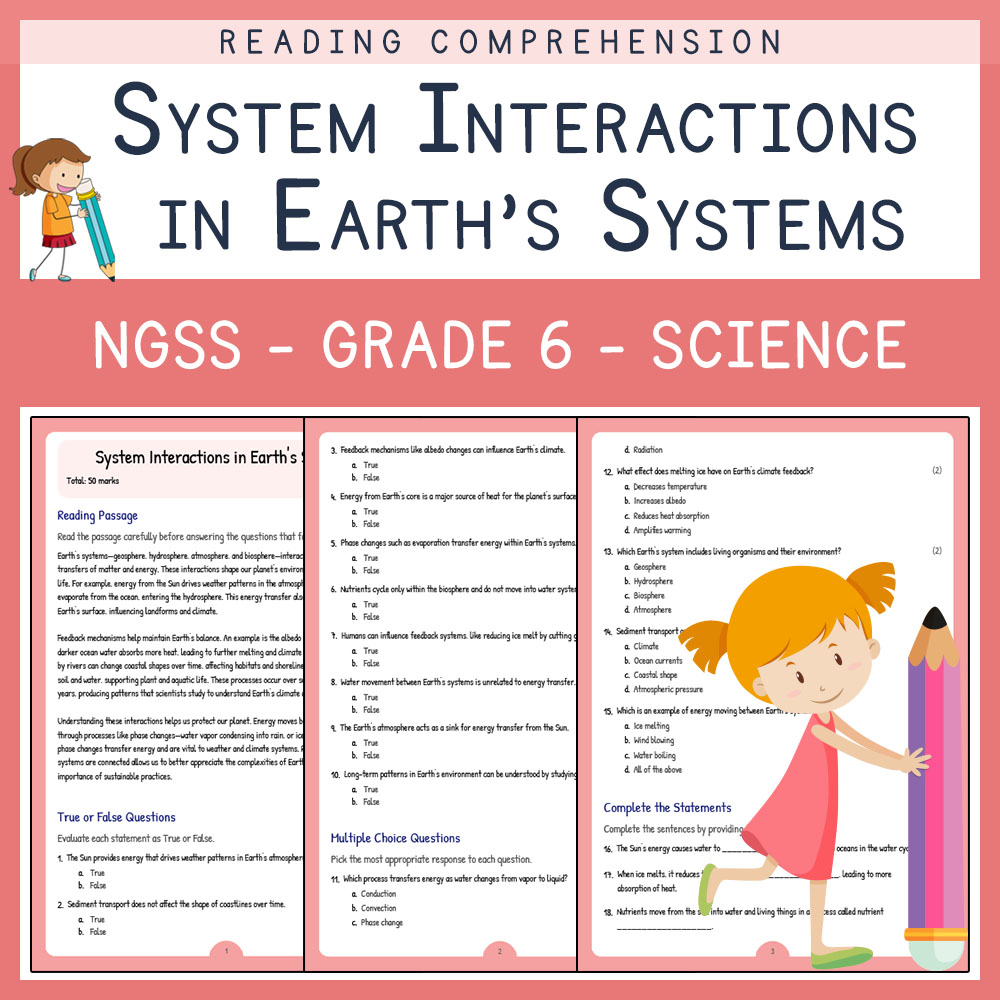
Grade 6 Science | Earth's Systems Interactions Worksheet (PDF) | NGSS Aligned
Created byLumora LearningLearning Objectives
- Understand how Earth's systems interact through the transfer of matter and energy.
- Identify examples of feedback mechanisms like albedo changes, sediment transport, and nutrient movement.
- Describe the flow of energy within Earth's systems including sources, sinks, and phase changes.
Instant download

Grade 12 Plate Tectonic Time Worksheet | Earth Science | California Standards
Created byEvergreen Desk EducationLearning Objectives
- Explain how Earth’s internal and surface processes drive plate tectonics over geologic time.
- Interpret how tectonic events (mountain building, earthquakes, volcanism) connect to changes in landforms through weathering and erosion.
- Use evidence from rock layers and present-day features to reason about past geological conditions.
Instant download

Newtonian Forces Worksheet for Grade 10 Science | Net Force and Motion Practice
JCreated byJ.S SheetsLearning Objectives
- Explain how net force determines whether an object’s motion changes or stays the same.
- Use Newton’s second law (a = Fnet/m) to predict how changes in force and mass affect acceleration.
- Connect equilibrium to balanced forces and zero acceleration.
Also included in: Grade 10 Matter, Energy, and Waves Science Lesson Bundle – Florida (NGSSS) +1 more
Instant download

Grade 10 Science | Newtonian Forces - Daily Reading Comprehension
Created byCoral Reef LearningLearning Objectives
- Understand the concept of force and how it influences motion.
- Identify different types of forces in everyday situations.
- Explain how net force affects the acceleration of an object.
Instant download

Predator Prey Dynamics Worksheet | Standards-Based Practice for Grade 10 Science
JCreated byJ.S SheetsLearning Objectives
- Understand how predator-prey interactions influence ecosystem stability and resource use.
- Identify the effects of predation on prey populations and predator survival.
- Analyze the feedback mechanisms between community structure and resource availability.
Also included in: Grade 10 Genetic Variation and Evolution Science Lesson Bundle +1 more
Instant download

Grade 10 Science – Predator-Prey Dynamics & Ecosystems | Daily Reading Worksheet
Created byBright Mind ResourcesLearning Objectives
- Understand the roles of predators and prey within ecosystems
- Identify examples of predator-prey relationships
- Explain how predator and prey populations influence each other
Also included in: Grade 10 Genetics & Evolution Science Lesson Bundle | California Standards +1 more
Instant download

Grade 10 Predator Prey Dynamics Worksheet | California Science Standards
Created byEvergreen Desk EducationLearning Objectives
- Explain how predator and prey populations affect each other over time using population dynamics terms.
- Describe how predator-prey interactions can change ecosystem carrying capacity and community stability.
- Analyze cause-and-effect relationships between predation, reproduction, and resource availability.
Instant download

Grade 7 Friction and Gravity Science Daily Reading Worksheet | TEKS
 Created byBRIGHT PATH RESOURCES
Learning Objectives
- Identify friction as a contact force that opposes motion between surfaces.
- Explain how friction affects whether an object speeds up, moves at a constant speed, or slows down.
- Distinguish weight and normal force as different force types acting on an object on a surface.
Also included in: Forces & Energy Grade 7 Science Daily Reading Worksheets Lesson Bundle | TEKS +1 more
Instant download

6th Grade Science – Societal Impacts Worksheet (TEKS) PDF
Created byEvergreen Desk EducationLearning Objectives
- Explain how scientific findings lead to societal changes through evidence-based public health, environmental, and resource decisions.
- Use data and indicators to evaluate whether interventions achieve intended short-term and long-term outcomes.
- Describe trade-offs between economic priorities and environmental or health goals using real examples.
Instant download

Grade 6 System Interactions Worksheet | NGSS Practice PDF
 Created byClear Sky Classroom
Learning Objectives
- Describe how Earth's systems transfer matter and energy through models.
- Identify feedback mechanisms such as albedo changes and sediment transport.
- Explain the role of energy sources and sinks in system processes.
Also included in: Grade 6 Earth's Systems Science Lesson Bundle (NGSS-Aligned) Worksheets +1 more
Instant download
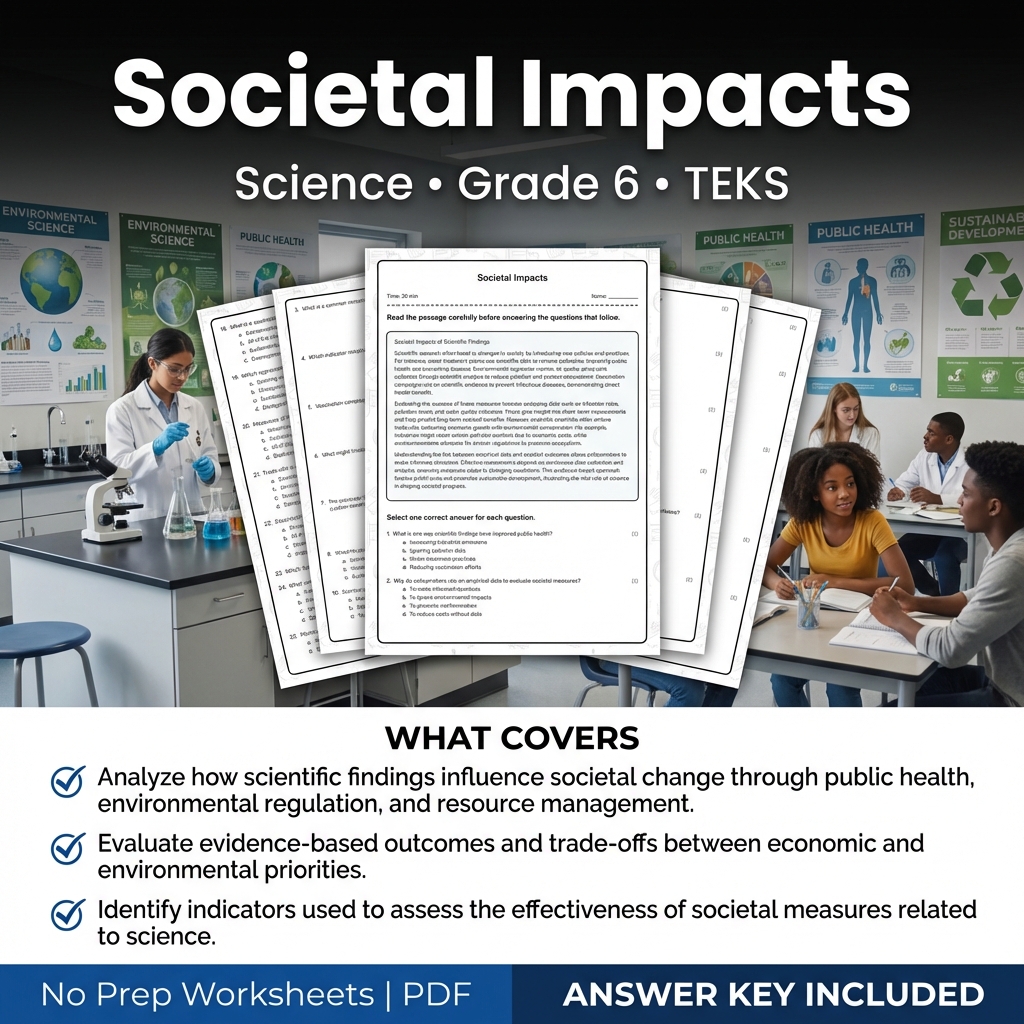
Grade 6 Science Worksheet on Societal Impacts with Answer Key
Created byCoral Reef LearningLearning Objectives
- Analyze how scientific findings influence societal change through public health, environmental regulation, and resource management.
- Evaluate evidence-based outcomes and trade-offs between economic and environmental priorities.
- Identify indicators used to assess the effectiveness of societal measures related to science.
Instant download
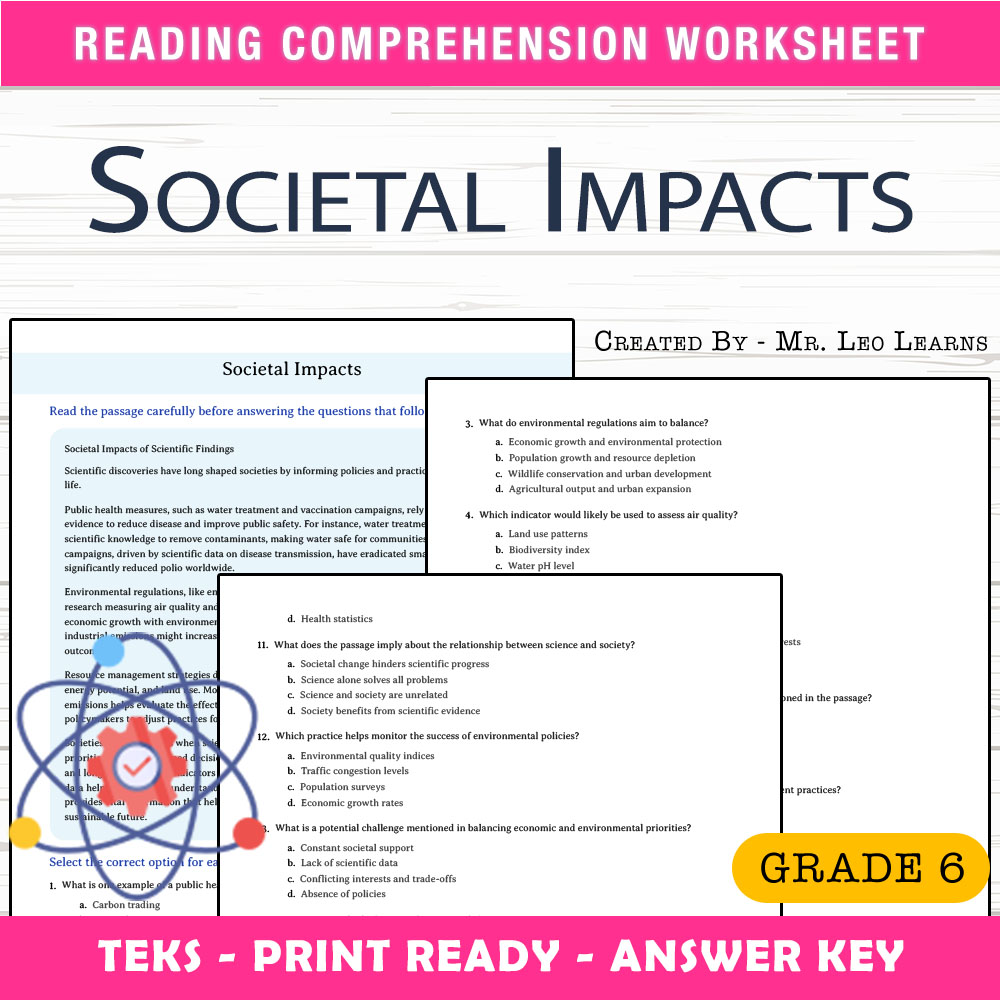
Grade 6 Science – Societal Impacts Worksheet for Mastery
 Created byThe Resource Hub
Learning Objectives
- Analyze how scientific findings influence societal change through public health, environment, and resource management.
- Evaluate evidence and trade-offs in societal decision-making based on scientific data.
- Identify indicators used to assess the effectiveness of societal measures related to science.
Instant download

Societal Impacts of Scientific Findings Assessment | TEKS Grade 6 Science
Created byPrism Point LearningLearning Objectives
- Analyze how scientific data informs public health measures, environmental policies, and resource management.
- Evaluate societal changes resulting from scientific initiatives like water treatment, air quality monitoring, and vaccination campaigns.
- Interpret empirical indicators used to assess the effectiveness of societal interventions.
Instant download
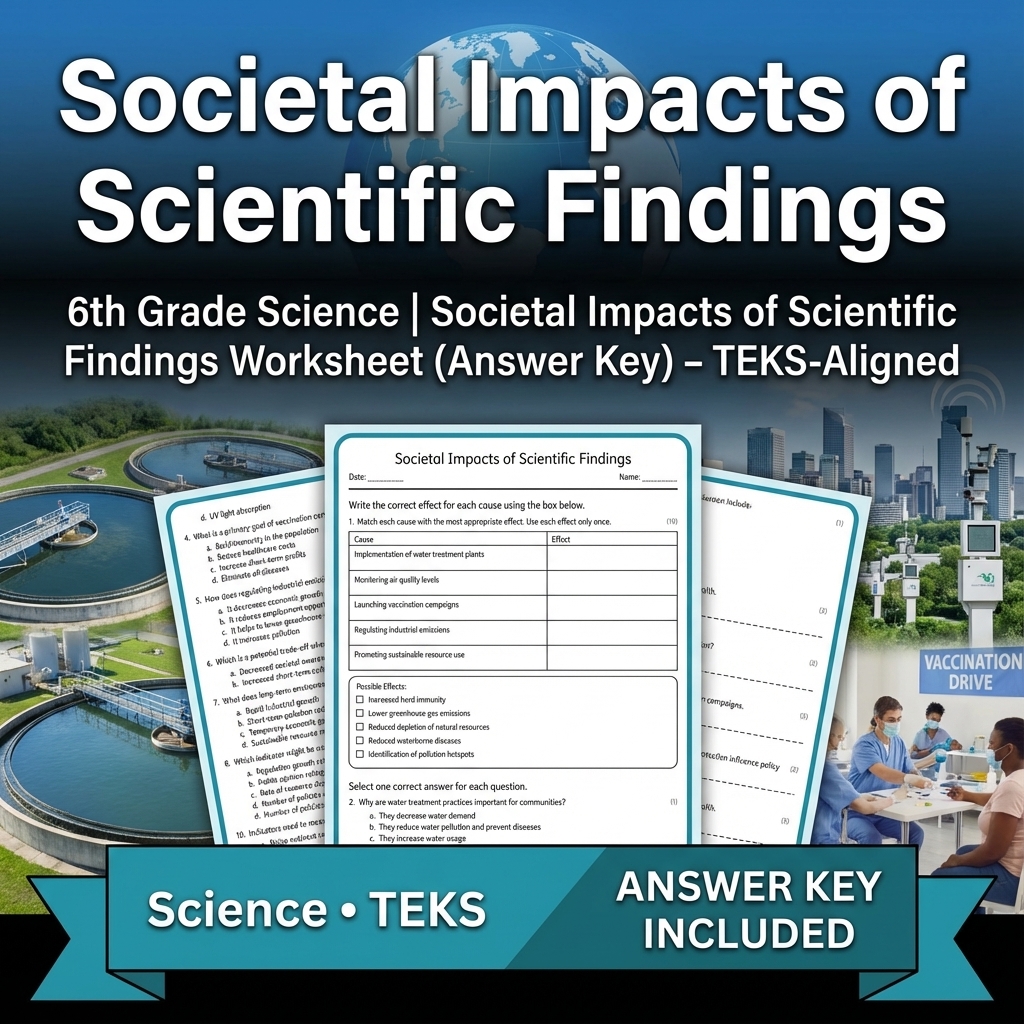
6th Grade Science | Societal Impacts of Scientific Findings Worksheet (Answer Key) – TEKS-Aligned
Created byBright Mind ResourcesLearning Objectives
- Analyze how scientific data influences societal change through public health, environmental regulation, and resource management.
- Evaluate the outcomes and trade-offs of scientific actions on society and the environment.
- Identify indicators used to assess the effectiveness of societal and environmental measures.
Instant download
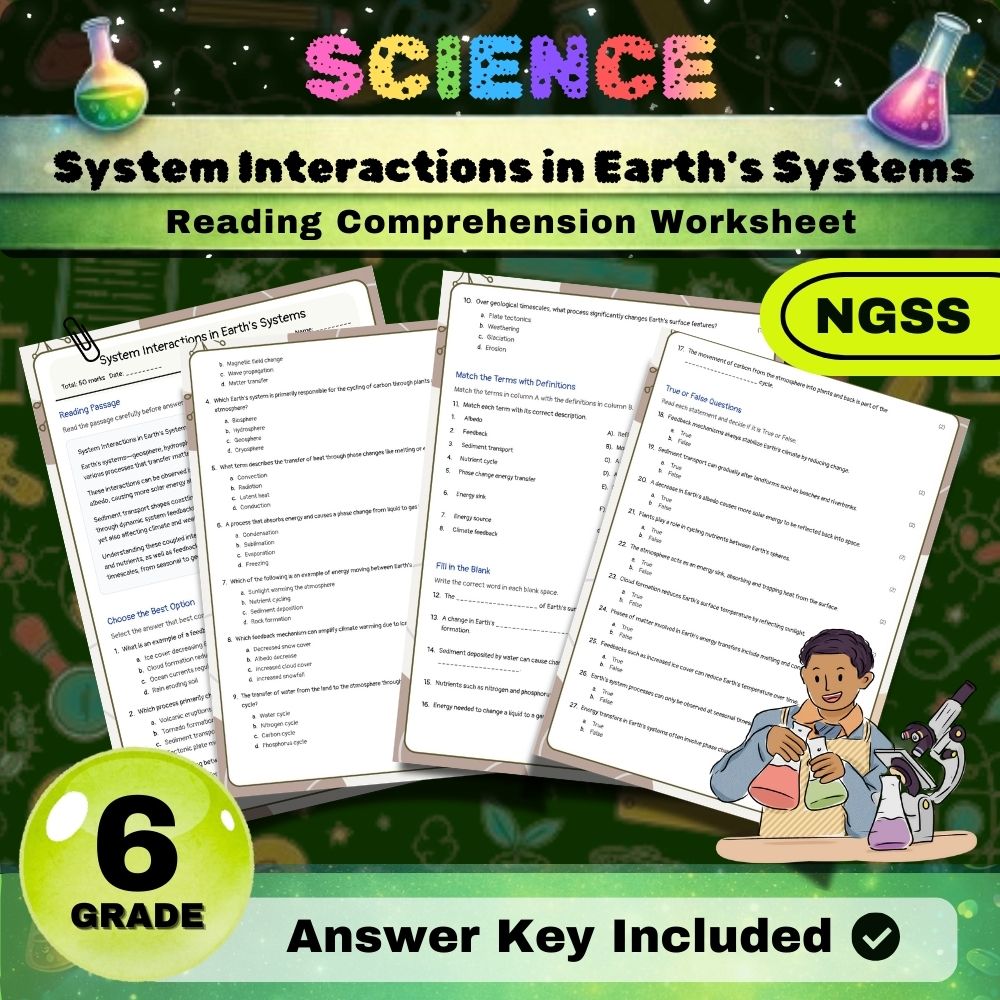
6th Grade Science | Earth's System Interactions NGSS Worksheet (PDF )
 Created byMaple Path Learning
Learning Objectives
- Describe how Earth's geosphere, hydrosphere, atmosphere, and biosphere interact through transfers of matter and energy.
- Explain feedback mechanisms such as albedo changes, sediment transport, and nutrient movement across Earth's systems.
- Model and analyze system-level patterns that occur over seasonal to geologic timescales involving Earth's processes.
Also included in: Grade 6 Science | Weather, Water Cycle & Earth Systems NGSS Unit Bundle (PDF) +1 more
Instant download

System Hierarchy Worksheet | Grade 9 Science NGSS Review & Practice
Created byPrism Point LearningLearning Objectives
- Explain how the body’s organizational levels progress from cells to tissues, organs, and organ systems.
- Describe how organ systems interact to maintain coordinated body functions (homeostasis).
- Use examples such as circulatory-respiratory coupling, digestive-vascular nutrient distribution, and nervous-endocrine regulation to justify system interdependence.
Also included in: Grade 9 Cell Systems Regulation Science Lesson Bundle – NGSS Practice
Instant download

Grade 9 Science – Biological System Hierarchy & Daily Reading Worksheet | NGSS
Created byBright Mind ResourcesLearning Objectives
- Understand key concepts related to Science
- Apply knowledge through practice questions
- Demonstrate comprehension of the material
Also included in: Grade 9 Cell Systems Science Daily Reading Lesson Bundle | NGSS +2 more
Instant download

Earth System Interactions and Feedbacks Worksheets Grade 6 Science
 Created byTeachers Club
Learning Objectives
- Explain how matter and energy move among the geosphere, hydrosphere, atmosphere, and biosphere.
- Describe feedback mechanisms that change Earth systems, such as ice-albedo effects.
- Use a model sequence to predict observable patterns from short-term to geologic timescales.
Also included in: Earth's Systems Grade 6 Science Worksheets | NGSS Unit Bundle +2 more
Instant download
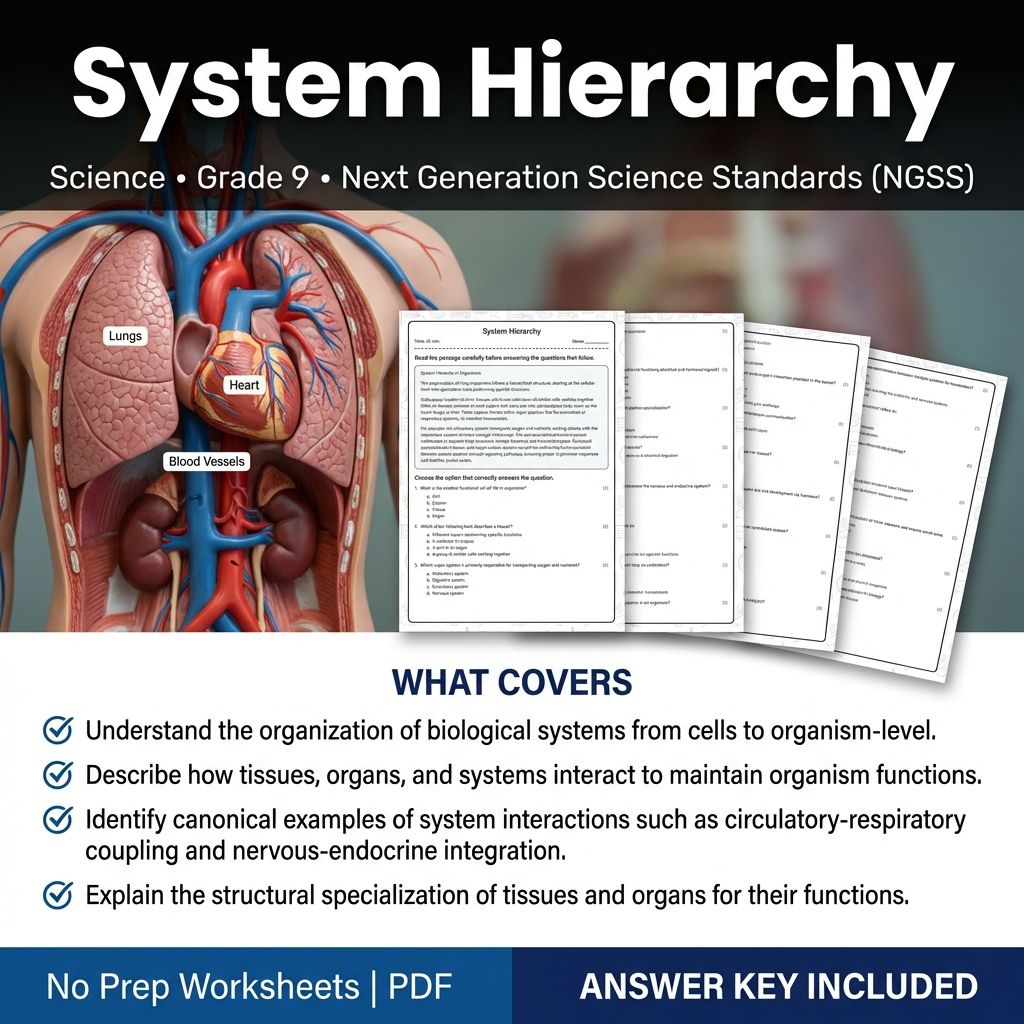
Grade 9 Science | System Hierarchy Worksheet + Answer Key for Classroom Use
Created byCoral Reef LearningLearning Objectives
- Understand the organization of biological systems from cells to organism-level.
- Describe how tissues, organs, and systems interact to maintain organism functions.
- Identify canonical examples of system interactions such as circulatory-respiratory coupling and nervous-endocrine integration.
Also included in: Grade 9 Science Unit Bundle-Biological Systems & Molecular Regulation Worksheets +1 more
Instant download

Biological Organization Worksheets: Cells to Organ Systems | Grade 9
 Created bythe curious pencil
Learning Objectives
- Identify levels of biological organization from cells to organ systems.
- Explain how specialized cells contribute to tissue structure and function.
- Describe how tissues combine to form functional organs.
Also included in: Cells to Organ Systems Lesson Bundle | Grade 9 Science | Next-Generation Science Standards +2 more
Instant download
Grade 9 Science | System Hierarchy Worksheet (NGSS Aligned) – PDF
Created byBright Mind ResourcesLearning Objectives
- Understand the levels of biological organization from cells to organism systems.
- Explain how tissues, organs, and organ systems interact to sustain organism functions.
- Identify examples of system interactions like circulatory-respiratory coupling and nervous-endocrine integration.
Instant download
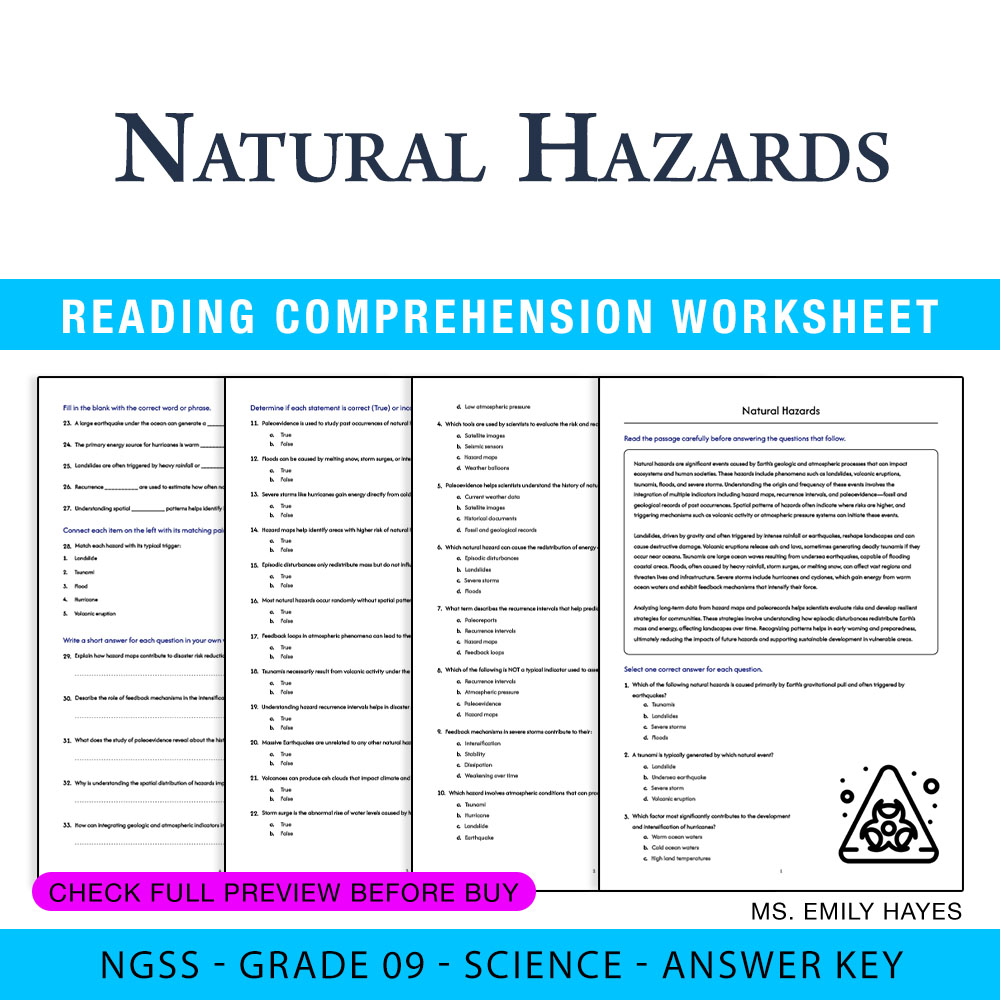
9th Grade Science | Natural Hazards Worksheet (PDF+ Answer Key)
 Created byCopper Leaf Classroom
Learning Objectives
- Identify and describe various natural hazards such as landslides, volcanic eruptions, tsunamis, floods, and severe storms.
- Analyze the geologic and atmospheric indicators associated with natural hazards.
- Evaluate the risks and resilience of human and ecological systems using hazard maps, recurrence intervals, and paleoevidence.
Instant download
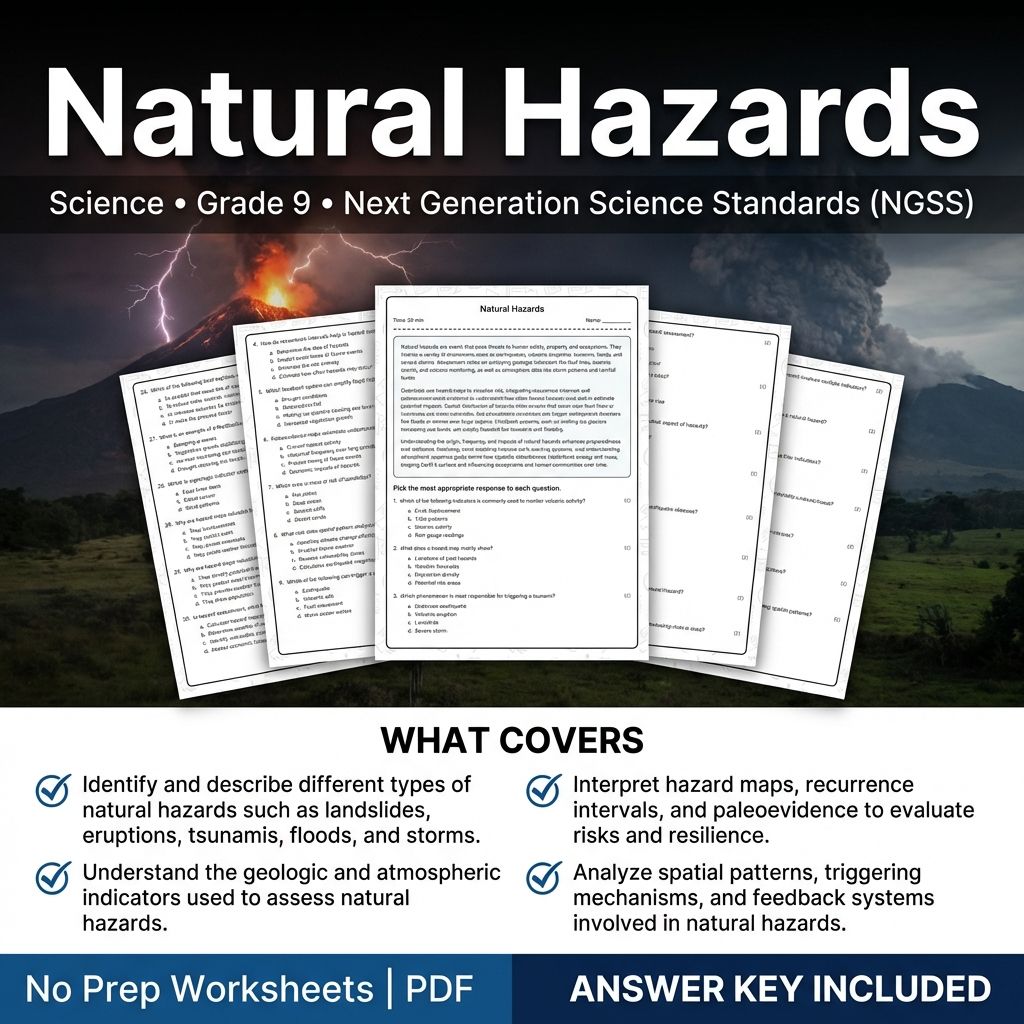
Grade 9 Science | Natural Hazards Worksheet & Answer Key (Printable PDF)
Created byCoral Reef LearningLearning Objectives
- Identify and describe different types of natural hazards such as landslides, eruptions, tsunamis, floods, and storms.
- Understand the geologic and atmospheric indicators used to assess natural hazards.
- Interpret hazard maps, recurrence intervals, and paleoevidence to evaluate risks and resilience.
Also included in: Grade 9 Science Unit Bundle – Earth's Processes & Surface Change Worksheets PDF +1 more
Instant download
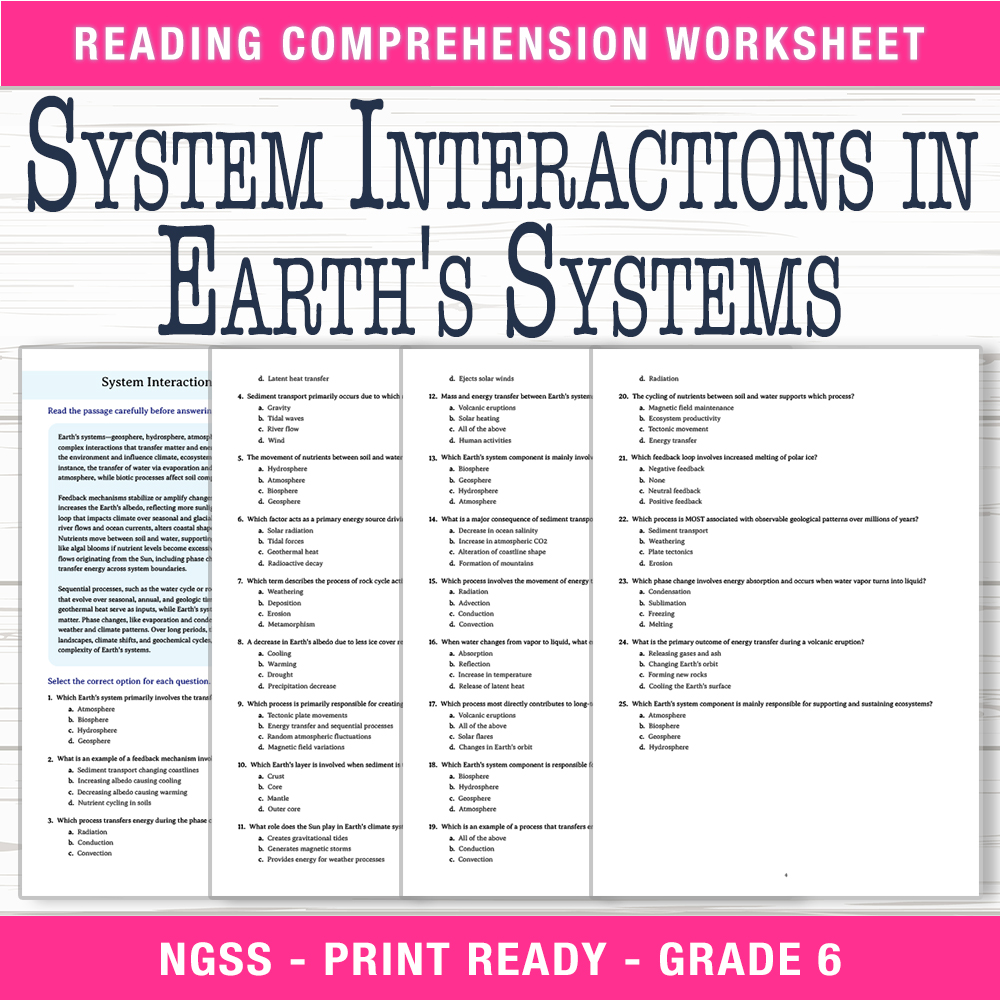
6th Grade Science | Earth's System Interactions Worksheet (PDF + Answer Key)
 Created byRiverstone Classroom
Learning Objectives
- Understand how Earth's geosphere, hydrosphere, atmosphere, and biosphere interact through transfer processes.
- Identify feedback mechanisms such as albedo changes and sediment transport in Earth's systems.
- Explain energy flow, phase changes, and sequential processes that produce observable patterns over different timescales.
Instant download

Grade 9 Science | System Hierarchy in the Human Body - Reading Comprehension
Created byCoral Reef LearningLearning Objectives
- Understand the hierarchical organization from cells to organ systems.
- Identify different types of tissues and their functions.
- Recognize examples of system interactions in physiology.
Instant download

Grade 9 Science | System Hierarchy Worksheet with Short Notes (Printable PDF)
 Created byMeadowlark Worksheets
Learning Objectives
- Understand the hierarchical organization from cells to organism systems.
- Identify the structure and function of tissues, organs, and organ systems.
- Explain how different systems interconnect to sustain organismal functions.
Also included in: Grade 9 Science NGSS From Molecules to Organisms Structures & Processes Bundle +1 more
Instant download

Grade 6 System Interactions Worksheet | NGSS Earth Science & Answer Key
 Created byNorthstar Worksheets
Learning Objectives
- Explain how Earth systems interact through transfers of matter and energy among the geosphere, hydrosphere, atmosphere, and biosphere.
- Describe how feedbacks (such as albedo changes and sediment transport) can amplify or slow system changes.
- Use models to connect sequential processes to observable patterns from seasons to geologic time.
Also included in: Weather, Water Cycle & Climate Systems Lesson Bundle | Grade 6 Science | NGSS +1 more
Instant download
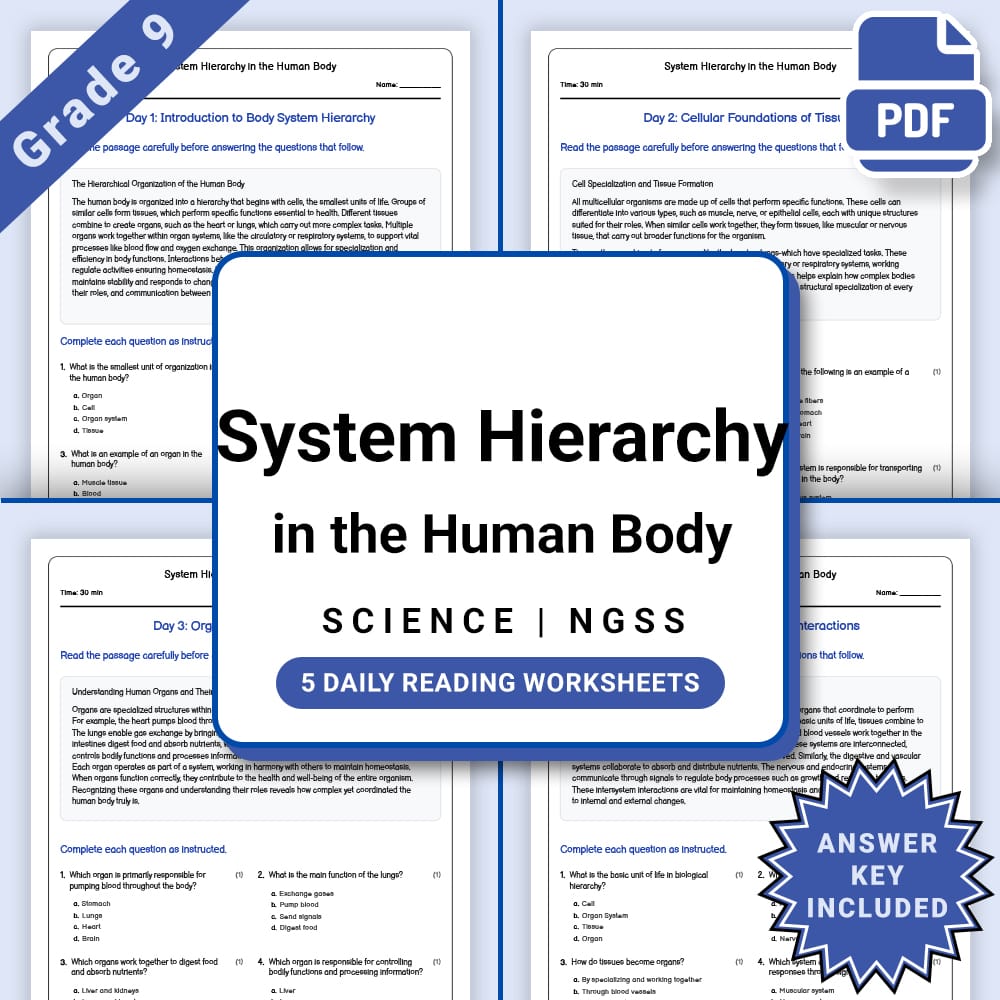
Grade 9 Science – Human Body System Hierarchy Worksheet(PDF + Answer Key)
Created byCopper Leaf ClassroomLearning Objectives
- Understand key concepts related to Science
- Apply knowledge through practice questions
- Demonstrate comprehension of the material
Instant download

System Hierarchy Worksheet | NGSS Grade 9 Science Practice & Assessment
 Created byCedar Grove Learning
Learning Objectives
- Describe the levels of biological organization from cells to organism.
- Explain how tissues, organs, and organ systems interact to maintain organism functions.
- Identify examples of system interactions such as circulatory-respiratory coupling and nervous-endocrine integration.
Instant download
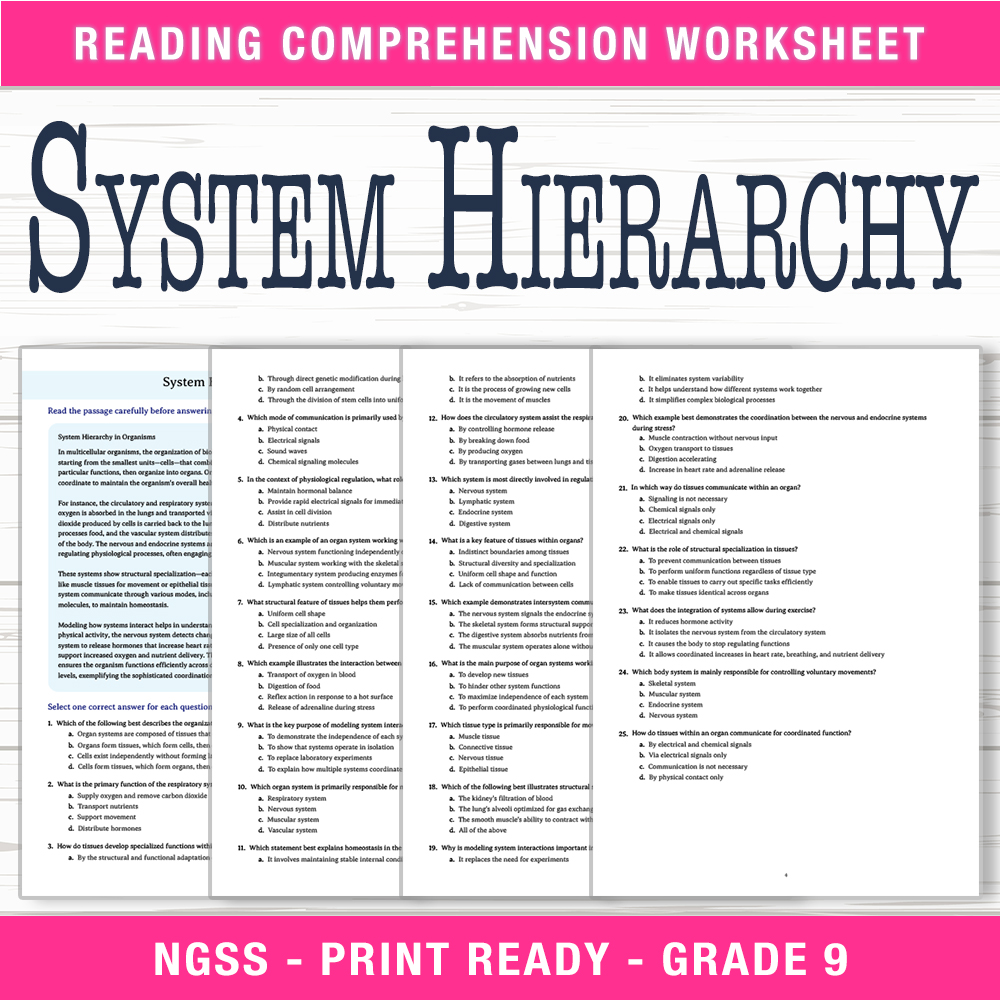
Grade 9 Science – System Hierarchy Worksheet (PDF + Answer Key)
Created byRiverstone ClassroomLearning Objectives
- Explain the organization of biological systems from cells to organism-wide systems.
- Identify key examples of how different systems interact to perform vital physiological functions.
- Describe the structural specialization of tissues and organs within organ systems.
Also included in: Grade 9 Science Unit | Cell Structure & Function Worksheets
Instant download
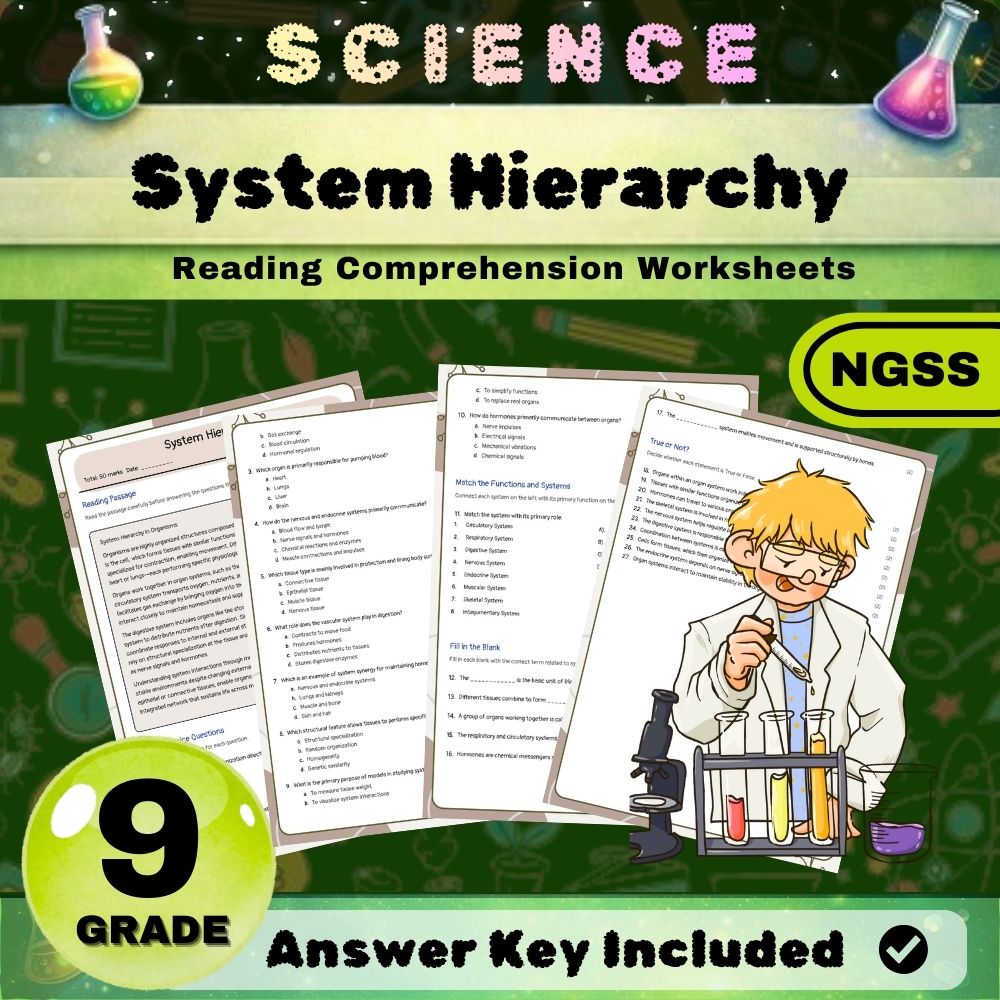
Grade 9 Science | System Hierarchy Worksheet (NGSS) – PDF
Created byMaple Path LearningLearning Objectives
- Describe how cells organize into tissues, organs, and organ systems.
- Explain the interactions between different organ systems such as circulatory-respiratory coupling and digestive-vascular transport.
- Analyze the structural specialization of tissues and organs in supporting organism functions.
Also included in: Grade 9 Science NGSS| From Molecules to Organisms: Structures & Processes Bundle +1 more
Instant download
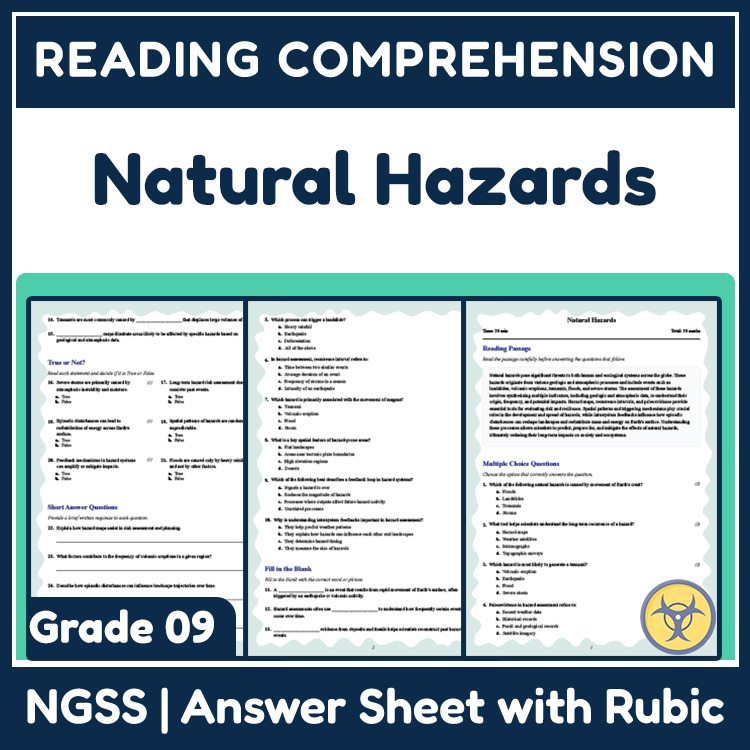
9th Grade Science | Natural Hazards Reading Worksheet with Answer Key (PDF)
JCreated byJ.S SheetsLearning Objectives
- Understand the different types of natural hazards and their origins.
- Analyze how spatial patterns and triggering mechanisms influence hazard risks.
- Evaluate the long-term impacts of natural hazards on landscapes and human systems.
Instant download
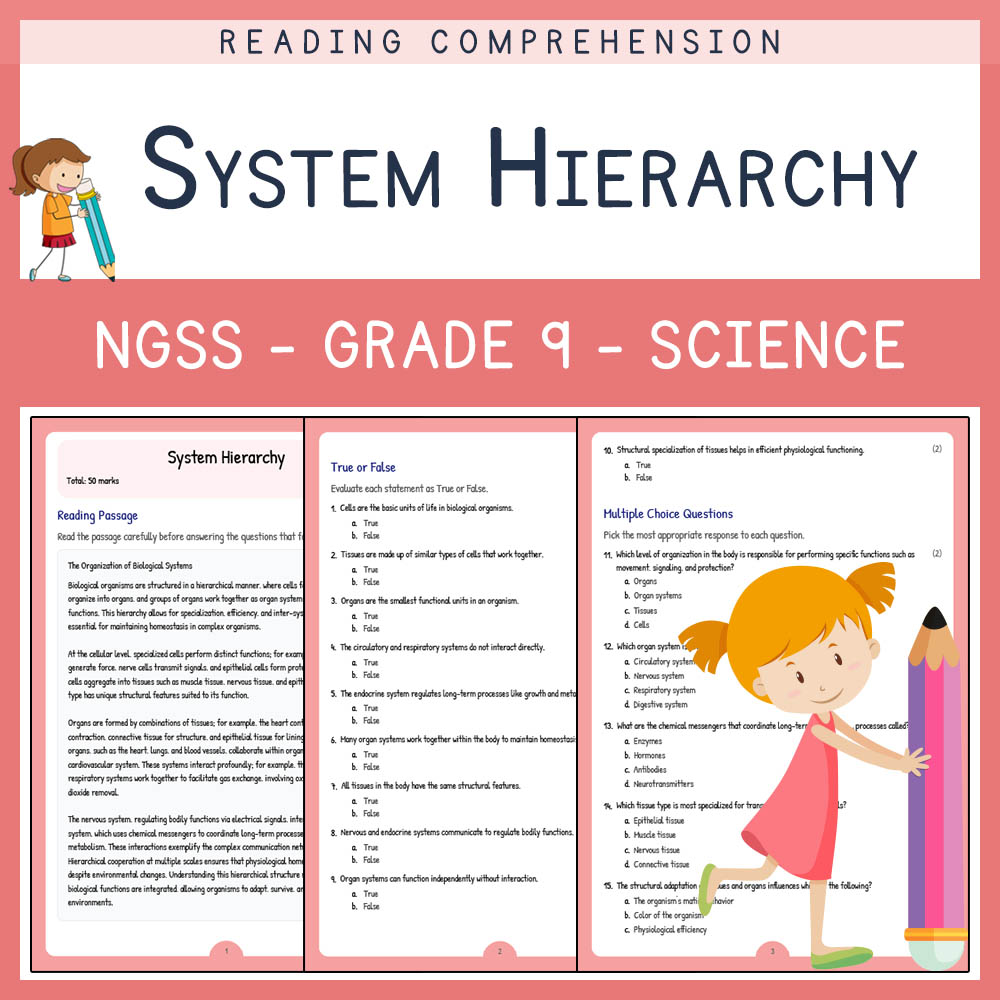
Grade 9 Science | System Hierarchy Worksheet & Answer Key (NGSS-Aligned)
Created byLumora LearningLearning Objectives
- Explain the hierarchical organization of biological systems from cells to organism-level functions.
- Describe how tissues, organs, and organ systems interact to maintain homeostasis.
- Identify canonical examples of system interactions such as circulatory-respiratory coupling and nervous-endocrine integration.
Instant download

Grade 10 Science | Physiological Systems - Daily Reading Comprehension
Created byCoral Reef LearningLearning Objectives
- Understand the structure and function of the circulatory system
- Identify key components such as blood vessels, heart chambers, and blood flow pathways
- Analyze how vascular networks facilitate transport within the body
Instant download

Earth Systems Worksheets: Interactions & Energy Transfers Grade 6
Created bythe curious pencilLearning Objectives
- Identify interactions among the geosphere, hydrosphere, atmosphere, and biosphere
- Explain how matter moves between connected Earth systems
- Describe how energy transfers affect Earth system patterns
Also included in: Earth's Systems Grade 6 Science Worksheets Bundle | NGSS +2 more
Instant download

Grade 10 Science | Understanding Net Force & Direction - Daily Reading Practice
Created byCoral Reef LearningLearning Objectives
- Define and identify force vectors in different directions.
- Understand how multiple forces combine using vector addition.
- Explain how the direction of net force influences the acceleration of an object.
Instant download

Science Grade 11 Worksheet Reaction Types | Standards-Aligned Assessment
JCreated byJ.S SheetsLearning Objectives
- Classify chemical reactions as synthesis, decomposition, single replacement, or double replacement based on particle and product patterns.
- Use conservation of mass and charge balance to predict likely products of different reaction types.
- Interpret evidence such as precipitate formation, gas production, and temperature/color changes to confirm reaction type.
Also included in: Grade 11 Forces, Energy, and Chemical Reactions Science Lesson Bundle +1 more
Instant download

Grade 9 Science Worksheet | NGSS Aligned Printable Activity + Answer Key
Created byBRIGHT PATH RESOURCESLearning Objectives
- Identify the basic structures of cells and tissues.
- Differentiate between various tissue types and their functions.
- Describe how tissues combine to form organs and organ systems.
Also included in: Cell Signaling Grade 9 Science Daily Reading Worksheets Lesson Bundle | NGSS +1 more
Instant download
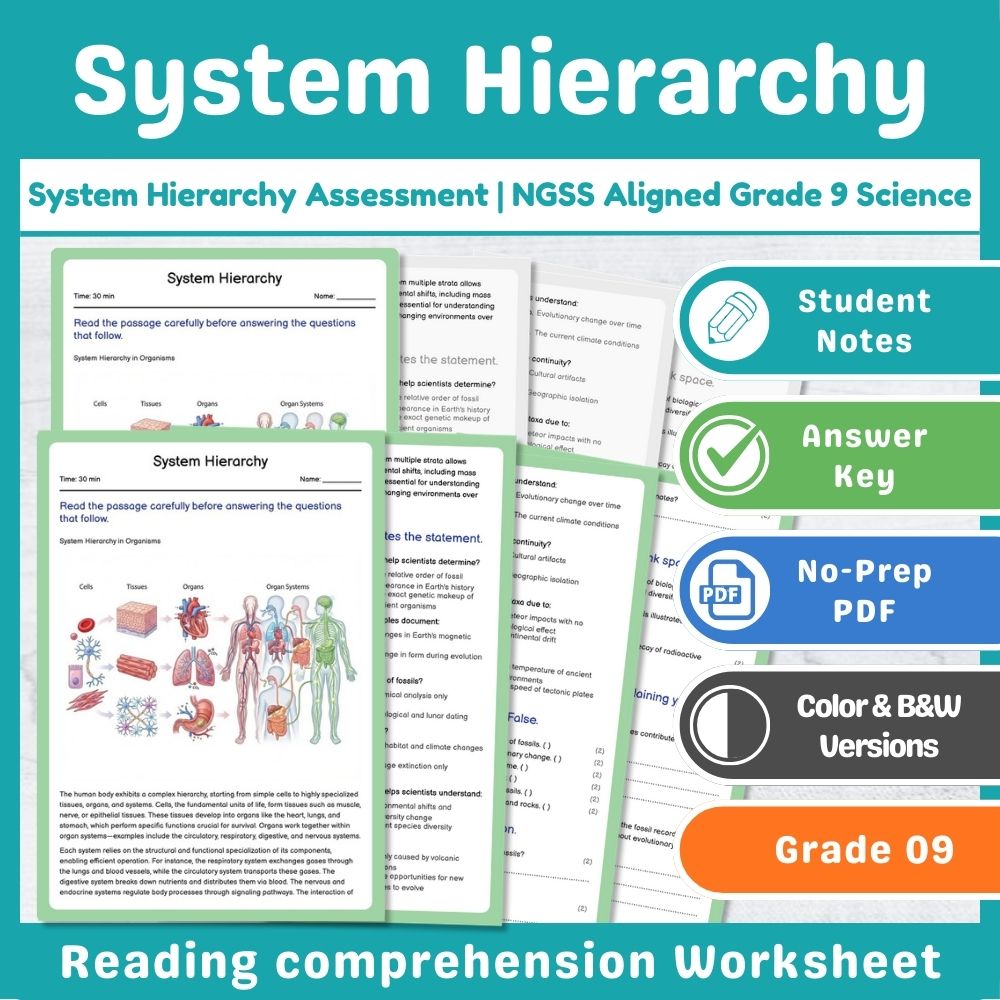
System Hierarchy Assessment | NGSS Aligned Grade 9 Science
Created byPrism Point LearningLearning Objectives
- Describe the hierarchical organization of the body from cells to organ systems.
- Explain how tissues, organs, and organ systems interact to maintain organismal functions.
- Identify examples of physiological coupling, such as circulatory-respiratory and digestive-vascular systems.
Instant download
Browse more categories
About Science Worksheets
Find Science worksheets spanning core skills, practice, and review. All 44,773 resources are instant PDF downloads for the classroom or home.
Every worksheet on MyTeachingSheets is created by independent teacher-authors and reviewed before publication. All resources download as printable PDFs for classroom, homework, or at-home practice, and many include answer keys. Preview any worksheet free before buying.