
Science Worksheets
44,773 subject resources
Scale of Space Science Worksheet | NGSS Grade 6 Assessment
JCreated byJ.S SheetsLearning Objectives
- Understand the concept of astronomical units, planetary radii, and orbital periods to compare solar system objects.
- Analyze relative sizes and distances within the solar system using data tables and charts.
- Interpret orders of magnitude for Earth–Sun distance and planet sizes to develop proportional models.
Also included in: Grade 6 Earth-Moon Relationships Space Science Lesson Bundle | NGSS +1 more
Instant download

Grade 6 Science | Scale of Space - Daily Reading Comprehension
 Created byCoral Reef Learning
Learning Objectives
- Understand the vast distances in the solar system and the units used to measure them
- Interpret astronomical data such as distances in astronomical units and planetary sizes
- Compare the sizes and distances of planets relative to Earth and the Sun
Instant download
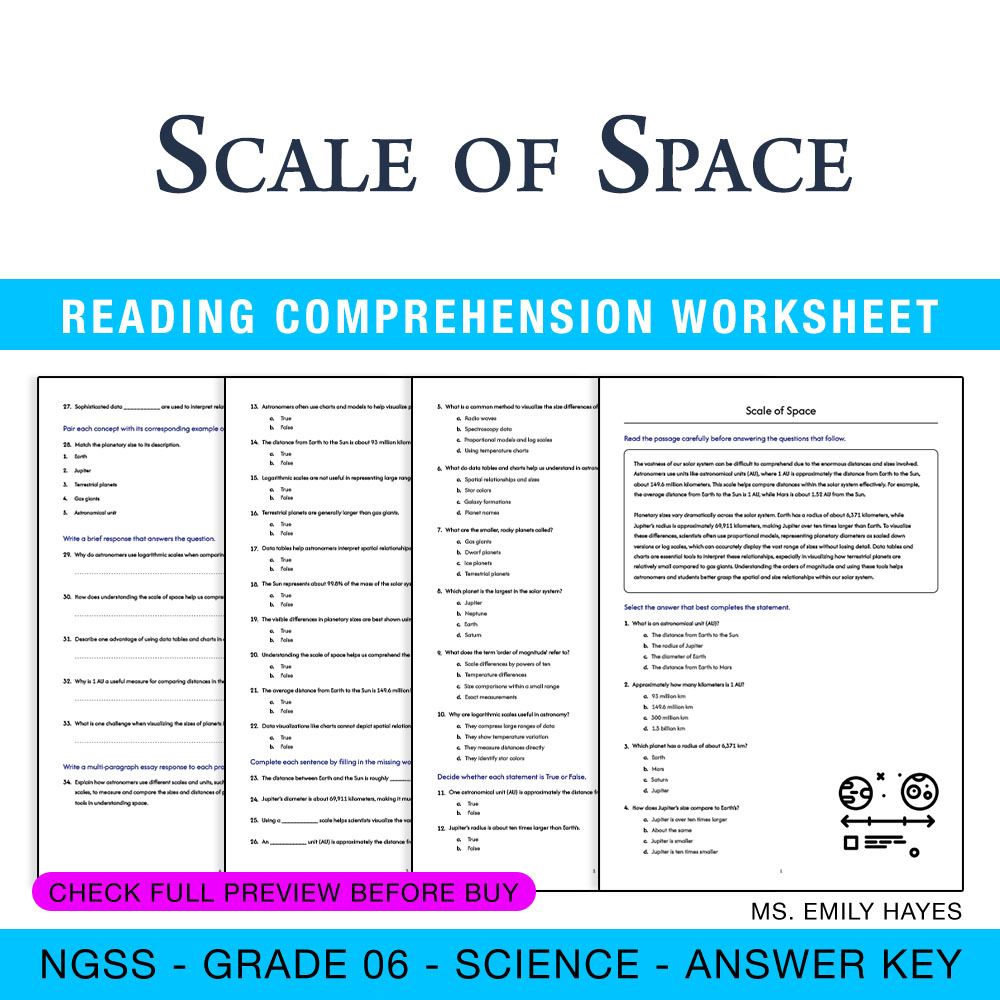
6th Grade Science | Scale of Space Worksheet (PDF + Answer Key)
 Created byCopper Leaf Classroom
Learning Objectives
- Understand the concept of astronomical units and how they are used to measure distances in space.
- Compare the sizes of planets within the solar system using proportional and logarithmic scales.
- Interpret data tables and charts that relate to planetary sizes, distances, and orbital periods.
Also included in: Grade 6 Science Unit Bundle | Space, Moon & Seasons (PDF + Answer Key)
Instant download

Force Interactions and Vector Representation Grade 10 Worksheets
 Created bythe curious pencil
Learning Objectives
- Classify contact and noncontact forces using physical examples
- Represent forces with vectors showing magnitude and direction
- Explain Newton's third law using paired object interactions
Also included in: Forces, Momentum, Gravitation & Electromagnetism Lesson Bundle | Grade 10 Science NGSS +2 more
Instant download

Grade 7 Air Masses and Fronts Science Worksheet | Florida NGSSS Answer Key
 Created byEvergreen Desk Education
Learning Objectives
- Explain what air masses are and how their temperature and moisture help determine weather.
- Describe how fronts form when air masses with different properties meet.
- Compare the typical weather effects of cold fronts and warm fronts.
Instant download
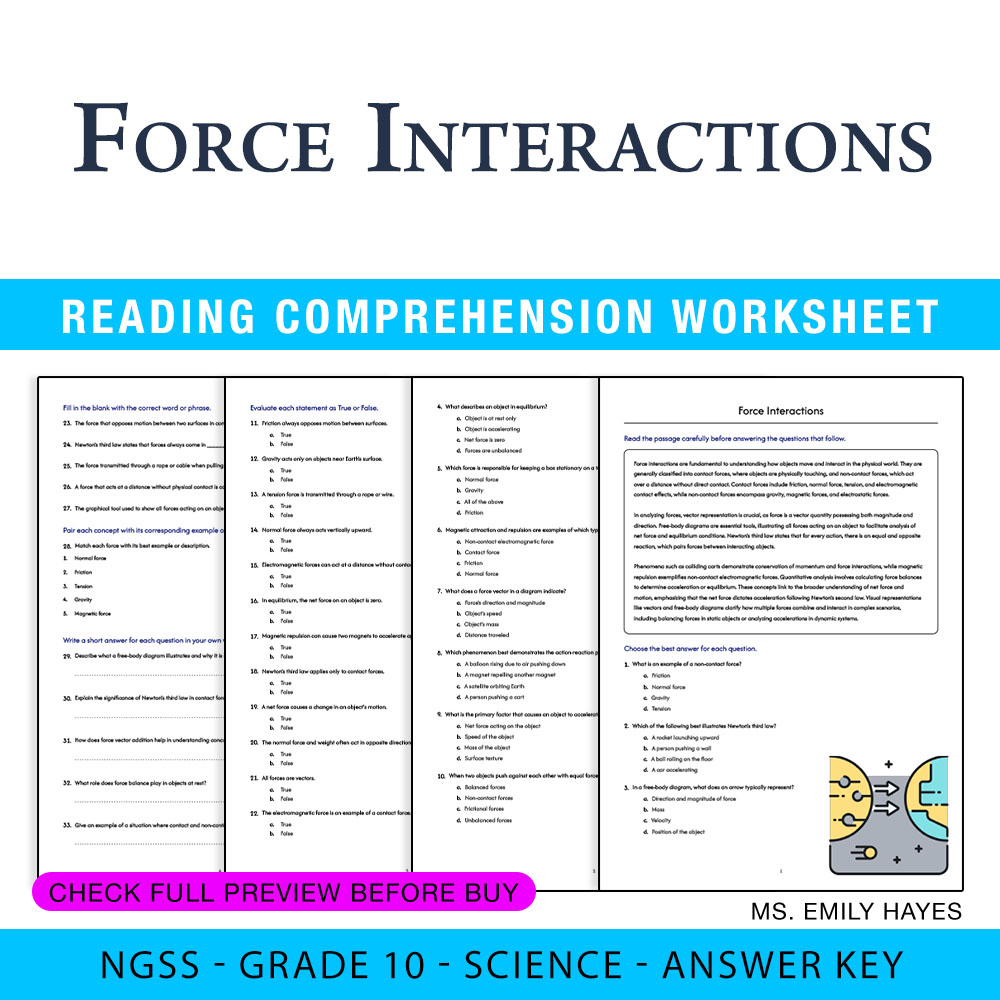
10th Grade Science | Force Interactions Worksheet (PDF+ Answer Key)
Created byCopper Leaf ClassroomLearning Objectives
- Understand the classification of contact and non-contact forces.
- Represent forces graphically using vectors and free-body diagrams.
- Explain Newton's third law and pairwise force interactions.
Instant download
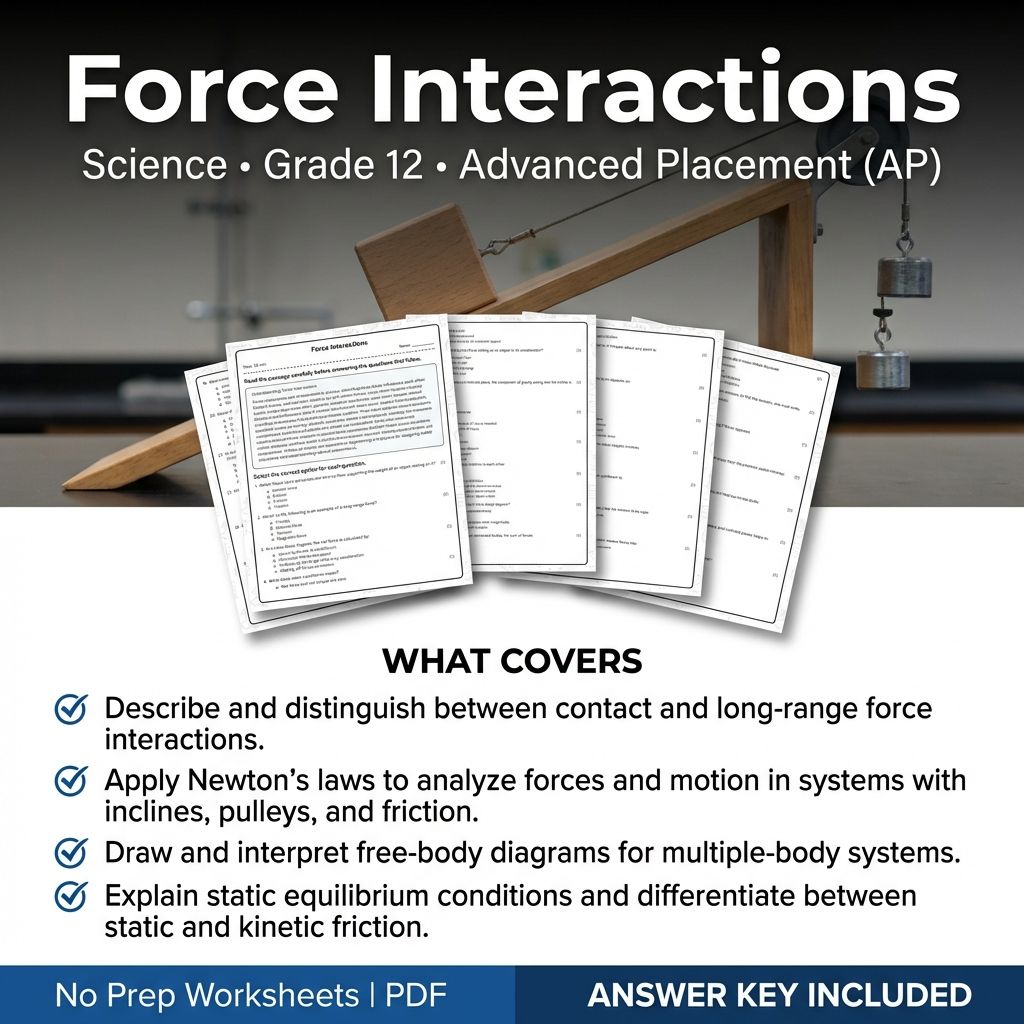
Grade 12 Science | Force Interactions Worksheet & Answer Key (Printable PDF)
Created byCoral Reef LearningLearning Objectives
- Describe and distinguish between contact and long-range force interactions.
- Apply Newton's laws to analyze forces and motion in systems with inclines, pulleys, and friction.
- Draw and interpret free-body diagrams for multiple-body systems.
Also included in: Grade 12 Science Unit Bundle – Physics Topics with Worksheets & Answer Keys +1 more
Instant download

Force Interactions & Newton’s Third Law Worksheets Grade 10 Science
 Created byTeachers Club
Learning Objectives
- Classify forces as contact or noncontact interactions
- Represent force magnitude and direction using vectors
- Calculate net force by adding force vectors
Also included in: Grade 10 Science Motion and Stability Forces & Interactions Bundle +1 more
Instant download
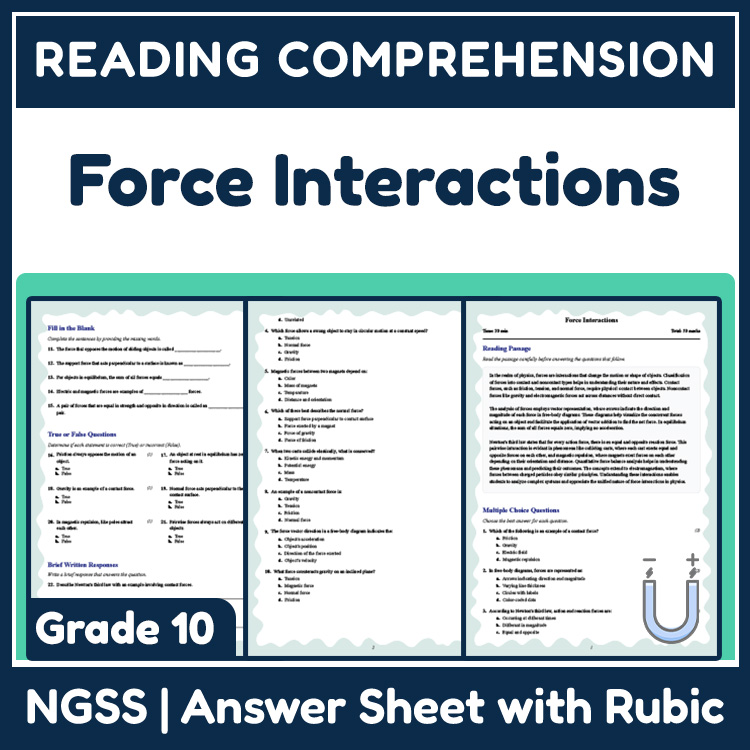
10th Grade Science | Force Interactions Reading Worksheet (PDF + Rubric)
JCreated byJ.S SheetsLearning Objectives
- Understand and classify contact and noncontact forces, including examples like friction, normal force, tension, and electromagnetism.
- Represent forces graphically using vectors and free-body diagrams to analyze contact and pairwise interactions.
- Explain Newton's third law and recognize action-reaction pairs in various physical scenarios.
Instant download
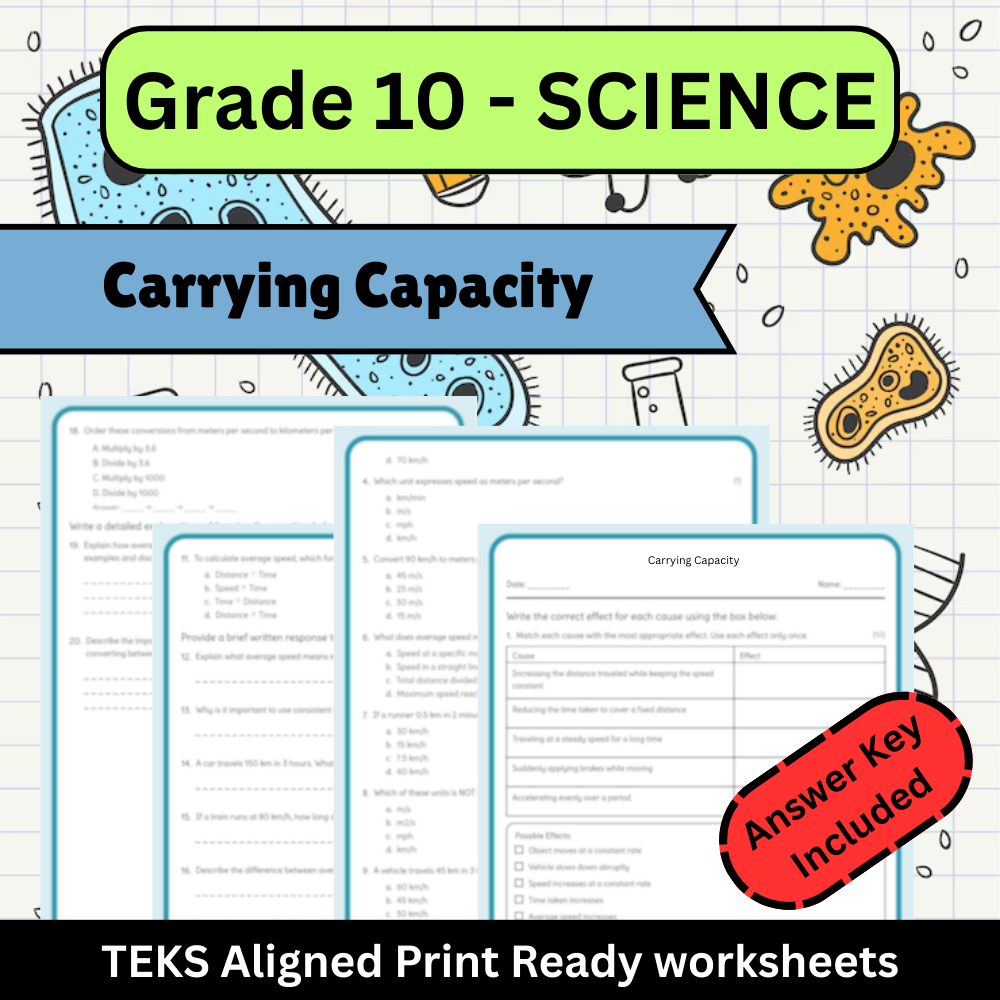
Grade 10 Science | Carrying Capacity Worksheet (Worksheet + Answer Key) - TEKS Aligned
 Created byBright Mind Resources
Learning Objectives
- Define carrying capacity and explain its significance in ecosystems.
- Identify factors that influence the carrying capacity of environments.
- Analyze how resource limitations and other factors can alter population sizes.
Also included in: Grade 10 Science | Ecosystems & Biodiversity Unit Worksheet Bundle(TEKS-Aligned) +5 more
Instant download

Grade 11 Science | Reaction Types in Chemistry - Daily Reading Comprehension
Created byCoral Reef LearningLearning Objectives
- Understand the basic classification of chemical reactions.
- Identify different reaction types based on descriptions and evidence.
- Predict possible products of simple chemical reactions.
Instant download

Grade 9 System Hierarchy Worksheet | NGSS Practice PDF
 Created byClear Sky Classroom
Learning Objectives
- Understand the organization of biological systems from cells to organismal systems.
- Identify how tissues, organs, and systems interact to maintain organism functions.
- Explain examples of system coupling such as circulatory-respiratory and digestive-vascular interactions.
Also included in: Grade 9 Cellular Systems & Regulation Science Lesson Bundle NGSS Worksheet Set +1 more
Instant download

Earth Systems Worksheets: Interactions & Energy Transfers Grade 6
Created bythe curious pencilLearning Objectives
- Identify interactions among the geosphere, hydrosphere, atmosphere, and biosphere
- Explain how matter moves between connected Earth systems
- Describe how energy transfers affect Earth system patterns
Also included in: Earth's Systems Grade 6 Science Worksheets Bundle | NGSS +2 more
Instant download

Grade 10 Worksheet B: Land Use Effects on Earth Systems Worksheet | NGSS
Created byClear Sky ClassroomLearning Objectives
- Explain how land-cover change can alter ecosystem function, hydrologic cycles, and biodiversity
- Interpret indicators such as habitat fragmentation, nutrient loading, soil erosion rates, and coral reef degradation
- Use evidence from land-use maps, remote sensing, and biotic surveys to connect human land changes to ecological outcomes
Also included in: Grade 10 Climate & Natural Hazards Science Lesson Bundle (NGSS) +1 more
Instant download

Grade 10 Land Use Effects Worksheet | NGSS Environmental Science Activity
 Created byBRIGHT PATH RESOURCES
Learning Objectives
- Understand key concepts related to Science
- Apply knowledge through practice questions
- Demonstrate comprehension of the material
Also included in: Env Hazards Grade 10 Sci Daily Reading Worksheets Lesson Bundle | NGSS +1 more
Instant download

Grade 10 Science – Carrying Capacity in Ecosystems | Worksheet + Answer Key
JCreated byJ.S SheetsLearning Objectives
- Define carrying capacity and explain its importance in ecology.
- Identify factors that influence carrying capacity of environments.
- Analyze how environmental changes affect population sizes.
Also included in: Grade 10 Science Lesson Group – Ecosystems and Environmental Impact Worksheets +1 more
Instant download

Grade 10 Science – Carrying Capacity Worksheet (TEKS) PDF
Created byEvergreen Desk EducationLearning Objectives
- Define carrying capacity and explain why it is context-dependent
- Identify factors that increase or decrease carrying capacity in real ecosystems
- Use population dynamics ideas (overshoot, crash, oscillation) to predict outcomes
Instant download
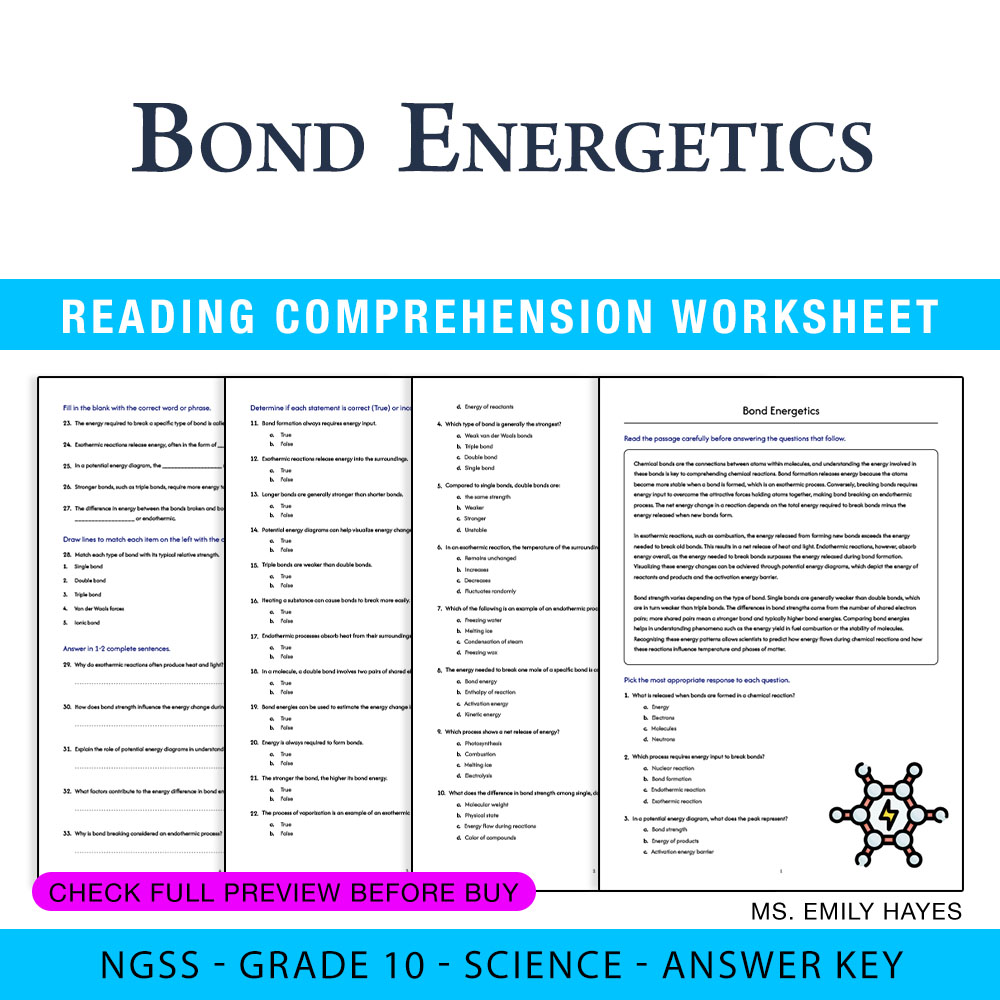
Grade 10 Science | Bond Energetics Worksheet (PDF+ Answer Key)
Created byCopper Leaf ClassroomLearning Objectives
- Explain how bond formation and breaking relate to energy changes in chemical reactions.
- Differentiate between exothermic and endothermic processes using bond energy concepts.
- Apply potential energy diagrams to understand energy flow during chemical reactions.
Instant download

Carrying Capacity Worksheet | Grade 10 Science Activities
 Created byPrism Point Learning
Learning Objectives
- Define carrying capacity and explain how it depends on resources, habitat, and ecosystem interactions.
- Identify factors that lower or raise carrying capacity, including predation, disease, and waste accumulation.
- Describe how populations typically fluctuate around carrying capacity and what happens when they exceed it.
Instant download
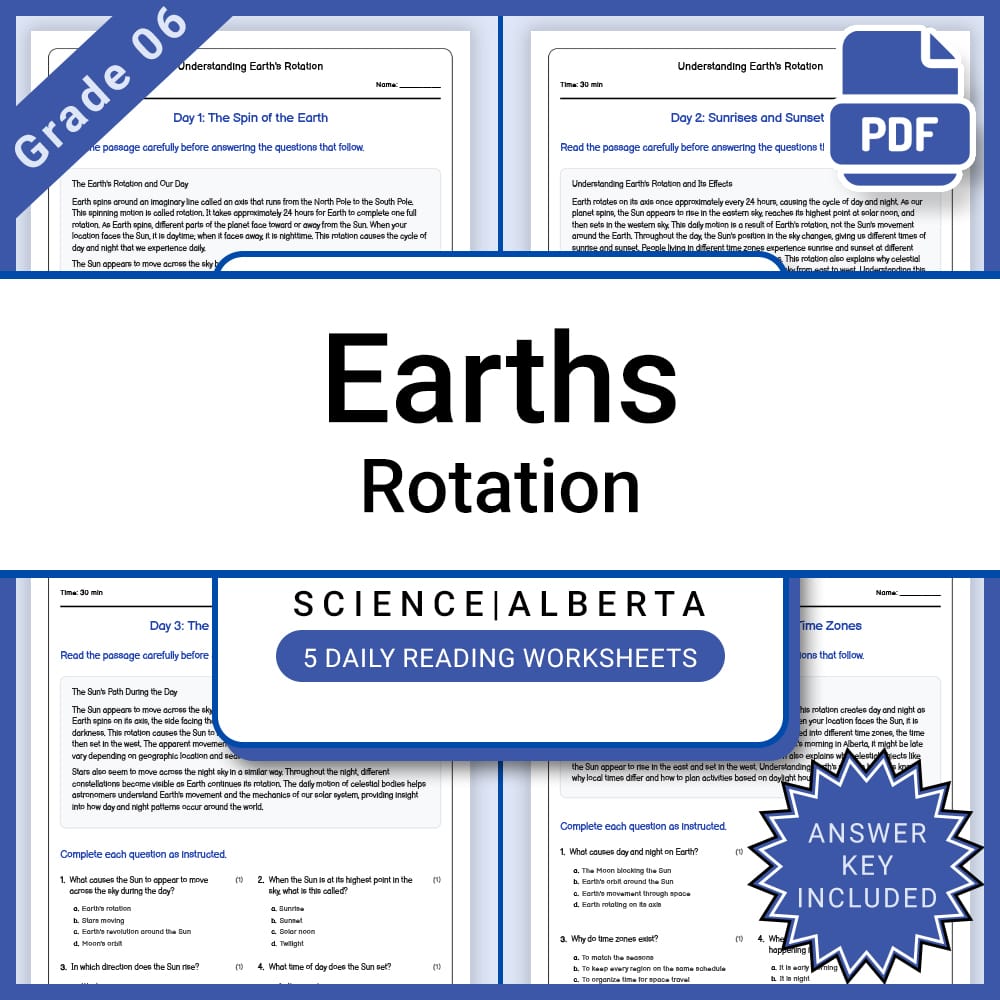
Grade 6 Science – Earth's Rotation Daily Reading Worksheet with Answer Key
JCreated byJ.S SheetsLearning Objectives
- Explain the concept of Earth's rotation about its axis.
- Describe how Earth's rotation causes day and night.
- Identify key positions in the daily path of the Sun across the sky.
Also included in: Grade 6 Science Lesson Group: Earth & Space Reading Worksheets Bundle +1 more
Instant download

Science Grade 11 Worksheet Reaction Types | Standards-Aligned Assessment
JCreated byJ.S SheetsLearning Objectives
- Classify chemical reactions as synthesis, decomposition, single replacement, or double replacement based on particle and product patterns.
- Use conservation of mass and charge balance to predict likely products of different reaction types.
- Interpret evidence such as precipitate formation, gas production, and temperature/color changes to confirm reaction type.
Also included in: Grade 11 Forces, Energy, and Chemical Reactions Science Lesson Bundle +1 more
Instant download

Grade 10 Science | Earth's Internal Structure - Daily Reading Comprehension
Created byCoral Reef LearningLearning Objectives
- Identify the main layers of the Earth
- Explain the chemical vs. mechanical layering
- Describe how seismic waves reveal Earth's interior
Instant download

Seismic Activity Assessment for Grade 8 Science | TEKS Standards
Created byPrism Point LearningLearning Objectives
- Explain how faults generate earthquakes and identify different fault types.
- Describe how seismic waves propagate and how they are recorded.
- Differentiate between earthquake magnitude and intensity.
Also included in: Grade 8 Weather and Earth-Space Science Assessment Lesson Bundle TEKS
Instant download
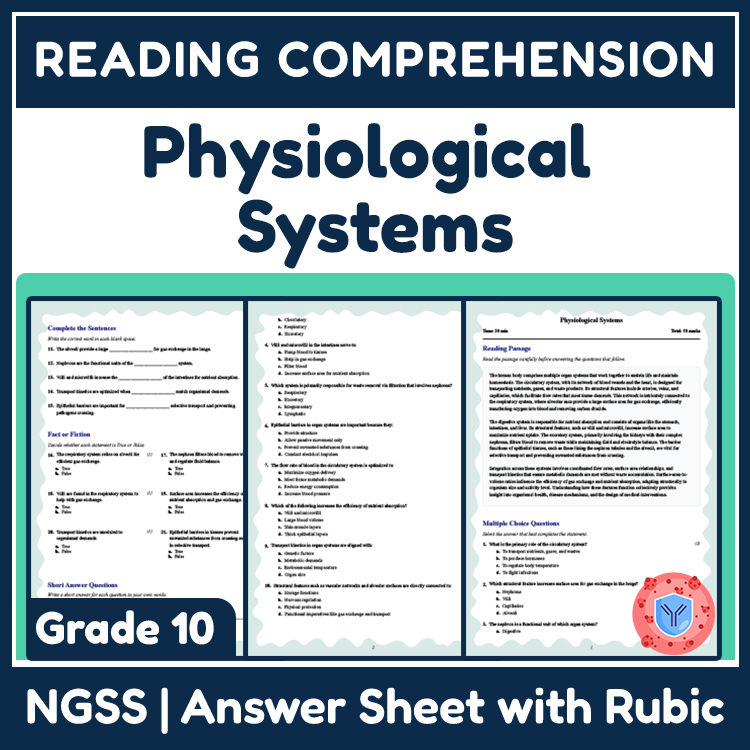
10th Grade Science | Physiological Systems Reading Worksheet (PDF & Answer Key)
JCreated byJ.S SheetsLearning Objectives
- Understand the structural features and functions of various physiological systems including circulatory, respiratory, digestive, excretory, and integumentary systems.
- Analyze how organ systems work together to meet organismal metabolic demands through flow rates, surface area, and transport mechanisms.
- Compare structural features such as vascular networks, alveoli, nephron architecture, and epithelial barriers and relate them to their functions.
Also included in: Grade 10 Science Unit | Cellular & Physiological Systems Worksheets
Instant download

Grade 8 Science – Seismic Activity and Plate Boundaries Worksheet + Answer Key
JCreated byJ.S SheetsLearning Objectives
- Understand the different types of tectonic plate boundaries
- Explain how plate movements influence seismic activity
- Identify seismic wave types and their effects
Also included in: Grade 8 Science Lesson Bundle | TEKS Standards Worksheets for Earth & Space +1 more
Instant download

Energy and Bonds Worksheet | NGSS-Aligned Science Practice for Grade 11
JCreated byJ.S SheetsLearning Objectives
- Explain how chemical energy changes are represented by bond formation and breaking.
- Describe how enthalpy change is determined by bond energies and the use of calorimetry data.
- Apply Hess's law to relate reaction enthalpies to molecular structures.
Also included in: Grade 11 Ecology and Ecosystem Dynamics Science Lesson Bundle – NGSS Framework +1 more
Instant download
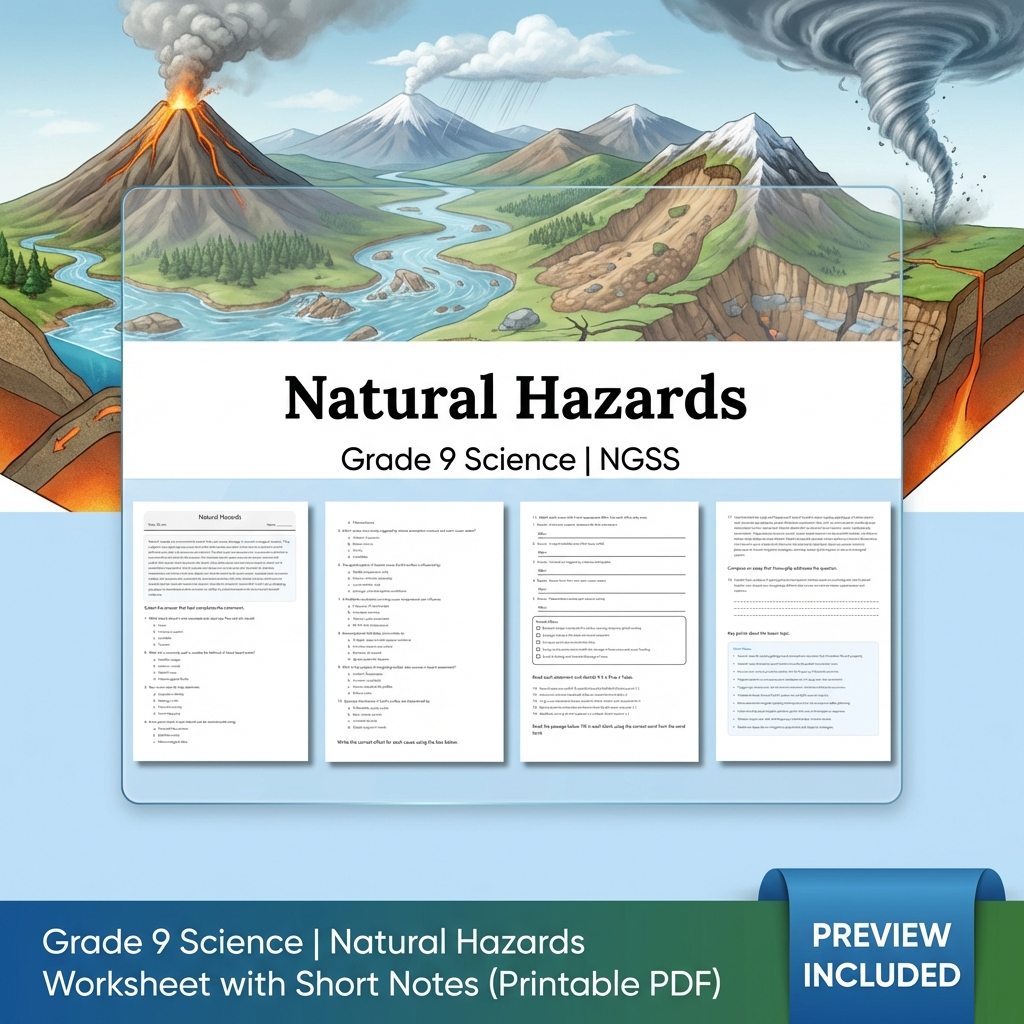
Grade 9 Science | Natural Hazards Worksheet with Short Notes (Printable PDF)
 Created byMeadowlark Worksheets
Learning Objectives
- Understand how geologic and atmospheric indicators are used to assess natural hazards.
- Identify different types of natural hazards, their triggers, and impacts.
- Learn how hazard maps, recurrence intervals, and paleoevidence inform risk assessment.
Also included in: Grade 9 Science | Earth's Systems Unit Bundle NGSS 7 Worksheets (Resource Pack) +1 more
Instant download

Inherited Adaptations Assessment | NGSSS Grade 6 Science Standards
Created byPrism Point LearningLearning Objectives
- Explain how inherited adaptations help organisms survive and reproduce in specific environments.
- Identify examples of adaptations related to feeding, protection, and tolerance to temperature or moisture.
- Distinguish inherited adaptations from individual behaviors or short-term responses.
Also included in: Grade 6 Ecosystems Science Lesson Bundle | Florida NGSSS Assessment
Instant download

Grade 8 Science – Model-Based Refinement & Scientific Modeling | Worksheet
Created byBright Mind ResourcesLearning Objectives
- Understand the concept of scientific models and their purpose.
- Learn how models are used to test and refine scientific ideas.
- Recognize the importance of comparing different models to improve designs.
Also included in: Design Grade 8 Science Daily Reading Worksheets Bundle | CA Standards +1 more
Instant download
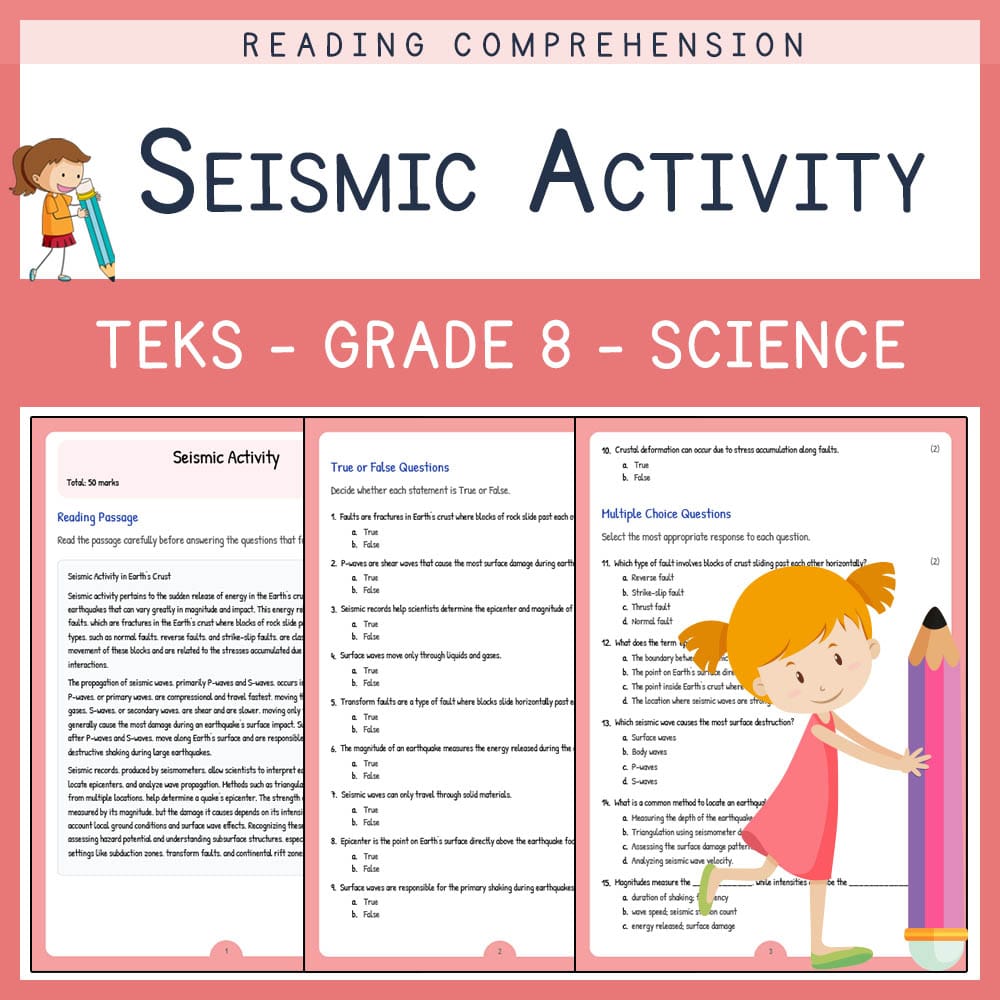
Grade 8 Science | Seismic Activity Worksheet | TEKS-Aligned
 Created byLumora Learning
Learning Objectives
- Understand the causes and types of seismic activity at fault lines.
- Identify how seismic waves propagate and impact Earth's crust.
- Distinguish between seismic record interpretation, epicenter determination, and hazard assessment.
Also included in: Grade 8 Science | Earth and Space Systems Lesson Bundle | TEKS Aligned
Instant download

Species Interactions Assessment for Grade 8 Science | Florida NGSSS
Created byPrism Point LearningLearning Objectives
- Explain how competition, predation, mutualism, commensalism, and parasitism affect survival and reproduction
- Describe how species interactions can change population sizes over time
- Use evidence from examples to identify the type of species interaction and its ecosystem impact
Also included in: Grade 8 Evolution and Genetics Science Lesson Bundle | Florida NGSSS
Instant download
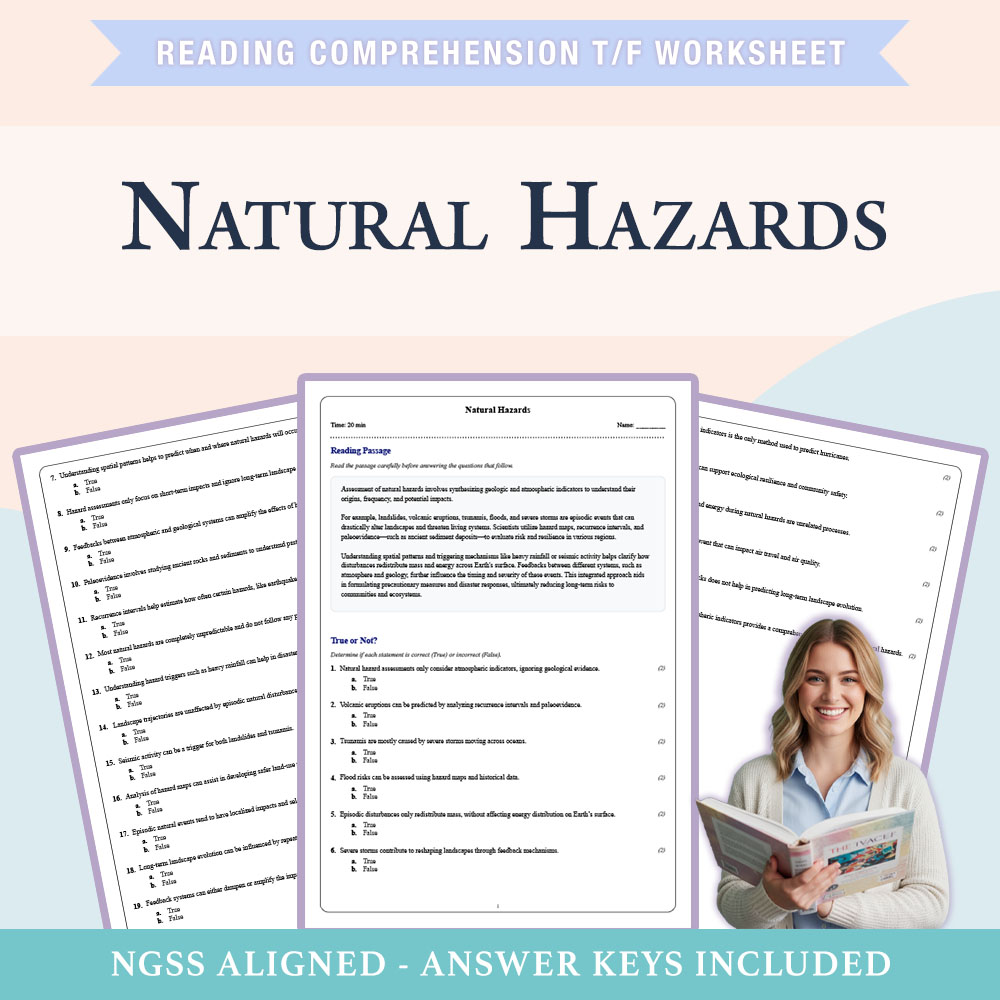
Grade 9 Science | Natural Hazards Worksheet (PDF + Answer Key)
Created byCopper Leaf ClassroomLearning Objectives
- Understand the key types of natural hazards and their characteristics.
- Analyze how geologic and atmospheric indicators are used to assess natural hazard risks.
- Recognize the spatial patterns and triggers of different natural hazard events.
Also included in: Grade 9 Science | Earth Processes & Landform Evolution Bundle (PDF +Answer Key) +1 more
Instant download

Genetic Transmission Worksheet | AP Science | Grade 9 Practice
JCreated byJ.S SheetsLearning Objectives
- Explain the mechanisms of inheritance, including chromosomal behavior during meiosis and Mendelian patterns.
- Identify deviations such as incomplete dominance, codominance, and linkage, and understand their effects on traits.
- Use pedigree analysis, Punnett squares, and probability calculations to predict genotypic and phenotypic ratios.
Also included in: Grade 9 Science | DNA and Ecosystems Lesson Group Bundle
Instant download

Grade 8 Species Interactions Worksheet | NGSS Practice & PDF
Created byClear Sky ClassroomLearning Objectives
- Explain how competition, predation, mutualism, commensalism, and parasitism affect survival and reproduction.
- Describe how symbiotic relationships can benefit one or both species in an ecosystem.
- Analyze how species interactions can change population sizes and ecosystem stability.
Instant download

6th Grade Science Worksheet | Earth Rotation & Day-Night Cycle (PDF)
 Created bySilver Birch Teaching
Learning Objectives
- Explain how Earth’s rotation about its axis causes the alternation of daylight and darkness.
- Describe how Earth’s rotation helps explain the apparent daily motion of the Sun and other celestial objects.
- Connect axial rotation to the timing of sunrise, solar noon, and sunset across different Alberta time zones.
Also included in: Grade 6 Celestial Motion & Seasons Science Lesson Bundle | Alberta +1 more
Instant download
Grade 9 Science | Natural Hazards Worksheet + Answer Key (NGSS-Aligned, PDF)
Created byBright Mind ResourcesLearning Objectives
- Understand the different types of natural hazards and their triggers.
- Analyze geologic and atmospheric indicators used to assess hazards.
- Interpret hazard maps, recurrence intervals, and paleoevidence to evaluate risks.
Instant download

Grade 10 Science | Force Interactions in Science - Daily Reading Comprehension
Created byCoral Reef LearningLearning Objectives
- Understand different types of contact and non-contact forces
- Identify examples of force interactions in real-world scenarios
- Learn to represent forces using vectors and free-body diagrams
Instant download

Grade 6 System Interactions Worksheet | NGSS Practice PDF
Created byClear Sky ClassroomLearning Objectives
- Describe how Earth's systems transfer matter and energy through models.
- Identify feedback mechanisms such as albedo changes and sediment transport.
- Explain the role of energy sources and sinks in system processes.
Also included in: Grade 6 Earth's Systems Science Lesson Bundle (NGSS-Aligned) Worksheets +1 more
Instant download
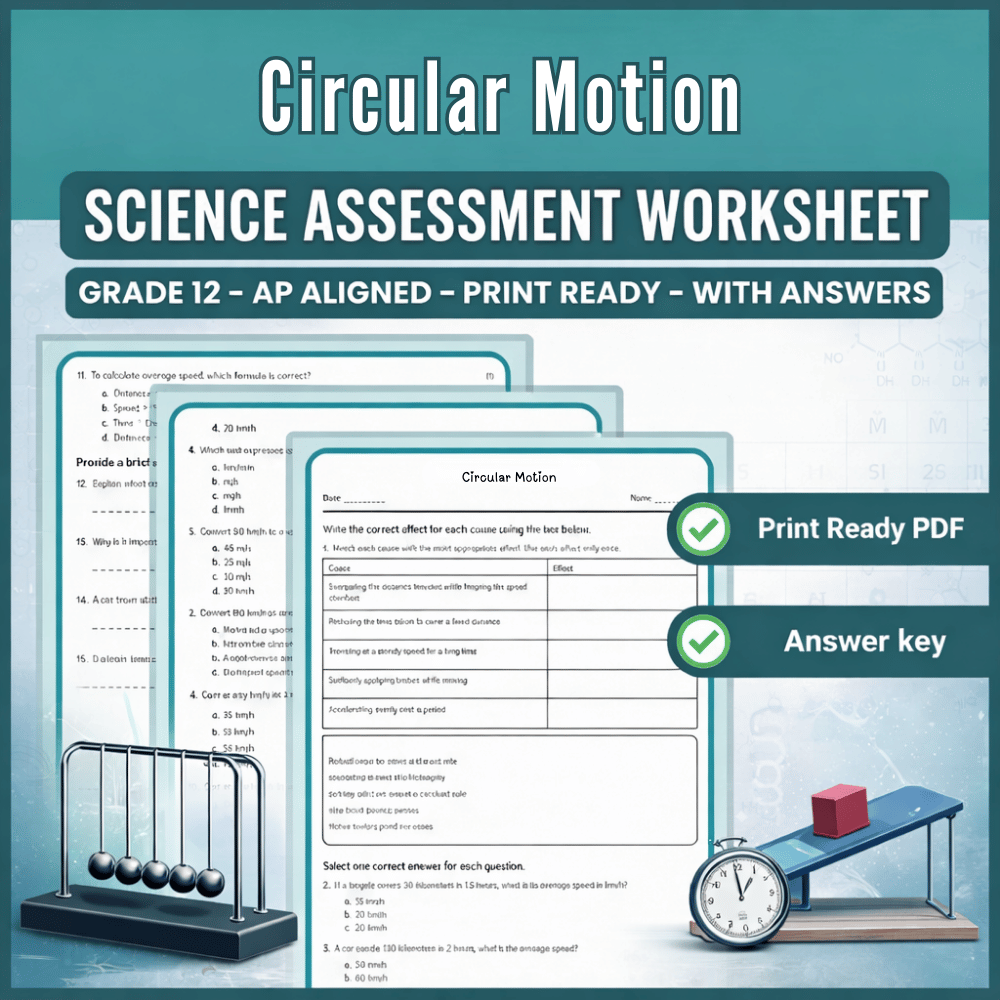
Grade 12 Science – Circular Motion Worksheet (AP) PDF
Created byBright Mind ResourcesLearning Objectives
- Explain the concept of uniform circular motion and the role of centripetal acceleration.
- Relate velocity, radius, and acceleration using mathematical formulas in circular motion.
- Analyze the effects of nonuniform circular motion involving tangential acceleration.
Instant download

Species Interactions Worksheet Pack | Grade 8 Ecology Science Activities
Created byPrism Point LearningLearning Objectives
- Explain how competition, predation, mutualism, commensalism, and parasitism affect survival and reproduction
- Describe how symbiotic relationships can change growth and population sizes in ecosystems
- Connect species interactions to ecosystem stability and biodiversity
Also included in: Grade 8 Genetics, Evolution & Ecosystems Lesson Bundle | Florida NGSSS
Instant download

Grade 9 Science – Resource Choices & Environmental Impact | Reading Worksheet
Created byBright Mind ResourcesLearning Objectives
- Understand the environmental effects of coal mining and other resource extraction methods
- Evaluate the sustainability and ecological trade-offs of different energy resources
- Analyze the long-term impacts of resource management practices
Also included in: Grade 9 Environmental Impact Science Daily Reading Worksheets Lesson Bundle | NGSS +2 more
Instant download
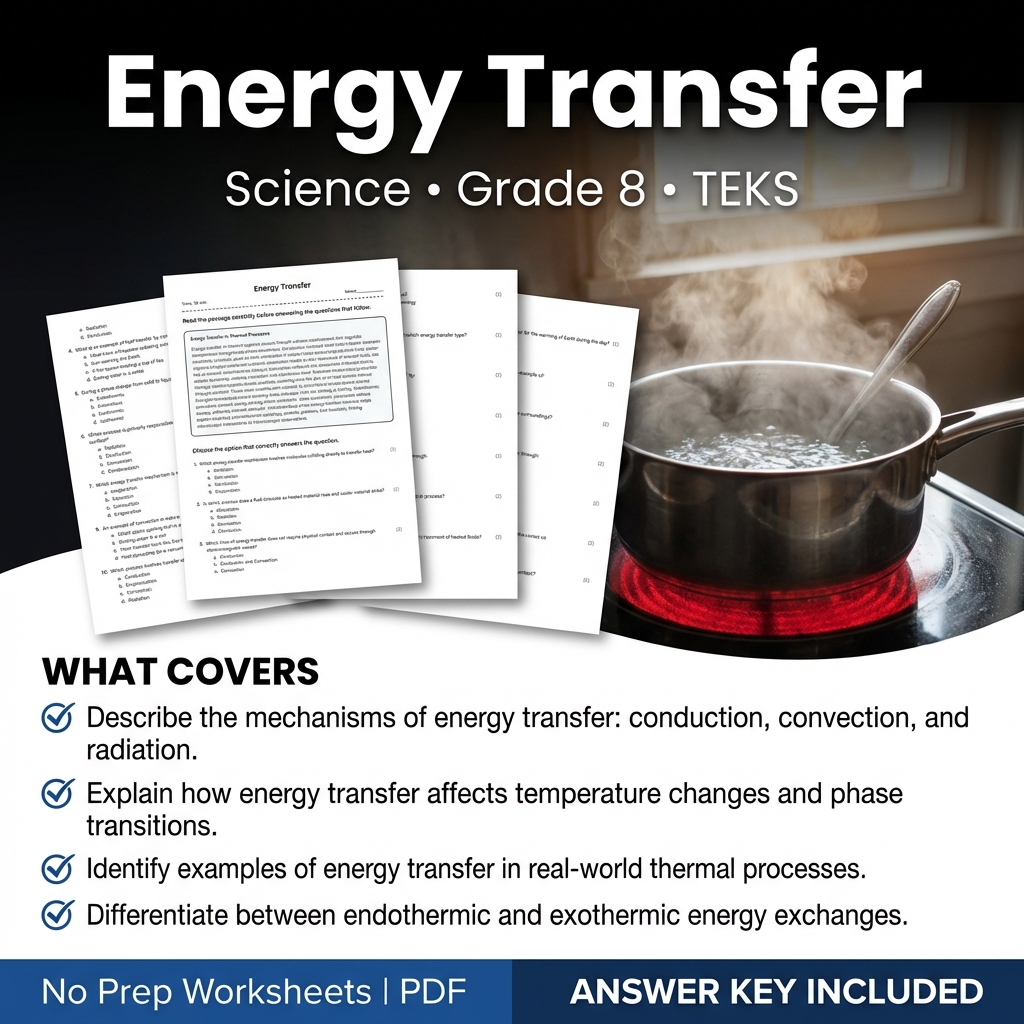
Energy Transfer Worksheet for Grade 8 Science | TEKS Aligned
Created byCoral Reef LearningLearning Objectives
- Describe the mechanisms of energy transfer: conduction, convection, and radiation.
- Explain how energy transfer affects temperature changes and phase transitions.
- Identify examples of energy transfer in real-world thermal processes.
Instant download

Conservation of Matter Assessment | California Standards Grade 7 Science
Created byPrism Point LearningLearning Objectives
- Explain conservation of matter in terms of atoms rearranging in a closed system
- Identify how physical and chemical changes differ while still conserving total mass
- Use evidence from mass measurements to support the claim that total mass stays constant in a closed system
Also included in: Grade 7 Forces and Matter Science Lesson Bundle: California Standards +1 more
Instant download

Water Availability and Resources Worksheet Grade 7 Science | California Standards
Created byPrism Point LearningLearning Objectives
- Explain how natural processes and human use affect the availability of land, water, and air resources.
- Describe how precipitation patterns and groundwater storage influence access to freshwater.
- Evaluate how droughts, floods, and human demand can change ecosystem stress and resource availability.
Instant download
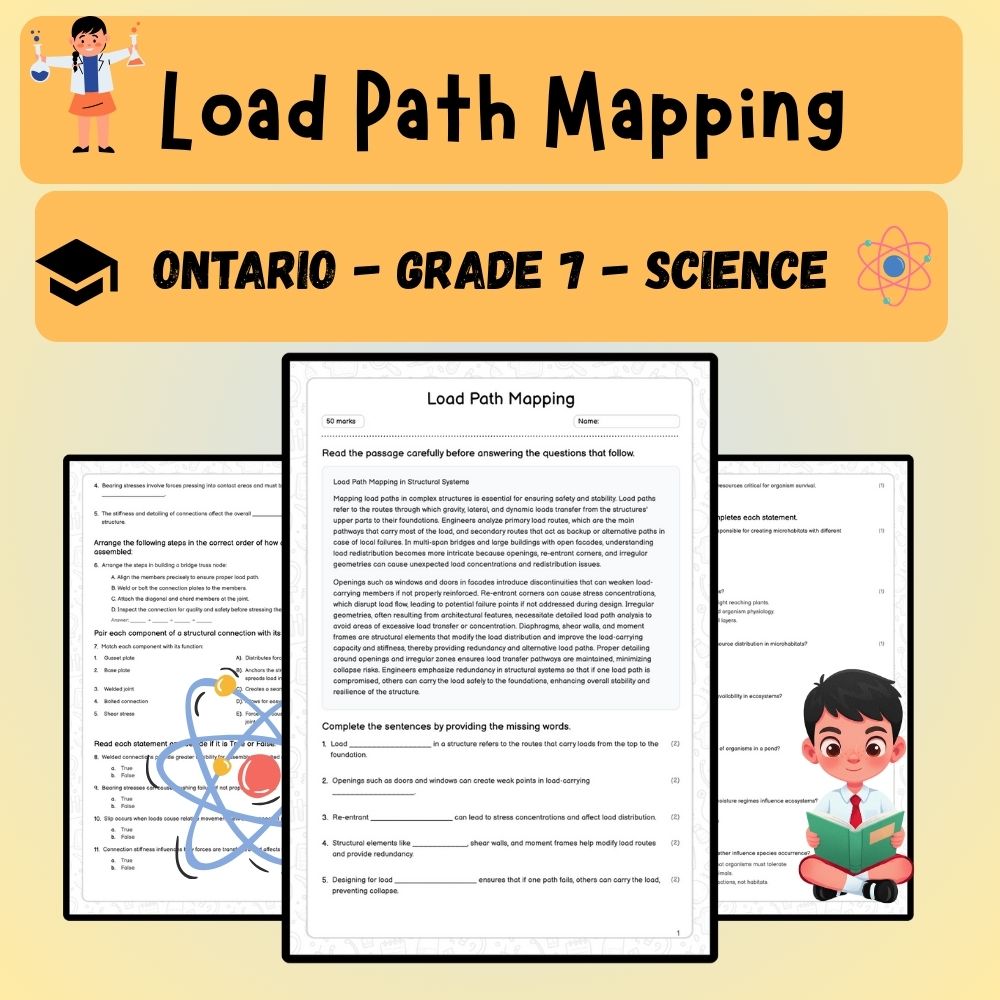
Grade 7 Science | Load Path Mapping Worksheet (PDF) - Ontario Standards
Created byPrism Point LearningLearning Objectives
- Understand methods for mapping load paths in complex structures.
- Identify primary and secondary load routes in structural systems.
- Analyze how openings and irregular geometries influence load redistribution.
Also included in: Grade 7 Science Unit | Structural Engineering & Material Testing Worksheets Bundle +1 more
Instant download
Grade 6 Science – Earth's Water Cycle Daily Reading Worksheet
 Created byElena Brooks
Learning Objectives
- Explain how water moves through Earth's spheres (geosphere, hydrosphere, atmosphere, biosphere).
- Identify key processes involved in the water cycle, such as evaporation, condensation, precipitation, and collection.
- Describe how water transfer influences other Earth systems and feedback mechanisms.
Also included in: Grade 6 Science – Earth's Systems Lesson Bundle | NGSS Standards +1 more
Instant download
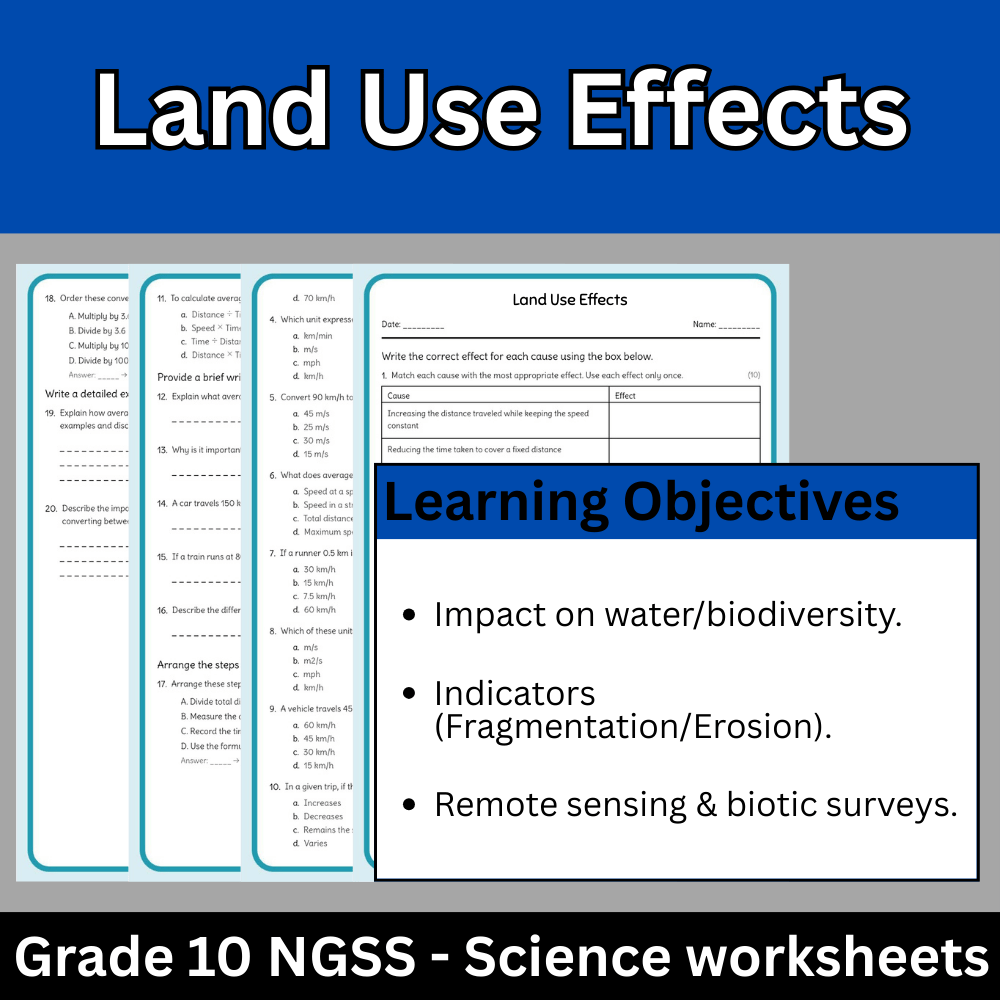
Grade 10 Science | Land Use Effects Worksheet ( Answer Key) – NGSS Aligned
Created byBright Mind ResourcesLearning Objectives
- Understand how human land-use changes affect ecosystems, water cycles, and biodiversity.
- Identify indicators of land use impacts such as habitat fragmentation, soil erosion, and coastal degradation.
- Analyze empirical data from land-cover maps, remote sensing, and biotic surveys to evaluate ecological consequences.
Instant download
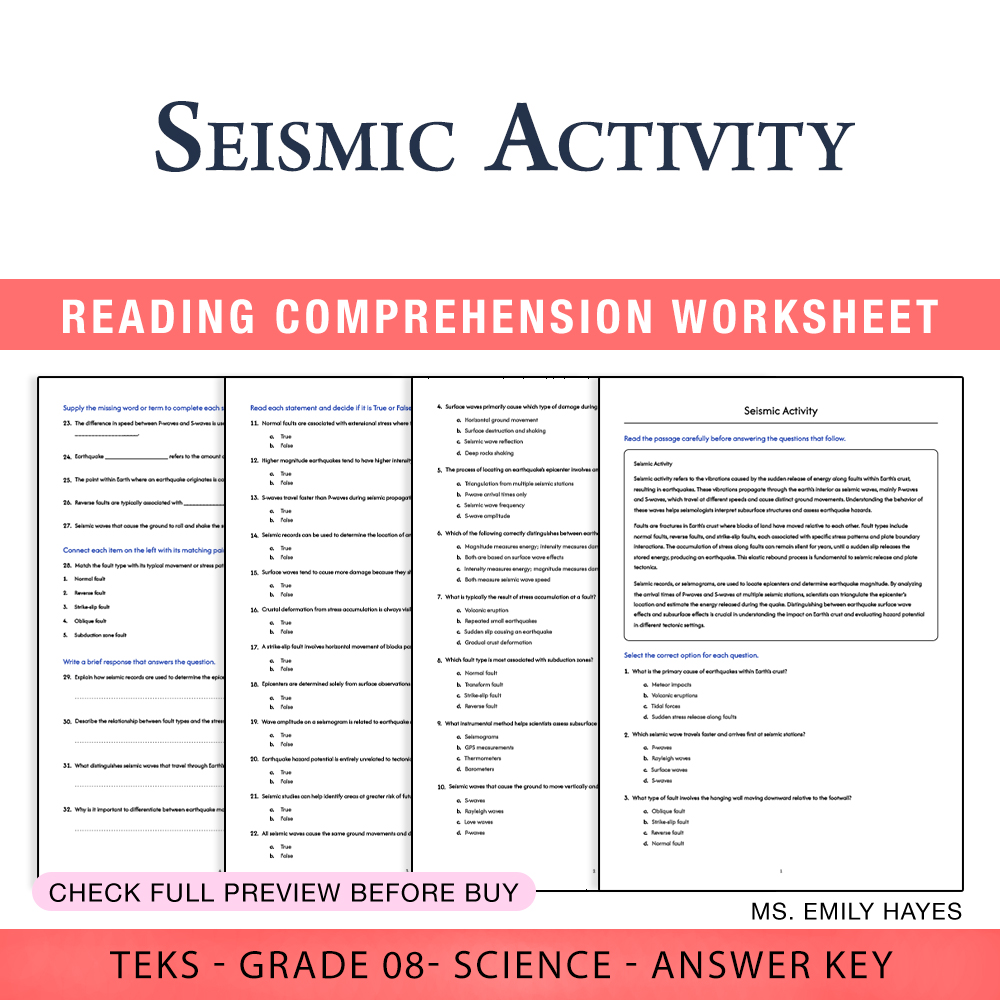
8th Grade Science | Seismic Activity Worksheet (PDF+ Answer Key)
Created byCopper Leaf ClassroomLearning Objectives
- Describe the different types of faults and their relation to seismic activity.
- Explain how P-waves, S-waves, and surface waves propagate during an earthquake.
- Differentiate between earthquake intensity and magnitude and their significance in hazard assessment.
Instant download
Browse more categories
About Science Worksheets
Find Science worksheets spanning core skills, practice, and review. All 44,773 resources are instant PDF downloads for the classroom or home.
Every worksheet on MyTeachingSheets is created by independent teacher-authors and reviewed before publication. All resources download as printable PDFs for classroom, homework, or at-home practice, and many include answer keys. Preview any worksheet free before buying.