
Science Worksheets
42,859 subject resources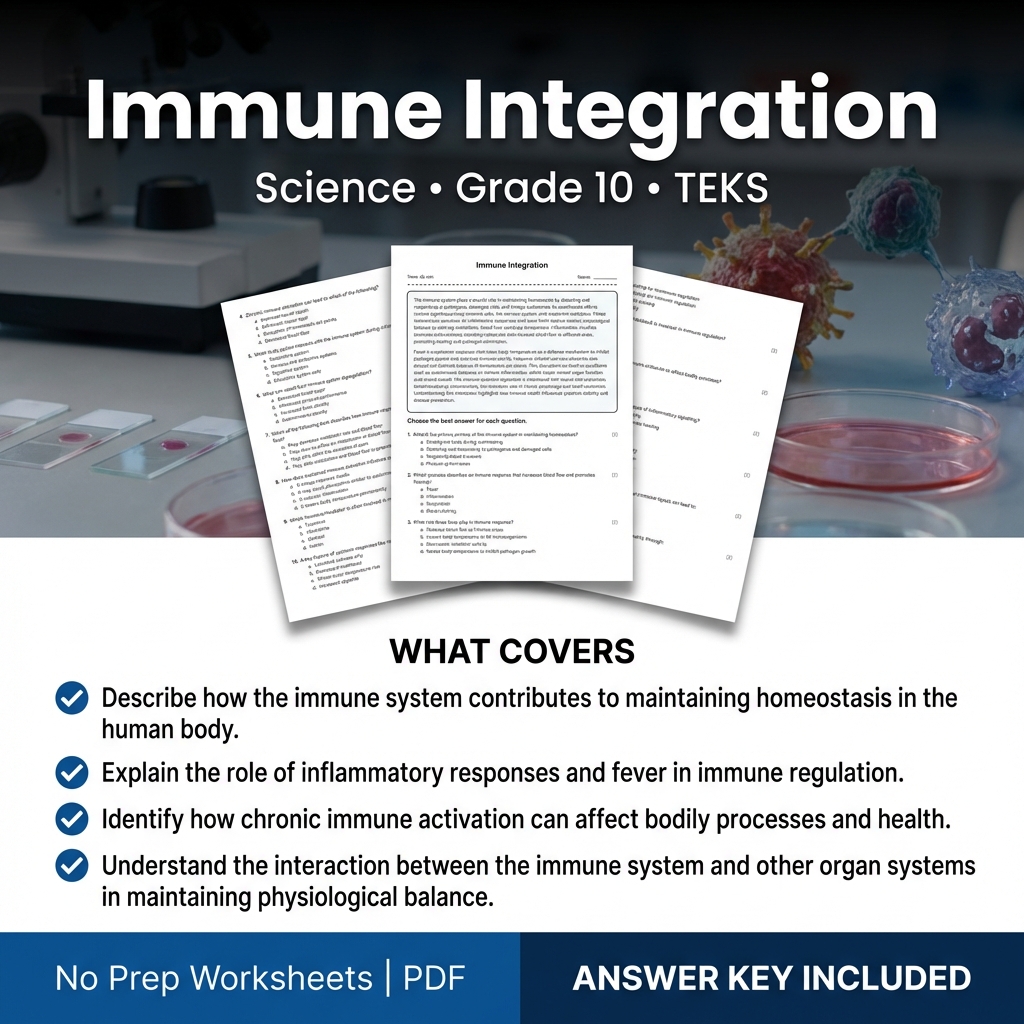
Grade 10 Science Worksheet on Immune Integration | TEKS Aligned
 Created byCoral Reef Learning
Learning Objectives
- Describe how the immune system contributes to maintaining homeostasis in the human body.
- Explain the role of inflammatory responses and fever in immune regulation.
- Identify how chronic immune activation can affect bodily processes and health.
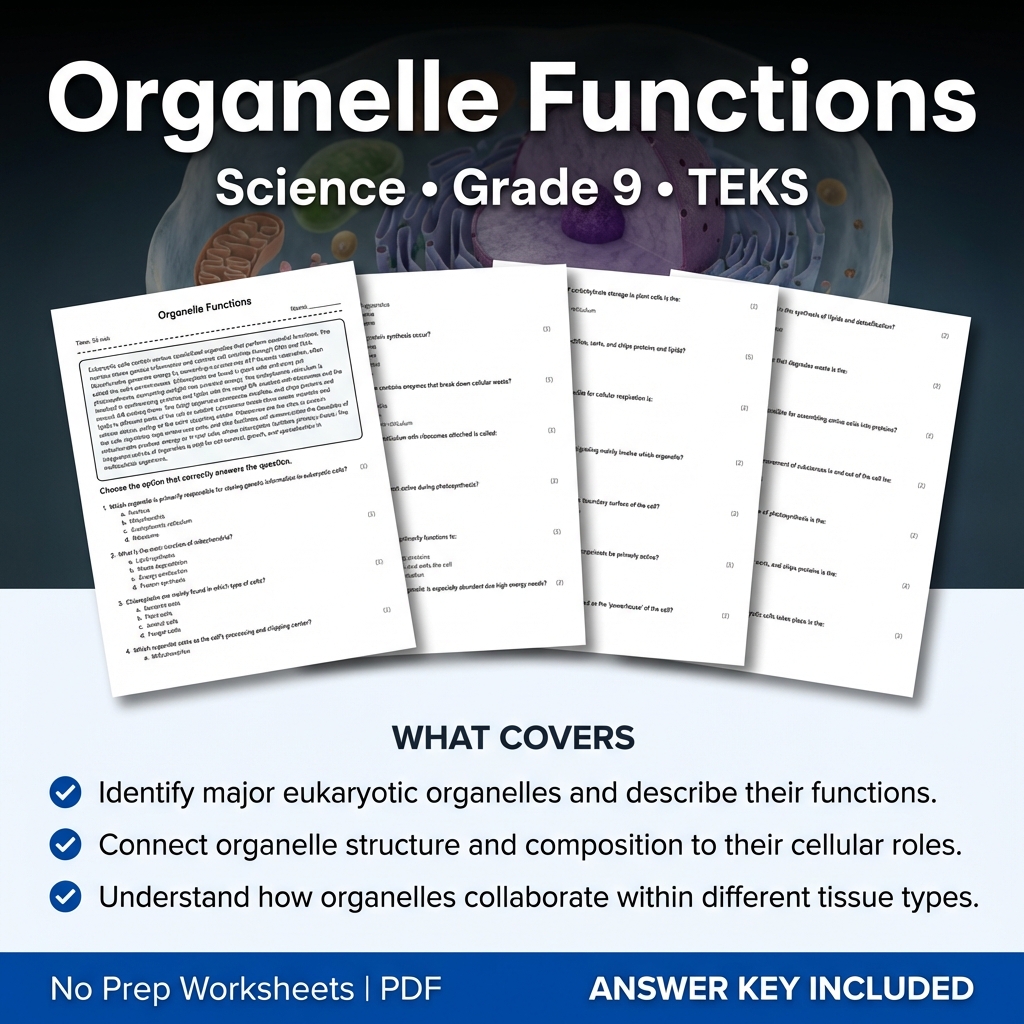
Organelle Functions Worksheet for Grade 9 Science – Printable PDF & Answer Key
Created byCoral Reef LearningLearning Objectives
- Identify major eukaryotic organelles and describe their functions.
- Connect organelle structure and composition to their cellular roles.
- Understand how organelles collaborate within different tissue types.
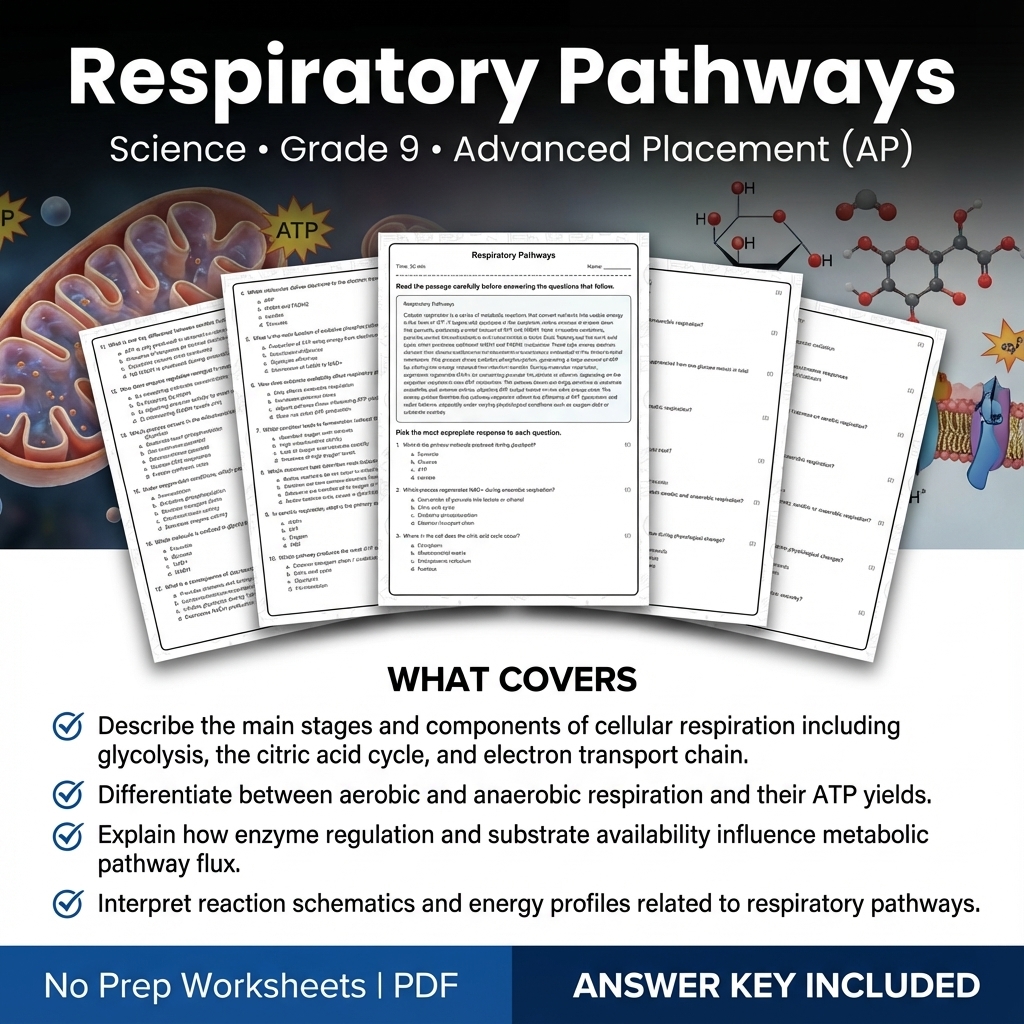
Grade 9 Science | Respiratory Pathways Worksheet (Printable PDF + Answer Key)
Created byCoral Reef LearningLearning Objectives
- Describe the main stages and components of cellular respiration including glycolysis, the citric acid cycle, and electron transport chain.
- Differentiate between aerobic and anaerobic respiration and their ATP yields.
- Explain how enzyme regulation and substrate availability influence metabolic pathway flux.
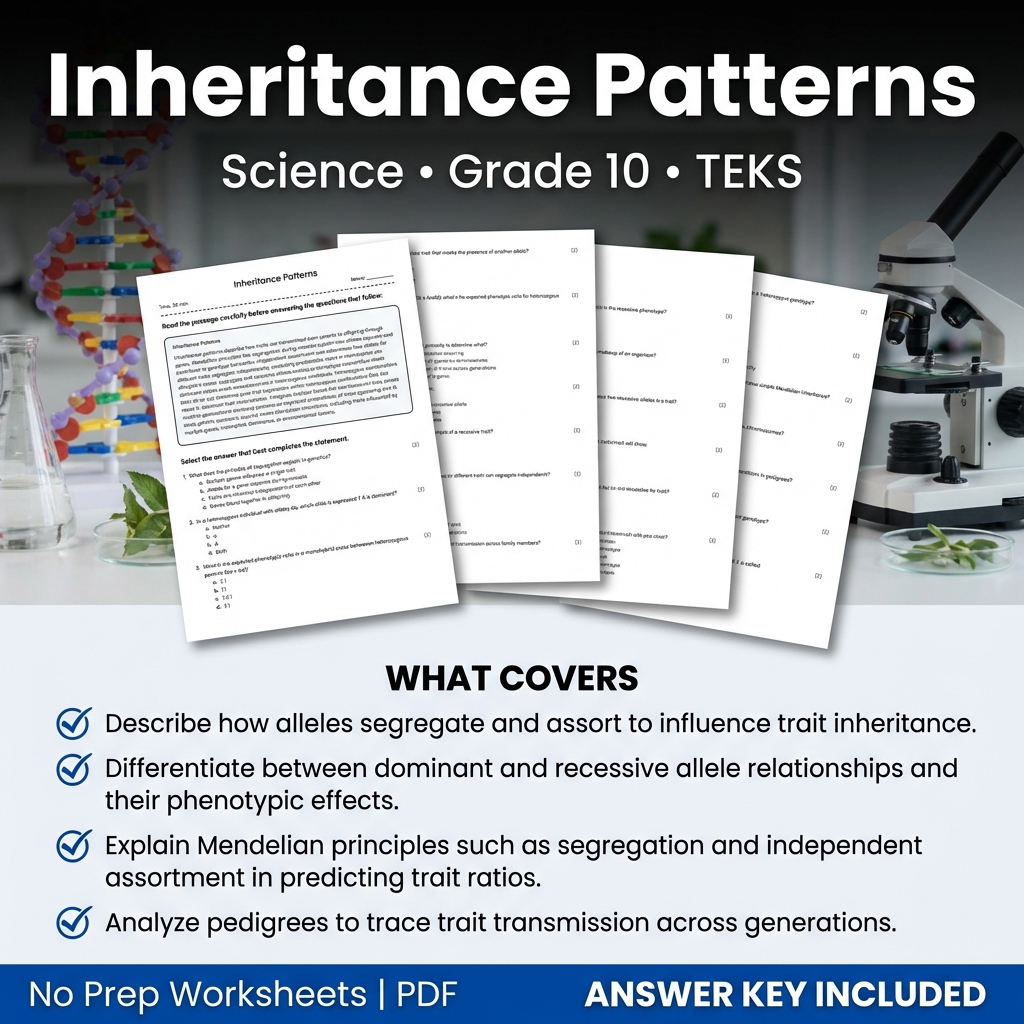
Inheritance Patterns Worksheet for Grade 10 Science TEKS
Created byCoral Reef LearningLearning Objectives
- Describe how alleles segregate and assort to influence trait inheritance.
- Differentiate between dominant and recessive allele relationships and their phenotypic effects.
- Explain Mendelian principles such as segregation and independent assortment in predicting trait ratios.
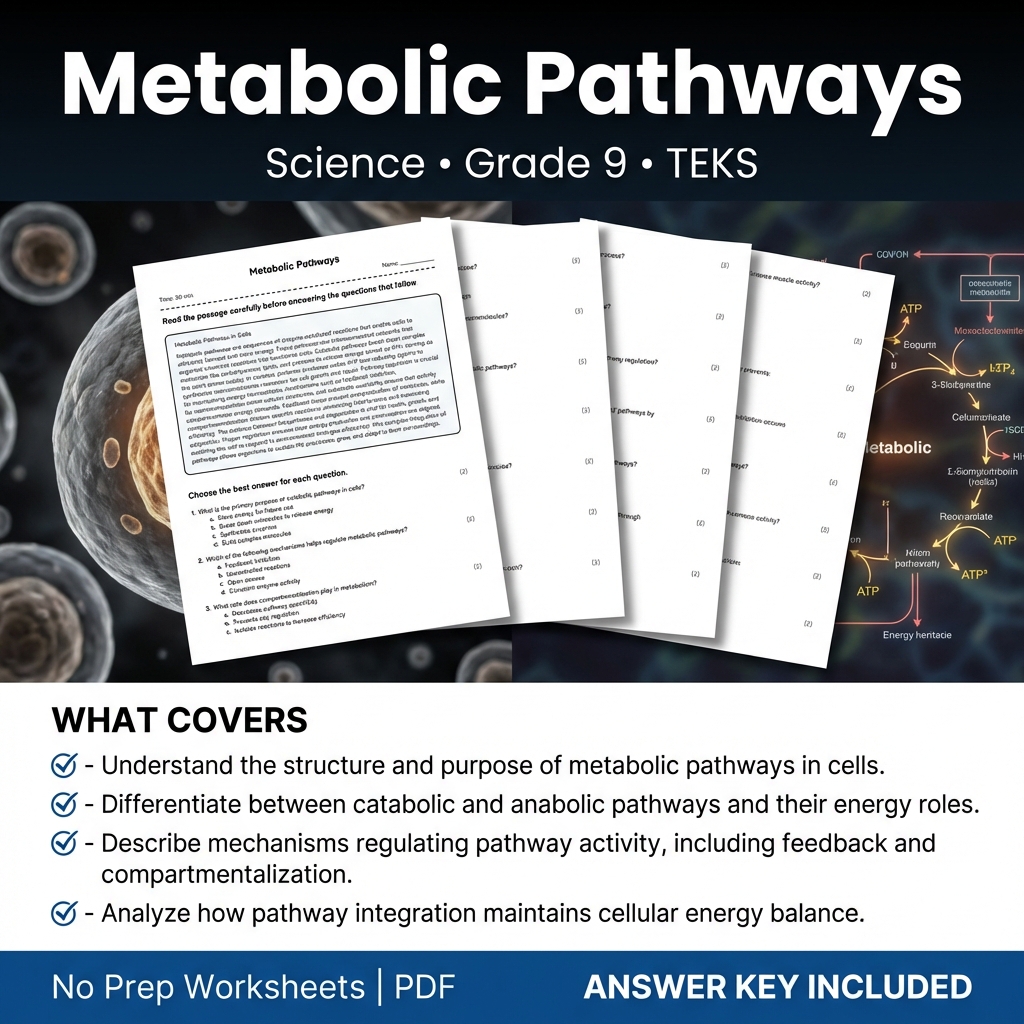
Grade 9 Science Worksheet on Metabolic Pathways – TEKS Aligned
Created byCoral Reef LearningLearning Objectives
- Understand the structure and purpose of metabolic pathways in cells.
- Differentiate between catabolic and anabolic pathways and their energy roles.
- Describe mechanisms regulating pathway activity, including feedback and compartmentalization.
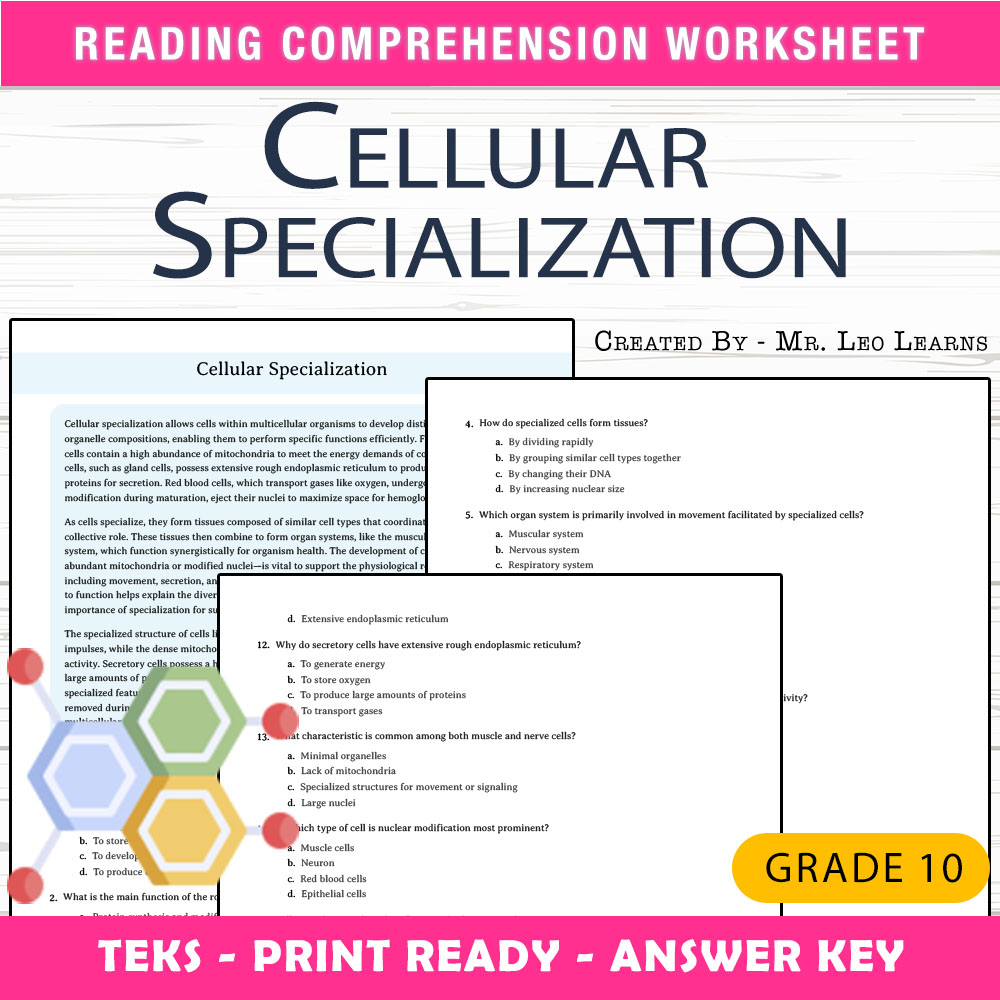
Grade 10 Science – Cellular Specialization Worksheet for Mastering Cell Functions
 Created byThe Resource Hub
Learning Objectives
- Understand how organelle abundance relates to cell function in specialized cells.
- Explain the process by which cells develop distinct structures to perform specific roles.
- Connect subcellular features to physiological activities like contraction, secretion, and gas transport.
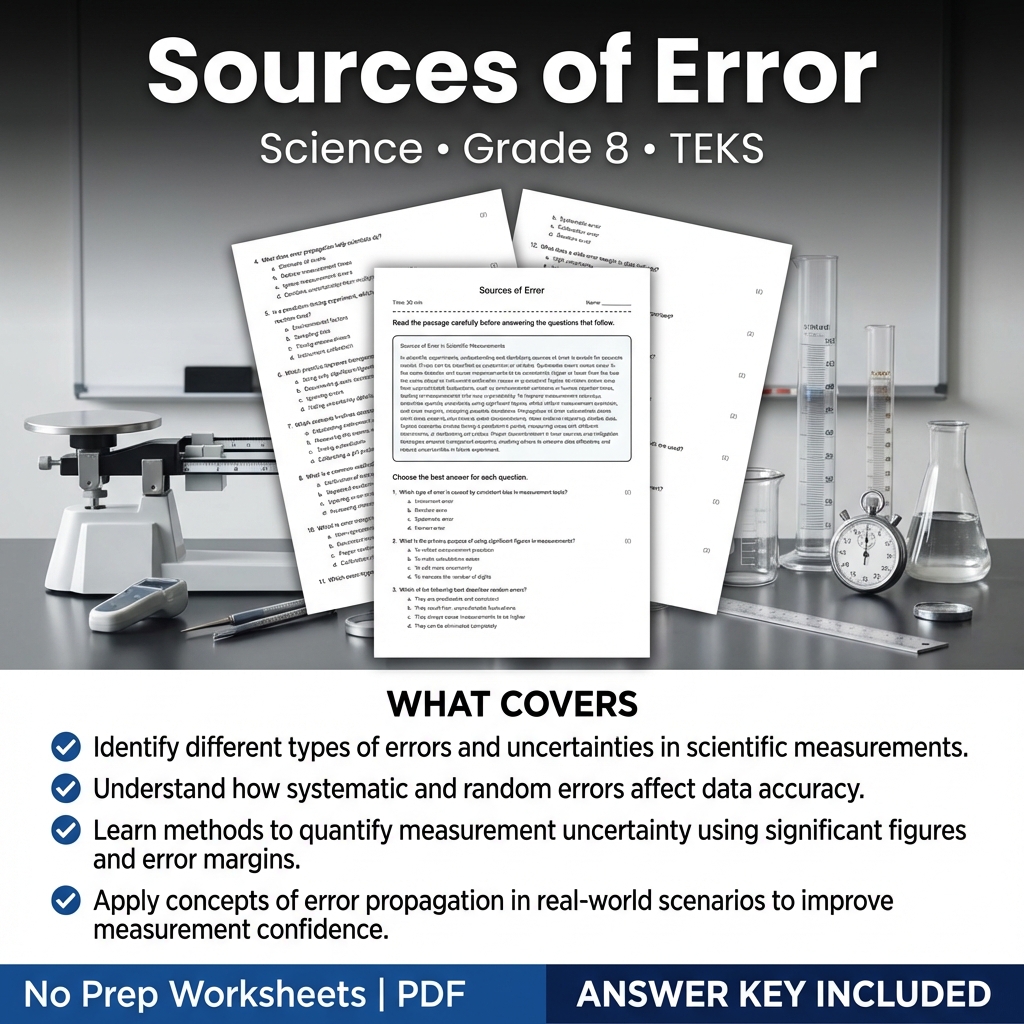
Sources of Error Science Worksheet for Grade 8 | TEKS aligned practice
Created byCoral Reef LearningLearning Objectives
- Identify different types of errors and uncertainties in scientific measurements.
- Understand how systematic and random errors affect data accuracy.
- Learn methods to quantify measurement uncertainty using significant figures and error margins.
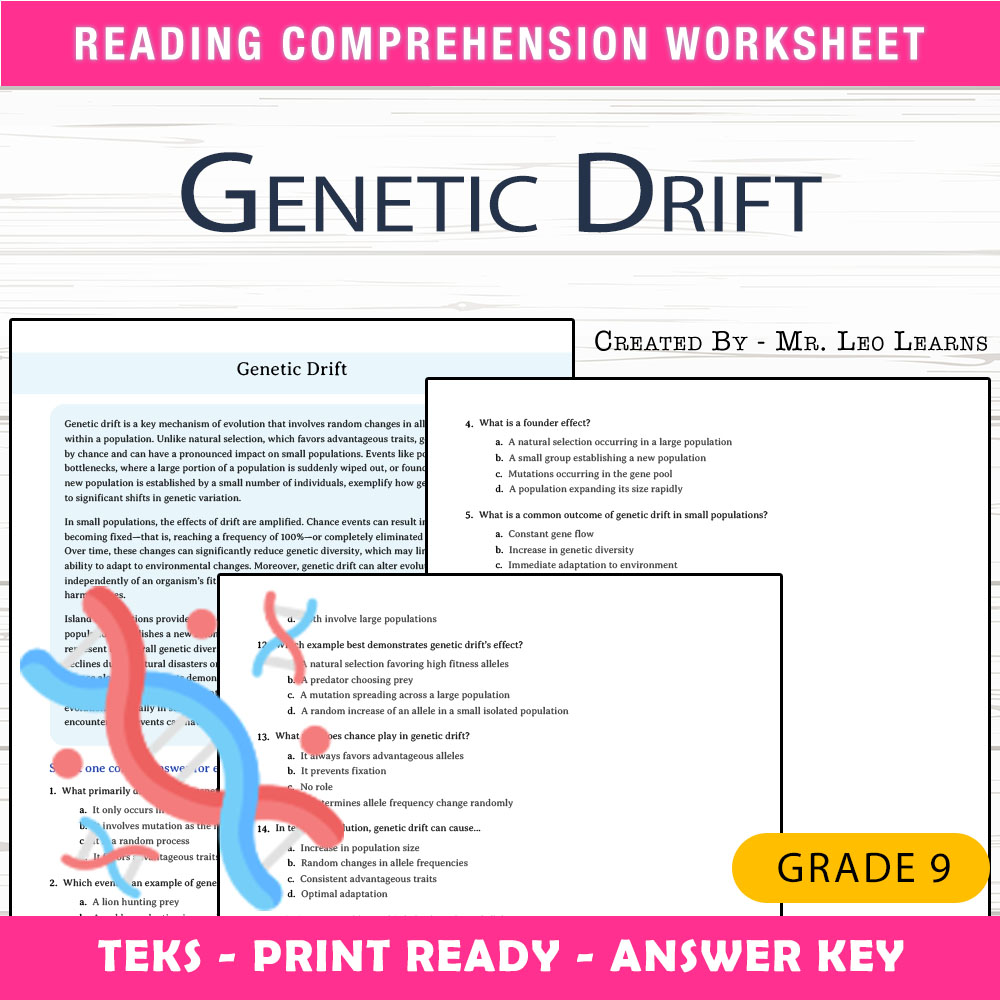
Grade 9 Science – Genetic Drift Worksheet for Mastery
Created byThe Resource HubLearning Objectives
- Understand what genetic drift is and how it affects small populations.
- Identify examples of events that cause genetic drift, such as bottlenecks and founder effects.
- Explain the consequences of genetic drift on allele frequencies and genetic diversity.
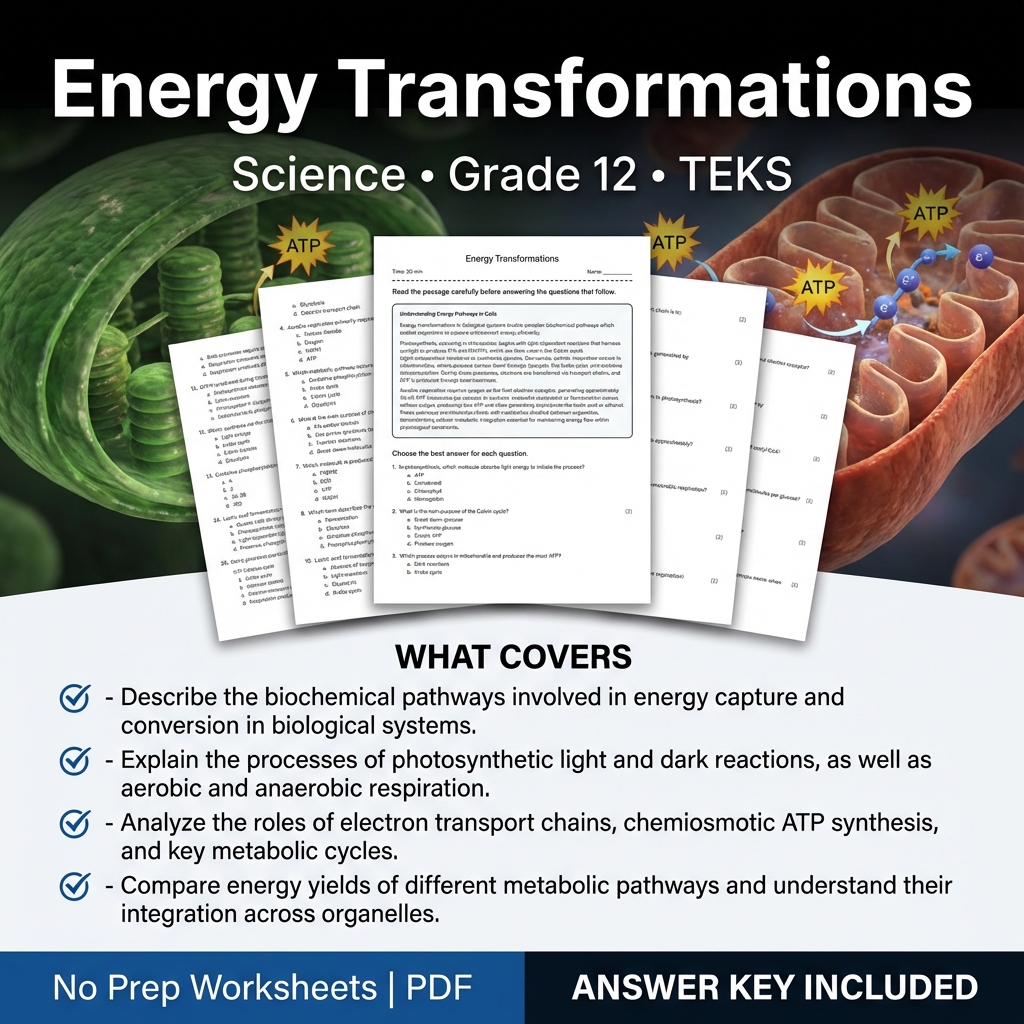
Energy Transformations Worksheet for Grade 12 Science | TEKS
Created byCoral Reef LearningLearning Objectives
- Describe the biochemical pathways involved in energy capture and conversion in biological systems.
- Explain the processes of photosynthetic light and dark reactions, as well as aerobic and anaerobic respiration.
- Analyze the roles of electron transport chains, chemiosmotic ATP synthesis, and key metabolic cycles.
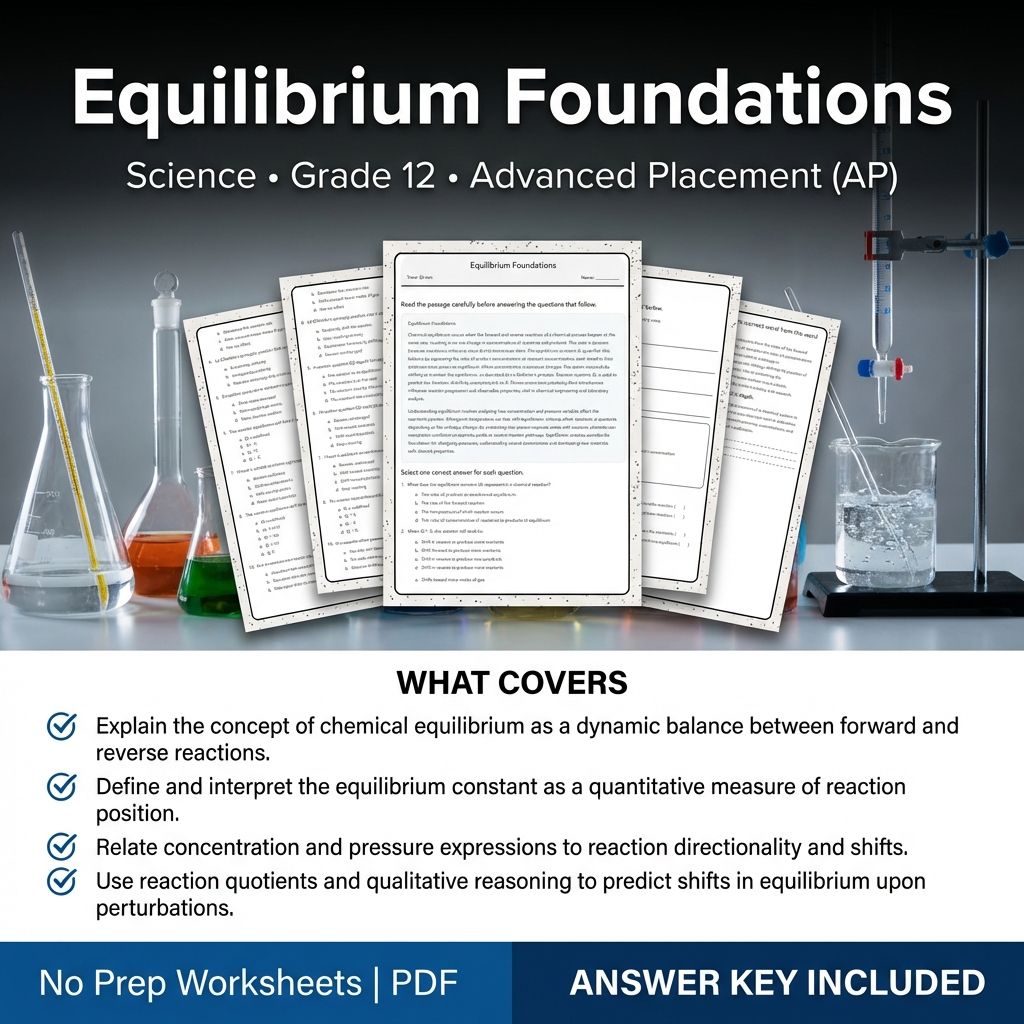
12th Grade Science | Equilibrium Foundations Worksheet & Answer Key (Printable PDF)
Created byCoral Reef LearningLearning Objectives
- Explain the concept of chemical equilibrium as a dynamic balance between forward and reverse reactions.
- Define and interpret the equilibrium constant as a quantitative measure of reaction position.
- Relate concentration and pressure expressions to reaction directionality and shifts.
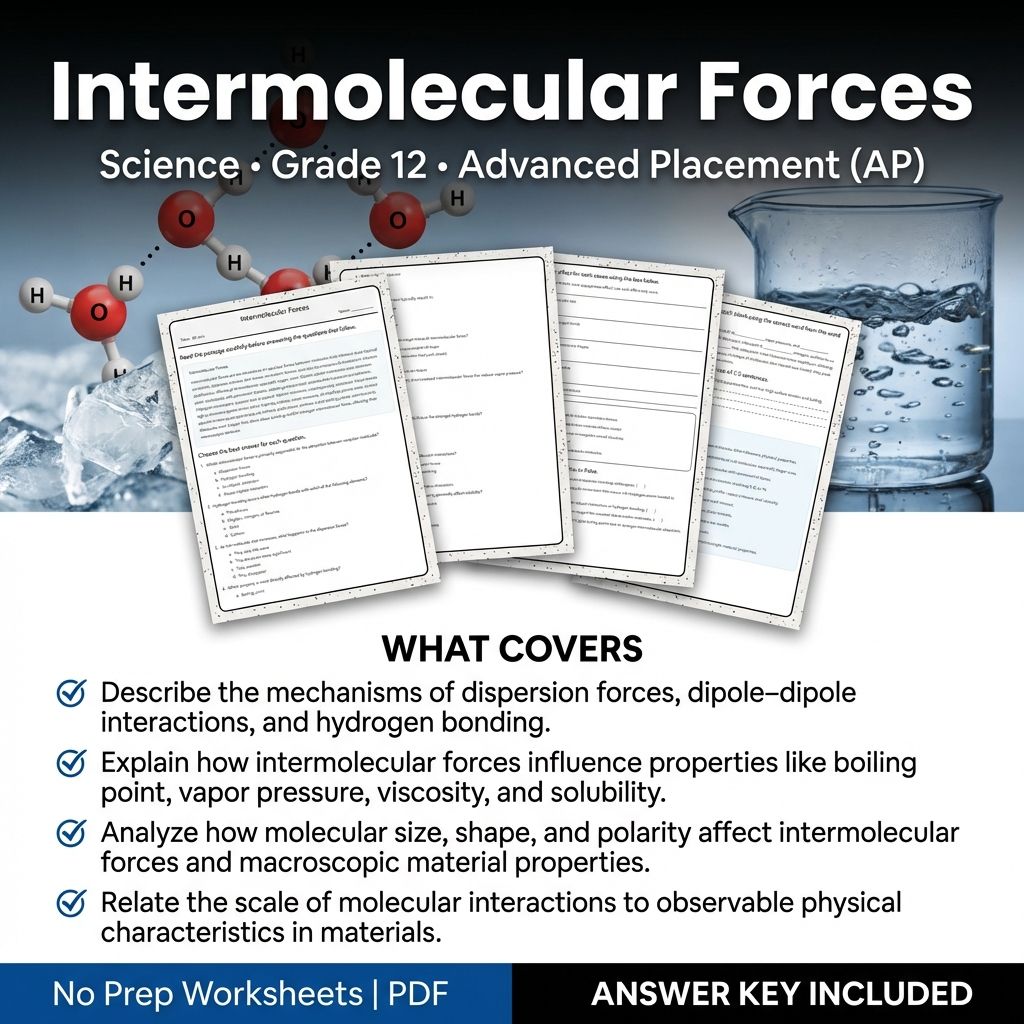
12th Grade Science | Intermolecular Forces Worksheet & Answer Key (Printable PDF)
Created byCoral Reef LearningLearning Objectives
- Describe the mechanisms of dispersion forces, dipole–dipole interactions, and hydrogen bonding.
- Explain how intermolecular forces influence properties like boiling point, vapor pressure, viscosity, and solubility.
- Analyze how molecular size, shape, and polarity affect intermolecular forces and macroscopic material properties.
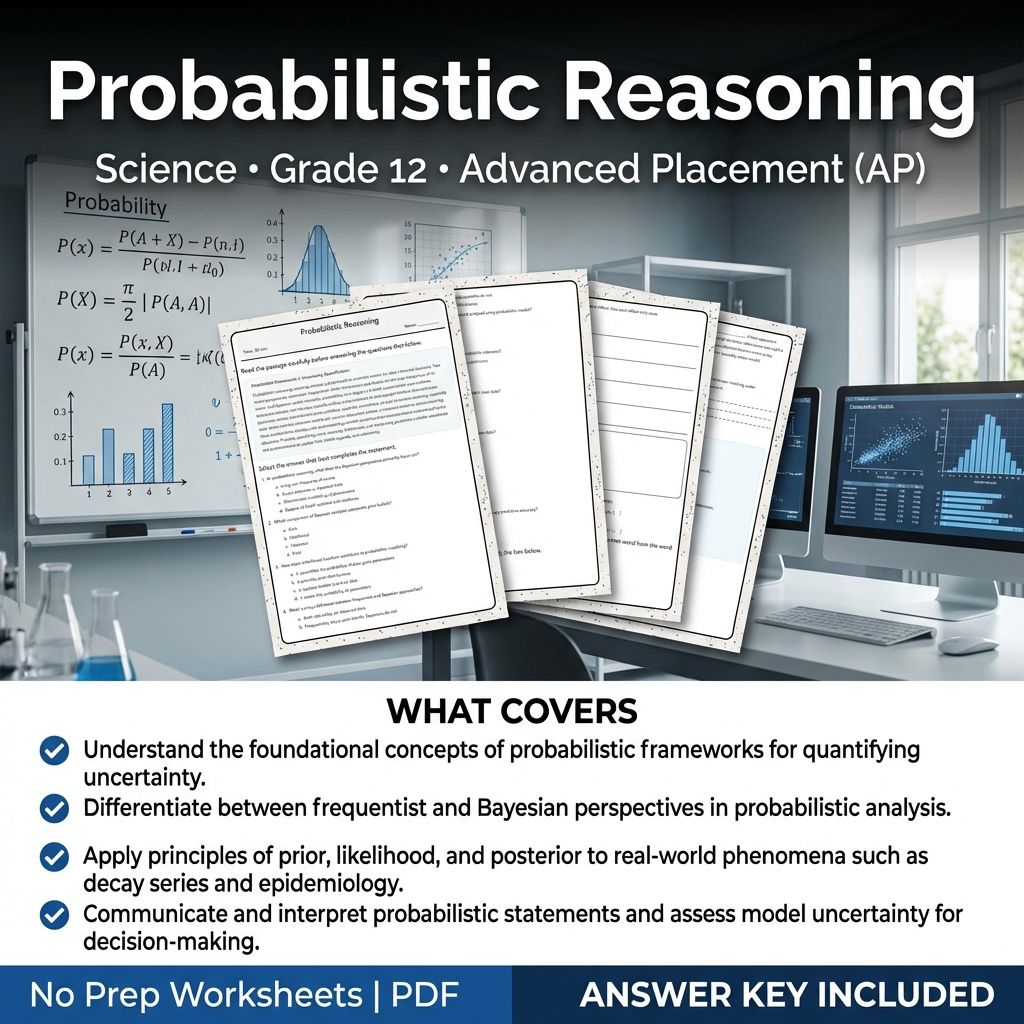
12th Grade Science | Probabilistic Reasoning Worksheet & Answer Key (Printable PDF)
Created byCoral Reef LearningLearning Objectives
- Understand the foundational concepts of probabilistic frameworks for quantifying uncertainty.
- Differentiate between frequentist and Bayesian perspectives in probabilistic analysis.
- Apply principles of prior, likelihood, and posterior to real-world phenomena such as decay series and epidemiology.
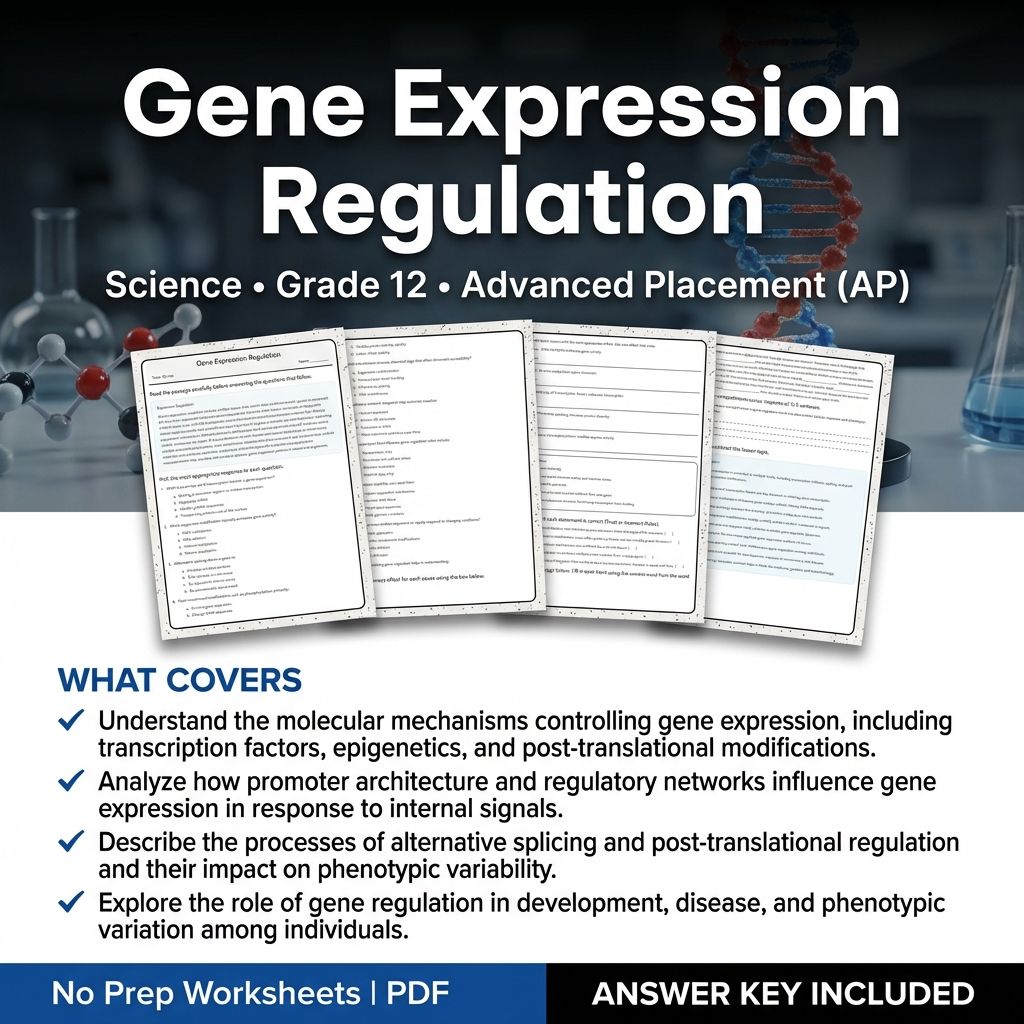
Grade 12 Science Worksheet | Gene Expression Regulation Practice & Assessment (PDF + Answer Key)
Created byCoral Reef LearningLearning Objectives
- Understand the molecular mechanisms controlling gene expression, including transcription factors, epigenetics, and post-translational modifications.
- Analyze how promoter architecture and regulatory networks influence gene expression in response to internal signals.
- Describe the processes of alternative splicing and post-translational regulation and their impact on phenotypic variability.
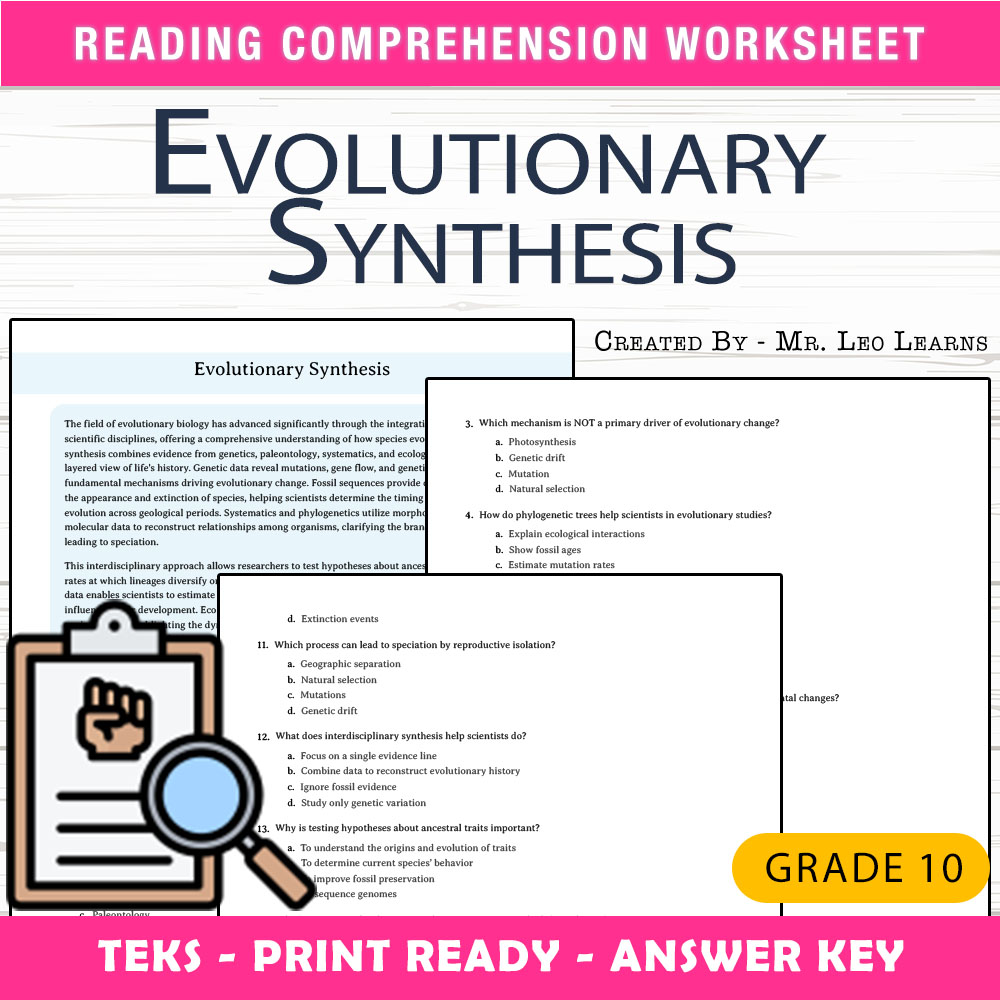
Grade 10 Science – Evolutionary Synthesis Worksheet for Mastery
Created byThe Resource HubLearning Objectives
- Understand how genetics, paleontology, systematics, and ecology contribute to evolutionary theory.
- Explain mechanisms such as natural selection, genetic drift, mutation, and gene flow in species change.
- Interpret fossil records, phylogenetic trees, and ecological data to reconstruct evolutionary history.
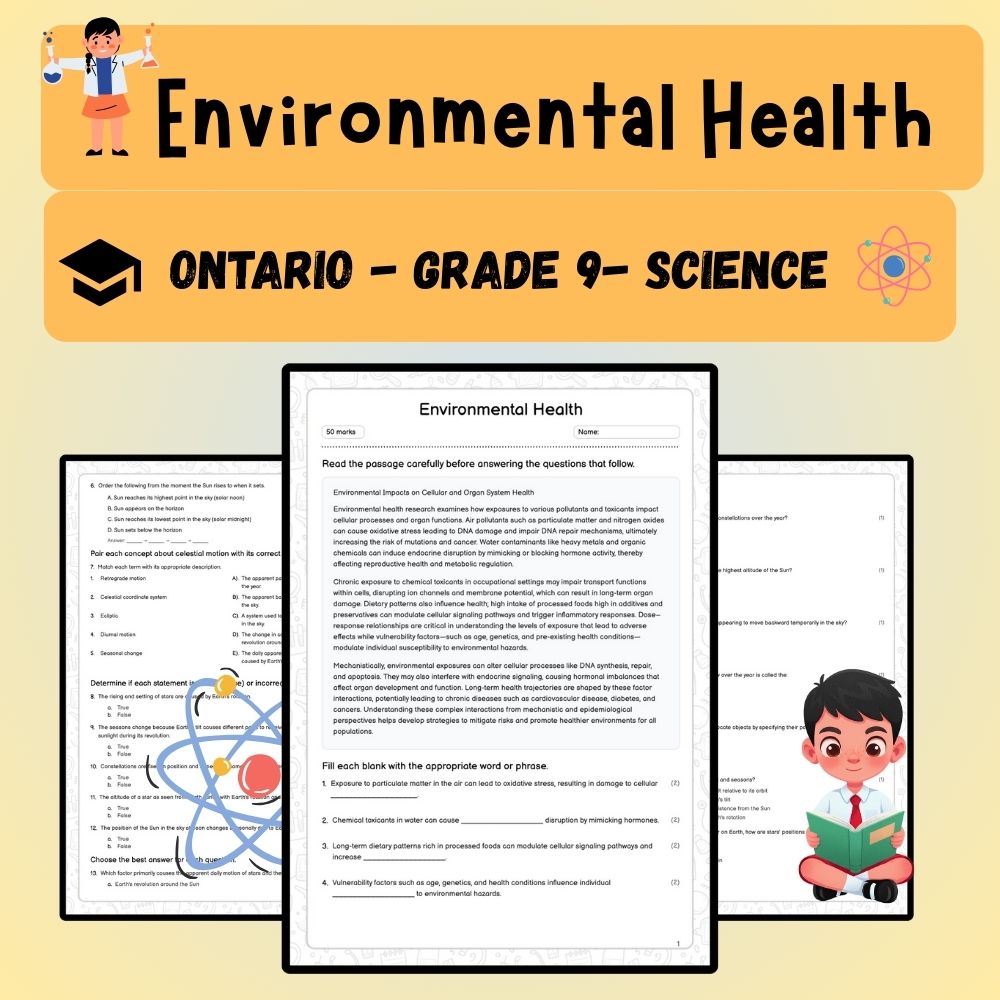
Grade 9 Science | Environmental Health Worksheet (Answer Key) - Ontario Standards
 Created byPrism Point Learning
Learning Objectives
- Understand how environmental exposures influence cellular and organ system health.
- Identify sources and effects of air and water pollutants on human health.
- Explain dose–response relationships and vulnerability factors related to environmental hazards.
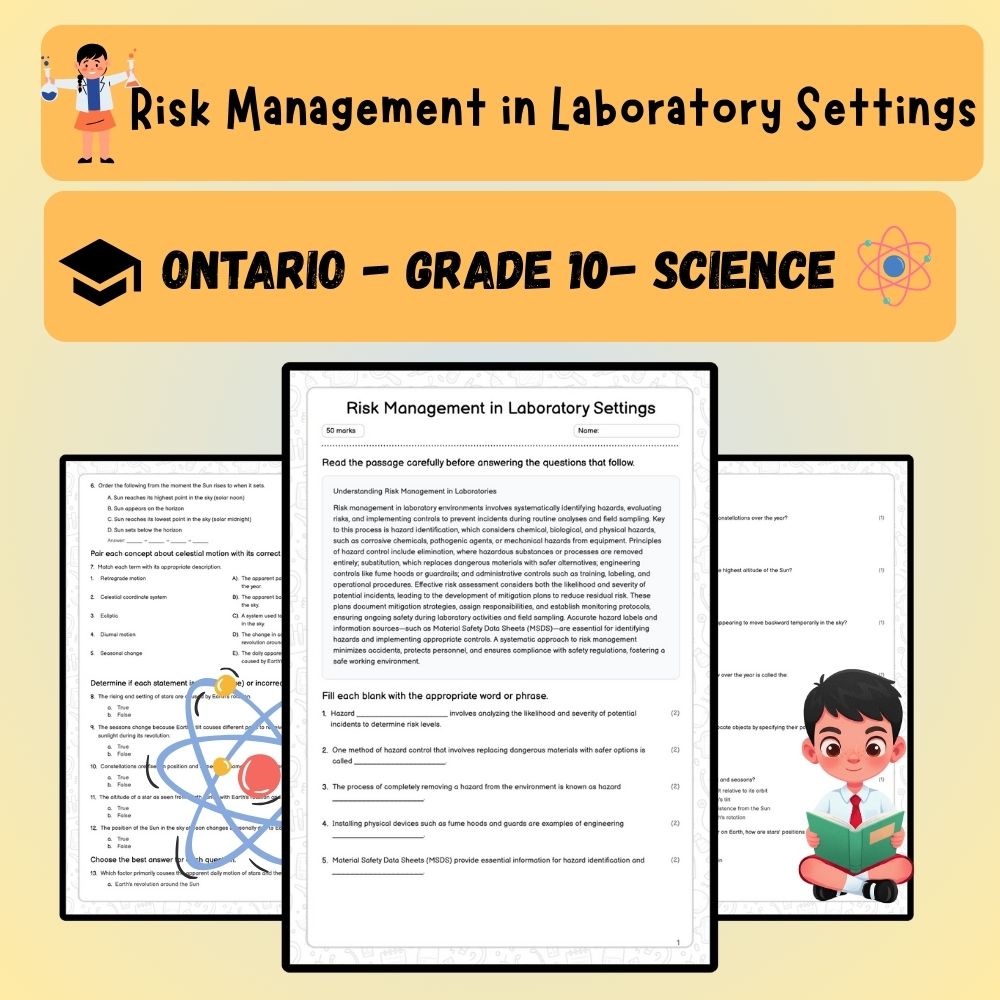
Grade 10 Science | Risk Management in Laboratory Settings Worksheet (Answer Key)
Created byPrism Point LearningLearning Objectives
- Understand the principles of hazard identification and risk assessment.
- Identify chemical, biological, and physical hazards in laboratory environments.
- Learn strategies for hazard elimination, substitution, and control measures.
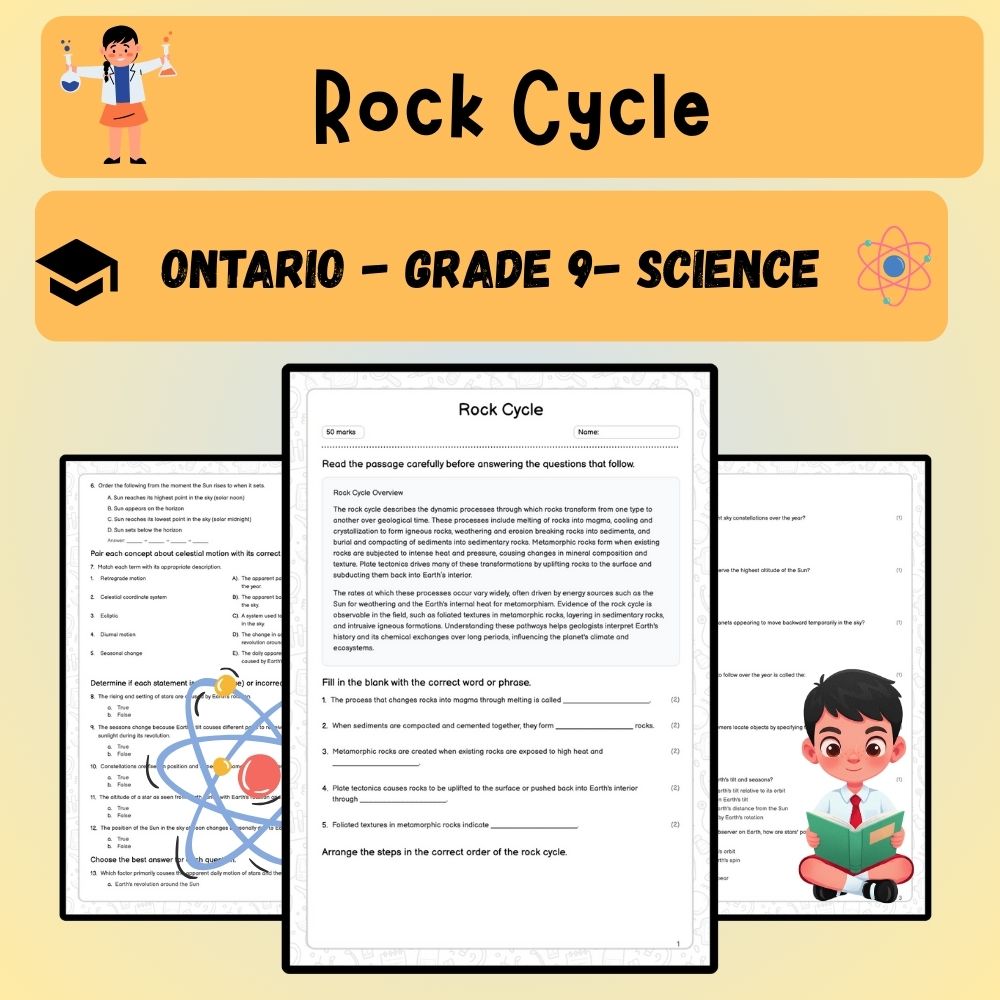
Grade 9 Science – Rock Cycle Worksheet (PDF) | Ontario Standards & Practice
Created byPrism Point LearningLearning Objectives
- Describe the processes involved in the rock cycle and how they transform different types of rocks.
- Identify observable evidence of the rock cycle in the field, such as layering and textures.
- Explain the role of plate tectonics, energy sources, and processes like weathering and metamorphism in shaping rocks.
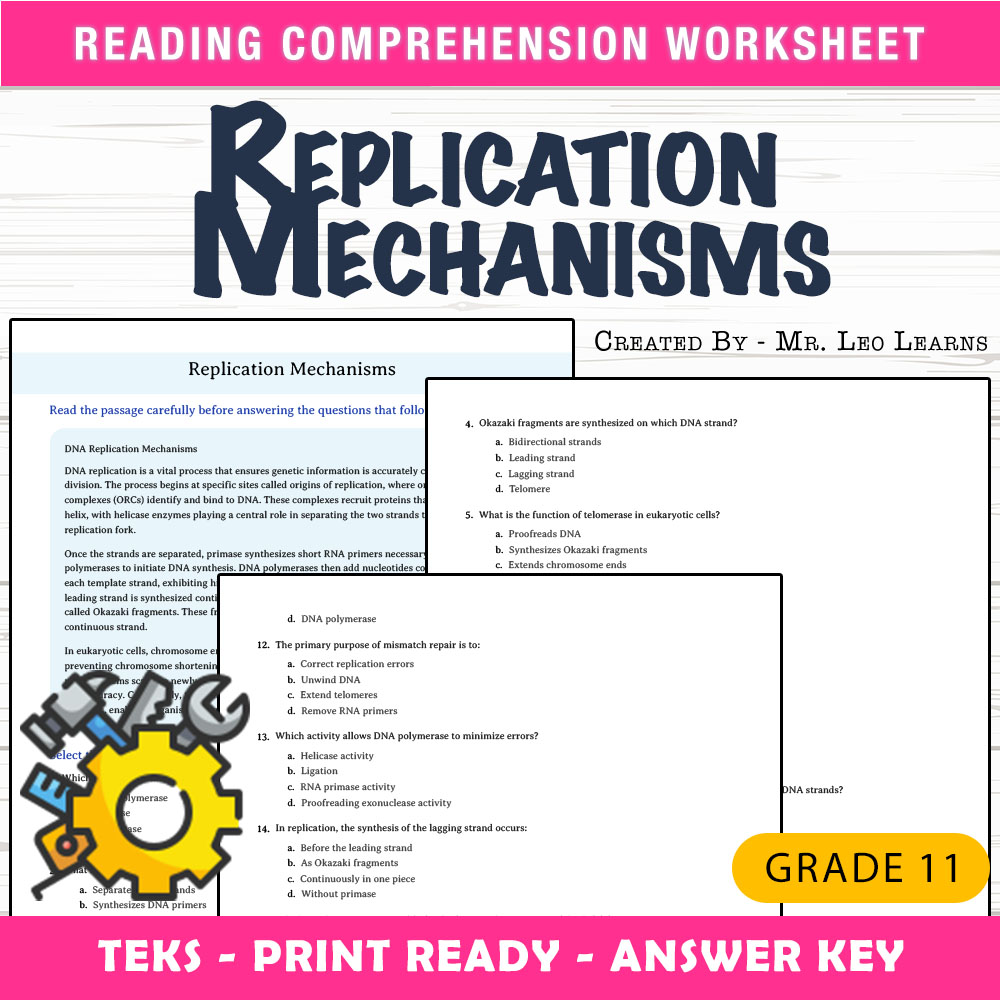
Grade 11 Science | Replication Mechanisms Worksheet for Mastery
Created byThe Resource HubLearning Objectives
- Explain the roles of origin recognition complexes, helicase, primase, and DNA polymerases in DNA replication.
- Describe the processes involved in lagging strand synthesis and telomerase activity in eukaryotes.
- Understand the importance of mismatch repair and how it maintains genomic integrity.
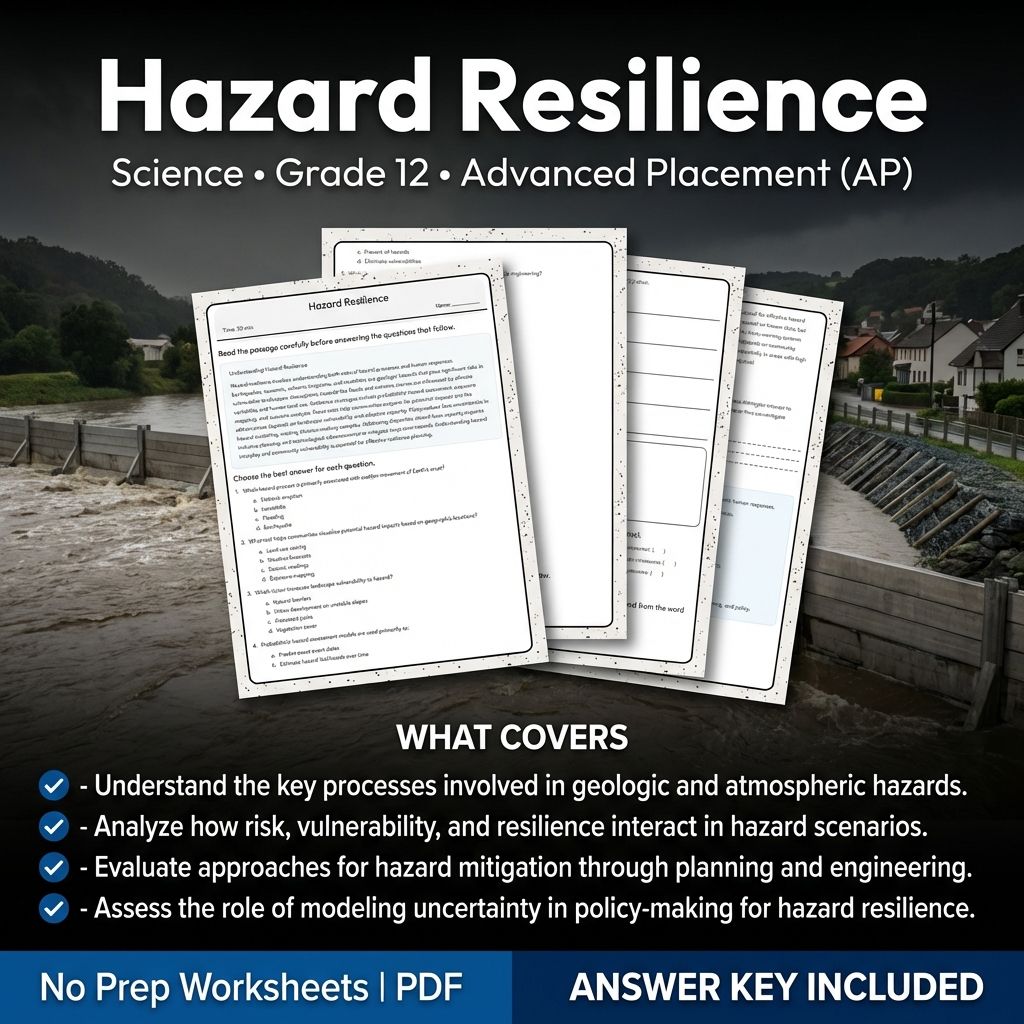
Grade 12 Science | Hazard Resilience Worksheet with Answer Key (Printable PDF)
Created byCoral Reef LearningLearning Objectives
- Understand the key processes involved in geologic and atmospheric hazards.
- Analyze how risk, vulnerability, and resilience interact in hazard scenarios.
- Evaluate approaches for hazard mitigation through planning and engineering.
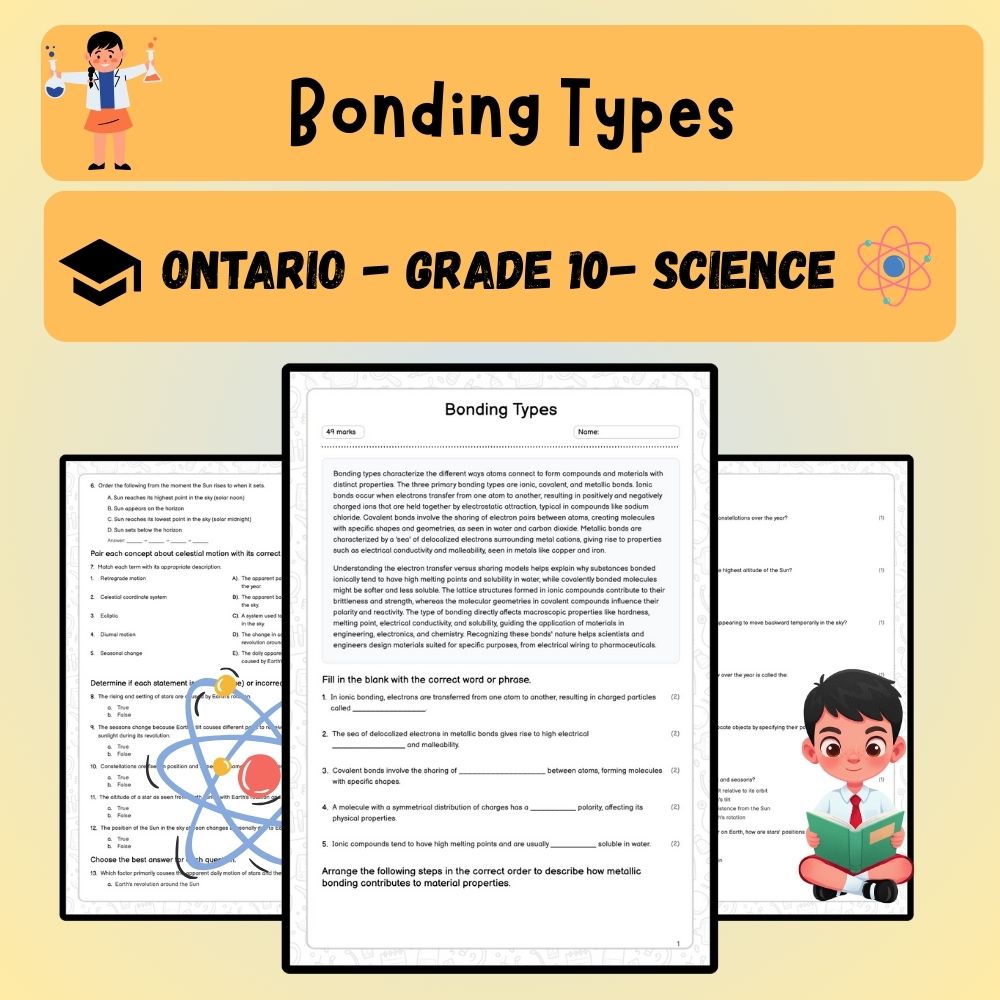
Grade 10 Science | Bonding Types Worksheet (PDF) | Ontario Standards
Created byPrism Point LearningLearning Objectives
- Understand the different types of chemical bonding: ionic, covalent, and metallic.
- Explain electron transfer and sharing models in bonding.
- Describe lattice structures and molecular geometries based on bonding.
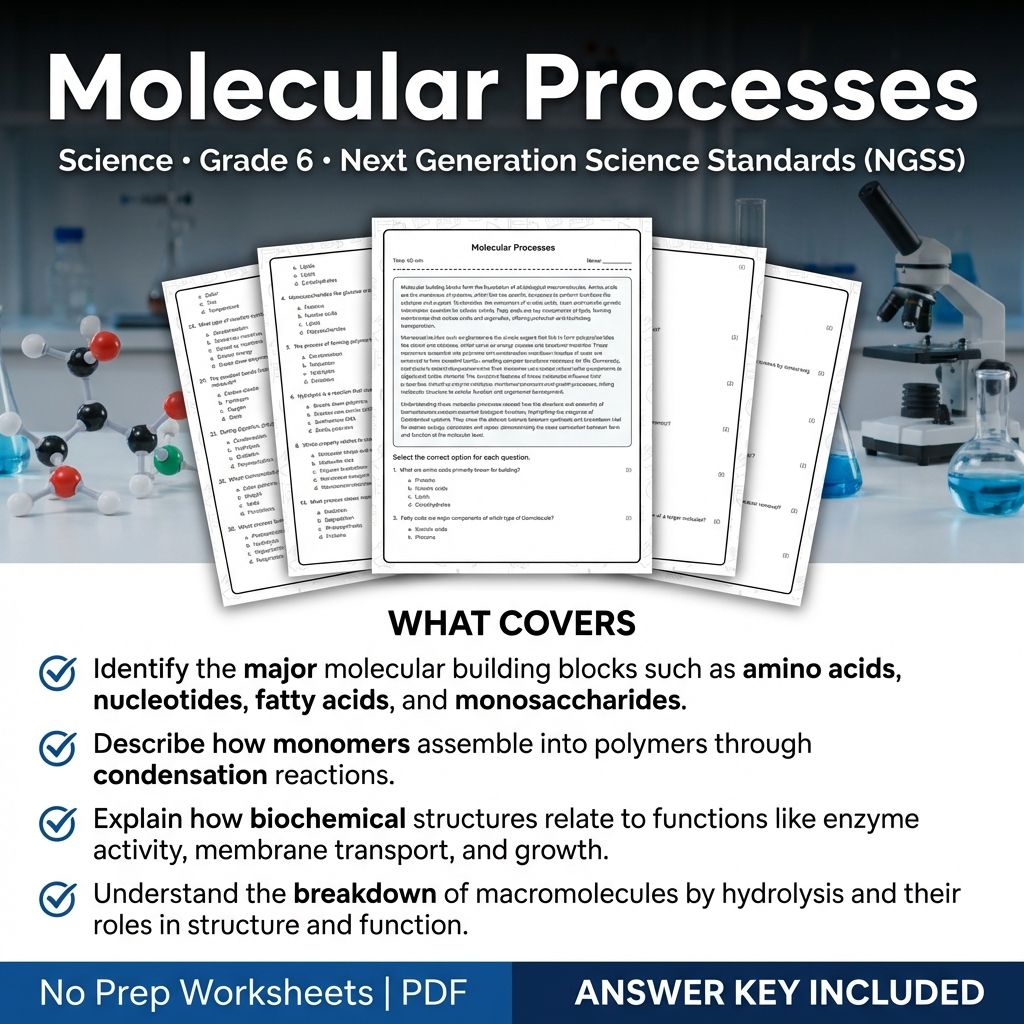
6th Grade Science Worksheet | Molecular Processes NGSS Practice & Review (Printable PDF & Answer Key)
Created byCoral Reef LearningLearning Objectives
- Identify the major molecular building blocks such as amino acids, nucleotides, fatty acids, and monosaccharides.
- Describe how monomers assemble into polymers through condensation reactions.
- Explain how biochemical structures relate to functions like enzyme activity, membrane transport, and growth.
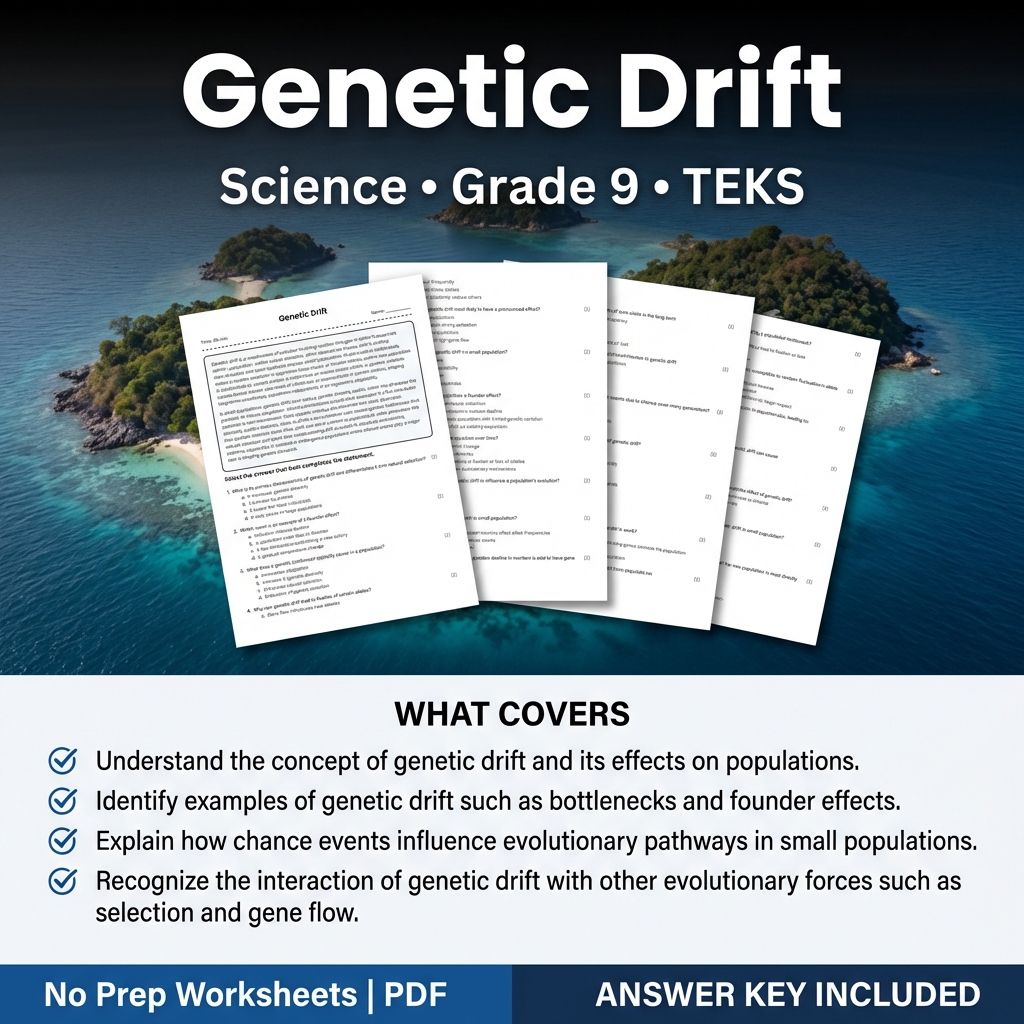
Genetic Drift Worksheet for Grade 9 Science | TEKS Aligned
Created byCoral Reef LearningLearning Objectives
- Understand the concept of genetic drift and its effects on populations.
- Identify examples of genetic drift such as bottlenecks and founder effects.
- Explain how chance events influence evolutionary pathways in small populations.
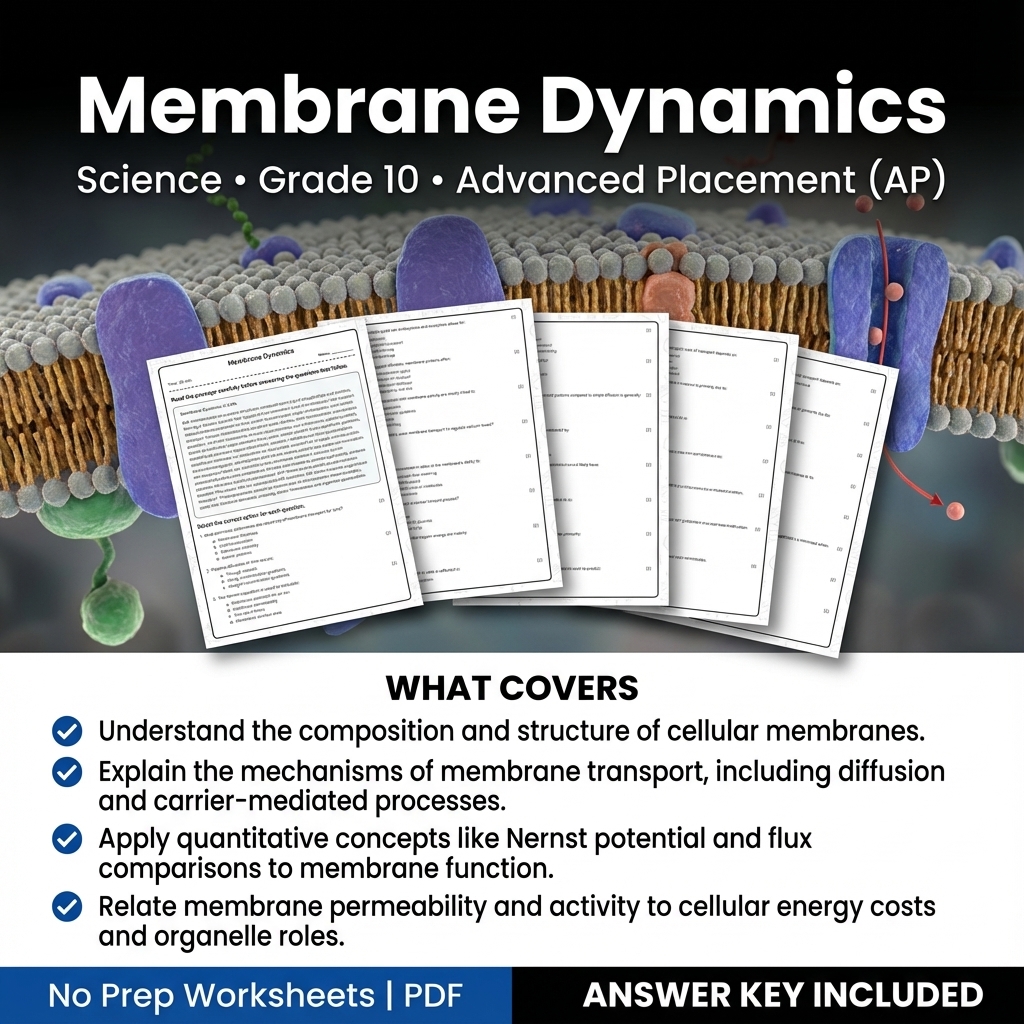
Grade 10 Science | Membrane Dynamics Worksheet (Printable PDF + Answer Key)
Created byCoral Reef LearningLearning Objectives
- Understand the composition and structure of cellular membranes.
- Explain the mechanisms of membrane transport, including diffusion and carrier-mediated processes.
- Apply quantitative concepts like Nernst potential and flux comparisons to membrane function.
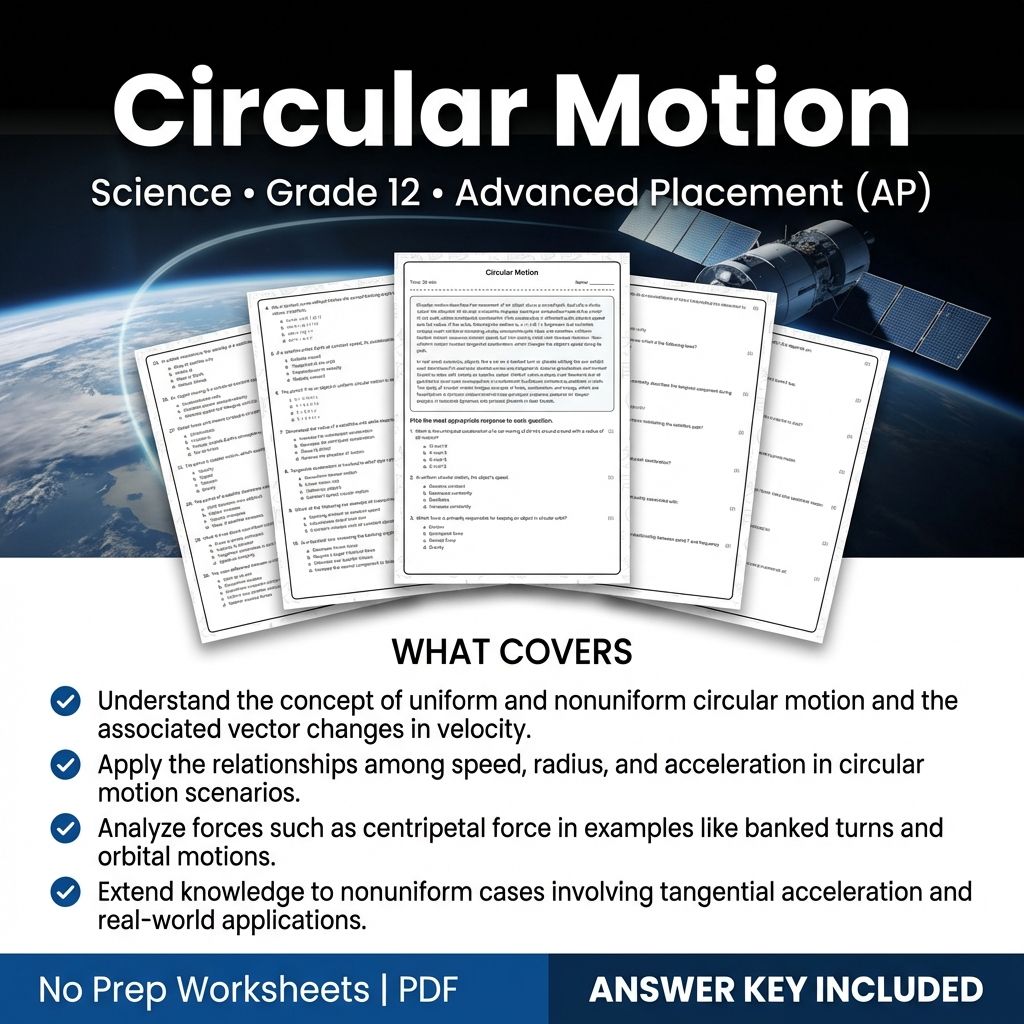
Grade 12 Science | Circular Motion Worksheet & Answer Key (Printable PDF)
Created byCoral Reef LearningLearning Objectives
- Understand the concept of uniform and nonuniform circular motion and the associated vector changes in velocity.
- Apply the relationships among speed, radius, and acceleration in circular motion scenarios.
- Analyze forces such as centripetal force in examples like banked turns and orbital motions.
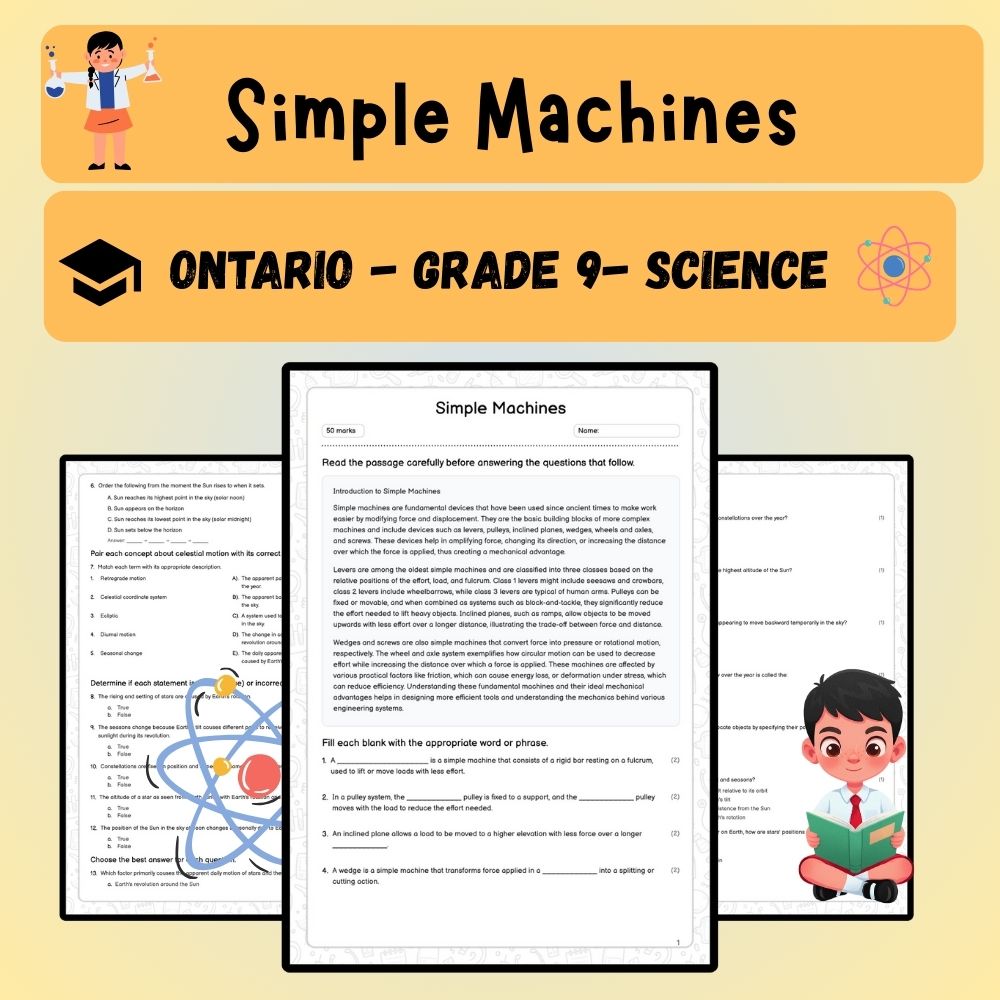
Grade 9 Science | Simple Machines Worksheet (Ontario Standard) – Practice & Assessment (PDF)
Created byPrism Point LearningLearning Objectives
- Understand the basic types of simple machines and their functions.
- Analyze how simple machines modify force and displacement to achieve mechanical advantage.
- Identify different classes of levers, pulley systems, and other simple machine configurations.
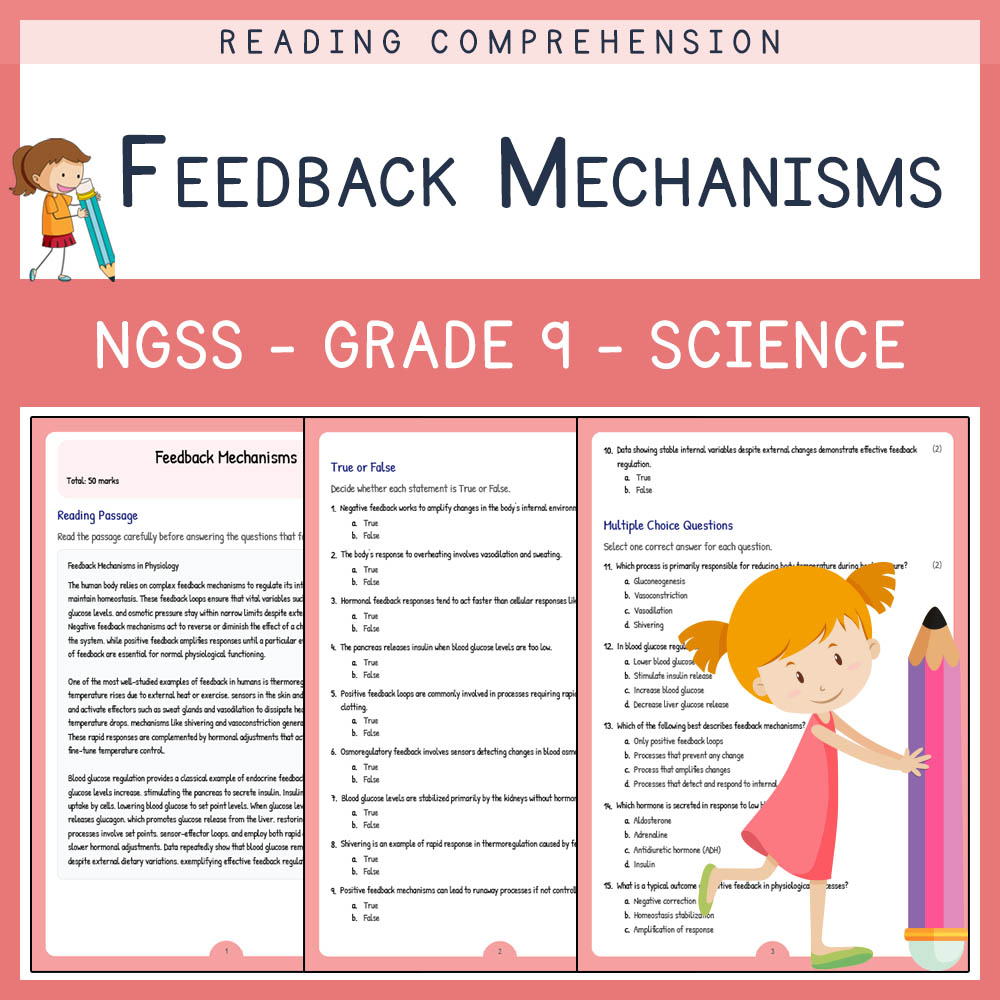
Grade 9 Science | Feedback Mechanisms Worksheet (Answer Key) - NGSS Aligned
 Created byLumora Learning
Learning Objectives
- Describe the concepts of negative and positive feedback and their roles in maintaining internal stability.
- Explain physiological examples of feedback mechanisms such as thermoregulation, blood glucose control, and osmoregulation.
- Differentiate between rapid and hormonal feedback responses based on empirical evidence.
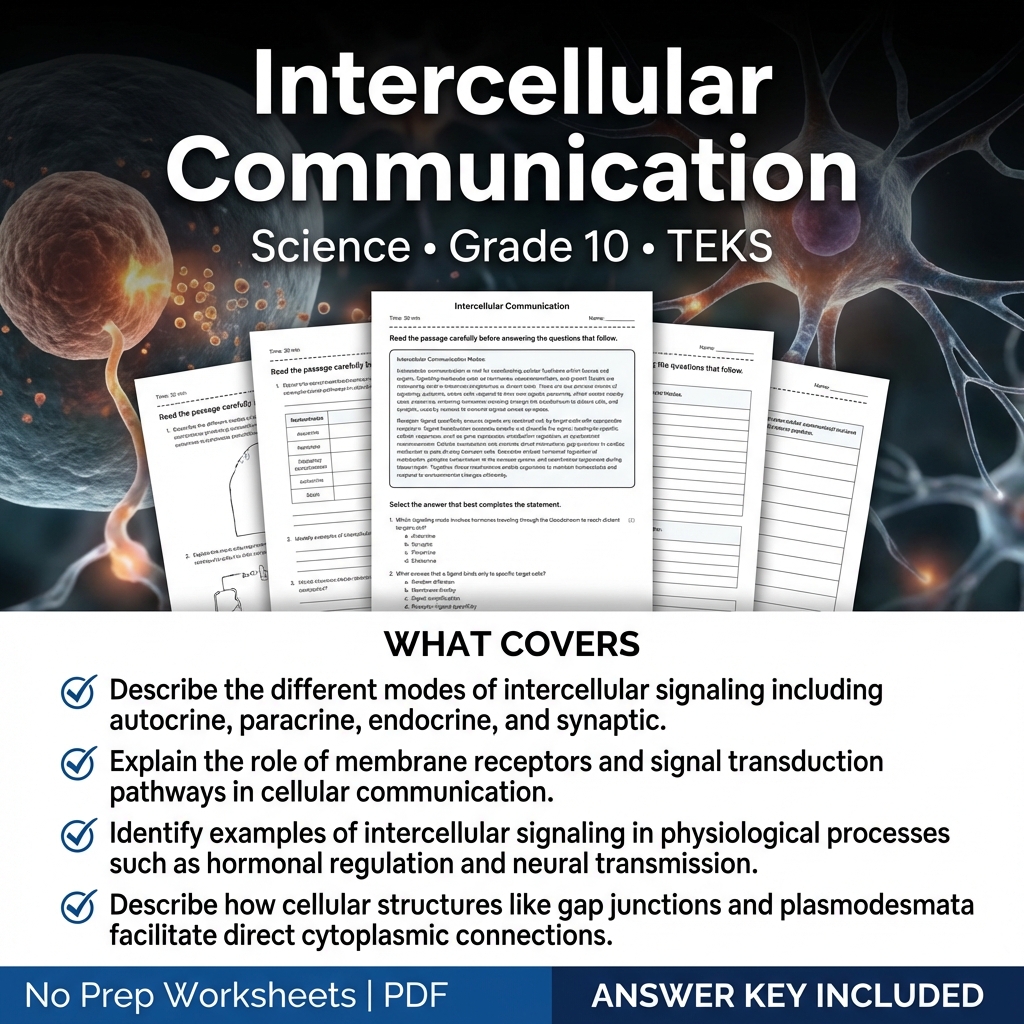
Grade 10 Science Worksheet | Intercellular Communication Practice
Created byCoral Reef LearningLearning Objectives
- Describe the different modes of intercellular signaling including autocrine, paracrine, endocrine, and synaptic.
- Explain the role of membrane receptors and signal transduction pathways in cellular communication.
- Identify examples of intercellular signaling in physiological processes such as hormonal regulation and neural transmission.
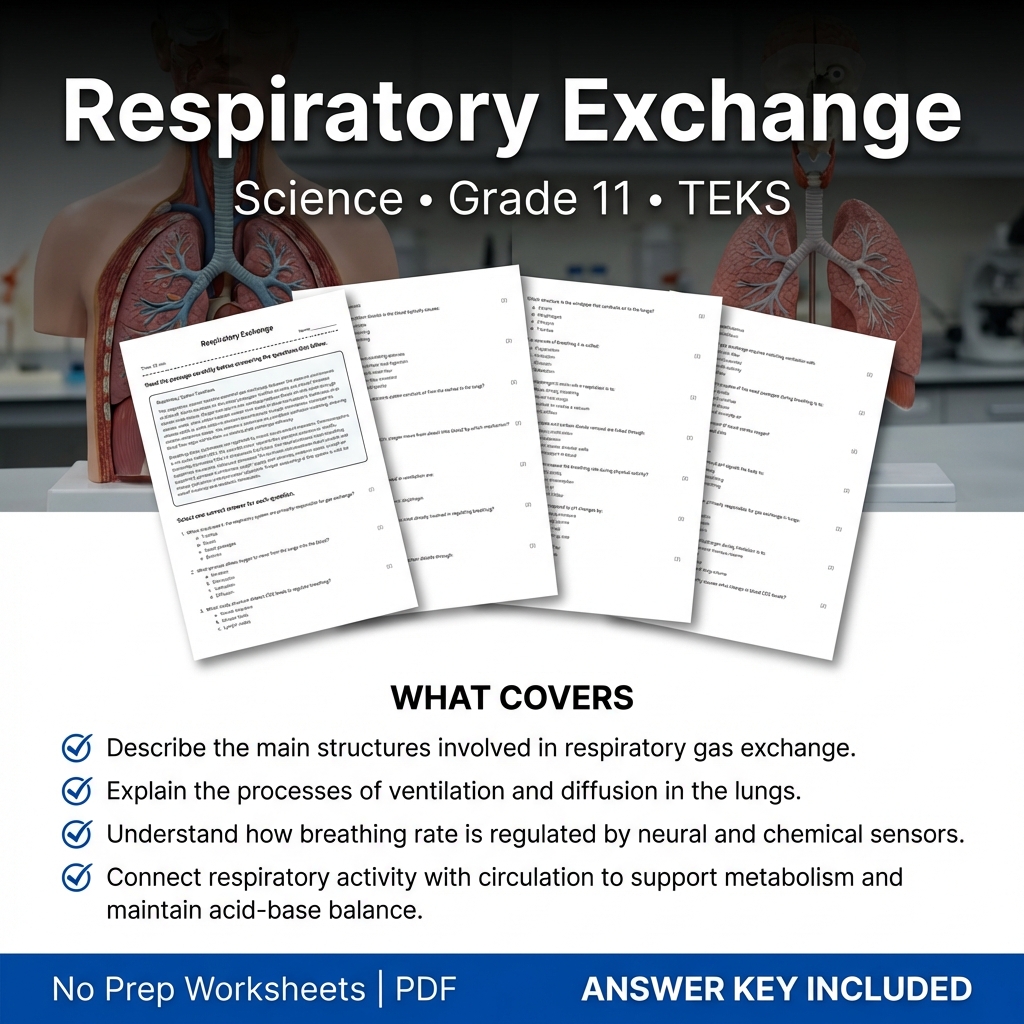
Respiratory Exchange Worksheet for Grade 11 Science TEKS
Created byCoral Reef LearningLearning Objectives
- Describe the main structures involved in respiratory gas exchange.
- Explain the processes of ventilation and diffusion in the lungs.
- Understand how breathing rate is regulated by neural and chemical sensors.
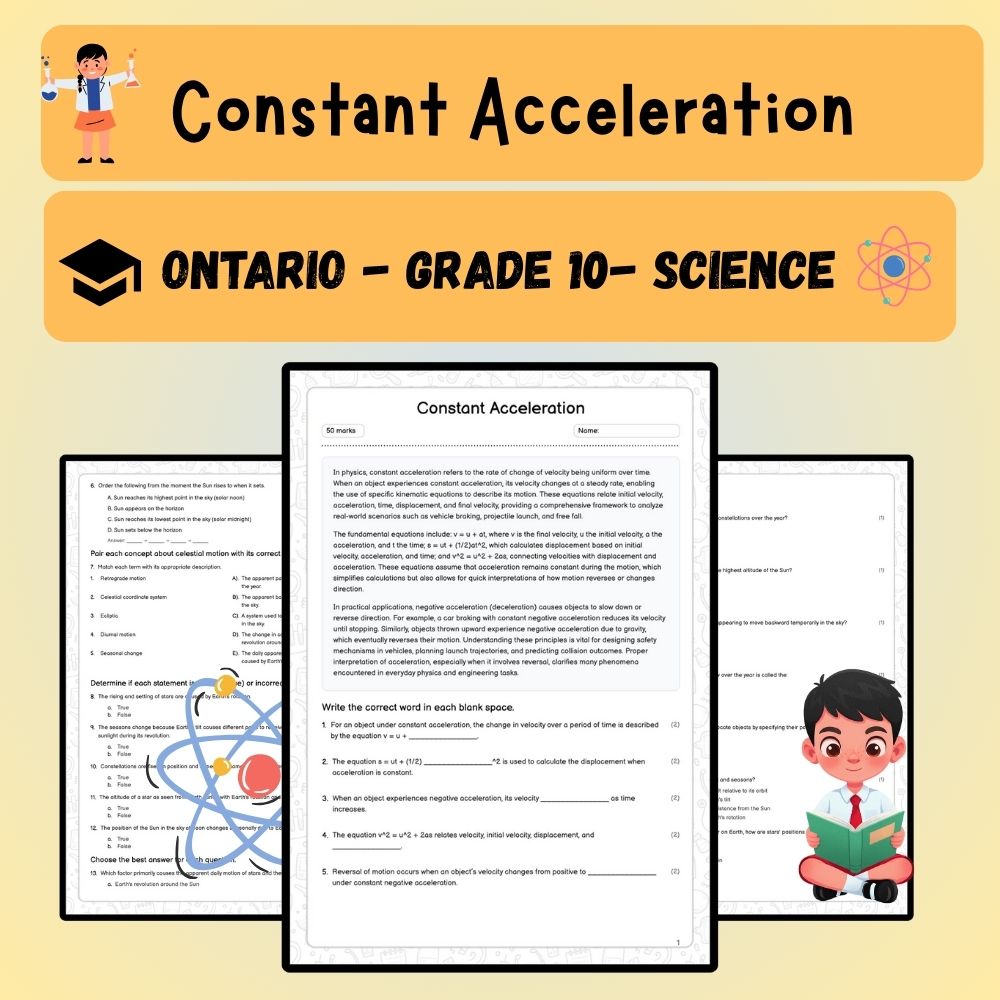
Grade 10 Science | Constant Acceleration Worksheet (PDF) – Ontario Standard
Created byPrism Point LearningLearning Objectives
- Understand the kinematic equations related to uniformly accelerated motion.
- Interpret and analyze motion scenarios with varying initial velocities, displacements, and times.
- Apply algebraic formulas to solve problems involving acceleration, velocity, and displacement.
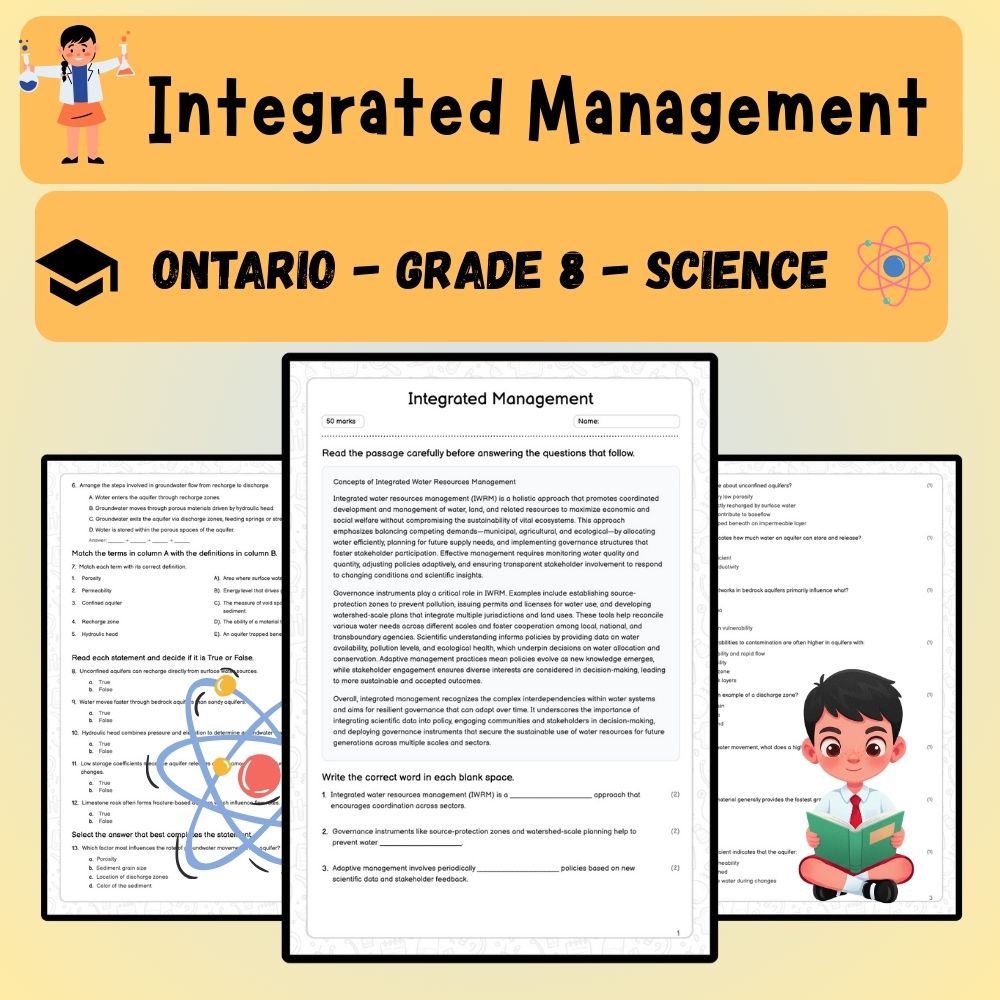
Grade 8 Science – Integrated Water Management Worksheet (PDF )
Created byPrism Point LearningLearning Objectives
- Understand the key concepts of integrated water resources management, including allocation, supply planning, and governance.
- Apply knowledge of governance instruments and stakeholder roles in managing water resources.
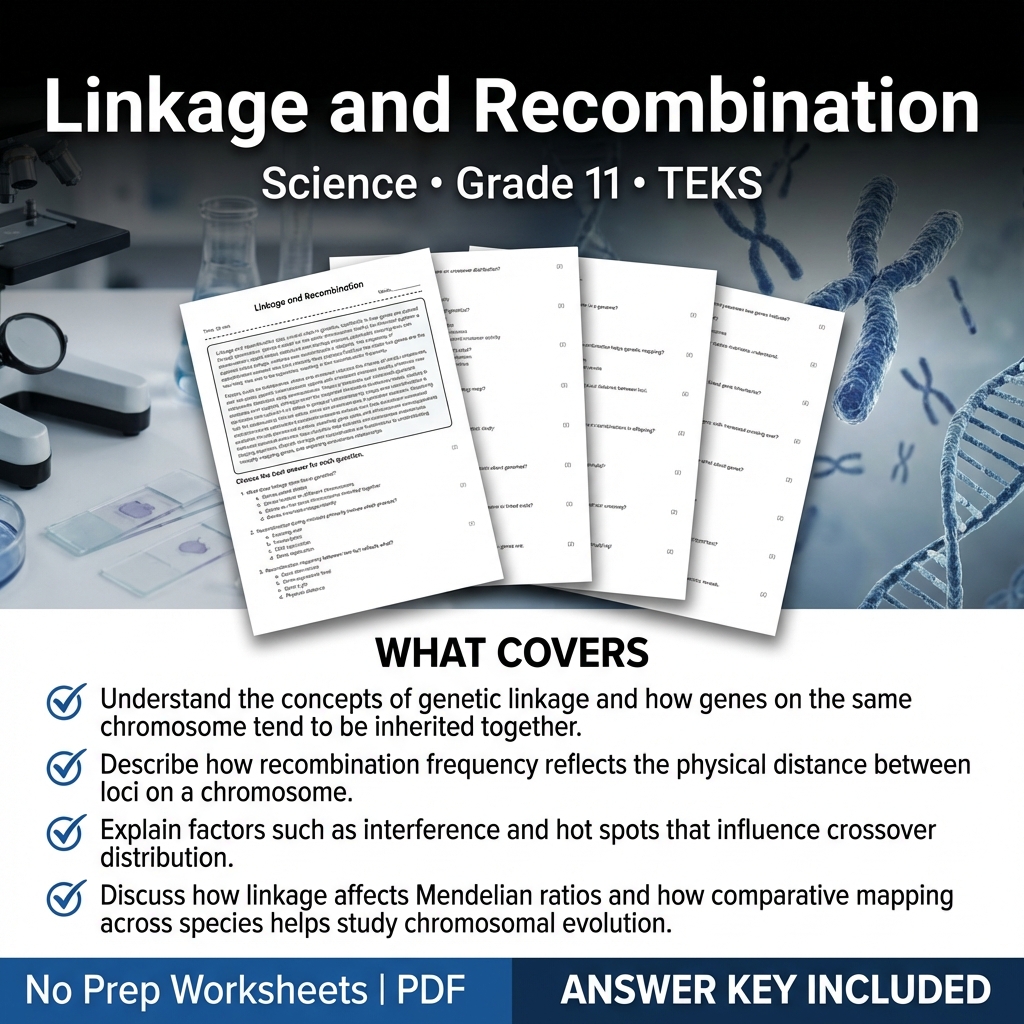
Linkage and Recombination Worksheet | TEKS Grade 11 Science Practice
Created byCoral Reef LearningLearning Objectives
- Understand the concepts of genetic linkage and how genes on the same chromosome tend to be inherited together.
- Describe how recombination frequency reflects the physical distance between loci on a chromosome.
- Explain factors such as interference and hot spots that influence crossover distribution.
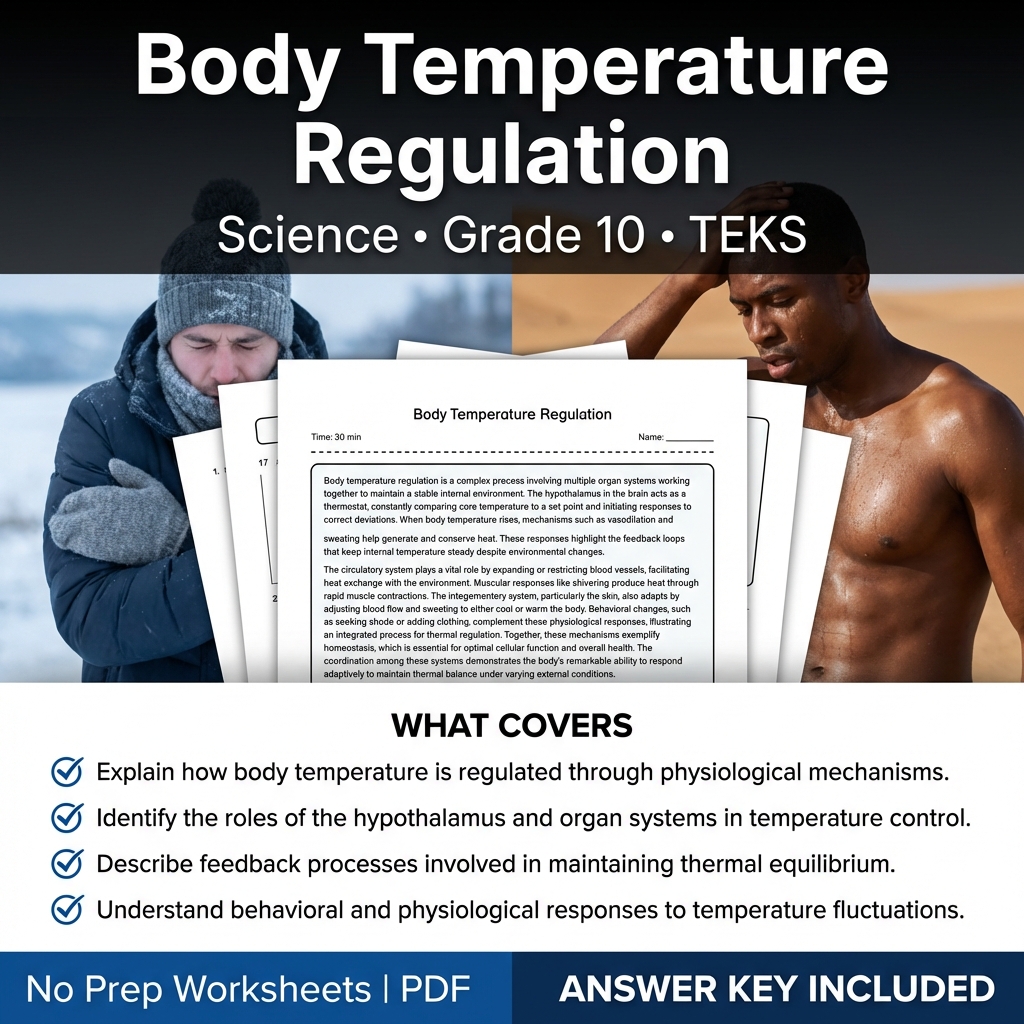
Grade 10 Science Worksheet on Body Temperature Regulation | TEKS-Aligned
Created byCoral Reef LearningLearning Objectives
- Explain how body temperature is regulated through physiological mechanisms.
- Identify the roles of the hypothalamus and organ systems in temperature control.
- Describe feedback processes involved in maintaining thermal equilibrium.
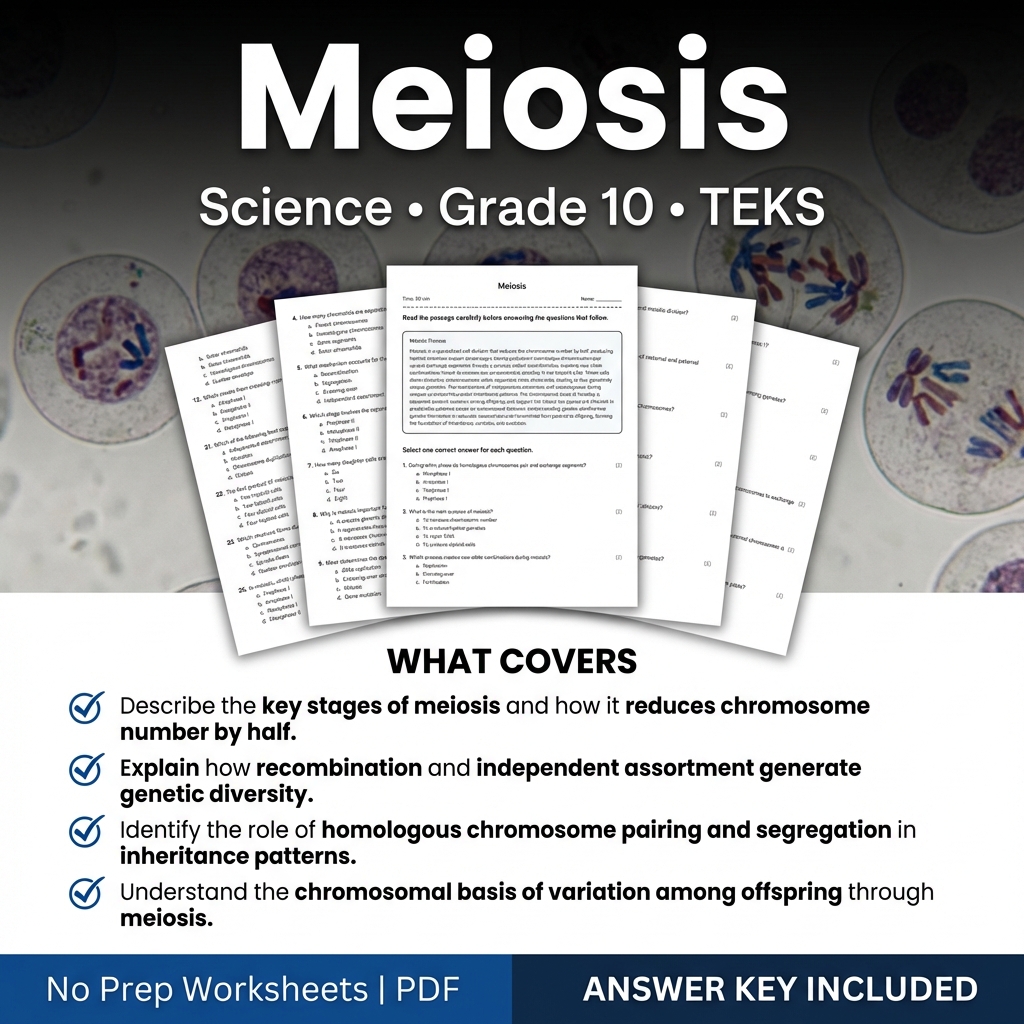
Meiosis Worksheet for Grade 10 Science | TEKS-Aligned Practice
Created byCoral Reef LearningLearning Objectives
- Describe the key stages of meiosis and how it reduces chromosome number by half.
- Explain how recombination and independent assortment generate genetic diversity.
- Identify the role of homologous chromosome pairing and segregation in inheritance patterns.
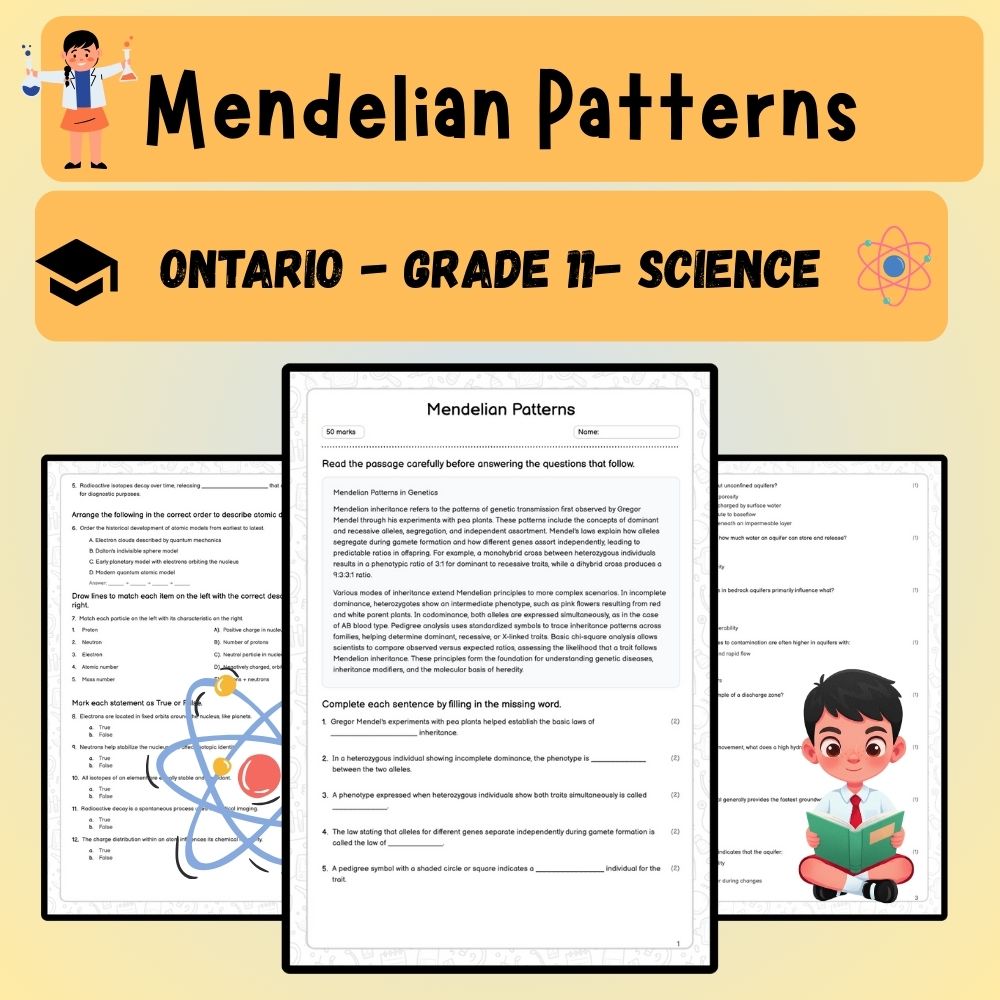
Grade 11 Science – Mendelian Patterns Worksheet (Answer Key) | Ontario Standards
Created byPrism Point LearningLearning Objectives
- Describe monohybrid and dihybrid inheritance patterns and their phenotypic ratios.
- Explain segregation and independent assortment in inheritance.
- Differentiate between dominant, recessive, incomplete dominance, and codominance scenarios with genetic notation.
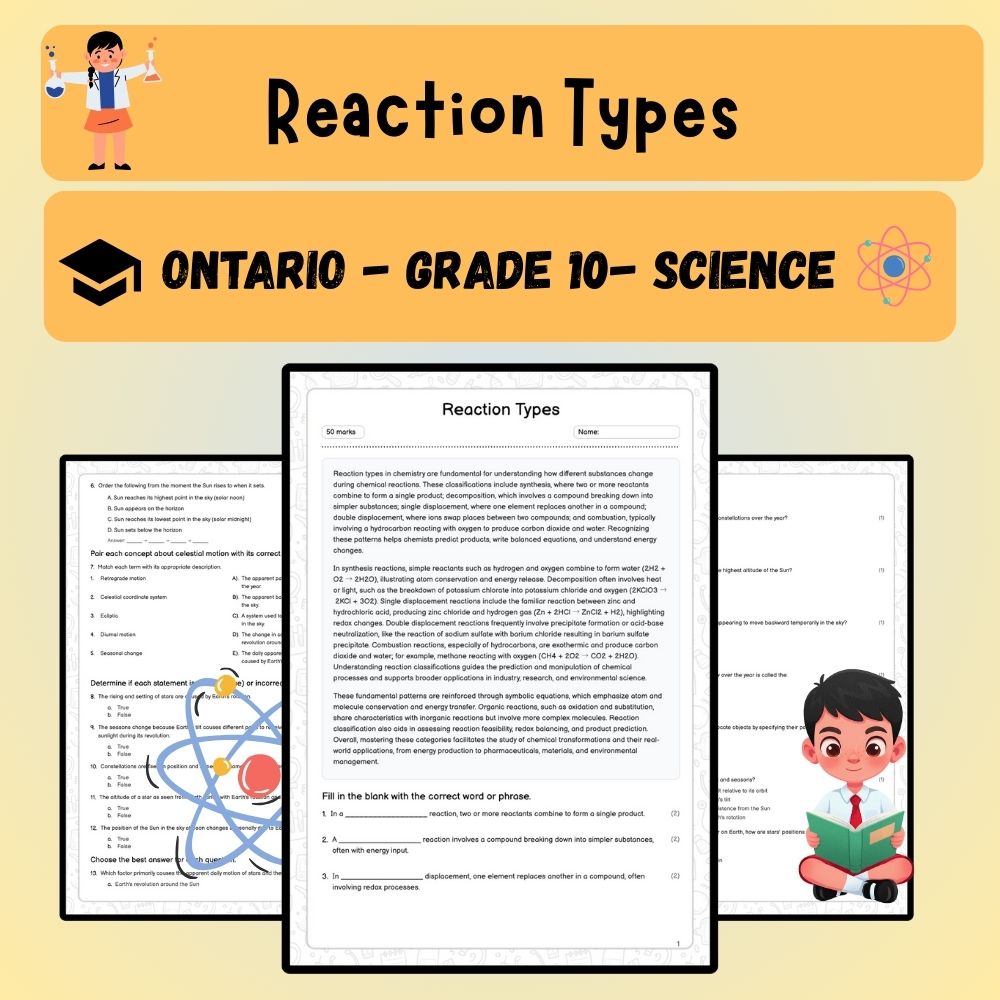
Grade 10 Science – Reaction Types Worksheet | Ontario Standard (PDF)
Created byPrism Point LearningLearning Objectives
- Classify chemical reactions into synthesis, decomposition, single and double displacement, and combustion categories.
- Identify characteristic reactant-product patterns for each reaction type.
- Understand the role of redox considerations in reaction classification.
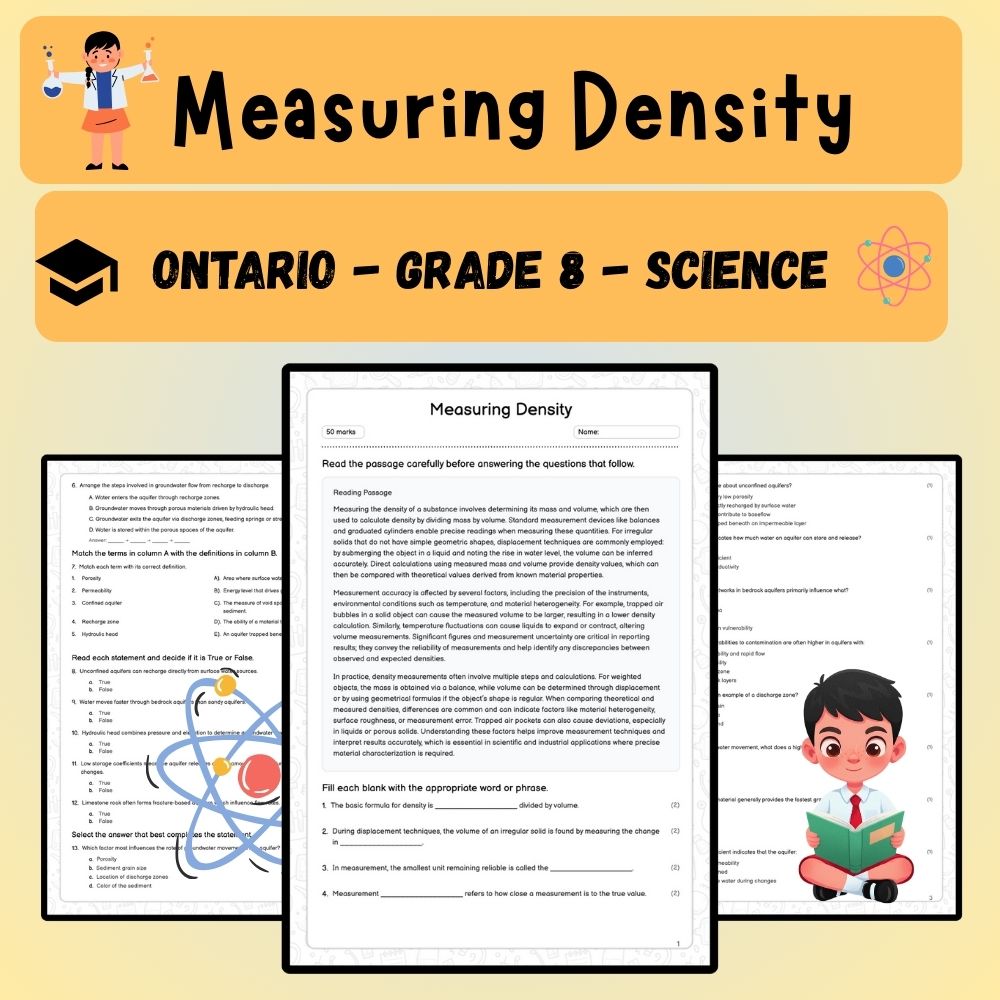
Grade 8 Science Worksheet – Measuring Density | Ontario Standards (PDF )
Created byPrism Point LearningLearning Objectives
- Understand different methods for measuring the density of solids and liquids.
- Interpret discrepancies in density measurements caused by factors like trapped air and temperature effects.
- Perform calculations involving theoretical and experimental density values.
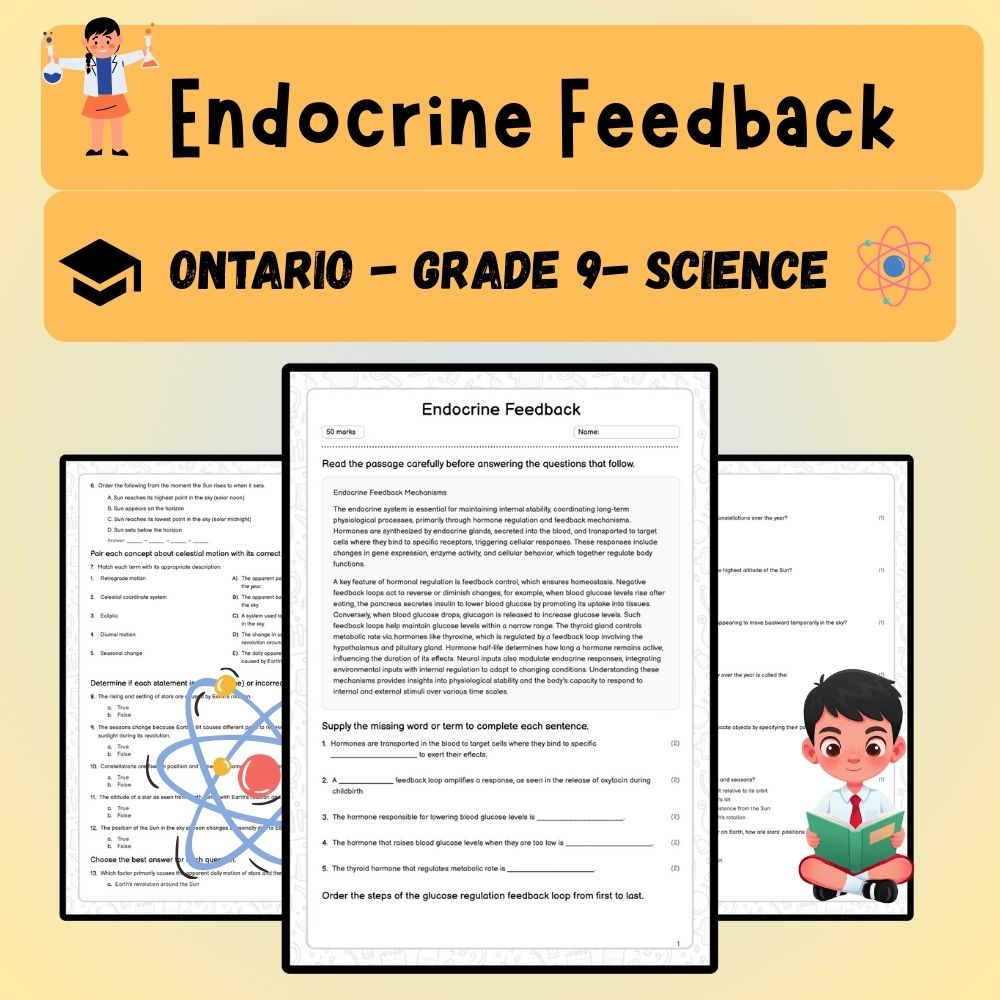
Grade 9 Science – Endocrine Feedback Worksheet (Answer Key) | Ontario Standards
Created byPrism Point LearningLearning Objectives
- Understand how hormones regulate physiological processes through feedback loops.
- Identify components of hormonal pathways involved in glucose homeostasis and thyroid control.
- Explain cellular hormone actions including gene expression and enzyme activity changes.
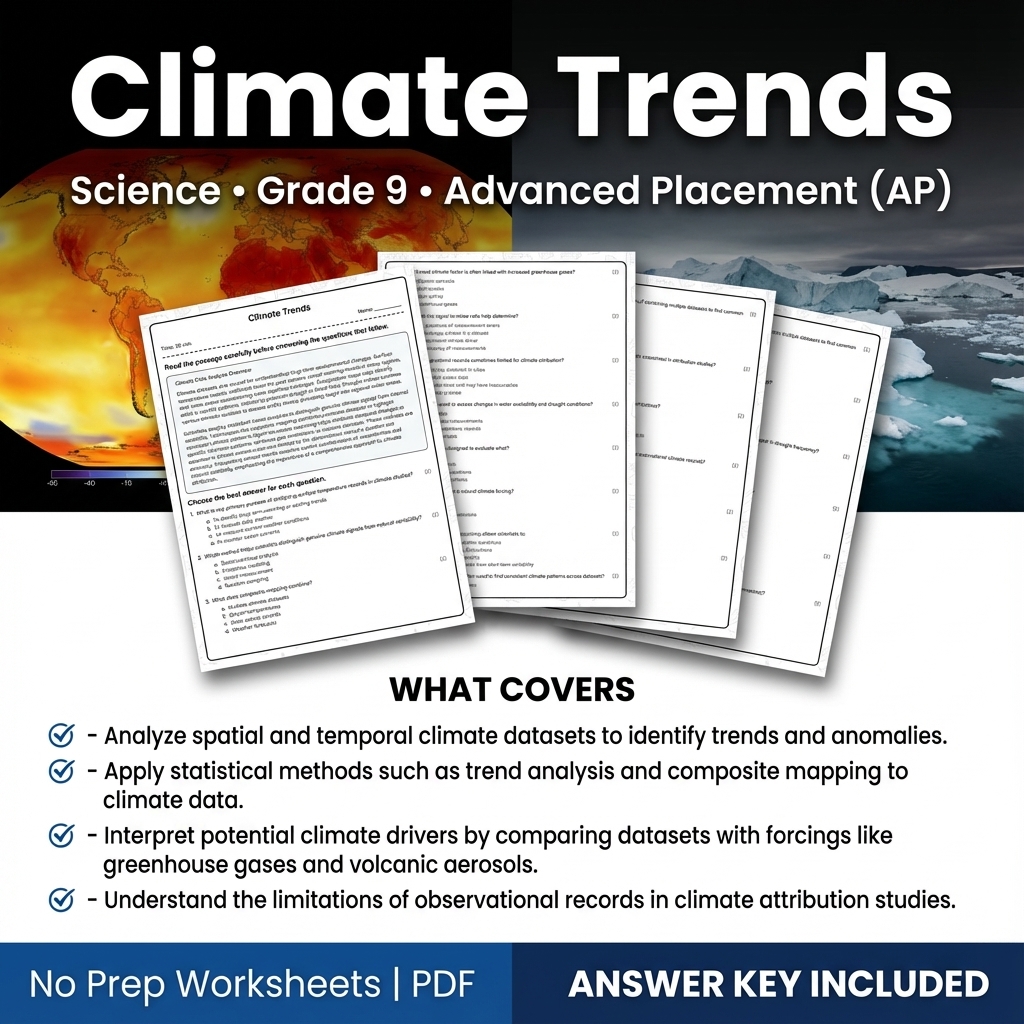
9th Grade Science | Climate Trends Worksheet (Printable PDF + Answer Key)
Created byCoral Reef LearningLearning Objectives
- Analyze spatial and temporal climate datasets to identify trends and anomalies.
- Apply statistical methods such as trend analysis and composite mapping to climate data.
- Interpret potential climate drivers by comparing datasets with forcings like greenhouse gases and volcanic aerosols.
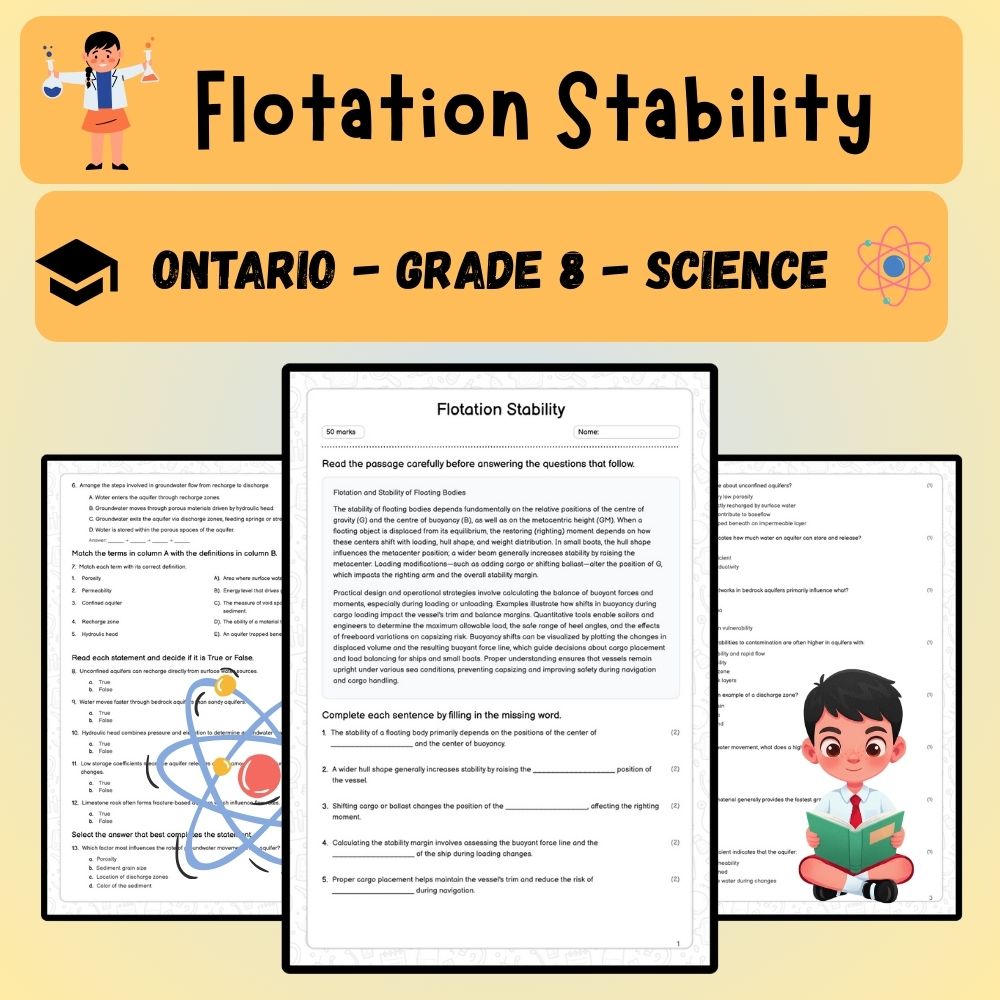
Grade 8 Science | Flotation Stability Worksheet (PDF ) - Ontario Standard
Created byPrism Point LearningLearning Objectives
- Understand how the positions of the center of gravity and center of buoyancy affect the stability of floating bodies.
- Explain how hull shape and loading influence righting moments and capsizing thresholds.
- Apply quantitative methods to calculate stability margins and buoyancy shifts during loading changes.
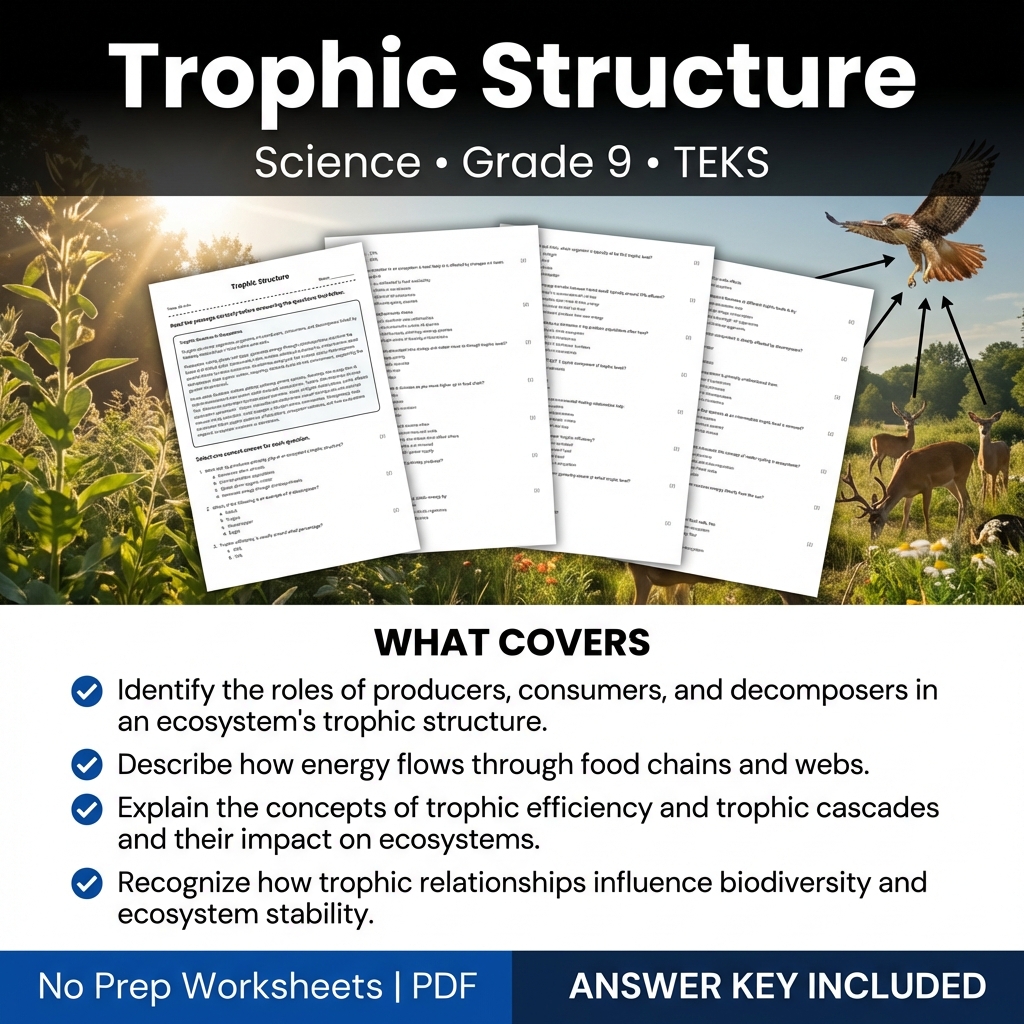
Grade 9 Science Worksheet on Trophic Structure | TEKS Aligned
Created byCoral Reef LearningLearning Objectives
- Identify the roles of producers, consumers, and decomposers in an ecosystem's trophic structure.
- Describe how energy flows through food chains and webs.
- Explain the concepts of trophic efficiency and trophic cascades and their impact on ecosystems.
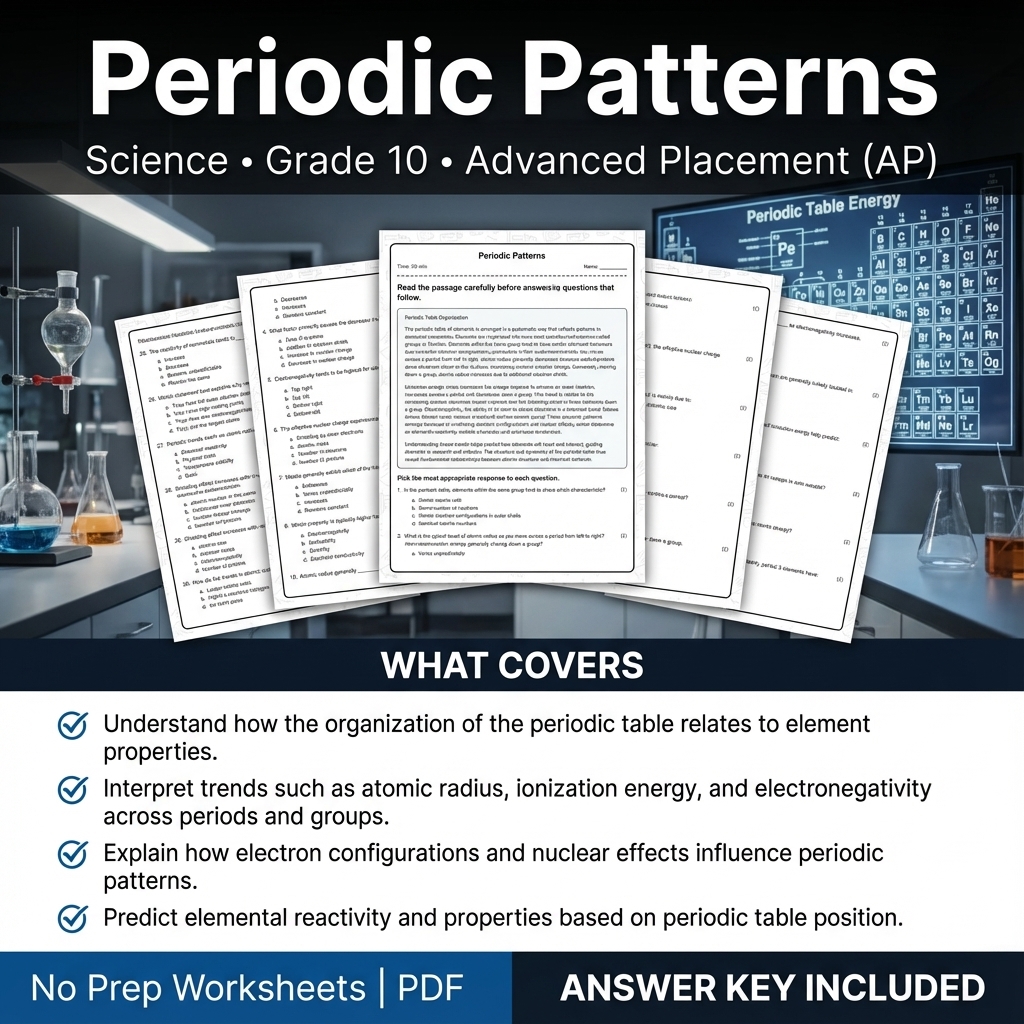
Grade 10 Science | Periodic Patterns Worksheet (Printable PDF + Answer Key)
Created byCoral Reef LearningLearning Objectives
- Understand how the organization of the periodic table relates to element properties.
- Interpret trends such as atomic radius, ionization energy, and electronegativity across periods and groups.
- Explain how electron configurations and nuclear effects influence periodic patterns.
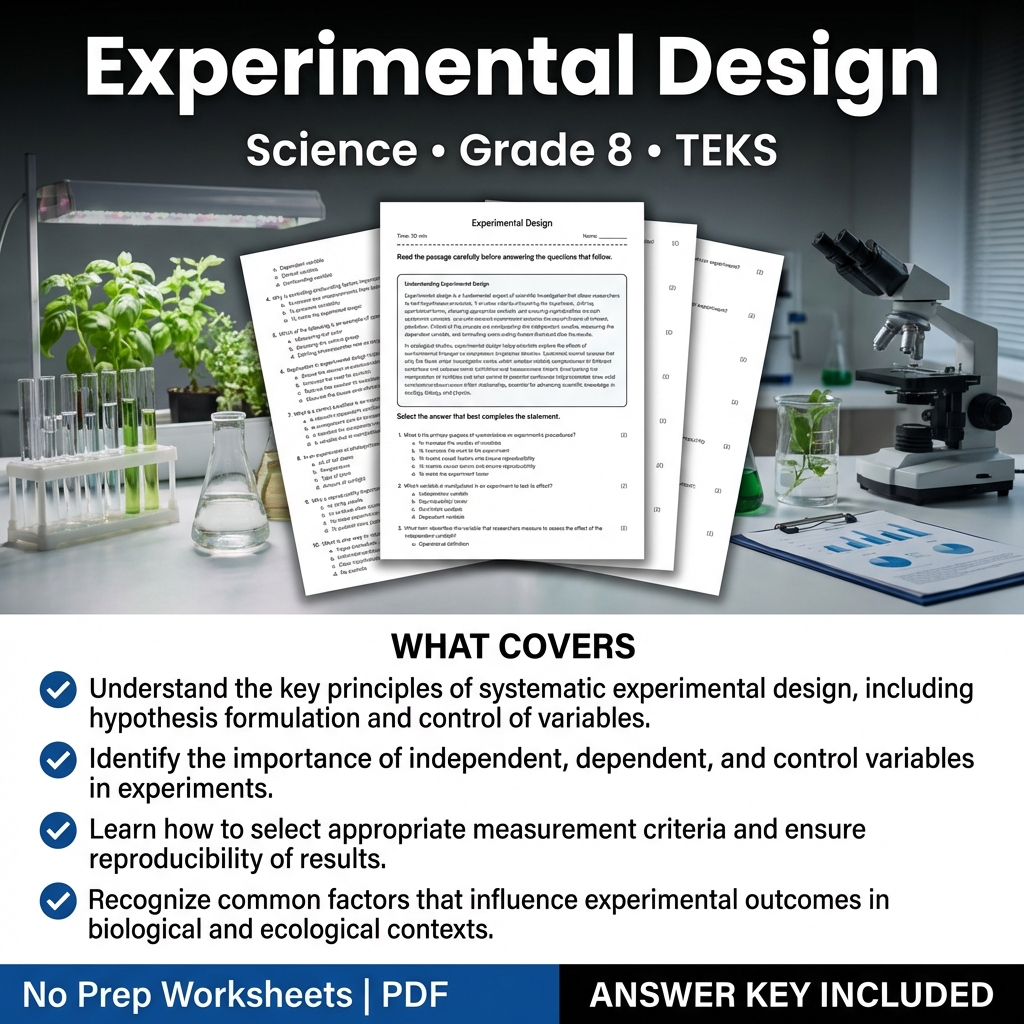
Experimental Design Worksheet Grade 8 Science TEKS Practice PDF
Created byCoral Reef LearningLearning Objectives
- Understand the key principles of systematic experimental design, including hypothesis formulation and control of variables.
- Identify the importance of independent, dependent, and control variables in experiments.
- Learn how to select appropriate measurement criteria and ensure reproducibility of results.
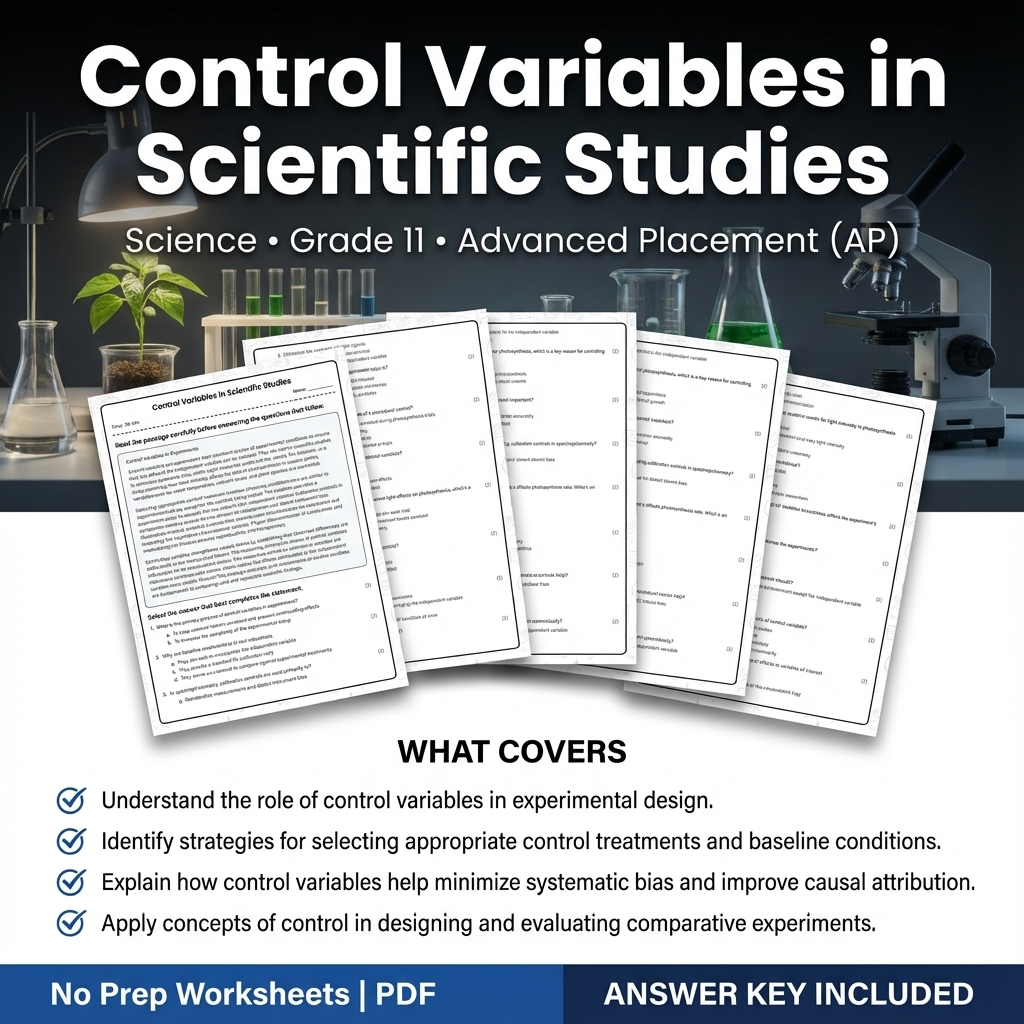
Grade 11 Science | Control Variables in Scientific Studies (PDF + Answer Key)
Created byCoral Reef LearningLearning Objectives
- Understand the role of control variables in experimental design.
- Identify strategies for selecting appropriate control treatments and baseline conditions.
- Explain how control variables help minimize systematic bias and improve causal attribution.
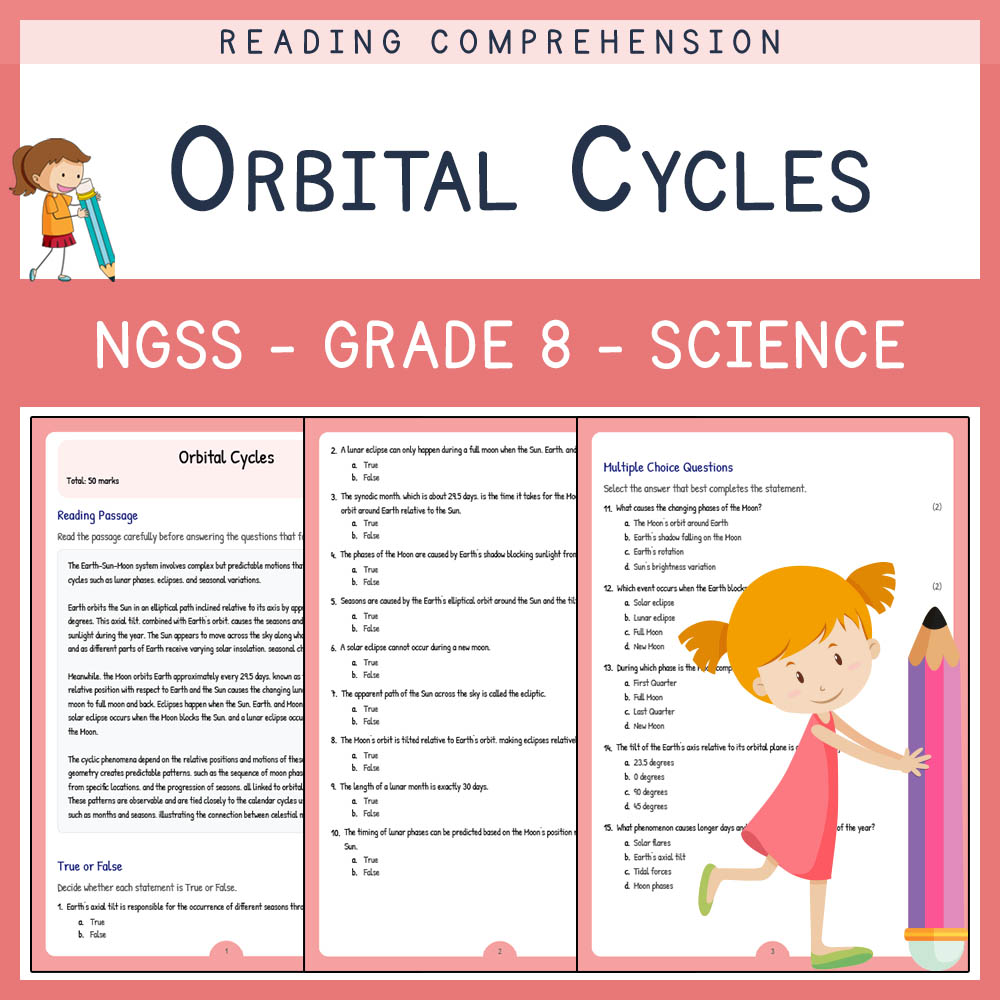
Grade 8 Science | Orbital Cycles Worksheet with Answer Key (NGSS-Aligned)
Created byLumora LearningLearning Objectives
- Explain the relative positions and motions of Earth, the Moon, and the Sun that lead to lunar phases, eclipses, and seasons.
- Describe the geometric and axial factors responsible for cyclic phenomena observed from Earth.
- Relate observable sky patterns and calendar cycles to the orbital relationships of celestial bodies.
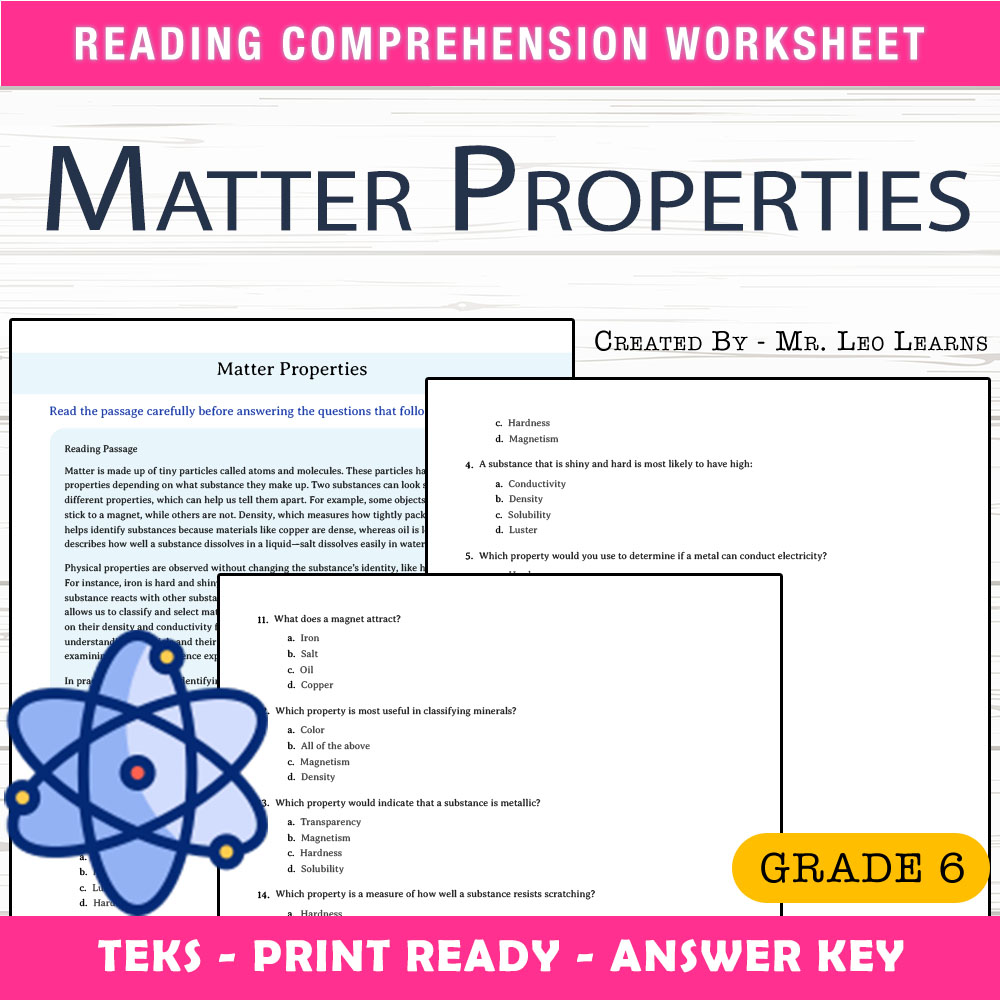
Grade 6 Science – Matter Properties Worksheet for Mastery
Created byThe Resource HubLearning Objectives
- Understand the physical and chemical properties used to identify substances.
- Describe and compare properties such as density, solubility, magnetism, and conductivity.
- Relate observed properties to real-world examples like iron, salt, oil, and copper.
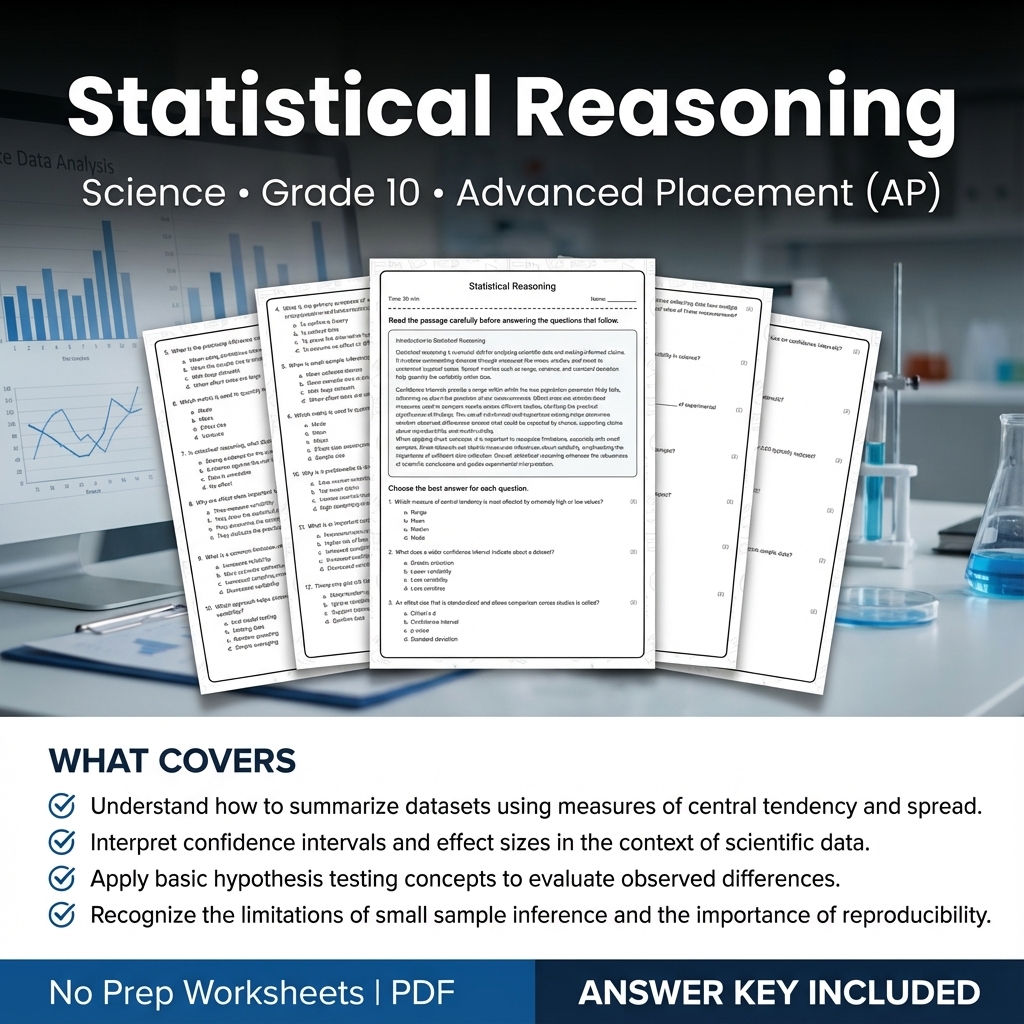
Grade 10 Science | Statistical Reasoning Worksheet (Printable PDF + Answer Key)
Created byCoral Reef LearningLearning Objectives
- Understand how to summarize datasets using measures of central tendency and spread.
- Interpret confidence intervals and effect sizes in the context of scientific data.
- Apply basic hypothesis testing concepts to evaluate observed differences.
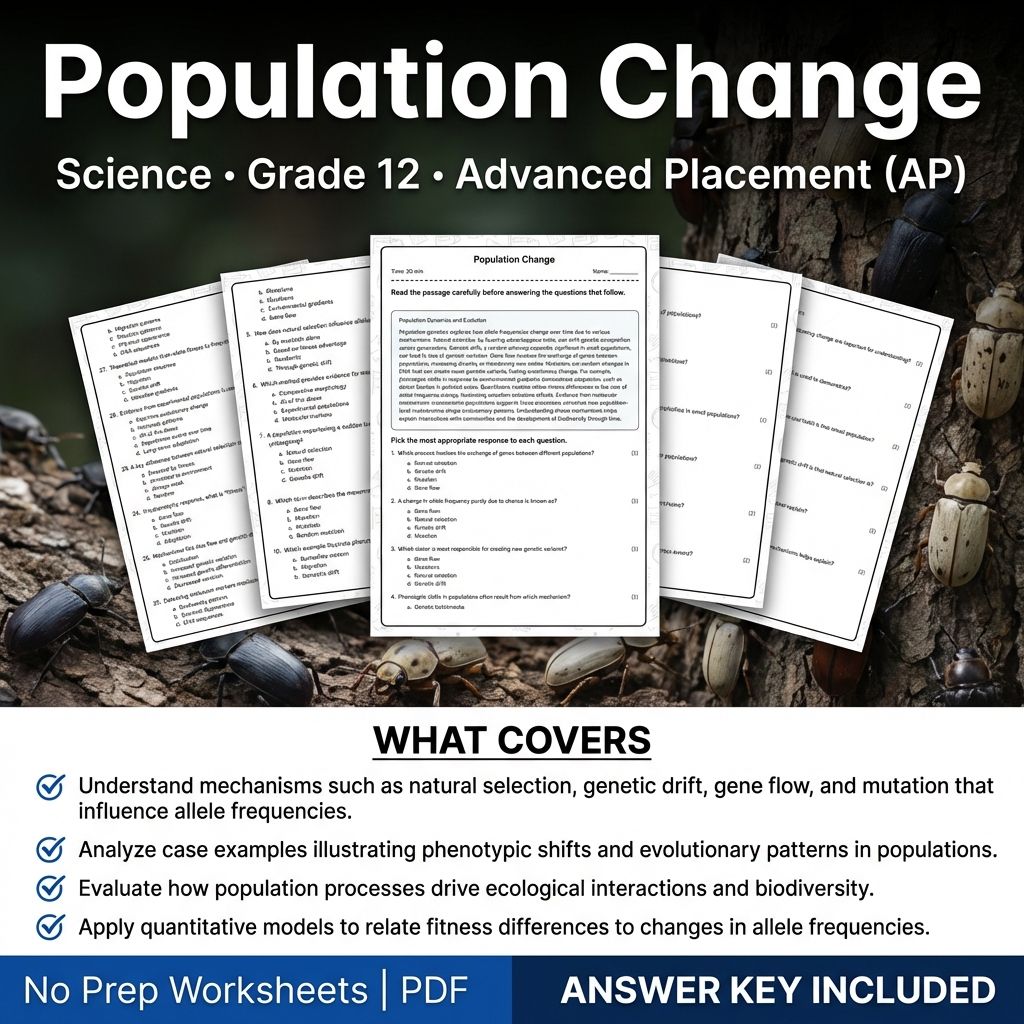
12th Grade Science | Population Change Worksheet & Answer Key (Printable PDF)
Created byCoral Reef LearningLearning Objectives
- Understand mechanisms such as natural selection, genetic drift, gene flow, and mutation that influence allele frequencies.
- Analyze case examples illustrating phenotypic shifts and evolutionary patterns in populations.
- Evaluate how population processes drive ecological interactions and biodiversity.
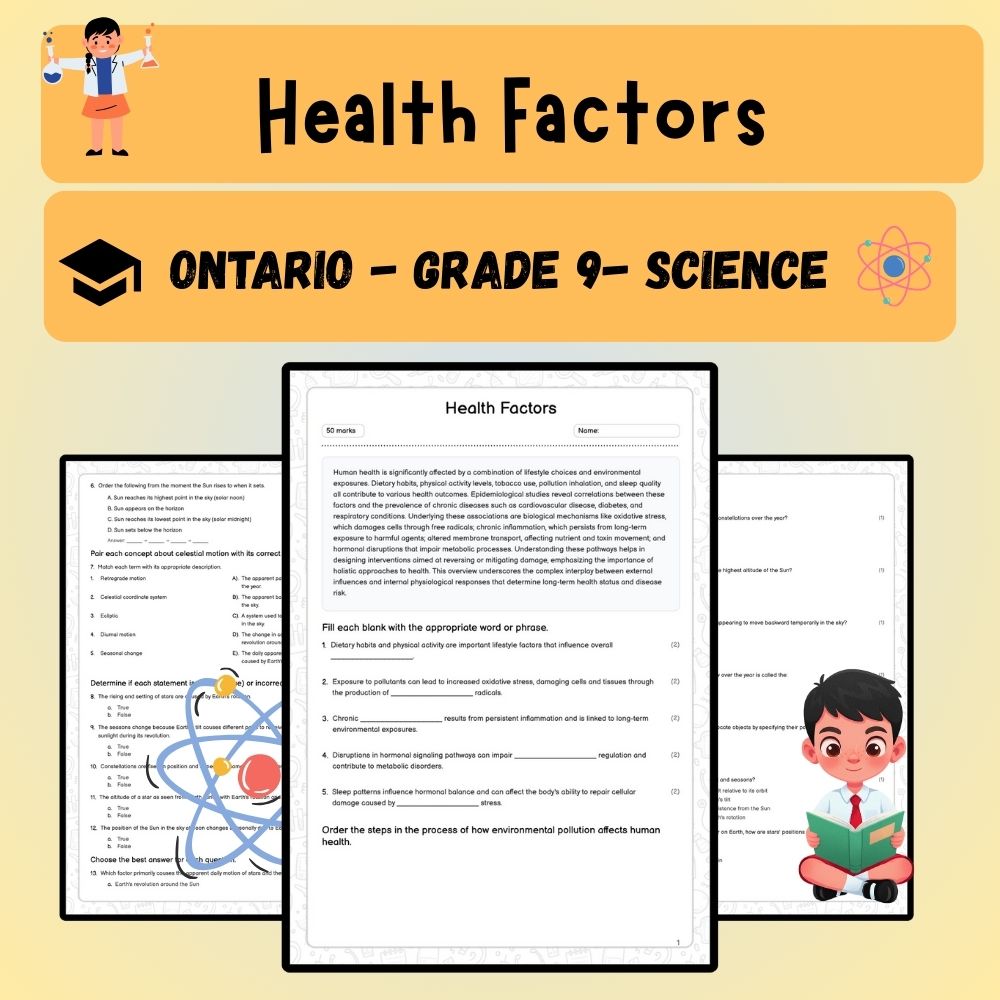
Grade 9 Science | Health Factors Worksheet (PDF) – Ontario Standards
Created byPrism Point LearningLearning Objectives
- Understand how lifestyle and environmental factors influence human health.
- Identify mechanisms like oxidative stress and inflammation that relate to chronic conditions.
- Interpret epidemiological data to discern causation from correlation.
Browse more categories
About Science Worksheets
Find Science worksheets spanning core skills, practice, and review. All 42,859 resources are instant PDF downloads for the classroom or home.
Every worksheet on MyTeachingSheets is created by independent teacher-authors and reviewed before publication. All resources download as printable PDFs for classroom, homework, or at-home practice, and many include answer keys. Preview any worksheet free before buying.