
Science Worksheets
42,859 subject resources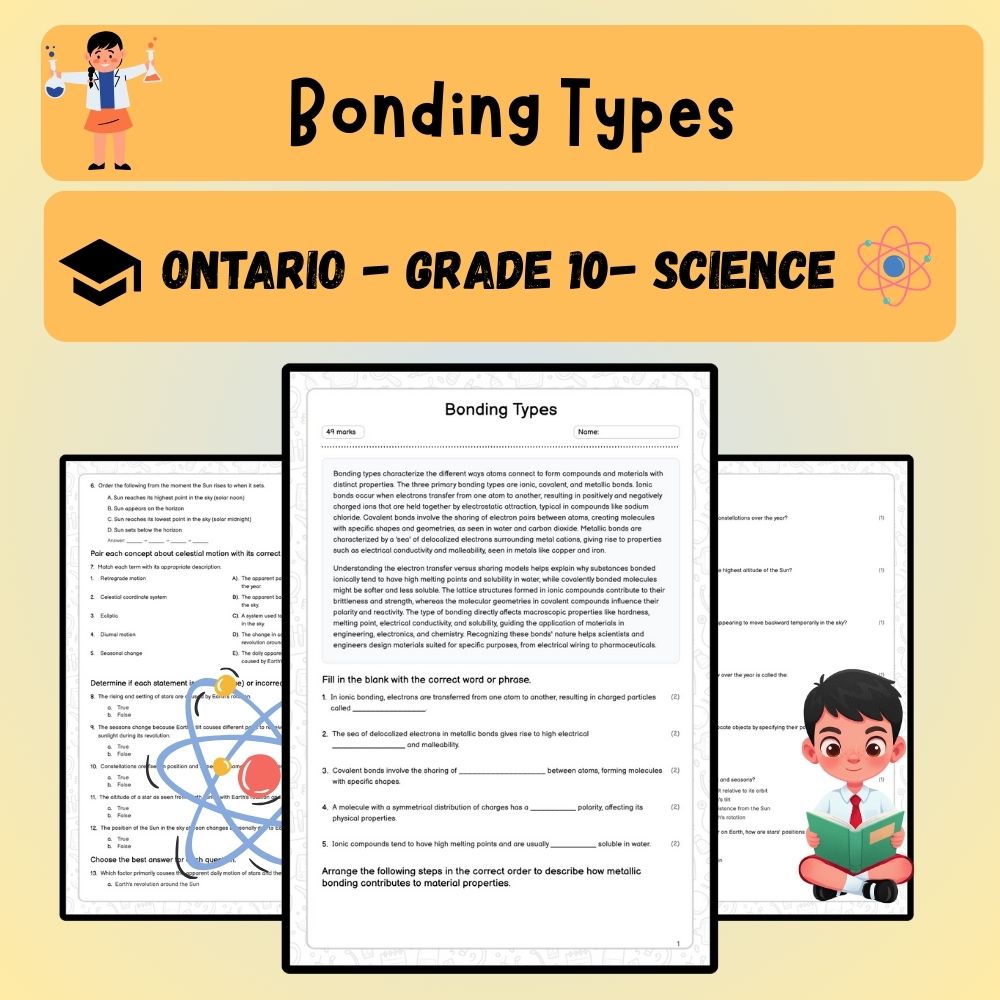
Grade 10 Science | Bonding Types Worksheet (PDF) | Ontario Standards
 Created byPrism Point Learning
Learning Objectives
- Understand the different types of chemical bonding: ionic, covalent, and metallic.
- Explain electron transfer and sharing models in bonding.
- Describe lattice structures and molecular geometries based on bonding.
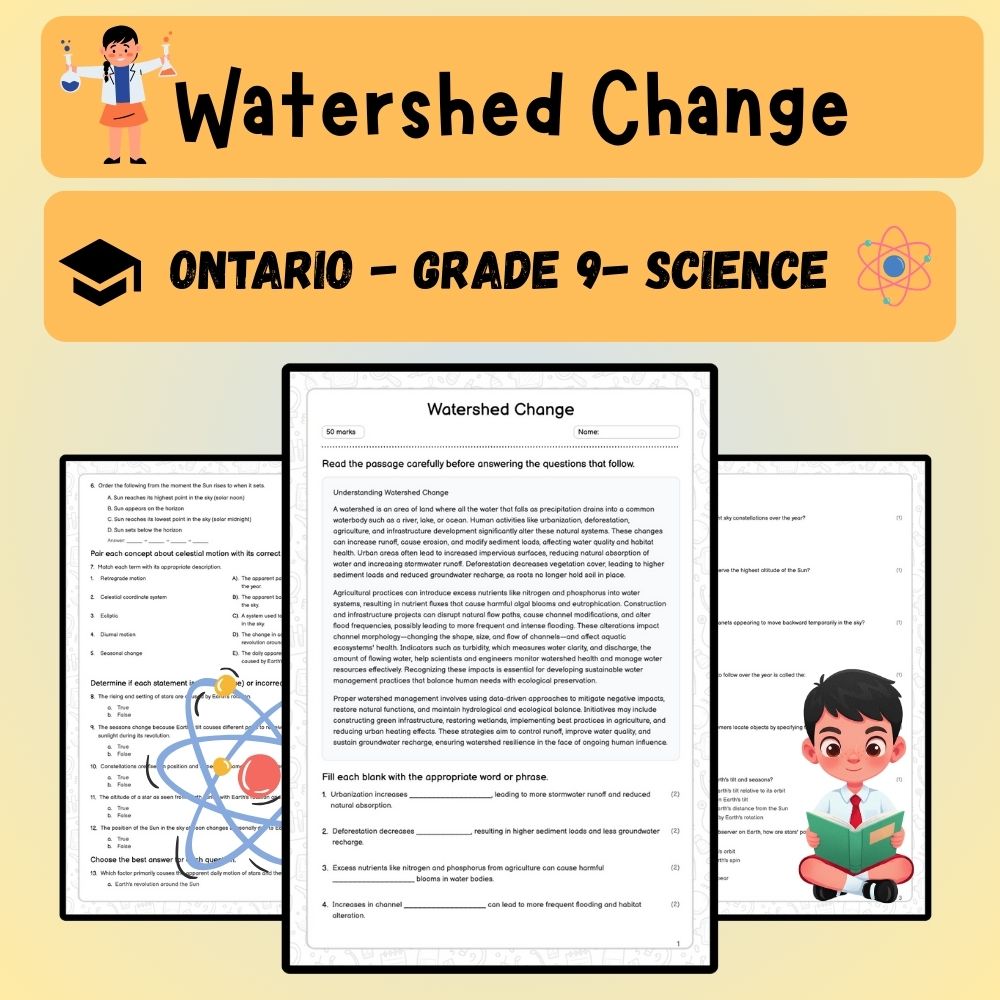
Grade 9 Science | Watershed Change Worksheet (PDF) – Ontario Standards
Created byPrism Point LearningLearning Objectives
- Understand human impacts on watershed processes such as urbanization, deforestation, agriculture, and infrastructure.
- Identify consequences of watershed alterations including runoff, sediment load, nutrient fluxes, and groundwater recharge.
- Describe how changes in watersheds affect channel morphology, flood frequency, and aquatic ecosystems.
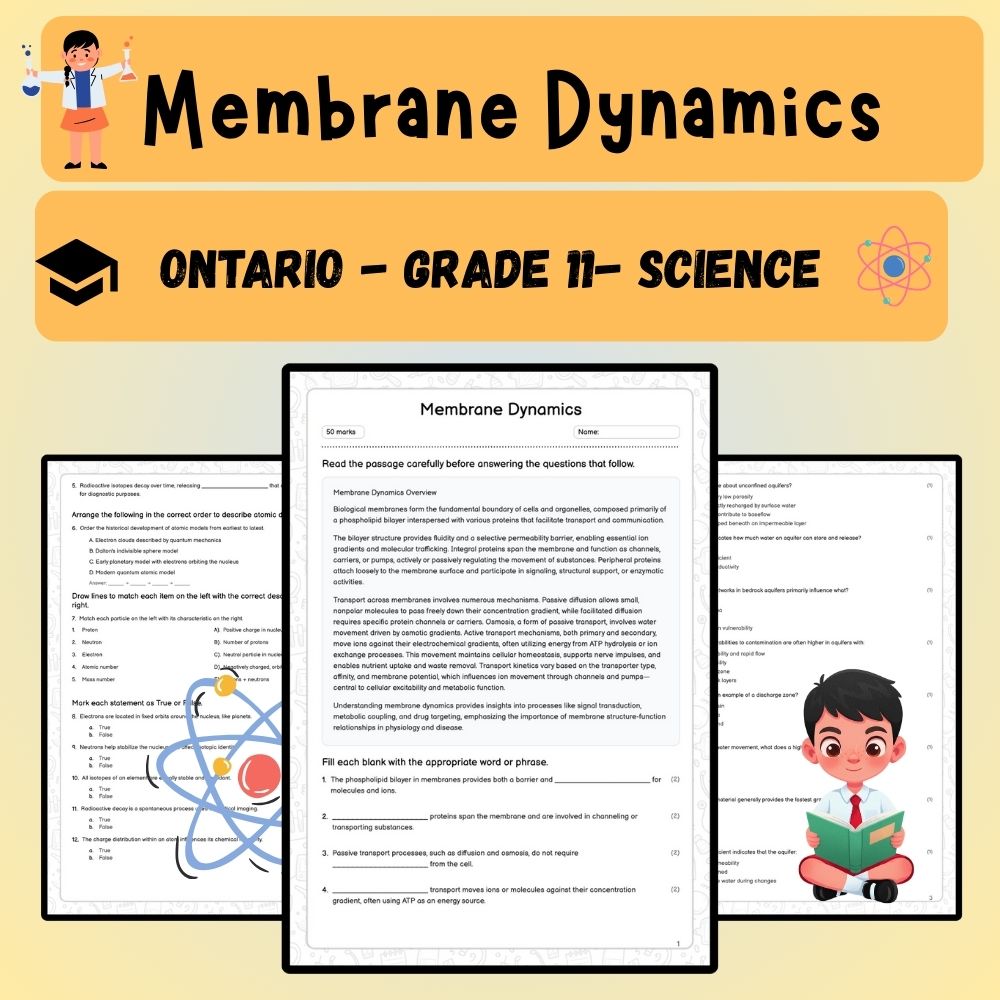
Grade 11 Science | Membrane Dynamics Worksheet (Answer Key) – Ontario Standards
Created byPrism Point LearningLearning Objectives
- Describe the structure and function of biological membranes, including bilayer composition and associated proteins.
- Explain passive and active transport mechanisms across membranes, including diffusion, osmosis, and protein-mediated processes.
- Differentiate between primary and secondary active transport and understand the concept of membrane potential and electrochemical gradients.
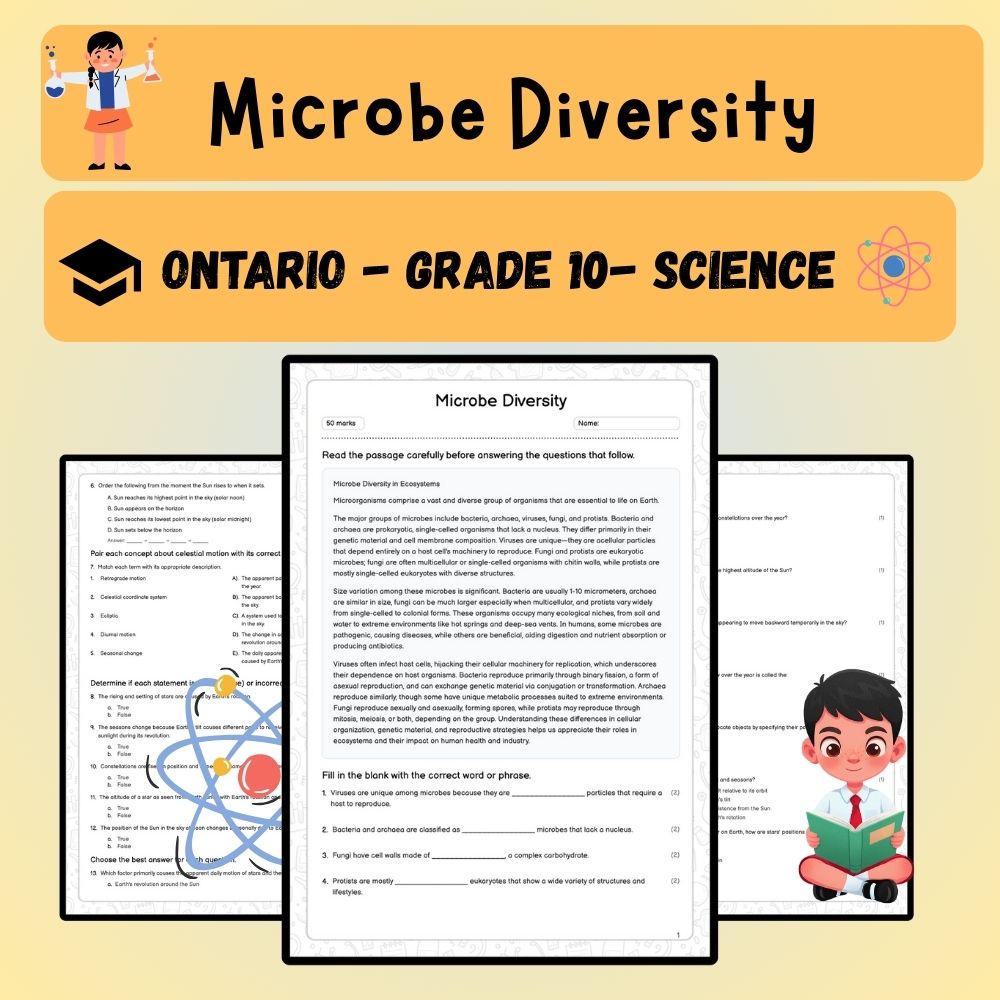
Grade 10 Science | Microbe Diversity Worksheet (PDF) – Ontario Standard
Created byPrism Point LearningLearning Objectives
- Describe major groups of microorganisms and their cellular organization.
- Identify differences in genetic material and reproduction strategies among microbes.
- Explain the ecological roles of bacteria, archaea, viruses, fungi, and protists.
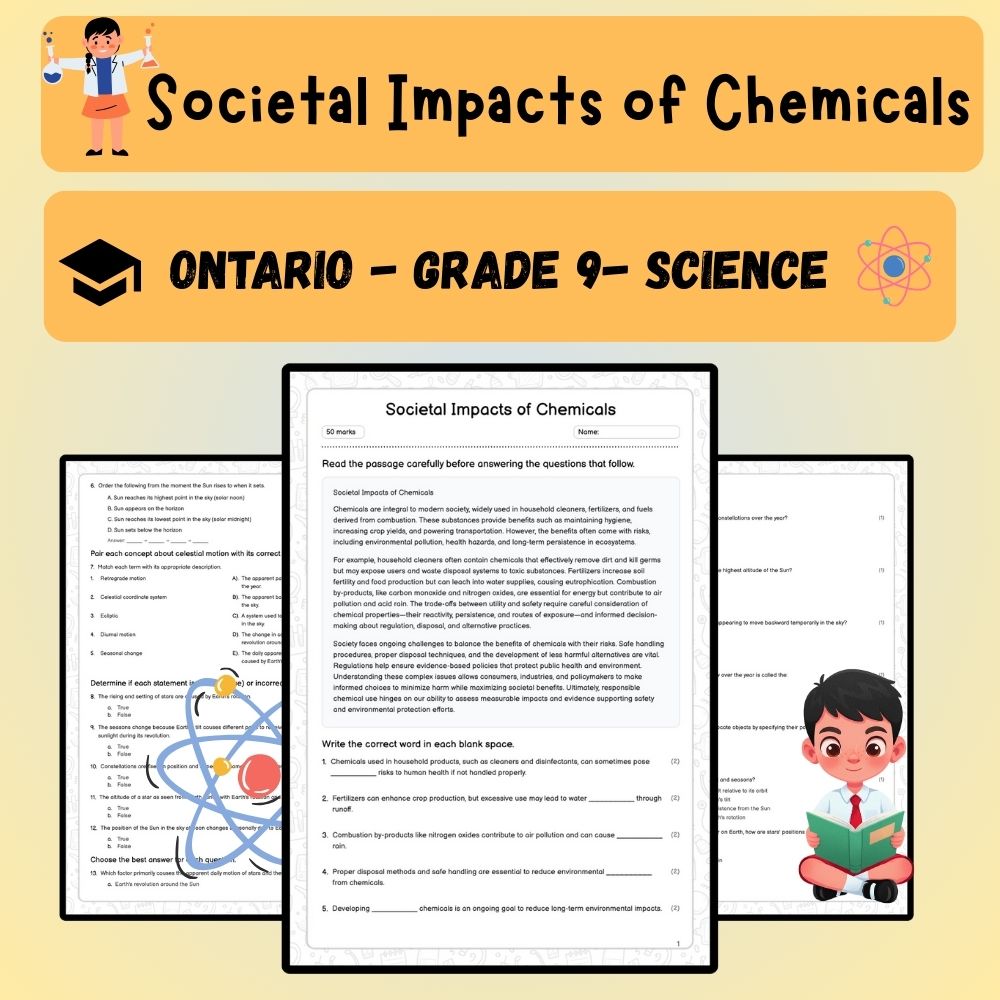
Grade 9 Science | Societal Impacts of Chemicals Worksheet (PDF) - Ontario Standards
Created byPrism Point LearningLearning Objectives
- Analyze the societal uses, benefits, and risks associated with everyday chemicals.
- Evaluate how chemical properties influence environmental persistence and routes of exposure.
- Discuss the importance of safe handling, disposal, and regulation of chemicals in society.
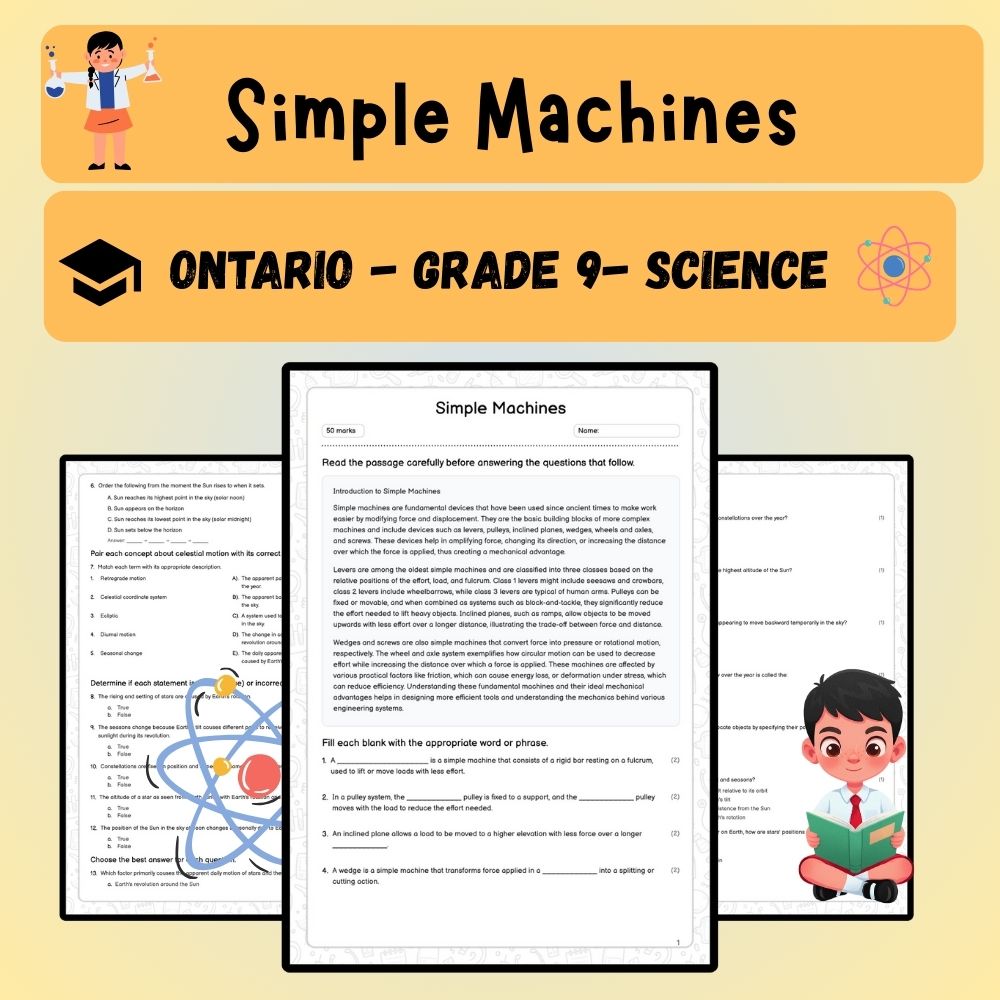
Grade 9 Science | Simple Machines Worksheet (Ontario Standard) – Practice & Assessment (PDF)
Created byPrism Point LearningLearning Objectives
- Understand the basic types of simple machines and their functions.
- Analyze how simple machines modify force and displacement to achieve mechanical advantage.
- Identify different classes of levers, pulley systems, and other simple machine configurations.
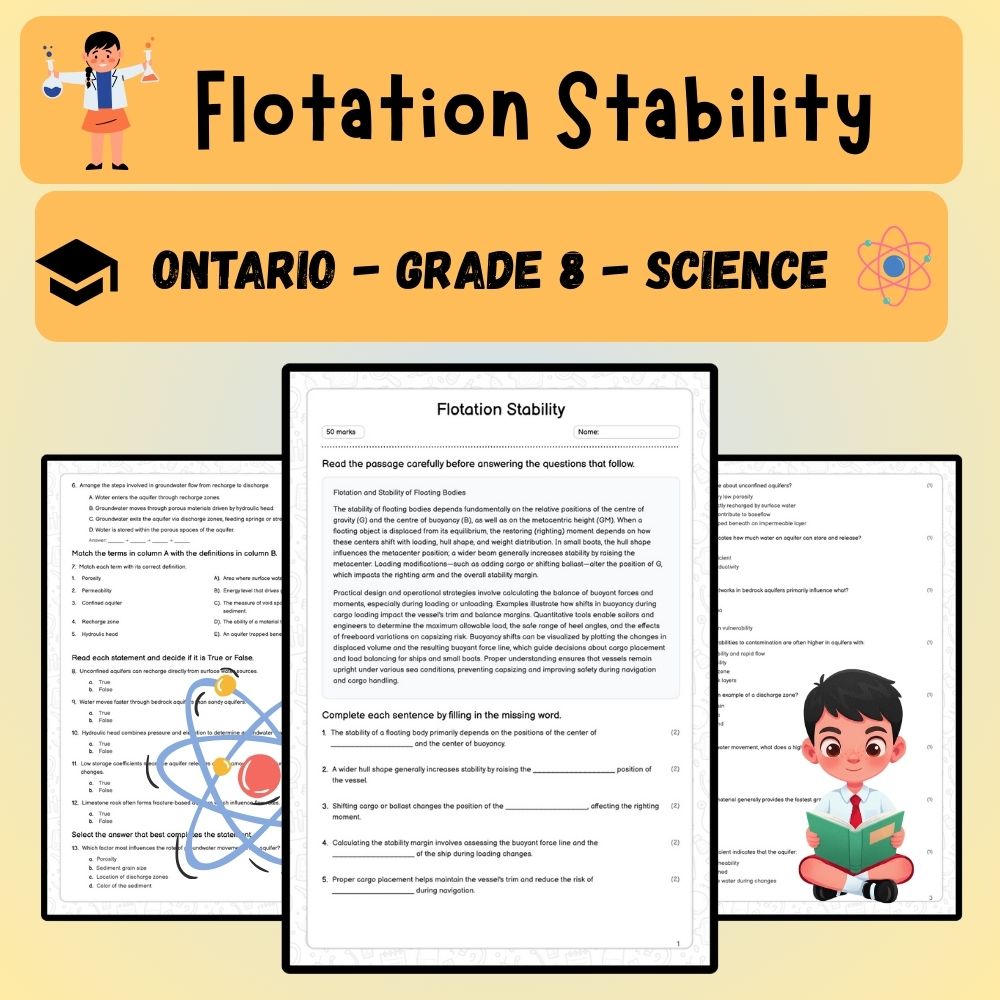
Grade 8 Science | Flotation Stability Worksheet (PDF ) - Ontario Standard
Created byPrism Point LearningLearning Objectives
- Understand how the positions of the center of gravity and center of buoyancy affect the stability of floating bodies.
- Explain how hull shape and loading influence righting moments and capsizing thresholds.
- Apply quantitative methods to calculate stability margins and buoyancy shifts during loading changes.
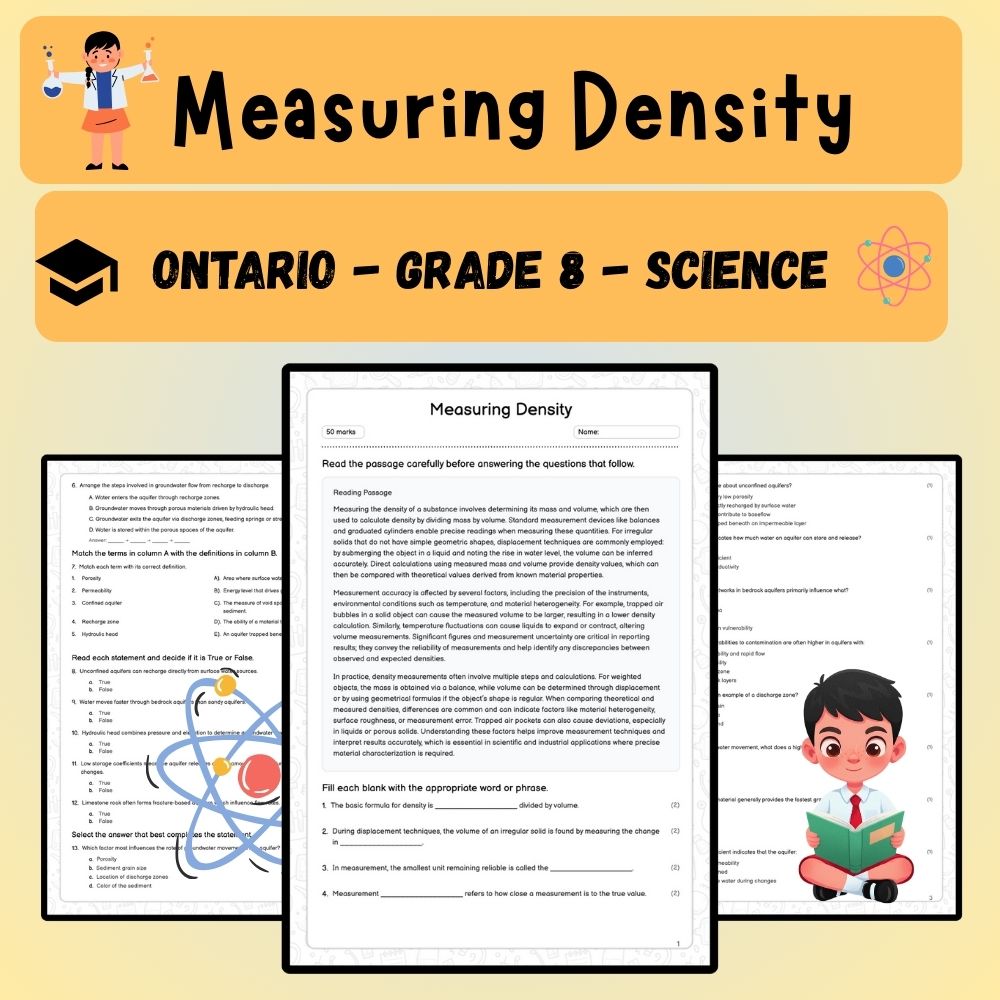
Grade 8 Science Worksheet – Measuring Density | Ontario Standards (PDF )
Created byPrism Point LearningLearning Objectives
- Understand different methods for measuring the density of solids and liquids.
- Interpret discrepancies in density measurements caused by factors like trapped air and temperature effects.
- Perform calculations involving theoretical and experimental density values.
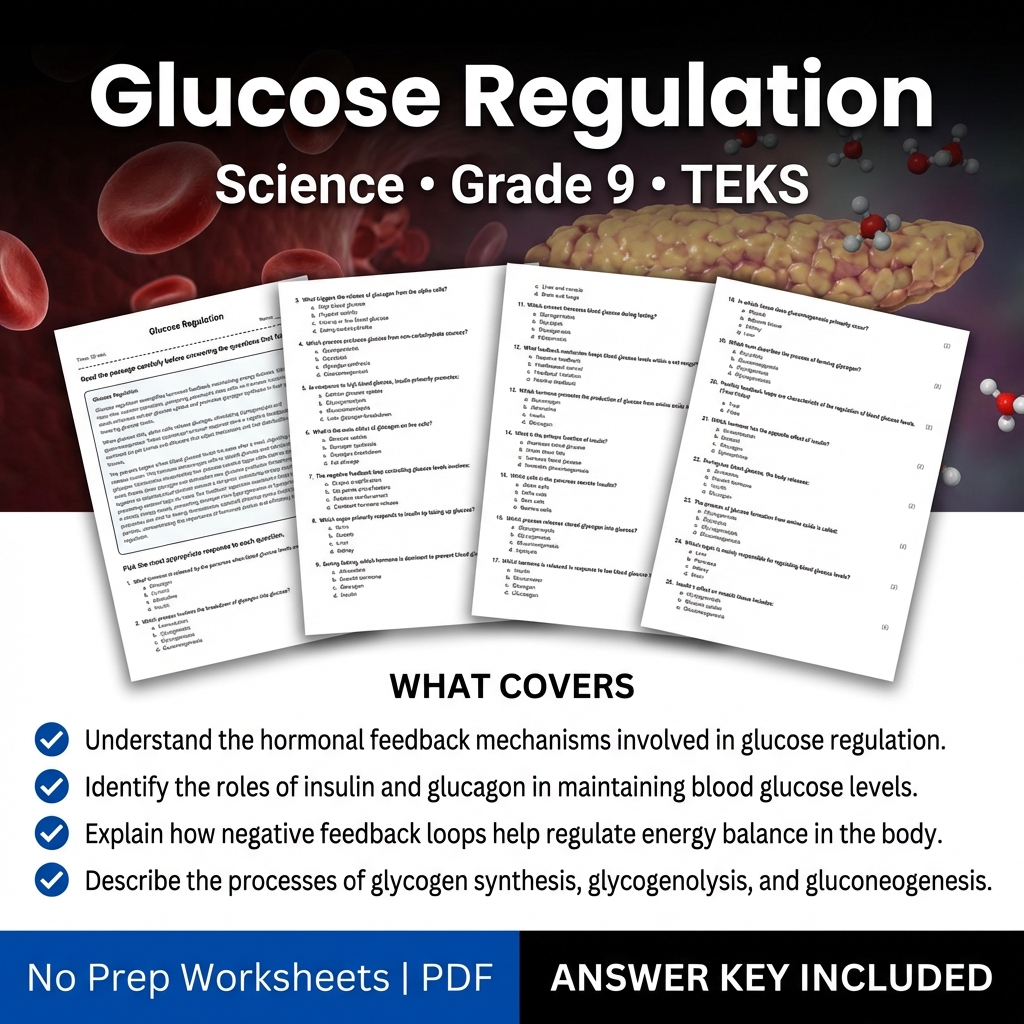
Grade 9 Science Worksheet on Glucose Regulation | TEKS-Aligned Practice
 Created byCoral Reef Learning
Learning Objectives
- Understand the hormonal feedback mechanisms involved in glucose regulation.
- Identify the roles of insulin and glucagon in maintaining blood glucose levels.
- Explain how negative feedback loops help regulate energy balance in the body.
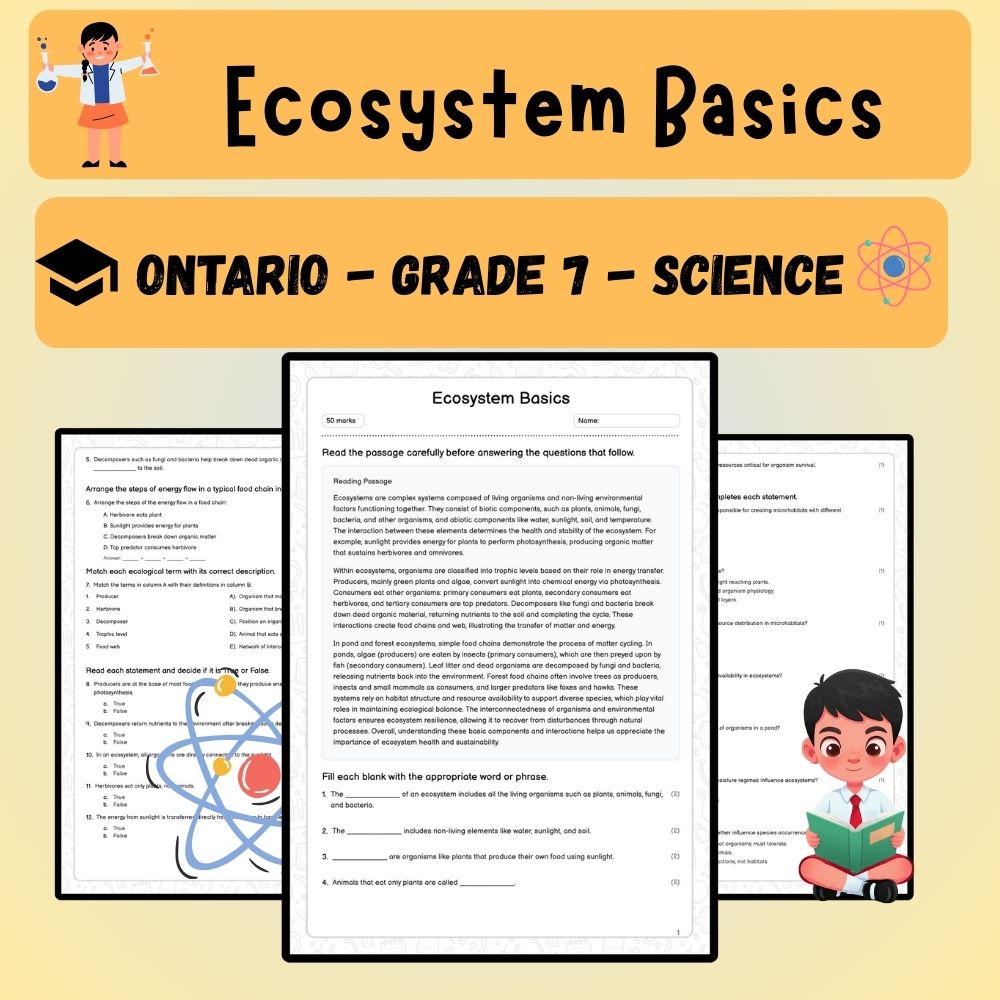
Grade 7 Science | Ecosystem Basics Worksheet (PDF ) – Ontario Standards
Created byPrism Point LearningLearning Objectives
- Understand the components and roles of biotic and abiotic elements in ecosystems.
- Identify trophic categories such as producers, consumers, and decomposers and their energy flow.
- Analyze simple food chains and the cycling of matter in pond and forest ecosystems.
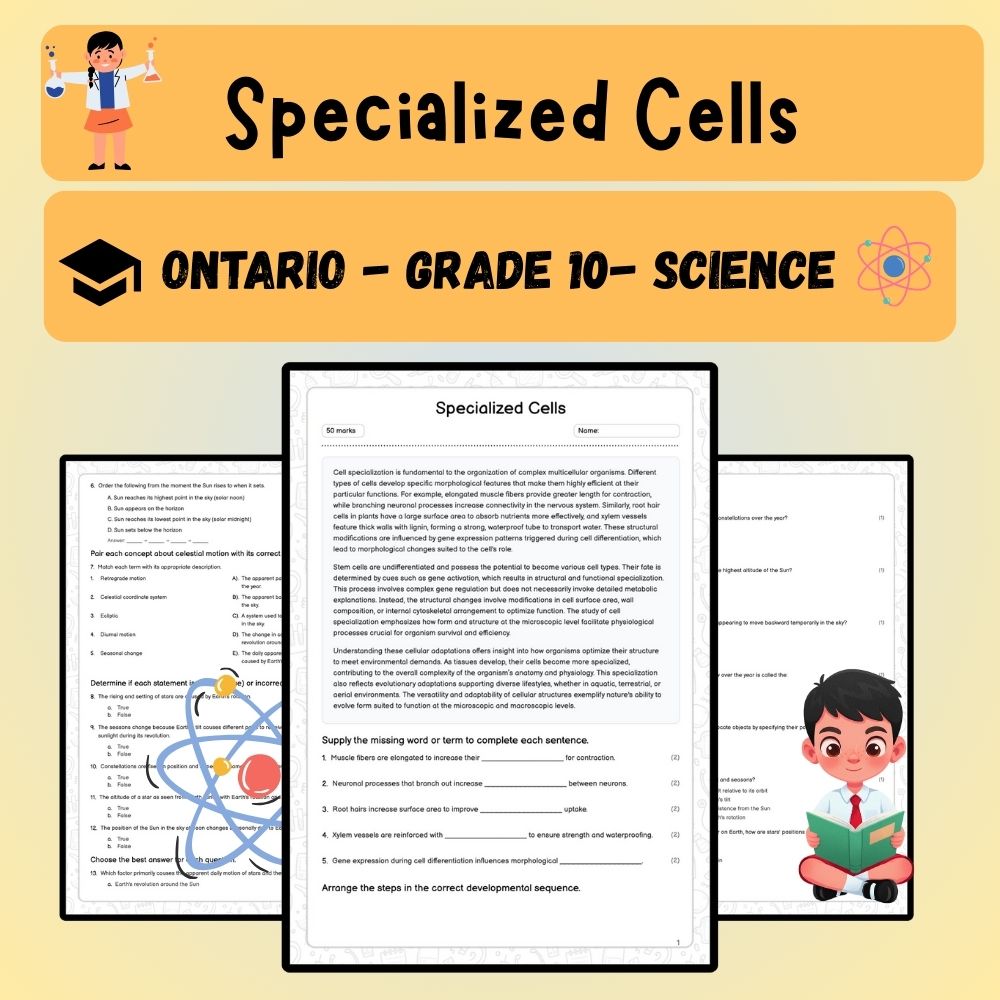
Grade 10 Science | Specialized Cells Worksheet – Ontario Standards (PDF)
Created byPrism Point LearningLearning Objectives
- Understand the concept of cellular specialization and tissue organization.
- Identify morphological features that relate form to function in specialized cells.
- Explain how gene expression influences cell differentiation and structural adaptation.
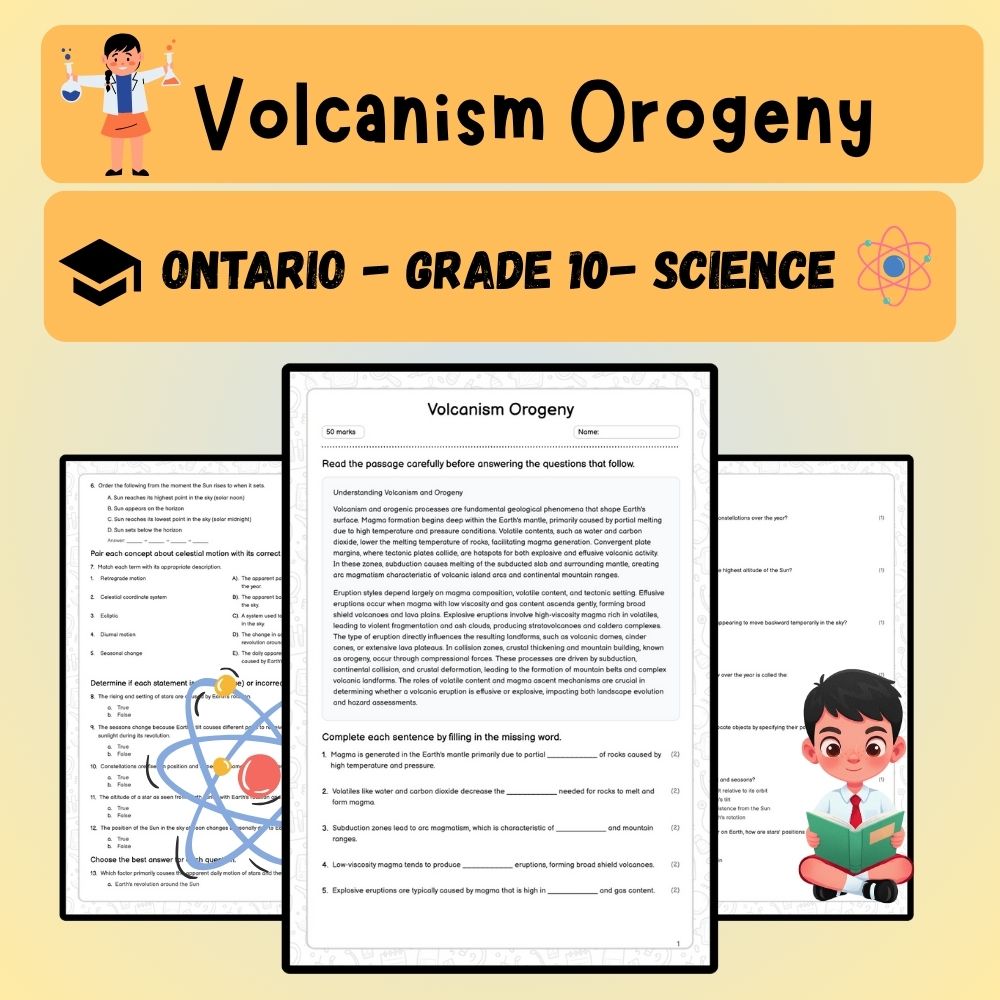
Grade 10 Science | Volcanism Orogeny Worksheet (PDF) – Ontario Standards
Created byPrism Point LearningLearning Objectives
- Explain the processes of magma generation, ascent, and eruption styles in volcanism.
- Differentiate between effusive and explosive volcanism and their landforms.
- Describe the role of tectonic setting, partial melting, and volatile content in volcano behavior.
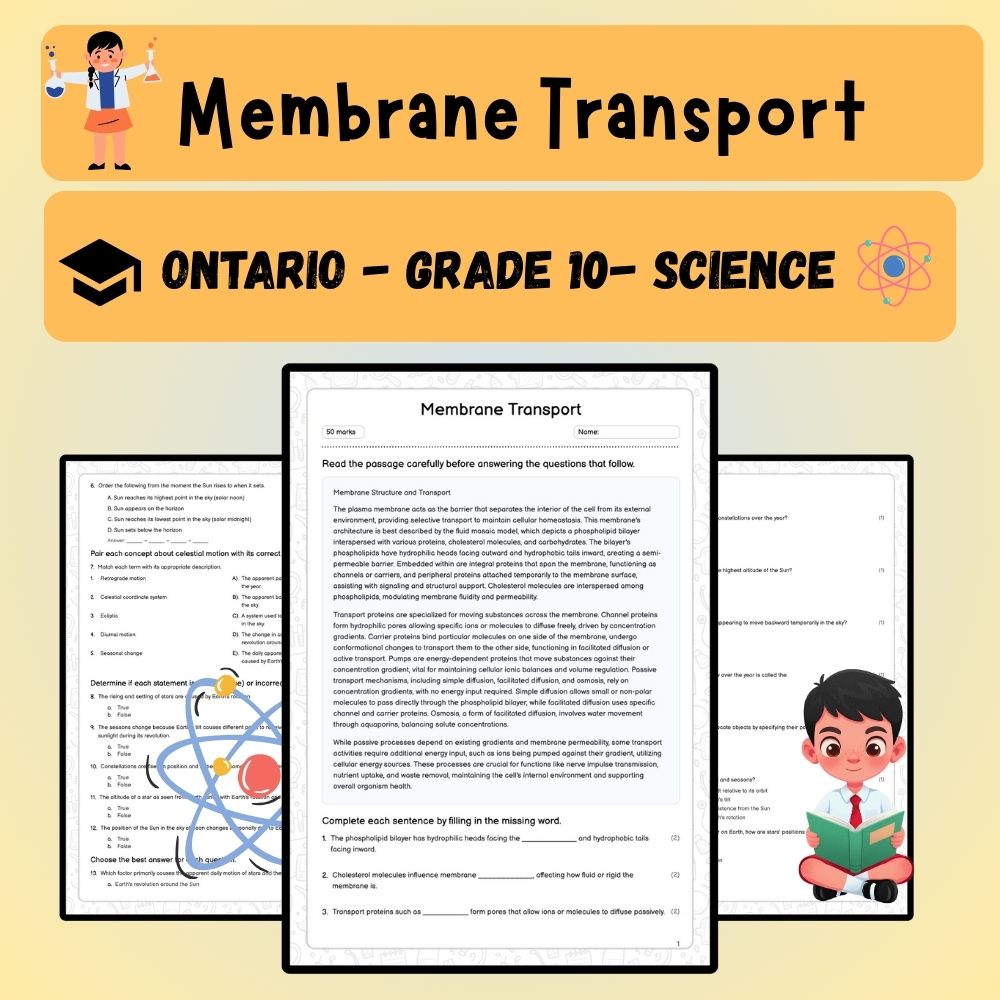
Grade 10 Science | Membrane Transport Worksheet (PDF) Aligned with Ontario Standards
Created byPrism Point LearningLearning Objectives
- Understand the structure and components of the plasma membrane as described by the fluid mosaic model.
- Differentiate between types of transport proteins such as channels, carriers, and pumps based on structural features and functions.
- Explain passive transport mechanisms—including simple diffusion, facilitated diffusion, and osmosis—in terms of concentration gradients and permeability.
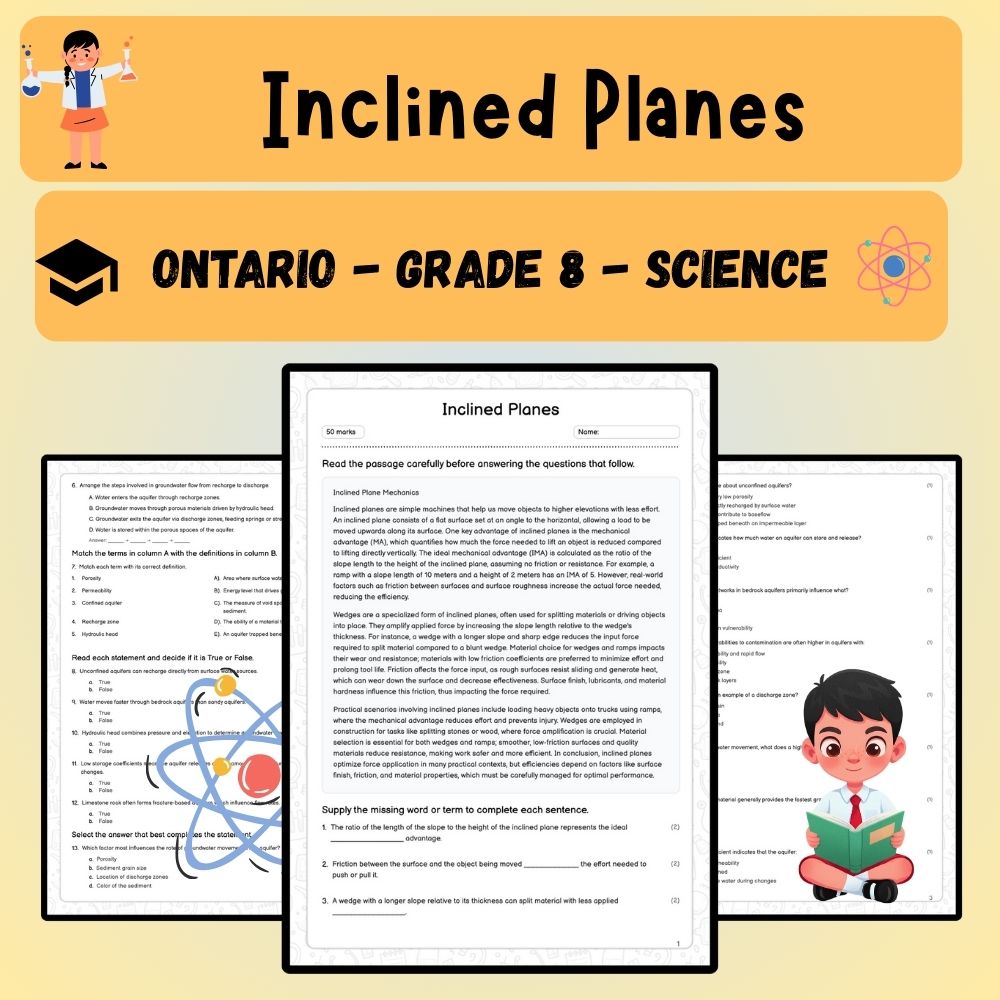
Grade 8 Science – Inclined Planes Worksheet (PDF) | Ontario Standards
Created byPrism Point LearningLearning Objectives
- Describe how inclined planes reduce input force using mechanical advantage.
- Calculate ideal and actual mechanical advantage for ramps and wedges.
- Explain how surface finish and friction influence force requirements during inclined plane use.
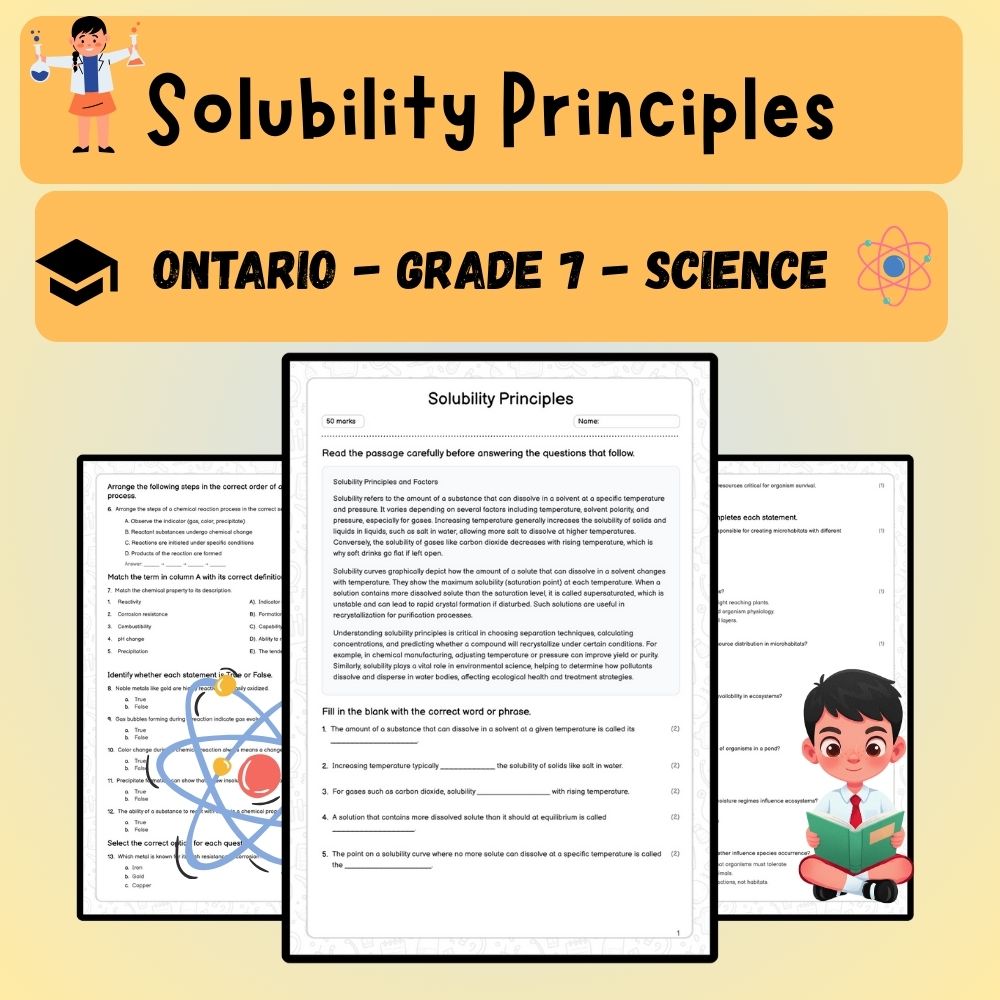
Grade 7 Science – Solubility Principles Worksheet (PDF ) – Ontario Standards
Created byPrism Point LearningLearning Objectives
- Understand the factors affecting the solubility of substances in solvents.
- Interpret and analyze solubility curves and saturation concepts.
- Identify conditions leading to supersaturated solutions and their applications.
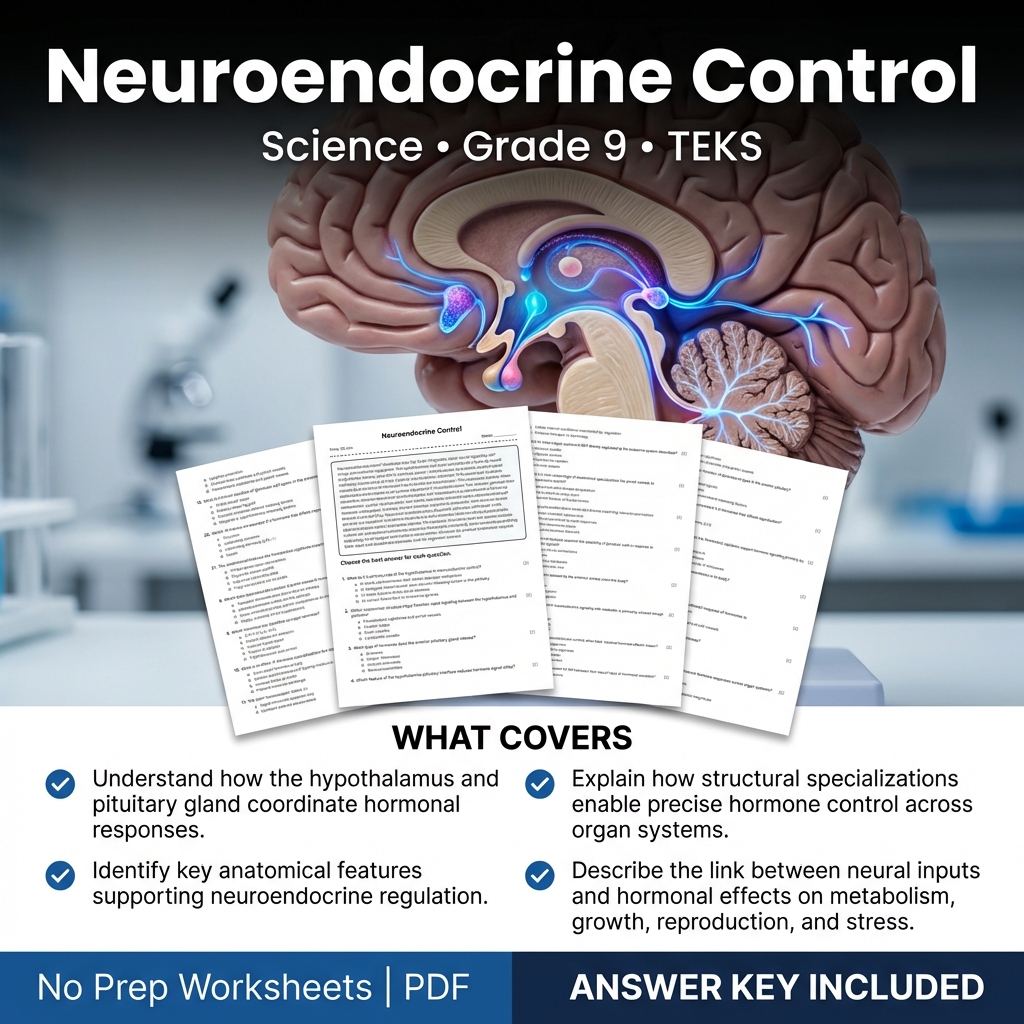
Grade 9 Science Worksheet on Neuroendocrine Control | TEKS Aligned
Created byCoral Reef LearningLearning Objectives
- Understand how the hypothalamus and pituitary gland coordinate hormonal responses.
- Identify key anatomical features supporting neuroendocrine regulation.
- Explain how structural specializations enable precise hormone control across organ systems.
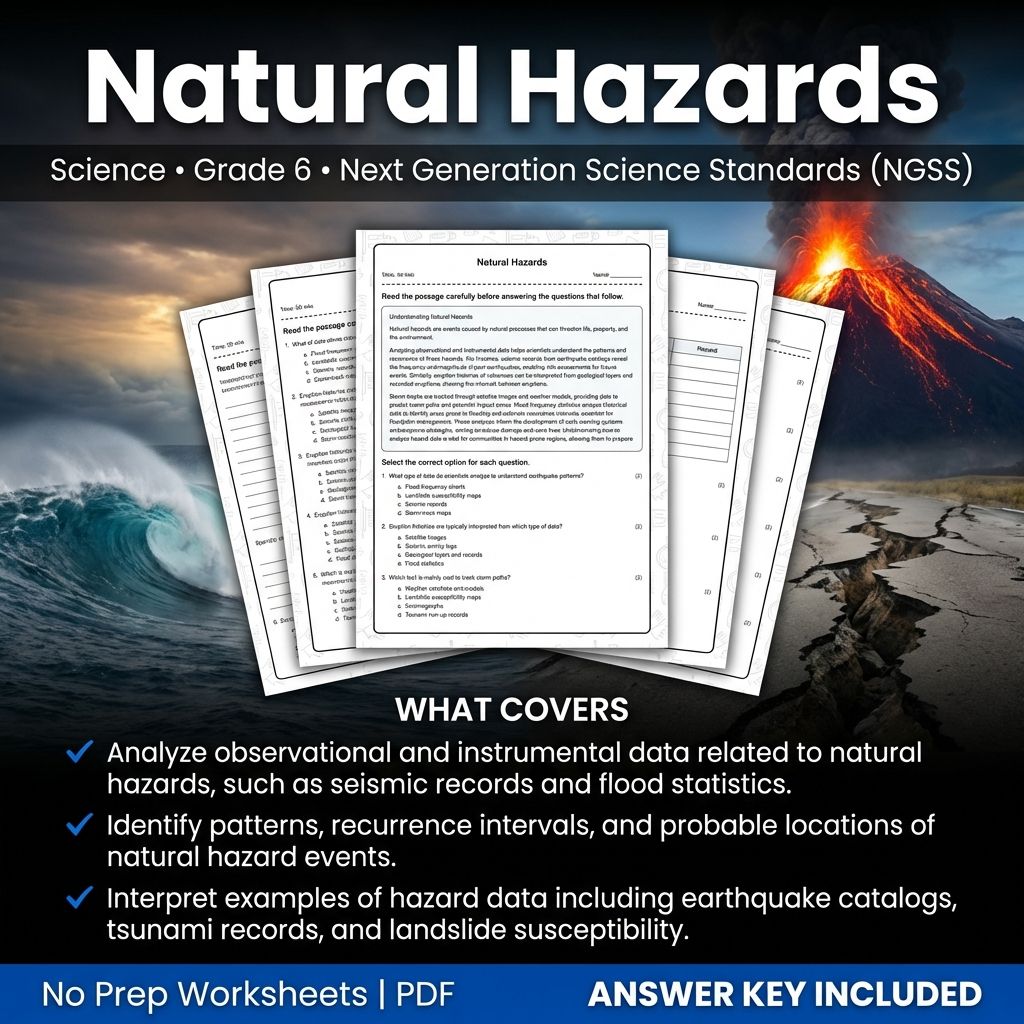
6th Grade Science | Natural Hazards Worksheet with Answer Key (Printable PDF)
Created byCoral Reef LearningLearning Objectives
- Analyze observational and instrumental data related to natural hazards, such as seismic records and flood statistics.
- Identify patterns, recurrence intervals, and probable locations of natural hazard events.
- Interpret examples of hazard data including earthquake catalogs, tsunami records, and landslide susceptibility.
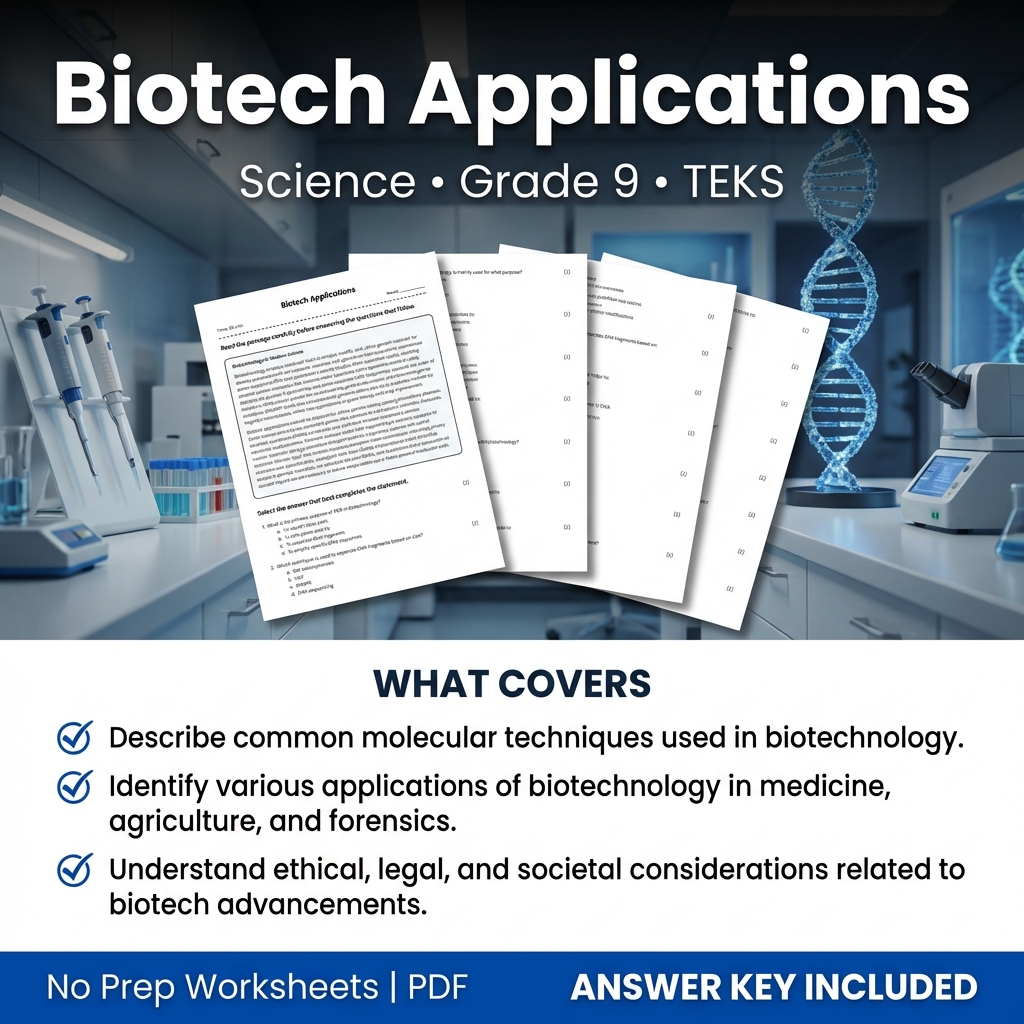
Biotech Applications Science Worksheet for Grade 9 | TEKS Aligned
Created byCoral Reef LearningLearning Objectives
- Describe common molecular techniques used in biotechnology.
- Identify various applications of biotechnology in medicine, agriculture, and forensics.
- Understand ethical, legal, and societal considerations related to biotech advancements.
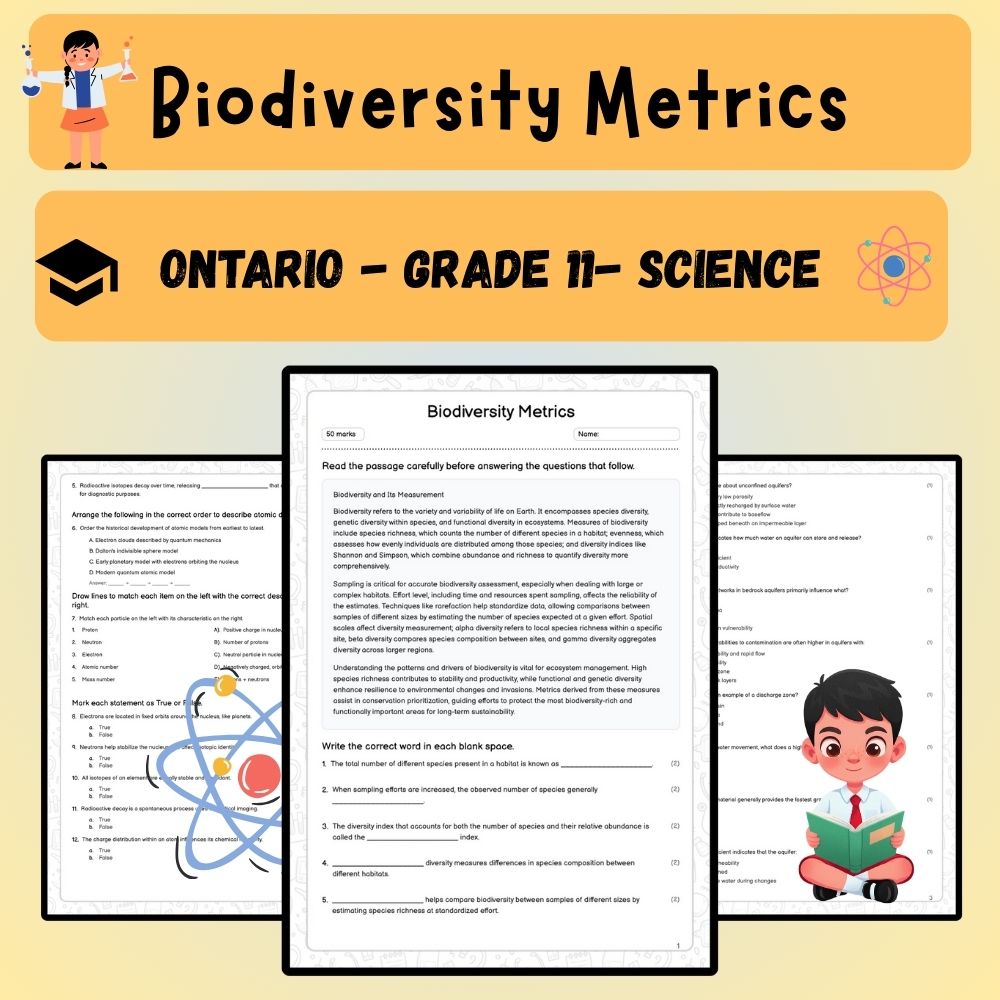
Grade 11 Science | Biodiversity Metrics Worksheet (Answer Key) – Ontario Curriculum
Created byPrism Point LearningLearning Objectives
- Define key measures of biodiversity such as species richness, evenness, and diversity indices.
- Explain sampling considerations like effort and rarefaction for accurate biodiversity estimates.
- Distinguish between alpha, beta, and gamma diversity across spatial scales.
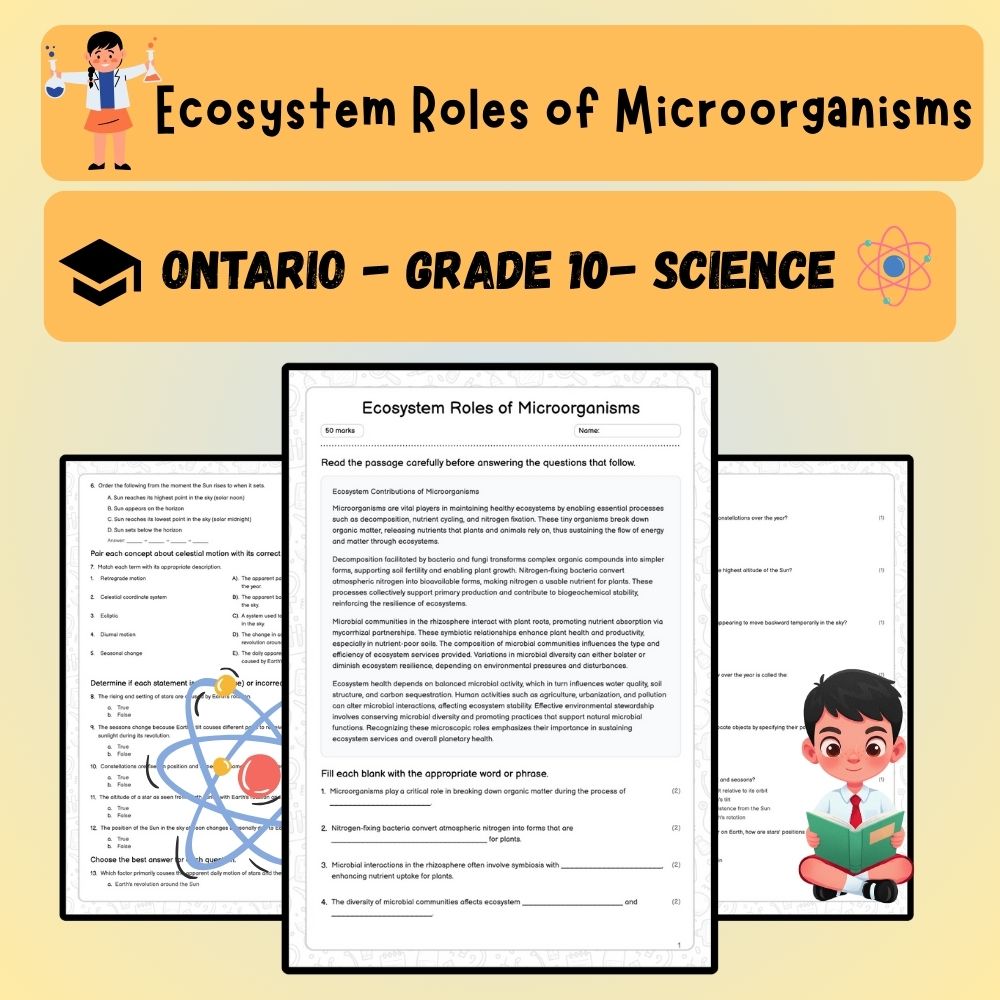
Grade 10 Science | Ecosystem Roles of Microorganisms Worksheet (PDF)
Created byPrism Point LearningLearning Objectives
- Understand the contributions of microorganisms to ecosystem processes such as decomposition and nutrient cycling.
- Identify microbial roles in nitrogen fixation, primary production, and soil fertility.
- Explain how microbial community composition influences ecosystem resilience and services.
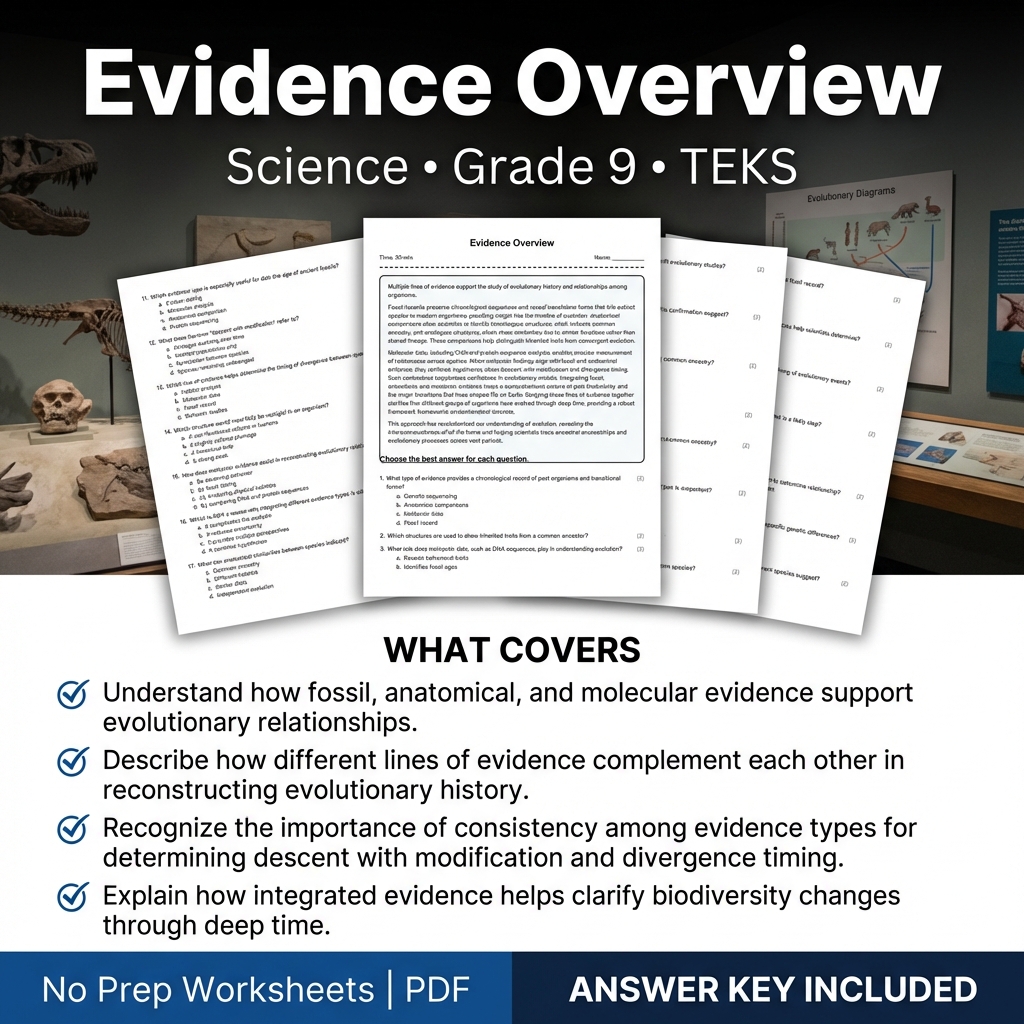
Grade 9 Science Worksheet on Evidence Overview | TEKS Standards
Created byCoral Reef LearningLearning Objectives
- Understand how fossil, anatomical, and molecular evidence support evolutionary relationships.
- Describe how different lines of evidence complement each other in reconstructing evolutionary history.
- Recognize the importance of consistency among evidence types for determining descent with modification and divergence timing.
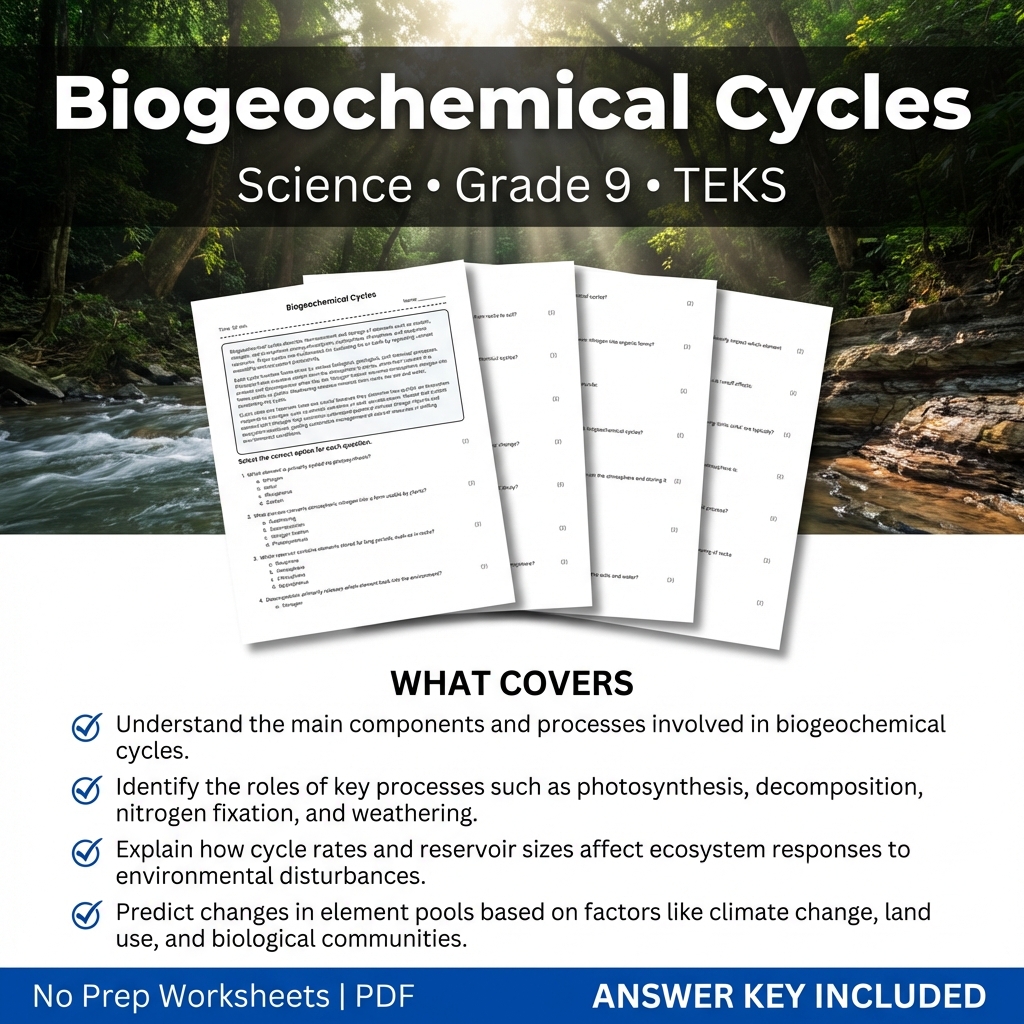
Biogeochemical Cycles Worksheet for Grade 9 Science TEKS aligned
Created byCoral Reef LearningLearning Objectives
- Understand the main components and processes involved in biogeochemical cycles.
- Identify the roles of key processes such as photosynthesis, decomposition, nitrogen fixation, and weathering.
- Explain how cycle rates and reservoir sizes affect ecosystem responses to environmental disturbances.
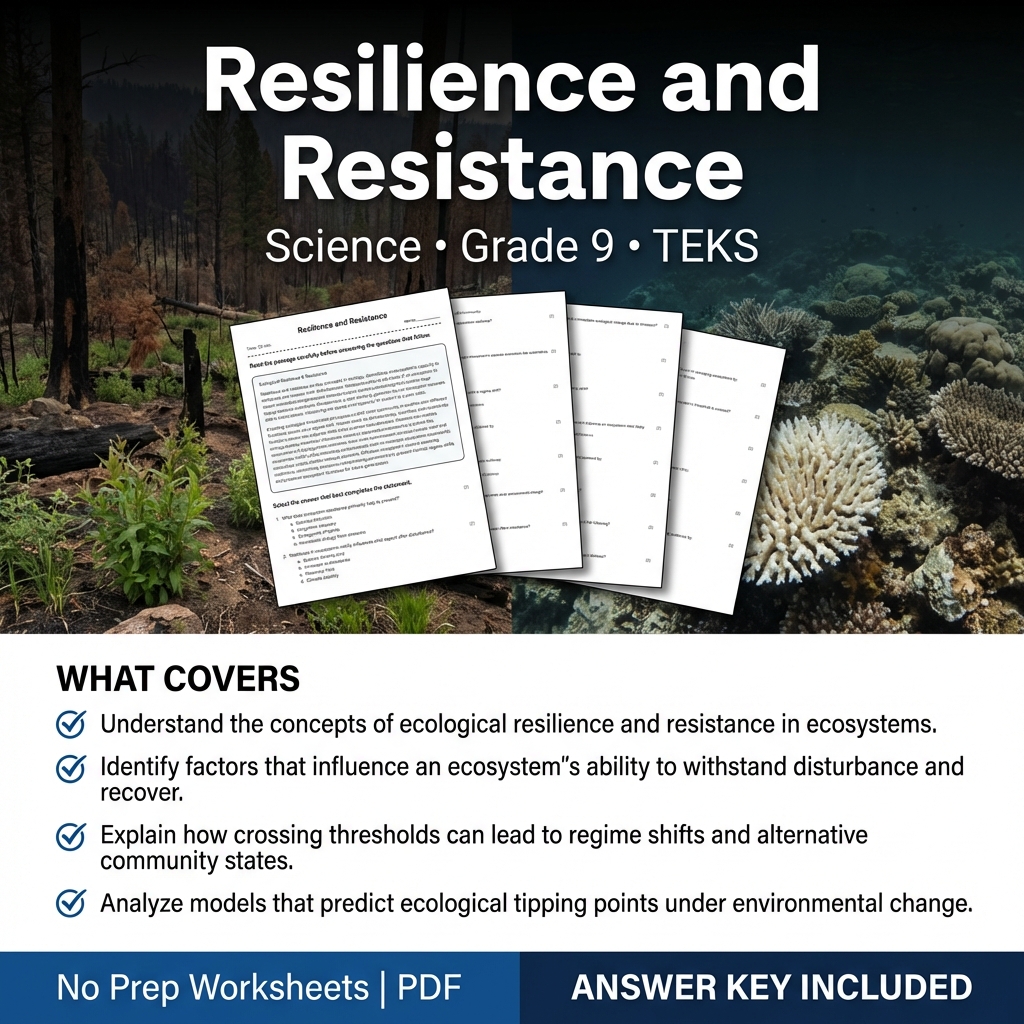
Grade 9 Science Worksheet on Resilience and Resistance | TEKS Standard
Created byCoral Reef LearningLearning Objectives
- Understand the concepts of ecological resilience and resistance in ecosystems.
- Identify factors that influence an ecosystem's ability to withstand disturbance and recover.
- Explain how crossing thresholds can lead to regime shifts and alternative community states.
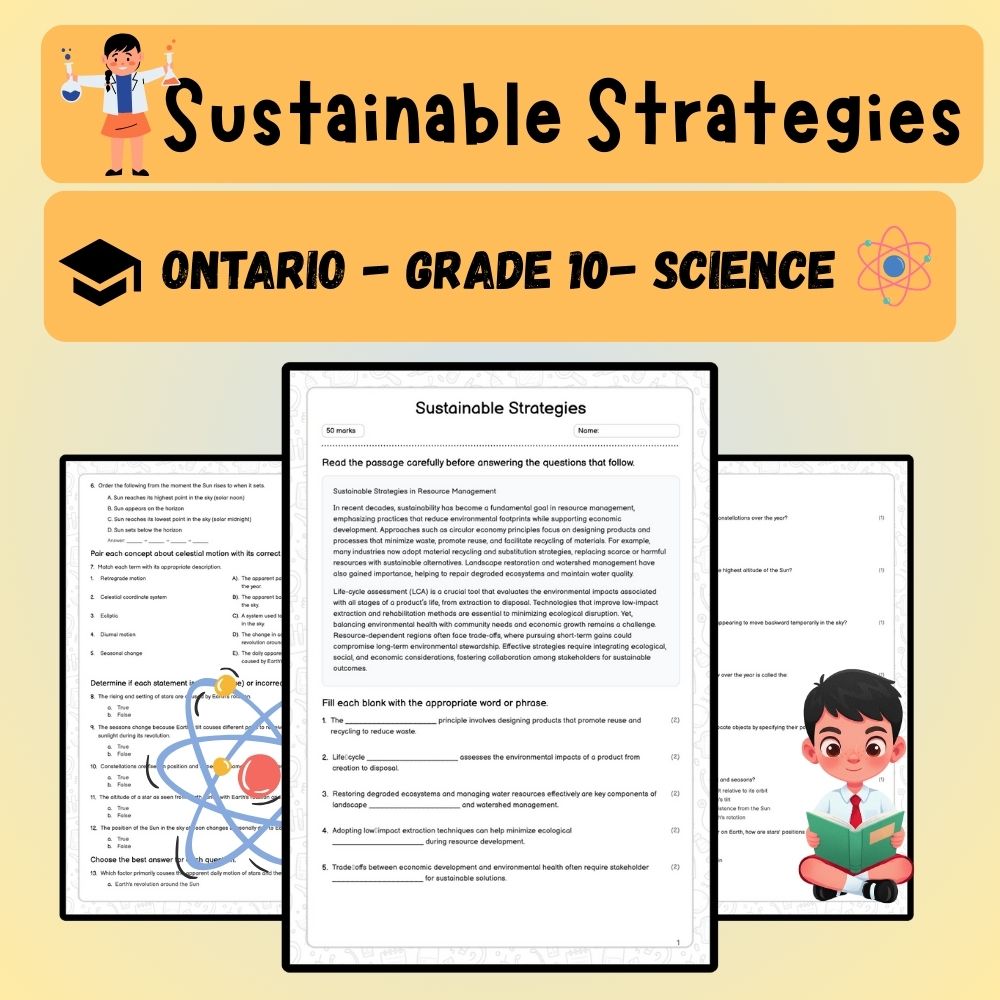
Grade 10 Science | Sustainable Strategies Worksheet (PDF) aligned with Ontario standards
Created byPrism Point LearningLearning Objectives
- Understand approaches for reducing environmental impact in resource extraction and use.
- Identify principles of circular economy, recycling, and substitution methods.
- Explain landscape restoration and watershed management strategies.
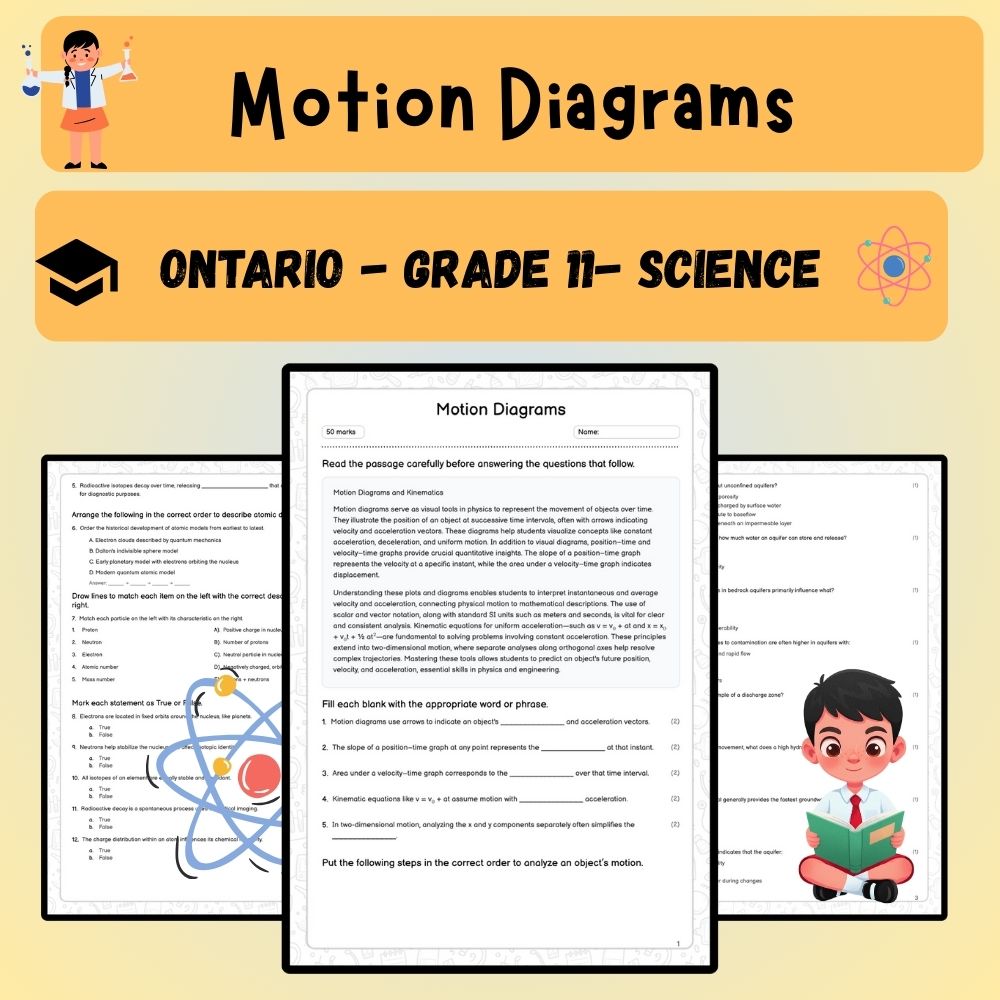
Grade 11 Science | Motion Diagrams Worksheet (PDF) – Ontario Standard Practice
Created byPrism Point LearningLearning Objectives
- Understand how to interpret position, velocity, and acceleration in motion diagrams.
- Analyze and construct velocity–time and position–time plots to determine instantaneous and average quantities.
- Apply kinematic equations for constant acceleration in straight-line motion.
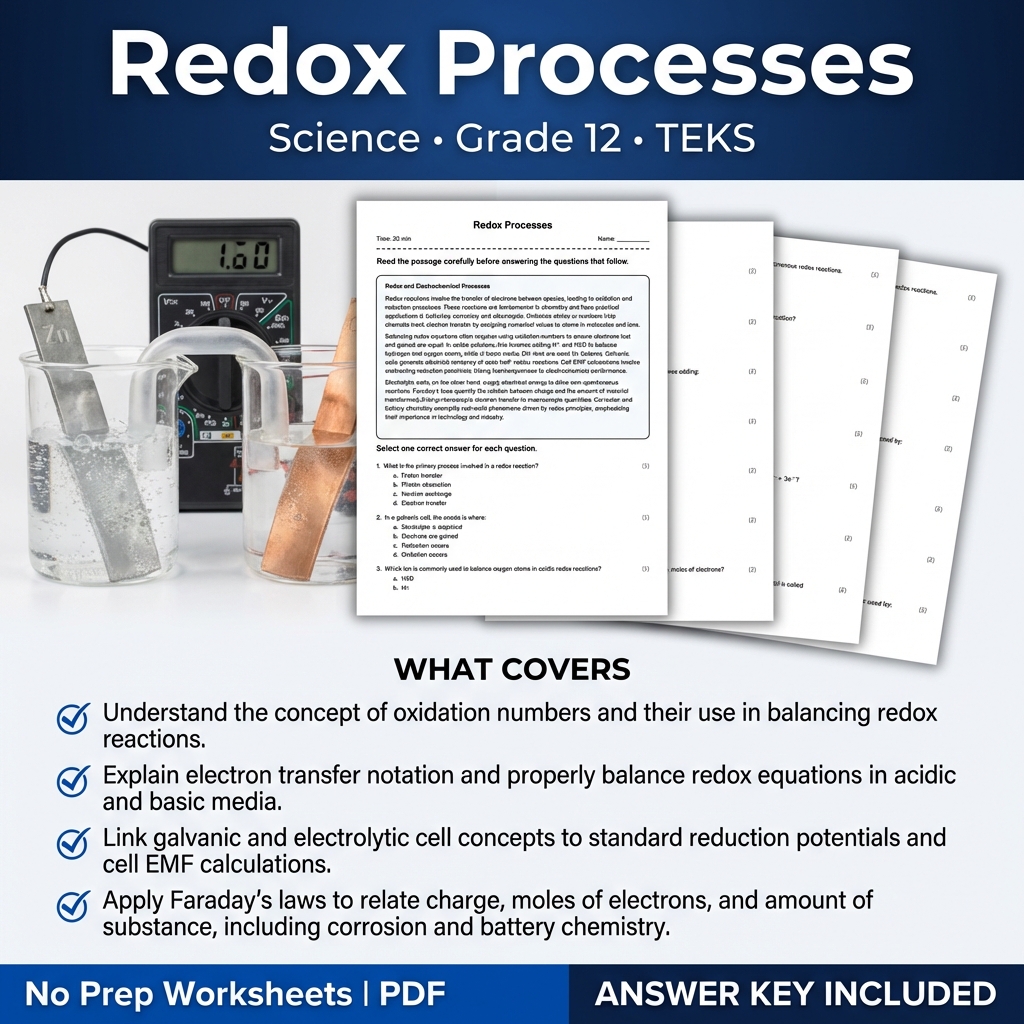
Redox Processes Worksheet for Grade 12 Science TEKS Standards
Created byCoral Reef LearningLearning Objectives
- Understand the concept of oxidation numbers and their use in balancing redox reactions.
- Explain electron transfer notation and properly balance redox equations in acidic and basic media.
- Link galvanic and electrolytic cell concepts to standard reduction potentials and cell EMF calculations.
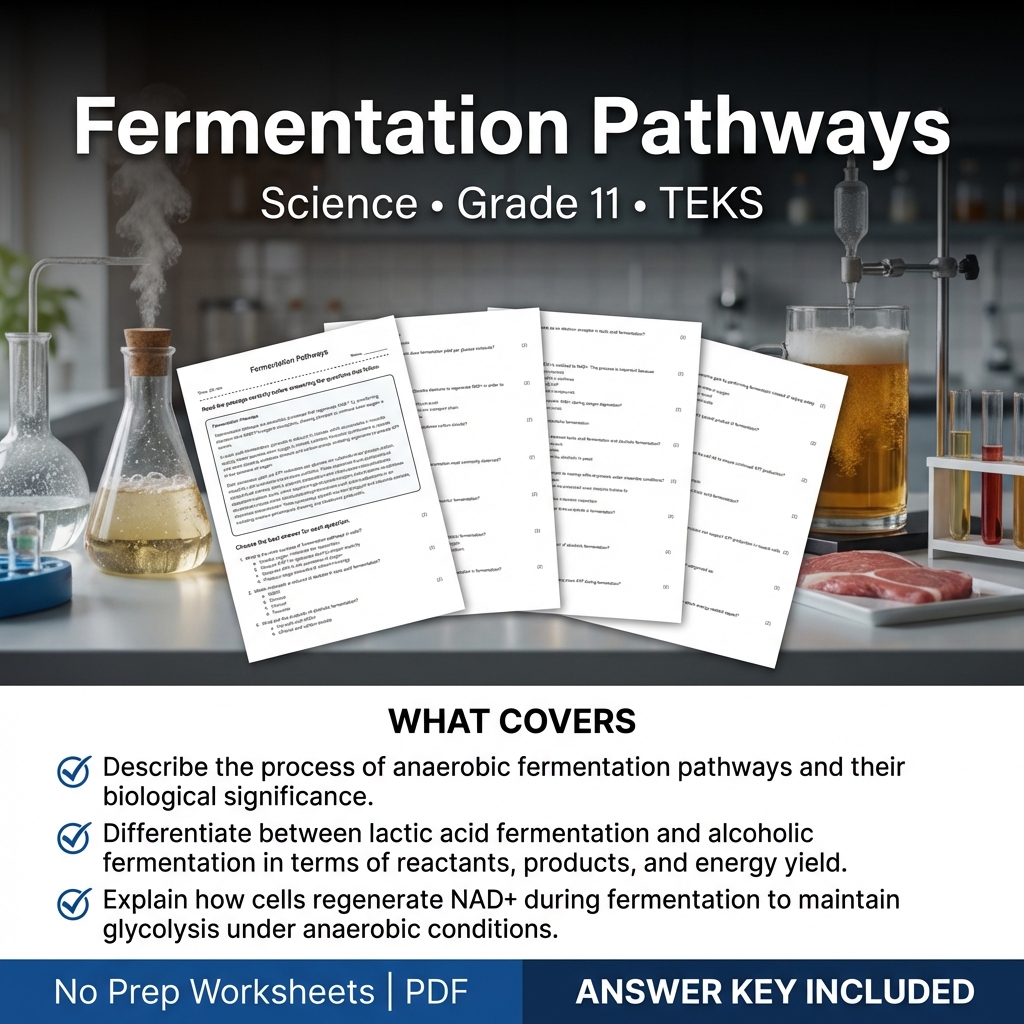
Grade 11 Science Worksheet on Fermentation Pathways | TEKS Aligned
Created byCoral Reef LearningLearning Objectives
- Describe the process of anaerobic fermentation pathways and their biological significance.
- Differentiate between lactic acid fermentation and alcoholic fermentation in terms of reactants, products, and energy yield.
- Explain how cells regenerate NAD+ during fermentation to maintain glycolysis under anaerobic conditions.
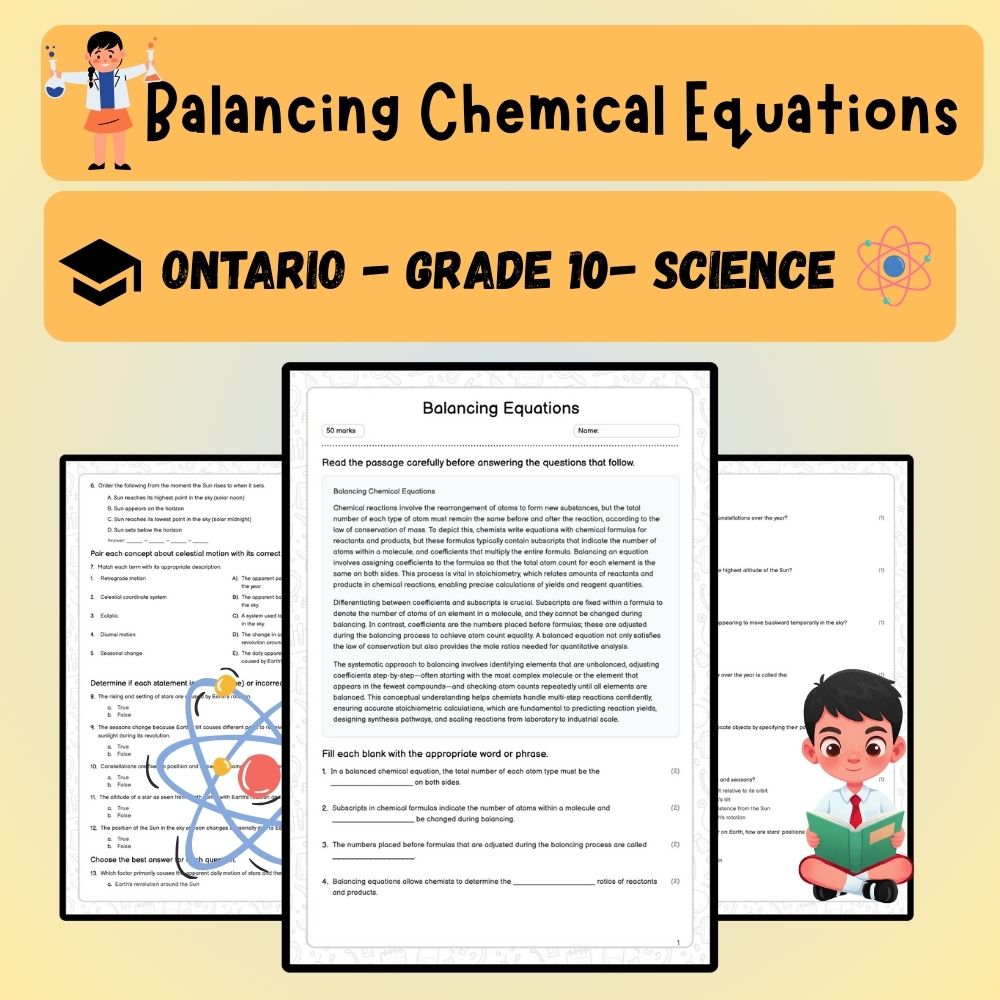
Grade 10 Science | Balancing Chemical Equations Worksheet (Answer Key) – Ontario Standards
Created byPrism Point LearningLearning Objectives
- Understand the concept of balancing chemical equations based on conservation of mass.
- Differentiate between coefficients and subscripts in chemical formulas.
- Apply systematic strategies to balance multi-step chemical equations.
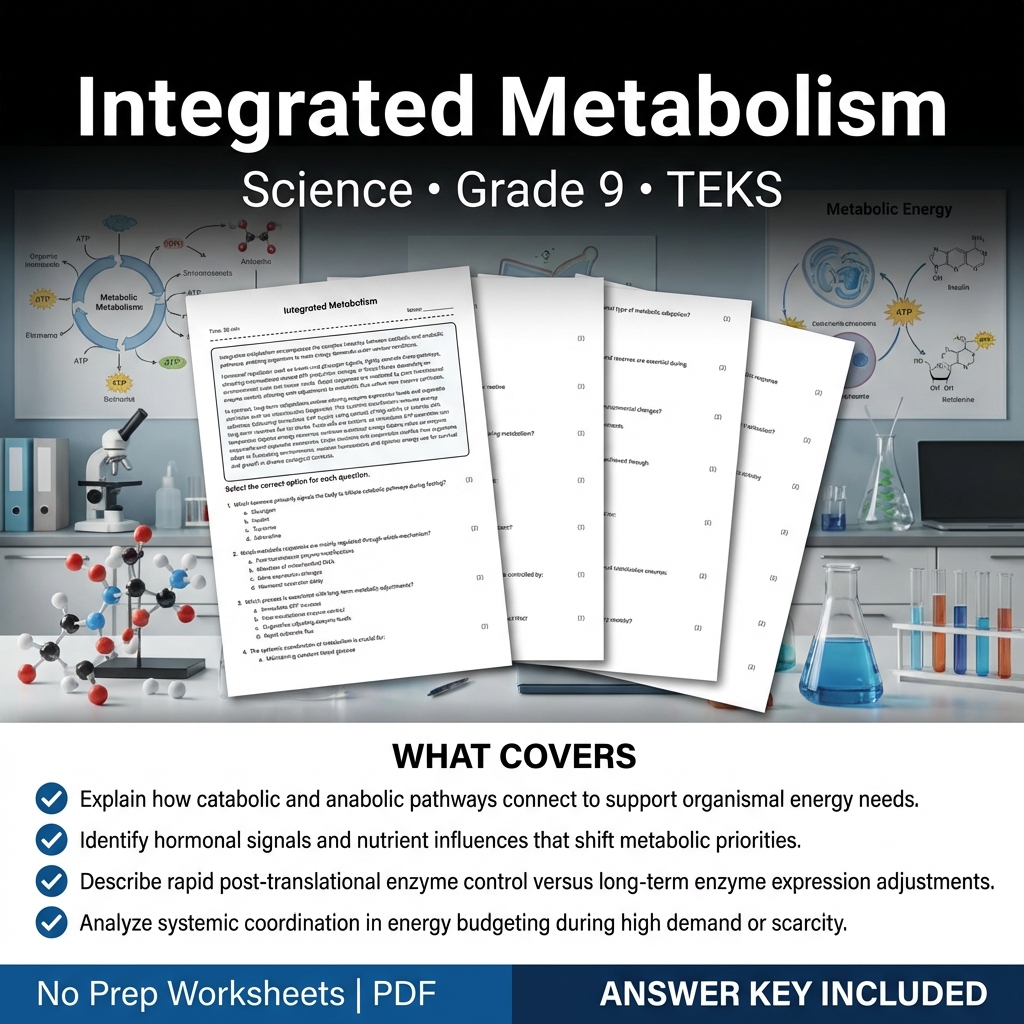
Grade 9 Science Worksheet on Integrated Metabolism | TEKS Standards
Created byCoral Reef LearningLearning Objectives
- Explain how catabolic and anabolic pathways connect to support organismal energy needs.
- Identify hormonal signals and nutrient influences that shift metabolic priorities.
- Describe rapid post-translational enzyme control versus long-term enzyme expression adjustments.
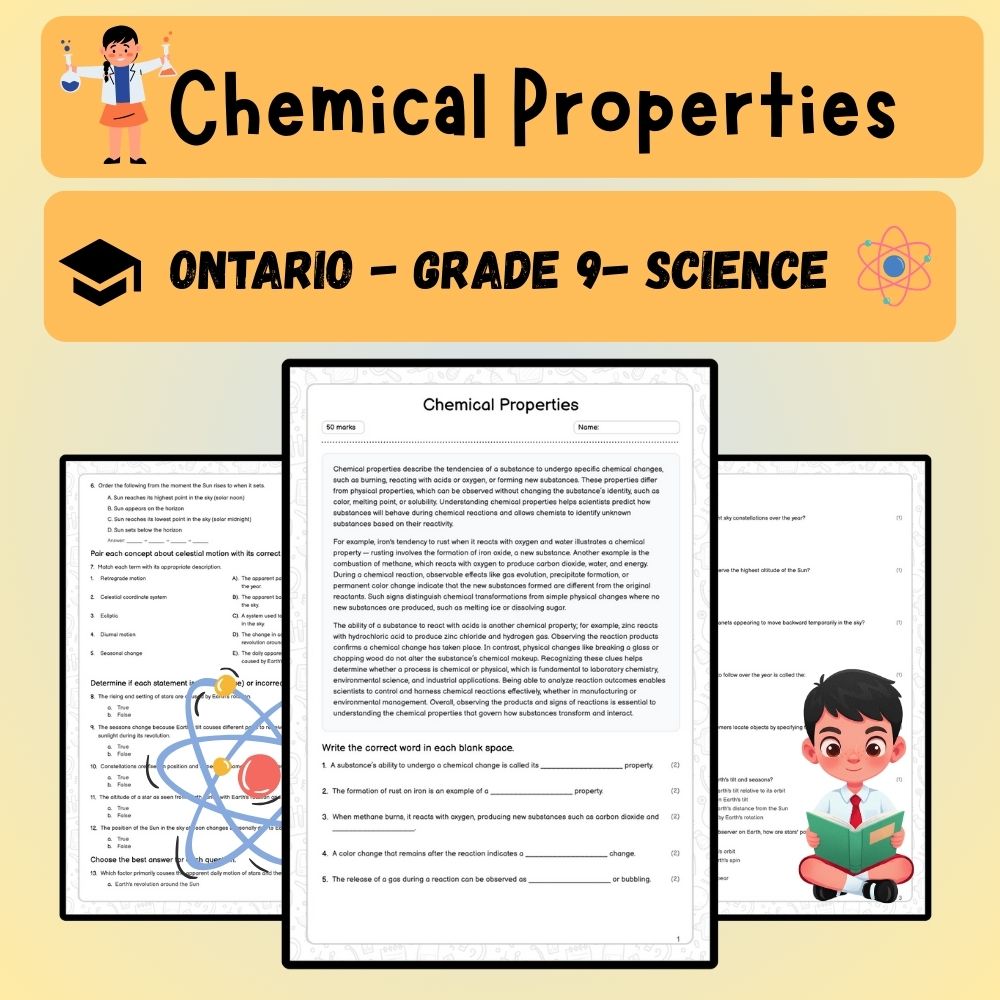
Grade 9 Science | Understanding Chemical Properties Worksheet (PDF)
Created byPrism Point LearningLearning Objectives
- Define and describe chemical properties and distinguish them from physical properties.
- Identify examples of chemical reactions such as rusting and combustion.
- Explain how indicators like gas evolution, precipitate formation, and color change signify chemical changes.
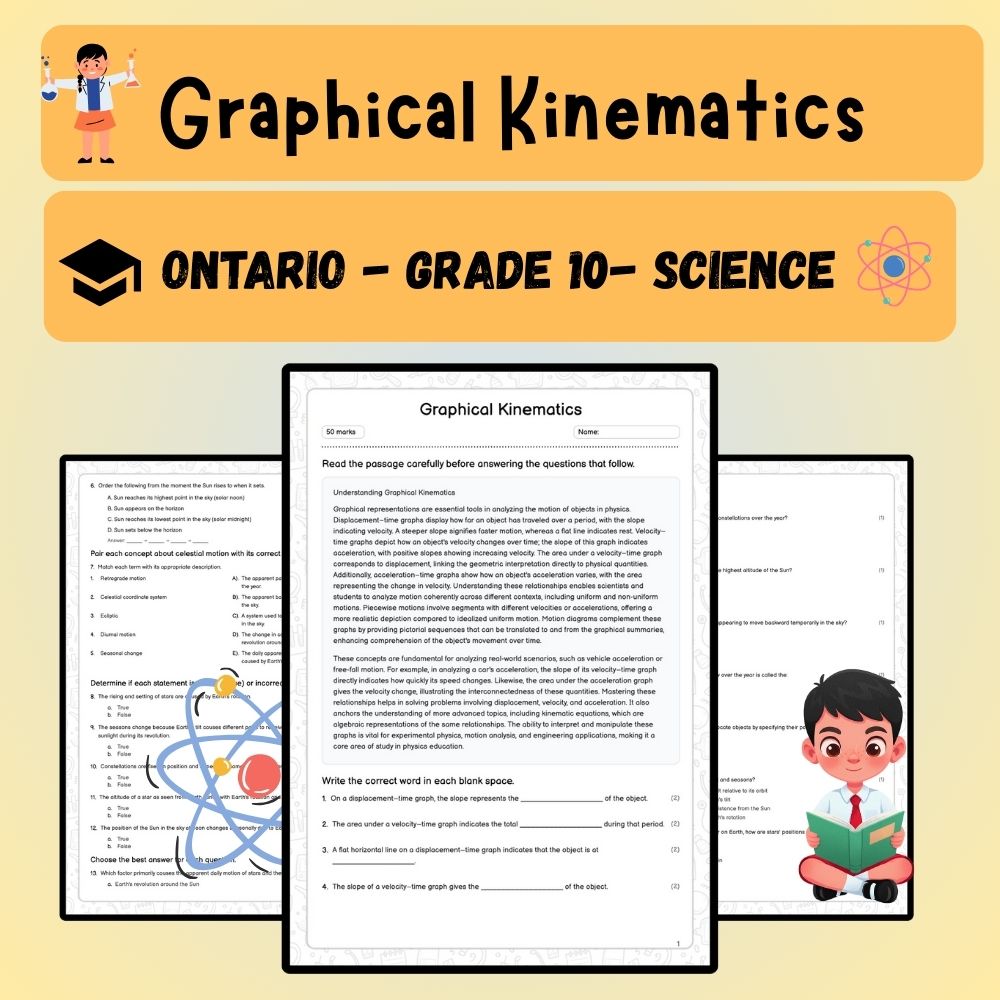
Grade 10 Science | Graphical Kinematics Worksheet (PDF) – Ontario Standards
Created byPrism Point LearningLearning Objectives
- Interpret displacement–time, velocity–time, and acceleration–time graphs.
- Explain the relationships between the slope, area, and kinematic quantities.
- Compare uniform and piecewise motions using graphical representations.
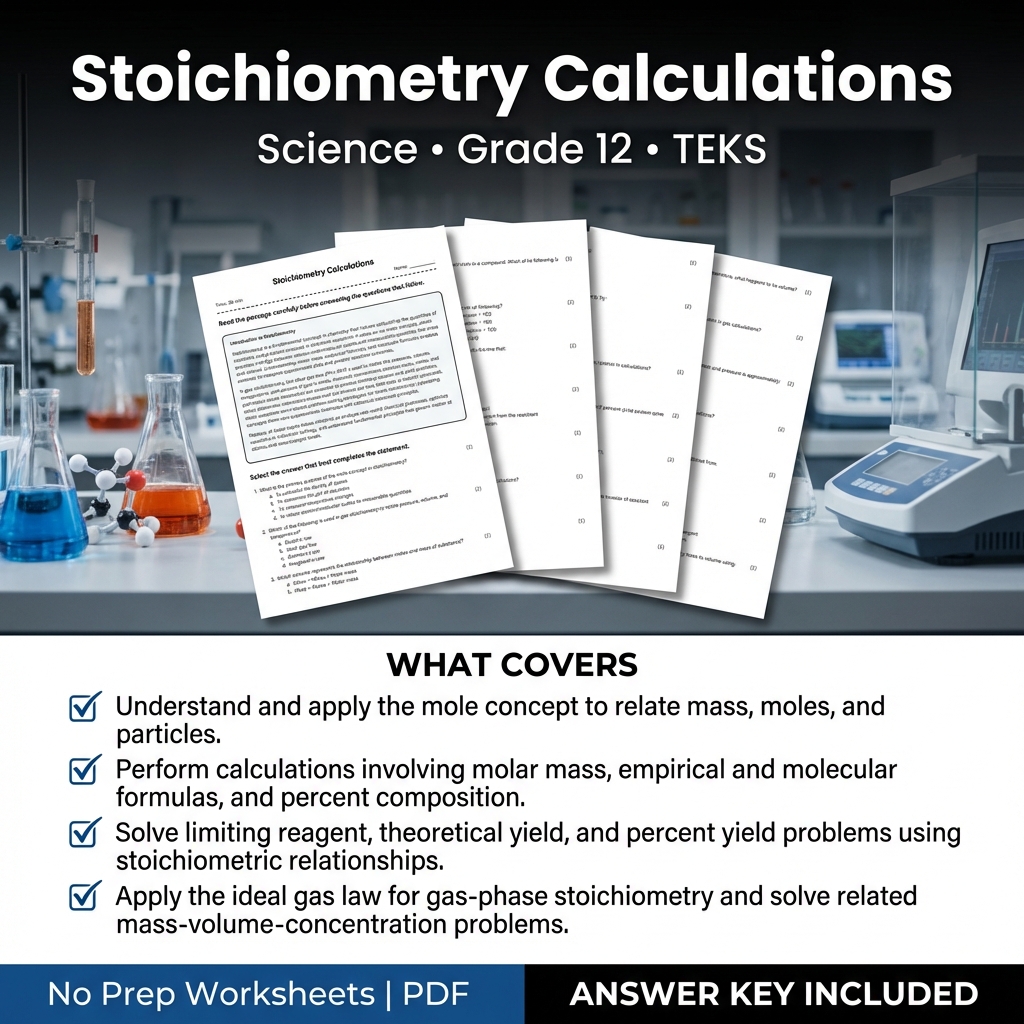
Grade 12 Science Worksheet | Stoichiometry Calculations | TEKS
Created byCoral Reef LearningLearning Objectives
- Understand and apply the mole concept to relate mass, moles, and particles.
- Perform calculations involving molar mass, empirical and molecular formulas, and percent composition.
- Solve limiting reagent, theoretical yield, and percent yield problems using stoichiometric relationships.
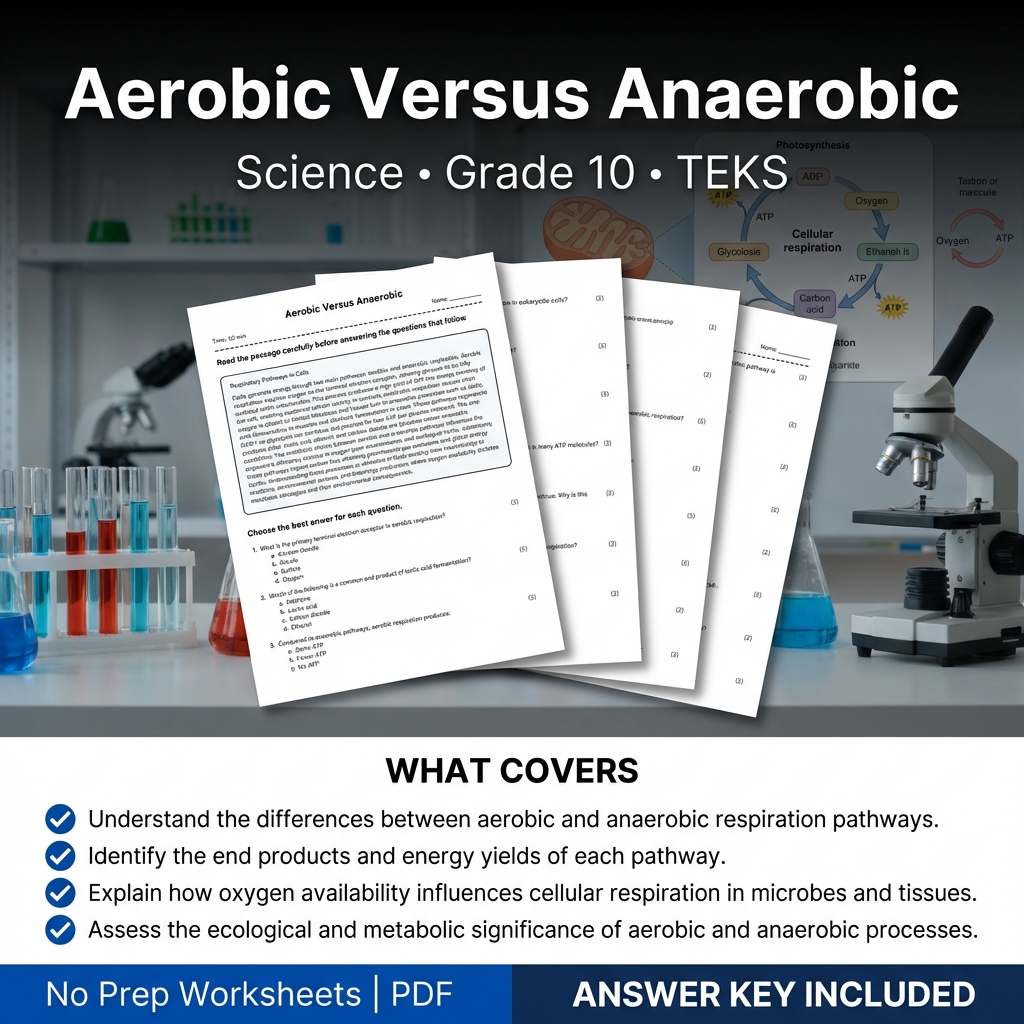
Grade 10 Science Worksheet on Aerobic vs Anaerobic Respiration | TEKS
Created byCoral Reef LearningLearning Objectives
- Understand the differences between aerobic and anaerobic respiration pathways.
- Identify the end products and energy yields of each pathway.
- Explain how oxygen availability influences cellular respiration in microbes and tissues.
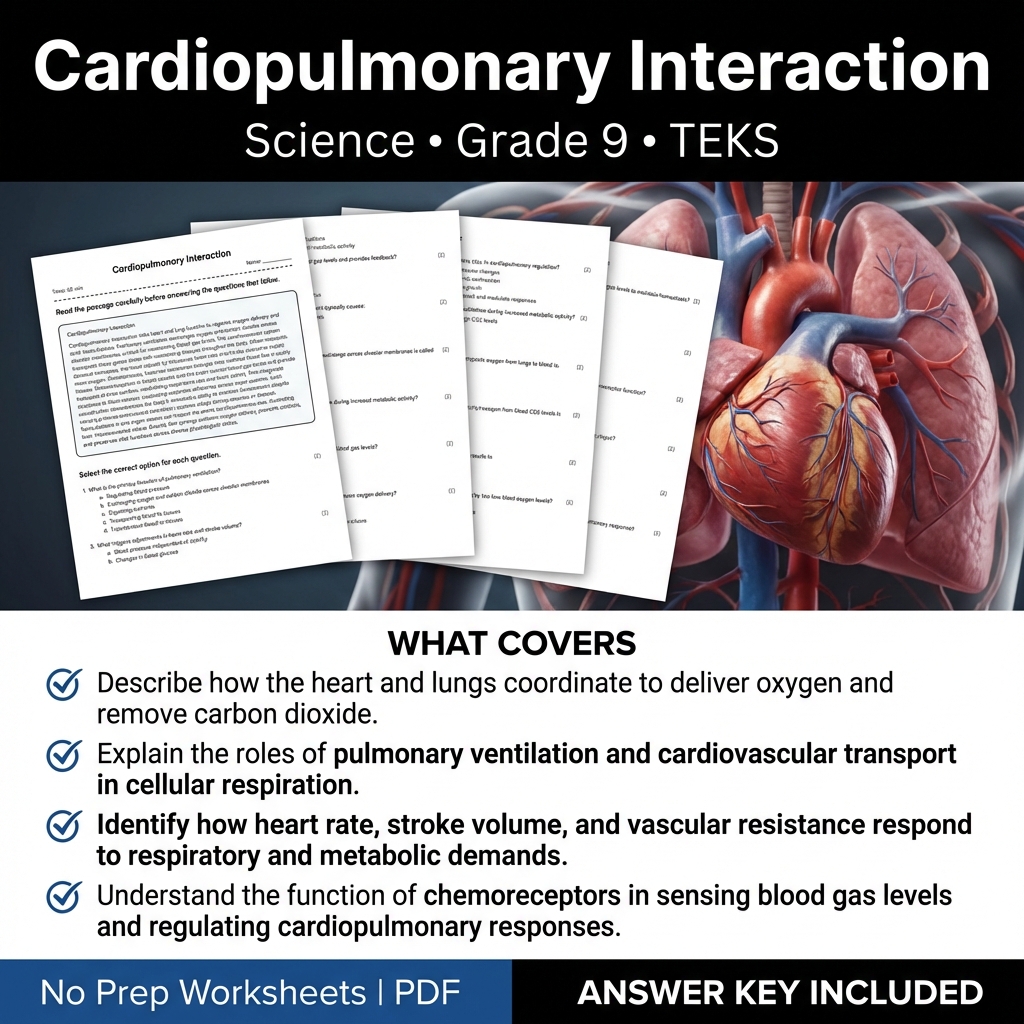
Grade 9 Science Worksheet on Cardiopulmonary Interaction TEKS
Created byCoral Reef LearningLearning Objectives
- Describe how the heart and lungs coordinate to deliver oxygen and remove carbon dioxide.
- Explain the roles of pulmonary ventilation and cardiovascular transport in cellular respiration.
- Identify how heart rate, stroke volume, and vascular resistance respond to respiratory and metabolic demands.
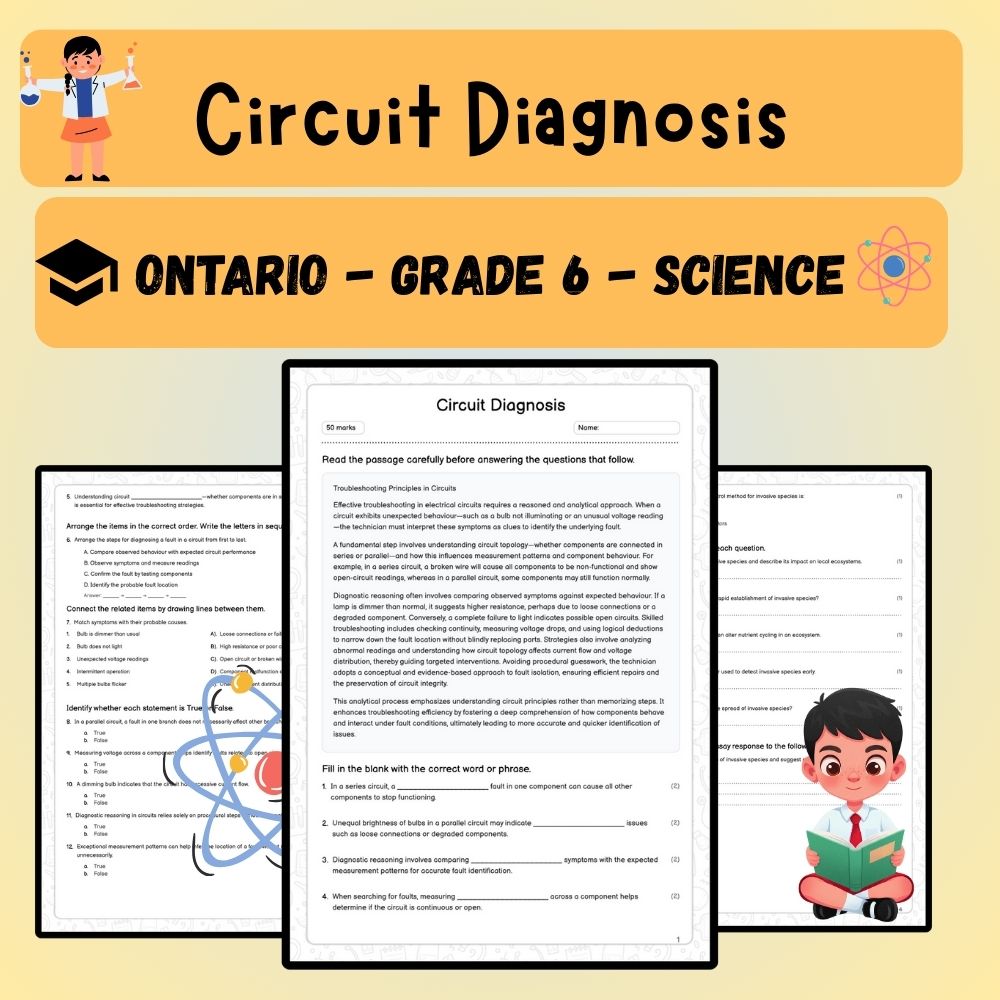
6th Grade Science | Circuit Diagnosis Worksheet (PDF ) — Ontario Standards
Created byPrism Point LearningLearning Objectives
- Understand the principles of diagnosing faults in electrical circuits using inferential methods.
- Identify symptoms such as unequal brightness, broken continuity, and anomalous readings to locate circuit faults.
- Apply conceptual strategies to analyze and isolate causes of circuit errors based on circuit topology and expected measurement patterns.
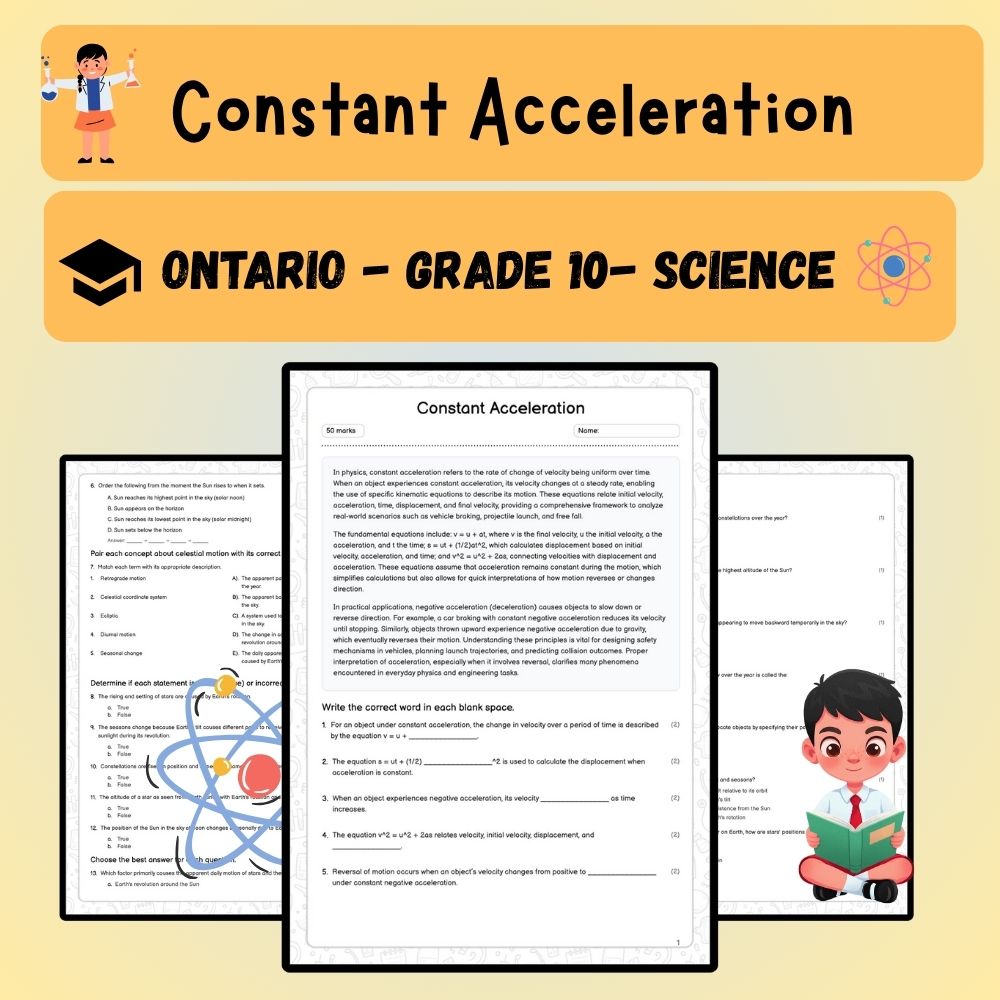
Grade 10 Science | Constant Acceleration Worksheet (PDF) – Ontario Standard
Created byPrism Point LearningLearning Objectives
- Understand the kinematic equations related to uniformly accelerated motion.
- Interpret and analyze motion scenarios with varying initial velocities, displacements, and times.
- Apply algebraic formulas to solve problems involving acceleration, velocity, and displacement.
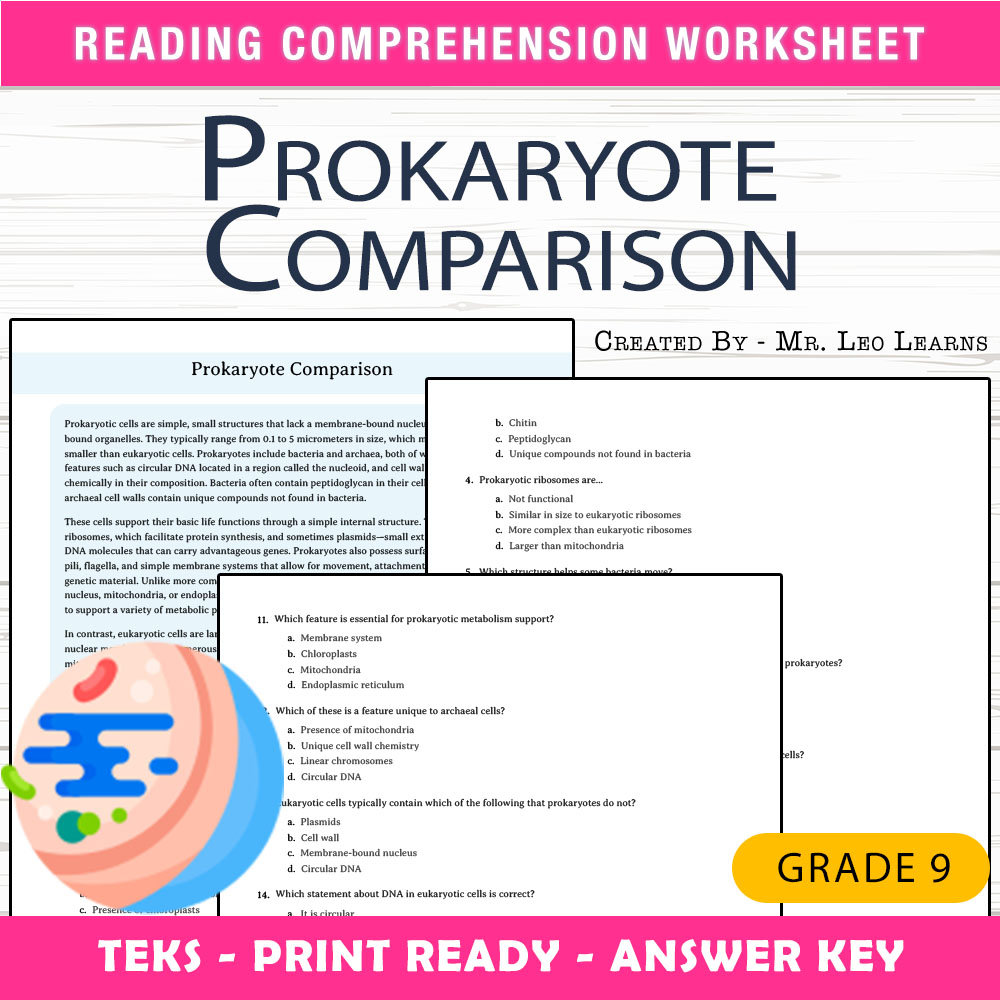
Grade 9 Science – Prokaryote Comparison Worksheet for Mastery
 Created byThe Resource Hub
Learning Objectives
- Compare the structural differences between prokaryotic and eukaryotic cells.
- Identify key features of bacterial and archaeal cells.
- Understand the organization of genetic material in prokaryotes and eukaryotes.
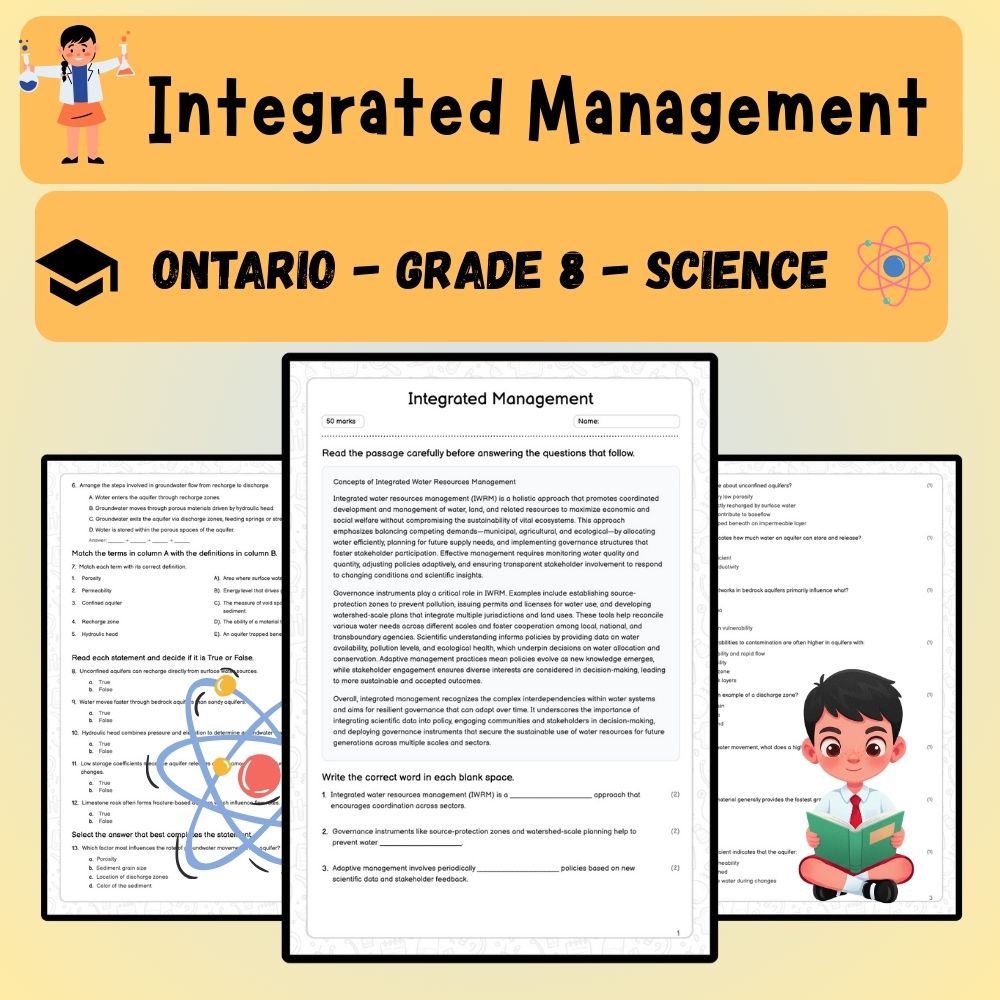
Grade 8 Science – Integrated Water Management Worksheet (PDF )
Created byPrism Point LearningLearning Objectives
- Understand the key concepts of integrated water resources management, including allocation, supply planning, and governance.
- Apply knowledge of governance instruments and stakeholder roles in managing water resources.
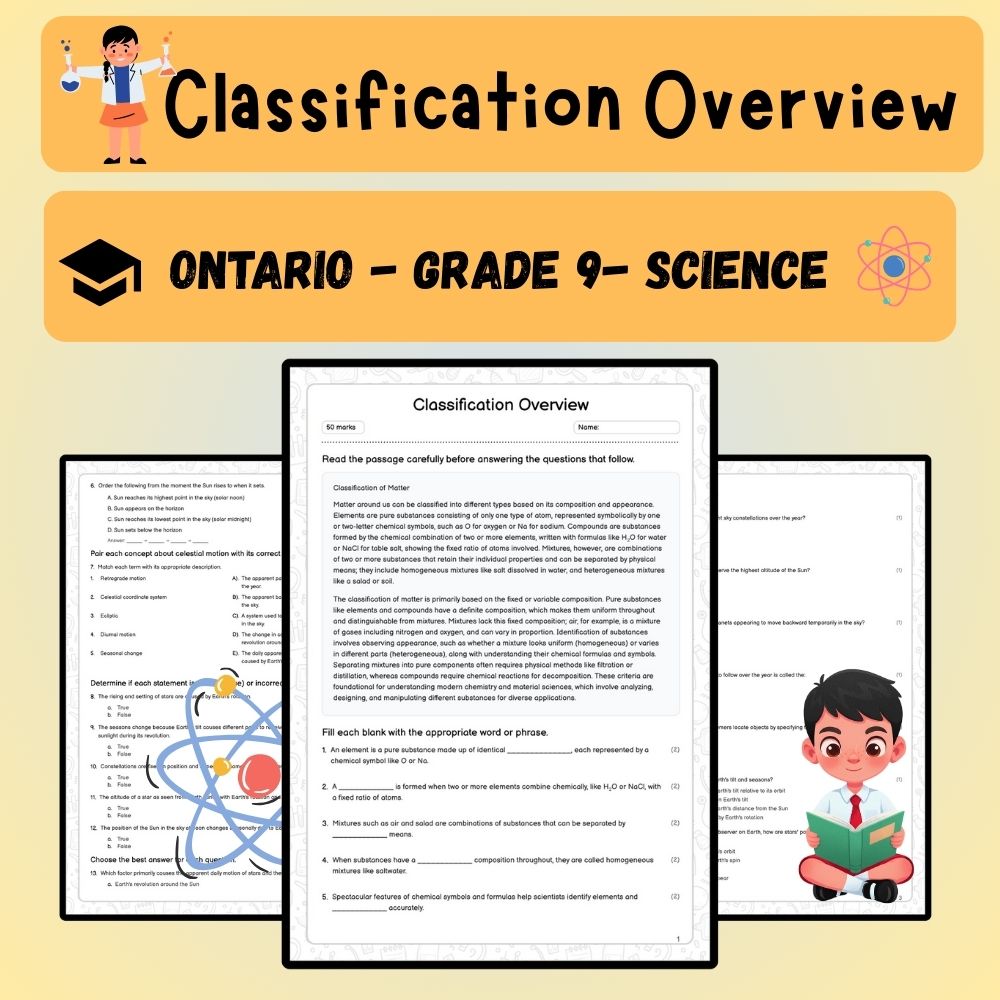
Grade 9 Science | Classification Overview Worksheet (PDF) – Ontario Standards
Created byPrism Point LearningLearning Objectives
- Understand the differences between elements, compounds, and mixtures based on their properties.
- Identify and classify substances as pure or impure, and homogeneous or heterogeneous mixtures.
- Apply symbols and formulas to represent elements and compounds accurately.
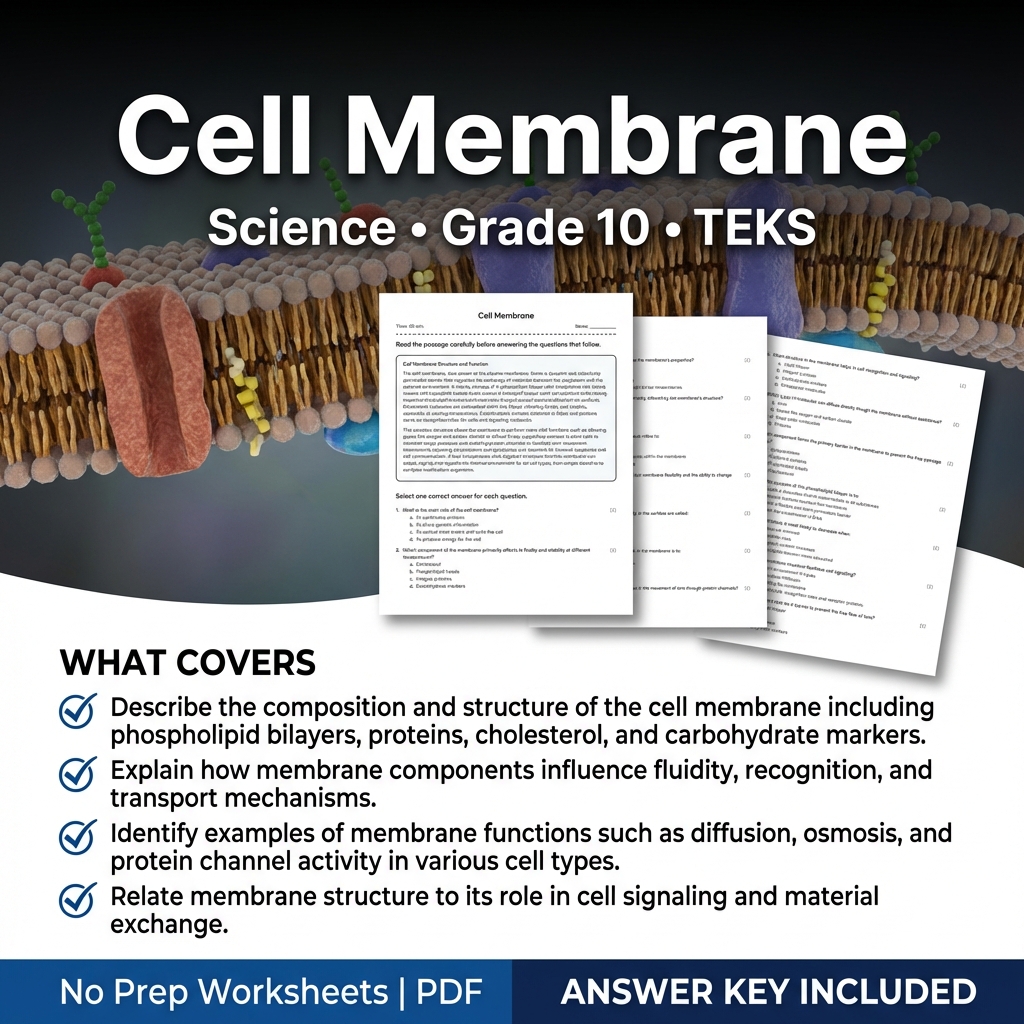
Cell Membrane Worksheet for Grade 10 Science – TEKS Aligned Practice
Created byCoral Reef LearningLearning Objectives
- Describe the composition and structure of the cell membrane including phospholipid bilayers, proteins, cholesterol, and carbohydrate markers.
- Explain how membrane components influence fluidity, recognition, and transport mechanisms.
- Identify examples of membrane functions such as diffusion, osmosis, and protein channel activity in various cell types.
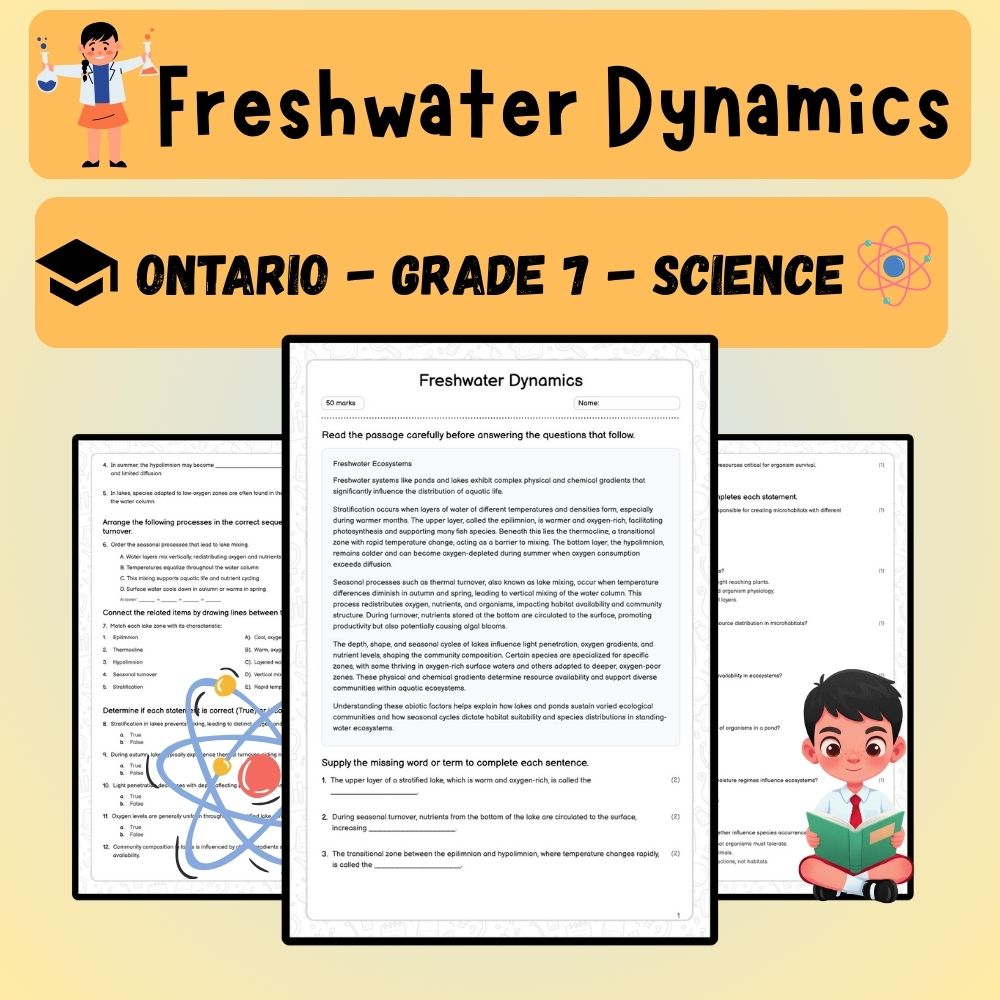
Grade 7 Science | Freshwater Dynamics Worksheet (PDF )
Created byPrism Point LearningLearning Objectives
- Describe the structure and stratification of freshwater systems such as ponds and lakes.
- Explain how abiotic gradients influence community composition and vertical zonation in standing-water ecosystems.
- Discuss seasonal changes like thermal turnover and their effects on oxygen levels, nutrient mixing, and habitat conditions in freshwater environments.
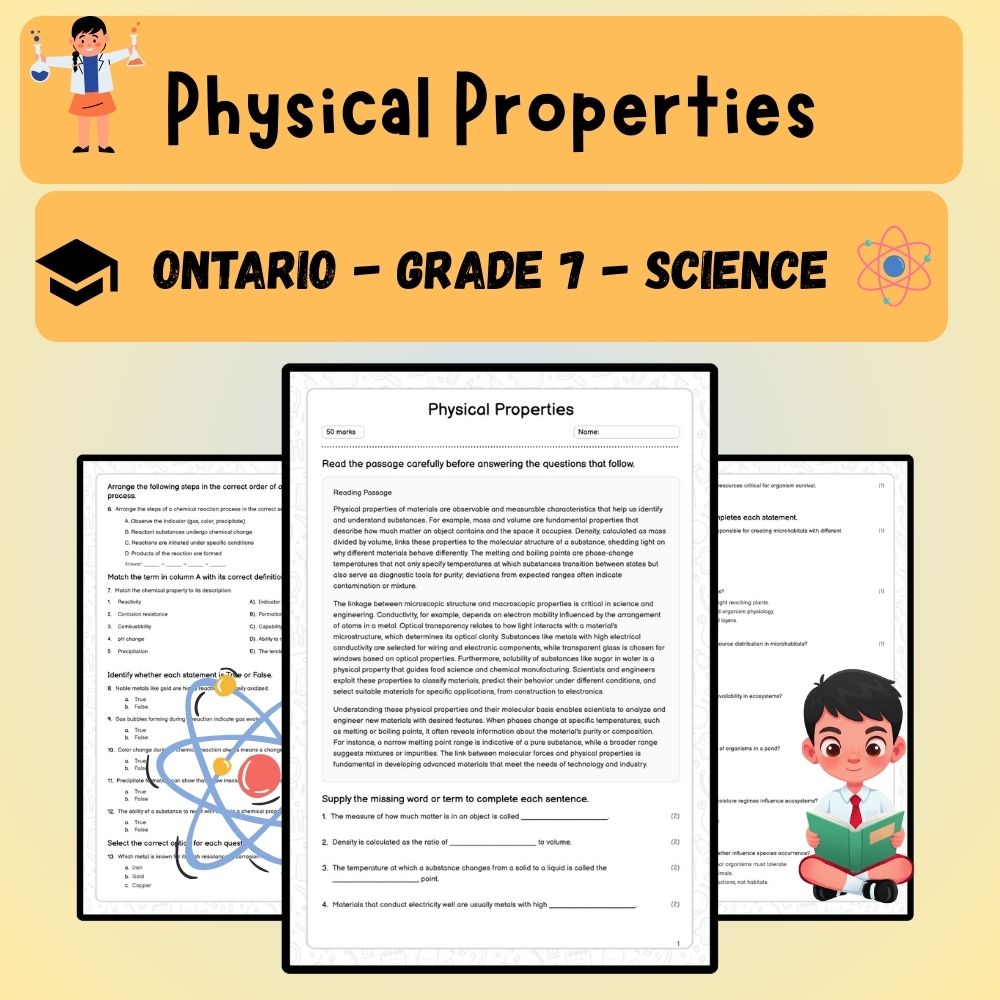
Grade 7 Science | Physical Properties Worksheet (PDF) – Ontario Standards
Created byPrism Point LearningLearning Objectives
- Understand and define key physical properties such as mass, volume, and density.
- Explain how physical properties are used to identify and classify substances.
- Connect macroscopic measurements to molecular structure and intermolecular forces.
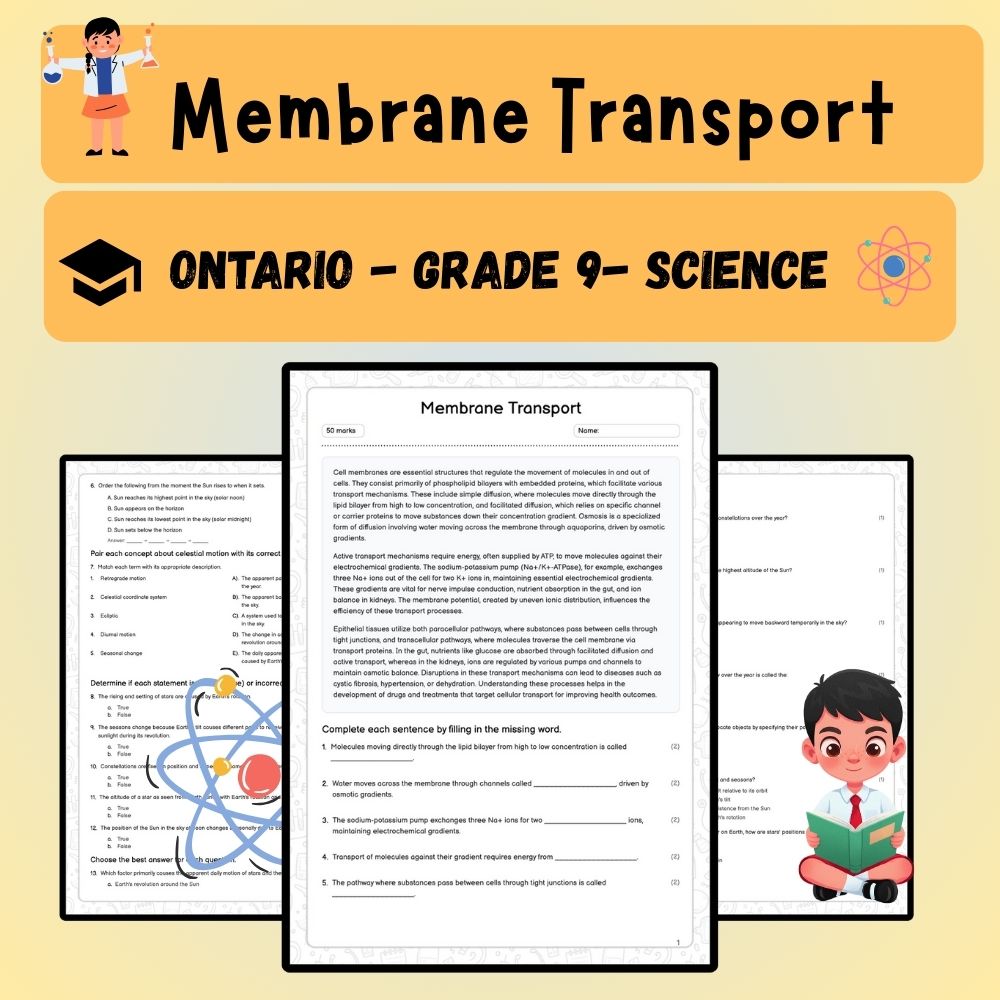
Grade 9 Science | Membrane Transport Worksheets (Answer Key) – Ontario Standards
Created byPrism Point LearningLearning Objectives
- Describe different mechanisms of molecular movement across cell membranes, including diffusion, osmosis, and active transport.
- Explain the role of electrochemical gradients and membrane potential in transport processes.
- Differentiate between paracellular and transcellular pathways in epithelial tissues.
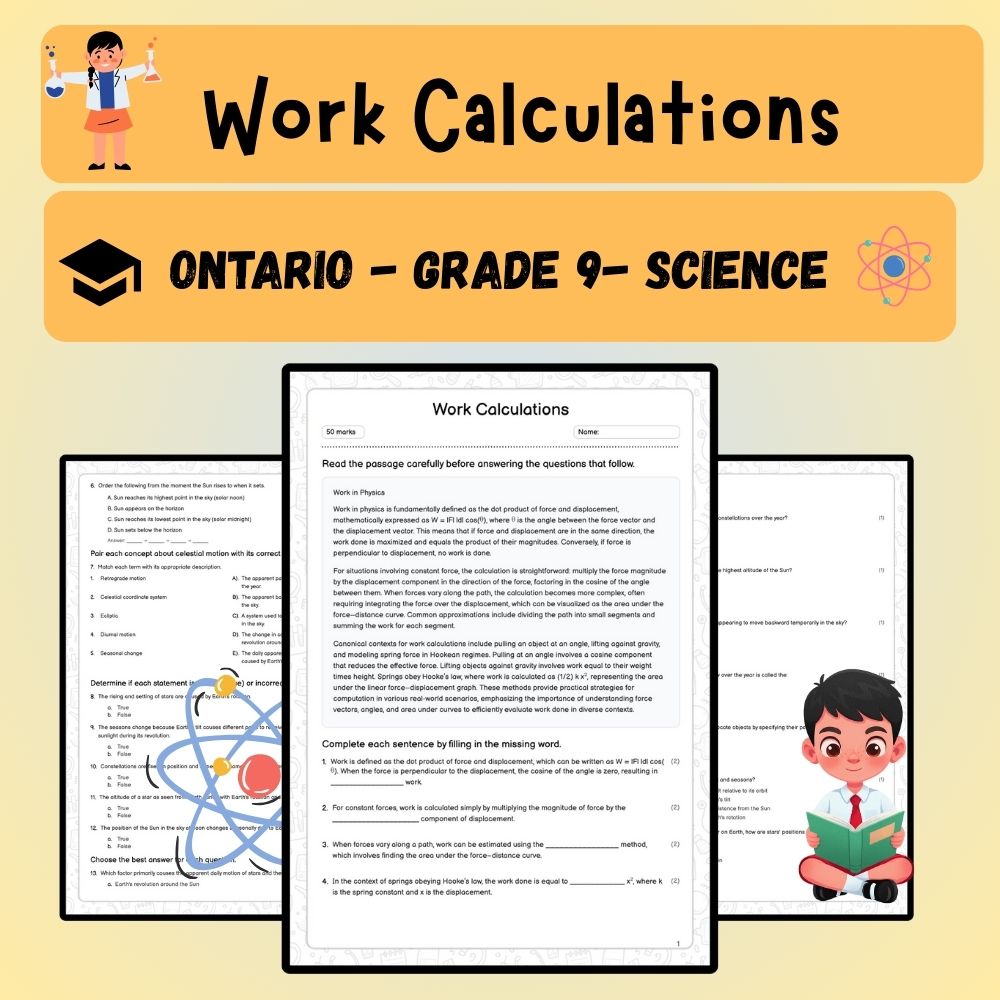
Grade 9 Science | Work Calculations Worksheet (Answer Key) – Ontario Standard
Created byPrism Point LearningLearning Objectives
- Understand the concept of work as the dot product of force and displacement, incorporating the angle between them.
- Differentiate methods for calculating work with constant and variable forces.
- Apply area-under-curve methods to estimate work for non-constant forces using common approximations.
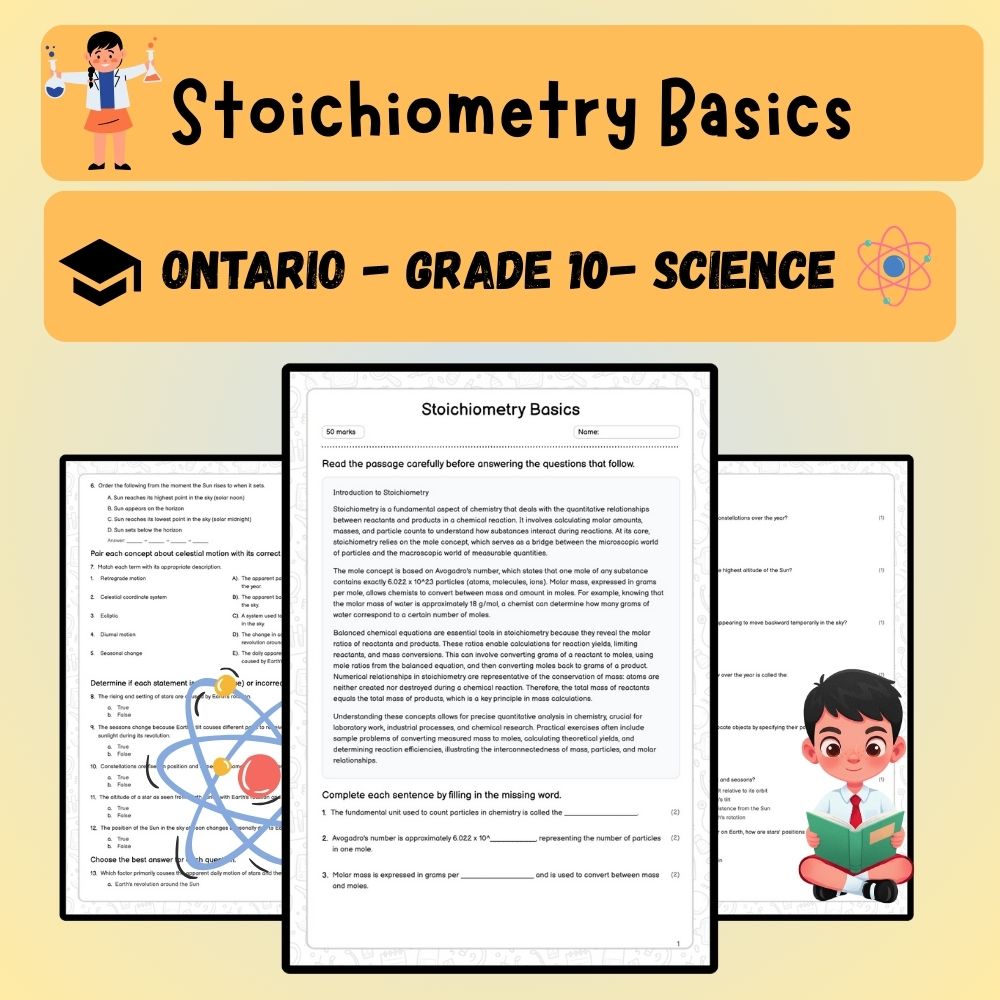
Grade 10 Science | Stoichiometry Basics Worksheet (Answer Key) for Ontario Standards
Created byPrism Point LearningLearning Objectives
- Understand the mole concept and its relation to mass and number of particles.
- Learn to perform mass-to-mole and mole-to-mass conversions using molar mass.
- Use balanced chemical equations to determine molar ratios and predict reaction outcomes.
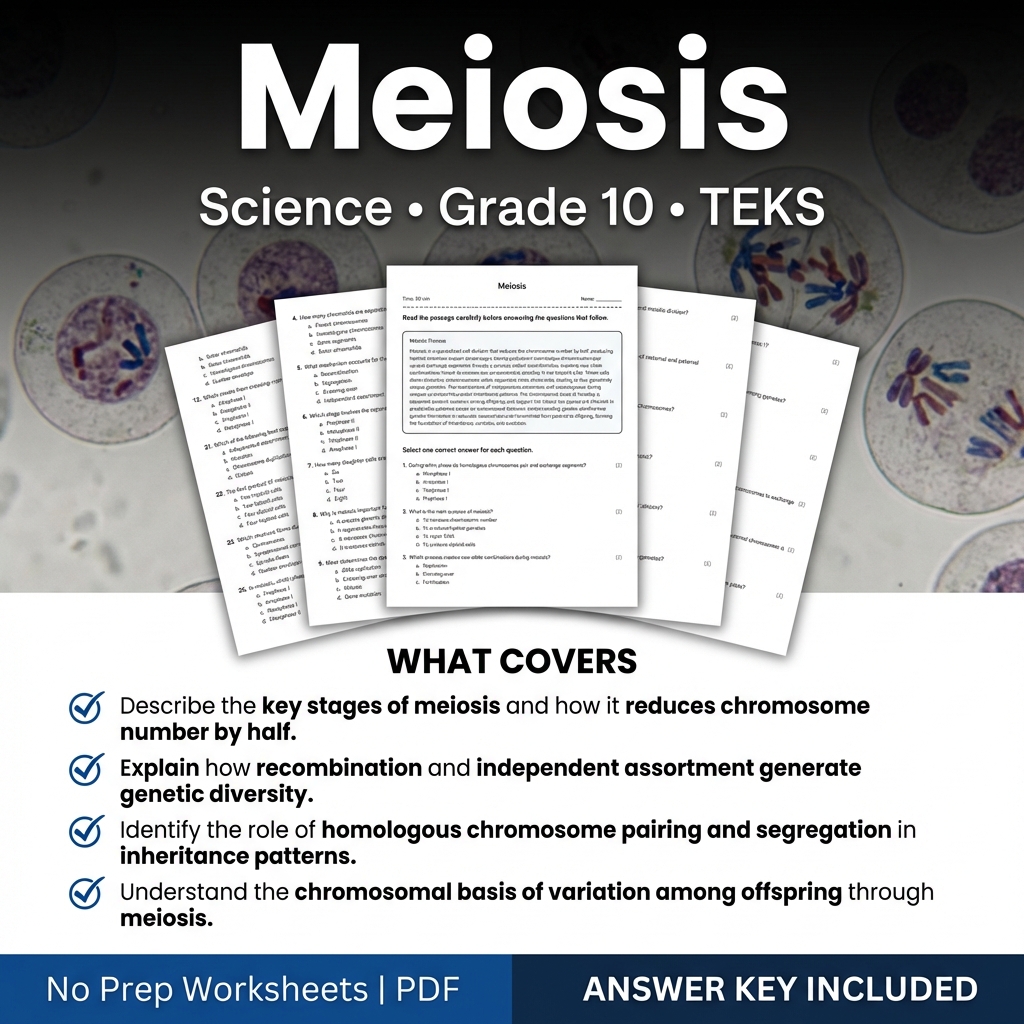
Meiosis Worksheet for Grade 10 Science | TEKS-Aligned Practice
Created byCoral Reef LearningLearning Objectives
- Describe the key stages of meiosis and how it reduces chromosome number by half.
- Explain how recombination and independent assortment generate genetic diversity.
- Identify the role of homologous chromosome pairing and segregation in inheritance patterns.
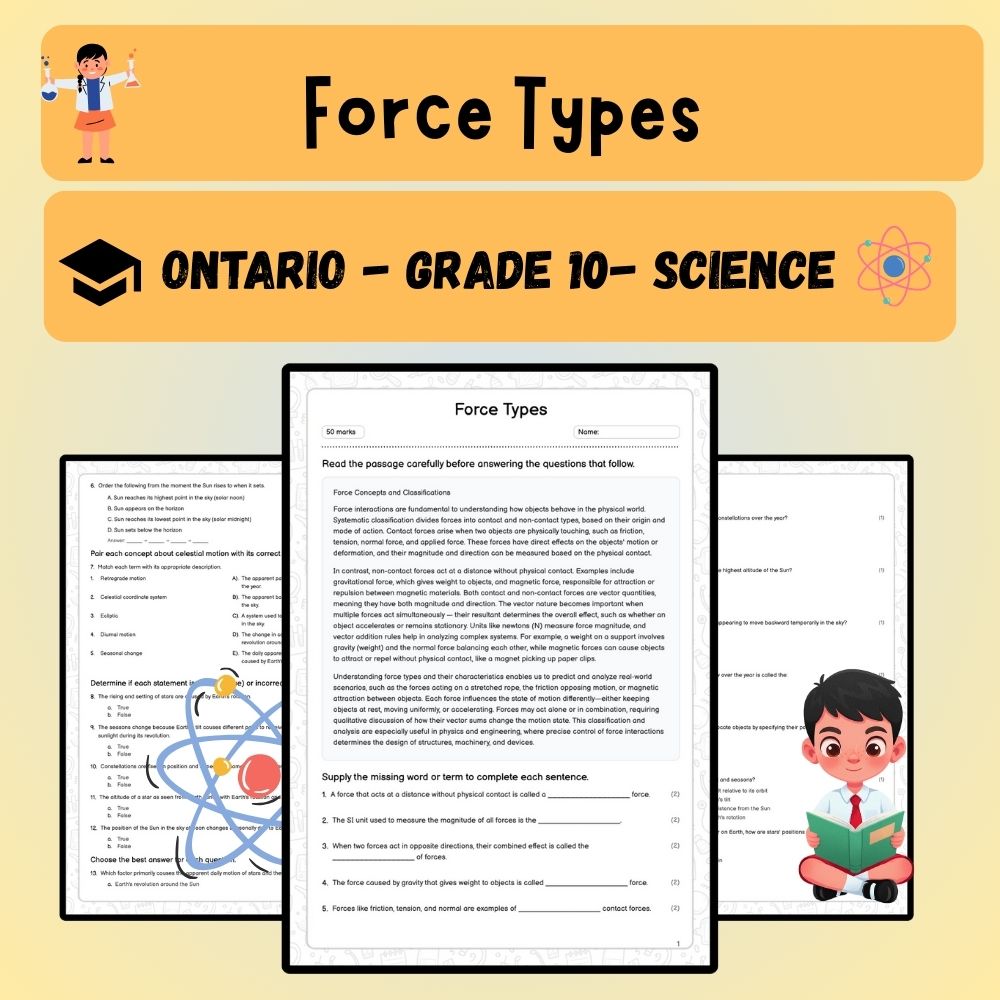
Grade 10 Science | Force Types Worksheet (PDF) – Ontario Standards
Created byPrism Point LearningLearning Objectives
- Identify and differentiate between contact and non-contact forces.
- Describe the origin, direction, and magnitude of various force types.
- Understand the vector nature of forces and how they combine.
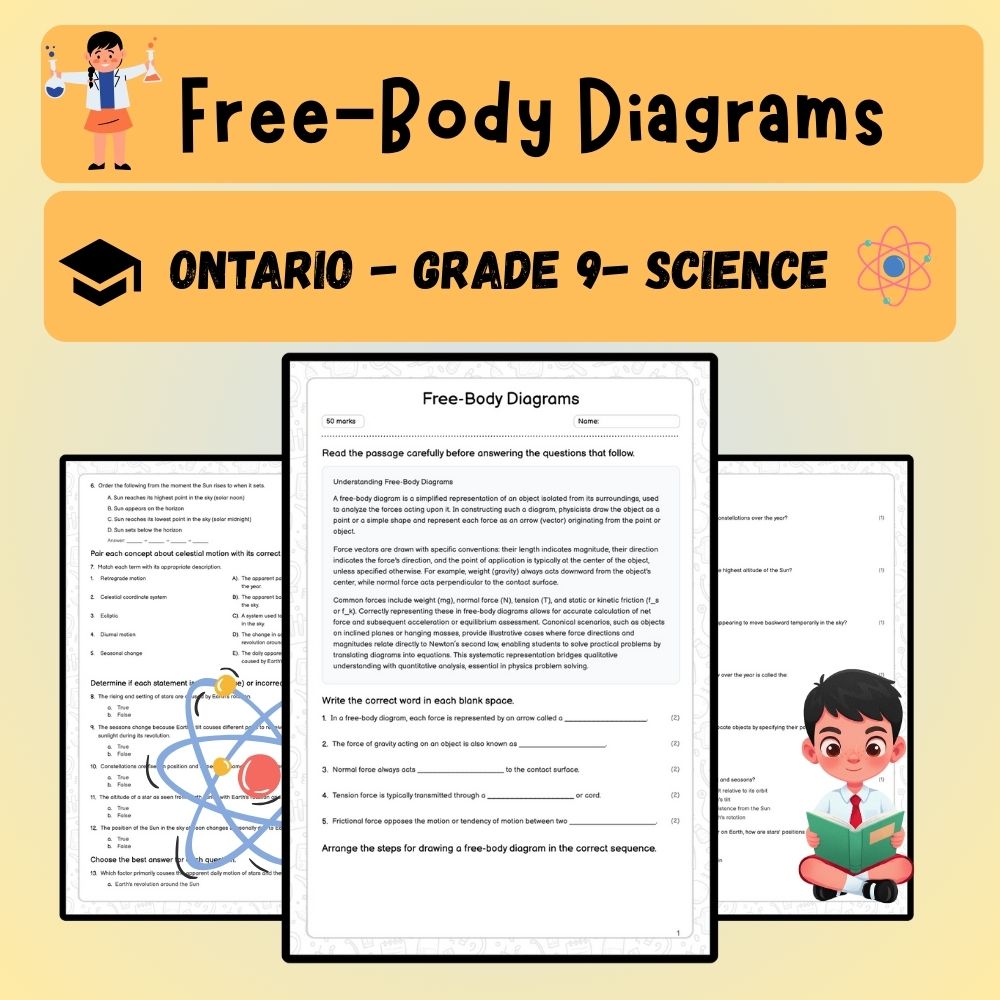
Grade 9 Science | Free-Body Diagrams Worksheet (Ontario Standards)
Created byPrism Point LearningLearning Objectives
- Understand the conventions and components involved in drawing free-body diagrams for isolated objects.
- Identify and represent different forces such as weight, normal force, tension, and friction with proper vector notation.
- Apply free-body diagrams to analyze equilibrium and acceleration in physical systems, including objects on inclined planes and hanging masses.
Browse more categories
About Science Worksheets
Find Science worksheets spanning core skills, practice, and review. All 42,859 resources are instant PDF downloads for the classroom or home.
Every worksheet on MyTeachingSheets is created by independent teacher-authors and reviewed before publication. All resources download as printable PDFs for classroom, homework, or at-home practice, and many include answer keys. Preview any worksheet free before buying.