
Science Worksheets
42,859 subject resources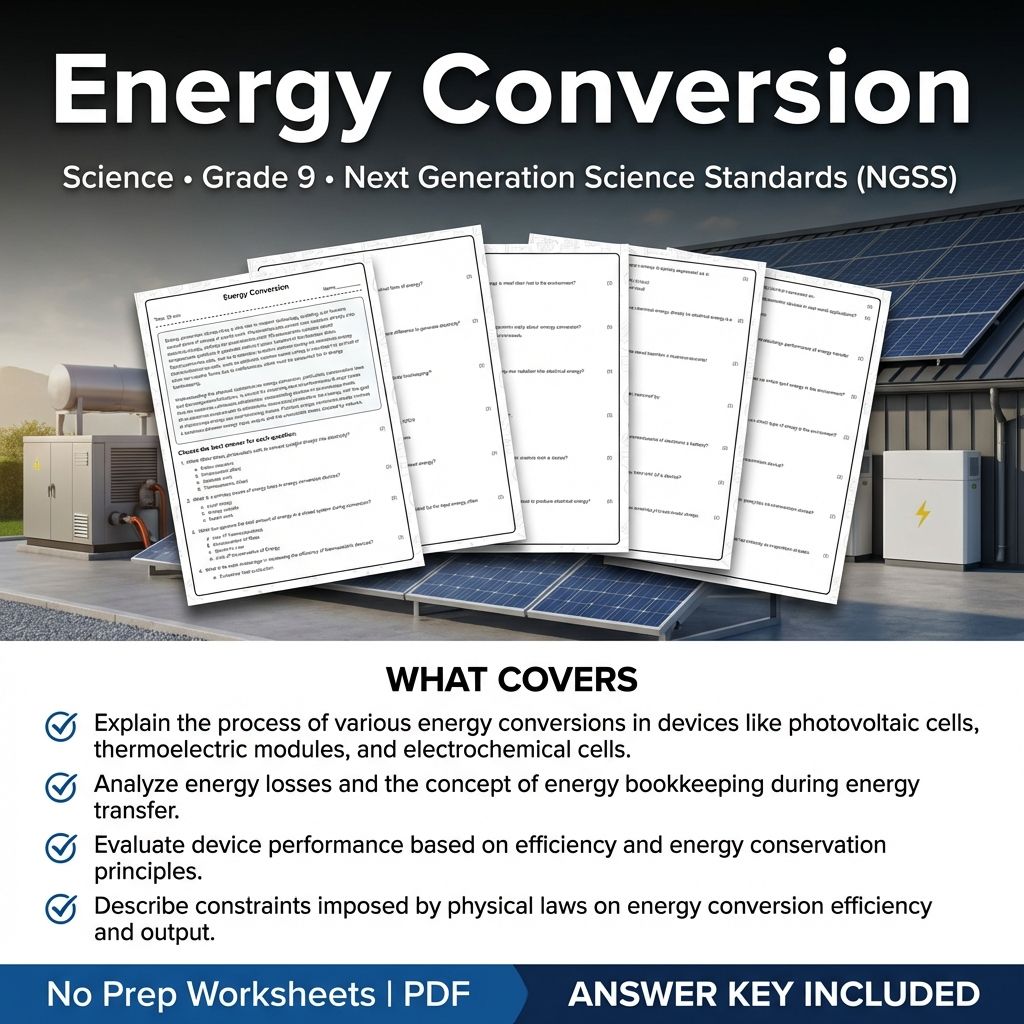
9th Grade Science | Energy Conversion Worksheet & Answer Key (Printable PDF)
 Created byCoral Reef Learning
Learning Objectives
- Explain the process of various energy conversions in devices like photovoltaic cells, thermoelectric modules, and electrochemical cells.
- Analyze energy losses and the concept of energy bookkeeping during energy transfer.
- Evaluate device performance based on efficiency and energy conservation principles.
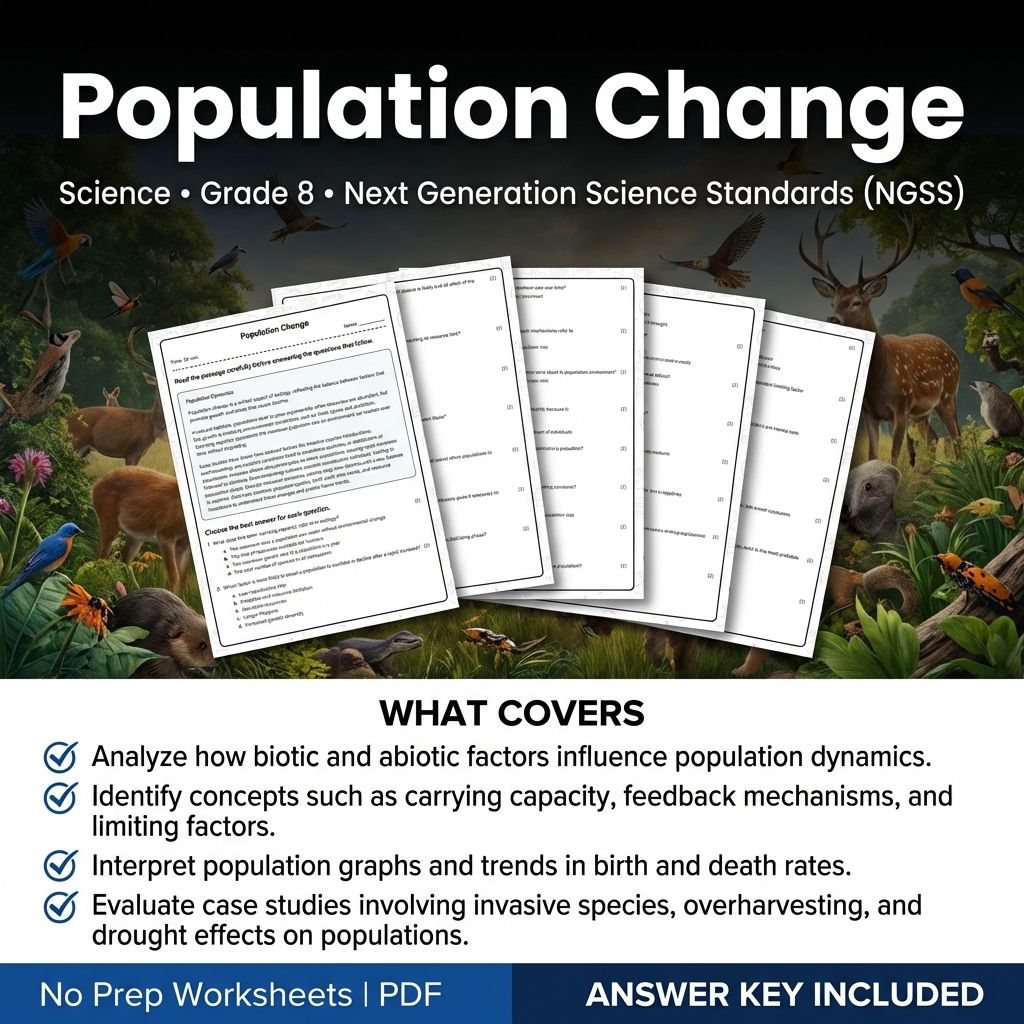
8th Grade Science | Population Change Worksheet & Answer Key (Printable PDF)
Created byCoral Reef LearningLearning Objectives
- Analyze how biotic and abiotic factors influence population dynamics.
- Identify concepts such as carrying capacity, feedback mechanisms, and limiting factors.
- Interpret population graphs and trends in birth and death rates.
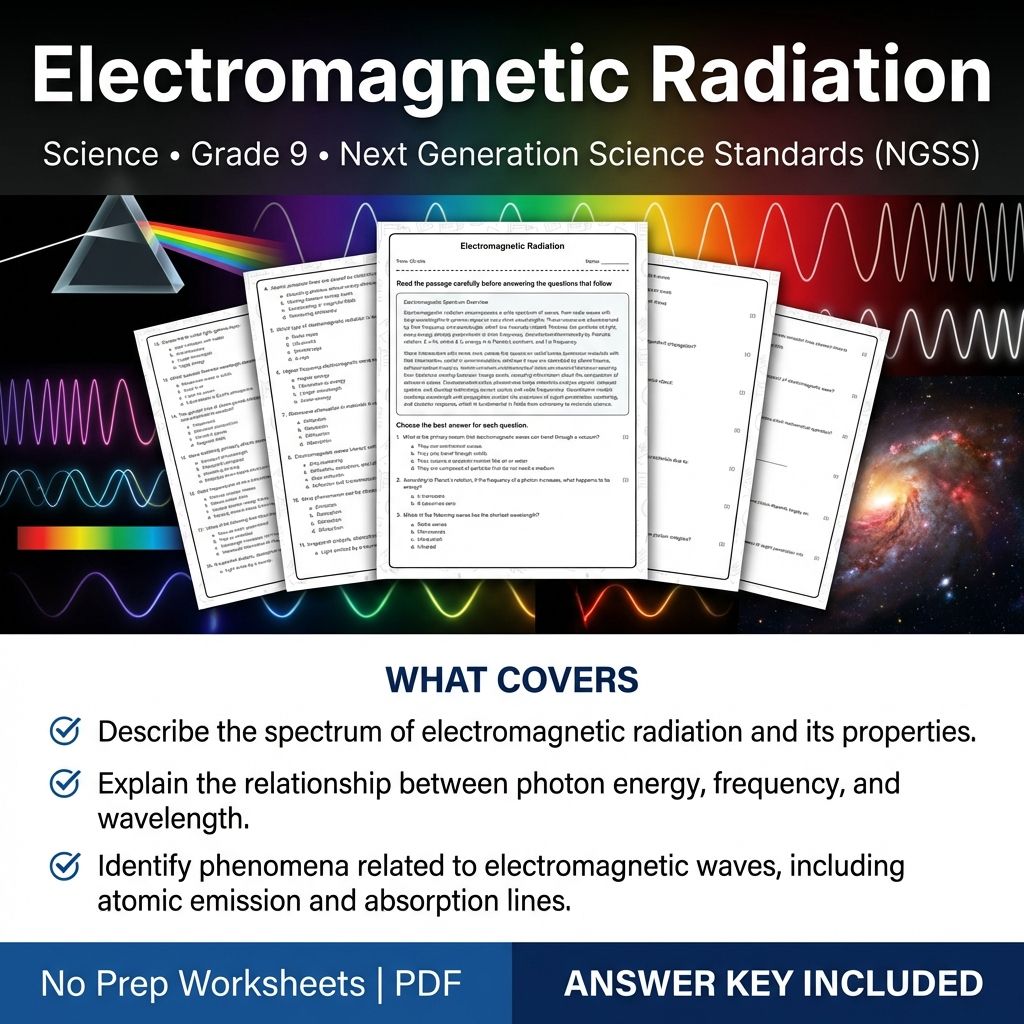
Grade 9 Science Worksheet | Electromagnetic Radiation Practice PDF & Answer Key
Created byCoral Reef LearningLearning Objectives
- Describe the spectrum of electromagnetic radiation and its properties.
- Explain the relationship between photon energy, frequency, and wavelength.
- Identify phenomena related to electromagnetic waves, including atomic emission and absorption lines.
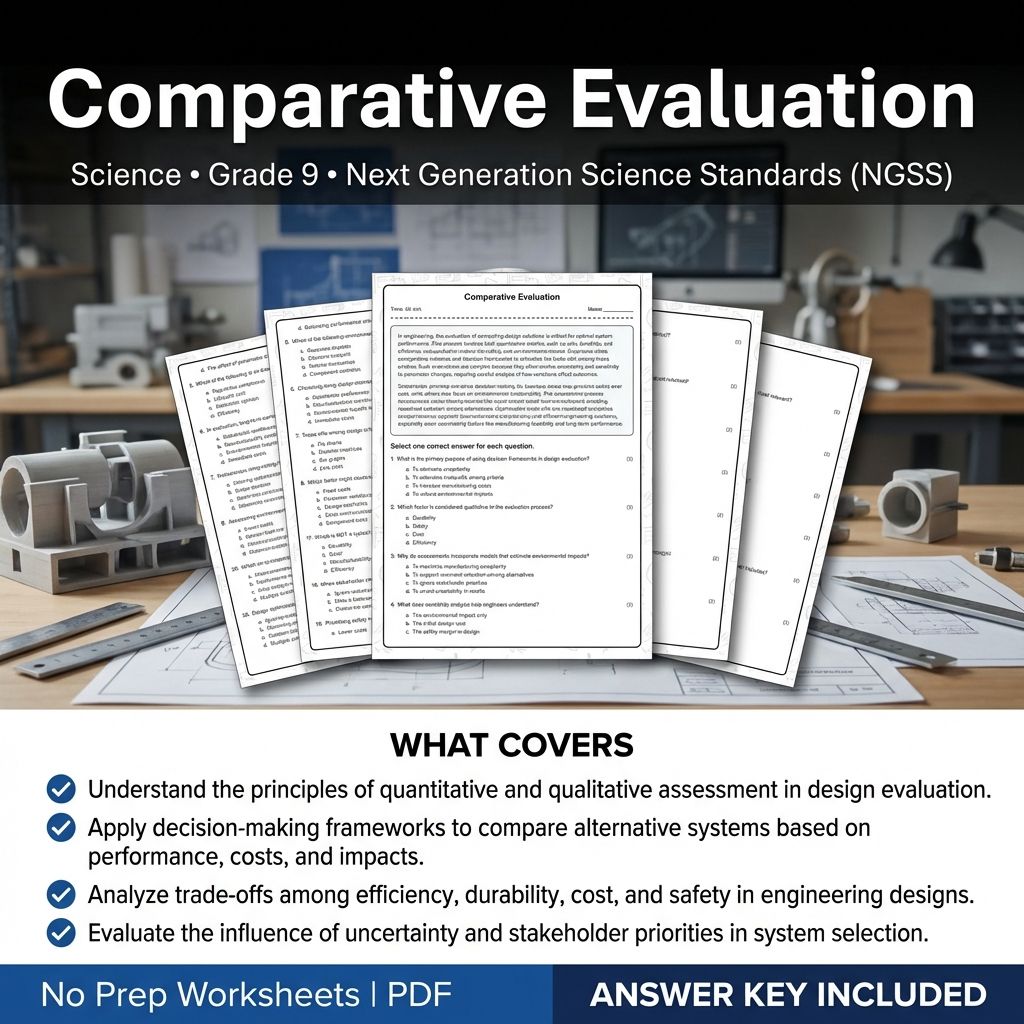
Grade 9 Science Worksheet | Comparative Evaluation with Answer Key (PDF)
Created byCoral Reef LearningLearning Objectives
- Understand the principles of quantitative and qualitative assessment in design evaluation.
- Apply decision-making frameworks to compare alternative systems based on performance, costs, and impacts.
- Analyze trade-offs among efficiency, durability, cost, and safety in engineering designs.
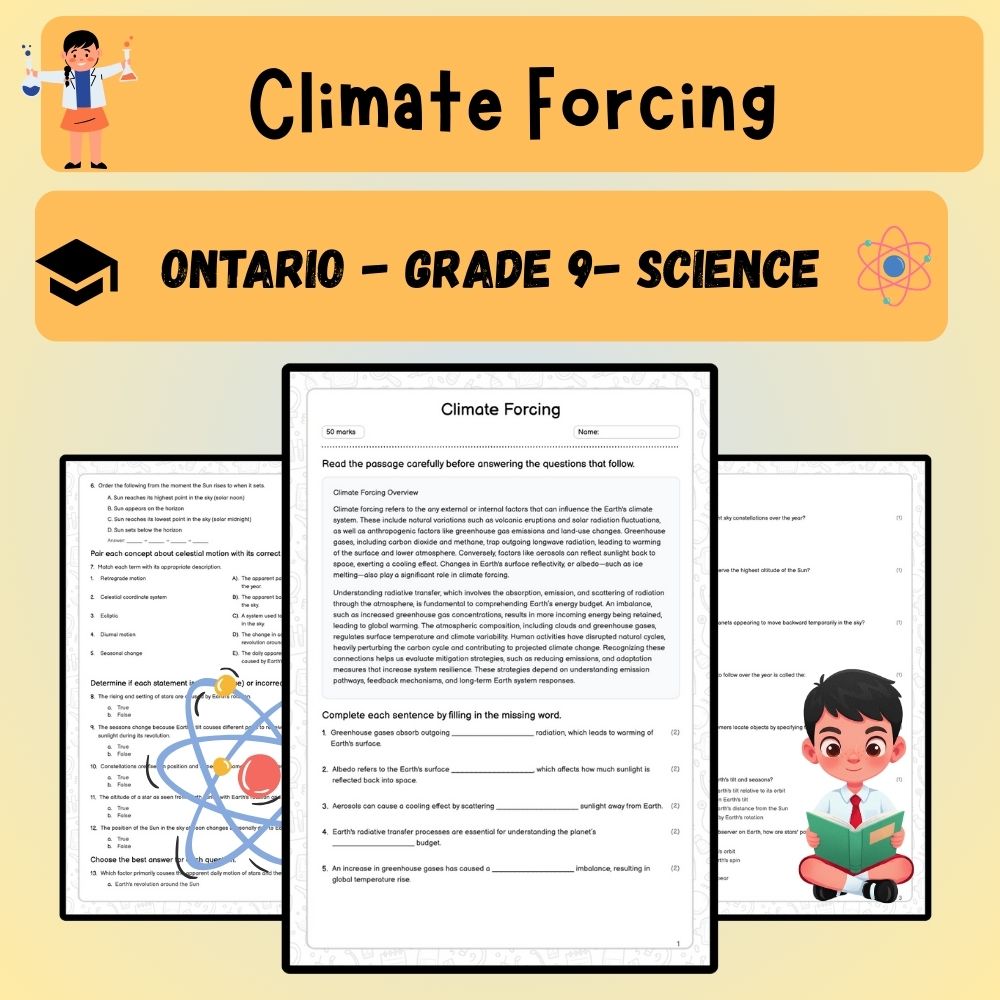
Grade 9 Science | Climate Forcing Worksheet (PDF) – Ontario Standards
 Created byPrism Point Learning
Learning Objectives
- Describe the basic mechanisms of climate forcing including greenhouse gases, albedo changes, and aerosols.
- Explain the concept of radiative transfer and how Earth's energy budget influences surface temperature.
- Analyze the links between human emissions, the carbon cycle, and climate change projections.
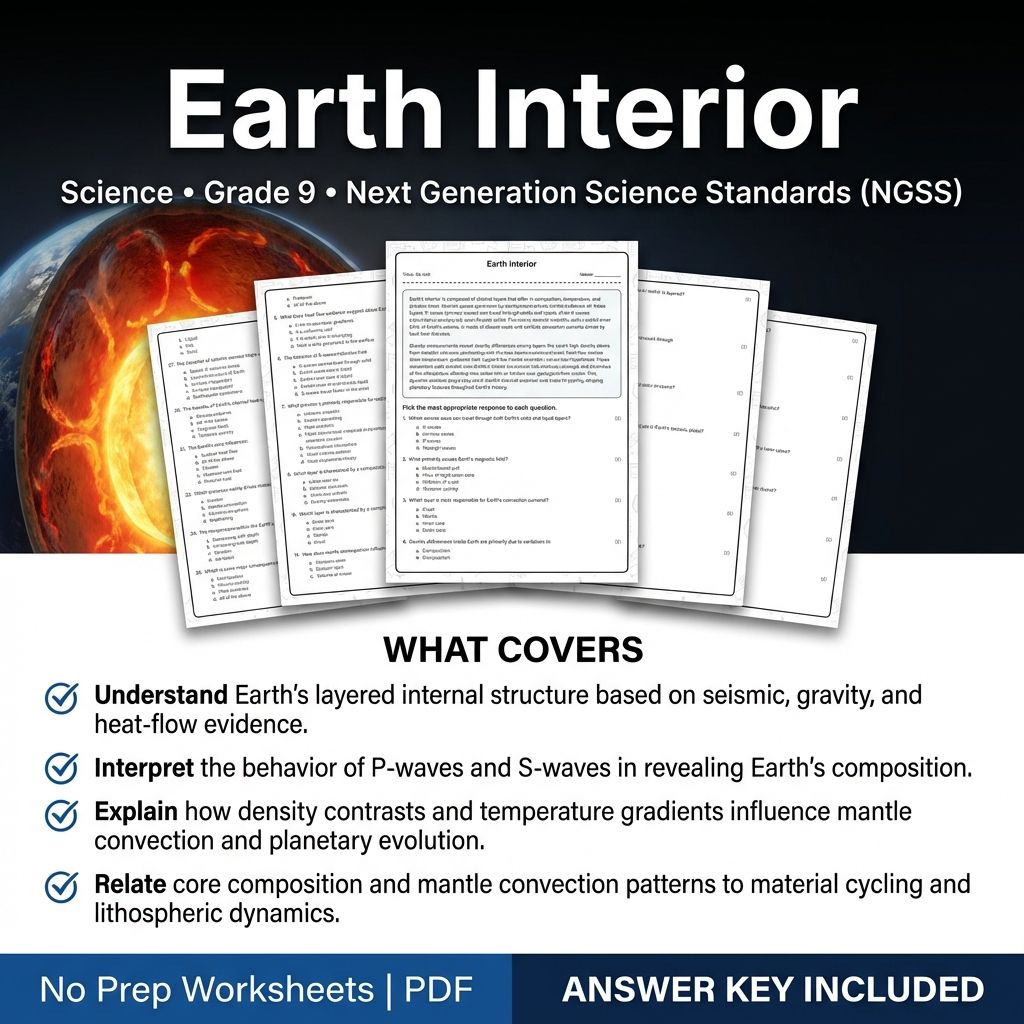
9th Grade Science | Earth's Interior Worksheet & Answer Key (Printable PDF)
Created byCoral Reef LearningLearning Objectives
- Understand Earth's layered internal structure based on seismic, gravity, and heat-flow evidence.
- Interpret the behavior of P-waves and S-waves in revealing Earth's composition.
- Explain how density contrasts and temperature gradients influence mantle convection and planetary evolution.
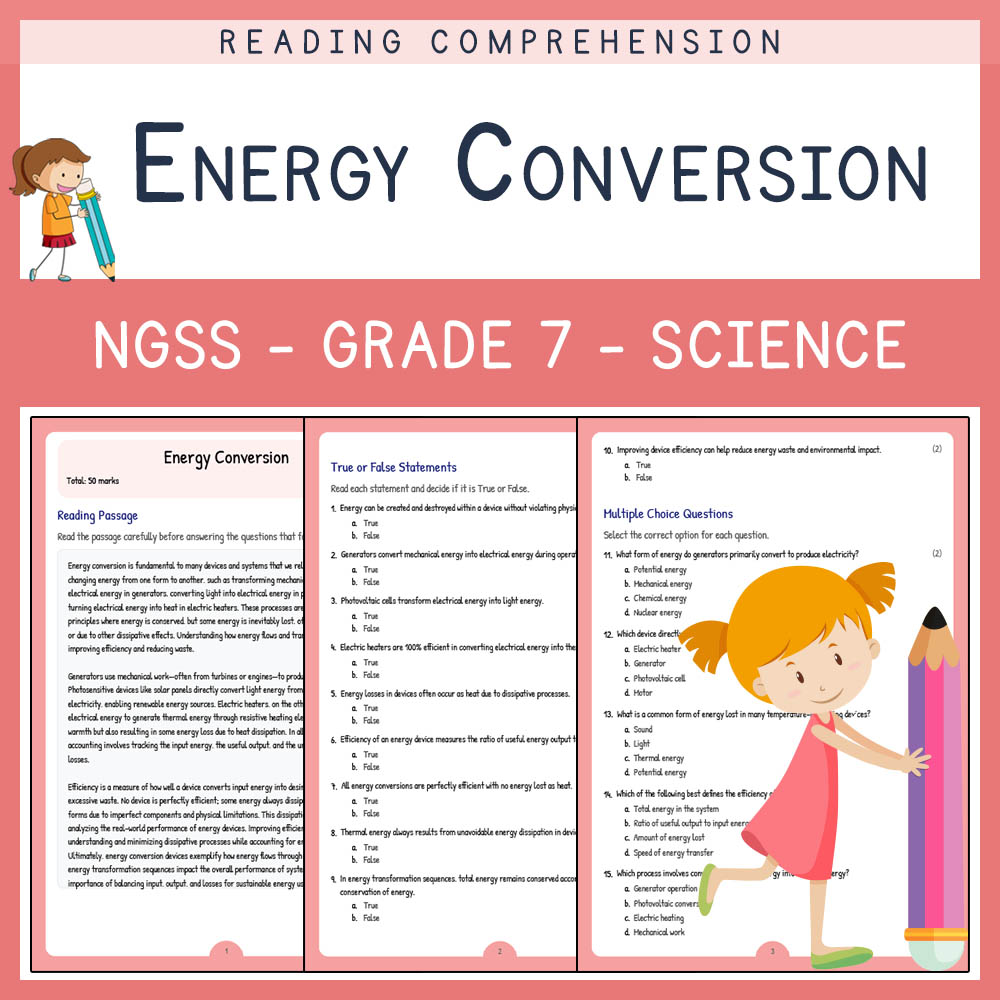
Grade 7 Science | Energy Conversion Worksheet PDF with Answer Key (NGSS Aligned)
 Created byLumora Learning
Learning Objectives
- Understand the principles of energy transfer and conservation during device operation.
- Identify examples of energy conversion in real-world devices such as generators, photovoltaic cells, and heaters.
- Describe the concept of efficiency and energy losses in energy transformation processes.
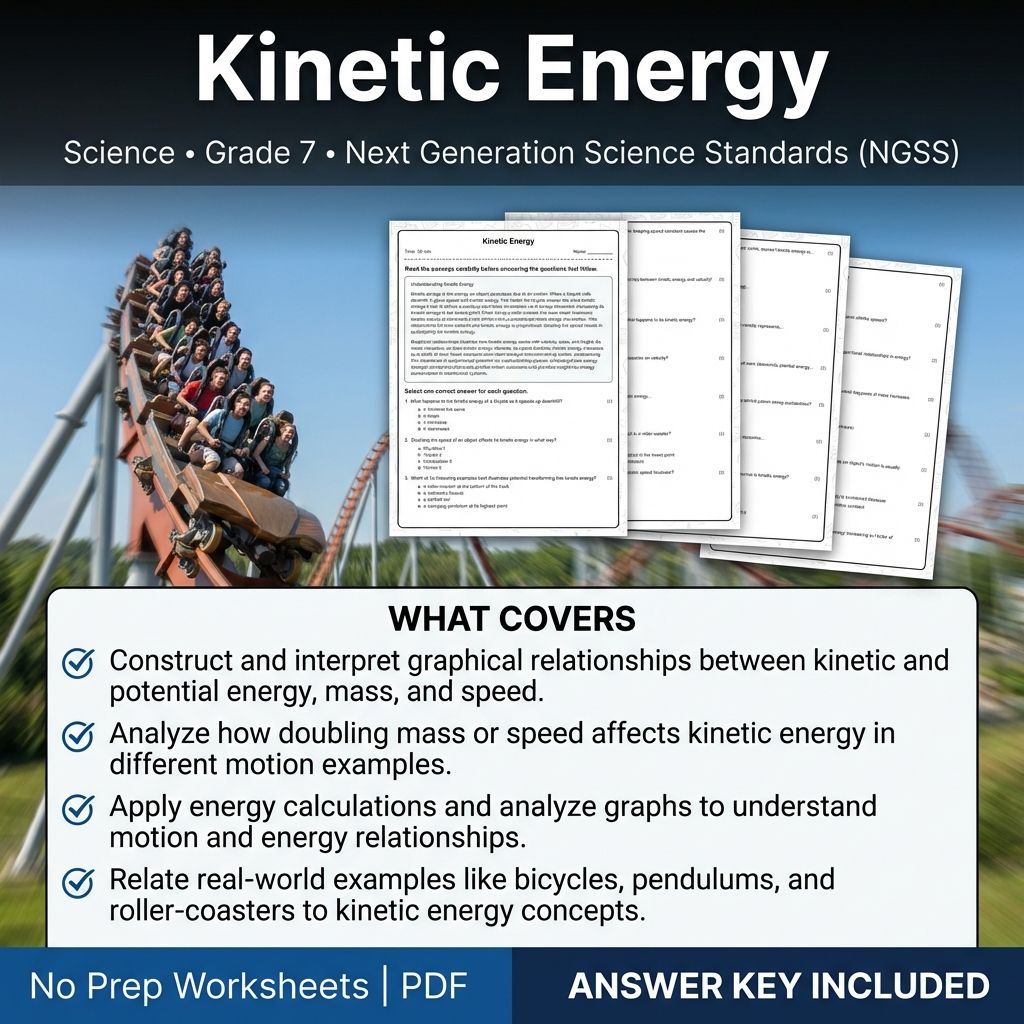
7th Grade Science | Kinetic Energy Worksheet & Answer Key (Printable PDF)
Created byCoral Reef LearningLearning Objectives
- Construct and interpret graphical relationships between kinetic and potential energy, mass, and speed.
- Analyze how doubling mass or speed affects kinetic energy in different motion examples.
- Apply energy calculations and analyze graphs to understand motion and energy relationships.
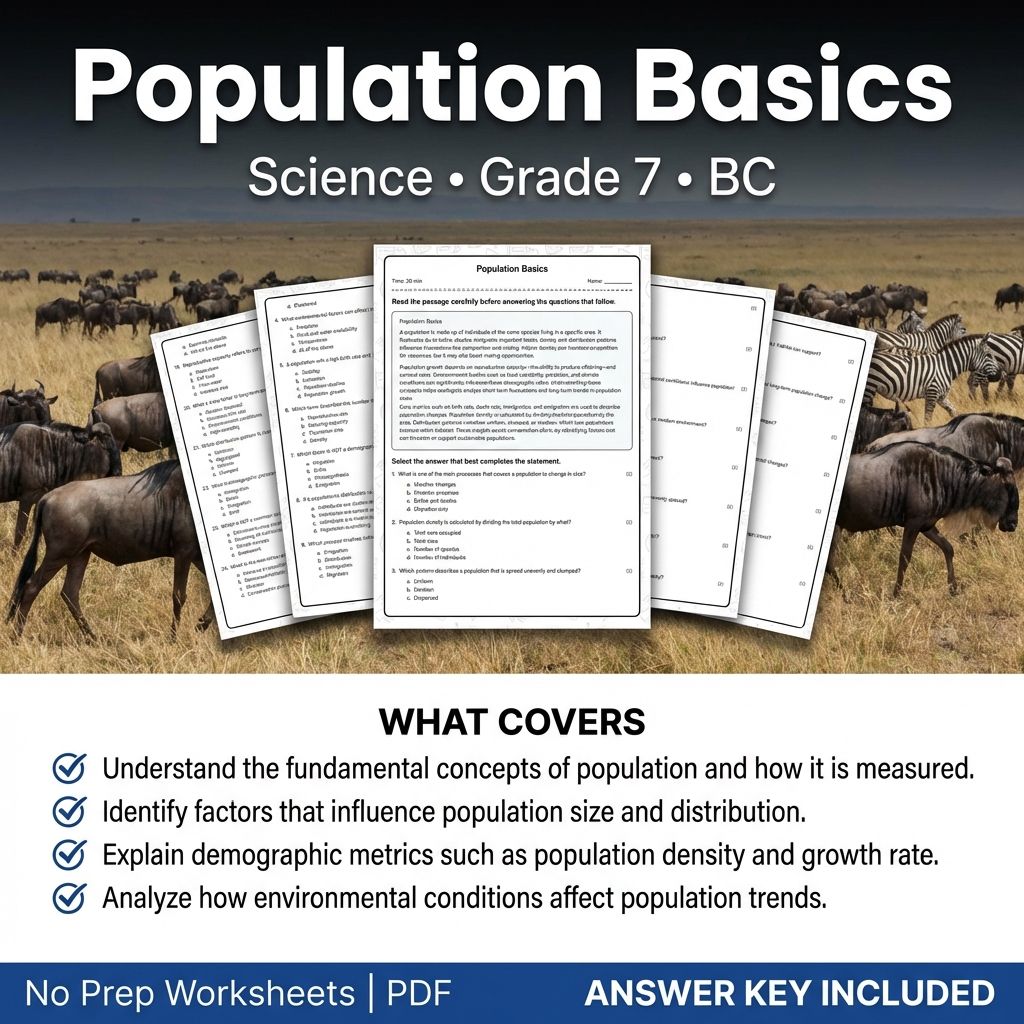
Grade 7 Science Worksheet | Population Basics Practice with Answer Key (PDF)
Created byCoral Reef LearningLearning Objectives
- Understand the fundamental concepts of population and how it is measured.
- Identify factors that influence population size and distribution.
- Explain demographic metrics such as population density and growth rate.
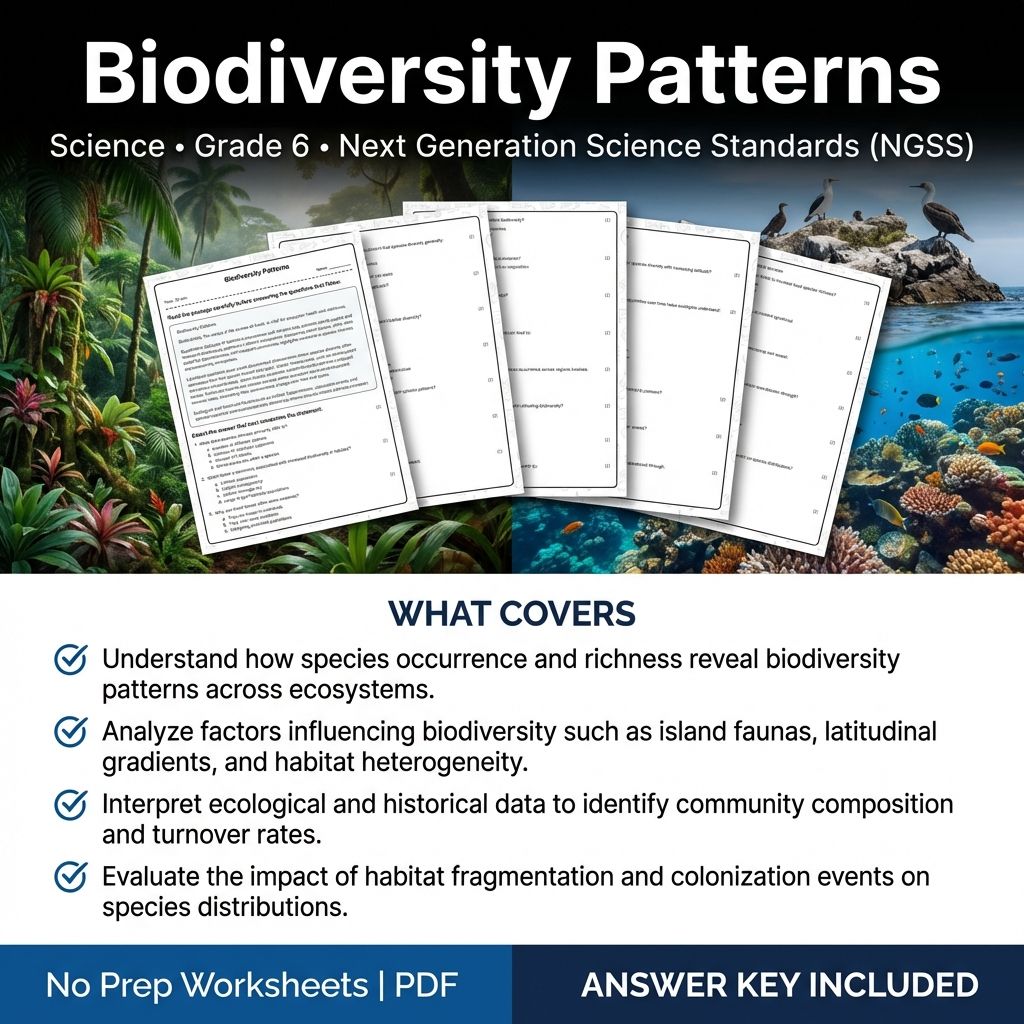
6th Grade Science | Biodiversity Patterns Worksheet & Answer Key (Printable)
Created byCoral Reef LearningLearning Objectives
- Understand how species occurrence and richness reveal biodiversity patterns across ecosystems.
- Analyze factors influencing biodiversity such as island faunas, latitudinal gradients, and habitat heterogeneity.
- Interpret ecological and historical data to identify community composition and turnover rates.
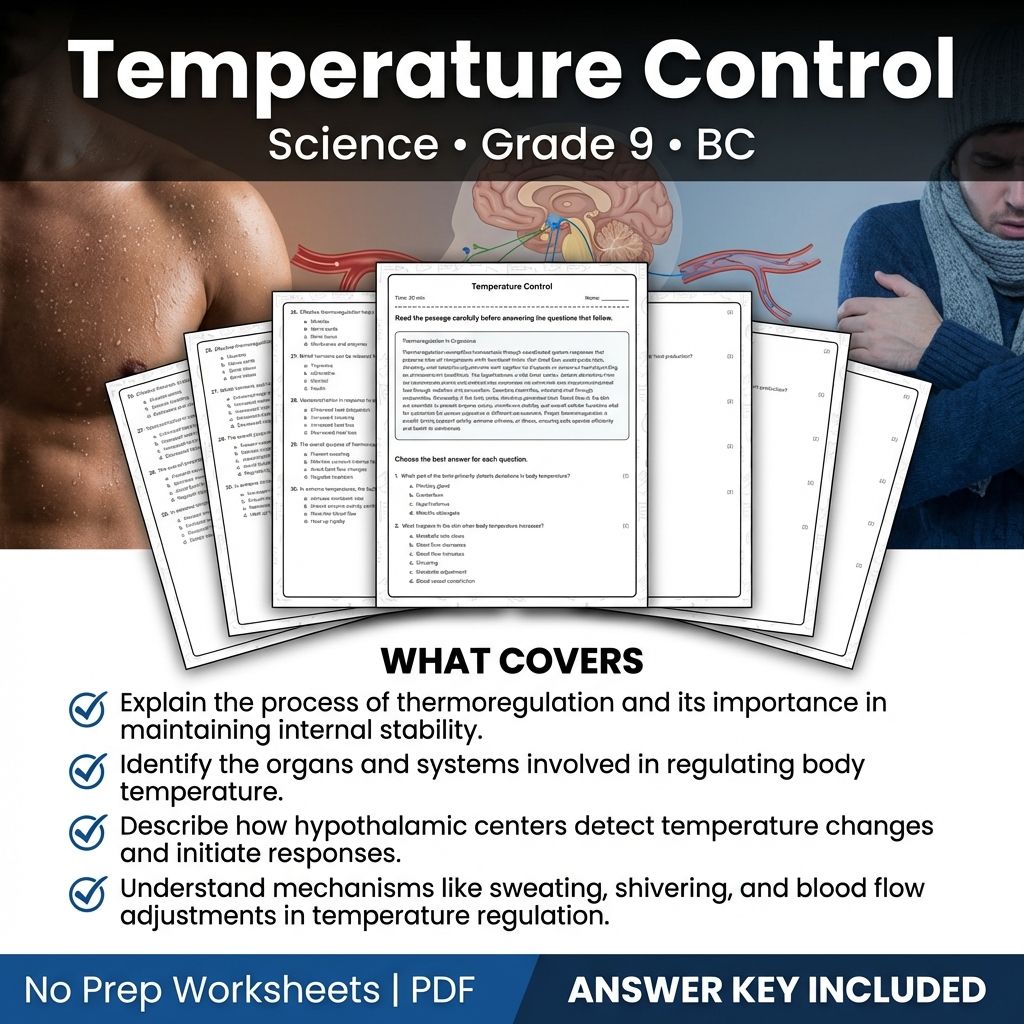
Temperature Control Worksheet for Grade 9 Science | Standard BC
Created byCoral Reef LearningLearning Objectives
- Explain the process of thermoregulation and its importance in maintaining internal stability.
- Identify the organs and systems involved in regulating body temperature.
- Describe how hypothalamic centers detect temperature changes and initiate responses.
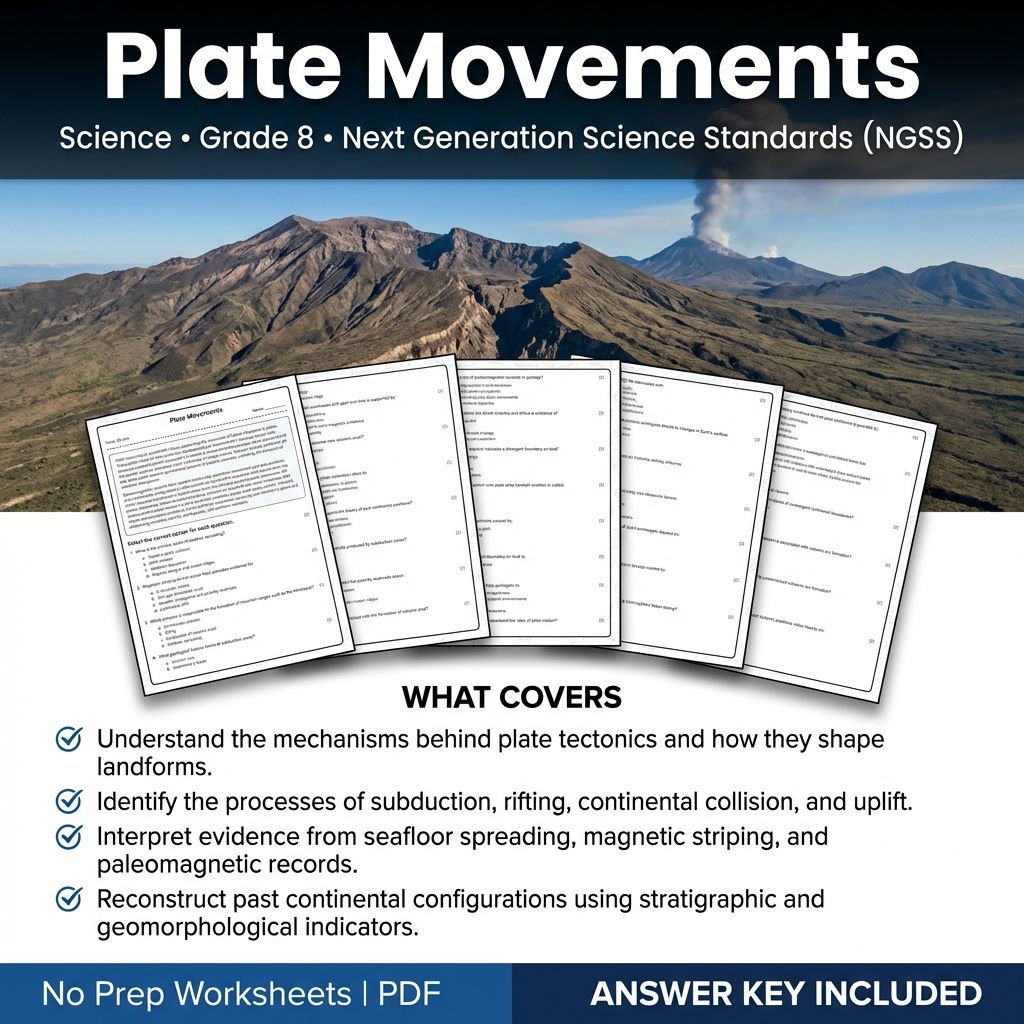
8th Grade Science Worksheet | Plate Movements & Tectonic Theory (PDF & Answer Key)
Created byCoral Reef LearningLearning Objectives
- Understand the mechanisms behind plate tectonics and how they shape landforms.
- Identify the processes of subduction, rifting, continental collision, and uplift.
- Interpret evidence from seafloor spreading, magnetic striping, and paleomagnetic records.
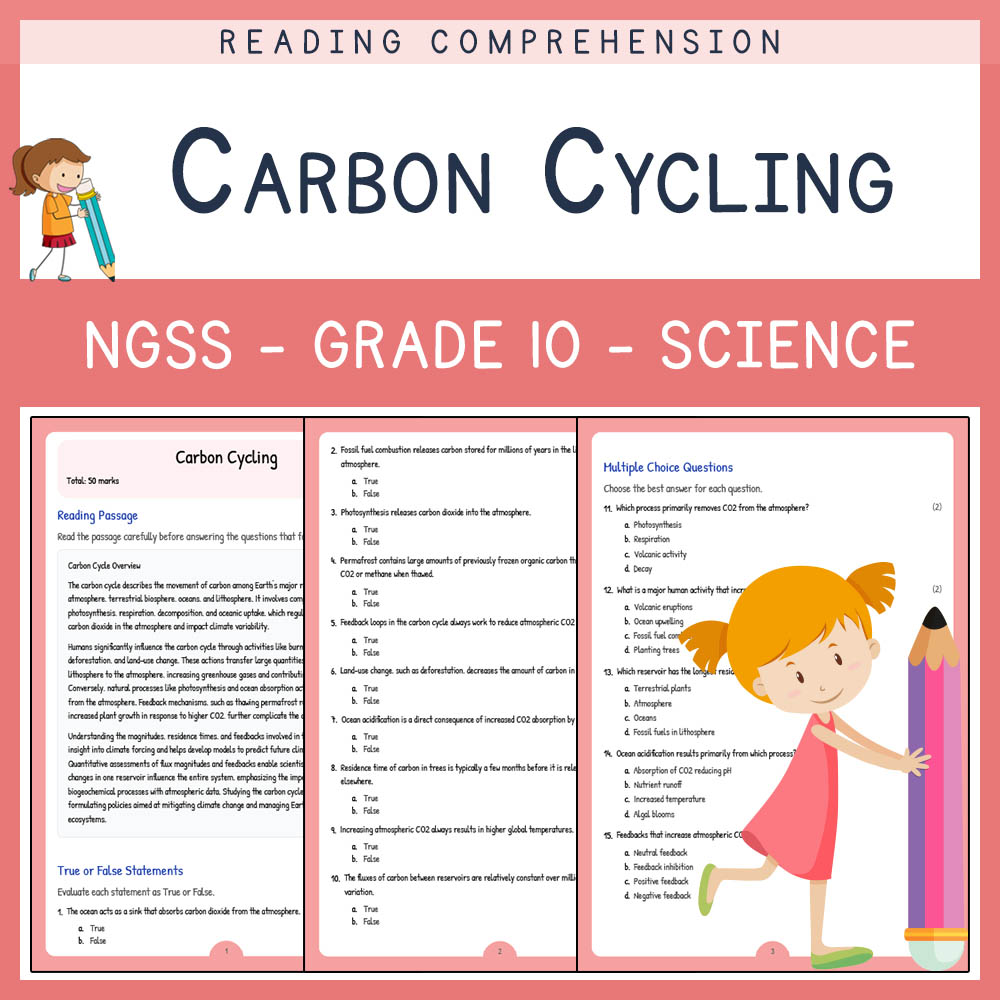
Grade 10 Science | Carbon Cycling Worksheet (PDF + Answer Key) | NGSS Alignment
Created byLumora LearningLearning Objectives
- Describe the key components and fluxes involved in the global carbon cycle.
- Explain how sources, sinks, and feedback mechanisms influence atmospheric CO2 concentrations.
- Analyze the impacts of human activities and natural processes on carbon fluxes and climate.
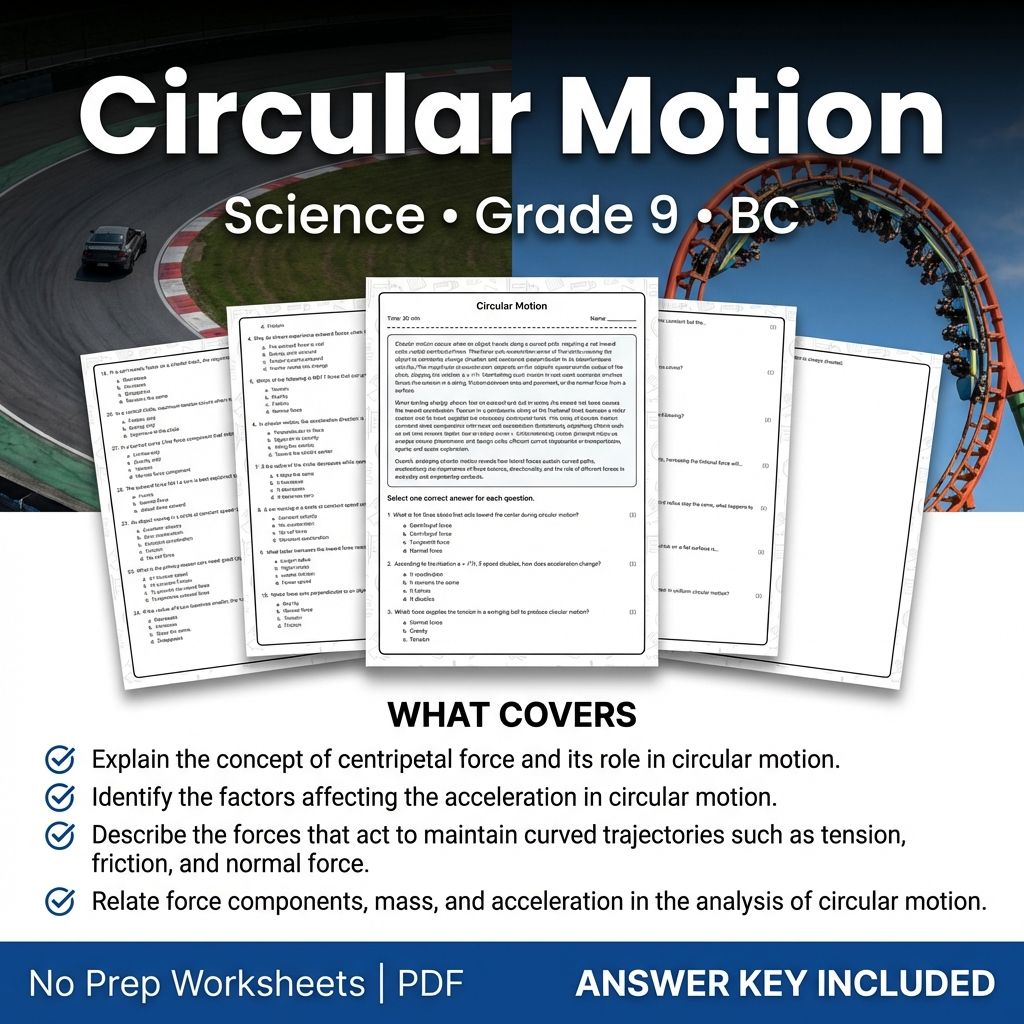
Circular Motion Worksheet for Grade 9 Science – Standard BC
Created byCoral Reef LearningLearning Objectives
- Explain the concept of centripetal force and its role in circular motion.
- Identify the factors affecting the acceleration in circular motion.
- Describe the forces that act to maintain curved trajectories such as tension, friction, and normal force.
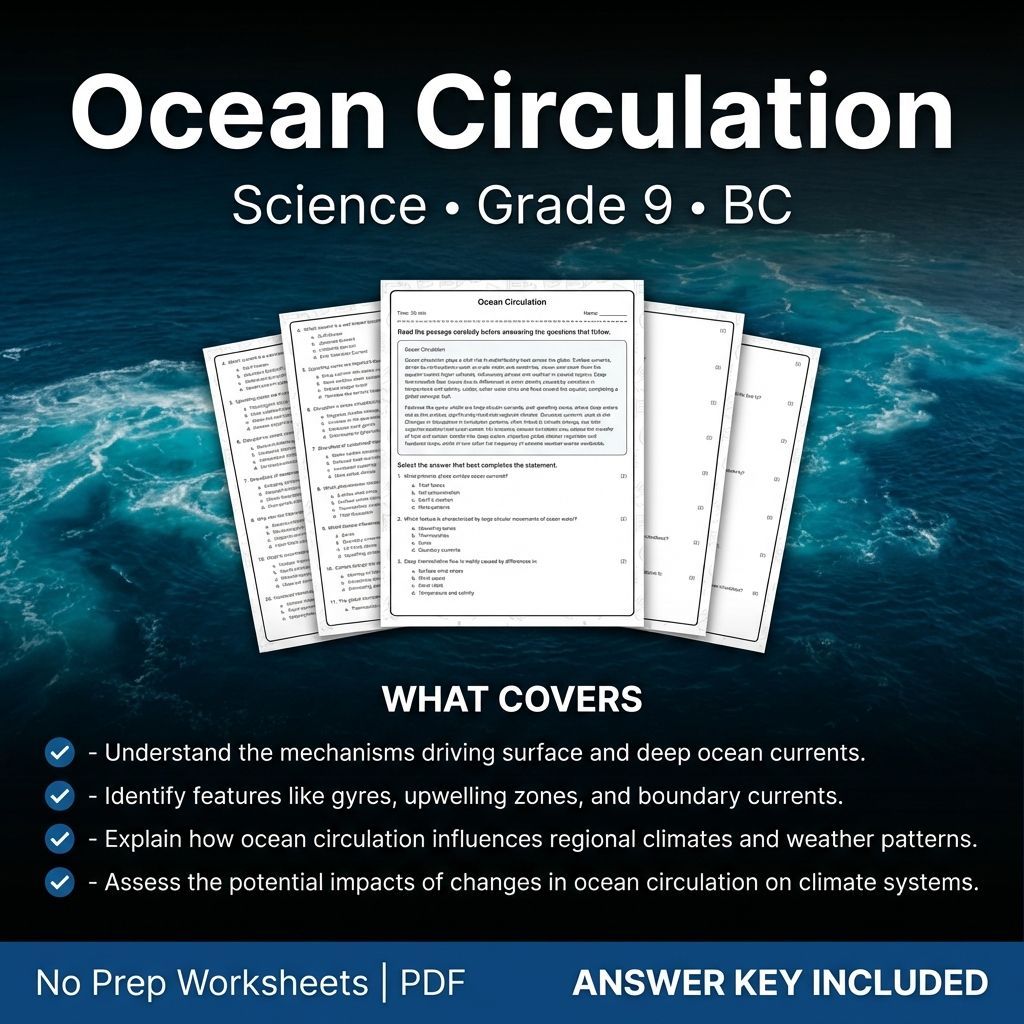
Grade 9 Science | Ocean Circulation Worksheet & Answer Key (Printable PDF)
Created byCoral Reef LearningLearning Objectives
- Understand the mechanisms driving surface and deep ocean currents.
- Identify features like gyres, upwelling zones, and boundary currents.
- Explain how ocean circulation influences regional climates and weather patterns.
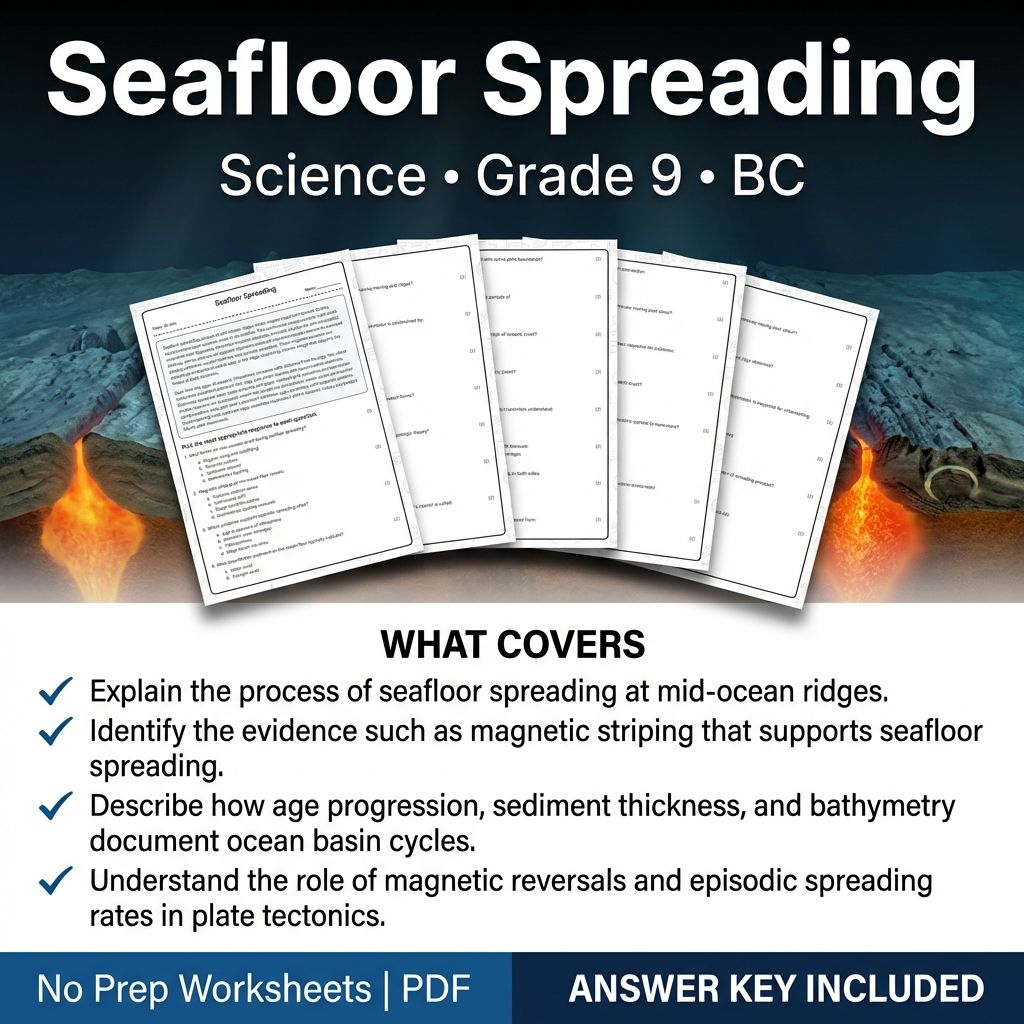
Grade 9 Science Worksheet | Seafloor Spreading & Key Concepts + Answer Key
Created byCoral Reef LearningLearning Objectives
- Explain the process of seafloor spreading at mid-ocean ridges.
- Identify the evidence such as magnetic striping that supports seafloor spreading.
- Describe how age progression, sediment thickness, and bathymetry document ocean basin cycles.
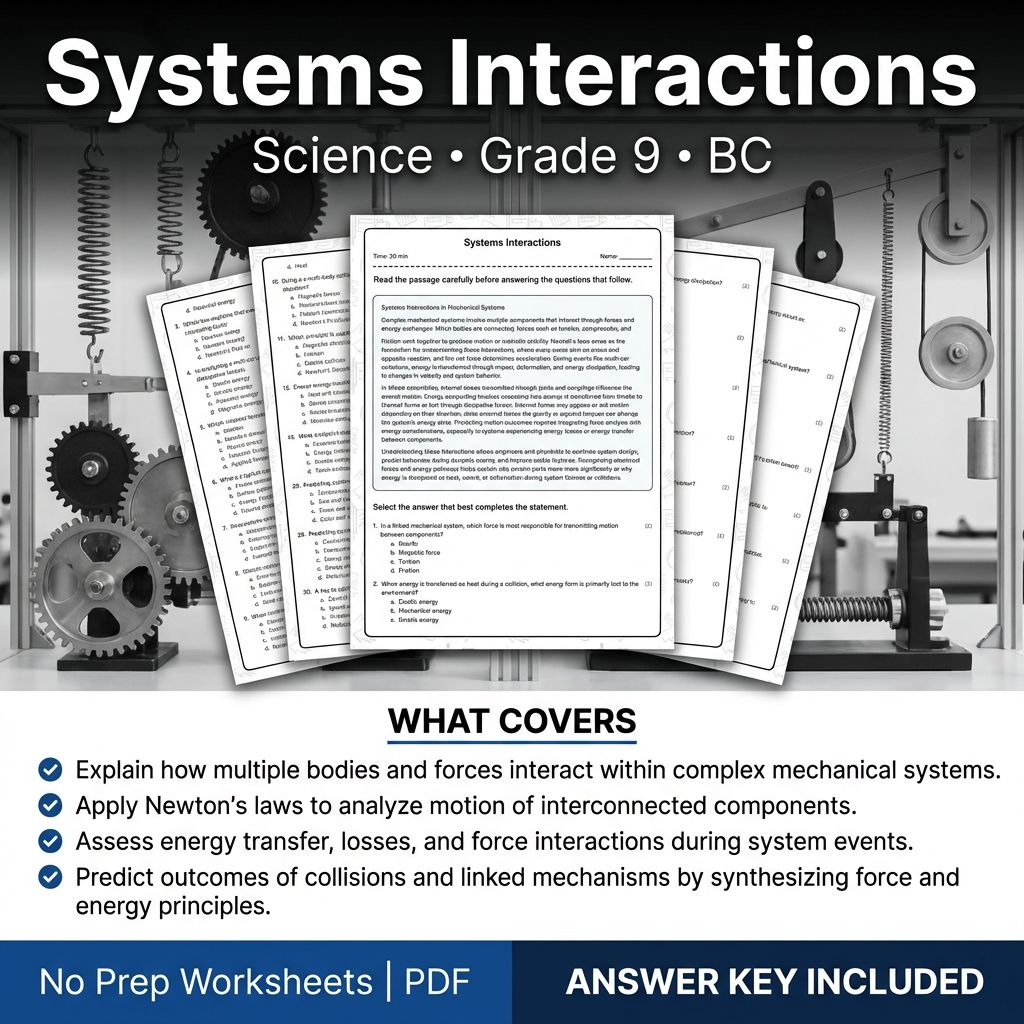
Systems Interactions Worksheet Grade 9 Science BC Standards PDF
Created byCoral Reef LearningLearning Objectives
- Explain how multiple bodies and forces interact within complex mechanical systems.
- Apply Newton’s laws to analyze motion of interconnected components.
- Assess energy transfer, losses, and force interactions during system events.
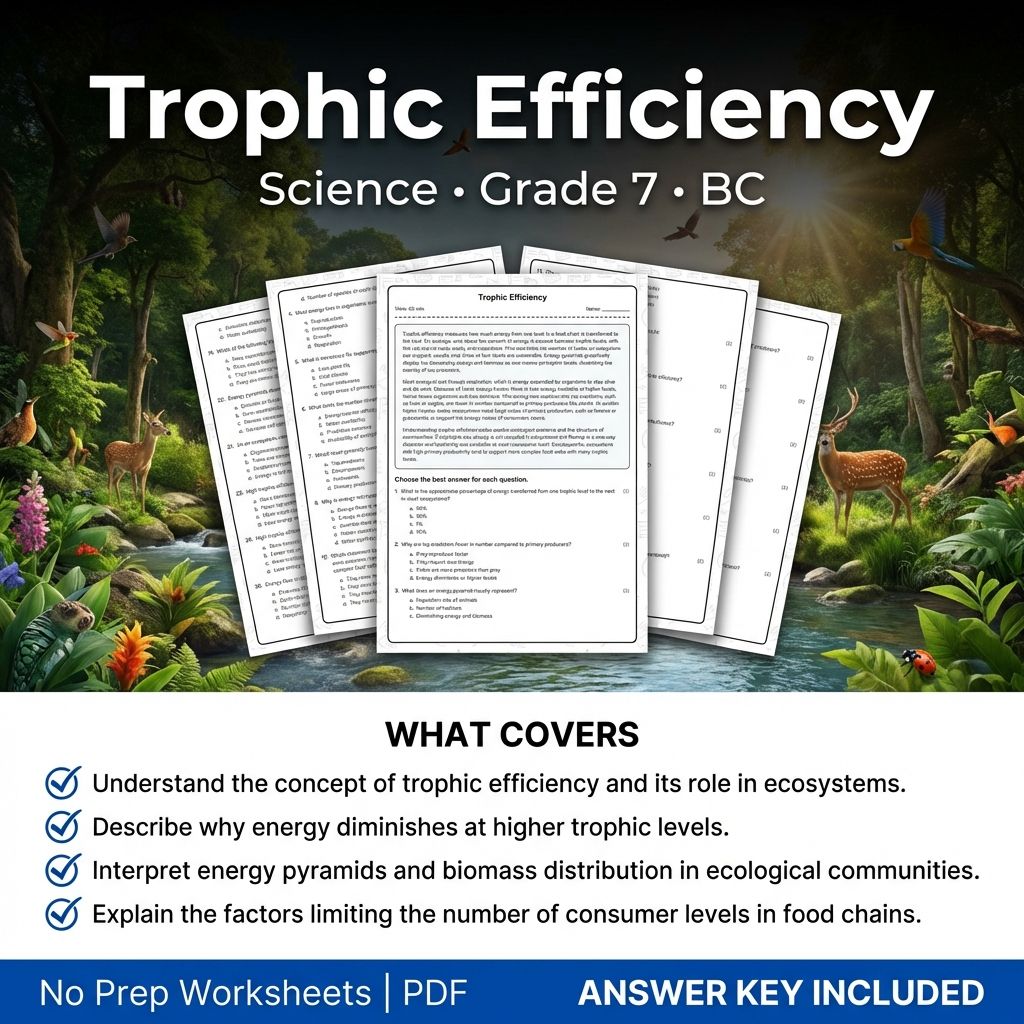
7th Grade Science | Trophic Efficiency Worksheet & Answer Key (PDF Printable)
Created byCoral Reef LearningLearning Objectives
- Understand the concept of trophic efficiency and its role in ecosystems.
- Describe why energy diminishes at higher trophic levels.
- Interpret energy pyramids and biomass distribution in ecological communities.
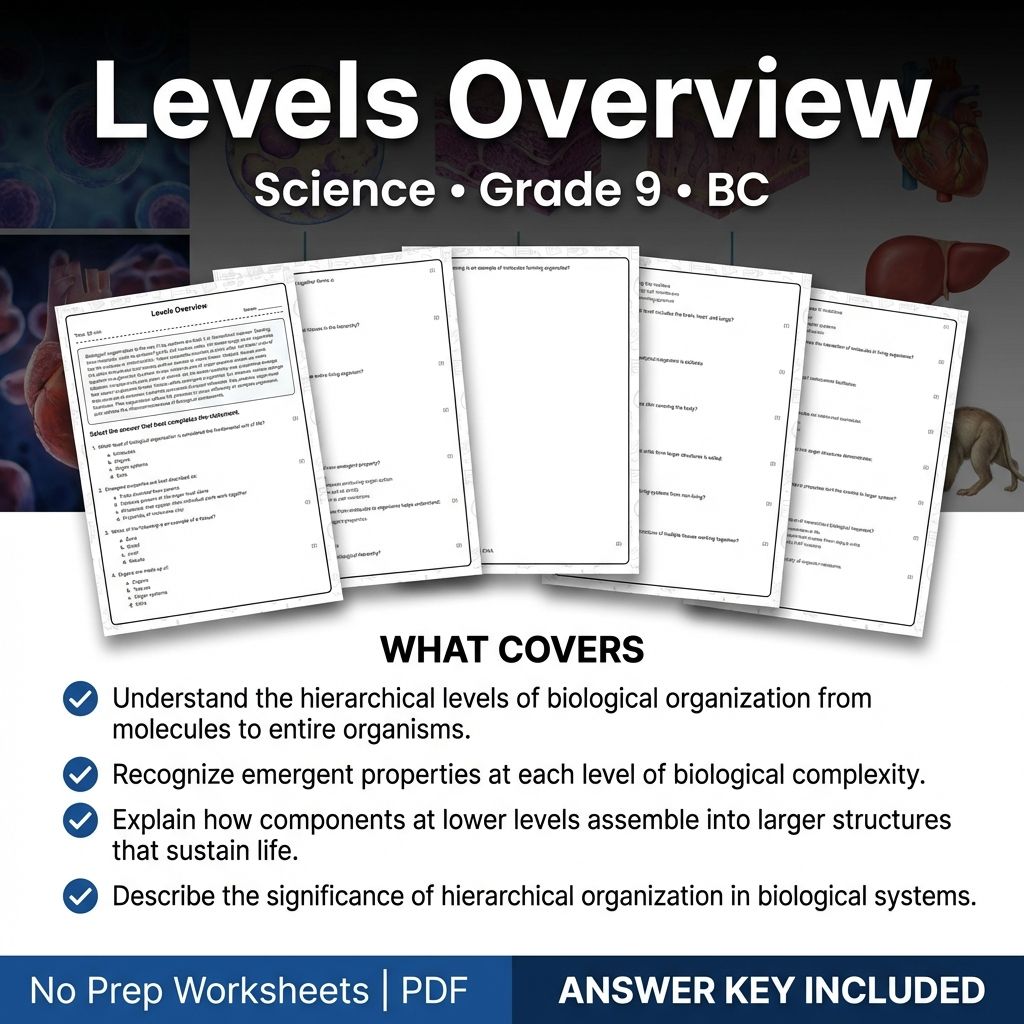
Levels Overview Grade 9 Science Worksheet | BC Standard Practice
Created byCoral Reef LearningLearning Objectives
- Understand the hierarchical levels of biological organization from molecules to entire organisms.
- Recognize emergent properties at each level of biological complexity.
- Explain how components at lower levels assemble into larger structures that sustain life.
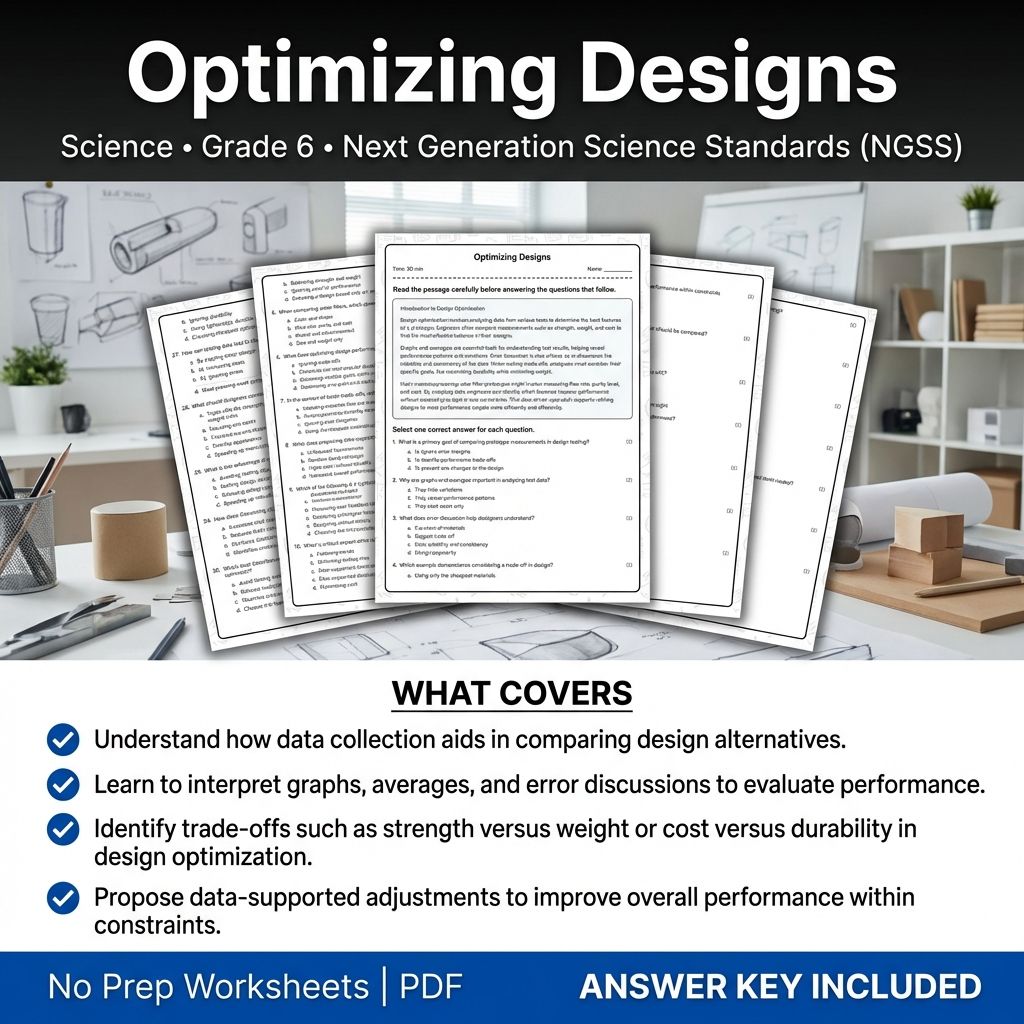
6th Grade Science Worksheet | Optimizing Designs – Practice & Answer Key (Printable PDF)
Created byCoral Reef LearningLearning Objectives
- Understand how data collection aids in comparing design alternatives.
- Learn to interpret graphs, averages, and error discussions to evaluate performance.
- Identify trade-offs such as strength versus weight or cost versus durability in design optimization.
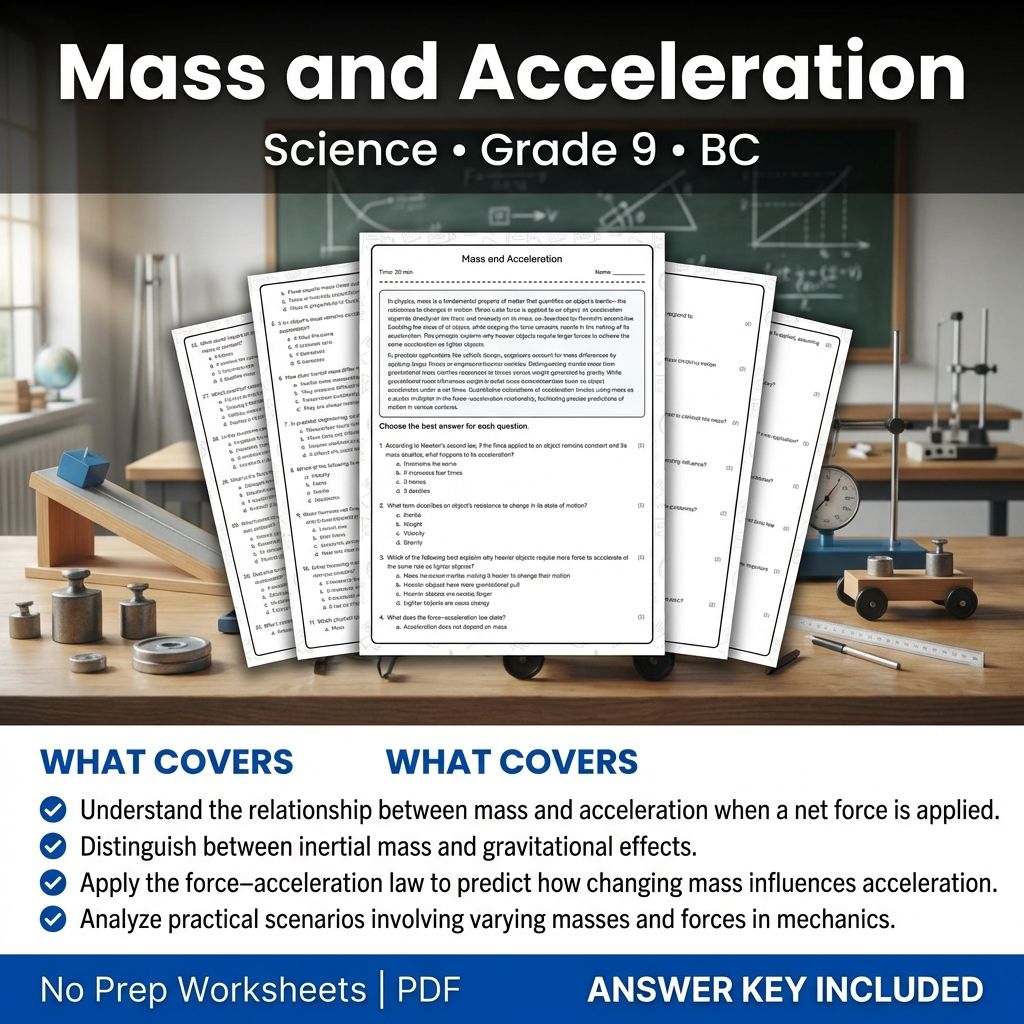
Mass and Acceleration Grade 9 Science Worksheet | BC Standards
Created byCoral Reef LearningLearning Objectives
- Understand the relationship between mass and acceleration when a net force is applied.
- Distinguish between inertial mass and gravitational effects.
- Apply the force–acceleration law to predict how changing mass influences acceleration.
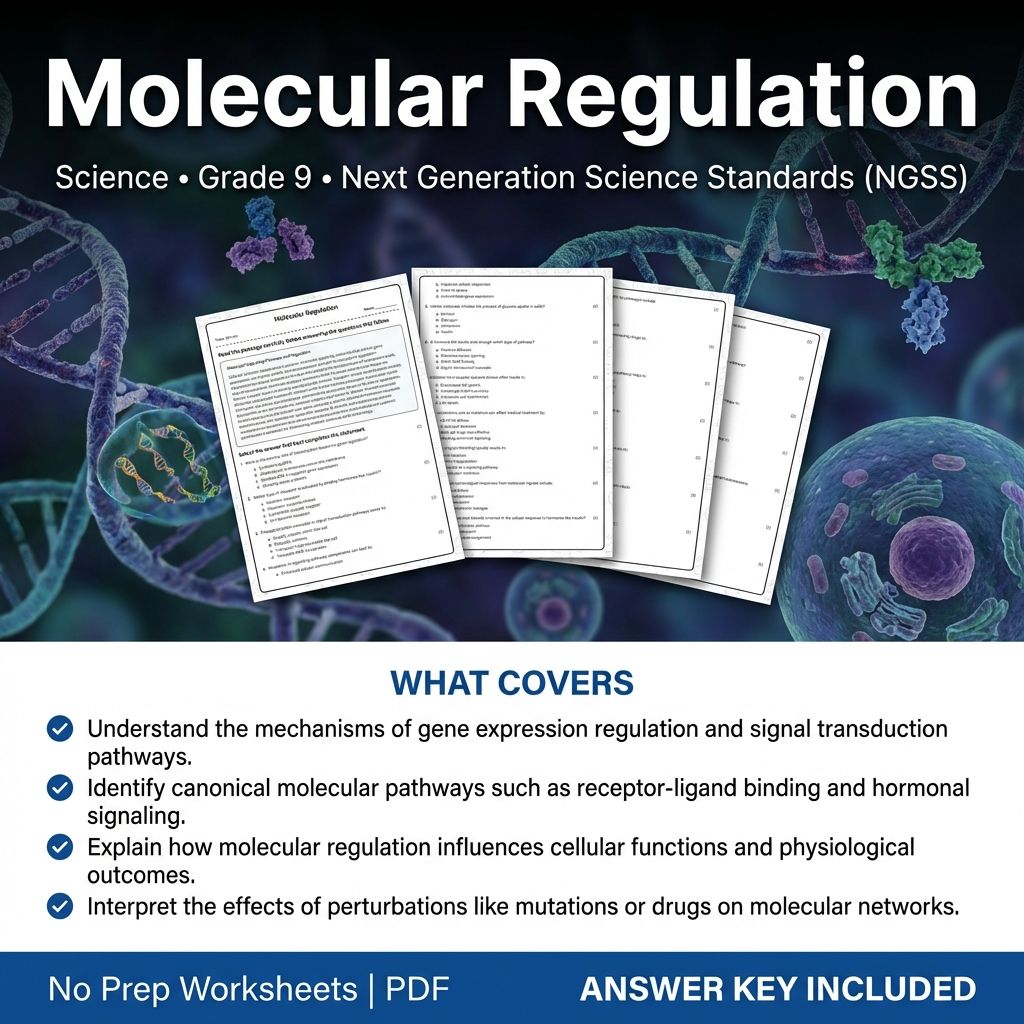
9th Grade Science | Molecular Regulation Worksheet & Answer Key (Printable PDF)
Created byCoral Reef LearningLearning Objectives
- Understand the mechanisms of gene expression regulation and signal transduction pathways.
- Identify canonical molecular pathways such as receptor-ligand binding and hormonal signaling.
- Explain how molecular regulation influences cellular functions and physiological outcomes.
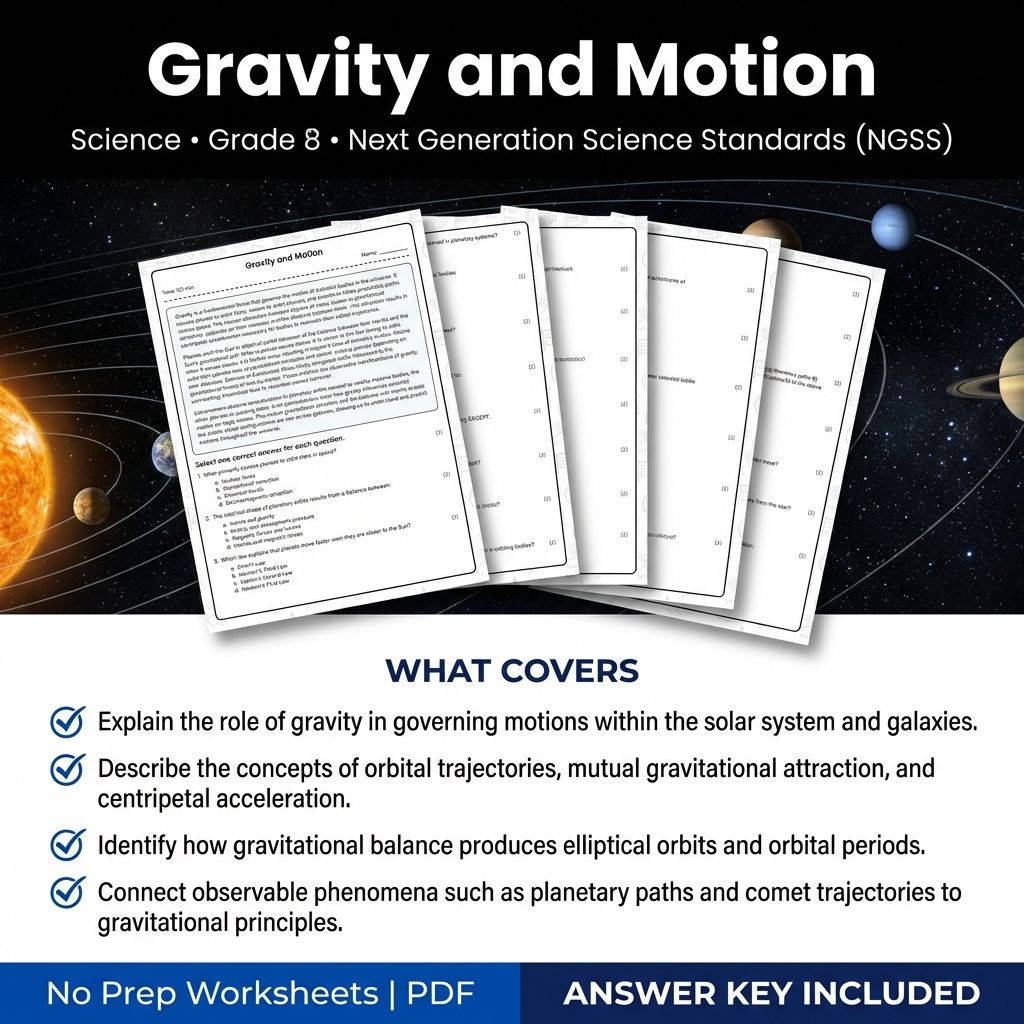
Grade 8 Science Worksheet | Gravity and Motion NGSS Practice PDF & Answer Key
Created byCoral Reef LearningLearning Objectives
- Explain the role of gravity in governing motions within the solar system and galaxies.
- Describe the concepts of orbital trajectories, mutual gravitational attraction, and centripetal acceleration.
- Identify how gravitational balance produces elliptical orbits and orbital periods.
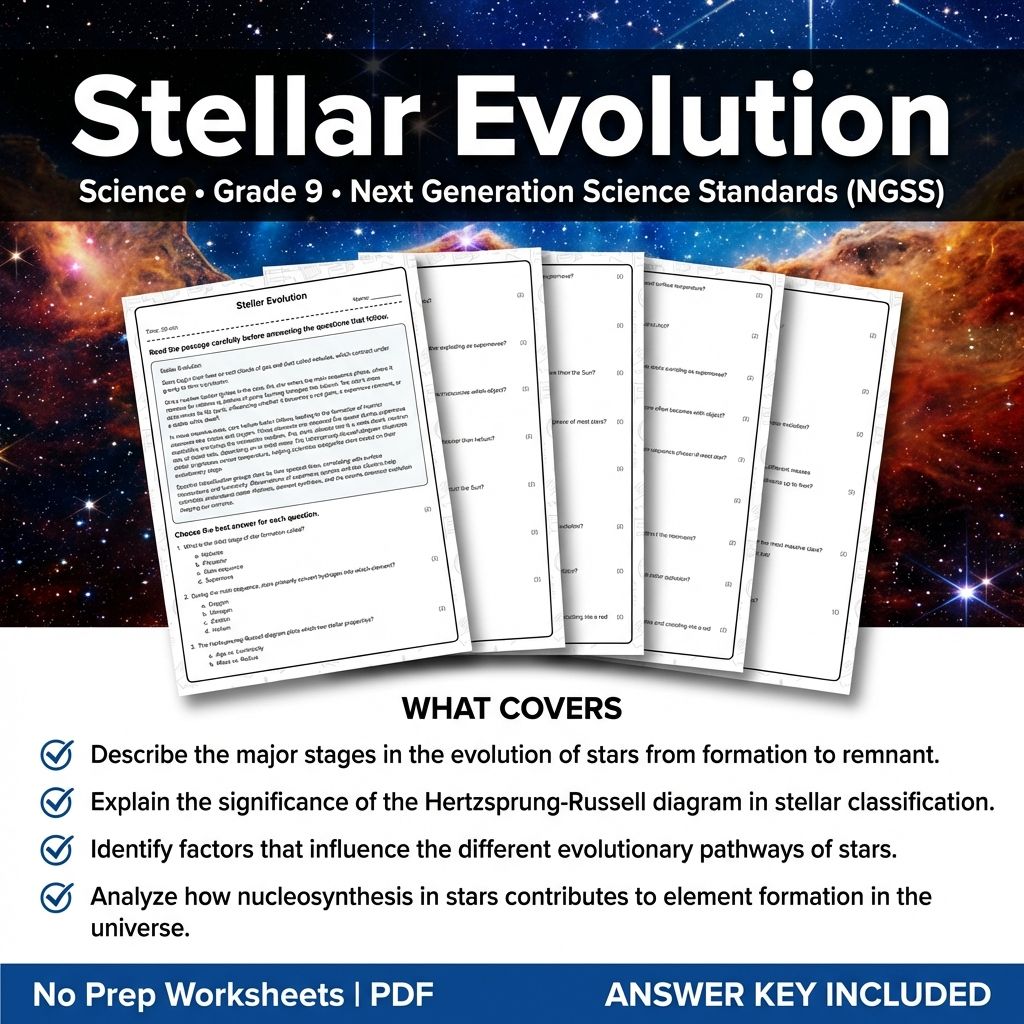
9th Grade Science Worksheet | Stellar Evolution Practice & Answer Key PDF
Created byCoral Reef LearningLearning Objectives
- Describe the major stages in the evolution of stars from formation to remnant.
- Explain the significance of the Hertzsprung-Russell diagram in stellar classification.
- Identify factors that influence the different evolutionary pathways of stars.
Free Body Diagrams Worksheet - Grade 9 Science Practice and Assessment
Created byCoral Reef LearningLearning Objectives
- Understand the purpose of free body diagrams in physics.
- Identify all external forces acting on a single object.
- Sketch accurate vectors for different forces including gravity, normal, friction, tension, and applied forces.
9th Grade Science | Crystal Lattices Worksheet & Answer Key (Printable PDF)
Created byCoral Reef LearningLearning Objectives
- Understand the three-dimensional arrangements of atoms and ions in different crystal lattices.
- Identify various lattice types such as ionic, metallic, and covalent networks and their properties.
- Explain how unit cells define the smallest repeating pattern in crystals.
Grade 9 Science Worksheet on Ethical Considerations for Alberta Standards
Created byCoral Reef LearningLearning Objectives
- Analyze the ethical and societal implications of genetic technologies.
- Understand the importance of stakeholder responsibilities and policy in genetic science.
- Discuss trade-offs between innovation, public benefit, and potential harms.
Grade 9 Science Worksheet | Microscope Modeling with Answer Key
Created byCoral Reef LearningLearning Objectives
- Describe the role of microscopy in revealing cell structures and scales.
- Identify different types of microscope models used to interpret microscopic observations.
- Explain how diagrams and physical models aid in understanding cellular sizes and functions.
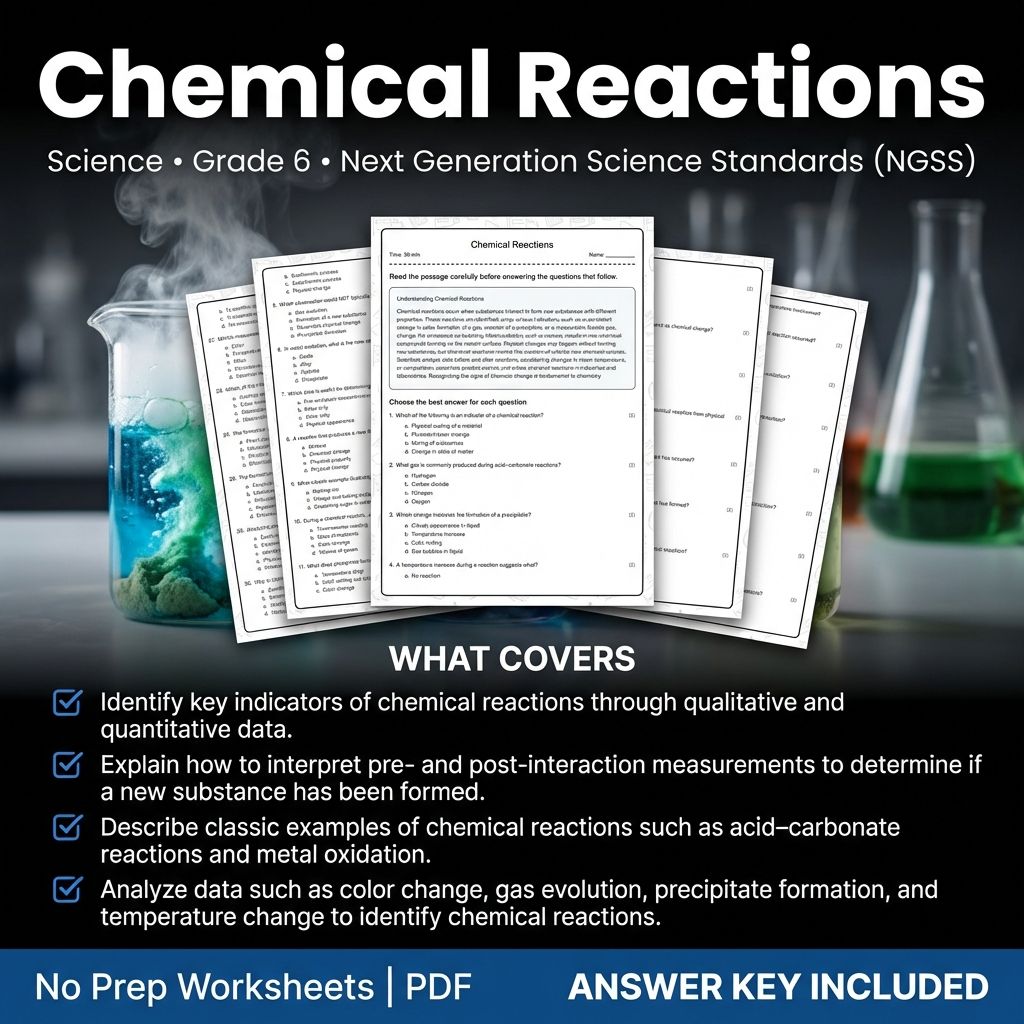
6th Grade Science | Chemical Reactions Worksheet & Answer Key (Printable PDF)
Created byCoral Reef LearningLearning Objectives
- Identify key indicators of chemical reactions through qualitative and quantitative data.
- Explain how to interpret pre- and post-interaction measurements to determine if a new substance has been formed.
- Describe classic examples of chemical reactions such as acid–carbonate reactions and metal oxidation.
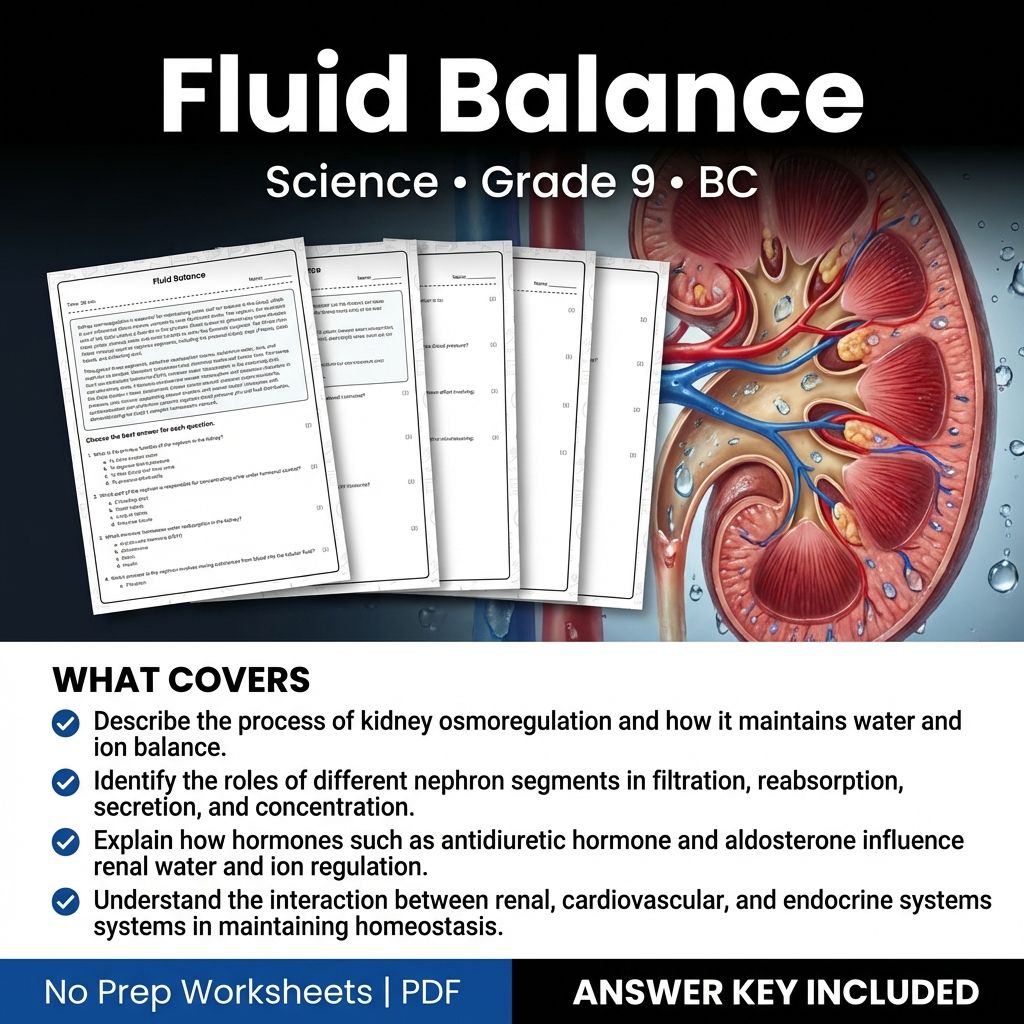
Fluid Balance Worksheet for Grade 9 Science BC Standards
Created byCoral Reef LearningLearning Objectives
- Describe the process of kidney osmoregulation and how it maintains water and ion balance.
- Identify the roles of different nephron segments in filtration, reabsorption, secretion, and concentration.
- Explain how hormones such as antidiuretic hormone and aldosterone influence renal water and ion regulation.
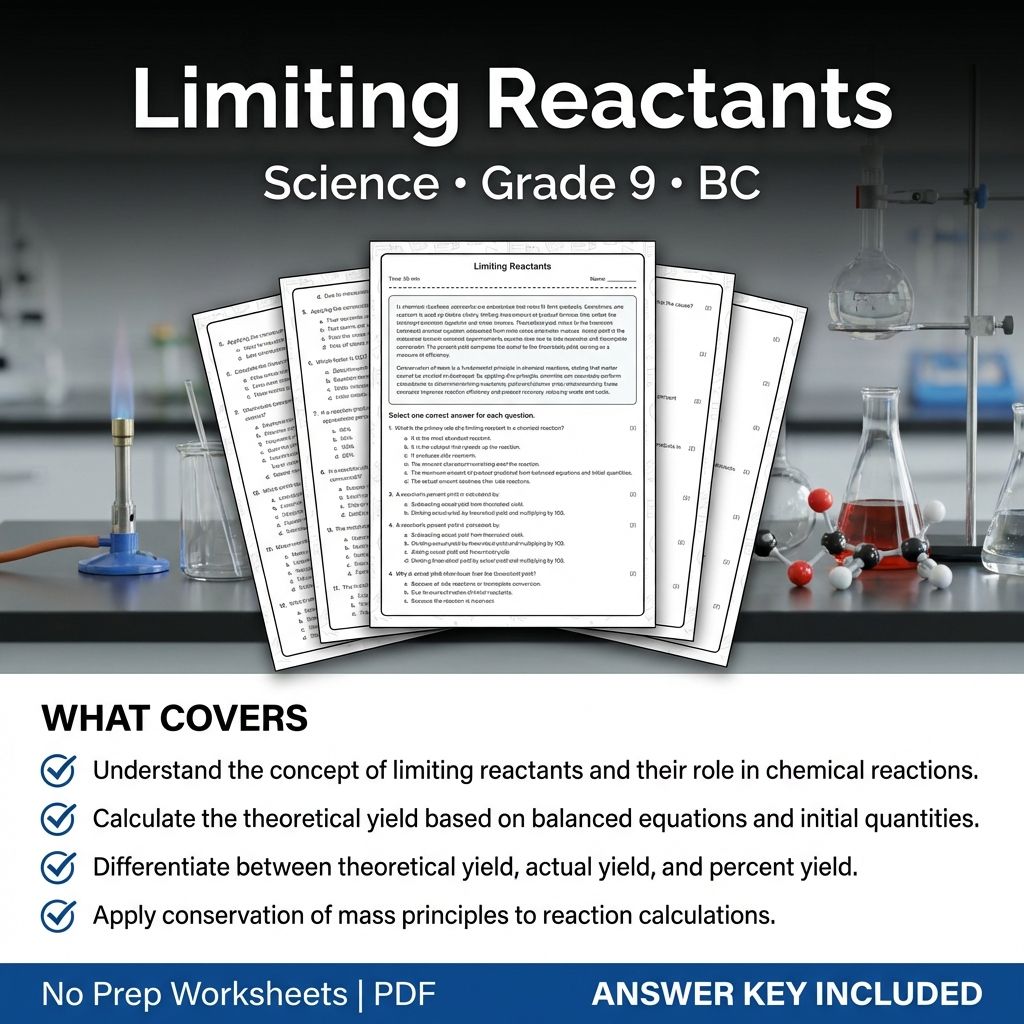
Grade 9 Science - Limiting Reactants Worksheet & Answer Key (Printable PDF)
Created byCoral Reef LearningLearning Objectives
- Understand the concept of limiting reactants and their role in chemical reactions.
- Calculate the theoretical yield based on balanced equations and initial quantities.
- Differentiate between theoretical yield, actual yield, and percent yield.
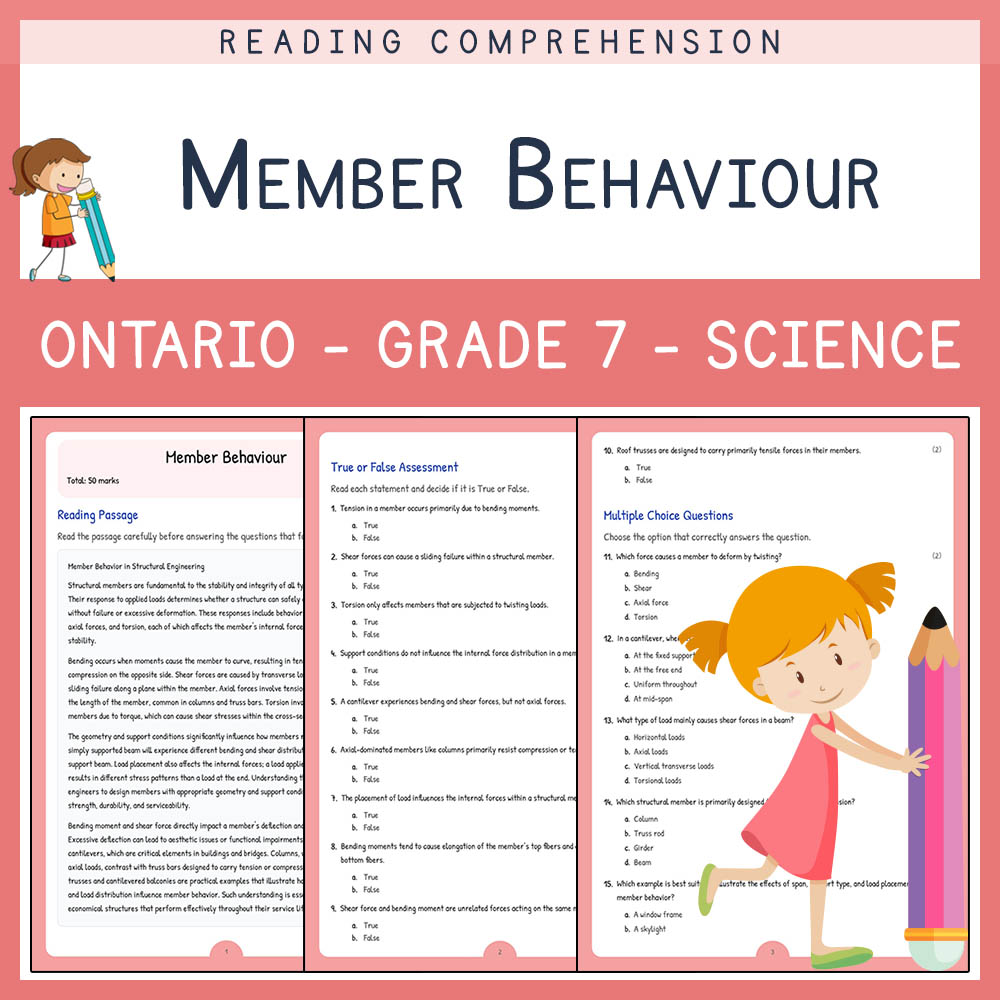
Grade 7 Science | Member Behaviour Worksheet (PDF + Answer Key) Aligned with Ontario
Created byLumora LearningLearning Objectives
- Describe how structural members respond to applied loads through bending, shear, axial force, and torsion.
- Relate the geometry and support conditions of members to internal force distribution.
- Explain the effects of bending moment and shear force on deflection and serviceability in beams and cantilevers.
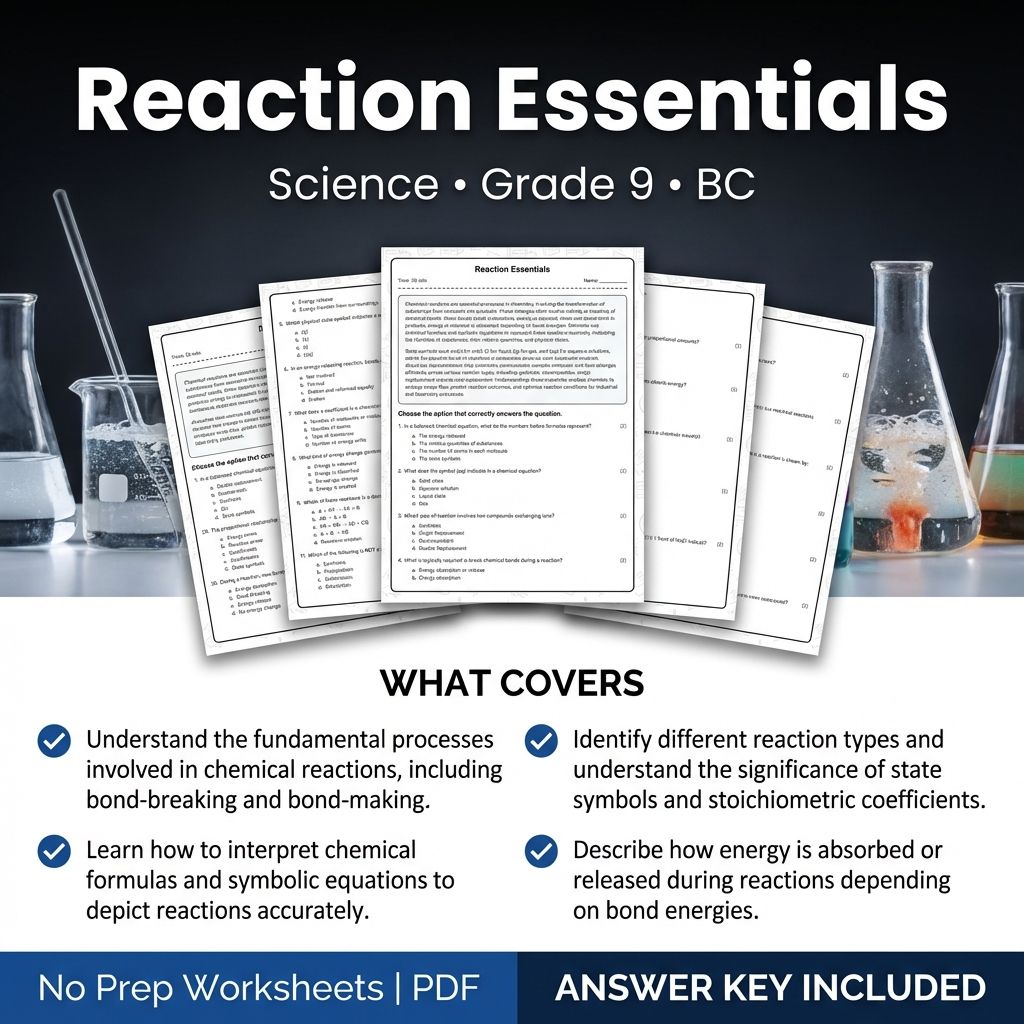
Grade 9 Science | Reaction Essentials Worksheet & Answer Key (Printable PDF)
Created byCoral Reef LearningLearning Objectives
- Understand the fundamental processes involved in chemical reactions, including bond-breaking and bond-making.
- Learn how to interpret chemical formulas and symbolic equations to depict reactions accurately.
- Identify different reaction types and understand the significance of state symbols and stoichiometric coefficients.
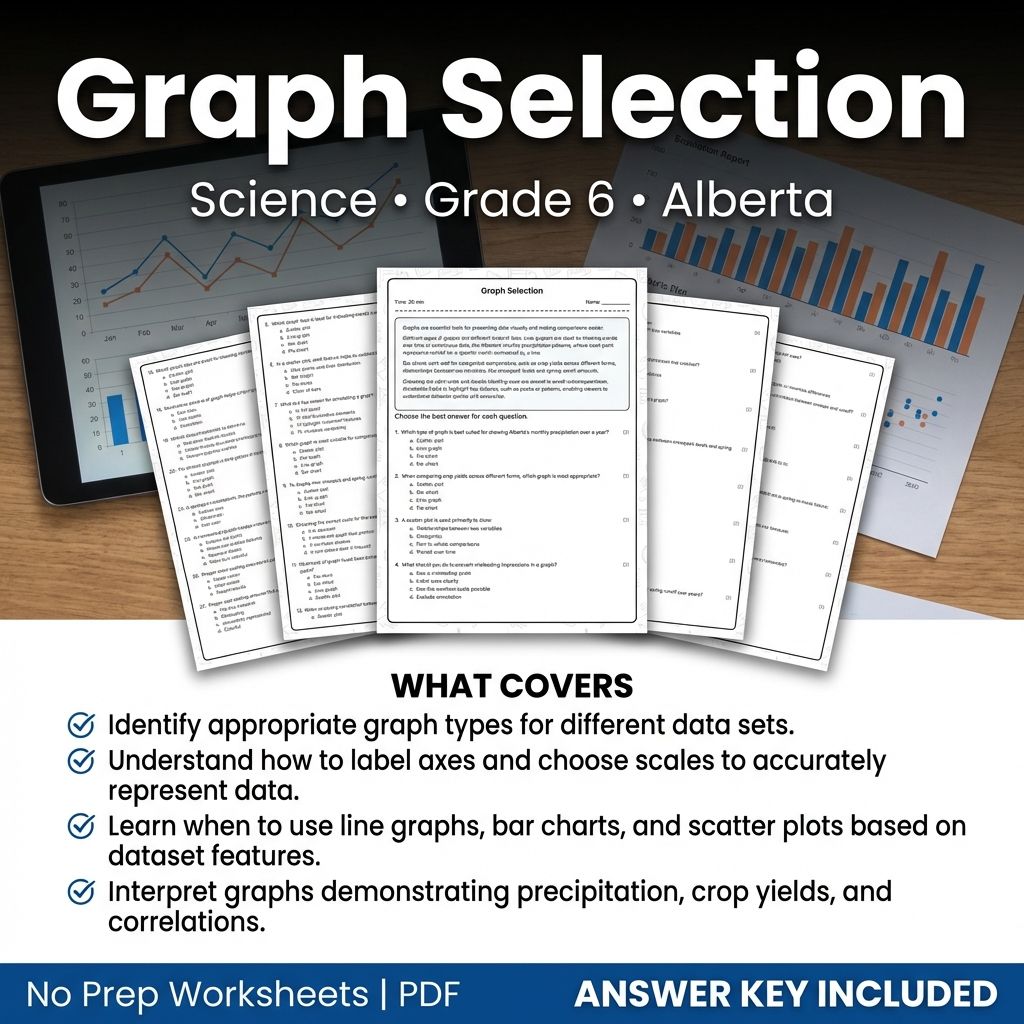
Grade 6 Science Worksheet on Graph Selection | Alberta Standards
Created byCoral Reef LearningLearning Objectives
- Identify appropriate graph types for different data sets.
- Understand how to label axes and choose scales to accurately represent data.
- Learn when to use line graphs, bar charts, and scatter plots based on dataset features.
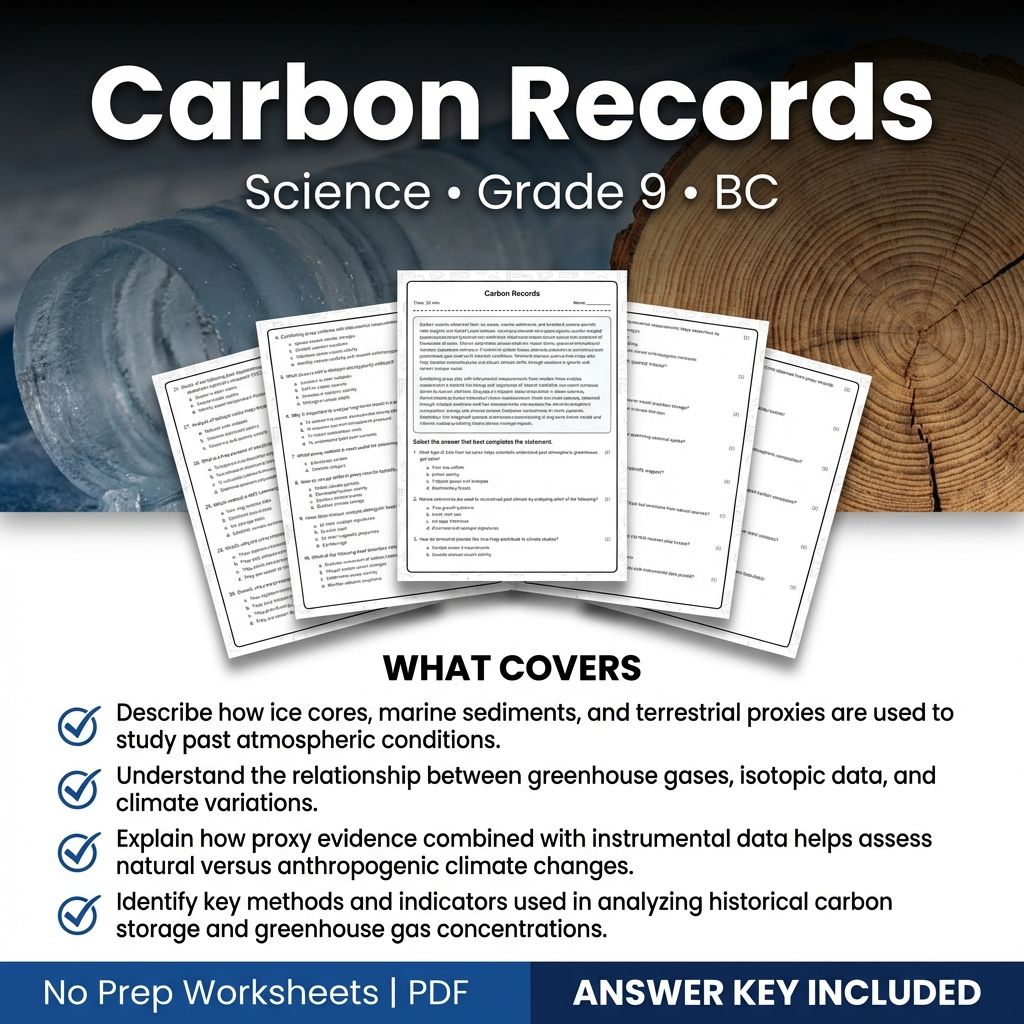
Grade 9 Science | Carbon Records Worksheet & Answer Key for Classroom Use
Created byCoral Reef LearningLearning Objectives
- Describe how ice cores, marine sediments, and terrestrial proxies are used to study past atmospheric conditions.
- Understand the relationship between greenhouse gases, isotopic data, and climate variations.
- Explain how proxy evidence combined with instrumental data helps assess natural versus anthropogenic climate changes.
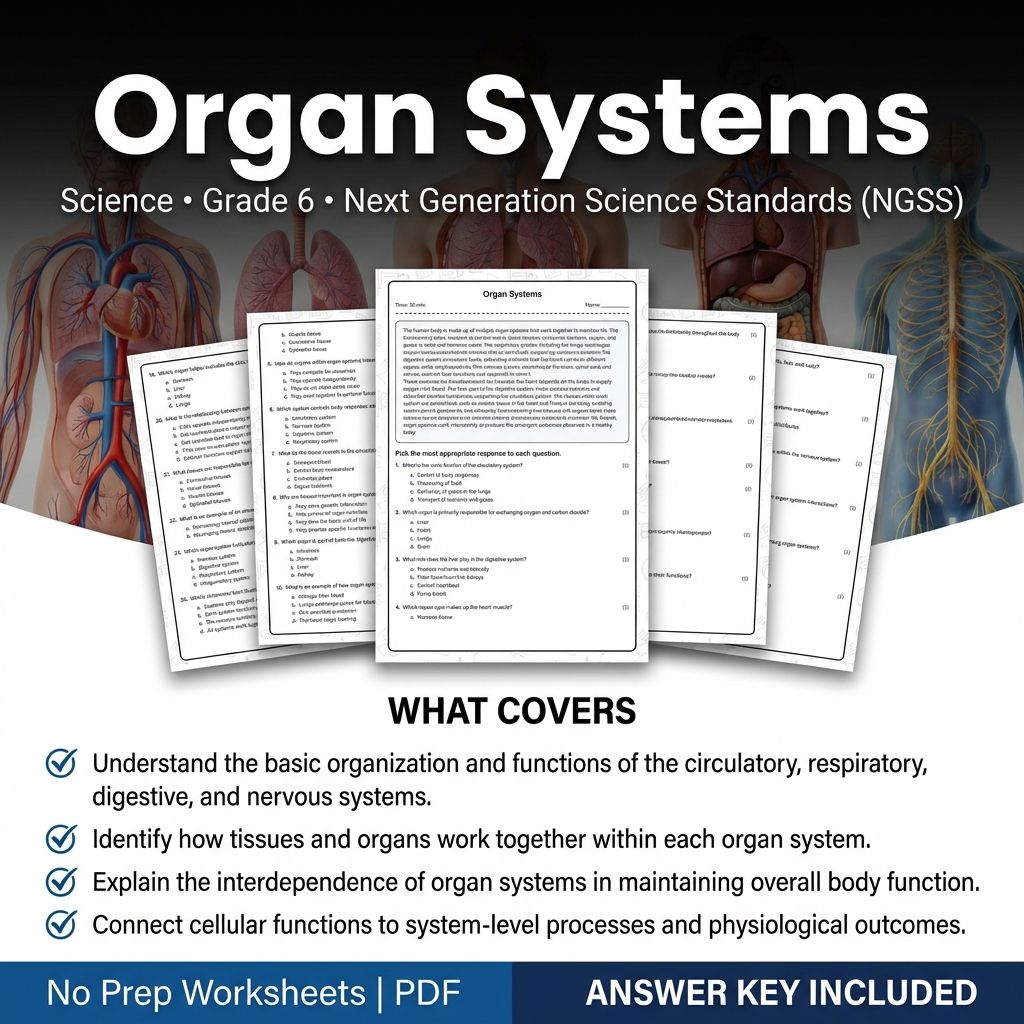
Grade 6 Science | Organ Systems Worksheet & Answer Key (Printable PDF)
Created byCoral Reef LearningLearning Objectives
- Understand the basic organization and functions of the circulatory, respiratory, digestive, and nervous systems.
- Identify how tissues and organs work together within each organ system.
- Explain the interdependence of organ systems in maintaining overall body function.
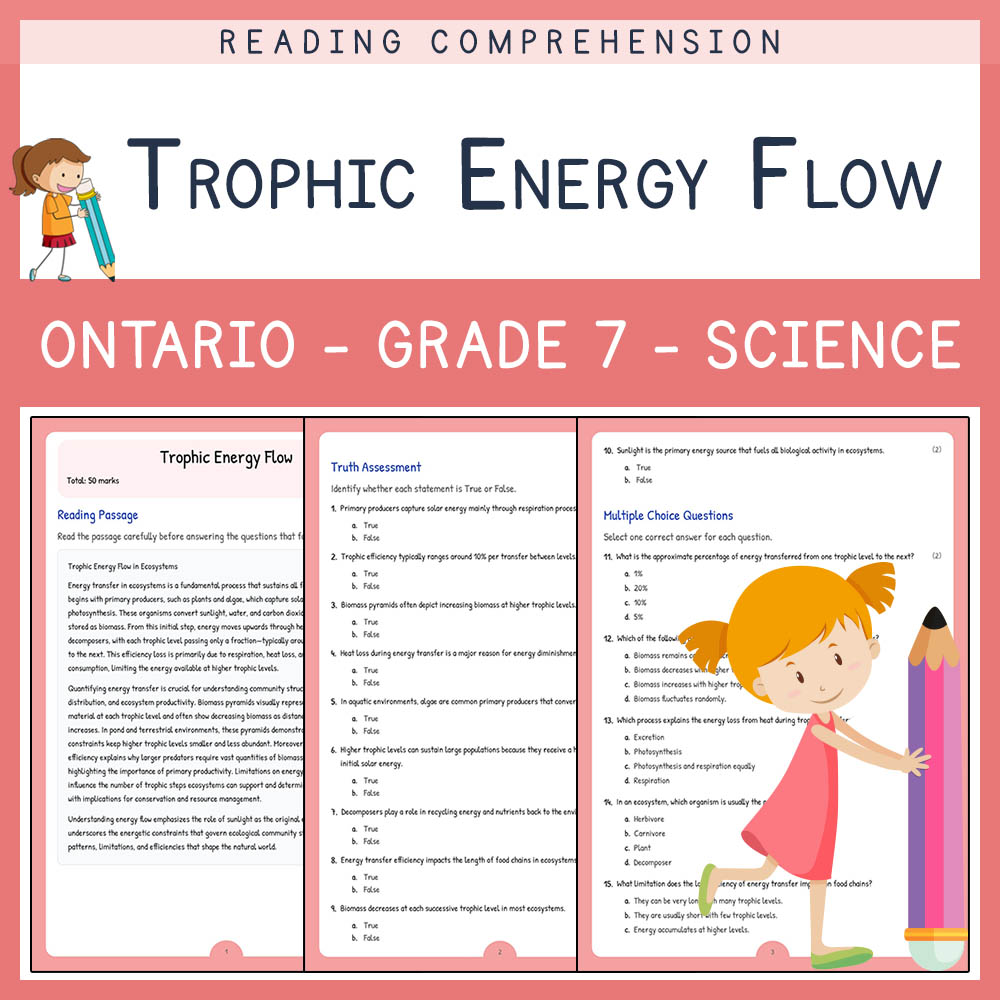
Grade 7 Science | Trophic Energy Flow Worksheet & Answer Key (PDF)
Created byLumora LearningLearning Objectives
- Explain the transfer of energy through different trophic levels in ecosystems.
- Calculate and interpret trophic efficiency percentages in various environments.
- Describe how biomass pyramids illustrate energy flow and limitations at higher levels.

Net Force Concept Worksheet | Science | Grade 9 BC Standard
Created byCoral Reef LearningLearning Objectives
- Understand the definition of net force and how it affects motion.
- Learn to resolve forces into components and calculate net force.
- Apply the concept of net force to predict acceleration and equilibrium.
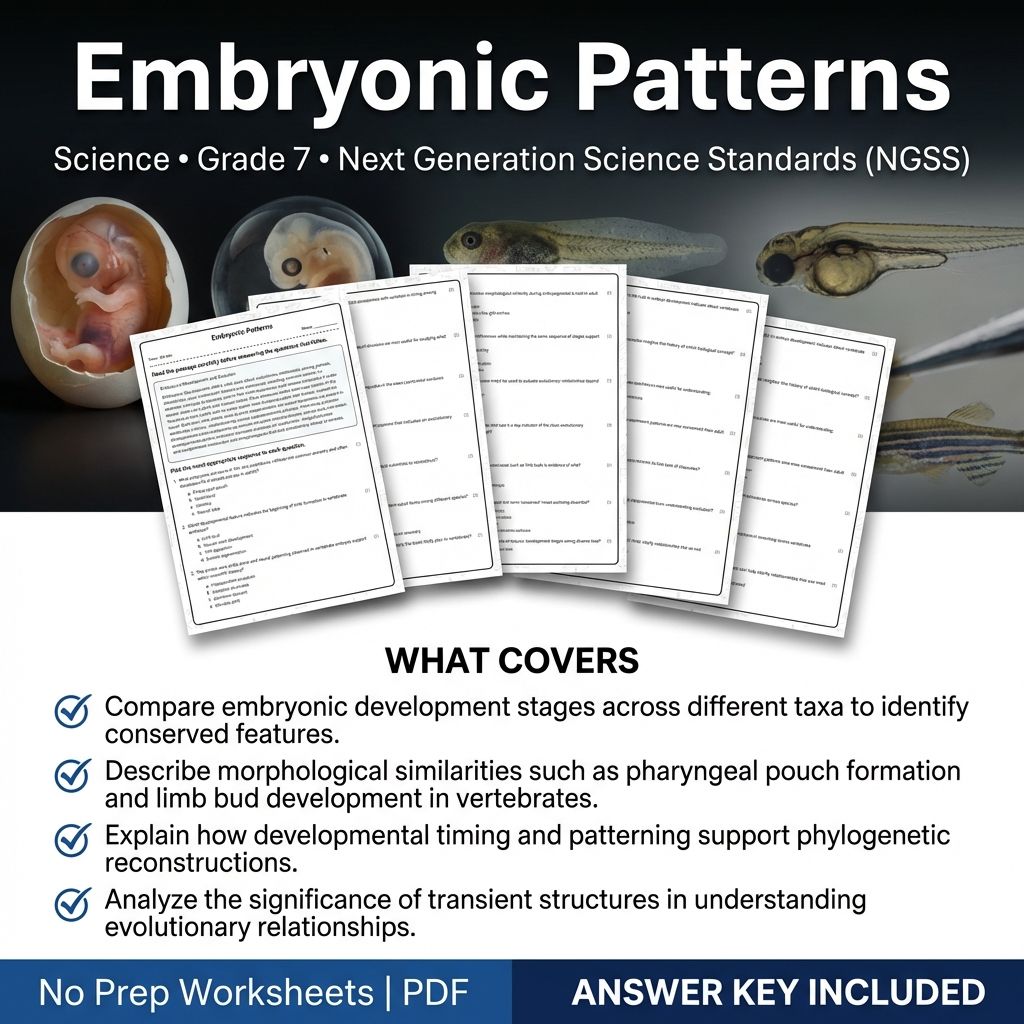
Grade 7 Science | Embryonic Patterns Worksheet & Answer Key (Printable PDF)
Created byCoral Reef LearningLearning Objectives
- Compare embryonic development stages across different taxa to identify conserved features.
- Describe morphological similarities such as pharyngeal pouch formation and limb bud development in vertebrates.
- Explain how developmental timing and patterning support phylogenetic reconstructions.
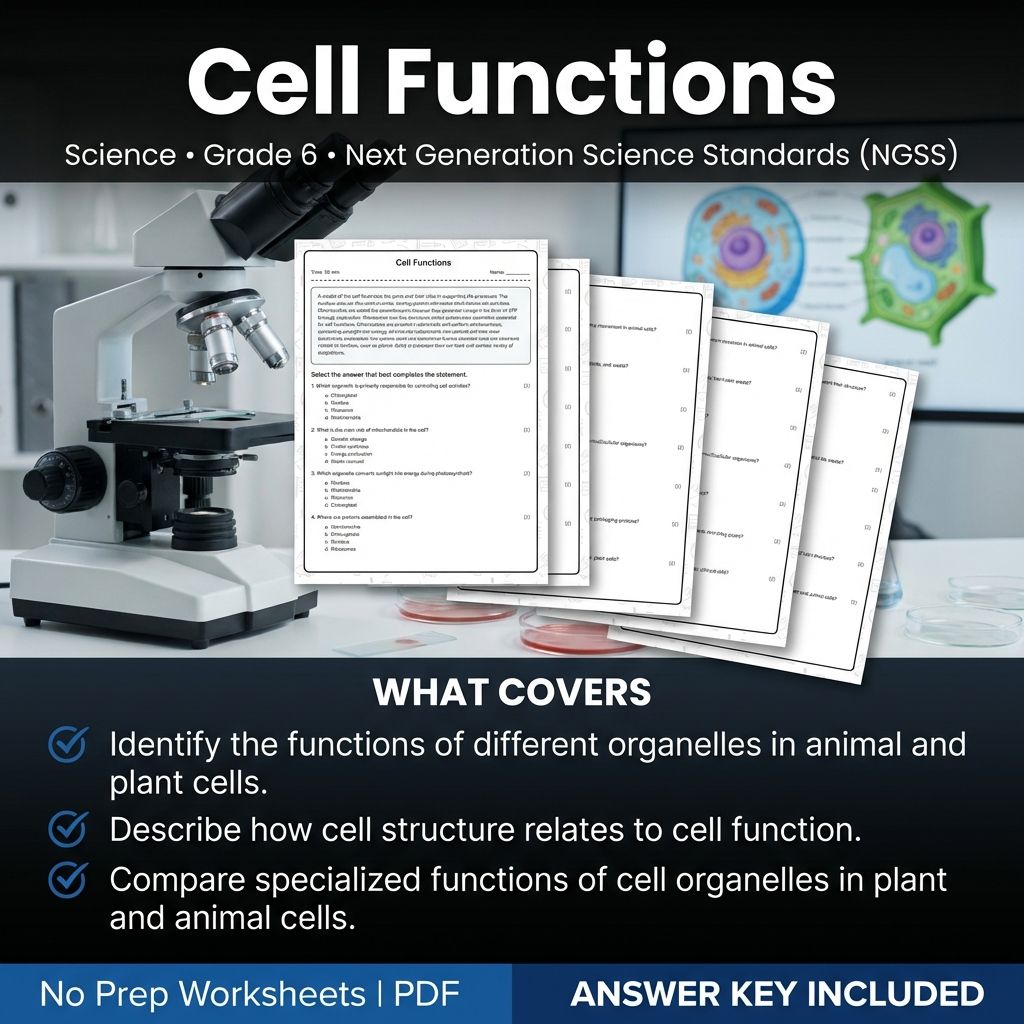
6th Grade Science | Cell Functions Worksheet & Answer Key (Printable PDF)
Created byCoral Reef LearningLearning Objectives
- Identify the functions of different organelles in animal and plant cells.
- Describe how cell structure relates to cell function.
- Compare specialized functions of cell organelles in plant and animal cells.
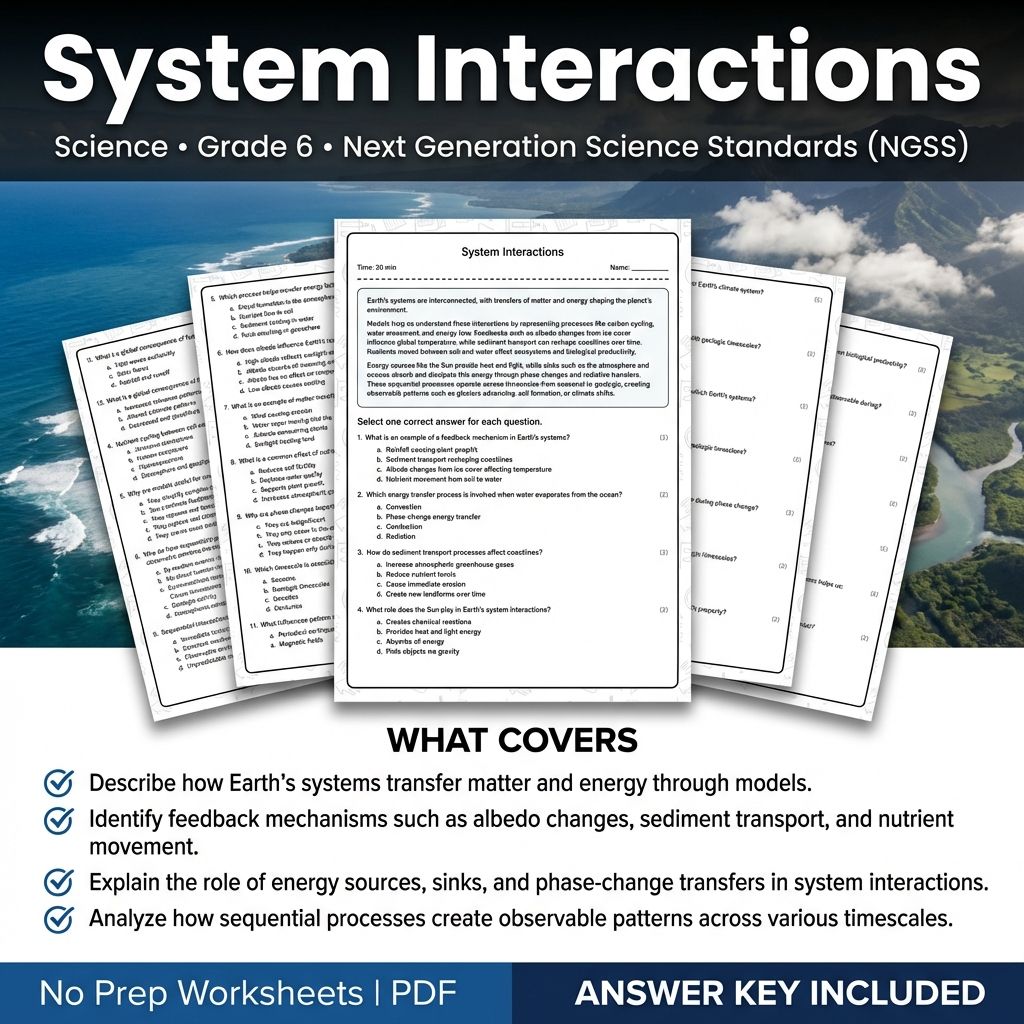
6th Grade Science | System Interactions Worksheet & Answer Key (Printable PDF)
Created byCoral Reef LearningLearning Objectives
- Describe how Earth's systems transfer matter and energy through models.
- Identify feedback mechanisms such as albedo changes, sediment transport, and nutrient movement.
- Explain the role of energy sources, sinks, and phase-change transfers in system interactions.
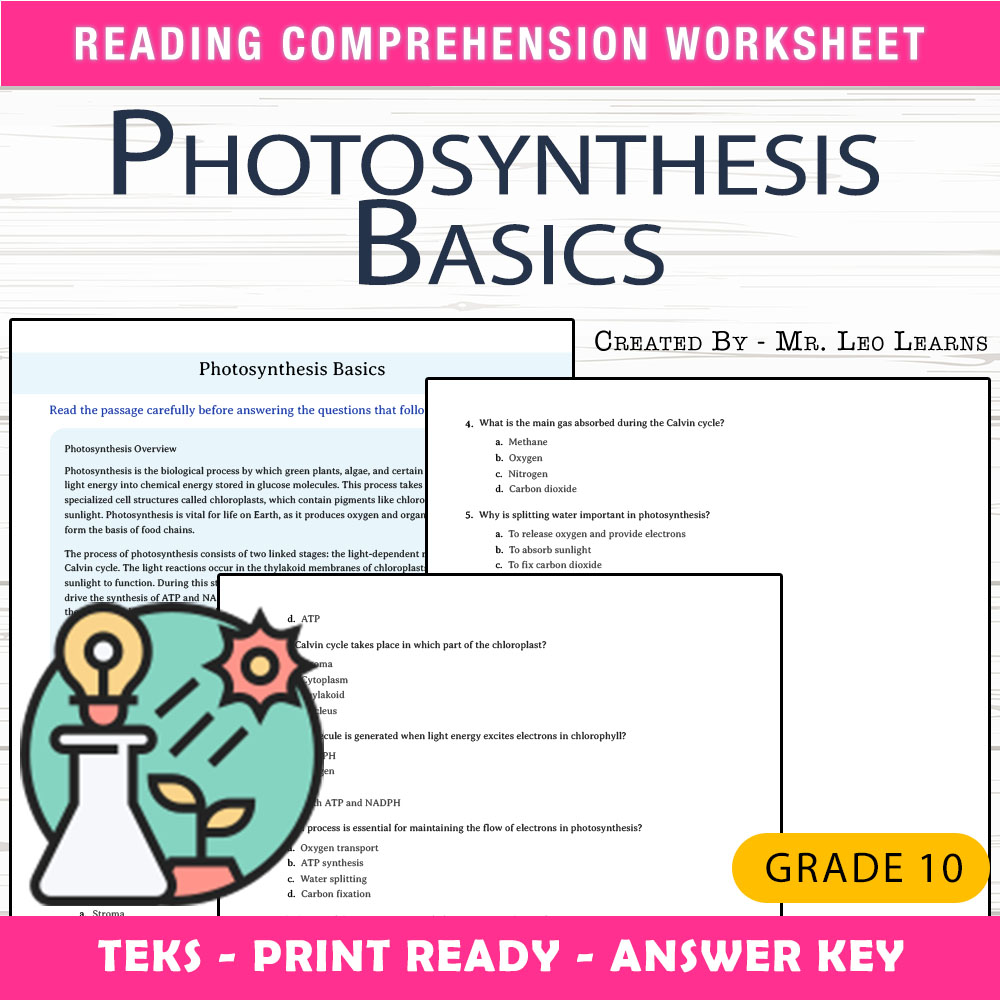
Grade 10 Science – Photosynthesis Basics Worksheet for Mastery
 Created byThe Resource Hub
Learning Objectives
- Describe the two main stages of photosynthesis: light reactions and the Calvin cycle.
- Explain how light energy is converted into chemical energy in chloroplasts.
- Identify the key products of the light reactions and the Calvin cycle.
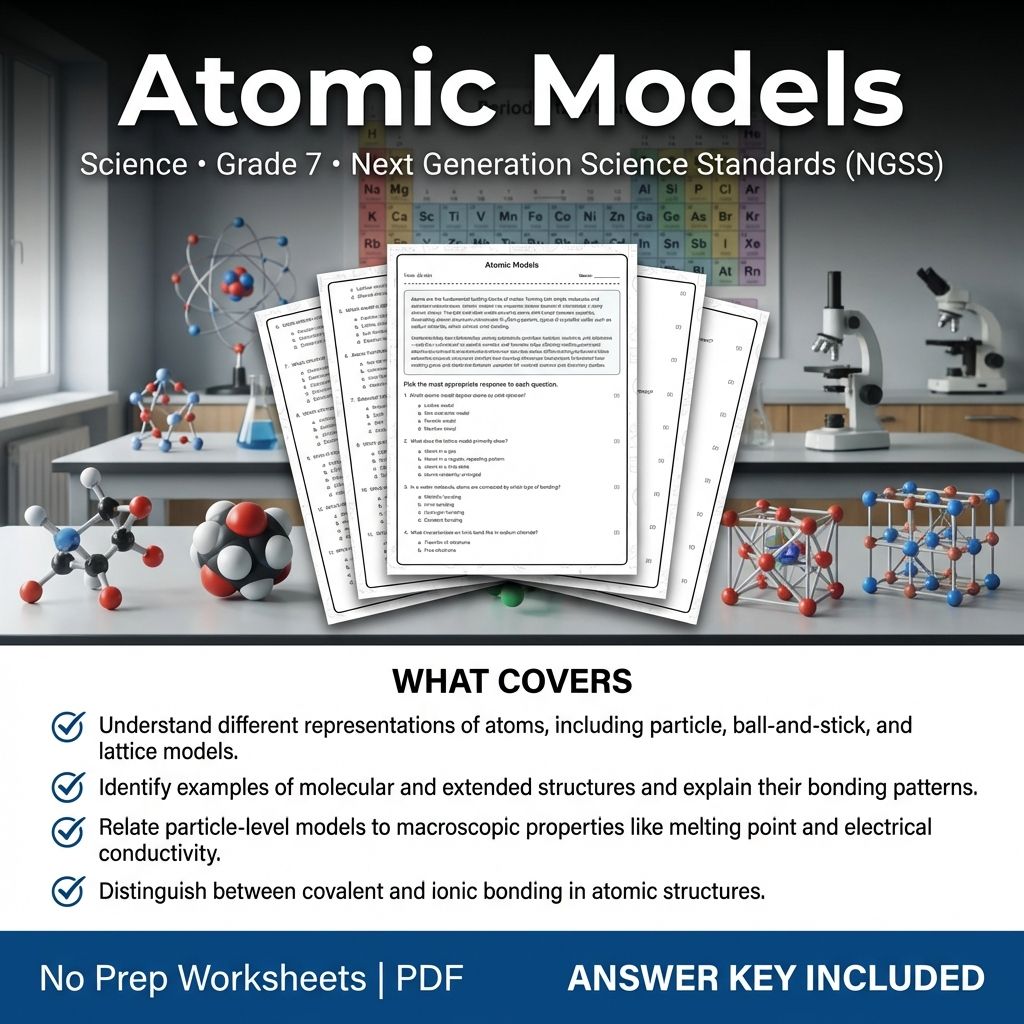
7th Grade Science | Atomic Models Worksheet + Answer Key (Printable PDF)
Created byCoral Reef LearningLearning Objectives
- Understand different representations of atoms, including particle, ball-and-stick, and lattice models.
- Identify examples of molecular and extended structures and explain their bonding patterns.
- Relate particle-level models to macroscopic properties like melting point and electrical conductivity.
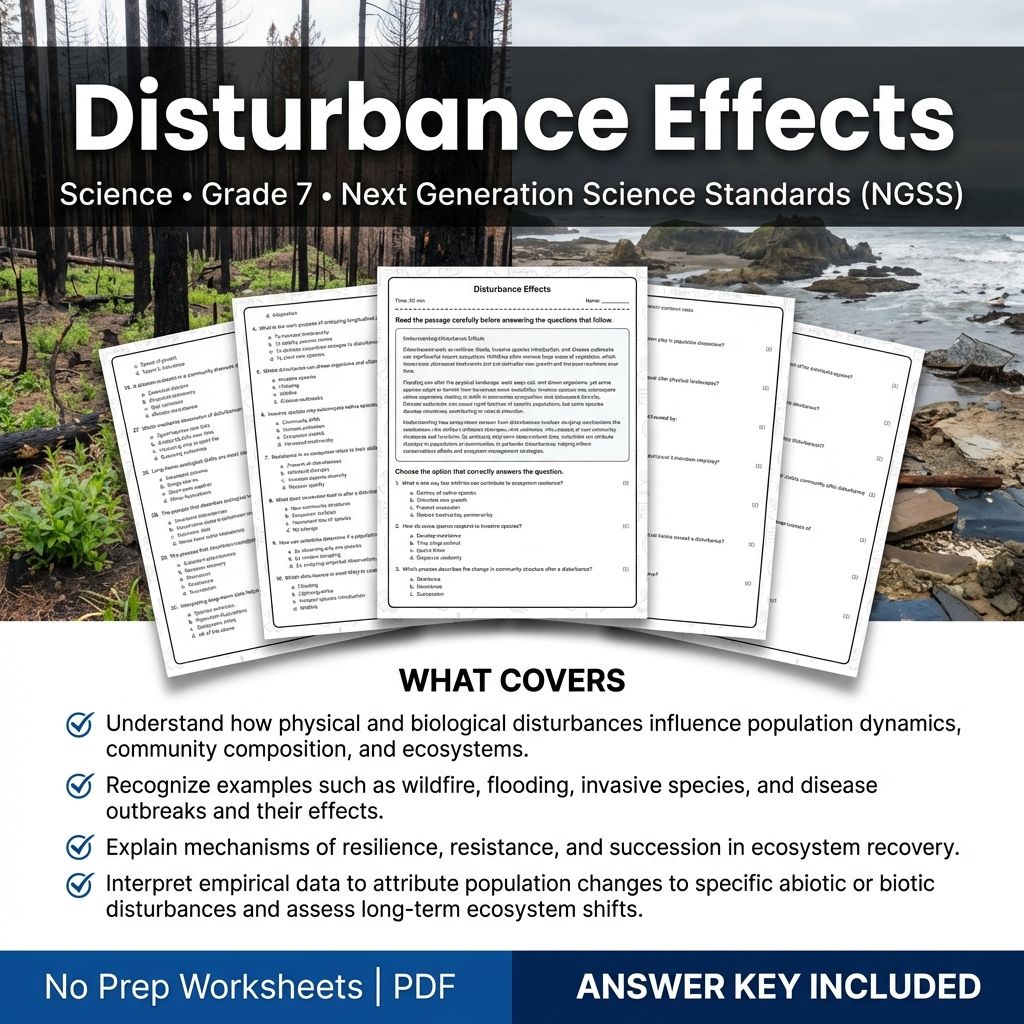
Grade 7 Science | Disturbance Effects Worksheet & Answer Key (Printable PDF)
Created byCoral Reef LearningLearning Objectives
- Understand how physical and biological disturbances influence population dynamics, community composition, and ecosystems.
- Recognize examples such as wildfire, flooding, invasive species, and disease outbreaks and their effects.
- Explain mechanisms of resilience, resistance, and succession in ecosystem recovery.
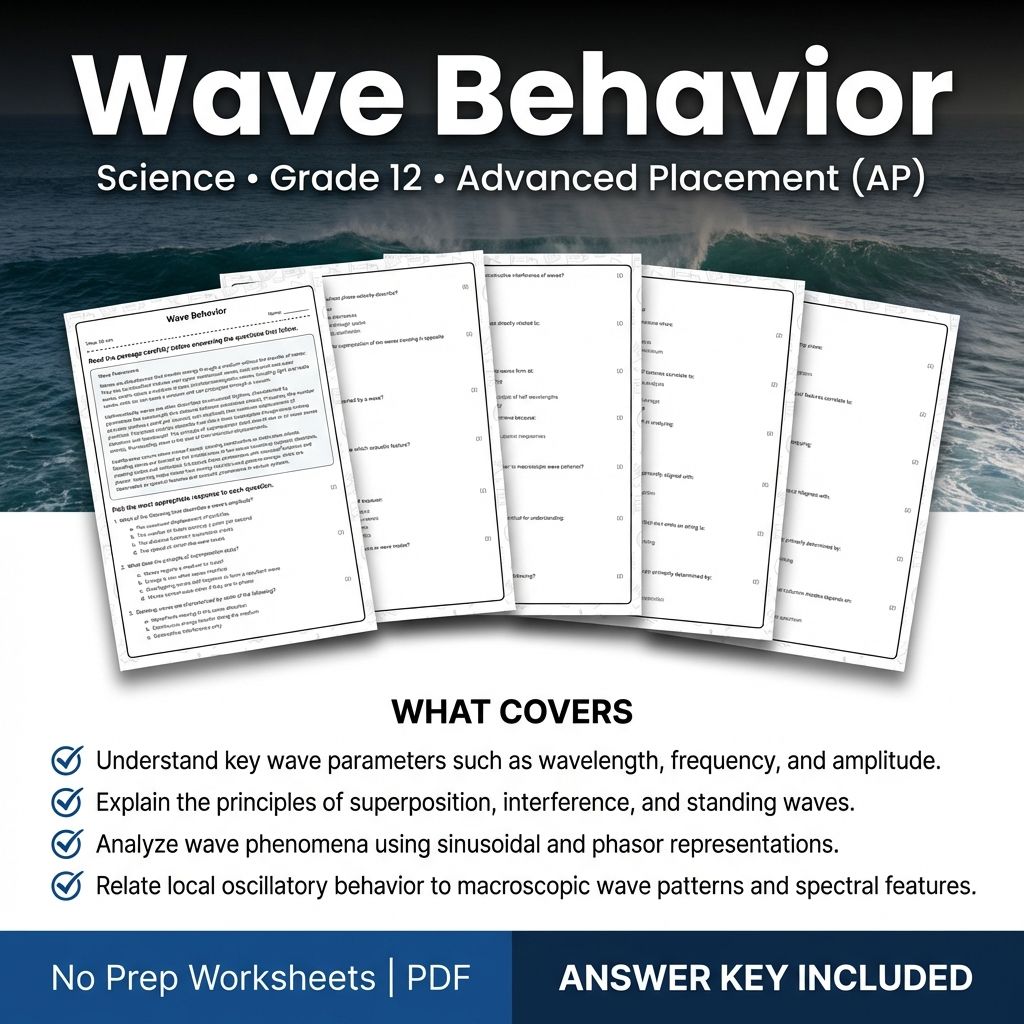
Grade 12 Science Worksheet on Wave Behavior | AP Standard Practice & Answer Key
Created byCoral Reef LearningLearning Objectives
- Understand key wave parameters such as wavelength, frequency, and amplitude.
- Explain the principles of superposition, interference, and standing waves.
- Analyze wave phenomena using sinusoidal and phasor representations.
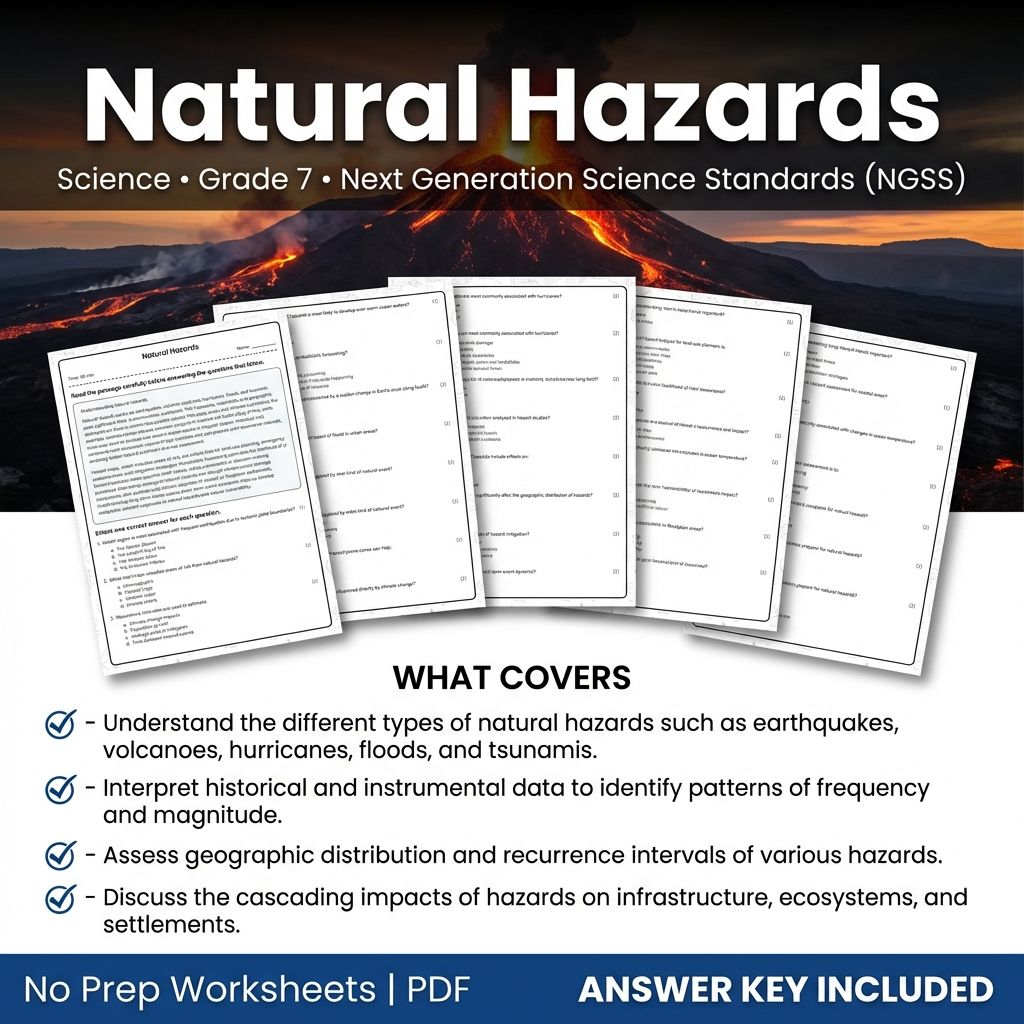
7th Grade Science | Natural Hazards Worksheet & Answer Key (Printable PDF)
Created byCoral Reef LearningLearning Objectives
- Understand the different types of natural hazards such as earthquakes, volcanoes, hurricanes, floods, and tsunamis.
- Interpret historical and instrumental data to identify patterns of frequency and magnitude.
- Assess geographic distribution and recurrence intervals of various hazards.
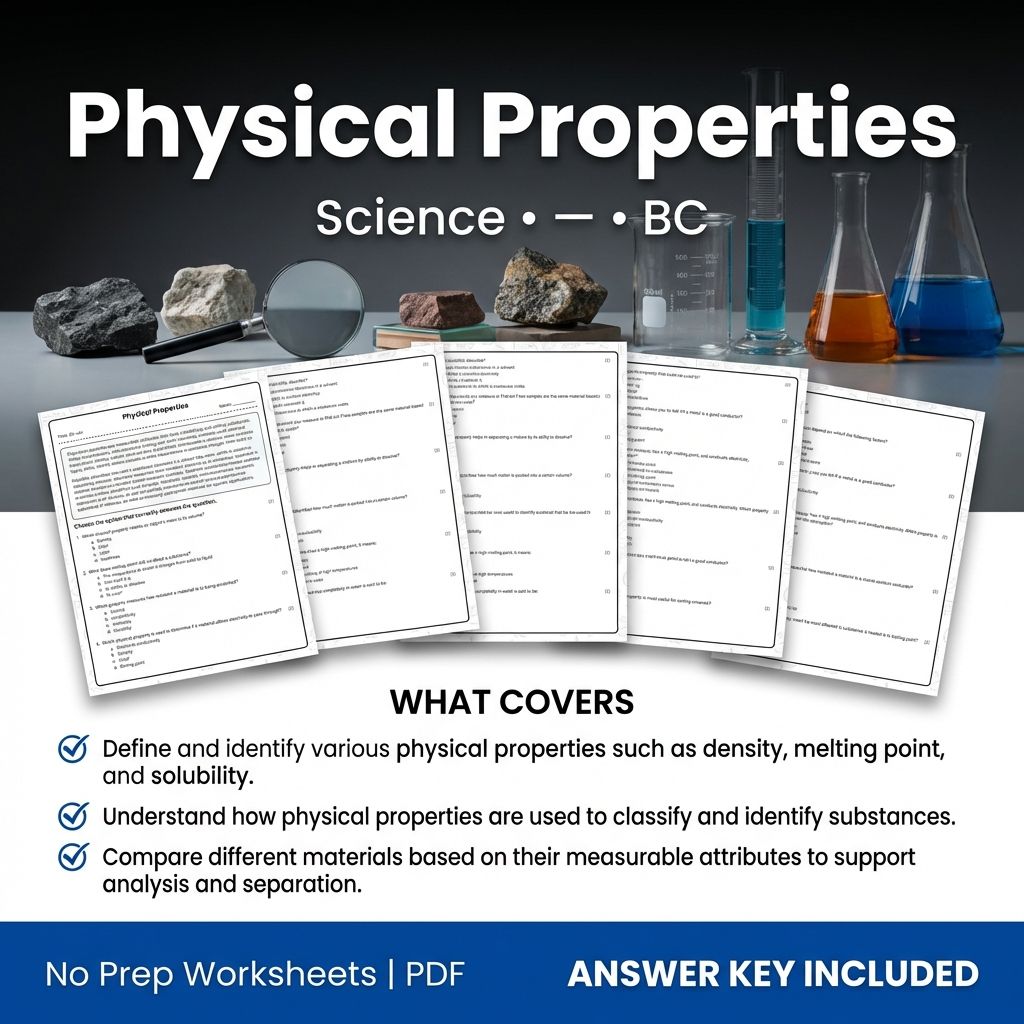
Grade 7 Science – Physical Properties Worksheet & Answer Key (Printable PDF)
Created byCoral Reef LearningLearning Objectives
- Define and identify various physical properties such as density, melting point, and solubility.
- Understand how physical properties are used to classify and identify substances.
- Compare different materials based on their measurable attributes to support analysis and separation.
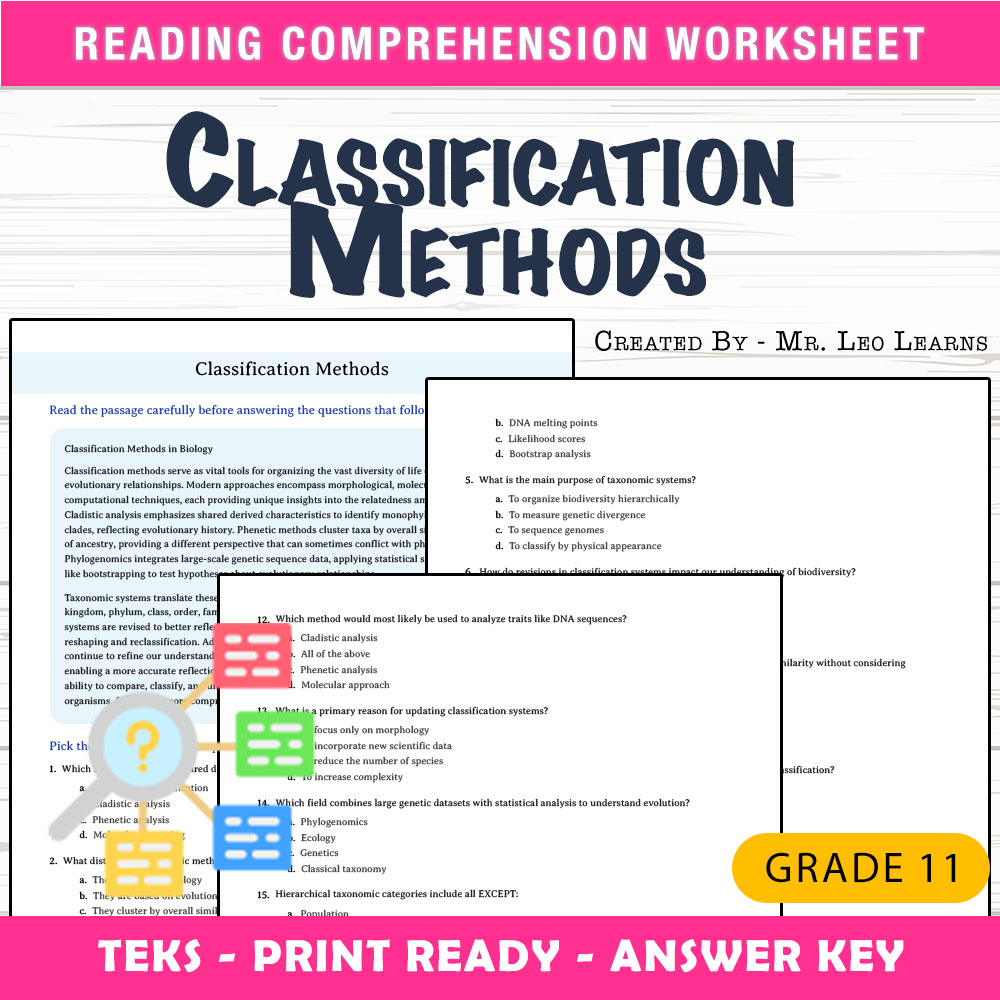
Grade 11 Science – Classification Methods Worksheet for Mastery
Created byThe Resource HubLearning Objectives
- Understand various approaches used to classify biological diversity.
- Identify key features of cladistic, phenetic, and phylogenomics methods.
- Explain how hierarchical taxonomic systems are developed from phylogenetic insights.
Browse more categories
About Science Worksheets
Find Science worksheets spanning core skills, practice, and review. All 42,859 resources are instant PDF downloads for the classroom or home.
Every worksheet on MyTeachingSheets is created by independent teacher-authors and reviewed before publication. All resources download as printable PDFs for classroom, homework, or at-home practice, and many include answer keys. Preview any worksheet free before buying.