
Grade 6 Science Worksheets
5,969 worksheets
Heat and States Worksheet | Standards-Aligned Grade 6 Science Practice
JCreated byJ.S SheetsLearning Objectives
- Explain how heat transfer changes energy in matter and affects temperature
- Describe how melting, evaporation, and boiling relate to energy and particle motion
- Use evidence from everyday observations to connect energy with changes in state
Also included in: Grade 6 Matter, Motion, and Heat Science Lesson Bundle – General Framework +1 more
Instant download

Science Systems Thinking in Solutions Worksheet | Standard Grade 6 Science
JCreated byJ.S SheetsLearning Objectives
- Identify inputs, outputs, and pathways in a real-world solution.
- Explain how changing one component can affect overall system performance.
- Use cause-and-effect reasoning to describe why a design succeeds or fails.
Also included in: Grade 6 Engineering Design Process Science Lesson Bundle – General Framework +1 more
Instant download
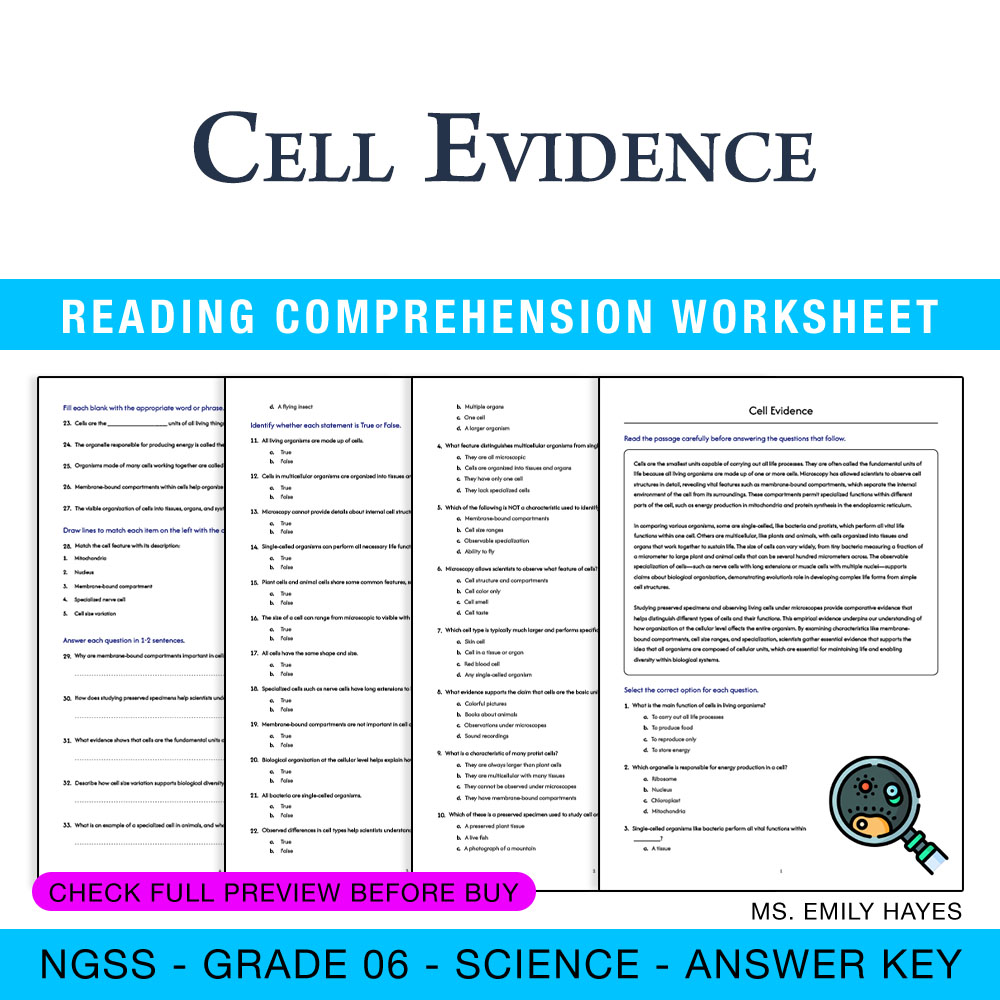
6th Grade Science | Cell Evidence Worksheet (PDF + Answer Key)
 Created byCopper Leaf Classroom
Learning Objectives
- Identify the basic structure and characteristics of cells as the fundamental unit of life.
- Compare and contrast single-celled and multicellular organisms based on microscopy evidence.
- Describe the relationships among cells, tissues, organs, and whole organisms in biological organization.
Instant download
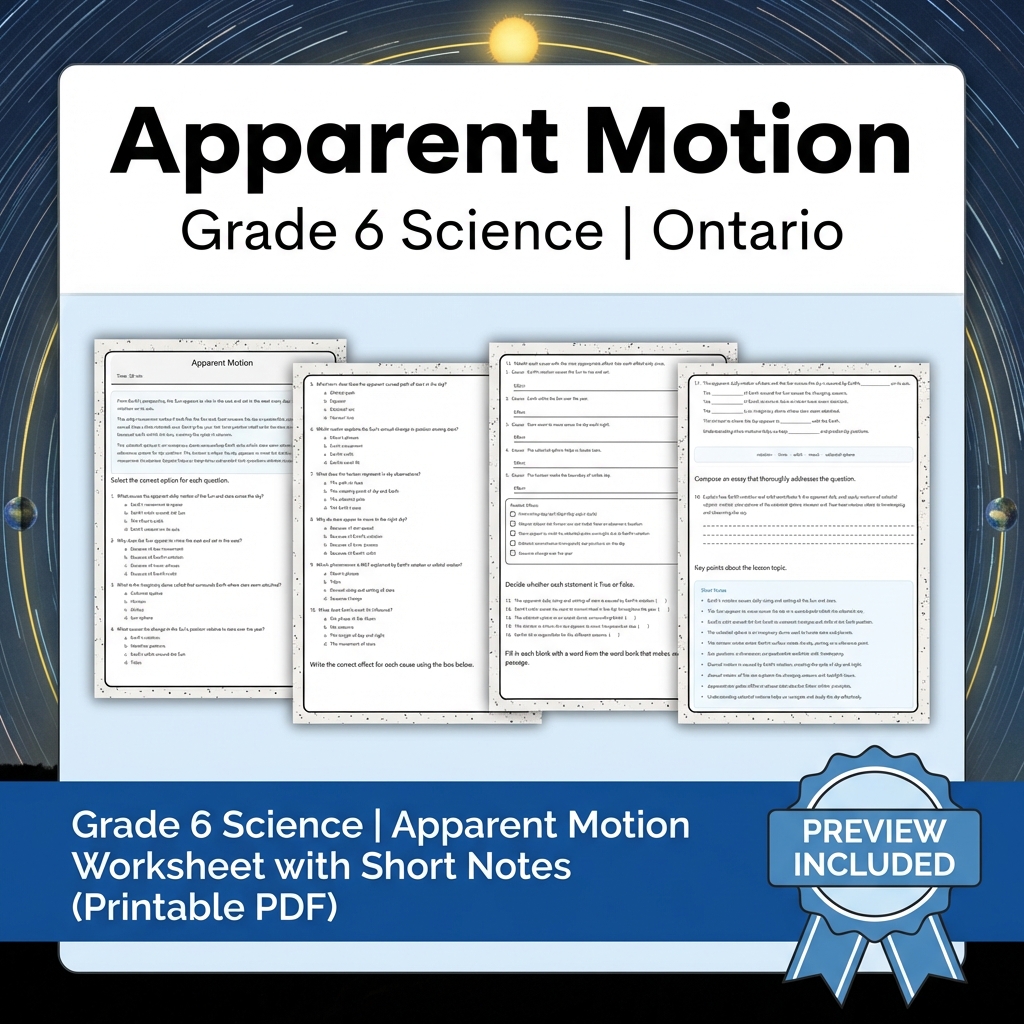
Grade 6 Science | Apparent Motion Worksheet with Short Notes (Printable PDF)
 Created byMeadowlark Worksheets
Learning Objectives
- Describe the daily and annual apparent motions of the Sun, Moon, and stars as seen from Earth.
- Explain the causes of apparent celestial motions such as Earth rotation and orbit.
- Define concepts like diurnal rising and setting, celestial sphere, and horizon.
Also included in: Grade 6 Science Lesson Group Bundle – Ontario Curriculum Worksheets +1 more
Instant download
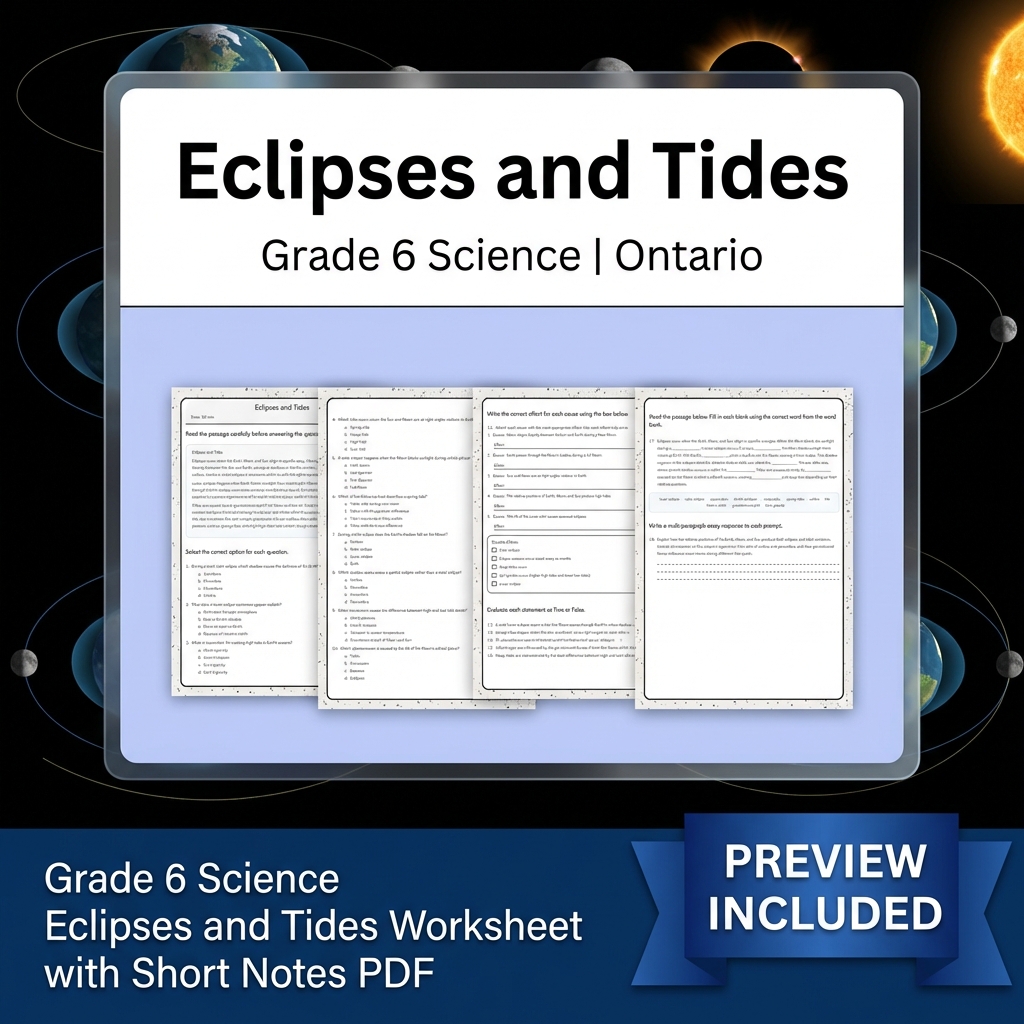
Grade 6 Science Eclipses and Tides Worksheet with Short Notes PDF
Created byMeadowlark WorksheetsLearning Objectives
- Understand the geometry behind solar and lunar eclipses, including the roles of umbra and penumbra.
- Describe how the relative positions of the Earth, Moon, and Sun produce solar and lunar eclipses.
- Explain the causes of tidal phenomena, including the effects of the Moon and Sun on Earth's oceans.
Also included in: Grade 6 Science Lesson Group Bundle – Ontario Curriculum Worksheets +1 more
Instant download
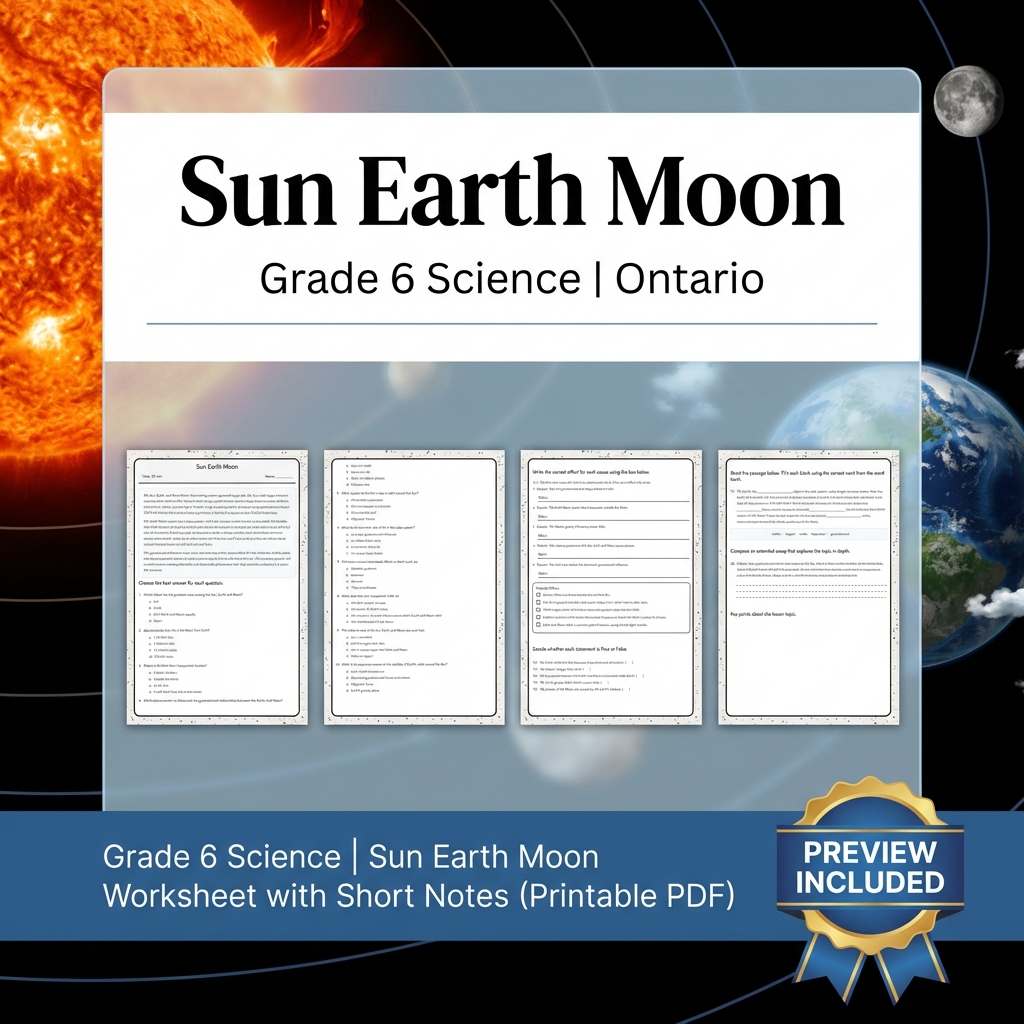
Grade 6 Science | Sun Earth Moon Worksheet with Short Notes (Printable PDF)
Created byMeadowlark WorksheetsLearning Objectives
- Describe the relative sizes, masses, and distances among the Sun, Earth, and Moon.
- Explain how gravitational interactions influence the orbital relationships of the Sun, Earth, and Moon.
- Understand the concept of the Earth–Moon barycenter and the Sun's dominant gravitational influence.
Also included in: Grade 6 Science Lesson Group Bundle – Ontario Curriculum Worksheets +1 more
Instant download
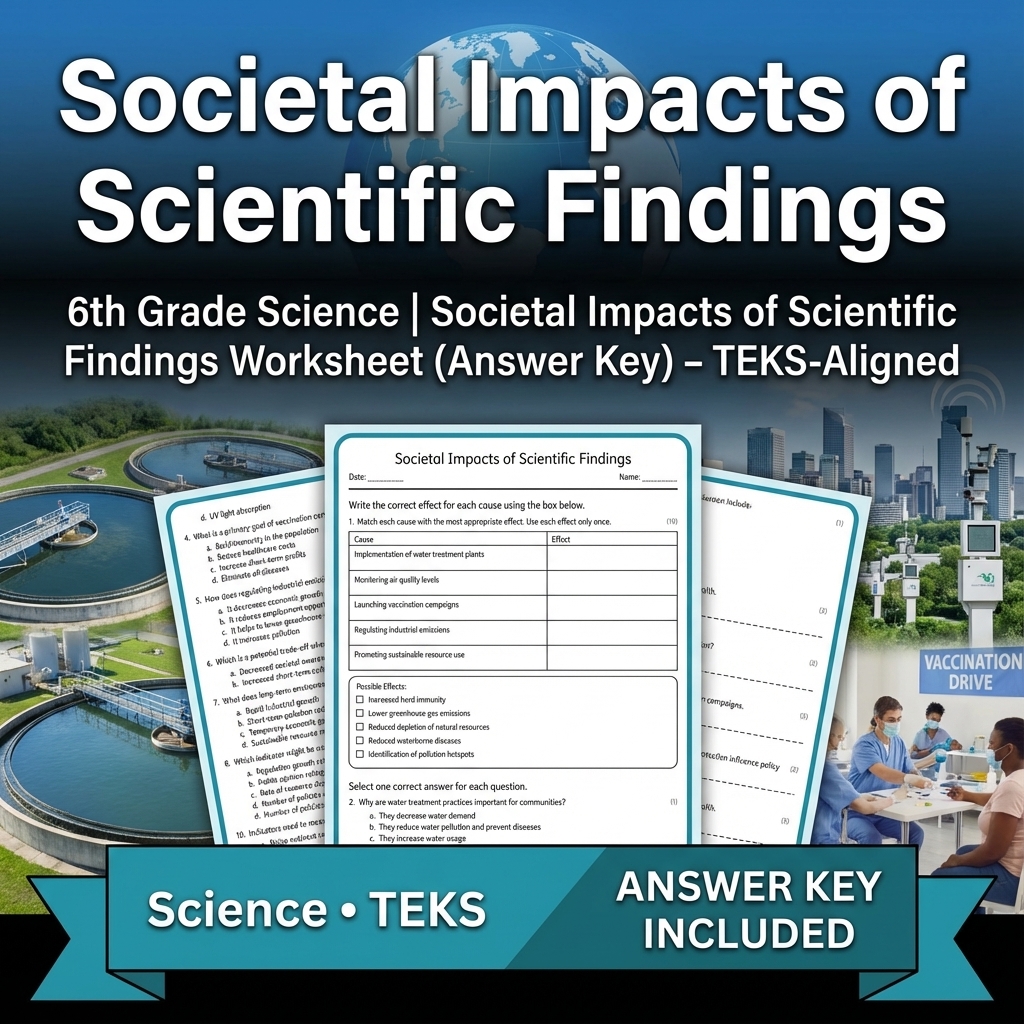
6th Grade Science | Societal Impacts of Scientific Findings Worksheet (Answer Key) – TEKS-Aligned
 Created byBright Mind Resources
Learning Objectives
- Analyze how scientific data influences societal change through public health, environmental regulation, and resource management.
- Evaluate the outcomes and trade-offs of scientific actions on society and the environment.
- Identify indicators used to assess the effectiveness of societal and environmental measures.
Instant download

Mass Conservation Worksheet Grade 6 Science Matter Conservation Practice
 Created byPrism Point Learning
Learning Objectives
- Explain mass conservation in terms of conservation of atoms in a closed system.
- Connect particle-level changes to macroscopic measurements of reactants and products.
- Use evidence from a model to predict whether total mass changes in a closed reaction.
Instant download

Grade 6 Science – Adaptation Basics & Reading Worksheet | Ontario Standards
Created byBright Mind ResourcesLearning Objectives
- Understand what structural adaptations are in animals
- Identify different examples of adaptations in nature
- Explain how adaptations help animals survive in their environments
Also included in: Grade 6 Ecology & Biodiversity Science Lesson Bundle | Ontario Daily Reading +1 more
Instant download
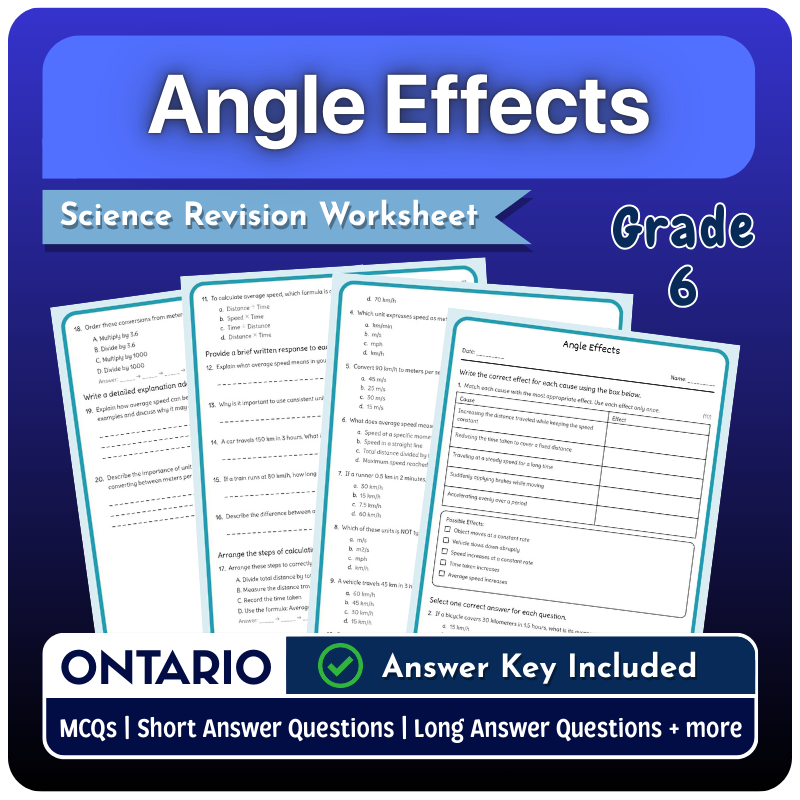
Grade 6 Science | Effects of Angle of Attack Worksheet (Ontario, PDF)
Created byBright Mind ResourcesLearning Objectives
- Understand how the angle of attack influences airflow and lift generation.
- Identify the effects of changing wing incidence and pilot input on effective angle.
- Explain how factors like airfoil shape, flap settings, and Reynolds number affect critical angle.
Instant download
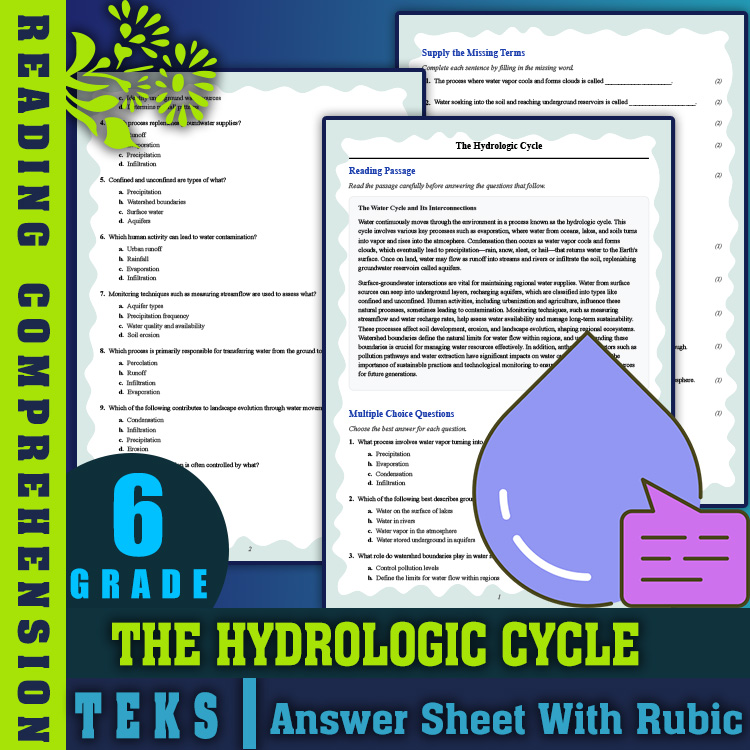
6th Grade Science | The Hydrologic Cycle Reading Worksheet & Answer Key (PDF)
JCreated byJ.S SheetsLearning Objectives
- Describe the main processes of the hydrologic cycle, including evaporation, condensation, and precipitation.
- Explain how surface and groundwater interactions influence water availability and landscape development.
- Identify human and natural factors affecting water quality and sustainability.
Instant download

Stability Balance Worksheet Grade 6 Science Practice and Review
Created byPrism Point LearningLearning Objectives
- Explain how the position of the center of mass relative to the center of pressure affects static stability.
- Describe how design features like dihedral angles and tail volume influence longitudinal and lateral balance.
- Predict how changing payload and wind disturbances can alter an aircraft or glider’s tendency to return to steady flight.
Also included in: Aerodynamics and Flight Design Lesson Bundle – Grade 6 Science Alberta
Instant download

Angle Effects Worksheet | Grade 6 Science Activities
Created byPrism Point LearningLearning Objectives
- Explain how changing the angle of attack affects lift and drag.
- Describe what happens at the critical point when airflow separates and a stall occurs.
- Use real-world examples (kites or small gliders) to predict how adjusting angle changes performance.
Also included in: Aerodynamics and Flight Design Lesson Bundle – Grade 6 Science Alberta
Instant download

Air Properties Worksheet | Grade 6 Science Practice and Assessment
Created byPrism Point LearningLearning Objectives
- Explain how air composition, density, pressure, and temperature help describe how air behaves.
- Predict how changes in altitude and temperature can affect air density and pressure.
- Describe how collisions between gas molecules create pressure and relate this to everyday weather.
Also included in: Aerodynamics and Flight Design Lesson Bundle – Grade 6 Science Alberta
Instant download

Streamlining Worksheet | Grade 6 Science Activities
Created byPrism Point LearningLearning Objectives
- Explain how streamlined shapes reduce aerodynamic resistance by changing airflow behavior.
- Describe how smooth surfaces and gradual shape changes can delay flow separation.
- Connect streamlining to real-world examples such as farm equipment and aircraft parts.
Also included in: Aerodynamics and Flight Design Lesson Bundle – Grade 6 Science Alberta
Instant download
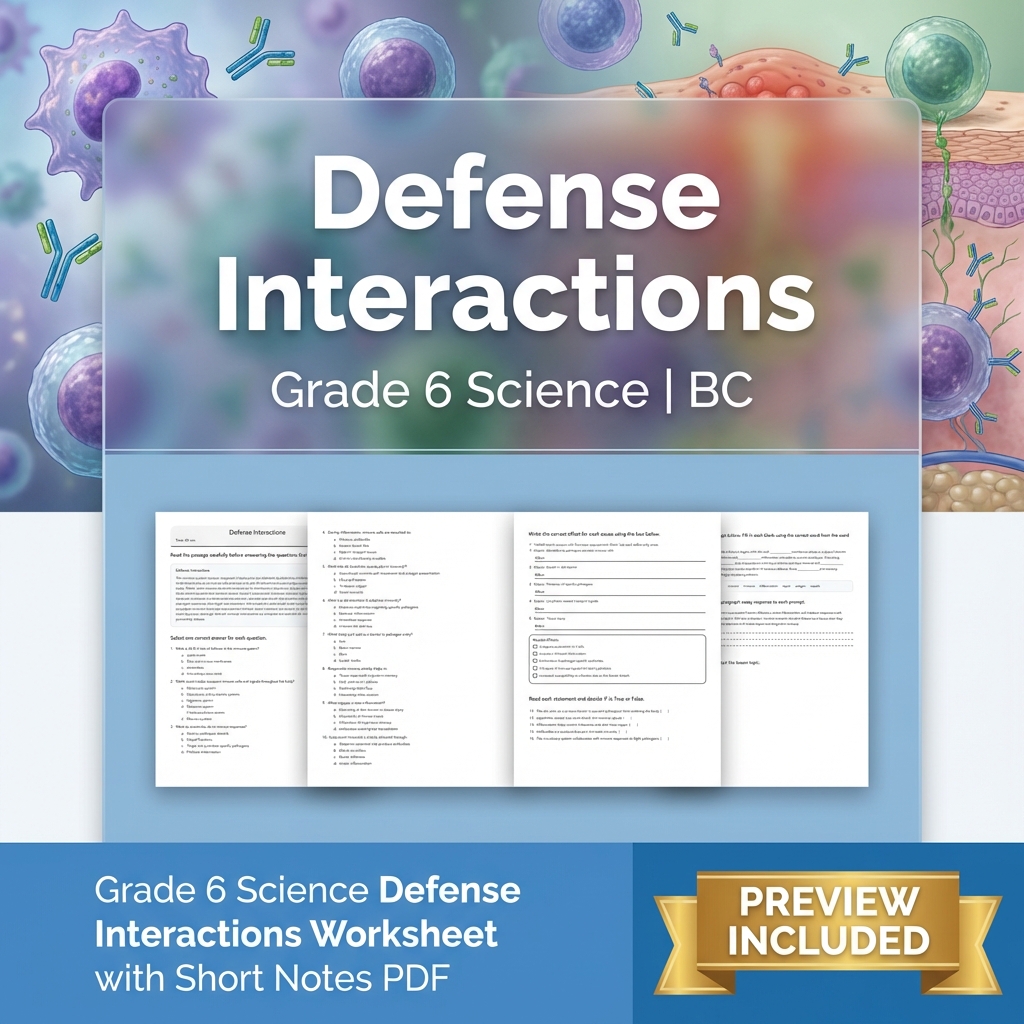
Grade 6 Science Defense Interactions Worksheet with Short Notes PDF
Created byMeadowlark WorksheetsLearning Objectives
- Understand the role of barrier defenses, inflammation, and adaptive responses in immune defense.
- Identify the functions of skin, mucous membranes, immune cells, and lymphatic vessels.
- Explain how the immune system works with circulatory and lymphatic systems.
Also included in: Grade 6 Science | Multicellular Systems & Functions Unit Worksheet Bundle +1 more
Instant download

Grade 6 Filtration And Sieving Worksheet | BC Practice & PDF
 Created byClear Sky Classroom
Learning Objectives
- Explain how filtration and sieving separate mixtures using particle size and barriers.
- Identify the parts of a filtration process (porous barrier, trapped solids, and filtrate).
- Compare sieving and filtration and predict which method fits a described mixture.
Instant download
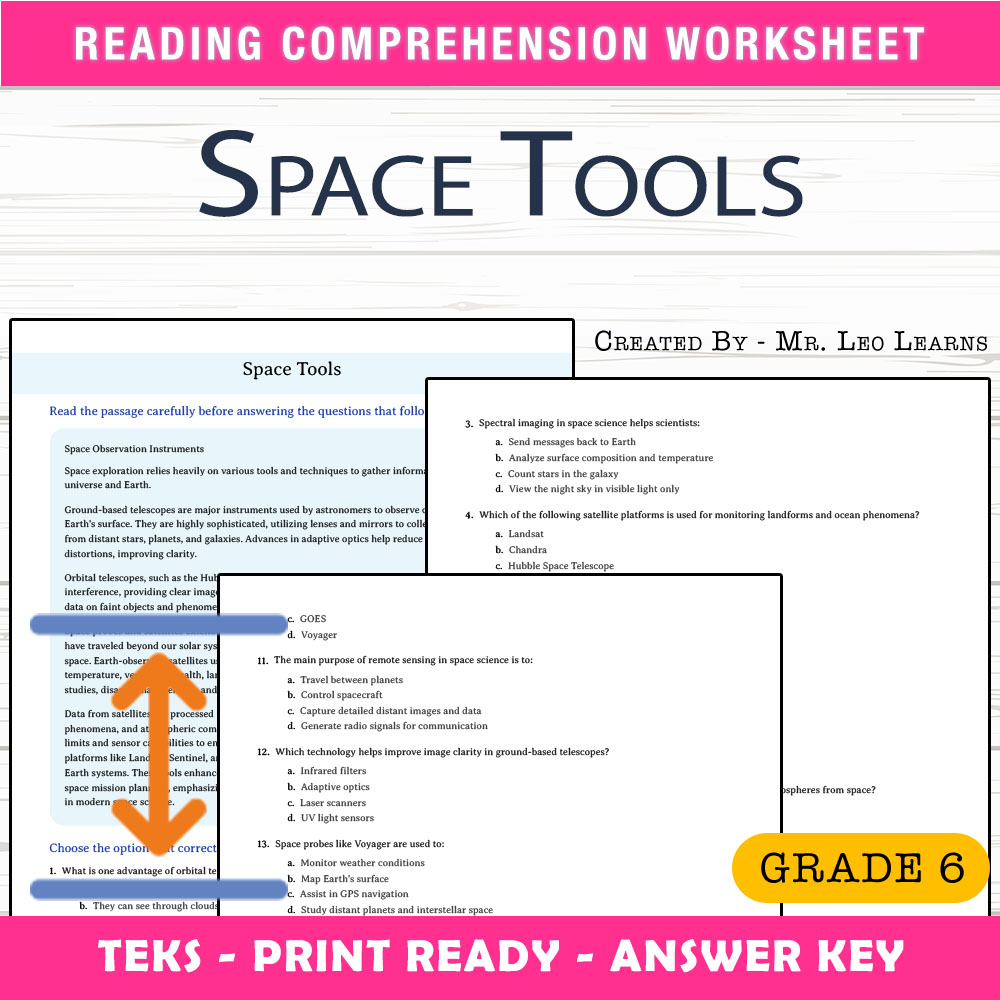
Grade 6 Science — Space Tools Worksheet for Mastering Space Exploration
 Created byThe Resource Hub
Learning Objectives
- Describe observational techniques and instruments used in space science.
- Understand how satellite data is used for Earth and planetary system analysis.
- Explain spectral imaging, remote sensing, and data interpretation in space exploration.
Instant download

Grade 6 Classification Using Observable Traits & Dichotomous Keys Worksheet
 Created byTeacher's Corner
Learning Objectives
- Explain how observable characteristics are used to group living things in a classification system.
- Use a simple dichotomous key to identify an organism by following paired choices.
- Describe how hierarchical categories connect kingdom, phylum, class, order, family, genus, and species.
Instant download

Grade 6 Science – Circulatory Transport Reading Worksheet | Standards-Aligned
Created byBright Mind ResourcesLearning Objectives
- Identify the main functions of the heart
- Understand how blood is transported through arteries, veins, and capillaries
- Explain how heart structure and pumping action move blood
Also included in: Life Processes Grade 6 Science Daily Reading Worksheets Lesson Bundle | General +1 more
Instant download

Grade 6 Food Webs Worksheet with Answer Key | Florida NGSSS Ecosystems Science
 Created byEvergreen Desk Education
Learning Objectives
- Explain how food webs connect multiple food chains using feeding relationships in an ecosystem.
- Describe how energy flows through producers, consumers, and predators in a food web.
- Interpret how changes (disturbances) to one organism can affect multiple organisms in a food web.
Instant download
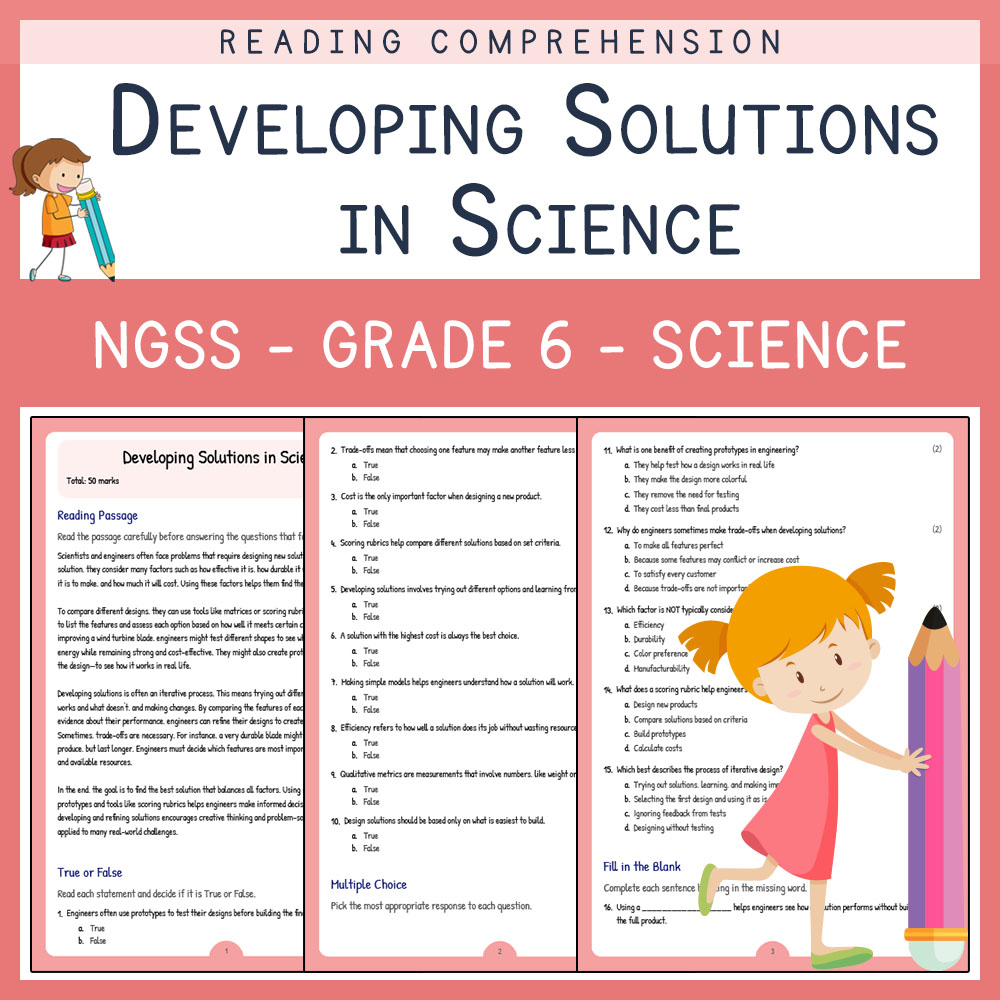
Grade 6 Science | Developing Solutions in Science Worksheets (PDF + Answer Key)
 Created byLumora Learning
Learning Objectives
- Understand how to compare multiple design solutions using criteria and constraints
- Learn to evaluate solutions with quantitative and qualitative metrics
- Practice developing and refining solutions through evidence-based justification
Instant download
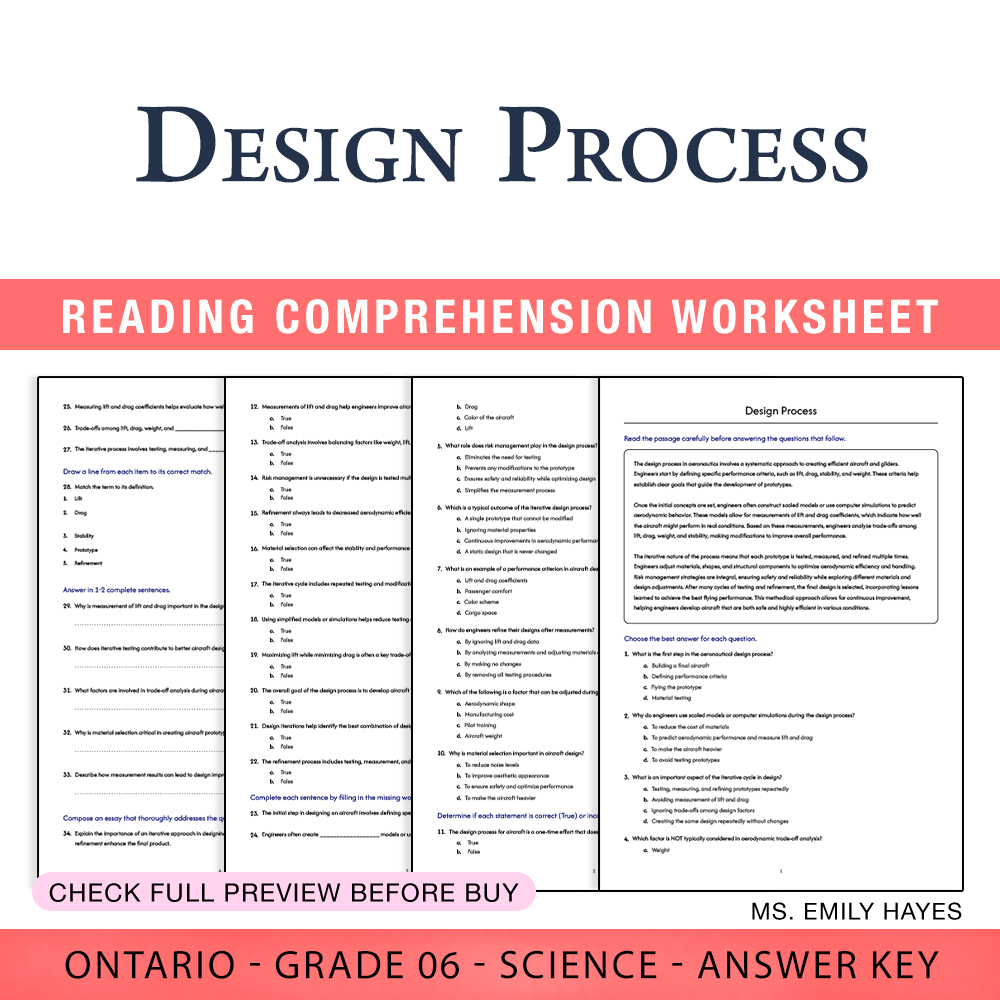
6th Grade Science | Design Process Worksheet (PDF + Answer Key)
Created byCopper Leaf ClassroomLearning Objectives
- Describe the steps involved in the design process for aircraft and glider concepts.
- Explain how measurement, iteration, and refinement improve aerodynamic performance.
- Identify key factors such as lift, drag, weight, and stability in aircraft design.
Instant download
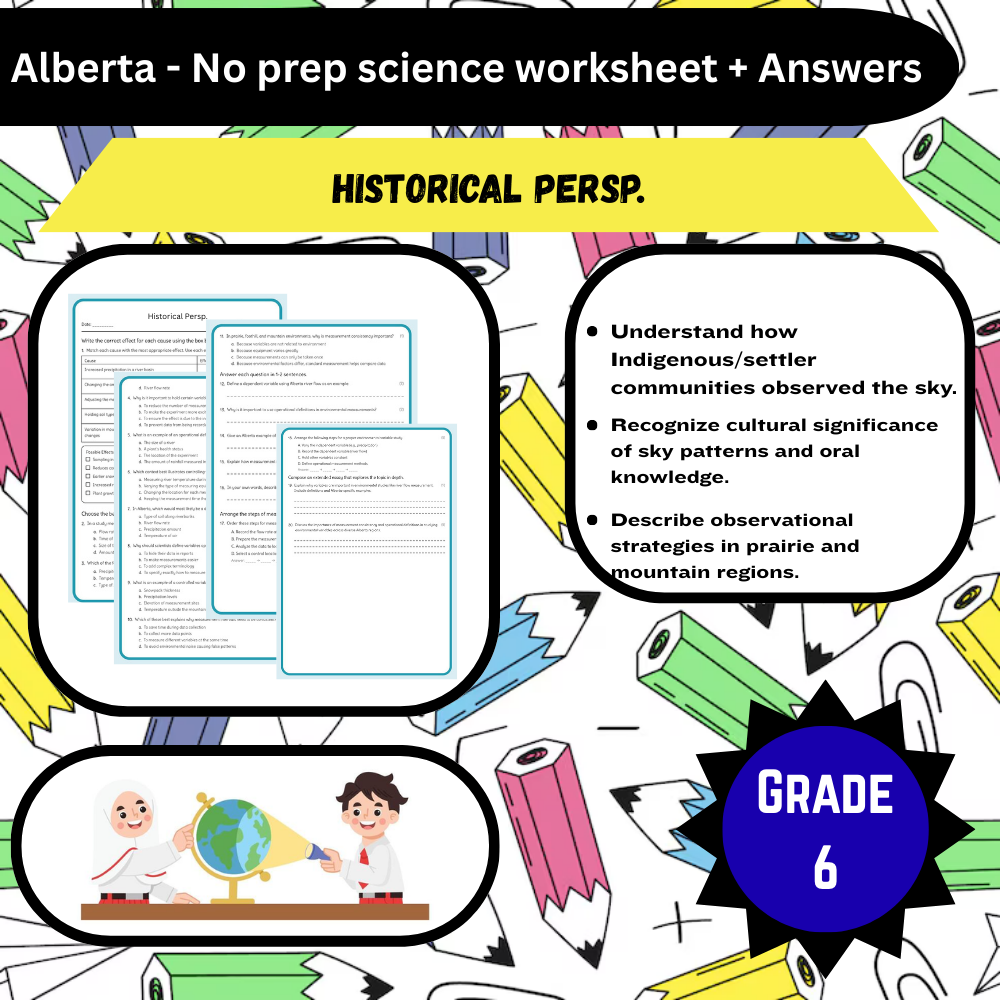
6th Grade - Sky Observations & Cultural Perspectives (Worksheet + Answer Key)
Created byBright Mind ResourcesLearning Objectives
- Understand how Indigenous and settler communities historically observed celestial movements.
- Recognize the cultural significance of sky patterns and oral knowledge in tracking seasons and navigation.
- Describe different observational strategies used in prairie and mountain regions related to lunar and solar cycles.
Instant download
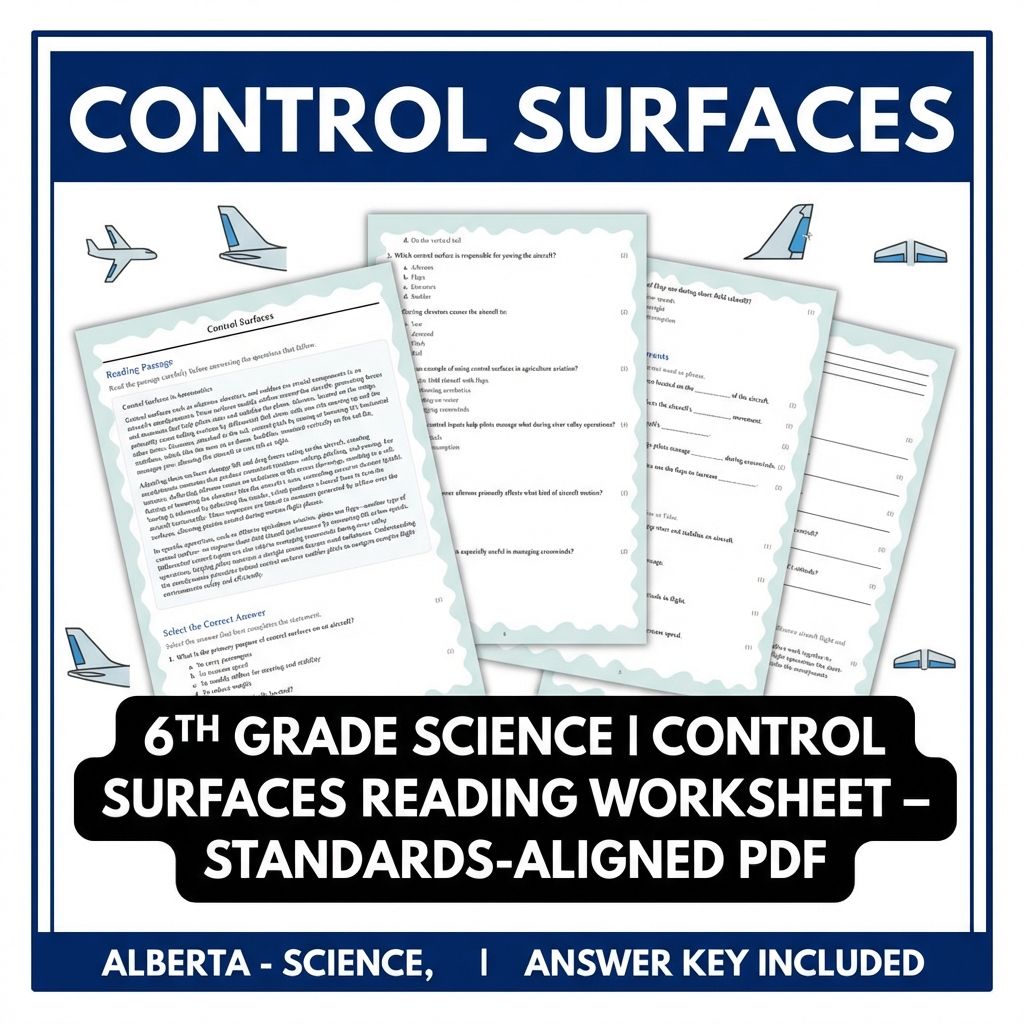
6th Grade Science | Control Surfaces Reading Worksheet – Standards-Aligned PDF
JCreated byJ.S SheetsLearning Objectives
- Define key control surfaces such as ailerons, elevators, and rudders and their functions.
- Explain how deflection of these surfaces influences aircraft movement.
- Describe how airflow modification produces moments that affect attitude and orientation.
Also included in: Grade 6 Science | Flight Physics & Aerodynamics UNIT Pack (Answer Keys Included) +1 more
Instant download
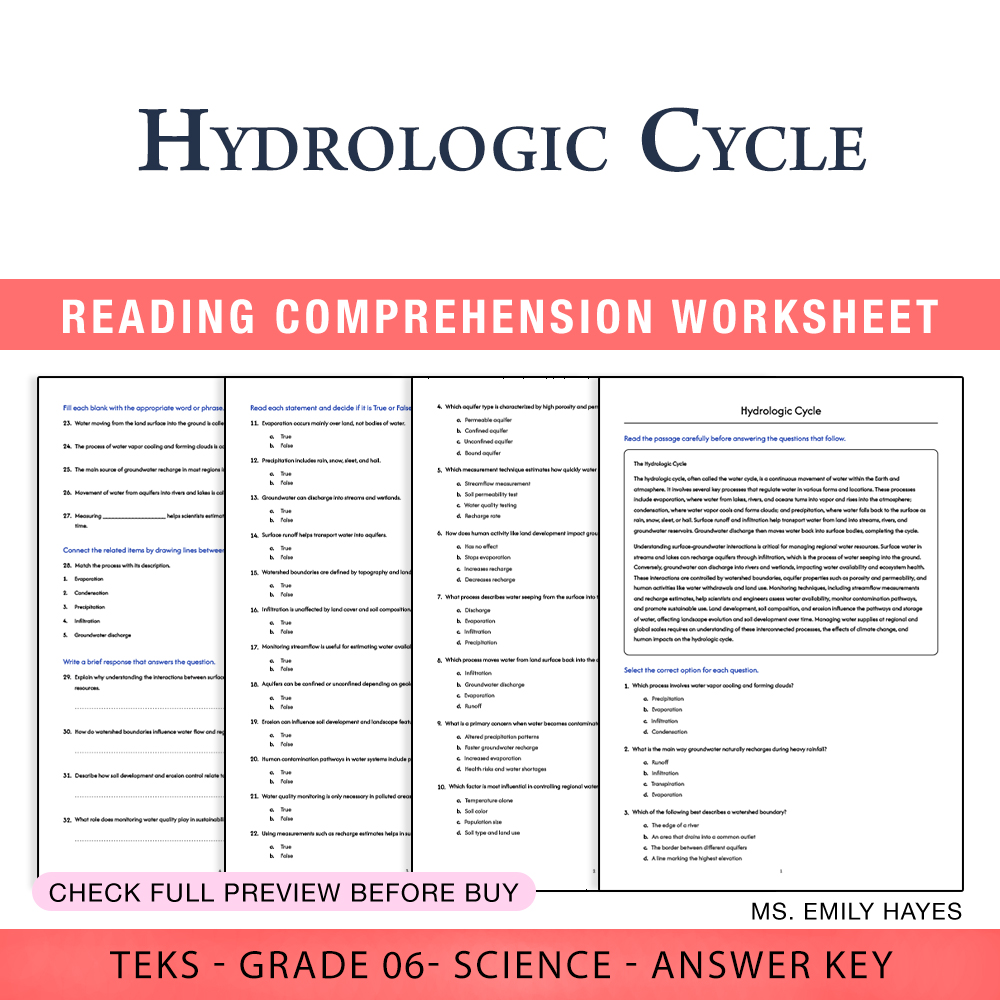
6th Grade Science | Hydrologic Cycle Worksheet (PDF+ Answer Key)
Created byCopper Leaf ClassroomLearning Objectives
- Describe the main processes of the hydrologic cycle, including evaporation, condensation, and precipitation.
- Explain the interactions between surface water and groundwater.
- Identify the components of watersheds and aquifers, and their importance in regional water availability.
Instant download
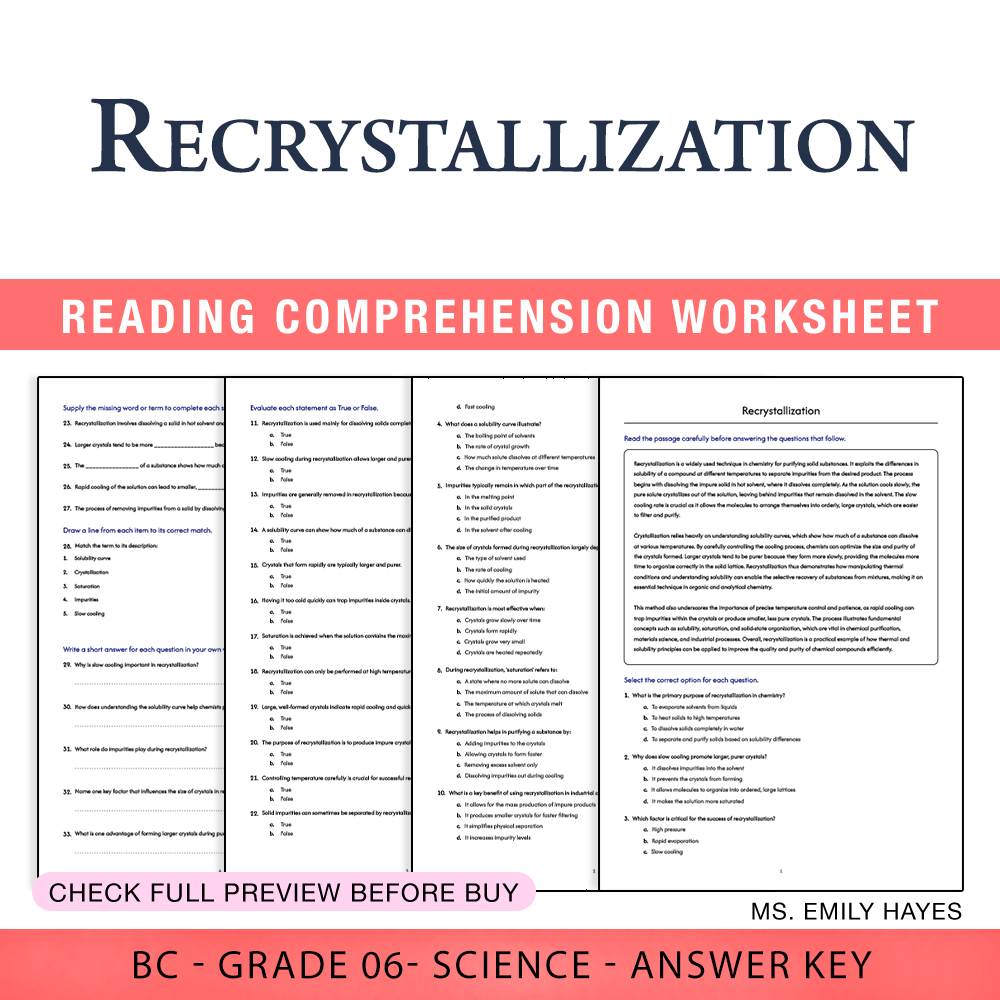
6th Grade Science | Recrystallization Worksheet (PDF+ Answer Key)
Created byCopper Leaf ClassroomLearning Objectives
- Explain the process of recrystallization and its role in purifying solids.
- Describe how solubility and temperature influence crystal formation during recrystallization.
- Identify the factors that affect the size and purity of crystals formed in recrystallization.
Also included in: Grade 6 Science BC| Reaction Rates & Chemical Properties (PDF+ Answer Keys) +1 more
Instant download
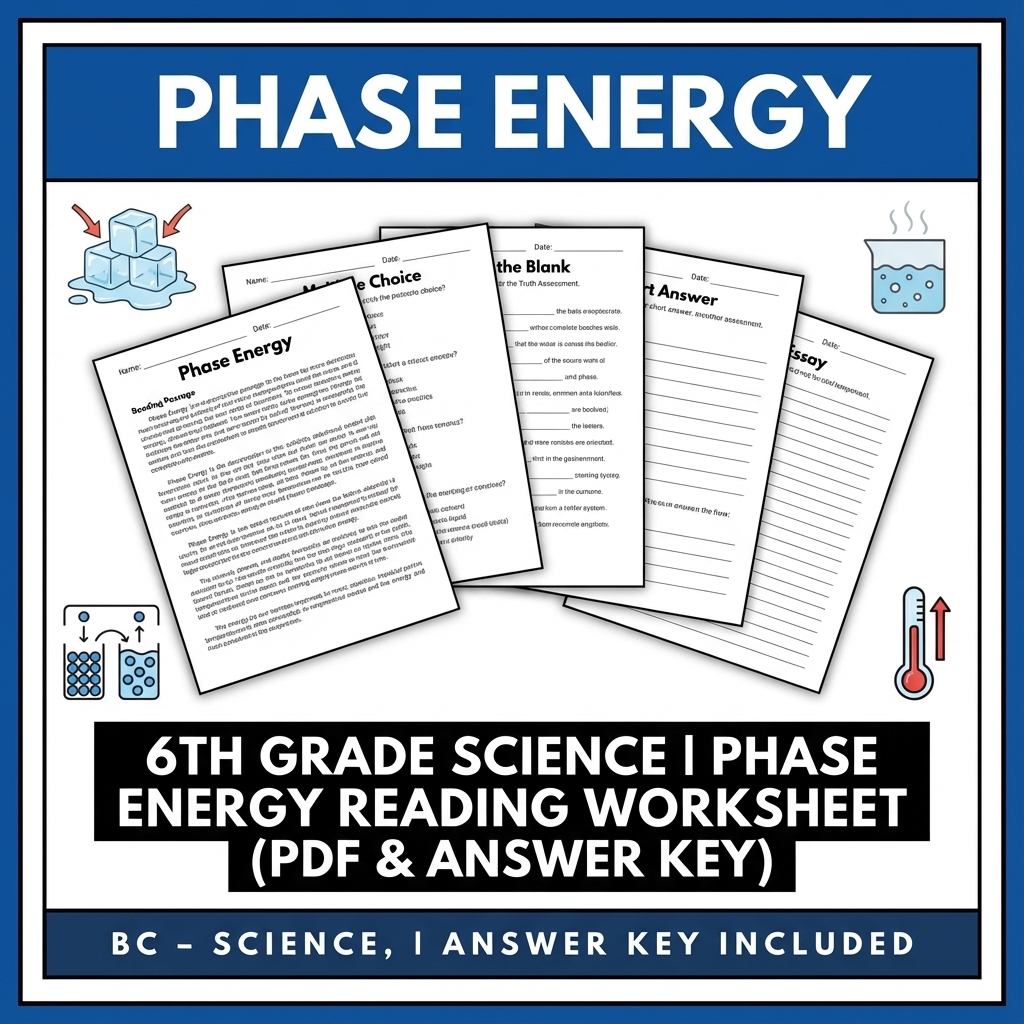
6th Grade Science | Phase Energy Reading Worksheet (PDF & Answer Key)
JCreated byJ.S SheetsLearning Objectives
- Explain how energy transfer causes phase changes without changing chemical identity.
- Identify the energy requirements for melting, boiling, freezing, and condensation.
- Link latent heat to particle interactions and temperature plateaus during phase changes.
Instant download
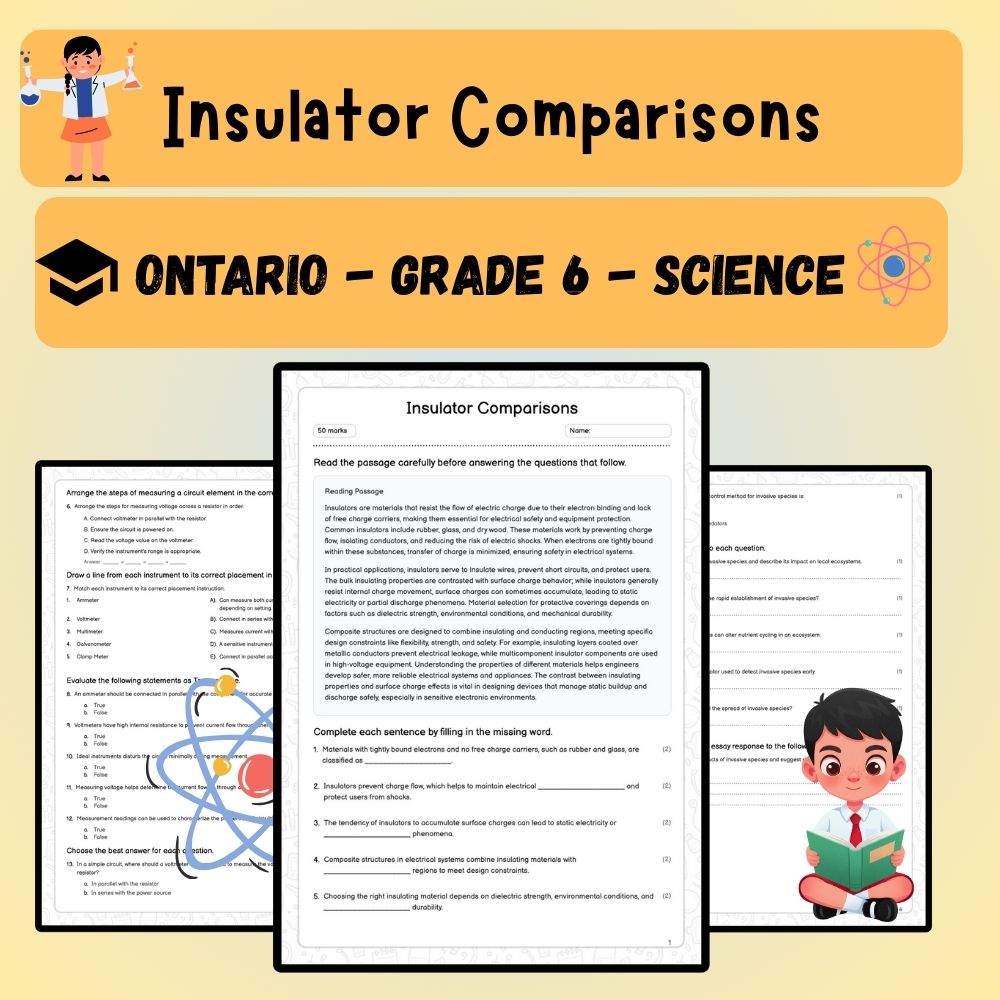
Grade 6 Science | Insulator Comparisons Worksheet with Answer Key (PDF )
Created byPrism Point LearningLearning Objectives
- Understand how insulating materials prevent charge flow and support electrical safety.
- Identify common insulating materials and their properties in electrical applications.
- Compare bulk insulating properties with surface charge behaviors.
Also included in: Grade 6 Science Unit – Circuits & Electricity Worksheet Bundle
Instant download
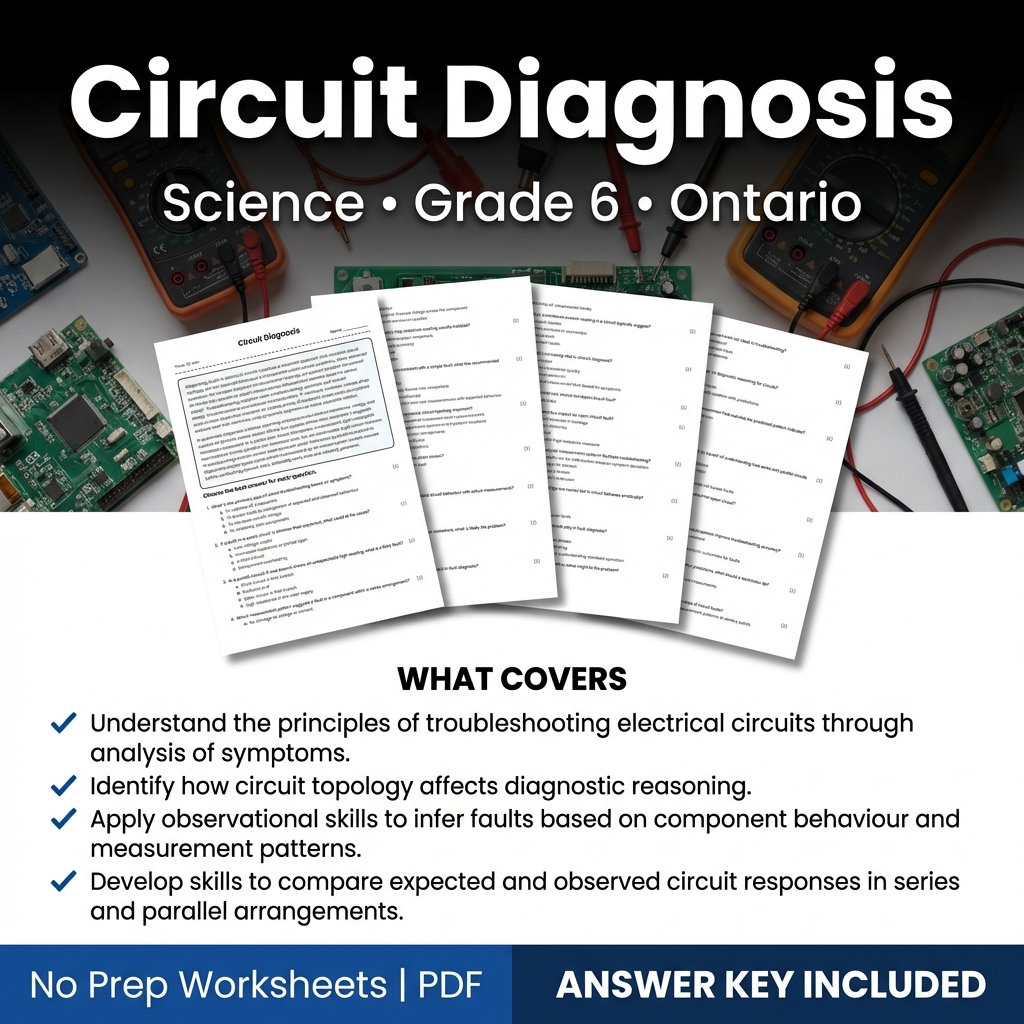
Grade 6 Science Worksheet | Circuit Diagnosis Practice | Ontario Standards
 Created byCoral Reef Learning
Learning Objectives
- Understand the principles of troubleshooting electrical circuits through analysis of symptoms.
- Identify how circuit topology affects diagnostic reasoning.
- Apply observational skills to infer faults based on component behaviour and measurement patterns.
Instant download
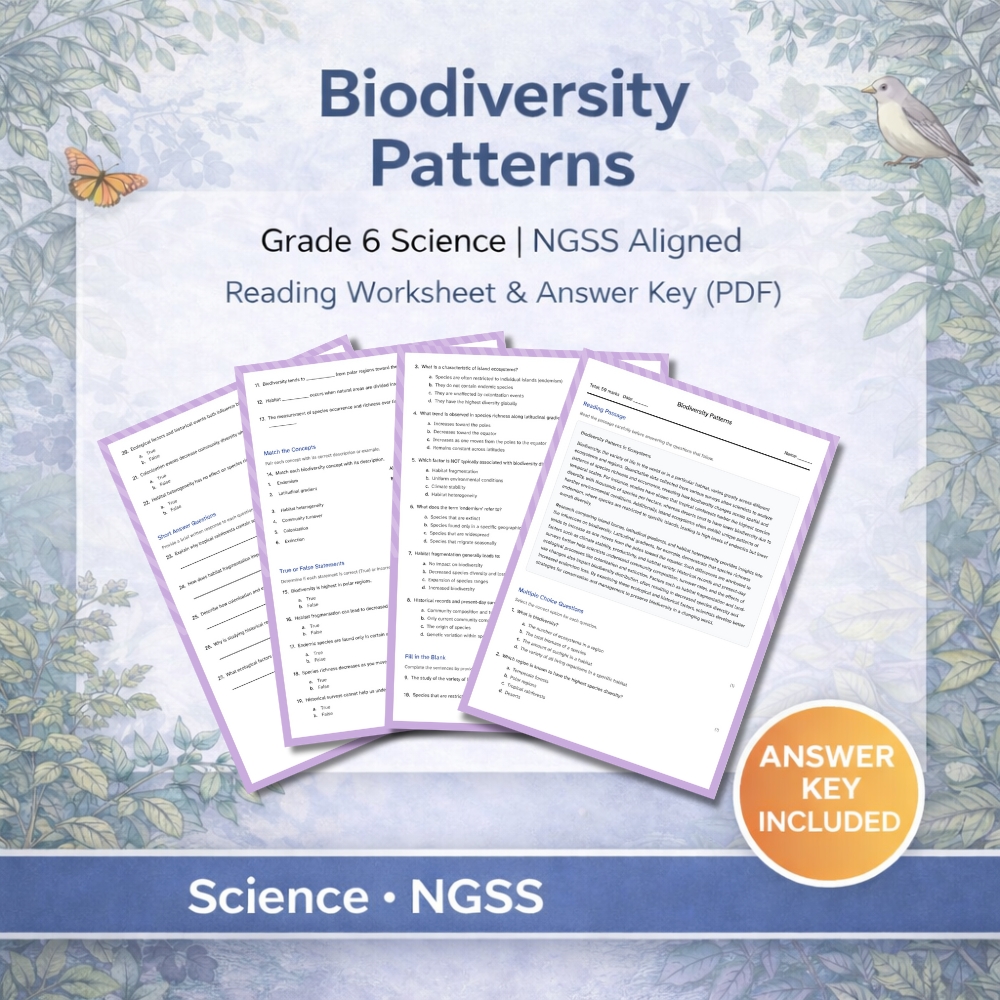
6th Grade Science | Biodiversity Patterns | NGSS Worksheet & Answer Key
 Created byCedar Grove Learning
Learning Objectives
- Understand how species occurrence and richness reveal biodiversity patterns across different ecosystems.
- Analyze and interpret data related to biodiversity, endemism, and community composition.
- Compare biodiversity variations across islands, latitudinal gradients, and habitats.
Also included in: Grade 6 Science | Ecosystems, Evolution & Biodiversity | NGSS Worksheet Bundle +1 more
Instant download
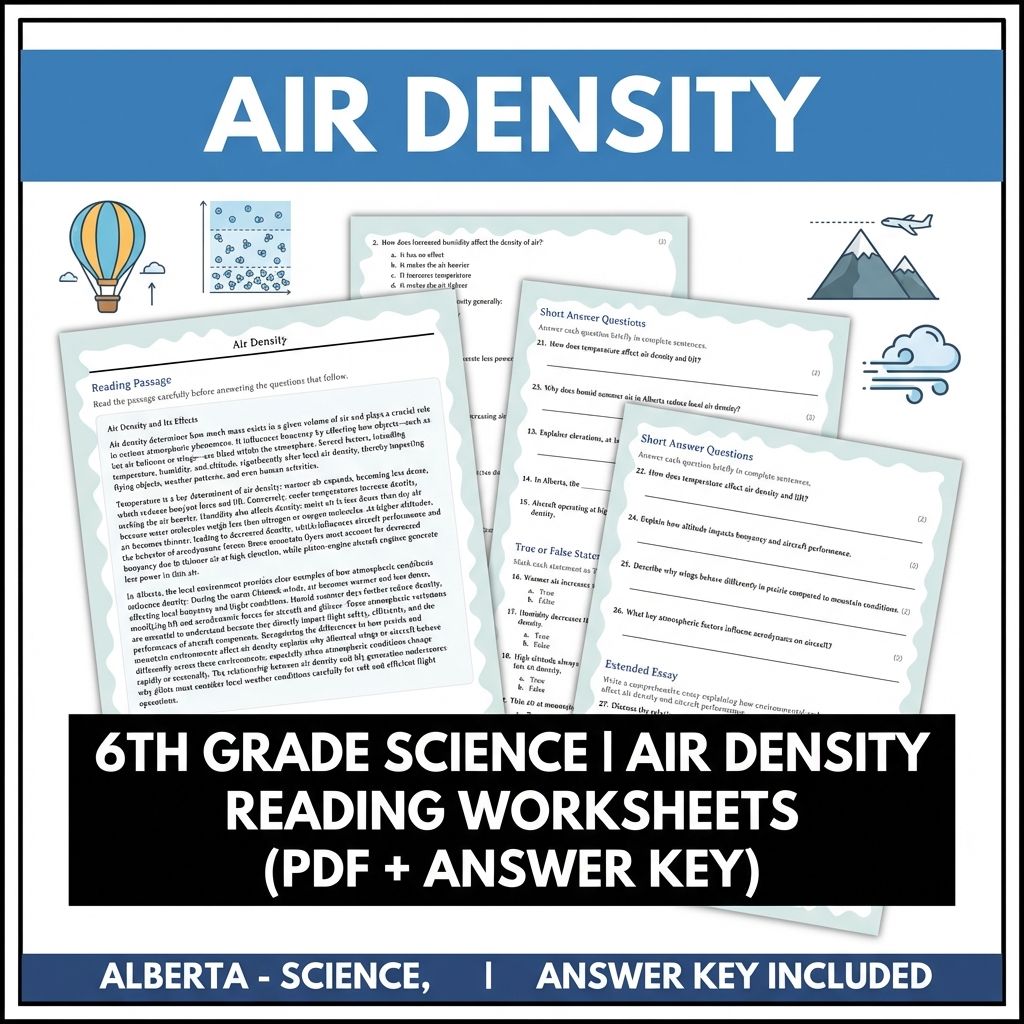
6th Grade Science | Air Density Reading Worksheets (PDF + Answer Key)
JCreated byJ.S SheetsLearning Objectives
- Explain how temperature, humidity, and altitude affect air density.
- Understand the relationship between air density and buoyancy.
- Describe how atmospheric conditions influence aerodynamic forces.
Also included in: Grade 6 Science | Flight Physics & Aerodynamics UNIT Pack (Answer Keys Included) +1 more
Instant download
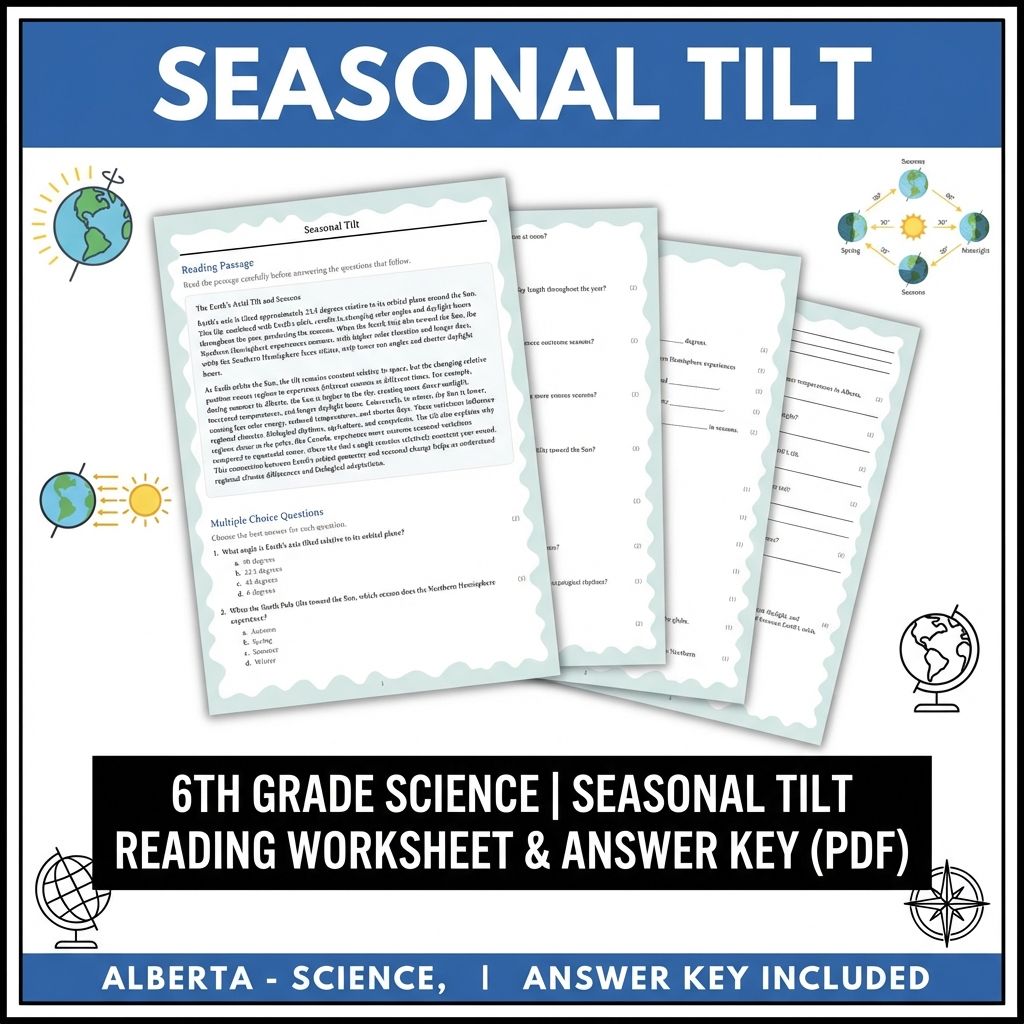
6th Grade Science | Seasonal Tilt Reading Worksheet & Answer Key (PDF)
JCreated byJ.S SheetsLearning Objectives
- Explain how Earth’s axial tilt causes seasonal changes in solar angle and daylight duration.
- Describe the effects of seasonal tilt on regional climate, using Alberta as an example.
- Connect the Earth's orbital geometry with observable seasonal variations in temperature and daylight.
Also included in: Grade 6 Science | Celestial Motion & Sky Observation Worksheets Bundle +1 more
Instant download
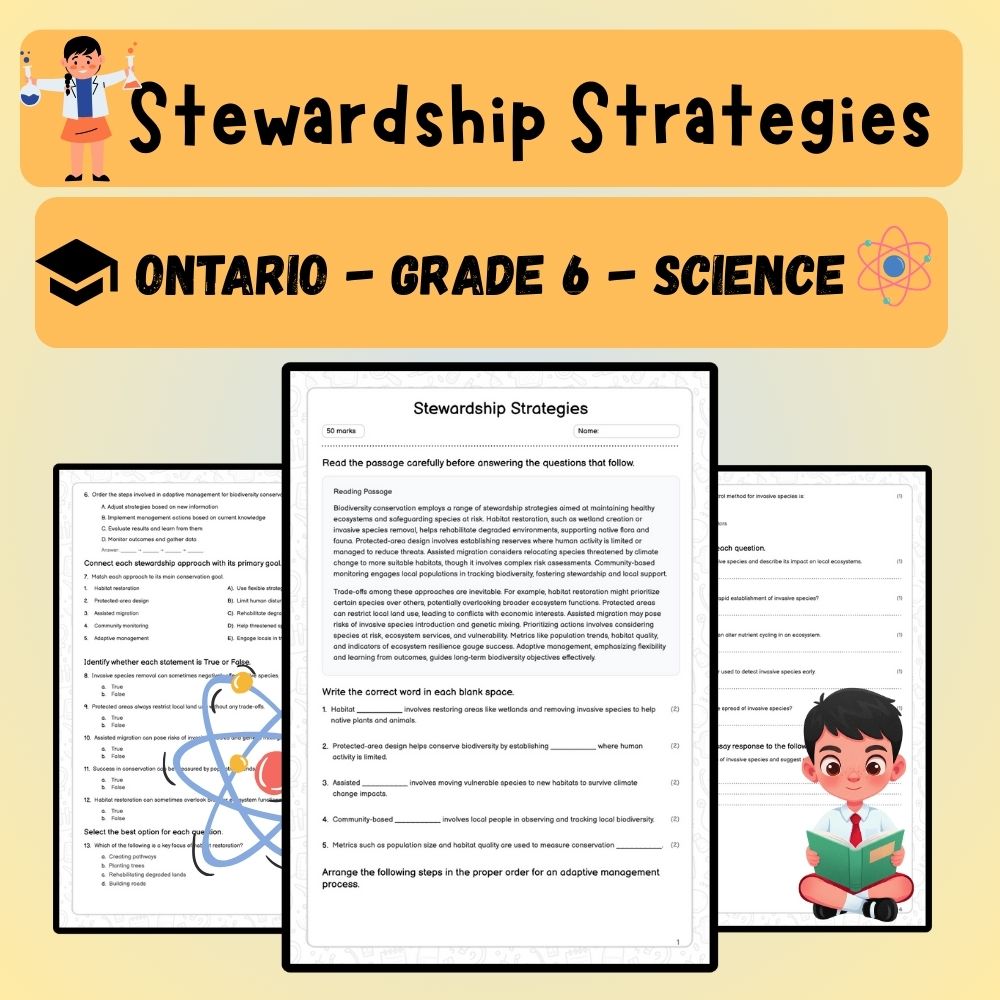
6th Grade Science | Stewardship Strategies Worksheet (PDF )
Created byPrism Point LearningLearning Objectives
- Understand different stewardship strategies used for biodiversity conservation.
- Identify trade-offs among various habitat restoration and management approaches.
- Evaluate criteria for prioritizing conservation actions based on species and ecosystems.
Also included in: Grade 6 Science Unit Bundle – Ecology, Classification & Environment
Instant download
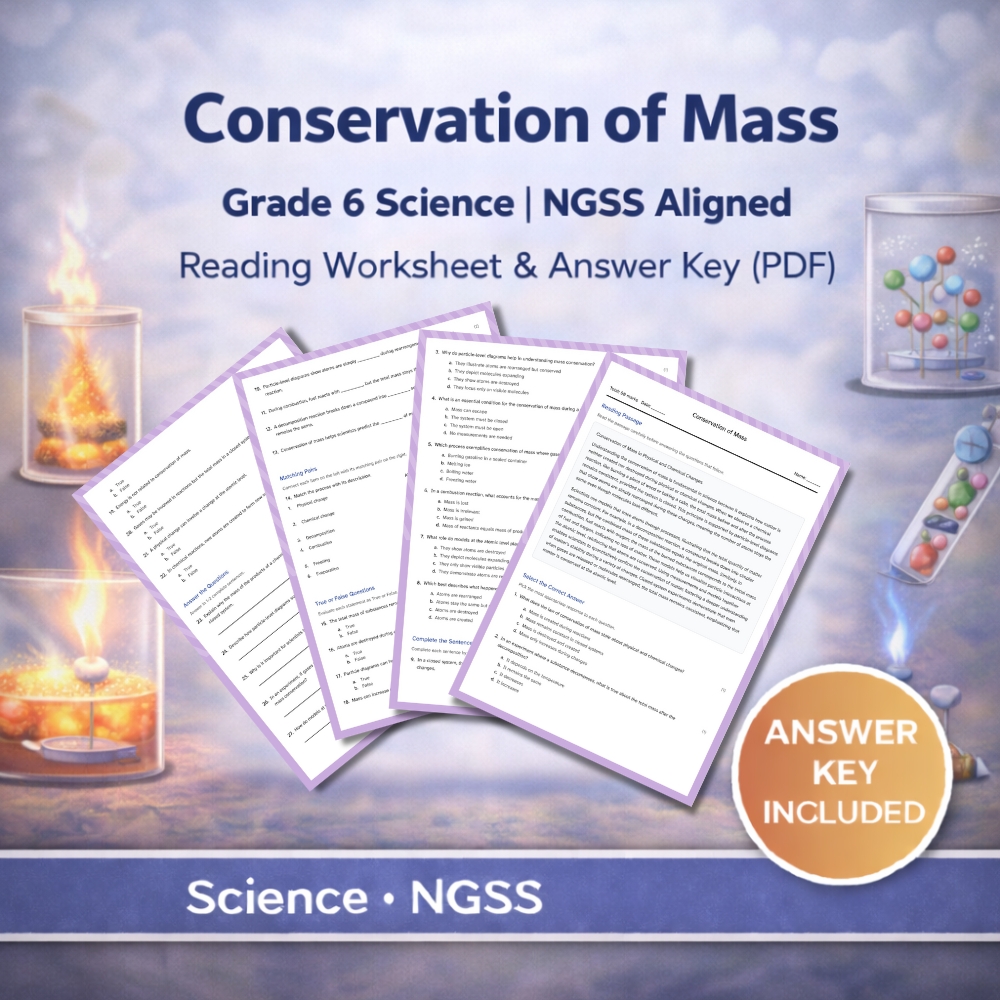
6th Grade Science | Conservation of Mass | Worksheet & Answer Key (NGSS Aligned)
Created byCedar Grove LearningLearning Objectives
- Develop and interpret models that demonstrate the conservation of mass during physical and chemical changes.
- Connect mass measurements before and after changes to atom counts and model particle-level diagrams.
- Explain how atoms are conserved even when molecules rearrange during processes like combustion and decomposition.
Also included in: Grade 6 Science | Atomic & Molecular Models, Conservation & Reactions | NGSS +1 more
Instant download

6th Grade Science | Eclipses and Alignments Worksheet (PDF)
Created byEvergreen Desk EducationLearning Objectives
- Explain how the alignment of the Sun, Earth, and Moon determines whether an eclipse is solar or lunar and whether it is partial or total.
- Describe how orbital inclination and the Moon’s tilted orbit affect where eclipses are visible on Earth.
- Use eclipse vocabulary (umbra, penumbra, antumbra) to interpret predictions and observations.
Instant download
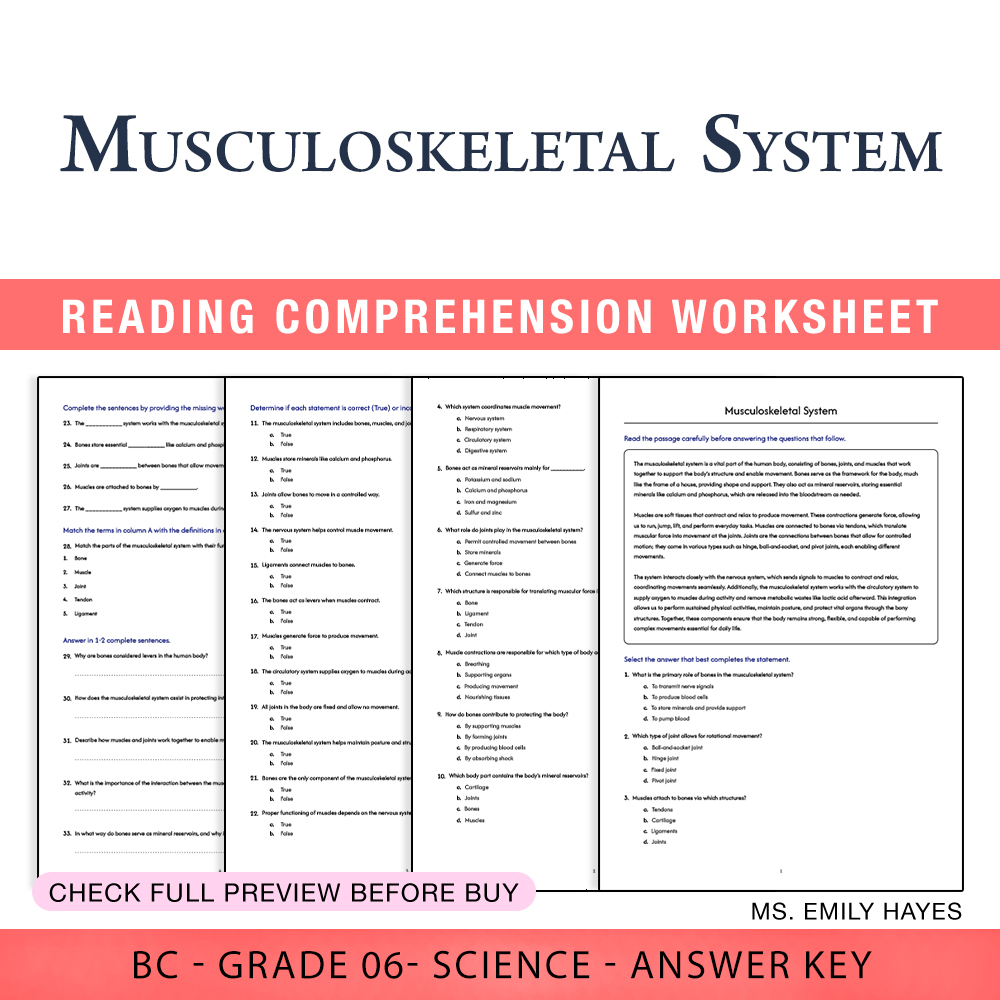
6th Grade Science | Musculoskeletal System Worksheet (PDF + Answer Key)
Created byCopper Leaf ClassroomLearning Objectives
- Describe the main components of the musculoskeletal system and their functions.
- Explain how bones, muscles, and joints work together to produce movement.
- Identify how the musculoskeletal system interacts with other body systems to support activity.
Also included in: Grade 6 Science BC | Human Body Systems & Adaptations (PDF+ Answer Keys) +1 more
Instant download
6th Grade Science | Sampling Methods Reading Worksheet (PDF + Answer Key)
JCreated byJ.S SheetsLearning Objectives
- Understand the different sampling methods used in ecological studies.
- Identify the advantages and trade-offs of various sampling strategies.
- Describe examples of sampling in Alberta environments, such as prairie grasslands and river tributaries.
Also included in: Grade 6 Science Bundle – Data Analysis, Scientific Inquiry & Measurement Skills +1 more
Instant download

Grade 6 Science – Erosion Pathways Worksheet (General Standards) PDF
Created byEvergreen Desk EducationLearning Objectives
- Explain how erosion and deposition work together to reshape Earth’s surface.
- Identify different erosion agents (moving water, wind, ice, and gravity) and the pathway they create.
- Describe how factors like slope, rock resistance, vegetation, and water flow affect erosion and deposition rates.
Also included in: 6th Grade Earth & Climate Science Lesson Bundle – General Framework +1 more
Instant download

6th Grade Science Worksheet – Space Cycles & Sky Phenomena (PDF)
Created byEvergreen Desk EducationLearning Objectives
- Explain how Earth’s rotation causes day and night.
- Describe how Earth’s tilted axis and orbit lead to seasons and changing day length.
- Relate the Moon’s orbit to repeating Moon phases.
Also included in: 6th Grade Earth & Climate Science Lesson Bundle – General Framework +1 more
Instant download

6th Grade Science | Climate Data Patterns Worksheet (PDF)
Created byEvergreen Desk EducationLearning Objectives
- Explain how climate graphs use many years of data to show patterns, averages, and variability.
- Identify seasonal trends (wet/dry periods and temperature swings) from descriptions of climate data.
- Compare current climate data to historical baselines to determine whether patterns are stable or changing.
Also included in: 6th Grade Earth & Climate Science Lesson Bundle – General Framework +1 more
Instant download

6th Grade Science | Circulatory Transport Worksheet (PDF)
 Created byMaple Path Learning
Learning Objectives
- Understand the structure and function of the heart in the circulatory system.
- Identify the different types of blood vessels and their roles.
- Explain how blood transports oxygen, nutrients, and wastes throughout the body.
Instant download

6th Grade Science Elements in Compounds Worksheet | CA Standards PDF
Created byEvergreen Desk EducationLearning Objectives
- Explain what a compound is and why compounds contain atoms of more than one element.
- Use particle models to describe how atoms of different elements are arranged in a compound.
- Describe how definite proportions in compounds help explain consistent properties and measurable outcomes.
Instant download
6th Grade Science | Historical Perspectives on Celestial Motion Worksheet (Answer Key)
Learning Objectives
- Understand how Indigenous and settler communities interpreted celestial patterns for cultural and practical purposes.
- Identify different observational strategies related to solar and lunar cycles used historically.
- Describe how cultural context influences methods of predicting celestial positions.
Also included in: Grade 6 Science | Celestial & Space Phenomena UNIT Worksheet Bundle (Assessment & Practice) +1 more
Instant download
6th Grade Science | Angle Effects Reading Worksheets (PDF + Answer Key)
JCreated byJ.S SheetsLearning Objectives
- Understand how the angle of attack influences airflow and lift in flight.
- Identify the factors affecting the critical angle of attack in wings.
- Describe how pilot inputs and wing settings alter effective angle of attack during flight.
Also included in: Grade 6 Science | Aerodynamics & Flight Unit Worksheet Pack (PDF + Answer Keys) +1 more
Instant download
6th Grade Science | Human Impacts on Earth Systems Worksheet (PDF + Answer Key)
Created byCopper Leaf ClassroomLearning Objectives
- Describe how human activities alter biogeochemical cycles, climate, and ecosystems.
- Identify specific examples of human impacts such as deforestation, pollution, urbanization, and emissions.
- Analyze the causal links between human activities and environmental changes over different spatial and temporal scales.
Instant download
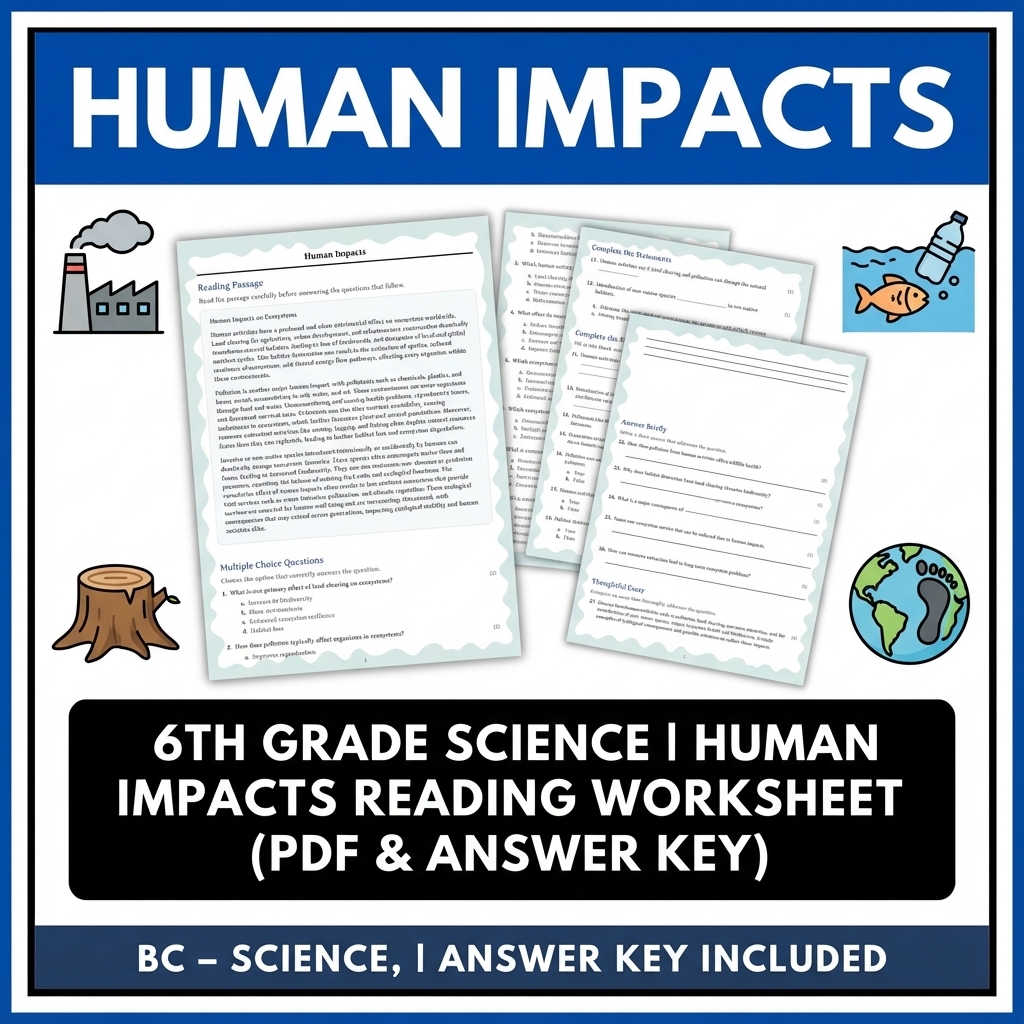
6th Grade Science | Human Impacts Reading Worksheet (PDF & Answer Key)
JCreated byJ.S SheetsLearning Objectives
- Understand how human activities alter ecosystems and biodiversity.
- Identify specific impacts such as pollution, land clearing, resource extraction, and invasive species.
- Recognize ecological consequences including habitat loss, erosion, and nutrient cycle disruption.
Instant download
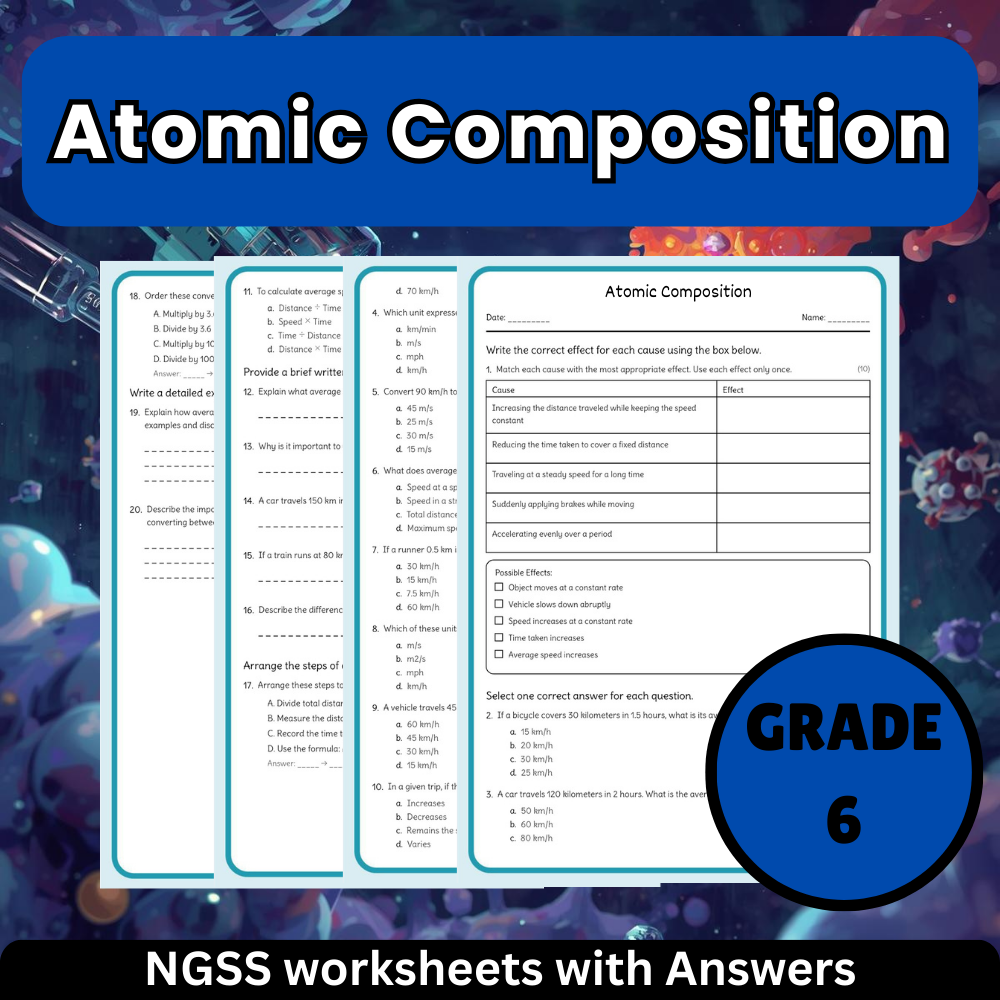
6th Grade Science | Atomic Composition Worksheet (NGSS) – Science 1 PDF
Created byBright Mind ResourcesLearning Objectives
- Understand the basic structure of atoms and how atoms combine to form molecules.
- Describe simple molecules like water (H₂O) and salt (NaCl) using models and diagrams.
- Recognize the relative types and counts of atoms in different molecules.
Also included in: Grade 6 Science Unit Bundle | Chemical Reactions & Atomic Structure - NGSS +2 more
Instant download
About Grade 6 Science Worksheets
Explore Grade 6 Science worksheets for classwork, homework, or review. Our 5,969 printables download instantly as PDFs.
MyTeachingSheets worksheets are made by real teacher-authors and checked before they go live. Download any as a print-ready PDF for lessons, homework, or independent practice — most include answer keys, and previews are always free.