
Grade 6 Science Worksheets
5,969 worksheets
Grade 6 Modeling Systems Worksheet | Ontario Science Activity PDF
 Created byClear Sky Classroom
Learning Objectives
- Explain how models can represent complex systems and help scientists make predictions.
- Identify assumptions, define model boundaries, and interpret what a model does and does not include.
- Compare model predictions with observable outcomes to refine models and reduce misunderstandings.
Instant download
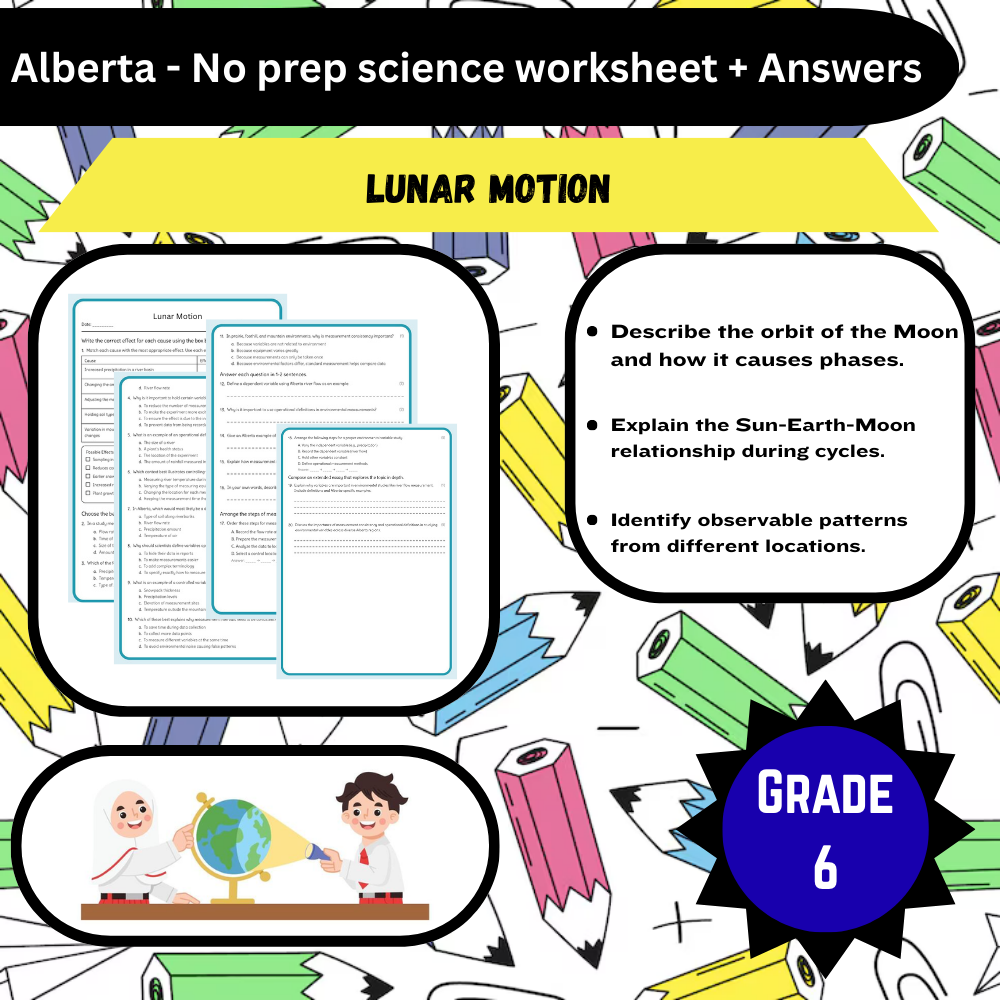
6th Grade Science | Lunar Motion Worksheet – Understanding Phases & Orbit (PDF)
 Created byBright Mind Resources
Learning Objectives
- Describe the orbit of the Moon around Earth and how it causes phases.
- Explain the relationship between the Sun, Earth, and Moon during lunar cycles.
- Identify observable patterns in the lunar phases from different locations.
Instant download
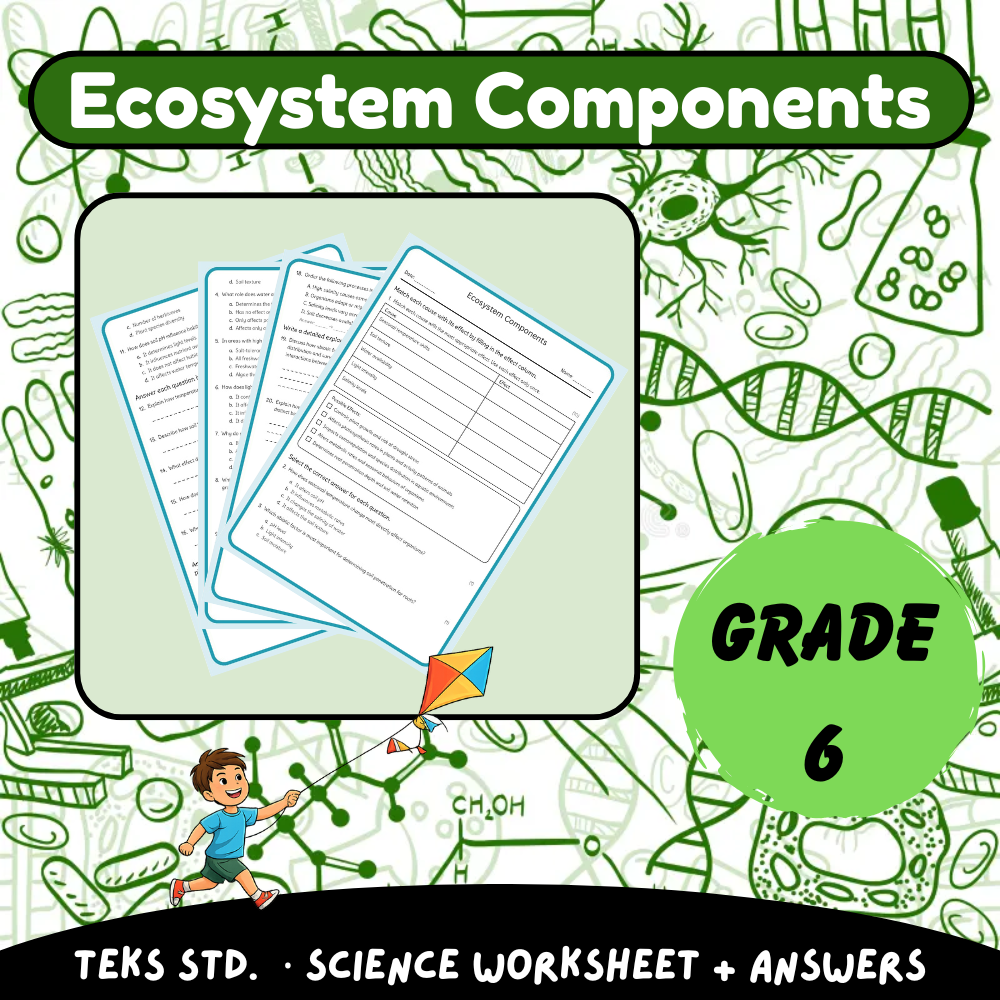
6th Grade Science | Ecosystem Components Worksheet (PDF) – TEKS Aligned
Created byBright Mind ResourcesLearning Objectives
- Define ecosystems as interacting systems of populations, communities, and physical factors.
- Describe biotic and abiotic components and their roles in habitat structure.
- Identify examples of ecosystems such as ponds, prairies, and forests and explain resource distribution and resource interdependence.
Instant download
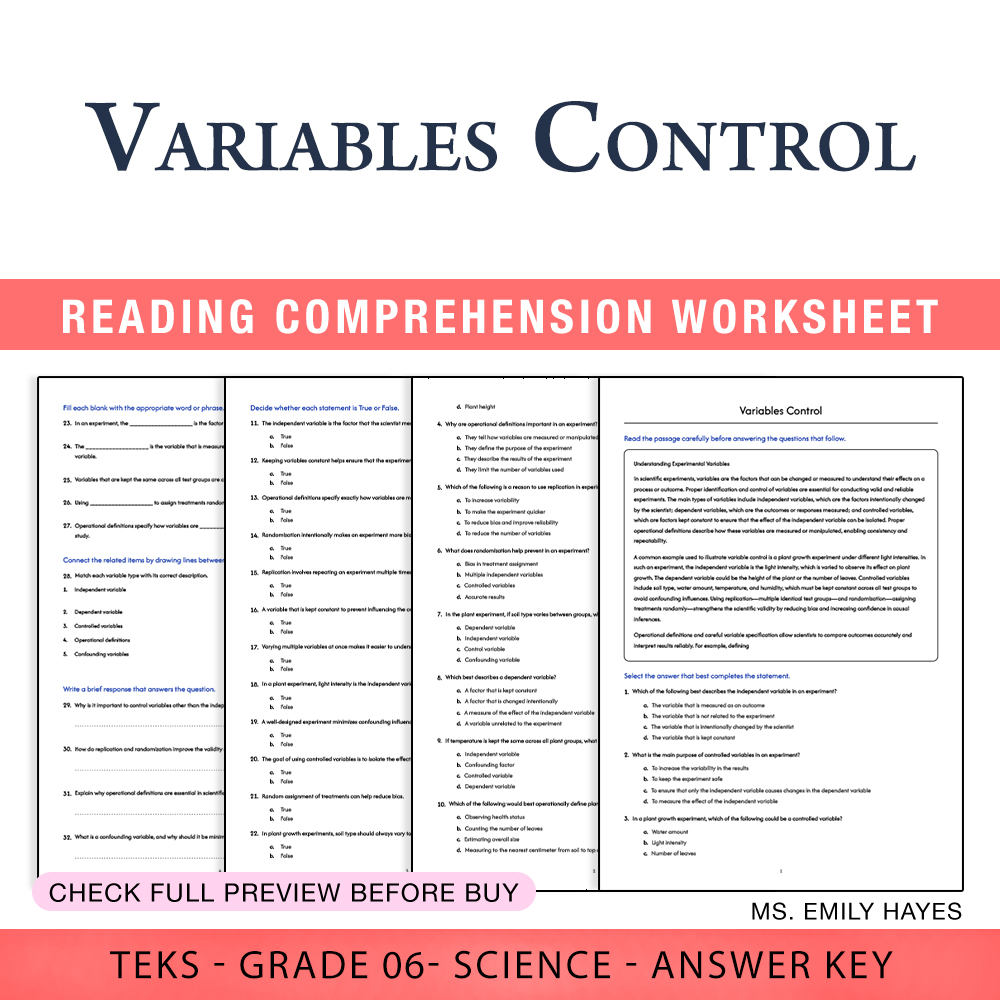
6th Grade Science | Variables Control Worksheet (PDF+ Answer Key)
 Created byCopper Leaf Classroom
Learning Objectives
- Understand the roles of independent, dependent, and controlled variables in experiments.
- Identify operational definitions and potential confounding influences in experimental design.
- Describe how plant growth experiments under varied light intensities illustrate variable control.
Instant download
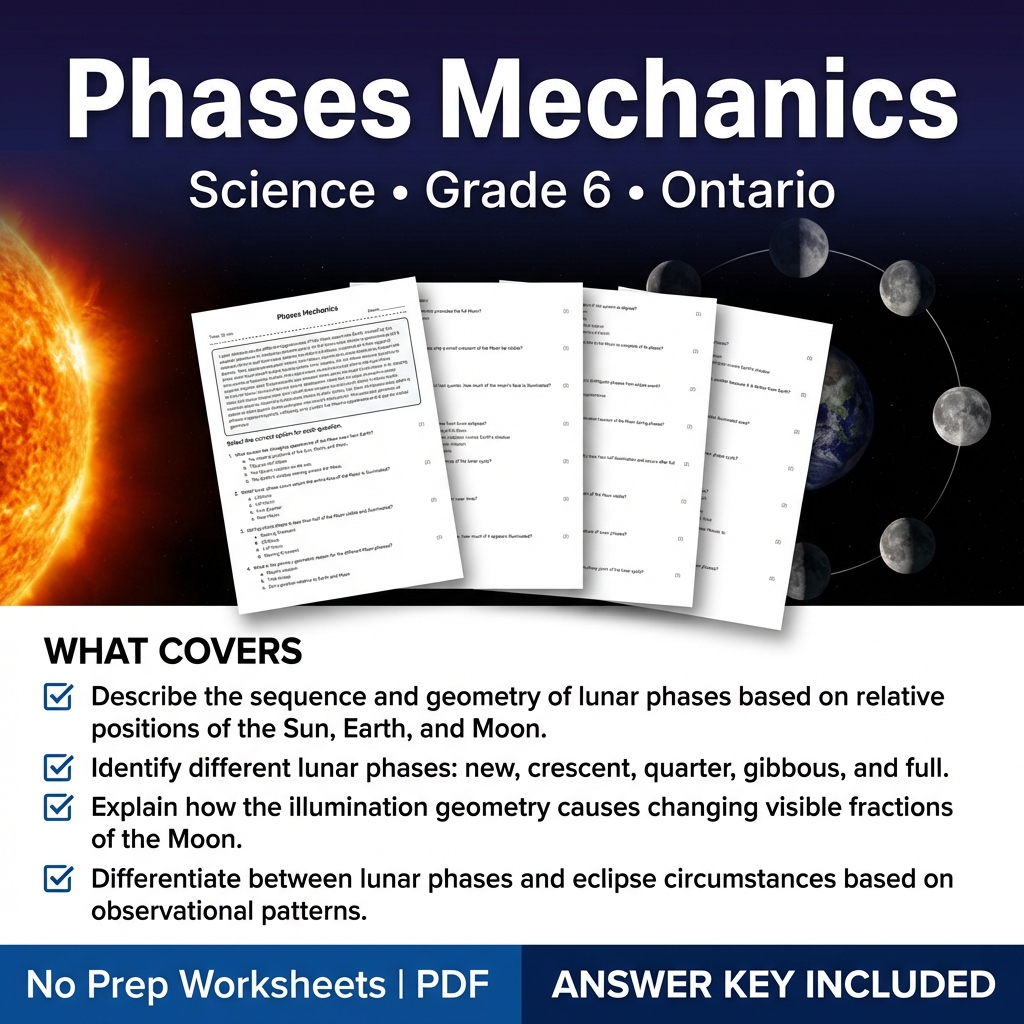
Grade 6 Science Worksheet on Phases of the Moon | Ontario Standards
 Created byCoral Reef Learning
Learning Objectives
- Describe the sequence and geometry of lunar phases based on relative positions of the Sun, Earth, and Moon.
- Identify different lunar phases: new, crescent, quarter, gibbous, and full.
- Explain how the illumination geometry causes changing visible fractions of the Moon.
Instant download

6th Grade Science | Stewardship Strategies Worksheet (PDF) - Ontario Standards
 Created byEvergreen Desk Education
Learning Objectives
- Explain how habitat restoration, protected-area design, and invasive species removal support biodiversity.
- Describe how assisted migration and community-based monitoring can be used responsibly with trade-offs.
- Use criteria such as species at risk and ecosystem services to prioritize conservation actions.
Also included in: Grade 6 Biodiversity, Adaptation & Ecology Science Lesson Bundle | Ontario +1 more
Instant download
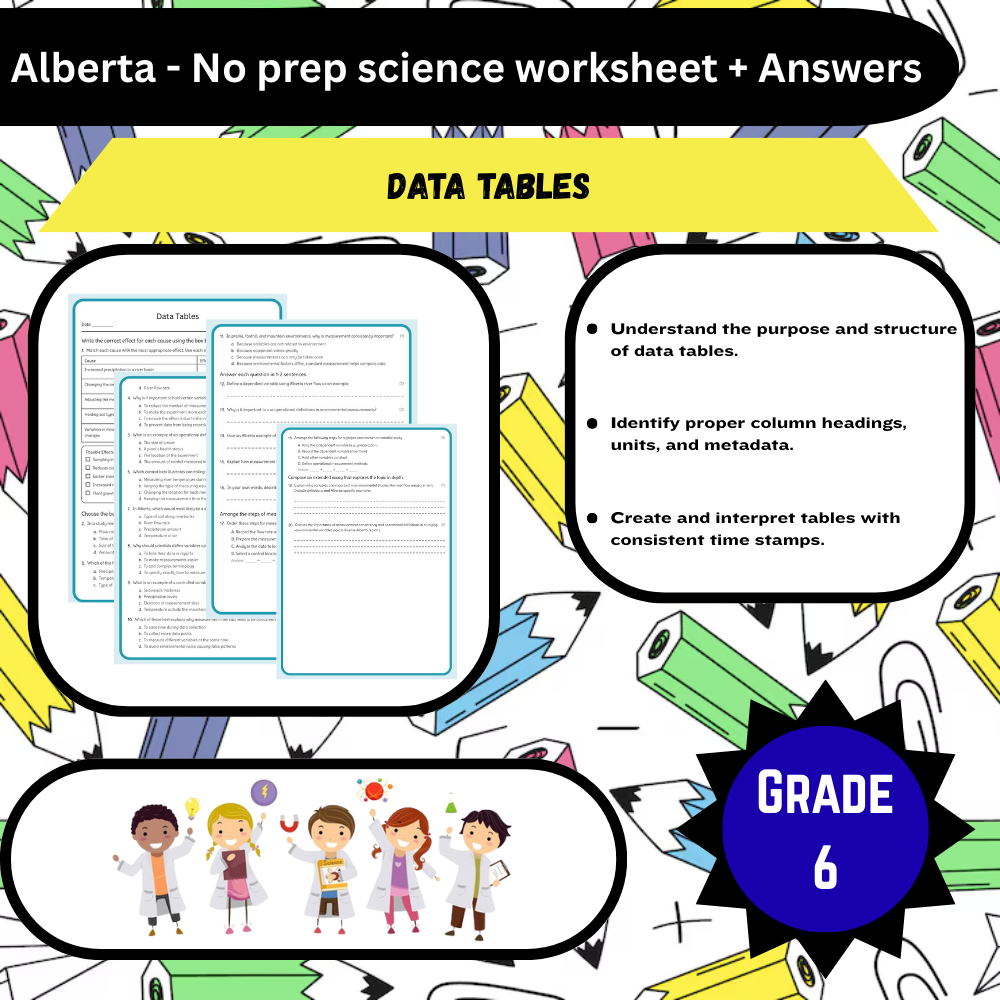
6th Grade Science – Data Tables Worksheet (PDF) – Alberta Standards
Created byBright Mind ResourcesLearning Objectives
- Understand the purpose and structure of data tables in recording observations
- Identify proper column headings, units, and metadata for clarity
- Create and interpret data tables with consistent time stamps and supporting information
Instant download

Grade 6 Reproductive Structures Worksheet | Alberta Practice PDF
Created byClear Sky ClassroomLearning Objectives
- Explain how flowers, cones, and seeds support plant reproduction in different gymnosperm and angiosperm life cycles.
- Describe how vegetative propagation helps plants regenerate and form clonal colonies.
- Compare seed dispersal mechanisms (wind, animals, gravity) and predict their effects on where plants grow.
Also included in: Grade 6 Biodiversity & Plant Ecosystems Science Lesson Bundle | Alberta +1 more
Instant download
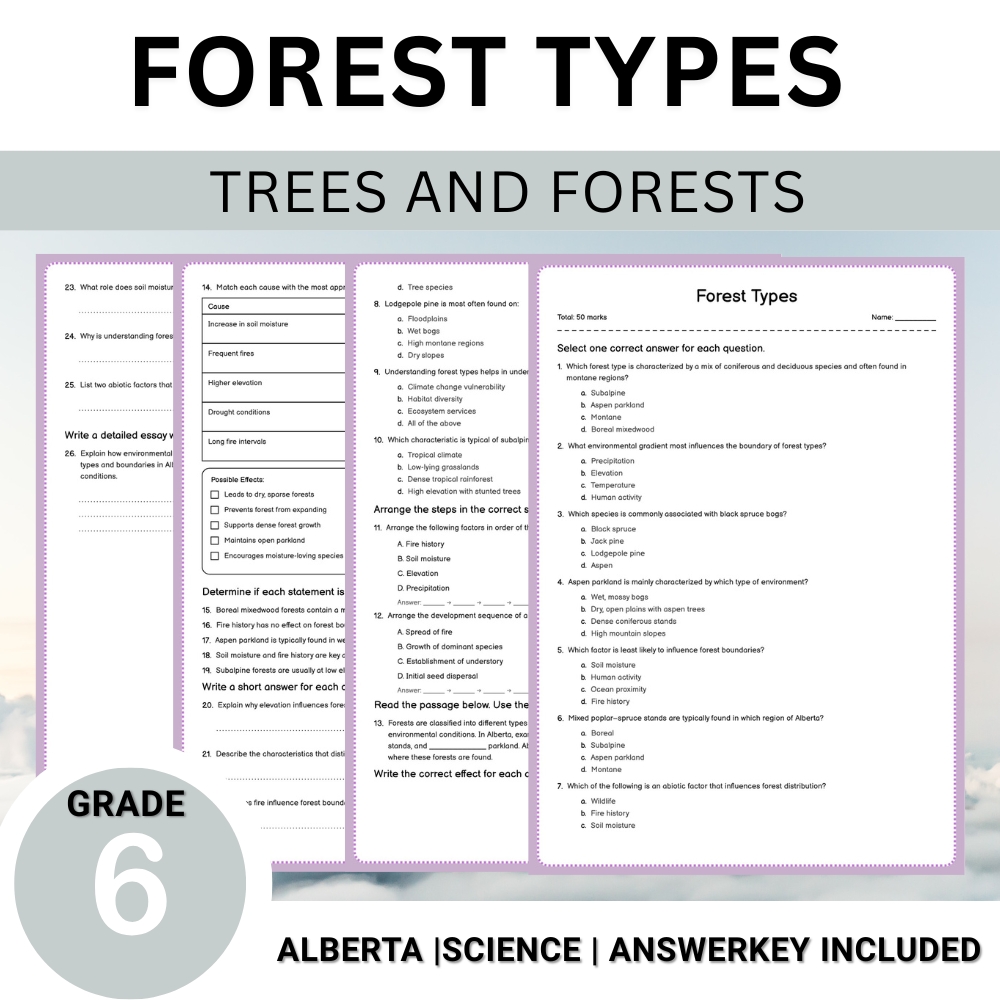
6th Grade Science | Forest Types Worksheet (Printable PDF) – Classroom Assessment & Student Practice
Learning Objectives
- Identify major regional forest types and their characteristic species.
- Understand environmental factors shaping forest distribution and boundaries.
- Recognize the ecological and habitat diversity in forest ecosystems.
Also included in: Grade 6 Science | Tree Anatomy, Ecology & Conservation Unit Worksheet Bundle +1 more
Instant download
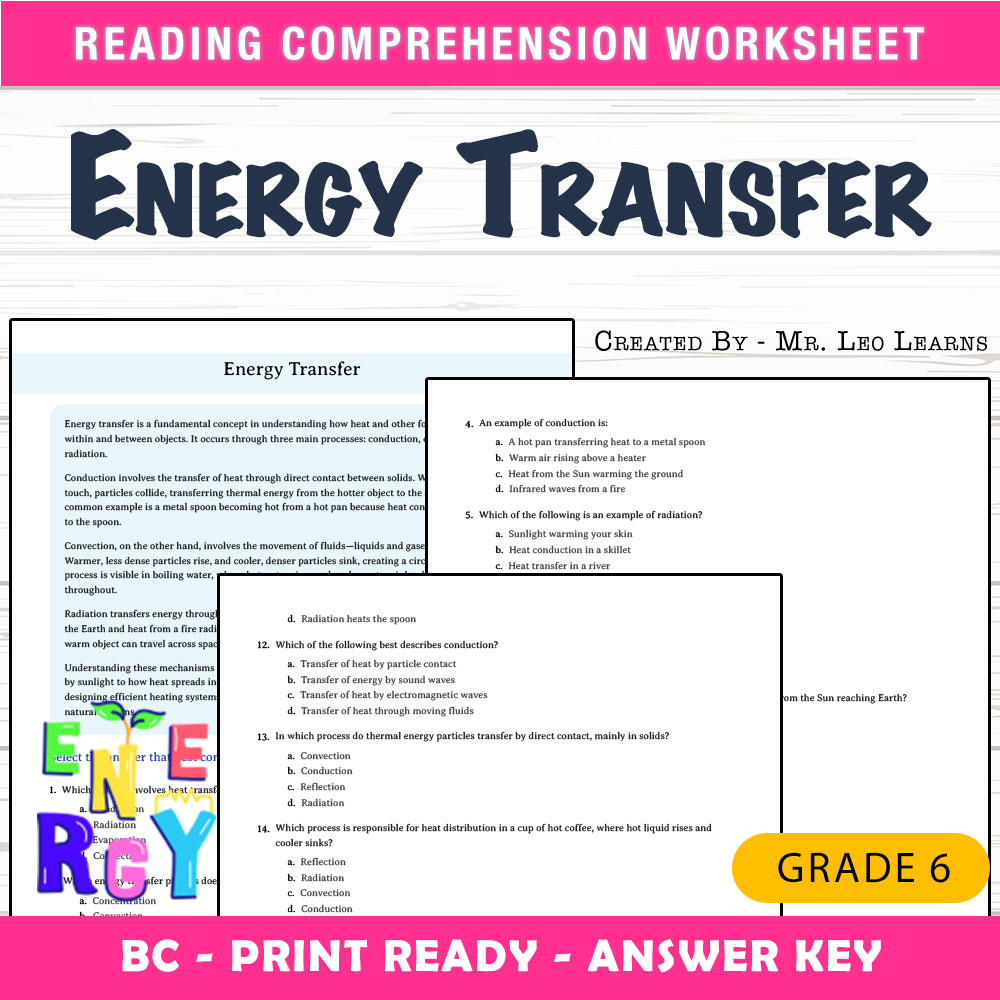
Grade 6 Science — Energy Transfer Worksheet MCQ Paper
 Created byThe Resource Hub
Learning Objectives
- Understand the three modes of energy transfer: conduction, convection, and radiation.
- Identify examples of each energy transfer process in real-world situations.
- Distinguish between conduction, convection, and radiation based on process descriptions.
Also included in: Grade 6 Science Energy, Waves & Circuits UNIT Bundle | BC Standards +1 more
Instant download

Cellular Respiration Assessment for Grade 6 Science | California Standards
 Created byPrism Point Learning
Learning Objectives
- Explain what cellular respiration is and why cells need it
- Describe the role of oxygen and the release of energy during cellular respiration
- Identify how matter changes during respiration and how wastes are produced
Also included in: Grade 6 Energy and Matter Cycles Science Lesson Bundle | California Standards +1 more
Instant download

Sky Observations Worksheet for Grade 6 Science | Alberta Standards Practice
JCreated byJ.S SheetsLearning Objectives
- Understand the importance of systematic sky observations in recognizing patterns of celestial motion.
- Identify key sky phenomena such as sunrise, sunset, Moon phases, and star positions.
- Record and analyze observational data to recognize repeating cycles linked to Earth's movements.
Instant download
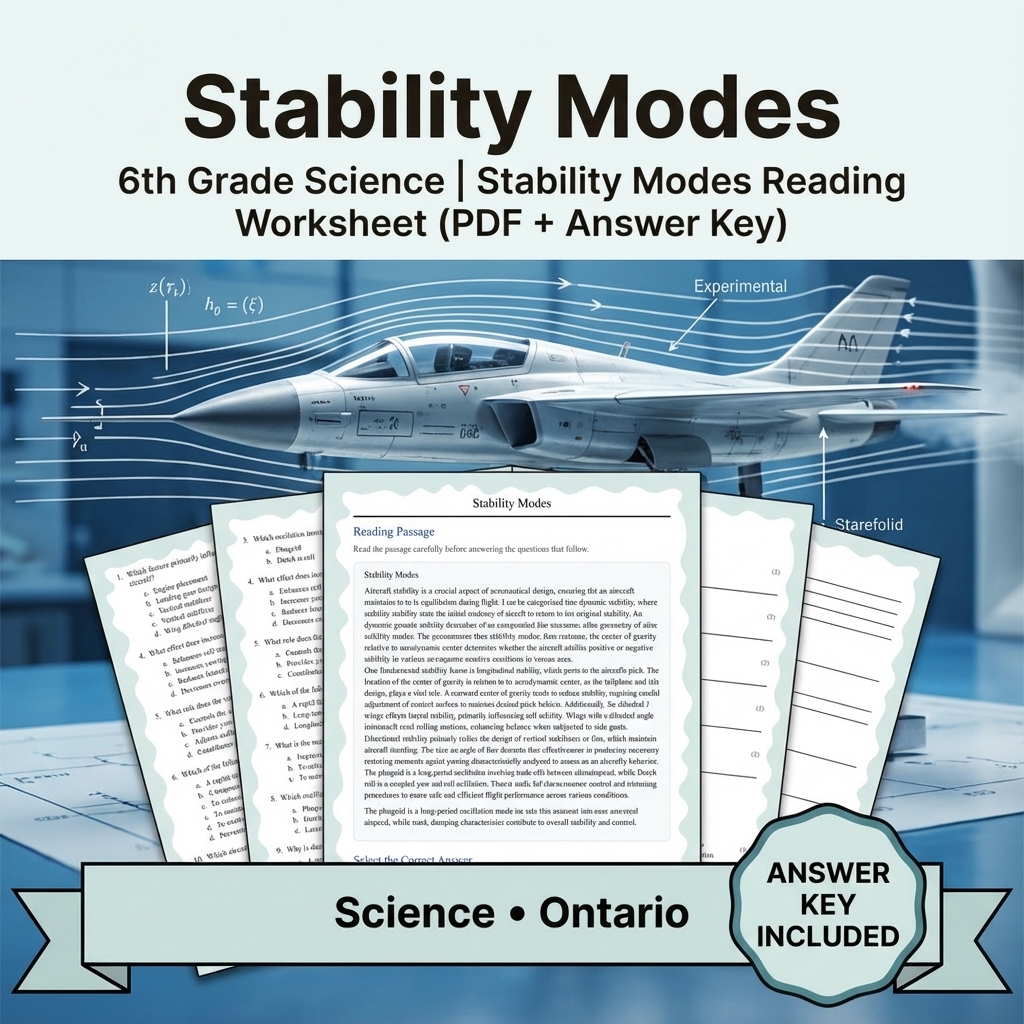
6th Grade Science | Stability Modes Reading Worksheet (PDF + Answer Key)
JCreated byJ.S SheetsLearning Objectives
- Understand the concepts of static and dynamic stability in aircraft.
- Identify how aircraft geometry influences different stability types.
- Describe the effects of center of gravity position, dihedral angle, fin, and tailplane design on stability.
Also included in: Grade 6 Science | Aerodynamics & Flight Unit Worksheet Pack (PDF + Answer Keys) +1 more
Instant download
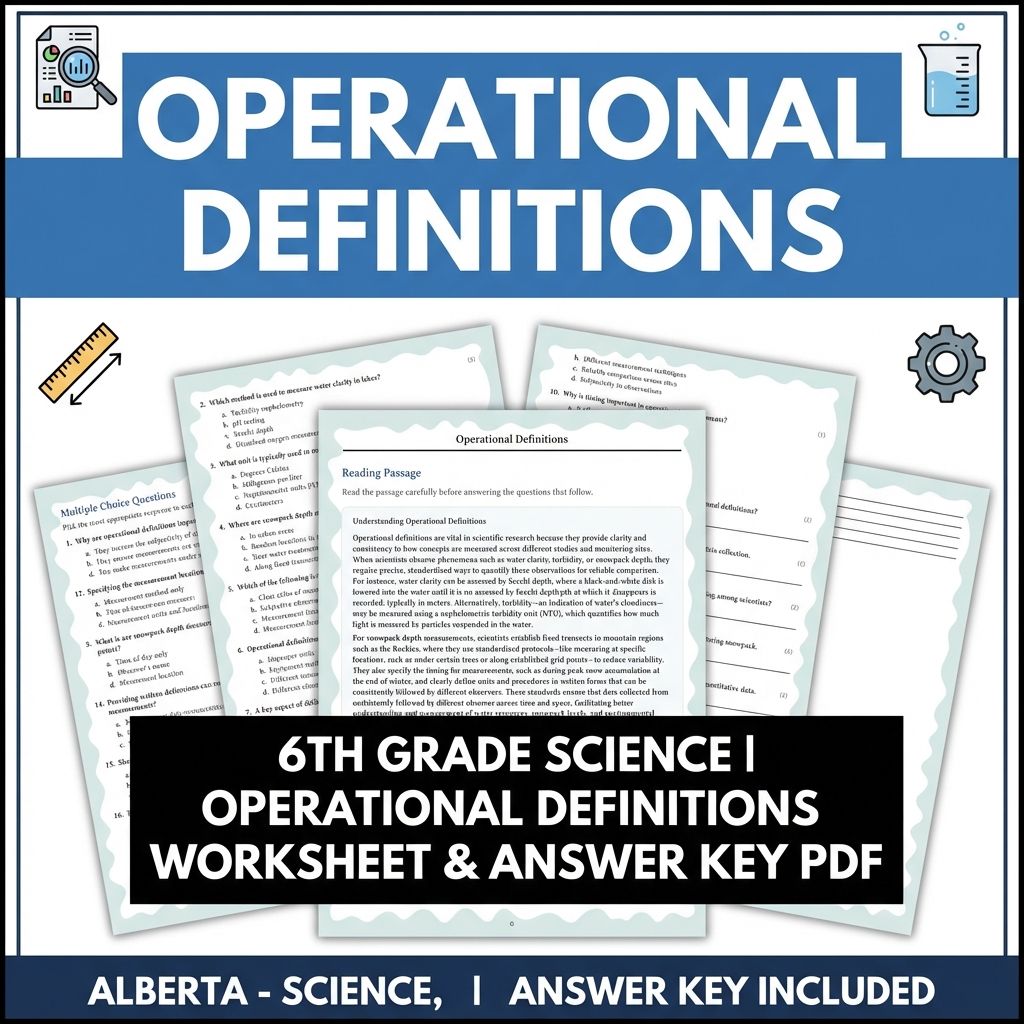
6th Grade Science | Operational Definitions Reading Worksheet & Answer Key PDF
JCreated byJ.S SheetsLearning Objectives
- Understand the purpose of operational definitions in scientific measurements.
- Learn methods for converting qualitative observations into quantitative data.
- Identify specific measurement protocols for water clarity, turbidity, and snowpack depth.
Also included in: Grade 6 Science Bundle – Data Analysis, Scientific Inquiry & Measurement Skills +1 more
Instant download
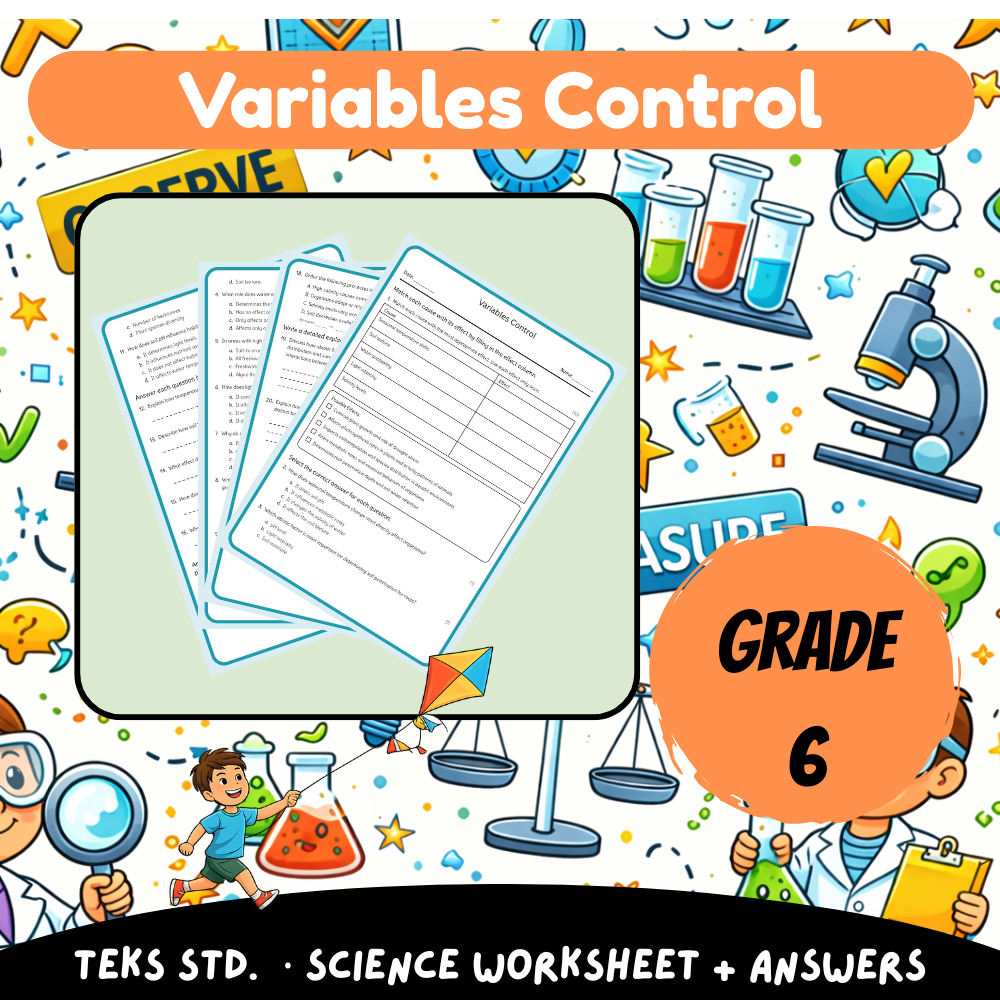
6th Grade Science | Variables Control Worksheet (Worksheet + Answer Key) TEKS Alignment
Created byBright Mind ResourcesLearning Objectives
- Identify the roles of independent, dependent, and controlled variables in experiments.
- Understand the importance of operational definitions and avoiding confounding variables.
- Learn how to use plant growth under different light intensities to illustrate variable control.
Instant download
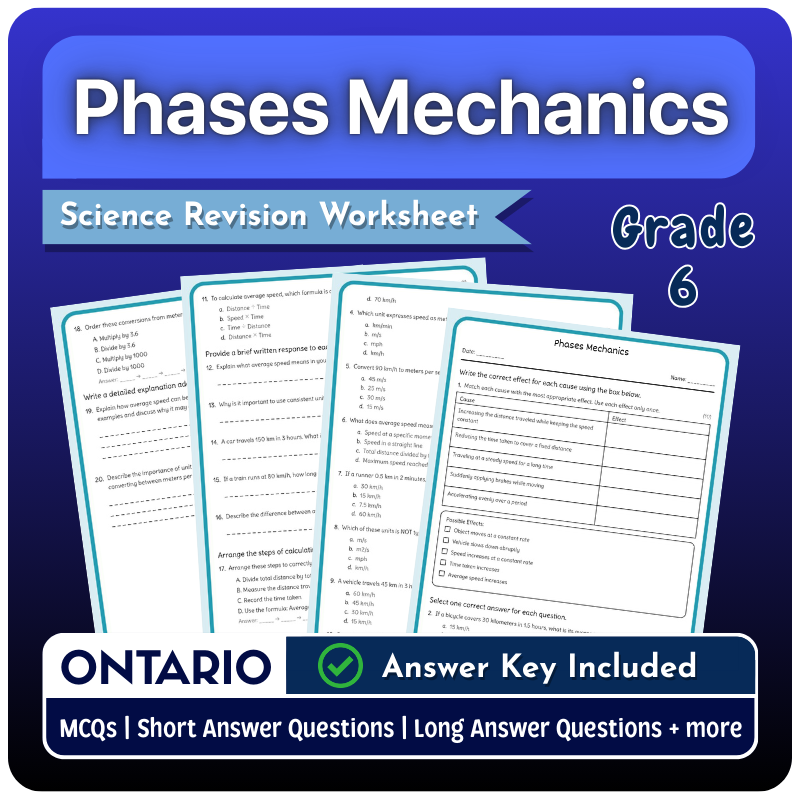
6th Grade Science | Phases Mechanics Worksheet (PDF) Ontario Standards
Created byBright Mind ResourcesLearning Objectives
- Explain the relative positions of the Sun, Earth, and Moon that produce lunar phases.
- Identify and sequence the different lunar phases based on illumination geometry.
- Differentiate between lunar phases and eclipse circumstances.
Instant download
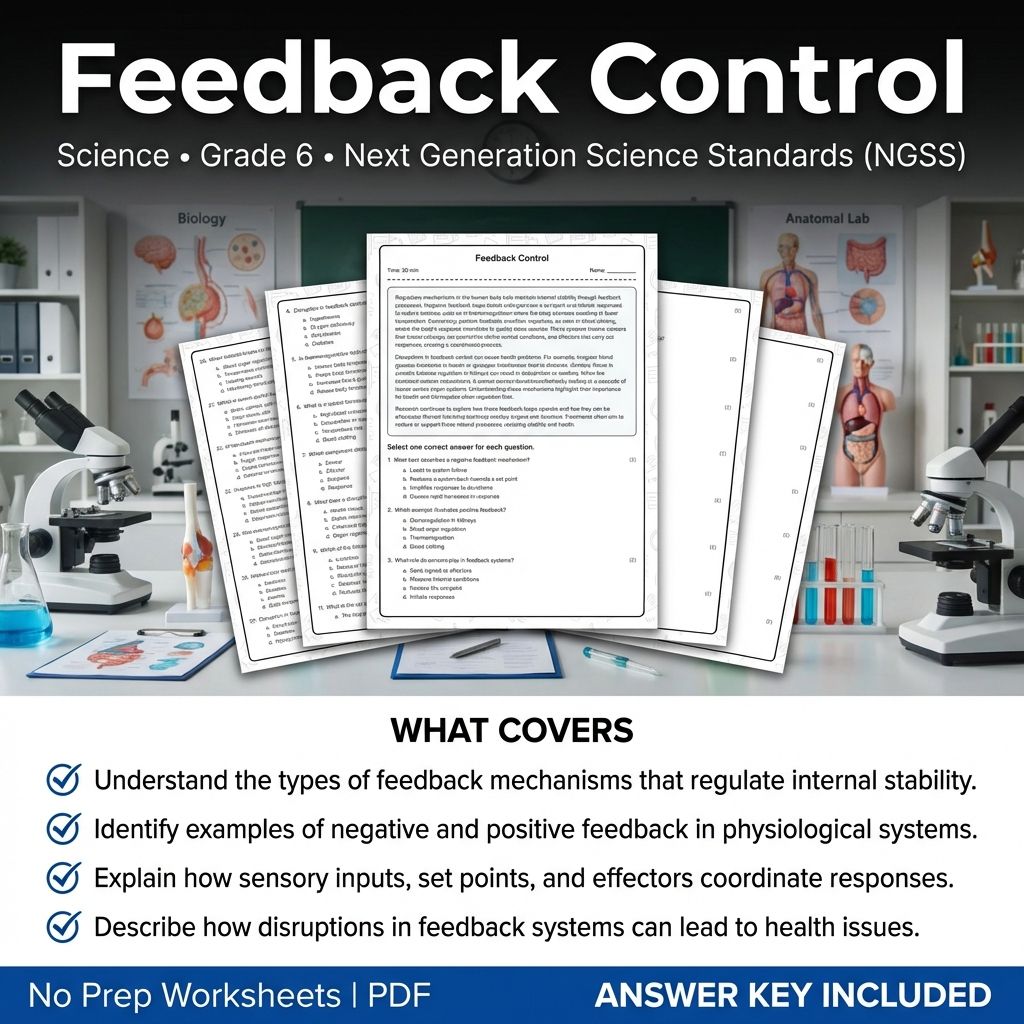
6th Grade Science | Feedback Control Worksheet & Answer Key (Printable PDF)
Created byCoral Reef LearningLearning Objectives
- Understand the types of feedback mechanisms that regulate internal stability.
- Identify examples of negative and positive feedback in physiological systems.
- Explain how sensory inputs, set points, and effectors coordinate responses.
Instant download

Adaptation Basics Worksheet | Ontario Grade 6 Science Assessment
 Created byCedar Grove Learning
Learning Objectives
- Distinguish structural, behavioural, and physiological adaptations and identify examples.
- Explain how inherited traits can increase survival and reproductive success in a specific niche.
- Differentiate inherited traits from acquired characteristics and describe how natural selection acts over generations.
Also included in: Grade 6 Biodiversity and Adaptations Science Lesson Bundle Ontario +1 more
Instant download
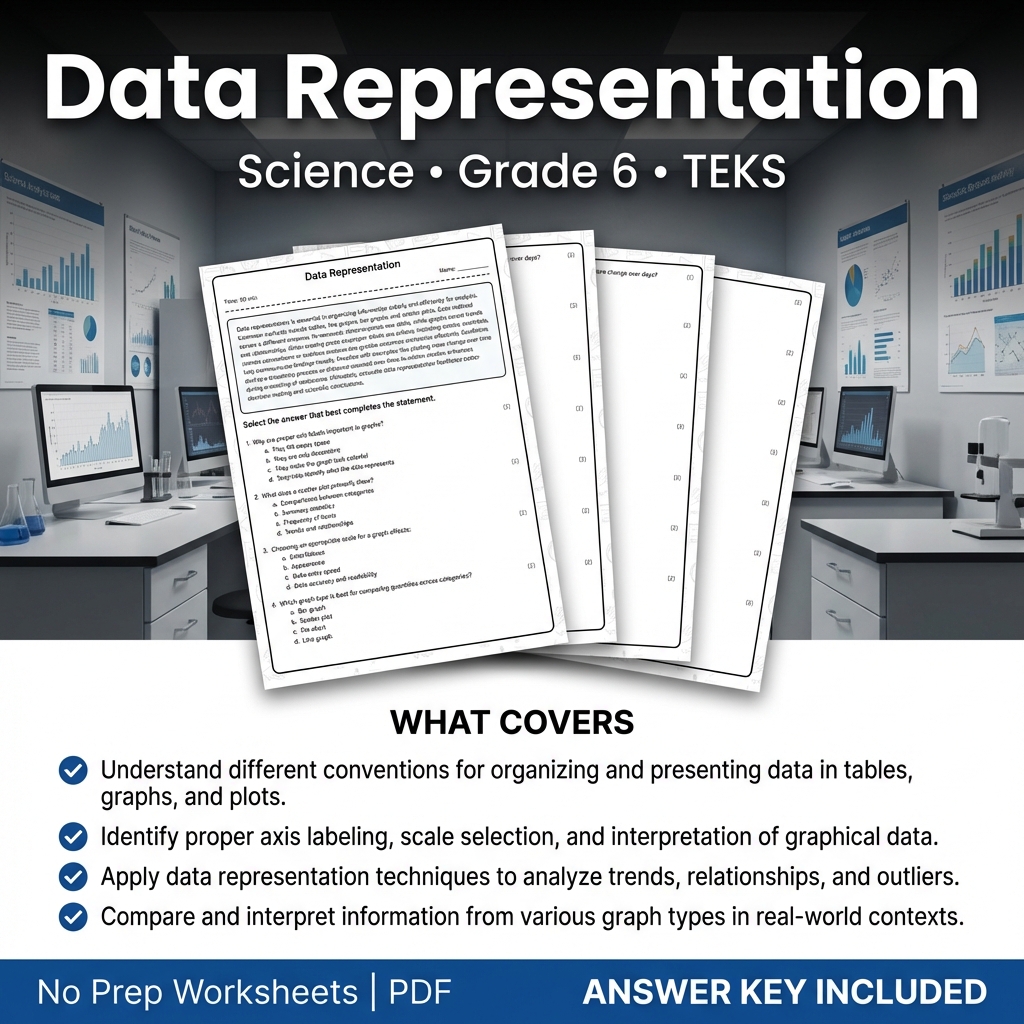
Grade 6 Science Worksheet on Data Representation TEKS aligned
Created byCoral Reef LearningLearning Objectives
- Understand different conventions for organizing and presenting data in tables, graphs, and plots.
- Identify proper axis labeling, scale selection, and interpretation of graphical data.
- Apply data representation techniques to analyze trends, relationships, and outliers.
Instant download

6th Grade Science | Seasons Explained Worksheet (Ontario Standards PDF)
Created byEvergreen Desk EducationLearning Objectives
- Explain how Earth’s axial tilt and orbital motion cause different seasons.
- Describe why the Northern and Southern Hemispheres experience opposite seasons.
- Connect changes in solar elevation and day length to seasonal temperature differences.
Also included in: Grade 6 Solar System Space Science Lesson Bundle – Ontario Worksheets +1 more
Instant download

6th Grade Science – Earth System Links Worksheet (PDF) | Standard-Based Practice
Created byEvergreen Desk EducationLearning Objectives
- Explain how the lithosphere, hydrosphere, atmosphere, and biosphere interact as connected Earth systems.
- Describe how energy from the Sun drives cycles that move water, gases, and heat.
- Use cause-and-effect reasoning to predict how changes in one Earth system affect other systems over time.
Also included in: 6th Grade Earth & Climate Science Lesson Bundle – General Framework +1 more
Instant download
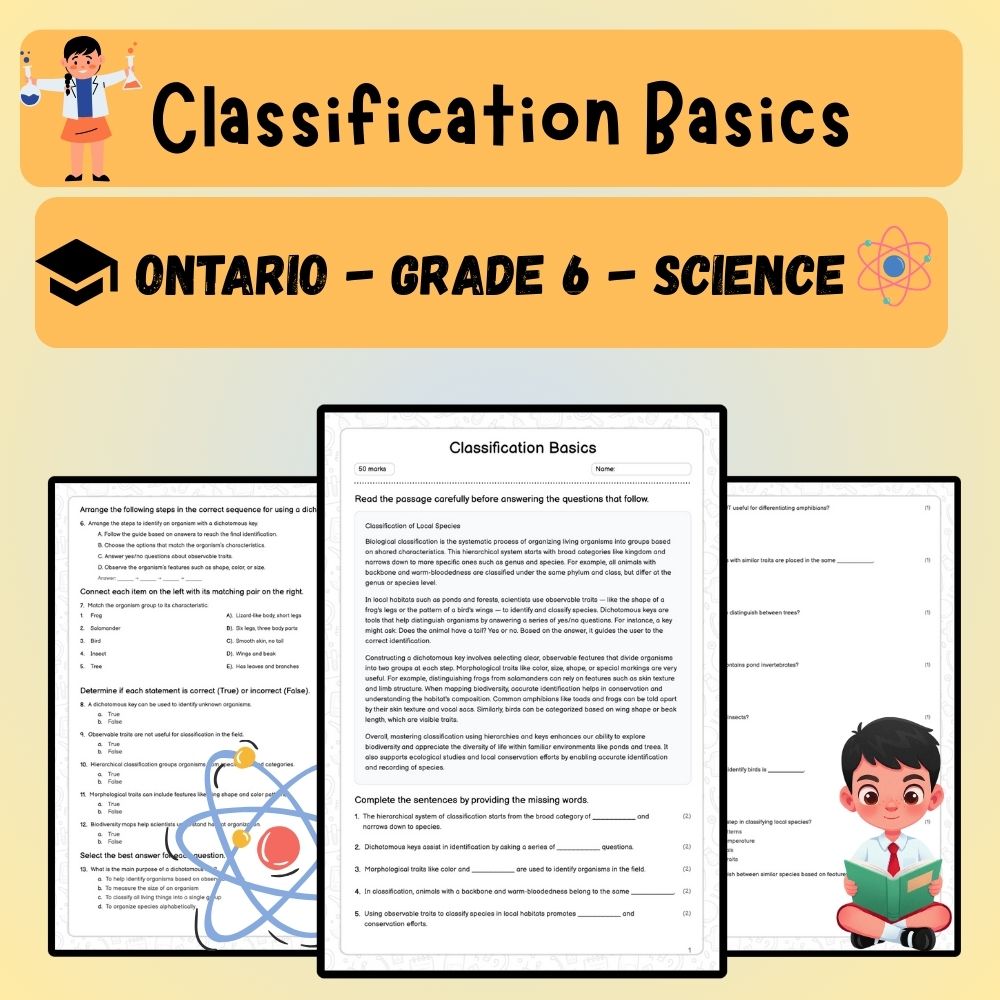
6th Grade Science | Classification Basics Worksheet (PDF)
Created byPrism Point LearningLearning Objectives
- Understand the hierarchical levels used in biological classification from kingdom to species.
- Identify observable characteristics that differentiate various species within local habitats.
- Learn how to construct and use dichotomous keys for identifying organisms.
Also included in: Grade 6 Science Unit Bundle – Ecology, Classification & Environment
Instant download
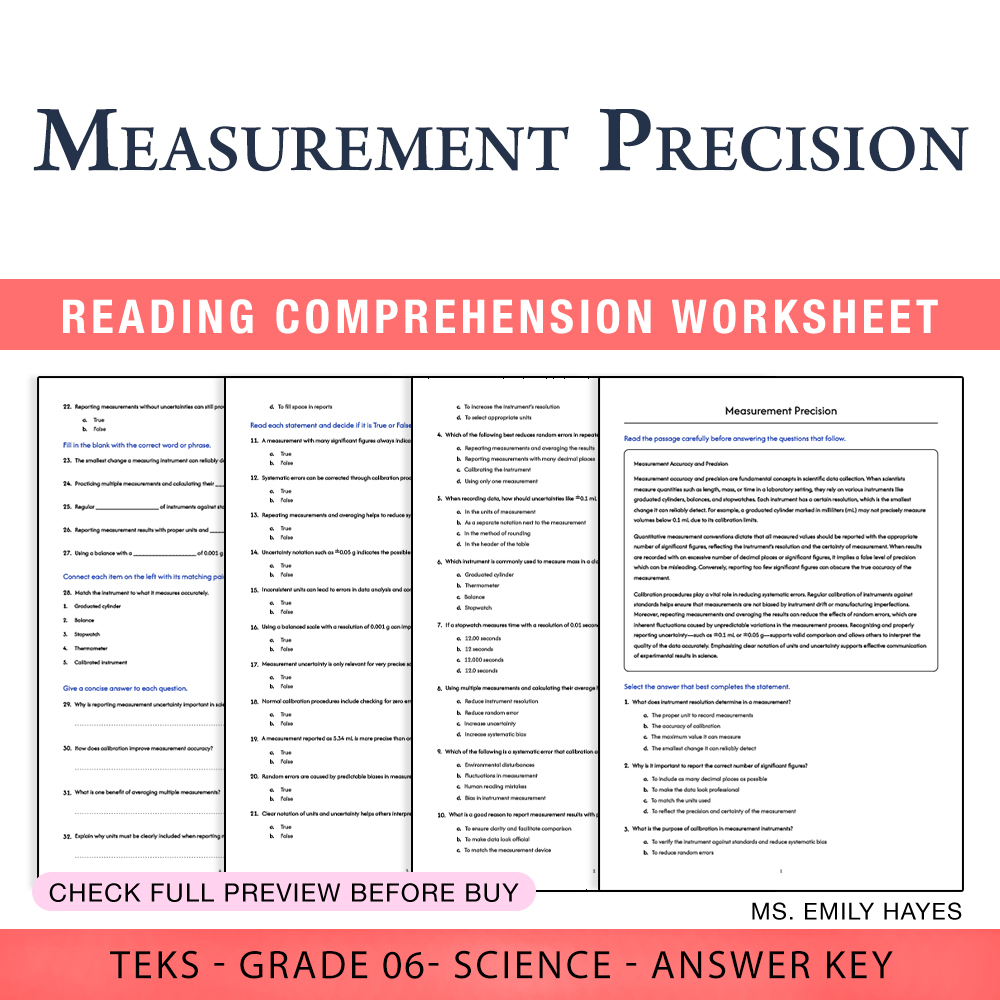
6th Grade Science | Measurement Precision Worksheet (PDF+ Answer Key)
Created byCopper Leaf ClassroomLearning Objectives
- Understand the importance of unit consistency and significant figures in measurements.
- Learn how instrument resolution affects measurement accuracy.
- Identify methods to reduce random and systematic errors in experimental data.
Instant download
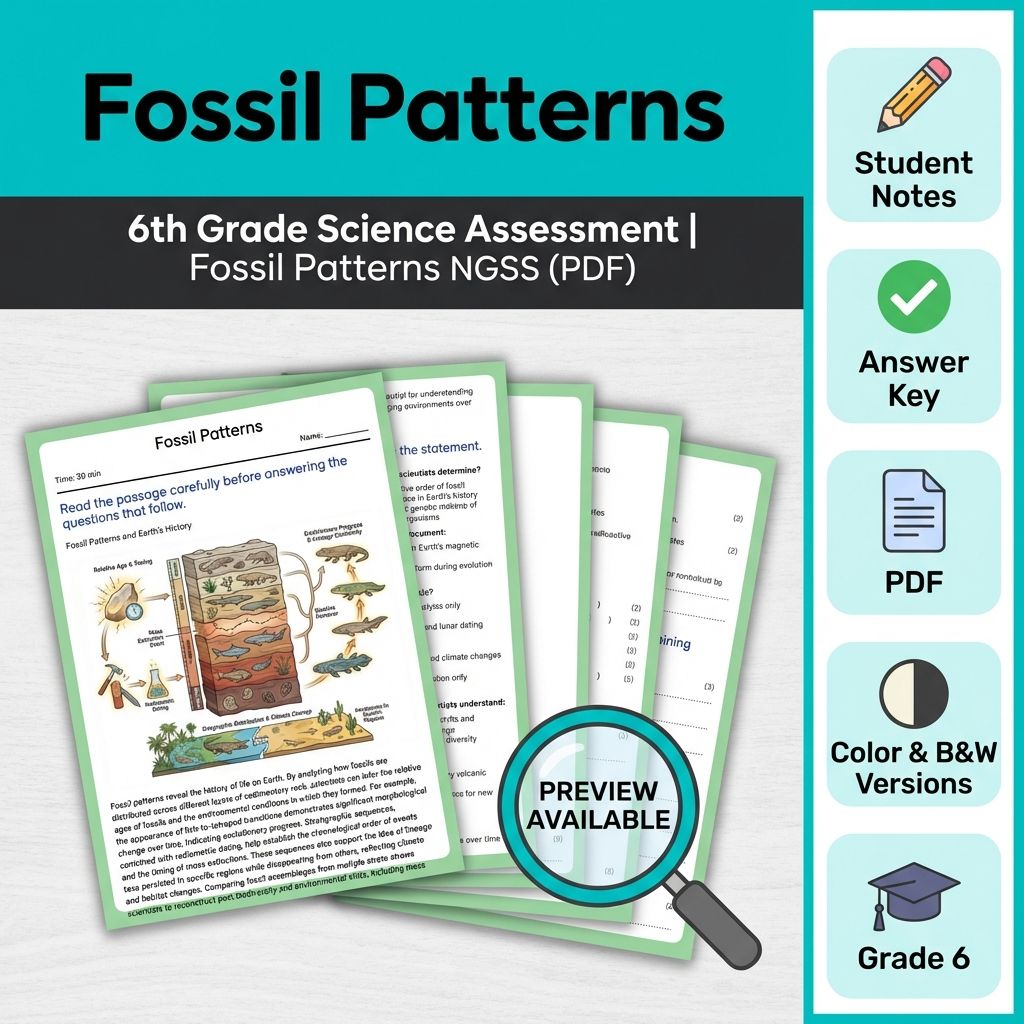
6th Grade Science Assessment | Fossil Patterns NGSS (PDF)
Created byPrism Point LearningLearning Objectives
- Analyze fossil occurrences and stratigraphic sequences to understand Earth's history.
- Identify morphological transitions and their significance in fossil records.
- Understand methods of dating fossils and interpreting their environmental context.
Also included in: Grade 6 Science Mini Bundle – Biological Evolution: Unity & Diversity +1 more
Instant download
6th Grade Science | Digital Instrumentation Reading Worksheets (PDF + Rubric)
JCreated byJ.S SheetsLearning Objectives
- Understand the components and functions of electronic sensors, data loggers, and digital probes.
- Learn proper calibration, operation, and selection of digital measurement tools for accurate data collection.
- Recognize key factors such as sampling rates, resolution, and units that influence measurement accuracy.
Also included in: Grade 6 Science Unit | Inquiry, Data, & Ethical Practices Worksheet Pack +1 more
Instant download
6th Grade Science | Combined Circuits Reading Worksheet (PDF + Answer Key)
JCreated byJ.S SheetsLearning Objectives
- Understand the structure and components of combined series-parallel circuits.
- Learn methods to analyze current and voltage distribution in mixed circuits.
- Identify how circuit elements affect overall behavior when modified or removed.
Also included in: Grade 6 Science Circuit & Electricity Unit Bundle – Worksheets & Answer Keys +1 more
Instant download
6th Grade Science | Observation Techniques Reading Worksheet & Answer Key (PDF)
JCreated byJ.S SheetsLearning Objectives
- Understand the concept of systematic observation and data collection.
- Distinguish between qualitative notes and quantitative measurements in observations.
- Identify common instruments used for scientific observations.
Instant download

6th Grade Science – Advanced Circuit Analysis Worksheet (PDF) | BC Standards
Created byEvergreen Desk EducationLearning Objectives
- Explain how resistive power dissipation depends on current, voltage, and resistance in real circuits.
- Describe how internal resistance reduces terminal voltage and changes load performance.
- Analyze how multiple loads and component limits affect heating and safe circuit operation.
Instant download
6th Grade Science | Surface Change Worksheet (PDF + Answer Key)
 Created byRiverstone Classroom
Learning Objectives
- Understand the geologic processes that modify Earth's surface over different time scales.
- Identify evidence such as rock layers, fossils, and landforms that indicate landscape change.
- Differentiate between rapid events like volcanic eruptions and slow processes like weathering.
Instant download
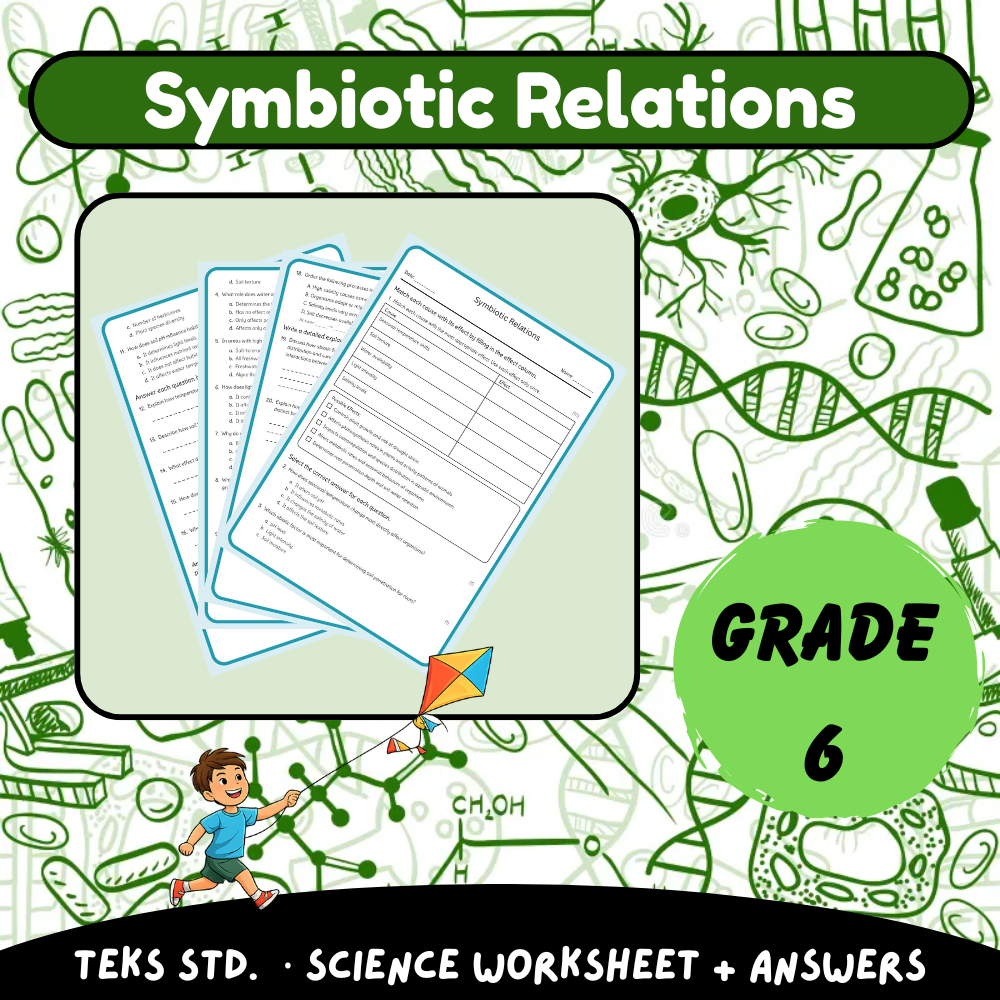
6th Grade Science | Symbiotic Relations Worksheet (Answer Key) – TEKS Aligned
Created byBright Mind ResourcesLearning Objectives
- Describe different types of symbiotic relationships such as mutualism, commensalism, and parasitism.
- Identify concrete examples of each type of symbiosis in real-world ecosystems.
- Explain how symbiotic interactions influence organism fitness, resource distribution, and community structure.
Instant download
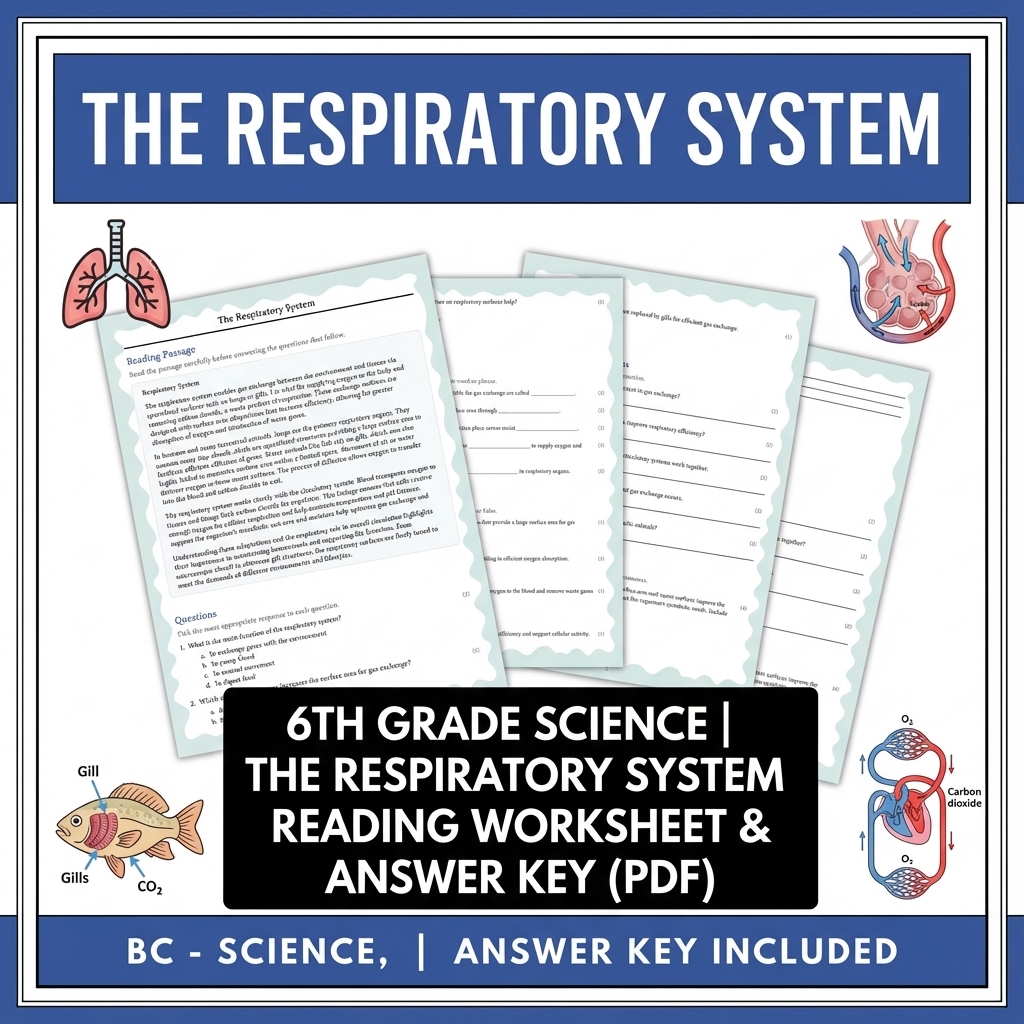
6th Grade Science | The Respiratory System Reading Worksheet & Answer Key (PDF)
JCreated byJ.S SheetsLearning Objectives
- Understand the basic structure and function of the respiratory system.
- Identify how surface area adaptations increase respiratory efficiency.
- Explain the process of gas exchange via diffusion in the lungs and gills.
Instant download
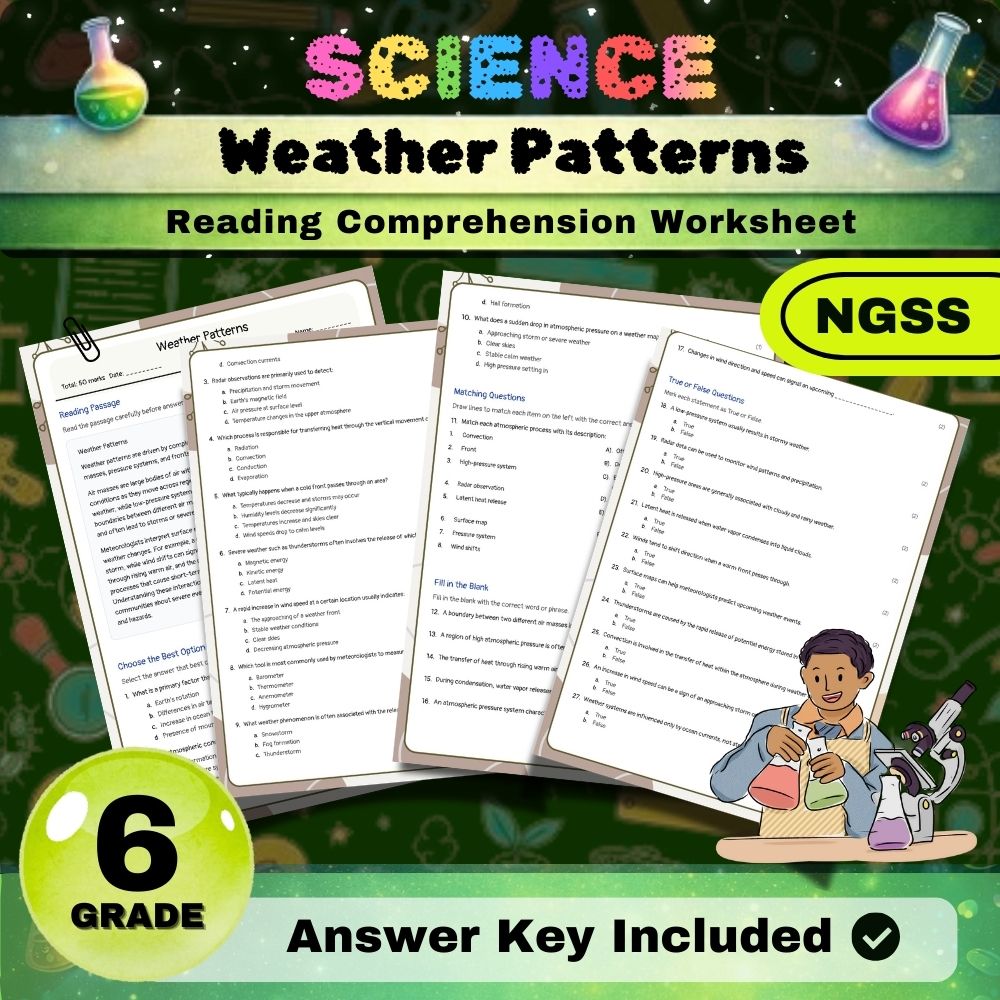
6th Grade Science | Weather Patterns NGSS Worksheet (PDF)
 Created byMaple Path Learning
Learning Objectives
- Describe atmospheric processes that produce local and regional weather patterns.
- Interpret surface maps, temperature, and pressure measurements to analyze weather phenomena.
- Explain how convection and latent heat transfer contribute to short-term weather variability.
Also included in: Grade 6 Science | Weather, Water Cycle & Earth Systems NGSS Unit Bundle (PDF) +1 more
Instant download
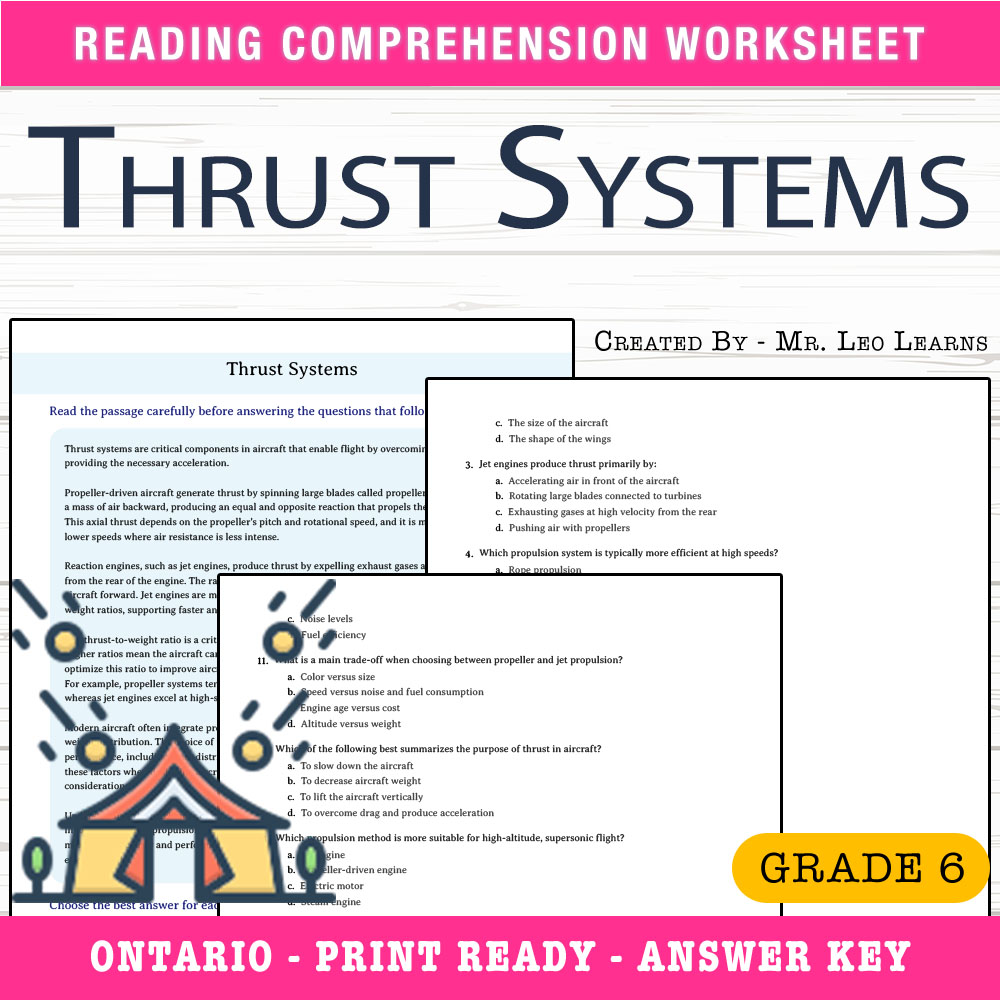
Grade 6 Science – Thrust Systems Worksheet for Mastery
Created byThe Resource HubLearning Objectives
- Explain how different propulsion methods generate thrust in aircraft.
- Describe the factors influencing thrust-to-weight ratio during flight.
- Compare propeller-driven and jet-driven propulsion systems in terms of efficiency and design considerations.
Also included in: Grade 6 Science | Aerodynamics & Engineering Unit Workbook (Worksheet Pack) +1 more
Instant download
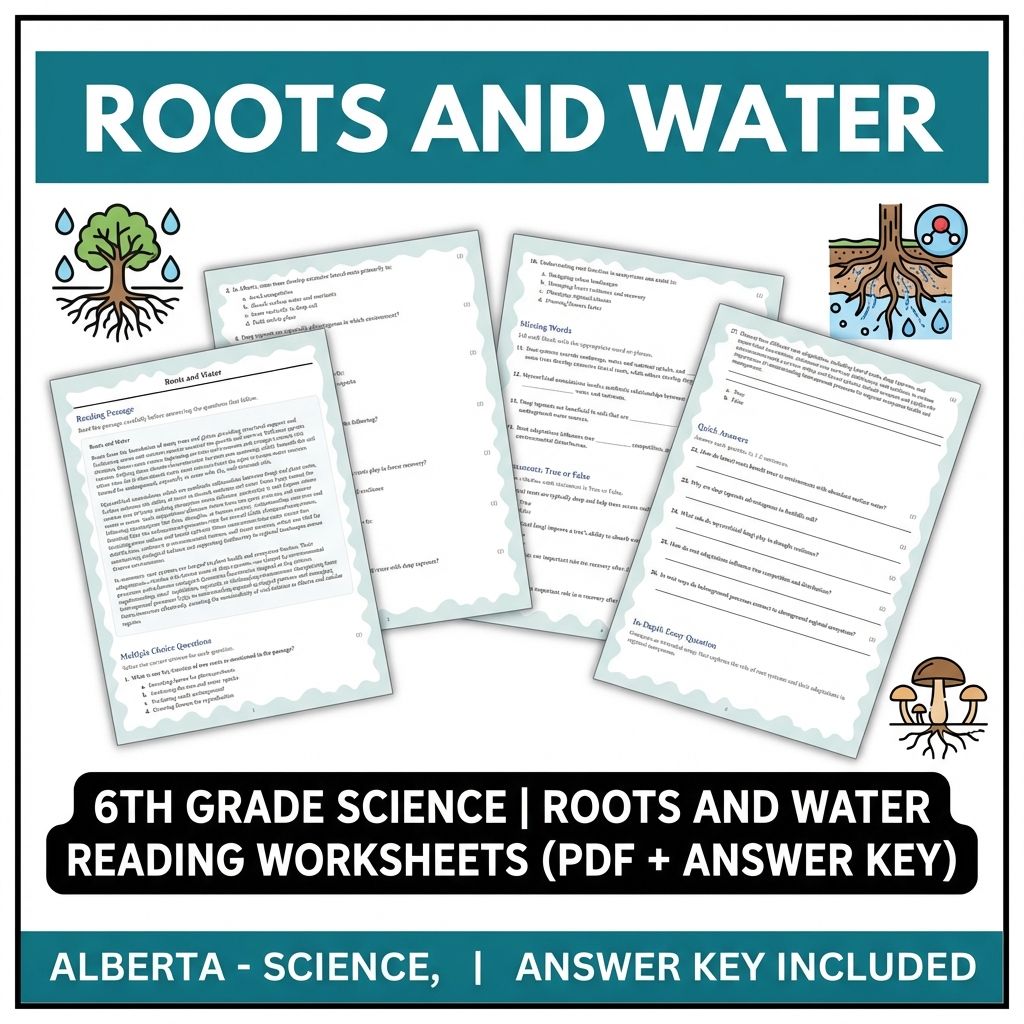
6th Grade Science | Roots and Water Reading Worksheets (PDF + Answer Key)
JCreated byJ.S SheetsLearning Objectives
- Understand the role of root systems in tree health and water absorption.
- Identify different root adaptations and their effects on tree distribution and resilience.
- Explain mycorrhizal associations and how they enhance water and nutrient uptake.
Also included in: Grade 6 Science Unit Bundle | Ecosystems and Biodiversity (Answer Keys Included) +1 more
Instant download
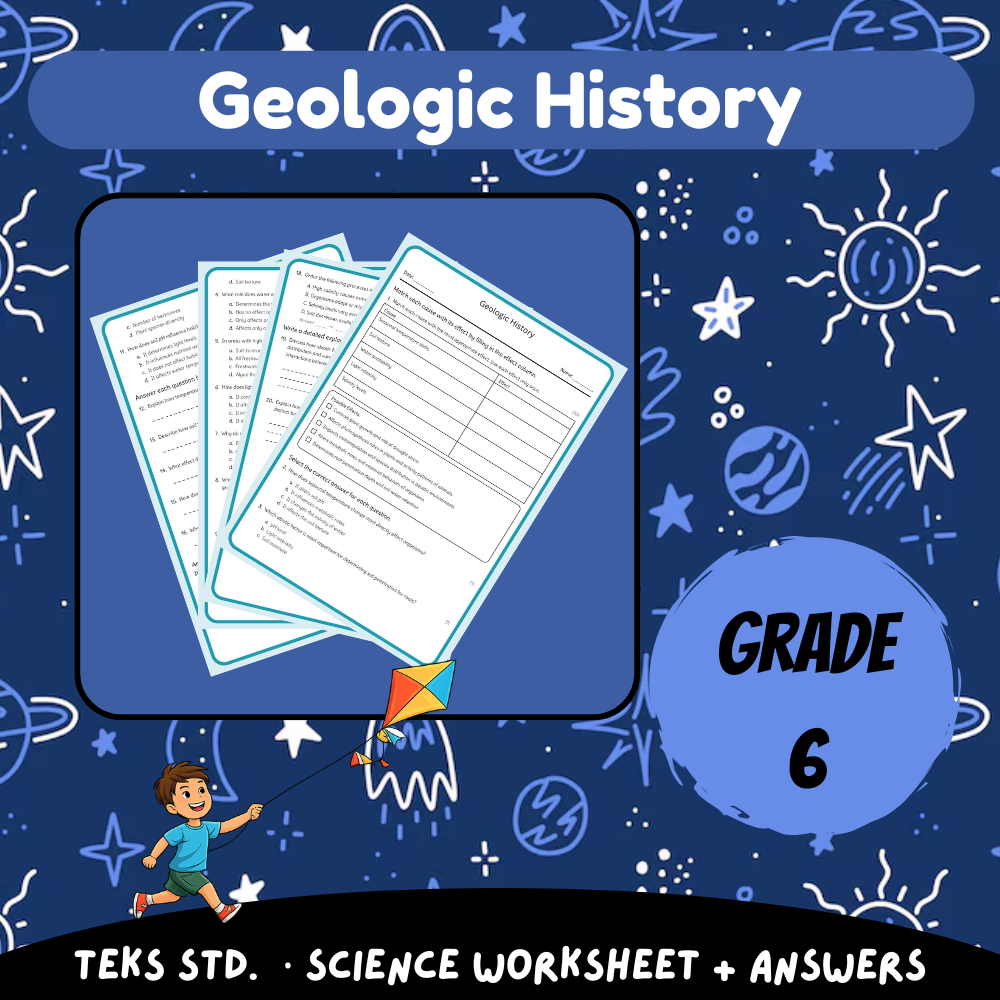
6th Grade Science | Geologic History Worksheet (Answer Key) – TEKS Standards
Created byBright Mind ResourcesLearning Objectives
- Understand principles of relative and absolute dating methods used in geology.
- Identify geologic time scale divisions and fossil succession as evidence of Earth's history.
- Explain stratigraphic relationships, unconformities, and radiometric techniques for rock dating.
Instant download
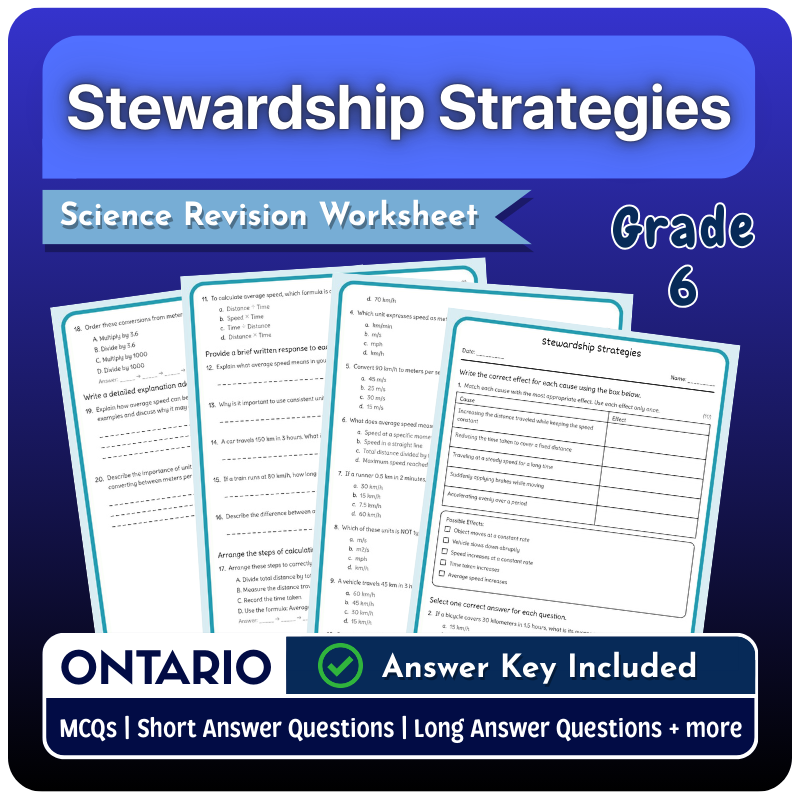
6th Grade Science | Stewardship Strategies Worksheet (Ontario Standards) (PDF)
Created byBright Mind ResourcesLearning Objectives
- Identify different stewardship strategies used in biodiversity conservation.
- Understand the criteria for prioritizing conservation actions.
- Evaluate trade-offs among various conservation approaches.
Instant download
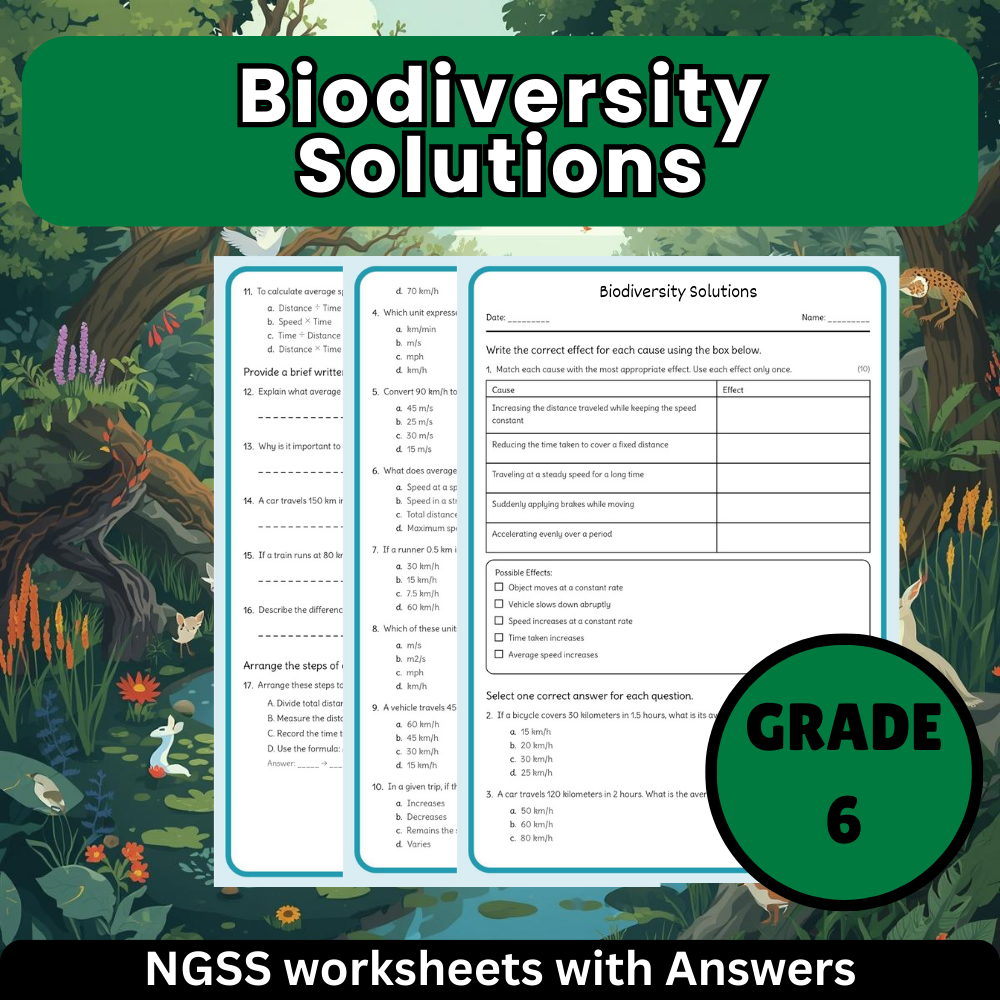
Grade 6 Science | Biodiversity Solutions Worksheet (Answer Key) | NGSS-Aligned
Created byBright Mind ResourcesLearning Objectives
- Compare different conservation strategies and habitat restoration methods for maintaining biodiversity.
- Analyze ecological trade-offs, feasibility, and effectiveness of various biodiversity support solutions.
- Explore case studies such as coral reef restoration and riparian buffer implementation to understand outcomes for ecosystems.
Also included in: Grade 6 Science Unit Bundle | Ecosystems & Biodiversity NGSS Worksheets (PDF) +2 more
Instant download
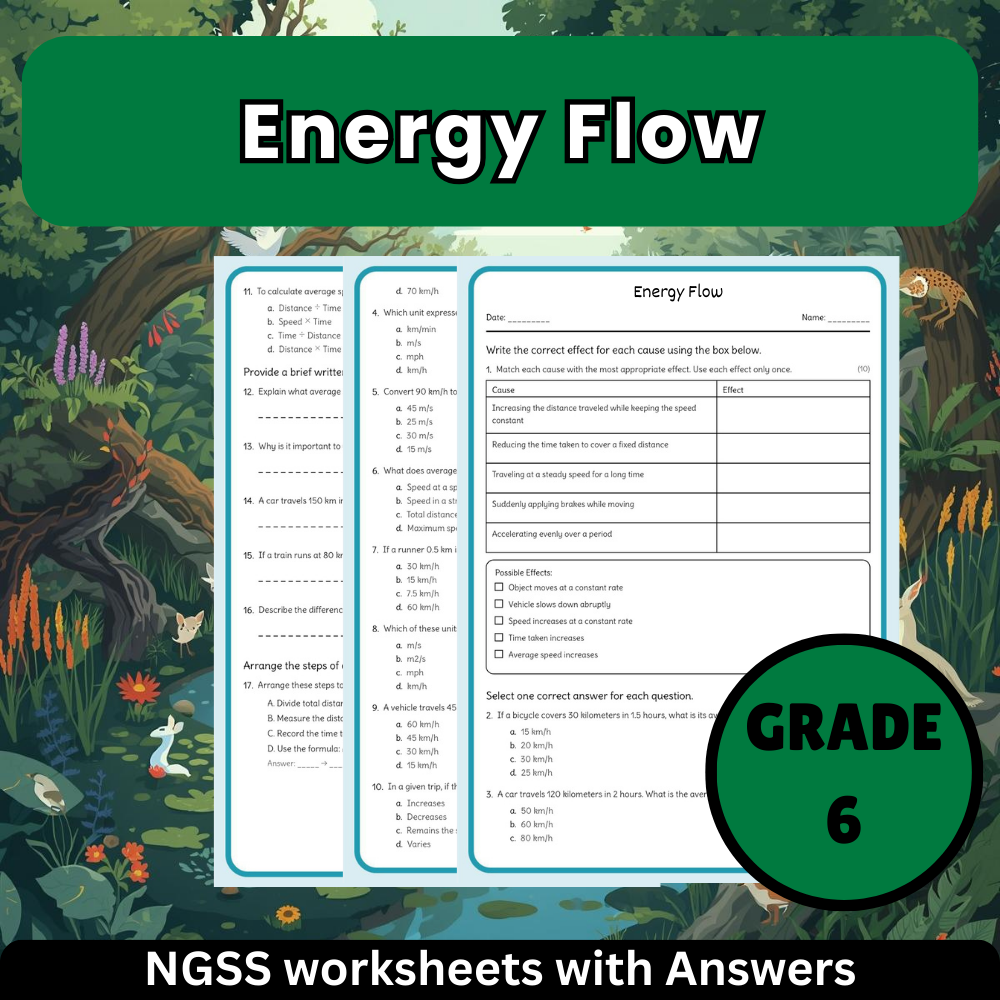
Grade 6 Science | Energy Flow Worksheet – NGSS Standards (PDF)
Created byBright Mind ResourcesLearning Objectives
- Describe the components and structure of food webs in terrestrial and aquatic environments.
- Explain the role of producers, consumers, and decomposers in energy transfer and matter cycling.
- Interpret energy pyramids and understand trophic transfer efficiency.
Also included in: Grade 6 Science Unit Bundle | Ecosystems & Biodiversity NGSS Worksheets (PDF) +2 more
Instant download
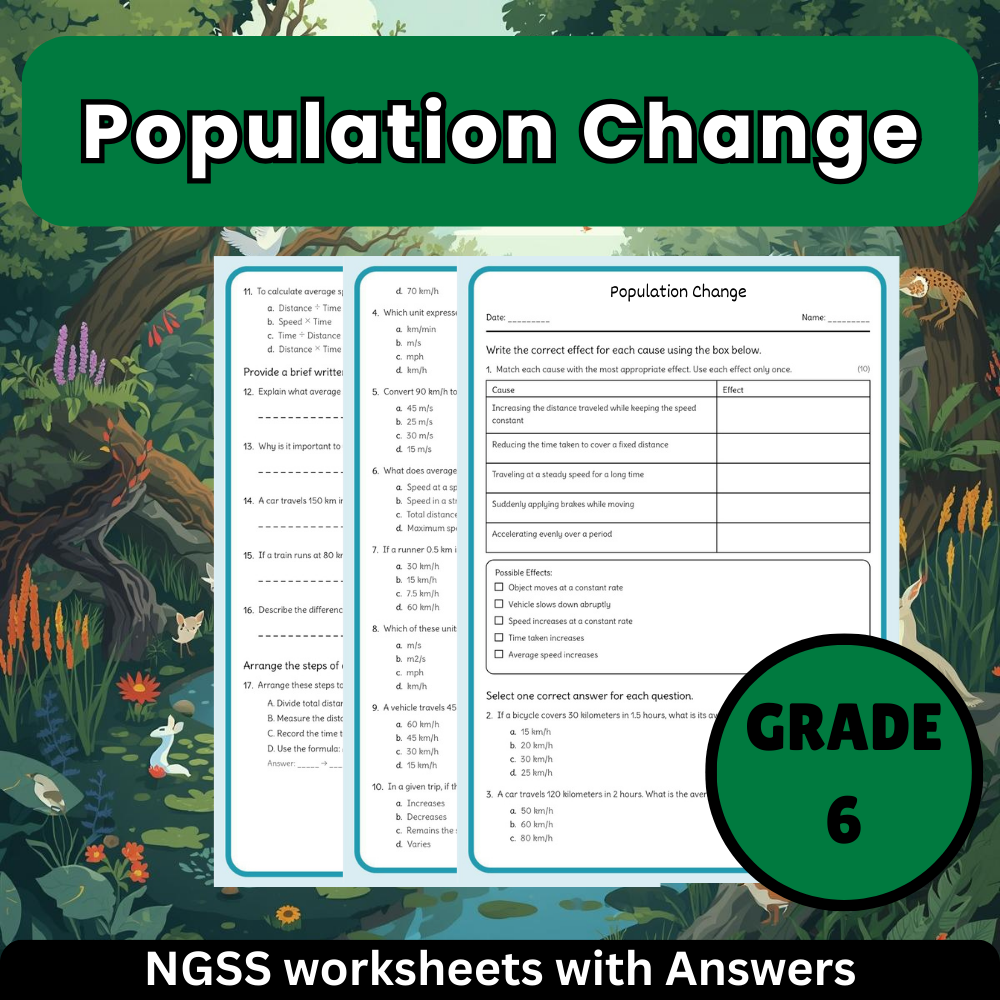
Grade 6 Science | Population Change Worksheet (Answer Key) – NGSS Aligned
Created byBright Mind ResourcesLearning Objectives
- Construct evidence-based arguments linking ecosystem component changes to population fluctuations.
- Analyze case studies such as predator reintroduction, invasive species, habitat fragmentation, and disease outbreaks.
- Interpret empirical data sets and longitudinal observations to understand population responses and patterns.
Also included in: Grade 6 Science Unit Bundle | Ecosystems & Biodiversity NGSS Worksheets (PDF) +2 more
Instant download
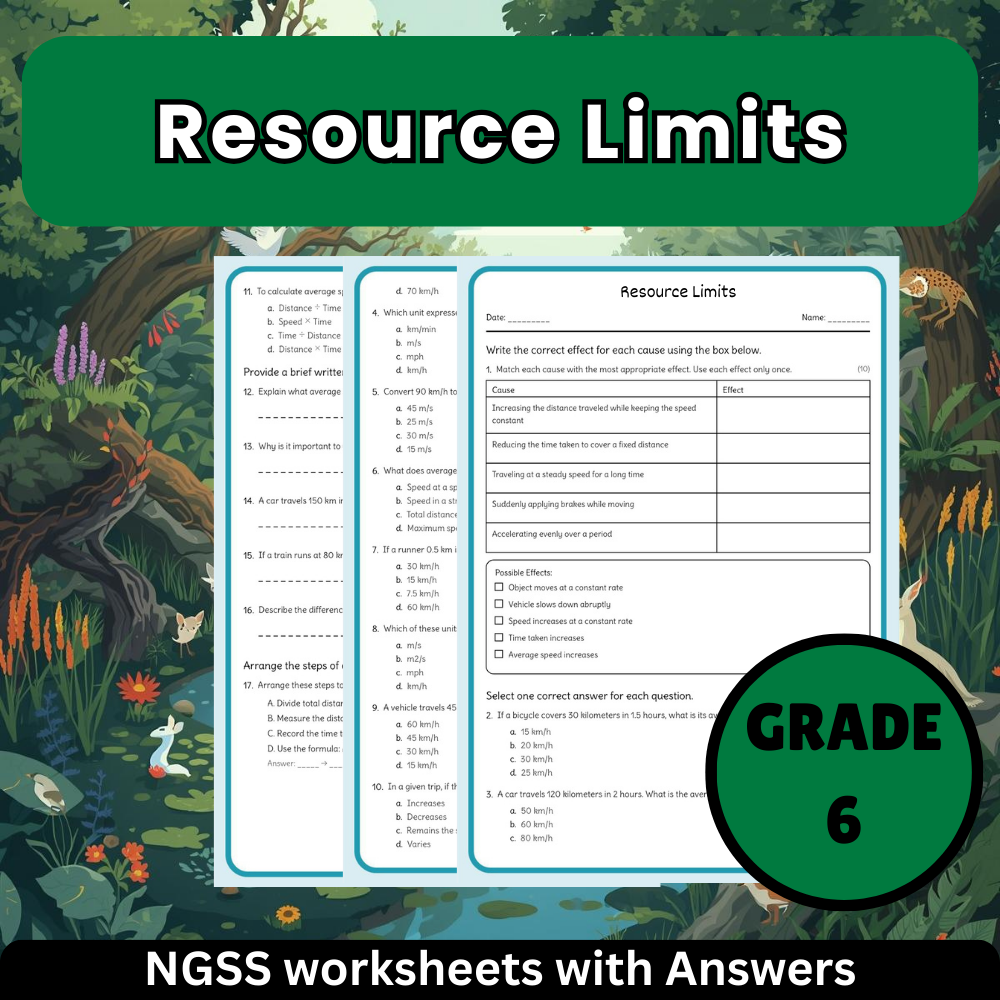
6th Grade Science | Resource Limits Worksheet (NGSS Aligned) | Science 1 PDF
Created byBright Mind ResourcesLearning Objectives
- Understand how resource availability affects individual organisms and populations.
- Interpret data patterns related to resource gradients and organism abundance.
- Identify limiting resources in different ecosystems such as marsh, desert, and forest.
Also included in: Grade 6 Science Unit Bundle | Ecosystems & Biodiversity NGSS Worksheets (PDF) +2 more
Instant download
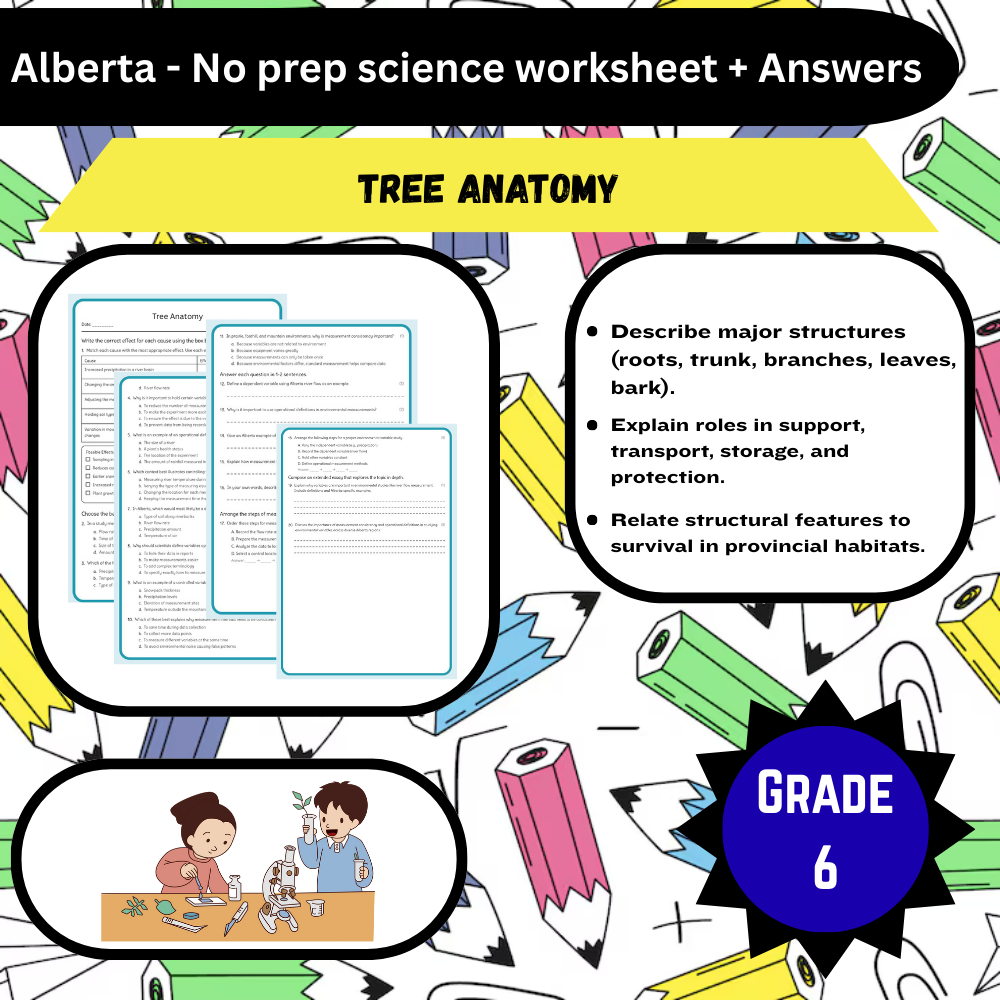
6th Grade Science | Tree Anatomy Worksheet (PDF) – Alberta Standards
Created byBright Mind ResourcesLearning Objectives
- Identify and describe major structures of a tree, including roots, trunk, branches, leaves, buds, and bark.
- Explain the roles of tree structures in support, transport, storage, and protection.
- Understand how structural features relate to tree survival in provincial habitats.
Instant download

Grade 6 Science | Current Fundamentals in Science - Daily Reading Comprehension
Created byCoral Reef LearningLearning Objectives
- Understand the concept of electric current and how charges move through a conductor.
- Distinguish between conventional current direction and electron flow.
- Explain potential difference and its role as a driving force in circuits.
Instant download
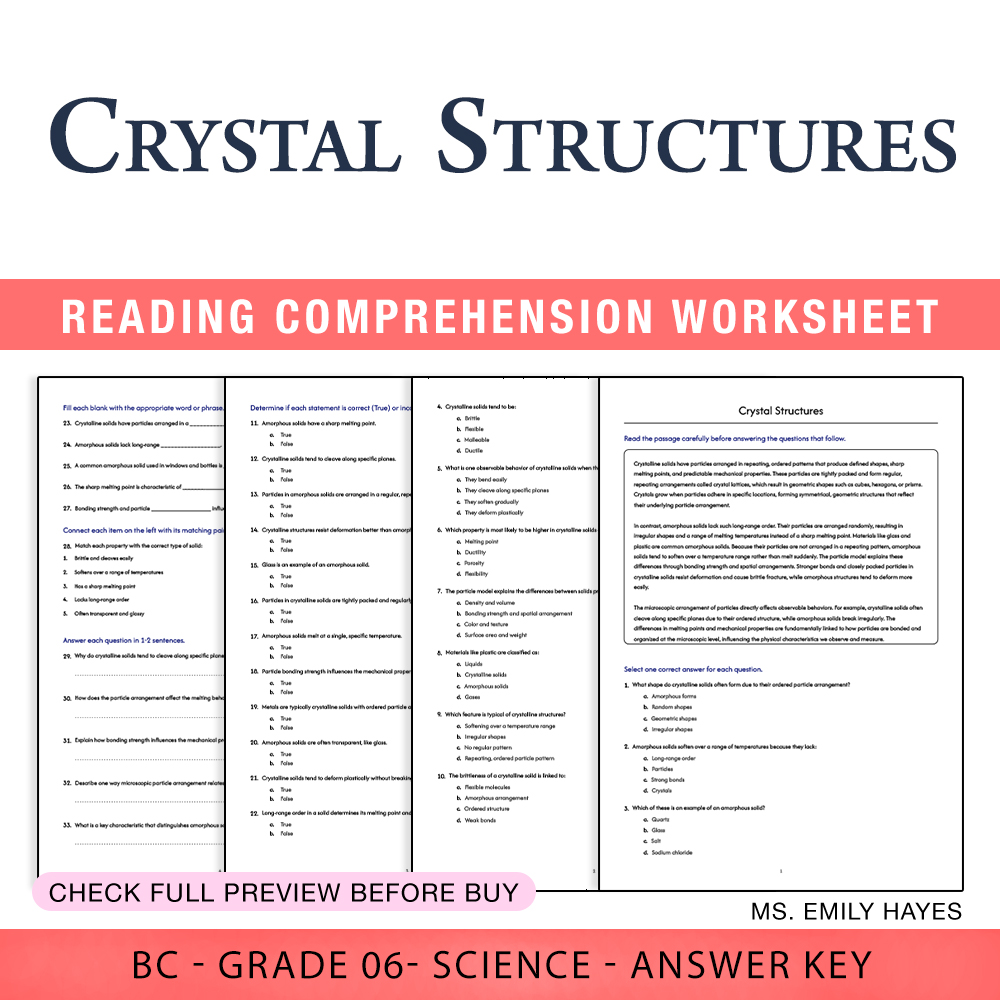
6th Grade Science | Crystal Structures Worksheet (PDF+ Answer Key)
Created byCopper Leaf ClassroomLearning Objectives
- Describe the arrangement of particles in crystalline and amorphous solids.
- Explain how particle arrangement affects the properties of solids such as melting point and brittleness.
- Compare microscopic structures to observable characteristics like cleavage and melting points.
Also included in: Grade 6 Science BC| Reaction Rates & Chemical Properties (PDF+ Answer Keys) +1 more
Instant download
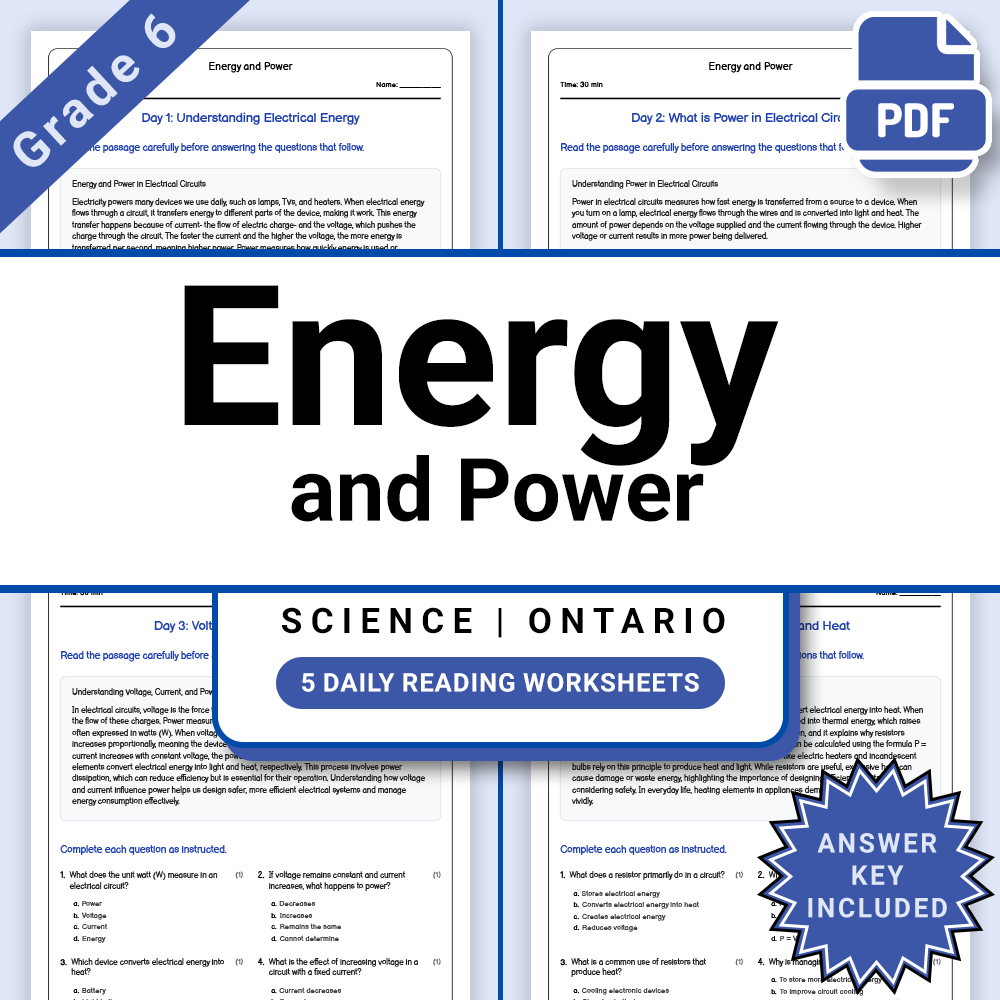
Grade 6 Science Energy and Power Daily Reading Worksheet with Answer Key
JCreated byJ.S SheetsLearning Objectives
- Understand how electrical energy is transferred in circuits.
- Define power as the rate of energy transfer.
- Connect power to current and voltage relationships.
Also included in: Grade 6 Science Lesson Group – Circuits and Energy Ontario Framework +1 more
Instant download

6th Grade Science – Aerodynamics & Flight Worksheet (Alberta Standards) (PDF)
 Created bySilver Birch Teaching
Learning Objectives
- Compare how kites, gliders, and round canopies behave using lift, drag, and control ideas
- Explain how glide ratio and lift-to-drag performance relate to endurance and distance
- Use Alberta contexts (prairie crosswinds and valley thermals) to predict likely flight outcomes
Also included in: Grade 6 Aerodynamics & Flight Forces Science Lesson Bundle: Alberta +1 more
Instant download
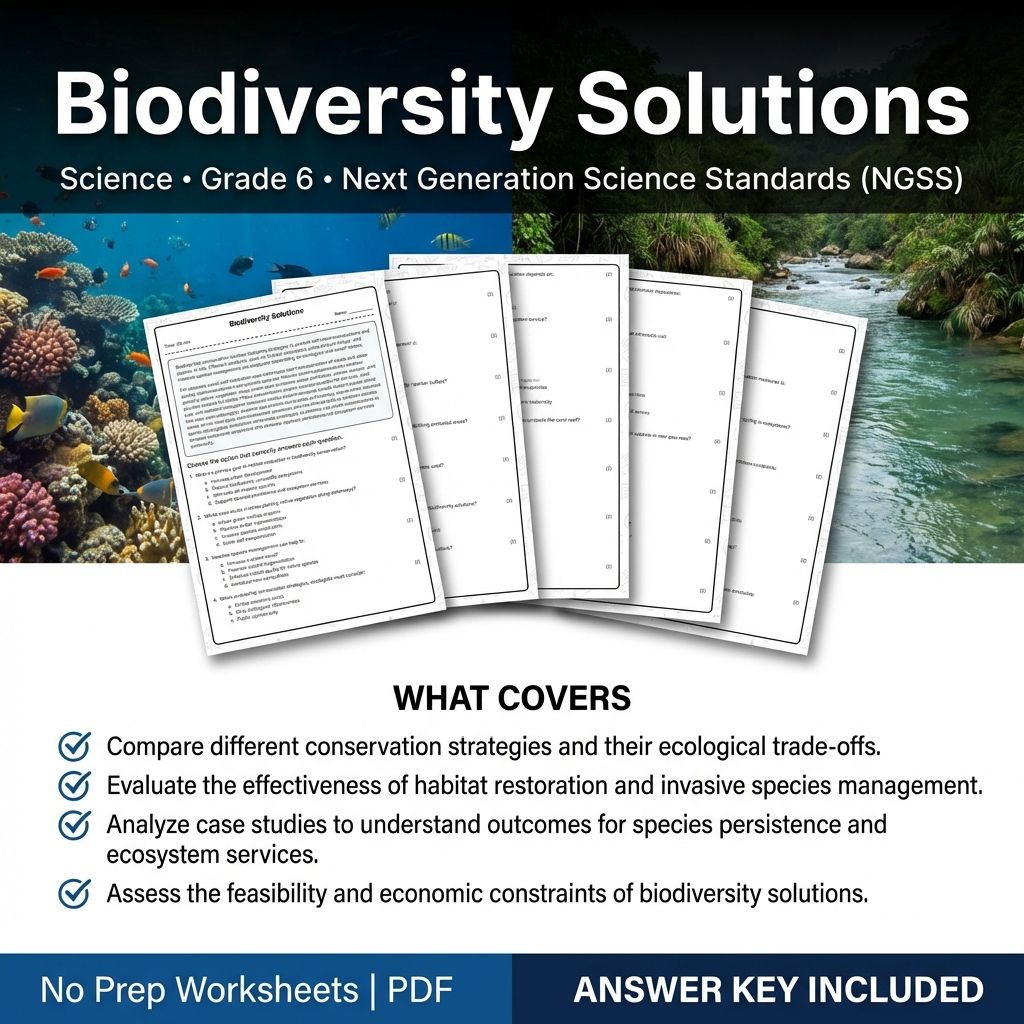
6th Grade Science | Biodiversity Solutions Worksheet & Answer Key (Printable PDF)
Created byCoral Reef LearningLearning Objectives
- Compare different conservation strategies and their ecological trade-offs.
- Evaluate the effectiveness of habitat restoration and invasive species management.
- Analyze case studies to understand outcomes for species persistence and ecosystem services.
Instant download

Grade 6 Science Light Properties Worksheet | Standards-Aligned Practice
JCreated byJ.S SheetsLearning Objectives
- Understand that light behaves as both waves and particles, characterized by wavelength, frequency, and energy.
- Identify the range of visible light within the electromagnetic spectrum and recognize wavelengths beyond visible light.
- Explain how shorter wavelengths carry more energy and can cause chemical changes, while longer wavelengths transfer thermal energy.
Instant download
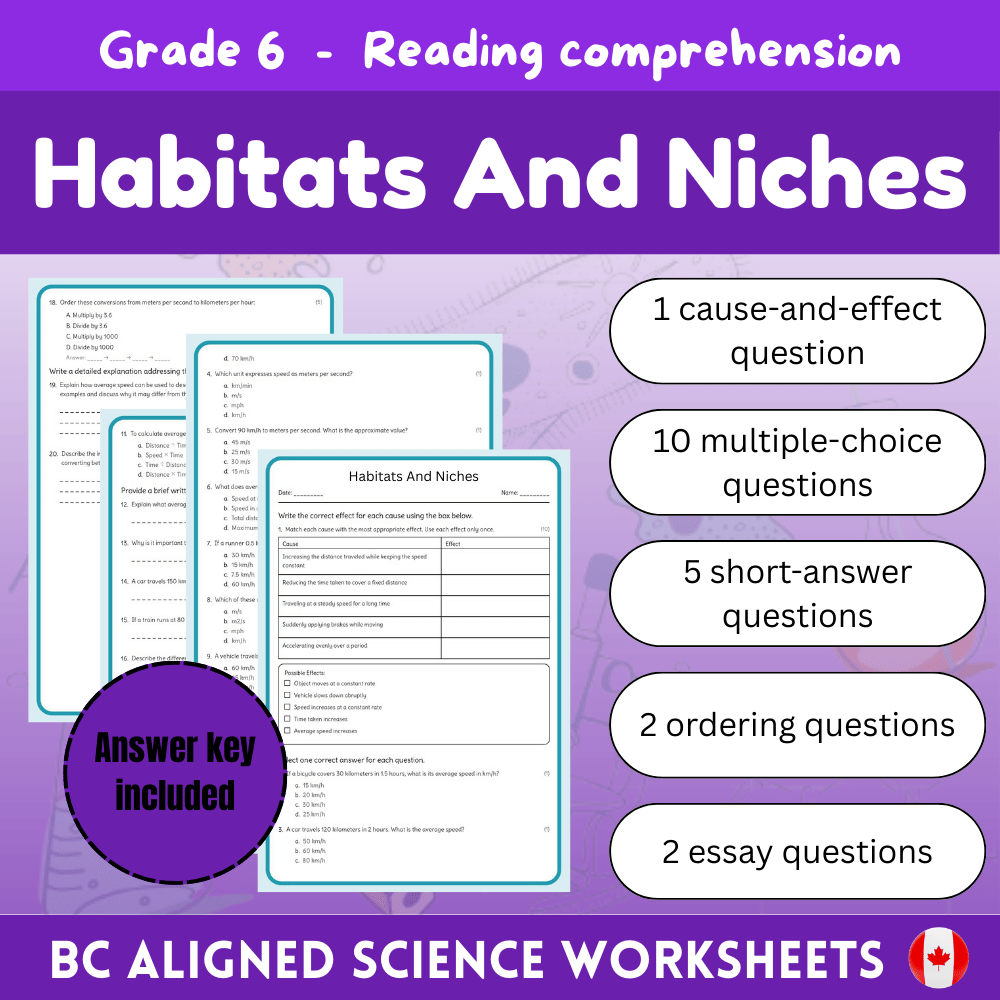
6th Grade Science | Habitats and Niches Worksheet (PDF) – BC Standards
Created byBright Mind ResourcesLearning Objectives
- Define what a habitat and a niche are in an ecosystem.
- Explain how overlapping niches can lead to competition among species.
- Describe resource partitioning and its role in supporting species coexistence.
Instant download
About Grade 6 Science Worksheets
Explore Grade 6 Science worksheets for classwork, homework, or review. Our 5,969 printables download instantly as PDFs.
MyTeachingSheets worksheets are made by real teacher-authors and checked before they go live. Download any as a print-ready PDF for lessons, homework, or independent practice — most include answer keys, and previews are always free.