
Grade 6 Science Worksheets
5,969 worksheets
Grade 6 Variation Effects Worksheet | NGSS Genetics & Heredity with Answer Key
 Created byNorthstar Worksheets
Learning Objectives
- Explain how phenotypic variation can result from interactions between genetic information and environmental influences.
- Describe how DNA sequence differences and changes in gene expression can affect an organism’s structure and function.
- Use examples (inheritance, nutrition-linked growth, and temperature effects) to support claims about trait variation.
Also included in: Cells & Human Body Systems Lesson Bundle | Grade 6 Science | NGSS +1 more
Instant download

Grade 6 Energy Pathways Worksheet | NGSS Photosynthesis & Respiration Activity
Created byNorthstar WorksheetsLearning Objectives
- Explain how photosynthesis and respiration transfer and transform energy in cells
- Model how matter cycles between plants and animals using reactants and products
- Describe the roles of chloroplasts, mitochondria, stomata, and oxygen in energy transfer
Also included in: Cells & Human Body Systems Lesson Bundle | Grade 6 Science | NGSS +1 more
Instant download

Grade 6 Cell Functions Worksheet | NGSS Cell Organelles Science Activity
Created byNorthstar WorksheetsLearning Objectives
- Explain how specific cell organelles contribute to key cell functions.
- Connect the structure of an organelle to its role in the cell.
- Compare plant and animal cells in terms of specialized organelles.
Also included in: Cells & Human Body Systems Lesson Bundle | Grade 6 Science | NGSS +1 more
Instant download
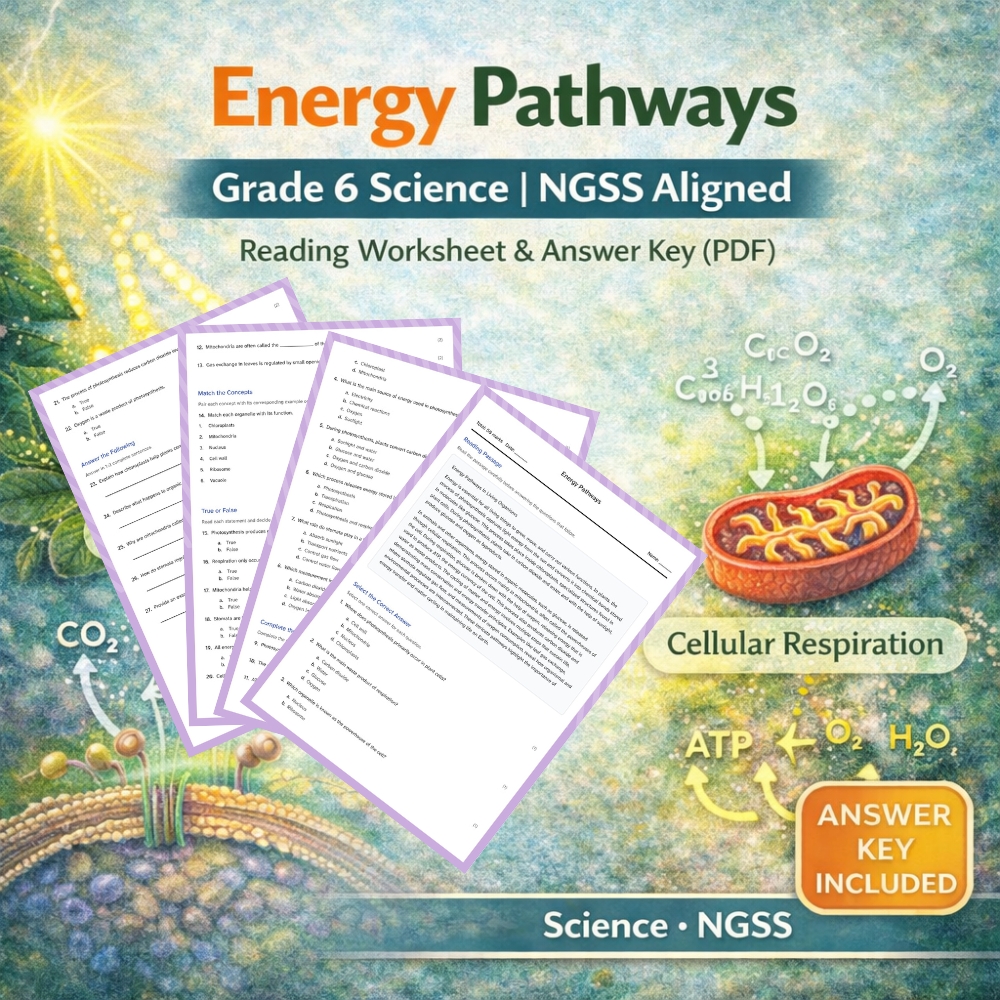
6th Grade Science | Energy Pathways | Worksheet & Answer Key ( NGSS )
 Created byCedar Grove Learning
Learning Objectives
- Understand how photosynthesis converts light energy into chemical energy in plants.
- Explain how organisms break down organic molecules to release energy through respiration.
- Identify the roles of chloroplasts and mitochondria in energy transfer processes.
Also included in: Grade 6 Science Worksheet Bundle | Cell Processes & Systems NGSS(PDF+Answer Key) +1 more
Instant download
6th Grade Science – Scientific Methods Worksheet (Worksheet + Answer Key) PDF
 Created byBright Mind Resources
Learning Objectives
- Describe the iterative process of scientific investigations.
- Differentiate between descriptive and comparative approaches in experiments.
- Explain the importance of observational phenomena in designing experiments.
Instant download
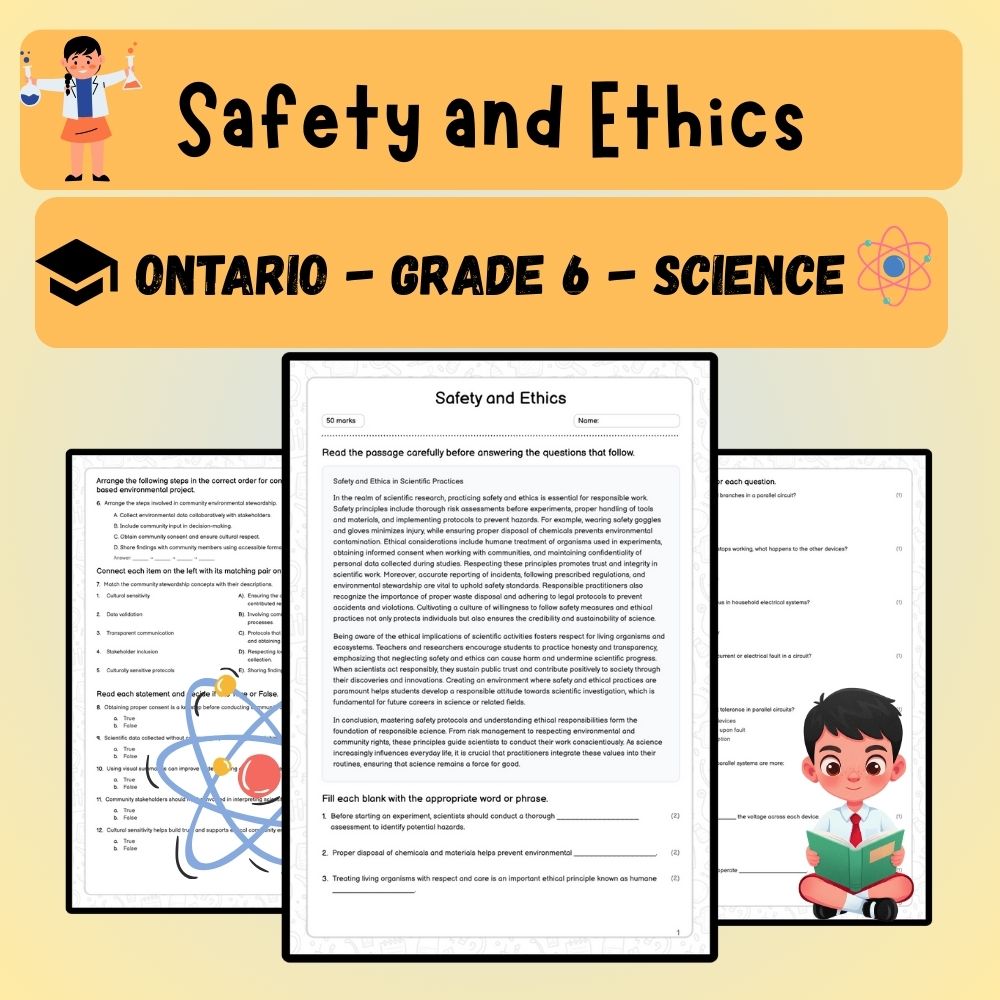
6th Grade Science | Safety and Ethics Worksheet (PDF )
 Created byPrism Point Learning
Learning Objectives
- Understand fundamental safety principles in scientific practice, including risk assessment and hazard prevention.
- Recognize ethical considerations such as humane treatment, informed consent, and environmental stewardship in scientific work.
- Apply protocols for proper disposal, accurate incident reporting, and adherence to regulations to promote responsible scientific conduct.
Also included in: Grade 6 Science Unit | Inquiry, Modeling & Data Skills Worksheet Bundle
Instant download
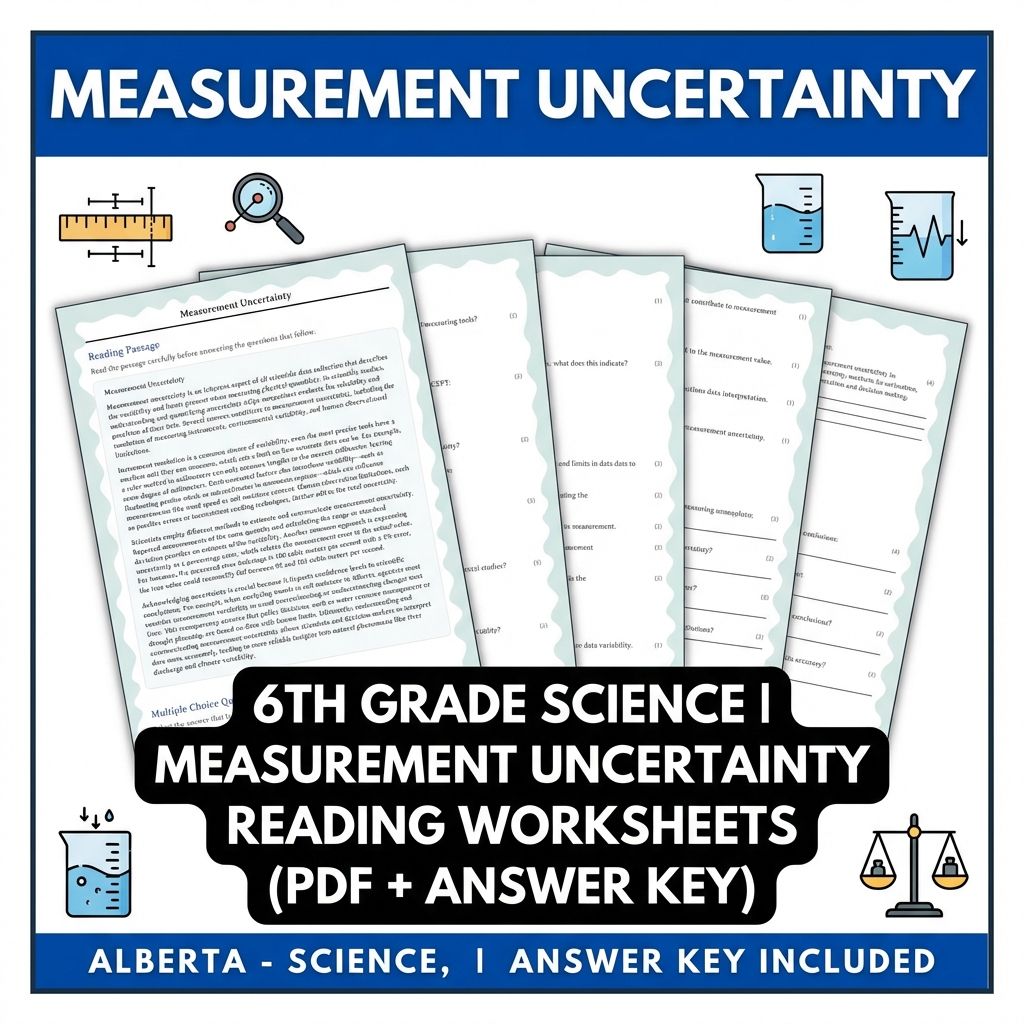
6th Grade Science | Measurement Uncertainty Worksheets (PDF + Answer Key)
JCreated byJ.S SheetsLearning Objectives
- Understand the concept of measurement uncertainty and its sources in science.
- Identify methods used to estimate and express uncertainty in data collection.
- Recognize the importance of acknowledging measurement variability in scientific conclusions.
Also included in: Grade 6 Science Bundle – Data Analysis, Scientific Inquiry & Measurement Skills +1 more
Instant download
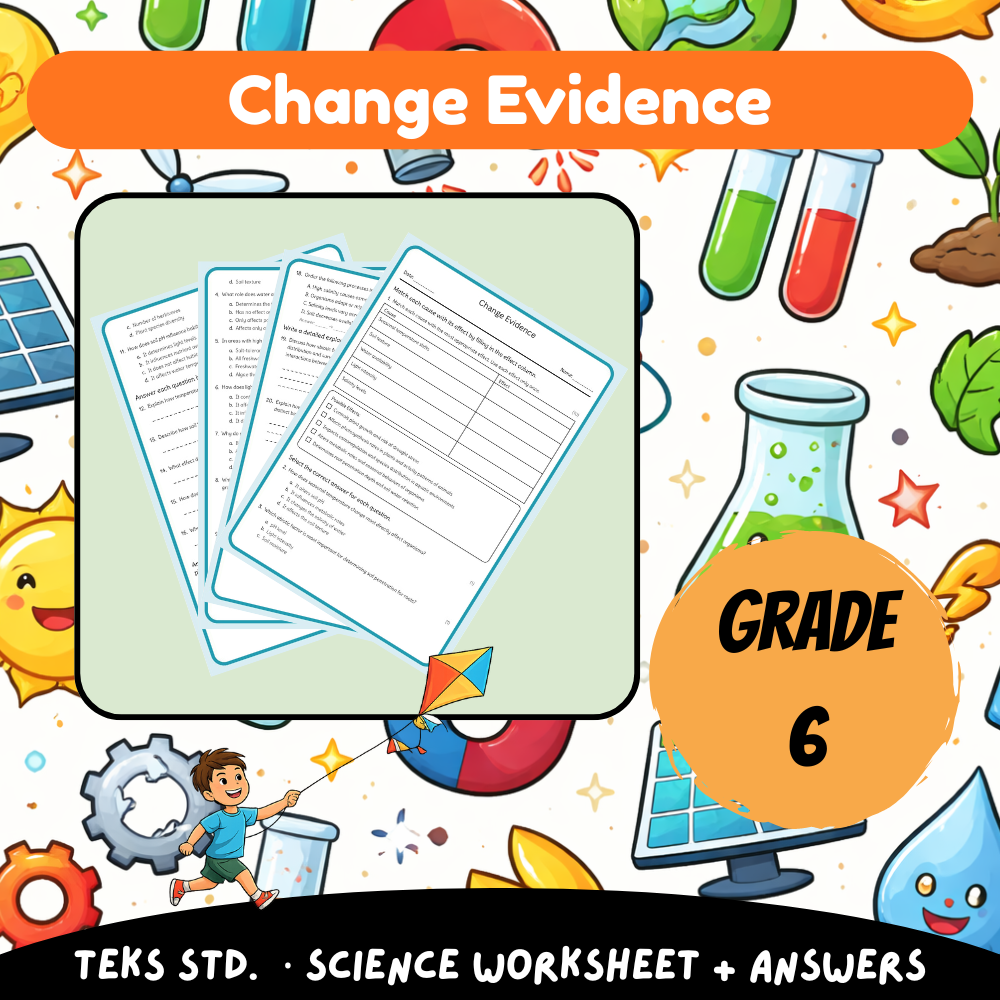
6th Grade Science | Change Evidence Worksheet (PDF) – TEKS Standards & Assessments
Created byBright Mind ResourcesLearning Objectives
- Differentiate between physical and chemical changes using observable indicators.
- Identify examples of physical and chemical changes in everyday objects.
- Describe characteristic evidence of chemical changes such as gas formation, precipitates, color change, and temperature change.
Instant download
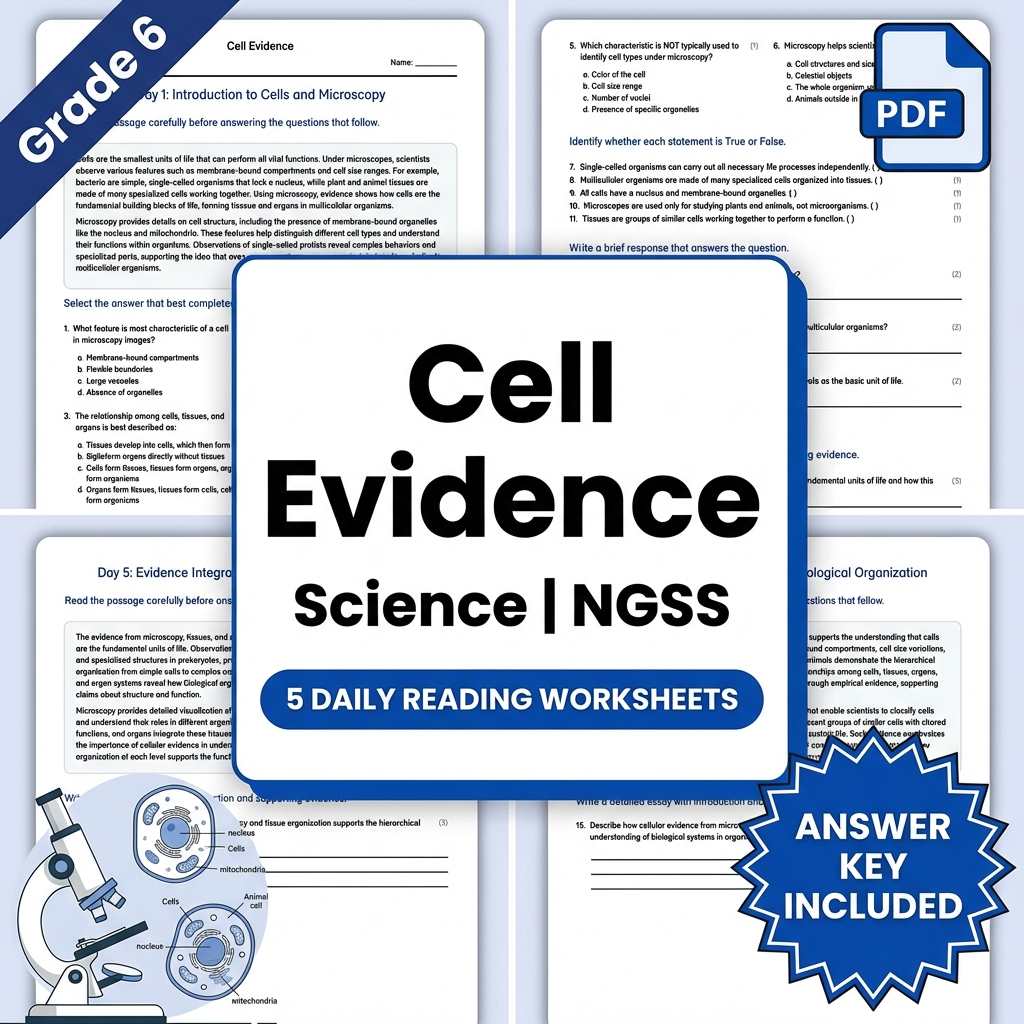
6th Grade Science | Cell Evidence Daily Reading Worksheet (PDF + Answer Key)
 Created byCopper Leaf Classroom
Learning Objectives
- Identify common cellular features observable under microscopes.
- Differentiate between single-celled and multicellular organisms based on evidence.
- Understand the relationships among cells, tissues, and organs in organisms.
Instant download
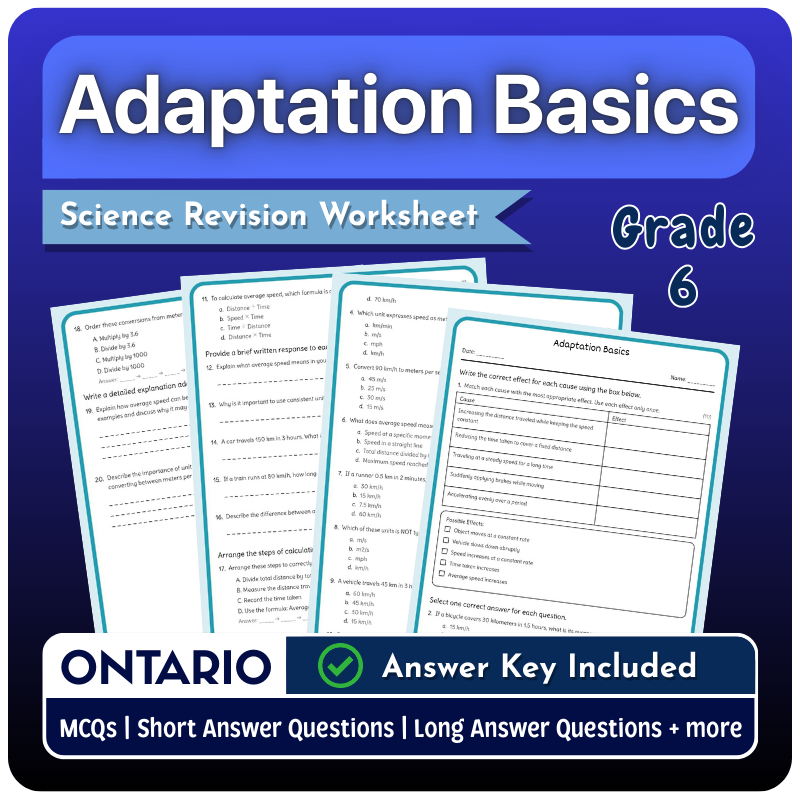
6th Grade Science | Adaptation Basics Worksheet (Ontario) (PDF)
Created byBright Mind ResourcesLearning Objectives
- Understand the different types of adaptations and their roles in survival.
- Identify examples of structural, behavioral, and physiological adaptations.
- Analyze how environmental pressures influence the development of advantageous traits.
Instant download

Grade 6 Science – Mixtures & Solutions | Daily Reading Worksheet
Created byBright Mind ResourcesLearning Objectives
- Understand the differences between mixtures and solutions
- Identify homogeneous and heterogeneous mixtures
- Learn methods to separate components in mixtures
Also included in: Matter & Change Grade 6 Science Daily Reading Worksheets Lesson Bundle | BC +1 more
Instant download

Grade 6 Science – Diffusion Rates & Factors | Daily Reading Worksheet
Created byBright Mind ResourcesLearning Objectives
- Understand the concept of diffusion and how particles move from areas of high to low concentration.
- Learn how temperature, particle size, and medium viscosity affect diffusion rates.
- Connect microscopic particle motion to observable phenomena such as scent spreading and dye dispersal.
Also included in: Matter & Change Grade 6 Science Daily Reading Worksheets Lesson Bundle | BC +1 more
Instant download
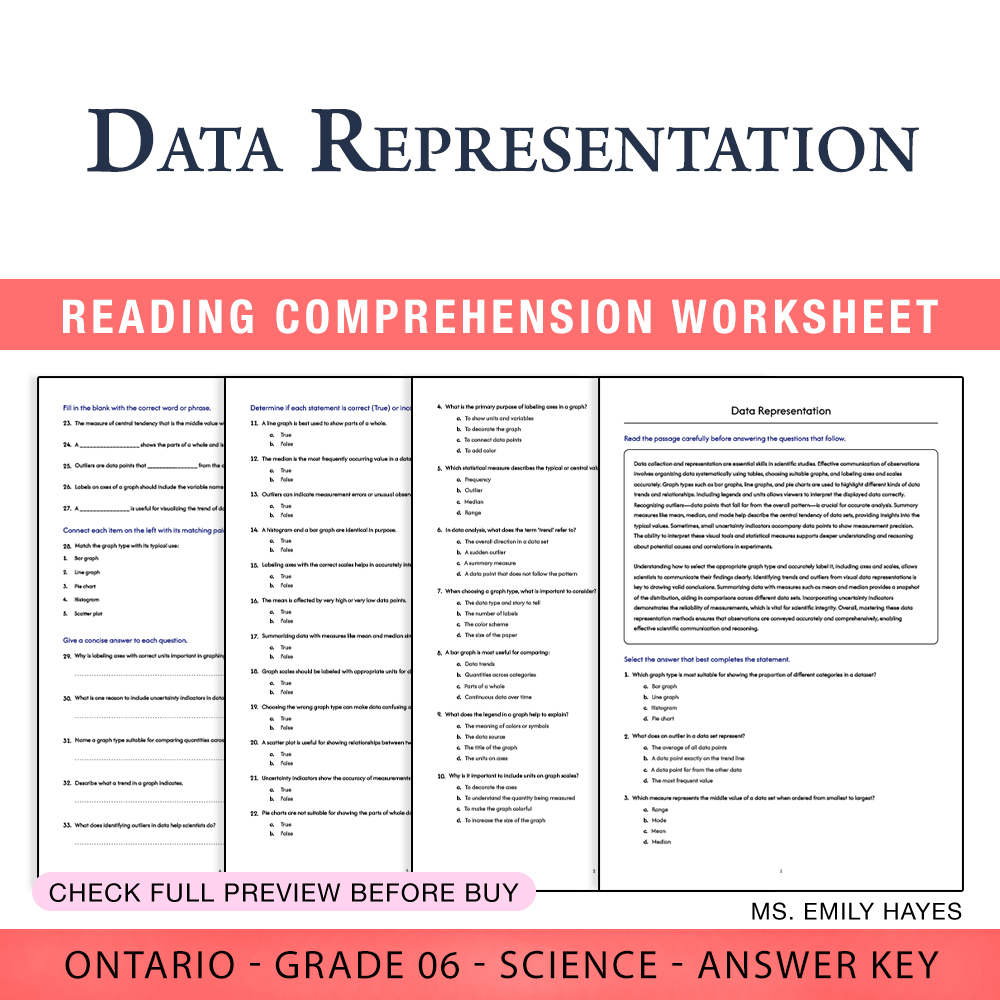
6th Grade Science | Data Representation Worksheet (PDF+ Answer Key)
Created byCopper Leaf ClassroomLearning Objectives
- Understand fundamental methods of data analysis and representation
- Identify and organize data using tables and graphs
- Interpret trends, outliers, and basic summary measures from data
Instant download

Adaptation Patterns Assessment | TEKS Grade 6 Science Standards-Aligned
Created byPrism Point LearningLearning Objectives
- Identify different types of adaptation (morphological, physiological, behavioral).
- Explain how specific traits help organisms survive in their environments.
- Recognize examples of adaptations such as leaf modifications, fur insulation, migration, and dormancy.
Instant download

Grade 6 Science | Erosion & Deposition - Daily Reading Comprehension
 Created byCoral Reef Learning
Learning Objectives
- Understand how moving water causes erosion of Earth's surface
- Identify the processes of deposition by water
- Recognize landforms created by erosion and deposition
Instant download

Grade 6 Habitat Fragmentation Worksheet Ontario Science PDF & Answer Key
 Created byClear Sky Classroom
Learning Objectives
- Explain how habitat fragmentation reduces connectivity between habitat patches
- Describe how fragmentation affects gene flow, pollinator movement, and species interactions
- Identify edge effects and isolation effects on populations in forests and wetlands
Instant download

Quantitative Circuits Worksheet Grade 6 Science | Ontario + Doodle Note
 Created byChalk and Compass
Learning Objectives
- Explain how voltage, current, and resistance are related in a simple circuit using proportional reasoning.
- Use measured values to calculate or predict how circuit variables change when resistance changes.
- Compare how current and resistance behave in series versus parallel circuits using qualitative quantitative relationships.
Also included in: Grade 6 Science Circuits & Electricity Lesson Bundle | Ontario +1 more
Instant download
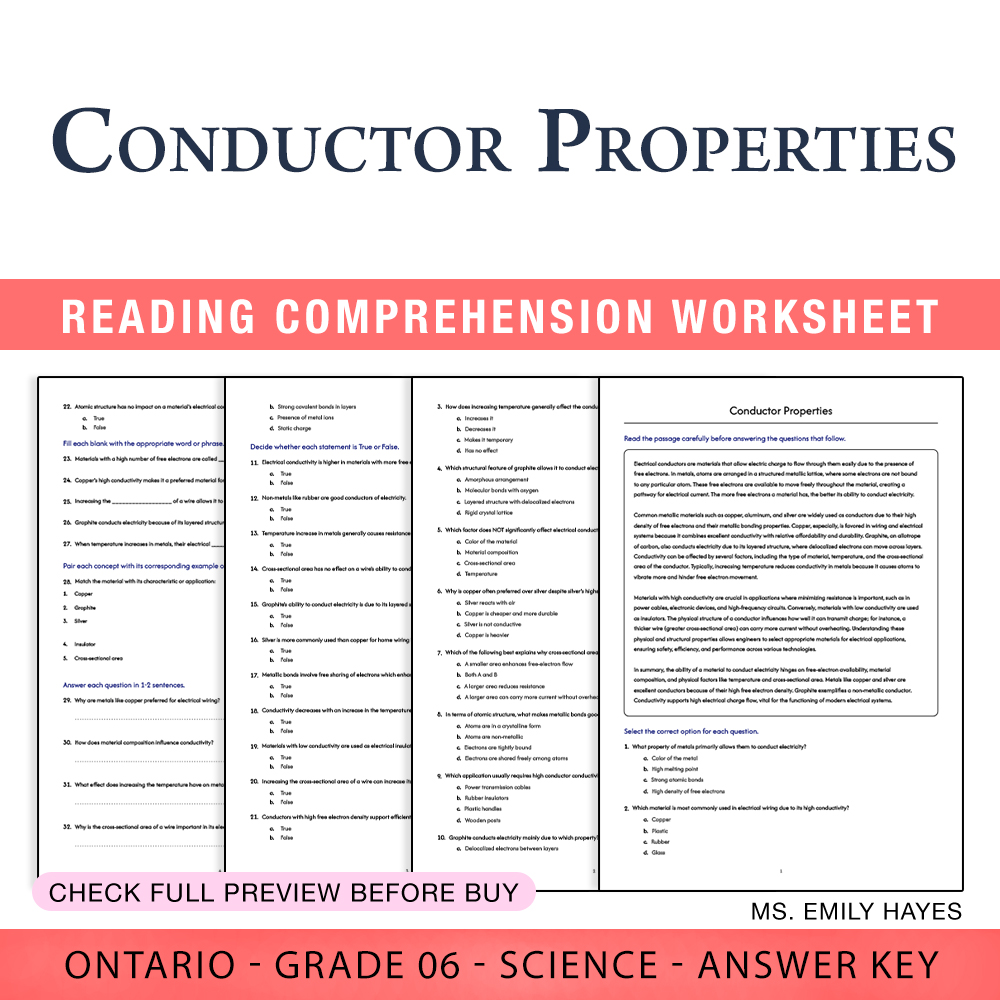
6th Grade Science | Conductor Properties Worksheet (PDF + Answer Key)
Created byCopper Leaf ClassroomLearning Objectives
- Explain what electrical conductors are and their key properties.
- Identify factors that affect electrical conductivity in materials.
- Compare common conducting materials like copper and graphite.
Instant download
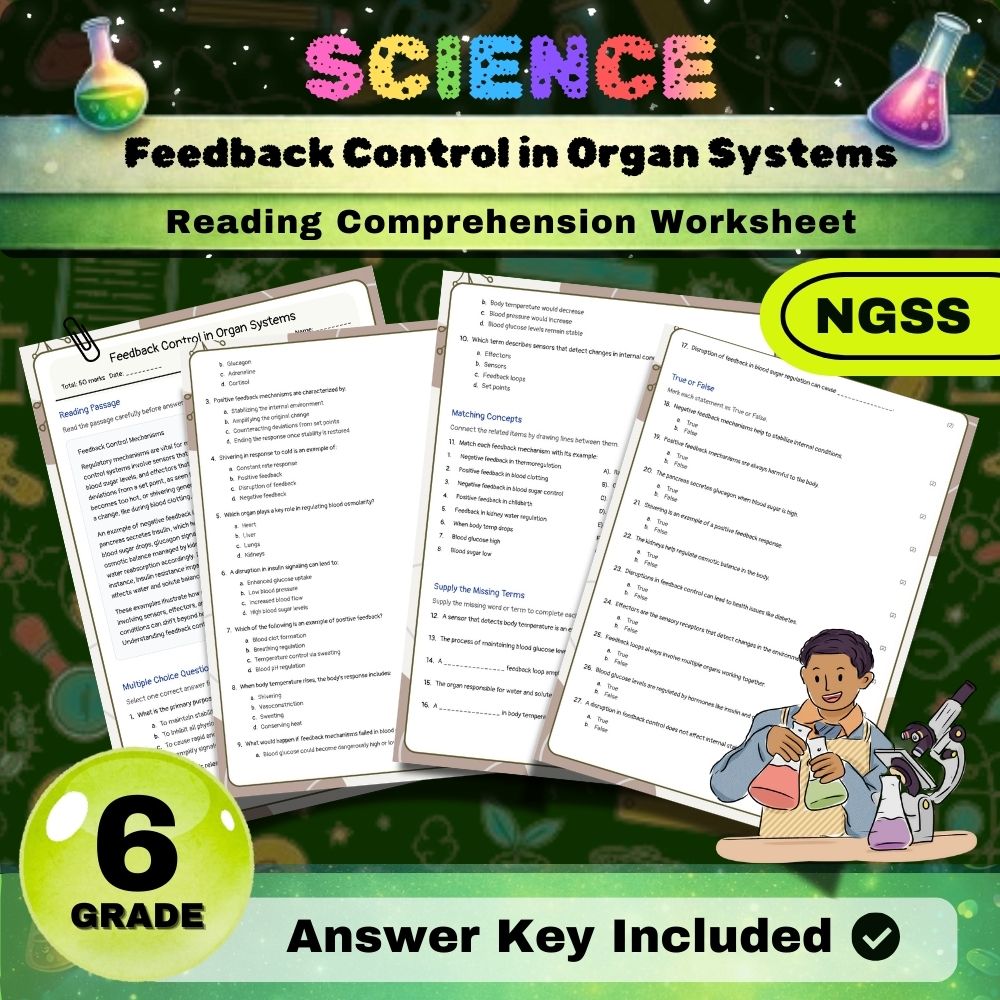
Grade 6 Science – Feedback Control in Organ Systems Worksheet (Answer Key + PDF)
 Created byMaple Path Learning
Learning Objectives
- Understand the concept of negative and positive feedback mechanisms in maintaining internal stability.
- Identify examples of feedback control such as thermoregulation, blood glucose regulation, and osmotic balance.
- Explain how sensors and effectors work together to regulate physiological set points.
Also included in: Grade 6 Science Unit Bundle – Cell Functions, Energy & Organ Systems Worksheets +1 more
Instant download
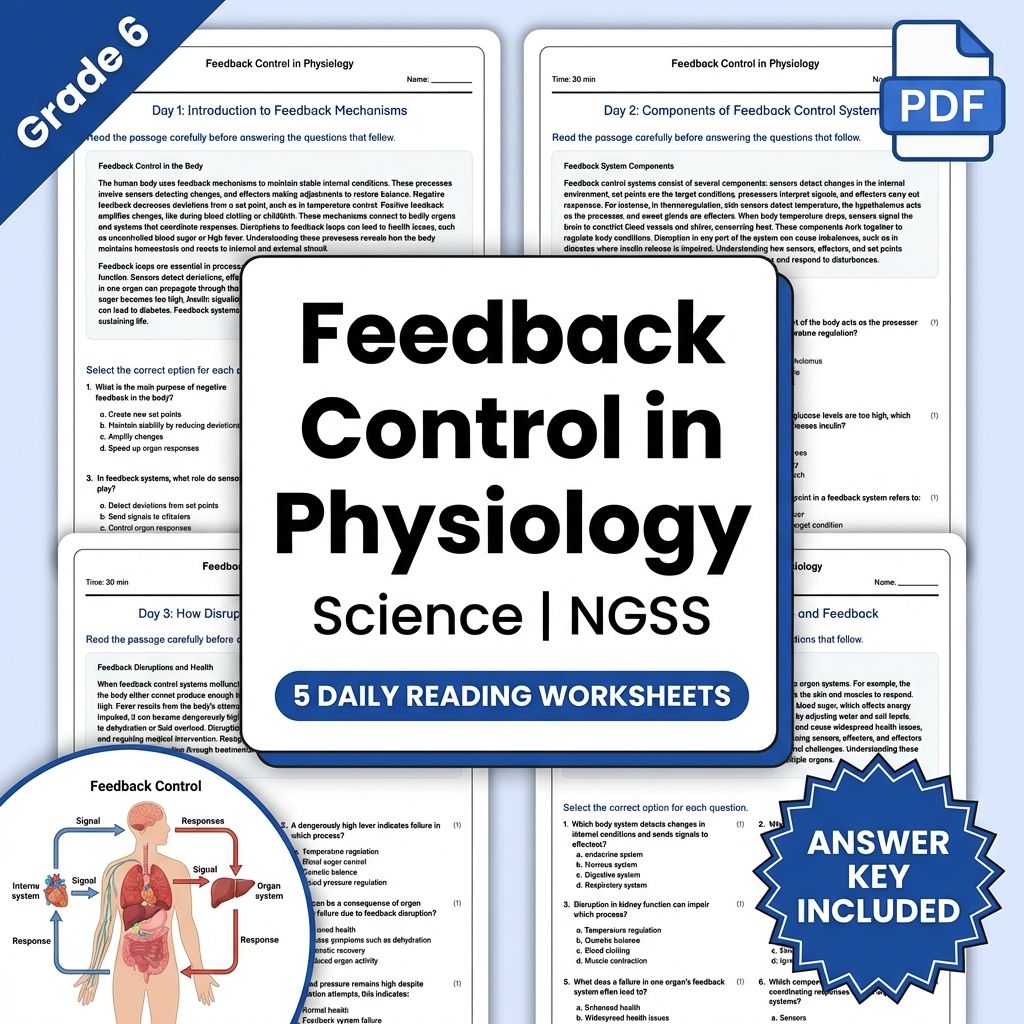
6th Grade Science | Feedback Control in Physiology Worksheet (PDF+ Answer Key)
Created byCopper Leaf ClassroomLearning Objectives
- Understand the role of feedback mechanisms in maintaining internal stability.
- Differentiate between negative and positive feedback processes with examples.
- Explain how disturbances propagate through organ systems and how responses restore balance.
Instant download

Robotic Missions Worksheet | Ontario Grade 6 Science Assessment
Created byCedar Grove LearningLearning Objectives
- Describe how robotic missions explore the solar system using mission types such as flyby, orbiter, lander, and sample-return.
- Explain how communication delay and distance affect mission design and data return.
- Identify how propulsion choices, instrumentation, and harsh planetary environments influence what a spacecraft can do.
Also included in: Grade 6 Earth and Space Systems Science Lesson Bundle: Ontario +1 more
Instant download
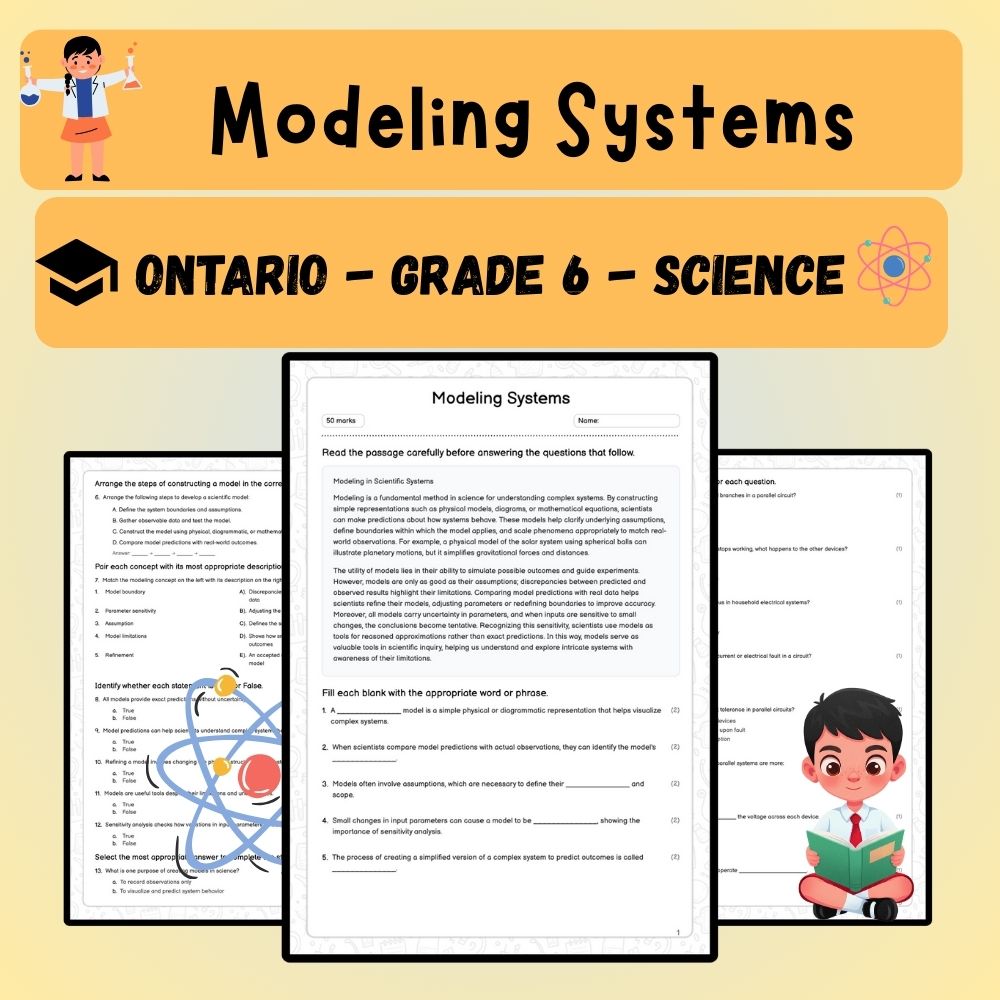
6th Grade Science – Modeling Systems Worksheet (PDF ) – Ontario Standard
Created byPrism Point LearningLearning Objectives
- Understand the purpose and types of models used in science to represent complex systems.
- Identify the assumptions, boundaries, and scaling factors involved in model construction.
- Compare and evaluate model predictions against observable outcomes to recognize limitations.
Also included in: Grade 6 Science Unit | Inquiry, Modeling & Data Skills Worksheet Bundle
Instant download
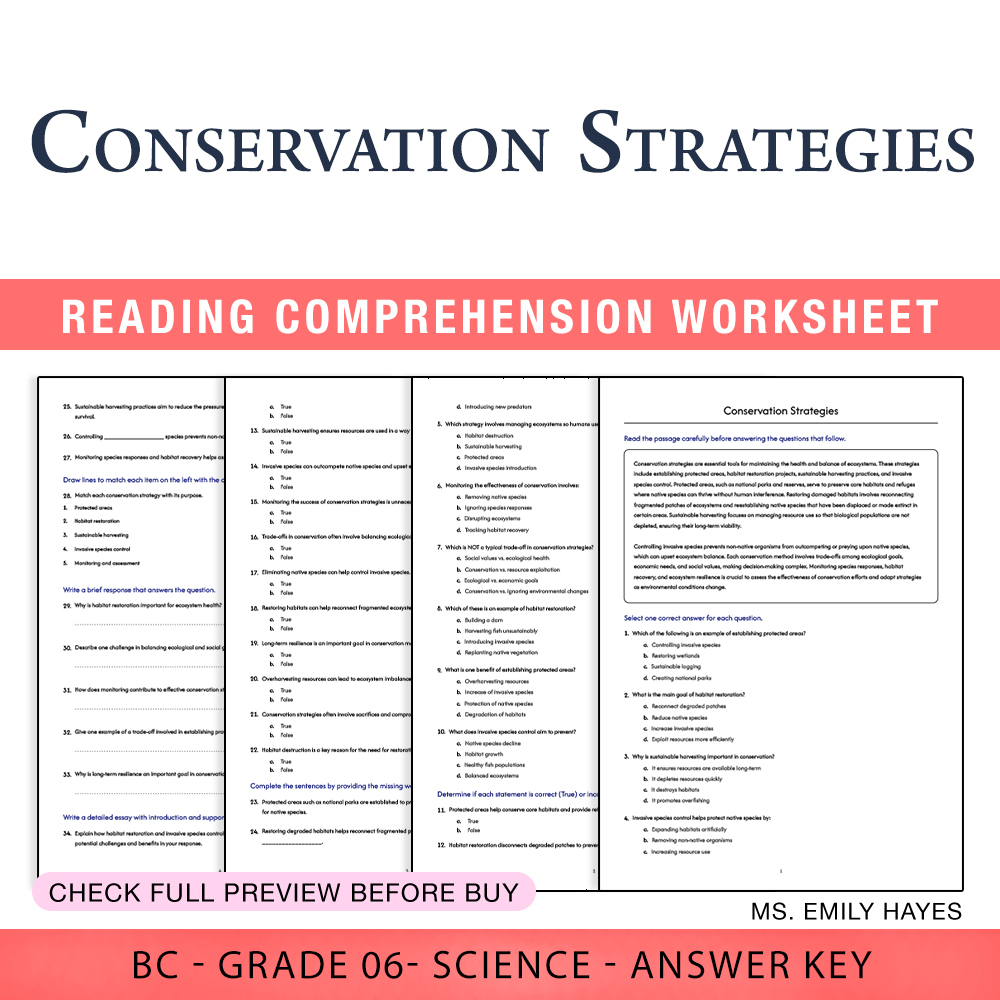
6th Grade Science | Conservation Strategies Worksheet (PDF+ Answer Key)
Created byCopper Leaf ClassroomLearning Objectives
- Understand various conservation strategies used to protect ecosystems.
- Identify differences and applications of protected areas, habitat restoration, sustainable harvesting, and invasive species control.
- Evaluate the importance of monitoring and assessing the effectiveness of conservation efforts.
Also included in: Grade 6 Science BC | Ecosystems and Human Impact Unit (PDF + Answer Keys) +1 more
Instant download
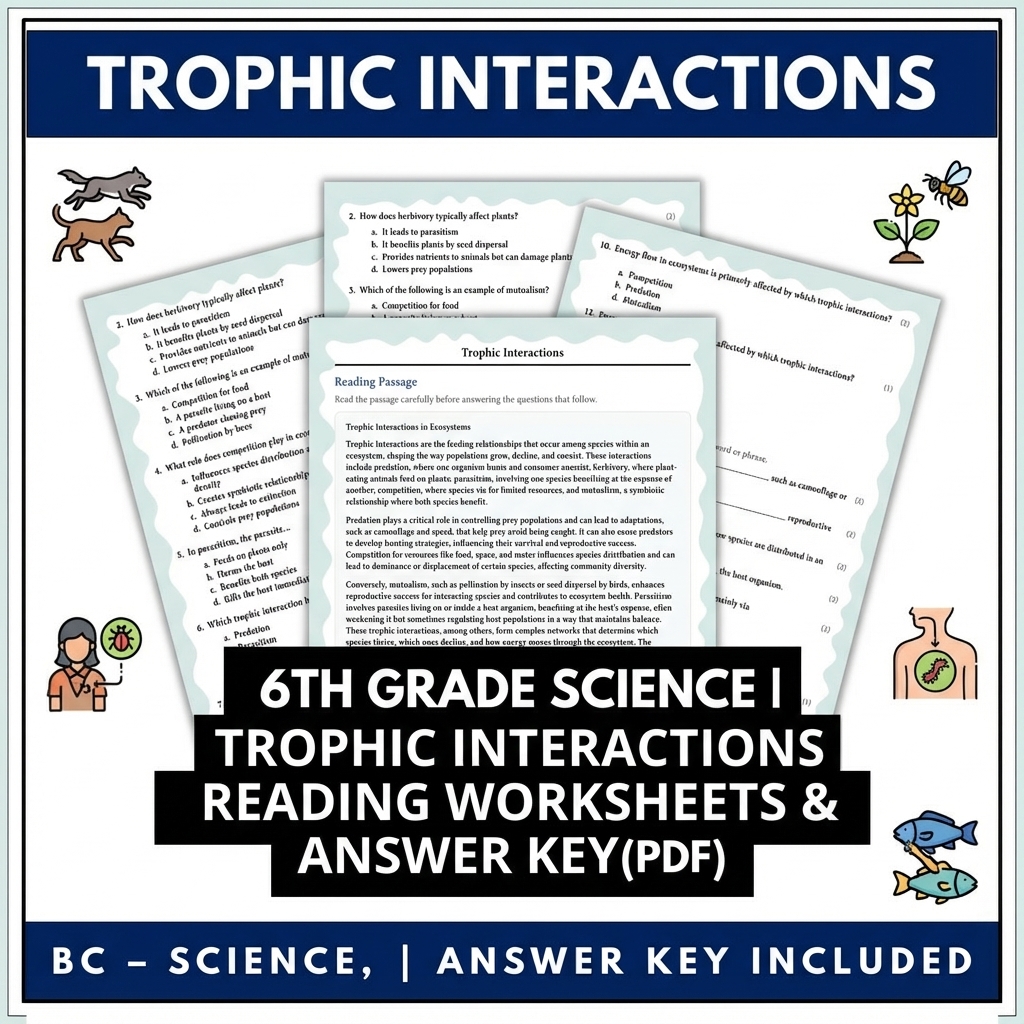
6th Grade Science | Trophic Interactions Reading Worksheets & Answer Key (PDF)
JCreated byJ.S SheetsLearning Objectives
- Define and identify different types of trophic interactions such as predation, herbivory, parasitism, competition, and mutualism.
- Explain how each trophic interaction influences survival, reproduction, and community structure.
- Analyze examples of trophic interactions in ecosystems and their effects on biodiversity.
Instant download
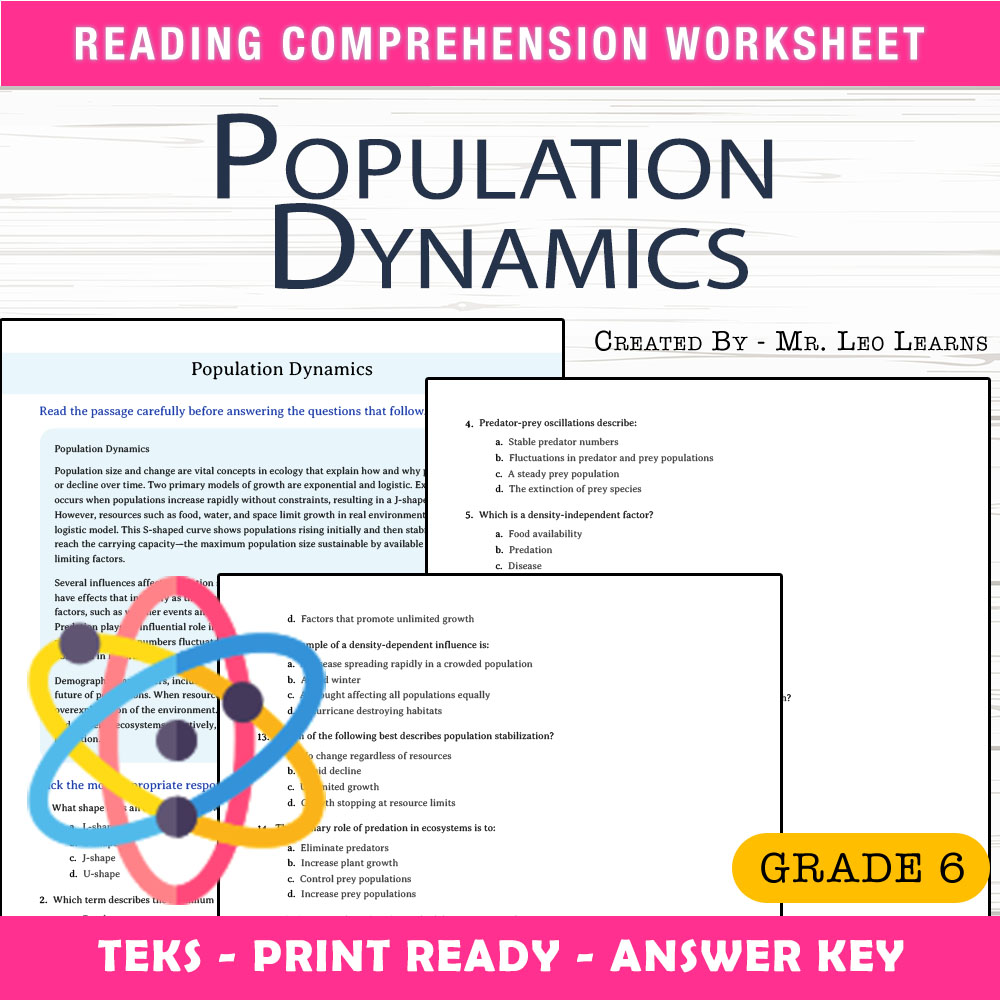
Grade 6 Science – Population Dynamics Worksheet for Mastery
 Created byThe Resource Hub
Learning Objectives
- Understand the concepts of exponential and logistic growth in populations.
- Identify factors that influence population size such as limiting resources, predation, and weather events.
- Distinguish between density-dependent and density-independent influences on populations.
Also included in: Grade 6 Science Unit Bundle | Ecosystems & Environmental Relationships
Instant download

Scientific Questions Worksheet | Investigable Questions & Scientific Method
LCreated byLearnora ResourcesLearning Objectives
- Identify questions that can be tested through scientific investigation
- Classify questions as investigable, opinion, yes/no, or too broad
- Select focused questions suitable for scientific investigation
Instant download

Science Worksheet Phases Mechanics Sun–Earth–Moon for Grade 6
JCreated byJ.S SheetsLearning Objectives
- Explain how lunar phases result from the changing relative positions of the Sun, Earth, and Moon.
- Describe how illumination geometry affects the visible fraction of the Moon (new, crescent, quarter, gibbous, full).
- Distinguish between lunar phases and eclipses by describing the alignment needed for eclipses.
Instant download
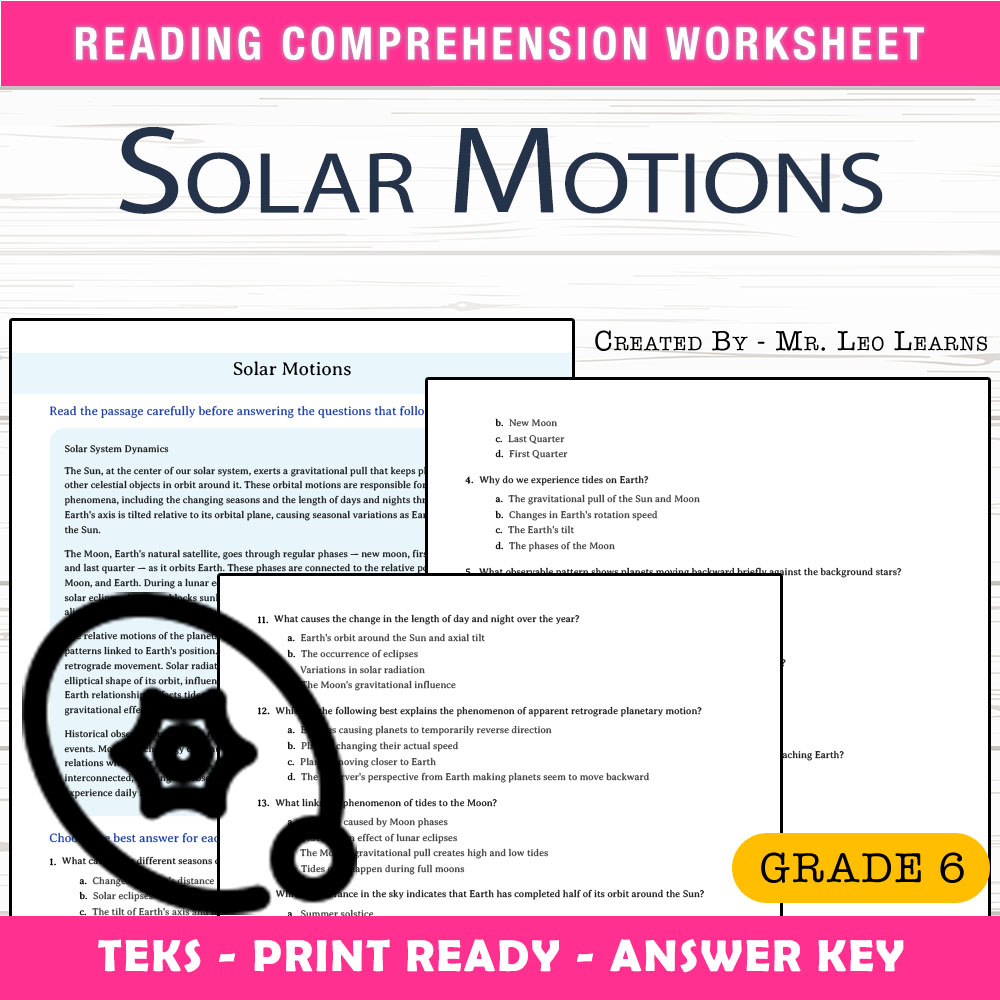
Grade 6 Science – Solar Motions Worksheet for Mastery
Created byThe Resource HubLearning Objectives
- Understand the orbital motions of planets and their effects on seasons and day length.
- Describe the phases of the Moon and the phenomena of eclipses.
- Explain how the relative motions of the Sun, Moon, and Earth influence tides and observable sky patterns.
Instant download
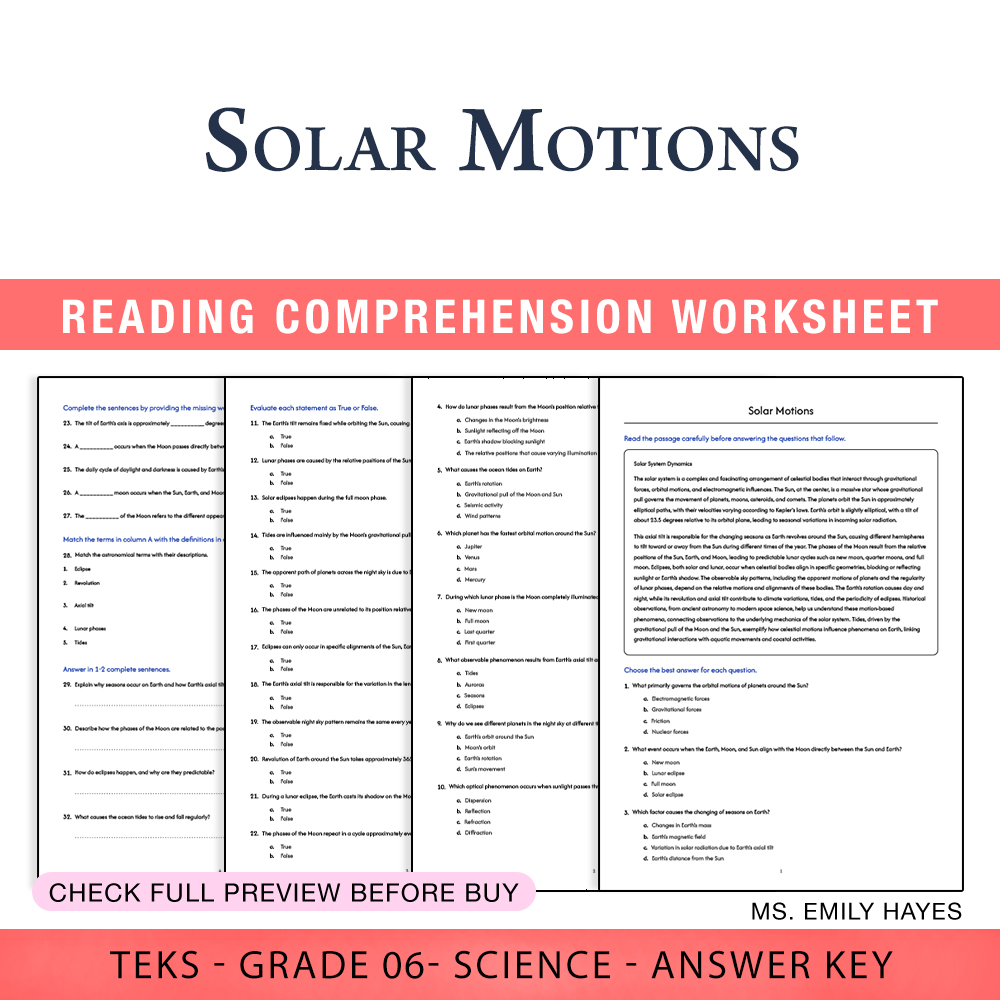
6th Grade Science | Solar Motions Worksheet (PDF+ Answer Key)
Created byCopper Leaf ClassroomLearning Objectives
- Describe the orbital motions and gravitational interactions within the solar system.
- Explain how axial tilt and Earth's revolution cause seasonal changes.
- Identify the phases of the Moon and understand their connection to lunar-solar geometry.
Instant download

Grade 6 Inheritance Modeling Worksheet | NGSS Genetics Activity & Answer Key
Created byNorthstar WorksheetsLearning Objectives
- Explain how genes and alleles contribute to inheritance of traits from parents to offspring
- Use Mendelian cross models to predict expected offspring phenotype ratios
- Apply simple probability reasoning to dominant and recessive inheritance patterns
Also included in: Grade 6 Genetics Variation & Inheritance Lesson Bundle | NGSS +1 more
Instant download

Grade 6 Food Molecules and Digestion Worksheet | California Science PDF
 Created byEvergreen Desk Education
Learning Objectives
- Explain how food molecules provide both chemical building materials and stored energy in the body
- Describe how digestion breaks large food molecules into smaller molecules that can be absorbed
- Connect specific food molecules to different cell needs, such as structure and quick energy
Instant download

Human Impacts Worksheet for Grade 6 Science | Standards-Aligned Practice
JCreated byJ.S SheetsLearning Objectives
- Understand how human activities affect ecosystems and biodiversity.
- Identify specific human impacts such as pollution, deforestation, and resource extraction.
- Explain the consequences of ecosystem alterations on environment and species.
Instant download
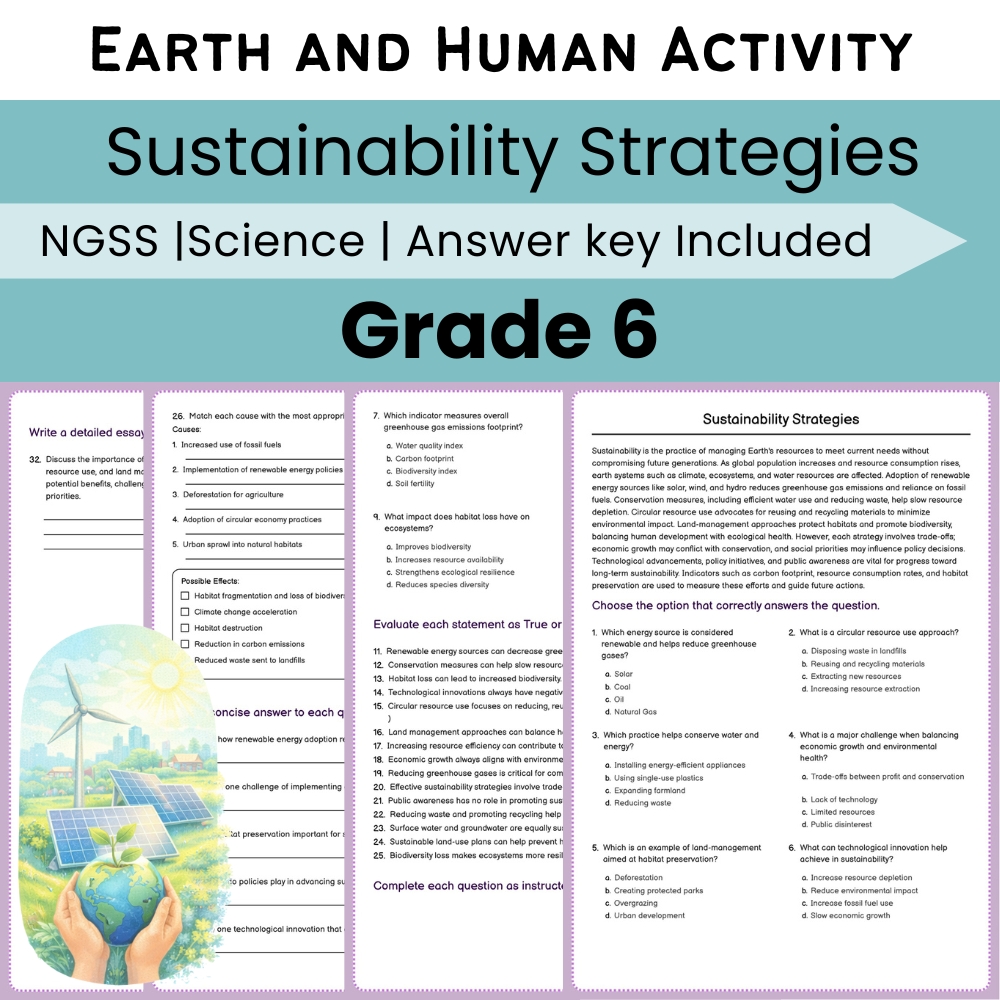
Sustainability Strategies Worksheet | NGSS Grade 6 Science Printable PDF
Learning Objectives
- Understand how population trends and resource use impact earth systems.
- Evaluate different sustainable practices such as renewable energy and conservation.
- Compare policy and technological options for sustainability.
Also included in: Grade 6 Science | Earth & Human Activity NGSS Unit Bundle (4 Worksheets) +1 more
Instant download

Cell Functions Practice Worksheet | Grade 6 Science Assessment
Created byPrism Point LearningLearning Objectives
- Explain how key organelles contribute to essential cell functions
- Connect cell structure (nucleus, ribosomes, mitochondria, chloroplasts) to their roles
- Compare plant and animal cell organelles to understand specialization
Also included in: Grade 6 Cellular Systems Science Lesson Bundle NGSS Worksheets
Instant download

Molecular Processes Worksheet Practice | Grade 6 Science NGSS
Created byPrism Point LearningLearning Objectives
- Explain how monomers form polymers through condensation reactions and how hydrolysis breaks polymers apart
- Connect molecular structure of macromolecules (proteins, nucleic acids, lipids, carbohydrates) to their functions in cells
- Describe how enzymes and membranes relate to molecular processes
Also included in: Grade 6 Cellular Systems Science Lesson Bundle NGSS Worksheets
Instant download

Signal Integration Test Prep Worksheets | Grade 6 Science NGSS Review
Created byPrism Point LearningLearning Objectives
- Explain how cells communicate using chemical and electrical signals
- Describe how receptors and signal transduction pathways connect to specific cell responses
- Compare rapid nervous impulses with longer-lasting endocrine effects using feedback circuits
Also included in: Grade 6 Cellular Systems Science Lesson Bundle NGSS Worksheets
Instant download

Energy Pathways Test Prep Printables | Grade 6 Science
Created byPrism Point LearningLearning Objectives
- Explain how energy is transferred during photosynthesis and respiration in plants and animals.
- Describe how matter cycles between living things and the environment using gases and organic molecules.
- Connect leaf gas exchange (stomata) to measurements of oxygen consumption and energy use.
Also included in: Grade 6 Cellular Systems Science Lesson Bundle NGSS Worksheets
Instant download

6th Grade Science Worksheet | Series Circuit Concepts (PDF) (Ontario Standard)
Created byEvergreen Desk EducationLearning Objectives
- Explain how current stays the same in all elements of a series circuit.
- Describe how total voltage is divided across series components.
- Predict how adding components changes resistance and bulb brightness in a series circuit.
Also included in: Grade 6 Electricity Circuits Science Lesson Bundle for Ontario Worksheets +1 more
Instant download

Grade 6 Natural Hazards & Earthquake Prevention Worksheet | NGSS Science
 Created byBRIGHT PATH RESOURCES
Learning Objectives
- Understand what causes earthquakes
- Learn how earthquakes affect communities
- Identify safety measures during earthquakes
Also included in: Earth & Human Activity Grade6 Science Daily Reading WorksheetsLesson Bundle|NGSS +2 more
Instant download
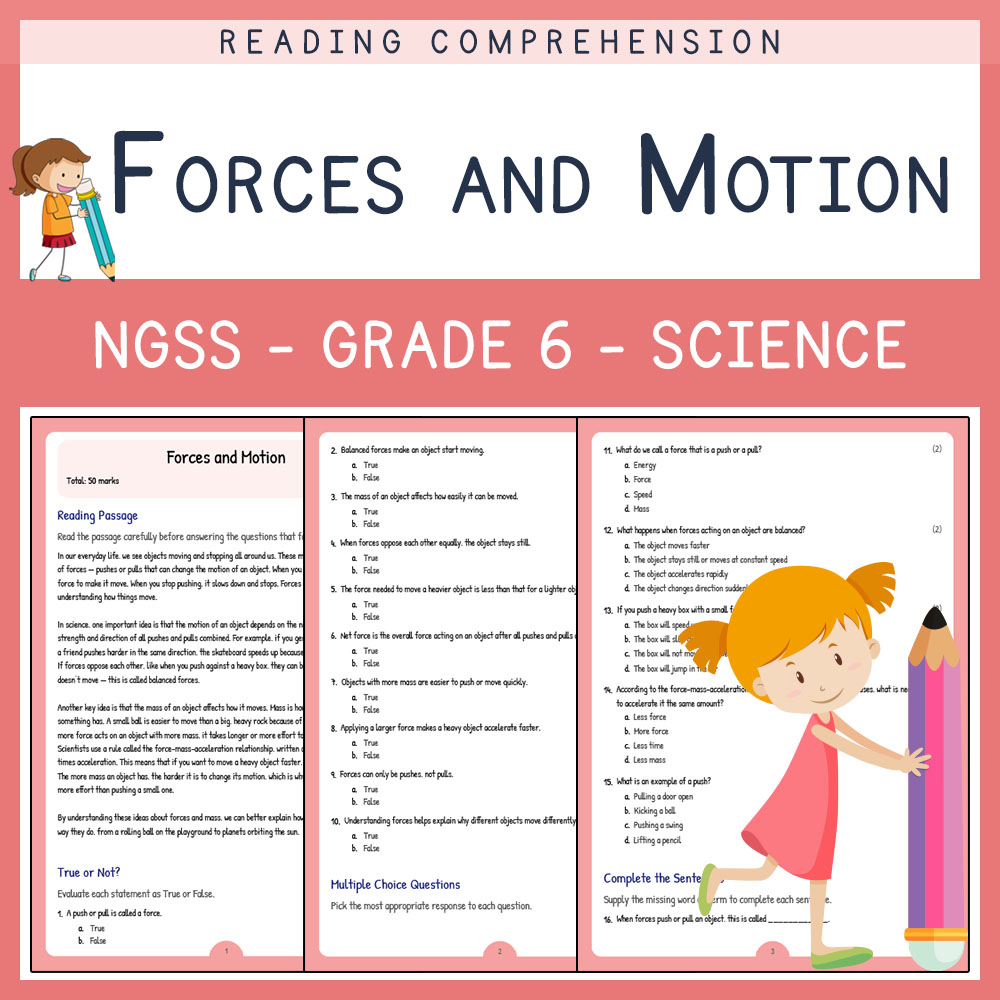
Grade 6 Science | Forces and Motion Worksheet with Answer Key (PDF) | NGSS
 Created byLumora Learning
Learning Objectives
- Understand the relationship between net force, mass, and acceleration
- Identify real-world examples of forces in motion
- Explain how changing forces affects movement of objects
Instant download

Physiological Adaptations Assessment | BC Standards Grade 6 Science
Created byPrism Point LearningLearning Objectives
- Understand internal processes such as heat exchange, water conservation, and metabolic regulation that enable survival in extreme environments.
- Identify key hormonal mechanisms involved in temperature, hydration, and energy regulation.
- Link physiological features to survival strategies and resource access in wildlife and human adaptions.
Instant download
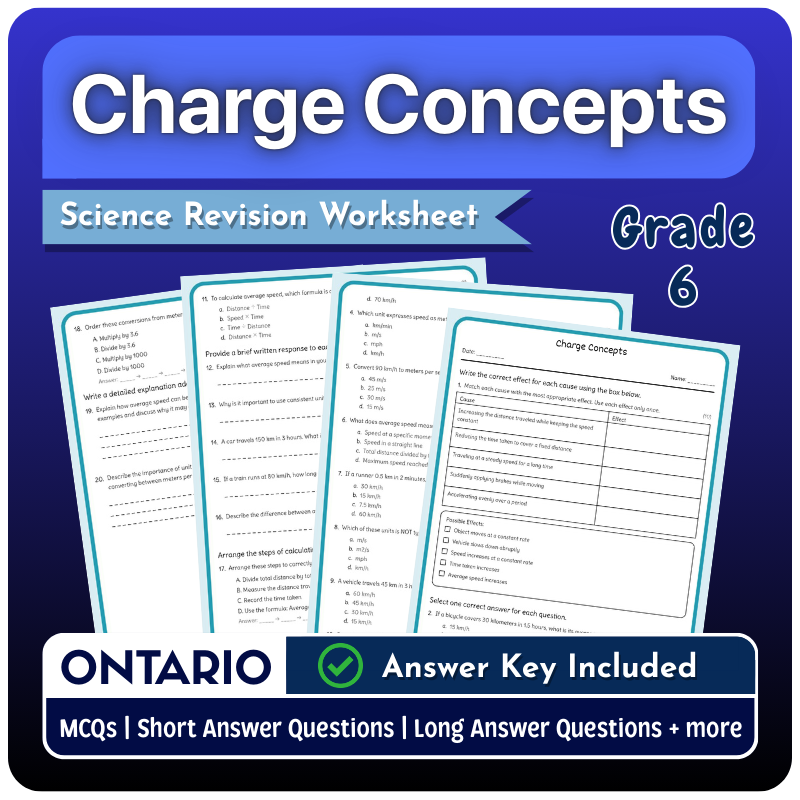
6th Grade Science | Charge Concepts Worksheet (PDF) – Ontario Standards
Created byBright Mind ResourcesLearning Objectives
- Explain the difference between static and current electricity.
- Define electric charge and charge separation.
- Describe how charge imbalance relates to phenomena like sparks and hair attraction.
Instant download

Grade 6 Science | Parallel Circuit Characteristics Worksheet (PDF + Answer Key)
Created byLumora LearningLearning Objectives
- Understand the concept of parallel circuits and their branching pathways.
- Explain how potential difference is equal across all branches in a parallel circuit.
- Describe how overall current is the sum of branch currents.
Also included in: Grade 6 Science | Electricity Unit Custom Bundle | Ontario Framework
Instant download
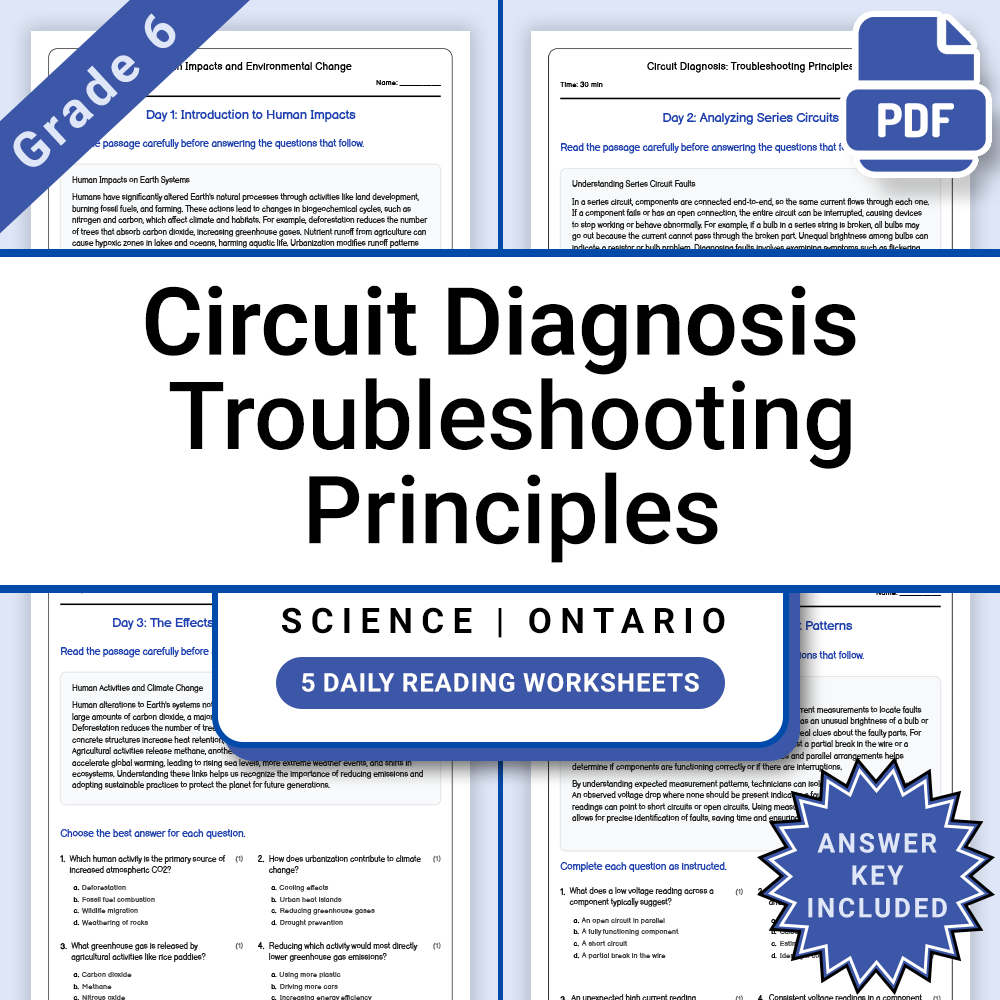
Grade 6 Science – Circuit Diagnosis Troubleshooting Daily Worksheet + Answer Key
JCreated byJ.S SheetsLearning Objectives
- Understand how to observe and interpret symptoms in electrical circuits.
- Apply reasoning to identify faults based on circuit behaviour.
- Differentiate between series and parallel circuit issues.
Also included in: Grade 6 Science Lesson Group – Circuits and Energy Ontario Framework +1 more
Instant download
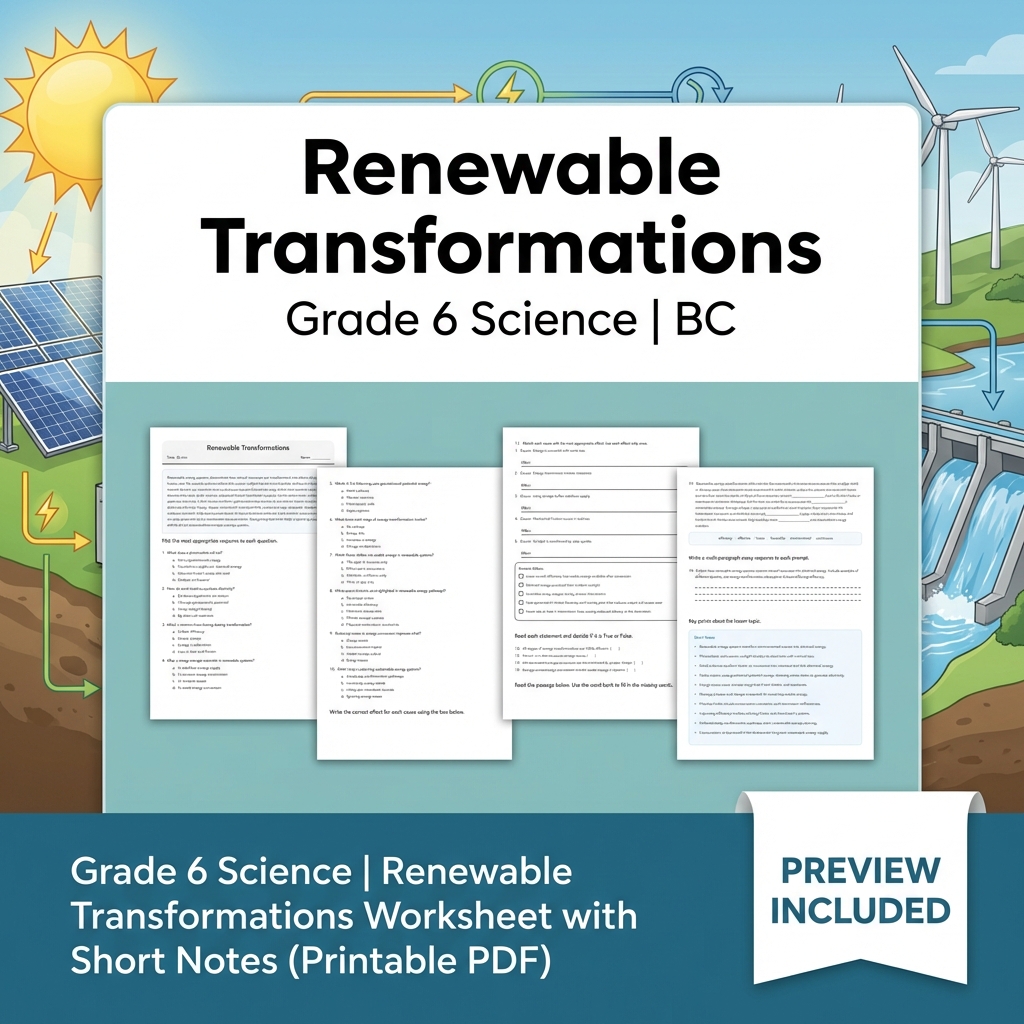
Grade 6 Science | Renewable Transformations Worksheet with Short Notes (PDF)
 Created byMeadowlark Worksheets
Learning Objectives
- Understand how renewable energy systems convert environmental sources into usable electrical energy.
- Identify different pathways of energy transformation such as solar, wind, and hydro systems.
- Recognize the practical limits and losses involved in renewable energy transformations.
Also included in: Grade 6 Science | Energy, Waves & Circuits UNIT Bundle (BC Frame work) +1 more
Instant download

Grade 6 Science | Invasive Species - Daily Reading Comprehension
Created byCoral Reef LearningLearning Objectives
- Understand what invasive species are and how they impact ecosystems
- Identify examples of aquatic invasive species, such as Zebra Mussels
- Learn how invasive species outcompete native organisms
Instant download

Grade 6 Science Worksheet Cell Structure | Standards-Aligned Practice
JCreated byJ.S SheetsLearning Objectives
- Explain how the cell membrane, cytoplasm, nucleus, and organelles contribute to cell survival
- Identify similarities and differences in basic cell structures and their functions
- Use vocabulary related to cell structure to answer science questions accurately
Also included in: Grade 6 Life Processes & Ecosystems Science lesson bundle: General Framework +1 more
Instant download

Heat and States Worksheet | Standards-Aligned Grade 6 Science Practice
JCreated byJ.S SheetsLearning Objectives
- Explain how heat transfer changes energy in matter and affects temperature
- Describe how melting, evaporation, and boiling relate to energy and particle motion
- Use evidence from everyday observations to connect energy with changes in state
Also included in: Grade 6 Matter, Motion, and Heat Science Lesson Bundle – General Framework +1 more
Instant download
About Grade 6 Science Worksheets
Explore Grade 6 Science worksheets for classwork, homework, or review. Our 5,969 printables download instantly as PDFs.
MyTeachingSheets worksheets are made by real teacher-authors and checked before they go live. Download any as a print-ready PDF for lessons, homework, or independent practice — most include answer keys, and previews are always free.