
Grade 9 Science Worksheets
6,926 worksheets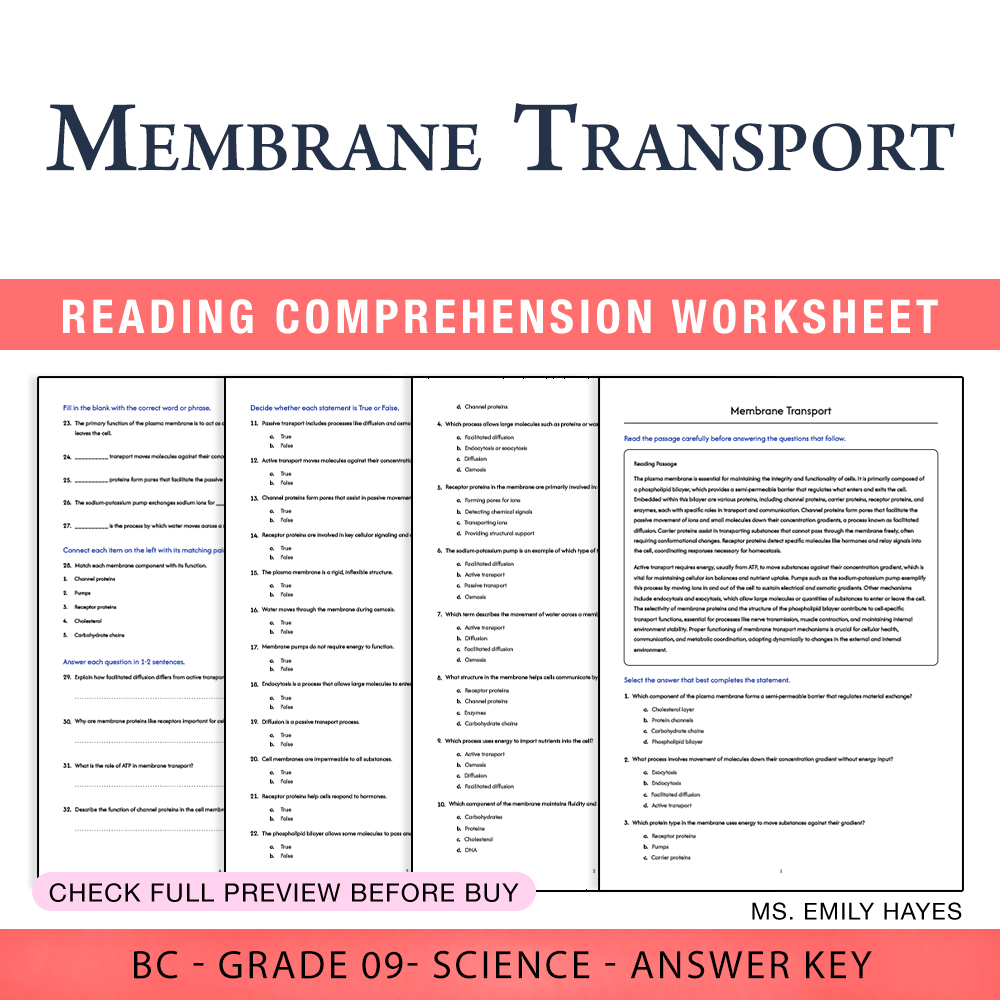
9th Grade Science | Membrane Transport Worksheet (PDF+ Answer Key)
 Created byCopper Leaf Classroom
Learning Objectives
- Describe the structure of the plasma membrane and its components involved in transport.
- Differentiate between passive and active transport mechanisms.
- Explain how membrane proteins like channels, pumps, and receptors facilitate cellular functions.
Also included in: Grade 9 Science Worksheet Pack | Biology & Cell Structures (PDF+ Answer Keys) +1 more
Instant download
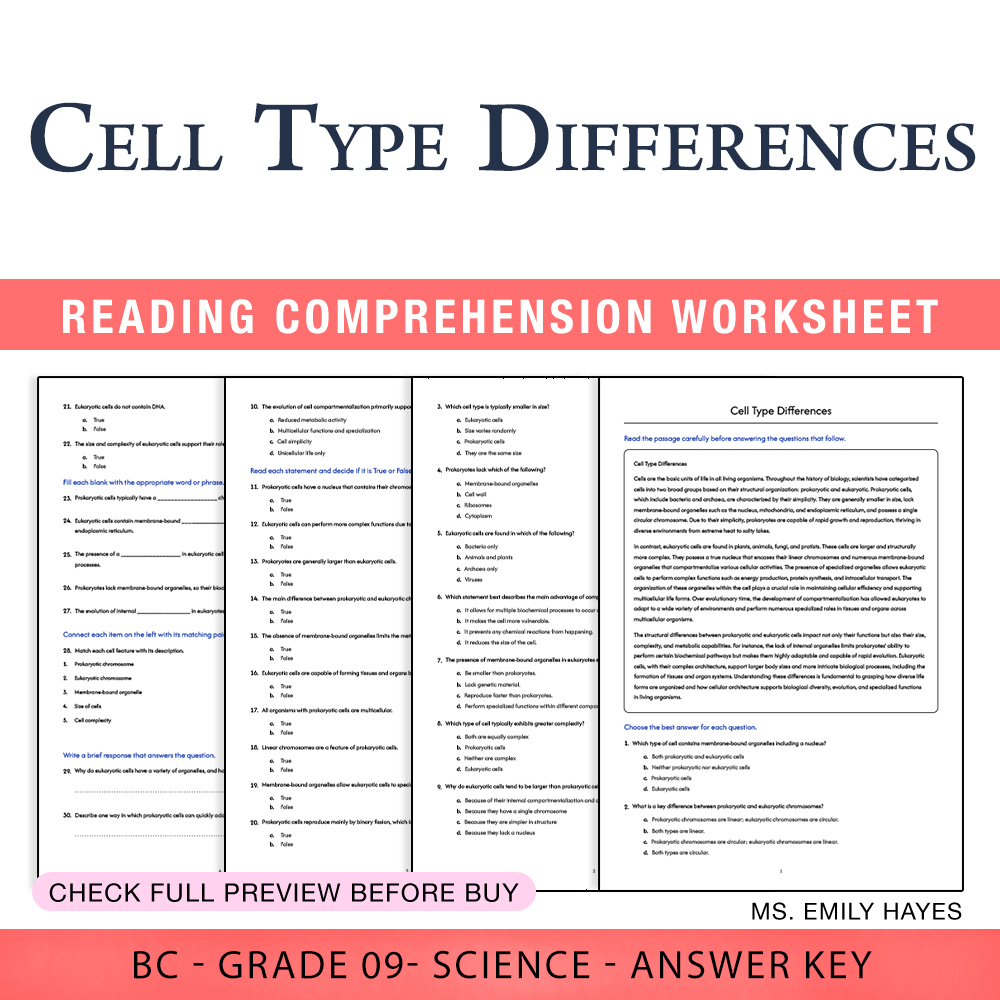
Grade 9 Science | Cell Type Differences Worksheet (PDF+ Answer Key)
Created byCopper Leaf ClassroomLearning Objectives
- Compare the structural differences between prokaryotic and eukaryotic cells.
- Identify key features of prokaryotic cells and how they differ from eukaryotic cells.
- Describe the roles of membrane-bound organelles in eukaryotic cells.
Also included in: Grade 9 Science Worksheet Pack | Biology & Cell Structures (PDF+ Answer Keys) +1 more
Instant download
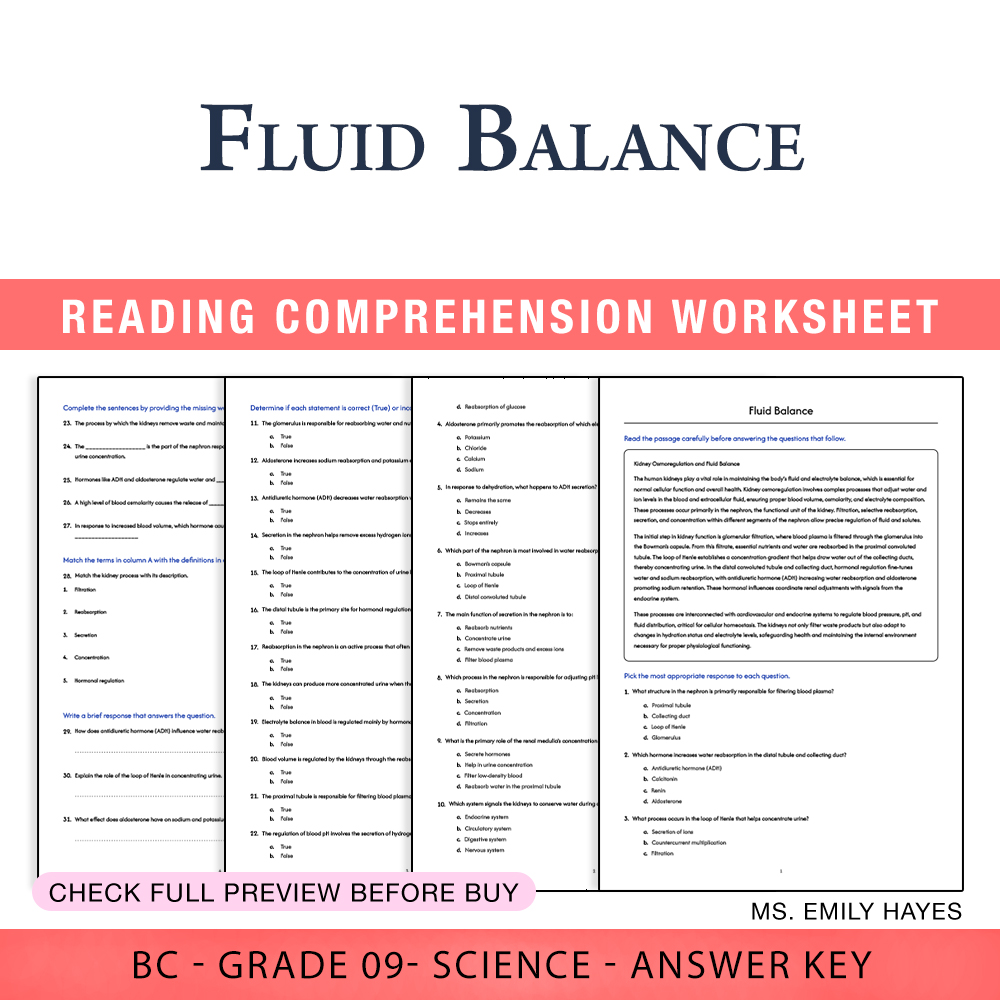
9th Grade Science | Fluid Balance Worksheet (PDF+ Answer Key)
Created byCopper Leaf ClassroomLearning Objectives
- Describe the role of kidneys in regulating water and ion balance through osmoregulation.
- Identify processes such as filtration, reabsorption, secretion, and concentration in the nephron segments.
- Explain how hormones like antidiuretic hormone and aldosterone influence kidney function.
Also included in: Grade 9 Science Worksheet Pack | Biology & Cell Structures (PDF+ Answer Keys) +1 more
Instant download
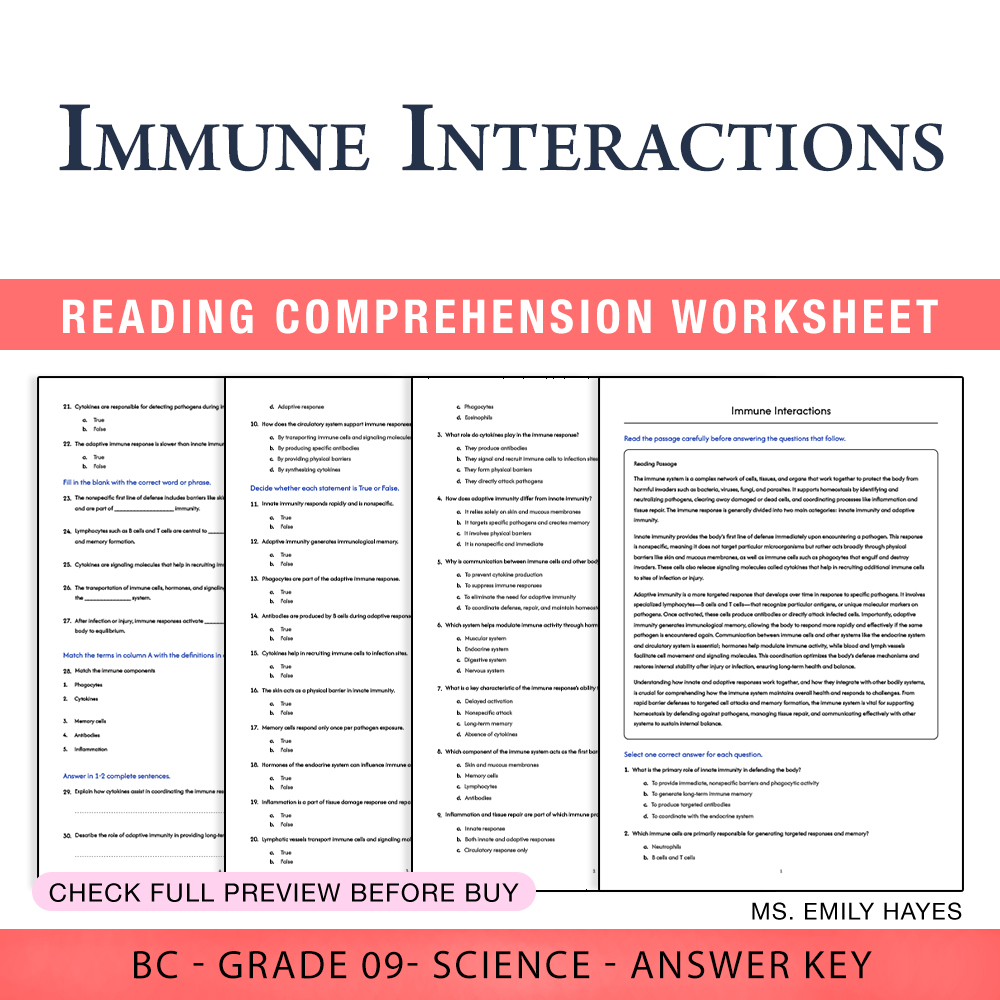
Grade 9 Science | Immune Interactions Worksheet (PDF+ Answer Key)
Created byCopper Leaf ClassroomLearning Objectives
- Describe the roles of innate and adaptive immune responses in maintaining homeostasis.
- Identify key components and functions of the immune system when defending against pathogens.
- Explain how immune communication integrates with other bodily systems, including endocrine and circulatory pathways.
Also included in: Grade 9 Science Worksheet Pack | Biology & Cell Structures (PDF+ Answer Keys) +1 more
Instant download
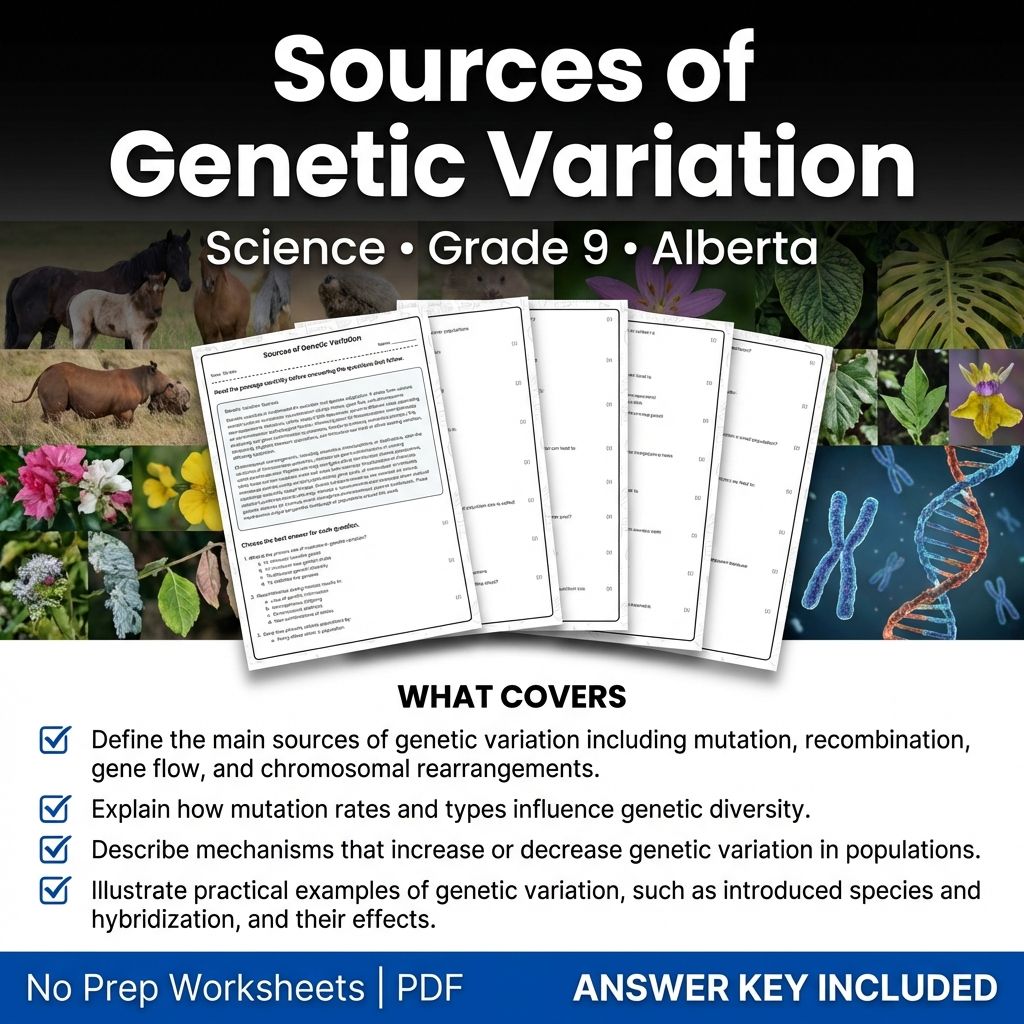
Sources of Genetic Variation Worksheet for Grade 9 Science Alberta
 Created byCoral Reef Learning
Learning Objectives
- Define the main sources of genetic variation including mutation, recombination, gene flow, and chromosomal rearrangements.
- Explain how mutation rates and types influence genetic diversity.
- Describe mechanisms that increase or decrease genetic variation in populations.
Instant download
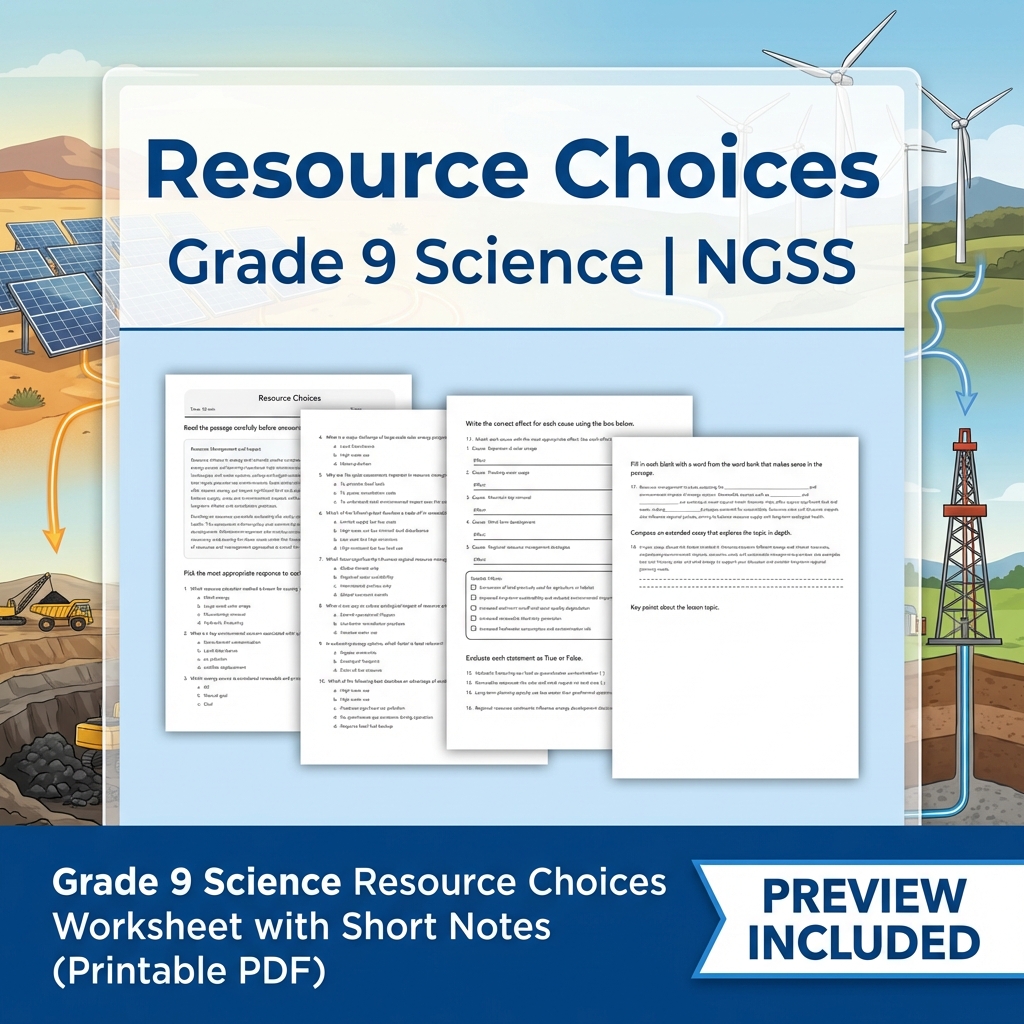
Grade 9 Science Resource Choices Worksheet with Short Notes (Printable PDF)
 Created byMeadowlark Worksheets
Learning Objectives
- Compare different energy and mineral resource options based on environmental and economic factors.
- Analyze the impacts of resource extraction methods on ecosystems and communities.
- Evaluate sustainable resource management practices and decision criteria for long-term planning.
Also included in: Grade 9 Science NGSS UNIT Bundle – Earth & Human Activity Resources Pack +1 more
Instant download
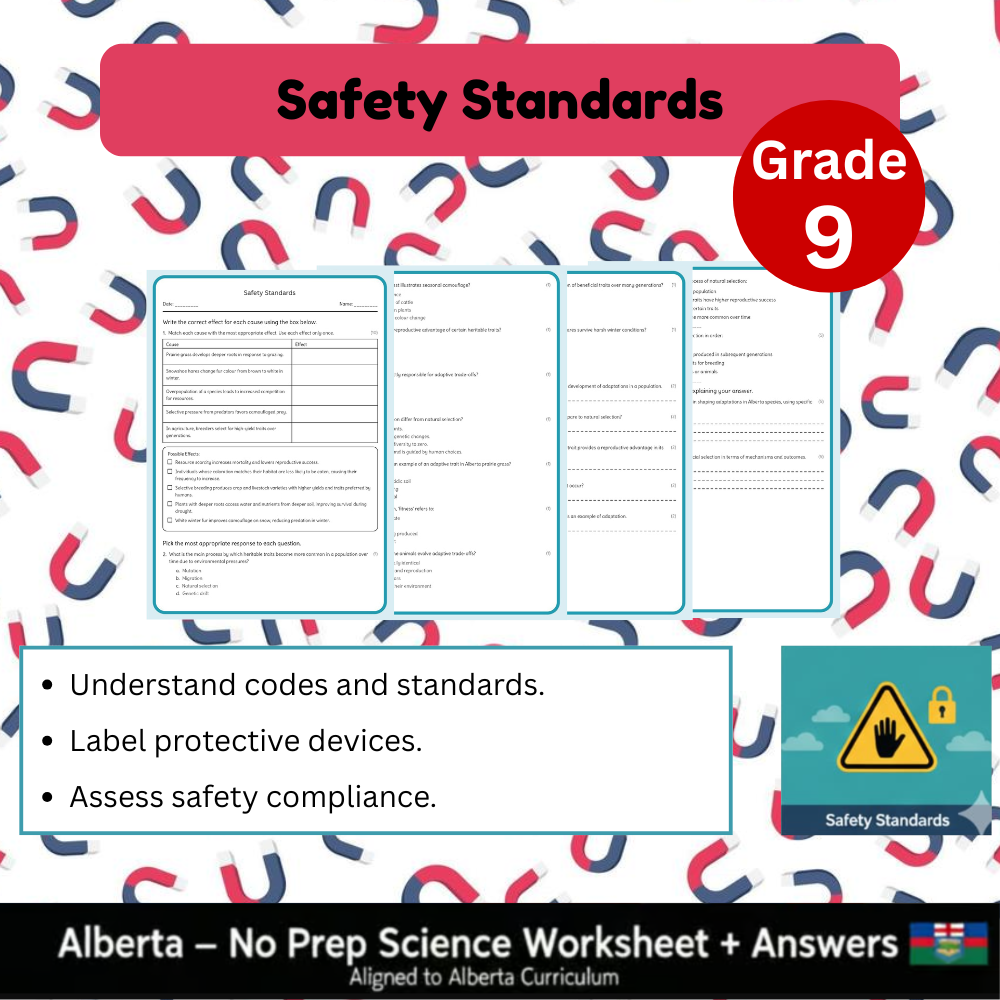
Grade 9 Science | Safety Standards Worksheet (PDF) - Alberta Curriculum
 Created byBright Mind Resources
Learning Objectives
- Understand the key safety standards and codes for electrical installations.
- Identify purpose and labeling of protective devices used in electrical safety.
- Assess environmental considerations affecting electrical safety compliance.
Instant download
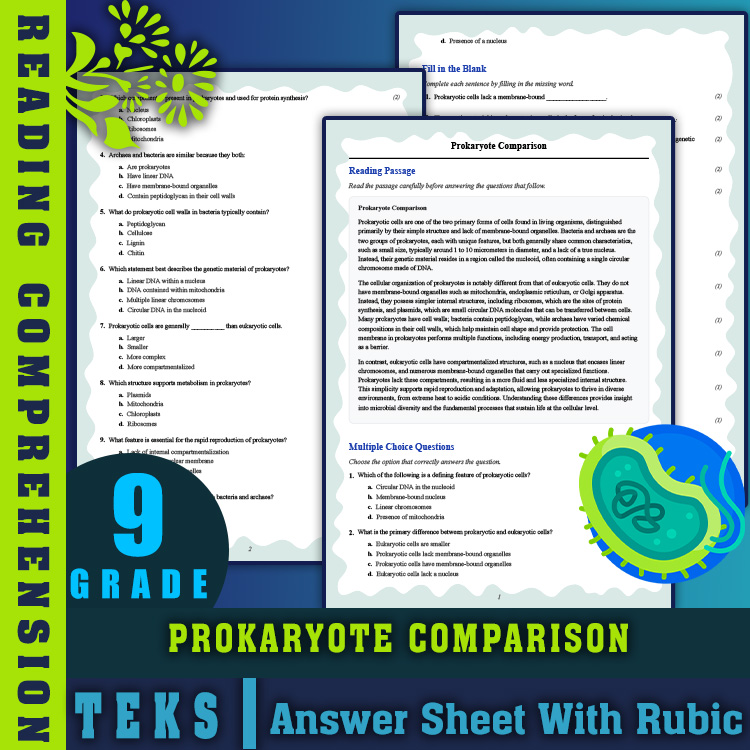
9th Grade Science | Prokaryote Comparison Reading Worksheet (PDF + Answer Key)
JCreated byJ.S SheetsLearning Objectives
- Identify the key differences between prokaryotic and eukaryotic cells.
- Compare the cellular structures of bacteria and archaea.
- Describe the functions of specific organelles and genetic materials in prokaryotes.
Instant download
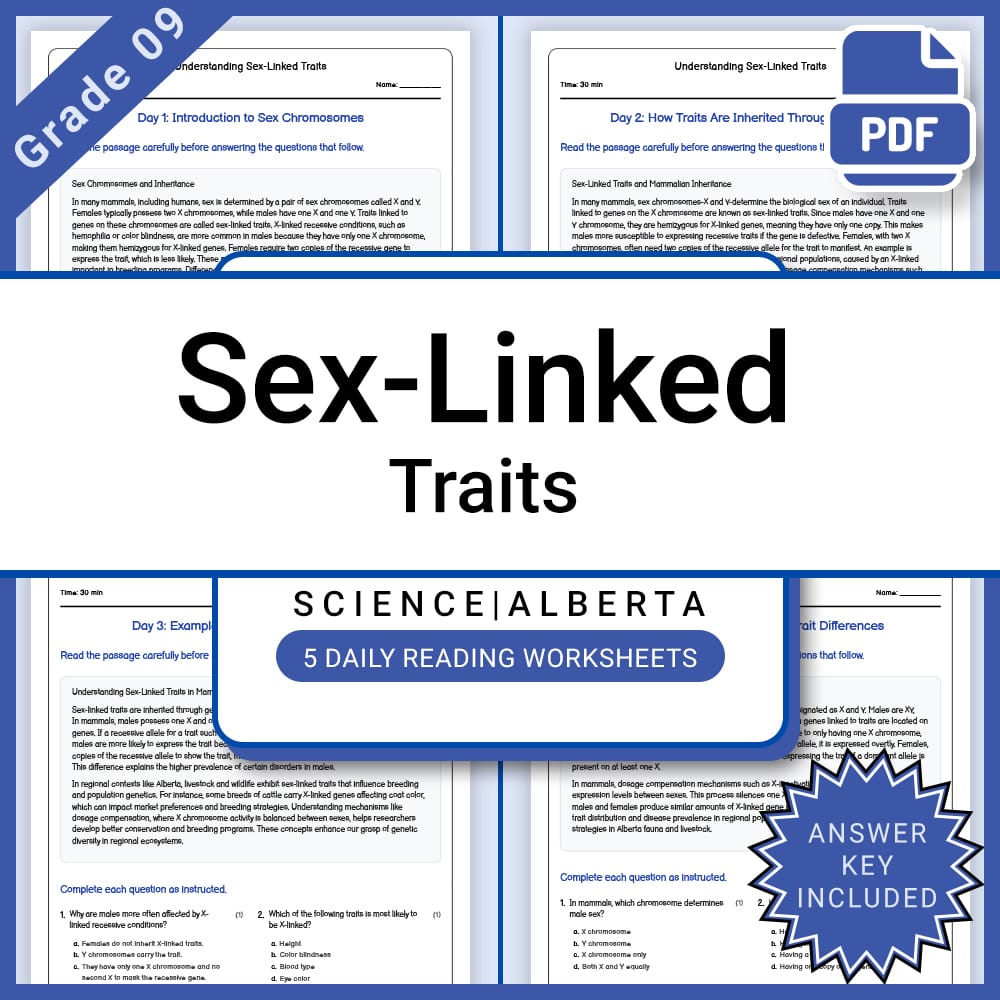
Grade 9 Science – Understanding Sex-Linked Traits Daily Reading Worksheet + Answer Key
JCreated byJ.S SheetsLearning Objectives
- Define sex chromosomes and explain their functions.
- Describe how sex-linked traits are inherited.
- Distinguish between X-linked recessive and dominant traits.
Also included in: Grade 9 Science Lesson Group | Genetics, Reproduction, and Biotechnology +1 more
Instant download
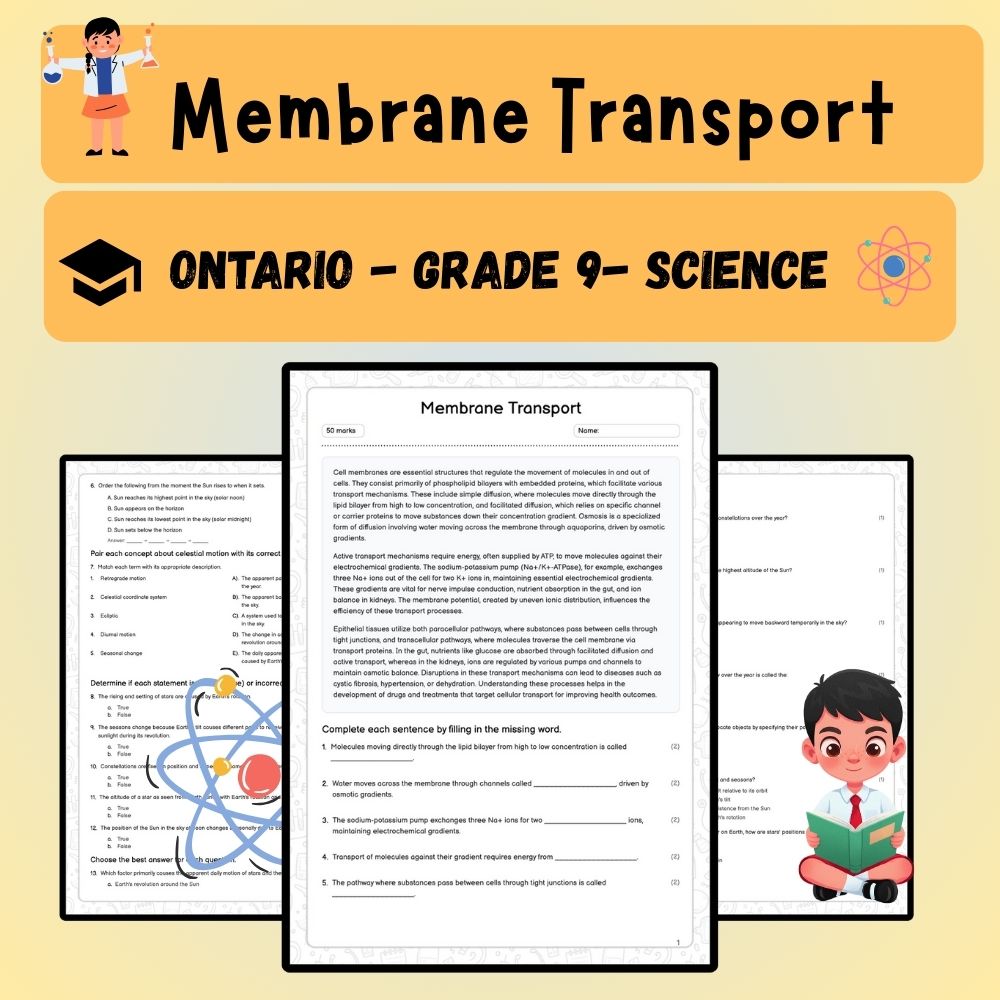
Grade 9 Science | Membrane Transport Worksheets (Answer Key) – Ontario Standards
 Created byPrism Point Learning
Learning Objectives
- Describe different mechanisms of molecular movement across cell membranes, including diffusion, osmosis, and active transport.
- Explain the role of electrochemical gradients and membrane potential in transport processes.
- Differentiate between paracellular and transcellular pathways in epithelial tissues.
Also included in: Grade 9 Science Unit Bundle | Human Body Systems & Cell Functions +1 more
Instant download

Grade 9 Prototyping Methods Worksheet | NGSS Engineering Design Activity
 Created byBRIGHT PATH RESOURCES
Learning Objectives
- Understand the basic concepts and purposes of prototyping.
- Identify different prototyping methods such as sketches, CAD mockups, rapid prototyping, and physical models.
- Recognize the importance of testing protocols and measurement of performance metrics.
Also included in: Engineering Design Grade 9 Science Daily Reading Worksheets Lesson Bundle | NGSS +1 more
Instant download
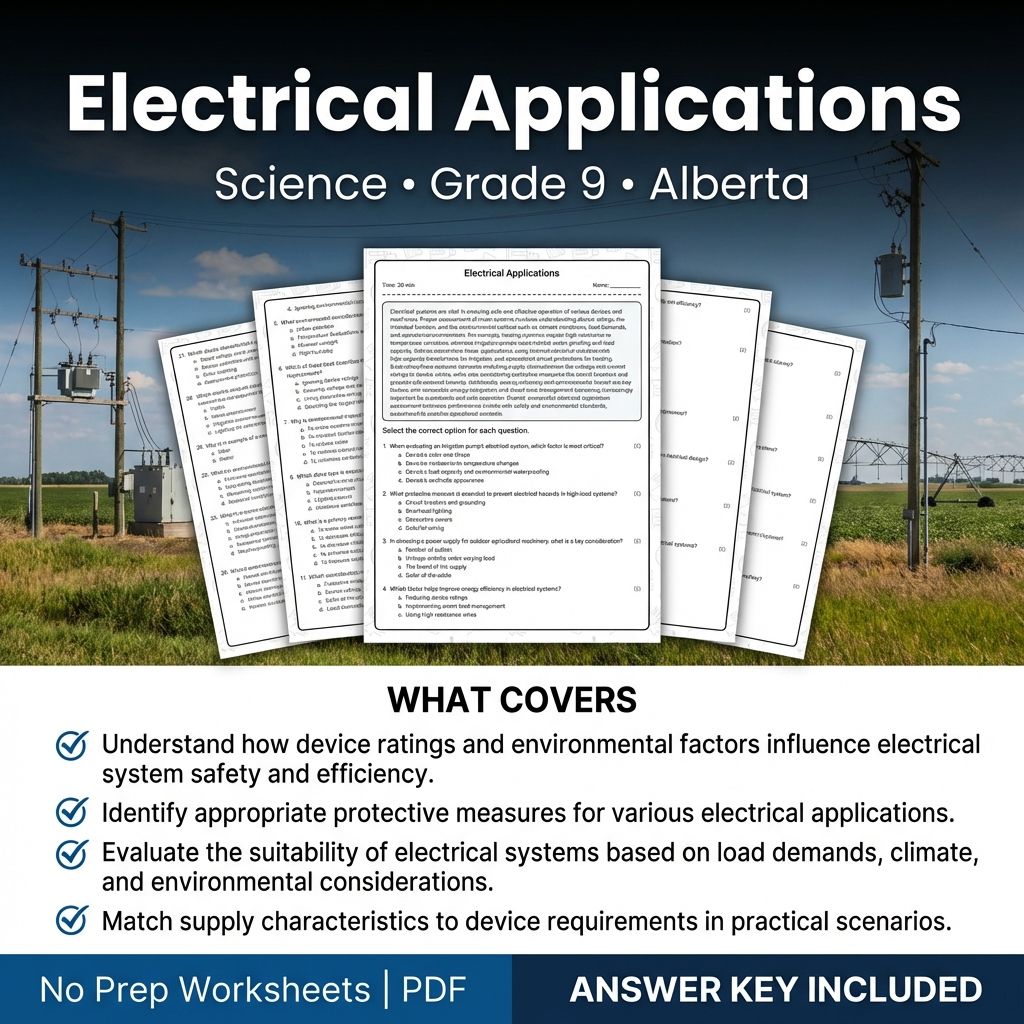
Grade 9 Science Worksheet on Electrical Applications | Alberta Standards
Created byCoral Reef LearningLearning Objectives
- Understand how device ratings and environmental factors influence electrical system safety and efficiency.
- Identify appropriate protective measures for various electrical applications.
- Evaluate the suitability of electrical systems based on load demands, climate, and environmental considerations.
Instant download

Argument Structures Science Worksheet | CER Claims Evidence Reasoning AP
Created byPrism Point LearningLearning Objectives
- Construct scientific arguments using claim, evidence, and reasoning with clear logical links.
- Critique arguments by checking relevance of evidence, coherence of reasoning, and consideration of alternatives.
- Evaluate scientific explanations using quantitative evidence, model comparisons, and stated uncertainty and assumptions.
Instant download
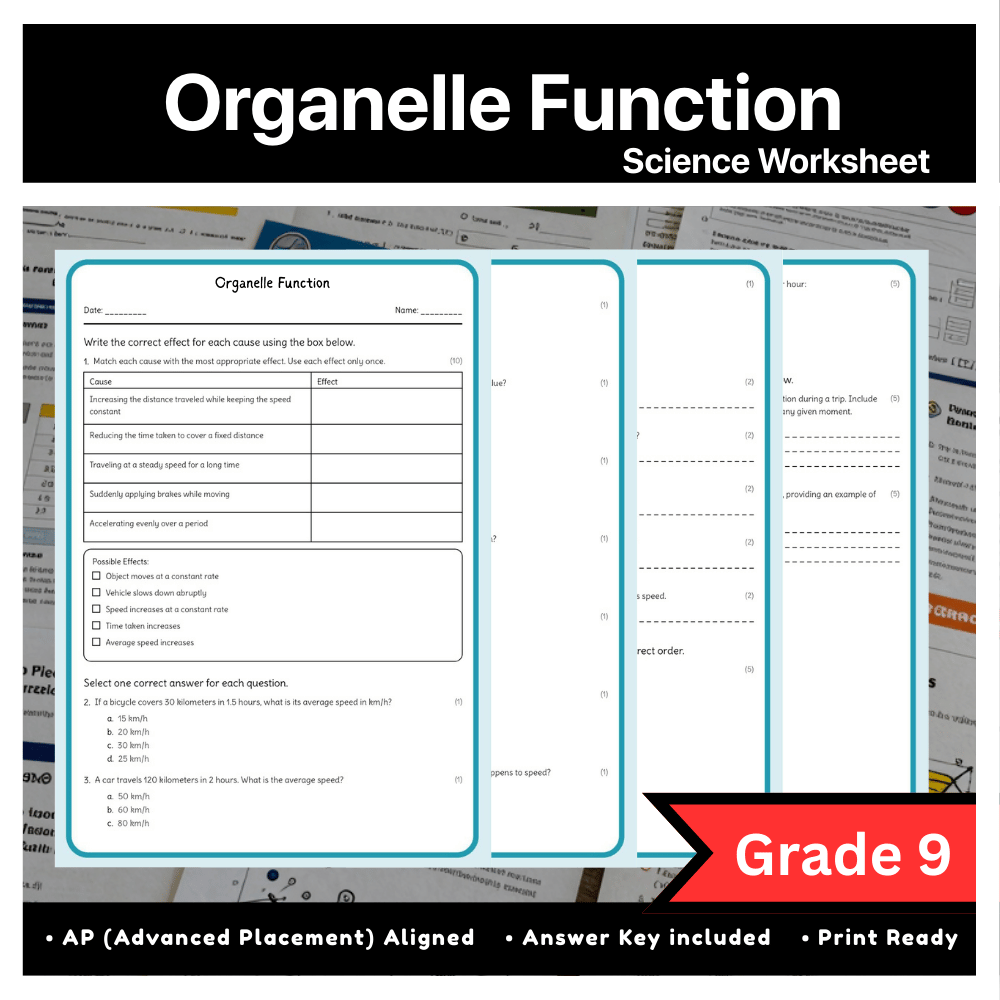
Grade 9 Science | Organelles Function & Cell Biology Worksheet (AP & PDF)
Created byBright Mind ResourcesLearning Objectives
- Identify the major organelles and understand their specific functions in the cell.
- Explain how organelles like mitochondria and chloroplasts contribute to energy production.
- Compare the structures of various organelles and relate them to their roles.
Instant download
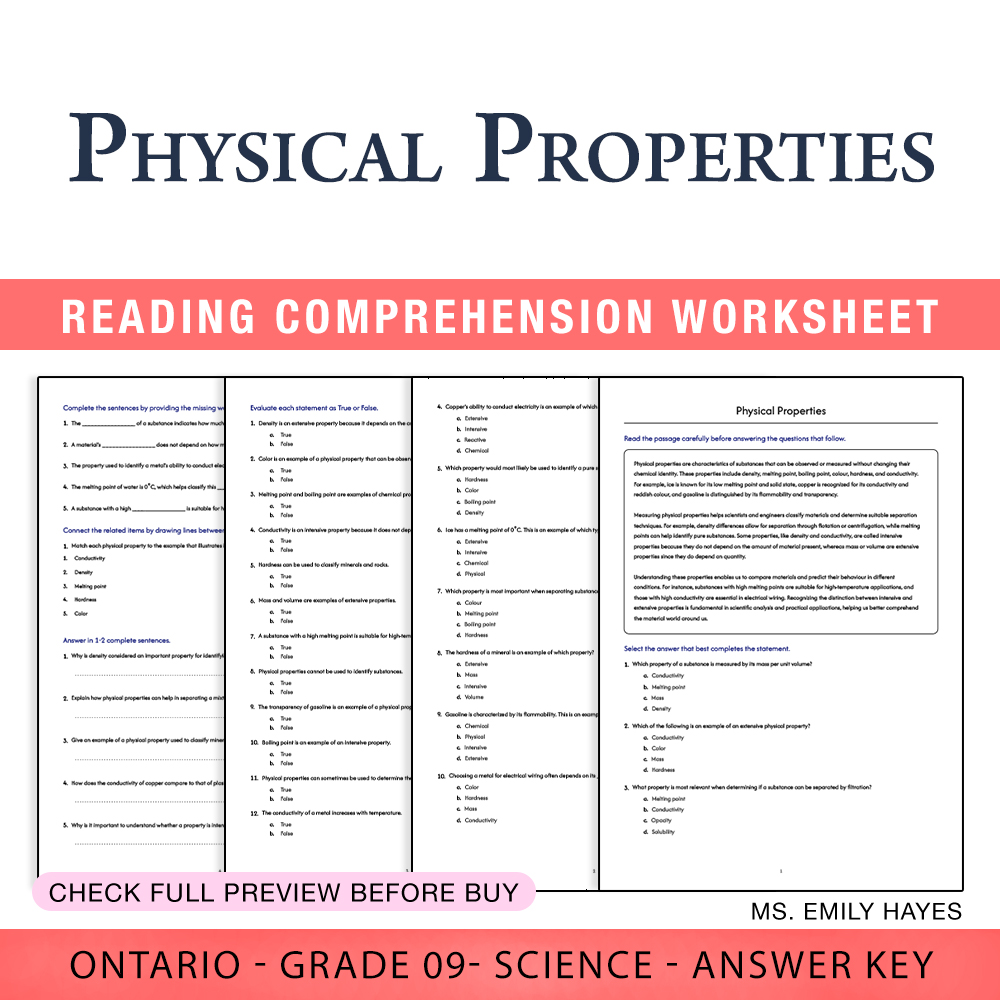
9th Grade Science | Physical Properties Worksheet (PDF + Answer Key)
Created byCopper Leaf ClassroomLearning Objectives
- Define physical properties and identify key examples such as density, melting point, and conductivity.
- Distinguish between intensive and extensive properties and understand their relevance in material classification.
- Describe how physical properties are measured and used to separate or classify materials.
Instant download
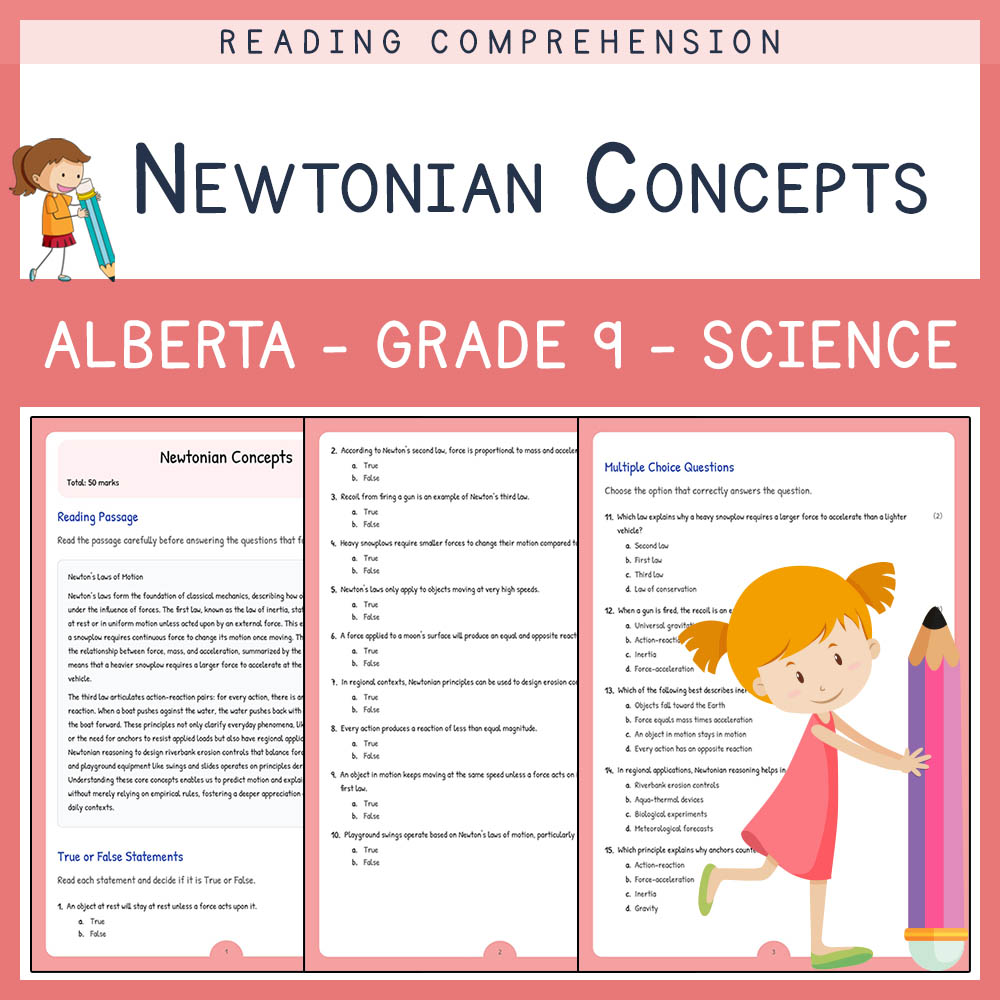
Grade 9 Science | Newtonian Concepts Worksheet | Alberta
 Created byLumora Learning
Learning Objectives
- Understand Newton's three laws of motion and their applications.
- Explain how forces affect the motion of objects in real-world contexts.
- Analyze and interpret motion patterns using Newtonian principles.
Instant download

Particle Model Worksheet for Grade 9 Science | Alberta Standards Practice
JCreated byJ.S SheetsLearning Objectives
- Understand the particle model and how it explains matter's behaviour.
- Describe particle arrangements and motion in solids, liquids, and gases.
- Explain real-world examples of particle behaviour, such as salt dispersal and odour spread.
Also included in: Grade 9: Chemical Reactions and Matter Science lesson bundle Alberta
Instant download

Grade 9 Science | Neuroendocrine Control - Daily Reading Comprehension
Created byCoral Reef LearningLearning Objectives
- Identify the main organs involved in neuroendocrine regulation.
- Understand how the hypothalamus and pituitary gland work together.
- Recognize anatomical features supporting hormonal control.
Instant download
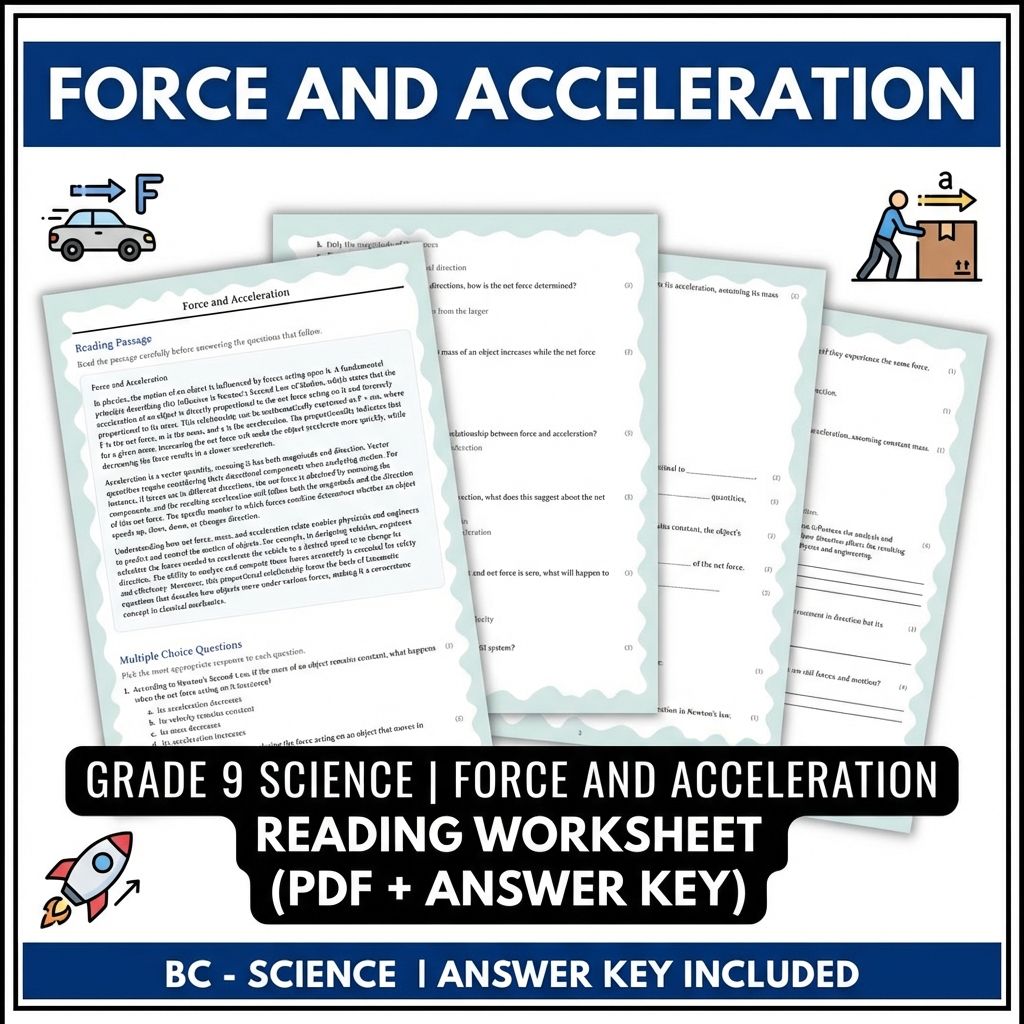
Grade 9 Science | Force and Acceleration Reading Worksheet (PDF + Answer Key)
JCreated byJ.S SheetsLearning Objectives
- Understand the relationship between net force, mass, and acceleration as described by Newton's second law.
- Analyze how vector quantities like force and acceleration affect an object's motion.
- Apply the proportionality rule to predict an object’s change in speed or direction under various forces.
Instant download

Wave Boundary Behavior Worksheet | Grade 9 Waves & Physics Activities
Created byPrism Point LearningLearning Objectives
- Explain how waves behave at boundaries between media using reflection and refraction
- Describe how transmission and absorption affect the energy carried by waves
- Predict changes in wavelength and wave direction when wave speed changes across media
Instant download

Grade 9 Science Worksheet Reaction Types | Standards-Aligned Practice PDF
JCreated byJ.S SheetsLearning Objectives
- Classify reactions as synthesis, decomposition, single displacement, double displacement, or combustion based on reactant-product patterns.
- Predict possible products by applying conservation ideas (especially conservation of mass and atoms) within each reaction type.
- Connect each reaction type to typical observable outcomes and real-world examples.
Instant download
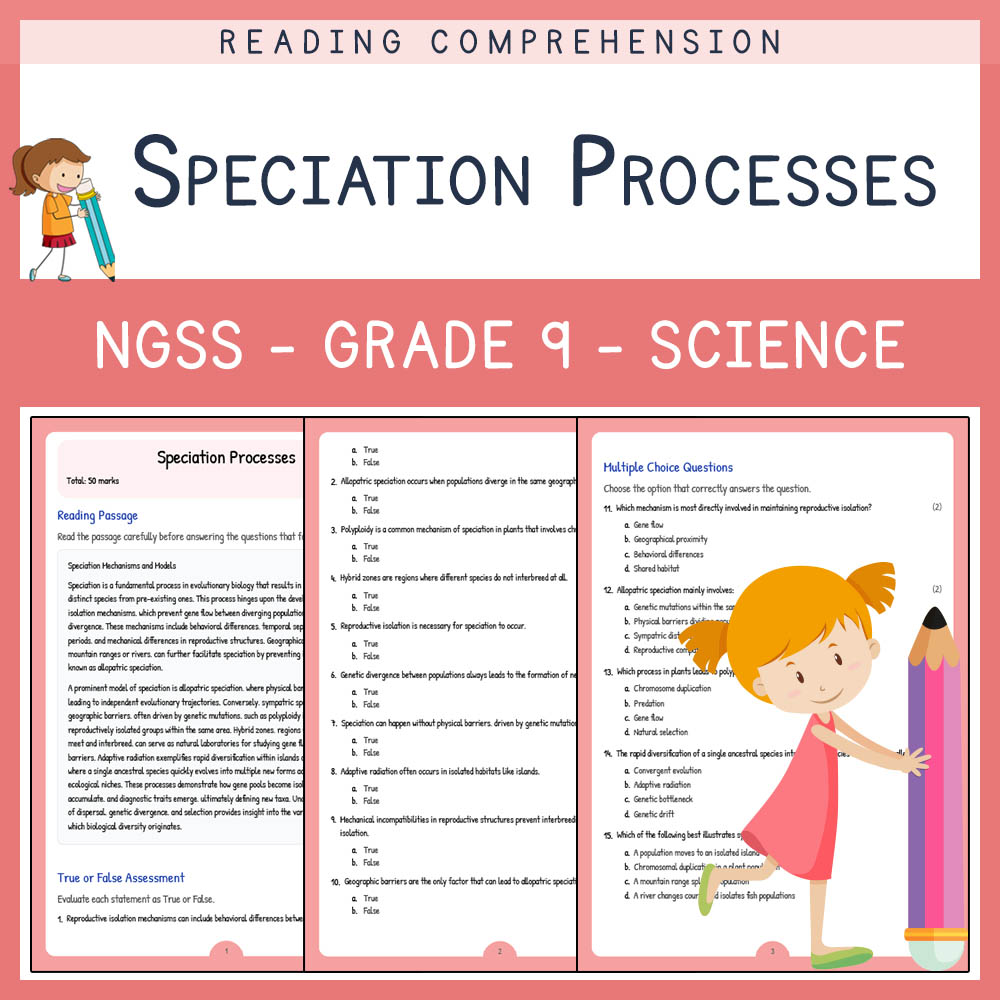
Grade 9 Science | Speciation Processes Worksheet & Answer Key (NGSS Aligned)
Created byLumora LearningLearning Objectives
- Understand the mechanisms that lead to the formation of new species.
- Explain different models of speciation such as allopatric and sympatric.
- Identify examples of speciation in natural populations, including hybrid zones and polyploidy.
Instant download
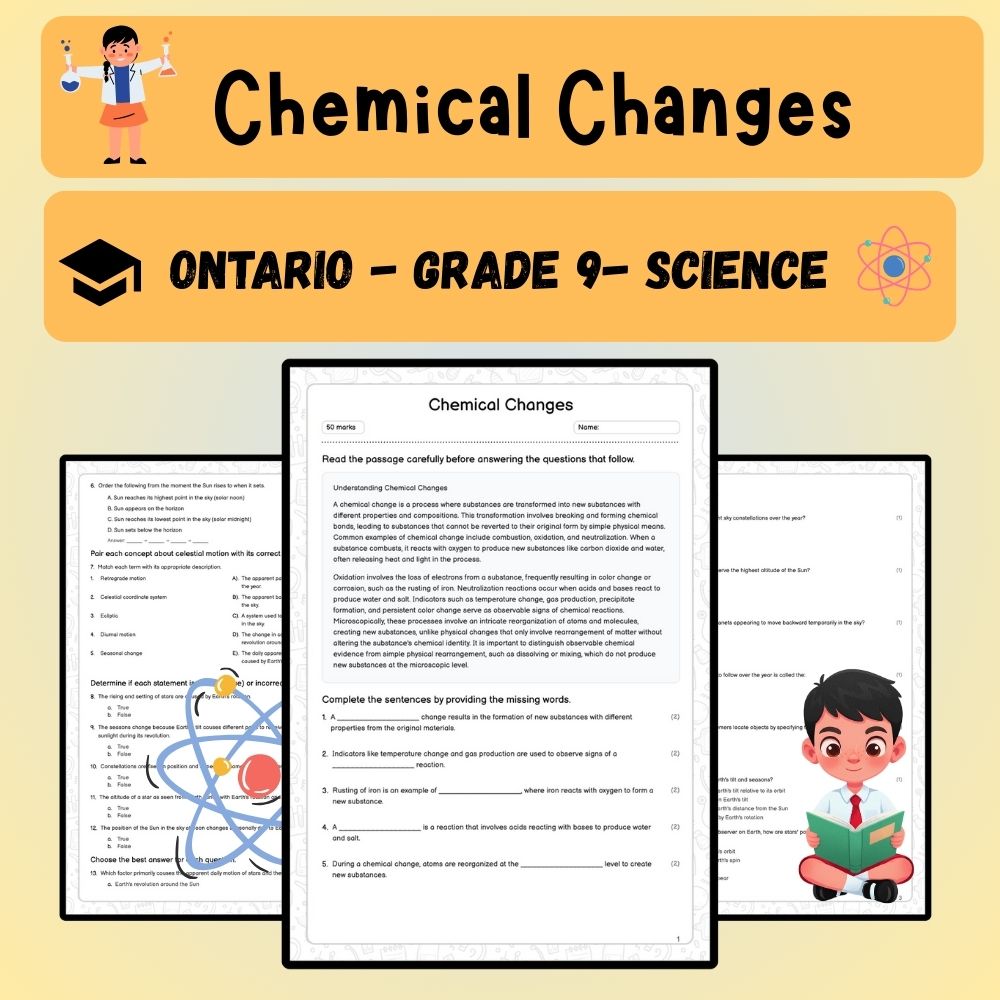
Grade 9 Science Worksheets | Chemical Changes & Reactions (PDF)
Created byPrism Point LearningLearning Objectives
- Understand the definition and characteristics of chemical change.
- Identify common indicators and evidence of chemical reactions.
- Distinguish between physical and chemical transformations at the microscopic level.
Also included in: Grade 9 Science UNIT Worksheet Pack | Chemical Properties, Energy & Reactions +1 more
Instant download
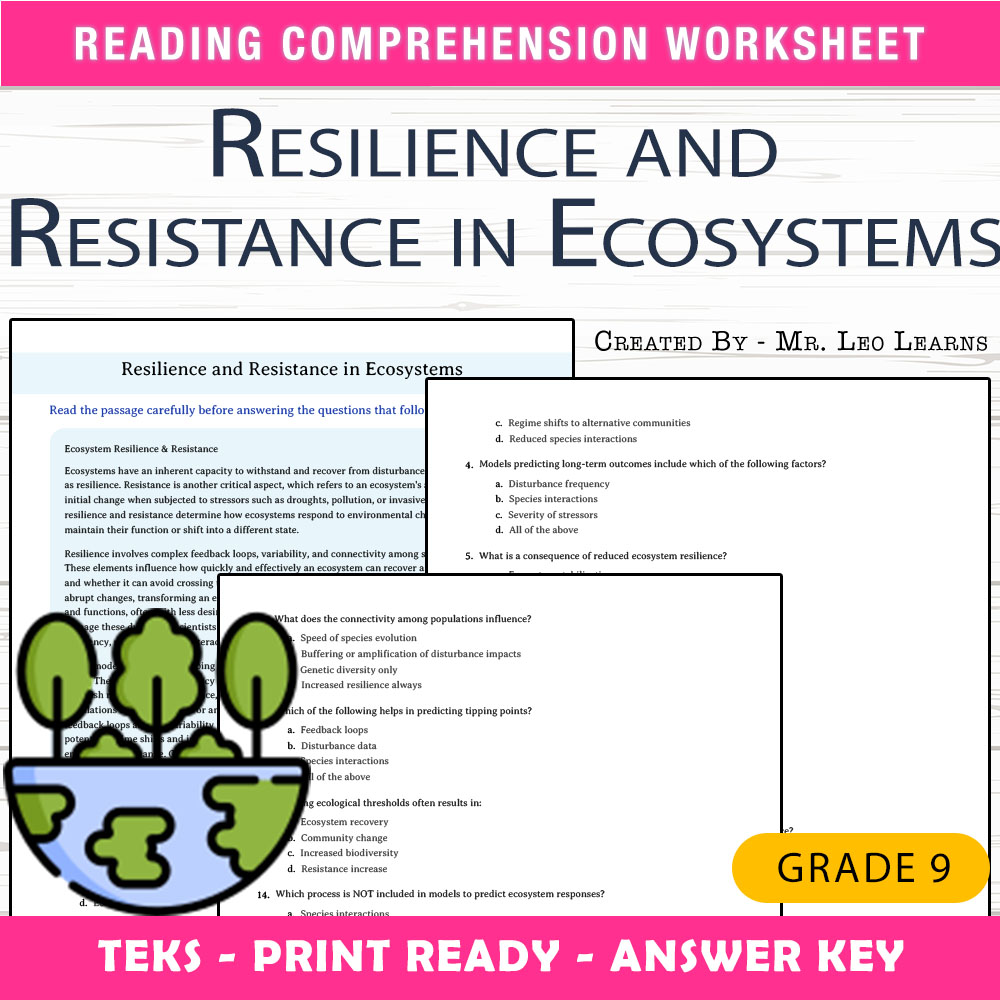
Grade 9 Science – Resilience and Resistance in Ecosystems Worksheet
 Created byThe Resource Hub
Learning Objectives
- Define resilience and resistance and explain their roles in ecosystems.
- Describe factors influencing ecosystem resilience and resistance.
- Understand how crossing ecological thresholds leads to regime shifts.
Also included in: Grade 9 Science Ecosystems & Biogeochemical Cycles Unit Bundle (Worksheet Pack) +1 more
Instant download
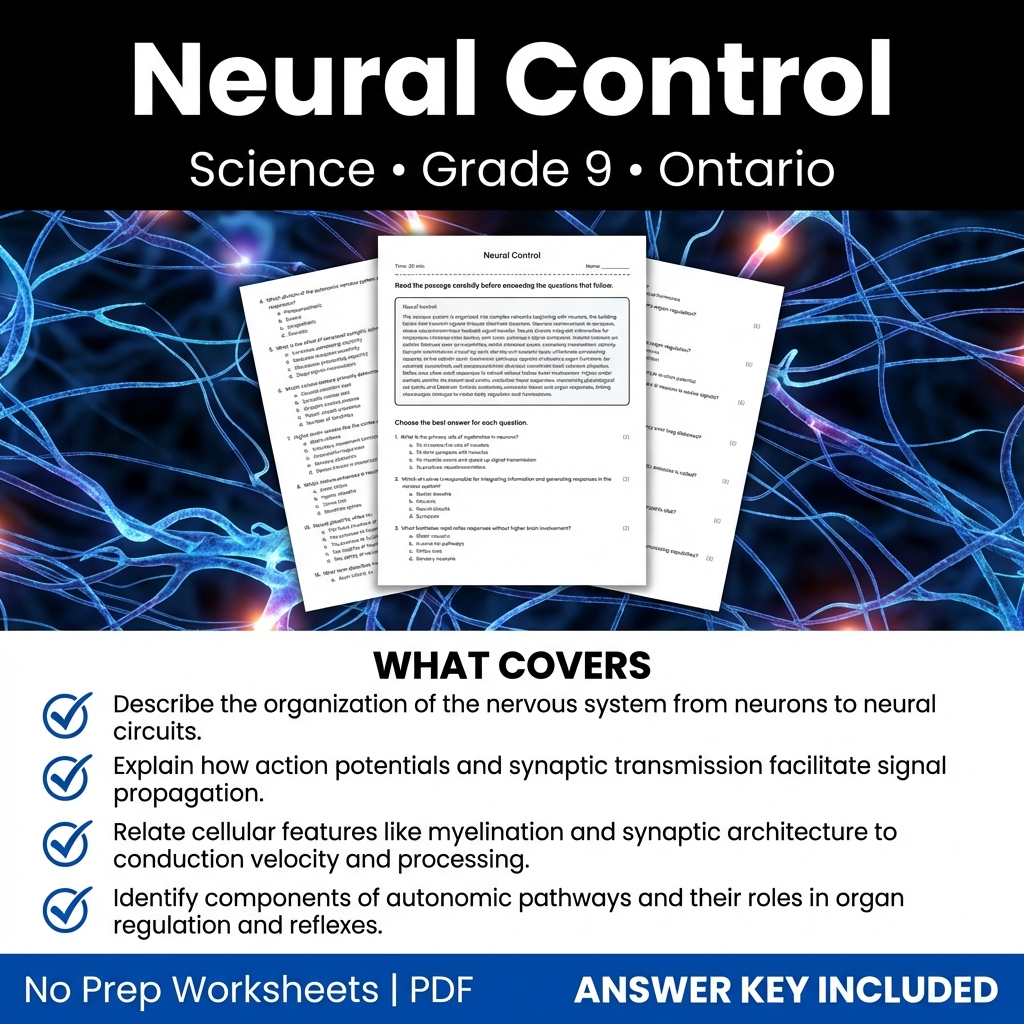
Neural Control Worksheet for Grade 9 Science | Ontario Standards
Created byCoral Reef LearningLearning Objectives
- Describe the organization of the nervous system from neurons to neural circuits.
- Explain how action potentials and synaptic transmission facilitate signal propagation.
- Relate cellular features like myelination and synaptic architecture to conduction velocity and processing.
Instant download

Grade 9 Science – Newton's Third Law & Forces | Daily Reading Worksheet
 Created byQuiet Forest Education
Learning Objectives
- Identify action–reaction force pairs in various everyday phenomena.
- Understand the concept of equal magnitude and opposite direction in force pairs.
- Analyze interaction dynamics using Newton's third law principles.
Also included in: Forces and Energy Grade 9 Science Daily Reading Worksheets Bundle | Ontario +1 more
Instant download

Grade 9 Science – Net Force & Equilibrium Daily Reading Worksheet
Created byBright Mind ResourcesLearning Objectives
- Understand the concept of net force as the vector sum of all forces acting on an object.
- Analyze how different forces combine to produce acceleration or equilibrium.
- Apply the principles of force addition to practical scenarios such as vehicle deceleration and load balancing.
Also included in: Grade 9 Simple Machines Science Daily Reading Lesson Bundle | Alberta +1 more
Instant download

Grade 9 Science – Force & Motion Daily Reading Worksheet | Alberta Standards
Created byBright Mind ResourcesLearning Objectives
- Define force and its role in motion
- Identify different types of forces, including contact and non-contact forces
- Understand how forces act in real-world Alberta settings such as icy roads and suspended cables
Also included in: Grade 9 Simple Machines Science Daily Reading Lesson Bundle | Alberta +1 more
Instant download
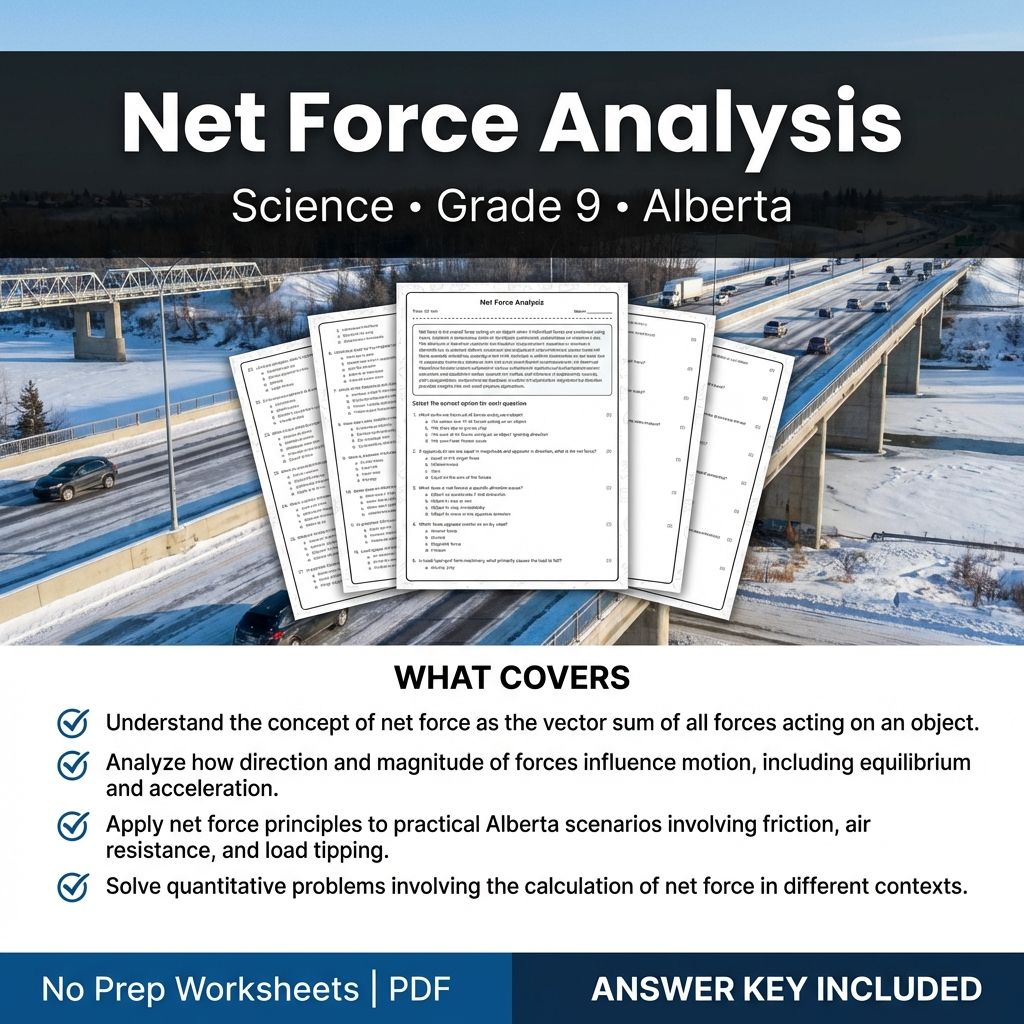
Net Force Analysis Worksheet for Grade 9 Science | Alberta Standards Practice
Created byCoral Reef LearningLearning Objectives
- Understand the concept of net force as the vector sum of all forces acting on an object.
- Analyze how direction and magnitude of forces influence motion, including equilibrium and acceleration.
- Apply net force principles to practical Alberta scenarios involving friction, air resistance, and load tipping.
Instant download
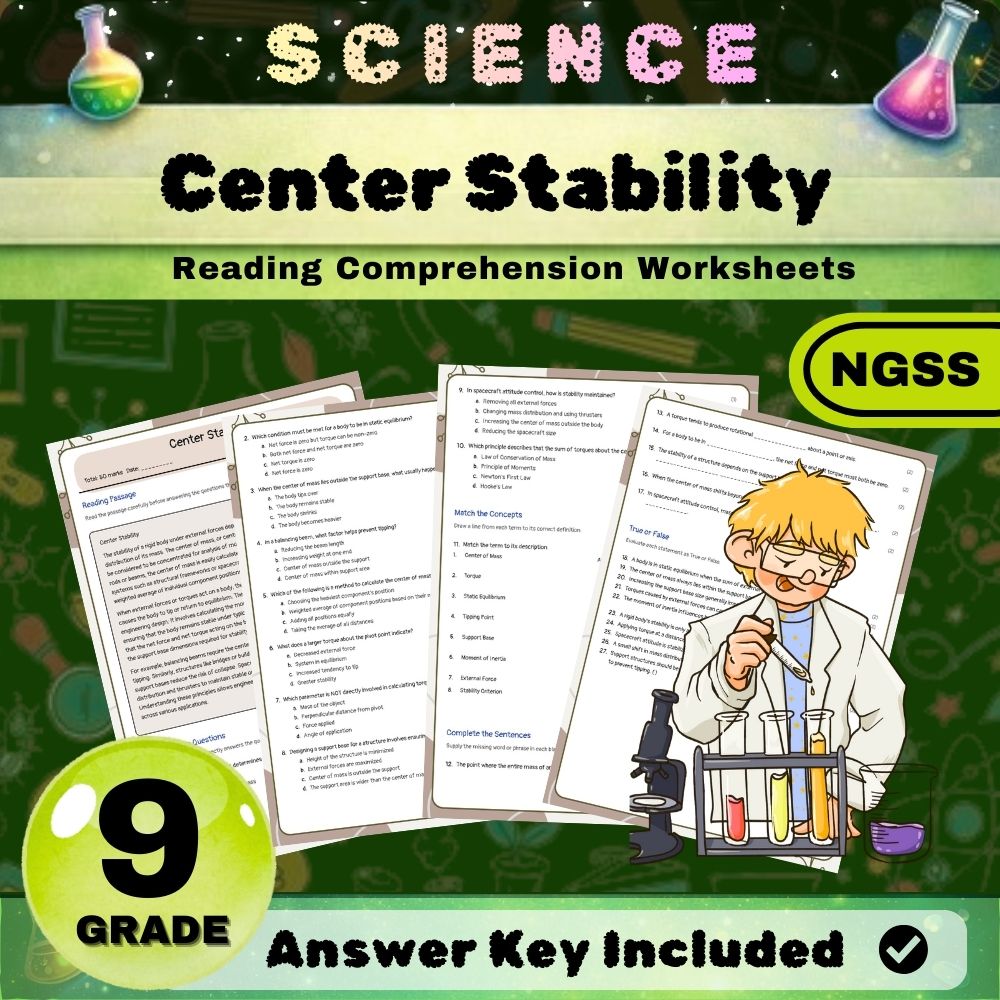
Grade 9 Science | Center Stability Worksheet (NGSS) (PDF)
 Created byMaple Path Learning
Learning Objectives
- Understand the concepts of center of mass and how it affects the stability of rigid bodies.
- Calculate the center of mass for composite systems and analyze their stability.
- Apply torque and equilibrium conditions to determine tipping thresholds for structures.
Also included in: Grade 9 Science | Motion and Stability Forces & Interactions NGSS Unit Bundle +1 more
Instant download

Trophic Dynamics in Food Webs Worksheet | Grade 9 NGSS Ecology Activity
Created byBRIGHT PATH RESOURCESLearning Objectives
- Understand the flow of energy through trophic levels in an ecosystem
- Identify the structure and components of food webs
- Describe concepts of biomass distribution, production-to-biomass ratios, and ecological efficiency
Also included in: Ecosystems Grade 9 Science Daily Reading Worksheets Lesson Bundle | NGSS +1 more
Instant download

Grade 9 Science | Eclipses Explained Worksheet | BC Standard
Created byLumora LearningLearning Objectives
- Understand the different types of eclipses and how they occur
- Identify the celestial bodies involved in solar and lunar eclipses
- Explain the role of orbital inclination and paths of totality in eclipse visibility
Also included in: Grade 9 Science | Earth Systems Unit Bundle | BC Aligned Worksheets
Instant download
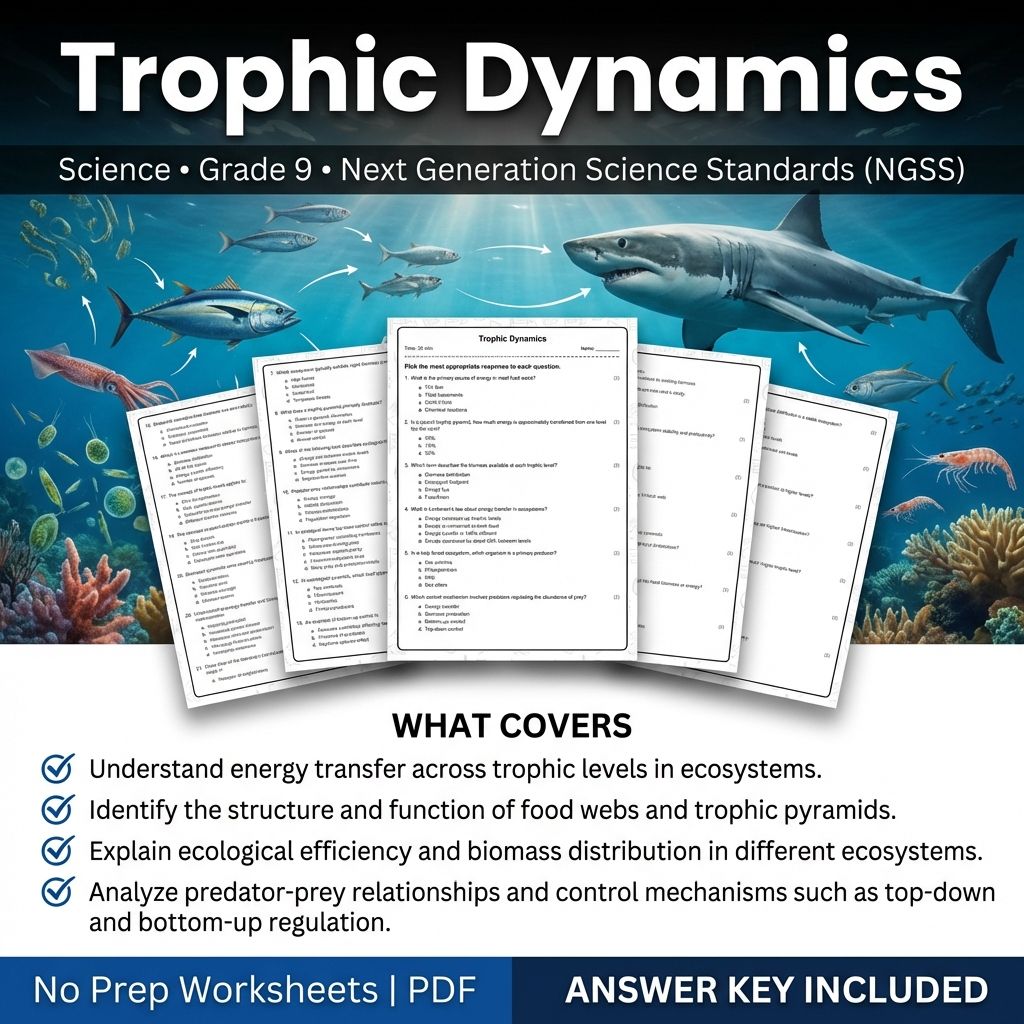
9th Grade Science Worksheet | Trophic Dynamics & Food Webs Practice + Answer Key
Created byCoral Reef LearningLearning Objectives
- Understand energy transfer across trophic levels in ecosystems.
- Identify the structure and function of food webs and trophic pyramids.
- Explain ecological efficiency and biomass distribution in different ecosystems.
Also included in: Grade 9 Science Unit Worksheet Bundle | Ecosystems & Biodiversity Practice +1 more
Instant download
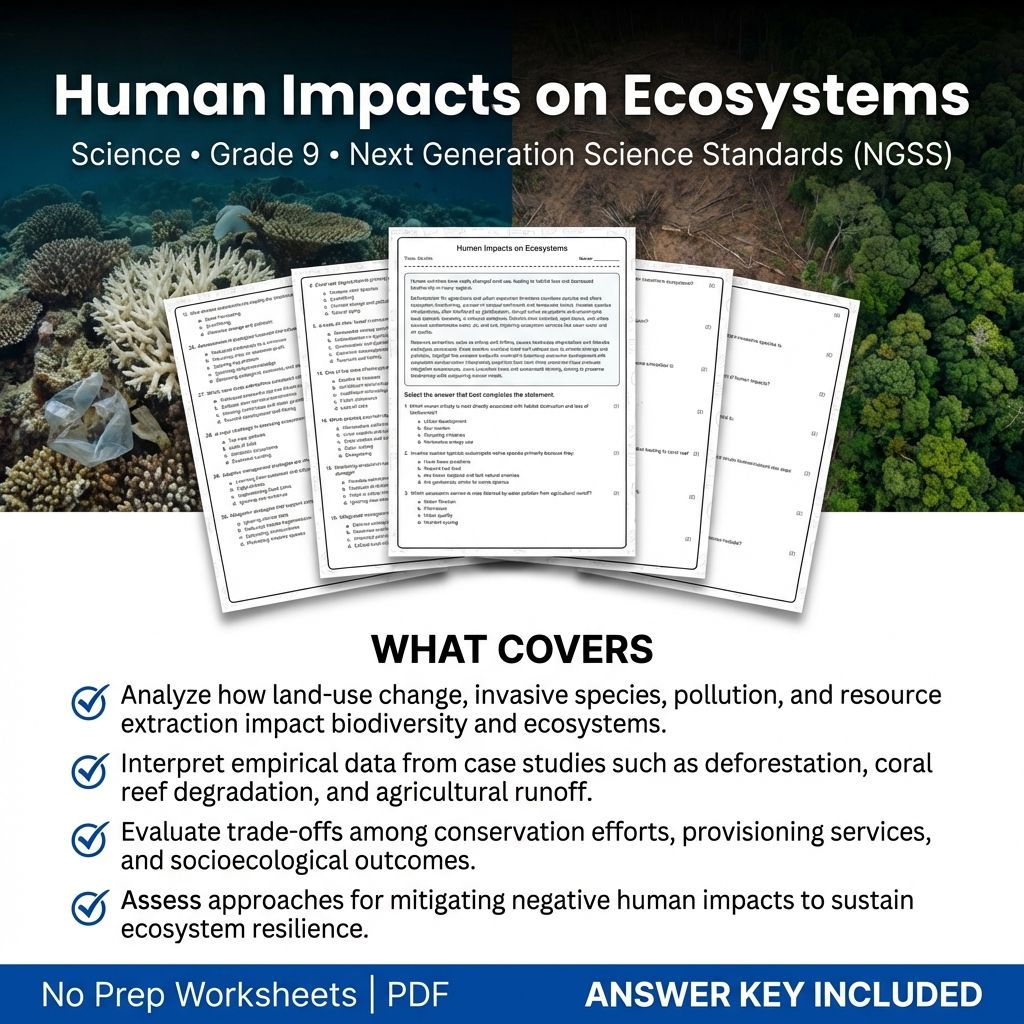
Grade 9 Science Worksheet | Human Impacts on Ecosystems ( PDF & Answer Key)
Created byCoral Reef LearningLearning Objectives
- Analyze how land-use change, invasive species, pollution, and resource extraction impact biodiversity and ecosystems.
- Interpret empirical data from case studies such as deforestation, coral reef degradation, and agricultural runoff.
- Evaluate trade-offs among conservation efforts, provisioning services, and socioecological outcomes.
Also included in: Grade 9 Science Unit Worksheet Bundle | Ecosystems & Biodiversity Practice +1 more
Instant download
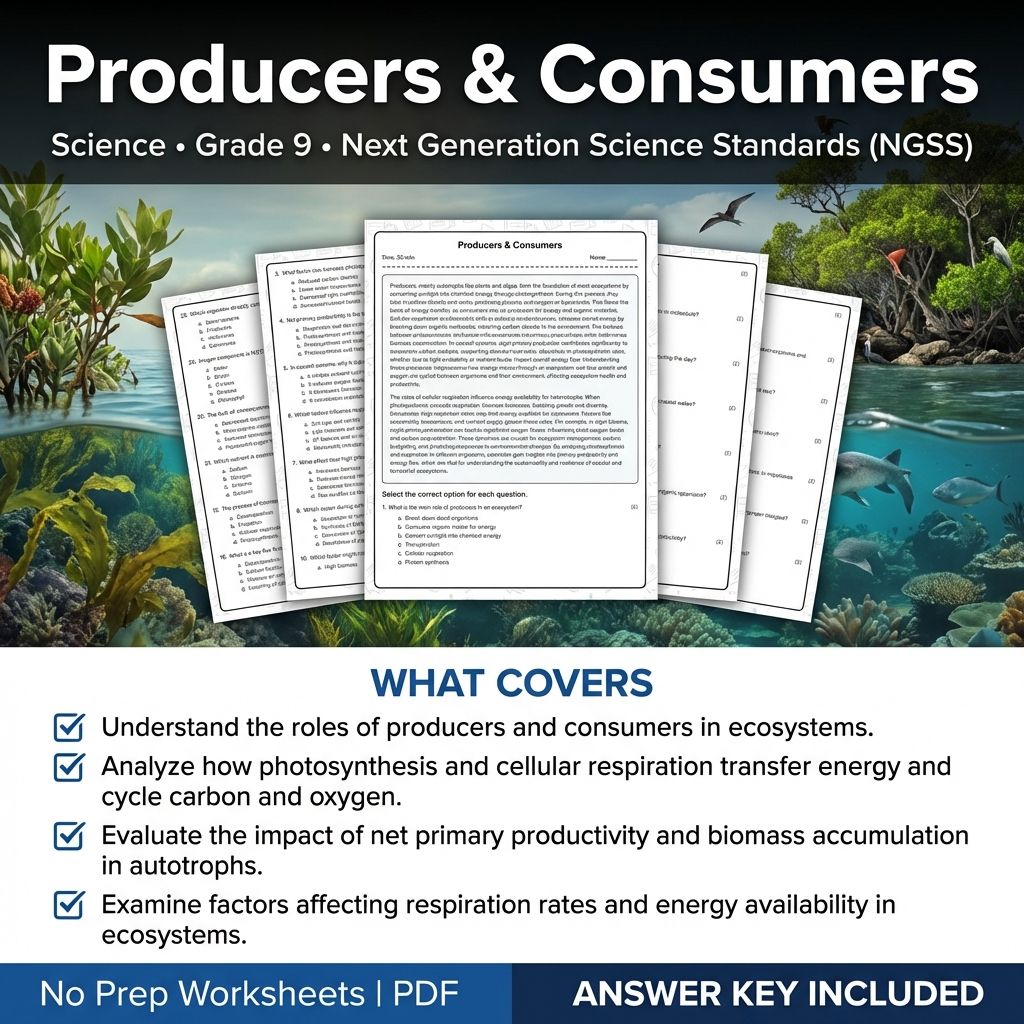
Grade 9 Science Worksheet | Producers & Consumers NGSS + Answer Key (PDF)
Created byCoral Reef LearningLearning Objectives
- Understand the roles of producers and consumers in ecosystems.
- Analyze how photosynthesis and cellular respiration transfer energy and cycle carbon and oxygen.
- Evaluate the impact of net primary productivity and biomass accumulation in autotrophs.
Also included in: Grade 9 Science Unit Worksheet Bundle | Ecosystems & Biodiversity Practice +1 more
Instant download
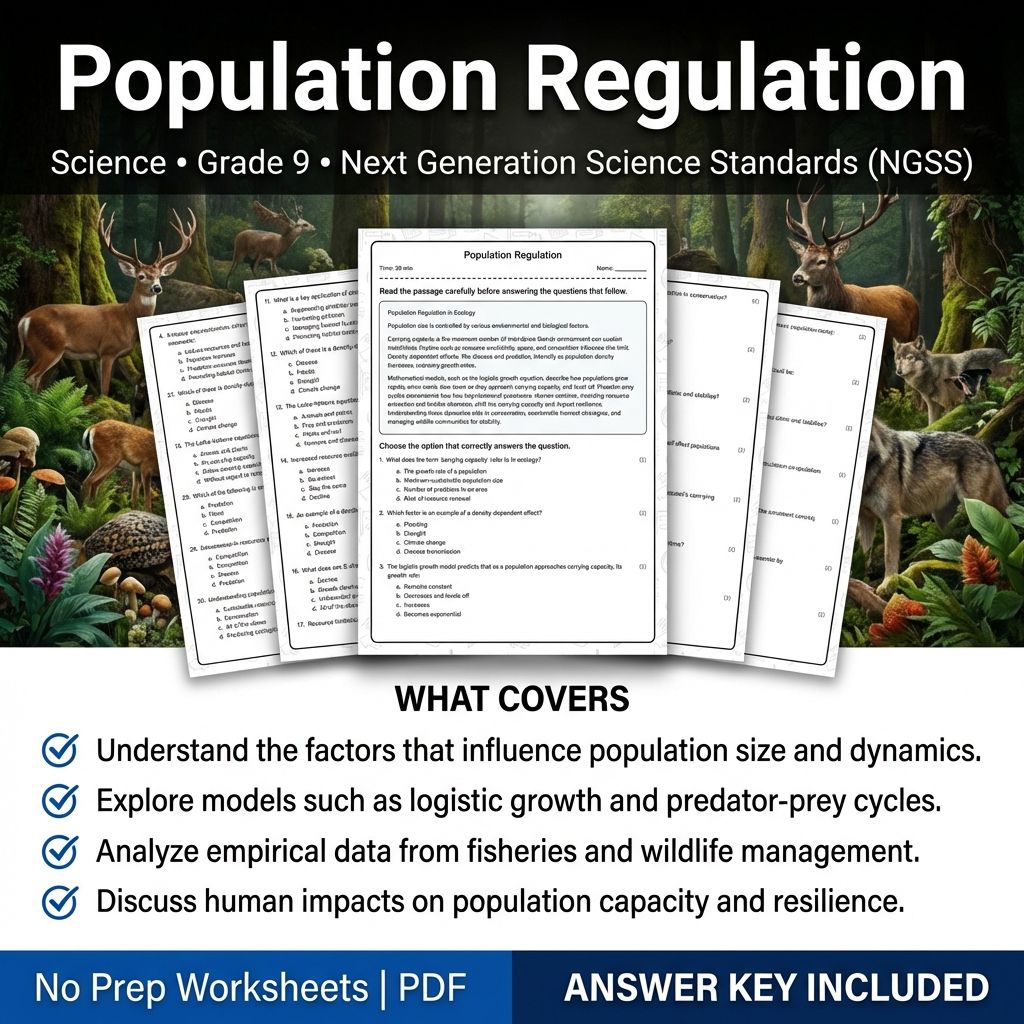
Grade 9 Science Worksheet | Population Regulation Practice PDF & Answer Key
Created byCoral Reef LearningLearning Objectives
- Understand the factors that influence population size and dynamics.
- Explore models such as logistic growth and predator-prey cycles.
- Analyze empirical data from fisheries and wildlife management.
Also included in: Grade 9 Science Unit Worksheet Bundle | Ecosystems & Biodiversity Practice +1 more
Instant download
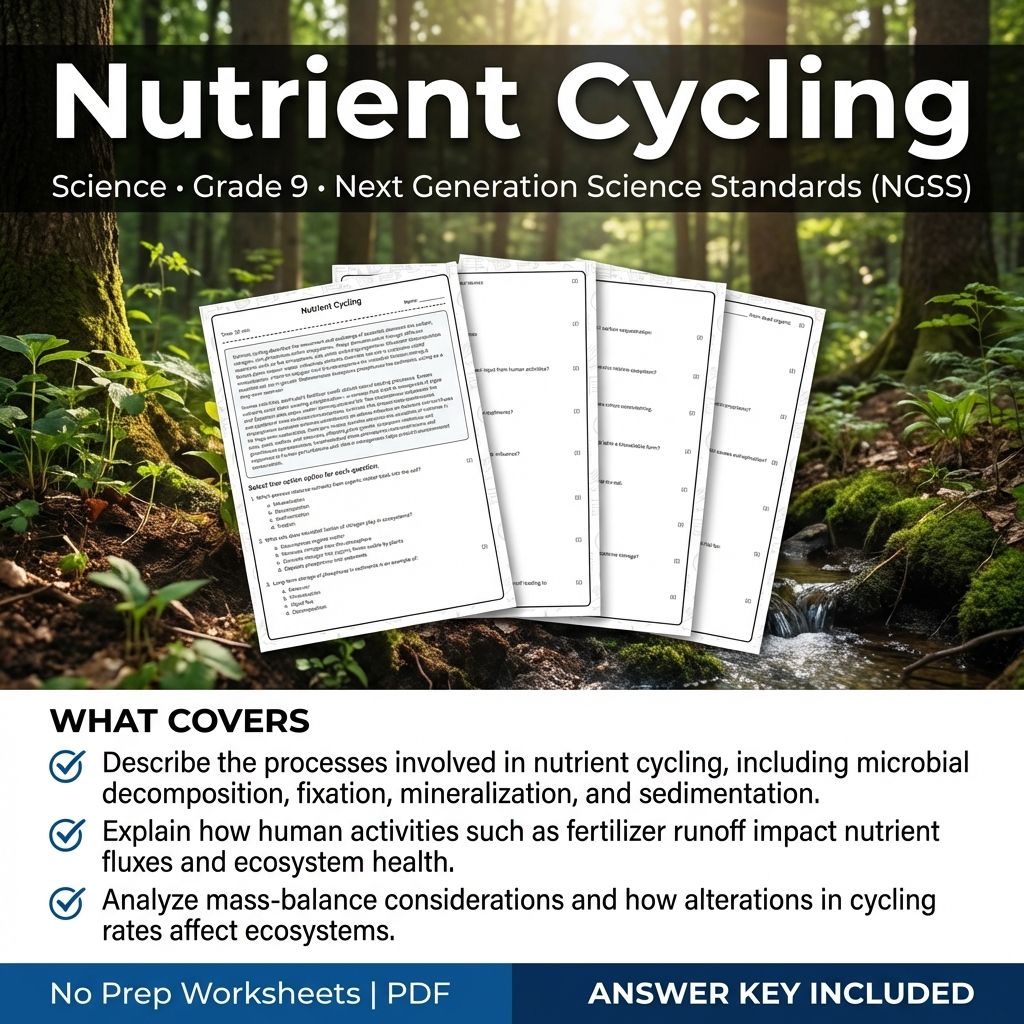
9th Grade Science Worksheet | Nutrient Cycling Practice with Answer Key (PDF)
Created byCoral Reef LearningLearning Objectives
- Describe the processes involved in nutrient cycling, including microbial decomposition, fixation, mineralization, and sedimentation.
- Explain how human activities such as fertilizer runoff impact nutrient fluxes and ecosystem health.
- Analyze mass-balance considerations and how alterations in cycling rates affect ecosystems.
Also included in: Grade 9 Science Unit Worksheet Bundle | Ecosystems & Biodiversity Practice +1 more
Instant download

Population Genetics Worksheet | Grade 9 Science Standards-Aligned
JCreated byJ.S SheetsLearning Objectives
- Understand the principles of allele frequency and Hardy-Weinberg equilibrium.
- Explain the effects of genetic drift, bottlenecks, and founder effects on genetic diversity.
- Analyze how gene flow, selection, and stochastic processes influence evolution and conservation.
Also included in: Grade 9 Genetics & Inheritance Science Lesson Bundle – Alberta Framework
Instant download

Patterns of Inheritance Worksheet | Grade 9 Science Standards-Aligned
JCreated byJ.S SheetsLearning Objectives
- Explain Mendelian inheritance patterns including dominant and recessive alleles.
- Distinguish between genotype and phenotype in genetic traits.
- Use Punnett squares to predict inheritance ratios for single-gene traits.
Also included in: Grade 9 Genetics & Inheritance Science Lesson Bundle – Alberta Framework
Instant download

Risks and Benefits Worksheet for Grade 9 Science – Alberta Standards Alignment
JCreated byJ.S SheetsLearning Objectives
- Understand the ecological, economic, and health risks and benefits associated with genetic technologies.
- Evaluate potential consequences such as gene flow, resistance development, and market impacts.
- Analyze therapeutic opportunities and the importance of risk assessment and mitigation strategies.
Also included in: Grade 9 Genetics & Inheritance Science Lesson Bundle – Alberta Framework
Instant download

Adaptation and Selection Worksheet | Alberta Grade 9 Science Standards
JCreated byJ.S SheetsLearning Objectives
- Understand the concept of natural selection and how it influences adaptation in populations.
- Identify examples of selective pressure and adaptive trade-offs in Alberta ecosystems.
- Differentiate between natural selection and artificial selection in shaping species traits.
Also included in: Grade 9 Genetics & Inheritance Science Lesson Bundle – Alberta Framework
Instant download
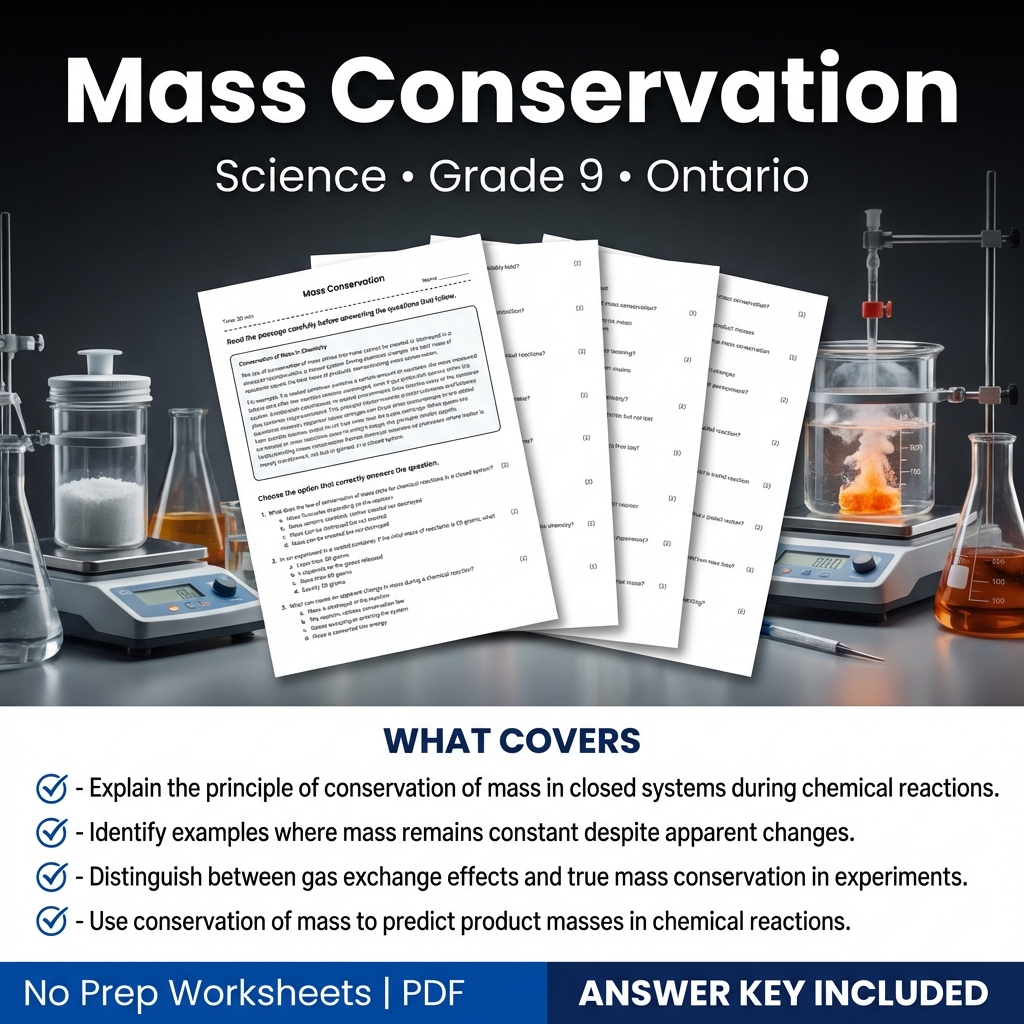
Mass Conservation Science Worksheet | Grade 9 Ontario Standard Practice
Created byCoral Reef LearningLearning Objectives
- Explain the principle of conservation of mass in closed systems during chemical reactions.
- Identify examples where mass remains constant despite apparent changes.
- Distinguish between gas exchange effects and true mass conservation in experiments.
Instant download
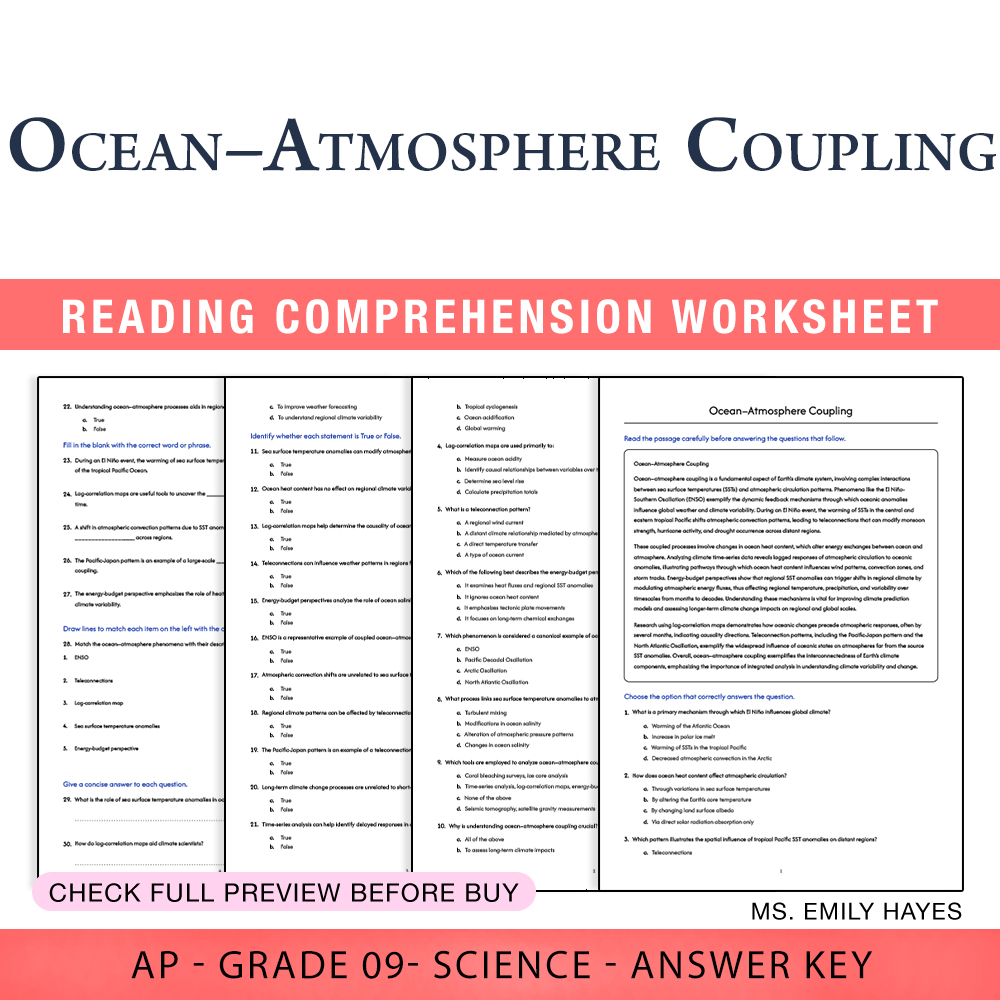
9th Grade Science | Ocean–Atmosphere Coupling Worksheet (PDF+ Answer Key)
Created byCopper Leaf ClassroomLearning Objectives
- Describe the mechanisms linking oceanic and atmospheric variability in climate systems.
- Explain phenomena such as ENSO and how sea surface temperature anomalies influence global weather patterns.
- Analyze time-series data, lag-correlation maps, and energy-budget perspectives related to ocean–atmosphere interactions.
Also included in: Grade 9 Science | Earth and Space Sciences AP Worksheet (PDF + Answer Key) +1 more
Instant download
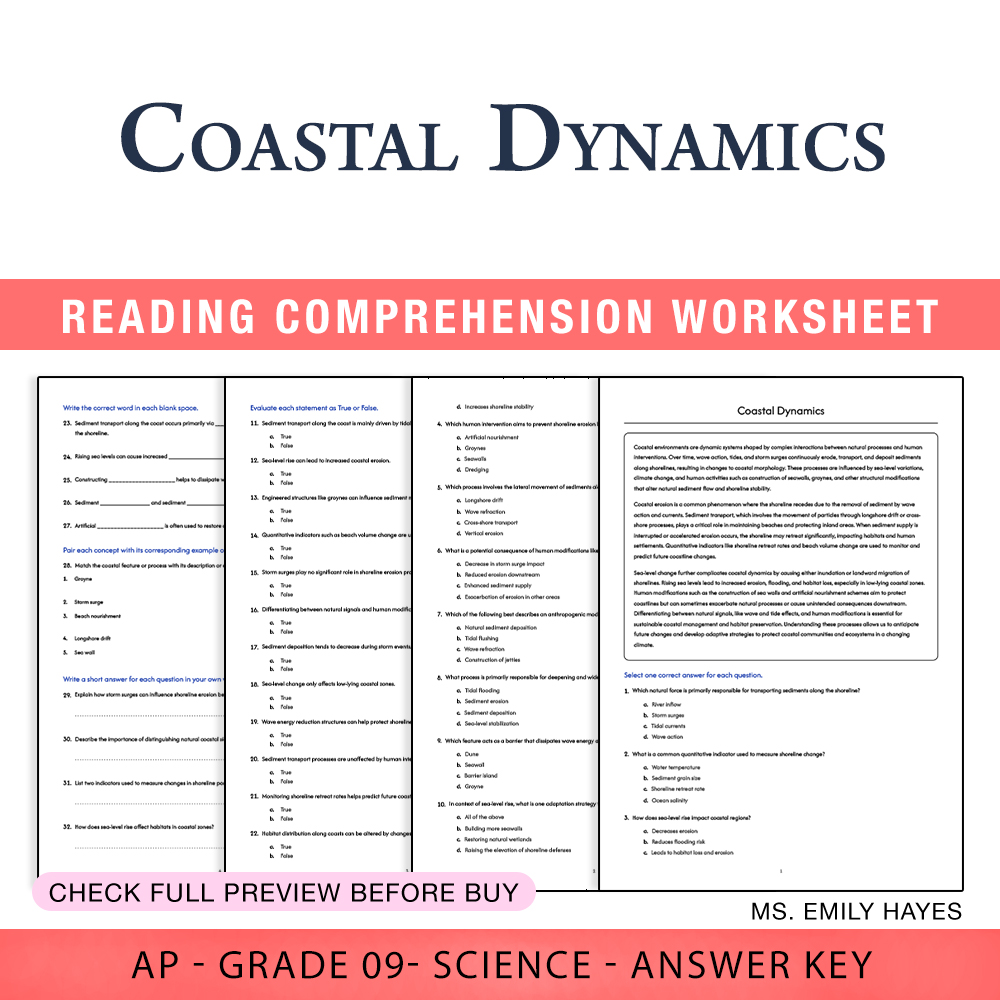
Grade 9 Science | Coastal Dynamics Worksheet (PDF+ Answer Key)
Created byCopper Leaf ClassroomLearning Objectives
- Explain the processes of coastal erosion, sediment transport, and shoreline response to various natural forces.
- Analyze how sea-level change influences coastal morphology and habitats.
- Evaluate quantitative indicators such as shoreline retreat rates and beach volume changes.
Also included in: Grade 9 Science | Earth and Space Sciences AP Worksheet (PDF + Answer Key) +1 more
Instant download
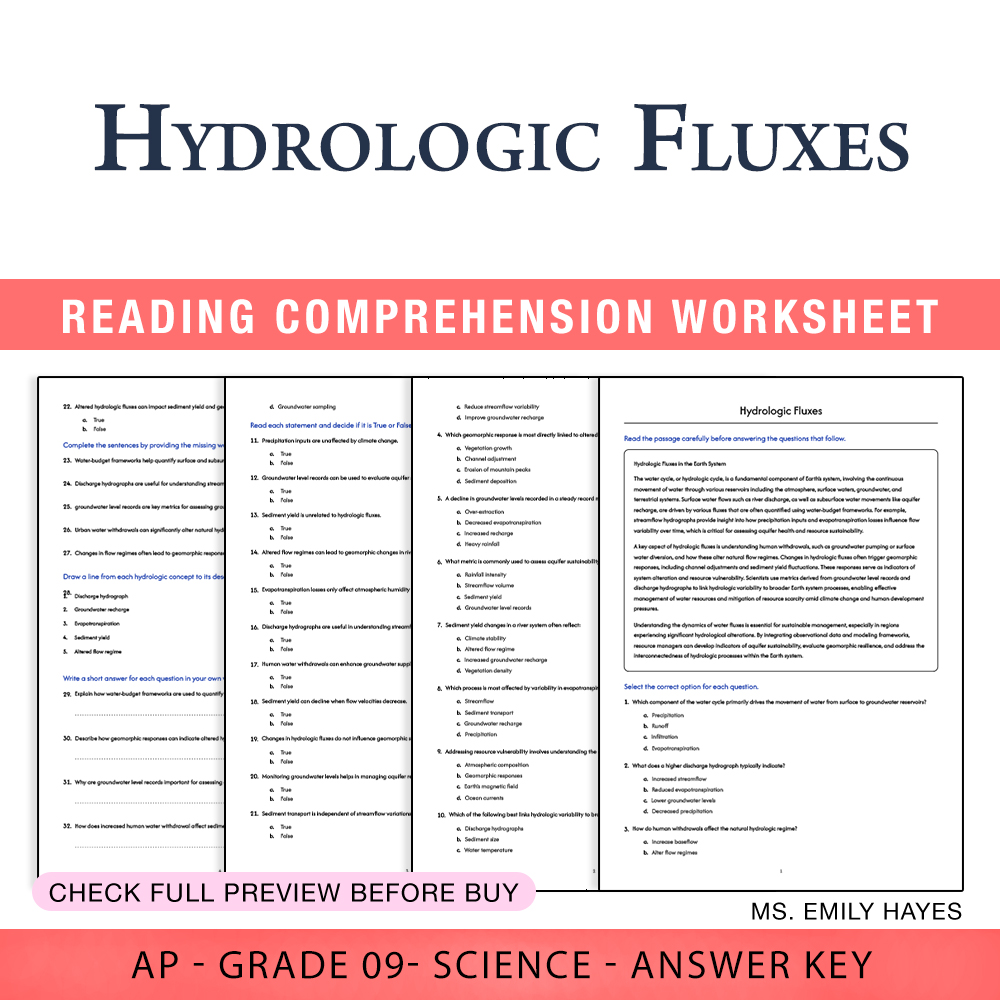
9th Grade Science | Hydrologic Fluxes Worksheet (PDF+ Answer Key)
Created byCopper Leaf ClassroomLearning Objectives
- Quantify surface and subsurface water flows using water-budget frameworks, hydrographs, and groundwater level records.
- Relate precipitation inputs, evapotranspiration, and human withdrawals to streamflow variability and aquifer sustainability.
- Analyze how altered hydrologic fluxes impact geomorphic responses such as channel adjustments and sediment yield.
Also included in: Grade 9 Science | Earth and Space Sciences AP Worksheet (PDF + Answer Key) +1 more
Instant download
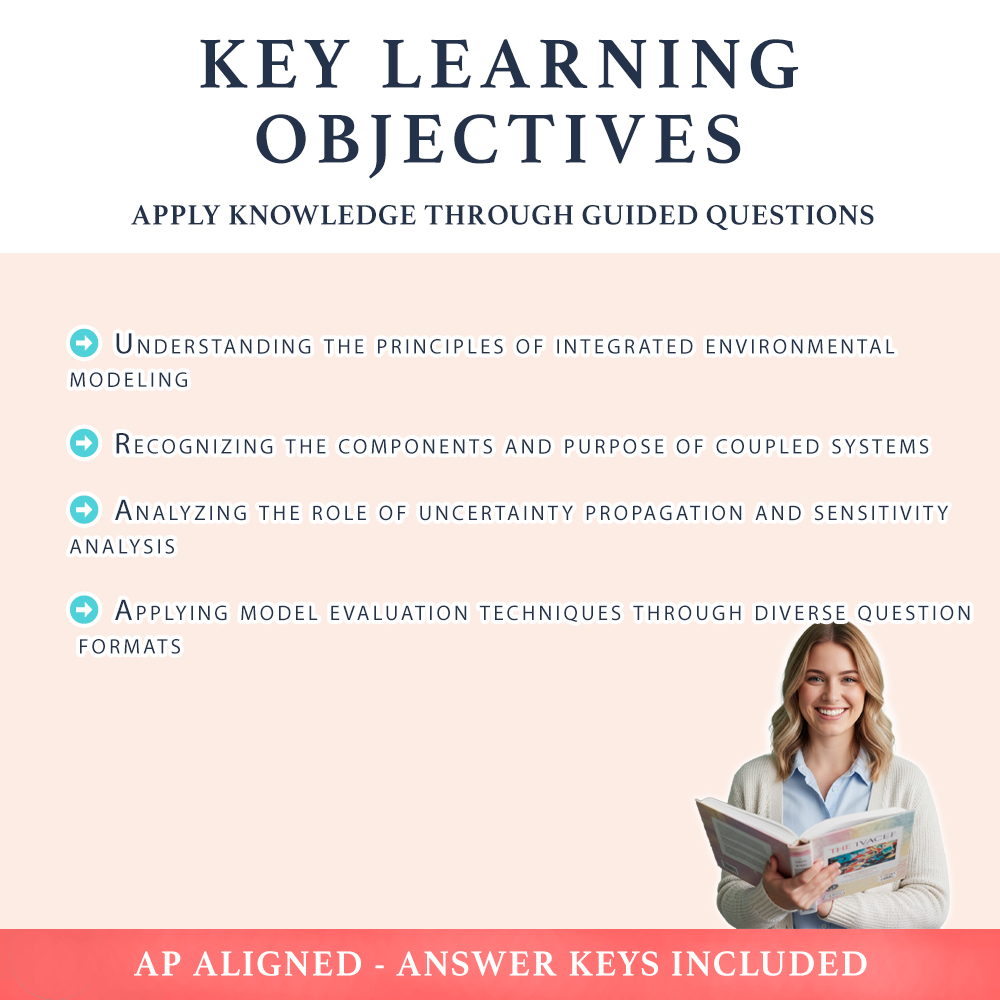
Grade 9 Science | Integrated Modeling Worksheet (PDF+ Answer Key)
Created byCopper Leaf ClassroomLearning Objectives
- Understand the components and interactions within coupled environmental models.
- Identify key parameters and sensitivities in integrated models.
- Evaluate how uncertainties propagate through complex environmental scenarios.
Also included in: Grade 9 Science | Earth and Space Sciences AP Worksheet (PDF + Answer Key) +1 more
Instant download
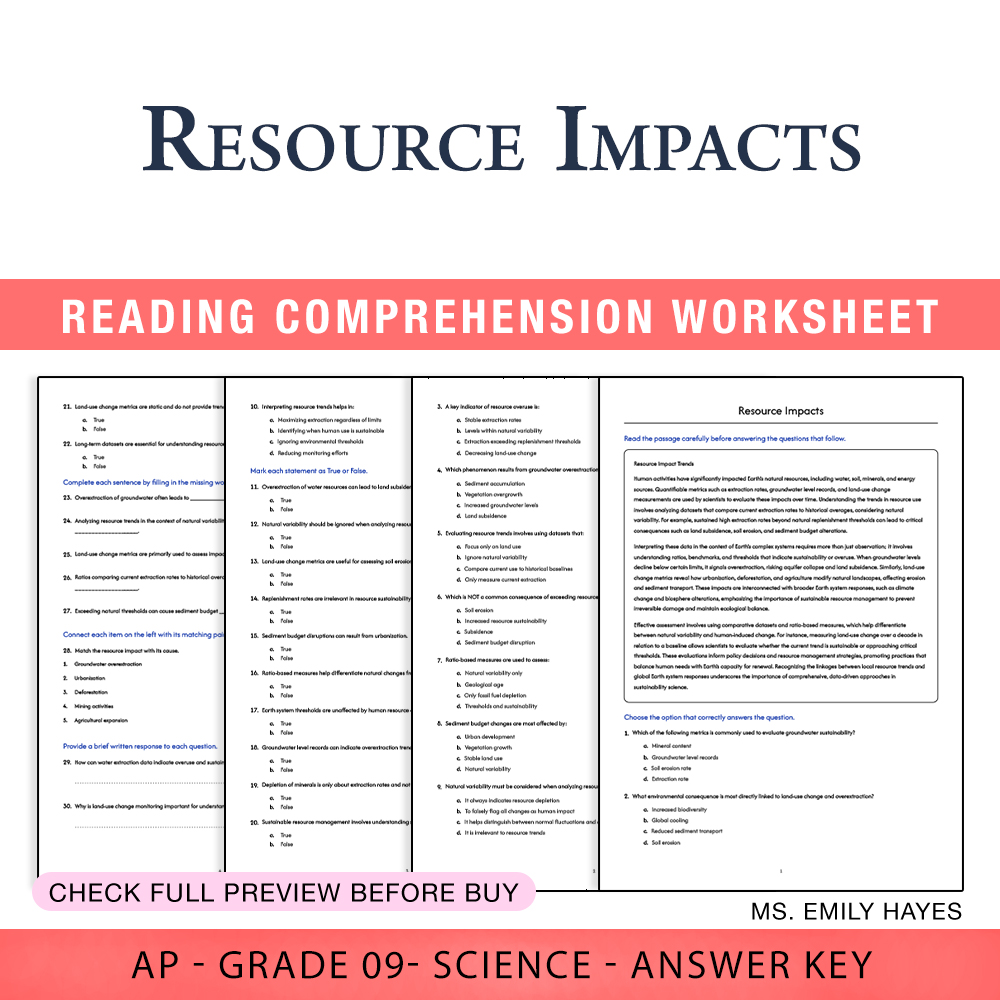
Grade 9 Science | Resource Impacts Worksheet (PDF+ Answer Key)
Created byCopper Leaf ClassroomLearning Objectives
- Analyze human activities affecting natural resources using quantifiable indicators.
- Interpret resource trends considering natural variability and system thresholds.
- Assess sustainability implications through comparative datasets and ratio-based measures.
Also included in: Grade 9 Science | Earth and Space Sciences AP Worksheet (PDF + Answer Key) +1 more
Instant download
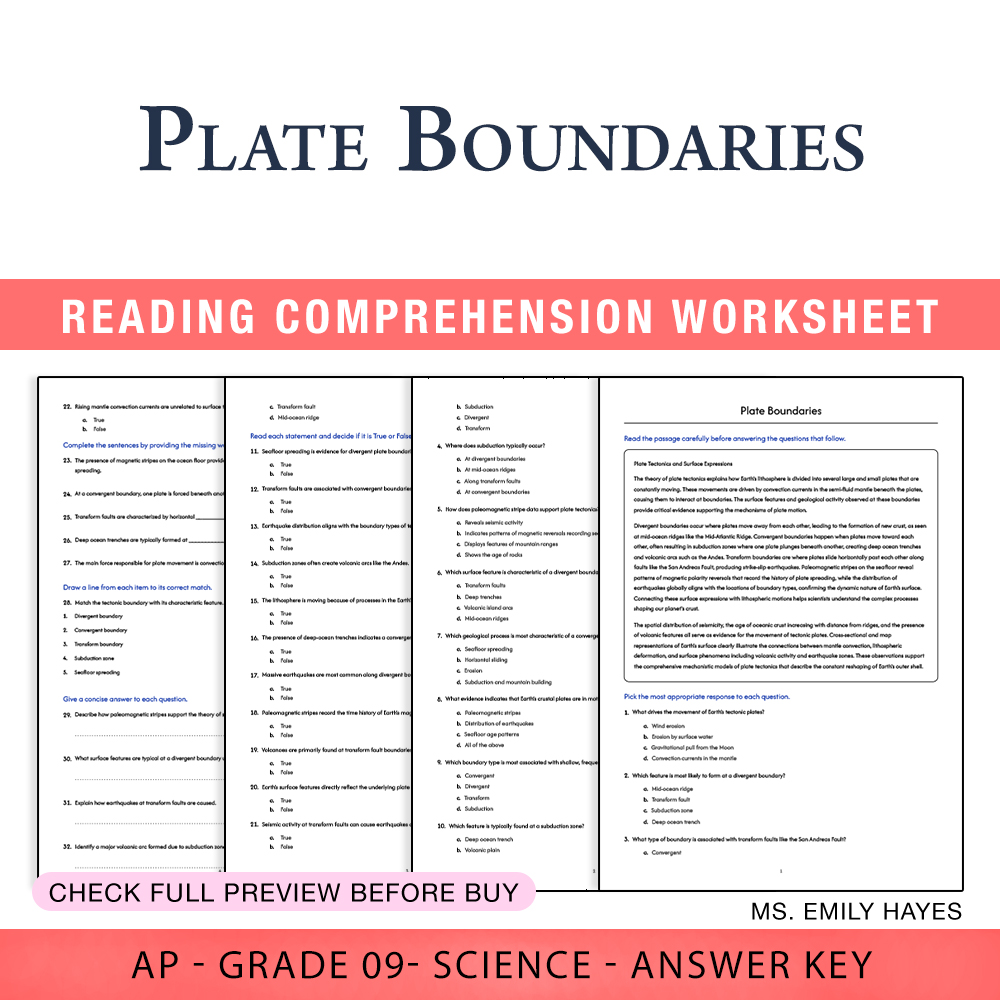
9th Grade Science | Plate Boundaries Worksheet (PDF+ Answer Key)
Created byCopper Leaf ClassroomLearning Objectives
- Explain the mechanisms behind the three main types of plate boundaries: divergent, convergent, and transform.
- Identify surface expressions and characteristic features associated with each boundary type.
- Analyze geologic evidence such as seafloor age patterns, paleomagnetic stripes, and earthquake distribution to interpret plate movements.
Also included in: Grade 9 Science | Earth and Space Sciences AP Worksheet (PDF + Answer Key) +1 more
Instant download
About Grade 9 Science Worksheets
Find Science worksheets built for Grade 9. All 6,926 cover core skills, practice, and review, each an instant PDF download.
Every worksheet on MyTeachingSheets is created by independent teacher-authors and reviewed before publication. All resources download as printable PDFs for classroom, homework, or at-home practice, and many include answer keys. Preview any worksheet free before buying.