
Science Worksheets
44,342 subject resources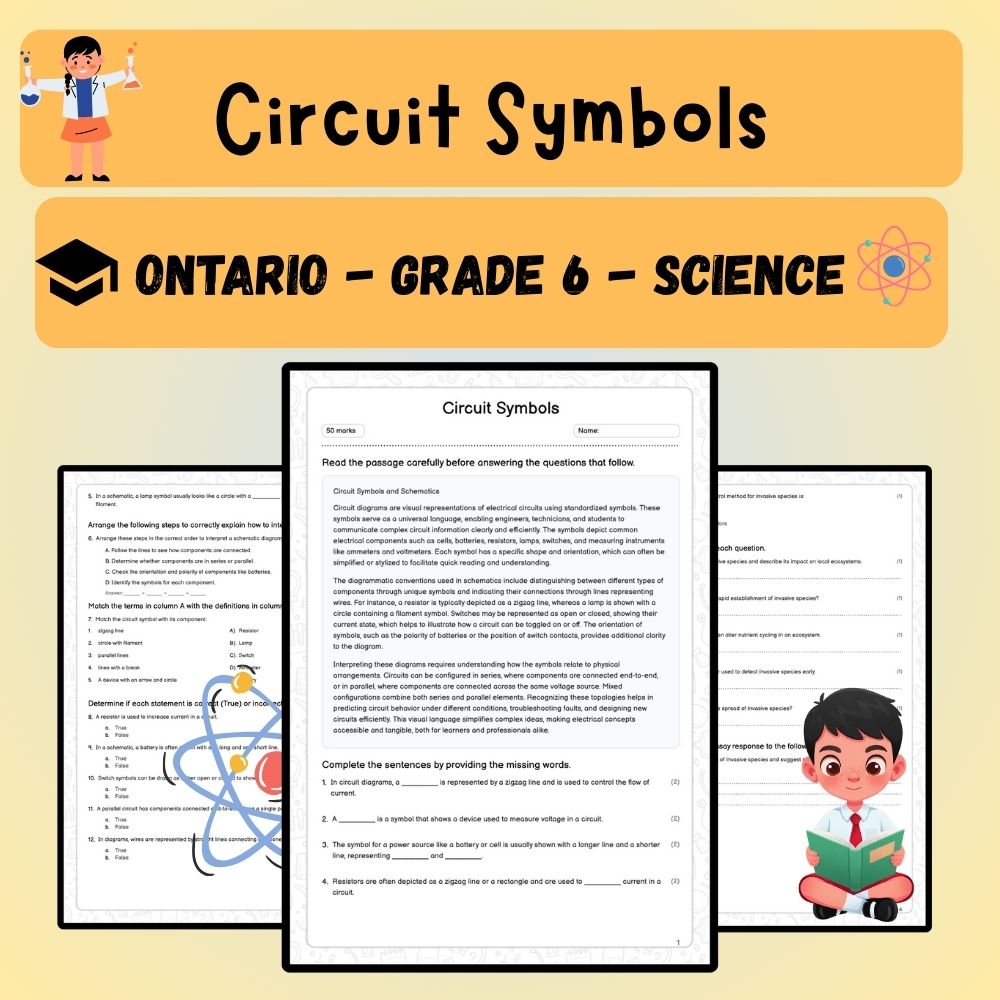
6th Grade Science | Circuit Symbols Worksheet – Ontario Standards (PDF + Answer Key)
 Created byPrism Point Learning
Learning Objectives
- Understand and recognize standard symbols used in circuit diagrams for components like cells, batteries, resistors, lamps, switches, ammeters, and voltmeters.
- Interpret schematic diagrams to identify circuit topology, including series, parallel, and mixed configurations, and predict circuit behavior.
- Comprehend the importance of symbol orientation and shorthand conventions in circuit schematics for effective communication and understanding.
Also included in: Grade 6 Science Unit – Circuits & Electricity Worksheet Bundle
Instant download
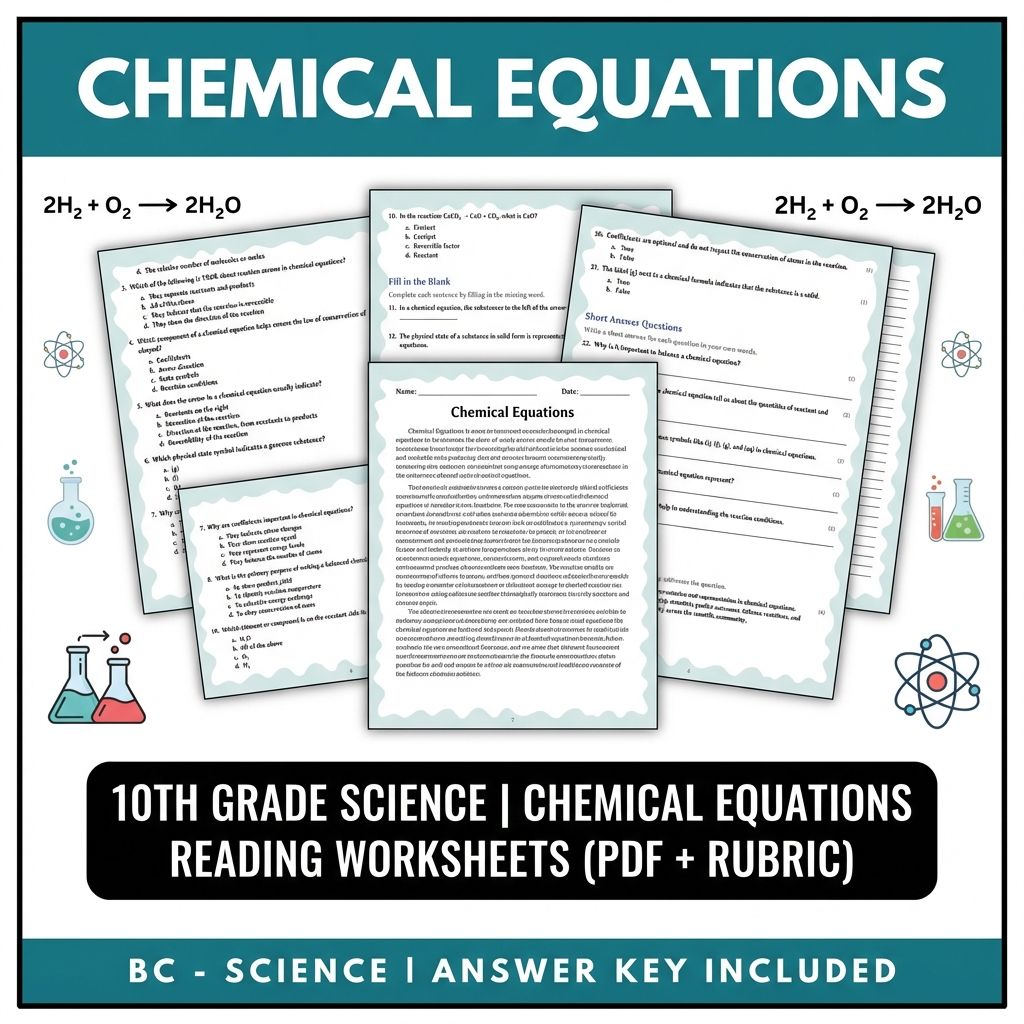
10th Grade Science | Chemical Equations Reading Worksheets (PDF + Rubric)
JCreated byJ.S SheetsLearning Objectives
- Understand the structure and notation of chemical equations.
- Identify reactants, products, and physical states in equations.
- Explain the significance of coefficients and state symbols.
Instant download
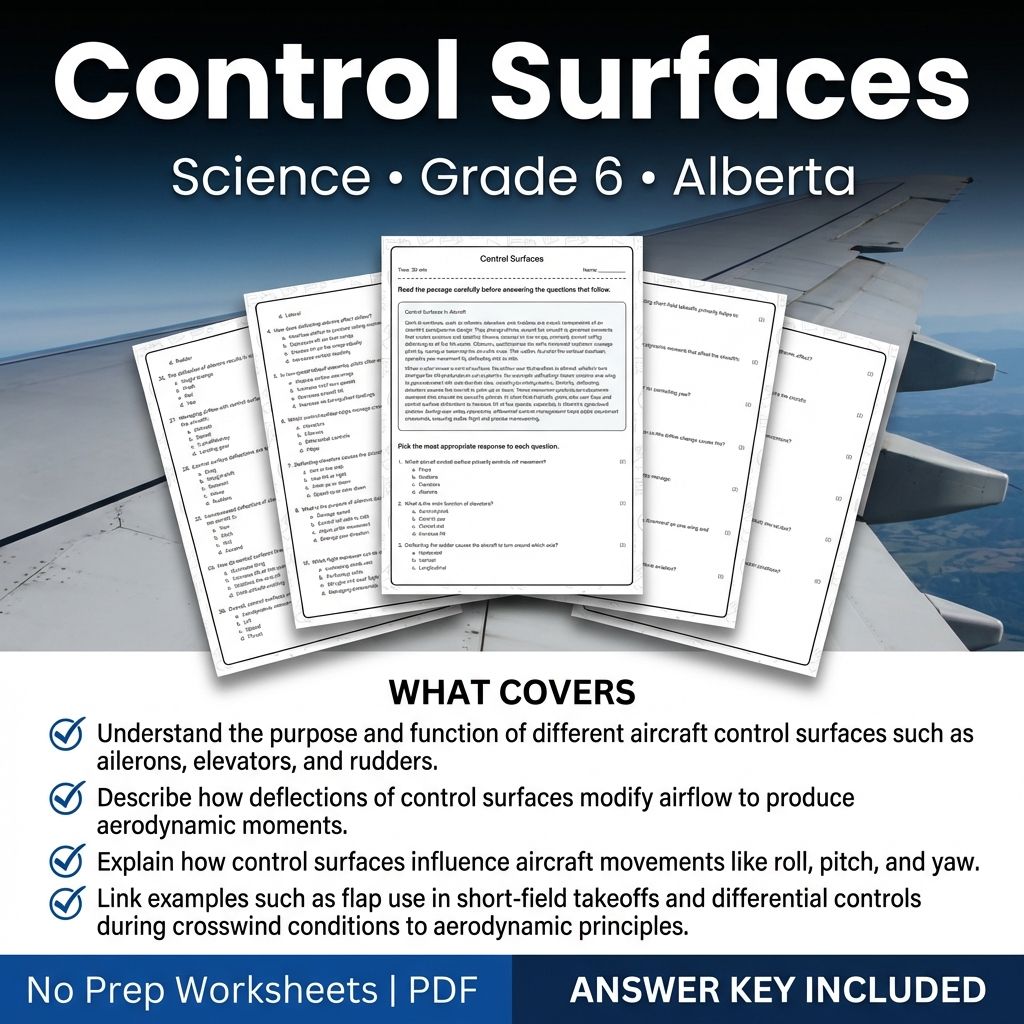
Control Surfaces Worksheet for Grade 6 Science | Alberta Standards
 Created byCoral Reef Learning
Learning Objectives
- Understand the purpose and function of different aircraft control surfaces such as ailerons, elevators, and rudders.
- Describe how deflections of control surfaces modify airflow to produce aerodynamic moments.
- Explain how control surfaces influence aircraft movements like roll, pitch, and yaw.
Instant download
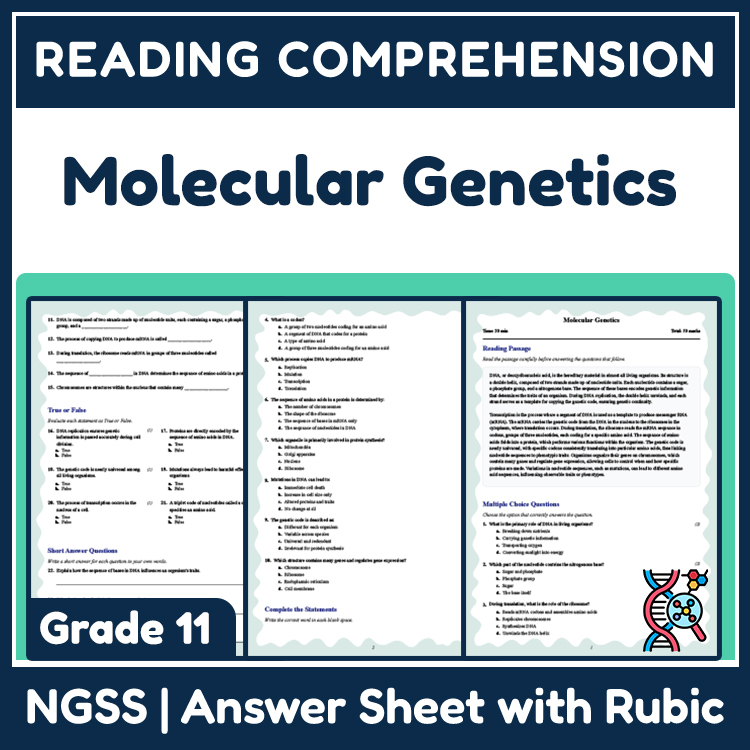
Grade 11 Science | Molecular Genetics Reading Worksheet & Answer Key (PDF)
JCreated byJ.S SheetsLearning Objectives
- Explain the structure of DNA and how it relates to genetic information.
- Describe the processes of replication, transcription, and translation.
- Understand how nucleotide sequences encode amino acid sequences and influence traits.
Instant download

Grade 11 Science Cross-Discipline Models of Energy, Matter & Force Worksheet
 Created byChalk and Compass
Learning Objectives
- Explain how energy flow and conservation laws connect ecosystem processes to cellular and physical mechanisms.
- Use atomic-level and mechanical models to predict macroscopic outcomes in biological systems.
- Translate between representations (equations, diagrams, and conceptual cause–effect chains).
Also included in: Grade 11 Science Cross-Discipline Models of Energy, Matter & Force Lesson +1 more
Instant download

Grade 6 Science | Scientific Inquiry - Day - Daily Reading Comprehension
Created byCoral Reef LearningLearning Objectives
- Understand the importance of careful observation in science.
- Learn how to describe observations using appropriate measurement and descriptive terms.
- Recognize how detailed observations contribute to scientific explanations and understanding.
Instant download
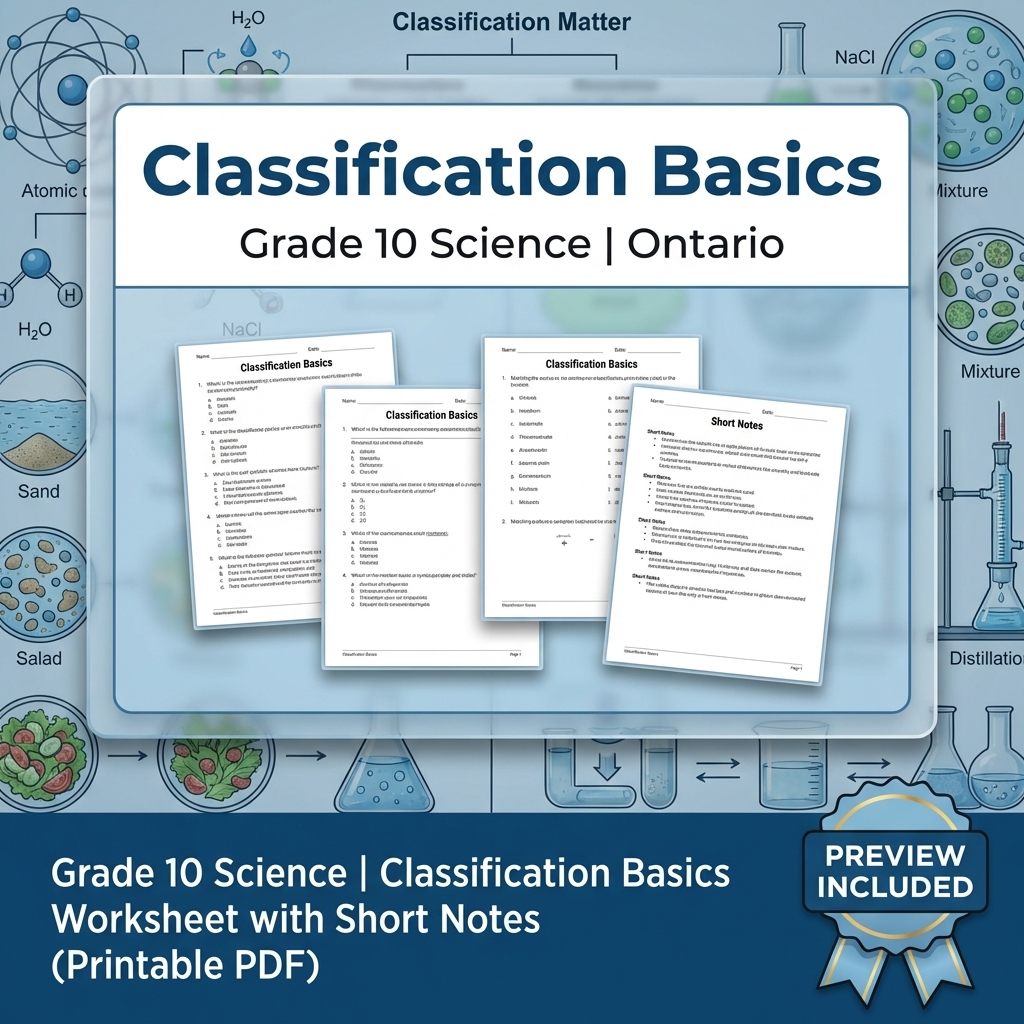
Grade 10 Science | Classification Basics Worksheet with Short Notes
 Created byMeadowlark Worksheets
Learning Objectives
- Understand the fundamental schemes for classifying matter based on states, purity, and composition.
- Distinguish between pure substances, mixtures, elements, and compounds with examples.
- Relate microscopic models and chemical formulas to macroscopic classification criteria.
Also included in: Grade 10 Science Lesson Group Bundle with Ontario Framework +1 more
Instant download
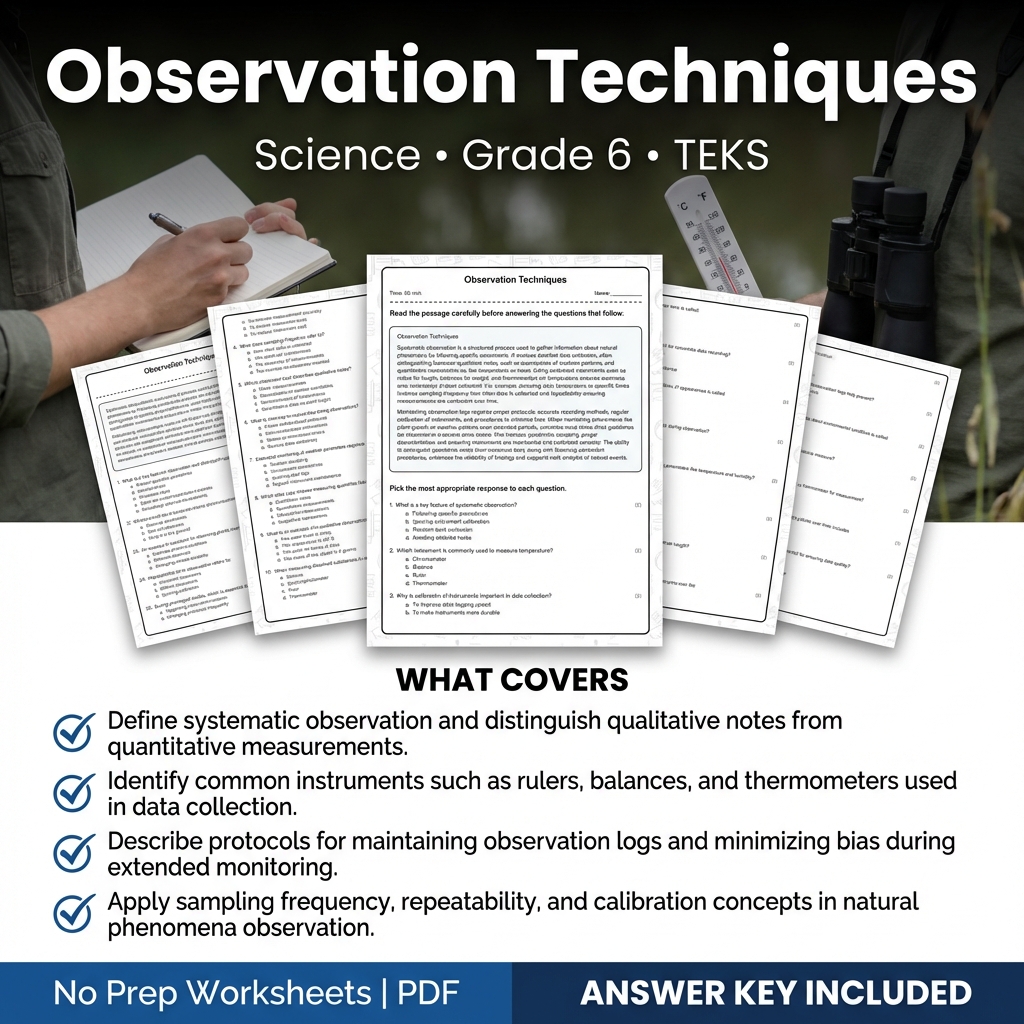
Observation Techniques Science Worksheet | TEKS Grade 6 Assessment
Created byCoral Reef LearningLearning Objectives
- Define systematic observation and distinguish qualitative notes from quantitative measurements.
- Identify common instruments such as rulers, balances, and thermometers used in data collection.
- Describe protocols for maintaining observation logs and minimizing bias during extended monitoring.
Instant download
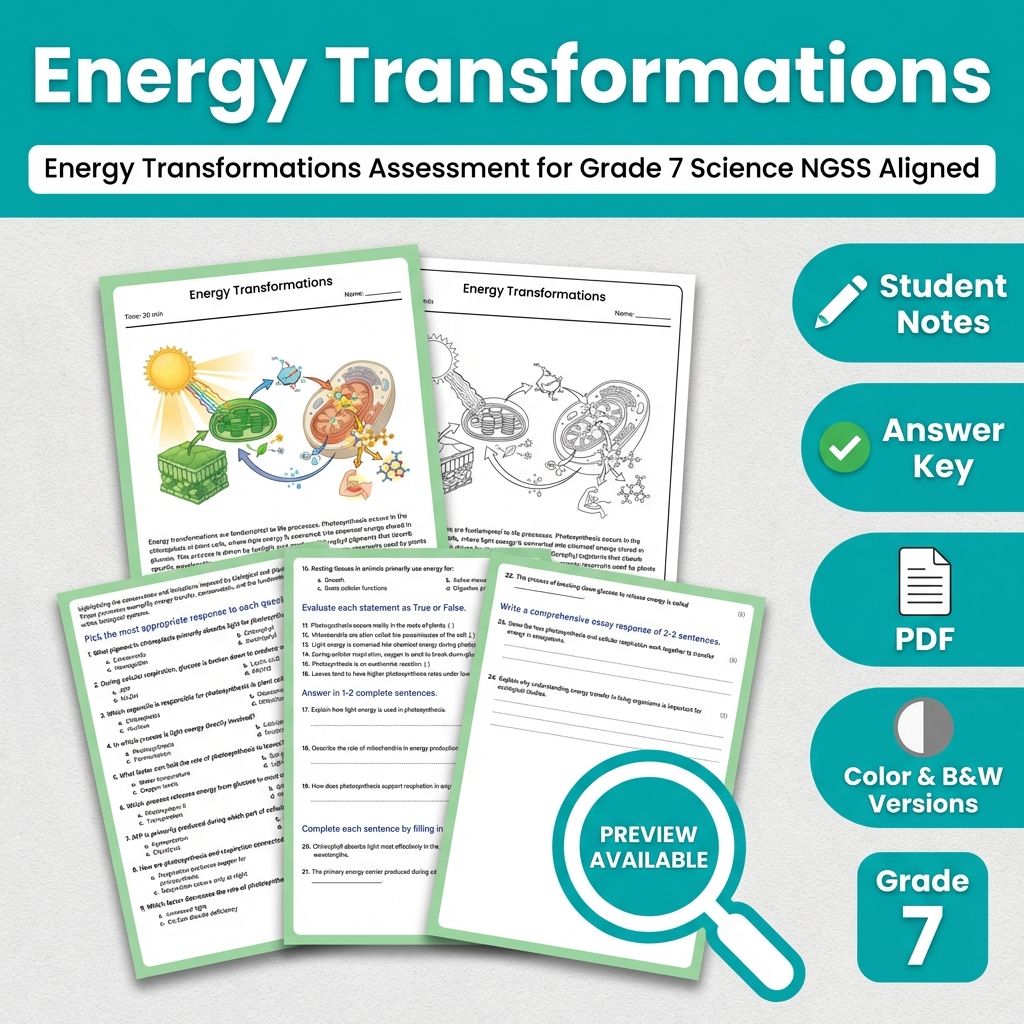
Energy Transformations Assessment for Grade 7 Science NGSS Aligned
Created byPrism Point LearningLearning Objectives
- Explain how light energy is converted into chemical bonds during photosynthesis.
- Describe how cellular respiration releases energy stored in glucose.
- Connect the processes in chloroplasts and mitochondria across different organisms.
Also included in: Grade 7 Science Mini Bundle – From Molecules to Organisms Structures & Processes +1 more
Instant download
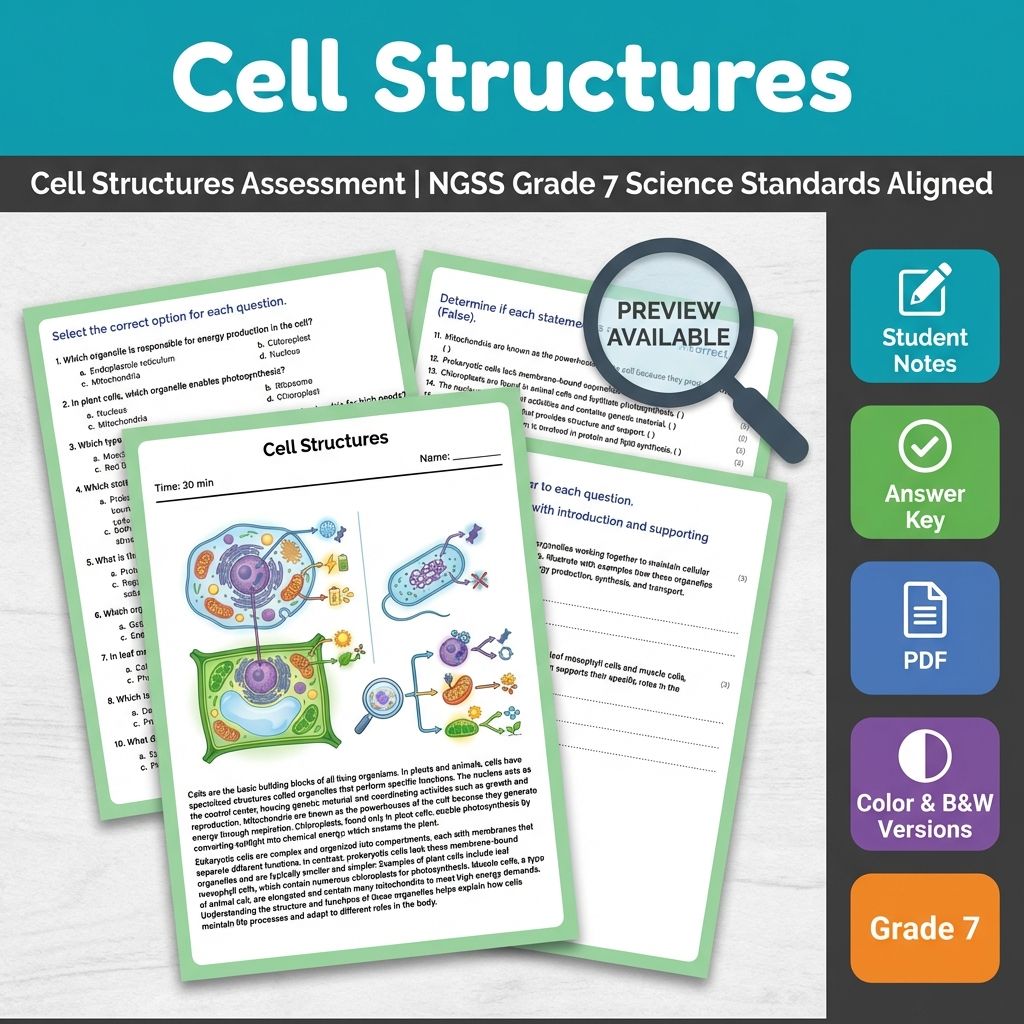
Cell Structures Assessment | NGSS Grade 7 Science Standards Aligned
Created byPrism Point LearningLearning Objectives
- Identify and describe the roles of key organelles in plant and animal cells.
- Connect cell structure to function, including processes like transport, synthesis, and compartmentalization.
- Compare eukaryotic and prokaryotic cells using examples of leaf mesophyll and muscle cells.
Also included in: Grade 7 Science Mini Bundle – From Molecules to Organisms Structures & Processes +1 more
Instant download
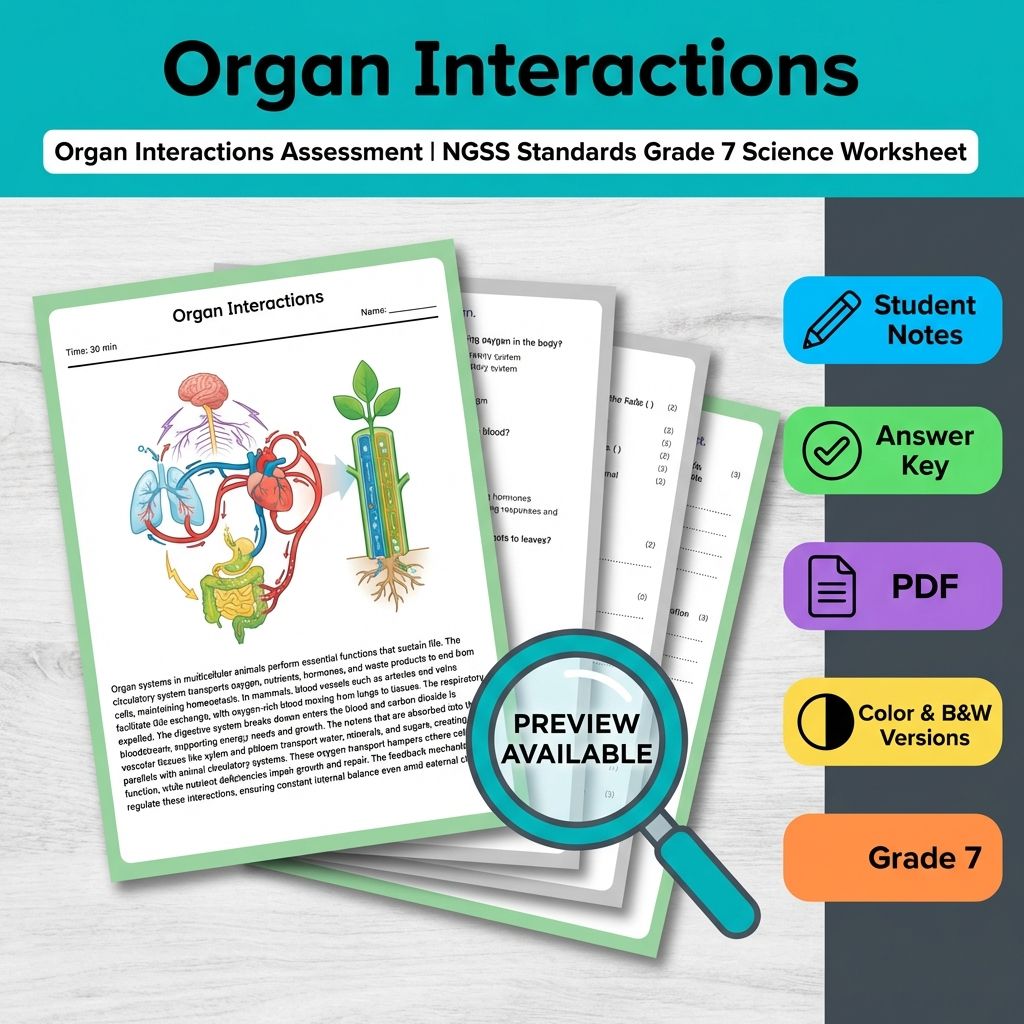
Organ Interactions Assessment | NGSS Standards Grade 7 Science Worksheet
Created byPrism Point LearningLearning Objectives
- Describe the functions of circulatory, respiratory, digestive, and nervous systems in multicellular animals.
- Explain how organ systems cooperate to support processes like gas exchange, nutrient transport, and homeostasis.
- Illustrate system-level dependencies and feedback mechanisms in organ interactions.
Also included in: Grade 7 Science Mini Bundle – From Molecules to Organisms Structures & Processes +1 more
Instant download
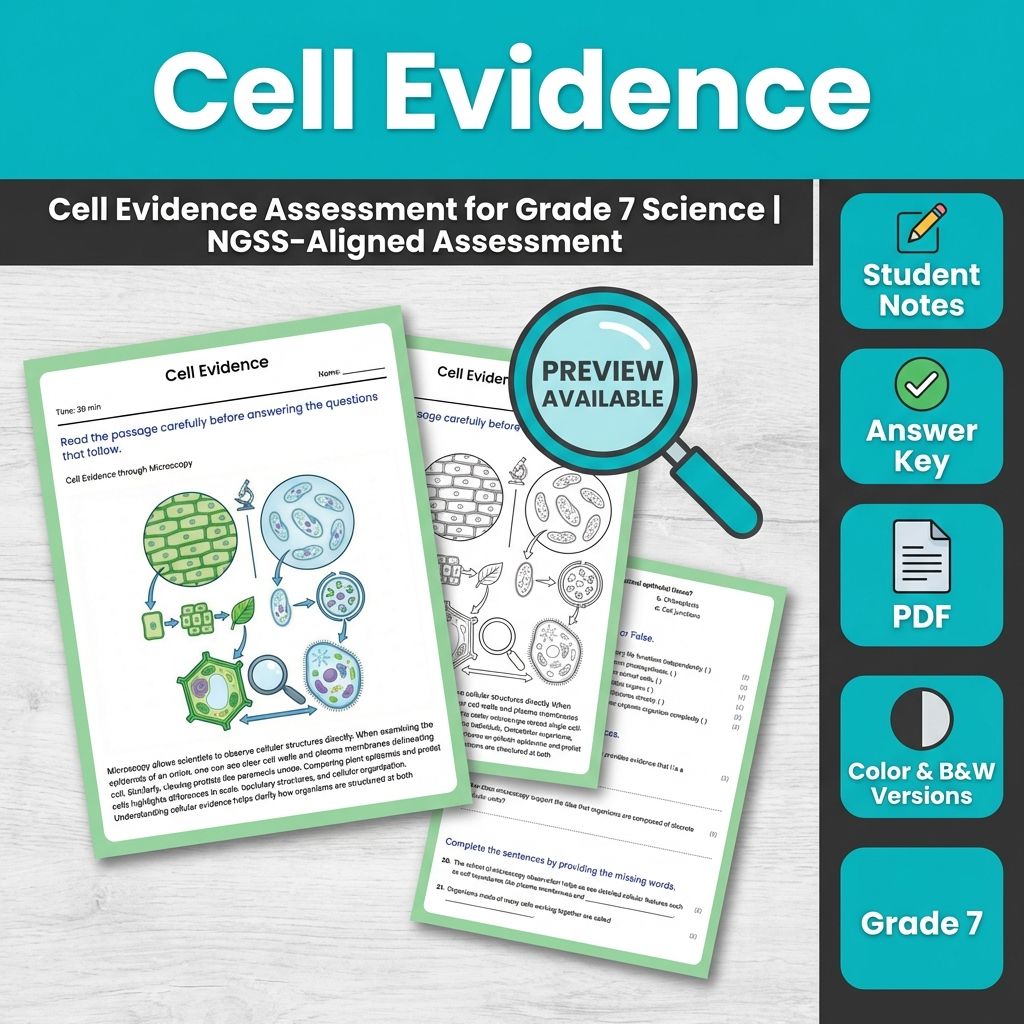
Cell Evidence Assessment for Grade 7 Science | NGSS-Aligned Assessment
Created byPrism Point LearningLearning Objectives
- Understand how microscopy provides evidence for cellular organization in organisms.
- Identify differences between unicellular and multicellular organisms through observations of plant and protist cells.
- Recognize cellular features such as cell boundaries, plasma membranes, and cell walls in microscopic images.
Also included in: Grade 7 Science Mini Bundle – From Molecules to Organisms Structures & Processes +1 more
Instant download
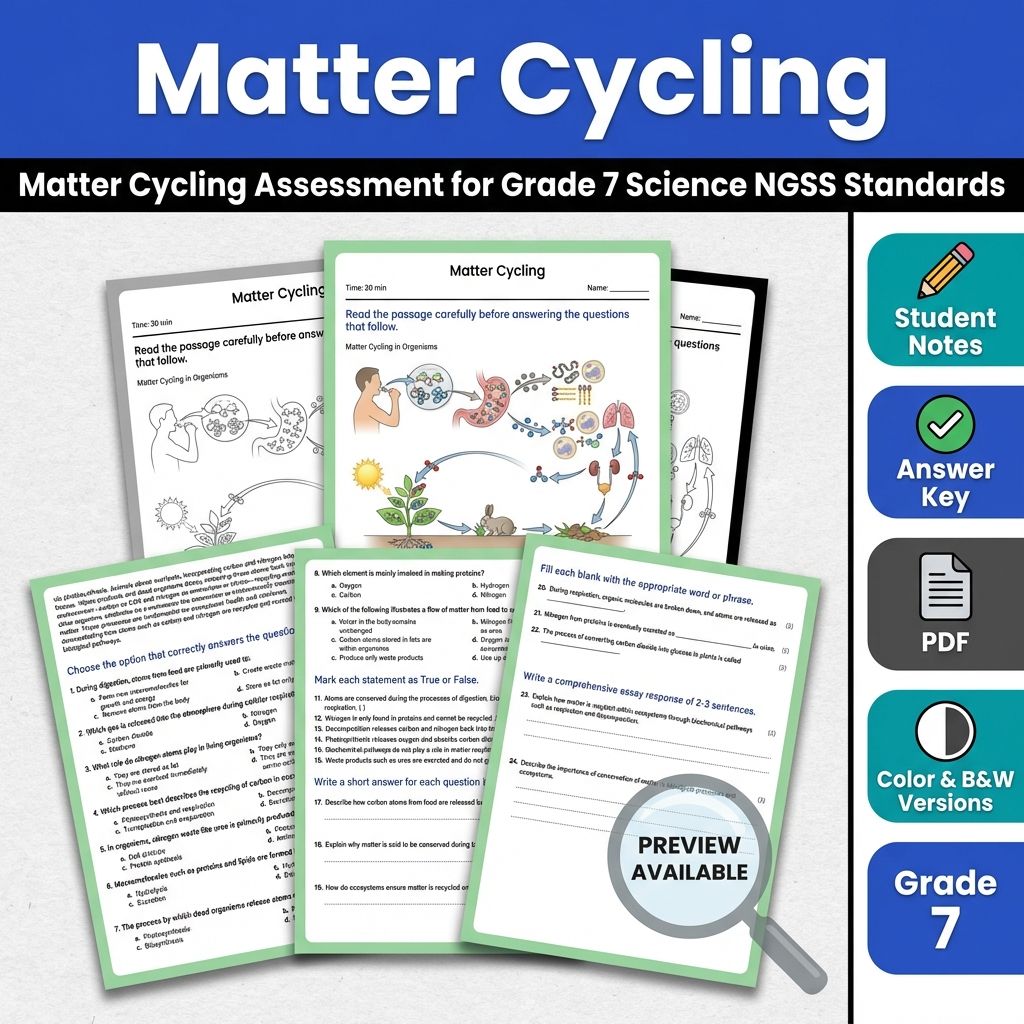
Matter Cycling Assessment for Grade 7 Science NGSS Standards
Created byPrism Point LearningLearning Objectives
- Explain how matter is transferred and transformed within organisms during digestion, biosynthesis, and respiration.
- Describe the flow of carbon and nitrogen through biological systems.
- Identify key biochemical pathways involved in matter recycling within ecosystems.
Also included in: Grade 7 Science Mini Bundle – From Molecules to Organisms Structures & Processes +1 more
Instant download

Grade 12 Lifecycle Impact Balance Worksheet | Ecosystem Interactions & Environmental Science Practice
 Created byEvergreen Desk Education
Learning Objectives
- Explain how lifecycle analysis balances environmental, safety, and performance trade-offs over time.
- Connect battery degradation chemistry and thermal limits to engineering decisions in EV systems.
- Evaluate uncertainty in charging efficiency, failure risk, and end-of-life recovery when comparing solutions.
Instant download
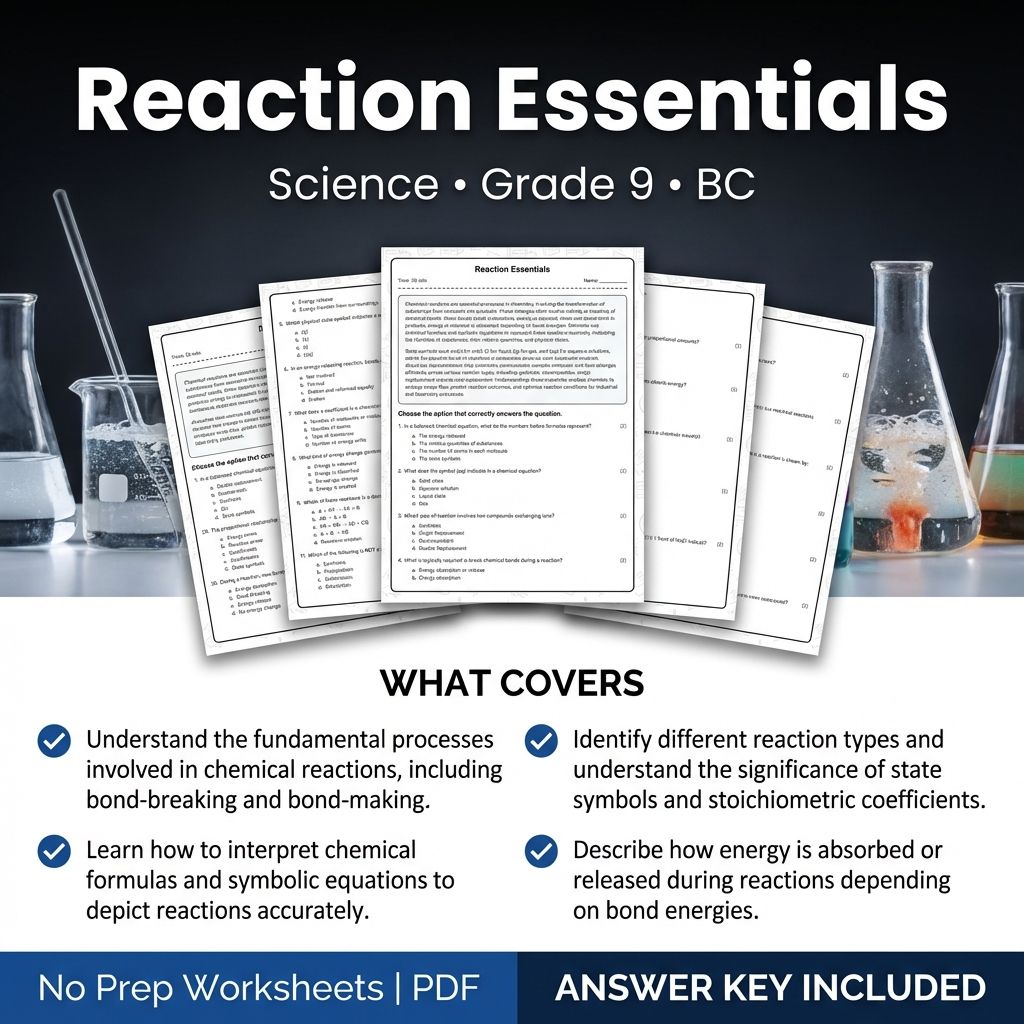
Grade 9 Science | Reaction Essentials Worksheet & Answer Key (Printable PDF)
Created byCoral Reef LearningLearning Objectives
- Understand the fundamental processes involved in chemical reactions, including bond-breaking and bond-making.
- Learn how to interpret chemical formulas and symbolic equations to depict reactions accurately.
- Identify different reaction types and understand the significance of state symbols and stoichiometric coefficients.
Instant download

Newton’s Laws & Friction Worksheet Grade 11 Science Ontario Activity
Created byChalk and CompassLearning Objectives
- Use Newton’s three laws to relate net force, mass, and acceleration in one-dimensional motion.
- Construct and interpret free-body diagrams that include normal force, friction, tension, and weight.
- Determine whether an object is in static equilibrium or will begin to move using friction limiting conditions.
Also included in: Motion, Energy, Waves & DC Circuits Lesson Bundle – Grade 11 Science Ontario +1 more
Instant download
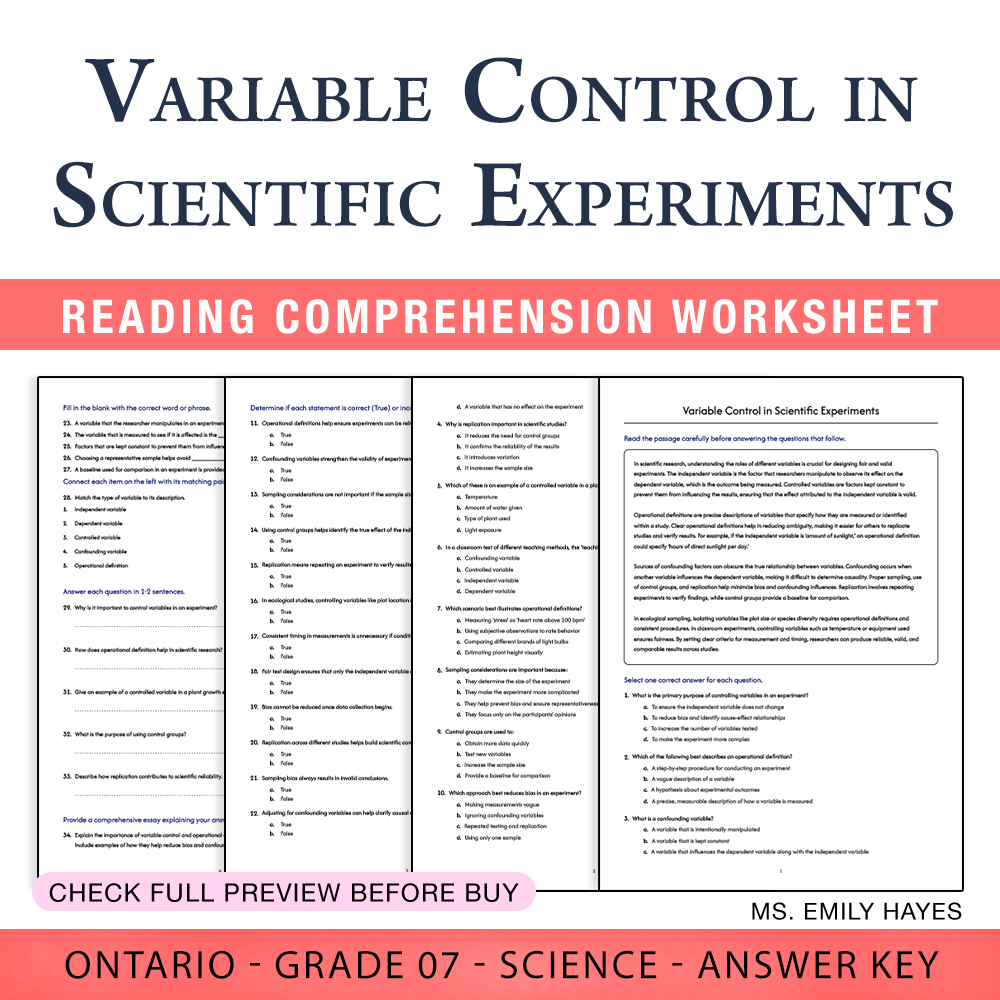
7th Grade Science | Variable Control in Experiments Worksheet (PDF+ Answer Key)
 Created byCopper Leaf Classroom
Learning Objectives
- Define independent, dependent, and controlled variables in scientific experiments.
- Explain the importance of operational definitions and fair test design to obtain valid causal inferences.
- Identify sources of confounding, sampling considerations, and the role of control groups in reducing bias.
Instant download

Grade 10 Science – Periodic Trends & Atomic Size | Daily Reading Worksheet
 Created byBright Mind Resources
Learning Objectives
- Understand how atomic size varies across periods and groups in the periodic table
- Identify factors influencing atomic size, including nuclear charge and electron shielding
- Interpret periodic table patterns to predict atomic properties
Also included in: Physical Science Grade 10 Daily Reading Worksheets Lesson Bundle | Florida NGSSS +1 more
Instant download

Grade 8 Science Worksheet | Systems Analysis Practice (PDF) – Alberta Standards
Created byEvergreen Desk EducationLearning Objectives
- Identify components and interactions in a complex physical system.
- Perform systematic force accounting to determine equilibrium or net acceleration.
- Distinguish internal forces from external forces and explain how each affects motion.
Instant download

Speciation Intro Worksheet | Grade 9 Science Activities
Created byPrism Point LearningLearning Objectives
- Explain how speciation can occur through reproductive isolating mechanisms over time
- Distinguish between allopatric and sympatric speciation in terms of gene flow and separation
- Classify reproductive barriers as prezygotic or postzygotic and describe examples of each
Also included in: Grade 9 Evolution & Speciation Lesson Bundle | TEKS Science
Instant download
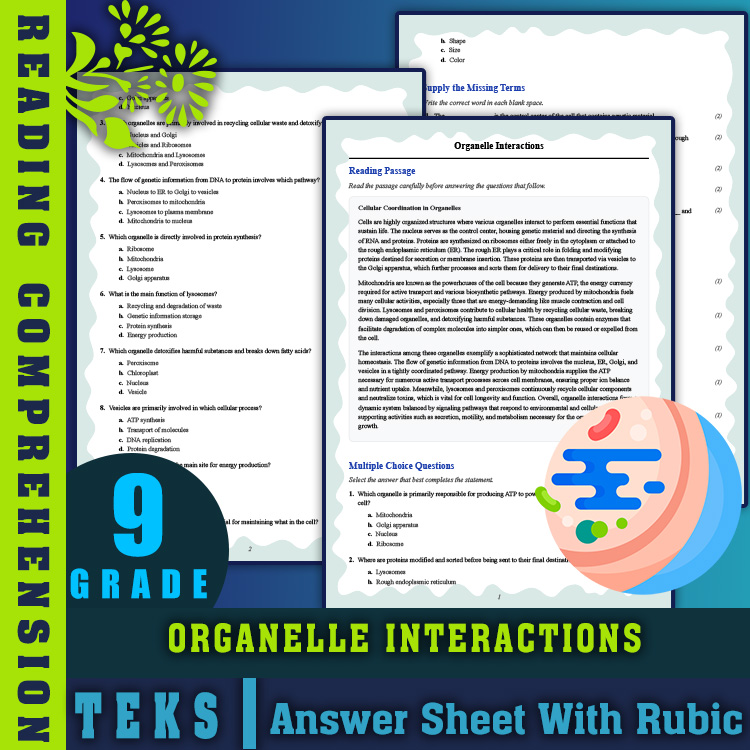
9th Grade Science | Organelle Interactions Reading Worksheet with PDF Answer Key
JCreated byJ.S SheetsLearning Objectives
- Understand how different organelles coordinate to maintain cellular functions.
- Describe the flow of genetic information and protein trafficking within a cell.
- Explain the roles of mitochondria, lysosomes, and peroxisomes in cellular metabolism.
Instant download

Grade 9 Science – Work & Force Calculations Worksheet | Ontario Standards
Created byBright Mind ResourcesLearning Objectives
- Understand the concept of work as the dot product of force and displacement.
- Learn to calculate work when force and displacement are in the same or different directions.
- Explore the methods for calculating work done by variable forces.
Also included in: Grade 9 Work, Energy & Forces Science Daily Reading Lesson Bundle | Ontario +1 more
Instant download

Grade 4 Push Pull Motion Worksheet | General Practice PDF
 Created byClear Sky Classroom
Learning Objectives
- Explain how push and pull forces can change an object’s motion by changing speed and/or direction
- Identify force direction and strength as key factors that affect how an object moves
- Compare the effects of stronger versus weaker forces acting on the same object
Instant download

Energy Diagrams Worksheet Grade 10 Science | KE PE & Friction Alberta
Created byEvergreen Desk EducationLearning Objectives
- Interpret energy diagrams and bar charts to describe how energy is distributed and transferred between forms.
- Identify sources and sinks of energy in mechanical and thermal processes, including friction on icy roads.
- Use energy conservation concepts to explain changes in potential energy, kinetic energy, and heat energy.
Instant download
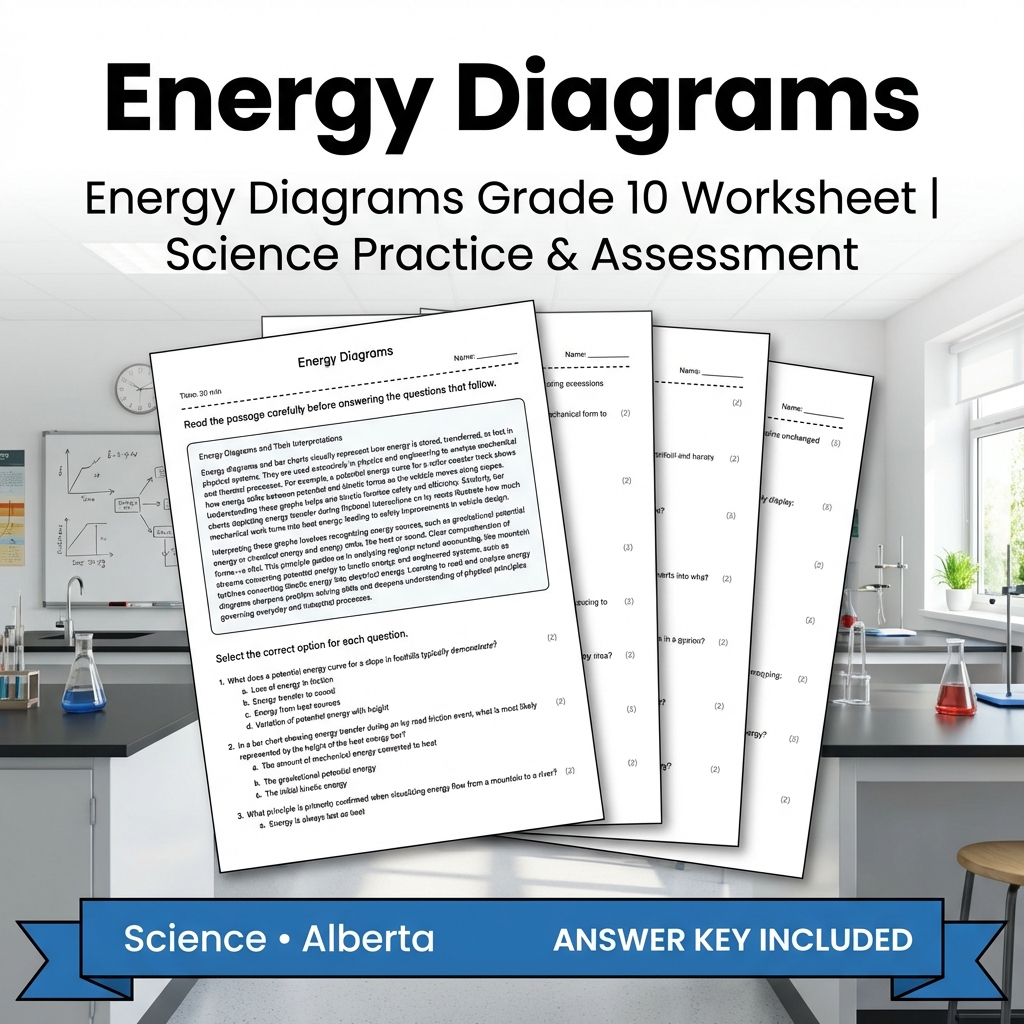
Energy Diagrams Grade 10 Worksheet | Science Practice & Assessment
Created byCoral Reef LearningLearning Objectives
- Interpret energy diagrams and bar charts to analyze energy transfer and distribution.
- Identify sources and sinks of energy in various processes.
- Link visual graph representations to conservation principles in real-world phenomena.
Instant download
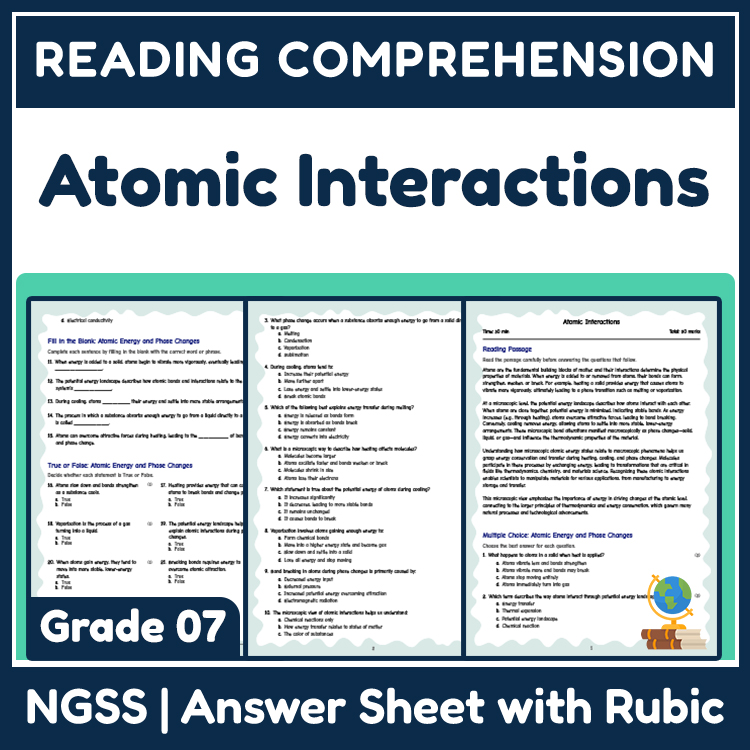
Grade 8 Science | Atomic Interactions Reading Worksheets (Answer Key)
JCreated byJ.S SheetsLearning Objectives
- Understand how energy influences atomic bonds and phase changes
- Model microscopic atomic behavior during heating and cooling
- Connect energy transfer to macroscopic states of matter
Instant download

Food Webs Worksheet | NGSS Grade 8 Science Assessment
 Created byCedar Grove Learning
Learning Objectives
- Understand the roles of producers, consumers, and decomposers in ecosystems.
- Explain energy transfer across trophic levels within food webs.
- Describe how energy loss affects community structure and population size.
Instant download

Grade 8 Species Interactions Worksheet | NGSS Practice & PDF
Created byClear Sky ClassroomLearning Objectives
- Explain how competition, predation, mutualism, commensalism, and parasitism affect survival and reproduction.
- Describe how symbiotic relationships can benefit one or both species in an ecosystem.
- Analyze how species interactions can change population sizes and ecosystem stability.
Instant download
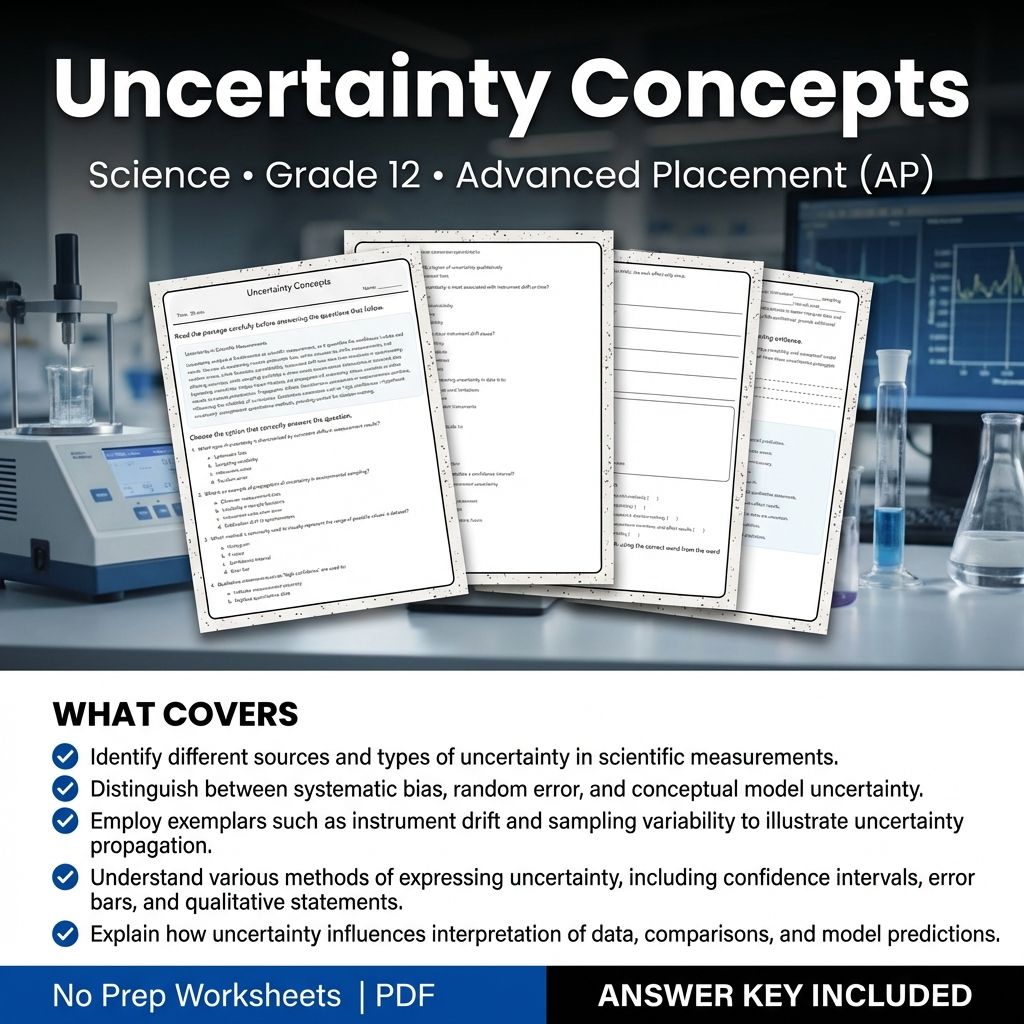
12th Grade Science | Uncertainty Concepts Worksheet & Answer Key (Printable PDF)
Created byCoral Reef LearningLearning Objectives
- Identify different sources and types of uncertainty in scientific measurements.
- Distinguish between systematic bias, random error, and conceptual model uncertainty.
- Employ exemplars such as instrument drift and sampling variability to illustrate uncertainty propagation.
Also included in: Grade 12 Science Unit Bundle | Uncertainty, Data Analysis & Modeling Worksheets +1 more
Instant download
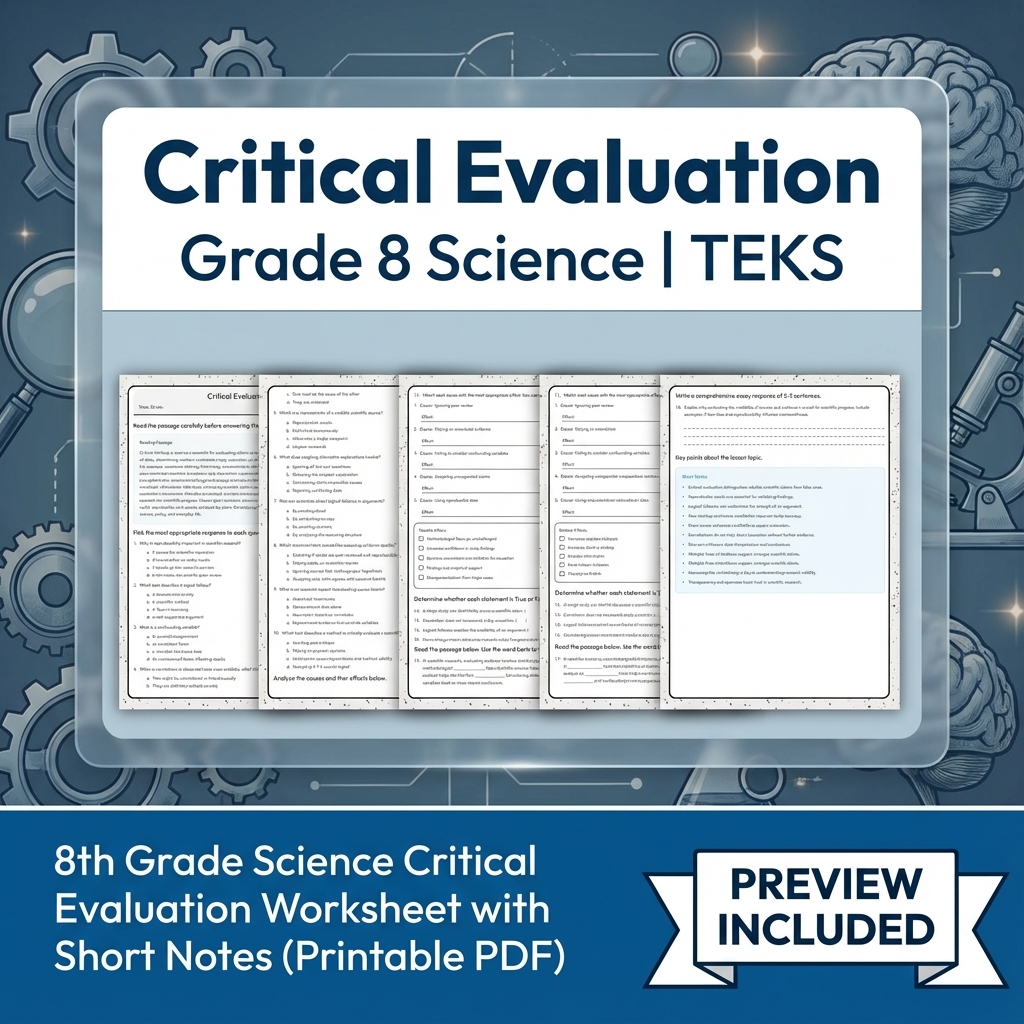
8th Grade Science Critical Evaluation Worksheet with Short Notes (Printable PDF)
Created byMeadowlark WorksheetsLearning Objectives
- Develop skills to assess the validity of scientific claims and evidence.
- Identify logical fallacies and distinguish correlation from causation in data.
- Evaluate the quality and credibility of scientific sources and methodologies.
Instant download
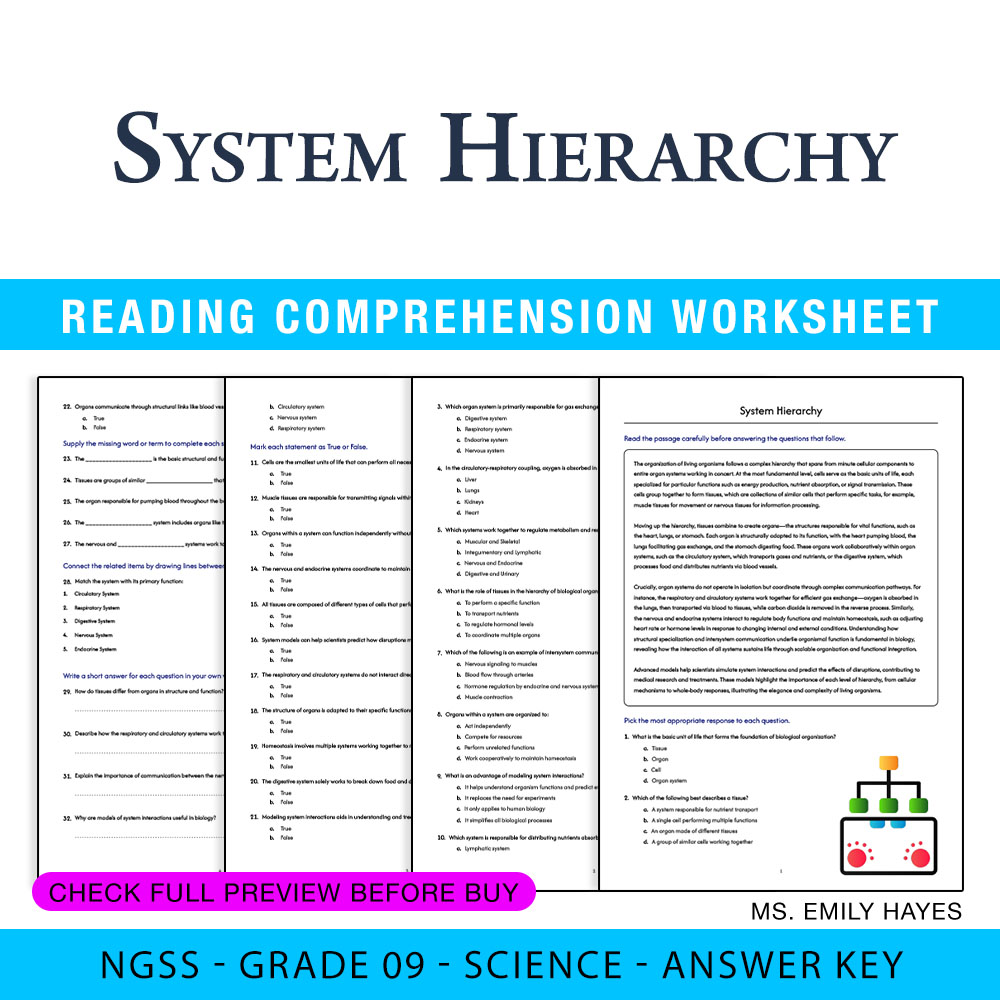
9th Grade Science | System Hierarchy Worksheet (PDF+ Answer Key)
Created byCopper Leaf ClassroomLearning Objectives
- Explain the hierarchical organization of biological systems from cells to organismal systems.
- Identify the structural and functional relationships among cells, tissues, organs, and organ systems.
- Describe examples of system interactions such as circulatory-respiratory coupling, digestive-vascular transport, and nervous-endocrine regulation.
Instant download
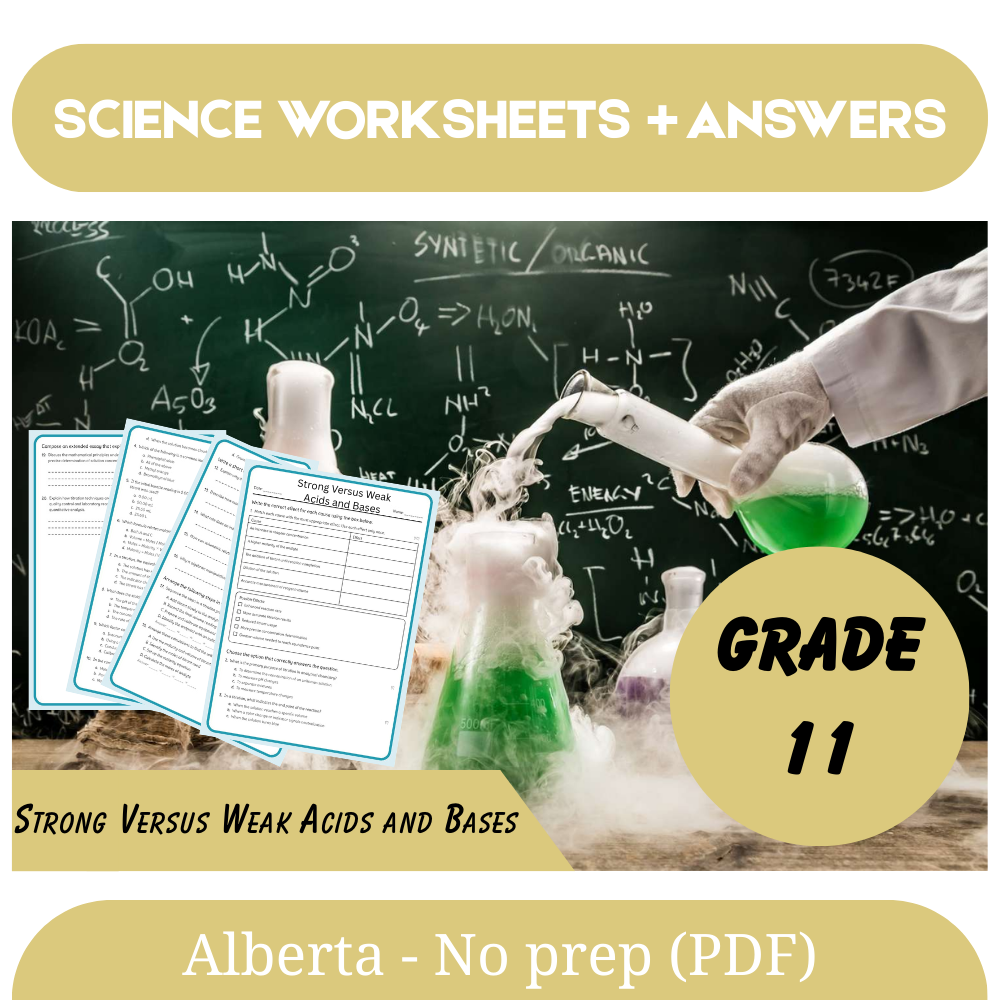
Grade 11 Science | Strong vs. Weak Acids and Bases Worksheet (PDF)
Created byBright Mind ResourcesLearning Objectives
- Explain the difference between strong and weak acids and bases based on their ionization properties.
- Identify examples of strong and weak acids and bases in chemical and environmental contexts.
- Analyze the environmental impacts of strong acid releases versus gradual pH changes caused by weak acids in ecosystems.
Instant download

Grade 7 Science Reading Worksheets | Population Basics – Standards-Aligned PDF
JCreated byJ.S SheetsLearning Objectives
- Understand the fundamental concepts of populations, including size, growth, and distribution.
- Identify and explain the impact of demographic factors such as births, deaths, immigration, and emigration.
- Describe key metrics used to measure population characteristics like density and distribution patterns.
Instant download
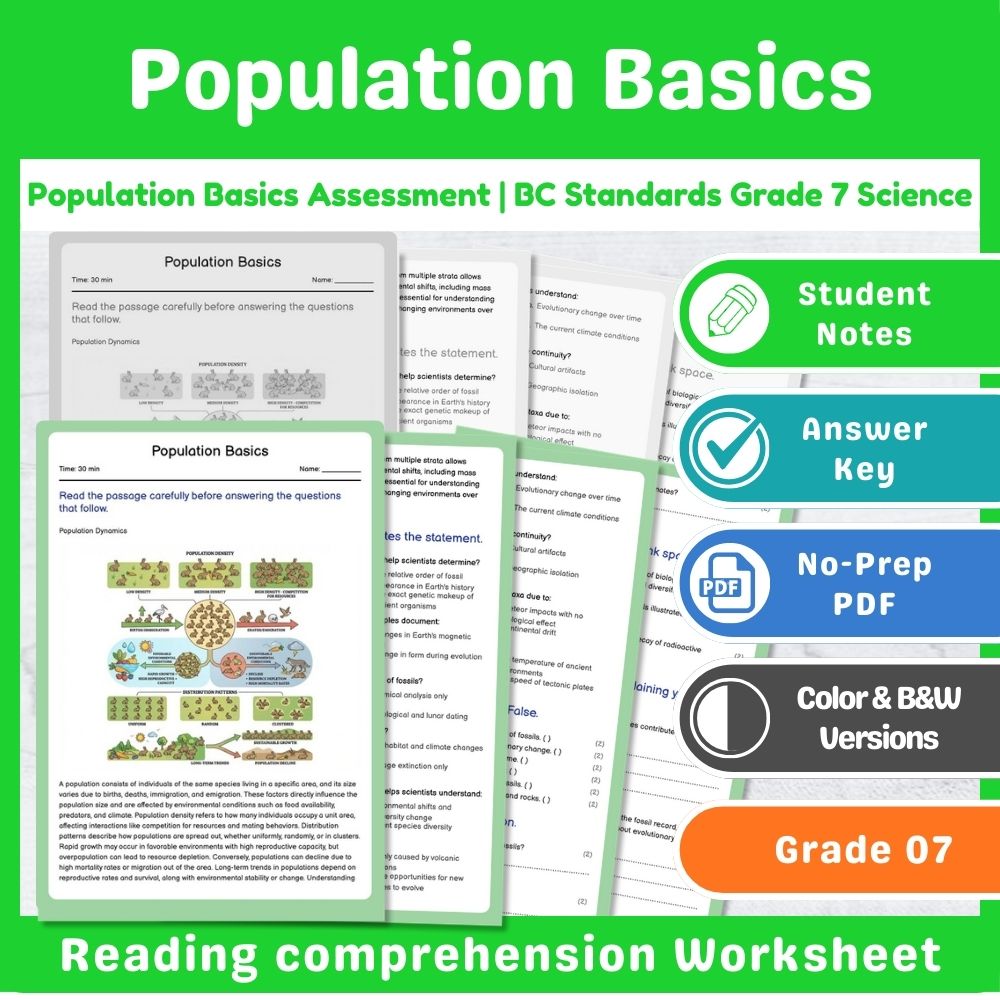
Population Basics Assessment | BC Standards Grade 7 Science
Created byPrism Point LearningLearning Objectives
- Understand the core metrics used to describe populations, such as size, density, and distribution patterns.
- Explain how demographic factors like births, deaths, immigration, and emigration influence population change.
- Analyze how environmental conditions interact with population dynamics over short-term and long-term scales.
Instant download

Grade 5 Heat Energy Transfer Worksheet | NGSS Practice PDF
Created byClear Sky ClassroomLearning Objectives
- Explain how adding and removing heat energy affects temperature and the state of matter
- Describe how heat transfer changes the speed of physical changes such as melting and freezing
- Use particle ideas to predict how temperature changes can affect volume and flow
Instant download

Grade 7 Science – Population Basics & Concepts | Daily Reading Worksheet
Created byBright Mind ResourcesLearning Objectives
- Understand the definition of a population in biology.
- Identify factors that influence population size and distribution.
- Recognize key metrics used to describe populations.
Also included in: Grade 7 Ecosystems & Population Ecology Science Lesson Bundle | BC +1 more
Instant download

Grade 12 Science | Societal Tradeoffs Worksheet | TEKS Aligned
 Created byLumora Learning
Learning Objectives
- Analyze the societal implications of scientific and technological choices.
- Evaluate case studies involving energy, health, and data ethics.
- Understand the trade-offs among benefits, harms, and distributional effects.
Instant download
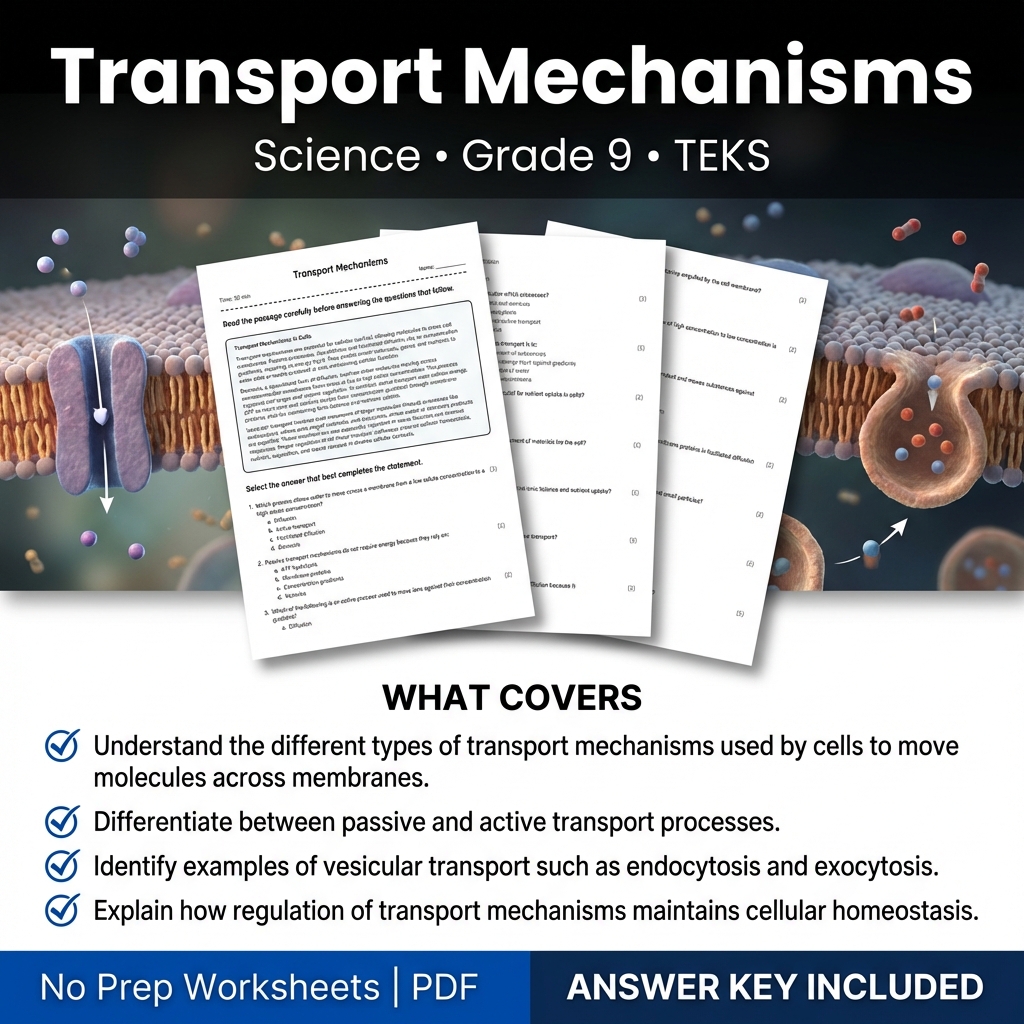
Transport Mechanisms Worksheet for Grade 9 Science TEKS Practice
Created byCoral Reef LearningLearning Objectives
- Understand the different types of transport mechanisms used by cells to move molecules across membranes.
- Differentiate between passive and active transport processes.
- Identify examples of vesicular transport such as endocytosis and exocytosis.
Instant download
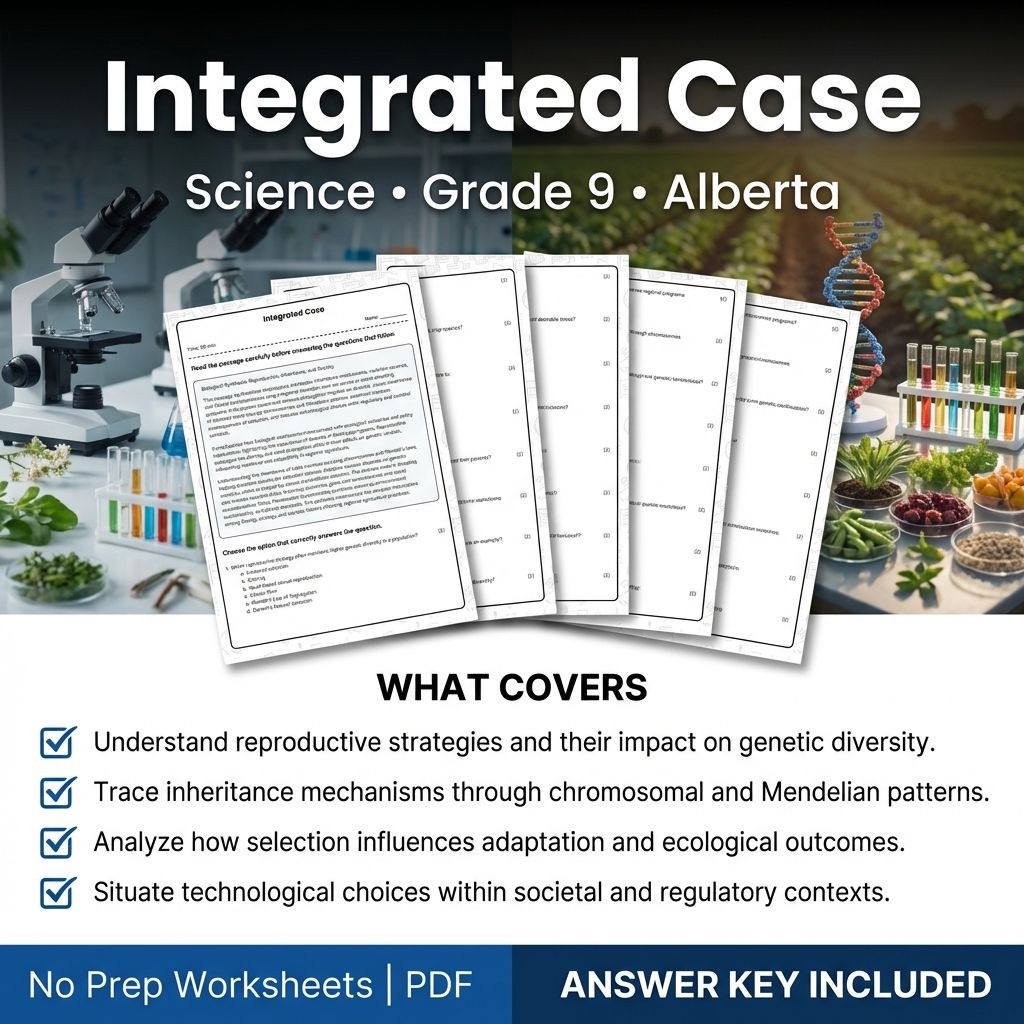
Grade 9 Science Worksheet on Integrated Case | Alberta Standards
Created byCoral Reef LearningLearning Objectives
- Understand reproductive strategies and their impact on genetic diversity.
- Trace inheritance mechanisms through chromosomal and Mendelian patterns.
- Analyze how selection influences adaptation and ecological outcomes.
Instant download

Radiation Energy Transfer Worksheet | Grade 10 Heat Transfer Practice
Created byPrism Point LearningLearning Objectives
- Explain how electromagnetic radiation transfers energy without direct contact
- Describe how absorption of radiation can change the temperature or state of matter
- Connect properties of radiation (e.g., wavelength/energy) to the effects observed in materials
Instant download

Risks and Benefits Worksheet Pack | Grade 9 Science Activities
Created byPrism Point LearningLearning Objectives
- Identify ecological, economic, and health risks and benefits linked to genetic technologies
- Explain how risk assessment, mitigation, and long-term monitoring reduce uncertainty
- Evaluate trade-offs using Alberta-relevant examples such as canola and cattle genetics
Instant download
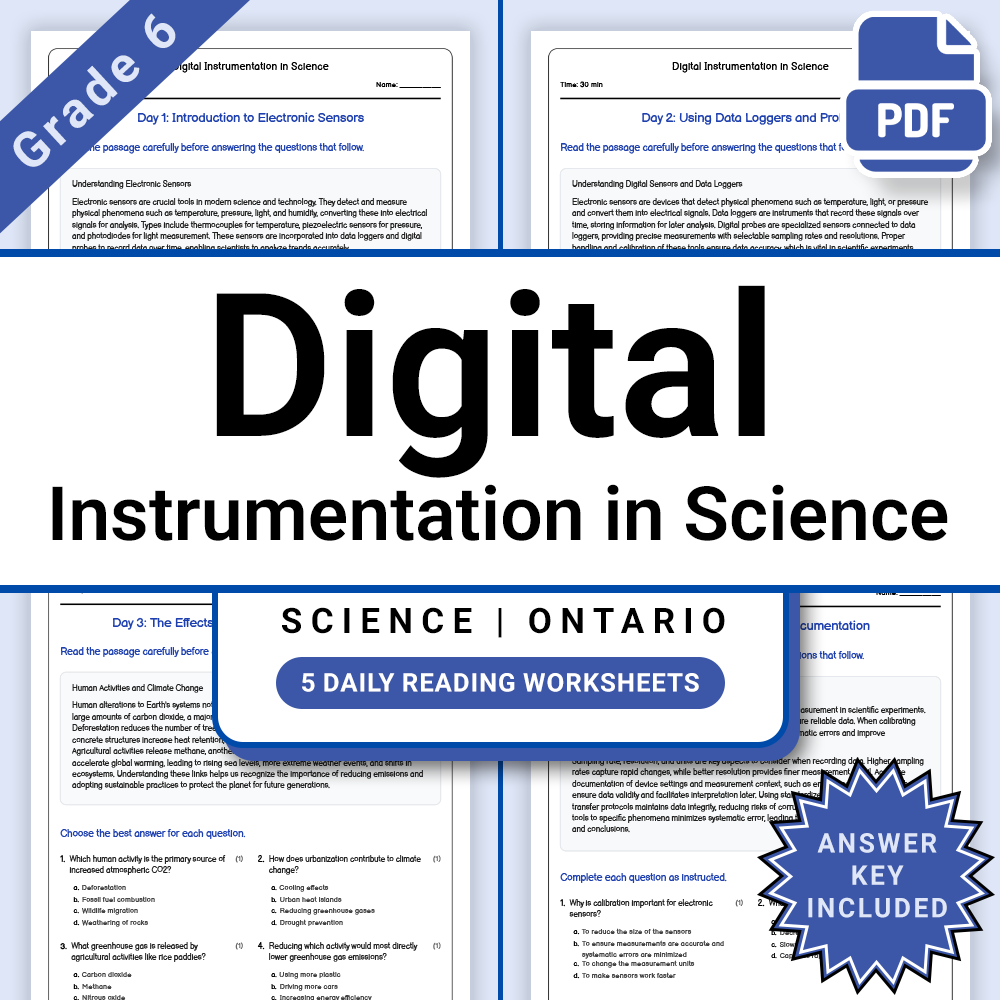
Grade 6 Science – Digital Instrumentation Daily Reading Worksheet + Answer Key
JCreated byJ.S SheetsLearning Objectives
- Identify various electronic sensors and understand their functions
- Explain the purpose of data loggers and digital probes
- Learn calibration procedures and importance in measurements
Also included in: Grade 6 Science STEM Skills and Connections Lesson Bundle with Ontario Framework +1 more
Instant download
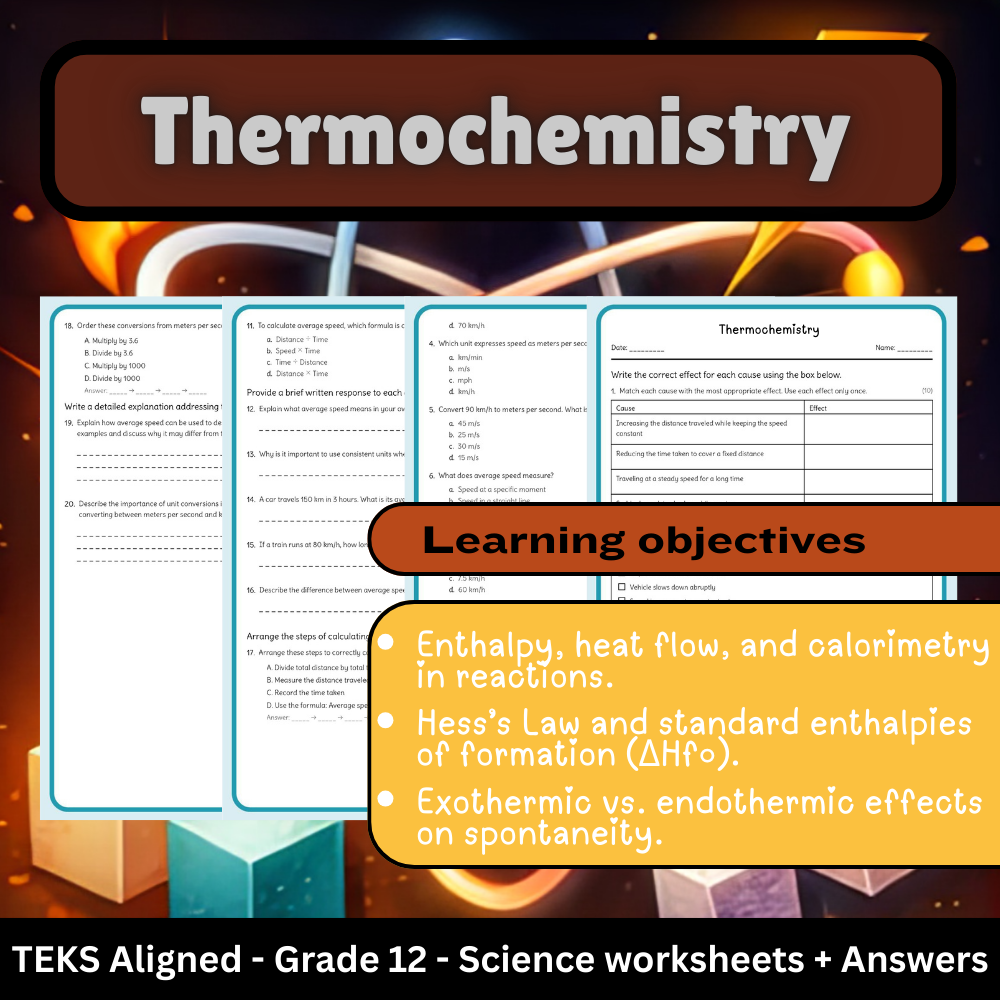
Grade 12 Science | Thermochemistry Worksheet + Answer Key (PDF) | TEKS Aligned
Created byBright Mind ResourcesLearning Objectives
- Explain key concepts of enthalpy, heat flow, and calorimetry in chemical reactions.
- Apply Hess’s law and standard enthalpies of formation to calculate reaction energies.
- Differentiate between exothermic and endothermic processes and understand their effect on spontaneity.
Instant download

Grade 6 Science – Societal Impacts & Water Treatment | Daily Reading Worksheet
Created byBright Mind ResourcesLearning Objectives
- Understand how water treatment processes improve public health
- Analyze the societal benefits of environmental regulations
- Evaluate scientific data related to resource management
Also included in: Grade 6 Science and Society Lesson Bundle Daily Reading Worksheets | TEKS +2 more
Instant download
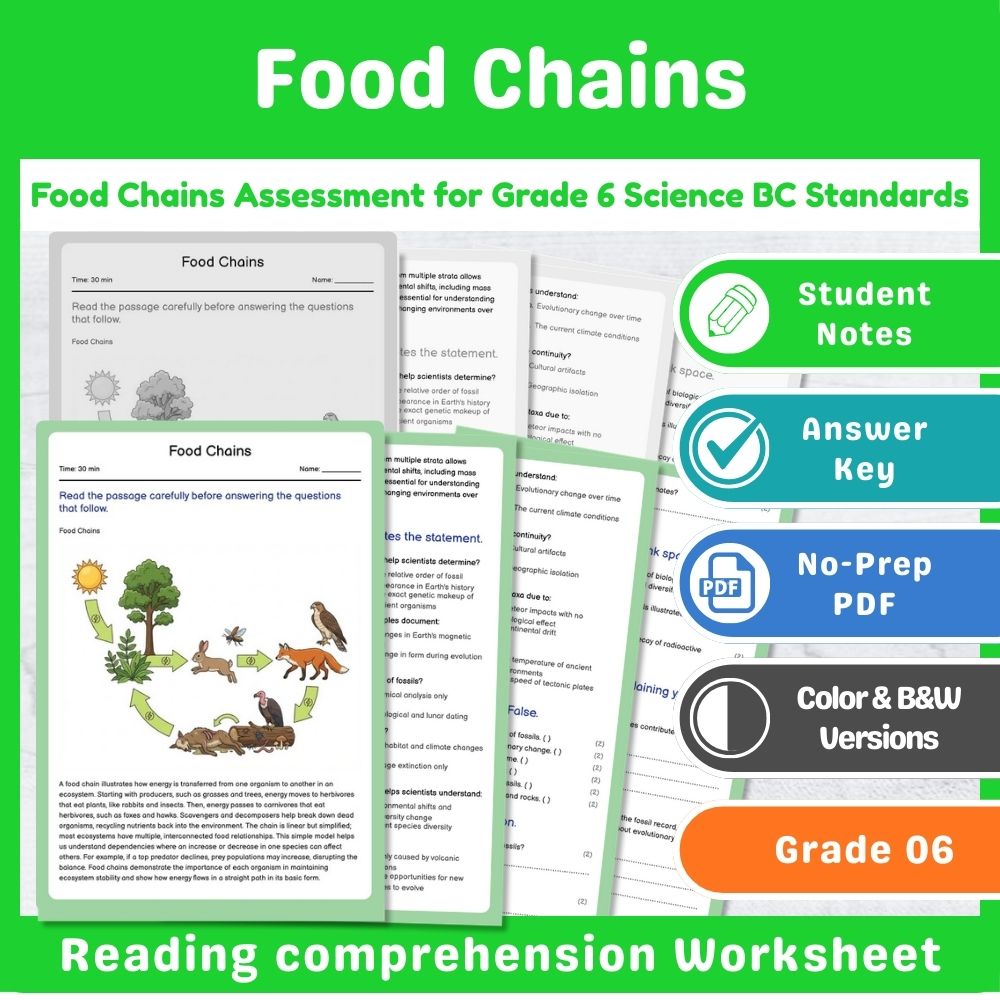
Food Chains Assessment for Grade 6 Science BC Standards
Created byPrism Point LearningLearning Objectives
- Describe the concept of a food chain and how energy transfers from producers to consumers.
- Identify examples of organisms at different trophic levels in a food chain.
- Understand the dependencies between organisms in a food chain and how changes affect ecosystems.
Instant download
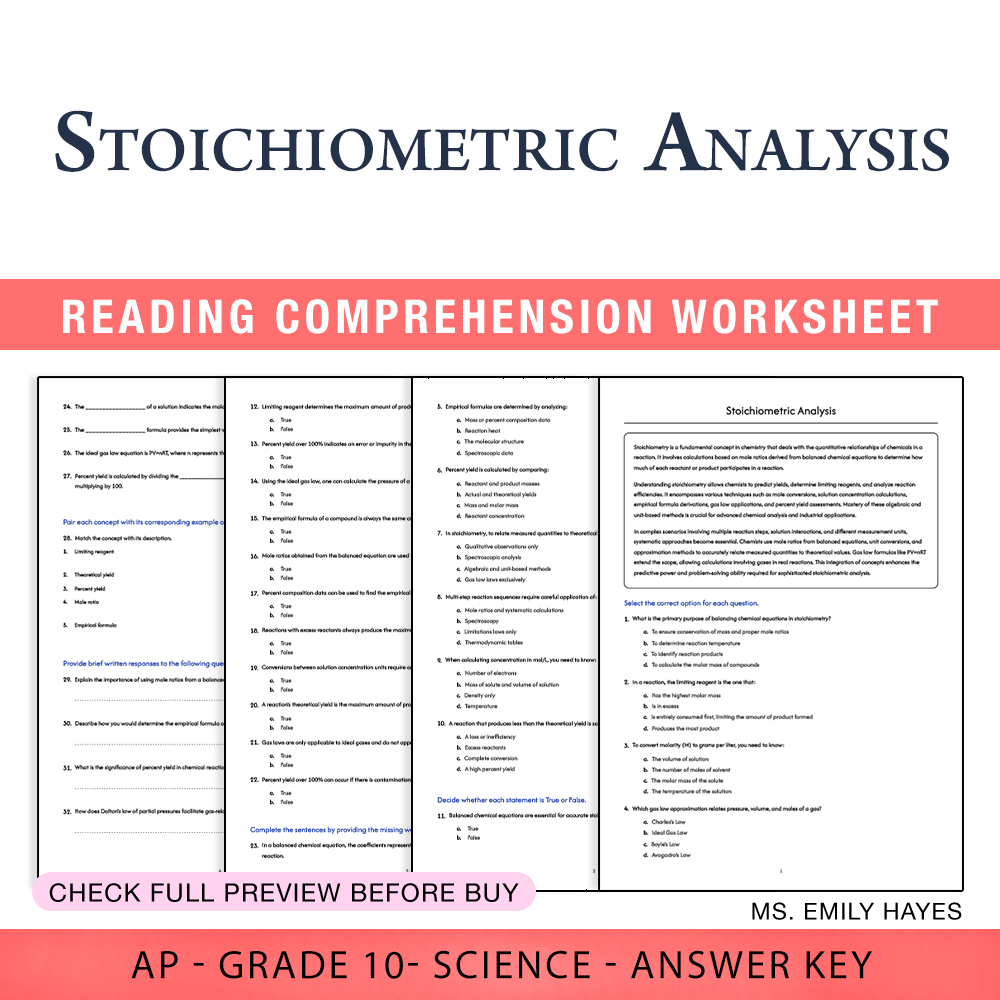
10th Grade Science | Stoichiometric Analysis Worksheet (PDF+ Answer Key)
Created byCopper Leaf ClassroomLearning Objectives
- Develop algebraic and unit-based strategies for complex stoichiometric relationships.
- Apply mole ratios and limiting reagent concepts to solve multi-step reactions.
- Convert solution concentrations and determine empirical formulas from mass or percent data.
Also included in: Grade 10 Science -Atomic Structure & Chemical Reactions (PDF+ Answer Key) +1 more
Instant download
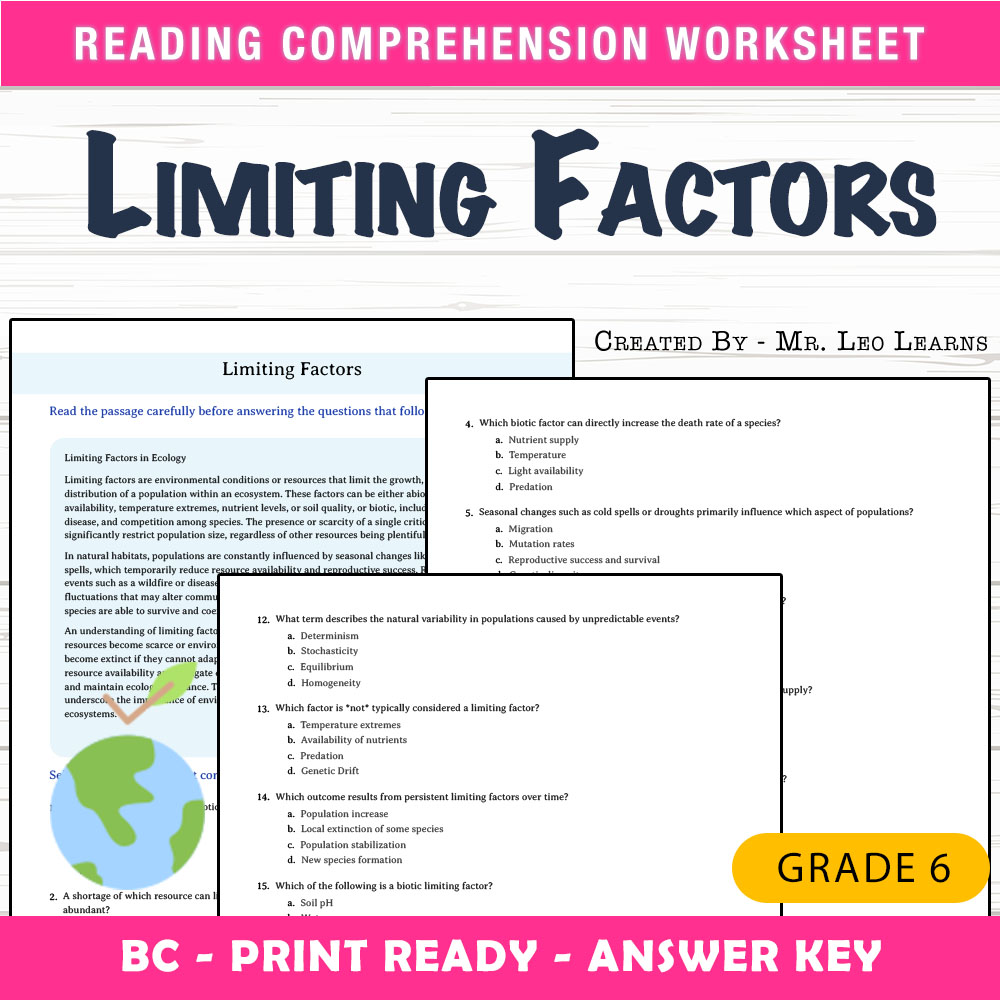
Grade 6 Science — Limiting Factors Worksheet MCQ for Mastery
 Created byThe Resource Hub
Learning Objectives
- Understand what limiting factors are and how they affect populations.
- Identify different abiotic and biotic limiting factors.
- Explain the impact of resource shortages and environmental changes on species survival.
Also included in: Grade 6 Science Ecosystems & Interdependence Worksheet Bundle – BC Curriculum +1 more
Instant download
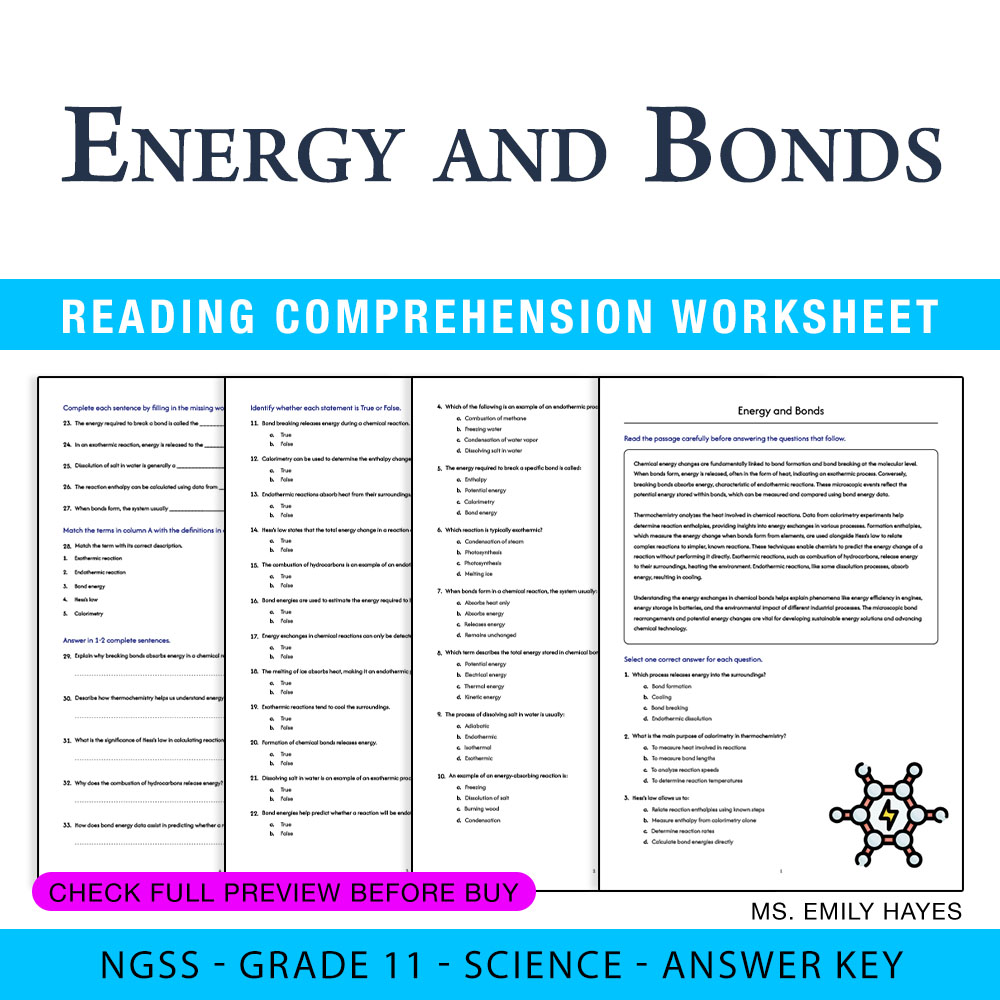
11th Grade Science | Energy and Bonds Worksheet (PDF + Answer Key)
Created byCopper Leaf ClassroomLearning Objectives
- Understand how chemical energy changes involve bond formation and breaking.
- Explain how thermochemical data are used to determine reaction enthalpies.
- Differentiate between exothermic and endothermic reactions with examples.
Instant download
Browse more categories
About Science Worksheets
Find Science worksheets spanning core skills, practice, and review. All 44,342 resources are instant PDF downloads for the classroom or home.
Every worksheet on MyTeachingSheets is created by independent teacher-authors and reviewed before publication. All resources download as printable PDFs for classroom, homework, or at-home practice, and many include answer keys. Preview any worksheet free before buying.