
Science Worksheets
44,620 subject resources
Grade 9 Science | Population Genetics Worksheet (AP Standards) (PDF)
 Created byEvergreen Desk Education
Learning Objectives
- Explain how allele frequencies are expected to change under selection, genetic drift, migration, and mutation.
- Use the Hardy-Weinberg equilibrium idea as a null model to identify when evolution is likely occurring.
- Interpret selection coefficients, fitness landscapes, and effective population size to predict evolutionary outcomes.
Also included in: Grade 9 Cell, Genetics & Ecology Science Lesson Bundle: AP Standards +1 more
Instant download
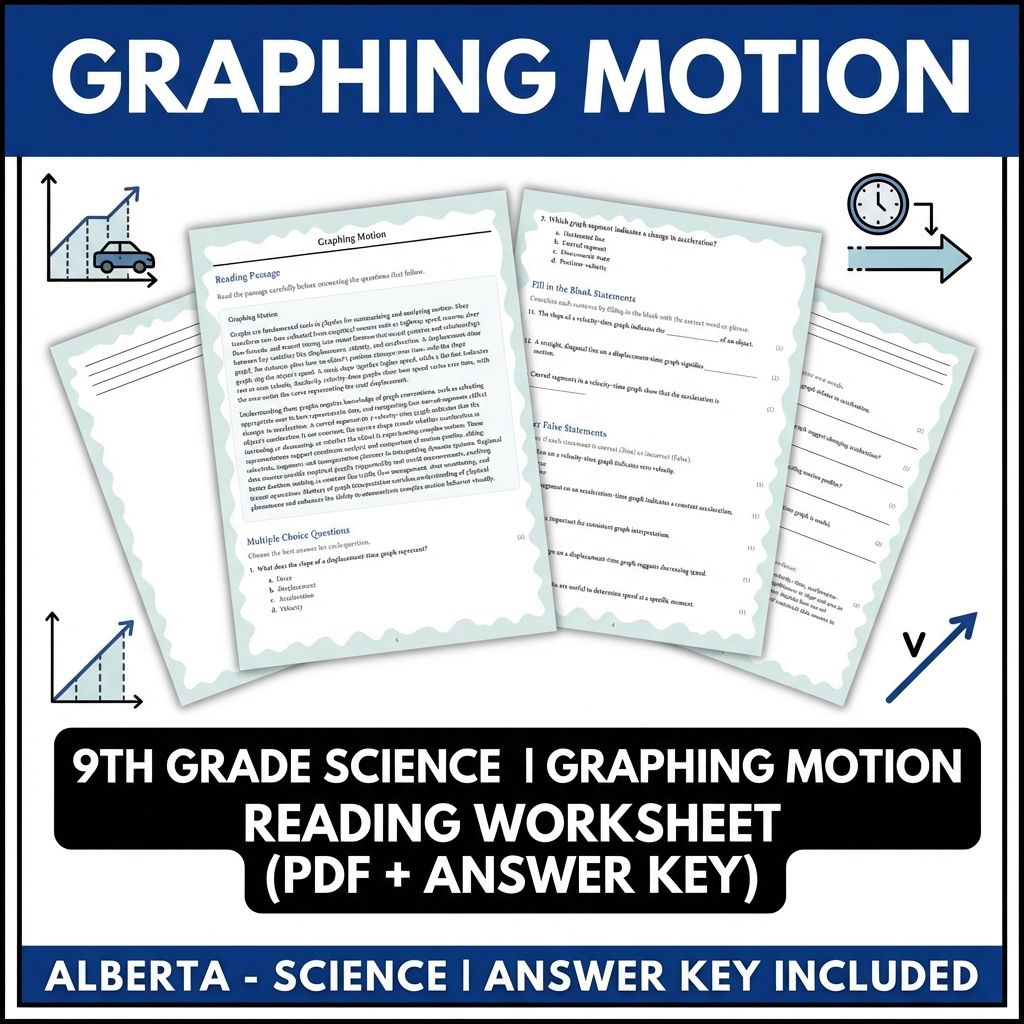
9th Grade Science | Graphing Motion Reading Worksheet (PDF + Answer Key)
JCreated byJ.S SheetsLearning Objectives
- Understand different types of graphs used to represent motion such as displacement–time, velocity–time, and acceleration–time graphs.
- Interpret the meaning of slope and area under curves in motion graphs.
- Identify changing acceleration through curved segments on graphs.
Also included in: Grade 9 Science Unit Bundle | Motion, Forces & Energy Activities (PDF) +1 more
Instant download
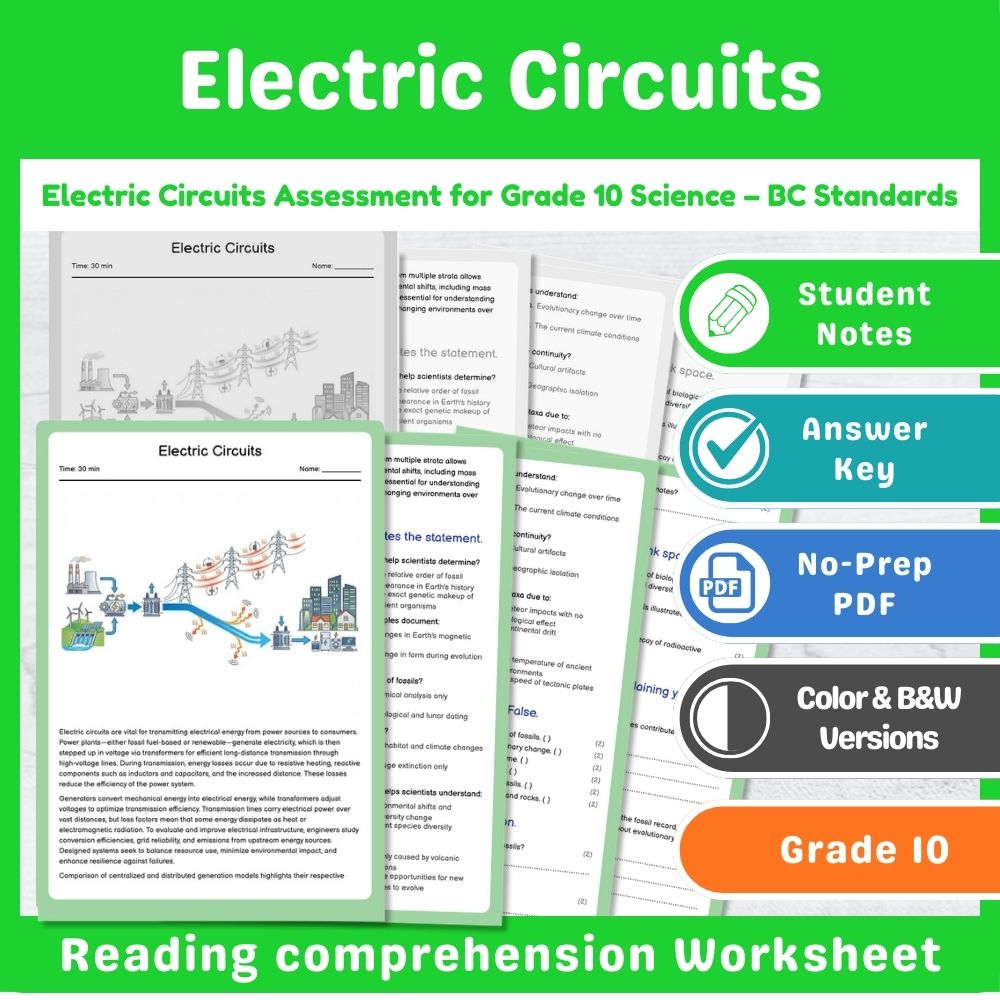
Electric Circuits Assessment for Grade 10 Science – BC Standards
 Created byPrism Point Learning
Learning Objectives
- Understand the basic components and functions of electric circuits.
- Evaluate the factors affecting system efficiency in electrical transmission.
- Compare centralized versus distributed energy generation methods.
Also included in: Grade 10 Science | Energy Assessment - BC Standards-Aligned Mini Bundle
Instant download

Cytoskeleton Roles Worksheet | Grade 10 Science TEKS Practice
Created byPrism Point LearningLearning Objectives
- Explain how microtubules, actin filaments, and intermediate filaments each contribute to cell structure and function.
- Describe how motor proteins and filament systems move materials or support processes like mitosis.
- Connect cytoskeleton organization to real examples such as axonal transport, muscle contraction, and cilia-driven fluid movement.
Instant download
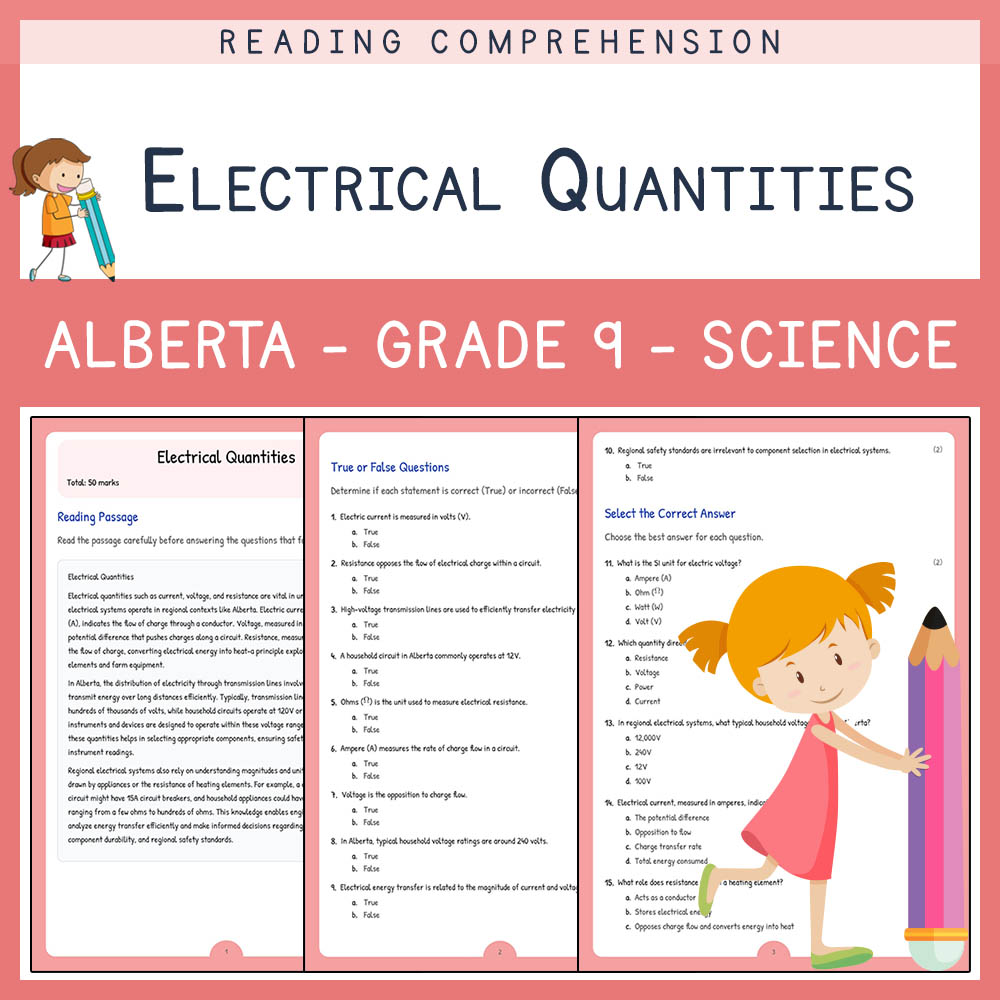
Grade 9 Science | Electrical Quantities Worksheet | Alberta Aligned
 Created byLumora Learning
Learning Objectives
- Understand the definitions of electric current, voltage, and resistance as fundamental electrical quantities.
- Interpret units, symbols, and typical magnitudes related to electrical measurements in regional contexts.
- Apply quantitative reasoning to analyze energy transfer, component selection, and instrument readings in electrical systems.
Instant download
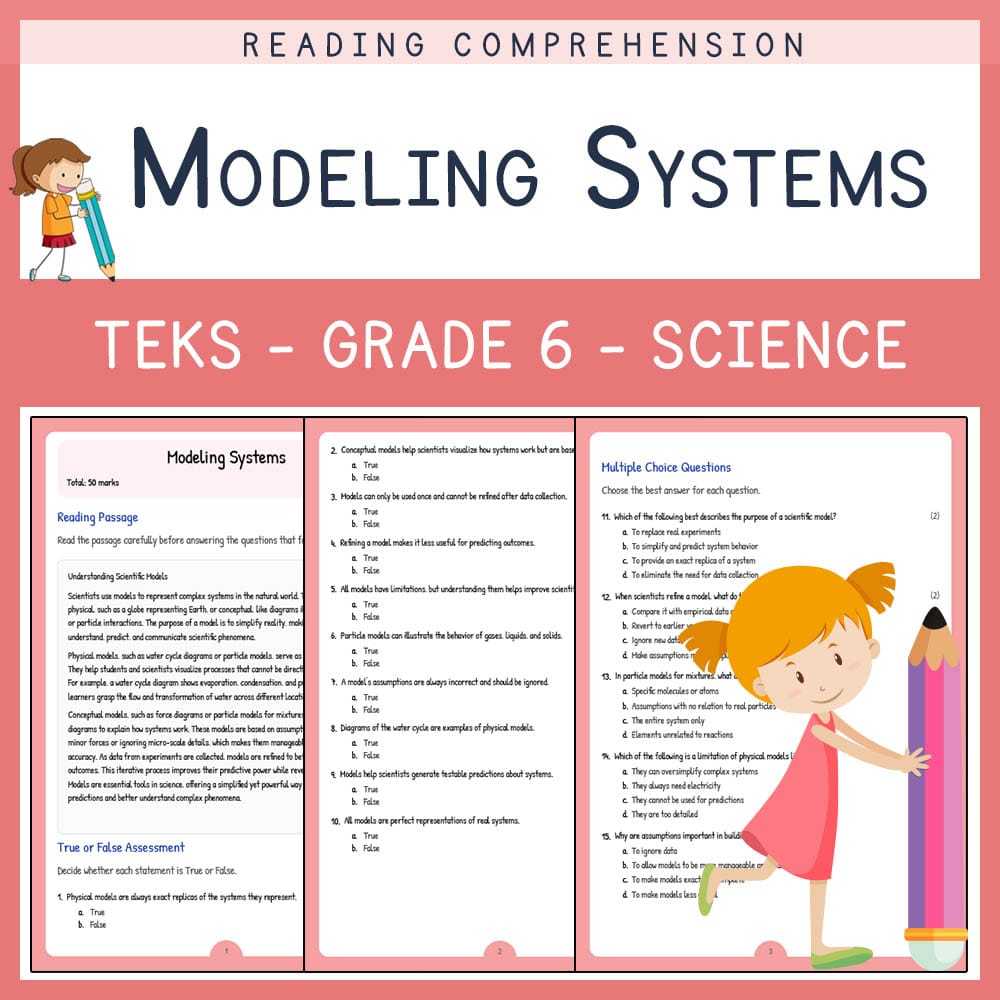
Grade 6 Science | Modeling Systems Worksheet | TEKS Alligned
Created byLumora LearningLearning Objectives
- Understand how physical and conceptual models represent scientific systems.
- Explain criteria for evaluating and refining models based on data.
- Interpret diagrams and particle models to predict outcomes.
Instant download

Gas Behavior Worksheet for Grade 7 Science | Standards-Aligned Practice
JCreated byJ.S SheetsLearning Objectives
- Explain qualitatively how gas pressure, volume, and temperature are interdependent during everyday situations.
- Describe how diffusion spreads gas particles from areas of higher to lower concentration.
- Connect compressibility and pressure changes to the behavior of gases in confined spaces.
Instant download
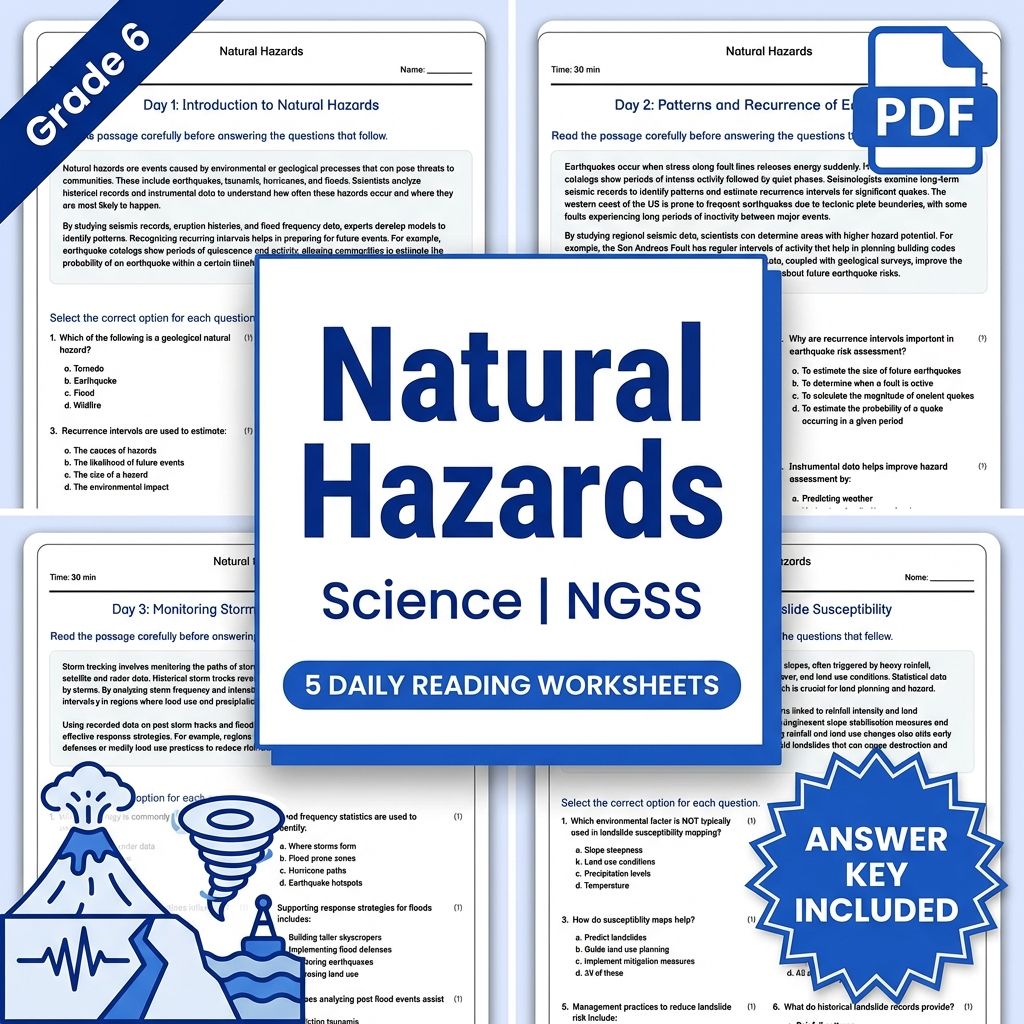
6th Grade Science | Natural Hazards Daily Reading Worksheet (PDF + Answer Key)
 Created byCopper Leaf Classroom
Learning Objectives
- Identify different types of natural hazards and interpret observational data related to them.
- Understand patterns and recurrence intervals of natural hazards such as earthquakes and storms.
- Assess potential locations and magnitudes of hazards based on data analysis.
Instant download

Grade 8 Science | Population Dynamics Reading Worksheet (NGSS + Answer Key)
JCreated byJ.S SheetsLearning Objectives
- Analyze how populations fluctuate over time due to factors such as resource availability, predation, and competition.
- Understand models like predator-prey cycles and exponential versus logistic growth.
- Apply real-world examples such as lynx and hare populations and insect swarms to illustrate population changes.
Instant download

Reaction Stoichiometry Worksheet | Grade 9 Science Printable PDF for Assessment
Learning Objectives
- Understand the principles of conservation of mass in chemical reactions.
- Relate moles, mass, and particle counts using molar mass conversions.
- Perform limiting reagent analysis and calculate theoretical yields.
Also included in: Grade 9 Science Lesson Bundle on Matter and Its Interactions +1 more
Instant download

Reaction Design Worksheet | Grade 9 Science Printable PDF | Assessment
Learning Objectives
- Understand how temperature, pressure, concentration, and catalysts influence chemical reactions.
- Explain the principles of equilibrium and kinetics in reaction systems.
- Analyze how reaction conditions affect product yield and selectivity.
Also included in: Grade 9 Science Lesson Bundle on Matter and Its Interactions +1 more
Instant download

Measuring Circuits Worksheet | Ontario Grade 6 Science Assessment
 Created byCedar Grove Learning
Learning Objectives
- Explain how current and voltage measurements characterize circuit behavior in different circuit configurations
- Describe how instrument placement affects the meaning of a reading in a circuit
- Interpret typical reading patterns to connect voltage/current values with component characteristics like resistance
Also included in: Grade 6 Electricity and Circuits Science lesson bundle: Ontario framework +1 more
Instant download

Energy and Power Worksheet | Ontario Grade 6 Science Assessment
Created byCedar Grove LearningLearning Objectives
- Explain power as the rate of energy transfer in electrical systems
- Relate electrical power to current and voltage using everyday circuit examples
- Describe how resistive components convert electrical energy into thermal energy and discuss efficiency
Also included in: Grade 6 Electricity and Circuits Science lesson bundle: Ontario framework +1 more
Instant download

Conductor Properties Worksheet | Ontario Grade 6 Science Assessment
Created byCedar Grove LearningLearning Objectives
- Explain how free electrons in materials allow electrical charge to move
- Describe typical metallic behaviour and how metals conduct electricity
- Identify factors that affect conductivity, including material type, temperature, and cross-sectional area
Also included in: Grade 6 Electricity and Circuits Science lesson bundle: Ontario framework +1 more
Instant download

Electrostatic Phenomena Worksheet | Grade 6 Science Ontario Standards
Created byCedar Grove LearningLearning Objectives
- Explain how static charge builds up through triboelectric effects and charge transfer
- Use the triboelectric series idea to predict which material tends to become positively or negatively charged
- Describe common electrostatic phenomena such as attraction, repulsion, and electrostatic discharge
Also included in: Grade 6 Electricity and Circuits Science lesson bundle: Ontario framework +1 more
Instant download

Grade 6 Biodiversity Patterns Worksheet | Ontario Science Activity
 Created byChalk and Compass
Learning Objectives
- Explain biodiversity using species richness, abundance, and evenness.
- Describe how transects and quadrats can be used to sample biodiversity.
- Interpret spatial biodiversity patterns in relation to habitat heterogeneity.
Also included in: Grade 6 Science Ecosystems, Adaptations & Biodiversity Lesson Bundle | Ontario +1 more
Instant download
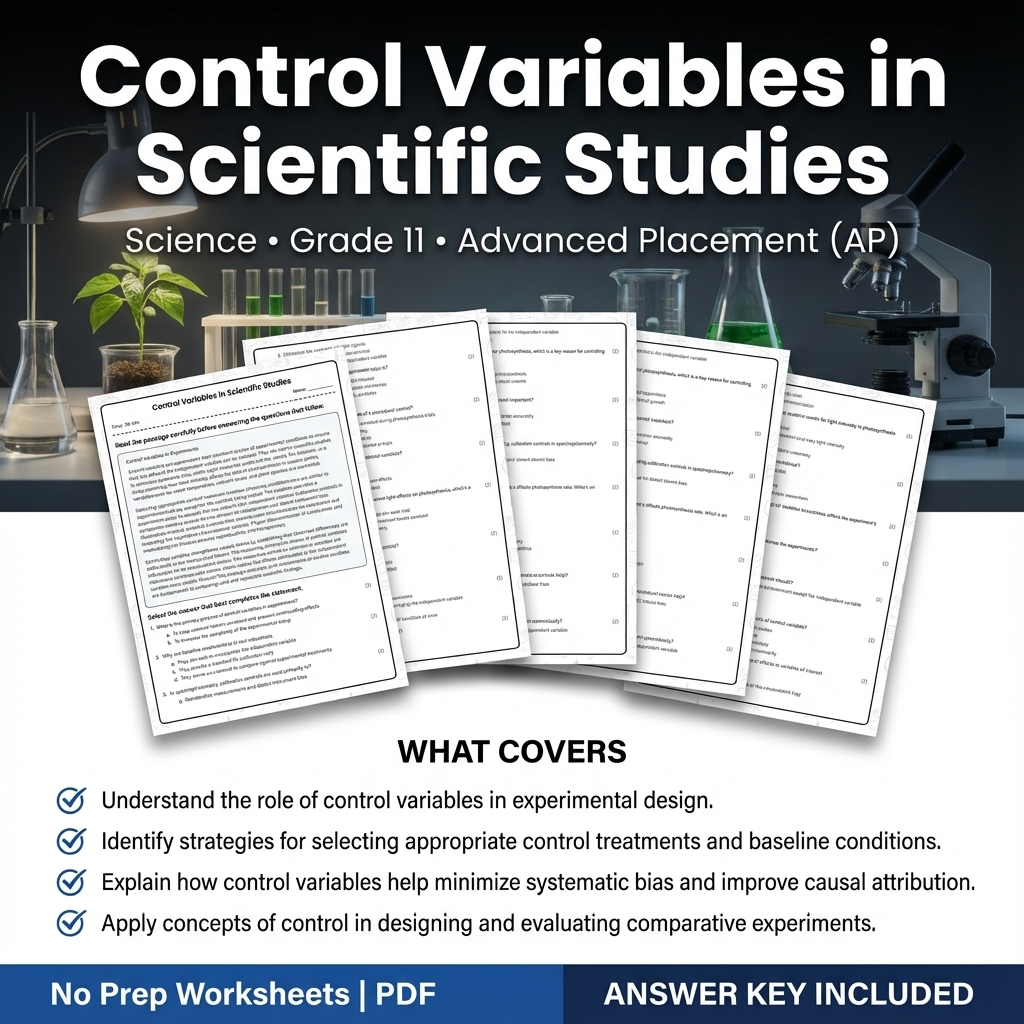
Grade 11 Science | Control Variables in Scientific Studies (PDF + Answer Key)
 Created byCoral Reef Learning
Learning Objectives
- Understand the role of control variables in experimental design.
- Identify strategies for selecting appropriate control treatments and baseline conditions.
- Explain how control variables help minimize systematic bias and improve causal attribution.
Also included in: Grade 11 Science Unit | Scientific Analysis & Data Skills Worksheet Pack +1 more
Instant download
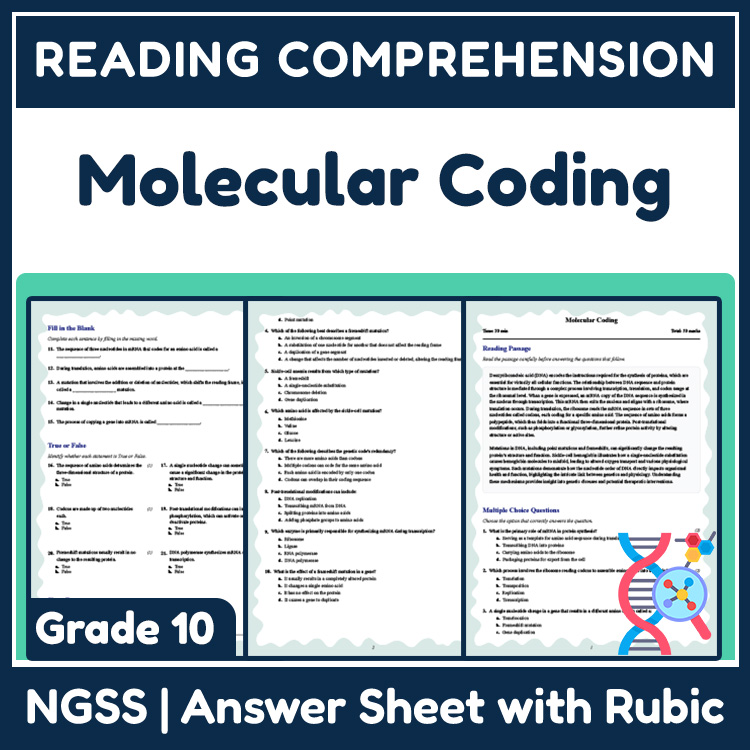
10th Grade Science | Molecular Coding Reading Worksheet (PDF + Answer Key)
JCreated byJ.S SheetsLearning Objectives
- Understand how DNA sequence determines amino acid order in proteins
- Describe the process of transcription and translation
- Explain codon usage and ribosomal synthesis
Also included in: Grade 10 Science Unit | Cellular & Physiological Systems Worksheets
Instant download
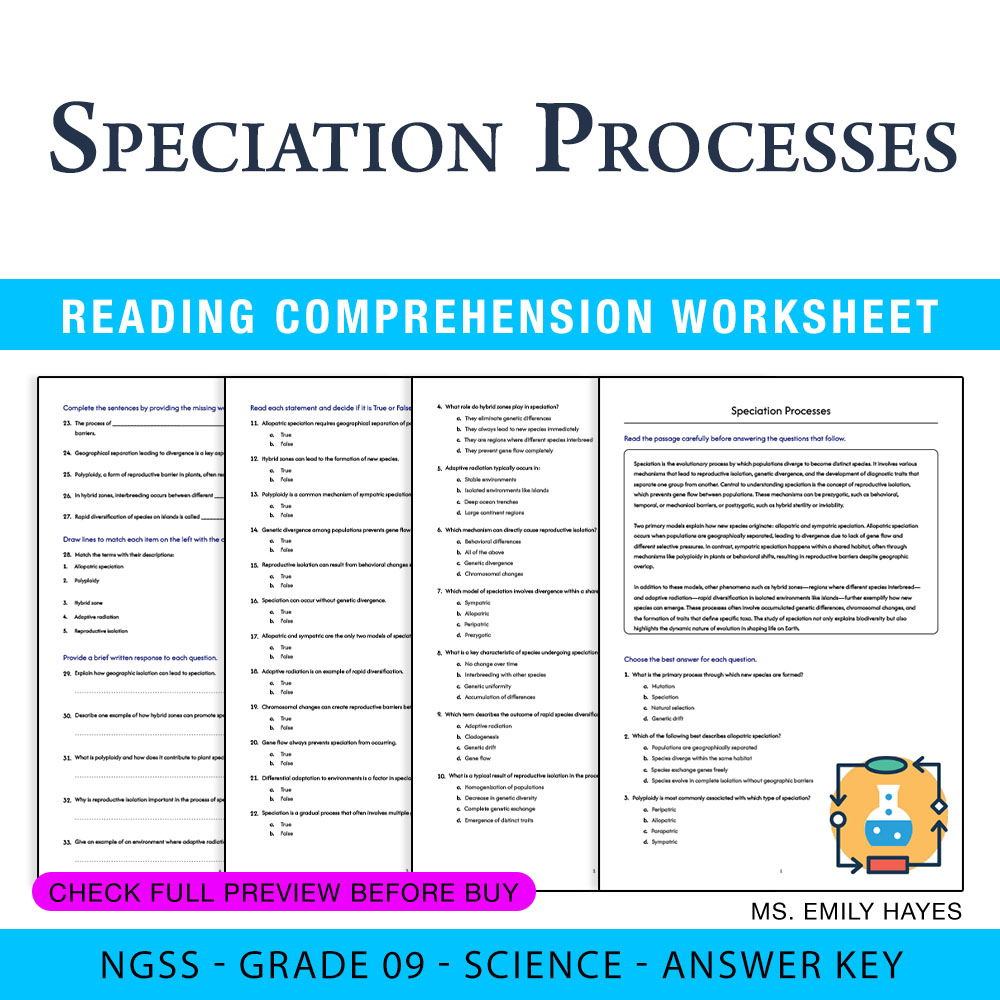
9th Grade Science | Speciation Processes Worksheet (PDF + Answer Key)
Created byCopper Leaf ClassroomLearning Objectives
- Understand the mechanisms of reproductive isolation and their role in speciation.
- Explain the difference between allopatric and sympatric speciation models.
- Describe examples of adaptive radiation and hybrid zones in speciation.
Instant download
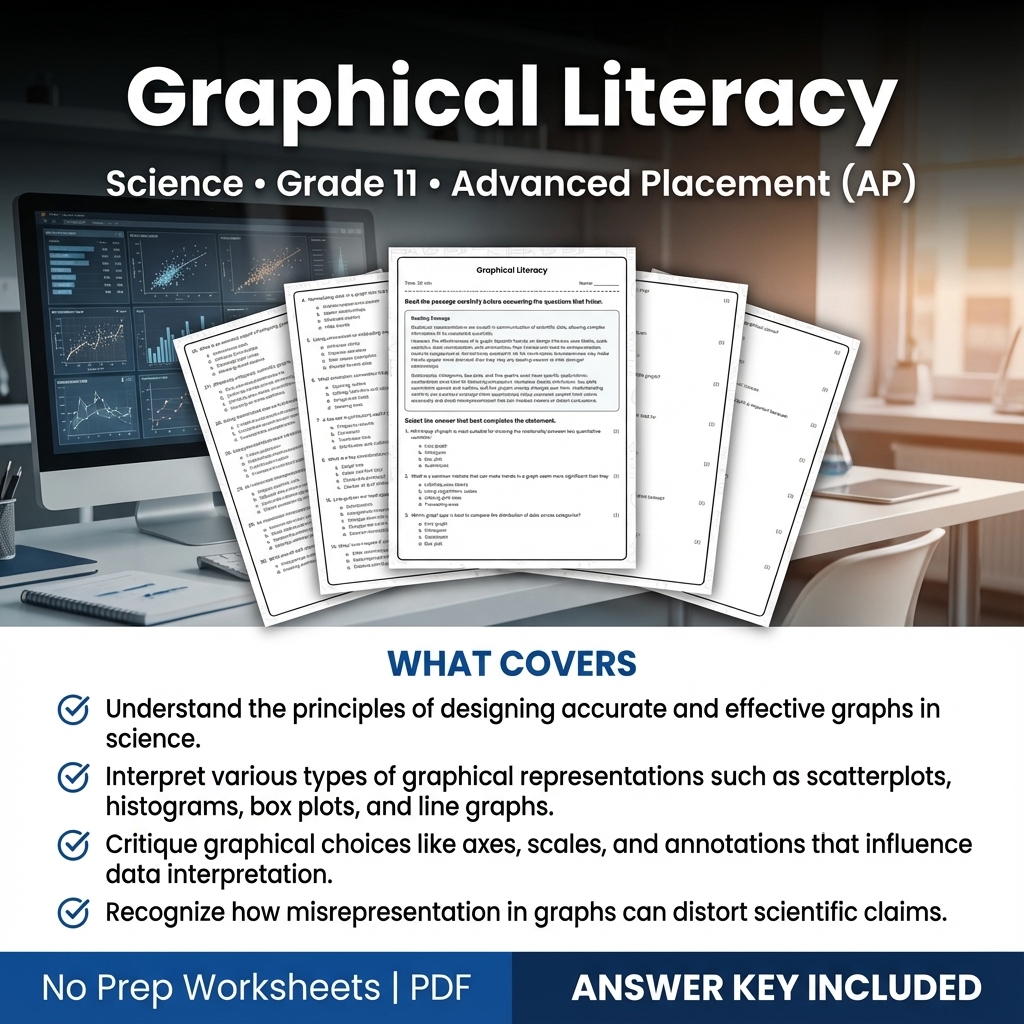
11th Grade Science | Graphical Literacy Worksheet (Printable PDF + Answer Key)
Created byCoral Reef LearningLearning Objectives
- Understand the principles of designing accurate and effective graphs in science.
- Interpret various types of graphical representations such as scatterplots, histograms, box plots, and line graphs.
- Critique graphical choices like axes, scales, and annotations that influence data interpretation.
Also included in: Grade 11 Science Unit | Scientific Analysis & Data Skills Worksheet Pack +1 more
Instant download

Grade 12 Science | Evolution Basics Worksheet | BC-Aligned
Created byLumora LearningLearning Objectives
- Understand key mechanisms driving evolution such as natural selection, genetic drift, gene flow, and mutation.
- Recognize types of evidence supporting evolutionary change including comparative anatomy, fossils, and molecular data.
- Explain how evolutionary processes lead to biodiversity and adaptation in different environments.
Also included in: Grade 12 | Biology 12 Science Custom Bundle (BC)| Genetics & Evolution
Instant download
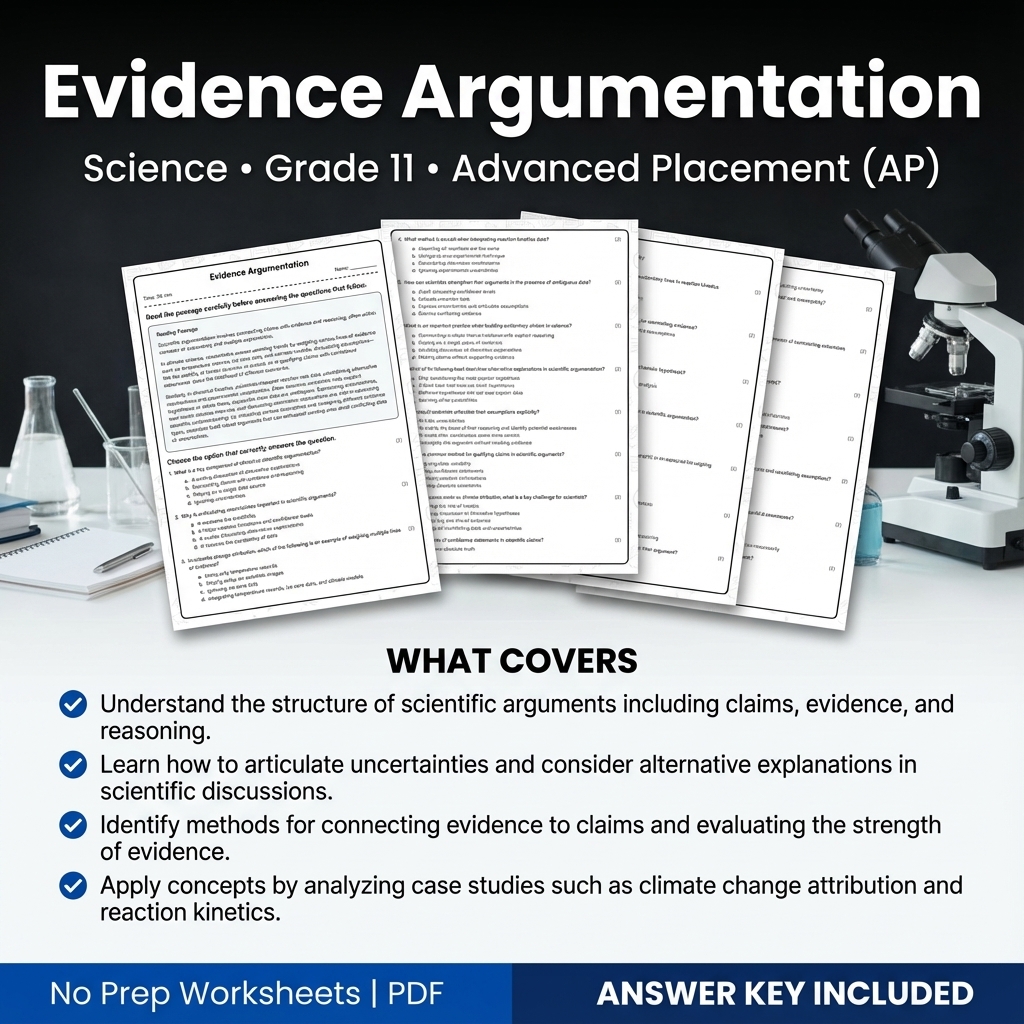
Grade 11 Science | Evidence Argumentation Worksheet (Printable PDF + Answer Key)
Created byCoral Reef LearningLearning Objectives
- Understand the structure of scientific arguments including claims, evidence, and reasoning.
- Learn how to articulate uncertainties and consider alternative explanations in scientific discussions.
- Identify methods for connecting evidence to claims and evaluating the strength of evidence.
Also included in: Grade 11 Science Unit | Scientific Analysis & Data Skills Worksheet Pack +1 more
Instant download
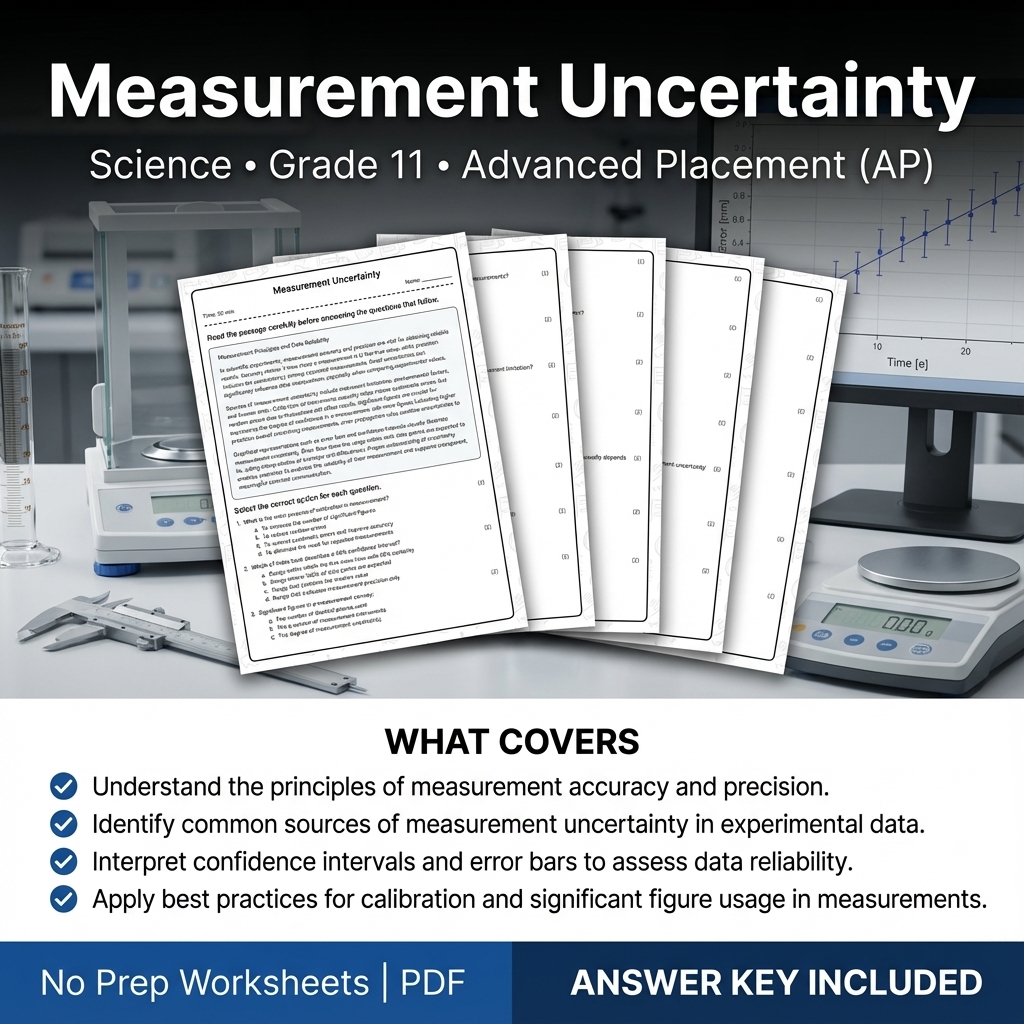
11th Grade Science | Measurement Uncertainty Worksheet (Printable PDF + Answers)
Created byCoral Reef LearningLearning Objectives
- Understand the principles of measurement accuracy and precision.
- Identify common sources of measurement uncertainty in experimental data.
- Interpret confidence intervals and error bars to assess data reliability.
Also included in: Grade 11 Science Unit | Scientific Analysis & Data Skills Worksheet Pack +1 more
Instant download
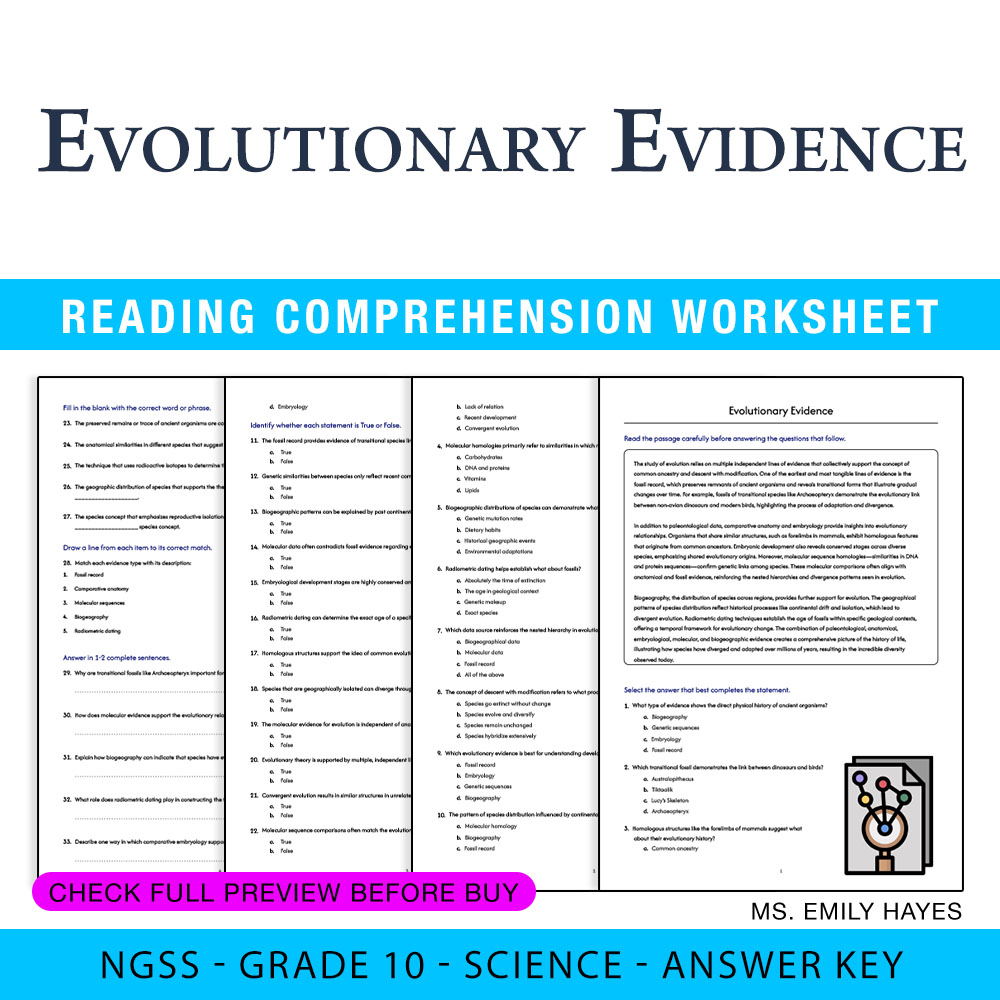
10th Grade Science | Evolutionary Evidence Worksheet (PDF + Answer Key)
Created byCopper Leaf ClassroomLearning Objectives
- Describe the different lines of empirical evidence supporting common ancestry and evolution.
- Explain how fossil records, comparative anatomy, molecular data, and biogeography contribute to understanding evolution.
- Analyze various types of evidence to interpret evolutionary patterns and relationships among organisms.
Instant download

Collisions and Energy Worksheet | Grade 8 Science Standards-Aligned
JCreated byJ.S SheetsLearning Objectives
- Understand the difference between elastic and inelastic collisions and their energy transfer characteristics.
- Explain how momentum and energy are conserved or transformed during collisions.
- Identify real-world examples of elastic and inelastic collisions and analyze energy outcomes.
Instant download
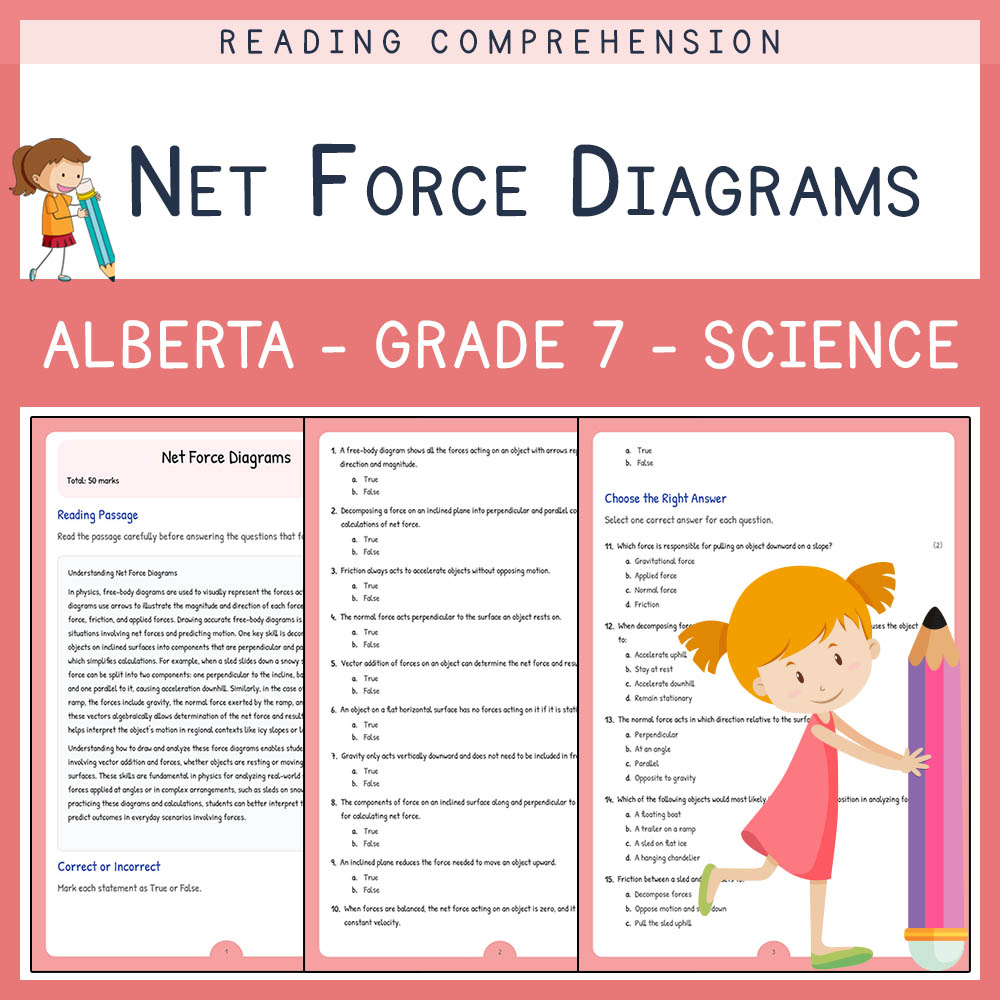
Grade 7 Science Assessment | Net Force Diagrams Worksheet | Alberta
Created byLumora LearningLearning Objectives
- Understand the concept of net force and how to represent it using free-body diagrams.
- Learn how to decompose forces on inclined surfaces into perpendicular components.
- Apply vector addition to determine the magnitude and direction of net force.
Instant download
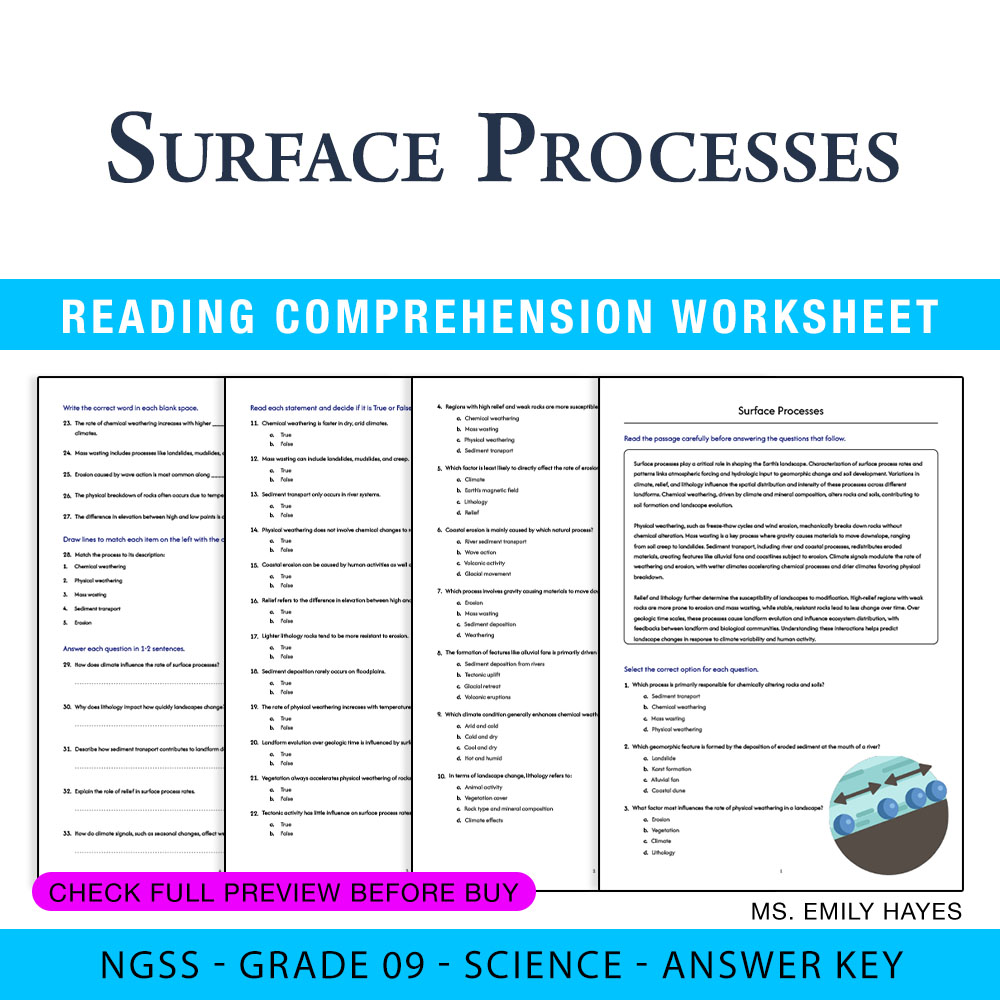
Grade 9 Science | Surface Processes Worksheet (PDF+ Answer Key)
Created byCopper Leaf ClassroomLearning Objectives
- Describe the main types of surface processes affecting landscape change.
- Analyze the factors influencing rates of chemical and physical weathering.
- Explain how mass wasting and sediment transport contribute to geomorphic patterns.
Instant download
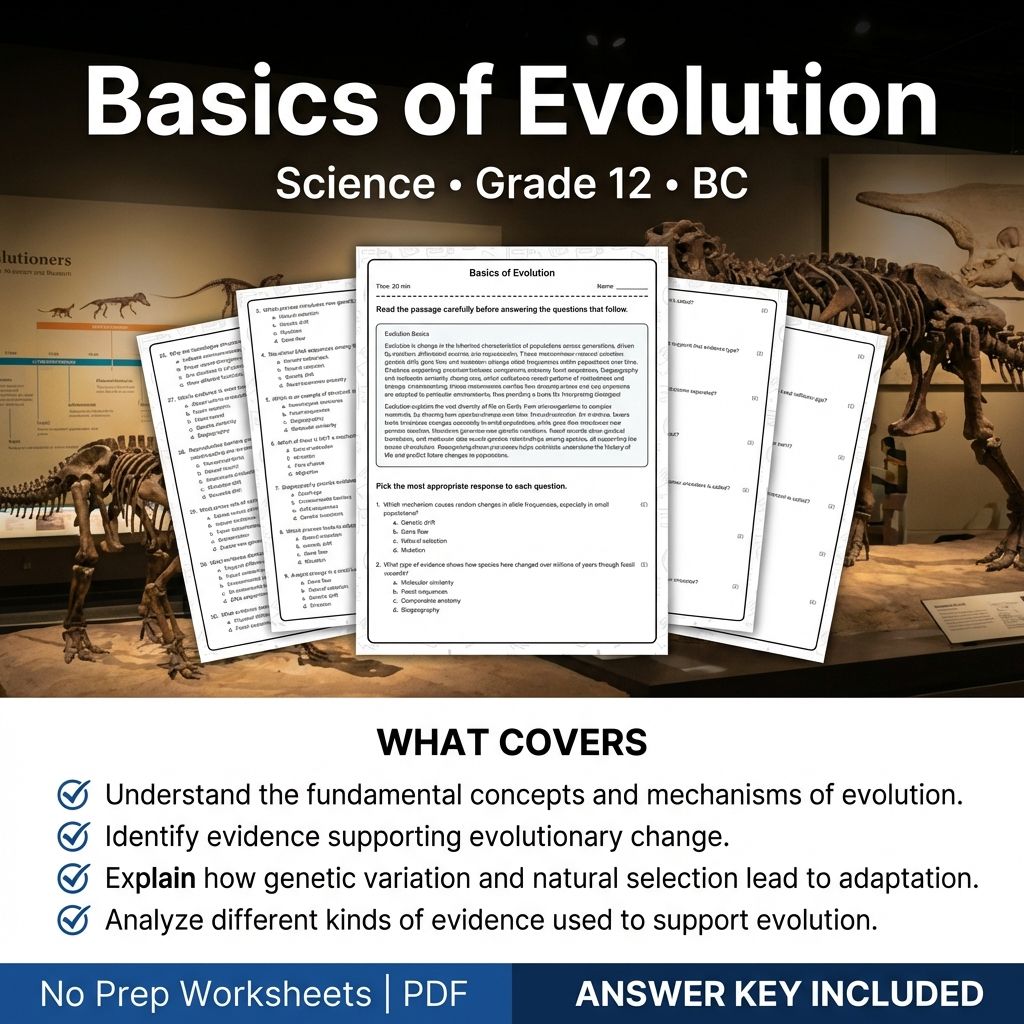
Grade 12 Science Worksheet on Basics of Evolution | BC Standards
Created byCoral Reef LearningLearning Objectives
- Understand the fundamental concepts and mechanisms of evolution.
- Identify evidence supporting evolutionary change.
- Explain how genetic variation and natural selection lead to adaptation.
Instant download
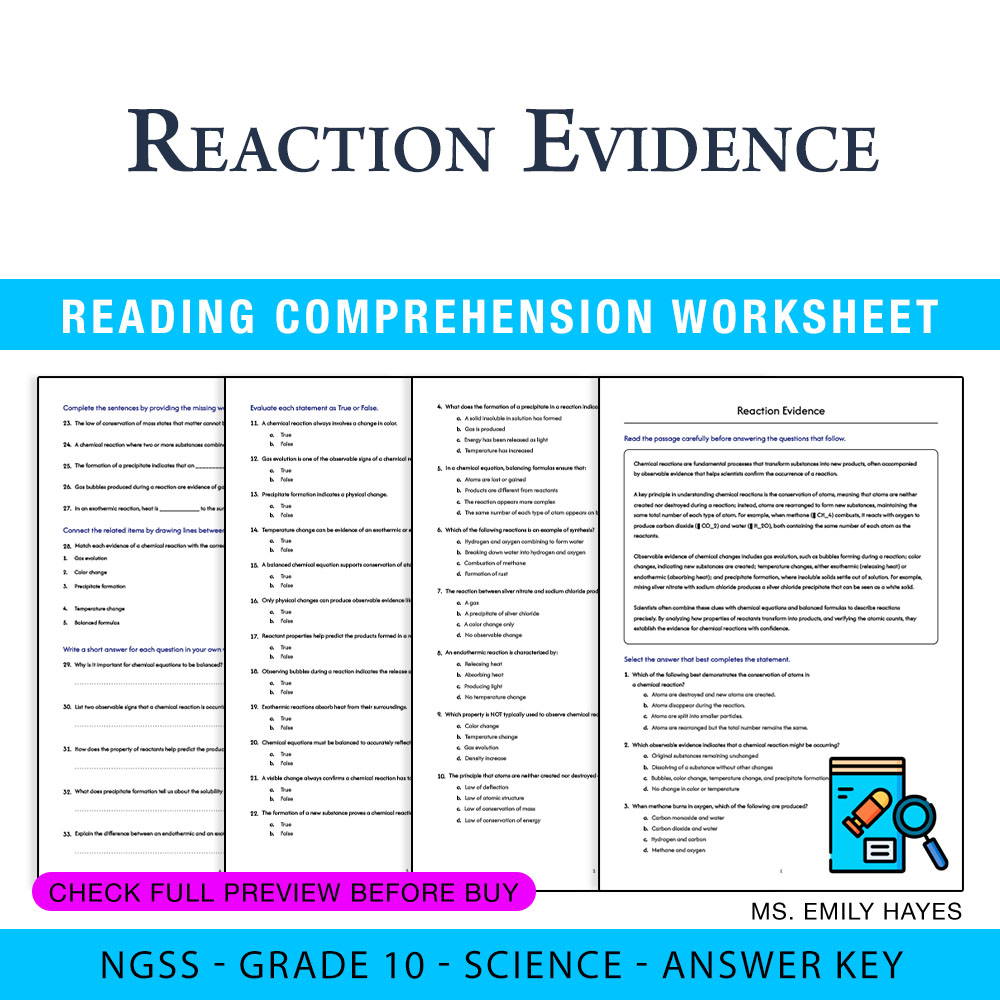
10th Grade Science | Reaction Evidence Worksheet (PDF+ Answer Key)
Created byCopper Leaf ClassroomLearning Objectives
- Understand how conservation of atoms supports chemical reaction analysis
- Identify observable evidence indicating chemical reactions
- Relate reactant properties to product formation
Instant download

Grade 11 Science – Ecosystem Modeling Daily Reading Worksheet + Answer Key
JCreated byJ.S SheetsLearning Objectives
- Understand the purpose and types of ecosystem models used in ecological research.
- Recognize how models assist in policy-making and ecosystem management.
- Identify key components of model parameterization, validation, and sensitivity analysis.
Also included in: Grade 11 Science Lesson Bundle | Ecosystem Dynamics and Sustainability +1 more
Instant download
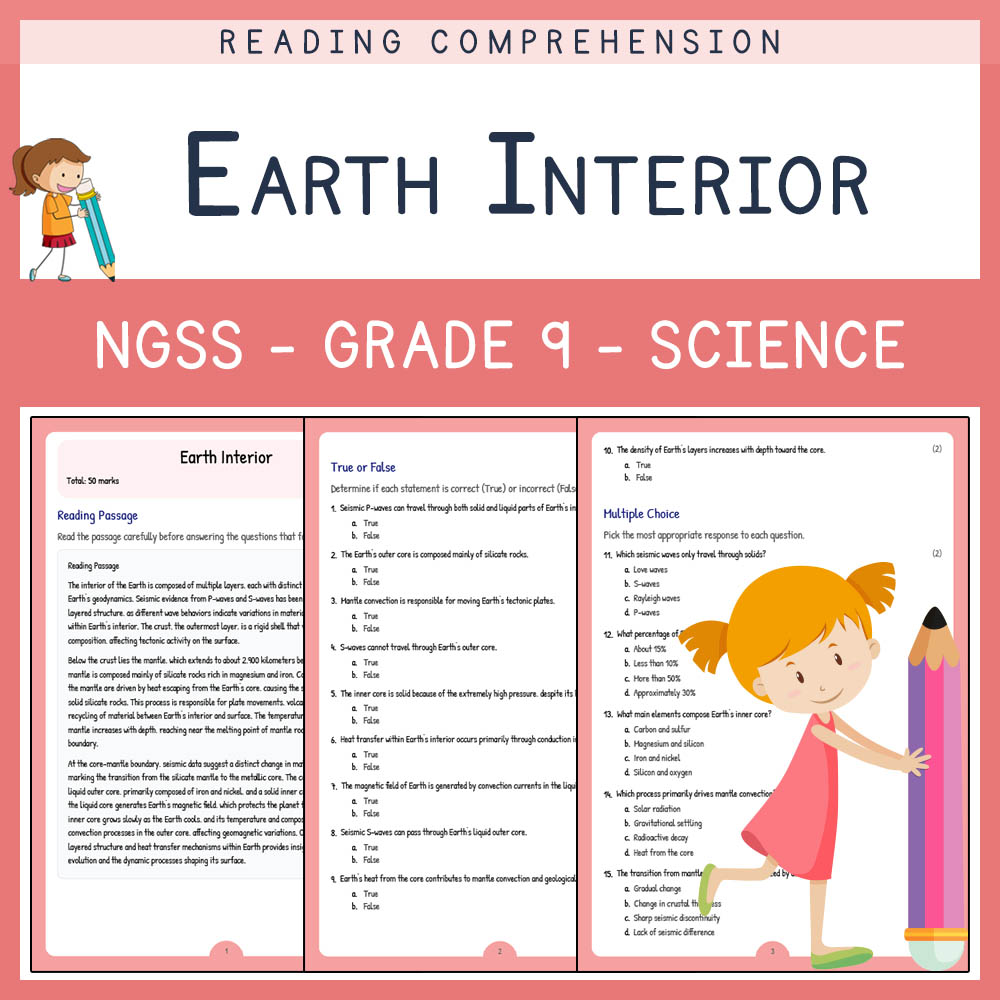
Grade 9 Science | Earth Interior Worksheet & Answer Key (NGSS-Aligned PDF)
Created byLumora LearningLearning Objectives
- Understand the layered structure of Earth's interior based on seismic, gravity, and heat-flow data.
- Interpret the behavior of P-waves and S-waves and their implications for Earth's composition.
- Explain the processes of mantle convection and how they influence Earth's thermal evolution.
Instant download
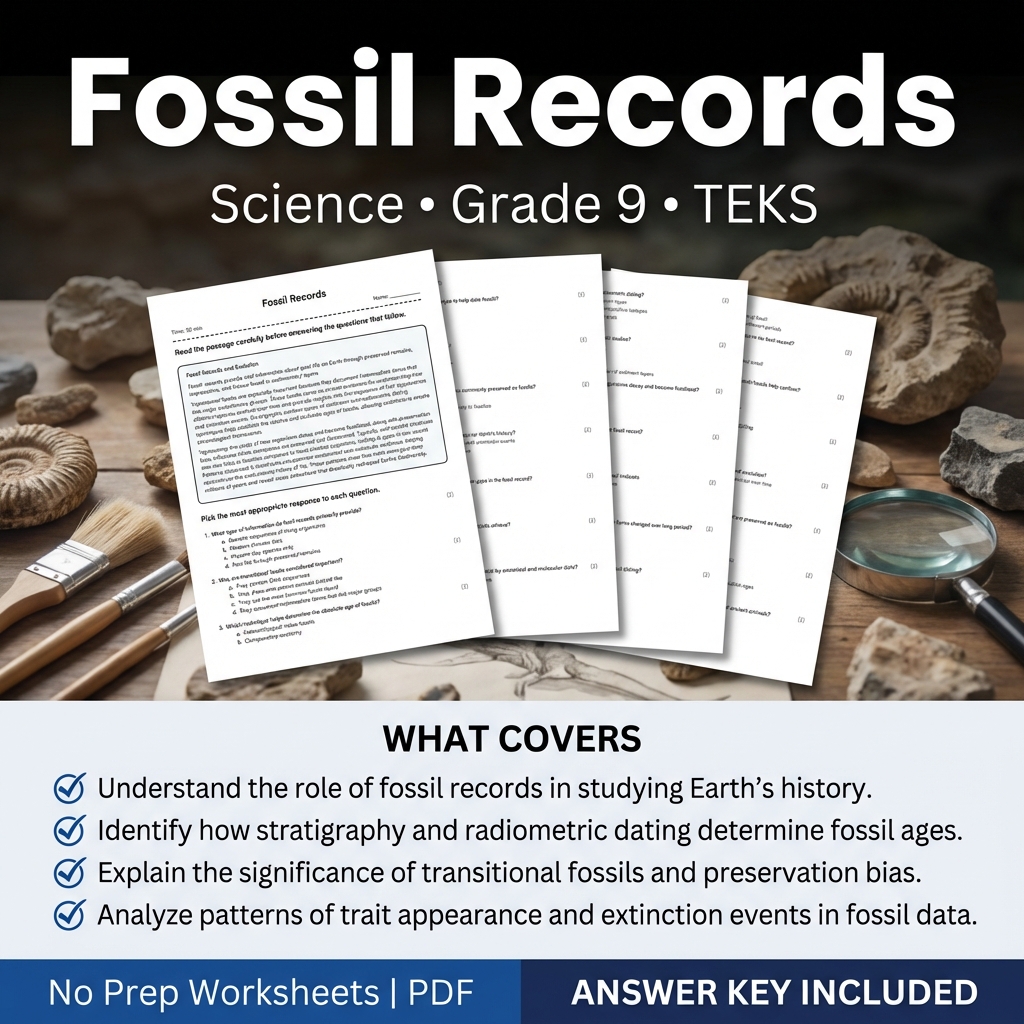
Grade 9 Science Worksheet on Fossil Records TEKS Alignment
Created byCoral Reef LearningLearning Objectives
- Understand the role of fossil records in studying Earth's history.
- Identify how stratigraphy and radiometric dating determine fossil ages.
- Explain the significance of transitional fossils and preservation bias.
Instant download
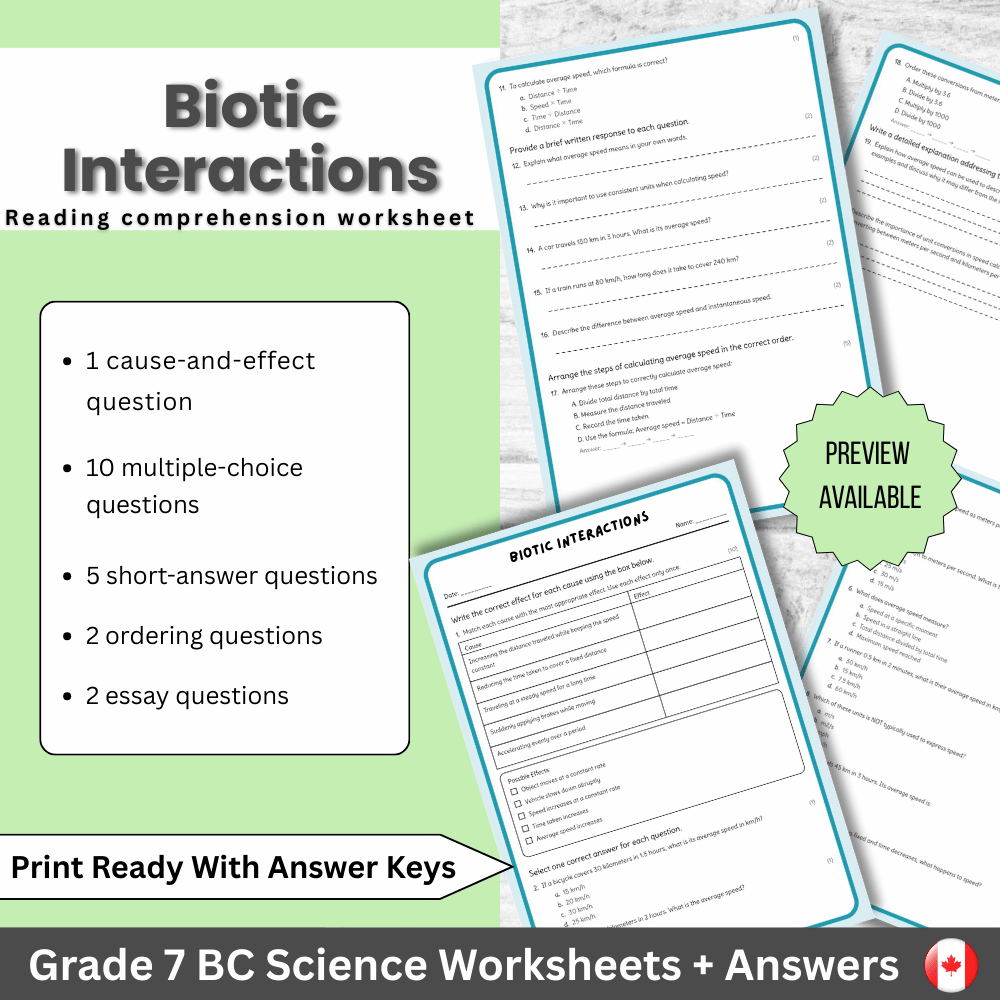
Grade 7 Science | Biotic Interactions Worksheet (Answer Key) – BC Standards
 Created byBright Mind Resources
Learning Objectives
- Describe various types of biotic interactions such as predation, competition, mutualism, commensalism, and parasitism.
- Explain how human activities can disrupt natural biotic relationships.
- Understand how changes in one species can affect entire ecosystems and biodiversity.
Instant download

Constraints Trade-Offs Worksheet | Grade 9 Science Practice
Created byPrism Point LearningLearning Objectives
- Explain how constraints limit possible designs and how criteria define what success looks like.
- Analyze trade-offs among cost, time, materials, safety, and reliability in engineering decisions.
- Use evidence to justify a design choice when multiple criteria conflict.
Instant download
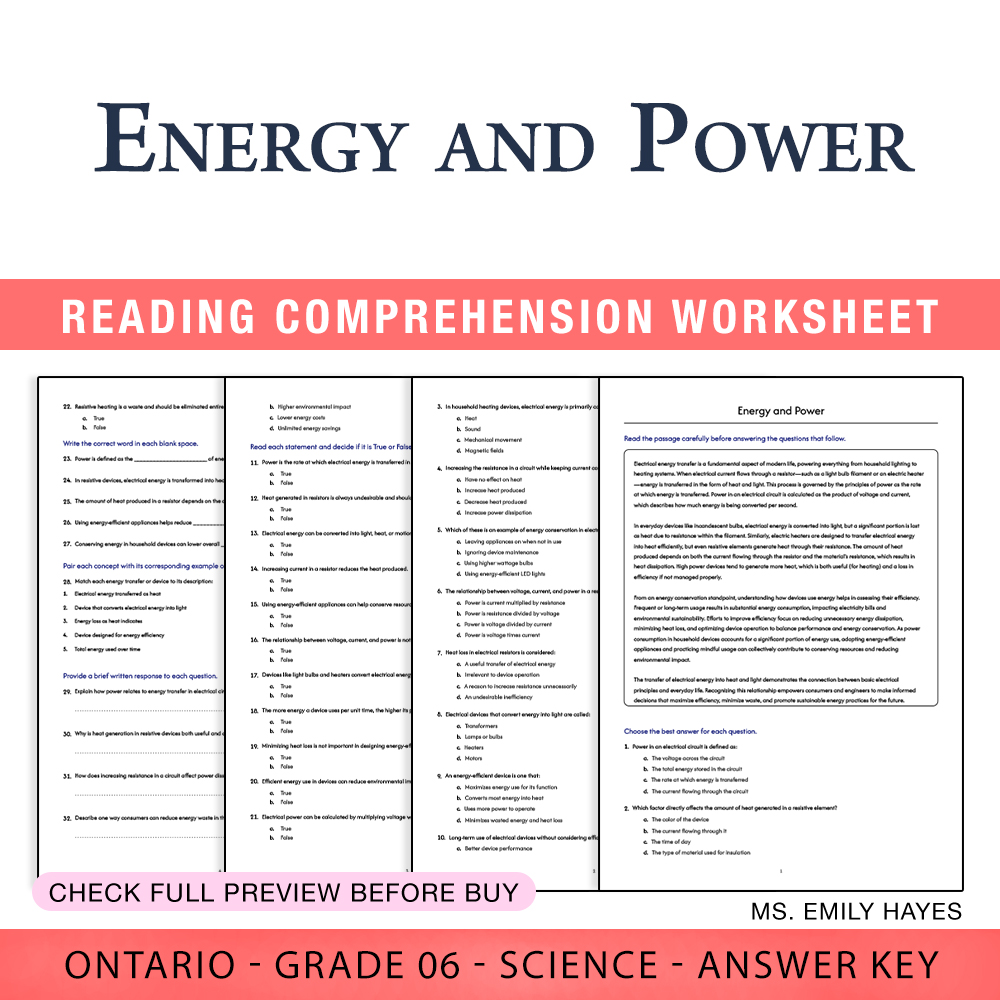
6th Grade Science | Energy and Power Worksheet (PDF + Answer Key)
Created byCopper Leaf ClassroomLearning Objectives
- Explain the concept of power as the rate of energy transfer in electrical circuits.
- Describe how electrical energy is converted into heat and light in various devices.
- Analyze the relationship between current, voltage, and power in resistive elements.
Instant download

Grade 6 Science — Worksheet MCQ Paper for Mastering Claim Evaluation
 Created byThe Resource Hub
Learning Objectives
- Understand and apply criteria for assessing the relevance and credibility of evidence.
- Evaluate the consistency of data with observed patterns and alternative hypotheses.
- Assess whether the scope of a claim matches the strength of the dataset.
Also included in: Grade 6 Science Unit | Evidence and Investigation Worksheets – Alberta Framework +1 more
Instant download

Periodic Trends Assessment | TEKS Grade 12 Science Standards
Created byPrism Point LearningLearning Objectives
- Analyze and interpret atomic radius, ionization energy, electron affinity, and electronegativity trends across periods and groups.
- Explain the concepts of effective nuclear charge, shielding effect, and electron configuration in relation to periodic trends.
- Compare the properties of alkali metals, transition metals, and halogens based on periodic patterns.
Also included in: Lesson Bundle Grade 12 Chemistry and Reactions Science Assessment TEKS
Instant download
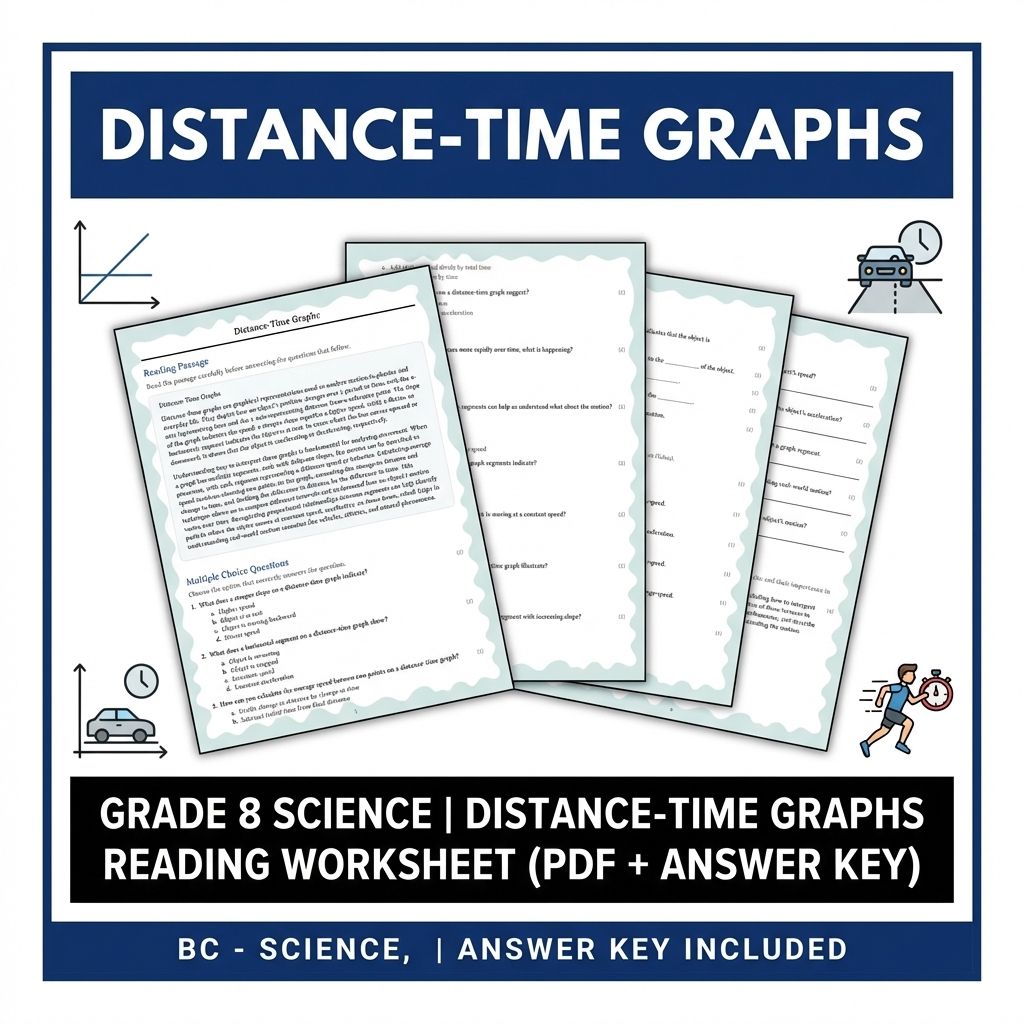
Grade 8 Science | Distance-Time Graphs Reading Worksheet (PDF + Answer Key)
JCreated byJ.S SheetsLearning Objectives
- Understand how to interpret distance-time graphs and relate slope to speed.
- Analyze various segments of graphs to identify periods of constant, increasing, or decreasing speed.
- Perform calculations of average speed using change in distance and change in time between two points.
Instant download
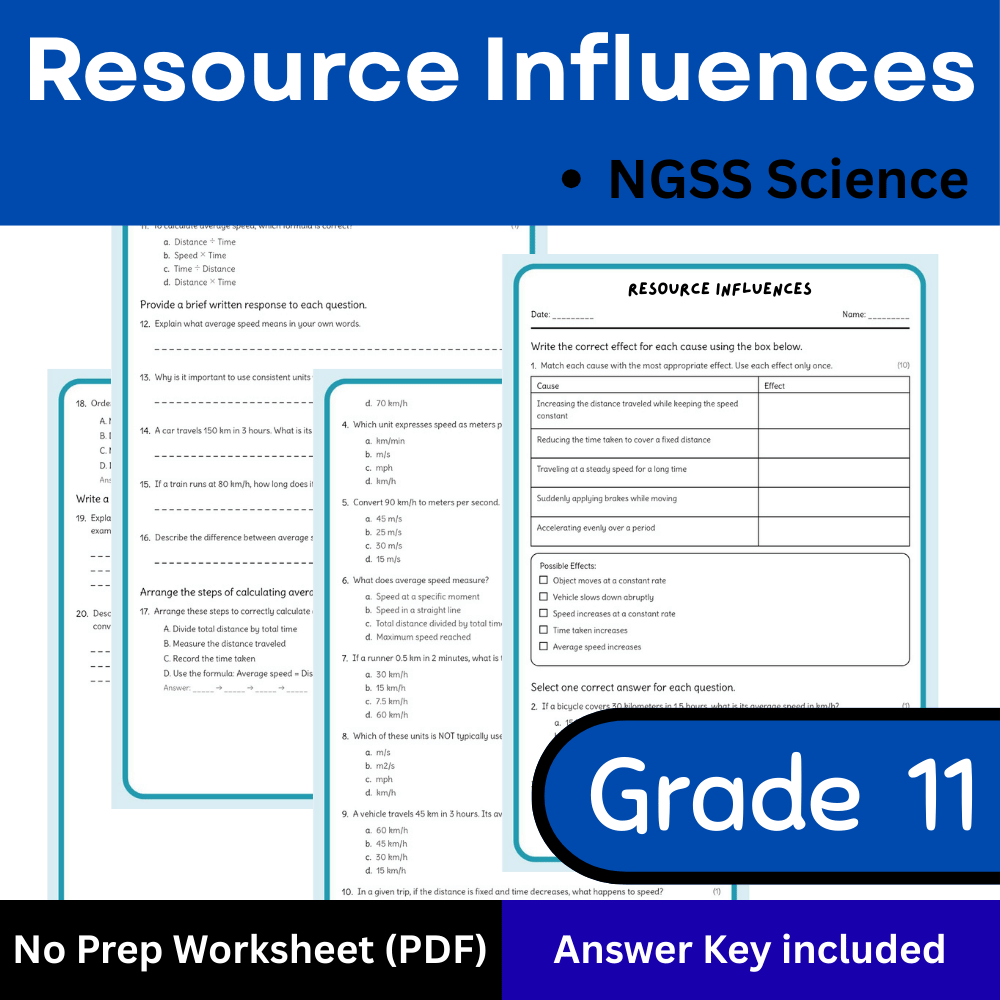
Grade 11 Science | Resource Influences Worksheet (PDF) – NGSS Aligned
Created byBright Mind ResourcesLearning Objectives
- Analyze how natural resource availability influences human settlement, land use, and economic development.
- Evaluate the impacts of natural hazards and climate change on society and ecosystem services.
- Identify examples of feedbacks between resource extraction and ecosystem sustainability.
Instant download
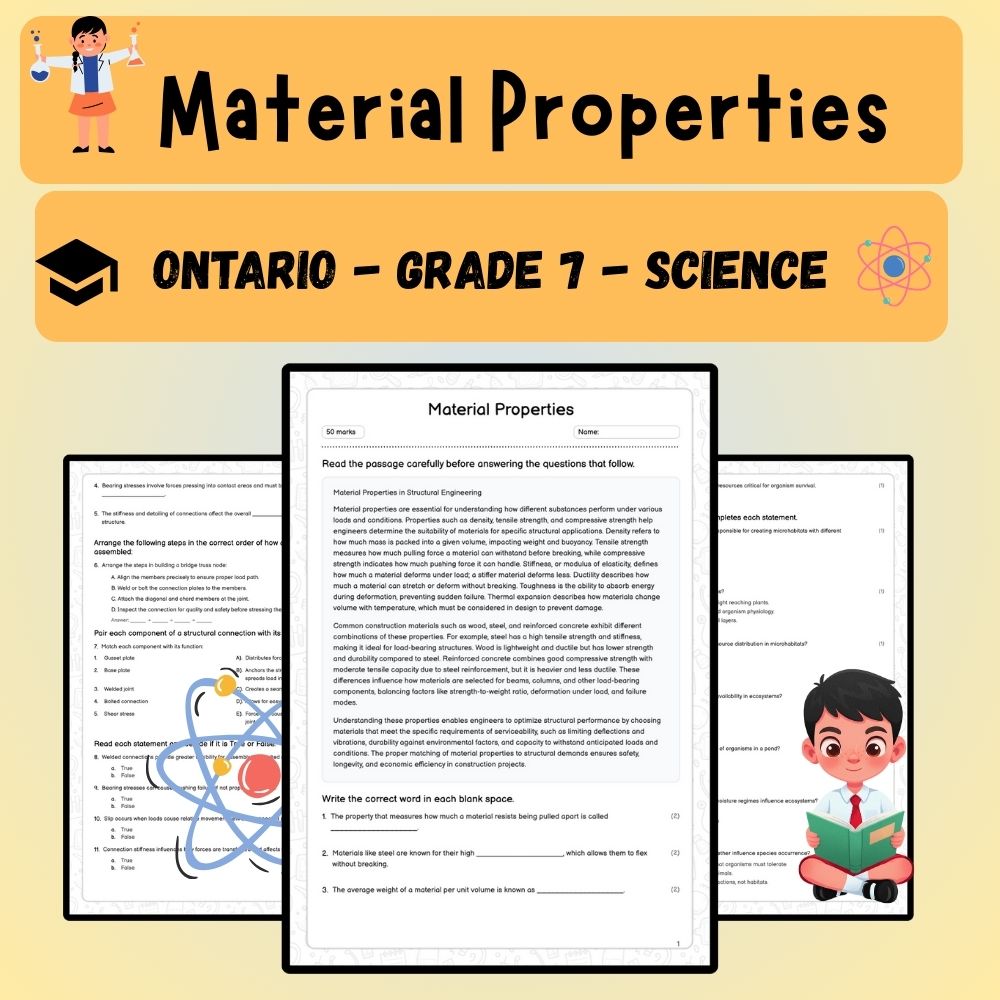
Grade 7 Science – Understanding Material Properties Worksheet (PDF )
Created byPrism Point LearningLearning Objectives
- Define key material properties such as density, tensile strength, compressive strength, stiffness (modulus), ductility, toughness, and thermal expansion.
- Explain how these properties influence the structural performance of materials.
- Compare construction materials like wood, steel, and reinforced concrete in terms of strength-to-weight ratio, deformation, and failure modes.
Also included in: Grade 7 Science Unit | Structural Engineering & Material Testing Worksheets Bundle +1 more
Instant download
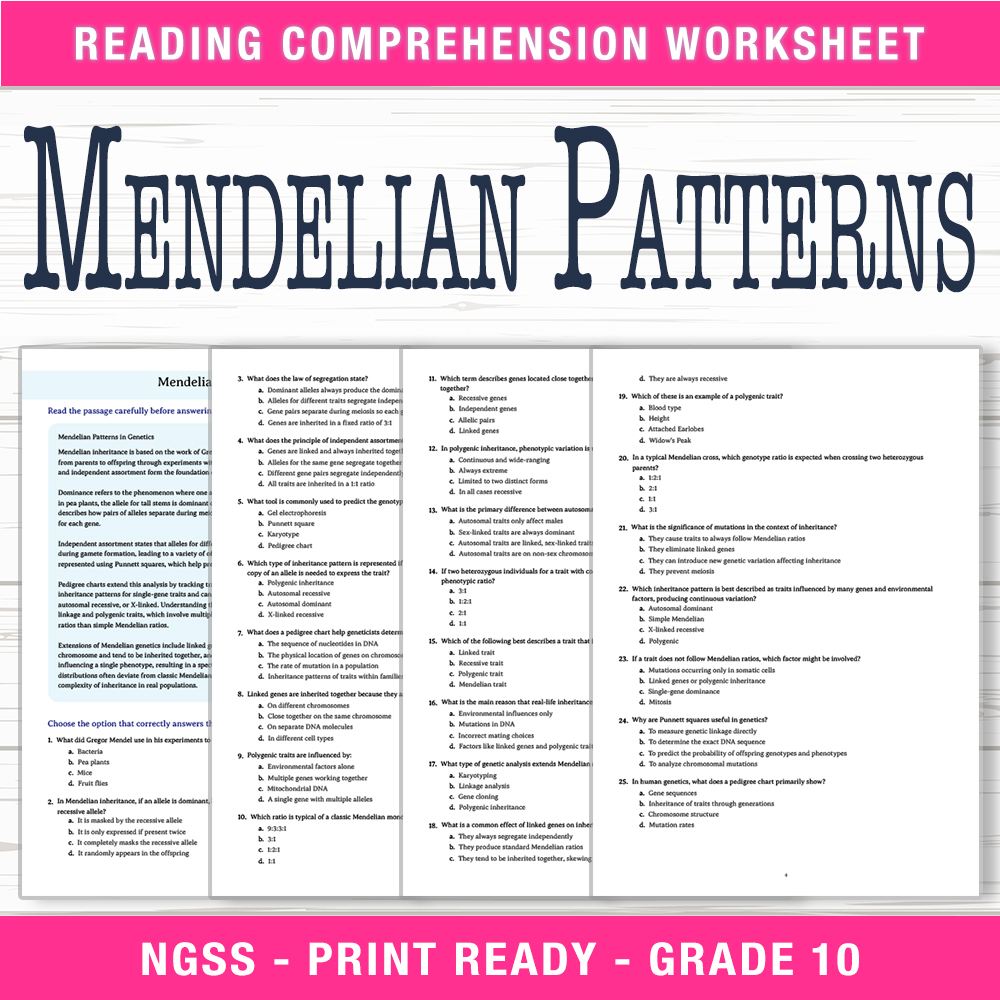
Grade 10 Science | Mendelian Patterns Worksheet (PDF + Answer Key)
 Created byRiverstone Classroom
Learning Objectives
- Explain the principles of dominance, segregation, and independent assortment in Mendelian genetics.
- Use Punnett squares to predict offspring genotypes and phenotypes from parental crosses.
- Analyze inheritance patterns using pedigree charts for single-gene traits.
Instant download
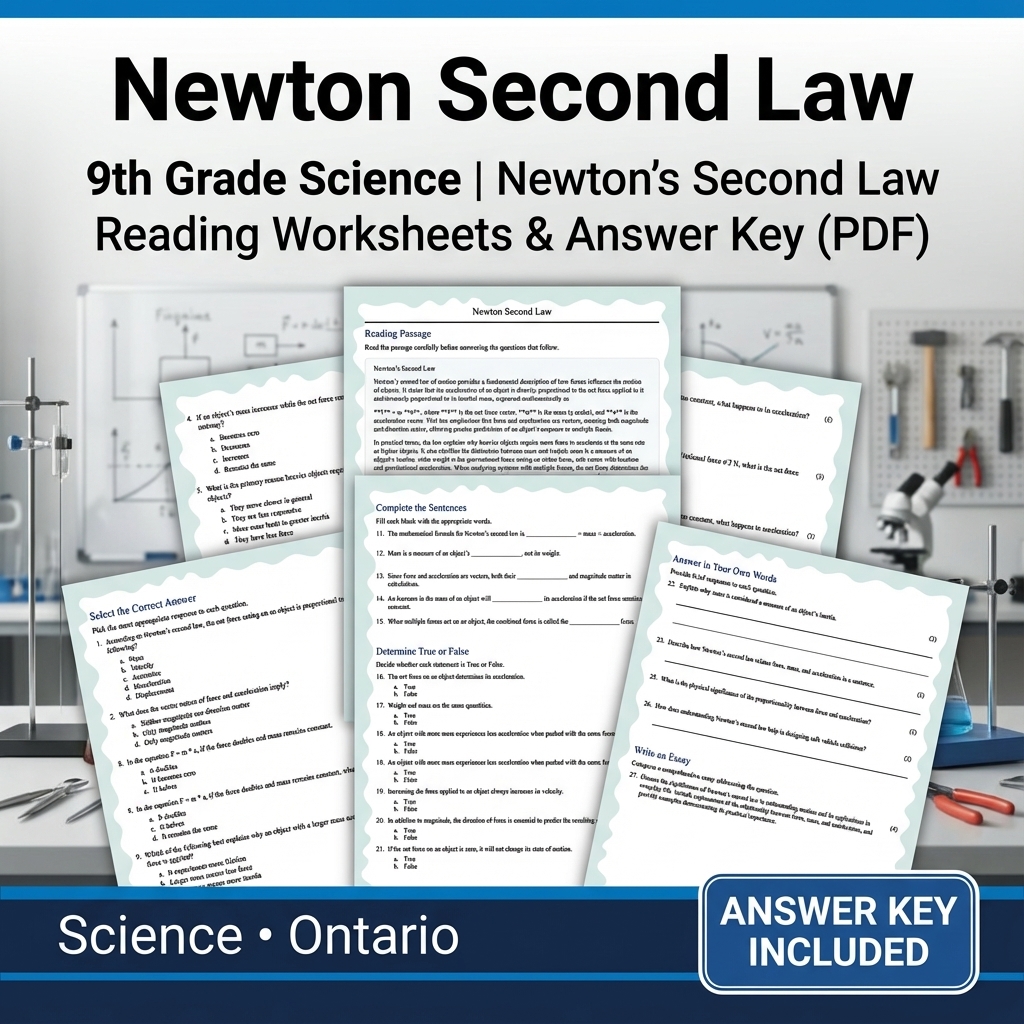
9th Grade Science | Newton's Second Law Reading Worksheets & Answer Key (PDF)
JCreated byJ.S SheetsLearning Objectives
- Understand the mathematical formulation of Newton's second law in vector form.
- Differentiate between mass and weight and their roles in dynamics.
- Analyze how net force relates to acceleration and inertia in physical systems.
Also included in: Grade 9 Science Unit | Force, Motion & Energy Worksheets & Answer Keys Bundle +1 more
Instant download

Evolution Evidence Worksheet | Grade 10 Biology Activities & Practice
Created byPrism Point LearningLearning Objectives
- Explain how fossil records provide evidence for evolutionary change over geologic time.
- Identify homologous structures as evidence for common ancestry and shared evolutionary history.
- Describe how biogeographic patterns and genetic similarities support descent with modification.
Instant download

Atomic Particles Worksheet Pack | Grade 10 Science Activities
Created byPrism Point LearningLearning Objectives
- Explain how protons and neutrons in the nucleus determine atomic number and mass number
- Describe how electrons in energy levels (shells) affect an atom’s chemical behavior
- Connect subatomic particles to how elements are organized on the periodic table
Also included in: Grade 10 Science Chemical Reactions & Atomic Structure Lesson Bundle | Bc +1 more
Instant download

Biotechnology Ethics Worksheet | Grade 12 Science Activities
Created byPrism Point LearningLearning Objectives
- Explain how ethical, legal, and social considerations apply to biotechnology such as genome editing and cloning.
- Analyze biosafety, ecological risk, and equitable access when evaluating biotechnology proposals.
- Describe how intellectual property and regulation influence real-world biotech adoption, including in Alberta.
Also included in: Grade 12 Evolution & Genetics Lesson Bundle | Alberta Science Framework
Instant download
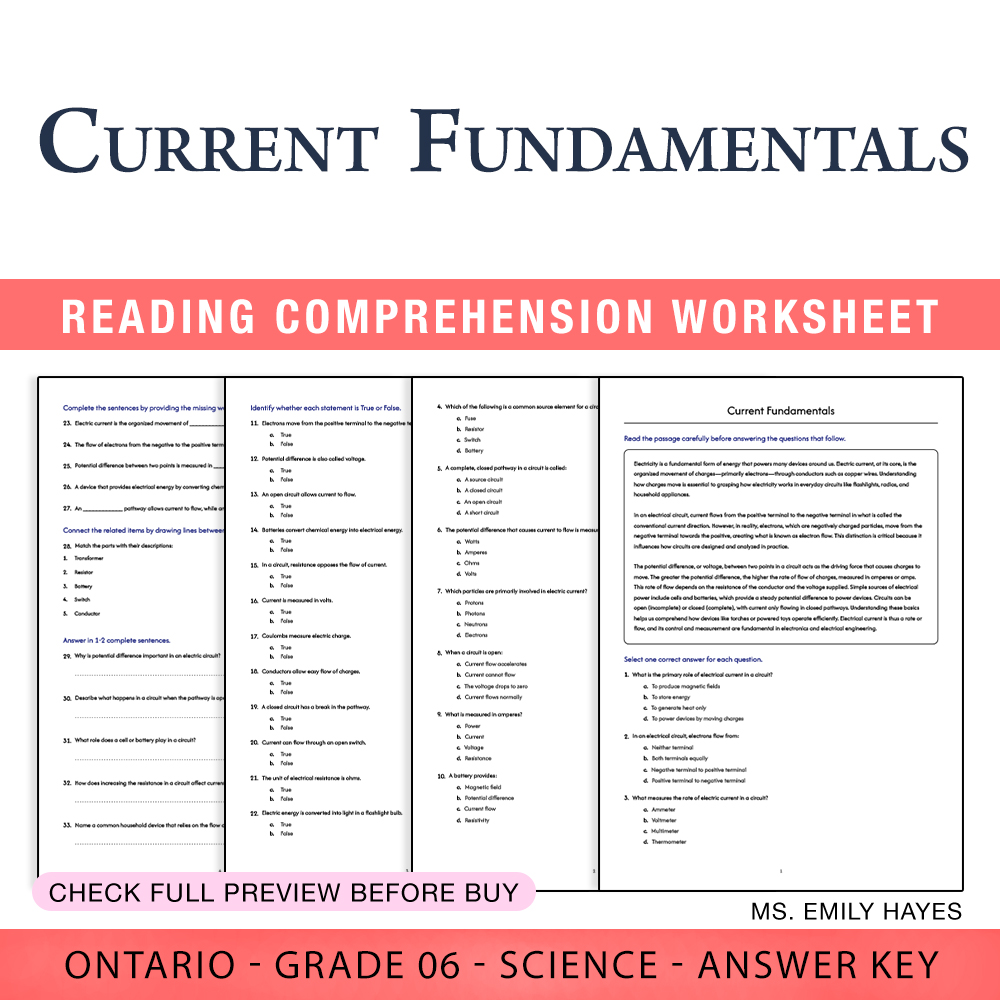
6th Grade Science | Current Fundamentals Worksheet (PDF + Answer Key)
Created byCopper Leaf ClassroomLearning Objectives
- Describe the nature of electric current as an organized movement of charges through a conductor.
- Distinguish between conventional current direction and electron flow.
- Explain potential difference as the driving force for current.
Instant download
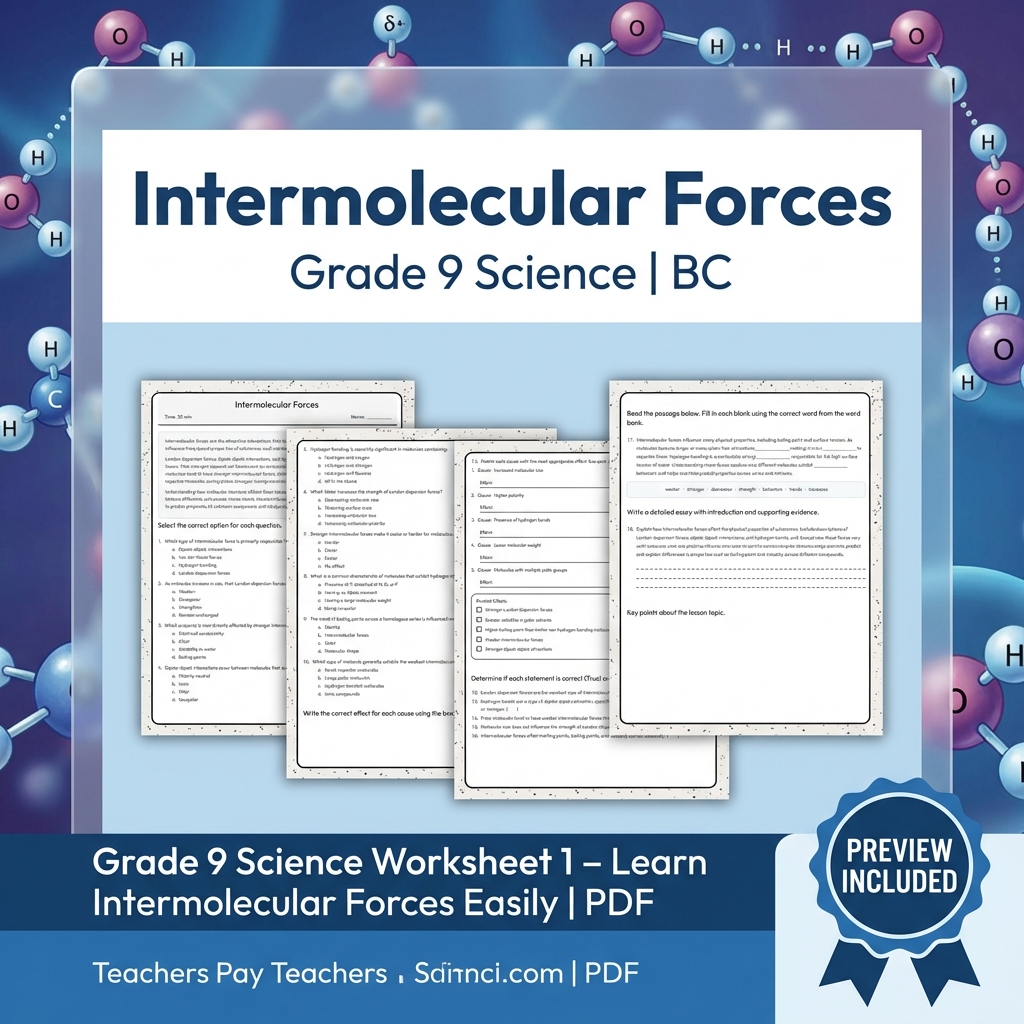
Grade 9 Science Worksheet Learn Intermolecular Forces Easily | PDF
 Created byMeadowlark Worksheets
Learning Objectives
- Understand the types of intermolecular forces and their effects on physical properties of substances.
- Identify how molecular structure influences intermolecular interactions such as London dispersion forces, dipole–dipole interactions, and hydrogen bonding.
- Relate the strength of intermolecular forces to properties like boiling point, viscosity, and surface tension.
Also included in: Grade 9 Science Lesson Bundle | BC Framework Focused Worksheets +1 more
Instant download
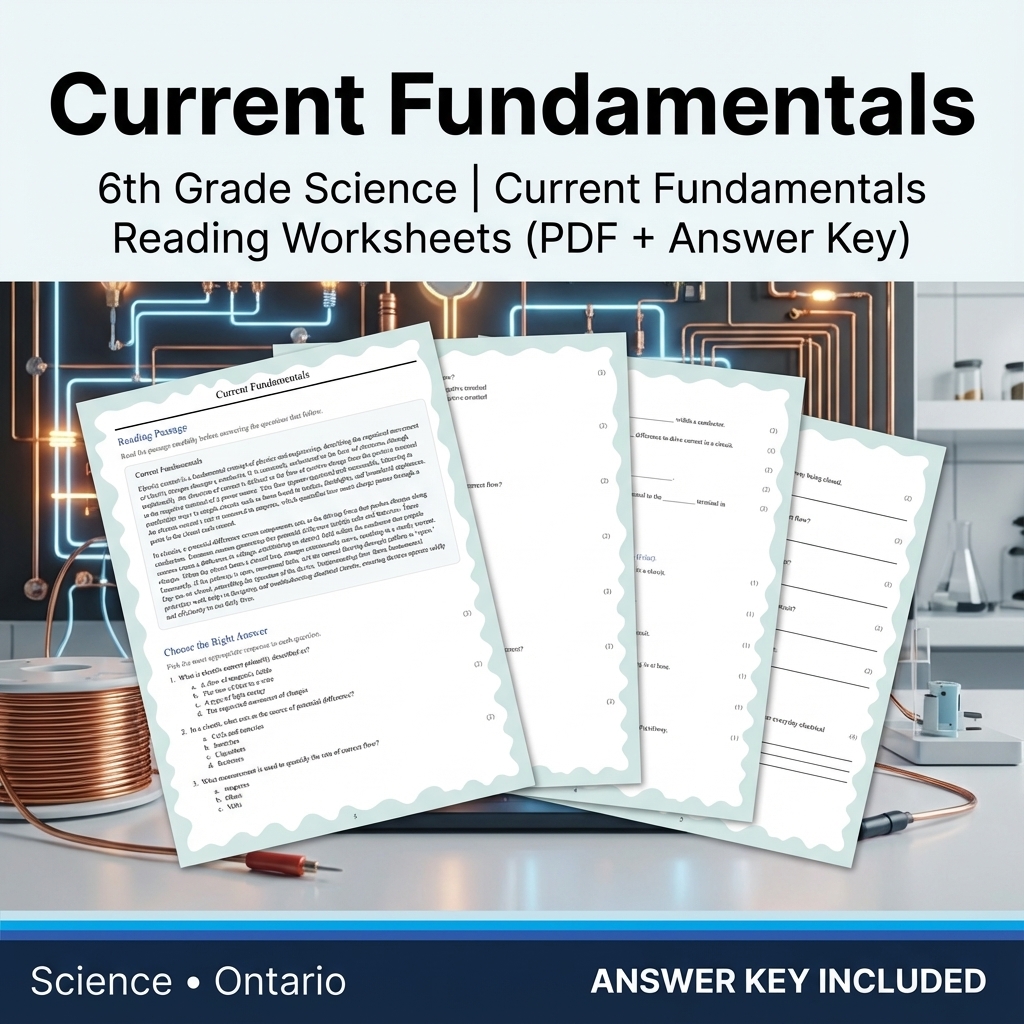
6th Grade Science | Current Fundamentals Reading Worksheets (PDF + Answer Key)
JCreated byJ.S SheetsLearning Objectives
- Describe the movement of electric charges as an organized current through conductors.
- Differentiate between conventional current flow and electron flow in circuits.
- Explain the concept of potential difference and its role as a driving force in current flow.
Also included in: Grade 6 Science Circuit & Electricity Unit Bundle – Worksheets & Answer Keys +1 more
Instant download
Browse more categories
About Science Worksheets
Find Science worksheets spanning core skills, practice, and review. All 44,620 resources are instant PDF downloads for the classroom or home.
Every worksheet on MyTeachingSheets is created by independent teacher-authors and reviewed before publication. All resources download as printable PDFs for classroom, homework, or at-home practice, and many include answer keys. Preview any worksheet free before buying.