
Science Worksheets
45,024 subject resources
Grade 8 Molecular Structure Worksheet | NGSS Practice PDF
 Created byClear Sky Classroom
Learning Objectives
- Describe the atomic composition and bonding arrangements in simple molecules like water and carbon dioxide.
- Explain how particle models and symbolic formulas represent molecular structures.
- Distinguish between discrete molecules and extended solids such as ionic lattices.
Also included in: Grade 8 Conservation of Matter Science Lesson Bundle | NGSS +1 more
Instant download
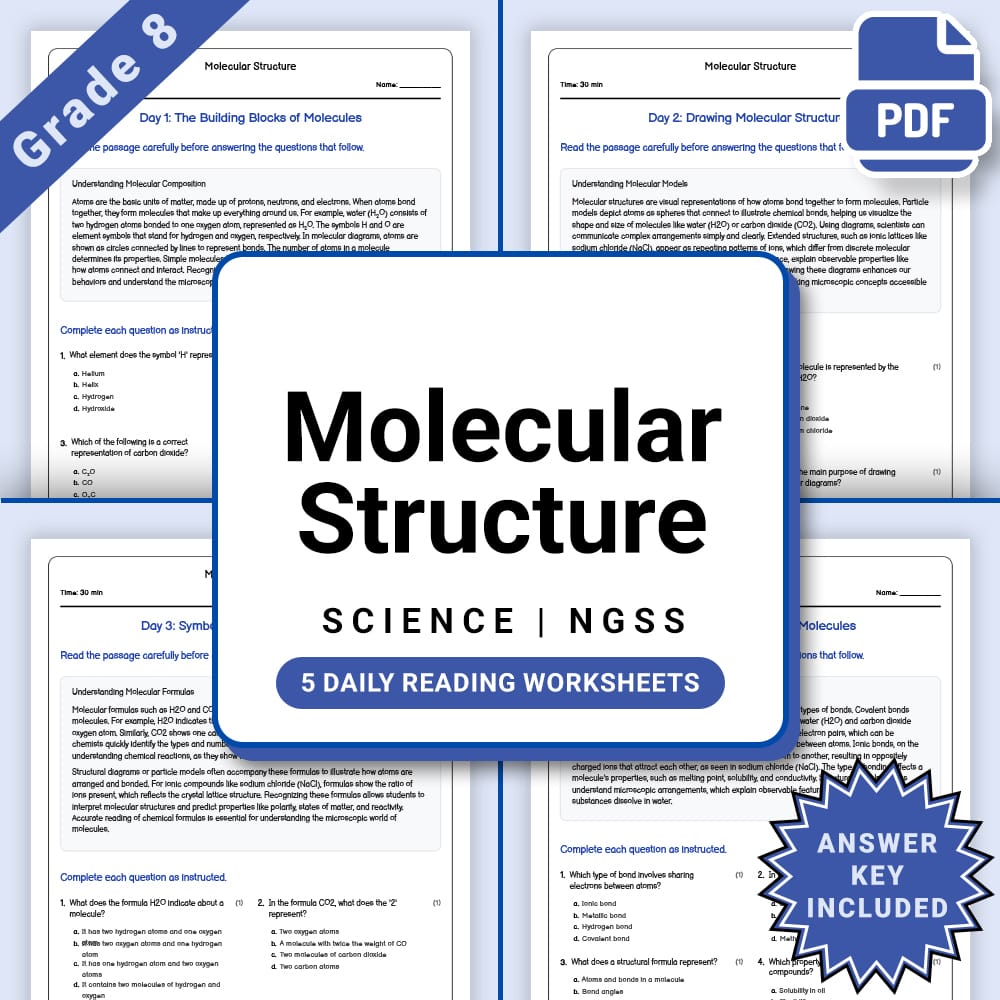
Grade 8 Science – Molecular Structure Daily Reading Worksheet(PDF + Answer Key)
 Created byCopper Leaf Classroom
Learning Objectives
- Understand basic atomic composition of simple molecules
- Identify element symbols and how atoms combine
- Learn to interpret particle models and symbolic formulas
Instant download

Molecular Structure Test Prep Worksheet | Grade 8 Science NGSS
 Created byPrism Point Learning
Learning Objectives
- Use particle models and symbolic formulas to represent atoms in simple molecules and in ionic solids.
- Identify how molecule diagrams show relative atom types and numbers for compounds like H2O and CO2.
- Distinguish discrete molecular units from extended ionic lattices and relate structure to observable properties.
Also included in: Grade 8 Matter & Chemical Reactions Science Lesson Bundle (NGSS)
Instant download

Grade 8 Molecular Structure Worksheet | NGSS Molecules & Particle Models
 Created byAmber Owl Education
Learning Objectives
- Use particle models and chemical formulas to represent the relative numbers and types of atoms in simple molecules (e.g., H2O, CO2).
- Differentiate discrete molecular units from continuous extended solids using structural models (including ionic lattices).
- Relate observable properties (such as conductivity for ionic substances) to microscopic bonding arrangements and structure.
Also included in: Grade 8 Science Thermal Effects & Chemical Reactions Lesson Bundle | NGSS +1 more
Instant download

Grade 8 Science | Molecular Structure Worksheet with Short Notes (PDF)
 Created byMeadowlark Worksheets
Learning Objectives
- Understand the atomic composition of simple molecules using particle models and formulas.
- Interpret structural diagrams and symbolic formulas of molecules like H2O, CO2, and NaCl.
- Distinguish between molecular units and extended solids based on microscopic arrangements.
Also included in: Grade 8 Science | Matter and Its Interactions NGSS Unit Bundle – Worksheets +1 more
Instant download
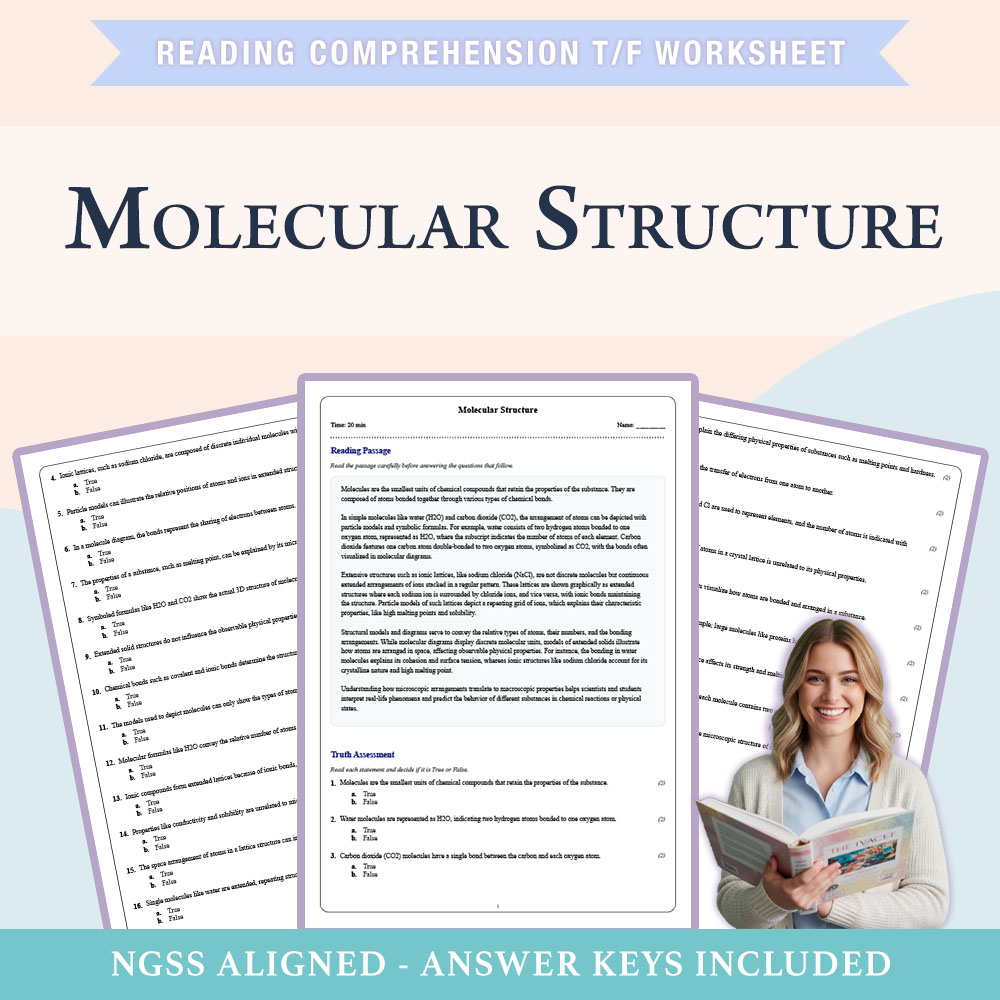
Grade 8 Science | Molecular Structure Worksheet (PDF + Answer Key)
Created byCopper Leaf ClassroomLearning Objectives
- Understand the atomic composition of simple molecules and extended structures.
- Interpret particle models and symbolic formulas of molecules.
- Distinguish between molecular units and extended solids based on microscopic arrangements.
Also included in: Grade 8 Science Bundle| Critical Concepts & Applications Unit (PDF + Answer Key) +1 more
Instant download

Grade 8 Molecular Structure Worksheet | NGSS Atoms & Molecules Activity
 Created byBRIGHT PATH RESOURCES
Learning Objectives
- Identify and describe atoms in simple molecules using particle models and symbolic formulas.
- Understand how molecules like water (H2O) and carbon dioxide (CO2) are represented diagrammatically.
- Differentiate between discrete molecules and extended structures like ionic lattices.
Also included in: Reactions & Matter Grade 8 Science Daily Reading Worksheets Lesson Bundle | NGSS +2 more
Instant download

Molecular Structure Worksheet | NGSS Grade 8 Science Assessment
 Created byCedar Grove Learning
Learning Objectives
- Describe how atoms combine to form molecules using particle models and symbolic formulas.
- Identify the types and numbers of atoms in common molecules such as H2O and CO2.
- Interpret molecular diagrams and structural models to understand bonding arrangements.
Instant download
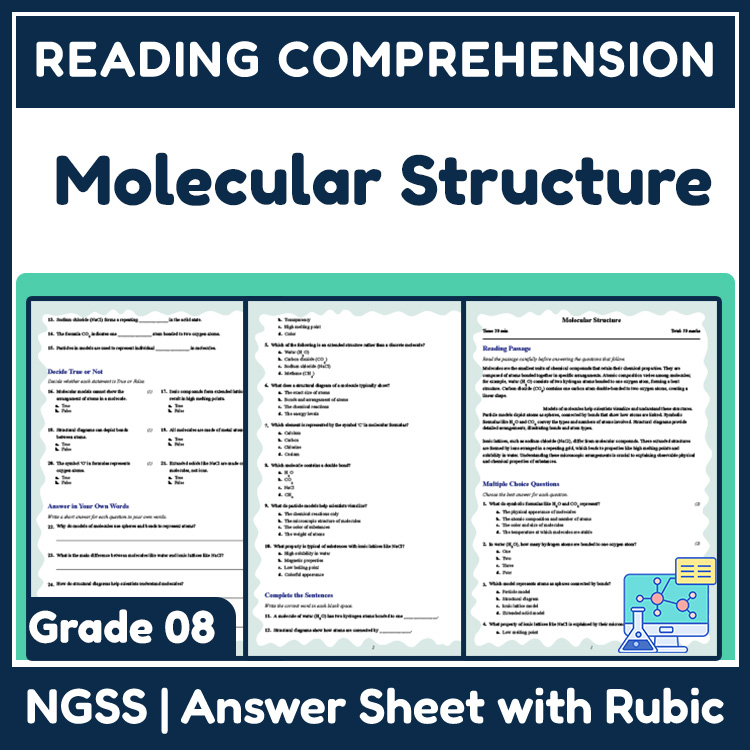
8th Grade Science | Molecular Structure Reading Worksheet (Answer Key)
JCreated byJ.S SheetsLearning Objectives
- Understand the atomic composition of simple molecules such as water (H2O) and carbon dioxide (CO2).
- Learn how to represent molecules using particle models and symbolic formulas.
- Distinguish between discrete molecular units and extended solids like ionic lattices.
Instant download
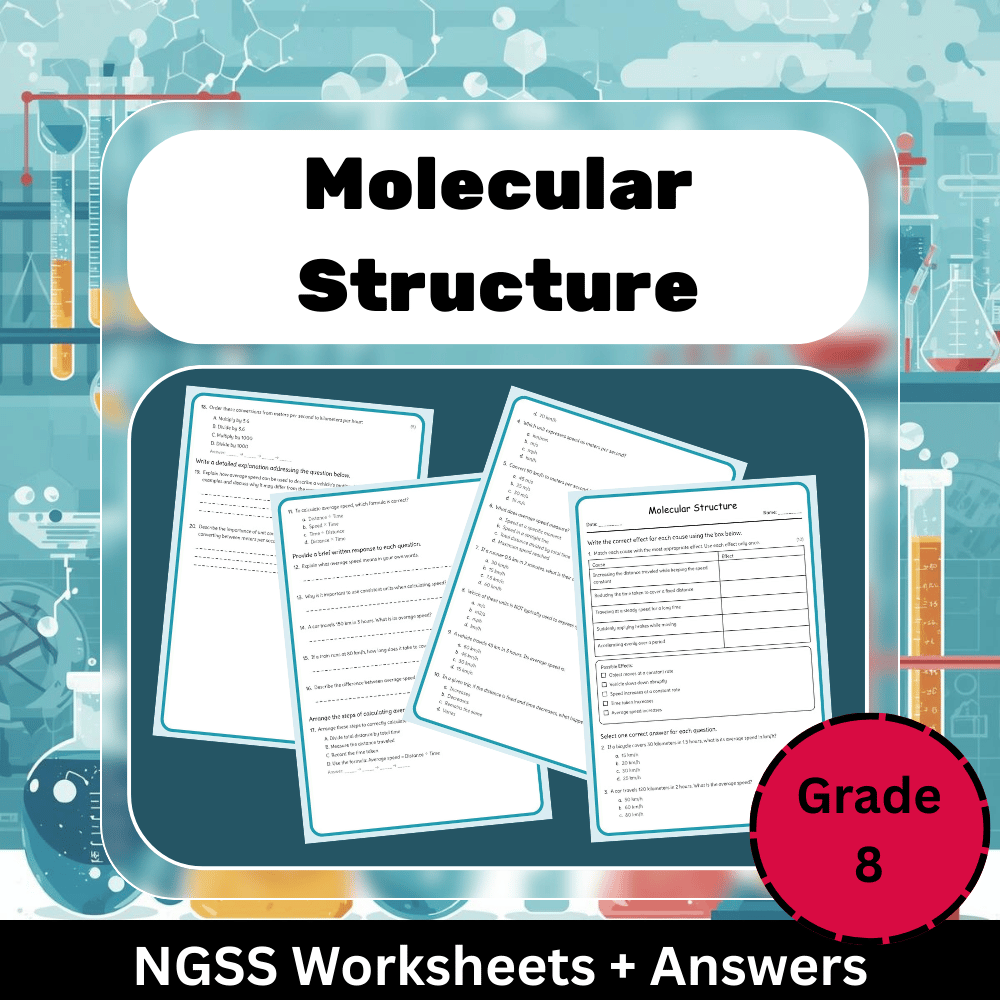
Grade 8 Science | Molecular Structure Worksheet (NGSS-Aligned) PDF
 Created byBright Mind Resources
Learning Objectives
- Understand the atomic composition of simple molecules and extended structures.
- Interpret particle models and symbolic formulas of molecules.
- Identify different types of bonds and arrangements in molecules like water, carbon dioxide, and salts.
Also included in: Grade 8 Science | Molecular Structures & Energy Effects Unit Worksheet Pack-NGSS +2 more
Instant download

Molecular Structure Worksheet | NGSS Grade 8 Science Assessment
 Created bySkylark Worksheets
Learning Objectives
- Use particle models and symbolic formulas to represent the types and numbers of atoms in simple molecules (e.g., H2O, CO2).
- Differentiate discrete molecular units from extended ionic solids using particle model ideas and element/ion symbols (e.g., NaCl).
- Explain how bonding arrangements affect observable properties such as melting point and behavior of substances.
Also included in: Matter and Its Interactions Lesson Bundle | Grade 8 Science | NGSS +1 more
Instant download

Molecular Structure Worksheet | Standards-Aligned Grade 8 Science Practice
JCreated byJ.S SheetsLearning Objectives
- Understand how atoms combine to form simple molecules using particle models and symbolic formulas.
- Identify the types and numbers of atoms in common molecules like H2O and CO2.
- Distinguish between discrete molecular units and extended solid structures such as ionic lattices.
Also included in: Grade 8 Chemical Reactions Science Lesson Bundle NGSS: Worksheet Set +1 more
Instant download

8th Grade Science | Molecular Structure Worksheet with Answer Key (Printable PDF)
 Created byCoral Reef Learning
Learning Objectives
- Describe how atoms combine to form simple molecules using particle models and formulas.
- Identify different types of bonds and how they influence molecular structures.
- Interpret molecular diagrams and formulas to understand atom types and arrangements.
Instant download

Molecular Structure Worksheets: Molecules & Ionic Lattices Grade 8
 Created byTeachers Club
Learning Objectives
- Represent simple molecules using element symbols and molecular formulas.
- Interpret subscripts to determine atom counts within molecular units.
- Compare discrete molecular units with extended ionic lattices.
Also included in: Grade 8 Science Worksheets | NGSS Matter & Interactions Bundle +2 more
Instant download

Molecular Structure Worksheet | Assessment for Grade 8 Science Printable PDF
Learning Objectives
- Describe the atomic composition of simple molecules using particle models and formulas.
- Represent atoms, element symbols, and bonding arrangements in common molecules.
- Distinguish between discrete molecules and extended solids through structural models.
Also included in: Grade 8 Science Lesson Bundle on Matter and Its Interactions NGSS +1 more
Instant download

Grade 8 Science | Molecular Structures - Daily Reading Comprehension
Created byCoral Reef LearningLearning Objectives
- Identify different atoms in simple molecules.
- Understand how atoms bond to form molecules such as water and carbon dioxide.
- Represent molecules using particle models and symbolic formulas.
Instant download

Grade 8 Science – Molecular Structure & Composition | Daily Reading Worksheet
Created byBright Mind ResourcesLearning Objectives
- Identify atoms and molecules using symbolic formulas.
- Understand the atomic composition of simple molecules like water and carbon dioxide.
- Recognize extended structures such as ionic lattices like sodium chloride.
Also included in: Particle Motion Grade 8 Science Daily Reading Worksheets Lesson Bundle | NGSS +1 more
Instant download
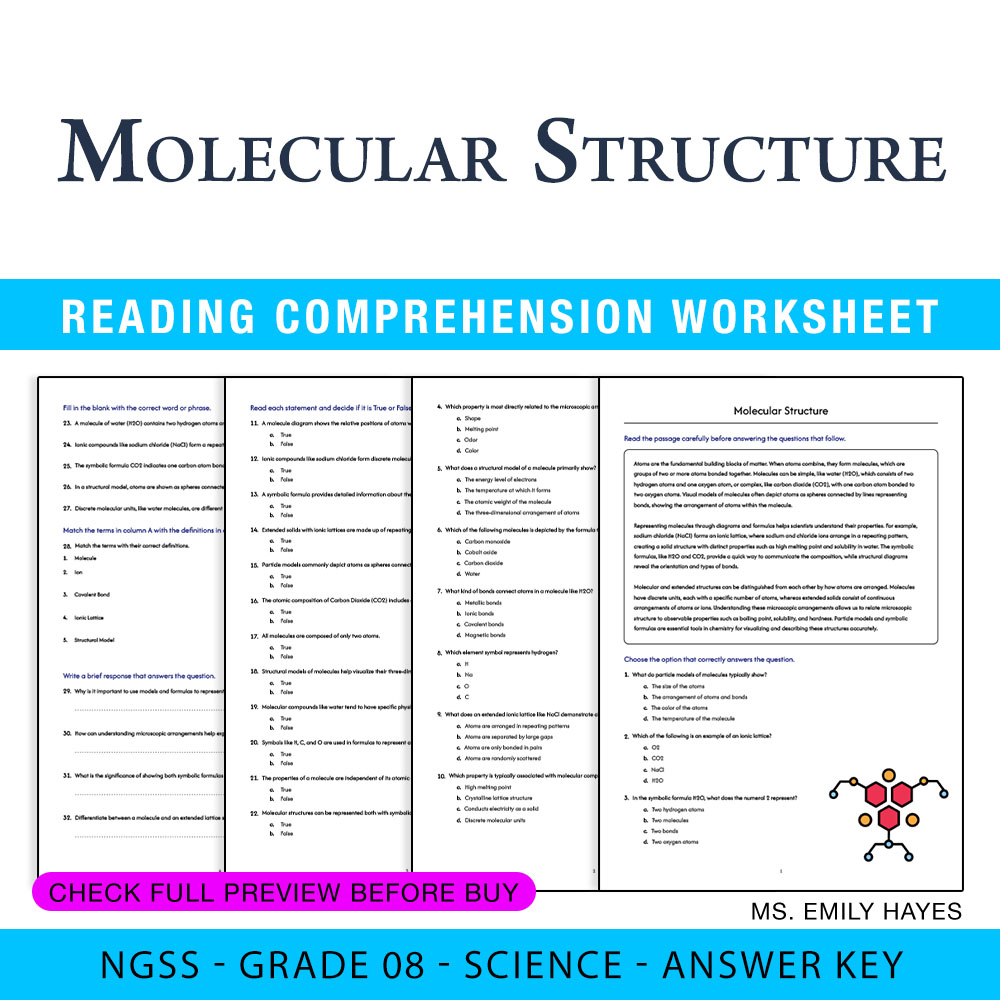
8th Grade Science | Molecular Structure Worksheet (PDF+ Answer Key)
Created byCopper Leaf ClassroomLearning Objectives
- Describe the atomic composition of simple molecules and extended structures using particle models and symbolic formulas.
- Understand how to represent atoms, element symbols, and bonding arrangements in common examples such as water (H2O), carbon dioxide (CO2), and ionic lattices like sodium chloride.
- Explain how molecule diagrams and structural models convey the relative atom types and numbers.
Instant download
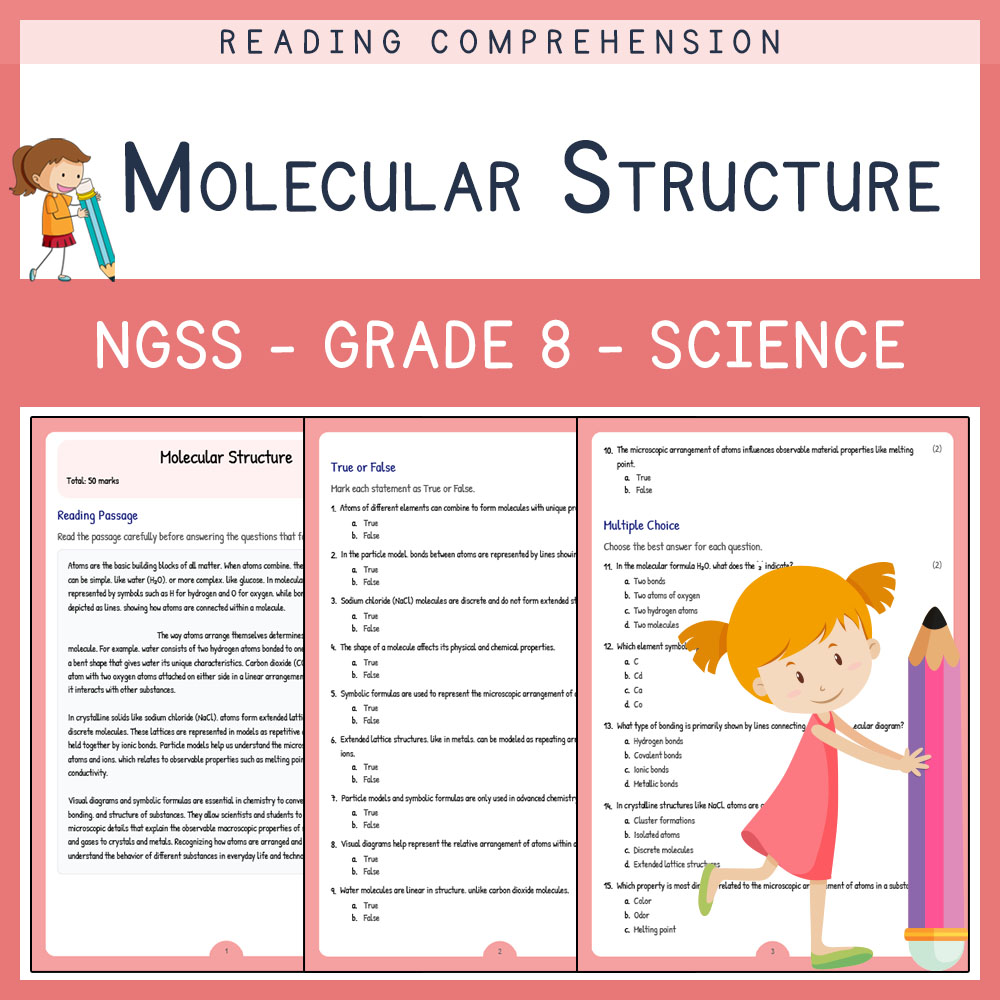
Grade 8 Science | Molecular Structure Worksheet (Answer Key) – NGSS Aligned
 Created byLumora Learning
Learning Objectives
- Describe the atomic composition of simple molecules using particle models and symbolic formulas.
- Interpret molecular diagrams and structural models to identify atom types and bonds.
- Differentiate between discrete molecular units and extended solids based on microscopic arrangements.
Instant download

Molecular Structure and Particle Models Worksheet | Grade 8 Science
 Created bythe curious pencil
Learning Objectives
- Identify atoms and elements represented in simple molecular formulas
- Interpret subscripts and formulas using particle models
- Distinguish discrete molecules from extended ionic lattice structures
Also included in: Matter and Its Interactions Grade 8 Science Worksheets NGSS Bundle +2 more
Instant download
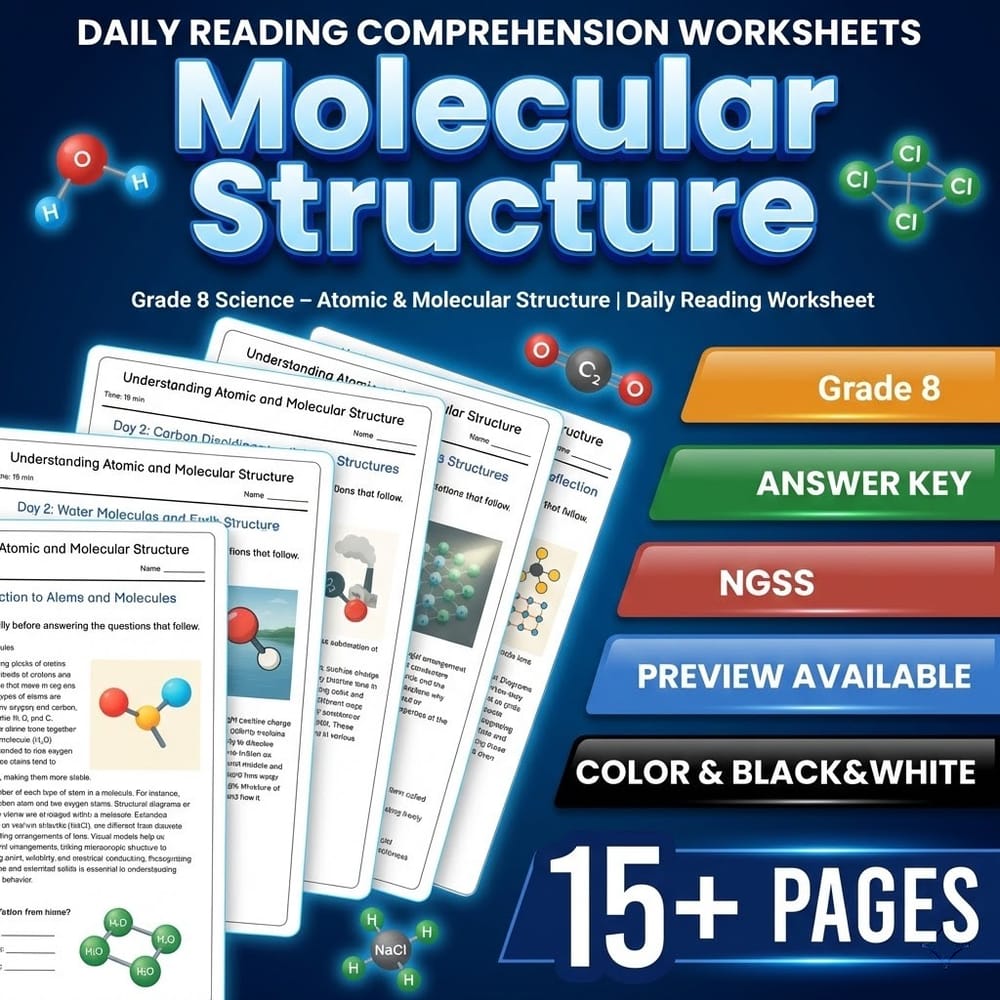
Grade 8 Science – Atomic & Molecular Structure | Daily Reading Worksheet
 Created byElena Brooks
Learning Objectives
- Identify atoms and molecules using particle models and symbols.
- Understand how atoms combine to form molecules.
- Interpret molecular formulas and structural representations.
Instant download

Grade 6 Mixtures and Compounds Worksheet | Particle Models | California
 Created byEvergreen Desk Education
Learning Objectives
- Distinguish mixtures from compounds using particle models and ideas about atomic arrangement
- Explain how composition affects properties of substances (separation methods and uniformity)
- Use vocabulary such as mixture, compound, atom, and bonded particles correctly
Instant download

Grade 6 Science Worksheet Mixtures and Compounds | Standards-Aligned Practice
JCreated byJ.S SheetsLearning Objectives
- Understand the difference between mixtures and compounds based on atomic arrangement and properties.
- Identify examples of mixtures and compounds in everyday life.
- Explain how particle models distinguish between mixtures and compounds.
Also included in: Grade 6 Physical Science Lesson Bundle for Science – California Standards +1 more
Instant download

Grade 6 Science | Mixtures and Compounds Worksheet | California Standards
Created byLumora LearningLearning Objectives
- Distinguish mixtures from compounds using particle models.
- Explain how atomic arrangement affects properties and separability.
- Use appropriate vocabulary (mixture, compound, atom, bonded, uniform) when describing matter.
Instant download

Grade 6 Science – Understanding Mixtures & Compounds | Daily Reading Worksheet
Created byBright Mind ResourcesLearning Objectives
- Define mixtures and compounds.
- Identify differences between mixtures and compounds.
- Understand particle models of matter.
Also included in: Grade 6 Matter Science Daily Reading Worksheets Lesson Bundle | CA Standards +1 more
Instant download

Grade 6 Mixtures and Compounds Worksheet | Practice & Assessment PDF
Created byClear Sky ClassroomLearning Objectives
- Distinguish mixtures from compounds using particle models and descriptions of atomic arrangement
- Explain how physical separation methods relate to mixture composition
- Identify properties of compounds that result from consistent atomic bonding
Instant download

Grade 6 Science | Mixtures & Compounds - Daily Reading Comprehension
Created byCoral Reef LearningLearning Objectives
- Understand the difference between mixtures and compounds
- Describe particle models of mixtures and compounds
- Identify mixtures based on their properties and particle arrangements
Instant download

Mixtures and Compounds Worksheet Pack Grade 6 Science Chemistry
Created byPrism Point LearningLearning Objectives
- Explain how mixtures and compounds differ in particle arrangement and atomic composition
- Identify examples of mixtures and compounds using particle model ideas
- Describe how physical separation often works for mixtures but not for compounds
Instant download

Mixtures and Compounds Assessment | California Standards Grade 6 Science
Created byPrism Point LearningLearning Objectives
- Differentiate mixtures and compounds using particle models
- Explain how composition affects properties of matter
- Use physical vs chemical ideas to predict whether a sample can be separated
Also included in: Grade 6 Atoms and Chemical Change Science lesson bundle | California Standards +1 more
Instant download

Mendelian Patterns Assessment | NGSS Standards-Aligned Grade 10 Science
Created byPrism Point LearningLearning Objectives
- Explain the concepts of dominance, segregation, and independent assortment in inheritance.
- Use Punnett squares and pedigree charts to predict offspring phenotypes and genotypes.
- Analyze inheritance patterns including linked genes and polygenic influences.
Also included in: Grade 10 Science | DNA, Mendelian Patterns & Mutation NGSS Assessment
Instant download
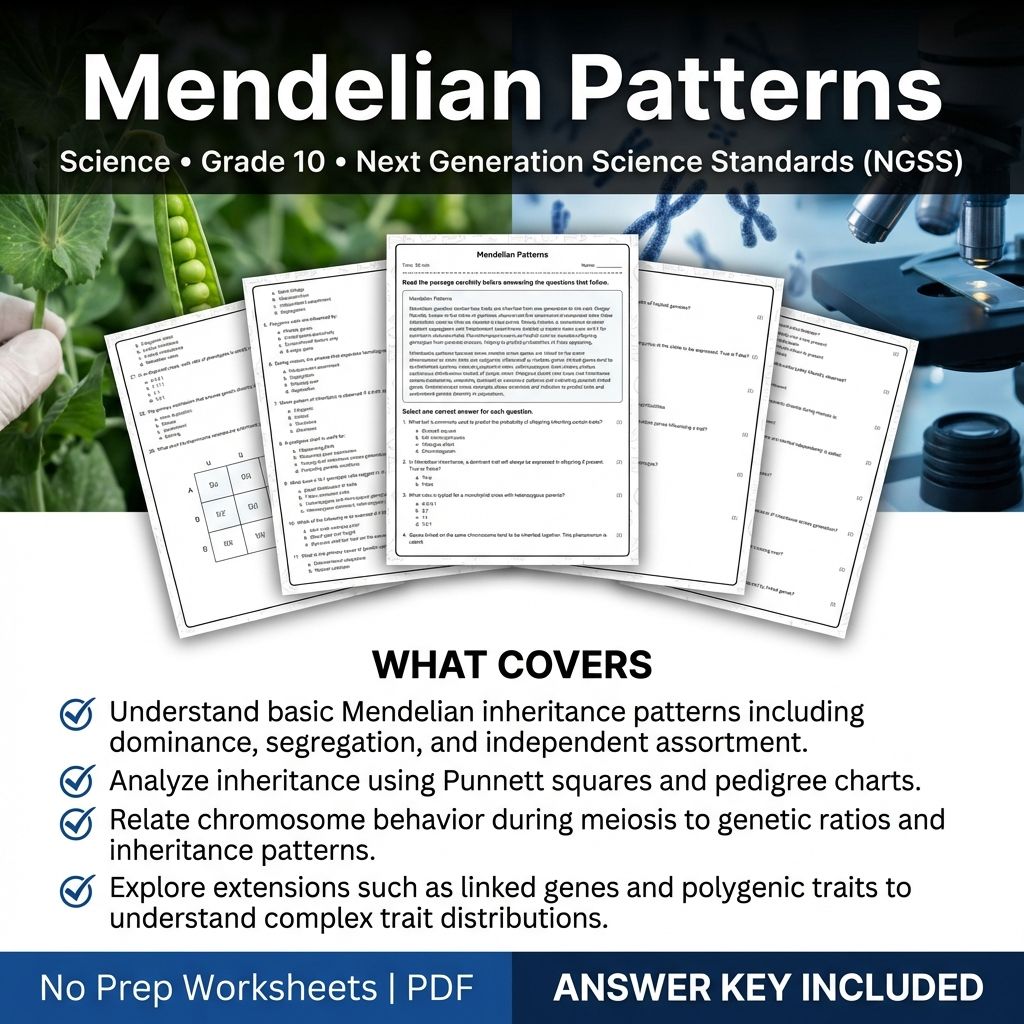
10th Grade Science | Mendelian Patterns Worksheet & Answer Key (Printable PDF)
Created byCoral Reef LearningLearning Objectives
- Understand basic Mendelian inheritance patterns including dominance, segregation, and independent assortment.
- Analyze inheritance using Punnett squares and pedigree charts.
- Relate chromosome behavior during meiosis to genetic ratios and inheritance patterns.
Also included in: Grade 10 Science Unit Bundle – Genetics & DNA Structure Worksheets (Answer Keys) +1 more
Instant download

Grade 10 Science – Mendelian Inheritance & Patterns | Daily Reading Worksheet
Created byBright Mind ResourcesLearning Objectives
- Understand key Mendelian concepts such as dominance, segregation, and independent assortment.
- Interpret Punnett squares to predict inheritance patterns of single-gene traits.
- Analyze pedigrees to determine parental genotypes and offspring phenotypes.
Also included in: Grade 10 Genetics Science Daily Reading Lesson Bundle | NGSS +2 more
Instant download

Grade 10 Science | Mendelian Patterns in Genetics - Daily Reading Comprehension
Created byCoral Reef LearningLearning Objectives
- Understand the basic principles of Mendelian inheritance.
- Identify dominant and recessive traits using Punnett squares.
- Interpret pedigree charts for inheritance patterns.
Instant download
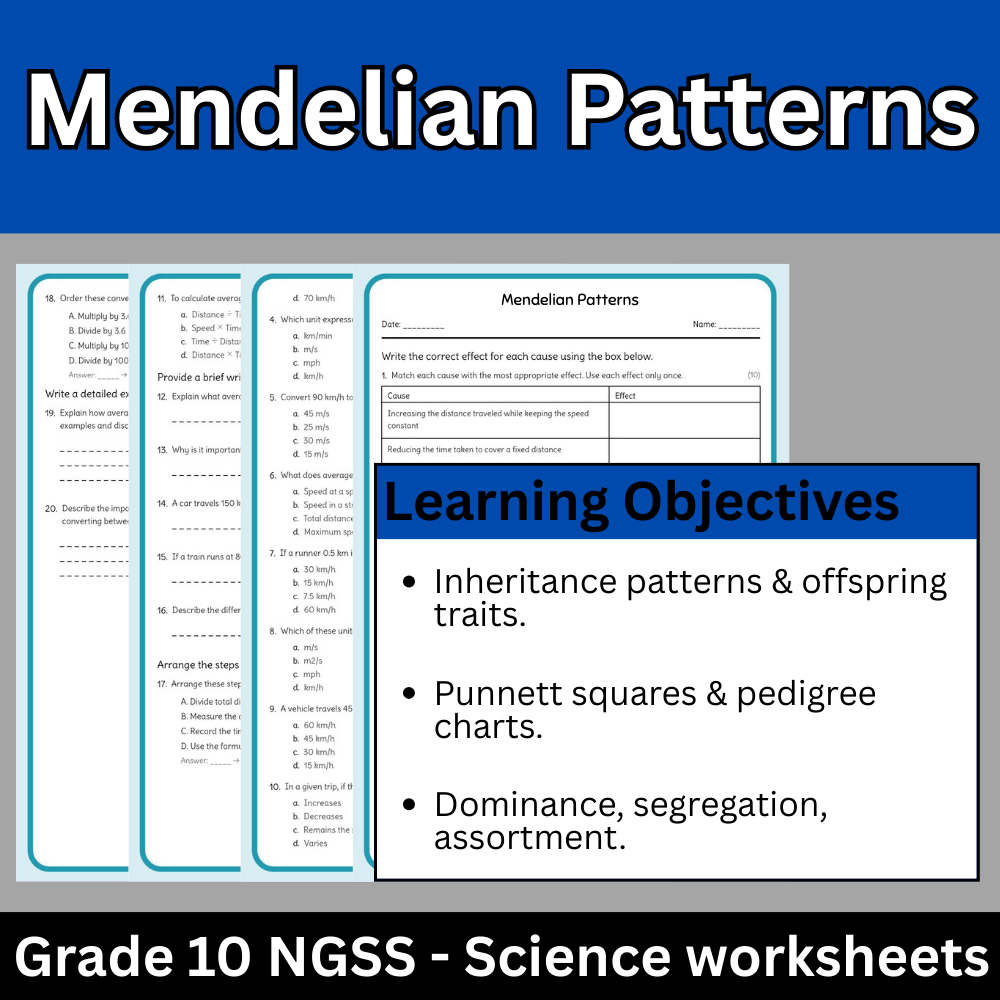
Grade 10 Science – Mendelian Patterns Worksheet (NGSS Aligned) (PDF)
Created byBright Mind ResourcesLearning Objectives
- Understand basic Mendelian inheritance patterns and how they relate to offspring traits.
- Analyze Punnett squares, pedigree charts, and probability in genetic inheritance.
- Explain concepts of dominance, segregation, and independent assortment during meiosis.
Instant download

Grade 10 Science | Mendelian Patterns Worksheet (NGSS10 PDF)
 Created bySilver Birch Teaching
Learning Objectives
- Explain Mendelian inheritance patterns using probability and pedigree analysis.
- Describe the concepts of dominance, segregation, and independent assortment.
- Relate chromosome behavior during meiosis to Mendelian principles.
Also included in: Grade 10 Genetics Science Lesson Bundle NGSS: Mutation, Mendelian, DNA +1 more
Instant download

Grade 10 Mendelian Patterns Worksheet | NGSS Genetics Biology Activity
Created byBRIGHT PATH RESOURCESLearning Objectives
- Understand the basics of Mendelian genetics and inheritance patterns.
- Identify dominant and recessive traits using Punnett squares.
- Analyze inheritance through pedigree charts.
Also included in: Genetics Grade 10 Science Daily Reading Worksheets Lesson Bundle | NGSS +1 more
Instant download

Grade 10 Worksheet B: Mendelian Patterns and Inheritance Practice | NGSS PDF
Created byClear Sky ClassroomLearning Objectives
- Use Mendelian principles (dominance, segregation, and independent assortment) to predict offspring phenotypes from parental genotypes.
- Interpret pedigree information and relate inheritance patterns to probability outcomes.
- Apply Punnett-square reasoning to single-gene traits and identify common misconceptions.
Also included in: Grade 10 Genetic Variation and Inheritance Science Lesson Bundle: NGSS +1 more
Instant download
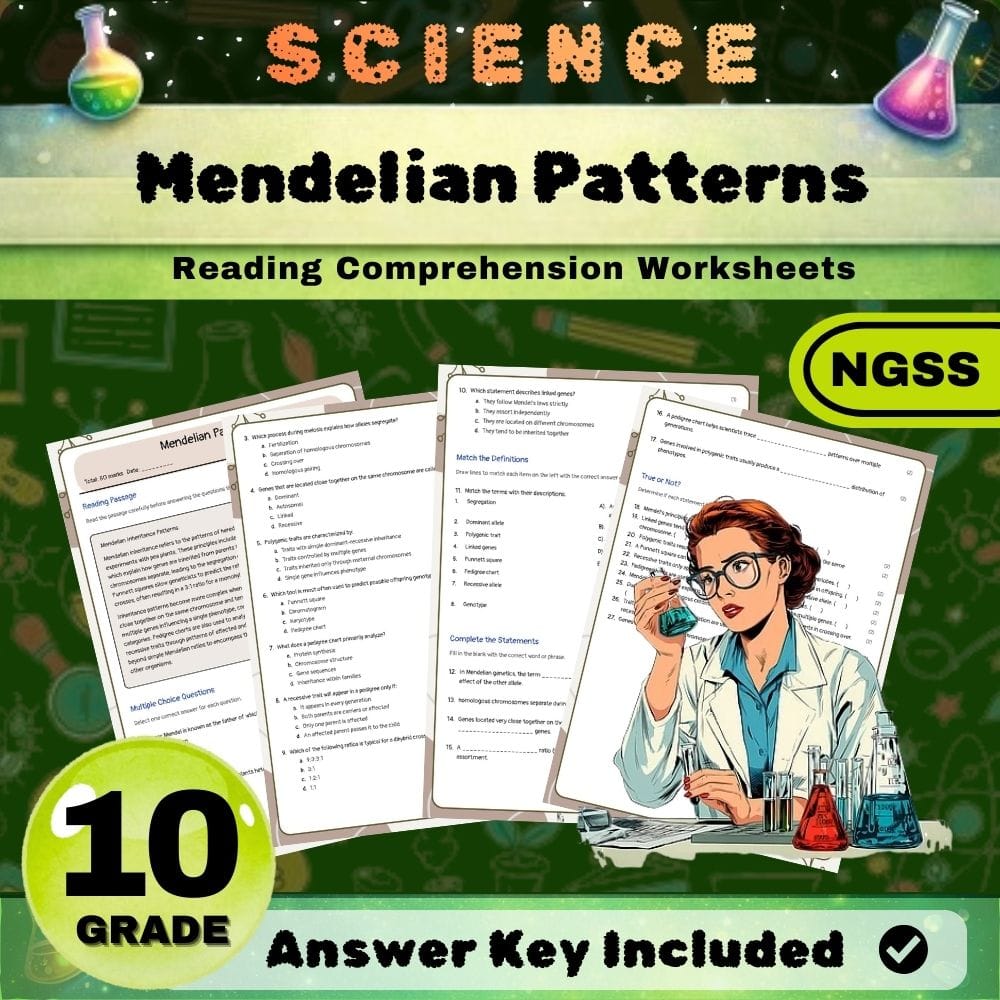
Grade 10 Science | Mendelian Patterns Worksheet (NGSS) Practice Set
 Created byMaple Path Learning
Learning Objectives
- Explain the principles of dominant and recessive inheritance patterns.
- Use Punnett squares and pedigree analysis to predict offspring phenotypes and genotypes.
- Describe the process of meiosis and how it relates to Mendelian inheritance.
Also included in: Grade 10 Heredity Inheritance and Variation of Traits Science Bundle | NGSS +1 more
Instant download
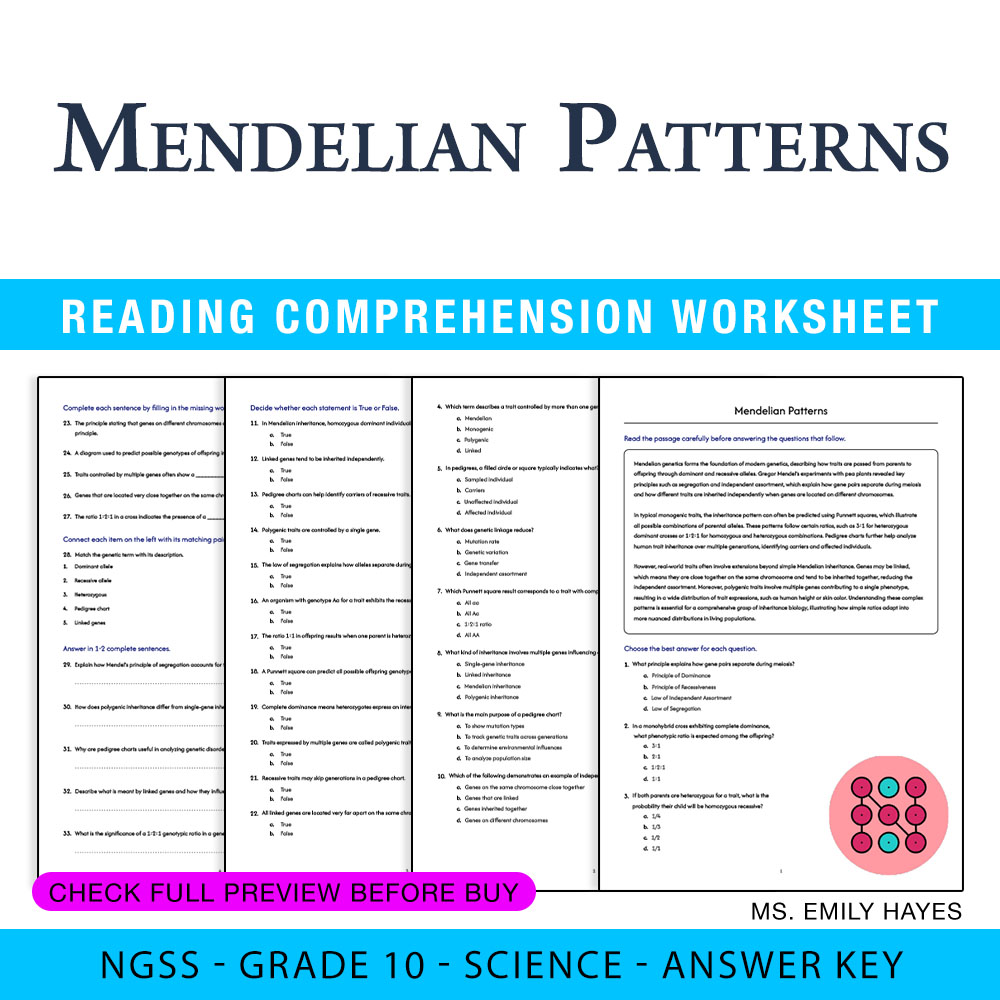
10th Grade Science | Mendelian Patterns Worksheet (PDF+ Answer Key)
Created byCopper Leaf ClassroomLearning Objectives
- Understand the principles of dominant and recessive inheritance patterns.
- Use Punnett squares to predict offspring genotypes and phenotypes.
- Interpret pedigree charts to analyze inheritance of traits.
Instant download
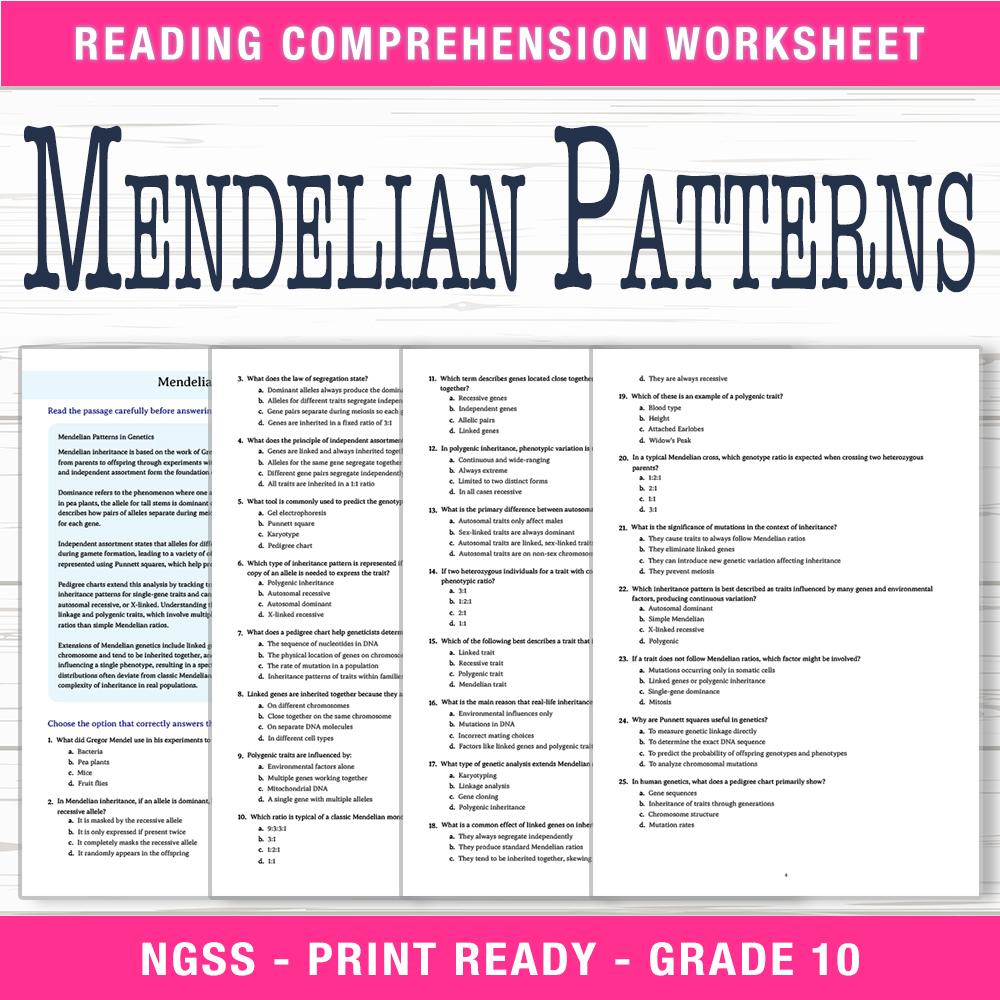
Grade 10 Science | Mendelian Patterns Worksheet (PDF + Answer Key)
 Created byRiverstone Classroom
Learning Objectives
- Explain the principles of dominance, segregation, and independent assortment in Mendelian genetics.
- Use Punnett squares to predict offspring genotypes and phenotypes from parental crosses.
- Analyze inheritance patterns using pedigree charts for single-gene traits.
Instant download

Mendelian Inheritance Patterns and Probability Worksheets Grade 10
Created byTeachers ClubLearning Objectives
- Predict offspring genotypes from single-gene crosses
- Calculate expected phenotype ratios using Punnett squares
- Interpret pedigrees to infer likely inheritance patterns
Also included in: Heredity & Inheritance Biology Worksheets Grade 10 NGSS Bundle +1 more
Instant download
Grade 10 Science – Mendelian Patterns Worksheet (PDF +Answer Key)
Created byCopper Leaf ClassroomLearning Objectives
- Identify dominant and recessive traits using Punnett squares.
- Understand the concepts of segregation and independent assortment.
- Relate chromosome behavior during meiosis to inheritance patterns.
Instant download
10th Grade Science | Mendelian Patterns Reading Practice Worksheet
JCreated byJ.S SheetsLearning Objectives
- Understand and explain Mendelian inheritance principles such as dominance, segregation, and independent assortment.
- Interpret Punnett squares and pedigree charts to analyze inheritance patterns of single-gene traits.
- Relate chromosome behavior during meiosis to Mendelian inheritance laws.
Instant download

Mendelian Patterns Worksheet | NGSS-Aligned Grade 10 Science Practice
JCreated byJ.S SheetsLearning Objectives
- Understand the principles of Mendelian inheritance, including dominance, segregation, and independent assortment.
- Analyze inheritance patterns using Punnett squares and pedigree charts.
- Relate chromosome behavior during meiosis to Mendelian ratios and inheritance.
Instant download
Grade 10 Science | Mendelian Patterns Worksheet & Answer Key (NGSS Aligned)
Created byLumora LearningLearning Objectives
- Explain Mendel's laws of inheritance, including dominance, segregation, and independent assortment.
- Use Punnett squares and pedigree charts to predict offspring phenotypes and genotypes.
- Analyze how linked genes and polygenic traits influence inherited characteristics.
Instant download

Mendelian Inheritance and Probability Worksheet | Genetics | Grade 10 NGSS
Created byAmber Owl EducationLearning Objectives
- Explain how dominance and segregation relate to outcomes in single-gene crosses.
- Use Punnett squares to predict offspring phenotypes from given parental genotypes.
- Interpret pedigree patterns using Mendelian inheritance and simple probability.
Instant download
Grade 10 Science | Mendelian Patterns Worksheet with Short Notes (Printable PDF)
Created byMeadowlark WorksheetsLearning Objectives
- Understand core concepts of inheritance, including dominance, segregation, and independent assortment.
- Apply Punnett squares and pedigree analysis to predict inheritance outcomes.
- Analyze the effects of linked genes and polygenic traits on inheritance ratios.
Also included in: Grade 10 Science | Heredity, Inheritance & Traits NGSS Unit Bundle (worksheets) +1 more
Instant download
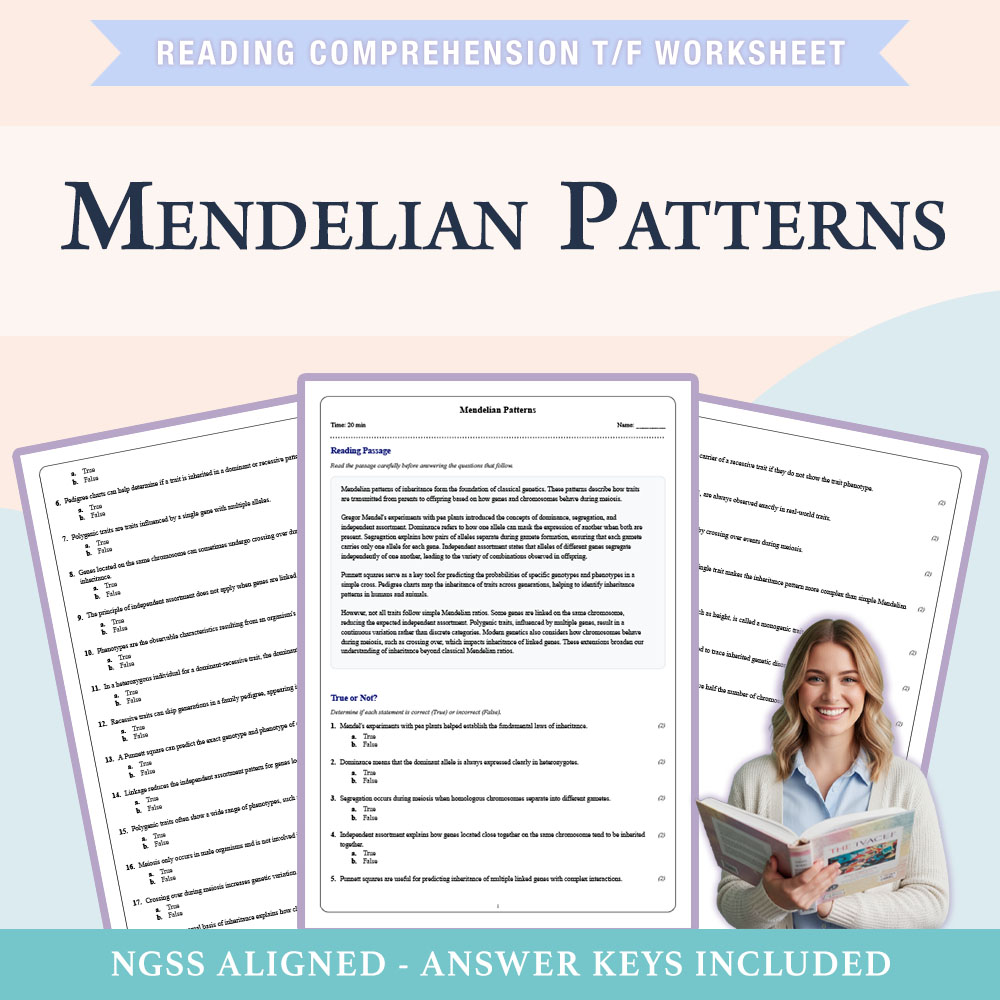
10th Grade Science | Mendelian Patterns Worksheet (PDF + Answer Key)
Created byCopper Leaf ClassroomLearning Objectives
- Understand the basic principles of Mendelian inheritance, including dominance, segregation, and independent assortment.
- Explain how Punnett squares and pedigree charts are used to analyze inheritance patterns.
- Recognize the effects of linked genes and polygenic traits on simple Mendelian ratios.
Also included in: Grade 10 Science | Genetics & DNA Unit Worksheet Pack (PDF +Answer Key) +1 more
Instant download
Browse more categories
About Science Worksheets
Find Science worksheets spanning core skills, practice, and review. All 45,024 resources are instant PDF downloads for the classroom or home.
Every worksheet on MyTeachingSheets is created by independent teacher-authors and reviewed before publication. All resources download as printable PDFs for classroom, homework, or at-home practice, and many include answer keys. Preview any worksheet free before buying.